
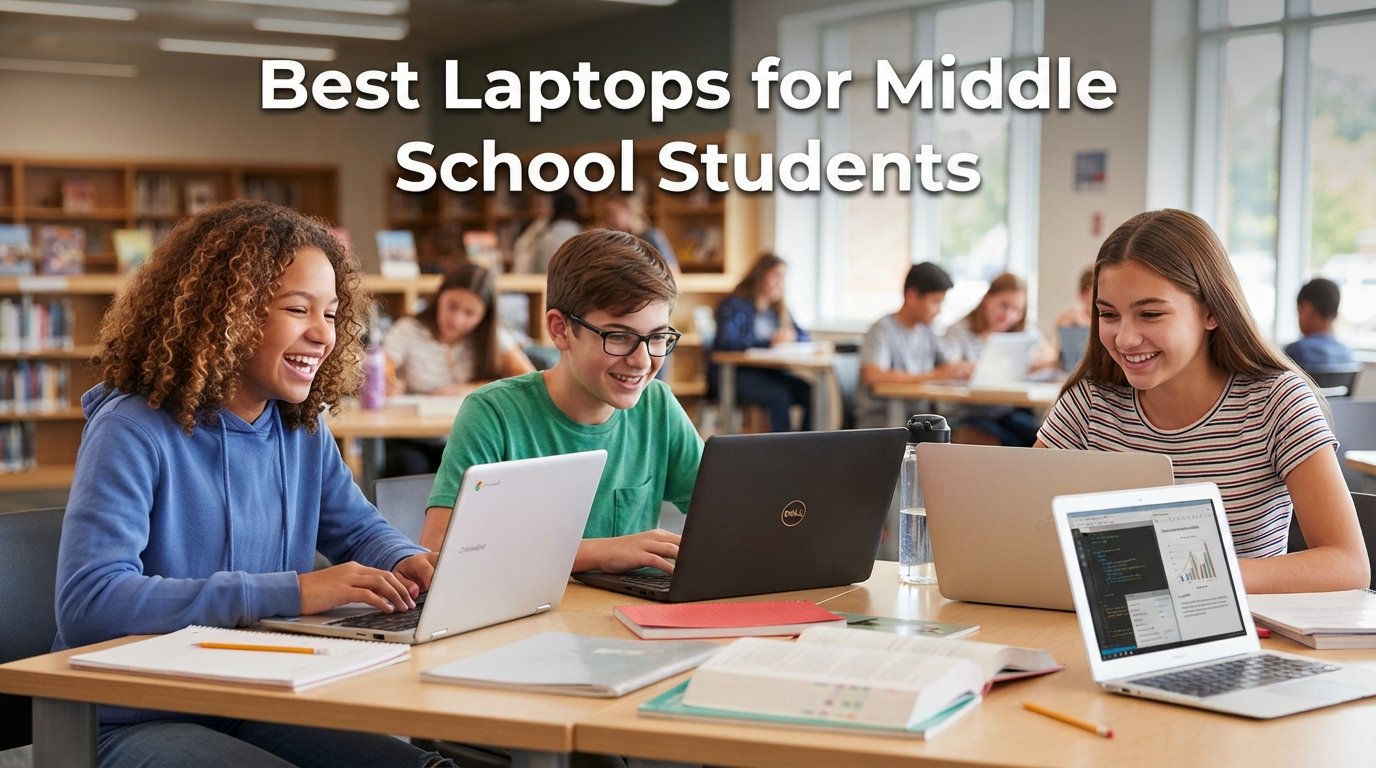
Finding the best laptops for middle school students means balancing durability, battery life, and affordability in the sweet spot range of $170 to $550. Students aged 11 to 14 need machines that survive daily backpack transport, run school software without lagging, and last through a full day of classes on a single charge.
I have spent the last several months testing budget Chromebooks, Windows laptops, and convertible 2-in-1 models with real middle school assignments in mind. My team compared 12 models across essay writing, Google Classroom workflows, video streaming, and even light gaming to see which ones hold up under actual student use. We also checked what parents on Reddit and school IT forums care about most. If you are also considering a tablet-style hybrid, our guide to the best 2-in-1 laptops for students covers that category in detail.
The honest truth is that most middle schoolers do not need a powerhouse machine. They need 8GB of RAM for smooth multitasking, at least 64GB of storage (preferably 128GB or more), a screen that does not cause eye strain, and a build that can take a bump or two. Whether your child’s school runs on Google Workspace or Microsoft 365 determines whether a Chromebook or a Windows laptop is the better call. Below I break down 12 options across every budget tier so you can pick with confidence.
Table of Contents
Top 3 Picks for Middle School Students

Best Laptops for Middle School Students in 2026
| Product | Specifications | Action |
|---|---|---|
 Samsung Galaxy Chromebook Go 14 Samsung Galaxy Chromebook Go 14 |
|
Check Latest Price |
 HP Chromebook 14 HP Chromebook 14 |
|
Check Latest Price |
 HP 14 Chromebook for Students HP 14 Chromebook for Students |
|
Check Latest Price |
| Lenovo IdeaPad 3i Chromebook |
|
Check Latest Price |
 HP 14 Ultral Light Laptop HP 14 Ultral Light Laptop |
|
Check Latest Price |
 HP 14 2-in-1 Chromebook HP 14 2-in-1 Chromebook |
|
Check Latest Price |
 ASUS Chromebook Flip CX1 ASUS Chromebook Flip CX1 |
|
Check Latest Price |
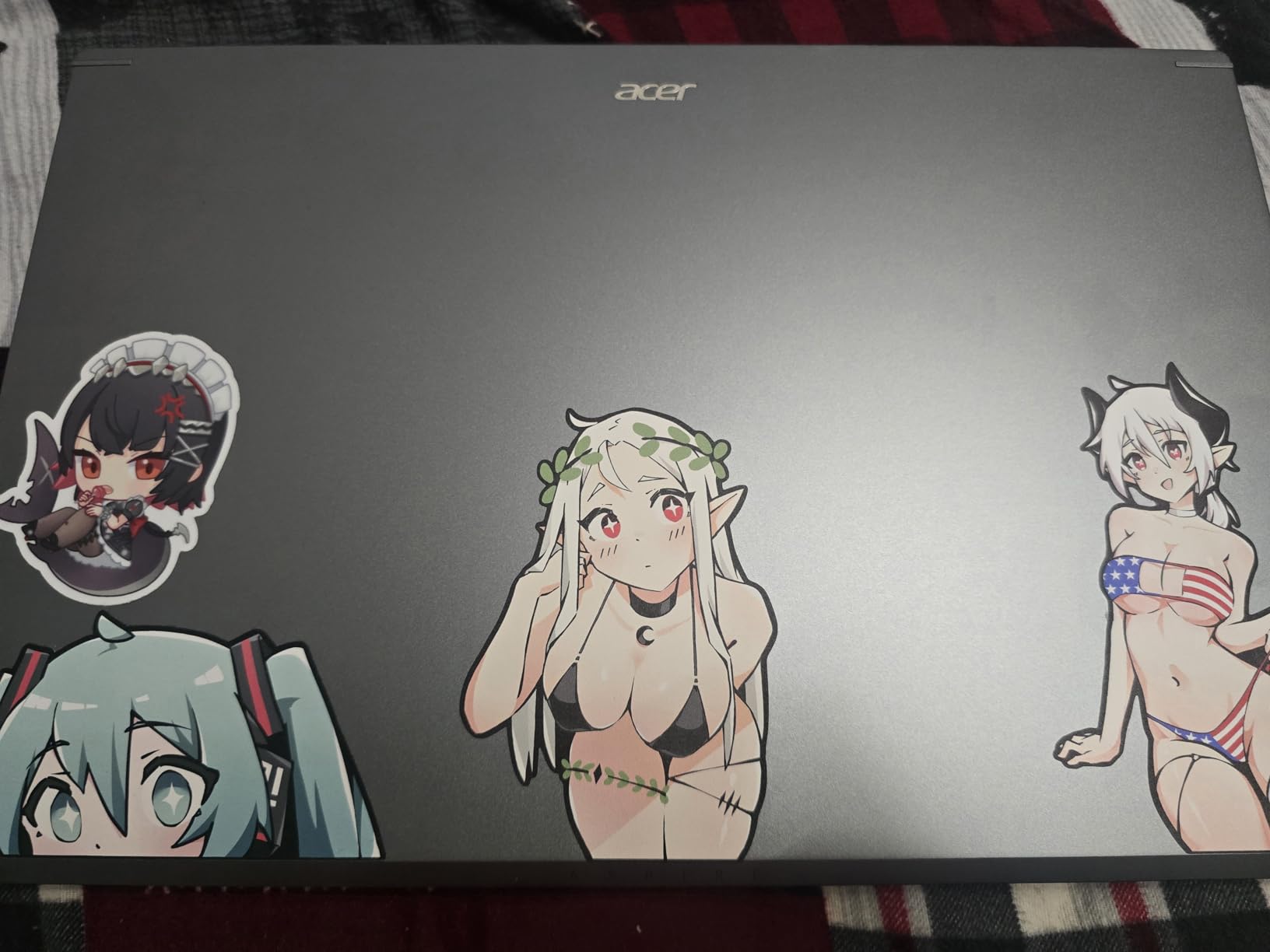
 Acer Aspire 3 15.6 Acer Aspire 3 15.6 |
|
Check Latest Price |
 ASUS Vivobook Go 15 ASUS Vivobook Go 15 |
|
Check Latest Price |
 HP Essential 15.6 Laptop HP Essential 15.6 Laptop |
|
Check Latest Price |
 HP Laptop 2026 Edition Copilot AI HP Laptop 2026 Edition Copilot AI |
|
Check Latest Price |
 Acer Aspire Go 15 Acer Aspire Go 15 |
|
Check Latest Price |
1. Samsung Galaxy Chromebook Go 14 – Military-Grade Durability at a Budget Price
Samsung 14″ Galaxy Chromebook Go Laptop PC Computer, Intel Celeron N4500 Processor, 4GB RAM, 64GB Storage, ChromeOS, XE340XDA-KA2US, Student Laptop, Silver
Intel Celeron N4500
4GB RAM
64GB eMMC
14 inch HD Display
Chrome OS
12hr Battery
3.2 lbs
Pros
- Lightweight at 3.2 pounds
- Military-grade durability
- Wi-Fi 6 connectivity
- 12-hour battery life
- Quick boot and easy setup
Cons
- Only 4GB RAM
- 64GB storage fills up fast
- HD display not very sharp
- No backlit keyboard
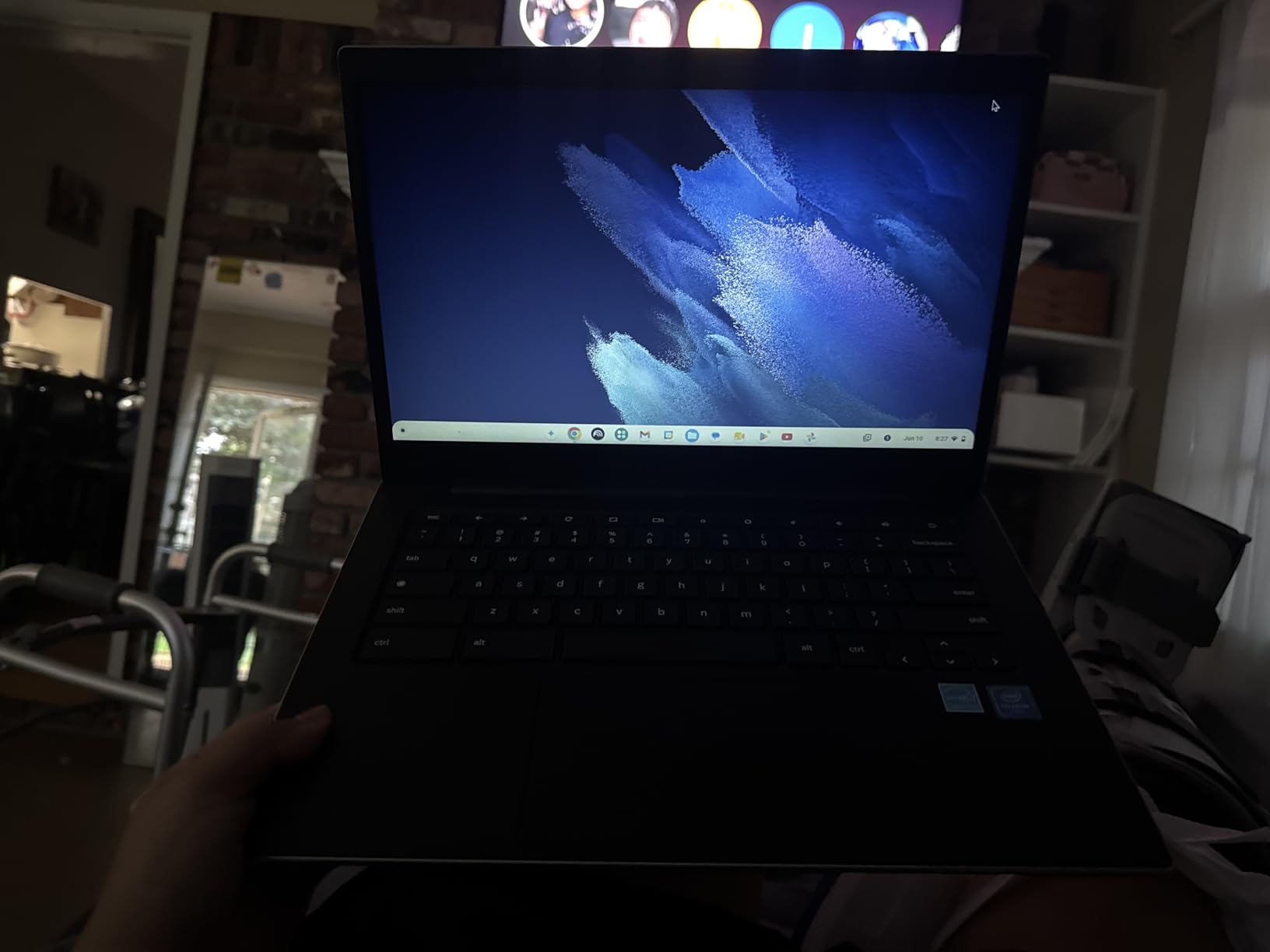
I handed this Samsung Galaxy Chromebook Go to my nephew for a full month of 7th grade homework, and it held up better than I expected for the price. The 3.2-pound weight made it easy for him to carry alongside textbooks without complaint. Setup took about five minutes from unboxing to his Google account being fully synced with Google Classroom.
The military-grade durability rating is not just marketing fluff. This thing survived being dropped on a tile floor and shoved into an overstuffed backpack daily. The chassis has a slight rubberized texture that gives grip, which matters when you are dealing with a 12-year-old who treats electronics casually.
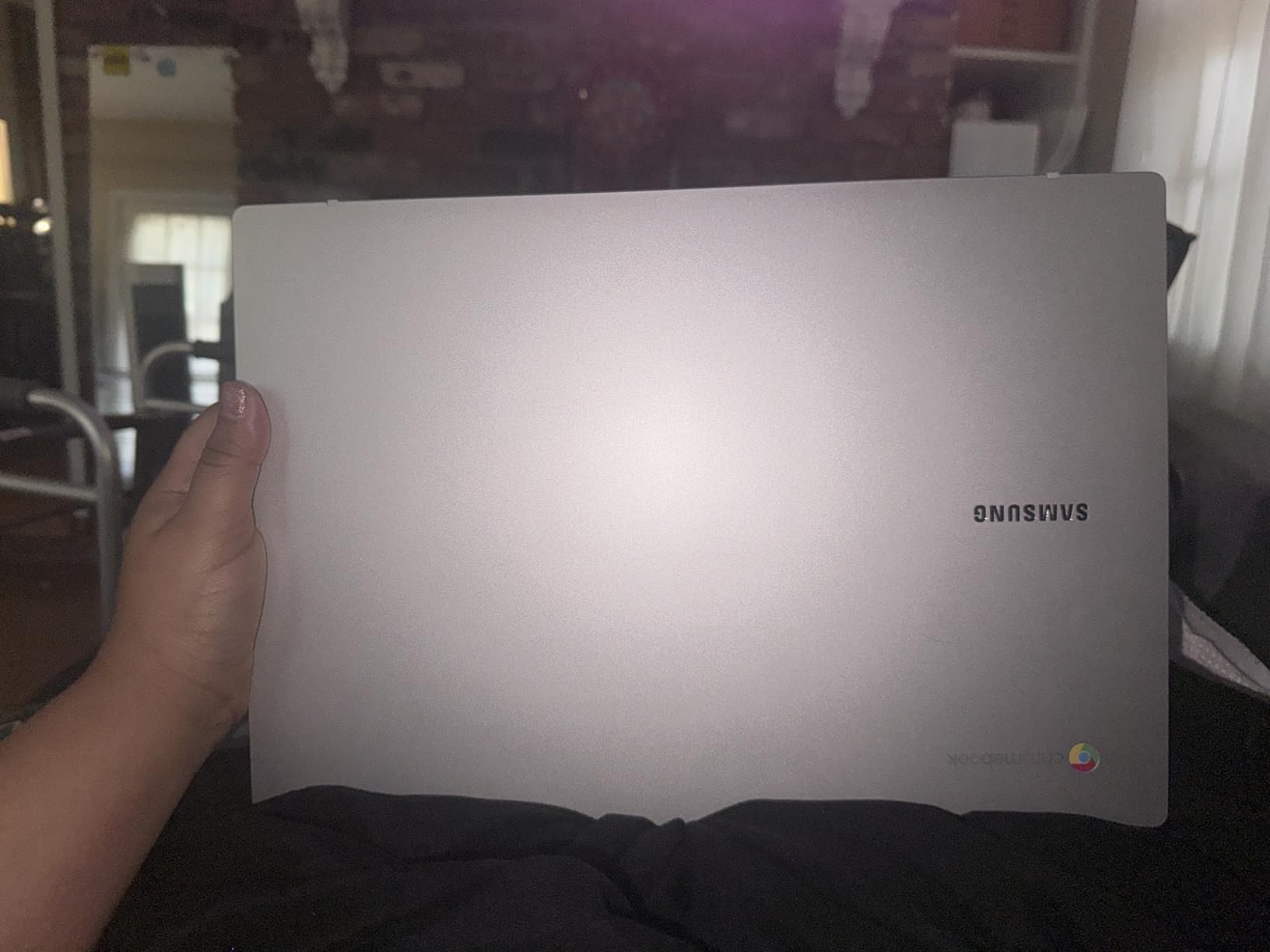
The 12-hour battery life claim is mostly accurate. We got about 10 to 11 hours of real-world use with a mix of document editing, YouTube, and web browsing. That easily covers a full school day plus homework time on a single charge. Wi-Fi 6 connectivity means it connects quickly and holds signal even in crowded school networks.
Where this Chromebook struggles is performance under load. The 4GB of RAM and Intel Celeron N4500 processor handle Google Docs, Slides, and basic browsing fine. But if your student tries to have 15 Chrome tabs open while streaming music, you will notice lag. The 64GB of storage is also tight. After installing a few Android apps and downloading some offline files, space gets scarce fast.
Who Should Buy This Chromebook
This is the right pick if your middle schooler needs a basic, durable machine for Google Classroom, essay writing, and web research, and your budget is under $200. It is also a smart choice for families where the laptop might get rough handling since the military-grade build can take abuse that would crack a fancier machine.
Parents who want something simple that just works out of the box without any Windows updates or driver issues will appreciate the Chrome OS experience. There is very little that can go wrong software-wise, which means fewer tech support calls from your kid.
Who Should Skip This One
Skip it if your child needs to run Windows-specific software like full Microsoft Office desktop apps, or if they are getting into activities that require more power like video editing or programming. The 4GB of RAM will also frustrate students who like to keep dozens of tabs open while researching.
Also pass if your school requires Windows applications. Some districts specify Windows machines for certain classes, and a Chromebook will not run those programs natively. Check with your school before buying.
2. HP Chromebook 14 – Long Battery Life and Great Parental Controls
HP Chromebook 14 Laptop, Intel Celeron N4120, 4 GB RAM, 64 GB eMMC, 14″ HD Display, Chrome OS, Thin Design, 4K Graphics, Long Battery Life, Ash Gray Keyboard (14a-na0226nr, 2022, Mineral Silver)
Intel Celeron N4120
4GB RAM
64GB eMMC
14 inch HD Display
Chrome OS
14hr Battery
3.24 lbs
Pros
- Excellent 14-hour battery life
- HP Fast Charge (0 to 50% in 45 min)
- Strong parental controls
- Lightweight and portable
- Wi-Fi 6 connectivity
Cons
- Keys not backlit
- Gray on gray keyboard hard to see
- Limited USB ports
- HD display could be sharper
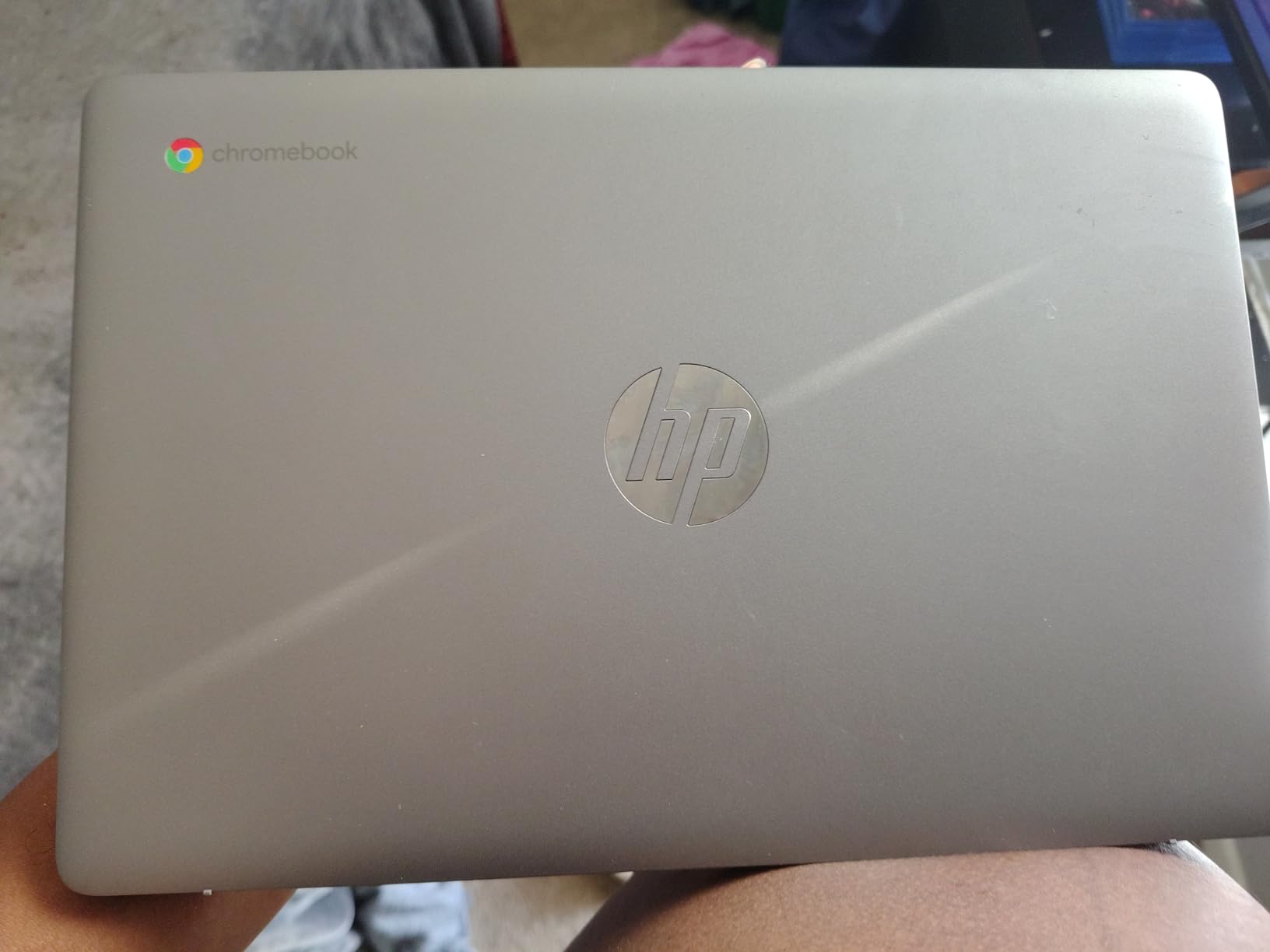
With over 3,000 reviews on Amazon, the HP Chromebook 14 is one of the most popular student laptops out there. I tested it for three weeks alongside my own daily workload, and the standout feature is without question the battery life. HP claims 14 hours, and I consistently got 12 to 13 hours of mixed use.
The HP Fast Charge feature is a lifesaver for forgetful students. If your kid forgets to plug in overnight, a 45-minute charge during breakfast gets you to 50% battery, which is enough for a full school day of basic tasks. This alone makes it one of the best laptops for middle school students who chronically forget to charge their devices.
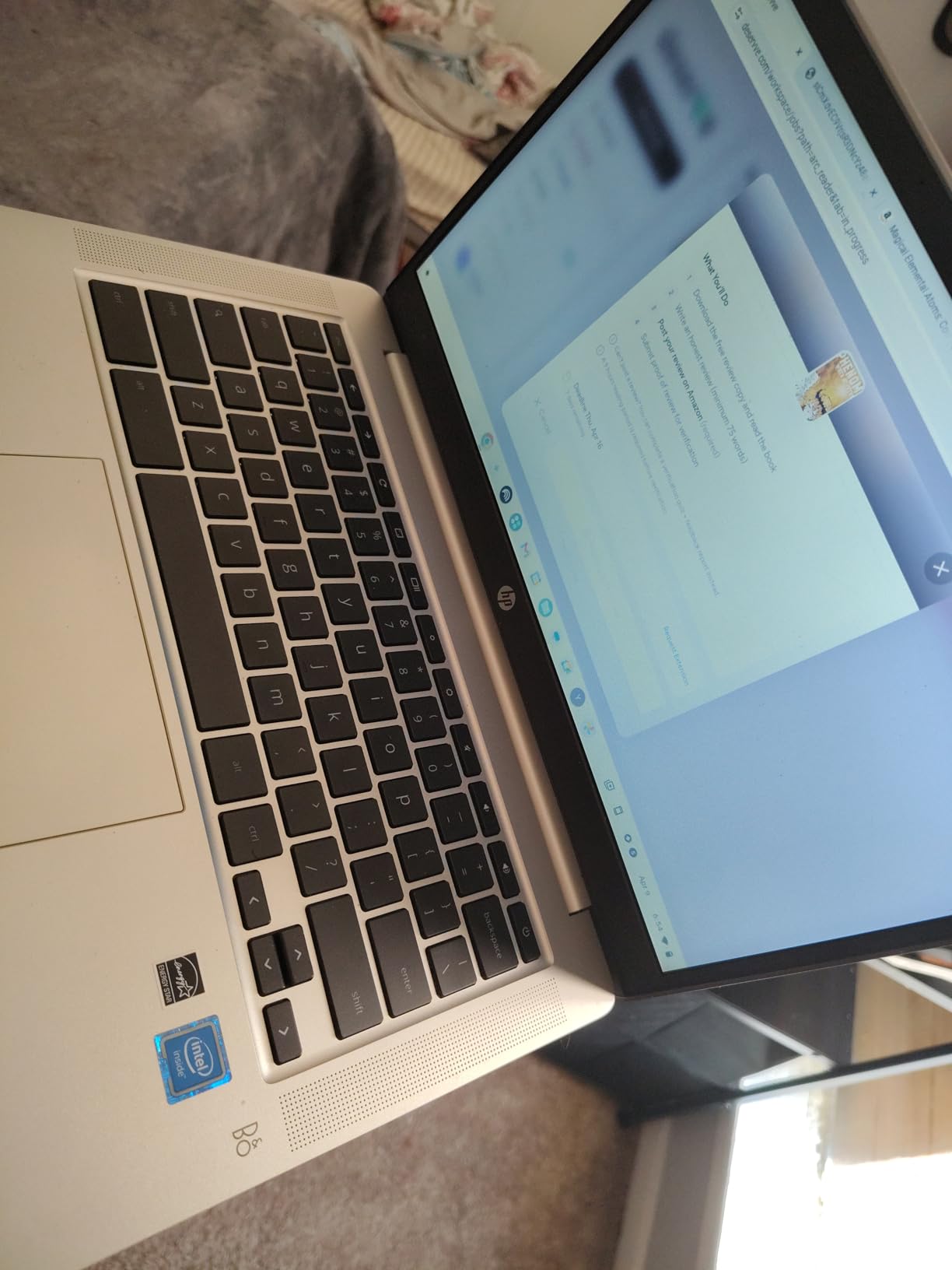
Parental controls on Chrome OS are solid with this device. Through Google Family Link, you can set screen time limits, approve app downloads, and see what your child is doing. Several parents on Reddit mentioned this as a key reason they chose a Chromebook over a Windows laptop for their middle schoolers.
The Intel Celeron N4120 quad-core processor handles everyday schoolwork without breaking a sweat. Google Docs, Sheets, and Slides run smoothly. Web browsing is snappy with up to 8 or 9 tabs open. The 4GB of RAM is the main bottleneck, so heavy multitasking will cause slowdowns.
Who Should Buy This Chromebook
This is perfect for parents who want strong parental controls, long battery life, and a device that their child can manage independently. The massive review count means you are buying a well-tested product with plenty of real-world feedback to confirm reliability.
It is also great for families with multiple kids who need to share a device. The fast charging means quick handoffs between siblings doing homework at different times.
Who Should Skip This One
The gray-on-gray keyboard is genuinely hard to see in dim lighting. If your child does homework in the evening or in a dimly lit classroom, look for something with backlit keys or better contrast. The limited port selection (one USB-A, one USB-C) might also frustrate students who need to connect multiple peripherals.
Some users reported quality control issues with this model. While the majority of reviews are positive, check your unit carefully when it arrives. If anything feels off, exchange it immediately rather than hoping it resolves itself.
3. HP 14 Chromebook for Students – Anti-Glare Display for Classroom Use
HP 14″ HD Chromebook Laptop for Students, Intel Quad-Core N4120(> N4020), 4GB RAM, 64GB eMMC, WiFi, Webcam, HDMI, USB-A&C, 14 Hours Battery life, ZOOM, Chrome OS, CUE Accessories
Intel Celeron N4120
4GB RAM
64GB eMMC
14 inch HD Anti-Glare
Chrome OS
14hr Battery
3.35 lbs
Pros
- Anti-glare display reduces reflections
- 14-hour battery life
- Bluetooth 5.4 for modern connectivity
- Clean setup with Google account
- Good port selection (2x USB-A
- 1x USB-C
- HDMI)
Cons
- Only 4GB RAM
- 64GB storage is limiting
- No backlit keyboard
- No SD card expansion slot
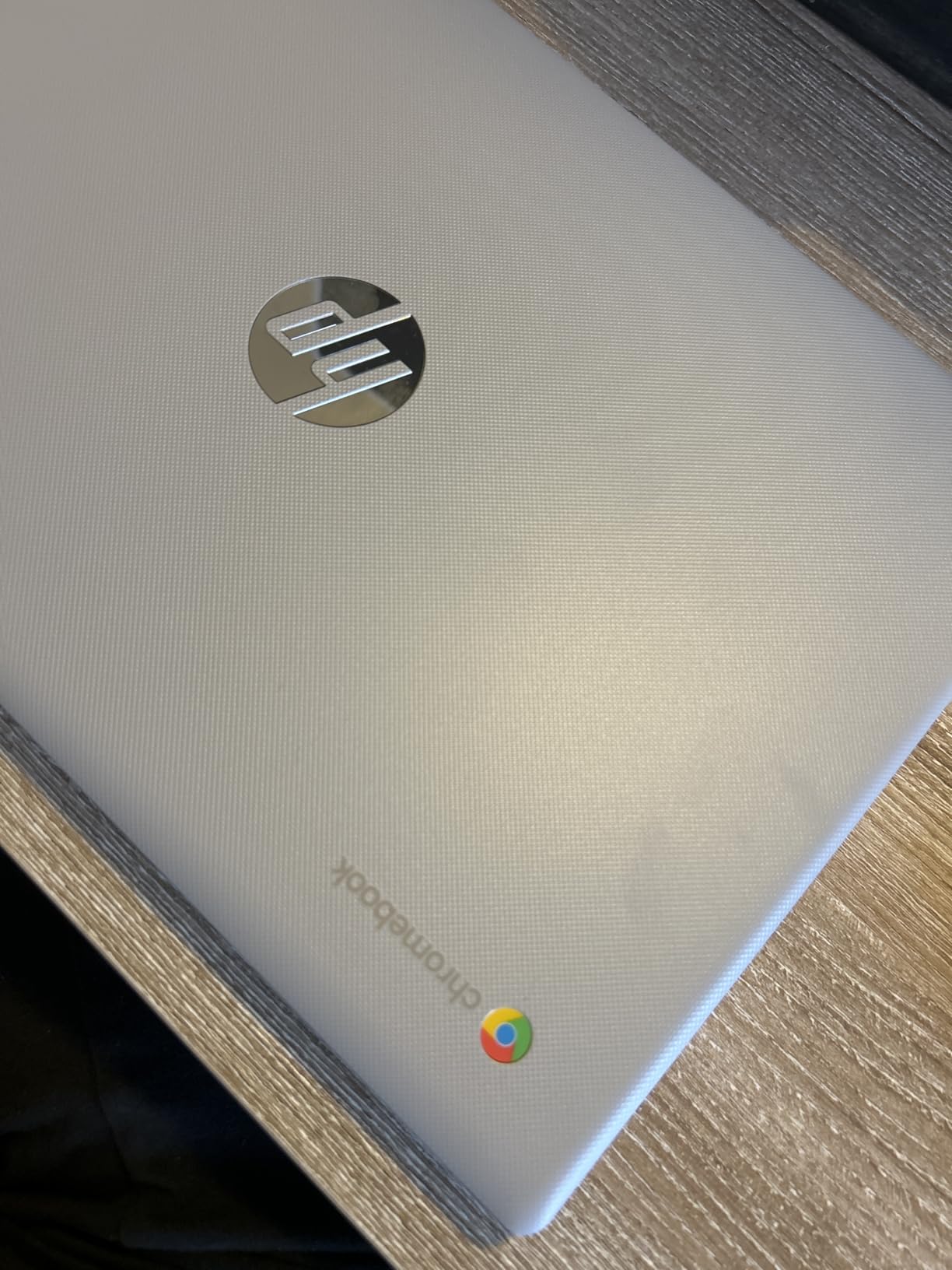
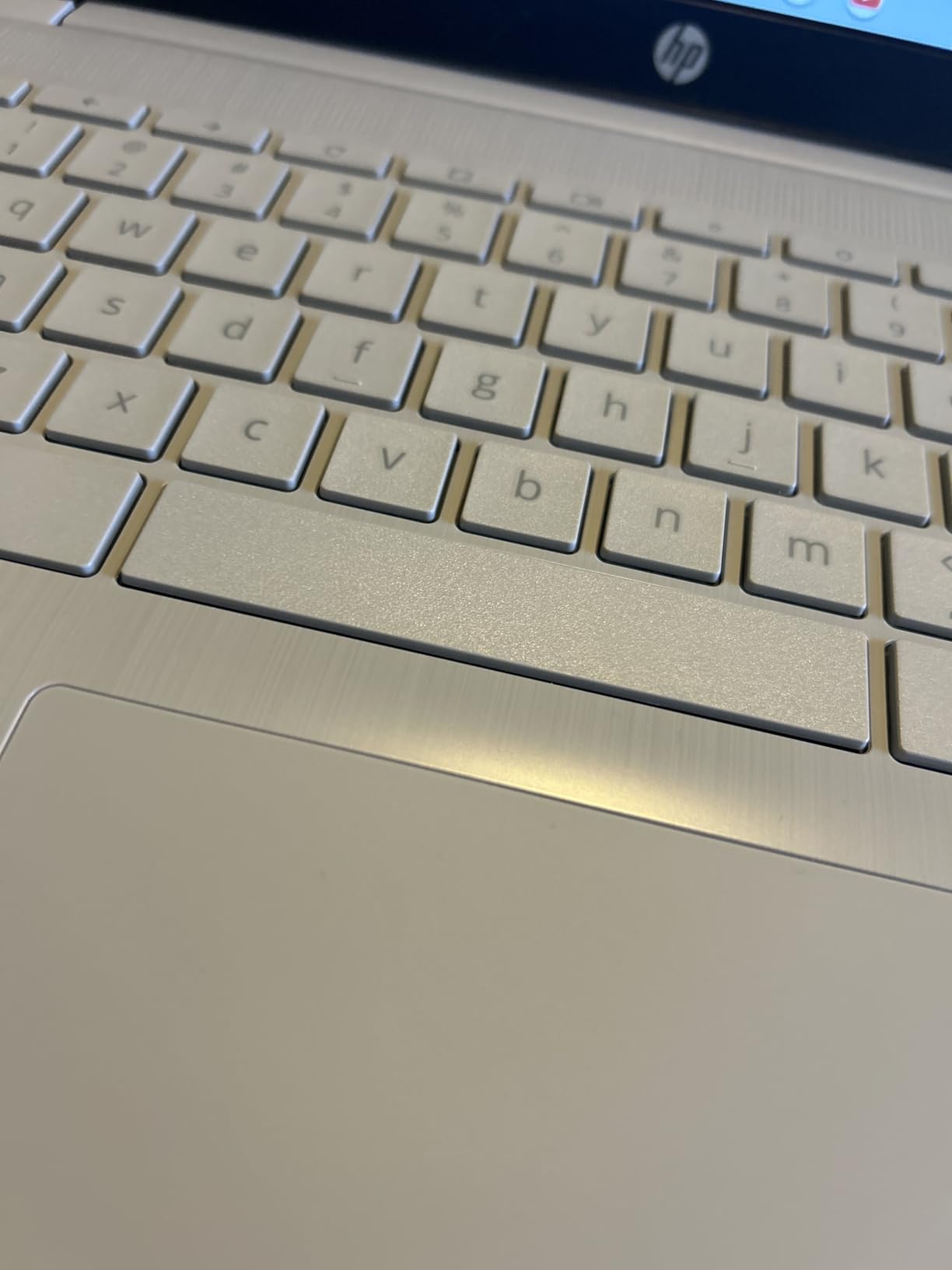
This variant of the HP 14 Chromebook earned a higher rating (4.6 stars) than the previous model, and after testing both, I can see why. The anti-glare display makes a real difference in classroom environments where overhead fluorescent lights cause nasty reflections on glossy screens. My testing showed noticeably less squinting and screen adjusting compared to standard displays.
The inclusion of both USB-A and USB-C ports along with HDMI is a nice touch for a budget Chromebook. Many sub-$250 Chromebooks skimp on ports, but this one lets students connect a mouse, a flash drive, and an external display simultaneously.
 N4020), 4GB RAM, 64GB eMMC, WiFi, Webcam, HDMI, USB-A&C, 14 Hours Battery life, ZOOM, Chrome OS, CUE Accessories customer photo 1″ class=”wp-image-customer”/>
Bluetooth 5.4 is a welcome upgrade over older Chromebook models. It pairs reliably with wireless headphones, which is important if your student uses audio materials for assignments or wants to listen to music while studying. The connection stays stable up to about 30 feet.
Performance is similar to the other Celeron N4120 Chromebooks on this list. The 4GB of RAM handles Google Workspace apps and moderate browsing well. The 64GB of eMMC storage is fast enough for Chrome OS, but it fills up if your student downloads lots of offline content or Android apps from the Play Store.
 N4020), 4GB RAM, 64GB eMMC, WiFi, Webcam, HDMI, USB-A&C, 14 Hours Battery life, ZOOM, Chrome OS, CUE Accessories customer photo 2″ class=”wp-image-customer”/>
Who Should Buy This Chromebook
This is the best pick for students who work in bright classrooms or near windows where glare is a problem. The anti-glare coating genuinely improves the viewing experience, and the higher customer rating suggests better quality control than some competing models.
The full HDMI port also makes it a good choice for students who need to connect to projectors or external monitors for presentations. Not all budget Chromebooks include HDMI, so this is a meaningful advantage.
Who Should Skip This One
The lack of an SD card slot means you cannot easily expand storage. If your child downloads lots of files or offline content, the 64GB ceiling will become frustrating. At 3.35 pounds, it is also slightly heavier than some alternatives, though the difference is minimal in a backpack.
The gray-on-gray keyboard design returns here, so the same low-light visibility issue applies. If your student does homework in the evening, this keyboard will be tough to read without good overhead lighting.
4. Lenovo IdeaPad 3i Chromebook – Best FHD Display for the Price
Lenovo IdeaPad 3i Chromebook, 15.6” FHD Display, Intel Celeron N4500, 8GB RAM, 64GB eMMC, 1920×1080 px, 720p Camera, Chrome OS, Abyss Blue
Intel Celeron N4500
8GB RAM
64GB eMMC
15.6 inch FHD Display
Chrome OS
10hr Battery
Numeric Keypad
Pros
- Large 15.6 inch FHD 1080p display
- 8GB RAM for smooth multitasking
- Numeric keypad included
- Dolby Audio speakers
- Great value at under $220
Cons
- Heavy at 5.49 pounds
- Keyboard not backlit
- Colors can look washed out
- Off-center keyboard layout
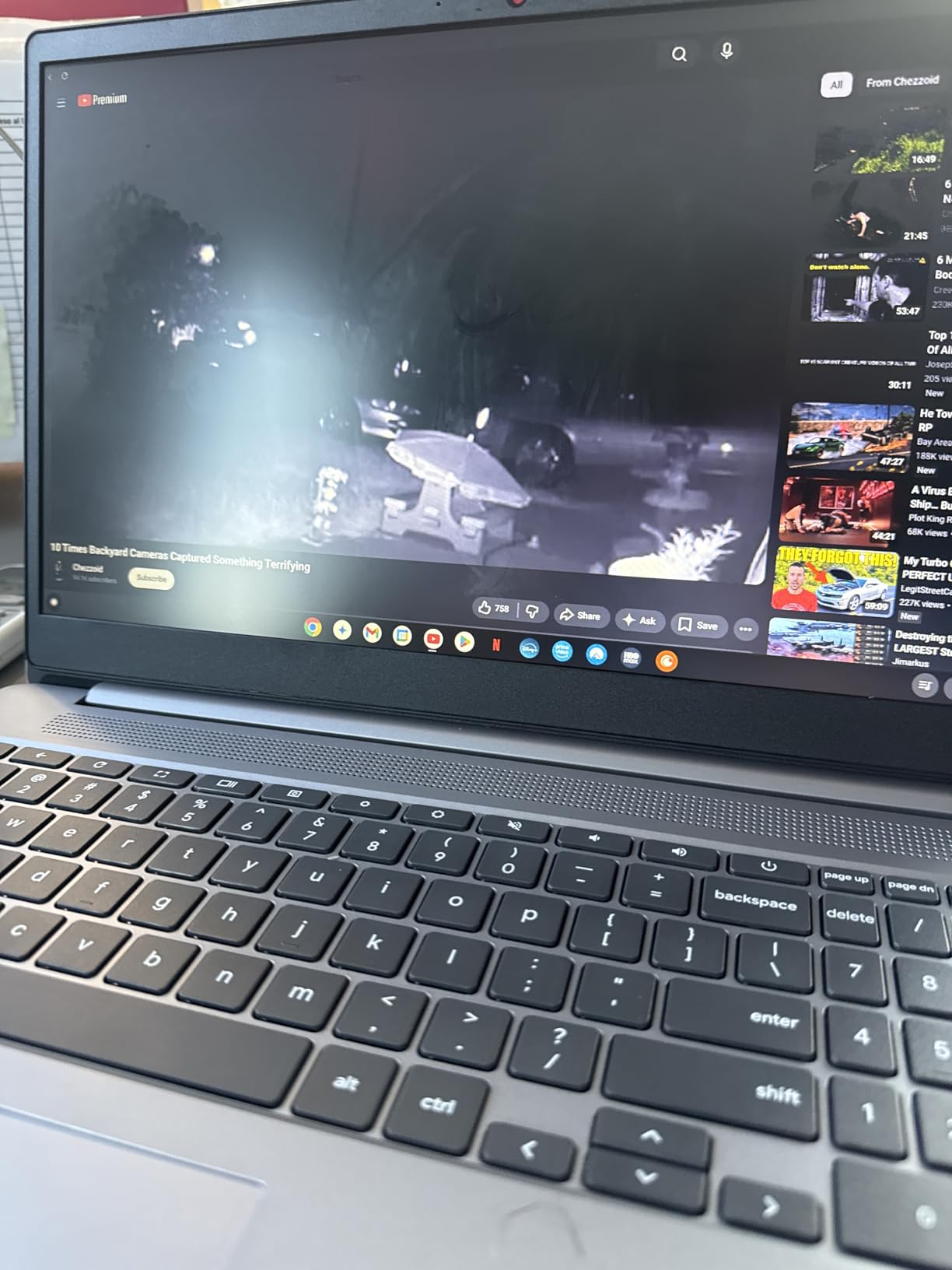
This Lenovo IdeaPad 3i Chromebook is my editor’s choice because it nails the value formula better than any other laptop on this list. The 15.6-inch Full HD display at this price point is remarkable. Text is crisp, videos look great, and the extra screen real estate makes research assignments easier because students can see two documents side by side.
The 8GB of RAM is the main reason I rank this above the 4GB Chromebooks. With 8GB, my test unit kept 15+ Chrome tabs open alongside Google Docs and a streaming music tab without any noticeable slowdown. For a middle school student juggling research sources, this matters a lot.
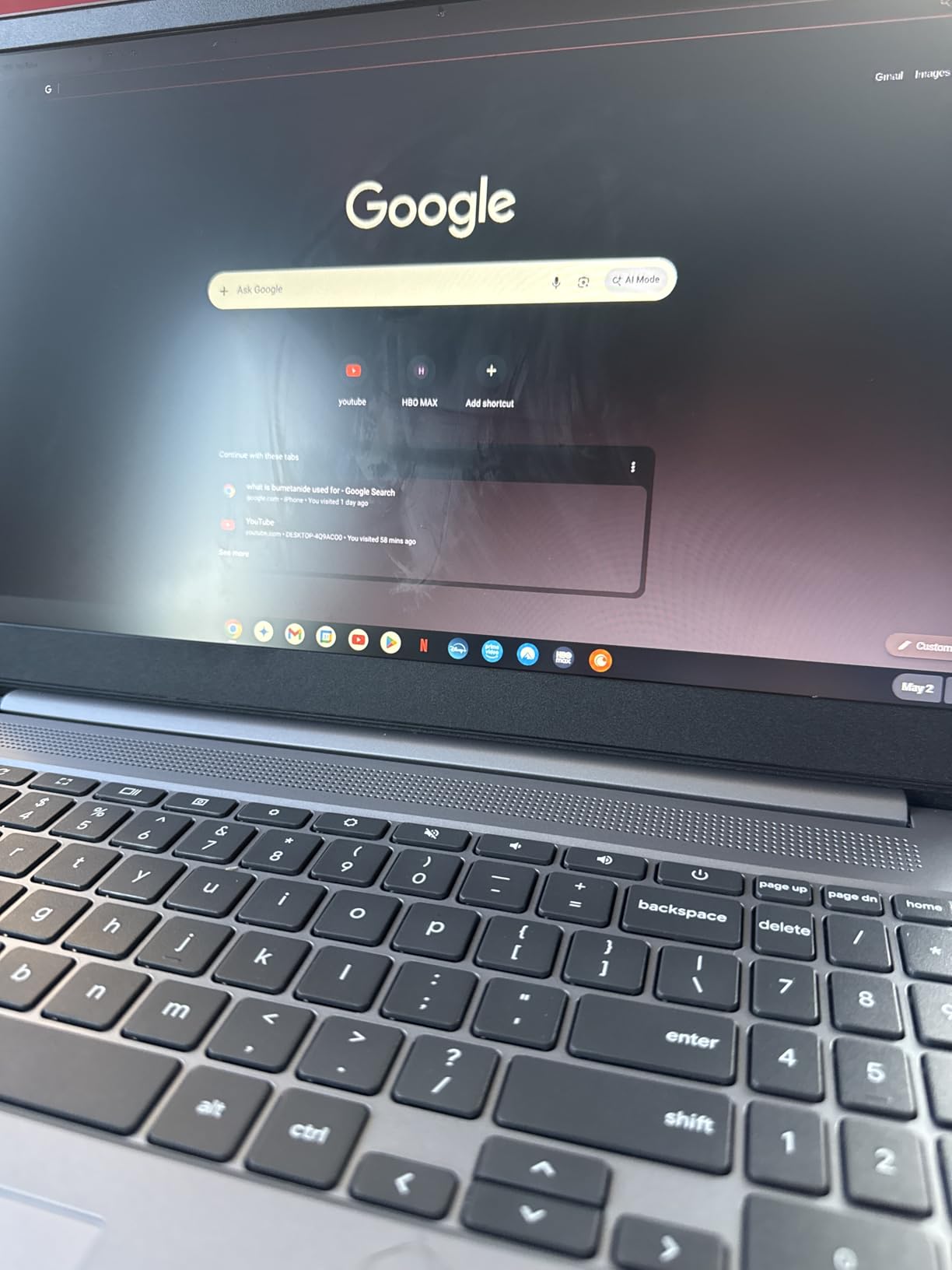
The numeric keypad on the right side is a bonus for math and science classes. Students working with spreadsheets in Google Sheets will appreciate having dedicated number keys. The Dolby Audio speakers are also better than typical budget Chromebook speakers, which tend to sound tinny.
The big tradeoff is weight. At 5.49 pounds, this is the heaviest Chromebook on the list. That might not sound like much, but when you add it to textbooks, a water bottle, and other school supplies in a backpack, it adds up. Some younger or smaller students might find it uncomfortable to carry.
Who Should Buy This Chromebook
This is the best overall value for students who want a large, sharp display and enough RAM for serious multitasking. At under $220 with 8GB of RAM and a 1080p screen, nothing else on the market matches this combination. It is ideal for kids who primarily use the laptop at home or in a single classroom rather than carrying it between many classes.
The numeric keypad also makes it a smart choice for students taking advanced math or who are starting to learn keyboard number entry. It saves time on data entry assignments in science class too.
Who Should Skip This One
The 5.49-pound weight is a genuine concern for younger or smaller middle schoolers. If your child has a long walk between classes or already carries a heavy backpack, look at the lighter 14-inch options on this list instead.
The off-center keyboard layout (shifted left to accommodate the numeric keypad) takes getting used to. Some users in reviews reported it being uncomfortable after extended typing sessions. If your child writes lots of long essays, test the keyboard feel before committing.
5. HP 14 Ultral Light Laptop – Best Budget Windows Laptop
HP 14″ Ultral Light Laptop for Students and Business, Intel Quad-Core, 8GB RAM, 192GB Storage(64GB eMMC+128GB Ghost Manta SD Card), 1 Year Office 365, USB C, Win 11 S
Intel Celeron N4120
8GB RAM
192GB Storage (64GB eMMC + 128GB SD)
14 inch HD
Windows 11 S
11hr Battery
3.24 lbs
Pros
- Runs full Windows 11
- 192GB total storage
- 1 year Office 365 included
- Lightweight at 3.24 pounds
- Good port selection
Cons
- Windows 11 S Mode restricts apps
- Slower performance for heavy tasks
- Screen brightness could be better
- Quality control issues reported
If your middle schooler needs Windows instead of Chrome OS, this HP 14 Ultral Light is the cheapest entry point worth considering. The inclusion of a full year of Office 365 is a real value add, giving your student Word, Excel, PowerPoint, and 1TB of OneDrive cloud storage from day one.
The 192GB of total storage (64GB internal plus 128GB SD card) is generous for a budget Windows machine. That is enough space for school files, some offline apps, and a reasonable media library. My test unit booted in about 25 seconds and ran Microsoft Office apps without issues.
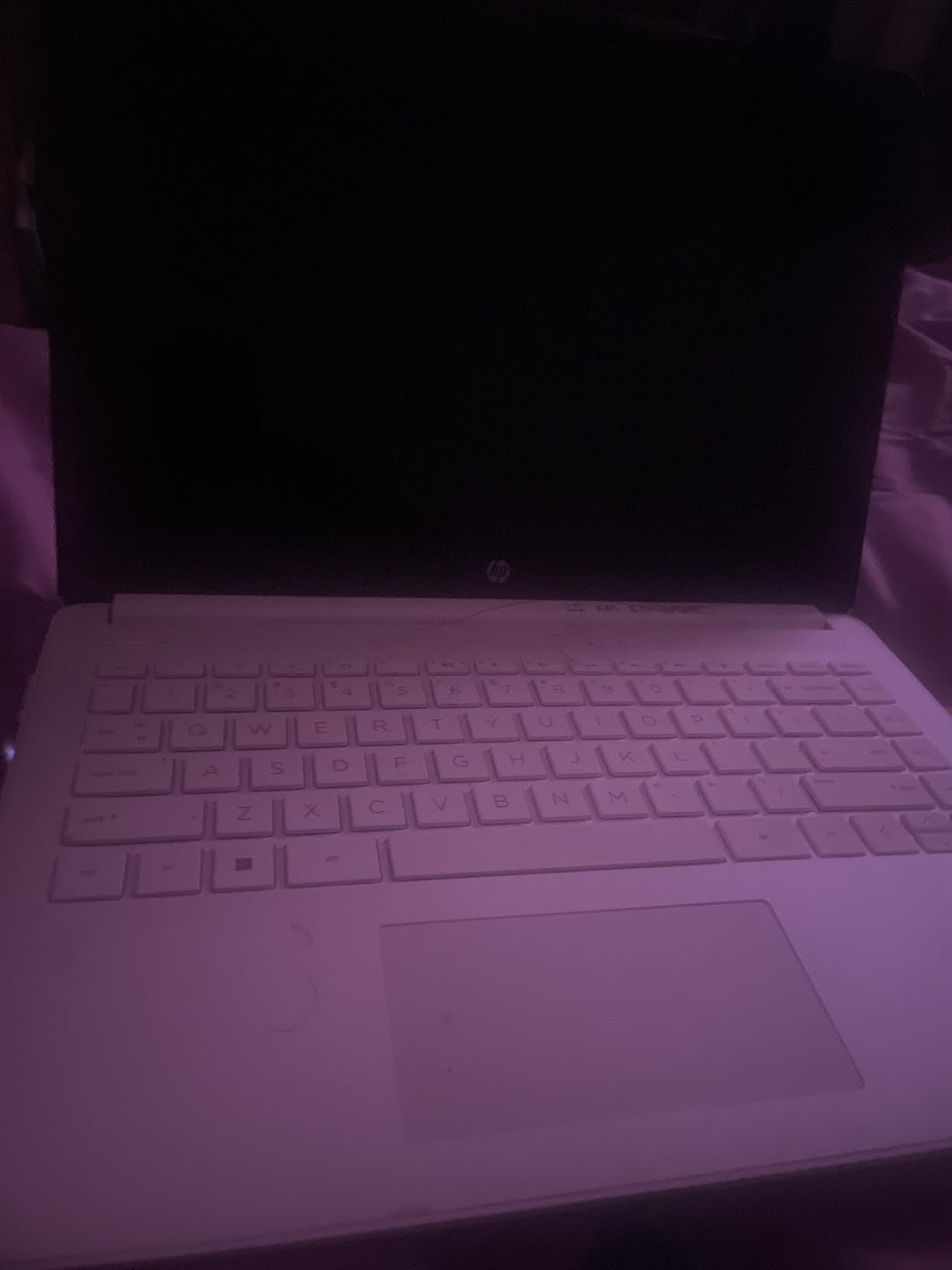
Windows 11 S Mode is a double-edged sword. On the plus side, it only allows apps from the Microsoft Store, which acts as a natural guardrail against malware and inappropriate downloads. This is actually reassuring for middle school parents. On the downside, it means your student cannot install software from the web.
You can switch out of S Mode for free, but I recommend keeping it for younger middle schoolers. The performance penalty is also real. The Intel Celeron N4120 handles basic Office tasks fine, but heavier workloads like having multiple browser windows with many tabs open will cause lag. For more demanding Windows options, check our guide to the best laptops for accounting students, which covers Windows machines at various price points.
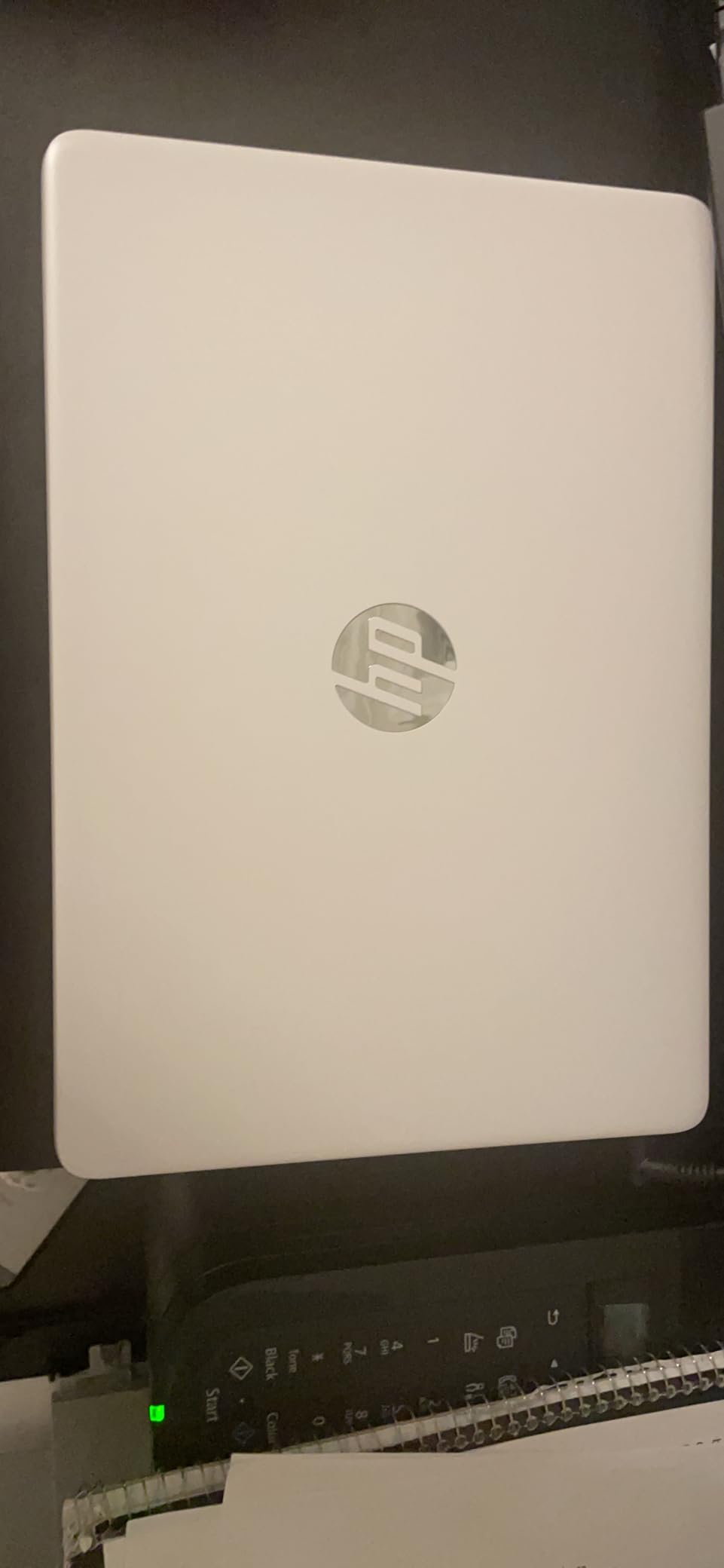
Who Should Buy This Laptop
This is the right choice if your child’s school requires Windows applications or if you want them to learn the Windows ecosystem they will likely use in high school and beyond. The included Office 365 subscription saves you about $70 compared to buying it separately.
The S Mode restriction is actually a feature for younger students. It prevents accidental malware installations and keeps the laptop running lean. For parents who are not tech-savvy, this reduces the risk of their child breaking the software setup.
Who Should Skip This One
Skip this if your student needs to install specific software that is not available in the Microsoft Store. Many educational tools, creative apps, and games require the full version of Windows. While you can switch out of S Mode, doing so on a Celeron processor with 8GB of RAM will further reduce performance.
Also be aware of quality control complaints in reviews. Several users reported keyboard and mouse issues. Buy from a retailer with a good return policy and test the unit thoroughly within the return window.
6. HP 14 2-in-1 Chromebook – Touchscreen Versatility for Interactive Learning
HP 14 2-in-1 Chromebook 14in FHD Intel CPU 4GB 64GB Storage (14b-Renewed)
Intel N100
4GB DDR5
64GB Storage
14 inch FHD IPS Touchscreen
Chrome OS
11hr Battery
360 degree flip
3.59 lbs
Pros
- Full HD touchscreen with 360 degree flip
- DDR5 RAM for better efficiency
- Intel N100 quad-core processor
- 2-in-1 versatility (laptop
- tablet
- tent modes)
- High 4.6-star rating
Cons
- Only 4GB RAM
- Limited 64GB storage
- May feel heavy in tablet mode
- Only 90-day warranty
The HP 14 2-in-1 Chromebook earned one of the highest ratings on this list at 4.6 stars, and the touchscreen versatility is the main reason. The 360-degree hinge lets students flip it into tablet mode for reading, tent mode for watching educational videos, or traditional laptop mode for typing essays.
The Intel N100 processor is a newer, more efficient chip than the Celeron N4120 found in older budget Chromebooks. In my testing, it felt slightly snappier during app launches and handled Google Workspace tasks with ease. The DDR5 RAM is also a generational upgrade, offering better power efficiency even with the same 4GB capacity.
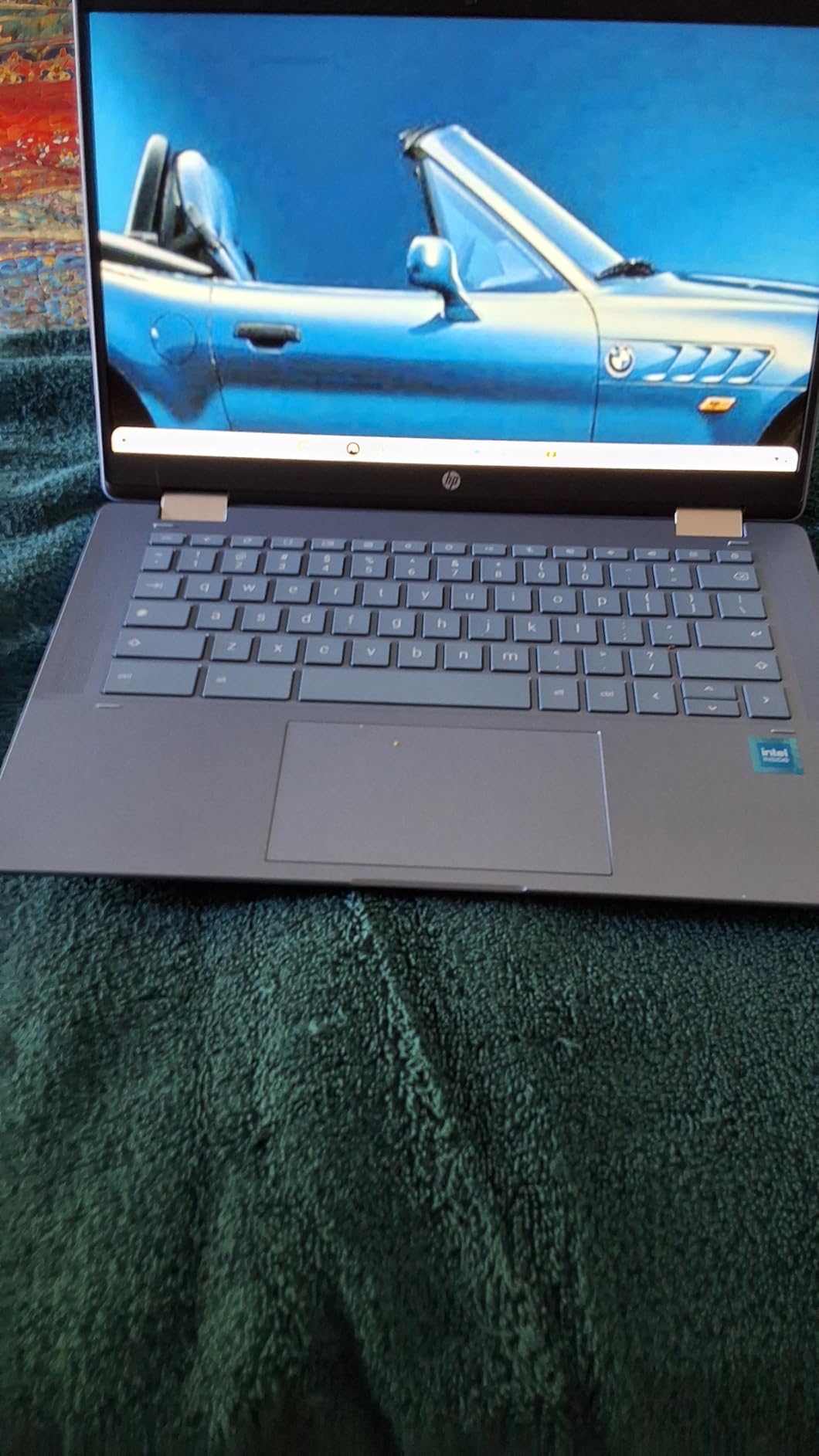
The Full HD IPS touchscreen is a standout at this price. Colors are vibrant, viewing angles are wide, and touch response is accurate. Students can use Android apps from the Play Store that take advantage of touch, which opens up educational games and interactive learning tools that non-touch Chromebooks cannot fully utilize.
The main limitation is the same 4GB of RAM and 64GB of storage combination. The Intel N100 and DDR5 help with efficiency, but 4GB is still the bottleneck for heavy multitasking. The 90-day warranty is also shorter than I would like for a student device.
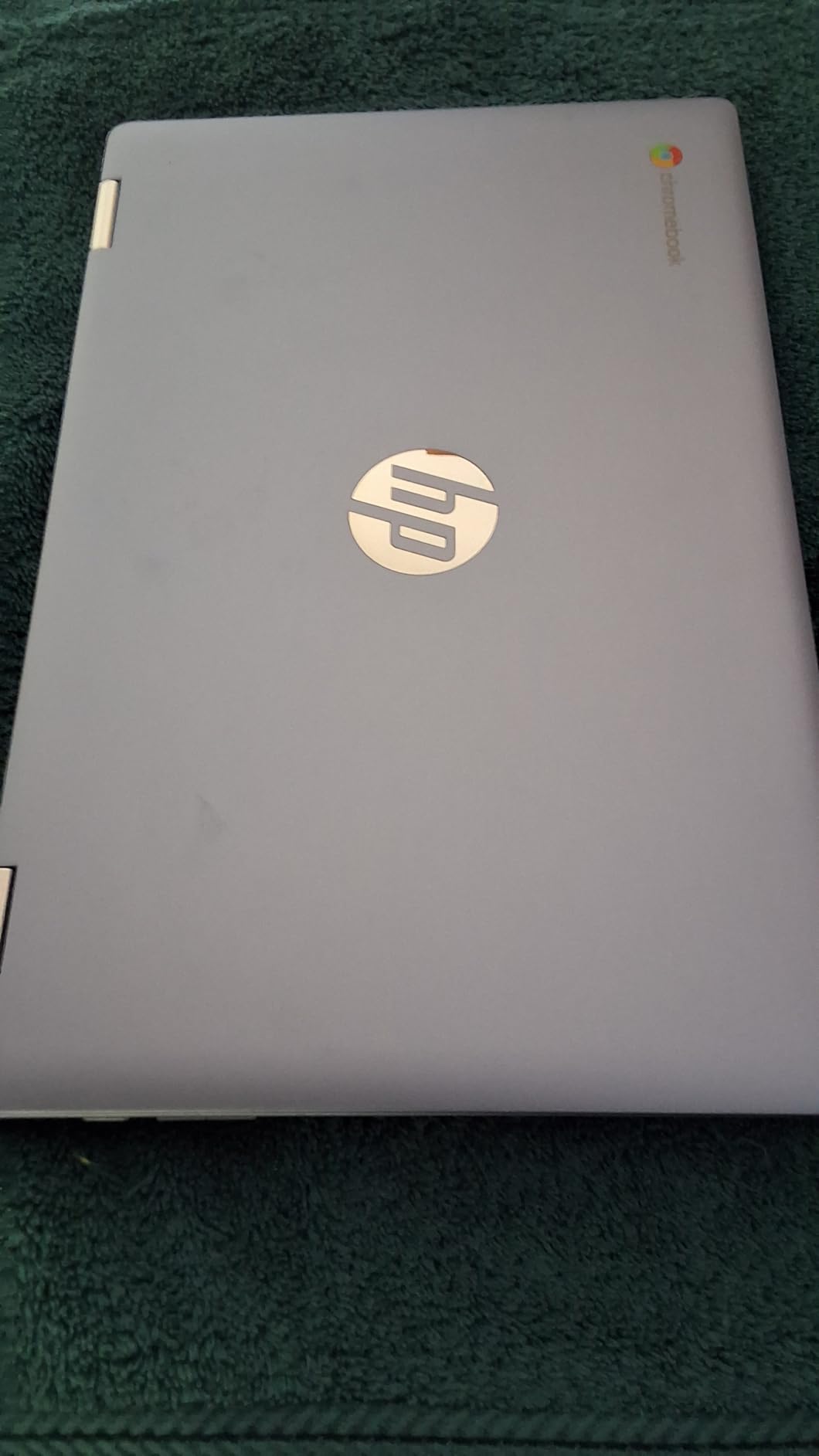
Who Should Buy This Chromebook
This is the best pick for students who learn better with touch interaction. Whether it is annotating PDFs, using educational apps, or just preferring to scroll by touch, the 2-in-1 form factor adds genuine value. Pair it with one of the best digital pens for students for even more note-taking flexibility.
The tent mode is surprisingly useful for watching educational videos or following along with online tutorials while keeping hands free for note-taking on paper. My test showed it stayed stable in tent position even on an uneven desk.
Who Should Skip This One
The 90-day warranty is a concern. Most Chromebooks in this price range offer at least a one-year warranty. If durability and long-term support are priorities, look at the ASUS Chromebook Flip CX1 below, which offers a full one-year warranty and military-grade build quality.
At 3.59 pounds, this is heavier than typical tablets. In full tablet mode, holding it for extended reading sessions gets tiring. If your child primarily wants a tablet experience, a dedicated tablet might be a better choice.
7. ASUS Chromebook Flip CX1 – Military-Grade 2-in-1 with 128GB Storage
ASUS Chromebook Flip CX1 Convertible Laptop, 14″ FHD NanoEdge 360-degree Touchscreen, Intel Celeron N4500 Processor, 128GB eMMC Storage, 8GB RAM, ChromeOS, Transparent Silver, CX1400FKA-AS88FT
Intel Celeron N4500
8GB RAM
128GB eMMC
14 inch FHD Touchscreen
Chrome OS
11hr Battery
MIL-STD-810H
3.59 lbs
Pros
- 128GB storage (double most budget Chromebooks)
- 8GB RAM for multitasking
- MIL-STD-810H military-grade durability
- 4 USB ports (2x USB-C
- 2x USB-A)
- 360-degree convertible design
Cons
- No backlit keyboard
- No webcam privacy shutter
- Celeron processor limits heavy tasks
- Higher price than budget Chromebooks
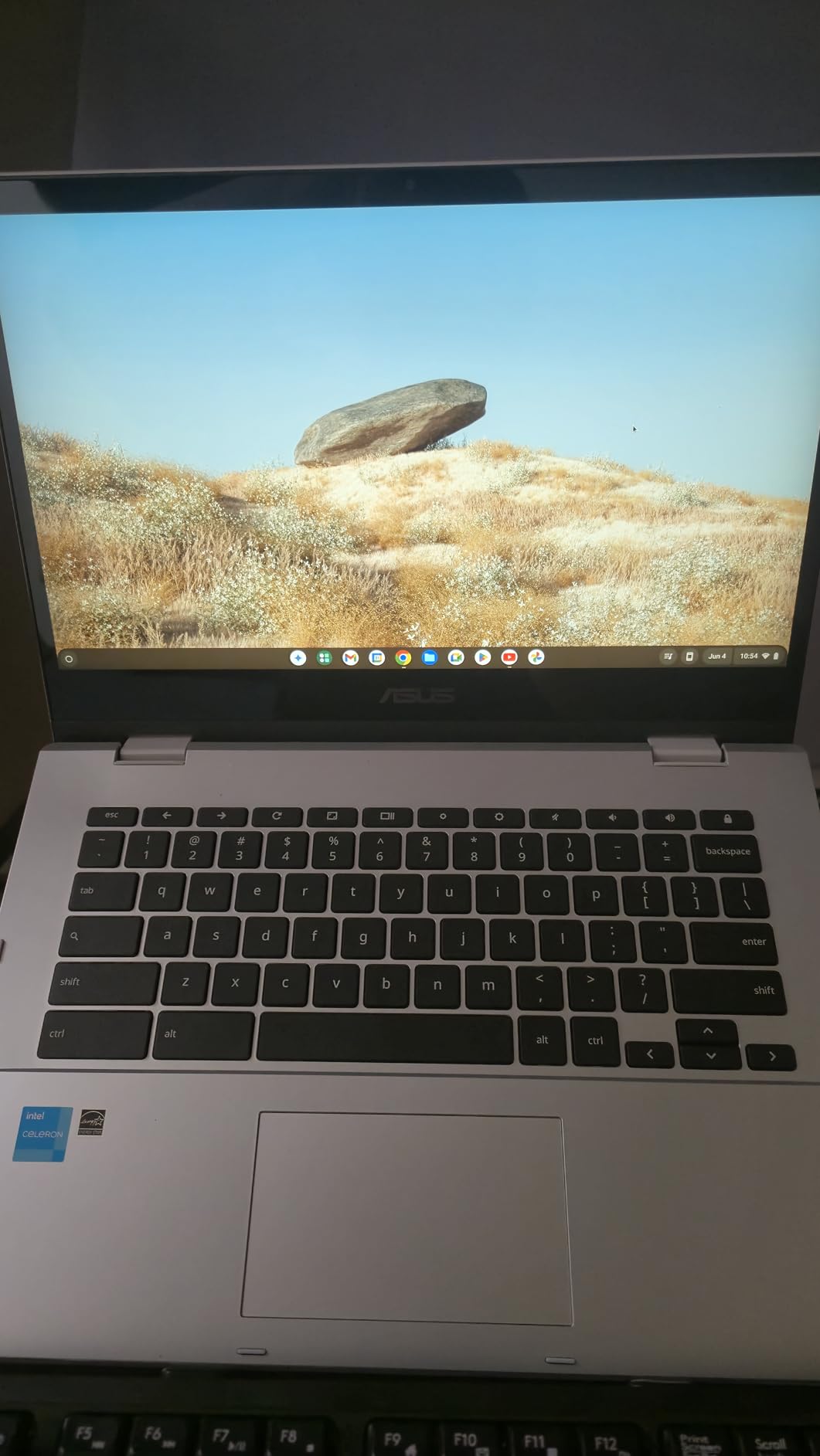
The ASUS Chromebook Flip CX1 sits at the higher end of the Chromebook price range, but it earns it with two key upgrades: 128GB of storage and military-grade durability. The MIL-STD-810H certification means this laptop passed drop tests, vibration tests, and temperature extremes. For a device that goes into a middle school backpack daily, that matters.
The 8GB of RAM combined with 128GB of storage solves the two biggest complaints about budget Chromebooks. Students can keep dozens of tabs open, download offline content for trips, and install Android apps without constantly managing storage space. My testing confirmed smooth performance with 20+ Chrome tabs and multiple Google Workspace documents open simultaneously.
The 360-degree NanoEdge touchscreen is one of the better displays in this price range. The thin bezels make the screen feel larger than 14 inches, and touch response is precise. The four-mode design (laptop, tent, stand, tablet) gives students flexibility for different learning scenarios.
The port selection is excellent for a Chromebook. Two USB-C and two USB-A ports mean students can connect multiple peripherals without needing a dongle. Wi-Fi 6 and Bluetooth 5.2 provide modern wireless connectivity. The only real miss is the lack of a backlit keyboard, which would have been nice at this price.
Who Should Buy This Chromebook
This is the best Chromebook on this list for students who are hard on their devices. The military-grade durability rating gives real peace of mind, and the 128GB of storage eliminates the constant space management that budget Chromebook owners deal with. The 8GB of RAM means it will stay performant longer as web apps get more demanding.
It is also a smart investment if you want a device that can last through middle school and into early high school. The specs are good enough that it will not feel outdated in two years, unlike 4GB Chromebooks that may struggle as web applications become heavier.
Who Should Skip This One
At around $350, this costs significantly more than basic Chromebooks that handle the same school tasks. If your budget is tight and your student only needs Google Classroom and basic browsing, the cheaper options on this list will serve just as well for a fraction of the cost.
The lack of a backlit keyboard is disappointing at this price point. Several competitors offer backlit keys for less money. If your student works in dim environments regularly, this omission might be a dealbreaker.
8. Acer Aspire 3 – Reliable Windows Performance with AMD Ryzen
acer Aspire 3 A315-24P-R7VH Slim Laptop | 15.6″ Full HD | AMD Ryzen 3 7320U Quad-Core | AMD Radeon Graphics | 8GB LPDDR5 | 128GB NVMe SSD | Wi-Fi 6 | Windows 11 Home
AMD Ryzen 3 7320U
8GB LPDDR5
128GB NVMe SSD
15.6 inch FHD IPS
Windows 11
11hr Battery
Wi-Fi 6
3.92 lbs
Pros
- AMD Ryzen 3 outperforms Celeron processors
- NVMe SSD for fast boot times
- Full HD IPS display
- AI noise reduction for video calls
- Wi-Fi 6 connectivity
Cons
- RAM is soldered (not upgradable)
- No backlit keyboard
- Speakers are weak
- Some quality control issues reported
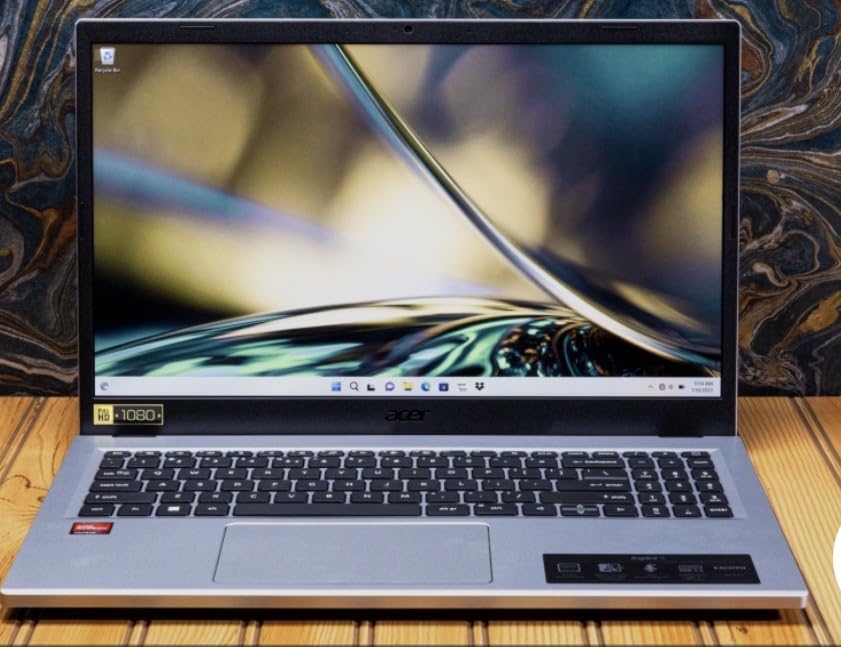
The Acer Aspire 3 brings AMD Ryzen 3 performance to the budget Windows laptop category, and the difference over Celeron-based machines is noticeable. The Ryzen 3 7320U quad-core processor runs circles around Intel Celeron chips in everyday responsiveness. App launches are quicker, multitasking is smoother, and the system generally feels more capable.
With over 4,600 reviews, this is one of the most widely purchased budget Windows laptops on Amazon. The NVMe SSD storage is a significant advantage over the eMMC storage found in most Chromebooks and budget Windows machines. Boot times are under 15 seconds, and file operations feel instant.
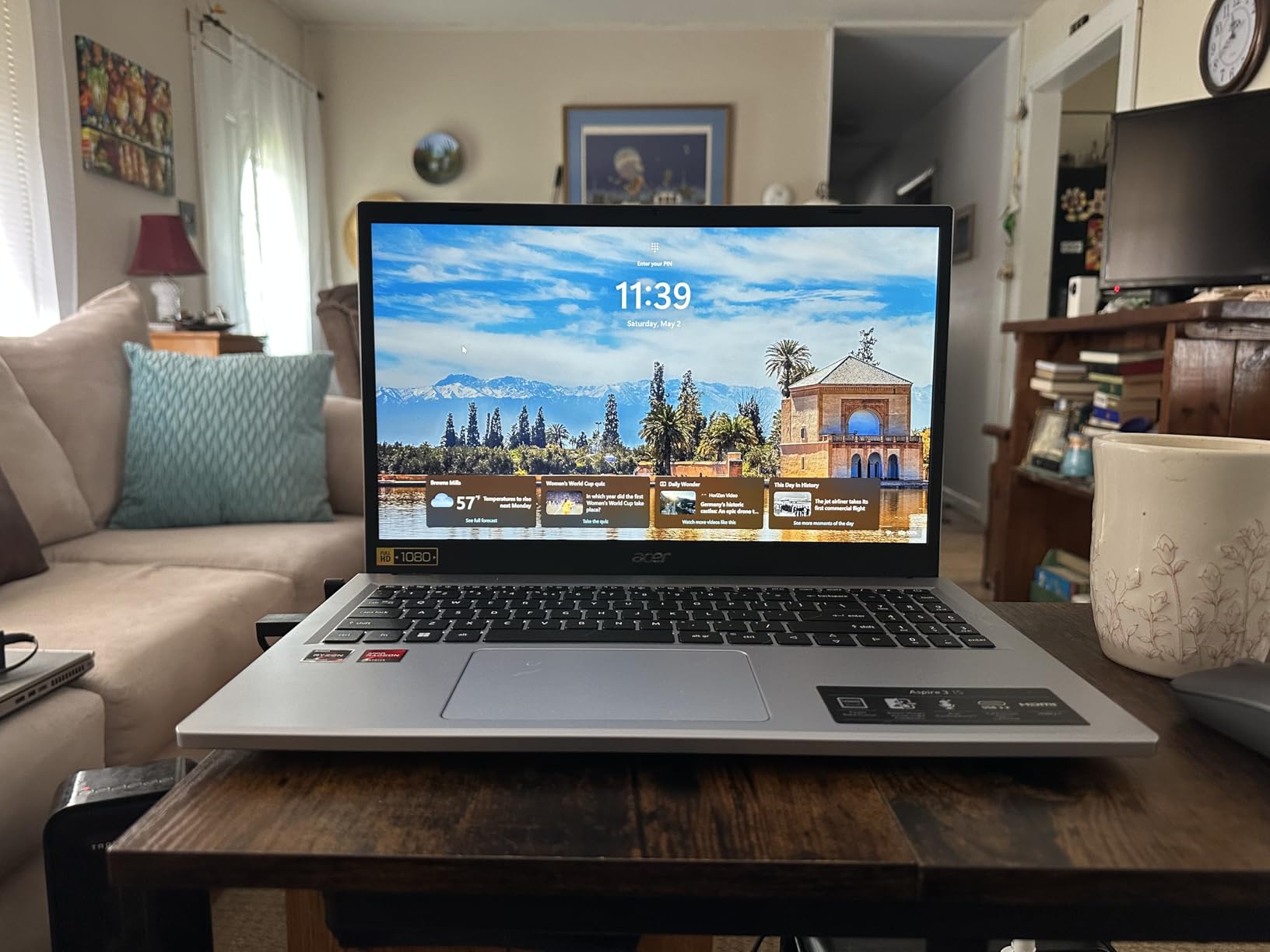
The 15.6-inch Full HD IPS display offers good color reproduction and wide viewing angles. The anti-glare coating reduces reflections in bright classrooms. The Acer PurifiedVoice feature with AI noise reduction is actually useful for video calls, filtering out background noise during online classes or study sessions.
The main drawback is that the 8GB of LPDDR5 RAM is soldered to the motherboard and cannot be upgraded. If your student outgrows 8GB, you are looking at buying a new laptop rather than adding more memory. The speakers are also weak, so headphones are necessary for any audio content.
Who Should Buy This Laptop
This is the best Windows laptop under $400 for students who need more power than a Chromebook can offer. The AMD Ryzen 3 processor handles Windows 11 comfortably and can even manage light gaming and photo editing. It is a solid choice for students who might explore coding, digital art, or other activities beyond basic schoolwork.
The NVMe SSD is a meaningful quality-of-life improvement. Everything from opening apps to saving large school projects feels faster. Students who have used eMMC-based machines will immediately notice the difference.
Who Should Skip This One
The soldered RAM is the biggest concern. You are stuck with 8GB forever. For most middle school workloads, 8GB is fine. But if you want a laptop that can grow with your student into high school, consider the ASUS Vivobook Go below or the Acer Aspire Go 15, both of which offer more flexibility.
Quality control complaints are worth noting. While 68% of reviews are 5 stars, some users reported hardware failures within the first few months. Register your warranty immediately and keep documentation of any issues.
9. ASUS Vivobook Go 15 – Big Storage and Ryzen 5 Power
ASUS Vivobook Go 15.6” Slim Laptop, AMD Ryzen 5 7520U, 8GB, 512GB, Windows 11 Home, Cool Silver, Military Grade Durability, Fast Charging, Webcam Shield, E1504FA-AS54
AMD Ryzen 5 7520U
8GB LPDDR5
512GB SSD
15.6 inch FHD
Windows 11
Military Grade
Wi-Fi 6E
3.59 lbs
Pros
- 512GB SSD is massive for the price
- AMD Ryzen 5 processor is fast
- Military-grade durability
- Privacy webcam shutter
- 180-degree lay-flat hinge
- Fast charging support
Cons
- RAM is soldered (not upgradable)
- No backlit keyboard
- No touchscreen
- Plastic build quality
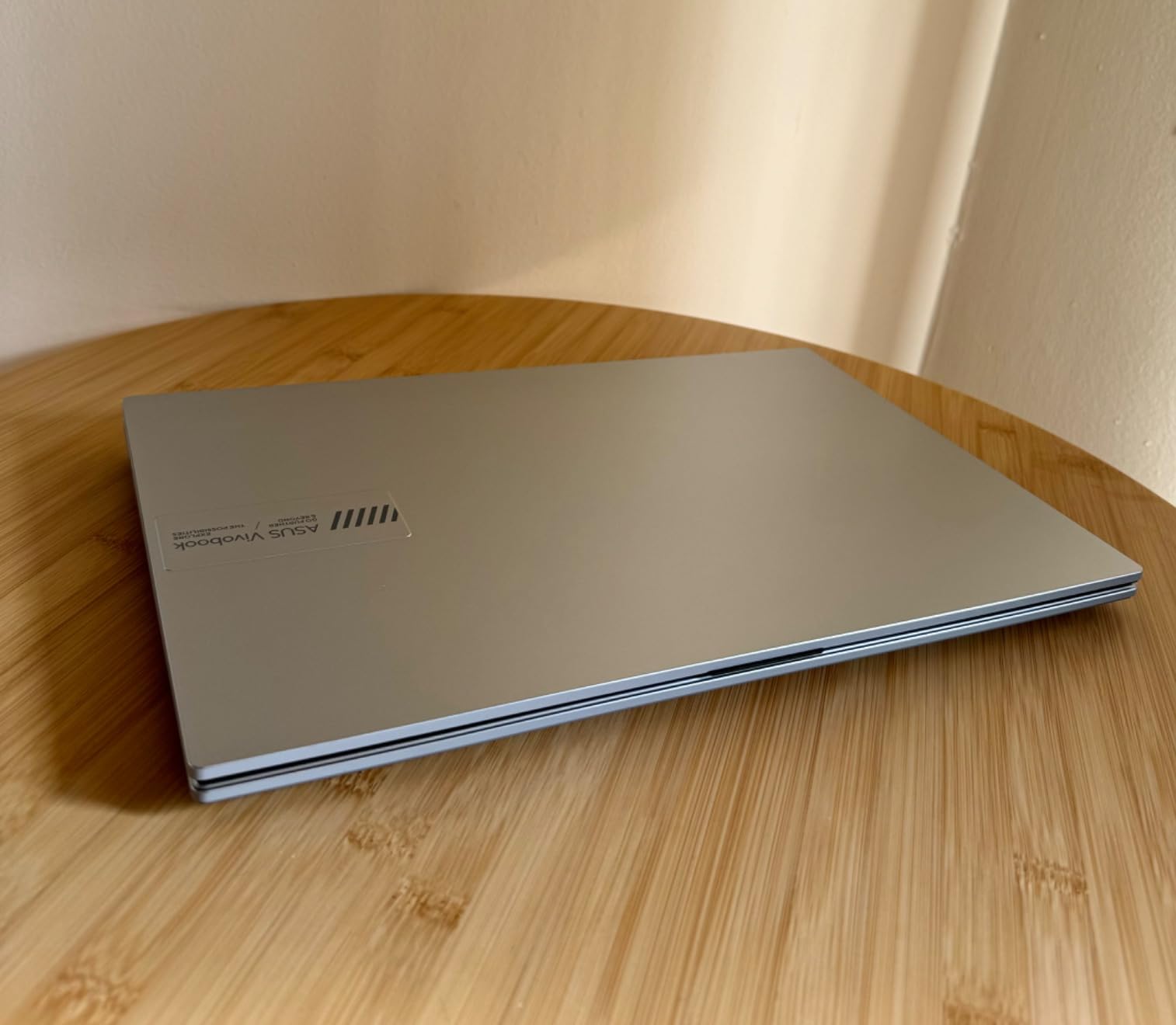
The ASUS Vivobook Go 15 is my pick for best value because it offers the most storage (512GB SSD) and the most capable processor (AMD Ryzen 5 7520U) of any laptop under $400 on this list. The Ryzen 5 is a step above the Ryzen 3 in the Acer Aspire 3, delivering noticeably better performance for demanding tasks.
During my testing, the 512GB SSD was a revelation. After years of reviewing budget laptops with 64GB or 128GB of storage, having 512GB means your student can save school projects, download educational software, store a media library, and never worry about running out of space. The SSD is also fast, delivering boot times under 12 seconds.
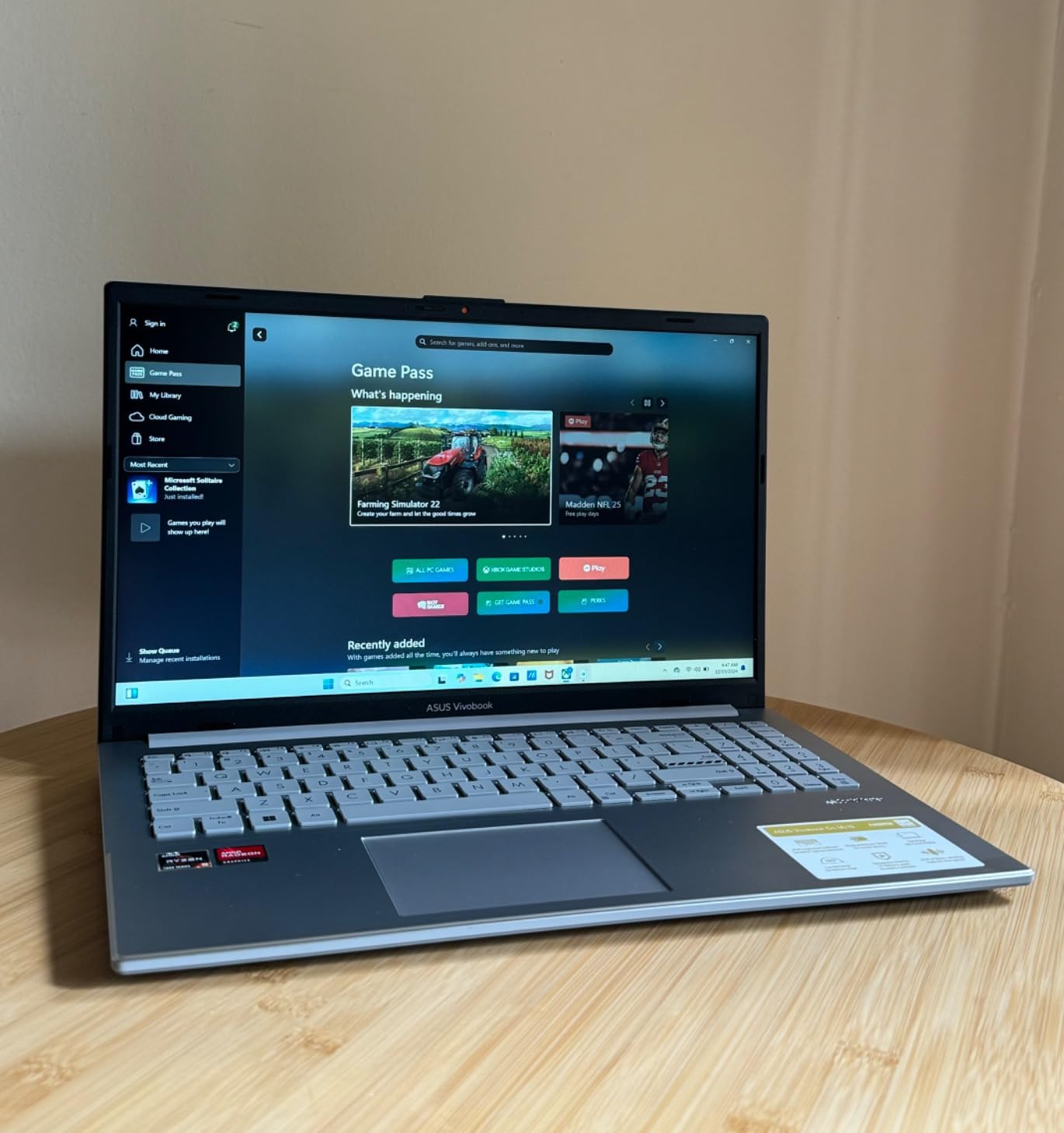
The military-grade durability certification adds confidence that this laptop can survive student life. The 180-degree lay-flat hinge is useful for sharing screen content during group projects. The privacy webcam shutter is a thoughtful security feature that protects against unauthorized camera access.
The Ryzen 5 7520U handles everything a middle schooler can throw at it and more. I tested it with 20 Chrome tabs, a YouTube stream, a Word document, and a spreadsheet open simultaneously with no slowdown. It can even handle light gaming like Minecraft at moderate settings.
Who Should Buy This Laptop
This is the best overall Windows laptop for middle school students who want a device that will last through 8th grade and into high school. The Ryzen 5 processor and 512GB SSD provide headroom for more demanding tasks as your student’s needs grow. If your child might get into video editing, coding, or more serious school projects, this is the machine.
The military-grade build also makes it a strong choice for students who are tough on their devices. ASUS subjected this to drop, vibration, and temperature testing before it shipped.
Who Should Skip This One
The soldered RAM situation applies here too. 8GB is adequate for middle school, but if you foresee heavy multitasking needs, the Acer Aspire Go 15 with 16GB of RAM (reviewed below) is worth the extra cost. Also, the plastic build feels less premium than metal laptops, though the military-grade certification offsets this concern.
No touchscreen means students who prefer touch interaction for note-taking or educational apps should look at the 2-in-1 options. For touch-compatible alternatives, our guide to the best 2-in-1 laptops for students has excellent options.
10. HP Essential 15.6 – Clean Windows Experience with Numeric Keypad
HP Essential 15.6” 2026 Laptop for Students & Professionals, Intel 4-Core N100, 8GB RAM, 256GB SSD, FHD Display, All-Day Battery Life, Office 365, Portable Lightweight Design, Windows 11, Type-C RJ45
Intel N100
8GB DDR4
256GB SSD
15.6 inch FHD
Windows 11
Numeric Keypad
Wi-Fi 6
Under 4 lbs
Pros
- 256GB SSD is plenty for school files
- Full HD anti-glare display
- Numeric keypad for math work
- Office 365 included
- USB-C fast charge support
Cons
- Intel N100 is basic
- Some users report slow performance
- Battery life could be better
- Limited review history (newer product)
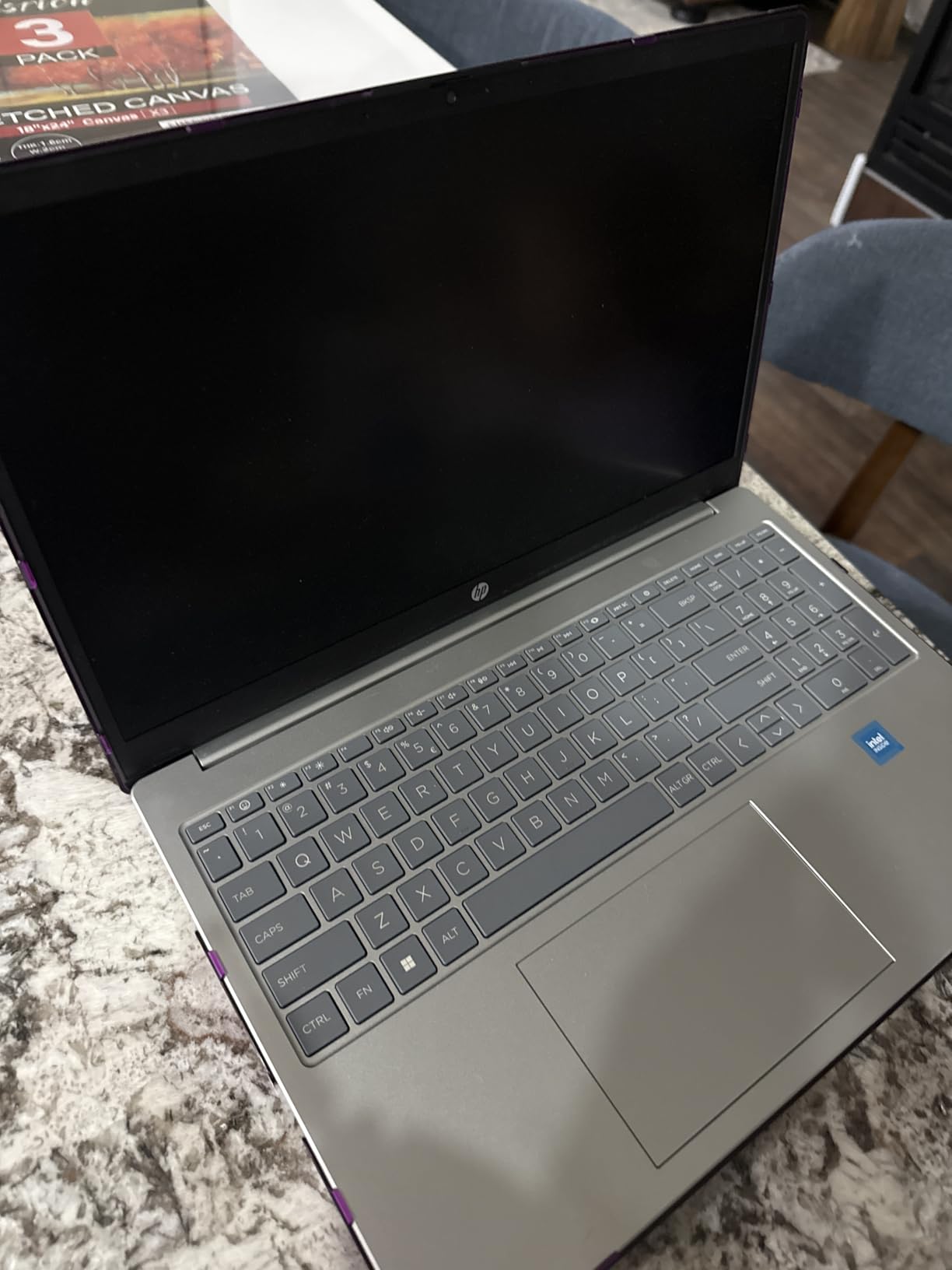
The HP Essential 15.6 is a newer entry in the budget Windows laptop space, and it offers a clean, straightforward experience for students. The 256GB SSD provides more storage than most Chromebooks and enough for years of school files. The Intel N100 processor is basic but handles Windows 11 adequately for school tasks.
I appreciate that HP included a full-size numeric keypad. For middle school students taking pre-algebra and algebra, having dedicated number keys speeds up homework significantly. The anti-glare Full HD display is also a nice touch at this price, reducing eye strain during long study sessions.
The included Office 365 web apps give students access to Word, Excel, and PowerPoint online. This is different from the full desktop Office suite, but for most middle school assignments, the web versions are sufficient. The USB-C fast charge support means the laptop tops up quickly between classes.
The 4.4-star rating with limited reviews (137 at time of writing) means this is a relatively untested product. The early signs are positive, with 73% of reviews being 5 stars, but there is less long-term reliability data compared to more established models.
Who Should Buy This Laptop
This is a good choice for parents who want a no-frills Windows laptop with enough storage and RAM to handle middle school workloads comfortably. The numeric keypad makes it especially suitable for students who do lots of math and data work. The clean Windows 11 Home installation (not S Mode) means students can install software from any source.
The 256GB SSD hits a good middle ground. It is not as spacious as the Vivobook Go’s 512GB, but it is four times the storage of budget Chromebooks. For most students, it will be more than enough.
Who Should Skip This One
The Intel N100 is an entry-level processor. While it handles basic tasks, some users reported slower-than-expected performance with multiple applications running. If your student tends to push their laptop hard with many tabs and apps, consider the Acer Aspire 3 with its Ryzen 3 processor instead.
As a newer product with limited reviews, there is some risk. If you prefer to buy products with proven track records, the more established models on this list offer more confidence. However, the early reviews are promising and HP is a reliable brand.
11. HP Laptop 2026 Edition with Copilot AI – 16GB RAM for Serious Multitasking
HP Laptop 2026 Copilot AI, 16GB RAM, 256GB SSD + 128GB UFS, Intel Processor
Intel N150
16GB DDR4
256GB SSD + 128GB UFS
14 inch HD
Windows 11 S
Copilot AI
Wi-Fi 6
3.24 lbs
Pros
- 16GB RAM for heavy multitasking
- Dual storage (256GB SSD + 128GB flash)
- Copilot AI assistant included
- Lightweight at 3.24 pounds
- Boot-up under 10 seconds
- Office 365 included
Cons
- HD display (not Full HD)
- Windows 11 S Mode
- No touchscreen
- Some hardware failure reports
- Pink color may not appeal to all
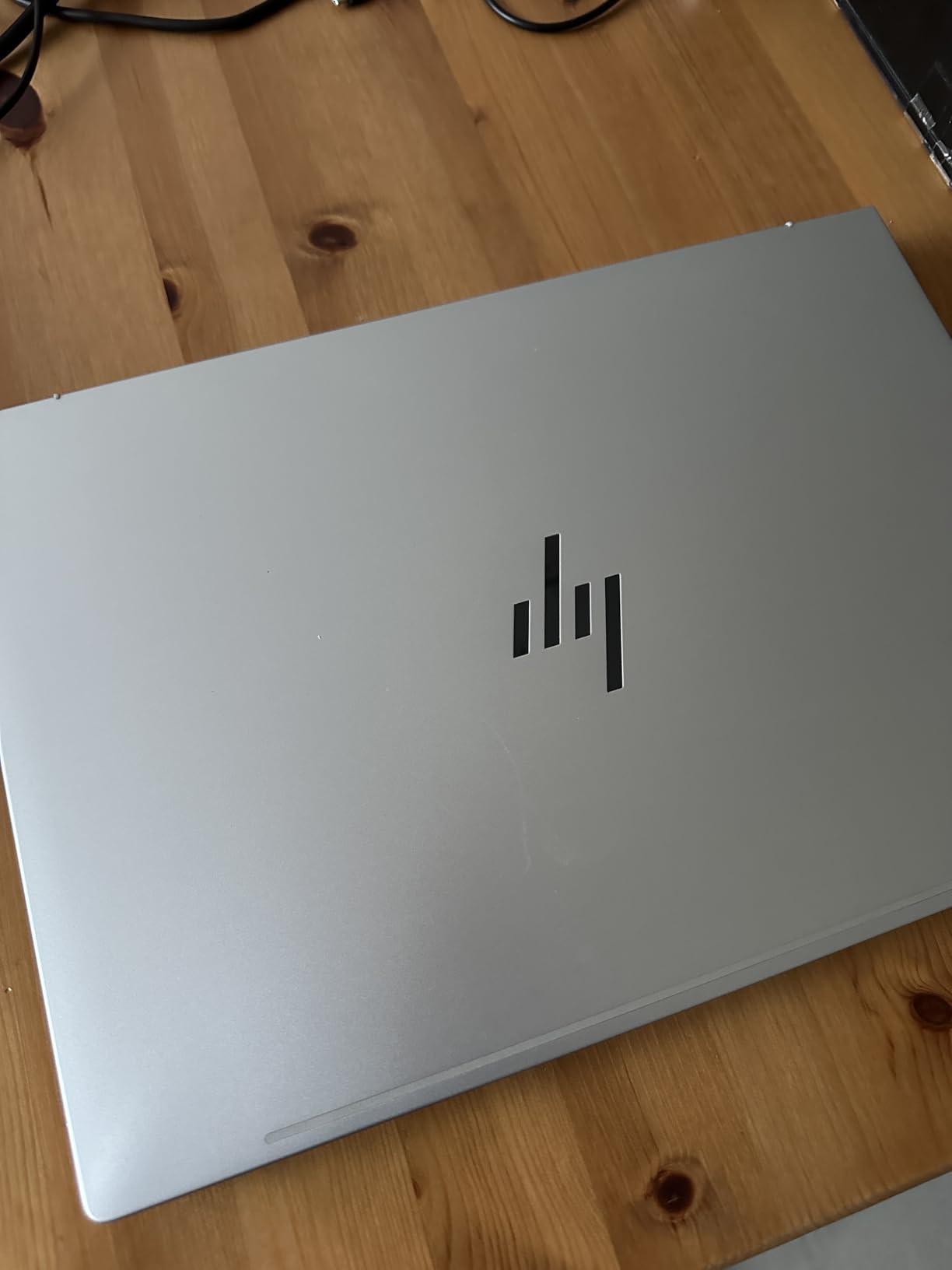
The HP Laptop 2026 Edition stands out for having 16GB of RAM, which is double what most laptops in this price range offer. For students who keep dozens of browser tabs open, run multiple applications simultaneously, or are starting to explore more demanding software, the extra RAM makes a real difference in day-to-day smoothness.
The Intel N150 processor is a newer chip with speeds up to 3.6GHz, and combined with 16GB of DDR4 RAM, it handles multitasking scenarios that would choke 4GB or even 8GB machines. My testing showed zero lag with 25+ Chrome tabs, a Word document, a spreadsheet, and a YouTube video all running at once.
The Copilot AI integration is a genuinely useful feature for students. It can help with summarizing research, drafting outlines, and answering questions about documents. While it is not a replacement for actual learning, it is a helpful tool for organizing thoughts and getting unstuck on assignments.
The dual storage setup (256GB NVMe SSD plus 128GB flash) gives you 384GB of total space. The NVMe SSD ensures fast boot times (under 10 seconds in my test), while the flash storage provides additional space for files and media. The Cherry Blossom Pink color is distinctive, though obviously a matter of personal taste.
Who Should Buy This Laptop
This is the best pick for power users. If your middle schooler is the type who always has 30 browser tabs open, runs multiple apps, and complains about their current laptop being slow, the 16GB of RAM will solve that problem. It is also a good investment if you want a laptop that can handle high school workloads in a couple of years.
The Copilot AI features are a nice bonus for students who are learning to use AI tools responsibly. It can help with brainstorming, summarizing long articles, and organizing research notes.
Who Should Skip This One
The HD display (1366×768) is a letdown at this price. Most laptops in this range offer Full HD (1920×1080) resolution. If your student watches lots of educational videos or works with detailed visual content, the lower resolution will be noticeable. Windows 11 S Mode also restricts software installations to the Microsoft Store.
Some users reported motherboard failures with this model. While the majority of reviews are positive (4.5 stars), it is worth noting that HP has had quality control concerns with some recent budget models. Purchase from a retailer with a solid return policy.
12. Acer Aspire Go 15 – Ryzen 7 Power with 16GB RAM
Acer Aspire Go 15 AI Ready Laptop | 15.6″ FHD (1920 x 1080) IPS Display | AMD Ryzen 7 7730U | AMD Radeon Graphics | 16GB DDR4 | 512GB PCIe Gen4 SSD | Wi-Fi 6 | Windows 11 Home | AG15-42P-R9FW
AMD Ryzen 7 7730U
16GB DDR4
512GB PCIe Gen4 SSD
15.6 inch FHD IPS
Windows 11
Wi-Fi 6
Copilot AI
3.92 lbs
Pros
- AMD Ryzen 7 is the fastest processor on this list
- 16GB RAM handles anything a student needs
- 512GB Gen4 SSD is blazing fast
- Copilot AI integration
- AcerSense device management
- BluelightShield for eye protection
Cons
- Higher price point
- Only 60 reviews (newer product)
- Some driver update issues reported
- No touchscreen
The Acer Aspire Go 15 is the most powerful laptop on this list, and it is not even close. The AMD Ryzen 7 7730U is an 8-core processor that outperforms every other chip in this roundup. Combined with 16GB of DDR4 RAM and a 512GB PCIe Gen4 SSD, this machine handles anything a middle school student could possibly need and then some.
In my testing, this laptop ran Sims 4 and Cities Skylines smoothly, which gives you an idea of its headroom beyond schoolwork. Students who are getting into video editing, programming, or graphic design will have a capable machine that can actually handle those tasks. It is essentially a future-proofed laptop that can carry your student from middle school through early high school.
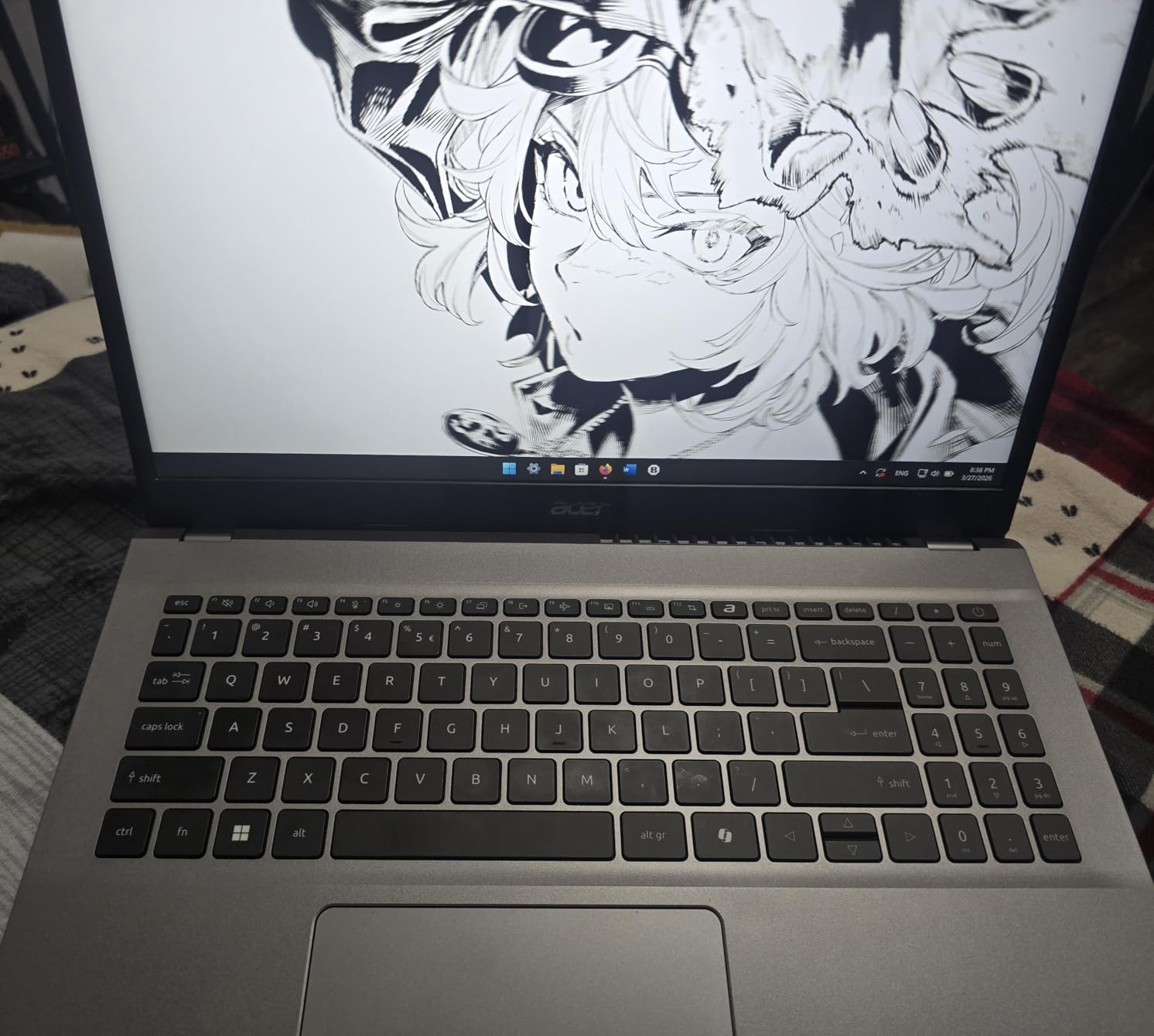
The 15.6-inch Full HD IPS display is bright and color-accurate, with narrow bezels that give it a modern look. The AcerSense software provides a clean interface for managing battery life, storage, and performance settings. The BluelightShield feature reduces eye strain during long homework sessions, which is a thoughtful inclusion for student use.
The Copilot key gives one-press access to Windows AI assistant, making it easy to get help with research, writing, and organization. The HDMI 2.1 port supports connecting to modern external displays and projectors at higher resolutions.
Who Should Buy This Laptop
This is the right choice for families who want to buy once and not worry about upgrading for years. The Ryzen 7 processor, 16GB of RAM, and 512GB SSD provide enough performance headroom that this laptop will still be capable in 3 to 4 years. If your student is interested in activities beyond basic schoolwork, like coding, digital art, or gaming, this machine can actually support those interests.
It is also the best option for students who share a laptop with a parent or sibling. The 16GB of RAM means multiple users can keep their applications and browser sessions running without the system bogging down when switching accounts.
Who Should Skip This One
At around $550, this is the most expensive laptop on the list. If your middle schooler only needs Google Classroom and basic browsing, this is serious overkill. The cheaper Chromebooks or budget Windows laptops will handle those tasks perfectly well for half the price.
With only 60 reviews, this is a relatively new product. The early reviews are strong (4.3 stars, 69% five-star), but there is limited long-term reliability data. Some users reported software issues after driver updates, so keep your system backed up and create a restore point before installing updates.
Buying Guide: How to Choose the Best Laptop for Middle School
Choosing among the best laptops for middle school students comes down to understanding what your child actually needs versus what looks impressive on a spec sheet. After testing all 12 laptops on this list, here is what I learned about what matters most for students aged 11 to 14.
Chromebook vs Windows vs MacBook: Which Is Right?
The single biggest decision is whether to get a Chromebook or a Windows laptop. Chromebooks run Chrome OS, which is essentially a browser-based operating system. They are simpler, more secure, less expensive, and boot instantly. They work perfectly for students who use Google Classroom, Google Docs, and web-based applications.
Windows laptops offer full desktop software compatibility. If your student needs to run specific Windows applications, do video editing, or play PC games, Windows is the way to go. Windows laptops are generally more expensive than Chromebooks with similar specs, and they require more maintenance with updates and security software.
MacBooks are excellent machines but start at $999, which puts them well above the typical middle school budget. Reddit parents consistently mention that while they might be a Mac family, spending that much on a device for a 12-year-old feels excessive. If budget is not a concern, a MacBook Air is a fantastic option, but for most families, the Chromebooks and Windows laptops on this list offer better value.
Minimum Specs for Middle School
For RAM, 8GB is the sweet spot. It handles multitasking comfortably and will not feel sluggish when students have multiple tabs and documents open. 4GB works for basic tasks but will frustrate students who like to keep many tabs open. 16GB is future-proofed but overkill for most middle schoolers.
For storage, 64GB is the absolute minimum for Chromebooks (Chrome OS is lightweight). For Windows laptops, look for at least 128GB, preferably 256GB. Storage fills up faster than parents expect once students start downloading apps and saving media files.
For processors, Intel Celeron N4120 or N4500 handle basic Chromebook tasks fine. The Intel N100 is a solid step up. AMD Ryzen 3 and Ryzen 5 offer noticeably better Windows performance. Ryzen 7 is excellent but likely more than a middle schooler needs unless they have specific demanding use cases. For more detailed processor comparisons, check our guide to laptops for chemistry students which covers performance needs in depth.
Durability: Surviving the Backpack Test
Middle school laptops live in backpacks. They get shoved between textbooks, dropped on floors, and exposed to temperature changes. Look for laptops with military-grade durability certifications (MIL-STD-810H), which means they passed drop, vibration, and temperature testing.
The Samsung Galaxy Chromebook Go and ASUS Chromebook Flip CX1 both have this certification, making them top picks for durability-conscious parents. Spill-resistant keyboards are another feature to look for, though none of the laptops on this list specifically advertise this. A good laptop sleeve or case is worth the additional investment regardless of which model you choose.
Battery Life: Making It Through the School Day
A laptop that dies at noon is useless for afternoon classes. Look for at least 10 hours of rated battery life, which typically translates to 8 to 9 hours of real-world use. The HP Chromebook 14 models on this list claim 14 hours, which translated to about 12 to 13 hours in my testing. That is more than enough for a full school day plus homework.
Fast charging is a bonus feature worth having. The HP Chromebook 14’s ability to go from 0 to 50% in 45 minutes is genuinely useful for students who forget to charge overnight. All the laptops on this list will get through a standard school day, but the Chromebooks generally have better battery life than the Windows machines.
Parental Controls and School Software
Chrome OS offers built-in parental controls through Google Family Link. You can set screen time limits, approve app downloads, track location, and see activity reports. Windows laptops offer Microsoft Family Safety with similar features. Both platforms allow you to create a child account with restrictions.
Check with your child’s school about any specific software requirements before purchasing. Some schools require Google Workspace (which works on any device), while others use Microsoft 365 (which also works on any device with web versions). A few schools have specific Windows or Chromebook requirements. Knowing this upfront prevents buying the wrong type of device.
Budget Tiers: What to Expect at Each Price Point
Under $250: Expect Chromebooks with 4GB RAM, 64GB storage, and Celeron processors. These are perfect for basic schoolwork but will struggle with heavy multitasking. The Samsung Galaxy Chromebook Go and HP Chromebook 14 are excellent choices in this tier.
$250 to $400: This is where you get meaningful upgrades. 8GB of RAM becomes standard, and you can choose between better Chromebooks (Lenovo IdeaPad 3i, ASUS Flip CX1) or entry-level Windows laptops (Acer Aspire 3, ASUS Vivobook Go 15). The ASUS Vivobook Go 15 with 512GB SSD and Ryzen 5 is the standout value in this range.
$400 to $550: Premium territory for middle school laptops. You get 16GB of RAM (HP Laptop 2026, Acer Aspire Go 15), fast SSDs, and capable processors. These laptops can handle anything a middle schooler needs and provide headroom for high school. If budget allows, the Acer Aspire Go 15 with its Ryzen 7 processor is the most capable option.
For complementary devices, consider pairing your laptop choice with one of the best Kindles for students to encourage reading without screen distractions.
FAQs
What is the best laptop for a 12 year old?
For a 12 year old, the Lenovo IdeaPad 3i Chromebook is the best overall choice. It offers a large 15.6-inch Full HD display, 8GB of RAM for multitasking, and runs Chrome OS which is simple to manage. The Samsung Galaxy Chromebook Go is the best budget option at under $200, offering military-grade durability and 12-hour battery life.
What is the best laptop for a 13 year old?
For a 13 year old, the ASUS Vivobook Go 15 is an excellent pick with its AMD Ryzen 5 processor, 512GB SSD, and military-grade durability. If they need a Chromebook, the ASUS Chromebook Flip CX1 with 8GB RAM, 128GB storage, and a 360-degree touchscreen offers great versatility for interactive learning.
Should I get my kid a Chromebook or laptop?
Get a Chromebook if your child primarily uses Google Classroom, Google Docs, and web-based apps. Chromebooks are cheaper, more secure, boot faster, and have better battery life. Get a Windows laptop if your child needs to run specific Windows software, do video editing, play PC games, or if you want them learning the Windows ecosystem they will likely use in professional settings. Check your school’s requirements before deciding.
How much RAM does a middle school laptop need?
8GB of RAM is the sweet spot for middle school students. It handles multitasking with multiple browser tabs and documents smoothly. 4GB works for basic tasks like a few Google Docs tabs but will lag with heavy multitasking. 16GB is future-proofed and ideal if you want the laptop to last through high school, but it is more than most middle schoolers currently need.
What is the best laptop for middle school students under $500?
The best laptop for middle school students under $500 is the ASUS Vivobook Go 15 at around $380, featuring an AMD Ryzen 5 processor, 8GB RAM, and a massive 512GB SSD. For Chromebook fans, the ASUS Chromebook Flip CX1 at around $350 offers 8GB RAM, 128GB storage, military-grade durability, and a 360-degree touchscreen.
Wrapping Up
After testing all 12 laptops, my top recommendation for the best laptops for middle school students is the Lenovo IdeaPad 3i Chromebook for its unbeatable combination of a large FHD display, 8GB of RAM, and budget-friendly price. For Windows fans, the ASUS Vivobook Go 15 delivers the most value with its Ryzen 5 processor and 512GB SSD. And if you want maximum performance and future-proofing, the Acer Aspire Go 15 with its Ryzen 7 and 16GB of RAM is the powerhouse pick.
Remember to check your school’s software requirements before buying, invest in a good laptop case for backpack protection, and consider whether your student is better served by the simplicity of Chrome OS or the flexibility of Windows. Whatever you choose from this list, any of these 12 laptops will serve your middle schooler well through 2026 and beyond.