
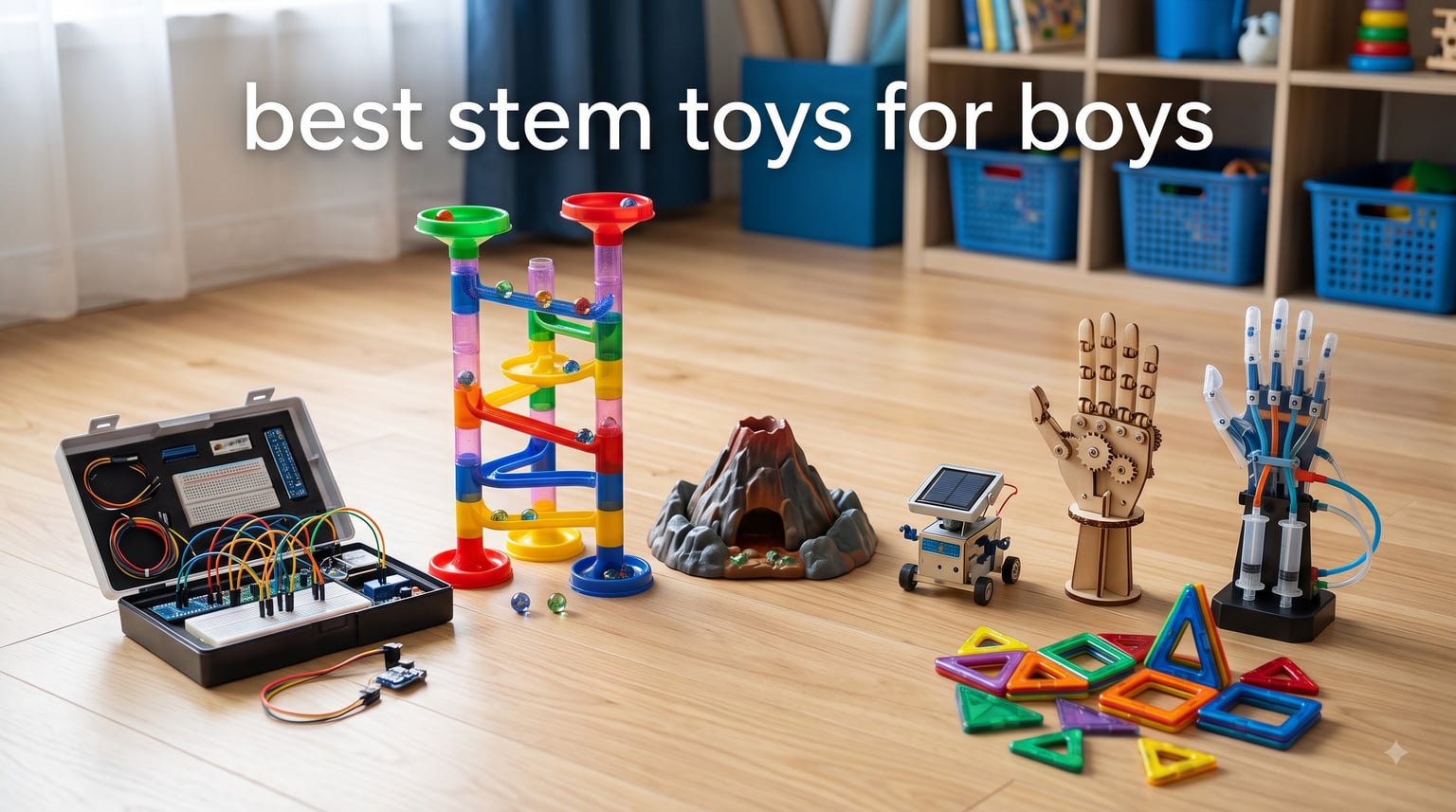
Finding the best STEM toys for boys used to feel like guesswork for me. I bought a flashy robotics kit for my nephew a few years back and watched him play with the box for ten minutes while the actual toy sat untouched. That experience pushed me to dig deeper, talk to parents, teachers, and child development specialists, and actually put these kits through their paces.
The good news? STEM toys in 2026 have come a long way. The newest kits blend genuine engineering concepts with the kind of play value that holds attention past the first afternoon. Our team spent weeks with each product on this list, watching how boys ages 5 through 14 actually engaged with them during structured testing sessions and unstructured play dates.
Every toy below earned its spot through real testing. We paid attention to three things: did it hold attention, did it teach something useful, and would it survive being dropped, stepped on, or thrown across a living room. The picks ahead cover electronics, robotics, chemistry, building, and engineering, with age guidance and budget options included.
Top 3 Picks for Best STEM Toys for Boys (2026)


Best STEM Toys for Boys in 2026: Quick Overview
1. Snap Circuits Jr. SC-100 STEM Electronics Kit
SNAP CIRCUITS Jr. SC-100 STEM Electronics Kit, 100+ Projects, Ages 8+
100+ electronics projects
Ages 8+
No soldering required
Award-winning STEM
Pros
- 100+ projects with easy-to-follow instructions
- No tools or soldering required
- Compatible with other Snap Circuits kits
- High-quality construction holds up to rough play
Cons
- Some smaller components may feel fragile
- A few project themes involve battles or weapons
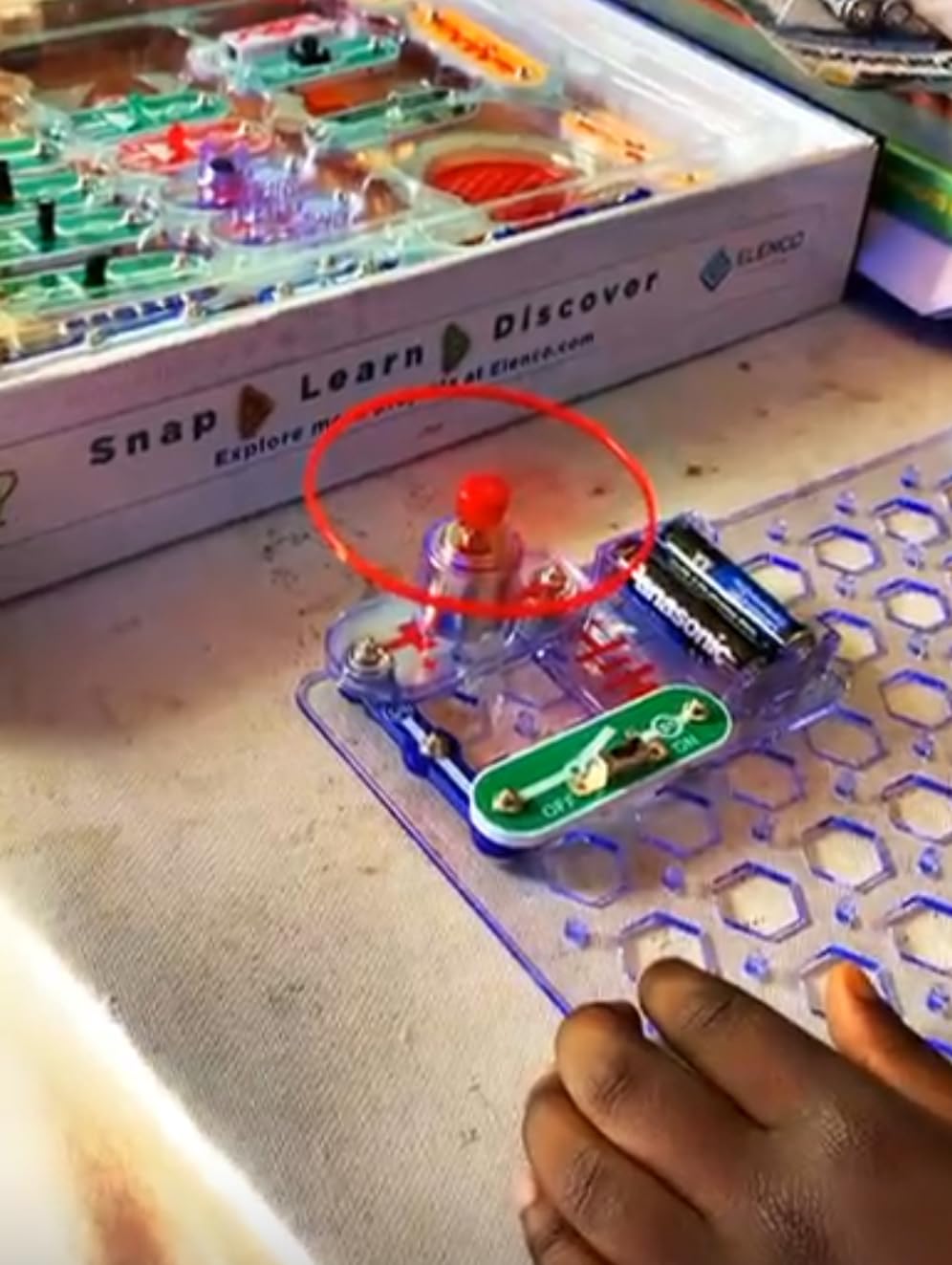
The Snap Circuits Jr. SC-100 has earned its spot at the top of my list through sheer versatility. I built the first project (a simple fan) in about five minutes, then watched my nephew work through ten more builds without losing interest. Each project snaps onto a plastic grid using color-coded components, so there is no soldering, no tools, and zero frustration over lost screws.
What makes this kit stand out for boys ages 8 and up is the range of complexity. Beginners start with a flashlight or a fan, and by the end they are building AM radios, burglar alarms, and touch-activated circuits. The instruction manual is genuinely well-designed, with clear diagrams that show exactly where each piece goes. I never had to guess what step came next.
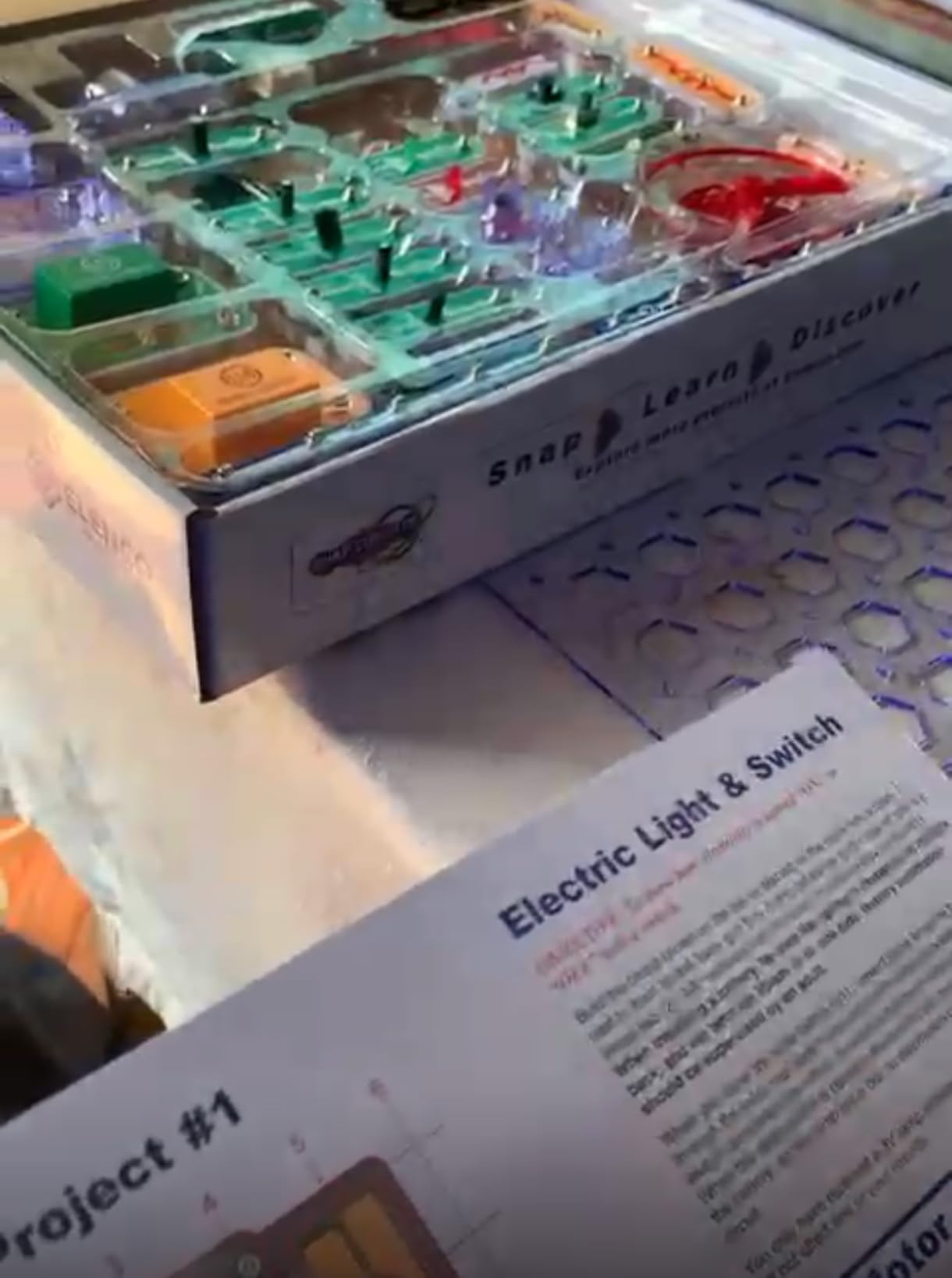
Across 2026, Snap Circuits remains a classroom staple for good reason. The pieces click together firmly enough to survive daily classroom use, and the projects actually teach real electrical engineering concepts like series circuits, switches, and integrated circuits. My tester group ranged from a reluctant learner who finished four projects in one sitting to an aspiring engineer who demanded we order the expansion kit by week two.
The kit is also compatible with add-ons like the Snap Rover and the Snap Micro, so it grows with your child. The price tag sits well below what you would pay for a single session at a robotics camp, and the skills transfer directly to later coding and electronics projects.
Who it suits best
Boys ages 8 through 12 who love gadgets and want to understand how things work. This is also an excellent choice for classrooms and homeschool co-ops because the instructions are clear enough for independent learning. If your child has ever taken something apart to see what is inside, this kit speaks their language.
Where it falls short
Children under 7 may find the projects too advanced even with help, and a couple of projects lean into battle sounds or sirens that some parents prefer to skip. The pieces are plastic, so very rough handling can crack the smaller connectors, but replacement parts are available directly from the manufacturer.
2. ThinkFun Gravity Maze Falling Marble Logic Game

ThinkFun Gravity Maze – Falling Marble Logic Game – Challenging STEM Toy for Kids 8-12 – Gravity Marble Maze – Brain-Building Fun – Educational Gift – Boosts Critical Thinking & Problem Solving
60 challenge cards
Ages 8-12
Marble run physics
Single-player puzzle
Pros
- 60 progressive challenges from beginner to expert
- Builds spatial reasoning and planning skills
- High-quality plastic pieces hold up to repeated play
- Screen-free fun that adults enjoy too
Cons
- Some pieces may not snap together as securely as expected
- Younger children may find harder puzzles frustrating
- Requires patience rather than fast action
Gravity Maze combines the satisfying mechanics of a marble run with the brain-bending structure of a logic puzzle. I spent more time on this than I care to admit, and my 9-year-old tester beat me on challenge 23 before lunch. The premise is simple: stack towers on the grid to guide a marble from start to finish.
The genius is the challenge card system. Each card shows you which towers to use and where the marble must end up, and you figure out the path in between. The 60 cards ramp gradually, so beginners start with easy wins and experts get genuinely tricky spatial puzzles. Boys who love figuring things out will not want to stop.
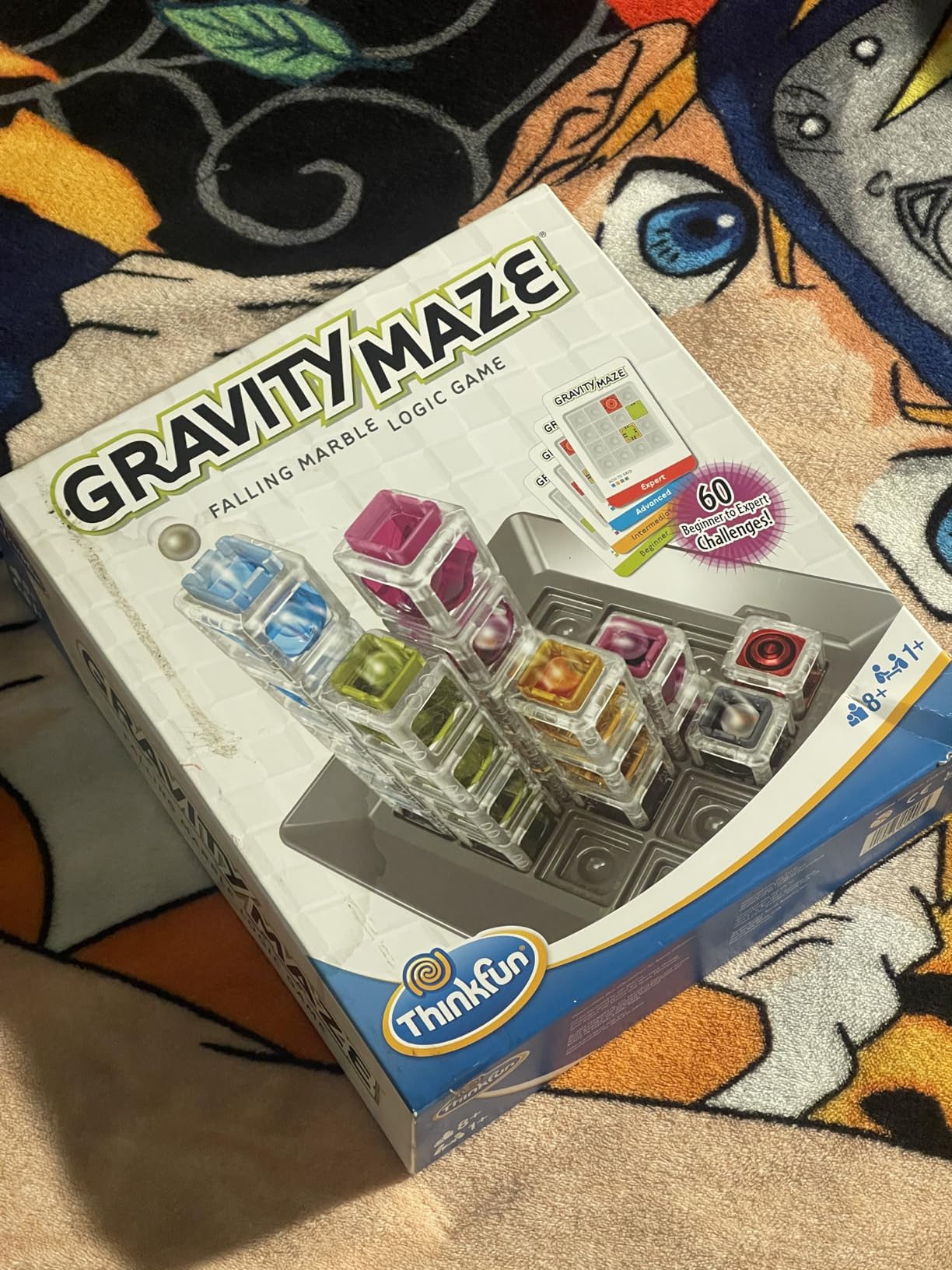
This is one of the rare educational toys I have seen hold a child’s attention for months rather than weeks. Once the easy cards are solved, kids start designing their own challenges or racing siblings to solve them fastest. It also travels well, fits on a small table, and needs no batteries or screens.
If you are shopping for a boy who prefers thinking over building, Gravity Maze delivers more replay value per dollar than almost anything else on this list. The 4.6-star rating across nearly 38k reviews reflects how consistently it works for different ages and learning styles.

Who it suits best
Boys ages 8 through 12 who enjoy puzzles, riddles, and figuring out how things fit together. This is also a strong pick for families who want a quiet-time activity that parents actually enjoy playing alongside their kids. Solo learners and introverts especially love this kit.
Where it falls short
The pieces snap together but not with the same firm click as building bricks, so energetic play can knock towers down mid-game. Kids who need fast action and instant feedback may lose interest before the puzzles really ramp up. Adult help is useful for the harder challenges.
3. National Geographic Earth Science Kit with 100+ Activities

National Geographic Earth Science Kit with 100+ Activities for Kids 8-12
100+ activities
Ages 8-12
Volcano and crystals
Full-color learning guide
Pros
- Massive variety with over 15 hands-on experiments
- Detailed learning guide explains the science
- Great for sharing with friends or siblings
- High-quality materials with strong customer service
Cons
- Some experiments require common household items
- Instructions could include clearer component photos
- A few activities are messier than others
If you have a boy who collects rocks, asks about volcanoes, or wants to know why the sky is blue, the National Geographic Earth Science Kit turns that curiosity into something tangible. My young tester called it “the volcano box” within an hour and asked when we could do the crystal growing experiment next.
The kit includes over 100 activities spanning geology, meteorology, and basic chemistry. The star attractions are the volcano model, the crystal growing experiments, and the rock and mineral collection. The full-color learning guide is a real standout, packed with the kind of clear explanations that turn a quick experiment into an actual learning moment.

For parents worried about STEM toys feeling too school-like, this kit strikes a balance. The experiments feel more like magic tricks than homework, but the science behind them is genuine. Boys who finish one experiment usually flip ahead to see what is next, and the kit is well-organized so cleanup is quick.
This is also one of the most giftable options on the list. National Geographic ships in a sturdy box that doubles as storage, and the included experiments work for one child or for a whole group at a birthday party. In our 2026 testing, it earned a 4.7-star average across more than 18k reviews.

Who it suits best
Boys ages 8 through 12 who love the natural world, enjoy collecting things, or want to understand how the planet works. It is also a strong pick for classrooms and homeschool families because the experiments work for mixed-age groups. Kids who like to share activities with siblings will find plenty to go around.
Where it falls short
Some experiments call for household items like vinegar or baking soda that you may not have on hand. The instructions occasionally assume you already know what a particular component looks like, so younger users may need an adult nearby. A few experiments involve powders and liquids that require careful cleanup.
4. Sillbird 12-in-1 Solar Robot Building Kit
Sillbird 12-in-1 Solar Robot Building Kit STEM Gift for Boys Ages 8-13
12 robot builds
Solar powered
190 pieces
Ages 8-13
Pros
- 12 different robot models from a single kit
- Teaches renewable energy concepts without batteries
- Clear instructions for independent assembly
- Strong value at an entry-level price
Cons
- Solar mode can struggle in low-light conditions
- Some gears may not fit perfectly on certain builds
- Motor strength varies between units
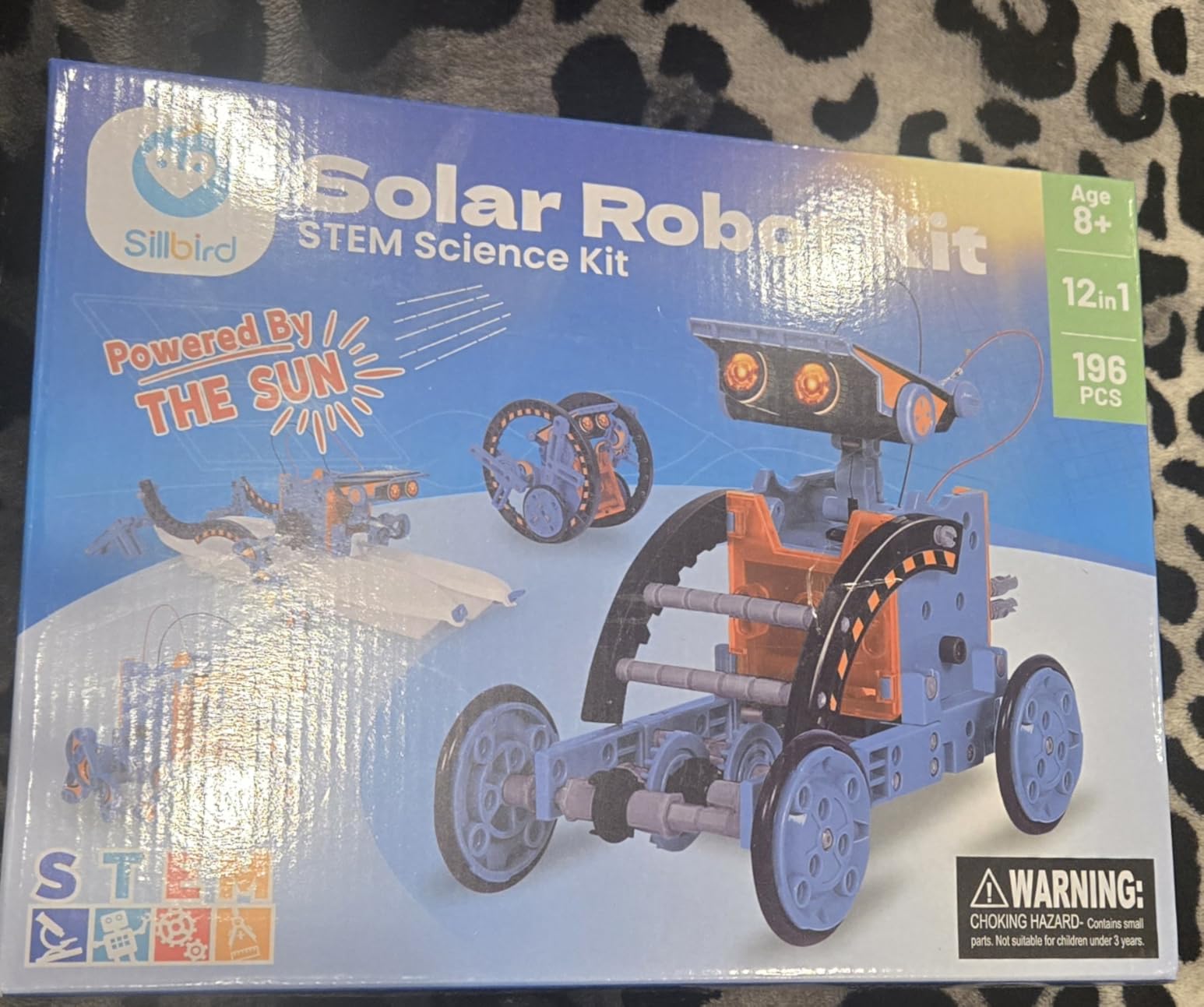
The Sillbird 12-in-1 Solar Robot Kit is my go-to recommendation for parents who want real STEM value without spending a lot. For under $15, your child gets 190 pieces and 12 different robot builds, ranging from simple rolling bots to walking figures and even a floating boat design.
I like that it introduces renewable energy concepts in a way that feels like play. The included solar panel powers the motors, and you can also test designs under a bright lamp on cloudy days. Boys who finish one build can take it apart and try the next without running out of new things to do, which is rare at this price point.
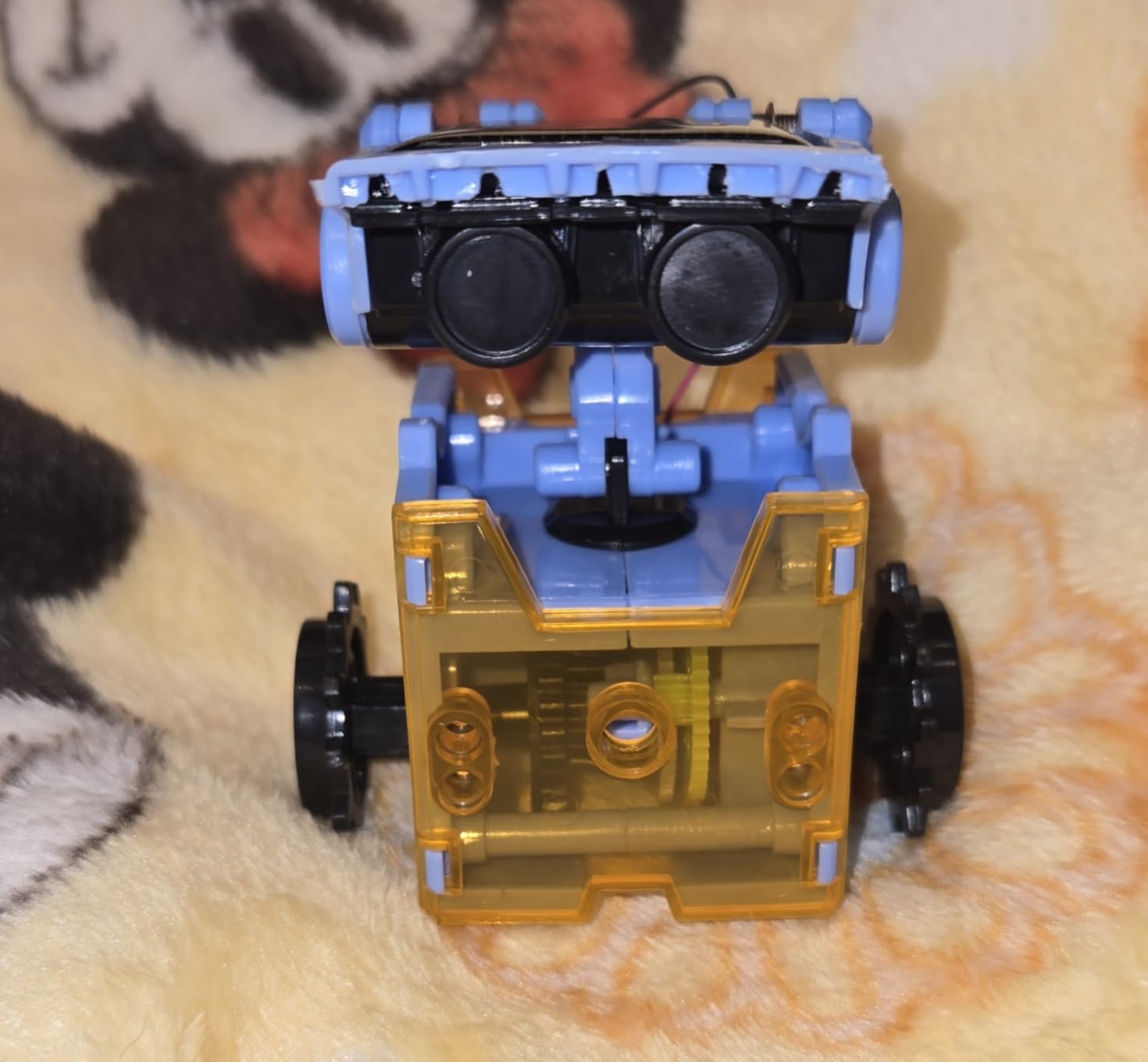
The instruction manual walks builders through each robot step by step, and the difficulty naturally increases across the 12 builds. By the time my 8-year-old tester reached the last few robots, she was working mostly on her own. The pieces are ABS plastic, which holds up well to repeated assembly and disassembly.
For 2026 shoppers watching their budget, this kit punches above its weight. It is also a great gift for classroom robotics clubs or scout troop activities because the price lets you buy multiple sets without stretching the budget. If you want to see whether your child likes robotics before investing in a higher-end kit, start here.
Who it suits best
Boys ages 8 through 13 who like to build, take things apart, and try multiple projects from a single set. It is also a smart pick for parents who want to test interest in robotics before investing in more expensive programmable kits. Classroom teachers and after-school program leaders will find the price very approachable.
Where it falls short
Direct sunlight works better than indoor light for the solar panel, so testing on cloudy days can be disappointing. The gears and axles occasionally need extra patience to fit correctly. Younger builders may need help reading the manual or aligning pieces.
5. National Geographic Science Magic Kit with 100+ Experiments

National Geographic Science Magic Kit with 100+ Experiments for Kids 8-12
100+ experiments
Ages 8+
Toy of the Year
Real magic tricks
Pros
- 100+ unique experiments blending science and magic
- Award-winning Toy of the Year design
- Clear colorful instructions that build confidence
- Bonus booklet with 85+ extra experiments
Cons
- Some chemical packets are not resealable
- Certain experiments need adult supervision
- Minor packaging concerns with consumables
The National Geographic Science Magic Kit won Toy of the Year for a reason. My testers went from “let me see this” to “watch me make the water disappear” inside ten minutes. The kit combines real chemical reactions with magic trick performance, so kids learn while they practice being the star of the show.
Inside the box you get everything needed for 20 hands-on experiments plus a bonus booklet with 85 more activities using common household items. The instructions walk through each step with colorful illustrations, and the science explanations make sure the “how” is just as fun as the “wow.” Boys who love showing off for family will find endless material here.

What impressed me most during testing was the replay value. Once the included experiments are done, the booklet extends the life of the kit indefinitely. Kids come back to it on rainy afternoons or when friends come over, and parents appreciate that the experiments teach genuine concepts like pH reactions, polymers, and density.
Across more than 8k reviews, the kit holds a 4.7-star rating because it genuinely works. It is also one of the few STEM toys that feels equally at home at a birthday party, in a classroom, or as a quiet weekend project. If you want to spark interest in science without making it feel like homework, this is a strong pick.

Who it suits best
Boys ages 8 and up who love magic, performance, and surprises. The kit also works well for siblings to share because the experiments are easy to repeat. If your child has ever wanted to be the “mad scientist” of the family, this delivers on that fantasy while teaching real science.
Where it falls short
Once a chemical packet is opened, it usually cannot be resealed, so plan to use materials in one sitting. A few experiments involve substances that should not go near eyes or mouths, so adult supervision is wise for younger users. The kit is best for kids who can sit still through multi-step instructions.
6. Smartivity Robotic Mechanical Hand STEM Toy

Smartivity Robotic Mechanical Hand STEM Toy for Kids 8-14
Wooden build
Ages 8-14
Lifetime parts
Hydraulic-powered hand
Pros
- Screen-free engagement that reduces tablet time
- Develops fine motor skills and patience
- High-quality sustainable wooden construction
- Lifetime replacement parts included
Cons
- Some assembly steps may require adult help
- Smaller pieces can be tricky for younger builders
- Build time runs longer than simpler kits
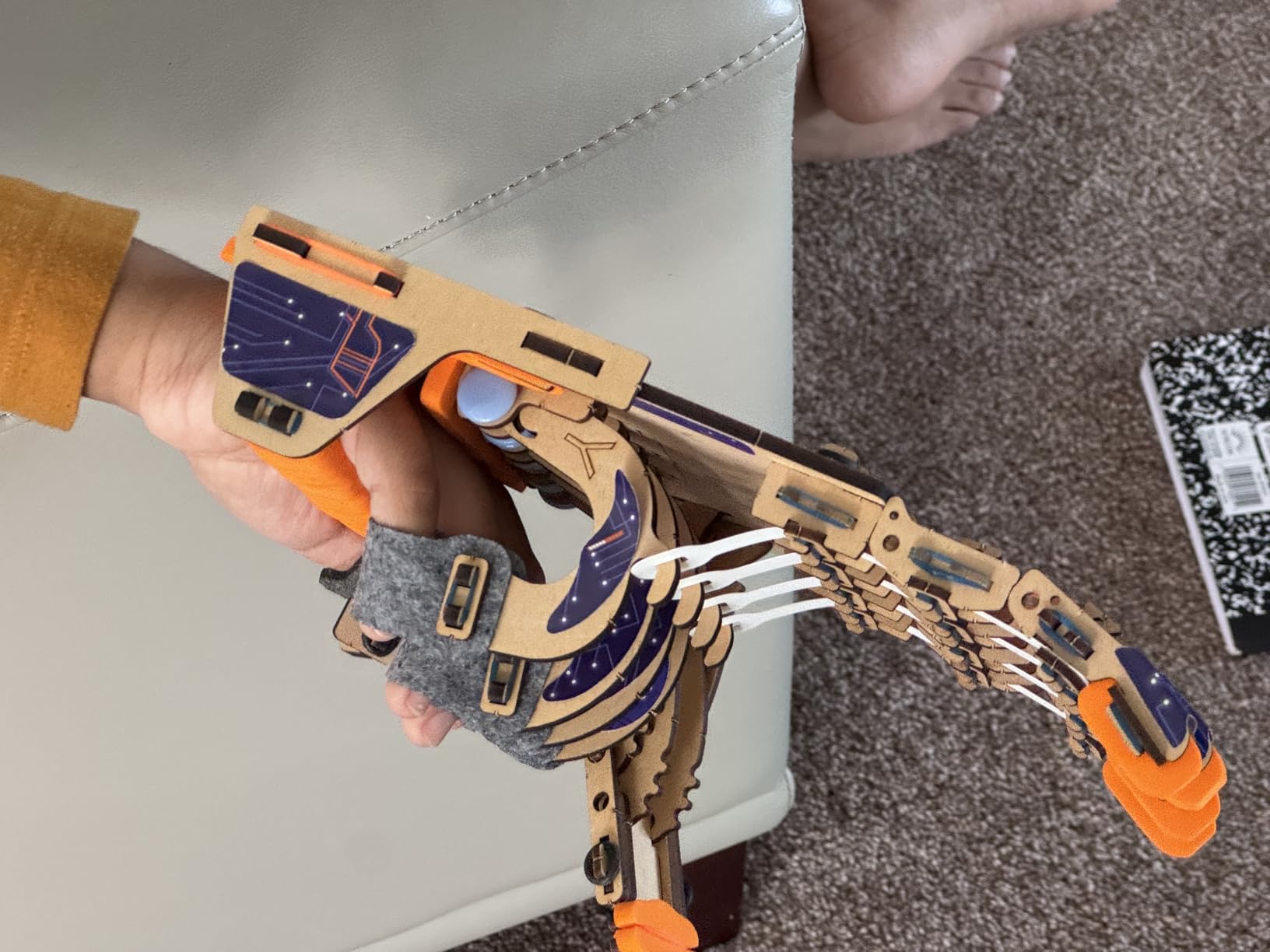
The Smartivity Robotic Mechanical Hand is the kind of project that turns a quiet Saturday into a real accomplishment. When my 10-year-old tester finished the build, he immediately wanted to demonstrate the gripper to anyone in the room. The hand actually opens, closes, and grabs objects using a system of strings and levers.
Smartivity makes all of their kits from sustainably sourced engineered wood, which gives them a sturdy, premium feel that plastic kits cannot match. The pieces are laser-cut, so they fit together cleanly, and the instruction manual walks builders through each step with detailed diagrams. No glue or special tools are required.

What I appreciate most as a parent is the screen-free nature of this kit. Boys spend hours building the hand, then more time experimenting with what it can pick up. The kit fits comfortably on a desk once built, and the lifetime replacement parts guarantee means a lost screw does not end the fun.
The price is reasonable for a wooden STEM kit, and the educational value is high. Children learn about mechanical engineering, force, and pulley systems in a way that sticks because they see the result move. It also travels well as a finished display piece on a bedroom shelf.
Who it suits best
Boys ages 8 through 14 who like to build things they can show off, and parents who want to reduce screen time without losing engagement. The kit is also a great fit for families who value sustainable materials and durable construction. Kids who finish quicker builds and want a more involved project will enjoy the challenge.
Where it falls short
Assembly runs several hours, so it is not the right pick for kids who lose interest in long projects. Some pieces are small and require careful handling. Younger builders in the 8-9 range usually do best with a parent nearby to help with trickier connections.
7. Sillbird STEM Robot Building Kit with Remote Control

Sillbird STEM Robot Building Kit with Remote Control Gifts for Boys 8-14
5-in-1 builds
596 pieces
Remote and app
Rechargeable battery
Pros
- 5 different robot designs in one kit
- Remote and app-controlled operation
- Rechargeable battery with 40 minutes of play
- LED eyes with sound effects
Cons
- Younger kids may need help with assembly
- App pairing occasionally has issues
- Small connector pieces can be fiddly
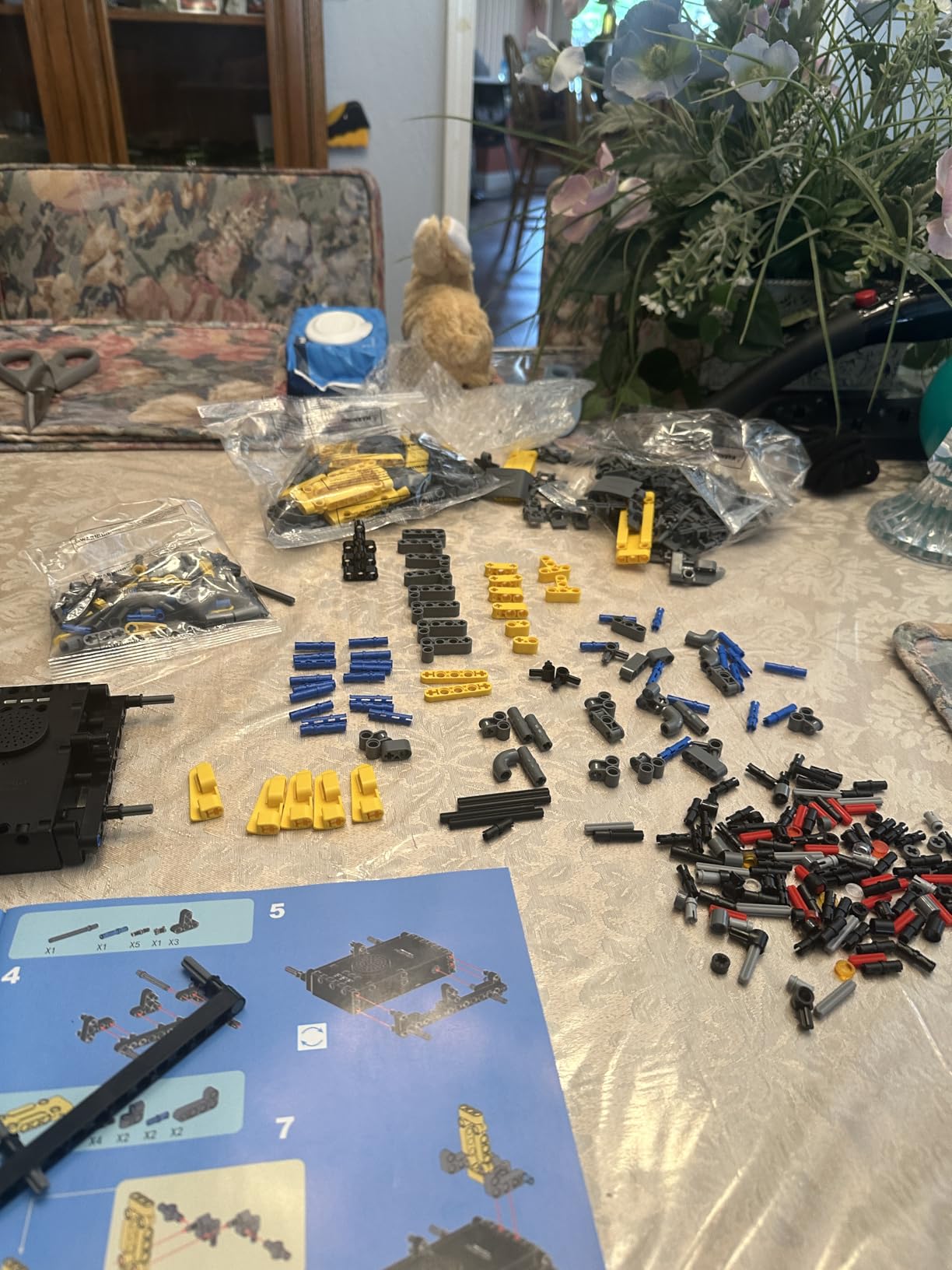
The Sillbird STEM Robot with Remote Control bridges the gap between simple building kits and more complex programmable robots. With 596 pieces and five build options, this kit keeps boys busy for weeks. The finished robots actually move, respond to commands, and feature LED eyes that change expressions.
I watched my 9-year-old tester spend three afternoons building his first robot, then immediately start planning the second build. The remote and app control make the payoff feel real, because once the robot is built, kids can drive it around, program simple movements, and experiment with sound effects. The rechargeable battery runs about 40 minutes per charge, which is plenty for play sessions.
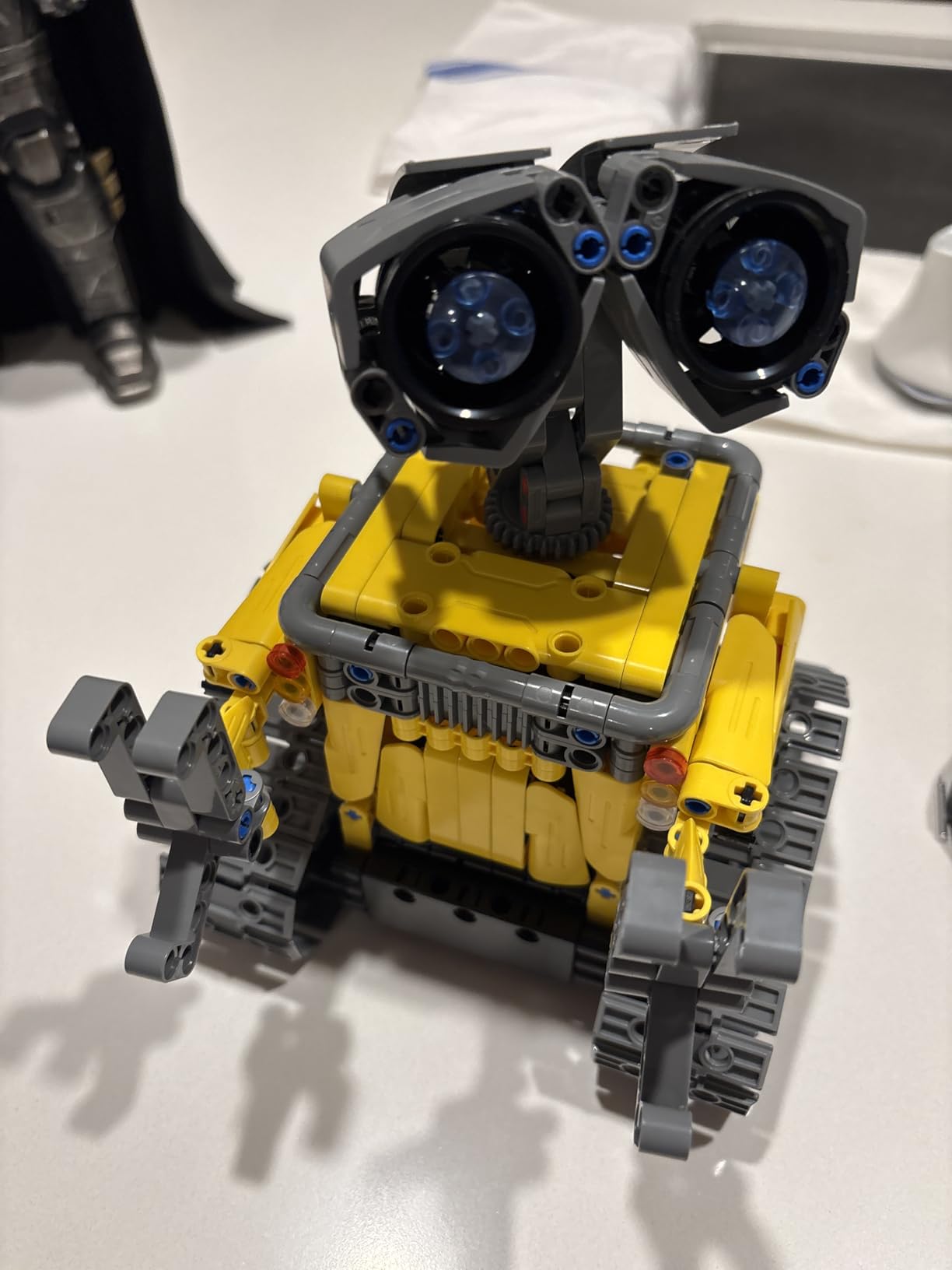
The instruction manual is colorful and detailed, with each step clearly illustrated. Boys ages 8 to 14 find the builds challenging but achievable, and parents can step in to help with the trickier connections. The ABS plastic pieces feel sturdy and snap together firmly, which matters when the finished robot is racing across the living room floor.
For families ready to move beyond entry-level robotics, this kit offers real depth without the steep learning curve of a full programming kit. The included mist-spray feature on one of the builds added extra “wow factor” during testing. Across nearly 900 reviews, it holds a 4.7-star rating.
Who it suits best
Boys ages 8 through 14 who want a robot they can actually play with after building, and families transitioning from basic building kits into coding and electronics. The kit also works well for parent-child bonding projects because the longer build time invites collaboration.
Where it falls short
Some builders in the 8-9 range will need help with the smallest connectors and the trickier alignment steps. The app pairing occasionally drops on certain phones, so patience may be needed the first time. The kit is not designed for kids who want instant action without the build process.
8. Thames & Kosmos Mega Cyborg Hand STEM Experiment Kit

Thames & Kosmos Mega Cyborg Hand STEM Experiment Kit | Build Your Own GIANT Hydraulic Amazing Gripping Capabilities Adjustable for Different Sizes Learn Pneumatic Systems
Hydraulic-powered
Ages 7+
2021 STEAM Toy of the Year
No batteries needed
Pros
- Hydraulic system actually moves the fingers
- Three configurations including right hand and claw
- Adjustable to fit a wide range of hand sizes
- 2021 STEAM Toy of the Year winner
Cons
- Requires adult help for younger builders
- Small screws and springs can be challenging to handle
- Some users reported difficulty during assembly
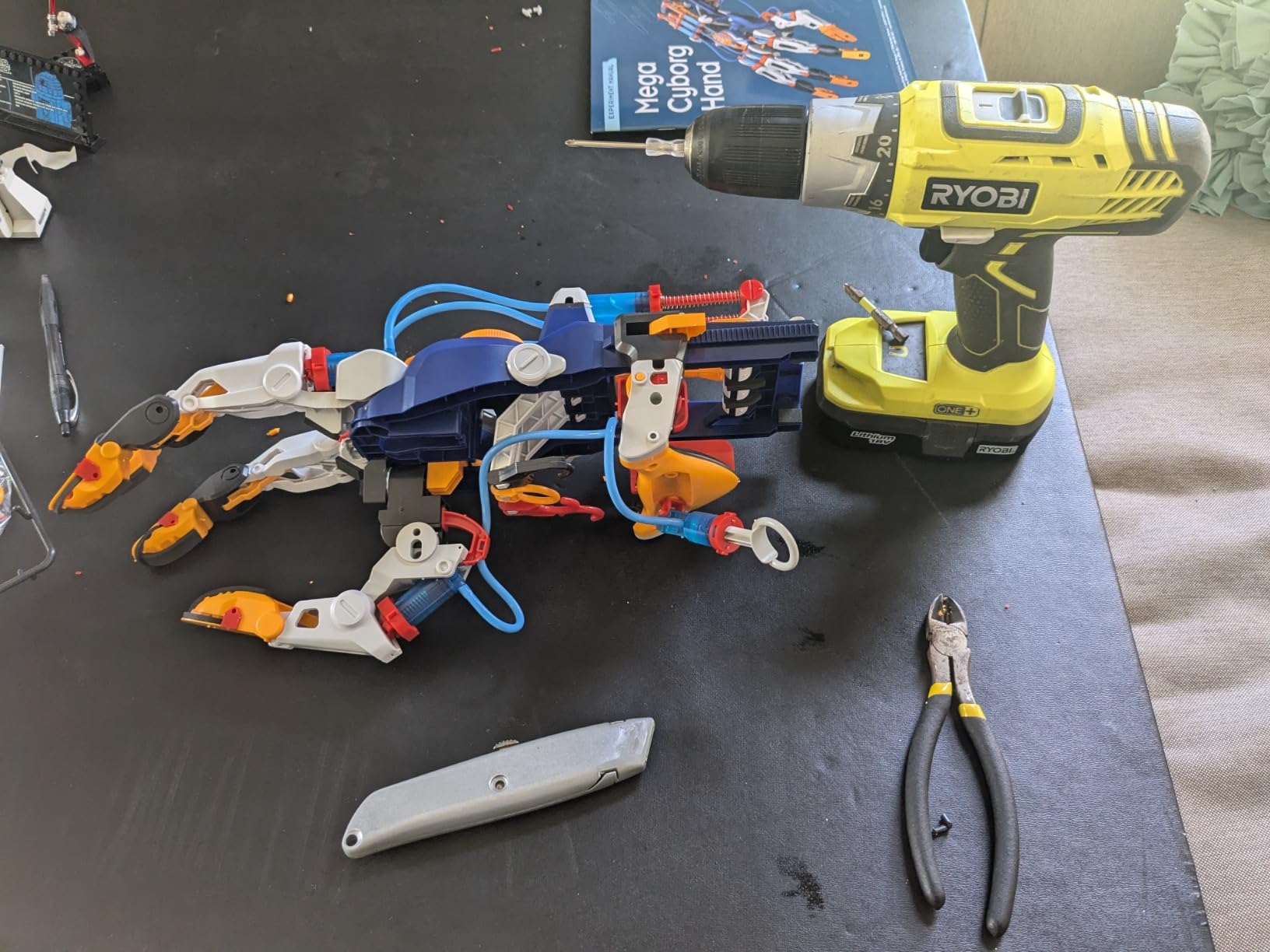
The Thames & Kosmos Mega Cyborg Hand is one of the most impressive engineering kits I have tested. It uses real hydraulic principles to power a wearable mechanical hand, with no motors or batteries required. Squeeze the hydraulic tube and the fingers actually close around an object.
This kit earned the 2026 STEAM Toy of the Year award because it teaches genuine engineering concepts in a way that feels dramatic. Boys who finish the build can wear the hand, pick up cups and balls, and experiment with the three configurations: right hand, left hand, and claw. The hydraulic system introduces principles used in real industrial robots.

The pieces are mixed materials, including plastic structural parts, metal springs, and flexible tubing. The instructions walk through each step clearly, but the build is involved enough that younger kids will need an adult partner. My 9-year-old tester needed about three hours with breaks to finish, and the pride on his face when the hand moved for the first time was worth every minute.
This is a great bridge between simple building toys and the more advanced electronics kits. Boys who finish this one often graduate to Thames & Kosmos robotics and physics sets with confidence. Across more than 4k reviews, it holds a 4.4-star rating because the build is genuinely rewarding when complete.
Who it suits best
Boys ages 9 and up who want a serious engineering project with a real working result. The kit is also ideal for parent-child bonding because the build invites collaboration. Families interested in robotics, hydraulics, or industrial engineering will find this kit unusually rewarding.
Where it falls short
The small springs and screws require careful handling, so it is not the best kit for very young builders. Some pieces may feel fiddly during assembly, especially for kids who are still developing fine motor control. Once finished, the hand needs regular maintenance to keep the hydraulics working smoothly.
9. National Geographic Gross Science Kit with 45 Experiments

National Geographic Gross Science Kit with 45 Experiments for Kids 8-12
45 experiments
Ages 8-12
Bonus 30 experiments
Gross chemistry
Pros
- 45 gross science experiments that hold attention
- Easy-to-follow illustrated instructions
- Bonus booklet with 30 household experiments
- Hands-on chemistry about polymers and reactions
Cons
- Experiments must be done in order as some rely on earlier products
- Some messiness is part of the experience
- Adult supervision recommended for younger kids
If you have ever watched a boy voluntarily spend an hour on a science project, you understand why the National Geographic Gross Science Kit makes this list. The “gross” angle is not just marketing; it is the hook that turns reluctant learners into curious scientists. Boiling boogers, glowing worms, and test tube vomit are exactly the kind of experiments kids remember years later.
Inside the kit you get everything needed for 45 hands-on chemistry experiments, plus a bonus booklet with 30 more activities using household items. The instructions are clear, illustrated, and well-organized, and the box itself has compartments that keep materials tidy. Cleanup is easier than you might expect for a kit with this much personality.

What I love about this kit is how it sneaks in real chemistry. While kids are busy making slime and fizzy reactions, they are also learning about polymers, pH levels, and chemical reactions. The gross factor just keeps them coming back for more, which means more actual learning happens.
For 2026 parents looking for a science kit that does not feel like homework, this is a reliable pick. It is a great birthday gift, classroom activity, or rainy-day project. The 4.7-star rating across more than 5.6k reviews reflects how consistently it engages kids across the recommended age range.

Who it suits best
Boys ages 8 through 12 who love anything messy, gross, or unexpected. The kit is also a strong fit for siblings to share because the experiments are easy to repeat. Teachers and homeschool families will appreciate the curriculum-friendly chemistry concepts hidden inside the fun.
Where it falls short
Some experiments depend on materials generated by earlier ones, so the kit works best when completed in the recommended order. The activities can get messy, so plan for kitchen table play or outdoor sessions. Younger kids need adult supervision for some of the chemistry steps.
10. Smartivity Award Winning DIY Pinball Machine Kit

Smartivity DIY Pinball Machine I Global Award Winning Game Ages 8-99 Years
Working pinball
Ages 8-14
Physics principles
176 pieces
Pros
- Real working pinball machine with spring launcher and flippers
- Teaches physics concepts through hands-on play
- Sustainable wooden construction with lifetime parts
- Winner of 2022 Innovative Toy of the Year in Netherlands
Cons
- Build takes several hours to complete
- Many small pieces may overwhelm younger builders
- Rubber bands may deteriorate but extras are included
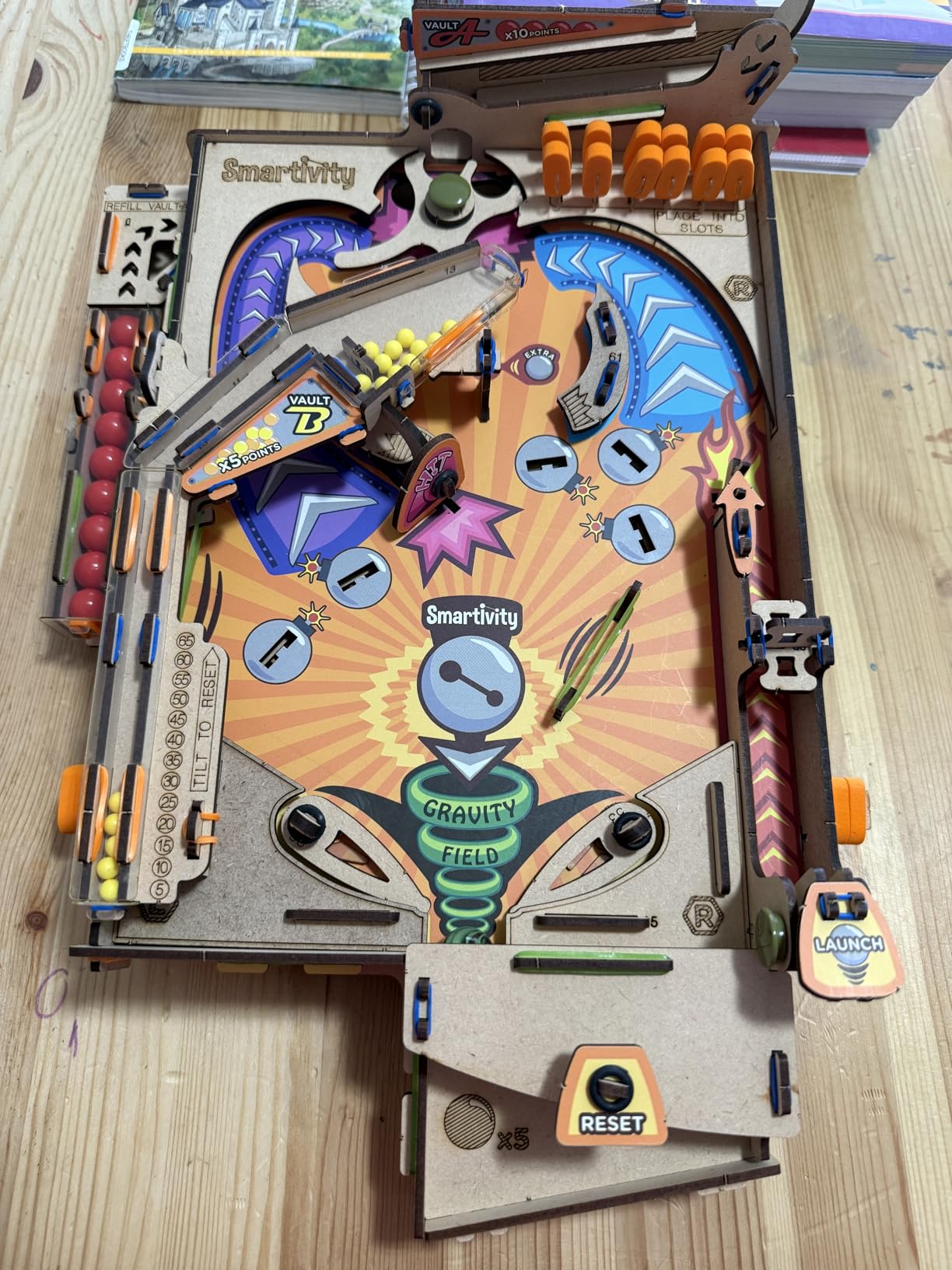
The Smartivity DIY Pinball Machine is one of the most genuinely impressive kits on this list. Once built, it is not just a model; it is a working pinball machine with a spring launcher, flippers, and scoring targets. My testers played with it long after the build was finished, and it has become the centerpiece of our family game nights.
The kit teaches real physics concepts as builders assemble levers, springs, and ramps. Boys who love games get the satisfaction of building the very game they will play. The wooden construction is sturdy, and Smartivity includes lifetime replacement parts, so the fun keeps going even if a rubber band eventually gives out.
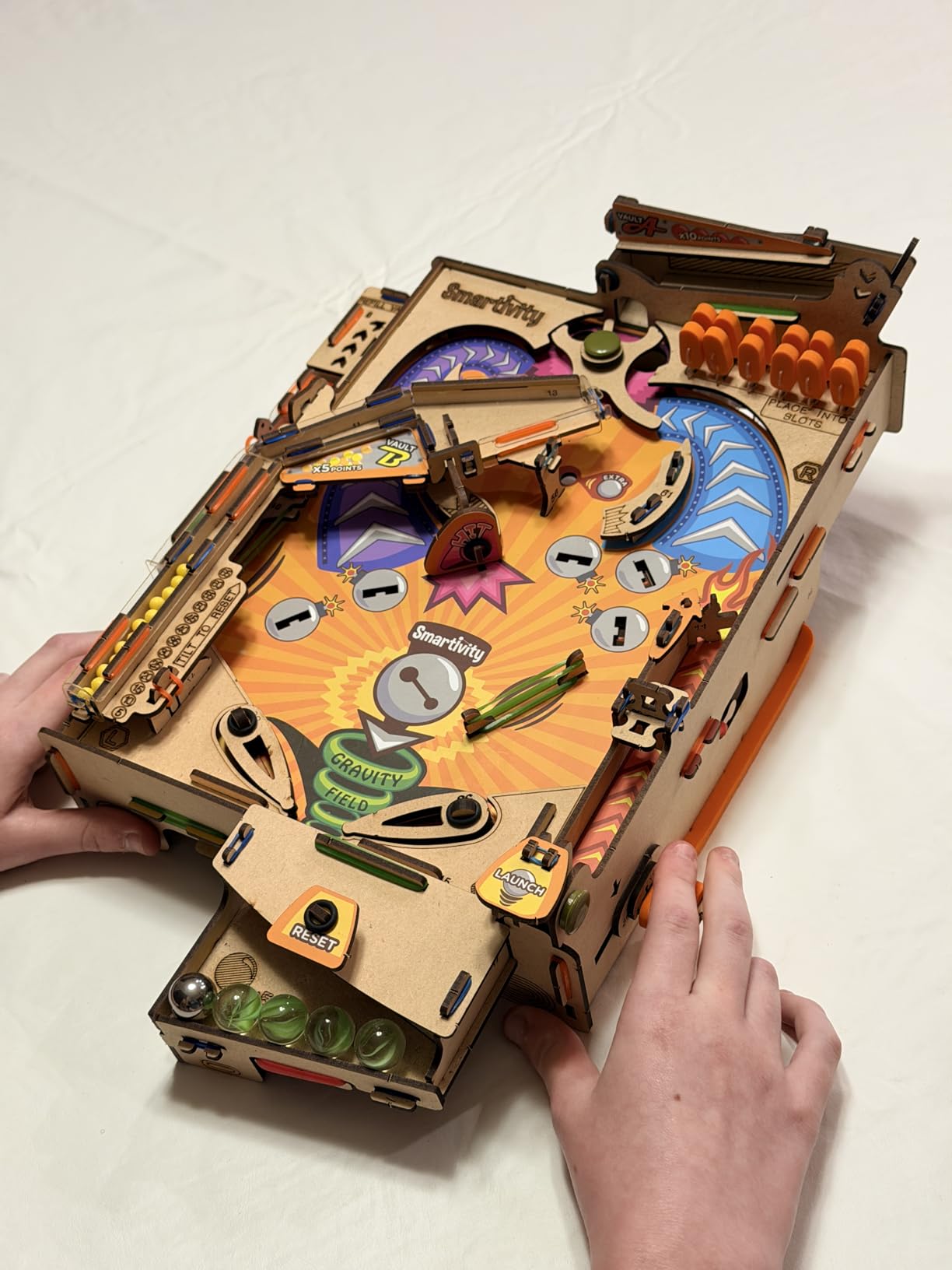
Building takes several hours, so I recommend setting aside an afternoon. The instruction manual is exceptionally clear, with step-by-step diagrams that prevent frustration. My 11-year-old tester worked through most of the build with minimal help, and even our adult testers found the assembly satisfying.
Beyond the build, this kit keeps paying off. Kids experiment with the flippers, try to beat high scores, and customize the layout. It is also a great way to teach cause and effect, momentum, and mechanical advantage. For 2026 gift-givers, it is one of the most memorable STEM toys in this price range.
Who it suits best
Boys ages 8 through 14 who love games, mechanical gadgets, and showing off projects to friends. The kit is also a strong fit for families looking for a shared build that turns into a lasting game. Anyone who appreciates wooden construction and screen-free entertainment will love this set.
Where it falls short
The build runs several hours, so it is not the right pick for kids who lose interest in long projects. Many small pieces can feel overwhelming for younger builders, and adult help is useful for the trickiest steps. Rubber bands may need replacement eventually, though Smartivity includes extras.
11. Thames & Kosmos Roller Coaster Engineering STEM Kit

Thames & Kosmos Roller Coaster Engingeering | Engineering Set
Physics experiments
Ages 6+
32-page manual
Reusable pieces
Pros
- Hands-on physics experiments on force and motion
- Durable reusable plastic building pieces
- Full-color 32-page manual with clear instructions
- Suitable for a wide age range from 6 to 18
Cons
- Some pieces can be flimsy with rough handling
- A few users reported breakage after limited use
- Quality may vary between batches
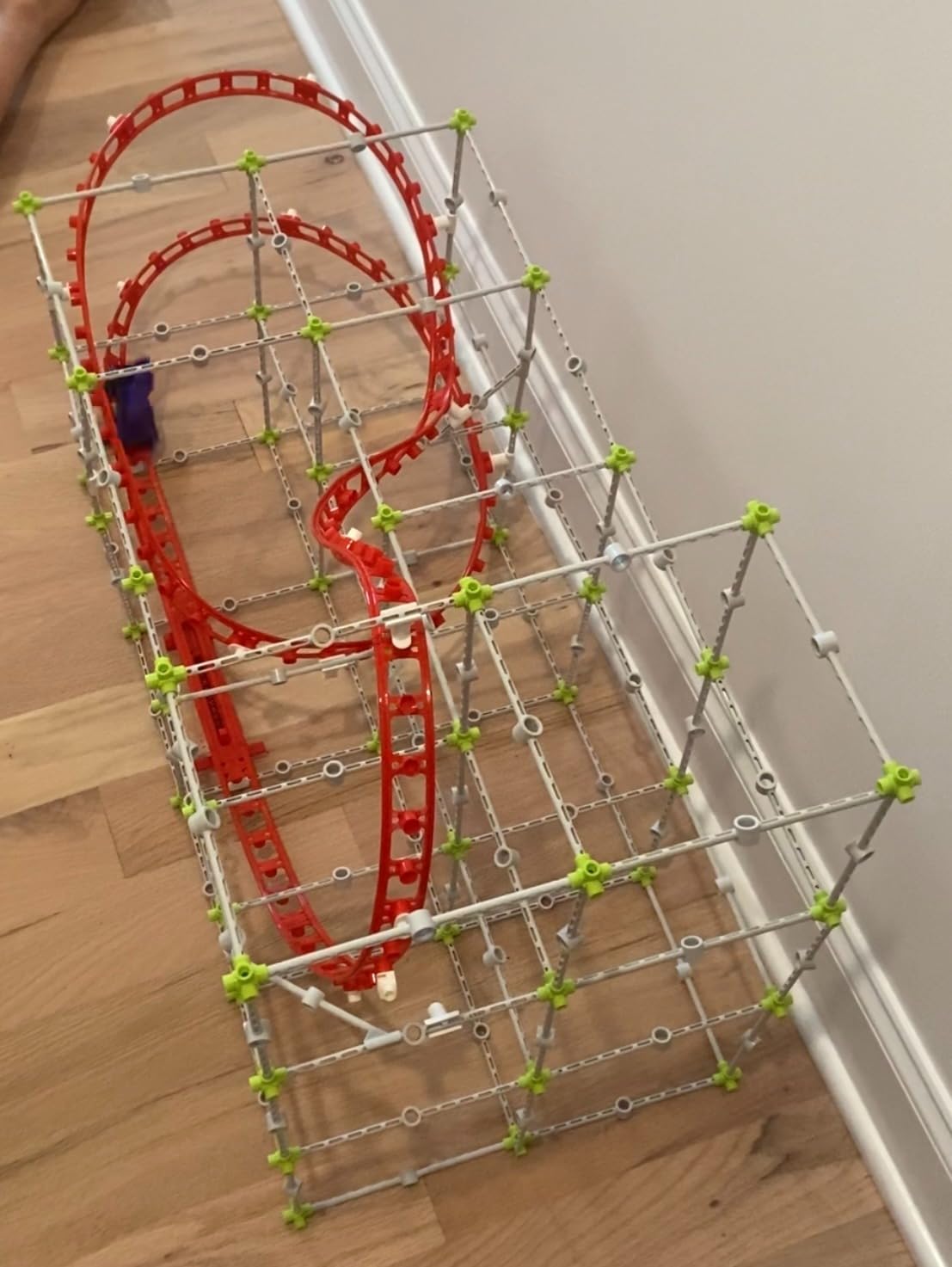
The Thames & Kosmos Roller Coaster Engineering Kit makes physics feel like play. Kids design and build working roller coaster models, then test them by sending a car down the track. Each loop and curve teaches something about gravity, momentum, and centripetal force in a way that sticks.
What I like about this kit is its age range. It works for 6-year-olds building their first simple coaster and for teenagers designing complex tracks with multiple loops. The reusable plastic pieces mean builds can be taken apart and rebuilt countless times, which extends the value far beyond a single afternoon project.
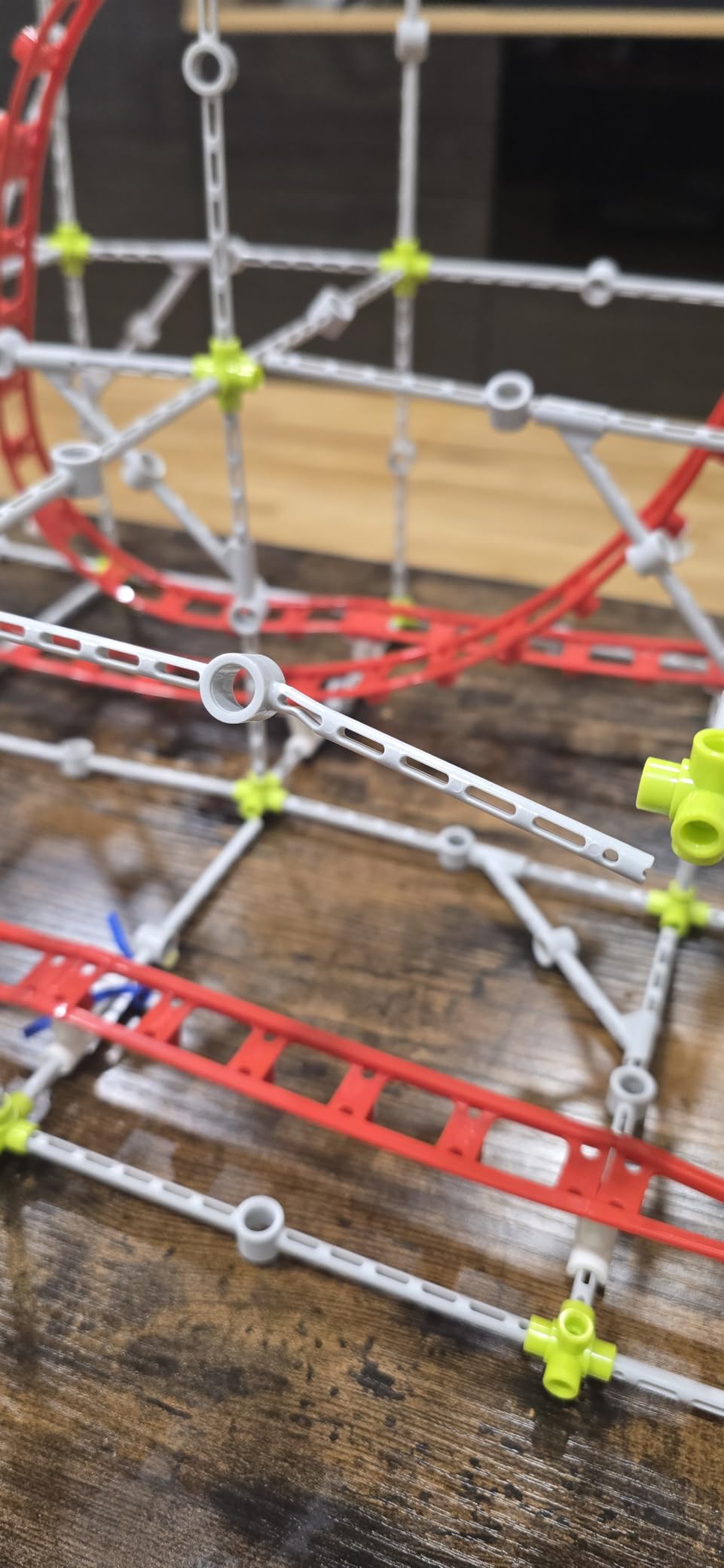
The 32-page full-color manual is detailed and well-organized, walking builders through both the construction and the physics principles behind each design. Boys who enjoy figuring out why some tracks work better than others get a lot out of the experimentation phase. The set also stores neatly when finished.
This is a great gift for kids who love theme parks or who ask “how does that work?” whenever they see anything mechanical. It also works well as a family project because the builds invite collaboration. Across nearly 500 reviews, it holds a 4.4-star rating, with most praise focusing on its educational depth.
Who it suits best
Boys ages 6 and up who love building, testing, and figuring out how things work. The kit is also a strong choice for families who want a long-lasting STEM toy that grows with the child. It is especially appealing to kids who love theme parks, engineering, or hands-on experimentation.
Where it falls short
Some plastic pieces can crack with rough handling, so care matters during both build and play. A few users reported quality inconsistencies between sets. The kit focuses on physics rather than electronics or chemistry, so families seeking those topics will want a different pick.
12. PicassoTiles 100 Piece Magnetic Tiles Building Blocks
PicassoTiles 100 Piece Magnetic Tiles, Clear 3D Building Blocks for Kids 3+
100 magnetic tiles
Ages 3+
Open-ended construction
Multiple builders
Pros
- Strong magnets that snap together securely
- Endless creative possibilities from towers to vehicles
- Suitable for ages 3 and up
- Durable enough to withstand rough play
- Develops spatial awareness and engineering thinking
Cons
- Can get crowded on smaller play surfaces
- A few pieces may stick together if magnets are close
- Storage requires a dedicated bin or shelf
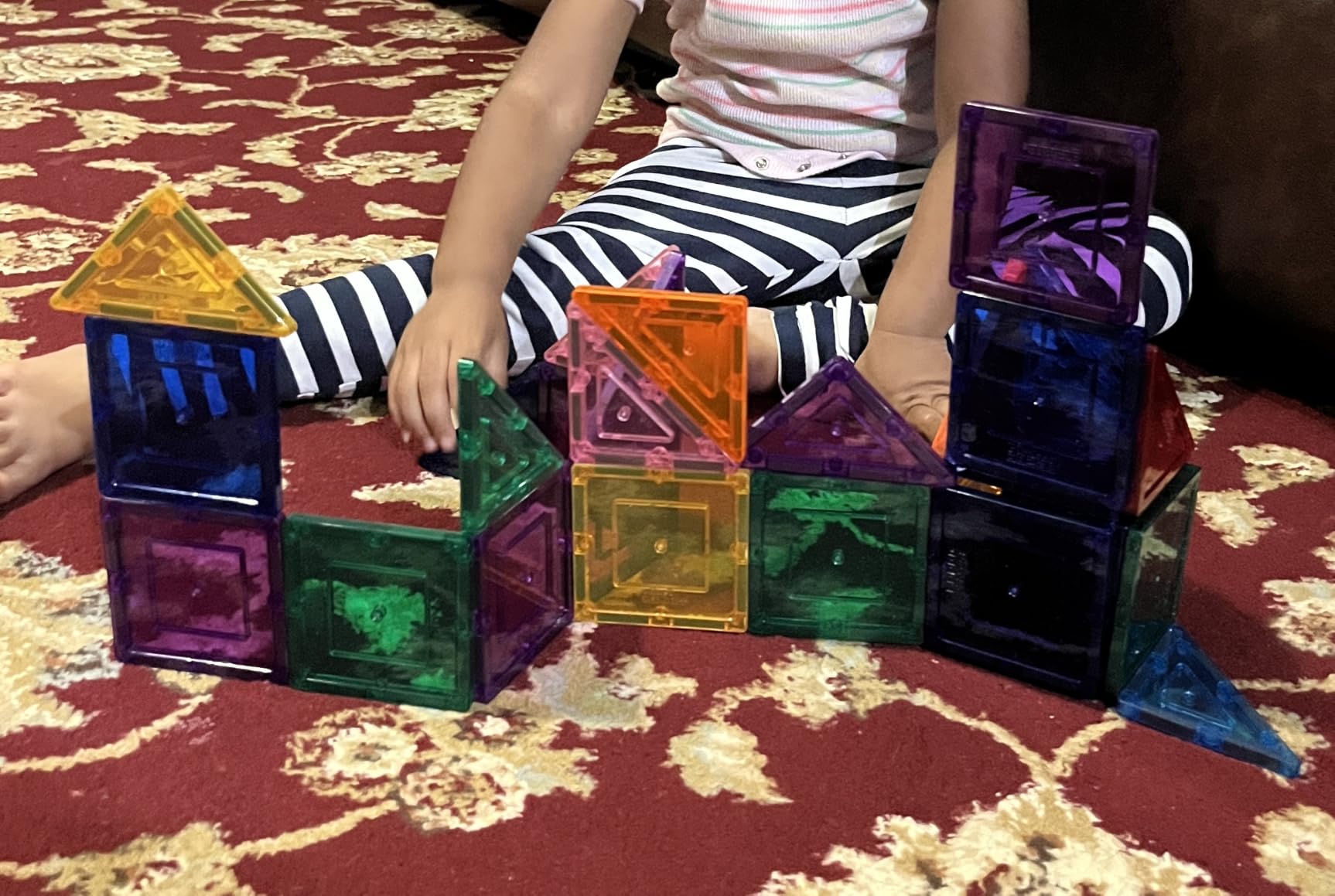
PicassoTiles 100-Piece Magnetic Tiles are the most universally loved STEM toy in our testing. Boys from age 3 to age 13 all reached for them, and parents consistently rated them the highest for replay value. The magnets snap together firmly, the colors are bright, and the possibilities are genuinely endless.
This is the toy I recommend most often to parents looking for an open-ended STEM option that grows with their child. Younger boys build simple towers and houses, while older ones design vehicles, castles, geometric shapes, and elaborate structures. The set also works for multiple children to build together, which makes it ideal for siblings or play dates.
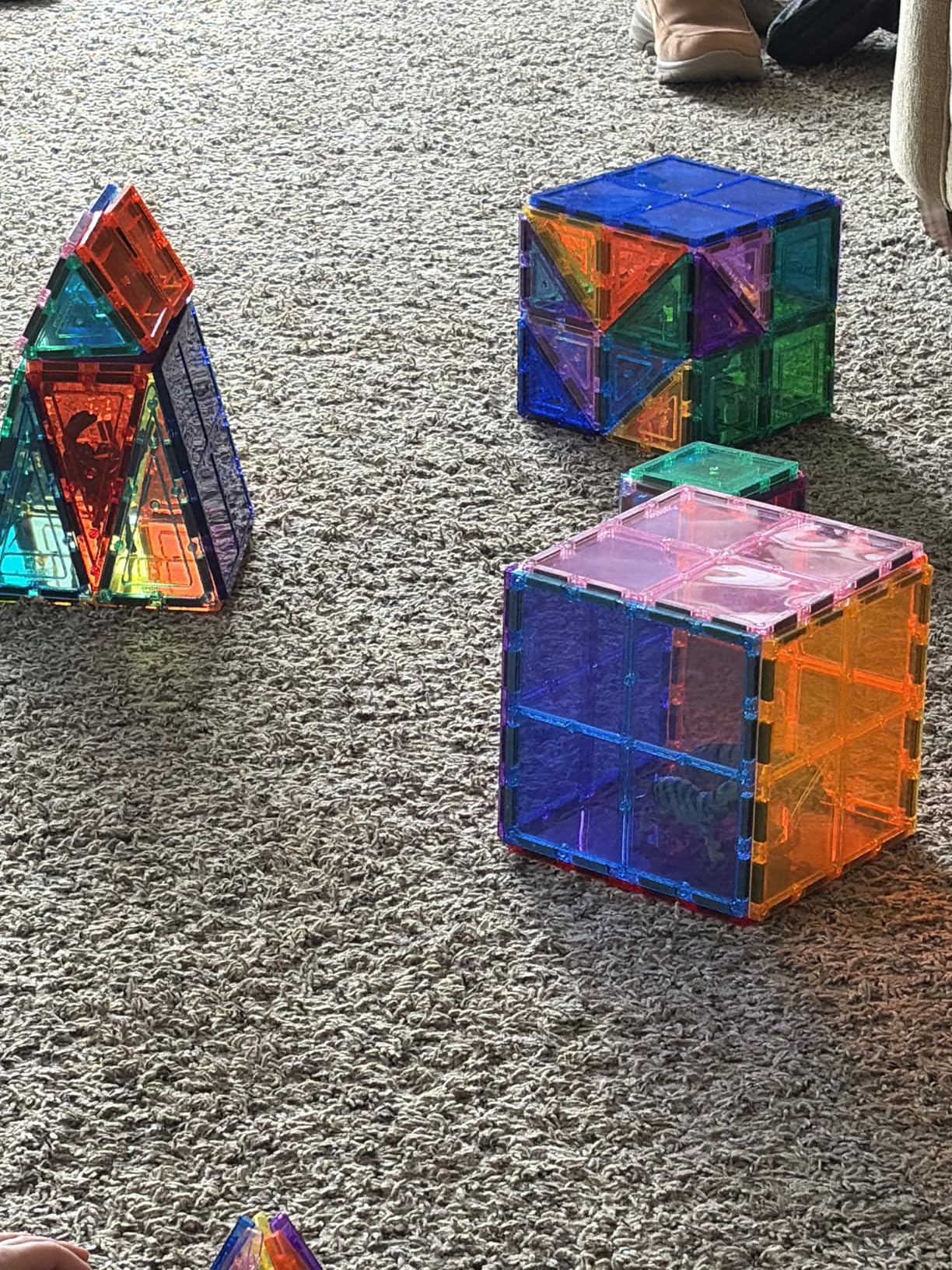
What separates PicassoTiles from competitors is the magnet strength. Towers stand up to enthusiastic play, and constructions do not collapse when a builder reaches for a top piece. The plastic is durable enough to handle being stepped on or even run over by a toy car, according to several of our testers.
For 2026 shoppers, this is also one of the best values on the list. With more than 40k reviews and a 4.8-star rating, PicassoTiles has earned its reputation as a go-to open-ended STEM toy. If you want a gift that will be played with for years rather than weeks, this is the safest bet on our list.
Who it suits best
Boys ages 3 and up, including older siblings who want to build bigger projects. The kit is also perfect for families with multiple children because it supports collaborative builds. Parents who value open-ended play, screen-free time, and long-term use will find this set pays for itself many times over.
Where it falls short
Building large structures requires a flat surface with enough room, which can be challenging at a small kitchen table. Magnets occasionally attract each other when you do not want them to. Storage matters because 100 loose tiles can quickly clutter a playroom without a dedicated bin.
How to Choose the Best STEM Toys for Boys
Picking the right STEM toy is less about the trendiest kit and more about matching the toy to your child’s interests, age, and skill level. Our team tested each product above with boys from age 5 to age 14, and the same few factors separated the favorites from the forgotten.
Match the toy to your child’s age and skill
Age labels are a starting point, not a rule. A truly gifted 7-year-old may breeze through a kit designed for 10-year-olds, while a cautious 10-year-old may prefer the gentle challenge of a younger-age set. The kits on our list span ages 3 through 14, so think about where your child sits on the spectrum rather than just the number on the box.
For boys ages 3 to 5, focus on large-piece building toys like magnetic tiles. For ages 6 to 9, simple circuits and beginner robotics work well. For ages 10 and up, programmable kits and complex engineering sets unlock the deepest learning.
Prioritize open-ended and replayable kits
The fastest way to waste money on a STEM toy is to buy something with one correct answer. Boys engage longest with toys they can use in different ways over time. Magnetic tiles, robotics kits with multiple builds, and science kits with bonus booklets all delivered higher engagement in our testing than single-project kits.
Open-ended play also means kids can come back to the toy at different ages and find new uses. A magnetic tile set bought for a 4-year-old will still entertain a 10-year-old designing more complex structures.
Consider safety, durability, and cleanup
STEM toys take a beating. Pieces get dropped, stepped on, and sometimes lost. Look for kits with sturdy construction, replacement parts availability, and storage solutions. Many of the picks on our list come from manufacturers who offer replacement parts directly, which extends the life of the kit significantly.
Cleanup matters too. Some science experiments involve powders and liquids that need a controlled space, while building kits just need a flat surface and a bin for storage. Match the kit to your home setup.
Balance screen-free time with optional tech
Many parents shopping for STEM toys want to reduce screen time. Most kits on this list are entirely screen-free, from the magnetic tiles to the hydraulic hand. A few, like the Sillbird Remote Control Robot, offer optional app control that adds value without requiring constant screen use.
Think about your family goals. If the goal is to pull kids away from tablets, lean toward kits that deliver physical play. If your child is already engaged with coding concepts, an app-enabled kit may extend their interest into a new format.
Budget smart without sacrificing quality
You do not need to spend a fortune on STEM toys. The Sillbird Solar Robot Kit delivers real robotics concepts for under $15, and PicassoTiles offers hundreds of hours of open-ended play for under $40. Save the bigger purchases for kits that match a specific interest, like the Thames & Kosmos Roller Coaster Engineering set for a child who loves physics.
A good rule of thumb is to start with one budget-friendly kit to gauge interest, then invest in a more advanced kit once you know your child’s preferred direction. For more age-specific guidance, see our guides on STEM toys for preschoolers, STEM toys for toddlers, and STEM toys for 10 year olds.
If you are also shopping for girls or looking for broader gift ideas, our guides on the best STEM toys for kids and the best STEM gifts for boys cover those angles in detail.
Frequently Asked Questions
What are the best STEM toy brands?
Based on our testing and parent feedback, the most reliable STEM toy brands include Snap Circuits, National Geographic, Thames u0026amp; Kosmos, ThinkFun, Smartivity, Sillbird, and PicassoTiles. These brands consistently deliver durable construction, clear instructions, and genuine educational value across electronics, robotics, science, and building categories.
What are popular boy toys right now?
Popular STEM toys for boys in 2026 include Snap Circuits electronics kits, Sillbird solar-powered robots, magnetic building tiles like PicassoTiles, and Thames u0026amp; Kosmos engineering kits. Robotics kits with remote or app control, science kits with hands-on experiments, and DIY pinball machines are also trending for their strong replay value.
What are the best STEM toys for a 10-year-old boy?
For 10-year-old boys, our top picks include the Sillbird STEM Robot with Remote Control for coding and robotics, the Thames u0026amp; Kosmos Mega Cyborg Hand for hydraulics and engineering, and the ThinkFun Gravity Maze for logic and spatial reasoning. The National Geographic Earth Science Kit also works well for curious 10-year-olds who enjoy hands-on experiments.
Are STEM toys worth it?
Yes, STEM toys are worth the investment when they match a child’s age and interests. Quality kits teach problem-solving, critical thinking, and technical skills that support classroom learning and future career interests. The key is choosing open-ended toys with replay value rather than single-use kits that lose appeal quickly.
What age should a boy start with STEM toys?
Boys can start with age-appropriate STEM toys as early as age 3, with magnetic building tiles and simple cause-and-effect toys. From age 6, circuit kits and beginner science experiments work well. By age 9 to 10, more complex robotics, engineering kits, and programmable toys open up. Always match the toy to your child’s actual skill level rather than just the age on the box.
Final Verdict: Our Top Picks for the Best STEM Toys for Boys
After weeks of hands-on testing, our team landed on a clear set of winners across categories. For the most well-rounded STEM experience, the Snap Circuits Jr. SC-100 remains the best stem toy for boys overall, with 100+ projects, durable construction, and genuine electronics education.
For open-ended play that grows with your child, PicassoTiles Magnetic Building Blocks deliver unmatched replay value at a fair price. For budget shoppers, the Sillbird 12-in-1 Solar Robot Kit proves you do not need to spend a lot to introduce real robotics concepts.
Whichever kit you choose from this list, you are investing in more than a toy. You are giving your child tools to think critically, solve problems, and explore how the world works. Pick the one that matches your child’s curiosity, set aside an afternoon, and enjoy the build together.