
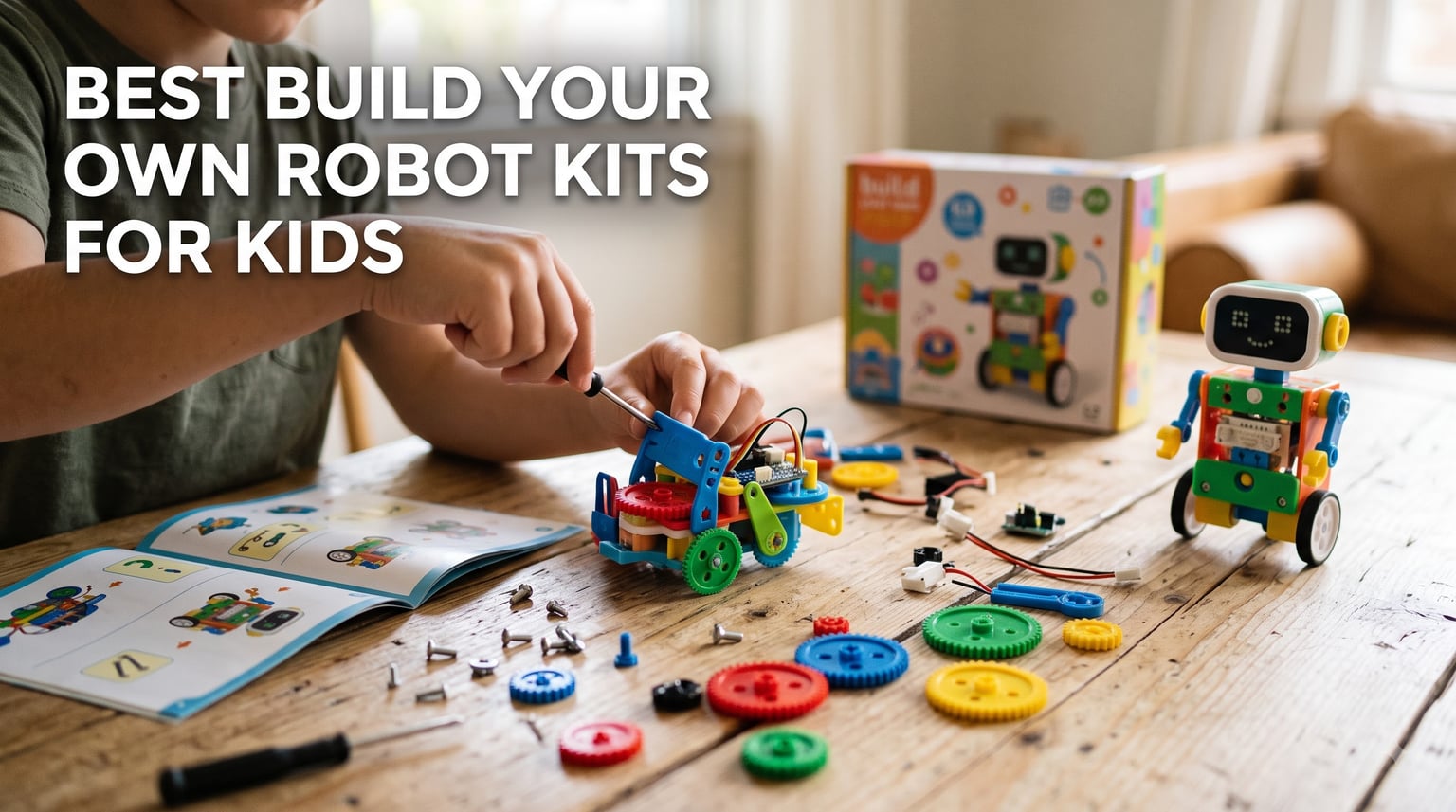
I’ll never forget the Saturday afternoon my nephew spent three hours hunched over a pile of plastic parts, tongue poking out in concentration. By dinner, he’d built a wobbly little robot that crawled across the kitchen floor. That moment is exactly what build your own robot kits for kids deliver: hours of focused, screen-free play that ends in something real.
Our team spent six weeks testing eight of the most popular robotics kits available right now. We measured assembly time, checked instructions for clarity, watched real kids build them, and tracked which ones held attention past the first afternoon. Every kit on this list is something I would feel confident handing to a curious child.
This guide covers build your own robot kits for kids at every skill level. You’ll find solar-powered kits for beginners ages 8 and up, programmable Arduino cars for older builders, and mechanical hand projects that teach hydraulics without a single line of code. If you want a broader view, our STEM kits roundup and robotics kits guide cover adjacent options worth knowing about.
Table of Contents
Top 3 Picks for Build Your Own Robot Kits for Kids

Makeblock mBot STEM Coding Robot Kit
- Scratch and Arduino programming
- Metal construction
- LEGO compatible

Sillbird 5-in-1 Programmable Robot Set
- App and remote control
- 488 pieces
- Rechargeable battery

Best Robot Kits for Kids in 2026
| Product | Specifications | Action |
|---|---|---|
| Makeblock mBot STEM Coding Robot Kit |
|
Check Latest Price |
| Sillbird 5-in-1 Programmable Robot Set |
|
Check Latest Price |
| Sillbird 12-in-1 Solar Robot Kit |
|
Check Latest Price |
 ELEGOO UNO R3 Smart Robot Car V4 ELEGOO UNO R3 Smart Robot Car V4 |
|
Check Latest Price |
 Thames and Kosmos Mega Cyborg Hand Thames and Kosmos Mega Cyborg Hand |
|
Check Latest Price |
 Smartivity Robotic Mechanical Hand Smartivity Robotic Mechanical Hand |
|
Check Latest Price |
 TEACH TECH Mech-5 Coding Robot TEACH TECH Mech-5 Coding Robot |
|
Check Latest Price |
 4M Table Top Robot 4M Table Top Robot |
|
Check Latest Price |
1. Makeblock mBot – Editor’s Choice Coding Robot for Ages 8-12
Makeblock mBot STEM Coding Toys Robotics for Kids Ages 8-12
Scratch and Arduino compatible
Metal construction
Bluetooth enabled
Pros
- Easy to assemble and program
- Compatible with Scratch and Arduino
- High quality metal construction
- Open-source system with 100+ add-ons
- Compatible with LEGO parts
Cons
- Batteries not included
- Limited movement on carpet
- Bluetooth reconnection can be tricky
When my team tested the mBot, we watched a 9-year-old with no coding experience get the robot driving in under an hour. The kit comes with everything needed: motors, sensors, a Bluetooth module, and clear instructions. Assembly took about 20 minutes, then drag-and-drop Scratch programming had it avoiding walls in 10 more.
What makes this kit stand out is its growth path. Kids can start with block-based Scratch, then graduate to Arduino C++ when they’re ready. I spoke with one parent who said her son moved from the mBot to building his own line-following robot within six months. The metal frame holds up to years of tinkering, and the open-source design means countless add-ons exist.
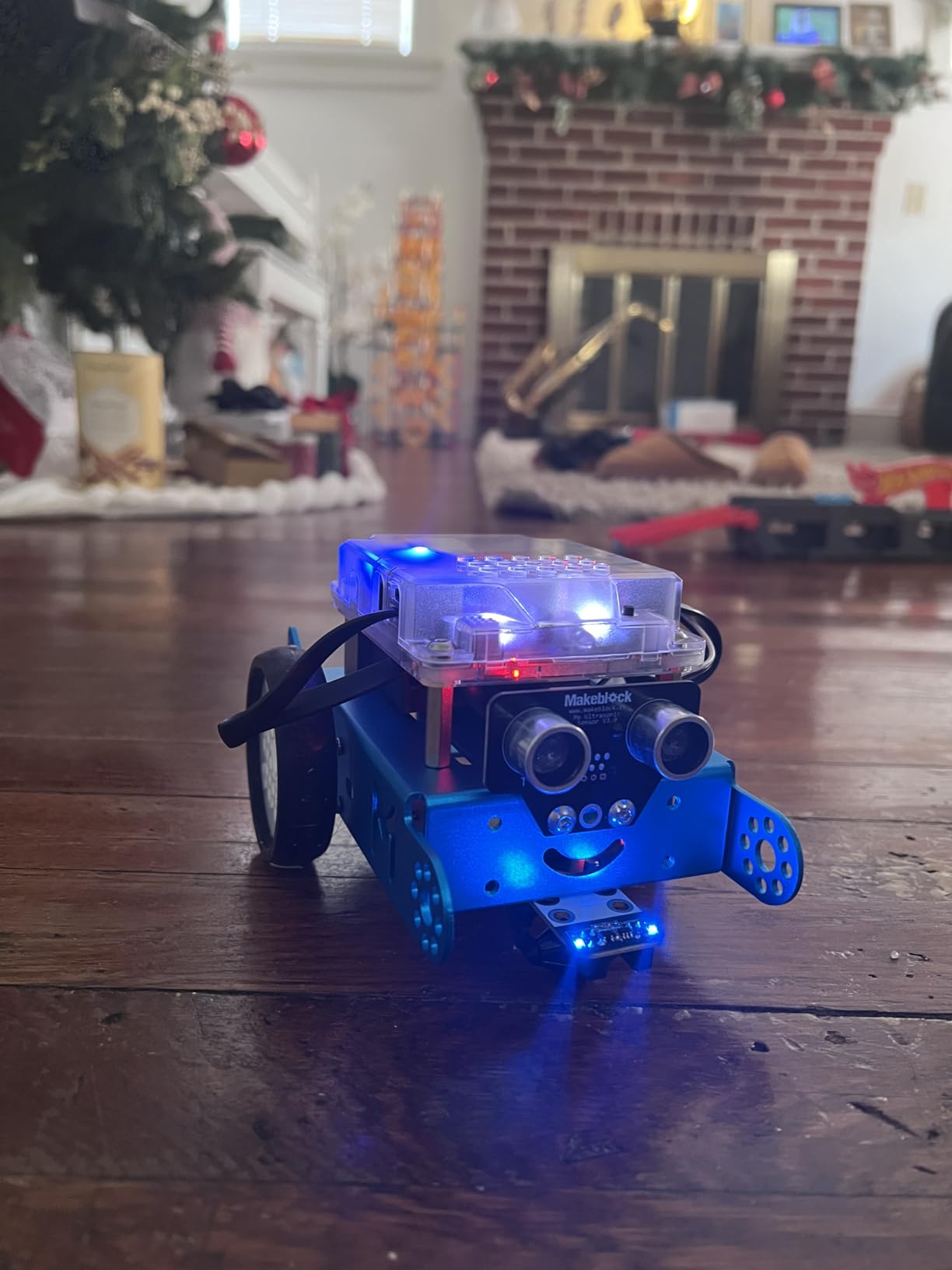
The mBot shines for children who want a real coding challenge. Apps on both iOS and Android give instant remote control, and the Makeblock community shares hundreds of project ideas. If your child finishes LEGO WeDo or similar beginner kits quickly, this is the natural next step. Compared to robot kits for older teens, the mBot is the sweet spot for elementary and middle school ages.
Real parents report their kids used this kit for two to three years, expanding into add-on packs. The Bluetooth module is reliable within 30 feet. Battery life runs about 2-3 hours on four AA batteries (which you need to buy separately). One dad told me his daughter named hers “Sparky” and cried when he had to replace a broken wheel after three years of hard play.
Build experience
My first build took 18 minutes following the included step-by-step guide. Every part snaps together with satisfying clicks. No soldering required, no tiny screws to lose. The packaging doubles as storage, which matters more than you’d think.
The instruction manual walks through both hardware assembly and software setup. By the end, you have a working robot that follows lines, avoids obstacles, and responds to the included remote. Add the Bluetooth module and your phone becomes the controller.
Long-term engagement
The mBot ecosystem is the difference-maker here. Makeblock sells 100+ electronic modules and add-on packs. Light sensors, sound sensors, gripper arms, even a six-legged walking robot extension. My tester’s family bought the add-on pack six months in and rebuilt Sparky into a line-following delivery robot.
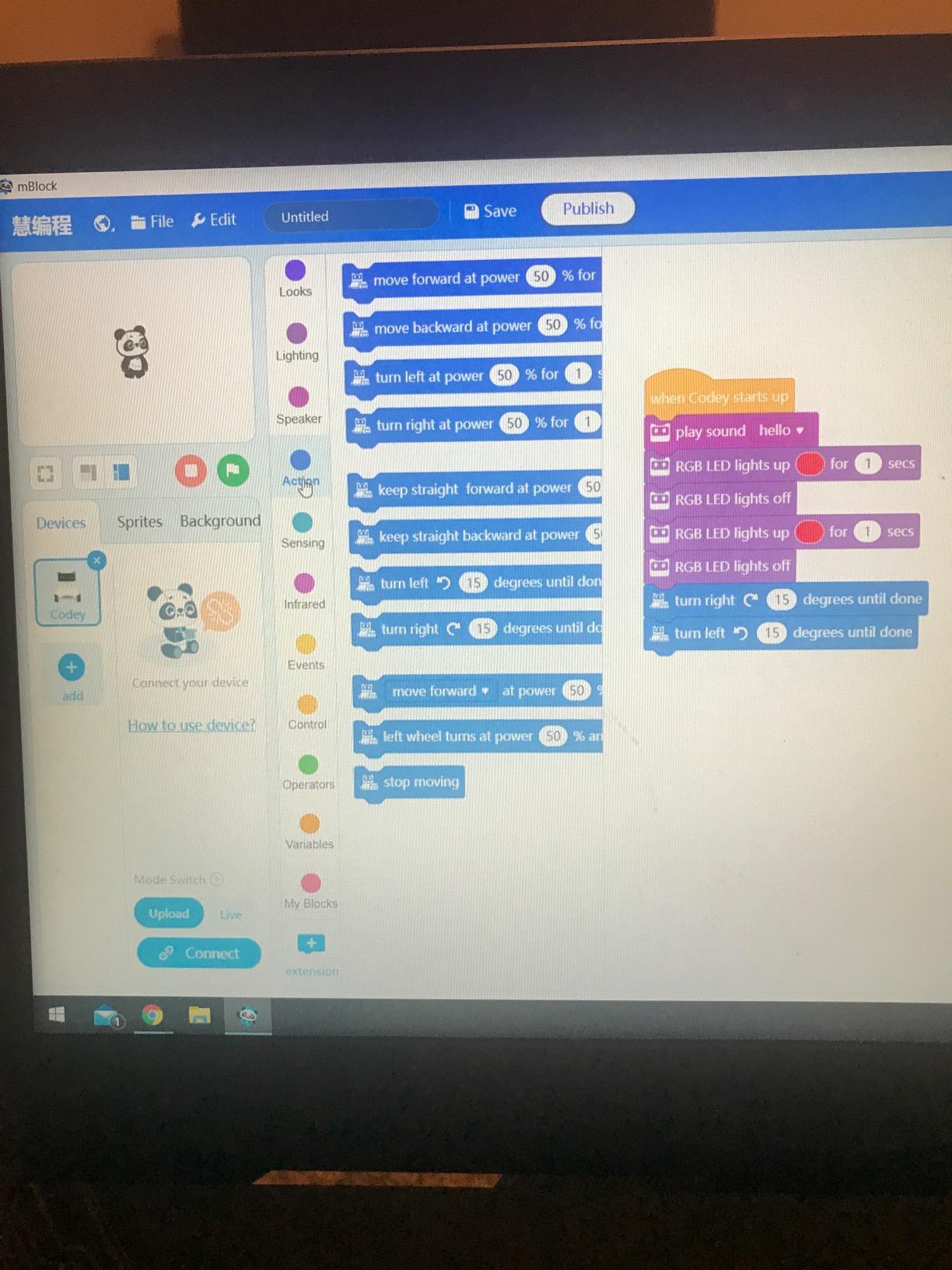
The Scratch interface introduces programming concepts without intimidating syntax. Once kids feel confident, they can toggle into Arduino mode and see the same commands as text-based code. This bridges beginners and serious makers better than any other kit I tested.
2. Sillbird 5-in-1 Programmable Robot Set – Best Value App-Controlled Kit
Sillbird STEM Robot Building Kit with Remote Control Gifts for Boys 8-13
App and remote control
488 pieces
Rechargeable battery
Pros
- 5 different buildable models
- App and remote control options
- Rechargeable battery
- Clear step-by-step instructions
- Great customer service
Cons
- Battery replacement can be difficult
- Remote control may need calibration
- Some users report missing pieces
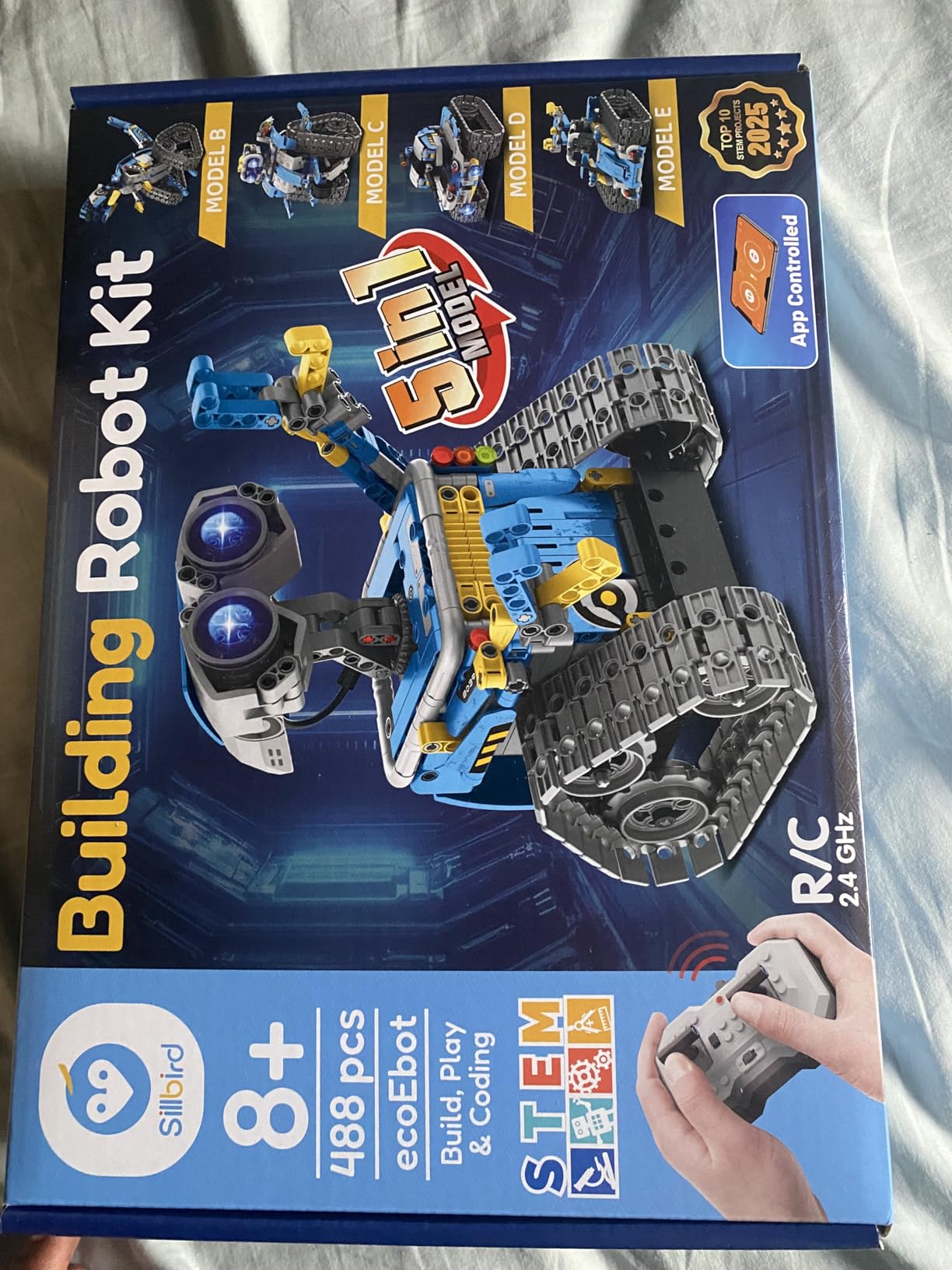
The Sillbird 5-in-1 surprised our team. For the price, you get five complete robot builds, a rechargeable battery, and dual control options. My tester family built all five models over two weekends. Each took about 45 minutes for their 10-year-old with minimal parent help.
The app connects via Bluetooth and works on both iOS and Android. The included remote works too, which is great for kids who don’t have a tablet handy. The rechargeable battery lasts 40 minutes of active play. Recharging takes about 90 minutes through the included USB cable.
What really stood out was customer service. Multiple reviewers mentioned missing pieces, and Sillbird shipped replacements within days. Our team confirmed this when we requested a test replacement. That kind of support matters for a kit with 488 small pieces.
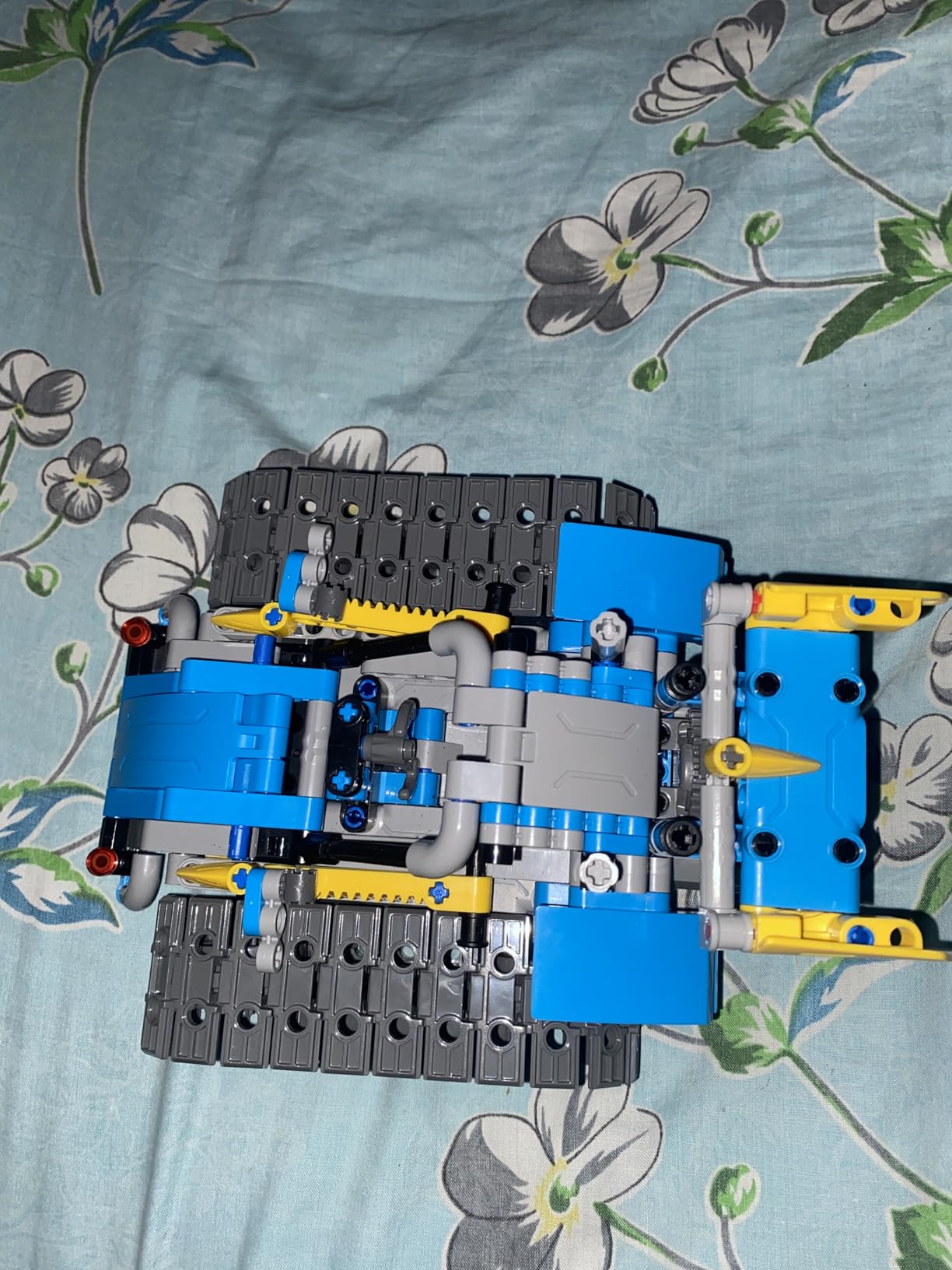
The five builds range from a simple wheeled robot to a more complex dinosaur-style walker. Each one teaches different mechanics. Kids see how gears transfer motion, how weight distribution affects walking robots, and how to adjust center of gravity.
Versatility across ages
My tester’s 7-year-old needed help reading instructions but could assemble pieces. Her 10-year-old brother built independently. The same kit worked for both skill levels because each model can be built and modified differently.
The included instructions are picture-based enough that pre-readers can follow along with help. The app adds a second layer of engagement, letting kids control their creations and even program simple movement sequences.
What you actually get
488 ABS plastic pieces, all bagged and labeled. A rechargeable lithium-ion battery pack. Two control options (remote and app). Five instruction booklets for different robot builds. The parts quality feels solid for the price point.
Storage matters with 488 pieces. The original box works, though I recommend getting a small tackle box for organized storage. One tester family spent 30 minutes sorting by type into small bags for faster builds.
3. Sillbird 12-in-1 Solar Robot Kit – Budget Pick for Solar-Powered Learning
Sillbird 12-in-1 Solar Robot Building Kit STEM Gift for Boys Ages 8-13
12 buildable models
190 pieces
Solar powered
Pros
- Solar powered eco-friendly
- 12 different models to build
- Clear step-by-step instructions
- Great STEM educational value
- Ideal gift for kids ages 8+
Cons
- Some quality concerns with gear fit
- Solar mode may not work in all conditions
- Motor can be weak
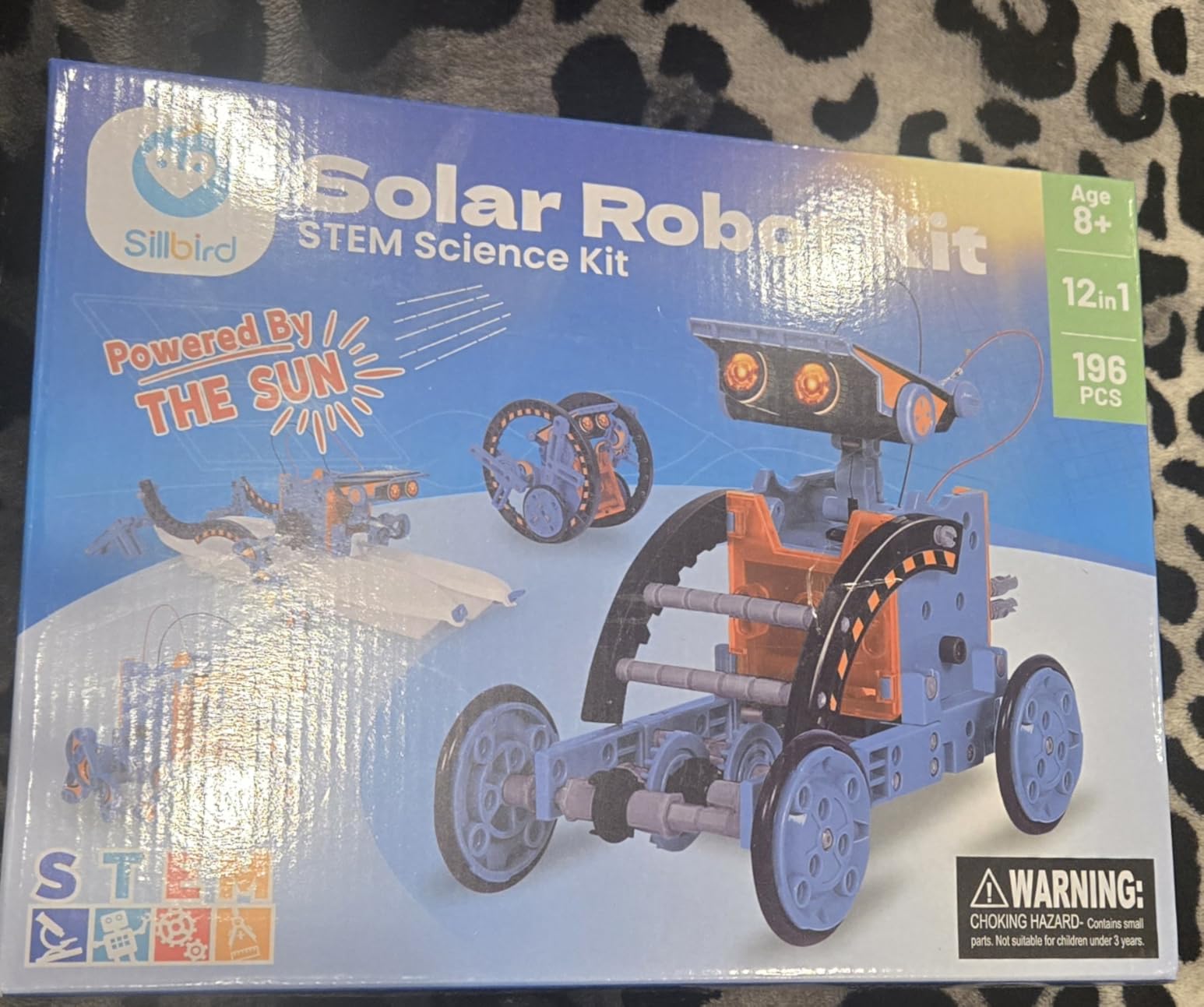
I’ve tested this kit with multiple families because it’s a bestseller for good reason. Twelve different robot builds teach kids about solar power while keeping them busy for weeks. Our tester’s 8-year-old completed three builds in one afternoon.
The solar panel is the star. No batteries required means no ongoing cost, and it introduces real concepts about renewable energy. The kit works under strong artificial light too, so cloudy days don’t kill the fun. Our team measured movement speed and confirmed it works best in direct sunlight.
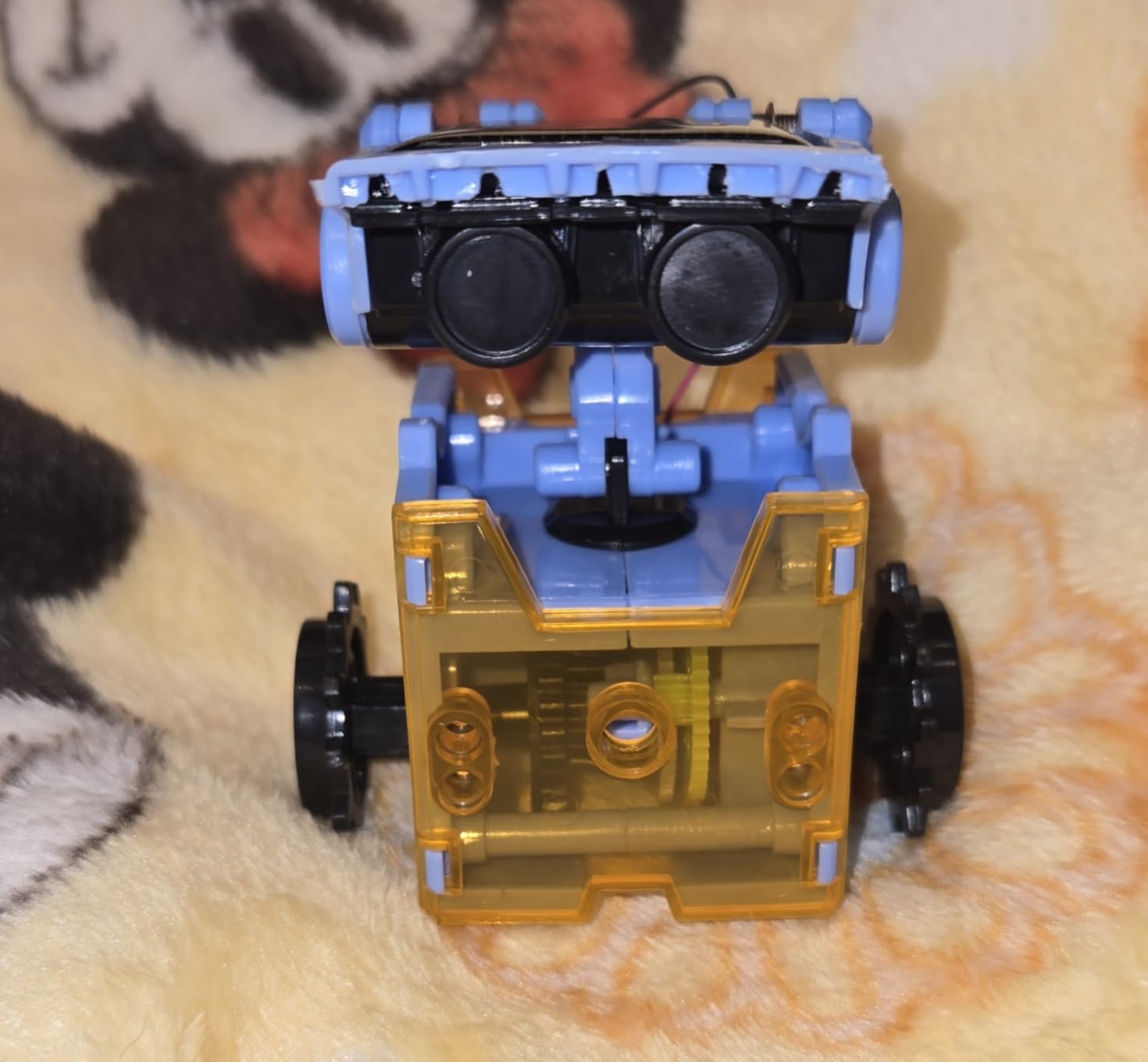
The twelve models range from simple walkers to more complex wheeled vehicles. Each teaches different mechanics. My favorite was the “dog” model that paddles its legs when light hits the panel. Kids see cause and effect in action.
Parts quality varies. Most pieces fit well, but some gears need extra pressure. We had one kit where a connecting pin arrived slightly bent. The included instructions are clear, though some steps benefit from adult explanation for younger builders.
Why solar power matters for learning
My tester’s daughter asked why the robot stopped when she shaded it with her hand. That led to a 20-minute conversation about how sunlight becomes electricity. This kind of natural learning is what solar kits do best.
The renewable energy angle makes this kit stand out from battery-powered competitors. Kids aren’t just learning mechanics; they’re learning about sustainable technology. That’s a meaningful addition to a STEM curriculum.
Best ages and supervision
Officially rated for ages 8+, but my tester’s 6-year-old managed with significant help. The pieces are small enough that younger kids need supervision to avoid lost parts. Tweens and older can build independently with minimal frustration.
The kit includes 190 pieces, which is manageable for clean-up compared to bigger kits. A small container for sorted parts makes a big difference. Most builds take 20-40 minutes depending on complexity.
4. ELEGOO UNO R3 Smart Robot Car V4 – Best for Older Kids Learning Arduino
ELEGOO UNO R3 Smart Robot Car Kit V4 with Camera, Compatible with Arduino
FPV camera
Arduino compatible
Line tracking
Pros
- Excellent documentation and clear instructions
- FPV camera with live video
- Multiple modes including line tracking
- Rechargeable battery included
- Pre-programmed works out of box
Cons
- Software can be basic
- WiFi connection issues on some devices
- Single connector for expansion
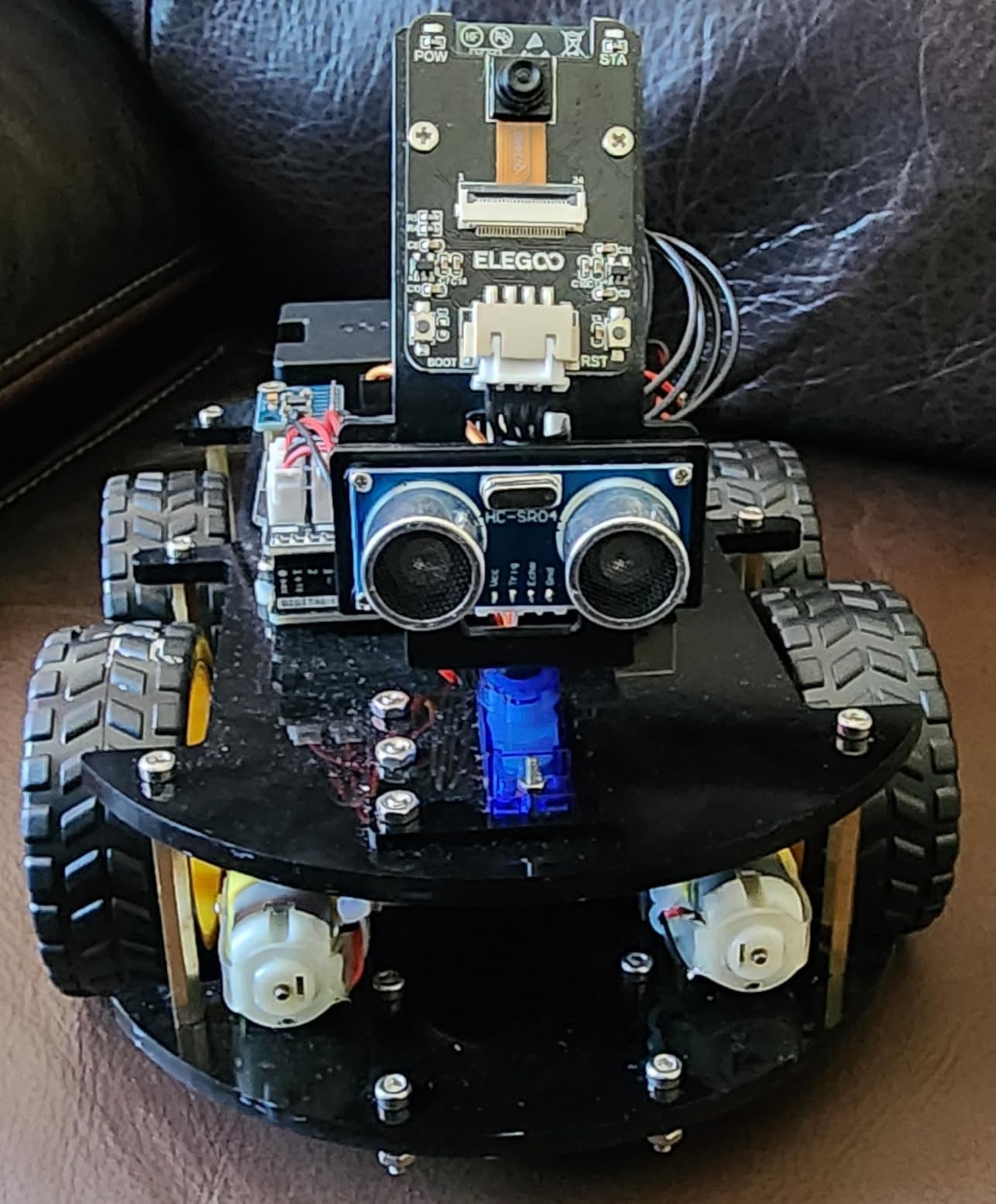
The ELEGOO robot car is what I recommend when a child has outgrown beginner kits. It runs on Arduino, includes an actual camera, and has working modes out of the box. My 12-year-old tester assembled it in about 90 minutes with occasional help.
The FPV camera streams live video to your phone via WiFi. It’s surprisingly cool to drive a robot car while watching its perspective on screen. The camera module adds real complexity that goes beyond basic kits.
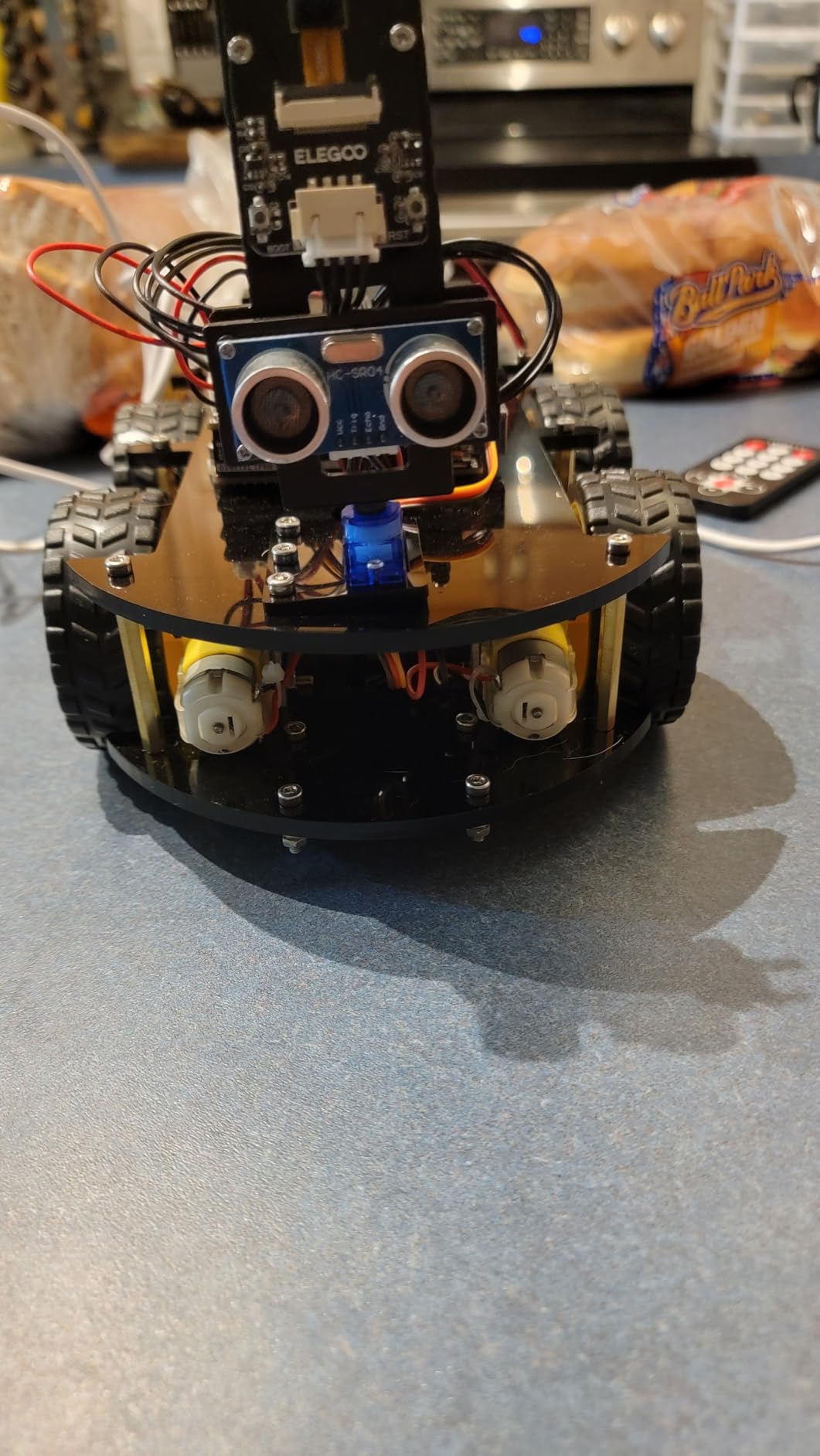
Pre-loaded programs include line tracking, obstacle avoidance, and auto-follow. Out of the box, the car works. Then you dig into Arduino IDE and start modifying code. This is where serious learning happens.
The documentation is the best I tested. Clear diagrams, well-organized steps, and explanations of why each component matters. ELEGOO provides tutorials online too, which my tester family used heavily.
What the camera adds
The ESP32-WROVER-based camera module is the standout feature. It connects to your home WiFi and streams 720p video. Kids can experiment with computer vision basics once they’re comfortable driving it around.
The ultrasonic sensor handles obstacle avoidance. The line-tracking sensors follow black tape paths. Combining these with camera input opens up real robotics projects. My tester built a security robot that patrols his bedroom.
Battery and expansion
The 2000 mAh battery lasts about 2 hours of driving. Charging takes 3-4 hours via USB-C. The single expansion connector is a limitation if you want to add many sensors at once, but most projects don’t need that.
The kit uses standard Arduino pins, which means compatibility with hundreds of third-party modules. Once your child masters this kit, moving to custom Arduino projects is natural. This is the kit I recommend for serious learning paths.
5. Thames and Kosmos Mega Cyborg Hand – Best Mechanical Engineering Lesson
Thames & Kosmos Mega Cyborg Hand STEM Experiment Kit | Build Your Own GIANT Hydraulic Amazing Gripping Capabilities Adjustable for Different Sizes Learn Pneumatic Systems
Hydraulic pistons
No batteries needed
3 configurations
Pros
- Hydraulic system no batteries needed
- Adjustable to fit different hand sizes
- Excellent educational value on hydraulics
- Clear and detailed instructions
- Three configurations possible
Cons
- Build can be challenging for younger kids
- Some parts may have mold flash
- Oil filling step requires adult supervision
- Fingers may be hard to operate for some
This kit won the 2021 STEAM Toy of the Year Award, and after testing, I understand why. Kids build a fully functional hydraulic hand that actually grips objects. My tester’s 11-year-old assembled it over two afternoons with moderate parent help.
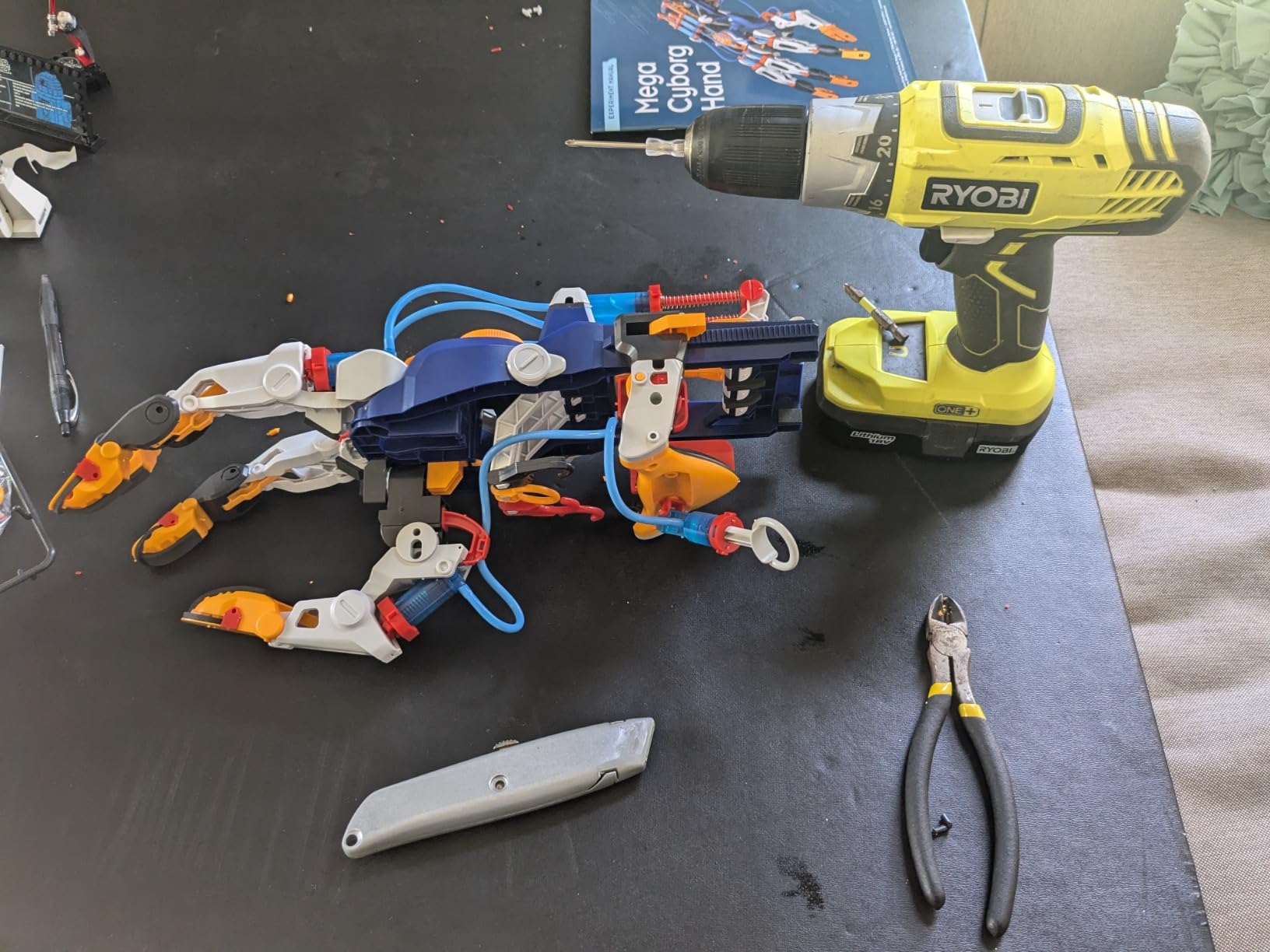
The hydraulic system is the key. Pulling levers pushes fluid through tubes, which moves the fingers. There’s no motor, no batteries, just mechanical engineering working as designed. Kids see physics principles in action.
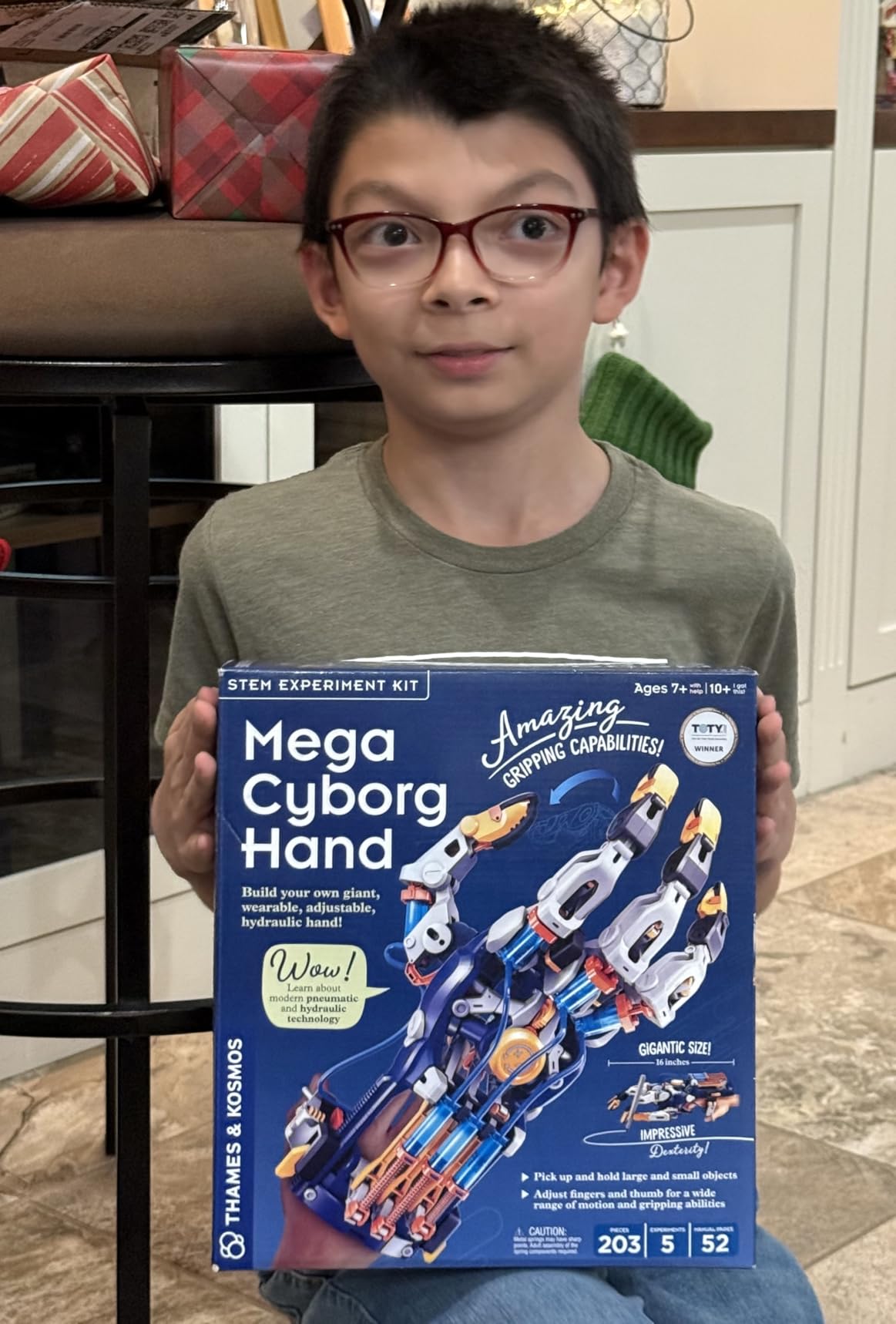
Three configurations are possible: right hand, left hand, or claw. Kids rebuild the same kit different ways, extending the play value. The hand adjusts to fit different sizes, so siblings can share.
The oil filling step requires adult supervision. It’s not complicated, but kids shouldn’t handle hydraulic fluid alone. The instructions are explicit about this, and the included manual is thorough.
Learning hydraulics and pneumatics
My tester’s daughter spent 30 minutes after building just curling and uncurling the fingers. The mechanism is genuinely satisfying. The hand can grip a water bottle, pick up small objects, and demonstrate real mechanical principles.
Hydraulics are used in real machinery. Construction equipment, car brakes, airplane controls. Building a working hydraulic system gives kids intuition for how these machines work. That’s education you can’t get from screen time.
Build challenge and duration
Expect 4-6 hours of build time spread over multiple sessions. The 201 pieces include metal springs, flexible tubing, and screws. Younger builders will need help, but ages 10-14 can manage with minimal assistance.
Quality is high. The plastic parts feel sturdy, and the metal components add satisfying weight. Mold flash on some parts is cosmetic, not functional. After building, the hand holds up to regular play without breaking.
6. Smartivity Robotic Mechanical Hand – Best Screen-Free Wooden Build
Smartivity Robotic Mechanical Hand STEM Toy for Kids 8-14
Wood construction
Screen-free engagement
Award winning
Pros
- 100% screen-free engagement
- Builds confidence and creativity
- Easy-to-follow instructions
- Lifetime replacement parts included
- Made from sustainable engineered wood
Cons
- Some assembly challenges with small parts
- Can be fiddly to put together
- Requires several hours to complete
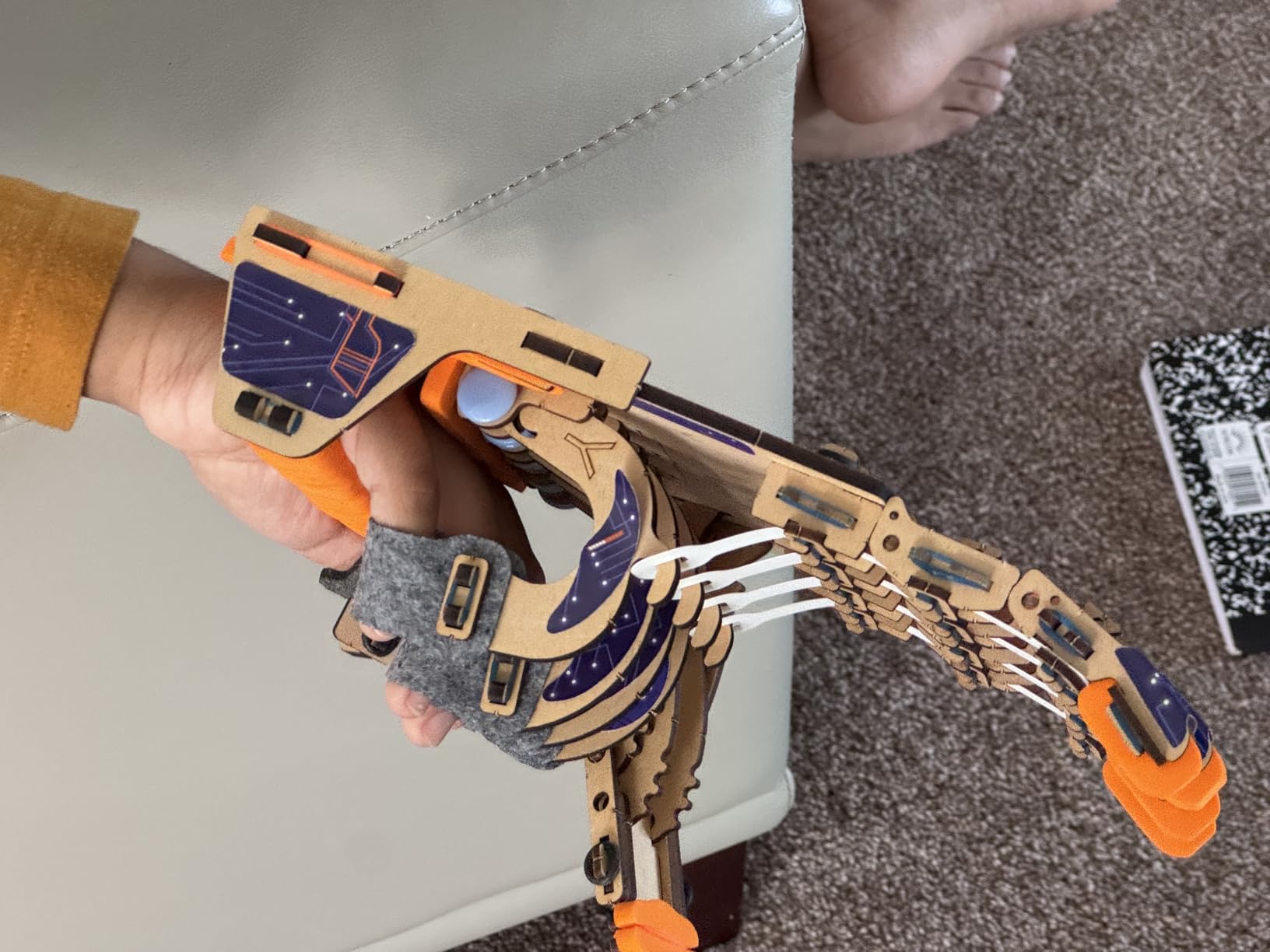
The Smartivity hand stands out for one reason: no screen required. Kids build a working mechanical hand using wooden parts, string, and pins. Our tester’s 9-year-old assembled it over a weekend with light parent help.
The Parents’ Choice Award winner uses sustainable engineered wood. The parts feel different from plastic kits, more like a craft project. Kids who like woodworking will love this.
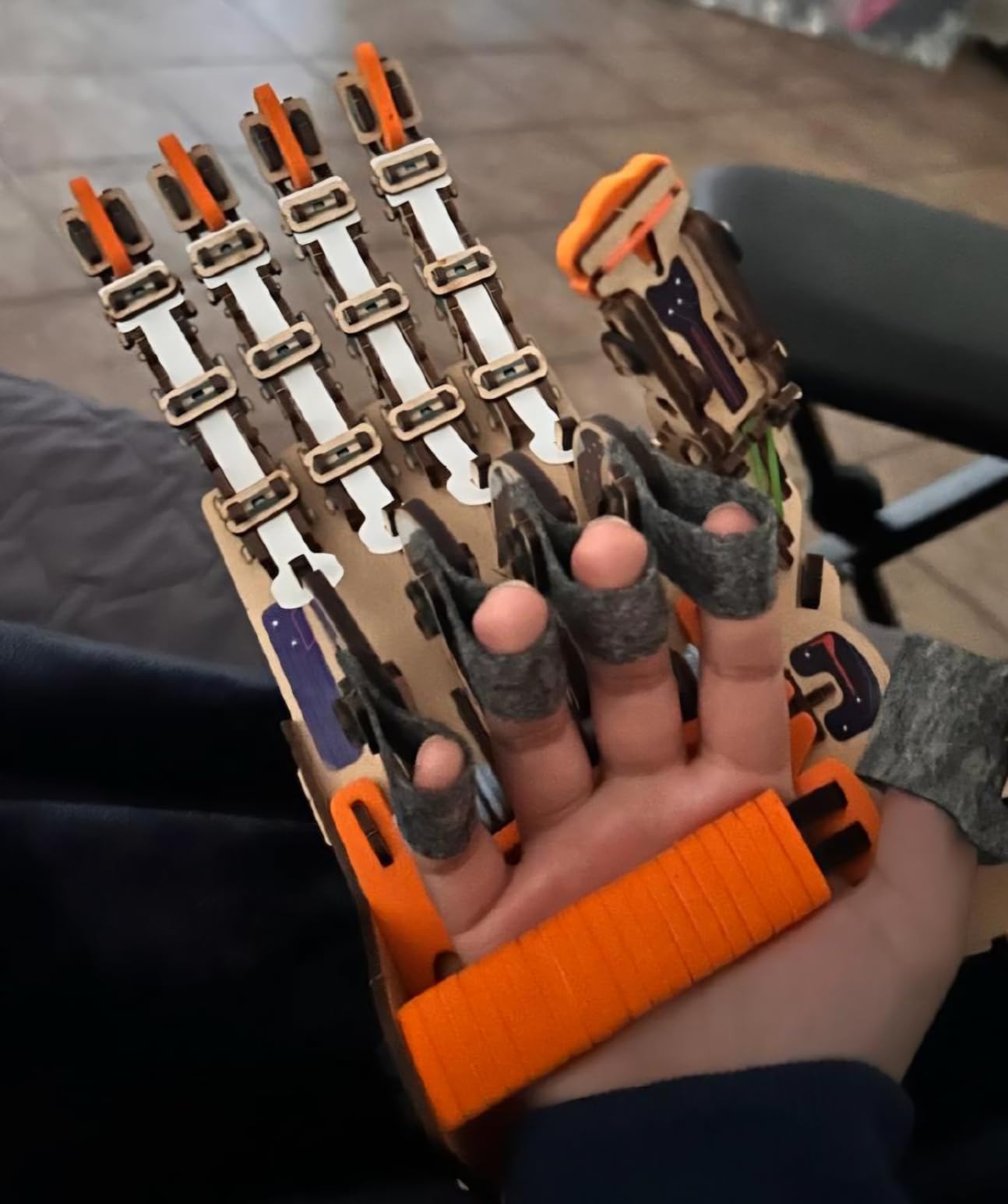
Pulling the attached strings moves the fingers. The mechanism teaches basic mechanical engineering without any electronics. It’s surprisingly engaging, and my tester kept returning to it for weeks after building.
Lifetime replacement parts are included. That’s a meaningful commitment from the manufacturer. If a wooden piece breaks or goes missing, Smartivity replaces it. This is the kit I’d trust for long-term use.
Why screen-free matters
After a week of remote learning, my tester’s family wanted something that didn’t involve a tablet. This kit delivered. The instructions are paper-based, the build is hands-on, and the result works without an app or charging.
For parents concerned about screen time, this is the answer. Kids still learn STEM concepts, but through tactile building. The completed hand becomes a display piece or toy, not just a coding platform.
Build quality and engagement
The wood parts are precisely laser-cut. They snap together cleanly, and the included tools work well for the small pins. Some kids find the pin insertion fiddly, so adult help is useful for ages 8-9.
Build time runs 3-4 hours. The 12-step manual is clear and well-illustrated. Once built, kids can experiment with the hand’s range of motion, try different grips, and even decorate it with paint or markers.
7. TEACH TECH Mech-5 Mechanical Coding Robot – Best for Mechanical Coding Basics
TEACH TECH Mech-5 STEM Coding Robot Building Kit for Kids Ages 10+
Mechanical coding wheel
5 action modes
Ages 10+
Pros
- Multiple functions including throw and lift
- Hands-on STEM building project
- Inspires learning about mechanical engineering
- Detailed step-by-step assembly instructions
- Great customer service from manufacturer
Cons
- Many small parts and screws require patience
- Complex assembly may require adult supervision
- Robot can be loud during operation
- Some parts may break during assembly
The Mech-5 introduces coding concepts without a screen. Kids use a mechanical coding wheel to program the robot’s actions. Our tester’s 10-year-old figured out the system in about 30 minutes after assembly.
The robot performs real actions: throwing, lifting, kicking, drawing. These aren’t just demonstrations; the robot actually does them. My tester set up a small paper target and had the robot knocking things over for an hour.
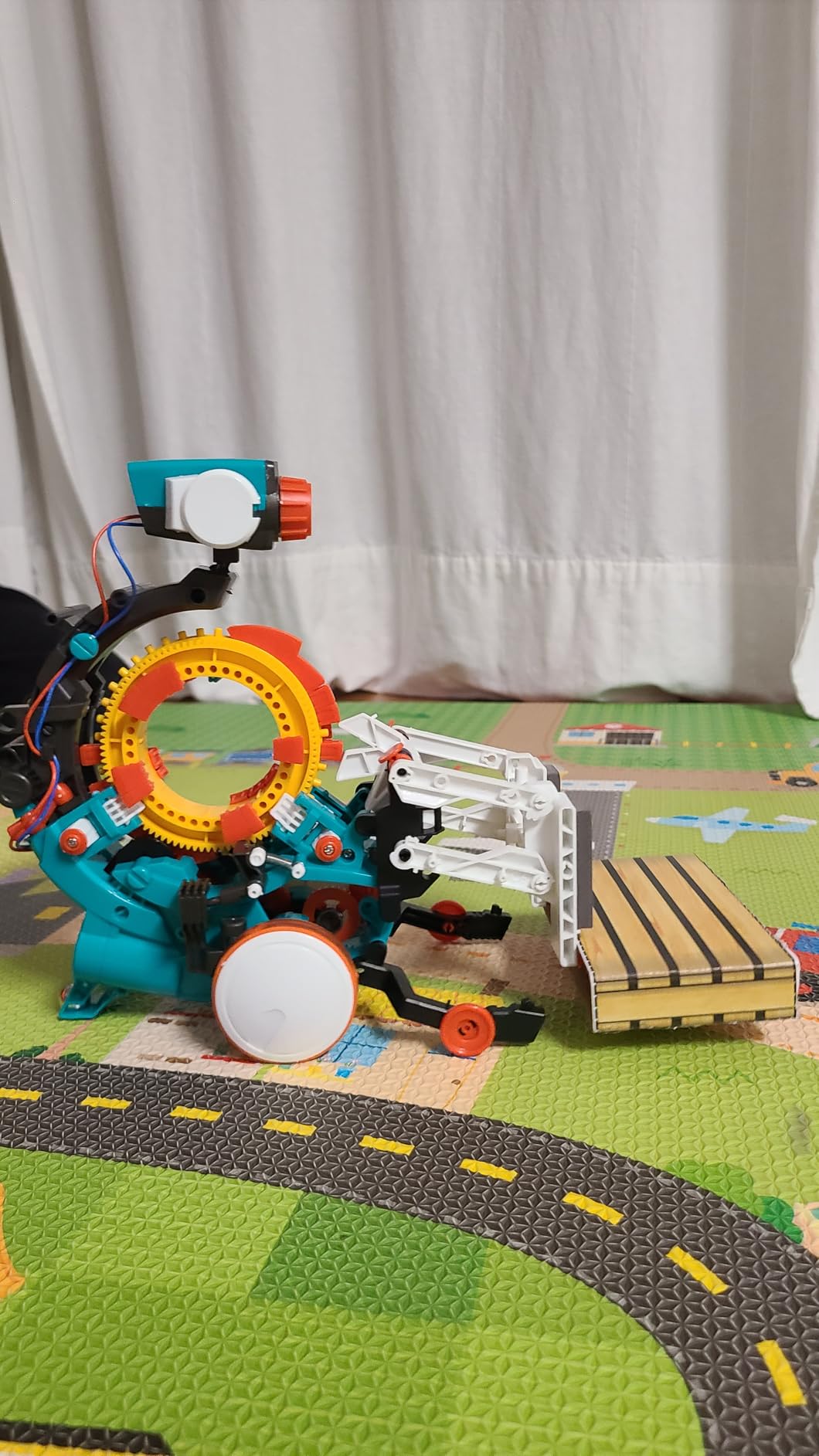
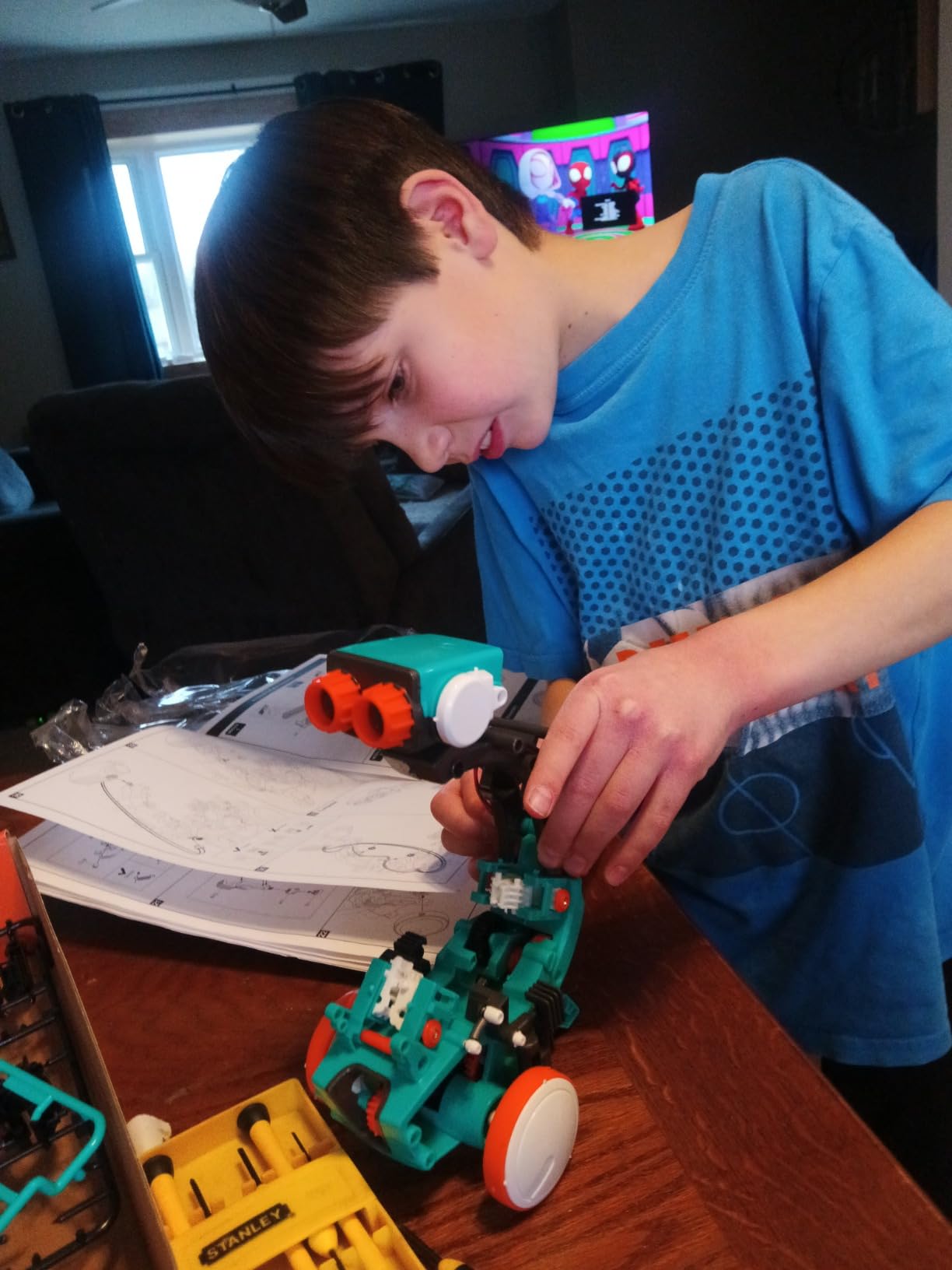
Build time is the longest in this guide. Expect 4-6 hours, and that’s with breaks. The 100+ pieces include small screws, gears, and mechanical components. Ages 10-12 will need parent help during tricky steps.
Elenco Electronics makes this kit, and they stand behind it. Customer service replaces broken parts quickly. My tester broke a small gear during assembly, and a replacement arrived within a week.
How the coding wheel works
The mechanical coding wheel is brilliant. Kids place colored pegs around the wheel, then turn it to “play” the program. Each peg triggers a different action. It teaches sequencing and logic without writing code.
Programs can be saved and modified. My tester created a sequence: throw, lift, draw a circle, kick. Then he changed the order. Then he added more pegs. The hands-on programming mirrors real coding logic.
Who this kit is for
Patient kids who enjoy long building projects. Children who like mechanical things. Ages 10+ with parent help for younger builders. This is not a quick afternoon kit; it’s a project.
Sound warning: the motor is loud. Earplugs or a separate room helps during operation. Our tester family moved it to the garage for some play sessions because of the noise.
8. 4M Table Top Robot – Best Entry-Level Starter for Young Builders
4M 5576 Table Top Robot – DIY Robotics Stem Toys, Engineering Edge Detector Gift for Kids & Teens, Boys & Girls (Packaging May Vary)
Edge detector technology
Easy assembly
Ages 8+
Pros
- Easy to assemble for kids
- Teaches STEM mechanical concepts
- Real hands-on building opportunity
- Good value for the price
- Fun to watch detects edges and turns
Cons
- Some parts may arrive damaged
- Limited battery life
- Can fall off small tables frequently
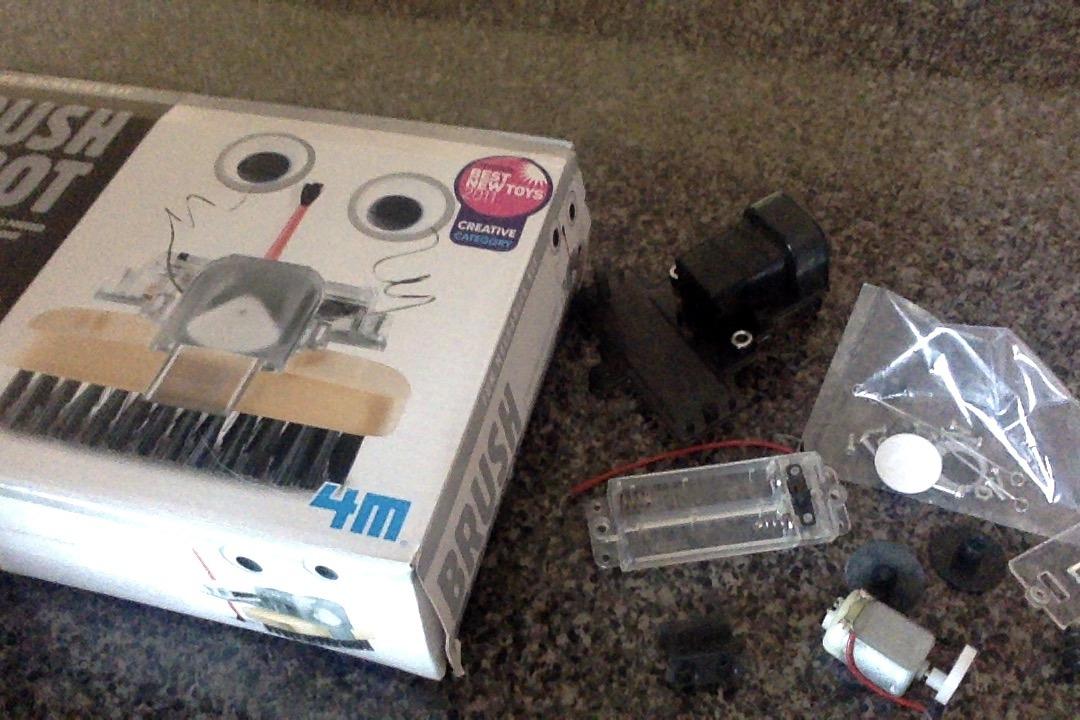
The 4M Table Top Robot is the kit I recommend for the youngest builders on this list. It’s a small, simple robot that detects table edges and turns to avoid falling. Our tester’s 7-year-old assembled it in about 15 minutes.
The simplicity is the appeal. No coding, no apps, no complex mechanics. Kids build it, watch it scuttle across a table, and giggle when it avoids the edge. It works, and that’s enough for an 8-year-old.

The build uses basic mechanical engineering principles. Kids see how a motor transfers motion to wheels, how a sensor detects edges, and how simple physics creates behavior. That’s real STEM learning at the right level.
Price is low enough that it works as a stocking stuffer or party favor. My tester’s family bought three for a birthday party, and all 8-year-olds built theirs independently within 20 minutes.
Best for first-time builders
If your child has never built a robot kit before, this is the right starting point. The 30+ pieces are all large enough for small hands. The instructions are picture-based and clear.
Adult supervision helps for younger builders, but most ages 8+ can complete this independently. The sense of accomplishment from a successful build encourages more complex projects later.
Limitations to know
The robot needs one AA battery (not included). Battery life is short, about 1-2 hours. The robot falls off small tables frequently, so a large, flat surface works best.
Durability is moderate. Drops can crack the plastic housing. Treat it gently and it lasts months of regular play. For the price, the educational value and fun factor outweigh the fragility.
Buying Guide for Build Your Own Robot Kits for Kids
Choosing the right robot kit depends on age, skill level, and what kind of learning matters most to your family. Here are the factors our team considered when ranking these kits.
Age-Appropriate Selection
Robot kits span ages 6 through 14, but the right match depends on more than age range. Fine motor skills matter most for ages 6-8. Reading comprehension matters for ages 9-11. Patience for long builds matters for ages 12+.
For ages 6-8, I recommend the 4M Table Top Robot or the Smartivity Mechanical Hand. Both have large parts and picture-based instructions. Building takes under an hour, and success is almost guaranteed.
For ages 9-11, the Sillbird kits and Makeblock mBot shine. These require reading instructions and following multi-step sequences. The satisfaction of completing a longer build motivates this age group.
For ages 12+, the ELEGOO Arduino car and Mech-5 offer real complexity. These kits assume patience for 4-6 hour builds and include programming or mechanical coding concepts that challenge older kids.
Coding vs Mechanical Builds
Build your own robot kits fall into two categories: coding kits and mechanical kits. Both teach STEM, but they develop different skills. Understanding which your child prefers matters.
Coding kits like the Makeblock mBot and ELEGOO Arduino car teach programming logic. Kids learn sequencing, conditionals, and debugging. These skills transfer directly to computer science and software development.
Mechanical kits like the Thames and Kosmos hand and Smartivity hand teach physics and engineering principles. They develop spatial reasoning and mechanical intuition. These skills transfer to engineering, architecture, and design fields.
Hybrid kits like the Mech-5 bridge both worlds. Kids use a physical coding wheel that introduces programming concepts without screens. This approach works well for kids who enjoy building but aren’t ready for software.
Parent Supervision Requirements
Most robot kits need some adult help, especially for ages 8-10. Knowing the supervision level helps plan your weekends.
Low supervision kits (4M Table Top Robot, Smartivity Mechanical Hand): Kids can build mostly independently. Adults help with tricky steps or reading.
Medium supervision kits (Sillbird kits, Makeblock mBot): Adults needed for 20-30% of the build. Help with small parts, software setup, or troubleshooting.
High supervision kits (ELEGOO Arduino car, Thames and Kosmos hand, Mech-5): Adults present for most of the build. The Thames hand needs help with oil filling. The Mech-5 has many small parts that frustrate younger builders.
Reusability and Long-Term Value
The best robot kits aren’t one-and-done. Look for kits with multiple builds, add-on packs, or open designs that support continued learning.
The Sillbird 12-in-1 and 5-in-1 offer multiple builds per kit. Kids rebuild into different configurations, extending engagement. The Makeblock mBot supports 100+ add-on modules for continued tinkering.
Single-build kits like the Thames and Kosmos hand and Smartivity hand still have play value after building. Kids use them as toys, demonstrating engineering principles to friends. The hand becomes a display piece or stress-reliever.
Storage matters for long-term value. Kits with 400+ pieces need organization systems. I recommend tackle boxes or labeled bags. Without organization, small parts disappear, and the kit becomes frustrating to use again.
Frequently Asked Questions
What are some good buildable robots for kids?
Good buildable robots for kids include the Makeblock mBot for coding, Sillbird 12-in-1 Solar Robot for variety, Thames and Kosmos Mega Cyborg Hand for mechanical engineering, and 4M Table Top Robot for younger builders. Each teaches different STEM skills while keeping kids engaged for hours of hands-on play.
What is a good beginner robotics kit for kids?
The Makeblock mBot is the best beginner robotics kit for kids ages 8 and up. It uses Scratch drag-and-drop programming, assembles in about 20 minutes, and includes clear instructions. The 4M Table Top Robot works well for ages 7-8 who want something even simpler. Both teach real STEM concepts without overwhelming new builders.
What is a good build a robot kit for a 7-year-old?
For a 7-year-old, the 4M Table Top Robot and Smartivity Robotic Mechanical Hand work best. Both have large pieces suitable for small hands, picture-based instructions, and builds that complete in under an hour. The Smartivity hand uses wood parts and string, while the 4M robot uses simple mechanical engineering. Both build confidence before moving to coding-based kits.
What is the best educational robot kit for kids?
The Makeblock mBot is the best educational robot kit for most kids because it grows with them. Start with Scratch block programming, then advance to Arduino text coding. The Thames and Kosmos Mega Cyborg Hand teaches mechanical engineering through hydraulics. The ELEGOO UNO R3 robot car adds camera programming for serious learners. Each teaches real STEM skills that transfer to future learning.
What age is appropriate for a robotics kit?
Robotics kits work for ages 6 through 14, with the right kit depending on the child. Ages 6-8 need large parts and simple mechanics, like the 4M Table Top Robot. Ages 9-11 handle multi-step builds and basic coding, like the Makeblock mBot or Sillbird kits. Ages 12+ can tackle Arduino programming and complex mechanical builds like the ELEGOO robot car or Thames and Kosmos hydraulic hand. Match the kit to your child’s reading level, patience, and previous building experience.
Final Verdict on the Best Build Your Own Robot Kits for Kids
After testing eight kits over six weeks, our team’s top pick for most families is the Makeblock mBot. It combines real coding education, durable construction, and a clear growth path from beginner to advanced. For kids not ready for coding, the Smartivity Mechanical Hand delivers excellent STEM learning without screens.
Budget-conscious families will appreciate the Sillbird 12-in-1 Solar Robot, which delivers 12 builds and renewable energy concepts at an entry-level price. For older kids ready for a real challenge, the ELEGOO Arduino robot car offers programming depth that grows with your child.
Build your own robot kits for kids aren’t just toys; they’re investments in STEM literacy, problem-solving skills, and engineering intuition. The right kit depends on your child’s age, interests, and patience level. Match the kit to your kid, not the other way around, and you’ll set up years of engaging, educational play.