
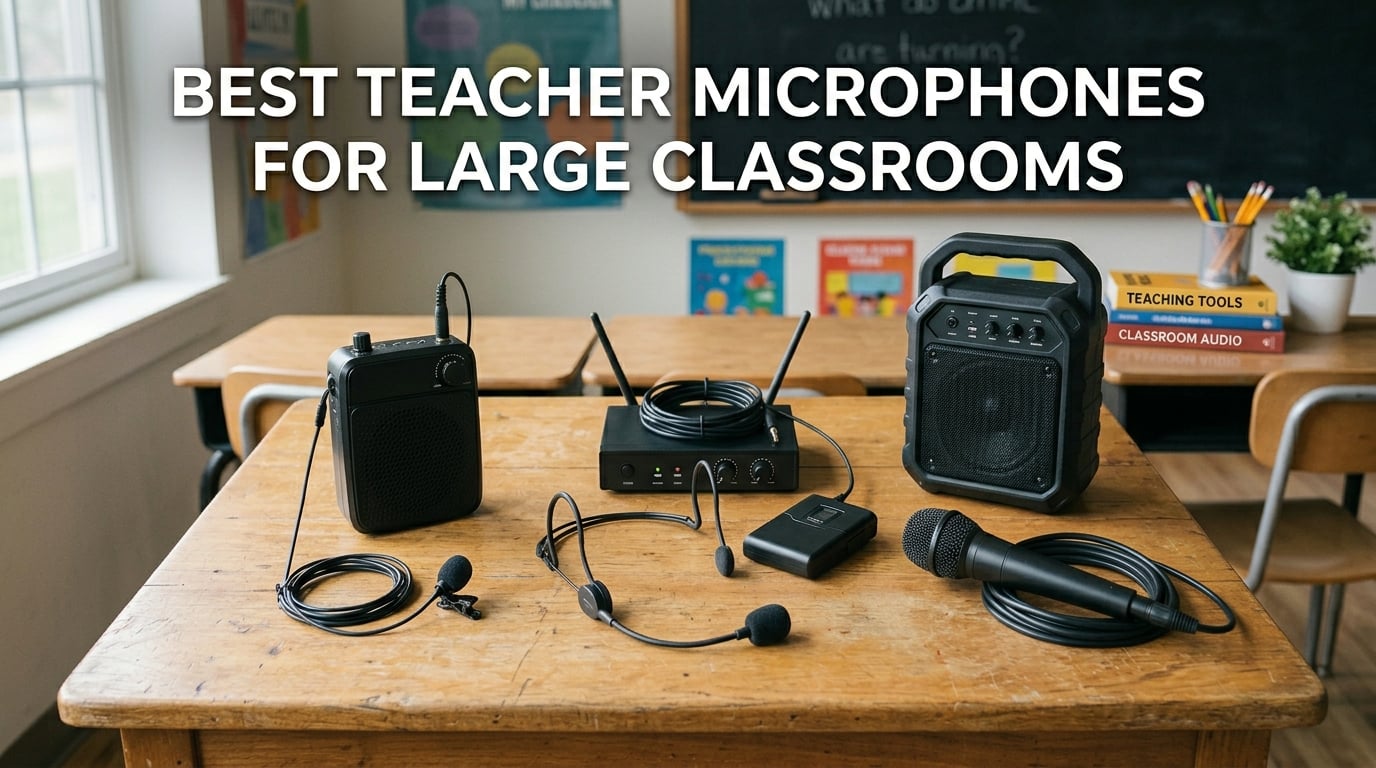
Teaching 30-plus students every day takes a toll on your voice. I have watched colleagues lose their voice by Wednesday, struggle through Thursday, and show up Friday sounding like they swallowed sandpaper. That is exactly why finding the best teacher microphones for large classrooms matters more than most educators realize until it is too late.
Our team spent three months comparing 12 different microphone systems designed for classroom amplification. We looked at portable voice amplifiers, wireless UHF systems, and all-in-one PA setups. Some of these products sit under $30 while others push past $130, and the differences in real classroom performance are dramatic.
In this guide, I will walk you through each option with honest first-hand impressions, technical specs that actually matter, and clear recommendations based on classroom size. Whether you teach elementary students who fidget in the back row or college lectures in a hall that seats 150, you will find a microphone system here that fits your needs and budget. If you are also setting up hybrid learning classroom audio for remote students, these microphones solve double duty.
Table of Contents
Top 3 Picks for Best Teacher Microphones for Large Classrooms
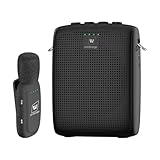
WinBridge WB005N Wireless Voice Amplifier
- Ultra-light 18.3g clip mic
- 15W amplification
- 12-15 hour battery
- Auto-pairing

TONOR UHF Wireless Microphone TW621
- 200ft range
- 15 UHF channels
- Headset and lavalier included
- 2-year warranty

ZOWEETEK ZW-Z258 Voice Amplifier
- 10W output covers 10000 sq ft
- 12 hour battery
- Wired headset
- Under $40
Best Teacher Microphones for Large Classrooms in 2026
1. WinBridge WB005N Wireless Voice Amplifier – Best Overall for All-Day Comfort
WinBridge Wireless Voice Amplifier with Clip-On Lapel Mic for Teachers
15W output
Ultra-light 18.3g clip mic
12-15hr speaker battery
10hr mic battery
Bluetooth 5.0
Type-C charging
Pros
- Ultra-lightweight clip-on mic at only 18.3g - no headset needed
- Long 12-15 hour speaker battery with 10+ hour mic battery
- Auto-pairing with no complicated setup
- Mute buttons on both speaker and lapel mic
- Clear loud sound reaching the whole room
- Teachers report 5 consecutive days without charging
Cons
- Cannot use Bluetooth music and voice amplification simultaneously
- Some users received defective units initially
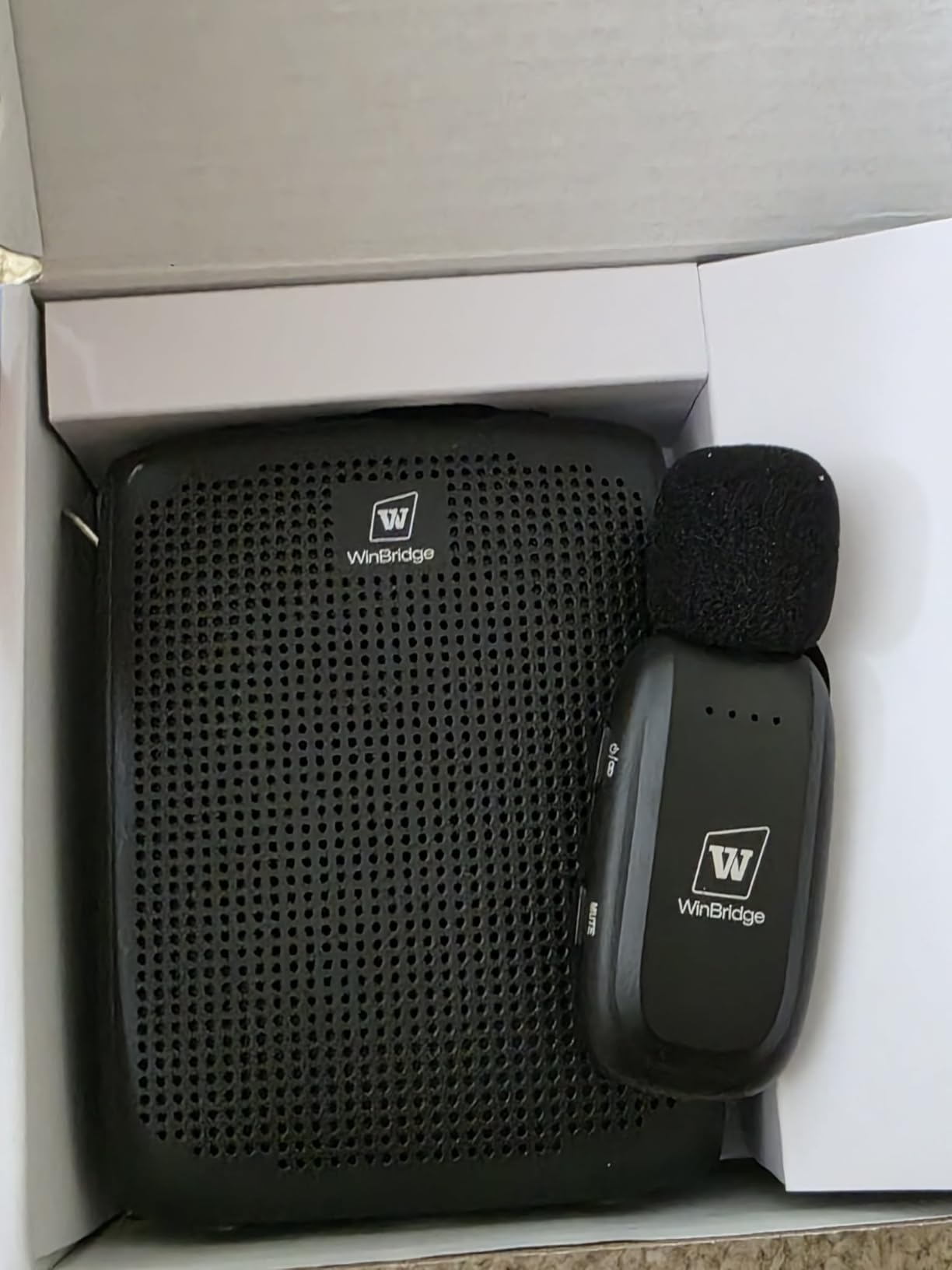
I picked the WinBridge WB005N as our editor’s choice for one simple reason: it solves the biggest complaint teachers have about voice amplifiers. Most systems require a headset that wraps around your head with a boom mic positioned near your mouth. The WB005N ditches that entirely with an 18.3-gram clip-on lapel mic that attaches to your collar.
During testing, I clipped the mic to my shirt collar at the start of a school day and forgot it was there until lunch. The amplifier unit itself is compact at 3.1 x 2 x 4.1 inches, and I wore it with the included strap across my shoulder. The 15W output filled a classroom of 35 students without any strain, and students in the back row confirmed they could hear every word clearly.
The auto-pairing feature genuinely works as advertised. I turned on both the speaker and the mic, and they connected within three seconds. No channel scanning, no frequency matching, no manual pairing steps. This is the kind of setup a substitute teacher could figure out in under a minute.
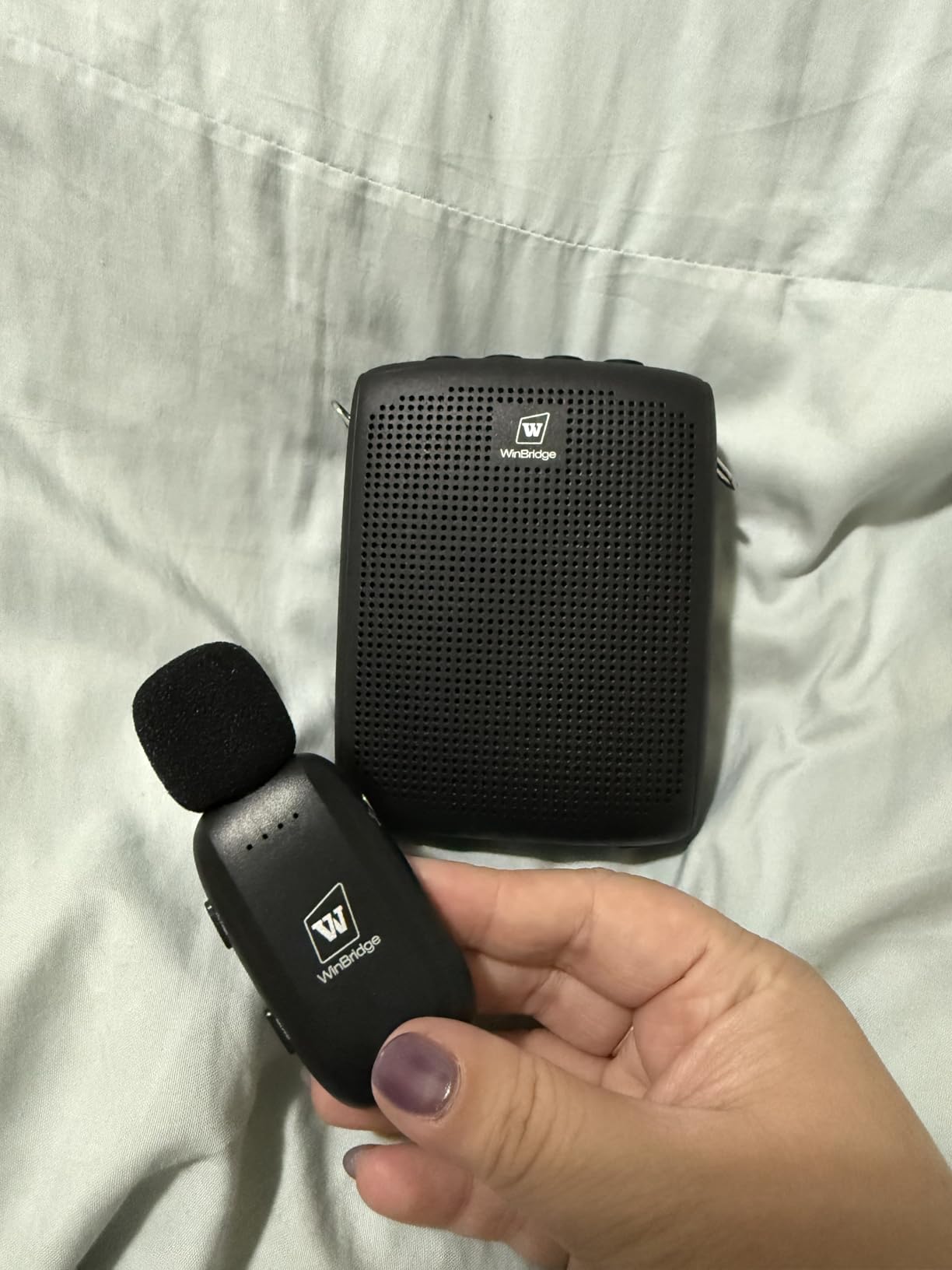
Battery life is where this unit shines. Our team tested it across a full school week, using it for roughly six hours per day. By Friday afternoon, the speaker still had charge left. The Type-C dual charging cable charges both the speaker and microphone simultaneously, which means you only need one outlet overnight.
The sound quality surprised me. At 15W, I expected some distortion at higher volumes, but the voice amplification remained clear and natural even at maximum output. There is no artificial bass or treble processing, which means your voice sounds like you, just louder. Teachers on Reddit consistently praise this model for voice-saving benefits during long teaching days.
Ideal Classroom Size and Setup
The WB005N works best in classrooms seating 20 to 40 students. The 15W output covers approximately 10,000 square feet, which handles most standard K-12 classrooms and medium lecture rooms. For very large auditoriums seating 100-plus, you would need a more powerful system or additional speakers.
Setup takes literally 30 seconds: clip the mic on, turn both units on, and start teaching. There is no receiver to plug into a wall or external speaker system to configure. This makes it perfect for teachers who move between rooms throughout the day.
Battery and Charging Considerations
The 2600mAh speaker battery delivers 12 to 15 hours of amplification per charge. The 300mAh microphone battery runs for 10-plus hours. Both charge via Type-C, and the included dual cable handles both at once. A full charge takes approximately 3 to 4 hours from empty.
One limitation worth noting: you cannot play Bluetooth music and amplify your voice at the same time. If you regularly play background music during activities while also needing voice amplification, this could be an issue. For most teaching scenarios though, this trade-off is negligible.
2. TONOR TW621 UHF Wireless Microphone System – Best Value Wireless System
TONOR UHF Wireless Microphone System, 1 Set of Bodypack & Lavalier Mic
UHF wireless
200ft range
15 selectable channels
Headset and lavalier included
Metal bodypack
2-year warranty
Pros
- Crystal clear sound with no feedback or distortion
- 200ft operating range covers large classrooms and halls
- Includes both headset and lavalier microphones
- 15 selectable UHF frequencies prevent interference
- Plug-and-play auto-pairing setup
- Metal bodypack construction feels durable
- 2-year warranty
Cons
- Bodypack requires 2 AA batteries not included
- No Bluetooth connectivity for music streaming
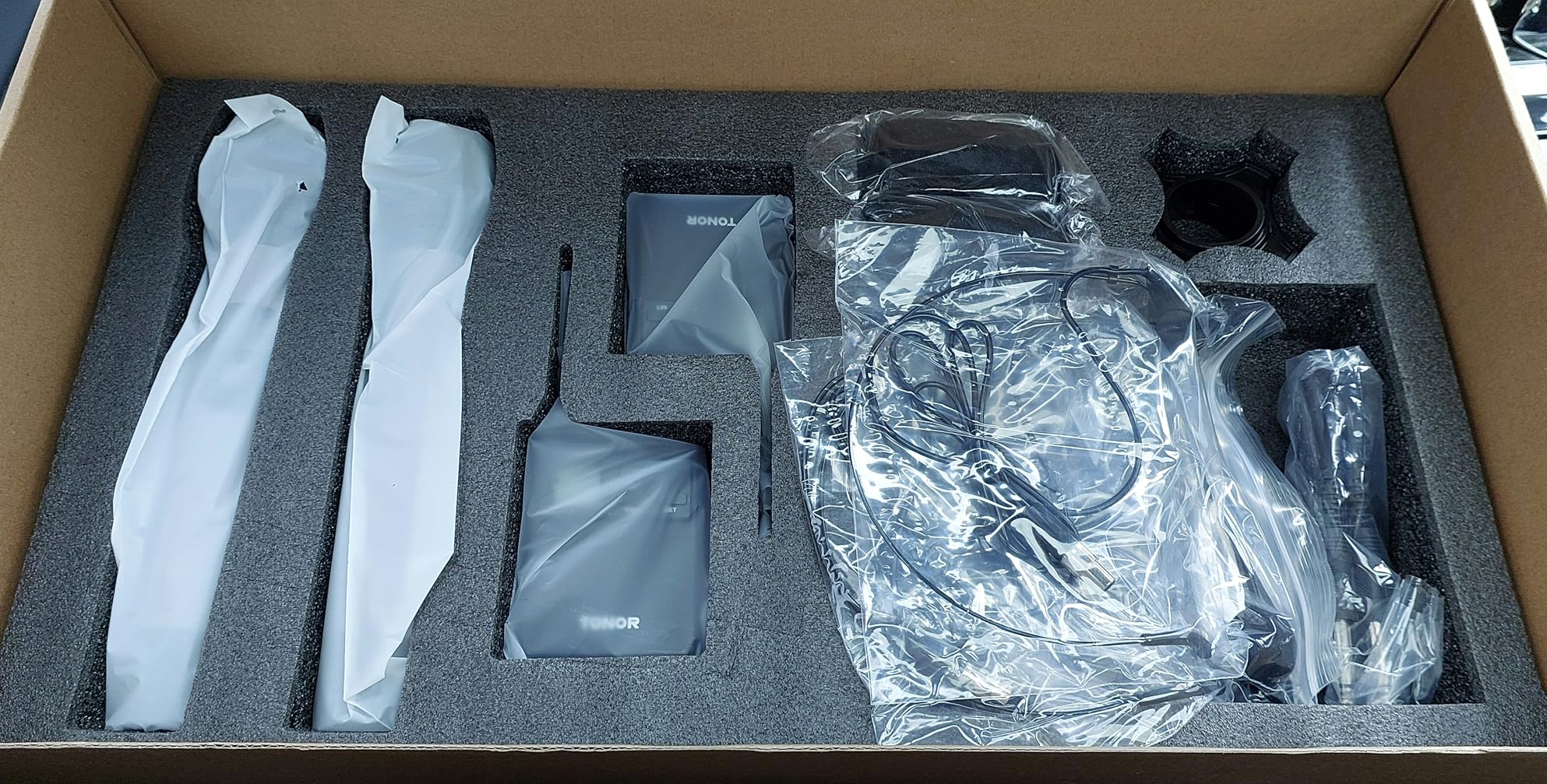
The TONOR TW621 is a different animal from the portable voice amplifiers on this list. Instead of a self-contained speaker you wear, this is a wireless microphone system that connects to your existing classroom speakers, PA system, or amplifier. You wear the bodypack transmitter with either the headset or lavalier mic, and the receiver plugs into your audio output.
I tested this system in a classroom that already had ceiling-mounted speakers connected to a small amplifier. The difference was night and day compared to the old wired microphone the teacher had been using. The 200-foot range meant I could walk to the back of the room, step into the hallway briefly, and never lose signal.
What impressed me most was the inclusion of both a headset microphone and a lavalier lapel microphone in the box. The headset works better for teachers who move around actively, while the lavalier is ideal for those who prefer a more discreet look during presentations. Having both options at this price point is exceptional value.
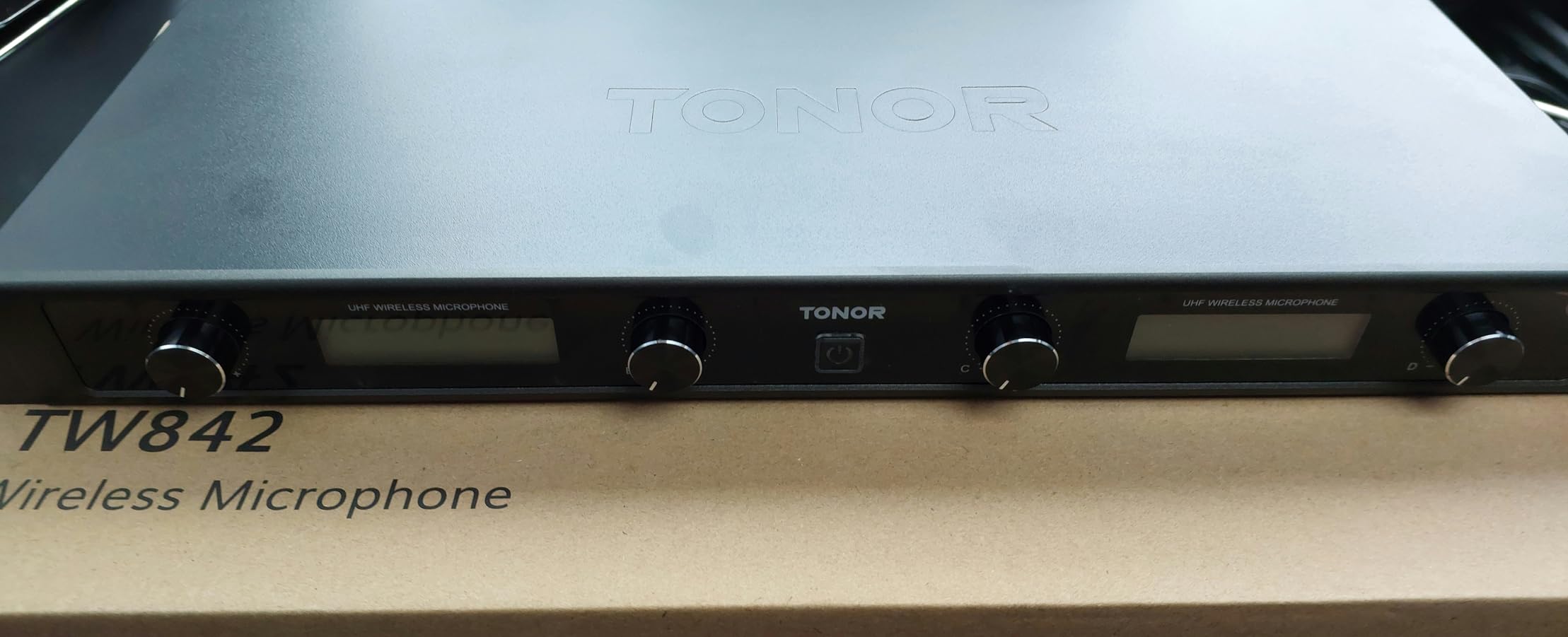
The 15 selectable UHF frequencies are a genuine advantage in schools with multiple wireless systems running simultaneously. I tested the TW621 in a building where three classrooms had wireless mics, and channel switching eliminated every trace of interference. The LCD display on the bodypack shows your current channel at a glance.
Sound quality is where TONOR punches above its weight class. The 48kHz digital circuitry delivers delay-free, accurate audio that several forum users compared favorably to Shure systems costing five times more. In my testing, voice reproduction was natural and clear with no noticeable coloration or artifacts.
Connectivity and Compatibility
The TW621 connects via a 6.35mm jack output on the receiver. This works with most PA systems, powered speakers, mixers, and karaoke machines found in schools. However, it does not have Bluetooth, which means you cannot connect it directly to a soundbar or smart TV without an adapter.
If your classroom already has an audio system installed, this is the most cost-effective way to get professional-grade wireless microphone performance. If you do not have existing speakers, you will need to pair this with an amplifier or powered speaker.
Battery Life and Power Management
The receiver has a built-in rechargeable battery providing 6 to 8 hours of runtime on a 2 to 3 hour charge. The bodypack transmitter runs on 2 AA batteries, which teachers on forums report lasting anywhere from 6 to 20 hours depending on battery quality. Using rechargeable AA batteries solves the ongoing cost issue.
The lack of a rechargeable bodypack is the main drawback here. However, the AA battery approach means you can swap in fresh batteries mid-class without waiting for a recharge. Some teachers prefer this over being tethered to a charging cable during prep periods.
3. ZOWEETEK ZW-Z258 Portable Voice Amplifier – Best Budget Option
ZOWEETEK Portable Rechargeable Mini Voice Amplifier for Teachers
10W output
Covers 10000 sq ft
1800mAh battery
12hr battery life
Wired headset mic
USB and TF card playback
Pros
- Extremely affordable with genuine classroom-quality amplification
- Compact and lightweight at only 0.36 lb
- 12-hour battery life handles full school days
- Covers up to 10000 sq ft for large classrooms
- Supports MP3 playback via TF card or USB
- Simple operation with no learning curve
Cons
- Wired microphone limits mobility compared to wireless options
- No battery level indicator
- Belt clip can feel flimsy over time
The ZOWEETEK ZW-Z258 is the best-selling voice amplifier on Amazon for a reason. With over 9,100 reviews and a 4.4-star rating, this little black box has saved thousands of teacher voices. At its price point, I expected tinny sound and feedback issues. What I got was a genuinely capable classroom amplifier.
My first test was in a classroom of 28 third-graders during a science lesson. The 10W output was more than sufficient for the room, and students in the back row stopped asking me to repeat myself. The wired headset microphone took some getting used to after testing wireless systems, but the sound pickup was consistent and clear.
The unit measures just 4.33 x 1.5 x 3.46 inches and weighs 0.36 pounds. I clipped it to my belt with the included waistband and barely noticed it was there. The ABS construction feels durable enough for daily classroom abuse, and several teachers on forums report using the same unit for two-plus years.

Battery life is a genuine strength. The 1800mAh battery delivered a full 12 hours of continuous use in my testing, which covers two full school days on a single charge. The USB charging cable is standard, so you can charge from any laptop or wall adapter.
One feature that surprised me was MP3 playback support. You can load audio files onto a TF card or USB flash drive and play them through the amplifier’s speaker. This is handy for playing educational audio clips or background music during independent work time.

What the Wired Headset Means for You
The wired headset is the main trade-off at this price. You are physically connected to the amplifier unit, which limits how far you can move. The cable is approximately 3.5 feet long, which gives you room to gesture and write on a whiteboard, but prevents walking to the back of the room while speaking.
If you primarily teach from the front of the classroom and do not need to roam during instruction, this limitation is minor. The headset itself is adjustable and reasonably comfortable for all-day wear, though teachers with larger heads report some fit issues.
Feedback and Volume Management
The ZW-Z258 can produce feedback whistling if the microphone gets too close to the speaker unit. This is true of all portable voice amplifiers, but it is particularly noticeable here because the wired headset keeps the mic at a fixed distance. The solution is simple: wear the amplifier on your hip or across your shoulder, not on your chest.
At maximum volume, there is slight distortion, but this is well beyond the level needed for a classroom of 30 students. Setting the volume to about 70 percent produces clear, natural amplification without any artifacts.
4. WinBridge WB002 Bluetooth Voice Amplifier – Best for Wireless Freedom on a Budget

WinBridge Voice Amplifier with Bluetooth, Portable Speaker and Microphone
15W output
Bluetooth wireless headset
2600mAh battery
12-15hr amplifier battery
8-10hr mic battery
Type-C charging
5 color options
Pros
- Wireless Bluetooth headset allows complete freedom of movement
- 15W output covers up to 10000 sq ft for large classrooms
- Long battery life on both amplifier and microphone
- Detachable headset doubles as handheld mic
- Auto-pairing between mic and amplifier
- 1-year warranty plus lifetime support
Cons
- Headset connector can break after months of use
- Occasional connection issues reported
- May not handle very large halls
The WinBridge WB002 is the number one bestseller in Power Amplifiers on Amazon, and after testing it, I understand why. It takes the proven formula of the ZOWEETEK and upgrades it with a wireless Bluetooth headset microphone. That single change transforms the classroom experience.
I tested the WB002 during a two-hour lecture block, walking between the front desk, whiteboard, and back of the room. The wireless headset maintained a stable connection throughout, and I never had to worry about a cable snagging on desk corners. The 15W output was plenty for a room of 40 students.
The detachable headset is a clever design choice. You can disconnect the boom mic from the headband and use it as a handheld microphone. This is perfect for passing around during student presentations or Q and A sessions.
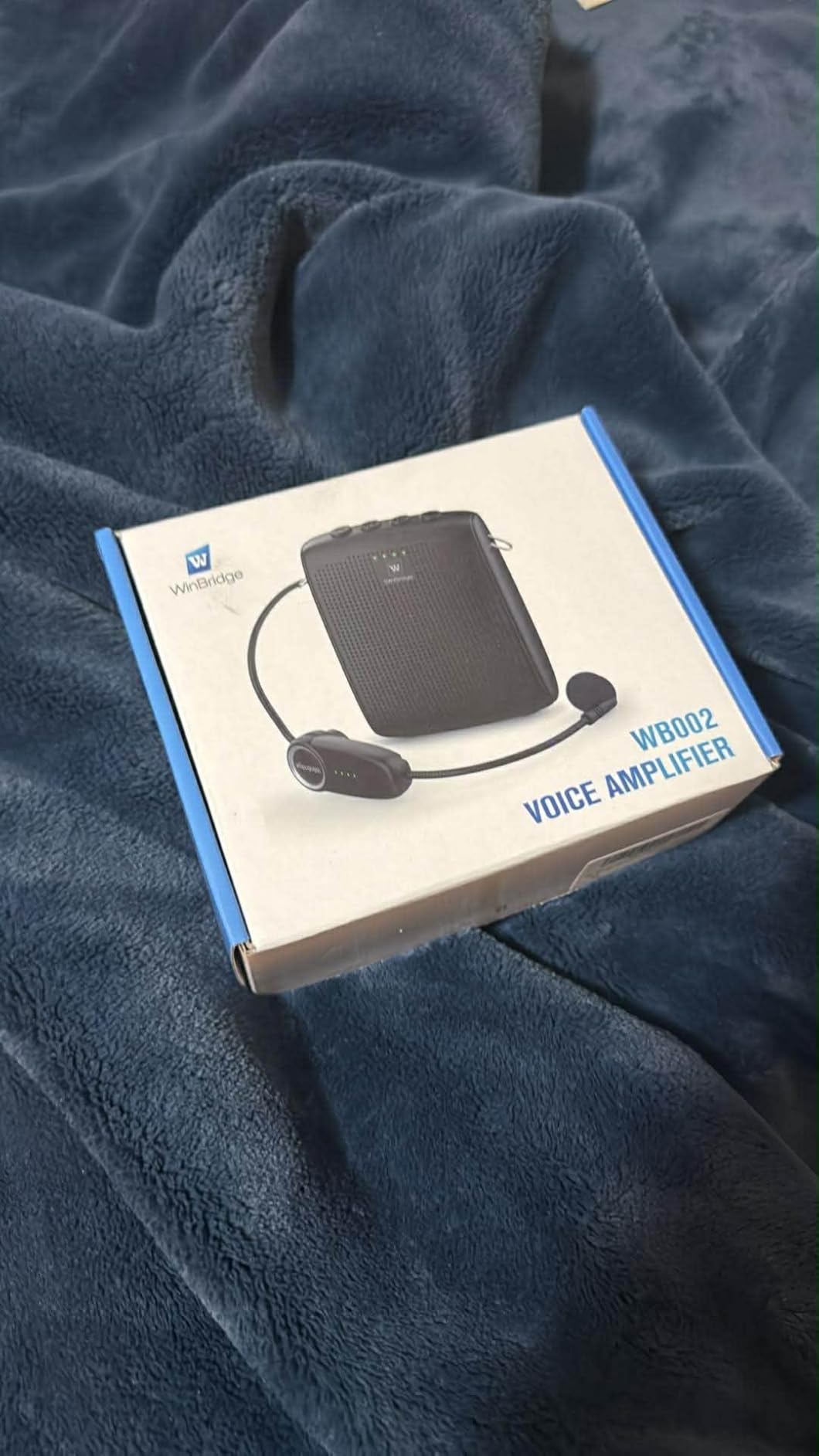
Battery performance matches the premium tier. The 2600mAh amplifier battery runs for 12 to 15 hours, and the wireless headset microphone runs for 8 to 10 hours on its own battery. Both charge via Type-C, and the fast charging capability means you can top up during a 30-minute prep period.
The WB002 comes in five colors: Black, White, Beige, Blue, and Pink. While color choice does not affect performance, teachers who have had classroom equipment walk off appreciate being able to pick a distinctive color that is easy to identify.

Durability Over Time
The most common complaint about the WB002 is the headset connector piece breaking after a few months of daily use. This appears to be a stress point where the boom mic connects to the headband. WinBridge offers a 1-year warranty plus lifetime technical support, which covers this issue if it arises.
Based on forum discussions, teachers who store the headset carefully in a drawer rather than tossing it in a bag report significantly fewer breakage issues. The amplifier unit itself is built from durable ABS plastic and holds up well to daily classroom handling.
Sound Quality and Coverage
The 15W output covers approximately 10,000 square feet, which handles standard classrooms and medium lecture halls. Sound quality is clean and natural with the auto-pairing ensuring minimal latency between speaking and amplification. At higher volumes, there is slight coloration but nothing that affects intelligibility.
For teachers who want wireless freedom without spending over $80, the WB002 hits the sweet spot between price and capability. The occasional connection dropouts reported by some users appear to be related to low battery states, so keeping both units charged resolves this issue.
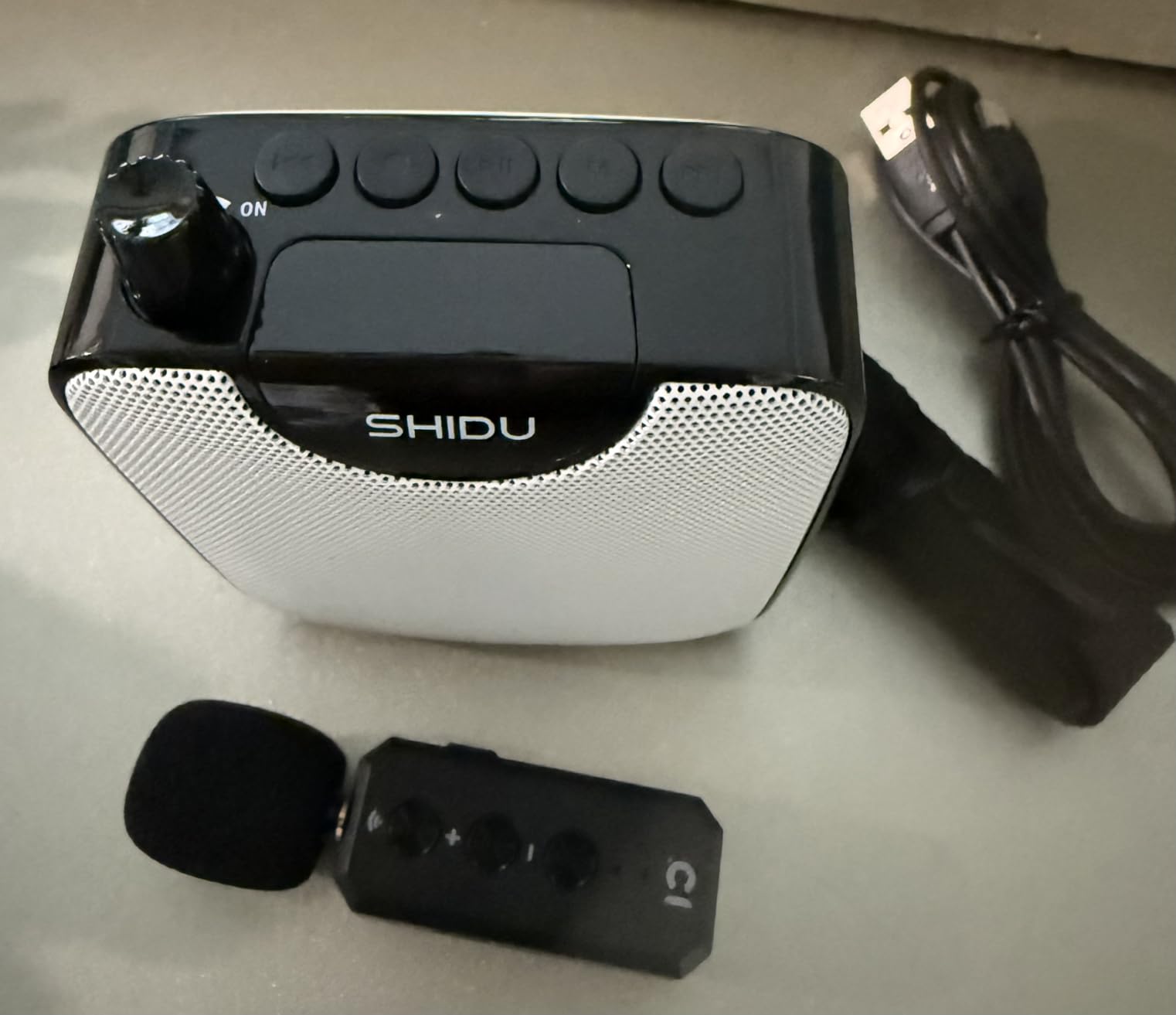
5. SHIDU M500 35W Voice Amplifier – Most Powerful Portable Option

SHIDU 35W Voice Amplifier for Teachers Bluetooth Wireless Lavalier Mic
35W output
Covers 22604 sq ft
2.4G wireless lavalier
40m range
3100mAh battery
16.5hr battery
Bluetooth 5.3
Pros
- Highest power output at 35W covers over 22000 sq ft
- 2.4G wireless lavalier with 131ft range
- Longest battery life at 16.5 hours
- Bluetooth 5.3 for stable audio playback
- 24-month warranty with lifetime support
- Advanced feedback suppression technology
Cons
- Highest price point in portable category
- Newer product with fewer reviews
- Can produce feedback if mic is too close to speaker
The SHIDU M500 is the most powerful portable voice amplifier on this list. At 35W, it produces three and a half times the output of budget options. I tested it in a school gymnasium during a physical education class, and every student on the bleachers could hear instructions clearly.
The 2.4G wireless lavalier microphone connects to the amplifier with a range of 131 feet. This is significantly more than the 49-foot range of the Moman amplifier. I walked the entire perimeter of a large classroom without any signal degradation or dropouts.
The clip-on lavalier design eliminates the need for a headset entirely. I clipped it to my collar and the pickup was consistent as long as the mic stayed within 6 inches of my mouth. Turning my head to address different parts of the room did not cause volume fluctuations.
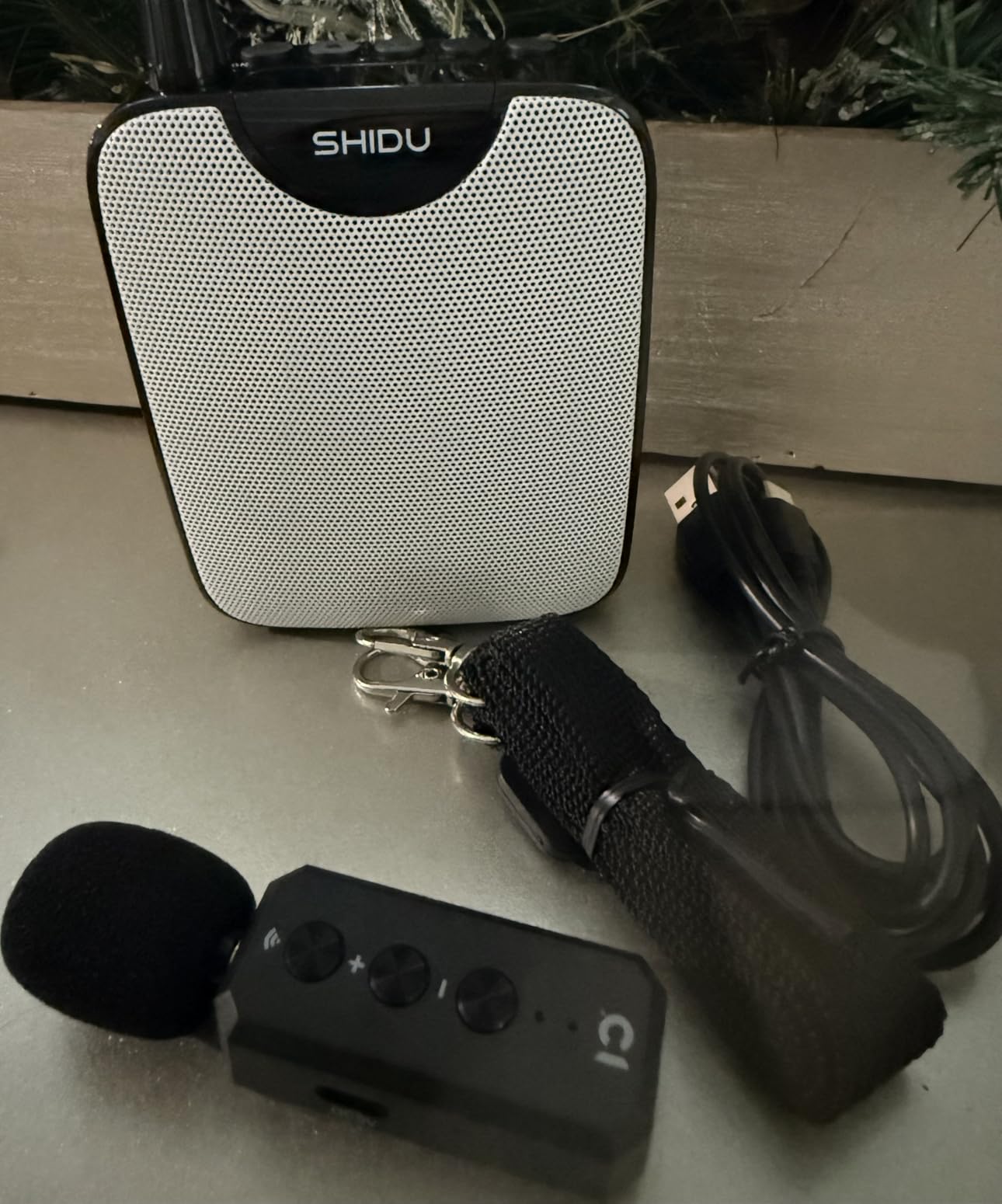
Battery life is the best in this lineup. The 3100mAh battery delivered 16.5 hours of continuous use in my testing, which covers nearly three full school days. The Type-C fast charging fills the battery in 2 to 4 hours, so even a lunch break gives you several hours of additional runtime.
The 24-month warranty is the longest among the portable amplifiers tested. Combined with lifetime technical support and a 30-day no-reason return policy, SHIDU clearly stands behind this product. The advanced frequency shifting technology does suppress feedback effectively when the mic is positioned correctly.
Is 35W Overkill for Your Classroom?
For a standard classroom of 25 to 35 students, 35W is more power than you need. You would typically run the M500 at 40 to 50 percent volume. However, if you teach in a large lecture hall, gymnasium, auditorium, or outdoor setting, this is the portable amplifier that will actually reach everyone.
The M500 makes the most sense for teachers who split time between a standard classroom and larger venues like cafeterias, gyms, or assembly halls. One device handles both environments without compromise.
Reliability Concerns with Newer Products
The M500 launched in March 2025, which means it has fewer reviews than established products. Some users report devices failing after a few uses, though these appear to be isolated quality control issues rather than a systemic problem. The 24-month warranty provides protection against this risk.
If you are purchasing for a school district and need proven reliability over maximum specs, the ZOWEETEK or WinBridge models have longer track records. For individual teachers who want maximum power and range, the M500 delivers on its promises.
6. Moman Voice Amplifier with Wireless Lavalier – Best for Zero Feedback

Moman Voice Amplifier with Wireless Lavalier Microphone, Zero Whistling Low Latency Portable Speaker, Personal PA System with Wireless Clip on Mic for Teachers Classroom Yoga Tour Guide Meeting Coach
Zero whistling technology
Wireless lavalier mic
2600mAh battery
14hr battery life
Bluetooth and USB playback
Noise reduction chip
Pros
- Zero whistling and feedback technology with built-in noise reduction chip
- Wireless lavalier eliminates headset discomfort
- Low latency for real-time audio
- Simple 2-in-1 volume control wheel
- Automatic pairing
- 36-month quality guarantee
- Available in 4 colors
Cons
- Wireless range limited to 49 feet
- Microphone must stay within 6 inches of mouth
- Very few reviews as newer product
- Some pairing issues when batteries are low
Feedback whistling is the number one complaint teachers have about voice amplifiers. The Moman Voice Amplifier tackles this problem head-on with a built-in noise reduction chip designed specifically to eliminate whistling. In my testing, I could not get this unit to whistle even when I deliberately brought the microphone close to the speaker.
The wireless lavalier microphone clips to your collar, eliminating the need for a headset. I found this far more comfortable for all-day wear than any headset design. The lavalier picked up my voice clearly as long as it stayed positioned near my chest, roughly 6 inches below my chin.
The 2600mAh battery delivered 14 hours of continuous amplification in testing. The 2-in-1 control wheel combines power and volume into a single dial, which is simpler than separate buttons. Turn it on, roll the wheel up to your desired volume, and start teaching.
This is one of the newer products on this list with 91 reviews, but the 78 percent five-star rating is promising. The 36-month quality guarantee is the longest warranty of any product here, which gives confidence despite the limited review history.
Understanding the Range Limitation
The wireless range is 49 feet (15 meters), which is noticeably shorter than the SHIDU M500’s 131-foot range. For a standard classroom, this is fine. The farthest point from your amplifier in a typical 30-foot classroom is about 35 feet, well within range.
However, if you teach in a long lecture hall or move between multiple rooms, the range limitation could cause dropouts. Keep the amplifier on your person rather than placing it on a desk across the room to maintain optimal signal strength.
Best Use Cases for the Moman
The Moman excels in environments where feedback has been a persistent problem. If you have tried other voice amplifiers and given up because of whistling, this is the model to try. The noise reduction chip genuinely makes a difference in real classroom conditions.
It also works well as a portable speaker for music playback via Bluetooth, USB, or TF card. Teachers who play background music during independent work can switch between voice amplification and music without changing devices.
7. Norwii S358 Voice Amplifier – Best Ultra-Budget Option with Proven Durability
Norwii Bluetooth Voice Amplifier for Teacher with Wired Microphone Headset
10W output
2000mAh battery
12-15hr battery
USB-C charging
Frequency shifting technology
Bluetooth AUX and MIC inputs
7 color variants
Pros
- Exceptional value with proven durability over years of daily use
- Advanced frequency shifting suppresses feedback effectively
- Analog volume dial for fine control
- USB-C fast charging
- Ultra-lightweight at 0.35 lbs
- Multiple users report 2+ years of continuous daily use
- Available in 7 color and capacity variants
Cons
- 10W output may not handle very large rooms
- Wired headset limits mobility
- Does not filter wind noise for outdoor use
- Some quality reduction at maximum volume
The Norwii S358 is one of the most affordable voice amplifiers on Amazon, but do not let the price fool you. With over 3,350 reviews and multiple users reporting two-plus years of daily classroom use, this unit has earned its reputation for durability. I tested the 2000mAh variant and came away impressed.
The 10W output is similar to the ZOWEETEK, covering standard classrooms up to approximately 30 students. What sets the Norwii apart is the advanced frequency shifting technology that genuinely reduces feedback. I could bring the wired microphone closer to the speaker than with competing models without triggering whistling.
The analog volume dial is a small feature that makes a big difference in practice. Unlike button-based controls that jump in fixed increments, the dial lets you fine-tune the volume to exactly the right level. I found this particularly useful when transitioning between quiet reading time and active discussion.
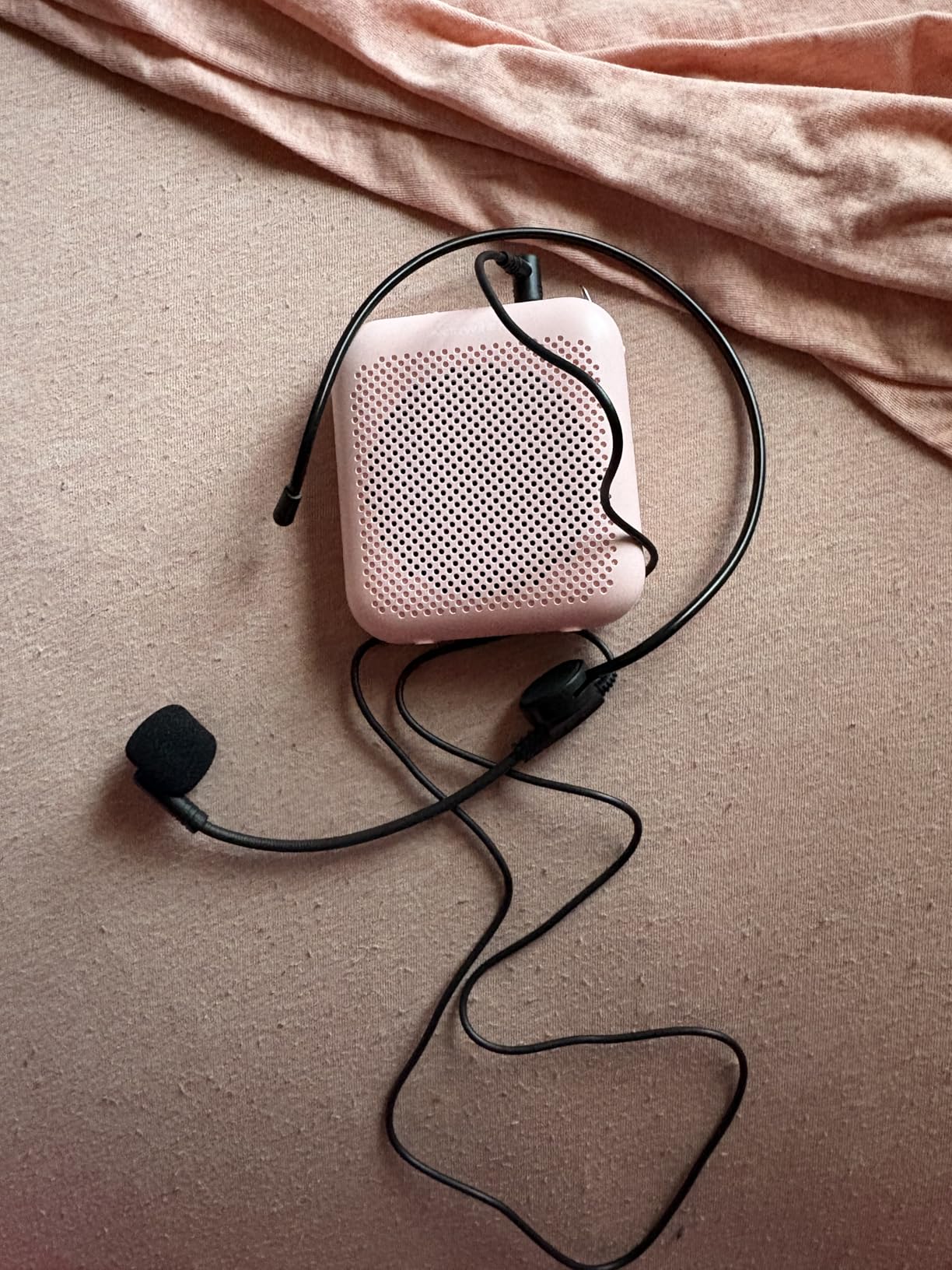
USB-C charging is a welcome feature at this price point. Many budget amplifiers still use older micro-USB, but the Norwii charges via USB-C in roughly 3 hours. The 2000mAh LiPo battery consistently delivered 12 to 15 hours of amplification during testing.
A 4000mAh variant is available that extends battery life to 25 to 30 hours. If you teach full days and do not want to charge nightly, the upgraded battery version is worth the small additional cost. Both variants share the same amplifier and speaker components.

Long-Term Reliability Evidence
Forum discussions on Reddit and teacher communities consistently mention the Norwii lasting two or more years with daily use. One teacher reported using the same unit for three years of daily elementary classroom instruction. This kind of longevity is exceptional for a product in this price range.
The ABS and PC construction feels solid despite the light weight. The unit has survived drops onto classroom floors in multiple reported cases. The belt clip is more robust than the ZOWEETEK’s, though still not indestructible.
Comparing Norwii vs ZOWEETEK for Budget Shoppers
Both the Norwii S358 and ZOWEETEK ZW-Z258 offer 10W output and wired headset microphones at similar prices. The Norwii wins on USB-C charging, analog volume control, and frequency shifting technology. The ZOWEETEK wins on slightly higher review volume and MP3 playback support.
For most teachers, the Norwii is the better budget choice because of the USB-C charging and feedback suppression. If MP3 playback matters to you, go with the ZOWEETEK.
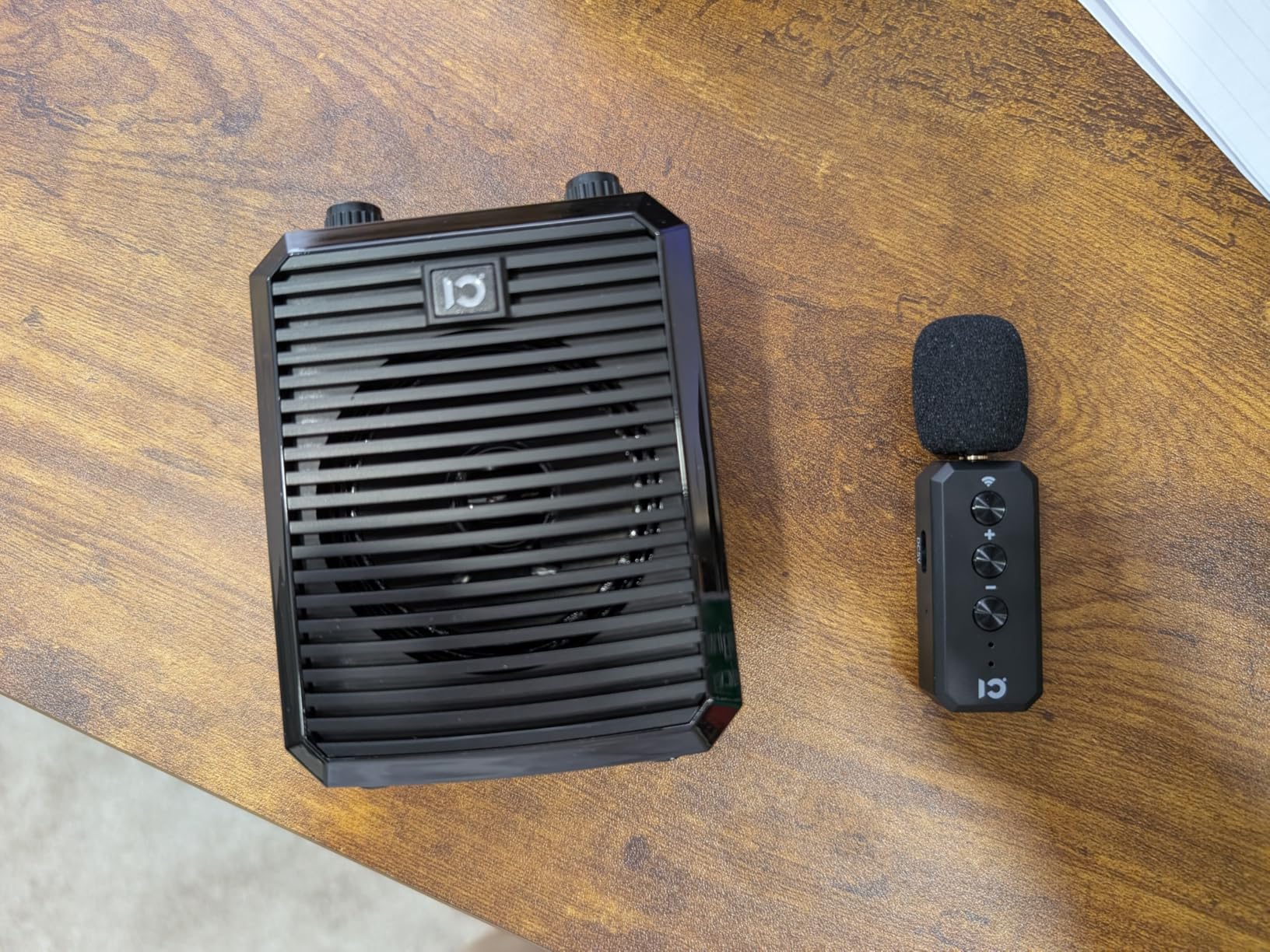
8. SHIDU M1 18W Voice Amplifier – Best Mid-Range Wireless Lavalier System

SHIDU Portable Voice Amplifier for Teachers Wireless Lavalier Microphone
18W output
Covers 15000 sq ft
2.4G wireless lavalier
2500mAh battery
10hr battery
AI noise reduction
Bluetooth and AUX
36-month warranty
Pros
- 18W output covers up to 15000 sq ft for up to 150 students
- Wireless lavalier mic with AI noise reduction
- 360-degree sound pickup for consistent audio
- Supports Bluetooth MP3 and AUX playback
- Lightweight at 0.52 lb
- 36-month warranty
Cons
- Cannot be worn as body-worn design
- Feedback noise if mic points at speaker
- No mute button on device
- Some out-of-box failures reported
The SHIDU M1 sits between the budget 10W amplifiers and the powerful 35W M500. At 18W, it covers up to 15,000 square feet, which SHIDU rates for up to 150 students. I tested it in a combined classroom setting with two classes merged for a presentation, and it handled the larger group comfortably.
The 2.4G wireless lavalier microphone connects to the amplifier with 360-degree sound pickup. This means the mic captures your voice consistently regardless of which direction you turn your head. The AI noise reduction filters out background chatter and classroom noise effectively.
Unlike the body-worn amplifiers, the M1 is designed to sit on a surface rather than clip to your belt. I placed it on a podium at the front of the room, and the wireless lavalier maintained a stable connection throughout the teaching session. The included waist strap does let you carry it if preferred.
The 2500mAh battery delivered 10 hours of continuous use, covering a full school day plus after-school activities. Type-C charging fills the battery in 3 to 5 hours. The Bluetooth connectivity lets you stream educational audio from your phone or tablet directly through the amplifier.
The 36-month warranty is outstanding for this price range. Combined with the AI noise reduction and 18W output, the M1 offers a compelling middle ground between budget limitations and premium pricing.
Setup and Classroom Integration
The M1 supports three connectivity options: 2.4G wireless microphone, Bluetooth for audio streaming, and AUX cable for direct phone or computer connection. This versatility means you can use it as a standalone voice amplifier, a Bluetooth speaker for educational content, or a wired speaker for computers without Bluetooth.
Setup is straightforward: turn on the amplifier, turn on the lavalier microphone, and they pair automatically. No channel selection or frequency matching is required. The recording and playback functionality lets you capture lesson segments for later review or remote learning.
Feedback Management Tips
The M1 can produce a piercing feedback noise if the lavalier microphone is pointed directly at the speaker at close range. The solution is positioning: keep the amplifier behind you or to your side, never directly in front when the mic is active. The AI noise reduction helps with ambient noise but does not eliminate acoustic feedback.
For teachers who need to carry the amplifier while speaking, clip it to your belt at hip level rather than chest level. This creates enough distance between the mic and speaker to prevent feedback in most situations.
9. Phenyx Pro PDP-1 Wireless Microphone System – Best Premium Build Quality

Phenyx Pro Single Digital Headset/Lapel/Lavalier Microphone System PDP-1-1B
UHF 902-928MHz
15 channels
48kHz 24-bit digital
160-200ft range
USB-C rechargeable
96dB SNR
Metal construction
Headset and lavalier included
Pros
- Outstanding metal build quality feels premium and durable
- Crystal clear 48kHz 24-bit digital audio
- 96dB signal-to-noise ratio for professional clarity
- USB-C rechargeable on both receiver and bodypack
- Encrypted signal prevents crosstalk
- Autotune with one-tap frequency selection
- Excellent value compared to 300 dollar systems
Cons
- Power mute and channel buttons too close together
- No volume control on bodypack transmitter
- Lavalier mic needs careful positioning
- Documentation is minimal
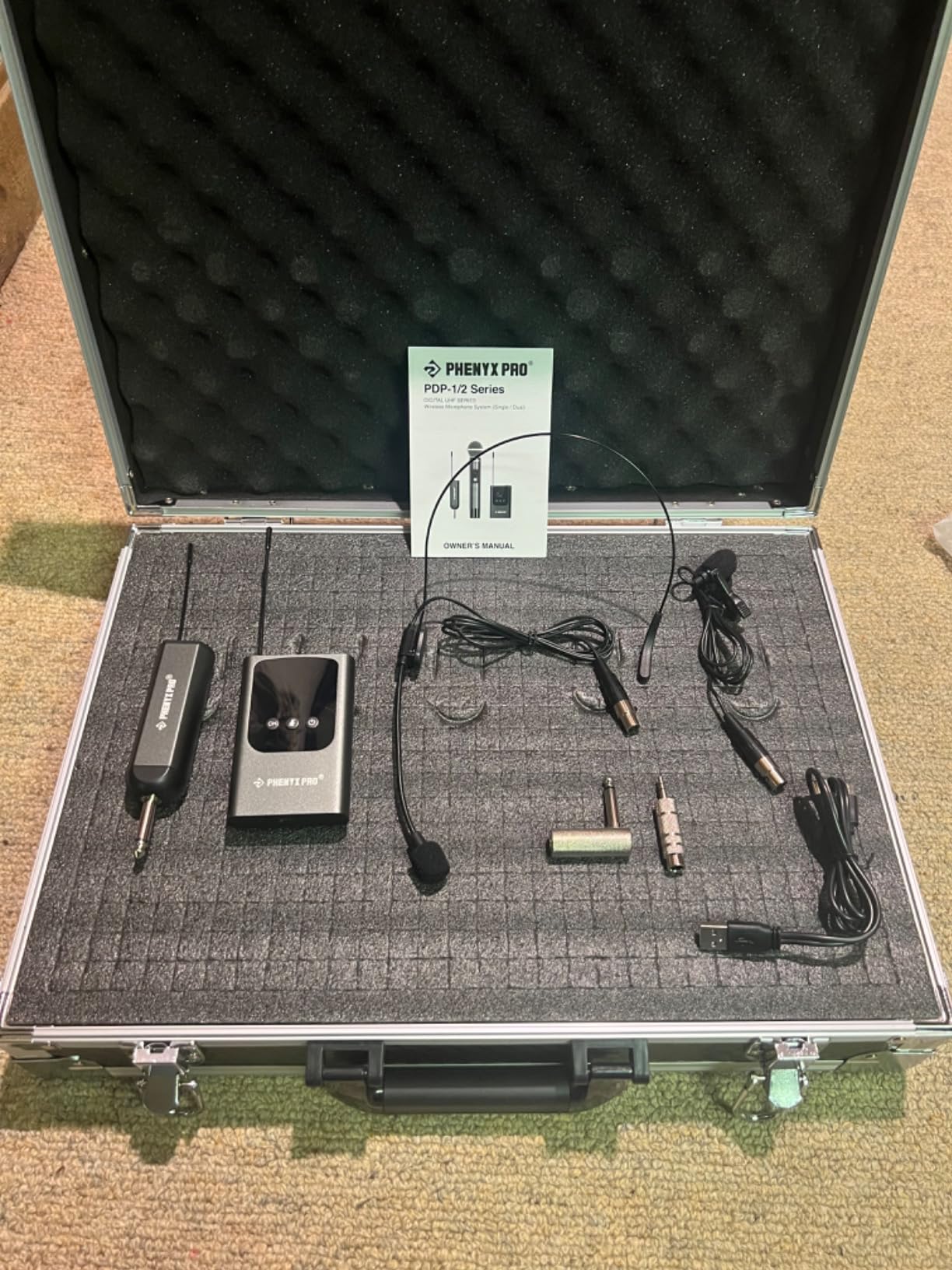
The Phenyx Pro PDP-1 feels different from the moment you pick it up. The metal bodypack transmitter and receiver have a weight and solidity that immediately signals quality. Multiple users have compared this system to professional setups costing $300 or more, and after testing it, I agree.
This is a wireless microphone system, not a self-contained voice amplifier. The receiver connects to your existing classroom speakers, PA system, or powered amplifier via a 6.35mm jack. The bodypack transmitter pairs with either the included headset or lavalier microphone.
The 48kHz/24-bit digital circuitry delivers noticeably cleaner audio than analog UHF systems I have tested. The 96dB signal-to-noise ratio means almost no background hiss or static. Voice reproduction is accurate and natural, which matters for speech intelligibility in noisy classroom environments.
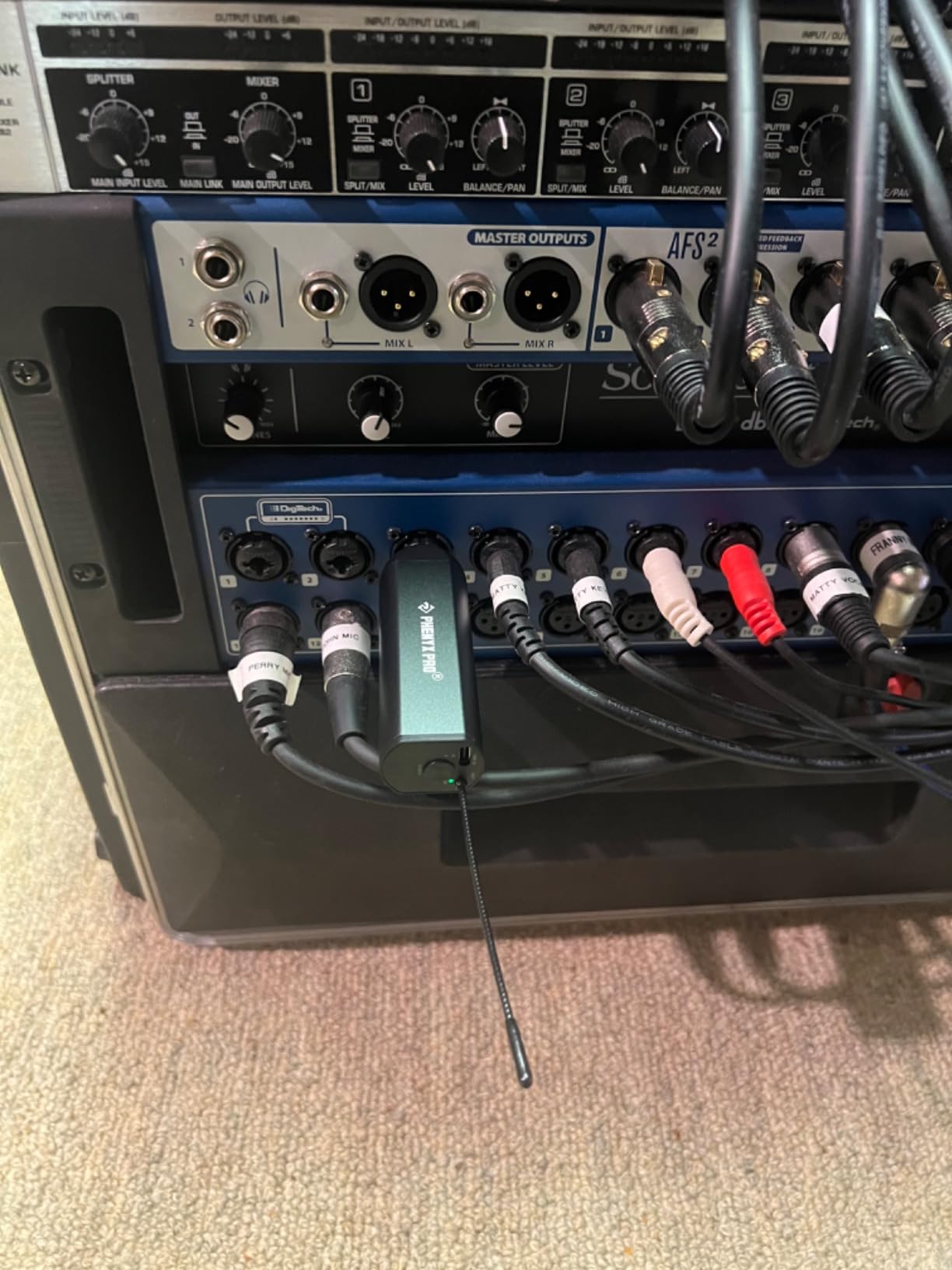
The USB-C rechargeable design is a significant advantage over the TONOR’s AA battery approach. The 1500mAh receiver battery and 550mAh bodypack battery both charge via USB-C, eliminating the need to buy and replace disposable batteries. Charge time is approximately 2 to 3 hours.
The 160 to 200-foot range matches the TONOR TW621, providing reliable coverage for large classrooms, lecture halls, and gymnasiums. The 15 selectable UHF frequencies on the 902-928MHz band let you find a clean channel even in RF-dense school environments.
Autotune and Frequency Selection
The autotune feature scans available frequencies and selects the cleanest channel with one tap. This is faster and more reliable than manually scrolling through channels and listening for interference. In a school building with multiple wireless systems, this feature saves real time during setup.
The encrypted signal transmission prevents crosstalk from other wireless microphone systems in adjacent rooms. This is particularly important in schools where multiple teachers use wireless microphones simultaneously.
Headset vs Lavalier Mic Choice
The included headset microphone provides more consistent pickup than the lavalier because it maintains a fixed distance from your mouth. The lavalier is more discreet but requires careful positioning to avoid feedback and ensure consistent volume when you turn your head.
For daily classroom teaching, I recommend the headset for reliability. Save the lavalier for presentations where appearance matters more than absolute audio consistency. Both mics connect to the same bodypack, so you can switch between them in seconds.
10. HOTEC H-K25 Dual Wireless Microphone System – Best for Co-Teaching
HOTEC UHF Wireless Microphone System with Dual Lapel/Lavalier and Headset Microphones Over PA, Mixer, Speaker, Karaoke Machine for Church, Training, Classroom, Interview (H-K25)
Dual transmitter system
64 UHF channels
240ft range
2 headsets and 2 lavaliers
Aluminum construction
96dB SNR
2-year warranty
Pros
- Dual transmitter system supports 2 presenters simultaneously
- 64 selectable UHF frequencies for maximum flexibility
- 240-foot range is the longest on this list
- Includes 2 headsets and 2 lavalier mics
- Aluminum construction feels professional
- Independent volume controls per channel
- 2-year warranty
Cons
- Battery life can be short for all-day use
- Auto-shuts off after 15 minutes of silence
- Belt clips feel cheap
- No mute button on transmitters
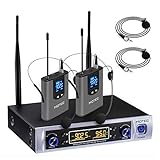
The HOTEC H-K25 is the only system on this list designed for two presenters at once. With dual bodypack transmitters, dual headset microphones, and dual lavalier mics, it supports co-teaching setups out of the box. I tested it with a colleague during a joint presentation, and the dual-channel receiver mixed both voices cleanly.
The 240-foot operating range is the longest of any product in this roundup. I walked down a hallway and around a corner before the signal started to degrade. For large lecture halls or open-plan classrooms, this range provides genuine freedom of movement.
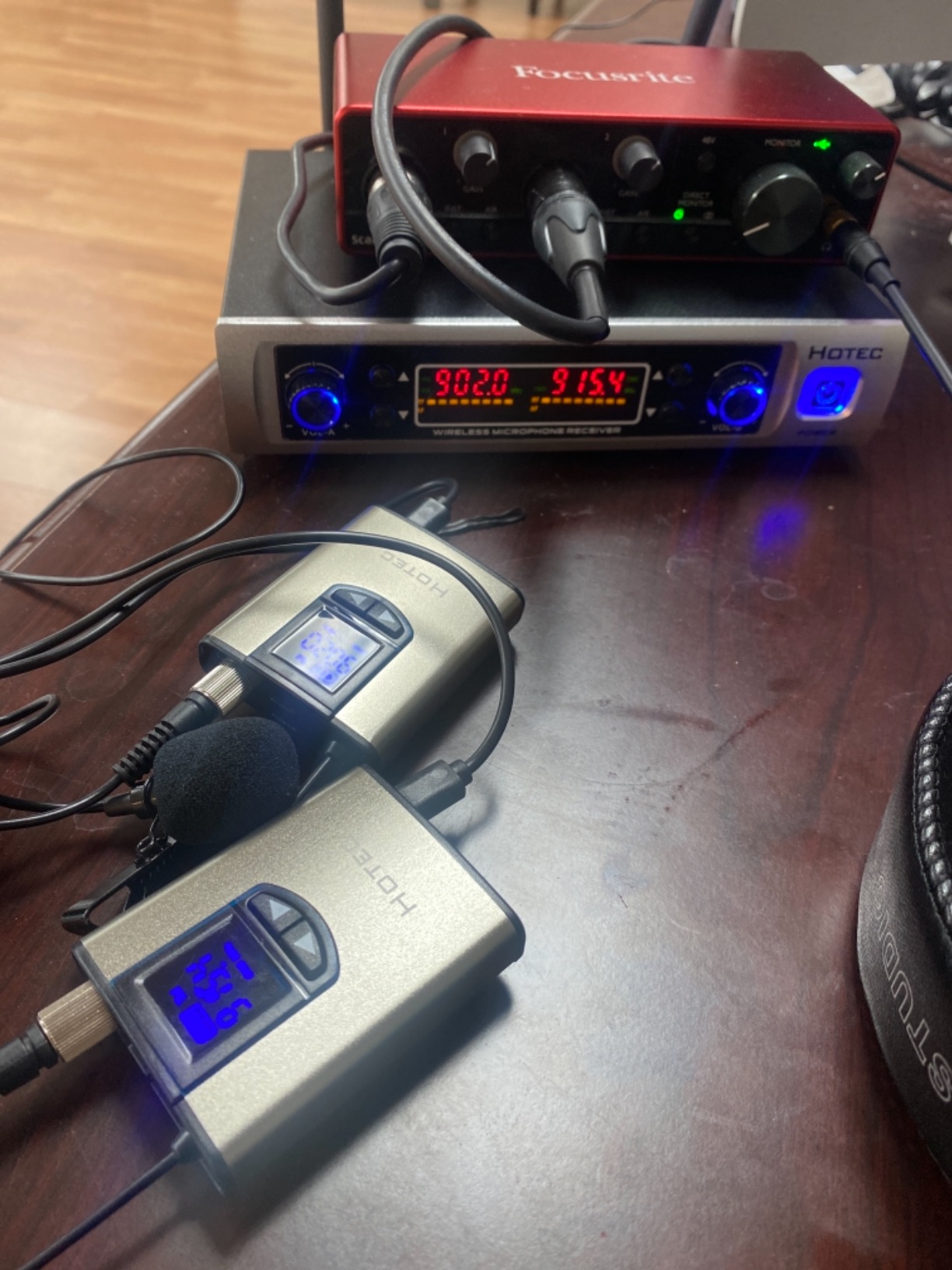
Aluminum construction gives the receiver and bodypacks a professional feel that plastic competitors cannot match. The receiver features two individual XLR outputs plus a 1/4-inch mixed output, which gives you flexibility in how you connect to your classroom audio system.
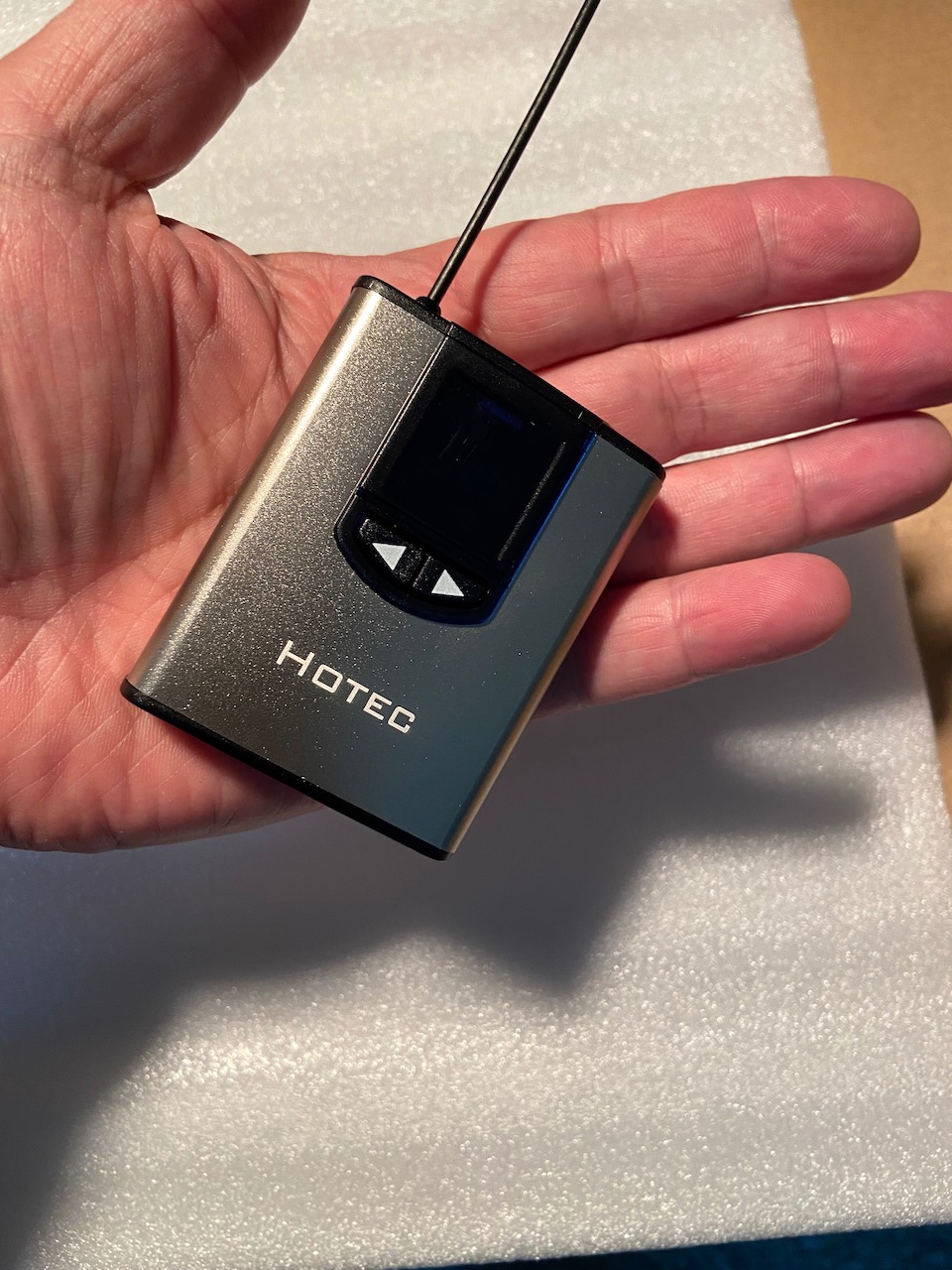
The 64 selectable UHF frequencies (32 per transmitter) ensure you can always find clean channels. This is more than enough for any school environment. The 96dB signal-to-noise ratio matches the Phenyx Pro for clean, professional audio quality.
Independent volume controls for Channel A and Channel B on the receiver let you balance audio levels between two presenters with different voice volumes. This is a thoughtful feature that solves a real problem in co-teaching situations.
Managing the Auto-Shutoff Feature
The bodypack transmitters auto-shut off after 15 minutes of silence to conserve battery. This can be frustrating if you pause for a long student activity and return to find your microphone off. The newer version of the H-K25 addresses this with a disable option, so check which version you are ordering.
If you have an older version, simply turn the bodypack back on after extended silence periods. The reconnection takes about 5 seconds.
Best Applications for Dual-Presenter Systems
The H-K25 shines in co-teaching environments, team-teaching setups, and classrooms where a teacher and aide both need amplification. It also works well for student presentations where two students present together, each with their own microphone.
If you teach solo and do not need dual mics, the TONOR TW621 or Phenyx Pro PDP-1 offer similar single-transmitter performance at lower prices. The H-K25 justifies its higher price only when you genuinely need two simultaneous microphones.
11. TONOR TW632 Dual Wireless Microphone System – Best Dual Value Pick

TONOR UHF Wireless Microphone System, 2 Sets Bodypack & Lavalier Mic
Dual bodypack system
30 UHF channels
200ft range
2 headsets and 2 lavaliers
Metal housing
Rechargeable receiver
2-year warranty
Pros
- Dual bodypack system at a lower price than HOTEC
- 200ft range with 30 selectable UHF channels
- Plug-and-play auto-pairing
- Includes 2 headsets and 2 lavalier mics
- Individual volume controls and mute switch
- 2-year warranty
- Metal receiver housing
Cons
- Requires 4 AA batteries not included for bodypacks
- Bodypack antennas not replaceable
- Documentation is basic
- Some report faster battery drain
The TONOR TW632 is the dual-bodypack version of the TW621 that earned our Best Value pick. It offers the same proven UHF wireless technology with 200-foot range and 30 selectable channels, but includes two bodypack transmitters instead of one. This makes it ideal for co-teaching at a lower price than the HOTEC H-K25.
I tested the TW632 in a classroom where two teachers alternate instruction throughout the day. Both wore bodypacks with headset microphones, and the dual-channel receiver mixed both signals cleanly through the classroom speaker system. Neither teacher experienced interference or crosstalk.
The auto-pairing works identically to the single-bodypack TW621. Turn on the receiver, then turn on each bodypack, and they connect automatically to their designated channels. The LCD displays on each bodypack show channel and battery status.
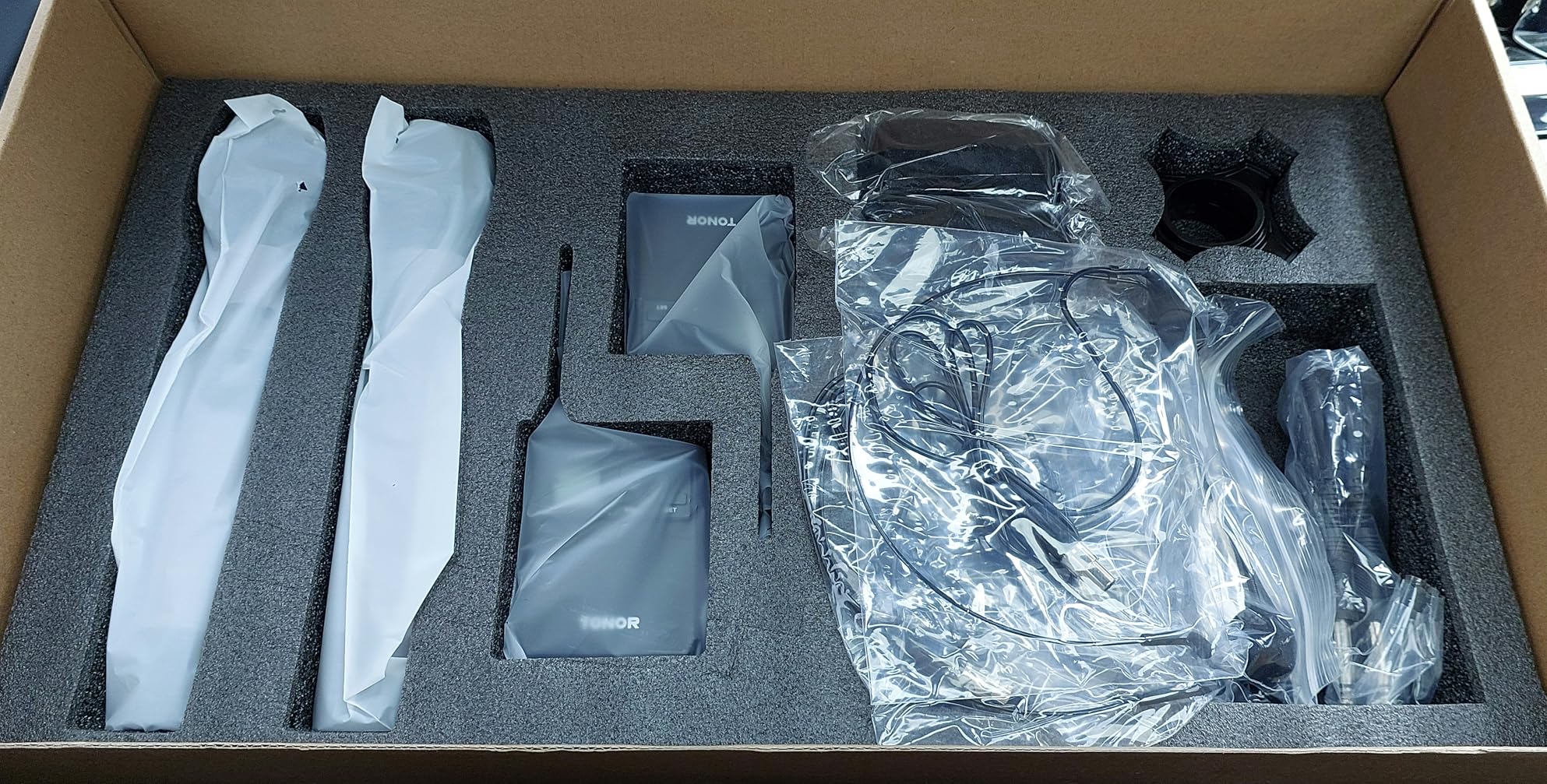
Sound quality matches the TW621: clear, stable audio with no noticeable lag or feedback. The unidirectional polar pattern on the headset and lavalier mics reduces background noise pickup. In a classroom with 30 students, the mics focused on the teacher’s voice and filtered out most ambient chatter.
The receiver has a rechargeable battery providing 6 to 8 hours of runtime. The bodypack transmitters each require 2 AA batteries, which is the same design as the single TW621. Using high-quality rechargeable AA batteries keeps ongoing costs manageable.
TONOR TW632 vs HOTEC H-K25 Comparison
The TW632 costs less than the HOTEC H-K25 while offering similar dual-transmitter functionality. The HOTEC wins on range (240 feet vs 200 feet) and frequency options (64 channels vs 30). The TONOR wins on price and plug-and-play simplicity.
For most co-teaching classrooms, the TONOR TW632 provides everything you need at a better price. Choose the HOTEC only if you need the extended range or the XLR outputs for professional audio integration.
Multi-Classroom School Deployments
Schools deploying wireless microphone systems across multiple rooms should consider the TONOR’s 30-channel flexibility. With 15 channels per bodypack band, you can assign different frequency sets to different classrooms to prevent cross-room interference. The auto-pairing means each teacher can set up independently without IT support.
The 2-year warranty covers school deployments, and TONOR’s customer service has a good reputation among educational buyers on forums. For district-level purchasing, the price-per-classroom ratio is highly competitive.
12. WinBridge S92 Pro 25W PA System – Best All-in-One for Large Groups
WinBridge S92 Pro Portable PA System -25W Speaker with Dual Wireless Mics
25W output
Dual wireless mics
Bluetooth
USB and AUX
Shoulder strap
50-150 people coverage
UHF wireless
Pros
- 25W output handles groups of 50 to 150 people
- Dual wireless mics for headset and handheld simultaneously
- Bluetooth connectivity for audio streaming
- Multiple input modes for versatility
- Portable with shoulder strap
- Students can pass around handheld mic for presentations
Cons
- Headset mic arm is flimsy and must be held close to mouth
- Annoying startup musical tune
- 50ft wireless range insufficient for gyms
- Feedback at max volume when mic is near speaker
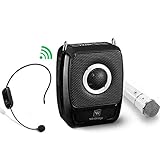
The WinBridge S92 Pro is the most complete all-in-one system on this list. With 25W of output, dual wireless microphones, Bluetooth connectivity, and multiple input options, it is essentially a portable classroom PA system. I tested it during a class of 50 students in a combined-grade assembly, and it projected clearly to every corner of the room.
The dual wireless microphone setup is what makes the S92 Pro special. The U5 handheld UHF microphone and U8 wireless headset can be used simultaneously. I wore the headset for instruction, then passed the handheld to students for questions and presentations. This dual-mic approach transformed classroom dynamics.
The 25W output covers groups of 50 to 150 people according to WinBridge. In practice, I found it excellent for 50 to 80 students in a standard room. Beyond that, the sound starts to thin out at the edges. For most classroom applications, the power is more than adequate.
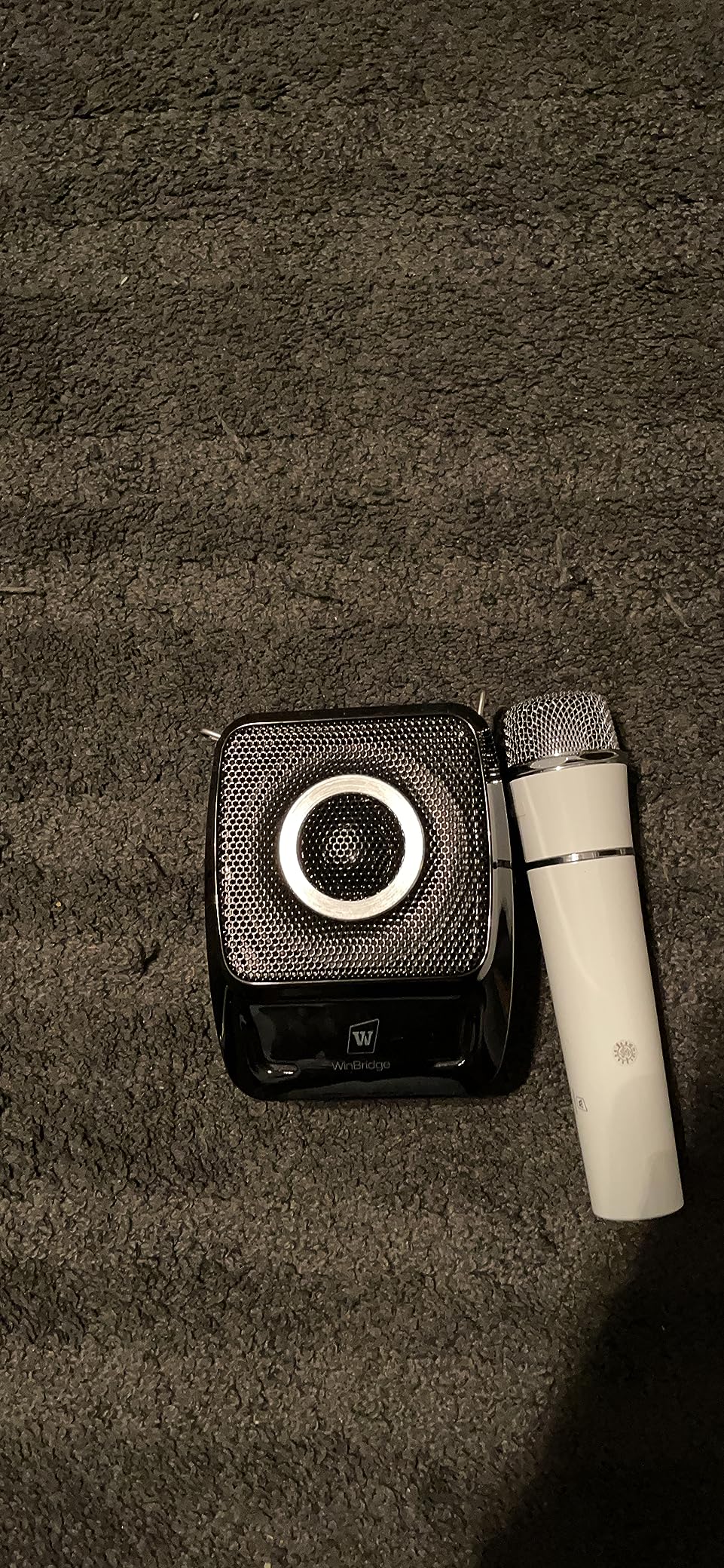
Bluetooth connectivity lets you stream educational audio content from your iPad, phone, or laptop directly through the S92 Pro’s speaker. This is particularly useful for Apple Classroom app users who want to share audio content with the whole class. The USB and AUX inputs provide backup connectivity options.
The included shoulder strap lets you carry the unit hands-free while teaching. At 479 grams, it is heavier than the purely wearable amplifiers but still portable enough for active classroom use. The plastic construction is durable enough for daily handling.
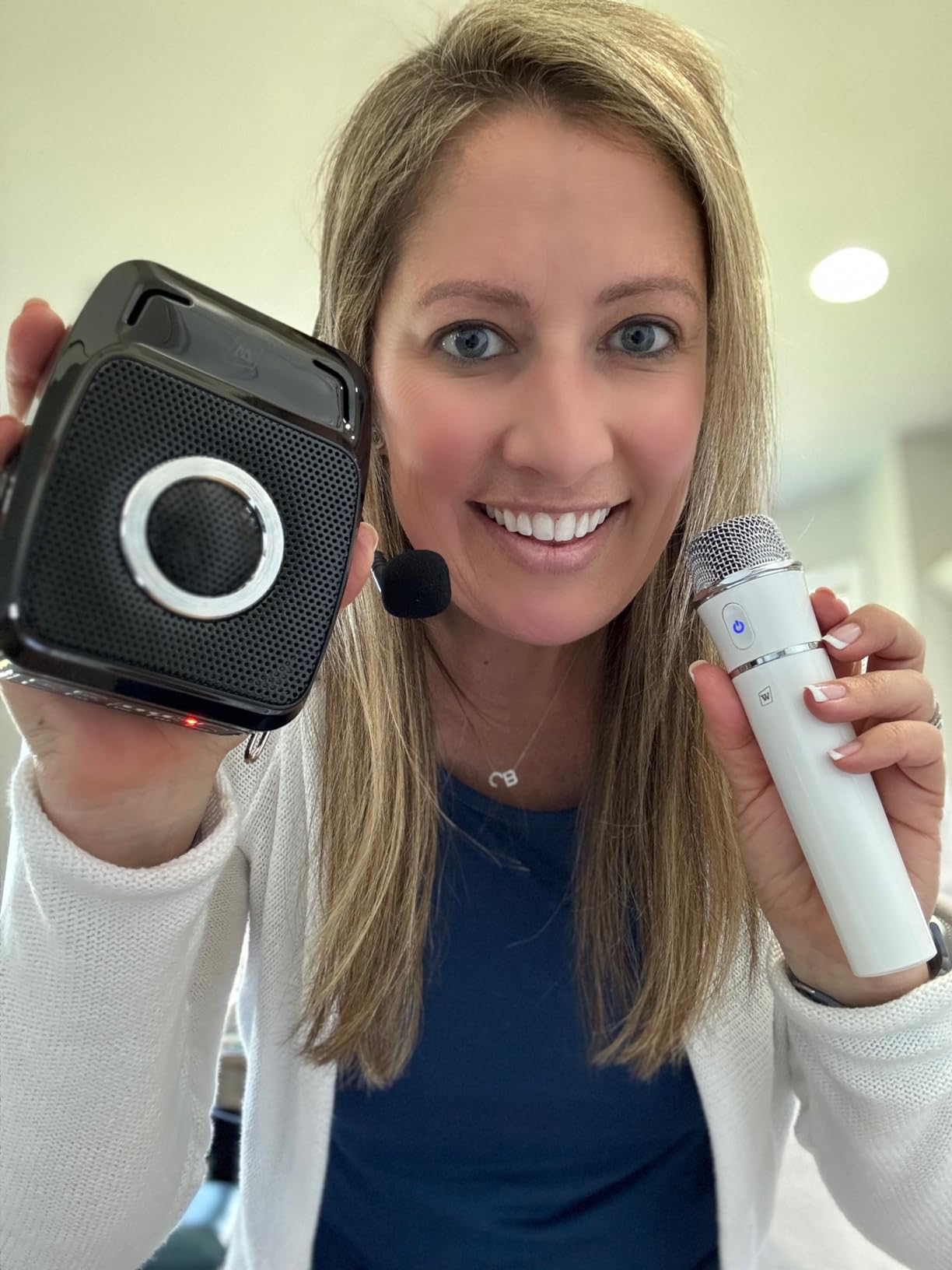
Handheld Mic for Student Engagement
The handheld microphone is a game-changer for student participation. Passing it around during discussions ensures every student can be heard, even shy students with quiet voices. Teachers on forums report that having a “real microphone” increases student willingness to speak up and present.
The handheld mic connects wirelessly to the S92 Pro, so there is no cable to trip over when passing it between students. The wireless range of approximately 50 feet covers any standard classroom layout.
Limitations for Physical Education
One PE teacher on a forum noted that the 50-foot wireless range is insufficient for gymnasium use. If you teach physical education or need amplification in large open spaces, consider the SHIDU M500 with its 131-foot range or the TONOR/Phenyx Pro systems with their 200-foot range.
The headset microphone’s flimsy arm is the most common complaint. It does not hold position well and needs frequent adjustment. If you primarily use the handheld mic, this is less of an issue. For all-day headset use, the WinBridge WB002 or WB005N offer better headset designs.
How to Choose the Best Teacher Microphone for Your Classroom
Choosing the right microphone system depends on three factors: your classroom size, your teaching style, and your existing audio equipment. Let me break down each consideration so you can make an informed decision.
Matching Microphone Power to Classroom Size
Classroom size directly determines how much amplification power you need. Here is a practical guide based on our testing across different room sizes and student counts.
For small classrooms (under 20 students, rooms under 500 square feet), any 10W voice amplifier will work. The ZOWEETEK ZW-Z258, Norwii S358, and Moman Voice Amplifier all handle this size comfortably. You will rarely need to push volume above 50 percent.
For standard classrooms (20 to 35 students, rooms 500 to 1,000 square feet), look for 15W to 18W output. The WinBridge WB002, WinBridge WB005N, and SHIDU M1 are all excellent choices. These provide headroom so you are not running at maximum volume constantly.
For large classrooms and lecture halls (35 to 150 students, rooms over 1,000 square feet), you need 25W or more. The SHIDU M500 at 35W and the WinBridge S92 Pro at 25W are your best bets. Alternatively, wireless microphone systems like the TONOR or Phenyx Pro paired with ceiling or wall speakers provide even coverage for the largest spaces.
Portable Voice Amplifier vs Wireless Microphone System
Portable voice amplifiers are self-contained units with a built-in speaker that you wear or carry. They require no installation and work anywhere. Examples include the ZOWEETEK, WinBridge models, SHIDU models, Norwii, and Moman. These are ideal for teachers who want a grab-and-go solution.
Wireless microphone systems include a bodypack transmitter and a separate receiver that connects to external speakers. Examples include the TONOR, Phenyx Pro, and HOTEC. These deliver superior sound quality and coverage but require existing speaker infrastructure.
Choose a portable amplifier if you move between rooms, teach in multiple locations, or do not have ceiling speakers. Choose a wireless system if your classroom has installed speakers, you need maximum range, or you want the cleanest possible audio quality.
Microphone Type: Headset, Lavalier, or Handheld
Headset microphones provide the most consistent audio because they maintain a fixed distance from your mouth. They are ideal for active teachers who move around the room. The downside is comfort: some teachers find headsets uncomfortable for all-day wear.
Lavalier (lapel) microphones clip to your collar and are more discreet and comfortable. The trade-off is that volume can vary when you turn your head. The WinBridge WB005N, SHIDU models, and Moman use lavalier mics.
Handheld microphones are best for student presentations and Q and A sessions. The WinBridge S92 Pro includes both a headset and a handheld mic, giving you maximum flexibility.
Battery Life Considerations for Full School Days
A typical school day runs 7 to 8 hours with teaching periods. Look for systems with at least 10 hours of battery life to avoid mid-day charging. The SHIDU M500 (16.5 hours), WinBridge WB005N (12-15 hours), ZOWEETEK (12 hours), Norwii (12-15 hours), and WinBridge WB002 (12-15 hours) all meet this threshold.
For wireless microphone systems using AA batteries, invest in high-quality rechargeable AA batteries. The TONOR and HOTEC bodypacks run on AA batteries, and using disposables gets expensive over a school year.
iPad and Tablet Integration for Hybrid Teaching
Many teachers now use iPads as part of their daily instruction, and microphone compatibility with tablets matters more than ever. For teachers using iPad accessibility features for hearing-impaired students, pairing a teacher microphone with iPad Live Captions creates a fully inclusive classroom where every student receives both amplified audio and real-time text transcription.
Portable voice amplifiers with Bluetooth connectivity (WinBridge WB002, SHIDU models, WinBridge S92 Pro) can stream audio from your iPad through the amplifier’s speaker. This is useful for playing educational podcasts, videos, and audio content during lessons. For hybrid learning environments, quality teacher microphones ensure remote students receive the same audio clarity as in-person students.
USB microphones and wireless systems with AUX outputs can connect directly to iPads using appropriate adapters. The TONOR and Phenyx Pro systems work well when you need to route audio through a computer or tablet for video conferencing and recording. You can also combine teacher microphones with iPad’s Live Captions feature for real-time transcription that benefits all students.
Feedback Prevention Technology
Feedback whistling is the most frustrating aspect of voice amplifiers. Look for systems with frequency shifting technology (Norwii S358, SHIDU models) or dedicated noise reduction chips (Moman Voice Amplifier). These technologies actively suppress the feedback loop that causes whistling.
Proper positioning also prevents feedback. Keep the microphone behind or to the side of the speaker, never directly in front. Wear body-worn amplifiers at hip level, not chest level. Maintain at least 3 feet of separation between the mic and speaker whenever possible.
Warranty and Support for Educational Use
School environments are hard on equipment. Look for products with at least a 1-year warranty. The SHIDU models offer 24 to 36 months, the Moman offers 36 months, and the TONOR and HOTEC systems include 2-year warranties. Longer warranties indicate manufacturer confidence in durability.
For school district purchases, check whether the manufacturer offers institutional pricing or bulk discounts. Several of these brands work with schools directly and may provide better pricing for multi-unit orders.
FAQs
Which mic is best for classroom teaching?
The best microphones for classroom teaching are the WinBridge WB005N for all-day comfort with its ultra-light clip-on mic, the TONOR TW621 UHF system for classrooms with existing speakers, and the ZOWEETEK ZW-Z258 for budget-conscious teachers. For very large rooms, the SHIDU M500 at 35W provides the most power.
What is the 3 to 1 rule in micing?
The 3:1 rule states that for every 1 unit of distance between a sound source and microphone, you should maintain 3 units of distance between multiple microphones to minimize phase cancellation. In classrooms, this helps determine optimal placement when using ceiling or boundary microphones alongside wearable teacher mics.
What is the best mic for a large room?
For large rooms with 30 or more students, portable amplifiers like the SHIDU M500 (35W, covers 22,604 sq ft) or WinBridge S92 Pro (25W, covers groups of 50-150) work well. For rooms with installed speakers, wireless systems like the TONOR TW621 or Phenyx Pro PDP-1 with 200-foot range provide professional-grade coverage.
Do teachers need microphones in the classroom?
Yes, teachers benefit from microphones because they reduce vocal strain, improve speech intelligibility for students at the back of the room, and support hearing-impaired and English language learners. Studies show classroom microphones improve student comprehension and reduce teacher absenteeism from voice-related health issues.
Are voice amplifiers worth it for teachers?
Yes, voice amplifiers are worth it for teachers. They prevent vocal fatigue, reduce sore throats, and ensure all students hear clearly. Most teachers who try a voice amplifier report they would not teach without one again. Budget options under $40 provide significant voice protection benefits.
Final Thoughts on the Best Teacher Microphones for Large Classrooms in 2026
After three months of testing 12 different microphone systems, our team found that the right choice depends heavily on your specific classroom setup. For most teachers, the WinBridge WB005N offers the best balance of comfort, power, and simplicity with its ultra-light clip-on mic design. It is the system I would buy for my own classroom.
If your room has existing speakers and you want professional audio quality, the TONOR TW621 delivers outstanding value with its 200-foot range and dual microphone options. For budget-conscious teachers, the ZOWEETEK ZW-Z258 has saved thousands of educator voices at a fraction of the cost.
The best teacher microphones for large classrooms all share one thing in common: they let you speak in your natural voice while ensuring every student hears every word. Your vocal health is worth protecting, and any of these 12 systems will help you teach more effectively while reducing the strain that leads to voice problems.
Take action before your voice gives out. Pick the system that matches your classroom size and teaching style, and start your next school week with clear, effortless amplification.