
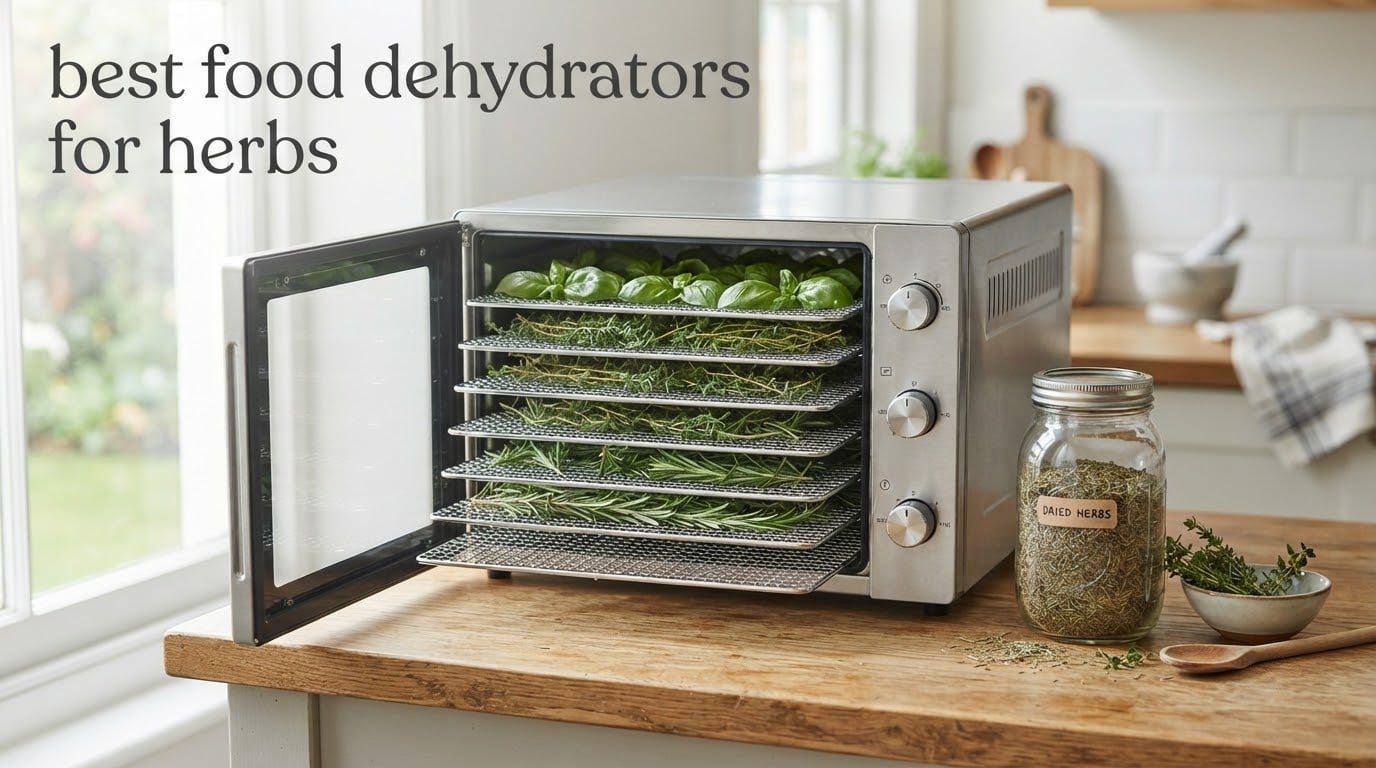
The best food dehydrators for herbs are the ones that hold a steady 95 to 115F, push air horizontally across every tray, and give you fine mesh screens so oregano and thyme leaves do not vanish through the floor. Those three things matter more than anything else on the spec sheet, and almost no competitor roundup talks about them.
Most dehydrator reviews are written for people making jerky at 160 to 175F. Herbs live in a completely different thermal band. Push them too hot and the leaves brown, go hay-like, and lose the aromatic oils that made you dry them in the first place. That is why we scored every unit below on its low-temperature floor and its airflow layout first, and price, wattage, and tray count second.
Our overall pick, the Cosori CP267-FD, hits the herb band exactly with a 95F floor, a rear-mounted fan that dries all six trays without manual rotation, and a brushless motor that stays under 48 dB so an overnight herb run does not wake the house. If you want a smaller machine for a small kitchen, the Cosori CFD-N051-W and the Nesco FD-80A are the two compact options that still hit 95F or close to it. Our complete picks sit below, followed by the temperature and airflow buying guide and a herb drying method that works in any of them.
We spent weeks running herb batches through these cabinets at 95F and 100F, checking doneness by crumble rather than by the clock, and reading owner reports on long-term durability. For the high-heat side of the hobby, we covered the machines that handle jerky separately in our food dehydrator roundup for jerky.
Table of Contents
Top 3 Picks for the Best Food Dehydrators for Herbs
These three cover the most common herb-drying situations: a full kitchen with a garden harvest, a compact apartment counter, and a first-time buyer who wants the low-temperature floor without a large footprint.

Cosori CP267-FD 6-Tray
- 95F floor with 1-degree digital steps
- Rear fan with no tray rotation
- 6.5 sq ft of stainless trays
- Under 48 dB brushless motor

Cosori CFD-N051-W 5-Tray
- 95-165F digital control in 1-degree steps
- 5 BPA-free trays
- expandable to 7
- Under 47 dB
- 48-hour timer
Nesco FD-80A 4-Tray
- Top-mounted fan needs no tray rotation
- 4 square trays
- expands to 8
- Top-mounted heater protects motor
- Dishwasher-safe parts
All 10 Food Dehydrators for Herbs Compared
Every cabinet below was picked because it reaches low enough temperatures to dry herbs without cooking them. Use this table to shortlist before reading the full reviews.
| Product | Specifications | Action |
|---|---|---|
| Cosori CP267-FD 6-Tray Dehydrator |
|
Check Latest Price |
| Cosori CFD-N051-W 5-Tray Dehydrator |
|
Check Latest Price |
| Nesco FD-80A 4-Tray Square Dehydrator |
|
Check Latest Price |
 Nesco FD-37A 4-Tray Round Dehydrator Nesco FD-37A 4-Tray Round Dehydrator |
|
Check Latest Price |
 Hamilton Beach 32100A 5-Tray Dehydrator Hamilton Beach 32100A 5-Tray Dehydrator |
|
Check Latest Price |
 OSTBA GGJ-261B 5-Tray Dehydrator OSTBA GGJ-261B 5-Tray Dehydrator |
|
Check Latest Price |
 Excalibur 8-Tray Select Series Dehydrator Excalibur 8-Tray Select Series Dehydrator |
|
Check Latest Price |
 Konfintos GGJ-300A Compact 5-Tray Konfintos GGJ-300A Compact 5-Tray |
|
Check Latest Price |
 OLIXIS 8-Tray Stainless Steel Dehydrator OLIXIS 8-Tray Stainless Steel Dehydrator |
|
Check Latest Price |
 PSIIDAN FD-1033 8-Tray Dehydrator PSIIDAN FD-1033 8-Tray Dehydrator |
|
Check Latest Price |
1. Cosori CP267-FD 6-Tray Dehydrator: Best Overall for Herbs
Cosori Food Dehydrator, 6 Stainless Steel Trays with 6.5 ft² Drying Space
6 stainless trays, 6.5 sq ft
95-165F in 1-degree steps
Rear fan, no tray rotation
Under 48 dB
Pros
- 95F floor holds color and aroma in delicate herbs
- Rear fan dries all six trays with no manual rotation
- 6.5 sq ft handles a full basket of basil in one run
- Under 48 dB suits overnight and small-apartment use
- 48-hour timer with 1-degree digital control
- Two-year manufacturer warranty
Cons
- 18.1 lb body needs generous counter space
- Extra trays and mesh screens sold separately
- 600W draws more power than smaller units
The CP267-FD is the machine we keep reaching for. Its 95F floor sits exactly at the bottom of the herb band, which means you can run basil and mint at the gentle end without dropping to jerky temperatures. Temperature adjusts in one-degree steps, so you can hold 100F or 103F for a stubborn sage branch instead of overshooting to 115F.
Airflow is the other half of the story. The rear-mounted fan and horizontal layout push air from the back of the cabinet to the front, so every tray dries at roughly the same rate. That removes the single most annoying chore in herb drying, which is getting up at 2am to swap trays front to back.
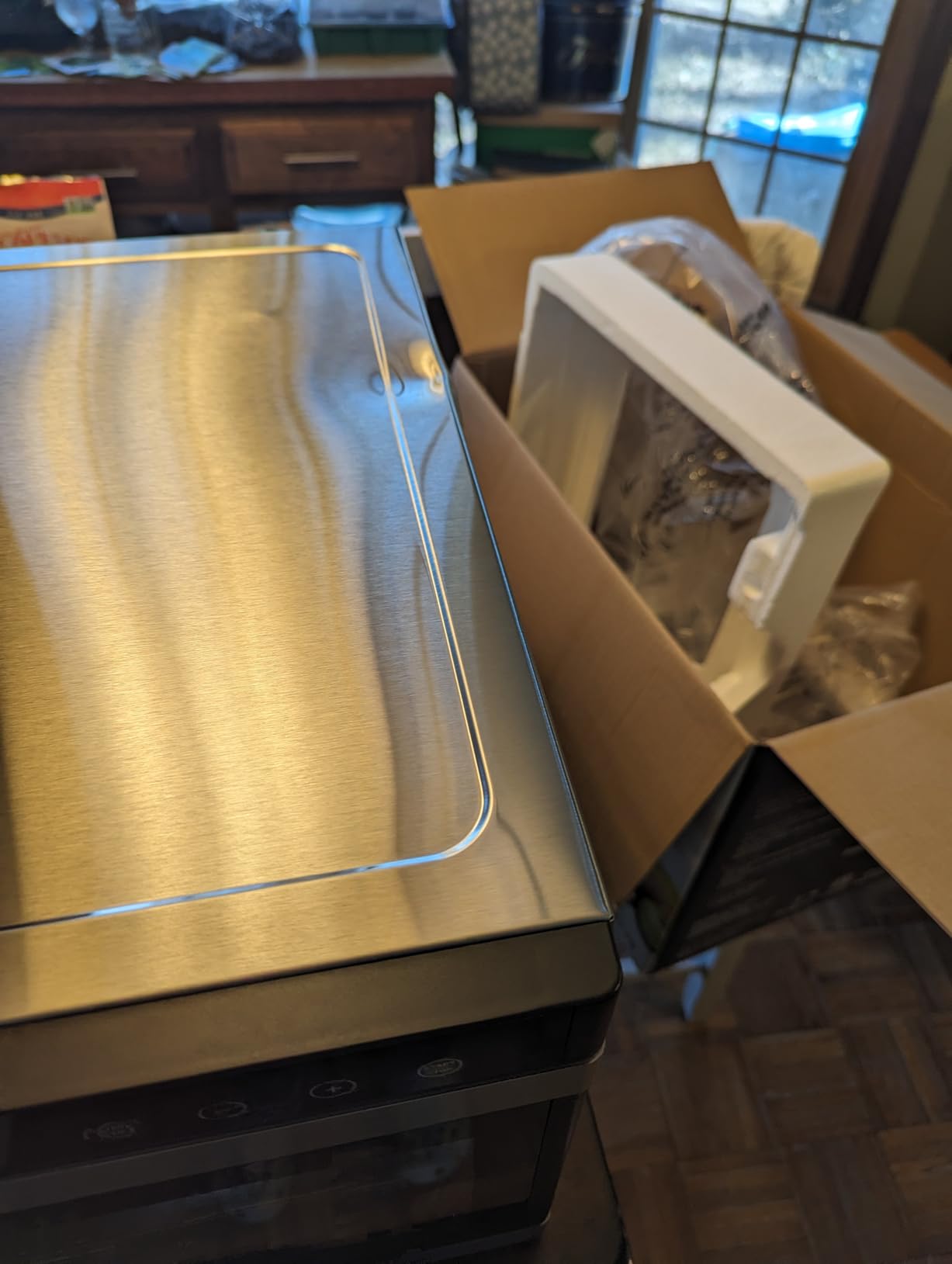
Owner reviews are unusually consistent for a machine with this many reviews. The most common themes are even drying, quiet running, and a smooth tray cleanup. One mesh screen ships in the box, which covers basil, mint, and larger leaves, though you will want a second one for the small stuff.
The 600W motor is what moves a full herb batch through in a single sitting, and the brushless motor keeps noise under 48 dB. That spec matters more than it sounds: a fan loud enough to hear across a room is the most common reason people abandon a dehydrator after one batch.
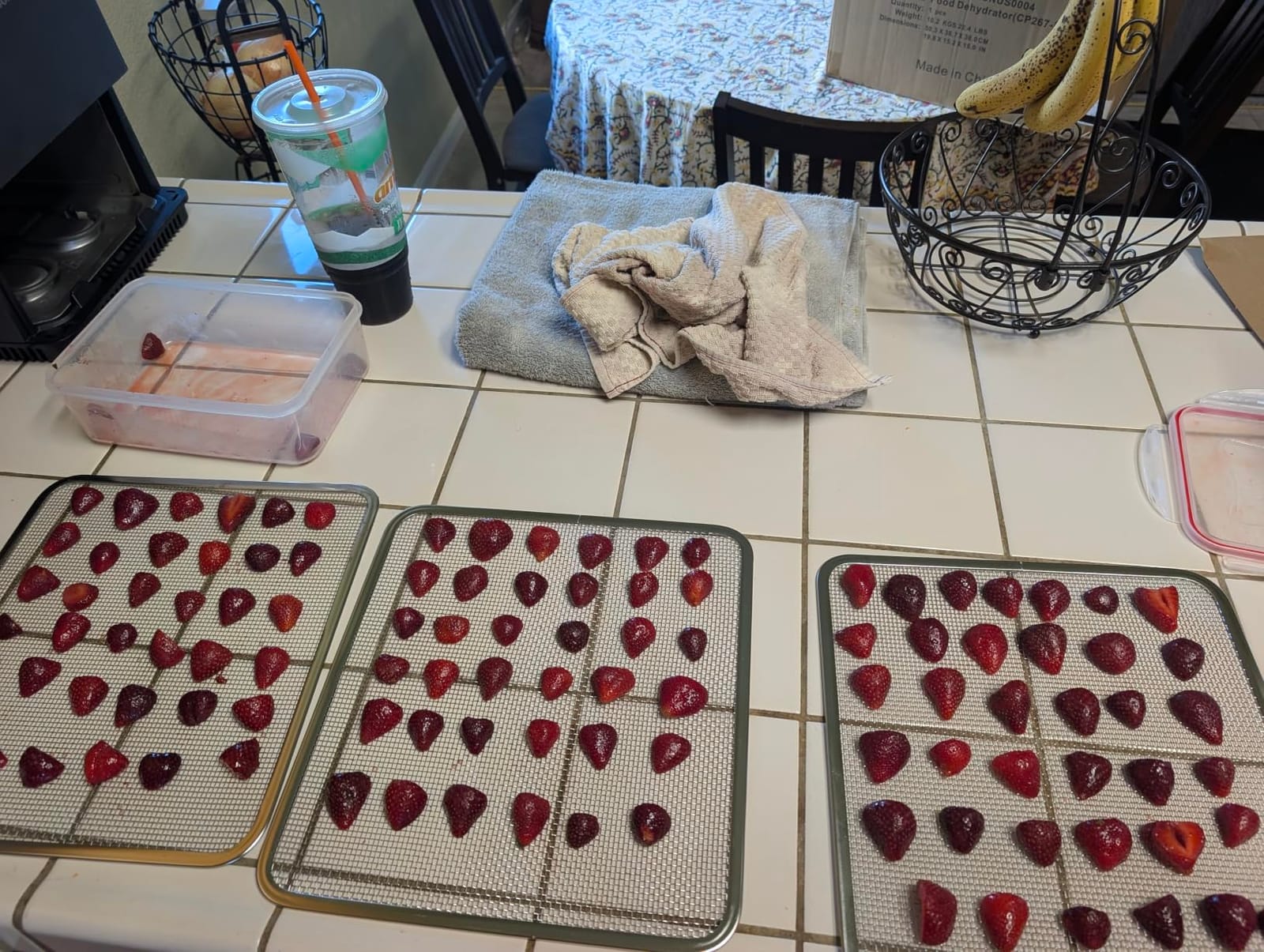
Who this dehydrator suits
This is the one to buy if you dry herbs every week, or if you bring in garden basil and oregano in bulk and do not want to run three back-to-back batches. Six trays at 6.5 sq ft gives you enough surface for a full basket of leaves in a single layer, which is the only way herbs dry evenly.
It also handles the rest of the pantry work. If you want one cabinet for herbs at 95F and fruit leather or vegetables at 165F, the 95-165F range covers both without swapping machines. Our picks for high-heat-only work are covered in the jerky dehydrator guide.
Where it falls short
The footprint is the main compromise. At 18.1 lb and 17.8 by 13.4 inches, it needs a clear stretch of counter and a cabinet shelf that can take the weight. In a small galley kitchen you will want to measure before buying.
Only one mesh screen is included, and additional trays and screens are sold separately. If you plan to dry thyme and oregano regularly, budget for a second fine liner rather than discovering the problem mid-batch.
2. Cosori CFD-N051-W 5-Tray Dehydrator: Best Value for Herb Batches
Cosori Food Dehydrator, 5 BPA-Free Trays, 165°F Temperature Control, 350W
5 BPA-free trays, expands to 7
95-165F in 1-degree steps
Under 47 dB, 48-hour timer
Lightweight at 4.9 lb
Pros
- 95F floor with one-degree increments for precise herb drying
- Expands from 5 to 7 trays as your harvest grows
- Weighs 4.9 lb so it moves easily for small kitchens
- Under 47 dB is quiet enough to run near a bed
- 48-hour timer covers long herb cycles
- Two-year manufacturer warranty
Cons
- Bottom airflow means lower trays can finish first
- Bundled recipe times run short for herbs
- Touch panel is very sensitive
- Clear plastic shell is less durable than metal
The round 5-tray Cosori hits the same 95F floor as our top pick in a much lighter package, and for most herb dryers it is the smarter choice. The temperature panel steps in one-degree increments from 95 to 165F, and the 48-hour timer is more than enough for a three-day sage run.
Its limitation is airflow direction. The fan sits at the base, so warm air rises through the stack and the bottom tray runs hotter than the top one. Reviewers regularly notice that lower trays finish before upper ones, which for herbs means checking the top shelves an hour early rather than trusting the timer.
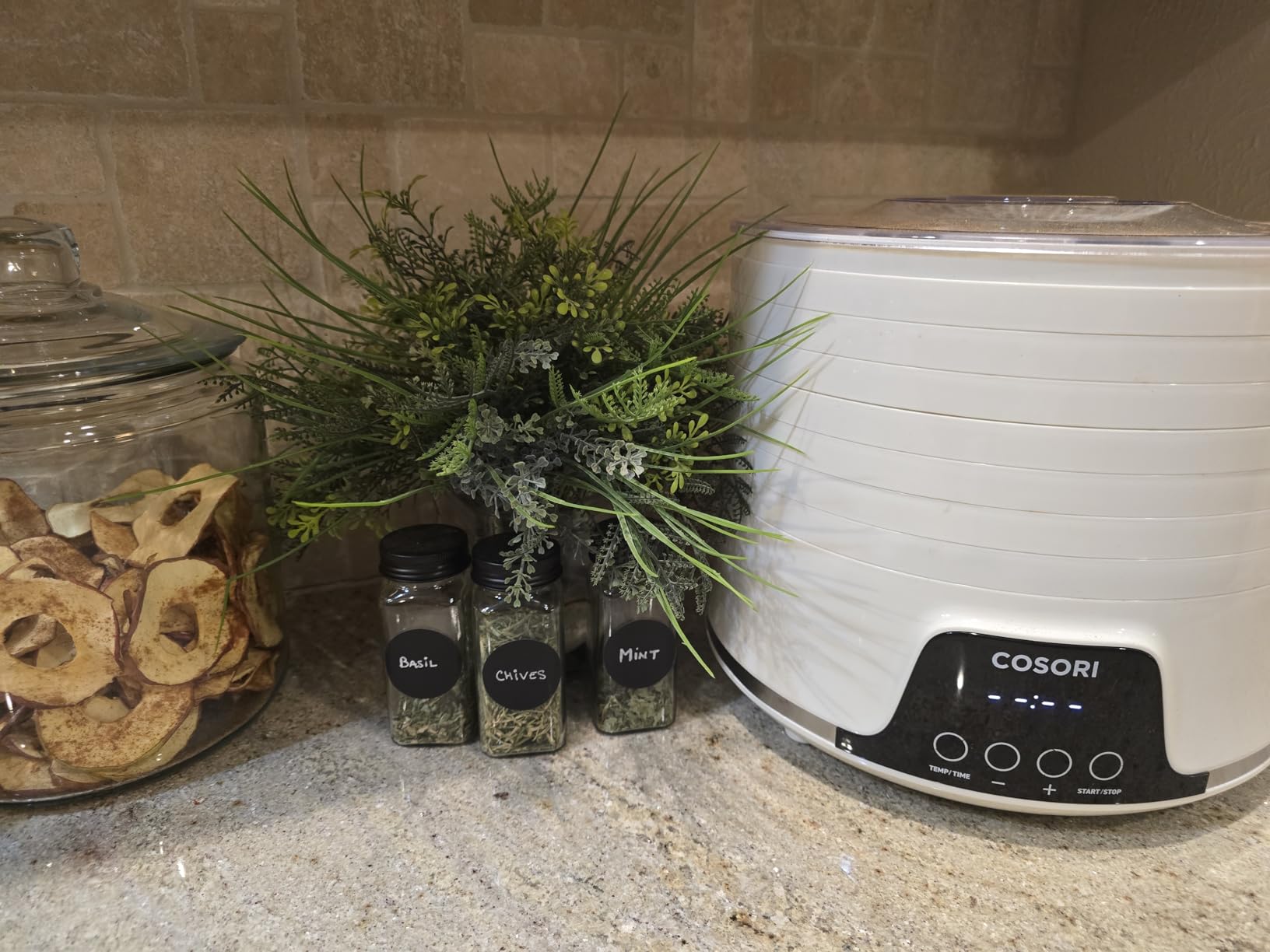
The trays are adjustable in height, which is handy when you are drying a small batch of mint and want the trays closer to the heat. They also expand to seven, so the machine can grow into a garden harvest without a purchase.
Owner feedback on herb drying is strongly positive, with reviewers citing consistent results and easy cleanup. The complaints are mostly about the touch panel being too sensitive, a loud beep at the end of a cycle, and a bundled recipe chart that understates drying times.
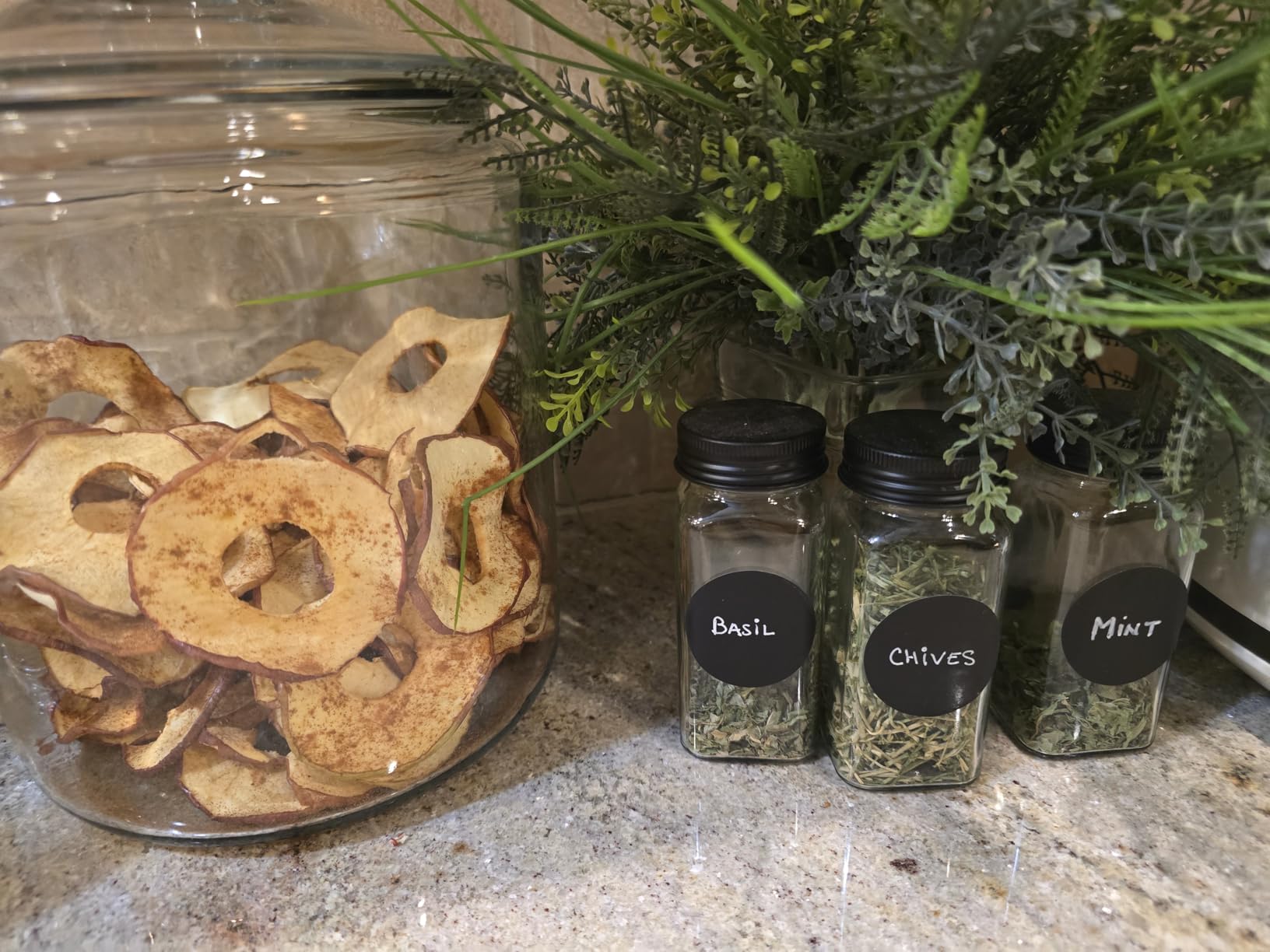
Who this dehydrator suits
Choose this one if your herb drying is a few basil bunches and a jar of oregano a month, or if counter space is tight. At 4.9 lb and 12.2 inches square it stores easily and can come out for a batch, then go back in the cupboard.
It is also a good first dehydrator for someone who wants to learn the craft before committing to a bigger cabinet. The 47 dB figure means it can run overnight without becoming a problem in most homes.
Where it falls short
If you plan to dry a full garden harvest, the vertical airflow means more hands-on work. You will be swapping trays mid-cycle more often than with a rear-fan unit, and that is exactly the step people skip when they fall asleep.
The round tray shape also uses less usable area than a square layout of the same diameter. Larger leaves such as basil spread out fine, but you will fit fewer of them per layer than the square Nesco designs.
3. Nesco FD-80A 4-Tray Square Dehydrator: Best for Small Kitchens
NESCO FD‑80A Square Food Dehydrator for Snacks, Fruit, Beef Jerky, 4‑Tray White Electric Dehydrator with Even Heat Drying
4 square trays, expands to 8
Top-mounted fan, no rotation
Adjustable thermostat to 160F
Dishwasher-safe parts
Pros
- Top-mounted fan circulates air so trays need no rotation
- Top-mounted heater keeps drips away from the motor
- Square trays give more usable area than round ones
- Expands from 4 to 8 trays
- Dishwasher-safe parts make cleanup fast
- Compact square body fits a normal counter
Cons
- No digital timer
- so cycles need manual monitoring
- Plastic construction rather than all-stainless
- Only four trays included
The FD-80A solves the rotation problem in a way the Cosori units do not. The fan and heater both mount on the top, so air moves across the stack instead of climbing through it, and the trays stay even without swapping. For herb drying, that is worth more than another two trays.
The square tray shape is the quiet hero here. A square tray of the same nominal size gives you noticeably more flat drying area than a round one, and herbs need that area in a single uncrowded layer. If your herb batches are leafy rather than twiggy, this layout wastes less of them.
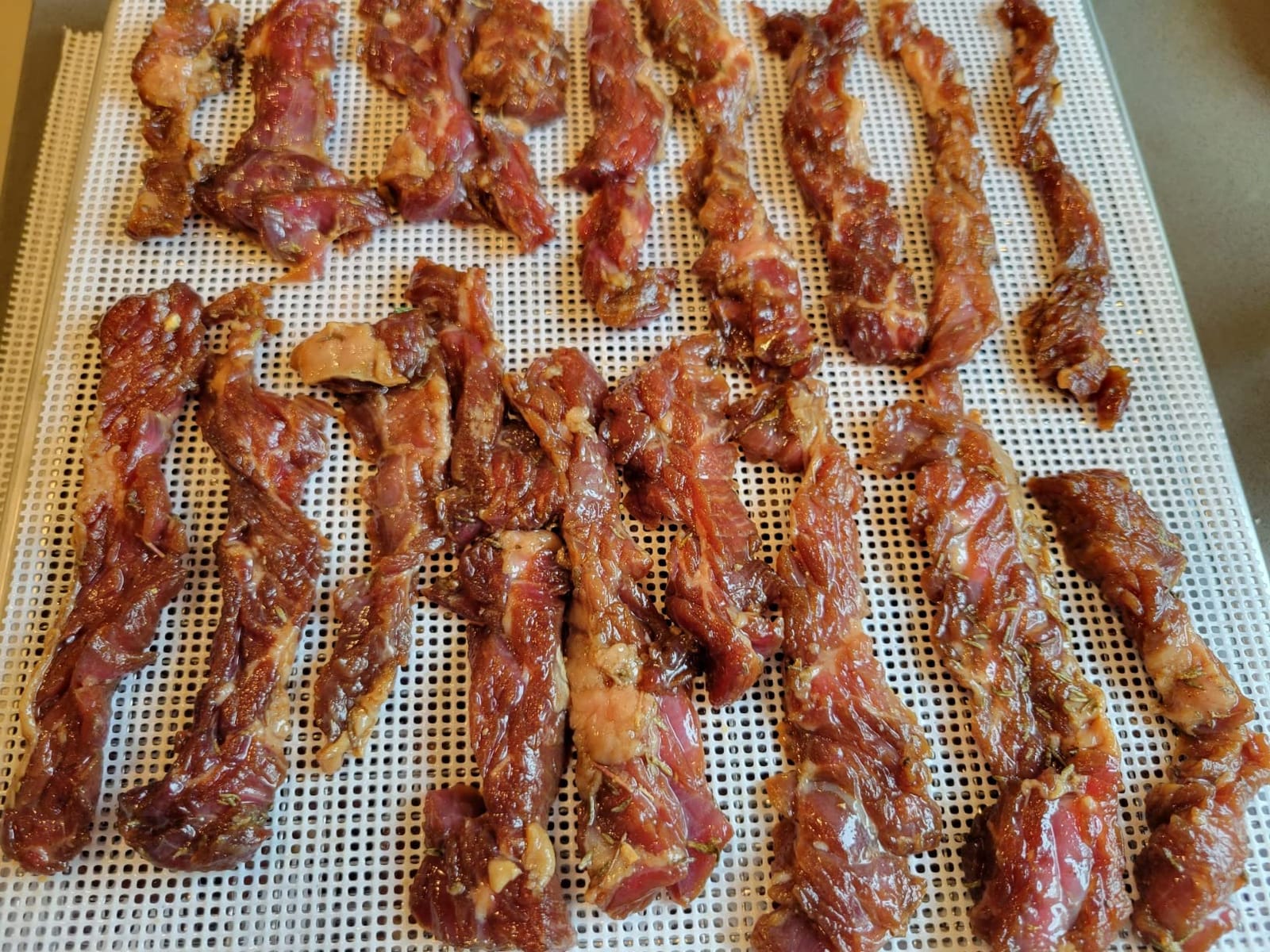
Reviewers call out the top-mounted heater as much as the fan. Because the heating element sits above the trays, moisture from wet herbs and dripping fruit cannot fall down into the motor housing, which is the failure mode that kills cheaper boxes over time.
The thermostat adjusts up to 160F. It is not a digital readout, so you set it by feel and check progress through the clear lid, but it will run at a gentle setting where fixed-temperature units cannot.
Who this dehydrator suits
This fits small kitchens and first-time buyers who want even drying without overnight supervision of tray positions. Four trays handles a few pounds of herbs per run, and the stack expands to eight trays when you need more without buying a second machine.
It is also a good match for anyone who dries more than one kind of herb. Because air moves horizontally past each tray instead of rising through a single column, strong-smelling varieties such as rosemary or mint sit less likely to flavor the tray above.
Where it falls short
There is no built-in timer, and that is the biggest practical gap. Every cycle needs you to start it and come back to stop it. For an overnight run on a Thursday when you leave for work Friday, that is a real drawback compared with the digital models.
The body is plastic rather than stainless, so if you dry rosemary, sage, or lavender regularly, expect to absorb some aroma over the years. Owners who later upgrade usually cite durability, not drying quality, as the reason.
4. Nesco FD-37A 4-Tray Dehydrator: Best for Simple, Monitored Setup
Nesco FD-37A Food Dehydrator for Herbs, Fruit, Beef Jerky, 4 Trays, Speckled White
Fixed 160F powerhead
400W with even heat
Clear viewing top
4 trays, expands to 7
Pros
- Clear top lets you watch a herb batch without opening the unit
- Dishwasher-safe trays and detachable powerhead
- Expands from 4 to 7 trays for a bigger harvest
- Light at 4.7 lb and easy to store
- 400W spreads heat evenly across all trays
Cons
- Fixed 160F is too hot for delicate herbs
- 400W runs slower than 500-700W units
- Round trays use less area than square layouts
This is the honest counterpoint to the pick above: same brand, same tray count, and a powerhead that will not go below 160F. That single fact makes it a poor herb dryer. We include it because the design is genuinely good and because plenty of buyers assume any dehydrator is herb capable.
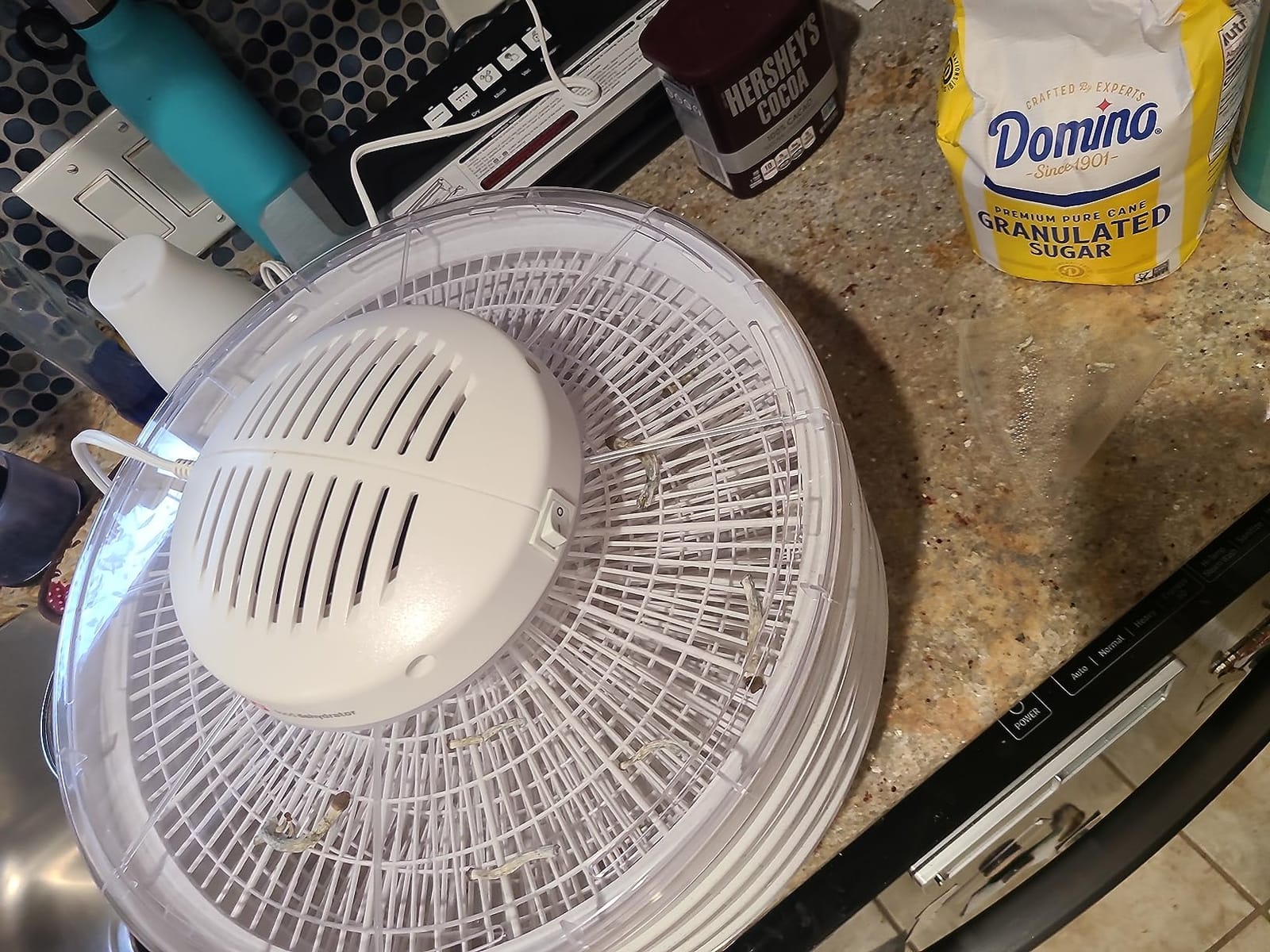
What it does offer is simplicity. One dial, one heat level, and a clear top so you can watch leaves curl and darken without cracking the lid and losing heat. For someone drying herbs on a porch or in a workshop where nobody is tracking temperature, that visibility has real value.
Owner reviews highlight easy cleanup, since the whole powerhead detaches and the trays are dishwasher safe. The expanding stack is a nice touch, taking the unit from four trays to seven as your harvest grows.
The 400W element is also why this unit is described as even but slow. It is a gentle dryer, which sounds like a benefit until you are running back-to-back batches through an autumn harvest.
Who this dehydrator suits
Buy it if your herb use is light, you like watching a batch through a window, and you mostly dry sturdy material like woody rosemary stems rather than tender basil and mint. The detachable powerhead also makes it easy to clean up between unrelated batches.
It pairs well with a solar or no-heat drying rack for people who want a completely hands-off setup for the bulk of their harvest, then use this for the last few stubborn trays.
Where it falls short
The fixed 160F thermostat is the dealbreaker for most herb work. At that temperature, basil and mint cook rather than dry, going brown and hay-like with far less aroma than they started with.
If you already own a machine with an adjustable thermostat, this adds little. If you are starting from nothing and drying herbs is your main goal, the same brand in an adjustable-thermostat version is the smarter spend.
5. Hamilton Beach 32100A 5-Tray Dehydrator: Best Starter With a Mesh Screen
Hamilton Beach Digital Food Dehydrator for Fruit, Jerky, Vegetables & More
100-160F adjustable
5 trays, 4.2 sq ft
48-hour timer with auto shutoff
Herb mesh screen included
Pros
- Herb mesh screen included out of the box
- 100F floor keeps delicate leaves from cooking
- 48-hour timer with auto shutoff means no babysitting
- Dishwasher-safe trays and lid with nonslip feet
- Clear vented lid for progress checks
- 500W base heater and fan rarely need tray rotation
Cons
- One coarse mesh screen only and oregano can drop through it
- Fan noise is noticeable in a quiet room
- Longer drying times than higher-wattage units
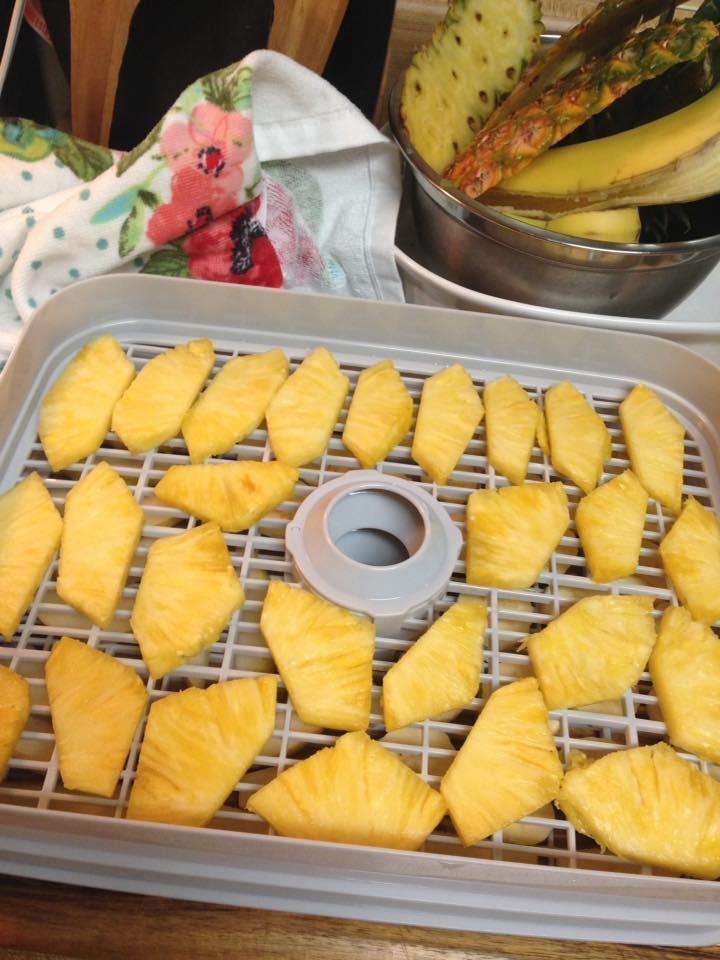
The Hamilton Beach is the easiest recommendation on this list for a first-time herb dryer, mostly because the herb mesh screen is already in the box. Most competitors sell liners separately or include one generic sheet that is too coarse for oregano and thyme, which is the single most common way people lose a batch.
Its 100F floor sits slightly above the 95F on the Cosori units, but that is still inside the window where leafy herbs keep their color and aroma. The digital panel covers 100 to 160F with a 1 to 48 hour timer and auto shutoff, so a long overnight batch finishes without you.
Owner reviews describe it as a reliable, easy-to-clean starter machine with accurate controls. Herb drying is the most common use buyers report, and the included screen gets most of the credit for that.
Five trays give 4.2 sq ft of drying space, and the rectangular body is narrower than the full-size Cosori. It stores in a cabinet when the season is over, which matters more than people expect in an apartment.
Who this dehydrator suits
Pick this one if you are drying herbs for the first time and want the right accessories included rather than researched. The included mesh screen removes the biggest early obstacle, and the auto shutoff means you can start a batch before bed.
It also suits small kitchens that cannot host an 18-pound cabinet, and anyone who wants a second machine for flowers and potpourri alongside a larger one.
Where it falls short
Only one mesh screen ships with it, and that screen is coarse enough that small oregano and marjoram leaves can drop through onto the heating element. Buy a fine herb liner before your first oregano batch.
Fan noise is the other recurring complaint, described as comparable to a small box fan. If you plan to run cycles in a bedroom or a quiet apartment at night, test the placement first. The 500W element also means slower drying than 600 to 700W units, so expect longer cycles.
6. OSTBA GGJ-261B 5-Tray Dehydrator: Best for Long Cycles
OSTBA Food Dehydrator, 5 Trays, 240W Dryer for Jerky, Fruit & Snacks
95-158F adjustable
1-72 hour auto-off timer
LED touchscreen with window
5 dishwasher-safe trays
Pros
- Generous 72-hour timer for slow herb loads
- 95F floor keeps color in delicate leaves
- See-through window plus 360-degree airflow for even results
- Responsive LED touchscreen shows remaining time clearly
- Compact stacked body stores easily
- ETL certified with a 24-month warranty
Cons
- 240W is a slow heater and full trays take time
- Plastic body with clear trays is less rigid than metal
- Mesh liners are not included
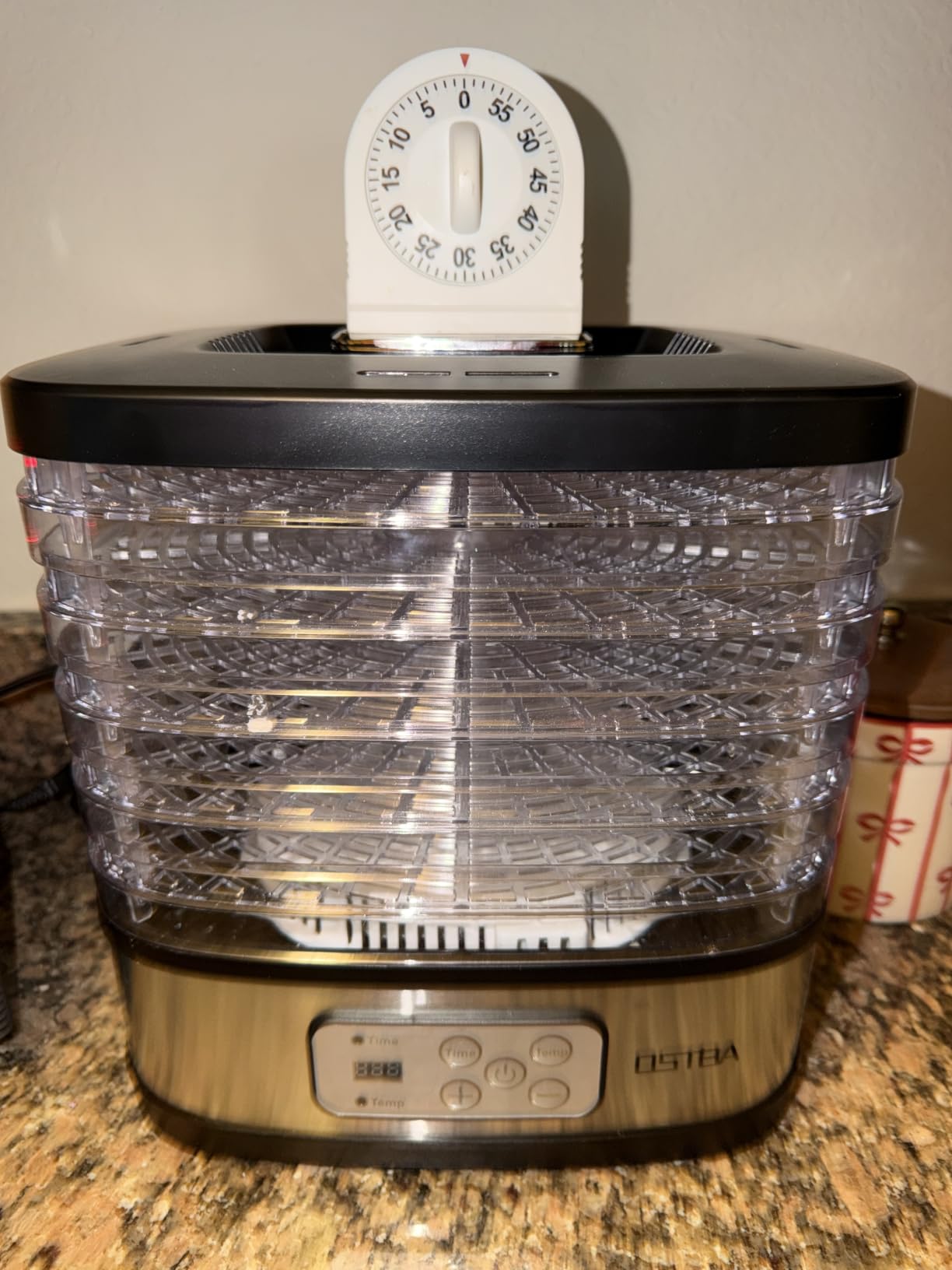
The OSTBA is built around the setting that matters most for patient herb drying: a timer that runs to 72 hours. Woodier herbs like rosemary, sage, and lavender buds can take a long time to reach the point where leaves crumble off the stem, and a 24 or 48 hour cap forces you to be there when the cycle ends.
It also starts at 95F, matching our top pick at the low end, and the window plus 360-degree circulation means you can check a batch without opening the door and losing heat. The LED touchscreen shows both set and remaining time, which removes most of the guesswork.
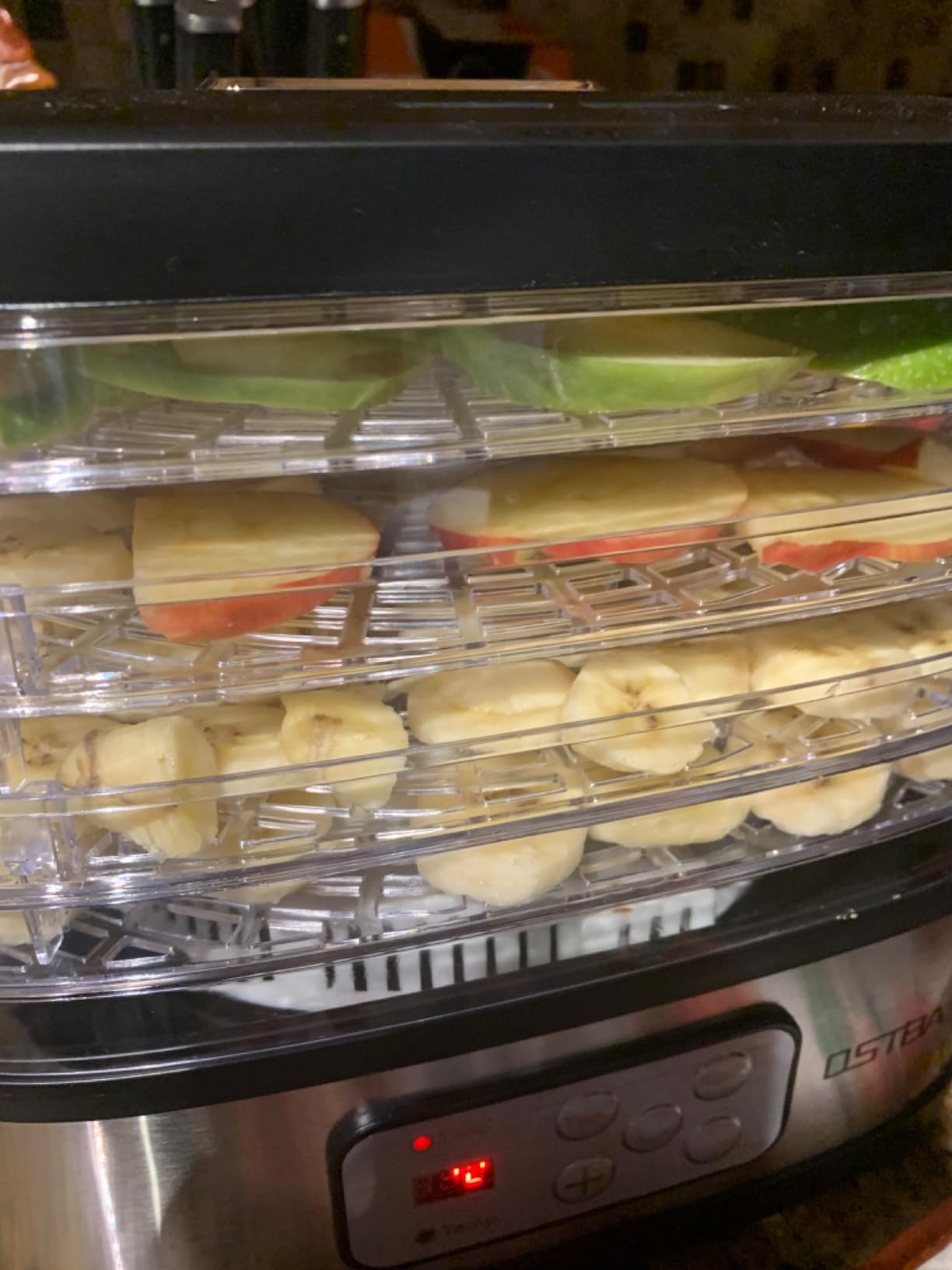
Owners like the clear panel, the long timer, and simple cleanup, and they report good results with herbs and pet treats. The reservations we see most are about drying speed and build feel rather than results.
At 4.1 lb and 9.45 by 10.24 inches, it is one of the more compact units here, which is useful when you only want it out during harvest season.
Who this dehydrator suits
This is the pick for people drying dense, woody herbs or large autumn harvests where patience matters more than speed. The 72-hour window lets you start a heavy sage batch and check back the next day.
It also suits anyone who likes visible controls and a window, and small kitchens where the compact stacked body matters. The 24-month warranty is longer than most units at this level.
Where it falls short
The 240W heater is the lowest wattage in this group, and it shows. Fully loaded trays of wet herbs take noticeably longer here, which is fine on a timer that generous but frustrating when you are processing back-to-back batches.
No fine mesh screen is included, so plan to buy a liner for oregano and thyme. The clear plastic body is also less rigid than the metal cabinets, and buyers report it flexes slightly when trays are loaded.
7. Excalibur 8-Tray Select Series: Best for Large Harvests
Excalibur Food Dehydrator Select Series for Jerky, Fruit, Vegetables, Herbs, Pet Treats with Adjustable Temperature Control, 8-Tray
85-165F adjustable, 85F floor in this group
8 chrome trays, 7.2 cu ft
Horizontal airflow, no rotation
80-hour timer, glass doors
Pros
- 85F floor for the gentlest herb drying
- 8 trays with 7.2 cu ft for serious garden harvests
- Horizontal Parallax airflow needs no tray rotation
- Patented Hyperwave Pulse Technology for even drying
- 80-hour timer and glass French doors for monitoring
Cons
- Highest cost in this group
- 16.5 lb cabinet needs a sturdy counter
- Only 153 reviews
- so less long-term owner history
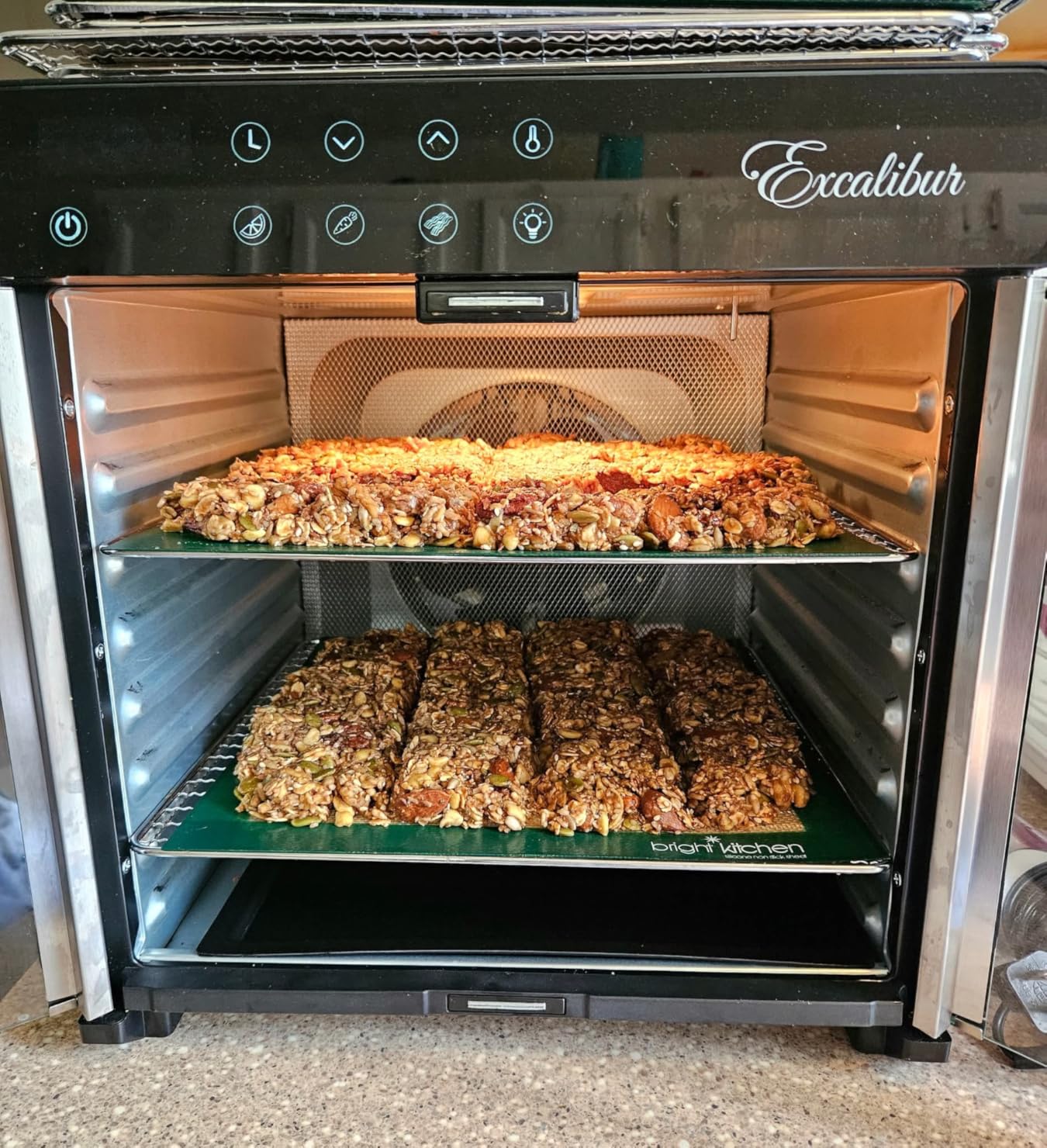
The Excalibur reaches 85F, the lowest floor in this group, and it does so in a cabinet with eight trays and 7.2 cu ft of drying space. That combination makes it the choice when you have a real garden harvest and you want the herbs to come out as green and aromatic as they went in.
Airflow is horizontal through the Parallex system, so the rear-to-front path treats every tray evenly and you do not rotate anything overnight. The Hyperwave Pulse Technology pulses the airflow rather than running it flat, which is what keeps bottom and top trays in the same range.
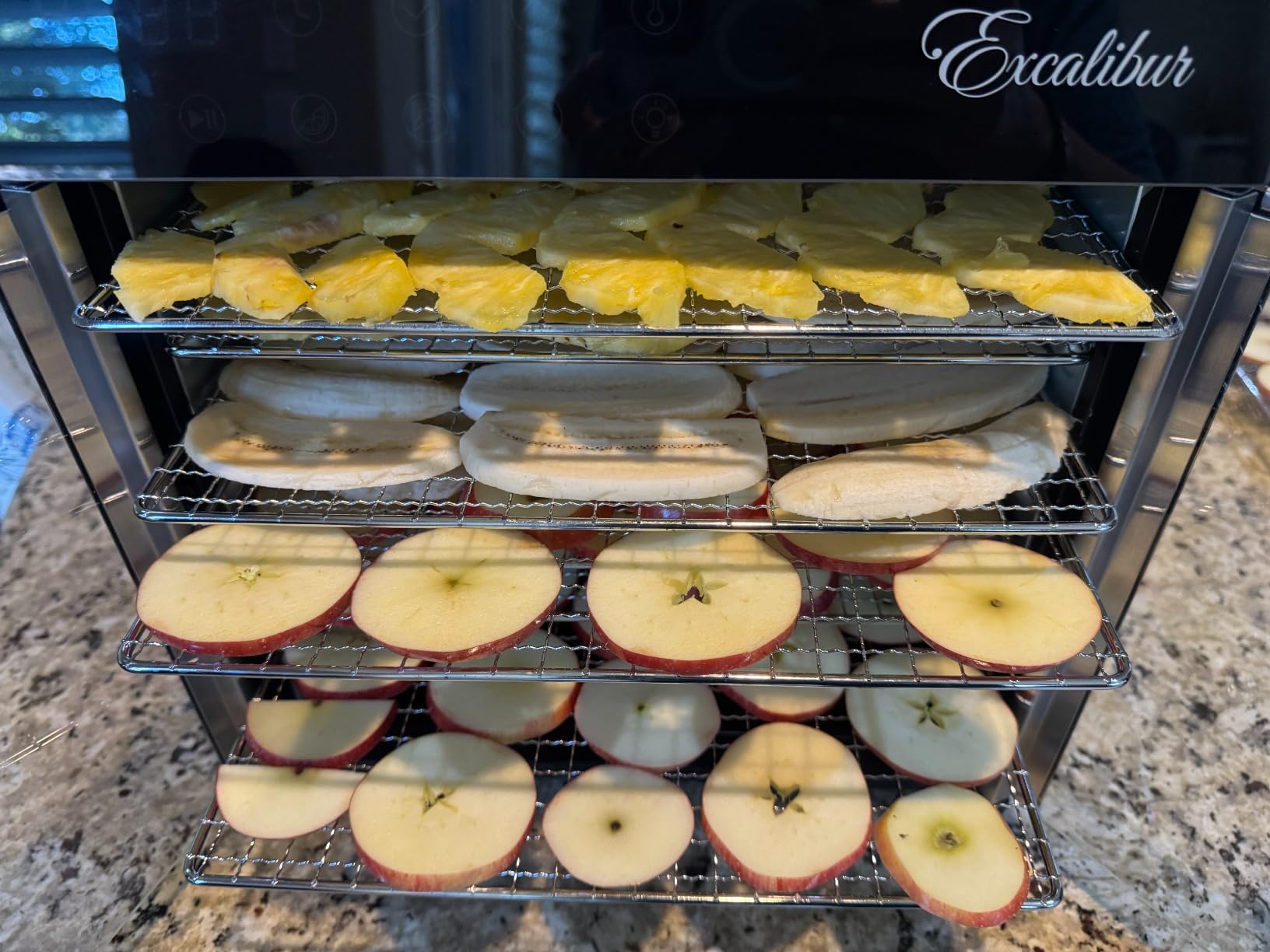
Owners cite the wide 85 to 165F range, even drying without rotation, and glass doors that let you watch a batch. One polypropylene mesh screen is included, which is what you need for a full load of small-leaved herbs.
The honest limitation here is feedback volume. With 153 reviews it has far less long-term owner history than the units with tens of thousands of ratings, so durability claims rest on the brand rather than on a large owner base.
Who this dehydrator suits
Buy this if you are preserving a serious harvest: a whole basil run, an armload of sage, or enough rosemary to last a year. Eight trays with no rotation means you load once and come back to a finished batch.
The 85F floor also makes it the choice if you are drying delicate flowering herbs for tea or potpourri where you want to drive moisture out slowly and keep the color intact. If you want a dedicated machine for that delicate work, this is it.
Where it falls short
It sits at the top of our price range, and the gap between it and the mid-tier stainless models is wide. If you dry herbs a few weeks a year, that money is better spent elsewhere.
At 16.5 lb and 17.3 by 13.4 by 14.1 inches it needs real counter space, and the extra volume is wasted if you only ever run one tray of sage. The 80-hour timer is a bonus for long cycles rather than a necessity.
8. Konfintos GGJ-300A Compact Dehydrator: Best for Tiny Spaces
Konfintos Small Food Dehydrator for Jerky, Fruit, Herbs & Pet Treats
95-158F adjustable
5 transparent adjustable trays
72-hour timer, knob control
Compact 11.8 inch width
Pros
- One of the smallest footprints here at 11.8 inches wide and 3.9 lb
- Transparent trays let you check progress without opening
- Simple knob control with no menu to learn
- 95F floor is right for leafy herbs
- Dishwasher-safe trays for quick cleanup
- Works for dorms and RVs
Cons
- Knob dial only with no digital temperature or time readout
- 250W is on the slow side
- so drying takes patience
- Small tray area limits large harvests
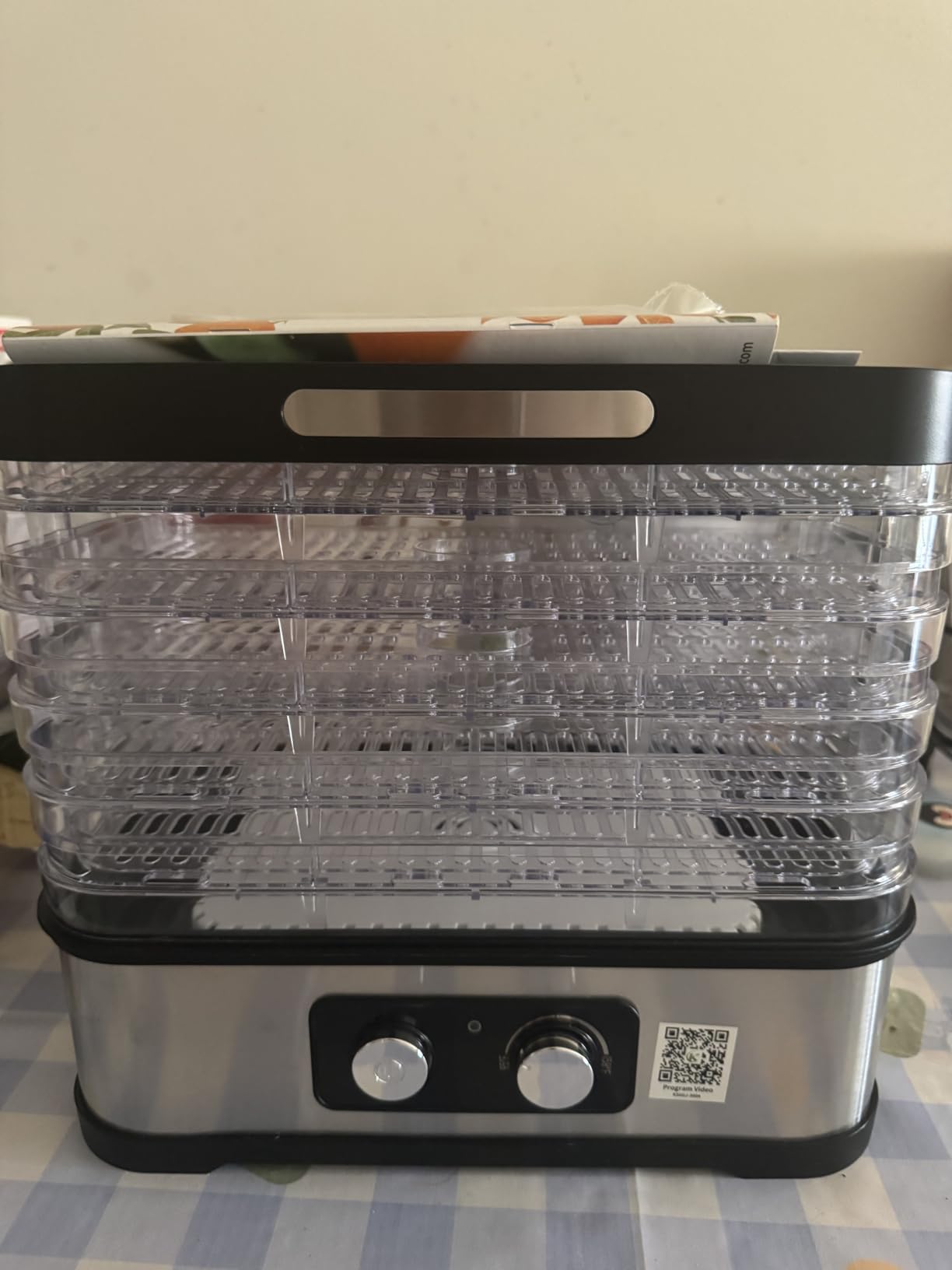
If counter space is the binding constraint, this is the machine. At 11.8 by 7.3 by 7.9 inches and 3.9 lb it is among the smallest cabinets here, and the five transparent trays mean you can watch herb leaves curl and dry without opening the door or losing heat.
It still reaches 95F, so it is not a compromise on the part of herb drying that matters most. The 72-hour timer and a simple knob cover the controls, and reviewers consistently describe the one-dial interface as beginner friendly.
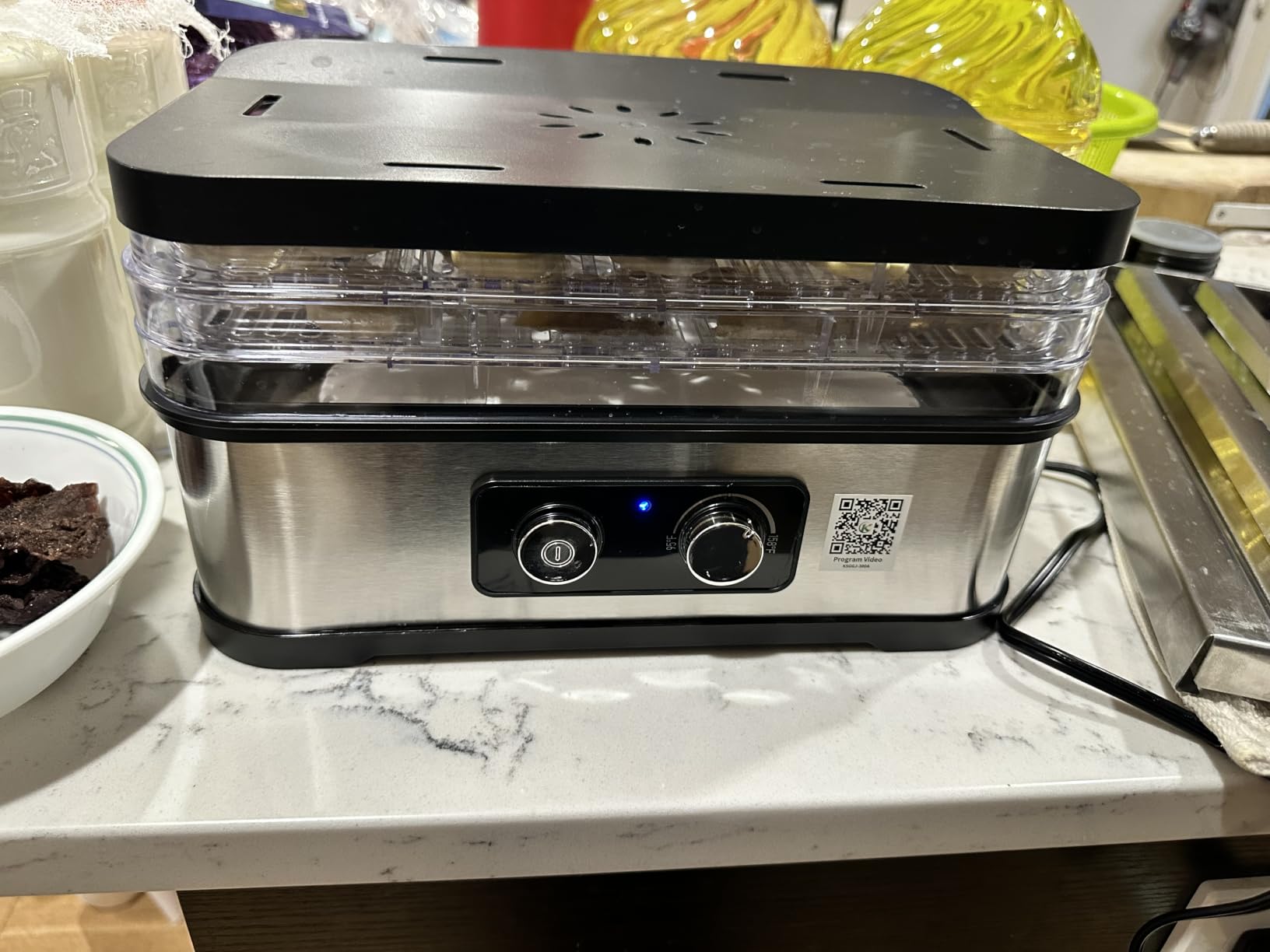
Owners point to the space-saving design, transparent trays, and easy cleanup as the reasons they keep it. For someone drying a few bunches of herbs a month in a dorm room or an RV, those are exactly the right priorities.
The tray height is adjustable, so you can bring trays closer together for a small batch and save both space and energy on a short run.
Who this dehydrator suits
This is for apartments, dorms, travel trailers, and anyone who wants to try herb drying without committing counter space to an appliance. It stores in a closet when you are not between harvests.
It also works as a flower and potpourri dryer alongside a larger machine, since lavender buds and small blossoms need the gentle end of the range and take up very little room.
Where it falls short
The 250W output runs on the slow side. A small batch of mint finishes in a reasonable time, but a full tray of dense herbs can take a long stretch, and the knob gives you no on-screen confirmation of what you set.
There is also no mesh liner in the box, so tiny leaves will need one bought separately. If you have more than a windowsill herb habit, the total capacity here will feel small by mid-harvest.
9. OLIXIS 8-Tray Stainless Steel Dehydrator: Best Metal Build for Herbs and Jerky
OLIXIS Food Dehydrator Machine, 500W Jerky Dehydrators with 8 Stainless Steel Large Trays, 185°F Temperature Control & 24H Timer Food Dryer for Fruit Meat Herb Dog Treats, Silver
85-185F adjustable
8 stainless trays, 8.2 sq ft
Horizontal airflow
Under 45 dB, interior light
Pros
- Wide 85-185F range covers herbs and jerky on one machine
- 8.2 sq ft of stainless steel trays hold 3.3 lb each
- Quietest running at under 45 dB
- Horizontal airflow with a dedicated fan for even heat
- Interior light makes checking a herb batch easy
- 48-hour timer in 30-minute steps plus overheat protection
Cons
- Only 119 reviews
- so limited long-term data
- No fine-mesh herb screen listed among the accessories
- 16.7 by 13.5 by 13.5 inch body is not compact
The OLIXIS is the one to consider if you want one machine to cover both ends of the drying spectrum. At 85F you can dry herbs and delicate flowers slowly, and at 185F it handles meat without a second appliance. Few units in this roundup span that full range.
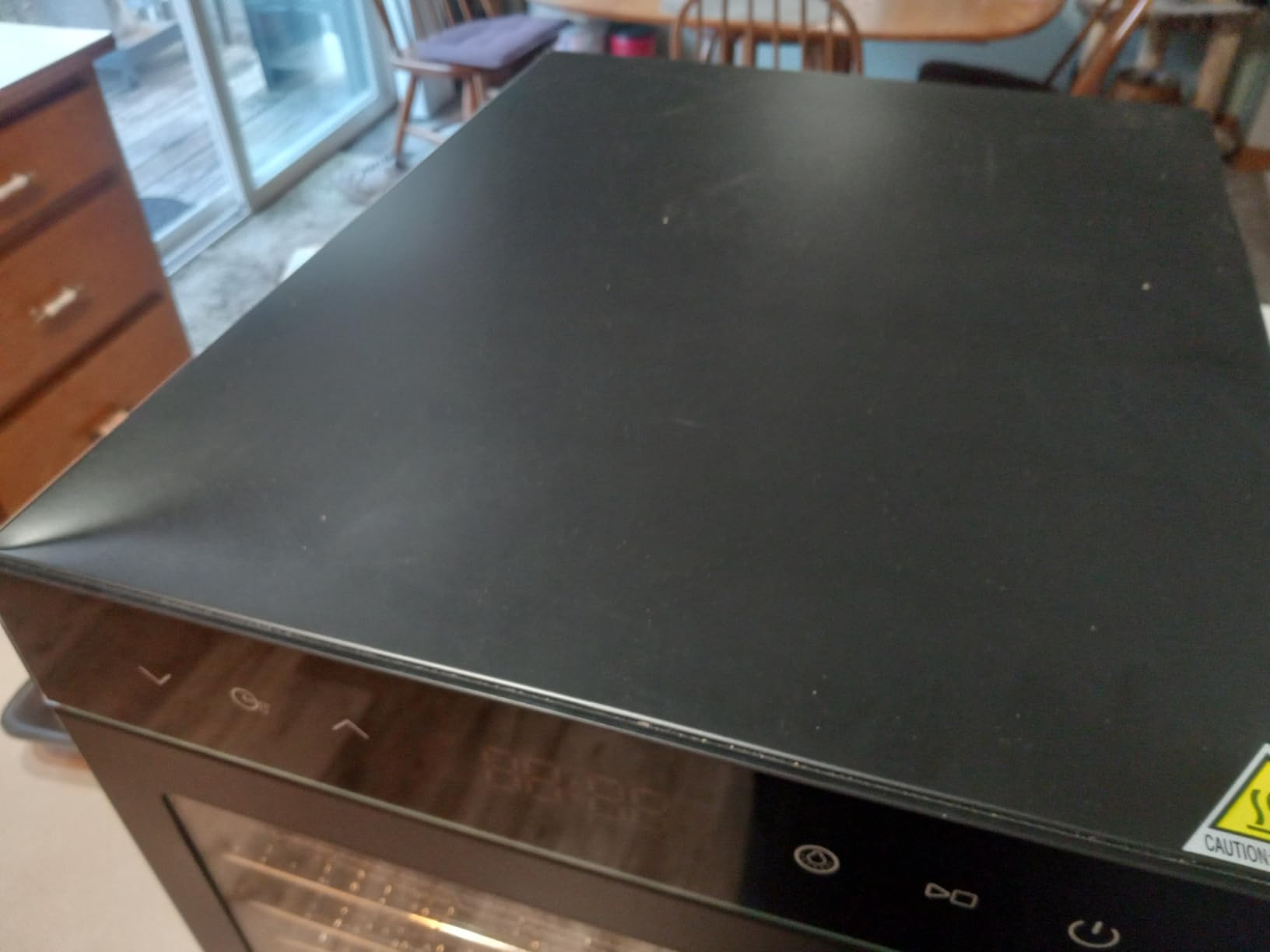
The eight stainless steel trays measure 11.7 by 12.6 inches each, giving 8.2 sq ft of drying space and 3.3 lb per tray. Stainless holds up better than plastic against the aromatic oils in rosemary, sage, and lavender, which is a real advantage for anyone who dries herbs year after year.
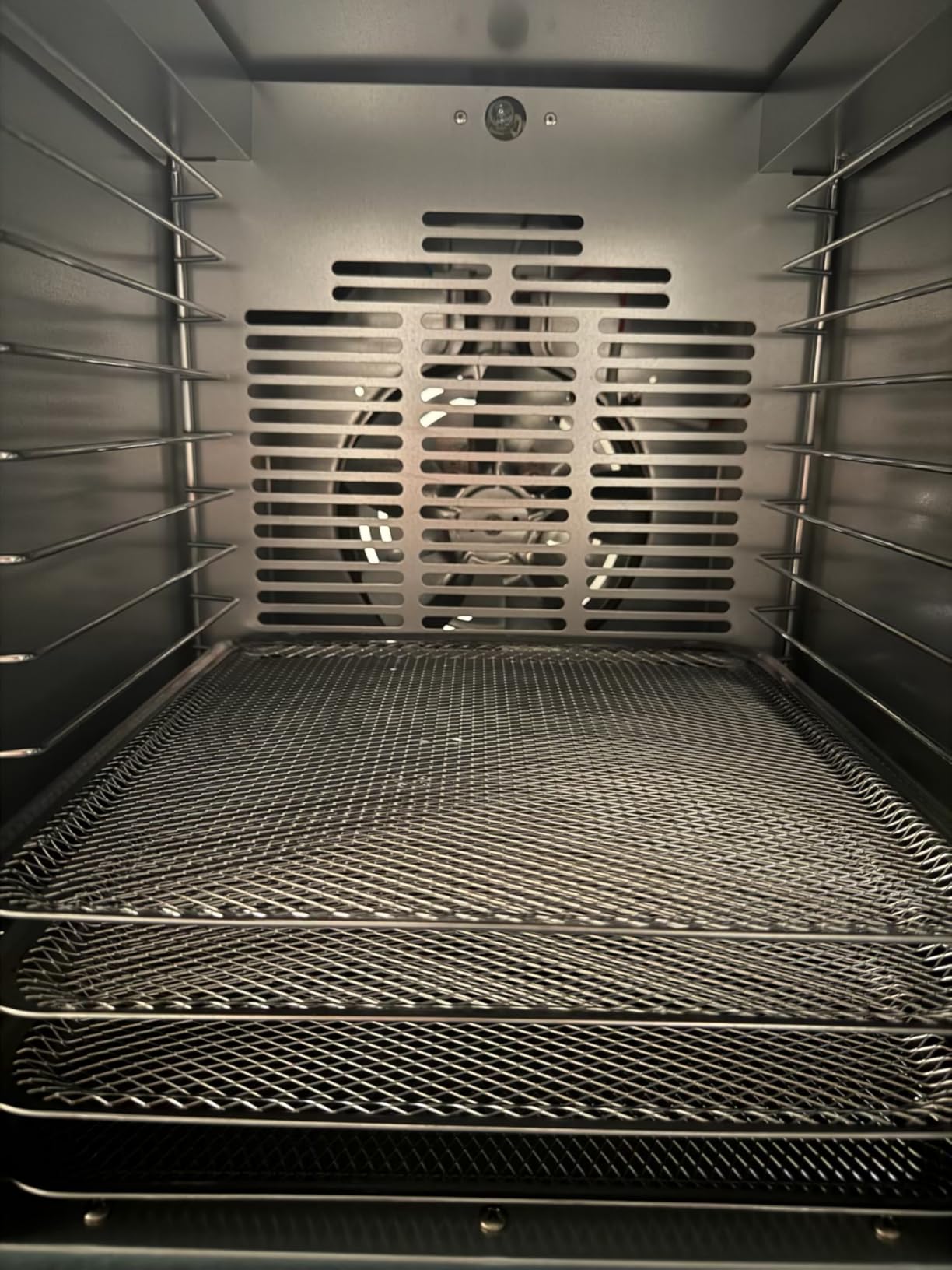
Horizontal airflow with a dedicated drying fan distributes heat evenly, and the interior light is a small touch that matters when you are checking whether sage leaves have gone brittle without opening the door and losing heat. Noise under 45 dB is the lowest figure published for any unit in this group.
Overheat protection and a 48-hour timer in 30-minute increments make unattended long runs practical. Reviewers highlight the tray area, the range, and the light as the standouts.
Who this dehydrator suits
Pick this one if you dry herbs and also want a cabinet that can handle vegetables, meat, or fruit leather without dropping below its herb settings. The 85 to 185F span means one machine covers both jobs.
It also suits anyone tired of plastic-tray odor retention. Stainless steel trays are the choice for strong-smelling herbs like rosemary and mint, and dishwasher-safe metal trays clean faster than plastic after a resinous batch.
Where it falls short
No fine-mesh herb screen is listed among the accessories, and that is the one gap for a machine sold on herb drying. Buy a liner separately before loading oregano or thyme.
With 119 reviews there is limited long-term reliability history, and the cabinet is close to the same size as the full-size Cosori. The dishwasher-safe tray claim is helpful, but the body itself still needs a wipe-down.
10. PSIIDAN FD-1033 8-Tray Dehydrator: Best Included Accessory Set
Food Dehydrator Machine, Powerful Food Dryer with 8 Stainless Steel Trays, Adjustable Temperature up to 167°F & 48-Hour Timer for Jerky, Fruits, Herbs – Includes Mesh Tray, Drip Tray & Recipe Guide
8 stainless trays plus mesh tray
Up to 167F, 48-hour timer
650W motor
Compact 13 inch footprint
Pros
- Mesh tray and drip tray both included in the box
- 4.8 average rating with a smaller review base
- 650W motor dries large herb batches quickly
- Dual-layer insulation reduces heat on the cabinet exterior
- Compact 13 inch footprint for eight trays
- Viewing light with auto shut-off and one-touch controls
Cons
- Only 115 reviews
- so a shorter track record
- Runs warm to the touch despite the insulation
- Lowest temperature setting not stated as low as 85F
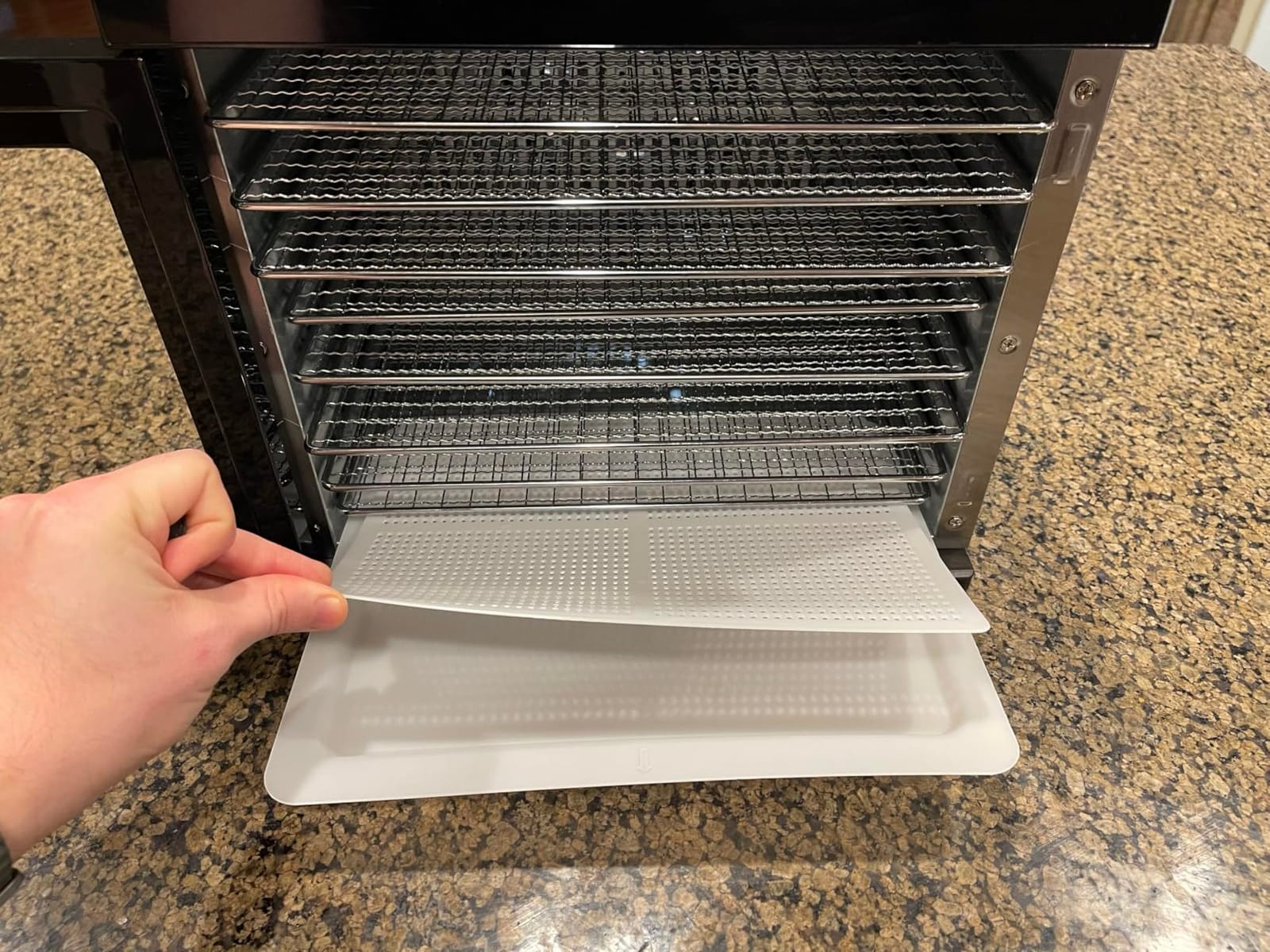
The PSIIDAN arrives with the accessories most competitors sell separately: a mesh tray for small items and a drip tray for juicy fruit. For herb work the mesh tray is the one that matters, and having it in the box removes the usual first-batch mistake of losing oregano leaves through a solid tray.
The 650W motor and eight stainless steel trays make it a fast dryer for a full herb load, and the footprint stays around 13 by 13.3 by 12 inches, which is compact for eight trays. Temperature adjusts up to 167F with a 48-hour timer, plus a viewing light and auto shut-off.
Owner reviews call it fast, quiet, evenly drying, and well suited to herbs, with the drip tray making cleanup easy. Dual-layer insulation is designed to keep the exterior cooler during long cycles, which matters if the unit sits near a wall in a warm kitchen.
The 4.8 rating here is the highest in this group, but the review base is small. Treat that as promising rather than proven, and factor in that the stated temperature range tops out at 167F rather than naming a low floor as low as 85F.
Who this dehydrator suits
This is a good fit if you want mesh and drip trays included up front and plan to move between herb work and fruit batches. The mesh tray and drip tray cover the two jobs most accessories get bought for separately.
It also suits a small kitchen that still wants eight trays of capacity. At roughly 13 inches square it fits on a counter that would not take a full-size square cabinet, and the stainless trays handle aromatic herbs better than plastic.
Where it falls short
The stated minimum temperature is not specified as low as the 85F floor on the Excalibur or OLIXIS. Confirm the low setting before you buy if your herb work is exclusively delicate varieties that need the gentlest start.
Some buyers report the unit running warm to the touch despite the insulation claim, and with 115 reviews there is simply less history to lean on. For a machine you plan to run every week for years, a longer track record is worth something.
How to Choose a Food Dehydrator for Herbs
The wrong feature set ruins herbs faster than a mediocre machine does. Heat too high and the leaves cook; too much airflow and delicate petals blow off the tray; too little and the center of a tray dries while the edges stay damp and can mold.
Temperature floor matters more than maximum temperature
Most herbs dry well between 95F and 115F. Basil, mint, and tarragon want the bottom of that band. Rosemary, sage, and lavender tolerate the top of it because their cell walls are thicker and they carry less water.
A unit that bottoms out at 100F can still work, and a unit that reaches 165F can still cook your herbs if you leave it there. The number that matters is the lowest setting available, then whether you can hold it. A digital thermostat with one-degree steps is worth paying for over a fixed-temperature powerhead.
Horizontal airflow saves you the 2am tray swap
In a horizontal design, the fan sits at the back or side and air travels across every tray at the same time. In a vertical design, air rises through a stack of trays, so the bottom shelf runs hotter and the top shelf runs cooler. Owners across the dehydrating forums we read agree on this point: horizontal airflow means no rotation.
That matters more for herbs than for jerky. A tray of mint at the bottom of a vertical stack can dry out and brown while the top tray is still limp, and nobody is awake to notice.
Fine mesh screens are not optional for small leaves
Oregano, thyme, marjoram, and dried chive are small enough to fall through the gaps in a standard tray or a coarse screen. This is the number one way people lose part of a batch. Look for a machine that ships with a fine herb mesh screen, and buy a second one so you can run two full trays at once.
A solid stainless tray is the right surface for thicker items like fruit leather sheets or vegetable chips. For leafy herbs, mesh wins because air passes through it from both sides.
Tray material decides how the machine smells years from now
Stainless steel trays cost more up front and last longer, especially with resinous herbs. Rosemary, sage, and lavender leave aromatic oils behind, and owners of plastic-tray units report permanently retained herb odor. Plastic and BPA-free plastic trays are fine and lighter, and dishwasher-safe trays of either material clean up faster.
Capacity and footprint should match your real harvest
Round four-tray units handle a few bunches at a time. A serious garden harvest means six to eight trays, and a square tray shape wastes less area than a round one of the same diameter. Measure your counter first, including the cabinet shelf you will store it on, because these machines are not light. Our picks for jerky-style high-heat work are in the jerky dehydrator guide.
Noise and timer decide whether you actually run overnight
A brushless motor in the 45 to 48 dB range can run in a small apartment without becoming a problem. A louder fan means you either accept it or move the unit, and many people end up stopping the batch early. Pair that with a 24 to 72 hour timer and auto shut-off so long runs can finish without you, then plan how you will store the jars. Our food storage container picks cover airtight storage for the finished herbs.
Herb Drying Temperatures, Times, and Technique
Even a perfect dehydrator produces poor herbs if the prep is rushed. Six steps decide whether a batch comes out bright, brittle, and fragrant or dull and hay-like.
Six steps from garden to jar
- Dry the leaves on paper towels first. Surface moisture doubles the drying time and can trap steam under dense piles. Lay washed herbs on towels for 20 minutes before you load any tray.
- Strip the leaves from the stems. Thin-stemmed herbs like thyme and oregano separate easily and dry faster alone. Woody rosemary and sage can keep a short stub of stem, which holds the shape of the sprig.
- Skip the washing for most herbs. If you must wash, dry the leaves completely afterward. Residual water is the main cause of mold in a finished jar.
- Load one layer, no piling. Crowded trays dry the center last. Every leaf should touch moving air, and you should be able to see the mesh through the herbs.
- Set 95F for leafy herbs, 100 to 115F for woody ones. Resist the urge to raise it. Heat above 115F cooks rather than dries and drives off the oils you wanted.
- Test doneness by crumble, not by clock. A leaf is done when it is crisp, snaps off the stem, and crumbles between your fingers. If it bends, give it another 30 minutes.
Per-herb temperature and time chart
Times assume a full, single layer at the stated temperature with the door closed. Check early and often at the tail end, since herbs finish faster than the timer suggests once the surface moisture is gone.
- Basil: 95 to 100F, 3 to 4 hours. Very tender, so keep it at the cool end and pull it early.
- Mint: 95F, 3 to 4 hours. Small leaves, so use the fine mesh screen.
- Thyme: 95 to 100F, 3 to 5 hours. Tiny leaves fall through coarse mesh.
- Oregano and marjoram: 95 to 100F, 3 to 5 hours. The hardest herb to keep on a tray, so double up on mesh.
- Chives: 95F, 2 to 3 hours. Cut into short lengths and keep the layer thin.
- Sage: 95 to 115F, 2 to 3 hours. Thin leaves dry faster than the woody stems.
- Rosemary: 100 to 115F, 3 to 4 hours. Sprigs can hang on the stem or be stripped first.
- Lavender buds: 95 to 100F, about 2 hours. Pull the moment the buds are dry, since they go brown fast.
- Parsley and cilantro: 95 to 100F, 2 to 3 hours. Leaf only, with stems removed.
Can you dry more than one herb at once?
Yes, and a horizontal-airflow cabinet is the safest place to do it. Keep the strong scents separated from delicate leaves, and never mix mint or rosemary with basil or lavender on the same tray. Put each variety in a single layer on its own tray, and place them on different levels so odor cannot transfer vertically.
Nobody is fully settled on flavor transfer in the forum threads we read, and the honest answer is that it varies by cabinet. The rule of thumb is to pair herbs with similar aroma and treat anything strongly scented as its own batch.
Why herbs lose their color, and how to store them
Color loss comes from three things: running the unit too hot, overloading trays so air cannot move, and leaving herbs in after the doneness test passes. Under-drying is the sneakiest cause, because pale stems that should be olive look fine until they turn to dust in the jar.
Store finished herbs in airtight containers in a dark, cool cupboard away from the stove. Most culinary herbs keep their potency for roughly six months to a year at room temperature in the dark, and longer if you freeze them. We covered container choices in our storage container roundup. If you plan to turn your dried basil and oregano into blends and sauces, a capable machine also saves a step, and our food processor picks cover that side of the job.
Frequently Asked Questions
Can I use a food dehydrator for herbs?
Yes, and it is one of the best uses for the machine. Set the temperature to 95 to 115F, spread leaves in a single uncrowded layer on a fine mesh screen, and check every 30 minutes near the end. Herbs are done when leaves are crisp and crumble off the stem. Higher settings cook herbs, browning them and driving off the aromatic oils.
What is the ideal temperature for dehydrating herbs?
Most culinary herbs dry best between 95F and 115F. Tender herbs such as basil, mint, and chives want the cool end of that band, while woody herbs like rosemary and sage tolerate 110 to 115F. Above 115F, herbs tend to cook rather than dry, turning brown and losing aroma. Choose a dehydrator with an adjustable thermostat that reaches 95F or lower.
How long does a dehydrator take for herbs?
Most herbs finish in 2 to 5 hours. Basil and mint take roughly 3 to 4 hours at 95F, thyme and oregano 3 to 5 hours, sage 2 to 3 hours, and lavender buds about 2 hours. These times assume a single uncrowded layer. Judge doneness by testing a leaf rather than trusting the timer, since wattage and airflow change the real finish time.
Can I put different herbs in the dehydrator at the same time?
You can, and a horizontal airflow cabinet handles mixed loads best. Keep strongly scented herbs such as mint and rosemary on their own tray, away from delicate leaves like basil and lavender. Spread each variety in a single layer and separate them vertically so odor cannot travel up through the stack. Pairing herbs with similar aroma reduces the risk of flavor transfer.
Do I need a mesh screen for drying herbs?
Yes, especially for small leaves. Oregano, thyme, marjoram, and chive can fall through the gaps in a solid or coarse tray and land on the heating element. A fine herb mesh screen lets air pass through from both sides and keeps tiny leaves in place. Check what ships in the box, because many machines include only one screen and it is often too coarse.
Final Verdict: Which Dehydrator Should You Buy for Herbs?
The best food dehydrators for herbs share three traits, and the pick that combines all three is the Cosori CP267-FD. Its 95F floor, rear-mounted fan, and 6.5 sq ft of stainless tray space handle everything from tender basil to woody rosemary without rotation or cooking.
Choose the Cosori CFD-N051-W if counter space or budget is the constraint, and the Nesco FD-80A if you want even drying from a top-mounted fan in a compact square stack. If your harvest is genuinely large, the Excalibur 8-Tray reaches 85F and holds 7.2 cu ft, while the Hamilton Beach 32100A is the easiest starter because the herb mesh screen is already in the box.
Whichever cabinet you choose, run it at 95 to 115F, load a single layer, and test doneness with your fingers rather than the timer. That habit matters more than any spec on the list, and it is why the same herbs come out bright and fragrant in one machine and dull in the next.