
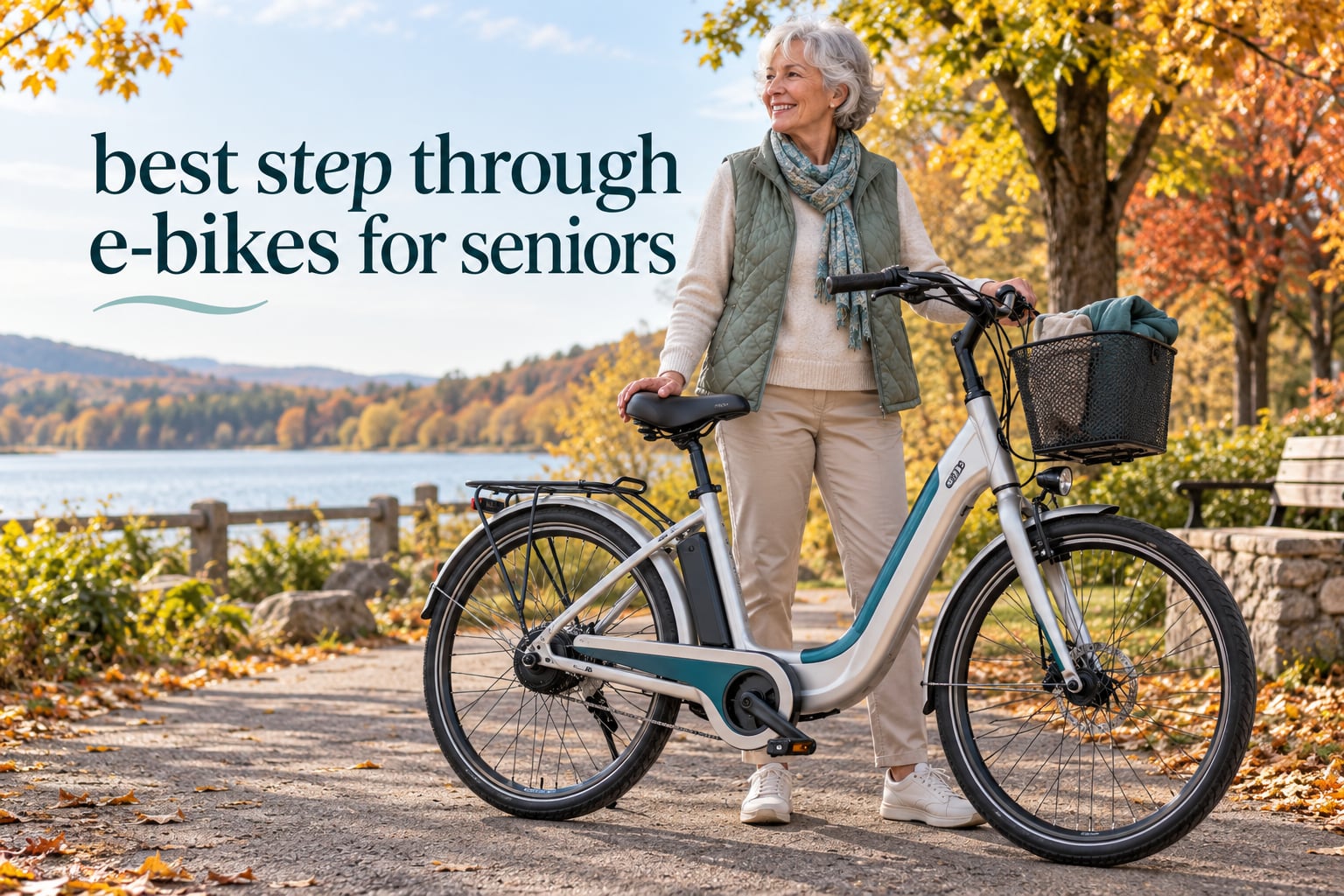
Mounting a bicycle gets harder as we age. Your hip might not clear a top tube, your knees might object to the swing, and your wrists may not want to bear your weight over a high handlebar. Then there is the balance question, and the honest fear of tipping sideways at a stop light. If you have stepped away from cycling for a decade, that combination quietly ends the idea before it starts.
A step-through electric bike removes the biggest obstacle in one stroke. There is no top tube to swing a leg over, so you simply walk the bike through the frame as if it were a shopping trolley, then settle onto the saddle. The motor handles hills and headwinds that once ended your rides, and the battery carries you home when your legs are tired. That combination of easy mounting and reliable assistance is why the best step through e-bikes for seniors have become one of the most searched-for categories in cycling.
We spent weeks reading owner reviews, comparing frame geometry, battery placements and motor specs across the current generation of step-through models. This guide covers seven bikes that fit the senior use case for different reasons: one for riders who want the lowest possible standover height, one with the largest battery, one that folds into a hallway closet, one that carries a second passenger, and one with a lighting package you can actually see at dusk. Every bike here has removable batteries, adjustable handlebars and a step-through frame, because those three things decide whether a bike gets used or abandoned after two trips.
Our goal is not to sell you the heaviest motor. It is to help you pick the bike you will still be riding comfortably in five years. We will explain what standover height means in plain numbers, why a torque sensor feels different from a cadence sensor, and where the charging port position decides whether you can own the bike at all in an apartment building.
Top 3 Step-Through E-Bikes for Seniors in 2026

Funhang EB-C2 26in Step-Through
- UL 2849 and UL 2271 certified
- 48V 374.4Wh removable battery
- 7-speed drivetrain with disc brakes
- Rear rack and full fenders included

Vivi MT26GUL 26in Low-Step
- Fits riders 4ft 8in to 6ft 2in
- Dual front and rear suspension
- UL 2849 certified low-step frame
- 55 lb aluminum frame

Qlife Cityone 2.0 Low-Step
- 48V 15Ah 720Wh removable battery
- Up to 80 miles claimed range
- 2.1 inch wide tires for stability
- Cargo rack and LED headlight
Best Step-Through E-Bikes for Seniors in 2026
| Product | Specifications | Action |
|---|---|---|
| Funhang EB-C2 26in Step-Through |
|
Check Latest Price |
| Vivi MT26GUL 26in Low-Step |
|
Check Latest Price |
| Qlife Cityone 2.0 Low-Step |
|
Check Latest Price |
 EUYBIKE 20in Fat Tire Cargo EUYBIKE 20in Fat Tire Cargo |
|
Check Latest Price |
 Jasion Roamer ST 26in Jasion Roamer ST 26in |
|
Check Latest Price |
 ESKUTE D200 Folding Fat Tire ESKUTE D200 Folding Fat Tire |
|
Check Latest Price |
 Loeook EB-C1 26in Step-Through Loeook EB-C1 26in Step-Through |
|
Check Latest Price |
1. Funhang EB-C2 26in Step-Through: The All-Rounder With The Most Owner Feedback
Funhang Electric Bike for Adults, 1000W Peak Ebike, 50Miles Step Thru Electric Bicycle, 26″ Commuter E Bikes with 48V Built-in Removable Battery, Adjustable Stem, 7-Speed, UL 2849 Certified
500W brushless motor with 1000W peak
48V 374.4Wh removable battery
26 inch wheels, fits 5ft 3in to 6ft 1in
62.83 lb frame with 300 lb capacity
Pros
- Largest owner review base in the group
- UL 2849 and UL 2271 certified
- Rear rack and full fenders included
- Adjustable stem and seat dial in without tools
- Real 20 to 50 mile range depending on mode
Cons
- Mechanical disc brakes can squeak
- No brake light or integrated taillight
- Pedal assist does not vary much between levels
The Funhang EB-C2 is the bike I keep coming back to for a simple reason: it has the deepest review history of anything in this guide, and the patterns in those reviews are consistent. Owners describe it as the bike they bought for their parent, the bike they keep in the car for errands, the bike that survives a bike path with cracks and gravel shoulders.
The spec sheet gives you the numbers that matter: 26 inch wheels on a step-through steel frame rated for riders between 5 feet 3 inches and 6 feet 1 inches, a 300 lb capacity that covers the bike plus an adult rider with luggage, and a total weight of 62.83 lb. That is a garage bike or a first-floor storage bike rather than a carry-it bike, and the difference is worth knowing before you order.
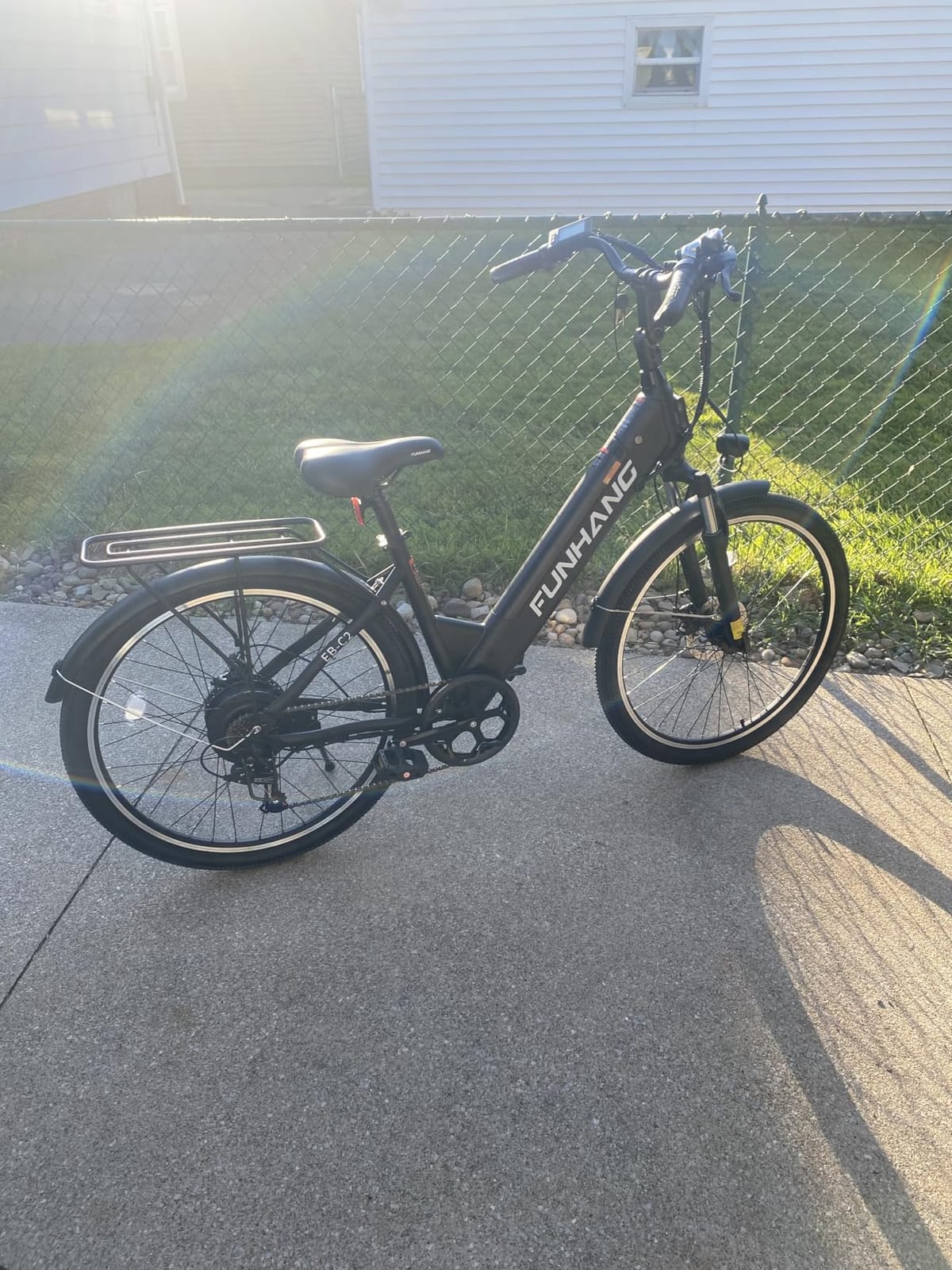
Five pedal assist levels are selected from the handlebar LCD display, alongside five working modes. The 48V 374.4Wh battery slides out of the frame for charging indoors, which matters enormously if you live above ground floor. Real-world range runs 20 to 30 miles on throttle and 40 to 50 miles on pedal assist, and multiple owners report finishing a week of commuting on one charge.
Owners rate assembly at roughly 45 to 60 minutes for someone comfortable with basic tools, which is a fair weekend morning job. It is a straightforward setup with the two items most people get wrong being the brake rotor seating and the front wheel seating.
The 7-speed Shimano derailleur gives you a genuine gear range for hills without relying entirely on the motor, and the 500W brushless motor with 1000W peak handles steeper grades than its nominal rating suggests. Dual disc brakes are mechanical rather than hydraulic, which is the main mechanical compromise on this bike.
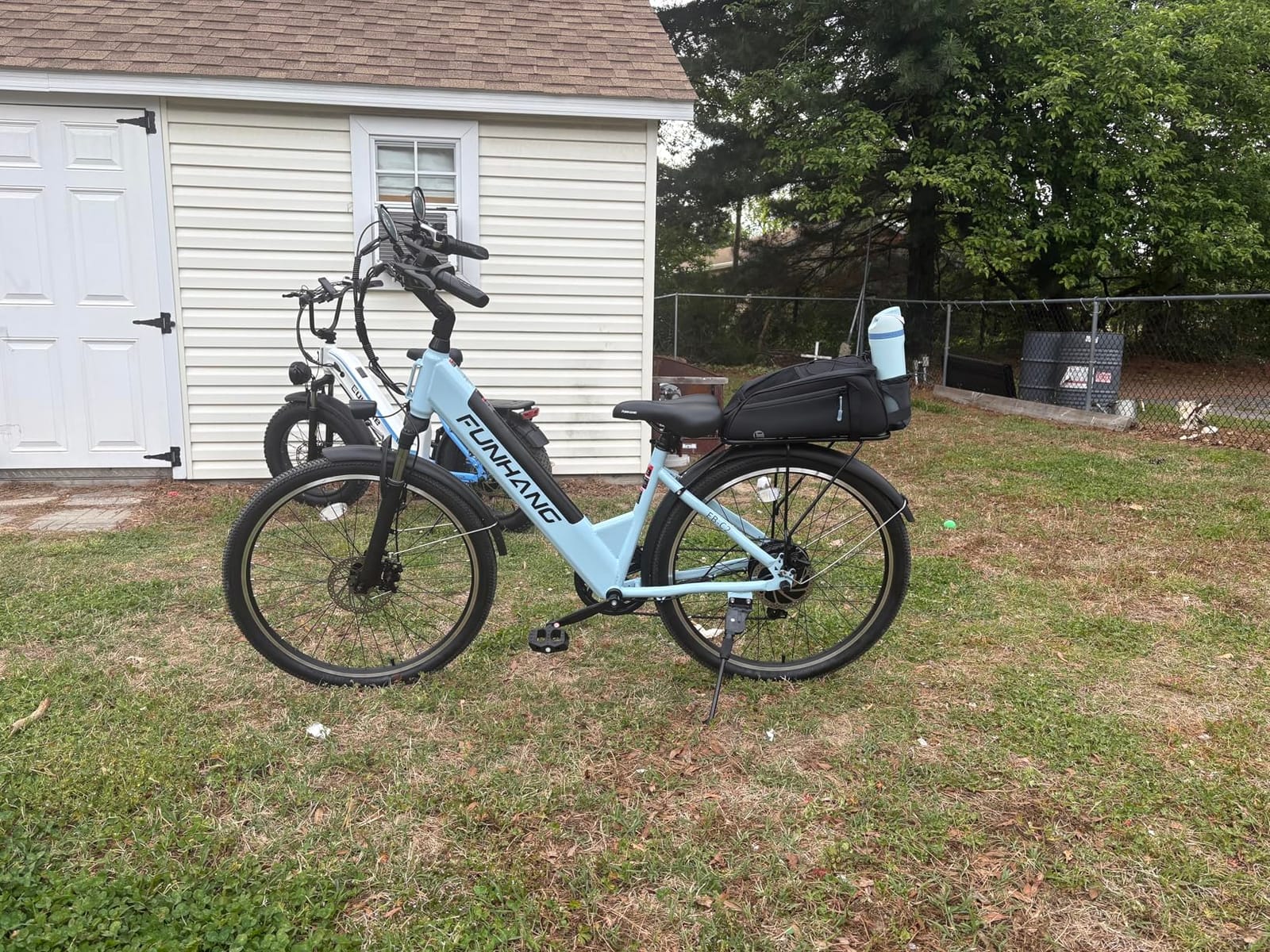
What you should know before you buy it
Pedal assist on this bike does not vary its top speed by level the way some torque-sensed systems do. Owners describe all levels as delivering similar assisted speed, which means the practical difference between level one and level five is subtler than the manual implies. Riders with knee problems who wanted a soft, low-power start should be aware of this before buying.
The headlight is basic and mounted low, and several owners say it could be brighter and positioned higher. There is no taillight or brake light integrated into the system, so if you ride at dusk regularly, add a rear light. The electric horn is convenient but owners note it draws battery power when left on.
Who it suits and who it does not
This bike fits riders who want a complete, ready-to-ride package with rack and fenders, want UL certification on the battery and the whole bike, and mostly ride on paths, sidewalks and flat-to-moderate streets. It is also a strong choice for a couple who each need their own bike, since the two bikes can be ordered in different colours from the same model.
It suits riders less well if you have limited hand strength and want hydraulic braking, or if you plan long descents where brake heat becomes a factor. It is also not the bike for someone who needs to carry it up stairs regularly, at just over 62 lb that is an awkward object to lift.
2. Vivi MT26GUL 26in Low-Step: Best For Shorter Riders
Vivi MT26GUL Electric Bike 26″ Step Through Electric Bicycle
Low-step arc frame for 4ft 8in to 6ft 2in riders
Aluminum frame at 55 lb
500W motor with 48V 288Wh battery
Dual suspension and dual disc brakes
Pros
- Widest published fit range of any bike here
- Aluminum frame is lighter than steel rivals
- Dual front and rear suspension
- UL 2849 certified with 330 lb capacity
Cons
- Proprietary tire size is hard to replace locally
- Charger is not weatherproof
- Difficult to pedal without assist
Frame geometry is the single most important factor for an older rider, and this is where the Vivi MT26GUL separates itself. The published fit range runs from 48 inches to 74 inches, so a 4 foot 8 inch rider and a 6 foot 2 inch rider can each get proper leg length from the same frame. Very few bikes in this price tier publish a fit range that wide.
At 55 lb it is the lightest bike we cover, and the aluminum frame is the reason. That weight matters when you need to maneuver the bike through a doorway, turn it around in a narrow path or lift it onto a rack. Owners consistently rate the low-step arc as easy to mount, with both feet able to reach the ground at a stop.
The suspension is the surprise. Dual suspension means both a front fork and a rear shock, which smooths out broken pavement and gravel paths far better than a front-only fork. On rough neighborhood roads, that rear shock absorbs the small impacts that otherwise travel straight into the spine of a rider with arthritis. Owners point out that suspension seatposts make an even bigger difference, and this frame accepts one.
The 48V 288Wh battery is the smallest capacity here, and range reflects it: 25 to 31 miles using throttle, 44 to 50 miles on pedal assist. Five riding modes, cruise control and a headlight are included. Cruise control is genuinely useful for seniors because it lets you stop pedaling on a long flat stretch without losing speed.
Fit, sizing and mounting without struggle
If you are under 5 feet tall and have tried step-throughs before that felt too long, this is the bike to test first. The combination of a very low arc, wide handlebar adjustment and a seat that drops low gives more riders a true flat-foot start than any other option in this group. Riders with hip replacements report this as the decisive feature.
One practical warning: the tires use a proprietary size that is difficult to replace at an ordinary bike shop. Plan on ordering tires directly, and keep a spare tube and a portable pump in your basket.
Where the compromises show up
The 288Wh battery means this is the shortest-range bike in the group, so it suits riders who stay within a few miles of home rather than those who want a 40 mile excursion. Owners also note that pedaling without assist is harder than on a lighter conventional bike, which matters if your plan is to ride the bike with the motor switched off for exercise.
The charger is not weather resistant, so plan to charge indoors rather than on a covered patio. Everything else on this bike is straightforwardly good, and customer service responsiveness comes up often as a reason owners recommend the brand to friends.
3. Qlife Cityone 2.0 Low-Step: Best Value With The Longest Claimed Range
Qlife Cityone Plus Electric Bike for Adults-1200W Peak Motor
500W motor with 1200W peak
48V 15Ah 720Wh removable battery
26 inch wheels with 2.1 inch wide tires
Low-step frame with cargo rack
Pros
- Highest owner rating in this group
- 720Wh battery is the second largest here
- 2.1 inch tires add stability on rough paths
- Cargo rack and LED headlight included
- Ten color options
Cons
- Weight is not published by the manufacturer
- Front suspension only
- Limited detailed specifications in the listing
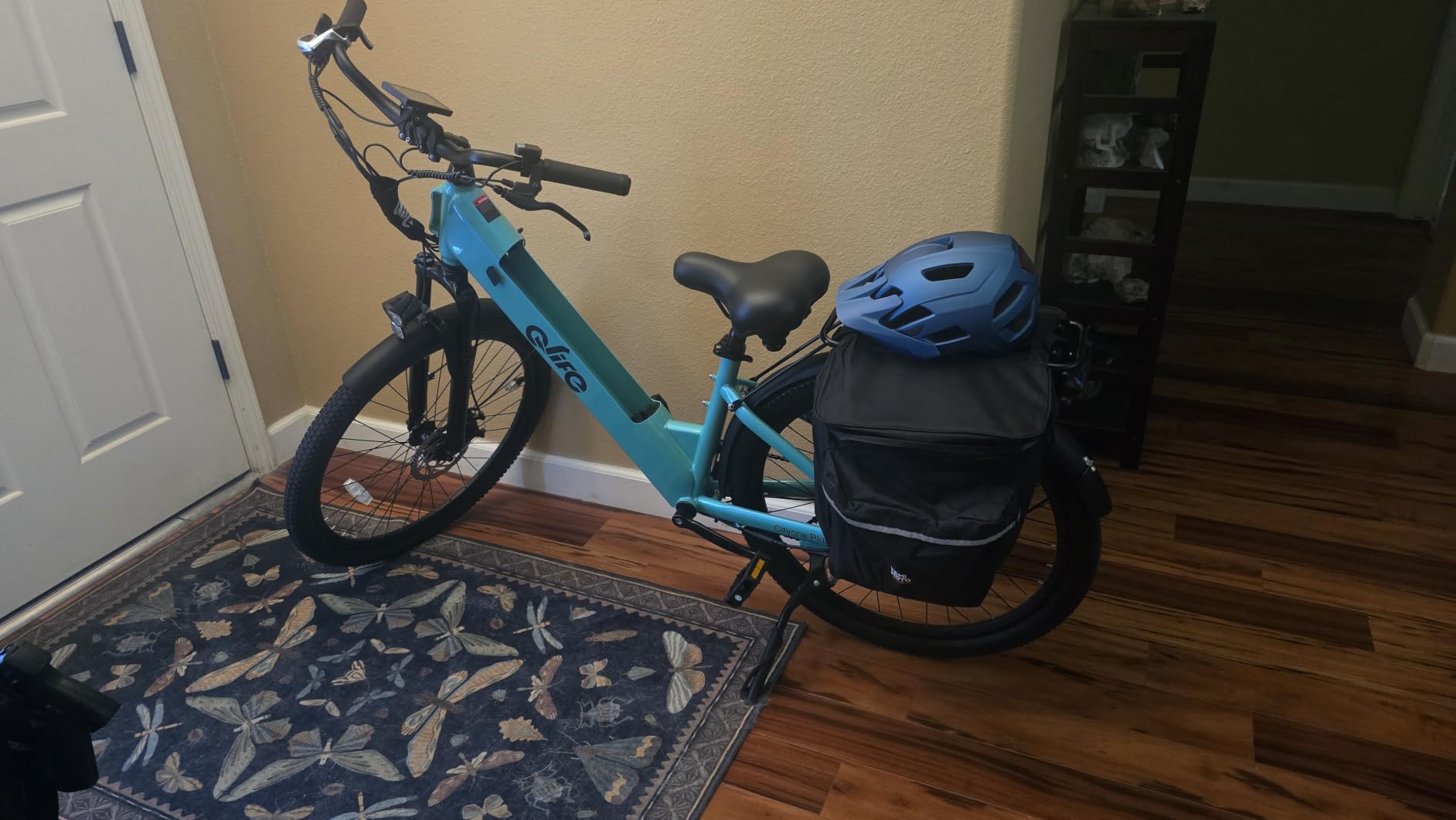
The Qlife Cityone 2.0 has the highest average owner rating of any bike in this guide, and with 82 percent of reviews at five stars the satisfaction level is unusual for this category. The reason is straightforward: a 720Wh removable battery in a low-step frame with wide tires, at a price point well below what most comparable battery capacity costs elsewhere.
Tires measuring 2.1 inches wide are the quiet advantage here. On a bike path with gravel scatter or on a neighborhood street with winter salt and cracks, wider tires roll smoother and deflect small impacts. That translates directly into less hand and wrist fatigue on longer rides, which is one of the main reasons riders buy an e-bike in the first place.
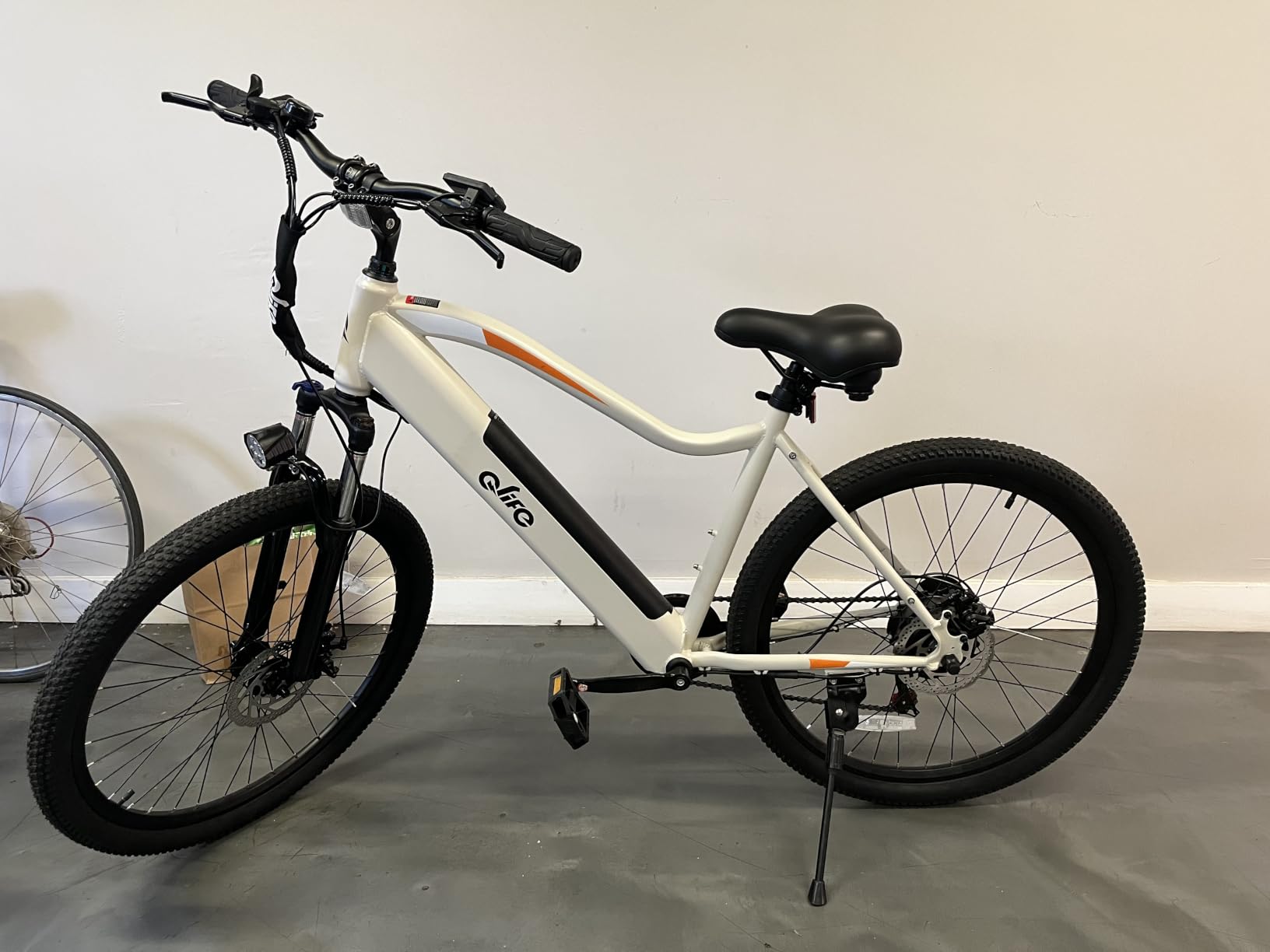
Front fork suspension handles the bigger impacts, and dual disc brakes provide the stopping power. The rear cargo rack is already fitted, so you are not drilling holes on day one. LED headlight, digital display and adjustable handlebars and seat round out a package that covers most needs without accessories.
Seven-speed pedal assist is described as the drivetrain, with the assist levels doing the heavy lifting on grades. IPX5 water resistance rating on the electronics means light rain and splashes are not a concern, which matters for year-round riders in climates with wet springs.
Battery range and what that means for real trips
The listing advertises up to 80 miles, one of the highest claims in this group, and owners report getting close to it at the lower assist levels on flat terrain. Treat that figure as a ceiling rather than a daily number. Add rider weight, headwind and elevation to the equation and a mixed-ride figure on assist level two sits noticeably lower than the headline.
The 15Ah battery takes longer to charge than the smaller packs on the Vivi and the Funhang, so budget overnight charging rather than a quick top-up between errands. In exchange you get a pack that will carry you to a weekly market and back without anxiety.
Who should look past this bike
The single most common question about this model is how much it weighs, and the manufacturer does not publish it. A 720Wh battery plus a steel frame and motor usually lands somewhere in the low sixties, which means it is more of a ride-in-place bike than a carry-it bike. If you need to load it into a car frequently, test that lift before ordering.
Riders who ride rough gravel trails regularly may want rear suspension as well. For paths, pavement and greenways, the front fork and wide tires handle it comfortably.
4. EUYBIKE 20in Fat Tire Cargo: Best For Two Riders
Folding Electric Bike for Adults with 1000W Peak Motor, 48V 20AH Battery up to 80 Miles, 20″ Fat Tire All Terrain Ebike, Front Suspension City Commuter Step-Thru E Bike Pink White, UL Certified
750W nominal motor with 1450W peak
48V 20Ah 960Wh removable battery
Fits two riders with a passenger seat
Folds to 40.2 by 17.7 by 31.5 inches
Pros
- Largest battery capacity in this group
- Two-seater capability with a passenger seat
- Dual 180mm disc brakes and front fork suspension
- Climbs steep grades with 80 miles claimed range
- IPX5 rated battery
Cons
- 65 lb frame needs effort to lift
- Folding hardware adds a layer of complexity
- Limited color options
This is the bike to look at if the word that matters most in your household is together. The EUYBIKE ships with a passenger seat, so a spouse, adult child or grandchild can ride along on a bench over the rear wheel. For seniors whose motivation is companionship rather than speed, that changes the entire character of the ride.
The 960Wh battery is the largest we cover, and the claimed 40 to 80 mile range reflects a bike that is not designed to be nursed between charges. Dual 180mm disc brakes are the largest rotors here, which matters on a bike carrying two riders and descending with a heavier total mass.
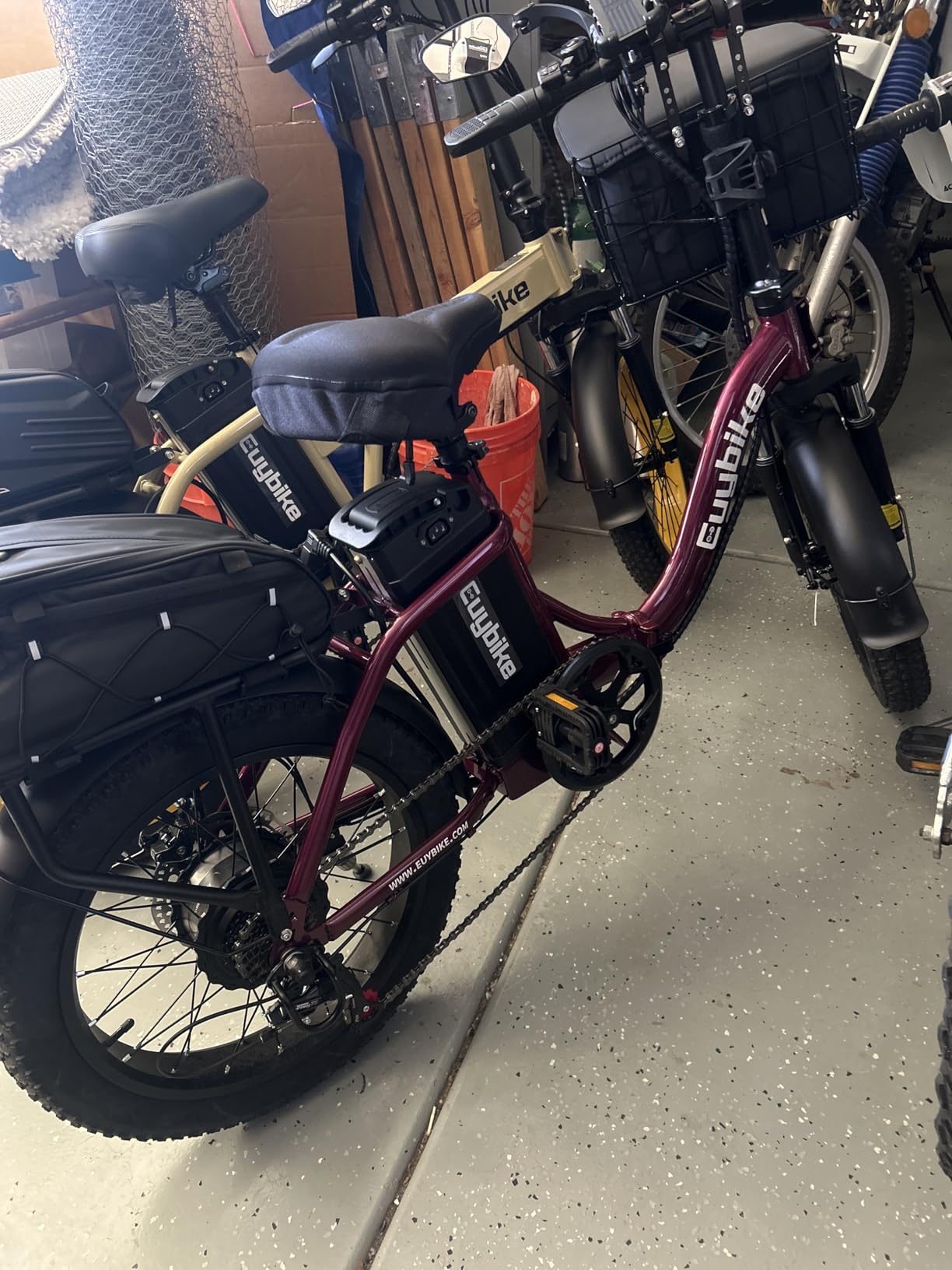
Twenty-inch wheels with three-inch fat tires run over curbs, gravel and grass without complaint, and owners report confident climbing ability on steep grades thanks to the 1450W peak motor. Three riding modes plus five assist levels give a usable spread of power for flat cruising and hill work alike.
At 65 lb the bike is heavy, but it folds down to 40.2 by 17.7 by 31.5 inches, so it fits in a vehicle or a spare room. The trade is real: you accept weight in exchange for capacity and a smaller footprint.
Passenger riding and payload realities
A passenger seat plus cargo means you should think about total load rather than individual comfort. Every bike here is rated for a specific maximum load, and the fastest way to void the warranty or damage the frame is to exceed it. When you ride two-up, the assist level needs to sit higher than it would solo, and both riders should expect a more deliberate steering response at low speed.
Riders who carry grandchildren should confirm the local path rules on child passengers before buying, since frame geometry and passenger footrests affect how a junior rider fits. The bench seat is comfortable for an adult, and the manufacturer includes a passenger seat with the bike rather than selling it as an accessory.
Where the folding cargo format strains
Folding mechanisms add joints, and joints need maintenance. Hinges and latches on any folding bike should be checked before every ride, which is a habit many riders never form. If you fold and unfold the bike daily, expect more frequent checks than on a conventional frame.
The fat tires also add rolling resistance on pavement, so real-world range on flat road sits below the headline figure when the second rider is aboard. This bike rewards riders who have a specific reason to carry a passenger or gear, and it is less compelling for a solo rider on a paved greenway who wants the lightest option.
5. Jasion Roamer ST 26in: Best For Night And Dusk Riding
Jasion Roamer ST eBikes for Adults, 26″ 1200W Electric Bikes for Adults
1200W peak motor with 60Nm torque
48V 11Ah 528Wh removable battery
Turn signals and brake light, 180 degree lighting
95 percent pre-assembled, UL 2849 certified
Pros
- Turn signals and brake light are rare at this tier
- Walk boost mode helps on steep paths
- Arrives 95 percent assembled
- UL 2849 certified with 300 lb payload
Cons
- Some riders report less range than the stated figure
- Turn signals are not linked to the display
- Bluetooth connectivity issues reported
Winter daylight is short, and many seniors stop riding in autumn because they no longer feel visible at dusk. The Jasion Roamer ST solves that with the most complete lighting package in this guide: headlight, turn signals, brake light and reflectors covering a 180 degree field.
Turn signals are the standout. They are not common on step-through e-bikes at this level, and on an older rider’s bike they communicate intention to drivers in a way that mirrors driving habits rather than cycling ones. That familiarity is worth more than it sounds.
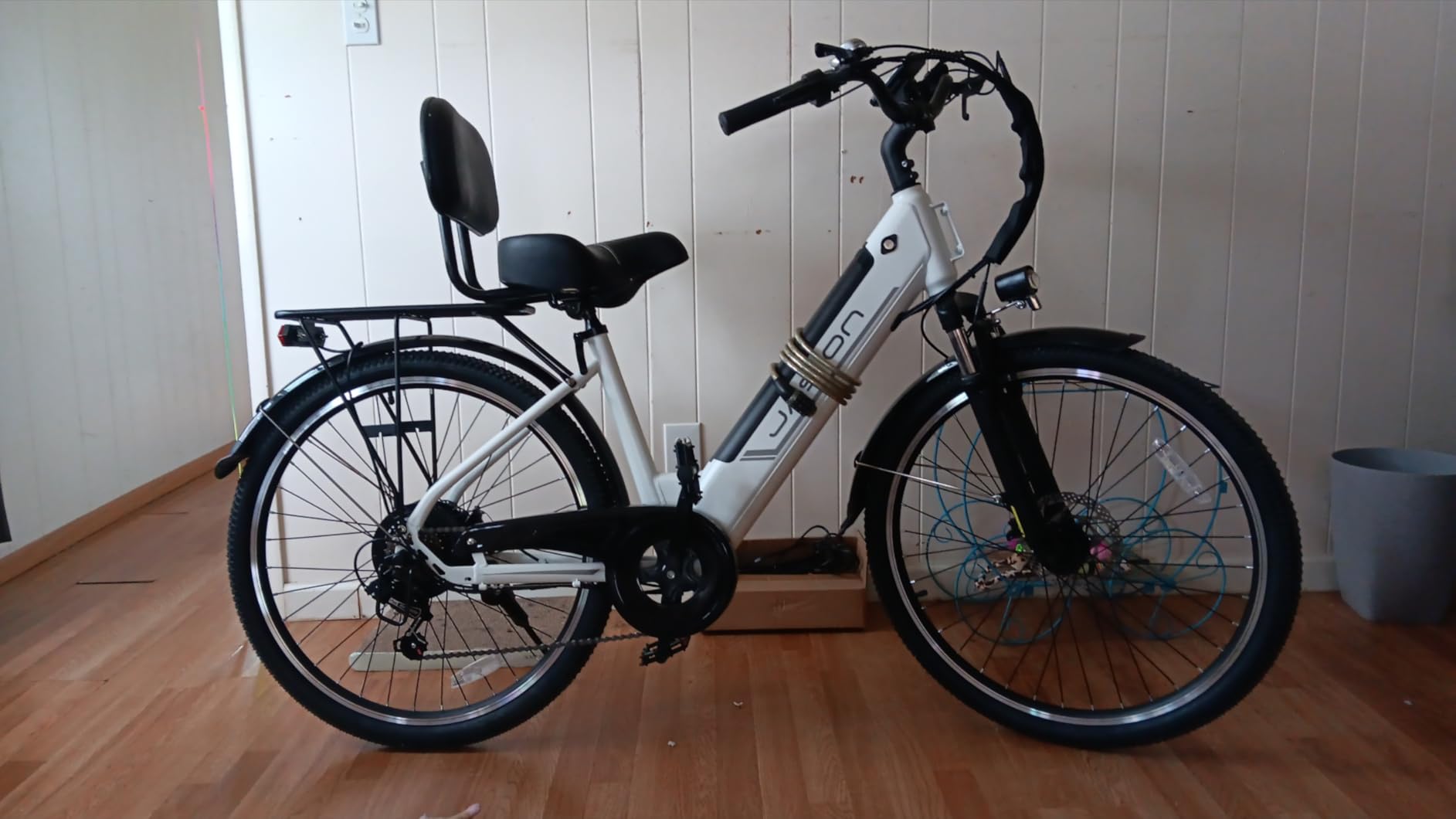
The 60Nm torque figure on the 1200W peak motor gives it real climbing ability, and a walk boost mode helps you push the bike up a steep path or move it through a doorway without straining. The 528Wh battery is mid-sized for this group, with up to 62 miles claimed in pedal assist mode and a 7-speed chain drivetrain for when you want to pedal under your own power.
Ninety-five percent pre-assembly means the setup job is measured in minutes rather than an afternoon, which is a meaningful advantage for anyone who does not want to face a box of hardware on a Saturday.
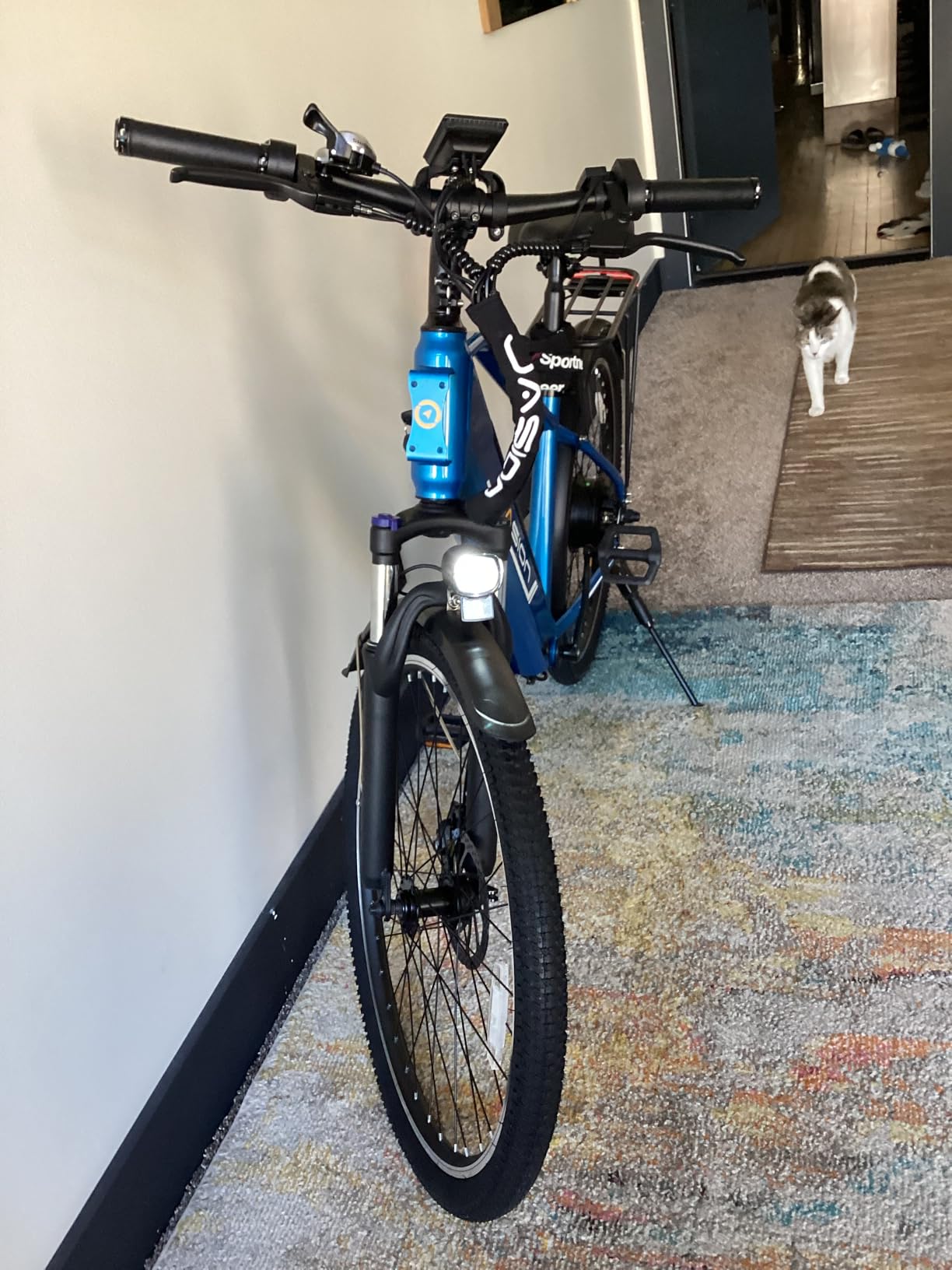
Real range versus stated range
This is the one bike in the group where we would push hardest on advertised figures. Some owners report achieving 18 to 20 miles per charge, well under the stated 62 miles. The gap likely comes from assist level, rider weight, terrain and speed, all of which affect every bike here, but the discrepancy is large enough that you should treat the number as a maximum under ideal conditions.
If your riding plans include a round trip of more than 15 miles, budget for a mid-ride charge or bring a second battery. That is the practical downside of a mid-sized pack on a bike built for speed, and it pairs awkwardly with the 28 mph top speed, which more than a few older riders have no need for.
Design details that help and hinder
The seat post measures 300mm, and taller riders report that it runs out of adjustment. Check your inseam against the maximum seat height before ordering, because a replacement dropper post changes the bike’s character. Turn signals work independently of the display, which means you cannot confirm they are active from the handlebar.
Bluetooth connectivity has produced reported problems, so if your plan involves a phone app for tracking or ride data, test that connection early. For a rider who simply wants to get out and ride, that limitation carries little weight.
6. ESKUTE D200 Folding Fat Tire: Best For Small Spaces
ESKUTE Electric Bike for Adults – 1200W Peak Motor, Folding 20×3 Fat Tire E‑Bike, 48V 13Ah Battery, Step‑Through Cargo Fold Ebike, NFC Unlock, 20+ MPH, 7‑Speed, Up to 55 Miles, Blue, Standard
1200W peak motor with intelligent pedal assist
48V 13Ah battery, up to 55 miles
20x3 fat tires on a folding frame
NFC unlock, front basket and rear rack
Pros
- Folding frame stores in a closet or small apartment
- 20x3 fat tires deliver stability and comfort
- Front basket and reinforced rear rack add real carrying utility
- NFC unlock avoids fumbling for a key
Cons
- Heavy for a folding bike
- Assembly can be challenging
- Quality control consistency varies
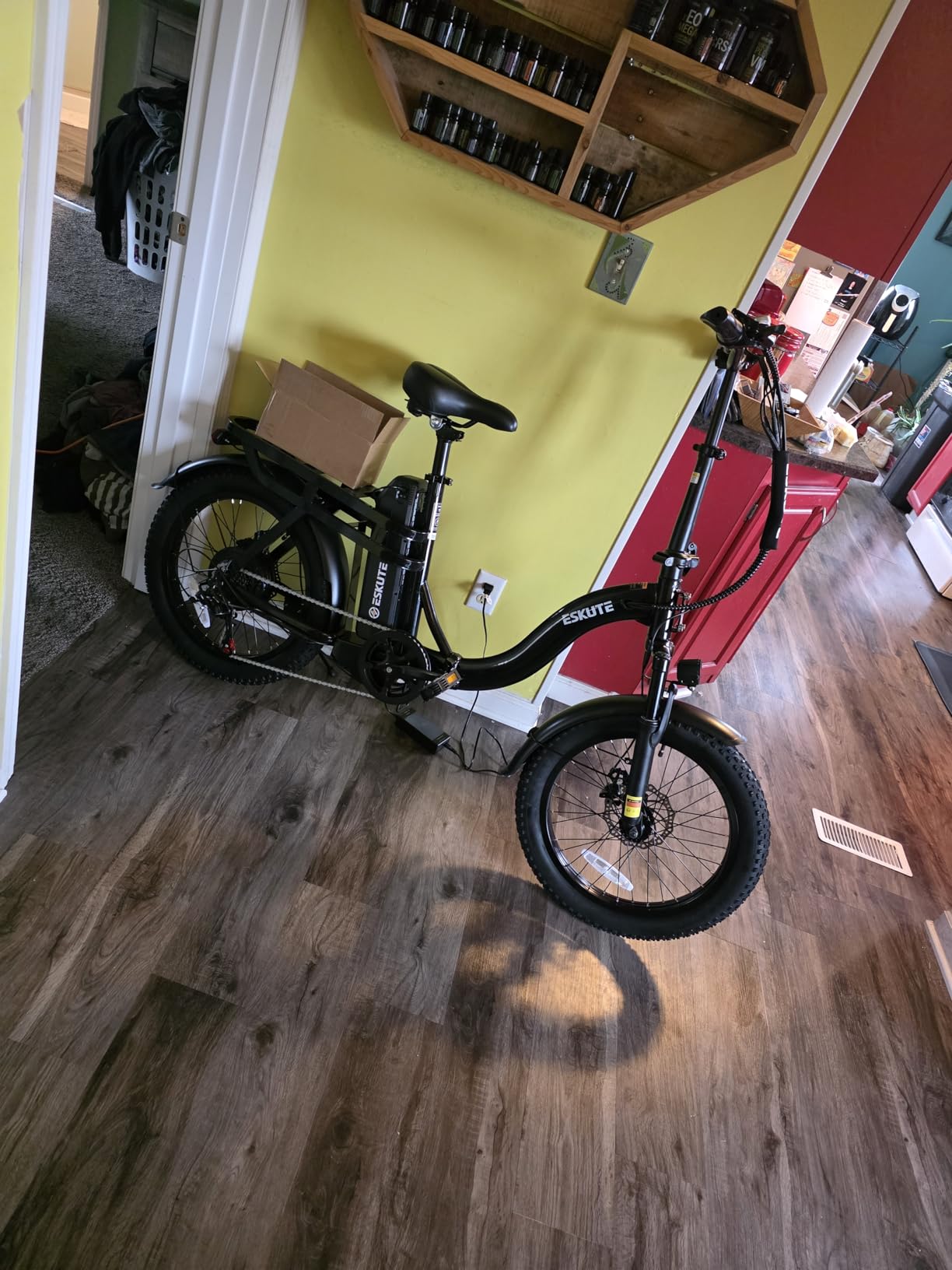
If you live in an apartment with no storage, no garage and no bicycle room, the ESKUTE D200 answers a problem that most bike guides ignore. It folds down to a compact package you can keep beside a desk, in a closet, or in the corner of a mobility scooter trunk, and it unfolds into a full step-through electric bike.
Twenty-inch three-inch fat tires are the other reason this bike appeals to older riders. The contact patch absorbs cracks and gravel in a way that narrow road tires cannot, and the resulting stability is the first thing riders notice on an unfamiliar path.
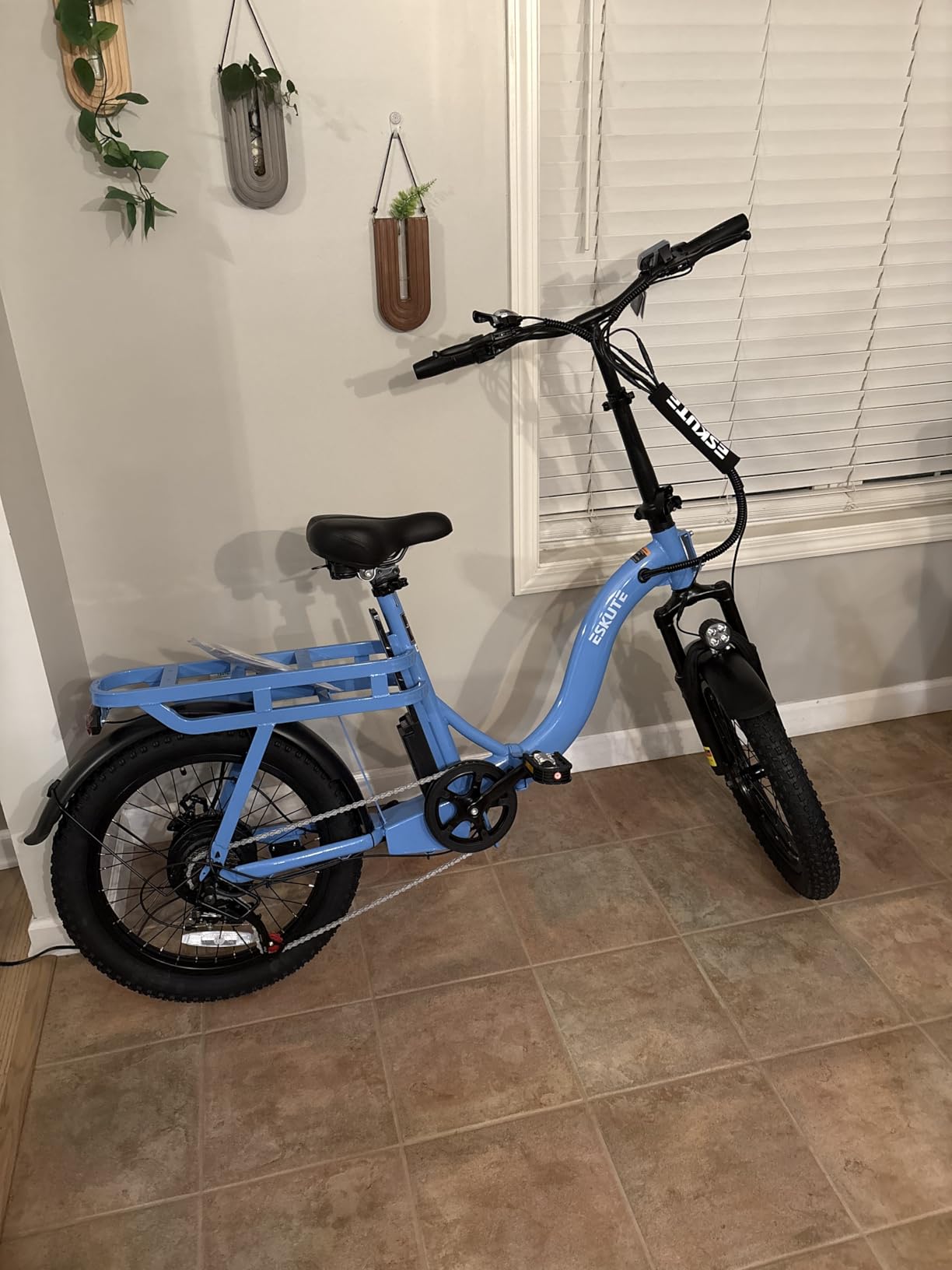
A 48V 13Ah battery with up to 55 miles of claimed range sits in the middle of this group by capacity, and the 1200W peak motor gives enough power for hills. Three assist levels keep the controls simple, which many riders prefer over five or more settings on a small LCD screen.
The front basket and reinforced rear rack are included from the factory, so grocery runs and library trips are possible from day one. NFC unlock replaces a traditional key and works well with arthritic hands, since a tap of a card is easier than turning a lock in a keyway.
Folding convenience versus folding weight
The honest drawback is weight. A 20-inch fat tire folding bike with a battery is heavy, and the manufacturer does not publish a figure. Anyone planning to carry this into a car trunk or up a single step should test it before committing, because the two halves of folding mean carrying at least once.
Assembly and folding both take practice the first few times. Riders who plan to fold daily should rehearse the sequence in the driveway before it matters. Quality control consistency is another reported theme, so inspect the frame welds, hinge hardware and brake cables as soon as you receive it.
Who this bike suits
Choose this one if your storage situation is the binding constraint on your decision. Apartment dwellers, snowbirds who travel with their bike, and riders who need to load a bike into a hatchback will find the fold worth the weight. It also suits riders on soft, sandy or gravel surfaces where fat tires earn their extra rolling resistance.
If you have secure ground-floor storage and mostly ride on pavement, a full-size 26-inch step-through will ride smoother and weigh less. The fold is insurance against your living situation, not a performance upgrade.
7. Loeook EB-C1 26in Step-Through: Budget Pick With Clever Modes
Loeook Electric Bike for Adults, Peak 1000W 50Miles City Cruiser Ebike, 26″ Step Thru Electric Bicycles with 48V Removable Battery, Adjustable Stem, Rear Rack, LCD Display, 7 Speed, UL2849 Certified
500W motor with 1000W peak and 55Nm torque
48V 374.4Wh removable battery
75 lb frame, fits 5ft 3in to 6ft 1in
Booster mode at 4.2 mph with cruise control
Pros
- Booster mode helps start on hills and walk beside the bike
- Cruise control relaxes long flat stretches
- Adjustable stem moves 30 degrees for a custom fit
- Rear rack and fenders included
- UL 2271 and UL 2849 certified
Cons
- Heaviest bike in this group at 75 lb
- Battery gauge is reportedly inaccurate
- Hard to pedal without assist
The Loeook EB-C1 is the entry point of this group, and the feature that separates it from cheaper budget bikes is the booster mode. At 4.2 mph it moves the bike forward without pedaling, which solves two senior problems at once: getting started on an incline, and walking a 75 lb bike up a ramp or through a gate.
Cruise control handles the opposite problem. Once you are rolling on a flat path you can stop pedaling and hold a steady speed with one thumb, which reduces wrist and knee effort on longer stretches. Five working modes and five assist levels give more adjustment than most bikes at this level.
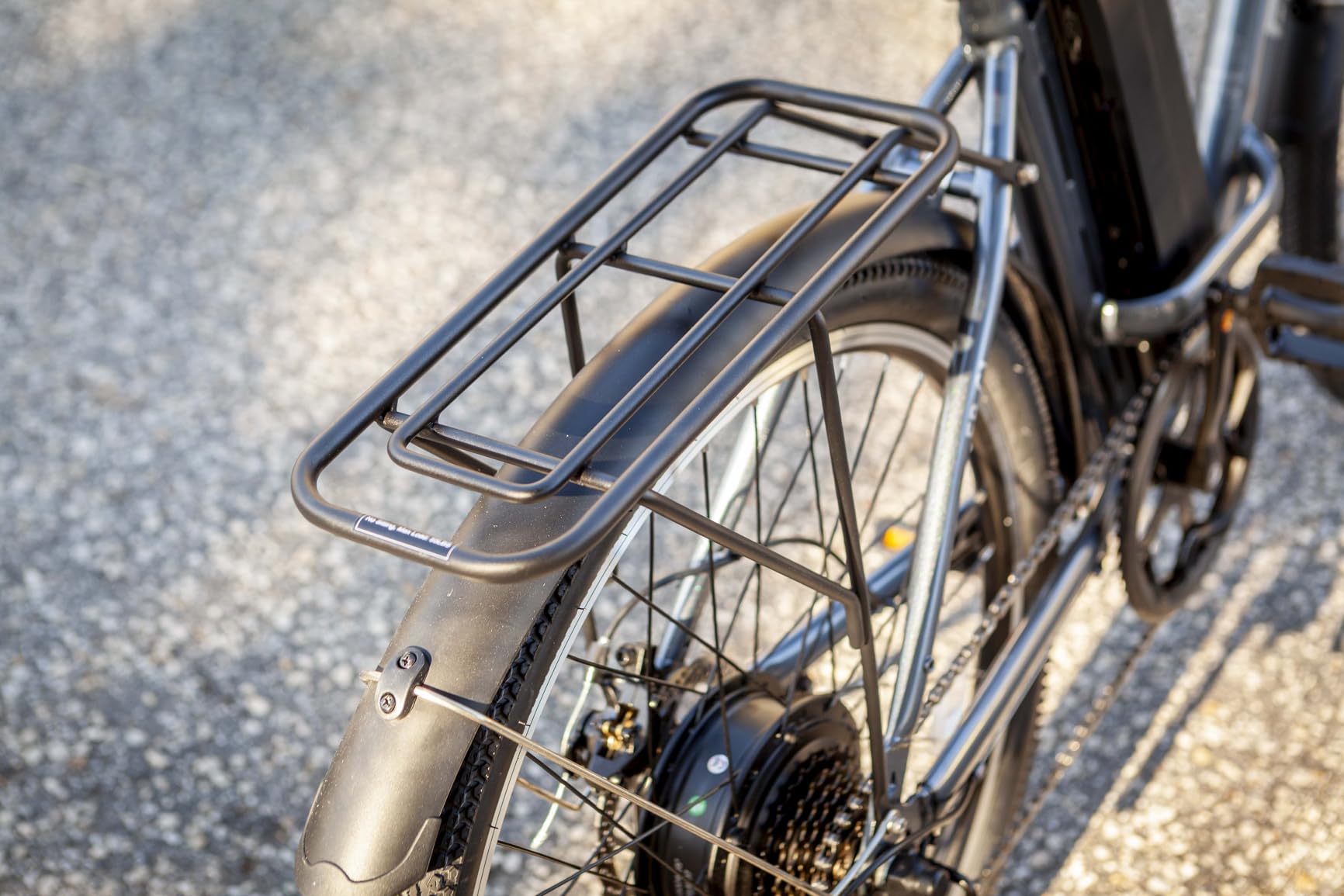
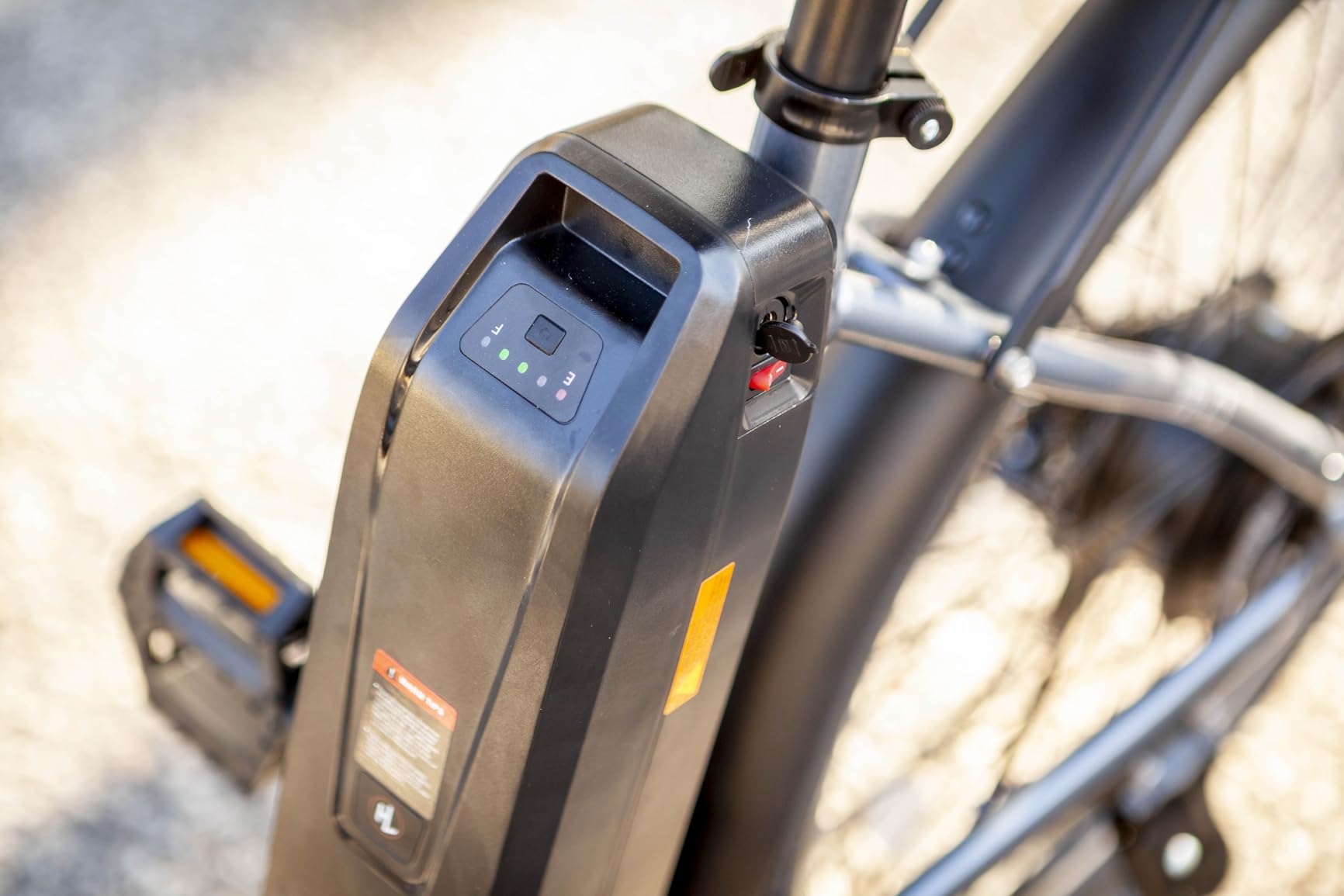
Rear rack, front and rear fenders, LED headlight, electric horn and reflectors are all fitted from the factory, so the bike is usable for commuting immediately. Assembly is reported at 20 to 25 minutes because the bike arrives 85 percent pre-assembled, and charging takes four to five hours.
UL 2271 certification for the battery and UL 2849 for the complete system are meaningful at this price. These standards cover fire safety and electrical safety, and their absence is a common gap in the cheapest listings you will see.
The weight problem is real
At 75 lb this is the heaviest bike we cover, and weight matters more as you age. A heavy step-through bike is harder to lift over a curb, harder to move on a path shoulder and much harder to bring up stairs. If you have no ground-level storage, choose the Vivi at 55 lb instead and accept a smaller battery.
Owners also report that the battery gauge is unreliable, dropping to empty earlier than indicated. Treat the reserve shown on the display as optimistic and plan your return trip with margin. Pedaling without assist is difficult, which means this bike is an electric bike in a stronger sense than some.
Best value for a fixed, paved routine
This bike makes the most sense for a rider with a predictable routine: a flat route, a home with ground-level storage, and a need for a rack and fenders without adding cost. The booster and cruise modes are thoughtful additions for older riders, and the certification provides a safety baseline that many cheaper bikes lack.
It is less convincing for anyone who wants long distances, hills, or a bike they can carry. If either of those describe you, step up one model in this guide rather than stretching this one.
How to Choose a Step-Through E-Bike for an Older Rider
Most buyers start with motor wattage and end up making the wrong decision. The features that determine whether you will still ride in two years are standover height, total weight, brake feel and where the battery charges. Spend your research time there.
Standover height is the number that matters most
Standover height is the clearance between the lowest point of the frame and the ground when you stand over the bike. For a rider with limited hip flexion, this is the measurement that determines whether mounting feels safe. The rule of thumb is two inches of clearance for a rider of average flexibility, and three to four inches if you are returning to cycling after many years.
Bike companies rarely publish standover height in inches, so many list a rider height range instead. Sit on a bike you already own and note the frame gap you are comfortable with, then have a shop compare candidates against it. The Vivi’s published fit range of 4 feet 8 inches to 6 feet 2 inches is the clearest example of doing this properly, and riders under 5 feet should prioritise low-step arc frames over wheelset size.
Torque sensor versus cadence sensor
A cadence sensor measures how fast you pedal and adds a set amount of power. It is simple, predictable and cheap, but the assistance does not respond to how hard you push. A torque sensor measures the force on the pedals and scales assistance to your effort, so the assistance fades in and out the way a person helping you would.
For riders with joint pain, the torque-sensed feel is usually preferable because the motor responds to effort rather than imposing a fixed output. Riders who want the simplest possible control and predictable assistance on every ride are well served by cadence sensing. Most bikes in this budget tier use cadence sensing, which is a fair trade at this level.
Battery size, charging location and cold weather
Battery capacity is measured in watt-hours, and the practical figure to compare is 400Wh for short local rides, 500 to 600Wh for daily errands plus a weekly longer trip, and 700Wh or more for riders who want range anxiety to disappear entirely.
Where the battery sits decides whether you can own the bike. A removable battery lets you carry the pack up stairs and charge it at a kitchen table, which is the only realistic option for apartment living and for anyone who cannot plug an extension lead into a corridor. Integrated batteries look cleaner but often mean charging the whole bike in place.
Cold weather reduces battery performance, and the reduction is temporary. Store the pack indoors over winter at around 40 to 60 percent charge, and top it up every few weeks. A battery kept at full charge in a cold garage for months will age faster than one kept at mid charge indoors.
Brakes, tires and stopping confidence
Hydraulic disc brakes require finger strength to build pressure but deliver consistent power with little hand effort. Mechanical disc brakes are easier to service and cheaper, and they tend to squeak under load until bedded in. Either is acceptable; what matters is that the levers are adjustable and reachable from a comfortable grip position.
Tire width affects comfort more than most riders expect. Anything from 2.1 inches upward absorbs road vibration that transmits straight to the spine and wrists on narrow tires. On a bike ridden several times a week for years, that difference compounds. Most bikes here run 1.95 inch tires as a baseline, and the Qlife and the fat tire models add meaningful width.
Weight, lifting and where you will store it
Be honest about whether you will ever lift this bike. A bike you cannot manage on stairs is a bike you will stop riding. Published weights here range from 55 lb on the Vivi to 75 lb on the Loeook, and that 20 lb spread decides whether the bike fits your garage, your closet or neither. Two of the bikes in this guide do not publish a weight at all, so ask the manufacturer before ordering.
Also check the height of the battery and whether you can reach the charge port without crouching or lifting. Every bike here has a removable battery, which is the single most commonly appreciated feature among owners who live in apartments or who cannot manage an extension lead along a corridor. Walk assist and walk boost modes, found on several models here, earn their keep when a heavy bike needs to be moved up a slope or through a gate.
Gearing and shifters that suit stiff hands
Every bike in this guide uses a 7-speed derailleur, which keeps gear changes to a single lever and keeps servicing inexpensive at an ordinary bike shop. The details that matter more for arthritic hands are the shifter type and the gear ratio spread.
Grip shifters require wrapping your fingers around a small lever under the handlebar. Trigger shifters use a two-finger squeeze. Riders with hand arthritis frequently find grip shifters easier, because the movement is shorter and does not require isolating the index finger. If hand strength is a real constraint, ask a shop to demonstrate both before you buy, since the packaging rarely lets you swap a shifter later without rewiring.
A wider gear range matters when you intend to ride hills under your own power. Motor power covers most grades, but a low starting gear keeps your knees turning rather than grinding when the road tilts up.
Warranty, service and app setup in one sitting
Direct-to-consumer e-bike brands handle repairs by mail rather than through a shop network, which is the most common complaint long-term owners raise. Before ordering, find out where the nearest authorised service point sits and how long a turnaround takes. A bike with a local dealer is easier to live with than a cheaper bike with none.
On the software side, keep expectations modest. Pairing a phone to the display, setting a passcode and enabling a tracking feature takes about ten minutes with a coffee, and that is usually the entire setup. Riders who prefer to avoid apps entirely lose very little: every bike here works fully without a phone connected, and the display shows speed, mode and remaining assist.
Maintenance basics anyone can handle
Keep the chain lubricated and the tires inflated, and check the brake pads and rotor bolts every couple of months. Most of the routine work on these bikes uses ordinary tools at an ordinary bike shop, so there is no reason to defer servicing to the point where a small adjustment becomes a large one.
Clean the battery contacts before inserting the pack, especially after riding through rain, and store the battery indoors over the winter. If you ride through winter, expect less range on cold mornings and wipe the contacts when you get home.
When an E-Trike or Recumbent Bike Makes More Sense
A step-through e-bike is not the right answer for everyone. If balance is the primary concern rather than mounting, a delta trike with two front wheels and one rear removes the tipping question entirely. Wide wheel spacing, a low center of gravity and the ability to put both feet down at a stop make trikes a genuine alternative for riders who feel nervous on two wheels.
The cost is weight, turning radius and range. Trikes are heavier, steer less intuitively at low speed and take more space to park or store. A recumbent bike goes further, offering a laid-back seat with back support that is comfortable for riders with chronic back or hip pain, though it requires practice to mount and dismount and is a harder machine to ride in traffic.
Our suggestion is to test ride both. Many riders who assume they cannot handle a two-wheeler find that the motor assistance makes balance far less demanding than they feared, and many riders who assume a trike is the easy answer find that steering takes more effort than the frame gap saved. Riders returning to exercise indoors rather than outdoors can also start with our guide to exercise bikes for seniors while they build confidence, and our pick of the best recumbent exercise bikes for seniors covers the laid-back seat position in more detail.
Safety First: Brakes, Lights, Tires and Habits
Safety on an e-bike comes down to predictable stopping power, being seen, and a bike that fits. Those three are addressable before you buy anything.
- Brakes that stop you in a straight line. Dual disc brakes appear on every bike in this guide. Test the lever reach so you can pull each lever with one finger while keeping your hand on the grip.
- Lighting for short days. The Jasion Roamer ST with turn signals and a brake light is the strongest visibility package here. For everything else, add a rear light before your first dark ride.
- UL 2849 and UL 2271 certification. These standards test the complete system and the battery for fire and electrical safety. Most of the bikes in this guide carry one or both.
- Tire pressure and tread. Check pressure monthly. Under-inflated tires feel heavier to pedal and steer unpredictably, which matters most at low speed.
- Helmet and visibility clothing. A bright jacket does more for you than any accessory on this list.
- Practice on flat, familiar ground first. Walk assist and booster modes let you get moving without a jarring start in traffic.
Riders who want a broader view of the category can compare our full electric bikes for seniors guide, which covers step-through, step-over and other frame types side by side, or read our best ellipticals for seniors breakdown if a low-impact indoor machine suits you better while the weather turns.
Paying for an E-Bike: Medicare, Insurance and Local Grants
This is the question we are asked most often, and the honest answer is that Medicare does not cover e-bikes. Original Medicare excludes bicycles entirely, and the durable medical equipment benefit covers wheelchairs, scooters and similar items rather than pedal-assist bicycles. Most riders pay out of pocket, sometimes with help.
That said, several routes exist. Some states and local municipalities run senior mobility grants, and some area agencies on aging hold discretionary funds for transportation and active aging programs. A local senior center or council on aging is the fastest place to ask. Veterans may qualify for adaptive equipment through the VA, and some insurance plans offer a wellness allowance that can be applied flexibly.
If cost is the deciding factor, a used or refurbished e-bike is the most common budget route, with the usual caveat: check the battery cycle count, confirm the frame has no cracks, and verify that the charger and controller are original. Check that the seller will let you test the bike before payment, because a battery that has been stored in a cold garage for two winters rarely holds its original capacity.
Frequently Asked Questions
How safe are e-bikes for seniors?
E-bikes are widely ridden by older adults and the risks are manageable once the bike fits the rider. The step-through frame removes the fall risk of swinging a leg over a top tube, and a low center of gravity improves stability. Fit matters most: choose a standover height with three to four inches of clearance, set the seat so both feet reach the ground at a stop, and test the brake levers before riding anywhere busy. Wearing a helmet and riding on bike paths rather than in traffic lowers risk further.
What are the downsides of step-through bikes?
Step-through frames are not as stiff as step-over frames when pedaling hard, so they can feel less responsive on aggressive rides. On very low frames the handlebars sit lower relative to the saddle, which limits suspension seatpost travel. Deep step-throughs can also make the frame harder to carry, and some riders find a very low top tube slightly less stable in tight turns. For relaxed cruising on paths and streets, none of these issues matters much.
Are there any e-bikes that don’t have a derailleur?
Yes. Bikes with internal gear hubs, such as Enviolo or NuVinci systems, shift inside the hub rather than moving a derailleur near the wheel, so there is no external derailleur to adjust or that can catch clothing. Single-speed e-bikes also exist. Fully belt-drive e-bikes eliminate the chain entirely. In this group of bikes, all seven use a 7-speed derailleur, which keeps servicing simple and inexpensive at an ordinary bike shop.
What is the best step-through electric bike for seniors?
The best step-through electric bike for seniors is the one whose standover height matches your flexibility and whose weight you can manage. Within this group, the Funhang EB-C2 is the strongest all-round choice because it combines UL 2849 and UL 2271 certification, a removable battery, a rear rack and fenders, and the deepest base of owner reviews. Riders under 5 feet tall should start with the Vivi MT26GUL, whose published fit range starts at 4 feet 8 inches.
What is the best e-bike for people over 70?
For riders over 70, prioritize a low standover height, a removable battery you can carry indoors, hydraulic or well-adjusted disc brakes, and a bike light you can see from other riders. Comfortable grips, a suspension seatpost and a step-through frame matter more than motor wattage. A test ride at a local bike shop is the single most useful step, because frame fit and brake feel are personal in a way that specifications cannot convey.
Does Medicare cover e-bikes for seniors?
Medicare does not cover e-bikes. Original Medicare excludes bicycles from its benefits, and the durable medical equipment benefit applies to wheelchairs and scooters rather than pedal-assist bicycles. Funding more often comes from state or local senior mobility grants, council on aging programs, VA adaptive equipment benefits for veterans, or a flexible wellness allowance from some private plans. Your local senior center is usually the fastest place to ask what exists in your area.
Conclusion: Which Step-Through E-Bike Fits You Best
The best step through e-bikes for seniors share four traits: a low frame you can walk through, a removable battery you can charge indoors, brakes you can pull with one finger, and a total weight you can control. Every bike in this guide delivers those. The differences are about your specific life rather than quality.
Start with the Funhang EB-C2 as our overall pick, because its combination of certification, included rack and fenders and a large body of owner feedback gives the most dependable starting point. Choose the Vivi MT26GUL if you are under 5 feet tall. Pick the Qlife Cityone 2.0 for the longest range and highest rating, the EUYBIKE if you want a passenger, the Jasion Roamer ST if you ride at dusk, the ESKUTE D200 if storage space is your constraint, and the Loeook EB-C1 if you need booster and cruise modes on a fixed budget.
Book a test ride at a local bike shop before you commit, and bring someone with you if frame confidence is the issue. Ten minutes on a properly fitted bike will tell you more than any specification sheet.