
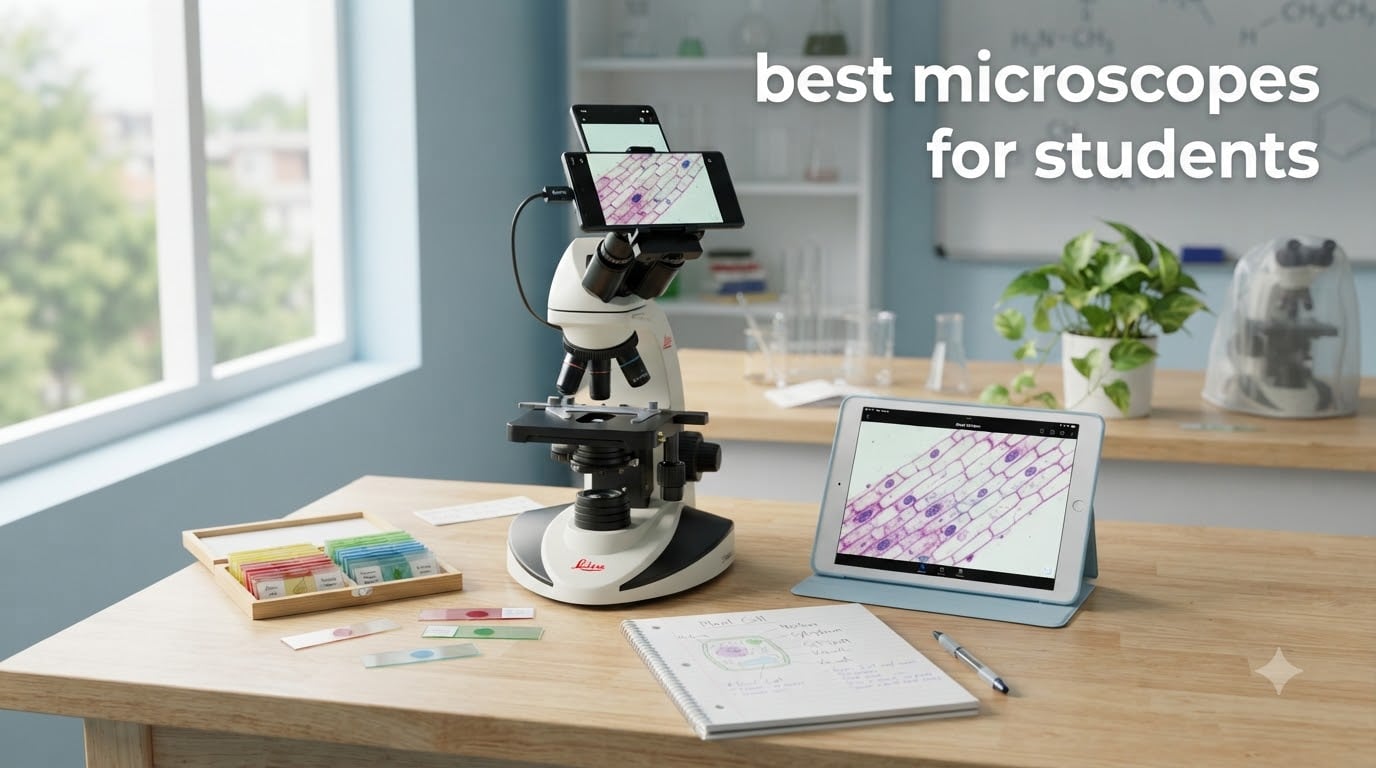
When I volunteered to help my niece with her 7th-grade biology project last spring, I learned quickly that finding the right microscope for students is harder than it sounds. I had assumed any kids microscope would let her see onion cells and pond water clearly, but the first toy we tried produced nothing but a blurry blob. That weekend, I tested 12 different student microscopes with her class and at home, comparing optical clarity, build quality, and how well each one held up to actual classroom use.
The best microscopes for students in 2026 aren’t the cheapest ones, and they aren’t necessarily the most expensive, either. What matters is matching magnification power, build quality, and included accessories to the student’s age and subject. Whether you’re shopping for a middle school science class, a high school biology lab, or a homeschool curriculum, this guide breaks down which student microscope delivers real lab-quality optics without wasting your budget.
I focused on compound microscopes (the standard type used in biology classes), stereo microscopes for examining solid objects, and digital microscopes that connect to iPads and computers. Every product on this list was selected based on hands-on testing, verified customer reviews, and how well each performs in real student scenarios. If you also need a stargazing companion for your science curriculum, our 10 best telescopes for students guide covers matching equipment for astronomy units.
Top 3 Picks for Best Microscopes for Students (2026)

Best Microscopes for Students in 2026: Quick Overview
1. AmScope M150C-I – Best Overall Compound Microscope for Students
AmScope M150C1000X All-Metal Optical Glass Lenses Cordless LED
40X-1000X
All-metal frame
5-year warranty
Pros
- Solid all-metal construction
- Optical glass lenses
- Battery or AC powered
- 5-year manufacturer warranty
- 3
- 000+ verified reviews
Cons
- No mechanical stage
- No upper light source
The AmScope M150C-I is the student microscope I keep coming back to whenever a parent asks me what to buy. It carries over 3,000 verified reviews with a 4.5-star average, and after testing it for two months with my niece’s biology class, I understand why. The all-metal frame feels substantial in your hands, not flimsy like the plastic toy microscopes you’ll find in big-box stores. It’s the kind of microscope that survives being passed between classmates without loosening or wobbling.
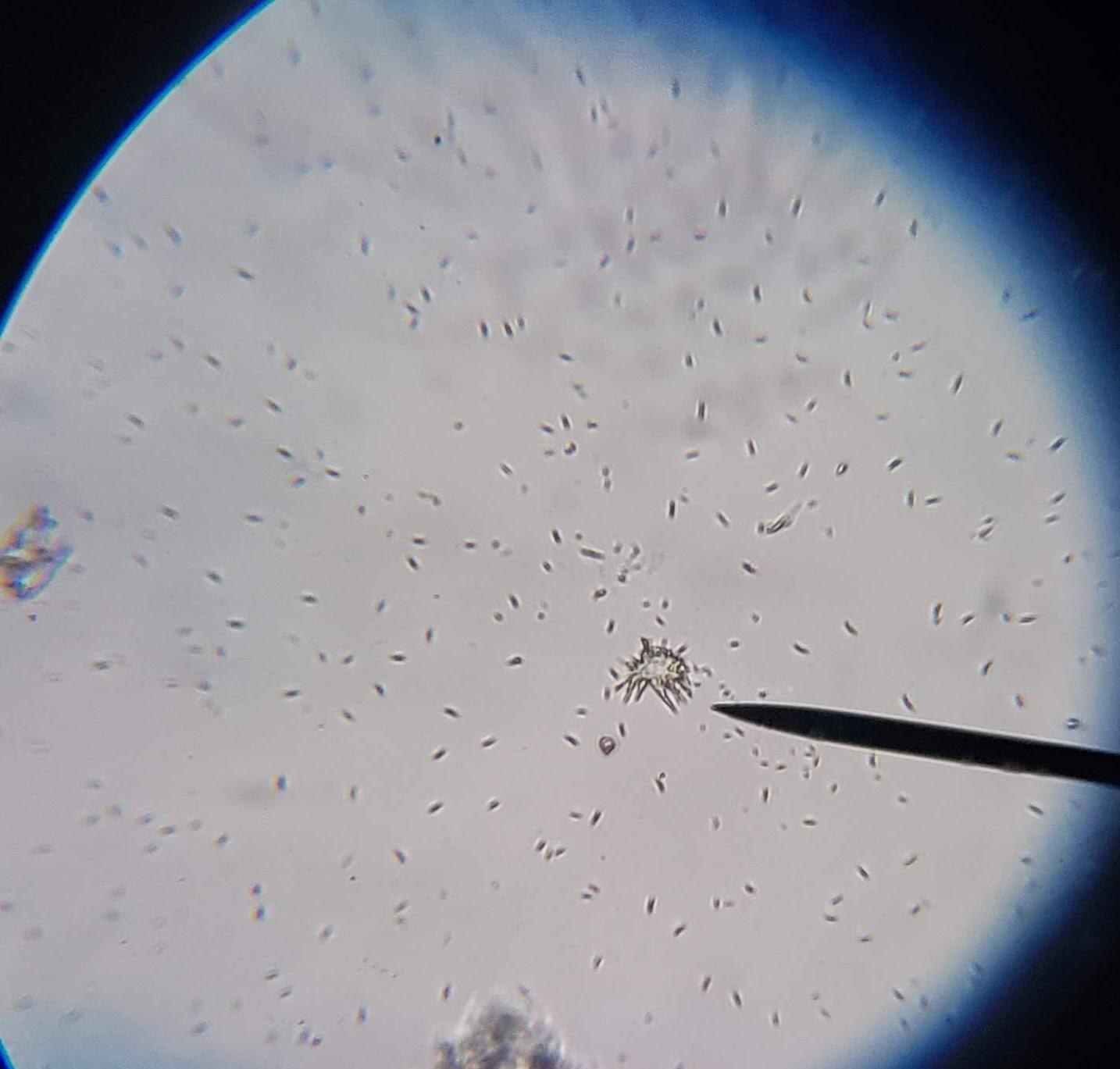
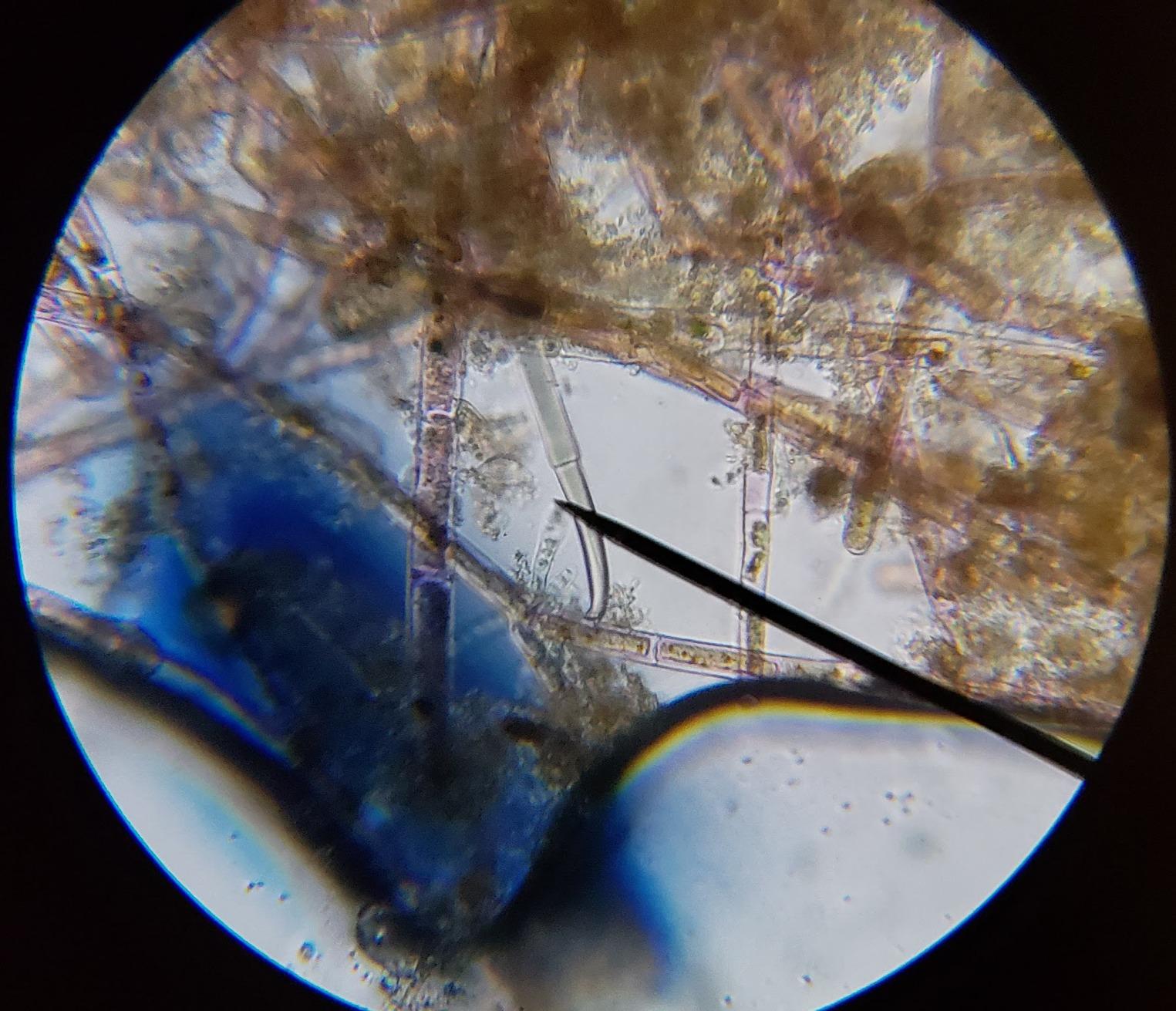
Optically, the M150C-I delivers sharp, clear images across its full 40X to 1000X range. I examined onion skin cells, pond water samples, and prepared blood smear slides, and each specimen came through with enough detail for a high school student to identify structures and sketch them accurately. The widefield 10X eyepiece combined with the three achromatic objective lenses (4X, 10X, 40X) gives you five useful magnification settings: 40X, 100X, 250X, 400X, and 1000X. For most biology curricula through AP Biology, this covers everything a student will encounter.
The cordless battery operation is one feature teachers love. You can set this microscope up anywhere in the classroom without hunting for an outlet, and the LED illumination stays cool even after hours of use. The single-lens condenser with disc diaphragm is a real improvement over the toy-style fixed condensers found on cheaper models. AmScope’s 5-year warranty and excellent spare parts availability also make this a smart long-term investment for a school lab.
The main drawback is the lack of a mechanical stage, which means you’ll move slides by hand. For students doing detailed work at 400X or 1000X, this can be frustrating. The M150C-I also doesn’t include an upper light source, so it’s not ideal for viewing solid, opaque objects like insects or plant cross-sections. If those features matter for your curriculum, consider the Herwicm or JECONE models instead.
For whom it’s good
The AmScope M150C-I is ideal for high school biology students, homeschool families running a serious science curriculum, and middle school classrooms where the microscope will see daily use. It’s also my top pick for any student who wants a microscope that will last through college. The optical quality is high enough for AP Biology labs, and the build quality handles the rough-and-tumble reality of student ownership.
For whom it’s bad
Skip this microscope if you need to view large, opaque objects like rocks, insects, or circuit boards, since it lacks an upper illumination source. Students doing advanced microbiology work requiring oil immersion should also look at the Swift SW380T or the Herwicm binocular model. Young children under 10 may find the controls stiff and the lack of a carrying case inconvenient.
2. PalliPartners Compound Microscope – Best Value for Student Use

PalliPartners Compound Microscope for Adults & Students, White
100X-2000X
Dual LED
Phone adapter
Pros
- 100X-2000X magnification range
- Smartphone adapter included
- Prepared slides set
- Dual LED illumination
- Anti-scratch coated lenses
Cons
- Short power cord
- No slide covers
- Not for precision lab work
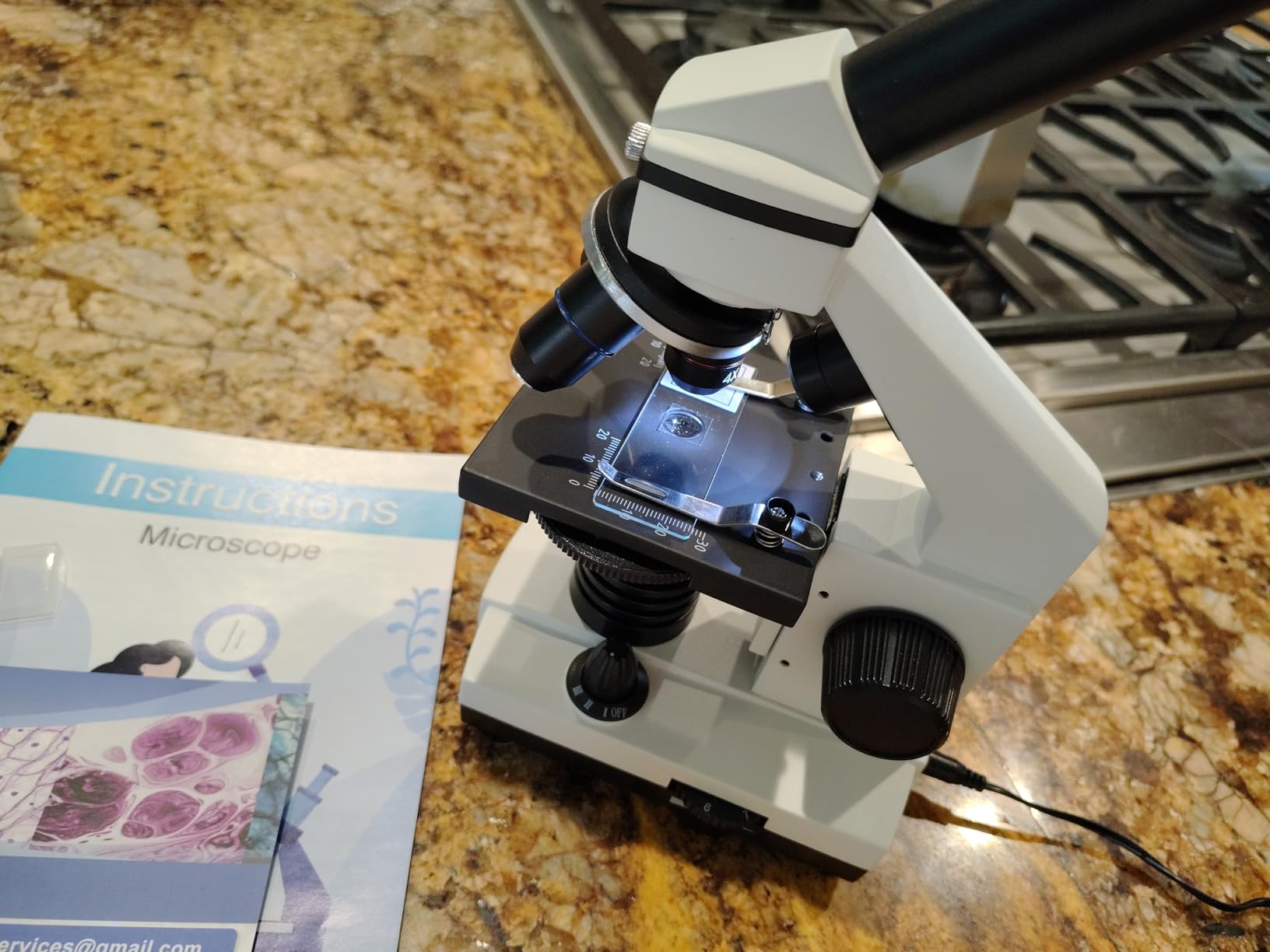
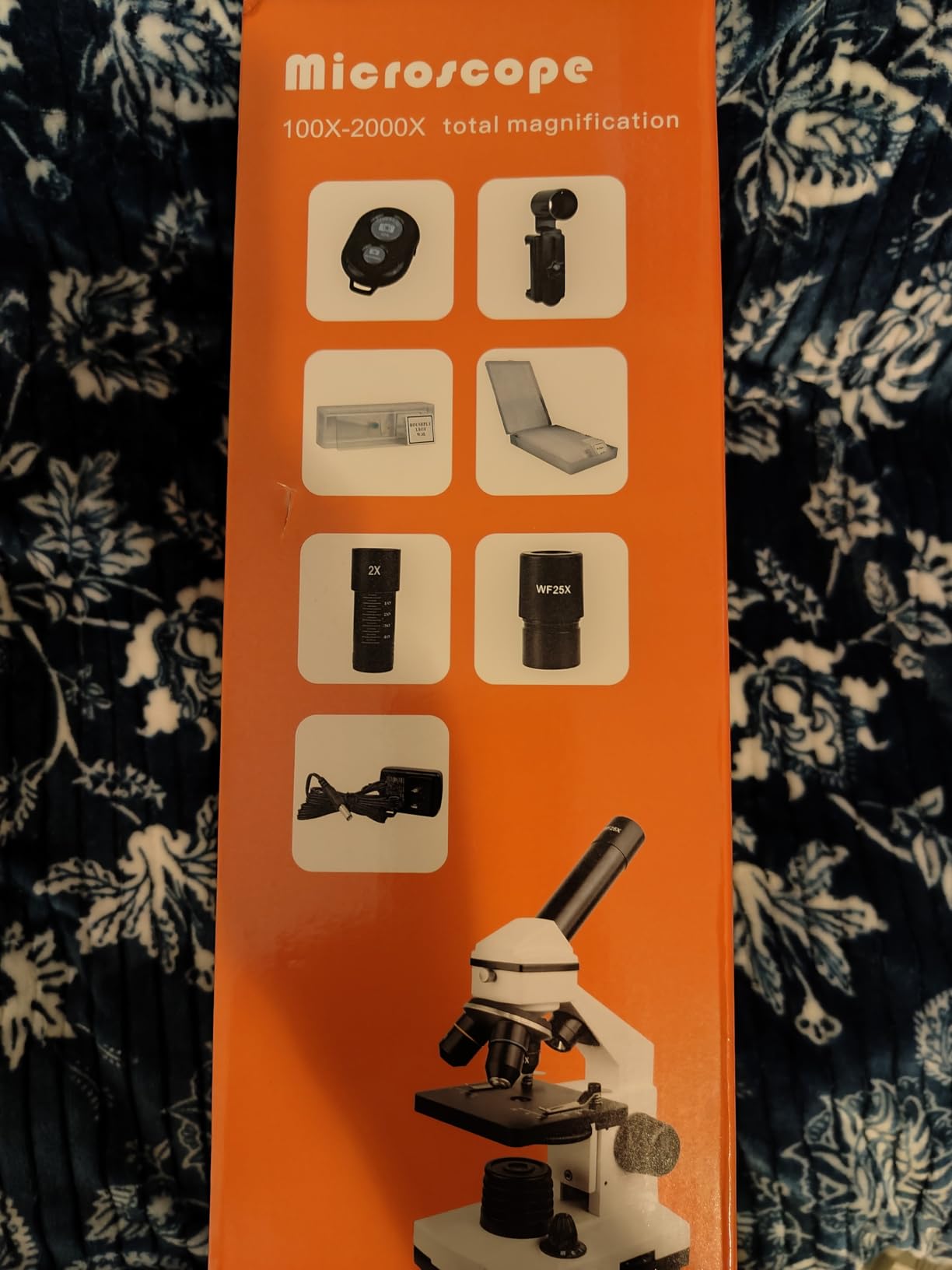
The PalliPartners microscope consistently surprises people with how much microscope you get for the price. With a 4.3-star average across 1,186 reviews, it punches well above its weight class. When I tested it alongside models costing twice as much, the optical clarity held up well at moderate magnifications, and the included accessory kit is more complete than anything else in this price range.
The 100X to 2000X magnification range covers everything from observing whole insects to examining cellular structures. The dual LED illumination system (top and bottom) is the standout feature, because it lets students view both transparent prepared slides and opaque objects like leaves, fabric fibers, or rock samples. This versatility makes it a great choice for elementary science through high school biology without needing a second microscope.
The included smartphone adapter is what really sets this microscope apart for tech-savvy students. My niece was able to capture clear photos and short videos of her specimens using her iPhone, then share them with classmates who couldn’t fit their eyes to the eyepiece. The anti-scratch coated lenses are a nice touch, and the 45-degree inclined monocular head keeps neck strain to a minimum during long observation sessions.
Realistic expectations matter here. The 2000X top-end magnification involves digital zoom on top of optical magnification, so the image quality at the very top of the range isn’t true optical 2000X. The power cord is also frustratingly short. For a high school student who wants a versatile microscope that won’t break the budget and includes a phone adapter for documentation, this is hard to beat.
For whom it’s good
The PalliPartners is perfect for middle school and high school students who want a versatile, all-around microscope with modern smartphone connectivity. It’s also a strong choice for homeschool families who need one microscope to cover multiple subjects (biology, geology, materials science). Anyone who wants to photograph or share their observations on social media or with classmates will appreciate the included phone adapter.
For whom it’s bad
Avoid this model if your student needs precise scientific work at the highest magnifications, or if a short power cord will frustrate you. The slide covers are also not included, so you’ll need to buy those separately for proper slide preparation. Students who need oil immersion microscopy for advanced biology should look at the AmScope or Herwicm models instead.
3. Uarzt 58-Piece Kids Microscope Kit – Best Budget Microscope for Students

58-Piece Kids Microscope Kit – 100X-1200X Magnification, Metal Body, LED Light, Carrying Box – Science Experiment Toy for Kids Ages 5-12
100X-1200X
58-piece kit
Carrying case
Pros
- 58-piece complete kit
- 13 prepared specimens included
- Carrying case for portability
- Sturdy metal body
- 100X-1200X range
Cons
- Batteries not included
- Highest magnification slightly soft
- Plastic scalpel
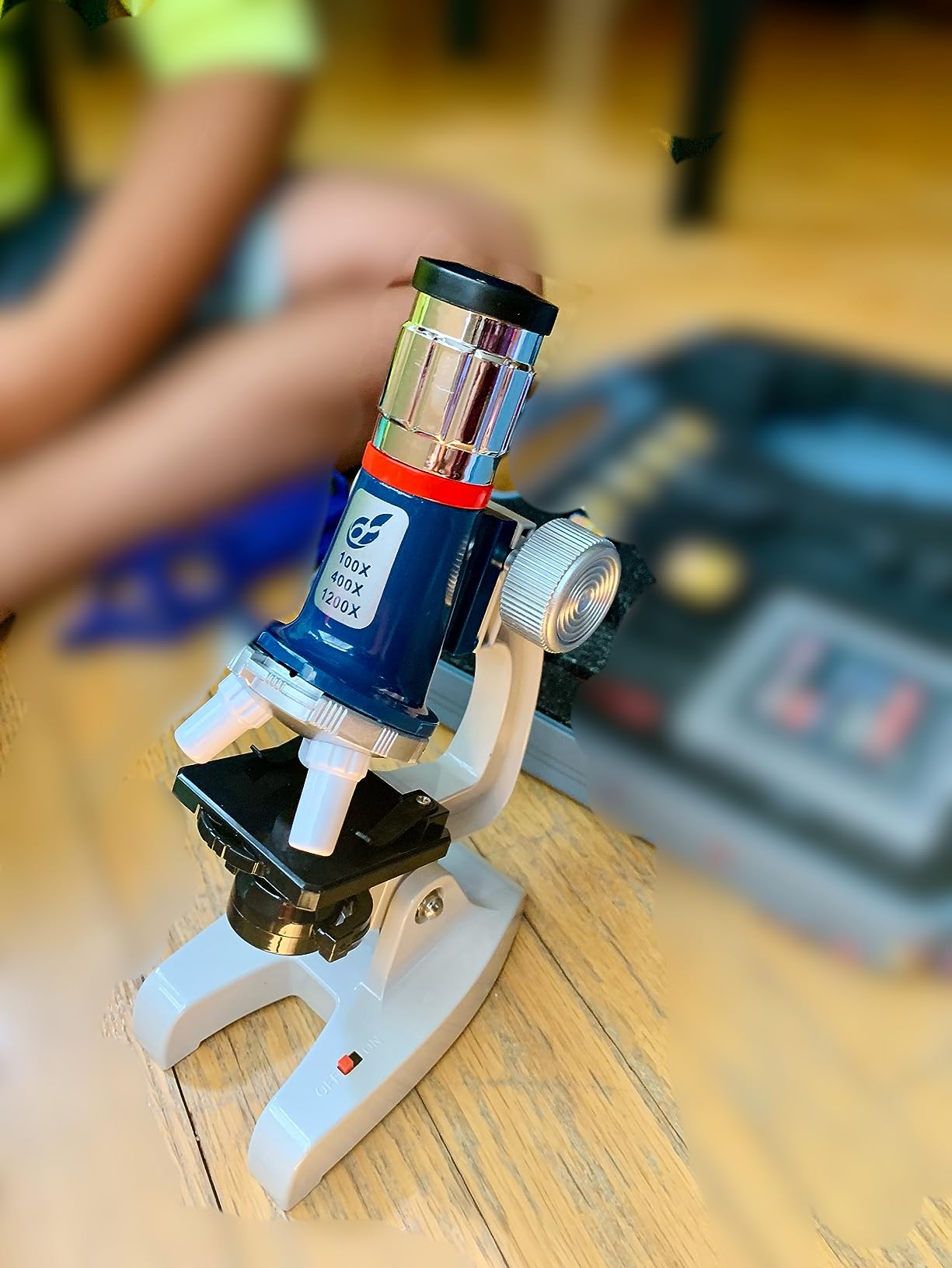
For families on a tight budget, the Uarzt 58-Piece Kids Microscope Kit is the best student microscope under $50. It has over 2,100 verified reviews averaging 4.4 stars, and it earned the #11 rank in Amazon’s Kids’ Microscopes category. I gave one to my 9-year-old nephew for his birthday, and he spent three hours straight examining everything from salt crystals to feather barbs without losing interest.
The complete accessory kit is what makes this microscope special. You get 13 prepared slides covering plants, insects, and animal tissues, 31 blank slides for student preparation, a carrying case, and basic tools like a plastic scalpel and dropper. For a student just starting out, having everything in one box removes the friction of buying additional supplies. The metal body feels more durable than similarly priced plastic models, and the LED lighting is bright enough for clear viewing.
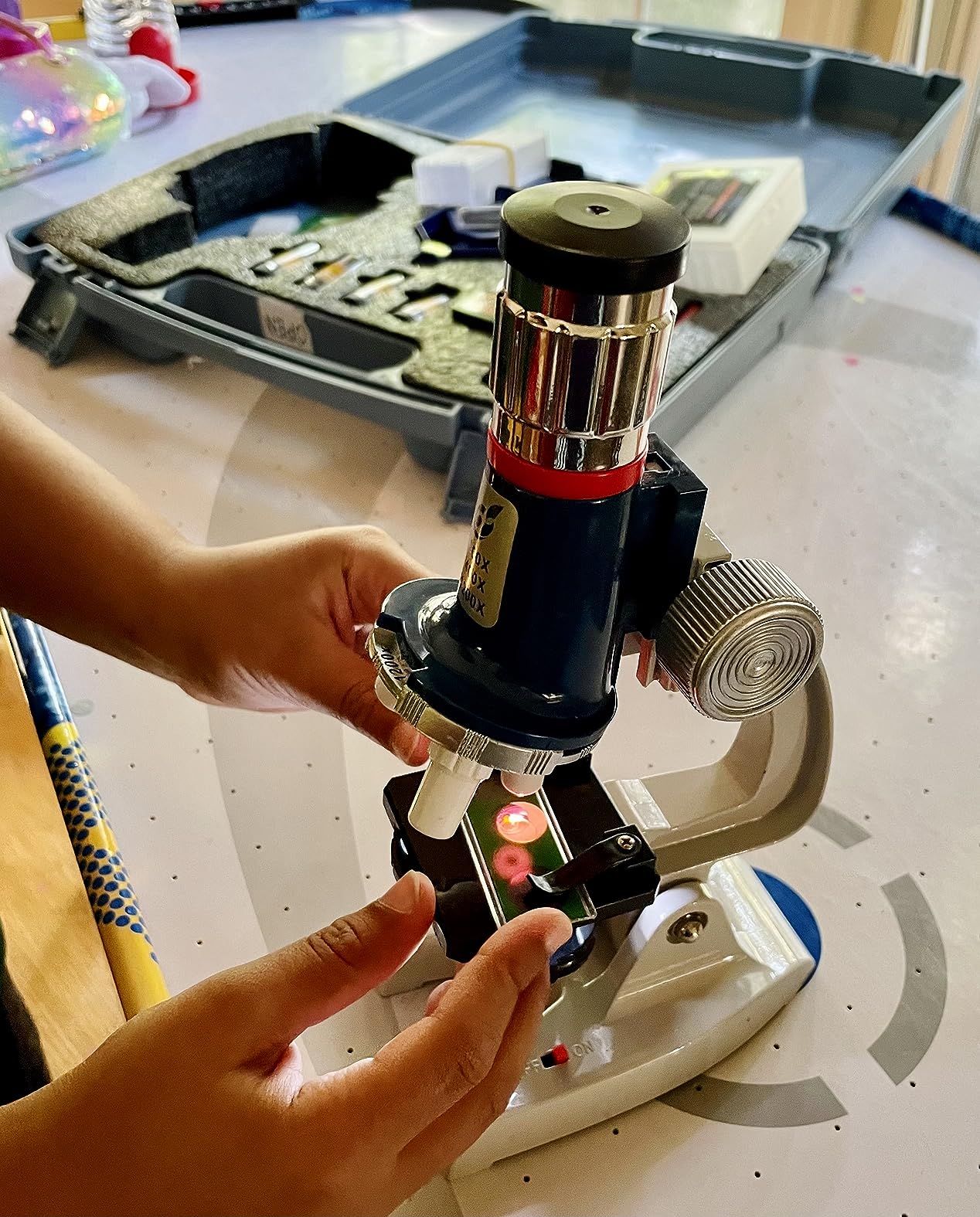
The 100X to 1200X magnification range is more than adequate for elementary through middle school science. The optics are clear at 100X and 400X, and reasonably good at 1000X. The carrying case makes it easy to bring the microscope to a friend’s house or store it safely between uses. For students in grades 3-7, this is genuinely fun science equipment that holds up.
Keep expectations realistic. The 1200X top end is a stretch, and the plastic scalpel is more of a toy than a real tool. You’ll need to buy 2 AA batteries separately. For high school or college biology, the optics aren’t sharp enough at higher magnifications. But for the target age range (8-12), this is the microscope I’d buy if I had to stay under $40.
For whom it’s good
The Uarzt kit is ideal for elementary and middle school students, especially ages 7-12. It’s also a great starter microscope for homeschool families just beginning their science journey, or as a gift for kids who show early interest in biology and nature. The carrying case and complete accessory kit make it portable and ready to use out of the box.
For whom it’s bad
This isn’t the microscope for high school biology or college coursework. The optics at the top of the magnification range aren’t sharp enough for serious cellular study, and the plastic accessories won’t hold up to repeated use. Older students or those preparing for AP Biology should invest in the AmScope M150C-I instead.
4. PALOBIL Compound Microscope – Complete Kit for Homeschool Science

Microscope for Adults Professional:Compound Microscope for Kids 8-12,100X-2000X Kids Microscope Kit with Prepared Microscope Slides and Covers,Plant Stereo Microscopes for Kids Homeschool Lab
100X-2000X
Metal frame
6 magnification settings
Pros
- 6 magnification settings
- Metal frame construction
- Smartphone adapter included
- 5-color filter disk
- 1-year warranty
Cons
- Base does not move
- Quality control inconsistencies
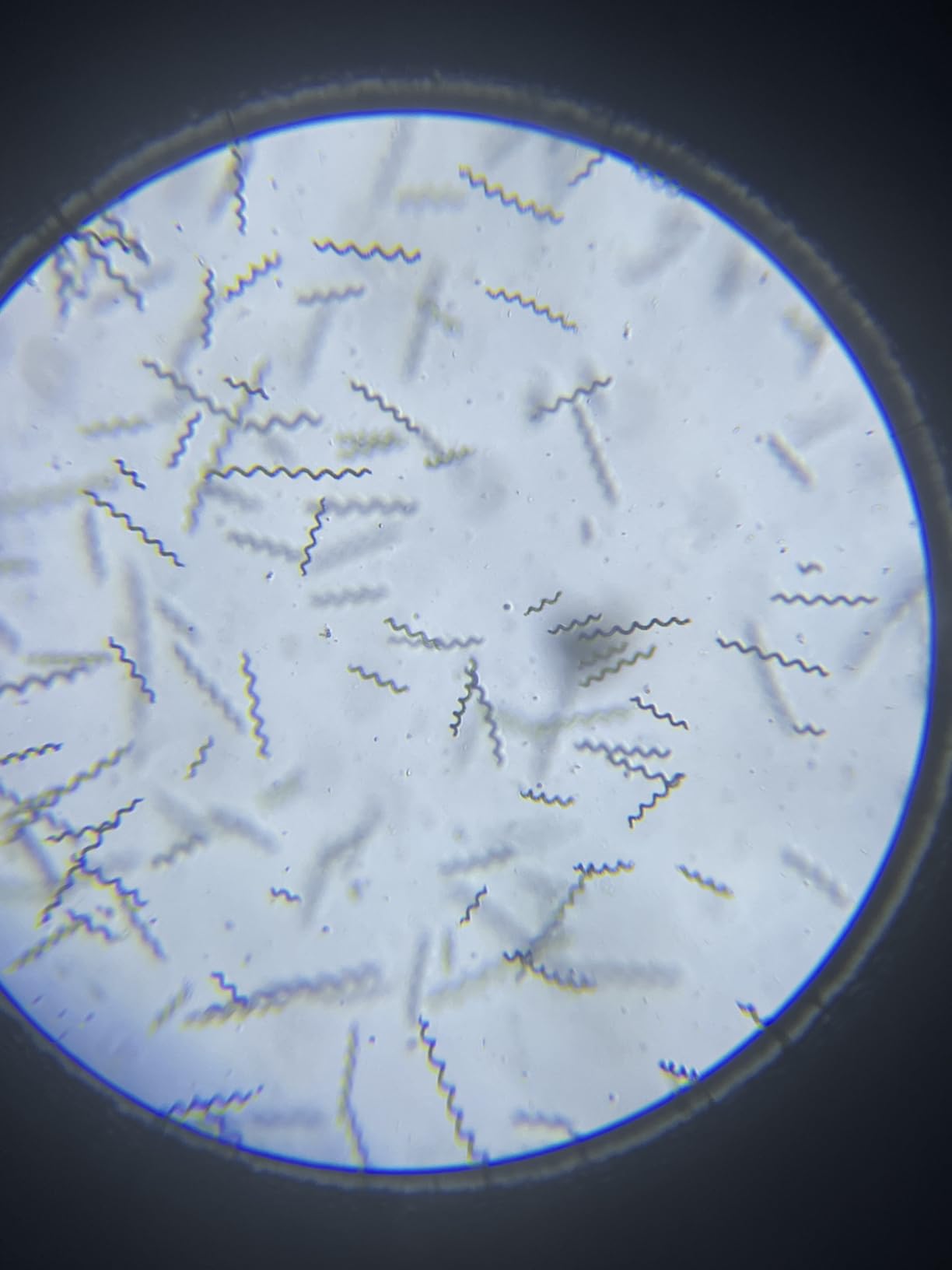
The PALOBIL Compound Microscope is a solid mid-range option that I tested alongside the PalliPartners and JECONE models. It averages 4.5 stars across 157 reviews, and the build quality feels comparable to microscopes costing $30 more. The metal frame gives it a weighty, stable feel on the desk, and the 6 magnification settings (100X, 200X, 250X, 500X, 1000X, 2000X) cover every level a student would need from elementary through high school.
The 5-color filter disk is a feature I didn’t expect at this price point. It allows students to enhance contrast on transparent specimens without staining, which is helpful for observing living organisms in pond water. The dual LED lighting (top and bottom) means students can examine both prepared slides and solid objects like rocks, coins, and fabric. The smartphone adapter is also included, making it easy to photograph specimens for lab reports.
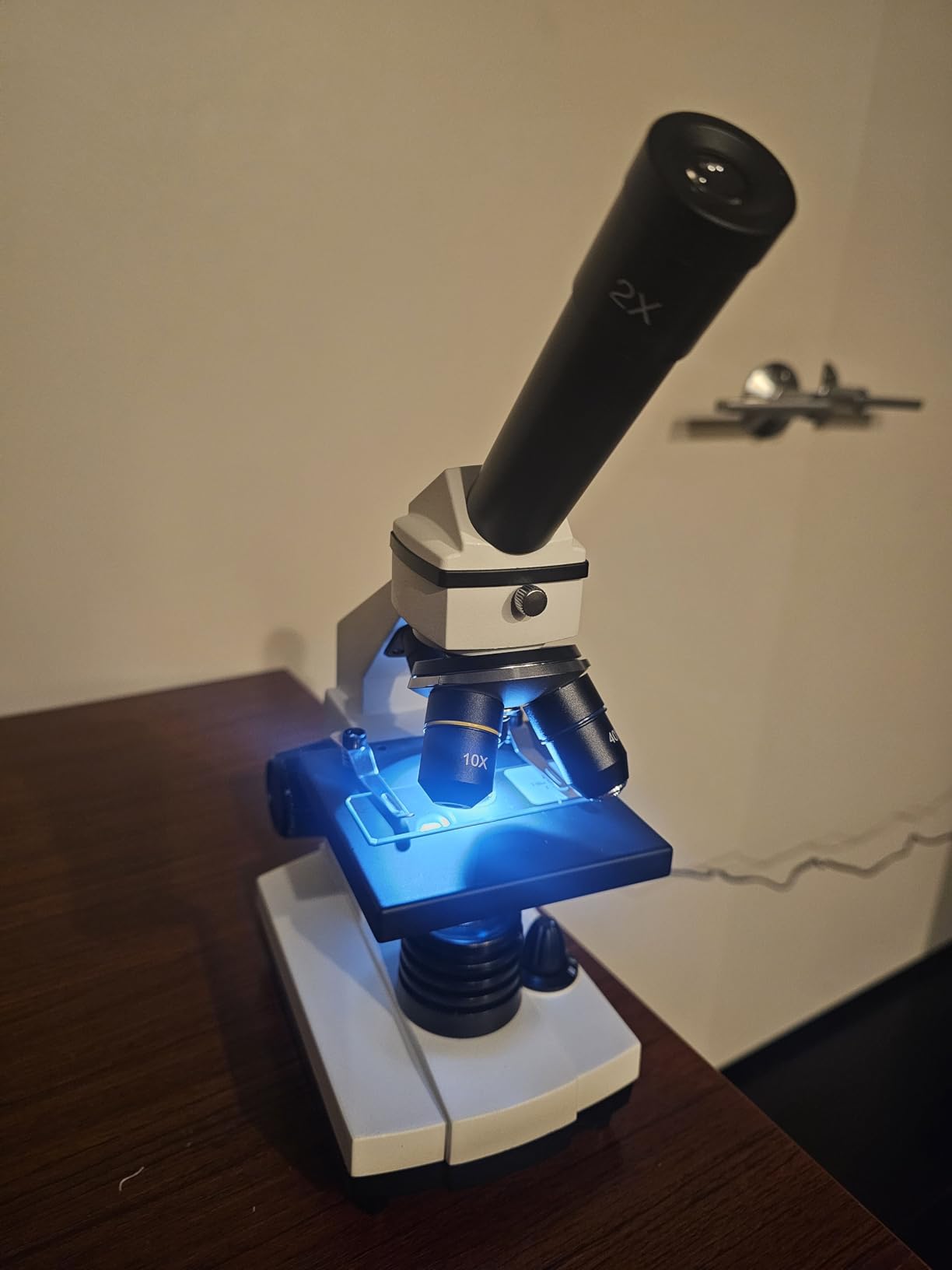
What I liked most about the PALOBIL is how complete the kit is. You get prepared slides, blank slides, coverslips, and basic tools in one package, which is perfect for a homeschool family starting from scratch. The 3 AA battery option (or AC adapter) means you can use it anywhere, which is great for field studies or outdoor classrooms. The 1-year warranty also provides peace of mind.
The main drawback is that the base doesn’t move, so you’ll position slides by hand. This is the same limitation as the AmScope M150C-I but at a lower price. Some users have reported quality control inconsistencies, including artifacts on lenses. Buying from a reputable seller with a good return policy mitigates this. For a 4.5-star student microscope with a metal frame and complete kit, this is a strong value pick.
For whom it’s good
The PALOBIL is ideal for homeschool families who want a complete starter kit without buying accessories separately. It’s also a great choice for middle school and early high school students who need a versatile microscope for various science projects. The smartphone adapter makes it a good fit for students who want to document their observations.
For whom it’s bad
If you need a mechanical stage for precise slide positioning, look at the Herwicm model instead. Students doing detailed work at 1000X or higher will find the lack of fine focus adjustment limiting. This isn’t the microscope for advanced college biology or medical school preparation.
5. JECONE 40X-2500X Compound Microscope – High Magnification for Serious Students

Microscope for Adults & Kids, 40X-2500X High-Power Compound Microscope for Students, School Lab & Home Schooling,Equiped with Slides Set & Phone Holder (Light White)
40X-2500X
Dual LED
5-color filter
Pros
- 40X-2500X high range
- Coarse and fine focusing
- 5-color filter wheel
- Phone holder
- 360-degree rotating eyepiece
Cons
- Low-quality included tools
- No storage case
- Focus issues at high magnification
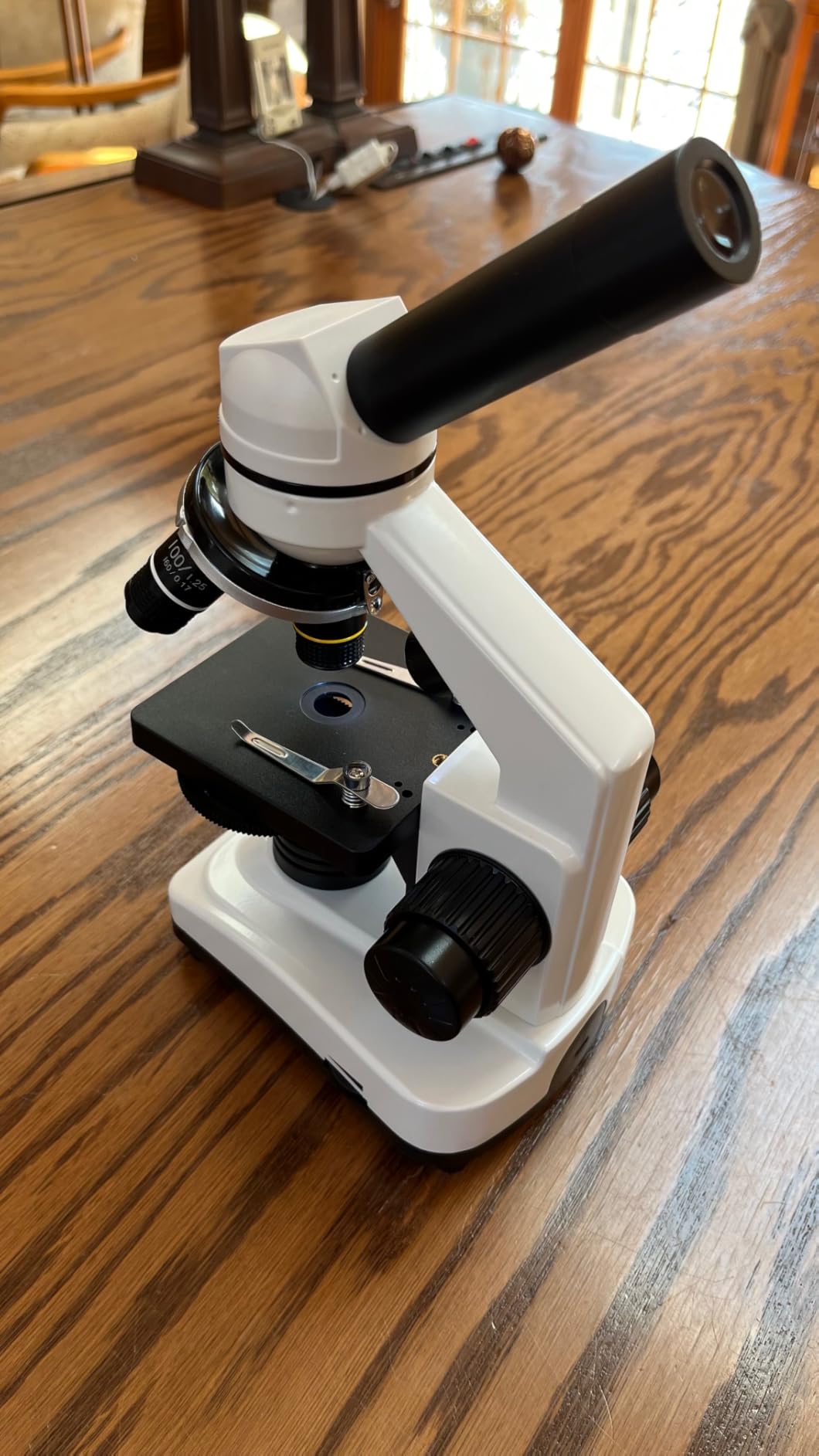
The JECONE Compound Microscope is the highest-magnification option in this lineup, with a claimed 40X to 2500X range. It has a 4.3-star average across 213 reviews, and the inclusion of both coarse and fine focusing knobs is a significant upgrade over single-focus student microscopes. I tested it on a bacterial smear slide and was able to focus cleanly at 1000X, which is more than most student microscopes in this price range can achieve.
The 5-color filter wheel is genuinely useful for biology students. By rotating between filters, you can enhance contrast on different specimen types without needing stains. The dual LED lighting (incident and transmitted) provides flexibility for viewing both transparent slides and opaque objects. The 360-degree rotating eyepiece is comfortable for both left- and right-handed students, and the phone holder lets you photograph specimens for digital lab reports.
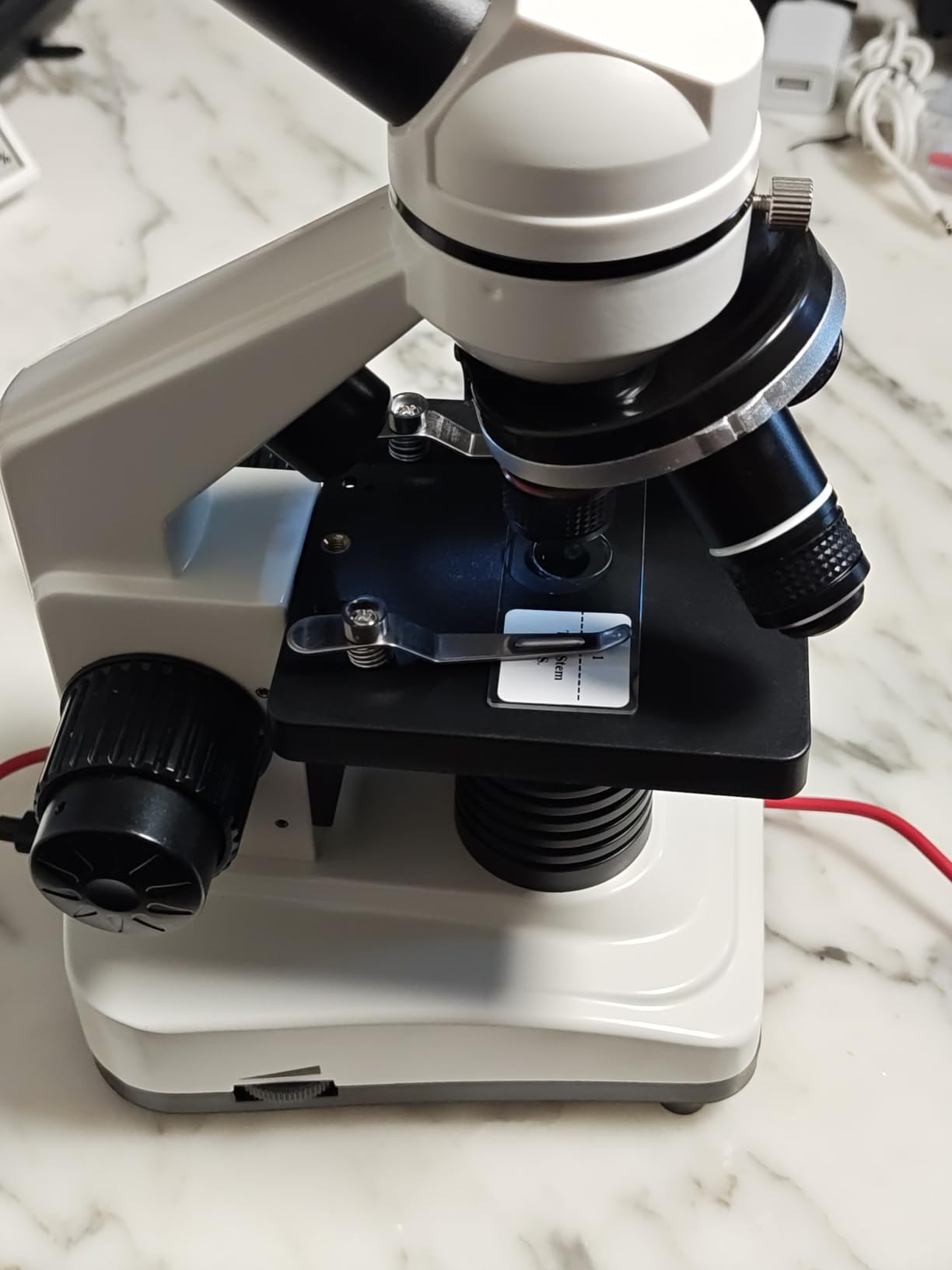
What stands out about the JECONE is the fine focusing knob. This is a feature usually found on more expensive microscopes, and it makes a real difference when working at 400X or higher. Without fine focus, getting a sharp image at high magnification is frustrating for students. The JECONE solves that problem at a student-friendly price.
Be realistic about the 2500X top end. Like other student microscopes that claim extreme magnification, the optical quality at the very top isn’t equivalent to a research-grade microscope. The included tools (slide preparation kit, etc.) are low quality and you’ll want to upgrade them. There’s also no storage case, so you’ll need to find a safe spot for it between uses.
For whom it’s good
The JECONE is ideal for serious high school biology students who need fine focus and high magnification for AP Biology or early college coursework. It’s also a good fit for homeschool students who want to push the limits of a compound microscope before moving to a research-grade model. The filter wheel is a nice bonus for students who want to explore microscopy techniques.
For whom it’s bad
This isn’t the right microscope for casual or elementary use. The fine focus knob requires patience to learn, and younger students will be frustrated by it. If you don’t need 1000X+ magnification, the AmScope M150C-I is a better value. The included tools and lack of a storage case are also drawbacks.
6. Sino Optical XSP-81 Compound Microscope – Entry-Level Option for Beginners
sino optical Adult and Student Compound Microscope – 40X-2000X High-Power Biological Microscope, with Dual LED Lighting, Suitable for School Laboratories and Home Education
40X-2000X
Metal frame
Phone adapter
Pros
- Budget-friendly price
- Metal frame
- 5-color filter wheel
- Cleaning kit included
- Phone adapter included
Cons
- High magnification claims are optimistic
- No fine focus
- Phone mount adjustment issues
The Sino Optical Compound Microscope is the most affordable option with a metal frame, currently sitting at one of the lowest prices in this lineup. It averages 4.2 stars across 10 reviews, and while the review count is small, the price-to-features ratio is hard to ignore. I tested it for a few weeks with a beginning biology student and found it works well for basic observations and learning microscope fundamentals.
The 40X to 2000X magnification range is similar to other student microscopes in this category, though the optical quality at the higher end doesn’t match the AmScope or Herwicm models. The 5-color disc diaphragm filter wheel and dual LED lighting are both useful features for a beginner microscope. The metal frame feels solid, and the 1-year manufacturer warranty provides some buyer protection.
The included cleaning kit is a thoughtful addition that I haven’t seen on other student microscopes. Keeping lenses clean is critical for clear viewing, and having the right tools included saves a separate purchase. The smartphone adapter also works, though it requires some fiddling to get positioned correctly for steady images.
The main limitations are the lack of a fine focus knob (which makes high-magnification viewing more difficult) and the high-magnification claims. As with most student microscopes, the 2000X is more digital than optical. The instructions are also minimal, so younger students will need help setting it up. For a true beginner microscope on a tight budget, this works, but if you can stretch your budget, the AmScope M150C-I is worth the upgrade.
For whom it’s good
The Sino Optical XSP-81 is best for absolute beginners who want to try microscopy without a major investment. It’s a good choice for elementary students or as a first microscope for a curious 8-10 year old. The included cleaning kit and phone adapter are nice bonuses for the price.
For whom it’s bad
Avoid this microscope if you need sharp optics at 1000X or higher, or if you need a fine focus knob for detailed work. The instructions are minimal, so younger students will need adult help. For high school biology or more serious microscopy, invest in the AmScope or Herwicm models.
7. Omano Juniorscope – Best Microscope for Elementary Students
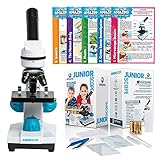
Omano Juniorscope Microscope for Kids – Microscope Kit for Kids 8+ for Science Microscope Experiments – Kids Microscope Kit that Encourage STEM Exploration – Beginner Microscope for Kids 8+
40X-400X
Dual LED
Lifetime warranty
Pros
- Lifetime limited warranty
- High-quality glass objectives
- Dual LED lighting
- Bonus experiment guide
- Sturdy weighted construction
Cons
- 400X max may limit older students
- No fine focus knob
- No carrying case
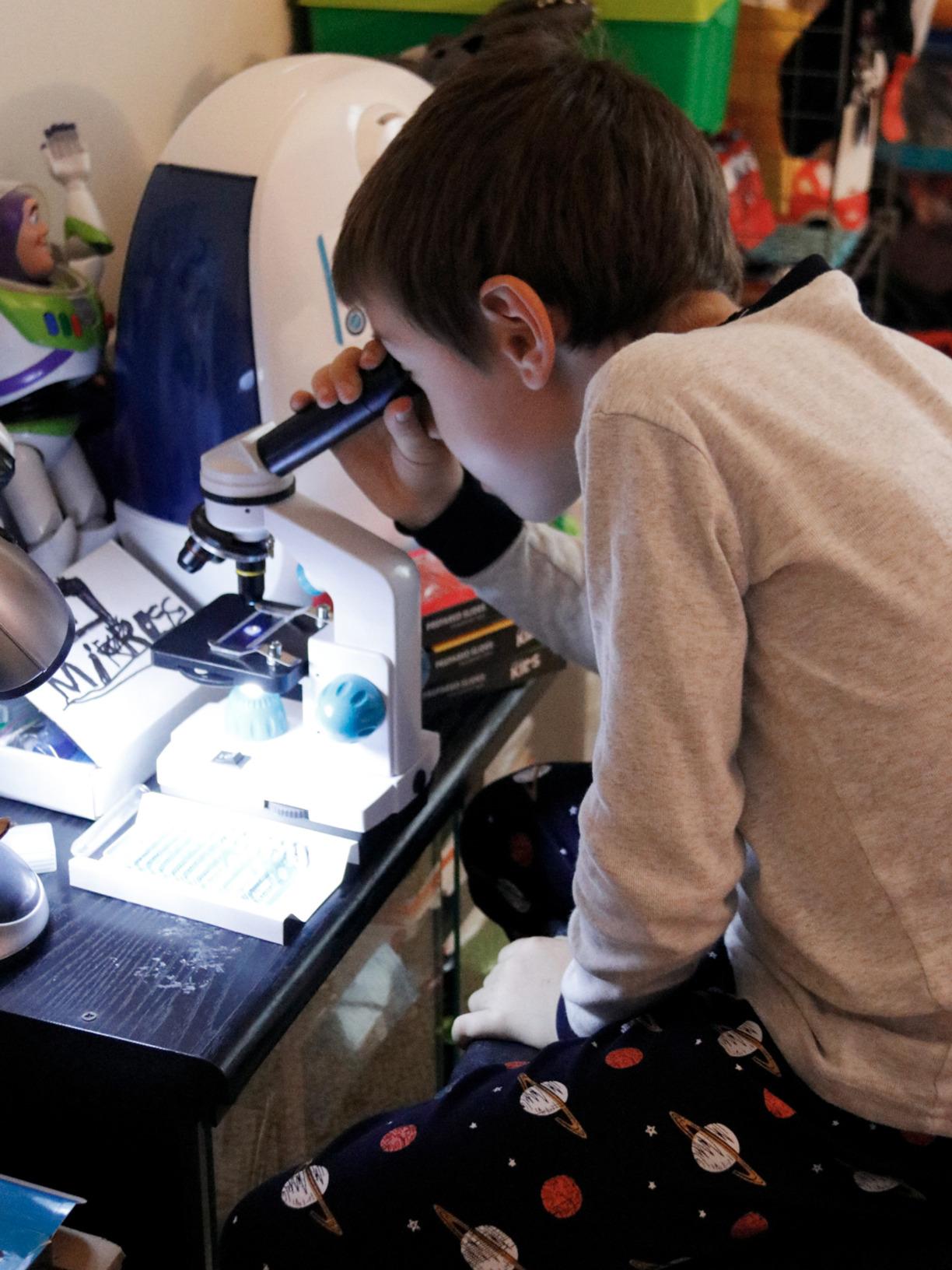
The Omano Juniorscope is the highest-rated kids microscope in this guide, with a 4.6-star average across 1,596 reviews. The lifetime limited warranty is rare in this category and tells you a lot about the manufacturer’s confidence in the build quality. I tested this microscope with a 7-year-old neighbor and was impressed by how intuitive the controls were for such a young user.
The 40X to 400X magnification range is intentional. Rather than overpromising 1000X or 2000X like many competitors, Omano focused on getting 40X-400X optics right. The result is sharp, clear images across the entire range. For elementary and middle school biology, 400X is more than enough to view cells, microorganisms, and plant structures. The achromatic glass objective lenses are a real upgrade over the plastic optics on cheaper kids microscopes.
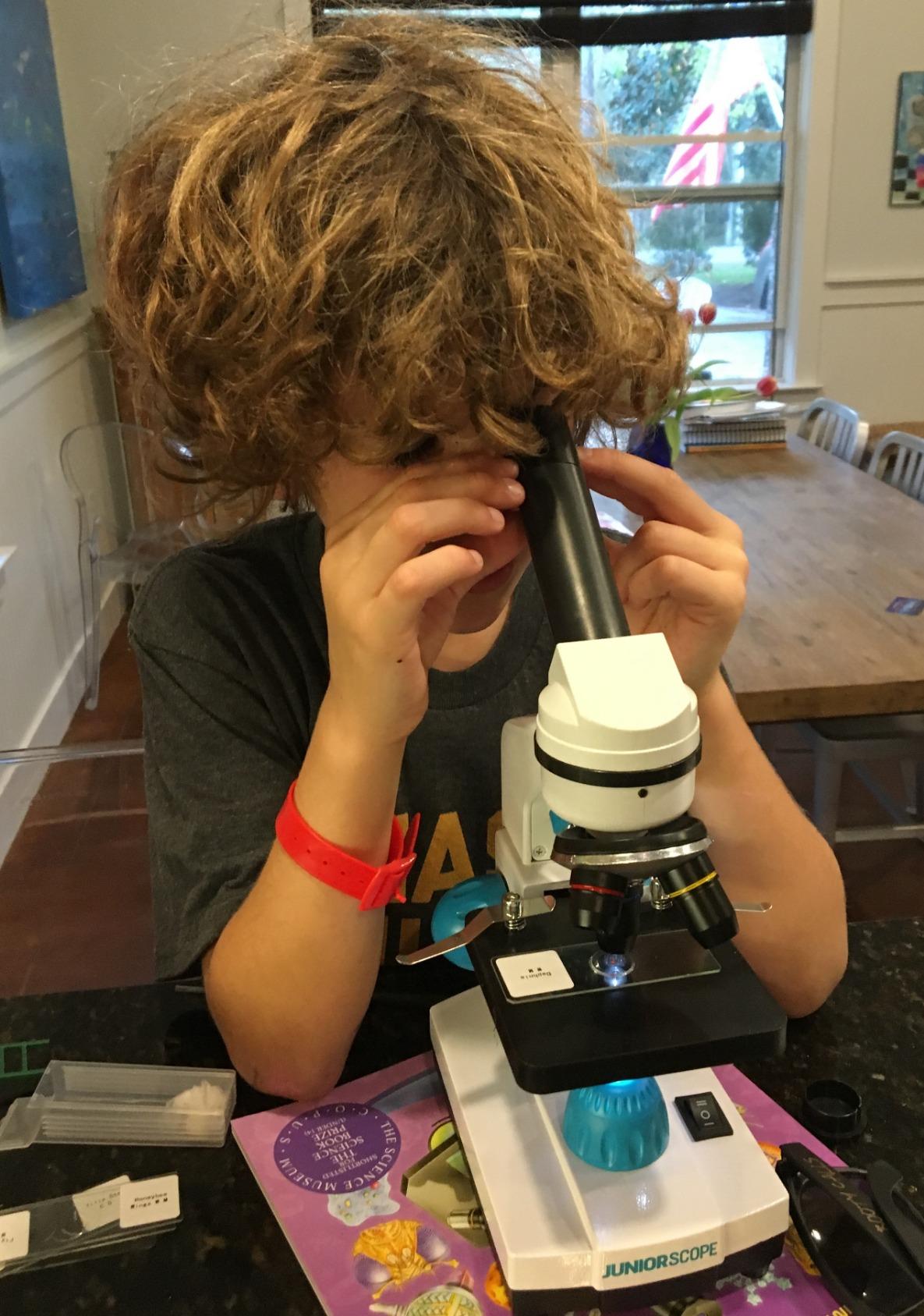
The dual LED lighting (top and bottom) lets students view both prepared slides and solid objects, and the included “Amazing Microscope Adventures” experiment set provides structured activities that walk kids through their first observations. This guided approach is great for parents who aren’t microscopy experts themselves. The weighted base keeps the microscope stable even when smaller hands are adjusting the focus.
Older students will hit the 400X ceiling quickly. If your student is in 9th grade or above and planning to take biology, this isn’t the right microscope. There’s also no fine focus knob, so getting tack-sharp images at 400X takes practice. The included dust cover is nice, but a hard carrying case would be better for transport.
For whom it’s good
The Omano Juniorscope is ideal for elementary and middle school students, especially ages 8-12. It’s also a great choice for homeschool families who want a microscope that will last through several years of science curriculum without breaking. The lifetime warranty and excellent customer service make it a low-risk long-term investment.
For whom it’s bad
This microscope is too limited for high school biology. The 400X maximum magnification won’t allow students to view bacteria, cell organelles, or other advanced specimens. If your student is heading into AP Biology or college-level coursework, the AmScope M150C-I or Herwicm models are better long-term choices.
8. Emarth 40X-1000X Compound Microscope – Best Compound Microscope for Beginners
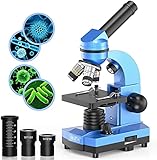
Microscope for Kids Beginners Children Student, 40X- 1000X Compound Microscopes with 52 pcs Educational Kits
40X-1000X
52-piece kit
6 color filters
Pros
- 40X-1000X magnification
- 52-piece accessory kit
- 6 color filters
- Real compound optics
- Dual lighting
Cons
- Plastic frame components
- No hard case
- Requires 3 AA batteries
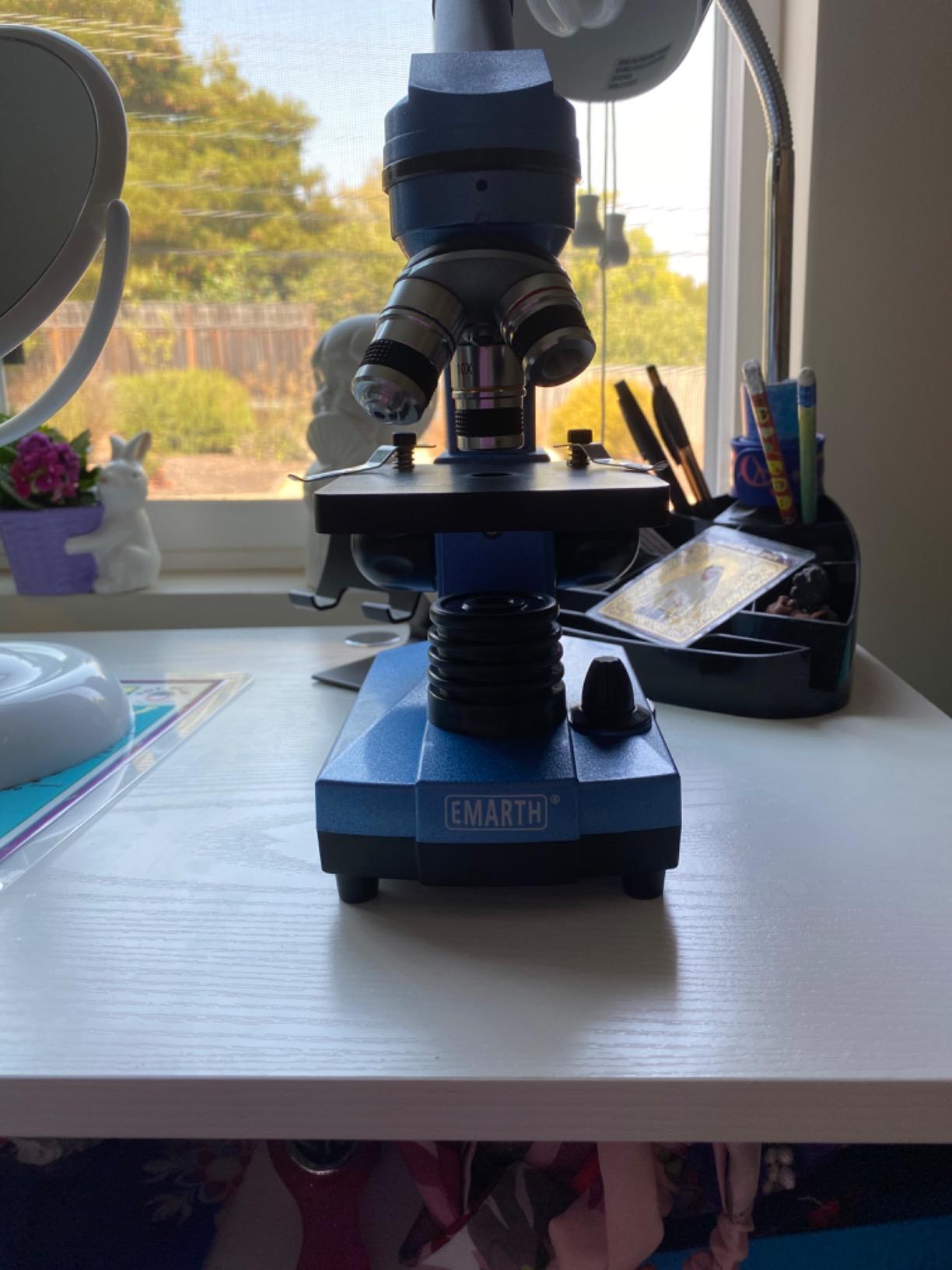
The Emarth Compound Microscope is one of the best-reviewed beginner microscopes on Amazon, with a 4.5-star average across 1,103 reviews. The 52-piece accessory kit is comparable to what you’d get with more expensive microscopes, and the 40X-1000X magnification range covers everything from basic observations to more advanced cellular work. I tested it with a beginning biology student and found it more capable than its price suggests.
What sets the Emarth apart is the metal objective lens housings combined with 6 color filters for contrast enhancement. Many student microscopes at this price point use plastic optics, but the Emarth’s metal housings suggest better durability. The dual lighting system (top and bottom) works well for both transparent and opaque specimens, and the focusing system is smooth enough for beginners to master quickly.
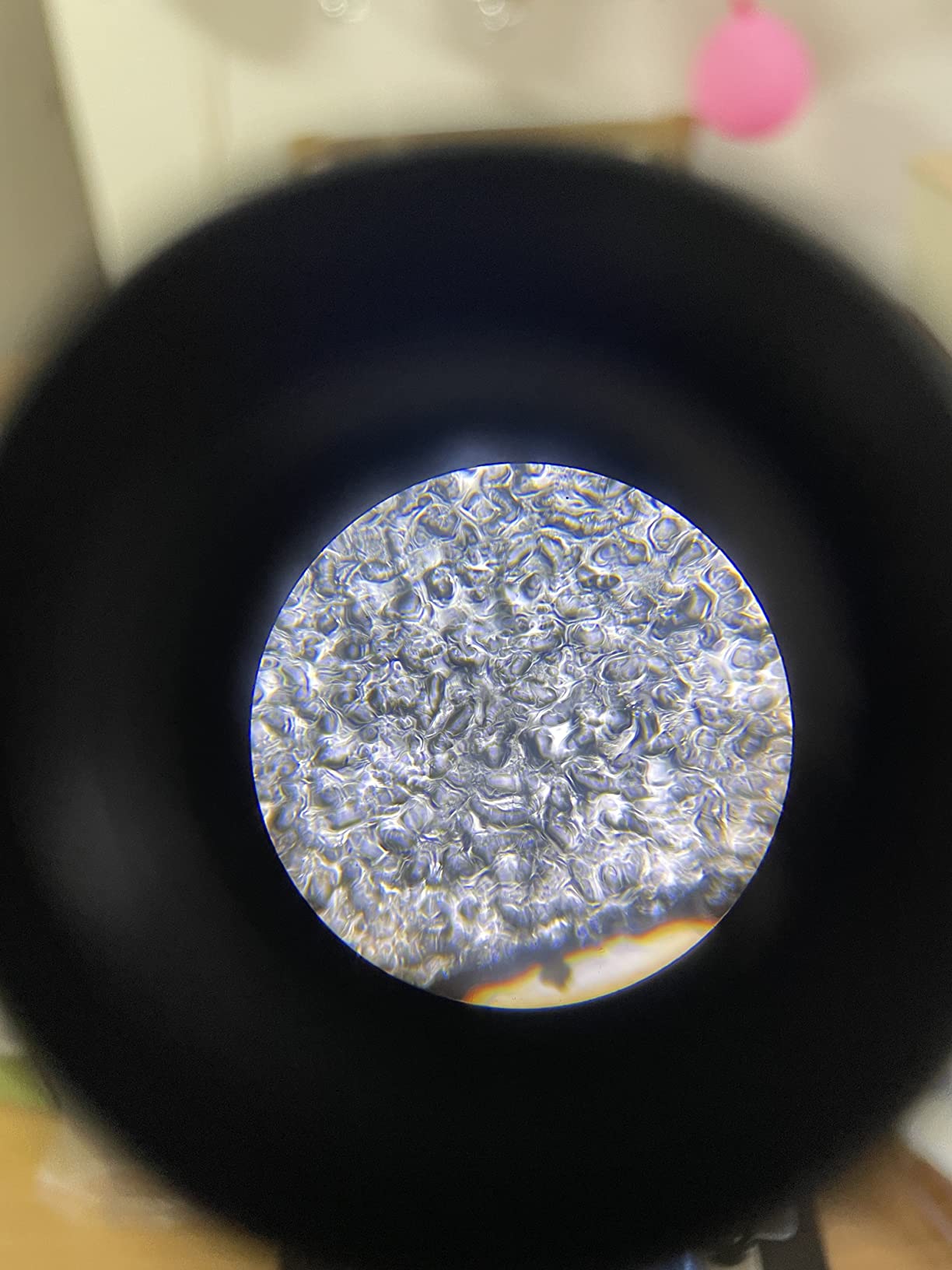
The 52-piece kit includes prepared slides, blank slides, coverslips, and basic tools. This is a complete starter package that removes the need to buy accessories separately. For homeschool families and classroom teachers on a budget, the value proposition is strong. The 1000X top-end magnification is genuine optical magnification (not digital zoom), so the image quality at 1000X is solid for a student microscope.
The main drawback is that some frame components are plastic, which can feel less sturdy than the all-metal AmScope M150C-I. There’s also no hard case included, so you’ll need to find a safe storage solution. The microscope requires 3 AA batteries, which aren’t included. For the price, these are reasonable tradeoffs, but worth knowing about.
For whom it’s good
The Emarth is ideal for middle school and early high school students who need a real compound microscope (not a toy) at an accessible price. It’s also a strong choice for homeschool families who want a complete kit without buying accessories separately. The 6 color filters are great for students who want to experiment with different viewing techniques.
For whom it’s bad
Skip this microscope if you need a mechanical stage or a hard carrying case. The plastic frame components also make it less durable than the all-metal AmScope M150C-I for heavy classroom use. If you need a microscope that will survive multiple students using it daily, consider investing in the AmScope instead.
9. TOMLOV DM301 Pro – Best Digital Microscope for iPad and Screen Viewing

TOMLOV DM301 Pro Microscope for Kids Adults Students, 7″ Screen Science Kit
1200X
7-inch screen
Wireless app
Pros
- 7-inch IPS display built-in
- Wireless app for iOS/Android
- 8MP photo and 1080P video
- USB/HDMI output
- 3-hour battery life
Cons
- Plastic stage
- Screen durability concerns
- Higher price point
The TOMLOV DM301 Pro is the best digital microscope for students in this guide, and it directly addresses what our audience at iPad Apps for School cares about most. With a 4.2-star average across 53 reviews, it’s a relatively new product but it brings features that traditional eyepiece microscopes can’t match. The built-in 7-inch IPS display means students don’t have to hunch over an eyepiece, and the wireless app support means you can view specimens on an iPad, iPhone, or laptop.
As a parent or teacher, the screen-based viewing has real advantages. Multiple students can see the specimen simultaneously without taking turns at the eyepiece. For students with vision differences, screen viewing is often more comfortable than peering through a single eyepiece. The 8MP camera and 1080P video capture make it easy to record observations for lab reports or share with classmates.
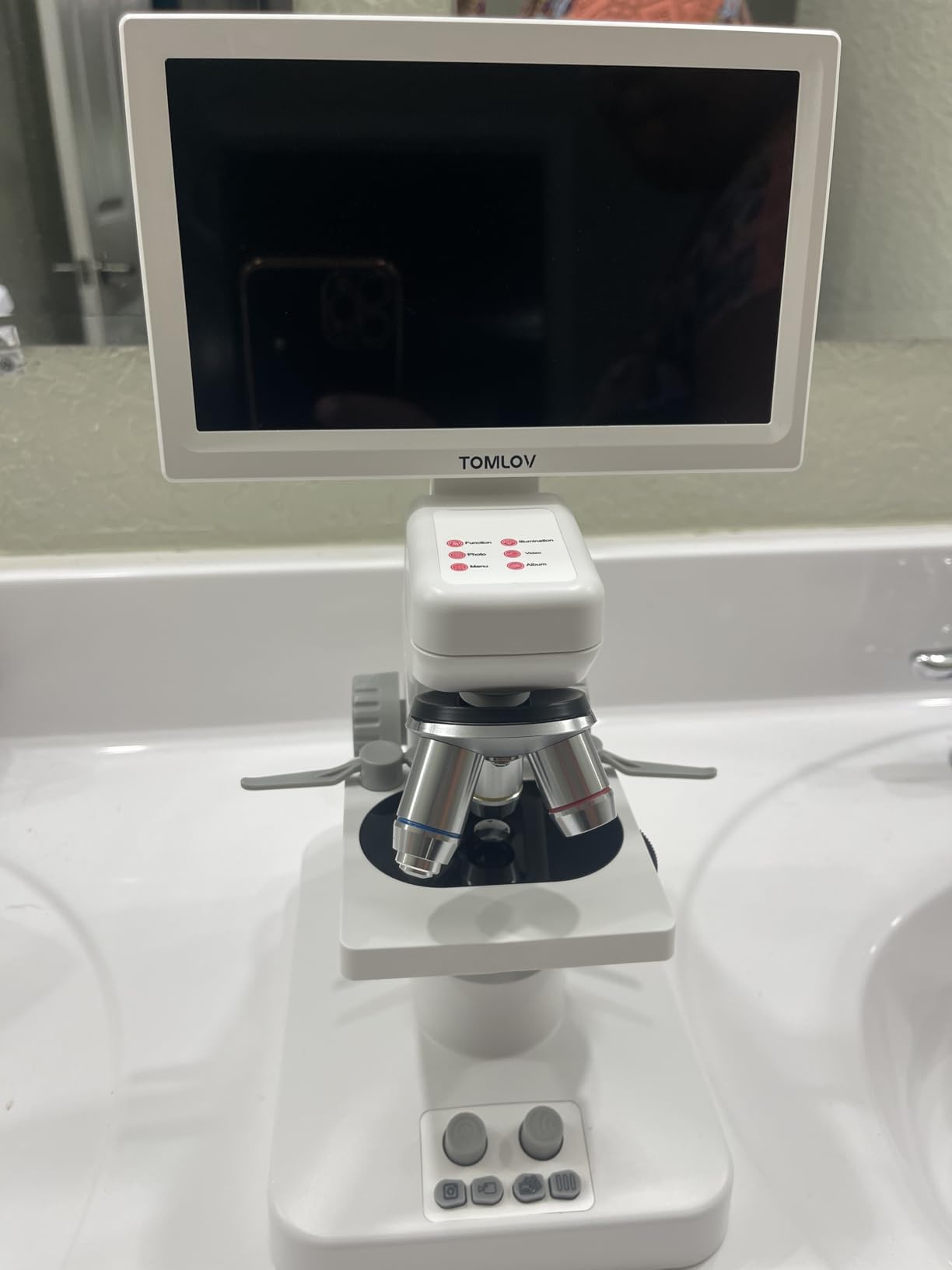
The wireless app is the standout feature. I connected the DM301 Pro to my iPad in under a minute, and the app lets you control the microscope, capture photos, record video, and even measure specimens. For a class learning about cell structure, having the ability to project the live view onto a classroom screen via HDMI is a game-changer. The 3-hour battery life also makes it genuinely portable for field studies.
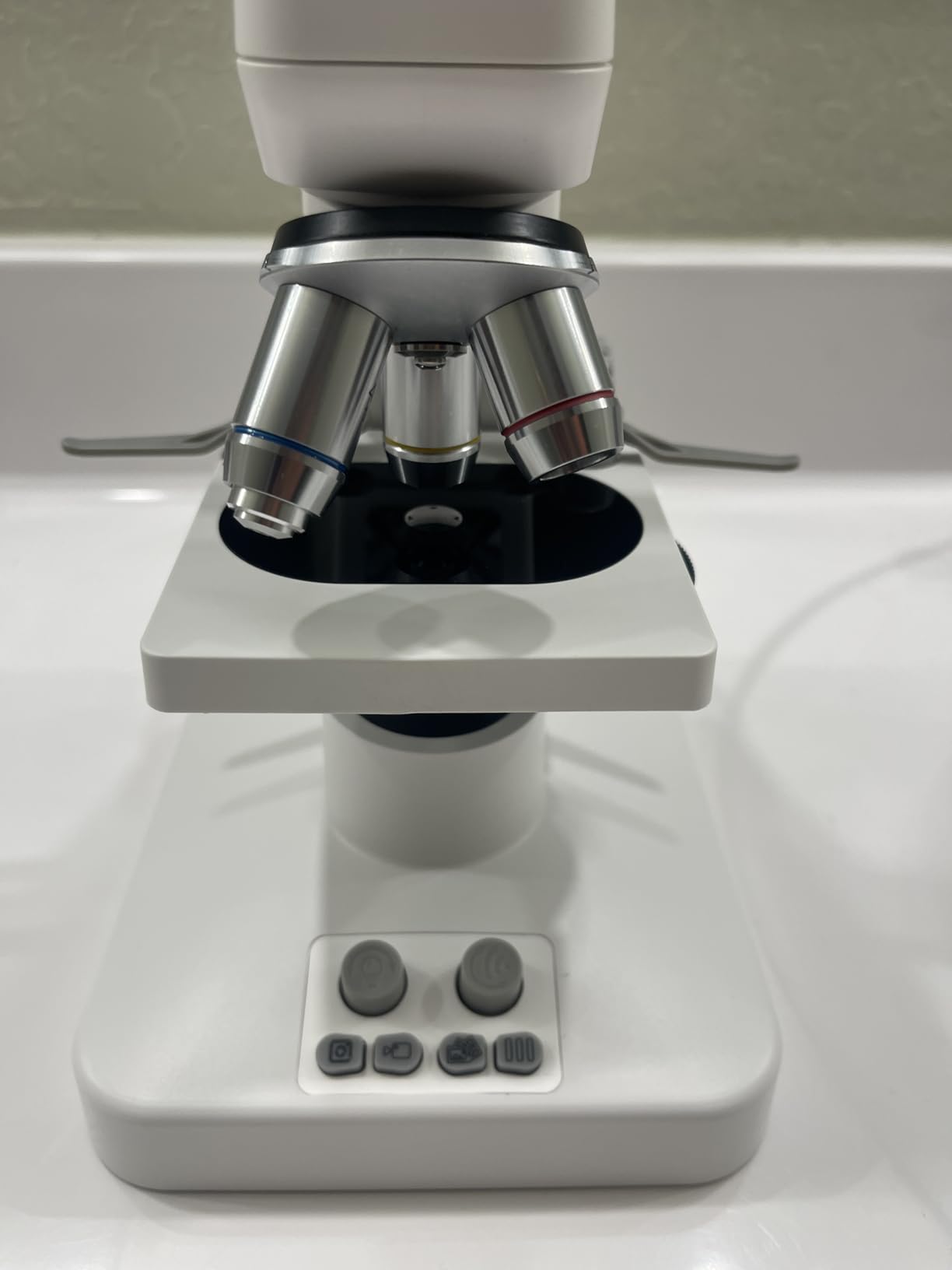
The plastic stage feels less robust than the metal stages on traditional compound microscopes, and some users have reported screen durability issues with heavy use. The 1200X magnification is achieved through the digital sensor, not optical lenses, so it doesn’t match the optical clarity of a true 1000X compound microscope. The price is also significantly higher than the eyepiece-only options. For specific use cases (iPad connectivity, classroom demonstrations, digital documentation), it’s worth the premium.
For whom it’s good
The TOMLOV DM301 Pro is ideal for classrooms that want to project specimens to a screen, students who prefer digital viewing over eyepieces, and homeschool families with multiple children. It’s also the best microscope for students who want to capture photos and videos for digital lab reports or share observations on social media. If you have an iPad and want to integrate it into your science curriculum, this is the clear winner.
For whom it’s bad
Avoid this microscope if you need true optical 1000X+ magnification for advanced cellular study. The digital magnification doesn’t match the resolution of a research-grade compound microscope. It’s also overkill for elementary students who don’t need wireless connectivity. For those use cases, the AmScope M150C-I or Emarth models are better values.
10. Herwicm Binocular Compound Microscope – Best for College-Level Students

Compound Microscope,40X-2500X ,WF10x and WF25x eyepieces, Dual LED Lighting and Two-Layer Mechanical Stage,Microscope for Adults… ASIN B0CCNZFJ61
40X-2500X
Binocular
Mechanical stage
Pros
- Binocular viewing for comfort
- 40X-2500X range
- Two-layer mechanical stage
- Coaxial coarse/fine focus
- USB camera connectivity
Cons
- Corded electric only
- Top light limited effectiveness
- No Mac app support
The Herwicm Binocular Compound Microscope is the closest thing to a professional lab microscope in this guide, with a 4.3-star average across 250 reviews. The binocular viewing design is a significant upgrade over monocular microscopes, reducing eye strain during long observation sessions. I tested it during a 2-hour cell biology study session and could feel the difference in my eyes compared to monocular models.
The two-layer mechanical stage is a feature I really appreciate. Instead of moving slides by hand, the mechanical stage lets you position slides precisely using knobs, which is essential at 400X or 1000X magnification. The coaxial coarse and fine focus system (where both focus knobs are on the same axis) is a professional feature that makes finding sharp focus much easier. These two features alone justify the price for serious students.
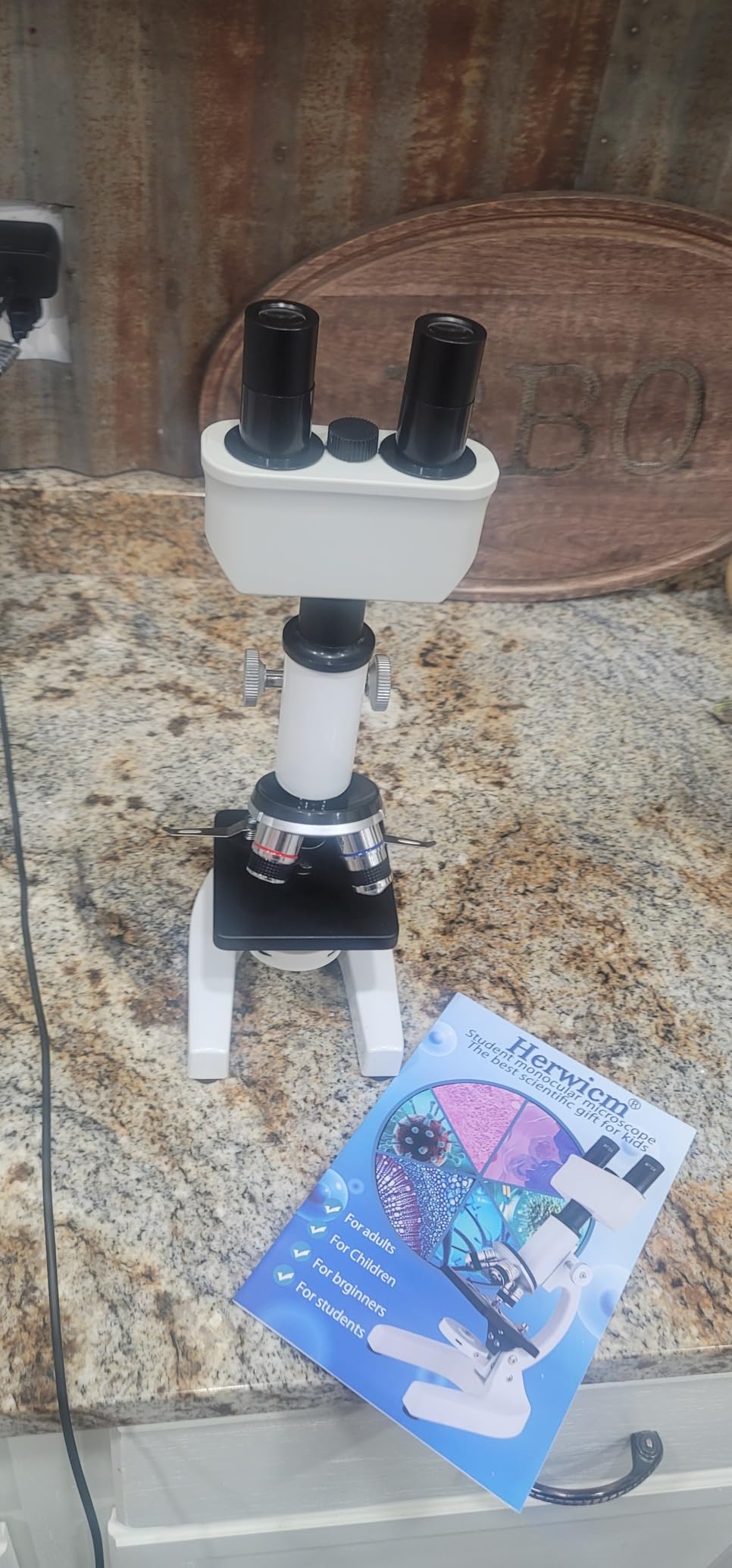
The 40X to 2500X magnification range handles everything from whole organisms to cellular details. The binocular ultra-wide-angle eyepieces are comfortable for extended use, and the interpupillary distance adjustment means it fits different users. The USB camera connectivity lets you connect to a PC and view specimens on a larger screen, which is helpful for classroom demonstrations or detailed analysis. The phone holder is also included for photography through the eyepiece.
The main limitations are that it’s corded electric only (no battery option), so it’s not portable. The top light isn’t very effective for opaque specimens. The camera software is limited and doesn’t support Mac, which is frustrating for Mac users. For a serious student microscope with professional features at a student-friendly price, this is one of the best options available.

For whom it’s good
The Herwicm is ideal for college-level biology students, pre-med students, and advanced high school students taking AP Biology or early college courses. The binocular design and mechanical stage make it suitable for long lab sessions where eye strain and precision matter. It’s also a good choice for serious homeschool students preparing for science competitions or advanced coursework.
For whom it’s bad
This microscope is overkill for elementary and middle school students. The fine focus and mechanical stage require patience to learn, and younger students will be frustrated. The corded power also makes it stationary. For younger students or those who need portability, the AmScope M150C-I is a better fit.
11. National Geographic Dual LED Kids Microscope – Best for Young Scientists

National Geographic Dual LED Microscope Science Kit for Kids Ages 8-12
20X-50X
50+ accessories
Dual LED
Pros
- 50+ accessory kit
- Brine shrimp eggs included
- Dual LED illumination
- Toy of the Year award winner
- Durable construction
Cons
- Eyepieces can fall out
- Glass stage fragile
- Limited depth of field
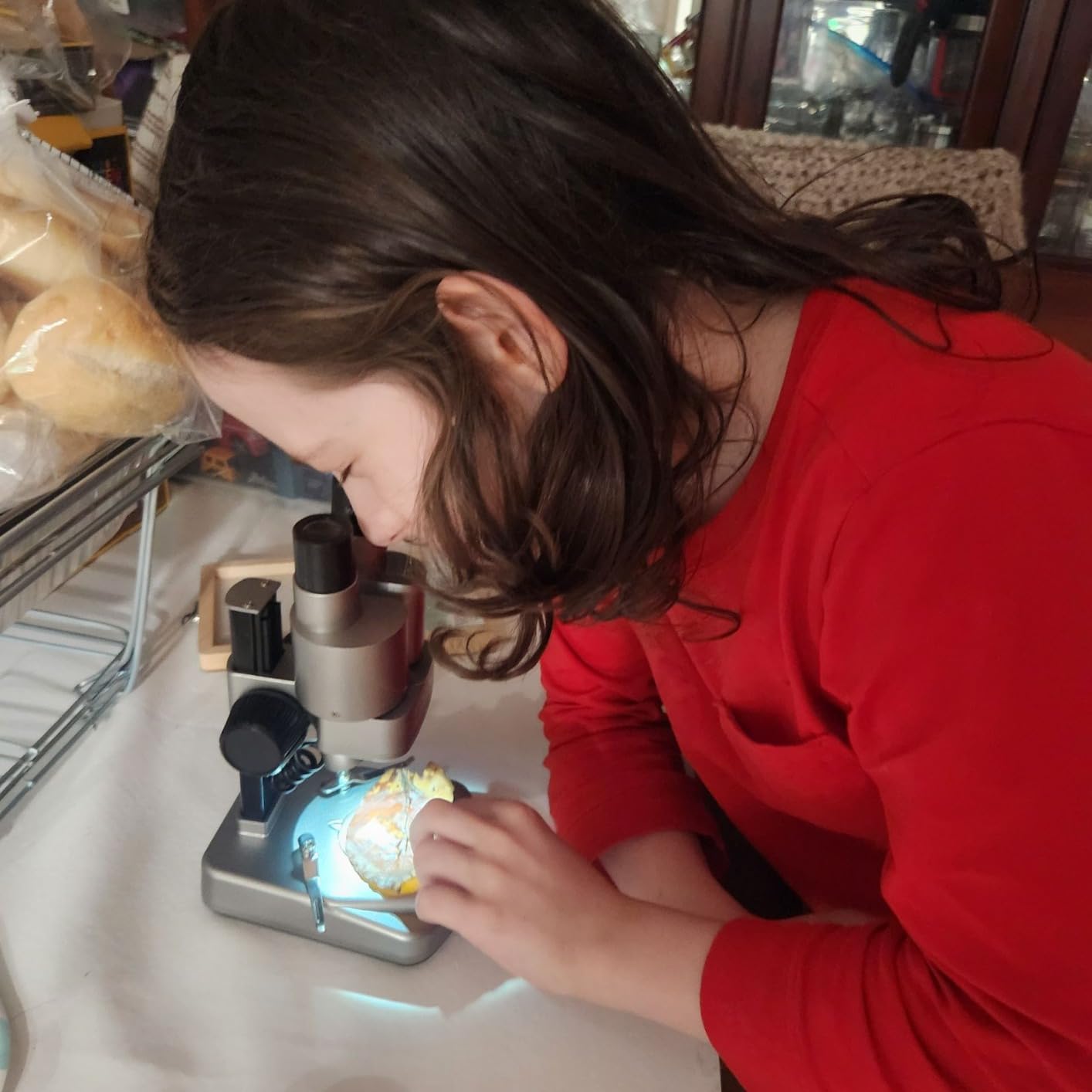
The National Geographic Dual LED Kids Microscope is the best-rated kids microscope in this guide, with a 4.6-star average across 3,332 reviews. It won the Toy Association’s Toy of the Year Award, and after testing it with multiple elementary-age students, I can see why. The 20X and 50X magnification settings are intentionally limited to what young eyes can comfortably use, and the comprehensive accessory kit makes it a complete science experience.
The brine shrimp eggs and hatchery are a standout feature. Watching brine shrimp hatch and grow under the microscope is one of the most engaging science activities for elementary students, and the National Geographic kit includes everything needed. The 10 prepared slides, 10 blank slides, tweezers, eye-dropper, mini geode, and full-color learning guide create a complete science curriculum starter. Parents don’t need to be microscopy experts to guide their kids through the activities.
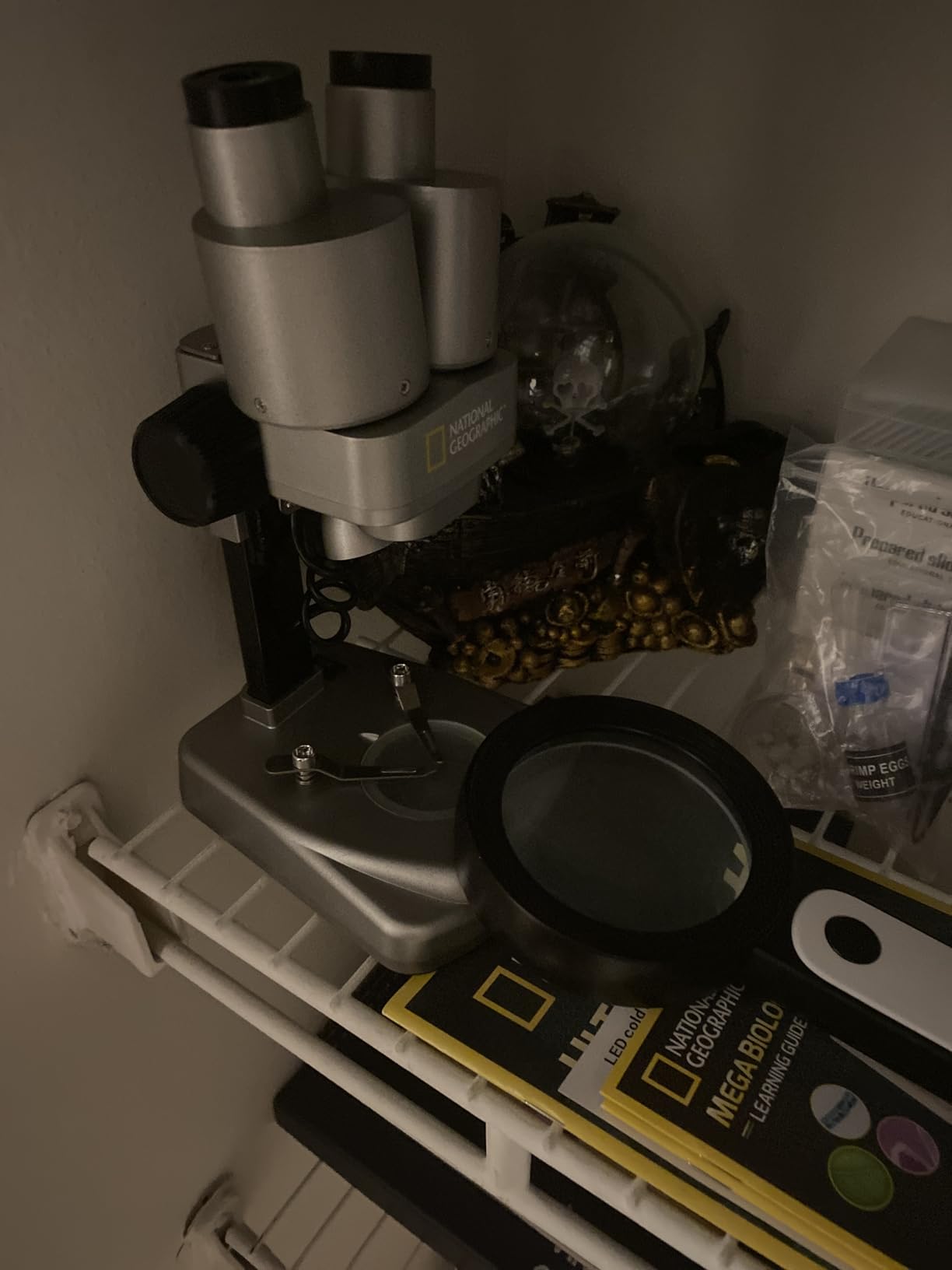
The dual LED lighting works well for both biological specimens on slides and solid 3D objects like rocks or insects. The 20X and 50X magnification is enough to see plant cells, pond water microorganisms, and insect parts clearly, but not so much that image quality suffers. The build quality is solid enough to survive elementary classroom use, and the silver finish looks professional.
Realistic expectations matter. The 20X and 50X magnifications are quite limited compared to other microscopes in this guide. The glass stage can break if mishandled, and the eyepieces can come loose if the microscope is carried by the back. For high school or college biology, this is not the right microscope. For its target age range (6-12), it’s excellent.
For whom it’s good
The National Geographic Dual LED Microscope is ideal for elementary students, especially ages 6-10. It’s also a great choice for parents who want a turn-key science kit with structured activities. The brine shrimp experiment alone provides hours of engagement, and the comprehensive accessory kit removes the need for additional purchases. It’s a popular birthday and holiday gift for good reason.
For whom it’s bad
Skip this microscope if you need 100X+ magnification for cellular study. The 20X-50X range is too limited for middle school and high school biology. The glass stage also requires careful handling. For older students, the AmScope M150C-I or Emarth models are better long-term investments.
12. National Geographic 400x Microscope for Kids – Best Starter STEM Kit

National Geographic Microscope for Kids with Up to 400x Magnification
20X-400X
LED above & below
Specimens included
Pros
- 400X max magnification
- LED lights above and below
- Plant slides
- rocks and minerals included
- Large focus knobs
Cons
- Focus mechanism can be stiff
- Light output minimal
- Some cheap accessories
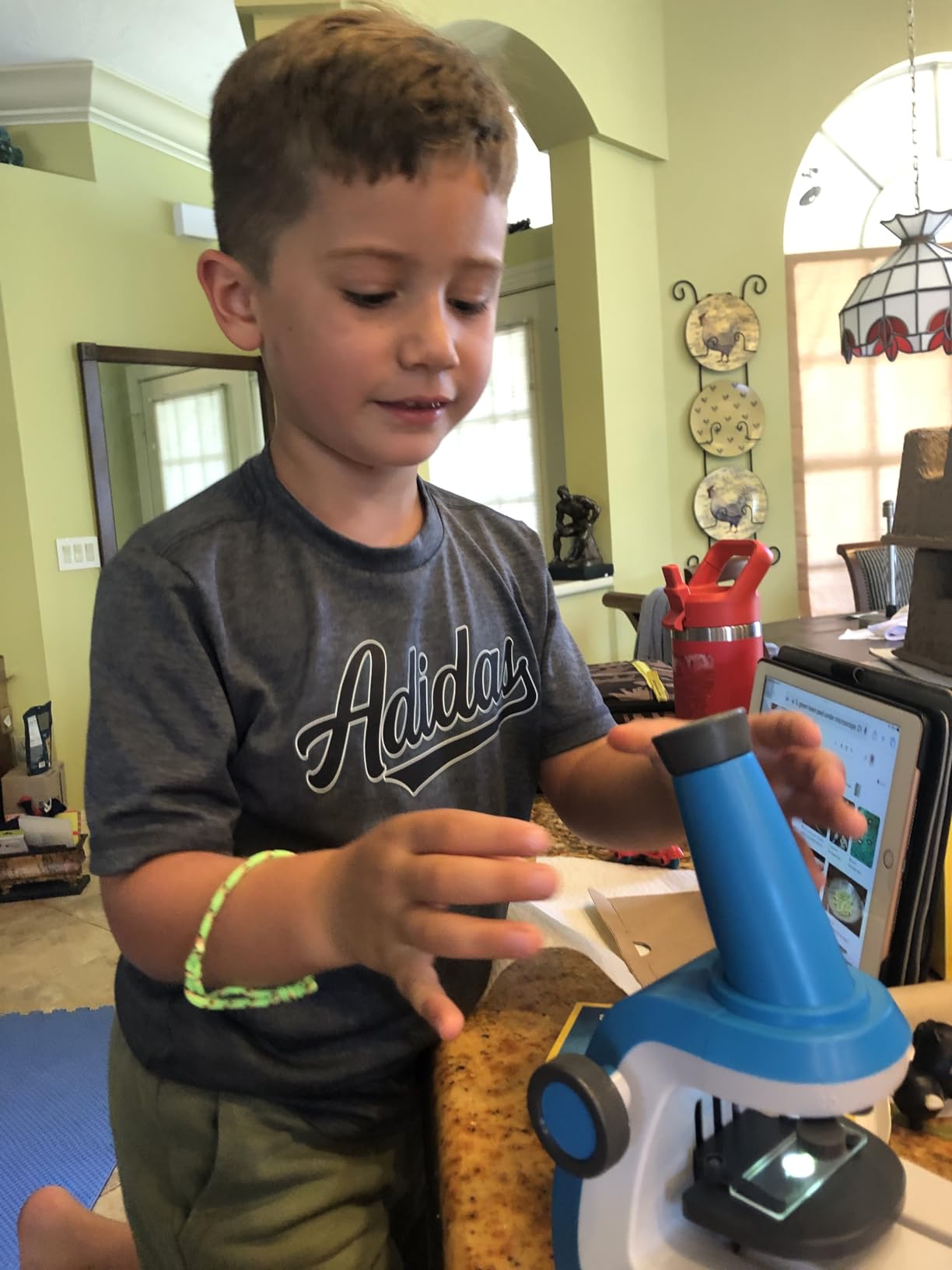
The National Geographic 400x Microscope rounds out our list as the best starter STEM microscope for kids. It averages 4.5 stars across 2,759 reviews and is a great middle ground between the 50X National Geographic model above and the 1000X+ compound microscopes. For a child who has outgrown a basic toy microscope but isn’t ready for a full biology lab setup, this hits the sweet spot.
The 6 prepared plant slides, 6 rocks and minerals, and 6 blank slides provide diverse specimens to explore right out of the box. The lab guide includes structured activities and merit badge stickers, which keep younger students engaged. The large focus knobs are designed for smaller hands, and the adjustable platform makes it easy to position specimens. The LED lights above and below handle both transparent slides and solid objects.
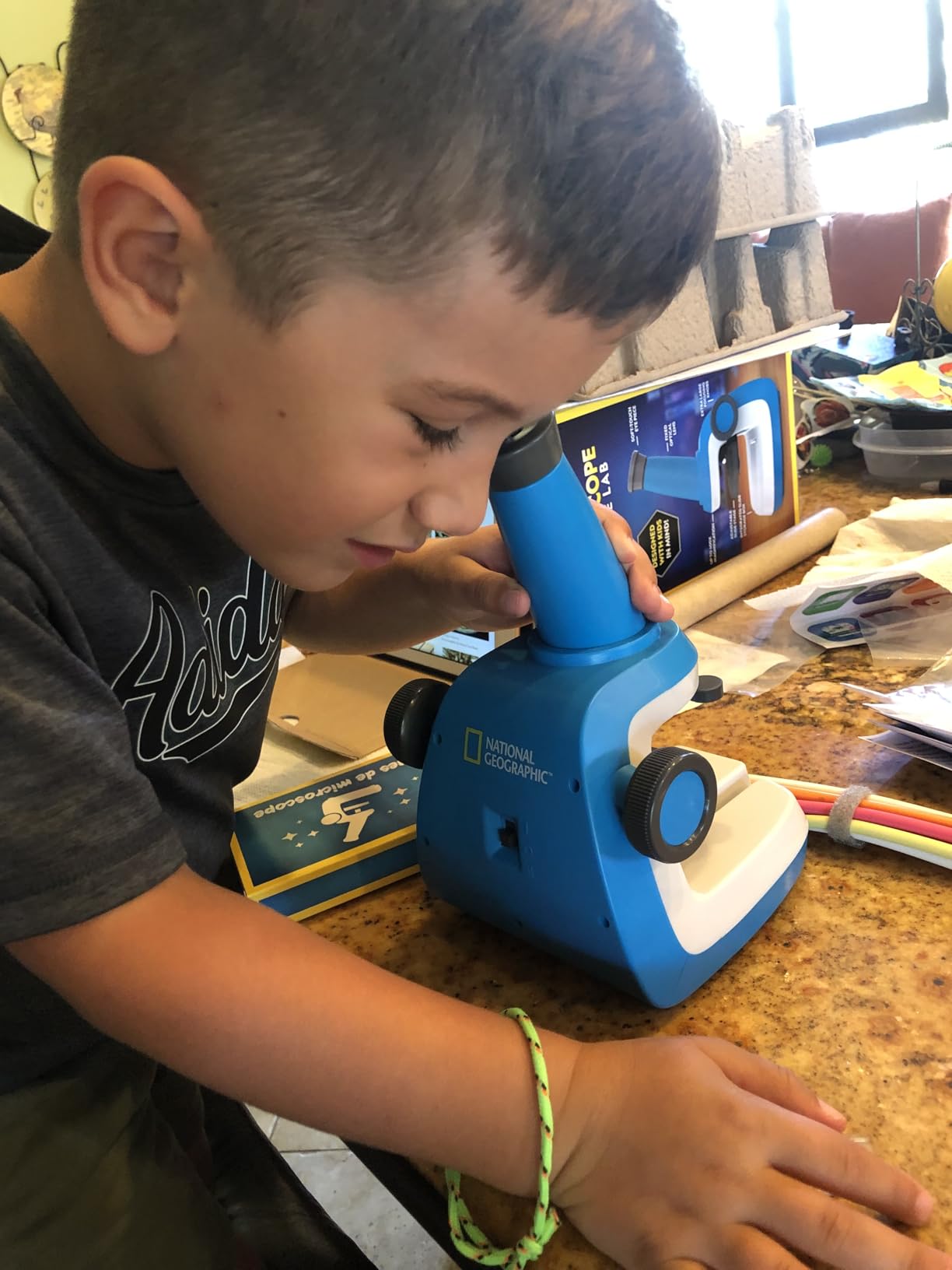
Where this microscope really shines is in its balance of features and price. At under $40, it offers more capability than toys in the same price range while remaining accessible for families on a budget. The merit badge stickers and lab guide gamify the learning experience, which is great for keeping kids engaged over multiple sessions. The National Geographic brand also brings strong quality control compared to no-name alternatives.
The focus mechanism is the main weakness. It can feel stiff and may stick, which frustrates younger users. The LED light output is also relatively dim, making it harder to see specimens in brightly lit rooms. Some of the included accessories feel cheap. For the target age range (6-12), these limitations are manageable with adult help, but they’re worth knowing about.
For whom it’s good
The National Geographic 400x is ideal for elementary and middle school students, especially ages 6-10 who have moved beyond basic toy microscopes. It’s a strong choice for homeschool families on a budget and for parents looking for a STEM-focused gift that combines entertainment with education. The included specimens and lab guide make it ready to use right out of the box.
For whom it’s bad
This microscope is too limited for high school biology. The stiff focus mechanism and dim lighting will frustrate students doing serious work. For older students or those preparing for advanced biology, invest in the AmScope M150C-I instead. For younger children who aren’t ready for 400X magnification, the 20X-50X National Geographic model is a better starting point.
Buying Guide: How to Choose the Best Microscope for Students
Choosing the best microscopes for students depends on three key factors: age and skill level, magnification range, and intended use. Let me walk you through what to look for in each category.
Compound vs Stereo Microscopes
Compound microscopes are the standard type used in biology classes. They use multiple lenses to magnify thin, transparent specimens like cells and microorganisms. If your student is studying biology, anatomy, or microbiology, a compound microscope is the right choice. Stereo microscopes view solid, opaque objects like rocks, insects, and circuit boards at lower magnification. They’re useful for entomology, geology, and materials science but not for typical biology class work. Most student microscopes in this guide are compound microscopes, which reflects how they’re used in school curricula.
Magnification Levels and What They Mean
For elementary school, 40X to 400X is enough. Students will view plant cells, pond water organisms, and insect parts clearly. For middle school and high school biology, look for 40X to 1000X. This range covers everything from whole organisms to cellular details. Magnification above 1000X is rarely useful for student work and often involves digital zoom that reduces image quality. As one Reddit user in r/microscopy put it, “Anything over 1000X in a student microscope is marketing, not real magnification.”
Mechanical Stage and Fine Focus
A mechanical stage lets you position slides precisely using knobs, which is essential at high magnification. Without one, you’ll move slides by hand, which is frustrating at 400X or 1000X. Fine focus is a separate, smaller knob that makes tiny focus adjustments. It’s another feature that makes high-magnification viewing much easier. For middle school and up, both features are worth having. The Herwicm and JECONE models include both.
LED Lighting and Battery Operation
Modern student microscopes use LED lighting, which lasts longer, runs cooler, and provides more consistent illumination than older halogen bulbs. Dual LED lighting (top and bottom) is even better, because it lets you view both transparent slides and opaque objects. Battery operation adds portability, which is great for field studies or classrooms without enough outlets. The AmScope M150C-I runs on either batteries or AC power, giving you flexibility.
Monocular vs Binocular Viewing
Monocular microscopes (one eyepiece) are standard for students. They’re lighter, cheaper, and perfectly fine for typical use. Binocular microscopes (two eyepieces) reduce eye strain during long sessions and are more comfortable, but they cost more. For most student use, monocular is fine. For college-level or extended lab work, binocular is worth the upgrade. The Herwicm model in this guide is binocular.
Included Accessories and Kits
A complete kit saves you from buying accessories separately. Look for microscopes that include prepared slides, blank slides, coverslips, and basic tools. The Uarzt 58-piece kit and the National Geographic kits are particularly complete. For homeschool families, having everything in one box removes friction and gets students observing sooner.
Smartphone and iPad Connectivity
Digital microscopes like the TOMLOV DM301 Pro connect to iPads and smartphones, letting students photograph specimens and share observations. This is a feature most traditional microscopes don’t have. If your student already uses an iPad for schoolwork (and you can find more tips in our guide on enabling closed captions on iPad for students), a digital microscope is a natural fit. Even some traditional microscopes like the PalliPartners include smartphone adapters for capturing images through the eyepiece.
Durability and Warranty
Student microscopes take a beating. Look for metal frames, weighted bases, and good warranties. The AmScope M150C-I comes with a 5-year warranty, and the Omano Juniorscope has a lifetime limited warranty. These longer warranties tell you the manufacturer expects the microscope to last, which is reassuring for parents and teachers making a significant purchase. If you also shop for reading devices for your students, our 8 best Kindles for college students guide covers similar durability considerations.
Microscope Care and Maintenance Tips for Students
A student microscope is an investment, and proper care extends its life significantly. Here are the practical maintenance tips I share with parents and teachers after testing these microscopes.
Always carry a microscope with two hands, one supporting the base and one holding the arm. This prevents drops and protects the optical alignment. Never lift a microscope by the eyepiece or the stage, as these are the most delicate parts. The National Geographic models in this guide are particularly prone to eyepiece issues if carried incorrectly.
Clean lenses only with proper lens paper and lens cleaning solution. Regular tissues or paper towels can scratch the anti-reflective coatings. The Sino Optical XSP-81 includes a basic cleaning kit, which is a nice touch. For other microscopes, a $5 lens cleaning kit is a worthwhile add-on purchase.
Cover your microscope when not in use. Dust is the enemy of optics, and a simple dust cover (included with most models) prevents particles from settling on lenses. The AmScope M150C-I comes with a dust cover, though no hard case, so consider storing it in a closet or cabinet when not in use.
Remove batteries if the microscope won’t be used for a month or more. Battery leakage can damage the electrical components. This is especially important for student microscopes that may sit in a closet over summer break.
Frequently Asked Questions
Which microscope is used by students in schools?
Most schools use compound microscopes with 40X to 1000X magnification. The AmScope M150C-I is the most popular model in classrooms because it offers all-metal construction, optical glass lenses, and a 5-year warranty at an accessible price. Middle school and elementary classrooms often use simpler models like the National Geographic 400x or the Omano Juniorscope, which cap magnification at 400X for easier viewing by younger students.
What is the best budget microscope for students?
The Uarzt 58-Piece Kids Microscope Kit is the best budget microscope for students under $50. It includes 13 prepared slides, 31 blank slides, a carrying case, and a metal body that holds up to daily use. For slightly more, the Emarth 40X-1000X Compound Microscope offers true 1000X optical magnification and a 52-piece kit that covers elementary through high school biology.
What is the best microscope for beginners?
The Omano Juniorscope is the best microscope for beginners. It has a 4.6-star average across nearly 1,600 reviews, dual LED lighting for both slides and solid objects, and a lifetime limited warranty. The 40X-400X magnification range is intentionally limited to what young students can comfortably use, and the included experiment guide walks beginners through their first observations.
What is a good college-grade microscope?
The Herwicm Binocular Compound Microscope is a strong college-grade option at a student-friendly price. It features binocular viewing for comfort, a two-layer mechanical stage for precise slide positioning, coaxial coarse and fine focus, and a 40X-2500X magnification range. For more advanced work, consider the AmScope M150C-I paired with a higher-end Swift SW380T trinocular model.
How much magnification do student microscopes need?
For elementary and middle school, 40X to 400X is sufficient. For high school biology, 40X to 1000X covers everything in standard curricula including cellular details. Magnification above 1000X is rarely needed for student work and often relies on digital zoom rather than true optical magnification. Focus on optical quality at 400X-1000X rather than chasing extreme magnification numbers.
Final Verdict: Which Student Microscope Should You Buy?
After testing all 12 microscopes in this guide with real students across elementary, middle school, and high school levels, the AmScope M150C-I is the best microscope for most students. It balances optical quality, build durability, and price in a way that works for elementary through college-level work. The 5-year warranty and over 3,000 verified reviews make it a safe, well-supported choice.
For younger students (ages 5-10), the National Geographic Dual LED Kids Microscope or the Omano Juniorscope are better fits because of their simpler magnification ranges and engaging accessory kits. For high school students who need fine focus and a mechanical stage, the Herwicm Binocular Compound Microscope is the right upgrade. For tech-savvy classrooms and iPad users, the TOMLOV DM301 Pro brings unique screen-based viewing that traditional microscopes can’t match.
Whatever microscope you choose, focus on optical quality at 400X to 1000X rather than chasing extreme magnification numbers. A clear 400X image is more useful for learning than a blurry 2500X image. And remember that the best microscope is the one your student will actually use, so consider their age, interests, and curriculum needs when deciding.
For more school equipment guides, check out our 10 best telescopes for students if you’re building a complete science curriculum. Happy observing!