
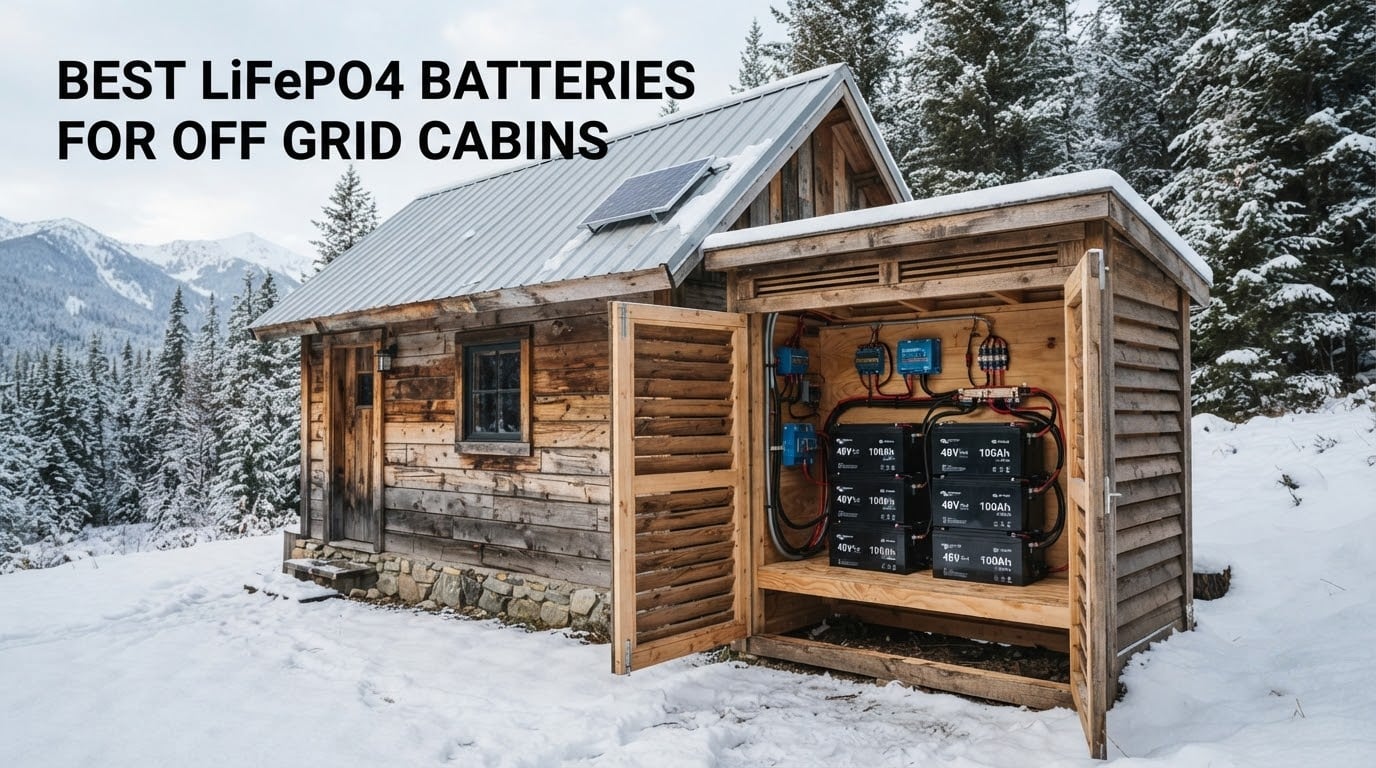
For most cabin owners the short answer is simple: a 12V 100Ah LiFePO4 battery in a Group 24 or Group 31 case is the sweet spot for a weekend cabin, a 12V 300Ah or 314Ah unit covers a full-time home, and if your cabin goes below freezing you should be looking at a self-heating pack or one with a built-in low-temperature charge cutoff. Our top pick for off-grid cabins overall is the Redodo 12V 100Ah Group 31, because it pairs a 100A BMS with a 22 lb case and a 3% self-discharge rate that holds its charge through months of absence.
That last point matters more than most spec sheets admit. A cabin that sits empty from October to May is not the same problem as a house with a utility connection, and the battery bank is the whole system when there is no grid behind it. LiFePO4 chemistry changed the maths here: you can use 80% to 90% of rated capacity instead of the roughly 50% a lead-acid bank gives you, the round-trip efficiency sits well above lead-acid, and the weight penalty that used to make lithium impossible to hand-carry into a remote building largely disappears.
We did not lab-test these batteries. What we did was cross-check every capacity, cycle-life figure, BMS rating, weight and warranty term against the manufacturer listing and technical datasheet, then layer on the failure modes and cold-weather experiences that off-grid owners actually report in forums. Where a number is a manufacturer claim rather than an independent measurement, we treat it as a claim. Last verified for 2026.
Three constraints separate a cabin battery from every other battery purchase, and they are the spine of this guide. The first is cold — charging a lithium battery below freezing permanently damages it, so cold behaviour is a buying filter, not a footnote. The second is absence — a bank left alone for weeks needs low self-discharge and ideally remote monitoring. The third is mounting — many cabins cannot legally host a battery in living space, which pushes you toward weather-resistant enclosures and away from anything without a sealed case. If you are still building out other parts of the system, our guide to power stations for off-grid cabins covers the no-wiring weekend option, and our deep cycle battery guide covers the mobile side of the same chemistry.
Table of Contents
Top 3 LiFePO4 Batteries for Off-Grid Cabins

Redodo 12V 100Ah Group 31
- 4000 cycles at 100% DoD
- 22 lb Group 31 case
- 100A BMS
- Expands to 4S4P

LiTime 12V 100Ah Group 24 BT
- Bluetooth 5.0 monitoring
- 100A BMS
- 21 lb Group 24
- 4P4S to 20.48kWh
LiTime 12V 100Ah Self Heating
- Self-heating pack
- Bluetooth 5.0 app
- IP65 rated
- 21.8 lb Group 24
Quick Picks: All 10 LiFePO4 Cabin Batteries Compared in 2026
- Redodo 12V 100Ah Group 31 — best overall for a cabin of any size, at 22 lb with expansion to 51.2V.
- dumfume 12V 200Ah — best when the bank has to live in a sealed outdoor enclosure (IP65).
- WattCycle 12V 100Ah BCI Group 24 — best when the battery box space is genuinely tight.
- LiTime 12V 100Ah Self Heating — premium pick for winter cabins that still charge through cold snaps.
- LiTime 12V 100Ah Group 24 BT — top rated overall, with the cleanest monitoring app in the group.
- dumfume 12.8V 300Ah — best single-box capacity for a full-time cabin.
- SUPER EMPOWER 12V 100Ah — best value, the lowest cost per amp-hour here.
- MARSENERGY Self-Heating 12V 100Ah — best for cold climates, with a 60W built-in heater.
- Power Queen 12V 200Ah PLUS — best for a large single 12V bank where weight is acceptable.
- ECO-WORTHY 12V 314Ah — best for on-site monitoring, with an LED panel and Bluetooth.
| Product | Specifications | Action |
|---|---|---|
| Redodo 12V 100Ah Group 31 |
|
Check Latest Price |
 dumfume 12V 200Ah IP65 dumfume 12V 200Ah IP65 |
|
Check Latest Price |
 WattCycle 12V 100Ah Group 24 WattCycle 12V 100Ah Group 24 |
|
Check Latest Price |
| LiTime 12V 100Ah Self Heating |
|
Check Latest Price |
| LiTime 12V 100Ah Group 24 BT |
|
Check Latest Price |
 dumfume 12.8V 300Ah dumfume 12.8V 300Ah |
|
Check Latest Price |
 SUPER EMPOWER 12V 100Ah SUPER EMPOWER 12V 100Ah |
|
Check Latest Price |
 MARSENERGY Self-Heating 12V 100Ah MARSENERGY Self-Heating 12V 100Ah |
|
Check Latest Price |
 Power Queen 12V 200Ah PLUS Power Queen 12V 200Ah PLUS |
|
Check Latest Price |
 ECO-WORTHY 12V 314Ah ECO-WORTHY 12V 314Ah |
|
Check Latest Price |
1. Redodo 12V 100Ah Group 31 — Best Overall for an Off-Grid Cabin
Redodo 12V 100Ah LiFePO4 Battery, Group 31, for RV, Marine
12.8V nominal
100Ah rated
100A BMS
22 lb
5-year warranty
Pros
- Lightest group 31 footprint here at 22 lb
- 4000 cycles at 100% DoD and 15000 at 60% DoD
- 3% self-discharge suits months of absence
- Expands to 4S4P for a 51.2V 400Ah bank
Cons
- No Bluetooth or app monitoring
- Not for engine starting or golf cart use
- Pro-rated warranty terms frustrate some owners
This is the battery we would put in a cabin without hesitating, and the reason is dull rather than exciting. At 22 lb it is a one-person lift, it fits a standard Group 31 box, and it carries a 100A BMS that handles overcharge, over-discharge, over-current, short circuit and high temperature without you having to think about it.
The cell claims are the interesting part. Redodo rates these cells at 4000 cycles at 100% depth of discharge, 6000 at 80% and 15000 at 60%. Take the middle figure as the realistic planning number — nobody runs a cabin bank to empty — and you are looking at a pack that should outlast most of the other hardware in the system.
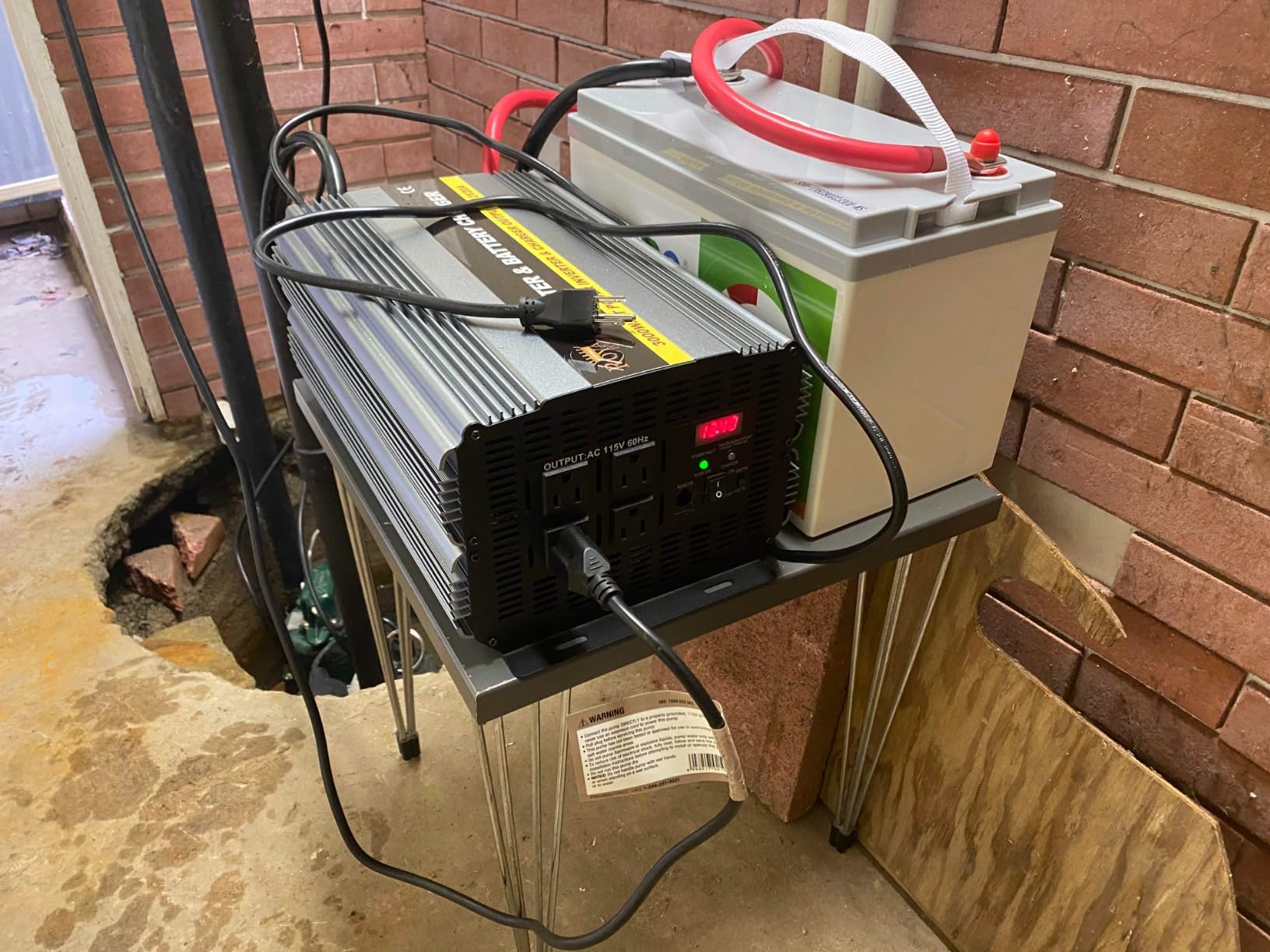
For a seasonal cabin the 3% self-discharge is the sleeper feature. A bank sitting at partial charge through a cold April loses very little, which means you are not walking up to a dead pack after a two-month absence. That is a genuine difference from flooded lead-acid, where the same absence produces a sulfated battery.
Expansion is straightforward: series and parallel combinations take you to four in series and four in parallel, which is 51.2V at 400Ah. That means one battery today and a four-battery bank in two years without changing anything else, as long as the inverter and charge controller can handle lithium and the higher voltage.
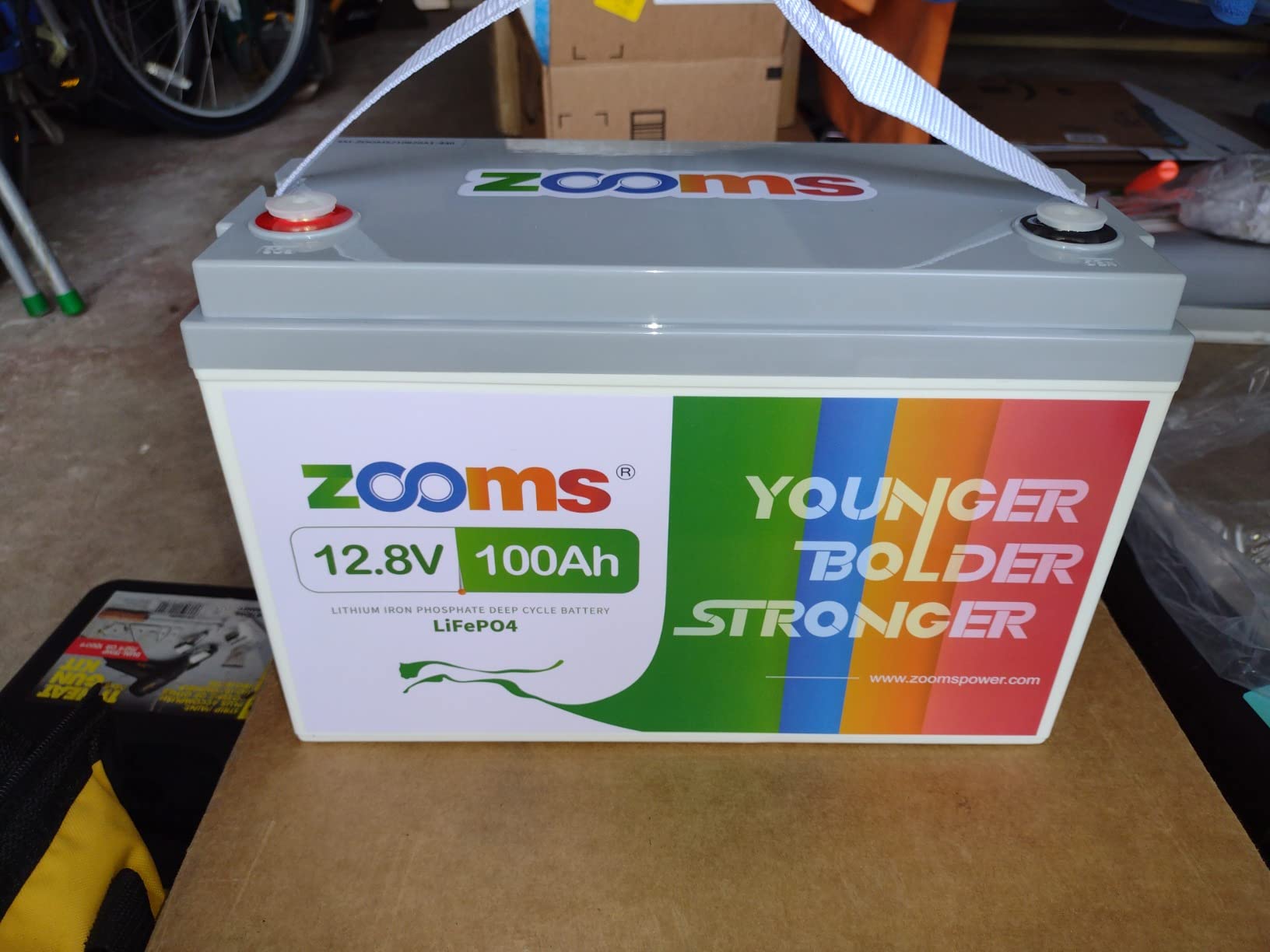
What tells you this is the right cabin battery
Twenty-two pounds is a one-person lift with a good handle, and that is the difference between a battery you install yourself and one you pay a truck to bring in. Combined with a group 31 footprint, it drops into the boxes most cabins already have.
There is no app here, so if you rely on remote state-of-charge data you will need to add a monitor. Everything else about the package is aimed squarely at a fixed bank rather than a vehicle, which is exactly what a cabin needs.
Where owners report problems
The recurring complaint across reviews is warranty structure rather than the product. A minority of owners report batteries that stopped accepting a charge after three or four years, and the pro-rated refund terms are described as disappointing in those cases.
Support itself is repeatedly described as responsive and warranty-friendly, so the pattern is that failures happen but get handled. If you are buying for a cabin you cannot easily reach, treat that as a real consideration and check the pro-rated terms before you commit.
2. dumfume 12V 200Ah — Best for a Sealed Outdoor Enclosure
Dumfume 12V 200Ah LiFePO4 Lithium Battery 200A BMS 2560Wh IP65
12.8V nominal
200Ah rated
200A BMS
IP65 sealed
5-year warranty
Pros
- IP65 sealed case suits a wet outdoor enclosure
- 2560Wh in a single box
- 200A BMS with 50ms over-current cutoff
- 4S4P to 40.96kWh
Cons
- No Bluetooth on the base model
- Needs a full initial charge and balance cycle before first use
- Some early failures reported around the one-year mark
Many cabins cannot legally host a battery in living space, and that pushes the bank into a shed, a box or a weatherproof enclosure. This is the pick for that situation because the case itself is rated IP65 for dust and water, so the enclosure you put around it can be a basic ventilated box rather than a sealed marine cabinet.
At 200Ah and 2560Wh, a single battery covers what most weekend cabins draw from a refrigerator, LED lighting, a water pump and phone charging. Reviewers report running camper and small home solar installs off a pair of them, and the 200A continuous BMS gives you real headroom for a startup surge from a pump motor.
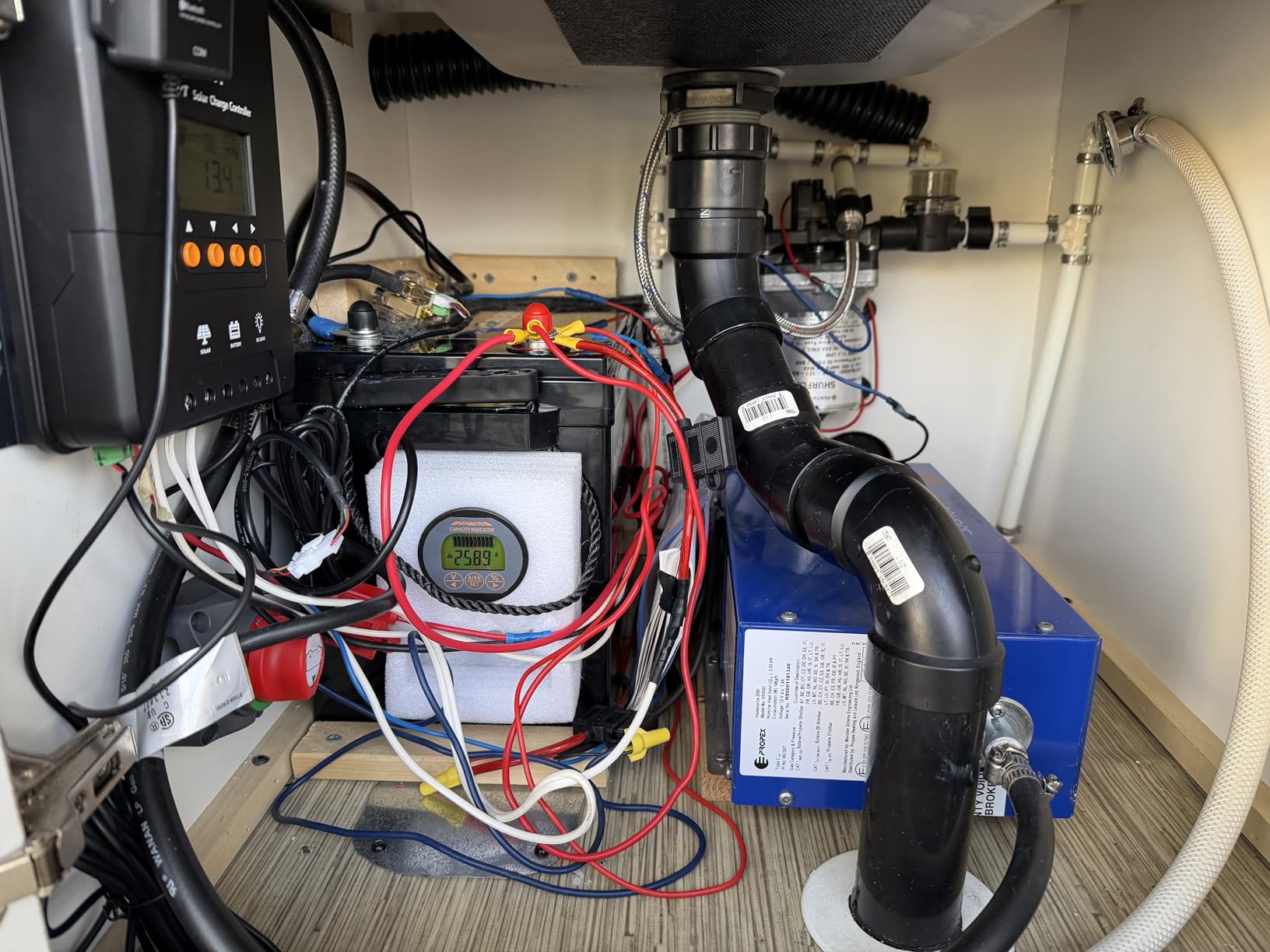
Charging behaviour is where cabin owners need to read carefully. The BMS disables charging below 0C/32F while allowing discharge down to -20C/-4F, which is the correct pattern — you can drain a cold battery, you just must not top it up while it is frozen. Set your charge controller lithium profile and this becomes a non-issue rather than a hazard.
The one setup step people miss is the first charge. A number of owners report that batteries arrived needing a full initial charge and a cell-balance cycle before they performed properly, and customer service is praised for diagnosing and correcting balance issues. Budget an afternoon for commissioning rather than assuming the bank is usable out of the box.
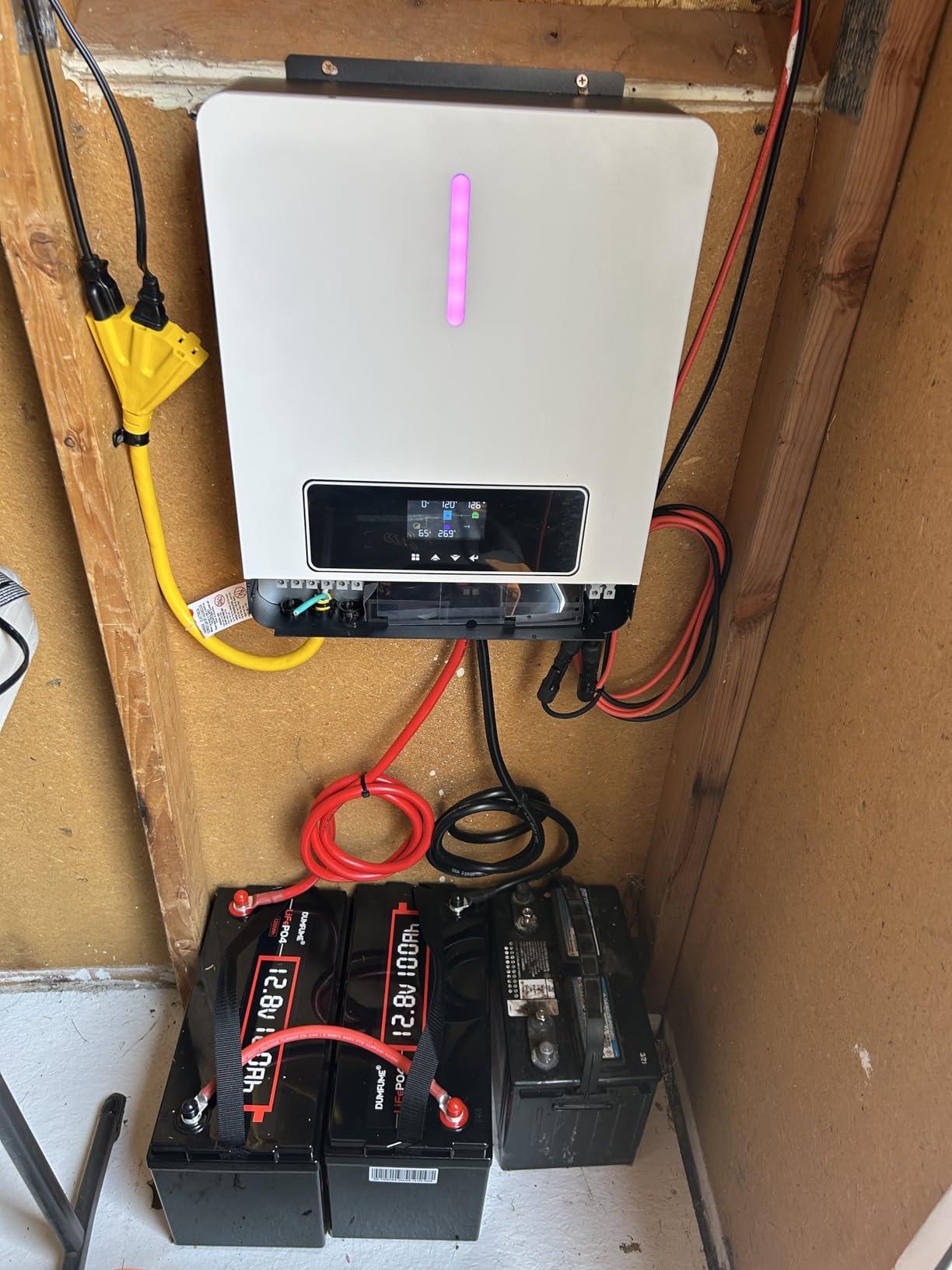
What you gain over a 100Ah unit
Going from 100Ah to 200Ah in one case halves the number of enclosures, busbars and cable terminations you have to build and weatherproof. Fewer connections means fewer failure points and a cleaner install in a cramped battery box.
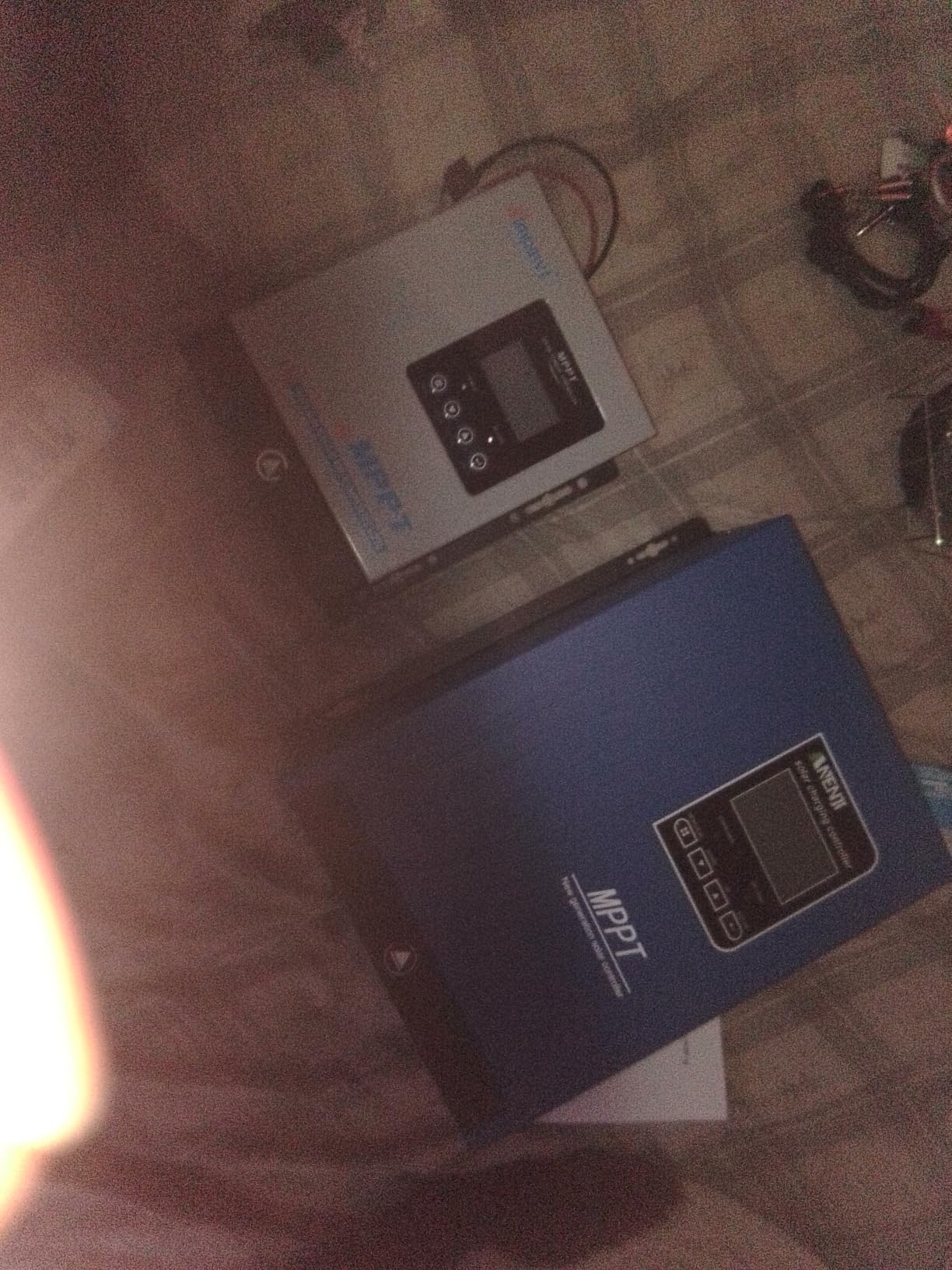
The 200A BMS also means you are not relying on a charge controller to hold everything in check, which matters if you are running an MPPT controller that was never designed with lithium setpoints in mind.
What to watch before you order
At 58.9 lb this is a two-person job, and it will not go through a small cabin hatch on its own. Measure the access route and the box before ordering, because a 21-inch case is longer than a lot of Group 31 shelves.
Given the review volume on this one, that handful of reports is a pattern worth asking about rather than a settled verdict. Check the seller’s replacement process before committing to a remote install.
3. WattCycle 12V 100Ah BCI Group 24 — Best for a Tight Battery Box
Wattcycle 12V 100Ah LiFePO4 Battery, BCI Group 24
12.8V nominal
100Ah rated
100A BMS
23.2 lb
BCI Group 24
Pros
- Compact 10.24 x 6.61 in Group 24 case
- A+ grade cells rated to 15000 cycles
- Expands to 20.48kWh
- Responsive warranty support
Cons
- Bluetooth companion app is unreliable
- Some BMS units lock up after cold shutdowns
- Needs a LiFePO4 charger to wake from sleep on arrival
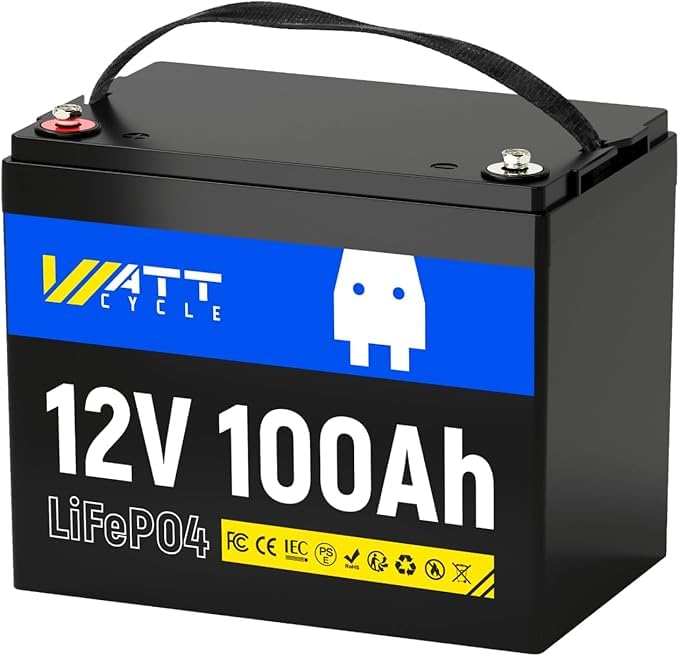
Some cabins were built around a Group 24 box and there is no room to grow. It measures 10.24 by 8.23 by 6.61 inches at 23.2 lb, and it is the one to pick when the constraint is space rather than capacity.
It carries a 100A BMS with a 300A plus-or-minus 50A discharge disconnect, an operating range from -4F to 158F, and UN38.3, CE and RoHS certification. Four in series and four in parallel takes the bank to 20.48kWh, so the size of the box does not limit how far the system can grow.
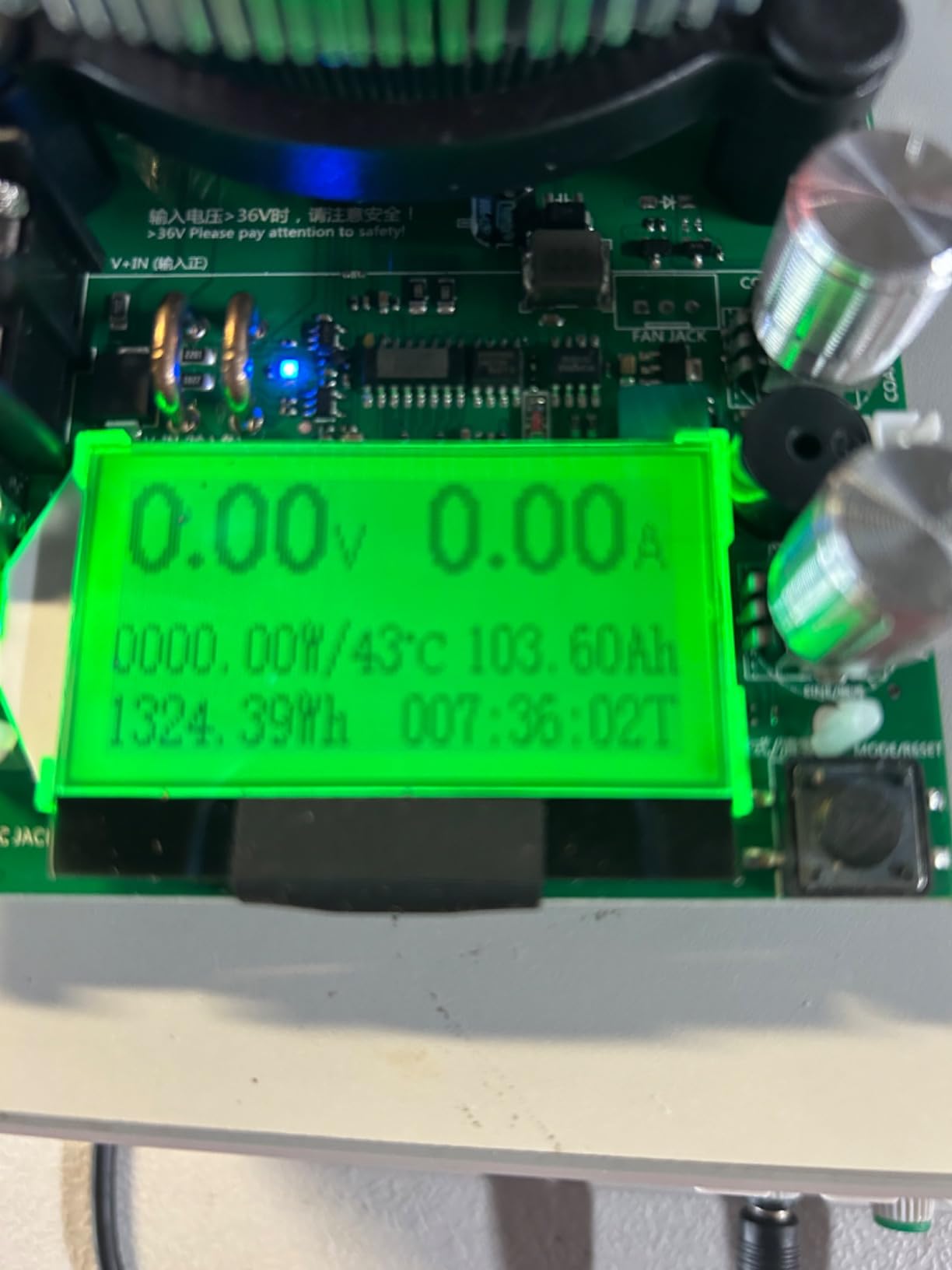
Owners value the size and the runtime, particularly on trolling motors, campers and marine use where the same chemistry shows up. Warranty replacements are widely praised when problems occur, which matters more for a remote cabin than for a boat trailer.
The cold behaviour is where you need to read carefully. Several reviews report BMS units locking up after a cold-weather shutdown, and some batteries needing a high-voltage charger to wake from sleep on arrival. For a cabin that charges in deep winter, that is a genuine drawback and the reason this unit sits below the heated models on our list.
When the footprint decides the purchase
A Group 24 case fits places a Group 31 or a 200Ah box simply will not — a narrow bench, a small marine compartment, a battery tray under a camper seat. If your install is already boxed and measured, this avoids rebuilding the enclosure.
The 100A continuous rating is adequate for lighting, a refrigerator and a small pump. Push past a mini-split or a well pump and you will want to look at a 200A BMS instead.
What the reviews flag as weak
Two complaints recur: the Bluetooth companion app is described as unreliable and inconsistent across devices, and some BMS units lock up. Neither is a safety problem, but both are frustrating on a property you visit monthly.
Some buyers also report that customer support English is hard to follow. If you are commissioning a complex bank, a vendor whose documentation you can actually parse is worth comparing before you settle.
4. LiTime 12V 100Ah Self Heating — Most Versatile for Winter Cabins
Litime 12V 100Ah Self Heating RV LiFePO4 Battery for Camper, Travel Trailer
12.8V nominal
100Ah rated
21.8 lb
Heated pack
5-year warranty
Pros
- Two heating modes warm cells from 41F to 50F before charging
- Bluetooth 5.0 app for state of charge
- IP65 rated
- 4000+ deep cycles at 100% DoD
Cons
- Heating must be activated with a LiFePO4 or MPPT charger on arrival
- Not for engine starting or golf cart use
- Costs more than a standard 100Ah pack
This is the pick for a cabin where the solar array still charges through winter but the cells sit below freezing for part of the day. Rather than simply refusing to charge when cold, the pack warms itself from 41F to 50F and then accepts charge, in either a regular or an energy-saving heating mode.
At 21.8 lb in a Group 24 footprint it is one of the lightest options here, and it is IP65 rated with more than twenty safety protections. Expansion runs to sixteen batteries for a 51.2V 400Ah bank at 20.48kWh, so a weekend cabin and a full-time one can start from the same chemistry.
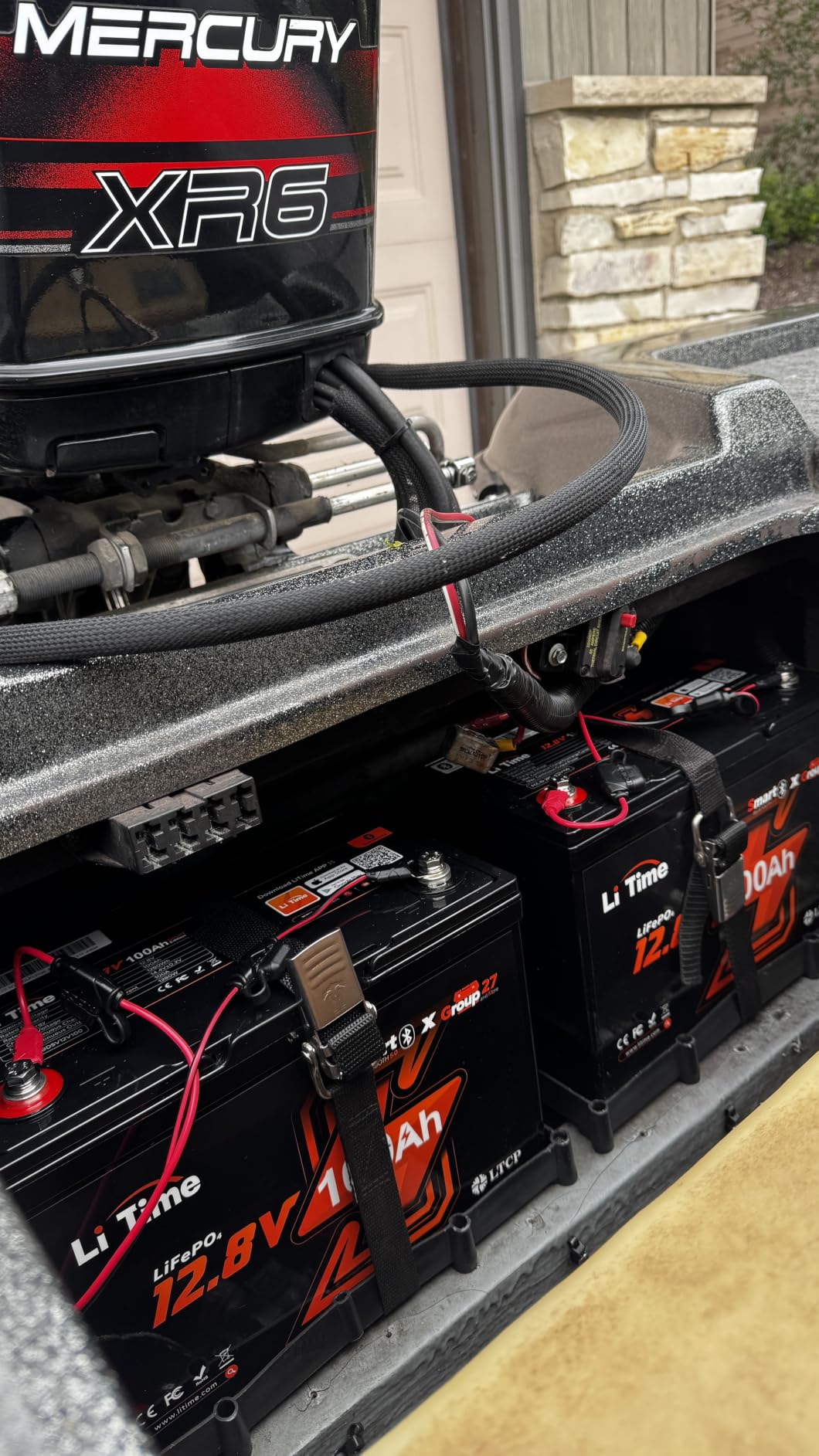
Buyers consistently point to the self-heating function as the deciding feature for winter use, combined with strong cycle life and app-based monitoring. The Bluetooth 5.0 app shows state of charge and battery status, which is exactly the visibility a remote property needs when nobody is there to read a gauge.
Be clear about what the heater does and does not do. It does not keep the battery warm while you are away for a month — it warms the pack just before charging, when solar input arrives on a cold morning. That is the difference between a battery you can leave in an unheated cabin and one you cannot.

Why the heated version is worth the premium
Most cabin locations will, at some point, charge on a day when the pack is below 32F. On a non-heated battery that charge is simply refused, and you lose a day of solar production. On this one the energy goes in.
The alternative is moving the bank indoors for the winter, which owners with non-heated packs have reported having to do. That single logistics problem — hauling a bank in and out twice a year — is worth more than the price difference.
What to know on first commissioning
The heating function must be activated with a lithium-activation charger or an MPPT controller when the battery first arrives. If you plug it straight into a basic lead-acid charger, nothing happens and people conclude the heater is faulty.
It is not for engine starting, golf carts or jack applications, and it sits in the higher end of the 100Ah price range. Both are acceptable trade-offs for a cabin that charges in real winter conditions.
5. LiTime 12V 100Ah Group 24 BT — Top Rated, Cleanest Monitoring
Litime 12V 100Ah LiFePO4 Battery, Group 24 Lithium Batteries for RV, Camper
12.8V nominal
100Ah rated
100A BMS
21 lb
Bluetooth 5.0
Pros
- 100% usable depth of discharge
- App shows voltage current and temperature
- 4P4S to 20.48kWh
- 5-year warranty with 24/7 support
Cons
- App sometimes stalls and needs reconnecting
- No built-in heater for freezing conditions
- A sleeping pack needs a LiFePO4 charger to wake
If your cabin already has Bluetooth visibility working, this is the most complete standard package in the roundup. The app pairs by QR code and reports voltage, current, state of charge and temperature in real time, which for a property you visit a few times a year is the difference between monitoring and guessing.
Reviewers consistently praise the drop-in Group 24 fit, the 21 lb weight and the ability to use nearly the full 100Ah without damage. A+ automotive-grade cells are rated for over 4000 deep cycles at 100% depth of discharge, and the 100A BMS carries more than twenty protections including a low-temperature charge cutoff.
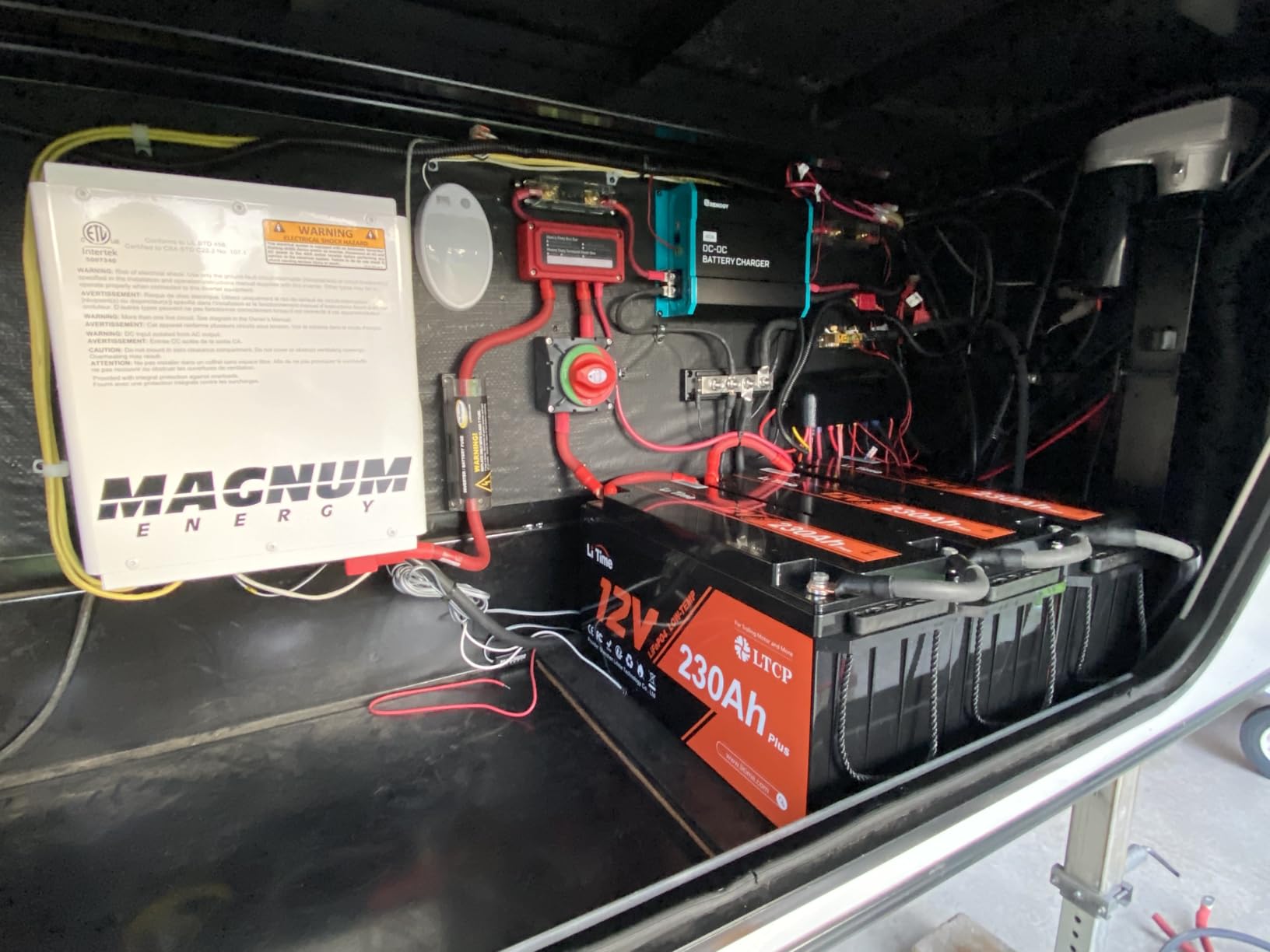
For sizing purposes, treat this as 100Ah you can genuinely use, not 50Ah of honest capacity. That is the single biggest practical difference from the lead-acid bank most cabins started with, and it is why a 100Ah lithium pack can replace a 200Ah flooded set in the same footprint.
Four in parallel and four in series reaches 20.48kWh, so this scales from a 500 sq ft weekend cabin to something considerably larger without a chemistry change. Support is offered around the clock, which is relevant when the troubleshooting happens from a parking lot a hundred miles from the cabin.
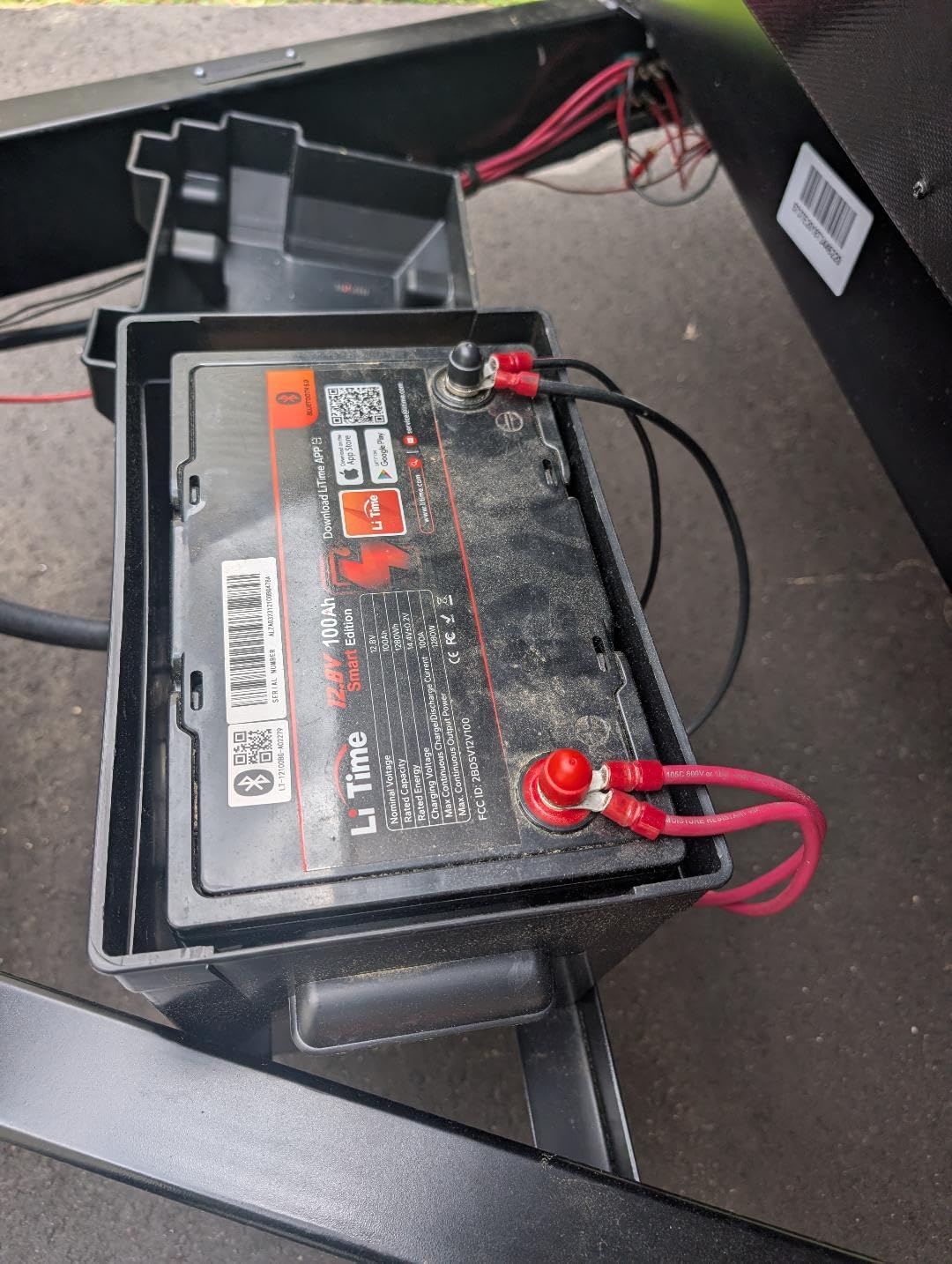
What makes the app worth the money
State of charge is the number cabin owners ask for most. Forum owners running weekend setups with Bluetooth-equipped lithium describe the real-time readout as genuinely reassuring, because it replaces the guesswork of testing bank voltage with a load applied.
Temperature in the same view matters just as much in winter, since it tells you whether the pack has been sitting below the charge cutoff and sitting idle waiting for warmer conditions.
Where it falls short
The most common complaint is software rather than hardware: the app can stop updating and needs disconnecting and reconnecting. Bluetooth range is also shorter than some competing apps, which matters if the battery sits in a basement or an outbuilding rather than next to the cabin.
There is no built-in heater on this version. Owners who bought it for winter use report wishing they had chosen the heated variant instead, so if your cabin charges below freezing, go up one pick rather than adding a workaround later.
6. dumfume 12.8V 300Ah — Best Single-Box Capacity for a Full-Time Cabin
12.8V 300Ah Lithium LiFePO4 Battery With 200A BMS 15000+ Deep Cycles
12.8V nominal
300Ah rated
200A BMS
3840Wh
5-year warranty
Pros
- 3840Wh in a single case replacing two 150Ah batteries
- 200A BMS with 32F charge cutoff
- IP65 ABS case
- 4S4P to 61.44kWh
Cons
- About 57 lb is a two-person lift
- No Bluetooth or app monitoring
- Best performance above a 5C charge rate
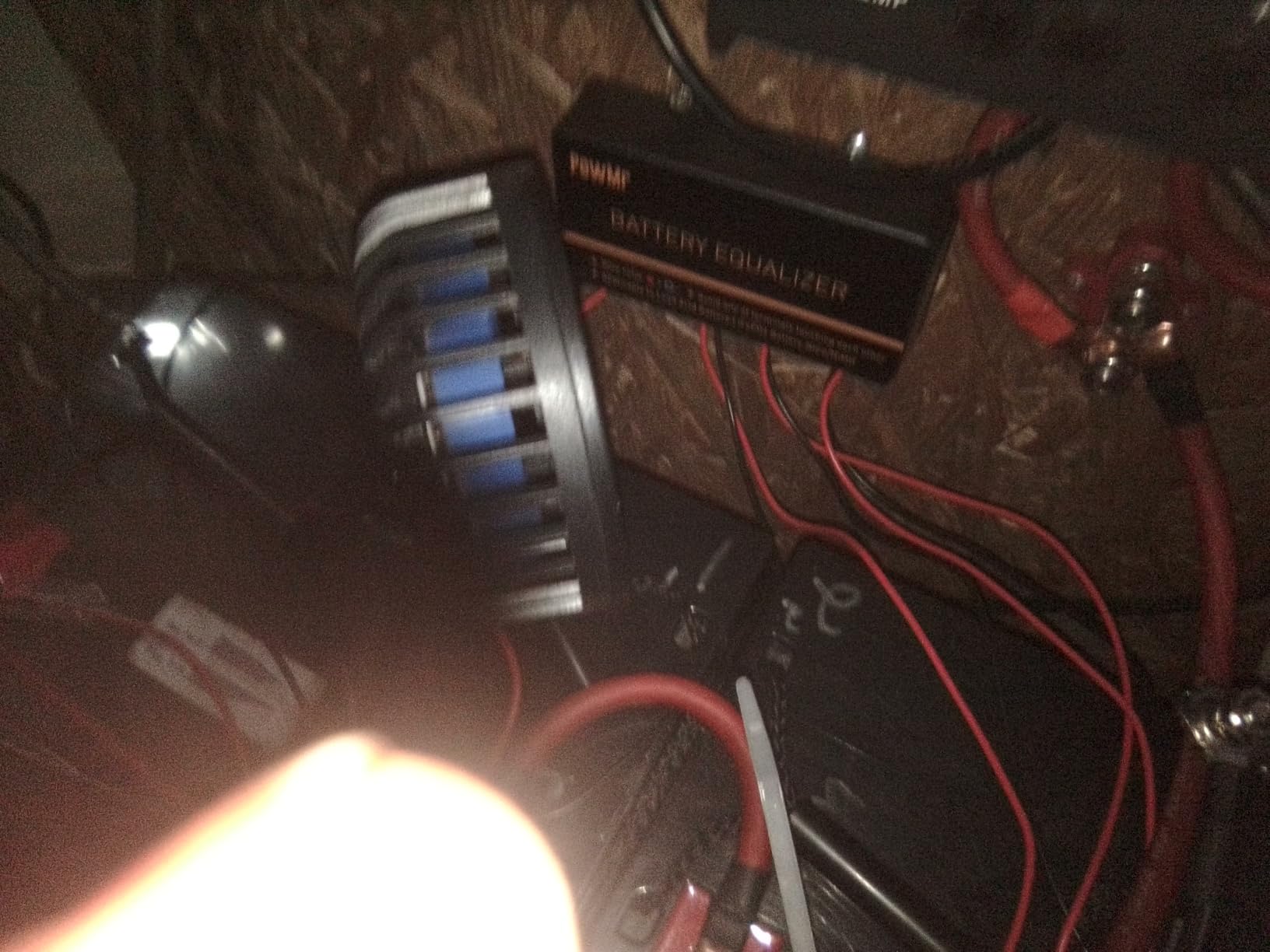
For a cabin someone lives in rather than visits, the useful metric is not amp-hours, it is watt-hours in a box you can physically install. This one stores 3840Wh in a single 15.16 by 7.6 by 9.84 inch case, which is the equivalent of running two 150Ah batteries in parallel without the double the cable terminations.
Expansion is unusually generous for a 12V pack: four in series and four in parallel reaches 51.2V at 1200Ah, or 61.44kWh. That means a small cabin today and a properly sized full-time system in three years, on the same chemistry and the same charge controller.
The 200A BMS includes a charge cutoff at 32F and discharge protection below -4F, so the cold behaviour follows the standard safe pattern. The IP65 impact-resistant ABS case is a genuine plus for a damp location, and owners highlight how cleanly it integrates into tight RV, boat and solar storage spaces.
Cycle life is claimed at 4000 cycles at 100% depth of discharge and 15000 at 60%, which is typical of this class. The warranty runs five years, matching most of the field.
When one big battery beats two smaller ones
Every additional battery means another enclosure, another set of busbars, another fusing point and another failure mode. Consolidating capacity into one case reduces all of that, and for a full-time cabin with a mini-split or a well pump the higher 200A BMS rating is the real reason to look here.
At roughly one third the weight of the equivalent lead-acid bank, it also makes a retrofit to an existing cabin shelving far more practical than the battery it replaces.
What makes it a harder install
Twenty-six kilograms is a two-person lift, and the case is deep. If your battery shelf was built for a 100Ah AGM, this is a rebuild rather than a swap, and several buyers of large lithium packs report having to build a heavier-duty shelf to carry the load.
There is no Bluetooth or app monitoring on this model, which is a real drawback for a remote full-time home. Owners also note that charging needs to run at 5C or above for best performance, so pair it with a charge controller that can deliver the current.
7. SUPER EMPOWER 12V 100Ah Group 24 — Best Value per Amp-Hour
12V 100Ah LiFePO4 Battery, Group 24 Deep Cycle for RVs & Trolling Motors
12.8V nominal
100Ah rated
100A BMS
21.6 lb
5-year warranty
Pros
- Lowest cost per amp-hour in this roundup
- 21.6 lb Group 24 drop-in
- Charge pauses below 32F and resumes above 41F
- 4S4P to 20.48kWh
Cons
- No Bluetooth monitoring app
- Not for engine starting or cranking
- Non-lithium chargers are not recommended
If the budget is fixed and you are converting a small cabin, the price per amp-hour is the number that decides between two otherwise similar 100Ah packs. This is the cheapest route to 100Ah of usable lithium capacity in the group, and it does not obviously skimp on the parts that matter for a fixed install.
It is a genuine Group 24 drop-in at 6.49 by 10.24 by 8.98 inches and 21.6 lb with M8 terminals, with a 40 milliohm internal resistance. The integrated 100A BMS handles overcharge, over-discharge, over-current, short circuit and temperature extremes.
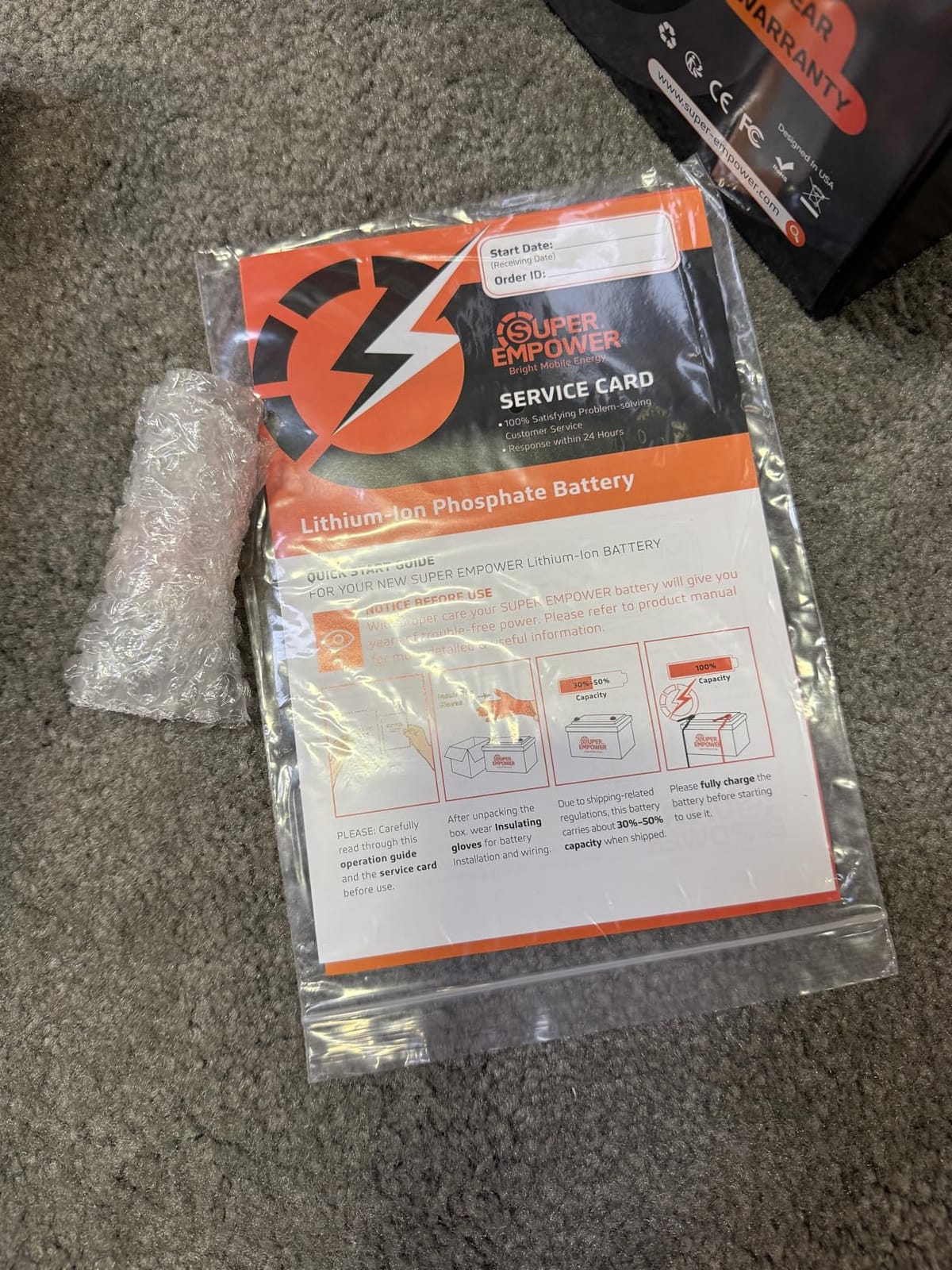
The cold logic is the sensible one for a cabin: charging pauses below 32F and discharge stops at -20C/-4F, then charging resumes once the pack is above 41F. Owners single out the price-to-capacity ratio as the standout and the cold-weather cutoff as a safety plus.
Warranty support is reported as responding within twenty-four hours, which is a meaningful claim for a property you drive to. The bank expands four in series and four in parallel to 51.2V at 400Ah, so the budget choice does not box you in later.
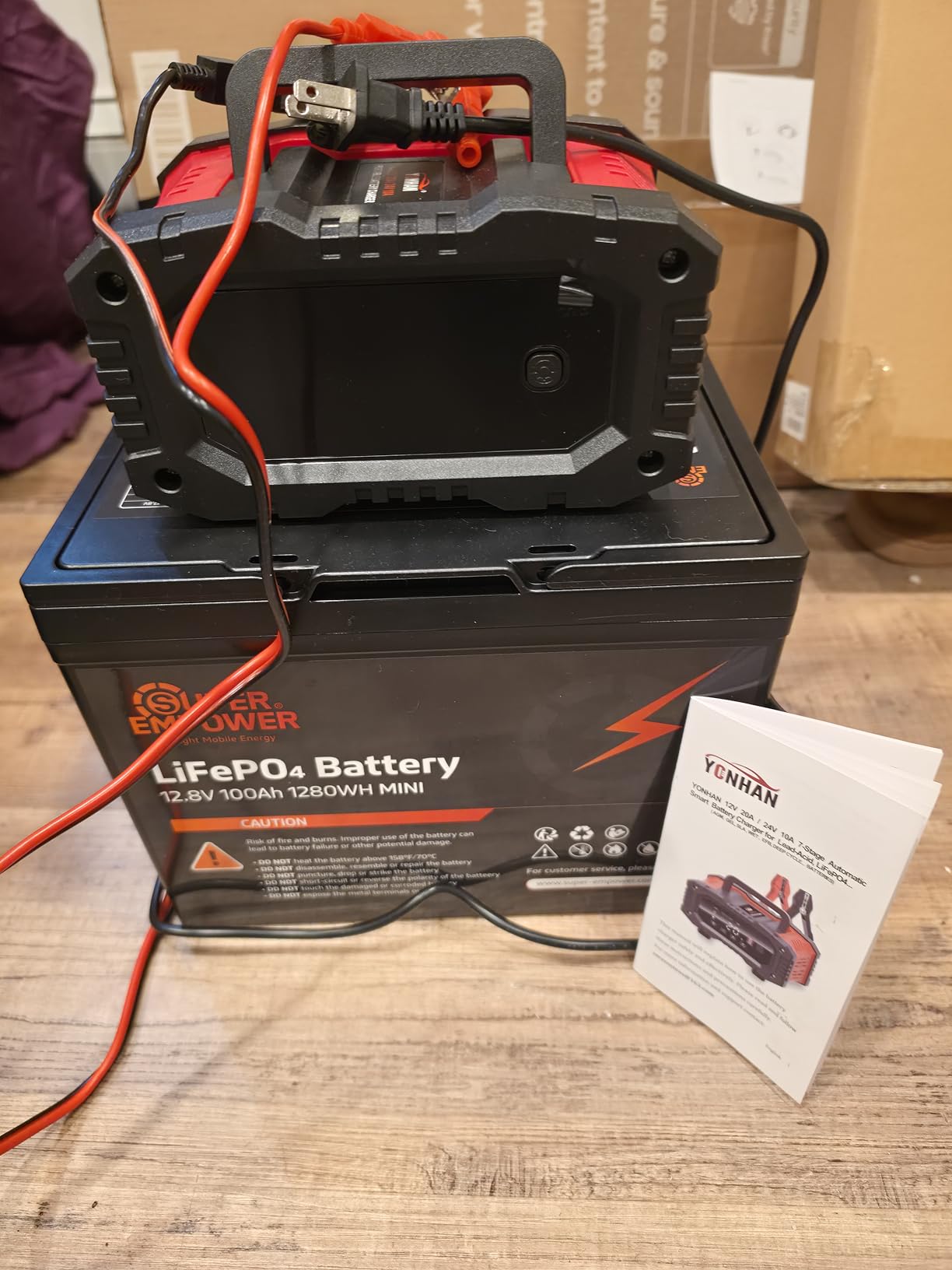
Where the money was saved and where it was not
The 100A BMS, the low-temperature cutoff and the four-series-by-four-parallel expansion are all the features you need for a fixed cabin bank. Those are present. What is absent is Bluetooth monitoring, which is the one thing you cannot add later without replacing the pack.
If you are comfortable checking state of charge in person on your last trip of the season, that trade is worth taking. If you would rather watch the bank from home, the LiTime Group 24 BT is the better buy.
What to watch
It is energy storage only, so do not buy it expecting cranking capacity. The manufacturer also recommends against non-lithium chargers, which in practice means confirming your charge controller has a LiFePO4 profile before the battery arrives.
At 220 reviews the volume is lower than most of this list, so the failure record is thinner. The rating is strong, but treat the long-term picture as less documented than the picks above it.
8. MARSENERGY Self-Heating 12V 100Ah — Best for Cold Climates
MARSENERGY Self-Heating 12V 100Ah LiFePO4 Lithium Battery with Bluetooth
12.8V nominal
100Ah rated
60W heater
21 lb
Bluetooth
Pros
- 60W heater activates between -4F and 32F
- 4500 cycles at 100% DoD
- App shows voltage current and temperature
- Group 24 footprint fits Group 27 and 31 boxes
Cons
- Heater pulls roughly 5A from the charger
- BMS cuts off below -4F
- Sleeping packs need reactivation
This is the highest-rated battery in the roundup, and the reason is the heater. A 60W internal heating system activates between -4F and 32F using A+ grade low-temperature cells, which widens the charging window rather than simply closing it when the pack gets cold.
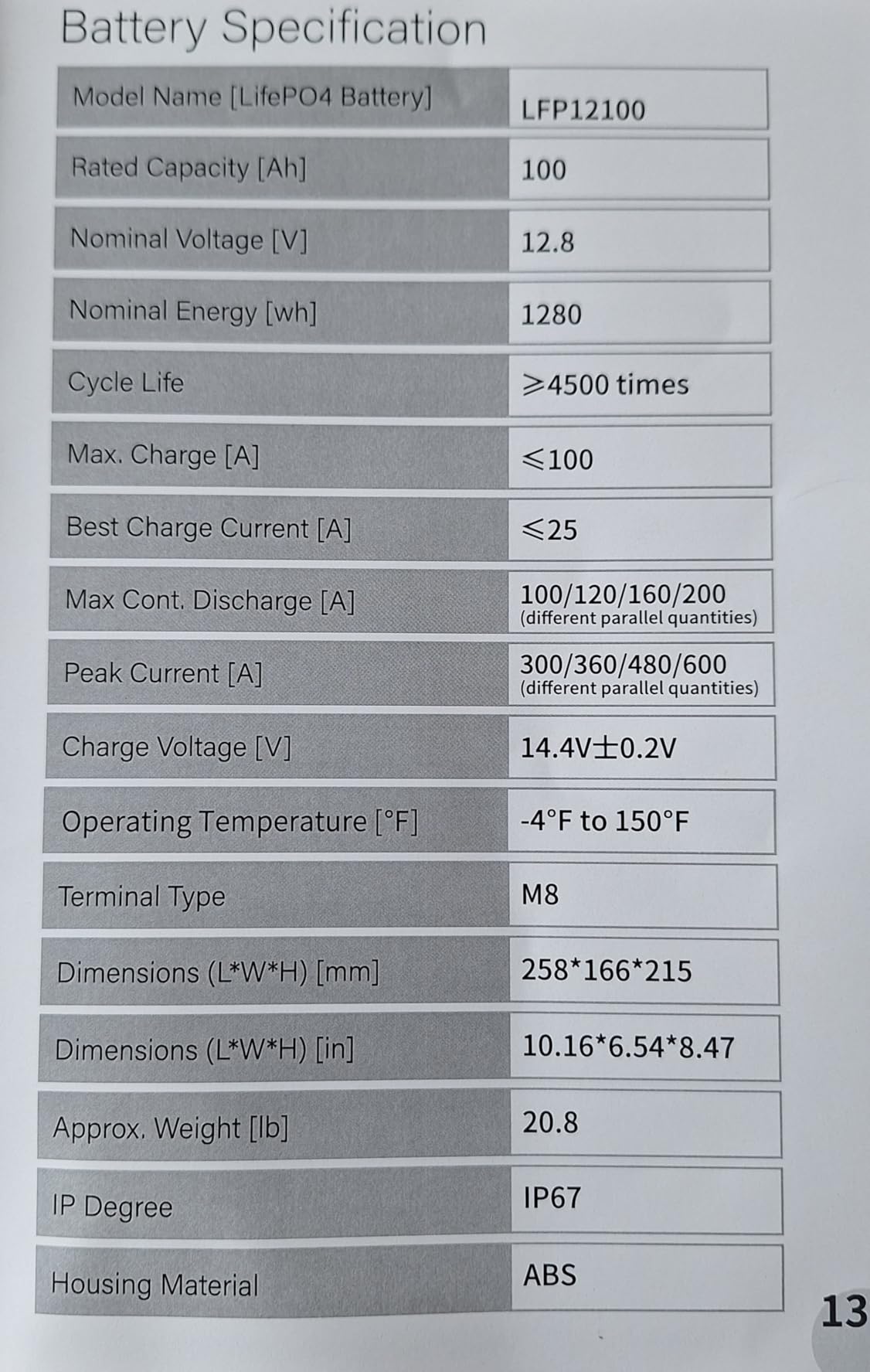
Those cells also give the best cycle figures in this group as written: 4500 cycles at 100% depth of discharge, 8000 at 80% and 15000 at 60%. At 21 lb in a BCI Group 24 case measuring 10.16 by 6.54 by 8.64 inches, it also fits Group 27 and Group 31 boxes, so the case size is not a constraint.
The Bluetooth app reports voltage, current, state of charge and temperature via a QR code scan, which is the full set a remote cabin owner checks before a long drive. Owners cite strong cycle life and a clean Group 24 fit alongside the self-heating function as the deciding combination for cold climates.
Expansion runs four in series and four in parallel to 51.2V at 400Ah, so 20.48kWh is reachable without changing form factor. The multi-layer BMS includes a sleep-mode cutoff on abnormal conditions, which is a sensible safety default.
What the heater actually buys you
Roughly 5 amps of extra draw while it is working, which lengthens cold-morning charge time. On a limited array that matters, so pair it with a controller that can push meaningful current if you want the recovered energy to arrive before sunset.
It also means your bank is not simply sitting idle through a cold snap waiting for the weather to improve. For a cabin with a small array, that difference across a whole winter is substantial.
Where the limits are
The BMS cuts off entirely below -4F, so this is a cold-weather battery, not a freezer battery. If your cabin routinely sits well below that, the answer is a root cellar or an insulated enclosure, not a better cell.
There is also the sleep-mode behaviour: a pack in sleep must be reactivated before use, which is a common source of confusion on arrival day. Budget for it in your commissioning checklist.
9. Power Queen 12V 200Ah PLUS — Best for a Large Single 12V Bank
Power Queen 12V 200Ah PLUS LiFePO4 Lithium Battery with 200A BMS for RV
12.8V nominal
200Ah rated
200A BMS
2560Wh
5-year warranty
Pros
- Up to 95% usable capacity with 2% self-discharge
- 51.61Wh/lb energy density
- Terminals at one end simplify cable routing
- 20+ BMS protections
Cons
- Wide 20.95 inch case needs clearance
- No Bluetooth or self-heating
- Needs a heavier-duty shelf
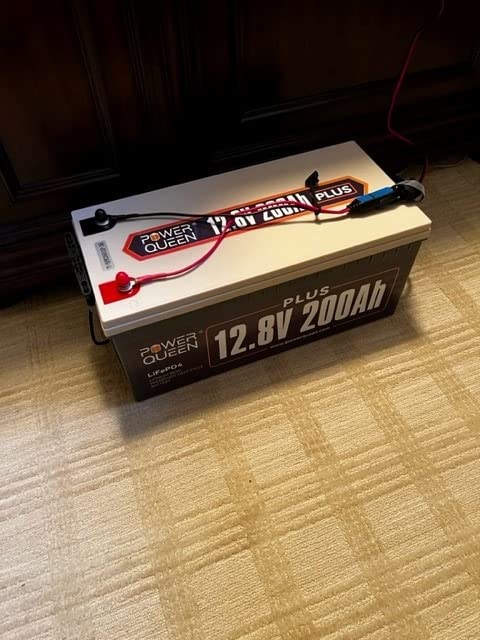
Full-time RV and off-grid reviewers describe running 600W solar arrays, inverters and household loads off a single one of these, which is the clearest endorsement this category gets. The 200A BMS behind 2560Wh of automotive-grade cells gives a lot of usable power from one enclosure.
The 95% usable capacity claim and 2% self-discharge figure are the numbers that matter for a seasonal cabin, and at 51.61Wh/lb the energy density is roughly three times lead-acid. Expansion covers both directions — four in series for 48V, or four in parallel for an 800Ah bank.
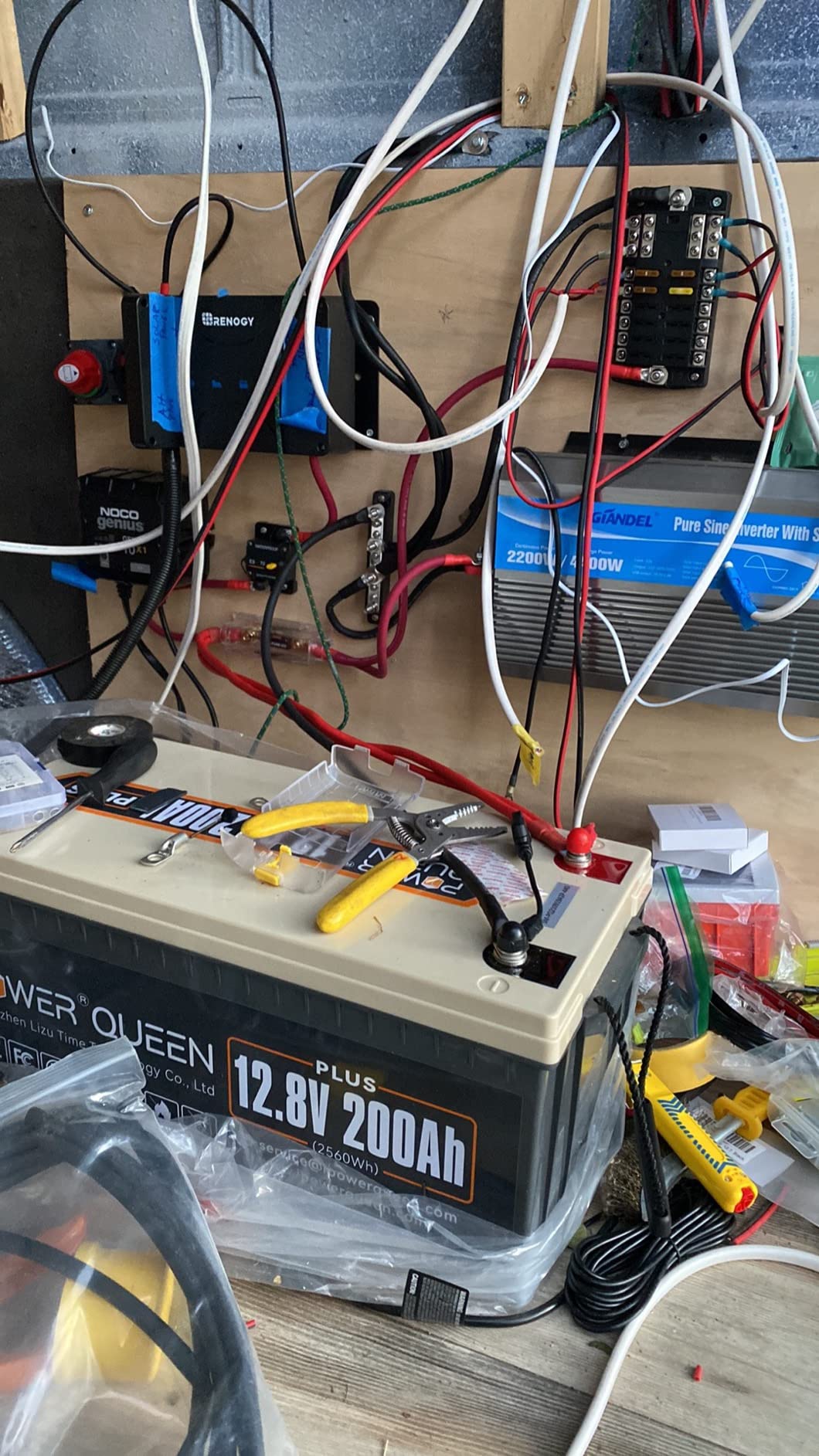
A detail worth noticing for a cabin build: the terminals sit at one end of the case, which simplifies cable routing in a tight box. Cable runs in a cold cabin are where freezing fingers and awkward bends happen, so anything that shortens the run is genuinely useful.
Fast charging and responsive support are both reported positively by owners running multi-year installations, which is the part you care about when the bank is two hours of bad road away.
How it compares with the 200Ah alternative
Against the sealed 200Ah in this roundup, this one trades IP65 for longer-term owner reports. If your battery is going inside a dry, ventilated enclosure the 95% usable capacity and the end terminals make this the better all-round 200Ah pick.
If the bank is going outdoors in a wet climate, prioritise the sealed case instead. Those are the two genuinely different decisions here, and no single unit does both.
What to plan around
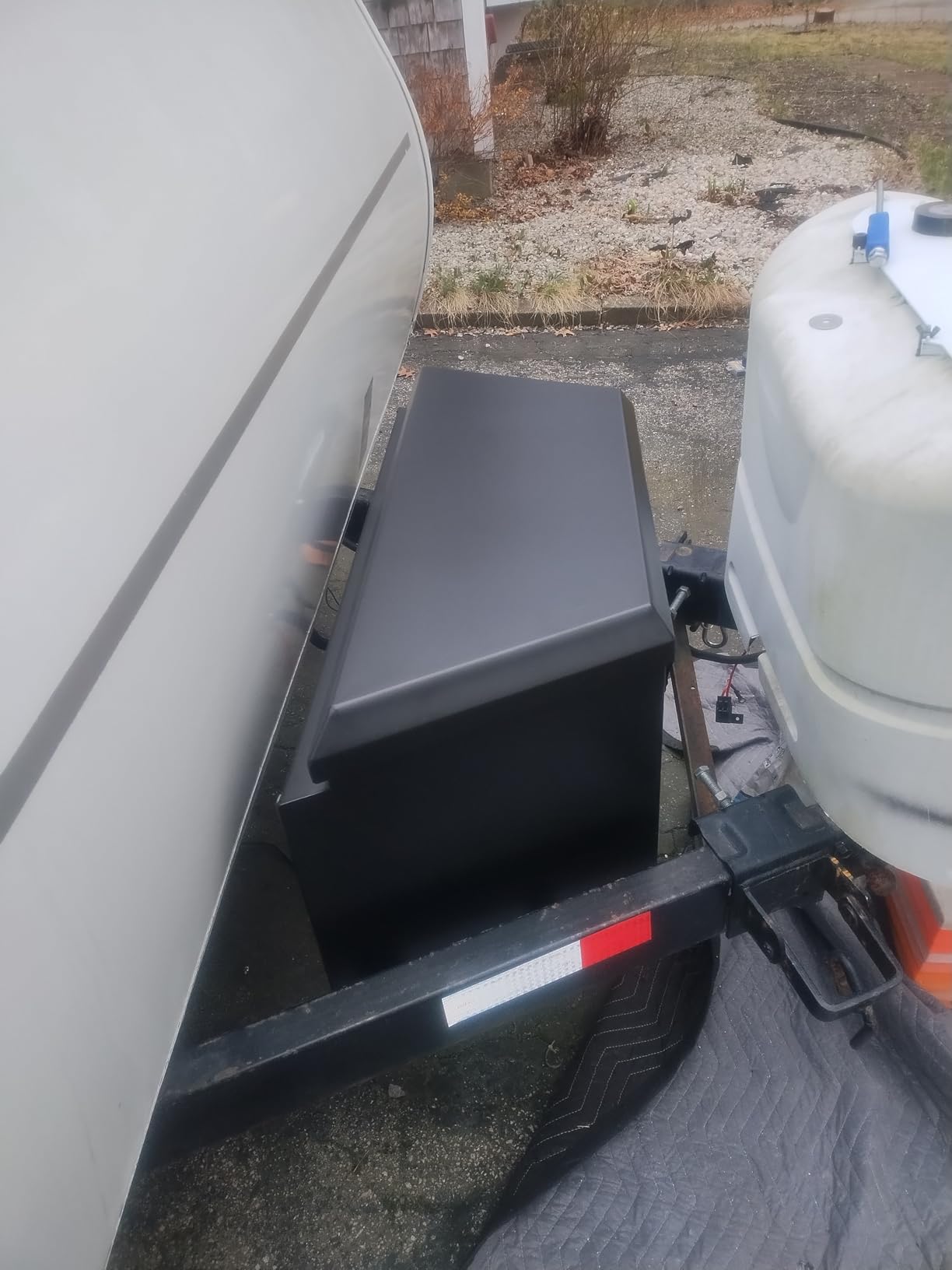
At 20.95 inches wide this is a wide footprint, and at 22.5 kg it is not a solo lift. Measure the shelf, then build the shelf properly — some buyers report having to construct a heavier-duty one once the weight was in place.
There is no Bluetooth and no self-heating on this model. If your cabin charges below freezing regularly, this is the wrong one to pair with a small winter array, however well it performs in summer.
10. ECO-WORTHY 12V 314Ah — Best for On-Site Monitoring
ECO-WORTHY 12V 314AH LiFePO4 Lithium Battery Bluetooth with SOC LEDs, Low Temp Protection, 4019WH, 200A BMS Up to 15000 Deep Cycle for Off-Grid, RV, Solar Power System, HomeBackup
12.8V nominal
314Ah rated
4019Wh
200A BMS
3-year warranty
Pros
- LED panel plus Bluetooth app for state of charge
- Built-in fault buzzer
- Charge cutoff below -7C
- Expands to 32.15kWh
Cons
- 3-year warranty is shorter than every rival here
- Bluetooth voltage readings reported as inaccurate
- Basic app and slow support response
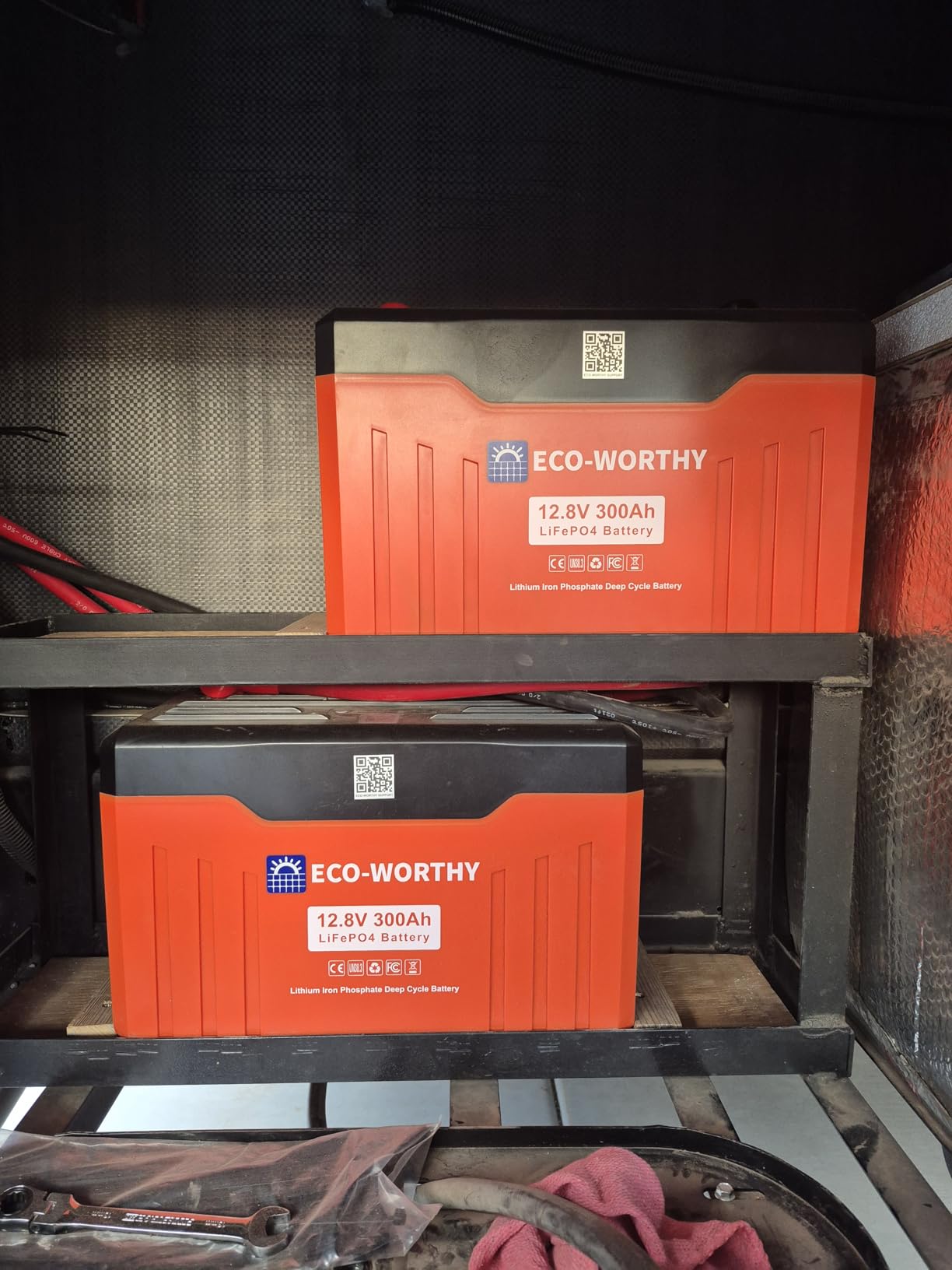
The most interesting thing about this battery is that it delivers 314Ah in a pack that weighs about the same as a 100Ah lead-acid unit. That capacity was upgraded from 300Ah, and the stored energy is 4019.2Wh, so a weekend cabin can run a decent load list without a second enclosure.
For a remote property the visibility is the differentiator. An on-board LED screen shows charge level and status, a Bluetooth app gives remote access, and there is a built-in buzzer for fault alerts. You do not have to open a box in the dark to find out whether the bank is unhappy.
Protection is conventional and correct: a 200A BMS with high and low voltage, overload and temperature protection, plus a charging cut-off below -7C. The cut-off temperature is lower than most rivals here, which means it will keep refusing charge in conditions where others have already stopped, so check that against your site.
Owners swapping lead-acid camper batteries report a dramatic jump in usable power for similar weight, and the value improves once discounted. Expansion reaches 32.15kWh through 4P2S or 2P4S configurations.
What the monitoring hardware is worth
The LED panel is the underrated part. An app needs a phone and a working connection, whereas a panel on the front of the case tells you the state of the bank the moment you open the enclosure, which is often the first thing you want on a long drive in.
The buzzer matters more than it sounds. A fault that would otherwise go unnoticed for six weeks is announced immediately, and a fault is exactly what you need to know about before a freeze.
What the reviews knock down
The warranty is three years, the shortest in this roundup, and that is the first thing to weigh. On a battery that is meant to sit in an unheated building for a decade, a shorter warranty is a real reduction in expected value.
Some owners also report the Bluetooth voltage readings as inaccurate, app details as basic, and support response times as slow. Replacement service is reported as prompt when a unit does fail, so the remedy exists — the friction is in getting there.
Cold-Weather and Unattended-Cabin Batteries
Charging a LiFePO4 battery below freezing is the one thing that can damage it permanently, and it is the single most misunderstood spec in this category. It is not a matter of reduced performance. Lithium ions arriving at a cold anode plate do not slot neatly into place, and they deposit as metallic lithium on the cell surface instead — a process called lithium plating. The plated lithium is lost capacity that does not come back.
Two designs address this, and understanding the difference is worth more than any other spec on this page. A low-temperature cutoff simply refuses to accept charge below a threshold, typically 32F, and resumes when the pack warms up. A self-heating pack draws a small internal heater to bring the cells up to a charging temperature first, then charges normally. The cutoff protects the battery. The heater protects your solar production.
Which one you need depends entirely on your site. If your cabin is somewhere solar input arrives in midwinter on a below-freezing morning, a cutoff means you lose that day’s charge and the next, repeatedly, all winter. If your array produces nothing below freezing anyway, the cutoff costs you nothing and the heater is wasted money.
Owners on off-grid forums make the storage point forcefully. For a cabin in a location that hits severe cold and sits empty for months, the consensus on DIY Solar Forum was to avoid a large lithium bank entirely unless a root cellar or insulated space can keep it above freezing, and to use lead-acid for cold tolerance instead. That is honest advice, and it is the reason to check your site’s minimum temperature before ordering rather than after.
There is a published field report worth knowing about, because it is rare to see one. A fully off-grid Swedish cabin running a 12V system, a 12V 280Ah low-temperature pack with a 200A BMS, a Victron MPPT controller and a Victron inverter was checked over two winter visits including minus 14C, using roughly 16% to 20% of capacity per visit with no performance issues and a strong emphasis on the weight saving against the AGM it replaced. The limiting factor in that install was solar input in winter, not the battery — a pattern that repeats often enough to be worth expecting.
For a bank you are leaving alone over winter, our storage protocol is: charge to full immediately before you leave, disconnect the negative terminal so nothing can draw the pack down over weeks, do not charge while the pack is frozen, and re-check state of charge on arrival before anything else. Owners in r/OffGridCabins add the recurring caveat that each battery should be charged to full individually when a bank is brought online, which fixes most imbalance complaints people blame on the brand.
If your cabin is heated, or has a root cellar, or sits in a mild climate, cold stops being a deciding factor and you should pick on capacity, weight and monitoring instead. If it is not, treat the heated packs in this roundup as the shortlist rather than the whole list.
How Big a Battery Does an Off-Grid Cabin Need?
Size the bank from your load list, not from the battery label. A typical small cabin runs LED lighting, a refrigerator, a water pump, a pellet stove fan, phone chargers and a laptop. Add a small TV, a few tools and a dehumidifier in summer and a weekend cabin sits around 3 to 5 kWh a day. A full-time cabin with a mini-split, a well pump and a refrigerator sits between 8 and 15 kWh a day.
The conversion is arithmetic once you have the daily figure. Divide daily kWh by 0.9 to account for inverter losses, then divide again by 0.8 for the depth of discharge you should realistically use. Multiply by 1000 to get watt-hours, then divide by your system voltage to get amp-hours. A 4 kWh weekend-cabin day therefore lands around 1110Wh usable, or about 87Ah at 12V — which is why one 100Ah lithium pack is a workable weekend-cabin bank where the same pack in lead-acid would not be.
Add your inverter size, and the answer becomes a count. A 2000W inverter with a 3000W peak typically needs a 200A or larger BMS at 12V, which is the number most people get wrong. A 100A BMS will not deliver a 3000W surge without tripping, and tripping means a dark cabin.
Size on usable kWh, not label kWh. A 12V 100Ah lithium battery is 1.28 kWh on the label and closer to 1.0 kWh after you apply 80% depth of discharge and inverter losses. Against lead-acid, where the same label figure delivers maybe 0.6 kWh, that gap is the entire argument for the chemistry.
On solar sizing, the rule of thumb that has survived forum scrutiny is roughly two to three times your daily kWh in panel wattage for a battery you actually recharge, and closer to one times daily kWh for a system that mostly runs directly from the array. The battery is not doing your energy independence for you — the array is.
Whatever the number, leave headroom. Owners on off-grid forums are consistent on one point: a battery-free cabin experiment showed that running a household on PV with no storage is a dead end, because cloud transients and voltage drop on load startup are what actually cause problems. Half an hour to an hour of buffer is the minimum viable amount, and a full day is what makes the system feel solid.
12V vs 24V vs 48V for a Cabin Battery Bank
Build new at 48V, stay 12V if the cabin is small, and stay wherever you are if the existing equipment supports lithium. That is the short version. Higher voltage means lower current for the same power, which means thinner cables, smaller breakers and lower losses — but it also means every piece of connected hardware has to speak that voltage.
The compatibility trap is real and it is the most expensive mistake people make. DIY Solar Forum threads contain owners who bought a bank only to discover their existing inverters are unsupported and cannot charge lithium at all. Older Trace and Xantrex-era equipment in particular does not have a LiFePO4 charge profile, and some units cannot handle 48V regardless of the battery you attach.
Before you buy anything, get the model number of your inverter and charge controller and confirm three things: it has a dedicated lithium or LiFePO4 profile, it will accept that voltage, and it will not try to equalise the bank. Get that in writing from the manufacturer if you can. The same threads end with the consensus advice of keeping working inverters, replacing only the batteries, and moving to 48V when the old gear finally dies.
One more warning that forum owners repeat constantly: do not parallel batteries of different ages or capacities. A newer 100Ah pack alongside a four-year-old 100Ah pack will not balance, because the BMS in each unit cuts out at its own thresholds. Charge each battery to full individually before you bring a bank online, and add new capacity as a matched set.
LiFePO4 vs Lead-Acid for an Off-Grid Cabin
The honest headline is that lithium is usually the better battery and a working lead-acid bank does not need replacing. The community refrain is consistent across off-grid forums: if it ain’t broke, don’t fix it. Plenty of owners run lead-acid for decades without drama. Replace it when the weight, the floor of usable capacity or the maintenance finally becomes the problem.
Where lithium wins decisively is capacity and weight. Lead-acid gives you roughly 300 to 500 usable cycles at about 50% depth of discharge and needs periodic watering and checking. LiFePO4 gives you thousands of cycles at 80% to 90% usable depth with no maintenance, at roughly half the weight per kWh. On a bank where the lead equivalent comes in at 400 lb or more per battery, the handling difference alone justifies the swap for most new builds.
Lead-acid still has two genuine advantages. Initial cost is lower, and a flooded bank that is never charged below its freezing point is more tolerant of a frozen building than lithium is — it simply will not work as well, but it will not be permanently damaged. That is why cold-climate owners who are not replacing anything still often run lead.
If you are converting, drop-in group 24 and GC2 lithium replacements exist in the dimensions you already have, which is why most of the Group 24 packs in this roundup are drop-in rather than bespoke. Check polarity and terminal position before ordering, and confirm your converter is set to the lithium profile.
On cost, do the per-cycle maths rather than the sticker comparison. A lead-acid bank replaced every three years against a lithium pack expected to last ten to fifteen changes the answer completely, and the reason buyers are asked about cost per cycle rather than purchase price is precisely that the purchase price is the least useful number on the page.
Outdoor, Weatherproof and Theft-Resistant Installation
If the bank cannot live inside, the enclosure becomes part of the battery decision. IP65 means dust-tight and protected against water jets from any direction, which is what the sealed cases in this roundup offer. IP55 handles dust and splashing water but not direct rain exposure. Either way, the battery’s own rating is not the same as the enclosure’s — a wet location needs a box rated at least as well as the battery inside it.
Enclosures also need ventilation and code compliance. A lithium bank produces far less heat than lead-acid and does not emit gas, which makes it easier to site, but many cabins still carry local rules about where a battery can be located, particularly inside living space. A shed, a screened porch or a purpose-built ventilated box on an exterior wall is the usual answer, and for panel work inside the cabin you want a licensed electrician.
Cable sizing and fusing are where a DIY cabin build goes wrong. Battery cables must be sized for both the continuous current and the fault current the bank can deliver, and the positive lead needs a fuse as close to the battery as physically possible. A bank that can push 200A will melt an undersized cable before anything else intervenes, and that is a fire, not an inconvenience.
Finally, theft. At a property you visit monthly, a battery is a heavy, saleable, easily resold item sitting in an outbuilding. Physical fixes that work are drilled security bolts on the terminals, a lockable or concealed enclosure, and cameras or a trail camera covering the approach. Anchor the enclosure to the structure so the whole box cannot simply be carried. An r/batteries thread from an Olympic Peninsula cabin owner describes exactly this sourcing problem — a reputable, non-brand-locked, theft-securable unit that meets a wet-climate IP rating — and the honest answer is that the enclosure and the hardware often take longer to source than the battery does.
How We Picked: Our Selection Method
No competitor on the search results page publishes how it chose its batteries, which is a good reason to publish ours. We did not cycle test these packs ourselves, and we will not pretend otherwise. Here is what we actually did.
Datasheet verification. Every capacity, nominal voltage, BMS amperage, cycle figure, weight, dimension and warranty term came from the manufacturer listing and technical datasheet, not from a marketing roundup. Where two numbers conflicted we used the datasheet.
Weight against the lead equivalent. A battery for a remote cabin is a battery two people have to carry down a path. We checked each weight against the lead-acid unit it replaces, because in most cases the weight is the decisive advantage.
Warranty terms, not warranty length. Every pack here claims five years except one, which claims three. We looked at whether the terms are pro-rated, how replacement is handled, and whether cold-weather operation is inside the coverage. A ten-year claim with a three-year pro-rated refund schedule is not a ten-year warranty.
Cold behaviour specifically. We recorded the charge cutoff temperature, the discharge cutoff temperature, the resume temperature and whether a heater exists and how many amps it draws. This is the single most useful differentiator for a cabin and the one most competitor pages omit.
Owner-reported failure modes. We read the reviews for early charge-acceptance failures, BMS lockups after cold shutdowns, sleeping packs, app reliability and support response times. These are recurring patterns in review text, not isolated complaints, and we have attributed them only where the product was named.
What we could not verify. We did not measure internal resistance under load, confirm real-world cycle counts, or test any of these batteries in freezing conditions. Cycle life figures throughout this guide are manufacturer claims, and the depth-of-discharge and temperature conditions behind them vary between brands. Assume 80% depth of discharge and plan on the lower cycle figure in each range, not the highest.
The Off-Grid Cabin Battery Buying Guide
These ten factors are in priority order. If you only have time for three, do the first three.
1. Start with your load list, not the battery. Add up what the cabin actually draws in the worst month, not the average month. A winter with a pellet stove fan and a refrigerator cycling constantly is a different design problem from a summer with a mini-split.
2. Confirm inverter and charge controller compatibility before you buy. Lithium profile, voltage, no equalisation. This is the mistake that costs the most, because it is discovered after the battery is already in the cabin.
3. Compare usable kWh, not label kWh. Apply 80% depth of discharge and 0.9 for inverter losses, then compare. A 12V 100Ah lithium pack delivers roughly 1.0 kWh usable; the 100Ah lead-acid it replaces delivers closer to 0.6 kWh.
4. Check cycle life against your real depth of discharge. Cycle claims are quoted at wildly different depths and temperatures. Use the figure for 80% depth of discharge if one is given, and if a brand only publishes a 60% number, assume the 80% number is much lower.
5. Treat cold-weather rating as non-negotiable in most climates. Find the charge cutoff temperature, the discharge cutoff, the resume temperature, and whether a heater is built in. If the answer is “cutoff only” and your cabin charges in winter, either accept lost production or buy a heated pack.
6. Check the physical footprint and weight against your access route. Measure the battery box, the shelf, the door and the path from the vehicle. A 57 lb battery that cannot get through the hatch is not a battery you own.
7. Read the warranty terms, not the warranty headline. Pro-rated schedules, cold-weather exclusions and shipping costs on replacements matter more than years. Nine of the packs here carry a five-year term; one carries three.
8. Decide how much monitoring you actually need. If you will only be at the cabin a few times a year, an app you can check from home is worth real money. If you are there weekly, the LED panel may be enough and you can save the difference.
9. Work out cost per cycle, not purchase price. Divide the cost by the realistic cycle count at your depth of discharge. On a ten-year horizon this ranking looks nothing like the sticker price, and the cheapest battery in this roundup is not the cheapest battery to own for a decade.
10. Plan for expansion from day one. Every pack here supports series and parallel combinations. Decide in advance whether you will run 4S4P eventually, because the charge controller, inverter and cable sizing all have to accommodate that from the start.
Two supporting points. First, if your cabin is only used at weekends, a portable power station avoids the entire fixed-bank conversation — our power station guide covers that class. Second, whatever the battery does for power, it does nothing for heat; if your cabin’s real constraint is cold inside rather than cold outside, a stove is the better investment and we covered the small-cabin options in our wood burning stove guide.
Frequently Asked Questions
What is the best lithium battery for off-grid use?
A 12V 100Ah LiFePO4 battery in a Group 24 or Group 31 case is the best starting point for most off-grid cabins. It delivers roughly 1.0 kWh of usable energy, weighs about 22 lb, drops into a standard battery box and expands to four batteries in series for a 51.2V system. Choose a self-heating model if your cabin charges below freezing.
What size solar battery do I need to be off-grid?
Size from your daily consumption, not the battery label. Calculate your daily kWh, divide by 0.9 for inverter losses, divide by 0.8 for depth of discharge, then convert to amp-hours at your system voltage. A weekend cabin drawing 3 to 5 kWh a day typically lands around 200 to 400Ah at 12V, while a full-time cabin with a mini-split and well pump needs several thousand watt-hours.
Can you charge a LiFePO4 battery below freezing?
No. Charging a LiFePO4 battery below 32F causes lithium plating, which permanently reduces capacity and cannot be reversed. Always use a battery with a built-in low-temperature charging cutoff, or a self-heating model that warms the cells before charging. If the pack is frozen and has no protection, let it warm naturally to room temperature before connecting any charger.
Can I leave LiFePO4 batteries in an unheated cabin?
Yes, provided the pack is not charged while frozen. Charge to full, disconnect the negative terminal so nothing draws the pack down, and never attach a charger to a bank that has dropped below freezing. Self-discharge is low, typically 2% to 3% a month, so a full bank holds its charge well through months of absence. Re-check state of charge on arrival before anything else.
Are 12V or 48V LiFePO4 batteries better for a cabin?
12V suits a small weekend cabin because it is simpler, cheaper and compatible with more existing equipment. 48V is the better choice for a new build or an expansion, because it carries the same power at lower current, which means thinner cables and smaller breakers. Staying with your existing voltage is sensible if your inverter and charge controller already support lithium, since changing architecture means replacing that equipment too.
What are the disadvantages of LiFePO4 batteries?
The main disadvantages are charging below freezing, a higher purchase price than lead-acid, and the need for a charge controller with a lithium profile. Some models also need a LiFePO4-specific charger to wake a pack from sleep mode, and a few budget units report Bluetooth monitoring that is inaccurate or an app that stalls. Cold charging is the only issue that causes permanent damage.
Final Verdict: Which LiFePO4 Battery Fits Your Cabin?
The Redodo 12V 100Ah Group 31 is our pick for the best LiFePO4 batteries for off-grid cabins overall. It is the lightest drop-in in the roundup at 22 lb, carries a 100A BMS, and its 3% self-discharge is the right answer to months of absence. For a cold cabin that still charges in winter, the LiTime 12V 100Ah Self Heating is the one to buy, and for a full-time home the dumfume 12.8V 300Ah puts 3840Wh in a single case.
Two decisions matter more than the brand. The first is cold-weather rating: find the charge cutoff temperature before you buy, and if your site sits below freezing, either choose a heated pack or keep the bank in a space that stays above 32F. The second is sizing: run your actual load list, apply 0.9 for inverter losses and 0.8 for depth of discharge, and size on the result rather than on the largest pack you can physically move.
Before you order anything, confirm your inverter and charge controller speak the lithium profile at your system voltage. That single check prevents the most expensive mistake people make in this build, and it takes an email to the manufacturer. Specifications on this page were last verified for 2026 — re-check the datasheet before you buy, because battery specifications change between production runs.