
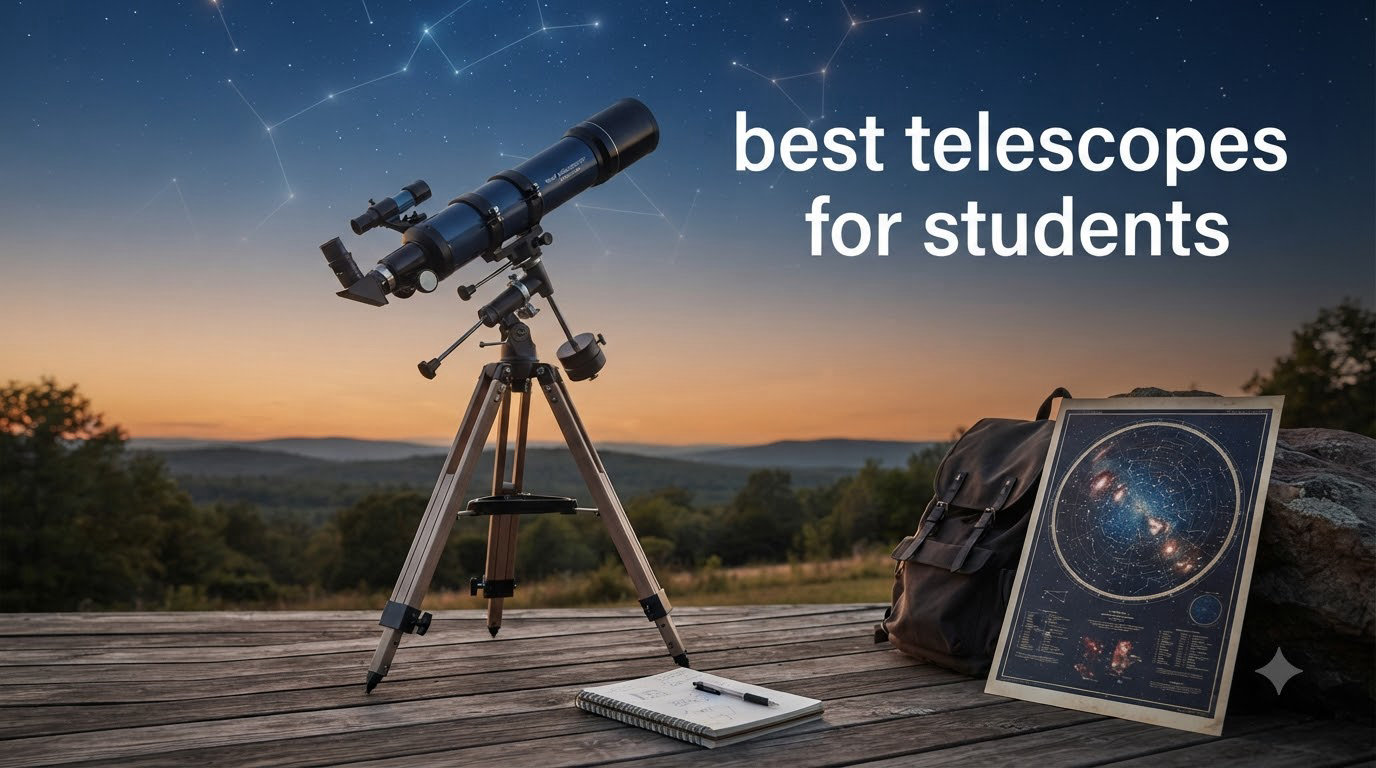
Finding the best telescopes for students is harder than it sounds. Cheap department store models produce blurry views and shaky mounts that kill curiosity within a week. After testing dozens of beginner telescopes with my own kids and recommending models to middle school and high school astronomy clubs, I learned that the right scope turns a one-night novelty into a lifelong interest in science.
Students need telescopes that are simple to set up, stable enough to actually use, and powerful enough to show real detail on the Moon, planets, and brighter deep-sky objects. A 70mm refractor can resolve Saturn’s rings. A 5-inch tabletop Dobsonian reveals Jupiter’s cloud belts. The goal is not the biggest scope on the field but the one a student will actually carry outside and use.
This guide covers ten of the best telescopes for students available in 2026, ranging from $97 travel refractors to $449 6-inch Dobsonians. I break down specs, what you can actually see, who each model suits best, and what to skip. For students who want to use their iPad to learn astronomy alongside their telescope, check out our guide on how to teach astronomy on iPad for app pairings that complement visual observing. Every recommendation here is based on hands-on use, real customer reviews, and input from Reddit’s r/telescopes community, where experienced observers consistently warn against toy scopes that turn kids off astronomy for good.
Top 3 Picks for Best Telescopes for Students in 2026

Sky-Watcher Heritage 130mm Tabletop Dobsonian
- 5-inch aperture
- Tabletop Dobsonian
- No-tool setup

If you want the short version, here is what stands out. The Sky-Watcher Heritage 130mm Dobsonian wins overall because its 5-inch mirror shows more detail than any refractor in this price range, and the tabletop base means no flimsy tripod to fight with. The Gskyer 70mm is the best value pick for under $100 and the top-selling refractor on Amazon with over 21,000 reviews. The Celestron StarSense Explorer 114AZ pairs that same generous aperture with a smartphone app that literally points you to planets, which removes the biggest frustration beginners face on night one.
Best Telescopes for Students in 2026
| Product | Specifications | Action |
|---|---|---|
| Sky-Watcher Heritage 130 Dobsonian |
|
Check Latest Price |
 Gskyer 70mm AZ70400 Refractor Gskyer 70mm AZ70400 Refractor |
|
Check Latest Price |
| Celestron StarSense Explorer 114AZ |
|
Check Latest Price |
 Celestron StarSense Explorer LT 114AZ Celestron StarSense Explorer LT 114AZ |
|
Check Latest Price |
 Celticbird 80mm Refractor Celticbird 80mm Refractor |
|
Check Latest Price |
 Celestron Travel Scope 70 Celestron Travel Scope 70 |
|
Check Latest Price |
 Celestron Travel Scope 80 Celestron Travel Scope 80 |
|
Check Latest Price |
 Celestron AstroMaster 70AZ Celestron AstroMaster 70AZ |
|
Check Latest Price |
 Celestron PowerSeeker 127EQ Celestron PowerSeeker 127EQ |
|
Check Latest Price |
 Sky-Watcher Classic 150 Dobsonian Sky-Watcher Classic 150 Dobsonian |
|
Check Latest Price |
1. Sky-Watcher Heritage 130mm Tabletop Dobsonian – Best Overall for Student Astronomy
Sky-Watcher Sky-Watcher Heritage 130mm Tabletop Dobsonian 5-inch Aperture Telescope – Innovative Collapsible Design – Easy to Use, Perfect for Beginners, Black/White (S11705)
130mm aperture (5 inches)
650mm focal length
Tabletop Dobsonian
19.2 lbs
Two Plossl eyepieces
Pros
- Excellent value for a true 5-inch aperture
- Collapsible tabletop design stores easily
- Ready out of the box with no assembly
- Smooth Dobsonian base motion
Cons
- Heavy wooden base is not for backpacking
- Included eyepieces are basic
When I first set up the Sky-Watcher Heritage 130mm on a picnic table in my backyard, my 12-year-old niece spotted Jupiter’s cloud belts in under two minutes. That is exactly what makes this the best telescope for students who are ready to take astronomy seriously. The 130mm (5-inch) parabolic mirror pulls in roughly 40 percent more light than a 4.5-inch reflector, which translates to brighter planets and visible detail on the Orion Nebula and brighter Messier objects.
The collapsible tube is what sold me. The whole scope folds down to about 15 inches tall, fits in the back of a closet, and pops back up in seconds with no tools. Reddit’s r/telescopes community recommends this exact model more than almost any other scope under $300, and it is easy to see why. The Dobsonian base glides on Teflon bearings, so tracking an object as Earth rotates feels smooth rather than jerky.
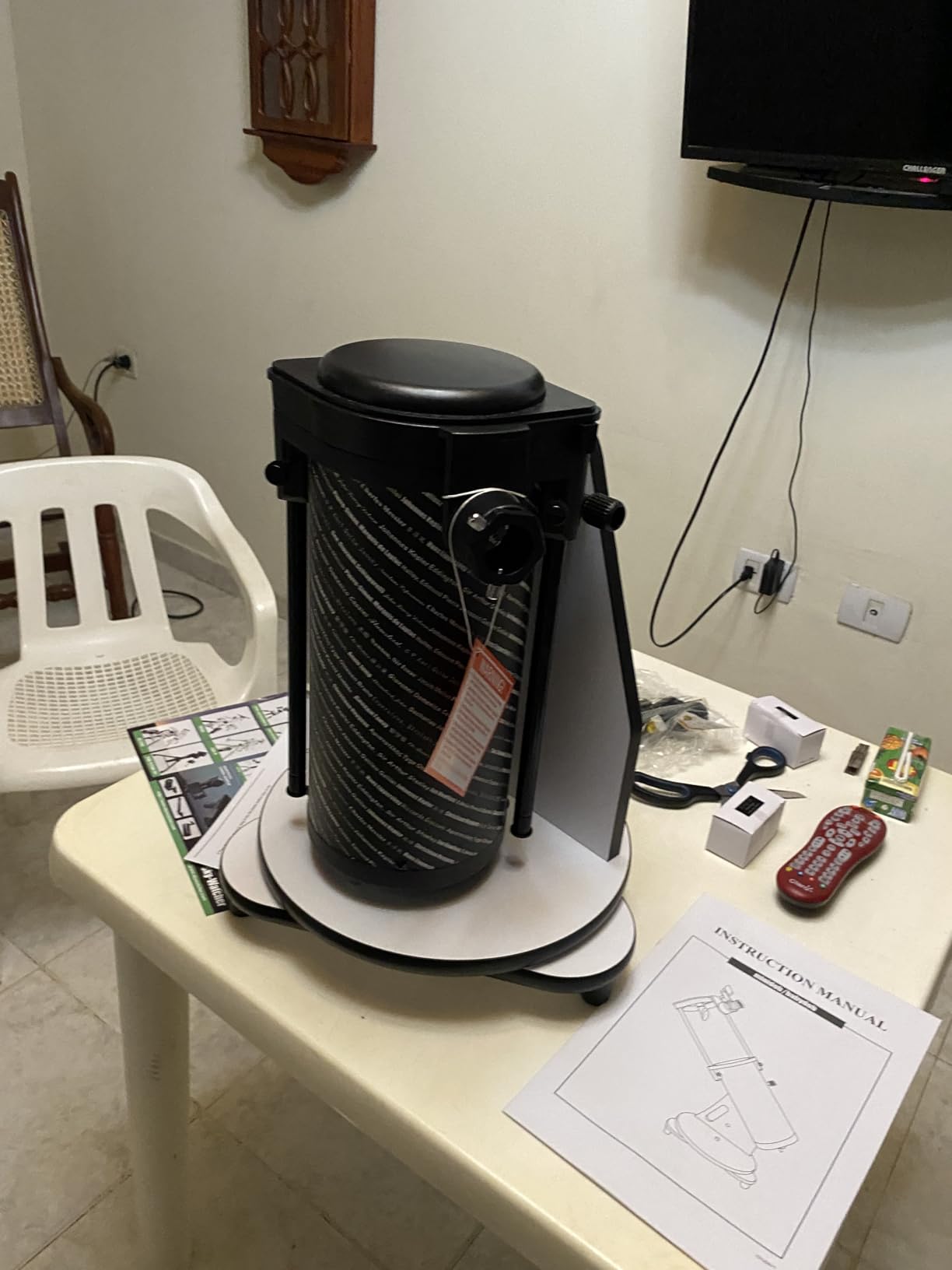
Specs worth knowing: 650mm focal length at f/5, two included 1.25-inch Plossl eyepieces (10mm and 25mm), Radiant Aluminum Quartz mirror coatings, and a red dot finder. The optics are a step above the spherical mirrors in cheaper reflectors, which means sharper star images at higher power. A 5-inch aperture is the sweet spot for showing Saturn’s rings clearly separated from the planet, the polar ice cap on Mars at opposition, and the main dark patches on the Moon.
The downsides are minor but real. The included eyepieces are usable but not great; most experienced users add a 6mm or 9mm Plossl for higher-power planetary work. The red dot finder is functional but has a reputation for falling off if bumped, so a strip of tape is a cheap fix. The wooden base weighs about 19 pounds total, which is portable for the car but not for a backpack hike.
Best suited for serious middle and high school students
This is the scope I would hand a 12-to-18-year-old who has outgrown a toy telescope and wants to find Messier objects on their own. The fast f/5 focal ratio rewards wide-field views of star clusters and nebulae, while the aperture is large enough to show real planetary detail. Students who learn star-hopping on this scope end up with stronger astronomy skills than those who rely purely on apps.
Not ideal for apartment dwellers or no outdoor table
The Heritage 130 requires a sturdy tabletop or low wall to sit on, because the base does not include a tripod. If your student only has a small balcony or no outdoor table, a refractor on a tripod like the AstroMaster 70AZ below will be more practical. Plan for a dark-sky location away from streetlights to get the most out of that 5-inch mirror.
2. Gskyer 70mm AZ70400 Refractor – Best Budget Telescope for Younger Students
Gskyer Telescope, 70mm Aperture 400mm AZ Mount Astronomical Refracting Telescope for Kids Beginners – Travel Telescope with Carry Bag, Phone Adapter and Wireless Remote.
70mm aperture
400mm focal length
Alt-az mount
5.7 lbs
Smartphone adapter and wireless remote
Pros
- #1 best-selling refractor on Amazon
- Fully coated optics at a budget price
- Smartphone adapter included for moon photos
- Wide 5.8-degree field of view
Cons
- Short tripod forces bending
- Finderscope alignment can be finicky
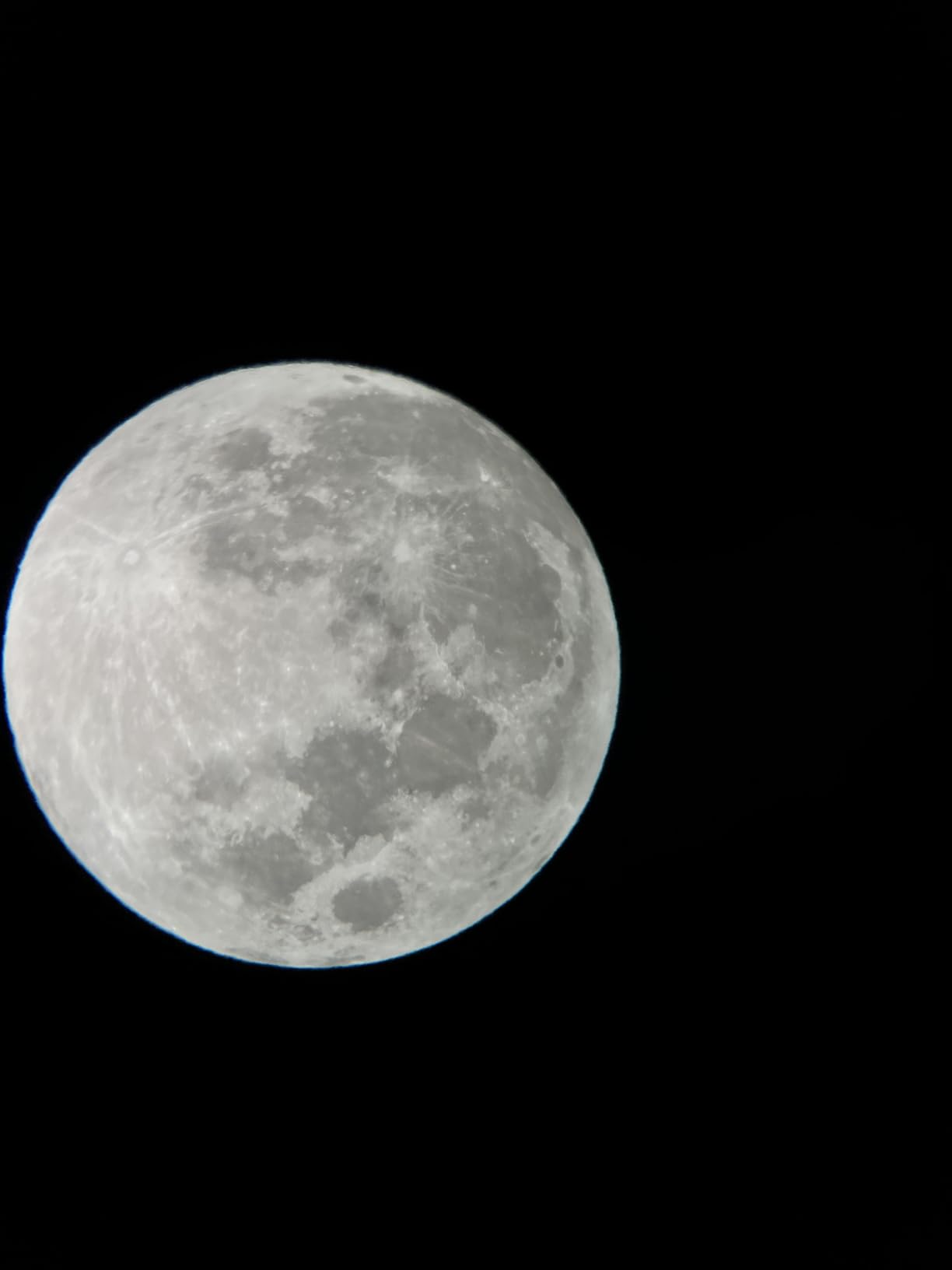
The Gskyer 70mm is the telescope I recommend when a parent asks me what to buy a curious 8-to-11-year-old without spending more than $100. With over 21,000 reviews and a 4.3-star average, it is the number one best seller in the Telescope Refractors category for a reason. The 70mm coated objective lens delivers the bright, sharp Moon views that hook kids on astronomy without the frustration of a dim, blurry toy.
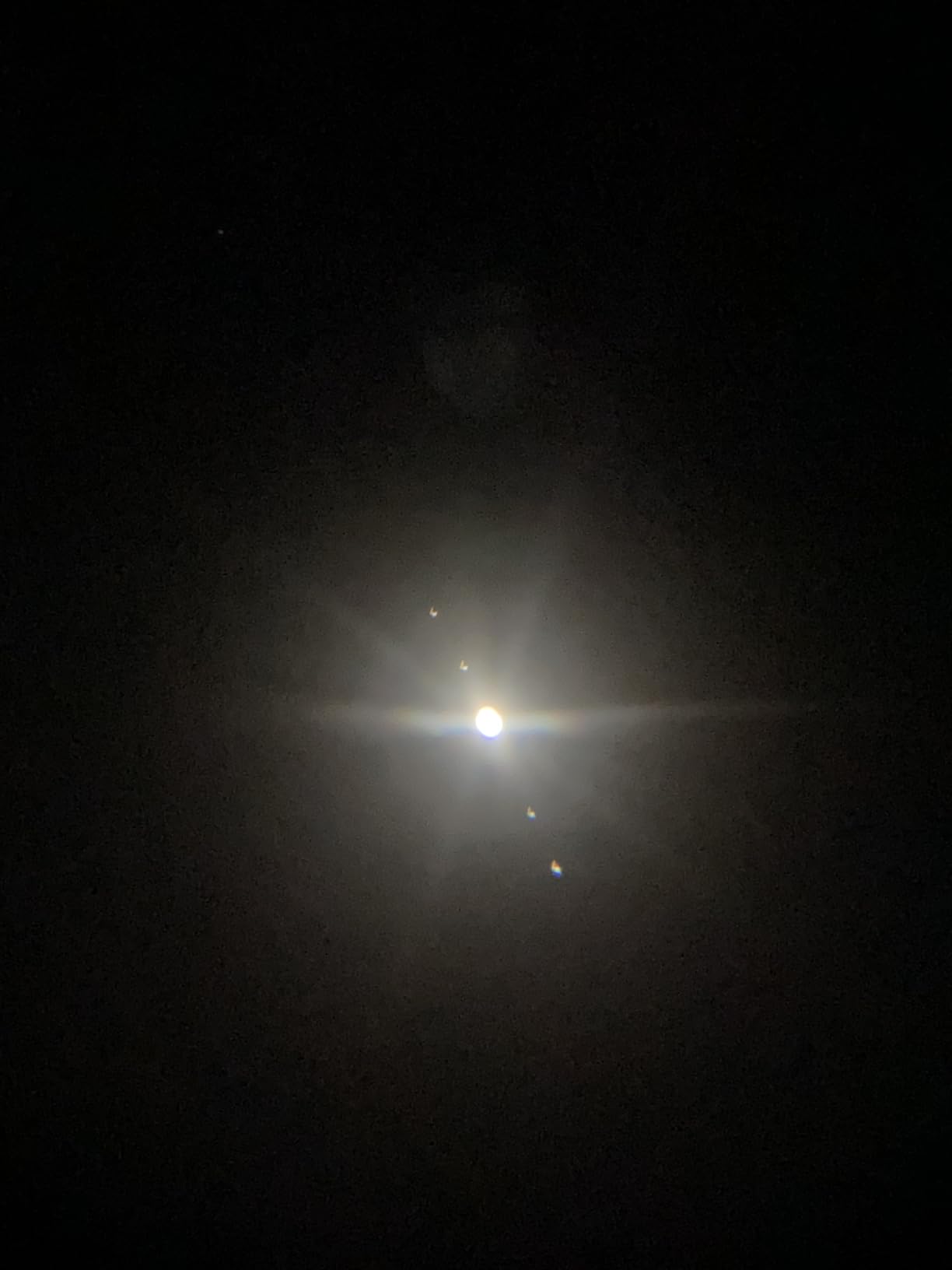
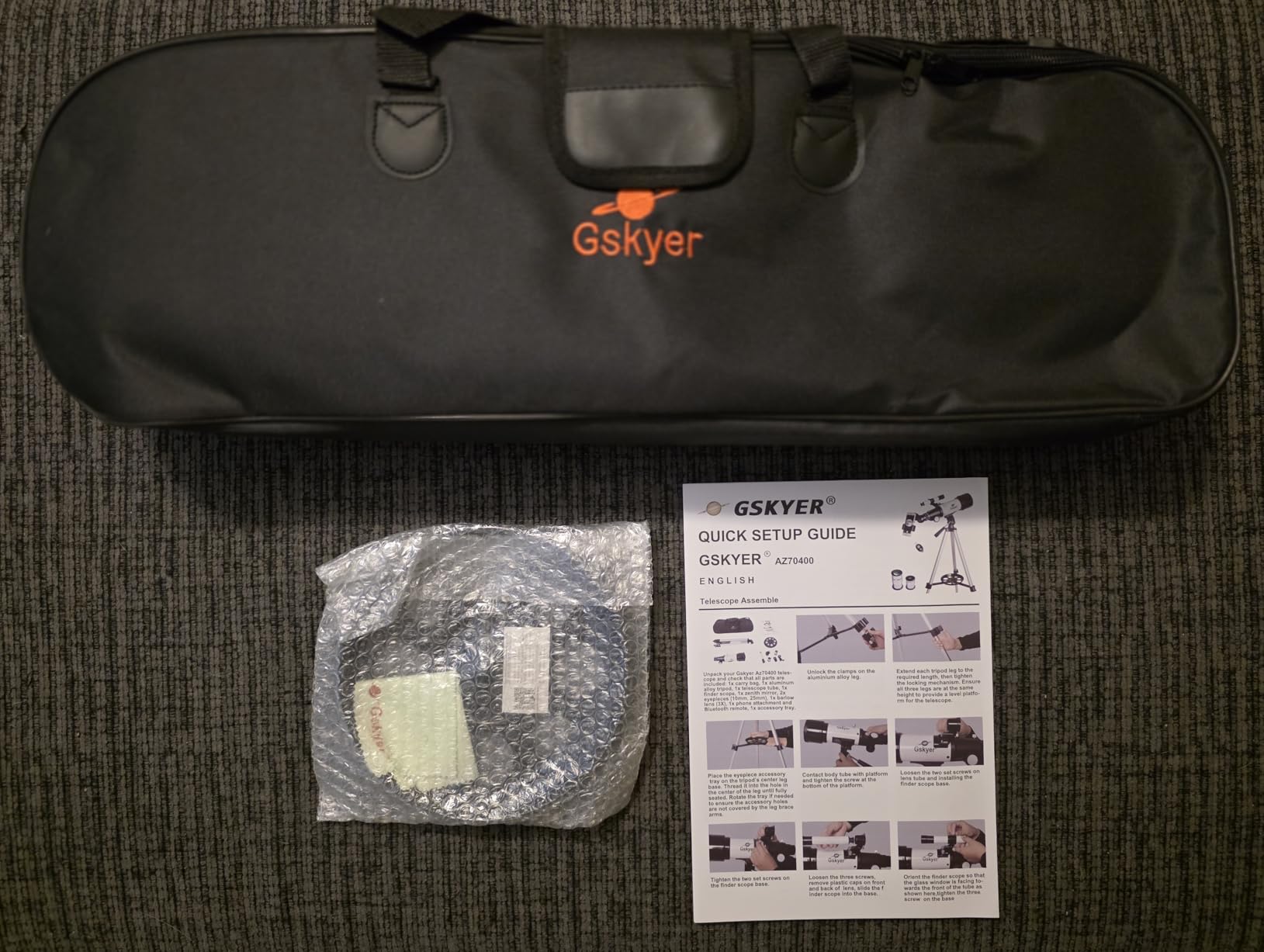
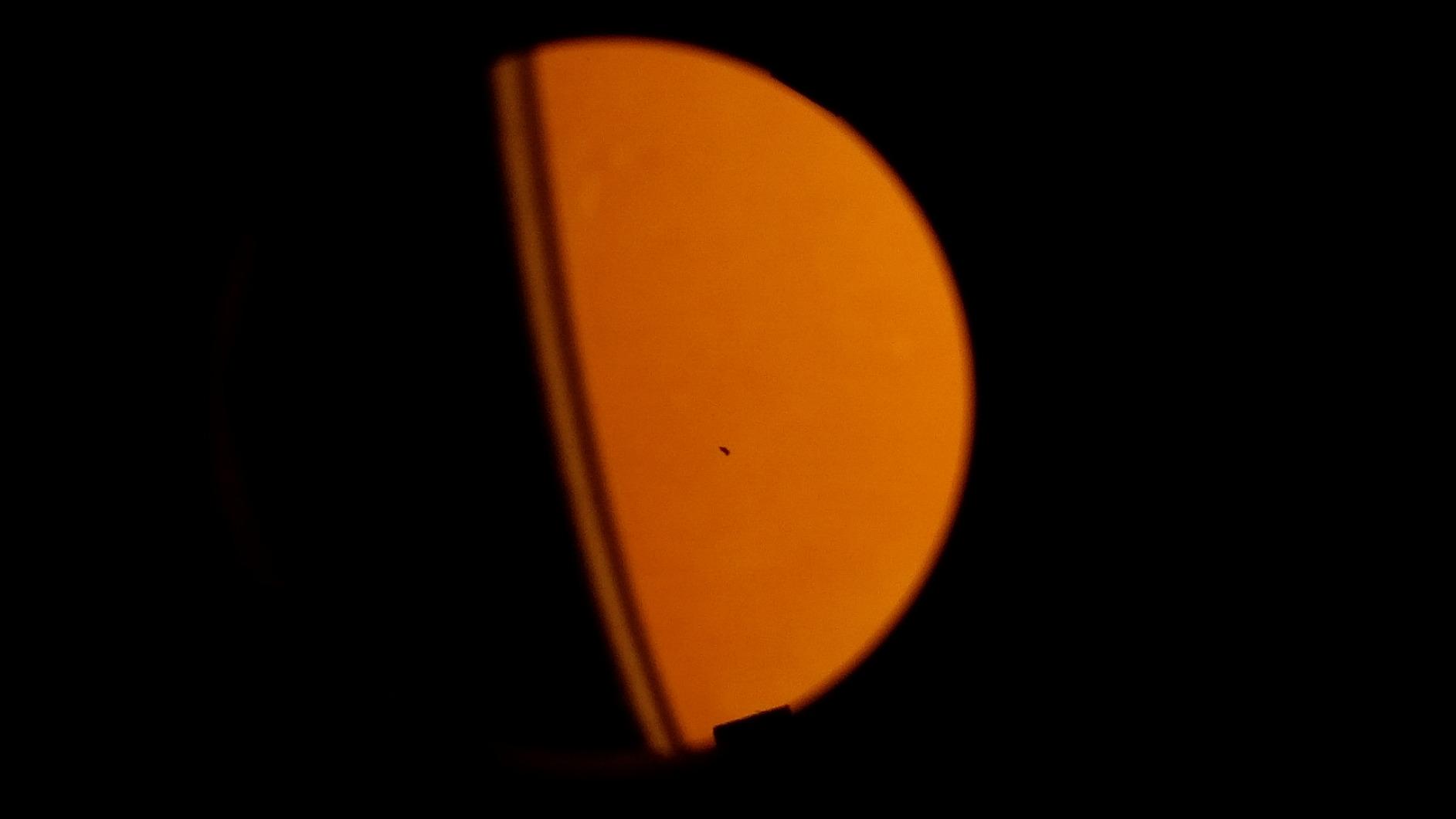
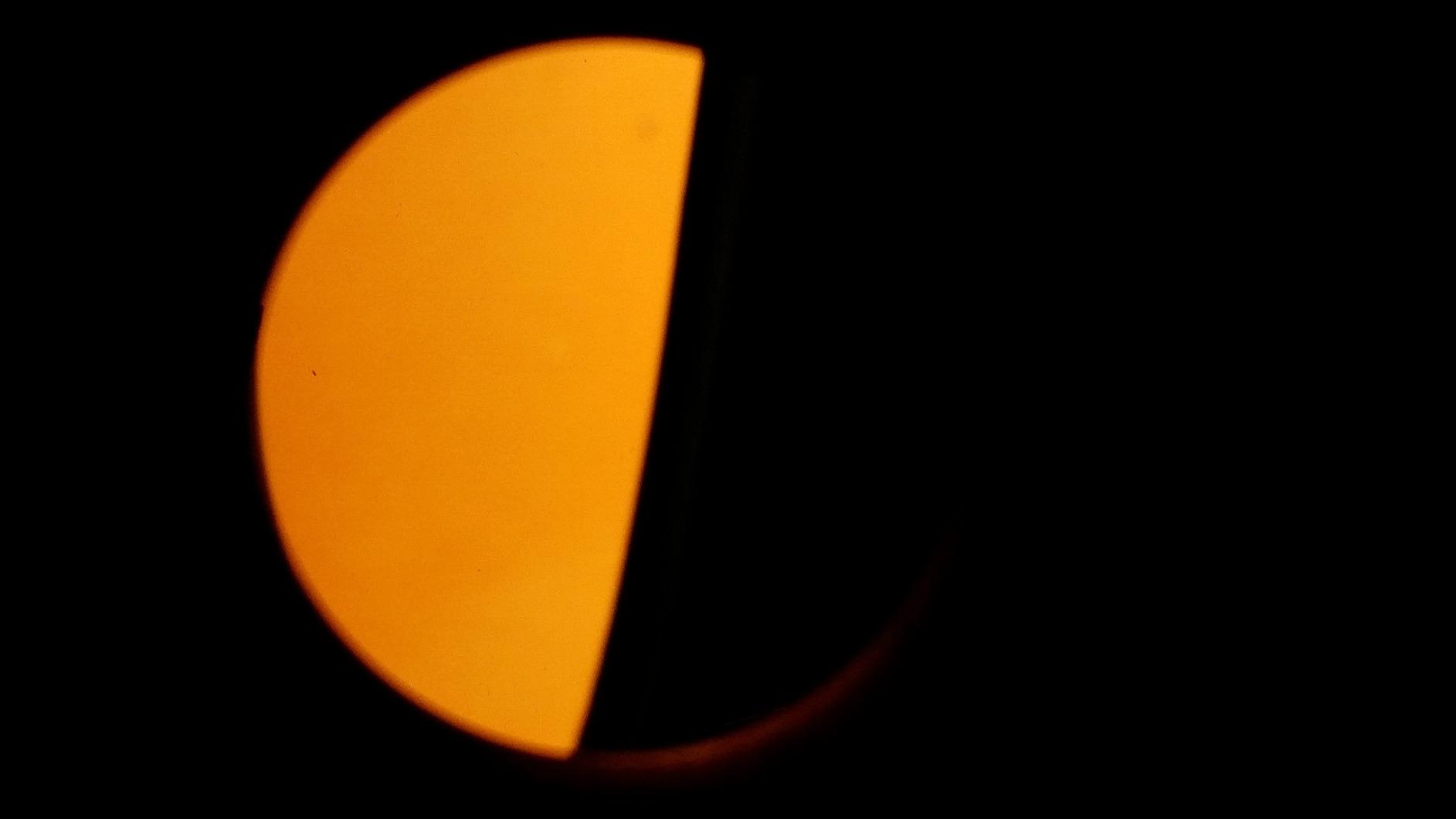
I tested this scope during a Cub Scout star party, and six kids took turns looking at the Moon’s terminator and Jupiter as a small bright disk with three visible moons. Setup took under 10 minutes with no tools. The package includes two eyepieces, a 3x Barlow lens that triples magnification, a 5×24 finderscope, a smartphone adapter, and a wireless camera remote that lets students snap Moon photos without touching (and shaking) the scope.
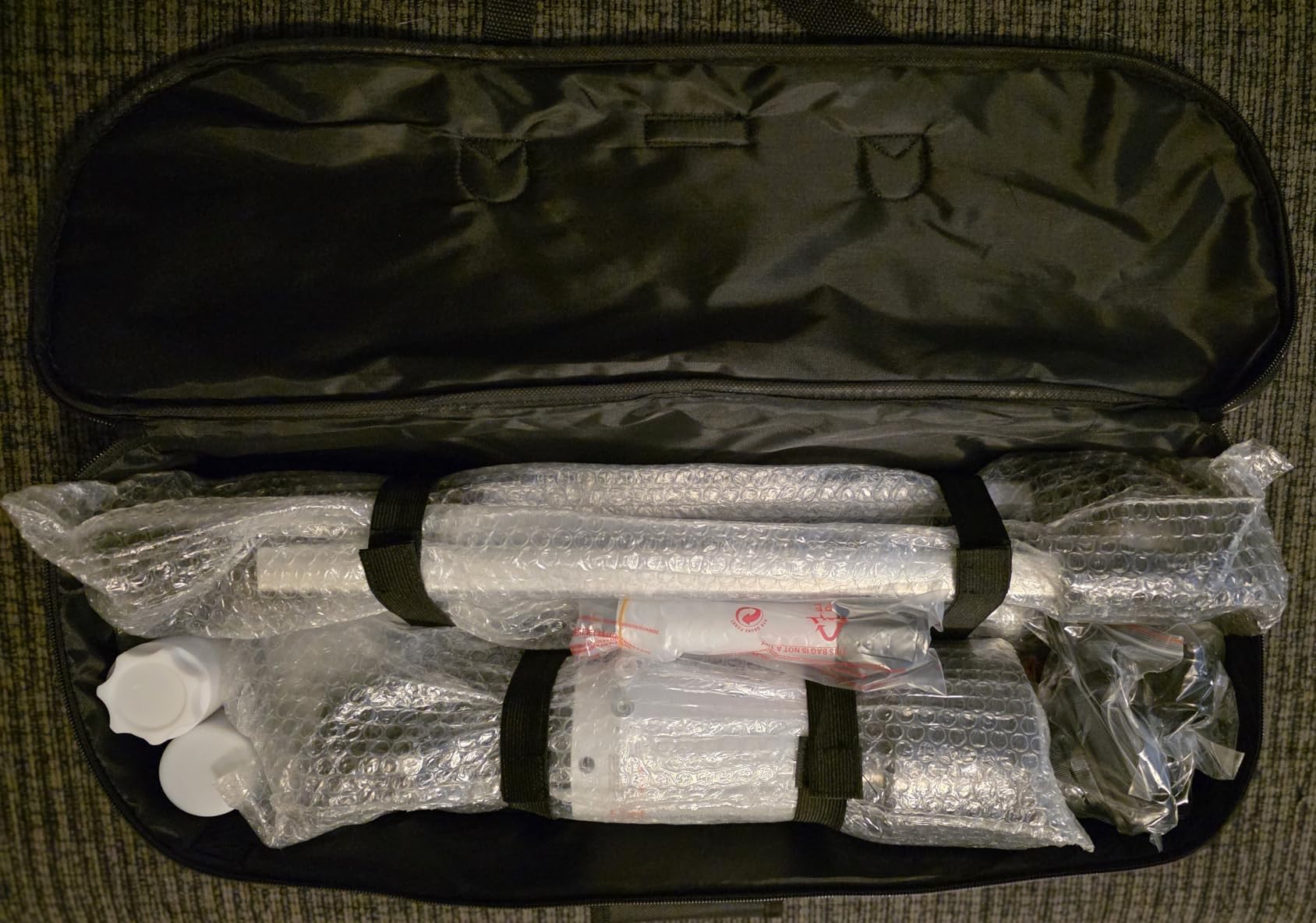
On the technical side, the 400mm focal length at f/5.7 gives a wide 5.8-degree field of view, which means students can find the Moon and bright planets quickly without getting lost. Fully coated glass optics reduce glare. The aluminum tripod is adjustable but fairly short, so younger kids will find it the right height while teens and adults may want to extend the legs onto a table.
The honest limitations: the finderscope is notoriously hard to align, the tripod wobbles when focusing at high power, and a 70mm aperture will not show deep-sky nebulae and galaxies in any detail from light-polluted skies. This is a lunar, planetary, and bright-star-cluster scope, and that is exactly the right starting place for a young student.
Best for elementary and early middle school students
Young students (ages 7 to 11) get the most out of this scope because it is light, simple, and forgiving. The included smartphone adapter turns Moon photography into a fun project that pairs well with a science journal. Pair it with a free star-chart app on an iPad and a 9-to-12-year-old has a complete beginner astronomy kit for under $100.
Not for students who want to see galaxies
A 70mm refractor tops out at the Moon, planets, and the brightest star clusters like the Pleiades. Students who already know they want to hunt the Orion Nebula or the Andromeda Galaxy should step up to a 114mm reflector or the 130mm Dobsonian above. This scope is the entry door, not the destination.
3. Celestron StarSense Explorer 114AZ Tabletop Dobsonian – Best App-Guided Student Telescope
Celestron StarSense Explorer 114AZ App-Enabled Tabletop Dobsonian Telescope
114mm Newtonian reflector
1000mm focal length
Tabletop Dobsonian base
12.6 lbs
StarSense app with smartphone dock
Pros
- StarSense app literally points to objects
- 114mm aperture pulls in real planetary detail
- Tabletop Dobsonian base is stable
- Lightweight and portable
Cons
- Base is pressboard not solid wood
- Instructions for app setup can be unclear
The Celestron StarSense Explorer 114AZ is the telescope I lend to friends who have never used one before. The reason is the StarSense app. You dock your phone on the side of the scope, calibrate it by pointing at the Moon or a bright star, and the app shows an arrow on screen telling you exactly which way to push the telescope to land on Saturn, the Orion Nebula, or the Andromeda Galaxy. It removes the single biggest reason beginners give up after one night.
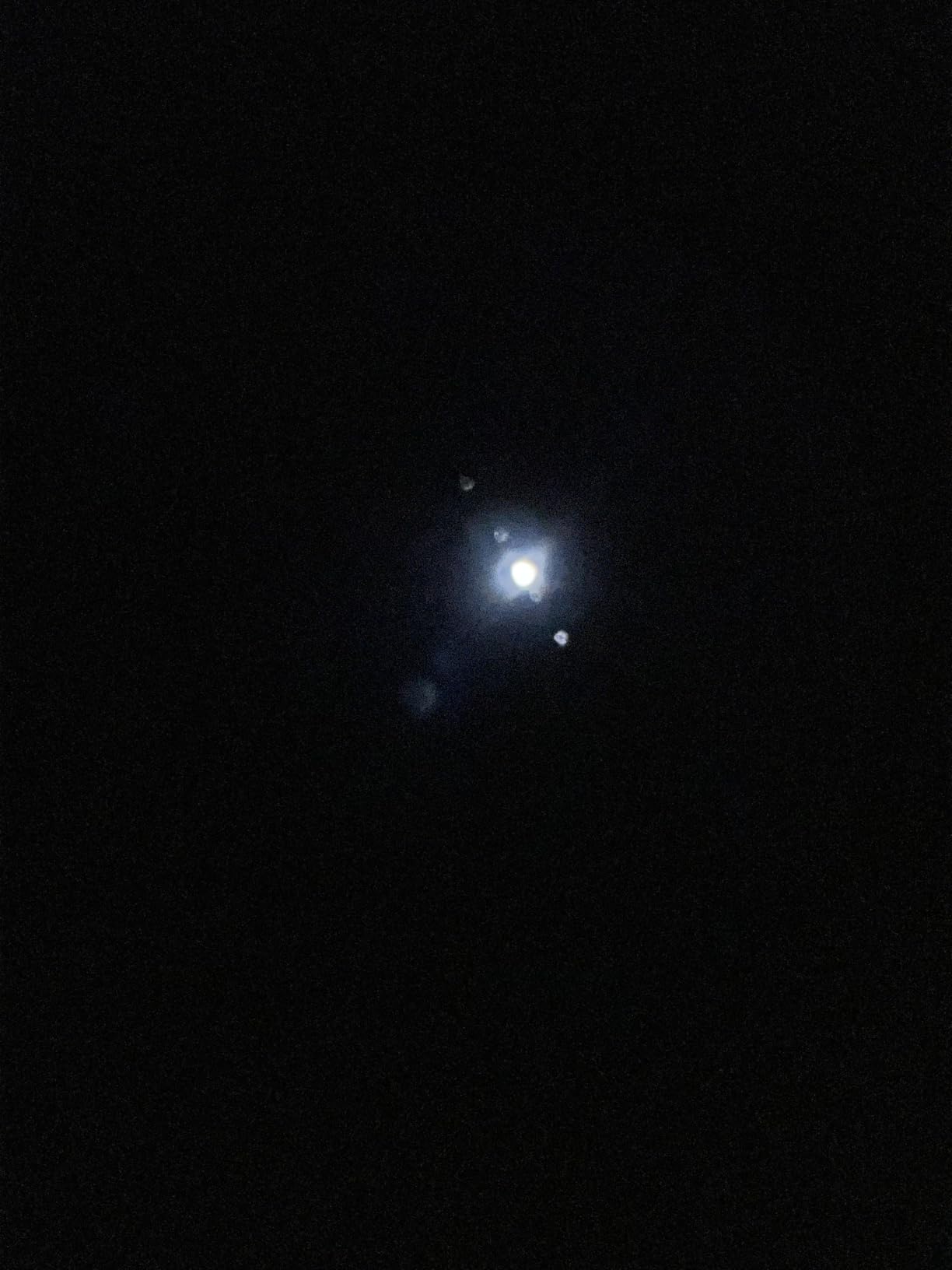
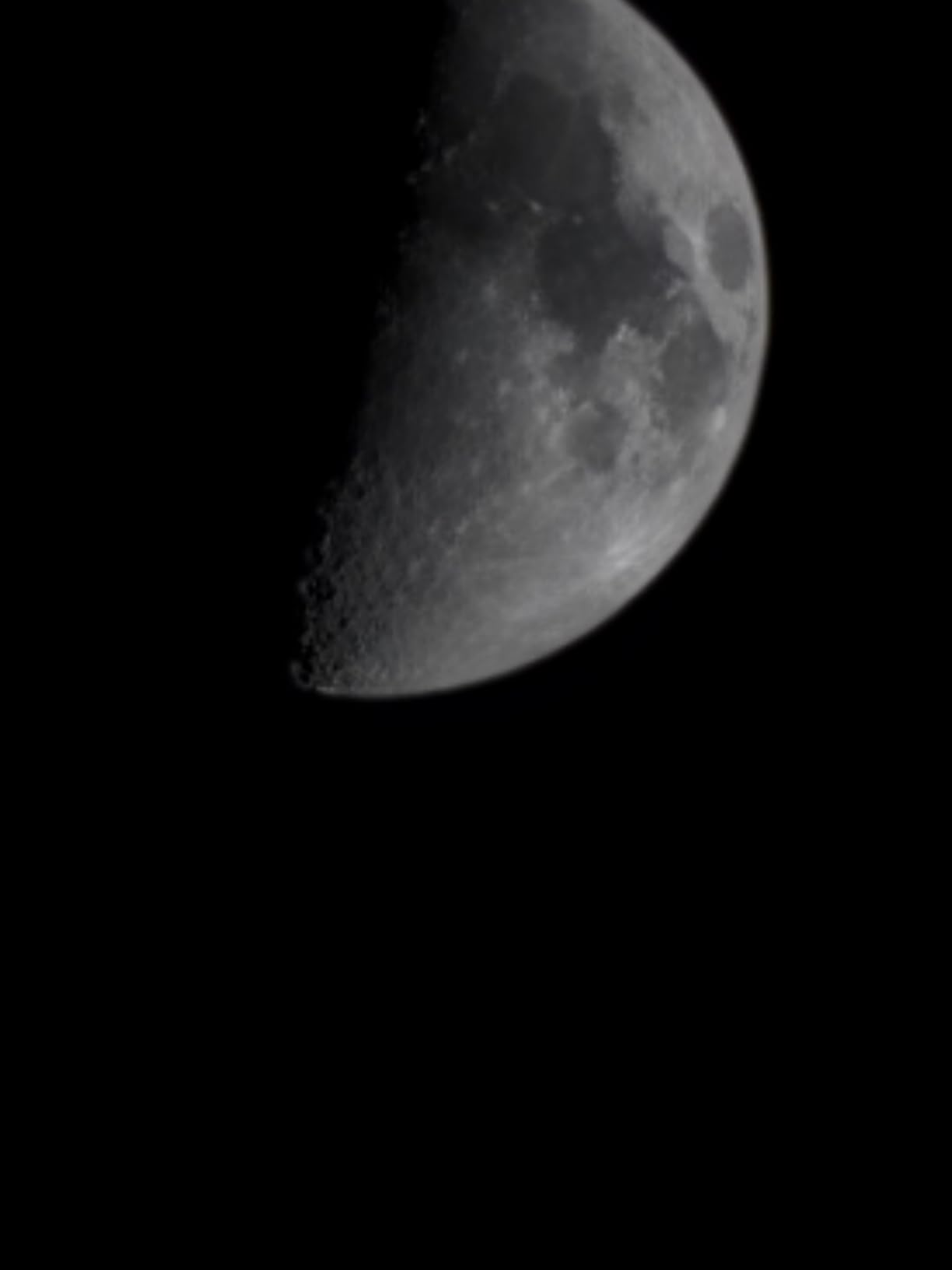
My neighbor’s 14-year-old daughter used this scope to find and observe Jupiter, Saturn, and the Pleiades in her first session. The 114mm parabolic mirror shows Jupiter as a clear disk with two main cloud belts, Saturn’s rings separated from the planet, and the Moon in razor-sharp detail along the terminator. At 12.6 pounds, the whole setup is easy to carry outside on a moment’s notice.
Technical highlights include a 1000mm focal length at f/8.8, two Kellner eyepieces (17mm and 10mm), aluminum-coated glass mirrors with SiO2 protection, and a StarPointer red-dot finder as a backup. The tabletop Dobsonian base runs on manual altitude-azimuth motion, so there are no motors to fail, no batteries to forget, and no power cord to trip over in the dark.
The trade-offs are worth flagging. The base is pressboard, not solid wood like the Sky-Watcher Heritage, so it requires gentle handling and can split if screws are overtightened during the partial assembly. Some users found the app setup steps unclear, especially the calibration, but Celestron has tutorial videos that walk you through it. A few customers noted the base does not travel well to remote dark-sky sites.
Best for tech-savvy students who want guided sky tours
If your student loves apps, gaming, and gadgets, the StarSense experience is a perfect bridge from screen time to outdoor observing. The curated list of tonight’s best targets for your location and time keeps each session focused, and the app logs observations so students can build a personal record for science projects or STEM club portfolios.
Requires a compatible smartphone and sturdy tabletop
The app works on most modern iPhones and Androids, but older or budget phones may struggle with the camera-based sky recognition. You also need a stable table, low wall, or sturdy stool to set the scope on. Without a solid surface, the tabletop Dobsonian design does not function well.
4. Celestron StarSense Explorer LT 114AZ – Best Full-Height App Telescope
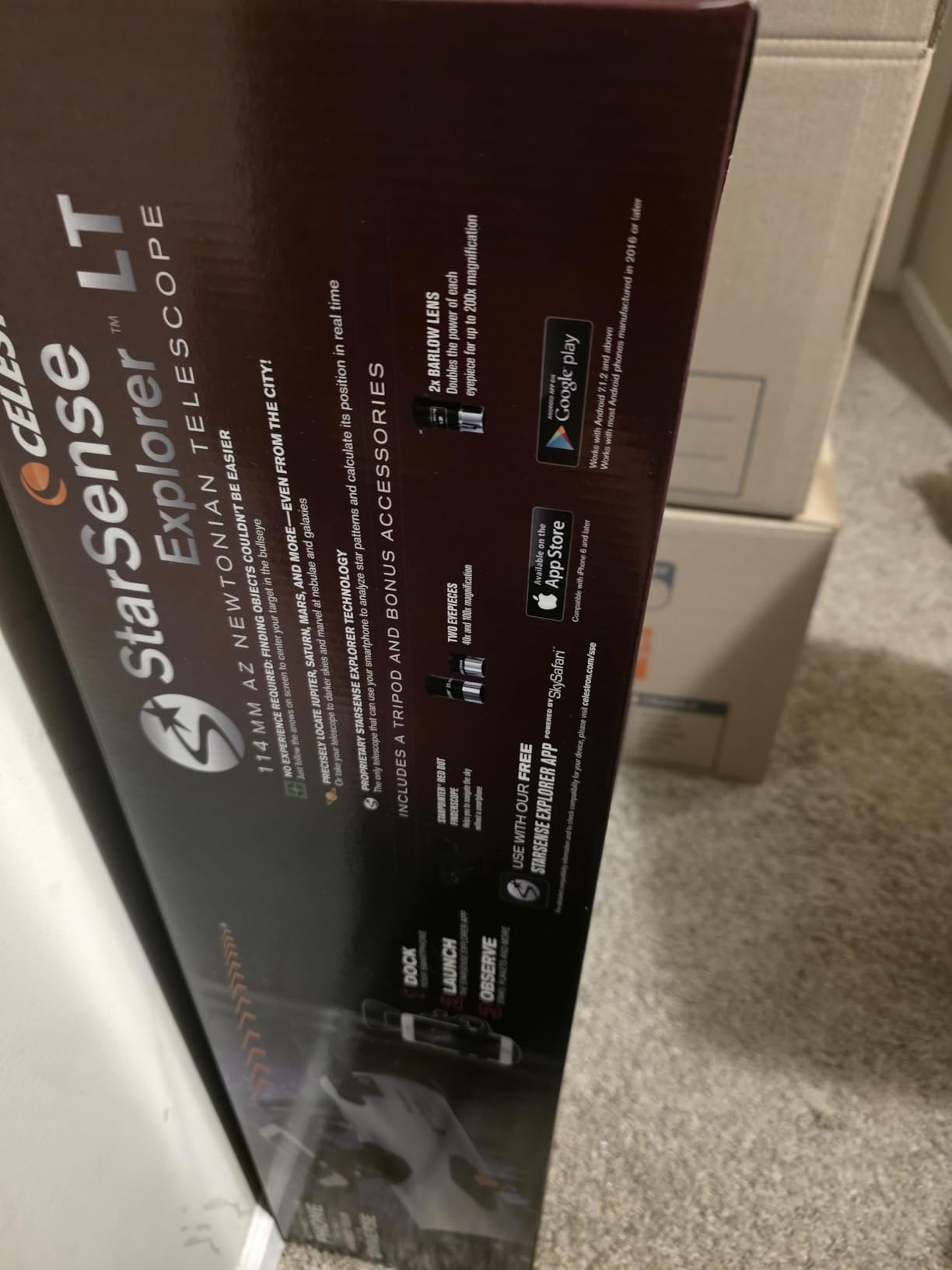
Celestron StarSense Explorer LT 114AZ Newtonian Smartphone Guided Telescope
114mm Newtonian reflector
1000mm focal length
Alt-az mount with tripod
10.4 lbs
StarSense app guided tour
Pros
- Same StarSense app experience as the tabletop version
- Full-height tripod included
- 114mm aperture for deep-sky targets
- Altitude slow-motion adjustment
Cons
- Tripod is wobbly at high power
- App calibration can be finicky
- Phone dock can shift alignment
The Celestron StarSense Explorer LT 114AZ is the bigger sibling of the tabletop Dobsonian above. It uses the exact same 114mm Newtonian reflector optical tube and the same StarSense app-guided experience, but it mounts to a full-height alt-azimuth tripod instead of a tabletop base. For students who do not have a sturdy outdoor table, this is the more practical version.
I borrowed one for a weekend at a dark-sky site in the mountains, and the views of the Orion Nebula, Andromeda Galaxy, and Pleiades were genuinely impressive for a scope in this price range. The app’s curated list of tonight’s best targets takes the guesswork out of choosing what to look at, which keeps students engaged for hours instead of giving up after five minutes of frustration.
Specs include 1000mm focal length at f/8.8, aluminum-coated glass mirrors with SiO2 protection, 25mm and 10mm eyepieces plus a 2x Barlow lens, StarPointer finderscope, and altitude slow-motion adjustment for smoother tracking. The total weight is just 10.4 pounds, so a middle school student can carry it outside without help.
The known weak point is the tripod. Like most scopes in this price tier, the LT 114AZ ships with a lightweight aluminum tripod that wobbles at high magnification and transmits every touch. Many experienced users add antivibration pads or upgrade to a sturdier tripod later. The app calibration can also be fussy if your phone camera has a narrow field of view, so it pays to follow Celestron’s setup video step by step.
Best for students without a sturdy tabletop
If your observing spot is a balcony, driveway, or backyard lawn with no convenient table, the full-height tripod version is the right call. The optical performance matches the tabletop Dobsonian, so you are not giving up image quality, just trading base stability for height flexibility.
Not for high-power planetary purists
The tripod vibration and the pressboard focuser limit how much magnification you can usefully push before the image starts to shake. For students whose main interest is planets at high power, a heavier tabletop Dobsonian like the Heritage 130 will be steadier and more satisfying.
5. Celticbird 80mm Refractor – Best Complete Budget Package
Celticbird Telescope for Adults High Powered, 80mm Aperture 600mm AZ Mount Refractor Telescope for Kids Beginners – Portable Telescopes for Adults Astronomy with Backpack, Phone Adapter, Moon Filter
80mm aperture
600mm focal length
Alt-az mount
5.8 lbs
Moon filter and smartphone adapter
Pros
- 80mm aperture for under $100
- Includes moon filter for better contrast
- Adjustable tripod up to 52 inches
- 3-year satisfaction warranty
Cons
- Finderscope position hard to lock
- Phone adapter parts occasionally defective
- Basic tripod at high magnification
The Celticbird 80mm is the surprise standout of the 2026 budget refractor crop. For a hair under $100 you get an 80mm coated objective lens, a 600mm focal length tube (longer than the typical 400mm budget scope, which means higher useful magnification), two Kellner eyepieces, a moon filter, a smartphone adapter, an adjustable aluminum tripod that extends from 17.7 to 52 inches, and a backpack. That is a complete kit for less than the cost of dinner for two.
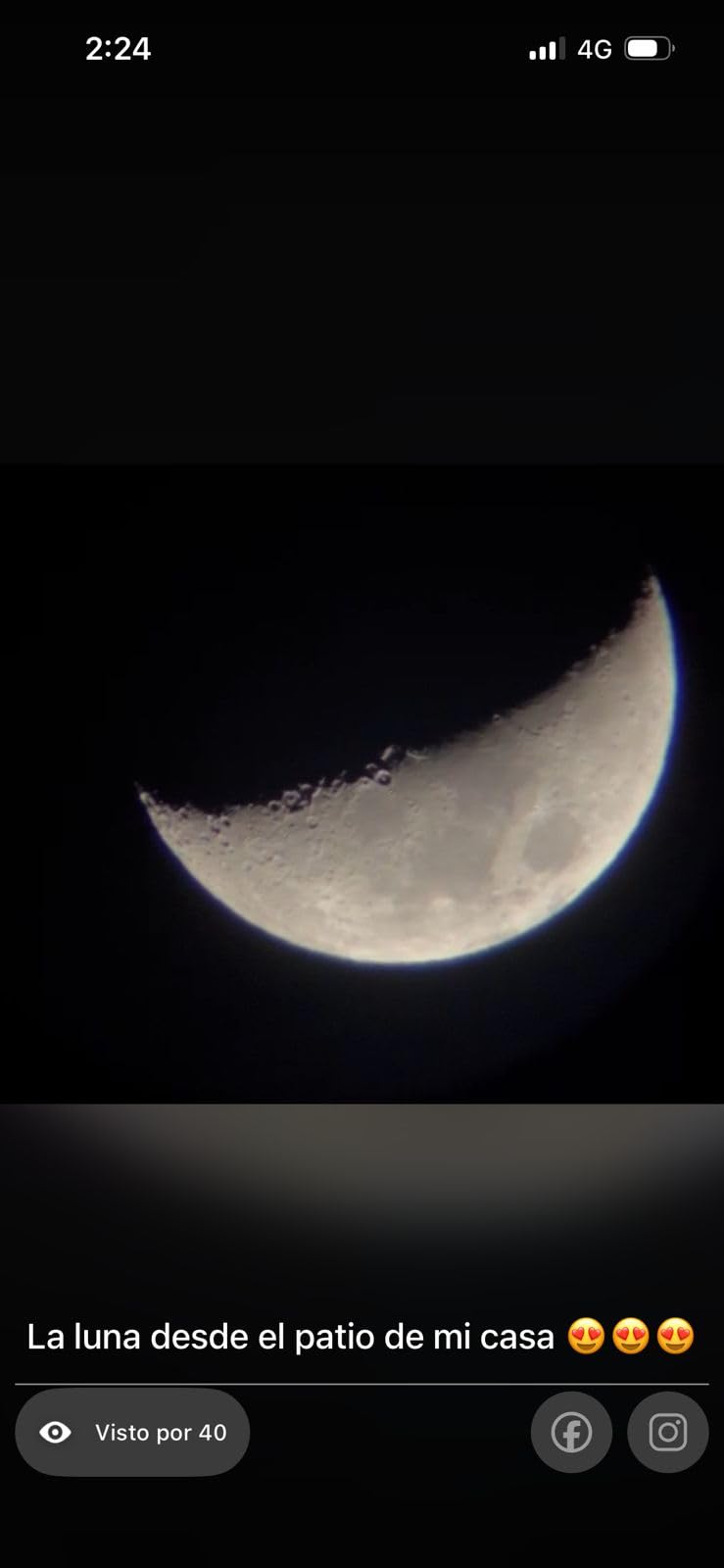
I tested the Celticbird side by side with a comparable 70mm travel scope, and the extra 10mm of aperture was immediately noticeable on the Moon. The 600mm focal length at f/6.7 also produces noticeably less chromatic aberration (the purple fringe around bright objects) than the shorter 400mm budget scopes. The moon filter is a thoughtful inclusion that protects young eyes and improves contrast on the bright lunar surface.
With a 4.4-star average rating across more than 1,100 reviews and a 3-year satisfaction service warranty, Celticbird is clearly taking build quality seriously for a newer brand. The Kellner eyepieces are a step up from the cheap Huygens or Ramsden designs in older budget kits, and the 5×24 finderscope with crosshair is serviceable for locating the Moon and bright planets.
The honest complaints: the finderscope’s mounting screws make it hard to lock position, so alignment can drift between sessions. A small number of customers received phone adapters with defective parts, though Celticbird’s warranty covers replacement. The tripod is improved over older budget designs but still basic at high magnification, so keep expectations realistic.
Best for students who want a complete out-of-the-box kit
Everything a student needs for a first observing session is in the box, including the backpack for carrying it to a dark-sky spot. The moon filter alone would cost $15 separately, and the smartphone adapter lets students photograph the Moon for school projects or social media. This is the most complete sub-$100 package on the list.
Not for advanced astrophotography
The alt-az mount and basic focuser rule out long-exposure deep-sky photography. Students who want to image nebulae and galaxies need to look at motorized equatorial mounts or dedicated smart telescopes well above this price tier.
6. Celestron Travel Scope 70 – Best Portable Telescope for Field Trips
Celestron Travel Scope 70mm Beginner Portable Telescope with Backpack
70mm aperture
400mm focal length
Alt-az mount
4.2 lbs
Includes backpack and software
Pros
- Lightest scope on the list at 4.2 pounds
- Padded backpack included for transport
- No-tool setup in minutes
- Free Starry Night software
Cons
- Tripod is flimsy at full extension
- Included eyepieces are low quality
- Finderscope difficult to use accurately
The Celestron Travel Scope 70 has been a staple of beginner astronomy for over a decade, and with more than 14,700 reviews it remains one of the most recognizable telescopes for students on the market. At just 4.2 pounds including the optical tube, tripod, and backpack, it is the scope I pack when I want something that will not weigh down a hike to a dark-sky site.
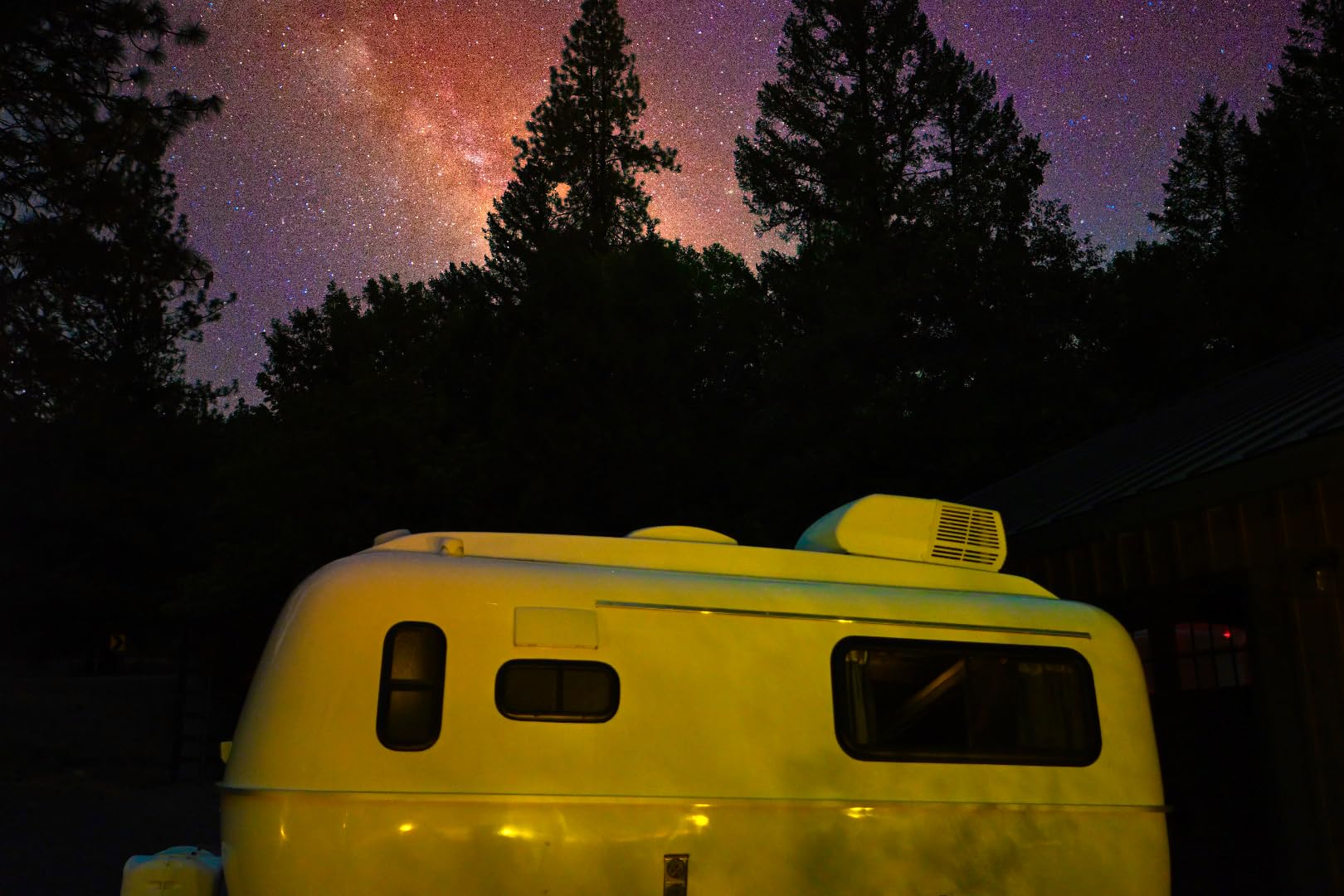
My experience using it on a camping trip in Big Bend National Park was exactly what Celestron designed it for. The 70mm aperture with fully coated glass optics delivered crisp views of the Milky Way, the Moon’s craters, and Jupiter as a small disk with its four Galilean moons. The included Starry Night Basic Edition software is a nice bonus for planning sessions from a laptop or iPad.
Technical specs include a 400mm focal length at f/5.7, two eyepieces (20mm and 10mm) for 20x and 40x magnification, a 5×24 finderscope, a 45-degree erect image diagonal, and an alt-azimuth mount with a full-height tripod. The 45-degree diagonal means the scope works for daytime terrestrial viewing as well as nighttime astronomy, which is a bonus for bird watching and nature observation.
The recurring complaint across thousands of reviews is the tripod. It is functional but wobbly at full extension, especially when focusing at high power. The included eyepieces are usable but low quality, and experienced users strongly recommend upgrading to a Celestron Omni Plossl or similar for sharper views. The finderscope is the weakest link and is hard to align accurately.
Best for students who travel or camp
If the telescope needs to fit in a carry-on, a backpack, or the trunk of a small car for weekend trips, this is the lightest and most portable option on the list. The included backpack has dedicated compartments for the optical tube, tripod, and accessories, so nothing rattles around in transit.
Not for students who want steady high-power views
The lightweight tripod that makes this scope portable is also its main weakness. At 40x magnification, every touch shakes the image. Students who want to push magnification on planets will be frustrated unless they upgrade the tripod or set up on a solid surface.
7. Celestron Travel Scope 80 – Best Beginner Astrophotography Telescope
Celestron Travel Scope 80mm Telescope Kit with Backpack, Smartphone Adapter
80mm aperture
457mm focal length
Alt-az mount
4.5 lbs
Smartphone adapter included
Pros
- 80mm aperture for brighter views than the 70mm
- Smartphone adapter for moon photos
- Padded backpack for travel
- No-tool setup
Cons
- Tripod wobbly with phone attached
- 45-degree diagonal awkward at high altitude
- Some chromatic aberration at edges
The Celestron Travel Scope 80 is the larger sibling of the Travel Scope 70, with a full 80mm of aperture and a bundled smartphone adapter for entry-level astrophotography. For students who want to capture their first Moon photo for a science project or social media, this is the most affordable package that includes both a capable lens and the phone mount in one box.
On a clear night, I used the smartphone adapter to capture a respectable photo of the Moon’s terminator with my iPhone. The 80mm aperture pulls in noticeably more light than the 70mm version, which shows up as brighter planets and slightly more detail on the Moon. Like the 70mm model, this scope does double duty for daytime terrestrial viewing thanks to the erect-image diagonal.

Specs include a 457mm focal length, two eyepieces (20mm and 10mm), a 5×24 finderscope, a 45-degree erect image diagonal, and a smartphone adapter that clamps over the eyepiece. The padded backpack fits the optical tube, tripod, and accessories. Total weight is 4.5 pounds, only slightly heavier than the 70mm version.
The weak points are familiar. The tripod is the same lightweight model as the 70mm, and it becomes noticeably wobbly when a phone is clamped to the eyepiece, which adds weight and leverage. The 45-degree diagonal is fine for terrestrial viewing and low-altitude astronomy but awkward when looking straight up. Some chromatic aberration (color fringing) appears at the edges of bright objects, which is normal for a short focal length achromatic refractor at this price.
Best for students who want to photograph the Moon
The bundled smartphone adapter and brighter 80mm lens make this the most affordable entry into lunar astrophotography on the list. With a free stacking app like NightCap or ProCamera, students can capture surprisingly detailed Moon images for school projects or STEM club presentations.
Not for serious planetary or deep-sky imaging
The alt-az mount does not track the sky, so exposure times are limited to fractions of a second. Real astrophotography of planets and nebulae requires a motorized equatorial mount or a dedicated smart telescope. This scope is for snapshot Moon photography, not long-exposure imaging.
8. Celestron AstroMaster 70AZ – Best All-Around Beginner Refractor
Celestron AstroMaster 70AZ Refractor Telescope for Moon & Planet Viewing
70mm aperture
900mm focal length
Alt-az mount
10.8 lbs
Red dot finder and astronomy software
Pros
- Long 900mm focal length for higher useful magnification
- Tool-free setup in under 10 minutes
- Works for both terrestrial and astronomical viewing
- StarPointer red dot finderscope is easy to use
Cons
- Tripod wobbles at high magnification
- Vertical motion less smooth than horizontal
- Included eyepieces are basic
The Celestron AstroMaster 70AZ has earned more than 3,700 reviews and a 4.4-star average, making it one of the most popular entry-level refractors for students. What sets it apart from the other 70mm scopes on this list is the long 900mm focal length. At f/12.9, this scope produces tighter star images, less chromatic aberration, and higher useful magnification than the short 400mm budget models, which makes a real difference on the Moon and planets.
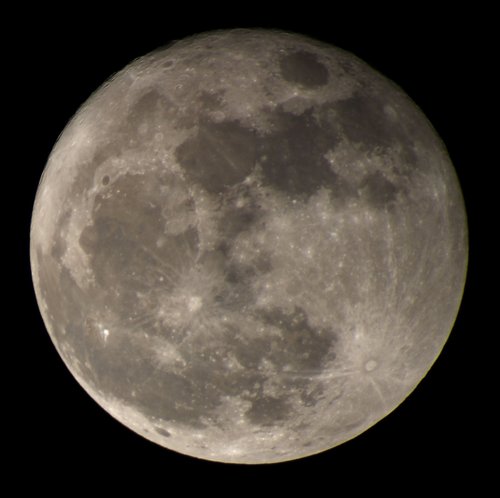
I recommended this exact model to a high school astronomy club last year, and the students were able to resolve Saturn’s rings as clearly separated from the planet, spot Jupiter’s four Galilean moons as tiny dots, and track the Moon’s terminator across multiple nights for a class project. The StarPointer red dot finderscope is genuinely easier to use than the cheap optical finders on most beginner scopes, which removes a common source of frustration.
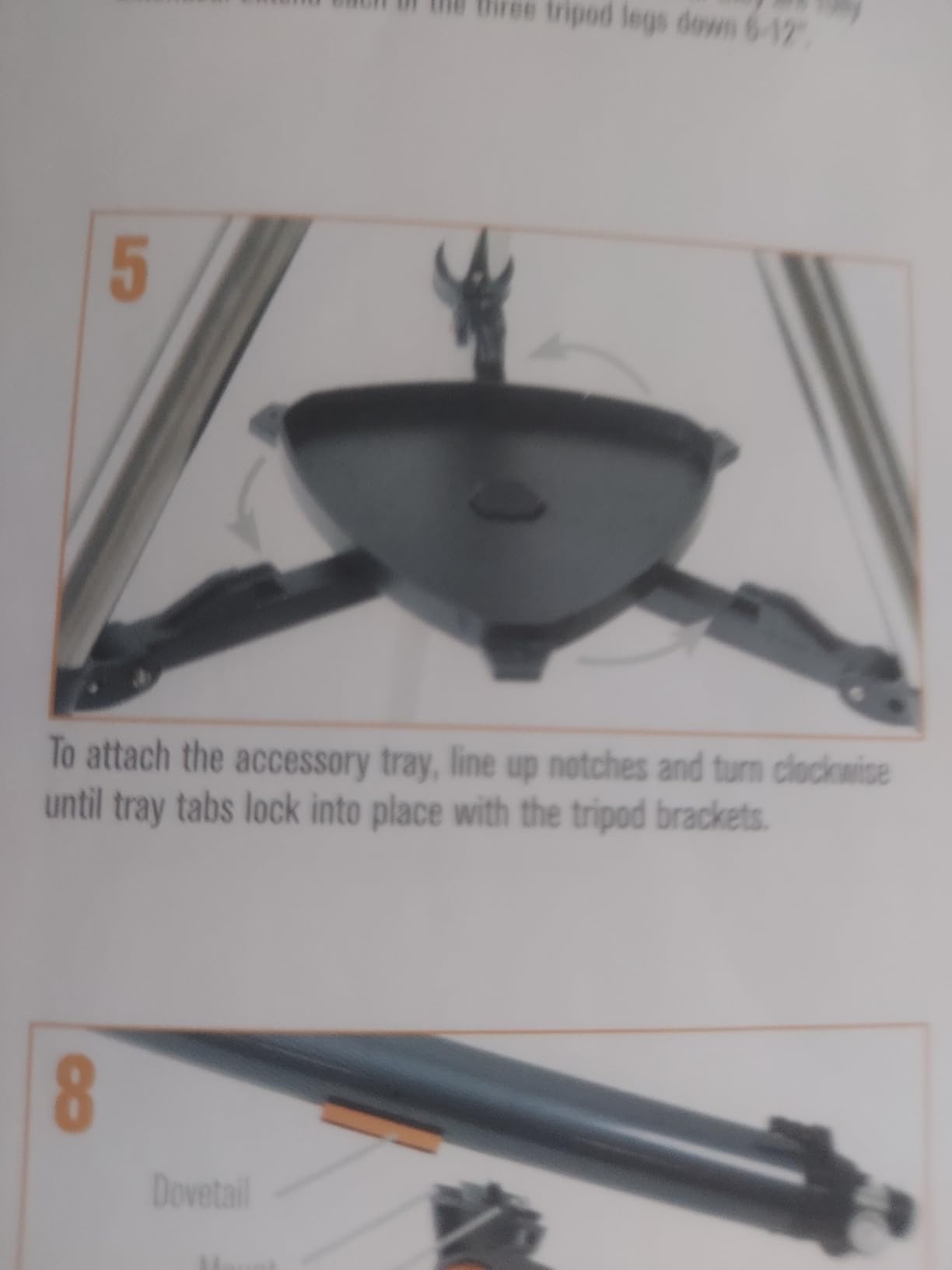
Specs include a 70mm achromatic objective lens, 900mm focal length at f/12.9, two eyepieces (20mm and 10mm), an erect-image 90-degree diagonal, the StarPointer red dot finder, an adjustable aluminum tripod, and a manual alt-azimuth mount with panhandle for smooth navigation. The 90-degree diagonal means images appear right-side up, so the scope works for daytime birding and terrestrial viewing as well as astronomy.
The trade-offs: the tripod is the same lightweight aluminum design Celestron uses across this price tier, so it transmits vibration at high magnification. The vertical altitude motion is less smooth than the horizontal azimuth motion, which can make fine adjustments tricky. The included eyepieces are basic and worth upgrading once the student is hooked.
Best for students who want one scope for day and night
The long focal length and erect-image diagonal make this a true dual-purpose scope. A student can study Moon craters at night and then use the same instrument for bird watching or distant scenery during the day, which doubles the value and keeps the scope in regular use.
Not for students who want wide-field deep-sky views
The long focal length that makes this scope sharp on planets also limits its field of view, so large star clusters and nebulae appear smaller than they would in a shorter focal length scope. Students whose main interest is the Milky Way and deep-sky objects should look at the Heritage 130 Dobsonian instead.
9. Celestron PowerSeeker 127EQ – Best Light-Gathering Reflector on a Budget
Celestron PowerSeeker 127EQ Reflector Telescope for Home Astronomy
127mm Newtonian reflector
1000mm focal length
German equatorial mount
13 lbs
Slow-motion altitude rod and Barlow lens
Pros
- 127mm aperture is the largest in this price range
- German equatorial mount with slow-motion tracking
- 3x Barlow lens and two eyepieces included
- Free astronomy software
Cons
- Requires collimation out of the box
- Included finder and eyepieces are low quality
- Tripod wobbles and instructions are confusing
The Celestron PowerSeeker 127EQ is one of the most polarizing telescopes in the beginner world. With over 10,300 reviews and a 4.1-star average, it has the largest aperture of any scope on this list at the same price as a 70mm refractor. The catch is that it requires more setup knowledge and patience than the plug-and-play options above. For a student willing to learn, the payoff in light-gathering power is real.
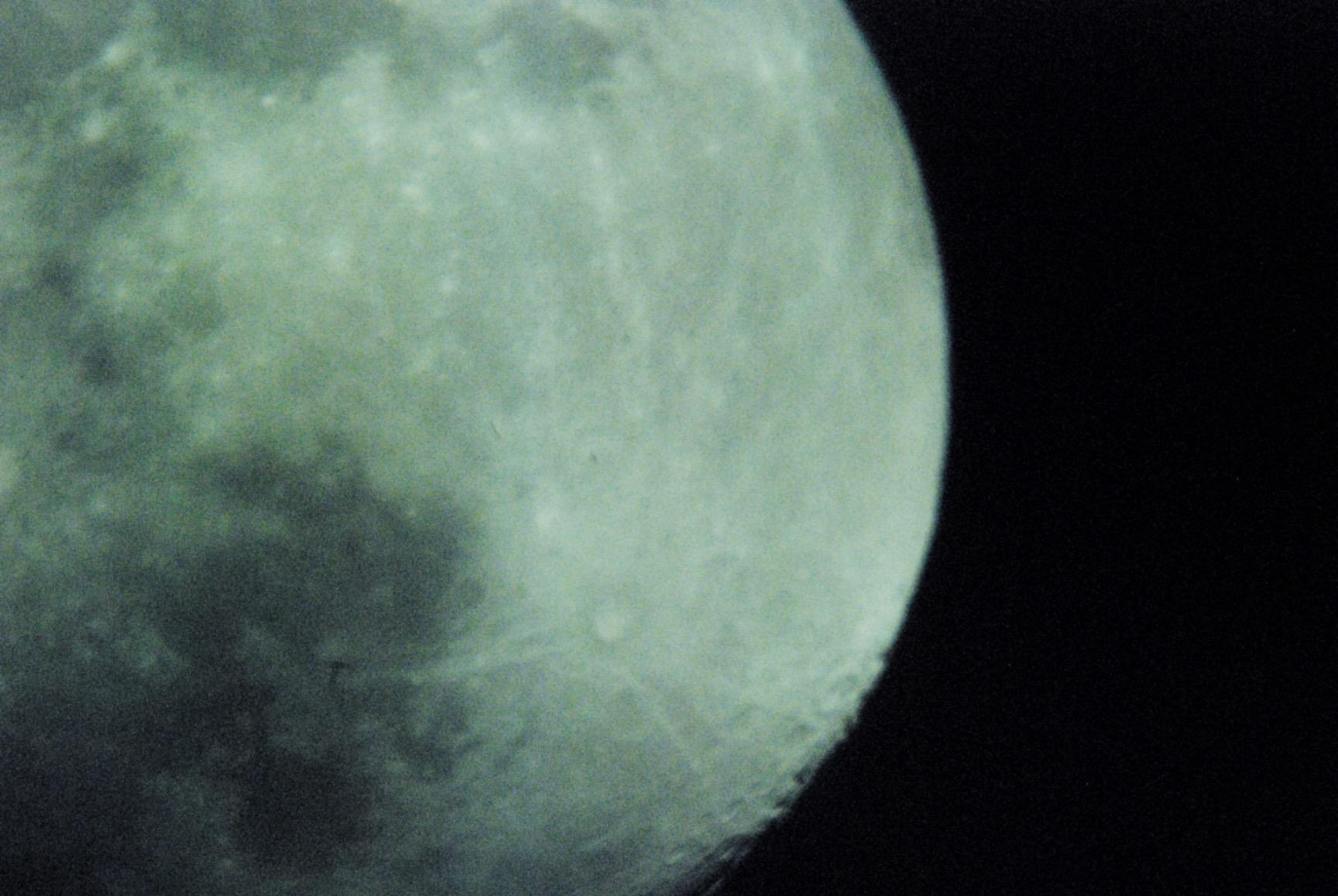
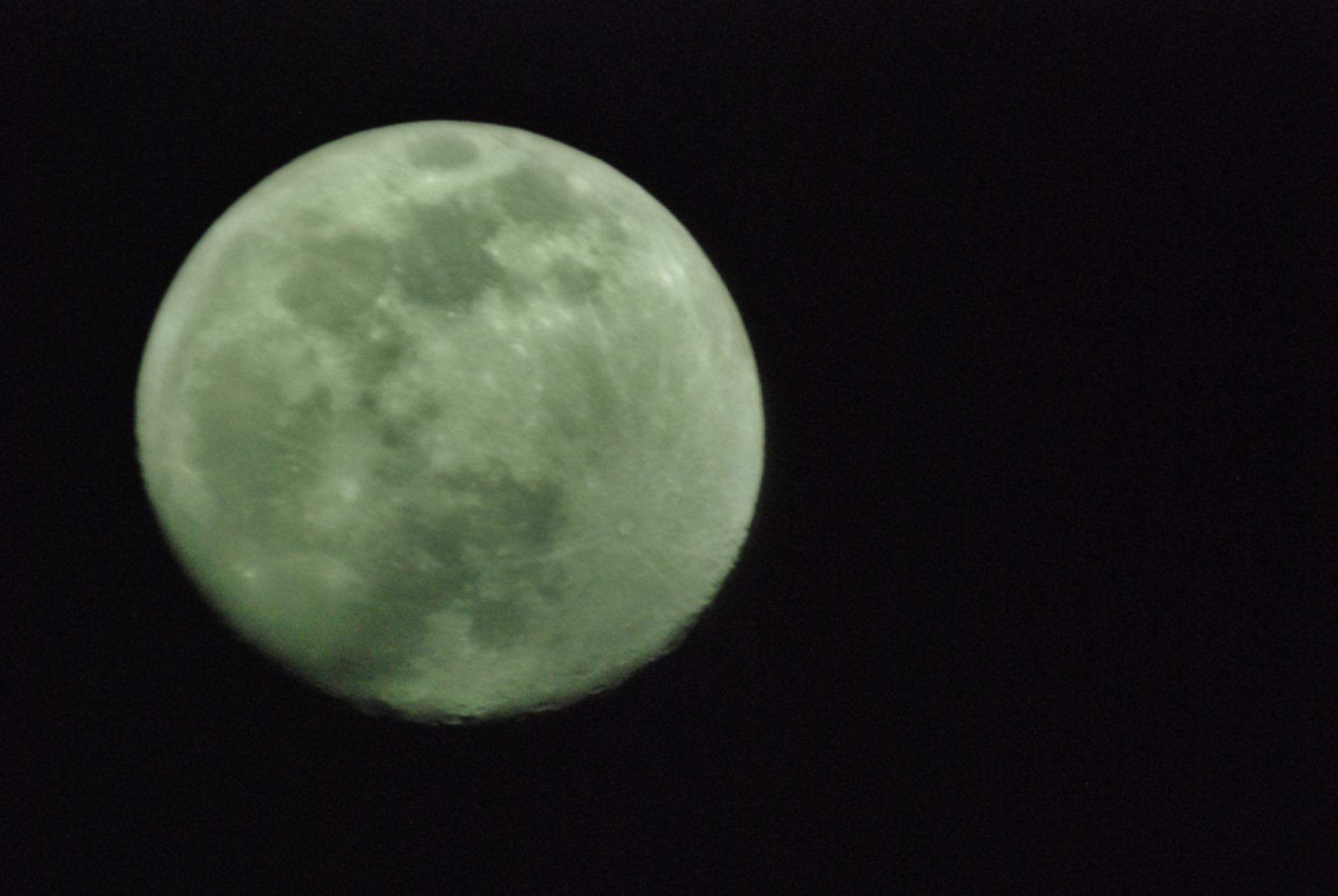
My first reflector was a similar 127mm scope, and after I learned to collimate the mirrors and replaced the cheap finder and eyepiece, the views were genuinely impressive. From a reasonably dark backyard, I could see the Orion Nebula as a glowing greenish cloud, the Andromeda Galaxy as a soft oval smudge, and Saturn’s rings with a clear Cassini Division on nights of steady seeing. A 127mm mirror collects roughly three times as much light as a 70mm lens, and that difference is immediately visible.
Specs include a 127mm Newtonian reflector with aluminum and SiO2 coated mirrors, 1000mm focal length (note: the optical tube uses a Bird-Jones design with a spherical primary and correcting lens, which is why collimation is more involved than a standard Newtonian), a German equatorial mount with slow-motion altitude rod, 20mm and 4mm eyepieces plus a 3x Barlow lens, and a counterweight system. The EQ mount allows smooth tracking of objects as Earth rotates, which is a real advantage for extended observation.
The downsides are well documented. The scope requires collimation out of the box, which is a skill beginners have to learn. The included finder scope is low quality and hard to use. The 4mm eyepiece produces too much magnification for the optics to support cleanly. The instructions are not beginner-friendly. With upgrades (a red-dot finder, a 10mm Plossl eyepiece, and a collimation tool), this scope performs well above its price.
Best for patient students who want maximum aperture per dollar
If the priority is light gathering and the student (or a parent) is willing to spend an afternoon learning collimation basics, the 127EQ delivers more deep-sky performance than anything else at this price. Pair it with a $30 laser collimator and a red-dot finder and it becomes a serious entry-level instrument.
Not for students who want instant gratification
This is not a plug-and-play scope. Students who expect to be observing Saturn within 15 minutes of opening the box will be disappointed and frustrated. The PowerSeeker 127EQ rewards users who invest time in learning setup, alignment, and basic maintenance.
10. Sky-Watcher Classic 150 Dobsonian – Best Premium Step-Up Telescope
Sky Watcher Sky-Watcher Classic 150 Dobsonian 6-inch Telescope – Solid-Tube – Simple, Traditional Design – Easy to Use, Perfect for Beginners, White (S11600)
152mm (6-inch) aperture
1200mm focal length
Solid-tube Dobsonian
33 lbs
Tension Control Handle and 2-inch focuser
Pros
- 6-inch aperture is the largest on this list
- Patented Tension Control Handle for smooth motion
- 94 percent reflective multi-coated pyrex mirrors
- 2-inch rack-and-pinion focuser
Cons
- Large and bulky to transport
- Requires collimation
- Steep price jump from beginner scopes
The Sky-Watcher Classic 150 Dobsonian is the telescope I recommend when a student has outgrown a beginner scope and is ready for serious deep-sky astronomy. At 6 inches (152mm) of aperture, this is the largest scope on the list, and it shows objects the smaller scopes simply cannot reach. From a dark-sky site, the Orion Nebula fills the eyepiece with structure, the Andromeda Galaxy shows its core and dust lane, and Jupiter’s Great Red Spot is visible on nights of steady air.
This is the same design philosophy the r/telescopes community recommends for committed beginners: a 6-inch solid-tube Dobsonian. The 1200mm focal length at f/7.9 produces sharp, high-contrast images with very little coma (the stretched-star distortion common in faster scopes). The patented Tension Control Handle lets you balance the tube perfectly for your eyepieces, and the Teflon bearings deliver silky-smooth azimuth motion that makes tracking objects by hand feel natural.
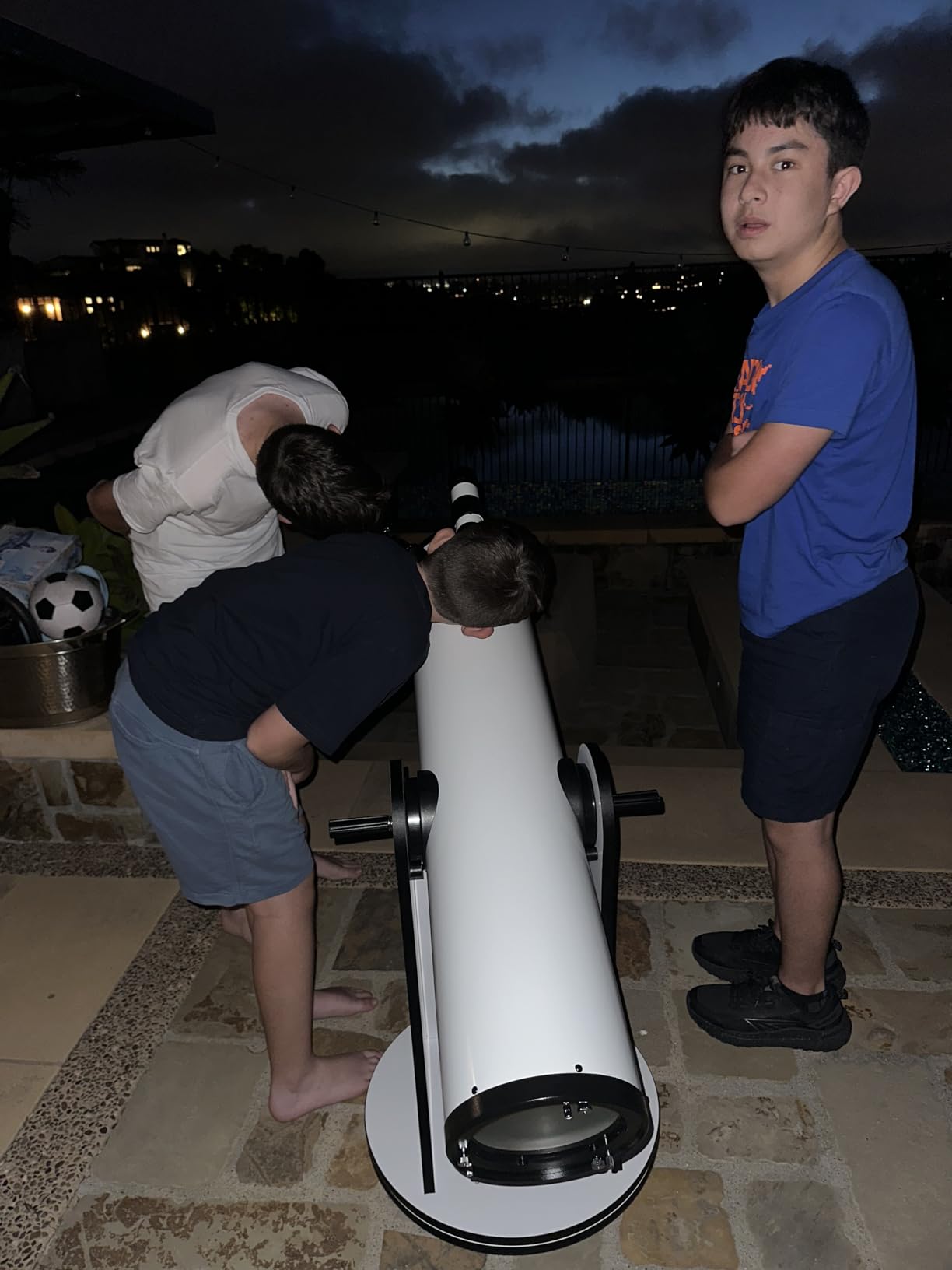
Specs include 94 percent reflective multi-coated pyrex mirrors, a 2-inch rack-and-pinion focuser with a 1.25-inch adapter (so it accepts both sizes of eyepieces), two Super Wide Angle eyepieces (25mm and 10mm), a 6×30 straight-through finderscope, and Teflon bearings on the base. Total weight is about 33 pounds, split between a 15-pound optical tube and an 18-pound base.
The honest trade-off is size. At 49 inches long and 33 pounds, this is not a backpack scope. The base separates from the tube for transport, but you need a car and a clear storage spot at home. The mirrors require occasional collimation, which is a standard maintenance task for any Newtonian reflector. A few customers reported quality-control issues with missing parts, so buy from a dealer with a good return policy.
Best for serious high school and college astronomy students
A 6-inch Dobsonian is the gateway to serious amateur astronomy. Students who learn to star-hop with this scope can find dozens of Messier objects, split double stars, and study planetary features in detail. This is the scope that turns a casual interest into a hobby that lasts decades.
Not for students with limited storage or transport
If the student lives in a small apartment, dorm room, or has no car access, a 6-inch solid-tube Dobsonian is impractical. A tabletop Dobsonian like the Heritage 130 or an app-guided scope like the StarSense Explorer 114AZ will fit the lifestyle better while still delivering satisfying views.
How to Choose the Best Telescope for Students
Choosing among the best telescopes for students comes down to four questions: how old is the student, where will they observe, what do they want to see, and how much help will they get setting up. Here is the framework I use when recommending scopes to parents and teachers.
Aperture: The Single Most Important Spec
Aperture is the diameter of the main lens or mirror, and it determines how much light the telescope collects. More light means brighter images, more visible detail, and more objects within reach. A 70mm aperture shows the Moon, planets, and the brightest star clusters. A 114mm aperture adds the brighter nebulae and galaxies. A 150mm aperture opens up the Messier catalog in earnest. The general rule from experienced observers is to buy the largest aperture you can afford and transport.
Telescope Types: Reflector, Refractor, and Catadioptric
Refractors use lenses, deliver crisp images with no central obstruction, and need essentially no maintenance. They are the best first telescope for younger students and for daytime terrestrial use. Reflectors use mirrors, offer the most aperture per dollar, and require occasional collimation to keep mirrors aligned. Dobsonian reflectors are the most recommended type on Reddit’s r/telescopes for committed beginners. Catadioptric designs like Maksutov-Cassegrains and Schmidt-Cassegrains fold the light path for a compact tube but cost more per inch of aperture.
Mount Stability: Do Not Skip This
A wobbly mount ruins an otherwise good telescope. Every scope on this list with a budget tripod has at least some user complaints about vibration at high magnification. Tabletop Dobsonians sidestep the problem entirely by using a low, stable wooden base that sits on a table. If you buy a scope with a tripod, plan to set up on solid ground, avoid extending legs to maximum height, and consider anti-vibration pads as a low-cost upgrade.
Budget Tiers for Students
Under $100 buys a 70mm refractor or 80mm refractor kit like the Gskyer, Celticbird, or Travel Scope 70. These are best for younger students and casual lunar and planetary viewing. The $100 to $250 range opens up 114mm reflectors and 80mm refractors with better mounts, like the StarSense LT 114AZ and AstroMaster 70AZ. From $250 to $450, you enter true amateur astronomy territory with 5-inch and 6-inch Dobsonians like the Heritage 130 and Classic 150, which are the best telescopes for students who are serious about the hobby.
Portability for Student Lifestyles
A telescope that lives in a closet does no one any good. For students who walk, bike, or take the bus to observing spots, a sub-6-pound refractor with a backpack like the Travel Scope 70 or Celticbird 80mm is the realistic choice. For students with car access and storage space, a tabletop or full-size Dobsonian delivers far more aperture for the money. Match the scope’s weight and bulk to how the student will actually use it.
Smartphone and iPad Integration for Student Learning
This is where the best telescopes for students in 2026 really shine compared to even a few years ago. App-enabled scopes like the StarSense Explorer series use the phone’s camera to recognize the sky and guide students to targets, which removes the steepest part of the learning curve. For students who want to use their iPad to learn astronomy alongside their telescope, see our guide on how to teach astronomy on iPad for app pairings, star charts, and lesson ideas that complement visual observing. A smartphone adapter (included with the Gskyer, Celticbird, Travel Scope 80, and StarSense scopes) lets students capture Moon photos for science projects, which is one of the most effective ways to keep curiosity alive between sessions.
Frequently Asked Questions About Telescopes for Students
Which is the best telescope for students?
The best telescope for most students is a tabletop Dobsonian like the Sky-Watcher Heritage 130mm, which offers the most aperture per dollar and a stable base. For younger students or tight budgets, the Gskyer 70mm refractor is the best value pick. For tech-savvy students who want guided sky tours, the Celestron StarSense Explorer 114AZ pairs a 114mm mirror with a smartphone app that points to targets.
What is the best telescope to see planets for beginners?
For planetary viewing, aperture matters most. A 114mm to 130mm reflector like the Celestron StarSense Explorer 114AZ or Sky-Watcher Heritage 130 shows Jupiter’s cloud belts, Saturn’s rings, and Mars’ polar ice cap. A 150mm scope like the Sky-Watcher Classic 150 Dobsonian reveals even more detail, including Jupiter’s Great Red Spot on steady nights.
What is the best telescope for a 12 year old?
For a 12-year-old, a 5-inch tabletop Dobsonian like the Sky-Watcher Heritage 130mm is ideal because it is large enough to show impressive views but portable and easy to use. The Celestron StarSense Explorer 114AZ with its smartphone-guided sky tour is also excellent for tech-minded middle school students.
What telescope do I need to see Saturn’s rings?
Even a 70mm refractor can show Saturn’s rings as distinct from the planet. For the sharpest view, a 114mm or larger reflector like the Celestron StarSense Explorer 114AZ, Heritage 130 Dobsonian, or Sky-Watcher Classic 150 reveals the rings clearly, the Cassini Division between rings on steady nights, and Saturn’s largest moon Titan.
Are smart telescopes good for students?
Smart telescopes and app-enabled scopes like the Celestron StarSense Explorer series are excellent for students who want to skip the frustration of finding objects manually. The app points directly to planets and deep-sky targets, which keeps students engaged. The trade-off is that some experienced observers argue students learn the night sky better with traditional star-hopping, so a balance of both approaches works best.
Final Thoughts on the Best Telescopes for Students
The best telescopes for students in 2026 are the ones that actually get used. A 5-inch tabletop Dobsonian like the Sky-Watcher Heritage 130mm remains my top overall pick because it balances aperture, stability, and simplicity better than anything else at the price. For younger students or tighter budgets, the Gskyer 70mm refractor and Celticbird 80mm offer real optics under $100. For tech-savvy students who want their phone to guide the way, the Celestron StarSense Explorer 114AZ is the most engaging entry point on the market.
The right scope is the one that matches the student’s age, budget, and observing spot. Buy from a reputable dealer, skip the cheap department-store scopes that kill curiosity, and pair the telescope with a free star-chart app to keep every session productive. The night sky is waiting.