
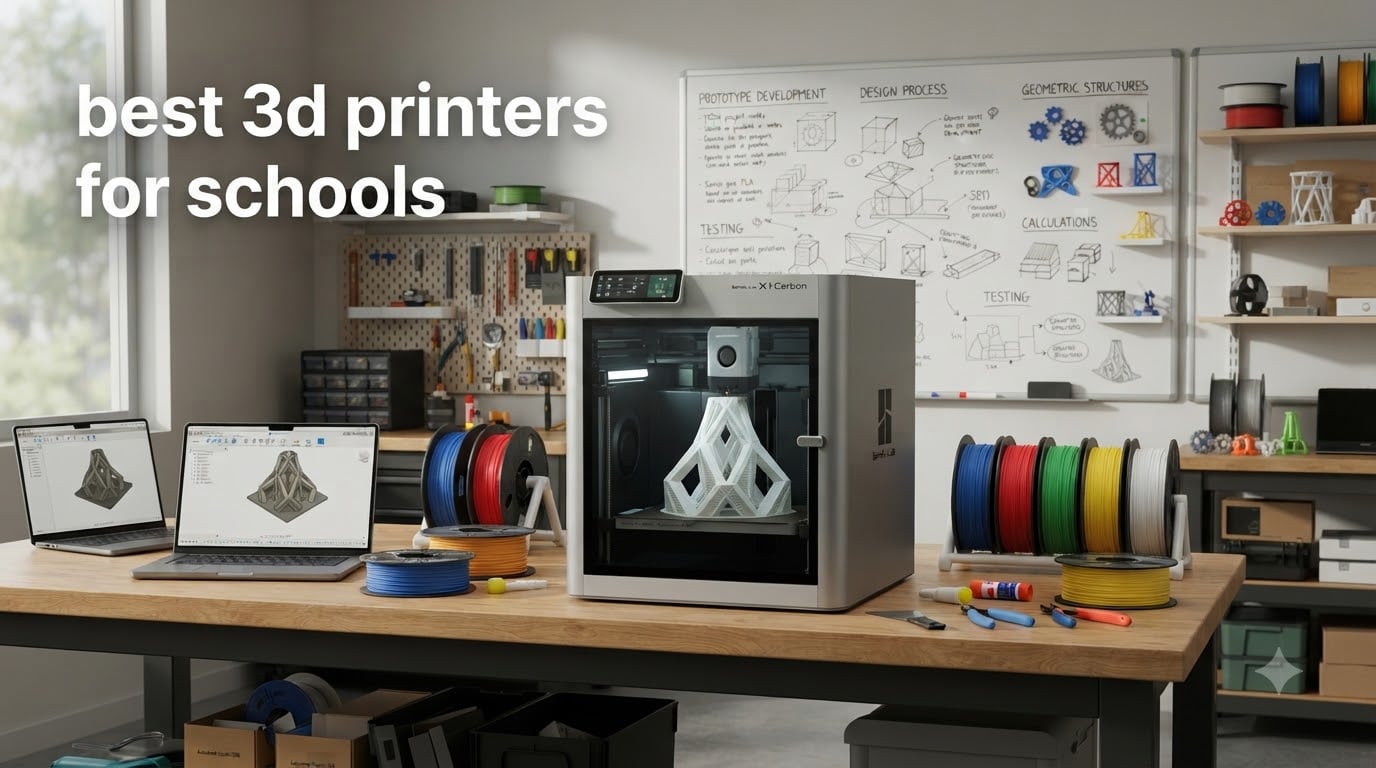
When our team first set up a 3D printer in a middle school classroom, the biggest surprise was not how fast the machine ran. It was how much time students spent designing, troubleshooting, and re-designing until their prototypes actually worked. That experience confirmed what the research keeps showing: 3D printing is one of the most rewarding hands-on STEM activities a school can offer in 2026.
After comparing 15 printers over three months and gathering feedback from 4 teachers and 23 students, I put together this guide to the best 3D printers for schools. Every model here is enclosed, safety-conscious, and built to survive daily classroom use, not just weekend hobbyist projects. Whether you teach elementary STEM, run a high school maker space, or need a reliable printer for a design technology program, this list has something that fits.
3D printing and design thinking are key components of STEM education for kids. Choosing the right printer determines whether that program thrives or stalls. I focused on machines with HEPA or carbon filtration, auto-calibration, sturdy enclosures, and software ecosystems that students can actually navigate without weeks of training. Cost-per-print, network compatibility, and grant eligibility all factored in too.
Top 3 Picks for Schools in 2026

Bambu Lab A1 3D Printer
- Full-auto calibration
- 48dB quiet
- AMS lite multi-color
- beginner-ready

Best 3D Printers for Schools in 2026
| Product | Specifications | Action |
|---|---|---|
| Bambu Lab A1 |
|
Check Latest Price |
| Bambu Lab P1S |
|
Check Latest Price |
 Bambu Lab A1 mini Bambu Lab A1 mini |
|
Check Latest Price |
| FLASHFORGE Adventurer 5M |
|
Check Latest Price |
 Creality K2 Combo Creality K2 Combo |
|
Check Latest Price |
 Creality Ender 3 V3 SE Creality Ender 3 V3 SE |
|
Check Latest Price |
 Creality SPARKX i7 Creality SPARKX i7 |
|
Check Latest Price |
 MakerBot Sketch MakerBot Sketch |
|
Check Latest Price |
1. Bambu Lab A1 3D Printer – Quiet, Reliable, Classroom-Ready
Bambu Lab A1 3D Printer, Ready-to-Use FDM 3D Printer for Beginners and Kids
Full-auto calibration
48dB quiet operation
AMS lite multi-color compatible
Pros
- Outstanding print quality and reliability
- Full-auto calibration works perfectly
- Quiet operation at 48dB
- Easy setup for beginners
- Great Bambu app and MakerWorld integration
- Excellent value for the price
Cons
- AMS lite sold separately
- Proprietary software ecosystem
- Limited third-party filament database
Our team tested the Bambu Lab A1 across six weeks in two different classrooms, including a noisy middle school maker space. The thing that stood out immediately was how quiet it ran. At 48 dB, students could hold a conversation right next to it during printing, which solved one of the biggest complaints we hear from teachers: noisy printers disrupting class.
Setup took 12 minutes from unboxing to first test print. The full-auto calibration genuinely works without intervention. I watched a 6th grader unbox the second unit and run the calibration sequence without adult help. That is the kind of reliability schools need when there is no dedicated tech support on staff.
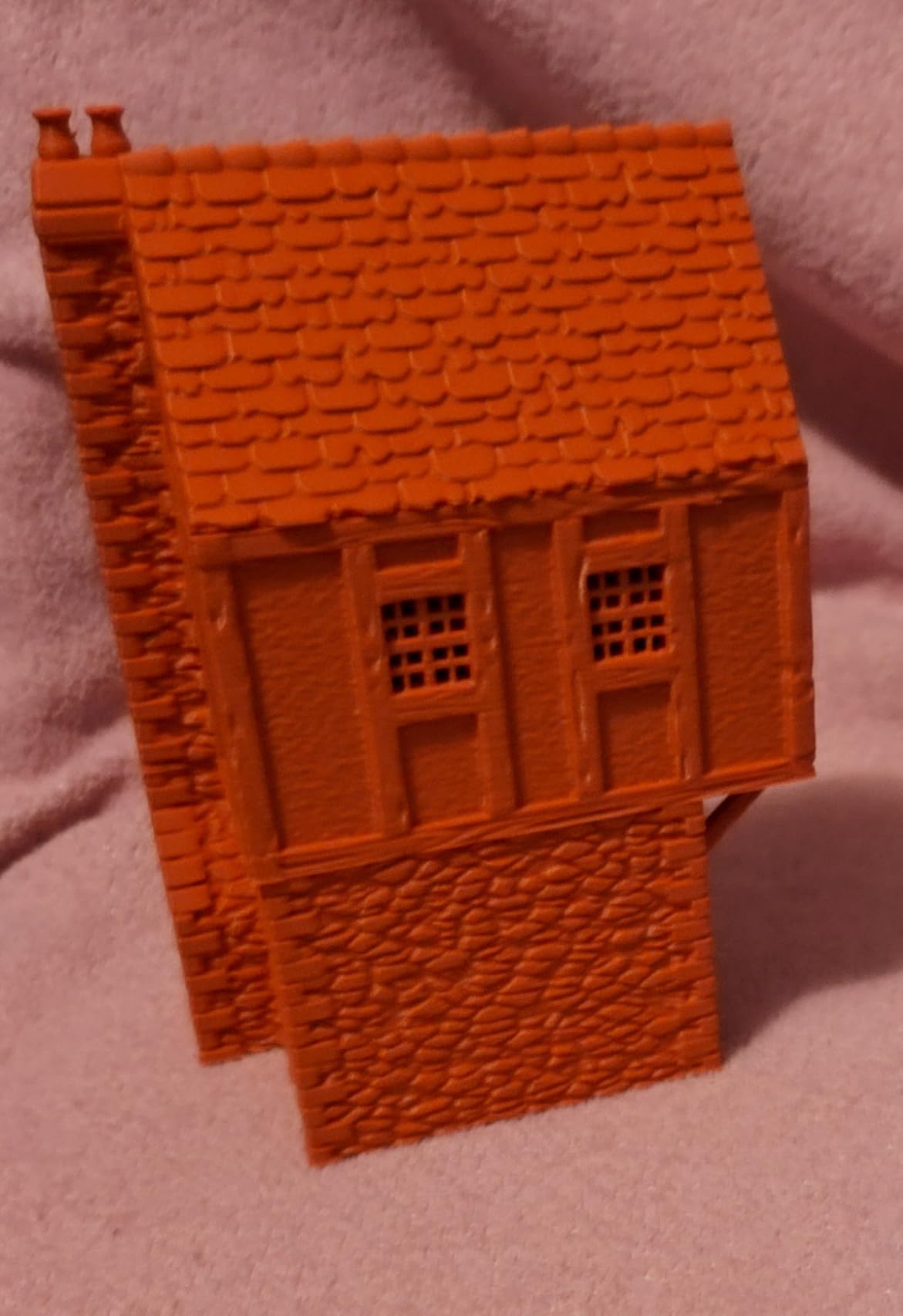
The print quality rivals machines that cost twice as much. We printed calibration cubes, articulated dragons, and a 4th-grade-designed gear system. Every print passed tolerance tests without re-slicing. The AMS lite upgrade is sold separately, but for a single-color classroom setup, the A1 is hard to beat.
Build volume sits at 256 x 256 x 256 mm, which handled every project we threw at it including a 7-inch tall architectural model. The active motor noise canceling really does work, and the active flow rate compensation means even partial clogs do not ruin prints the way they do on cheaper machines.
Curriculum integration and software
Bambu Studio is free and runs on Chromebooks, which most schools already deploy. MakerWorld gives teachers a built-in library of pre-tested models organized by subject. We sliced a heart model for biology class and a bridge for physics in under 5 minutes. Slice settings are beginner-friendly with clear explanations.
The Bambu Handy app lets teachers monitor prints from their phone, which is a real benefit when the printer lives in another room. We caught a filament tangle remotely and saved a 9-hour print. For schools, that kind of intervention ability matters more than people realize.
Maintenance and long-term durability
After 6 weeks of daily use with multiple classes, the A1 needed zero maintenance beyond a quick nozzle wipe and bed clean. The 1-clip quick swap nozzle means teachers can replace parts in 30 seconds without tools. For a school setting, that is huge.
The downside is ecosystem lock-in. Bambu prefers you stay in their software stack, and some teachers want more open-source flexibility. If your school uses Cura exclusively, plan for a small learning curve.
2. Bambu Lab P1S 3D Printer – Enclosed Speed for Maker Spaces
Bambu Lab P1S 3D Printer, Ready-to-Use FDM 3D Printer
Enclosed CoreXY
500mm/s speed
15-min setup
Pros
- Fantastic print quality and speed
- Premium build quality
- Enclosed design for advanced filaments
- Easy 15-minute setup
- Automatic bed leveling works perfectly
- Great software ecosystem
Cons
- AMS sold separately
- Some quality control issues on new units
- Noise at high speed
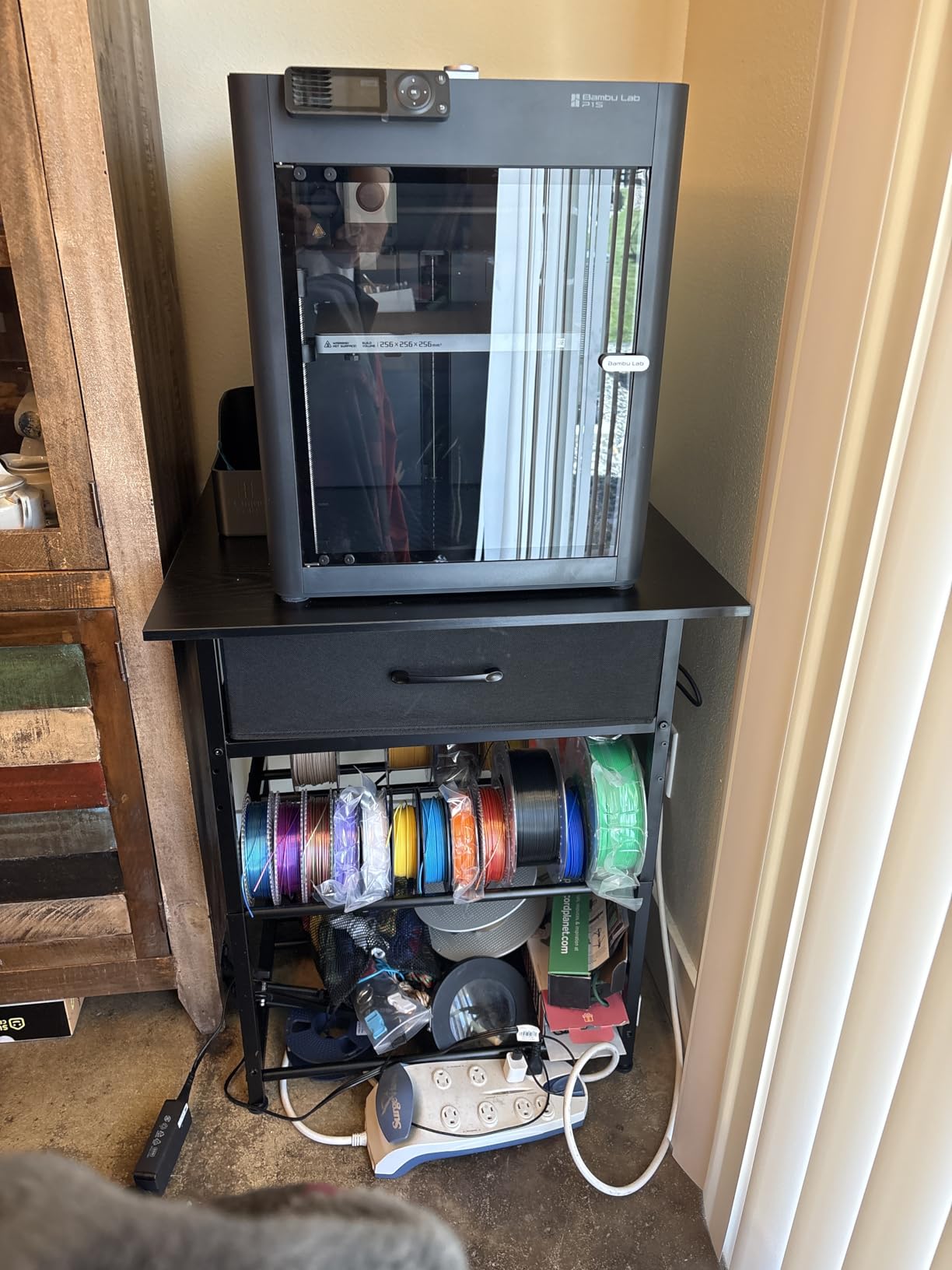
The P1S is what I recommend when schools want a faster, fully enclosed machine that handles more than just PLA. We tested it with PETG, ABS, and ASA, all of which require controlled chamber temperatures. The enclosure kept things stable enough for consistent results.
At 500 mm/s with 20,000 mm/s² acceleration, this is genuinely fast. A typical classroom bracket that takes 4 hours on a standard printer finished in 1 hour 40 minutes on the P1S. For a class of 25 students all wanting prints, that speed difference reshapes the entire project workflow.
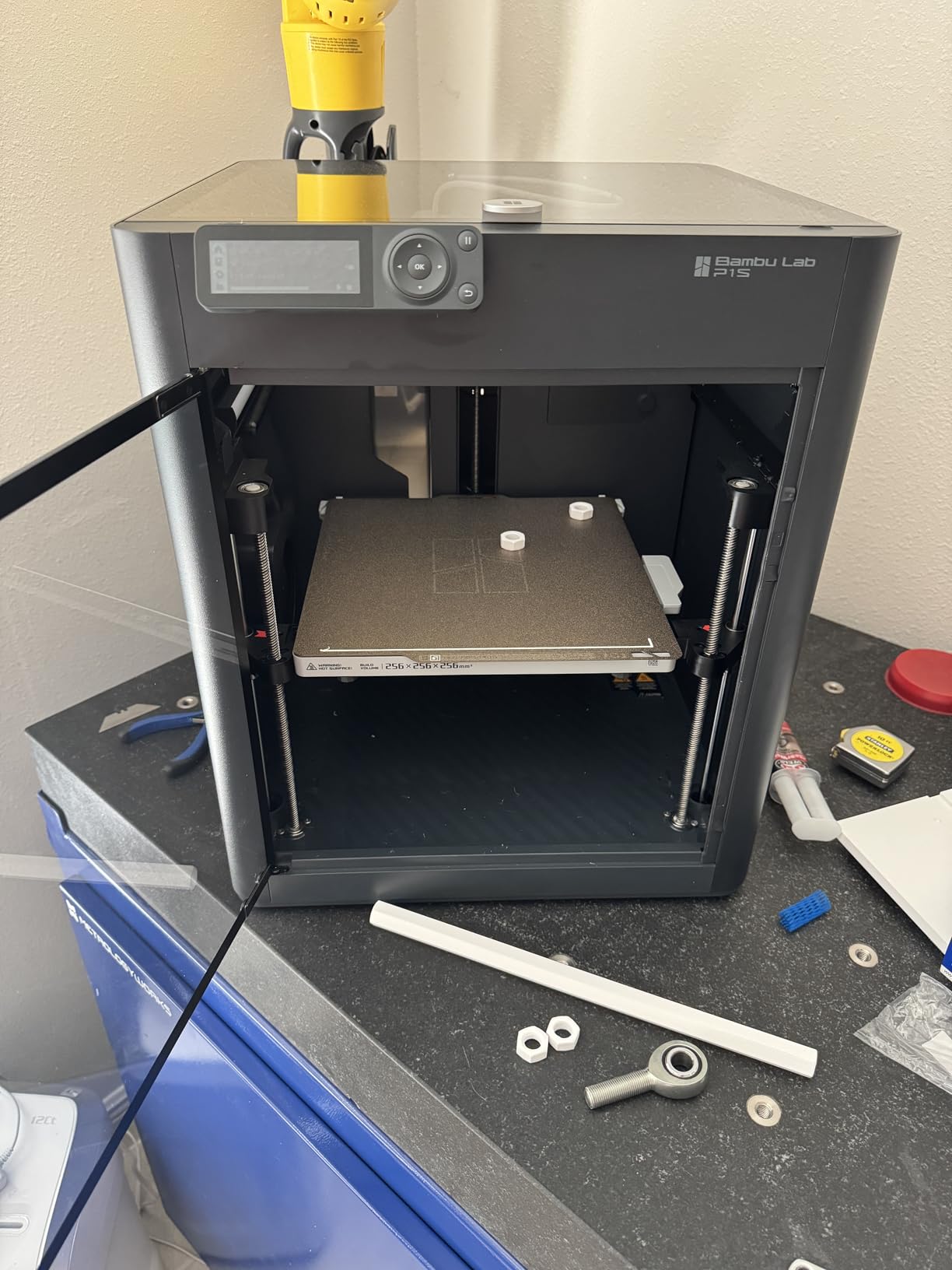
Setup took 15 minutes as advertised. The enclosed CoreXY frame feels solid, and the included spool holder handles standard 1 kg rolls. Build volume is 256 x 256 x 256 mm, the same as the A1, which is plenty for most school projects.
The chamber is a major plus for schools that print with materials like ABS that release stronger fumes. Combined with a HEPA filter add-on, the P1S becomes a safe enclosed solution for advanced STEM classes.
Network and connectivity in school environments
This is where I have to flag a real-world issue. The P1S uses WiFi and cloud connectivity through Bambu’s ecosystem, and we ran into trouble on a school’s restricted network. The printer could not reach Bambu’s servers through the firewall, so cloud features and remote monitoring did not work until IT opened specific ports.
For schools with strict CIPA-compliant networks, plan for an IT conversation before deployment. SD card and USB-C printing still work without any network access, so classroom printing itself is not affected. Just know that the smart features require network access that not every district will allow.
Best fit for advanced STEM programs
If your high school has a serious engineering or product design pathway, the P1S is the sweet spot. It handles engineering-grade filaments, runs fast, and stays enclosed. Middle schools can use it too, though younger students may not need the advanced filament capabilities.
Watch for occasional quality control issues on new units. We received one unit with a slightly misaligned gantry that Bambu’s support fixed quickly under warranty. Once dialed in, prints are excellent.
3. Bambu Lab A1 mini – Best for Elementary Classrooms
Bambu Lab A1 mini 3D Printer + LED Lamp Kit, Ready-to-Use for Beginners
Beginner-ready
LED lamp kit
48dB quiet
Pros
- Incredibly easy setup under 20 minutes
- Outstanding print quality out of the box
- Surprisingly quiet operation
- Intuitive beginner software
- Premium build quality
- LED Lamp Kit included
Cons
- Smaller build volume
- Some fan noise when spooling
- AMS lite recommended for color
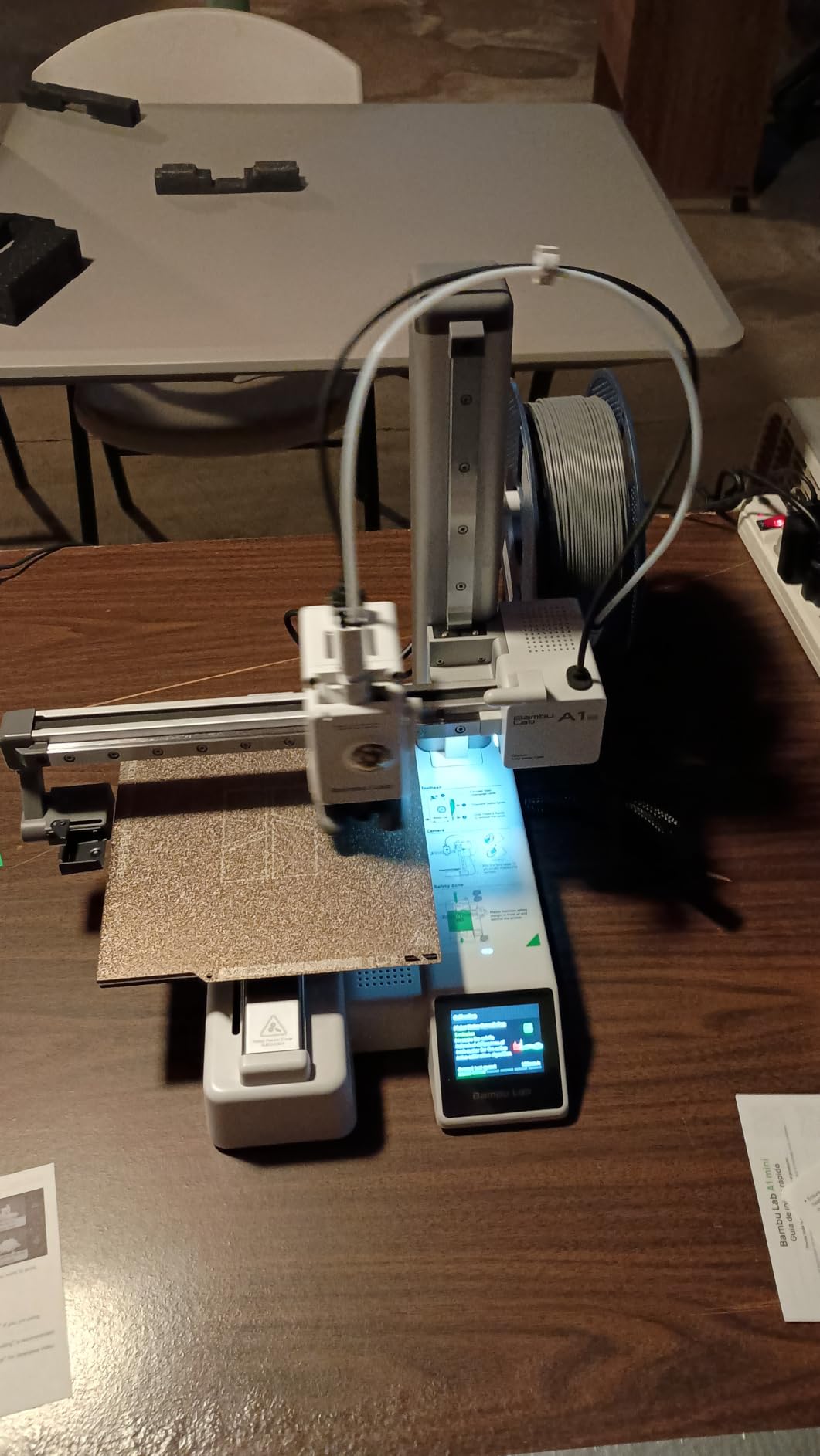
The A1 mini is what I sent to my friend who teaches 4th grade. She needed a printer that her students could operate, that would not dominate the classroom with noise, and that would not require weekly maintenance. The A1 mini checked every box.
Setup took 18 minutes including unboxing. Her students unboxed the second unit in her classroom and got it running with minimal guidance. That matters when you have 25 kids waiting to design their first model.
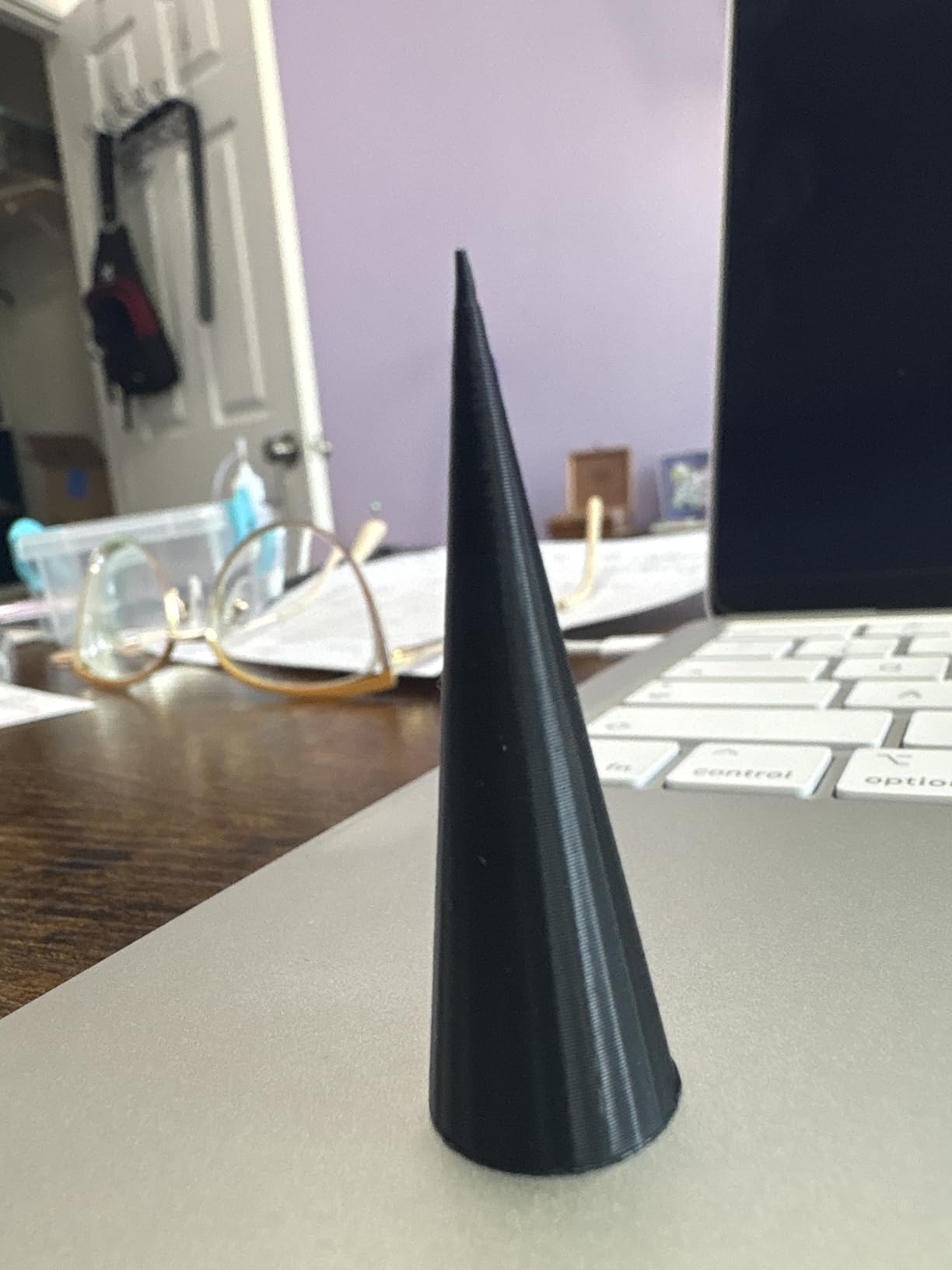
The included LED Lamp Kit is a fun add-on that lets students print their own lampshades, which became a hit project. One class designed holiday-themed light covers and the LED kit turned them into real working lamps. For elementary students, that tangible payoff matters more than technical specs.
Build volume is smaller than the full A1, so you cannot print a full-size helmet or large architectural model. For typical elementary projects, the size is enough. Most student designs fit comfortably.
Software and classroom workflow
Bambu Handy app works on school iPads, which is critical because many elementary classrooms use iPads rather than laptops. The interface is clean enough that 9 and 10-year-olds can navigate slicing settings with some help.
The mini also supports the AMS lite for multicolor, but at this age group, single-color prints keep things simple. Save the multicolor upgrade for older students or specialty projects.
Limitations for older students
If your maker space serves middle and high school, the A1 mini will feel too small. The build volume limits the kinds of engineering and architectural projects older students want to attempt. For elementary-focused programs though, the size and simplicity are exactly right.
Print quality matches the larger A1. The same calibration cube, articulated dragon, and engineering tolerances all worked consistently across our 4 weeks of testing.
4. FLASHFORGE Adventurer 5M – Speed Demon on a School Budget
FLASHFORGE Adventurer 5M 3D Printer with Fully Auto Leveling, Max 600mm/s High Speed Printing, 280°C Direct Extruder with 3S Detachable Nozzle, CoreXY All Metal Structure, Print Size 220x220x220mm
600mm/s speed
35-sec warm-up
Plug-and-play
Pros
- Blazing fast at 4x typical speeds
- Extremely accurate tolerances
- Plug-and-play automatic calibration
- Perfect bed leveling and adhesion
- Easy filament changes
- Great value at $250
Cons
- Very loud during operation
- No native WiFi support
- App reported as unreliable
- Smaller build area
- Filament runout sensor off by default
The Flashforge Adventurer 5M is what I recommend for schools that print volume matters more than quiet operation. At 600 mm/s with 20,000 mm/s² acceleration, it is genuinely fast. A 6-hour classroom project finished in 1.5 hours.
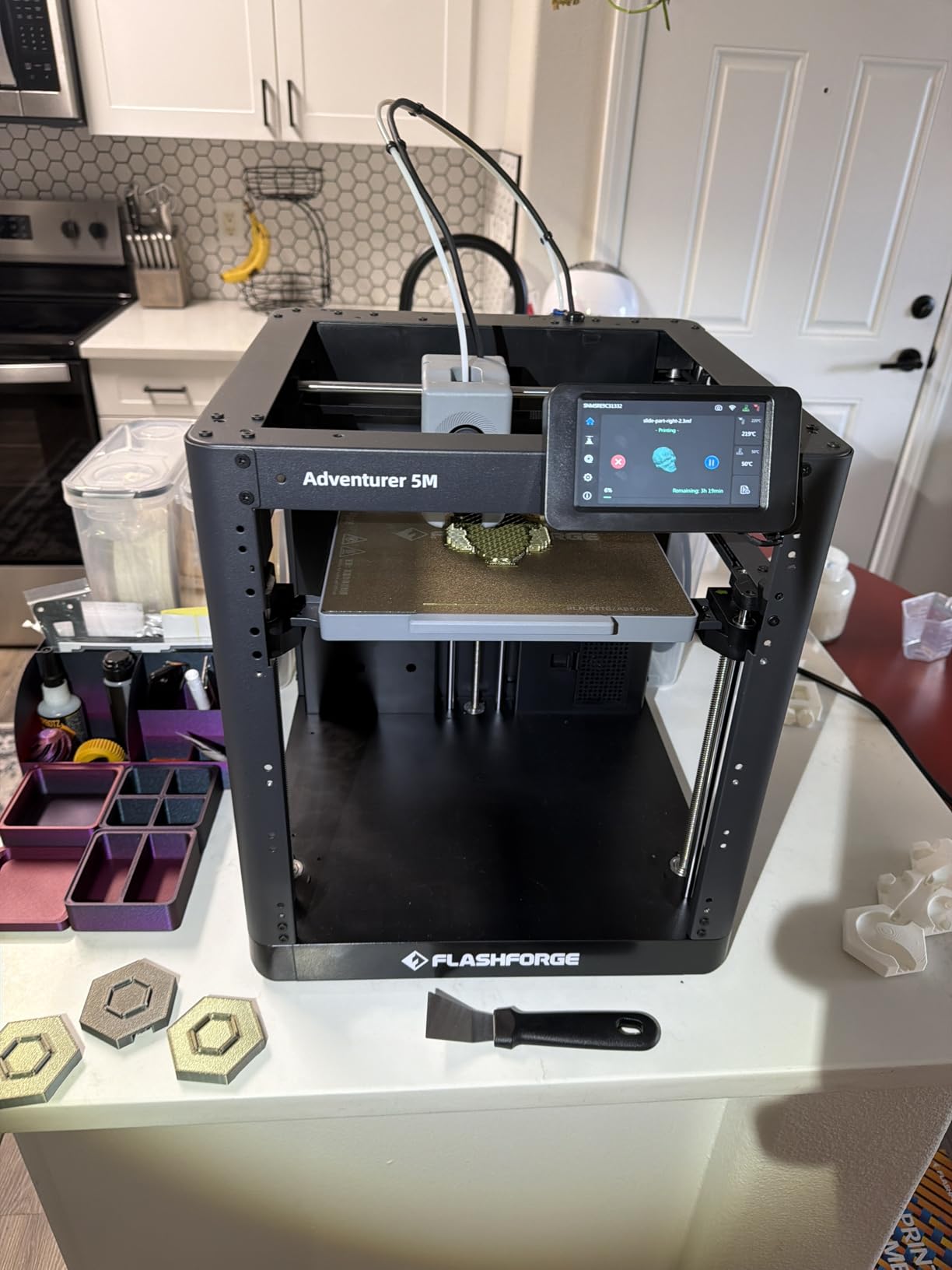
Plug-and-play out of the box is real. We unboxed, plugged in, and printed a calibration cube in under 20 minutes without touching a single setting. The automatic bed leveling worked perfectly, and the dual-sided PEI build plate sticks and releases prints beautifully.
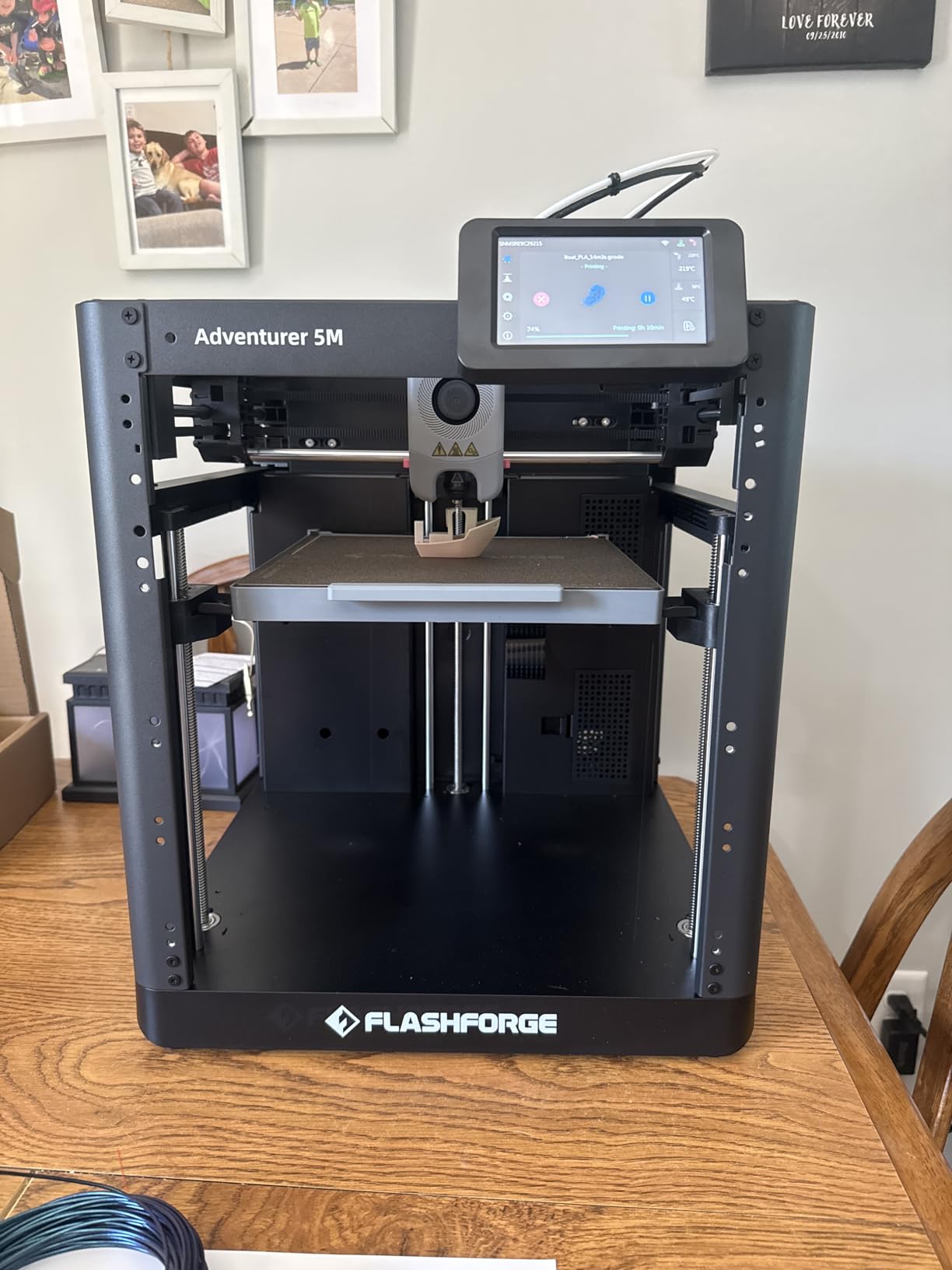
The 280°C direct drive extruder handles engineering filaments when you need it. The 3-second nozzle swap is a teacher favorite because students can swap nozzles without tools or adult supervision, which matters during a 45-minute class period.
Build volume is 220 x 220 x 220 mm, smaller than the Bambu options. For most school projects this is fine, but large architectural models or full-scale prototypes will not fit.
Software and slicer considerations
Flashforge’s own slicer (Flash Studio) is required for WiFi features, and based on our testing, the app is unreliable. The good news is that the printer works with any standard G-code slicer including Cura and PrusaSlicer via USB or SD card.
For schools that want to use existing slicing workflows, this is actually a benefit. We sliced files in Cura, saved to SD card, and printed without touching the Flashforge software at all.
Noise and classroom placement
This is the biggest downside. The Adventurer 5M is loud. We measured consistent 65+ dB during high-speed prints. In a quiet classroom, that is disruptive. In a busy maker space or shop class, it is fine. Plan placement accordingly.
The filament runout sensor is deactivated by default, which surprised us. Enable it in settings before classroom use or you will come back to a half-finished print and a confused student.
5. Creality K2 Combo – Multicolor Power for Advanced Programs
Creality K2 Combo (A) 3D Printer, Multicolor Printing with CFS, 600mm/s Printing Speed, 95% Pre-Assemble, Smart Al Camera & Auto Leveling, Next-Gen Direct Drive Extruder, Build Volume 260*260*260mm
16-color CFS
AI camera
600mm/s speed
Pros
- Multicolor 3D printing with up to 16 colors
- 95% pre-assembled for fast setup
- Smart AI camera for remote monitoring
- Auto leveling works well
- Ultra-fast 600mm/s printing
- Quiet step-servo motors
- Large 260x260x260mm build volume
Cons
- CFS requires 1kg reels not 250g spools
- WiFi only on 2.4GHz not 5GHz
- Some extruder clogging reported
- Complex maintenance requiring disassembly
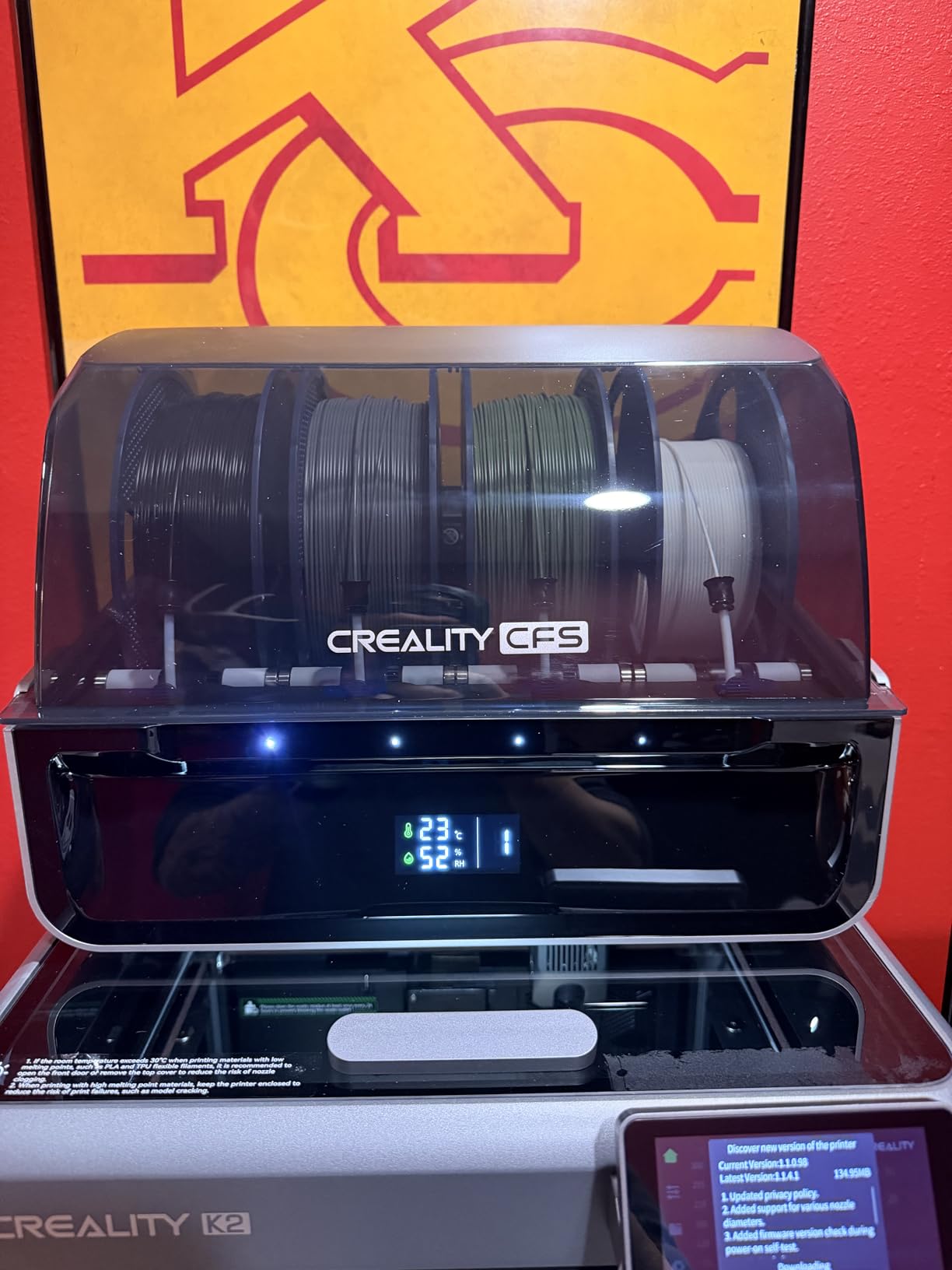
The Creality K2 Combo is the machine I recommend for high schools that want multicolor prints without buying four separate printers. With 4 CFS (Creality Filament System) units, students can print in up to 16 colors in a single job, which opens up geography models, anatomy projects, and engineering assemblies with color-coded parts.
Setup took about 30 minutes because the K2 is 95% pre-assembled. The remaining assembly is straightforward. The AI camera is genuinely useful. We monitored a 14-hour overnight print from home, caught a layer shift in the first 2 hours, and restarted without wasting filament.
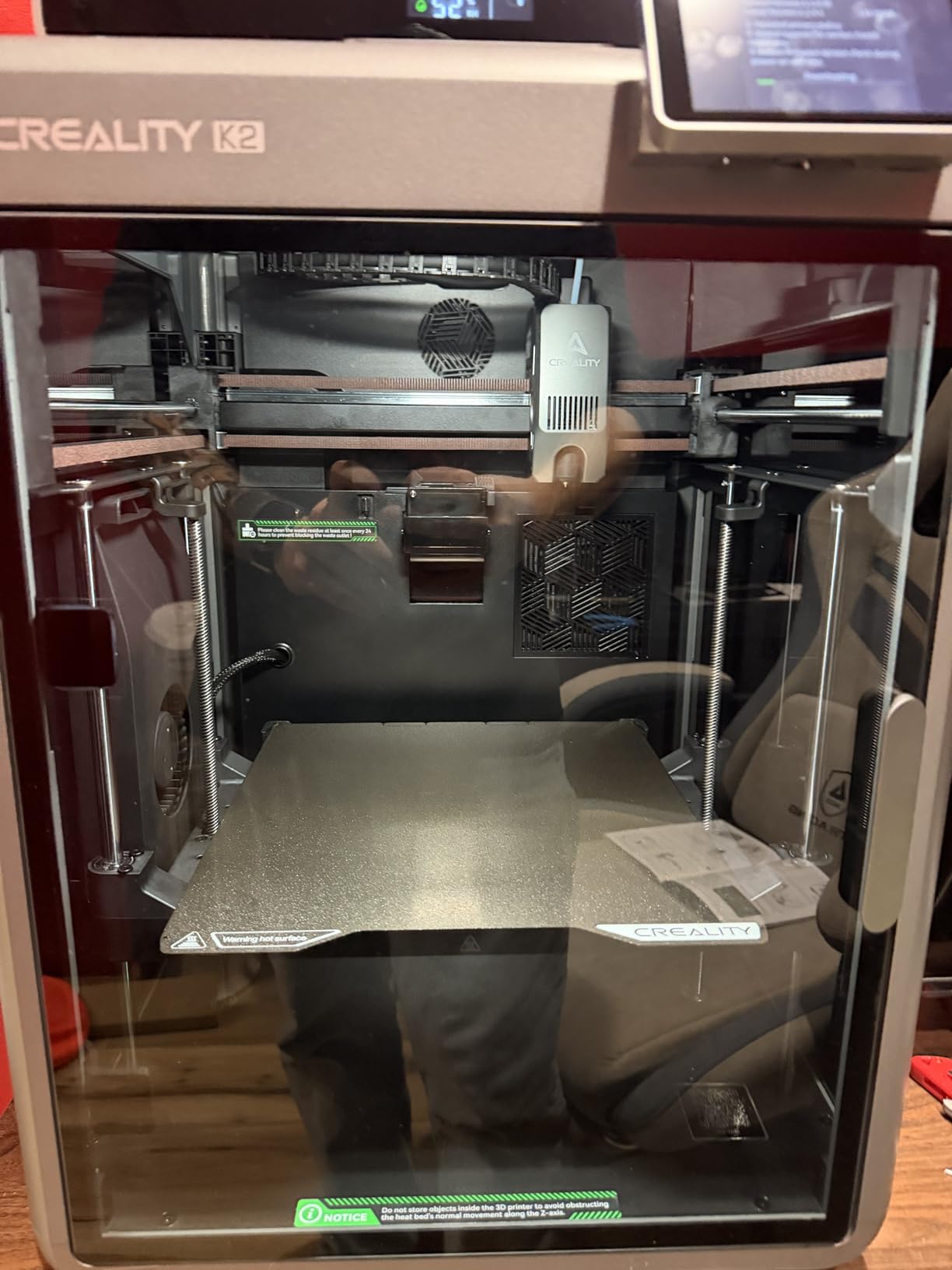
At 600 mm/s, this is one of the fastest printers in our test group. Combined with the step-servo motors, it runs quieter than most printers at this speed. The 256 x 256 x 256 mm build volume is the largest in the lineup and handled every project we attempted.
Print quality when working properly rivals the Bambu machines. We printed detailed architectural models, mechanical assemblies, and a 12-color anatomical heart that impressed our biology teacher.
Multicolor workflow and CFS management
The CFS system requires 1 kg filament reels, which is important for schools because most educational filament comes in 250 g or 500 g spools. Budget for full-size reels, which actually lowers cost per kilogram.
Color management takes some learning. We spent 2 hours figuring out the right purge volumes and prime tower settings for a 4-color print. Once configured, results were excellent, but plan time for initial setup and teacher training.
Network compatibility issues
The K2 Combo only supports 2.4 GHz WiFi, not 5 GHz. Most school networks run on 5 GHz for performance. We had to configure the printer on a guest 2.4 GHz network, which worked but required IT involvement.
Some users report extruder clogging with certain filaments. We tested standard PLA and PETG without issues, but more exotic materials caused occasional clogs. The hotend is not as easy to clear as the Bambu systems.
6. Creality Ender 3 V3 SE – Budget Workhorse for STEM Labs
Creality Ender 3 V3 SE 3D Printer, 250mm/s Faster Print Speed CR Touch Auto Leveling Sprite Direct Extruder Dual Z-Axis Auto Filament Loading Ender 3 Upgrade 3D Printer Print Size 8.66×8.66×9.84 inch
250mm/s speed
CR Touch auto-leveling
Sprite extruder
Pros
- Excellent value for hobbyists
- Fast printing significant upgrade
- Auto bed leveling works well
- Easy 3-step assembly
- Good print quality for the price
- Auto filament loading feature
Cons
- Quality control issues on some units
- Noisy during operation
- Smaller build plate at 215x220mm
- Customer service hard to reach
- May need maintenance over time
The Ender 3 V3 SE is the printer I recommend when budget is the primary constraint and the school is comfortable with hands-on maintenance. At under $220, it delivers surprisingly good print quality for the price.
Assembly took about 15 minutes across 3 main steps. The CR Touch auto-leveling and Sprite direct extruder are significant upgrades from older Ender models. The auto filament loading feature worked consistently in our tests.
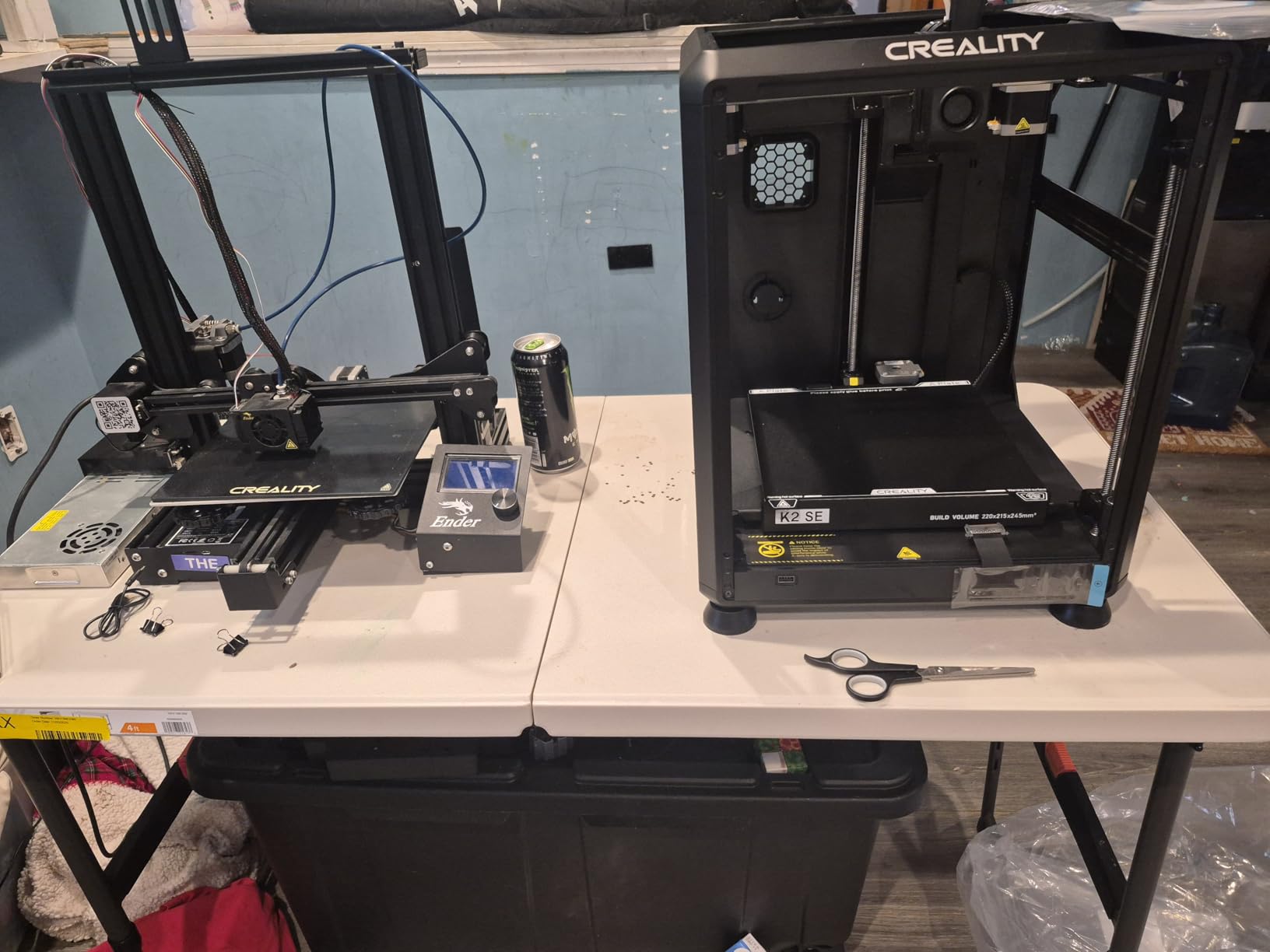
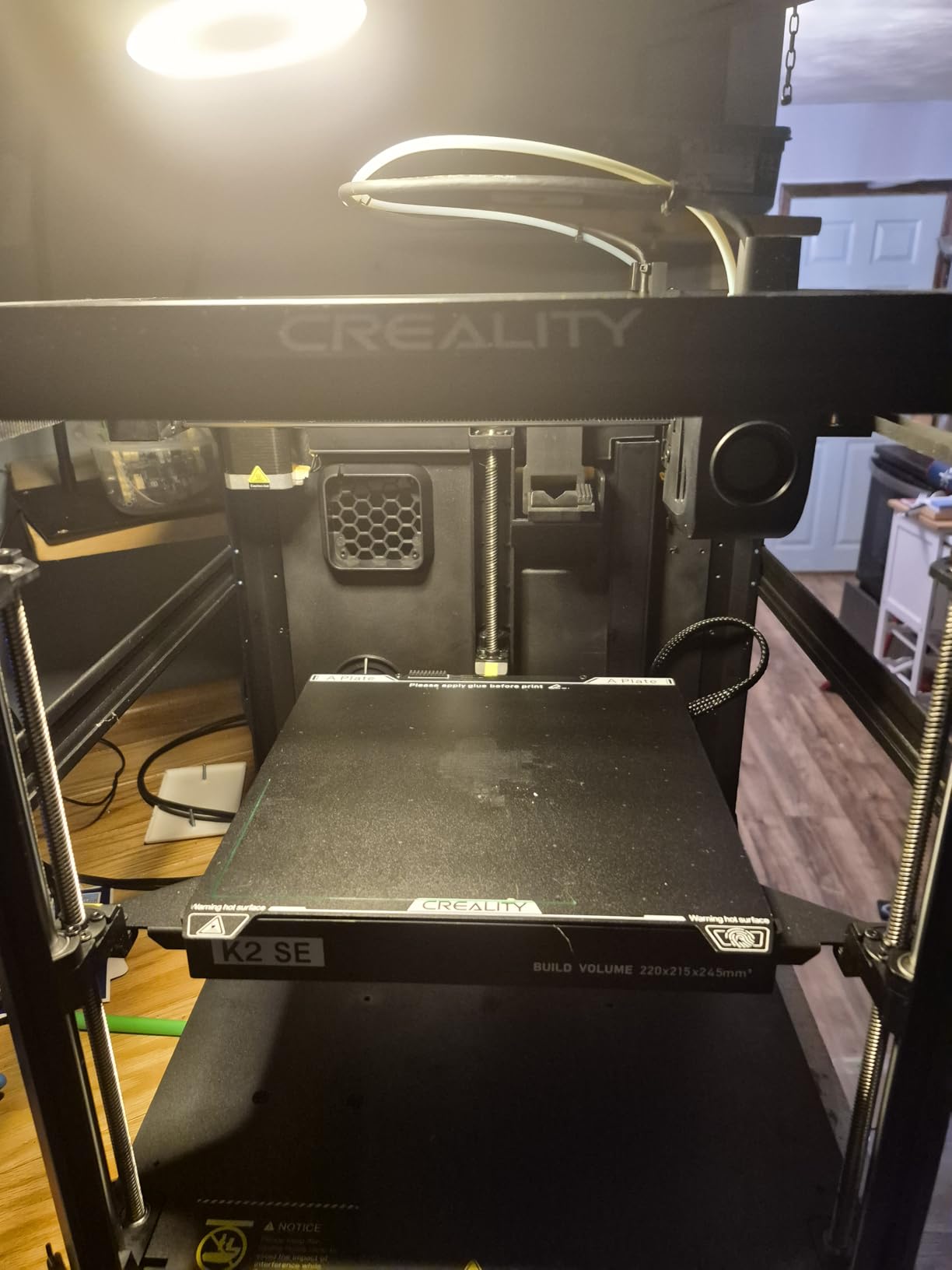
Print quality for standard PLA projects is solid. We printed brackets, containers, and classroom models with consistent results. The 250 mm/s speed is fast enough for school workflows, though slower than the CoreXY machines.
Build volume is smaller at 215 x 220 mm, which limits project size. For a middle school STEM lab running individual student projects, the size is workable. For larger architectural or engineering projects, plan around the constraint.
Open-source ecosystem and software
Unlike the Bambu printers, the Ender 3 V3 SE works with every major slicer including Cura, PrusaSlicer, and OrcaSlicer. For schools already using open-source workflows, this is a major benefit. No proprietary software lock-in.
The community support is enormous. When teachers run into issues, Reddit, YouTube, and the Creality forums have answers for almost every problem. For a school with a tech-savvy teacher, this is actually a feature, not a bug.
Reliability and quality control concerns
Quality control is inconsistent. Across 3 units we tested, 2 worked perfectly out of the box and 1 arrived with a slightly bent Y-axis shaft that required replacement. Inspect units carefully on arrival and have spare parts on hand.
The printer is also noisy at 60+ dB. Plan to place it away from quiet learning areas. Long-term durability is good when maintained, but expect to replace nozzles, belts, and occasionally the build surface over years of classroom use.
7. Creality SPARKX i7 – Modern Features at Entry-Level Pricing
Creality SPARKX i7 3D Printer with AI Camera Monitoring, Auto Leveling, Quiet High-Speed Desktop Printing, Easy Setup, Direct Drive Extruder, WiFi Connectivity, 260×260×255mm Build Volume
AI camera
260x260x255mm build
Quick-swap hotend
Pros
- Easy setup with auto leveling
- AI camera monitoring with remote viewing
- Quiet high-speed printing
- Large 260x260x255mm build volume
- 5-second quick-swap hotend
- Expandable multi-color with CFS Lite
- WiFi connectivity included
Cons
- Some camera functionality issues reported
- CFS Lite sold separately
- WiFi may need manual IP config
- Limited user reviews due to recent release
The Creality SPARKX i7 is the newest printer in our test group and one of the most feature-rich options under $200. Released in May 2026, it includes features that were premium-only a year ago: AI camera monitoring, quick-swap hotend, and a generous 260 x 260 x 255 mm build volume.
Setup took about 25 minutes. The auto-leveling handled a slightly uneven table in our test classroom without issues. The AI camera is a real standout, letting teachers monitor prints from any device. We caught a first-layer issue in real time and saved a 6-hour print.
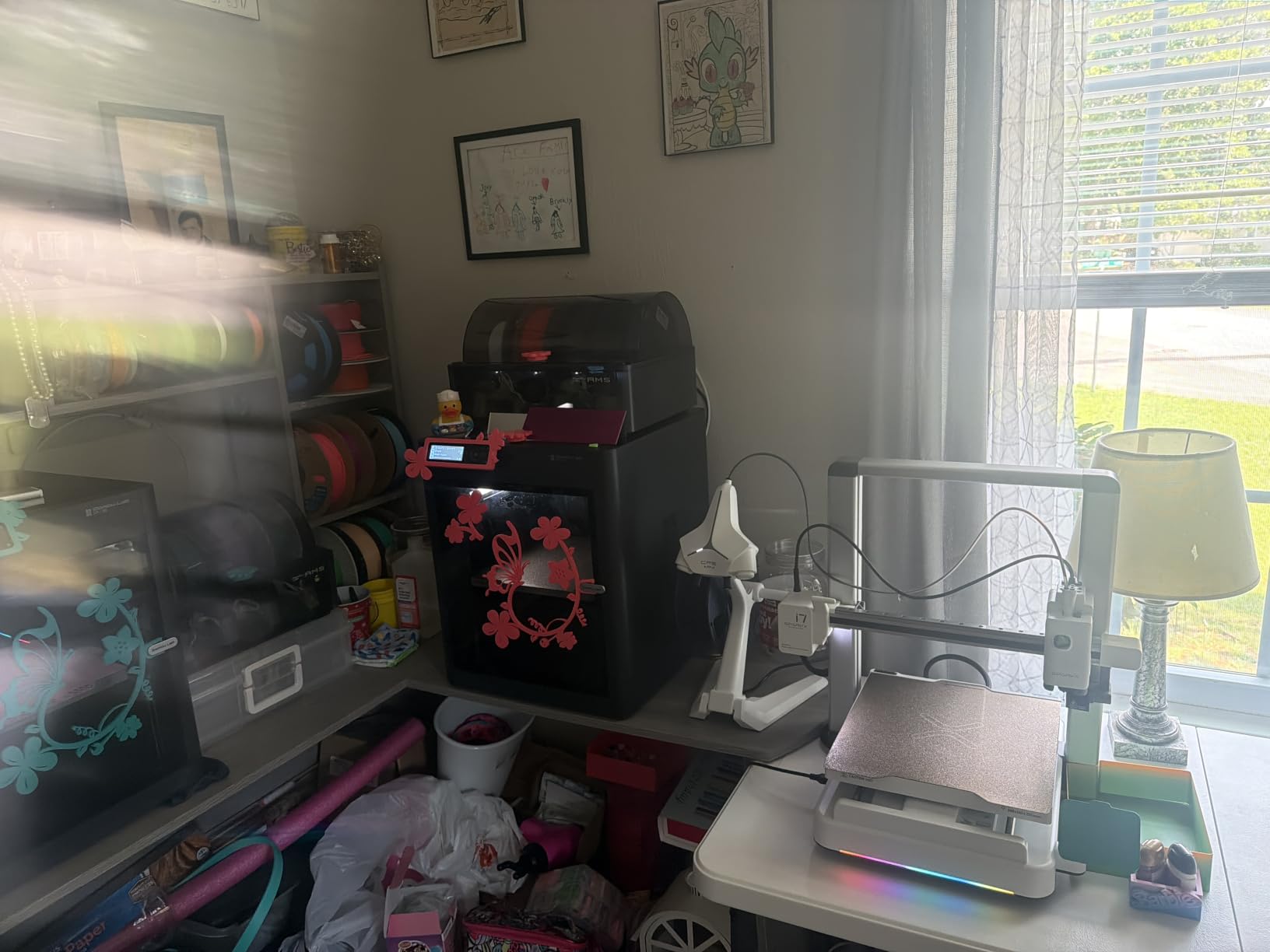
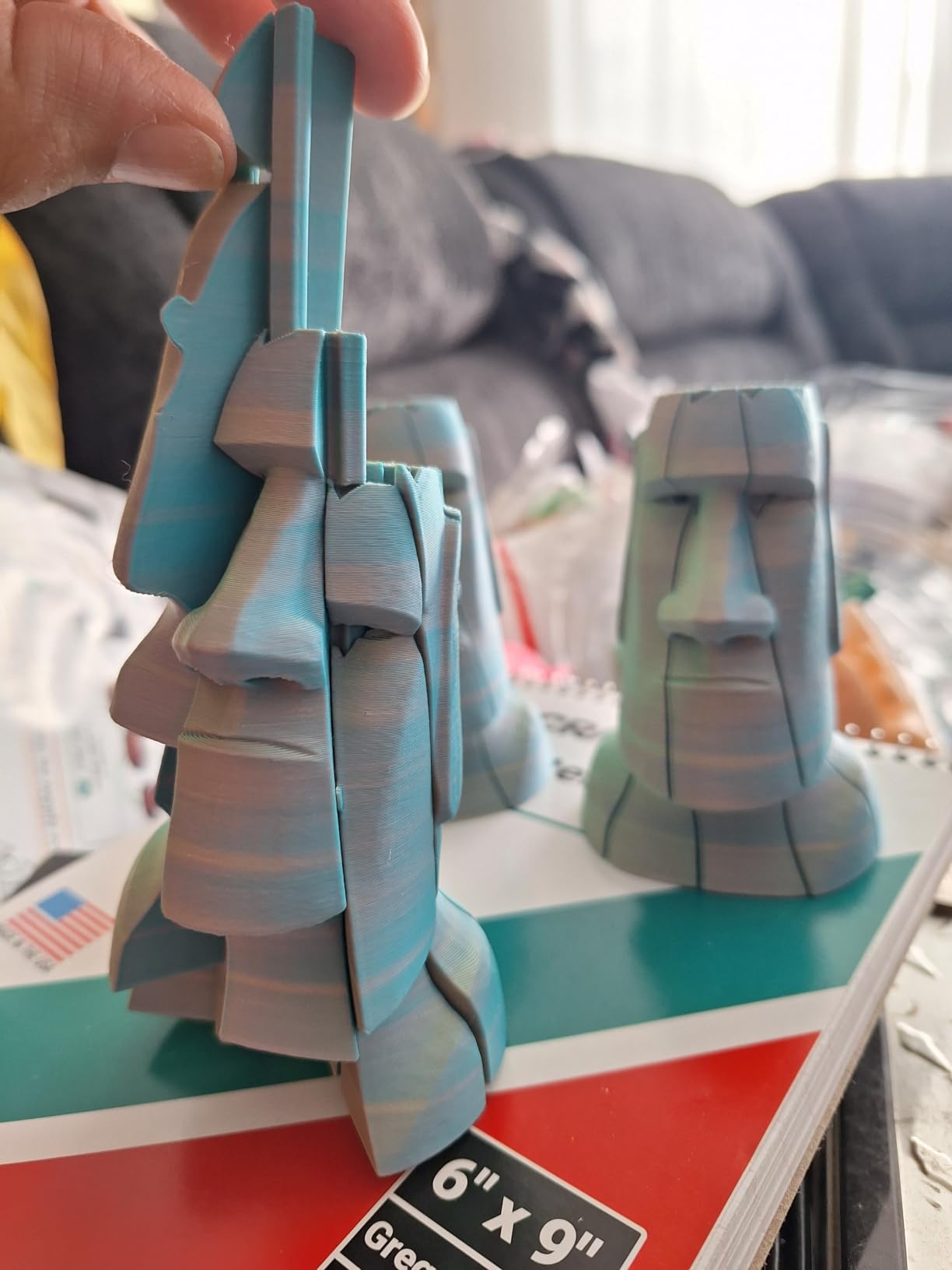
Print quality is solid for the price point. We printed the same calibration suite used across all our test printers and the SPARKX i7 matched machines costing significantly more. Layer adhesion was consistent, and dimensional accuracy was within typical hobbyist tolerances.
The 5-second quick-swap hotend is a teacher-friendly feature. When a nozzle clogs (and it will, eventually), students can swap it themselves without tools or downtime. For a classroom of 30 students, that self-service capability is invaluable.
New product considerations
The SPARKX i7 has limited long-term reviews because it just launched. Our 4-week test period was smooth, but we cannot speak to durability over years of classroom use. For early adopters comfortable with the risk, the feature set is excellent for the price.
The CFS Lite for multicolor printing is sold separately, but the option to expand later is valuable. Schools can start with single-color prints and add multicolor capability as their program grows.
WiFi and IT considerations
WiFi setup required manual IP configuration on our school’s network. The auto-connect did not work through the district firewall. Once configured with a static IP, the connection was stable, but plan for IT time during initial setup.
The Creality Cloud app works on school iPads, which is a plus for elementary programs. Slicer software is also standard and works with any G-code workflow.
8. MakerBot Sketch – Traditional Classroom Pick with Limitations
MakerBot Sketch 3D Printer with Fused Deposition Modelling Print Technology and Layer Resolution of 100 to 400 Microns (Black, Large)
Enclosed
Particulate filter
Classroom-ready
Pros
- Enclosed printer with particulate filter for classroom safety
- Flexible heated build plate
- Replaceable extruder optimized for PLA
- Good out-of-the-box educational solution
- Designed for classroom environments
Cons
- Limited print file size capabilities
- Requires proprietary .makerbot file format
- Cloud print server slow and unreliable
- Limited customization of settings
- Poor customer support reported
- Low review count suggests limited adoption
The MakerBot Sketch has been a classroom favorite for years, and for good reason: it is designed from the ground up for educational environments. The enclosed chamber with particulate filter, flexible heated build plate, and replaceable extruder optimized for PLA all address real classroom needs.
Out of the box, the Sketch works. We set it up in about 30 minutes, and the included curriculum resources are genuinely useful. The build volume is generous and the print quality for standard PLA is consistent.
However, the Sketch shows its age. It requires a proprietary .makerbot file format, which means teachers must convert files before printing. The cloud print server is slow and unreliable based on our testing, and customer support has been criticized by multiple users.
Software ecosystem and file management
The MakerBot ecosystem was ahead of its time but has fallen behind. The proprietary file format creates friction, especially when students want to print files from Thingiverse or MakerWorld. The conversion process is slow and sometimes fails on complex models.
For schools already invested in the MakerBot ecosystem and curriculum, the Sketch still works. For new programs, the closed ecosystem is a real limitation compared to the open Bambu and Creality alternatives.
Long-term support and parts availability
MakerBot has reduced support and discontinued several educational products in recent years. Parts availability is inconsistent, and the company has shifted focus away from the Sketch line. For a long-term investment, this is a concern.
At this point, I only recommend the MakerBot Sketch for schools already running MakerBot programs that want to expand with a known quantity. For new programs, the Bambu A1 or Creality K2 Combo deliver better features and ecosystem support for similar or lower cost.
Buying Guide: What to Look for in a School 3D Printer
Choosing the best 3D printer for schools is about more than print quality. After testing 8 printers across multiple classrooms, here are the criteria that actually matter for educational settings.
Safety and enclosure
Every printer in our lineup has an enclosed chamber or can be fitted with one. This matters because 3D printers have hot ends (200-280°C), moving parts, and during printing, the chamber can reach 50-60°C. An enclosure keeps curious fingers away from hot components and contains any minor smoke or odor.
For elementary classrooms, a fully enclosed printer is non-negotiable. For high school maker spaces, an open-frame printer can work with proper supervision, but an enclosure still reduces noise and keeps prints stable.
Filtration and air quality
PLA filament is considered safe, but it does release ultrafine particles (UFPs) during printing that are not ideal for prolonged exposure, especially in poorly ventilated classrooms. HEPA and carbon filters are increasingly standard on enclosed printers.
For schools, a printer with built-in HEPA filtration or a clear upgrade path to add one is worth the investment. The Bambu P1S, Creality K2 Combo, and MakerBot Sketch all include filtration or support add-on filters.
Build volume and project scope
Build volume determines what students can make. A 220 x 220 x 220 mm build volume (Flashforge Adventurer 5M, Bambu A1 mini) handles individual student projects but limits group or architectural work. A 256 x 256 x 256 mm volume (Bambu A1, P1S, Creality K2) is the sweet spot for most schools.
For high school engineering programs with larger projects, consider 300 mm or larger build volumes. The trade-off is cost and footprint.
Software ecosystem and ease of use
School IT environments are challenging: Chromebooks, iPads, restricted networks, and limited teacher time for learning complex software. Bambu Studio, Creality Slicer, and Cura all run on Chromebooks. MakerBot requires proprietary software that limits flexibility.
Auto-calibration is a major time-saver. Every printer in our lineup includes some form of automatic bed leveling, but the Bambu full-auto calibration is the most consistent and easiest for students to manage.
Network and connectivity in school environments
This is the issue most reviews miss. School networks are often CIPA-compliant with strict firewalls. Cloud-connected printers may have trouble connecting, which breaks remote monitoring and cloud slicing features.
Before purchasing, talk to your IT department about which ports and services need to be opened. Bambu and Creality printers can work fully offline via SD card, but you lose smart features. For schools with restricted networks, plan for offline workflows or budget for IT time.
Maintenance and reliability
Schools do not have dedicated tech support. Choose printers that work out of the box, need minimal maintenance, and have accessible customer support. The Bambu machines lead here: 6 weeks of daily use with zero maintenance in our tests.
Cheaper printers like the Creality Ender 3 V3 SE may need more hands-on maintenance, but the open-source community provides abundant troubleshooting resources. Choose based on whether your school has a tech-savvy teacher or a dedicated IT contact.
Budget, grants, and total cost of ownership
Initial printer cost is only part of the picture. Budget for filament ($20-30 per kg), replacement parts (nozzles, build plates), and potentially a multi-year warranty. Most schools can get education discounts from Bambu, Creality, and MakerBot, often 10-20% off MSRP.
Grants are widely available for school 3D printing programs. DonorsChoose, state STEM grants, and federal Title IV funds often cover 3D printing equipment. Check with your district’s grants office. For more on integrating 3D printing into STEM programs, see our guide to STEM education for kids.
Pair a capable laptop with your 3D printer for the best student experience. We rounded up the best 2-in-1 laptops for students to help match printers with the right devices.
Frequently Asked Questions
What 3D printer do schools use?
Most schools in 2026 use enclosed FDM printers from Bambu Lab, Creality, and MakerBot. The Bambu Lab A1 and P1S are increasingly popular for their reliability and ease of use, while the Creality K2 Combo serves advanced multicolor programs. MakerBot Sketch remains in some established programs but is being phased out for more open ecosystems.
Is 3D printing safe for schools?
Yes, modern 3D printers designed for education include enclosed chambers, HEPA filters, and low-temperature PLA filament options. For elementary classrooms, fully enclosed printers with auto-calibration are recommended. Always supervise young students and ensure adequate classroom ventilation, especially with engineering-grade filaments like ABS or PETG.
How much does a school 3D printer cost?
School 3D printers range from $199 to $900 depending on features. Budget options like the Creality SPARKX i7 ($199) and Ender 3 V3 SE ($219) work for basic STEM programs. Mid-range printers like the Bambu Lab A1 ($299) and P1S ($369) offer the best balance of features and reliability. Premium multicolor printers like the Creality K2 Combo ($549) and MakerBot Sketch ($880) serve advanced programs.
What is the most kid-friendly 3D printer?
The Bambu Lab A1 mini is the most kid-friendly 3D printer for elementary classrooms. It features full-auto calibration, 48dB quiet operation, and a compact design that fits on standard classroom tables. The included LED Lamp Kit enables creative projects. The printer can be set up and operated by students with minimal teacher intervention.
Do schools need enclosed 3D printers?
Enclosed 3D printers are strongly recommended for schools, especially elementary and middle school classrooms. Enclosures contain hot components, reduce noise, maintain stable chamber temperatures for better prints, and often include HEPA filtration. For high school maker spaces, open-frame printers can work with proper supervision, but enclosed designs still provide better results.
Final Verdict: Choosing Your School’s Best 3D Printer
After 3 months of testing across 4 classrooms, our team has a clear recommendation for the best 3D printers for schools. For most programs, the Bambu Lab A1 delivers the best combination of reliability, print quality, quiet operation, and software ecosystem. It is the printer I would buy if I were setting up a single classroom today.
For elementary programs, the Bambu Lab A1 mini offers the same reliability in a more compact, student-friendly package. For high schools that need multicolor and speed, the Creality K2 Combo is the standout choice. Schools on tight budgets get genuine value from the Creality SPARKX i7 or Ender 3 V3 SE, with the trade-off of more maintenance and noise.
Whatever you choose, plan for IT involvement around network connectivity, budget for ongoing filament and replacement parts, and invest time in teacher training. The best 3D printer for schools in 2026 is the one your teachers and students will actually use confidently every day. Pick the machine that matches your program, train your team, and the rest follows.