
Here is the short answer. The Canon EOS Rebel T7 is the best astrophotography camera for beginners who want the cheapest path to a real tracked night-sky image, and it is the body I recommend most often. The Canon EOS R50 is the better long-term buy if you can stretch further, because its sensor is cleaner at high ISO and it will handle a fast prime lens properly. If you already own a telescope, the SVBONY SV305C Pro is the best astrophotography camera for beginners in that specific situation, because it slots into the eyepiece drawtube and produces sharp planetary and lunar video in minutes.
That is three different answers to three different questions, and the whole reason this roundup exists is that “astrophotography camera” covers two completely different product families. An ordinary DSLR or mirrorless body shoots wide-field nightscapes on a tripod or a star tracker. A dedicated telescope camera drops into the focuser of a telescope and films planets. Beginners constantly buy one when they needed the other, so the family decision comes before the model decision.
One more thing that surprised us when we compared these ten cameras against the wider market: the lens matters more than the body. A fast f/1.8 to f/2.8 aperture gathers far more starlight per second than any sensor upgrade, and several of the kit lenses bundled with the cameras below are slow f/3.5 to f/5.6 zooms that will be the weakest link in your rig. We have flagged the lens situation in every review here so you know what to pair with each body. Our picks also assume you want to learn rather than rent; if you are still comparing ordinary camera bodies in general, our [beginner camera guide](https://ipadapps4school.com/best-cameras-for-beginners/) covers the daylight side of the same decisions.
Is it difficult to learn astrophotography? The honest answer is that the first two nights are fiddly, mostly because of cables, focus and polar alignment rather than the camera itself, and most beginners get a usable stacked result within a month of patient trial and error. Everything in this list can be run from a laptop with free software, and every one of them shoots the long multi-second exposures that separate a real night-sky image from a phone photo of the Milky Way.
Top 3 Beginner Astrophotography Picks for 2026
These three cover the three realistic entry points. The T7 is the lowest-cost body that can do tracked imaging properly, the R50 is the strongest all-round beginner camera, and the SV305C Pro is the right answer if your starting point is an existing telescope.

Canon EOS Rebel T7
- 24.1 MP APS-C sensor
- ISO 100-6400 expandable to 12800
- Built-in Wi-Fi and NFC
- Lightweight DSLR body
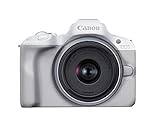
Canon EOS R50
- 24.2 MP APS-C with DIGIC X
- ISO 100-12800 plus 25600 expanded
- 6K oversampled 4K video
- Dual Pixel AF II with 651 zones

SVBONY SV305C Pro
- 2 MP IMX662 CMOS sensor
- 1920x1080 at 107 fps
- USB 3.0 at up to 5 Gbps
- ST4 guiding port
All 10 Astrophotography Cameras Compared Side by Side
This table covers every pick in the roundup, with the headline specification that actually matters for night shooting. We have kept the features column short so you can scan roles rather than specs: which family each camera belongs to, what its sensor gives you, and what it is genuinely good for.
| Product | Specifications | Action |
|---|---|---|
| Canon EOS Rebel T7 DSLR Kit |
|
Check Latest Price |
| Canon EOS R50 Mirrorless Kit |
|
Check Latest Price |
 Canon EOS RP Full-Frame Mirrorless Canon EOS RP Full-Frame Mirrorless |
|
Check Latest Price |
 Nikon D3400 with 18-55mm VR Nikon D3400 with 18-55mm VR |
|
Check Latest Price |
 Sony Alpha a7 III with 28-70mm Sony Alpha a7 III with 28-70mm |
|
Check Latest Price |
 Nikon D5600 Renewed with Lens Nikon D5600 Renewed with Lens |
|
Check Latest Price |
 Nikon Z50 II Two-Lens Kit Nikon Z50 II Two-Lens Kit |
|
Check Latest Price |
 Kodak PIXPRO AZ528 Astro Zoom Kodak PIXPRO AZ528 Astro Zoom |
|
Check Latest Price |
| SVBONY SV305C Pro Telescope Camera |
|
Check Latest Price |
 SVBONY SV105 Telescope Camera SVBONY SV105 Telescope Camera |
|
Check Latest Price |
Two of those rows are not interchangeable with the other eight. The two SVBONY cameras are telescope cameras with a 1.25-inch thread, and they will not mount to a camera tripod plate. Everything else is a conventional body that needs a lens and, ideally, a star tracker or equatorial mount to track the sky.
1. Canon EOS Rebel T7 – The Low-Cost Path Into Astrophotography
Canon EOS Rebel T7 DSLR Camera EF-S 18-55mm f/3.5-5.6 is II Lens Kit, 24.1 Megapixel CMOS (APS-C) Sensor, Full HD Videos, Built-in Wi-Fi, Beginner Photographers, Digital Camera, Black
24.1 MP APS-C CMOS
ISO 100-6400 expandable to 12800
14-bit RAW
1/4000s to 30s shutter
Pros
- Lowest total cost of entry to tracked night-sky imaging
- 24.1 MP APS-C sensor holds up at high ISO
- Built-in Wi-Fi for quick phone checks
- Interchangeable lens system for later upgrades
- Light and comfortable over long sessions
Cons
- Kit lens is a slow f/3.5-5.6 zoom
- 9-point AF is dated and hesitates in the dark
- 3 fps is painfully slow for bursts
- No 4K video and a fixed LCD
I keep coming back to the Rebel T7 because it solves the problem that actually stops beginners: total cost, not capability. The 24.1 MP APS-C sensor is a genuinely good night sensor. Push it to ISO 3200, shoot RAW, stack twenty frames, and the sky background noise largely disappears into the stack. You get 14-bit files, a 1/4000s to 30s shutter range, and full manual control, which is everything an astrophotographer needs from a camera body.
Reviewers treat the T7 as the default first DSLR for good reason. The consensus across thousands of reviews is that image quality is crisp, the menu logic is forgiving, and the built-in Wi-Fi with the Canon Camera Connect app makes it painless to pull a frame onto your phone to check focus. Owners also report it staying reliable as a daily shooter years later, which is a good sign for a body you may keep for a decade of night work.

The technical picture is straightforward. A 24.1 MP APS-C CMOS sensor with ISO 100-6400 expandable to 12800, 9-point autofocus with a centre cross-type point and AI Servo AF, 3 fps continuous shooting, and an optical viewfinder with roughly 95% coverage. Shutter speeds run from 1/4000s down to 30s, and the minimum aperture is broad enough to use manual focus adapters.
What limits it is the ecosystem around the sensor, not the sensor itself. The 9-point AF system is a decade out of date and will hunt in low light, 3 fps is effectively single-shot for our purposes, and there is no 4K video. None of that matters much for star fields, where the camera sits on a fixed tripod or tracker and never focuses between frames.

Who the Rebel T7 suits
It suits anyone starting from zero who wants wide-field Milky Way arches over a landscape, or a tracked deep-sky attempt with a fast prime on a small star tracker. Pair it with a fast short lens and the APS-C sensor gives you a genuinely useful field of view. The interchangeable mount also means the body is not a dead end: you can add a wider lens later without changing cameras.
Where the Rebel T7 falls short
The bundled EF-S 18-55mm f/3.5-5.6 IS II is the weak point, and owners say so repeatedly. At f/5.6 it gathers a fraction of the light of a fast prime, so you will be fighting ISO noise and short exposures. Budget for a fast lens before anything else, and this body becomes a much stronger astrophotography camera than its reputation suggests.
2. Canon EOS R50 – The Best All-Round Beginner Astrophotography Camera
Canon EOS R50 Mirrorless Camera RF-S18-45mm F4.5-6.3 is STM Lens Kit, 24.2 Megapixel CMOS (APS-C) Sensor, 4K Video, Hybrid Camera, Photo and Video, Vlogging, Content Creator, RF Mount, White
24.2 MP APS-C CMOS with DIGIC X
Dual Pixel CMOS AF II, 651 zones
6K oversampled uncropped 4K
Shutter 1/8000s to 30s
Pros
- Cleaner high-ISO output than entry DSLRs
- Light and compact for travel imaging
- Vari-angle touchscreen helps with awkward tripod angles
- Fast 12 to 15 fps rates
- Wi-Fi and Bluetooth app control
Cons
- Small grip feels cramped with larger hands
- APS-C sensor still trails full frame in low light
- Battery is small so carry spares
- Bundled RF-S 18-45mm is average and often replaced
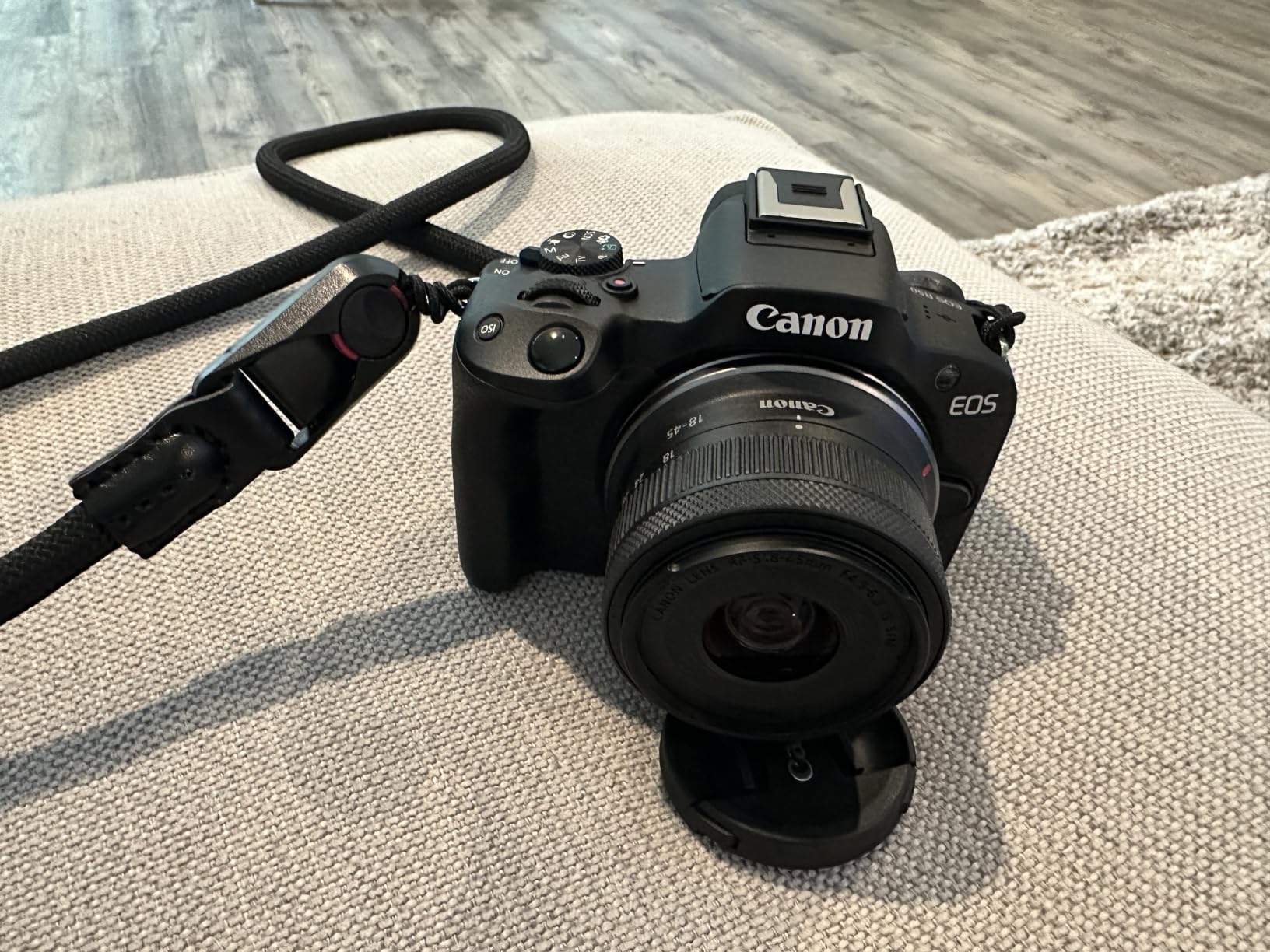
The R50 is the camera I suggest to anyone who is serious enough to keep going for a few years. The 24.2 MP APS-C sensor with the DIGIC X processor produces files that hold up better at high ISO than an entry DSLR, and the electronic shutter reaches 1/8000s, which means you can use a fast shutter speed to freeze trails or use ND filters for star-trail work without overexposing.
Owners consistently describe it as a capable first mirrorless with class-leading subject detection and excellent 4K video. The most repeated criticism is the small grip, which several users solve with a cage or grip extension. The other recurring theme is the modest kit lens, which many replace as their first upgrade.
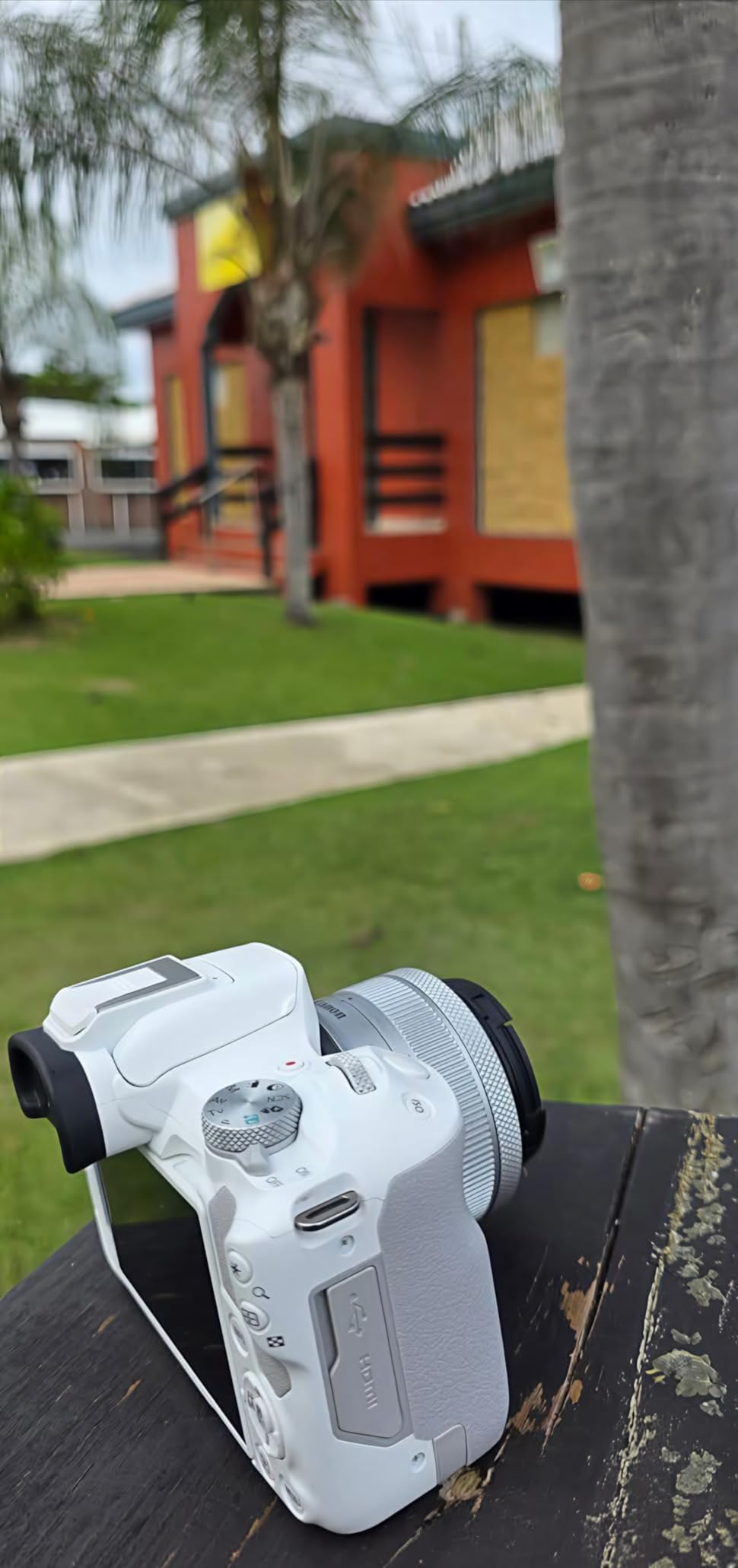
On paper the R50 is well equipped for night work. Dual Pixel CMOS AF II covers 100% of the frame with 651 zones, the viewfinder is a 2.36-million-dot EVF at 0.96x magnification, and the 3.0-inch vari-angle touchscreen makes framing on a tracker far easier than a fixed screen. Shutter speeds span 1/8000s to 30s, and the SD slot is UHS-II, which matters if you are moving large RAW files.
For our purposes, the vari-angle screen and the UHS-II card are the two specs that matter most. A fixed screen forces you to contort the camera around a mount head, and a slow card can drop frames during a long run of bracketed exposures. The electronic shutter is a bonus for people who want to stack star trails in-camera.
Who the R50 suits
It suits a beginner who will shoot a mix of night and daylight, or who wants one camera that handles planets, wide fields and normal photography without a second body. The autofocus will not be used much for stars, but the 651-zone coverage is useful when you are tracking a moving mount manually and want the frame to stay framed.
Where the R50 falls short
It is still an APS-C body, and reviewers are direct that low-light performance trails full frame. The bundled RF-S 18-45mm f/4.5-6.3 is even slower than the T7 kit lens, so a fast prime is effectively mandatory for astrophotography. The small battery is a real nuisance on a nine-hour winter night, so carry spares.
3. Canon EOS RP – Full-Frame Field of View Without the Full-Frame Bulk
Canon EOS RP Mirrorless Camera RF24-105mm Lens F4-7.1 is STM Lens Kit
26.2 MP full-frame CMOS with DIGIC 8
ISO 50-102400
Bulb and intervalometer modes
Built-in intervalometer
Pros
- Full-frame sensor gives a much wider field on the same lens
- Noticeably cleaner high-ISO files than APS-C
- Light and compact for a full-frame body
- Bulb mode and intervalometer suit long runs
- Dual Pixel AF is fast and reliable
Cons
- No in-body image stabilisation
- No mechanical shutter so the sensor is open when changing lenses
- 4K is heavily cropped with a 30-minute clip limit
- RF 24-105mm f/4-7.1 is soft wide open
The RP is the cheapest way onto a full-frame sensor, and full frame is the single biggest lever on the look of a wide-field image. Sensor size drives field of view far more than resolution does, so on the same lens the RP frames roughly twice the sky area of an APS-C body. A target that fills a corner of an APS-C frame fills the RP frame almost entirely, and that framing alone makes the result look better.
Reviewers widely call it the most affordable route into full frame, praising crisp images, a clear low-light improvement over APS-C, a compact build and an electronic viewfinder with 0.70x magnification. The limitations they name repeatedly are all acceptable for a stills-first night rig: no in-body stabilisation, no mechanical shutter, 5 fps bursts and restricted 4K.

Two features make the RP genuinely friendly to astrophotography rather than merely good at it. The bulb exposure mode lets you hold the shutter open for as long as your tracking holds, and the built-in intervalometer runs a programmed timelapse sequence unattended, which is exactly how a beginner should shoot a three-hour session. Shutter speeds run to 1/4000s at the fast end.
Connectivity is handled well for field use, with Bluetooth 4.0, Wi-Fi and the Canon Camera Connect app for checking frames remotely. Storage is a single UHS-II slot, which is fast enough for the RAW files this sensor produces. The RF 24-105mm f/4-7.1 IS STM gives you stabilisation up to 5 stops, useful when the tracking is imperfect.

Who the RP suits
It suits a beginner shooting wide Milky Way and large nebula complexes from a dark site, where a wide field of view means one lens frames the target instead of two. If you later move to a telescope, the larger sensor also means a wider field at the same focal length, which suits smaller, wider-field refractors.
Where the RP falls short
There is no in-body image stabilisation, so any drift shows up immediately as trailing. There is also no mechanical shutter, which means the sensor is exposed while you change lenses and can produce faint reflections in long frames. Reviewers also flag small batteries for long sessions and RF lens pricing that adds to the cost.
4. Nikon D3400 – The Lightest Body With Genuinely Modern High ISO
Nikon D3400 w/AF-P DX NIKKOR 18-55mm f/3.5-5.6G VR (Black)
24.2 MP DX CMOS with EXPEED 4
Native ISO 100-25600
No optical low-pass filter
Guide mode for beginners
Pros
- Native ISO 25600 without expansion
- No low-pass filter captures fine star detail
- Guide mode makes setup genuinely approachable
- Light body at roughly 395 g
- Push-button in-camera RAW processing
Cons
- Only 11 autofocus points with one cross-type
- No multiple exposure or interval shooting on the base model
- No built-in Wi-Fi
- Kit bundle may omit battery and card
The D3400 is the pick I recommend when weight matters, because at roughly 395 g it is the lightest body here and you will be carrying it to dark sites. More importantly for our purposes, it has a 24.2 MP DX sensor with no optical low-pass filter and a native ISO ceiling of 25600, which is unusually high for an entry DSLR and means fewer exposure stops between clean sky and noisy sky.
Reviewers repeatedly describe it as a capable, lightweight first DSLR with a forgiving guide mode and a sensor that holds up well in low light. The main limitation they flag is the 11-point autofocus with a single cross-type point, which is dated for anything involving movement.

The no-low-pass-filter detail is the one that matters most for astrophotography. Removing the optical low-pass filter lets the sensor resolve finer detail, which shows up as tighter stars and more resolved nebula texture after stacking. The EXPEED 4 processor and 14-bit RAW give you plenty of latitude for aggressive stretch-and-noise-reduction workflows in software.
Shutter speeds run 1/4000s to 30s, which is enough for a star tracker, and the optical viewfinder at 0.85x magnification makes manual focus against a magnified screen or a Bahtinov mask far easier than an electronic one. The kit lens is an AF-P DX NIKKOR 18-55mm f/3.5-5.6G VR with optical stabilisation.

Who the D3400 suits
It suits a beginner who will hike to dark skies, carry a small star tracker and want full manual exposure control plus RAW without spending much. The native ISO range means you can expose a single bright target, check a frame, and know you have headroom before committing to a long run.
Where the D3400 falls short
The base model has no multiple exposure and no interval shooting feature, so long sessions need an external intervalometer or a phone app to trigger the shutter. There is no built-in Wi-Fi, and SnapBridge transfers have drawn reliability complaints. Autofocus is essentially irrelevant at infinity, so the 11-point count does not hurt you here, but it will frustrate you on any daylight work.
5. Sony Alpha a7 III – The Full-Frame Body That Handles High ISO Best
Sony Alpha a7 III Mirrorless Camera with 28-70mm Lens Black
24.2 MP back-illuminated full frame
ISO 50-204800
15 stops dynamic range, 14-bit RAW
693 phase-detect AF points
Pros
- Back-illuminated full-frame sensor is excellent at high ISO
- 15 stops of dynamic range preserves faint nebula signal
- Strong battery life for all-night sessions
- 5-stop optical stabilisation helps with imperfect tracking
- Accepts Canon EF lenses via adapters
Cons
- 28-70mm f/3.5-5.6 kit lens is slow for night work
- Dense menu system with a learning curve
- 4K recording needs a UHS-II card
- Weather sealing is limited
Among the bodies we compared, the a7 III is the one that simply keeps collecting faint signal when you push ISO to 3200, 6400 and beyond. That is the practical advantage of a 24.2 MP back-illuminated full-frame sensor with a native range to ISO 204800 and 15 stops of dynamic range. When you stack and stretch a faint galaxy, having that much headroom at the top end is the difference between a clean result and a noisy one.
Reviewers describe it as a capable full-frame workhorse that still punches above its weight, with standout low-light quality, fast hybrid autofocus, 693 phase-detect points covering 93% of the frame, and long battery life reported around 610 to 710 shots per charge. The weakest link, they say repeatedly, is the kit lens.

The technical case for high ISO headroom is worth spelling out. Deep-sky targets emit very little light per star, so you are always trading exposure length against sensitivity. A body that stays clean at ISO 6400 lets you take 60-second subframes instead of 15-second ones, which means a third of the frames for the same total integration time and less time lost to the sky glow saturating out.
Two other details help a night shooter. The 1.8x readout speed makes the electronic shutter usable for moving targets without severe rolling shutter, and the 5-stop optical image stabilisation in the 28-70mm does the same job for drifting stars. Shutter speeds reach 1/8000s and go down to 30s, and there is a 14-bit uncompressed RAW mode for maximum stacking data.

Who the a7 III suits
It suits a beginner who has already decided that astrophotography is the hobby and wants a body that will not be the limiting factor for years. If your targets are the Milky Way arch, faint emission nebulae and integrated flux nebulae, the dynamic range headroom is what you are paying for.
Where the a7 III falls short
The bundled FE 28-70mm f/3.5-5.6 is a slow aperture that limits low light and depth-of-field control, and reviewers flag it as the weakest part of the package. The menu system is dense enough to need an afternoon to learn, and 4K recording requires a UHS-II card. Reviewers also note the weather sealing is not sufficient for harsh environments.
6. Nikon D5600 Renewed – The Cheapest Route to a 39-Point Autofocus Body
Nikon D5600 Digital SLR Camera & 18-55mm VR DX AF-P Lens – (Renewed)
24.2 MP DX CMOS with EXPEED 4
ISO 100-25600
39-point autofocus system
Renewed condition
Pros
- 39-point autofocus is far better than entry-level Nikons
- Vari-angle touchscreen allows creative angles
- Bluetooth and Wi-Fi transfer straight to a phone
- Renewed units often arrive complete and unmarked
- Sturdy body for the bracket
Cons
- Renewed condition carries some risk
- Proprietary EN-EL14 batteries only
- 8-bit RAW limits post-processing latitude
- 1080p video with no 4K
A renewed D5600 is the value pick on this list, and the reason is one spec: 39-point autofocus, a system far more capable than anything else at this tier. For astrophotography it is close to irrelevant, since you focus to infinity and never refocus. What it tells you is that this is a well-specified camera being sold without the new-body premium, and the 24.2 MP DX sensor with EXPEED 4 still does the real work.
Buyers report units that look and function like new, with sharp images, smooth 1080p at 60 fps, fast phone transfer and long battery life. The recurring practical caution is that renewed stock varies, with one reviewer returning a unit that had a focus fault. Owners also flag that genuine Nikon EN-EL14 batteries are required, since generics are not accepted.

The specifications read like a mid-range DSLR. ISO 100-25600, 5 fps continuous shooting with 0.2s between shots, a 3.2-inch 1,037k-dot vari-angle touchscreen and an optical viewfinder at 0.82x magnification. SnapBridge Bluetooth and Wi-Fi with NFC handle transfers, and storage is a single Class 10 or better SD slot.
The honest weakness here is bit depth. It outputs 8-bit RAW, which limits how far you can stretch shadows and recover faint nebula signal compared with a modern 14-bit body. For a beginner learning stacking, that is a constraint you will only notice if you compare a heavily processed result against one from the R50 or the a7 III.
Who the D5600 suits
It suits a beginner buying deliberately rather than reactively, who can accept a condition risk in exchange for a well-specified body and working touch controls. The vari-angle screen is genuinely useful for framing on a mount, and Wi-Fi transfer makes checking a long exposure from a chair much easier.
Where the D5600 falls short
Renewed means renewed. Inspect the sensor under bright light before a night session, test every autofocus point, and confirm a warranty position with the seller. The 8-bit RAW ceiling and 1080p-only video are the other two limits, and the proprietary battery means budgeting for genuine cells rather than third-party spares.
7. Nikon Z50 II Two-Lens Kit – Two Glass Elements for the Price of One Body
Nikon Z50 II with Two Lenses | Compact mirrorless Stills/Video Camera with Easy Color presets and Wireless Photo Sharing | USA Model
20.9 MP DX-format CMOS
ISO 100-51200
231 AF points with 209 phase-detect
SnapBridge wireless transfer
Pros
- Two stabilised lenses cover wide to telephoto out of the box
- Subject detection across nine subject types plus bird mode
- 31 Picture Control presets for fast look development
- Compact and light enough for a small bag
- 4K UHD/60p and 1080p 120p slow motion
Cons
- 20.9 MP is modest by modern standards
- APS-C gathers less light than full frame
- 5 fps is modest for moving targets
- Both kit lenses are slow f/3.5-6.3 consumer zooms
The Z50 II kit is the interesting value proposition here, because it arrives with two stabilised lenses. A 16-50mm f/3.5-6.3 VR for wide fields and a 50-250mm f/4.5-6.3 VR for tighter framing means you can shoot a Milky Way arch and a lunar close-up without buying another lens, which for a beginner is a real saving on the total cost of entry.
Owners highlight the value of the two included VR lenses, the subject-detection autofocus with dedicated bird and airplane modes, the colour presets, and cleaner images than a phone in dim conditions. The main constraint they cite is the APS-C sensor size, which limits heavy low-light and deep-sky work compared with full frame.
The 20.9 MP DX sensor is smaller in resolution than most cameras here, but resolution is the least important number in astrophotography. What matters is pixel size, and a DX sensor with 4.3 micron pixels is efficient enough to give usable signal at moderate ISO. Shutter speeds run 1/4000s to 30s, and the 14-bit processor keeps your stacking data clean.
Two features are worth calling out for night work. The 31 built-in Picture Control presets let you save and recall custom looks in real time, which is a genuinely useful learning aid when you are not sure how far to stretch an image. The ISO range extends to 51200, giving headroom for faint targets even if the review history on this kit is still short.
Who the Z50 II kit suits
It suits a beginner who wants one camera and two lenses and plans to shoot a mix of wide nightscapes and lunar or planetary detail. Subject detection across nine types and a pop-up flash with a Night Portrait slow-shutter mode make it the most forgiving body here for general photography alongside astro work.
Where the Z50 II kit falls short
Both bundled zooms are slow f/3.5-6.3 designs, so neither is a real astrophotography lens. A DX sensor gathers measurably less light than full frame, which shows up as noise on the faintest targets. And 20.9 MP means you cannot crop hard into a small nebula without losing detail, though cropping is not a workflow we would recommend anyway.
8. Kodak PIXPRO AZ528 Astro Zoom – The Simplest Option, With the Clearest Limits
KODAK PIXPRO AZ528 16MP Digital Camera, 52x Optical Zoom, Wi-Fi, Black
16 MP 1/2.3-inch BSI CMOS
ISO 100-3200
52x optical zoom from 24mm
1080p Full HD video
Pros
- Genuine 52x optical reach from a 24mm wide angle
- Built-in optical stabilisation sharpens handheld shots
- BSI sensor beats typical small bridge sensors
- 6 fps burst and simple controls
- Wi-Fi sharing and remote viewfinder
Cons
- No RAW capture at all
- 1/2.3-inch sensor is tiny for night work
- ISO 3200 ceiling produces visible noise
- No Bulb or interval shooting for long exposures
- JPEG only with 8-bit output
I include the AZ528 because the Astro Zoom name pulls in a lot of beginners, and you should know exactly what you are getting. The 52x optical zoom from a 24mm wide angle, the built-in optical image stabilisation and the simple dial-and-button controls make it the least intimidating camera here. It is a camera you can hand to someone and say point it at the sky.
Reviewers like the simple controls, Wi-Fi sharing and 6 fps burst. The limitations they name are exactly the ones that matter for our topic: a small 1/2.3-inch sensor, an ISO ceiling of 3200, JPEG-only capture and the absence of manual or interval controls needed for serious night-sky work.
Let us be blunt about the night capability. The sensor is 1/2.3 inches, which is the same general class as a good phone camera and roughly an eighth of the light-gathering area of the APS-C sensors in picks one through seven. ISO 3200 on that sensor produces visible noise, and 8-bit JPEG leaves no recovery room. Maximum and minimum shutter speeds are both 1/2000s, so long tracked exposures are simply not available.
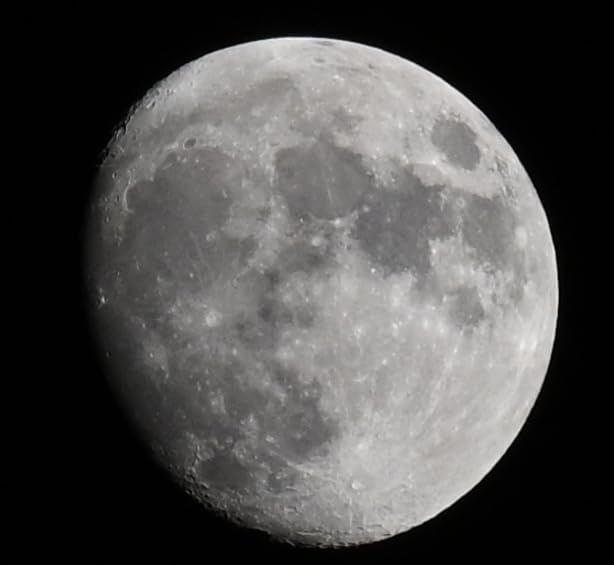
What it does well is daytime and casual wildlife reach. A 52x optical zoom with optical stabilisation, 6 fps burst, 1080p video up to 164 minutes, built-in Wi-Fi with a live remote viewfinder and SDXC support up to 512GB. If your goal is a single crisp photo of the Moon on a tripod, it will do that. If your goal is a stacked nebula, it cannot.

Who the AZ528 suits
It suits a complete beginner who wants a single photograph of the Moon or a bright planet, or a parent buying a first camera for a child who wants to explore the night sky without a computer. The Wi-Fi remote viewfinder makes it easy to frame yourself next to a car under the Milky Way.
Where the AZ528 falls short
No RAW, no Bulb mode, no interval shooting and a 1/2000s maximum shutter together rule out every long-exposure technique this article is about. The maximum aperture of f/2.8 at the wide end is respectable, but the small sensor behind it cannot make use of it. Treat it as a stepping stone, not a destination.
9. SVBONY SV305C Pro – The Best Astrophotography Camera for Beginners With a Telescope
SVBONY SV305C Pro Telescope Camera, USB 3.0 High-Speed, 2MP IMX662 Sensor
2 MP IMX662 color CMOS
0.7e- readout noise
1920x1080 at 107 fps
USB 3.0 at up to 5 Gbps
Pros
- 107 fps freezes fast-moving planets cleanly
- 0.7e- readout noise gives genuinely clean frames
- 128MB DDR buffer prevents dropped frames
- ST4 guiding port works with PHD2 and ASCOM
- Usable as an affordable guide camera on larger scopes
Cons
- Not compatible with iPad
- 2 MP rules out all deep-sky imaging
- Some owners report driver instability or disconnects
- High-speed capture fills a disk fast
If you already have a telescope, this is the camera to buy. It drops into a 1.25-inch focuser, draws power over USB and streams 1920×1080 at 107 frames per second, which is exactly the frame rate you want for Jupiter, Saturn and the Moon. Recording a long video and stacking the best 10 to 20 percent of frames is how planetary imaging works, and the frame rate is the whole game.
Owners rate it highly as a step up from USB 2.0 models, citing sharp low-noise planetary images, high frame rates, fast transfers and reliable ST4 guiding on both small and large scopes. Reviewers caution that 2 MP rules out deep-space imaging, that a computer is mandatory, and that a few examples experienced driver or hot-pixel issues requiring restarts.
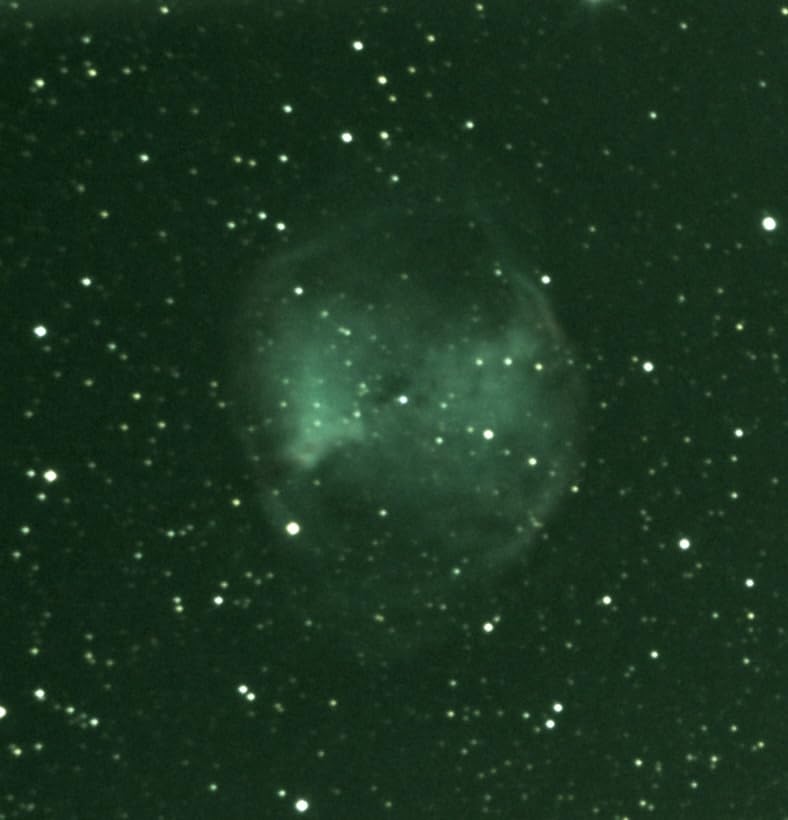
The 2 MP IMX662 sensor with 0.7e- readout noise is the technical reason this camera punches above its resolution class. Low readout noise means you can push gain without lifting the background, and the special heat dissipation is designed to keep the frame stable during long exposures up to 1800 seconds. The 128MB DDR buffer is what stops the recorder dropping frames at 107 fps.
Guiding is handled through the ST4 interface, which works with PHD2 and ASCOM on any equatorial mount, so this doubles as a budget guide camera on a large scope. HDR mode captures high dynamic range without chromatic aberration, and the Any Area ROI feature lets you record only a region of the sensor when a planet does not fit the frame.
Who the SV305C Pro suits
It suits a beginner who owns a telescope and wants their first satisfying result quickly. Planets show visible structure in a single evening, and lunar imaging produces a finished stacked image in under an hour. It is also the cheapest route to autoguiding, which matters if you later add a deep-sky camera.
Where the SV305C Pro falls short
Two megapixels is a hard ceiling on planetary detail, and the sensor is far too small for any nebula or galaxy work. There is no iPad or iPhone compatibility, so a laptop or desktop is required. Some owners report driver instability, disconnects and hot pixels at modest gain, and capturing at 107 fps writes gigabytes per minute to disk.
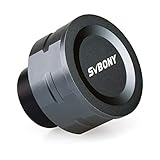
10. SVBONY SV105 – The Lowest-Cost Way to Photograph the Moon and Planets
SVBONY SV105 Telescope Camera, 1.25″ IMX307 CMOS Color Eyepiece Camera
1/2.8-inch IMX307 color CMOS
Up to 1920x1080 at 30 fps
USB 2.0, plug and play
1.25-inch M28.5x0.6 thread
Pros
- Lowest-cost entry to planetary and lunar imaging
- Plug and play with no drivers to install
- Standard 1.25-inch thread fits almost any telescope
- Works with telescope filters and focal reducers
- Dark light compensation helps in low light
Cons
- USB 2.0 is slow by modern standards
- 30 fps at 1080p is modest for fine detail
- 1/2.8-inch sensor is noisy at higher gain
- Requires separate capture software
- No iOS compatibility
The SV105 is the cheapest credible way to start real astrophotography, and if you already own any telescope with a 1.25-inch focuser it will work the day it arrives. The IMX307 color sensor streams 1920×1080 at 30 fps over USB 2.0 with no drivers to install, and the standard M28.5×0.6 thread drops straight into a focuser, a guide scope or behind a focal reducer.
Owners consistently value it as a cheap, simple first step into planetary and lunar imaging, highlighting plug-and-play setup, universal 1.25-inch compatibility and useful dark light compensation. The downsides named are the need for third-party capture software, the USB 2.0 transfer limit, the modest frame rate ceiling and the lack of iOS support.
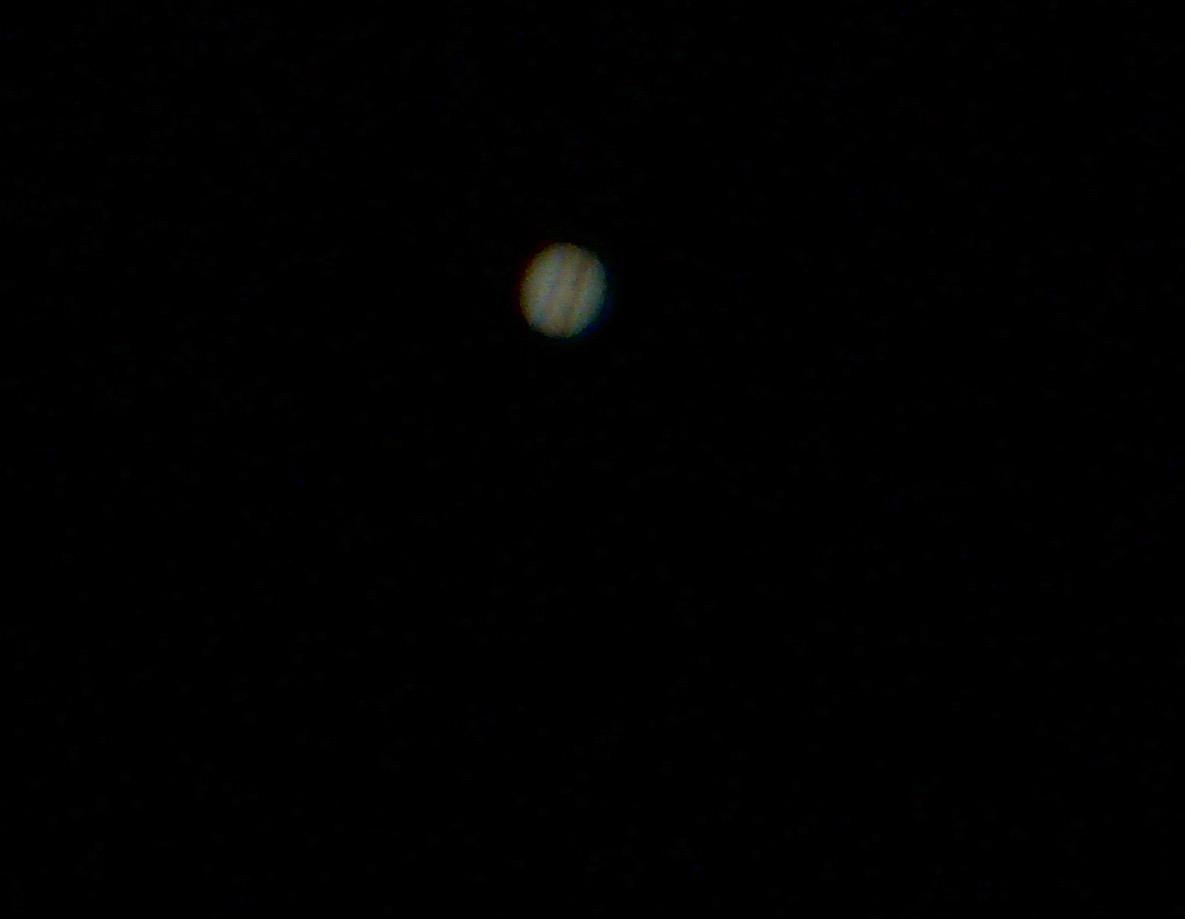
Understand what the 1/2.8-inch sensor means before you buy. It has a field of view around 1.5 degrees, which is wide enough to frame the Moon but tight on most planets, and it gathers enough light for the Moon and for bright targets like Jupiter and Saturn. Fainter targets such as Uranus, Neptune and Mars at opposition will be noisy and underexposed at this sensor size.
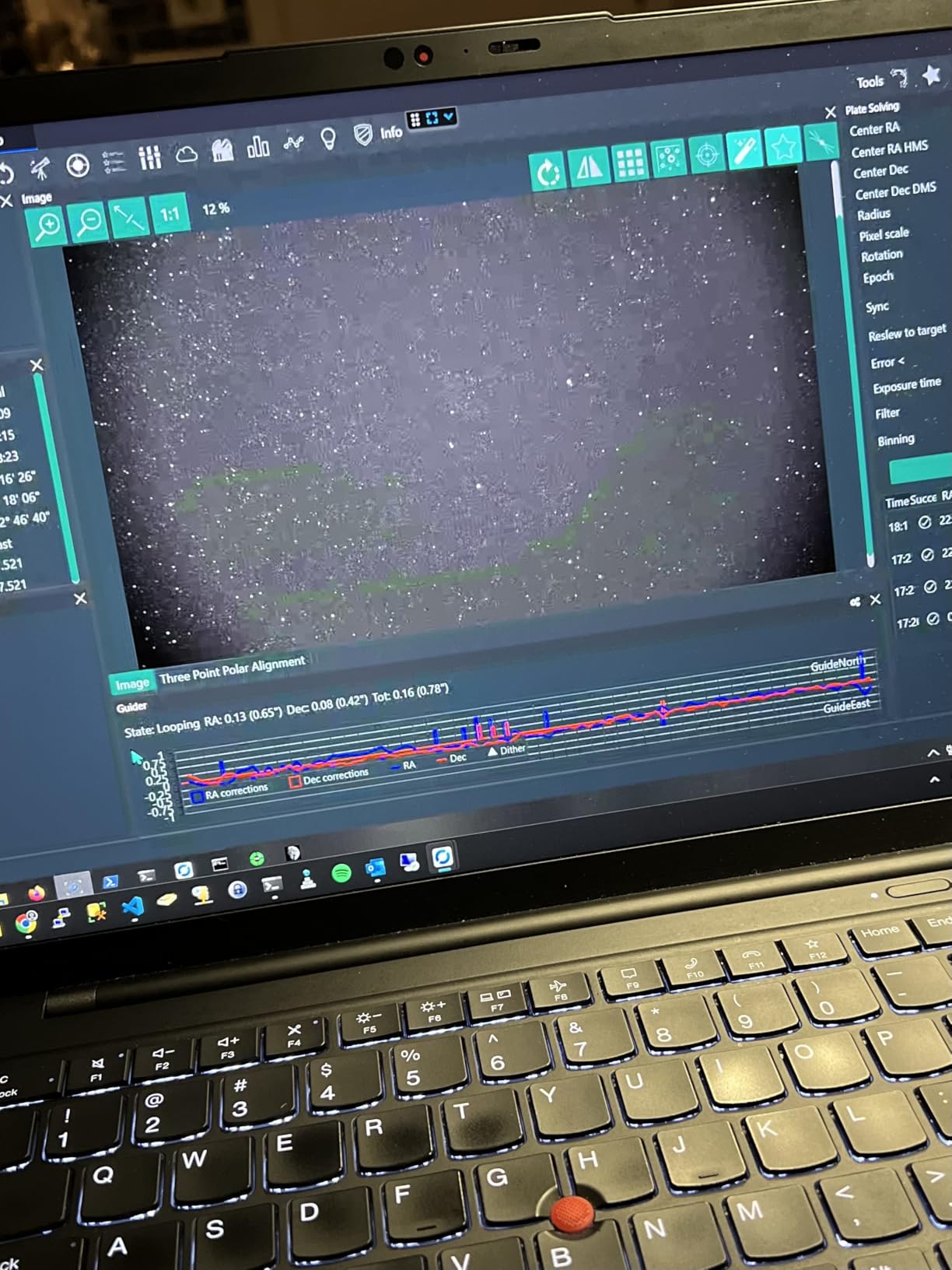
Capture software is external: SharpCap on Windows, AstroDMx on Linux, USB Camera on Android, with compatibility for macOS laptops. The field of view of roughly 1.5 degrees means you will need a focal reducer to frame large targets comfortably, and the manual focus means you will be adjusting a focus knob in the dark more often than you would like.
Who the SV105 suits
It suits a beginner who has a telescope gathering dust in a cupboard and wants to see something move in a computer window on their first evening. Lunar imaging through it produces a real, shareable result immediately, and it is the least risky purchase in this entire roundup.
Where the SV105 falls short
USB 2.0 makes transfers slow, and 30 fps at 1080p is a low ceiling when a fast-moving planet needs a higher rate to avoid smearing across a frame. It does not work with iPhones or iPads, so you need a computer. Sensor noise at higher gain is a real limitation, and reviewers give it the lowest average rating on this list for that reason.
DSLR and Mirrorless Body vs Telescope Camera: Which Family Should You Buy First?
This is the decision that matters more than any model, and it is the one most shopping guides skip. There are two families, plus a third path in all-in-one systems, and they are not comparable products. A body plus a lens plus a star tracker produces wide-field images of the Milky Way and large nebulae. A telescope camera plugged into an existing telescope produces sharp planetary and lunar video. Ask yourself which of those two images you actually want.
If you want wide-field work, you need a body. The list of what it costs you is where beginners get stuck. A DSLR or mirrorless body is the cheapest on-ramp because it also takes daylight photographs, so the purchase is not sunk into a single-purpose hobby. Add a fast short lens and a small star tracker, and you have a complete nightscape rig that fits in a day bag.
If you want planetary or lunar detail, you need a telescope first. No camera makes a mediocre telescope good, and a body with a kit lens cannot resolve Jupiter’s bands. Our [telescope roundup](https://ipadapps4school.com/best-telescopes-for-astrophotography/) covers the optics side, but the short version is that a short-tube refractor on a sturdy mount will show you more detail than any camera upgrade.
The third path, an all-in-one smart telescope that handles its own guiding and stacking, removes cables, alignment and software entirely. It is the most approachable route for someone who wants results without learning the imaging train, and the trade is that you give up control over the optics and usually pay for it. We did not include one on this list because our product set came from the available range, but if cabling and software are what stop you, that is a legitimate choice.
One reality check that forum discussions return to repeatedly: a dedicated cooled astro camera captures more light per unit of time than a DSLR but has a far narrower field of view, and users consistently report that field of view, not resolution, is what they actually notice when comparing results. A wide full-frame rig produces a more immersive image of a large nebula complex than the tight framing of a small astro sensor.
What to Look For When Choosing an Astrophotography Camera
Buy the lens before the camera. This is the single most repeated piece of advice in beginner forums, and it is correct. A fast aperture between f/1.8 and f/2.8 gathers dramatically more starlight per second than a slow kit zoom, which means shorter exposures, lower ISO and cleaner stacked results from the very first night. Several cameras in this roundup ship with f/3.5 to f/5.6 kit zooms, and on all of them the lens is the weakest link.
Prioritise sensor size over megapixels. Resolution matters for daylight printing and very little for astrophotography, because you stack and downscale almost everything. What matters is how much light the sensor collects, and that scales with physical sensor area. A 26.2 MP full-frame body and a 24.2 MP APS-C body with the same lens will frame very different amounts of sky, and the wider framing is the one that looks better.
Match your sensor to your image circle. A telescope optics adapter only accepts a sensor up to a certain diagonal before you get vignetting, and this is the most common mismatch beginners make with small telescope cameras. Check the required image circle for your scope or reducer and confirm the sensor fits before ordering anything.
Check for the manual controls you will actually use. Bulb mode or a 30-second-plus shutter is the minimum, an intervalometer saves you touching anything during a multi-hour run, and RAW capture is non-negotiable because JPEG destroys the faint signal you need. The Kodak AZ528 has none of the three, and that is why it cannot do tracked deep-sky work.
Understand the 500 rule and the 400 rule. The 500 rule says divide 500 by your crop factor to get a maximum exposure length before stars trail on a fixed tripod, which on a full-frame body gives about 8 seconds at f/2. The 400 rule uses 400 instead of 500 for more conservative results, giving about 6 seconds on full frame. Both numbers shrink for longer focal lengths and slower apertures, and both are only relevant on a fixed tripod because a tracking mount sidesteps the problem entirely.
If you are shopping telescope cameras, learn five terms. TEC is the thermoelectric cooler that drops sensor temperature below ambient to cut dark current, and a cooling delta of 20 to 30 degrees below ambient is the usual target. Read noise is the noise added each time the sensor is read, and lower is better for short exposures. The ADC, or analog to digital converter, is the chip that turns the sensor signal into numbers, and a good one preserves faint detail. Full well capacity is how much charge a pixel can hold before it saturates, and it sets your dynamic range and how bright a star you can record without clipping.
Know whether you want mono or one-shot-color. A monochrome sensor with external filters captures maximum signal but needs three times the imaging time for a colour image, plus filter wheels and filter costs. A one-shot-color camera with a Bayer pattern gets colour in one exposure and is far simpler for a beginner, at the cost of roughly two-thirds of the per-channel resolution. Start with OSC, graduate to mono later if you enjoy filters.
Finally, understand why DSLRs are being phased out. Dedicated astronomy cameras are USB-native with far longer software support lifecycles, and the USB shutter mechanism in a DSLR leaves the sensor open and drains the battery while moving frames, which interrupts long integrations. Electronic shutters in modern bodies changed that, but the trend is clear. That said, a used or renewed DSLR remains a good buy for a beginner, because manual exposure control and RAW are still available at a fraction of current body prices.
If you are buying a used body, check four things: the shutter or actuation count, the sensor surface under a bright light for dust or fungus, whether the sensor has been astro-modified, and the included battery and charger. Astro modification involves removing or bypassing the infrared-cut filter, which boosts hydrogen-alpha sensitivity at the cost of colour balance. We have not featured a modified body in this roundup, and a stock body is the right starting point unless you specifically want narrowband work.
Frequently Asked Questions
What is the best budget camera for astrophotography?
The Canon EOS Rebel T7 is our best budget pick because it is the cheapest route to manual exposure control and 14-bit RAW with a 24.1 MP APS-C sensor. Pair it with a fast short lens and a small star tracker, since the bundled f/3.5-5.6 kit zoom is not fast enough for good night results.
What is the 500 rule for astrophotography?
The 500 rule is a starting point for star trailing on a fixed tripod. Divide 500 by your camera’s crop factor to get the longest exposure before stars begin to trail. On a full-frame body that is about 8 seconds at f/2, and on an APS-C body with a 1.6x crop factor it is about 5 seconds.
What is the 400 rule in astrophotography?
The 400 rule is a more conservative version of the 500 rule that trades a slightly shorter exposure for cleaner, rounder star points. Divide 400 by your crop factor instead, which gives about 6 seconds at f/2 on full frame. A star tracker makes both rules irrelevant because the mount follows the sky.
Should I buy a DSLR or a dedicated astronomy camera?
Buy a DSLR or mirrorless body if you want wide-field Milky Way and nebula images and do not yet own a telescope, because a body plus a fast lens plus a tracker is the cheapest complete entry. Buy a dedicated telescope camera if you already own optics and want sharp planetary and lunar images, since no camera makes a mediocre telescope good.
Is it difficult to learn astrophotography?
The first two nights are fiddly, mostly because of focus, polar alignment and cable management rather than the camera itself. Stacking software is free and forgiving, and most beginners produce a usable stacked deep-sky image within a month of patient trial and error.
Why is DSLR being phased out?
Dedicated astronomy cameras connect over USB as native devices, typically draw power from a single cable, and receive software support for far longer than a camera body. DSLR USB shutter mechanisms also leave the sensor open and drain the battery between frames, which interrupts long integrations. Modern electronic shutters reduce that problem but do not remove it.
Is a used or renewed DSLR still worth buying?
Yes, for most beginners it is one of the best-value routes to manual exposure control and RAW capture. Check the actuation or shutter count, inspect the sensor under a bright light for dust or fungus, confirm whether it has been astro-modified, and verify the battery and charger are included before your first night out.
Which Beginner Astrophotography Camera Should You Buy in 2026?
Start with the Canon EOS Rebel T7 if you want a low-cost entry to tracked night-sky imaging, and pair it with a fast prime rather than the kit zoom. Choose the Canon EOS R50 if you plan to keep the camera for years and want cleaner high-ISO files in a compact body, and the Canon EOS RP if wide-field framing on a single lens is your priority. If you already own a telescope, the SVBONY SV305C Pro is the right camera for sharp planetary video, and the SV105 is the low-risk way to see whether you enjoy it at all.
Three questions settle the decision faster than any spec sheet: what is your budget, do you want planetary or deep-sky targets, and are you shooting from a tripod or attaching to a telescope. Answer those honestly and the right family becomes obvious. The wrong family, not the wrong model, is what causes disappointing first results. More on the general camera side of this decision in our [mirrorless camera guide](https://ipadapps4school.com/best-mirrorless-cameras-for-beginners/) if you want the daylight context too.