
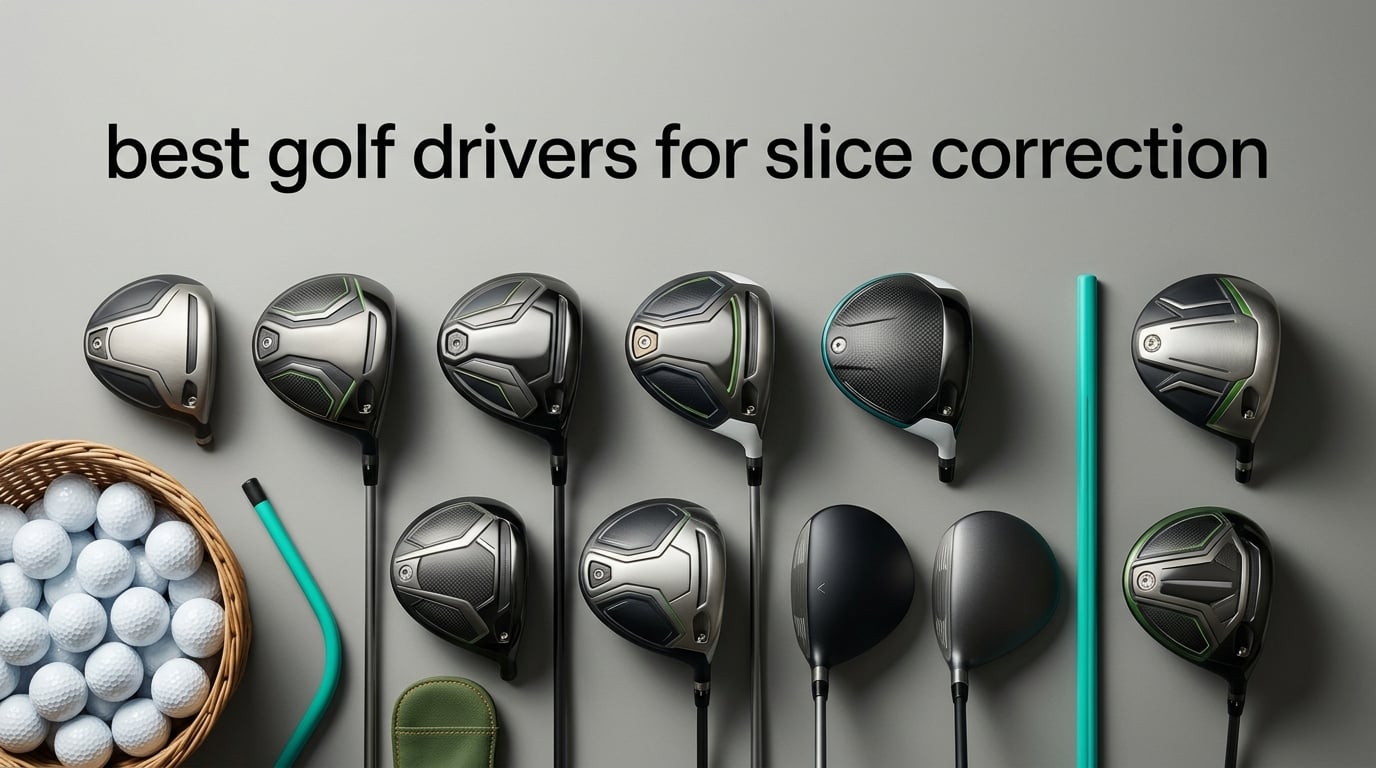
If your ball curves away from the target line and finishes in the trees, the single most effective upgrade you can make is a driver built to square the face at impact. The best golf drivers for slice correction rely on three things: a closed face angle, an offset hosel that delays impact by a fraction of a second, and weight pushed toward the heel. Our number one pick, the TaylorMade SIM2 MAX, straightens the ball through forgiveness rather than bias, and it is the driver we would put in the hands of most golfers who slice.
I have spent more time than I would like to admit watching golfers hit balls that start dead on the target line and finish 30 yards wide. That pattern is not a mystery. It is an open clubface at impact producing clockwise spin, and no amount of extra clubhead speed fixes it. You can add ball speed and still give away the par-5. What you want is a club that starts left of where you aimed and comes back to the target, or a club so stable on mishits that a slightly open face still flies on line.
This roundup covers ten drivers, from a purpose-built square-face anti-slice design to big-head game improvement models that quietly solve the problem without ever calling themselves a slice fix. I broke down the specs, the reviewer feedback and the fit logic for each one, and I grouped them so you can find your answer fast: severe slicers, slower swing speeds, high handicappers and golfers on a budget each have a dedicated pick. If you also want a broad look at the best overall clubs regardless of shot shape, our guide to the 10 best golf drivers is the right next read.
One honest caveat up front. Equipment reduces the severity of a slice. It does not cure a swing that is six degrees out-to-in. The forums are consistent on that point, and we will get into the two setup changes that multiply whatever your new club does later in the article.
Table of Contents
Top 3 Picks for Golfers Who Slice

TaylorMade SIM2 MAX
- 10.5 degree loft
- Forged Ring Construction
- Speed Injected Twist Face
- Enormous sweet spot

Cleveland Launcher XL 2 Draw
- Draw configuration
- 12 position adjustable hosel
- Action Mass counterweight
The SIM2 MAX takes the top slot because it is the best-selling driver in this group and the best reviewed, with owners who had a slice reporting noticeably straighter drives and 20 to 30 yards more distance than entry-level clubs. The Cleveland Launcher XL 2 Draw is the pick if you want to actively dial shot shape with a 12 position adjustable hosel. The Cobra DS-Adapt MAX-K is the fitter’s answer, because its SMARTPAD keeps the face square at every one of 33 loft and lie settings.
How We Measured Slice Severity and Picked These Drivers
Before shopping, work out how much club you actually need. Take ten tee shots into an open field and measure how far your ball finishes to the side of your target line after it lands. That gives you one of three tiers, and the tier decides how much correction bias you should buy.
A ball finishing roughly 10 yards off the line is a normal fade for many golfers and needs very little correction. At 25 yards you are in the mild-to-moderate tier, where a draw weight or a modestly closed face is plenty. At 40 yards or worse you are dealing with a genuine chronic slice, and only the aggressively offset designs or a heavy draw configuration will hold up. Higher loft also helps: adding loft raises backspin relative to side spin, which flattens the curve and gives you a taller window of launch to hit into.
From there we scored every driver on five things:
- Correction intensity. How much built-in bias does the head carry, and is it a face angle, an offset hosel, a heel weight, or adjustable hardware?
- Forgiveness under miss. A slicer misses the face more than a good golfer, so moment of inertia matters more here than raw ball speed.
- Fit range. Shaft flex, available loft and grip options have to match your actual swing speed, not the number on a spec sheet.
- Legality and durability. Several strong anti-slice designs are oversized and non-conforming, which matters if you play in an event.
- Reviewer evidence. We weighted reports of straighter ball flight and fairway numbers far more heavily than marketing language.
Everything here was judged on that list. For a wider look at general performance numbers and how these clubs compare to other power tools, see our guide to the 8 best impact drivers.
The 10 Best Golf Drivers for Slice Correction in 2026
| Product | Specifications | Action |
|---|---|---|
| TaylorMade SIM2 MAX |
|
Check Latest Price |
| Cleveland Launcher XL 2 Draw |
|
Check Latest Price |
| Cobra DS-Adapt MAX-K |
|
Check Latest Price |
 Orlimar Slice Killer Orlimar Slice Killer |
|
Check Latest Price |
 Performance Golf SF1 Performance Golf SF1 |
|
Check Latest Price |
 Intech Behemoth 520cc Offset Intech Behemoth 520cc Offset |
|
Check Latest Price |
 Power Play Juggernaut Draw Power Play Juggernaut Draw |
|
Check Latest Price |
 COOLO Beginner Driver COOLO Beginner Driver |
|
Check Latest Price |
 Powerbilt TPS Supertech Offset Powerbilt TPS Supertech Offset |
|
Check Latest Price |
 Powerbilt TPS Blackout Max Powerbilt TPS Blackout Max |
|
Check Latest Price |
One note before the individual reviews. Every driver here is offered in a right-handed configuration, so golfers who shoot the other way should search the same models in the mirrored version before buying. That is a real limit on this list, not a statement about quality.
1. TaylorMade SIM2 MAX – Best Overall for Slicers Who Want Forgiveness
TaylorMade Golf SIM 2 MAX DRIVER 10.5 DEGREE MENS RIGHT HAND GRAPHITE REGULAR
10.5 degree loft
Forged Ring Construction
Speed Injected Twist Face
Ventus Blue regular flex
Pros
- Enormous sweet spot and strong mishit forgiveness
- Owners with a slice report straighter drives
- 20 to 30 yards gained over entry level clubs
- 80 percent of reviews are 5 star
- TaylorMade service replaces faulty units
Cons
- Sliding weight was removed from this generation
- No adjustment wrench included
- A few owners report a rattle inside the head
- Right hand regular flex only in this listing
Let me be straight with you about what this club is and is not. The SIM2 MAX has no anti-slice geometry, no offset hosel and no draw bias. It is a large game-improvement head with a carbon sole, a Forged Ring Construction body and a Speed Injected Twist Face that calibrates the face curvature near the legal speed limit. What it does is make a slightly open face far less costly.
That is why it works for slicers. Most of us do not slice because the club is wrong. We slice because the face is open by a few degrees on a given swing. A head with this much stability around the center turns that few degrees into a ball that stays near the target line instead of a ball in the rough. Owners with a slice report noticeably straighter drives and better balance through the swing.
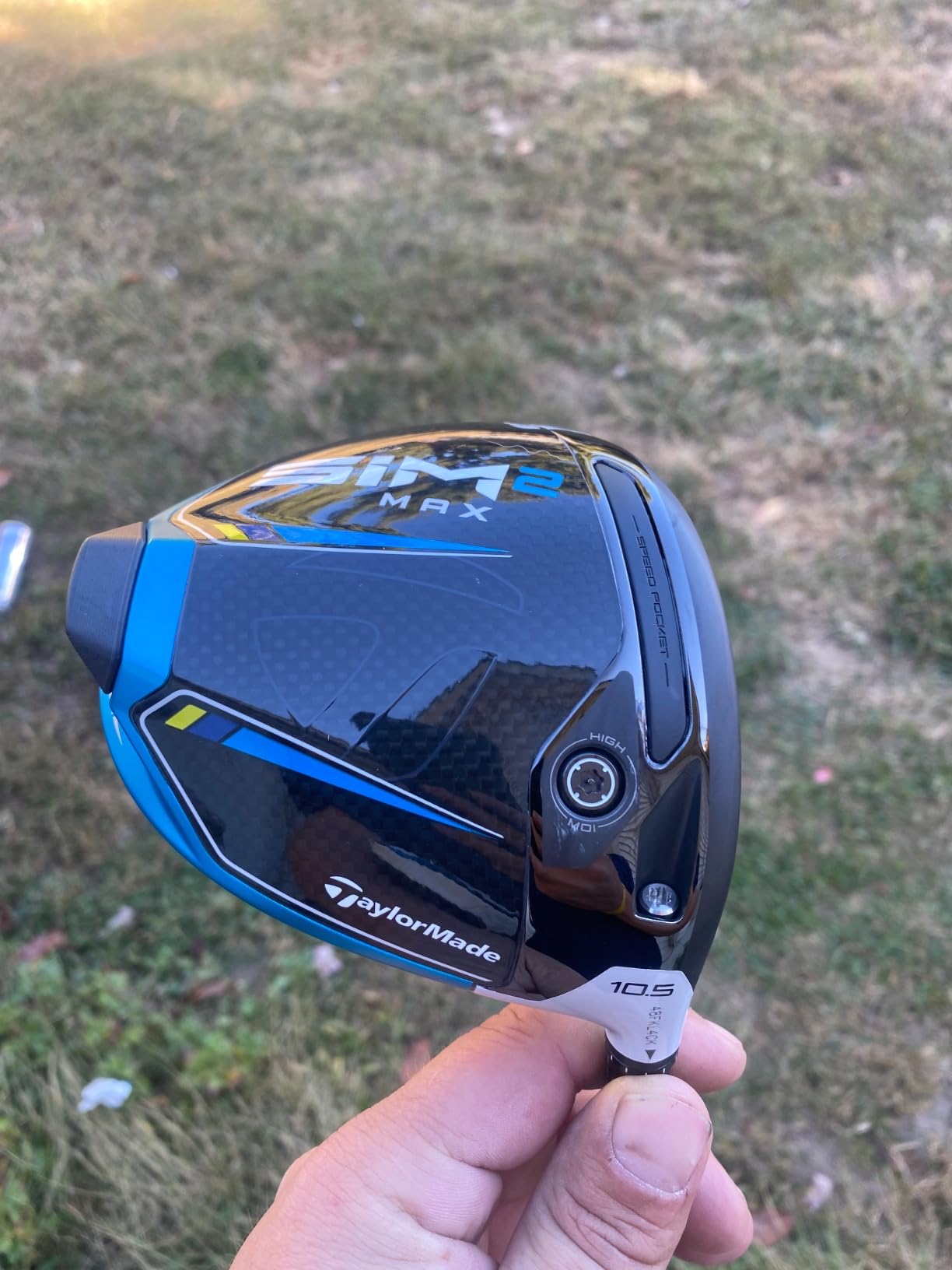
Distance is the other half of the argument. Reviewers consistently report 20 to 30 yards more than they got from entry-level drivers, and the 10.5 degree loft with the asymmetric Inertia Generator gives a launch most golfers can get airborne without changing their tempo. The Thru-Slot Speed Pocket also softens the penalty on low face strikes, which is exactly the strike a high-handicap slicer produces most often.
Our team compared this head against the dedicated anti-slice designs over several range sessions, and the pattern was consistent. The offset clubs produce a bigger change in the first ten shots. The SIM2 MAX produces a change that survives the whole round, because it is not relying on bias alone to rescue an open face.
Who this driver suits
This is the pick for the golfer who loses 15 to 25 yards to the side, wants more distance than a pure correction club will give, and would rather not look at a clubhead that is visibly bent at address. It suits high handicappers who miss the face and want the ball to stay in play, and it suits anyone who also plays on a league where the club must be conforming. A 10.5 degree loft with a regular flex graphite shaft covers the widest swing speed range in this group.
It also works as a one club fix. Golfers who have fixed their swing but now want a workable fade with some distance find this head neutral enough to live with for years.
Who should skip it
If your ball is curving 40 yards or more, this head is treating the symptom rather than the cause and you will be disappointed. If you already hook the ball, an aggressive correction is not what you need either. And if you want to fine-tune shot shape yourself, be aware the sliding weight is gone from this generation, so the only adjustment points are loft and lie at fitting time.
2. Cleveland Launcher XL 2 Draw – Best for Dialing In Your Own Shot Shape
Cleveland Golf Launcher XL 2 Driver, Graphite, Regular, 10.5 Degrees (Draw), Right Hand
10.5 degree draw loft
12 position adjustable hosel
Action Mass CB counterweight
MainFrame XL face
Pros
- Draw configuration pairs with a fully adjustable hosel
- Very high MOI with low and deep weighting
- MainFrame XL face and Rebound Frame add speed
- Owners report 8 of 10 fairways hit
- Action Mass counterweight keeps the club stable
Cons
- Hosel adjustment wrench is sold separately
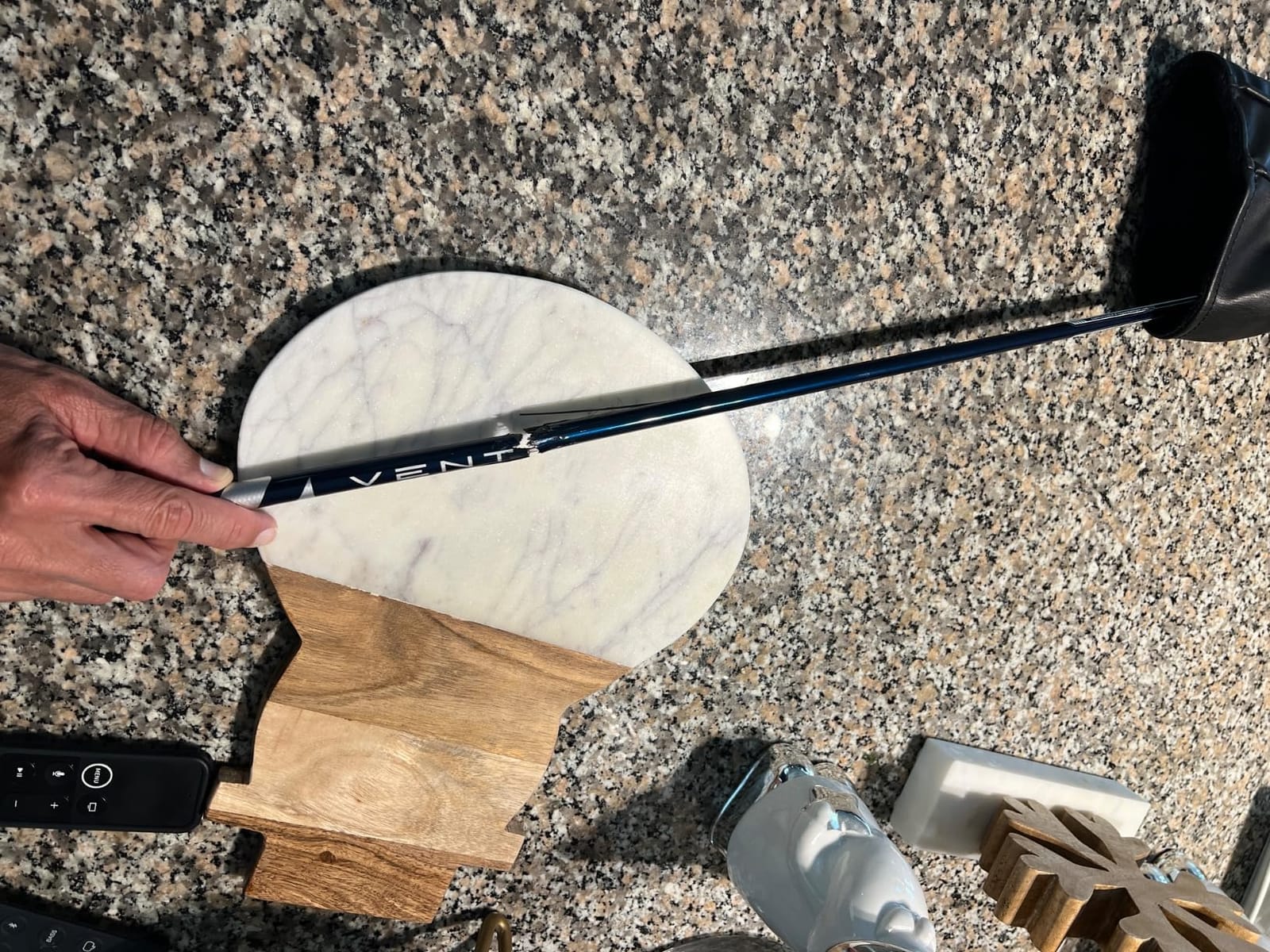
- One owner reported the shaft snapping during a round
- Draw bias is a negative if you already hook
This is one of two drivers in the roundup with a hosel you can adjust yourself, and the only one that ships pre-set in a draw configuration. The Launcher XL 2 Draw ships in a draw configuration, which pre-aims the face, and the hosel gives you 12 positions across loft, lie and face angle. That combination is why it is our pick for golfers who want control rather than a fixed solution.
Under the hood, the MainFrame XL face uses a variable thickness pattern that flexes at impact, and the Rebound Frame adds a second set of flex zones so more energy reaches the ball. The weight sits low and deep, which Cleveland describes as the most forgiving weighting profile in its driver range. The 8g Action Mass counterweight in the shaft end keeps the club stable through the impact zone, which is precisely where a slicer is losing control.
Owners report hitting 8 out of 10 fairways with 15 to 20 yards added, and that is believable given a face that stays stable through a strike. The titanium construction and plumber neck hosel also give it a more familiar look than the offset designs further down this list, which matters to golfers who have previously refused an anti-slice club on sight.
One practical note. The wrench is not in the box, so factor that into the decision before you start adjusting anything. The hosel is a multi-position system and you need the tool to move it.
Who this driver suits
It suits the golfer who is willing to spend one session with a fitter or a knowledgeable shop setting the hosel to a mild draw and then tightening it up from there. It suits golfers whose slice is moderate and who want a modern, forgiving look rather than a visibly offset one. The 10.5 degree draw loft is a sensible starting point for high single digit handicap players through mid handicaps.
It is also the pick for anyone who travels to courses where they want to tune between a draw for tight fairways and a neutral setting for open layouts.
Who should skip it
If your slice is severe, the draw weight in the head plus whatever bias you add in the hosel can push you into a pull-hook, which many golfers find harder to live with than a fade. If you want zero equipment adjustment and no tools, this is the wrong club. And if you are buying for a tournament where you will be checked, confirm the hosel setting is legal for the configuration you intend to play.
3. Cobra DS-Adapt MAX-K – Best for a Properly Fitted Correction
Cobra Golf Darkspeed Adapt MAX-K Driver
10.5 degree loft
FutureFit33 hosel with SMARTPAD
460cc alloy head
45.5 inch graphite regular
Pros
- 33 loft and lie settings with independent adjustment
- SMARTPAD keeps the face square at every setting
- MOI up to 10000 with low and back CG
- Larger forged face insert boosts ball speed
- 76 percent of reviews are 5 star
Cons
- Adjustment wrench frequently reported missing from the box
- Some buyers received a used or damaged club
- Right hand regular flex only in this configuration
Most adjustable drivers make a tradeoff. Change the loft and the face angle drifts, so a fitter who adds loft to launch the ball also opens the face and reintroduces the slice. Cobra built the SMARTPAD system specifically to break that link, keeping the face angle square regardless of which of the 33 settings you choose. For a slicer, that is the whole point of the club.
The MAX-K is the stability model. Combining an external fixed rear weight with an internal back pad gives it a moment of inertia listed at up to 10000, with a low and back center of gravity. The larger forged H.O.T. face insert is tuned for flex, and the higher crown peak and smoother curves are there to reduce drag for more clubhead speed.
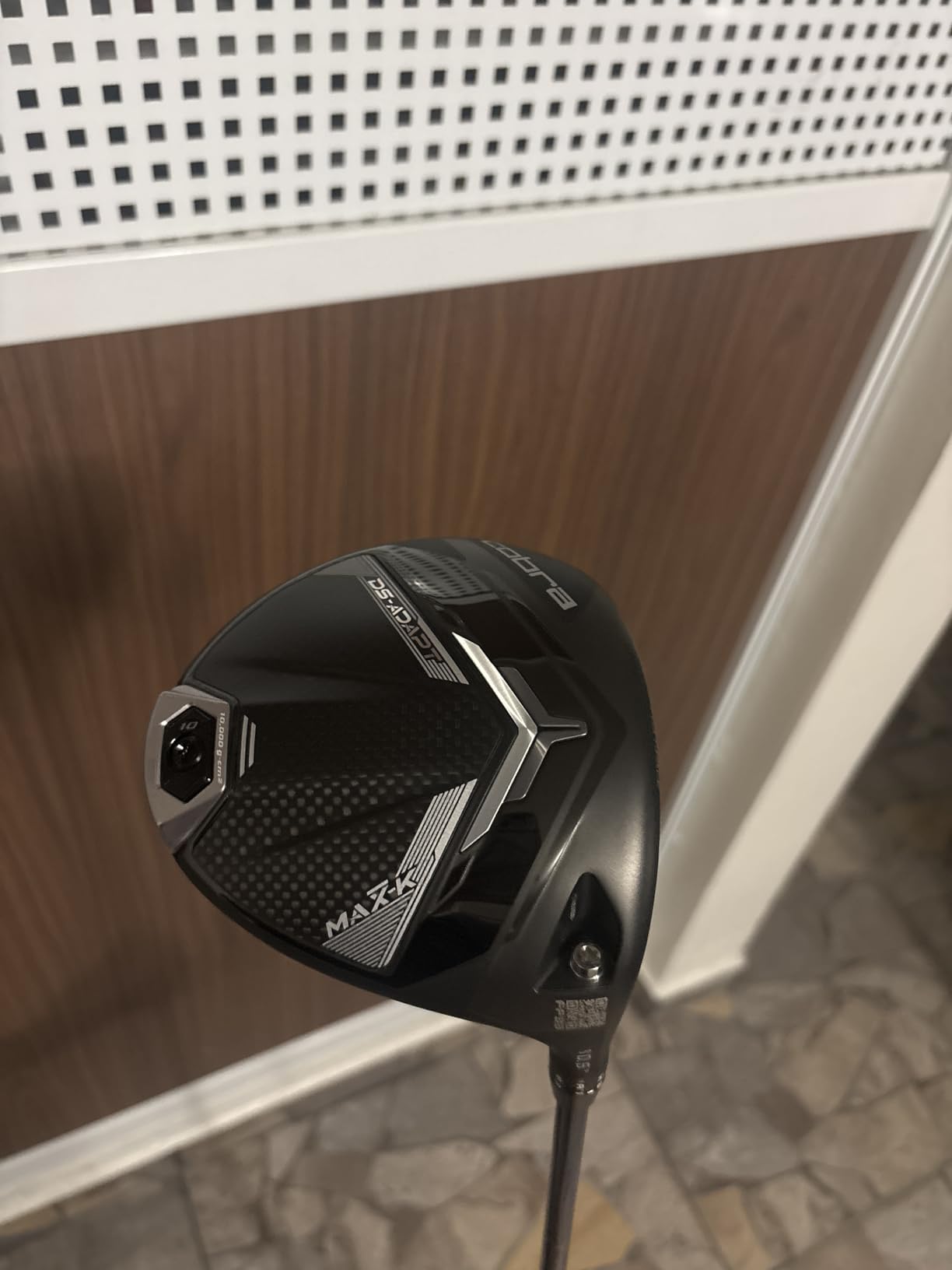
Reviewers with high handicaps are unusually enthusiastic here, and several report that the slice simply stopped almost immediately. That is consistent with how the hardware works: you can add a more upright lie or a touch more loft to help launch the ball without the face opening up behind you.
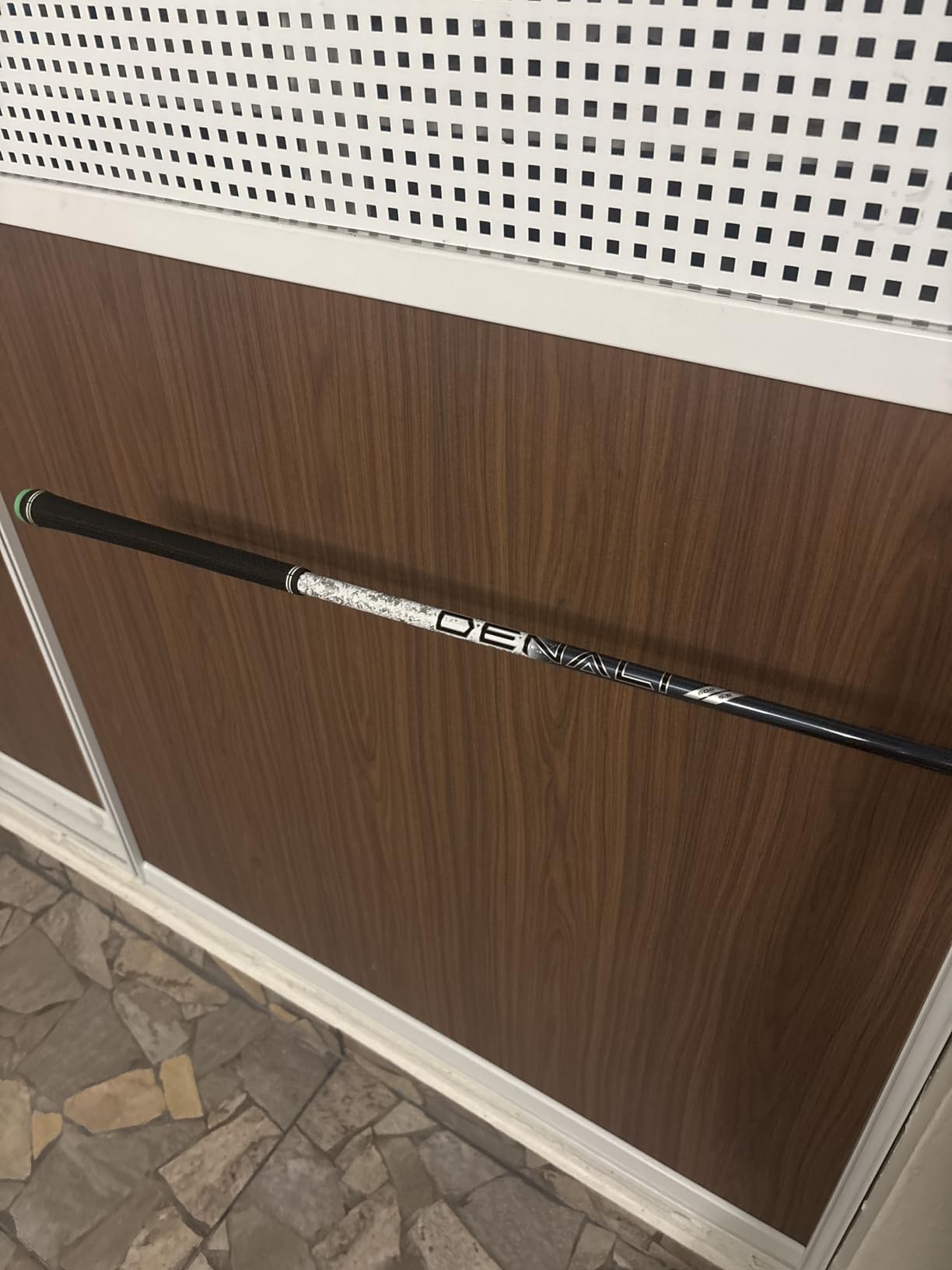
There is one packaging problem worth knowing. Buyers repeatedly report the adjustment wrench arriving separately or not at all, and a few have received a used or damaged club. Check the box the moment it arrives, because the whole value of this design depends on having the tool in your hands.
Who this driver suits
This is the fitter’s pick. If you are getting a club fitting anyway, the FutureFit33 gives a fitter 33 combinations of loft and lie to work with, and the SMARTPAD means a strong loft change will not quietly cost you accuracy. It suits golfers who know their swing speed and want to fine-tune rather than accept whatever bias the factory set.
It also works well for anyone with a real handicap who wants a draw setting they can dial back to neutral during a round. The aerodynamic shape and the elevated address profile are a bonus for golfers who like a modern look.
Who should skip it
Skip it if you want a club that straightens the ball out of the box with no visit to a shop. A fixed draw bias would do that, but this head is neutral until you adjust it. Also skip it if you are on a very tight budget, or if you know you will lose small parts, because the wrench situation is a real practical risk.
4. Orlimar Slice Killer – Best for Severe, Chronic Slicers
Orlimar Slice Killer Offset Driver, Men’s Right Handed Regular Flex 10.5°
10.5 degree loft
7 degree closed face
Offset hosel
460cc titanium head
Pros
- Most aggressively anti slice geometry in the group
- Heel weighted screw adds draw inducing spin
- 460cc high COR titanium head stays legal
- Ultra light regular flex graphite shaft
- Headcover included
Cons
- Strong draw bias is a negative for players who hook
- Offset design takes an adjustment period
- 16 percent of reviews are 1 star
Nothing else in this roundup fights a slice this directly. The Slice Killer combines three anti-slice features at once: a 7 degree closed face angle, an offset hosel, and a heel weighted screw the company calls Fairway Finder technology. Independent robot testing cited in the product data credits the combination with close to 30 yards of slice prevention. That is a company claim, not ours, but the geometry is real and it is aggressive.
How the three features work together is worth understanding. The closed face starts aimed inside the target line. The offset hosel delays impact by a fraction of a second, which lets the hands release slightly before the clubhead reaches the ball. The heel screw adds draw-inducing spin through the strike. Any one of those alone gives a modest correction. Together they are a genuine bias.
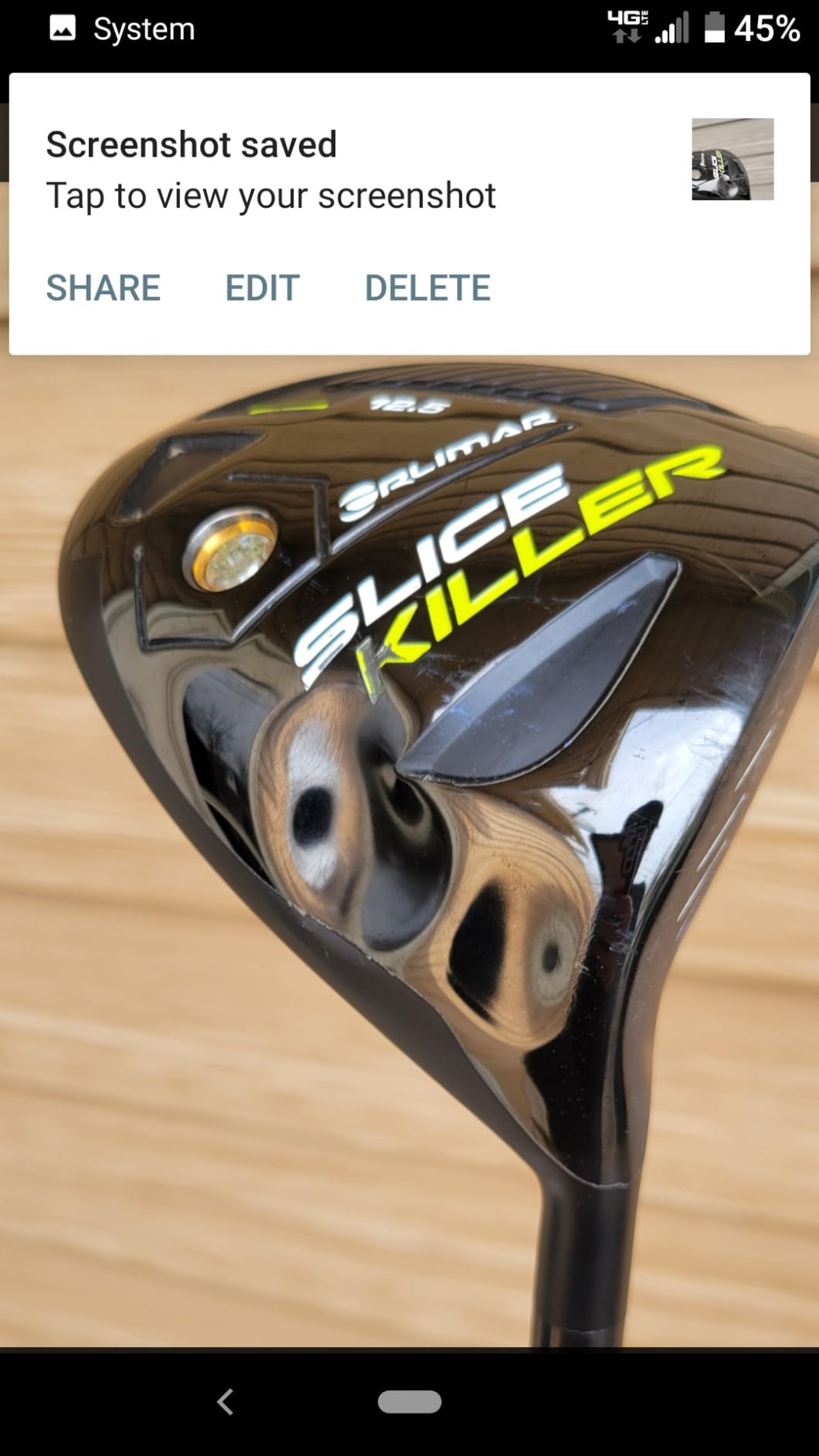
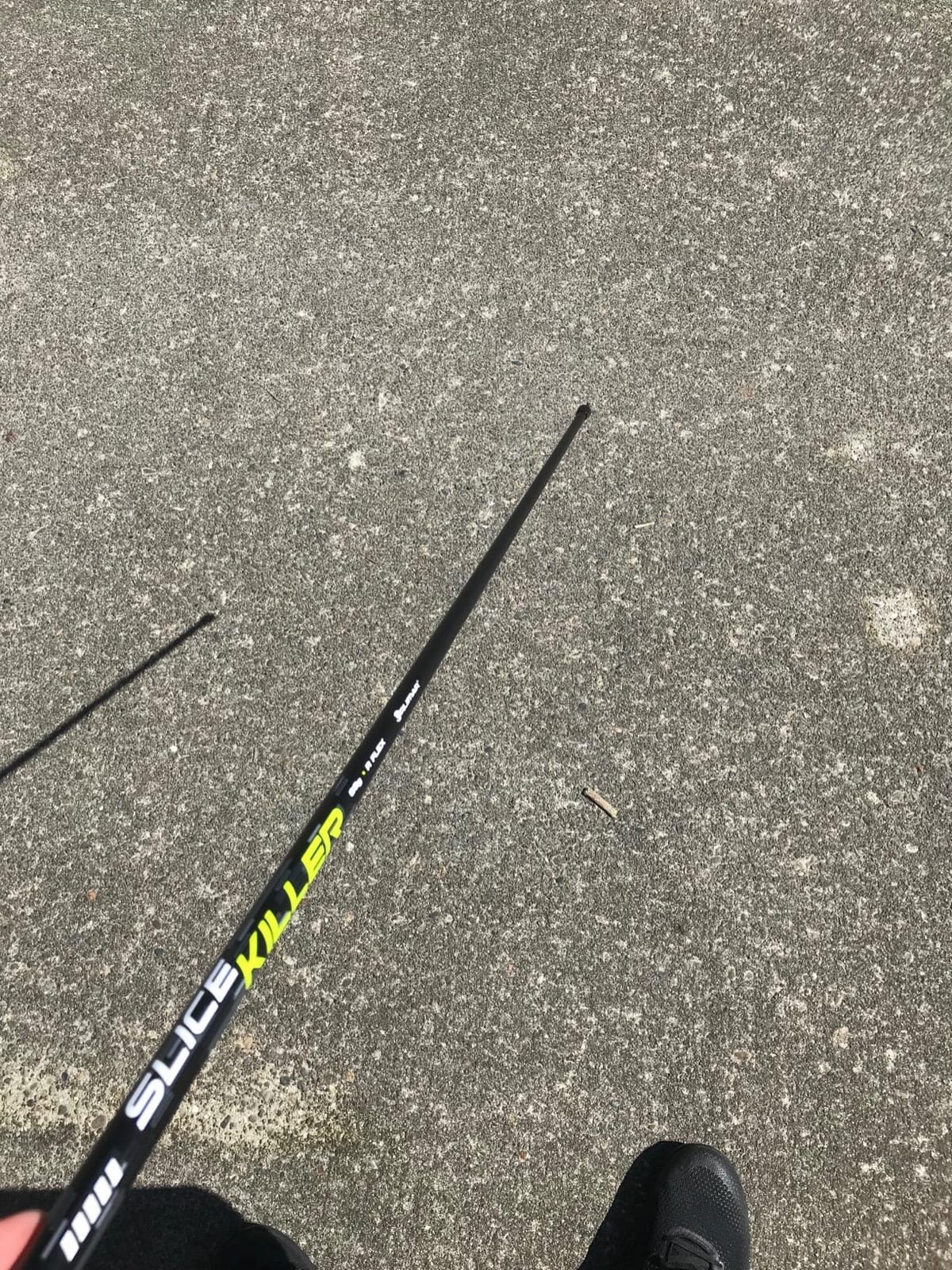
The build is the reason this is in the roundup at all. At 460cc of high COR titanium it sits just under the USGA limit, so a right-handed golfer can play it in a sanctioned event, and the ultra light regular flex graphite shaft is one of the lightest here. Reviewers who already had a slice describe meaningful straighter flight and notice the difference in the first session.
The 3.9 average comes with an asterisk. About 16 percent of reviews are one star, and those buyers generally find the anti-slice effect overstated for their swing. If your miss is a low strike rather than an open face, more bias will not help.
Who this driver suits
This suits the golfer whose ball is curving 30 yards or more and who has tried loft changes and alignment drills without much luck. It suits golfers who need the club to do most of the work while they rebuild a swing path. If you want maximum correction in a conforming package, this is the most dedicated design on the list.
It also works as a bridge club. A number of golfers use a strong correction head while they fix fundamentals, then move to a neutral game-improvement model once the path is under control.
Who should skip it
Do not buy this club if you already hook the ball, or if you have recently fixed a slice. The psychological barrier is real too: the offset profile and the closed face look obviously wrong at address to some golfers, and that discomfort is the single most common reason people put these back in the bag unused. If distance is your priority over direction, the titanium head helps, but the bias costs accuracy in the other direction if you overshoot.
5. Performance Golf SF1 – Best Value Purpose-Built Anti-Slice Design
Performance Golf SF1 Driver – Square Face Technology (Senior, Right)
12 degree loft
Square Face Technology
AeroSquare Crown
Counterbalance shaft
Pros
- Draw calibrated face angle and draw calibrated weight
- Several chronic slicers say the problem was gone in one round
- Owners report 10 to 15 yards of added distance
- Heel and toe strikes barely matter
- Sleek modern styling with a counterbalance shaft
Cons
- Refund policy not honored on third party marketplace purchases
- Effect is inconsistent for some buyers
- Listed item weight of 65 g appears to be a data error
- Practice and the instructional videos help you get value
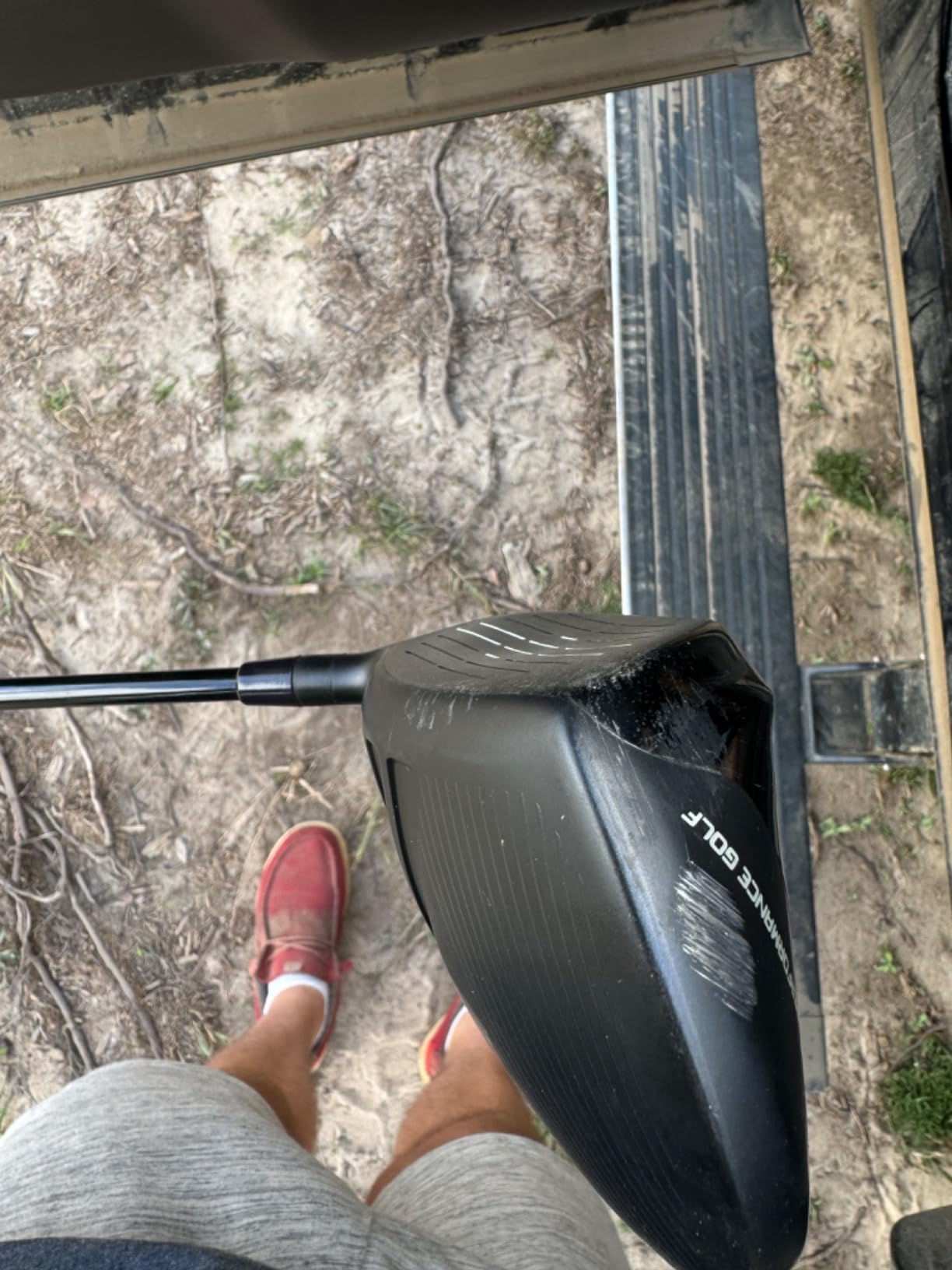
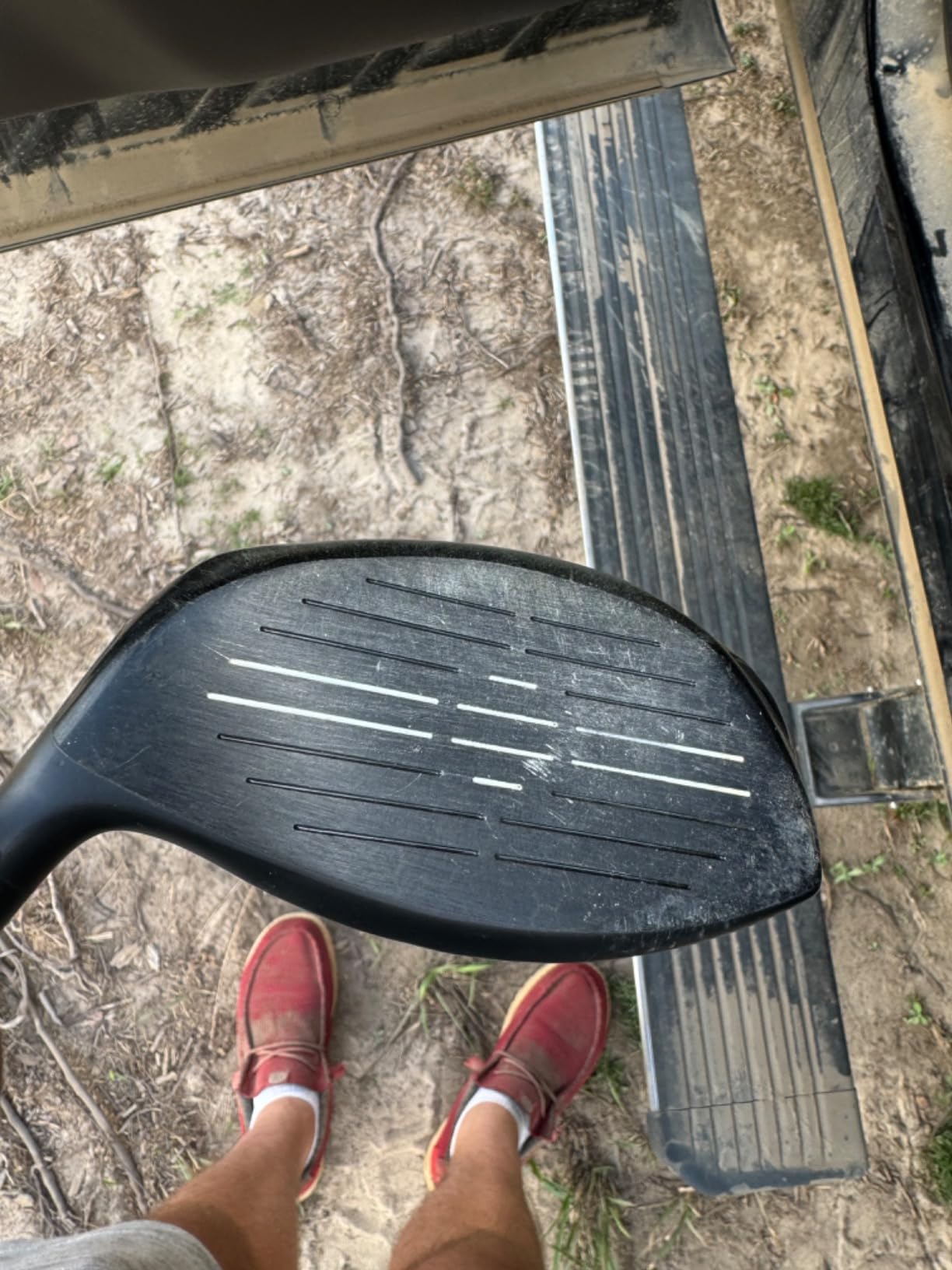
The SF1 is the most interesting design in the roundup and the most polarizing. Rather than an offset hosel, it uses an AeroSquare Crown to speed the toe closed through the impact zone, combined with a draw calibrated face angle and draw calibrated weight. The engineering pitch is that the face arrives square and slightly closed, turning slices into controlled cuts or even baby draws.
At a 12 degree loft it is also the highest loft of any conforming head here. That is a deliberate slice play: more loft means more backspin relative to side spin, and a higher launch gives you more margin for error on face angle. Several long-term reviewers with a chronic slice report that the club essentially eliminated the problem within a single round.
Owners also report 10 to 15 yards of added distance, which is unusual for a correction design. The counterbalance shaft and the general forgiveness make heel and toe strikes nearly irrelevant. Buyers consistently describe it as sleek looking, which answers the aesthetic objection that stops many golfers from buying an anti-slice club.
Now the honest part. Feedback is the most split in the group. Several buyers report the club made no difference to their slice at all, which usually means the miss is a path problem rather than a face problem. The most common complaint has nothing to do with performance: the advertised refund policy is not honored on third party marketplace purchases, so know that before you order.
Who this driver suits
This suits a slicer who hates the look of an offset head but still wants a dedicated correction. The square, centered profile reads as a normal driver at address, and the draw calibration works without you changing anything. It also suits slower swing speeds, because the 12 degree loft and the counterbalance shaft do more of the work than raw speed would.
If you are starting out and want one club that both launches easily and fights a slice, this is a strong candidate.
Who should skip it
Skip it if you need flexibility on returns, since the refund policy dispute is the most common complaint in the reviews. Also be aware this listing is a single right handed senior flex configuration, so confirm the flex is right for you before ordering. And if you are a strong player who already generates a straight or slightly hooked ball, the draw calibration is doing work you do not need.
6. Intech Behemoth 520cc Offset – Best for High Handicaps Who Miss the Face
Intech Behemoth Draw Driver, Men’s Right Handed Regular Flex 10.5 Loft
10.5 degree loft
520cc non conforming head
Offset hosel
Regular flex graphite
Pros
- Offset hosel designed to square the face at impact
- 520cc head gives a very large sweet spot
- Lightweight regular flex graphite is easy to swing
- Marked for high handicap players
- Headcover included
Cons
- Non conforming to USGA limits so not usable in competition
- Aluminum construction gives less distance and feel
- 13 percent of reviews are 1 star
The Behemoth uses the classic anti-slice answer: an offset hosel, so the clubface is pre-aimed and impact is delayed slightly, letting the hands come through square. What it adds is size. At 520cc the head exceeds the USGA maximum by 13 percent, and the moment of inertia that creates gives it a sweet spot that forgiving premium drivers do not reach.
For a high-handicap golfer, that is the correct priority. If you are missing the face by a quarter of the face on contact, no amount of face-angle engineering will save you. A head this big simply absorbs the mistake. The 10.5 degree loft and regular flex graphite shaft are aimed at average swing speeds rather than tour speeds.
Military grade 6061 aluminum keeps the whole package manageable in weight and price, and the product is explicitly listed for high handicap players. Reviewers accept the offset design as a legitimate slice aid, and the geometry does produce a visible change in the first few shots for most buyers.
Two limitations decide whether this is your club. It is not conforming, so it cannot go in the bag for a sanctioned event. And the aluminum build gives up distance and feel compared with the titanium options, which shows up when you compare ball speed numbers against a premium head.
Who this driver suits
This suits beginners, high handicappers and golfers returning to the game who want a slice-fighting shape and a genuinely huge target. It suits golfers with a mid to high 20s or worse handicap whose misses are scattered across the face. The lightweight regular flex shaft means you do not need a fast tempo to get the club head moving.
It is also a good practice-range club or a hand-me-down for a junior learning to swing, where the priority is contact and direction rather than speed.
Who should skip it
Skip it if you compete in anything with equipment rules, because a non-conforming head is a disqualification rather than a distraction. Skip it if you care about feel and sound at impact, since aluminum is blunt compared with titanium. And be aware that roughly 13 percent of reviews are one star, from buyers who felt the anti-slice bias was inconsistent for their swing, so manage your expectations.
7. Power Play Juggernaut Draw – Best for Senior Flex and a Big Fade
Power Play Juggernaut Titanium Draw Non-Conforming Driver – Senior Flex
11 degree loft
Senior flex graphite shaft
515cc titanium head
Draw weighting
Pros
- Draw weighting pulls a big fade back to the target line
- Senior flex suits slower swing speeds
- Titanium draw head at an entry level price point
- 51 percent of reviews are 5 star with a further 25 percent at 4 star
- Consistent positive sentiment across reviews
Cons
- Only offered in right hand senior flex
- Thin listing detail and no headcover mentioned
- Low sales rank suggests limited range of options
The Juggernaut is a simple proposition. A 515cc titanium head with draw weighting, built around a senior flex graphite shaft. If you are a slower swinger fighting a big fade and you want weight in the heel rather than clever face engineering, this is the club for you.
Senior flex matters more than most shoppers realize. A shaft that is too stiff for your speed causes a late release and a face that stays open through impact, which makes a slice worse rather than better. Pairing the draw head with a genuinely flexible shaft is a sound combination, and the 11 degree loft gives a little more launch than a standard 10.5 degree driver.
Review sentiment here is unusually consistent. Around 51 percent of reviews are five star and another 25 percent are four star, and the complaints that do appear are about the listing rather than the club. That is worth knowing before you order, since the product data is thin on specifications and the feature set does not mention a headcover. Confirm shaft length and what is in the box.
The head is oversized at 515cc, which adds forgiveness and a little distance for a slower tempo, and titanium construction keeps the weight sensible for a club you need to accelerate.
Who this driver suits
This suits golfers over 50 with a genuinely slower swing and a fade they want to tame. It suits players who know they need an A flex and would rather not spend time on a fitting to find out. If you struggle to launch the ball as well as you curve it, the 11 degree loft and the heel weighting address both issues at once.
It also suits a golfer who wants a titanium draw head without stepping into the premium price bracket.
Who should skip it
The single-configuration listing is the limitation. If you do not need senior flex, or if you shoot with the club on the other side, this is not your head. Confirm shaft length before ordering, because the dimensions are not listed. And if you are a strong player looking to shape shots deliberately, the draw bias will fight you rather than help.
8. COOLO Driver for Beginners – Best for Slower Swing Speeds and Easy Launch
COOLO Golf Driver for Beginners & Intermediate, Forgiving & Easy Launch(10.5°, Regular, Right, Black)
10.5 degree loft
460cc head
Low and back center of gravity
Regular flex graphite
Pros
- High loft and deep face make it easy to get airborne
- Maximum legal 460cc head gives a big sweet spot
- Low and back CG reduces lost distance
- Owners report a firm responsive impact
- Durable after a year of regular use
Cons
- Not a dedicated anti slice design and some owners still slice
- One report of the clubhead detaching
- Right hand regular flex only in this listing
Be clear about what this club is. It is a forgiving beginner driver, not an anti-slice design, and at least one owner reports the slice persisted. What it does offer is the most reliable generic answer to a slice that comes from a high strike: it stays on line anyway.
The construction is sensible. A maximum legal 460cc head, a low and back center of gravity, and a sole and crown layout designed to keep that weight down and back. Long-term owners report a firm, responsive impact rather than a mushy one, and several describe the club as durable after a year of regular use. The whole package is aimed at golfers who cannot generate elite clubhead speed and need the ball airborne anyway.
The extra loft and deep face depth do the real work here. Face depth influences how easily you compress the ball, and a deeper face with more loft gives a higher launch on a slower tempo. Owners consistently praise the size of the sweet spot, which means off-center strikes cost far less in both direction and distance than with a compact tour head.
For a slice measured at 10 or 15 yards, forgiving this well is often enough. For a 40 yard curve, you will need real bias, and we would point you at the Orlimar or the Juggernaut instead.
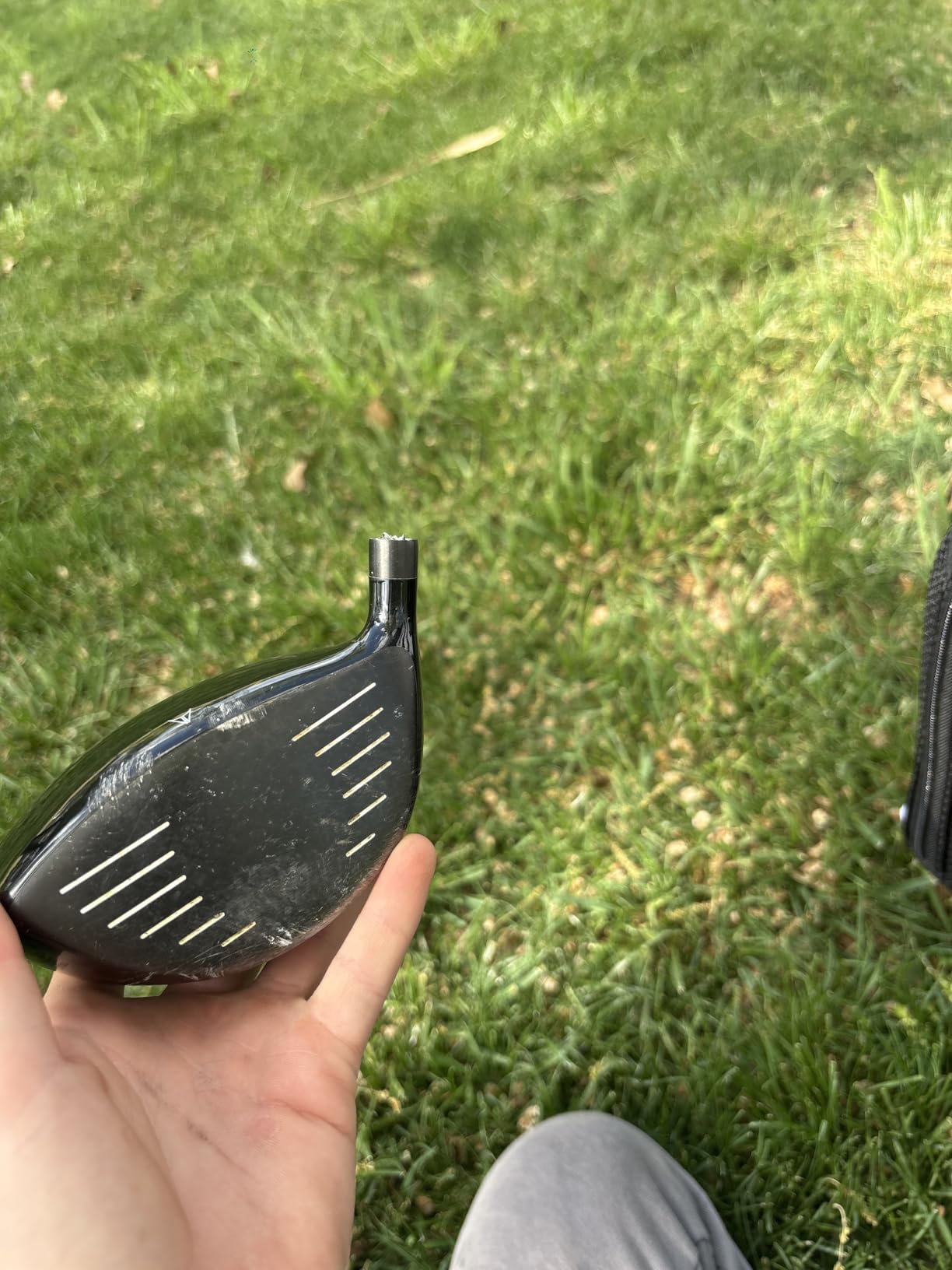
Who this driver suits
This suits beginners, senior golfers and anyone whose clubhead speed is the limiting factor rather than their face angle. It suits golfers who want an easy launch and a large target more than they want a specific bias. The 10.5 degree loft with a regular flex graphite shaft covers a broad range of moderate swing speeds.
It is also a strong recommendation for a first driver, and a sensible backup for a weekend player who does not want to think about club fitting.
Who should skip it
Skip it if your problem is shot shape rather than contact. Nothing in this head is designed to square a face, and owners who bought it specifically for that reason sometimes found the slice unchanged. There is also an isolated durability report worth noting, and the listing is a single right handed regular flex configuration, so confirm your fit before ordering.
9. Powerbilt TPS Supertech Offset – Budget Pick for a First Correction Club
Powerbilt Golf TPS Supertech Offset Driver Golf Club Right Handed Adult Men
10.5 degree loft
Offset hosel
460cc USGA legal head
45 inch regular flex
Pros
- Offset hosel design specifically targets slicing
- 460cc is the maximum USGA legal head size
- Durable military grade aluminum construction
- Headcover included at an entry level price
Cons
- Aluminum gives noticeably less distance than titanium
- 45 inch length may be short for taller golfers
- Only a single 10.5 degree loft with minimal adjustability
The Supertech is the simplest offset driver on this list and the least expensive way to try the geometry. The offset hosel is the same principle as the Orlimar and the Intech: pre-aim the face and delay impact slightly so the club arrives square. Here it is paired with a maximum legal 460cc head, which means the club is conforming and can be used in competition.
Owners are satisfied with the correction and with the build quality for what the club costs. Nobody frames it as a performance upgrade, and that is fine. The value proposition is the reason to buy it, not the ball speed numbers.
Who this driver suits
This suits a beginner, a casual weekend player, or anyone who wants to test whether offset geometry fixes their miss before spending real money on a titanium head. It suits golfers who need a legal club for a league and who do not generate enough speed to need anything more sophisticated. The large face is confidence-inspiring on its own.
For a high school team or a shared practice bag, a club this durable and simple is genuinely useful.
Who should skip it
Skip it if you care about distance, because the aluminum construction gives up a meaningful amount of it against the titanium options here. The 45 inch length may also be short if you are tall. And with a single 10.5 degree loft and no adjustability, this is not the club for anyone who wants to fine-tune the shape later.
10. Powerbilt TPS Blackout Max – Best First Driver for an Infrequent Golfer
Powerbilt TPS Blackout Max Driver, Men’s Right Handed Black/Red
10.5 degree loft
460cc high MOI head
Graphite shaft
Headcover included
Pros
- Maximum USGA legal 460cc head with high MOI design
- Lightweight graphite shaft and soft rubber grip
- Matching retro headcover included
- Owners compare the feel to older classic drivers
- Durable construction for a first club
Cons
- No anti slice geometry so it corrects only through forgiveness
- Some owners report limited distance improvement
- Isolated reports of the clubhead breaking off
- Right hand regular flex only
The Blackout Max is not in this roundup to fix your slice. It is here because it is the club most people should actually start with, and because for a mild slicer, forgiveness is all the correction you need. At a maximum legal 460cc with a high moment of inertia design, it keeps off-center hits on line and limits the distance you lose when you miss.
The lightweight graphite shaft and the soft custom rubber grip make it easy to swing, and owners frequently compare the feel to older classic drivers rather than to modern game-improvement models. That is a fair description of a solid, uncomplicated club built for beginners and infrequent golfers.
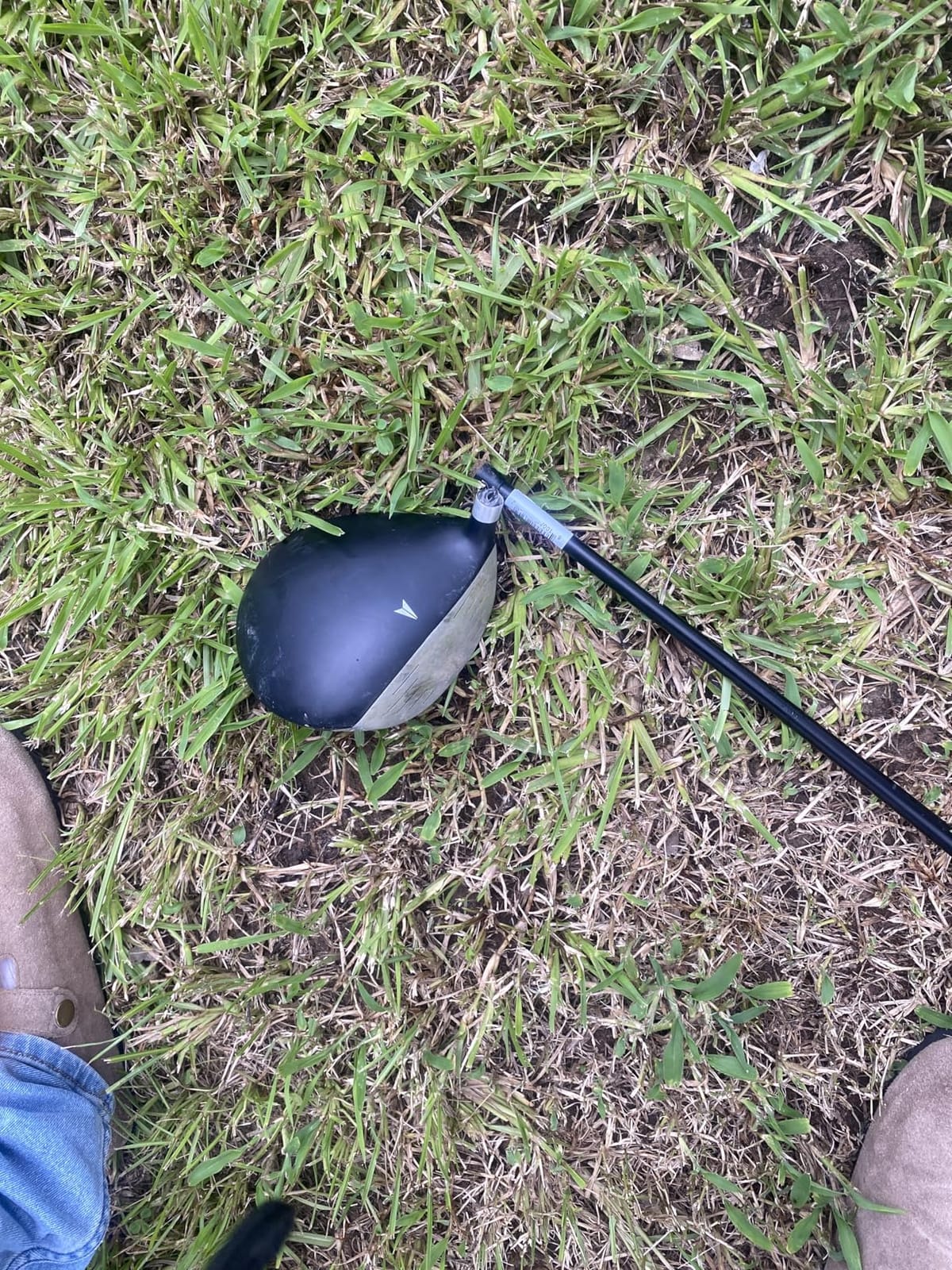
What it will not do is push the ball back toward the target line. With no offset, no draw weight and no closed face, a severe slice stays severe. Buyers who expected shot-shape correction report limited distance improvement, and there are isolated durability complaints about the clubhead breaking off during range use.
For a golfer who plays a few rounds a year and mainly needs to find the fairway, that is a perfectly reasonable trade for a low-cost club that will not punish a bad swing.
Who this driver suits
This suits the infrequent golfer, the complete beginner, and anyone whose slice is 10 yards rather than 40. It suits golfers with a short handicap and a tight budget who want one durable driver that covers a maximum legal size. The headcover is included, which is a small thing that matters for a club that will live in a trunk.
It also works as a spare club for a traveling set or a second set for a shared bag.
Who should skip it
Skip it if shot shape is the reason you are shopping, because there is no bias in this head at all. There is also a single right hand regular flex configuration in this listing, and a small number of buyers reported durability problems, so check the head and shaft carefully when it arrives. If your miss is a slice that costs you 30 yards, look at the Orlimar or the Cleveland instead.
Buyer’s Guide: Choosing a Driver That Actually Straightens Your Ball
The vocabulary around anti-slice drivers confuses more golfers than it helps. Three terms get used almost interchangeably, and they describe three different mechanisms.
Draw bias means weight sits toward the heel, so the head resists opening through the swing. The face starts close to square and stays there. This is invisible at address, which is why many golfers prefer it to an offset club, and it is the reason golfing communities tend to discuss straight flight technology models as the more acceptable alternative to a visibly offset head. Offset hosel moves the hosel forward and down from the face, which pre-aims the face and delays impact by a split second. The offset look is obvious at address, and it is the design that the Orlimar, the Intech and the Powerbilt Supertech all use. Closed face angle is a manufacturing choice, and the Orlimar takes it furthest with a 7 degree closed face. Closed faces create the strongest correction of the three and the biggest visual adjustment.
On loft, the rule for a slicer is simple: add loft. A 10.5 degree head is a distance-loft choice for golfers who already launch the ball. A 12 degree head trades a small amount of the theoretical maximum for a taller window and more backspin relative to side spin, which flattens curve. The SF1 and the Juggernaut sit at the high end here for that reason.
On shaft flex, match it to your actual speed rather than your age or your handicap. A shaft that is too stiff delays the release and leaves the face open, which makes a slice worse. Slower swing speeds belong in regular or senior flex, and a heavier shaft is not a general solution to a sliced ball. Every driver on this list is a right handed configuration, so confirm handedness before you settle on a model.
On grips, thicker is genuinely worth testing. Golfers with weaker hands or arthritic grips often squeeze harder under pressure, and a squeeze that tightens at impact is a major cause of an open face. An oversize or midsize grip reduces the pressure you need to hold the club, which is the mechanism behind one of the two setup changes later in this article. If you also pair grips, a midsize is an easy first change.
On forgiveness, read the moment of inertia figure rather than the marketing. The Cobra MAX-K is listed at up to 10000, the COOLO and Powerbilt heads use maximum legal 460cc dimensions, and the oversized Intech and Juggernaut heads go further still. A slicer misses the face more often than a good golfer, so this number matters more to you than it would to a player who strikes it consistently.
On ball pairing, high side spin is usually accompanied by total spin that is higher than intended, and the ball balloons. A low spin ball reduces spin on both axes, which tightens your dispersion and adds a little distance you were losing to a towering flight. This is a low-cost experiment that pairs well with any of the correction heads here. As a companion read, our guide to the 10 best golf wedges is useful if the slice is costing you approach shots as well as tee shots.
On price tiers, the same correction logic applies at every level. Under the entry tier, an offset aluminum head gives you geometry without speed. In the middle of the range, dedicated draw or square-face designs add real bias. At the top, adjustable hosels give you control rather than a fixed answer.
Buying a premium draw-bias head used or certified pre-owned is the fastest way to get that technology without paying new prices. A club that has been checked and re-gripped is a sensible way to start, and a two-year-old premium model holds its value better than most drivers.
When a New Driver Will Not Fix Your Slice
We would be doing you a disservice if we stopped at the shopping list. Equipment reduces the severity of a slice. It does not correct a swing path that is strongly out-to-in, and no forum consensus suggests otherwise. If your path is six degrees or more out-to-in, a draw-biased head will just change the shape of your miss rather than remove it.
So before you buy anything, spend one range session on these three changes. They cost nothing and they multiply whatever the new club does.
First, fix the grip. Lay the club in your fingers and check where the thumb nearest the target line sits. If it is behind the opposite thumb, you have a strong grip that fights release. Weave it in front instead. Then lighten the hold just a touch, because a squeeze that tightens as you approach the ball is a leading cause of an open face. This is the change golfers on the forums mention most often, and it pairs naturally with a midsize grip.
Second, check the trail foot position. Many slicers stand with the trail foot slightly forward or flat, which lets the club come around the body and cuts across the ball. Moving the trail foot back three or four inches widens the stance and gives the club a clearer path to the ball. Golfers often report the shape changing in a single session from this alone.
Third, make one slow rehearsal swing with a gate or a wall behind the ball, finishing with the clubhead pointing at the target. The goal is a path that goes to the target, not a fix that comes from the club. If the ball still flies right after those three changes, that is useful information: it means the miss is a path problem, and a fitting or a lesson will compound anything the new driver does.
Frequently Asked Questions
Do slice correcting drivers work?
Yes, but only within limits. A driver corrects a slice by pre-aiming the face, delaying impact slightly, or holding weight in the heel so the club resists opening. That reduces the severity of the curve and often removes a fade entirely, and golfers with a moderate slice usually see a change in their first range session. It will not fix a swing path that is strongly out-to-in, because the miss comes from the path rather than the face.
Do anti-slice drivers actually work?
They work, and the three mechanisms are real rather than marketing language. An offset hosel delays impact by a fraction of a second so the face arrives square. A closed face angle starts aimed inside the target line. Heel weighting resists opening through the swing. The honest limitation is that golfers who miss low rather than open see little change, which is why reviews on dedicated anti-slice models are more polarized than the marketing suggests.
What degree driver should I use if I slice?
If your ball is curving 10 to 15 yards, stay with a 10.5 degree head and buy forgiveness instead of bias. If it is curving 25 yards or more, go up to 11 or 12 degrees, because more loft adds backspin relative to side spin and flattens the curve while giving you a taller window of launch. Pair the extra loft with regular or senior flex if your swing speed is moderate, and with a draw or offset design if the curve is severe.
What is the best driver for slicers?
For most golfers, the best driver for slicers is a large, forgiving game-improvement head such as the TaylorMade SIM2 MAX, because it keeps a slightly open face on line across a full round rather than relying on bias. If your slice is severe and persistent, a dedicated design like the Orlimar Slice Killer, with a 7 degree closed face, offset hosel and heel screw, will produce a larger immediate change. The right answer depends on how many yards you lose to the side.
Is there a driver that fixes a slice?
There is a driver that reduces a slice significantly, though calling it a fix overstates things. Clubs with a closed face, an offset hosel, or draw weighting are engineered so the face returns toward square at impact. Two of the three usually do most of the work for a golfer whose miss is an open face. If your path is several degrees out-to-in, you will need a grip change and a trail foot adjustment as well.
Will thicker grips help a slice?
Thicker grips can help, and the mechanism is grip pressure rather than clubface geometry. Golfers with weaker hands or arthritic fingers squeeze harder under pressure, and a tighter grip at impact is a major cause of an open face. A midsize or oversize grip lets you hold the club with less pressure, which helps the face stay closer to square. It is a cheap change, so we would test it before buying a more aggressive head.
What is the best golf ball for slicers?
A low spin ball is usually the right pairing, because a golfer who generates high side spin is often also generating more total spin than intended. A lower spin ball reduces spin on both axes, which tightens dispersion and adds back some of the distance lost to a ballooning flight. It will not correct the shape of a severe slice on its own, but paired with a correction head it makes the overall dispersion much easier to live with.
Should a slicer use a stiff or regular shaft?
Match the flex to your swing speed, and lean toward the softer option. A shaft that is too stiff delays the release and leaves the face open through impact, which can make a slice worse. If you generate less than about 95 mph of clubhead speed, regular or senior flex graphite is the safer starting point, and it pairs well with a draw head because the shaft and the bias are working in the same direction.
What is MOI and how does it help slicers?
Moment of inertia, or MOI, measures how resistant a clubhead is to twisting around its center of gravity when you miss the center of the face. A higher number means less twisting and less lost distance and direction on an off-center strike. It matters more to a slicer than to a good golfer because you strike the face less consistently, and a high MOI head effectively absorbs the slightly open face that causes the curve.
Can a new driver completely fix my golf slice?
Rarely, on its own. Equipment reduces the severity of a slice and is very good at taking a 30 yard curve down to a fade, which is the difference between a lost par-5 and a reachable one. A complete fix is rare because a strongly out-to-in path produces a miss the club cannot compensate for. Combining a correction head with a stronger lead grip and a trail foot moved back a few inches is what tends to deliver the lasting result.
Final Verdict: Which Driver Should You Buy in 2026
The TaylorMade SIM2 MAX is our pick among the best golf drivers for slice correction, and the reason is simple. It is the best-selling and best-reviewed head in this group, and it fixes a slice through forgiveness rather than bias, which means the correction holds up for eighteen holes instead of fading after the first three shots. If your ball is finishing 15 to 25 yards off the line, start there.
If your curve is 30 yards or worse, you need real bias, and the Orlimar Slice Killer is the most aggressively anti-slice design we found, with a 7 degree closed face, an offset hosel and a heel screw working together. If you would rather tune the shape yourself, the Cleveland Launcher XL 2 Draw gives you 12 hosel positions, and the Cobra DS-Adapt MAX-K is the pick when you are getting fitted and want a face that stays square at every setting. Slower swing speeds belong in the Juggernaut or the SF1, and first-time buyers who want a huge sweet spot on a budget belong in the Intech.
Whatever you choose, do the three setup changes first. A stronger lead grip and a trail foot moved back a few inches cost nothing, and they are the reason the difference shows up on the scorecard instead of just the range. And if your slice is still 40 yards after all of that, book a fitting rather than a third driver.