
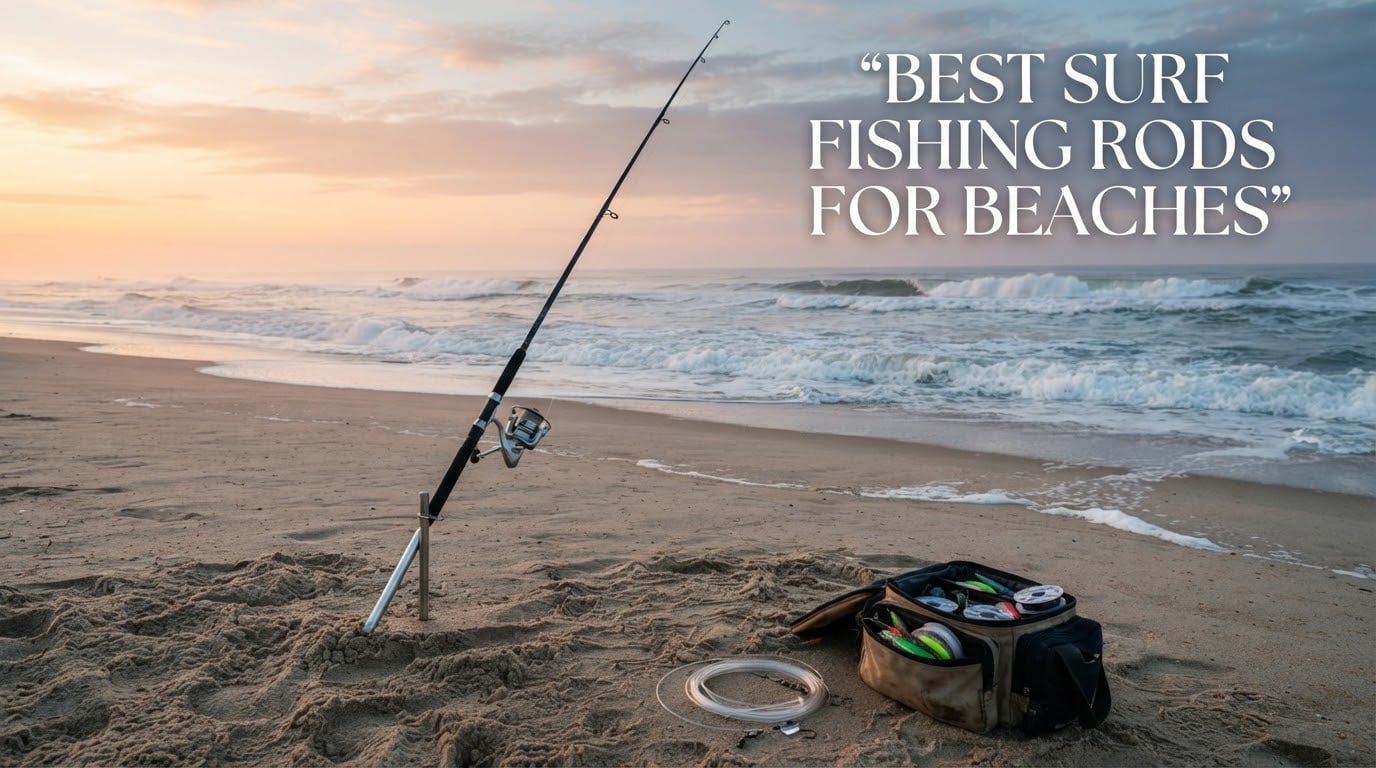
The best surf fishing rods for beaches are not the ones with the biggest numbers on the spec label. They are the ones whose length matches your water depth and whose power matches the sinker you actually throw. Get that pairing right and a mid-range rod will outfish an expensive one; get it wrong and no blank technology will save you.
Most anglers walk into the decision backwards. They pick a brand, then a price band, then hope the rod matches their water. Anglers who catch more tend to start at the other end: how deep does the fish hold, how crowded is the beach, and am I casting a 2 ounce pyramid sinker or working a bucktail in a few feet of water? Those three questions narrow the field fast.
We compared ten surf fishing rods across length, power, action, blank material, guide hardware, grip and warranty, then read what buyers report after real trips rather than what the box promises. Every pick below lists its real specifications in plain English so you can match it to your own conditions. If you are still building a full kit, our guide to the best fishing rods we have tested covers freshwater and inshore options in the same format.
Updated for 2026. We earn a commission from qualifying purchases, which never changes what we rank or how we rank it.
Top 3 Surf Fishing Rods for Beaches in 2026
Three rods stand out for how rarely they disappoint across the widest range of beach conditions. The Ugly Stik Bigwater wins on toughness and the longest warranty in the group, the Fiblink 10 foot wins on value for a heavy-bait setup, and the Okuma Longitude wins when the fish are heavy and the water is rough.

Ugly Stik Bigwater Spinning Rod
- 7ft medium power fast action
- Ugly Tech blank with Ugly Tuff guides
- Fuji reel seat and EVA grip
- 7-year manufacturer warranty
Fiblink 10ft Graphite Surf Baitcast
- 10ft medium heavy power
- Moderate-fast action
- 10 to 40lb line and 5oz lure
- 2-piece travel build

Okuma Longitude 9ft Heavy Surf
- 9ft heavy power fast action
- Graphite composite blank
- Aluminum oxide guide inserts
- Cork non-slip grips
Quick Overview: All 10 Surf Rods Side by Side in 2026
Every rod in this roundup, with the specifications that actually change the decision. Length and power matter more than any other spec, so read those two columns first. Our rod and reel combo picks cover the pairing question if you are buying both at once.
| Product | Specifications | Action |
|---|---|---|
| Ugly Stik Bigwater Spinning Rod |
|
Check Latest Price |
| Fiblink Surf Casting 10ft Graphite Baitcast |
|
Check Latest Price |
| Okuma Longitude Surf Spinning 9ft Heavy |
|
Check Latest Price |
 BERRYPRO Surf Spinning 13ft 3-Piece BERRYPRO Surf Spinning 13ft 3-Piece |
|
Check Latest Price |
 Fiblink Surf Spinning 12ft Carbon Travel Fiblink Surf Spinning 12ft Carbon Travel |
|
Check Latest Price |
 KastKing Rekon Saltwater Spinning 7ft Heavy KastKing Rekon Saltwater Spinning 7ft Heavy |
|
Check Latest Price |
 Okuma Rockaway Lightweight Surf 10ft Okuma Rockaway Lightweight Surf 10ft |
|
Check Latest Price |
 KastKing Kapstan Saltwater Spinning 7ft Medium KastKing Kapstan Saltwater Spinning 7ft Medium |
|
Check Latest Price |
 BERRYPRO Surf Spinning 9ft Full Carbon BERRYPRO Surf Spinning 9ft Full Carbon |
|
Check Latest Price |
 Tsunami Trophy Spinning Surf 10ft Medium Heavy Tsunami Trophy Spinning Surf 10ft Medium Heavy |
|
Check Latest Price |
1. Ugly Stik Bigwater Spinning Rod: The One You Stop Worrying About
Ugly Stik Bigwater Spinning Fishing Rod,Black/Red/Yellow
7ft medium power, fast action
Ugly Tech blank, Ugly Tuff guides
Fuji reel seat, EVA grip
2-piece, 7-year warranty
Pros
- Ugly Tech construction with a clear tip
- 7-year manufacturer warranty
- Ugly Tuff guides on a tough blank
- Fuji reel seat with rubber gimbal
- Long grip adds leverage with big reels
Cons
- Butt section runs longer than many anglers prefer
- Two-piece joint seam to watch in the surf
- Occasional transit damage to the tip gel coat
This is the rod we recommend most often, and the reason is not sensitivity or casting distance. It is that it keeps working when the sand gets into the guide wraps and somebody drops a rod butt-first in the parking lot. Owners describe it as near-indestructible, using it for blues, pompano, flounder, redfish and even sturgeon.
The build is deliberately plain. Ugly Tech construction with a clear tip and Ugly Tuff guides sit on a Fuji reel seat with a rubber gimbal, wrapped in an ethylene vinyl acetate handle. The 7 foot length, medium power and fast action make it the most manageable rod in this roundup for beginners, and the lure rating tops out at 5 ounces so it is not a heavy-bait tool.
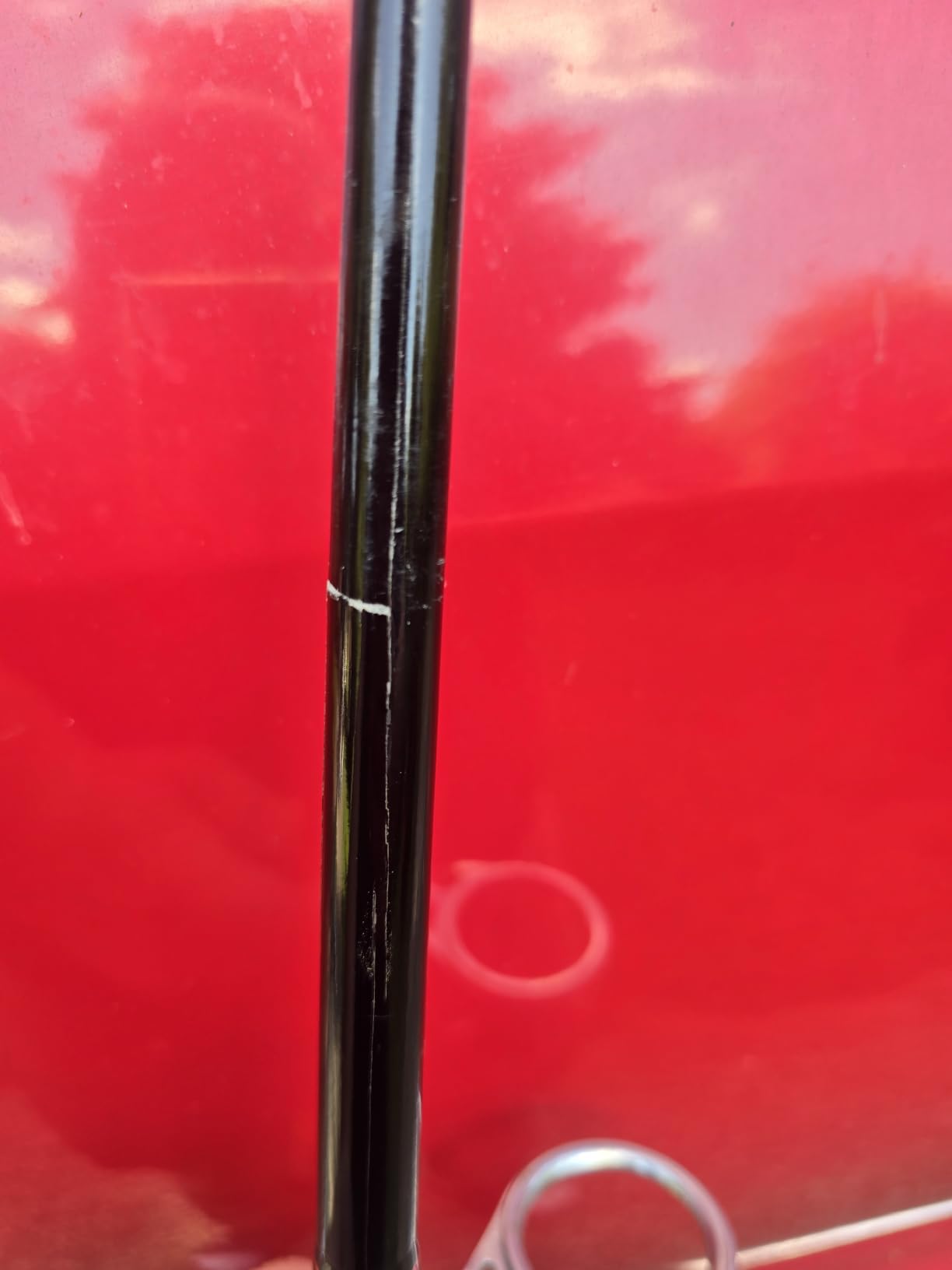
What surprises people is how sensitive a rod this tough turns out to be. Buyers consistently note they can feel subtle bites that hide on stiffer blanks, which matters a great deal for surf perch and flounder work in a crowded spot. The long grip also gives real leverage when you hook something heavier than the rating suggests.
The warranty is the quiet headline. A 7-year manufacturer warranty is the longest in this group, and surf anglers who have smashed lead eyes into their own tip on an errant back-cast know exactly why that matters. It is the reason this rod earns the top spot despite being shorter and lighter than most of the field.
Who this Rod Suits
Pick it if you are new to surf fishing, if you fish crowded beaches where a long rod is a liability, or if you just want a rod that survives being dragged through sand. A 7 foot rod is usable for surf perch, light lures and pier work, and this one handles that job without the weight that tires your arms over a full session.
It also works as a backup or a boat rod. Anglers who want one rod for both the beach and a few inshore charters can get away with a single setup, which is a common request in the fishing forums.
Where It Falls Short
If you are soaking bait with 3 ounce pyramid sinkers or working to fish holding in 15 foot water, this is the wrong length. Seven feet simply will not reach, and the medium power is not designed to launch heavy terminal tackle.
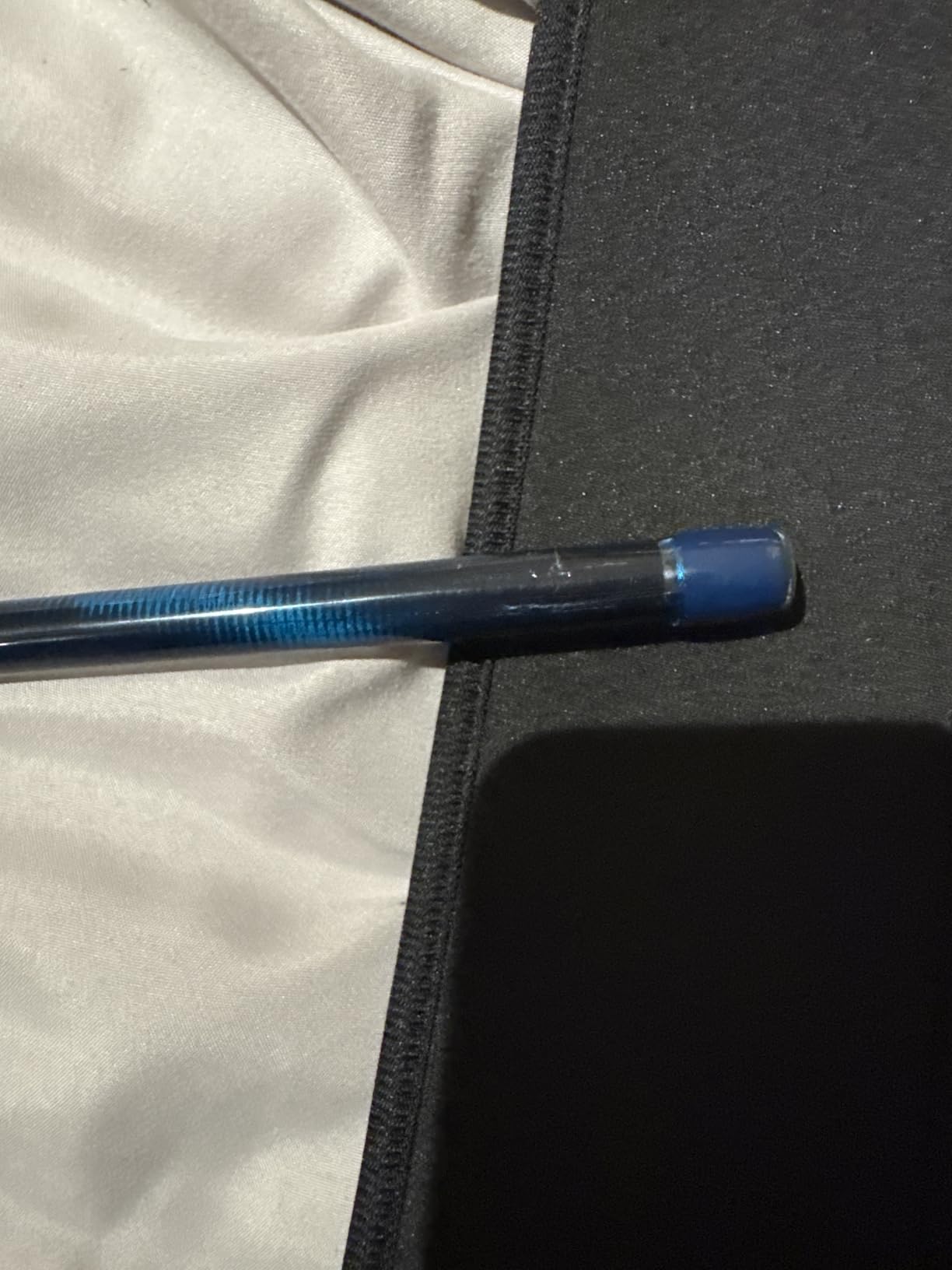
Two smaller things. The butt section is longer than many anglers like, and some owners trim it themselves, which can void a warranty if you are not careful. Packaging is also the most common complaint, with cracked tip gel coat and damaged handles turning up more often than on any other rod here, so inspect the tip the moment it arrives.
2. Fiblink Surf Casting 10ft Graphite Baitcast: Best Value Heavy-Bait Rod
Fiblink Surf Casting Fishing Rod 2-Piece Graphite Travel Baitcasting Fishing Rod (Length: 10′)
10ft medium heavy power
Moderate-fast action, graphite blank
10 to 40lb line, 5oz lure max
Stainless guides, rubber grip
Pros
- Graphite blank with good sensitivity
- Stainless steel guides with ceramic inserts
- Non-slip rubber shrink tube grip
- Two-piece travel build fits a car
- Tuned for striped bass and red drum
Cons
- Moderate-fast action suits lures more than very light baits
- Tapered butt ferrule joint worth inspecting
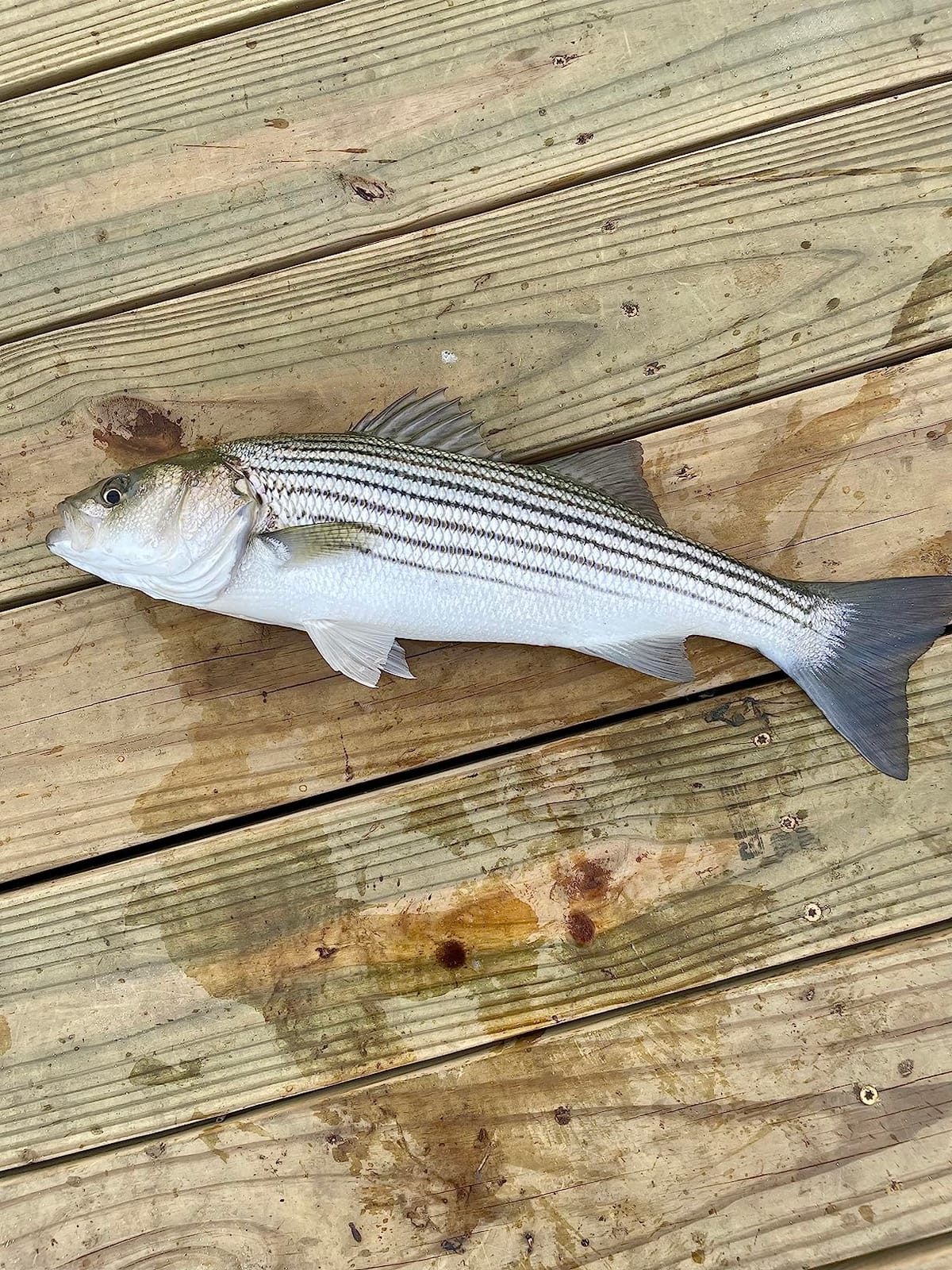
This is the rod we suggest when someone says they plan around 8 ounce sinkers and long casts. Ten feet of medium heavy power in a moderate-fast taper is the honest answer to that, and the graphite blank holds up under the load without turning into a noodle. It is one of the two models that anglers on r/FishingForBeginners name most often as a legitimate first surf rod.
The hardware is where it beats its price tier. Stainless steel guides with ceramic inserts keep line friction low across a long cast, and the DPS reel seat with a stainless tapered hood is the strongest single component in the build. Line rating runs 10 to 40 pounds and the lure ceiling is 5 ounces, which is a wide enough window to cover almost any beach.
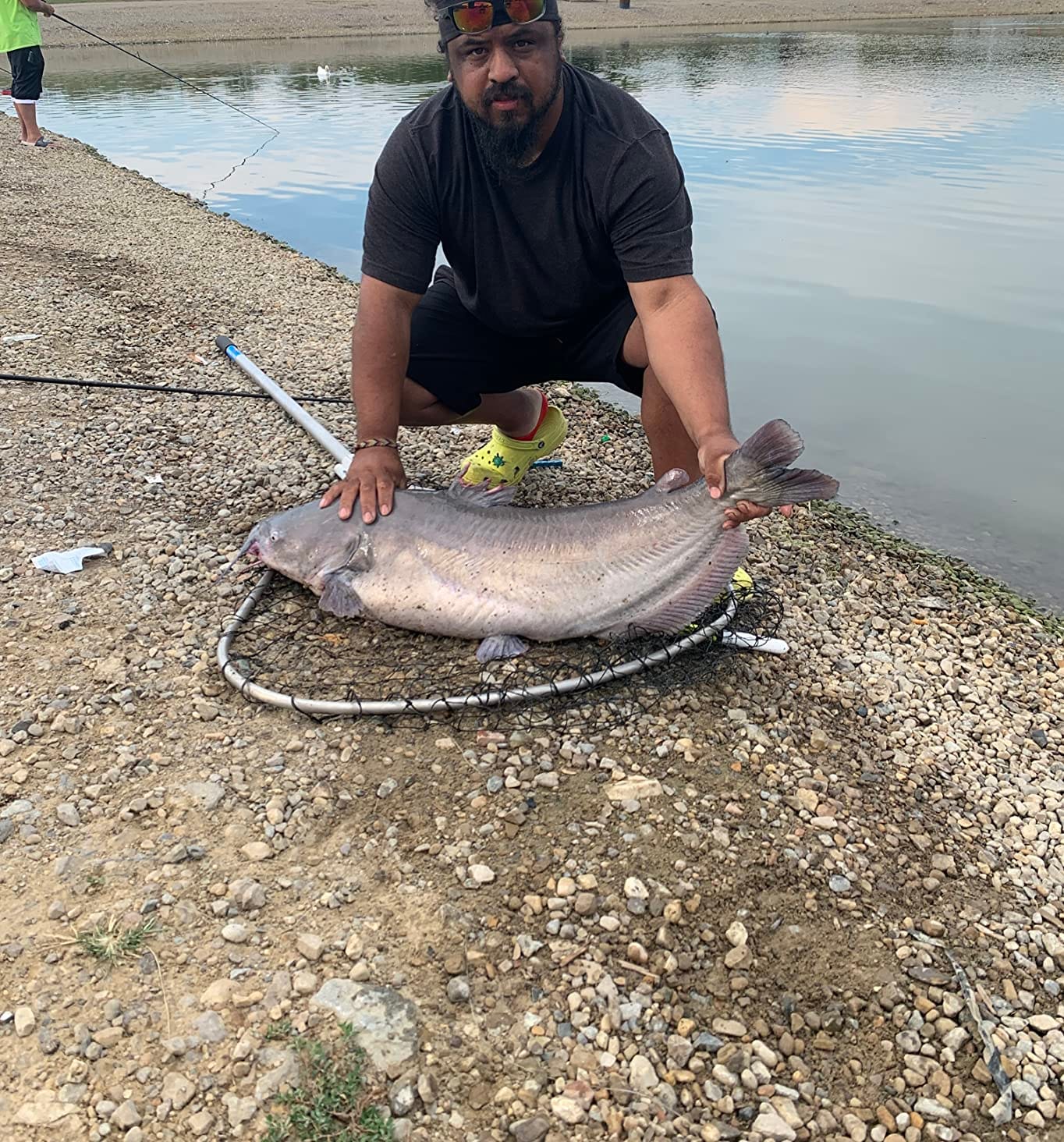
At 15.2 ounces, it is heavy for a first rod, and that is the honest trade. Buyers like the non-slip rubber shrink tube handle with its tapered rear grip because it stays put when wet or baited, and the consensus complaint is simply that the taper feels heavier than lighter surf rods. That is a fair trade if you are throwing metal at the surf line.
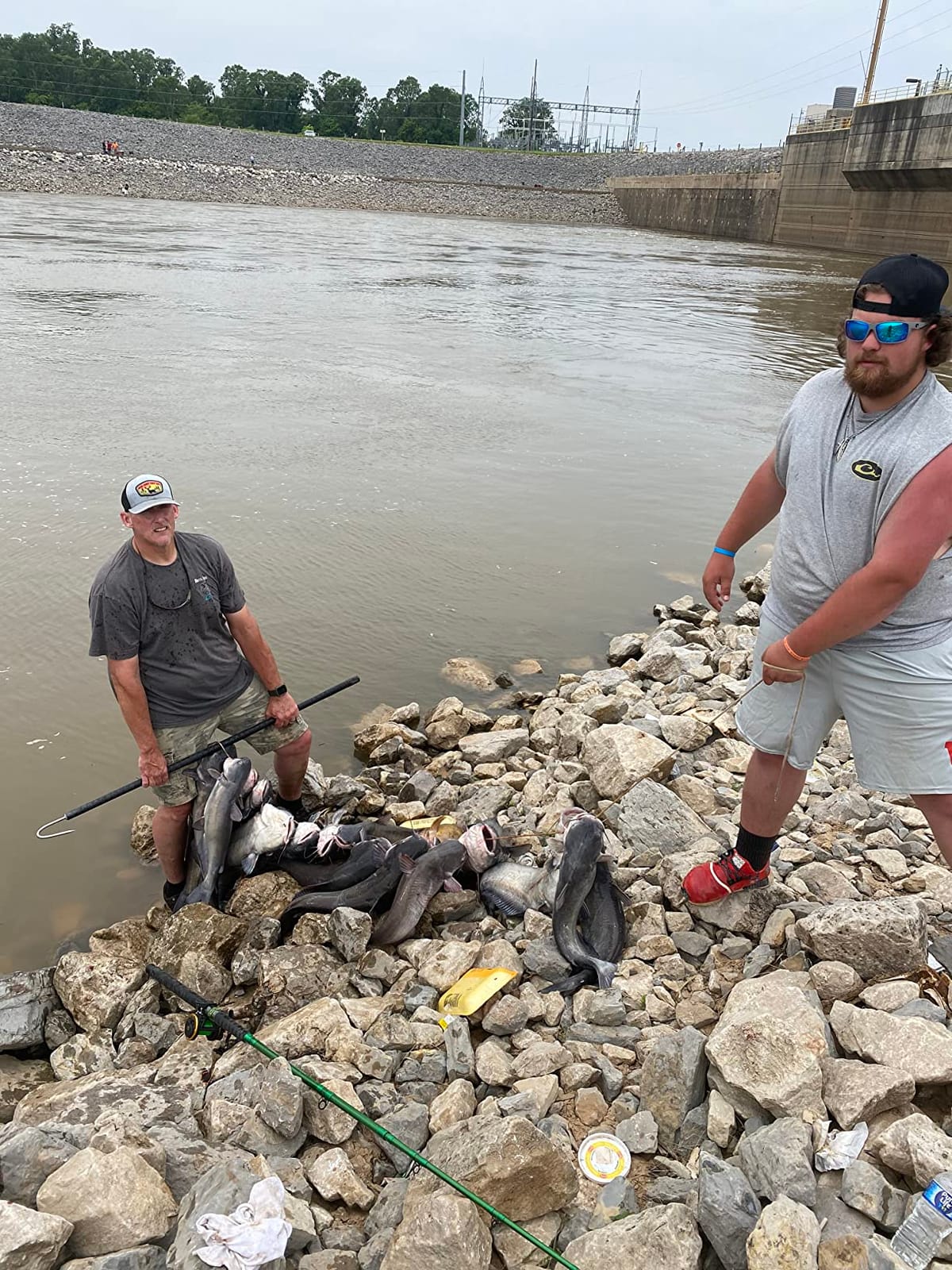
Two-piece construction keeps it car-friendly, which matters if you move between beaches. The tapered butt ferrule is a joint to look at every few trips, particularly after a session in wet sand, but nothing in the reviews suggests it is a weak point in normal use.
What to Check Before You Buy
Make sure the reel you already own fits the seat, and if it is a spinning reel, be aware this is a baitcasting setup. A conventional reel in the medium-heavy to heavy class with a star drag is the match that surf anglers use most often with this rod.
Also consider the line. A 20 to 30 pound braid with a 40 pound fluorocarbon leader covers the full 10 to 40 pound rating without the stretch that kills hookset feel on braid alone.
Who Should Skip It
Anyone targeting surf perch with light jigs in shallow water will find the taper too aggressive. The moderate-fast action loads the rod early, so a 1 ounce plug is a poor match for the feel, and the 15 ounce blank is tiring if you plan to fish all day in one position.
It is also the wrong pick for a rod that has to handle inshore charters or any application where a 10 foot baitcaster is dead weight. If you need one rod for many jobs, look at the shorter spinning models further down this list.
3. Okuma Longitude 9ft Heavy Surf Rod: Best for Big Water and Heavy Bait
Okuma Longitude Surf Graphite Rods (Large, Black/Blue/Silver)
9ft heavy power, fast action
Graphite composite blank
Aluminum oxide guide inserts
Cork non-slip grips, 2-piece
Pros
- Graphite composite blank with real backbone
- Aluminum oxide braid-compatible guide inserts
- Premium cork non-slip fore and rear grips
- Stainless steel hooded reel seat
- Five lengths and multiple actions
Cons
- Heavier feel than premium graphite surf rods
- Some joint failures reported under heavy load
- Cork needs more care in salt spray
The Longitude is a budget battle rod and it behaves like one in the best way. Long-term owners treat it as the dependable fallback that handles fish in the 35 to 40 pound range, and the 9 foot heavy-power combination is the configuration most people end up buying. Heavy bait soaking, deep water, rougher surf: this is the tool for the job.
The blank is a graphite composite rather than a pure high-modulus graphite, and that is the reason it feels heavier in the hand. In exchange you get a rod that shrugs off load and stays true, with fast action and a 40 pound line rating plus a 6 ounce lure ceiling. Owners hunting big fish along the surf line describe it as unfazed.
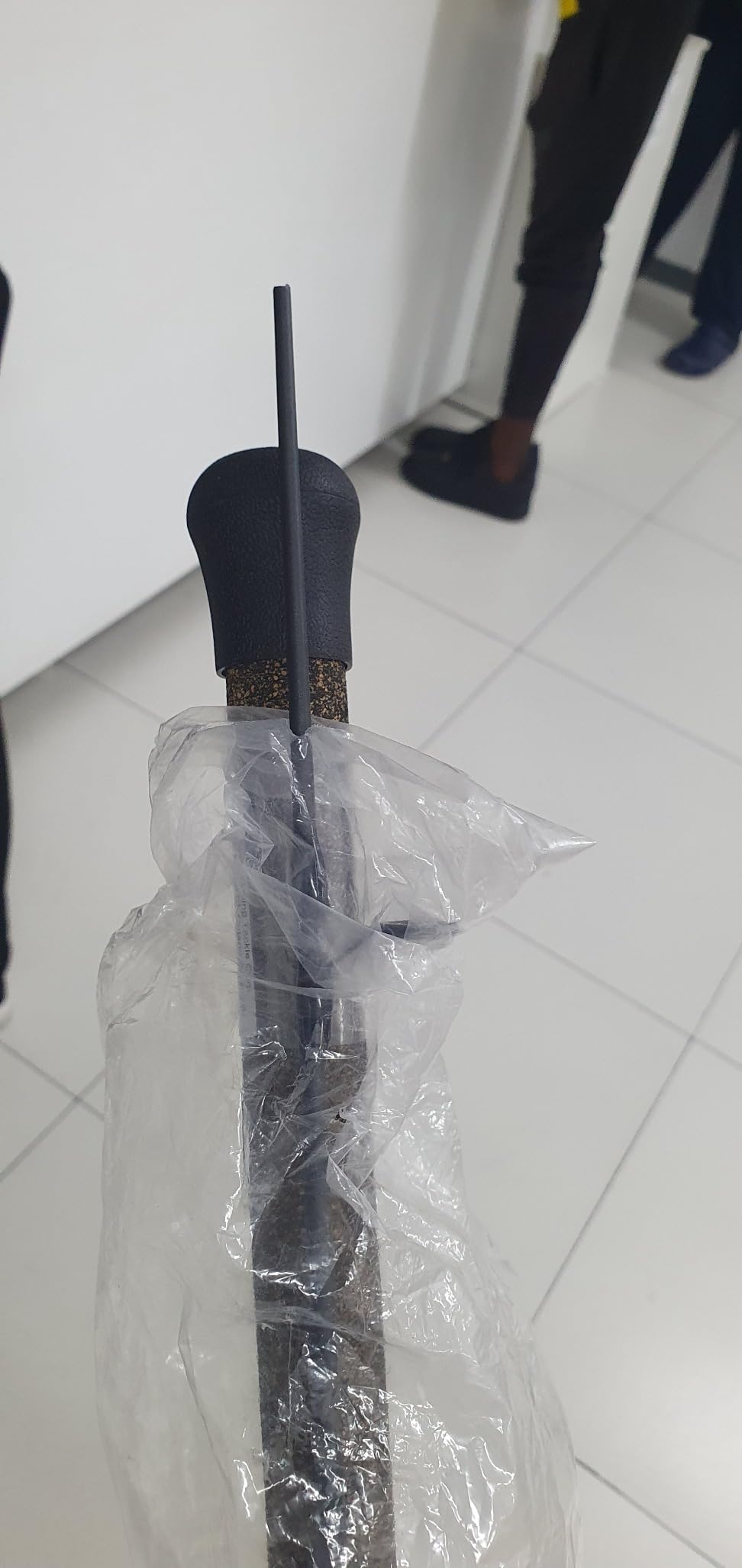
Five lengths and multiple actions are available in the range, so this is a series you can grow into rather than a single-purpose stick. Check the specific model carefully, because power and action change what each length can actually cast. The configuration here is heavy power, fast action, 9 feet, two pieces.
The premium cork non-slip fore and rear grips are a genuine step above foam at this level, and the aluminum oxide guide inserts on double-foot stainless steel frames are braid-compatible. That combination keeps line running smoothly through sand-heavy sessions better than cheaper ceramic or plated rings.
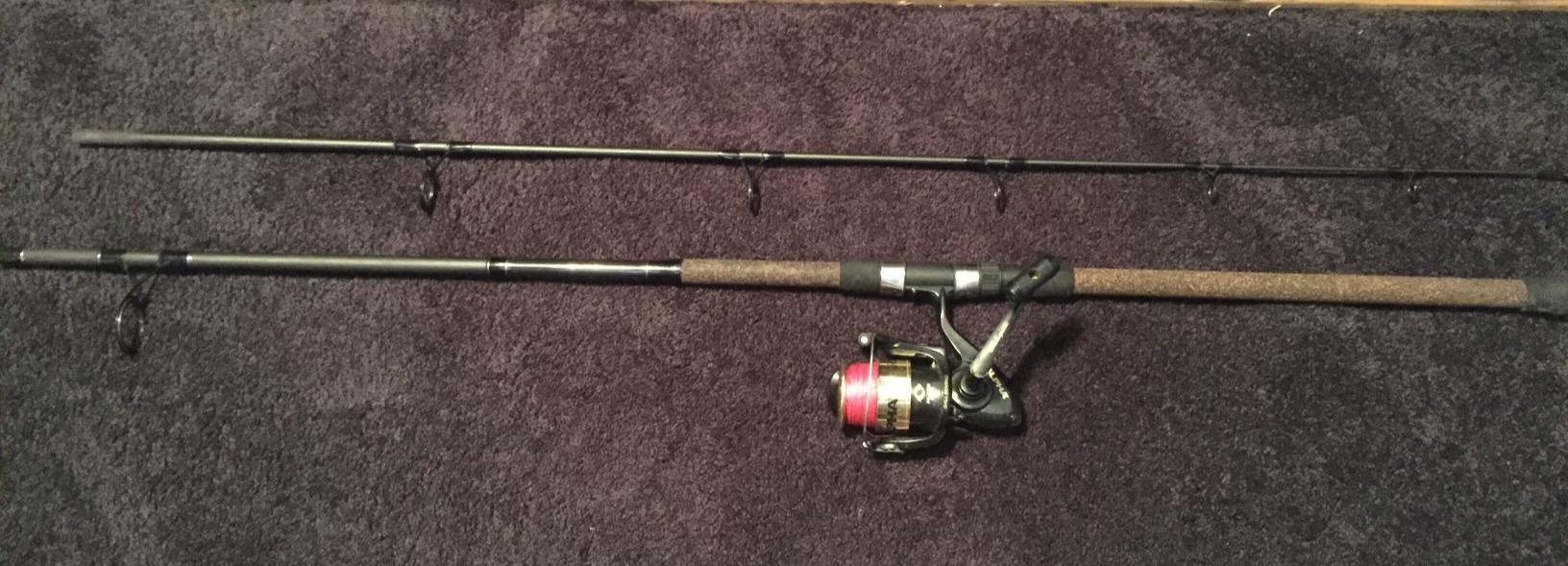
Reasons to Buy It
If you soak bait rather than cast lures, this is the right side of the power scale. Heavy sinkers need backbone, and a medium rod simply will not lift them clear of the breakers. Anglers on r/SurfFishing consistently plan their setups backwards from sinker weight for exactly this reason.
It is also a good choice for anyone who wants one dependable rod without research. The spec sheet is simple, the parts are proven, and repeat buyers commonly own several lengths.
Reasons to Pass
The composite blank feels heavy next to a modern high-modulus graphite rod, and that weight adds up across a long day of walking the beach. If your sessions are short and your targets are schoolies, the lightness of the other rods here will matter more than this one’s backbone.
Two cautions. Cork grips need more maintenance in salt spray than EVA, so rinse and dry them properly. And while the ratings sit a little below the rest of this list, the lowest scores concentrate on packaging damage and a small number of joint failures under heavy load rather than on day-to-day performance.
4. BERRYPRO 13ft 3-Piece Surf Spinning Rod: Best for Long Distance Casting
BERRYPRO Surf Spinning Fishing Rod Graphite Spinning Rod (9’/10’/10’6”/11’/12’/13’3”) (13’3”-3pc)
13ft 3-piece travel build
IM7 X-Carbon blank, fast action
6oz max lure, 40lb line rating
High-density EVA grips
Pros
- IM7 X-Carbon blanks stay light and sensitive
- Stainless steel guides with ceramic rings
- High-density EVA grips with rubber butt cap
- Travel-friendly multi-piece construction
- Owners often buy more than one length
Cons
- Reel seat is a lower grade component
- Some middle sections lack an extra guide eye
- Occasional guide finish and tip QC issues
Length is the single biggest lever on casting distance, and this is the longest rod in the roundup. At 13 feet in a 3-piece build, it is built for anglers who are physically casting past the second bar or working distant structure rather than fishing the inside of the surf.
The blank is IM7 X-Carbon, a high-modulus construction that keeps weight down at this length, and the action is fast. Line rating reaches 40 pounds and the lure ceiling is 6 ounces, so it will launch heavy plugs and sinkers without complaint. Many owners report landing fish well past 20 pounds on it, and a lot of them buy multiple lengths over time.
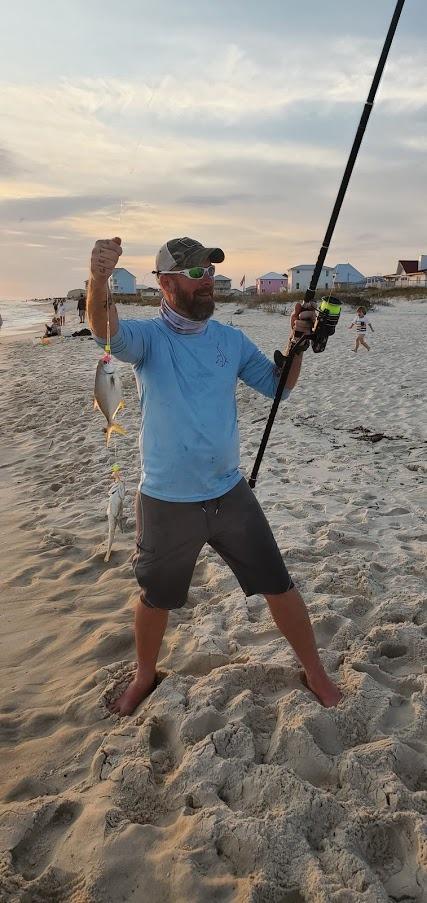
Stainless steel guides with ceramic rings are precisely aligned along the blank, which is what makes a rod this long cast cleanly instead of binding. The high-density EVA grips with a shrink tube design and rubber butt cap stay comfortable through a long session, and the textured carbon fiber surface is a nice touch in wet conditions.
The three-piece build is the trade you should weigh. It packs down for travel and multiple lengths exist in 2, 3 and 4 piece configurations, but each section junction is a place to check after every rough session, and a 13 foot rod is genuinely difficult to hold for a full day.
What to Consider First
Ask honestly whether you will cast this. A rod this long rewards technique, and a beginner fighting the weight on a windy beach will be frustrated long before the distance pays off. Most people reach for maximum distance with a 10 foot rod and get 90 percent of the result with far less effort.
Pair it with a 6000 to 8000 size spinning reel and a 20 to 30 pound braid with a fluorocarbon leader. That setup keeps the light line diameter honest while the blank handles the load.
Where the Weak Points Are
The reel seat is the component buyers flag most. Owners describe it as a lower grade part relative to the quality of the blank, and on a rod this size that mismatch shows up under load. A few reviewers also wish the middle sections carried an extra guide eye to help line control at distance.
Quality control is the other watch item. Guide finish issues and a small number of tip breakages get mentioned, so inspect the tip and every guide wrap before you fish. The included one-year warranty covers defects, but it is the shortest protection on this list.
5. Fiblink 12ft Carbon Travel Surf Rod: Best Multi-Piece for Hiking the Beach
Fiblink Surf Spinning Fishing Rod Carbon Travel Surf Rod 3 Piece Saltwater Spinning Fishing Rod 12′
12ft medium power, moderate-fast
Carbon fiber blank, 3-piece build
8oz max lure, 40lb line
Stainless guides, storage bag
Pros
- Carbon fiber blank that stays light and responsive
- Stainless steel guides with ceramic inserts
- Textured shrink tube grips hold when wet
- Multi-piece travel design with storage bag
- Strong value against name-brand alternatives
Cons
- Heavier overall feel that can fatigue the hands
- Slightly stiffer than comparable surf rods
- Occasional cracked eyelet QC on arrival
This is the rod for the angler who walks the beach. Twelve feet of casting distance in a multi-piece carbon build that breaks down into a bag, and it comes in 2-piece, 3-piece and 4-piece configurations depending on how far you are hiking. The 3-piece version here includes a travel bag.
Power is medium, action is moderate-fast, and the 8 ounce lure ceiling is the highest in the roundup. That range covers everything from light plugs to heavy pyramid sinkers on the same rod, which is why owners use these as main surf and pier setups rather than as a specialist. Line rating runs to 40 pounds.
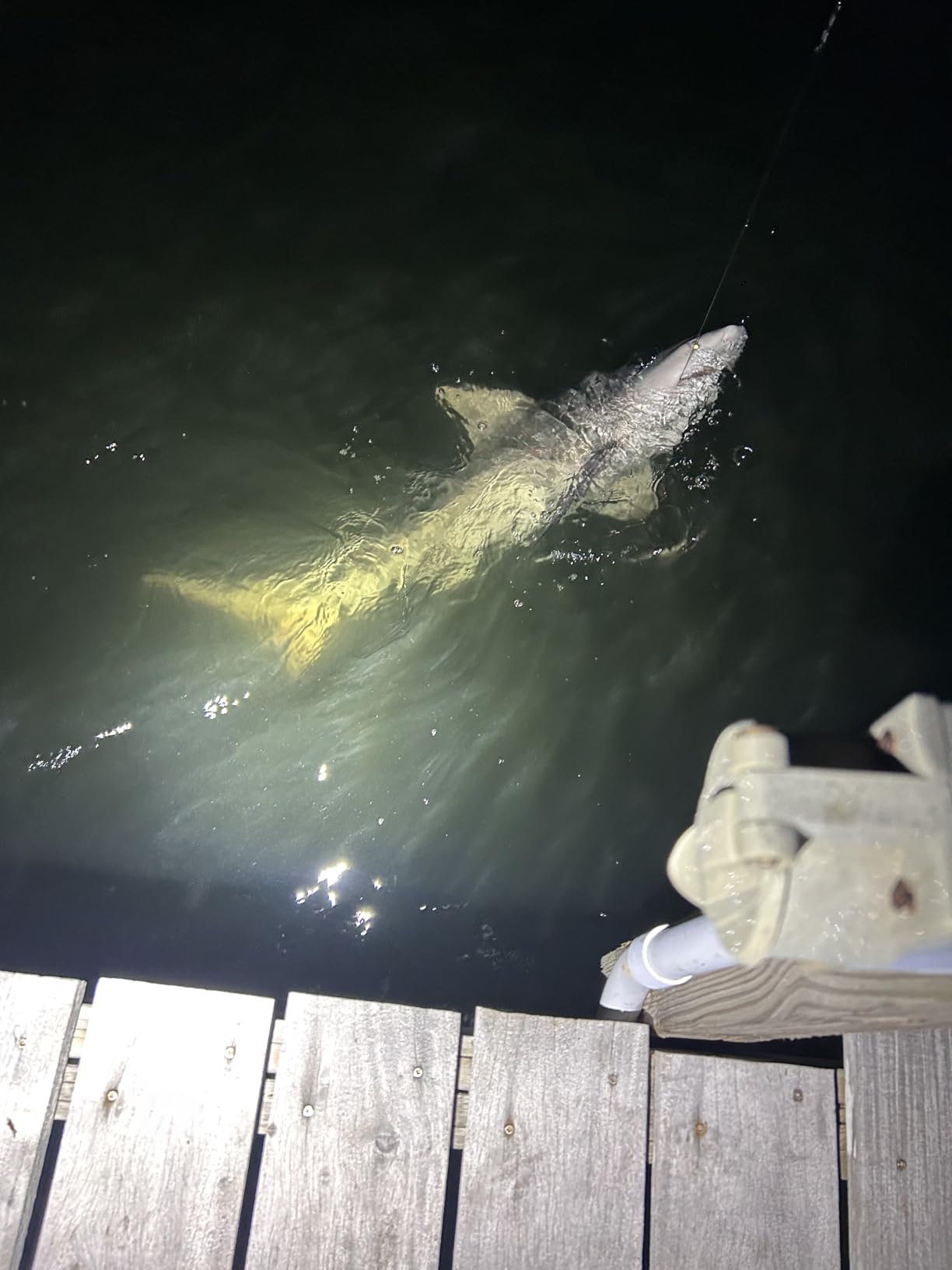
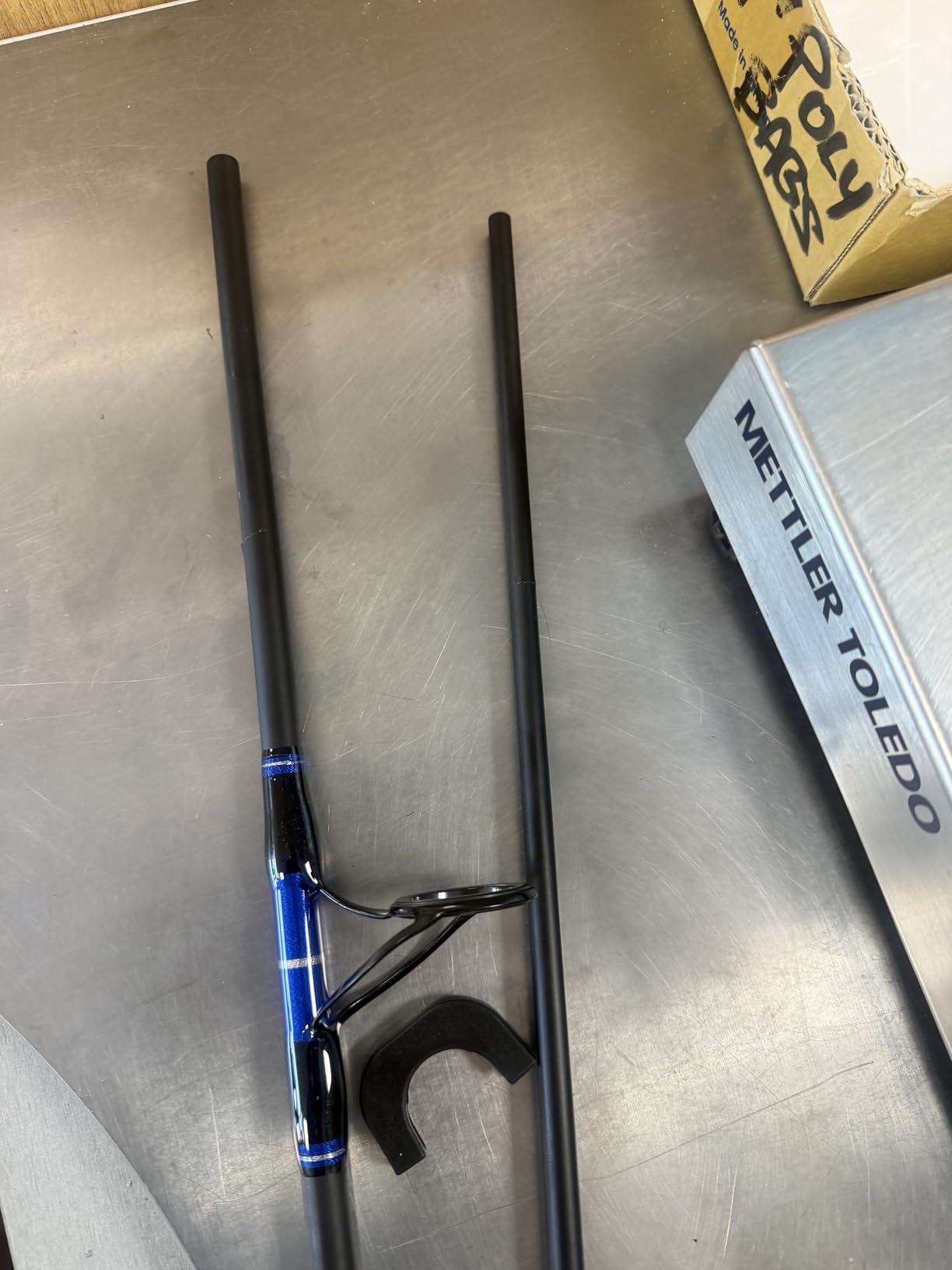
Stainless steel guides with ceramic inserts keep the cast smooth, and the textured blue shrink tube grips stay secure when the rod is wet or baited. Reviewers repeatedly call it strong value against name-brand alternatives, and the carbon fiber blank keeps the feel responsive despite the length.
The honest drawback is weight. At 16 ounces it is the second-heaviest listing here, and owners say that adds up over long sessions. The other recurring note is that it feels slightly stiffer than comparable surf rods, so it is a rod for power and reach rather than for subtle bite detection in light surf.
How to Use It Well
Match the piece count to the trip. A 4-piece breaks down smaller for flights and long hikes at the cost of one more joint, while a 2-piece is simpler and stiffer. Check every section connection before you walk out, because that is where multi-piece rods fail.
Because the lure rating is that high, this is one of the few rods in the group that will handle a heavy sinker on a big day. A 5000 or 6000 size spinning reel with 25 to 30 pound braid and a 40 pound fluorocarbon leader is a good starting point.
Who Should Choose Something Else
If your sessions are long and stationary, the 16 ounce weight will make itself known in your hands and shoulders. A lighter carbon rod is a better answer for all-day comfort, and the endurance difference is real once you are past a few hours.
Sensitivity is the other limit. If you are targeting surf perch with light jigs and a soft braid leader, the stiffer feel here will hide bites that a light rod would show you. Choose a lighter-power model for that job.
6. KastKing Rekon 7ft Heavy Saltwater Rod: Best for Sensitivity and Build Quality
KastKing Rekon Saltwater Spinning Rod, 7’0″, H
7ft heavy power, fast action
KastFlex IM6 carbon graphite blank
Zirconium ceramic guides
Graphite locking reel seat
Pros
- KastFlex IM6 carbon graphite blank for harsh saltwater
- Stainless frames with zirconium ceramic guides
- Graphite locking reel seat holds under load
- AAA cork or non-slip EVA handle
- Extended fighting end for leverage
Cons
- Wide reel seat will not seat small-footprint reels
- Handle bottom runs longer than needed
- 7ft models are shorter than traditional surf lengths
The Rekon is the pick for people who care how a rod feels under a light load. Owners praise the build quality, the balance and the value against rods costing several times more, and they use it for salmon, snook, redfish, calico bass and surf species without complaint. The 7 foot length in this configuration is heavy power, fast action, two pieces.
Zirconium ceramic guides on stainless steel frames are the quiet differentiator. They dissipate heat and cut friction better than plain ceramic rings, which matters when you are casting repeatedly into a rising tide and the line is wet and salty. The graphite locking reel seat is genuinely strong and holds a large reel in place under load.
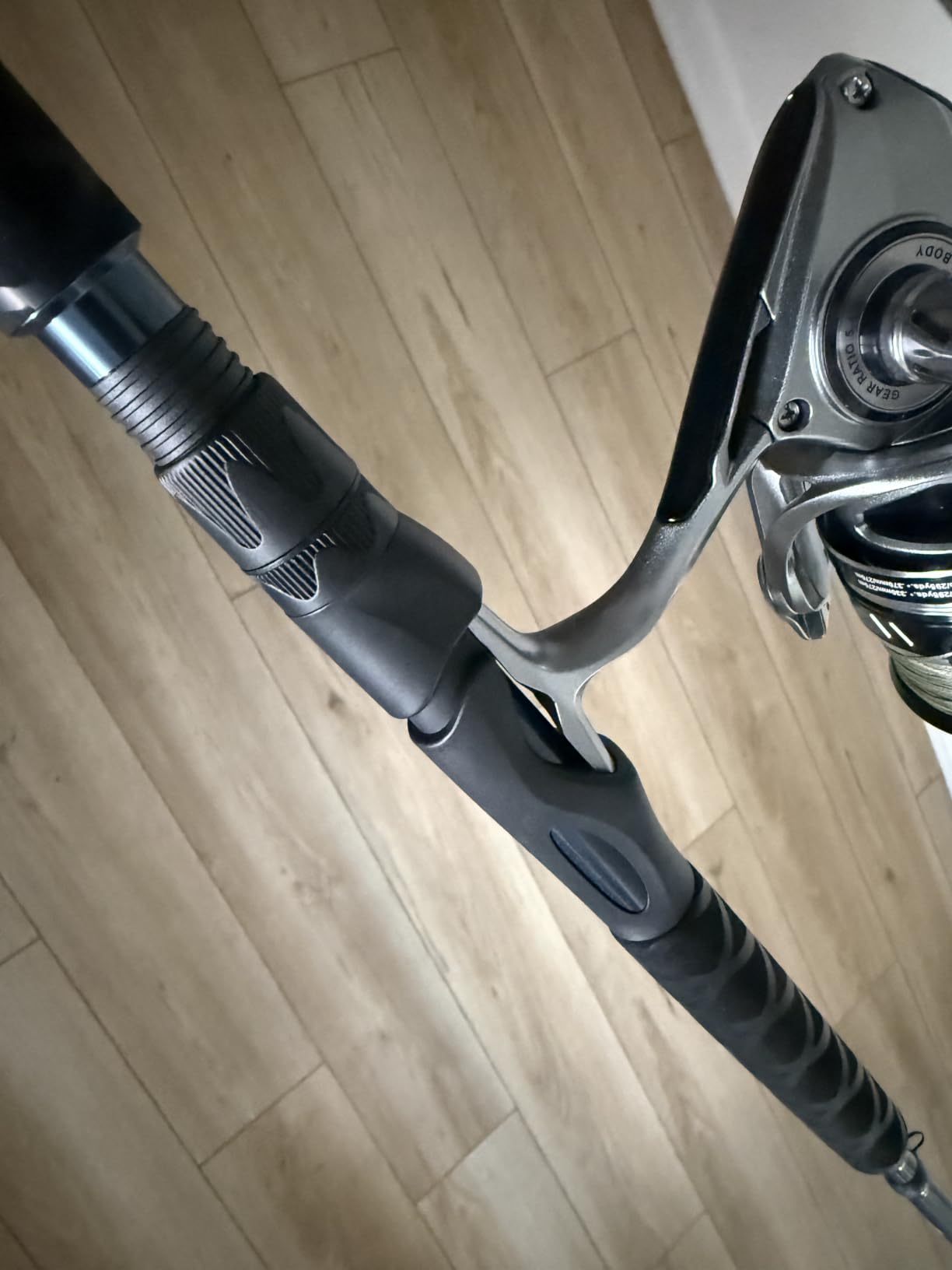
The blank is KastFlex IM6 carbon graphite built for harsh saltwater conditions, and the 2-piece Power Transition System keeps it transportable. The extended fighting end and longer foregrip are the design choices that actually show up in use, because they give you leverage on big fish without needing more arm strength.
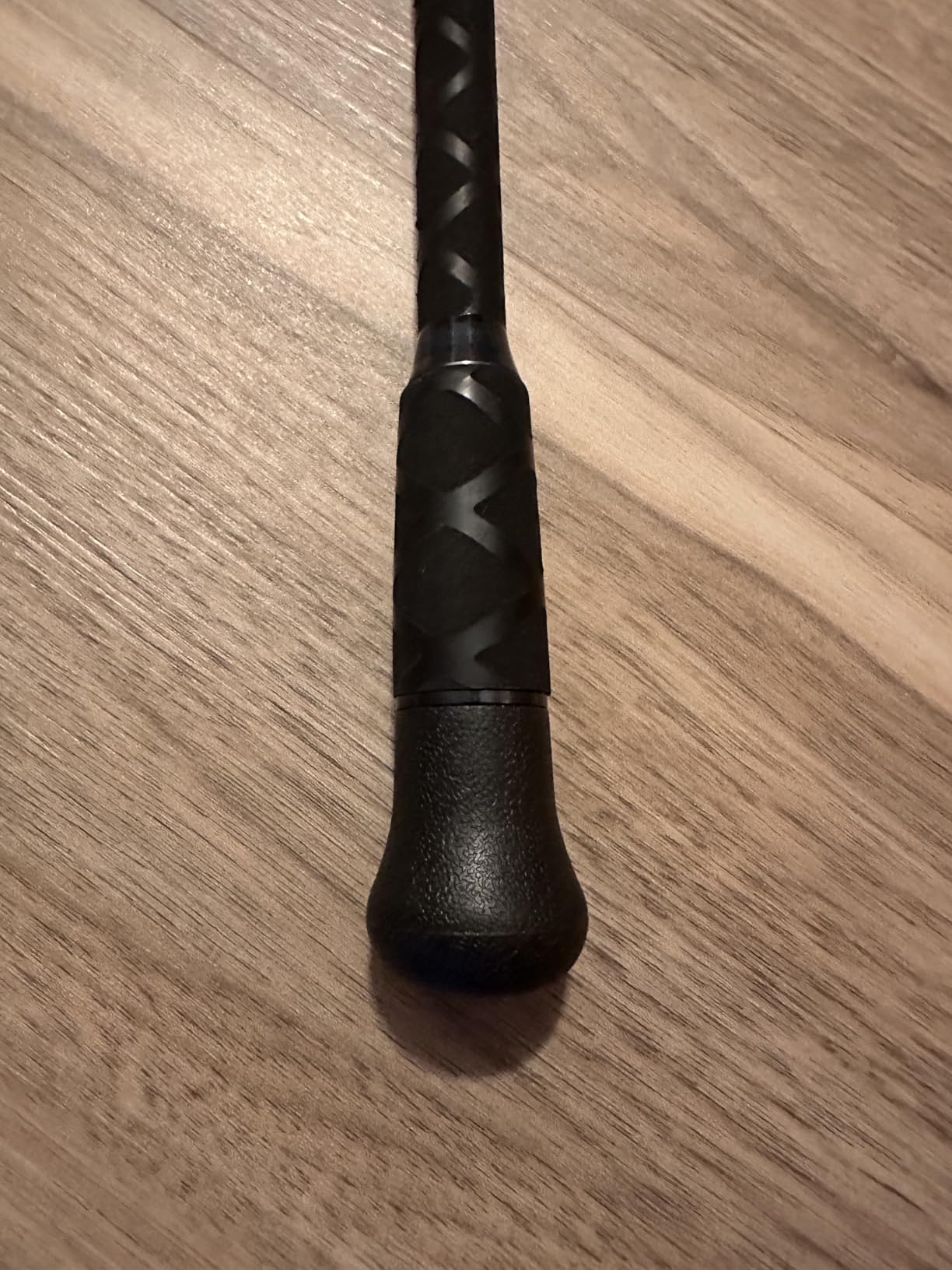
Grip choices vary by model: AAA cork on the 7 foot medium versions and non-slip EVA on the medium heavy and heavy models. An oversized drop shot hook keeper is a small touch that prevents the lure from riding up the blank in transit.
Before You Buy, Check One Thing
Reel seat compatibility. The seat is wide and will not secure smaller-footprint reels, including the Penn 4500 series, without an adapter. This is the single most significant complaint in the reviews, and the brand does not document it clearly, so check your existing reel against the seat before ordering.
Everything else is straightforward. The one-year warranty is standard, and its best sellers ranking inside the top 20 in the fishing rods category suggests it sells consistently for a reason.
Where Its Limits Are
Seven feet is short for traditional surf work. You will not reach fish holding well past the breakers, and casting a 2 ounce sinker is at the edge of what a heavy 7 foot model is designed to do. This is a shore rod and an inshore rod more than it is a big-water surf caster.
The handle bottom also runs longer than some anglers prefer, which shows up at the end of a long session on a 7 foot rod that you are already working hard. If you are sure you will never cast past 40 yards, that is a fair trade for the balance and finish.
7. Okuma Rockaway 10ft Lightweight Surf Rod: Best for Light Bait and Lures
OKUMA RA-S-1002M Rockaway Surf, 10′, Black
10ft medium power, moderate-fast
Lightweight carbon composite blank
Rated 10 to 20lb line, 3oz lure max
Split EVA grip, 2-piece
Pros
- Lightweight carbon composite blank
- Moderate-fast action for varied techniques
- Split EVA grip stays secure when wet
- Eleven length and power variants
- Targets tuna halibut and salmon
Cons
- Lure rating tops out around 3 ounces
- Medium power rules out heavy bait soaking
The Rockaway is the lightweight option at real surf length. Ten feet with a lightweight carbon composite blank is a combination you rarely see at this level, and buyers consistently single out the feel as the reason they like it. The 295 gram listing weight is well under the other long rods in this roundup.
This configuration is 10 feet, medium power, moderate-fast action, two pieces, rated 10 to 20 pounds of line and up to 3 ounces of lure. Eleven length and power variants exist in the range, so this series covers everything from inshore work to heavy surf, but the specific model you buy determines what it can launch.
The split EVA grip provides secure traction in wet conditions, which is where cork loses ground and cheaper foam fails. The moderate-fast taper handles a wide range of techniques, so a single rod can cover bucktails, plugs and light sinkers rather than being specialised for one of them.
Owners like it for surf and pier work, and the target species list includes tuna, halibut and salmon from shore or pier. It is a rod that suits long days on the sand more than short bursts, because the weight is not working against you.
What It Does Well
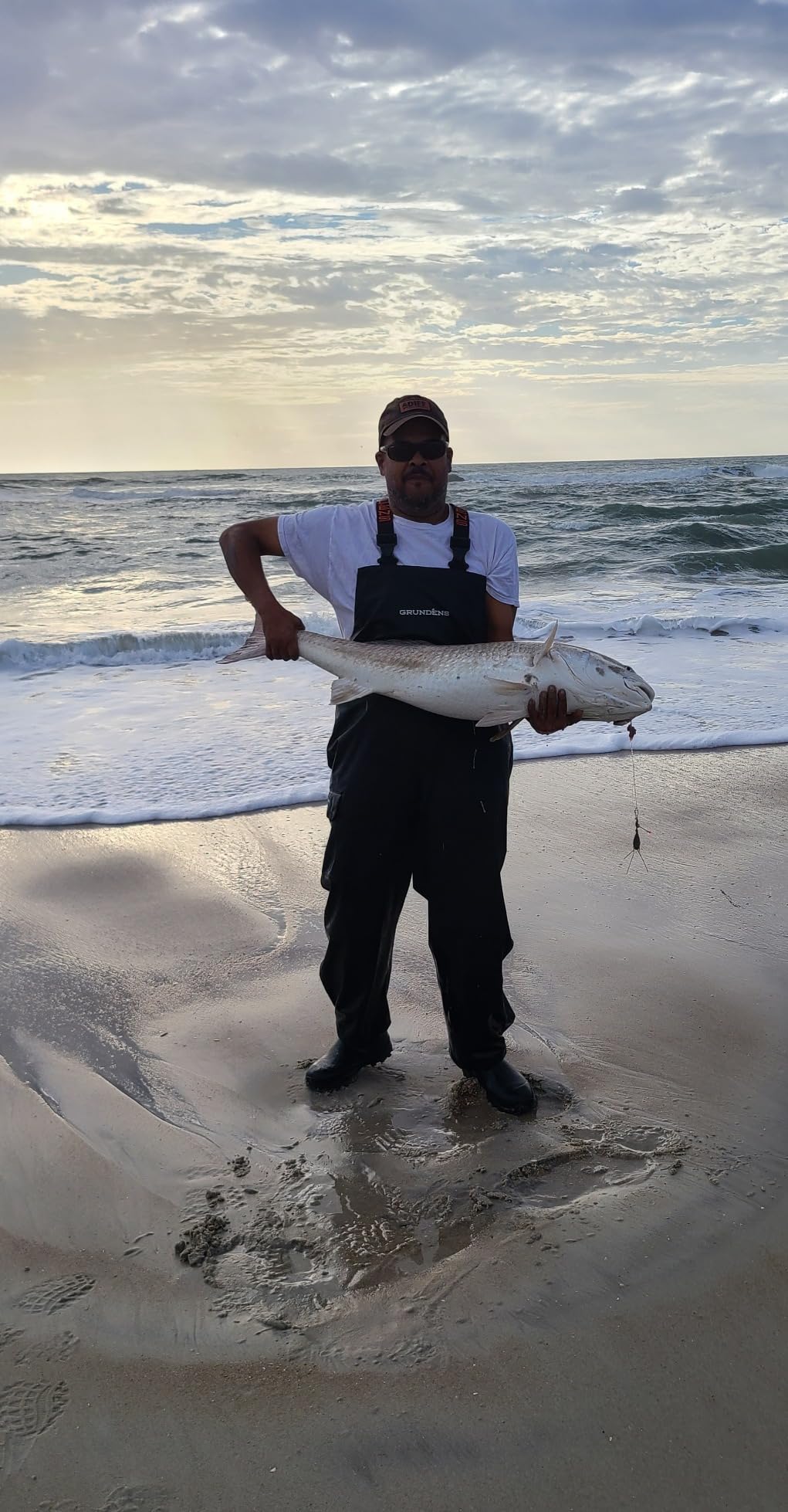
Light bait work. A 1 to 3 ounce sinker or a bucktail is inside this rod comfort zone, and the 10 foot length still gets you past the first set of breakers. The moderate-fast action loads smoothly rather than snapping to the tip, which makes it forgiving for a developing caster.
It is also a strong first surf rod candidate. Among the hundreds of reviewers here, the recurring theme is comfort over a full session, and that is the factor that keeps people fishing instead of quitting.
What You Give Up
The 3 ounce lure ceiling is the limit, and it is a real one. If your plan involves a 4 to 8 ounce pyramid sinker to hold bait in current, this model will not do it. Medium power simply is not built for that, and forcing it risks the tip.
Heavy surf species are the other boundary. For anything that regularly runs to 30 pounds or more, move up to a heavy-power rod in a longer length. This one is about sensitivity and endurance, not power.
8. KastKing Kapstan 7ft Medium Saltwater Rod: Best for One-Rod Versatility
KastKing Kapstan Saltwater Spinning Rod, 7’0″, M
7ft medium power, moderate action
100% S-Curve graphite blank
Double-foot stainless steel guides
Aluminum boat reel seats
Pros
- S-Curve graphite blanks with Nano-Resin technology
- Reinforced stainless steel double-foot guides
- Aluminum reel seats add corrosion resistance
- Rubber cross-wrap and grooved spiral grips
- Seven models from 6ft 6in to 12ft
Cons
- Surf models use lighter graphite reel seats
- 7ft model is boat-oriented rather than a long surf caster
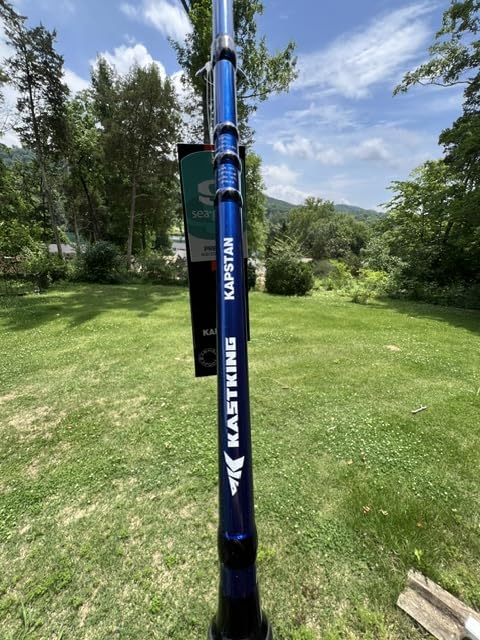
The Kapstan is the answer to the question we hear most often from anglers who want one rod for more than one kind of trip. Owners cite solid construction, comfortable grips and versatility across boat and surf use, which is exactly what the model line is designed for. Seven options from 6 foot 6 inches to 12 feet cover inshore, offshore, pier and shoreline work.
The blank is 100 percent S-Curve graphite with Nano-Resin technology, which delivers lifting power at a low weight, and the action here is moderate rather than fast. That taper is the reason it feels smooth through a retrieve instead of jerking at every bump. Line rating is listed at 30 to 50 pounds.
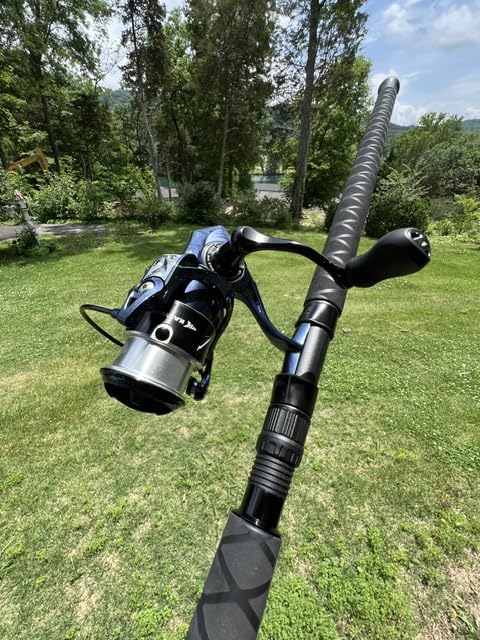
Reinforced stainless steel double-foot guides with zirconium oxide rings handle heavy loads and heat, and the 2-piece Power Transition System keeps it packable. The rubber cross-wrap and grooved spiral grips improve traction and leverage when everything is wet, which is a real difference at the end of a long day.
The one specification worth highlighting is the reel seat. Aluminum seats appear on the boat models because they resist corrosion better in saltwater, while the surf models use lighter graphite seats. If corrosion resistance is your priority, check which version you are actually buying.
Why It Works for One-Rod Anglers
Moderate action in medium power covers the widest range of techniques of any taper in this roundup. It will cast a light lure without feeling fragile, work a bait without needing a separate rod, and handle the transitions between boat and beach without a rethink.
The rating here is among the highest in the group. Treat that with some context, because the review base is modest next to the high-volume budget rods, which means long-term durability data is thinner than the star number alone suggests.
What You Give Up
At 7 feet, this configuration is a boat-oriented length rather than a long surf caster. You are not reaching structure past the breakers with it, and the heavier surf models in this same range serve a different job entirely.
It is also not a specialist for heavy bait. Moderate action in medium power is about balance and versatility, so if your trips are defined by sinker weight rather than by destination, a heavy-power long rod is a better spend.
9. BERRYPRO 9ft Full Carbon Surf Spinning Rod: Best for Inshore and Light Surf
BERRYPRO Surf Spinning Rod Full Carbon Surf Fishing Rod with Fuji Guide (9’/10’/11’/12′) (9′-Spinning-2pc)
9ft fast action, 13.6oz total
Slim full carbon and X-Carbon blank
Fuji guide rings, 20lb line rating
Non-slip shrink tube grips
Pros
- Slim lightweight full carbon and X-Carbon blanks
- Fuji guide rings run smoothly
- Guides aligned along the blank spine
- High-strength reel seat
- Non-slip shrink tube grips with anti-wear butt cap
Cons
- 9ft is short for reaching beyond the break
- Line rating tops out around 20 lb
This is the lightest-feeling rod in the roundup at 13.6 ounces for a full 9 feet, and that is exactly why it works. Owners highlight the light weight, the smooth Fuji guide rings and the sensitivity for the money, and the light carbon and X-Carbon blank keeps a fast-action taper responsive without feeling punishing.
At 9 feet it sits at the sweet spot most beginners and most general surf anglers actually want. It casts past the breakers, works inside structure, and stays controllable in a crowded beach where a 10 or 12 foot rod is a problem. The fast action loads quickly, which suits lure work.
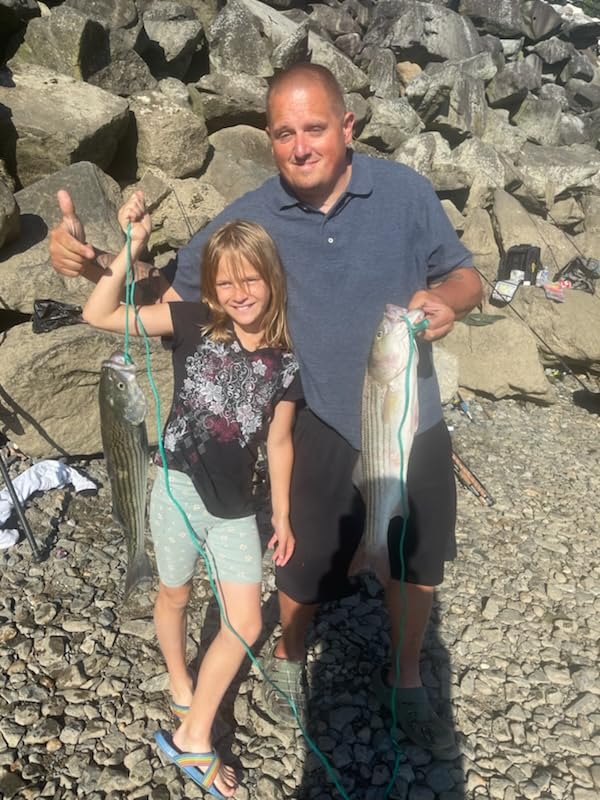
The guides are precisely aligned along the blank spine, and owners single that out as the reason line feel transfers cleanly to the hand. That is a factory alignment detail most buyers never notice until they have compared, and it is the difference between feeling a tap and guessing at one. Fuji rings also run smoothly enough to keep long casts clean.
Build details are solid for the tier: a high-strength reel seat, non-slip shrink tube fore and rear grips and an anti-wear butt cap, with a one-year warranty and direct brand support behind them. Lengths are available from 9 to 12 feet in this series.
Where It Is the Right Answer
Estuaries, inshore bays, light surf and pier fishing. If you are targeting smaller species and casting lighter lures, a 20 pound line rating and a 9 foot length cover the job without any compromise, and the light blank keeps you comfortable for long sessions.
It is also the best first surf rod on this list for anyone sensitive to rod weight. If you have never surf fished, starting light is a better plan than buying a heavy blank and discovering you cannot hold it up on the fourth hour.
What It Cannot Do
Nine feet is short for reaching beyond the break, and this rod is not designed to launch a heavy sinker on purpose. The 20 pound line rating also limits it for anything that will run hard in structure.
If your beach has fish holding in 15 feet or more of water, or your plan involves 3 ounce sinkers, step up to the 10 foot options earlier in this list. This is a precision rod, not a heavy-duty one.
10. Tsunami Trophy 10ft Medium Heavy Surf Rod: Best One-Piece Feel
Tsunami Trophy II TSTIISS-1002MH Spinning Surf Rod
10ft medium heavy power
Medium action, single piece
Staggered ferrule design, 5oz lure max
Split EVA grip
Pros
- Staggered ferrule gives a one-piece feel and balance
- Medium heavy power from bluefish to shark
- Broad species coverage from mackerel to drum
- Split EVA grip for wet control
Cons
- Heaviest listed item weight in the group
- Smallest review base limits long-term data
- Single-piece model is bulkier to carry
The Trophy is a true single-piece rod, and that is the whole appeal. Owners like the balance and the one-piece feel of the staggered ferrule design, and the medium heavy power handles surf species from bluefish through to shark on a 10 foot frame with medium action.
Species coverage is genuinely wide: mackerel, squid, flounder, halibut, redfish, bass, salmon, bluefish, drum and shark are all on the list. Line rating is 30 pounds and the lure ceiling is 5 ounces, so this is a rod for anglers whose trips change species as often as they change beaches.
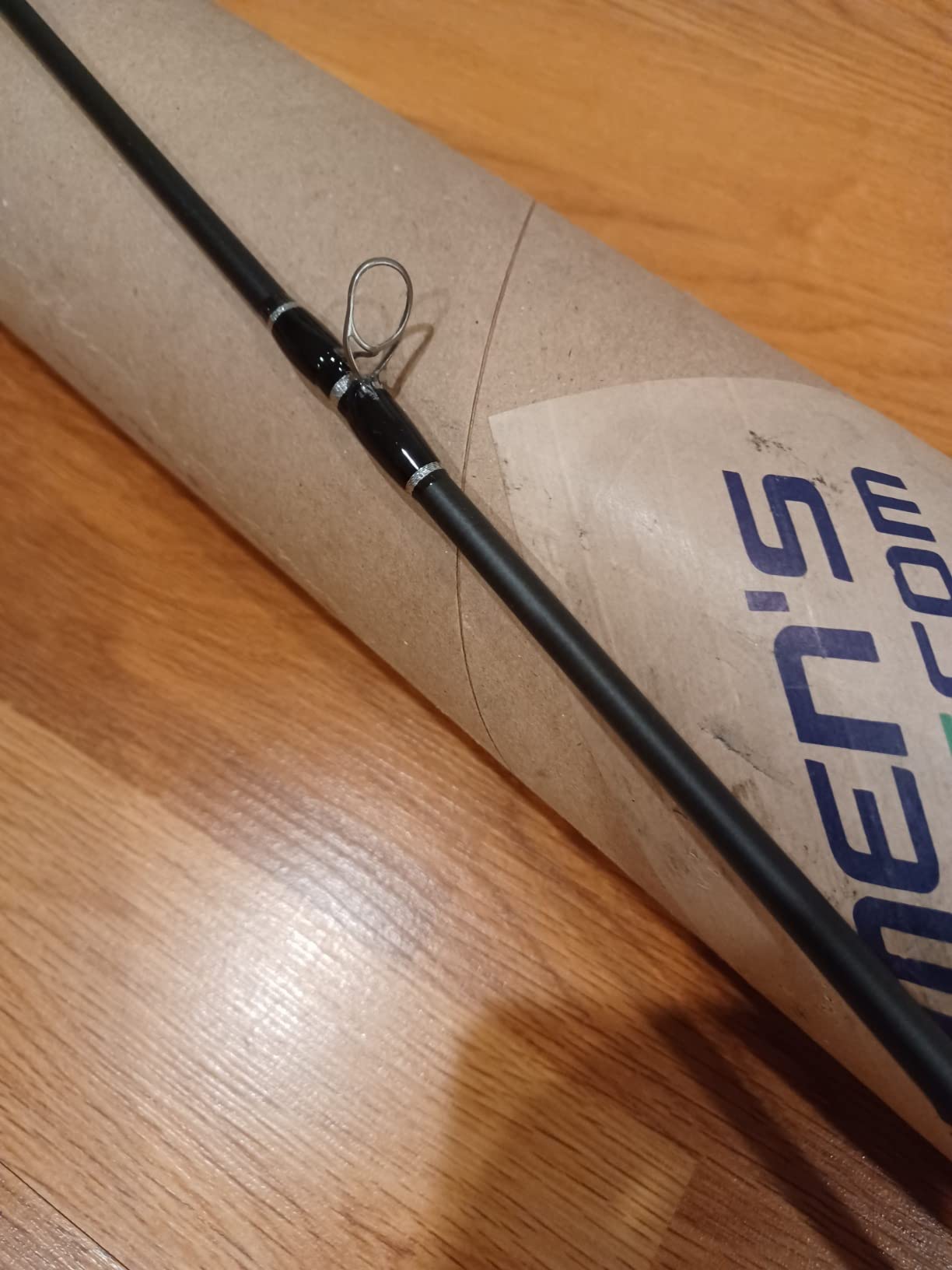
The split EVA grip gives control in wet surf conditions, and the medium action is the balance point between feeling a bite and setting the hook on something that runs. Compared to the fast-action budget rods, this taper absorbs more shock, which is a real advantage when a fish comes in off a ledge.
Because it is one piece, there is no ferrule to loosen and no section alignment to worry about. If you are casting from a fixed position, a jetty or a pier rather than moving up and down the beach, that simplicity is worth something on its own.
Why Consider a Single-Piece Rod
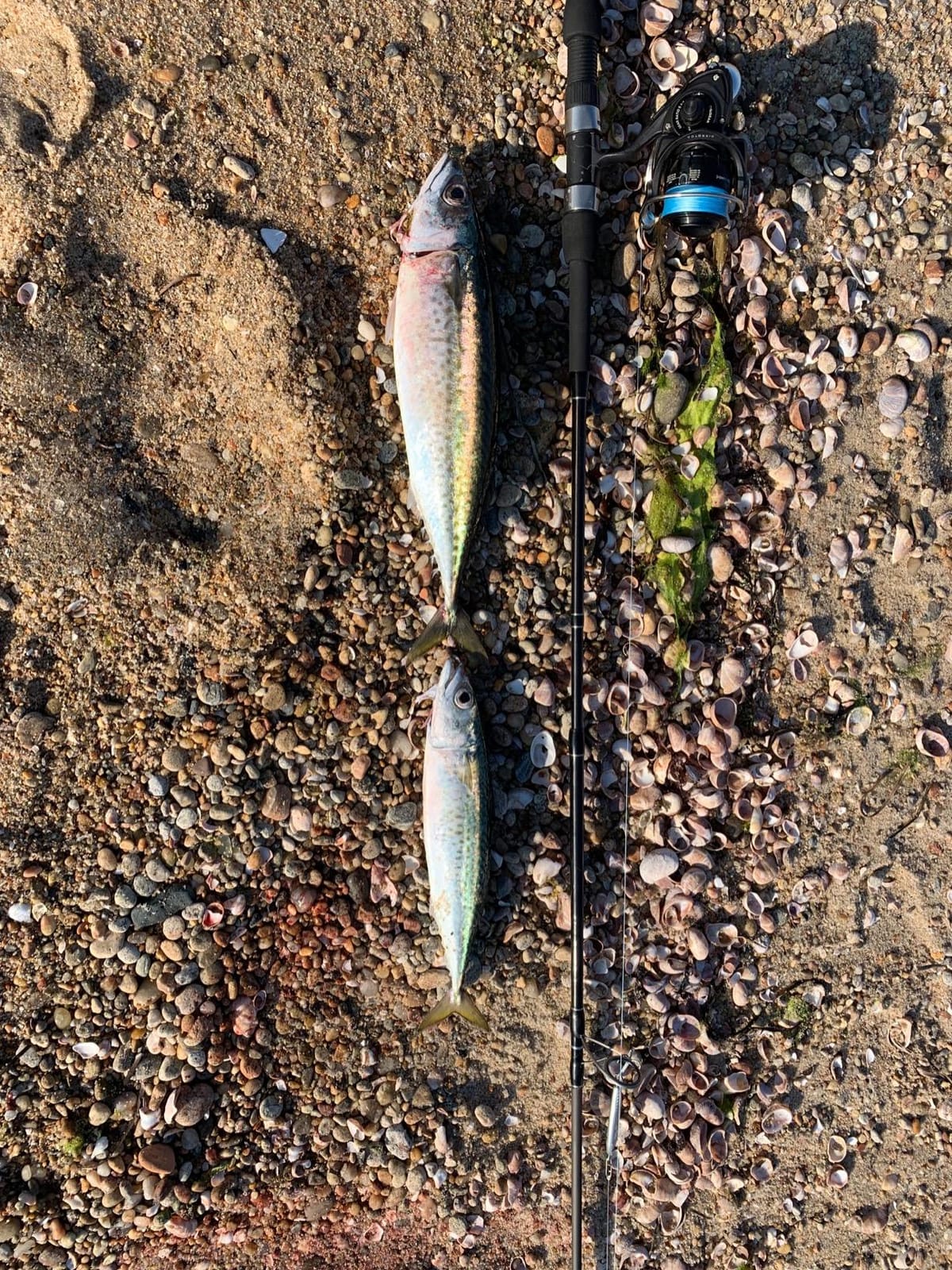
Nothing beats a single-piece rod for consistent performance. The transfer of energy from the blank to the hand is as direct as it gets, and there is no joint that can develop a wobble or a crack. Surf casters who have fished multi-piece rods for years often come back to a one-piece for this reason.
Pair it with a medium-heavy to heavy conventional reel with a star drag, or a 6000 size spinning reel. Medium-heavy power suits 3 to 5 ounce sinkers and heavy plugs well, and 30 pound braid with a 40 pound fluorocarbon leader keeps the diameter reasonable.
What to Weigh Before Buying
Transport. A 10 foot single-piece rod is a long object to carry, and it is the least practical option here for anyone who hikes a beach, flies with gear or moves between spots regularly. The multi-piece picks serve that need better.
Weight is the other factor, since the heaviest listed item weight in this group will tire your hands over a long day. And the review base is the thinnest of the ten, so there is less long-term durability data to lean on. The 4.6 average is strong, but it comes from fewer owners.
How to Choose a Surf Fishing Rod for Any Beach
The shelf in the tackle section is genuinely confusing, because every rod is described in terms of power, action, taper, modulus and tonnage. Here is the plain-English version: length gives you reach, power tells you what weight you can throw and pull, and action tells you where the rod bends. Get those three straight and everything else is preference.
Rod length: how to choose between 7ft, 9ft, 10ft and 12ft
A 7 or 8 foot rod is a light-surf and inshore length. It is fully usable for surf fishing with light lures, for surf perch work, and as a one-rod solution for people who also fish from a boat. It is not a rod for casting 2 ounce-plus sinkers or for reaching structure past the breakers.
A 9 foot rod is the general-purpose answer and the right first length for most people. It is manageable in a crowd, casts past the first set, and keeps the weight reasonable. A 10 foot rod adds reach and roughly 20 percent more casting distance in reported field tests, and it is the length that reaches fish holding in 15 feet or more of water.
A 10 to 12 foot rod is the heavy bait and long distance band. Choose it when you soak 3 ounce-plus sinkers, cast plugs to distant structure, or have a beach with room to work. The trade is weight, and above about 11 feet the risk of waving the tip into other anglers or tangling in the wind climbs fast.
So 9 foot or 10 foot? Start at 9 feet if you are new, can handle the weight, and fish crowded beaches. Move to 10 feet once you are comfortable casting and the water in front of you is deep.
Rod power and action in plain English
Power is the load rating, and it is the number that matters most. Light power handles small lures, medium handles general beach work, medium heavy handles sinkers up to about 3 ounces, and heavy handles bigger bait and bigger fish. Choose power backwards from the sinker weight, not forwards from the fish you hope to catch.
Action is where the blank bends, and it changes the feel rather than the strength. Fast action bends in the top third and loads hard, giving quick hooksets and less sensitivity. Moderate action bends through the lower two-thirds, absorbing shock and giving a smoother, slower hookset. Moderate-fast sits between the two and is the most common compromise in surf rods.
If you mostly feel bites and want to know when they happen, choose moderate or moderate-fast. If you hook fish often and want to set the hook through a hard take, choose fast. Beginners are usually better served by moderate-fast because it is harder to over-apply pressure on a fish you cannot see.
Blank material: graphite, carbon and fiberglass compared
Graphite and carbon are the same family of material, and the difference is modulus, meaning how stiff the fibres are. High-modulus graphite like IM6, IM7 or TC3 is stiffer and more sensitive, so you can get strength at a lower weight. Standard or composite graphite is heavier but tougher and more forgiving, which is why budget battle rods use it.
Fiberglass is heavier and more flexible, and it is the traditional choice for inshore and boat rods rather than surf rods. A carbon fiber blank keeps a long rod light, which directly affects how long you can fish before your arms and shoulders take over. That is an underrated factor in beach fishing, and buyers mention fatigue more often than they mention price.
As a quick in-store test, tap the blank with a knuckle. A stiffer, higher-modulus blank will hum and transmit the tap up the blank. If it feels dead, the sensitivity you are paying for is not there.
Spinning versus conventional: the first decision to make
This is the most asked question in every surf fishing forum we found, and the answer is simpler than the debate suggests. A spinning setup hangs a line under the spool and is far easier to learn. There is no backlash, no spool to manage, and you can drop the rig and cast almost immediately.
A conventional or baitcasting setup holds line on a spool above the rod, which lets you cast farther with less line twist, and it handles heavy sinkers more cleanly because the spool sits on top. The learning curve is real, mainly in keeping the spool from crossing over on the cast.
Our rule: spinning for beginners, for light to moderate surf, and for anyone who wants to cast a line into the surf within a week. Conventional for heavy sinkers, for bottom fishing with live bait, and for anglers who have already put in the practice. A medium-heavy to heavy conventional with a star drag is the standard pairing for a 10 foot rod.
For reel size on a 10 foot rod, a 5000 to 6000 size spinning reel is the right class, matched to a 20 to 30 pound braid and a fluorocarbon leader of about the same or slightly higher rating. Going up to an 8000 size adds weight to the balance of a long rod, and going down to a 3000 leaves you short of the line capacity you need for a 30 foot drop.
Guides, ferrules and salt water hardware
Saltwater attacks hardware before it attacks blanks. Look for stainless steel guide frames with ceramic or zirconium inserts rather than plated frames, and check that the reel seat is stainless or aluminum rather than anodized aluminum. These are the details that decide whether a rod is a saltwater fishing rod or a freshwater rod you dragged to the beach.
On multi-piece rods, the ferrule is the joint to inspect. Staggered ferrule designs spread the load across a longer glue surface and feel closer to a one-piece rod than a straight butt joint. Check alignment by holding the rod sections together in good light: any visible kink means the sections do not line up.
Rinse everything in fresh water after a session. Sand in the guide wraps is abrasive, and salt plus moisture in a reel seat is what turns a cheap rod into a broken one.
Durability: what breaks first and how warranties work
Lead guides and the tip are the usual failure point, usually from an errant back-cast rather than from a fish. Ferrule separation comes second, followed by corrosion at the guides and reel seat. Most breakage happens at a weak point while the rod is loaded, so protecting the tip matters more than any strength rating.
Warranty length varies enormously and is worth reading before you buy. In this roundup the range runs from one year on several models to seven years on the Ugly Stik Bigwater, and a longer warranty is a real signal about how a manufacturer expects its rod to be used. Warranties generally cover manufacturing defects rather than accidental damage, so understand the terms before you rely on one.
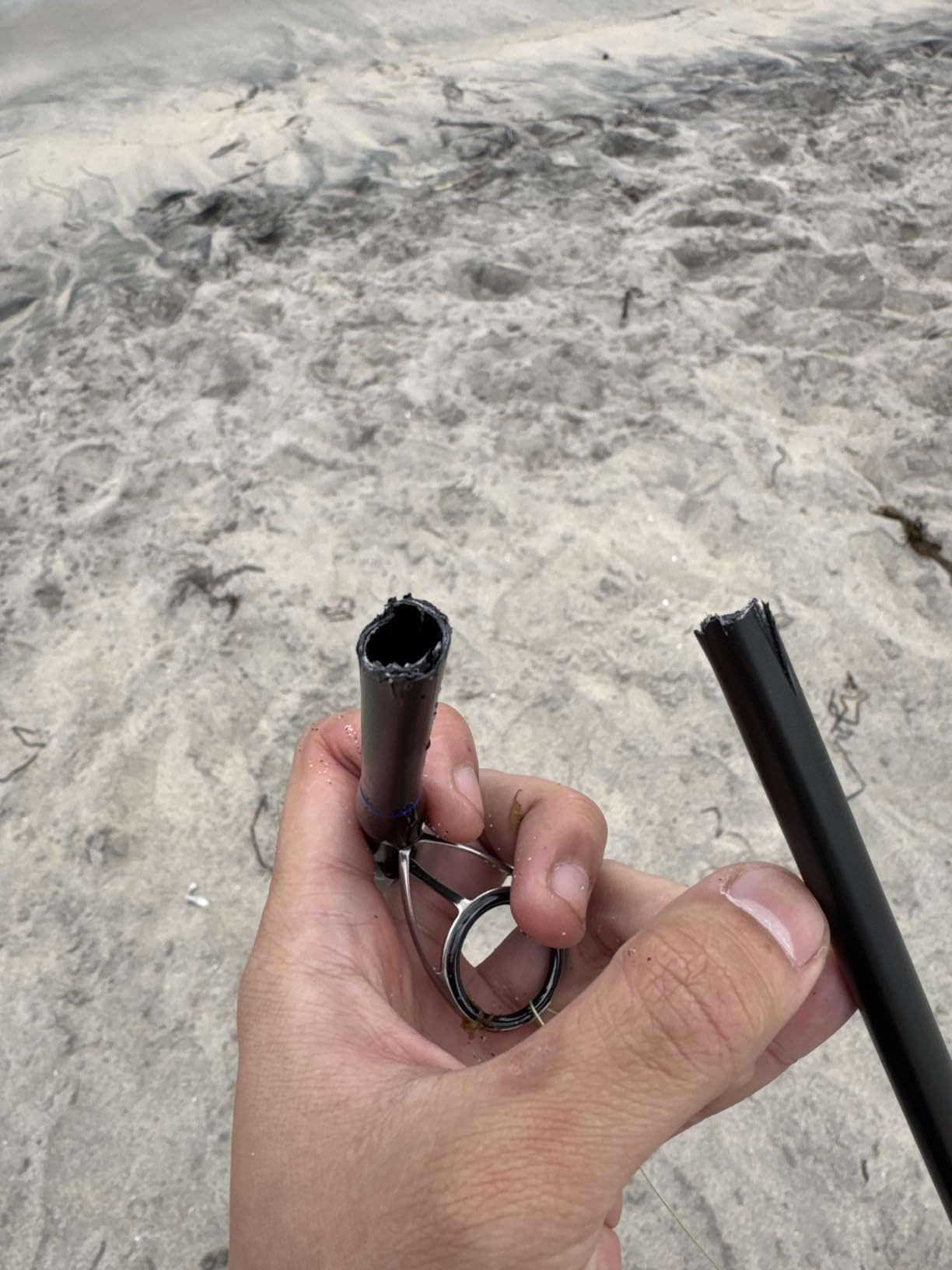
Can you still fish with a broken rod? Yes, in some cases. A broken tip section can be trimmed back to a lower guide and the rod becomes a shorter, stouter rod for bait soaking. A delamination or a snapped blank mid-section usually ends the rod’s life, so check the warranty terms before buying a replacement.
Average lifespan depends far more on care than on brand. Rinsed, dried, stored in a tube and never leaned tip-down in a hot car, a well-built surf rod should last many seasons of regular use. Left in salt spray and wet sand, the hardware will give out first.
Anglers who also fish a small boat on the same trips can pair these rods with the gear in our kayak picks for fishing.
Frequently Asked Questions
Is a 9ft or 10ft rod better for surf fishing?
A 9ft rod is easier to handle, better in tight or crowded spots, and still casts past the breakers. A 10ft rod adds reach and roughly 20 percent more casting distance, and it reaches fish holding in 15ft or more of water. Beginners should start at 9ft and move up once the weight feels comfortable.
Is a 7 foot rod ok for surf fishing?
Yes, for light lures, surf perch, pier work, inshore fishing, and anyone who needs one rod for several kinds of trips. A 7ft rod is not the right choice for casting sinkers of 2oz or more, or for reaching structure past the breakers. It works well as a first rod if you are patient with distance.
What is the best length for a surf rod?
Length bands map to application: 7 to 8ft for light and inshore work, 9ft as the general-purpose and beginner length, and 10 to 12ft for heavy sinkers and long-distance casting. The water in front of you matters more than any rule, because a 9ft rod reaches further in shallow water than a 12ft does in a crowd.
What size reel should I pair with a 10 foot surf rod?
For a spinning setup, a 5000 to 6000 size reel is the right class on a 10ft rod, running 20 to 30lb braid with a fluorocarbon leader of similar rating. For a conventional setup, choose a medium-heavy to heavy reel with a star drag. Very large spinning reels unbalance a long rod and tire your arms sooner.
Should I get a spinning or conventional surf rod?
Spinning is easier to learn with no backlash and is the right pick for beginners, light to moderate surf, and casting lures. Conventional casts farther with less line twist and handles heavy sinkers more cleanly, which makes it better for bottom fishing and live bait. Beginners should start spinning and upgrade later if needed.
What causes a fishing rod to break, and can you still fish with a broken one?
Lead guides and the tip are the usual failure point, usually from an errant back-cast rather than a fish, followed by ferrule separation and salt or sand corrosion at the guides and reel seat. A broken tip can sometimes be trimmed back to a lower guide for bait work, but check the warranty terms, which cover defects rather than accidental damage.
Which Surf Fishing Rod Is Right for You?
Start with your water, not the spec label. If you are new to the beach, casting light lures, or fishing somewhere crowded, the Ugly Stik Bigwater is our pick: 7 feet, medium power, fast action, a tough blank and a 7-year warranty that removes almost all the risk from a first purchase. The BERRYPRO 9ft Full Carbon is the lighter alternative if sensitivity matters more than durability.
If you soak bait or cast past the breakers, the Fiblink Surf Casting 10ft covers a 10 to 40 pound line rating and a 5 ounce lure window in one rod, and the Okuma Longitude 9ft Heavy is the choice when fish run heavy and the water is rough. For maximum distance, the BERRYPRO 13ft 3-Piece rewards good casting technique, and the Fiblink 12ft Carbon breaks down for anglers who hike.
For versatility across the beach, the boat and the pier, the KastKing Kapstan handles moderate action across seven lengths, and the KastKing Rekon is the pick if you care about balance, build quality and a light feel. If you never want a joint, the Tsunami Trophy is a true single piece with a staggered ferrule feel.
Whichever you choose, buy power that matches your sinker, rinse the hardware after every session, and check the tip before you leave the car. Those three habits matter more to how long a surf fishing rod lasts than anything printed on the box. Our rod and reel combo picks cover the rest of your setup if you are starting from nothing.