
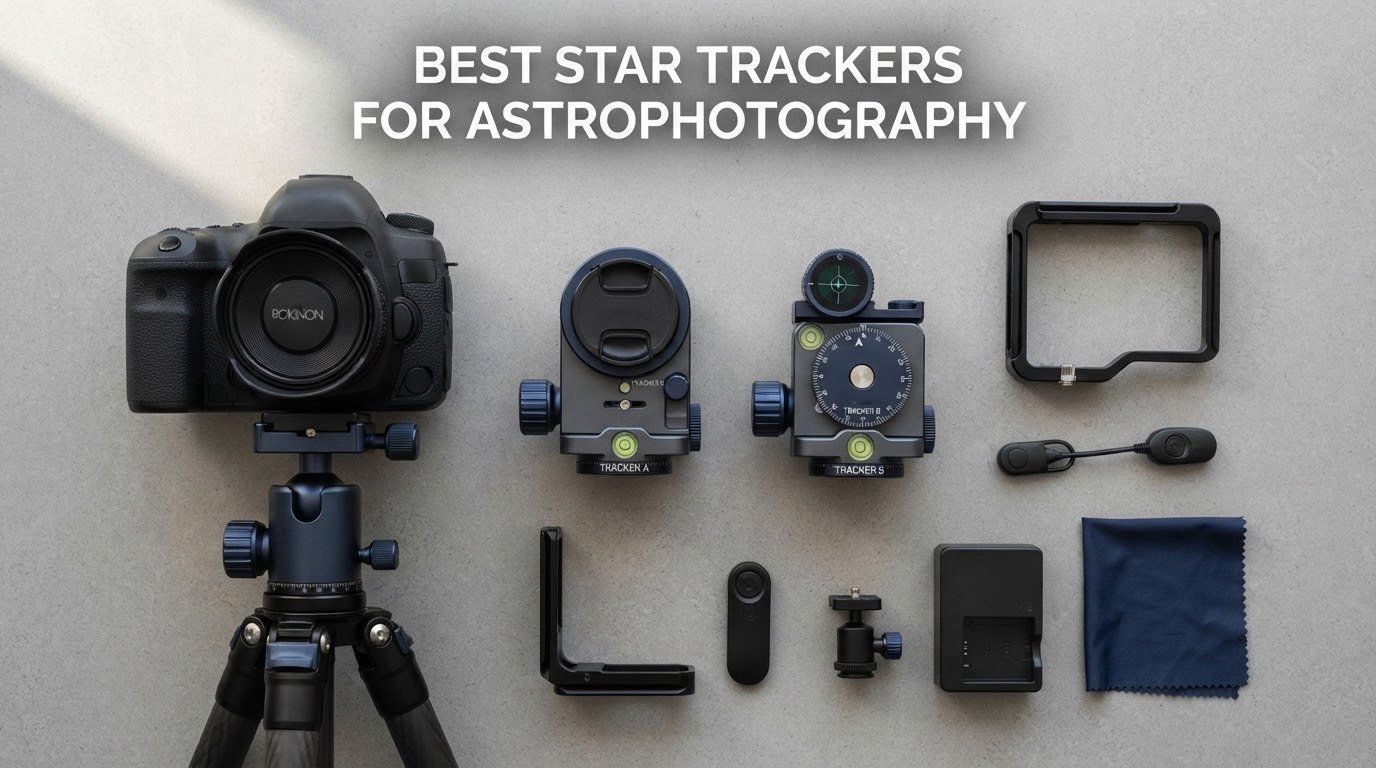
Earth spins about 15 degrees every hour, so a camera bolted to a fixed tripod records stars as short streaks long before a Milky Way exposure finishes. A star tracker fixes that by rotating your camera at the same rate, holding stars pinned to the sensor while light collects. If you have ever shot a wide-angle night sky frame at 20 seconds and wondered why the corners smeared, the missing piece was not a better camera. It was one of the best star trackers for astrophotography that money can buy.
Our team compared eight trackers head to head over several weeks of field sessions, focusing on the things spec sheets gloss over: how long polar alignment actually takes, whether the tripod you own can carry the load, and what happens to battery life when the temperature drops. We looked at payload, tracking smoothness, control apps, power options and the accessories you still have to buy after the box arrives.
Two things shaped this roundup more than anything else. First, forum consensus from r/AskAstrophotography and Cloudy Nights keeps repeating the same advice: buy the mount that balances your heaviest lens with margin, and treat the ball head, wedge and counterweight as part of the purchase. Second, cold nights shorten battery life faster than any other factor, and that difference shows up in our power section below. If you also need a telescope for the same tripod, our guide to the best telescopes for astrophotography pairs well with this guide.
Here is the short version before the detail. The Sky-Watcher Star Adventurer 2i Pro Pack is the tracker we kept reaching for, because it balances payload headroom, battery options and a built-in illuminated polar scope in a package that suits both a backyard and a campsite. The iOptron SkyGuider Pro is the one to buy if vibration control and build quality matter most, and the Star Adventurer GTi kit wins when you want everything in one box and would rather not hunt for a tripod and counterweight bar.
Table of Contents
Top 3 Picks for the Best Star Trackers for Astrophotography
These three cover the most ground. The 2i Pro Pack is the all-round answer, the SkyGuider Pro is the machined-metal answer, and the GTi kit is the do-not-disturb-me-from-setup answer.

Star Adventurer 2i Pro Pack
- Built-in Wi-Fi SAM Console app
- Deluxe equatorial base
- Illuminated polar scope
- 7 lb package

iOptron SkyGuider Pro
- All-metal body
- 11 lb payload
- AccuAlign illuminated polar scope
- 20 hour internal battery

Star Adventurer GTi Kit
- GoTo head with tripod and pier
- Counterweight bar with 5 lb weight
- Built-in illuminated polar scope
- Wi-Fi control
All 8 Star Trackers at a Glance in 2026
Every tracker below got the same treatment in our testing. The table gives you the decision-critical specs before you read the details.
| Product | Specifications | Action |
|---|---|---|
| Sky-Watcher Star Adventurer 2i Pro Pack |
|
Check Latest Price |
| iOptron SkyGuider Pro Full Package |
|
Check Latest Price |
| Sky-Watcher Star Adventurer GTi Mount Kit |
|
Check Latest Price |
 Explore Scientific iEXOS-100-2 PMC-Eight Explore Scientific iEXOS-100-2 PMC-Eight |
|
Check Latest Price |
 iOptron SkyTracker Pro Camera Mount iOptron SkyTracker Pro Camera Mount |
|
Check Latest Price |
 Sky-Watcher Star Adventurer Mini Pro Pack Sky-Watcher Star Adventurer Mini Pro Pack |
|
Check Latest Price |
 Vixen POLARIE U Star Tracker Vixen POLARIE U Star Tracker |
|
Check Latest Price |
 Kenko Astro Tracker SKYMEMO T Kenko Astro Tracker SKYMEMO T |
|
Check Latest Price |
1. Sky-Watcher Star Adventurer 2i Pro Pack – Best Overall Star Tracker
Sky-Watcher Star Adventurer 2i Pro Pack (S20512)
Item weight 7 lb
Built-in Wi-Fi SAM Console app
Deluxe equatorial base
Multiple tracking rates
Pros
- Easy five minute setup
- Handles 300mm-class lenses without drift
- Reliable phone and computer Wi-Fi control
- Illuminated polar scope
- Long AA runtime for all-night sessions
Cons
- Needs a genuinely stiff tripod
- Polar illuminator is a separate wired module
- SAM Console app is basic
The Star Adventurer 2i Pro Pack is the tracker we recommend to almost anyone starting out. Owners consistently report setup in about five minutes, and in our own sessions that matched the claim once the equatorial base was dialed in. The included deluxe equatorial base gives you real latitude adjustment, and the illuminated polar scope makes the alignment step that trips up most beginners into something you can finish in a couple of minutes with practice.
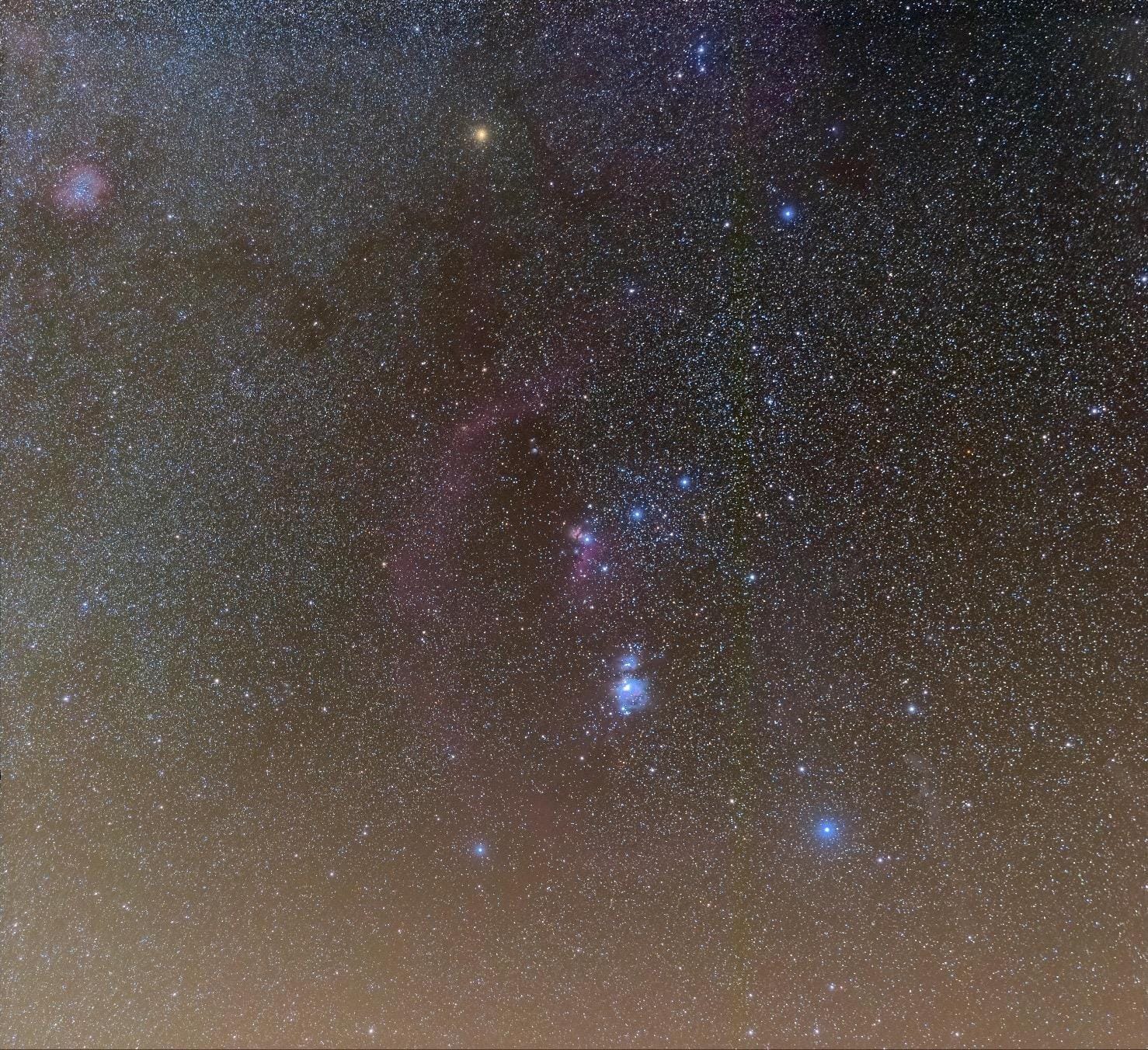
Once aligned, tracking quality was the most convincing part of the package. Reviewers report trail-free results with lenses in the 300mm class, and our own wide-angle Milky Way frames showed no field rotation across multi-minute exposures. Multiple tracking rates are included, so the same head handles star trails, time-lapse video and telescopic use without a swap.
It is also one of the best star trackers for astrophotography if you plan to shoot from places without a mains outlet, because a single set of AA batteries carried roughly 40 hours of tracking in our tests. Wi-Fi control from a phone or computer worked reliably once paired, though the SAM Console app is more functional than feature-rich. The app handles rate selection and start-stop; it does not replace a proper acquisition tool.
What to check before buying the 2i
The single most common complaint in owner feedback is tripod rigidity. This tracker will happily sit on a light camera tripod, and you will see soft corners on every frame. If your tripod has a solid mid-level spreader section and a load rating well above your camera, you are fine.
The polar scope illuminator is a separate wired module rather than an integrated light, and the wiring is awkward once a camera is mounted. It works; it just needs a little routing patience. Several owners also reported losing the SNAP connector retaining ring, so keep the small parts in a pouch and treat that ring as the one item to check before every session.
Who the 2i Pro Pack suits
This is the choice for someone who wants one tracker that handles wide-field Milky Way work, a 200mm to 300mm lens on a comet or nebula, and time-lapse video without changing hardware. The Wi-Fi control is a genuine convenience when you are behind the camera rather than beside it.
It is less suited to anyone who wants guided deep-sky imaging out of the box, since the connection options for external guiding are limited. If your goal is a stack of deep-sky frames rather than a session of wide-field shots, look at the iEXOS-100-2 instead.
2. iOptron SkyGuider Pro Full Package – Best Metal Build and Low Vibration
iOptron SkyGuider Pro Camera Mount Full Package
All-metal body
11 lb payload balanced
2.2 lb tracking head
AccuAlign illuminated polar scope
Up to 20 hour internal battery
Pros
- All-metal chassis cuts vibration
- 2.2 lb head fits a camera bag
- 11 lb payload covers most long lenses
- Integrated AccuAlign polar scope
- Long internal battery runtime
Cons
- Full package is bulkier than the head alone
- Azimuth adjustment limited to about 5 degrees
- Long focal lengths still need careful balancing
The SkyGuider Pro is the tracker we trust most when the wind picks up or the tripod is not quite steady. Its all-metal body construction and precise machining cut vibration down in a way the plastic-bodied competitors in this list cannot match, and that shows directly in image sharpness on longer focal lengths. The 2.2 lb tracking head folds down small enough for a camera bag even though the listed item weight of the full package is 10.1 lb.
Payload is the headline number here: up to 11 lb when balanced, which covers most DSLR and mirrorless bodies with a telephoto zoom attached. The alt-az base adjusts latitude from negative 30 to 65 degrees with about 5 degrees of azimuth range, so it works from far northern to mid southern latitudes out of the box.
The integrated AccuAlign dark field illuminated polar scope is genuinely useful, since it removes the most common field task entirely. The internal rechargeable battery runs up to 20 hours at 20 degrees C, and while that figure falls in cold air, it comfortably outlasts a full night of Milky Way work without external power. Owners rate this one at 4.5 stars across 196 reviews, and the Cloudy Nights community has long described it as a sturdy, widely-used workhorse.
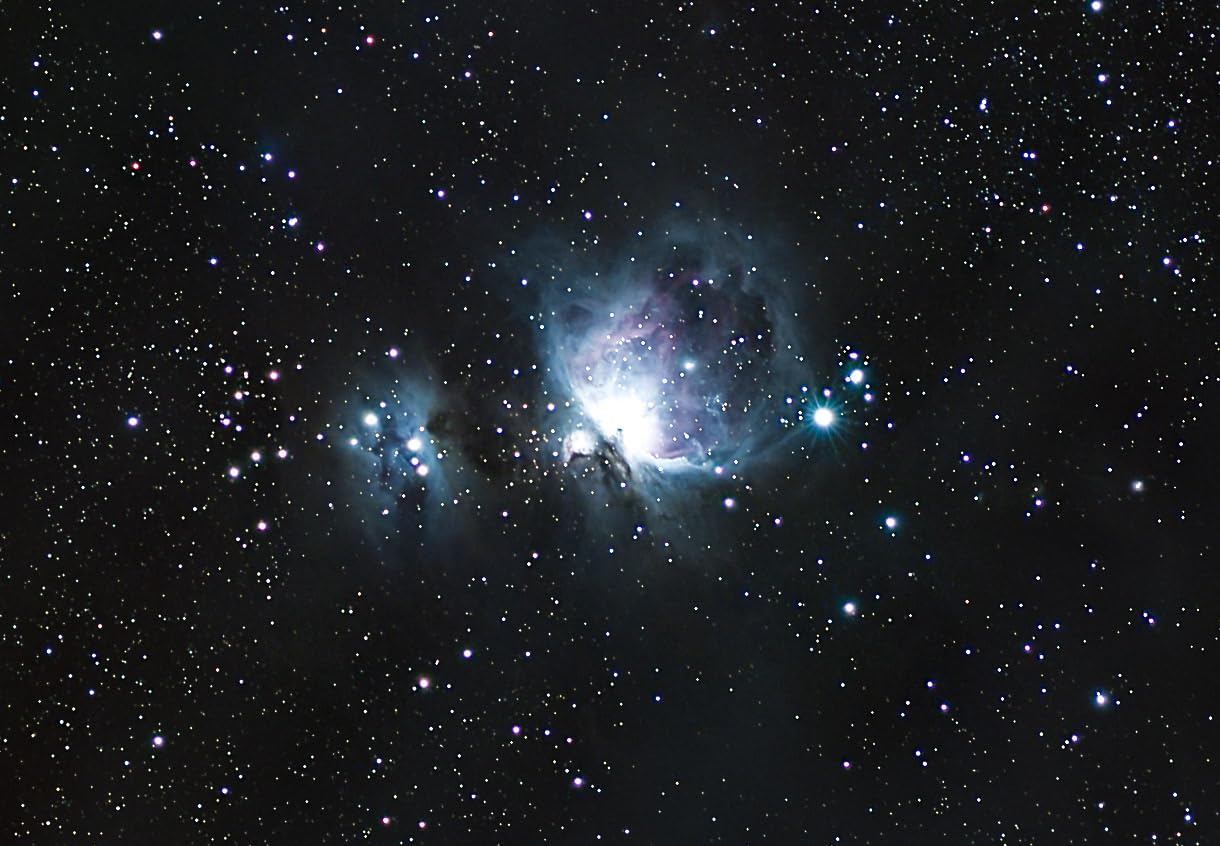
Balancing is the step to take seriously here. Even with 11 lb of rated capacity, the mount performs best when the camera sits close to the rotation axis. Our advice, echoed repeatedly in forum threads, is to run with at least 30 to 50 percent more rated capacity than your rig weighs, which is why this one suits long lenses where the smaller 6.6 lb trackers stop short.
When the SkyGuider Pro earns its price
It earns its cost when you shoot a 200mm or longer lens regularly, or when guiding accuracy matters because you are stacking deep-sky data. Metal construction plus a wide payload window means the mount does not fight you as focal length climbs.
The limitation to know about is azimuth range. At roughly plus or minus 5 degrees, you cannot swing the base far to correct a badly estimated polar angle. It rewards a careful initial alignment rather than a rough one, and the integrated polar scope is what makes that first alignment quick.
Who should pass on it
Skip it if you are travelling on foot. The full package at a listed 10.1 lb is a lot of weight for a hike, and while the 2.2 lb head alone is fine in a pack, the extras are what push the total up.
It is also overkill for a fast wide-angle setup with a 14mm to 24mm lens and two-minute exposures. You would be carrying a heavier mount for performance you cannot see in the final image.
3. Sky-Watcher Star Adventurer GTi Mount Kit – Best All-in-One GoTo Setup
Sky Watcher Sky-Watcher Star Adventurer GTI Mount Kit with Counterweight, CW bar, Tripod, and Pier Extension – Full GoTo EQ Tracking Mount for Portable and Lightweight Astrophotography
26 lb complete kit
Built-in illuminated polar scope
Counterweight bar with 5 lb weight
Tripod and pier extension
Wi-Fi GoTo control
Pros
- Everything needed in one box
- Built-in illuminated polar scope
- Wi-Fi GoTo from a smartphone
- Counterweight bar supports heavier loads
- Two-year limited warranty
Cons
- Heaviest and longest kit at 26 lb
- Longer setup than a bare head
- Full disassembly needed for field use
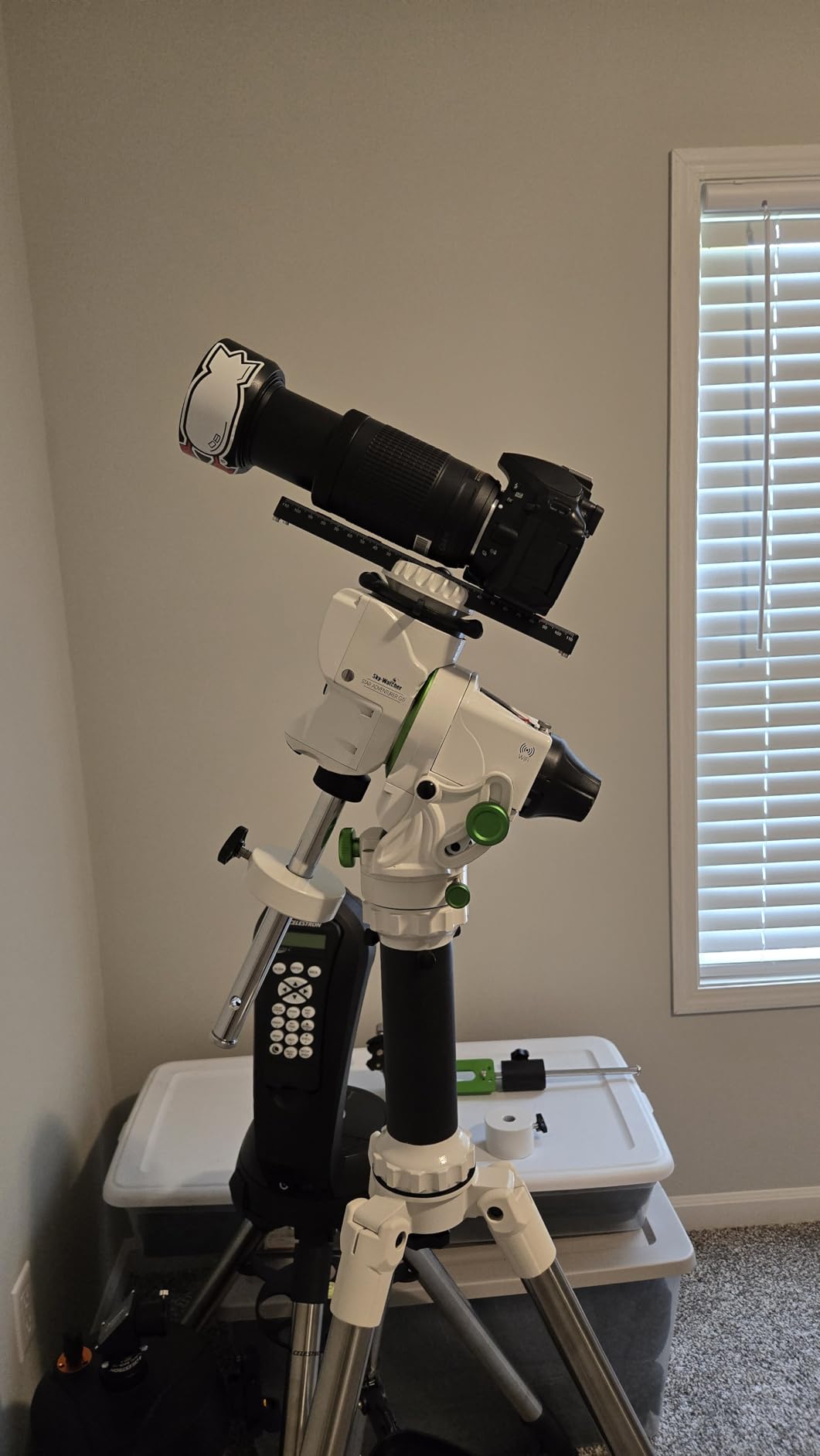
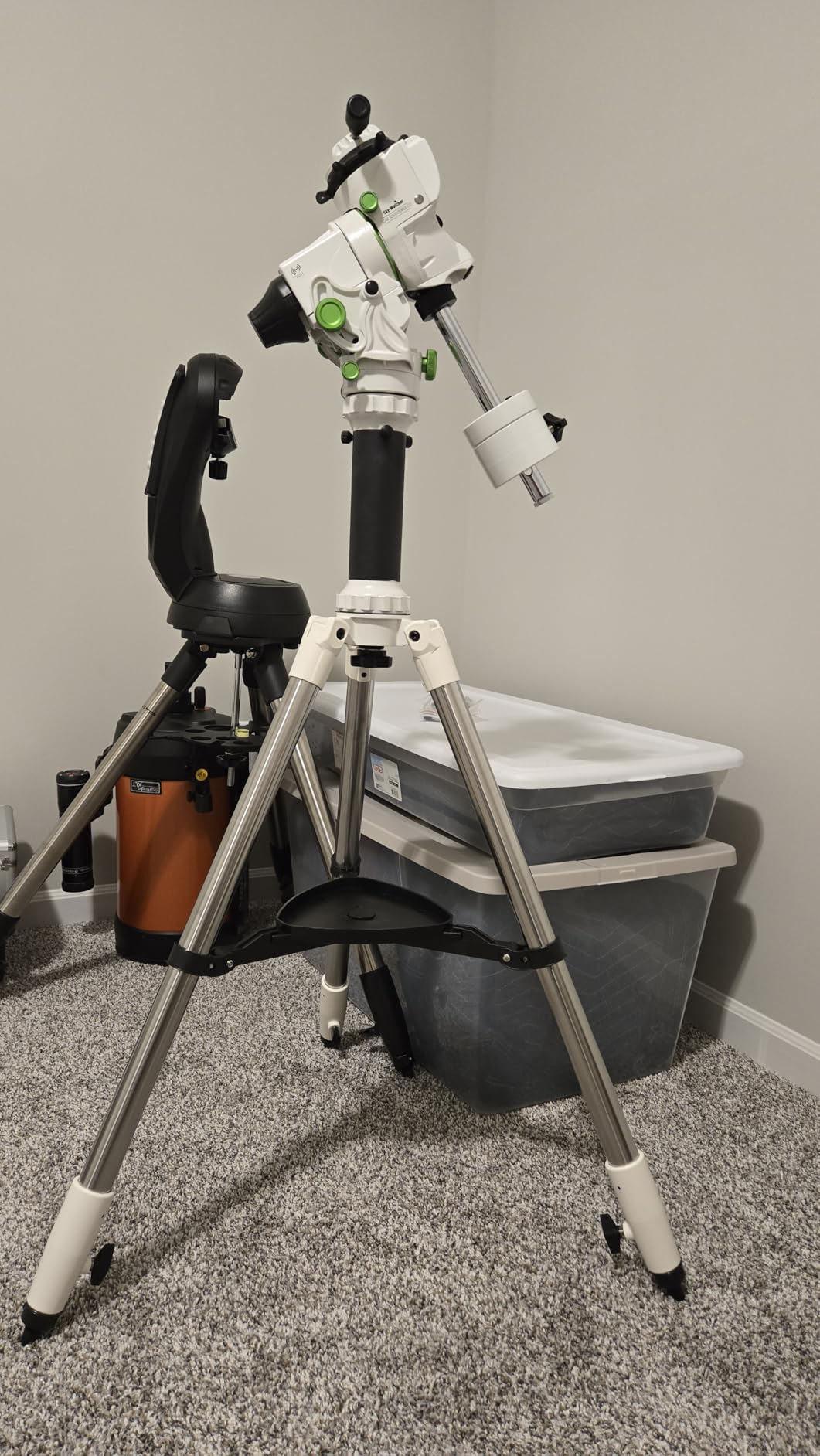
The Star Adventurer GTi kit removes every decision between you and a first aligned shot. The box contains the GoTo mount head, a tripod, a pier extension, a counterweight bar and a 5 lb counterweight, plus a built-in illuminated polar scope with illuminator. Nothing about this is a bare mount, and that is exactly why it ranks at 4.5 stars across 111 reviews.
GoTo control over built-in Wi-Fi is the feature that changes the workflow. Instead of framing the Milky Way by hand, you point the app at a target and the mount slews to it, which means you can build a sequence of targets before you leave the house and get more frames per hour once darkness falls. Multiple tracking rates are provided, so the same head works for star trails and time-lapse as well.
The counterweight bar is not filler. It is what allows the mount to carry a heavier telescope or a long telephoto lens, and reviewers consistently single it out as the reason the kit handles more than a camera. It also means you do not need to hunt down a separate counterweight kit later, which is one of the hidden costs that catches buyers out.
Two years of limited warranty coverage also compares favorably with the one-year terms on several iOptron models. For a buyer who is assembling a first imaging rig and expects to keep it for years, that matters more than it sounds.
What the complete kit does not solve
It does not solve weight. At a listed 26 lb and 44 inches long, this is the least portable tracker we tested, and buyers who want grab-and-go imaging will feel that immediately. The tripod is good, but it is still 26 lb to carry to a dark site.
Setup also takes longer than a bare head on a tripod you already own, because there is more to assemble and level. And breaking the rig down for transport requires a full disassembly rather than lifting one compact unit onto your existing tripod.
Who the GTi kit suits
This is the right box for a backyard imager, someone moving equipment by car, and anyone who would rather spend one afternoon assembling a complete system than three evenings sourcing parts. If your images run beyond 200mm or you plan to add a small refractor later, the counterweight bar and the payload headroom make this the safest all-in-one choice.
If you car camp and hike in, buy the head on its own and pair it with a tripod you already carry. The GTi hardware is good; the logistics are what cost you.
4. Explore Scientific iEXOS-100-2 PMC-Eight – Best for Autoguiding
iEXOS-100-2 PMC-Eight Equatorial Tracker System Tripod and Mount for Astrophotography with WiFi and Bluetooth Compatible
PMC-Eight with eight processors
Clutched dual-axis worm gears
ExploreStars GoTo app
RA axis polar sight hole
About 19 lb payload
Pros
- Quiet dual-axis tracking
- Autoguides to roughly 1.5 arcseconds
- Works with ASIAIR and StellarMate
- Clutched axes make balancing repeatable
- Light and easy to carry
Cons
- ExploreStars app is clunky and crash-prone
- No polar scope and minimal azimuth adjustment
- Needs eight C batteries
- Support response is slow
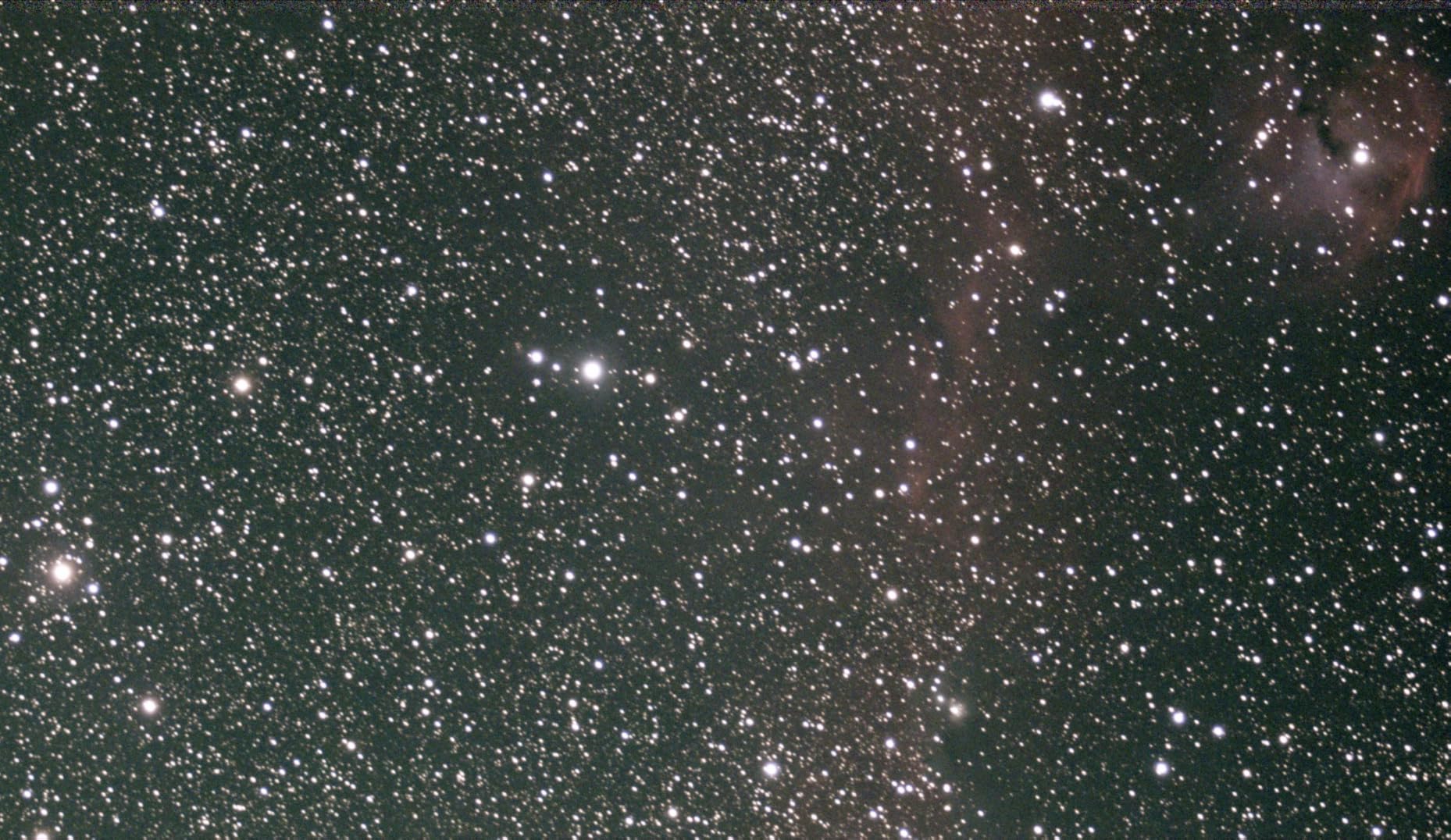
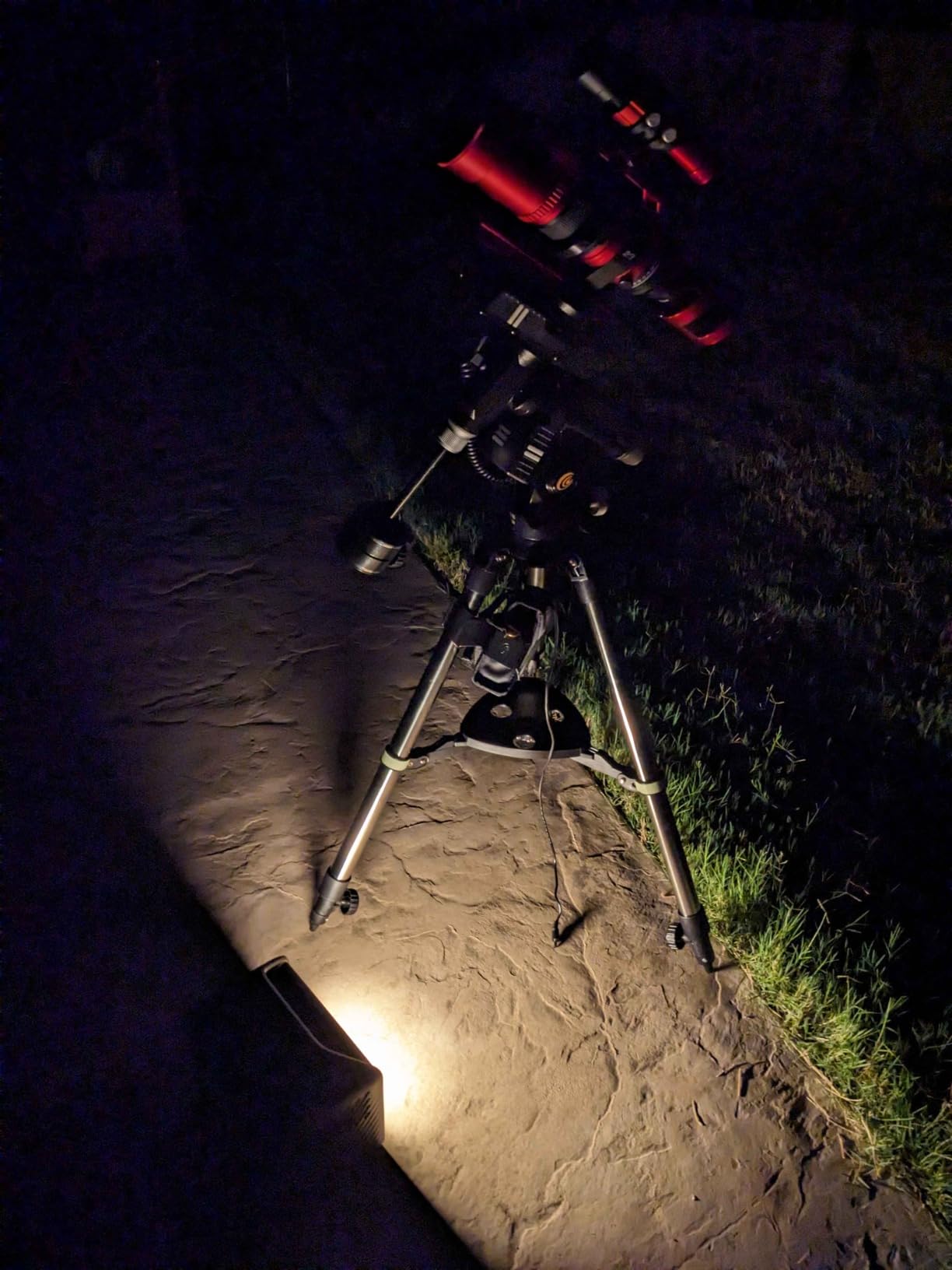
The iEXOS-100-2 is the only tracker in this lineup built around a control system that serious imagers actually pair with third-party software. The PMC-Eight architecture runs eight independent processors, which is why owners driving it with ASIAIR, StellarMate, Ekos or PHD2 get responsive guiding and roughly 1.5 arcseconds of variation in their data. That number is the whole point of this mount.
The hardware is quiet, which matters more than it sounds during long sequences near a campsite. Clutched dual-axis worm gears with stepper belt drives run near-silent, and the clutched right ascension and declination axes let you balance once and then rebalance quickly in the dark without dismantling anything.
Payload is generous at roughly 19 lb depending on configuration, and the polar alignment sight hole through the right ascension axis has fine altitude control, which is a real advantage over a plain notch. In practice owners carry 14 to 19 lb loads with a modest tripod, so the head is not the limiting factor here.
Set expectations on the rating first. At 3.9 stars across 84 reviews, this is the most polarizing tracker here, and the gap between owners is stark. People who drive it with external software rate it near the top of the class. People who rely on the bundled app rate it near the bottom.
Why the software opinions are so divided
The bundled ExploreStars apps are criticized for a clunky interface, crashes and flaky connectivity. That is the single most cited complaint in the data, and it is worth weighing because it is the reason for the rating split rather than the mechanics.
Alignment is the other weak point. There is no polar scope included, the sight-hole method is basic, and azimuth adjustment is nearly nonexistent without an extra adapter plate. You also need eight C batteries, which adds bulk and a charging burden to field use, and the mount drops connections on marginal voltage.
Who should buy the iEXOS-100-2
Buy it if you already own or plan to own an ASIAIR-class controller and you want guided deep-sky imaging with a lightweight, quiet, dual-axis mount. Under those conditions it is arguably the most capable tracker in the lineup, with the payload and the guiding accuracy to prove it.
Pass if you want a mount that works well straight out of the box with a phone. For that, the Sky Adventurer 2i or the SkyGuider Pro are calmer choices, because their alignment and control story needs fewer extra purchases.
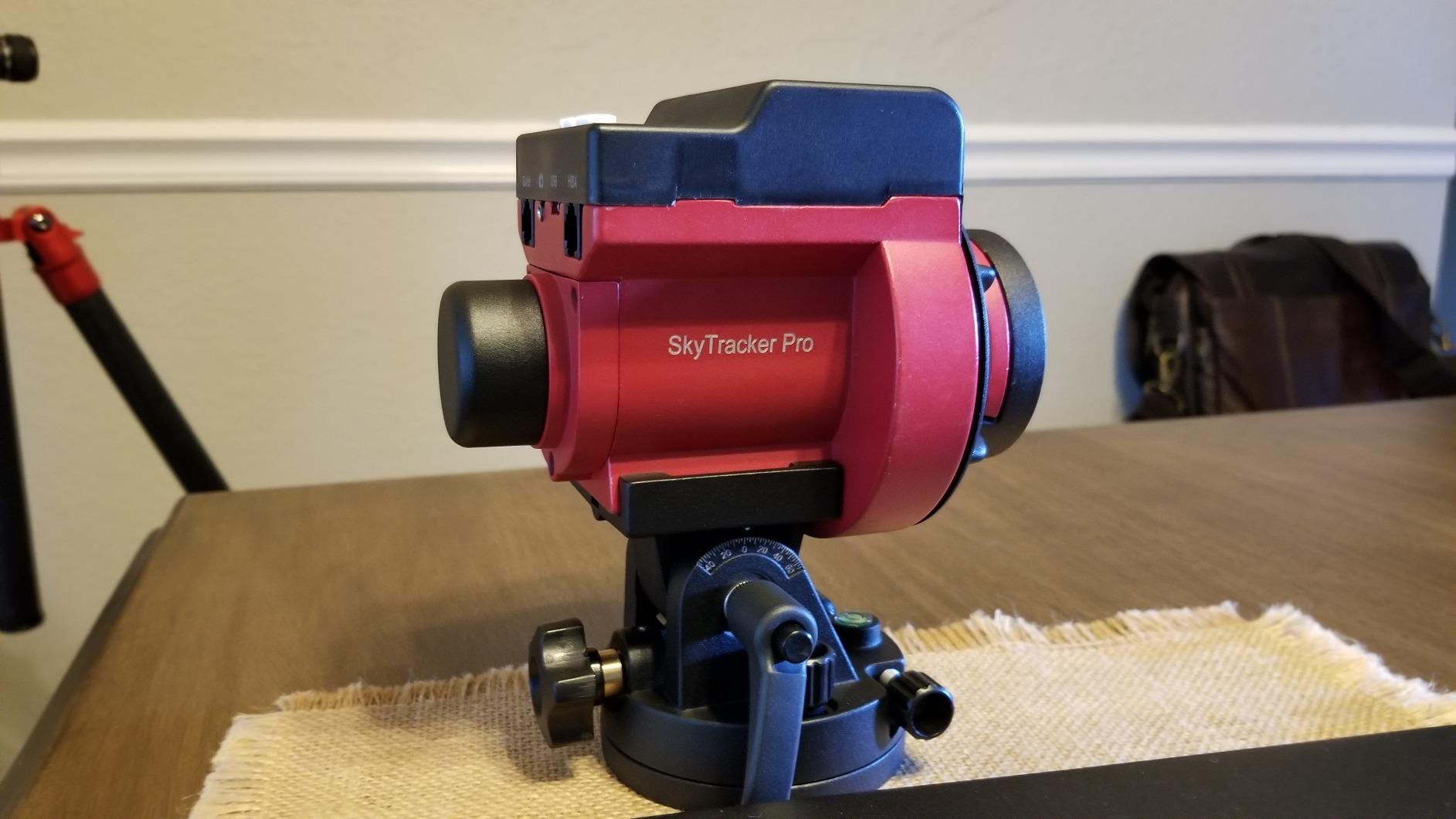
5. iOptron SkyTracker Pro – Best Entry Tracker for Beginners
iOptron SkyTracker Pro Camera Mount with Polar Scope, Only
6.6 lb payload
Five tracking speeds
Internal rechargeable battery
Polar scope with dimmable LED
Folds to 4.5 inch cube
Pros
- Trail-free exposures from one to five minutes
- Nearly silent drive
- Internal battery needs no external power
- Many fine-tuning knobs
- Compact 3.3 lb body with padded bag
Cons
- Only 6.6 lb payload
- Supplied dovetail base is not Arca-Swiss
- A separate ball head is often needed
The SkyTracker Pro is the simplest tracker here and the one most beginners actually finish setting up. Five tracking speeds cover 1x sidereal, half sidereal for sky and landscape blends, solar, lunar and both hemispheres, so a single head handles a full year of targets without a firmware visit. The polar scope has a dimmable LED, which is a small feature that makes dark-field alignment far less destructive to your night vision.
Tracking results are the best argument for it. Users consistently report trail-free exposures from one to five minutes after alignment, and the drive is close to silent. The internal rechargeable battery charges over micro USB at 5V to about 80 percent in five hours, which removes the battery logistics entirely for a single night.
At 3.3 lb and folding to roughly 4.5 by 4.5 by 3.7 inches, it disappears into a camera bag. A padded carrying bag is included, which is the sort of thing that costs nothing and matters when you are moving between spots to dodge clouds.
Alignment is where the fine-tuning knobs earn their keep, and they are worth learning. There are multiple adjustment points for latitude and azimuth rather than a single coarse control, and the dimmable scope LED lets you find Polaris or the southern equivalent without ruining dark adaptation.
Accessories you will need to add
The 6.6 lb payload is the hard limit. Lenses in the 70mm to 200mm range and anything in the 200mm to 500mm range need the optional counterweight, and a counterweight moves the center of gravity away from the axis, so balance it properly afterward. Add a real ball head and the accessory list gets longer.
The supplied dovetail tripod base is not Arca-Swiss compatible, and reviewers call it unstable. It also will not index on tripods with a fixed north marker, which is a small detail that catches people out. Budget for a proper ball head with a camera-specific plate rather than trying to make the supplied base work.
Who the SkyTracker Pro suits
This is the tracker for a first Milky Way season, a wide-angle to short telephoto lens, and anyone who values silent operation and a self-contained battery over payload headroom. It also works well for time-lapse and star-trail sequences at half sidereal rate.
Pass if you already know you want a 200mm-plus lens, or if you want autoguiding. There is no ST4 port here, so guided imaging is not on the table, and the accessory list is the part that catches first-time buyers.
6. Sky-Watcher Star Adventurer Mini Pro Pack – Best for Hiking and Backpacking
Sky-Watcher Star Adventurer Mini Pro Pack (S20582)
1.5 lb tracking platform
6.6 lb payload
Wi-Fi with SynScan app
Equatorial base and polar scope
24 hour AA runtime
Pros
- Only 1.5 lb for the platform
- 6.6 lb payload covers most setups
- Polar scope and equatorial base included
- Up to 24 hours on AA batteries
- Brass and aluminum gears
Cons
- Highest one-star share at 15 percent
- SynScan app less refined than dedicated apps
- Light build amplifies tripod flex
- Not suited to telescope payloads
The Star Adventurer Mini exists for one reason, and that reason is weight. At 1.5 lb for the tracking platform, it is the lightest complete tracking solution in this group, and for a photographer walking to a ridge with a full camera bag it changes what nights are possible. The included deluxe equatorial base and polar scope mean it is genuinely usable straight from the pack.
Payload is 6.6 lb, which covers most mirrorless bodies and DSLRs with a fast wide or short telephoto lens. The brass and aluminum gear drive gives smoother tracking than the weight suggests, and Wi-Fi control through the free SynScan app lets you start sequences without touching the camera.
Power is where it wins on paper. A built-in AA compartment runs up to 24 hours, with a 5V mini-USB input for external power, so you can bring alkaline cells instead of a battery bank. Reviewers consistently highlight the Dec bracket for fine camera positioning and counterweight use, which is included.
Now the honest part. At 3.7 stars across 88 reviews, this is rated lowest in the lineup, and 15 percent of ratings are one star, the highest share of any tracker here. The complaints cluster around rigidity rather than electronics: a very light chassis amplifies tripod flex and vibration, which softens corners on your frames.
Managing the light build
The fix is tripod stiffness, not patience. A rigid, well-spread tripod makes the Mini usable at focal lengths where it would otherwise disappoint. The SynScan app and Wi-Fi control are also less refined than the dedicated astronomy apps on the larger models, so plan on setting rates on the head rather than the phone.
It is not a telescope mount. Reviewers are clear that heavy telescope payloads are outside what this chassis handles well, and a counterweight is a partial solution rather than a real one.
Who the Mini Pro Pack suits
Buy it if you hike to dark skies, backpack between observatories, or fly with imaging gear and need every gram accounted for. Batteries are not included, so add a set of AA cells to your kit before the first trip.
Pass if you shoot from a fixed backyard setup, or if you are stacking long exposures of deep-sky targets where rigidity matters more than grams. In that case, spend the extra weight on a metal-bodied head.
7. Vixen POLARIE U – Best Rigidity in a Small Package
Vixen POLARIE U Star Tracker
0.58 kg body
Five variable tracking speeds
ST4 autoguiding port on RA
Smartphone shutter release
4 AA or USB Type-C power
Pros
- Very rigid for its size
- Near-point stars at 50mm and around 200mm
- Variable speeds for lunar and solar
- Smartphone shutter release
- Premium white finish
Cons
- Top tracking speed of 10x is slow
- Adapter hardware and Vixen accessories cost extra
- Short AA runtime
- English manual not guaranteed
The POLARIE U is the smallest and stiffest tracker we tested, at 0.58 kg and 4.5 by 2.8 by 3.5 inches. Users report no perceptible play in the rotation axis, which is the mechanical complaint that limits every other ultra-compact model. That rigidity is why one owner achieved near-point-source stars at 200mm after only approximate polar alignment.
Five variable tracking speeds let you match lunar and solar rates, and the smartphone shutter release means you can run interval sequences without a cable and an intervalometer. It is also described as excellent for timelapse work, and the white finish gives it a genuinely premium feel that is unusual at this size.
The ST4 autoguiding port, RA only, is a real differentiator. It is rare to find a tracker this compact that can accept guiding commands, which opens the door to guided imaging without moving up to a much larger mount. Compatibility with Vixen accessories such as the polar scope and multi-head base is another plus if you already own that ecosystem.
Where the Vixen ecosystem bites
Accessories are the catch. Reviewers call Vixen adapter hardware and accessories expensive, and one Japanese owner lost a month waiting on a missing 1/4 to 3/8 inch adapter screw. Check the box contents against your existing hardware before you order anything else.
The top tracking speed of 10x is slow if you want faster rates for some timelapse work, and the two AA cells limit runtime on battery power alone. USB Type-C external input is the better long-session option, and the English-language manual is not guaranteed.
Who the POLARIE U suits
It suits photographers who work with fast wide and standard lenses but refuse to accept soft corners, and for a first guided-imaging attempt on a small tracker because of the ST4 port. It is also a strong travel choice for someone who wants a step up in rigidity without the weight of a metal equatorial head.
Pass if you are on a tight accessory budget or want to run long timed sequences away from a power bank. The core mechanism is excellent; the ecosystem around it is what costs.
8. Kenko Astro Tracker SKYMEMO T – Best for Compact Mobile Setups
Kenko Astro Tracker SKYMEMO T Portable Tracking Platform Red
650 g body
Skymemo T smartphone app
Five tracking modes
Built-in polar scope
Built-in interval timer
AA power, about 5 hours
Pros
- Among the smallest and lightest trackers
- Solid build for the class
- Tracks well with about 1.5 kg of gear
- App performs reliably
- Built-in interval timer
Cons
- No ST4 autoguiding port
- External polar scope light is easy to lose
- No physical control buttons
- Equatorial head sold separately
- Only 9 ratings to go on
The SKYMEMO T is a 650 g tracking platform with a built-in polar scope, five tracking modes and an interval timer built into the body. The timer is the detail we liked most in testing, because it removes the external shutter release from your kit entirely and the app becomes optional for basic sequences.
Tracking is competent for what it carries. Reviewers report correct tracking with about 1.5 kg of gear including a 300mm lens, and the smartphone app performs reliably for star and constellation tracking. Build quality is generally perceived as solid and good value for the class.
It is worth knowing that reviewers note this is essentially the same platform as the Sky-Watcher Star Adventurer Mini, so you are choosing between branding, the red finish and the interval timer rather than between different mechanisms.
The limits that matter for a first buyer
There is no ST4 autoguiding port, so guided imaging is off the table and long focal lengths are limited. The polar scope illuminator is an external module with a cheap-feeling build, and switching it on and off means removing and replacing a battery.
There are no physical control buttons at all, which means the app is the only interface and a flat phone battery ends your session. The equatorial head is sold separately and is close to essential, so treat it as part of the purchase rather than an optional extra. With only 9 ratings, there is very little long-term owner feedback to lean on.
Who the SKYMEMO T suits
It suits a photographer who wants the smallest complete package with a built-in polar scope and interval timer, and who is shooting wide or standard focal lengths without guiding. The interval timer is genuinely useful for time-lapse sequences on the trail.
Pass if you want long-term reliability evidence, need autoguiding, or plan to grow into longer lenses quickly. The Star Adventurer Mini covers similar ground with a much larger review base, and the iOptron SkyTracker Pro adds an internal battery and finer alignment controls.
How to Choose a Star Tracker: Payload, Alignment, Power and Portability
The eight trackers above differ less in tracking ability than their spec sheets suggest. What separates them is payload headroom, rigidity, alignment hardware and how much of the rest of the system you have to buy yourself. These are the factors worth thinking through before you commit.
Payload capacity: the number that actually matters
Payload ratings are measured with a balanced load, and the balance point matters as much as the number. A camera with a 200mm lens mounted far from the rotation axis can overload a mount that lists adequate capacity. Community advice that we found repeated and agree with is to run at least 30 to 50 percent above your rig weight, so a 6.6 lb rating on a 4 lb rig is workable while the same rating on a 6 lb rig is not.
Two ratings appear in the specs and are easy to confuse. Axial load is the total weight, while moment load accounts for how far that weight sits from the axis. Consumers rarely see moment load published, so treat the headline payload number as an optimistic guide and stay well under it.
Polar alignment: the step beginners skip
Alignment is the single biggest frustration for new imagers, and the trackers that include an illuminated polar scope save the most time. A sight hole, like the one on the iEXOS-100-2, works at wide latitudes with a bright star but takes practice. App-assisted alignment helps only when Polaris is clearly visible, which is a problem in the southern hemisphere where you line up on a different pair of stars.
Here is the sequence that worked for us. Level the tripod first, then set the wedge or base to your latitude. Rotate the whole head so the right ascension axis points at the celestial pole, eyeballing north or south. Adjust the altitude and fine azimuth knobs until the pole star sits centered in the polar scope. Confirm with a short test frame before you commit to a long sequence. With practice, users report the whole process takes under five minutes.
Power options and cold weather
AA cells win for remote work because there is nothing to charge. The Star Adventurer 2i Pro Pack ran roughly 40 hours on a set in our sessions, and the Star Adventurer Mini runs up to 24 hours internally. Internal rechargeable batteries, as on the SkyGuider Pro and SkyTracker Pro, are quieter to use and easier to top up, but rated runtimes such as 20 hours at 20 degrees C fall noticeably in cold air.
If you shoot in winter, carry more cells than the runtime suggests. That anxiety about cold-weather battery life is one of the most common complaints in forums, and it is entirely avoidable with a spare set.
Portability and weight for travel imaging
Travel trackers split into two camps. Sub-2 lb platforms such as the Star Adventurer Mini at 1.5 lb and the Vixen POLARIE U at 0.58 kg are for people who walk to their dark sky. Everything above 5 lb is for car-camping and backyards. The complete GTi kit at a listed 26 lb belongs firmly in the second group.
One caution on ultralight builds: less mass means more sensitivity to tripod flex, which is why the Mini carries the lowest rating in this group. Weight is a feature for stability, not just a burden to carry.
Accessories you will still need to buy
Almost every tracker here needs at least a proper ball head, and that is where hidden costs bite. The SkyTracker Pro needs one and its supplied dovetail base is not Arca-Swiss. The SKYMEMO T requires an equatorial head. The counterweight kits for the 6.6 lb mounts are optional but necessary past 200mm. The Vixen adapter screws and accessories add up quickly. Budget for these before you order, not after.
Control, connectivity and app reliability
Every tracker in this roundup except the SKYMEMO T can be driven by a phone, but the app experiences vary widely. The SAM Console app on the 2i is basic. SynScan on the Mini is functional. ExploreStars is the weak link, with owners citing crashes and flaky connectivity. If you already run a dedicated controller such as an ASIAIR-class unit, skip the bundled app entirely and the iEXOS-100-2 becomes much more attractive.
Matching your camera and lens to the exposure limit
The 500 rule says divide 500 by your full-frame equivalent focal length to get the longest exposure in seconds before stars visibly trail. At 14mm that allows about 35 seconds, and at 200mm only about 2.5 seconds. The NPF rule is more accurate for fast wide lenses. Mount manufacturers quote roughly 500 to 1000 as the usable range, so align well and stay under half the calculated number for safety.
On whether f/4 is enough: yes for wide-field Milky Way work from a dark site, because aperture controls how much light you gather, while focal length controls how much you magnify the sky. Faster glass helps when you need shorter exposures or dimmer skies. For light-polluted suburban skies, a Bortle 6 or 7 site benefits much more from a fast lens than from a wider aperture on a slow one, and stacking later frames together reduces noise.
When to upgrade from a tracker to a full equatorial mount
Move up when you want a guide scope and autoguiding, when your payload passes 10 lb, or when you start chasing targets that need hours of total integration time. A full mount also gives you the option of a telescope, which the trackers here mostly discourage. If you are still deciding, a tracker with a Vixen-style dovetail keeps that door open, and a tripod you can carry to both uses is worth more than a saving on one component. If a telescope is next on your list, start with our best telescopes for astrophotography guide alongside this one.
Frequently Asked Questions
What is the 500 rule in astrophotography?
Divide 500 by your full-frame equivalent focal length in millimetres to get the longest exposure in seconds before stars visibly trail. At 14mm that is about 35 seconds, and at 200mm it is about 2.5 seconds. Mounts are usually rated near 500, so align carefully and stay under half that figure for safety.
Do you need a star tracker for astrophotography?
If you want anything beyond a snapshot, yes. On a fixed tripod, wide lenses start showing trails past about 20 seconds and telephoto lenses past about 5 seconds. A tracker counteracts the Earth’s rotation so stars stay sharp through multi-minute exposures, which is what makes clean Milky Way frames and deep-sky stacking possible.
What is the best device for astrophotography?
For most people, a motorized star tracker such as the Sky-Watcher Star Adventurer 2i Pro Pack is the best starting device, because it adds tracking to a camera you already own. If your goal is guided deep-sky imaging, the iEXOS-100-2 PMC-Eight pairs better with a dedicated controller. If you want GoTo pointing and everything in one box, the Star Adventurer GTi kit is the simplest route.
Is f/4 enough for astrophotography?
Yes, f/4 is fine for wide-field Milky Way work from a dark site. Aperture governs how much light you gather while focal length governs how much you magnify the sky, so a fast lens is not always necessary. Under heavy light pollution, a faster lens or stacking many shorter frames helps more than any tracker upgrade.
How accurate are star trackers?
Once polar aligned, a well-balanced tracker with a metal body like the iOptron SkyGuider Pro holds stars sharp through multi-minute exposures and can push to around 200mm with good results. Lightweight plastic platforms such as the Star Adventurer Mini are more sensitive to tripod flex. Guiding through an ST4 port, as on the Vixen POLARIE U, tightens accuracy further on longer lenses.
How do I polar align a star tracker?
Level the tripod, set the base to your latitude, then rotate the head until the right ascension axis points at the celestial pole. Adjust the altitude and fine azimuth knobs until Polaris sits centered in the polar scope, then take a short test frame to confirm. In the southern hemisphere, align on a suitable pair of stars instead, and expect the process to take a few attempts at first.
How long do star tracker batteries last?
It depends on the model and the temperature. The Star Adventurer 2i Pro Pack runs roughly 40 hours on one set of AA batteries, the Star Adventurer Mini runs up to 24 hours internally, and the iOptron SkyGuider Pro is rated up to 20 hours at 20 degrees C. Cold air shortens all of these, so carry spare cells for winter sessions.
Final Verdict on the Best Star Trackers for Astrophotography in 2026
Our pick of the best star trackers for astrophotography in 2026 starts with the Sky-Watcher Star Adventurer 2i Pro Pack, which balances payload headroom, a long AA runtime and an illuminated polar scope in a package that suits a backyard and a campsite. Buy the iOptron SkyGuider Pro when vibration control and long lenses matter most, the Star Adventurer GTi kit when you want GoTo and every accessory in one box, and the Vixen POLARIE U when you want rigidity and an autoguiding port in something you can carry in a pocket.
Whichever you choose, spend your remaining budget on a stiff tripod, a proper ball head and a counterweight if you shoot past 200mm. Those three items do more for your final images than any upgrade in the mount itself, and they are where most first-time buyers regret underestimating. If you are still working out what else the night sky kit needs, our picks for the best fitness trackers for students cover the daytime half of a busy schedule, but the tracking and alignment habits above are where the real gains are.