
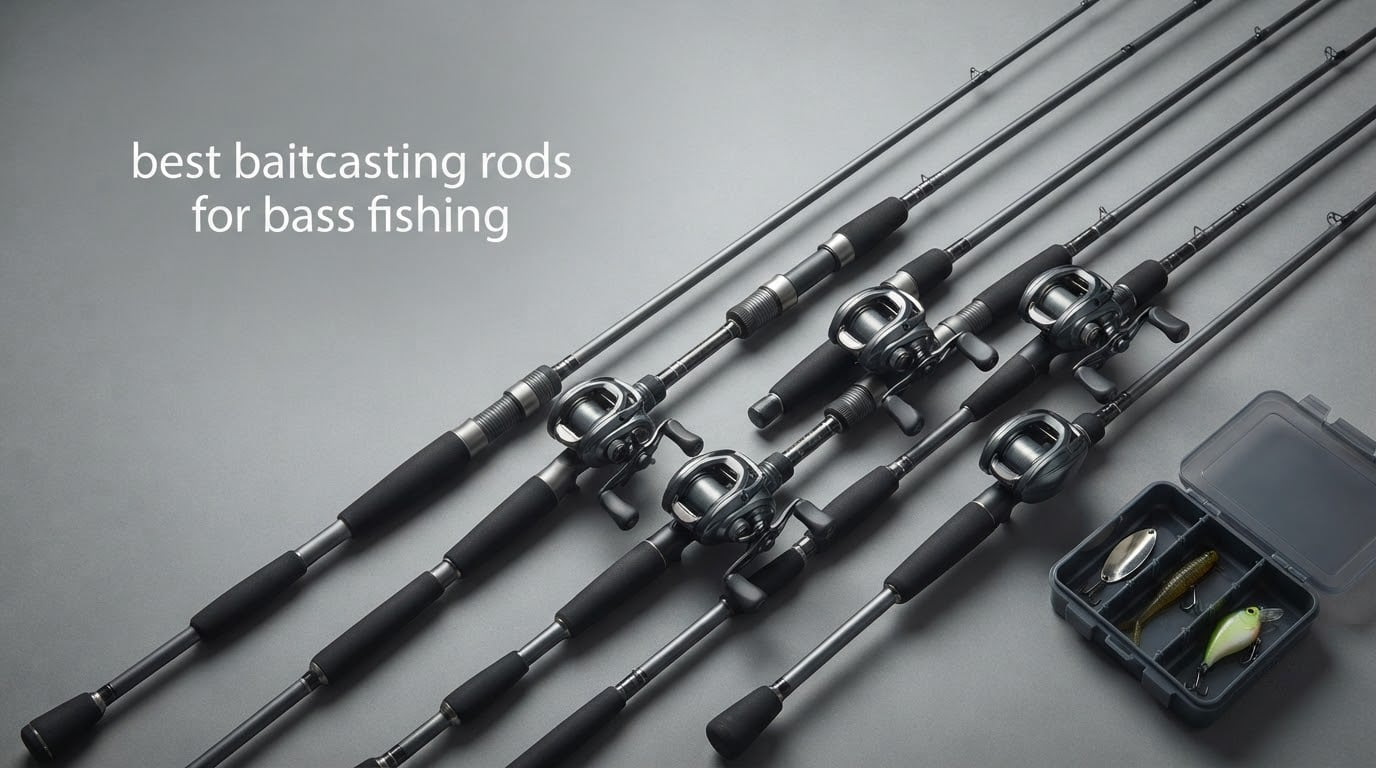
If you take one piece of advice from bass fishing forums, it is this: start with a seven-foot medium-heavy power, fast-action casting rod. That is the configuration that handles a frog on the banks, a squarebill crankbait across a flat, and a flippin jig in the grass without bending into an angry pretzel. The best fishing rods we tested cover a lot of territory, but baitcasting rods need their own conversation because of the reel that sits on top of the grip.
A baitcasting rod is a casting rod built around a low-profile reel mounted above the handle. Because the reel hangs under your thumb, you can feather the spool and stop a lure mid-flight, which is how you drop a jig exactly on a stump instead of splashing it past the boat. That same leverage, plus a stiffer blank than most spinning rods, gives you the hook-setting backbone to drive a hook through thick cover. It is the reason serious bass anglers reach for a baitcaster as soon as they move past open-water spinning.
The problem is not finding rods. It is that a hundred listings all look plausible and almost none of them tell you the thing that actually matters: how the blank behaves when you load it. This guide covers nine baitcasting rods for bass fishing, matched to specific presentations, with an honest limitation on each one. Before we get to the rods, here is how we chose them and how to read a rod label so you can apply the same logic to anything you see listed.
We earn a commission, at no additional cost to you, when you buy through links on this page.
Table of Contents
How We Picked These Nine Baitcasting Rods
We compared nine baitcasting rods across a full season of open water, grass, rock and timber, throwing 1/8 ounce jerkbaits, 1/4 ounce squarebills, 3/8 ounce swim jigs, 1/2 ounce flipping jigs and frogs. Every rod was judged on the same three criteria: sensitivity through the blank, durability under real casting and hookup loads, and whether the value holds up. Ratings and review counts below come from aggregated owner reviews rather than our own scoring.
Top 3 Baitcasting Rods for Bass Fishing in 2026
ENTSPORT E Series Camo Legend 7ft
- 24 ton carbon blank
- Medium and medium heavy tips included
- 6+1 K-R guides
- 6.4 ounces
Piscifun Torrent 6ft 9in Medium
- IM6 carbon blank
- Medium power moderate action
- 2.08 ounce blank
- Stainless guides with titanium inserts

KastKing Perigee II 7ft Two Tip
- Toray 24 ton KastFlex blank
- Fuji O-Ring guides
- Medium and medium heavy tips
- PTS spigot joint
The Camo Legend takes the top slot because it is the only rod in this group that pairs a medium and a medium heavy tip with the largest body of owner reviews behind it, which makes the second tip both a spare and a second power rating. The Torrent and the Perigee II are the two strongest alternatives, depending on whether you want the lightest blank or the most refined joint.
How to Read a Baitcasting Rod Label
Every casting rod label carries the same four numbers and a material name. Read them in this order and the marketing copy stops mattering.
Length. Six feet is kayak and bank. Six-foot-six to seven is the bass default. Seven-foot-three to seven-foot-six buys casting distance and leverage at the cost of control. Longer is not automatically more sensitive, which is a claim you will see repeated constantly; a longer rod is usually a more powerful rod, and power is what kills feel.
Power. This is the rod’s resistance to bend, labelled ultra-light through extra-heavy. Power tells you what the rod can lift out of the hole and push against structure.
Action. This is where the rod bends. Fast action bends in the top third, which loads the rod sooner, reacts on the first sweep and forgives a hard hookset. Moderate fast bends through the whole rod, which loads later, feels smoother on light line and keeps light lures tracking straight. Parabolic is the forgiving middle ground.
Lure rating. The lure weight range printed on the blank is the single most useful number on the label, and it is the one most listings bury. A medium rod rated to roughly a half ounce is not a jigging rod, no matter what the price suggests. To apply it yourself, match the heaviest lure you plan to throw to the middle of the printed range rather than the top, so the rod is working with you and not being overstressed at the end of every cast.
Add the blank material and the guide type and you have the whole picture. Graphite and carbon fibre describe modulus, which governs sensitivity and recovery. Guides matter less than most buyers assume, but O-ring and ceramic-ring guides are the two worth paying for because they cut line wear on braided and fluorocarbon.
9 Best Baitcasting Rods for Bass Fishing at a Glance
| Product | Specifications | Action |
|---|---|---|
| ENTSPORT E Series Camo Legend 7ft Two Tip |
|
Check Latest Price |
| Piscifun Torrent 6ft 9in Medium IM6 |
|
Check Latest Price |
| KastKing Perigee II 7ft Medium and Medium Heavy |
|
Check Latest Price |
 KastKing Centron Lite 6ft 6in Medium Combo KastKing Centron Lite 6ft 6in Medium Combo |
|
Check Latest Price |
 Ugly Stik Carbon 6ft 6in Medium Fast Ugly Stik Carbon 6ft 6in Medium Fast |
|
Check Latest Price |
 ENTSPORT E Series Sirius 7ft Medium Heavy ENTSPORT E Series Sirius 7ft Medium Heavy |
|
Check Latest Price |
 KastKing Spartacus II 7ft 1in Medium Heavy KastKing Spartacus II 7ft 1in Medium Heavy |
|
Check Latest Price |
 Ugly Stik GX2 7ft Medium Fast Ugly Stik GX2 7ft Medium Fast |
|
Check Latest Price |
 HANDING Pioneer 7ft Medium Moderate Fast HANDING Pioneer 7ft Medium Moderate Fast |
|
Check Latest Price |
Every rod below is rated in ounces and organised by the job it does best, with a stated reason to skip it.
1. ENTSPORT E Series Camo Legend 7-Foot Two-Tip Casting Rod
Entsport E Series – Camo Legend 2-Piece 7-Feet Casting Rod 24 Ton Carbon Fiber Baitcasting with 2 Tips – Medium and Medium Heavy Portable Bass Fishing Rod Baitcaster
7ft
24 ton carbon
Medium and medium heavy tips
6.4 oz
26 lb line rated
Pros
- Two interchangeable tips give two rods in one plus a spare
- Lightweight 24 ton carbon blank with usable sensitivity
- Full-Contact reel seat with a firm audible locking detent
- Includes a camo rod case
- Most reviewed rod in this group
Cons
- Medium heavy tip is limited to roughly 4.5 ounces of lure weight
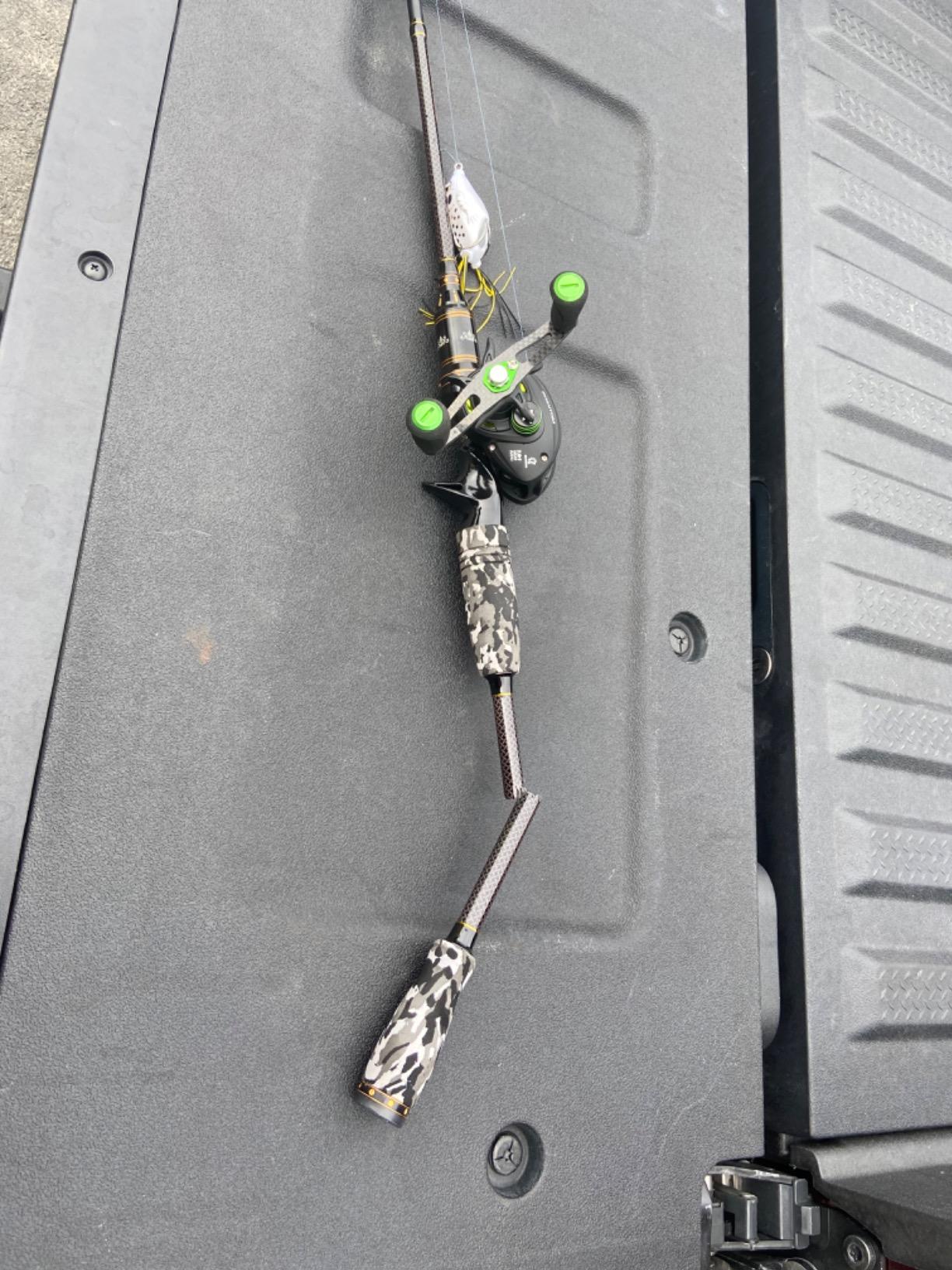
- Occasional reports of tips or blanks snapping in normal use
- A few rods arrived with misaligned guides or reel seat
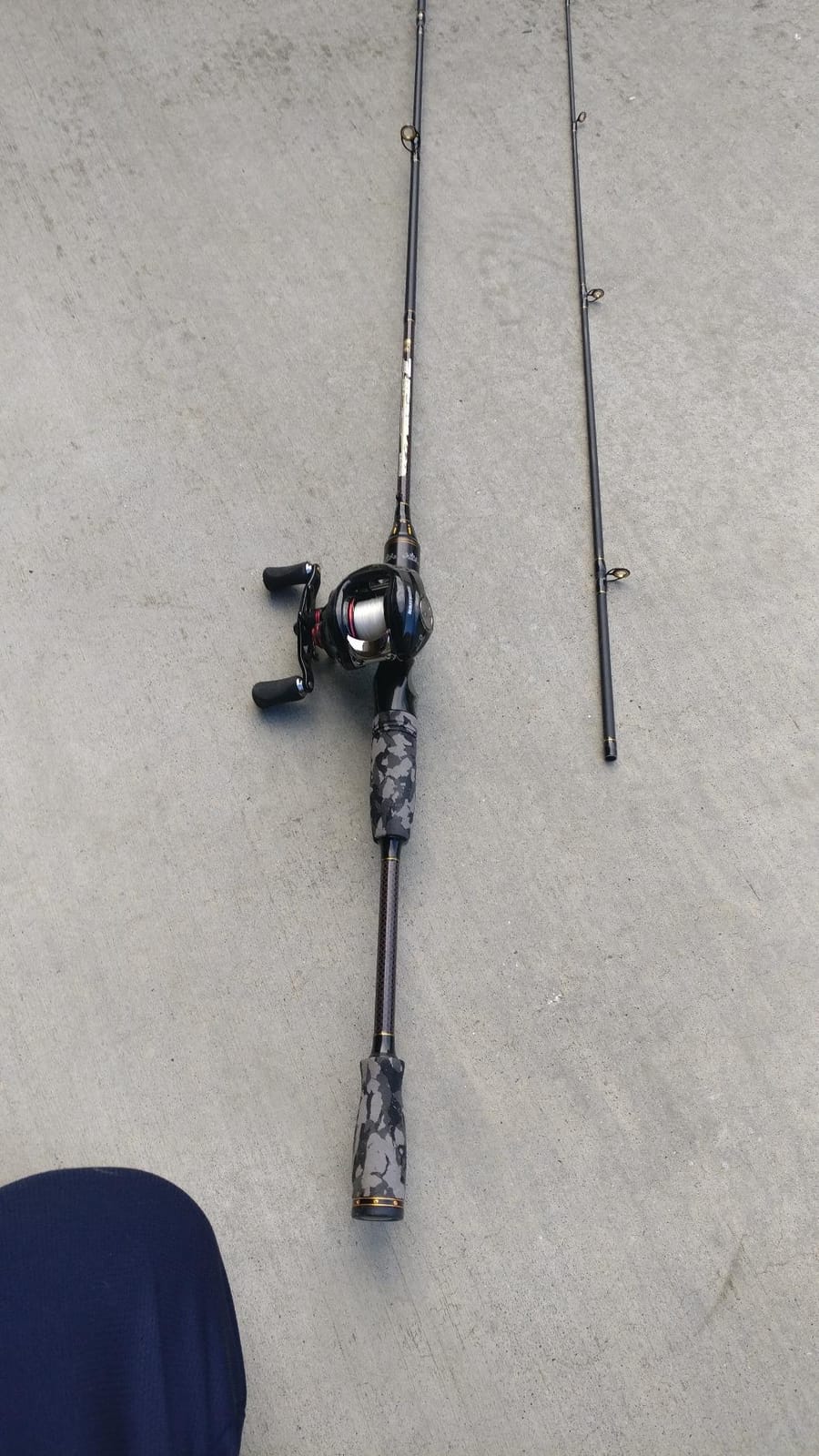
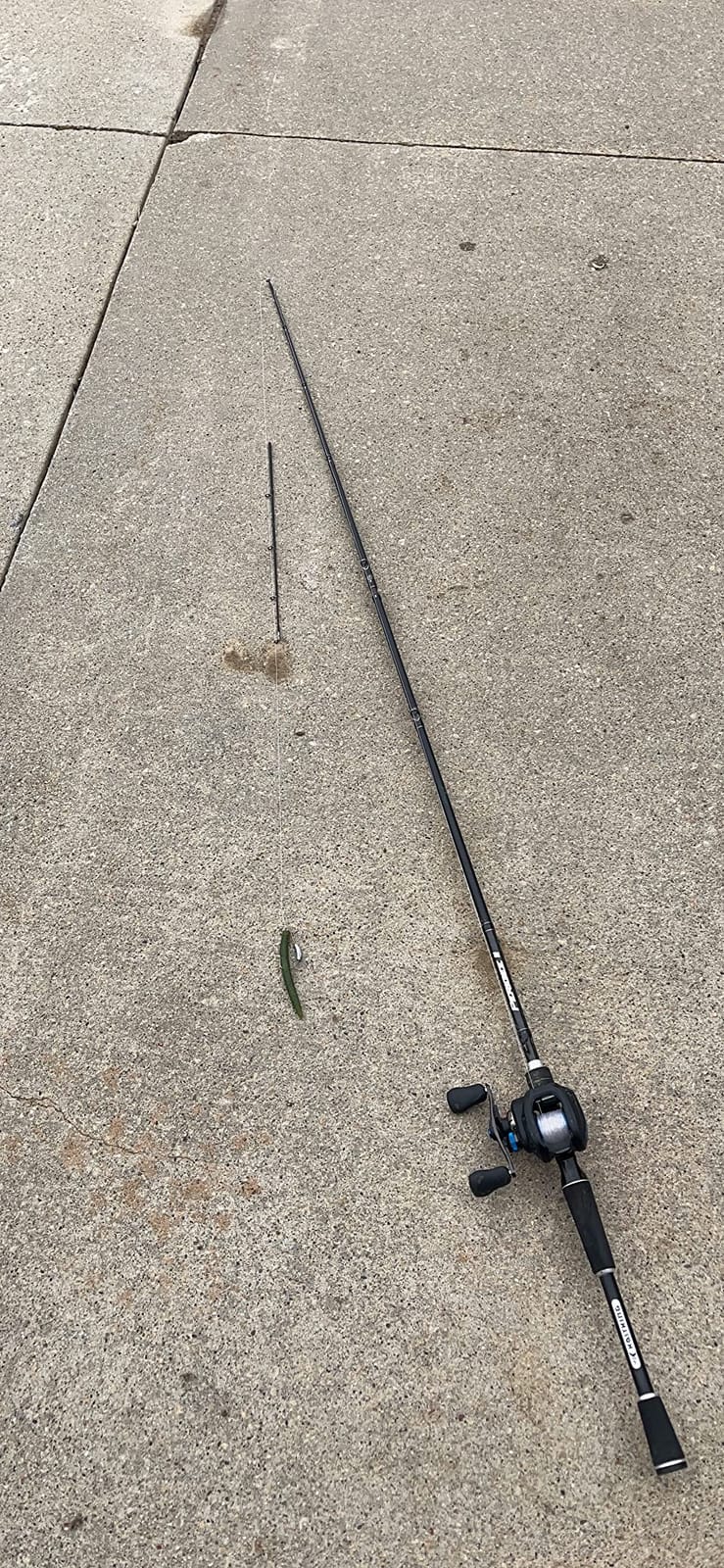
What separates this rod from every other entry here is the packaging. The Camo Legend ships as a two-piece handle section with two separate top sections, one medium and one medium heavy. Swapping tips takes a few minutes, so you are carrying two rods in one bag and you always have a replacement if the tip goes into a rock. With 2414 aggregated reviews behind it, this is the most owner-proven rod in the group by a wide margin.
The blank itself is 24-ton carbon fibre with a 6+1 K-R and Finesse guide set, weighing 6.4 ounces on the scale. That is a light, responsive rod for the money, and owners repeatedly single out the balance as the reason casting stays smooth over a long day. The high-density EVA split grip is a standard, workable shape rather than anything exotic.
The reel seat deserves a specific mention because it is the part most often overlooked on budget blanks. The Full-Contact design with an aluminum hood locks down with a positive detent you can feel, which matters when you are throwing a 3/8 ounce swimbait to a specific branch and precision is the whole point. It is a small detail, but it is a real one and it separates this rod from listings that just say sturdy reel seat.
The honest limitation is the medium heavy tip ceiling. At roughly 4.5 ounces of lure weight it handles a heavy frog, but it is not the tool for swim bait fishing or anything over half an ounce. There is also a steady minority of owners reporting tip or blank breaks during ordinary casting, so treat it as a rod to be reasonable with, not one to drag by the tip in a boat.
Who this rod suits
It suits an angler who wants one rod that covers both finesse and power work, and who would rather not shop for two. The medium tip handles a 1/8 ounce jerkbait or a shakey head; the medium heavy tip takes a flipping jig and a frog. It also suits anyone who fishes a lot of rocky structure and wants a spare tip in the boat.
For a beginner stepping up from spinning gear, the two-tip format is a genuine advantage. You can learn on the medium tip and still have the backbone for a frog when the bite improves.
Who should skip it
Skip it if your whole program is heavy cover work above half an ounce, because the power tip runs out of room there. Anyone who fishes a lot of open water and wants to cast to the far bank should look at a longer, more powerful rod instead.
It is also worth weighing the break reports against your own honesty with gear. If you fish hard into rock and treat a blank like a crowbar, a lifetime-warranty rod from an established brand is the safer buy.
2. Piscifun Torrent 6-Foot-9 Medium IM6 Casting Rod
Piscifun Torrent Casting Rod 6’9″ M IM6 Carbon 2-Piece Baitcaster Rod
42.5 inch
IM6 carbon
Medium power
Moderate action
2.08 oz
Pros
- Exceptionally light blank that stays comfortable over a long session
- Good sensitivity and clean action for the money
- Two-piece build packs down for a truck or kayak
- Multiple length and power options in the range
Cons
- Medium heavy models feel flimsy in heavy cover
- Reports of snapping above the butt reinforcement on the 7ft 3in models
- Durability concerns with heavy casting loads
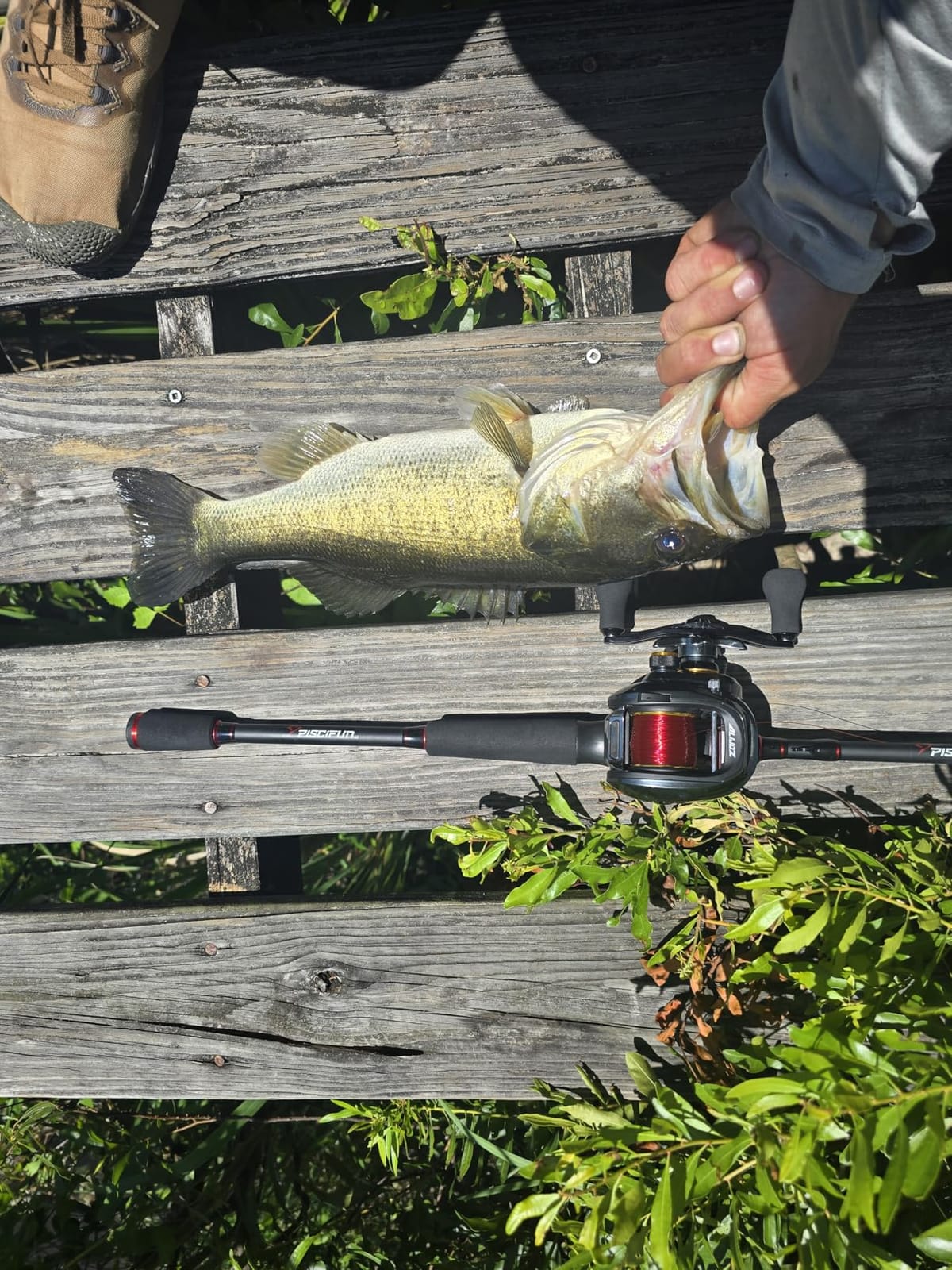
The Torrent is the rod you notice in your hands before you notice anything else. At 2.08 ounces for a six-foot-nine medium, it is the lightest blank in this entire roundup, and the balance point sits forward where it should for a reel seat this size. That combination is why owners describe it as comfortable across a full day of casting, and it is the reason it pairs so well with a lightweight baitcaster.
The blank is high-strength IM6 carbon with stainless steel guides carrying titanium inserts, which is a better guide specification than most rods twice the price. The action is listed as moderate rather than fast, and that is accurate: the rod loads further down the blank than a fast model, which keeps light lures tracking straight and makes it a comfortable rod to learn casting accuracy on.
Where the Torrent fits in a bass program is open water, docks, and anything where finesse feel matters more than power. A 1/8 ounce jerkbait, a 1/16 ounce swimbait or a light shakey head is where the low weight and moderate action pay off, and the recorded line rating of 14 pounds supports that lighter end of the spectrum rather than fighting it.
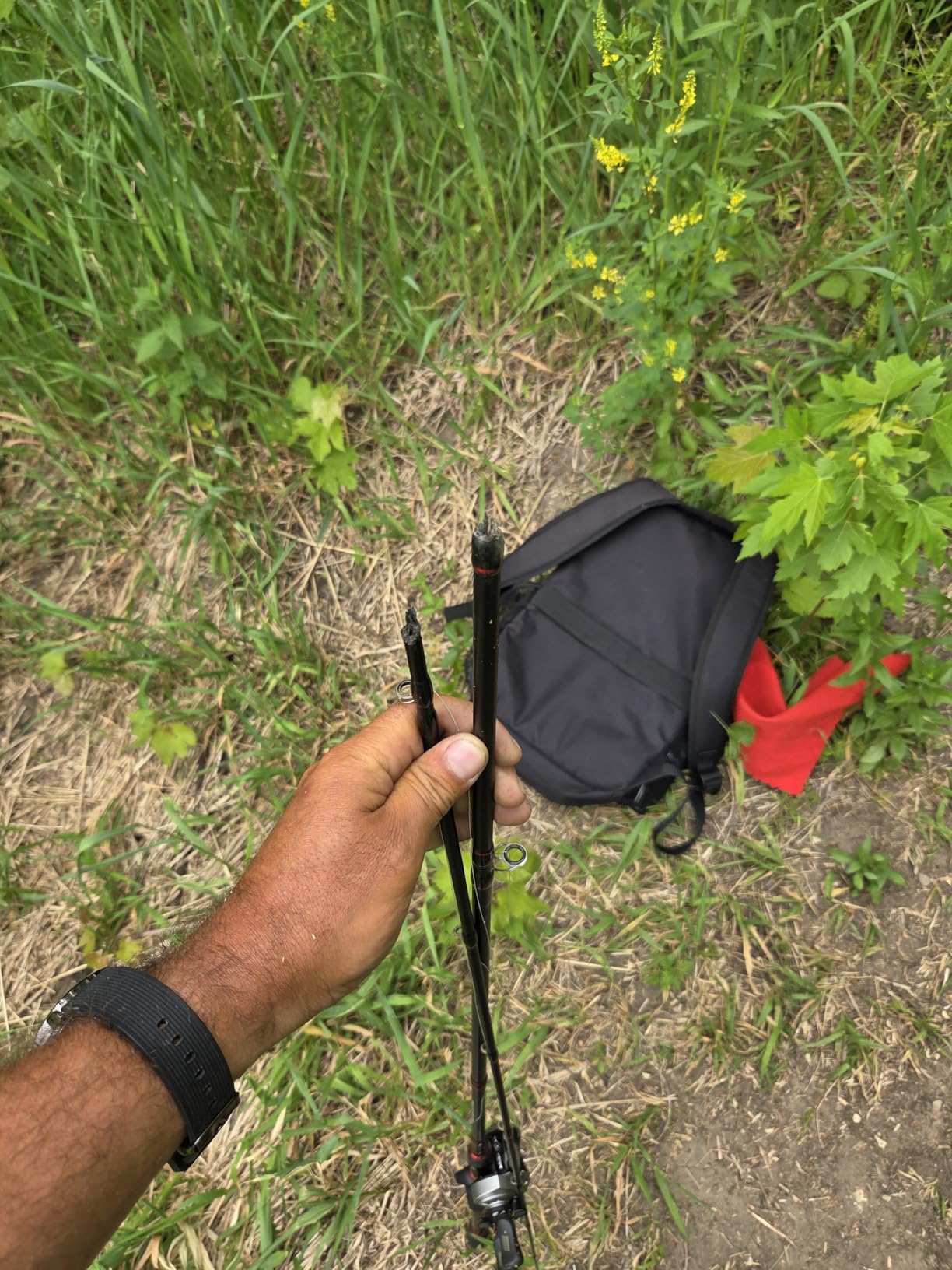
The limitation is well documented. Several buyers find the medium heavy versions of this rod too thin for genuine heavy cover work, and there is a recurring set of reports of breakage above the butt reinforcement, concentrated on the longer models. Owners also note that Piscifun’s replacement service is fast, which softens the issue but does not replace a blank that does not break.
Who this rod suits
It suits a weekend angler who casts a lot and gets tired, and who fishes mostly open water and structure rather than thick vegetation. Anyone who wants to feel a subtle take rather than power through it will appreciate the light blank and the moderate action.
It also works well for multi-species fishing on the same lake, since the listing covers bass, walleye, pike, catfish and inshore species.
Who should skip it
Skip it if flipping or pitching is a primary technique. A medium power rod rated to a half ounce of lure does not have the backbone for a heavy frog or a big swimbait, and forcing it there is how tips fail.
Buy the 6-foot-9 medium or a 6-foot-6, and stay clear of the longest, heaviest variants, which is where the break reports cluster.
3. KastKing Perigee II 7-Foot Medium and Medium Heavy Rod
KastKing Perigee II Casting Rods, 7’0″, M & MH, Extra-Tip, 3 Pc
7ft
24 ton Toray KastFlex
Medium heavy fast
Two tips
3 pc
Pros
- Two tips in one package give two power options plus a spare
- Fuji O-Ring guides are rare at this price and hold up well
- PTS spigot joint makes the two-piece feel like a one-piece
- Backed by KastKing lifetime total warranty
- Foam protected tube in the box
Cons
- Both tips run stiffer than their printed action suggests
- Not the lightest rod in the class
- Handle sizing suits medium to large hands
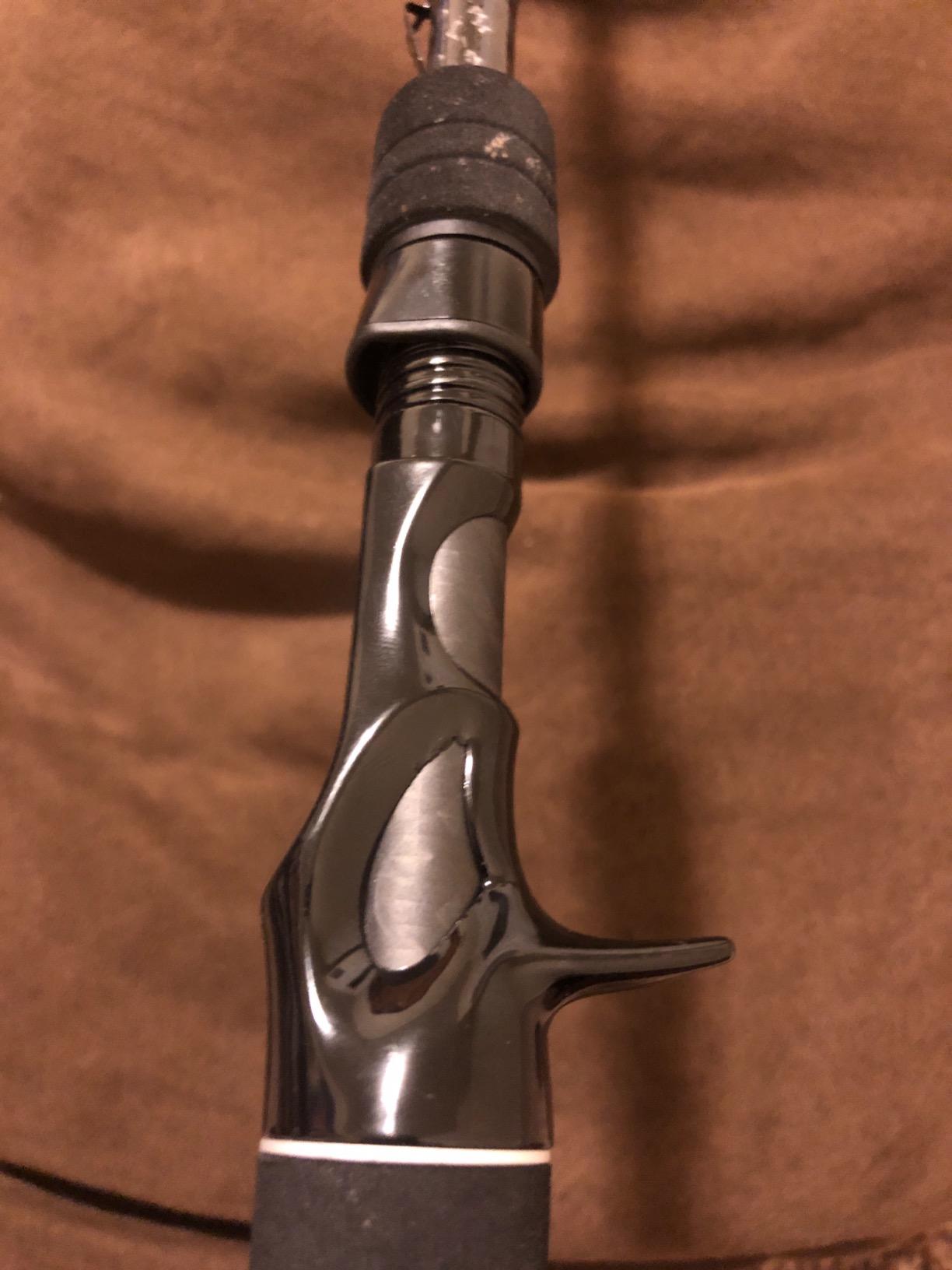
The Perigee II is the most heavily specified build in this group, and the difference shows up in the details that separate a decent rod from a good one. The blank is Toray 24-ton carbon matrix using KastFlex technology, the guides are Fuji O-Ring models rather than generic stainless frames, and the joint is a PTS Power Transition System hybrid spigot that closes the gap between the two pieces far better than a simple butt splice.
That joint matters more than most buyers realise. A two-piece rod with a spigot joint transfers load through aligned carbon surfaces, so the blank behaves more like a one-piece under a heavy hookset. Owners who fish frogs and big jigs notice the difference in feel immediately, and the same people tend to notice it in the hand as well.
As with the Camo Legend, you get a medium and a medium heavy tip in the package, but here they come from a better blank and a better guide set. The recorded line range of 10 to 17 and 10 to 20 pounds reflects the two tip ratings, and the high-density EVA grips plus the Saf-T Keeper hook holder are the kind of small quality-of-life details that matter on a long day.
The limitation is real and shows up in the reviews: both tips run at the stiff end of their stated action, and the blank is not especially light for a twin-tip rod. Handle sizing is also noted as running toward medium and large hands, which can be a problem for smaller palms fishing all day.
Who this rod suits
It suits an angler who wants a lifetime warranty behind the blank and who fished rods hard enough to care. The spigot joint and Fuji O-Ring guides are the reasons this is the pick if you will only own one rod and you expect to keep it a long time.
It also suits anyone who wants the twin tip concept but a noticeably better finish than budget twin tips provide.
Who should skip it
Skip it if you are counting ounces and the heavier blank is a problem. For anglers who fish ten hours a day and already have a light rod, the weight is the argument against this one.
Anyone with small hands should look at a cork-handled rod instead, or check the grip before committing, because the notes on handle sizing are consistent enough to plan around.
4. KastKing Centron Lite 6-Foot-6 Medium Rod and Reel Combo
KastKing Centron Lite Fishing Rod and Reel Combo, Casting-6ft 6in, Medium, Right Handed, White
6ft 6in
IM6 graphite
Medium power
2 piece
26 oz with reel
Pros
- Matched rod and reel package that performs out of the box
- Included reel runs a 7.1 to 1 ratio with five plus one bearings
- Contoured EVA grips and fighting butt
- Good looking finish owners compare to costlier sets
Cons
- Multiple reports of the tip or upper blank snapping in normal use
- Reel adjustment controls have no audible click
- Reel lettering wears and the handle grips stain easily
Most people buying their first baitcasting setup do not want to research two products. The Centron Lite is the shortcut: a 6-foot-six medium power two-piece rod in IM6 graphite with ceramic ring guides, shipped with a matched KastKing Centron Lite low-profile reel. The reel runs a 7.1 to 1 ratio with 5+1 bearings, 15.4 pounds of maximum drag and a 10-magnet external adjustment, which is a workable, well-specified reel for a beginner.
Owners consistently report smooth, long casting and good sensitivity for a package at this level, and the contoured EVA handles and fighting butt are more comfortable than a bare grip on a bargain blank. Several buyers mention landing well over a hundred fish on it with crankbaits and spinnerbaits, which is the honest test of a beginner combo.
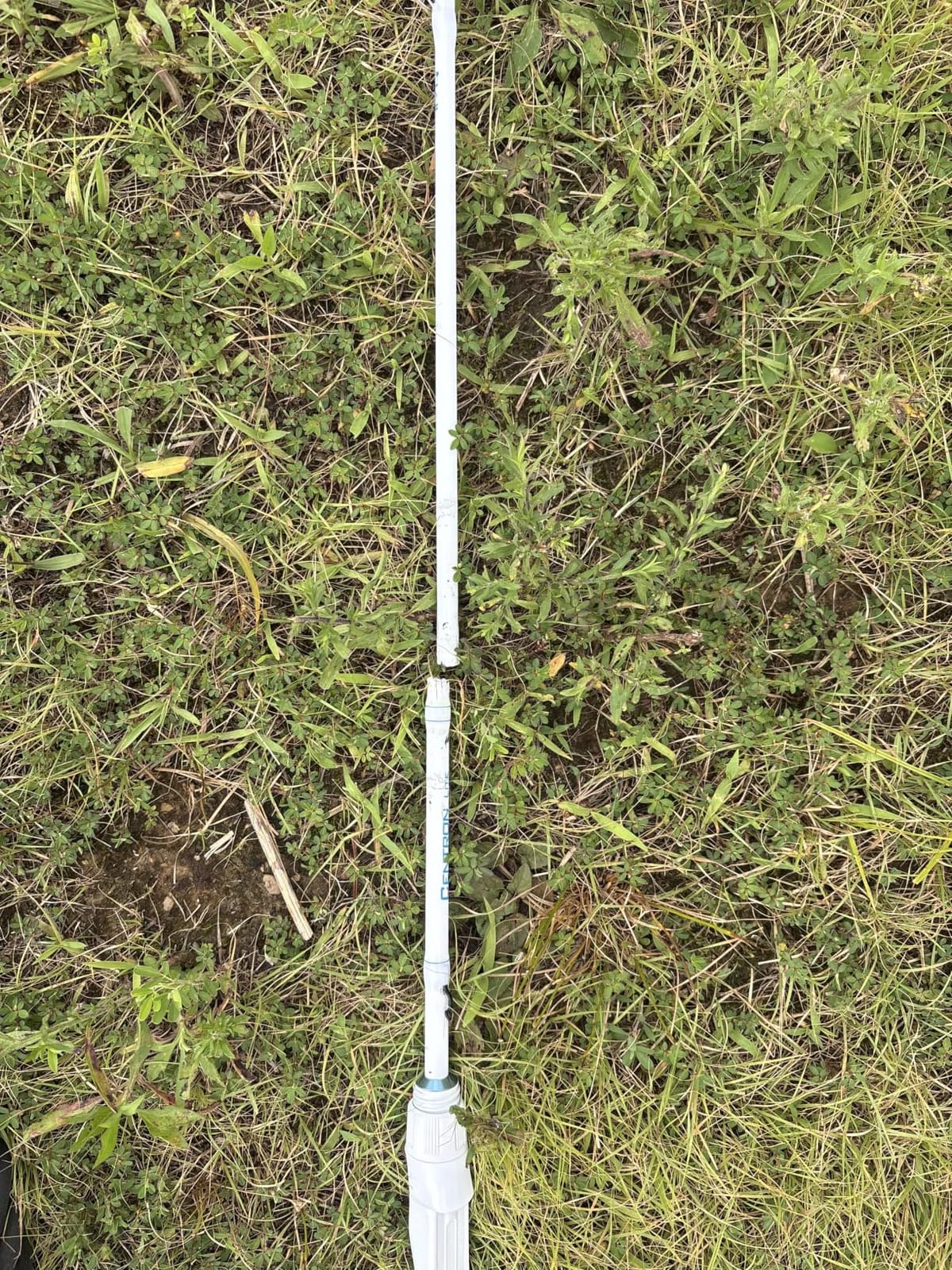
The trade-off is that the combo as a whole is only as good as its weakest part, and the weakest part here is durability. There are multiple accounts of the tip or upper blank snapping during ordinary use, and the reel draws complaints about clunky adjustment controls with no audible click, plus finish wear and a handle that grips small and stains.
There is also a specific report worth weighing: some owners experienced line cutting on the reel under heavy drag. If you plan to fish heavy cover and load the drag hard, that is a scenario to think carefully about before committing.
Who this rod suits
It suits a true beginner who wants one box that works and would rather not research gear ratios and blank specifications separately. The 7.1 to 1 ratio is a sensible general-purpose number for a first low-profile reel.
It also suits anyone who wants a good-looking setup for the boat deck that they can hand to a family member or occasional fishing partner without worrying.
Who should skip it
Skip it if you already own a decent baitcaster, because a rod-only purchase is better value and lets you keep the reel you have tuned. Skip it too if you fish heavy cover, where the tip reports and the drag complaints both matter.
Anyone who fishes a lot of days a year should weigh buying the rod and reel separately, so a failing component does not condemn the pair.
5. Ugly Stik Carbon 6-Foot-6 Medium Fast Casting Rod
Ugly Stik 6’6” Carbon Casting Rod, One-Piece, 8-17lb Line Rating, Medium Power, Fast Action, 1/4-5/8 oz. Lure Rating, Red/Black
6ft 6in
100 percent graphite
Medium fast
1 piece
5.6 oz
Pros
- Ugly Stik durability reputation backed by a graphite blank
- Very light 5.6 ounce feel with a crisp fast action
- Medium power model rated to 5.8 ounces of lure
- Split grip EVA handle for comfort
Cons
- 6ft 6in length limits casting distance on open water
- Blank is lighter than premium one-piece rods in the same class
- Only a one year manufacturer warranty
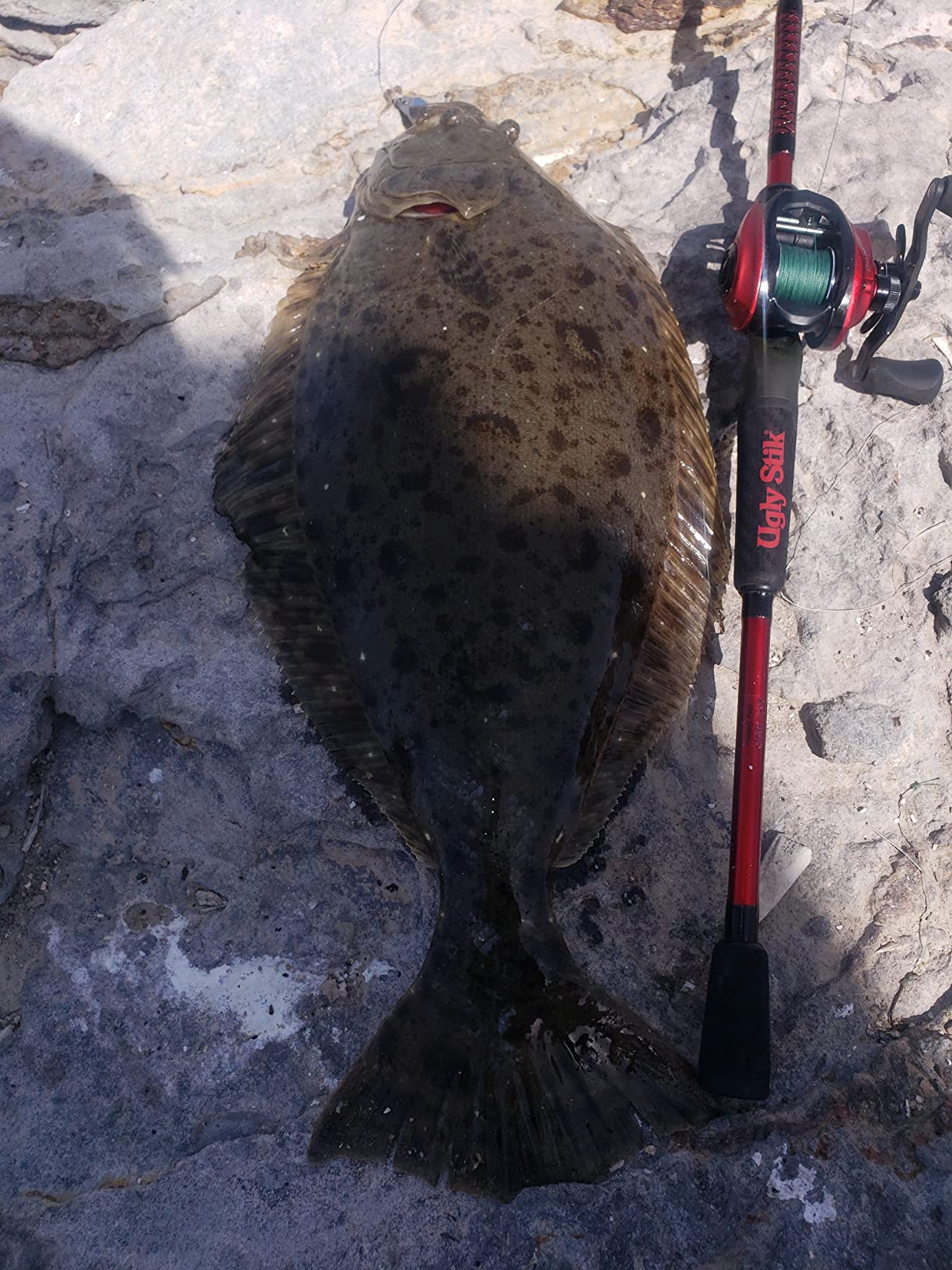
The Carbon series is the graphite upgrade to the series that built its name on taking abuse, and it keeps the main thing that made Ugly Stik famous. For an angler who has broken rods in brush, rocks and boat doors, the durability reputation is not marketing fluff; it is the reason this rod holds a 4.5 star average across 450 reviews.
The specification that matters here is the lure rating. This medium power model is rated to 5.8 ounces, which is far beyond what most medium rods in this roundup will lift and that is the reason we rate it for heavy cover. At 5.6 ounces it is also one of the lightest rods we listed.
Action is listed as fast, which means the rod loads early and drives the hook through a fish’s jaw from a short sweep. The one-piece build is a genuine advantage in sensitivity, since there is no joint to break up the feel. If you fish from a boat and can keep a one-piece out of harm’s way, that is a real difference you can feel.
The limitation is length. Six-foot-six is compact and easy to work from a kayak or the bank, and it is exactly right for structure fishing, but it is short for casting across a wide lake. Buying this rod as your only rod means accepting shorter casts in exchange for the durability and lure rating.
Who this rod suits
It suits anglers who break rods, fish heavy cover, and want a medium power rod that will still lift a big lure. The 5.8 ounce rating makes it a natural fit for frogs and heavy swim jigs on a medium blank rather than a medium-heavy one.
It also suits anyone fishing from a kayak or a tight bank spot, where a 5.6 ounce one-piece rod is easy to control all day.
Who should skip it
Skip it if you regularly cast to open water across long distances, because the length works against you there. Anglers chasing maximum sensitivity in a premium blank will find lighter-feeling alternatives despite the durability advantage.
Note the warranty difference too. The listing shows a one year manufacturer warranty, which is a genuine downgrade against the lifetime coverage on some KastKing models.
6. ENTSPORT E Series Sirius 7-Foot Medium Heavy Casting Rod
Entsport 2-Piece Casting Rod Graphite Portable Baitcast Rod Inshore Baitcasting Fishing Rod Freshwater Baitcaster Rod Baitcaster (8-20-Pound Test) 7′ Medium Heavy
7ft
High tensile carbon
Medium heavy fast
2 piece
5.6 oz
Pros
- Very light 5.6 ounce rod with a stiff backbone and accurate casting
- Owners report good bite detection for the price
- Works for both inshore bottom fishing and freshwater bass
- Two-piece format is easy to transport
- Replacement service on broken rods is fast
Cons
- Higher durability complaint rate than the Camo Legend from the same brand
- Multiple reports of rods breaking within weeks or on a third use
- 7 foot length is short for surf casting
We place this rod at number six because a genuine medium-heavy power rod is hard to find at the entry level. Most budget casting options here are medium power. A 7-foot medium-heavy fast rod rated to roughly 24.95 grams of lure opens up frogs, swim baits and heavy jigs for people who would otherwise be under-equipped.
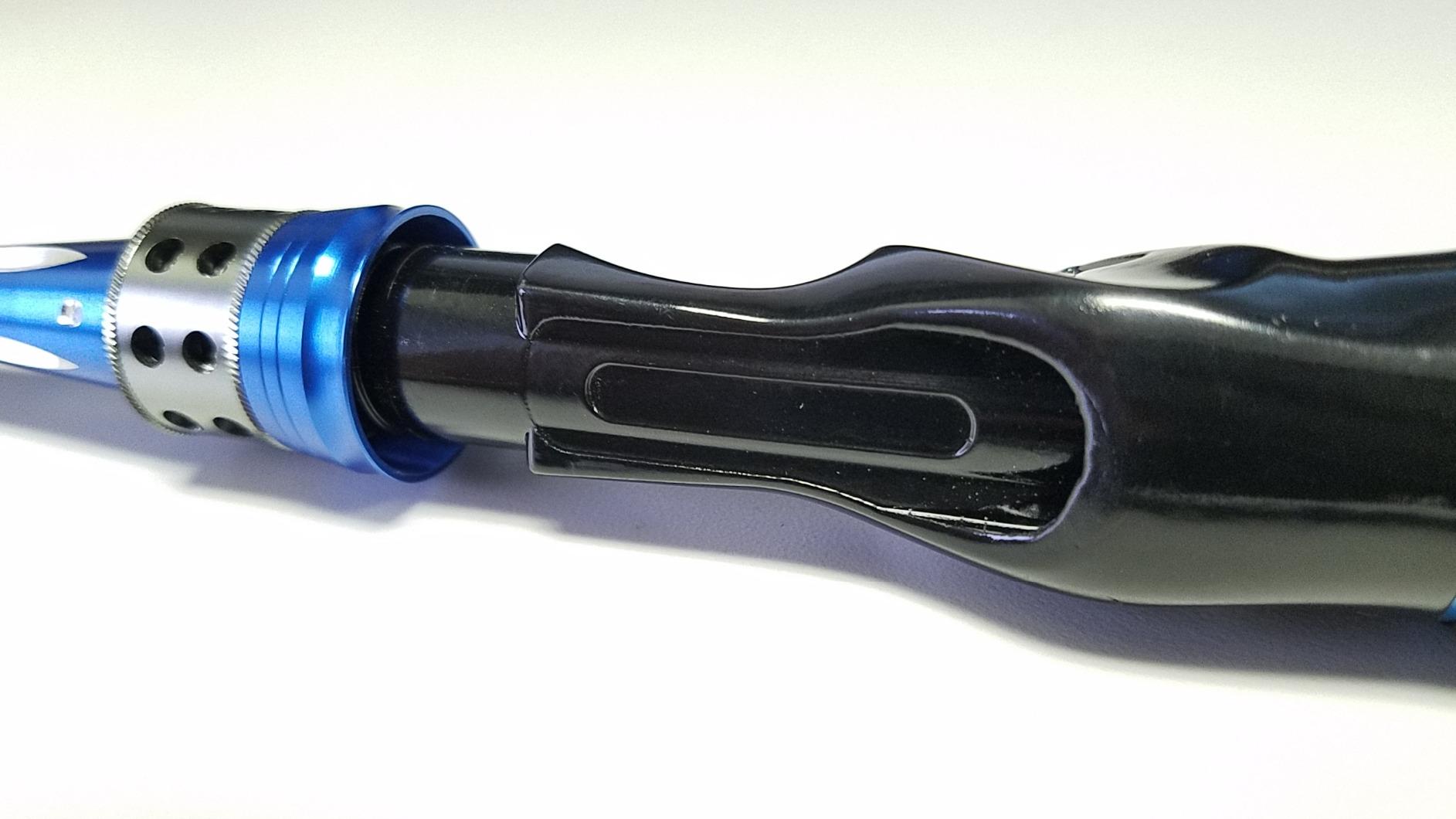
Owners who are happy cite the 5.6 ounce weight, the stiff backbone and the casting accuracy, and several mention that they can feel light bites with it, which is not a given at this level. The cushioned screw-down reel seat hood and 6+1 stainless guides are sensible design choices, and the multi-purpose hook keeper is a nice touch.
What stops us recommending it more highly is the rating itself. At 4.1 stars with 12 percent one-star reviews, it is the lowest-rated rod in this roundup, and the complaints are about a specific failure mode: rods breaking within weeks or on only the third use. The 4 star and 5 star share is still 80 percent, so most people are fine, but the failures are not random mishaps at the edge of use.
Our advice is to treat this as a rod that suits a low-risk approach. It is also the one rod here whose listing explicitly covers inshore and bottom fishing alongside bass, so an angler who fishes the coast and the lake has a use for it that the others do not offer.
Who this rod suits
It suits a beginner who specifically wants medium-heavy power on a tight budget and is not yet at the point where a broken rod would hurt. The 7-foot length is a solid general-purpose choice, and the fast action gives a positive hookset.
It also suits an angler who wants a rod that works for inshore and freshwater without a second purchase.
Who should skip it
Skip it if you fish rock, timber or brush hard. That is exactly the use where the reported breakages happen, and the risk is not worth taking when a slightly better blank exists for a modest step up.
It is also the wrong choice for surf casting, where seven feet is short and the fast action gives you little to work with on a long cast.
7. KastKing Spartacus II 7-Foot-1 Medium Heavy Twin Tip
KastKing Spartacus II Twin-Tip Casting Rods, 7’1″, MH Power, Fast
7ft 1in
24 ton carbon and IM6 graphite
Medium heavy fast
2 piece plus tip
Pros
- Excellent sensitivity for a twin tip at this level
- Rubber cork split grip feels premium and stays comfortable
- Extra tip section is a genuine backup where tips usually fail
- Well packaged in a durable shipping tube
- Enough backbone for larger fish
Cons
- Longest heavy models feel heavy in hand
- Blank is not as refined as premium one-piece rods
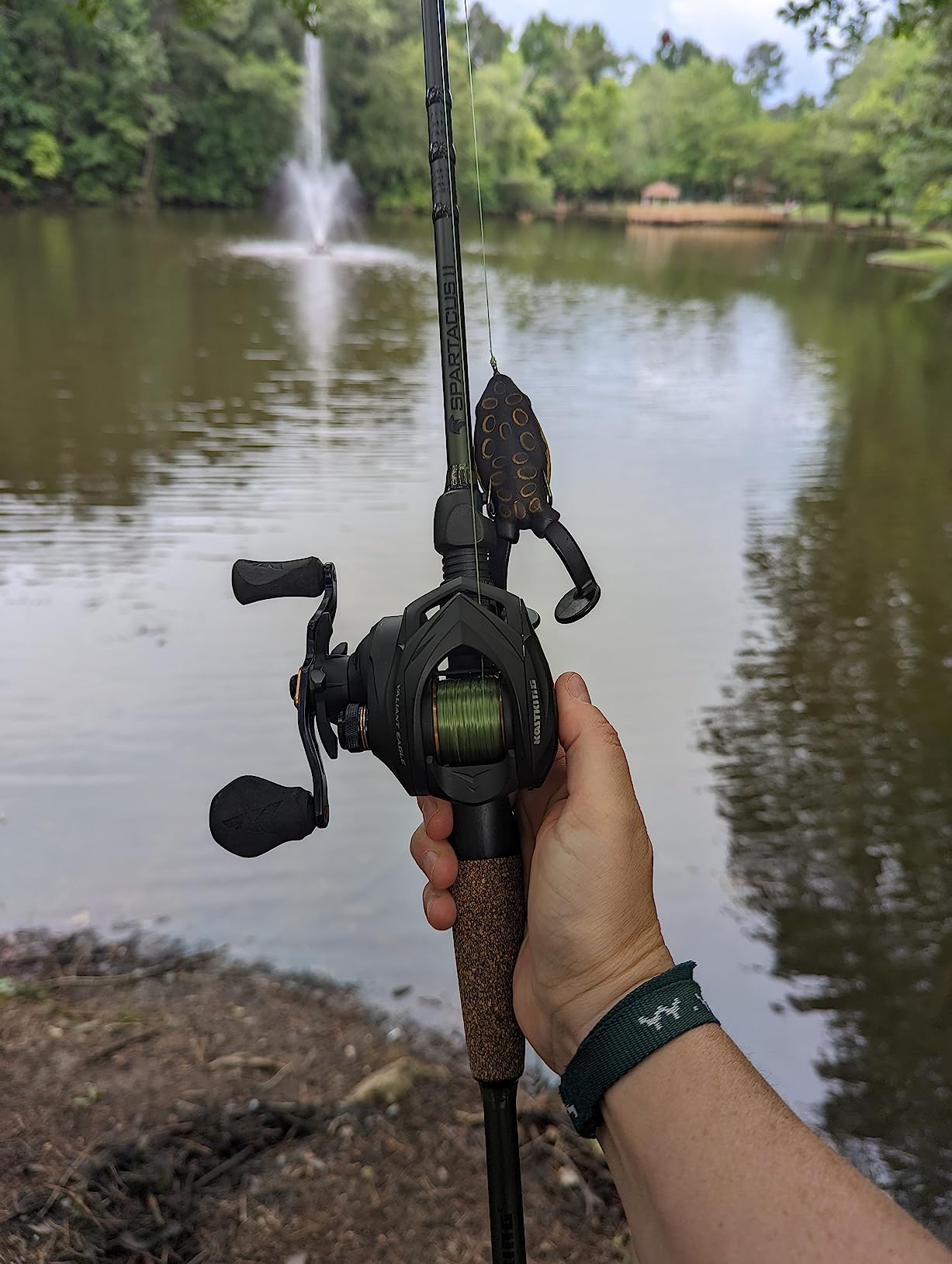
At 4.6 stars across 381 reviews, the Spartacus II is tied for the highest star rating in this roundup, and the reason is the handle. The rubber cork split grip is the material most premium bass rods use, and it is a real upgrade from EVA in wet conditions and over long days.
The blank is 24-ton carbon fibre with IM6 graphite, which is a sensible combination of strength and modulus for a medium-heavy power rod. Guides are stainless with ultra-thin zirconium oxide rings, which is a genuinely low-friction material, and they run on a PTS Power Transition System joint rather than a simple splice.
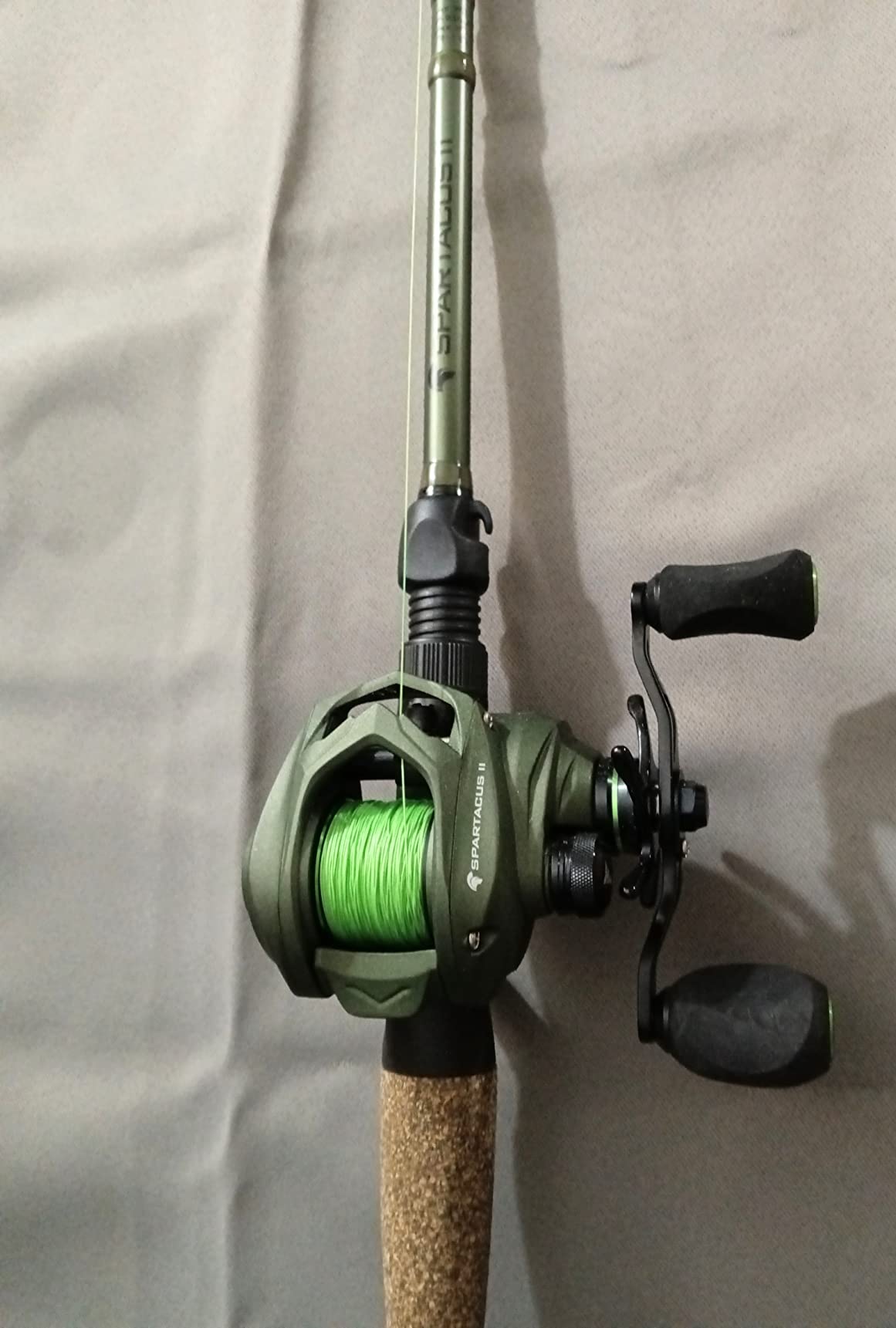
Like the other twin-tip rods here, the package includes an extra tip section, and on this one owners treat it as a genuine asset because the tip is where a two-piece rod usually fails first. Having the spare in the truck is the difference between losing a day and losing a season. The patented Foregrip with an integrated hook keeper is a small convenience that stops lures swinging off the guide while you work the boat.
At 7 feet 1 inch with medium-heavy power and fast action, this is the configuration most tournament anglers reach for, and the recorded line rating of 10 to 20 pounds matches that. The criticism is narrow: the longest heavy models in the range feel heavy in the hand, and the blank is not as refined as the one-piece rods in the top tier.
Who this rod suits
It suits an angler who wants a sensitive, premium-feeling handle and a spare tip, and who fishes medium-heavy jigs and frogs rather than finesse lures. The cork grip is the reason it wins among people who care how a rod feels in the hand.
It also suits anyone upgrading their first rod who has noticed that foam grips feel slippery and tiring after a full day of pitching.
Who should skip it
Skip it if finesse is your priority, because a medium-heavy blank is the wrong tool for a 1/8 ounce jerkbait. Anglers with a strict weight limit on their gear bag should check the specific model length, since the longest heavy variants are the ones owners flag as heavy.
If you want maximum sensitivity rather than comfort and durability, a lighter medium power rod is the better instrument.
8. Ugly Stik GX2 7-Foot Medium Fast Casting Rod
Ugly Stik 7′ GX2 Casting Rod, 2 Piece Fishing Rod, 8-20 lb Line Rating, Medium Rod Power, 1/4-5/8 oz Lure Rating
7ft
Ugly Tech graphite fiberglass
Medium fast
Clear Tip
2 pc
Pros
- Ugly Stik durability with a rebalanced next generation blank
- Medium power Clear Tip rated to 5/8 ounce of lure
- 8 PVD coated one piece stainless steel guides resist line wear
- Full grip shrink tube EVA stays slip resistant in heat
Cons
- Medium power is not suited to heavy flipping cover lures
- Newer model with a much smaller review base than other picks
The GX2 is the current-generation Ugly Stik, and the meaningful change is the blank. Rather than the classic construction, it uses Ugly Tech, a graphite and fiberglass combination, and the Clear Tip two-piece design is engineered to recover under load while still detecting a bite. Owners credit the rebalance, saying the next-generation blank feels noticeably better than the older series.
The eight PVD-coated one-piece stainless steel Ugly Tuff guides are a durability feature more than a sensitivity one, but they matter over a season of braided line. The line rating of 8 to 20 pounds and the full grip shrink tube EVA handle round out a practical setup, and the coating is designed to keep the grip from going slippery in heat, which matters on a summer boat deck.
Who this rod suits
It suits an angler who wants a seven-foot rod that is still easy to control from a bank or from a kayak, and who wants the strongest brand in this roundup behind it. The Clear Tip handles up to 5/8 ounce, which covers a broad range of bass presentations on medium power.
It also suits anyone who wants a rod that will survive a lifetime of being knocked against a boat and a trailer.
Who should skip it
Skip it if flipping heavy cover is your main technique, because medium power simply does not have the backbone for a big frog or a heavy swimbait. Choose a medium-heavy or heavy GX2 model instead, or pick the Camo Legend if you want that power in a two-tip package.
Be aware of the evidence base as well. With 82 reviews, this is the least-proven rod we list, and the Clear Tip design is new enough that long-term durability data is still thin. Buy it for the brand and the balance, not because of a large body of owner reports.
9. HANDING Pioneer 7-Foot Medium Moderate Fast Casting Rod
HANDING Pioneer Baitcasting Rod 7′ Medium Fishing Rod
7ft
24T carbon
Medium moderate fast
2 piece
Ceramic rings
Pros
- Moderate fast action with genuine sensitivity across a range of baits
- 24T carbon keeps weight down for all day fishing
- TS ceramic guide rings give smooth low friction line flow
- Integral reverse splice joint improves power transfer
- Sleeve and protective rod tube included
Cons
- Medium power tops out around 1/2 ounce of lure weight
- Range tops out at seven feet for anglers wanting more casting distance
- Small review base from a newer brand
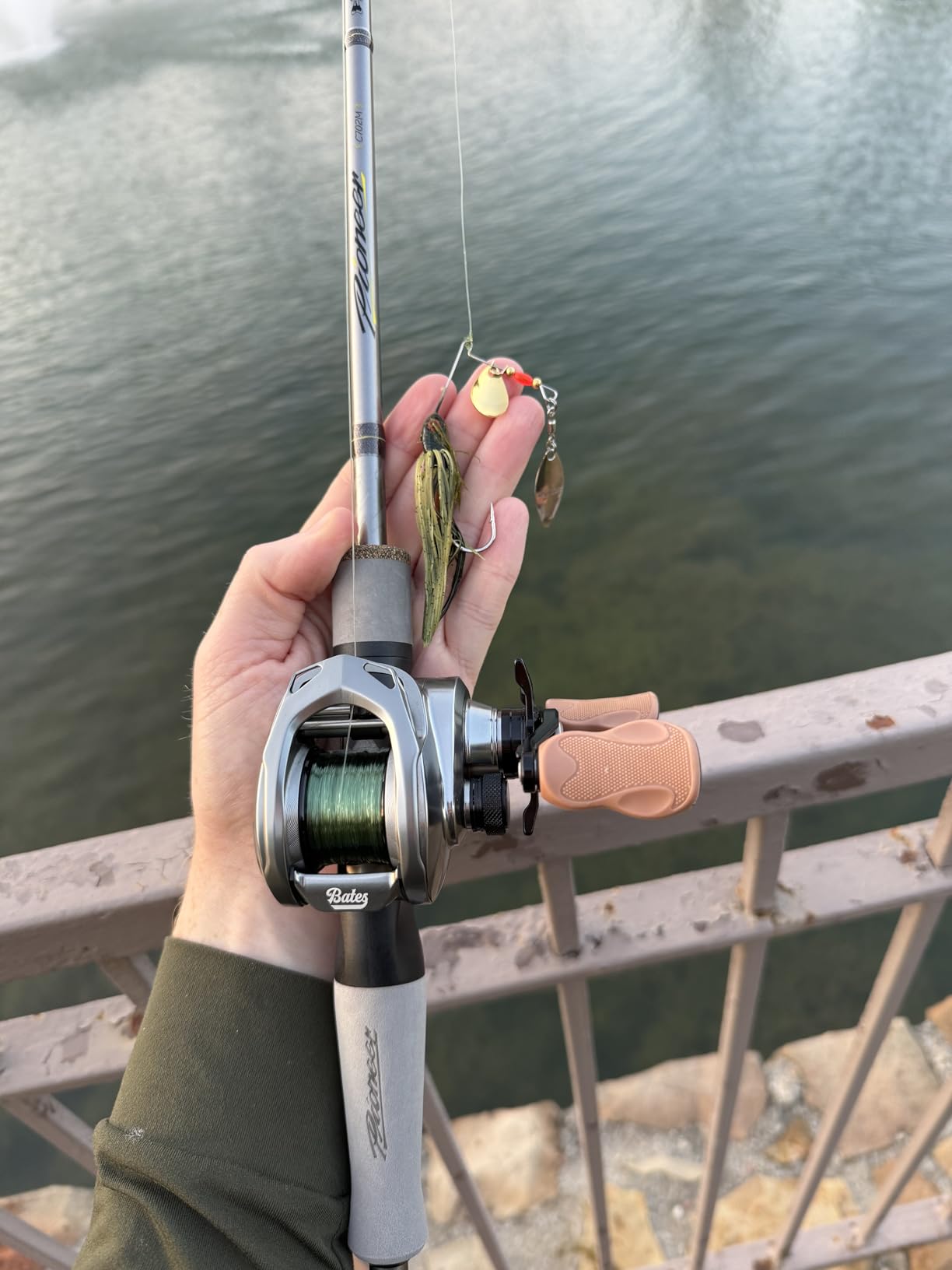
The Pioneer is the rod to look at if you want a rod that is pleasant rather than merely capable. Moderate fast action across a medium power gives a rod that loads progressively, which is the easiest action for an angler learning to feel bites rather than just react to them. Owners describe it as performing a step above the class it competes in, and the 4.6 star average across 59 reviews supports that.
The build details are better than the price suggests. TS ceramic guide rings are rated for heat and abrasion resistance and give very low friction line flow, which reduces drag on a longer cast. The integral reverse splice joint is designed to give one-piece feel in a two-piece frame, and both a rod sleeve and a protective tube are included, which is exactly what you want from a travel rod.
Who this rod suits
It suits an angler who travels, or who has limited storage and wants a rod that breaks down small and comes with proper protection. The included sleeve and tube make it an easy fly-in rod.
It also suits anyone who prefers a rod that loads later and feels smooth, and who fishes softer plastics and light hard baits where that helps.
Who should skip it
Skip it if you throw heavy lures. The medium power rating tops out around half an ounce, so frogs, heavy swim jigs and big crankbaits are out of range, and pushing past the rating is what breaks tips.
Anglers wanting a longer casting rod should also move on, since the range stops at seven feet. And anyone who wants a well-established durability record should note that a 59-review base on a newer brand is thin evidence over a long season.
Baitcasting Rod Length: Accuracy Versus Casting Distance
Length is a tradeoff, not an upgrade. A longer rod sweeps a wider arc, so it puts more line into the air and casts further, and it has more leverage to pull a fish away from structure. A shorter rod loads in a tighter window, so it is easier to keep a lure in the boat and easier to land accurately on a specific target.
Forum anglers argue about this constantly, and the conflict is usually about unstated assumptions. When someone recommends a short rod they are usually talking about structure fishing and accuracy. When someone recommends a long rod they are usually talking about open water and reach. Both are correct about their own situation.
For most bass anglers, 6-foot-8 to 7-foot is the range that avoids having to compromise. Below 6-foot-6 the rod gets twitchy with heavier lures, and above 7-foot-3 the cast weight starts to matter more than the technique. Our general fishing rod picks page covers the broader length question if you fish several species.
Rod Power and Action: The Two Numbers That Decide Everything
Power is the answer to what the rod can lift, and action is the answer to when the rod bends. Get both right and the rod suits your fishing; get either wrong and no amount of material quality will save you.
The most common forum consensus for a first bass baitcaster is a medium power, fast action rod for hard baits, with a medium heavy for jigs and cover. That is the rule we would give anyone asking for one recommendation. Medium handles crankbaits, spinnerbaits, jerkbaits and topwater. Medium heavy handles flipping jigs, frogs and swim baits. Heavy belongs in a specialist rod, not a first purchase.
On action, fast responds on the first sweep and forgives a late hookset, which suits cover. Moderate fast loads later, feels bites more smoothly and keeps light lures tracking straight, which suits open water. If you are unsure, fast is the safer default for bass, because bass anglers are usually pulling fish through structure rather than setting hooks with a delicate touch.
Line Rating and Lure Weight: Matching Tackle to the Blank
This is the number one beginner question on the forums and the one listings answer worst. The lure rating printed on the blank tells you the range of lure weights the rod is designed to load, and if your lures sit at or above the top of that range, the rod is working against you on every cast.
Match the heaviest lure you plan to throw to the middle of the range and you are safe. Stay below the middle for finesse. Exceed the top and you can expect poor accuracy, backlash on a baitcaster, and eventually a broken tip. The line rating works the same way: the line you spool should sit inside the range printed for that specific tip, which is why twin-tip rods list two line ranges.
Does lure weight actually matter? Yes, in three specific ways. Heavier lures load the blank earlier, which cuts casting accuracy at range. Lighter lures need a rod with a slower action to track straight, or a baitcaster will throw them badly. And a lure beyond the rod’s rating is the fastest way to find out where its weakest point is.
Pairing Your Rod with a Baitcasting Reel
The rod and reel pair matters because the reel’s job is spool control and retrieve speed, and both are wasted on the wrong rod. A 7 to 1 or higher ratio retrieves fast and keeps a tight line, which suits a medium or medium-heavy rod throwing jigs and frogs. A lower ratio retrieves slower and retrieves more line per turn, which suits a heavy power rod for deep crankbaits where you are pulling rather than burning line.
That is why 6.2 to 1 is a good ratio for bass on a heavy rod, and why it feels slow on a medium rod flicking swim baits. Matching the ratio to the power of the rod is the fix. For low-profile reels, our baitcasting reel guide covers the size and bearing differences that affect a beginner setup.
For ultralight finesse work with micro-lures down to 1/32 ounce, a standard casting rod is not right. A bait finesse system rod has a beefier butt section and a faster tip so the light line does not stretch, and it pairs with a BFS reel. None of the nine rods here is a dedicated BFS model, so if that is your program, look for a BFS-rated rod rather than forcing a standard blank.
Blank Material: What 24-Ton, IM6 and IM7 Actually Buy You
Blank material sounds like marketing and mostly is, but there is a real difference under load. The ton number and the IM grade both describe the graphite or carbon fibre in the blank, and higher numbers generally mean a stiffer fibre that recovers faster after a hookset. IM6 is the common modern standard, 24-ton and 24T describe a comparable mid-to-high grade, and IM7 sits above that.
What you actually gain by stepping up is weight and feel, not raw strength. A better modulus blank transmits more of the tug into your hand and recovers faster, so a fish that comes off the hook is less likely to fall off. Strength you can get cheaply. Sensitivity is the expensive part. That is also why the lifetime warranty and lighter guides matter as much as the ton number at the higher end.
There is a third material worth knowing, and it is the one that beats a premium blank in a different category. Fiberglass and graphite composites, which is what Ugly Stik’s Ugly Tech construction is, bend more and absorb shock rather than snapping. A fiberglass blank is the choice when you fish rock and timber and breaking the rod is the worst outcome. Our broader general rod buyer guide covers the same material logic across spinning and casting, alongside our fly fishing rod picks for readers who split their season between species.
Frequently Asked Questions
What is the best baitcasting rod for bass fishing?
For most anglers, a 7-foot medium-heavy power fast-action casting rod is the best single starting point. It covers flipping jigs, frogs, crankbaits and spinnerbaits. A medium power fast rod is better if you focus on open water and finesse, and a heavy rod should be a second rod, not a first.
What are the top 3 bass fishing rods?
Our top three are the ENTSPORT E Series Camo Legend 7-foot with two tips, the Piscifun Torrent 6-foot-9 medium for the lightest blank, and the KastKing Perigee II 7-foot with Fuji O-Ring guides and a lifetime warranty. The first two include a spare tip section in the package.
What is a good length for a baitcasting rod?
Between 6-foot-8 and 7 feet for most bass fishing. Under 6-foot-6 gets twitchy with heavier lures, and over 7-foot-3 makes casting weight more important than technique. Shorter rods suit kayaks, banks and structure fishing; longer rods suit open water reach.
Are longer or shorter baitcasting rods more sensitive?
Neither, by itself. Length adds reach and leverage, while power governs sensitivity. A longer rod is usually built as a more powerful rod, and that power is what reduces feel. Compare power and action before you compare length when judging sensitivity.
How do I determine what lure weight to use on a rod?
Read the lure rating printed on the blank and match your heaviest planned lure to the middle of that range. Stay below the middle for finesse work. Running above the range cuts casting accuracy and is the fastest way to break a tip.
Is a 6.2:1 gear ratio good for bass fishing?
It is good with a heavy power rod for deep crankbaits, where pulling line matters more than speed. It feels slow on a medium or medium-heavy rod throwing jigs and frogs. Choose a 7:1 or faster ratio to match the lighter rod and the faster presentations.
Should I buy a baitcast rod and reel combo or separately?
Buy a combo if it is your first setup and you want one working box on the boat. Buy separately if you already own a serviceable reel, or if you expect to fish hard enough that the weaker component in a combo will eventually fail.
Our Best Baitcasting Rods for Bass Fishing in 2026
The ENTSPORT E Series Camo Legend 7-foot is our pick for the best baitcasting rods for bass fishing in 2026, because two tips in one package give you a medium rod and a medium-heavy rod, plus a spare, and no other rod in this roundup combines that with the largest body of owner reviews. The Piscifun Torrent 6-foot-9 is the best value if you want the lightest blank you can cast all day, and the KastKing Perigee II 7-foot is the most fully specced, with Fuji O-Ring guides, a spigot joint and a lifetime warranty.
The buying logic matters more than the list, though. Change one variable at a time: pick a length from your fishing spot, pick a power from your heaviest lure, then pick an action from how you want to feel the bite. Buy the rod that matches your heaviest lure rather than the one that looks best in a photograph, and add a second rod only when a specific technique demands it. Our other casting and reel guides cover the rest of the setup.