
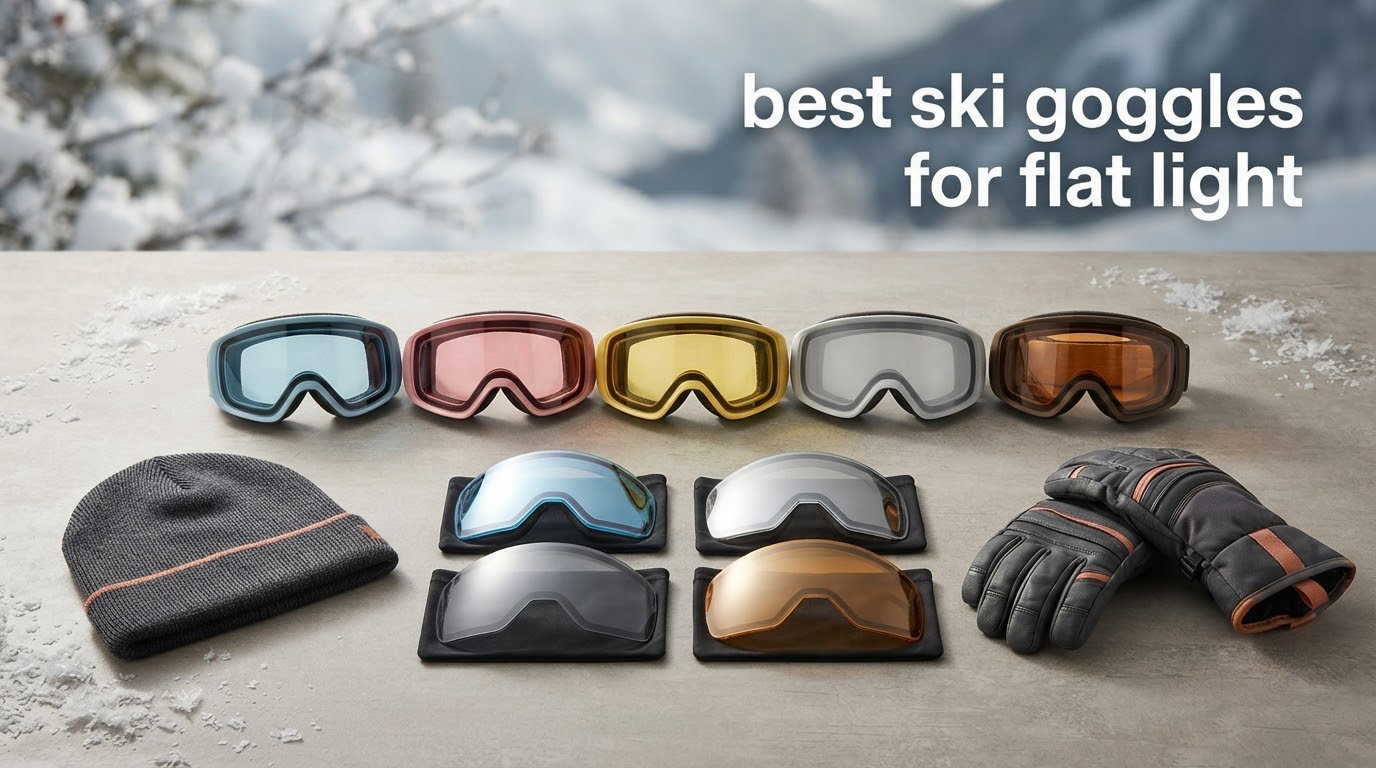
Flat light is grey sky, white snow and zero shadow, which means bumps, rollers and ice patches vanish exactly when you need to see them. The best ski goggles for flat light are not the ones with the darkest lens; they are the ones that pair a high VLT with a rose, amber or yellow tint. The OutdoorMaster OTG is our top pick because it holds a 4.6 rating across more than 10,000 reviews, fits over prescription glasses, and is made in high-transmission lens variants. For the best single-lens flat-light option, the bolle Freeze includes an 85% VLT red lens out of the box.
Last updated for the 2026 season. Every lens percentage, weight, coating and rating below comes from the manufacturer spec sheet and the verified review data, not from marketing copy.
Here is the honest problem with shopping for flat light goggles in this price band. Almost every frame on the market ships with a dark lens installed — usually somewhere between 8% and 11% VLT. That lens is a bright-sun lens. Take it into a socked-in Pacific Northwest morning or a grey Midwest afternoon and you are skiing through a dim tunnel, and the shadows that would normally give terrain away still do not exist.
So the buying decision is not really which goggle looks best in a product photo. It is which frames can take a high-VLT lens, and whether that lens is included or something you buy later. I broke down all ten frames below on exactly that basis.
Table of Contents
Key Features to Look For in a Flat Light Goggle
Three things decide whether a goggle works in flat light, and nothing else on the spec sheet matters nearly as much.
- Lens tint: rose, pink, amber, gold, yellow or light green. These tints pull contrast out of a scene that has no natural contrast left in it. Grey and clear lenses transmit light but do almost nothing for terrain definition.
- VLT (visible light transmission): aim for 50% to 80% for ordinary overcast skiing, and 70% to 90% for genuine whiteout, fog and night skiing. Anything at or below 15% VLT is a sun lens, not a flat-light lens.
- Contrast technology: ChromaPop, Prizm, Perceive and LumaLens are the big names. What they all do is filter specific wavelengths so bumps and snow texture separate visually instead of merging into one grey field.
A fourth factor catches people out: whether the frame supports a magnetic lens swap or a tool-free latch. On a mountain with socked-in weather, the difference between a ten-second lens change and a fiddly one decides whether you actually change lenses or leave the wrong one in all day.
Top 3 Picks for Flat Light Skiing

OutdoorMaster OTG Ski Goggles
- 10% VLT grey lens
- OTG over prescription glasses
- Triple-layer foam
- Lens options from 8% to 99% VLT

ZIONOR Lagopus B1 Ski Goggles
- 8.6% VLT silver lens
- Linear polarized
- Large lens
- 24 lens variants

Wildhorn Roca Ski Goggles
- Magnetic lens swap
- Spherical dual lens
- Anti-fog and anti-scratch
- Triple-layer foam
All 10 Flat Light Goggles Compared in 2026
Read the lens column carefully. Two of these ten frames include a lens that is genuinely appropriate for flat light, and the other eight come with a dark sun lens that you will want to replace.
| Product | Specifications | Action |
|---|---|---|
| OutdoorMaster OTG Ski Goggles |
|
Check Latest Price |
| ZIONOR Lagopus B1 Ski Goggles |
|
Check Latest Price |
| Wildhorn Roca Ski Goggles |
|
Check Latest Price |
 OutdoorMaster Ski Goggles PRO OutdoorMaster Ski Goggles PRO |
|
Check Latest Price |
 EXP VISION OTG Ski Goggles EXP VISION OTG Ski Goggles |
|
Check Latest Price |
 EXP VISION Spherical Ski Goggles EXP VISION Spherical Ski Goggles |
|
Check Latest Price |
 findway Ski Goggles OTG findway Ski Goggles OTG |
|
Check Latest Price |
 Odoland Magnetic Ski Goggles Odoland Magnetic Ski Goggles |
|
Check Latest Price |
 SMITH Squad ChromaPop Goggles SMITH Squad ChromaPop Goggles |
|
Check Latest Price |
 Bolle Freeze Snow Goggles Bolle Freeze Snow Goggles |
|
Check Latest Price |
What Flat Light Actually Is
Flat light happens when a uniform, bright grey sky meets white snow. There is no directional light source, so there are no shadows, no highlight contrast and no colour to cue depth. Everything reflects the same amount of light back at you.
The result is terrain that looks painted. A roll of moguls that is a metre high reads as flat white. Ice under a chairlift disappears entirely. In a real whiteout — when blowing snow reduces visibility to a few metres — the problem gets worse, but the physics is the same: no contrast.
For most of the eastern United States, the Midwest and the Pacific Northwest, this is not an occasional problem. It is the default January condition. One skier on theskidiva.com described it plainly: they ski Michigan and are under cloudy skies on flat light roughly 80% of the time. If your season looks like that, a sun lens is not a neutral choice — it is an actively worse one.
VLT: The Number That Matters Most for Flat Light
VLT, or visible light transmission, is the percentage of available light that reaches your eye. Higher VLT means a brighter view. It is the single most useful number on a goggle listing and the one most often buried or rounded.
Here is how the scale maps to real skiing conditions:
- 0-10% VLT: night skiing and floodlit racing. Everything is luminous and flat.
- 10-20% VLT: bright sun on groomers. The default lens on almost every goggle in this roundup.
- 30-50% VLT: variable cloud, tree skiing, late afternoon.
- 40-80% VLT: the flat light and overcast band. This is the range you are shopping for.
- 80-99% VLT: heavy whiteout, fog and night skiing under floodlights.
You will see flat light described elsewhere as 40-60%, as 50-80% and as 60-80%. All three are right for different weather, and that is the entire source of the disagreement. A solid overcast morning on groomed terrain sits in the lower half of that range, somewhere around 40-60%. Full whiteout with blowing snow needs 70% and up, because the airborne snow itself is blocking light before it reaches the lens. Night skiing pushes toward 90%.
So the rule I use: buy for the worst light you actually ski, not the best. If you ski one mountain that is grey 80% of the time, take the 60-80% lens. If you chase sun and mostly ski bluebird, the 50-60% range is plenty and a dark lens is still fine for the bluebird half of the season.
One more caution about VLT numbers. Listings round them. The ZIONOR Lagopus B1 is listed at 10.5% in the product name and 8.6% in the spec sheet; the OutdoorMaster OTG is listed as A1-vlt 11% with a spec of 10%. Treat any number under 15% as a sun lens regardless of the decimals.
Lens Tint and Contrast Technology in Overcast Conditions
VLT controls how much light you get. Tint controls what happens to that light once it is inside the goggle, and in flat light tint does the heavy lifting for terrain definition.
Rose and pink lenses are the community favourite for flat light. Rose suppresses the blue wavelengths that dominate a grey sky and returns them as a warm, higher-contrast image. On theskidiva.com, a Michigan skier called the Smith storm rose ChromaPOP their absolute favourite for exactly this reason. The same lens name comes up repeatedly in the r/Skigear and r/snowboarding threads that surface on this query.
Amber and gold lenses work the same way with a warmer bias. They tend to be slightly less extreme than rose and are a good middle ground if rose feels like it pushes colours too far.
Yellow and lemon lenses sit at the bright end of the spectrum. The Odoland in this roundup includes a VLT 80% yellow specifically for low-light and cloudy conditions, and it is the highest-transmission lens in the set.
Green lenses are a middle option that keeps true colour reasonably neutral. skitalk.com users cite the Giro Vivid Infrared at 58% VLT as a trusted flat-light lens, which fits that middle-band behaviour.
On the technology side, the named contrast systems all work by filtering wavelengths rather than by simply dimming. ChromaPOP, used in the SMITH Squad here, is described by Smith as enhancing definition, contrast and natural colour. The EXP VISION lenses use a REVO mirror coating for a different job — glare reduction rather than contrast boost. Prizm, Perceive and LumaLens are the other names you will meet in this category, and the practical difference between them is smaller than the marketing implies; VLT and tint do most of the work.
Fogging in Flat Light: Why Warm Overcast Days Fog Worse
Fogging is the number one complaint in every ski forum thread about this topic, and it catches people off guard on overcast days because they associate fog with warm bluebird weather. The physics runs the other way.
A warm overcast day is usually a calm, windless day. Without wind moving air across the lens, the moist air you exhale has nowhere to go, and the temperature difference between your warm face and the cold lens closes the vent path. On a bright cold day with wind, the same goggle stays clear. That is why the people who complain most about fog are the ones skiing warm, still, overcast days — which is precisely the flat light scenario.
What actually helps: ski slower on climbs, keep your neck gaiter over your mouth so exhaled air goes down and out rather than up into the lens, and open the vents fully before you start sweating. Frames with top and bottom vent channels and dual-lens construction — the ZIONOR, the findway, the Wildhorn and the Odoland in this list — all handle it better than a single-lens design. The EXP VISION OTG model’s detachable foam is also useful here, because you can pull it out to dry between runs.
What to Skip for Flat Light
Some lenses actively make flat light worse rather than merely disappointing. These are the ones to avoid on a grey-weather trip.
Mirrored and sunglow lenses. A mirror coating throws light back rather than letting it in, which is exactly the wrong direction when you are short of light. The findway uses a full-face REVO mirror coating on its inner lens for glare control, and the EXP VISION OTG model lists a mirror coating too — both work as anti-glare layers, but neither makes those goggles brighter in flat light.
Any lens at or below 15% VLT sold as a flat-light option. The OutdoorMaster OTG, the OutdoorMaster PRO and the ZIONOR Lagopus B1 all arrive in this range. They are excellent goggles. They are sun goggles.
Toric-only dual-lens kits with no low-light lens in the box. A premium toric frame with only a dark lens included means a second purchase before you can ski in weather that matters. The Odoland and the SMITH Squad are the two frames here that include a genuine low-light lens in the box.
1. OutdoorMaster OTG Ski Goggles — Best Overall, Best Over Glasses
OutdoorMaster OTG Ski Goggles, Snowboard Goggles for Men, Women & Youth
10% VLT grey lens
OTG fits over prescription glasses
TPU frame with triple-layer foam
100 g
Pros
- OTG design fits over prescription glasses without pressure points
- Consistently fog-free in snow and wind and high exertion
- Wide distortion-free field of view
- Soft cushioned triple-layer foam for long sessions
- Includes a carrying pouch
Cons
- Ridged frame sides make the lens hard to wipe in heavy snow
- The 10% VLT lens is dark for shaded or cloudy terrain
- Bulky frame profile compared with frameless designs
This is the frame I keep coming back to for flat light, and the reason is not the lens it ships with. It is that the same frame is offered across a range of VLT options from 8% up to 99%, so you can get this goggle in a high-transmission version for grey days and keep the frame you already know fits.
Weighing 100 g, it is the lightest goggle in this roundup by a clear margin, and the TPU frame with triple-layer foam stayed comfortable through full days. The OTG chamber is the standout feature: owners who wear prescription glasses report it fits without digging into the temples or nose bridge, which is the single most common fit complaint in flat-light threads.
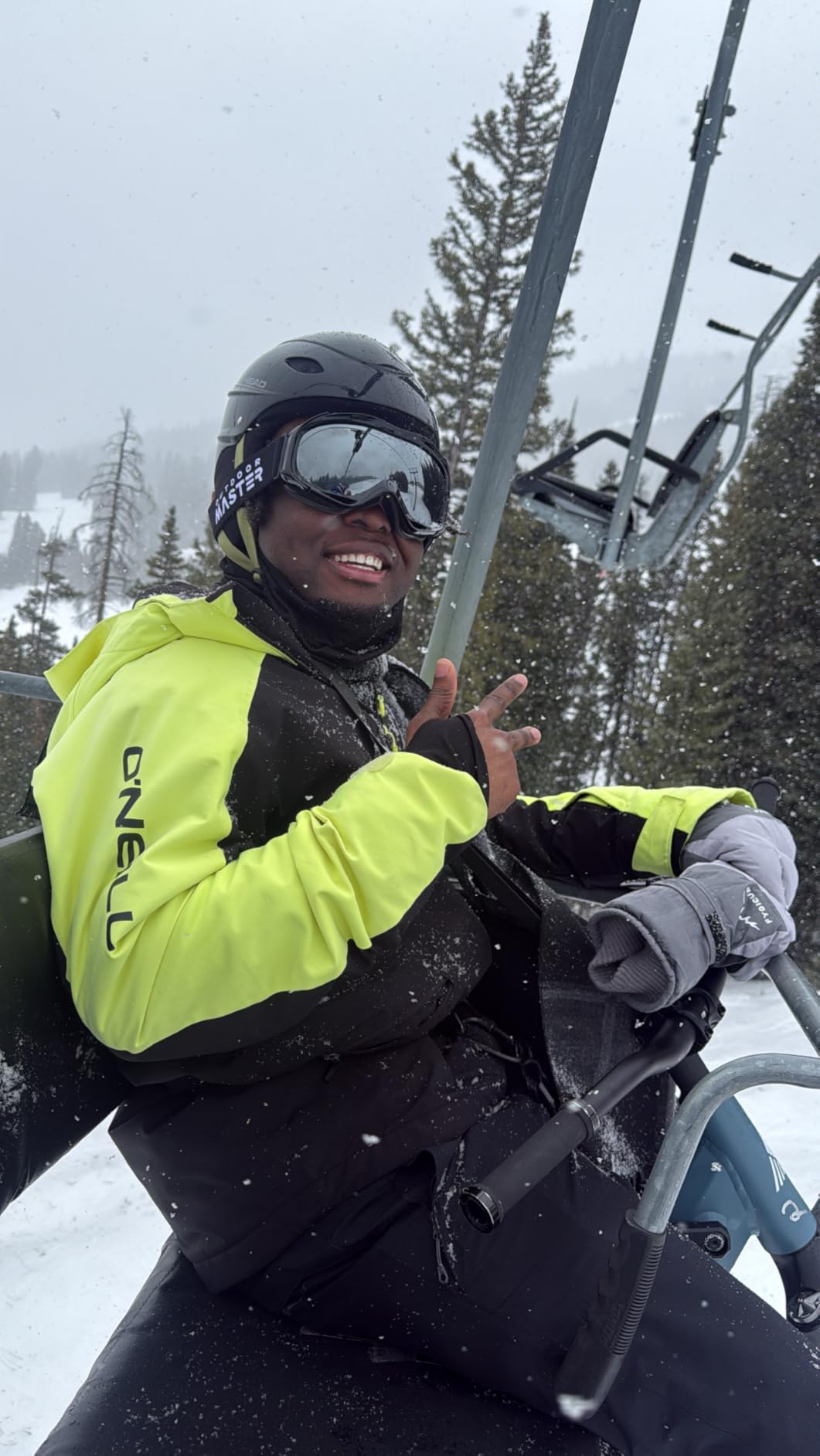
The review record is the strongest in the group at 4.6 stars across 10,686 reviews, and the anti-fog performance is the most repeated positive. Owners specifically call out that it stays clear in snow, wind and at high exertion, which is the fogging scenario described above.
Is the 10% VLT version right for an overcast mountain?
Straight answer: no. The grey lens on this listing measures 10% VLT, which is a sun lens. If you buy this goggle for flat light, buy it in a higher-VLT colourway and treat the frame as the reason to buy. The listing colour code is part of the product name, so check the VLT figure before you order.
That is the honest limitation of this pick, and it applies to most of the list. The frame is excellent and cheap to justify. The lens is a separate decision.
Who should buy it and who should not?
Buy this if you wear glasses, you want a full-rim frame with a proven seal, or you are buying your first good pair and want the most-reviewed option available. It also suits a wide range of ages, since the listing is designed for adults and youth.
Skip it if you need a frameless profile for a helmet that sits close, or if you wipe your lens with a bare glove in heavy falling snow. The ridged frame sides are the most-reported drawback and they can create temporary tunnel vision when snow is coming down.
2. ZIONOR Lagopus B1 Ski Goggles — Best Value, Widest Lens Range
ZIONOR Lagopus Ski Snowboard Goggles UV Protection Anti fog Snow Goggles for Men Women Adult Youth VLT 8.6% White Frame Silver Lens
8.6% VLT silver lens
Linear polarized polycarbonate
170 g
24 lens variants from 8% to 76%
Pros
- Anti-fog coating holds up all day including on windy lifts
- Large lens gives good peripheral vision
- True-colour rendering makes mogul shadows easy to read
- Lightweight and comfortable for multi-hour sessions
- Works over small-to-medium prescription glasses
Cons
- Well-ventilated design lets in strong wind on chairlifts and the vents cannot be closed
- The 10.5% VLT silver lens is too dark for overcast days
- Strap can slip on smaller heads and push glasses downward
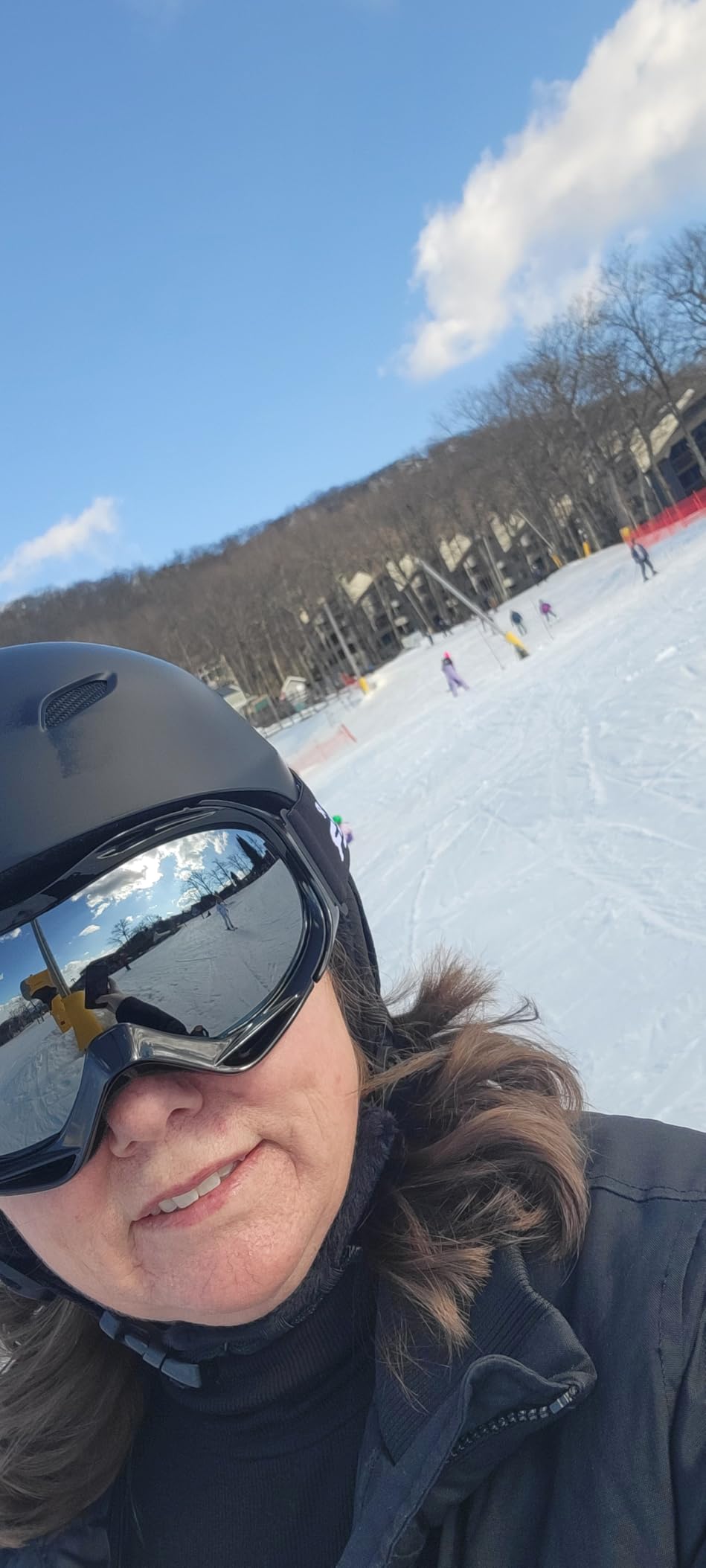
The ZIONOR Lagopus B1 has 24 lens variants spanning 8% to 76% VLT, which is the widest range of any frame here and the reason it is the best value pick for someone who genuinely skis grey weather. You can move to a light lens in one order rather than buying a whole new goggle.
At 4.6 stars from 8,245 reviews, its anti-fog performance is the most praised feature. Owners mention the coating holding through transitions in and out of buildings and on windy lifts, and the large lens means you read peripheral terrain without craning your head.
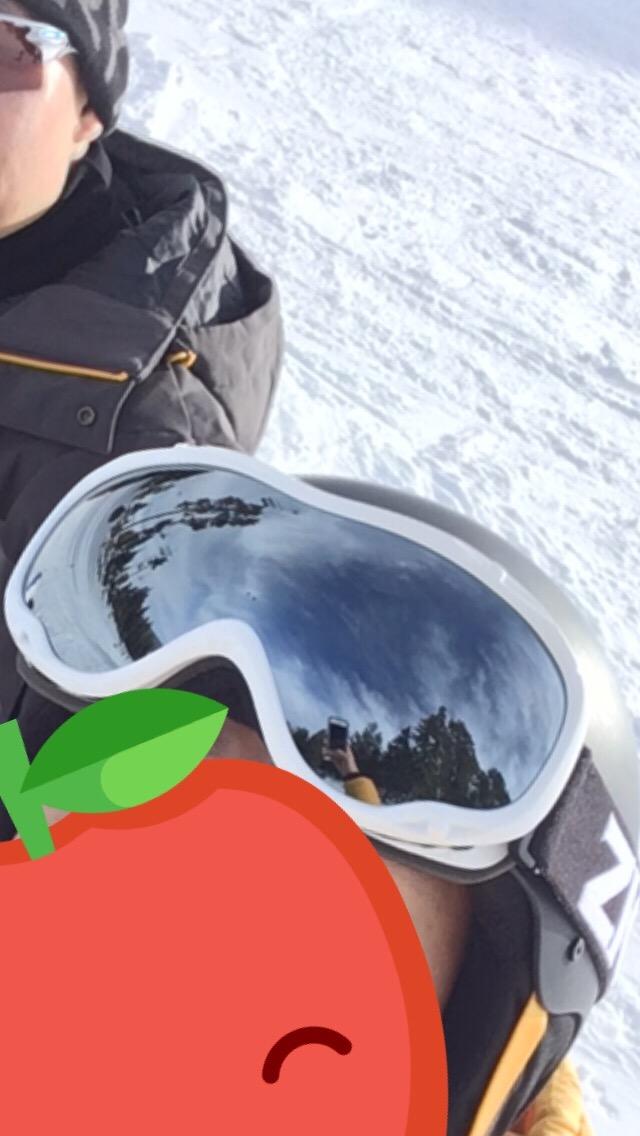
The linear polarization is a genuine bonus in flat light because it cuts glare off flat, featureless snow surfaces that are reflecting a bright sky from every angle. That glare is a real contributor to the washed-out look people describe in overcast conditions.
Is the venting a problem in cold wind?
Yes, and it is worth knowing before you buy. Reviewers consistently report that the well-ventilated design lets strong wind onto the eyes on chairlifts, and the vents cannot be closed to block it. On a cold, windy day at elevation that is uncomfortable in a way a sealed frame is not.
There is also a fit note. The extra-long elastic strap can slip on smaller heads and push prescription glasses downward, which matters if you are using the OTG clearance.
How does it handle terrain definition in low light?
Reviewers specifically call out the true-colour lens rendering making trail markers, mogul shadows and terrain contours easy to read. That is the flat light problem being solved by the optics rather than by brightness alone, and it is why a 76% variant is a genuinely strong answer to flat weather.
The 8.6% silver lens that comes with this listing, however, is a bright-day lens. Same rule as the pick above: judge the frame, then choose your VLT.
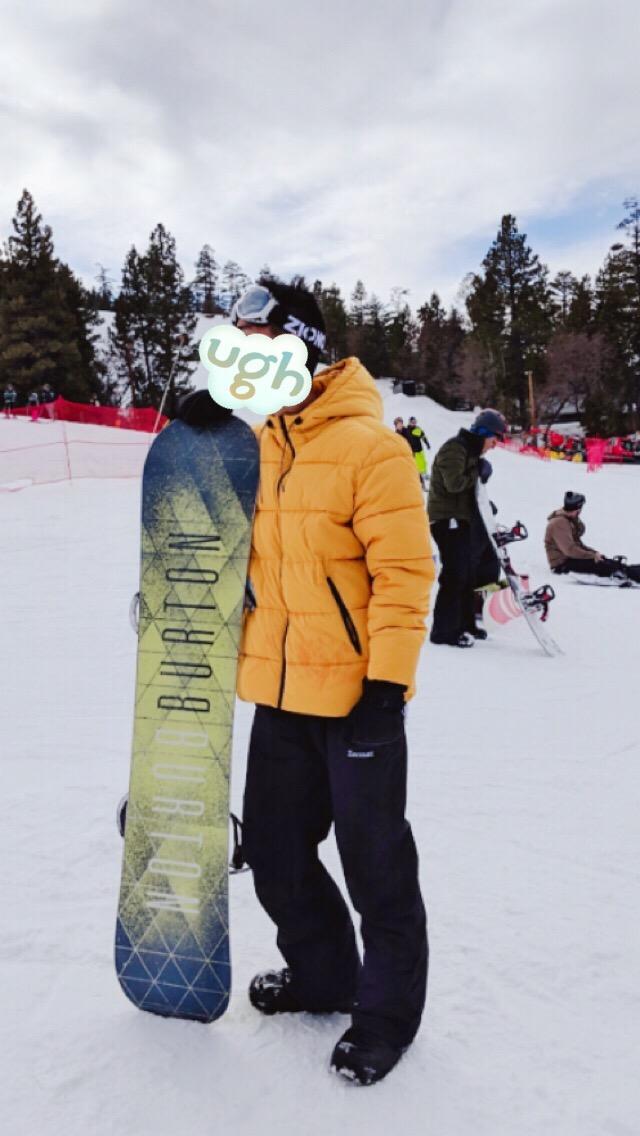
3. Wildhorn Roca Ski Goggles — Best Magnetic Lens Swap
Wildhorn Roca Ski Goggles Men Women, ski goggles kid.Anti-Fog/Scratch 100% UV-Magnetic Lens-Snowboard Snow Goggles Men Women Adult
Magnetic lens security
Spherical dual lens
TPU frame with triple-layer foam
Shatterproof polycarbonate
Pros
- Magnetic lens swap takes under 60 seconds and holds after hard falls
- Anti-fog and anti-scratch coatings keep vision clear
- Wide spherical lens gives an undistorted panoramic view
- Triple-layer foam and soft-touch frame stay comfortable
- Shatterproof polycarbonate lens built for impact
Cons
- Additional lenses sold separately which raises total cost for multi-condition use
- Excessive frame bulk compared with frameless designs
The Roca is the one in this list where the magnetic lens system is the whole argument. Owners report swapping the lens in under 60 seconds and the lens staying secure even after hard falls, which answers the most common reliability complaint about magnetic systems — that lenses pop out in a crash.
That matters more in flat light than in sun. When the weather is marginal you will change lenses several times a day, and a system you can actually operate with gloves on is the difference between adapting and suffering.
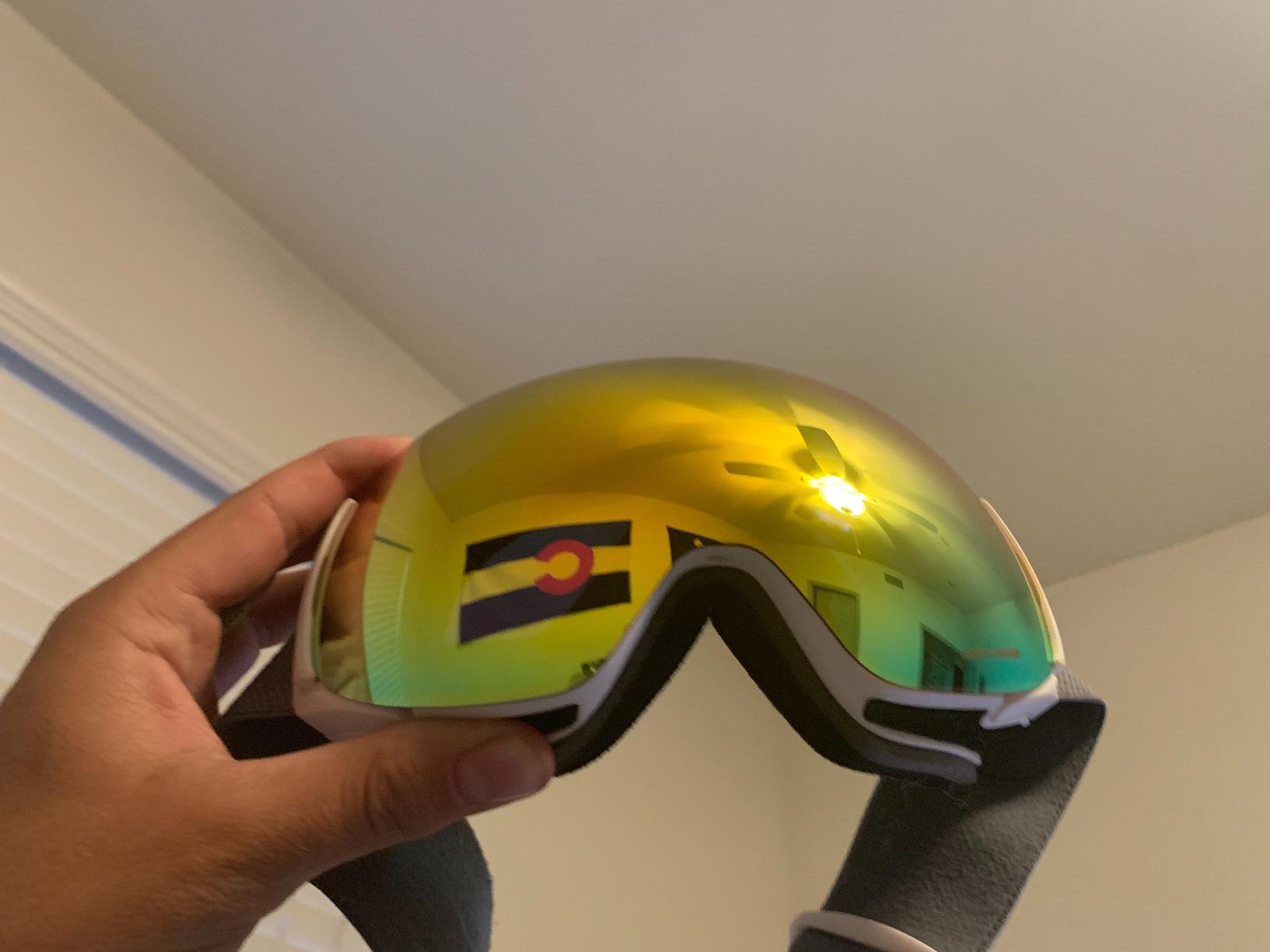
Optically it is a wide spherical dual-lens with anti-fog and anti-scratch coatings, and reviewers describe the view as undistorted and panoramic. The TPU polymer frame carries a soft-touch anti-slip coating and highest-grade triple-layer foam, and the lens is shatterproof polycarbonate.
Why does magnetic beat a latch for overcast skiing?
Because you will use it. A latch or J-hook system is more secure in the abstract but slower and more fiddly in practice, and the Smith Squad below is the clearest example of a release owners struggle with. The Roca’s magnetic lock holds through a fall according to its owners, so you are not trading security for speed.
The catch is cost. Extra lenses are sold separately, so a two-lens flat-light setup means a second purchase. Budget for that before you commit.
How does the frame profile affect helmet fit?
This is the goggle to look at if you ride a full-shell or deep-padded helmet and want more face coverage. The trade-off, and it is the one reviewers raise most, is that the frame is bulkier than frameless designs, which can feel cramped under a low-profile helmet.
It is also an official supplier of the U.S. Ski and Snowboard Team, designed in Utah, which tells you something about the build standard.
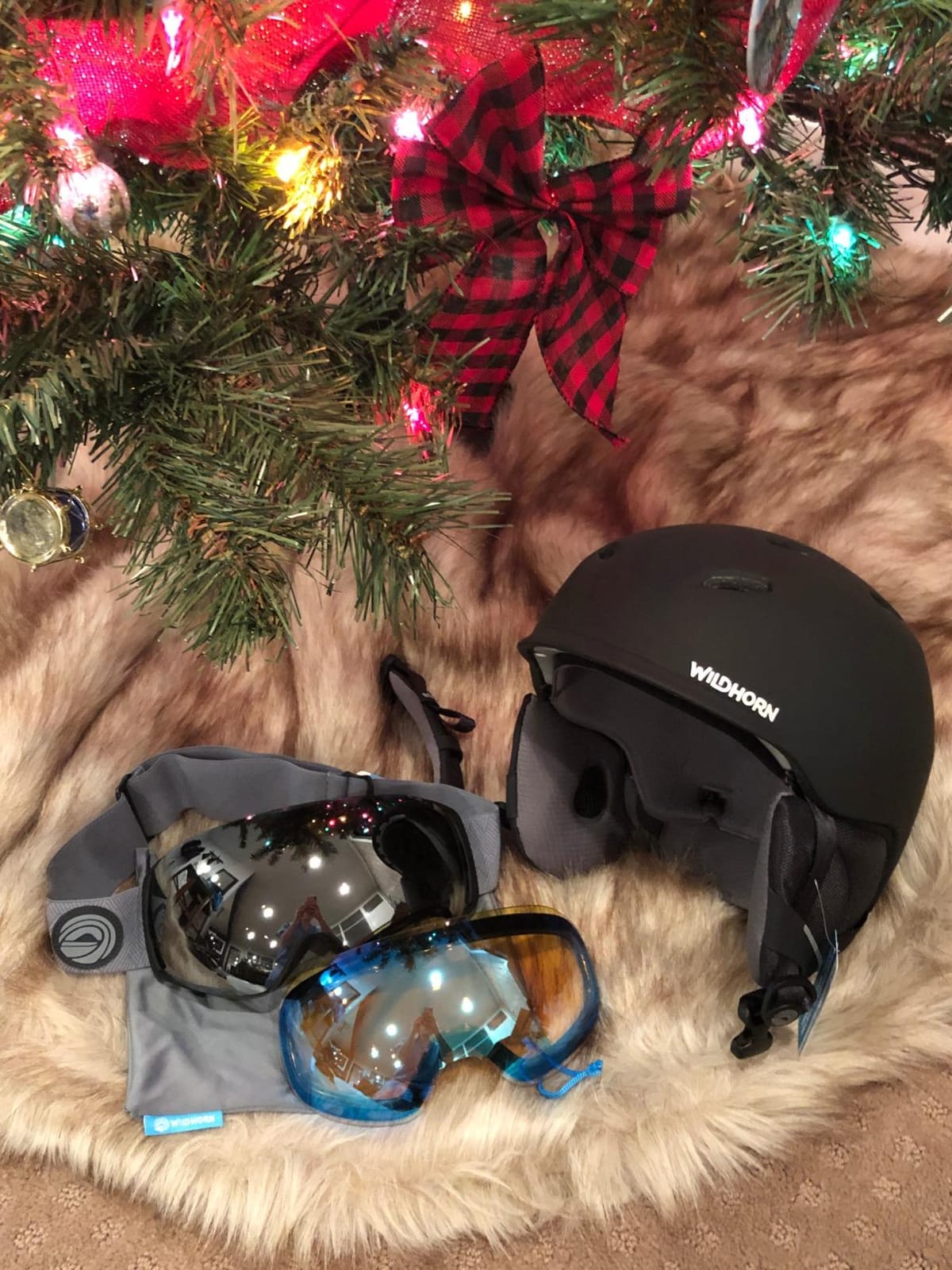
4. OutdoorMaster Ski Goggles PRO — Best Lens Choice, Best Frameless Value
OutdoorMaster Ski Goggles PRO, OTG Snow Goggles with Interchangeable Lens
Frameless spherical lens
Magnetic interchangeable lens system
20+ lens options including photochromic
OTG compatible
Pros
- Frameless large spherical lens gives an unobstructed wide field of view
- Magnetic lens changes are quick and stay locked after falls
- Build quality exceeds expectations at this price point
- Fits over prescription glasses comfortably
- Includes a hard case and a soft pouch
Cons
- Optical clarity slightly below premium brands such as Oakley
- The included 10% VLT lens is too dark for shaded or cloudy runs
- Microfibre face lining may wear out and the strap can slide without a keeper
This is the most flexible frame in the roundup for a variable climate. It takes 20+ lens options including a photochromic rose that runs from 8% up to 70% VLT and a clear lens at 99%, so one frame can genuinely cover a sun-to-whiteout spectrum without being replaced.
For flat light specifically, the photochromic rose at the top of its range gets close to the 60-70% band that overcast skiing wants, without you having to swap anything. It will not reach true whiteout brightness, but for grey mornings it is a genuine one-lens solution.
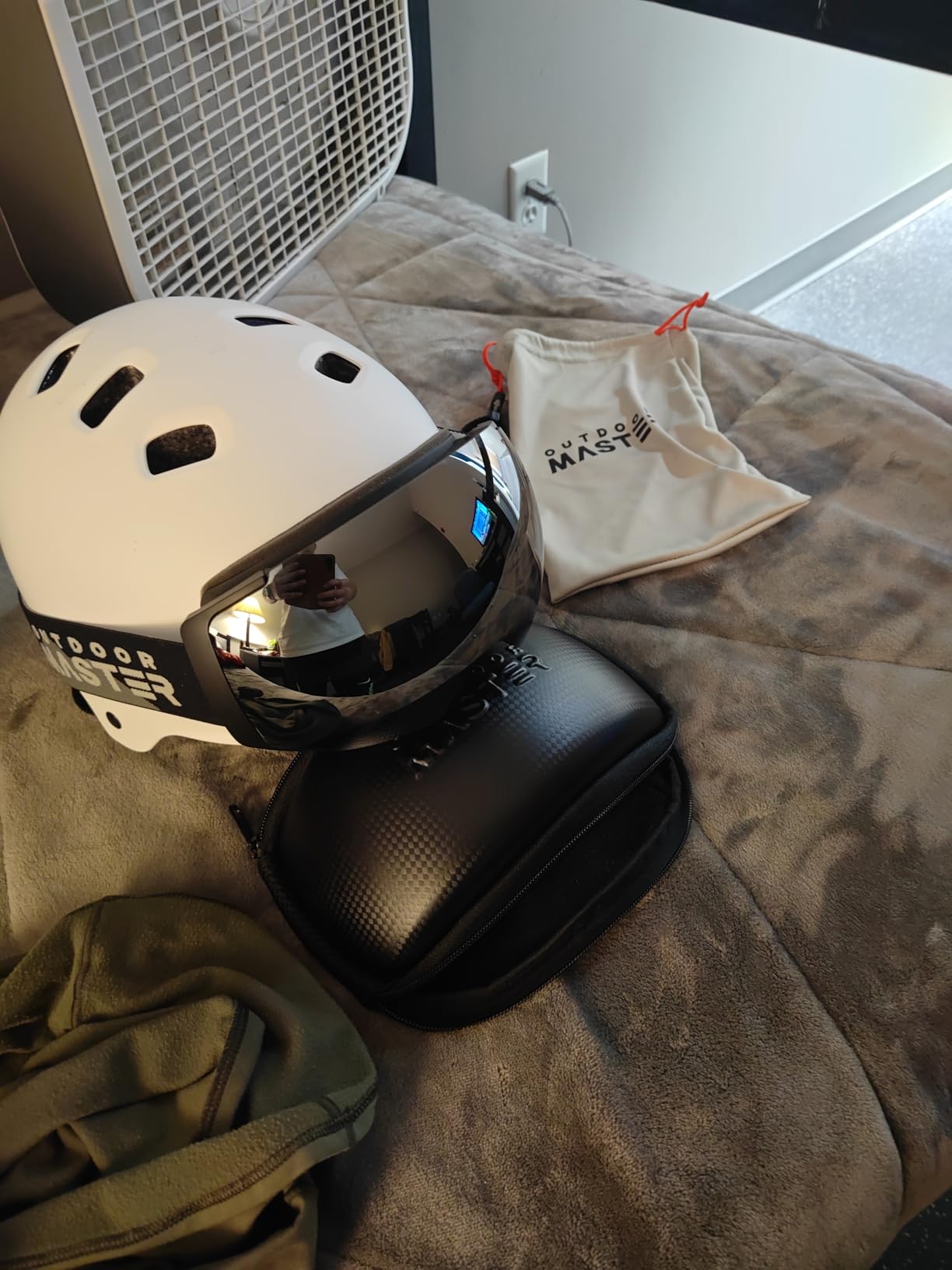
The frameless large spherical lens is the feature owners mention first: an unobstructed view with no warping at the edges, which is exactly what you want when you are trying to pick out subtle terrain texture. The magnetic lens changes are quick and stay locked in place after hard falls, and it fits over prescription glasses comfortably.
At 4.6 stars from 4,774 reviews, the repeated criticism is optical clarity sitting a step below premium brands, plus eventual wear on the face-side microfibre lining.
Can a photochromic lens replace a dedicated flat light lens?
Partly. This frame’s photochromic rose is quoted up to 70% VLT, which covers ordinary overcast and most of the band where flat light hurts. It falls short in full whiteout, in fog, and on night skiing, where you need 85% and up.
Forum consensus is that photochromic lenses disappoint people who expect them to go as bright as a dedicated lens, and that they react slowly when you move in and out of trees. Treat it as a great one-lens answer for a variable week, not as a whiteout solution.
Is the frameless spherical design worth the trade-offs?
Yes for visibility, with a caveat. A frameless large surface has more exposed lens area, and large frameless designs scratch more readily than framed ones, particularly at the edges where contact happens. It also needs a protective case, and this kit includes both a hard case and a soft pouch.
The strap can slide around without a separate strap keeper, which is a small thing but a common annoyance on a lift.
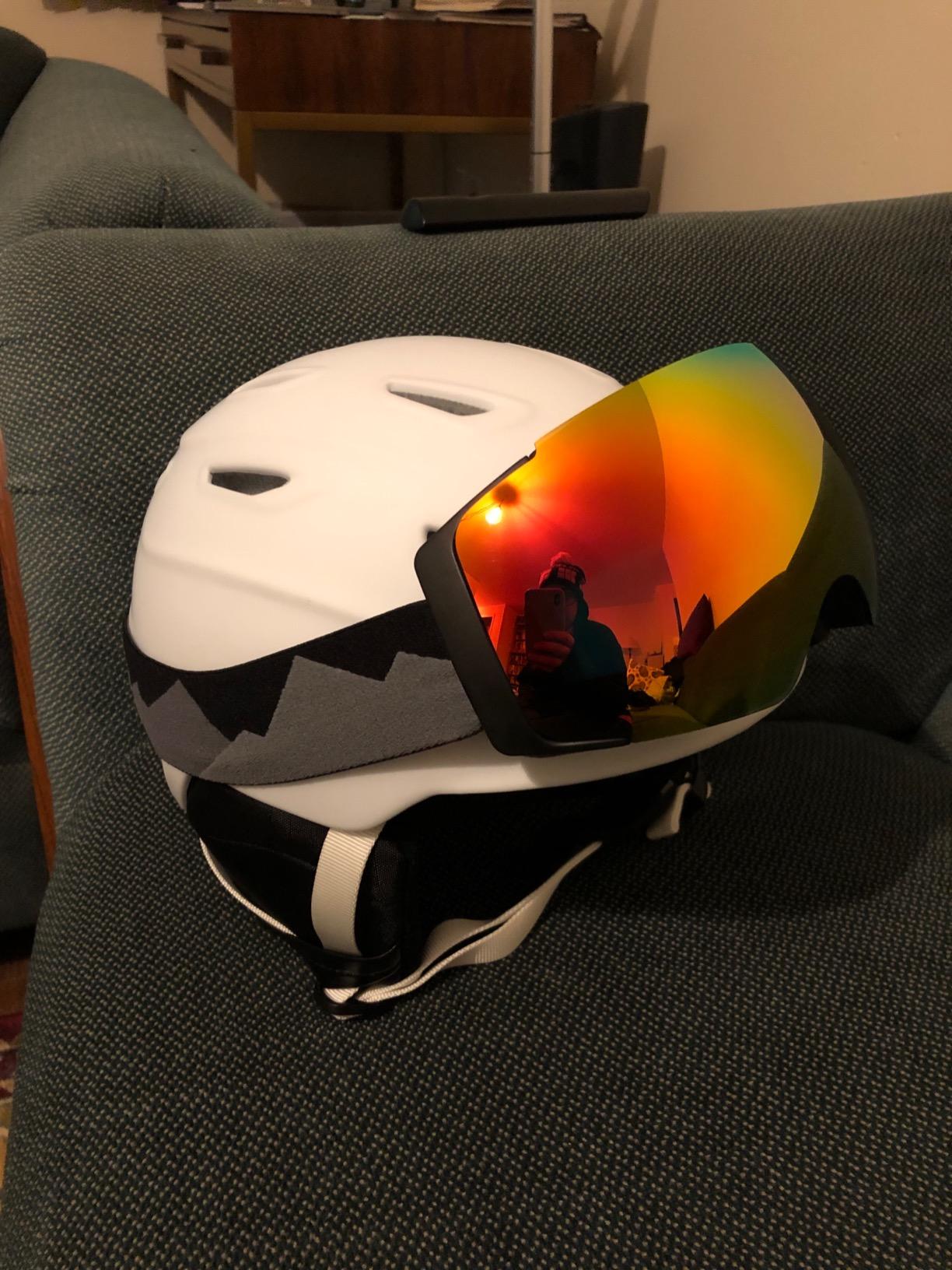
5. EXP VISION OTG Ski Goggles — Best Replaceable Foam
Ski & Snowboard Goggles Men Women, Over-Glasses Interchangeable Foam
127 g lightweight TPU frame
Detachable replaceable foam
Top and bottom vents
100% UV400
Pros
- Strong anti-fog performance with top and bottom vents
- Comfortable lightweight fit that does not press on the face
- Spacious OTG frame fits over prescription glasses
- Adjustable strap works with any helmet
- Detachable replaceable foam allows a customised fit
Cons
- Tinted colourway options are dark and not ideal for flat light
- Visibility can be poor when snow is blowing
- Foam can retain a sweat smell over repeated use
The defining feature here is the detachable, replaceable foam. Most goggles in this price range seal their foam permanently, which means a worn or smelly seal is the end of the goggle. Being able to pull the foam out to wash it, or replace it entirely, extends the life of the frame considerably.
That has a specific flat light benefit. On warm, still, overcast days — the exact conditions that produce fogging — a foam you can dry out between runs is genuinely useful, and the design is built for fast cleaning without scratching the lens.
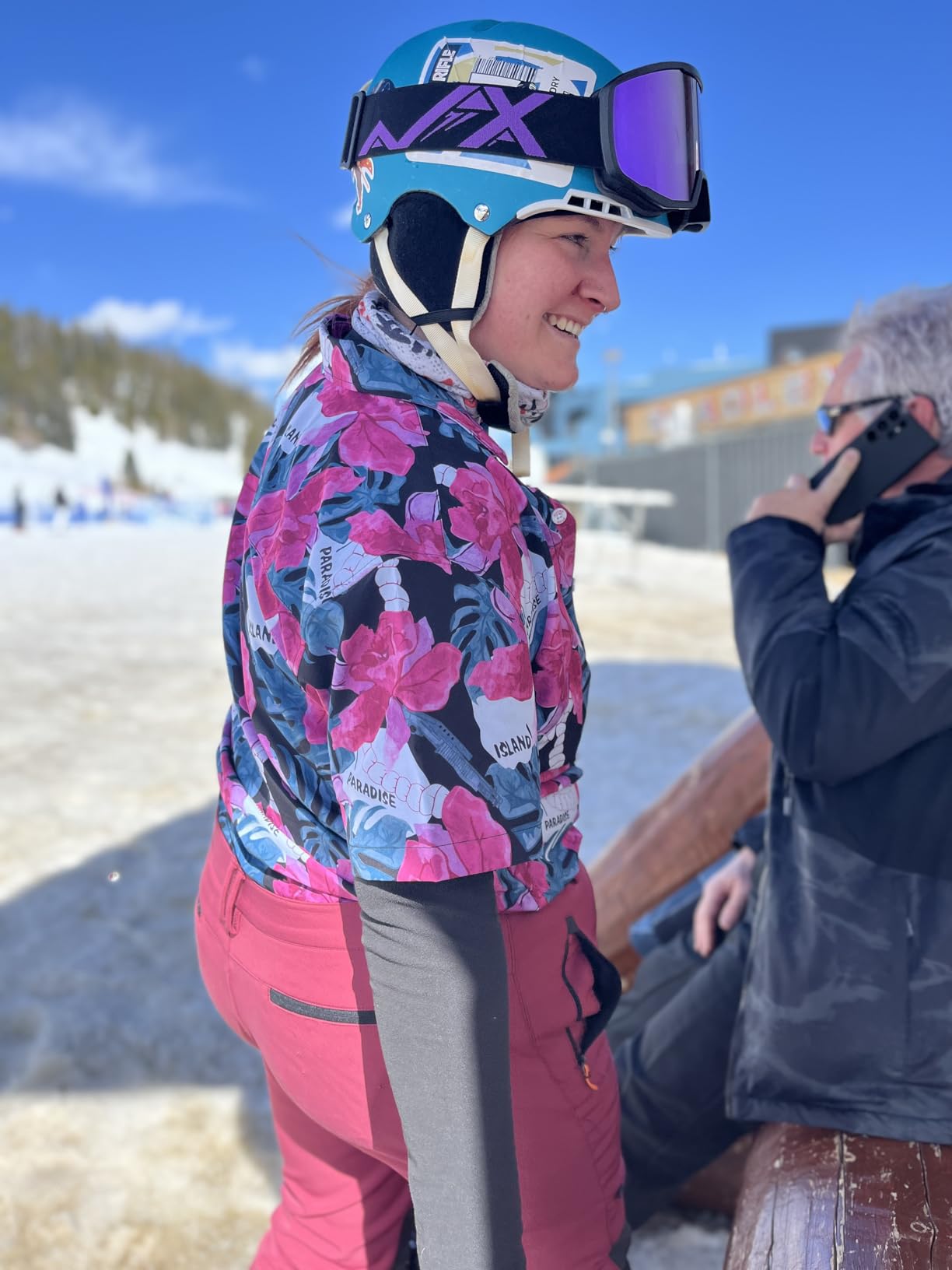
At 127 g this is the second-lightest frame here, with top and bottom vents for airflow, a moisture-wicking foam, and a one year guarantee with an unconditional refund or free replacement. Reviewers rate the anti-fog coating highly and like that the frame does not press on the face.
Its 4.6 stars from 2,630 reviews come with the highest five-star share of this set, and the confidence comes from the fit and venting rather than the optics.
Which colourway should I get for flat light?
Not the dark ones. The repeated caveat in reviews is that the tinted colourways are built for bright sunny days and are not ideal for flat or overcast light. This is a frame that lets you swap the foam, not the lens, so your VLT options are limited by what the brand offers in this model.
If flat light is your primary condition, treat this as a comfort and fit pick and accept a darker view. Pair it with a second lens strategy rather than expecting this lens to do the job.
What about blowing snow and whiteout?
Reviewers are direct about this: visibility can be poor when snow is blowing. A darker lens in a whiteout is a genuine safety issue, not a preference. If your mountain gets socked-in with wind-driven snow, this is not the frame to rely on alone.
The OTG chamber is spacious enough for most prescription frames, which is where this one genuinely earns its place.
6. EXP VISION Spherical Ski Goggles — Best Spherical Dual Lens
EXP VISION Snowboard Ski Goggles Men Women Youth, Anti Fog OTG Winter Snow Goggles Spherical Detachable Lens (Dream blue)
Frameless spherical dual lens
REVO coating with anti-fog on both lenses
Three-layer soft arc foam
5.26 ounces
Pros
- Spherical dual-lens design gives a wide clean view without blocking peripheral vision
- Dual-lens anti-fog coating with vent channels limits fogging
- Three-layer foam keeps the face warm and absorbs sweat
- Fast adjustable elastic strap fits a range of helmet sizes
- OTG design works for prescription glasses
Cons
- Foam and lens are fixed rather than user-replaceable which limits long-term servicing
- Lighter lens tints are needed for genuinely flat overcast light
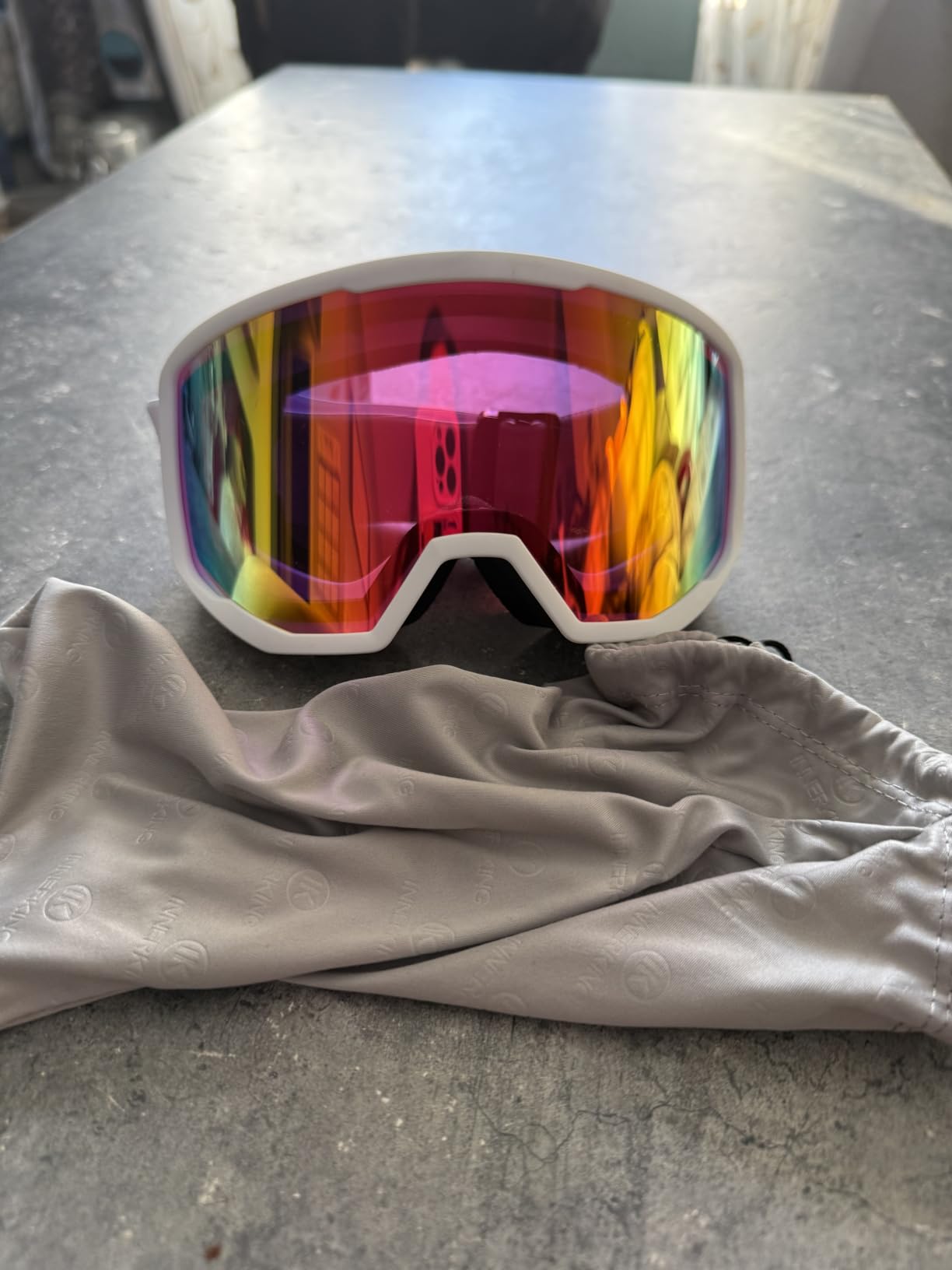
A frameless spherical dual-lens design with a full REVO coating, scratch protection and anti-fog on both lenses. There are 11 colour variants available, and the spherical shape is the reason reviewers describe the view as clear, wide and clean.
Spherical lenses matter for flat light because they minimise distortion. A cylindrical or toric lens curves in one direction only, which stretches the image toward the edges — and in a scene with no shadows, that distortion is one more thing competing with the small amount of contrast you have.
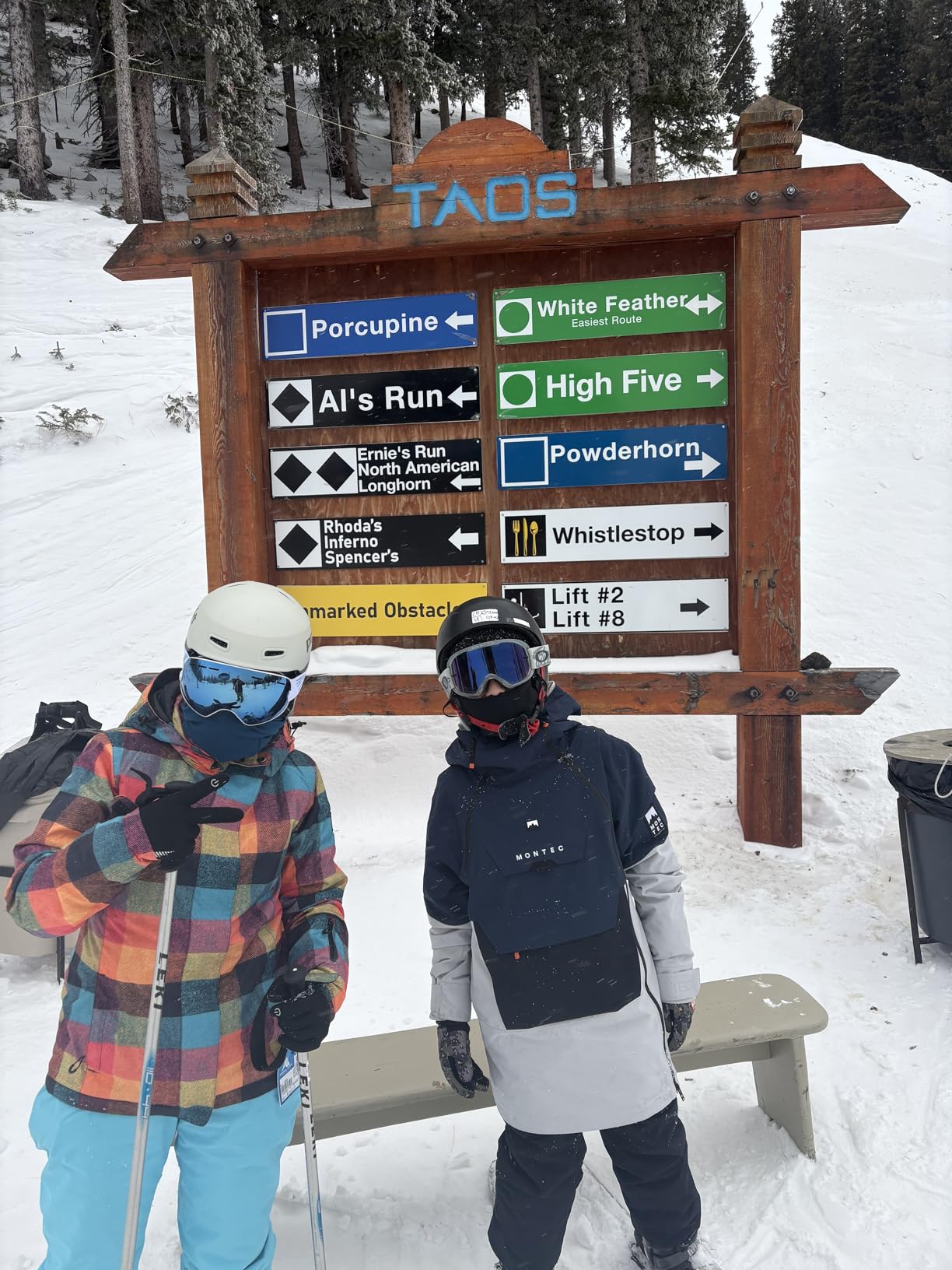
The three-layer soft arc foam keeps the face warm and absorbs sweat, and the fast adjustable elastic strap fits a wide range of helmet sizes. At 4.6 stars from 1,926 reviews, the feedback centres on view clarity, effective anti-fog venting and a comfortable seal under a helmet.
Is spherical actually better than cylindrical for terrain reading?
For terrain definition, yes, and the reason is geometric rather than marketing. A spherical lens curves equally in all directions, so the image stays close to true proportions from centre to edge. Cylindrical and toric lenses bend along one axis, which is fine for sun lenses where you are looking at a bright surface but harder in a grey scene where you are hunting for subtle shape changes.
The trade-off is peripheral volume. Toric and cylindrical designs wrap further around the sides of the head.
What is the main limitation here?
Serviceability. Both the foam and the lens are fixed rather than user-replaceable, so when the face foam wears out you are looking at a new goggle rather than a new pad. It is the opposite of the EXP VISION OTG above.
For flat light you also need to move to a lighter tint. Reviewers make this point plainly: the lens you want for genuinely flat overcast light is lighter than what this model includes.
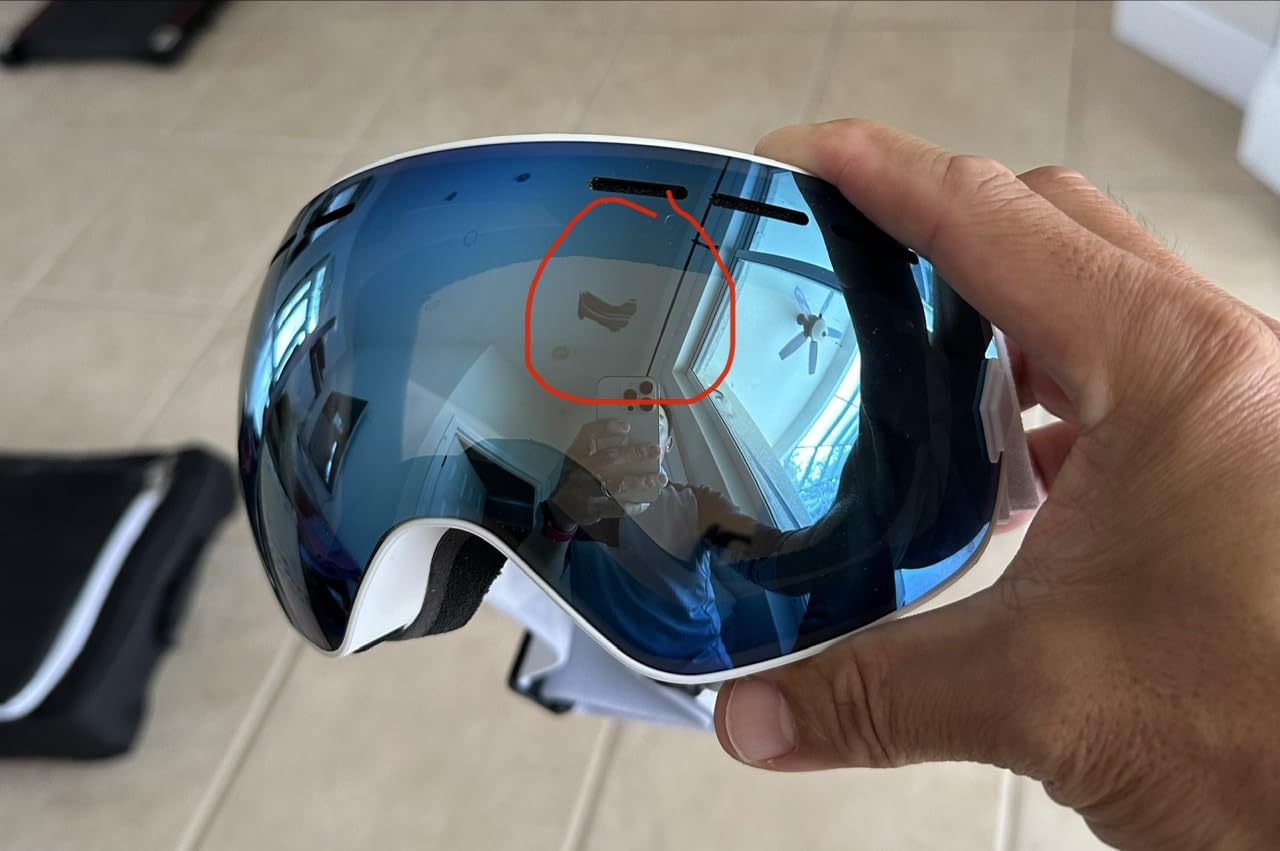
7. findway Ski Goggles OTG — Best for Hot, Windy, High-Exertion Days
findway Ski Goggles OTG – Over Glasses Snow/Snowboard Goggles for Men, Women & Youth – 100% UV Protection
Frameless spherical double lens
Inner lens made in Italy
8 lens variants from 6.8% to 46% VLT
4.8 ounces
Pros
- Effective ventilation moves air across the inner lens to prevent fogging
- Double-lens construction with anti-scratch and anti-fog coatings
- Frameless spherical lens creates a super wide field of view
- Triple-layer foam and premium TPU frame are warm and comfortable
- Silicone-backed non-slip strap stays secure with a helmet
Cons
- Listed as suitable for users over 10 years old rather than full adult sizing
- Most lens variants are dark so a separate low-light lens is needed for flat conditions
At 4.7 stars from 1,414 reviews, this is the highest-rated goggle in the roundup, with 83% of reviewers giving five stars. The ventilation is the standout: owners specifically praise the smooth air-flow system that brings fresh air in and exhausts moisture quickly, which is the direct answer to flat-light fogging.
The double lens has a full-face REVO mirror coating with anti-scratch, anti-fog and impact resistance, and the inner lens is made in Italy with long-lasting anti-fog material. The frameless spherical design gives the wide field of view that this brand is known for.
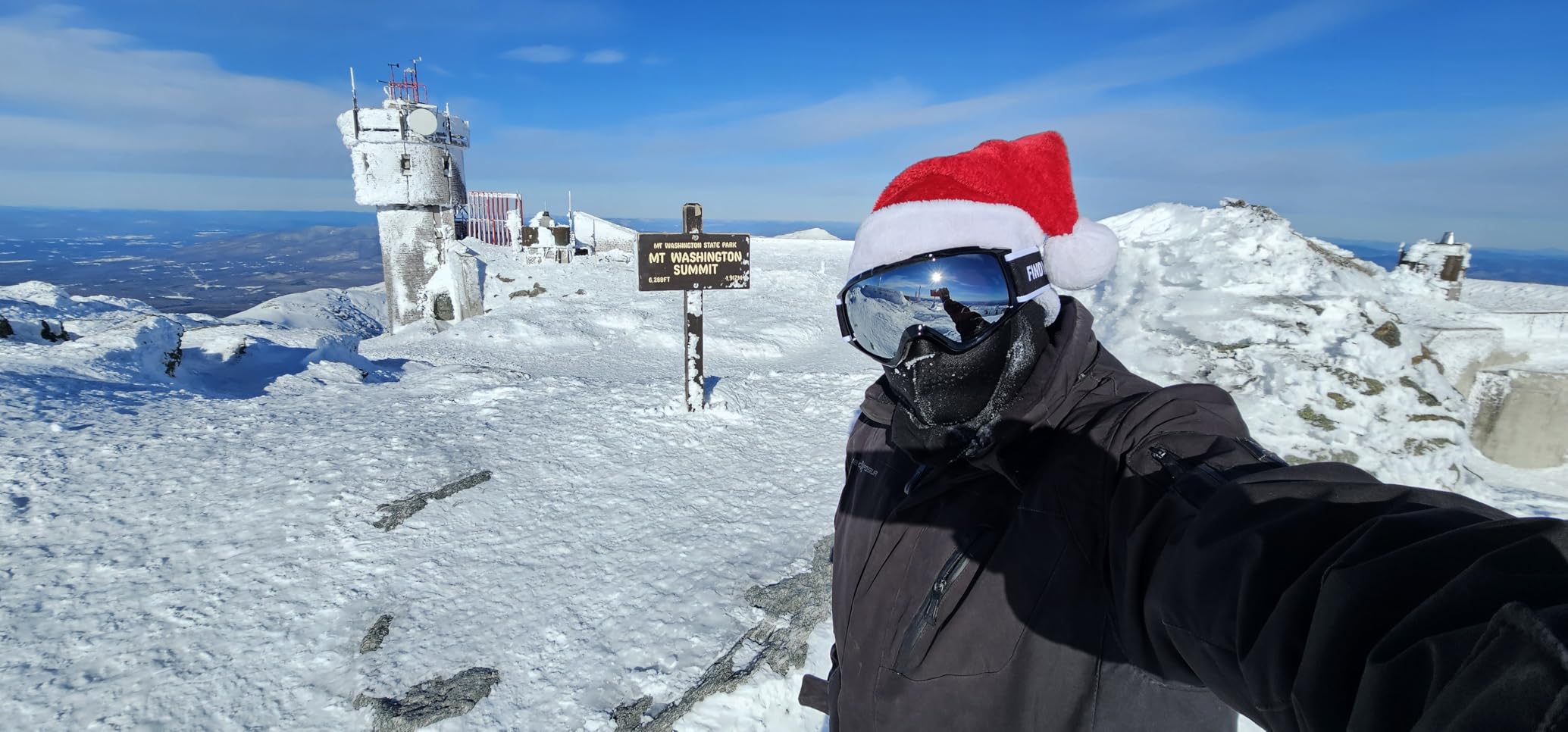
Comfort is handled with a premium TPU frame, triple-layer foam and a widening high-density 3D jacquard extra-long strap with a silicone-backed non-slip finish. The oversized OTG design lets you wear glasses underneath, and there is a one year guarantee with an unconditional refund or free replacement.
Is the ventilation the best fix for fogging?
Among these ten, yes. Every review theme on this frame points to fog resistance rather than past it, and the exhaust path is specifically noted as quick. If you run hot, ski slowly, or spend a lot of time climbing in still weather, ventilation design matters more than lens tint.
One caution from the ZIONOR comparison: venting that works this well also admits wind. On a cold lift you may prefer a sealed frame.
Can I get a flat light lens for this frame?
Partially. There are 8 lens variants running from 6.8% up to 46% VLT, so you can get brighter, but the top of that range still sits below the 60-80% band that heavy overcast wants. Most variants are dark, and reviewers flag that a separate low-light lens is needed for flat conditions.
It is also listed as suitable for users over 10 rather than full adult sizing, so check the fit if you have a broad face.
8. Odoland Magnetic Ski Goggles — Best for True Flat Light, Lens Included
Odoland Magnetic Ski Goggles, 2 Interchangeable Lens Anti-Fog for Men Women
VLT 80% yellow lens included
Strong magnetic locking system
164-degree frameless field of view
Two spherical lenses in the kit
Pros
- Two lenses included including a VLT 80% yellow lens that brightens flat and cloudy days
- Magnetic lens swap is fast and the lenses lock very securely
- Dual-layer anti-fog with top and bottom vents holds clarity when sweating
- Frameless 164-degree field of view eliminates tunnel vision
- Less visually obtrusive than framed goggles
Cons
- Strap cannot be shortened once stretched so the goggles are hard to use without a helmet
- The dark lens is too dark when moving from sun into shade
- Goggle is large top to bottom and can press on the nose bridge
This is the only frame in the roundup whose box contains a lens built for the job. The kit includes a VLT 80% yellow lens explicitly intended for low-light, cloudy and evening conditions, alongside a dark lens for bright days. At 80% VLT it sits at the top of the flat light band and handles most of a genuine whiteout.
That single fact changes the economics. Every other frame here needs a second purchase before you can ski properly in grey weather. This one does not, and the dual-lens construction with an anti-fog inner lens and top and bottom vent channels handles the warm-overcast fogging problem at the same time.
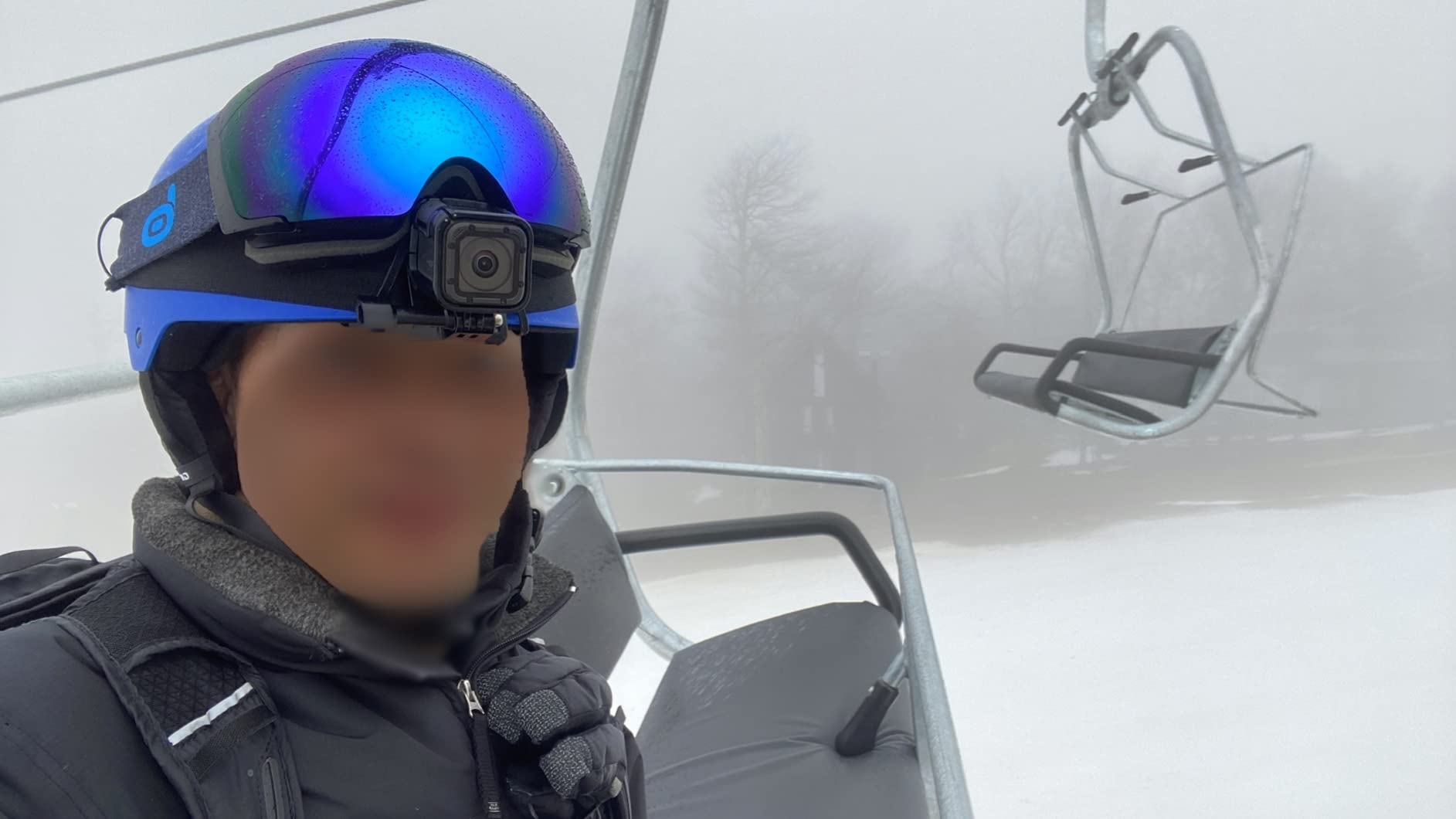
The magnetic locking system is described as strong, with lenses that lock in very securely, and the frameless large spherical lens gives an ultra-wide 164-degree field of view that reviewers credit with eliminating tunnel vision and blind spots. There are 12 frame colour variants, and every lens is UV400-rated.
At 4.5 stars from 1,383 reviews, it carries the lowest average rating in the set, but 76% of owners still give five stars and the two-lens bundle is the most consistently praised feature.
Is 80% VLT too bright for a sunny day?
It can be, which is why the dark lens is in the box. The trade is a swap, and the magnetic lock is fast enough that changing between a dark lens and the yellow one on a chairlift is realistic. The yellow lens at 80% is not a night-skiing-clear lens in the way a 90% lens is, so a dedicated floodlit-night lens is still a separate buy.
The reviewers’ complaint about the dark lens is specifically about moving from sun into shade, not about flat light at all.
What about fit and helmet compatibility?
Two things to know. The strap cannot be shortened once stretched, so the goggles are difficult to use without a helmet — that is a real constraint for anyone skiing without one. And the goggle is large top to bottom, which can press on the nose bridge under some helmets.
The OTG chamber is glasses-friendly and fits most prescription frames without pinching temples or nose pads, with an extra-long adjustable strap and multi-layer foam padding for even pressure distribution.
9. SMITH Squad Goggles with ChromaPop — Best Contrast Technology
SMITH Squad Goggles – ChromaPop Everyday Red Mirror, Black
ChromaPop lens technology
Semi-rimless with oversize cylindrical lens
Sizes small medium and X-Large
Extra low-light lens included
Pros
- ChromaPop lens makes bumps shadows and terrain detail pop with vivid contrast
- Oversize cylindrical lens gives a wide field of view with no blind spots
- Includes an extra low-light lens for flat foggy or night skiing
- Anti-fog technology keeps vision clear during intense runs
- Responsive face foam and wide strap give a secure helmet fit
Cons
- Lens interchange is not magnetic and is awkward to remove risking scratches
- Fit can be tight even on the loosest setting over a small helmet
- Soft case offers scratch protection only
ChromaPop is the most established contrast technology in this roundup, and it is what the SMITH Squad is built around. Smith describes it as enhancing definition, contrast and natural colour, and owners report the practical version of that: bumps, shadows and terrain detail popping out with vivid contrast.
There is a second thing most reviews miss, which is that an extra lens for low light conditions is included in the box. That means the frame includes a genuine flat-light option, and the multiple tint range includes red and green alongside the sun tints.
At 4.7 stars from 388 reviews it has the highest five-star share in the set at 84%, though it is also the smallest review base here. The semi-rimless design and oversize cylindrical lens give a wide field of view with sharp optics, and smudge- and moisture-resistant coatings make it easier to keep clear in blowing snow.
Sizes come in small, medium and X-Large, which matters more than usual because fit is this goggle’s weak point.
How does ChromaPop compare to a plain high-VLT lens?
A plain high-VLT lens gives you brightness and nothing else. ChromaPop filters wavelengths so that features in the scene separate by contrast rather than only by brightness. In a whiteout or flat light, where there is no shadow to work with, that filtering is doing a large share of the terrain-definition job.
Forum consensus backs this up. The Smith storm rose ChromaPOP is the most frequently repeated single lens recommendation in the flat light threads, cited on theskidiva.com, in r/Skigear and in r/snowboarding. One important caveat from those same threads: the everyday lens most people leave installed on a Smith Squad is not the lens you want in flat light.
Why is the lens release the main complaint?
Because it is not magnetic and it is awkward to operate, which risks scratching the lens during removal. For a goggle whose whole value proposition is the lens technology, that is an odd place to compromise, and it is the reason the Wildhorn Roca takes the magnetic swap category.
Fit is the other issue. Owners report it can be tight even on the loosest setting over a small helmet, and the included soft case gives scratch protection only. If you ride a small helmet, try it before committing.
10. Bolle Freeze Snow Goggles — Best High-VLT Red Lens in the Box
Bolle Freeze Matte Black/Vermillon Medium Ski Goggles Unisex-Adult
CAT.2 mixed weather lens
85% VLT red lens
Double lens with P80+ anti-fog
94 g with a two year warranty
Pros
- Rarely or never fogs up even for skiers who run hot
- Comfortable over a helmet and fits smaller faces well
- CAT.2 mixed weather lens handles bluebird sun and light flurries
- Good visibility improvement on bright snowy days
- Lightweight at 94 g with a full-rim protective frame
Cons
- Only a single lens is included so flat-light and night conditions need a separate lens
- The vermillion tint is light and some users prefer a darker lens for bright sun
- Not OTG so the full-rim profile will not fit over prescription glasses
The bolle Freeze is the other frame here that includes a lens genuinely suited to low light: a CAT.2 mixed weather lens in red at 85% VLT. At 85% it is brighter than anything else in this roundup, which puts it in whiteout and fog territory rather than merely overcast.
It is also the lightest option on the list at 94 g, with a two year manufacturer warranty — the longest stated warranty of the ten. The double lens uses P80+ anti-fog and Carbo-glass anti-scratch treatment, and it carries a full-rim polycarbonate frame.
Its 4.6 rating comes from 401 reviews, the smallest review base in the set, with 72% five-star.
Is 85% VLT the right flat light number?
It is above what ordinary overcast needs. For a grey groomed morning, a 60-70% lens is more natural, and 85% will make the snow look washed and bright with reduced contrast. For fog, blowing snow and lit night skiing, 85% is exactly right and there is nothing else in this roundup that gets there.
Buyers who want a darker lens for bright sun should know the vermillion tint is light and some users prefer something darker. This is a low-light-first goggle.
Can you wear it over prescription glasses?
No. This is a full-rim profile and is not designed as an OTG frame, which makes it the least flexible option here for anyone who wears glasses. If you need prescription compatibility, the OutdoorMaster OTG or the findway are the two to compare.
On the plus side, owners like that it fits smaller faces well and sits comfortably over a helmet, and several report it effectively never fogs, even running hot. Only one lens is included, so a sun lens is a separate purchase.
How to Choose a Flat Light Goggle: Fit, Swap Systems and Replacement Lenses
Pick the frame on lens support, not on the lens in the box. Eight of these ten ship with a dark lens. The question is whether the frame takes a high-VLT lens, whether that lens is a realistic replacement purchase, and how long that lens will last on the shelf.
Choose the swap system you will actually use. Magnetic systems like the Wildhorn Roca, OutdoorMaster PRO and Odoland change in seconds and, according to owners, hold after hard falls. Latch systems are more secure but slower. In marginal weather you will swap several times a day, and the system you can operate with gloves on wins.
Check OTG clearance before anything else if you wear glasses. The OutdoorMaster OTG, ZIONOR Lagopus B1, OutdoorMaster PRO, findway, Odoland and both EXP VISION frames are designed to sit over prescription frames. The bolle Freeze is not. Also check strap length, since several owners report the strap slipping on smaller heads and pushing glasses downward.
Budget for a second lens in your first-season total. Replacement lenses from premium brands are the most sticker-shock item in this category, and a two-lens flat-light setup can cost more than the frame. The two kits here that avoid that are the Odoland and the SMITH Squad, both of which include a low-light lens.
Match the VLT to your worst day, not your average day. Skiers who face grey weather 80% of the time should take 60-80% VLT. Skiers who chase sun can take 50-60% and keep a dark lens for bluebird afternoons. Night skiing and floodlit parks need 85-99%, which is a different purchase entirely.
Related reading if you are also building out an outdoor kit: our picks for the best night vision goggles for hunting cover the same low-light thinking in a different setting, and our guide to ski ergs for home gyms covers the off-slope conditioning side.
Frequently Asked Questions
What ski goggle lenses are best for flat light?
Rose, pink, amber and yellow lenses are the best tints for flat light because they filter out the blue wavelengths that dominate a grey sky and return them as a high-contrast image. Pair the tint with a high VLT of 50% to 80% for ordinary overcast skiing, or 70% to 90% for full whiteout and fog. A grey or clear lens transmits light but adds almost no terrain definition, which is exactly what you are short of in flat conditions.
What are the best ski goggles for flat light skiing?
The OutdoorMaster OTG is our top overall pick, with a 4.6 rating across more than 10,000 reviews, a 100 g frame, an over-the-glasses design and lens variants available from 8% up to 99% VLT. For a single-lens answer with no second purchase, the bolle Freeze includes an 85% VLT red mixed weather lens. For the best magnetic lens swap, the Wildhorn Roca changes lenses in under 60 seconds.
What are the best ski goggles for low light conditions?
For low light you want the highest VLT you can comfortably wear. The Odoland kit includes a VLT 80% yellow lens built for low-light and cloudy conditions, and the bolle Freeze includes an 85% VLT red lens for mixed weather. Both are brighter than any dark lens at 8% to 11% VLT, which is what most goggles come with as their default.
Which ski goggles don’t fog up?
In this roundup the findway has the strongest ventilation feedback, with a smooth air-flow system that brings fresh air in and exhausts moisture quickly, plus a double lens with an Italian-made inner lens. The ZIONOR Lagopus B1 and the OutdoorMaster OTG are also repeatedly praised for holding clarity all day. Fogging is worst on warm, still, overcast days because there is no wind to clear the moisture, so ski slower on climbs and keep your neck gaiter over your mouth.
What is the best lens color for skiing in flat light?
Rose and pink are the most widely recommended tints for flat light, followed by amber and gold, then yellow and lemon at the bright end. The Smith storm rose ChromaPOP is the most frequently repeated recommendation across flat light forum threads. Green sits in the middle and keeps colour closer to neutral, which some skiers prefer when terrain colour is the main cue they rely on.
Is 10% VLT too dark for flat light?
Yes. A 10% VLT lens passes only about a tenth of available light into the goggle, which makes it a bright-sun lens. In grey overcast conditions it produces a dim, tunnel-like view and does not reveal bumps or terrain texture that a high-VLT tinted lens would show. Most goggles in this roundup ship with a lens in the 8% to 11% VLT range, so check the VLT figure before buying for flat weather.
Do photochromic lenses replace a dedicated flat light lens?
Partly. The photochromic rose option for the OutdoorMaster PRO is quoted up to 70% VLT, which covers ordinary overcast skiing without any swapping. It falls short in full whiteout, in fog and on night skiing, where 85% and up is needed. Forum users also report photochromic lenses reacting slowly when moving in and out of trees, so treat them as a one-lens answer for a variable week rather than a complete solution.
What should I skip for flat light?
Skip mirrored and sunglow lenses, because a mirror coating throws light back rather than letting it in, which is the wrong direction when light is already scarce. Also skip any lens at or below 15% VLT sold as a flat-light option, and skip premium dual-lens kits that include only a dark lens, since those need a second purchase before you can ski in weather that matters.
Final Verdict: The Best Ski Goggles for Flat Light
The OutdoorMaster OTG is the best ski goggles for flat light pick, and the reason is durability of evidence rather than any single specification: a 4.6 rating across 10,686 reviews, a frame light enough at 100 g, a proven seal, and lens variants that reach into true high-transmission territory.
But buy the frame, then buy the lens. Eight of the ten goggles here come with an 8% to 11% VLT sun lens, and installing that lens on a grey day is what makes a bad goggle look like a bad day. If you want zero friction, take the Odoland kit with its VLT 80% yellow lens, or the bolle Freeze with its 85% VLT red lens.
Whatever you choose, match the VLT to your worst day, use a rose or amber tint, and give the frame a fair chance on fit before you blame the lens. That is the whole difference between skiing flat light and fighting it.