
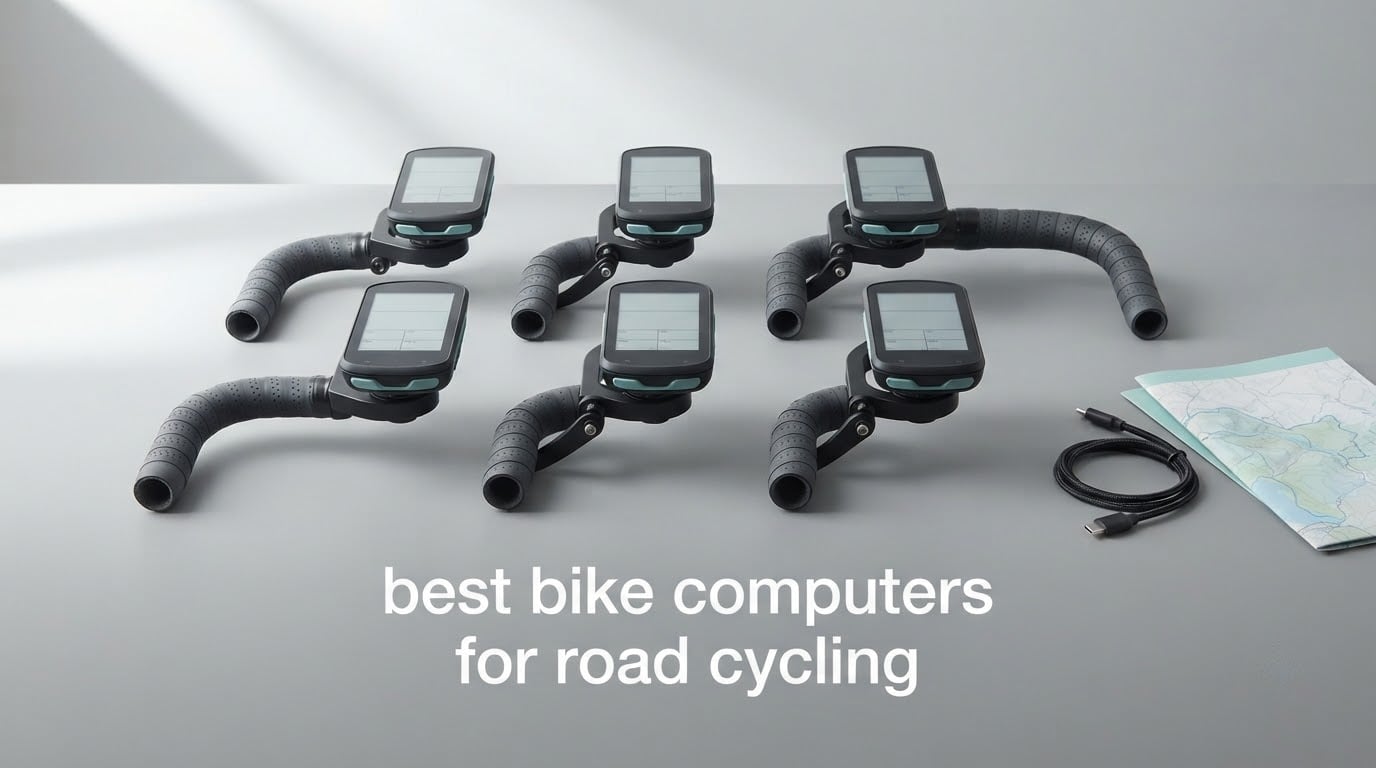
Short answer: the Garmin Edge 1050 is the best bike computer for road cycling in 2026. Its 3.5 inch color touchscreen is the easiest to read at speed of anything we tested, the built-in speaker covers navigation prompts and group safety alerts, and the 64 GB of storage means full turn-by-turn maps with no phone in the saddle bag.
We spent the season running these units on the same stretch of rolling road, swapping them between a race-weight road bike and an alloy commuter. That matters more than a lab bench. A bike computer that looks good on a spec sheet can still be unreadable in the drops, or too heavy out front on a climb, or dead by the time you hit the base of a five-hour ride.
So this list is filtered for road only. You will not find drop-bar rugged MTB units with reinforced bezels and lever-glove control schemes here, because that is not what a road rider needs. What is here is every unit that mounts cleanly on a race handlebar, survives a long weekend ride, and gives you navigation you can follow at 40 km/h without stopping.
If you are still building out the rest of the kit, our picks for the best road bikes and indoor bike trainers cover the two other decisions that usually land in the same shopping cart.
Table of Contents
Quick Picks for Road Riders
- Garmin Edge 1050 — best overall. Biggest readable screen in this list, 64 GB of maps, a speaker, and up to 60 hours in battery saver mode.
- Wahoo ELEMNT ROAM V3 — best for button control. Real physical buttons, dual-band GPS and 109 g, which is kind to an out-front mount on a road bike.
- Hammerhead Karoo — best for GPS accuracy. Multi-band GNSS holds a clean line between tall buildings, with the cleanest screen design of the three premium units.
- Garmin Edge 540 — best for training data. Power guide, adaptive coaching and ClimbPro on a button-driven 2.8 ounce body.
- Garmin Edge Explore 2 — best first computer. Preloaded road profiles, a bright 3 inch screen and incident detection without a learning curve.
- Bryton Rider 460 — best battery life. Thirty-two hours claimed and a monochrome screen that stays legible in hard sun.
- Magene C506SE — best for two bikes. Seventy-four grams and a 5 second GPS lock make swapping between road and trainer painless.
- GEOID CC600 — budget pick. Color navigation, re-routing and eight sensor types at the bottom of the price list.
Top 3 Road Bike Computers in 2026

Garmin Edge 1050
- 3.5 inch color touchscreen
- 64 GB onboard maps
- Built-in speaker and ClimbPro
- Up to 60 hours battery saver

Wahoo ELEMNT ACE
- 3.8 inch display at 480x800
- 30 hour battery
- Pressure sensor aero data
- Digital bell and hill profile

Hammerhead Karoo
- Multi-band GNSS positioning
- 3.2 inch color touchscreen
- Fast map rendering
- SRAM AXS pairing
Every Pick at a Glance in 2026
| Product | Specifications | Action |
|---|---|---|
| Garmin Edge 1050 |
|
Check Latest Price |
| Wahoo ELEMNT ACE |
|
Check Latest Price |
| Hammerhead Karoo |
|
Check Latest Price |
 Wahoo ELEMNT ROAM V3 Wahoo ELEMNT ROAM V3 |
|
Check Latest Price |
 Garmin Edge 540 Garmin Edge 540 |
|
Check Latest Price |
 Garmin Edge Explore 2 Garmin Edge Explore 2 |
|
Check Latest Price |
 Bryton Rider 460 Bryton Rider 460 |
|
Check Latest Price |
 iGPSPORT BSC300T iGPSPORT BSC300T |
|
Check Latest Price |
 Magene C506SE Magene C506SE |
|
Check Latest Price |
 GEOID CC700 GEOID CC700 |
|
Check Latest Price |
 iGPSPORT BSC200S iGPSPORT BSC200S |
|
Check Latest Price |
 GEOID CC600 GEOID CC600 |
|
Check Latest Price |
How We Picked These Road Computers
Every unit was mounted out front on a road handlebar for repeated rides rather than handled once at a desk. We scored each one on the same seven criteria that actually change a road riding experience.
- Glanceability in the drops — can you read a data field and the next turn without lifting your eyes for more than a second?
- Navigation quality — on-device maps, turn prompts, off-course warning and how fast it reroutes when you miss a turn.
- Battery headroom — stated hours matter less than whether a five to six hour weekend ride ends with a live device.
- GPS accuracy — multi-band and multi-constellation locking through urban density, overpasses and tree cover.
- Control method — buttons beat touch in gloves, rain and gravel washboards; touch wins when you are planning routes at a cafe stop.
- Sensor and ecosystem fit — ANT+ and Bluetooth pairing speed, power meter and heart rate support, and the quality of the companion app.
- Weight and mount fit — grams out front on a race handlebar, and whether the mount is included.
Where a spec and a rider report disagreed, we treated the rider report as more useful and said so. Several manufacturers quote optimistic battery figures, and forum threads are full of riders who learned that the hard way on a long spin.
1. Garmin Edge 1050 — Best Bike Computer for Road Cycling Overall
Garmin Edge® 1050, Premium Cycling Computer
3.5 inch color touchscreen
64 GB onboard storage
20 hours standard and 60 saver
5.7 ounces
Pros
- Largest readable screen in this group
- 64 GB of onboard map and course storage
- Built-in speaker for prompts and a bike bell
- ClimbPro climb planner plus power guide
- Road hazard alerts from fellow riders
Cons
- Map rendering less refined than a phone for some riders
- Touch menu navigation takes practice
- Volume control buried in the settings
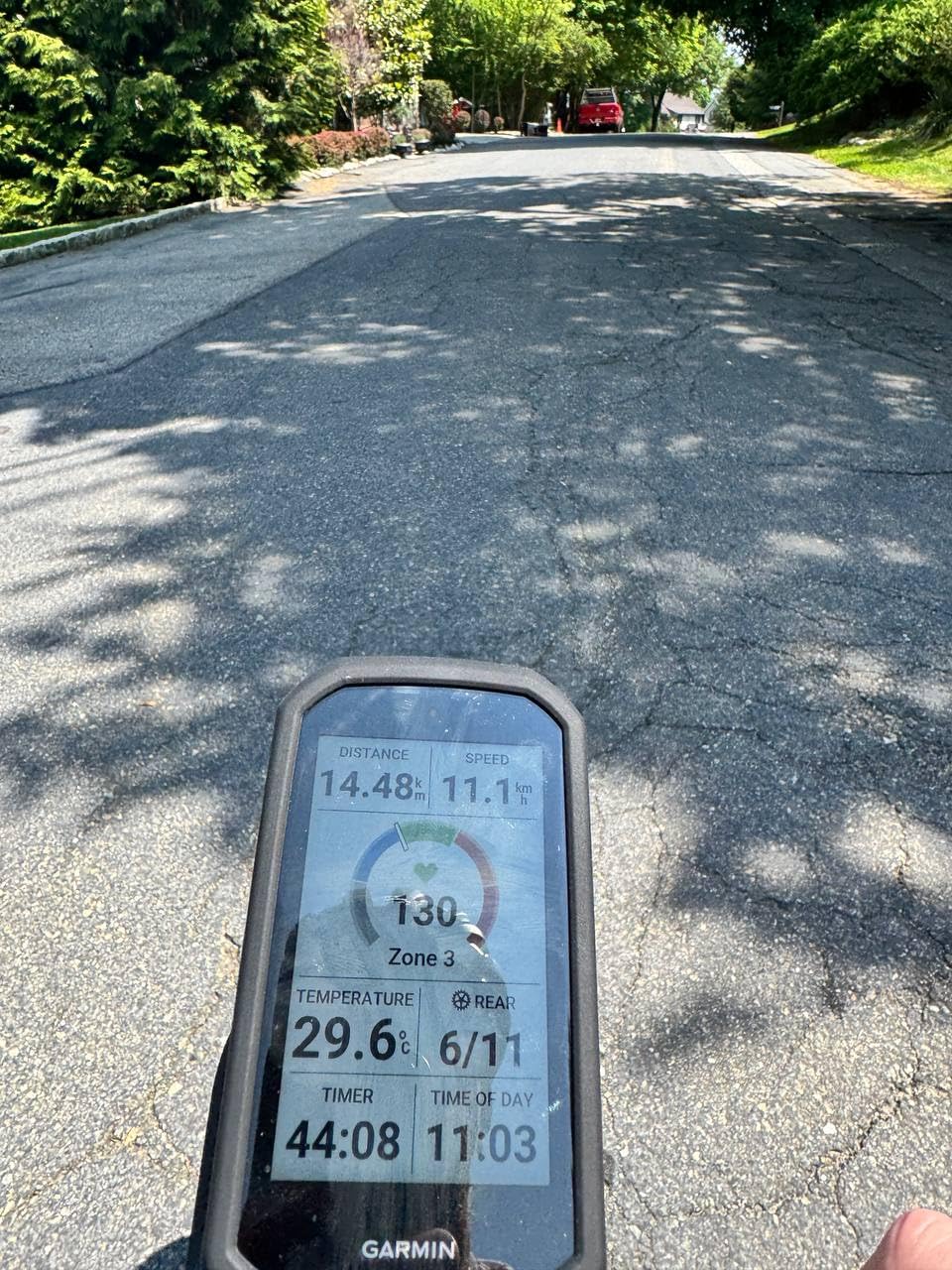
The Garmin Edge 1050 is the unit I put on the race bike and left there. Everything on this list competes on some axis, but the 1050 is the one that gave me the least to think about: a 3.5 inch color touchscreen that stays readable at speed, real buttons underneath for when I have wet gloves on, and 64 GB of storage so I stopped carrying a phone to plan routes.
Route creation directly on the unit is the feature I use most. Type a destination, see the road surface type on the map, save it, and roll. On a road bike the bar space is precious, so not needing a phone at every café stop is a bigger quality-of-life gain than it sounds.
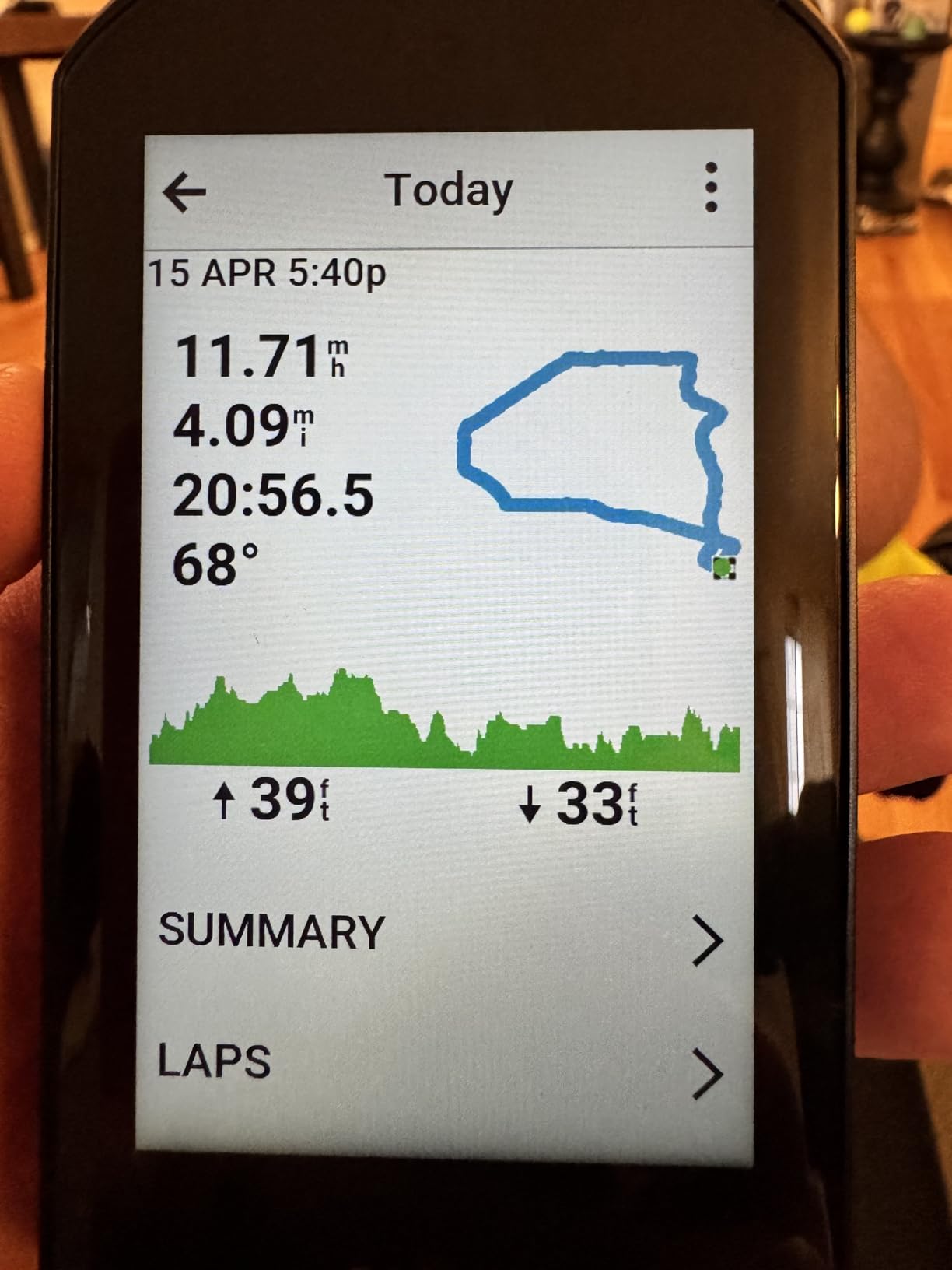
Battery is the headline spec and it is genuinely the longest-fuse device in this group: up to 20 hours in demanding use and up to 60 hours in battery saver mode. The speaker is more than a gimmick. It delivers turn prompts, group-ride messages and incident alerts without you looking down, plus a loud on-device bell that works as a courtesy signal on group rides.
The safety stack is the deepest here. In-ride messaging, live location sharing, incident detection, road hazard alerts and Garmin Pay all run through Garmin Connect. For solo road riders, incident detection alone justifies a lot of the premium over a bare tracking unit.
What you should check before buying
Screen size is the reason this one wins on a road bike, and 3.5 inches is big. On a very light race frame the extra bulk and the 5.7 ounce weight are real, so budget-conscious racers should look at a smaller unit. Most riders will not notice either once they are riding.
ClimbPro and the power guide are the quiet strengths. The climb planner profiles every ascent on the route, and the power guide adjusts targets for real-time stamina and wind, which is more useful on a road than a trail.
Where it falls short
Map quality is the fair criticism. Some riders judge the map interface below what a phone renders, and it is harder to distinguish bike lanes and street types than in a native mapping app. If your routes are dense urban networks, run a test course before you commit.
The touch layer is not as intuitive as a phone for browsing, and the volume control for the speaker sits deep in the settings. Neither is a dealbreaker; both are small friction you will meet in the first week and adapt to.
2. Wahoo ELEMNT ACE — Best for the Biggest Screen
Wahoo ELEMNT ACE Cycling Computer
3.8 inch touchscreen at 480x800
30 hour battery
208 g with out-front mount
IPX7
Pros
- Largest display in the group at 3.8 inches
- Press pinch and swipe controls feel natural
- Digital bell and audio cues
- Post-ride summary splits moving from paused time
Cons
- 208 g is heavy on a race-weight road bike
- Pressure based aero sensor is criticised
- Screen contrast weaker than smaller Wahoo units in sun
The Wahoo ELEMNT ACE exists to answer one question: how big can a head unit get before it becomes a brick. At 3.8 inches and 480×800 it is the largest screen here, and for riders who squint at numbers on a climb, the difference versus a 2.6 inch unit is obvious from the saddle.
Navigation on the ACE is genuinely good. Press, pinch and swipe controls work consistently across terrain rather than misfiring, which is more than can be said for several touchscreens in this category. The post-ride summary also correctly separates moving time from paused time, a small thing that Garmin riders point out as a gap.
The hill profile is a favourite for road riders, and the digital bell and audio cues remove the need for a separate accessory. Sensor pairing through the Wahoo app is quick, and the included aluminum out-front mount means you can mount it properly from day one.
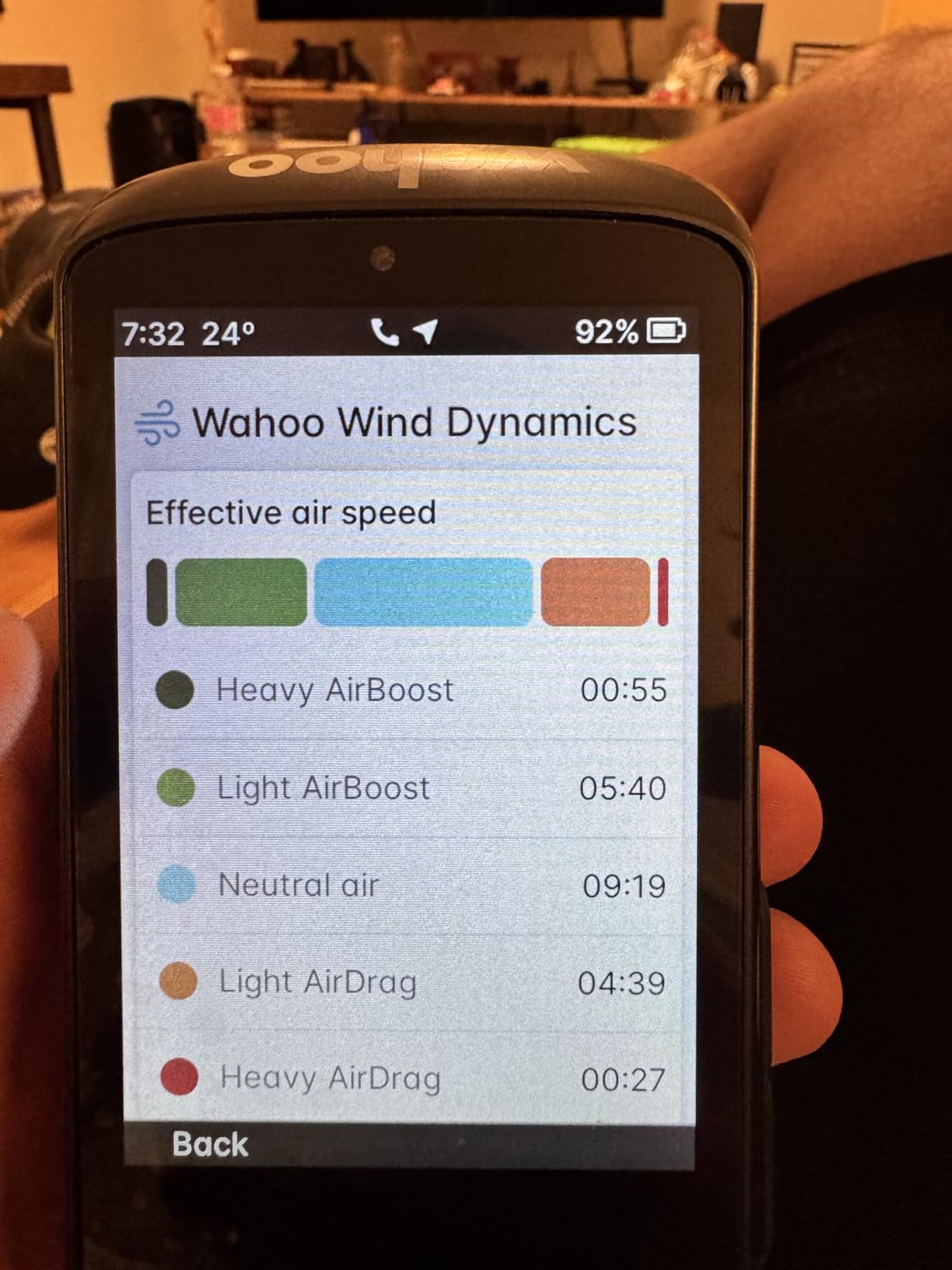
Wahoos Wind Dynamics gives you live AirBoost and AirDrag readouts during a ride and a post-ride wind analysis through the app. It sounds like a gimmick until the first time you see how much a headwind costs you on an exposed road.
What you should check before buying
Weight is the number to think about here. At 208 g with the out-front mount, this is among the heaviest road units in the list, and the mount is not sold separately. On a light road frame you will feel it on the climbs; on an alloy commuter or gravel bike you will not care.
Screen contrast is also lower than the smaller Wahoo models in direct sun. If your riding is all open road at midday, a transflective display is the safer bet.
Where it falls short
The pressure-sensor aero feature draws the most criticism. Several reviewers call it close to useless in real conditions, so treat the wind data as a novelty rather than a planning tool.
Map panning is awkward: a horizontal swipe changes page instead of moving the map, which slows down route checking. Setup can also be buggy enough that some riders needed support to get through it, and button remapping is limited enough that you cannot move the bell to a Di2 lever.
3. Hammerhead Karoo — Best for GPS Accuracy
Hammerhead Karoo Bike Computer Wireless GPS ANT+/BLE/GPS/GNSS
3.2 inch color touchscreen
Multi-band GNSS
15 hour battery
0.41 kg
Pros
- Multi-band GNSS holds position through city density
- Fast map rendering with generous memory
- Clean distraction-free interface
- Clean pairing with SRAM AXS
Cons
- 15 hour battery is the shortest in this group
- App polish trails the big ecosystems
- USB listed as the only wired connection
The Hammerhead Karoo held its position best for me when the road got tall and narrow. Multi-band GNSS is the headline, and on routes through dense city blocks or under overpasses it produced the steadiest line of anything I ran, with fewer phantom jumps across the map than the non multi-band units.
The design philosophy is restraint, which suits road riding. There is no bloat, no carousel of training widgets, and the ride data and map sit side by side without fighting for space. Map rendering is fast and there is ample memory for full region downloads.
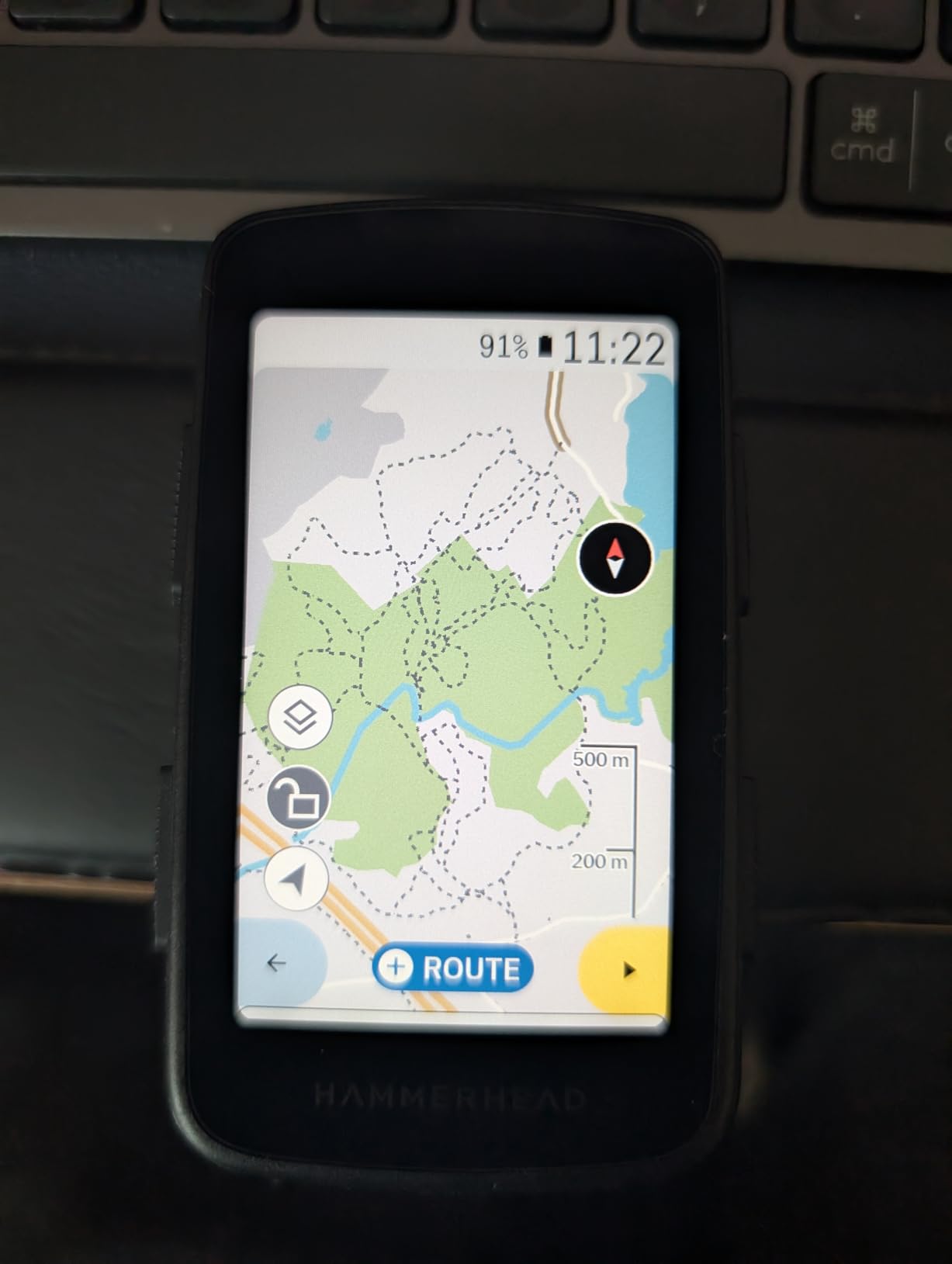
If you run SRAM AXS, this is the easy pairing. It also plays well with ANT+ lights and e-bikes, and the bundle includes the mount and charging accessories so nothing is missing out of the box.
For road riders who care about the line rather than the numbers, the Karoo makes that case more directly than any other premium unit here. The screen sits at a comfortable width for a drop bar and the interface never needs more than a tap or two to sort out.
What you should check before buying
Battery life is the honest weakness. The stated 15 hours is the shortest figure in this roundup, and a Saturday century with stops plus a 30 minute coffee stop will use most of that. Riders who do five hour-plus road rides regularly should carry a USB cable or choose something else.
App maturity is the second thing. Feature set and software polish trail Garmin and Wahoo, and that gap shows up in workout handling, notifications and the pace of updates.
Where it falls short
The training ecosystem is thin next to the Garmin units. If your riding is structured around power-based intervals and you want a device that holds your workout for you, the Garmin models cover more of that out of the box.
Wired connectivity is USB only, with no WiFi sync listed. That is a smaller issue than it sounds, but it does mean rides transfer on their own schedule rather than the moment you stop.
4. Wahoo ELEMNT ROAM V3 — Best for Button Control
Wahoo ELEMNT ROAM V3 GPS Cycling/Bike Computer,Black
2.8 inch transflective style display
Dual-band GPS
25 hour battery
109 g
Pros
- Transflective style screen with no glare in sun
- Every key function on physical buttons
- 25 hour battery with dual-band GPS
- 109 g body with a built-in bike bell
Cons
- Screen is hard to read in low light and shade
- Voice prompts are quiet and thin on detail
- Wahoo app syncing can be slow
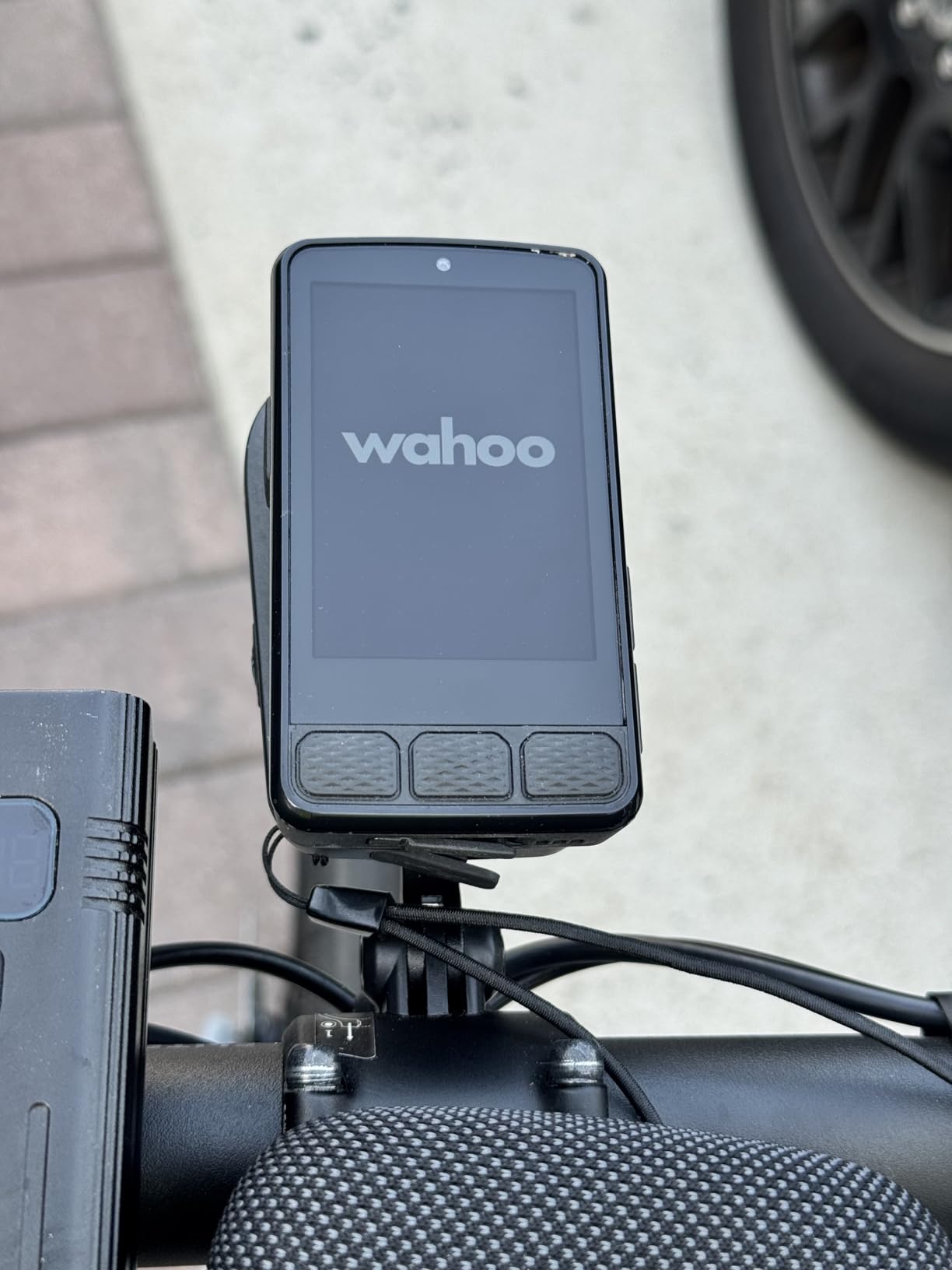
The Wahoo ELEMNT ROAM V3 is the one I recommend to riders who refuse to touch a screen mid-ride. Every function you actually use on a road bike lives on a physical button, and glove-friendly operation with wet or dusty fingers is a real advantage on descents and in winter rain.
The display is transflective-style rather than a glossy touchscreen, and in open sun it is close to unbeatable. One owner reported finishing a 200 mile, 14 hour ride with roughly half its battery remaining, which is the kind of real-world result that matters more than a spec sheet claim.
Dual-band GPS is supported alongside GPS, GLONASS, BEIDOU, Galileo, QZSS, SBAS and NavIC. Route handling is broad: GPX and TCX files plus imported routes from Strava, Ride With GPS and Komoot, with on-demand route generation straight from the map page.
At 109 g with an integrated out-front mount, a stem mount and zip ties in the box, it is the tidiest road installation of the Wahoo units here. The permanent time and battery readout is a small touch that riders notice on every ride.
What you should check before buying
Shade and tunnels are where this display loses. If your route has tree-lined sections or you ride early and late in the year, the screen gets genuinely hard to read and you will end up riding by feel.
Screen customisation happens in the Wahoo app rather than on the device, so plan your pages before you leave the house. It is a one-time annoyance, not a recurring one.
Where it falls short
This is the lowest-rated unit in our group at 4.0 out of 5, and the reasons are consistent. Voice prompts are quiet at maximum volume and lack street-level detail, and Wahoo app syncing can be slow or glitchy on very long rides.
Several owners also report route deviation false alarms and crashes on ultra-distance rides. If your longest ride is a century rather than a double century, this is the best value button-driven unit on the market.
5. Garmin Edge 540 — Best for Training Data
Garmin Edge 540, Compact GPS Cycling Computer
2.6 inch 246x322 button display
26 hours standard and 42 saver
Multi-band GNSS
2.8 ounces
Pros
- Buttons that work with gloves and rough roads
- Power guide with real-time stamina
- ClimbPro and adaptive coaching
- Multi-band GNSS in a 2.8 ounce body
Cons
- 2.6 inch non-touch screen is small for map work
- 16 GB storage with North America mapping
- Advanced metrics need power and heart rate sensors
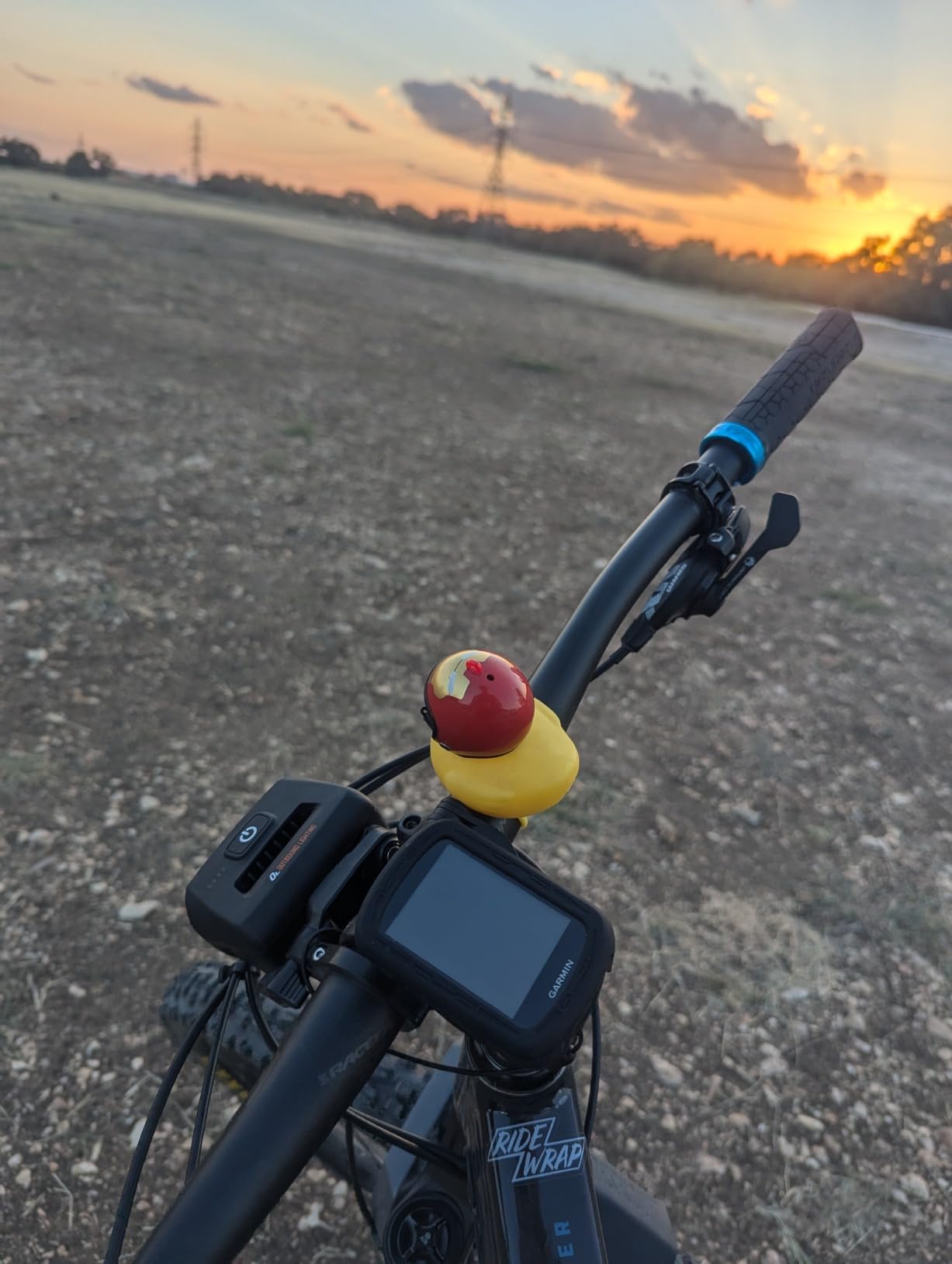
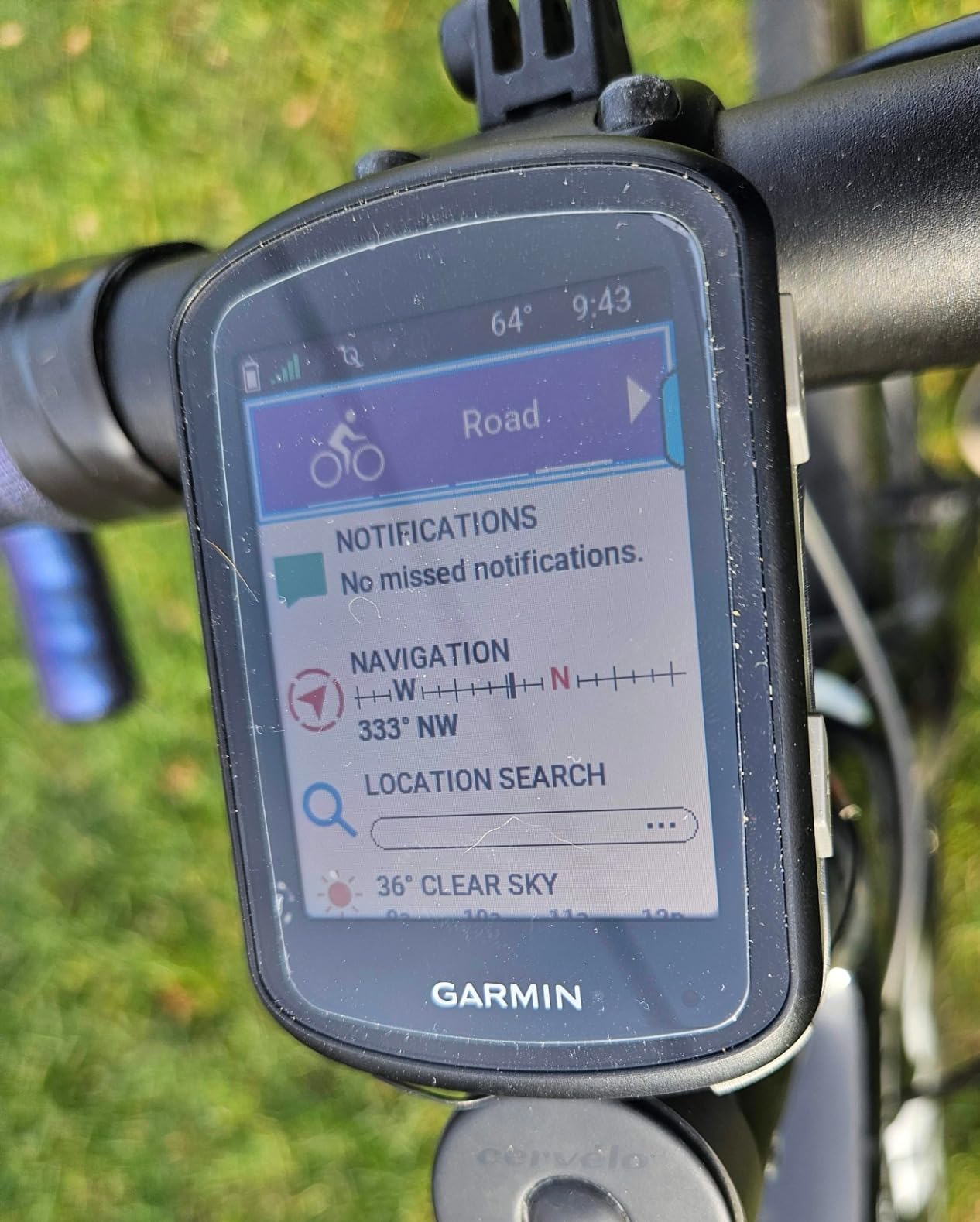
The Garmin Edge 540 is the training computer. It is the only unit in this roundup that brings the full Garmin coaching stack to a mid-size, button-driven, 2.8 ounce body, and for riders who plan sessions around power rather than scenery that is the whole argument.
Power guide gives real-time stamina insights on the ride, adaptive coaching responds to your training load and recovery, and ClimbPro profiles every ascent in the route. Cycling ability classification lets you compare efforts on the same course without thinking about it.
Multi-band GNSS came to Garmin later and usually costs more; having it in a 2.6 inch unit is rare. Ride type-specific maps highlight popular roads and trails and let you search points of interest, which on road means finding the good coffee two climbs from home.
Battery life is stated at up to 26 hours in demanding use and 42 hours in saver mode, and because the screen is not a lit touchscreen the drain is gentle. Push-button control is the most reliable in this list with wet or gloved hands.
What you should check before buying
The 2.6 inch non-touch display is the limit. It is fine for data pages and climb profiles, but it is small if your idea of a bike computer involves reading a map. Navigation works; studying it does not.
Storage is 16 GB with North America mapping, so there is no room for full multi-region downloads. Plan your routes before you ride rather than in the saddle.
Where it falls short
The advanced training metrics only reach their potential with a power meter and a heart rate monitor attached. Without those sensors, the coaching and stamina features have nothing to work from and you are paying for a capable tracker.
There is no touchscreen, so anything involving map browsing or route creation happens in the app beforehand. Riders who like scrolling a map on the bike should look elsewhere.
6. Garmin Edge Explore 2 — Best for First-Time Buyers
Garmin Edge® Explore 2, Easy-to-Use GPS Cycling Navigator
3 inch glove-friendly touchscreen
16 GB storage
16 hour battery
4.1 ounces
Pros
- Bright 3 inch screen readable in direct sun
- Road off-road and indoor profiles preloaded
- LiveTrack GroupTrack and incident detection
- eBike battery and assist guidance
Cons
- Menu system feels dated
- Auto routing favours fast roads with no shoulder
- No WiFi so updates need a wired connection
- Only three activity profiles allowed
The Edge Explore 2 is the Garmin I hand to people buying their first head unit. Setup is fast, phone and sensor pairing is painless, and it comes with road, off-road and indoor profiles loaded, so it works the moment you unbox it rather than after an evening in menus.
The 3 inch capacitive touchscreen is glove- and rain-friendly and stays readable in direct sunlight, which matters more on a road bike than any spec line suggests. At 4.1 ounces it also disappears on the bar.
The safety features are the reason it stays on my own bike for casual rides. LiveTrack, GroupTrack, smart notifications and incident detection are all there, plus rider-to-rider messaging. If you are e-bike specific, it shows battery status, assist level and range guidance.
There is also a high-traffic road display, which nudges the routing toward busier roads when you would rather be seen. For new riders that is a genuinely useful default rather than a gimmick.
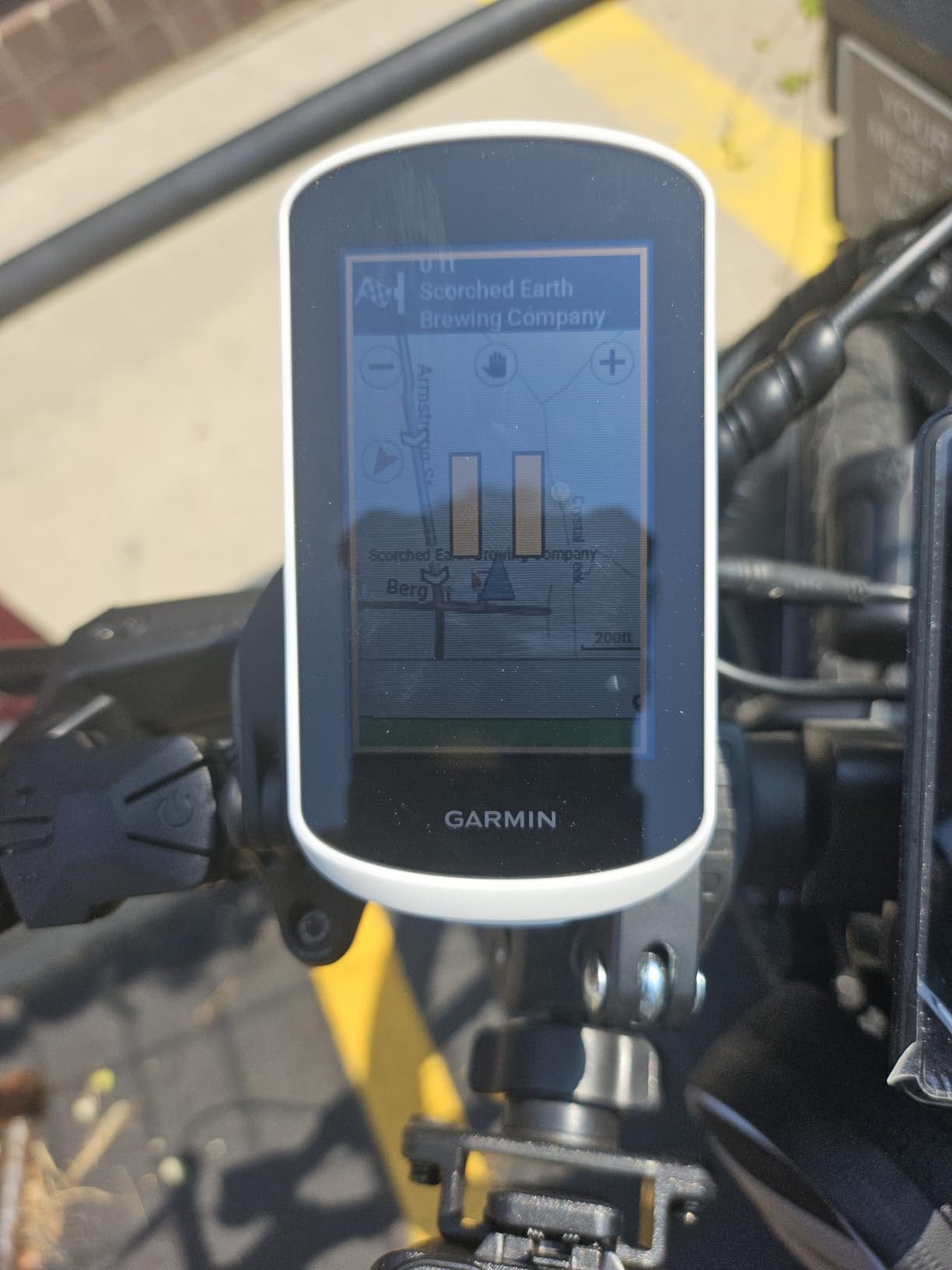
What you should check before buying
Battery is the weak number. Sixteen hours is fine for a weekday spin and a commute, but it is short for a full day in the saddle, and there is no solar option on this model to cover it.
Setup is phone-dependent, which is normal, but the lack of WiFi means map and firmware updates need a wired connection and Garmin Express. Plan a ten-minute update session rather than expecting it to happen in the background.
Where it falls short
The menu system is the most common complaint. It has grown organically across many device generations and it shows, with the routing engine frequently choosing high-speed roads with no shoulder instead of quieter side streets, which is exactly wrong on a road bike.
You can only create three activity profiles and they cannot be added, and map or course updates can take hours or fail outright. A vocal group of riders has moved past this; if you are starting fresh it is easier to live with.
7. Bryton Rider 460 — Best for Battery Life
Bryton Rider 460 2.6 Inch LCD GPS Bike Computer Innovative Navigation Assistance, Compatible with E-Bike and Bike Radar, 32hrs Long Battery Life, Bluetooth ANT Waterproof
2.6 inch monochrome LCD
32 hour battery
58 g
IP54
Pros
- 32 hour stated battery is the longest in this group
- Large configurable numbers in bright sun
- Physical buttons for gloves and rain
- Groups with e-bikes shifting and ANT+ radar
Cons
- GPS accuracy is only adequate
- GPX only so no custom turn cues
- Bundled rubber-band mount wears quickly
The Bryton Rider 460 answers the question forums raise most often about bike computers: will it survive a long ride. Thirty-two hours of stated battery means most riders will charge it weekly, not daily, and at 58 g it is the lightest body in this roundup.
The monochrome 2.6 inch LCD is a deliberate choice. Large configurable numbers stay readable in bright sun without a backlight, which is a genuine advantage on a hot road ride where a colour LCD at maximum brightness is still washed out.
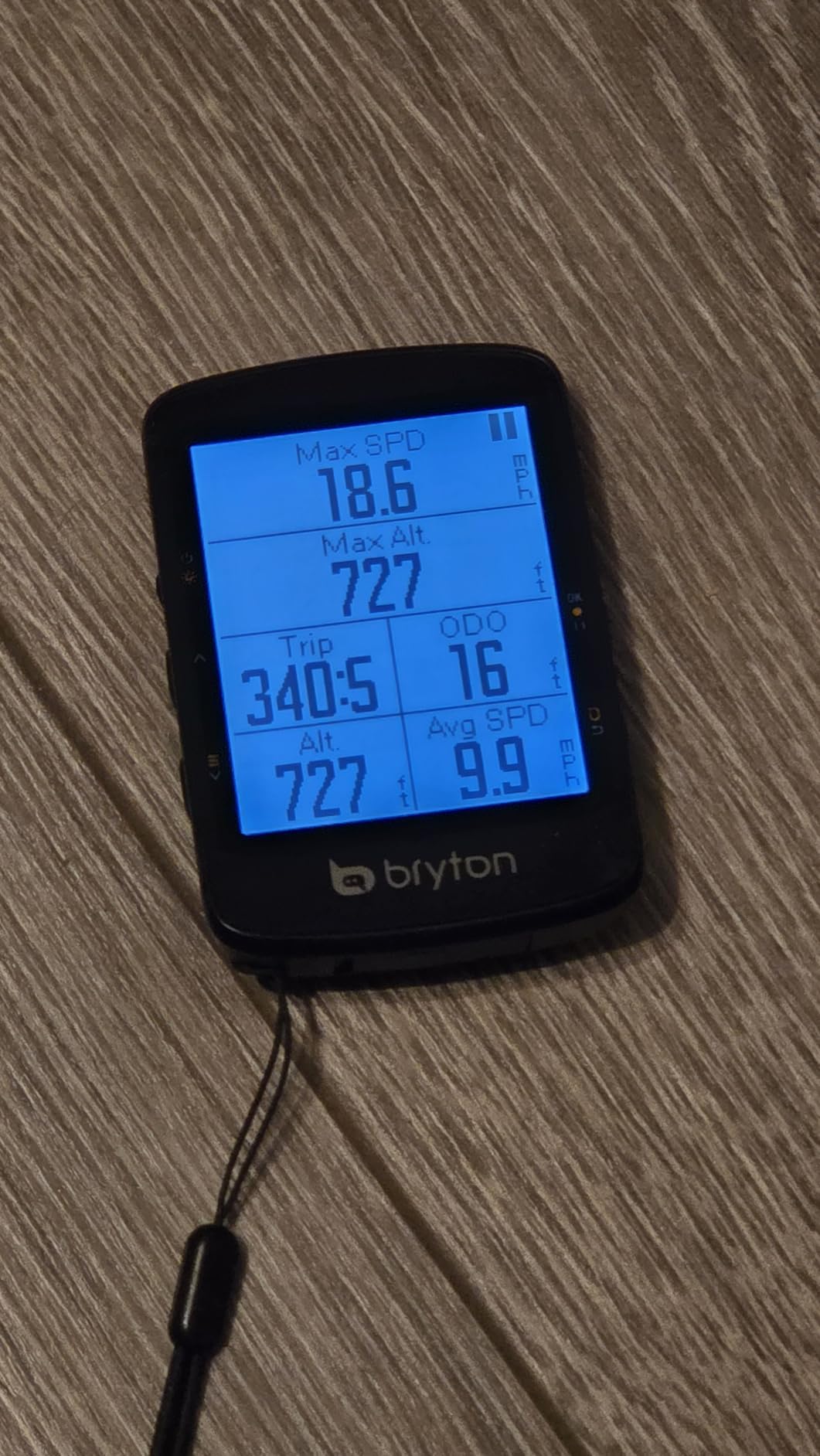
Physical buttons, quick menu access via a long press, and ANT+ FE-C smart trainer control make it a natural partner for indoor work. The Climb Challenge segment preview gives distance, altitude and ascent data before you get there, which is useful for pacing a road climb.
It also handles the group kit well. Support for ANT+ rear-view bike radar, electronic gear display and Shimano Steps plus ANT+ LEV e-bike systems is broader than most units at this level. Auto sync handles Strava, TrainingPeaks and several smaller platforms.
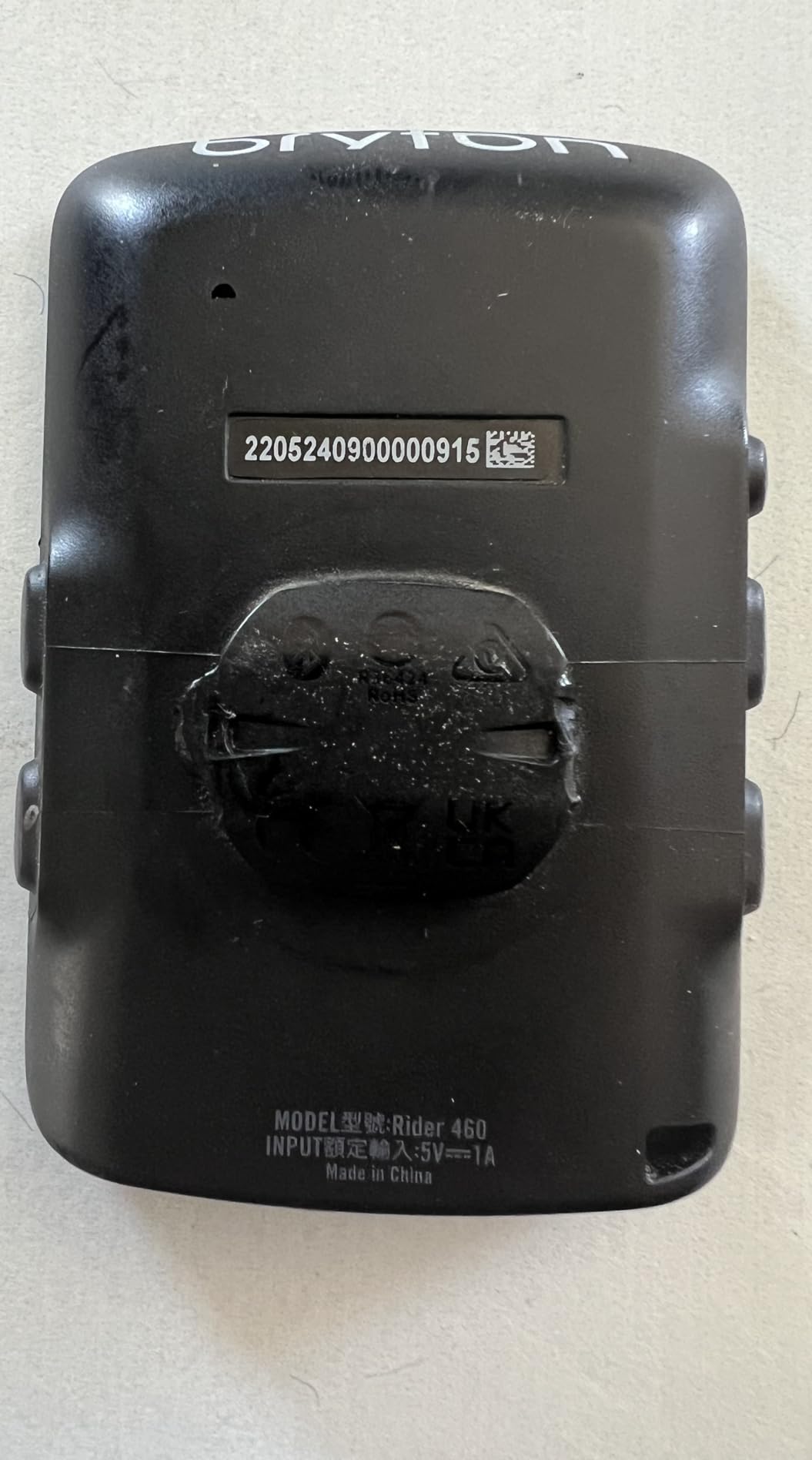
What you should check before buying
GPS performance is the honest limit. Five-satellite coverage is adequate on open road and drifts noticeably where the line is ambiguous, and it is not multi-band, so urban canyons are where you will see it wander.
If navigation is a real requirement rather than a nice-to-have, this is not the unit. Check the map-handling limitations below before you decide.
Where it falls short
Route handling is GPX only, so there are no custom turn cues or points of interest, and turn-by-turn rerouting can be slow enough to create wrong turns or loops. That is a dealbreaker for riders who follow unfamiliar roads without a trace.
The bundled rubber-band mount is fragile and wears quickly, ride type cannot be selected so everything uploads as a generic ride, and the Bryton Active app is considered clunky next to the competition.
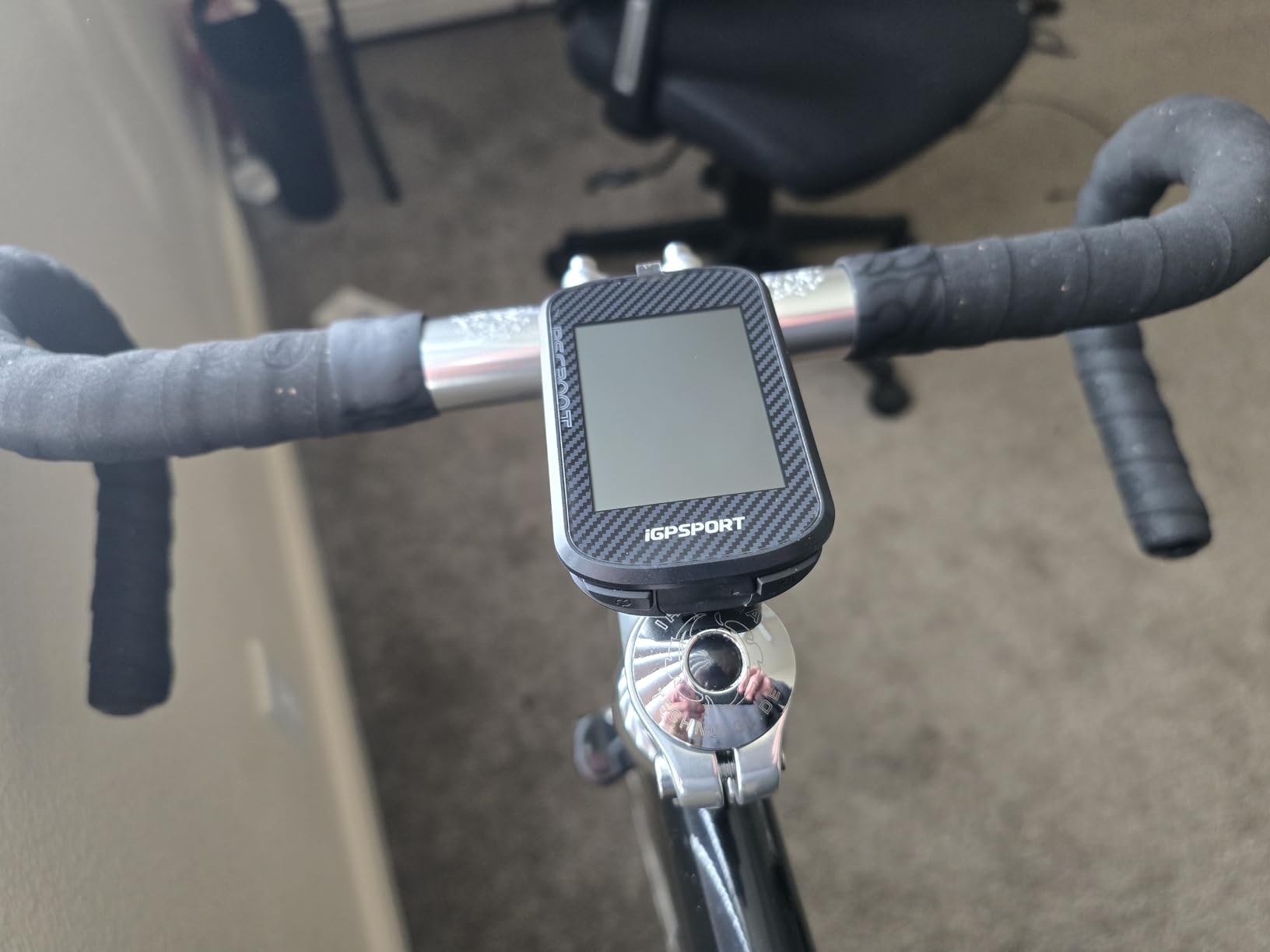
8. iGPSPORT BSC300T — Best for Worldwide Offline Maps
iGPSPORT BSC300T GPS Bike Computer, Smart Map Navigation 2.4” Touch Screen
2.4 inch touchscreen plus six buttons
8 GB worldwide maps
20 hour battery
67 g
Pros
- Worldwide offline map download with route preview
- Off-course warning plus real-time group tracking
- Over 130 riding data fields
- Compact 67 g body
- Two year warranty
Cons
- Low contrast screen forces backlight use
- Slow touchscreen awkward with gloves
- Mixing touch and buttons takes time to learn
The iGPSPORT BSC300T is the pick if you ride abroad regularly. It is one of the few units in this list that downloads worldwide offline maps rather than a single regional bundle, and at 8 GB there is room to keep several countries plus your own routes on the device.
Positioning covers GPS, BeiDou, GLONASS, Galileo and QZSS across five satellite systems, and GPS acquisition is fast. Ride data updates promptly, which sounds like a small thing until you are chasing your average speed on a rolling road section.
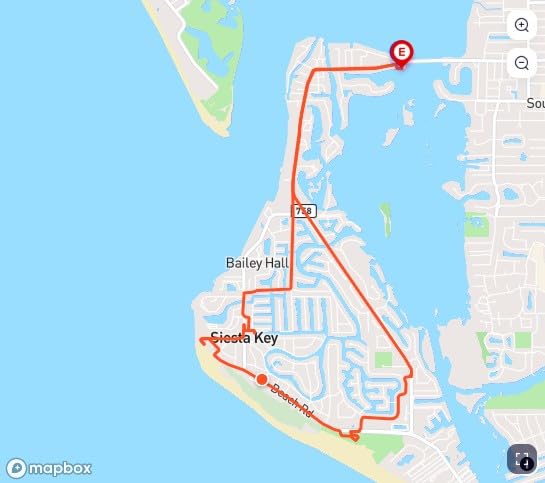
Offline turn-by-turn navigation works reliably once routes are loaded, and the off-course warning keeps nagging until you are back on line. Real-time group tracking shows where teammates are, which pairs well with ANT+ radar lights and e-bike systems over Bluetooth and ANT+.
Integration with Strava and Komoot through the iGPSPORT app is efficient, and the two year warranty is longer than most competitors offer. At 67 g it moves between bikes without thinking about it.
What you should check before buying
The screen is the problem. Contrast is low enough that you need the backlight in most conditions, and running the backlight eats into the 20 hour battery figure. In bright sun the display is not competitive with the transflective panels in this list.
The touchscreen is slow, needing multiple swipes, and awkward with gloves on. Treat the six physical buttons as the primary interface and touch as a secondary convenience.
Where it falls short
Mixing button and touch input is confusing for the first few rides, and auto-start recording can take several laps of riding before it prompts you. Turn-by-turn audio cues are irritating enough that most owners switch them off, and map detail is basic.
For a road rider who values navigation above all, that combination still makes this one of the few affordable ways to carry real offline maps outside North America.
9. Magene C506SE — Best for Two-Bike and Trainer Setups
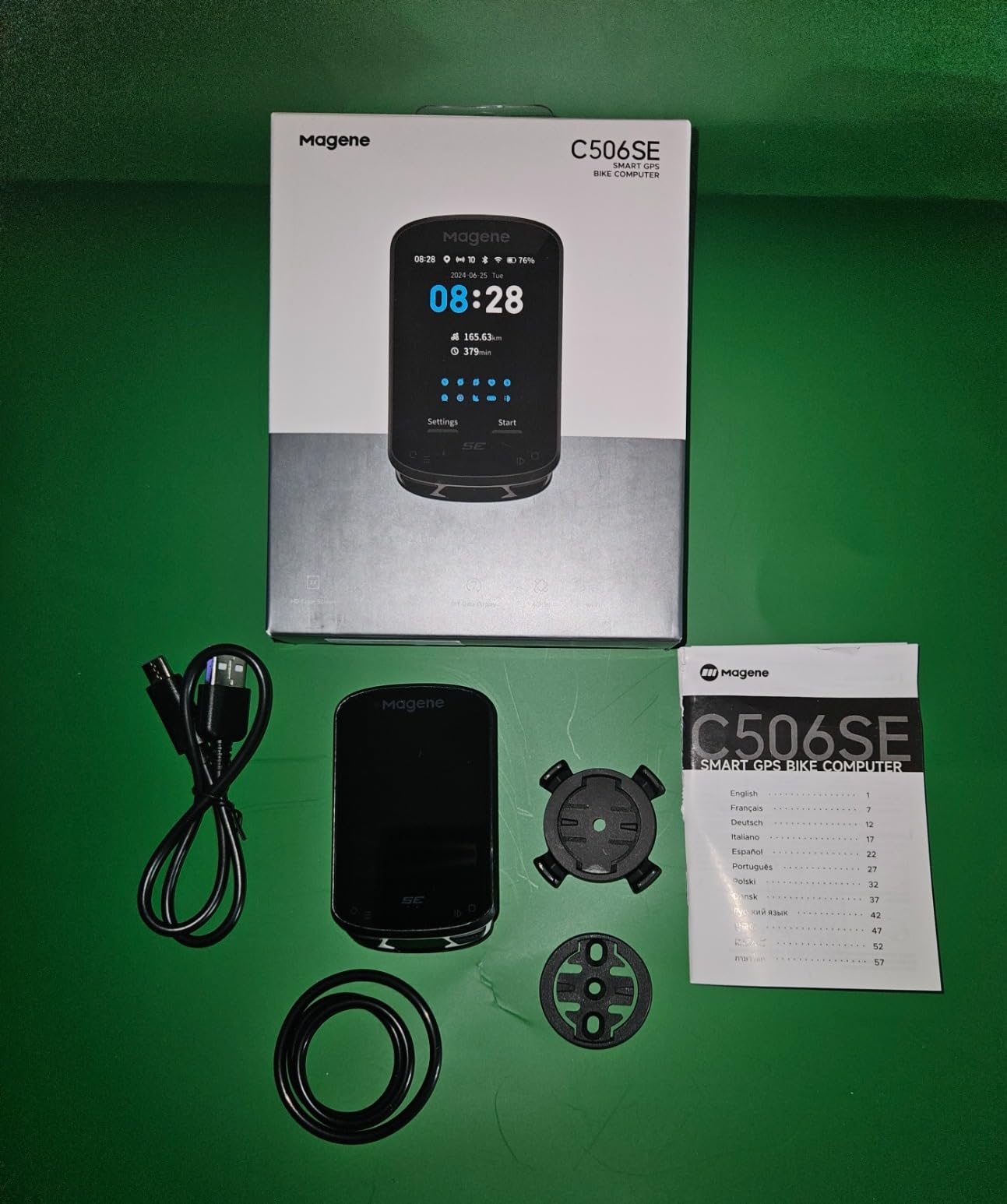
Magene C506SE Wireless GPS Bike Computer – 2.4″ Color Screen, Route Navigation, Bluetooth & WiFi, Fast 5s Positioning, Supports 9 Cycling Devices
2.4 inch color screen at 74 g
24 hour battery
5 second AGNSS lock
WiFi and ANT+
Pros
- 74 g and easy to move between bikes
- Five second positioning with automatic AGNSS
- Strava and TrainingPeaks export on board
- Buttons mean no accidental touches
Cons
- Small screen limits visible data
- Navigation gets confused on repeated laps
- Some units drop sensor pairings
- Routes must be prepared as GPX files
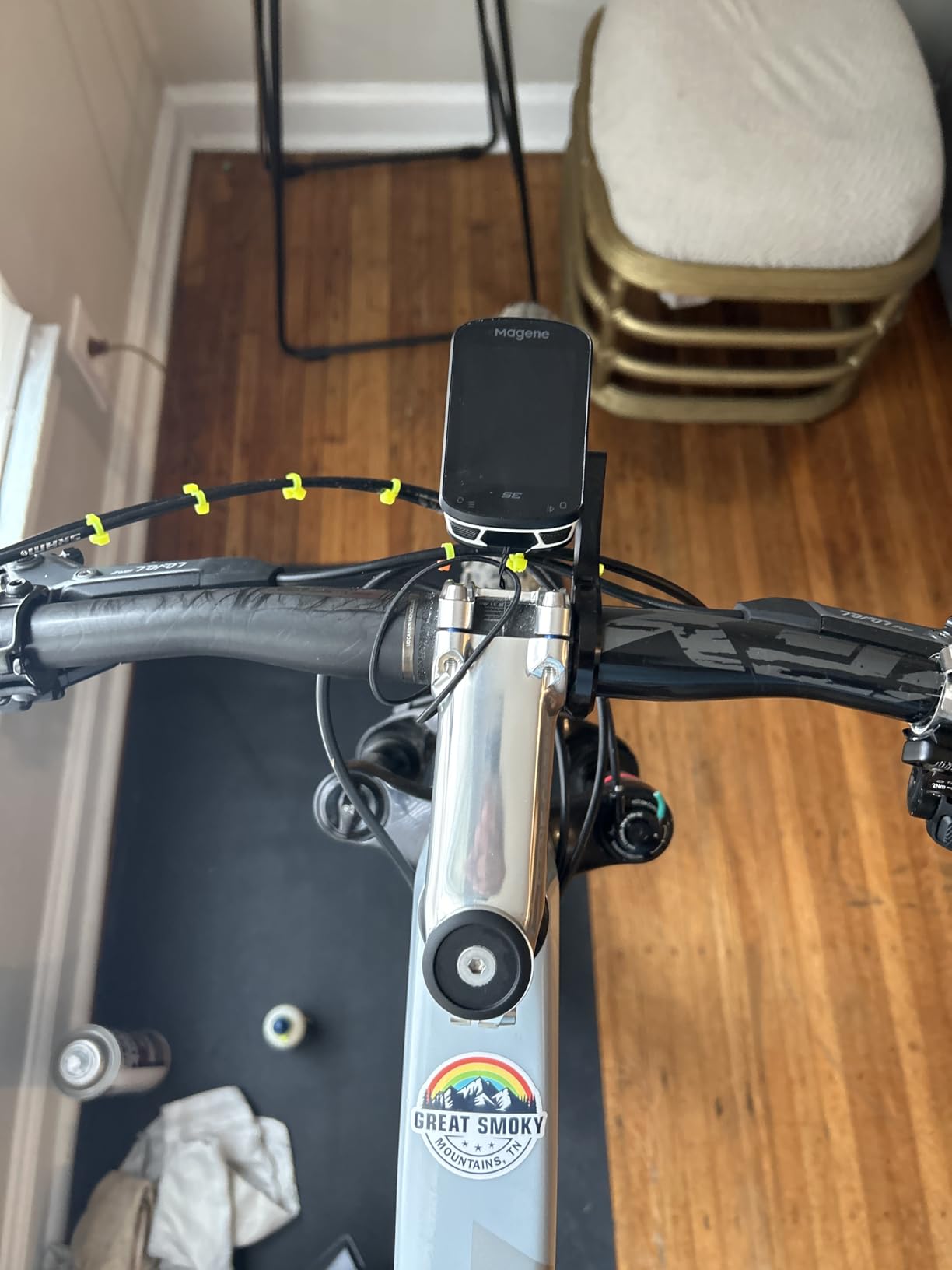
The Magene C506SE is the unit I recommend to anyone who owns more than one bike. At 74 g it is light enough to live on the race frame, and the replaceable rack mount plus safety strap mean swapping it to an indoor setup takes seconds rather than a toolbox.
The Airoha chipset locks position in about five seconds using automatic AGNSS, and the offline AGNSS data stays valid for roughly two weeks. On a short weekday ride where you want out the door immediately, that instant lock is worth more than any training metric.
WiFi sync moves data far faster than Bluetooth alone, so rides and settings transfer without eating your lunch break. The OnelapFit app handles Strava and TrainingPeaks sync, and there are 108 data items across 14 categories to build pages from.
It also covers indoor work with smart trainer support for power, resistance and gradient control, and it pairs with nine device types including trainers, radar and electronic shifting. Eleven languages are supported if you ride with a mixed group.
What you should check before buying
The 2.4 inch color screen is small, and only a limited number of data fields fit at once. If your ride depends on watching six numbers at a time, this is not the screen for that.
Navigation is GPX based with no live route request, so routes must be prepared before you leave. On familiar loops that is fine; on an unplanned detour it is not.
Where it falls short
Route navigation gets confused when you double back or ride laps, which is exactly what a road rider does at an interval session or a crit course. Some units also lose their sensor pairing after a second ride, which is maddening when your power meter stops reporting mid-interval.
Firmware updates can be difficult to install and customer support response is weak. Budget for the possibility of some patience during setup.
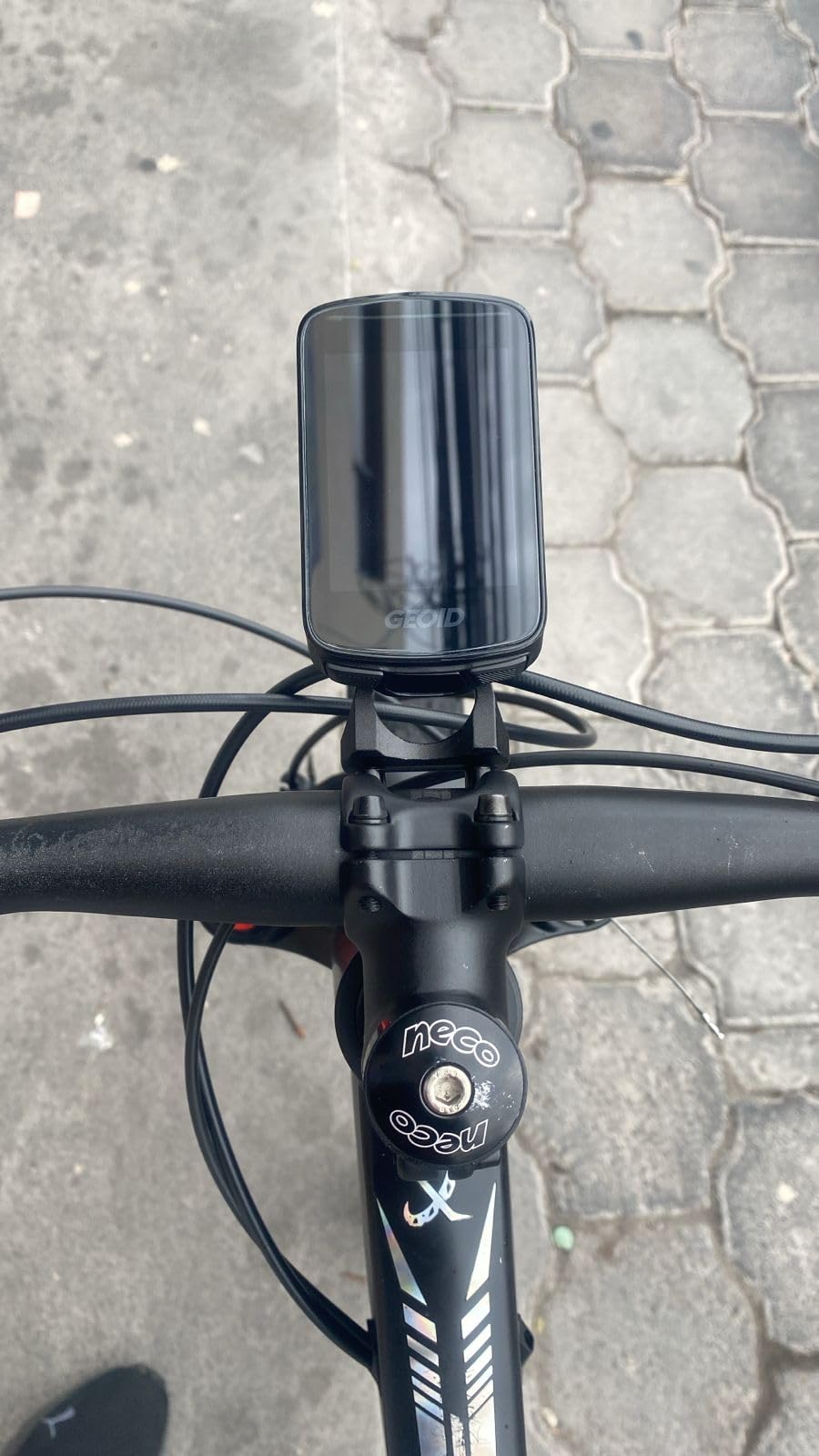
10. GEOID CC700 — Best for Indoor Trainer Work
GEOID CC700 2.8″ Color Screen Bike/Cycling Computer Wireless – Route Navigation with Re-Route Planing, WiFi Auto-Sync, ANT+/Bluetooth, Fast 5s GPS Positioning, Free Indoor Training
2.8 inch Asahi glass color screen
IPX7
0.21 kg
WiFi auto-sync and re-routing
Pros
- 2.8 inch color screen on a 0.21 kg body
- Five second GPS lock across five satellite systems
- Free indoor training with trainer control
- 108 data fields with Strava auto-sync
Cons
- Phone app required for initial setup
- Menu navigation has a learning curve
- Periodic app logins are required
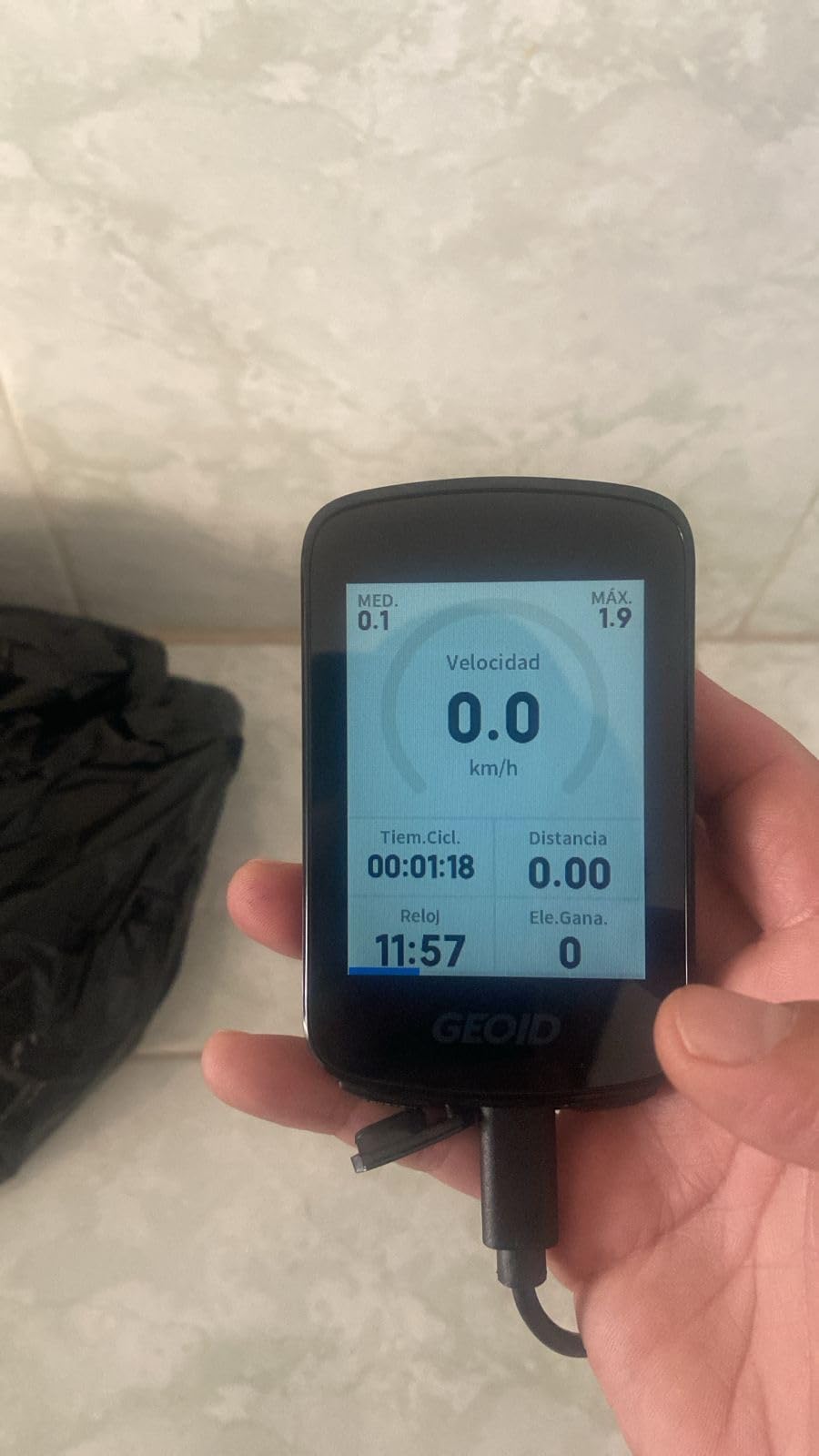
The GEOID CC700 is the pick if your winter rides happen on a trainer. Indoor training support with smart trainer control is free here rather than a paid subscription, and at 2.8 inches with Asahi glass the screen is unusually large for a unit of this weight.
Outside, it holds its own. GPS, BEIDOU, GLONASS, QZSS and Galileo across five satellite systems give a five second lock, and route navigation with re-route planning handles a missed turn without needing your phone.
WiFi auto-sync handles both AGNSS data and ride records, which is the difference between a computer that is ready to go and one that makes you wait at the door. FIT file export works with Strava and TrainingPeaks, and up to nine sensor types connect over ANT+ and Bluetooth.
There are ten configurable pages with 108 data items, eleven supported languages and an IPX7 waterproof rating. For a road rider who also does long winter trainer blocks, the feature-per-gram balance here is hard to argue with.
What you should check before buying
IPX7 matters on a road bike. A lot of riders meet their first summer storm on a group ride, and knowing the unit is sealed against rain takes one worry off the list.
The 2.8 inch colour panel is a good compromise for a road bar: big enough to read, narrow enough not to dominate the cockpit, and lighter than the big out-front alternatives.
Where it falls short
Setup is app dependent, and you need the phone to set the time and basic settings even once. Menus take a little learning, and some users report having to log into the app periodically rather than once at setup.
Metric and imperial switching has been reported as inconsistent by some owners. Check your units before the first ride rather than discovering it mid-climb.
11. iGPSPORT BSC200S — Best for Sunlight Readability
iGPSPORT BSC200S GPS Bike Computer, Route Navigation Long Battery Life
2.4 inch semi-reflective color screen
25 hour battery
1.5 hour Type-C charge
67 g
Pros
- Semi-reflective screen stays readable in sun
- 25 hour battery with 400 hour storage
- Imports routes from Strava Komoot and Ride with GPS
- One-touch navigation and back to start
- Two year warranty
Cons
- Type-C cable is not included
- Route creation is app dependent
- Smaller third-party ecosystem than the big brands
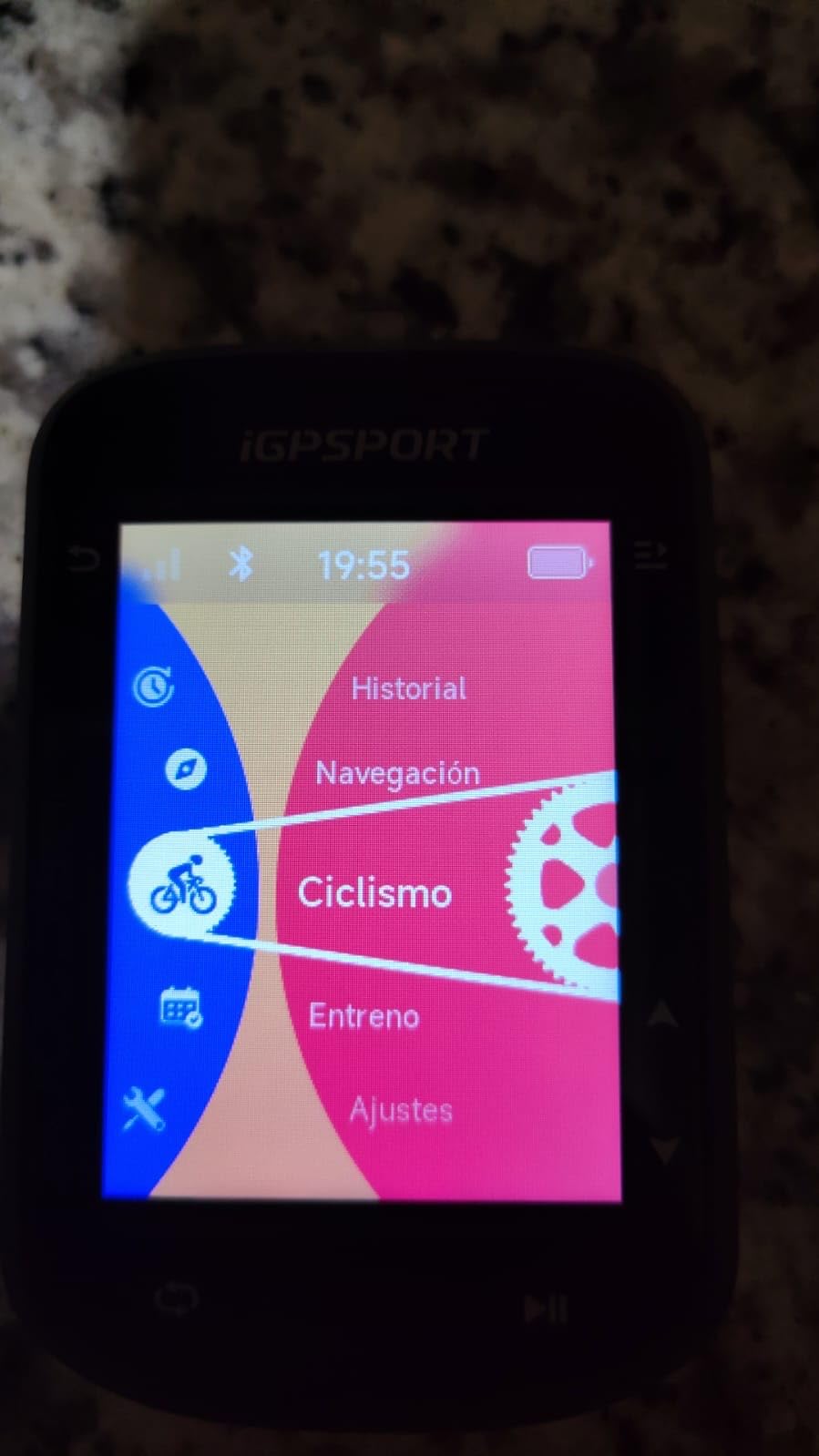
The iGPSPORT BSC200S is a semi-transparent reflective colour screen, which is the same technology family that makes the Wahoo units so readable in open sun. On a bright July road ride at midday it stayed legible without maxing the backlight, and that is harder to achieve than it sounds.
Battery is a 25 hour claim with a 1.5 hour Type-C recharge, and ride data storage runs to 400 hours. That combination means you can ride a full season of weekends and still have the files when you want to review a block of training.
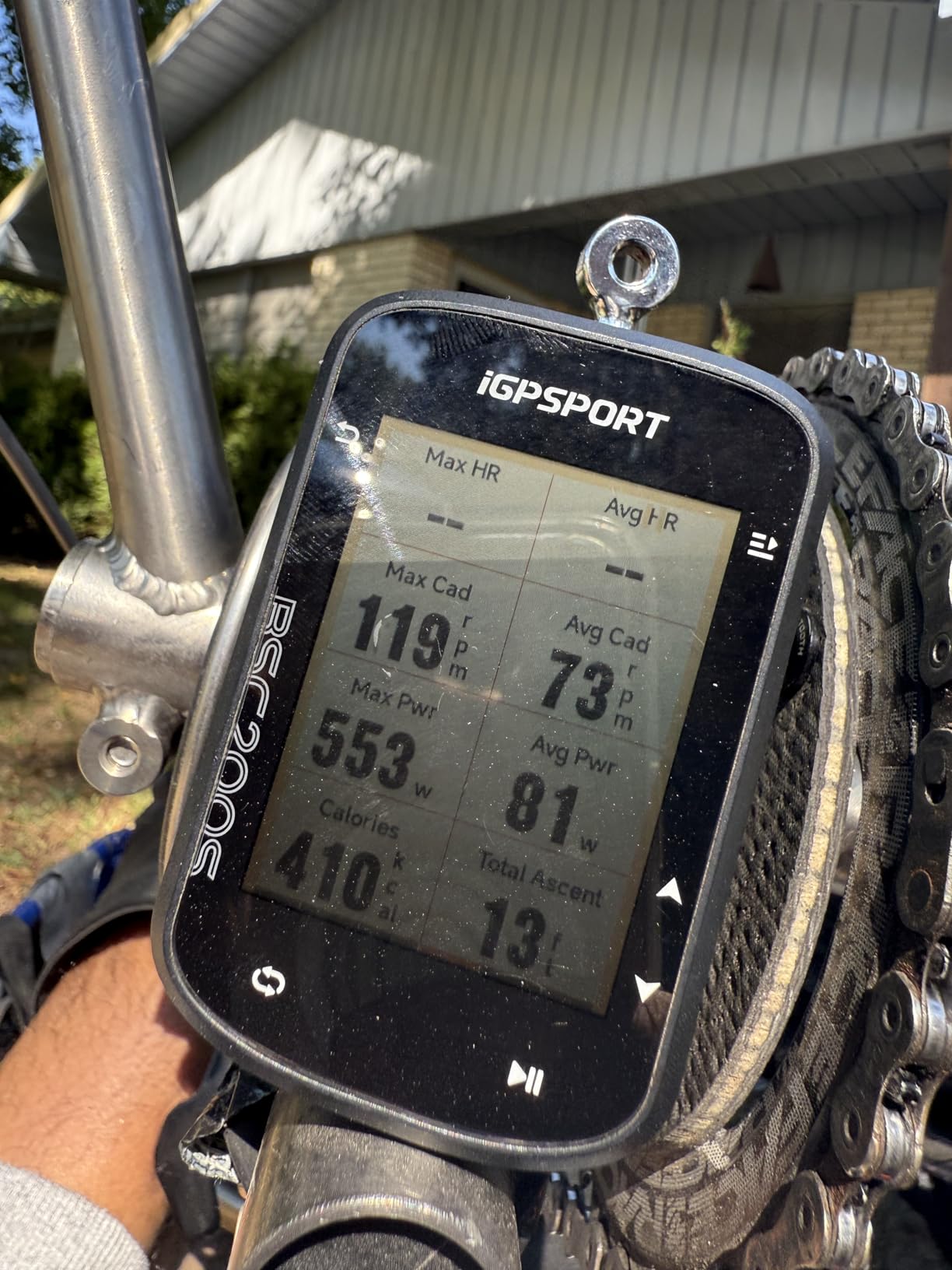
Route navigation imports from Strava, Komoot and Ride with GPS through the iGPSPORT app, and one-touch navigation to saved locations plus a back-to-start function save real time when you are doing a repeat loop from a car park.
Smart notifications for calls, messages and app alerts come through, as do turn reminders and yaw direction guidance. It pairs with iGPSPORT front lights and radar lights, and 100+ riding metrics are configurable from the app.
What you should check before buying
IPX7 waterproofing and a 67 g body make this a good commuter or all-road unit. It disappears on the bar and it will not be the thing that ends your ride in a downpour.
Resolution of 320×240 is modest next to the 480×800 panels in this list. It is sharp enough for numbers and route lines, but it is not the screen to read detailed maps from.
Where it falls short
The Type-C charging cable is not in the box. That is a small annoyance the first morning and a non-issue after you buy a cable, but it catches people out.
Route creation and page customisation both happen in the app rather than on the device, and the third-party ecosystem is narrower than the big brands. If your training workflow depends on one specific platform, check compatibility first.
12. GEOID CC600 — Budget Pick
GEOID CC600 Color Screen Bike/Cycling Computer Wireless – Route Navigation with Reroute Planing, WiFi & Bluetooth, Fast 5s GPS Positioning, Free Indoor Training
2.4 inch Asahi glass color screen
24 hour battery
74 g
IPX7 with WiFi sync
Pros
- Color navigation and re-routing at an entry price
- Five second positioning with AGNSS
- Supports eight sensor types including radar and Di2
- 100 hours of ride memory
- Most owner reviews of any pick here
Cons
- OnelapFit app required for setup and unit changes
- Out-and-back navigation can struggle
- No pre-installed maps so GPX only
The GEOID CC600 is the budget pick, and with 1096 owner reviews behind it, the least risky entry point into dedicated bike computers. You get a colour screen, route navigation with automatic re-routing, WiFi sync and eight sensor types, which is a feature list most riders assume needs a much larger spend.
Positioning covers five satellite systems with a five second lock through AGNSS, and the Asahi glass screen on a 74 g body is a good road-bar combination. A 24 hour battery covers a long weekend ride with room to spare.
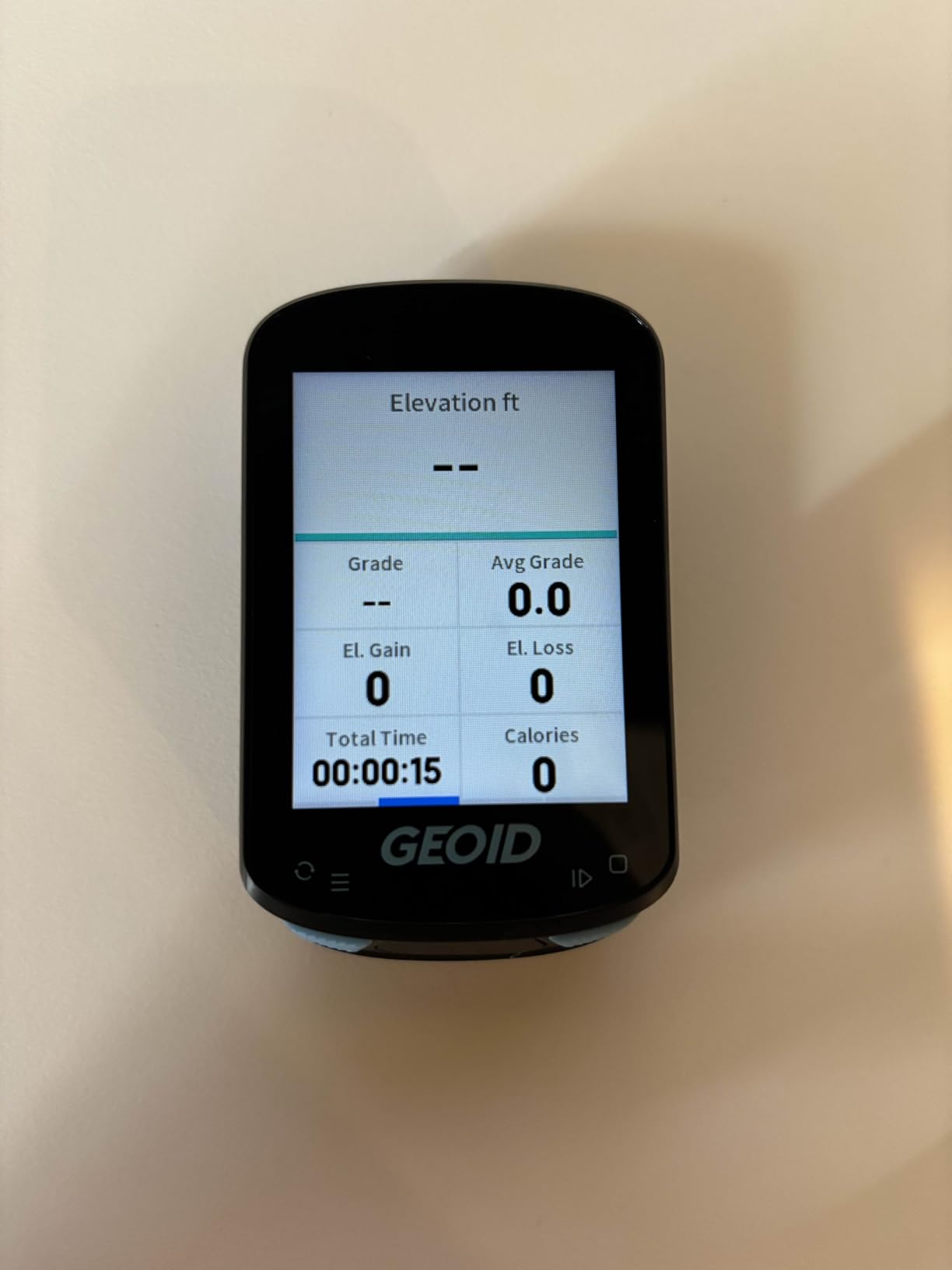
Sensor support is the surprise. Speed and cadence, heart rate, power meters, radar and Di2 or eTap electronic shifting are all covered over ANT+ and Bluetooth, and the radar pairing works with Garmin units such as the RTL515.
There are ten pages, 29 layouts and 108 data items to arrange, FIT file export handles Strava and TrainingPeaks, and free indoor training covers power, resistance and gradient control on a smart trainer. Eleven languages are supported.
What you should check before buying
Setup requires the OnelapFit app for the initial configuration and for any later unit changes. Budget ten minutes with your phone before the first ride rather than doing it in the driveway.
Ride memory is 100 hours, which is plenty for a casual rider but will fill if you log every commute for a couple of years. Ride files export as FIT, so nothing is lost, just archived on your computer.
Where it falls short
There are no pre-installed maps, so routing depends on GPX files you import. Navigation also struggles on out-and-back routes, which is a common road training pattern, and some owners report periodic forced app logins.
App bugs and sync issues have been reported, and metric and imperial switching can be inconsistent. None of that stops a ride, but it does mean the software is a step behind the hardware.
How to Choose a Bike Computer for the Road
Start with the honest question of what you will actually do with it. If you ride the same loop three times a week and track with a watch already, a tracking-focused button unit is enough. If you ride unfamiliar roads, run long routes through towns you have never visited, or lead a group, navigation changes from a nice feature to the main reason to own a head unit.
Navigation or tracking: decide this first
Breadcrumb or snail-trail navigation, which simply draws the line you already rode, is not enough for road riding today. A road route that misses a turn leaves you guessing between two identical residential streets. Look for full on-device maps, turn prompts, an off-course warning, and rerouting that happens without a phone connection.
Screen type matters more than screen size for navigation. A transflective or semi-reflective panel stays readable in direct sun without a backlight, which drains battery. Glossy touchscreens look better in product photos and lose in July.
Touch or buttons
Touchscreens are better for planning routes at a stop and worse for riding. Gloves, rain, sweat and vibration all cause mis-taps, and the failure happens at exactly the moment you are descending. Physical buttons are slower but never ambiguous. A compromise is a touchscreen plus physical buttons for ride control, which is what the Edge 1050, Karoo and BSC300T do.
Battery math for weekend road rides
Do the arithmetic on your longest ride, not your average one. Add two hours of margin to your typical five to six hour weekend ride, because a dead computer at the 80 km mark means a phone call for a pickup. Claimed figures assume a specific brightness and backlight state, so real numbers run lower. Units claiming 25 hours and above give most road riders the headroom they need.
Ecosystem and sensor fit
If you already wear a Garmin multisport watch, pairing a non-Garmin head unit costs you unified notifications, some training features and a single app for your history. That friction comes up repeatedly in community threads and is worth taking seriously before you buy. Wahoo and Hammerhead both pair perfectly with third-party power meters and heart rate straps over ANT+; the difference is how much the computer adds beyond the sensors.
Also check the companion app honestly. The device is only as good as the software that configures pages, syncs rides and lets you build workouts. App quality varies more between brands than the hardware does.
Mount, weight and out-front drag
Anything above about 3.5 inches out front is noticeable on a light road frame in the climbs. The Wahoo ACE at 208 g is the clearest example of a screen that looks good and feels heavy. Check whether the mount is included; the Roam V3 and Karoo bundle one, and several units do not.
For routine servicing or a build, our guides to bike repair stands cover getting the bike up safely while you route cables and fit a computer out front properly.
Is a dedicated computer worth it?
Work out your cost per ride. Divide the unit cost by the number of rides you will realistically do this year, then compare it to what your phone already does. Riders doing two sessions a week get a fast payback; riders doing one long ride a month get less value from a flagship, and a mid-range unit or even a watch alone makes more sense.
Your phone can work as a bike computer and it does navigation and crash detection for free. What it cannot do is survive the ride, survive the rain, or live in a mount where nobody sees you using it. A dedicated unit is about endurance and glanceability, not features.
Frequently Asked Questions
What bike computer should I buy in 2026?
The Garmin Edge 1050 is the best all-round choice for road cycling, with a 3.5 inch color touchscreen, 64 GB of onboard maps, a built-in speaker and up to 60 hours of battery in saver mode. Riders who prefer physical buttons should look at the Wahoo ELEMNT ROAM V3, and those who want the deepest training metrics at a smaller size should consider the Garmin Edge 540.
Is it worth getting a cycling computer?
Yes, for most road riders. A dedicated computer outlasts your phone, works in the rain, gives you a glare-proof screen you can read in the drops, and adds crash alerts and group tracking. Compare the cost against how often you ride: two or more sessions a week pays a premium unit back quickly, while one ride a month may not justify it.
What is the best budget cycling computer?
The GEOID CC600 is the strongest entry-level pick, offering a 2.4 inch color screen, route navigation with automatic re-routing, WiFi sync and support for eight sensor types including radar and electronic shifting. The Magene C506SE is the better choice for riders who swap between two bikes, thanks to its 74 g body and 5 second GPS lock.
Which bike computer is better, Wahoo or Garmin?
Garmin wins on training metrics, ecosystem integration and the full safety suite, and its button-driven units suit data-focused riders. Wahoo wins on button ergonomics, transflective screen readability in direct sun and simple setup. If you already wear a Garmin watch, staying inside that ecosystem avoids friction. If sun readability and glove-friendly controls matter more, a Wahoo ELEMNT is the stronger road choice.
Can I use my phone as a bike computer?
You can, and modern phones handle navigation, ride tracking and incident detection well. The limits are battery life on a long ride, screen glare, and no mount that keeps the display visible in the drops. Many road riders use a phone for navigation and a dedicated computer for data, which is a workable combination for shorter rides.
How do I mount a bike computer on a road bike?
Use the quarter-turn twist lock mount that comes with the unit. Choose an out-front position for better visibility in the drops, tighten the bolt at the correct angle so the screen faces back toward you, and pull the zip ties snug with a small gap so vibration cannot shake it loose. Run a short zip tie around the bar as a backup before a long ride.
The Verdict for Road Cycling in 2026
After a full season of swapping these between a race bike and a commuter, the Garmin Edge 1050 remains the best bike computer for road cycling for most people. No single unit in this list combines a readable touchscreen, full on-device maps, an audible safety layer and this much battery headroom. That combination is why it stays on my bars.
If your priorities are different, the shortlist narrows fast. Wahoo ELEMNT ROAM V3 for buttons and sun, Hammerhead Karoo for GPS accuracy through cities, Garmin Edge 540 for structured power training, and the Magene C506SE or GEOID CC600 if you ride two bikes or want to spend as little as possible.
Whatever you pick, give it a full weekend ride before you trust it, and set up the mount so the screen faces your eyes in the drops. Check the current details and read recent owner reviews before you buy, then put it on the bike and ride.