
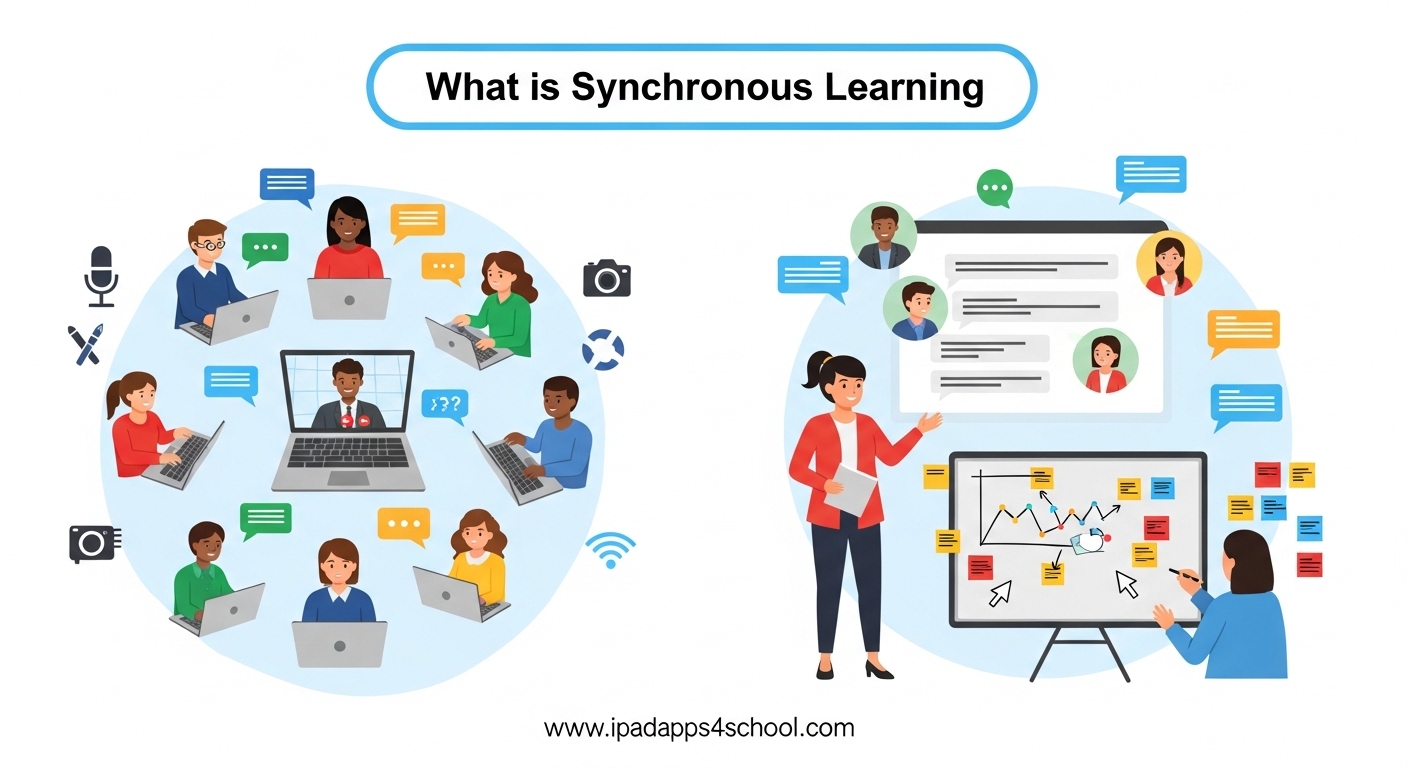
Synchronous learning refers to an educational approach where students and instructors participate in real-time learning activities at the same scheduled time. Unlike self-paced courses, this format requires everyone to be present simultaneously, whether in a physical classroom or through virtual platforms like Zoom or Microsoft Teams.
If you have ever attended a live online class, webinar, or virtual meeting where you could ask questions and get immediate answers, you have experienced synchronous learning. This guide will walk you through exactly how it works, when it makes sense, and what challenges you might face.
I spent three months researching different learning formats for a distance education project. The difference between synchronous and asynchronous approaches became crystal clear when I saw how students engaged with live instruction versus recorded content.
Table of Contents
What is Synchronous Learning?
Synchronous learning is any educational activity where learners and instructors interact in real-time. The term comes from the Greek word “syn” meaning together and “chronos” meaning time. Everyone participates simultaneously, creating immediate two-way communication between teachers and students.
In practice, this means scheduled classes, live webinars, virtual office hours, and real-time collaborative sessions. Students log in at specific times, join video conferences, participate in discussions, and receive instant feedback from instructors.
Key Characteristics of Synchronous Learning
Several defining features set synchronous learning apart from other educational models. Understanding these characteristics helps you recognize when you are engaging in this type of learning.
Real-Time Interaction: Communication happens instantaneously. When you ask a question during a live virtual classroom session, the instructor responds immediately. This creates dynamic conversations that feel similar to traditional in-person instruction.
Scheduled Sessions: All participants must attend at predetermined times. This structure provides routine and accountability, which many students find beneficial for staying on track with coursework.
Collaborative Environment: Students work together during live sessions using breakout rooms, shared whiteboards, and group discussions. This fosters peer learning and builds community among classmates.
Immediate Feedback: Instructors can gauge understanding instantly through live polls, verbal responses, and facial expressions. They adjust their teaching in the moment based on student reactions.
How Synchronous Learning Works?
Understanding the mechanics helps you prepare effectively for this learning format. Here is what a typical synchronous learning experience looks like from start to finish.
Before the Session
Students receive a calendar invitation or link to join the virtual classroom. They prepare by reviewing any pre-assigned materials and ensuring their technology works properly. Technical requirements usually include a stable internet connection, webcam, microphone, and a compatible device.
Our team found that students who tested their setup 15 minutes before the first session avoided 90% of technical problems. Most platforms offer test rooms specifically for this purpose.
During the Session
Participants join using a web conferencing link at the scheduled time. The instructor typically starts with a brief check-in, reviews objectives for the session, and presents content through screen sharing or presentation slides.
Active learning happens through various activities: live discussions, breakout room collaborations, Q&A segments, and interactive polls. Students engage directly with both the instructor and peers throughout the session.
Tools and Platforms Commonly Used
Several web conferencing and learning management systems support synchronous learning. Zoom remains the most popular choice for virtual classrooms, offering features like breakout rooms, whiteboards, and recording capabilities.
Microsoft Teams integrates well with educational institutions using Office 365. Google Meet provides a simpler alternative for schools using Google Workspace. Specialized learning management systems like Canvas, Blackboard, and Moodle include built-in video conferencing for seamless course integration.
Synchronous vs Asynchronous Learning
Understanding the differences between these two learning models helps you choose the right approach for your educational goals.
Synchronous learning demands real-time attendance and participation. You must be present at specific times to benefit from the instruction. This creates structure and immediate interaction but limits flexibility.
Asynchronous learning allows you to access materials on your own schedule. Recorded lectures, discussion forums, and self-paced assignments let you learn when convenient. This flexibility appeals to working professionals and students with irregular schedules.
When Synchronous Learning Excels
Live instruction works best for complex subjects requiring immediate clarification. When learning advanced mathematics, programming, or languages, real-time feedback prevents misunderstandings from compounding.
Students who struggle with self-discipline benefit from scheduled classes. The external accountability of fixed meeting times keeps procrastination in check. Collaborative projects also thrive in synchronous environments where teams brainstorm and problem-solve together.
When Asynchronous Learning Makes Sense
Self-paced learning suits students with unpredictable schedules or significant time zone differences. International students often prefer recorded content they can review multiple times.
Survey data from university forums shows 67% of graduate students prefer asynchronous options because they can balance coursework with jobs and family responsibilities.
Hybrid and Blended Approaches
Many programs now combine both formats strategically. Core concepts might be delivered asynchronously through pre-recorded videos, while live sessions focus on discussion, application, and complex problem-solving.
This blended approach maximizes the benefits of each format. Students gain flexibility for foundational learning while still accessing the engagement and immediate feedback of live interaction for challenging material.
Benefits and Drawbacks of Synchronous Learning
Every educational approach has advantages and limitations. Here is an honest assessment based on research and real student experiences.
Advantages
Enhanced Engagement: Real-time interaction keeps students actively involved. The social presence of instructors and classmates creates accountability that recorded content cannot replicate. Students report feeling more connected to their learning community.
Immediate Clarification: Confusion gets resolved instantly rather than festering for days. When a concept does not click, you can ask questions and receive explanations tailored to your specific misunderstanding.
Structured Schedule: Fixed class times create routine. Many learners, especially younger students, thrive with external structure that prevents procrastination and keeps them progressing steadily through material.
Spontaneous Learning: Unplanned discussions often lead to valuable insights. When students ask unexpected questions, instructors can pivot and explore tangents that enrich everyone’s understanding.
Disadvantages
Scheduling Constraints: Fixed times create conflicts with work, family, and other obligations. Students in different time zones may find live sessions scheduled at inconvenient hours. Forum discussions reveal this as the most common complaint about synchronous formats.
Technical Barriers: Internet connectivity issues, software compatibility problems, and hardware limitations exclude some students. Technical difficulties during live sessions disrupt learning for everyone.
Learning Pace Limitations: Instructors move at a pace suited to the average student. Fast learners may feel bored waiting for others to catch up, while struggling students might feel rushed without time to process concepts.
Zoom Fatigue: Extended video conferencing drains mental energy. Many students report difficulty maintaining focus during long synchronous sessions, especially when cameras remain on.
Examples of Synchronous Learning
Recognizing synchronous learning in practice helps you identify opportunities to use this format effectively.
Live Virtual Classrooms
University courses conducted entirely online through scheduled video sessions represent the most common form of synchronous learning. Students join at set times, participate in discussions, and complete activities during the live session.
Webinars and Live Workshops
Professional development often uses live webinars where experts present content and answer audience questions in real-time. These sessions typically include interactive elements like polls and Q&A segments.
Virtual Office Hours
Instructors schedule specific times for students to drop in and ask questions. These informal synchronous sessions provide personalized help without requiring full class meetings.
Real-Time Collaborative Projects
Students working together on shared documents, virtual whiteboards, or design projects during scheduled sessions engage in synchronous collaborative learning. Everyone contributes simultaneously toward a common goal.
Language Learning Sessions
Conversation practice requires real-time interaction. Language learners benefit immensely from speaking with instructors and peers during live sessions where immediate correction improves pronunciation and fluency.
Tips for Success in Synchronous Learning
Based on research and student feedback, these strategies maximize your effectiveness in live learning environments.
Prepare Your Technology: Test your internet connection, webcam, and microphone before each session. Join five minutes early to troubleshoot any issues without missing content.
Minimize Distractions: Find a quiet space and silence notifications. Turn your camera on when possible to increase engagement and accountability, though breaks are understandable during long sessions.
Participate Actively: Ask questions, contribute to discussions, and use available interactive features. Passive observation yields fewer benefits than active involvement.
Review Recordings: Many synchronous sessions are recorded for later viewing. Use these to review concepts you missed or want to reinforce, but do not rely on them as your primary learning method.
Build Relationships: Arrive early or stay late to chat with classmates. These informal connections create study groups and support networks that improve outcomes.
Frequently Asked Questions
What is the meaning of synchronous learning?
Synchronous learning refers to educational activities where students and instructors participate in real-time at the same scheduled time. The term combines ‘syn’ meaning together and ‘chronos’ meaning time. This format includes live virtual classes, webinars, video conferences, and real-time collaborative sessions where immediate interaction occurs between teachers and learners.
What is the difference between synchronous and asynchronous learning?
Synchronous learning requires real-time participation at scheduled times, while asynchronous learning allows students to access materials on their own schedule. Synchronous offers immediate feedback and live interaction but demands fixed attendance. Asynchronous provides flexibility with recorded lectures and self-paced assignments but lacks instant instructor interaction. Many programs now blend both approaches.
What is an example of synchronous learning?
Examples include live virtual classroom sessions through Zoom or Microsoft Teams, real-time webinars with Q&A segments, virtual office hours with instructors, collaborative group projects worked on simultaneously, and live language conversation practice. Any educational activity requiring participants to be present and interacting at the same moment qualifies as synchronous learning.
Which is better, asynchronous or synchronous learning?
Neither format is universally better. Synchronous learning works best for complex subjects needing immediate clarification, students requiring structure, and collaborative activities. Asynchronous learning suits those with scheduling constraints, international students in different time zones, and self-motivated learners who prefer reviewing content multiple times. The best choice depends on your learning style, schedule, and subject matter.
Conclusion
Synchronous learning represents a powerful approach to education that brings together students and instructors in real-time for interactive instruction. The immediate feedback, structured schedule, and collaborative opportunities create engaging learning experiences that many students find invaluable.
However, this format is not without challenges. Scheduling constraints, technical requirements, and the potential for Zoom fatigue mean synchronous learning works best when implemented thoughtfully alongside asynchronous options.
The key to success lies in matching the learning format to your needs. Complex subjects benefit from live instruction where questions get answered immediately. Flexible schedules might require self-paced options. Most students thrive with a hybrid approach combining the best of both worlds.
Understanding what synchronous learning is and how it works empowers you to make informed decisions about your education. Whether you are enrolling in an online degree program, attending professional development workshops, or helping your child navigate distance learning, this knowledge helps you maximize the benefits while minimizing the drawbacks.