
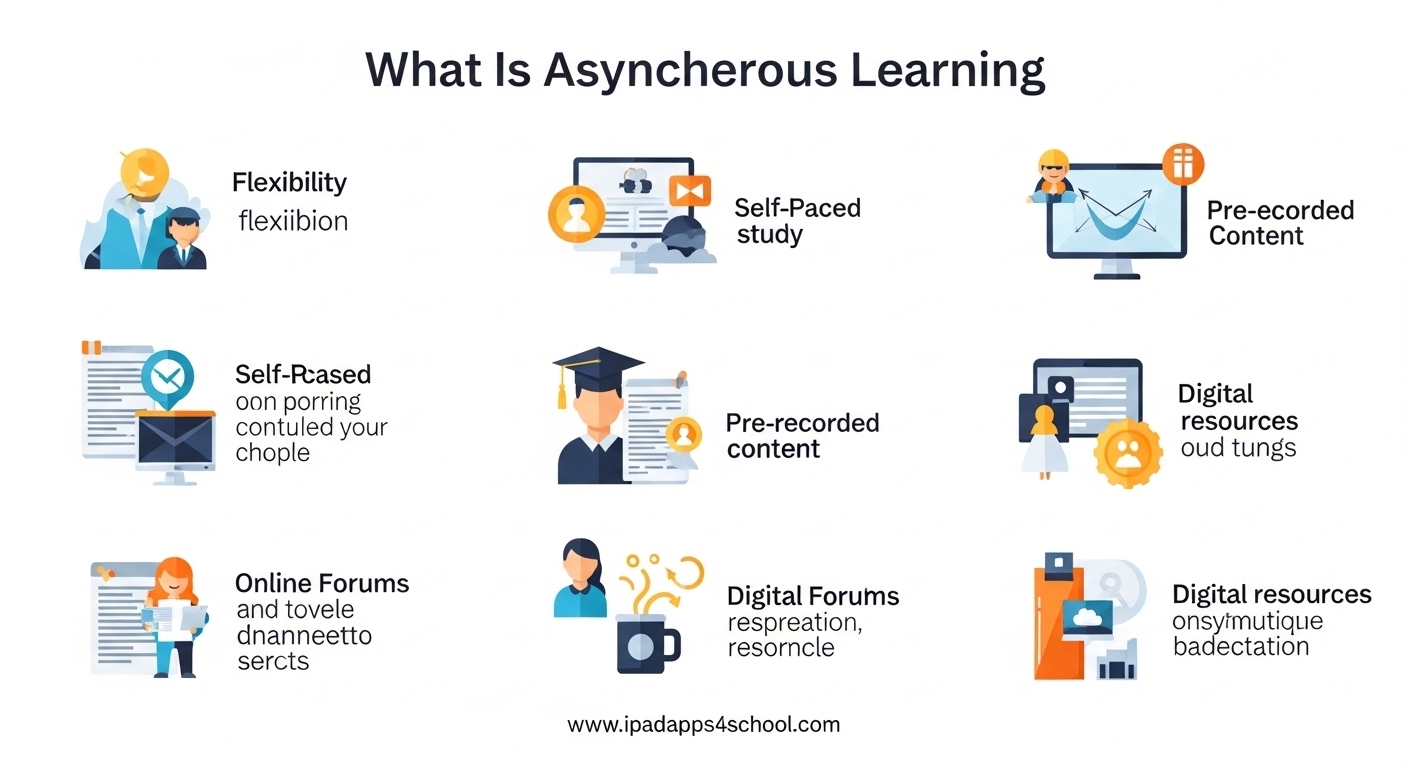
Asynchronous learning is an educational approach where students access course materials, complete assignments, and engage with learning activities on their own schedule rather than at predetermined times. This self-paced learning model has transformed how millions of students worldwide pursue education in 2026, offering unprecedented flexibility for working professionals, parents, and anyone with time constraints.
In this comprehensive guide, I will explain exactly what asynchronous learning means, how it differs from traditional classroom instruction, and why it might be the right choice for your educational goals. We will explore real examples, discuss the benefits and challenges, and share practical tips for success based on feedback from actual students.
Table of Contents
What Is Asynchronous Learning?
Asynchronous learning refers to education that does not require real-time interaction between instructors and students. Instead of attending live lectures at specific times, learners access pre-recorded videos, digital readings, discussion boards, and assignments whenever it fits their schedule. This approach fundamentally changes the traditional classroom dynamic by placing more responsibility on the student while offering greater autonomy.
The term “asynchronous” literally means “not existing or occurring at the same time.” In educational contexts, this means the teaching and learning happen at different moments. An instructor might record a lecture on Monday, post it to a learning management system (LMS), and students could watch it on Tuesday, Wednesday, or even the following weekend while still meeting assignment deadlines.
This learning model has roots in distance education and correspondence courses that existed long before the internet. However, modern technology has dramatically expanded what asynchronous learning can offer. Today’s students benefit from rich multimedia content, interactive discussion forums, instant digital feedback, and sophisticated learning platforms that track progress automatically.
Key Characteristics of Asynchronous Learning
Understanding asynchronous learning requires recognizing its defining features. These seven characteristics separate it from traditional classroom instruction:
Self-paced progression. Students move through material at speeds that match their comprehension and availability. Some might complete a week’s content in two days; others might need the full week.
Flexible scheduling. There are no set class times. Learners can study early mornings, late nights, lunch breaks, or weekends depending on their personal schedules.
Pre-recorded content. Lectures, demonstrations, and explanations are recorded in advance and available on-demand. Students can pause, rewind, and rewatch as needed.
Online discussion boards. Interaction happens through written posts rather than spoken conversation. Students contribute to class discussions over days rather than minutes.
Independent learning focus. Success depends heavily on self-motivation, organization, and time management rather than external structure.
Deadline-based structure. While daily schedules are flexible, courses maintain firm deadlines for assignments and exams to ensure progress.
24/7 accessibility. Course materials remain available around the clock, allowing students in different time zones or with irregular schedules to participate fully.
Asynchronous vs Synchronous Learning
The fundamental distinction between these two learning models centers on timing. Synchronous learning happens in real-time, requiring all participants to be present simultaneously whether online or in-person. Asynchronous learning removes that requirement entirely.
Here is a detailed comparison of how these approaches differ:
Scheduling flexibility: Asynchronous learning offers complete schedule freedom within assignment deadlines, while synchronous learning requires attendance at specific times. This makes asynchronous ideal for working professionals and parents.
Interaction style: Synchronous classes feature immediate back-and-forth discussion, questions answered in the moment, and spontaneous collaboration. Asynchronous interaction happens through written posts with delays between exchanges.
Content delivery: Live lectures in synchronous settings cannot be rewound if you miss something. Asynchronous pre-recorded content allows unlimited replays, pause buttons, and speed adjustments.
Social connection: Synchronous learning builds relationships through real-time conversation and shared experiences. Asynchronous learners often report feeling more isolated despite having classmates.
Technology requirements: Both require internet access, but synchronous learning demands reliable high-speed connections capable of supporting video conferencing without interruption.
Feedback timing: Questions in synchronous classrooms get immediate answers. Asynchronous learners might wait hours or days for instructor responses.
Neither approach is inherently superior. The best choice depends on your learning style, schedule constraints, and personal preferences. Many modern programs blend both approaches in hybrid models.
Benefits of Asynchronous Learning
Students choose asynchronous learning for compelling reasons. These advantages explain why enrollment in online courses has grown consistently year after year.
Unmatched flexibility. Working professionals can advance their education without quitting their jobs. Parents can study after children sleep. Military personnel can continue classes during deployments. This flexibility makes education accessible to populations previously excluded.
Improved work-life balance. Without fixed class schedules, students can integrate learning around existing commitments rather than reorganizing their entire lives around education.
Learn at your own pace. Students who grasp concepts quickly need not wait for classmates. Those needing more time can review materials repeatedly without pressure.
Content review capabilities. Pre-recorded lectures allow students to pause confusing sections, rewind to catch missed information, and rewatch complex topics until understanding develops.
Global accessibility. Students in any time zone can participate equally. A student in Tokyo takes the same course as someone in New York without either sacrificing sleep.
Cost effectiveness. Many asynchronous programs cost less than traditional alternatives. Students also save on commuting, parking, housing near campus, and meals away from home.
Improved writing skills. The text-based nature of asynchronous discussion develops written communication abilities valuable in professional settings.
Challenges and Limitations
Honest assessment requires acknowledging the difficulties students face. Forum discussions reveal common struggles that prospective learners should consider.
Self-discipline demands. Without external structure, procrastination becomes easy. Students report falling behind when they fail to create personal schedules.
Feelings of isolation. Many learners miss the social aspects of traditional classrooms. Discussion boards can feel forced and fail to replicate genuine classroom community.
Delayed feedback. Waiting days for assignment grades or question responses frustrates students accustomed to immediate clarification.
Technical barriers. Reliable internet access and device availability remain challenges for some populations. Platform navigation can overwhelm less tech-savvy learners.
Time management complexity. The freedom that attracts students to asynchronous learning also requires sophisticated organizational skills many lack initially.
Academic integrity concerns. Remote testing environments raise questions about cheating that instructors must address through alternative assessment methods.
Successful asynchronous students develop strategies to overcome these challenges rather than letting them derail their education.
Examples of Asynchronous Learning
Understanding theory becomes easier with concrete examples. Here are common asynchronous learning activities you might encounter:
Pre-recorded video lectures. Instructors record lessons using screen capture software, cameras, or presentation tools. Students watch these on their own schedule, often with transcripts or captions provided.
Online discussion forums. Platforms like Canvas, Blackboard, or Moodle host threaded discussions where students post responses to prompts and reply to classmates over several days.
Self-paced learning modules. Interactive content with embedded quizzes, videos, and readings that students complete sequentially at their own speed.
Digital readings and resources. Articles, textbook chapters, PDFs, and multimedia content posted to course websites for student access.
Asynchronous group projects. Collaborative work completed through shared documents, email exchanges, and discussion boards rather than real-time meetings.
Email-based instruction. Direct communication between instructors and students through course messaging systems or email for questions and feedback.
Recorded demonstrations. Lab procedures, software tutorials, or skill demonstrations captured on video for student review.
Automated assessments. Quizzes and tests available during specified windows but completable anytime within those parameters.
How AI Is Transforming Asynchronous Learning in 2026?
Artificial intelligence has begun reshaping asynchronous education in ways that address some of its traditional limitations. These developments represent significant opportunities for 2026 students.
Personalized learning paths. AI systems analyze student performance and automatically adjust content difficulty, suggest additional resources, or identify knowledge gaps requiring attention.
Immediate automated feedback. Natural language processing enables AI tutors to provide instant responses to student questions and writing submissions, reducing the isolation and delay challenges.
Intelligent tutoring systems. Adaptive platforms guide students through material like a personal tutor would, offering hints when students struggle and accelerating past mastered content.
Content generation and adaptation. AI can transform dense textbook content into alternative formats like summaries, flashcards, or practice questions suited to individual learning preferences.
Student support chatbots. Available 24/7, these systems answer common questions about deadlines, assignment requirements, and technical issues without waiting for human response.
While AI cannot fully replace human instructors, these tools enhance asynchronous learning by providing some of the immediate support previously available only in synchronous settings.
Tips for Success in Asynchronous Courses
Success in asynchronous learning requires different strategies than traditional classroom achievement. Based on feedback from successful online students, here are proven approaches:
Create a fixed study schedule. Block specific times for coursework on your calendar and treat them as non-negotiable appointments. Consistency matters more than total hours.
Set personal intermediate deadlines. Break large assignments into smaller milestones with self-imposed due dates before the actual deadline.
Engage actively in discussions. Meaningful participation in online forums deepens understanding and creates connection with classmates. Post early to allow time for response exchanges.
Use calendar reminders aggressively. Set alerts for assignment deadlines, discussion post requirements, and exam windows. Relying on memory fails in flexible environments.
Find accountability partners. Connect with classmates to check progress and provide mutual support. Even asynchronous programs benefit from social accountability.
Create a dedicated study space. Designate specific physical locations for coursework to trigger focus and separate learning from relaxation spaces.
Contact instructors early. Build relationships with teachers through regular communication. Do not wait until problems become crises to reach out.
Review syllabus thoroughly. Understanding all deadlines, requirements, and expectations from day one prevents unpleasant surprises later.
Frequently Asked Questions
What is the difference between synchronous and asynchronous learning?
Synchronous learning requires real-time interaction at scheduled times, like live video classes or in-person lectures. Asynchronous learning lets students access materials and complete work on their own schedule within deadline periods. The key difference is timing: synchronous happens together, asynchronous happens independently.
What is an example of asynchronous learning?
Common examples include pre-recorded video lectures students watch on their own time, online discussion boards where students post responses over several days, self-paced learning modules with embedded quizzes, digital readings and resources, and email-based assignments with weekly deadlines.
Is asynchronous learning effective?
Research shows asynchronous learning can be equally effective as synchronous approaches when students possess self-discipline and time management skills. Effectiveness depends heavily on course design, student motivation, and appropriate use of technology. Many students actually retain information better when they control pacing and can review content multiple times.
Are asynchronous classes easier than synchronous ones?
Asynchronous classes are not necessarily easier, just different. The flexibility creates convenience but requires greater self-motivation and organization. Some students find the lack of structure challenging. Others appreciate the ability to review material repeatedly. Difficulty depends more on individual learning style than the format itself.
Is asynchronous learning online or offline?
Asynchronous learning is primarily online in modern contexts, using learning management systems, video platforms, and digital communication tools. However, the concept existed before the internet through correspondence courses using postal mail. Today, nearly all asynchronous learning requires internet access for accessing materials and submitting work.
Conclusion
Asynchronous learning represents a fundamental shift in how education gets delivered, removing time barriers that previously limited access. By allowing students to learn on their own schedules, this approach opens doors for working professionals, parents, military members, and anyone whose circumstances prevent traditional classroom attendance.
Success in asynchronous learning requires honest self-assessment. If you possess strong time management skills, self-motivation, and comfort with technology, the flexibility benefits likely outweigh the challenges. If you struggle with organization or crave immediate interaction, synchronous or hybrid options might serve you better.
The educational landscape continues evolving in 2026, with AI and new technologies addressing traditional asynchronous learning limitations. Whether pursuing a degree, professional certification, or skill development, understanding how asynchronous learning works empowers you to choose the educational path that fits your life.