
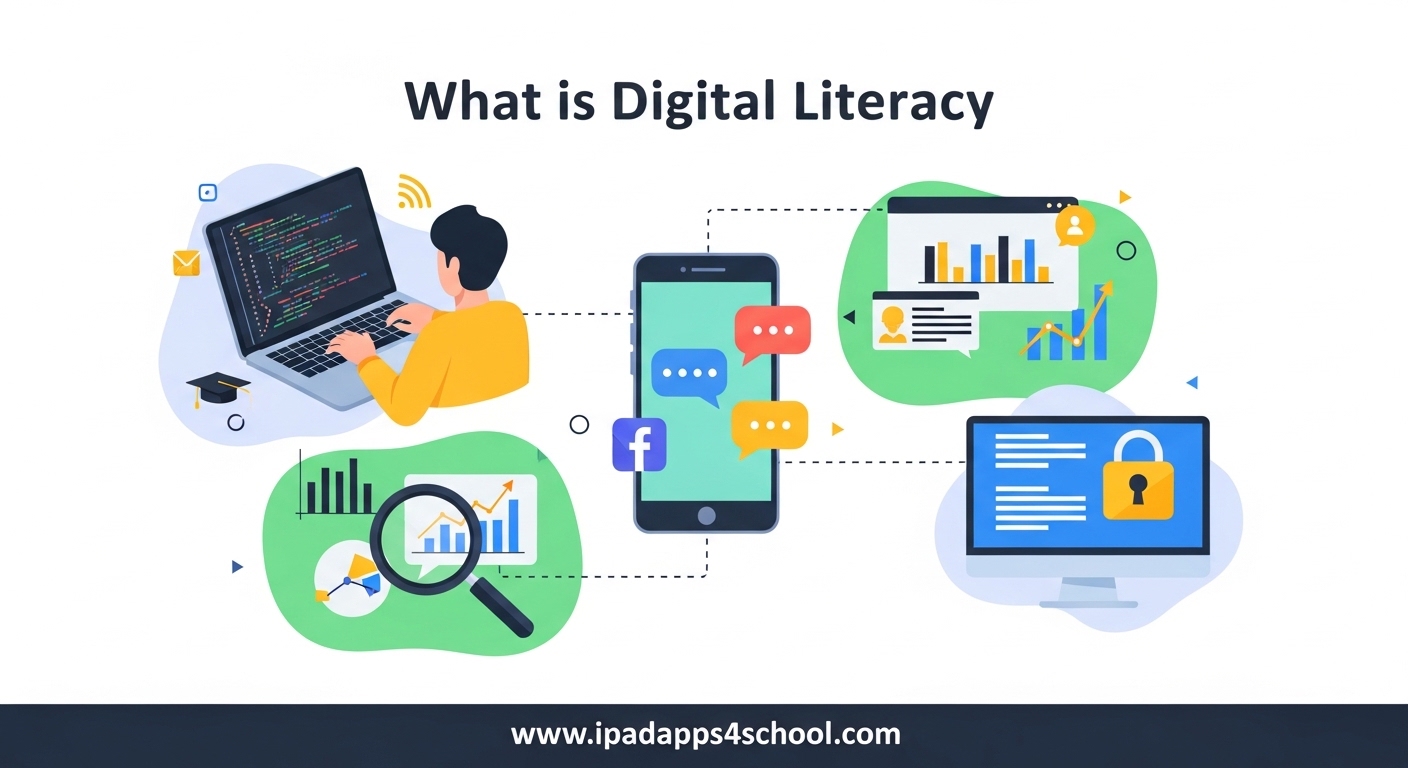
Digital literacy is the ability to find, evaluate, create, and communicate information using digital technologies. It combines technical know-how with critical thinking skills to navigate our increasingly connected world. Whether you are a student, teacher, or professional, understanding what is digital literacy has become essential for success in 2026.
In this guide, I will break down exactly what digital literacy means, why it matters more than ever, and how you can develop these skills. We will explore the key components that make someone digitally literate, look at real examples, and discuss practical steps for improvement.
Table of Contents
What Is Digital Literacy?
Digital literacy goes far beyond knowing how to turn on a computer or send an email. It encompasses the skills and knowledge needed to effectively use digital devices, software applications, and online platforms for meaningful purposes. This includes everything from basic technical operations to complex critical evaluation of online information.
The concept has evolved significantly over the past two decades. Initially, digital literacy focused mainly on technical computer skills. Today, it includes cognitive abilities like information literacy, social-emotional skills for online communication, and even understanding digital rights and responsibilities.
Digital Literacy vs Computer Literacy
Computer literacy refers specifically to the ability to use computer hardware and software applications. It is the foundation upon which digital literacy builds. Someone who is computer literate can operate a computer, use word processors, and browse the internet.
Digital literacy is broader. It includes computer literacy but adds the ability to think critically about digital content, communicate effectively online, create digital media, and understand the social and ethical implications of technology use.
Digital Literacy vs Media Literacy
Media literacy traditionally focused on understanding and analyzing mass media like television, radio, and print. It teaches people to critically examine media messages, recognize bias, and understand how media shapes public opinion.
Digital literacy incorporates media literacy but expands it to include interactive digital environments. It addresses issues like online privacy, digital footprints, user-generated content, and the rapid spread of information (and misinformation) through social networks.
Key Components of Digital Literacy
Digital literacy consists of several interconnected skill areas. Here are the core components you need to develop:
1. Information Literacy
This is the ability to find, evaluate, and use information effectively. It includes knowing how to search efficiently, assessing the credibility of sources, and distinguishing between facts and opinions. In an age of widespread misinformation, this skill has become particularly critical.
Information literacy also means understanding how information is organized online and knowing how to access reliable sources for different types of questions.
2. Technical Proficiency
You need foundational skills to operate digital devices and software. This includes using operating systems, navigating the internet, managing files, and understanding basic troubleshooting.
Based on discussions I have seen in education forums, many students today lack basic troubleshooting abilities. They can use apps but struggle when something goes wrong. Finding information to fix issues is a real skill that requires practice.
3. Content Creation
Digital literacy is not just about consuming content. It involves creating your own digital materials using various tools and platforms. This includes writing documents, making presentations, editing images, producing videos, and managing websites or blogs.
Content creation skills help you express ideas clearly and participate fully in digital conversations.
4. Communication and Collaboration
The digital world connects us across distances. Digital literacy includes knowing how to communicate effectively through email, messaging apps, video calls, and social media. It also covers online collaboration tools like shared documents and project management platforms.
These skills have become essential in modern workplaces and educational settings.
5. Digital Citizenship and Safety
Being a responsible digital citizen means understanding your rights and responsibilities online. This includes respecting others’ privacy, practicing proper etiquette, and recognizing the consequences of your digital actions.
Safety skills are equally important. You need to know how to protect personal information, recognize online threats, manage privacy settings, and understand digital footprints.
6. AI Literacy (Emerging Component)
As artificial intelligence becomes more integrated into daily life, understanding how AI works and how to use it responsibly is becoming a crucial digital literacy skill. This includes knowing when AI is being used, understanding its limitations, and recognizing potential biases in AI-generated content.
Examples of Digital Literacy in Action
Here are practical examples that show digital literacy at work:
- Evaluating news sources: Checking multiple sources, verifying facts, and identifying potential bias before sharing articles on social media
- Creating presentations: Using digital tools to combine text, images, and data visualizations to communicate ideas effectively
- Managing privacy: Reviewing and adjusting privacy settings on social media accounts to control who sees your information
- Troubleshooting: Searching for solutions when software crashes or devices malfunction, applying fixes independently
- Collaborative writing: Using cloud-based documents to work with classmates or colleagues on shared projects in real time
- Understanding digital footprints: Recognizing that online actions create lasting records and making conscious choices about what to share
- Spotting scams: Identifying phishing emails, recognizing suspicious links, and avoiding fraudulent websites
- Organizing information: Using bookmarks, folders, and note-taking apps to manage digital resources efficiently
Why Digital Literacy Matters in 2026?
The importance of digital literacy cannot be overstated. Here is why developing these skills matters for everyone:
Education Success
Students today encounter digital tools in nearly every subject. From research projects to online learning platforms, digital literacy directly impacts academic performance. Those who lack these skills fall behind quickly.
Forum discussions among teachers reveal a concerning gap. Many students struggle with basic computer tasks despite growing up surrounded by technology. Computer classes have been removed from curricula in many schools, assuming kids already know this stuff. That assumption is often wrong.
Career Readiness
Modern workplaces demand digital competence. Whether you are analyzing data, communicating with remote teams, or using industry-specific software, digital skills are prerequisites for most jobs. Digital literacy opens doors to opportunities and helps you adapt as technology evolves.
Critical Thinking and Misinformation
We are bombarded with information online. Digital literacy equips you to think critically about what you encounter. It helps you spot fake news, recognize manipulation tactics, and make informed decisions based on reliable information.
From my observation of online discussions, students particularly struggle to evaluate information critically. They do not always understand how misinformation spreads or why they should question sources.
Digital Divide Connection
Digital literacy is closely tied to the digital divide. Access to technology is only part of the equation. Without the skills to use technology effectively, access alone is insufficient. Bridging this skills gap is essential for equity.
Safety and Privacy
Understanding how to protect yourself online is a fundamental digital literacy skill. This includes managing passwords securely, recognizing threats, understanding privacy policies, and controlling your personal data.
How to Develop Your Digital Literacy Skills?
Improving your digital literacy is an ongoing process. Technology changes rapidly, so continuous learning is essential. Here are practical steps to build your skills:
Start with the Basics
If you are new to digital literacy, begin with foundational skills. Learn your way around your devices, understand basic software operations, and practice common tasks until they feel comfortable.
Practice Critical Evaluation
Whenever you encounter information online, ask questions. Who created this content? What is their motivation? Is there evidence supporting their claims? Can you find other sources that confirm or contradict this information?
Learn by Doing
The best way to build digital skills is hands-on practice. Create content, experiment with new tools, and do not be afraid to make mistakes. When something goes wrong, treat it as a learning opportunity to troubleshoot and find solutions.
Stay Updated
Technology evolves constantly. Follow reputable tech news sources, take online courses, and remain curious about new developments. AI tools, for example, are transforming how we interact with technology, so understanding them is increasingly important.
Seek Formal Learning Opportunities
Many schools, libraries, and community organizations offer digital literacy training. Formal instruction can fill gaps in your knowledge and provide structured learning paths.
Frequently Asked Questions
What is the meaning of digital literacy?
Digital literacy means having the skills to find, evaluate, create, and communicate information using digital technologies. It combines technical abilities with critical thinking and ethical understanding of the digital world.
What are some examples of digital literacy?
Examples include evaluating news sources for credibility, creating digital presentations, managing online privacy settings, troubleshooting tech problems, collaborating on cloud documents, and understanding your digital footprint.
What are the three main skills of digital literacy?
The three main skills are: 1) Information literacy – finding and evaluating information, 2) Technical proficiency – using devices and software effectively, and 3) Digital communication and citizenship – interacting responsibly online.
What are the 7 C’s of digital literacy?
The 7 C’s typically include: Comprehension, Critical thinking, Creativity, Communication, Collaboration, Cultural understanding, and Citizenship. These represent the broad skill areas needed for full digital competence.
Conclusion
Digital literacy is no longer optional. It is a fundamental requirement for participating in modern society, succeeding in education, and thriving in the workforce. Understanding what is digital literacy and actively developing these skills will serve you throughout your life.
The digital landscape will continue evolving in 2026 and beyond. By building a strong foundation of digital literacy skills now, you equip yourself to adapt, learn, and grow alongside technology. Start today by assessing your current skills and identifying areas for improvement. The investment in your digital literacy will pay dividends for years to come.