
Imagine walking into a classroom where every student is working on something different. One child is watching a video about fractions for the third time because they need to see it again. Another is already moving ahead to the next lesson. A third is working on a hands-on project that matches their interest in art. The teacher is moving between students, offering exactly the help each one needs at that moment. This is not chaos. This is personalized learning in action.
As educators and parents, we have all seen the traditional model struggle to serve every child. Some students sit bored because they already understand the material. Others fall behind because they need more time or a different explanation. Personalized learning addresses this fundamental challenge.
In this guide, you will learn what personalized learning really means, how it works in real classrooms, and how technology like iPads can make it possible for any school or home learning environment.
Table of Contents
What is Personalized Learning?
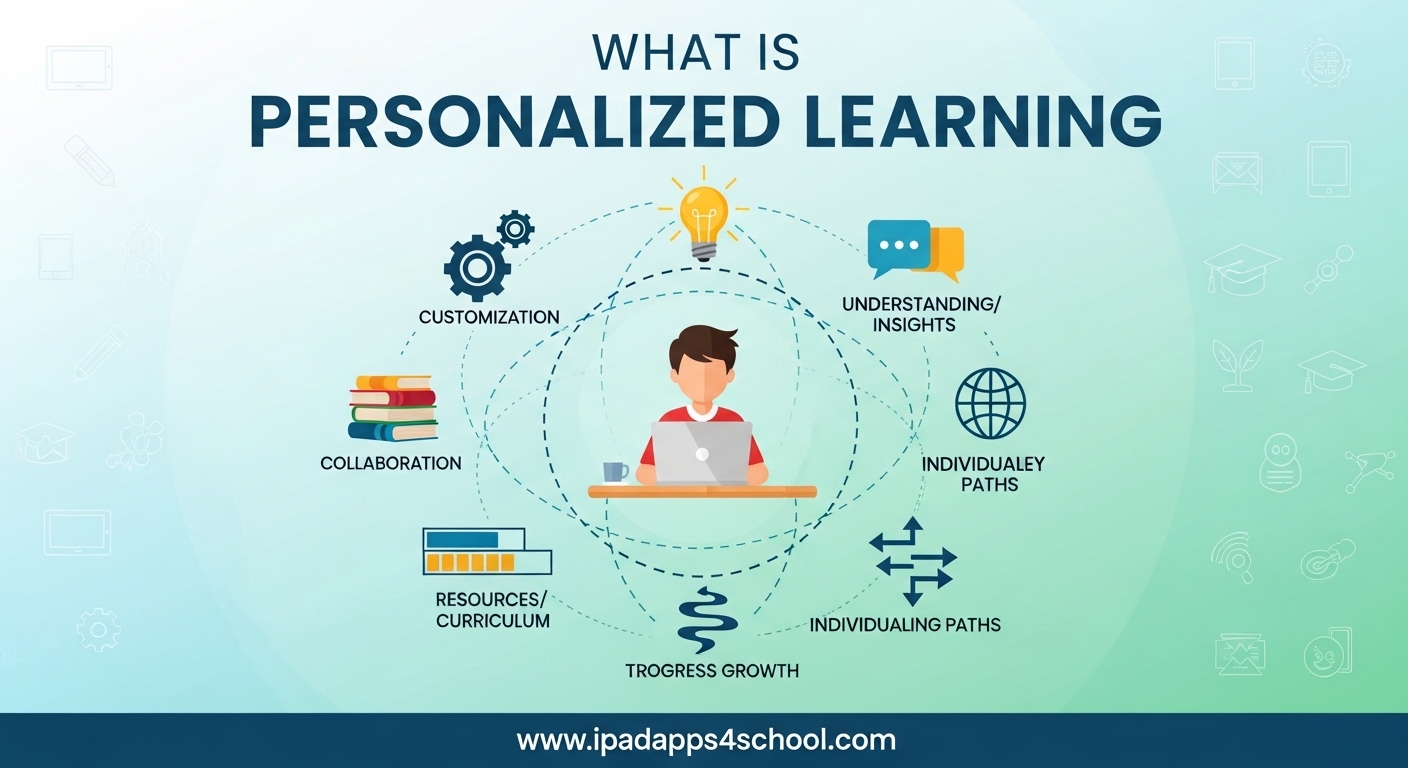
Personalized learning is a learner-driven approach to education where instruction is tailored to meet each student’s individual needs, strengths, interests, and goals. Instead of every student following the same lesson at the same pace, each learner follows a customized path that adapts to how they learn best.
The core idea is simple but powerful. Every student receives a learning plan based on what they already know, how they learn most effectively, what skills they need to develop, and what interests motivate them. This individual learning plan becomes their roadmap through the curriculum.
Think of it as the difference between a tailored suit and one bought off the rack. Both cover the same basic need, but one fits the individual perfectly while the other assumes everyone has the same measurements. Traditional classrooms often teach to the middle, leaving struggling students behind and advanced students unchallenged. Personalized learning aims to reach every student where they are.
This approach requires a fundamental shift in thinking. The teacher moves from being the source of all information to being a facilitator and guide. Students gain more control over their learning, which builds independence and self-awareness that serves them throughout life.
Key Components of Personalized Learning
Four essential elements make personalized learning work. These components work together to create an environment where every student can succeed on their own terms.
Learner Profiles
Every student has a detailed learner profile that captures who they are as a student. This includes their academic strengths and weaknesses, learning preferences, interests, and personal goals. Teachers use this information to design instruction that connects with each student individually. Parents can contribute to these profiles by sharing insights about how their child learns best at home.
Flexible Pacing
Students progress through material at speeds that match their understanding. If a student masters a concept quickly, they move forward without waiting for the rest of the class. If another student needs more time, they get it without penalty. This competency-based progression ensures that no student is left behind or held back by the group pace.
Competency-Based Progression
Instead of moving forward based on time spent in class, students advance when they demonstrate mastery of the material. This means assessments focus on whether students truly understand concepts, not just whether they completed assignments. Students know exactly what they need to learn and can see their progress clearly.
Student Agency
Personalized learning gives students meaningful choices about their education. They might choose which topics to explore within a unit, how to demonstrate their learning, or even where and when to complete work. This autonomy builds motivation and helps students develop the self-regulation skills they need for lifelong learning.
How Personalized Learning Works in Practice?
Seeing personalized learning in action helps clarify how these components come together. Here is what a typical day might look like in a classroom using this approach.
The morning starts with students checking their personalized dashboards. These show their current learning goals, progress on recent work, and choices for the day. The teacher has already reviewed data from the previous day and knows which students need support and which are ready for new challenges.
During the main learning block, the classroom hums with varied activity. Some students work in small groups with the teacher on targeted instruction. Others work independently on devices, moving through adaptive lessons that adjust in real time to their responses. A few students collaborate on a project that integrates multiple subjects around their shared interest.
The teacher rotates through the room, conducting quick formative assessments, answering questions, and providing feedback. Because students are working at different levels, the teacher can spend time with those who need it most without holding back students who are ready to move on.
At the end of the session, students reflect on what they learned and set goals for tomorrow. This metacognitive practice helps them understand themselves as learners. The teacher reviews the day’s data to plan tomorrow’s instruction, creating a continuous cycle of assessment and adjustment.
Benefits of Personalized Learning
The shift to personalized learning produces meaningful benefits for everyone involved in a child’s education.
For Students
Students experience higher engagement because they are working on material at the right level of challenge. They build confidence as they experience success and see their own growth. They also develop crucial skills like self-direction, time management, and goal setting that serve them far beyond the classroom. Research shows that personalized learning can lead to significant gains in math and reading achievement, particularly for students who were previously struggling.
For Teachers
Teachers gain deeper relationships with students because they understand each learner as an individual. They can focus their time on teaching rather than managing uniform lessons that do not fit everyone’s needs. Data from personalized learning platforms helps teachers identify misconceptions quickly and target their interventions effectively. Many teachers report renewed enthusiasm for their work when they see students thriving.
For Parents
Parents receive clearer information about their child’s progress through detailed learner profiles and regular updates. They can support their child’s specific needs rather than guessing what help is required. Parents often report feeling more connected to their child’s education because they understand exactly what their child is working on and why.
Personalized vs Differentiated vs Individualized Learning
These three terms sound similar but represent distinct approaches. Understanding the differences helps educators and parents choose the right strategies for their situations.
| Aspect | Personalized Learning | Differentiated Instruction | Individualized Education |
|---|---|---|---|
| Who drives learning | Student has significant voice and choice | Teacher modifies instruction for groups | Student has an IEP with legally mandated services |
| Pacing | Flexible based on mastery | Often whole-class with varied activities | Highly individualized timeline |
| Content | Multiple pathways through curriculum | Same content presented differently | May include modified curriculum |
| Goals | Common goals reached through different paths | Common goals for all students | Individualized goals based on needs |
| Setting | General education classroom | General education classroom | May include special education services |
| Technology role | Often central to delivery | Supporting tool | Assistive technology as needed |
Differentiated instruction is primarily teacher-directed. The teacher designs multiple versions of lessons to reach different learners, but students generally have less choice about what they learn and when. It is an important teaching strategy but does not fundamentally change the structure of school.
Individualized education typically refers to the Individualized Education Program (IEP) created for students with disabilities. An IEP is a legal document that specifies special education services, accommodations, and sometimes modified learning goals. While personalized learning can support students with IEPs, they are distinct concepts with different legal implications.
How iPads and Apps Enable Personalized Learning?
Technology makes personalized learning practical for classrooms of any size. iPads, in particular, offer an ideal platform for delivering customized education experiences. The combination of portability, touch interaction, and a vast ecosystem of educational apps creates opportunities that were impossible just a decade ago.
Adaptive Learning Apps
Apps like Khan Academy and Duolingo adapt in real time to each student’s responses. When a student answers correctly, the app presents harder content. When they struggle, it provides review and hints. This creates a truly individualized path through material without requiring the teacher to prepare separate lessons for every student.
Learner Profile Management
Platforms like Seesaw and Google Classroom help teachers maintain those crucial learner profiles. They can document student interests, track progress over time, and share updates with parents. Students can also contribute to their profiles by uploading work samples and reflections.
Multiple Modalities
iPads support diverse learning styles through multimedia content. Visual learners can watch videos and examine interactive diagrams. Auditory learners can listen to explanations and record their own thoughts. Kinesthetic learners can use touch gestures and create hands-on projects. The same device serves different learners in different ways.
Immediate Feedback
Apps provide instant feedback that would be impossible for a teacher to deliver to thirty students simultaneously. Students know immediately whether they understand a concept, allowing them to adjust their approach or seek help right away. This rapid feedback loop accelerates learning.
Portfolios and Reflection
Students can use iPads to create digital portfolios that document their learning journey. Apps like Book Creator and Explain Everything let students demonstrate understanding through video, audio, and interactive projects. These portfolios become powerful tools for student reflection and parent conferences.
How to Implement Personalized Learning?
Starting personalized learning does not require a complete classroom overhaul. Teachers and parents can begin with small steps that build toward a more comprehensive approach.
Begin by getting to know your learners deeply. Use surveys, interviews, and observations to understand how each student learns best. Create simple learner profiles that you can reference when planning instruction.
Introduce flexible pacing in one subject or unit. Let students work through material at their own speed with clear checkpoints for mastery. Use technology to deliver the basic content so you can focus on supporting students who need help.
Give students genuine choices within your curriculum. Let them select topics for research projects, choose how to demonstrate learning, or decide the order in which they complete tasks. Start with limited options and expand as students develop decision-making skills.
Use formative assessment constantly. Quick checks for understanding help you adjust instruction in the moment. Digital tools can make this assessment invisible to students through their regular work, giving you rich data without creating test anxiety.
Build reflection into daily routines. Even five minutes of asking students to think about what they learned and what they need next develops the metacognitive skills that make personalized learning effective.
For parents supporting learning at home, start conversations about how your child learns best. Ask what subjects excite them and where they struggle. Use apps that adapt to their level rather than forcing them through rigid grade-level content. Celebrate effort and growth rather than just correct answers.
Frequently Asked Questions
What is the meaning of personalized learning?
Personalized learning is a learner-driven approach to education where instruction is tailored to meet each student’s individual needs, strengths, interests, and goals. Each student follows a customized learning path based on learner profiles, flexible pacing, competency-based progression, and student agency.
What are examples of personalized learning?
Examples include students choosing their own research topics within a subject, working through math lessons at their own pace using adaptive apps like Khan Academy, creating portfolios that demonstrate learning through different formats, and teachers pulling small groups for targeted instruction while other students work independently on personalized goals.
What is the difference between an IEP and an ILP?
An IEP (Individualized Education Program) is a legal document for students with disabilities that mandates special education services and accommodations. An ILP (Individualized Learning Plan) is a goal-setting tool used in personalized learning for all students that maps their learning path based on strengths, interests, and needs, but does not carry legal requirements.
What is an example of AI personalized learning?
AI-powered apps like Duolingo for language learning adapt lessons in real time based on student responses. If a learner struggles with verb conjugations, the AI provides additional practice. Other examples include Carnegie Learning’s math tutoring software and reading apps that adjust text complexity based on comprehension checks.
How is personalized learning different from differentiated instruction?
Differentiated instruction is teacher-directed, with the teacher modifying lessons for different learner groups while students generally cover the same material on the same timeline. Personalized learning gives students voice and choice in their learning path, including flexibility in pacing, content sequence, and demonstration of mastery.
Can personalized learning work without technology?
Yes, personalized learning can work without technology through flexible grouping, student choice boards, and mastery-based progression. However, technology makes personalized learning more manageable in larger classrooms by automating adaptive content delivery, progress tracking, and assessment. iPads and educational apps significantly reduce the logistical burden on teachers.
What role do parents play in personalized learning?
Parents contribute insights to learner profiles, support flexible learning at home using adaptive apps, encourage reflection about learning, and communicate with teachers about their child’s progress and interests. Parents can help extend personalized learning beyond the classroom by following their child’s lead on interests and providing resources that match their learning style.
Final Thoughts
Personalized learning represents a fundamental shift from teaching to the middle toward reaching every student where they are. By combining learner profiles, flexible pacing, competency-based progression, and student agency, this approach creates classrooms where all students can thrive.
The integration of iPads and educational apps makes personalized learning more accessible than ever. Technology handles the logistical challenges of delivering customized content and tracking progress, freeing teachers to focus on the human connection and guidance that only they can provide.
Whether you are a teacher looking to transform your classroom or a parent seeking to support your child’s learning at home, personalized learning offers a path forward. Start small, use the tools available, and watch students develop the confidence and skills to become lifelong learners.