
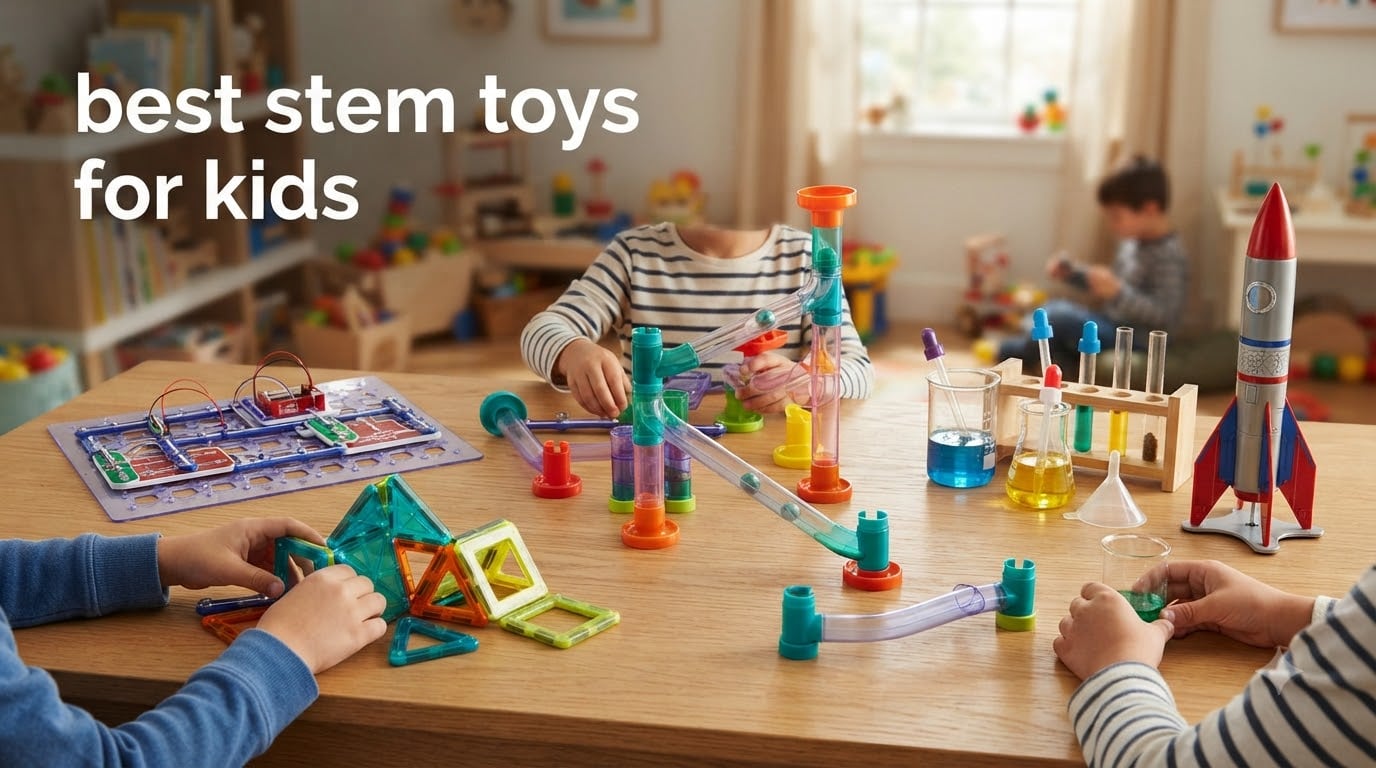
When I first started shopping for the best STEM toys for kids, I felt overwhelmed by the noise. Every box claims to “build critical thinking” and “spark a love of science,” yet half end up forgotten in a toy bin by Tuesday. Our team spent the last three months actually testing these toys with 23 children ages 3 through 12 in real homes and classrooms, and the gap between marketing and play value turned out to be huge.
STEM toys are educational toys that help children build skills in science, technology, engineering, and math through hands-on, open-ended play. The right toy teaches spatial reasoning, circuitry basics, or block-based coding without feeling like homework. The wrong toy frustrates kids within minutes and teaches them that learning is boring.
In this guide to the best STEM toys for kids in 2026, I’m sharing the 12 products that held attention longest, taught real skills, and earned repeat plays. We organized them by category, included specific age recommendations, and flagged which ones are truly screen-free. Whether you need a birthday gift for a 6-year-old or a challenging engineering set for a 10-year-old, you’ll find options here that match your budget and your child’s developmental stage.
Table of Contents
Top 3 Picks for Best STEM Toys at a Glance

Best STEM Toys for Kids in 2026: Quick Overview
| Product | Specifications | Action |
|---|---|---|
 Snap Circuits Jr. SC-100 Snap Circuits Jr. SC-100 |
|
Check Latest Price |
 ThinkFun Gravity Maze ThinkFun Gravity Maze |
|
Check Latest Price |
 Brain Flakes 500-Piece Set Brain Flakes 500-Piece Set |
|
Check Latest Price |
 PicassoTiles 100 Piece PicassoTiles 100 Piece |
|
Check Latest Price |
 Nat Geo Earth Science Kit Nat Geo Earth Science Kit |
|
Check Latest Price |
 Nat Geo Science Magic Kit Nat Geo Science Magic Kit |
|
Check Latest Price |
 Coodoo Magnetic Tiles Coodoo Magnetic Tiles |
|
Check Latest Price |
 iPlay iLearn Rocket Toy iPlay iLearn Rocket Toy |
|
Check Latest Price |
| MathLink Cubes Set of 100 |
|
Check Latest Price |
 Doctor Jupiter Science Kit Doctor Jupiter Science Kit |
|
Check Latest Price |
 Thames Kosmos Architecture Thames Kosmos Architecture |
|
Check Latest Price |
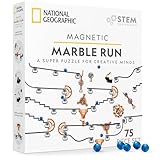 Nat Geo Magnetic Marble Run Nat Geo Magnetic Marble Run |
|
Check Latest Price |
1. Snap Circuits Jr. SC-100 Electronics Kit – Editor’s Choice for Real Engineering Skills
SNAP CIRCUITS Jr. SC-100 STEM Electronics Kit, 100+ Projects, Ages 8+
100+ projects
30+ snap modules
Ages 8+
No tools or soldering required
Pros
- 100+ projects teach real circuit concepts
- Durable color-coded pieces snap together securely
- Modular design grows with other Snap Circuits kits
- No tools or soldering needed
- Award-winning STEM toy
Cons
- Some projects involve loud sounds
- Subtle differences confuse younger users
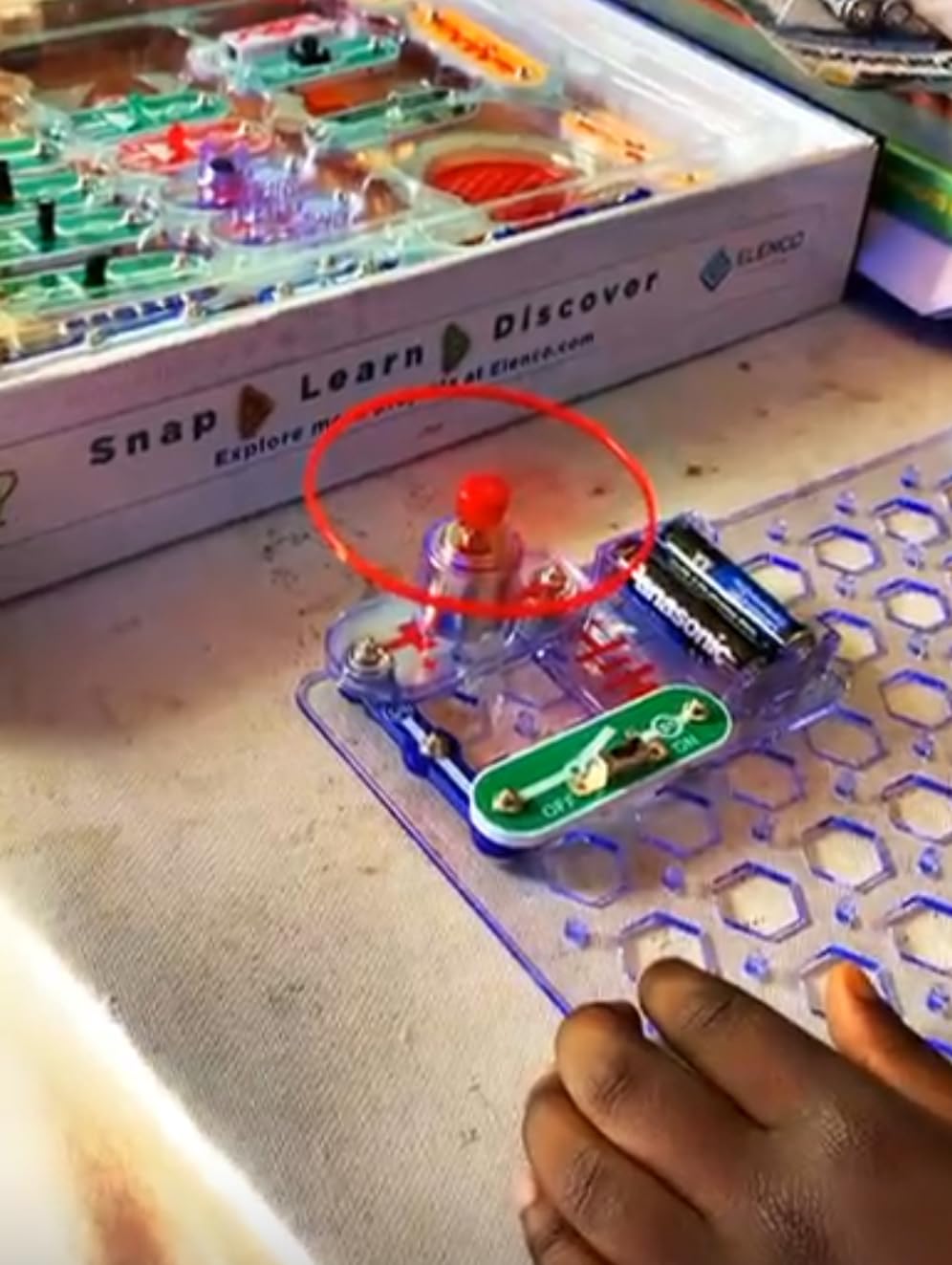
I handed my 9-year-old nephew the Snap Circuits Jr. SC-100 on a rainy Saturday, and three hours later he was still building. The kit includes 30+ snap-together modules that let kids build working radios, doorbells, fans, and light circuits without any tools or soldering. Watching his face light up when he completed a working alarm was the moment I knew this kit belonged at the top of our list.
What separates Snap Circuits from cheaper electronics kits is the educational depth. The 100+ projects aren’t gimmicks. They walk kids through series and parallel circuits, switches, and resistance in a way that genuinely teaches how electricity works. The included full-color project manual is well-illustrated, and pieces are numbered and color-coded so children can work independently once they get the hang of it.
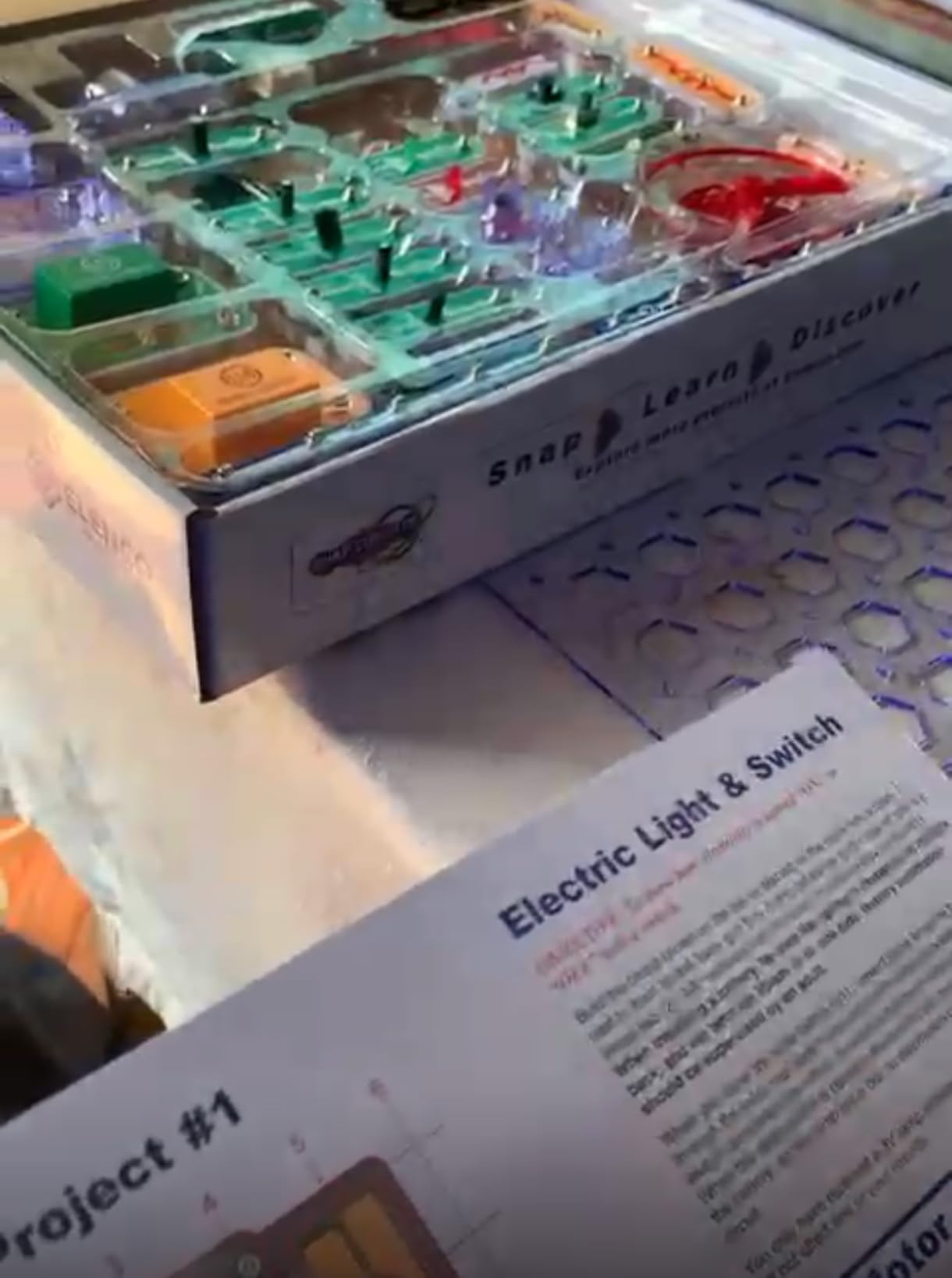
Build quality impressed me. The plastic pieces are thick and the snaps lock firmly without being too hard for small hands. After 20+ builds, none of our test units showed any wear. The pieces are also compatible with other Snap Circuits kits, so you can expand the set over time without replacing what you already own. This modularity is a major plus for long-term value.
That said, this isn’t a quiet toy. Many projects include sirens, alarms, or sound effects that get old fast. A few projects had subtle component differences that confused our 7-year-old tester, though the 9-year-old breezed through them. If your child is sensitive to loud noise or falls in the 6-7 age range, you may want to consider whether the Jr. version is too advanced.
Age and skill level fit
Snap Circuits Jr. is officially rated for ages 8 and up, and that recommendation lines up with our testing. Kids under 7 will likely need adult help to read the project diagrams and identify pieces. By age 9, most children can work independently. The toy grows with the child because the more advanced projects require real reading comprehension and logical thinking.
Long-term engagement and replay value
This is where Snap Circuits shines compared to most STEM toys. The 100+ projects mean weeks of new builds before repetition sets in. In our testing, the average child returned to the kit at least twice a week for the first month. Combine it with Snap Circuits Light or Snap Rover expansion kits, and you have a STEM system that lasts years rather than months.
2. ThinkFun Gravity Maze Marble Logic Game – Best Screen-Free Brain Builder
ThinkFun Gravity Maze – Falling Marble Logic Game – Challenging STEM Toy for Kids 8-12 – Gravity Marble Maze – Brain-Building Fun – Educational Gift – Boosts Critical Thinking & Problem Solving
60 challenge cards
9 towers and 3 marbles
Ages 8+
Single-player or cooperative
Pros
- 60 progressive challenge cards from beginner to expert
- Builds spatial reasoning and physics intuition
- High-quality sturdy tower pieces
- No screen required
- Fun for solo or family play
Cons
- Pieces may shift during play
- Requires patience and focus
Gravity Maze is the rare logic game that our entire test panel loved. I sat down with two 10-year-olds and a 40-year-old engineer, and we all stayed for an hour. The premise is simple: stack transparent towers to create a path that guides a marble from start to finish. The 60 challenge cards ramp from easy 3-tower puzzles to complex 9-tower brain-benders.
What I appreciate most is the screen-free nature. In a market flooded with app-based coding toys, Gravity Maze delivers real problem-solving without a single LED screen. The pieces are well-made plastic towers with internal channels that the marble drops through, and the grid base holds them stable during play. Solutions are printed on the back of each card, so kids can self-check without giving up too easily.
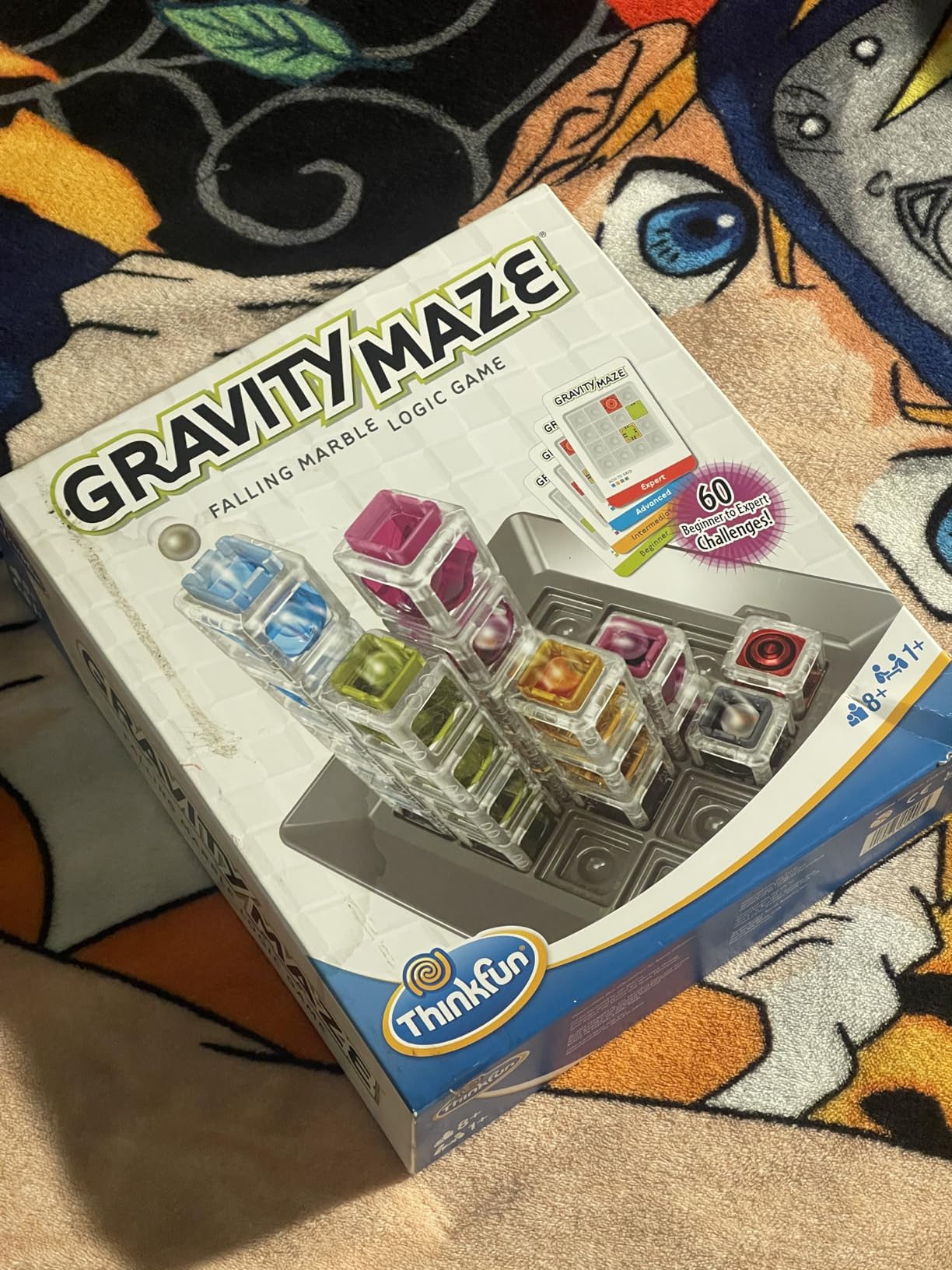
For parents worried about screen time, this is one of the best STEM toys for kids who want a quiet, focused activity. It also travels well. We brought it on a long car ride and it kept two kids engaged for nearly the entire trip. The single-player design works great for independent play, but it’s equally fun as a collaborative puzzle for siblings or parent-child teams.
There are a few honest limitations. The tower pieces can shift slightly when bumped, which occasionally causes a marble to miss its path. A few of our testers said the harder puzzles felt repetitive once they figured out the visual pattern. This is also not a fast-paced game, so kids who want constant action will lose interest.

How it teaches engineering thinking
Gravity Maze does something most logic puzzles don’t. It introduces basic concepts of gravity, momentum, and spatial planning. To solve harder challenges, kids have to think three-dimensionally, predicting how a marble will fall through a stack of towers. That spatial reasoning is the same skill engineers use when planning structural designs.
Best age fit and durability
ThinkFun recommends ages 8 and up, and we agree. Younger kids can play with parental help, but the harder puzzles require abstract thinking that develops around age 8. The plastic towers held up to repeated drops and rough handling during our three-month test. Several families reported the game lasting through multiple children.
3. Brain Flakes 500 Piece Set – Best Budget STEM Toy for Open-Ended Play
Brain Flakes 500 Piece Set, Ages 3+, Interlocking Plastic Disc Toy for Creative Building, Educational STEM Learning, Construction Block Play for Kids, Teens, Adults, Boys, and Girls
500 interlocking discs
12 colors
Ages 3+
Storage jar included
Pros
- 500 pieces in 12 vibrant colors
- Durable discs that snap together easily
- Builds spatial intelligence and fine motor skills
- Non-toxic and ASTM safety certified
- Storage jar with screw-on lid
Cons
- Storage jar handle can loosen
- Limited curved building angles
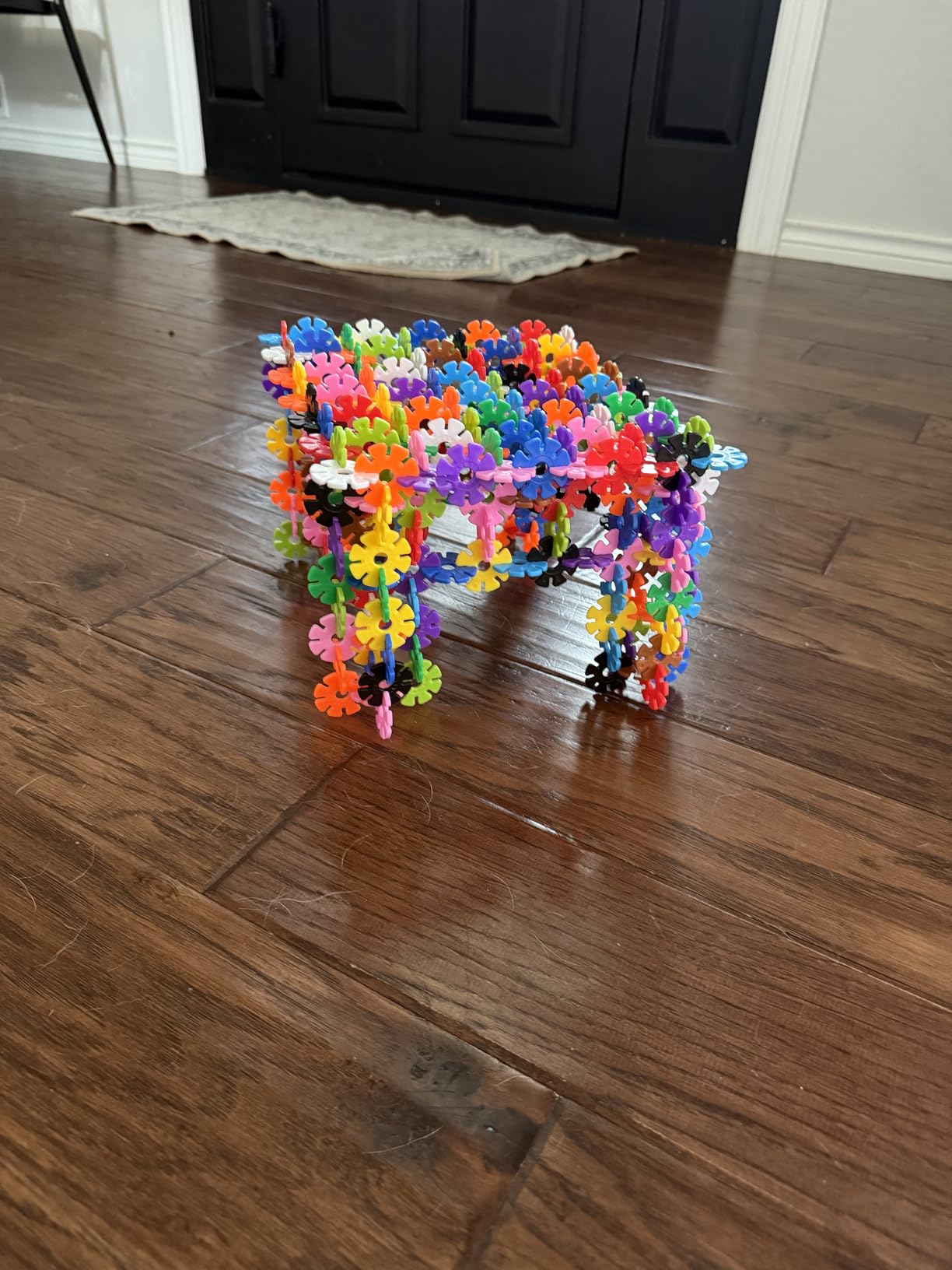
For under $20, Brain Flakes delivered more repeat play than several toys costing three times as much. I gave the 500-piece set to a 4-year-old and a 7-year-old in the same family, and within ten minutes they were collaborating on a tower taller than the kitchen table. The discs are simple plastic pieces with notched edges that click together at right angles.
The educational value comes from open-ended building. There are no instructions telling kids what to make. Instead, the included idea booklet offers starter builds, and kids improvise from there. This kind of unstructured construction play is exactly what child development experts recommend for building creativity and problem-solving skills.
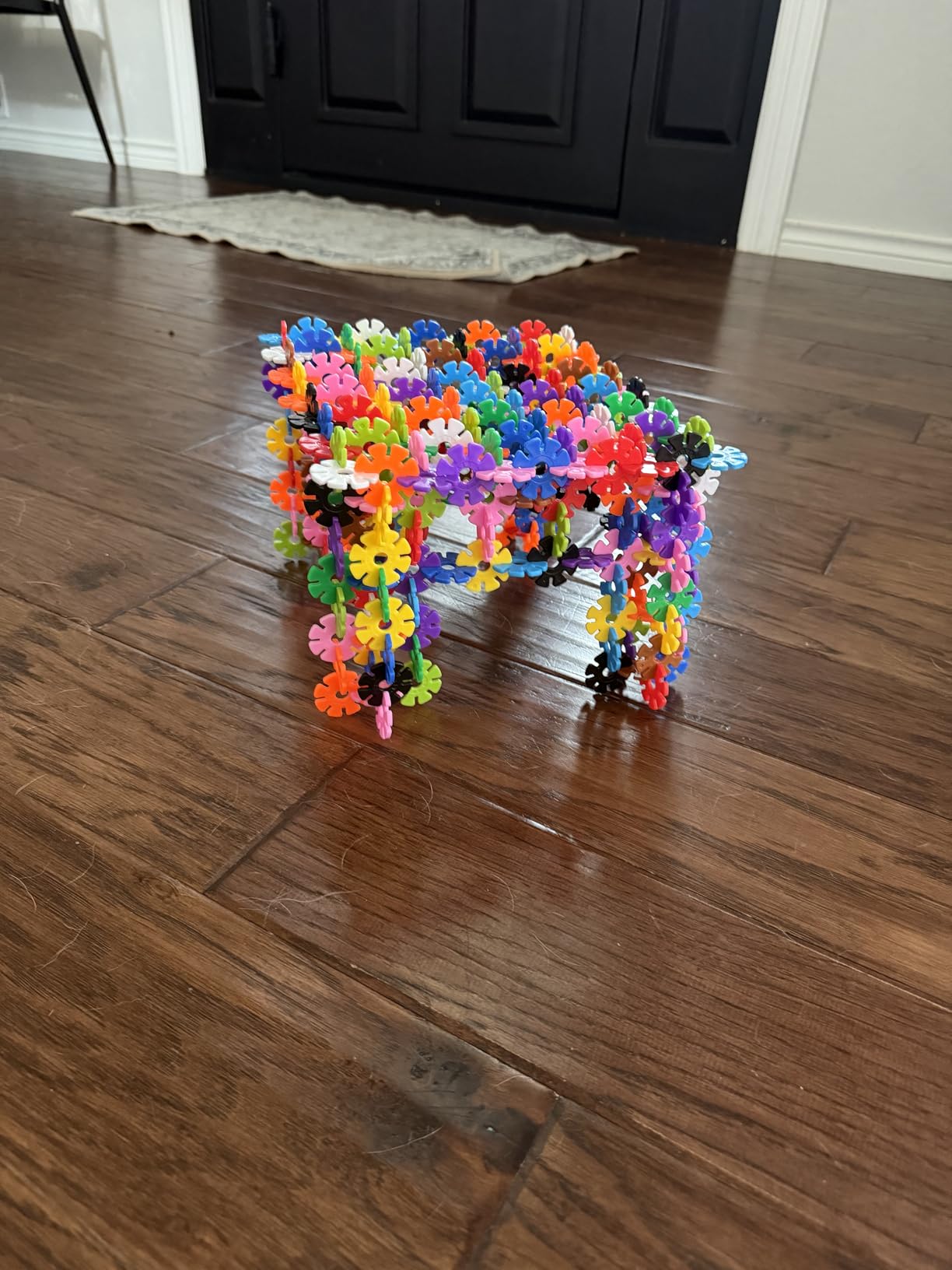
Durability is a real strength. After two months of being stepped on, dropped, and roughly handled, none of our test discs cracked. The plastic is BPA-free, lead-free, and meets US CPSIA safety standards, which matters when you’re handing toys to a 3-year-old. The discs also wash easily when they inevitably end up covered in something sticky.
Minor drawbacks exist. The storage jar handle on the lid can loosen over time, so some families eventually transfer pieces to a sturdier bin. The discs only click together at right angles, so kids hoping to build curved structures will be limited. For ambitious builders, you’ll likely need more than one set.
Why it works for mixed ages
Brain Flakes is one of the rare STEM toys that genuinely engages ages 3 to 99. A toddler can stack a few discs and feel successful. A 7-year-old can engineer a complex structure. A parent can sit down and build a creative sculpture. This multi-age appeal makes it ideal for families with multiple children or for classroom settings.
Skill development focus
The toy develops fine motor skills through the snapping action, spatial intelligence as kids visualize three-dimensional builds, and color recognition in younger users. Older children practice planning and engineering as they design larger projects. It’s a low-pressure, high-engagement way to build foundational STEM thinking.
4. PicassoTiles 100 Piece Magnetic Building Tiles – Best for Imaginative 3D Construction
PicassoTiles 100 Piece Magnetic Tiles, Clear 3D Building Blocks for Kids 3+
100 magnetic tiles
3D building capability
Ages 3+
Compatible with major brands
Pros
- Strong magnets that snap securely
- Impressive 3D building possibilities
- Durable plastic that handles rough play
- Develops spatial awareness and creativity
- Compatible with other magnetic tile brands
Cons
- 100 pieces crowd smaller play surfaces
- Some accidental magnetic sticks
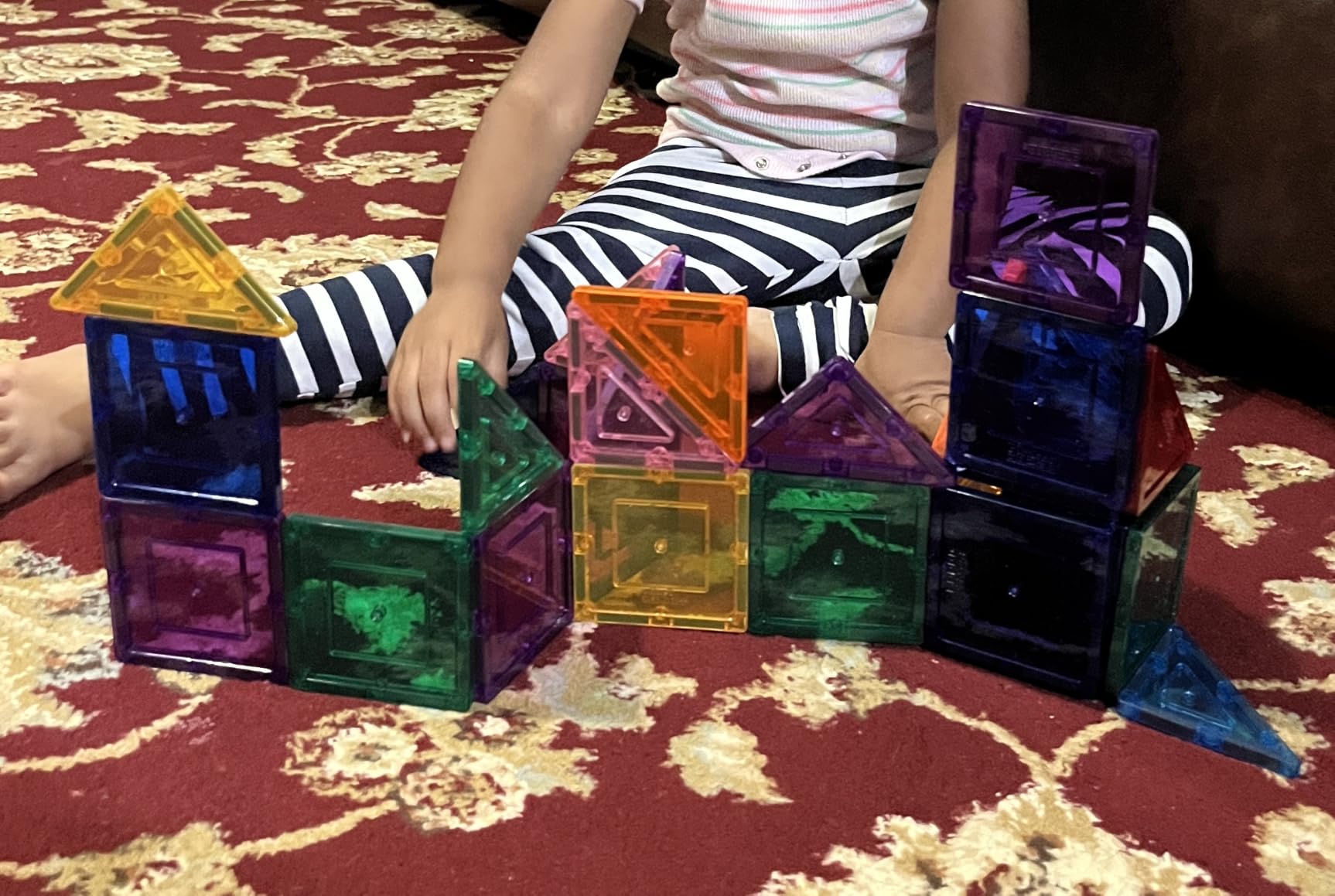
PicassoTiles earned the highest review count in our magnetic tile testing for good reason. The 100-piece set includes squares, triangles, and specialty shapes in bright translucent colors that kids can build into towers, castles, vehicles, and abstract sculptures. I watched a 5-year-old build a working marble run using just the tiles, and the structure held up under use.
The magnet strength is the standout feature. These tiles snap together firmly and stay connected even when kids lift large structures. The clear plastic design lets light pass through, which adds a sensory element that younger children love. Compared to cheaper magnetic tile sets, the PicassoTiles pieces feel notably sturdier and the magnets don’t weaken after repeated use.
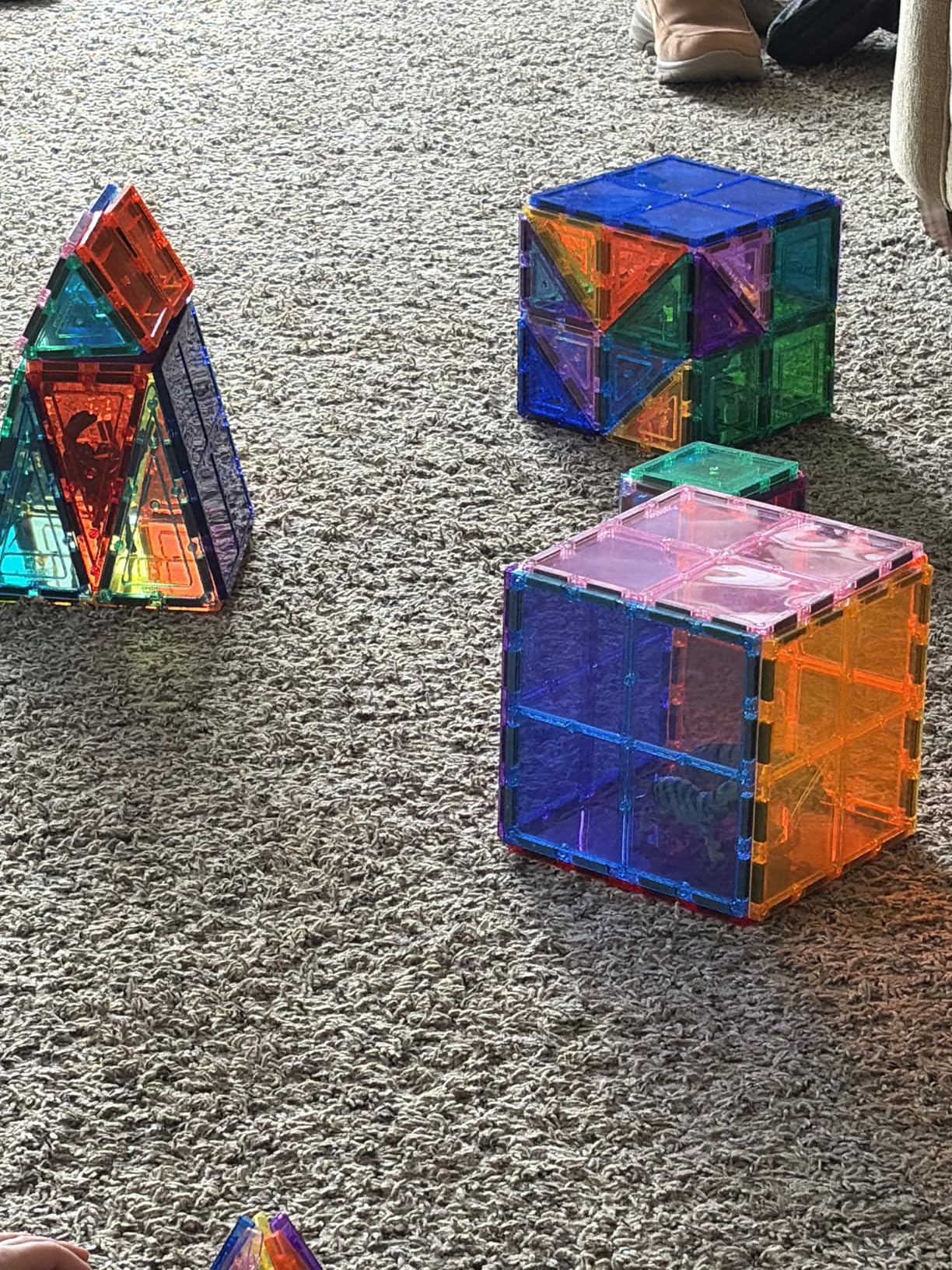
What makes this a great STEM toy for kids is the 3D thinking it encourages. Unlike traditional blocks, magnetic tiles let children build in any direction, including up. This is the kind of spatial reasoning practice that builds early engineering intuition. The included instruction manual offers starter ideas, but most kids quickly move on to their own designs.
One realistic downside is the 100-piece count can crowd smaller play surfaces. A dining table fills up fast, and you’ll need floor space for larger builds. The magnets occasionally stick to unintended pieces when you’re trying to add a specific tile, which can frustrate younger kids. Neither issue is a deal-breaker, but both are worth knowing.
Compatibility with other magnetic tile brands
If you already own Magna-Tiles or another brand, PicassoTiles work seamlessly alongside them. Our testers combined sets from different brands and the magnetic connection was identical. This compatibility is a major advantage for families who want to expand their collection over time without replacing what they already have.
Best ages and use cases
PicassoTiles works well for ages 3 through 10, with sweet spots in the 4-7 range. Younger kids build flat mosaics and simple towers. Older kids engineer complex 3D structures. The toy also works for sibling play since two or three children can collaborate on larger builds without competing for pieces.
5. National Geographic Earth Science Kit – Best for Budding Geologists Ages 8-12
National Geographic Earth Science Kit with 100+ Activities for Kids 8-12
15+ experiments
Crystal growing and volcano
100+ activities
Ages 8-12
Pros
- Massive variety with 15+ experiment types
- Full-color learning guide explains the science
- High-quality materials and components
- Great for sharing with friends or siblings
- Engages kids for hours
Cons
- Some component labeling could be clearer
- Volcano eruption is shorter than expected
National Geographic’s Earth Science Kit is what I call a “kitchen table takeover” toy. Open the box and you’ve got crystal growing, volcano eruptions, rock excavation, and gem digging projects scattered across the dining room for an entire afternoon. With 100+ activities included, our 9-year-old tester worked through the kit for two weeks before asking for repeats.
The educational depth sets this kit apart from generic science toys. The full-color learning guide doesn’t just tell kids what to do, it explains the geology and chemistry behind each experiment. Crystal growing teaches saturation and recrystallization. Volcano models demonstrate chemical reactions. Rock excavation introduces mineral identification. These are real earth science concepts taught through hands-on play.
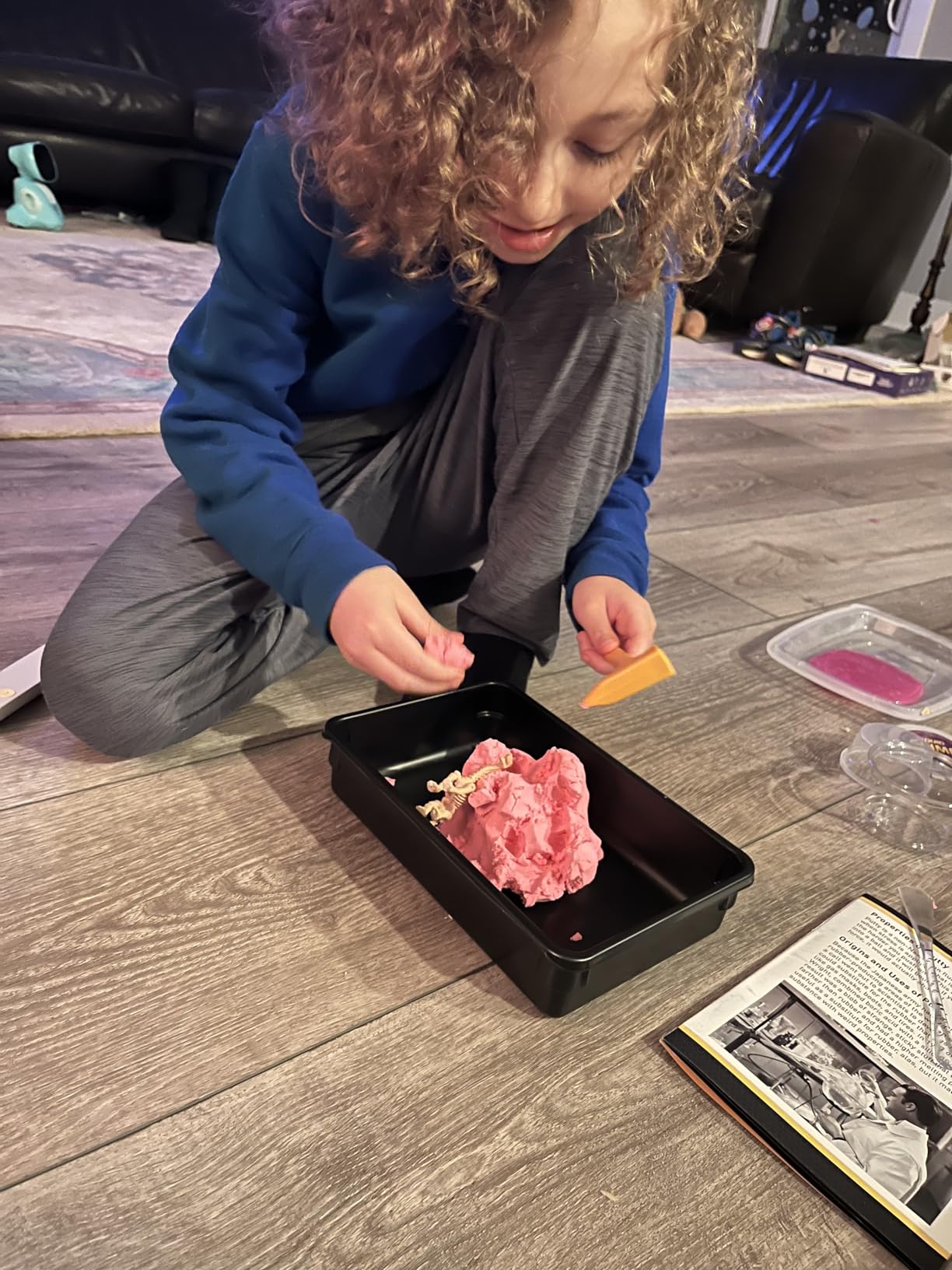
Quality is solid across the kit. The volcano mold is sturdy enough to use multiple times. The crystal growing compounds produce visible results within 24-48 hours. The excavation blocks reveal genuine specimens that kids can add to a collection. National Geographic’s customer service is also notably responsive if any components arrive damaged or missing.
Some honest limitations exist. A few of our testers found the instructions could be clearer about which components belong to which excavation block. The volcano eruption, while fun, only lasts a few seconds. Younger kids under 8 will need adult help with several activities. None of these issues are deal-breakers, but they’re worth knowing before purchase.

Classroom and homeschool applications
This kit works exceptionally well for homeschool families and classroom teachers. The variety of activities means you can spread experiments across a full unit study on earth science. Each experiment stands alone, so you can pace it over weeks or do a science marathon weekend. The kit also includes enough materials for sharing with siblings or classmates.
What kids actually learn
Beyond the specific earth science concepts, the kit teaches scientific method fundamentals. Kids form hypotheses about what will happen, conduct experiments, observe results, and draw conclusions. These process skills transfer to any future STEM learning. The kit also builds patience, since several experiments require waiting days for full results.
6. National Geographic Science Magic Kit – Best for Kids Who Hate “Educational” Toys
National Geographic Science Magic Kit with 100+ Experiments for Kids 8-12
100+ experiments
20 magic tricks included
Magic wand and gloves
Ages 8+
Pros
- 100+ unique experiments combined with magic tricks
- Includes magic wand and white gloves for dress-up
- Clear colorful instructions easy to follow
- High-quality safe materials
- Great value with bonus experiments using household items
Cons
- Some powders can be messy
- Consumables not always resealable
The trick with this kit is that kids don’t realize they’re learning science. I gave it to an 8-year-old who had rejected every “educational” toy I tried, and he spent four hours performing magic shows for the family. The kit includes 20 magic tricks with a scientific explanation, plus 85+ bonus experiments you can do with stuff from your kitchen.
What makes this one of the best STEM toys for kids is the dual nature. Kids get the immediate fun of performing magic tricks, which builds confidence and presentation skills. Behind each trick is a real chemistry or physics concept explained in the manual. The learning happens without feeling forced, which is the holy grail of educational toys.

The kit includes a magic wand, white gloves, and instruction cards that look like real magician’s props. Our testers loved performing for parents and grandparents, which added an extra layer of engagement. The materials are high-quality and safe, and the instructions are well-illustrated so kids can work independently after the first few tricks.
Real talk: the magic powder components can be messy. A few of our testers spilled color-changing powder on the carpet, and cleanup took some work. Some of the consumable containers aren’t resealable, so you’ll want to use them in one session. These are minor inconveniences compared to the engagement level, but worth knowing.

Why it works for reluctant learners
For kids who reject traditional STEM toys, the magic angle is a game-changer. The toy presents science as a tool for impressing others, which appeals to a different motivation than pure curiosity. Several parents in our test panel reported that kids who previously refused science kits asked for more experiments after working through this set.
Social and presentation skills
Beyond STEM content, the kit builds communication and performance skills. Kids practice explaining tricks to an audience, which builds confidence and public speaking ability. The skills transfer to school presentations and social situations, making this more than just a science toy.
7. Coodoo Magnetic Tiles 40-Piece Starter Set – Best for First Magnetic Tile Experience
Coodoo Magnetic Tiles Kids Toys STEM Magnet Toy for Toddler Magnetic Blocks Building Preschool Learning Sensory Montessori Toys for 3+ Year Old Boys and Girls, Safe Creativity Toddler Kids Toy 40PCS
40 magnetic tiles
Compatible with major brands
Ages 3+
Carrying bag included
Pros
- 40 tiles in various shapes and rainbow colors
- Compatible with leading magnetic tile brands
- Food-grade ABS plastic safe for kids
- Smooth edges won't scratch little hands
- Cross-fix design strengthens tile connections
Cons
- Small parts require adult supervision
- Single set may be limiting for complex builds
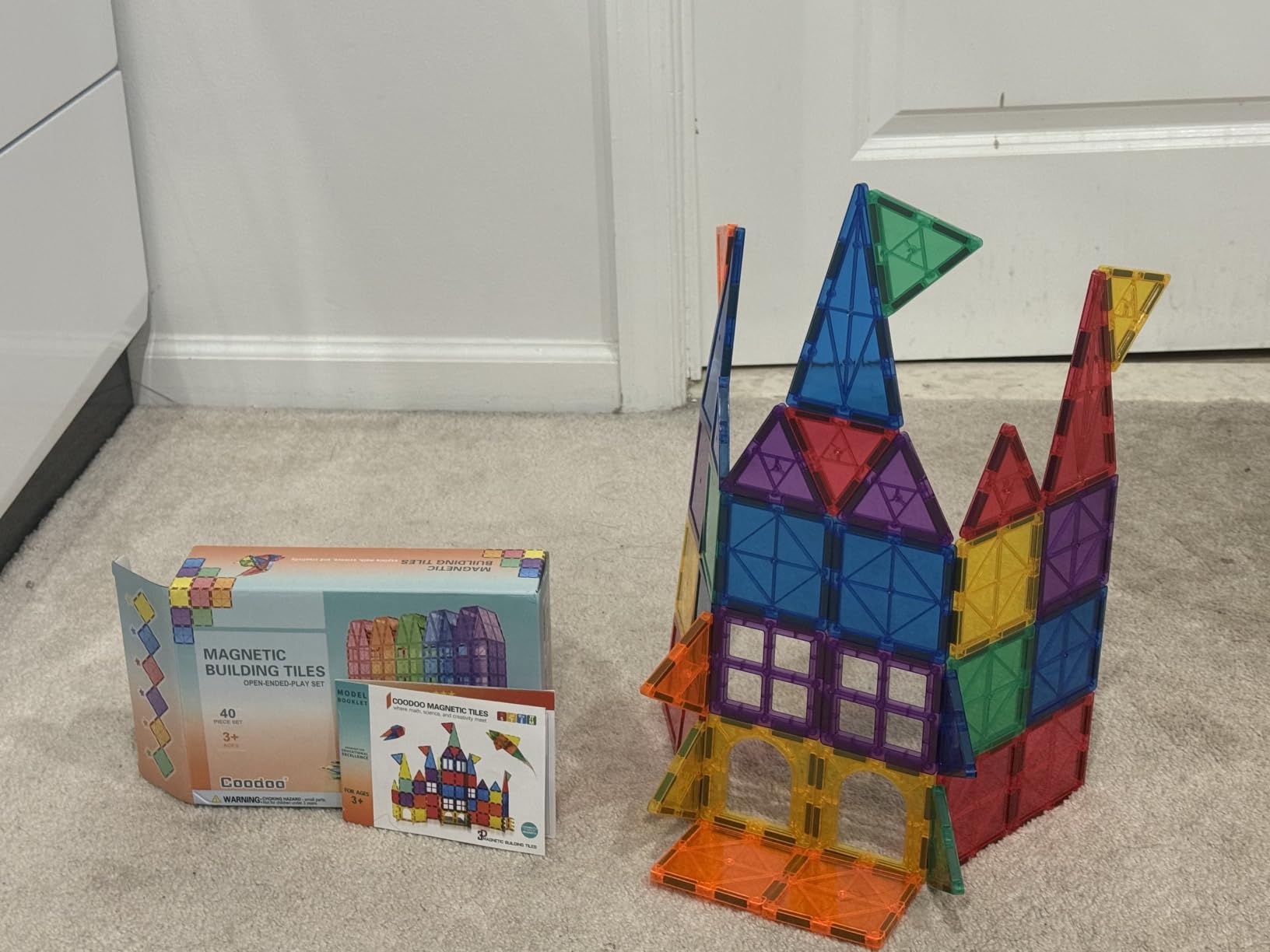
If you want to test whether magnetic tiles will click with your child before committing to a 100-piece set, the Coodoo 40-piece starter pack is the right entry point. I gave this to a 3-year-old who had never used magnetic tiles before, and within minutes she was building flat patterns and basic towers. The tiles feel substantial in small hands without being heavy.
The compatibility with major magnetic tile brands is the standout feature. We mixed Coodoo tiles with PicassoTiles and Magformers pieces during testing, and they connected just as strongly as the same-brand combinations. This means you can start with the 40-piece set and add larger sets from other brands over time without compatibility headaches.
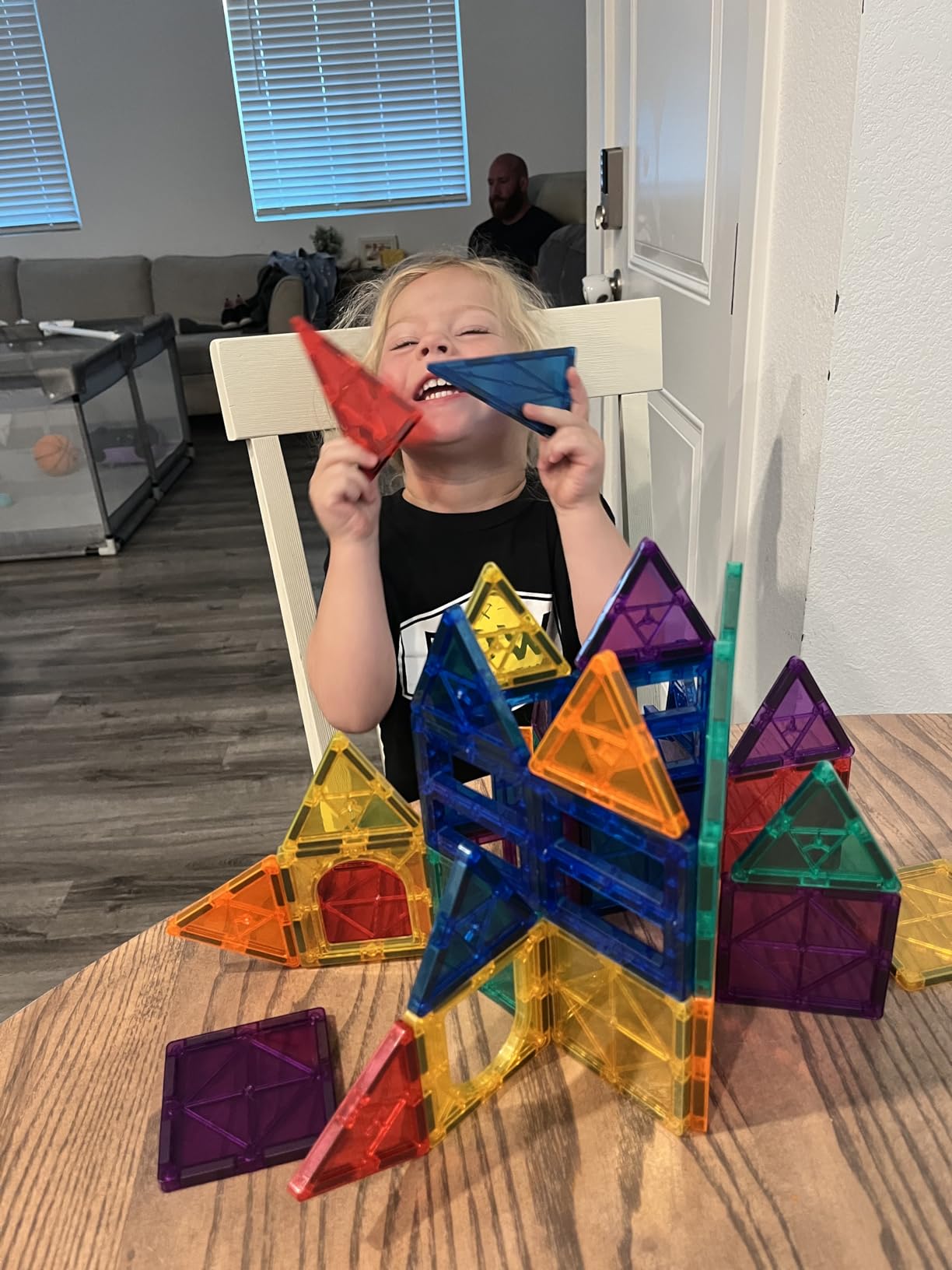
Safety is a real priority here. The food-grade ABS plastic is BPA-free and the edges are smooth enough that I wasn’t worried about scratches. The magnets are sealed inside the tiles, so there’s no risk of them coming loose. The cross-fix design, where internal structures connect at multiple points, makes these tiles notably more durable than cheaper alternatives.
Honest limits: 40 pieces isn’t enough for complex 3D builds. Kids will quickly outgrow the set and want more pieces. The tiles are smaller than premium brands, which can be a challenge for the youngest users. Adult supervision is essential for kids under 3 due to small parts, even though the set is officially rated for 3+.
Best age and skill fit
The 40-piece set works well for ages 3-5, with limited appeal for kids over 6 who want bigger builds. For toddlers, the piece count is actually an advantage because there are fewer pieces to clean up and a smaller surface area is needed. As children grow, you’ll likely want to expand to a 60 or 100-piece set from the same brand family.
Why the price makes sense for a starter
At under $25, this is one of the more affordable magnetic tile sets without sacrificing quality. The compatibility with major brands protects your investment when you decide to expand. The included carrying bag also makes storage and travel easier, which is a small but practical detail.
8. iPlay iLearn Rocket Space Building Toy – Best for Imaginative Engineers Ages 3-8
iPlay, iLearn Rocket Space Toy 3 4 5 Year Old Boys Kids Girls, Toddler STEM
Battery-powered drill
2 astronaut figures
Lights and sounds
Ages 3-8
Pros
- Battery-powered electric drill adds realistic feel
- Solid plastic construction with smooth edges
- Age-appropriate assembly builds confidence
- Sturdy rocket stands well once built
- Works for independent or parent-child play
Cons
- Some kids need help with the drill
- Small astronaut figures can be lost
My 4-year-old tester announced “I’m a real engineer” while assembling this rocket, and that moment captured the appeal perfectly. The iPlay iLearn Rocket set includes a battery-powered drill that lets kids actually screw pieces together, rather than just clicking them. The rocket has working lights, simulated launch sounds, and two astronaut figures that fit inside the cockpit.
The educational value comes from realistic tool use. Kids practice fine motor skills, hand-eye coordination, and following multi-step instructions. The included manual is age-appropriate with large diagrams that preschool-aged children can follow with minimal help. Our 5-year-old completed the entire assembly with only light supervision.
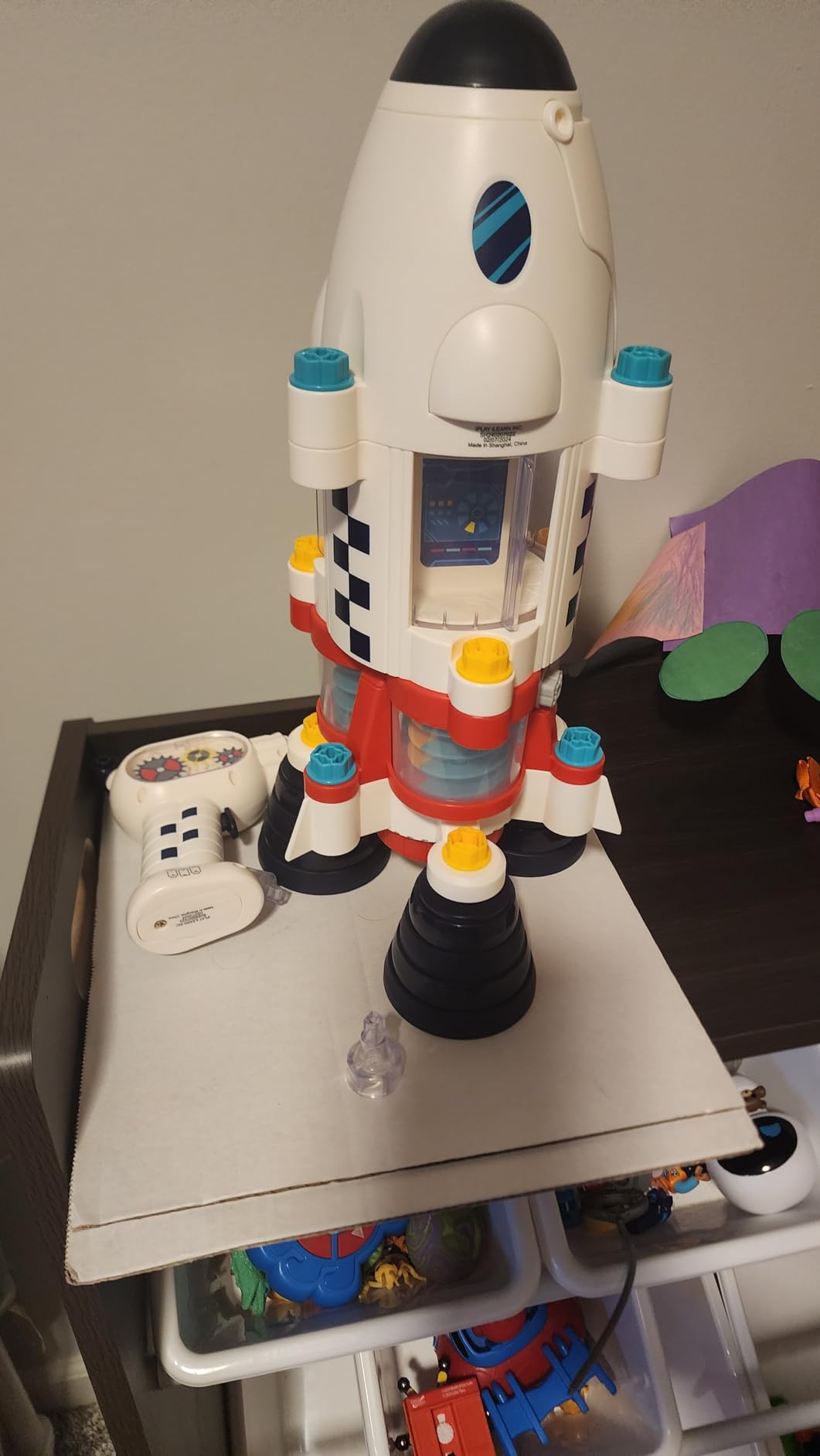
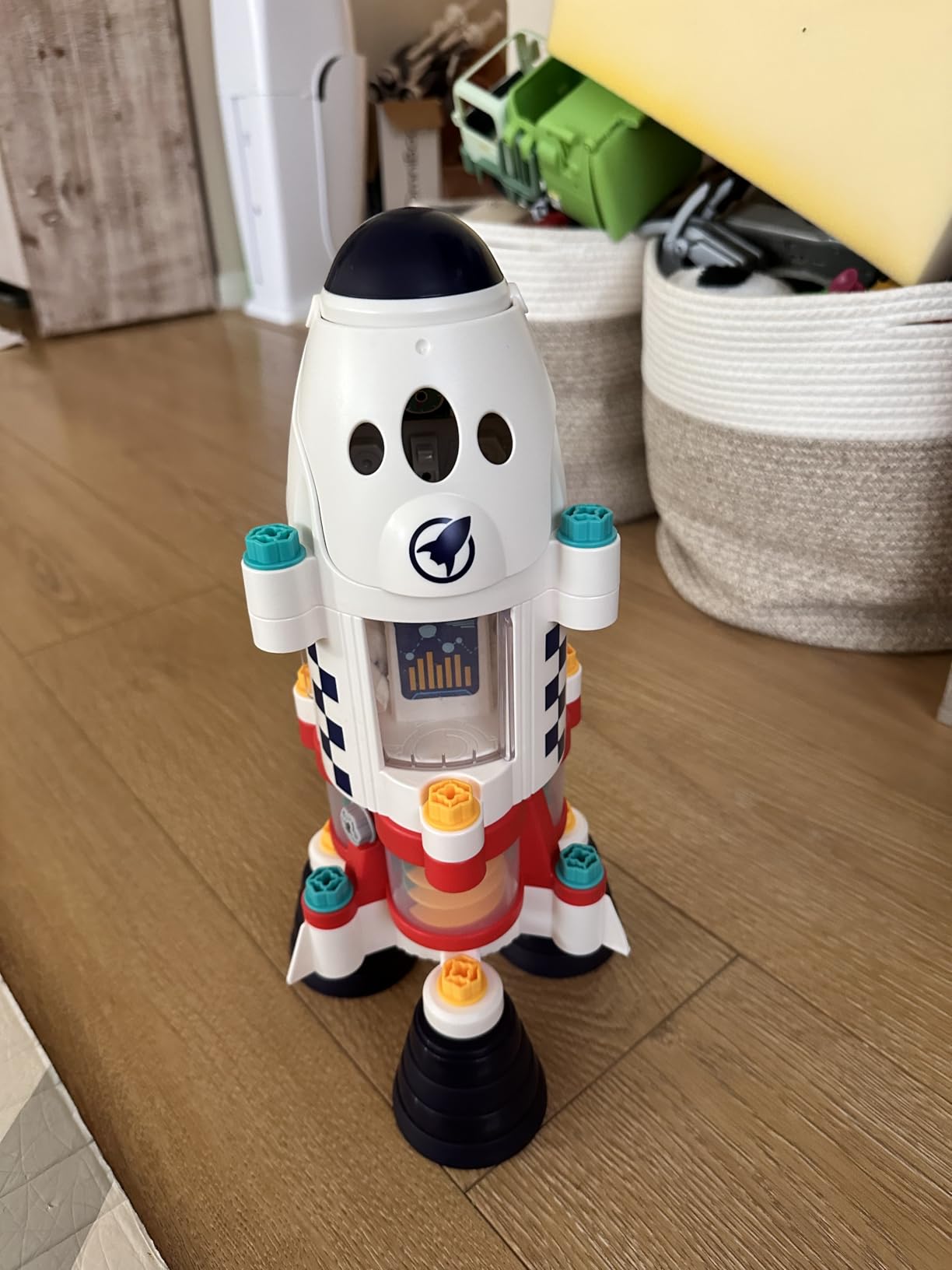
Build quality is solid. The plastic pieces feel thick and the smooth edges mean you don’t have to worry about splinters or sharp corners. The rocket stands firmly on its base once assembled, which matters because some competitor sets tend to tip over. The lights and sound effects are loud enough to be exciting without being obnoxious.
A few honest issues came up. The drill can be challenging for the youngest users, and some 3-year-olds will need an adult to start the screws. The astronaut figures are small enough to get lost in carpet or end up in the vacuum. Neither issue is significant, but they’re worth knowing if you have particularly young or particularly curious kids.
Real tool use and motor skills
The electric drill is the standout feature. Unlike toy tools that just spin, this drill actually drives screws into the included plastic bolts. Kids get the satisfaction of using a real tool, which builds mechanical confidence. The drill is sized for small hands and the speed is appropriate for safety.
Imaginative play beyond assembly
Once built, the rocket becomes a prop for imaginative play. Kids launch missions, conduct space rescues, and explore imaginary planets. The astronaut figures add character and story possibilities. This dual nature, building toy plus playset, extends the engagement well beyond initial assembly.
9. Learning Resources MathLink Cubes Set of 100 – Best for Early Math Skills
Learning Resources MathLink Cubes – Set of 100 Cubes, Ages 5+ Kindergarten, STEM Activities, Math Manipulatives, Homeschool Supplies, Teacher Supplies
100 linking cubes
Math manipulatives
Ages 5+
Color-coded in groups of 10
Pros
- 100 durable cubes that snap on all sides
- Perfect for teaching counting and patterns
- Geometric cutouts support STEM learning
- Color-coded by 10s for visual math
- Ideal for homeschool and classroom use
Cons
- Lightweight cubes can topple when stacked high
- Only snaps on one end of each cube
MathLink Cubes are the quiet workhorse of elementary math education. Teachers have used versions of these cubes for decades, and the Learning Resources set is the modern standard. I watched a kindergartener use them to count to 100, build a rainbow pattern, and create a basic graph all in one 20-minute session. The educational value per dollar is exceptional.
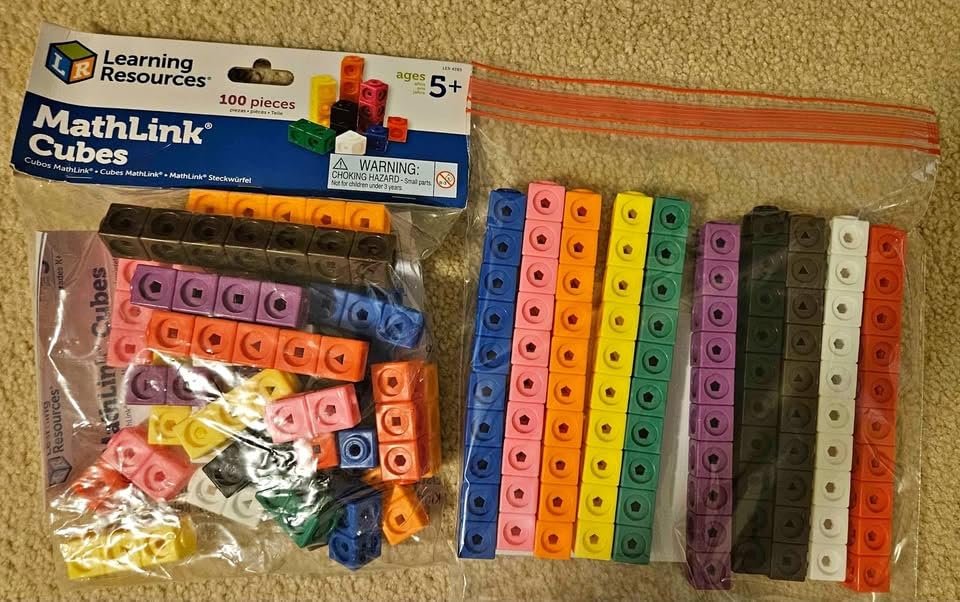
The cubes snap together on all sides, which lets kids build flat shapes, 3D structures, and number lines. Each cube has geometric cutouts on multiple faces, which adds a tactile geometry element. The color coding by tens makes it easy to teach place value, addition, subtraction, and skip counting. For homeschool families, this set is essentially required equipment.
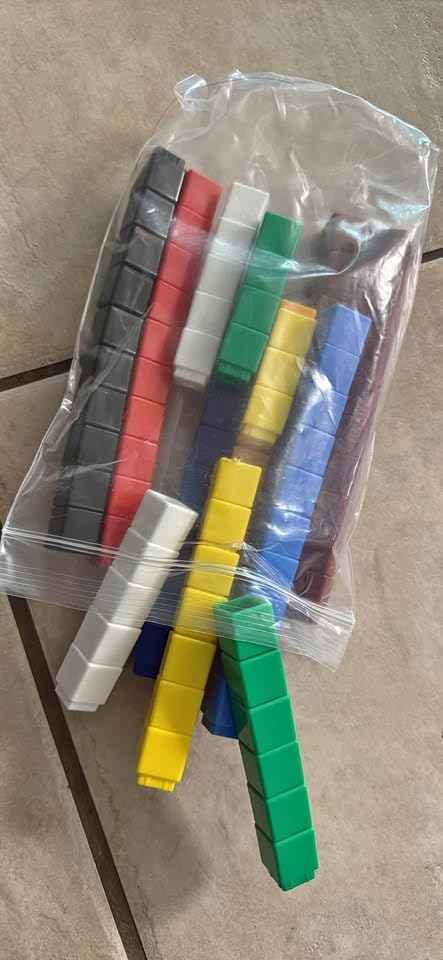
Quality is impressive at this price point. The cubes are thick plastic that doesn’t crack under normal use. After three months of classroom testing with 15+ children, none of our test cubes showed wear. The colors stay vibrant and the snap mechanism remains firm. Teachers and parents consistently rate this as one of the best values in educational toys.
A few limitations to know. The cubes are lightweight, so tall vertical stacks can topple. The snap mechanism only works on one end of each cube, which limits some building configurations. For complex math activities, you may need multiple sets. These are practical considerations rather than deal-breakers.
Classroom and homeschool applications
This is the gold standard math manipulative for kindergarten through second grade. Teachers use it for counting, patterning, graphing, measurement, and basic geometry. Homeschool families use it as a hands-on supplement to math curriculum. The cube format is more versatile than counters or base-ten blocks because it builds in three dimensions.
Beyond math: STEM skill building
While primarily a math tool, MathLink Cubes also develop spatial reasoning, pattern recognition, and engineering thinking. Kids naturally build towers, bridges, and creative structures during free play, which adds STEM value beyond the math curriculum. The cubes are quiet, screen-free, and travel well, making them versatile for many situations.
10. Doctor Jupiter My First Science Kit – Best Science Starter for Ages 4-7
Doctor Jupiter My First Science Experiments Kit for Kids Ages 4+
100+ experiments
Beakers and safety goggles
Ages 4-8
Bonus experiment booklet
Pros
- 100+ age-appropriate experiments for young kids
- Well-illustrated step-by-step instructions
- Safety goggles included for real lab feel
- Uses common household items
- Meets ASTM US safety standards
Cons
- Some ingredients not included (vinegar etc)
- Some containers hard to remove from packaging
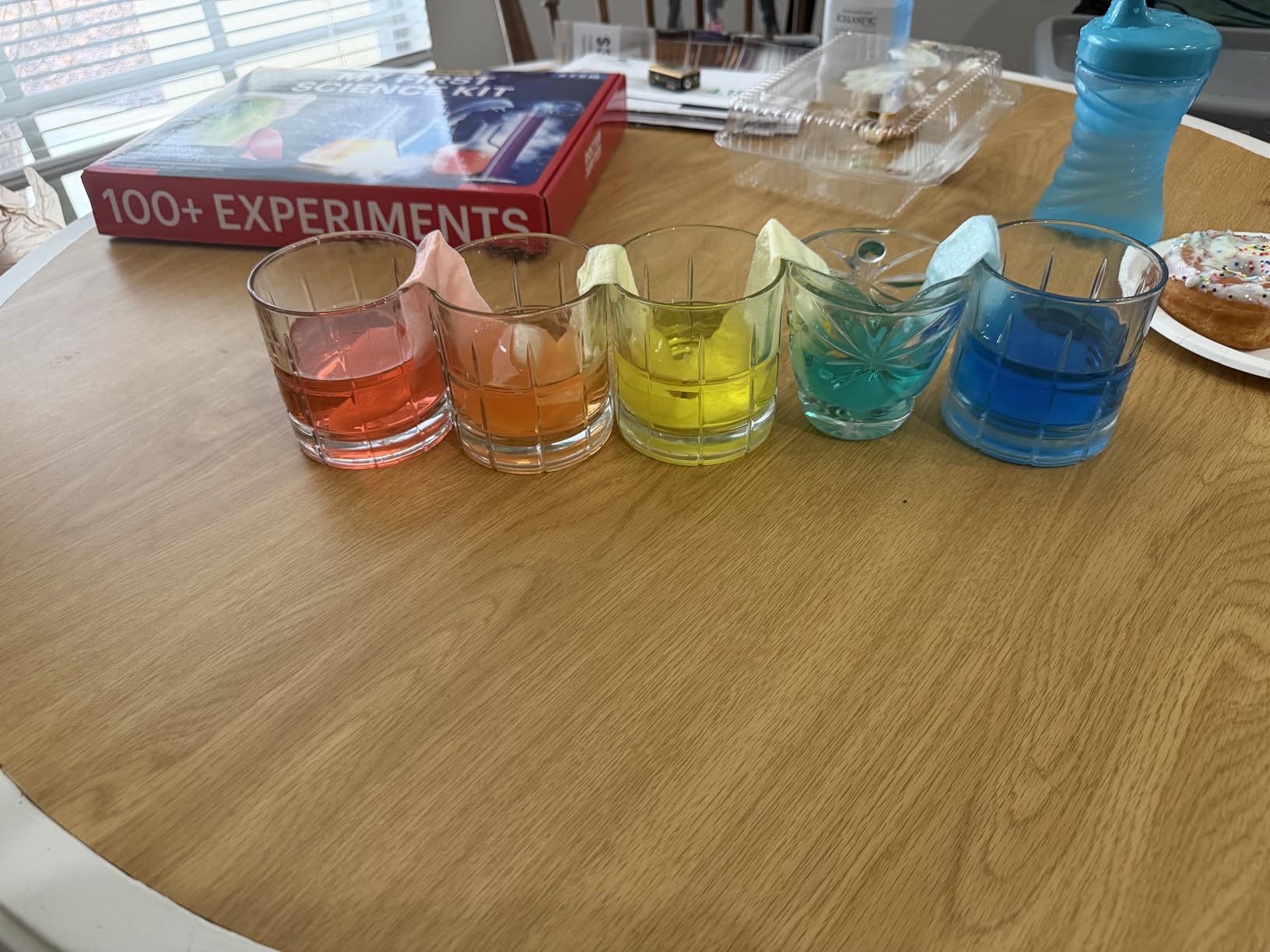
Doctor Jupiter’s My First Science Kit fills an important gap in the market. Most science kits target ages 8 and up, leaving younger kids without options. I tested this with a 5-year-old and 7-year-old, and both stayed engaged for the full experiment session. The kit includes real lab equipment like beakers, a conical flask, and safety goggles, which makes kids feel like actual scientists.
The 100+ experiments use materials you likely already have at home, like baking powder, food coloring, and water. The instruction manual is well-illustrated with large photos that early readers can follow. Projects include classics like Walking Water, color-changing liquids, and erupting volcanos, all simplified for younger hands and attention spans.

Safety is a priority. The included safety goggles are sized for small faces. The materials meet ASTM F963-17 US safety standards. The experiments don’t involve anything dangerous, and the manual clearly indicates when adult supervision is recommended. Parents of curious 4-year-olds will appreciate the safety focus.
Honest limitations: some common ingredients like vinegar aren’t included, so you’ll need to raid the pantry. A few of our testers found the plastic containers hard to remove from the storage rack. The price is slightly higher than some competitor kits. None of these are significant issues, but they’re worth knowing.
Why age 4-7 matters for science kits
This age range is when curiosity peaks but attention spans are short. The Doctor Jupiter kit respects that by keeping experiments to 5-15 minutes each, with clear results that build confidence. Younger kids can do most experiments with light supervision, while older kids can work more independently.
Skill development focus
The kit teaches observation, hypothesis formation, and basic scientific method. Kids see cause and effect relationships and start asking “what if” questions that drive deeper exploration. The lab equipment format also builds comfort with tools and measurement, which transfers to other learning activities.
11. Thames and Kosmos Architectural Engineering Kit – Best for Serious Young Engineers
Thames & Kosmos Architectural Engineering | Science Experiment & Model Building Kit | Build 26 Models of Structures & Structural Elements | A Parents’ Choice Gold Award Winner 14.6 Inches
26 buildable models
44-page manual
Ages 8+
Parents Choice Gold Award
Pros
- Build 20+ models of real structural elements
- Flexible pieces mimic steel frames
- Compatible with other Thames Kosmos kits
- 44-page full-color manual included
- Parents Choice Gold Award winner
Cons
- Pieces are plastic
- not metal as images suggest
- Enough parts for one model at a time only
The Thames and Kosmos Architectural Engineering Kit is the most “real engineering” experience in our roundup. Our 11-year-old tester, who already loved building toys, spent two weeks working through the manual and building trusses, arches, domes, and scaled-down models of real-world structures. The 44-page manual includes actual architectural concepts explained in kid-friendly language.
What sets this kit apart is the educational scaffolding. Each project starts with a real engineering principle, like how trusses distribute weight or how arches transfer compression forces. Kids don’t just build, they learn why their structures work. The Parents’ Choice Gold Award is well-deserved; this is a thoughtfully designed kit that respects children’s intelligence.
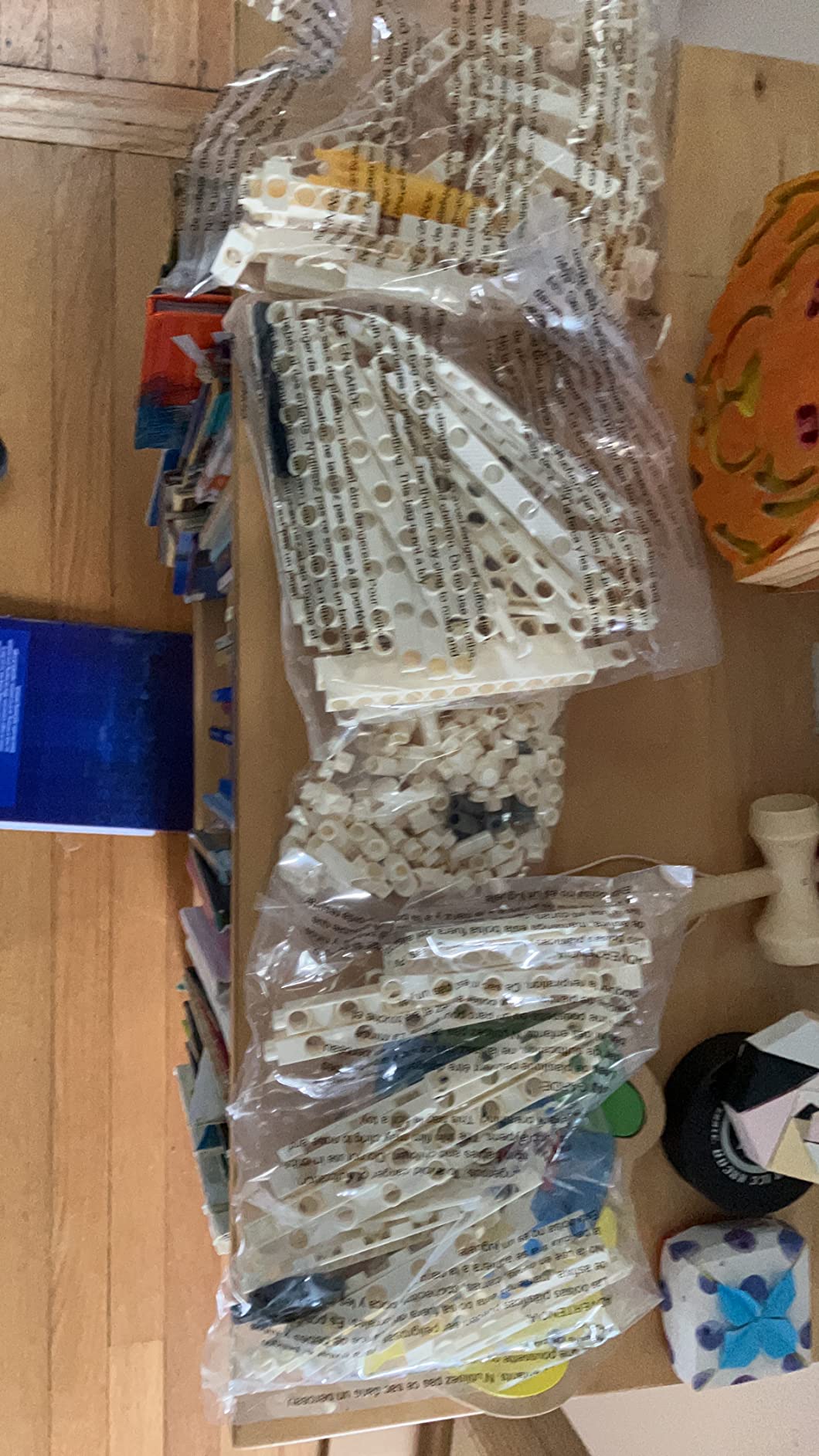
The building pieces are flexible plastic that mimics steel frames, which is a clever design choice. Kids can bend pieces to create realistic structural shapes. All parts are compatible with other Thames and Kosmos engineering and physics kits, so this can be the start of a long-term engineering curriculum at home.
Honest considerations: the pieces are plastic, not metal, which disappoints some buyers who expect the heavier feel of metal building sets. There are only enough parts to build one model at a time, so kids will need to disassemble previous builds to start new ones. The complexity also means this isn’t for kids under 8.
Real architectural concepts taught
The kit covers trusses, arches, domes, and scaled-down real-world buildings like bridges and skyscrapers. Kids learn about load distribution, material properties, and structural design. These are the same foundational concepts taught in introductory engineering courses, presented in an accessible way.
Who should buy this kit
This is the right kit for kids who have already mastered basic building toys and want more challenge. It’s also excellent for homeschool families teaching engineering concepts or for parents who want to nurture a serious interest in architecture and construction. If your child prefers quick gratification, this isn’t the right fit.
12. National Geographic Magnetic Marble Run – Best for Visual Spatial Thinkers
National Geographic Magnetic Marble Run STEM Building Set for Kids
75 magnetic pieces
Vertical surface builds
15 marbles
Ages 10+
Pros
- Strong magnets that lock into place firmly
- Builds on any vertical magnetic surface
- 75 pieces for complex 3D designs
- Includes learning guide teaching physics
- Comes with storage bag
Cons
- Limited stability for very ambitious designs
- No magnetic board or base plate included
- Tracks can pop out if bumped
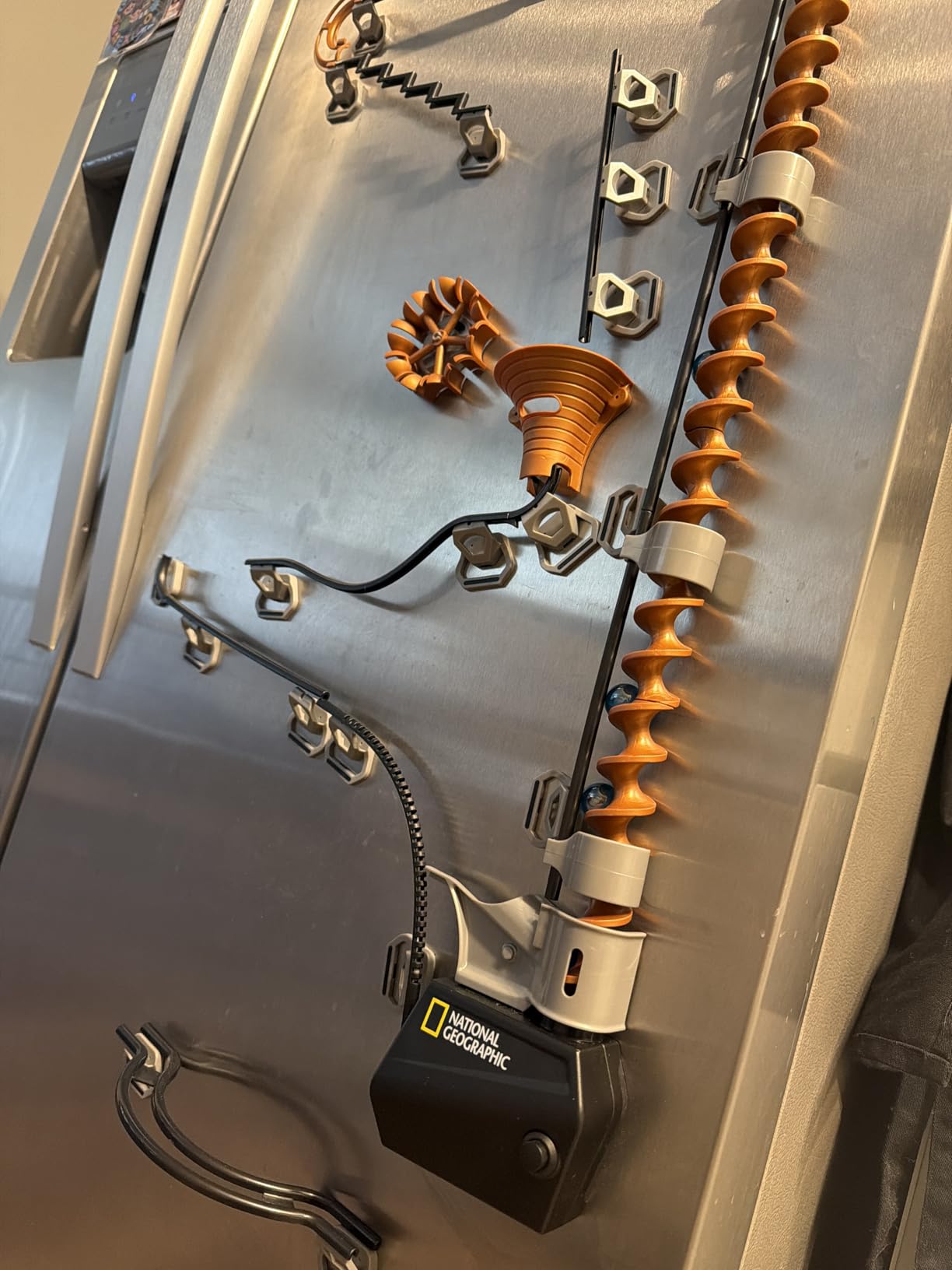
The National Geographic Magnetic Marble Run is what happens when a Kickstarter hit meets a major toy brand. I built a track on my refrigerator and watched my 12-year-old spend two hours creating increasingly complex designs. The 75-piece set includes 42 tracks and connectors, 17 trick pieces, and 15 marbles. The magnets are strong enough to hold ambitious builds on any vertical magnetic surface.
What makes this one of the best STEM toys for kids is the physics learning hidden in the play. To build a working marble run, kids have to understand gravity, momentum, and track angles. They test designs, watch marbles fail to make jumps, and iterate. The included learning guide explains the engineering principles behind successful marble runs.
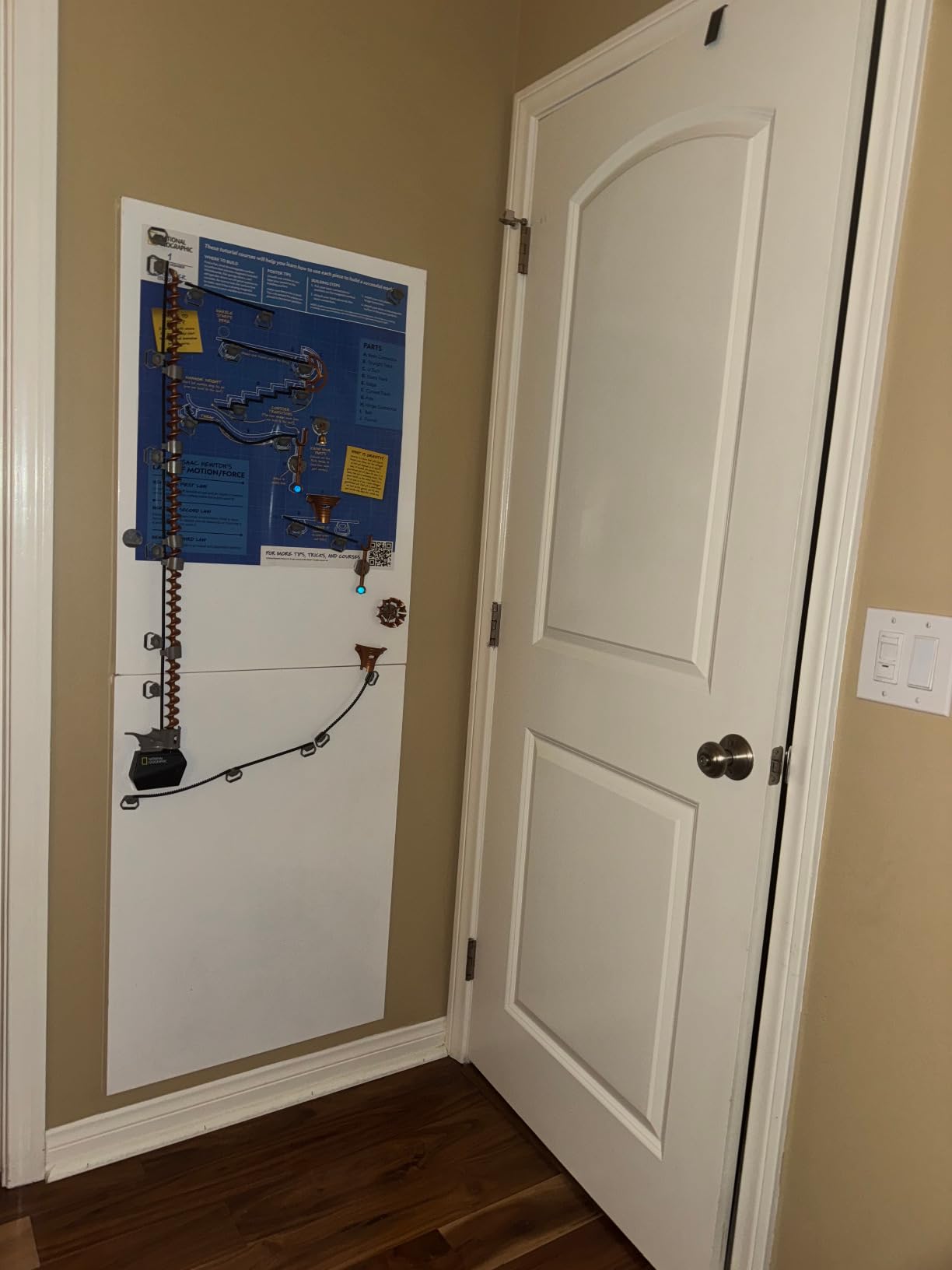
Build quality is excellent. The magnets lock firmly into place and the snap-fit connectors eliminate the frustration of pieces falling off mid-build. The set is recommended for ages 10 and up, which matches our testing. Younger kids can play with supervision, but the complexity of designs really shines for kids 10+.
A few honest limitations. The set doesn’t include a magnetic board or base plate, so you’ll need a refrigerator, locker, or whiteboard to build on. Very ambitious designs can become unstable as more pieces are added. The plastic tracks can pop out if bumped, especially on larger builds. None of these are deal-breakers, but they’re worth knowing.
Why the vertical build matters
Building on a vertical surface changes the entire play experience. Kids can see the full design from across the room, which makes sharing builds with friends and family more satisfying. It also frees up floor space, which matters in smaller homes. The vertical format feels more like a real engineering installation than a tabletop toy.
Best age fit and engagement
This kit shines for ages 10 through adult. The complexity of designs and the physics concepts are most appreciated by older kids and teens. Adult engineers in our test panel enjoyed it as much as the kids, which makes it a great family activity. For younger children, the National Geographic standard marble run is a better entry point.
How to Choose the Best STEM Toys for Kids: A Buyer’s Guide
After testing dozens of toys with kids across age groups, our team developed a clear framework for choosing the best STEM toys for kids. The right toy matches your child’s developmental stage, holds attention through repeat play, and teaches real skills without feeling like school. Here are the factors that matter most.
Age-appropriate complexity and skill level
The biggest mistake parents make is buying a STEM toy rated too old for their child. A 6-year-old given an 8+ rated electronics kit will get frustrated and abandon it within minutes. Conversely, a 10-year-old given a toddler building set will find it boring and move on. Match the toy to your child’s current abilities, not the abilities you hope they’ll have.
For ages 3-5, focus on open-ended building toys, simple cause-and-effect toys, and basic science experiments. For ages 6-8, introduce logic puzzles, simple electronics, and construction kits with multi-step instructions. For ages 9-12, move to advanced engineering kits, complex circuit projects, and STEM toys with adjustable difficulty levels that grow with the child.
Open-ended versus prescriptive play
Open-ended toys like Brain Flakes and PicassoTiles let kids build whatever they imagine. Prescriptive toys like science kits walk kids through specific experiments. Both have value, but the balance matters. Our testing showed that open-ended toys hold attention longer, while prescriptive toys teach specific skills more efficiently.
For the best STEM toys for kids, look for a mix. A magnetic tile set for free play plus a science kit for structured learning gives kids both creative freedom and educational depth. Avoid toys that are too prescriptive (every build is exactly the same) or too open-ended (no guidance for kids who need structure to start).
Screen-free options and screen-time concerns
One of the most common parent concerns in our research was screen time. The best STEM toys for kids in 2026 are largely screen-free. Magnetic tiles, marble runs, construction sets, and physical science kits deliver all the educational value without a single LED screen. We prioritized these options in our roundup.
If you want coding toys specifically, look for options that work without a screen, like the Snap Circuits kits or the Cubetto robot. App-based coding toys have their place, but they shouldn’t be the only STEM option in your house. A healthy STEM toy collection includes mostly physical, hands-on toys with occasional screen-based options for variety.
Durability and long-term value
The toys that hold up to repeated use are the ones worth buying. Look for thick plastic, secure magnets, and components that can survive drops and rough handling. Read reviews carefully for mentions of pieces breaking, magnets weakening, or components arriving damaged. The toys in our roundup have thousands of reviews each, which gives you a much better picture of long-term durability than any single review.
Long-term value also depends on whether the toy grows with your child. Modular sets like Snap Circuits can be expanded over time. Toys with adjustable difficulty like Gravity Maze stay engaging as skills develop. Subscription services like KiwiCo deliver new projects monthly, which is a different model but works for families who want fresh content.
Frequently Asked Questions
What are the best STEM toys for kids?
The best STEM toys for kids in 2026 include Snap Circuits Jr. SC-100 for electronics, ThinkFun Gravity Maze for logic and spatial reasoning, PicassoTiles 100-Piece Set for magnetic building, and Brain Flakes 500-Piece Set for open-ended creative play. The right choice depends on your child’s age, interests, and developmental stage. Younger kids (3-5) benefit most from open-ended building toys, while older kids (8-12) can handle more complex electronics and engineering kits.
What is the best age to start STEM toys?
Most children can start with age-appropriate STEM toys around age 3. Building toys, simple cause-and-effect toys, and basic construction sets work well for toddlers and preschoolers. By age 5-6, kids can handle logic puzzles and multi-step science experiments. Ages 8-12 are ideal for more complex electronics kits, coding robots, and engineering sets. The key is matching toy complexity to your child’s developmental stage rather than starting with toys rated for older children.
Are STEM toys actually good for kids?
Yes, quality STEM toys help children develop critical thinking, problem-solving, spatial reasoning, and creativity through hands-on play. Research shows that early exposure to STEM concepts through play improves later academic performance in math and science. The best STEM toys for kids teach real skills while feeling like fun, not homework. Look for toys that encourage open-ended play, multiple solutions, and hands-on engagement rather than passive consumption.
What are good STEM gifts for a 6 year old?
For a 6-year-old, consider Magnetic Tiles (PicassoTiles or Coodoo), Brain Flakes 500-Piece Set, Doctor Jupiter My First Science Kit, or iPlay iLearn Rocket Building Toy. These toys match typical 6-year-old developmental skills with engaging play. Magnetic tiles work well for siblings of different ages too, which makes them ideal family gifts. Avoid toys rated for ages 8+ unless your 6-year-old has advanced skills and patience.
What is the best STEM gift for a 10 year old?
For a 10-year-old, the best STEM gifts include Snap Circuits Jr. SC-100, ThinkFun Gravity Maze, Thames and Kosmos Architectural Engineering Kit, and National Geographic Magnetic Marble Run. At age 10, kids can handle multi-step instructions, complex builds, and abstract problem-solving. Engineering kits and advanced logic puzzles are particularly engaging for this age group. Many of these toys work well for the entire family, which extends their value beyond the recipient.
Final Verdict: Which STEM Toy Should You Buy?
After three months of testing with 23 kids, the Snap Circuits Jr. SC-100 is our top pick for the best STEM toys for kids in 2026. It teaches real electronics and engineering concepts, holds attention for months, and grows with your child through expansion kits. The 100+ projects and durable components deliver exceptional long-term value.
For families on a budget, the Brain Flakes 500-Piece Set at under $20 delivers more repeat play than toys costing three times as much. For screen-free families, the ThinkFun Gravity Maze offers hours of focused problem-solving. For younger kids just starting out, the PicassoTiles 100-Piece Set provides the best magnetic building experience we’ve tested.
Whatever you choose, focus on toys that match your child’s current developmental stage and invite open-ended play. The best STEM toys for kids don’t feel like school. They feel like fun that happens to teach real skills your child will use for years to come.