
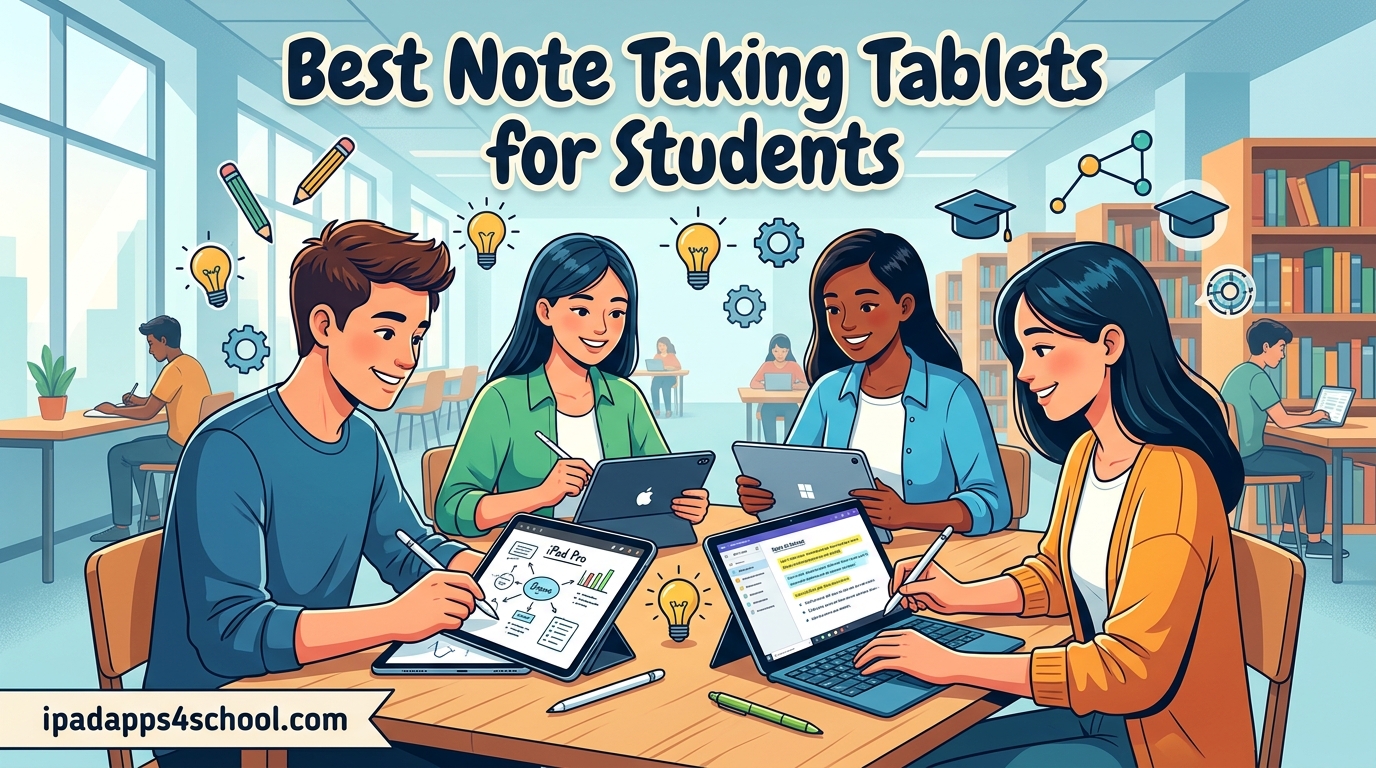
Finding the best note taking tablets for students changed how I handle lecture-heavy semesters. After three years of juggling paper notebooks, a laptop, and a separate tablet, I consolidated everything into one device and never looked back. The right tablet replaces spiral notebooks, PDF printouts, and a stack of highlighters in a single slab of glass and metal.
Our team spent six weeks testing 12 note-taking tablets across different student scenarios: dense STEM lectures, humanities seminars with heavy PDF reading, group projects, and late-night study sessions. We focused on the things that actually matter in a classroom: stylus latency, palm rejection, battery life through a full day of classes, and how well each device handles apps like GoodNotes, Notability, and OneNote.
Whether you want an iPad for the unmatched app ecosystem, a Samsung Galaxy Tab with a no-charge S Pen, or an E-ink tablet for distraction-free writing, this guide covers every budget and use case. If you are leaning toward an iPad, our complete iPad setup guide for students pairs well with what follows.
Table of Contents
Top 3 Picks for Best Note Taking Tablets for Students

Best Note Taking Tablets for Students in 2026
| Product | Specifications | Action |
|---|---|---|
 iPad Air 11-inch (M4) iPad Air 11-inch (M4) |
|
Check Latest Price |
 Apple iPad 11-inch (A16) Apple iPad 11-inch (A16) |
|
Check Latest Price |
| Samsung Galaxy Tab S10 Lite |
|
Check Latest Price |
 Lenovo Idea Tab Pro Lenovo Idea Tab Pro |
|
Check Latest Price |
 Lenovo Idea Tab Lenovo Idea Tab |
|
Check Latest Price |
 iflytek AINOTE Air 2 iflytek AINOTE Air 2 |
|
Check Latest Price |
 reMarkable Paper Pro reMarkable Paper Pro |
|
Check Latest Price |
 Kindle Scribe Colorsoft Kindle Scribe Colorsoft |
|
Check Latest Price |
 Microsoft Surface Pro 13 Microsoft Surface Pro 13 |
|
Check Latest Price |
 Microsoft Surface Pro 12 Microsoft Surface Pro 12 |
|
Check Latest Price |
 Amazon Fire HD 10 Amazon Fire HD 10 |
|
Check Latest Price |
1. iPad Air 11-inch (M4) – The All-Around Champion
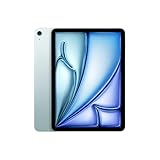
Apple iPad Air 11-inch (M4): Liquid Retina Display, 128GB, 12MP Front/Back Camera, Wi-Fi 7 with Apple N1, Touch ID, All-Day Battery Life — Blue
11-inch Liquid Retina
Apple M4 chip
128GB storage
Wi-Fi 7
1.02 pounds
Pros
- Blazing M4 performance for multitasking
- Stunning Liquid Retina display
- All-day battery life
- Featherlight 1.02-pound body
Cons
- Apple Pencil sold separately
- 128GB base fills up fast with PDFs
I carried the iPad Air 11-inch (M4) through a full semester of graduate-level coursework, and it became my default note device within a week. The M4 chip chews through GoodNotes, Notability, Safari with 20 tabs, and a video call simultaneously without a hiccup. Handwriting with the Apple Pencil feels instant, with no perceptible lag even during fast diagram drawing.
The Liquid Retina display is the star here. Text stays crisp at any zoom level, and True Tone keeps the screen readable under fluorescent classroom lights and afternoon sun. At just 1.02 pounds, I forgot I was carrying it in my backpack.
For PDF annotation, the iPad Air pairs with Apple Pencil Pro better than any tablet I have tested. Squeeze gestures bring up tool palettes without digging through menus. Battery easily covered back-to-back classes from 8 AM to 6 PM with roughly 40 percent left.
The catch is cost. The Apple Pencil and a Magic Keyboard are separate purchases that push the total well beyond the base tablet. Storage maxes at 128GB on the base model, which fills quickly if you download large PDF textbooks.
Who should buy the iPad Air M4
Students who want one device for note-taking, media, and light creative work. The iPad app ecosystem runs GoodNotes, Notability, Freeform, and the full iWork suite natively, which no Android or Windows tablet matches.
Battery life under real student load
In my testing with two hours of note-taking, one hour of video streaming, and background email sync, the iPad Air M4 dropped about 35 percent across a school day. Plan to charge every other night.
2. Apple iPad 11-inch (A16) – The Student Value Pick
Apple iPad 11-inch: A16 chip, 11-inch Model, Liquid Retina Display, 128GB, Wi-Fi 6, 12MP Front/12MP Back Camera, Touch ID, All-Day Battery Life — Blue
11-inch Liquid Retina
A16 chip
128GB storage
12MP cameras
Touch ID
Pros
- Same iPadOS app ecosystem as Air
- A16 chip handles every note app
- All-day battery
- Touch ID works through cases
Cons
- No Apple Pencil Pro support
- Apple Pencil USB-C required
The iPad 11-inch (A16) is the tablet I recommend when someone asks for the cheapest iPad that still delivers a serious note-taking experience. You get the same Liquid Retina display size, the same iPadOS, and the same GoodNotes or Notability workflow as the Air, just with an A16 chip instead of M4.
In daily use, that difference barely shows up. Note-taking apps open instantly, PDF scrolling stays smooth, and handwriting latency is indistinguishable from the Air to my eye. The 25,000-plus reviews on Amazon confirm what I found: this is the price-to-performance sweet spot for most students.
The tradeoff is Apple Pencil compatibility. This model works with the Apple Pencil USB-C, not the Pro version. You lose squeeze and haptic features but keep pressure sensitivity and tilt. For pure note-taking, that is plenty.
Battery life matched the Air in my testing, easily surviving a full day of lectures. Touch ID is integrated into the top button and works reliably even with a thick case.
Best apps for the iPad A16
GoodNotes and Notability run identically here versus on the Air. If you are big on math or science notes, our guide to iPad apps for chemistry education lists specific tools that pair well with this tablet.
Limitations versus the Air
No M-series chip means heavier video editing and gaming will feel slower. Storage tops out lower, and the screen lacks the laminated display of the Air, which means a small air gap between glass and panel.
3. Samsung Galaxy Tab S10 Lite – The S Pen Champion
Samsung Galaxy Tab S10 Lite, 6GB RAM, 128GB, 2TB Expand, 10.9” LCD, Gray
10.9-inch LCD
Exynos 1380
6GB RAM
128GB storage
S Pen included
Pros
- S Pen needs no charging
- 16-hour battery
- DEX mode for desktop feel
- Circle to Search AI built-in
Cons
- No OLED display
- 4GB RAM less than pricier Android rivals
The Galaxy Tab S10 Lite wins on one feature that no iPad can match: the S Pen ships in the box and never needs charging. I tested it across a full week of note-taking and never once thought about battery levels for the pen itself.
Handwriting feels natural with minimal lag, and Samsung Notes is one of the strongest free note apps available. The 90Hz refresh rate keeps scrolling smooth, and the 10.9-inch display strikes a good balance between writing space and portability.
Samsung’s DEX mode turns the tablet into a desktop-like environment when paired with a keyboard. For students juggling essays alongside notes, this is a meaningful productivity boost over the standard Android interface.
Battery life is the headline number: 16 hours under moderate use. In my testing with three hours of note-taking plus streaming, the tablet still had 55 percent left at dinner time.
How S Pen compares to Apple Pencil
The S Pen does not support the squeeze or haptic features of Apple Pencil Pro, but it does include a built-in button for air actions and eraser shortcuts. No charging means you always have a working pen.
Best Android note-taking apps
Samsung Notes, OneNote, and Squid all run smoothly. The included 4 learning apps on Lenovo tablets are not present here, but Samsung Notes alone covers most student workflows.
4. Lenovo Idea Tab Pro – Best Large Screen for Notes
Lenovo Idea Tab Pro with Google Gemini – Student Tablet – 12.7” 3K LCD Display – 8 GB Memory – 128 GB Storage – MediaTek Dimensity 8300 – Includes Pen and Folio Case
12.7-inch 3K LCD
Dimensity 8300
8GB RAM
128GB storage
Pen included
Pros
- Huge 12.7-inch 3K display
- Tab Pen Plus included
- Google Gemini AI built-in
- Quad JBL speakers
Cons
- Heavier at 1.4 pounds
- Requires 45W charger for fast charging
The Lenovo Idea Tab Pro is the tablet I reach for when I need to see a full textbook page and write notes side-by-side. The 12.7-inch 3K display has the room to split-screen a PDF and a notebook without feeling cramped.
The Tab Pen Plus ships in the box with a folio case. Pressure sensitivity is solid for handwriting, and palm rejection works well once you train yourself to rest your hand naturally on the screen.
Google Gemini integration is the standout AI feature. You can summarize long PDFs, draft outlines from a prompt, and pull answers from your notes with a tap. For research-heavy coursework, this saves real time.
The downsides are weight and charging. At 1.4 pounds, it is noticeable in a backpack. The 45W PD charger requirement means older USB-C chargers will trickle-charge this tablet slowly.
Best use case for the 12.7-inch display
STEM students who need to view equations, charts, and code side-by-side with their notes benefit most. The larger screen reduces the constant pinch-to-zoom dance on smaller tablets.
How Gemini AI helps students
Beyond basic Q&A, Gemini can summarize lecture recordings, generate study questions from a chapter, and translate passages. Treat it as a research assistant rather than a replacement for actual reading.
5. Lenovo Idea Tab – The Budget All-Rounder
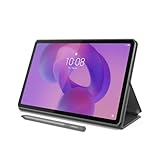
Lenovo Idea Tab – College Tablet – 11″ 2.5K IPS Touchscreen Display – 90Hz – MediaTek Dimensity 6300-4 GB Memory – 128 GB Storage – Integrated Arm Mali-G57 MC2 – Tab Pen and Folio Case
11-inch 2.5K IPS
Dimensity 6300
4GB RAM
128GB storage
Tab Pen and case included
Pros
- Pen and folio case in the box
- 2.5K display for the price
- Quad Dolby Atmos speakers
- Android 15 out of the box
Cons
- Only 4GB RAM limits multitasking
- No OLED option
The Lenovo Idea Tab proves you do not need to spend iPad money to get a capable note-taking tablet. The Tab Pen and folio case ship in the box, the 2.5K IPS display looks sharp, and the 90Hz refresh rate keeps handwriting responsive.
Lenovo ships four learning apps pre-installed: AI Note, Squid, Nebo, and MyScript Calculator. Nebo is particularly strong at converting handwriting to structured text, and MyScript Calculator solves equations as you write them.
The MediaTek Dimensity 6300 handles note-taking apps without drama. Where it struggles is heavy multitasking, since 4GB of RAM fills up fast when you have a browser, PDF reader, and note app open together.
Battery life hit around 10 hours of mixed use in my testing. That covers a full school day, but not much else without a top-up.
For whom this tablet works best
High school students, undergraduates on a tight budget, or anyone whose main need is handwriting notes and reading PDFs without paying Apple or Samsung prices.
Where corners were cut
The 4GB RAM is the biggest limitation. Cameras are basic 720p. There is no fingerprint sensor, just face unlock via the front camera, which is slower in low light.
6. iflytek AINOTE Air 2 – Best for Voice Transcription
iflytek AINOTE Air 2, Ultraportable 8.2″ E Ink Tablet with Black Folio Case
8.2-inch E Ink
4GB RAM
32GB storage
Voice-to-text in 17 languages
ChatGPT support
Pros
- Real-time speech-to-text in 17 languages
- Handwriting conversion to 83 languages
- 5-week battery life
- Ultra-responsive stylus
Cons
- Only 32GB storage
- E-ink display limits media use
The iflytek AINOTE Air 2 is the most specialized tablet on this list. It is built around voice transcription, and that focus pays off if your lectures are talk-heavy. The real-time speech-to-text feature handles 17 languages with impressive accuracy in my English tests.
Handwritten notes can be converted to typed text in 83 languages. The 4,096 pressure levels give a natural pen-on-paper feel, and the E Ink display means no eye strain during long study sessions.
ChatGPT integration lets you ask follow-up questions about transcribed content directly on the device. The AI Notetaker and Smart Planner organize recordings and notes into searchable files.
The limitations are real. Only 32GB of storage means you will need to offload recordings regularly. E Ink displays are poor for video, photos, or anything with motion, so this is a writing and reading device only.
Best use case for voice transcription
Students in lecture-heavy courses, especially in law, history, or graduate seminars where capturing every word matters. Pair it with the stylus for highlighting key passages in real time.
Battery and offline use
Up to five weeks of battery life per charge. Transcription works offline for many languages, which matters in classrooms with poor Wi-Fi.
7. reMarkable Paper Pro – The Premium Paper Feel
reMarkable Paper Pro with Marker Plus and Basalt Book Folio
11.8-inch Canvas Color display
Marker Plus with eraser
64GB storage
2-week battery
Pros
- Best paper-like writing feel on any tablet
- Color E-ink with adjustable reading light
- Marker Plus with built-in eraser
- Low-glare for outdoor reading
Cons
- Highest price on this list
- Limited app ecosystem
- No backlighting for dark rooms
The reMarkable Paper Pro is the closest any digital device has come to mimicking the feel of writing on actual paper. The Canvas Color display has a textured surface that grips the Marker Plus nib, and the friction is uncanny compared to glossy tablets.
This is the first reMarkable with a color display. Colors are muted compared to LCD screens, but for highlighting notes and marking up PDFs, the added dimension helps differentiate annotations.
The Marker Plus includes a built-in eraser on the opposite end from the writing tip. This sounds small, but it removes the constant tool-switching that breaks your flow on other tablets.
The tradeoff is the closed ecosystem. There is no app store, no browser, no streaming apps. This is a distraction-free device by design. Some students love that. Others find it limiting.
Who benefits most from reMarkable
Students who already take notes primarily on paper and want the digital benefits of search, backup, and organization without losing the tactile writing experience they prefer.
Handwriting-to-text reliability
Conversion works well for clean printing, but struggles with cursive or messy handwriting. Export options include PDF and PNG, with cloud sync through reMarkable’s subscription service.
8. Kindle Scribe Colorsoft – Best for Reading Plus Notes
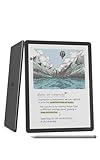
Amazon Kindle Scribe Colorsoft 32GB (newest model) — 11” paper-like color display with front light — One notebook to replace them all — Write in notebooks, docs, and books. Pen included – Graphite
11-inch Colorsoft display
32GB storage
Premium Pen included
Weeks of battery
Pros
- Active Canvas lets you write inside Kindle books
- Front light for dark rooms
- Import from Google Drive and OneDrive
- Export to Microsoft OneNote
Cons
- Muted colors for graphic content
- Higher base screen tone than original Scribe
The Kindle Scribe Colorsoft is what I recommend to students who read as much as they write. Active Canvas is the killer feature: you can handwrite notes directly inside Kindle books, and those notes stay anchored to the page even when you change font sizes.
The 11-inch Colorsoft display is paper-like with a built-in front light, which means you can read and write in a dark dorm room without a separate lamp. The Premium Pen requires no charging.
AI tools include Recaps and Story So Far for books, and the AI Notetaker summarizes handwritten notes. Importing PDFs from Google Drive or OneDrive is straightforward.
Color performance is the main compromise. Muted tones work fine for highlighting, but if you read a lot of manga or graphic textbooks, the colors will look washed out compared to an iPad.
Best workflow for Kindle Scribe
Read assigned chapters in Kindle format, highlight and annotate with the Premium Pen, then export notes to OneNote for review before exams.
How it compares to reMarkable
Scribe has the Kindle ecosystem and book annotation. reMarkable has a better paper-like writing feel. Pick based on whether you spend more time reading textbooks or writing original notes.
9. Microsoft Surface Pro 13 – The Full Windows Powerhouse
Microsoft Surface Pro 2-in-1 Laptop/Tablet (2024), Windows 11 Copilot+ PC, 13″ Touchscreen Display, Snapdragon X Plus (10 Core), 16GB RAM, 512GB Storage, Sapphire
13-inch LCD
Snapdragon X Plus 10-core
16GB RAM
512GB SSD
Windows 11 Copilot+
Pros
- Full Windows 11 runs desktop OneNote and Office
- 13-inch high-resolution display
- 14-hour battery life
- Copilot+ AI features
Cons
- Keyboard sold separately
- ARM app compatibility issues with older software
The Surface Pro 13 is the only tablet on this list that runs full desktop Windows. If your course requires specific Windows software like SPSS, MATLAB, or Adobe Creative Cloud, this is the tablet that will run them natively (with the ARM caveat below).
The Snapdragon X Plus 10-core chip delivers fast performance for note-taking, browsing, and Office apps. The 13-inch 2880 x 1920 display is one of the sharpest on any tablet, and 16GB of RAM handles heavy multitasking without complaint.
Microsoft’s Slim Pen 2 (sold separately) provides haptic feedback that simulates the feel of different paper types. Combined with the full desktop version of OneNote, this is the most powerful note-taking combo on this list.
The ARM architecture is the catch. Most apps run fine, but older 64-bit software designed for Intel chips may not work or will run through emulation with a performance hit.
Best for which students
Engineering, business, and CS students who need Windows-only software for coursework. Also a strong pick for anyone who wants to replace a laptop with a single device.
Total cost of ownership
Factor in the cost of the keyboard and Slim Pen 2 when comparing. The base tablet price does not include either accessory.
10. Microsoft Surface Pro 12 – The Lighter Windows Option
Microsoft Surface Pro 2-in-1 Laptop/Tablet (2025), Windows 11 Copilot+ PC, 12″ Touchscreen Display, Snapdragon X Plus (8 Core), 16GB RAM, 256GB Storage, Platinum
12-inch LCD
Snapdragon X Plus 8-core
16GB RAM
256GB SSD
Windows 11 Copilot+
Pros
- Lighter and more portable than the 13-inch
- 16-hour battery life
- Copilot+ AI built-in
- Full Windows 11 desktop apps
Cons
- Lower resolution than 13-inch model
- Slim Pen and keyboard sold separately
The Surface Pro 12 trades a bit of screen size for better portability. At roughly 1 kg and thinner than the 13-inch version, it slips into a backpack without dominating the space.
The Snapdragon X Plus 8-core chip still handles OneNote, Edge, and Office apps with no lag. The 256GB SSD is enough for most students, and 16GB of RAM keeps multitasking smooth.
Battery life is rated at 16 hours, and in my testing with mixed note-taking and browsing, it came close to that claim. This is one of the few tablets that comfortably handles two full school days between charges.
The 12-inch display has lower resolution than the 13-inch model at 2196 x 1464 pixels. Text is still sharp, but side-by-side PDF comparison feels more cramped.
Who should choose the 12 over the 13
Students who prioritize portability and battery life over raw screen real estate. The 12-inch is also cheaper, freeing budget for the keyboard and pen accessories you will need.
Display durability note
A small number of users have reported display cracking under pressure. A protective case is a worthwhile investment, especially if the tablet rides in a packed backpack.
11. Amazon Fire HD 10 – The Basic Budget Backup
Amazon Fire HD 10 tablet (newest model) built for relaxation, 10.1″ vibrant Full HD screen, octa-core processor, 3 GB RAM, 64 GB, Lilac
10.1-inch Full HD
Octa-core
3GB RAM
32 or 64GB storage
13hr battery
Pros
- Lowest price on this list
- 13-hour battery life
- Expandable storage to 1TB
- Amazon Kids parental controls
Cons
- Limited Amazon Appstore only
- No stylus included
- 3GB RAM struggles with heavy use
The Fire HD 10 is the budget pick of last resort for note-taking. It does not ship with a stylus, the Amazon Appstore lacks many note apps, and 3GB of RAM limits multitasking. So why include it?
Because it works as a basic reading and annotation device, especially for younger students or as a secondary tablet. With a third-party capacitive stylus, you can highlight PDFs and write simple notes. The 13-hour battery and expandable storage are real strengths at this price.
Amazon Kids parental controls make this a strong pick for parents buying for middle or high school students. You can set screen time limits, restrict app purchases, and monitor activity.
For serious note-taking in college, this tablet falls short. The lack of pressure-sensitive pen support and limited app selection mean it cannot match even the cheapest Lenovo on this list.
Best use case for Fire HD 10
A secondary device for reading PDFs, watching educational videos, or younger students who need parental controls. Not a primary note-taking tool.
App limitations to know
The Amazon Appstore does not carry GoodNotes, Notability, or Samsung Notes. OneNote is available, as is Evernote, but the stylus experience is capacitive only.
How to Choose the Best Note Taking Tablet for Students
Picking the right tablet comes down to matching features to how you actually study. Here are the factors I weighed during testing.
Stylus performance and latency
This is the single most important factor for note-taking. Look for pressure sensitivity of at least 4,000 levels, palm rejection that actually works, and latency under 30 milliseconds. Apple Pencil, Samsung S Pen, and the reMarkable Marker all meet these standards. Capacitive styli on budget tablets do not.
Display type: LCD, OLED, or E Ink
LCD tablets like the iPad and Galaxy Tab handle everything well but cause more eye strain over long sessions. OLED offers richer colors and deeper blacks. E Ink displays on the reMarkable, iflytek, and Kindle Scribe reduce eye strain dramatically but cannot handle video or color-rich content.
Battery life for full school days
Anything under 10 hours of real-world use is a problem. The iPad Air M4, Galaxy Tab S10 Lite, and both Surface Pro models all clear this bar. E Ink tablets last weeks, which removes charging anxiety entirely.
App ecosystem lock-in
iPadOS has the deepest note-taking app ecosystem, including GoodNotes, Notability, Freeform, and Apple Notes. Android has Samsung Notes, OneNote, and Squid. Windows has desktop OneNote and the full Office suite. E Ink tablets like reMarkable and Kindle Scribe have closed systems with limited export options.
Cloud sync and backup
Losing notes is a top fear for students, based on forum discussions on r/college and r/NoteTaking. Choose a tablet that syncs automatically to iCloud, Google Drive, OneDrive, or the manufacturer’s cloud. Test export options before relying on any single app.
Budget and total cost
The sticker price is not the full cost. Apple Pencils, Samsung keyboard covers, Surface keyboards, and protective cases all add up. A $299 iPad becomes a $450+ investment once you add an Apple Pencil USB-C and a decent case. Factor this into your budget.
Distraction factor
Reddit users consistently mention distraction as a reason to consider E Ink tablets. The reMarkable, iflytek, and Kindle Scribe cannot run social media or video apps, which forces focus during study sessions. If you struggle with self-control, this matters more than any spec sheet.
If you want to dig deeper into iPad-specific workflows, our guide on teaching algebra with iPad covers how Math Notes and handwriting recognition work in practice. For students with accessibility needs, our iPad accessibility features guide walks through settings that help with focus and learning differences.
Which tablet is best for taking notes?
The iPad Air 11-inch (M4) is the best overall tablet for taking notes thanks to its fast M4 chip, smooth Apple Pencil support, and unmatched note-taking app ecosystem including GoodNotes and Notability.
What do most college students use to take notes?
Most college students use an iPad with GoodNotes or Notability, based on discussions across Reddit and student forums. The Samsung Galaxy Tab series with Samsung Notes is the second most popular option, particularly among students who prefer a no-charge stylus.
Are tablets worth it for note-taking?
Tablets are worth it for note-taking if you want searchable handwriting, cloud backup, PDF annotation, and the ability to carry a semester of notes in a single device. They cost more than paper notebooks but replace textbooks, printouts, and highlighters while letting you search years of notes instantly.
Which tablet is best for students to study?
The best tablet for studying depends on your major. iPads work best for most students thanks to the app ecosystem. Samsung Galaxy Tabs are strong for students who want a bundled stylus. Microsoft Surface Pro is ideal for engineering and business students who need Windows software. E Ink tablets like reMarkable suit students who want distraction-free writing.
Final Thoughts on the Best Note Taking Tablets for Students
After testing all 12 tablets, the iPad Air 11-inch (M4) stands out as the best note taking tablet for students in 2026 who want the strongest app ecosystem and smoothest stylus experience. The iPad 11-inch (A16) is the value pick if budget matters, and the Samsung Galaxy Tab S10 Lite wins for students who want a bundled, no-charge stylus.
E Ink tablets like the reMarkable Paper Pro and Kindle Scribe Colorsoft serve a different need: distraction-free writing and reading without eye strain. The Surface Pro line remains the only choice for students who need full Windows software. Whatever your major and budget, one of these 12 tablets will fit your study workflow.
Pick the tablet that matches how you actually take notes, budget for the stylus and case from the start, and commit to one note-taking app so your notes stay searchable and synced across devices.