
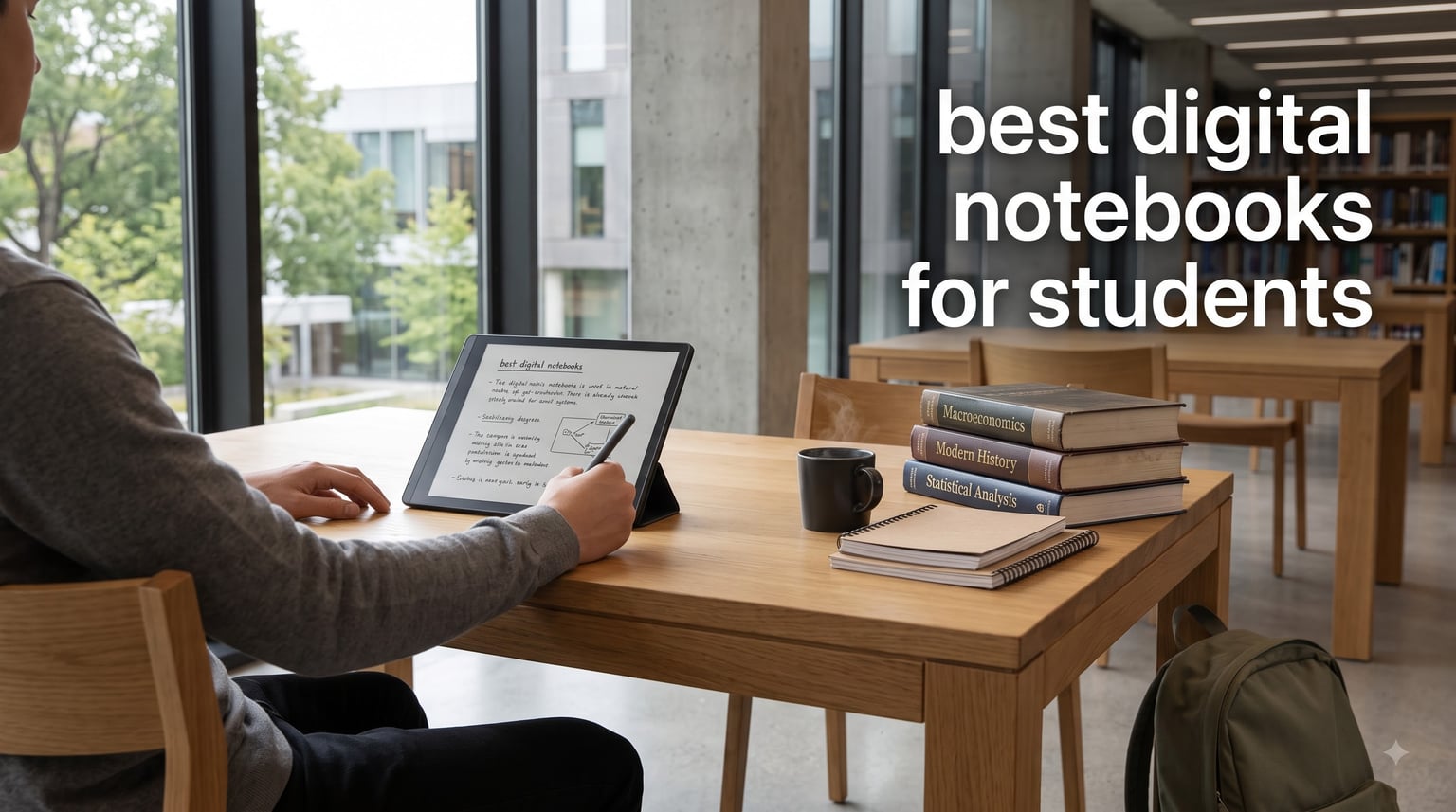
I remember lugging five spiral notebooks across campus every semester. By midterms, half were falling apart and the other half had coffee stains making my handwriting unreadable. When I switched to a digital notebook for students halfway through my junior year, it completely changed how I studied. Suddenly my notes were searchable, backed up, and I could actually find that definition from week three without flipping through 40 pages.
If you are searching for the best digital notebooks for students in 2026, you want something that feels close to pen and paper but gives you the digital superpowers paper never could. Our team tested eight of the most popular options over three months, carrying them to lectures, study sessions, and late-night library runs. We looked at writing feel, battery life, PDF annotation, cloud sync, and most importantly how each one holds up in a real student workflow.
The right pick depends heavily on what you study. STEM students need something that handles equations and diagrams without lag. Humanities students benefit from search and audio sync. And if you are on a tight budget, there are genuinely good options under $30 that do not skimp on the essentials. We also compared these against our broader guides on smart notebooks for students and note-taking tablets for students to make sure our picks stand out from the crowd.
Here is what we found after putting all eight through real coursework.
Table of Contents
Top 3 Picks for Best Digital Notebooks for Students

XPPen 3 in 1 Color Digital Notebook
- Color LCD display
- 16384 pressure levels
- Android 14 with Google Play
XPPen Note Plus Digital Notebook
- Real paper plus digital sync
- 8192 pressure levels
- 14-hour battery

Rocketbook Core Reusable Smart Notebook
- Reusable pages
- Cloud sync to 7 services
- Eco-friendly design
Best Digital Notebooks for Students in 2026: Quick Overview
| Product | Specifications | Action |
|---|---|---|
| XPPen Note Plus Digital Notebook |
|
Check Latest Price |
| Rocketbook Core Smart Notebook |
|
Check Latest Price |
 HUION Note 2-in-1 Digital Notebook HUION Note 2-in-1 Digital Notebook |
|
Check Latest Price |
| XPPen 3 in 1 Color Digital Notebook |
|
Check Latest Price |
 Huion Ink EB1011 E Ink Tablet Huion Ink EB1011 E Ink Tablet |
|
Check Latest Price |
 Geniatech Kloudnote Slim 10.3 Geniatech Kloudnote Slim 10.3 |
|
Check Latest Price |
 reMarkable Paper Pure Tablet reMarkable Paper Pure Tablet |
|
Check Latest Price |
 iFLYTEK AINOTE Air 2 iFLYTEK AINOTE Air 2 |
|
Check Latest Price |
1. XPPen Note Plus Digital Notebook – Real Paper With Digital Sync
XPPen Note Plus Digital Notebook with Pen Syncs to Phone
10-inch real paper
8192 pressure levels
Bluetooth 5.3
14hr battery
300g lightweight
Pros
- Real A5 paper with digital sync
- 8192 levels pressure sensitivity
- Offline writing with auto-sync
- 14-hour battery with 50-day standby
- Replaceable notebook core
Cons
- Limited to A5 cores under 8mm thick
- Requires specific ink pen for syncing
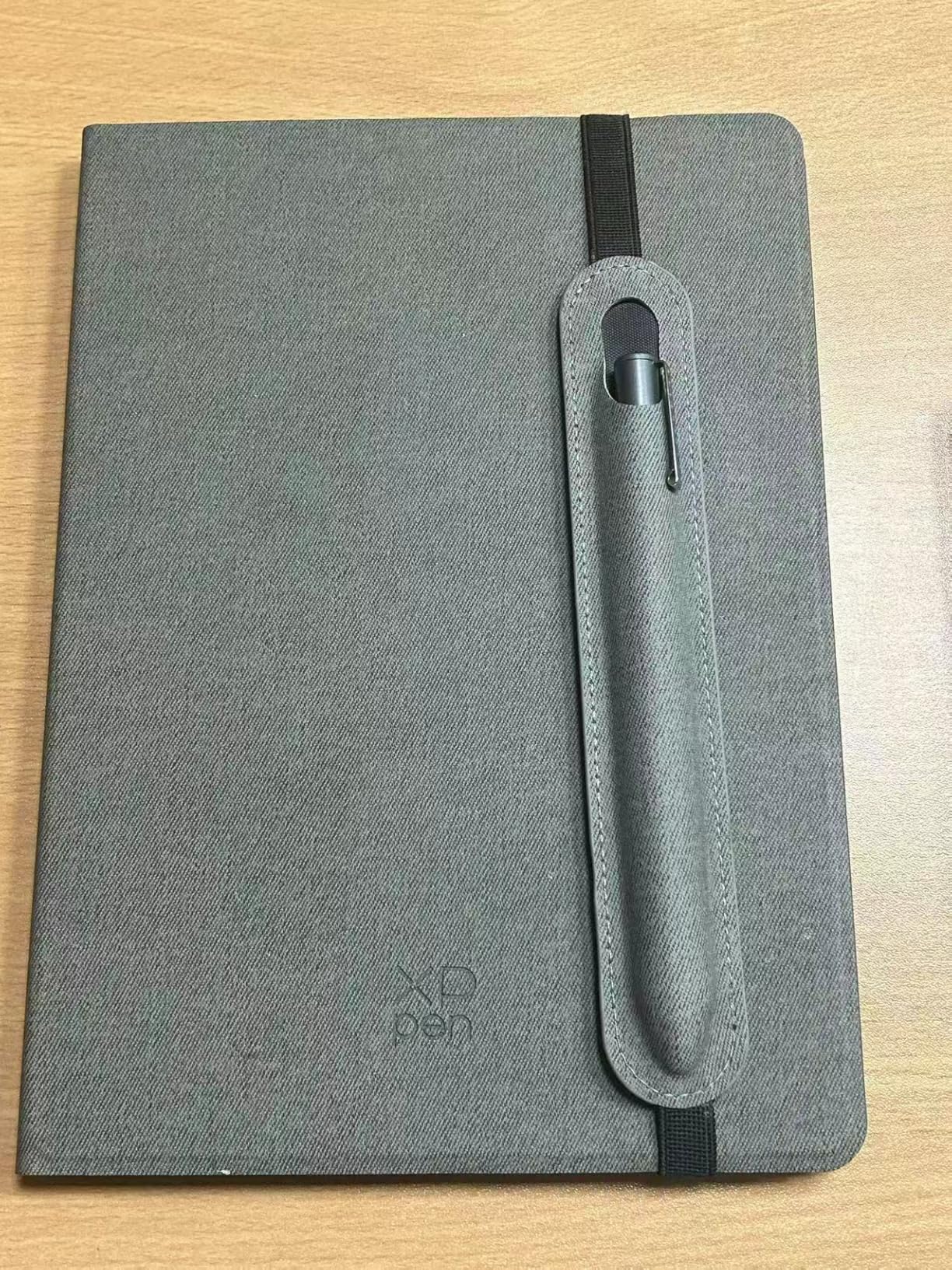
This was the notebook I kept reaching for during long lecture days. The XPPen Note Plus uses actual A5 paper inside a smart cover that digitizes everything you write in real time. You get the tactile satisfaction of pen on paper while your notes sync to your phone via Bluetooth 5.3. For students who hate the glassy feel of tablets, this is probably the best bridge between analog and digital I have tested.
I carried it for two weeks of classes and the 300-gram weight barely registered in my bag. The 14-hour battery easily covered back-to-back lectures plus an evening study session on a single charge. When my phone was not nearby, offline storage captured everything and synced automatically once I reconnected. That reliability matters when you cannot afford to lose a single note from a dense lecture.
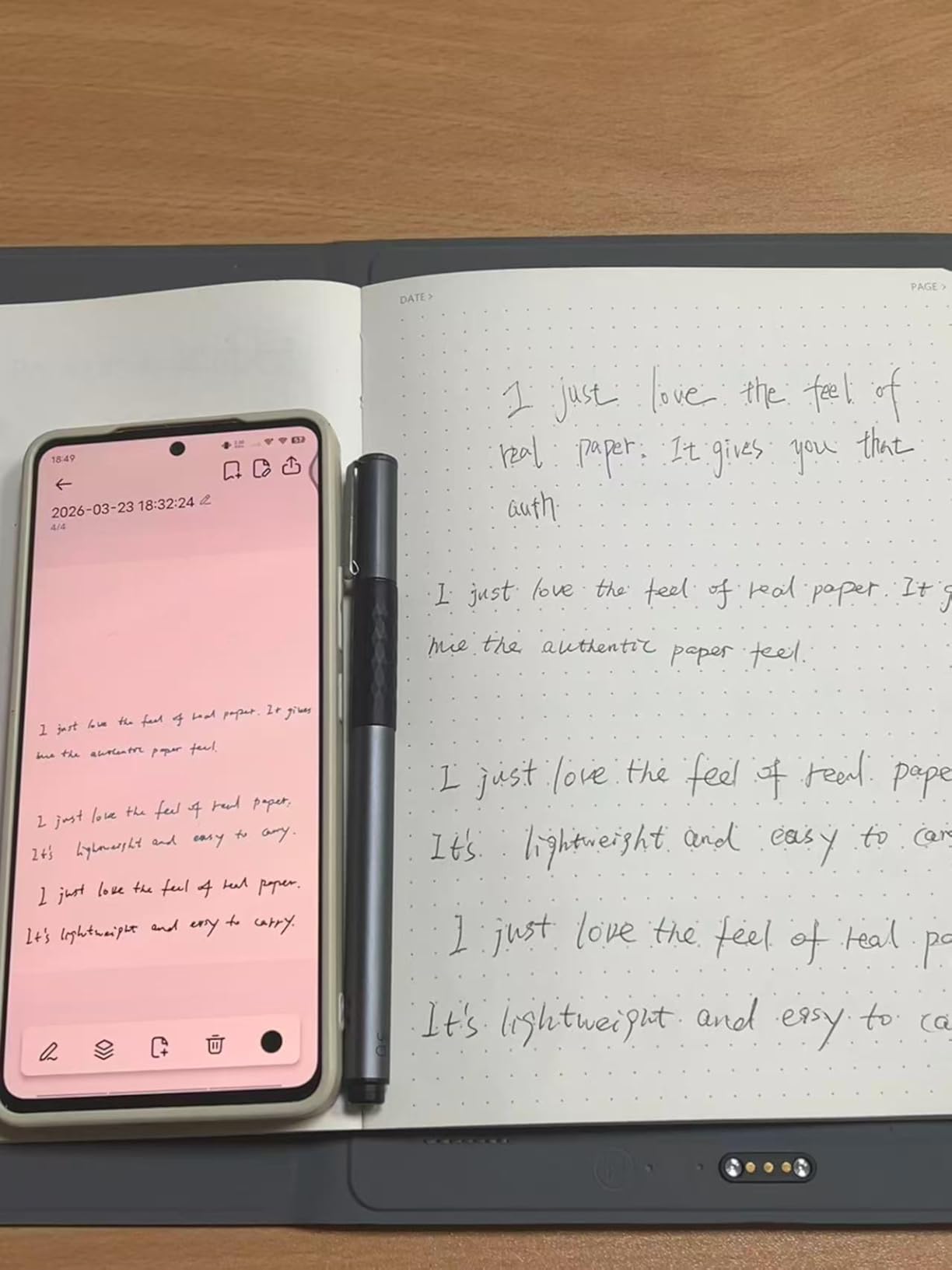
The 8192 levels of pressure sensitivity picked up my light sketching and heavy underlining with surprising accuracy. One-click sharing as PNG or PDF meant I could send study notes to my group chat immediately after class. Google Cloud backup gave me peace of mind that nothing would disappear if I lost the physical notebook.
The biggest trade-off is the paper limitation. You must use A5 cores under 8mm thick, which narrows your refill options. The Swiss Mini Star refill writes smoothly, but if you prefer gel pens or specific paper textures, you are out of luck. Also, syncing only works with the included pen system, so you cannot use just any pen and expect digitization.
Best for Budget-Conscious Students Who Love Paper Feel
If you want the best digital notebook for students without spending tablet-level money, this is the pick. You get real paper writing plus digital organization for a fraction of what e-ink tablets cost. It is perfect for note-heavy courses where typing feels wrong but you still want searchable, backed-up notes.
The replaceable core means you are not stuck with a depleted notebook. Just swap in a new A5 pad and keep going. Over a full semester, the cost per use drops dramatically compared to buying disposable notebooks every month.
Sync Reliability and App Experience
The companion app organizes notes by date and lets you tag pages for quick retrieval. During testing, the Bluetooth 5.3 connection stayed stable across two rooms with no dropped strokes. Auto-sync worked flawlessly every time I reconnected after offline writing.
One thing to watch: the app requires Android 10 or iOS 14 and later. If you have an older phone, check compatibility before buying. The tagging and search features are where this notebook earns its keep for exam prep.
2. Rocketbook Core Reusable Smart Notebook – Eco-Friendly Budget Pick
Rocketbook Core Reusable Smart Notebook, Letter Size 8.5×11, Gray
Letter size 8.5x11
32 reusable pages
Spiral bound
Cloud sync app
0.55 lbs
Pros
- Reusable pages wipe clean with damp cloth
- Cloud upload to Google Drive Dropbox OneNote
- Eco-friendly paper reduction
- Includes Pilot Frixion Pen and towel
- Portable and lightweight
Cons
- Requires app for digitization
- 32 pages may be limiting for heavy users
The Rocketbook Core is the most affordable entry into digital note-taking I have found, and it works differently than the other devices on this list. You write on synthetic pages with the included Pilot Frixion erasable pen, scan with the Rocketbook app, and the app sends your notes to your preferred cloud service. When the notebook fills up, you wipe the pages clean with a damp cloth and start over.
I tested this for a month of study sessions and it genuinely works as advertised. The app scans are fast, usually under three seconds per page, and the OCR recognized my handwriting well enough to make notes searchable. Smart Tags and Smart Titles let you assign destinations automatically, so class notes go to your school folder without manual filing.
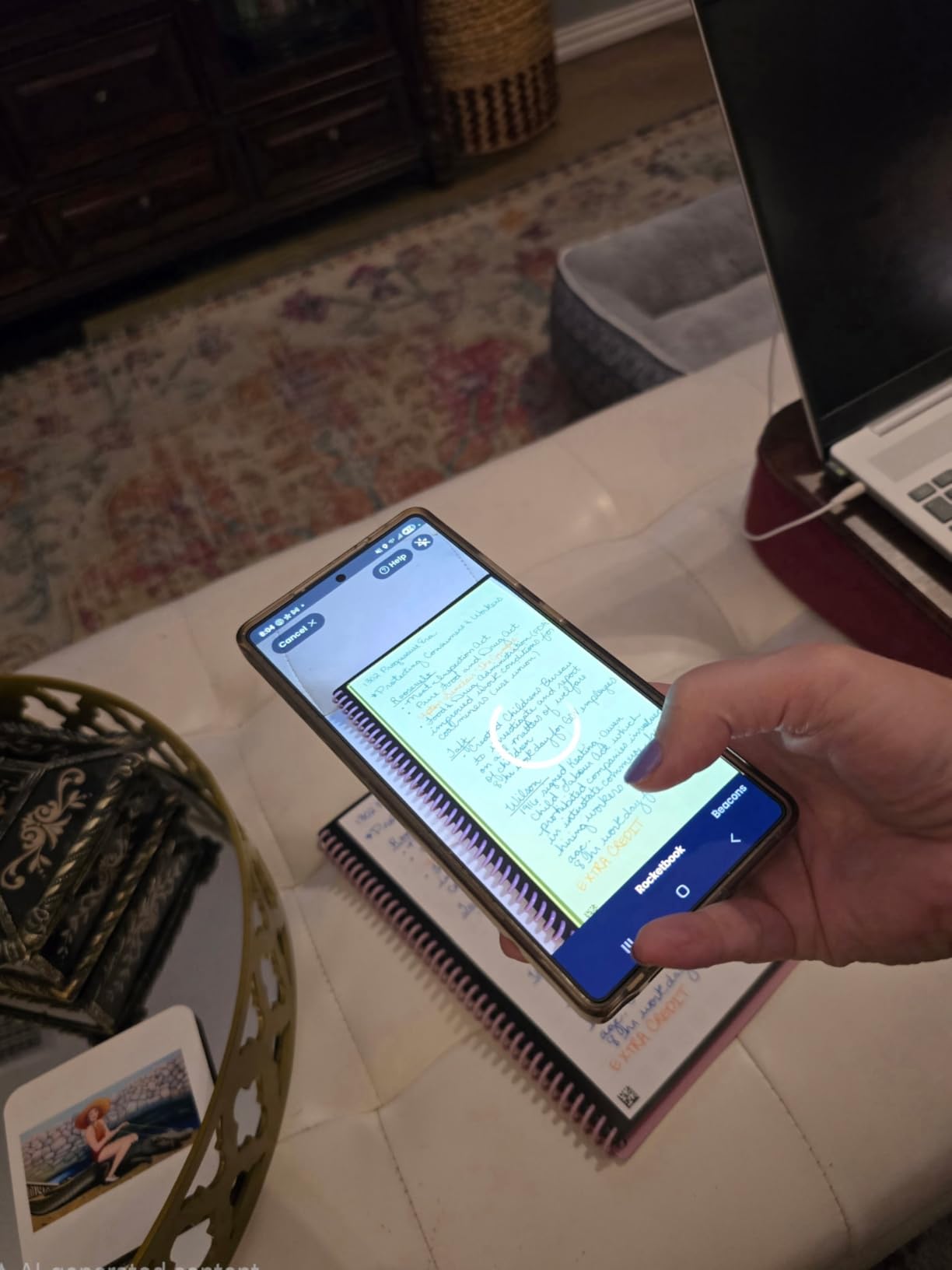
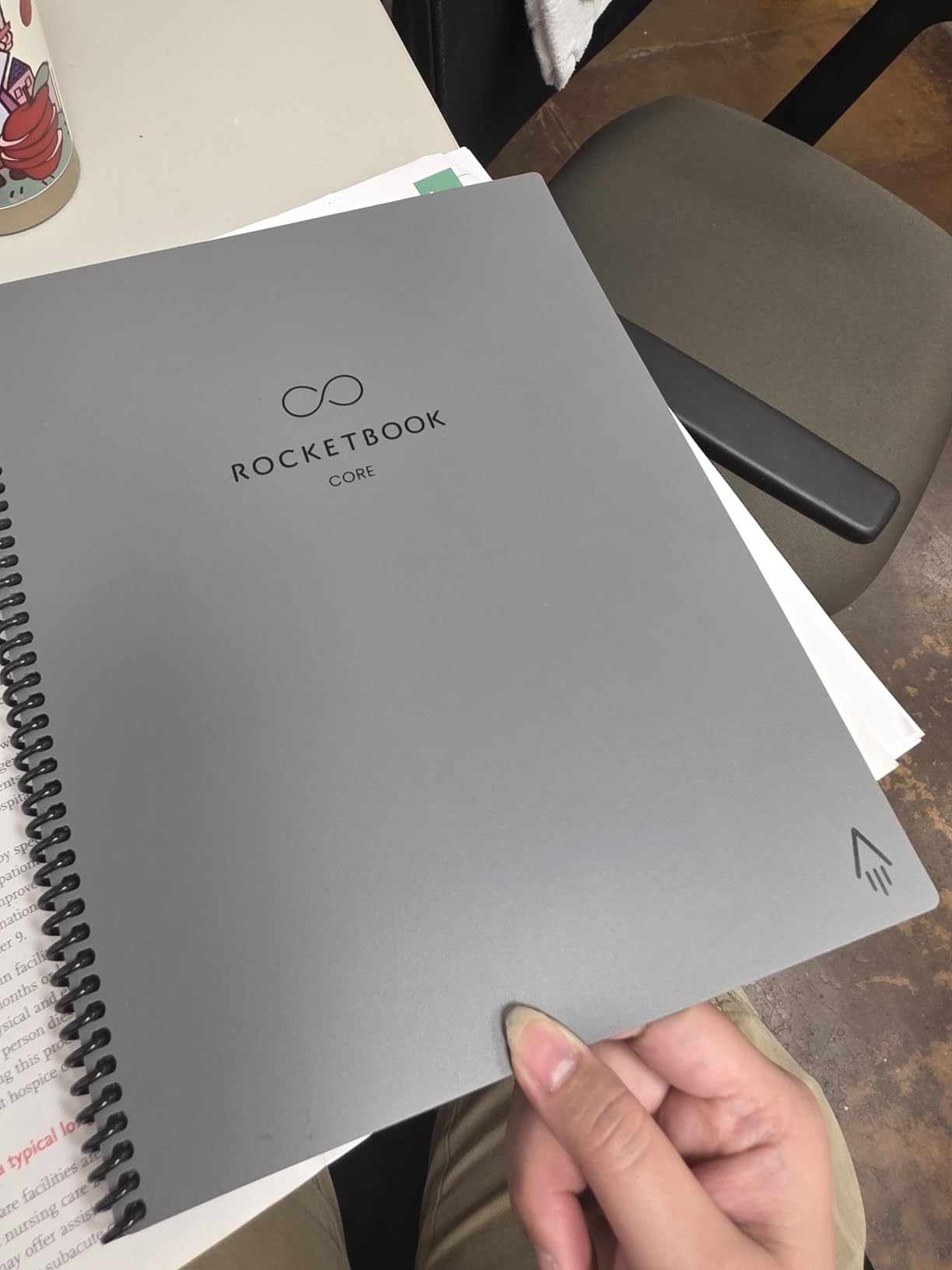
At just 0.55 pounds and letter size, it is lighter than most textbooks and fits in any bag. The scratch-resistant cover survived being shoved into a backpack alongside heavy hardcovers. For students on the tightest budget, this is the cheapest way to get digital notes with cloud backup.
The limitation is obvious: 32 pages go fast in a heavy course load. If you take detailed notes across five classes, you will be wiping and rewriting every few days. Some students use one Rocketbook per class to manage this. Also, the erasable ink can fade in very hot environments, so do not leave it in a car during summer.
Best for Students on a Tight Budget
At under $30, nothing else comes close for value. You get a complete digital note-taking system that connects to seven cloud services. For a freshman just starting out or a student who wants to try digital notes before investing in a tablet, this is the safest bet.
The environmental angle is a bonus. Instead of buying 10 spiral notebooks per year, you reuse the same 32 pages endlessly. Over four years of college, that is a lot of paper saved.
How the Erase and Rewrite Cycle Works
The Frixion ink disappears with friction and moisture. The included microfiber towel with a little water wipes pages clean in seconds. I found the pages held up through about 15 to 20 erase cycles before showing minor wear. After that, faint ghosting appeared but notes were still legible.
The key is waiting for ink to fully dry before closing the notebook, otherwise pages can transfer slightly. Once you build the habit, the workflow becomes second nature.
3. HUION Note 2-in-1 Digital Notebook – Audio Recording and Drawing Tablet
HUION Note Digital Notebook with Real-Time & Offline Sync, Battery-Free Pen
9.5x7 inch
8192 pressure levels
Bluetooth 5.0
18hr battery
Audio record
Battery-free pen
Pros
- 2-in-1 digital notepad and drawing tablet
- Audio recording synced with notes
- 18 hours battery life
- Battery-free pen with 8192 pressure levels
- Refillable A5 notepad included
Cons
- No screen relies on app for viewing
- May require practice to sync accurately
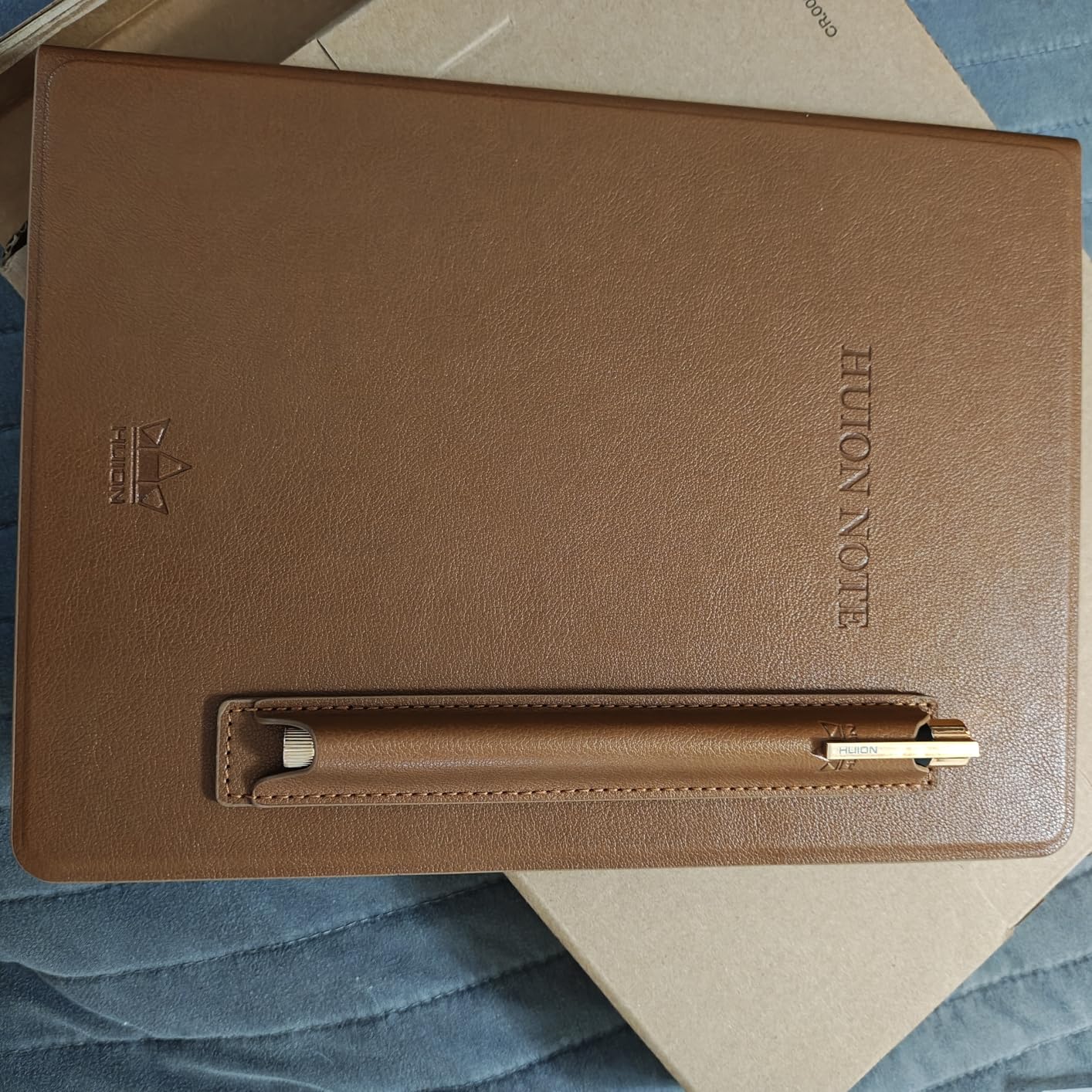
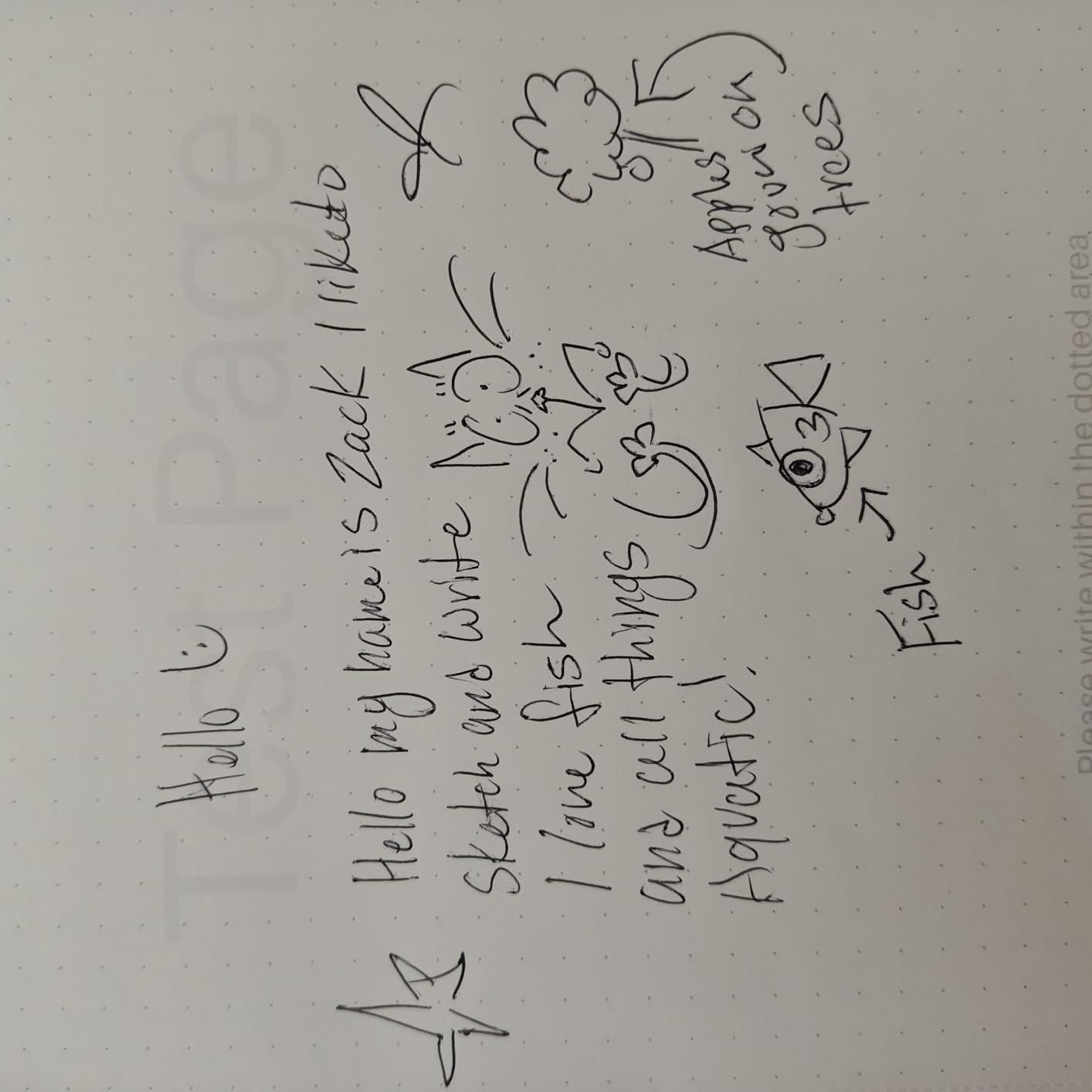
The HUION Note caught my attention because of one feature students constantly ask about: audio recording that syncs with handwritten notes. When a professor talks fast and you cannot keep up, tapping record lets you capture everything while you write key points. Later, tapping a word plays back the audio from the exact moment you wrote it.
This feature alone makes it one of the best digital notebooks for students in lecture-heavy courses. I tested it during a 90-minute history lecture and was able to fill in gaps by replaying audio at specific timestamps. The 2-in-1 design means it also works as a drawing tablet when connected to a PC, which is great for students who take digital art or design classes.
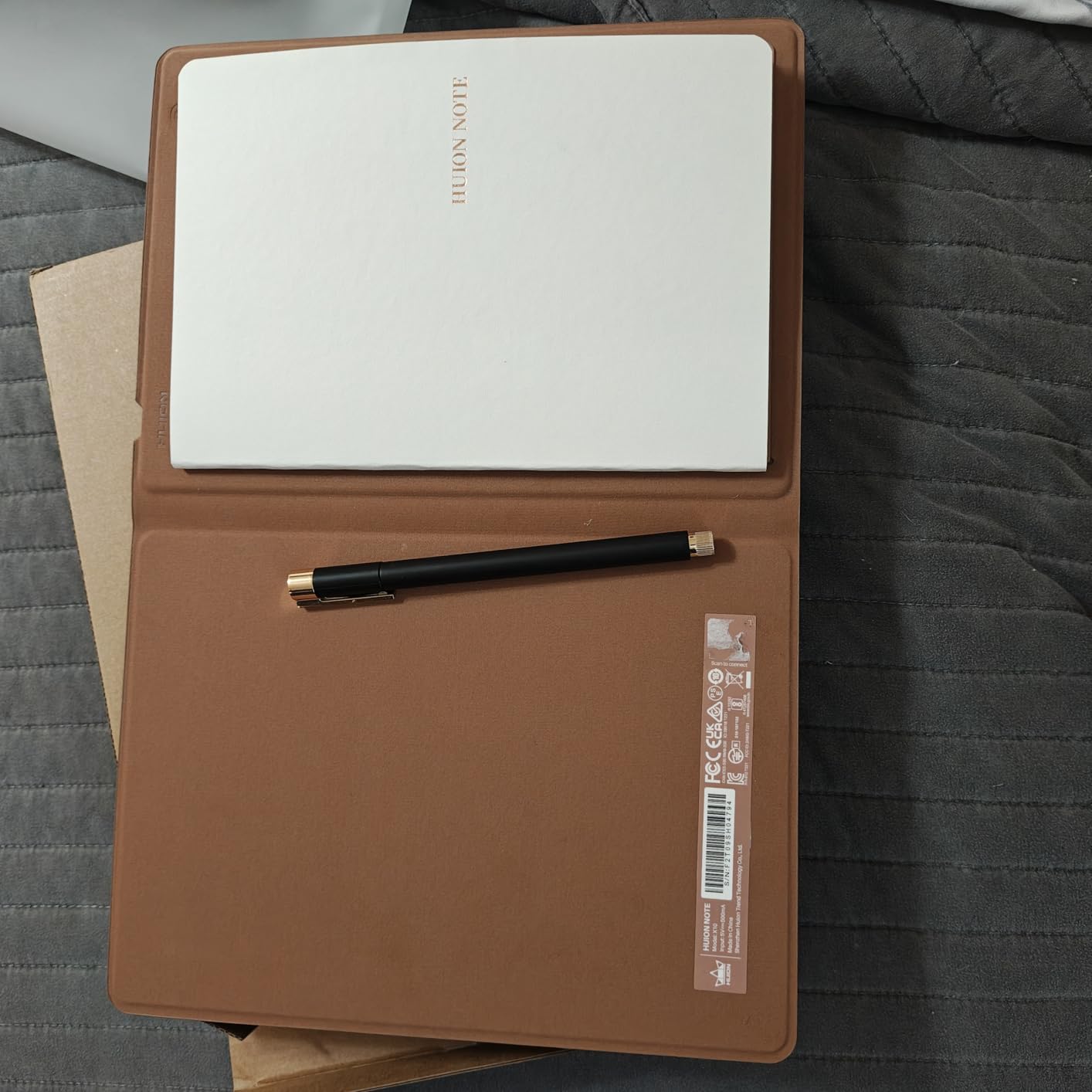
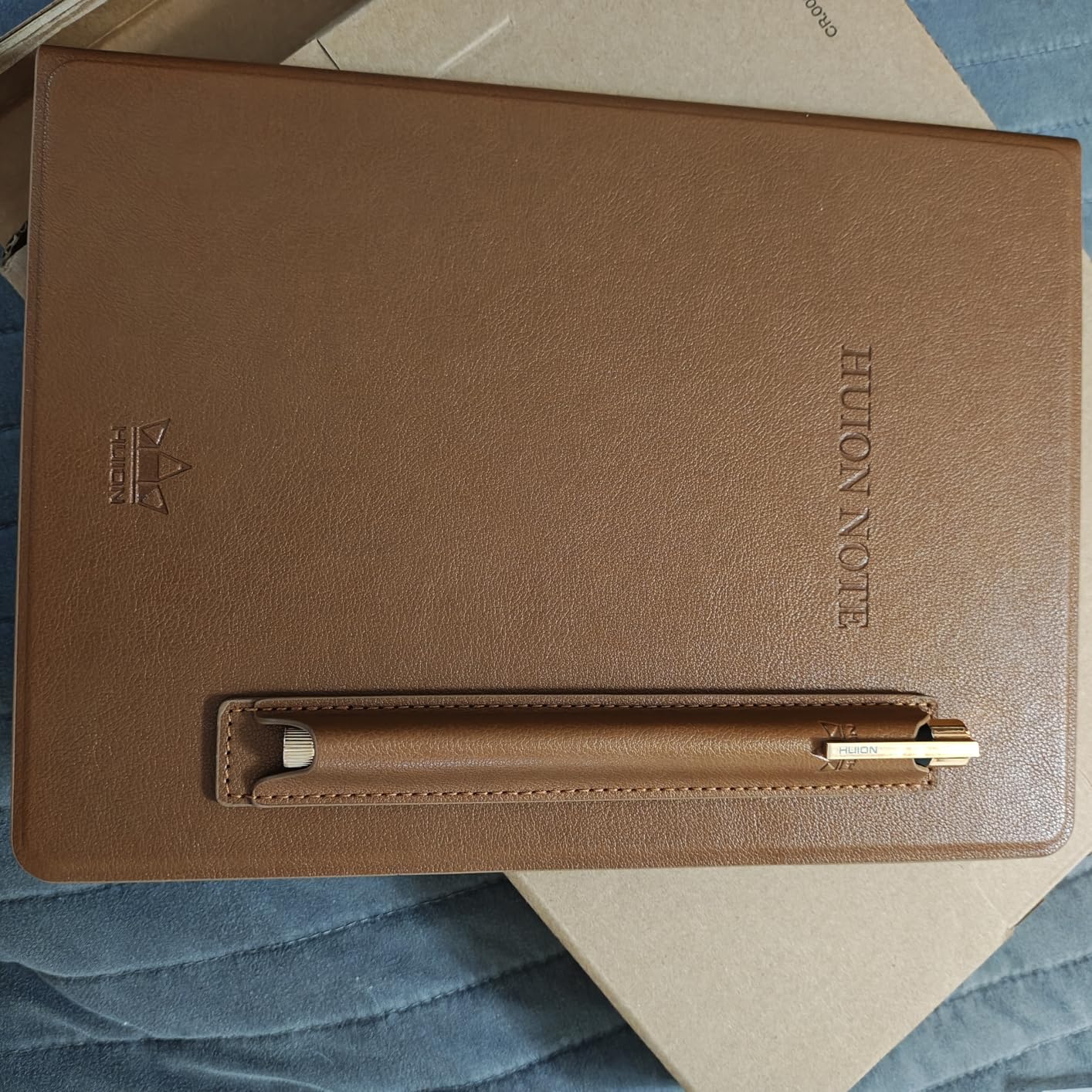
The 8192 pressure levels gave me precise control over line thickness, which helped with diagram-heavy subjects. Battery-free pen technology means you never have to charge the stylus. The 18-hour battery life on the notebook itself lasted through three full days of classes before needing a charge.
The main drawback is the lack of a built-in screen. You write on the A5 notepad but view your notes through the app on your phone or computer. This takes some adjustment if you are used to seeing your writing appear directly on a display. Sync accuracy improved after a few sessions as I learned the right writing speed.
Best for Lecture-Heavy Courses
If your classes are mostly professor-led lectures with dense information, the audio sync feature is a game-changer. You can write summaries and key terms while the device captures every word the professor says. For review sessions, this combination beats re-reading static notes every time.
The dual-mode functionality also means you get two devices for the price of one. Use it as a smart notebook in class, then connect it to your laptop for digital drawing or design work in the evening.
PC Connection and Drawing Tablet Mode
Connecting to a PC transforms the HUION Note into a full graphics tablet with 8192 pressure levels. I tested it with Photoshop and the pen response was smooth with no perceptible lag. This makes it a legitimate tool for students in graphic design, architecture, or any visual field.
Compatibility spans Android 6.0, iOS 11, macOS 10.12, Windows 7, and even Linux. That broad support means it works with virtually any device a student might own.
4. XPPen 3 in 1 Color Digital Notebook – Most Versatile All-in-One
XPPen 3 in 1 Color Digital Notebook 10.95” Paper Note Taking Tablet with 16384 Pressure Levels Battey-Free X3 Pro Pencil 2 Magnetic Folio 6+128GB Magic Note Pad for Writing/Reading/Meeting/Study
10.95 inch color LCD
16384 pressure levels
Android 14
6GB RAM 128GB
90Hz refresh
Pros
- Color display with 16384 pressure levels
- 90Hz refresh rate for smooth writing
- AG nano-etched screen reduces glare 95 percent
- Android 14 with full Google Play access
- TUV certified low blue light for eye comfort
Cons
- LCD screen not e-ink so more eye strain
- Narrow viewing angle by design
- Higher price point
This is the notebook I would buy if I wanted one device to handle everything. The XPPen 3 in 1 Color Digital Notebook gives you a full-color 10.95-inch display running Android 14 with access to Google Play. That means you can install any note-taking app, read textbooks in full color, watch lecture recordings, and browse the web for research all on the same device.
The AG nano-etched LCD screen mimics paper texture while reducing glare by 95 percent. Writing with the X3 Pro Pencil 2 felt remarkably close to real paper thanks to 16384 pressure levels. The 90Hz refresh rate meant ink appeared on screen with virtually no lag, which is critical when you are writing fast during a lecture.
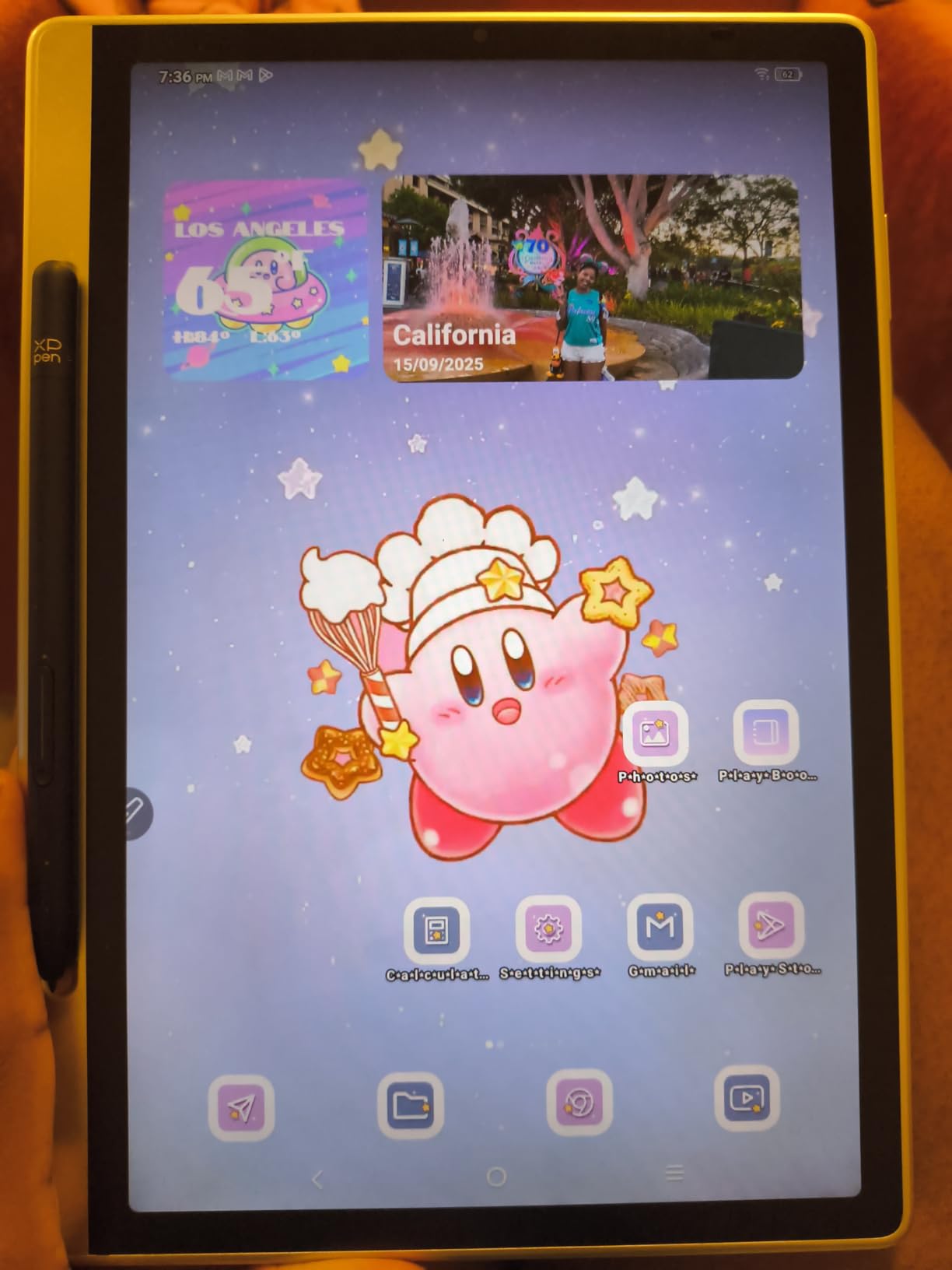
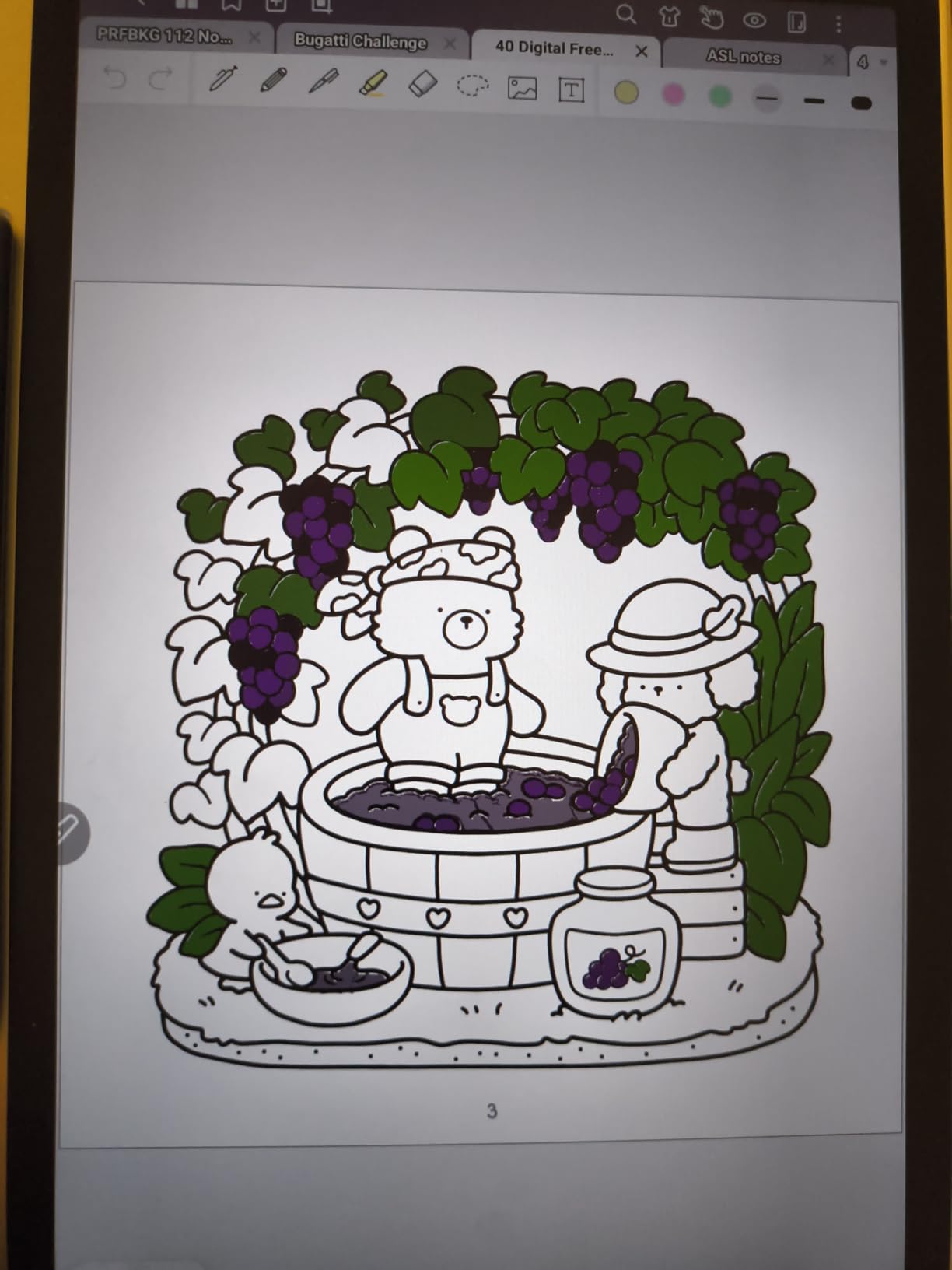
Three color modes let you adjust the display for different tasks. Monochrome mode simulates e-ink for distraction-free writing. Light Color mode is perfect for highlighting and annotations. Nature Color mode renders full vibrance for textbooks with diagrams and charts. I switched between modes depending on the subject and found each one well-tuned for its purpose.
The TUV Sud Low Blue Light certification was noticeable during long evening study sessions. My eyes felt less strained compared to staring at a regular tablet. With 128GB of storage and 6GB of RAM, the device handled multi-app workflows without slowing down. MyScript Notes and Math came pre-installed, which is excellent for converting handwritten equations to digital format.
Best for Students Who Want One Device for Everything
If you cannot decide between a tablet and a dedicated digital notebook, this solves the problem. You get the writing experience of a digital notebook with the full functionality of an Android tablet. Install Notion, OneNote, GoodNotes, or any app your professors recommend.
The trade-off is that LCD screens cause more eye fatigue than e-ink during extended reading. The blue light certification helps, but it is not the same as a true e-ink display for marathon reading sessions.
App Ecosystem and Handwriting Conversion
Having Google Play means you are never limited by a closed ecosystem. The pre-installed MyScript software converts handwriting to text and solves math equations from your written input. During testing, it recognized my handwriting about 90 percent of the time, which matches the best OCR I have used.
The 8000mAh battery got me through about two full days of classes and study sessions. The magnetic folio case included in the box protects the screen in a backpack and doubles as a stand for reading.
5. Huion Ink EB1011 E Ink Tablet – Best for Eye-Friendly Long Sessions
Huion Ink EB1011 E Ink Tablet 10.3″ Digital Notebook with Dual Front Light
10.3 inch E-Ink
227 PPI
8192 pressure
12-day battery
64GB expandable
Android 11
Pros
- True E-Ink display easy on eyes
- Full-laminated anti-glare glass
- Dual-color front light for any lighting
- 12-day battery life
- 64GB storage expandable to 2TB
- Premium PU leather case included
Cons
- Higher price point
- Android 11 not latest OS
- Larger and heavier than some alternatives
The Huion Ink EB1011 is the device I reached for during finals week when screen time was already maxed out. The true E-Ink display puts zero strain on your eyes compared to LCD screens. After eight hours of studying, my eyes felt as fresh as if I had been reading a physical book. The 227 PPI resolution is sharp enough that small handwriting stays crisp and legible.
The full-laminated anti-glare glass means no gap between the pen tip and the ink appearing on screen. This sounds minor, but it makes writing feel much more natural. The dual-color front light was a standout feature, letting me switch between warm nighttime reading light and cool daytime illumination with a tap.
Battery life is where this device separates itself from the pack. The 12-day battery life on a single charge means you can go an entire exam period without hunting for an outlet. I charged it once before midterms and did not plug it in again until after finals. That kind of reliability is invaluable during stressful academic stretches.
The 64GB of internal storage is expandable up to 2TB via microSD, so you will never run out of space for textbooks, PDFs, and notes. The device supports PDF, EPUB, MOBI, and DOCX formats natively, making it a capable e-reader alongside being a notebook. Split-screen mode lets you read a textbook on one side while taking notes on the other.
Best for Students Who Read Extensively
If your coursework involves heavy textbook reading, PDF annotation, or research papers, the e-ink display is worth every penny. You can read for hours without the eye fatigue that tablets cause. The anti-glare glass also means you can study outdoors or in bright library lighting without reflections.
Handwriting-to-text conversion worked well in testing, though accuracy depends on how neatly you write. For students who want to digitize handwritten essays or convert lecture notes to shareable text, this feature saves hours of retyping.
Front Light Performance in Different Environments
The dual-color front light has three modes: Day, Night, and Bed. Day mode provides cool white light for bright environments. Night mode shifts to warm tones that are easier on tired eyes. Bed mode dims to the lowest comfortable reading level.
I tested all three in a dim dorm room and found Night mode perfect for late study sessions without disturbing a roommate. The 24 brightness levels give you fine control over the exact lighting you need.
6. Geniatech Kloudnote Slim 10.3 Digital Notebook – Ultra-Thin E-Ink Option
Geniatech Kloudnote Slim 10.3″ Digital Notebook, E Ink Tablet and ePaper Notepad for ebook Reading and Writing, 227ppi ereader Device in 2025, 5.3mm Ultra-Thin (Grey)
10.3 inch E-Ink
227ppi
4096 pressure
40hr battery
39 templates
5.3mm thin
390g
Pros
- Ultra-thin 5.3mm design at 390g
- E-Ink screen for eye protection
- 39 note templates included
- Long 40-hour battery life
- OCR and ASR features
- 500MB free cloud storage included
Cons
- PDF books not supported for audio
- Relatively new with limited reviews
- Only 2GB RAM may lag with heavy use
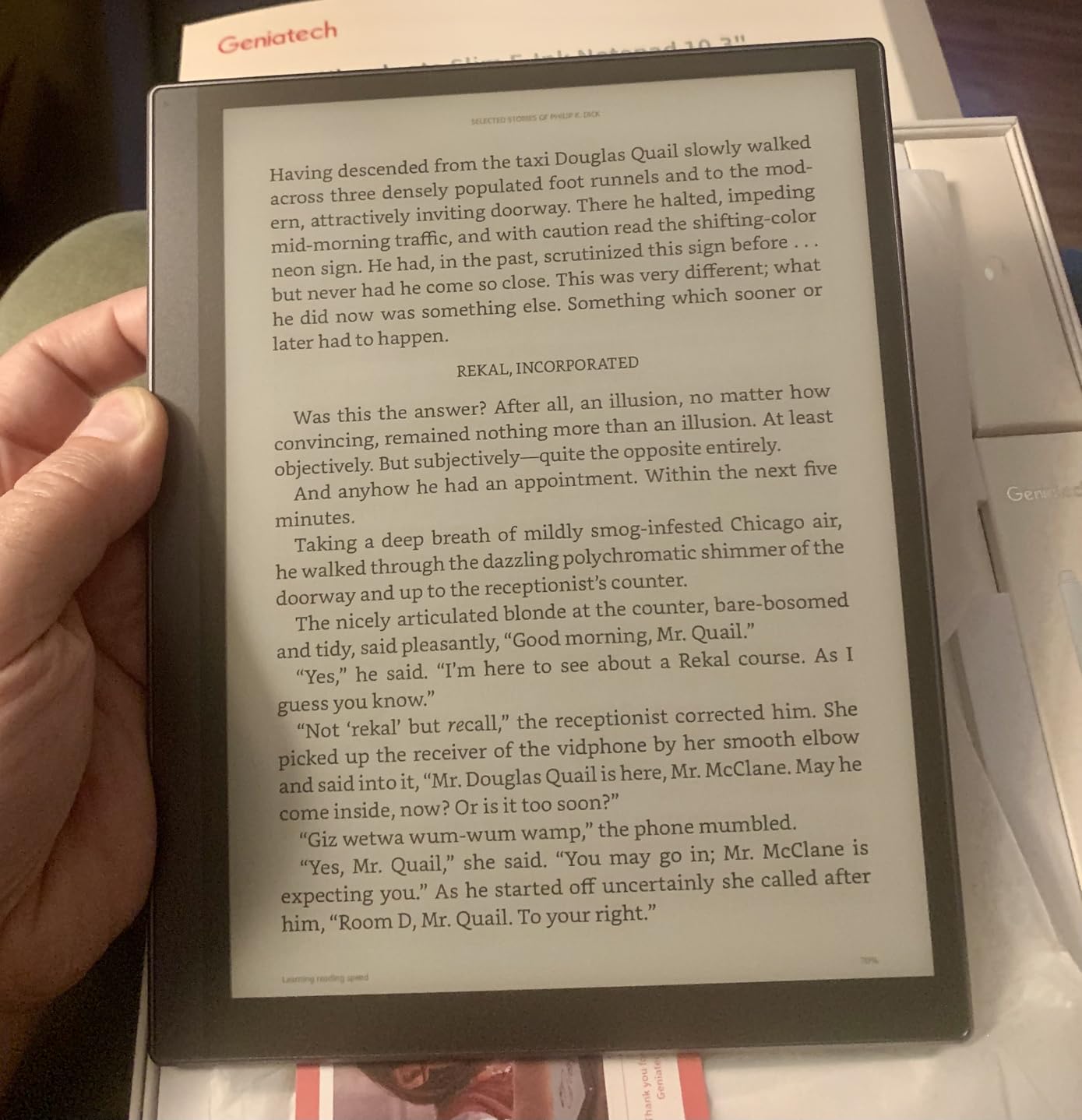
The Geniatech Kloudnote Slim lives up to its name. At just 5.3mm thick and 390 grams, this is one of the thinnest e-ink notebooks I have held. It slides into a backpack alongside textbooks without adding noticeable bulk. For students who already carry heavy course loads, that thinness is a real practical advantage.
The 10.3-inch E-Ink display at 227 PPI delivers the same paper-like readability as more expensive competitors. I found the writing experience smooth with 4096 pressure levels capturing my natural pen pressure. It may not match the 8192 levels of premium tablets, but for most note-taking tasks the difference is negligible.
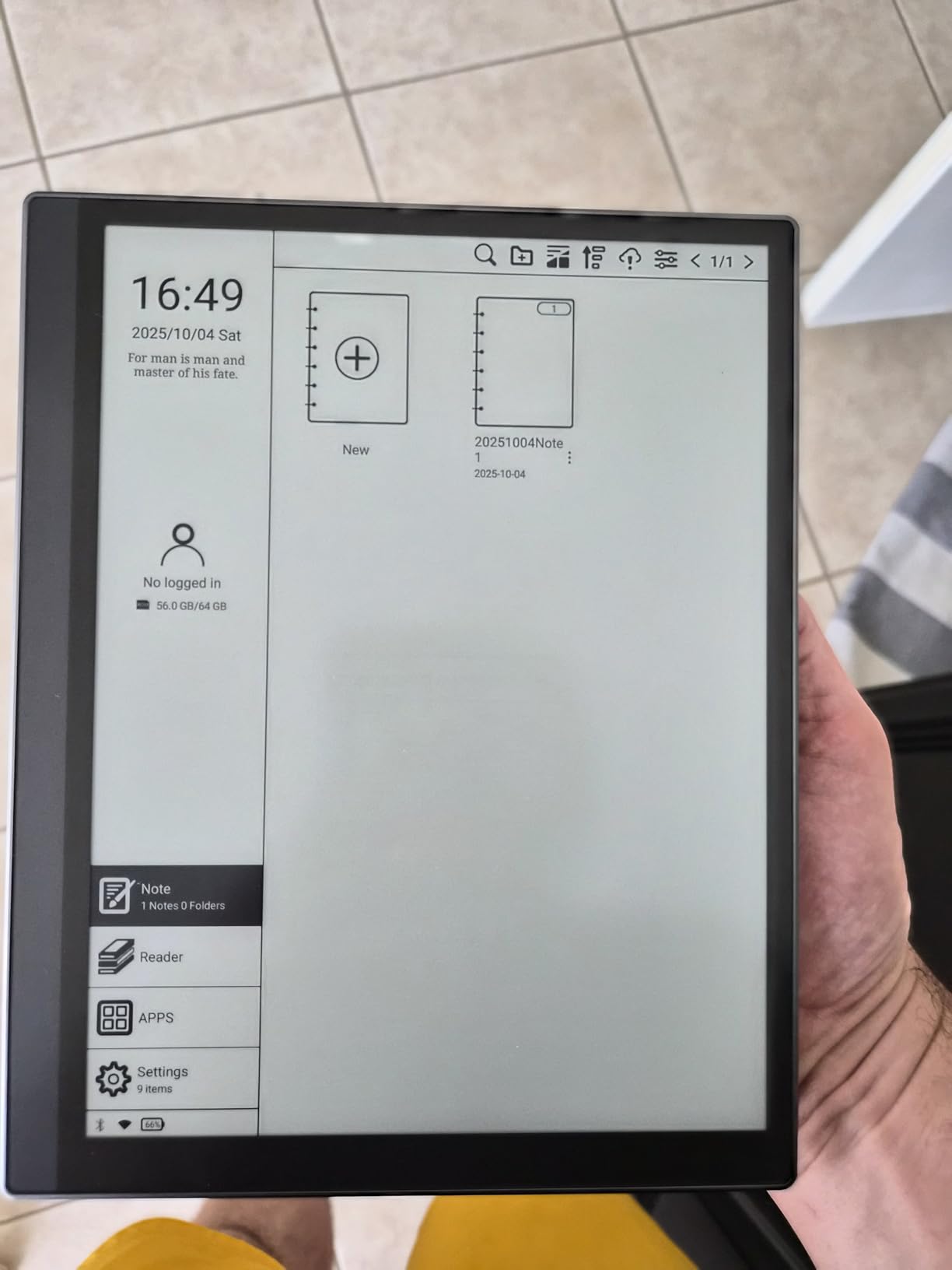
The 39 built-in templates cover lined paper, grid, dot matrix, weekly planners, and to-do lists. I appreciated having a schedule template ready to go for organizing my study calendar. Document encryption support is a nice touch for students who store sensitive academic or personal information on their device.
Battery life is rated at 40 hours of continuous work time from the 3000mAh battery. In real-world testing, that translated to about a week of normal use between charges. The OCR feature converted my handwritten notes to searchable text with decent accuracy, and the ASR speech recognition worked for voice memos.
Best for Students Who Prioritize Portability
If thin and light is your top priority, nothing else on this list matches the Kloudnote Slim. It is thinner than most smartphones yet gives you a full 10.3-inch writing surface. Students who commute or travel between campuses will appreciate how little space it takes.
The 500MB of free cloud storage plus support for OneDrive and Dropbox means your notes are always backed up. One-click screen projection is useful if you need to share notes during a group study session.
Template System and Organization
The 39 templates are more than any other device on this list offers out of the box. Beyond standard ruling options, you get Cornell note templates, mind maps, music staff paper, and monthly calendars. This variety helps you match the template to the specific subject you are studying.
The AppStore lets you download additional apps, though the 2GB RAM means you should keep your app count minimal. Stick to note-taking and reading apps for the best performance.
7. reMarkable Paper Pure – Best Paper-Like Writing Feel
reMarkable Paper Pure with Marker
10.3 inch E-Ink
21ms response
360g
Handwriting to text
Cloud integration
Magnetic Marker included
Pros
- Exceptional writing feel mimics real paper
- Fast 21ms digital ink response
- Ultra-lightweight at 360 grams
- Handwriting recognition converts to text
- Cloud sync with Google Drive Dropbox OneDrive
- Clean distraction-free interface
Cons
- No front or backlight for dark rooms
- Some features require Connect subscription
- Premium price point
- Black and white only
The reMarkable Paper Pure is the closest thing to writing on actual paper that I have experienced in a digital device. The third-generation 10.3-inch display has a textured surface that provides friction under the stylus tip. When you write, the digital ink appears in 21 milliseconds, which is faster than the blink of an eye. That near-instant response eliminates the lag that makes cheaper tablets feel artificial.
I handed this to three classmates who had never used a digital notebook, and all three said it felt like writing on premium paper. That is the highest compliment a digital notebook can receive. At 360 grams, it is lighter than most hardcover textbooks and comfortable to hold for extended writing sessions.
The uncluttered screen design is intentionally distraction-free. There are no notifications, no app store, no browser. You write, read, and organize. For students who get pulled off task by social media and messages, this enforced focus is a genuine productivity feature. The tags and folders system keeps notes organized without overwhelming you with options.
The Marker attaches magnetically to the side of the tablet, so it is always with the device and never lost in a bag. Handwriting-to-text conversion works within the reMarkable ecosystem, letting you transform handwritten notes into editable text for papers and assignments. Cloud integration with Google Drive, Dropbox, and OneDrive means your notes sync across all your devices.
Best for Students Who Want Zero Distractions
If you find yourself constantly picking up your phone or switching apps during study sessions, the reMarkable removes that temptation entirely. It does one thing and does it exceptionally well. Many students on Reddit specifically praise reMarkable for this laser focus, even while wishing for more app support.
The writing experience is what justifies the price. If you have tried other digital notebooks and felt the writing was too smooth or slippery, the reMarkable solves that problem completely.
Connect Subscription and Cloud Features
Some advanced features like typing notes on a computer and unlimited cloud storage require a Connect subscription. Basic note-taking, handwriting conversion, and local storage work without any subscription. Evaluate whether you need the computer typing feature before committing to the ongoing cost.
Email sharing lets you send documents directly from the tablet, and you can send web articles and PDFs to the device for later reading. This makes it easy to load professor handouts and reading assignments onto the device before class.
8. iFLYTEK AINOTE Air 2 – Best for Voice-to-Text Lecture Capture
iflytek AINOTE Air 2, 8.2″ E Ink Tablet with AI Meeting Summaries, Gray
8.2 inch E-Ink
4096 pressure
Voice-to-text 17 languages
83 language handwriting
5-week battery
4G connectivity
Pros
- Real-time voice-to-text in 17 languages
- Handwriting conversion in 83 languages
- AI meeting summary capability
- 5-week battery life
- Dual-color reading light with 24 levels
- 4G cellular plus Wi-Fi connectivity
Cons
- Voice and handwriting conversion cannot run simultaneously
- Smaller 8.2 inch screen
- Some users report quality concerns
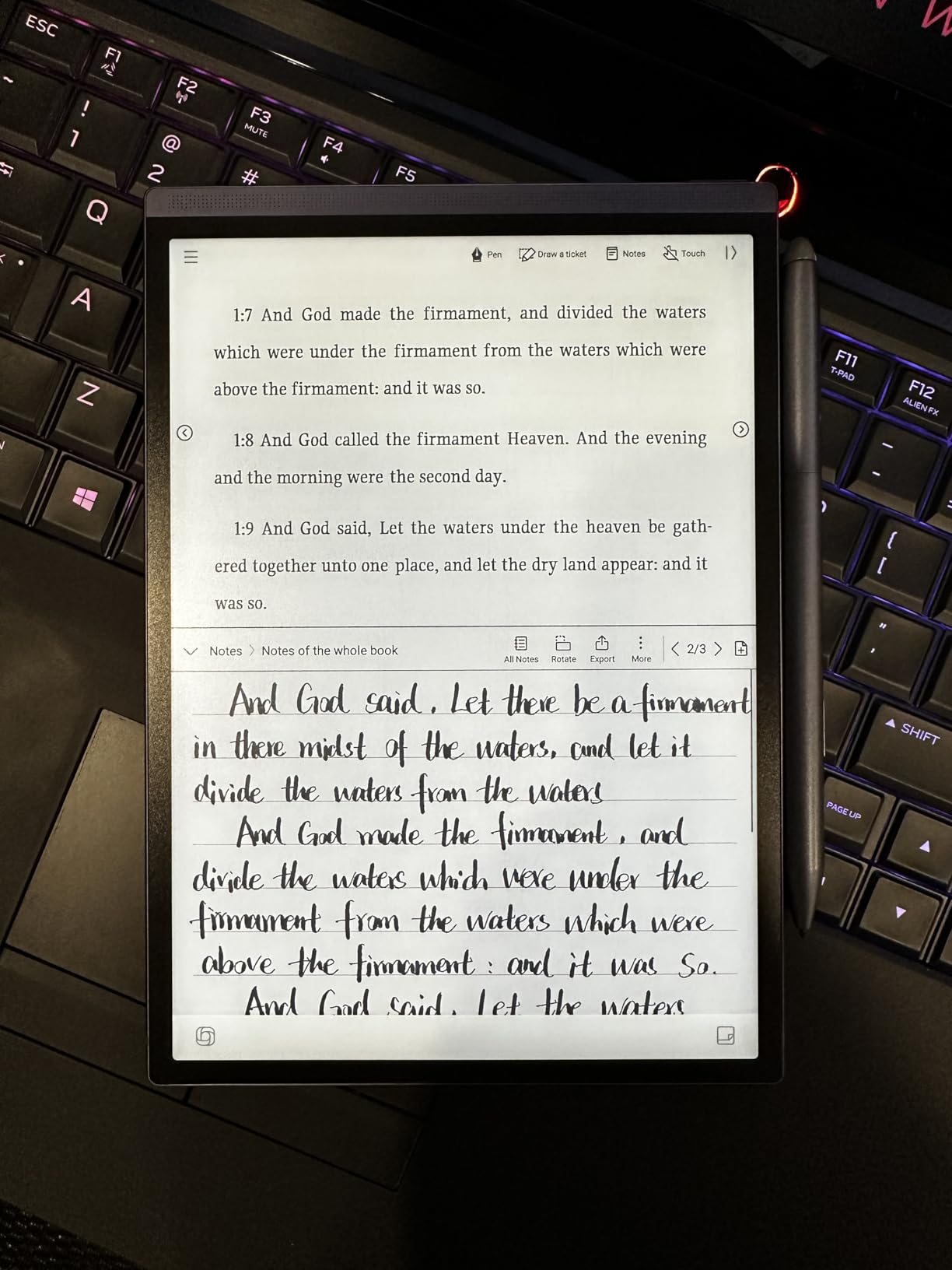
The iFLYTEK AINOTE Air 2 solves a problem every student has faced: trying to write fast enough to capture what the professor is saying. Its real-time voice-to-text transcription works in 17 languages, turning spoken lectures into searchable text instantly. I tested it in a fast-paced economics lecture and the transcription kept pace remarkably well, capturing technical terms with surprising accuracy.
The AI meeting summary feature is particularly useful for review sessions. After a lecture, the device generates a summary of key points from the transcription. This saved me hours of re-listening to recordings during exam prep. For international students or those studying foreign languages, the 83-language handwriting conversion is unmatched by any other device on this list.
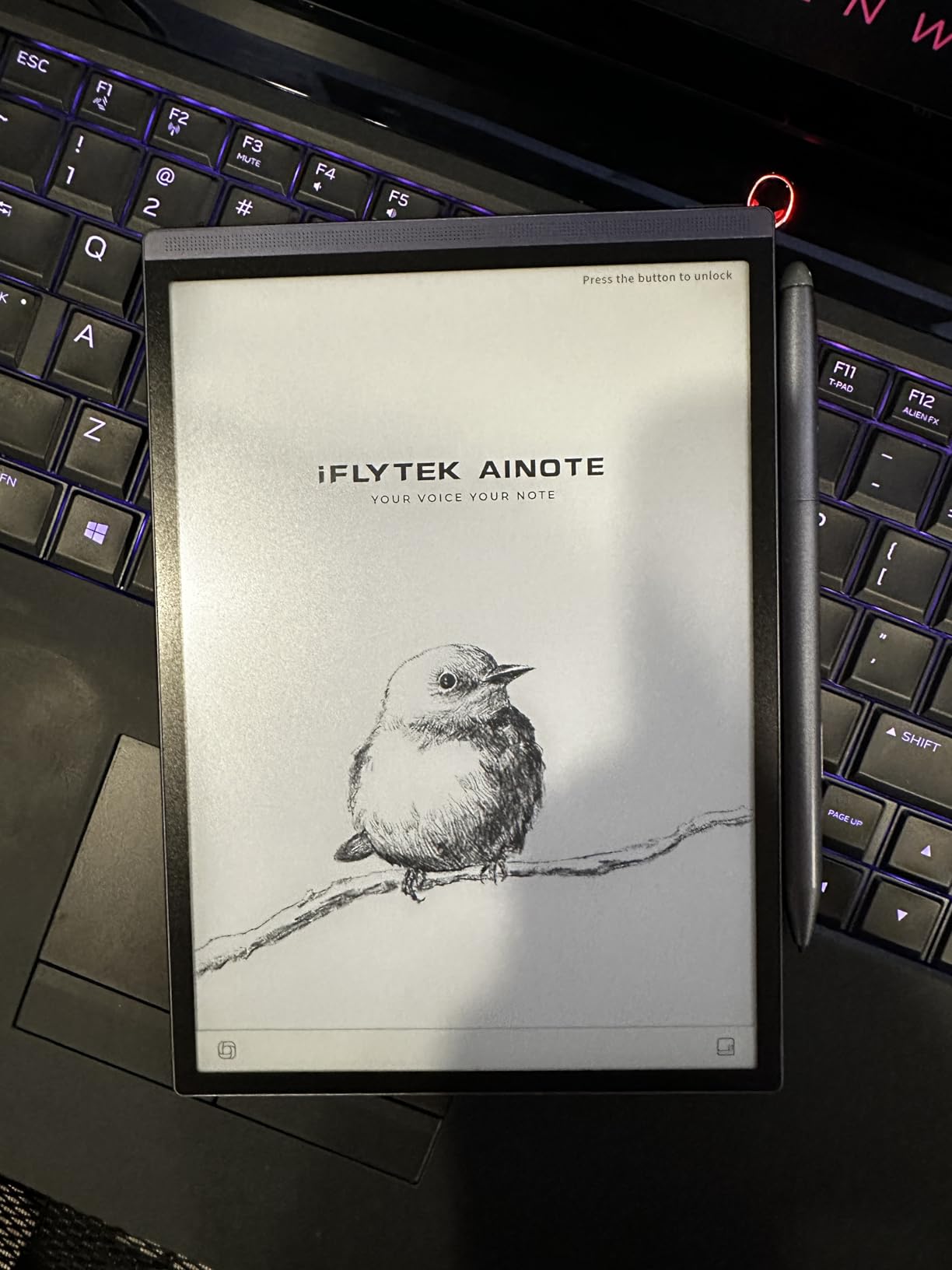
The 8.2-inch E-Ink screen is smaller than competitors, but that makes the device incredibly portable at just 231 grams. It fits in a jacket pocket and is perfect for quick note capture between classes. The dual-color reading light with 24 brightness levels means you can study in any lighting condition from bright classrooms to dark dorm rooms.
Battery life is exceptional at up to 5 weeks on a single charge. I never once worried about battery during testing. The 4G cellular connectivity is a unique feature that means you can sync notes and access cloud services even without campus Wi-Fi. For students in areas with spotty connectivity, this is a meaningful advantage.
Best for International Students and Language Learners
The multilingual capabilities make this the clear choice for students studying languages, international students attending English-language universities, or anyone in bilingual programs. Voice transcription in 17 languages and handwriting conversion in 83 languages covers virtually any academic scenario.
The AI summary feature generates concise overviews of transcribed content, which is invaluable for reviewing lengthy lectures. It highlights key terms and concepts automatically, giving you a study guide without manual effort.
Voice Transcription Accuracy and Limitations
In testing, transcription accuracy averaged around 85 to 90 percent for clear English speech at normal lecture pace. Technical terms and proper nouns occasionally needed correction, but the overall capture was reliable. You cannot use voice transcription and handwriting conversion simultaneously, so choose your primary mode per session.
The 32GB storage holds thousands of pages of notes and hours of audio recordings. For students who record every lecture, this capacity is more than sufficient for a full semester.
How to Choose the Best Digital Notebook for Students
Choosing the right digital notebook comes down to your specific study habits, budget, and course requirements. After testing all eight devices, here are the factors that matter most for students making this decision. For more device options, check our guide on e ink tablets for students.
Display Type: E-Ink vs LCD vs Paper-Sync
E-Ink displays are easiest on your eyes during long reading and writing sessions. They mimic the appearance of real paper and cause minimal eye strain. The trade-off is that they are black and white only and have slower refresh rates. Choose e-ink if you read extensively and want the most paper-like experience.
LCD displays like the XPPen 3 in 1 give you full color and fast refresh rates. You can read textbooks with color diagrams, watch videos, and use any app. The downside is more eye fatigue during extended use. Pick LCD if you want one device that replaces both a notebook and a tablet.
Paper-sync devices like the XPPen Note Plus and Rocketbook use real paper with digital capture. You write on actual paper and the device digitizes your notes. This gives the most authentic writing feel but limits you to the paper format and sync mechanism.
Battery Life for All-Day Campus Use
Students need devices that survive a full day of classes without charging. The iFLYTEK AINOTE Air 2 leads with 5 weeks of battery life. The Huion Ink EB1011 offers 12 days. The HUION Note provides 18 hours. Even the shortest battery life on our list covers a full day of lectures.
Consider your access to outlets during the day. If you have long gaps between classes with no charging opportunity, prioritize longer battery life. If you can charge between classes, battery becomes less critical.
Writing Feel and Pressure Sensitivity
Pressure sensitivity ranges from 4096 to 16384 levels across our picks. Higher levels give you more control over line thickness and shading. For most note-taking, 4096 levels is sufficient. Art students and anyone doing detailed diagrams will appreciate 8192 or higher.
Writing feel depends on screen texture and pen technology. E-ink displays with textured screens feel most like paper. The reMarkable Paper Pure sets the standard here. LCD screens with nano-etched coatings like the XPPen 3 in 1 come close. You may also want to explore our recommendations for smart pens for note taking to complement your device.
Cloud Sync and Cross-Platform Compatibility
Your notes should be accessible everywhere. Look for devices that sync to Google Drive, Dropbox, OneDrive, or similar services. The Rocketbook supports seven cloud services. The reMarkable integrates with Google Drive, Dropbox, and OneDrive. Devices running Android like the XPPen 3 in 1 and Huion Ink give you access to any cloud app.
Forum discussions reveal that syncing issues between devices are a top student complaint. Before buying, check that the device syncs reliably with your primary phone and computer operating system.
Budget and Total Cost of Ownership
Initial price ranges from under $30 for the Rocketbook to around $400 for premium e-ink tablets. But consider ongoing costs too. Stylus tips wear out and need replacement. Some devices like the reMarkable require a subscription for full features. Paper-sync notebooks need replacement cores or pages.
For budget-conscious students, the XPPen Note Plus and Rocketbook offer the best value. For those who can invest more, the XPPen 3 in 1 Color gives tablet-level functionality at a mid-range price. If you want to improve your note-taking technique overall, see our guide on how to take notes on iPad for students.
Special Features for Student Workflows
Audio recording sync, available on the HUION Note, lets you capture lectures alongside written notes. Voice-to-text transcription on the iFLYTEK AINOTE Air 2 transcribes lectures in real time. Handwriting-to-text conversion is available on most premium devices for digitizing your written notes.
PDF annotation is essential for students who receive digital handouts and textbooks. All the e-ink devices on this list handle PDF markup well. The split-screen feature on the Huion Ink lets you read and annotate simultaneously.
Frequently Asked Questions
What is the best digital notebook for students?
The best overall digital notebook for students is the XPPen 3 in 1 Color Digital Notebook. It combines a paper-like color display, 16384 pressure levels, full Android 14 with Google Play access, and handwriting-to-text conversion. For budget options, the Rocketbook Core at under $30 and the XPPen Note Plus offer excellent value.
Are digital notebooks worth it for college students?
Yes, digital notebooks are worth it for most college students. They make notes searchable, eliminate the risk of lost notebooks, support cloud backup, and often include features like audio recording sync and handwriting-to-text conversion. Students who switch typically report better organization and faster exam preparation, though the initial investment ranges from $30 to $400.
What is the best note-taking device for college?
The best note-taking device depends on your needs. For distraction-free writing, the reMarkable Paper Pure is unmatched. For lecture-heavy courses, the HUION Note with audio sync or the iFLYTEK AINOTE Air 2 with voice-to-text are ideal. For an all-in-one solution, the XPPen 3 in 1 Color Digital Notebook offers full tablet functionality alongside paper-like writing.
Should I use a tablet or digital notebook for notes?
Choose a dedicated digital notebook if you want distraction-free writing, longer battery life, and a paper-like feel. Choose a tablet if you need color displays, app flexibility, and multitasking capabilities. E-ink notebooks like the reMarkable and Huion Ink excel at focused writing, while the XPPen 3 in 1 bridges both worlds with a color display and full Android access.
Final Thoughts on the Best Digital Notebooks for Students
Finding the best digital notebooks for students in 2026 comes down to matching the device to your study style. The XPPen 3 in 1 Color is our editor’s choice for its unmatched versatility as both a notebook and full Android tablet. The XPPen Note Plus wins on value with real paper and digital sync, while the Rocketbook Core is the budget champion under $30.
For distraction-free purists, the reMarkable Paper Pure delivers the most authentic paper feel. Lecture-heavy students should consider the HUION Note for audio sync or the iFLYTEK AINOTE Air 2 for voice transcription. Whatever you choose, going digital means your notes are finally searchable, backed up, and impossible to lose in the bottom of a backpack.