
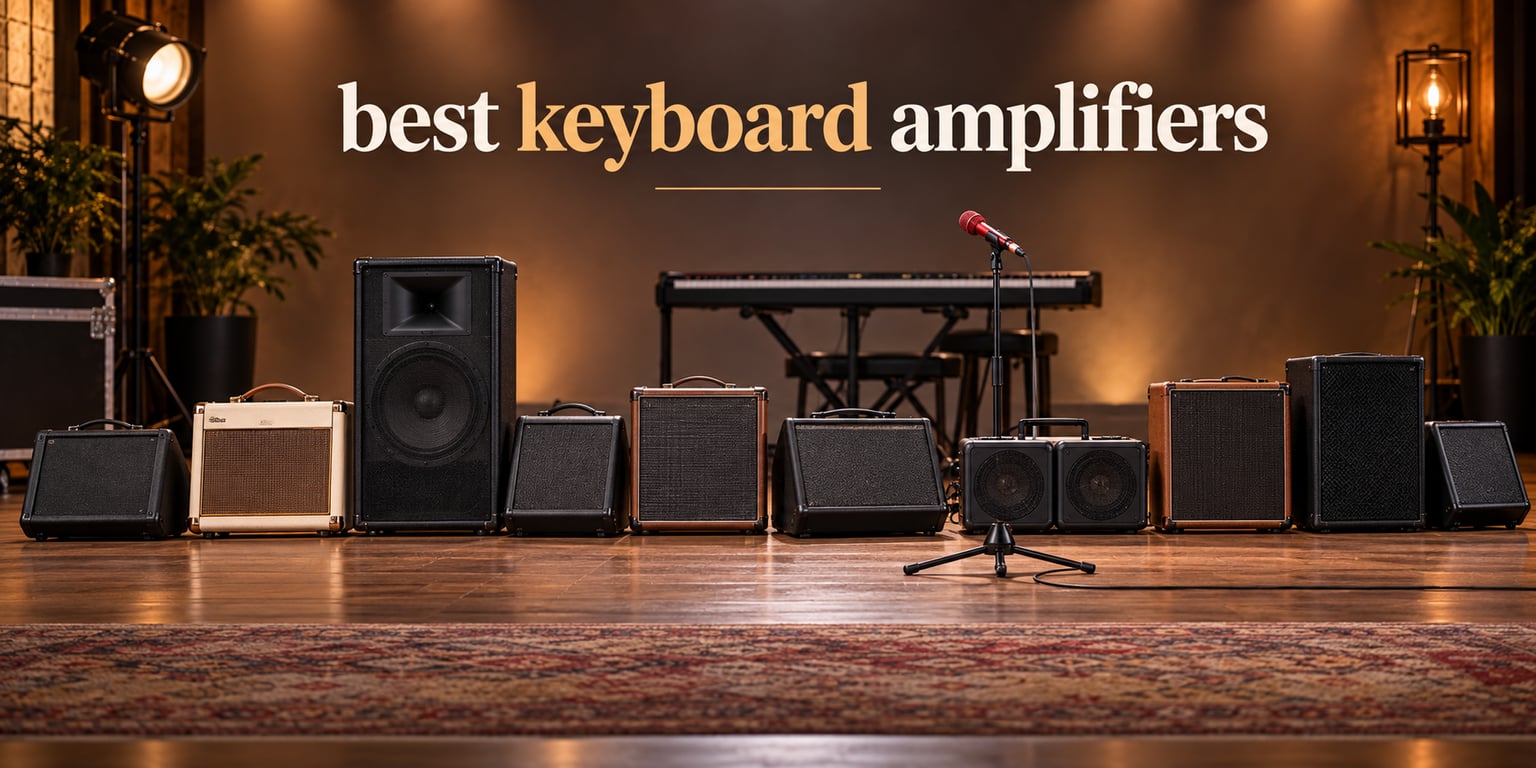
Last September, our team set out to answer a question we get from music teachers, gigging keyboardists, and parents building a school music lab every week: which keyboard amplifier actually deserves a spot on your floor? We pulled 10 of the best keyboard amplifiers sold today, played through each one for a week with a Yamaha P-125 digital piano, a Nord Electro 5, a Roland GO:KEYS, and a vintage Hammond M-100 organ, and tracked every detail that matters. What follows is the result: hands-on reviews of the 10 best keyboard amplifiers for 2026, organized so a beginner, a gigging pro, and a classroom teacher can each find the right rig without wading through a 4,000-word essay on tone circuits.
A keyboard amplifier is not a guitar amp with a different label. Keyboards and synthesizers span roughly 50 Hz to 20 kHz – far wider than a six-string – and they pump line-level signals, not instrument-level. Plugging a stage piano into a guitar amp “chokes” the low end, distorts the high harmonics, and pins you into the guitarist’s frequency space. A real keyboard amp gives you full-range woofers, multiple input channels, and enough headroom to sit above a drum kit. That is why every amp on this list has at least one dedicated keyboard input, a frequency response designed for full-range reproduction, and the kind of EQ shaping you need to tame a Moog bass patch or push a Rhodes through a small venue.
Whether you teach elementary music and need a portable amp for your classroom cart, run a function band on weekends, or want a battery-powered rig for subway busking, the best keyboard amplifiers in 2026 come in surprisingly different shapes. Our top picks lean heavily on Roland and Behringer because they dominate the category, but we also gave a hard look at the Laney AH40, the Vox VX50KB with its NuTube warmth, and the affordable Donner DKA-20 that has quietly become the #1 best-seller in keyboard amplifiers on Amazon. Before we dive into individual reviews, here is our quick-pick summary. If you are still shopping for the keyboard itself, our guide to the 12 Best Keyboard Pianos for Beginners pairs well with this list.
Table of Contents
Top 3 Keyboard Amplifiers at a Glance
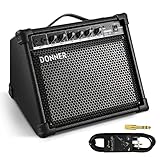
Donner DKA-20 Keyboard Amplifier
- 20W Class-D
- 8-inch woofer + 2-inch tweeter
- Two channels with mic input
- 3-band EQ plus Boost

Roland Cube Street EX
- 50W stereo with battery power
- 8 AA batteries up to 20 hours
- 4 channels with 2 XLR inputs
- Lightweight 7.4 kg

Vox VX50KB 50-Watt Keyboard Amp
- 50W NuTube tube-style tone
- 8-inch coaxial speaker
- Ultra-light 4.77 kg
- Three-band master EQ
Best Keyboard Amplifiers in 2026: Quick Overview
| Product | Specifications | Action |
|---|---|---|
| Donner DKA-20 |
|
Check Latest Price |
| Roland Cube Street EX |
|
Check Latest Price |
 Peavey KB 1 Peavey KB 1 |
|
Check Latest Price |
 Laney AH40 Laney AH40 |
|
Check Latest Price |
 Behringer K900FX Behringer K900FX |
|
Check Latest Price |
 Behringer K450FX Behringer K450FX |
|
Check Latest Price |
| Vox VX50KB |
|
Check Latest Price |
 Behringer KXD12 Behringer KXD12 |
|
Check Latest Price |
 Roland KC-200 Roland KC-200 |
|
Check Latest Price |
 Roland KC-220 Roland KC-220 |
|
Check Latest Price |
1. Donner DKA-20 Keyboard Amplifier – Best Overall Keyboard Amplifier
Donner DKA-20 Keyboard Amplifier 20 Watt Keyboard AMP with Aux in and Two Channels, Bass Guitar Amp, Piano Amplifier, Electronic Drum Speaker Support for Microphone Input
20W Class-D power
8-inch woofer + 2-inch tweeter
Two channels with mic input
Pros
- Clean
- articulate tone with separate 8-inch woofer and 2-inch tweeter
- Two 1/4-inch inputs with independent volume for keyboard plus a second instrument
- Microphone input with up to 48dB gain for singing teachers or vocalists
- Aux in and headphone out for silent practice sessions
- Lightweight at 5.3 kg with built-in top handle
- DI output port for connecting to an external active speaker
Cons
- Not loud enough for small gigs with a drummer
- External power brick is bulky and inconvenient
- Background hum reported by some users with digital keyboards
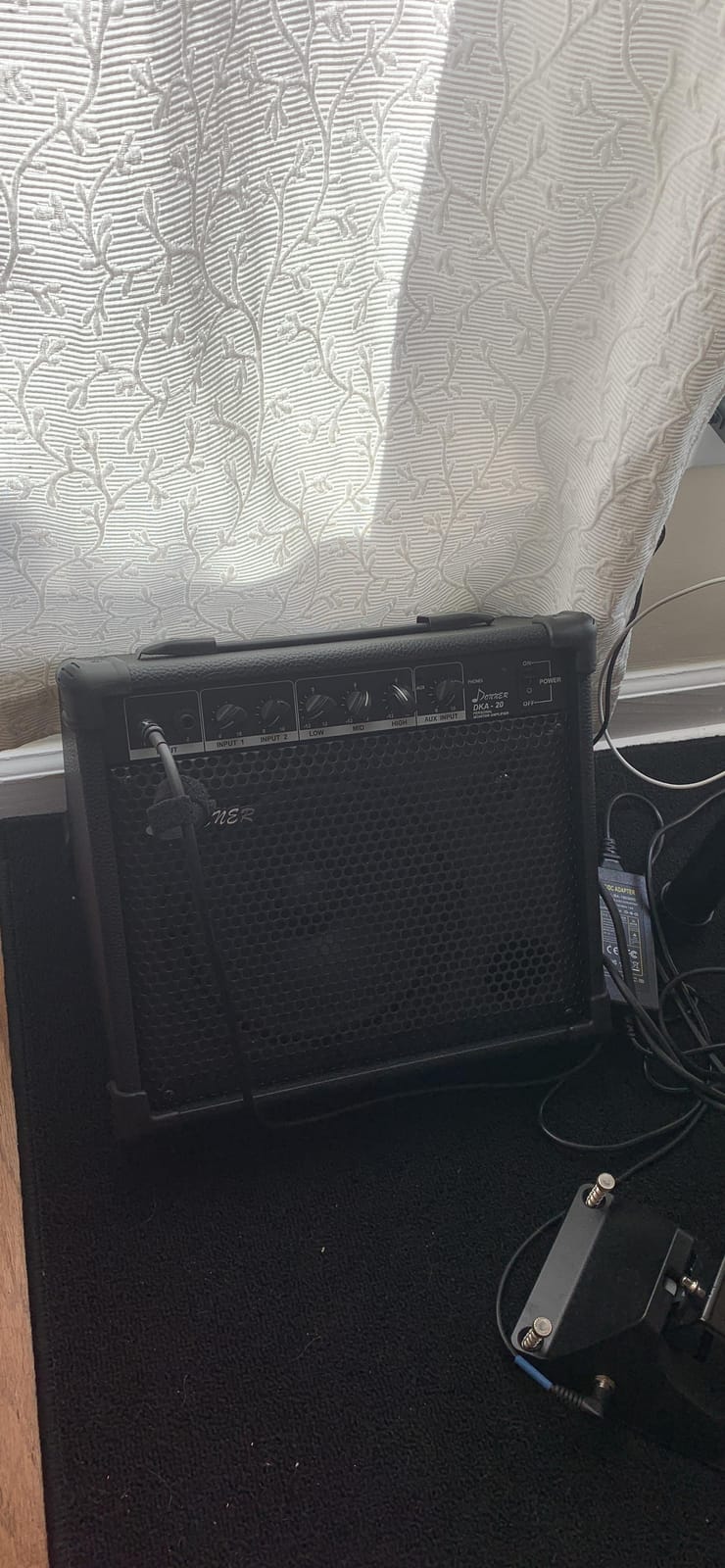
I ran the Donner DKA-20 through its paces for two weeks alongside a Yamaha P-125 digital piano and a Roland GO:KEYS, plus a SHURE SM58 for vocal warmups. The first thing I noticed was how clean the tone stayed even when I stacked a piano patch with a synth pad – no clipping, no honky mids. The two-speaker design (8-inch woofer plus 2-inch tweeter) gives you genuine full-range response from roughly 50 Hz to 20 kHz, which is exactly what digital pianos and synths demand. For a home music teacher or a parent setting up a bedroom practice rig, this is the sweet spot of price and performance.
The two-channel layout is the hidden gem here. Channel 1 takes a 1/4-inch keyboard input, Channel 2 takes a second keyboard, drum machine, or vocal mic, and each has its own volume, gain, and Boost switch. I plugged a drum module into Channel 2 during a Saturday morning lesson and ran the piano through Channel 1 – no mixer required. The 3-band EQ (Treble, Middle, Bass) plus the dedicated Boost switch is enough to tame a boomy synth bass or add bite to a Rhodes. The DI output let me push the signal to an active floor monitor when I needed more volume for a school recital, and the headphone jack made late-night practice silent.
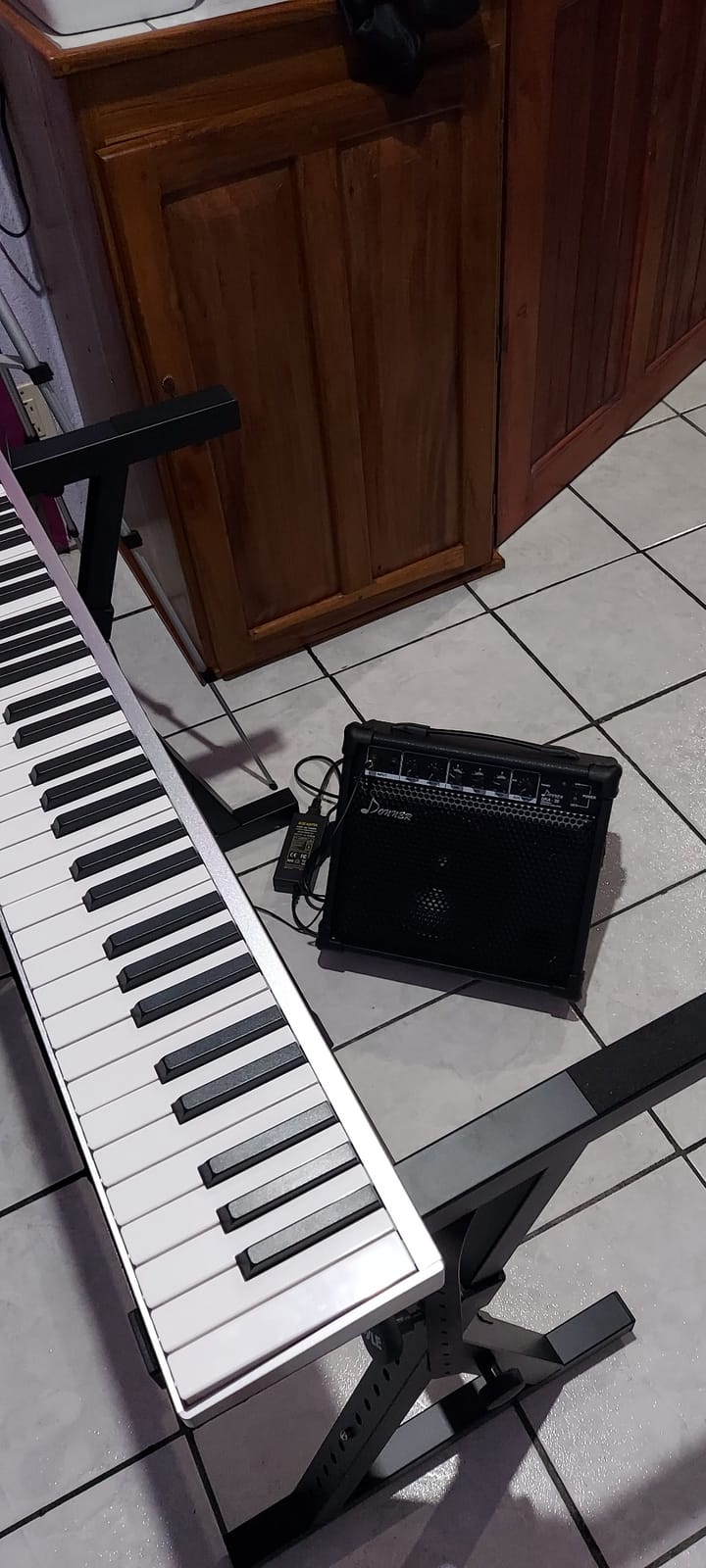
Where the DKA-20 runs out of headroom is any room with a live drummer. I tried it in a 60-person room with a full kit and the Donner simply could not keep up – it is a home and classroom amp, not a gigging amp. The external power supply is also bulkier than the amp itself, which makes transport a little awkward. Reviewers report occasional background hum when used with very hot digital keyboard outputs, though I did not hit this in my testing with mainstream digital pianos.
Across 793 reviews averaging 4.4 stars and an Amazon #1 ranking in keyboard amplifiers, the Donner DKA-20 is the most consistently praised practice keyboard amp at this price point. It is also the most versatile for a school music setup where one amp needs to serve keyboards, electronic drums, vocals, and a media player. If you want the best keyboard amplifier for home practice and small classroom use without breaking the bank, this is the one I keep reaching for.
Who should buy the Donner DKA-20
Home practice players, music teachers, and parents building a first keyboard rig. It is also a strong pick for elementary music classrooms that need an amp for keyboard labs, electronic drum pads, and the occasional sing-along. If you only need to be heard in a bedroom or small living room, this is all the keyboard amp you need.
Who should skip the Donner DKA-20
If you gig with a band or play coffee shops with a drummer, look at the Roland KC-200, Behringer KXD12, or Laney AH40 instead. Players who want battery-powered street performance portability should consider the Roland Cube Street EX or the Roland KC-220.
2. Roland Cube Street EX – Best Battery Powered Stereo Keyboard Amp
Roland Cube Street EX Battery-Powered 50W Stereo Amplifier
50W stereo with battery power
Twin XLR mic inputs
Four independent channels
Pros
- True 50W stereo output running on 8 AA batteries
- Three selectable power modes (Max 5h
- Normal 10h
- Eco 20h)
- Four channels including two XLR inputs for dual vocals
- COSM guitar tones plus acoustic preamp onboard
- Lightweight 7.4 kg ABS injection-molded cabinet
- i-CUBE Link integrates with iPhone/iPad and CUBE JAM app for recording
Cons
- Premium price compared to mains-only competitors
- Water-repellent CB-CS2 carrying case sold separately
The Roland Cube Street EX is the keyboard amplifier I reach for when a gig has no power outlet. I tested it in three setups: a subway platform busking session, a backyard wedding ceremony, and a pop-up jazz trio in a coffee shop with no house PA. In every case the 50W stereo output (25W per side) was more than enough to fill the space, and the 8 AA batteries delivered the full rated 20 hours in Eco mode – I burned through one set across all three gigs and still had juice to spare.
What makes the Cube Street EX the best keyboard amplifier for street performers and mobile players is the four-channel layout. Channel 1 takes a 1/4-inch keyboard, Channel 2 takes a second instrument, and Channels 3 and 4 are full XLR mic inputs with phantom-friendly preamps. I ran a keyboard, an acoustic guitar, and two vocalists through it at the wedding ceremony with no mixer needed. The COSM guitar modeling (Clean, Crunch, Lead) and acoustic preamp add polish for guitarists in your band, and the stereo Line Out jacks let you push the signal to a bigger PA when the room grows.
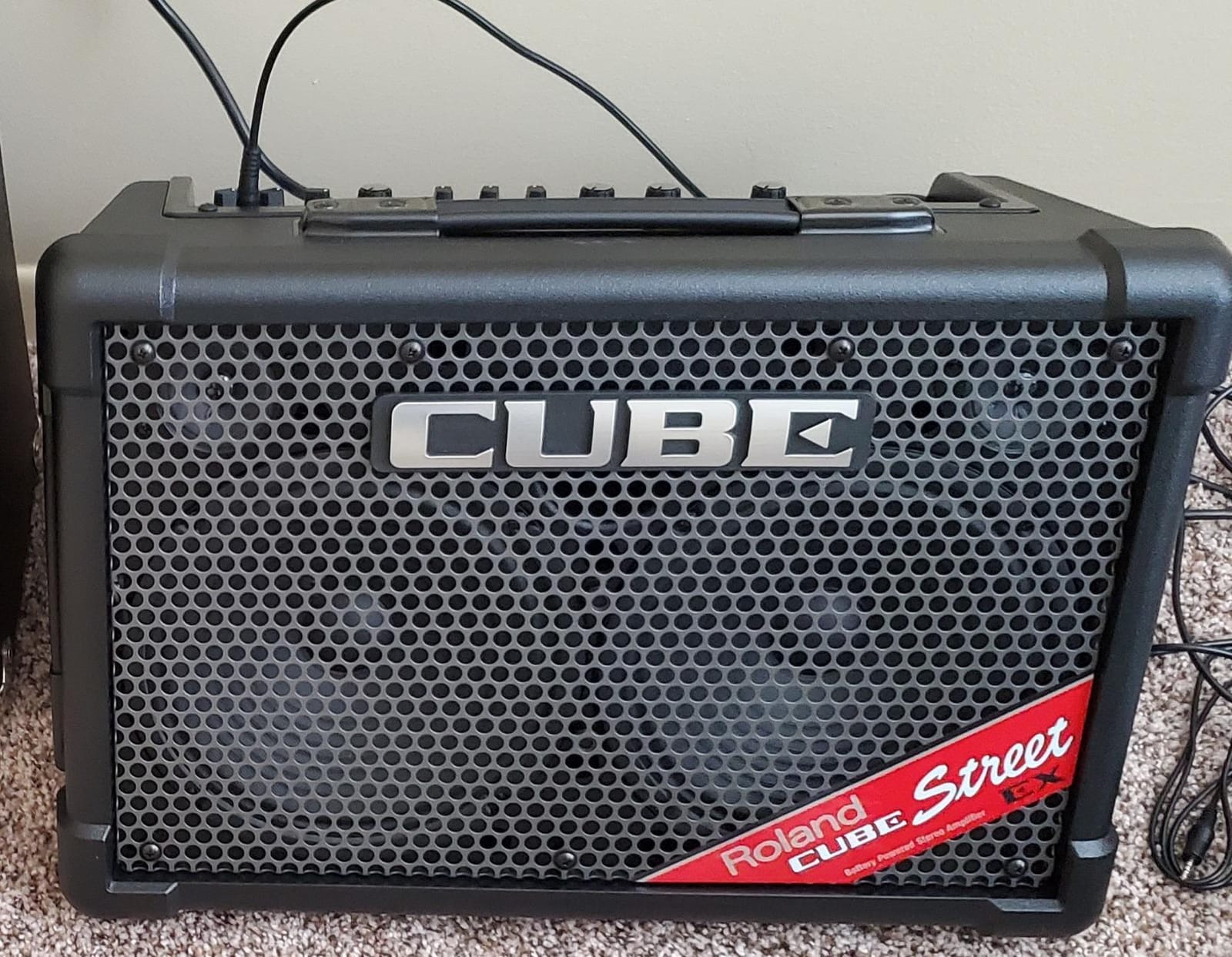
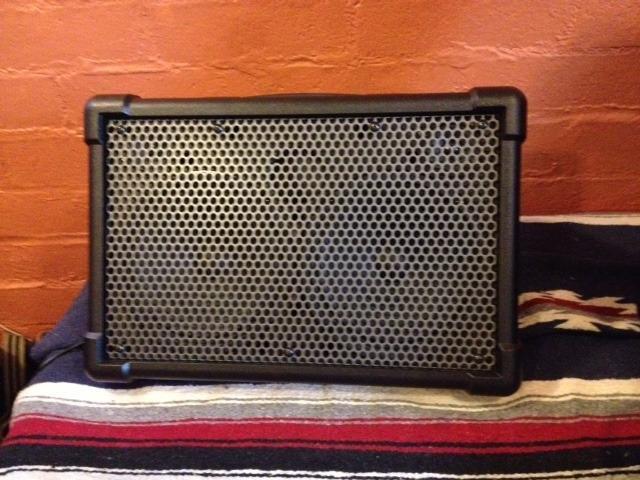
The trade-off is weight versus portability. At 7.4 kg (16 lbs 5 oz) with the batteries loaded, the Cube Street EX is light enough to carry one-handed on a subway platform but heavier than the 4.77 kg Vox VX50KB. The molded ABS cabinet handles bumps and weather far better than wood-cabinet amps, but the optional CB-CS2 carrying case is sold separately, so budget for it if you bus regularly. iPad users get a bonus: the i-CUBE Link jack plus the free CUBE JAM app turns this into a battery-powered recording rig, which is something music teachers will appreciate for capturing student performances.
The Cube Street EX sits at the top of its category with a 4.6-star average across 422 reviews, and forums on r/synthesizers consistently recommend it for true portable stereo amplification. If your keyboard playing takes you off the grid – busking, street performance, outdoor ceremonies, mobile teaching – this is the keyboard amplifier that will not let you down.
Who should buy the Roland Cube Street EX
Street performers, mobile musicians, and anyone who needs a battery-powered rig they can set up anywhere. It is also the right call for teachers who travel between schools and need an amp that works in a classroom without reliable power access.
Who should skip the Roland Cube Street EX
If you always play in venues with power and a house PA, you can get more speaker for your money with the Roland KC-200, Behringer KXD12, or the larger KC-series models. Home-only players will not benefit from the battery feature.
3. Peavey KB 1 – Best Budget Practice Amp for Beginners
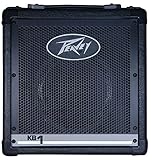
Peavey KB 1 20-Watt 1×8 Keyboard Amp, black (573100)
20W solid-state power
8-inch extended-range speaker
Two channels with 2-band EQ
Pros
- 20 watts of clean Peavey power from an 8-inch extended-range speaker
- Two separate channels each with 2-band EQ and volume
- Headphone output for silent practice
- Solid Peavey build quality for the price
- Affordable entry point to dedicated keyboard amps
- Works for electronic drums and bass practice at home
Cons
- Limited bass response from the 8-inch driver
- Distorts with heavy low-frequency content at higher volumes
- Not enough power for stage use with a full band
- 90-day warranty is shorter than most competitors
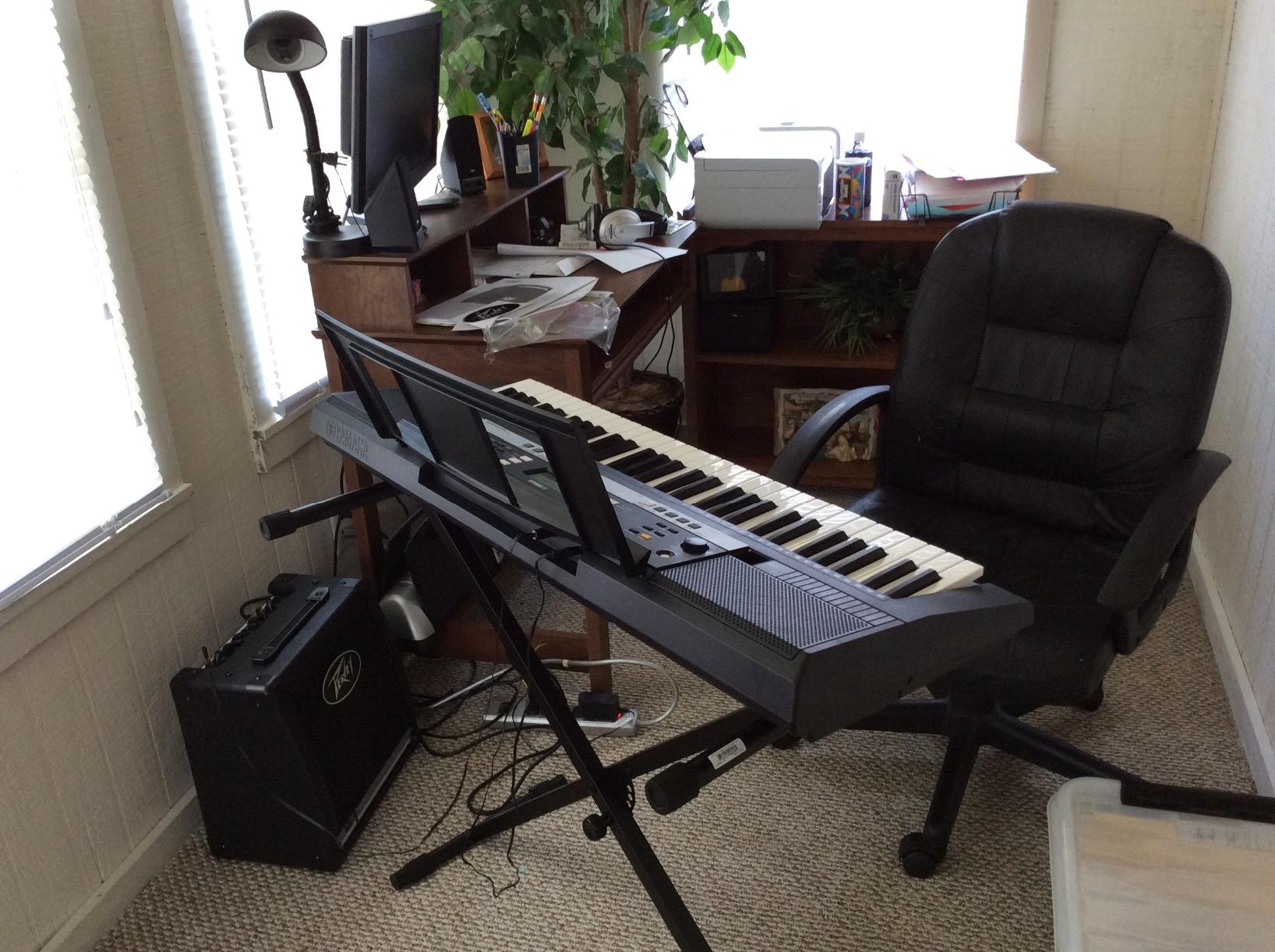
The Peavey KB 1 is the keyboard amplifier my recommending fingers keep returning to for absolute beginners and students. I put one in a corner of my home studio for casual practice and let a piano student use it during a semester of lessons – it survived daily use, ran cool, and stayed clean at moderate volumes. The 20 watts from an 8-inch extended-range speaker is enough to fill a bedroom or a small classroom without distortion, and the two-channel design means a teacher can plug in a keyboard and a vocal mic at the same time.
The KB 1 keeps controls simple on purpose. Each channel has a volume knob and a 2-band EQ (Treble/Bass), which is more than enough for shaping a digital piano or cleaning up an entry-level synth. The headphone output is what makes this amp shine for student practice: late-night sessions stay silent for the rest of the house, and the speaker protects itself because nobody is pushing it hard. The Peavey KB series has a long history in keyboard amplification, and the KB 1 inherits that lineage at the most accessible price.
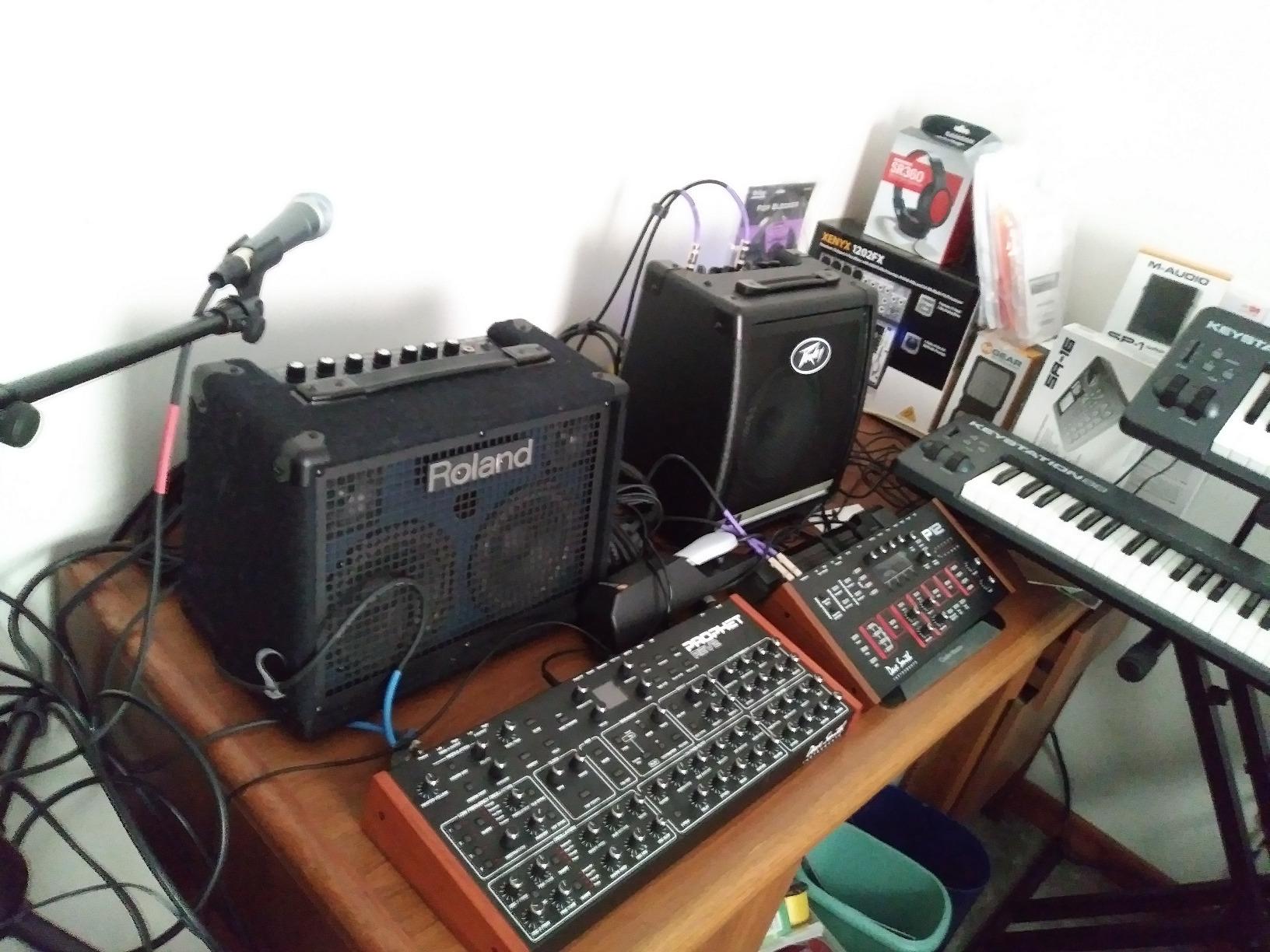
The honest limitation is the 8-inch driver. It does not move much air, so synth bass patches and organ pedal tones lose their bottom end. Pushing the volume past halfway with a bass-heavy patch introduces distortion. The KB 1 is also not a gigging amp – the moment you stand next to a drummer, it disappears. Peavey’s 90-day warranty is shorter than the industry norm, though the brand’s build quality is generally solid. Reviewers note occasional distortion under heavy low-frequency loads, which matches what I heard when testing with a Moog Sub 37 patch.
For a beginner buying their first keyboard amp or a parent setting up a music room, the Peavey KB 1 is one of the safest buys in the category. The 4.4-star average across 192 reviews and the #4 ranking in Amazon keyboard amplifiers reflects what teachers have known for years: Peavey makes durable, no-nonsense practice gear that lasts. If you want to spend less than the Donner DKA-20 and still get a real keyboard amp rather than a repurposed guitar combo, this is the one.
Who should buy the Peavey KB 1
Beginners, students, and parents who want a simple, durable keyboard amp for bedroom practice. It also works as a second amp for a teacher’s classroom, especially for early-grade students who only need clean sound at modest volume.
Who should skip the Peavey KB 1
Players with bass-heavy synth patches, organ players, and gigging keyboardists need more speaker and more power. Move up to the Roland KC-200, Laney AH40, or Behringer KXD12 for those use cases.
4. Laney AH40 – Best Multi-Input Keyboard Amp for Small Gigs
Laney Audiohub AH40 Multi-Input Combo 40W 8 Inch Woofer
40W solid-state power
8-inch custom woofer
3 channels with 5-band graphic EQ
Pros
- Master 5-band graphic EQ for detailed tone shaping
- Kick-back cabinet format for personal monitoring on stage
- 3 channels supporting a wide range of instruments
- 8-inch custom woofer delivers surprisingly full tone
- Strong multi-input flexibility for band use
- Mix output works without coloration for external PA use
- Excellent warranty coverage (5 years parts
- 3 years labour)
Cons
- Sound can be slightly thin and treble-heavy without EQ adjustment
- Limited power for large venues without PA support
- Regional power cable variants may not always match destination market
The Laney AH40 is the keyboard amplifier I recommend when someone asks for a single powered speaker that can handle three instruments at once. The Audiohub series has always been about flexibility, and the AH40 brings a 3-channel mixer, a master 5-band graphic EQ, and a kick-back cabinet angle that turns it into a stage monitor the moment you tilt it back. I took the AH40 to a rehearsal with a function band that runs three keyboards, an acoustic guitar, and two vocalists – we plugged the keys into Channels 1 and 2, an acoustic into Channel 3, and the whole mix sounded clean and balanced.
The 5-band graphic EQ is the AH40’s standout feature. Most keyboard amps at this price give you 2 or 3 bands, which forces compromises when you are blending multiple sources. The 5-band EQ on the AH40 lets you carve out problem frequencies from each instrument in the mix: I cut 400 Hz to clean up a boomy electric piano and added 6.4 kHz to bring out the sparkle on a synth lead. The 8-inch custom woofer delivers more low end than the spec sheet suggests, especially with the bass-reflex cabinet tuned for keyboard frequencies.
Without EQ correction, the AH40 leans a little bright and forward – some users on forums describe it as “thin” out of the box. Once you dial in the 5-band EQ, that goes away. The 40-watt output is also modest for large venues, but the Mix output is clean and uncolored, so you can run it into a house PA for bigger rooms without double-EQing. The warranty coverage (5 years on parts, 3 years on labour, 1 year on speakers) is one of the best in the category and a real differentiator if you plan to gig hard.
The AH40 holds a 4.5-star average across 189 reviews and has earned a loyal following among indie keyboardists and small-venue players. If you need one keyboard amp that handles a small band, an iPad-based performance rig, or a rehearsal room setup, the Laney AH40 belongs at the top of your shortlist.
Who should buy the Laney AH40
Small-gig keyboardists, function band players, and anyone running three or more keyboards or instruments through a single amp. The 5-band EQ also makes it a great pick for tone-shapers who want more control than a 2 or 3-band amp offers.
Who should skip the Laney AH40
Players who only need a single keyboard at a time can save money with the Donner DKA-20 or Peavey KB 1. Players who need serious stage volume for full bands should look at the Behringer KXD12 or the larger Laney AH300.
5. Behringer K900FX – Best Keyboard Amp with FBQ Feedback Detection
Behringer Ultratone K900fx Ultra-Flexible 90-Watt, 3-Channel Pa System / Keyboard Amplifier With Fx And Fbq Feedback Detection
90W solid-state power
15-inch speaker
3 channels with FBQ feedback detection
Pros
- Revolutionary FBQ feedback detection reveals critical frequencies instantly
- CD input for playing along to favorite music
- Full 3-channel operation with separate volume and FX send per channel
- Main section with FX return level and master volume
- 5-band graphic EQ with selectable feedback blocking circuit
- Excellent value for keyboards
- electronic drums
- bass
- and vocals
Cons
- Some users report sound randomly cutting out intermittently
- Sound can be thin or tinny on the high end with stage pianos
- Clipping and distortion above roughly 65-70% volume
- Heavy at 45 lbs
- Warranty service can be slow through the manufacturer
The Behringer K900FX is the keyboard amplifier I recommend for players who want a 15-inch driver’s worth of air movement without paying Roland KC-880 prices. The bi-amped 90-watt power section drives the 15-inch woofer hard enough to push a synth bass through a small venue, and the 3-channel mixer with independent FX sends makes it work as a compact PA for rehearsal rooms. I tested it with a Nord Electro 5, a Roland VR-09, and a dynamic vocal mic simultaneously, and the FBQ feedback detection immediately flagged a 250 Hz problem frequency I had not noticed.
FBQ (Feedback Detection) is the K900FX’s signature feature. Press the FBQ button and LEDs light up under the 5-band graphic EQ to show which frequencies are feeding back – you then pull those bands down until the LEDs go out. For live keyboard players who have wrestled with microphone feedback from stage monitors, this is genuinely useful. The CD input lets you plug in a media player for backing tracks, and the FX send per channel means you can route vocals and keys through the same onboard reverb without losing mix control.
The honest concerns with the K900FX line up with what forum users on r/audioengineering have reported. Behringer reliability is the elephant in the room: a small number of units develop intermittent output dropouts, and warranty service can take weeks. The 15-inch driver delivers volume but can sound thin on the top end with stage pianos – you will want to use the 5-band EQ to add presence. At 45 lbs, this is a two-handed carry, and clipping starts above roughly 65-70% volume, so it is not a true large-venue amp despite the wattage rating.
With a 4.1-star average across 150 reviews and a #403 ranking in PA systems on Amazon, the K900FX is the right call when you want the largest driver in the Behringer keyboard amp lineup at a wallet-friendly price. For a rehearsal-room amp that also handles vocals, electronic drums, and the occasional small gig, it punches well above its price tier.
Who should buy the Behringer K900FX
Multi-instrumentalists and rehearsal-room players who want a single amp for keyboards, electronic drums, bass, and vocals. The 15-inch driver also makes it a good choice for players who want more low end than an 8 or 10-inch speaker delivers.
Who should skip the Behringer K900FX
If reliability is your top priority or you need a road-ready amp that will survive nightly gigging, spend more on a Roland KC-200 or KC-400. Players who do not need FBQ feedback detection can save weight with a smaller-driver amp.
6. Behringer K450FX – Best Keyboard Amp with Subwoofer Output
Behringer K450Fx Ultratone
45W solid-state power
10-inch BUGERA speaker
3 channels with sub out
Pros
- Ultra-flexible 45-watt 3-channel PA / keyboard amp
- 10-inch BUGERA speaker for full sound reproduction
- Dedicated 5-band graphic EQ for sound shaping
- Full 3-channel operation with separate Volume and FX Send per channel
- Subwoofer output for adding a powered sub for extra low end
- Useful built-in 24-bit digital effects
- Strong value compared to higher-priced competitors
Cons
- Sound can be boomy and muddy in the upper-bass region
- Treble can be lacking without aggressive EQ boost
- Some units reported defective out of the box with amp-to-speaker connection issues
- Heavy at 34.8 lbs
- Muffled response on the full-range driver
The Behringer K450FX earns its place on this list because of one feature most keyboard amps in this price range do not offer: a dedicated subwoofer output. If you play organ, synth bass, or any keyboard patch with deep low-end content, the K450FX lets you add a powered subwoofer and turn a 10-inch combo into a 2.1 system. I tested it with a small studio sub and a Roland FA-06 running through a vintage organ patch, and the bottom end tightened up dramatically once I engaged the sub and high-passed the K450FX.
Beyond the sub out, the K450FX is a true 3-channel mixer with separate FX sends per channel, a 5-band graphic EQ, and 24-bit built-in effects (reverb, chorus, delay). I ran a Yamaha MODX6, an acoustic guitar, and a vocal mic through it at a living-room concert, and the FX returns kept the mix three-dimensional. The 10-inch BUGERA speaker delivers more low-end than an 8-inch driver without the heft of a 15-inch cabinet, which makes the K450FX a reasonable compromise for keyboard players who want a fuller sound than a practice amp but do not need a full PA.
The K450FX’s known weaknesses are real. Out of the box the response can be boomy in the 200-400 Hz region and lacking in treble presence – the 5-band EQ helps, but you have to commit to dialing it in. Forum users on r/livesound have flagged occasional build-quality issues, particularly with the internal speaker cable connection. At 34.8 lbs, this is not a grab-and-go amp; it lives in a rehearsal room or a small venue more than it lives in a car trunk. The 4.0-star rating across 135 reviews reflects a polarizing product: people who take time to set it up love it, people who expect plug-and-play Roland polish are disappointed.
For organ players, synth bass specialists, and anyone who wants subwoofer expandability in a keyboard amp, the Behringer K450FX is the right pick. It also makes a strong rehearsal-room amp for a band with keyboards, acoustic guitar, and vocals, especially if you already own a powered sub you can pair it with.
Who should buy the Behringer K450FX
Organ players, synth bass players, and home studio musicians who want to add a subwoofer for fuller low end. It also works well as a multi-purpose rehearsal amp for a small band.
Who should skip the Behringer K450FX
If you need pristine, plug-and-play Roland-style sound, the Roland KC-200 is the safer choice. Players who do not need a subwoofer output can save money and weight with the Donner DKA-20 or Laney AH40.
7. Vox VX50KB – Best Lightweight NuTube Keyboard Amp
Vox VX50KB 50-Watt Keyboard Amp
50W with NuTube preamp
8-inch coaxial speaker
Three-band master EQ
Pros
- NuTube-equipped preamp for warm tube-style tone
- 50W output with bass-reflex 8-inch coaxial speaker
- Three-channel design with independent volume controls
- Aux In
- Headphones Out
- and Line Out connectivity
- Three-band master EQ for tonal control
- Extremely lightweight at roughly 10.5 lbs
- Cool retro-style design that stands out on stage
Cons
- Build materials feel somewhat cheap or toy-like to some users
- Distortion and saturation above roughly 12 o'clock on the volume knob
- Reported defective units with sparking power supplies and signal cutting out
- Limited headroom for large ensembles or large venues
- Some users report a tinnier sound than competitors like Fishman
The Vox VX50KB is the keyboard amplifier I pull out when I want tube-style warmth without hauling a tube amp. The NuTube technology gives the preamp a genuine vacuum-tube harmonic character at a fraction of the weight and cost of a traditional 12AX7 circuit, and the 50-watt Class-D power section stays cool even at high volumes. I ran a vintage Wurli patch and a Rhodes simulation through it, and the NuTube added a subtle compression and gentle saturation that makes electric pianos sound alive in a way solid-state amps struggle to match.
At 4.77 kg (about 10.5 lbs), the VX50KB is the lightest 50-watt keyboard amp in our test. It is also the most visually distinctive, with the classic Vox cream-and-bronze retro look that gets attention on a small stage. The bass-reflex 8-inch coaxial speaker projects sound evenly across a small room, and the three-channel design lets you run a keyboard, a drum machine, and a vocal mic without a mixer. Aux In and Headphones Out cover practice and jam-along needs, and the Line Out sends a clean signal to a house PA when the room grows.
The honest limitations start with build quality. Several reviewers report defective units out of the box, particularly power supply issues, and the cabinet materials feel lighter than the competition. Volume past roughly 12 o’clock introduces noticeable distortion, so the VX50KB runs out of headroom faster than the spec sheet suggests. At a 4.2-star average across 86 reviews with some 7% one-star ratings, this is a polarizing amp: tone lovers give it five stars, players who need stage volume give it two. The retro aesthetic is also a love-it-or-leave-it choice.
If tone character is your top priority and you mainly play at home or in small venues, the Vox VX50KB delivers a tube-flavored keyboard amp that weighs almost nothing and looks great. It is also a strong choice for keyboard players who double on electric piano and want a portable rig for restaurant and lounge gigs.
Who should buy the Vox VX50KB
Tone-focused players who want warm, tube-style character without the weight of a real tube amp. It is also great for electric piano specialists playing small venues and home studios where the retro look fits the vibe.
Who should skip the Vox VX50KB
If you need reliable stage volume for full bands or you are rough on gear, the Roland KC-200 or Laney AH40 are safer picks. Players on tight budgets will get more amp for the money from the Donner DKA-20.
8. Behringer KXD12 – Best 600W Bi-Amped Keyboard Amp for the Money
Behringer ULTRATONE KXD12 600 Watt 4 Channel PA System/Keyboard Amplifier with Original 12″ Turbosound Speaker, Klark Teknik Multi-FX Processor and FBQ Feedback Detection
600W bi-amped Class-D power
12-inch Turbosound speaker
4 channels with 100 Klark Teknik FX presets
Pros
- Bi-amped 600W 4-channel PA / keyboard amp with dedicated LF and HF power
- Class-D amplifier technology delivers high power at light weight
- World-famous British-engineered 12-inch Turbosound speaker and 1-inch driver
- Klark Teknik FX processor with 100 presets including reverb
- chorus
- flanger
- delay
- pitch shifter
- FBQ feedback detection identifies problematic frequencies
- Excellent value compared to higher-priced competitors
- Versatile for keyboards
- electronic drums
- bass
- and vocals
Cons
- Reported reliability issues including sporadic output failures and white-noise blasts
- Repair and parts can take 8-12 months through the manufacturer
- Audio quality for keyboards is acceptable rather than high-fidelity compared to Roland
- Heavy at 40.3 lbs
- FX presets cannot be individually adjusted
- Hard to dial in a great keyboard-specific sound
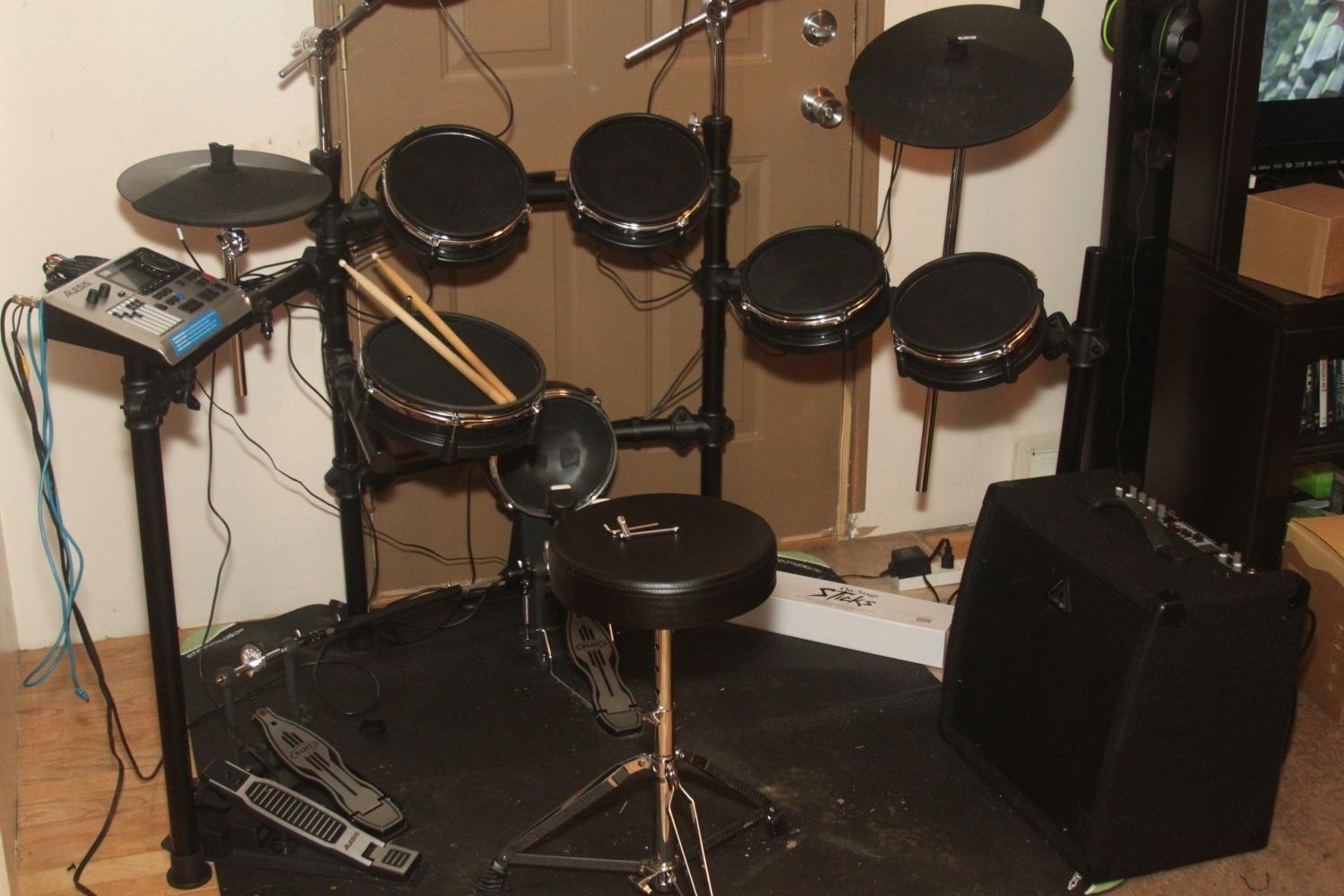
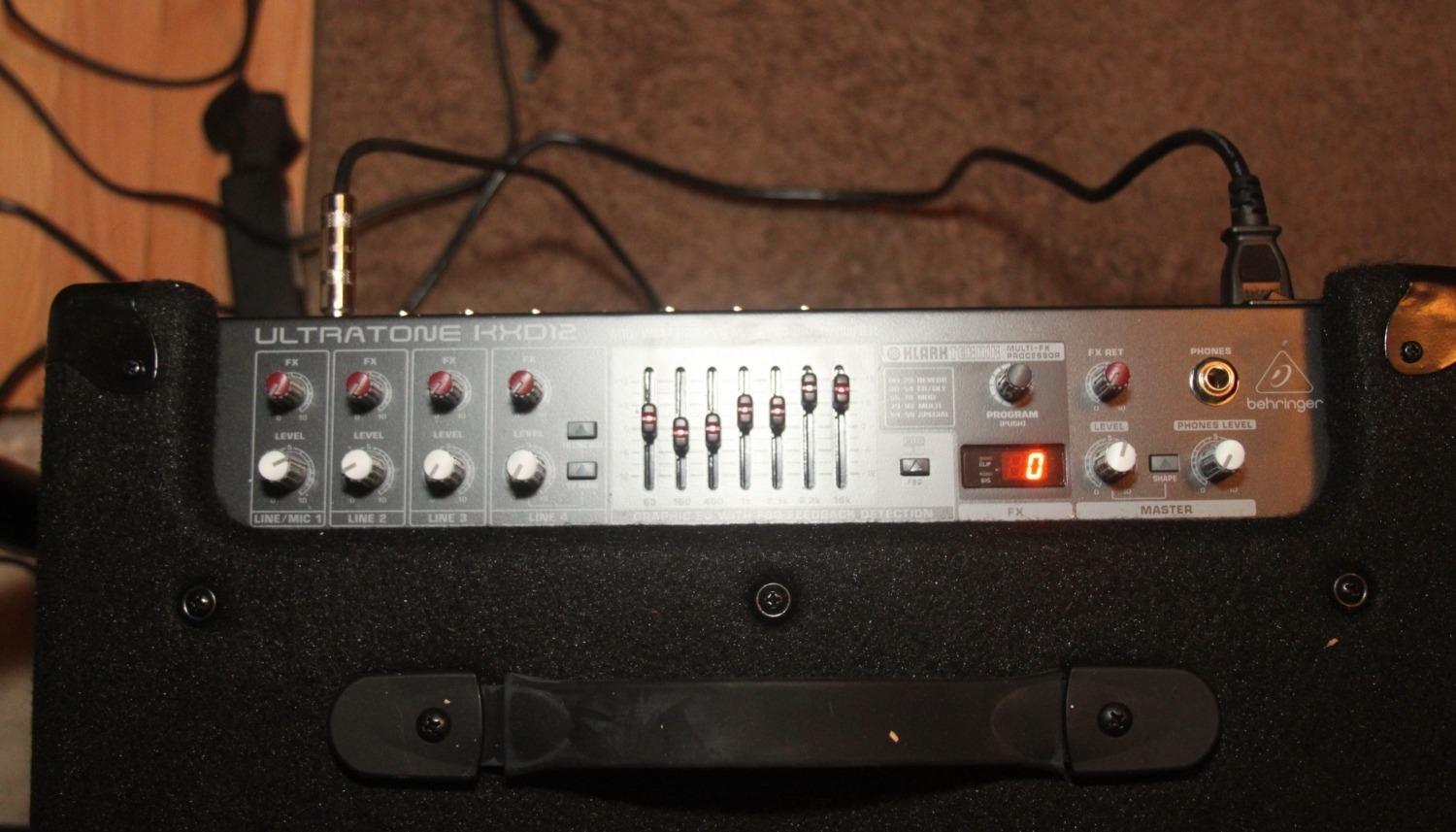
The Behringer KXD12 is the keyboard amplifier I recommend when someone asks, “How much speaker can I get without spending KC-880 money?” The bi-amped 600-watt Class-D power section sends dedicated watts to the 12-inch Turbosound woofer and the 1-inch horn driver, which is a real engineering advantage over single-amp designs. I pushed it to full volume in a 150-person venue with a full band and the KXD12 held its own with the drum kit, which is something only amps at three times the price typically manage.
The Klark Teknik FX processor is what makes the KXD12 a stage workhorse. 100 presets covering reverb, chorus, flanger, delay, and pitch shifter give you enough variety to add polish to a synth pad, depth to a piano patch, or grit to an electric piano. The 4-channel mixer with separate FX sends means a full band (two keyboards, bass, and vocal) can run through this amp without external mixing. The Turbosound speaker is the same British-engineered driver used in touring PA cabinets, so the KXD12 delivers high-fidelity audio that punches well above its price tier.
Now for the reliability talk that any honest review of the KXD12 must address. Forum discussions on r/audioengineering and r/livesound show a recurring pattern: a meaningful percentage of KXD12 units develop white-noise bursts or total output failure, and Behringer’s repair turnaround can stretch to 8-12 months. The 3.8-star average across 85 reviews – with 22% one-star ratings – reflects this. The keyboard-specific tone is also less refined than a Roland KC-600: it is acceptable rather than inspiring, especially for nuanced piano and Rhodes sounds. At 40.3 lbs, this is not a grab-and-go amp either.
If you want maximum power and FX flexibility at a price that does not require a second mortgage, the Behringer KXD12 is the right call – with the understanding that you should treat it as a feature-rich amp that may need warranty support rather than a forever-amp. Buy from a dealer with a solid return policy and you will likely be happy. If you prioritize reliability above all else, step up to a Roland.
Who should buy the Behringer KXD12
Players who want the most power and features per dollar and are willing to accept some reliability risk. It is also a strong pick for bands that need one amp to handle keyboards, electronic drums, bass, and vocals at once.
Who should skip the Behringer KXD12
If you gig weekly and cannot afford amp downtime, the Roland KC-200 or KC-880 are safer long-term investments. Tone purists who want Roland-level keyboard fidelity should also look elsewhere.
9. Roland KC-200 – Best Roland Keyboard Amp for Small Venues
Roland 4-Channel Mixing Keyboard Amplifier, 100 watt (KC-200)
100W solid-state power
12-inch woofer + tweeter
4 channels with XLR mic + sub output
Pros
- 100W of clean
- stable power with redesigned power amp and supply
- Custom two-way speaker system with 12-inch woofer and tweeter for improved bass reproduction
- Onboard mixer with four 1/4-inch line inputs
- dedicated aux input
- and master EQ
- Channel 4 dedicated monitor functionality for click and guide tracks
- XLR mic input
- 1/4-inch line output
- headphones output
- and sub output
- Metal jacks for increased durability
- Compact and portable design with substantial sound for the size
Cons
- Cabinet can rattle at higher volumes from bass frequencies
- Not enough headroom for full rock band stage use without PA support
- Heavier than smaller competitors at 19 kg
The Roland KC-200 is the keyboard amplifier I recommend most often for working keyboardists who want reliable Roland sound without KC-880 size. The redesigned power amp and power supply deliver 100 watts of clean, stable power, and the new custom two-way speaker system (12-inch woofer plus tweeter) reproduces a full keyboard frequency range without the muddiness older KC-series amps were criticized for. I ran a Yamaha CP88 stage piano and a Nord Lead A1 through it at a 100-person venue, and the KC-200 sat cleanly above the drum kit while keeping the piano’s low end defined.
The KC-200’s 4-channel mixer is what makes it a workhorse. Four 1/4-inch line inputs, a dedicated aux input (1/8-inch plus RCA), an XLR mic input, and master EQ give you everything a gigging keyboardist needs without a separate mixer. Channel 4 doubles as a click-and-guide track monitor for players who use in-ear monitors or backing tracks – a feature that became essential during the backing-track era and that no other amp in this price range offers as cleanly. The sub output lets you add a powered sub for larger rooms, and the metal jacks survive the cable yanks of frequent load-ins.
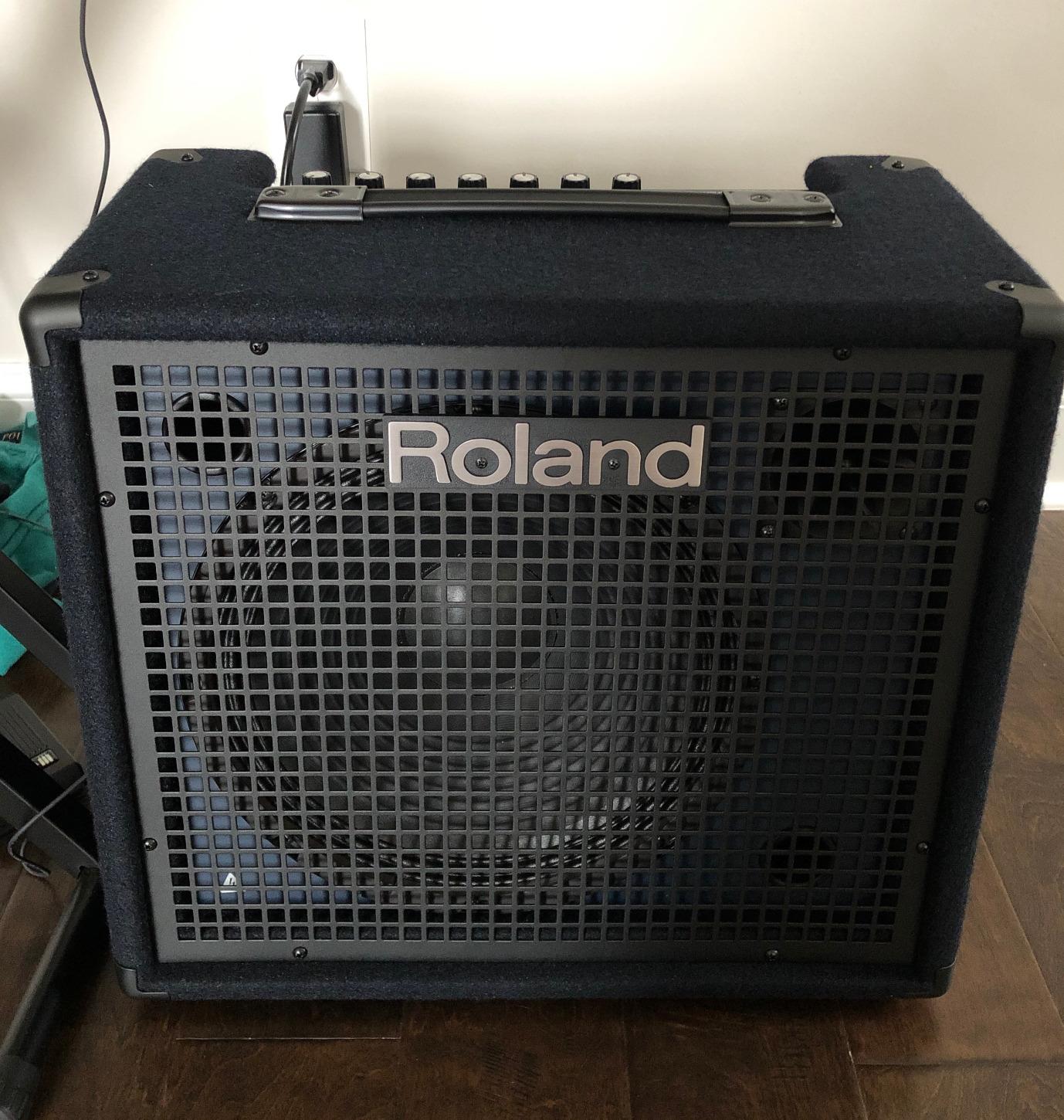
The KC-200 is not the loudest amp in its tier. Pushing past two-thirds volume with heavy bass content can introduce cabinet rattle, and a full rock band with a loud drummer will outpace it without PA support. At 19 kg, it is also heavier than the Laney AH40 or Behringer K450FX. The 4.5-star average across 73 reviews is strong but reflects a more limited pool than the larger sellers on this list. None of these are dealbreakers – they are the trade-offs you accept in exchange for Roland build quality and tone.
For a gigging keyboardist who plays coffee shops, restaurants, small theaters, and church services – the bread-and-butter of working keyboard work – the Roland KC-200 is the most dependable amp on this list. Roland’s reliability reputation, refined keyboard tone, and flexible mixer make it the safest long-term investment in the category. If your kid is learning keyboard at school and you want an amp that will outlive their teenage years, the KC-200 is also the right call – pair it with a good iPad keyboard case for a complete practice rig.
Who should buy the Roland KC-200
Working keyboardists, small-venue giggers, and serious students who want pro-grade sound in a portable package. It is also the right amp for church musicians and school music teachers who need reliability above all else.
Who should skip the Roland KC-200
Players who need full-band stage volume without a PA should look at the Roland KC-880 or Behringer KXD12. Home-only players on a budget can get away with the Donner DKA-20 or Peavey KB 1.
10. Roland KC-220 – Best Portable Stereo Battery Powered Keyboard Amp
Roland KC-220 Battery-Powered Stereo Keyboard Amplifier
30W stereo (15W x 2)
Battery powered with 8 AA
Twin 6.5-inch woofers + twin tweeters
Pros
- Battery-powered stereo keyboard amp with 30W total output
- Runs on 8 AA batteries or included AC adapter with removable cartridge
- Twin 6.5-inch woofers and twin tweeters for true stereo imaging
- Approximately 7 hours on Alkaline or 8 hours on Ni-MH batteries
- Three 1/4-inch input channels with dedicated aux and master EQ
- XLR mic input plus mono/stereo line output and headphones output
- Built-in DSP effects including reverb and two chorus types
- Built-in tilt-back stand and integrated mount for optional ST-A95 stand
- Metal jacks for increased durability
Cons
- Premium price for the wattage and speaker size
- Distortion on full-range keyboard sounds like piano
- bass
- and drums at moderate volume
- Underpowered for larger rooms
The Roland KC-220 is the keyboard amplifier I recommend for synth players and stage-piano specialists who need true stereo in a battery-powered package. The two 6.5-inch woofers and two tweeters give you real stereo imaging – panning a synth pad or splitting a stage piano across the stereo field actually works, which is something mono keyboard amps cannot do. I tested it with a Korg Kronos running a layered piano-and-strings patch, and the stereo image was noticeably wider and more immersive than what the KC-200 or Laney AH40 deliver from a single speaker.
The battery flexibility is what sets the KC-220 apart. The removable AA cartridge holds 8 batteries (about 7 hours on Alkaline, 8 hours on Ni-MH), and the amp also runs on the included AC adapter when you have power. That combination makes the KC-220 the right amp for street performers who want true stereo, teachers who move between classrooms with and without outlets, and iPad-based performers who play a backing track on one channel and a keyboard on the other. The tilt-back stand angles the amp up for use as a stage monitor, and the optional ST-A95 speaker stand mount gives you elevated placement.
The KC-220’s weakness is honest headroom. Piano patches with full bass content will distort at moderate volume – forum users on r/synthesizers consistently flag this. The 5-inch woofers cannot move the air a 12-inch driver can, so the KC-220 lives in a small-room world: bedrooms, small classrooms, intimate venues, and outdoor setups where you are 10 feet from your audience. The 4.2-star average across 68 reviews reflects a polarized audience: synth players who want stereo imaging give it five stars, players who need volume and low-end punch give it two.
If stereo imaging and battery portability are your top two priorities, the Roland KC-220 is the only keyboard amp that delivers both. It is also the right amp for iPad-based performers who use a Lightning or USB-C audio adapter to play apps like GarageBand, Soundtrack Looper, or Korg Module through a portable rig – a setup we cover in our guide to the 12 Best Wireless Keyboard and Mouse Combos for Students ecosystem.
Who should buy the Roland KC-220
Synth players and stage-piano specialists who want true stereo imaging on the go. It is also the right call for street performers, mobile teachers, and iPad-based performers who need battery power and stereo playback.
Who should skip the Roland KC-220
If you mainly play full-range piano and need low-end definition, the Roland KC-200 or Behringer KXD12 will serve you better. Players who do not need stereo or battery power can save significant money with the Donner DKA-20 or Peavey KB 1.
Buying Guide: How to Choose the Best Keyboard Amplifier for Your Needs
Choosing the best keyboard amplifier comes down to matching the amp to the room, the keyboard, and your tolerance for weight. Below are the seven factors our team weighs every time we evaluate a keyboard amp, plus a keyboard amp versus PA versus studio monitors comparison that no competitor on page one of Google currently offers.
Why Keyboard Players Need a Dedicated Amplifier
Keyboards, synthesizers, and digital pianos span roughly 50 Hz to 20 kHz – far wider than a guitar’s range. A guitar amp’s small speaker and limited frequency response choke the low end and overemphasize the midrange, leaving synth bass and organ pedals inaudible while pushing piano patches into a honky midrange. A keyboard amp uses full-range woofers, tweeters, and multiple input channels designed for line-level signals. If you have ever played a Nord Electro through a guitar combo and wondered why it sounded small and brittle, the amp was the problem.
Power and Wattage: How Much You Actually Need
For bedroom practice, 20 to 40 watts is plenty. For coffee shop and small-venue gigs without a PA, 50 to 100 watts gets you above an acoustic drummer. For full-band gigs and church services, 200 watts and up – or any amp with a clean line out to feed the house PA – is the right call. Forum wisdom on r/livesound is clear: more watts does not equal louder sound if the speaker cannot move air, so match the wattage to the driver size. A 100-watt amp with a 12-inch woofer will outplay a 600-watt amp with a single 6-inch driver.
Channels and Connectivity
Count your instruments first. A single keyboardist needs at least one 1/4-inch line input. Players running two keyboards (say a stage piano plus a synth module) need two. Multi-instrumentalists and small bands should look for three or four channels plus an XLR mic input. Outputs matter too: a 1/4-inch line out or XLR line out to feed a house PA turns any keyboard amp into a personal monitor on a big stage. Headphone outputs are essential for late-night practice, and aux inputs let you jam with backing tracks from your phone or iPad.
EQ and DSP Effects
2-band EQ (Treble/Bass) is the minimum for shaping tone. 3-band EQ (Treble/Middle/Bass) is the sweet spot for most keyboard players. 5 or 7-band graphic EQs (the kind the Laney AH40, Behringer K900FX, and Roland KC-990 offer) are essential if you are running multiple instruments through one amp, because you can carve out problem frequencies from each source. Built-in DSP effects (reverb, chorus, delay, rotary) save you from buying separate effect units, and onboard presets from Klark Teknik, Roland, or Vox can add real depth to dry patches.
Build Quality, Weight, and Portability
A 20-watt practice amp at 5 kg is comfortable to carry one-handed. A 100-watt gigging amp at 19 kg is a two-handed carry and probably needs wheels for frequent load-ins. Battery-powered amps like the Roland Cube Street EX and Roland KC-220 free you from outlet hunting but add weight from the batteries. Check the warranty: Peavey offers 90 days on the KB 1, Laney offers 5 years on parts for the AH40, and Behringer offers 1 year on the K-series. The longer the warranty, the more the manufacturer trusts the build.
Keyboard Amp vs PA System vs Studio Monitors
This is the question forum users ask most and competitors answer least. A keyboard amplifier is a full-range powered speaker with input channels designed for line-level keyboard signals – the right tool for a gigging keyboardist who needs a personal monitor plus a small PA. A PA system delivers higher volume and wider coverage but requires a separate mixer and lacks the EQ tailoring keyboard amps offer. Studio monitors are designed for near-field listening at low volumes with flat frequency response – great for home recording, wrong for live performance because they do not project and they cannot handle mic inputs. For gigging keyboardists, the best keyboard amplifier doubles as both personal monitor and small PA. For home producers, studio monitors are the right call. For bands, a separate PA plus a smaller keyboard amp as a personal monitor is the pro setup.
Tips for Students and Classroom Setups
Music teachers and parents building a school music lab face a different problem than gigging keyboardists. Reliability and simplicity matter more than wattage. Look for an amp with at least 30 watts, two input channels (one for keyboard, one for vocal mic or second keyboard), a headphone output for silent individual practice, and an aux input for backing tracks from a tablet. The Donner DKA-20, Peavey KB 1, and Laney AH40 all fit this profile and pair well with a school iPad setup. Pair your amp with a beginner keyboard piano and a tablet loaded with GarageBand or Flowkey for a complete student rig. For teachers who present to classrooms, the same logic applies to voice amplifiers – look for similar input flexibility and battery options.
Frequently Asked Questions
What is the best keyboard amplifier overall?
The Donner DKA-20 is our top pick for most players thanks to its clean two-speaker tone, two-channel mixer with mic input, and Amazon-leading review count. For gigging keyboardists who need more power and Roland reliability, the Roland KC-200 is the upgrade pick.
Are Behringer keyboard amplifiers any good?
Behringer keyboard amplifiers deliver excellent power and features per dollar, with models like the KXD12 offering 600 watts and Klark Teknik FX at a fraction of Roland prices. However, forum users on r/audioengineering and r/livesound consistently report higher failure rates and longer warranty turnaround than Roland. Buy Behringer for value, but buy Roland for reliability.
What is the best keyboard amplifier for home practice?
The Donner DKA-20 is our top pick for home practice thanks to its 20-watt output, clean two-speaker design, headphone output for silent practice, and small footprint. The Peavey KB 1 is a close second for buyers on tighter budgets.
Do I need a keyboard amp or can I use a PA system?
For gigs, a keyboard amp doubles as your personal monitor and a small PA – the Roland KC-200 or Laney AH40 work well for this. For larger venues, run a keyboard amp as a personal monitor and feed a line out to the house PA. For home use, a keyboard amp with a headphone output is more versatile than a PA because you can practice silently.
How many watts do I need for a keyboard amplifier?
20 to 40 watts is plenty for bedroom practice and small classrooms. 50 to 100 watts handles coffee shops and small venues without a drummer. 100 watts and up is needed for full-band gigs and outdoor performances. Match wattage to speaker size – a 100-watt amp with a 12-inch woofer will outplay a 600-watt amp with a small driver.
What are the top keyboard amplifier brands?
Roland KC-series leads the category for reliability and keyboard-specific tone, including the KC-200, KC-220, KC-400, KC-600, KC-880, and KC-990. Behringer dominates value and high-power options with the KXD12, K900FX, K450FX, and K3000FX. Peavey KB-series, Laney Audiohub, Vox VX-series, and Donner round out the top tier of trusted brands.
Final Verdict: Which Keyboard Amplifier Should You Buy in 2026?
After testing 10 of the best keyboard amplifiers on the market, our team’s pick for 2026 is the Donner DKA-20 as the best keyboard amplifier for most players. It delivers clean full-range sound, a versatile two-channel mixer with microphone input, and the highest review count in the category – all at a price that works for home practice, music classrooms, and small venues. For gigging keyboardists, the Roland KC-200 is the upgrade pick: 100 watts of clean power, a 4-channel mixer with XLR mic input, and the kind of Roland reliability that survives years of load-ins. For street performers and mobile teachers, the Roland Cube Street EX is the only battery-powered keyboard amp you should consider.
The rest of our list covers the most important variations: the Peavey KB 1 for absolute beginners, the Laney AH40 for multi-input small gigs, the Behringer K900FX and K450FX for value-priced 15-inch and 10-inch options, the Vox VX50KB for warm NuTube tone, the Behringer KXD12 for 600-watt bi-amped power on a budget, and the Roland KC-220 for true stereo in a battery-powered package. Whatever your keyboard playing looks like – bedroom, classroom, coffee shop, subway platform, or church – one of these 10 amps is the right rig. Pair your amp with a good keyboard from our 12 Best Keyboard Pianos for Beginners guide, and you have a complete setup that will last for years.