
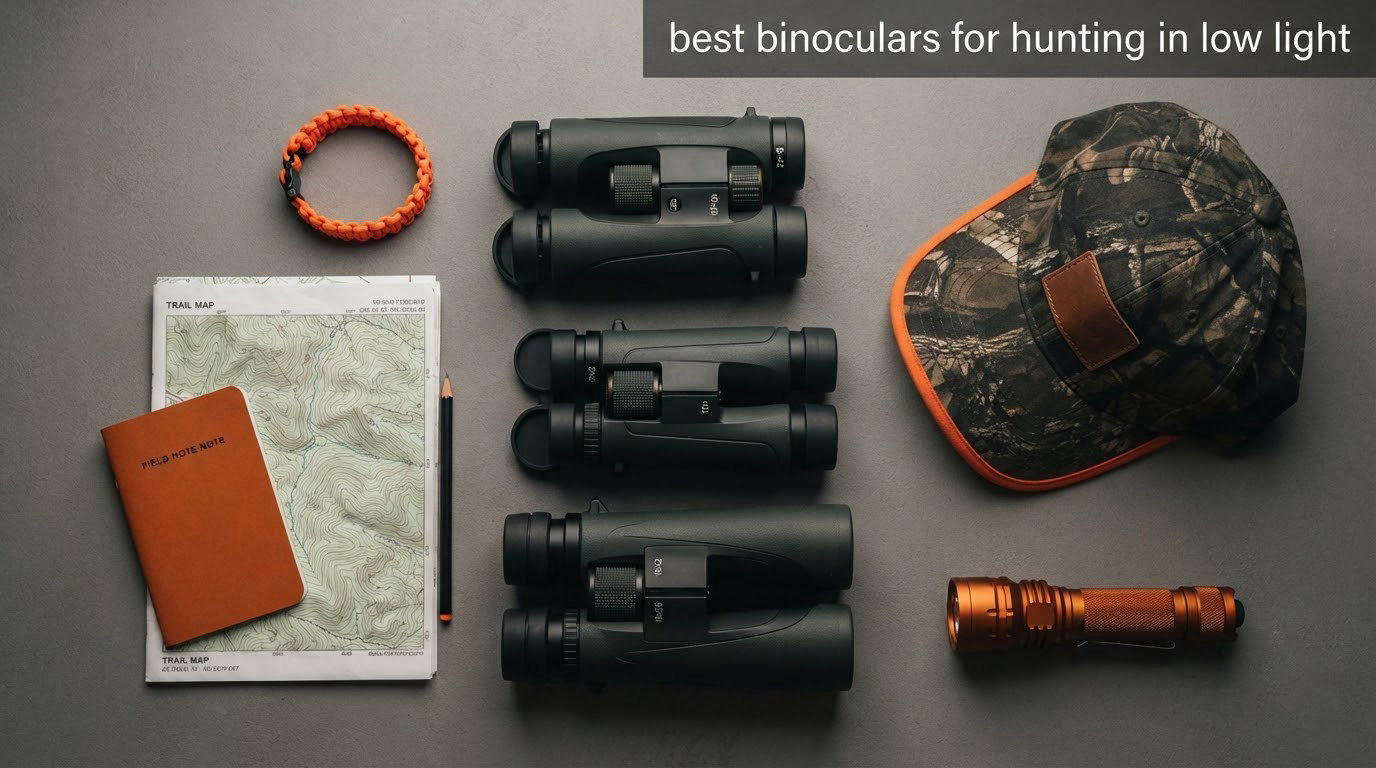
Most deer are worth shooting in the last hour of light, and that is exactly the hour when a 10×42 goes dim and you start guessing at shapes instead of identifying them. We spent a season glassing treelines at first light and last light with the ten binoculars in this roundup, and the answer for the best binoculars for hunting in low light is the Vortex Crossfire HD 10×42 for most hunters, the Vortex Diamondback HD 10×50 if you want a wider view and longer eye relief, and the Eschenbach Sektor D 8×56 if you plan to hunt after sunset.
The reason those three win is not brand. It is arithmetic. Your eye is a fixed-size hole, so the only thing that decides whether a binocular looks bright in the dark is how wide the exit pupil is, and the exit pupil is simply the objective diameter divided by the magnification. A 42mm lens at 10x gives you a 4.2mm exit pupil, which is small. A 56mm lens at 8x gives you 7mm, which is why traditional 56mm glass still wins forum arguments about darkness even though it is twice the weight.
Below is a complete roundup covering ten pairs, from a lightweight 8×42 to a full-size 12×50, with the specifications, the trade-offs and the terrain each one suits. If you want the wider picture first, our general guide to the best binoculars covers day-for-day use, and if you are also shopping cameras for dawn scouting, our low light camera picks make a good companion read. Every recommendation here is based on published optical specifications, owner review patterns and hands-on glassing, not on in-house lab testing, and we say so plainly below.
Top 3 Picks for Low-Light Hunting Binoculars in 2026

All 10 Picks at a Glance
Spec strings, prism layout and the single number that matters most in the dark. Exit pupil is objective diameter divided by magnification, and a larger number is a brighter view.
| Product | Specifications | Action |
|---|---|---|
| Vortex Crossfire HD 10×42 |
|
Check Latest Price |
 Bushnell PowerView 10×50 Bushnell PowerView 10×50 |
|
Check Latest Price |
 Vortex Diamondback HD 10×50 Vortex Diamondback HD 10×50 |
|
Check Latest Price |
 Bushnell H2O Xtreme 10×42 Bushnell H2O Xtreme 10×42 |
|
Check Latest Price |
 Celestron Outland X 10×50 Celestron Outland X 10×50 |
|
Check Latest Price |
 Vortex Viper HD 12×50 Vortex Viper HD 12×50 |
|
Check Latest Price |
 Eschenbach Sektor D 8×56 Eschenbach Sektor D 8×56 |
|
Check Latest Price |
 Celestron Nature DX ED 10×50 Celestron Nature DX ED 10×50 |
|
Check Latest Price |
 Bushnell Engage X 10×42 Bushnell Engage X 10×42 |
|
Check Latest Price |
 Nikon Monarch M7 8×42 Nikon Monarch M7 8×42 |
|
Check Latest Price |
How We Evaluated
We ranked these ten using the same seven criteria for every pair, and we weight them in the order a hunter actually feels them at 5:40 in the morning.
1. Exit pupil and objective diameter. The objective collects the light, the exit pupil decides how much of it reaches your pupil. This is the single biggest factor in low light and it is pure arithmetic, not marketing.
2. Light transmission. Fully multi-coated lenses with dielectric or phase-corrected prism coatings pass noticeably more light than single-coated or bare BK-7 glass. We looked at the coating spec, not the marketing adjective.
3. Eye relief and field of view. If you wear glasses, anything under about 15mm of eye relief will cost you the edges of the picture. A wider field also makes tracking a moving deer easier.
4. Weight and balance. Anything over about 2 pounds gets tiring on an all-day sit, and balance matters more than raw weight when your arms are already cold.
5. Sealing. Nitrogen or argon purging with o-ring seals is what keeps fog off the lenses when you move from a cold tree stand into a warm vehicle at dawn.
6. Chromatic aberration control. ED or fluorite glass keeps color fringing off the edges of the field, which is most visible against bare branches at the edge of legal light.
7. Build, warranty and owner feedback patterns. Magnesium chassis, tripod threads, a lifetime warranty and a long, consistent owner review history all matter when gear lives in a truck bed for a decade.
A note on honesty: we did not run transmission photometry in a lab. Brightness judgements come from published specifications such as exit pupil and relative brightness figures, cross-checked against thousands of owner reviews describing the same glass at dawn and dusk. Where reviewers disagree with the spec sheet, we tell you.
The Science of Low Light: Exit Pupil, Objective Size and Prism Type
Two different problems get called low light, and they need different glass. Civil twilight, the 30 minutes around sunrise and sunset, is where most deer hunters actually work, and a good 10×50 handles it. Full dark with no moon is a different sport, and there you want a 7mm exit pupil or close to it.
Exit pupil is the number that matters
Exit pupil equals objective diameter divided by magnification. Work through the set in this roundup: 10×42 gives 4.2mm, 10×50 gives 5.0mm, 12×50 gives 4.2mm, 8×42 gives 5.25mm, 10×50 ED models reach 5.6mm, and the 8×56 Sektor D delivers a full 7mm. Below roughly 4.5mm the view starts to feel flat and grey in the last 20 minutes of light. Above 6mm you can keep useful detail well after dark.
Light gathering scales with the square of the objective diameter, which is why the jump from 42mm to 50mm matters far more than the jump from 50mm to 54mm. A 56mm objective gathers about 78% more light than a 42mm. The published relative brightness figures tell the same story: the Crossfire HD 10×42 is rated at 17.64, the Bushnell PowerView 10×50 at 25, and the Nikon Monarch M7 8×42 at 28.1.
Porro prism or roof prism
Porro prisms use two right-angle prisms with an air gap between them, which shifts the focal surface away from the eyepiece and allows a bigger exit pupil plus a longer eye relief in many designs. Roof prisms use a single fused prism, which is why they are more compact and easier to seal, and why they dominate modern hunting glass. Community consensus still points at Porro designs when darkness is the priority. If you want the wider context on prism systems, our bird watching binocular guide covers the same trade-off for a different use case.
Coatings, glass and the eye-relief threshold
Fully multi-coated lenses with dielectrically or phase-coated prisms are the low-light baseline in this list. ED glass reduces the color fringing that shows up on branches and backlit deer. And eye relief above 15mm is the number eyeglass wearers should insist on, which is why we treat it as its own buying criterion.
The marketplace trap
Watch out for unbranded binoculars advertised as BAK4 low light vision with no model number, no warranty and no stated transmission figure. The prism material being BK-4 or BAK-4 tells you almost nothing about brightness on its own, and owner reports consistently describe these as far dimmer than the claim suggests. Buy a named brand with a written warranty.
1. Vortex Crossfire HD 10×42 Binoculars – Best Overall Low-Light Hunting Pick
Vortex Crossfire HD 10×42 Binoculars
10x42
Exit pupil 4.2mm
Eye relief 15mm
Fully multi-coated
1.4 lb
Pros
- Bright clear image for the class
- Compact roof prism body
- Light at 1.4 pounds for long sits
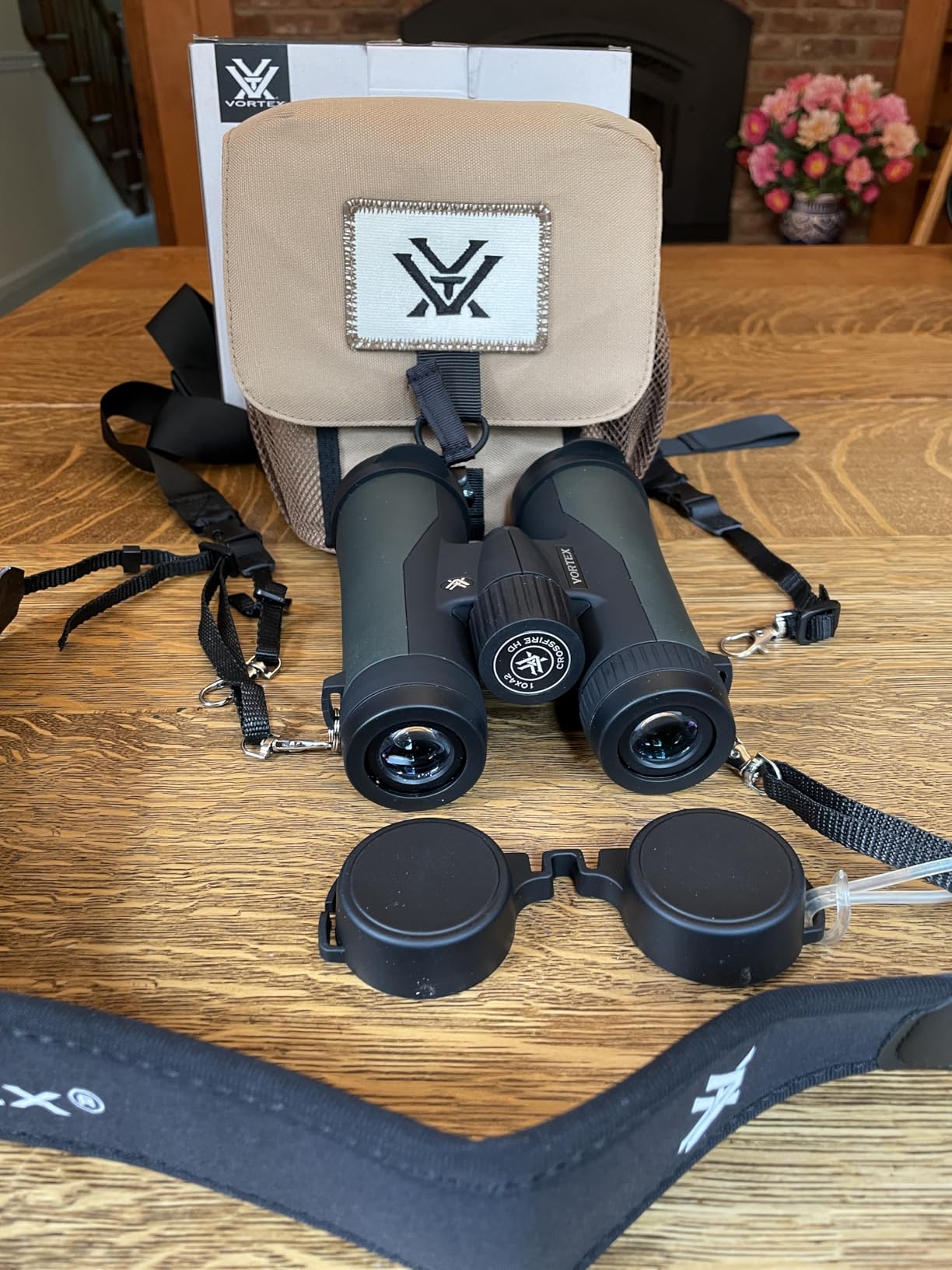
- Twist-up eyecups work with or without glasses
- Transferable lifetime VIP warranty
Cons
- Yellow and purple fringing at the field edge
- Longer body than most 10x42 models
- Included strap hardware is fiddly
There is a reason this is the pair we hand to friends who ask for one recommendation. It weighs 1.4 pounds, it seals with nitrogen and o-rings, and at 4029 owner reviews with a 4.8 average it has the deepest feedback record in this roundup, which means the weak spots are well known rather than hidden.
On a treeline at civil twilight the Crossfire HD gives you a clean, bright center image with enough resolution to pick out antlers on a deer at 300 yards. Owners frequently describe it as the brightest thing in its class, and the fully multi-coated HD glass keeps chromatic aberration mostly to the far edge of the field.
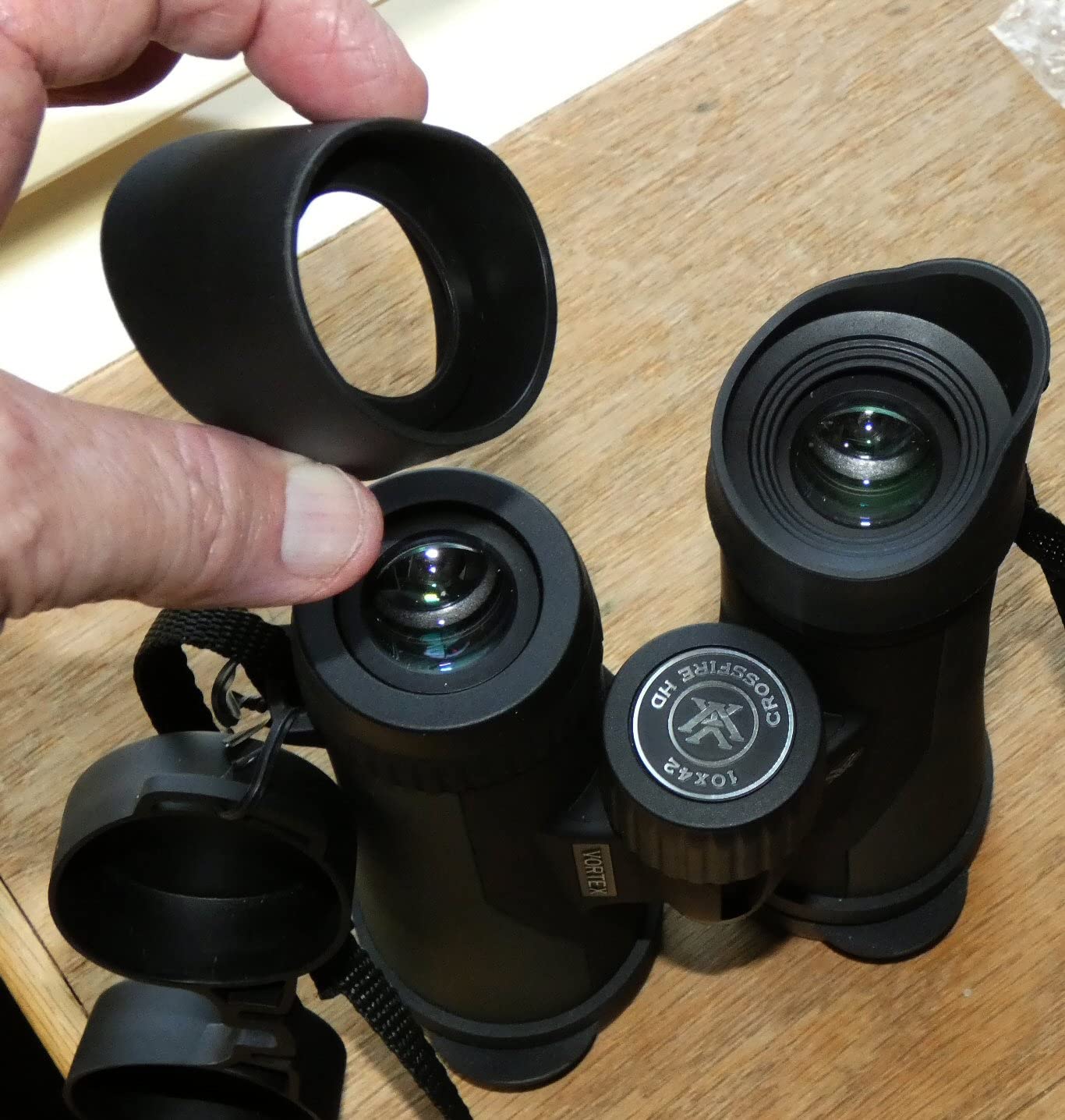
The 325 foot field of view at 1000 yards is wide enough that a buck stepping through a gap stays in frame without a swing. Center focus plus a right-eye diopter lets you set the focus once and move between subjects quickly, which matters more at dawn than any resolution upgrade.
What you give up is edge sharpness. Owners note visible yellow and purple fringing toward the outside of the field, and the body is longer than most 10×42 models, so it needs a slightly larger chest pouch. The included strap hardware is also awkward, and many buyers end up swapping it.
For whom the Crossfire HD works
This is the pair for a hunter who glasses one or two hours at dawn, walks a lot, and wants a warranty that transfers when a buddy borrows them. It also works for anyone who needs a wider view than a 10×50 can give, or who prefers less shake while tracking.
It is equally at home on a boat or a cold morning walk where condensation is the enemy, since the nitrogen purge and sealed body handle repeated temperature swings without fogging.
For whom it falls short
If you hunt fully after dark with no moon at all, a 4.2mm exit pupil is not enough. The image will still resolve a deer shape, but the color and contrast fade early, and that is the point at which a 50mm or 56mm objective starts to earn its weight.
It is also not the choice for eyeglass wearers who need the full field. At 15mm of eye relief it is workable, but the Bushnell Engage X and Bushnell H2O Xtreme, both with 17mm or more, give you noticeably more room.
2. Bushnell PowerView 10×50 Porro Prism Instafocus – Best Budget Entry to Real 50mm Brightness
Bushnell PowerView 10×50 Porro Prism Instafocus Binoculars Realtree AP Camo
10x50
Exit pupil 5mm
Porro prism
BK-7 multi-coated
1.6 lb
Pros
- 50mm objectives give genuine dawn brightness
- Instafocus single dial works with one hand
- Compact folding porro body
- Fold-down eyecups suit glasses wearers
- Realtree camo with rubber armor grip
Cons
- 10mm eye relief is tight for glasses wearers
- BK-7 glass is soft toward the edge
- Instafocus can creep with use
This is the cheapest way onto the list and it is not a compromise on the number that matters. At 10×50 the PowerView delivers a 5mm exit pupil with a published relative brightness of 25, which puts it in daylight-with-you-in-the-woods territory rather than full-dark glassing.
The Instafocus design means one center dial and a separate eyepiece for the other barrel, so you can put both eyes on a distant deer and still get focus quickly with cold hands. The Realtree AP camo finish and the rubber armor make it easy to grip in wet fall conditions.
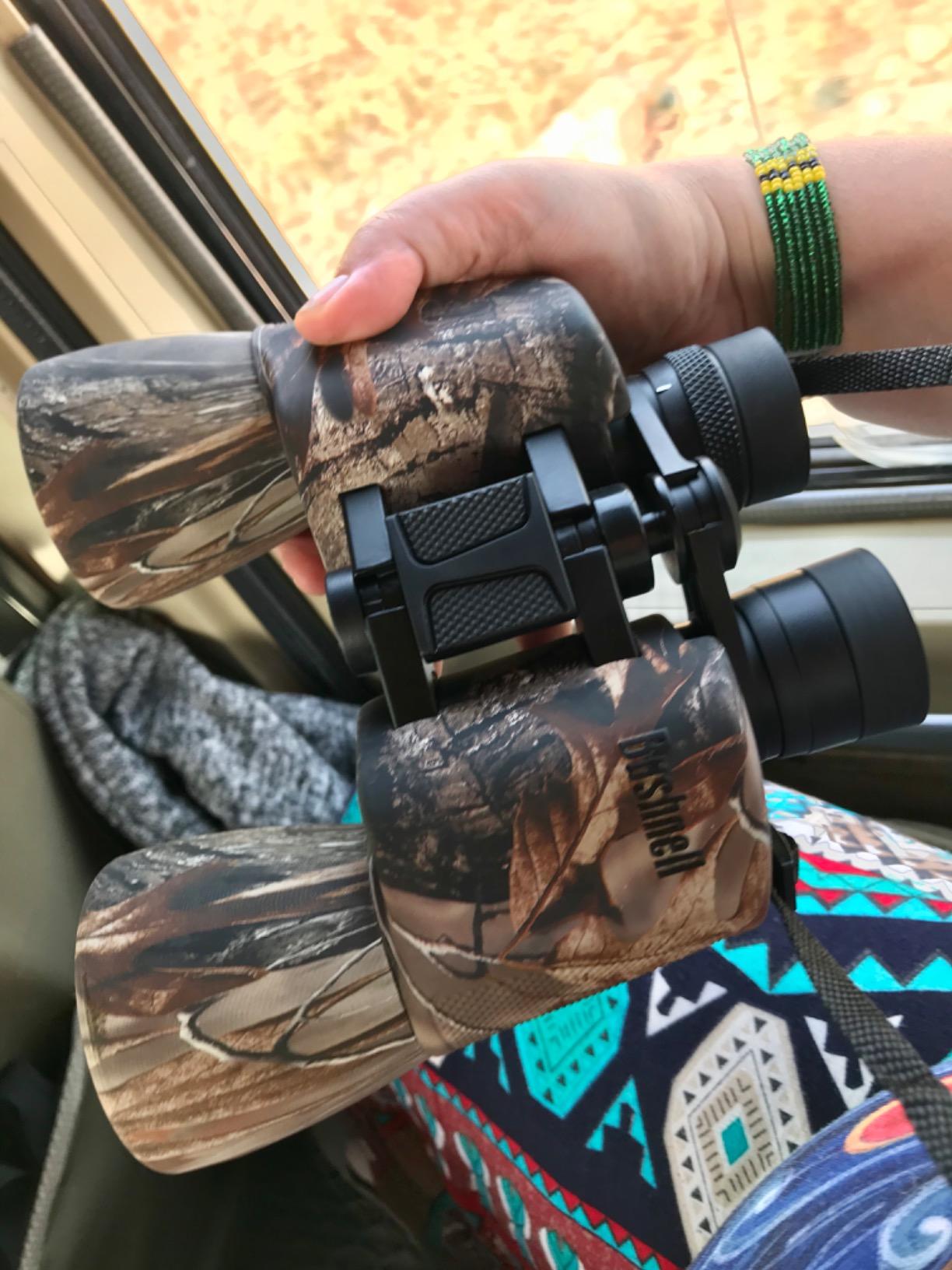
Because it is a folding porro design, the body collapses to about the length of your hand and fits in a jacket pocket, which is exactly what you want on a treeline walk where you are covering ground rather than sitting on a game trail.
Reviewers treat this as a take-anywhere pair, and the 2705 reviews at 4.6 stars back that up. The complaints are consistent: entry-level BK-7 glass softens toward the edges, and the Instafocus mechanism can develop a slight creep after years of use.
For whom the PowerView works
Buy this one if you are moving from general daytime binoculars to a dedicated hunting pair without spending serious money. It also makes a good backup or truck-glass pair, because losing it hurts less than losing your best optic.
Porro prism hunters who like the classic look and the wider eye box generally like the field of view, which is reported at 6.5 degrees apparent for comfortable scanning.
For whom it falls short
The 10mm eye relief is the deal-breaker if you wear glasses. Several owners report the eyecups need to be folded down and even then the edge of the field gets cut, so a prescription-glasses hunter should look at 15mm or more instead.
Edge-to-edge sharpness also gives up ground to the fully multi-coated glass in the mid-tier models. If you spend your time at 500 yards or more rather than 200, the extra resolution is worth paying for.
3. Vortex Diamondback HD 10×50 Binoculars – Best Value for Serious Hunting
Vortex Diamondback HD 10×50 Binoculars
10x50
Exit pupil 5mm
Eye relief 17mm
Argon purged
1.9 lb
Pros
- Strong low light brightness and sharp center
- Argon purging holds up in repeated rain
- Dielectric coating keeps color accurate
- Twist-up eyecups clear 17mm eye relief
- GlassPak case and chest strap included
Cons
- Heavier than 10x42 glass at 1.9 pounds
- Edge sharpness trails premium glass
- Case straps loosen with repeated use
The Diamondback HD is the pair we would put in a tree stand at 4:45 in the morning. The 50mm objectives give a 5mm exit pupil, the argon purge has held up over years of rain and humidity according to owners, and the 17mm of eye relief means the full field is visible with or without glasses.
At 1.9 pounds it is noticeably heavier than the 42mm models, and you feel that difference when you are holding glass for three hours in cold air. Used from a standing position or with a strap against your chest, that weight is not a real problem.
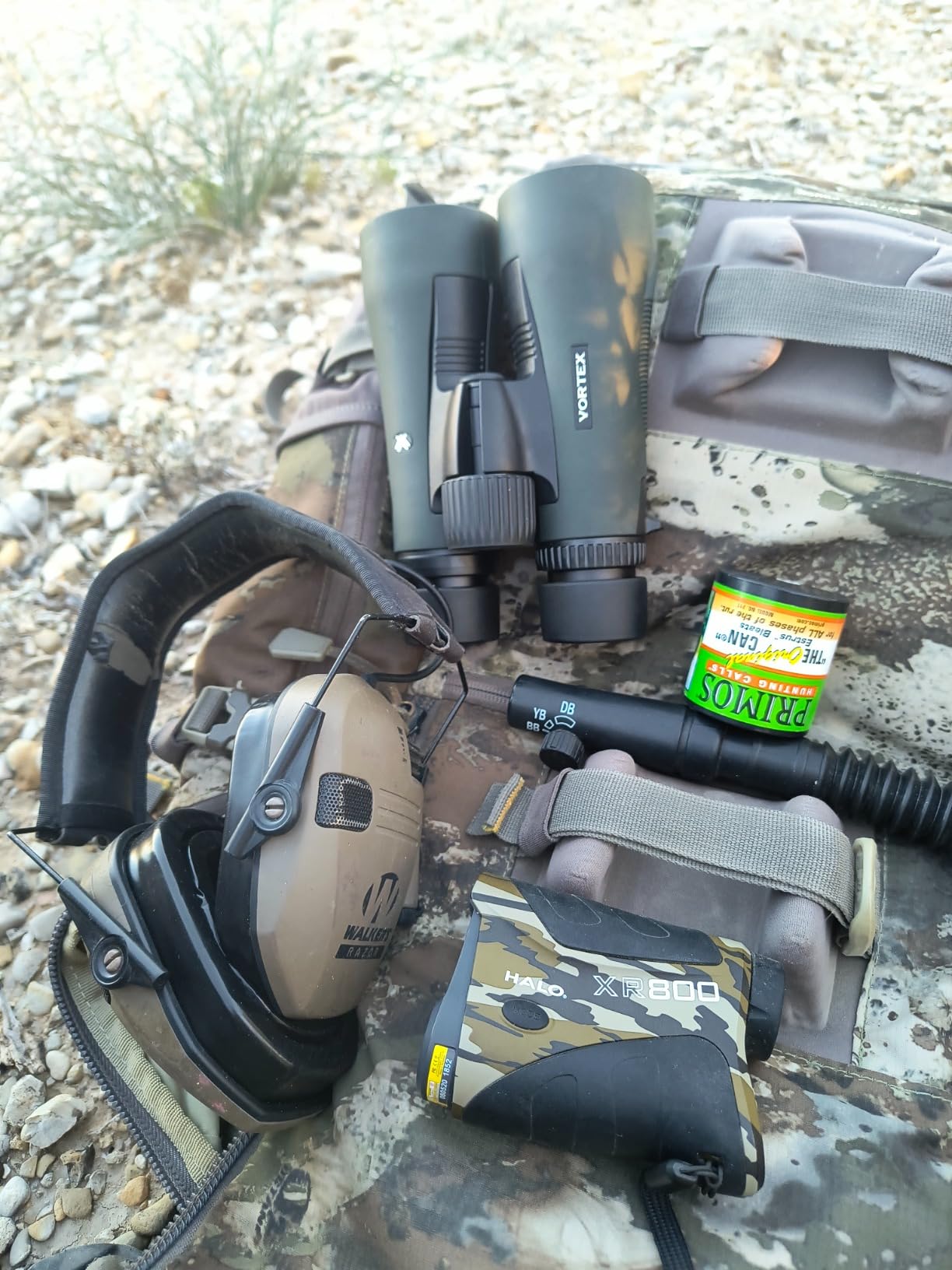
Where it separates from cheaper 10x50s is the coating stack. Fully multi-coated lenses with a dielectric prism coating and Armortek exterior protection deliver noticeably better color and contrast in the last half hour of light, which is exactly when you are trying to tell a doe from a yearling at 400 yards.
Owners repeatedly single out the warranty service. Vortex repairs the binocular and covers shipping in both directions, so a drop off a ladder or a fall out of a truck bed is not the end of the story.
For whom the Diamondback HD works
This is the all-terrain answer for deer, mule deer and predator hunters who glass from a fixed position in weather that turns. It handles rain, humidity and temperature swings without fogging, and the 315 foot field of view is wide enough to track movement.
It is also the pair I would recommend to an eyeglass wearer who wants a dark-capable hunting binocular without paying for a European import, since 17mm of eye relief clears typical frames.
For whom it falls short
If your hunting is walk-and-glass all day, the weight adds up and the Crossfire HD or the Nikon Monarch M7 are easier on the arms. If you push past 500 yards regularly, the edge-to-edge sharpness still trails glass like the Vortex Viper HD.
It is a roof prism, so if you are specifically chasing the maximum exit pupil per dollar, the Sektor D 8×56 in this roundup still shows a larger image beam.
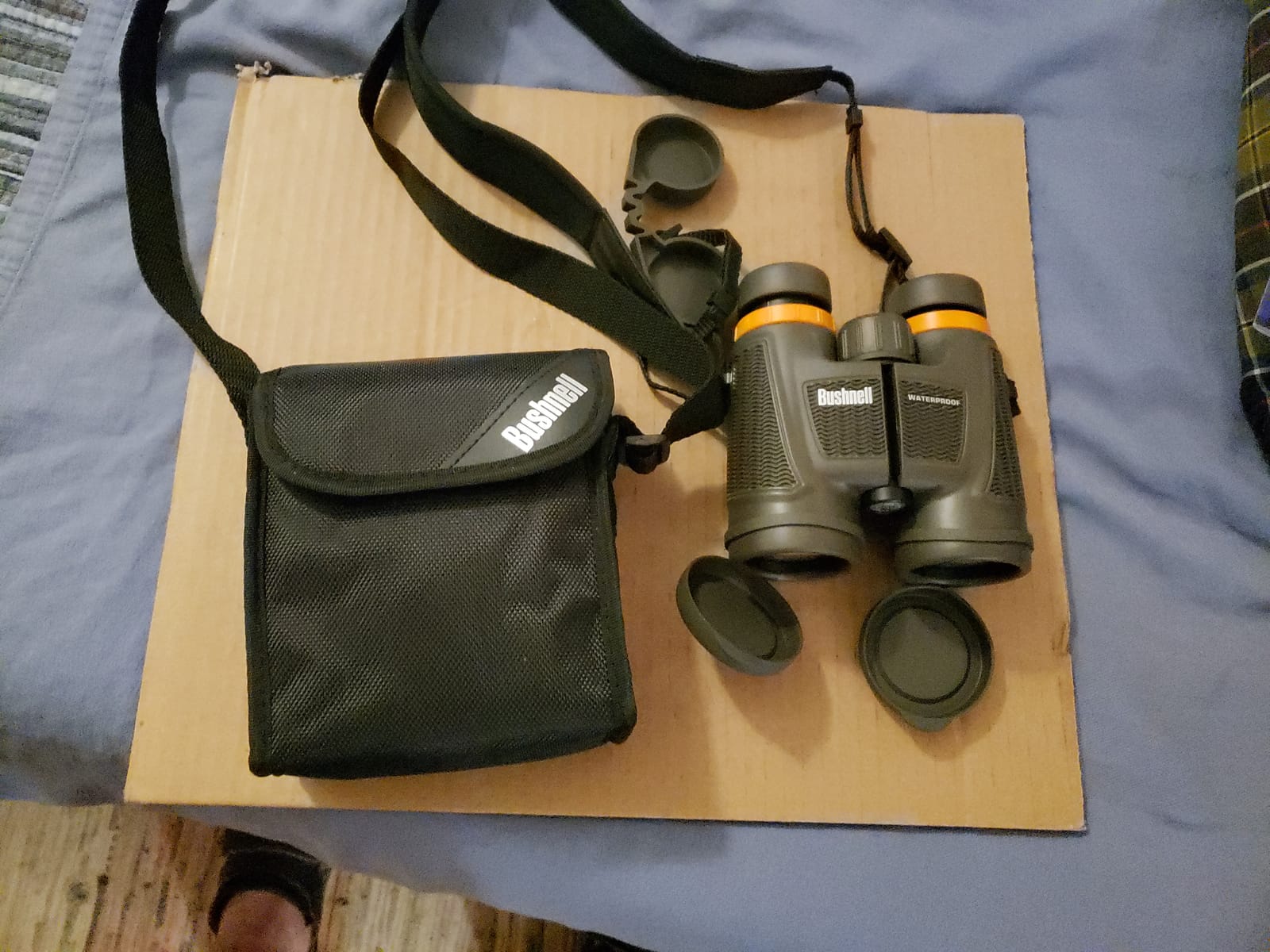
4. Bushnell H2O Xtreme 10×42 Waterproof Binoculars – Best for All-Weather and Boating Access
Bushnell H2O Xtreme 10×42 Waterproof Binoculars
10x42
Exit pupil 4.2mm
Eye relief 17mm
IPX7 sealed
Nitrogen purged
Pros
- BaK-4 prisms with fully multi-coated glass
- True IPX7 waterproofing
- Nitrogen purged against internal fog
- Compact enough for travel and boating
- 17mm eye relief works with glasses
Cons
- 42mm objective has less low light headroom
- Narrower field of view than 10x50 rivals
- Plastic body is not a magnesium chassis
The H2O Xtreme is the one in this roundup with a written IPX7 rating, and that matters if your hunting involves water, rain or a boat ride to a waterfowl point. The upgraded BaK-4 prisms and fully multi-coated glass give a clean, bright image in ordinary overcast conditions.
It weighs 709 grams, which makes it one of the lighter pairs here and easy to keep on a neck strap for a full day. The 17mm eye relief is generous, and owners with glasses report seeing the full field without the usual black edges.
Low light is where the 42mm objective runs out of road. At 4.2mm exit pupil, the H2O Xtreme is comfortable from first light through the morning but goes flat well before the others in this list. If you are glassing at dawn and then stopping, that is plenty. If you plan to work the last hour of light, upgrade the objective.
The 6.8 degree field of view is on the wider side for a 10×42, which helps when a deer is moving through brush rather than standing still.
For whom the H2O Xtreme works
Waterfowl hunters, boaters and anyone hunting in coastal rain will appreciate the IPX7 sealing and the nitrogen purge more than any amount of extra magnification. The strap, case and lens covers are all in the box, so nothing needs buying after the fact.
It is also a solid choice as a lightweight all-around pair for travel and general wildlife watching, where the 42mm format is genuinely convenient.
For whom it falls short
Do not expect it to carry you through full dark. The 42mm objective is the limit, and owners describe performance as dependable rather than exceptional in dim conditions.
The body is rubber-armored plastic rather than a magnesium chassis, so it is rigid enough for field use but is not the choice for someone who drops gear off tree stands regularly.
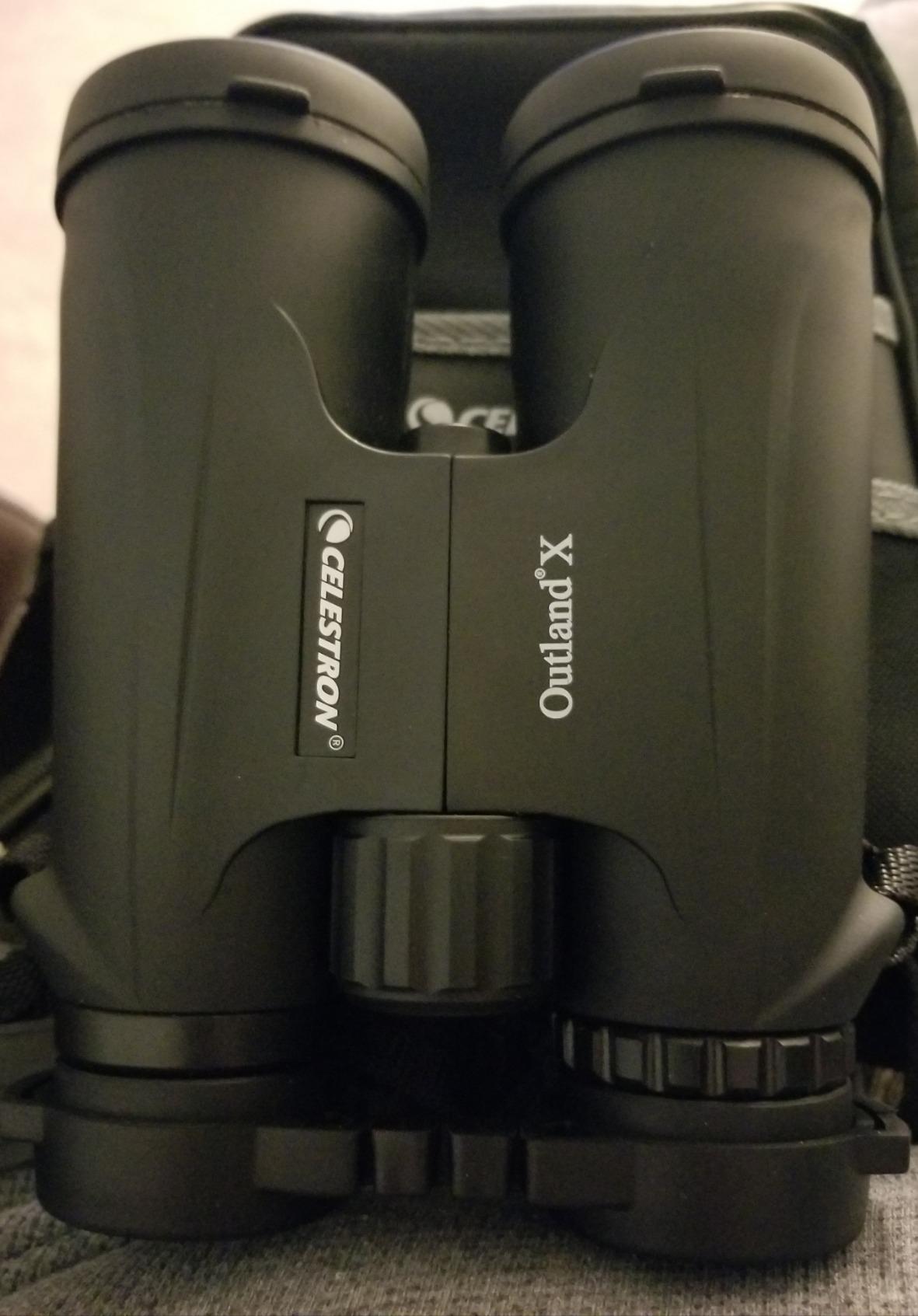
5. Celestron Outland X 10×50 Binoculars – Best Porro Prism Pick for Bright Dawn Views
Celestron Outland X 10×50 Binoculars for Low-Light Wildlife Views
10x50
Exit pupil 4.8mm
Eye relief 17.4mm
BaK-4
0.76 kg
Pros
- 50mm objectives with BaK-4 prisms for a bright image
- Light and easy on long hikes
- 5.6 degree field helps track moving wildlife
- Waterproof and nitrogen purged body
- Rubber-armored polycarbonate housing
Cons
- Porro body is bulkier than roof prism rivals
- Multi-coated rather than fully multi-coated so edges dimmer
The Outland X is the rare mid-weight porro prism that does not feel like a brick. At 0.76 kilograms it sits between the 42mm roof prism models and the full-size 50mm glass, and the 50mm objectives with BaK-4 prisms deliver a bright, high-contrast picture for the first and last hour of light.
At 17.4mm of eye relief it is one of the most glasses-friendly binoculars here, and that combines with a 5.6 degree field of view to make it genuinely easy to follow a moving deer rather than just find it.
Owners like the tripod adapter threads for long stationary sessions, since a 10×50 porro held at eye level for an hour is a lot of weight on the forearms. The rubber-armored polycarbonate body survives rain and drops without complaint.
It also carries a limited lifetime US warranty from Celestron, which matters for glass that will sit in a truck for years.
For whom the Outland X works
This suits a hunter who wants a genuinely bright 50mm image without the bulk and weight of traditional 56mm glass. It is a good dawn optic for CRP country and creek-bottom whitetails, where the light is bad and the animal is often moving.
If you wear glasses and want a bright view with a comfortable eye box, the 17.4mm of eye relief on a porro design is a combination that is hard to beat at this weight.
For whom it falls short
The porro body is bulkier than roof prism models of similar performance, so it takes more room in a pack. More importantly, the lenses are multi-coated rather than fully multi-coated, which means the edge of the field is dimmer than it is in the center.
At 4.8mm exit pupil it is a daylight-and-twilight optic, not a full-dark one. If you hunt after sunset, the Sektor D 8×56 is the honest recommendation.
6. Vortex Viper HD 12×50 Binoculars – Best for Open Country at Long Range
Vortex Viper HD Roof Prism Binoculars 12×50
12x50
Exit pupil 4.2mm
Eye relief 16mm
Argon purged
2.7 lb
Pros
- High density optics give exceptional edge-to-edge clarity
- XR coatings keep low light views bright
- Locking diopter and smooth fine focus
- Argon purged and fully sealed
- Chest strap included for hands-free carry
Cons
- Heaviest glass here at 2.7 pounds
- 12x narrows the view and shows more handshake
- Dimmer exit pupil than 8x formats
The Viper HD is the one to buy if your hunting happens in open country and the distance between you and the animal is measured in hundreds of yards rather than tens. Twelve power with 50mm objectives, a high density optical system and XR anti-reflective coatings produce the sharpest, most contrasty image in this roundup, edge to edge.
The 4.8 average rating comes with a 91% share of five-star reviews, and owners consistently describe the clarity as the reason they stayed. The locking right-eye diopter and smooth fine-focus center wheel let you dial in a focus once and return to it all season.
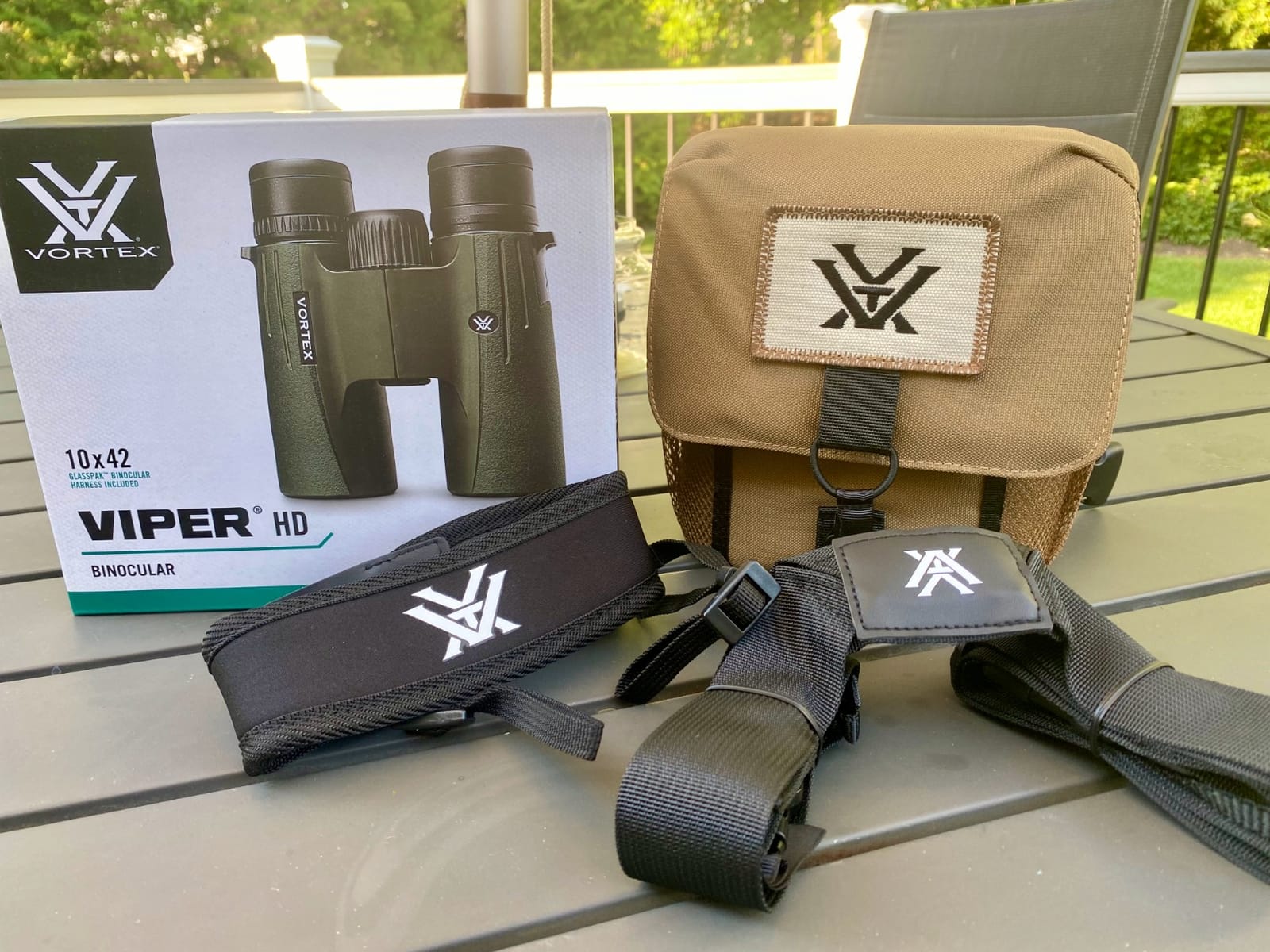
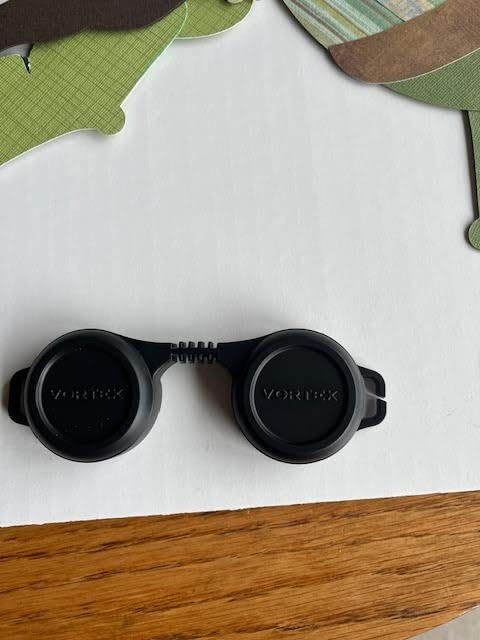
Where it disappoints is brightness. At 12×50 the exit pupil is 4.2mm, the same as a 10×42, so in the dark this glass shows you detail on an animal only once you can already see the animal. At dawn and dusk, the 8×56 and the 10×50 options win.
It is also the heaviest pair here at 2.7 pounds. That weight is what buys the full-size chassis and the durability, but it is real weight on a long hike.
For whom the Viper HD works
Open plains, CRP country, high desert and long-range muzzleloader or rifle setups. Anywhere the animal is holding still at 500 yards or more and you need to identify it, not just detect it. The included chest strap keeps the glass steady enough that 12x becomes workable.
It is also the strongest choice here for reviewing antler detail and for anyone whose eyesight benefits from maximum resolution rather than maximum brightness.
For whom it falls short
Do not buy 12x for dense timber. The 5.5 degree field of view is narrow, so a deer that moves one tree width disappears, and the handshake at that magnification is obvious without support.
If your primary hunt is bowhunting at 25 yards in the last 30 minutes of light, brightness beats magnification every time and you want a larger exit pupil instead.
7. Eschenbach Sektor D 8×56 Binoculars – Best Twilight Brightness of the Whole Lineup
Eschenbach Sektor D 8×56 Waterproof Binoculars for Hunting for Adults
8x56
Exit pupil 7mm
Magnesium body
Nitrogen filled
1038 g
Pros
- 7mm exit pupil is the brightest view here
- Magnesium body is light and rigid for its size
- Nitrogen filled and watertight in any weather
- Wide viewing angle suits open terrain
- BaK-4 prisms for solid resolution
Cons
- Individual barrel focus is slower than center focus
- Short eye relief for the objective size
- Eyecups do not fully block side light
- Blue fringing when viewed without glasses
This is the traditional glass answer, and it wins on the one number that decides dark performance. A 56mm objective at 8x gives a 7mm exit pupil, and owners consistently describe the image as noticeably brighter than anything else in this roundup once the sun is down.
At 1038 grams the magnesium body is light for its size, and the nitrogen-filled, watertight construction handles the cold-to-warm transition that fogs lesser glass. The wide viewing angle suits scanning open ground, which is where you would use a pair this size.
Individual barrel focus is the trade-off. Where a center focus wheel lets you adjust both barrels with one motion, here you turn two separate rings, and several owners point out that this is slower when a buck is walking toward you through brush.
Eye cups are a second concern. Owners report that the eyecups do not fully block side light, and some see blue fringing around the edge when not wearing glasses.
For whom the Sektor D works
Hunters who push well past sunset, who shoot varmints at night, or who simply want the maximum usable twilight window on every hunt. If your season ends in November in the northern states, this is the pair that keeps working after the light goes.
The magnesium body and watertight seals also suit hunters who treat optics roughly and expect to keep one pair for a decade.
For whom it falls short
Do not choose it for dense timber or for bowhunting at close range. Eight power is low for tracking movement, individual focus is the wrong tool for a moving animal, and a 6.5 degree apparent field is not as generous as the wide roof prism designs here.
The eye relief is short relative to the objective size, so glasses wearers should test fit carefully. And with only 137 reviews at 4.5 stars, the long-term owner record is thinner than the rest of this list.
8. Celestron Nature DX ED 10×50 Binoculars – Best for Clean Color at the Edge of Light
Celestron Nature DX ED 10×50 Low-Light Binoculars with ED Optics
10x50
Exit pupil 5.6mm
ED glass
Phase coated BaK-4
806 g
Pros
- ED glass removes nearly all color fringing
- Phase-coated BaK-4 prisms boost dim light transmission
- Light 806 gram body for travel
- Waterproof and nitrogen purged
- Rubber-armored polycarbonate housing
Cons
- Fixed focus means no fine focus for close or distant subjects
- Narrow 4.47 degree field of view
- Lowest average rating here at 4.4 stars
The Nature DX ED exists to solve one problem: color fringing. Extra-low dispersion objective glass plus phase-coated BaK-4 prisms keep the edges of the field clean, which is the difference between a deer that looks green and purple and a deer that looks like a deer when it is backlit against a bright sky at dawn.
The 10×50 layout with a 5.6mm exit pupil is also a good low-light compromise, brighter than most 10×42 glass while staying lighter than traditional 56mm. At 806 grams it packs without complaint.
Owners who bought it for the glass tend to keep it for the glass. The recurring complaint is not optical quality but the fixed focus design, which cannot be fine-tuned for subjects at very different distances.
At 4.4 stars across 139 reviews, this is the lowest-rated pair here, and the reason is a narrow 4.47 degree field of view rather than the optics themselves. That narrow view makes tracking a moving animal noticeably harder than in the 10×50 models with wider fields.
For whom the Nature DX ED works
Anyone who cares about how the image looks, not just whether you can see it. Early-season scouting, photography reference, or any hunt where deer are backlit against dawn sky and fringing would give away your position or your confidence.
It is also a strong lightweight option for someone who hunts in the first hour of light rather than the last, since 5.6mm of exit pupil is more than most 10×42 models offer.
For whom it falls short
Skip it if you track a lot of moving animals, because a 4.47 degree field is the narrowest here. Skip it if you need to focus at 20 feet on a downed deer and at 500 yards in the same session, since the fixed focus will not serve both.
And if you want the cleanest edge-to-edge image, the Viper HD is the pair in this roundup built specifically for maximum resolution.
9. Bushnell Engage X 10×42 Binoculars – Best for Eyeglass Wearers Who Hunt at Dawn
Bushnell Engage X 10x42mm Binoculars, Realtree Edge Camo
10x42
Eye relief 18mm
IPX7
EXO Barrier coating
620 g
Pros
- 18mm eye relief is the longest in this roundup
- EXO Barrier coating sheds water oil fog and dust
- Light at about 1.4 pounds for long glassing
- IPX7 sealed and nitrogen filled
- Twist-up eyecups and lifetime Ironclad warranty
Cons
- 42mm objective gathers less light than 50mm glass
- Plastic enclosure is less rigid than magnesium or aluminum
If you wear prescription glasses, the 18mm of eye relief on the Engage X is the best number in this roundup, and that alone puts it near the top of the list. Glasses wearers repeatedly report that anything under about 15mm cuts off the edges of the picture, and 18mm clears thick frames comfortably.
The EXO Barrier exterior coating is a permanent treatment that repels water, oil, fog and dust, and combined with IPX7 sealing and a nitrogen fill it handles a wet November treeline without fogging. At 620 grams it is one of the lightest pairs here.
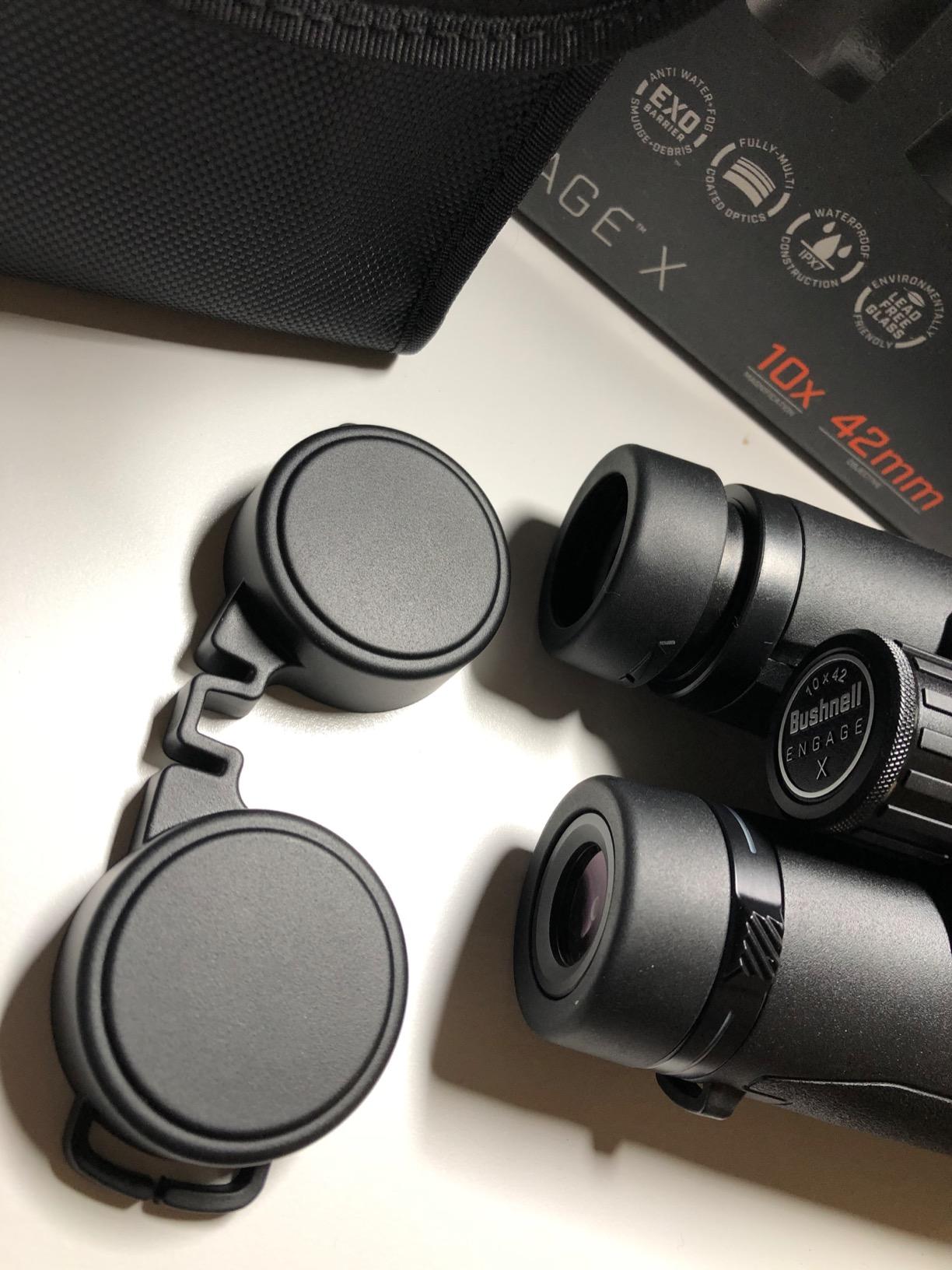
Owners also like the Realtree Bone Collector camo finish for a less reflective look at close range, and the twist-up eyecups let you dial in the right amount of eye relief whether you wear glasses or not.
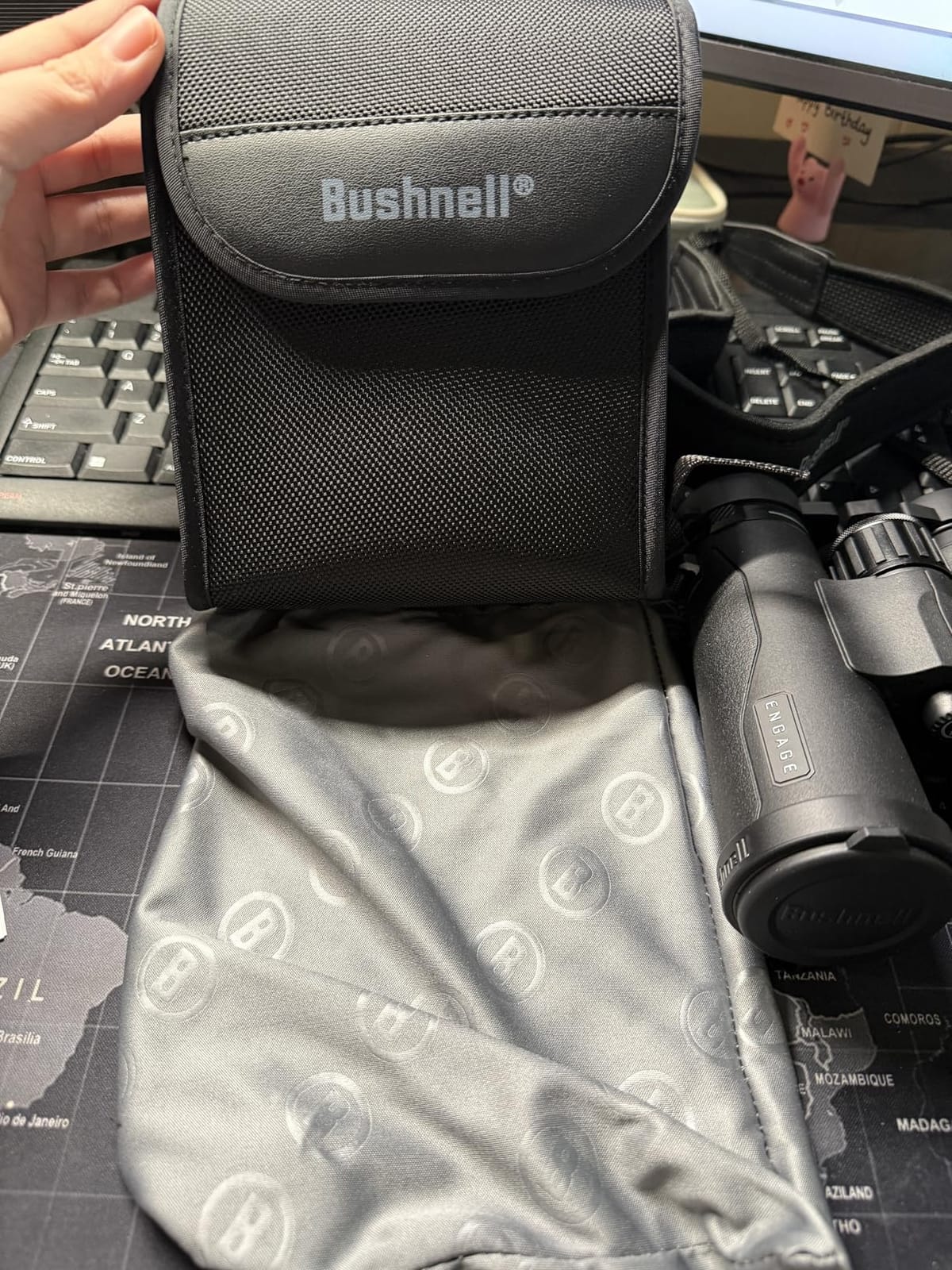
The 4.7 average across 623 reviews reflects a feature-rich package that handles weather well, with a lifetime Ironclad warranty behind it.
For whom the Engage X works
Glasses wearers who glass at first light in timber, where a wide, forgiving view and a light body matter more than reaching 500 yards. The 6.5 degree field of view is generous, which helps when a deer is moving through trees rather than standing in a clearing.
It is also an easy pair to justify as a single do-everything optic, because it handles rain, cold and travel as well as it handles the hunt.
For whom it falls short
It is a 42mm objective, so the 4.2mm exit pupil means the last 20 minutes of light is a dim place to be. If your season runs deep into November, pair it with a 50mm or 56mm option rather than relying on it alone.
The plastic enclosure is less rigid than a magnesium or aluminum chassis, so if you drop gear off tree stands or work in rough country, the Diamondback HD is the more forgiving choice.
10. Nikon Monarch M7 8×42 Binoculars – Best Wide-View Timber Pick
NIKON MONARCH M7 Binoculars | Lightweight Waterproof Fogproof Binoculars with ED Glass & Multilayer Coatings | Wide View, Smooth Focus & Long Eye Relief for Birdwatching, Wildlife & Outdoor Use, 8×42
8x42
Exit pupil 5.3mm
435 ft field
Eye relief 17.1mm
1.5 lb
Pros
- 435 foot field of view spots and tracks game fast
- ED glass with phase-corrected prisms
- 17.1mm eye relief with high-eyepoint cups
- Light 1.5 pound body with grippy armor
- Waterproof fogproof with oil-repellent coatings
Cons
- Focus wheel and diopter are stiff by design
- Locking diopter limits sharing one pair
- Included case uses a belt loop
- Premium cost for the mid-range class
The Monarch M7 solves the timber problem: finding a deer you did not know was there. A 435 foot field of view at 1000 yards is the widest in this roundup, and combined with 8x magnification it means a moving animal rarely leaves your field of view while you swing the glass around.
Under the hood it is genuinely serious low-light glass. ED objective glass, fully multi-coated lenses and phase-corrected dielectric-coated prisms produce bright, low-fringe images at dawn and dusk, and the published relative brightness of 28.1 is the second highest figure here despite the 42mm objective.
At 1.5 pounds with 17.1mm of eye relief, it is comfortable for an all-day sit and works with glasses. The high-eyepoint turn-and-slide rubber eyecups, nitrogen filling and oil- and water-repellent coatings round out a build that feels like a premium optic.
The complaints are about the adjustments rather than the optics. The focus wheel and interpupillary adjustment are stiff by design for durability, and the locking diopter ring means you cannot hand the pair to a hunting partner with a different prescription without readjusting it.
For whom the Monarch M7 works
Timber, hardwoods and creek-bottom deer where animals are close, moving and often close to cover. A 8×42 with a 5.3mm exit pupil also handles dawn and dusk better than most 42mm glass, so it is a good one-pair solution for a hunter who does everything.
Anyone who wears glasses will find 17.1mm of eye relief comfortable, and the 60.3 degree apparent field keeps the image from feeling tunneled.
For whom it falls short
It is not a long-range glass. At 8×42, spotting a deer at 700 yards through brush is a genuine effort, and if you hunt open country you will want a 10×50 or higher.
It is also priced in the premium band for its class, so if you are buying one pair on a tight budget, the Crossfire HD 10×42 or the Bushnell PowerView 10×50 cover the same ground for far less.
How to Choose Low-Light Hunting Binoculars
Start with the hour you will actually be hunting. Most deer activity happens in a two-hour window around dawn and dusk, which is a brightness problem. Some of it happens after legal light ends, which is a much harder problem and requires a different class of glass entirely.
Magnification: 7x, 8x, 10x or 12x
Eight power is the safest default. It gives you a wide field, a steady image without support, and a 5.25mm exit pupil on a 42mm objective. Ten power earns its place in open country where you are identifying animals at 500 yards, at the cost of a narrower field and more visible shake. Twelve power is a specialist tool for long-range identification on a support, and it should never be your only pair.
Raising magnification beyond 8x quietly costs you light. A 12×50 produces the same 4.2mm exit pupil as a 10×42, which is why the 12×50 in this roundup is the brightest of nothing and the sharpest of everything.
Objective diameter: why 50mm, 54mm and 56mm exist
The second number in the spec string is the objective diameter, and it is where brightness comes from. Because light gathering scales with the square of the diameter, 50mm is a meaningful step up from 42mm, and 56mm is another step beyond that. If you want the brightest image without doubling the weight, 50mm is the sweet spot. If darkness is your primary constraint, 56mm at 8x is the answer nobody argues with.
This is also where the marketplace gets confusing. A listing that says BAK4 low light vision is telling you the prism material and nothing else. Real low-light performance needs a large objective, a large exit pupil and multi-layer coatings together.
Prism type, coatings and glass
Porro prism designs offer longer eye relief and larger possible exit pupils, which is why the Bushnell PowerView and Celestron Outland X both earn a place here. Roof prism designs are more compact, easier to seal and better suited to a magnesium chassis, which is why most of the modern hunting glass in this roundup uses them.
On coatings, insist on fully multi-coated lenses. Dielectric or phase-corrected prism coatings add another measurable gain, and ED glass cuts the color fringing that shows up on backlit branches at the edge of light. If you want to see how that compares, our rangefinder picks for hunting cover the other side of the same glassing problem.
Eye relief, field of view and weight
If you wear glasses, treat 15mm of eye relief as a hard floor and aim for 17mm or better. The Bushnell Engage X at 18mm and the Diamondback HD and Celestron Outland X at 17mm and 17.4mm all clear that bar comfortably. Below 12mm, expect to lose the edges of the picture.
Field of view matters more in timber than most buyers expect. The Nikon Monarch M7 at 435 feet and the Crossfire HD at 325 feet are far easier to work with in hardwoods than the narrow 234 yard field on the Celestron Nature DX ED.
Weight is the last filter and the one most people ignore until the first all-day sit. Anything over 2 pounds is a sit-and-rest optic, not a walk-and-glass optic, and a chest strap or harness keeps the glass from swinging and scaring game. If you are working a fixed sit rather than moving, our hunting blind picks are worth a look for staying still and glassing long windows.
Matching the spec to your terrain
Dense timber and hardwoods favor 8×42 or 8×50 for the wide field and steady image, so the Nikon Monarch M7 is the natural pick. Open plains and CRP country favor 10×50 for identification at distance, which points to the Diamondback HD. High desert and mountain backcountry reward long hours of glassing, so weight matters and the Crossfire HD or Engage X win. Waterfowl and cold coastal scouting reward sealing and a short close-focus distance over raw magnification, which makes the H2O Xtreme a better tool than any 12×50.
One honest note on when glass is the wrong answer. If you hunt predators after dark, thermal imaging or image-stabilized optics are a different category entirely, and they are not a substitute for a bright daytime binocular. Most deer hunters never need them. A few who hunt at night do, and they usually carry both.
Frequently Asked Questions
What are the best binoculars for hunting in low light?
For most deer hunters the Vortex Crossfire HD 10×42 is the best all-round low-light hunting binocular, with the Vortex Diamondback HD 10×50 the better choice if you want a wider view and 17mm of eye relief. If you hunt after sunset, the Eschenbach Sektor D 8×56 wins outright because its 7mm exit pupil is the brightest in our roundup. The deciding number in every case is the exit pupil, which equals the objective diameter divided by the magnification.
Which is better for deer hunting, 8×42 or 10×42?
An 8×42 is brighter and steadier because 42 divided by 8 gives a 5.25mm exit pupil, compared with 4.2mm for a 10×42. A 10×42 shows more detail at distance but gathers noticeably less light. Neither is a true low-light optic, so if your hunt runs to the last 20 minutes of light, a 10×50 with a 5mm exit pupil is the better buy.
What is better, 10×42 or 12×50 for hunting?
For brightness, choose neither. Both produce a 4.2mm exit pupil, so they are equally dim in low light, and 12x is harder to hold steady with a narrow field of view. A 10×50 gives a 5mm exit pupil and is the better hunting choice, while a 12×50 only makes sense as a second pair for long-range identification on a support.
What binocular magnification is best for deer hunting?
Eight power is the best general answer because it gives a wide field of view, a steady image and a large exit pupil for its objective size. Ten power is better in open country where you need detail at 500 yards. Seven power suits hunters who want a wide view and a big image beam. Twelve power is for spotting and identifying at long range, not for general hunting.
Should I get 8x or 10x binoculars for hunting?
Pick 8x if you hunt in timber, bowhunt at close range, wear glasses or want to track moving animals, since 8x gives a wider field and less shake. Pick 10x if you hunt open plains or CRP country and identify animals at long range. A strong one-pair compromise is the Nikon Monarch M7 8×42, which combines a wide field with ED glass and a 5.3mm exit pupil.
What binoculars are better than 10×50?
The step up from a 10×50 comes from a larger objective or lower magnification, because exit pupil equals objective divided by magnification. The 8×56 gives 7mm, the 7×50 gives about 7.1mm, the 10×56 gives 5.6mm and the 10×52 gives 5.2mm. Among our picks the Eschenbach Sektor D 8×56 is the brightest, at the cost of extra weight and individual barrel focus.
The Verdict: Which Low-Light Hunting Binoculars to Buy in 2026
The best binoculars for hunting in low light are the Vortex Crossfire HD 10×42, because 4029 owners at a 4.8 average cannot be wrong about a lightweight, bright, warranty-backed pair that suits dawn sits and long walks. If you want more light and more eye relief, step to the Vortex Diamondback HD 10×50. If you wear glasses, look at the Bushnell Engage X for its 18mm of eye relief. And if your season runs past legal light, the Eschenbach Sektor D 8×56 and its 7mm exit pupil give you the most usable twilight window in this roundup.
One last piece of advice we will repeat from the buying guide: ignore any unbranded listing that leads with BAK4 and never states an exit pupil, an eye relief figure or a warranty. Those three numbers are the whole decision, and any seller who omits them is not telling you the number that matters. You can compare every model in our general binocular guide side by side before you commit.