
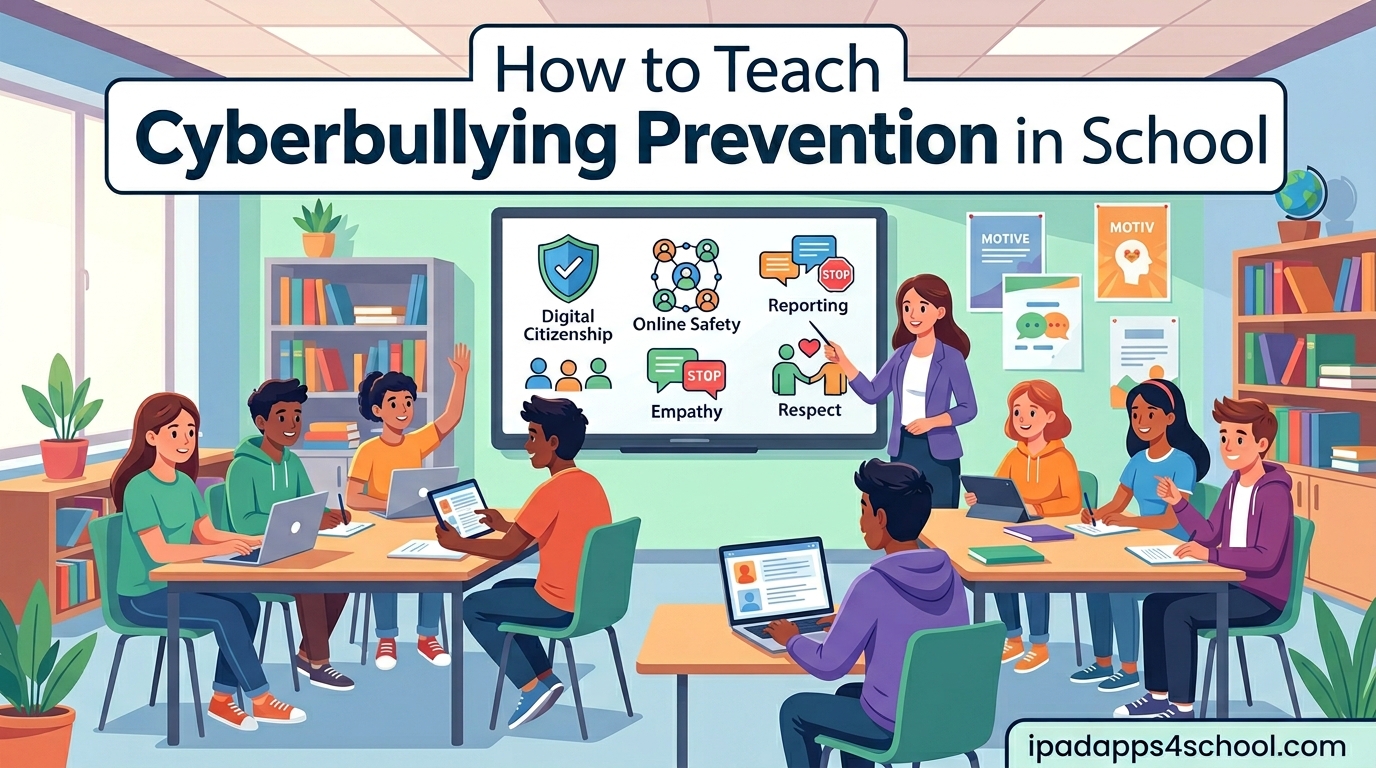
Nearly half of all teens report experiencing cyberbullying at some point during their school years. As educators, we face the challenging task of protecting students in spaces we cannot directly monitor. I have spent years working with teachers and administrators to develop practical approaches that actually work in real classrooms, not just in theory.
This guide shares proven strategies for teaching cyberbullying prevention in school settings. You will find age-appropriate lesson plans, warning signs to watch for, intervention protocols, and assessment methods that fit within your existing curriculum. Whether you teach elementary students just beginning their digital lives or high schoolers navigating complex social media landscapes, these approaches will help you build a culture of digital respect.
Teaching cyberbullying prevention requires more than a single assembly or policy document. It demands ongoing education, clear intervention protocols, and genuine partnership with families. Let us explore how to make this happen in your school.
Table of Contents
What Is Cyberbullying?
Cyberbullying is the use of digital media, apps, text messages, and websites to repeatedly intimidate, upset, or harm someone through negative, harmful, or mean content posted or shared on purpose. Unlike traditional bullying, cyberbullying follows students home, happens around the clock, and often involves anonymity that makes perpetrators harder to identify.
Forms of Cyberbullying Educators Should Recognize
Understanding the specific tactics bullies use helps you identify incidents and educate students about what constitutes harmful behavior. Here are the most common forms affecting students today:
Harassment and threatening messages. Sending repeated offensive, rude, or insulting messages through text, email, or social media platforms. This includes direct threats of violence or intimidation.
Impersonation and catfishing. Creating fake profiles or accounts to deceive others, spread rumors, or damage reputations. Students might pose as their target to post embarrassing content or trick others into revealing personal information.
Doxing. Publishing private or identifying information about someone without consent. This could include home addresses, phone numbers, school schedules, or personal photos.
Cyberflashing. Sending unsolicited explicit images or videos, often through messaging apps or airdrop features. This has become increasingly common with the widespread use of smartphones among younger students.
Exclusion and outing. Deliberately leaving someone out of online groups or revealing sensitive information about someone’s identity or personal circumstances without permission.
Hate pages and online rumors. Creating websites, groups, or posts specifically to mock or spread false information about targeted individuals.
Cyberbullying vs. Traditional Bullying
While the emotional impact remains similar, cyberbullying presents unique challenges for educators. The digital environment means incidents can spread rapidly to large audiences. Screenshots preserve content indefinitely, so even deleted posts can resurface. Anonymity encourages bystanders to participate who might not engage in face-to-face bullying.
Another critical difference is location. Traditional bullying typically happens in physical spaces we can supervise. Cyberbullying often occurs off-campus on personal devices, creating legal and practical challenges for school intervention. However, the impact almost always spills into the classroom through changed behavior, emotional distress, and social dynamics.
The 3 R’s of Bullying Prevention
Many schools use the 3 R’s framework to structure their bullying prevention efforts:
Recognize. Teach students and staff to identify bullying behaviors, whether online or in person. This includes understanding the power imbalance aspect and recognizing repeated harmful behavior rather than isolated incidents.
Report. Create clear, accessible channels for reporting cyberbullying. Students need to know who to tell, what information to provide, and what will happen next. Anonymous reporting options can help reluctant students come forward.
Refuse. Empower students to refuse participation in bullying behavior. This includes not forwarding messages, not commenting on harmful posts, and actively choosing not to be passive bystanders.
Preparing Your School for Cyberbullying Prevention
Before implementing specific lessons, schools need a foundation that supports comprehensive prevention efforts. Taking time to assess your current situation and build capacity pays dividends when incidents occur.
Conduct a Formal Assessment
Start by understanding the scope of cyberbullying in your school community. Anonymous student surveys provide baseline data about prevalence, platforms where incidents occur, and times when students feel most vulnerable. Survey questions might include: Have you experienced cyberbullying this year? Where did it happen? Did you report it? Why or why not?
Review your existing policies and procedures. Do your acceptable use policies specifically address cyberbullying? Is there clear guidance about off-campus incidents that affect school environments? Do staff understand their roles and responsibilities? Document gaps you discover.
Evaluate School Climate
School climate directly impacts cyberbullying prevalence. Students who feel connected to their school community and trust their teachers are more likely to report incidents and less likely to engage in bullying behavior. Assess belongingness through climate surveys that measure student perceptions of safety, support, and inclusion.
Pay particular attention to transition periods. Students moving from elementary to middle school or middle to high school often experience increased vulnerability as they navigate new social hierarchies and digital communication patterns with expanded peer groups.
Designate a Cyberbullying Prevention Coordinator
Assign specific responsibility for coordinating prevention efforts. This person should understand both educational practices and technology trends. They serve as the point person for professional development, policy updates, incident response coordination, and family communication. Having a designated expert ensures consistency and accountability.
Establish Clear Reporting Protocols
Create straightforward procedures for reporting cyberbullying. Students, parents, and staff need to know exactly what steps to take when they witness or experience harmful online behavior. Include multiple reporting channels: direct conversation with trusted adults, anonymous tip lines, online forms, and peer reporting systems.
Document everything. Screenshots, dates, times, and witness statements become crucial evidence for investigation and potential legal proceedings. Teach students how to preserve evidence properly rather than deleting it.
How to Teach Cyberbullying Prevention in School
Effective cyberbullying education requires age-appropriate approaches that evolve as students develop. The strategies that work with fifth graders differ significantly from those appropriate for high school seniors. Here is a comprehensive framework for teaching cyberbullying prevention across grade levels.
Step 1: Build Digital Citizenship Foundations
Start with broad digital citizenship concepts before addressing cyberbullying specifically. Students need to understand their digital footprints, the permanence of online content, and their responsibilities as digital community members. This foundation makes cyberbullying prevention more meaningful.
Integrate digital citizenship into existing curriculum rather than treating it as a separate subject. Language arts classes can analyze online communication tone. Social studies can examine digital rights and responsibilities. Health classes can address the emotional impact of online behavior.
Step 2: Teach Empathy and Perspective-Taking
Empathy development forms the core of cyberbullying prevention. When students understand how their words affect others, they become less likely to engage in harmful behavior. Use role-playing activities where students imagine receiving the messages they might send. Discuss how anonymity affects accountability and compassion.
Address the bystander effect directly. Most students witness cyberbullying without intervening. Teach specific actions bystanders can take: direct intervention when safe, supporting the target privately, reporting to adults, and refusing to spread harmful content. Transform bystanders into upstanders.
Step 3: Develop Media Literacy Skills
Help students critically evaluate online content. They should understand how screenshots can be manipulated, how context can be removed to change meaning, and how viral content spreads regardless of accuracy. These skills help students avoid participating in rumor campaigns and think before sharing.
Discuss the curated nature of social media. Students often compare themselves to idealized online personas, creating vulnerability to negative comments. Understanding that social media rarely reflects reality builds resilience against cyberbullying impacts.
Step 4: Establish Clear Expectations
Create classroom agreements about digital behavior. Involve students in developing these expectations so they feel ownership. Post them visibly and reference them regularly. Make the connection between school values and online behavior explicit.
Address acceptable use of school-issued devices specifically. Students need to understand that school technology carries additional responsibilities and monitoring. Review privacy settings and security measures appropriate for their age level.
Step 5: Practice Response Strategies
Teach students practical responses to cyberbullying. Stop, block, and tell remains an effective framework for younger students. Older students need more nuanced strategies including documentation, platform reporting, and knowing when to involve adults. Practice these responses so they become automatic during stressful situations.
Role-play difficult scenarios. What do you do when a friend is being cyberbullied but asks you not to tell anyone? How do you respond when you accidentally share something harmful? Rehearsing these situations builds confidence and skill.
Age-Appropriate Strategies by Grade Level
Elementary School (K-5): Focus on kindness, inclusion, and telling trusted adults about problems. Use stories and scenarios appropriate for their limited online independence. Teach the basics of personal information protection. Introduce concepts through analogies they understand: “Would you say that to their face?” activities work well at this age.
Middle School (6-8): Address the social drama and identity exploration that characterizes this age. Discuss how group chats can become exclusionary. Teach about digital footprints and reputation management. This is when most students get their first smartphones, making it a critical intervention window.
High School (9-12): Discuss complex issues like doxing, revenge content, and anonymous apps. Address college and career implications of digital behavior. Explore the ethical dimensions of free speech versus harm. Encourage peer mentoring and leadership in prevention efforts.
Ready-to-Use Lesson Plans and Activities
These lesson plans integrate cyberbullying prevention into your existing curriculum. Each includes objectives, materials, procedures, and assessment suggestions.
Lesson: The Power of Words (Elementary)
Objective: Students will understand how words affect others and identify kind versus unkind digital communication.
Materials: Paper hearts, markers, tape, scenario cards.
Procedure: Give each student a paper heart. Have them decorate it while discussing something they love about themselves. Then read scenarios where unkind words are said. Each time, have students crumple their hearts slightly and then try to smooth them out. Discuss how words leave lasting marks even after apologies. Create a classroom pledge about kind communication.
Assessment: Students write or draw about a time words hurt them and how they felt. Share how they can use kind words online.
Lesson: Digital Footprint Detective (Middle School)
Objective: Students will understand digital permanence and analyze how online content reflects identity.
Materials: Device access, search engines, profile analysis worksheet.
Procedure: Create fictional social media profiles showing different types of content. Have students analyze what each profile reveals about the person. Discuss how future colleges or employers might interpret these footprints. Connect to cyberbullying by showing how harmful posts become part of permanent records for both bullies and targets.
Assessment: Students audit their own digital presence and create a plan for positive reputation management.
Lesson: Bystander to Upstander (High School)
Objective: Students will analyze barriers to intervention and develop specific upstander strategies.
Materials: Case studies, role-play scenario cards, strategy brainstorm posters.
Procedure: Present real-world cyberbullying scenarios. Small groups identify why bystanders might not intervene. Discuss research about the bystander effect. Brainstorm specific, safe intervention strategies for different situations. Role-play difficult scenarios where friends are involved. Develop a personal upstander commitment.
Assessment: Students create public service announcements or social media campaigns promoting upstander behavior.
Interactive Activity: The Respect Circle
Form a standing circle. One student starts by saying something respectful they appreciate about digital communication. The next student repeats that statement and adds their own. Continue around the circle building a chain of positive digital citizenship behaviors. This activity reinforces community norms and gives students language for positive online interaction.
Discussion Prompts for Any Grade
Is sharing a screenshot of someone else’s post without permission okay? Why or why not?
How do you decide whether to report something you see online?
What would you do if a friend showed you a group chat where someone was being made fun of?
How can you support someone who is being cyberbullied without making things worse?
Why do people sometimes behave differently online than they do in person?
Warning Signs Educators Should Know
Early identification of cyberbullying allows for quicker intervention and reduced harm. Watch for these indicators in your students.
Signs a Student Might Be a Target
Sudden reluctance to use devices or participate in online activities they previously enjoyed. This includes avoiding computer labs, putting phones away immediately when teachers approach, or showing anxiety when notifications appear.
Emotional changes after using technology. Students who become visibly upset, angry, or withdrawn following device use may be experiencing cyberbullying. They might rush to bathrooms or secluded spaces to check messages or compose responses.
Unexplained anger, depression, or anxiety that seems disconnected from school events. Cyberbullying often happens outside your awareness, so behavioral changes without clear school-based causes warrant investigation.
Avoidance of social situations, friends, or activities they previously enjoyed. Isolation can result from cyberbullying that damages social standing or relationships.
Declining grades or difficulty concentrating. The emotional toll of cyberbullying significantly impacts academic performance and attention.
Unexplained physical complaints like headaches or stomachaches, especially before school or during times when they would normally use devices. These somatic symptoms often reflect anxiety about online interactions.
Signs a Student Might Be Bullying Others
Quickly switching screens or hiding devices when adults approach. Secretive behavior around online activities warrants attention.
Using multiple accounts or being unusually knowledgeable about anonymity tools and VPNs. While technical knowledge alone is not concerning, combined with other factors it may indicate secretive online behavior.
Spending unusual amounts of time online, especially late at night. Cyberbullying requires time to plan, execute, and monitor.
Having devices taken away as punishment at home. This sometimes indicates parents have discovered problematic online behavior.
Showing insensitivity to others’ feelings or glorifying bullying behavior. Comments suggesting victims deserve mistreatment or that bullying is funny or acceptable require intervention.
Documentation Best Practices
When you suspect cyberbullying, document specific observations. Note dates, times, behavioral changes, and any statements made. If students show you evidence, take screenshots preserving metadata when possible. Store documentation securely following your school’s record-keeping policies.
Do not investigate by contacting suspected bullies or searching student devices yourself unless following established protocols. This protects both you and students legally while ensuring proper procedures are followed.
Intervention and Response Protocols
Knowing how to respond when cyberbullying occurs is as important as prevention. These protocols help educators navigate complex situations effectively.
Immediate Response Steps
Ensure the target is safe. If there are immediate safety concerns, threats of violence, or indications of self-harm, follow crisis protocols immediately. Student safety always takes priority over investigation procedures.
Preserve evidence. Ask the target or reporter to screenshot messages, posts, or other relevant content including timestamps and usernames. This documentation becomes crucial for investigation and potential legal proceedings.
Separate the involved parties. If the incident occurs during school hours, keep targets and perpetrators apart while investigating. Do not force apologies or mediation sessions, as these can retraumatize targets.
Notify appropriate personnel. Follow your school’s chain of command for reporting incidents. This typically includes administrators, counselors, and sometimes law enforcement depending on severity.
Legal Considerations
Consult your school attorney before taking disciplinary action for off-campus cyberbullying. Legal standards vary by jurisdiction and continue evolving. Courts generally allow school intervention when off-campus speech substantially disrupts the educational environment, but the definition of “substantial disruption” remains contested.
Understand mandatory reporting requirements. Some cyberbullying incidents may trigger reporting obligations for suspected abuse or threats of violence. Know your state’s specific requirements.
Respect student privacy rights while investigating. Schools can examine school-issued devices and accounts but face limitations regarding personal devices and accounts, even when used for bullying.
Working with Law Enforcement
Certain cyberbullying behaviors may violate criminal laws. Threats of violence, harassment, stalking, sharing explicit images of minors, and hate crimes require law enforcement involvement. Your school attorney can help determine when to contact police.
Preserve evidence properly for potential criminal investigations. This includes maintaining chains of custody and avoiding actions that could compromise evidence integrity.
Restorative Practices
For less severe incidents where both parties are willing, restorative practices can repair harm and prevent recurrence. These approaches focus on understanding impact, taking responsibility, and making amends rather than purely punitive measures.
Successful restorative practices require skilled facilitation, voluntary participation, and adequate time. They should not replace consequences for serious incidents or be forced upon unwilling targets.
Working with Families and Parents
Effective cyberbullying prevention requires partnership with families. Parents need education, support, and clear communication channels.
Family Education Events
Host workshops specifically for parents about cyberbullying. Cover the platforms students use, warning signs to watch for at home, and how to respond when their child is involved. Many parents feel overwhelmed by technology and appreciate guidance.
Provide resources in multiple languages and formats. Some families prefer written materials; others want interactive sessions. Accessibility increases engagement.
Communication Templates
Develop templates for common communications. When informing parents their child was targeted, include: specific facts about what occurred, steps the school has taken, how the child is doing, next steps in the process, and resources for support.
When contacting parents of students who bullied, include: specific behavior descriptions, school policy references, consequences imposed, expectations going forward, and offers of support for addressing underlying issues.
Always consult your administrator and potentially school attorney before sending communications about incidents. Documentation consistency protects everyone.
Building Partnerships
Create channels for two-way communication. Parents should feel comfortable reporting concerns and asking questions. Designate specific contacts for cyberbullying-related communication so families know who to reach.
Involve families in prevention planning. Parent perspectives enrich your approach and increase buy-in for initiatives. Consider parent representatives on digital citizenship committees.
Measuring Program Effectiveness
Assessment ensures your cyberbullying prevention efforts actually work. These methods help you evaluate and improve your program.
Quantitative Metrics
Track incident reports over time. An increase in reports often indicates improved awareness and willingness to come forward rather than more bullying. Compare this data against climate surveys measuring student perceptions of safety.
Survey students annually about their experiences with and observations of cyberbullying. Anonymous surveys yield more honest responses. Track changes in prevalence, reporting rates, and confidence in adult responses.
Measure bystander intervention rates. When students report seeing cyberbullying, ask what they did. Increases in upstander behavior indicate successful education efforts.
Qualitative Assessment
Conduct focus groups with students, staff, and families about their perceptions of cyberbullying prevention efforts. Their insights reveal nuances numbers miss.
Review incident response quality. Are investigations thorough and timely? Do targets feel supported? Are consequences appropriate and consistent? Regular case review improves practice.
Evaluate curriculum implementation. Are teachers covering required content? Do lessons engage students? What adaptations work best in your context?
Continuous Improvement
Use assessment data to refine your approach. Share results with your school community to demonstrate commitment and transparency. Celebrate progress while honestly addressing ongoing challenges.
Stay current with technology trends. New apps and platforms constantly emerge. Regularly update your knowledge and curriculum to address current risks students actually face.
Frequently Asked Questions
What are the 3 R’s of bullying?
The 3 R’s of bullying are Recognize, Report, and Refuse. Recognize means teaching students and staff to identify bullying behaviors and understand the difference between conflict and bullying. Report involves creating clear channels for students to tell trusted adults about incidents, including anonymous options. Refuse empowers students to actively choose not to participate in bullying, whether as perpetrators or passive bystanders, and to support targets instead.
What are 5 ways to prevent cyberbullying?
Five effective ways to prevent cyberbullying include: 1) Teaching digital citizenship and empathy skills so students understand the impact of their online behavior, 2) Establishing clear school policies and reporting protocols that address both on-campus and off-campus incidents, 3) Training bystanders to become upstanders who support targets and report bullying, 4) Engaging families through education and communication so home and school messages align, and 5) Creating a positive school climate where students feel connected and safe reporting concerns.
What should schools do to prevent cyberbullying?
Schools should implement comprehensive cyberbullying prevention by: conducting formal assessments to understand the scope of the problem, designating a coordinator responsible for prevention efforts, integrating digital citizenship into curriculum across grade levels, establishing clear reporting and response protocols, providing professional development for staff, engaging families through education and partnership, creating positive school climate initiatives, and regularly evaluating program effectiveness through data collection.
What strategies can schools use to prevent bullying?
Effective school-wide bullying prevention strategies include implementing social-emotional learning programs that build empathy and relationship skills, establishing peer mentoring and buddy programs, creating anonymous reporting systems, conducting regular climate surveys to identify problems early, training all staff to recognize and respond to incidents, involving students in prevention planning and leadership, developing clear policies with consistent enforcement, and fostering family engagement through education and communication.
How should teachers respond when they witness cyberbullying?
Teachers should follow established school protocols when witnessing cyberbullying. Immediate steps include ensuring the target’s safety, preserving evidence through screenshots, separating involved parties without forcing interaction, and notifying appropriate administrators and counselors. Teachers should document observations specifically, avoid investigating independently outside established procedures, and provide support to the target while following up according to school policy.
What is the school’s responsibility for off-campus cyberbullying?
School responsibility for off-campus cyberbullying depends on whether the behavior substantially disrupts the educational environment. While courts have generally allowed school intervention when off-campus speech affects school operations, standards vary by jurisdiction. Schools should consult their attorneys when addressing off-campus incidents. Even when direct discipline is limited, schools can provide support to affected students and work with families on solutions.
How can schools prove cyberbullying occurred?
Schools prove cyberbullying through documentation including screenshots with timestamps, witness statements, patterns of behavior showing repetition, and admissions from involved students. Encourage targets and witnesses to preserve evidence rather than deleting it. Schools may also request information from social media platforms under certain circumstances. Work with your school attorney to understand what evidence standards apply in your jurisdiction.
What age should cyberbullying prevention education begin?
Cyberbullying prevention education should begin as soon as students start using digital devices and platforms, typically in early elementary school. Initial lessons focus on kindness, respectful communication, and telling trusted adults about problems. As students gain more independence online, education becomes more complex, addressing specific platforms, privacy settings, and sophisticated social dynamics. Middle school represents a critical intervention window when most students receive their first smartphones.
Building a Culture of Digital Respect
Learning how to teach cyberbullying prevention in school requires commitment, consistency, and collaboration. The strategies outlined here provide a framework for comprehensive prevention, but success depends on your school’s specific context and sustained effort over time.
Start with assessment and preparation. Build your foundation through digital citizenship education and empathy development. Equip students with practical skills to respond when they encounter cyberbullying. Establish clear protocols for intervention. Partner with families as allies in prevention. Measure your progress and continuously improve.
Remember that you cannot eliminate all cyberbullying. Technology evolves rapidly, and students face complex social dynamics online that adults cannot fully control. What you can do is create a school culture where digital respect is valued, where students feel safe reporting concerns, and where harm is addressed promptly and effectively.
The educators I have worked with who see the greatest success share certain qualities. They listen to students without judgment. They stay current with technology trends. They collaborate with colleagues and families. They acknowledge the real challenges while maintaining hope and commitment. You can build this culture in your school, one conversation, one lesson, and one intervention at a time.