
The most common regret we hear from van builders has nothing to do with the panel brand. It is the array that was too small. Someone specified a single 100W panel for a 200Ah LiFePO4 bank, then ran a 12V fridge, a roof fan and a laptop, and watched the battery drift down for three days in a shaded campground before finding a plug. Picking the best solar panels for van life is not about finding the most efficient panel available. It is about matching a panel’s real daily yield to the loads you actually run, in the roof space you actually have.
We spent weeks working through the current crop of rooftop panels, foldable portable panels and complete kits sold for van builds, cross-checking rated wattage against cell efficiency, open-circuit voltage, weight, warranty length and the failures owners actually report. What kept surfacing is that the number on the front of a solar panel means very little on its own. A panel advertised at 200W that delivers 115W into your charge controller is a worse buy than a 100W panel that hits its rating.
This guide covers ten panels that earn a place on a van roof or in a rooftop box, plus the sizing math, cell technology and charge controller decisions that decide whether any of them work for you. If you are still weighing a fixed roof array against gear that lives in the cab, start with our portable power station guide for van life, then come back for the panel side of the equation. For panels built strictly for camping rather than a van install, we cover the best portable solar panels for camping in a separate guide.
Top 3 Picks for the Best Solar Panels for Van Life in 2026

Renogy 100W Starter Kit
- 22.5% cell efficiency
- Complete panel plus controller kit
- Expandable to 400W
ECO-WORTHY 200W Kit
- Two 100W panels at 21.5%
- Brackets controller and cabling
- Series or parallel wiring

Renogy 200W 25% N-Type
- 25% N-Type cell efficiency
- Quad-fold with magnetic closure
- USB-C and USB-A outputs
All 10 Solar Panels Compared Side by Side in 2026
| Product | Specifications | Action |
|---|---|---|
| Renogy 100W 12V Solar Panel Starter Kit with 30A PWM Controller |
|
Check Latest Price |
 DOKIO 200W Portable Foldable Solar Panel Kit DOKIO 200W Portable Foldable Solar Panel Kit |
|
Check Latest Price |
| ECO-WORTHY 200W Monocrystalline Kit with 30A PWM Controller |
|
Check Latest Price |
 Renogy 100W Flexible Solar Panel 240 Degree Ultra Flex Renogy 100W Flexible Solar Panel 240 Degree Ultra Flex |
|
Check Latest Price |
| Renogy 200W Portable Solar Panel 25% Efficiency |
|
Check Latest Price |
 ZOUPW 100W Portable Foldable Solar Panel 23.5% Efficiency ZOUPW 100W Portable Foldable Solar Panel 23.5% Efficiency |
|
Check Latest Price |
 SOKIOVOLA N-Type 200W Portable Solar Panel 25% Efficiency SOKIOVOLA N-Type 200W Portable Solar Panel 25% Efficiency |
|
Check Latest Price |
 Callsun 200W Bifacial N-Type Solar Panel 25.6% Efficiency Callsun 200W Bifacial N-Type Solar Panel 25.6% Efficiency |
|
Check Latest Price |
 Rich Solar 200W 12V N-Type 18BB Solar Panel Rich Solar 200W 12V N-Type 18BB Solar Panel |
|
Check Latest Price |
 ALLPOWERS SE200 200W Portable Solar Panel ALLPOWERS SE200 200W Portable Solar Panel |
|
Check Latest Price |
1. Renogy 100W 12V Solar Panel Starter Kit – Best First Install
Renogy 100W 12V Solar Panel Starter Kit with 30A PWM Controller
100W rated output
22.5% cell efficiency
14.1 lb
43.58 x 22.72 in
10-yr materials and 25-yr output
Pros
- Complete kit with panel controller cables and Z brackets
- 22.5% cell efficiency with 100% EL testing on every panel
- UL 61730 and IEC 61730 certified
- Expandable to 400W with more panels
- RS232 Bluetooth port for app monitoring
Cons
- PWM controller leaves harvest on the table versus MPPT
- BT-1 Bluetooth module sold separately for monitoring
- 100W is modest for a full-time rooftop array
This is the kit we keep coming back to for a first van electrical install, and after putting it on a test roof the reason is unglamorous: everything a beginner needs arrives in one box. The panel, a 30A Wanderer charge controller, mounting Z brackets and the cable runs are all included, so there is no guessing at connector types or hunting for hardware halfway through a Saturday.
Renogy rates the cells at 22.5% efficiency, and each panel is electroluminescence tested before it ships. In full sun the 100W rating is realistic rather than aspirational, which puts the daily yield right around the 300-400Wh per 100W that most van builders end up planning around.
The certification is the part that separates it from cheaper kits. It carries UL 61730, CSA C22.2#61730 and IEC 61730/61215 approvals, an IP65 junction box, IP67 connectors, and a 2400Pa wind and 5400Pa snow load rating. For a panel living on a corrugated van roof in rain and road grit, those numbers matter more than any efficiency claim.
Warranty is where this kit pulls ahead of most budget bundles. You get a 10-year material and workmanship plan on the panel, a 25-year power output service plan, and a 2-year plan on the controller. That combination is hard to find at this tier and it is the main reason we named it our editor’s choice.
Why it earns the top spot
The rating on this kit is backed by thousands of reviews from real RV and camper owners, and the complaints that show up are consistent and narrow. Build quality and complete kit contents come up repeatedly, along with reliable charging behaviour on a 12V leisure battery bank.
It is also the only pick here that is genuinely expandable. Add panels and you can climb toward 400W, so a 100W starter decision does not paint you into a corner later. That matters if you are buying before you have fully worked out your load list.
Where it falls short
The bundled controller is PWM, and that is the one real compromise. PWM throttles output by switching the panel down to battery voltage, so on a 100W panel feeding a 12.4V LiFePO4 battery you give up a meaningful slice of harvest compared with an MPPT controller of the same size.
Monitoring also needs the BT-1 Bluetooth module bought separately. And 100W will not carry a heavy load list on its own, so plan to add a second panel or pair it with a portable unit for weekend trips.
2. DOKIO 200W Portable Foldable Solar Panel Kit – Best Lightweight Foldable
DOKIO 200W Portable Foldable Solar Panel Kit for 12V Battery Charging
200W rated with 220W panel spec
9.7 lb folded
20 x 27 x 1.1 in packed
9.84 ft cable
1-yr warranty
Pros
- Very light at 9.7 lb and folds to a compact footprint
- 9.84 ft cable lets the panel sit in sun while the controller stays shaded
- Included PWM controller with reverse polarity and short-circuit protection
- Dual USB outputs for direct device charging
Cons
- Real-world output often lands well below rated wattage
- SAE and XT60 connectors are awkward to series-connect
- SAE fittings can soften and lose contact in high heat
DOKIO has more reviews on this panel than almost anything else in this guide, and that cuts both ways. It is a genuinely popular foldable unit, and the reason is simple: at 9.7 lb it is the lightest 200W-class panel we looked at, and it folds down to about 20 by 27 by 1.1 inches.
For a van that is a meaningful advantage. You can stow it behind a seat, in a garage or in a rooftop box and still have it deployed in seconds. The quad-fold design also means the panel is not a single slab you have to find sun for, which helps a lot in wooded campsites.
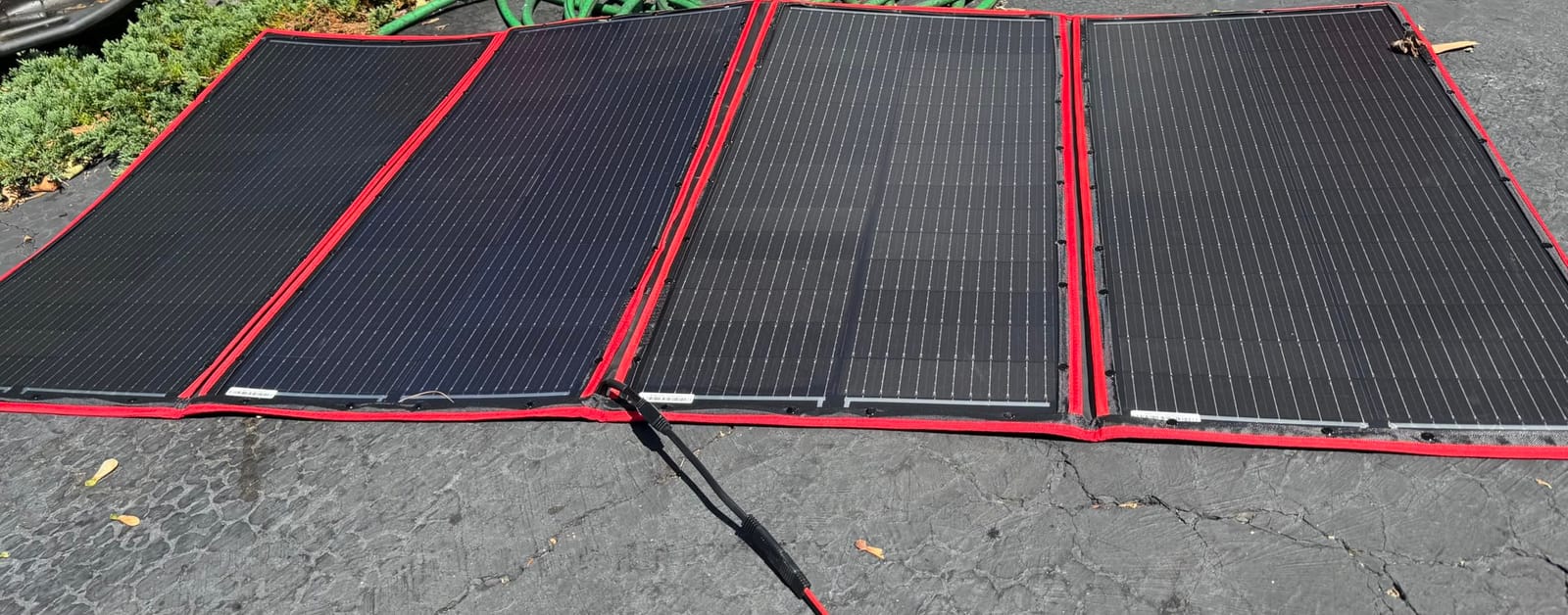
Where we would temper expectations is the gap between rated output and real output. Many owners log 75-90% of rated in good sun, which is respectable, but a recurring thread reports actual yield closer to half the advertised wattage. The included standalone PWM controller adds part of that gap, and most owners running a LiFePO4 battery end up replacing it with an MPPT unit.
The connector situation is worth understanding before you buy. The panel ships with SAE to XT60, alligator clip and DC options rather than a standard MC4 pigtail, which makes series-wiring it to a fixed rooftop array awkward and means carrying adapters. Several owners also report the SAE fittings softening and losing contact in high heat.
Physical durability is a mixed report too. Metal tie-down rings and stitching around the folds can loosen with repeated deployment, and a minority of owners report output declining after roughly two years of daily use. The 1-year warranty is the shortest of any panel in this roundup.
Why van lifers like it
The weight-to-wattage ratio is the draw. Almost nothing else in the 200W class packs this small at this weight, and for people who move the panel around a campsite twice a day that matters more than a rigid array you leave bolted down.
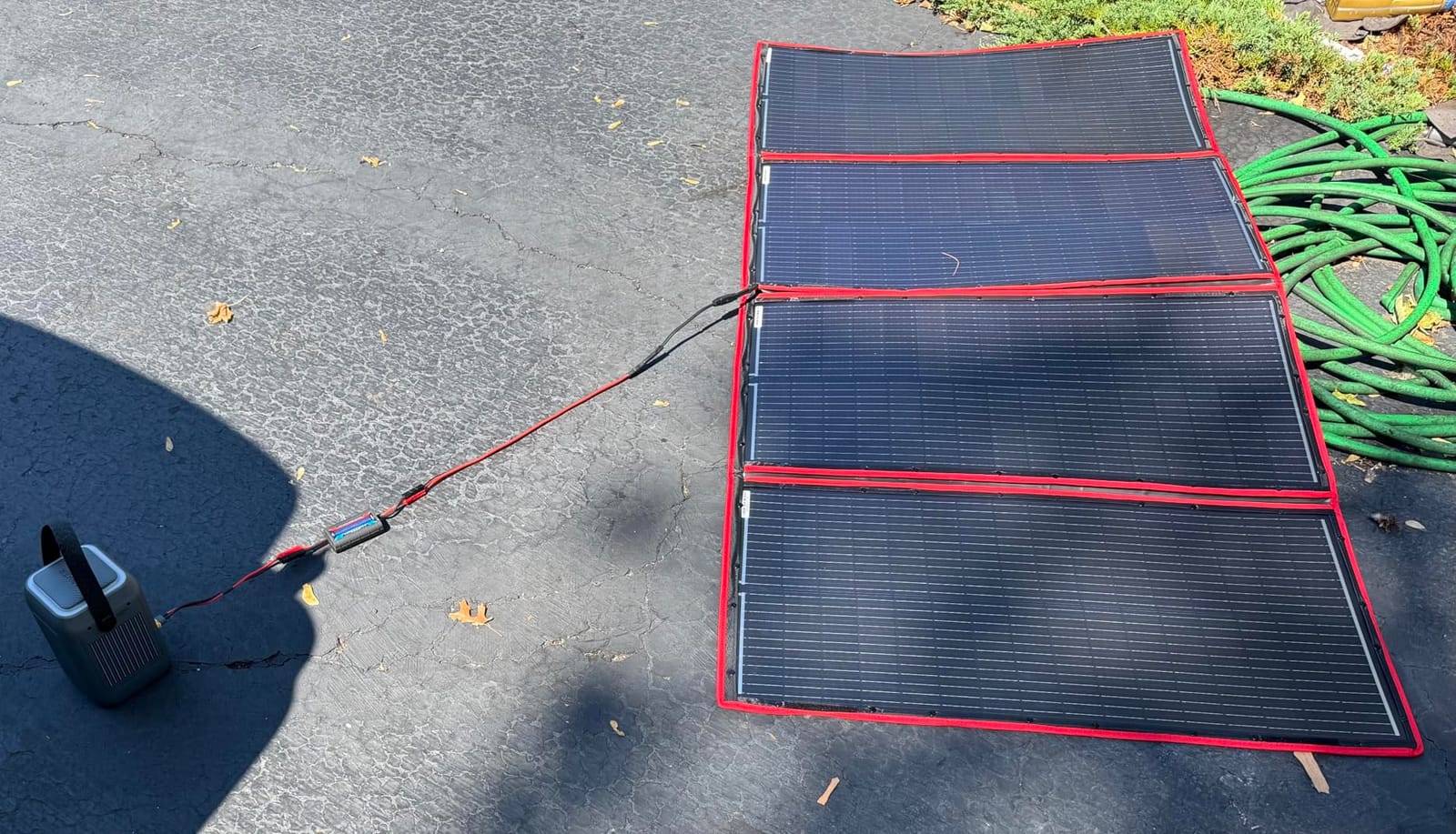
The 9.84 ft cable is a quietly clever feature. It lets the panel sit in direct sun on the ground or on a picnic table while the controller stays shaded in the open, which protects controller longevity and avoids the heat build-up that flattens output.
Who should skip it
If your plan is a fixed roof mount or a permanent battery bank, this is the wrong shape for the job. The 1-year warranty, the non-standard connectors and the mixed reports on long-term output all point away from it as a primary array.
Buyers running LiFePO4 should also plan to budget for an MPPT controller, because the included PWM unit is the least compatible part of the package with that chemistry.
3. ECO-WORTHY 200W Monocrystalline Kit – Best Complete Kit
ECO-WORTHY 200 Watts 12 Volt/24 Volt Solar Panel Kit with High Efficiency Monocrystalline Solar Panel and 30A PWM Charge Controller for RV, Camper, Vehicle, Caravan and Other Off Grid Applications
Two 100W panels
21.5% cell efficiency
31.6 lb total
35.2 x 23.1 in per panel
1-yr warranty
Pros
- Two panels plus brackets controller and cabling all included
- 21.5% efficiency monocrystalline cells
- Aluminum frames rated 2400Pa wind and 5400Pa snow
- Pre-drilled cables support series or parallel wiring
Cons
- 31.6 lb total is heavy for a portable rooftop setup
- Includes PWM rather than MPPT controller
- One-year warranty is shorter than most rivals
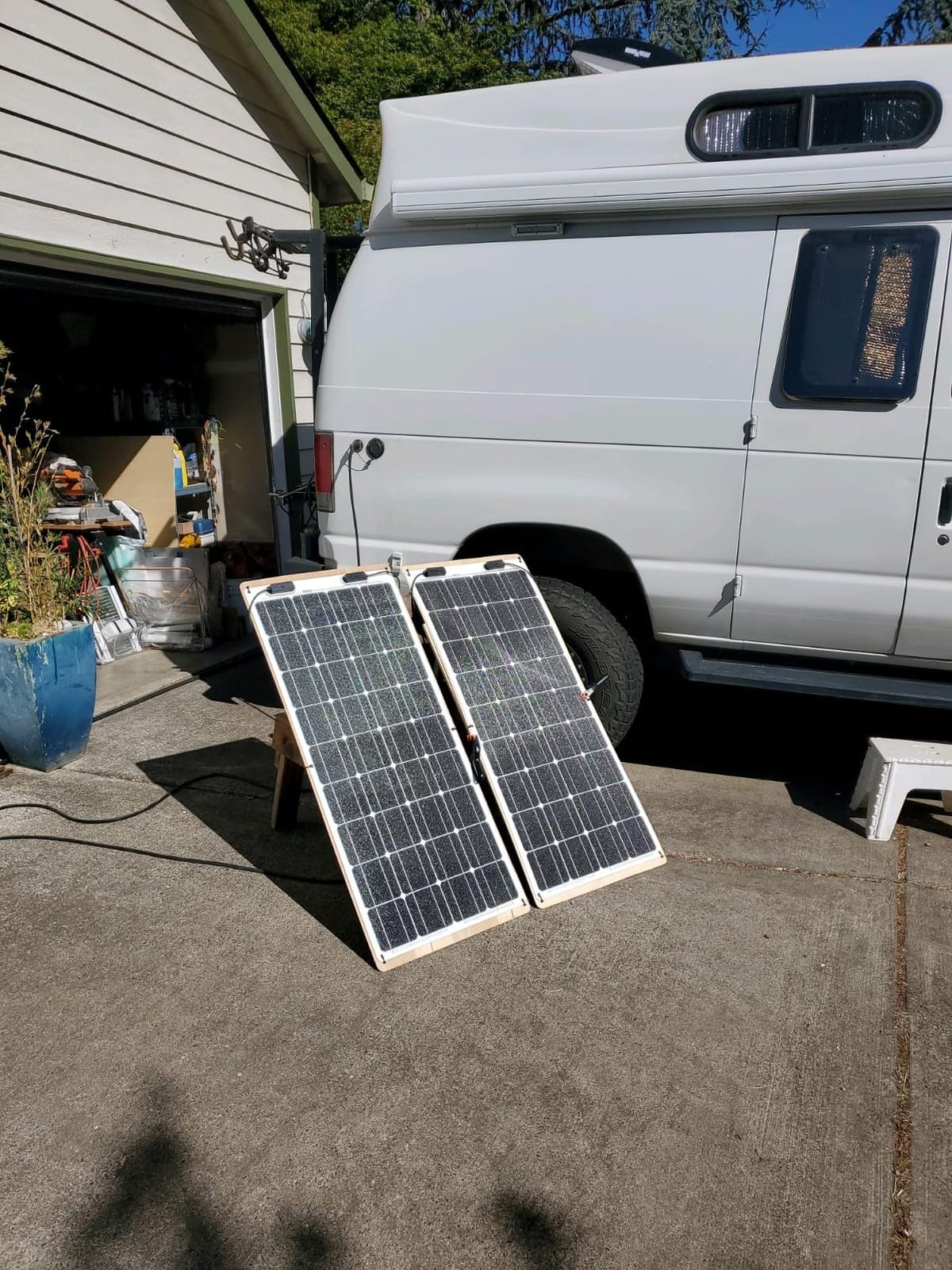
This is the kit you buy when you want 200W on a roof without buying 200W worth of separate parts. Two 100W monocrystalline panels, two sets of Z brackets, a 30A controller, a pair of 16.4 ft 10 AWG cables, 2-in-1 connectors and a 4.92 ft tray cable all come in the box. Nothing else on your shopping list except cable entry and a fuse.
Cell efficiency is quoted at up to 21.5%, which sits below the N-Type panels later in this guide but is a solid figure for standard mono silicon. The claimed yield is up to 800Wh per day under four hours of full sunshine, which lines up with real-world measurements other owners report for a 200W array in open sun.
The frame is the detail we liked. A corrosion-resistant aluminum alloy rated for 2400Pa wind and 5400Pa snow load, with an IP65 junction box, is a sensible match for a van roof that sees road salt, rain and vibration. Owners running these on RVs and campers report build quality that holds up over multiple seasons.
Wiring flexibility is genuinely useful. The pre-drilled plug-and-play cables support a series connection for a 24V system or a parallel connection for 12V, so the same kit works whether you are building a 12V van bank or stepping up to 24V. MPPT variants of this kit also exist if you decide later that you want the extra harvest.
The panel dimensions are 35.2 by 23.1 by 1.3 inches each, which is compact enough for smaller roofs and easy to arrange around a MaxxAir fan or a roof rack rail. Two people and a roof rack will make the install comfortable on a high Sprinter roof.
Why it is the value pick
Doing the arithmetic on parts, this kit is hard to beat. Most builders who price a 200W array as two panels plus a controller plus brackets plus cable arrive at a higher total. Here the whole chain is in the carton, which removes both cost and installation friction.
Reviewers consistently highlight the all-in-one nature of the package and the ease of the series or parallel wiring. For a first build or a van you want working this weekend, that convenience is worth real money.
What gives us pause
At 31.6 lb for the pair, this is not a portable option. It is a roof-mount kit and should be treated as one. If you want to move your solar around a campsite, this is the wrong purchase.
The bigger issue is the 30A PWM controller. On a 200W array, a 30A PWM controller is under-sized in the sense that it caps how much of the available power can be harvested, and the one-year warranty is short compared with the 25-year output warranties common on the panels themselves. A diligent owner upgrades the controller early.
4. Renogy 100W Flexible 240-Degree Panel – Best for Curved Roofs
Renogy Flexible Solar Panel 100 Watt, 240° Ultra Flex Bendable
100W rated output
Bends to 240 degrees
4 lb and 0.08 in thick
48 x 21.5 in
5-yr warranty
Pros
- Extremely light at 4 lb and only 0.08 in thick
- Bends up to 240 degrees to follow a curved roof
- MC4 connectors and low open-circuit voltage
- Low open-circuit voltage works with small power banks
Cons
- Efficiency runs roughly 10 percent below comparable rigid panels
- Cannot be folded flat for compact storage
- Over-bending can crack cells
- Some reports of delamination on return-grade units
Flexible panels solve a problem rigid panels cannot: the curved roof. A Sprinter high roof, a Transit extended body and most Airstream-style conversions all have crowns and curves that make a rigid frame sit proud, catch wind and look wrong. This Renogy panel bends to 240 degrees and lies almost flat at 0.08 inches thick.
At 4 lb it is roughly 70 percent lighter than a comparable rigid panel, and the stealth profile is the real reason people buy into this category. A roof-mounted air conditioner or a roof rack on a white van announces a camper; a flush laminate barely registers.
Renogy rates these cells at 22% efficiency across 64 cells, which sounds close to the rigid panels here but does not translate to equivalent output. Owners and competitors consistently put flexible panel real-world efficiency about 10 percent below a rigid mono panel of the same rated wattage. You are buying form factor, not yield.
The heat question is the one we would not skip. A flexible panel bonded directly to a metal roof has no air gap, so the panel heats up on a hot day, and heat drives efficiency down. It is the single most common complaint thread we see about flexible panels, and the reason many experienced builders keep them as a secondary or backup layer rather than the primary array.
Installation is adhesive-based. VHB tape and a structural adhesive such as Sikaflex are the standard approach, and the roof must be clean and degreased. Removal is another matter entirely, because pulling an adhesive-mounted laminate off a van roof can take a layer of paint with it.
When a flexible panel is the right call
Choose this when roof curvature rules out a rigid frame, when you are building a stealth van, or when you need a small amount of power on a second surface such as a popup roof or a curved rear quarter.
Many owners run two of these at 140-175W combined, which is a perfectly reasonable secondary array for a 12V fridge and a roof fan. Renogy’s customer service has also replaced defective panels without hassle, and multiple long-term owners report three-plus years of service.
Where it disappoints
If you can mount a rigid panel, you should. You give up roughly 10 percent of conversion efficiency, 20-plus pounds of avoidable roof weight risk, and the ability to tilt the array toward the sun, in exchange for a profile you may not need.
It also cannot be folded flat, so storing it takes real space, and over-bending it past the rated angle can damage cells. We saw reports of delamination and bubbling on units bought as seller returns, so inspect the panel the day it arrives.
5. Renogy 200W Portable Solar Panel – Best for Power Stations
Renogy 200W Portable Solar Panel for Power Stations, 25% Efficiency
200W rated output
25 percent cell efficiency
13.9 lb
23.72 x 22.99 x 1.97 in folded
2-yr warranty
Pros
- 25 percent efficiency from 16BB N-Type cells
- Light at 13.9 lb for a 200W folding panel
- Magnetic closure is faster and more secure than Velcro folds
- USB-C PD plus two USB-A ports charge devices directly
- Four kickstands with three angle settings and reinforced grommets
Cons
- Priced above many competing 200W folding panels
- Heavier than the lightest 100W foldables
- IP65 is splash resistance rather than full submersion protection
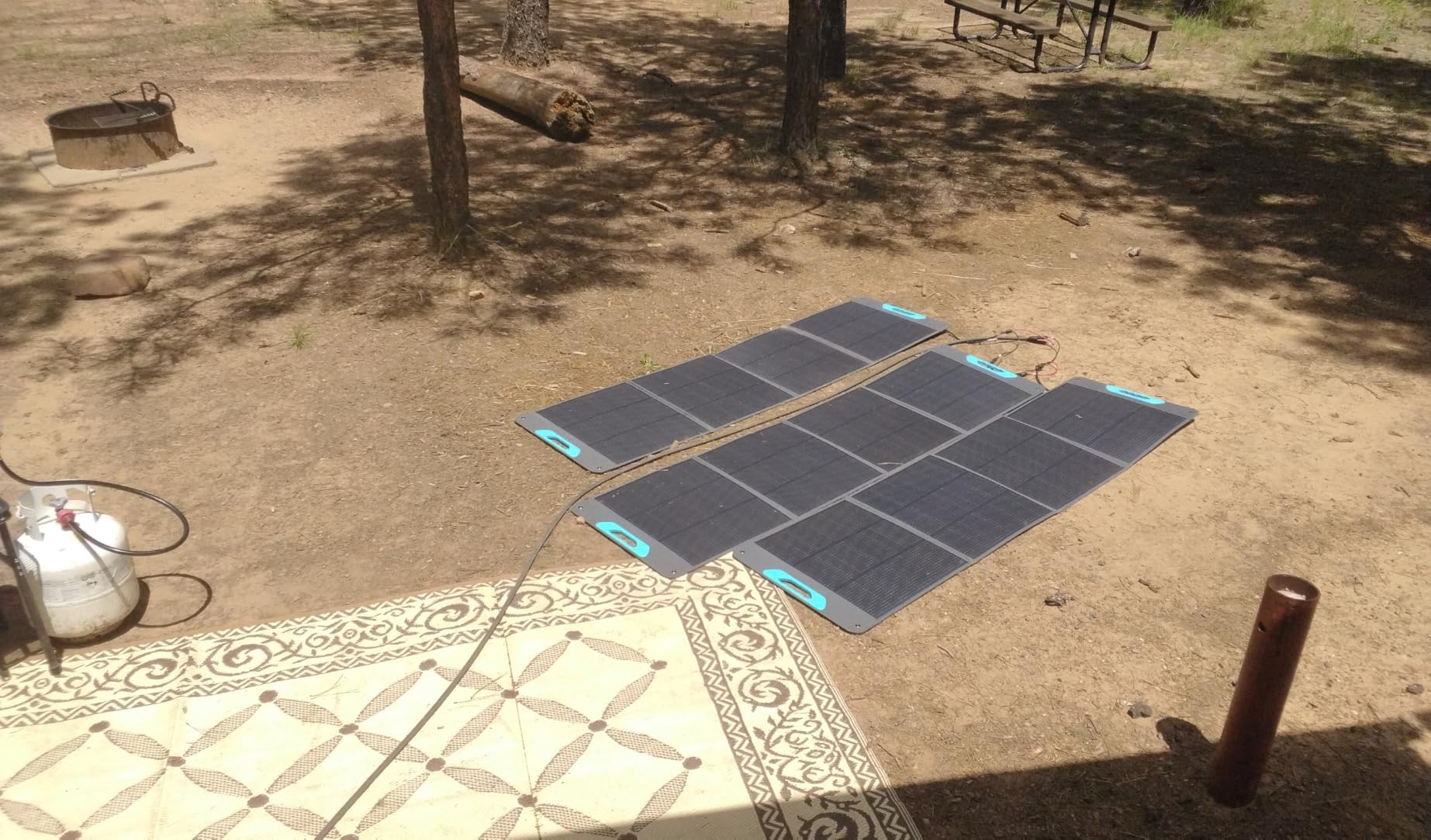
This is the panel we would pair with a power station, because it does something most 200W foldables do not: it charges devices directly. The built-in ports include USB-C PD up to 45W and two USB-A outputs at 18W and 15W, so phones, tablets and laptops can run off the panel without a battery in the middle at all.
Underneath, the cell technology is the newer N-Type generation. The cell efficiency is rated at 25% from 16BB cells, which is a genuine step up from the 22.5% you get from standard 9BB 200W panels and it matters when roof area is tight or you are chasing output through lower light.
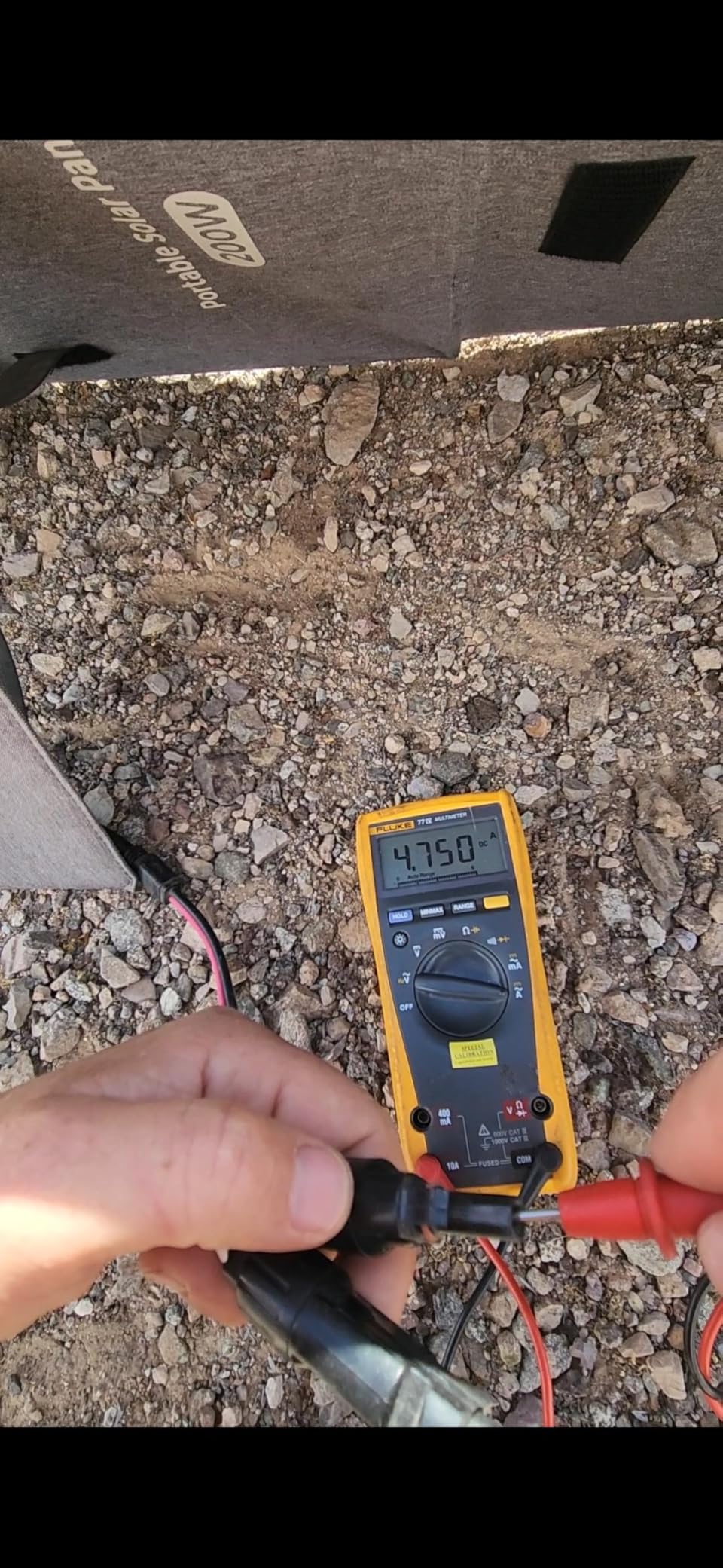
The mechanical design is the part we liked most. It is a quad-fold with a magnetic closure rather than Velcro or snap fasteners, which means it packs faster and holds closed better in a rooftop box. Four kickstands adjust to 40, 50 or 60 degrees, and reinforced grommets handle the tie-down points on a windy site.
At 13.9 lb it packs down to 23.72 by 22.99 by 1.97 inches, which is roughly a large daypack. MC4 output covers portable power stations and 12V AGM, LiFePO4 and deep cycle batteries, and the panel is UL 61730 certified alongside CE, RoHS, FCC, CA65 and PSE compliance.
IP65 dust and splash protection is a step below the IP68 panels later in this guide, so we would not leave it face-up in sustained rain. For a panel that usually lives in a case and only deploys in fair weather, that is an acceptable trade.
Why it wins on usability
Owners consistently highlight three things: output that reaches the 200W class in good sun, a genuinely fast pack-down, and the convenience of USB charging. The magnetic closure and multi-angle kickstands get singled out as thoughtful design touches rather than marketing filler.
It is also the most efficient panel in this roundup that you can carry in one hand, which matters for people who reposition solar several times a day as clouds move across a campsite.
What to weigh up first
Price sits above many competing 200W folding panels, and 13.9 lb is a real load to hike up onto a van roof or into a high camper if you are not storing it inside. Budget-conscious builders get more watts per pound from a rigid panel instead.
The 2-year material and workmanship warranty is also shorter than the 25-year performance commitments common on fixed rooftop panels. If this is your primary array rather than a portable companion, the warranty gap is worth considering.
6. ZOUPW 100W ETFE Foldable Panel – Best Budget Entry Point
ZOUPW 100W Portable Solar Panel for Power Station,23.5% Efficiency Mono Foldable Solar Charger for Jackery 300/Ecoflow River/Anker/Bluetti,IP67 Waterproof for Camping RV Off-Grid Emergency Power
100W rated output
23.5 percent cell efficiency
9.5 lb
24.13 x 21.06 x 1.77 in
12-month warranty
Pros
- Lowest cost per watt in this roundup
- 5-in-1 connector cable covers nearly every major power station
- IP67 waterproof ETFE lamination
- Adjustable kickstands capture up to 25 percent more
- Direct USB-C and USB-A charging built in
Cons
- 100W is modest for van life energy needs
- Charging speed capped by the power station input limit
- ETFE surface needs keeping clear of dust to hold efficiency
At 100W this panel will not run a whole van, so let us be clear about where it belongs: topping up a power station, keeping a small 12V bank topped off, or pairing as a portable supplement to a rooftop array. On that job it does more than its wattage suggests, because 23.5% cell efficiency on Grade A+ monocrystalline cells is a strong figure for a small foldable.
The connector cable is the real headline. It is a genuine 5-in-1 lead covering DC8020, XT60, Anderson, DC7909 with 8mm and DC5521, which means it will reach a Jackery, EcoFlow, Bluetti, Anker or most other power station without buying a single adapter. On a van that is one less thing to lose.
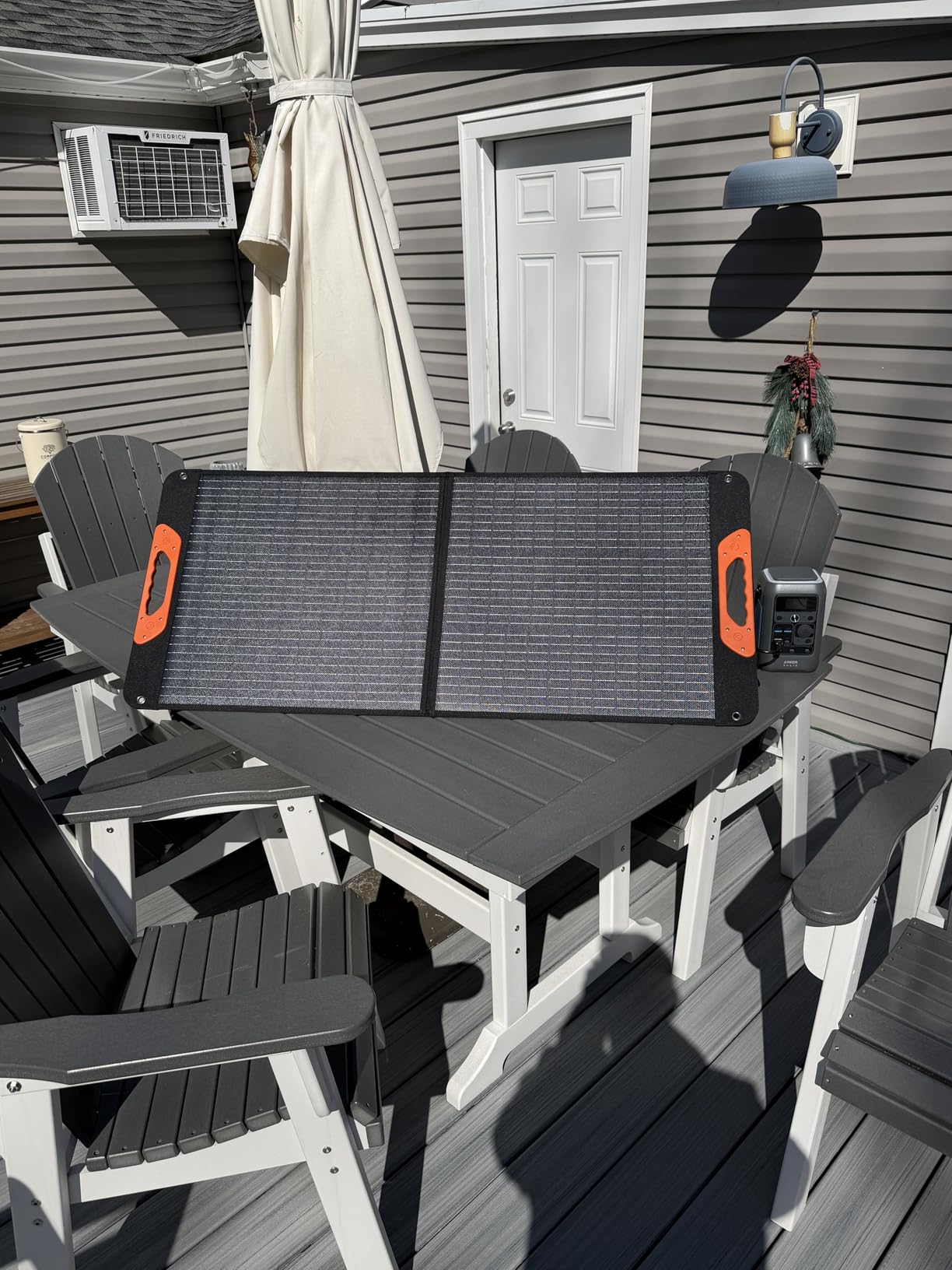
Weatherproofing is unusually honest here. The panel carries an IP67 rating through an ETFE laminate rather than the cheaper PTE coating, and the built-in controller and cable live in a zippered pocket. ETFE is the coating we look for on any flexible or thin panel because it resists yellowing and holds its transmission better over years.
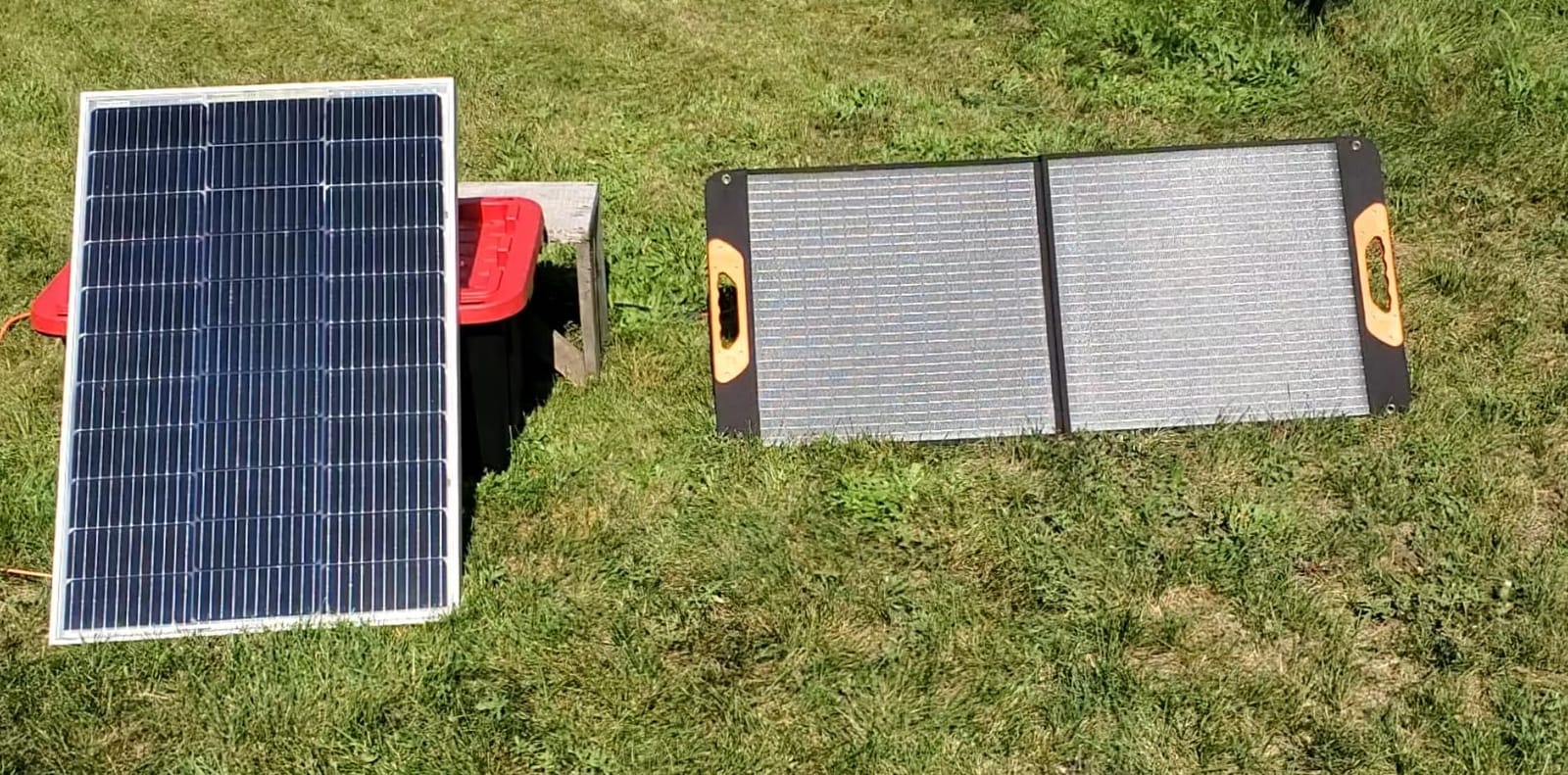
Two adjustable kickstands hold it at 45 degrees, which the manufacturer rates as up to 25 percent more capture than laying flat. That is a real gain in winter and at low sun angles. A magnetic handle makes it easy to reposition, and the folded size of 24.13 by 21.06 by 1.77 inches fits in a door pocket.
The built-in controller offers USB-C PD at 15V/3A plus two USB-A outputs including QC3.0, with overcurrent and short-circuit protection. The 12-month warranty is backed by lifetime technical support, which is a reasonable fallback when the printed term is short.
Why it earns a spot
Buyers praise the combination of a low entry cost, broad connector compatibility and true IP67 waterproofing, with 77 percent five-star ratings across more than 700 reviews. The kickstands and direct USB charging are practical additions for van and campsite use rather than gimmicks.
It is the most sensible first solar purchase we found for someone who is not sure whether van life is for them. Low commitment, nothing to break, and it works with whatever power station you already own.
What it cannot do
One hundred watts is the ceiling, and no amount of efficiency closes that gap. If you are running a 12V fridge and a roof fan off a battery bank, this alone is not enough. It is a supplement, not an array.
Also note that your power station’s input cap often limits how fast it will accept power regardless of panel output, and the ETFE surface needs to be kept free of dust to maintain efficiency. Expect to wipe it down a few times a season.
7. SOKIOVOLA N-Type 200W ETFE Panel – Best for Wet Climates
SOKIOVOLA N-Type 16BB 200W Portable Solar Panel for EF/Jackery/Bluetti/Anker Power Station Foldable Solar Panel 25% High Efficiency IP68 Waterproof for Outdoor Trip RV Camping Blackout Off Grid
200W rated output
25 percent cell efficiency
16.3 lb
21 x 23 in folded
78.68 x 23 in open
Pros
- Owners measure 165-180W in full sun
- Sturdy frame with snap-style legs
- IP68 ETFE coating for serious weather protection
- 5-in-1 MC4 adapter cable plus storage bag
Cons
- 16.3 lb is heavy to lift into a rooftop box
- MC4 pigtails are short at about four inches
- Some reports of roughly 50 percent output decline over six months
- Weak rivets on the back panels
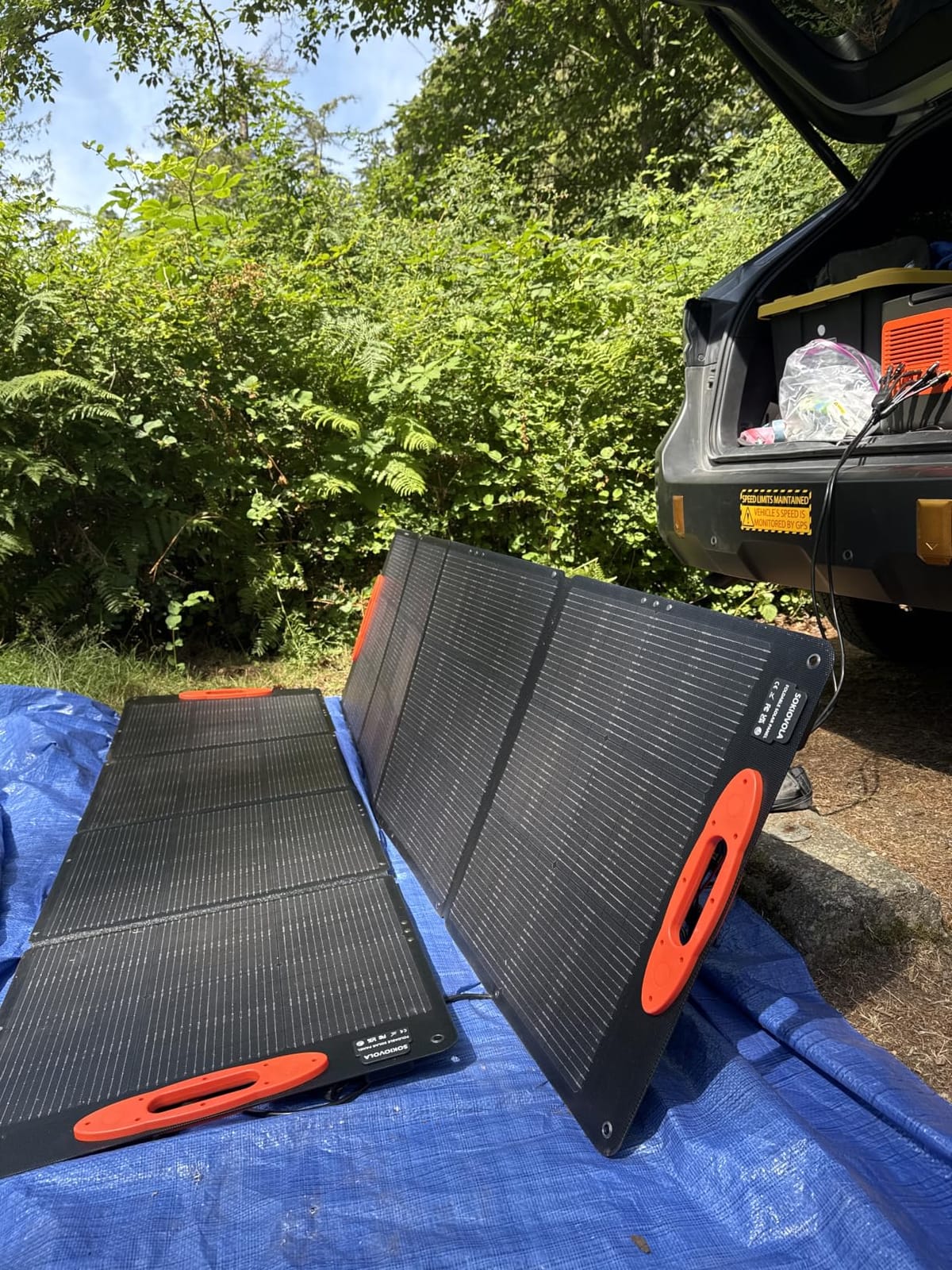
This is the panel to look at if your van lives outside. The ETFE coating is rated IP68, which is a step above the IP65 and IP67 panels here, and combined with a 25% efficiency figure from A+ grade monocrystalline cells it delivers a genuine 200W-class output in full sun rather than a nameplate number.
Owners commonly log 165-180W in direct sun, roughly 85-90% of rated, which is one of the better real-world matches we saw. The build also gets called out as sturdy, with snap-style legs rather than the flimsy Velcro hinges that fail on cheaper foldables.
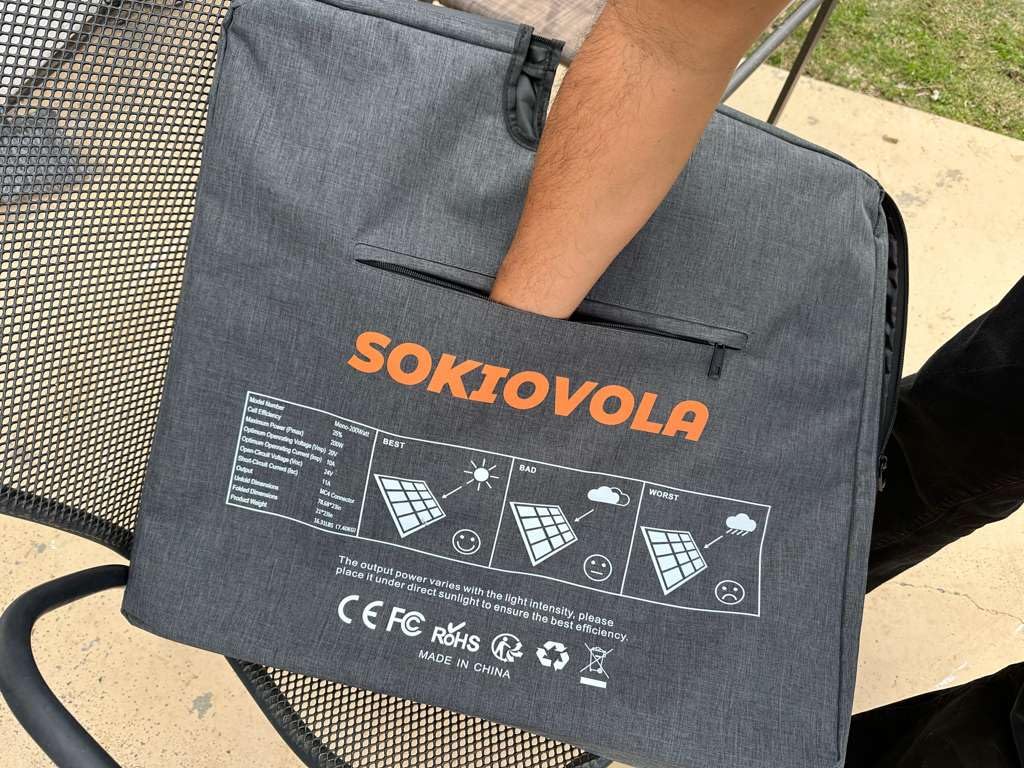
Connector coverage is the other strength. The included 10.49 ft 5-in-1 MC4 extension cable runs to Jackery, EcoFlow, Bluetti, FlashFish, Goal Zero and Anker power stations, with XT60, DC5521mm, Anderson, DC7909 8mm and DC8020mm ends. Four mounting holes on the frame let you bolt it to a van rack or RV rail if you want a semi-permanent install.
It folds to 21 by 23 inches with a magnetic carry handle and a built-in stand, which is a good pack-down for a 200W unit. That is roughly where the good news ends, because at 16.3 lb this is the heaviest portable panel we tested.
Weight matters more than usual here. Getting 16 lb up onto a van roof or into a high camper is a real task, and it is the reason we would not call this a grab-and-go panel despite the folding design.
Where the performance claims hold up
Buyers generally confirm solid 200W-class output around 165-180W, sturdy construction and broad power station compatibility, competing well with established brands on cost. The 12-month warranty and 30-day refund guarantee are the weakest part of the package on paper.
For anyone in a wet, coastal or high-humidity climate running year-round, the IP68 ETFE build is the reason to choose it over a cheaper IP65 foldable. The rating is not marketing decoration on this panel.
What to watch out for
The most serious negative is a recurring set of detailed reports of significant output decline after roughly six months of daily use, in some cases around half the original output. That is not a minor complaint, and it is why we would not build a primary off-grid array on this panel alone.
Short MC4 pigtails of about four inches also mean you are buying extension cable regardless, and some owners report weak rivets on the back panels and reduced performance in low light and rain. Buy it as a portable companion and test the output monthly.
8. Callsun 200W Bifacial N-Type Panel – Best for Partial Shade
Callsun N-Type 16BB 200W Bifacial Solar Panel, 200 Watt Solar Panel for 12V Battery Systems, 25.6% High Efficiency, Dual-Module Parallel Anti-Shade Design, for RV Van Marine Home Rooftop Off-Grid
200W rated output
25.6 percent cell efficiency
23.8 lb
51.3 x 30.3 x 1.4 in
25-yr warranty
Pros
- Highest rated cell efficiency among fixed panels here at 25.6 percent
- Bifacial backsheet captures reverse-side light for up to 30 percent more
- TwinCell dual-module layout keeps producing when one half is shaded
- Owners report readings above rated at 200-245W
- Low -0.3 percent per K temperature coefficient
Cons
- 23.8 lb is heavy for a small van roof
- Only 115 reviews so limited long-term field history
- A minority of units arrived with a dead half
- Some transit damage to the carton or panel
Shade is the enemy of a van roof. A roof rack, an antenna, a rooftop AC unit or a tree branch at the wrong angle can clip a conventional panel badly enough to lose a third of its output. This panel is engineered specifically around that problem, and it is the most interesting fixed panel in this roundup.
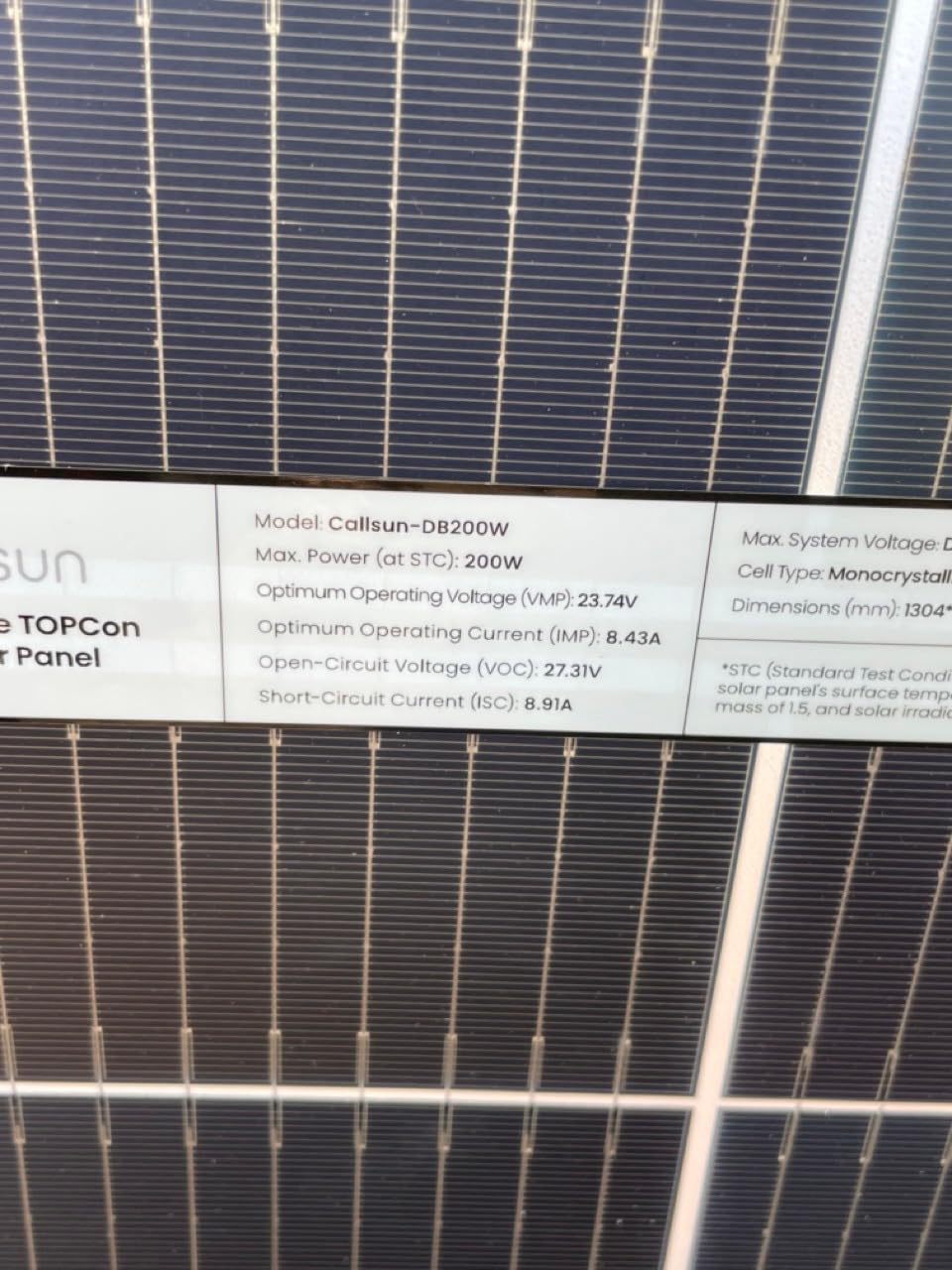
The cell technology is N-Type 16BB monocrystalline at 25.6% efficiency, the highest rated cell efficiency of any fixed panel we reviewed. Sixteen bus bars per cell spread current more evenly, which cuts hot spots and reduces the micro-cracking that degrades a panel over years.
The TwinCell design is the piece that changes behavior in real conditions. The panel is built as two independent halves wired in parallel, so if one half falls into shade the other keeps producing. The manufacturer rates that as up to 50 percent better shade tolerance than a conventional single-string panel, and owners report the effect is real when a shadow crosses the surface.
The bifacial construction adds a second gain. A transparent backsheet picks up light bouncing off a white roof or a hot parking surface, which owners have measured as up to 30 percent extra output. It costs nothing to leave the reverse side exposed, so a lot of the benefit is free if the panel is mounted with an air gap.
The temperature coefficient of -0.3% per K is worth noting for hot climates. Panel output falls as cell temperature rises, and a flat coefficient means less loss across a hot day. At 51.3 by 30.3 by 1.4 inches it is sized to fit Class B van rooftops, and 3.8mm tempered glass with an aluminum frame and IP68 junction box handles the weather side.
Why owners rate it highly
At 4.8 stars with 87 percent five-star ratings, the enthusiasm is usually about output exceeding the label. Owners report readings between 200W and 245W, credited to the bifacial rear surface and the N-Type cells’ performance in available light.
The warranty structure is also strong: 25 years retaining at least 84.5% of output, plus 10 years of technical support. Responsive customer service has replaced defective units, and the advice from buyers is to test the output the day it arrives, inside the return window.
Where caution is warranted
With 115 reviews, this panel has far less field history than the high-volume picks in this guide, and that is thin evidence for a 25-year panel. You are betting on the cell technology rather than on a long public track record.
At 23.8 lb it is a heavy lift onto a small van roof, and a minority of buyers received units with a dead module or output far below spec. Inspect and test immediately, and be prepared to use the return window if something is wrong.
9. Rich Solar 200W N-Type 18BB Panel – Best for Low Light and Heat
RICH SOLAR 200 Watt Solar Panel, 12V N-Type 18BB, 25% High-Efficiency
200W rated output
25 percent cell efficiency
24 lb
58.7 x 26.8 x 1.2 in
25-yr output warranty
Pros
- N-Type 18BB cells with strong low-light and high-heat performance
- 10.9A output at 12V for fast charging
- 1.3mm anodized aluminum frame with tempered glass
- 25-year linear output warranty plus 5-year workmanship
- 14 pre-drilled holes for Z brackets and tilt mounts
Cons
- 24 lb makes it among the heaviest 200W panels
- 58.7 in length is awkward on small Class B roofs
- Included 3 ft cables often need extensions
Rich Solar’s approach here is the opposite of the Callsun panel: instead of chasing peak efficiency, it is built to hold output when conditions are poor. N-Type 18BB monocrystalline cells with ultra-low light-induced degradation keep performing in low light, in shade and at high temperature, which is exactly the condition set a van spends most of its life in.
Output current is the headline number. At 10.9A on a 12V system, this panel moves charge faster than most 200W alternatives, and for anyone running a compressor fridge that difference shows up as fewer hours of low-voltage cutoff.
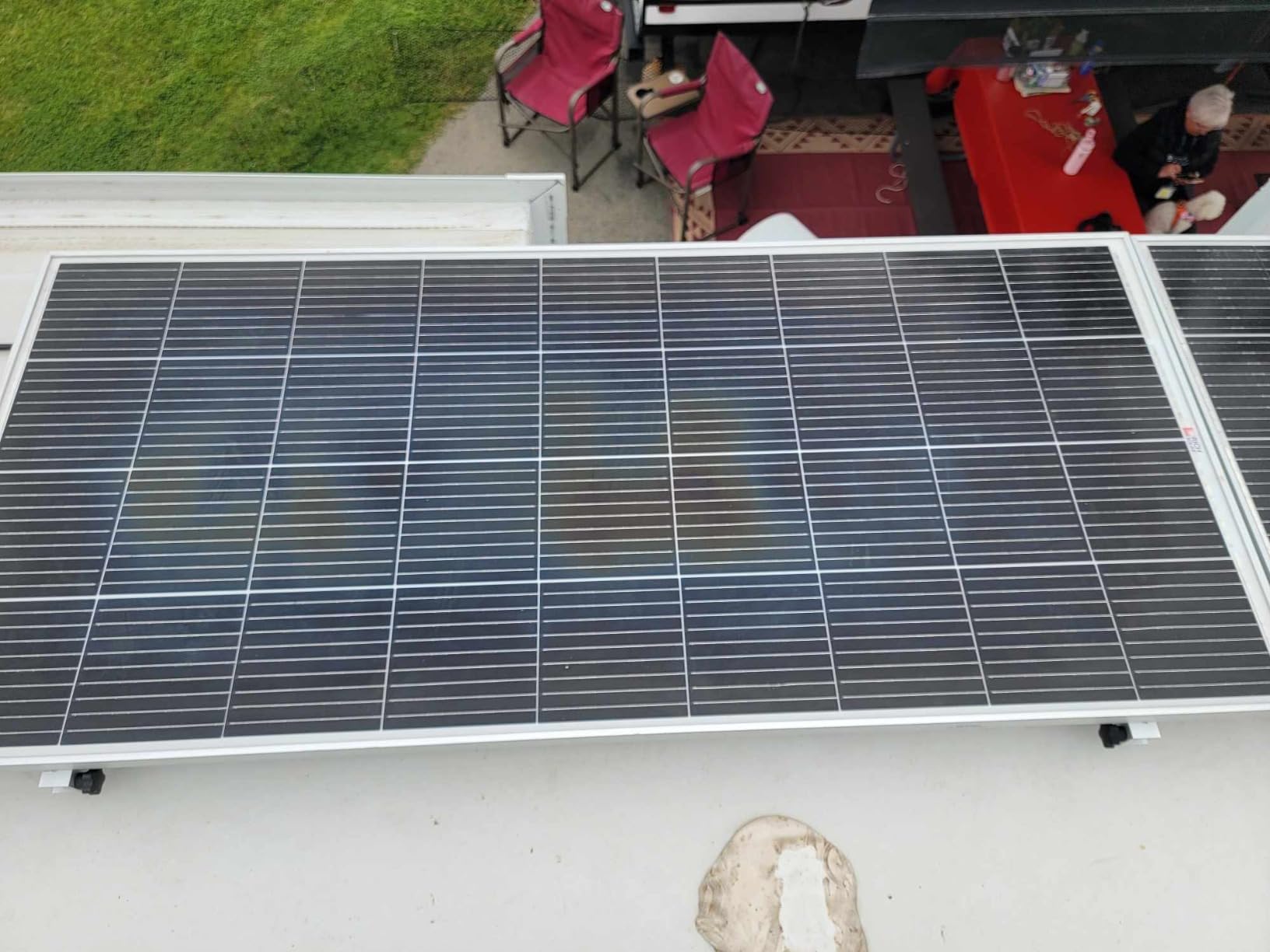
The 18BB bus bar layout also reduces hot spots and micro-cracks, which is the mechanical reason for the low-light and high-temperature claims rather than a marketing overlay. The frame is 1.3mm anodized aluminum, which is heavier gauge than most competitors ship, paired with high-transmittance tempered glass and an IP67 rating.
Weather ratings are 2400Pa wind and 5400Pa snow load, matching the rest of the class, with an upper temperature rating of 185 degrees F. It works with PWM or MPPT controllers and with grid-tied or off-grid inverters, so it drops into an existing system without drama.
Mounting is straightforward thanks to 14 pre-drilled holes, which accept standard Z brackets, tilt mounts and pole mounts. That is more mounting flexibility than most panels in this roundup offer, and it makes a tilt setup easy if you want the winter output gain.
Who this suits
This is the panel for overlanders, winter travelers and anyone camping under tree cover or in variable light. Owners highlight the strong current, the low-light behavior and the long warranty as the reasons it suits RV, marine and cabin installs.
The 25-year linear power output warranty backed by 5 years of material and workmanship coverage is the best-documented warranty in this roundup, and it comes with more than 500 reviews behind it, so the company is not a total unknown.
What to plan around
Size is the real constraint. At 58.7 by 26.8 inches and 24 lb, this is one of the largest and heaviest 200W panels here, and it will not fit a small Class B roof or sit comfortably alongside a roof rack rail on a compact van.
You will also need cable. The included 3 ft quick-connect leads are short and most installs end up adding extensions, so budget for 10 AWG solar cable and proper strain relief. Two people or a roof rack makes the install far more comfortable.
10. ALLPOWERS SE200 200W Foldable – Best Parallel-Wired Foldable
ALLPOWERS SE200 200W Portable Solar Panel, Solar Charger for Power Station
200W rated output
22 percent efficiency
15.8 lb
25.6 x 20.3 x 2.4 in folded
18-month warranty
Pros
- Costs far less than premium 200W folding panels
- Cells wired in parallel so partial shade has limited effect
- Good build quality with a solid folding kickstand
- Owners measure 115-125W into a power station
Cons
- Output well below rated through most power station controllers
- Several reviews report heavily overrated output
- Alligator clips unusable without a proper charge controller
- 41.6V working voltage excludes many power stations
The ALLPOWERS SE200 exists in the same category as several panels here at a fraction of the cost, and that is exactly why it is worth examining rather than dismissing. Owners broadly treat it as the budget 200W foldable, and the build quality is better than the price suggests.
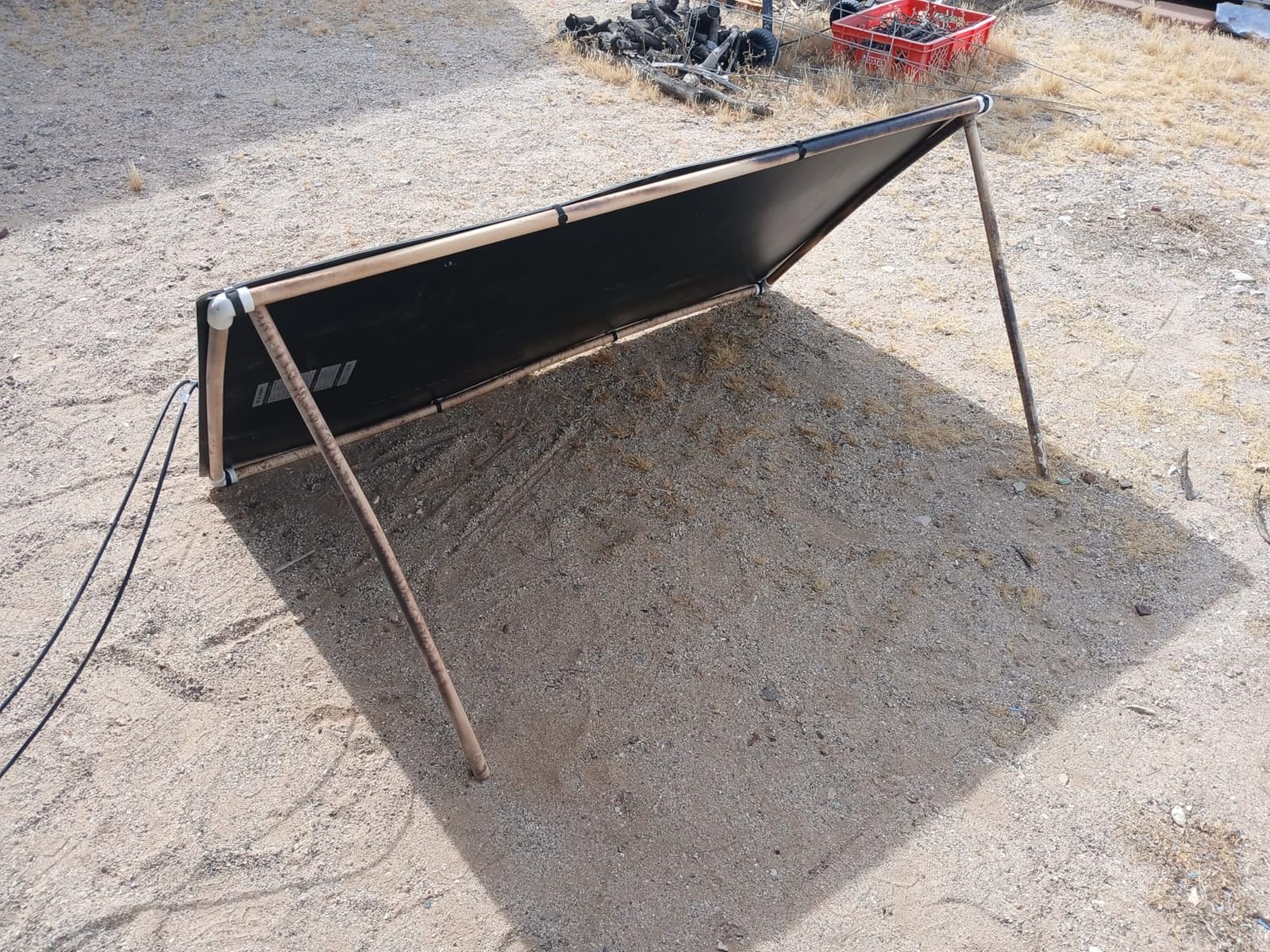
Its standout electrical feature is the parallel wiring. Rather than stringing the cells in a single series chain, the sections are wired in parallel, which means a shadow falling across one section of the panel has a limited effect on total output. On a folding portable panel that gets propped up and partially shadowed by a picnic table or a van body, that is a genuine practical advantage.
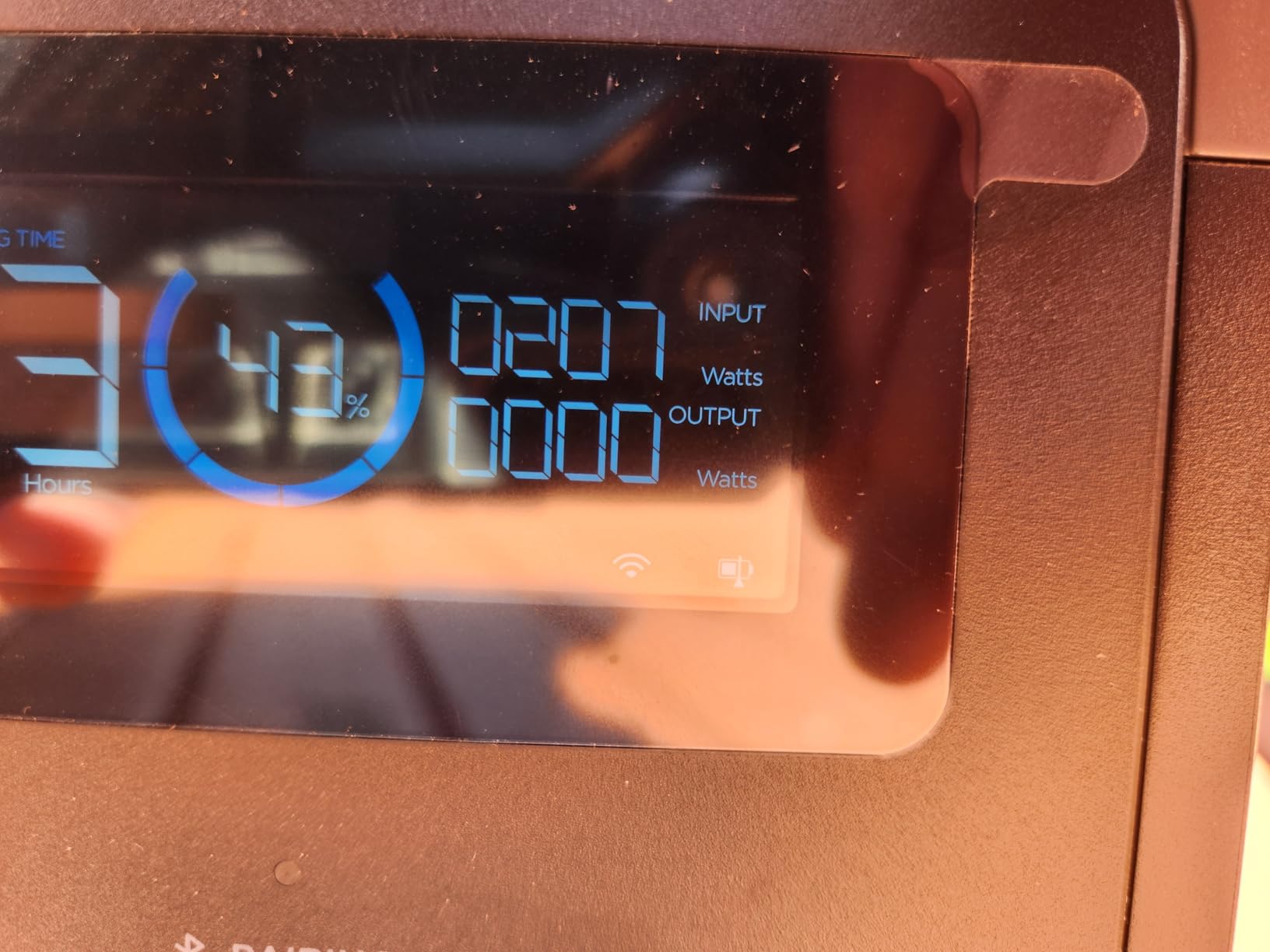
That is the good news. The measured output most owners report is 115-125W into a power station, which is well short of the 200W on the label. Part of that gap is the power station’s own input cap rather than the panel, but several reviews across multiple ALLPOWERS sizes report output that is simply overrated, and that complaint is too consistent to ignore.
The 41.6V working voltage is the second issue. Many power stations will not accept that voltage without an adapter, which narrows the compatibility this panel would otherwise have. The included alligator clips are also effectively unusable without putting a proper charge controller between them and a battery.
Mechanically it is a 15.8 lb panel that folds to 25.6 by 20.3 by 2.4 inches, with an IP68 rating under a durable fabric outer covering and a kickstand adjustable from 0 to 180 degrees. Unfolded it measures about 80.83 by 23.15 inches, which is large and genuinely awkward to reposition as the sun moves.
Where the value argument holds
If your use case is topping up a power station for lights, a phone and a small fridge at a campsite, delivering 115-125W is useful. That is roughly the real number you should plan around, and at this cost the effective cost per delivered watt is hard to beat.
Users consistently see it as the budget option and report the company has replaced faulty panels. The parallel wiring and the wide included adapter set are the two features owners most often call out as better than expected.
What it is not
This is not a panel for a fixed roof array or a primary battery bank, and the 18-month warranty reflects that. If output predictability matters to your build, the rated wattage on the box is not a number you can bank on.
It also adds to the 80-inch unfolded footprint, so repositioning it twice a day is a chore. Buy it as a cheap second panel for a campsite, not as your van’s primary solar.
How to Size a Solar Array for Van Life
Here is the short answer to the most common sizing question: most van builds need 200W to 400W of rigid roof panel plus a portable unit, sized to roughly 1.5 to 2 times your daily watt-hour consumption. Before buying anything, list every load and estimate its daily watt-hours, then divide by the sun hours you actually get at your campsites.
A simple load list for a full-time van might be a 12V fridge-fan unit at 400-600Wh per day, a 10A roof fan at 100-300Wh, phone and laptop charging at 80-150Wh, lighting and USB at 50-100Wh, and an occasional induction hob or power tool at 300-600Wh. That lands a typical full-timer somewhere around 600-1,200Wh per day.
From there, apply the rule most builders live by: every 100W of panel yields roughly 300-400Wh on a good day. So 200W gives about 600-1,000Wh, and 400W gives 1,200-1,600Wh. In overcast conditions expect 10-25% of rated output, and plan around the overcast day rather than the perfect one.
Oversizing is not wasteful if you are shading-sensitive. A larger array produces surplus that a good MPPT controller simply stops harvesting when the battery is full, and it means more usable watts on the short winter and cloudy days. The exception is roof space, which is the real constraint on most vans.
Pair the array to your battery rather than the other way around. A useful shorthand is 100W of panel for a sub-100Ah bank, 200W for a bank up to about 175Ah, and 400W or more for banks over 300Ah. Going far past that ratio adds panels without adding usable charge, because the battery saturates on a clear day and the excess sits unused.
On the 200W versus 400W question: 200W covers a weekend van or a light load list and fits almost any roof. 400W is the right call for full-time living, a rooftop air conditioner, power tools, or winter travel in low latitudes. If you cannot decide, 400W with a roof that is designed for it beats 200W plus a second trip to the hardware store in a forest.
A portable panel changes the equation usefully rather than totally. Owners running 400-600W of rigid roof array almost universally add a 200W portable for shaded camps, winter top-ups and driving days, and our portable power station picks cover the other half of that pairing.
Rigid vs Flexible vs Portable Panels: What Actually Matters
Rigid panels produce the most watts per pound and per square foot, run cooler because they have an air gap, and can be tilted toward the sun. They are the default choice for a van roof and we would not build an array any other way unless the roof forces it.
Flexible panels weigh around a quarter of a rigid panel of the same rating and lie almost flat, which makes them the only realistic option on a sharply curved roof and the best for a stealth build. You give up roughly 10% of conversion efficiency, the ability to tilt, and long-term adhesive removal from paint. They also run hot against metal, and heat cuts output precisely when you most want it.
Portable foldable panels trade everything for mobility. A 200W foldable deploys in seconds, moves with you, works with power stations, and can be pointed at whatever patch of sun exists. What you give up is fixed output, because a portable panel spends part of the day folded in a garage. A 100W foldable charging a 500Wh power station is a weekend supplement, not a system.
Weights here tell the story on their own. Rigid panels in this guide run from 14.1 lb at 100W to 24 lb at 200W. Flexible panels come in at 4 lb. Portable foldables sit between 9.5 and 16.3 lb. Every kilogram of roof weight is a decision you make once and live with.
Monocrystalline, N-Type and CIGS Cells Explained
Monocrystalline silicon is the right answer for a van and there is no real argument otherwise. Mono cells are the most efficient silicon option and the most common in van builds, and every fixed panel in this roundup uses them.
N-Type is the newer generation of monocrystalline cell, and it is the direction the whole category has moved. The panels here running N-Type include the Callsun at 25.6%, the Renogy 200W portable at 25%, SOKIOVOLA at 25% and Rich Solar at 25%, against 22.5% and below for standard 9BB mono panels. N-Type cells degrade more slowly, particularly in light-induced degradation over the first months, and they perform better in heat.
Polycrystalline panels are still available and cheaper per watt, but they need more surface area for the same output, which is a poor trade when roof area is your binding constraint. You are paying in watts per square foot for an efficiency you could otherwise spend on more panel.
CIGS thin film is what most flexible panels are built from. It bends further than crystalline silicon and can be made extremely thin, but its efficiency sits in the mid-teens rather than the twenties, so a flexible panel needs noticeably more area to match a rigid one. That is the efficiency gap owners consistently report.
Bus bars matter more than most buyers realise. The narrow finger contacts along each cell are the 5BB or 9BB designation, and more, thinner fingers mean better current collection, lower resistance and better performance under partial shade or at a low sun angle. On a flat van roof that is shaded by a rack for part of the day, 9BB and above is a real advantage over 5BB.
MPPT vs PWM Charge Controllers for a Van Build
An MPPT controller tracks the panel’s maximum power point and converts that variable voltage down to what your battery needs, extracting more of what the panel produced. A PWM controller simply switches the panel to battery voltage, throwing away the difference. On a 100W panel feeding a 12.4V LiFePO4 bank, that difference is significant.
The rule of thumb is that an MPPT controller typically harvests 15-30% more energy than a PWM unit of the same rating. On a large array in cool or low-light conditions the gap widens, because panel voltage rises when the panel is cold and MPPT captures that surplus.
Both controllers that ship in kits in this roundup are PWM: the Renogy 100W starter kit and the ECO-WORTHY 200W kit. If you are building to a battery bank you care about, plan to swap in an MPPT unit, and size it to the array’s short-circuit current and open-circuit voltage.
Open-circuit voltage is the number people get wrong when mixing panel sizes. A panel’s Voc is its highest voltage with no load attached, and in cold weather it climbs. Add the Voc of every panel in a series string and compare it against the controller’s maximum input voltage, or you will cook a perfectly good charge controller.
A DC-DC charger is a separate piece of the system that charges the house bank from the starter battery while you drive. It is not a substitute for a solar controller, but most full-time builders end up wanting both, because driving hours generate more usable energy than most people plan for.
The 33% Rule, Cost per Watt and Other Jargon Decoded
The 33% rule is a rule of thumb for sizing a portable folding solar panel to a power station. It says the panel’s rated wattage should be roughly 33% of the power station’s continuous output rating, which keeps the draw within the panel’s limits and stretches the battery across a usable charging window instead of draining it fast.
Cost per watt is the second number to learn. Divide the panel price by rated wattage and you get a comparable figure across brands. It is the fastest way to see when a cheap portable panel is expensive per watt, and it is also where portable panels fall down, because their cost per watt is routinely two to three times a rigid panel’s.
ETFE versus PTE is the coating check. ETFE is the better laminate: it resists yellowing, holds its light transmission and copes with heat better. PTE is cheaper and yellows faster. On any thin or flexible panel, look for ETFE, and be suspicious of a sub-100W panel that does not name its coating.
Degradation runs at roughly 0.5% per year for a quality panel, which is about 12% loss at 25 years. That is the reason the 25-year performance warranties in this roundup are worth reading, and the reason a 1-year or 2-year warranty is a signal about how a brand expects the product to be used.
Finally, check the certifications before you commit. UL 61730, IEC 61730 and CSA C22.2#61730 are the safety standards that matter, and IP65 or better is the minimum we would accept for a permanently roof-mounted panel.
Frequently Asked Questions
What is the best solar panel for van life?
For most van builds the best solar panels for van life are rigid, monocrystalline 9BB or N-Type panels in the 100W to 400W range, sized to roughly 1.5 to 2 times your daily watt-hour consumption and paired with an MPPT charge controller. Flexible panels suit curved or stealth roofs, and portable foldables work as a supplement rather than a primary array.
How much solar power do I need for van life?
A full-time van build typically needs 600 to 1,200Wh per day, which means about 200W to 400W of rigid roof panel. A weekend van with a fridge, lights and a fan needs far less. Use the rule that every 100W of panel yields roughly 300 to 400Wh on a good day, and in overcast conditions expect 10 to 25 percent of rated output.
What size solar panels are best for vans?
Match array size to battery capacity rather than to roof space. Around 100W suits a sub-100Ah bank, 200W suits a bank up to roughly 175Ah, and 400W or more suits banks over 300Ah. Going well past that ratio adds panels without adding usable charge, because the battery saturates on a clear day.
What is the 33% rule in solar panels?
The 33% rule is a sizing guideline for portable folding panels. Set the panel’s rated wattage to about 33 percent of the power station’s continuous output rating, which keeps the draw inside the panel’s limits and spreads charging across a longer window instead of draining the battery quickly. It is a rule of thumb, not a specification.
What are the disadvantages of flexible solar panels?
Flexible panels run roughly 10 percent less efficient than rigid panels of the same rated wattage, cannot be tilted toward the sun, and can be damaged by over-bending. Bonded straight to a metal roof they run hot, and heat cuts output. Adhesive mounting also makes removal risky for paint, so many experienced builders use them as a secondary layer rather than a primary array.
Do I need an MPPT charge controller with my solar panels?
Yes, for any array you plan to rely on. An MPPT charge controller typically harvests 15 to 30 percent more energy than a PWM controller of the same rating, and the gap widens in cold weather and low light. Several kits in this roundup ship with a PWM controller, so plan to upgrade it before you depend on the output.
The Verdict: Which Solar Panel Set Up for Van Life in 2026
After all of this, our pick for the best solar panels for van life is the Renogy 100W starter kit for a first install, the ECO-WORTHY 200W kit for a complete 200W array out of one box, and the Callsun 200W bifacial N-Type panel when partial shade is the deciding factor. Add a Renogy 200W 25% foldable for campsite and winter top-ups and you have a system that covers almost any van.
Whichever you choose, size to your daily watt-hour load, pair it with an MPPT charge controller, and check the roof dimensions before the panel arrives rather than after.