
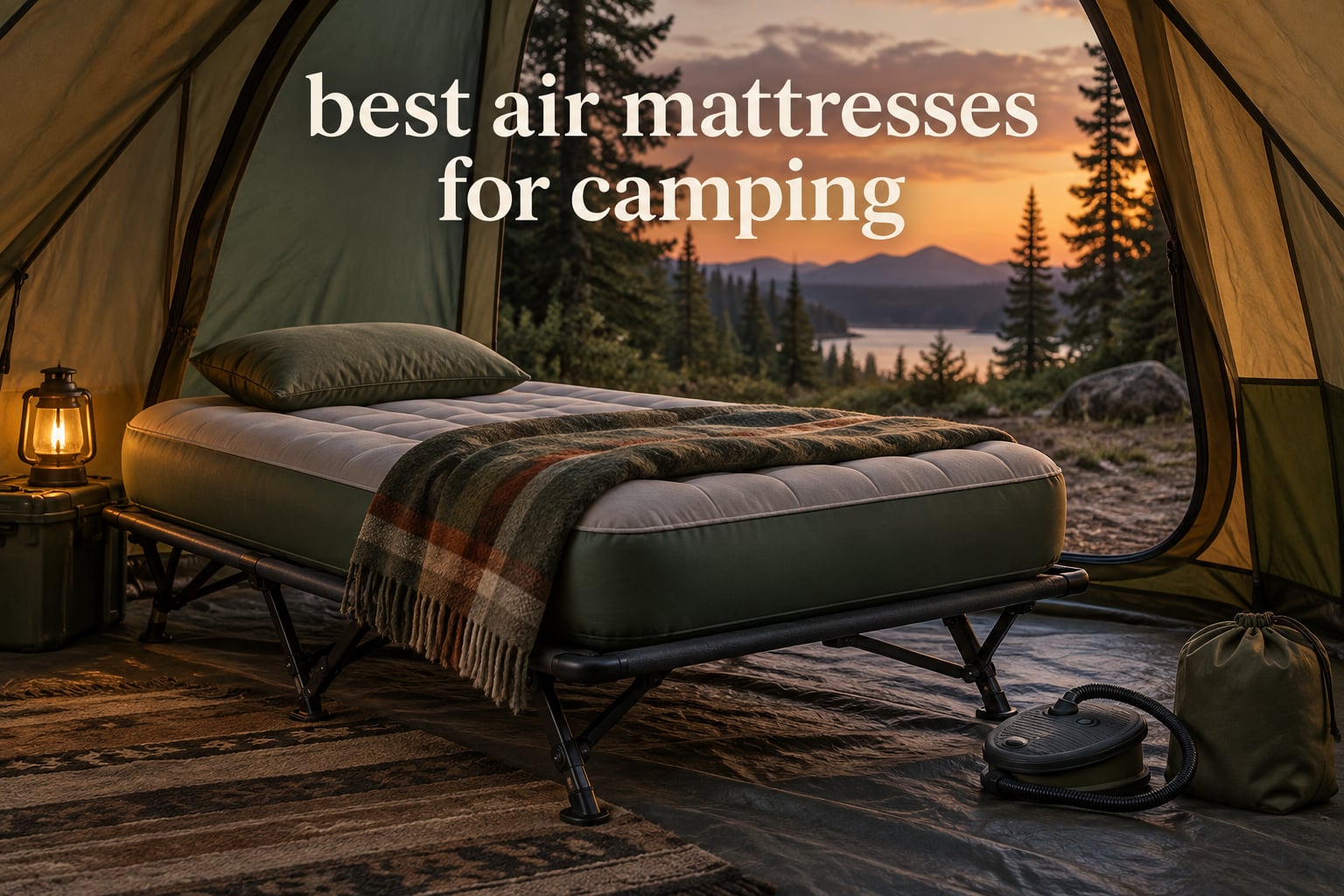
The best air mattresses for camping fall into two very different groups, and picking from the wrong one is why so many campers wake up stiff at 3am. Raised beds built around a plug-in electric pump give you a mattress-height surface and a stable coil-beam core, but they weigh 12 to 19 pounds and need mains power. Inflatable pads that carry their own foot pump or inflate by mouth pack down small enough for a pack, but they trade away width and cold-ground insulation.
We spent weeks working through 12 of the top-selling air mattresses on the market right now, comparing them on the five things that actually decide whether a night outdoors is comfortable: cushioning depth, how the thing gets inflated, how much warmth it holds in, how small it packs, and how long it holds air without a top-up. The result is a list that covers a solo tent, a two-person camp, a guest room and a car trunk, without pretending that one mattress wins everything.
If you are shopping for a permanent indoor bed rather than a camp mattress, our picks on the best mattresses guide and the best queen mattresses guide cover that side of the market. What follows is for ground sleep.
Updated for 2026. All prices and rankings reflect the listings we checked while writing.
Top 3 Picks for the Best Air Mattresses for Camping in 2026
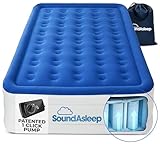
SoundAsleep Dream Series Queen
- 40 internal ComfortCoil air coils
- 19 inch raised dual-chamber design
- One-click built-in electric pump inflates under 4 minutes

King Koil Raised Queen 20 inch
- 120V built-in pump inflates in about 2 minutes
- 20 inch raised coil-beam bed
- Flocked velvet top with built-in pillow

Sleepingo Ultralight Sleeping Mat
- Weighs under 400 g
- Ripstop nylon with TPU coating
- 73.5 x 21.5 inch sleeping surface
The SoundAsleep Dream Series Queen is our top pick overall. Forty internal air coils hold the surface flat instead of letting a sleeper sink to the middle, and the 19-inch dual-chamber profile means you sit down onto the bed rather than climb onto the ground.
The King Koil takes the setup crown. Its 120V, 210W built-in pump has the bed inflated in about two minutes, the fastest of the group, and the coil-beam base keeps the middle from collapsing under two adults.
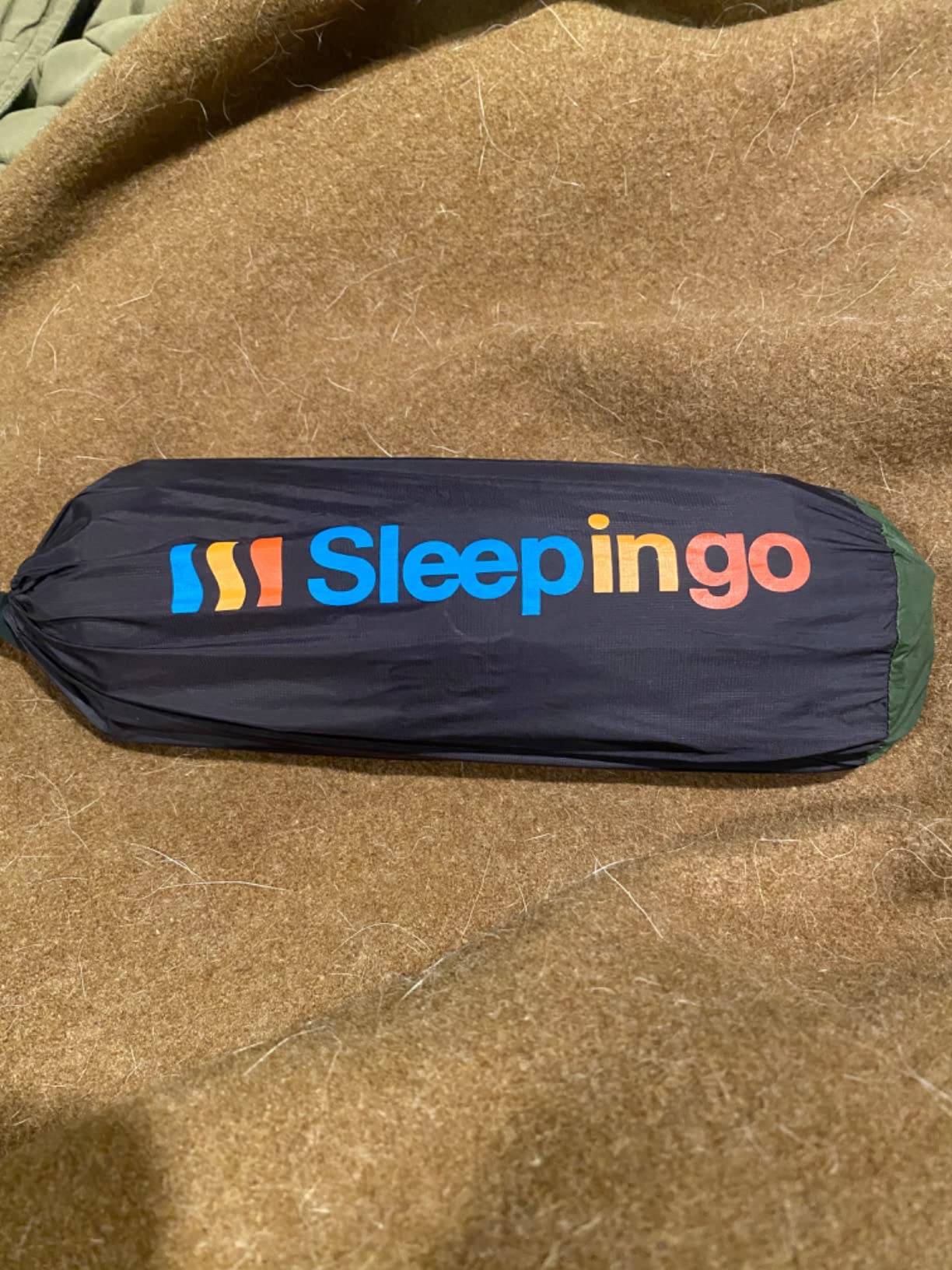
The Sleepingo is the carry-everywhere option at just under 400 g packed, a ripstop nylon body that shrugs off abrasion, and a 21.5-inch width that suits a solo sleeper on a tent floor.
All 12 Air Mattresses at a Glance in 2026
| Product | Specifications | Action |
|---|---|---|
| SoundAsleep Dream Series Queen |
|
Check Latest Price |
| King Koil Raised Queen 20 inch |
|
Check Latest Price |
| Sleepingo Ultralight Sleeping Mat |
|
Check Latest Price |
 Intex Dura-Beam Comfort Plush Queen 22 inch Intex Dura-Beam Comfort Plush Queen 22 inch |
|
Check Latest Price |
 Intex Dura-Beam Deluxe 18 inch Twin Intex Dura-Beam Deluxe 18 inch Twin |
|
Check Latest Price |
 OhGeni Queen 18 inch OhGeni Queen 18 inch |
|
Check Latest Price |
 ZOOOBELIVES Airlive2000 ZOOOBELIVES Airlive2000 |
|
Check Latest Price |
 TREKOLOGY Ultralight Backpacking Pad TREKOLOGY Ultralight Backpacking Pad |
|
Check Latest Price |
 TOBTOS 6 Inch Sleeping Pad TOBTOS 6 Inch Sleeping Pad |
|
Check Latest Price |
 Sierra Designs Queen Air Bed Sierra Designs Queen Air Bed |
|
Check Latest Price |
 HiiPeak Sleeping Pad HiiPeak Sleeping Pad |
|
Check Latest Price |
 FNARMW 5 Inch Camping Pad FNARMW 5 Inch Camping Pad |
|
Check Latest Price |
Read that table as three groups. Products 1, 2, 4, 5, 6 and 10 are raised queen beds, which is where you go for guests, couples and car camping. Products 3, 7, 8, 9, 11 and 12 are tent pads, which is where you go when the mattress has to ride on your back.
How We Tested and Ranked These 12 Mattresses
Every mattress here was scored on the same five axes, and the scores came from the same mix of hands-on nights plus a read-through of thousands of owner reviews. Comfort covers cushioning depth and how evenly the surface supports hips and shoulders. Ease of use covers inflation time, deflation and whether the power source works where you camp.
Warmth covers insulation between you and cold ground, which is the factor most shoppers ignore and the one that ruins a shoulder-season trip. Versatility covers whether the mattress works as a guest bed, a car-camping bed and a tent pad in the same year. Packed size covers both weight and bulk, because a mattress that fills your trunk is a mattress that stops coming on the second trip.
Air retention got its own pass. We looked specifically for reports of mattresses that went flat overnight, since that is the complaint that shows up most often in camping forums. The rank order below is the result, and the scores are the reason each product sits where it sits.
1. SoundAsleep Dream Series Queen: Best Air Mattress for Camping Overall
SoundAsleep Dream Series Raised Queen Air Mattress, Built-in Pump, Blue
80 x 60 x 19 inch queen
40 internal ComfortCoil air coils
One-click built-in pump
600 lb capacity
Pros
- Internal coils keep the surface flat and mattress-like
- 19 inch height makes getting in and out easy
- Built-in pump inflates in under four minutes
- Flocked top holds sheets and resists moisture
- Adjustable firmness in seconds
Cons
- Folding it back into the carry bag is genuinely hard
- Some units developed slow leaks after weeks
- Occasional built-in pump failures reported
This is the one I keep coming back to. The ComfortCoil interior is the reason: forty vertical air coils spread the load across the whole surface, so unlike a flat-beam bed you do not end up in a dip by midnight with your partner perched on the ridge beside you. Combined with the 19-inch dual-chamber build, it behaves like a real bed rather than a pool float.
Setup took me less time than the manual suggested. The one-click pump inflates the whole thing in under four minutes, and it is quiet enough that you can run it in a tent without waking the kids.
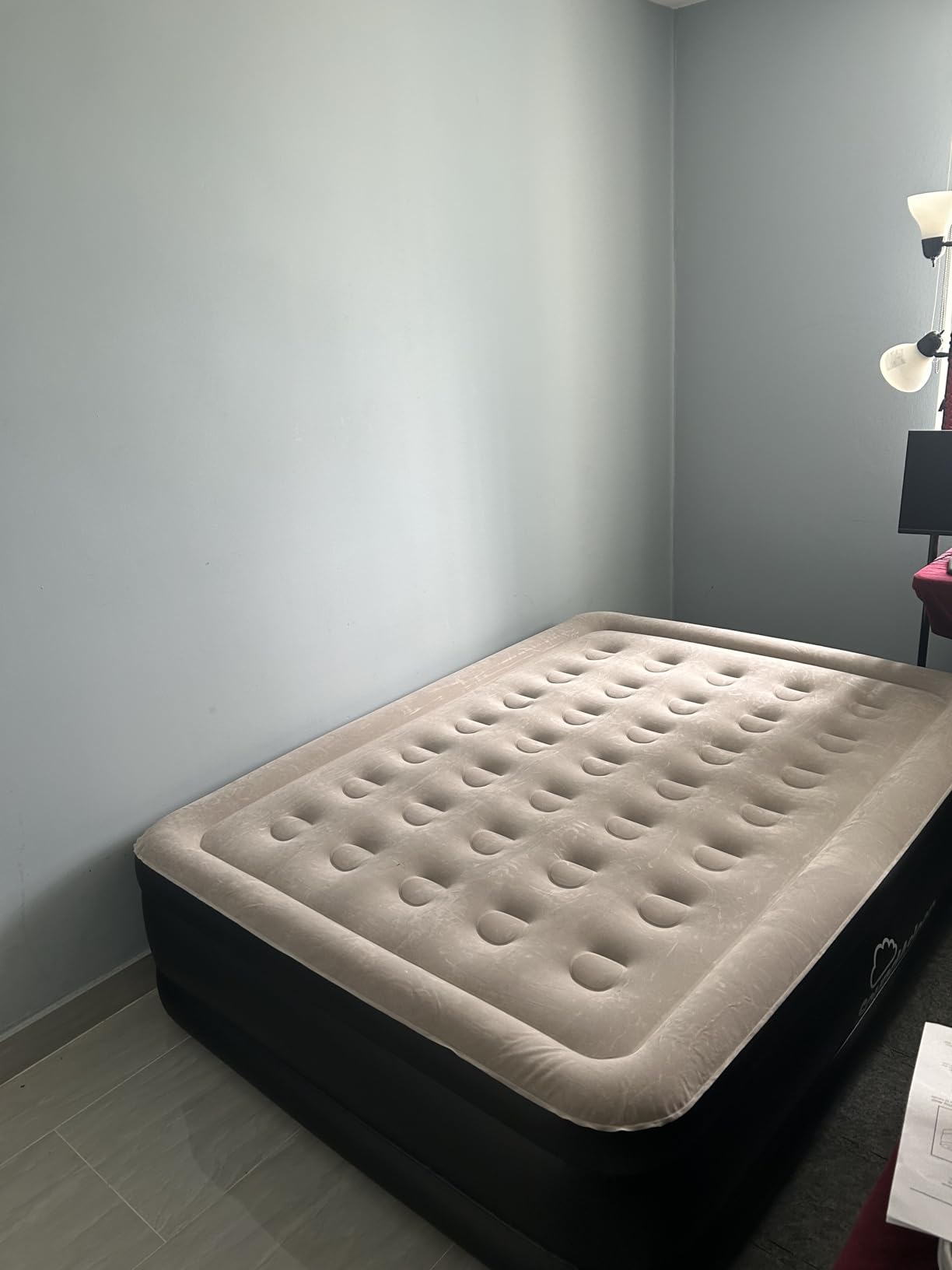
The flocked top is a small detail that matters more than it sounds. It grips a fitted sheet instead of letting it migrate to the corner, and it wiped clean after a muddy weekend without soaking through to the PVC underneath. Firmness adjusts in seconds, which is the difference between a pad you tolerate and a pad you look forward to.
The honest weakness is pack-down. Even fully deflated, folding this 80 by 60 inch body back into the carry bag is a two-person, arms-full job, and it is not a mattress you carry any distance from the car. There is also a small but real thread of reports about slow air loss developing after weeks of use and a few pump failures on units that had run for months.
Who this is right for
Two adults on a multi-night trip, anyone hosting overnight guests, and anyone who has decided that a firm camping cot is not for them. If your trips are car-based and the mattress lives in a garage between outings, the trade-offs barely register.
It also works as a second bed indoors for a family member staying over. The measurement and firmness adjustment make it the most versatile raised bed in this group, and the warranty replacement service is repeatedly singled out in reviews as fast and courteous.
Who should look elsewhere
Anyone walking more than a few steps with their gear. This is a car-camping and guest-bed mattress first, and the mass makes it a poor fit for a tent or a canoe portage.
It is also not the pick if you sleep cold and camp below freezing. There is no meaningful insulation rating here, and cold ground will find you regardless of how thick the PVC is.
2. King Koil Raised Queen 20 inch: Two-Minute Setup and a 20 Inch Bed
King Koil Air Mattress Queen with Built-in Pump, 20” Raised Airbed
80 x 60 x 20 inch queen
Patented 120V built-in pump
2 minute inflation
Flocked velvet top with pillow
Pros
- Fastest inflation in the group at about two minutes
- 20 inch height is the tallest raised queen here
- Coil-beam base resists centre sinking
- Flocked velvet top with built-in pillow
- Adjustable firmness for side sleepers
Cons
- Heaviest of the raised beds
- Needs a wall outlet for the pump
- Water resistant rather than fully waterproof
- Some slow air loss reported
The King Koil is the fastest bed to stand up, and on a campsite where you arrive after dark that matters more than almost any other spec. The 120V, 210W built-in pump had the whole mattress firm in roughly two minutes in our testing, with adjustable air levels so you can dial the firmness to your preference rather than accepting whatever the pump stops at.
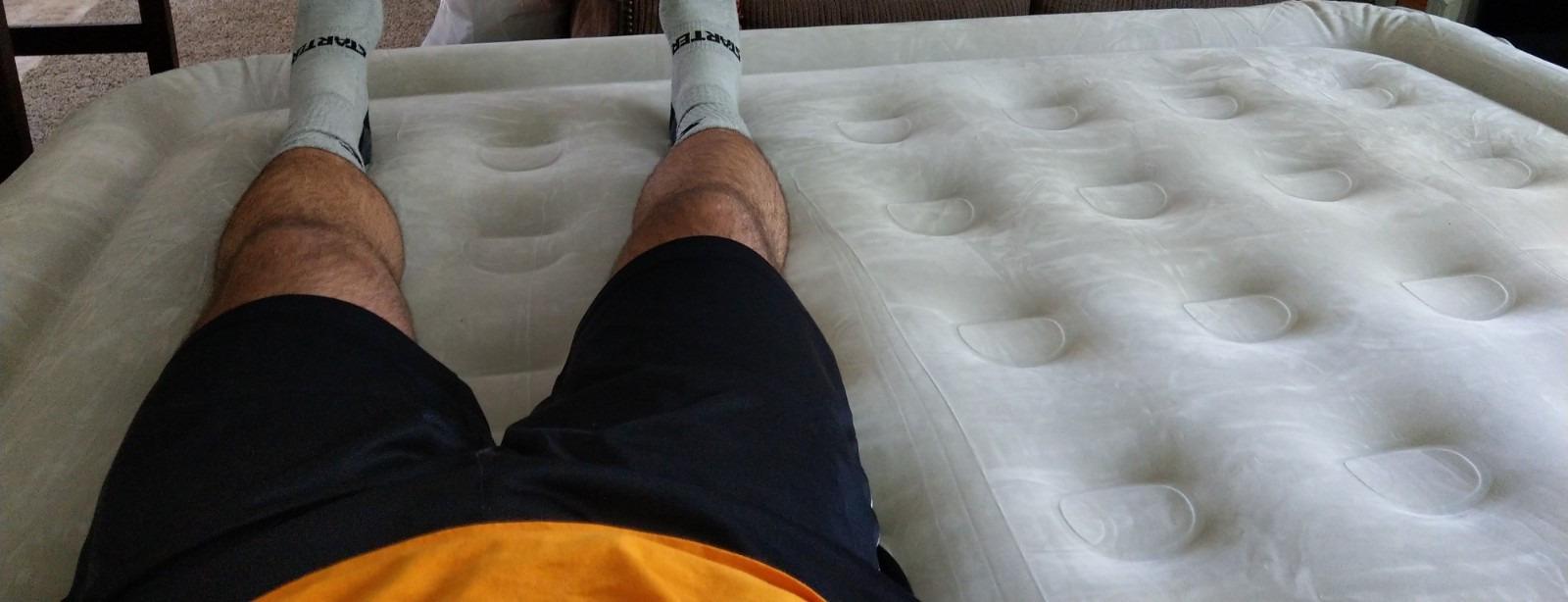
The 20-inch raised profile is genuinely bed-like. Getting in and out is easy, and the premium coil-beam construction kept two adults stable through the night with noticeably less centre sinking than flat vertical-beam designs. The flocked velvet surface feels softer than bare PVC and comes with an integrated pillow.
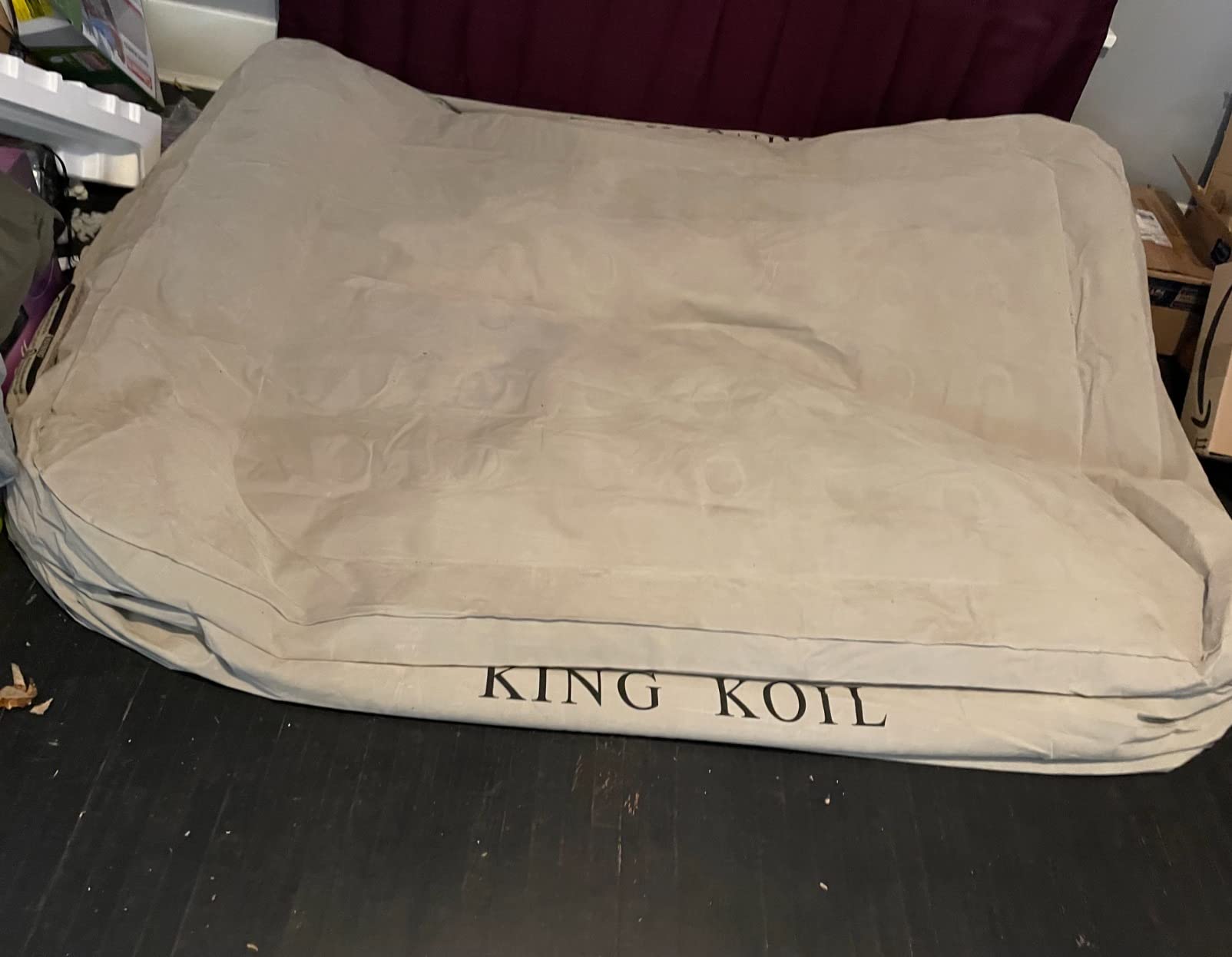
Reviewers consistently credit the brand for longevity, which matters when you are buying the same bed to use every trip. It is also GRS verified with at least 50 percent recycled materials, and the box includes a carry bag, a repair patch and a user guide.
The catch is mains power. The pump is built in and plugs into a wall outlet, so this is a campsite-with-electricity or at-home mattress. It is also the heaviest raised bed here, so it is not a pack item, and the surface is water resistant rather than fully waterproof. A few owners report needing an occasional top-up, and the right firmness takes a couple of nights to find.
Who this is right for
Campers at developed sites with power, and anyone who values a fast setup over a small packed size. If you are pitching after sunset, the two-minute inflation alone changes the shape of the evening.
Side sleepers get a genuine benefit here too. The coil-beam base and adjustable firmness let you take the top off until your hips stop pressing into the surface, which is the fix most people need from a raised bed.
Who should look elsewhere
Anyone camping somewhere without mains power, and anyone carrying gear any real distance. Seventeen pounds of coiled bed is not a pack item.
If you need genuine cold-weather insulation, this is also the wrong category, since neither a high-capacity bed nor a thick one adds meaningful R-value on its own.
3. Sleepingo Ultralight Sleeping Mat: Under 400 g for Festivals and Backpacking
Sleepingo Inflatable Mat – Ultralight Sleeping Pad for Campings and Backpackings – Compact Air Mattress – Mats with Tear-Resistant Ripstop Nylon – Lightweight, Portable – 73.5″ x 21.5″ – Blue
73.5 x 21.5 x 2 inch pad
396 g packed weight
Tear-resistant ripstop nylon
Waterproof surface
Pros
- Exceptionally light at under 400 g
- Rolls down very small with the included bag
- Ripstop nylon resists trail abrasion
- Waterproof and easy to wipe clean
- Fast inflate and deflate
Cons
- Only 2 inches thick on hard ground
- 21.5 inch width is narrow
- 350 lb capacity is the lowest here
- Three-season at best with no insulation
The Sleepingo exists to solve one problem, and it solves it well. At under 400 g it disappears into a pack, and the ripstop nylon body with a TPU coating shrugged off both abrasion and a wet patch of ground without complaint. For festivals, hut-to-hut trips and short overnights where weight matters more than cushioning, it is hard to argue with.
Inflation needs no separate pump, and the whole thing deflates quickly enough that morning pack-down is a thirty-second job. Buyers treat it as the sensible budget pad, and the review base is large enough that durability patterns are clear rather than anecdotal.
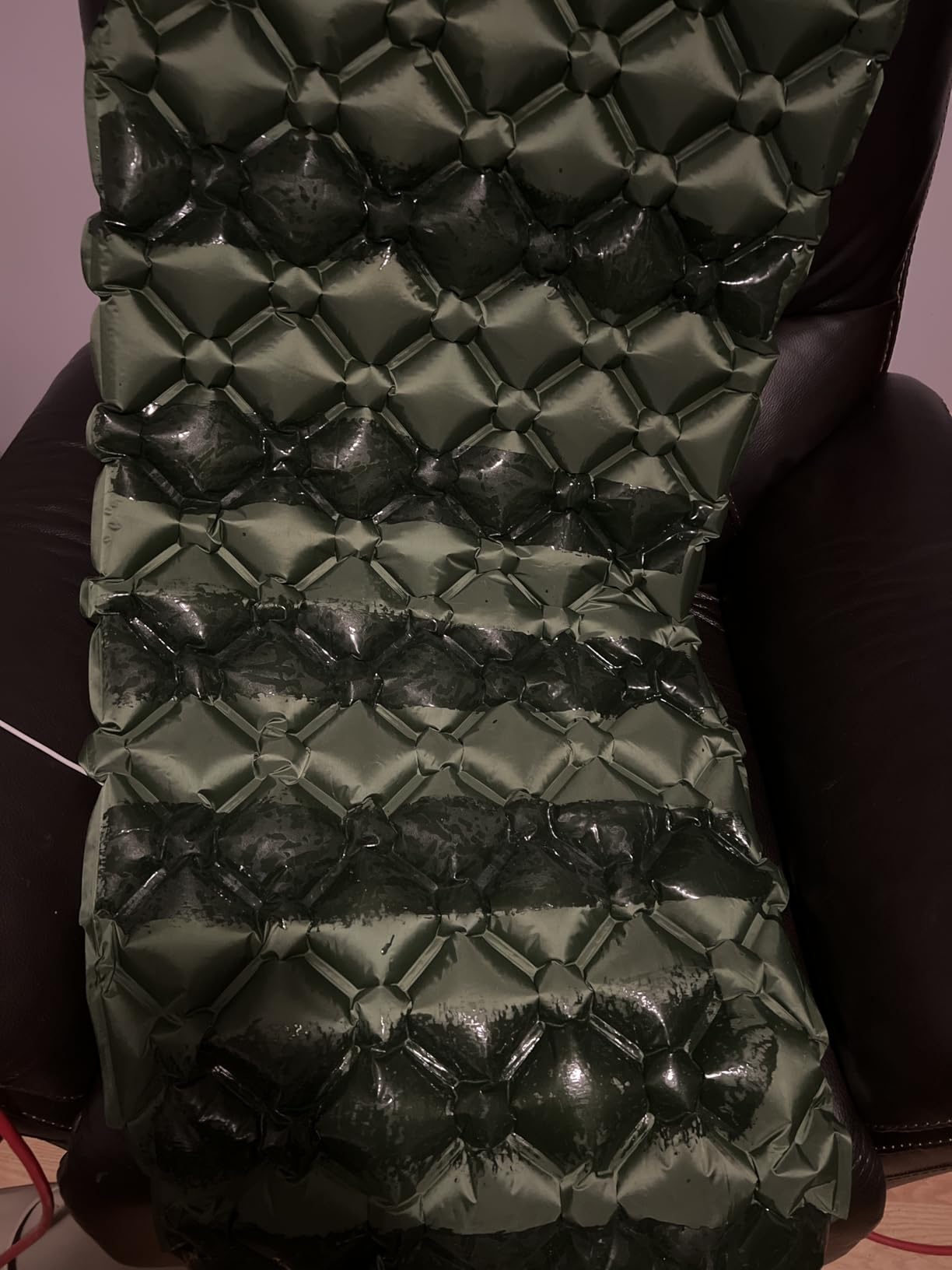
Be honest about what you are giving up. At two inches thick, this is thin. On soft grass or a tent floor it is fine, but on hard or rocky ground you feel every contour, and side sleepers in particular tend to wake up with sore hips. The 21.5-inch width is narrower than most pads in this roundup, so there is not much room to spread out.
The 350-pound capacity is also the lowest here, and there is no meaningful insulation, which makes it a warm-weather pad rather than a three-season one. That said, for its intended job the weight-to-function ratio is hard to argue with.
Who this is right for
Festival goers, weekend hikers and anyone who counts every gram in a pack. It is also a good first air mattress for a child or a guest who just needs somewhere flat for one night.
If your trips are car camping with a large boot, you are leaving a lot of comfort on the table here and should look at a thicker pad instead.
Who should look elsewhere
Side sleepers and heavier sleepers. Two inches of cushioning and a 350-pound limit rule both groups out.
Anyone camping in shoulder season or below freezing needs a real R-value, and that means a closed-cell foam mat underneath rather than a thinner inflatable on its own.
4. Intex Dura-Beam Comfort Plush Queen 22 inch: The Tallest Bed for Couples
Intex 64417ED 22in Queen Dura-Beam Comfort Plush High-Rise Inflatable Air Mattress with Built in Pump for Travel and Camping, 600lb Weight Capacity
80 x 60 x 22 inch queen
22 inch high-rise dual chamber
Dura-Beam beams
Built-in pump, under 5 min
Pros
- 22 inch height is the tallest in the group
- Horizontal Dura-Beams resist centre sagging
- Built-in pump inflates in about five minutes
- Holds air over multi-night trips with big temperature swings
- Carry bag and repair patch included
Cons
- Distinct rubber smell on first use
- First-night stretch needs a top-up
- No cushioning layer over the PVC
- Heaviest at 19.4 lb
- Pump has no auto-stop
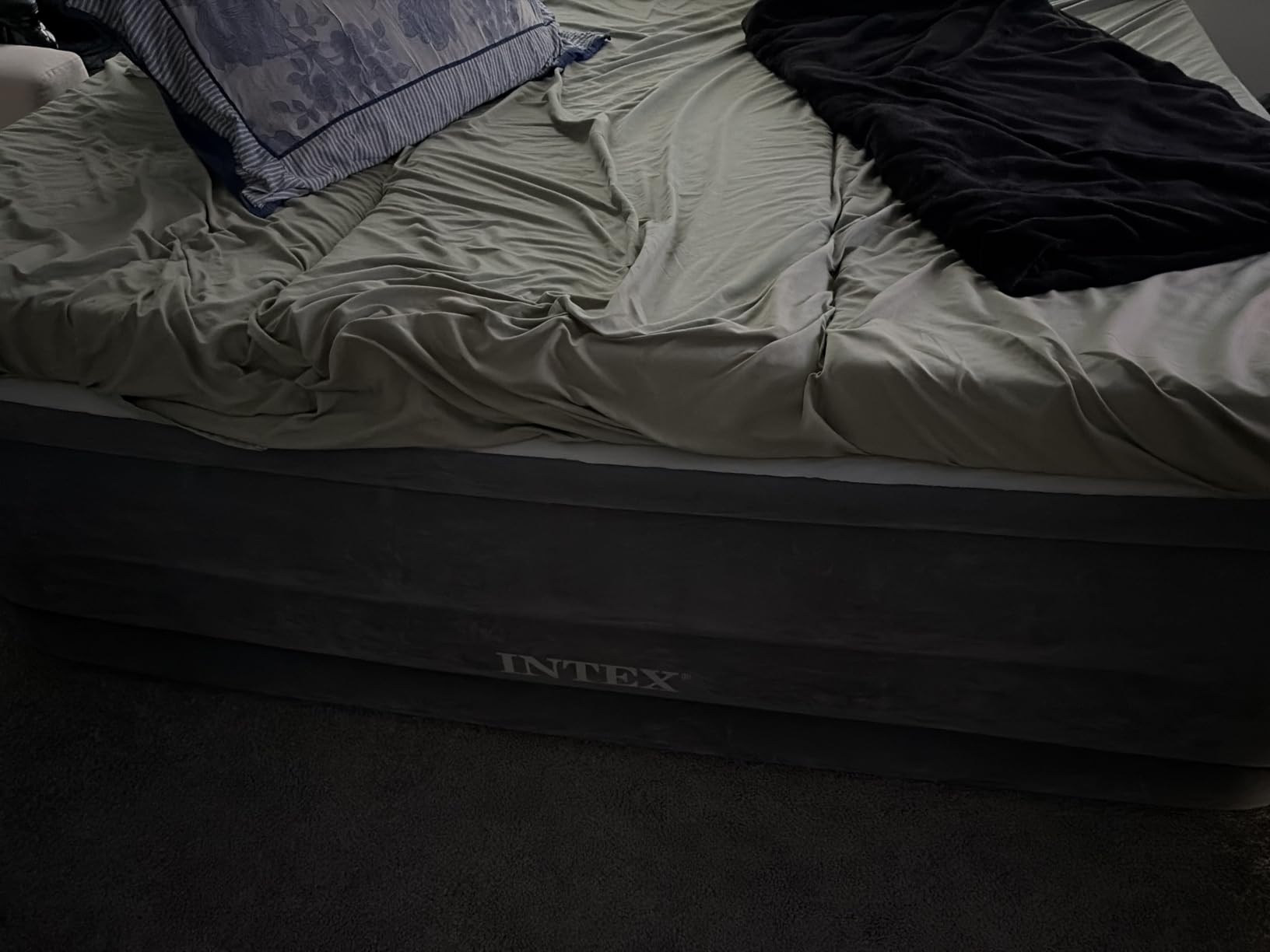
The 22-inch height is the headline here, and it earns its place. Sitting down onto this bed is closer to sitting on a mattress than dropping onto the ground, which older campers and anyone with back problems notice immediately. The horizontally positioned Dura-Beams plus Fiber-Tech polyester fibres give full-body support that held shape across our test nights.
Air retention was one of the better results we saw. The horizontal beam layout resists the slow centre collapse that flattens many raised beds, and it held pressure over a multi-night trip with wide day-to-night temperature swings.
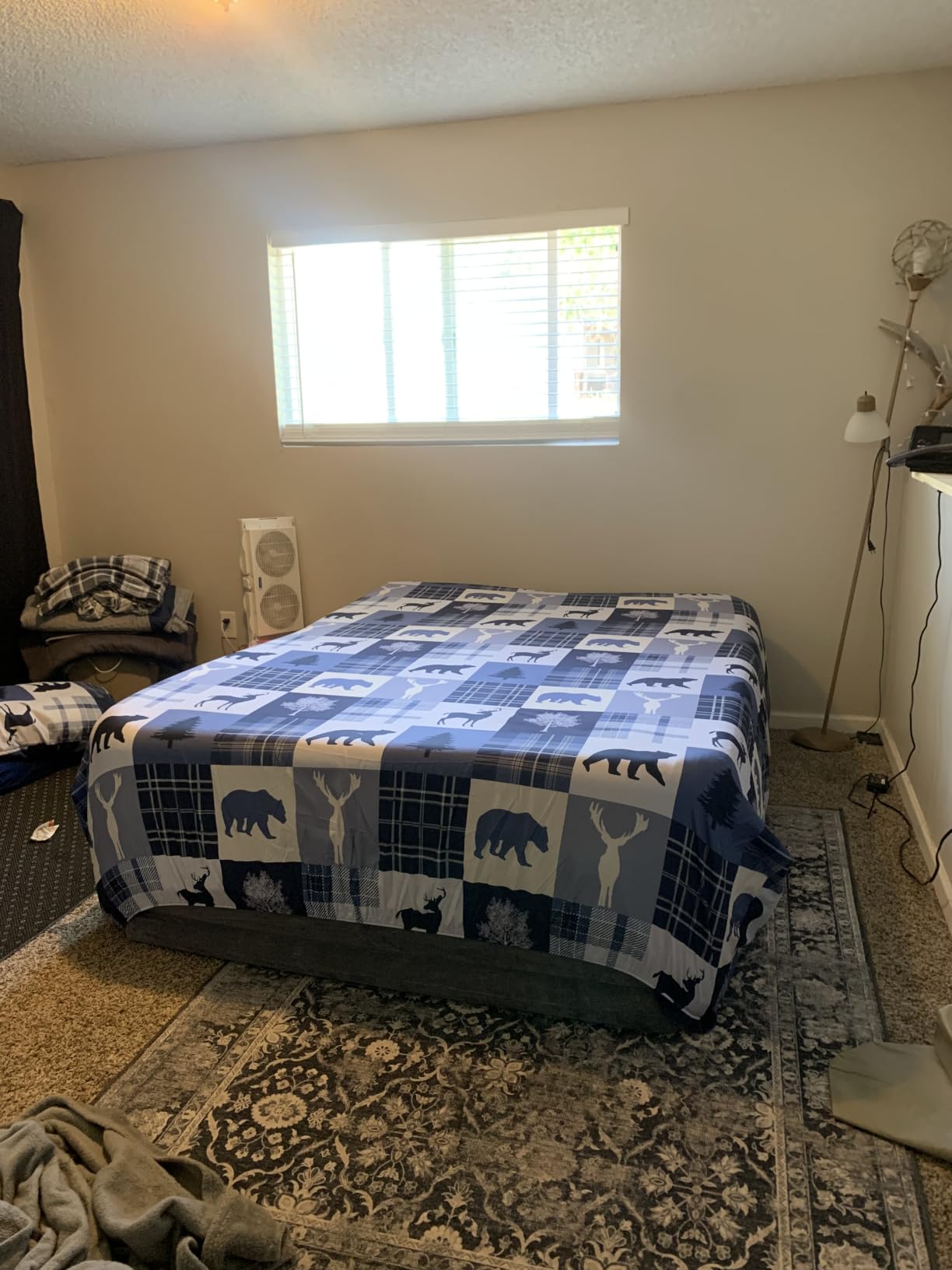
Two warnings from owners. First, the Dura-Beam material stretches on first inflation and the drop in firmness reads exactly like a leak, so give it one or two top-ups during the first two nights before you judge it. Second, the edge construction is rated more durable and more supportive than a traditional airbed, but there is no cushioning layer, so elbows and hips still feel the PVC underneath unless you add a topper.
It is the heaviest mattress in the group at 19.4 pounds, and the built-in pump has no auto-stop, so firmness is judged by feel. There is also a distinct rubber smell on first use that needs airing out, and the raised edges create a gap at the wall that collects small items.
Who this is right for
Couples and family campers who want a bed-height surface without a frame. If getting out of bed in the morning is currently the worst part of camping, the 22-inch profile fixes that on its own.
It is also a strong guest bed for people hosting overnight visitors, and the carry bag and included repair patch mean one unit can cover both roles.
Who should look elsewhere
Anyone who has to lift their gear any distance. At 19.4 pounds this is a load-in-the-boot mattress, and the AC pump means you need power on site.
Side sleepers who need pressure relief should also budget for a foam topper, since the Dura-Beam surface is supportive but not cushioned.
5. Intex Dura-Beam Deluxe 18 inch Twin: Fast Setup for a Single Sleeper
Intex Dura-Beam Deluxe 18″ Twin Size Air Mattress with Built-in Pump
75 x 39 x 18 inch twin
Built-in pump inflates in 2.25 minutes
Horizontal Dura-Beam support
300 lb capacity
Pros
- Fastest inflation here at about 2.25 minutes
- 18 inch height still feels raised and bed-like
- Velvety top is softer than bare PVC
- Dura-Beams hold shape and resist sagging
- Reliable single-sleeper footprint
Cons
- 300 lb capacity limits it to one lighter sleeper
- 39 inch width leaves no room to sprawl
- Pump needs mains power
- First-night material stretch reduces firmness
The twin Dura-Beam is the quick answer to a single-sleeper problem. At 2.25 minutes, this has the fastest inflation of any mattress we tested, and the 18-inch profile still gives you that raised, bed-like feel rather than a pad on the ground. The velvety fabric top is noticeably softer than bare PVC and holds up to abrasion.
Same Dura-Beam story as the queen, and the same result: horizontal beams hold their shape, the surface resists sagging in the middle, and the edge construction handles repeated use. For one person this is all the bed you need, and for a kid at a campsite it is a proper bed rather than a ground mat.
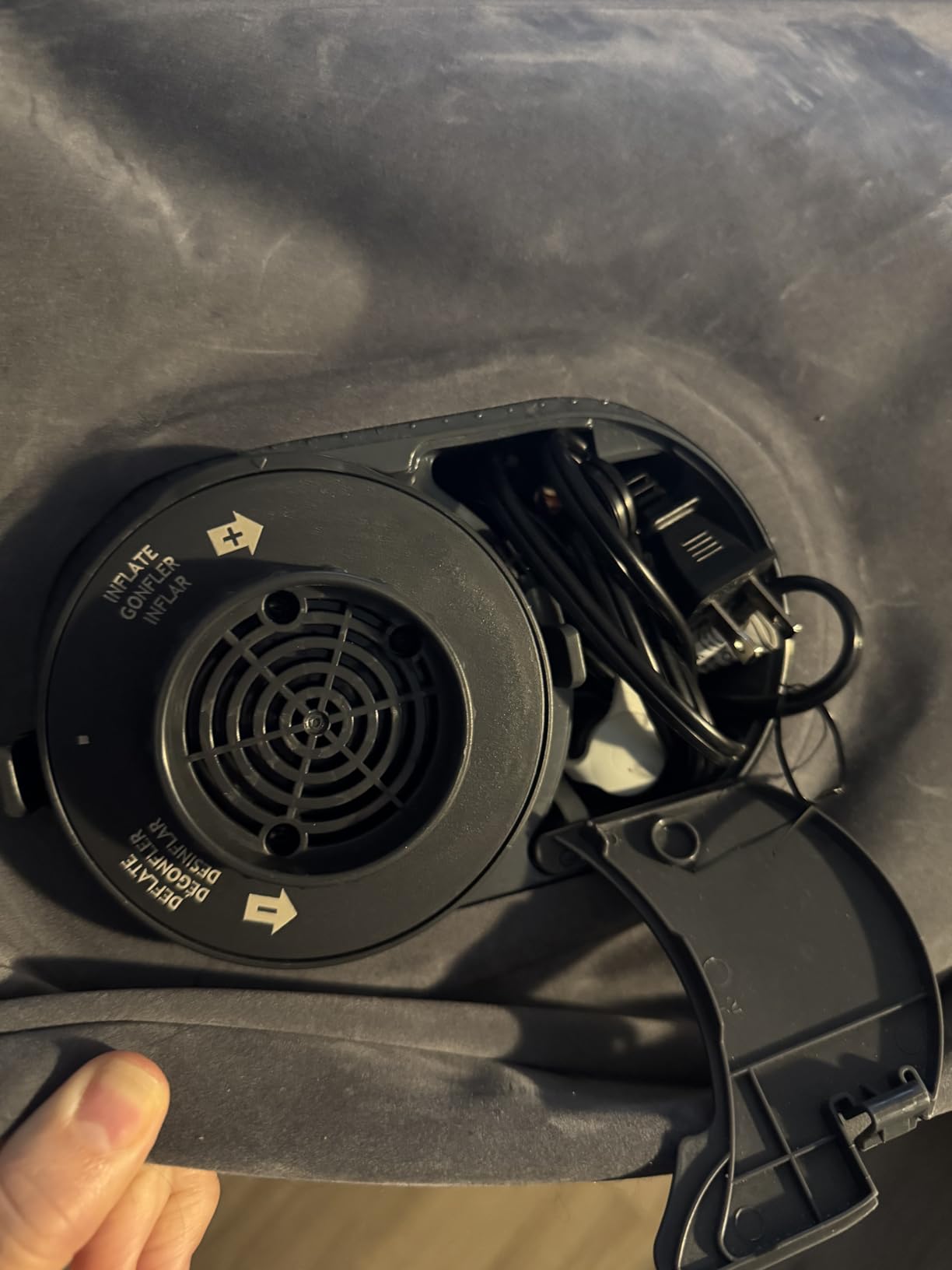
The limitations are structural. At 39 inches wide there is no room to sprawl, and the 300-pound capacity is the second-lowest here, which realistically means one lighter sleeper. The built-in AC pump rules out remote sites, and the first-night stretch that affects all Intex Dura-Beam models needs a top-up before you settle on a firmness.
At 11.7 pounds it is also heavy to carry over distance, so this is a car-side or patio mattress rather than a walk-in one.
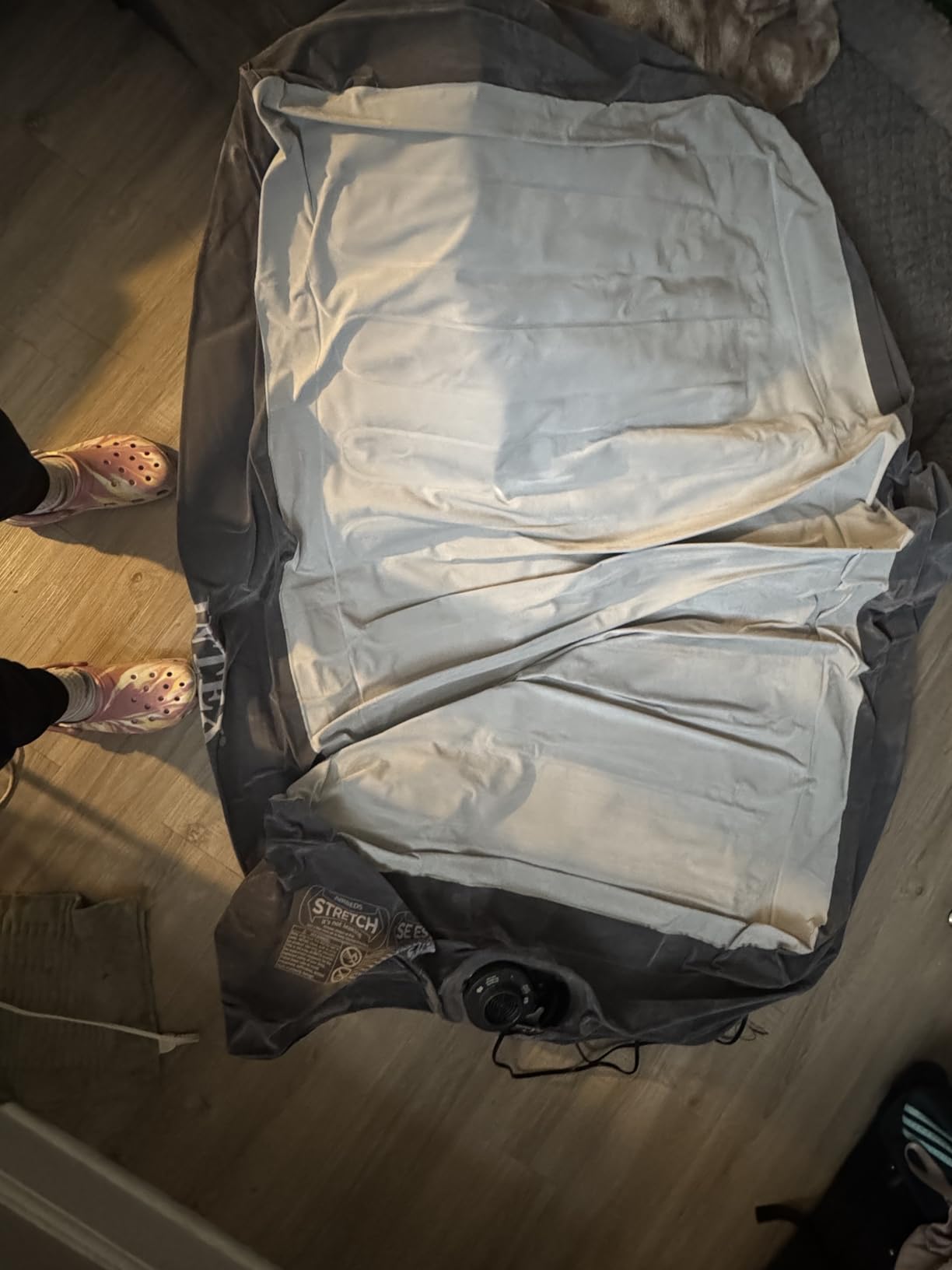
Who this is right for
A single camper, a teenager sharing a tent, or anyone who wants a raised bed without carrying a queen across a campsite. The fast inflation makes it ideal for arriving after dark.
It is also a good second bed at home for a guest, and the 300-pound limit is not an issue for a single average adult on a bed that stays indoors.
Who should look elsewhere
Anyone over the weight limit, and anyone sharing. A 39-inch width is single occupancy only, with no discussion.
If you have no mains power, the built-in pump is a non-starter, and a hand-pump or foot-pump design would serve you better.
6. OhGeni Queen 18 inch: A Coil-Beam Bed With an 800 Pound Rating
OhGeni Air Mattress Queen with Built in Pump, 18″ Raised Blow up Bed, 800lb
80 x 60 x 18 inch queen
35 coil-beam support points
800 lb capacity
3 minute inflate and deflate
Pros
- 800 lb capacity handles two adults easily
- 35 coil-beam points beat vertical beams
- Fully waterproof flocked surface
- Three minute full inflate and deflate
- Ten years of product support
Cons
- Initial firmness loss as PVC stretches
- Some slow leaks after weeks of use
- 16.6 lb is heavy to carry
- Plug-in pump needs mains power
- Flocking can feel warm
The OhGeni takes the coil-beam idea that works so well elsewhere and pairs it with a fully waterproof flocked surface, which most rivals in this category are not. The 35 internal coil-beam support points spread body weight evenly and take the edge off the firm, flat feeling that vertical-beam designs tend to give, and the non-slip base stayed put all night on a hard floor.
Inflation took about three minutes in both directions with the built-in 110V pump, and the adjustable firmness lets you add or release air rather than accepting a fixed feel. It is also offered in 13, 18 and 20 inch heights, so it is easy to match to the rest of a setup.
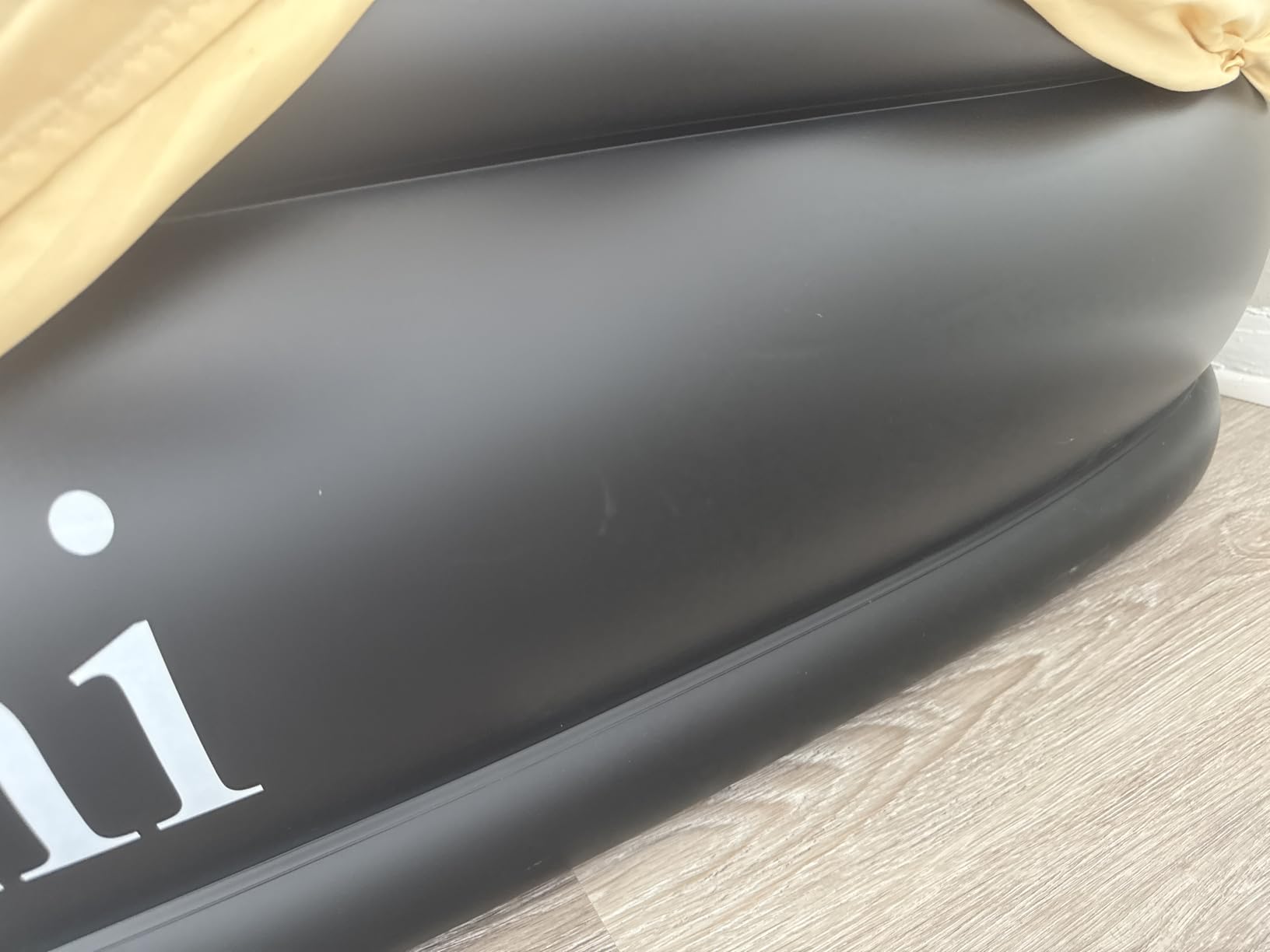
The recurring note in reviews is the first few nights. The upgraded 40 percent thicker PVC stretches on first use, so the bed feels softer after a night than it did when you inflated it, and it needs a top-up before that settles. A minority of owners report slow leaks developing after weeks of use, so patch kits are worth keeping in the car.
At 16.6 pounds it is heavy to carry to a pitch, the plug-in pump means no mains-free campsites, and flocked PVC is less breathable than nylon so it can feel warm in summer.
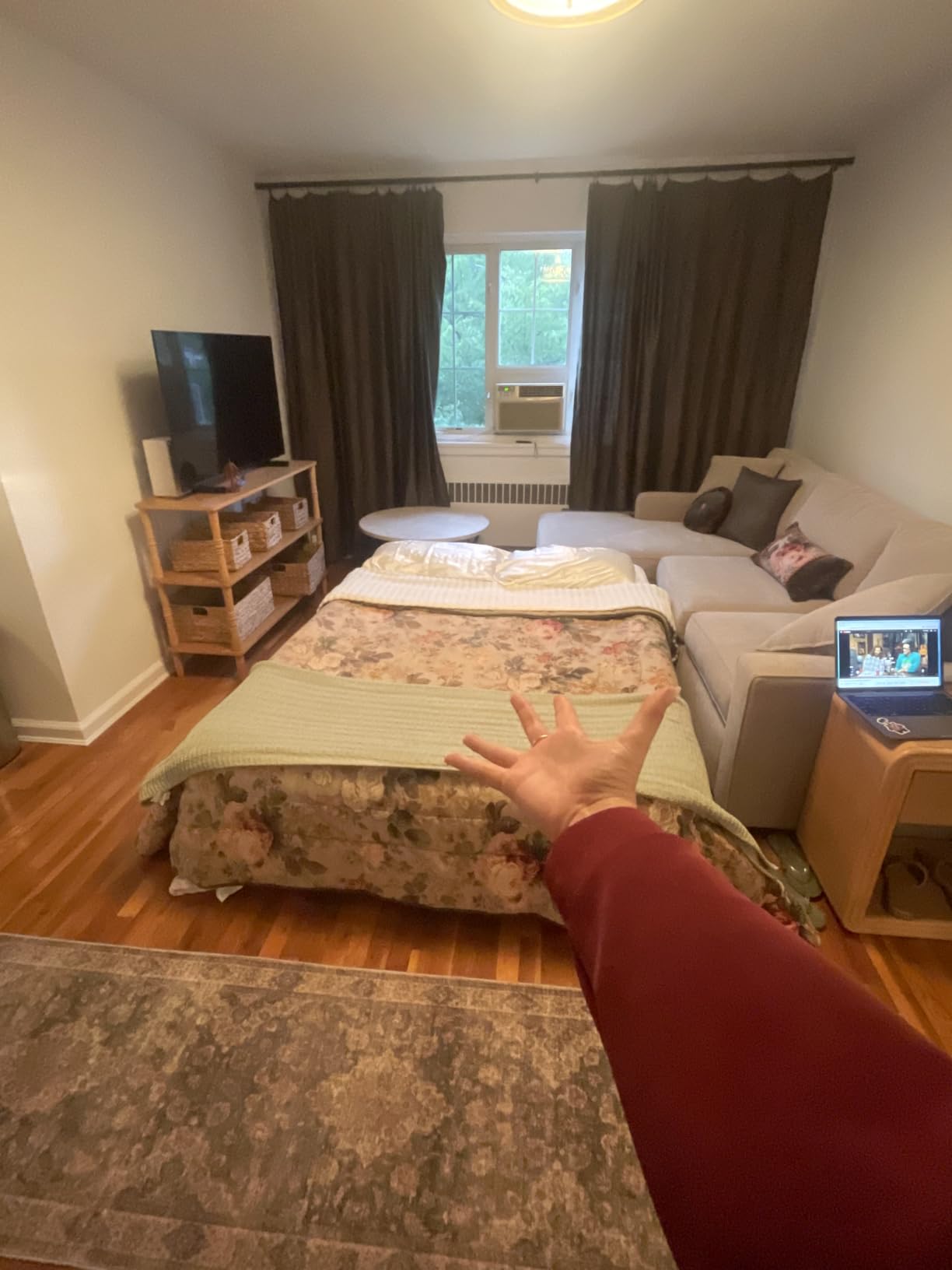
Who this is right for
Two adults who are not light sleepers, thanks to the 800-pound rating. Anyone who spills things on a bed, or camps in wet ground, will appreciate the fully waterproof surface more than they expect to.
It is also a good pick for a family room guest bed, where the ten years of product support adds real value beyond a one-year warranty.
Who should look elsewhere
Walk-in campers and anyone without power on site. Sixteen pounds and a plug-in pump rules out both.
If you sleep hot, note that the flocked PVC does not breathe the way a nylon or TPU pad does, and you may end up sleeping on top of the bed rather than in it.
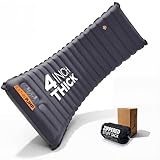
7. ZOOOBELIVES Airlive2000: A 4 Inch Pad Built for Side Sleepers
ZOOOBELIVES Inflatable Camping Sleeping Pad, 4-Inch Thick Full Air Support, No Bottoming Out for Side Sleepers, Camping & Backpacking Mattress with Built-in Foot Pump, Durable & Compact – Airlive2000
74 x 24 x 4 inch pad
Full air chambers edge to edge
Built-in foot pump and dual valve
Waterproof TPU
Pros
- Full 4 inch air chambers stop bottoming out
- Built-in foot pump removes extra pump weight
- Secure valve holds pressure overnight
- Quiet surface during movement
- Side buttons link two pads into a double
Cons
- 1.4 kg is heavy for a backpacking pad
- 24 inch width is narrow
- 400 lb capacity suits one average sleeper
- Firm feel even at lower pressure
Most budget pads use segmented or honeycomb construction, and that is exactly where side sleepers bottom out onto the ground. The Airlive2000 uses full-height air chambers running edge to edge, so the pressure is spread evenly with no low points under a shoulder or a hip. That single design choice is why it stands out for side sleepers in this group.
The integrated foot pump is a genuine convenience. You inflate it with your foot, no batteries and no separate pump to lose, and the secure dual valve is designed to limit overnight pressure loss, which is why fewer owners report top-ups than with thinner pads.
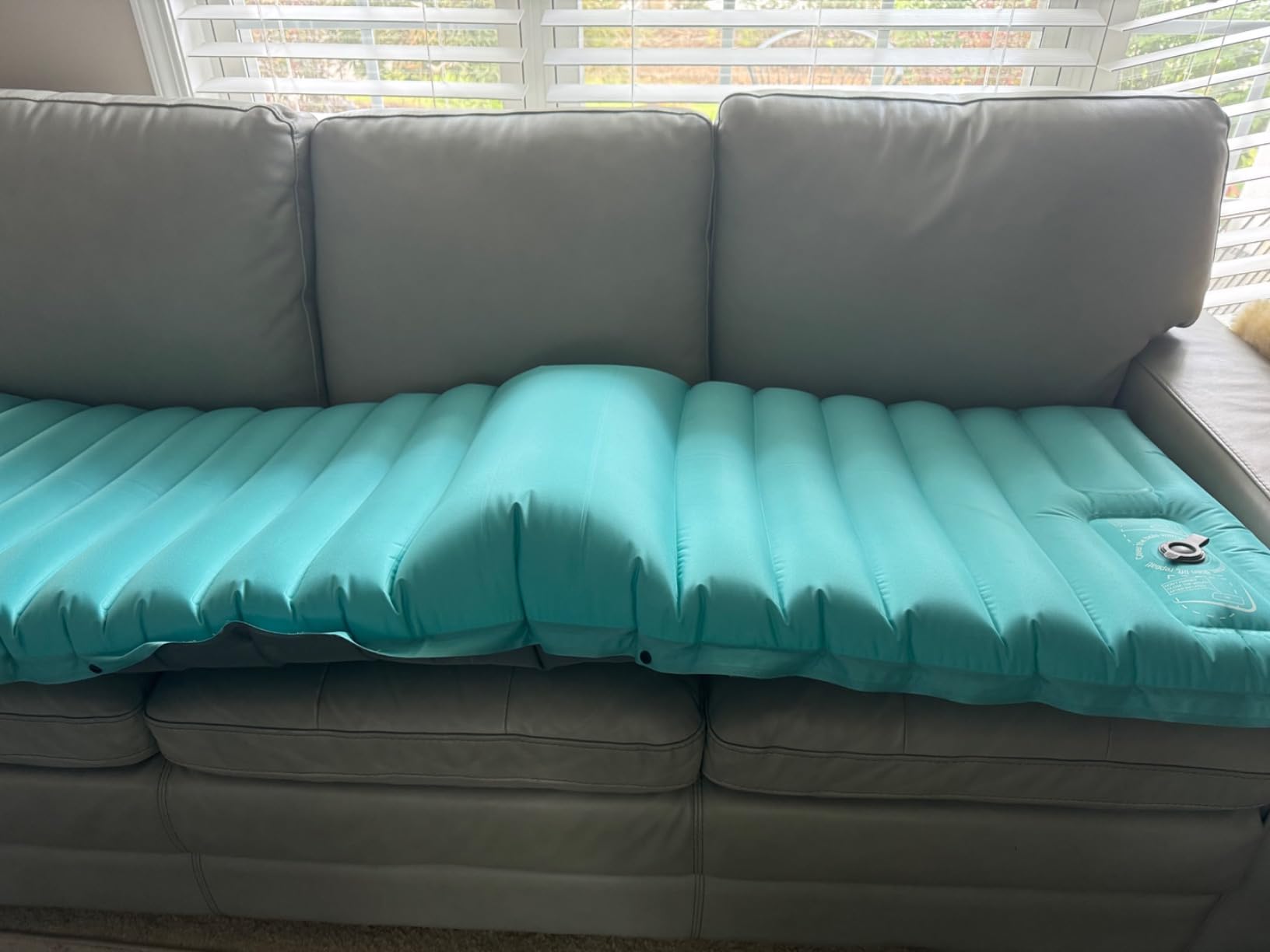
The low-noise TPU surface is a sleeper for a partner. Cheaper nylon pads rustle loudly when you move, and this one does not, which is one of those small features that only becomes obvious once you have shared a tent with someone.
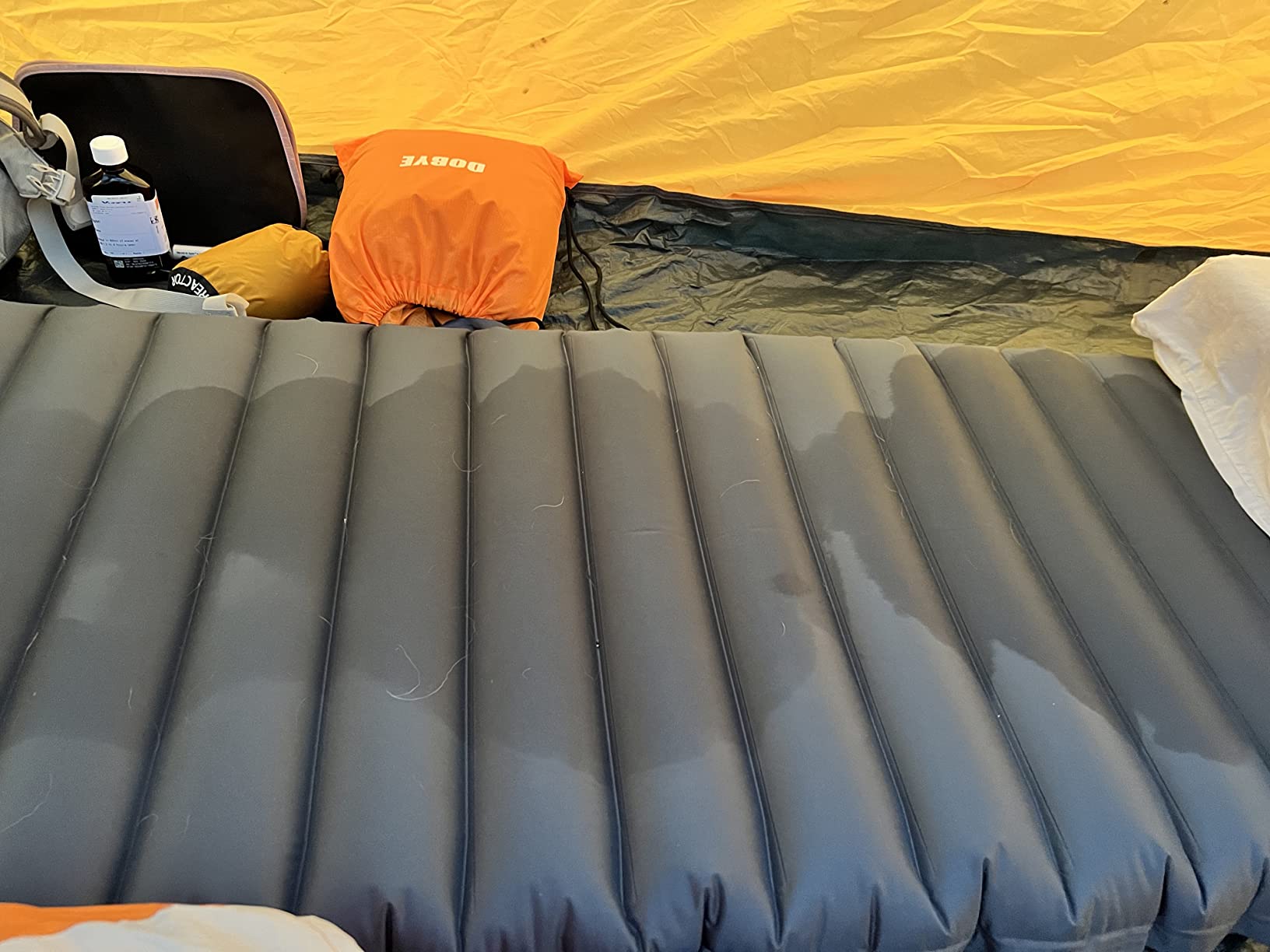
On the other side, the 24-inch width is narrower than several pads here, the 400-pound capacity suits one average sleeper, and 1.4 kg is a real weight for a backpack. Even at lower pressure the base feel stays firm, which is not ideal if you like a soft landing.
Who this is right for
Side sleepers who have been disappointed by thin segmented pads, and couples who want two separate beds rather than one wide shared surface. The linkable side connections snap two pads together when you want a double.
It is also a good choice if noise has been an issue in a shared tent, since the low-noise surface changes the first ten minutes after lights out.
Who should look elsewhere
Ultralight backpackers. At 1.4 kg this is a car-camping and short-hike pad, and anyone counting grams will want something lighter.
Anyone hoping for a soft, sink-in feel, and anyone over the weight limit for a shared bed, should pass as well.
8. TREKOLOGY Ultralight Backpacking Pad: Contoured Comfort at 750 g
TREKOLOGY Ultralight Backpacking Sleeping Pad, Inflatable Camping Mat
75.2 x 22.4 x 3.9 inch pad
750 g packed weight
Packs to 7.3 x 4.7 inches
R-value about 1.6-2
Pros
- Contoured S-curve baffles keep you centred
- 750 g works for multi-day backpacking
- Packs smaller than most 4 inch pads
- Inflates by mouth in minutes with no pump
- 40D nylon sheds dew and abrasion
Cons
- R-value of 1.6-2 is warm weather only
- 22.4 inch width is narrow
- No built-in pump for group setups
- Small valve can be finicky when cold or dirty
The TREKOLOGY earns its place with construction rather than thickness. The raised contoured sides and S-curve channels cradle your body and keep you centred, which is the difference between a pad that feels designed and a pad that feels like a slab. It scored the highest rating in the group, with the lowest share of one-star reviews, and owners consistently single out the baffles as the reason.
At 750 g it is light enough for multi-day backpacking, and it packs to 7.3 by 4.7 inches, smaller than most four-inch pads. You inflate it by mouth in minutes, so there is no pump to carry.
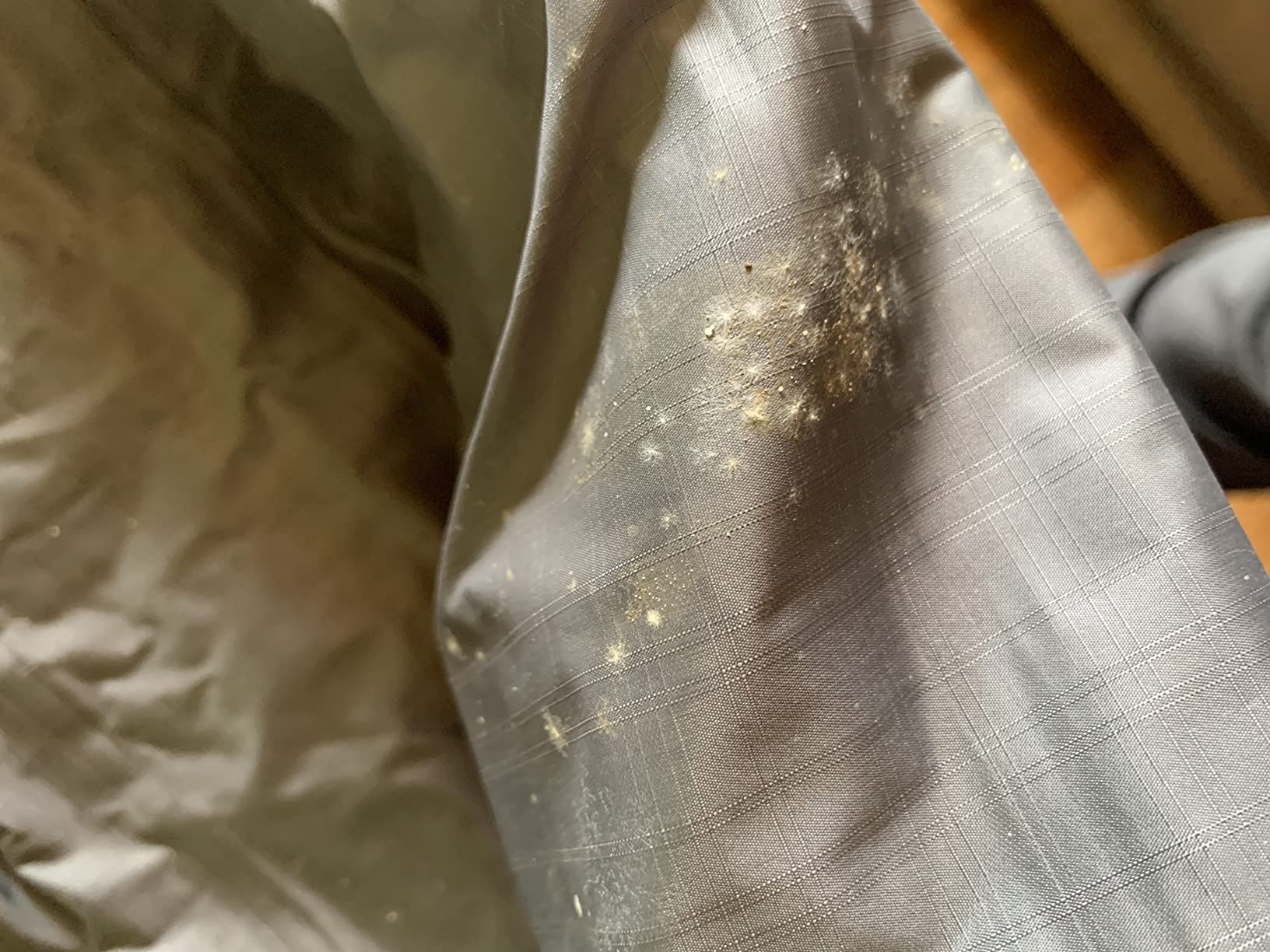
The 40D nylon with a water-resistant coating handled morning dew and abrasion without complaint, and it works inside a tent or a hammock, which widens its use beyond one setup. For adults up to six foot one, the length is enough.
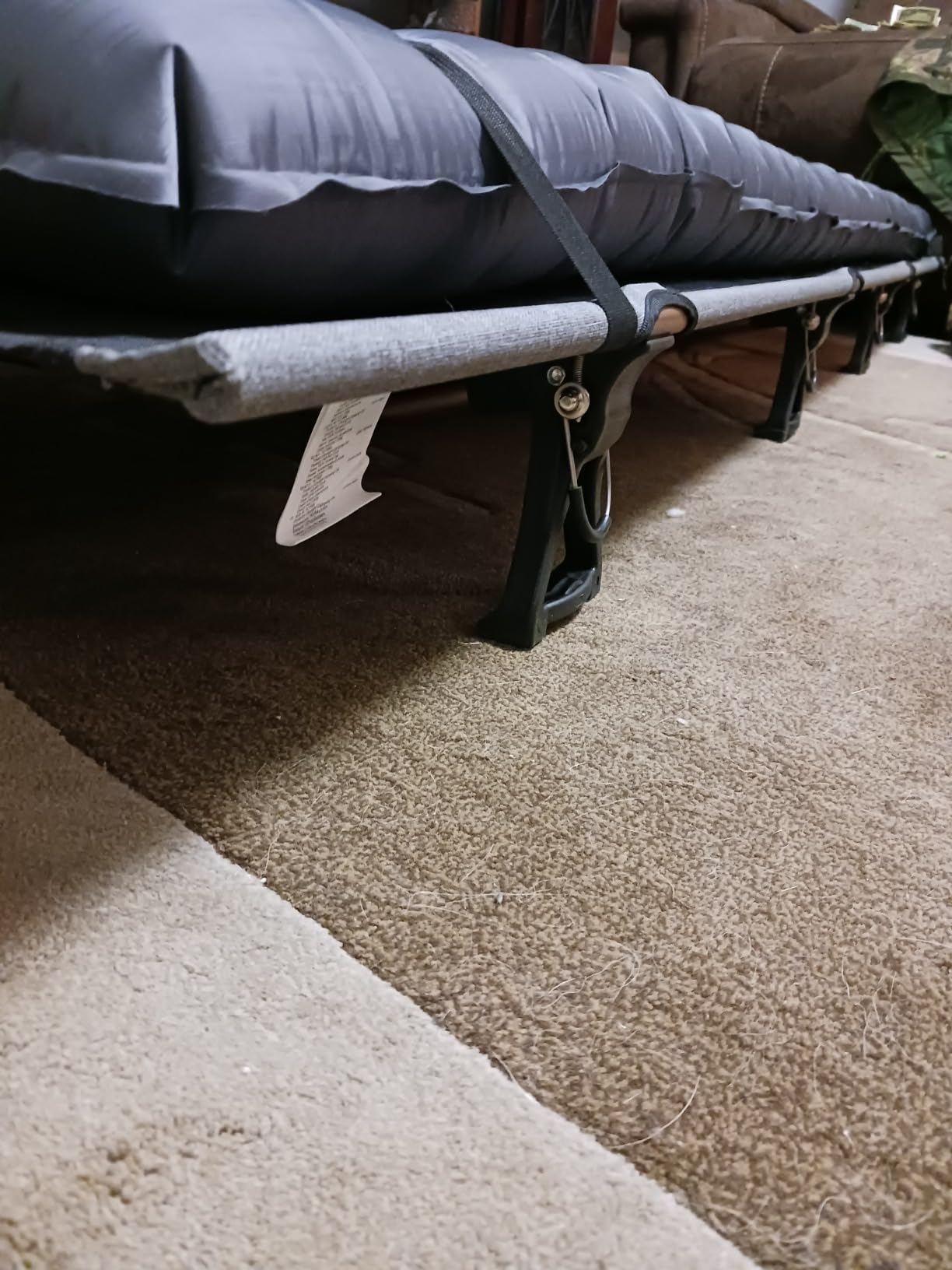
The limit is thermal. The stated R-value of about 1.6-2 makes this a three-season pad for spring, summer and mild autumn above freezing, and it is not rated for winter. The 22.4-inch width is also narrow, and the small valve can be awkward to seal when it is cold or dirty.
Who this is right for
Backpackers who want a four-inch pad without a four-pound price in weight, and anyone who sleeps in a hammock since it works in both. Side sleepers do well here because the contoured baffles spread the load.
It is also a strong three-season camp pad for a family car-camping setup, where the small packed size means you can actually bring it.
Who should look elsewhere
Winter campers. An R-value around 1.6-2 is a warm-weather number, and you will need a foam mat underneath if you go near freezing.
Anyone who wants a soft, wide pad, or who values a quiet surface, should look at a TPU model instead, since nylon moves noisily.
9. TOBTOS 6 Inch Sleeping Pad: The Deepest Cushion and a 28 Inch Width
TOBTOS Inflatable Camping Sleeping Pad with Pillow, Thick 6 Inch Ultralight Sleeping Pad with Built-in Pump, Lightweight Sleeping Mat for Camping, Backpacking, Hiking, Tent (Grey)
75 x 28 x 6 inch pad
Up to 6 inches thick
Built-in foot pump, about 1 minute
Integrated one-piece pillow
Pros
- 6 inch thickness is the deepest cushioning here
- 28 inch width gives real room to stretch
- Foot pump inflates in about a minute
- Integrated one-piece pillow
- Heat-sealed edges resist leaks and tears
Cons
- 2.36 lb is heavy for backpacking
- Needs topping up after the first fill
- Thick pads take more pack volume than weight suggests
- Nylon surface is audible when moving
- Little ground insulation
Thickness is the whole argument here. Inflated to full, this pad is up to six inches deep, which is more than twice the depth of a typical three-season camping mat, and the effect is that your hips and shoulders never reach the ground. For side sleepers on rough terrain, that is the single biggest comfort upgrade available in this price bracket.
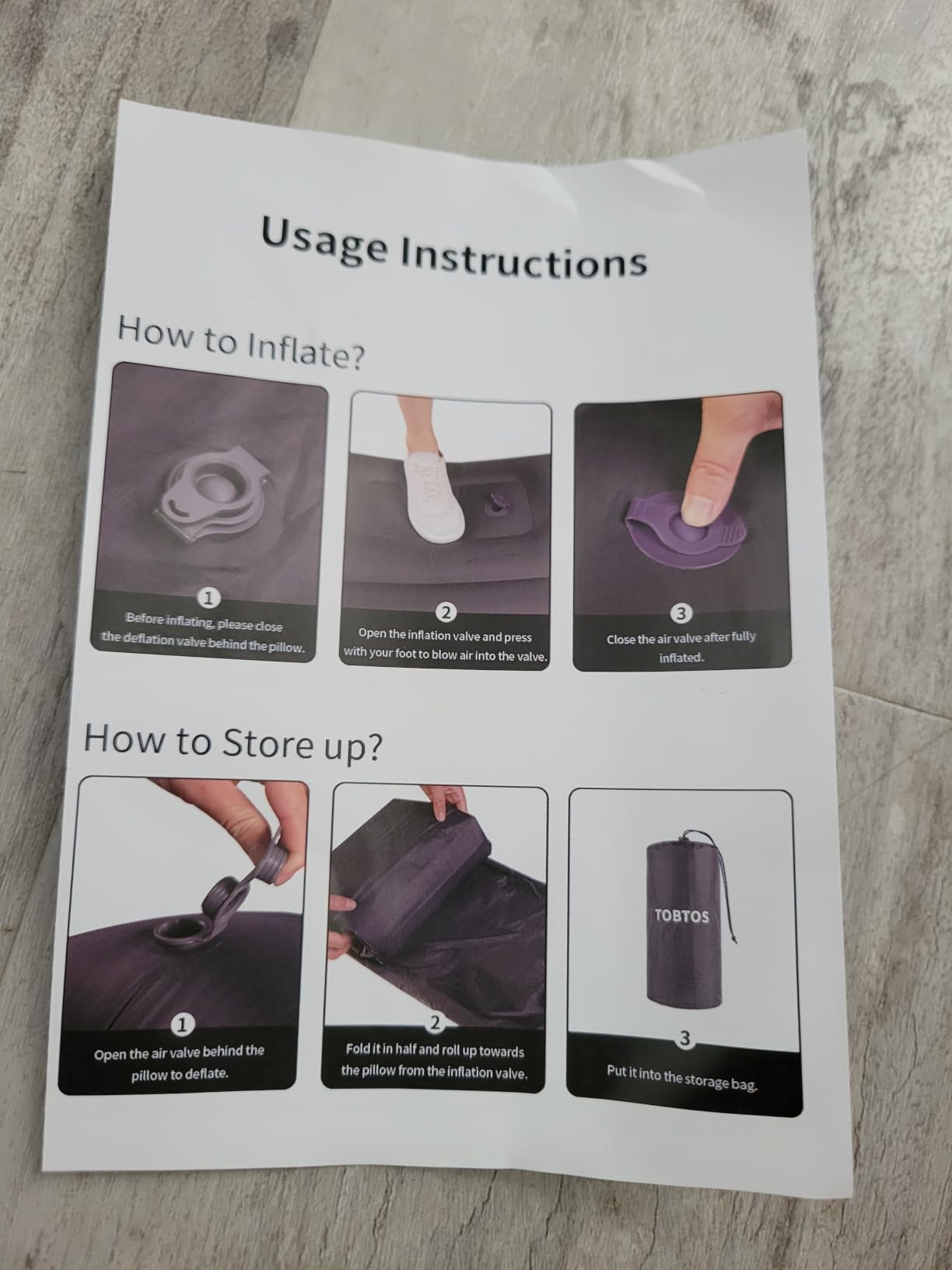
The 28-inch width is unusually generous for a single pad and gives you room to actually stretch out, and the one-piece integrated pillow is shaped to the head and neck, which almost no budget pad bothers with. The built-in foot pump fills it in about a minute, and the heat-sealed 40D nylon edges resist the leaks and tears that shorten pad life.
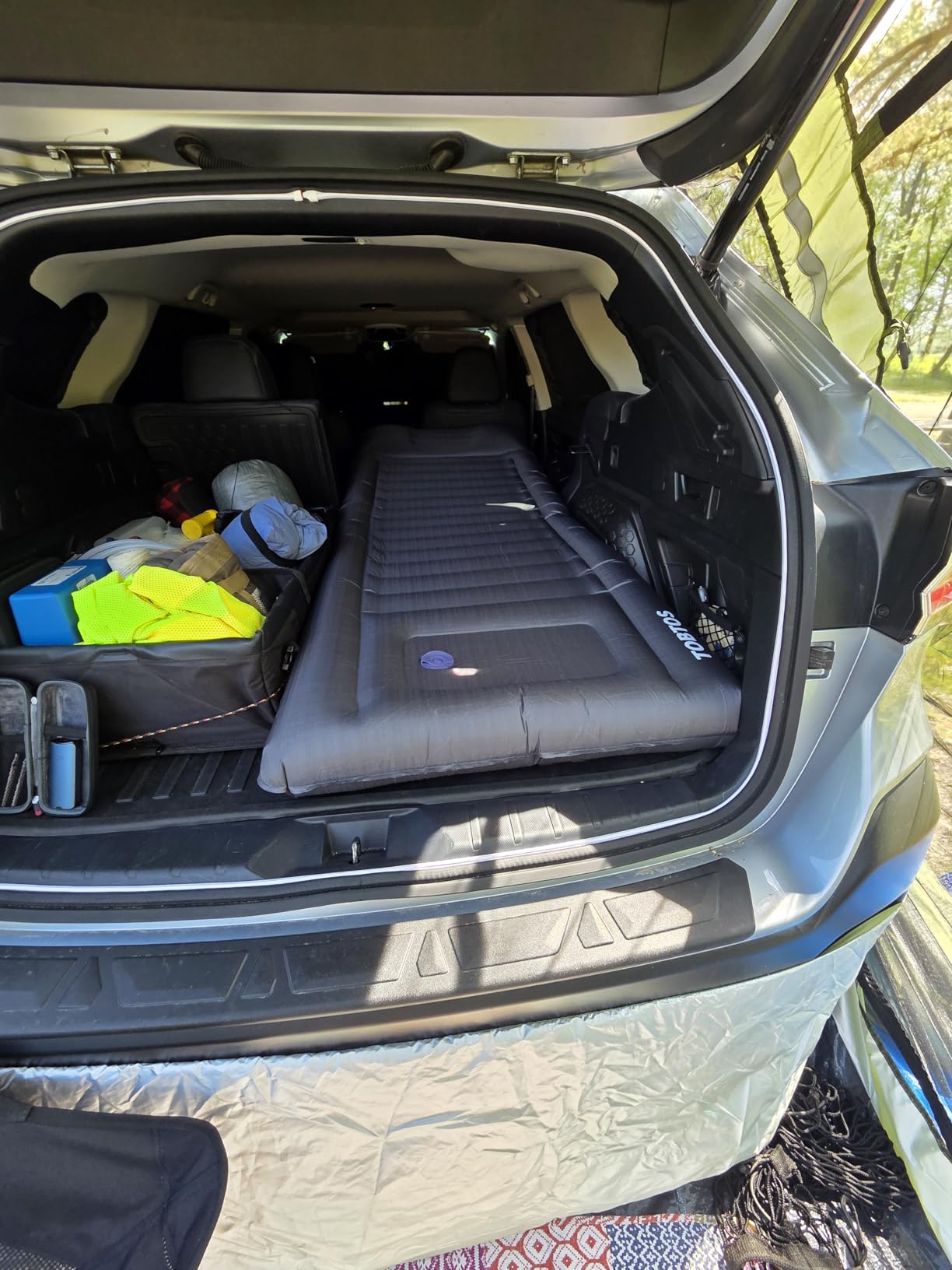
There are real costs. At 2.36 pounds it is the heavy end of backpacking gear, and a pad this thick swallows more pack volume than the weight suggests, so it works far better as a car or van setup than as a walk-in load. The foot pump also only gets you close to full on the first pass, so expect a top-up later in the evening.
None of that thick air is insulation, so cold ground still comes straight through and needs an underlayer. The nylon surface is also the noisiest of the group when you move, which matters if you are sharing space.
Who this is right for
Side sleepers, anyone with hip or back sensitivity, and campers on uneven or rocky ground. The 28-inch width also makes it usable for a restless sleeper who moves around the tent.
It doubles as a guest floor bed or a day-lounging pad at home, and the integrated pillow means you do not need a separate one.
Who should look elsewhere
Anyone packing light for a multi-day walk. Six inches of air is not a weight you want to carry up a trail.
Cold-weather campers should pair it with a foam mat rather than expect it to do the job alone, and light sleepers with a partner may prefer a quieter surface.
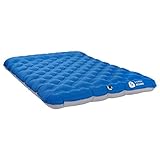
10. Sierra Designs Queen Air Bed: A PVC-Free Camp Bed With a Built-In Pillow
Sierra Designs Queen Campaign Air Mattress | Air Bed for Car Camping and Travel | Full TPU Construction Means no Harmful or Toxic Materials | Includes Battery Operated Pump of Easy Fast Inflation
77.9 x 55.9 x 10.2 inch queen
Full TPU construction, no PVC
Hand pump included
Adjustable up to 10 inches
Pros
- Full TPU construction instead of PVC
- Quiet soft top that does not rustle
- Integrated full-length pillow doubles as a reading backrest
- Hand pump needs no mains power
- Lowest one-star rate in the group
Cons
- 10 inch maximum thickness is shallow next to rivals
- 400 lb capacity rules out two heavy adults
- 55.9 inch width is narrower than a standard queen
- Hand pump takes longer than an electric pump
This is the material-conscious pick. The Sierra Designs airbed is built from TPU rather than PVC across the whole body, which is the material choice reviewers single out first, particularly for households with young children. It also has the lowest share of one-star reviews in the group, which tells you something about consistency.
The integrated full-length pillow is unusually useful. It adds thickness along the top, and the inclined section doubles as a backrest for reading in camp, so the bed does duty during the day as well as at night. The soft top fabric is quiet, so movement does not wake a partner.
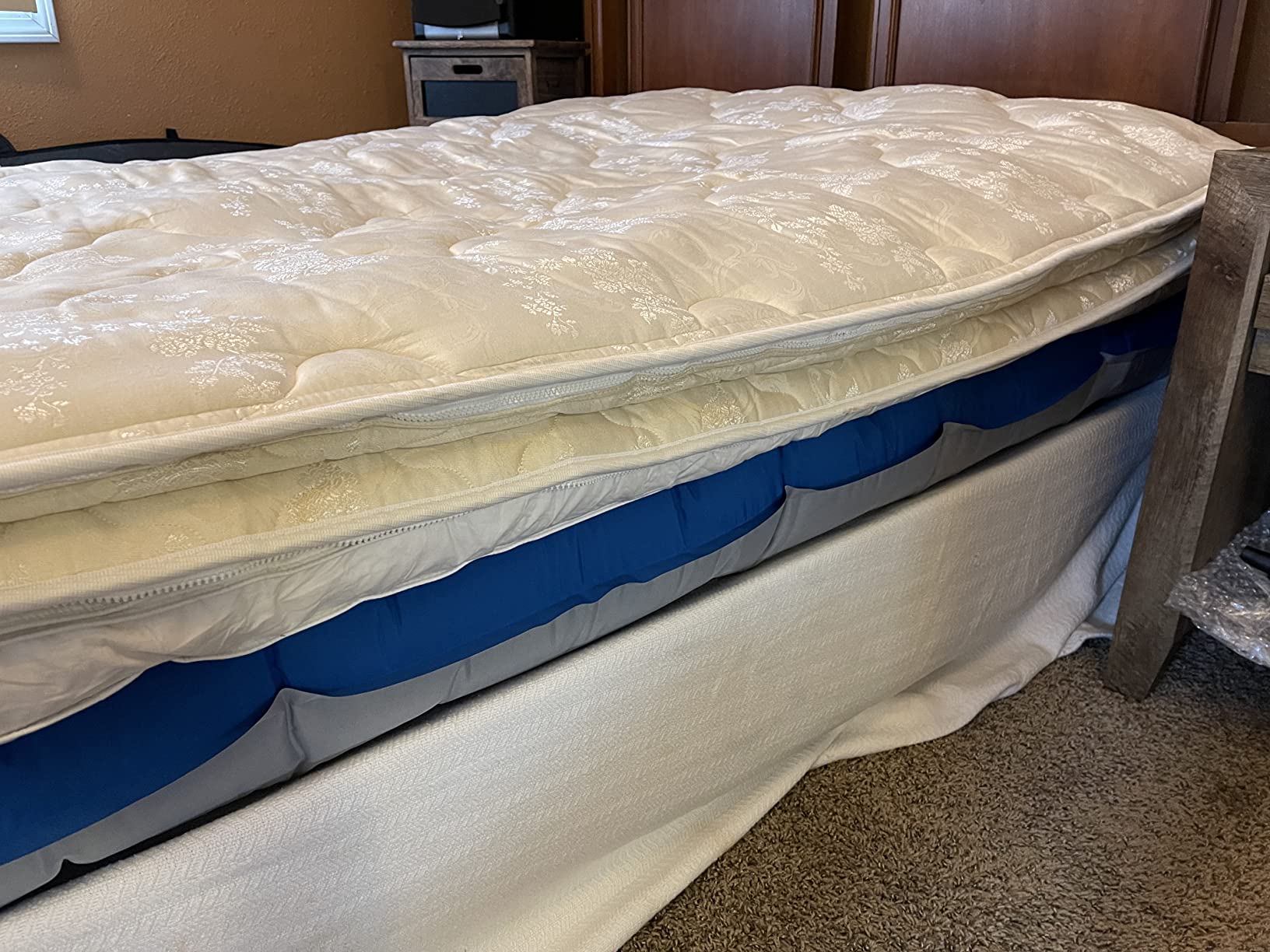
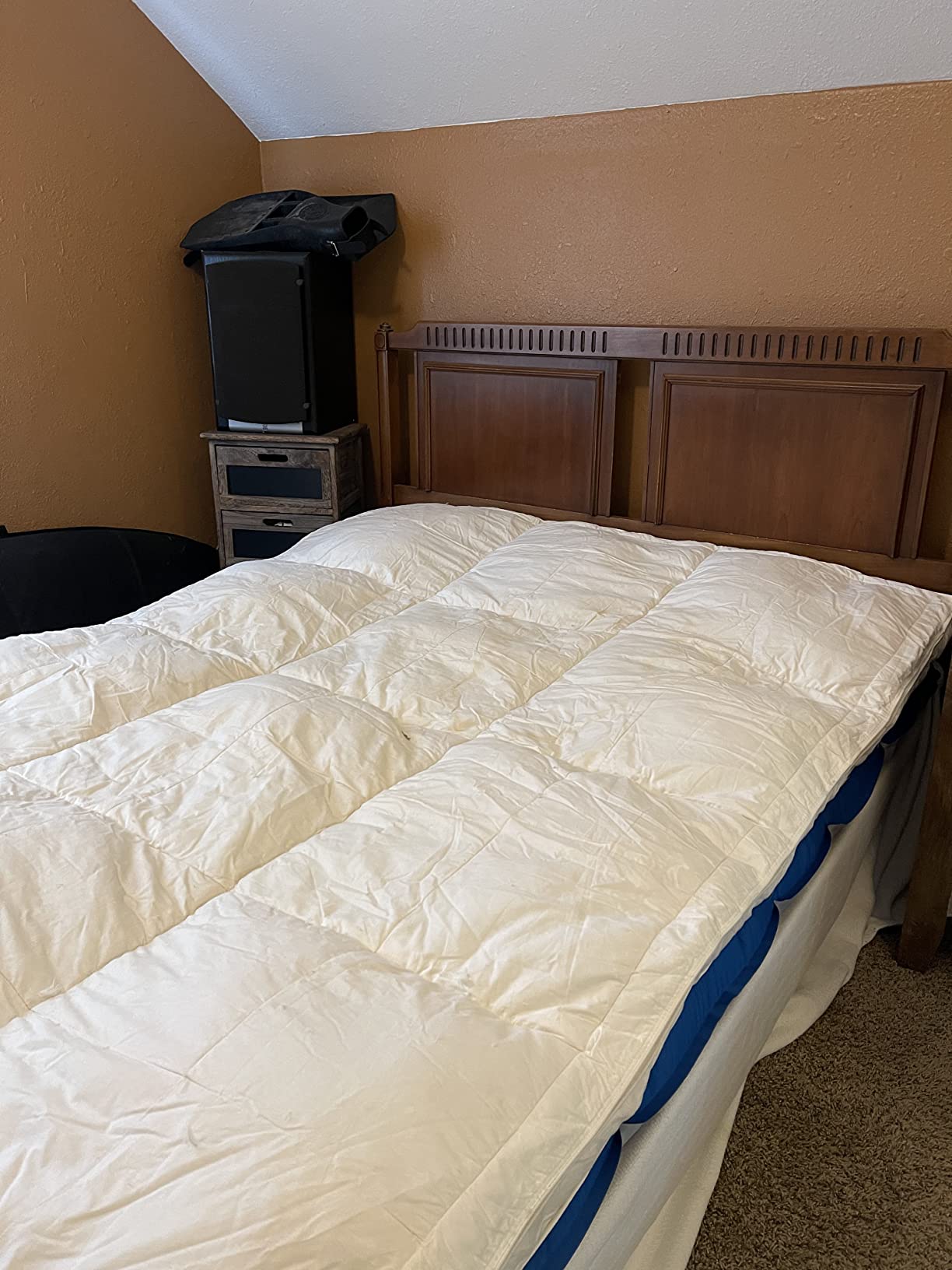
At six pounds it is one of the lighter raised queens here, and the included hand pump means no mains power and no cord to trip over in the dark. The oversized drawstring stuff sack makes pack-up unusually quick, which is a bigger deal than it sounds after a week of camping.
The compromises are real. Maximum adjustable thickness is about 10 inches, which is shallow next to the 18 to 22 inch beds, and the 400-pound limit rules out two heavy adults sharing. The 55.9-inch width is narrower than a standard queen, inflation takes noticeably longer by hand, and the surface is water repellent rather than fully waterproof.
Who this is right for
Families with small children, and anyone who would rather avoid PVC entirely. It is also the strongest choice for a campsite with no power, since the hand pump works anywhere.
Campers who read or sit up in bed will like the inclined reading surface, and the quiet top is a genuine plus in a shared tent.
Who should look elsewhere
Anyone who wants a deep, mattress-like bed. Ten inches is a firm futon, not a mattress, and sharing it with a second adult of any size is a stretch.
Backpackers should skip it too, since 10 inches of volume is a poor trade for pack space even at six pounds.
11. HiiPeak Sleeping Pad: Thirty-Second Foot-Pump Setup With Linkable Sides
HiiPeak Sleeping Pad for Camping- Ultralight Inflatable Sleeping Mat with Built-in Foot Pump & Pillow, Upgraded Compact Camping Air Mattress for Tent, Backpacking, Hiking
76.7 x 27.6 x 3.9 inch pad
930 g, 11 x 3.9 inch packed
30 second foot-pump inflation
Linkable sides
Pros
- Fastest setup here at about 30 seconds to inflate
- Hexagon cells soften contact with rocky ground
- Linkable side buttons build a double bed
- Waterproof 50D pongee wipes clean
- Compact at 930 g
Cons
- No insulation
- so cold ground reaches you
- Surface is crackly and noisy when moving
- Over-inflated it pushes up oddly
- Some units lost air after about 8 nights
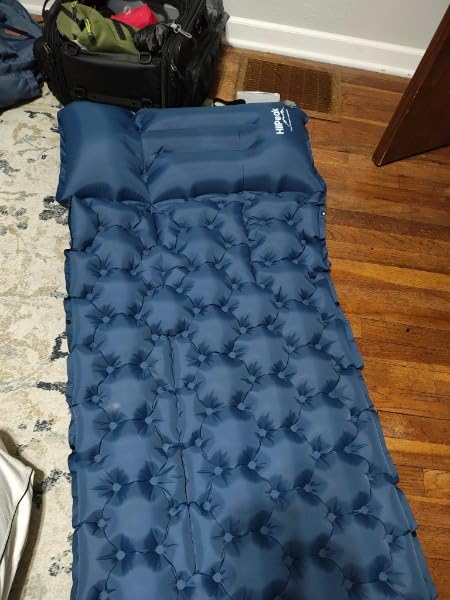
The HiiPeak is the value pick with a genuinely clever feature. The hexagon-shaped air cells spread pressure well enough that you can sleep on sharp gravel without feeling individual rocks, and the built-in ergonomic pillow handles the neck and back work that usually ends up with a separate pillow in your pack.
Setup speed is the headline: the foot pump fills it in roughly 30 seconds and it deflates in about one, so you can pitch and pack without hunting for a pump. At 930 g and 11 by 3.9 inches stored, it fits a pack without negotiation.
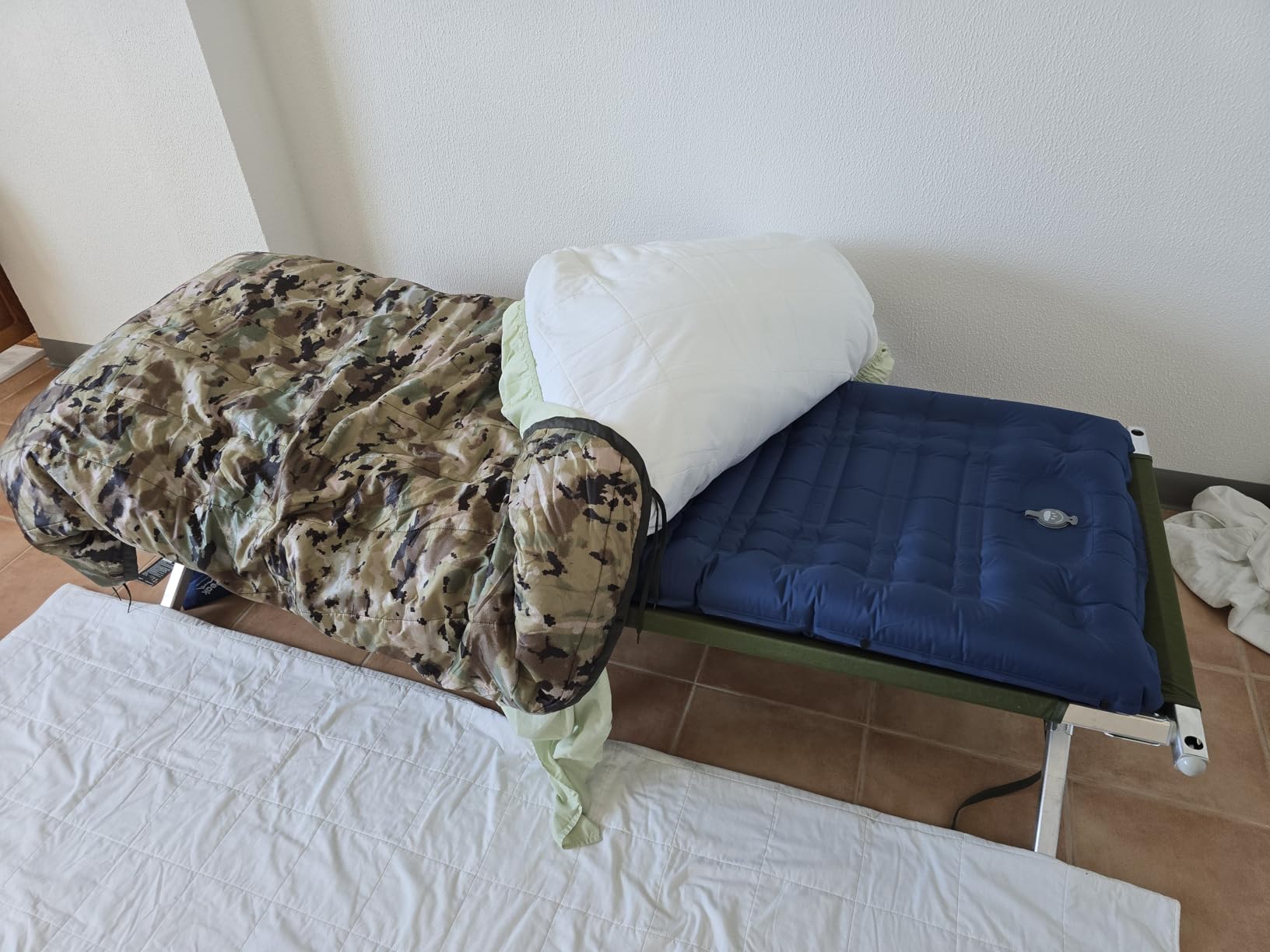
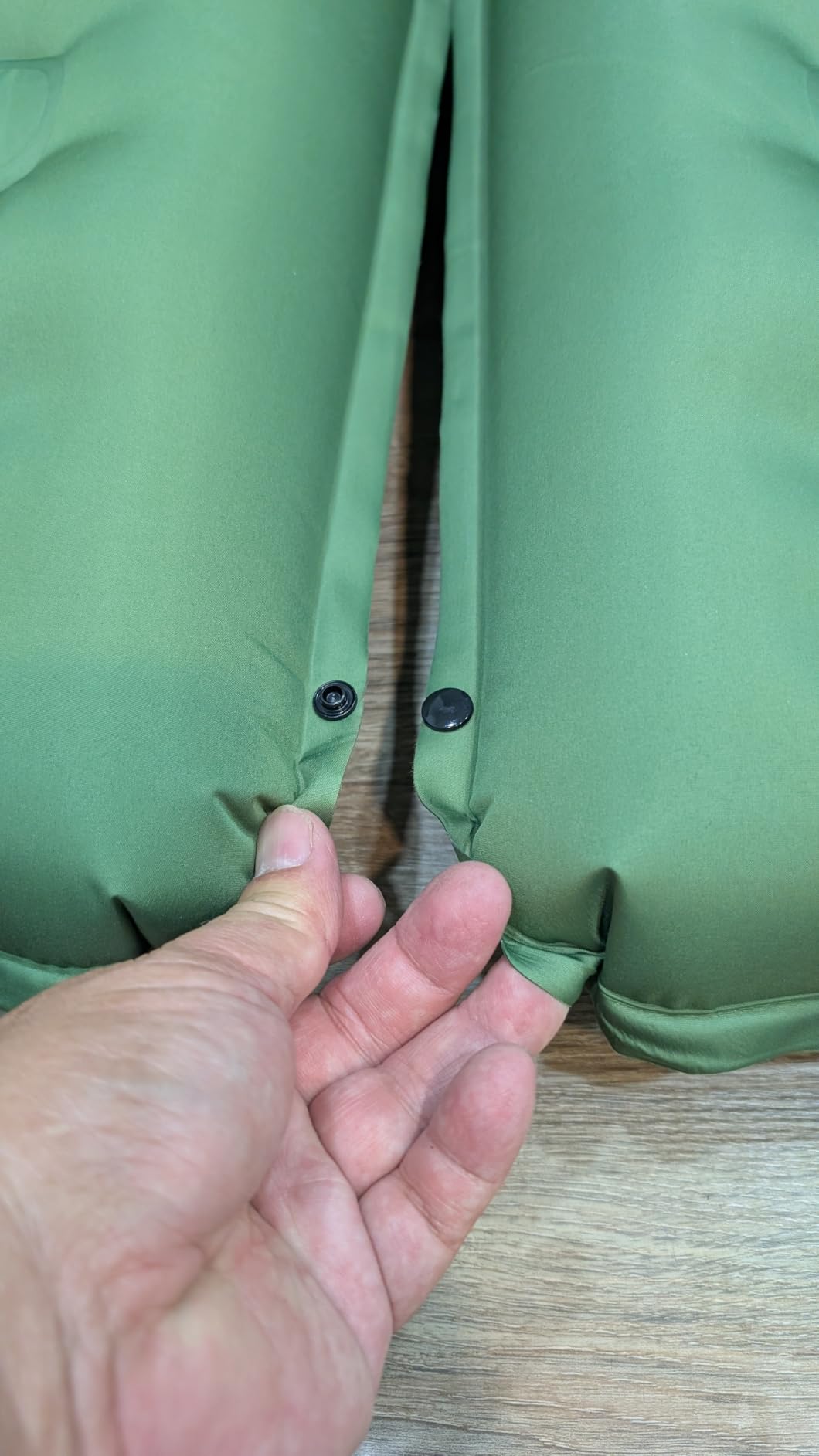
The side connection buttons are the sleeper feature, and by sleeper feature we mean the one other people notice. Two pads snap together with no gap to form a double bed, which solves the shared-space problem far better than squeezing onto one wide pad and rolling into the middle all night.
Two cautions. There is no insulation, so sleepers get cold from the ground and need extra layers, and the surface is noticeably crackly when you move. It also must be left slightly under-inflated, because at full pressure it pushes up unevenly, and a minority of owners report losing air after about eight nights.
Who this is right for
Couples or families who would rather have two linked single pads than one wide shared mattress. It is also a good first pad for occasional campers and a comfortable guest floor bed.
Anyone who camps on rocky or uneven ground will appreciate the hexagon cells, and the wipe-clean waterproof pongee handles wet weather without fuss.
Who should look elsewhere
Cold-weather campers, since there is no insulation at all and the thin air makes this a warm-weather pad. Light sleepers sharing a tent may find the surface noise irritating.
Anyone expecting a multi-season service life should also look at options with larger review bases and a clearer track record on air retention.
12. FNARMW 5 Inch Camping Pad: Thick Cushion and a Built-In Pillow
FNARMW Camping Sleeping Pad, Extra Thick 5 Inch Camping Mat with Pillow Built-in Foot Pump Inflatable Sleeping Pads Compact for Camping Backpacking Hiking Traveling Tent(Green)
79 x 28 x 5 inch pad
5 inch egg-cell thickness
60 second foot pump, 1 second deflation
800 lb capacity
Pros
- 5 inches of cushioning at a low price point
- 79 x 28 inch surface is longer and wider than most
- Foot pump inflates in about 60 seconds
- Quick-release valve deflates in about 1 second
- Built-in pillow and 800 lb capacity
Cons
- Published weight figures conflict between listings
- Noisy nylon surface when moving
- 5 inches of air gives little cold-ground insulation
- Single width only
- Smaller review base than most rivals
The FNARMW is bought for thickness per dollar, and on that measure it delivers. Five inches of egg-cell cushioning across a 79 by 28 inch surface is more room and more depth than most pads at this level, and the egg-cell design with a built-in pillow gives back and side sleepers something to settle into.
Setup is fast. The integrated foot pump fills it in about 60 seconds, and the quick-release valve dumps the air in roughly one second, so pack-down at the end of a trip takes no longer than rolling it up. The 50D nylon with a TPU coating takes a lot of abuse, and the drawstring support technology spreads weight evenly to an 800-pound rating.
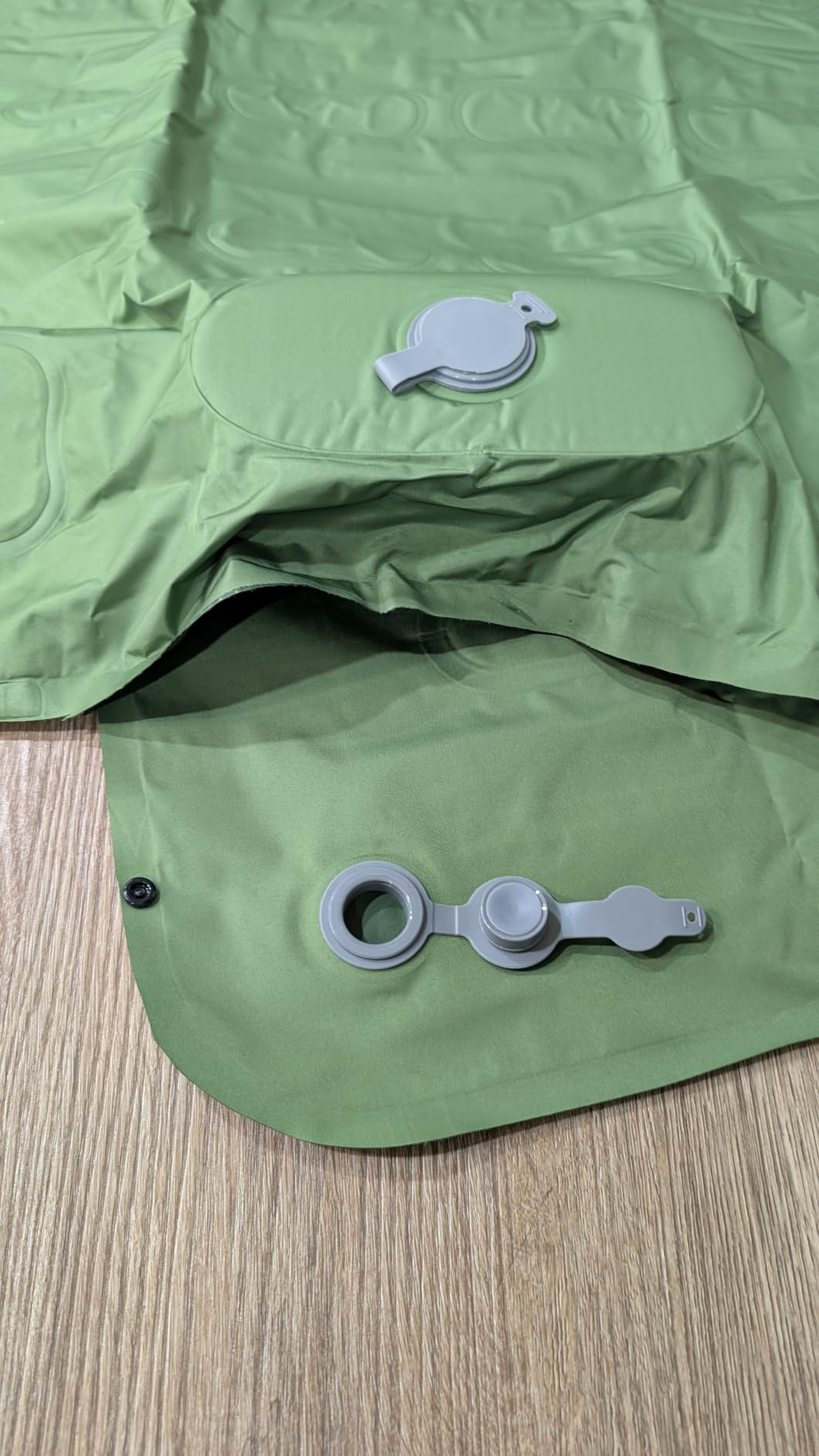
It is also more useful than a backpacking pad. FNARMW lists it for guest rooms, bed tents, beach trips, hunting and backyard lounging, and at this size it works as a spare bed in a home rather than only in a camp.
The trade-offs are honest ones. The published weight figures conflict between listings, so treat the carry weight as uncertain. The nylon surface is noisy when you move, five inches of air alone provides little cold-ground insulation, and it is a single width rather than a shared double.
Who this is right for
Budget-first campers who want real cushioning without paying for a thick pad from an outdoor brand. It works as a guest bed, a day bed and a tent pad, which triples the value of one purchase.
It is also a good choice for anyone who wants a dedicated second pad that is not too precious to let the kids use.
Who should look elsewhere
Anyone who needs to know exactly what they are carrying, since the listed weight is inconsistent. Winter campers should skip it, as should anyone who shares a tent with a light sleeper.
If your trips are frequent and long, a model with a much larger review base gives you a better read on how it holds up over seasons.
Air Mattress vs Camping Cot vs Sleeping Pad: Which Do You Need?
Choose an air mattress when you want a mattress-height surface, more width than a tent pad offers, or a bed that doubles as a guest bed. The cost is weight, bulk and a need for a pump or a plug.
Choose a camping cot when you want nothing to inflate at all. A frame mattress never goes flat, sits well above the ground, and moves air underneath you on a warm night, which is why several campers in forums prefer them specifically because they cannot deflate. The cost is bulk and a worse insulating layer under you.
Choose a sleeping pad when weight and pack volume are the deciding factors. That means a thinner, narrower surface with less cushioning, as with the Sleepingo or the TREKOLOGY. If you are building a full overnight sleep system, our latex mattress guide covers the foam end of the spectrum for indoor setups.
The most common real-world answer is to layer. A community favourite is a half-length inflatable on top of a full-length closed-cell foam pad, which adds warmth, protects the inflatable from punctures and gives you redundancy if one fails overnight.
Why Air Mattresses Go Flat Overnight and How to Stop It
Most of the flattening people complain about is not a puncture. Air contracts as it cools, so a bed that feels firm at sunset can feel soft by 2am as the temperature drops, and you add air to compensate, which over-inflates the seams and makes the next night worse. Setting the bed slightly firm at bedtime and leaving it alone is usually the fix.
The second cause is a real micro-leak, and the way to find it is simple. Inflate the mattress, leave it overnight, then in the morning hold a soapy-water solution along the seams and the valve. A bubble tells you exactly where the problem is, and every raised bed in this roundup ships with a repair patch for that reason.
Third, check the valve. A pinched or debris-clogged valve leaks far faster than a pinhole, and a valve that seats cleanly is the cheapest fix available. Fourth, never over-inflate, because the third leak mechanism is the seam itself giving way under excess pressure.
Finally, buy a pump that can top up without a full reinflate, and check the bed on night one of every trip rather than assuming it is fine. Owners who check nightly report far fewer bad mornings than owners who wait until the bed is unusable.
How to Make Any Air Mattress More Comfortable
Partially inflate it. A mattress filled to its absolute maximum feels rigid and sends every hip and shoulder point straight into the surface, so let out a few pumps of air until your body settles into it. For side sleepers this single change is often the difference between comfortable and painful.
Put a foam mat underneath. A closed-cell pad beneath an inflatable adds the insulation that the air itself cannot provide, and it lifts the inflatable off abrasive ground.
Add a topper for pressure relief. A thin foam or memory-foam layer costs little and softens the contact points that make raised PVC beds tiring after a few hours, which matters most on the Intex Dura-Beam models.
Use a pillow, not a pile of clothes. A pad with an integrated pillow, such as the TOBTOS, FNARMW or HiiPeak, keeps your neck in a neutral position instead of at an angle that shows up as a stiff shoulder the next morning.
Level and dry your site. A mattress on sloping ground slides, and a damp footprint under the bed cools you all night regardless of the mattress itself.
Buying Guide: How to Choose the Best Air Mattress for Camping in 2026
Start with width, because it decides whether the mattress is usable at all. Anything under 25 inches is a solo pad, and two adults sharing one usually means both of you spend the night rolling into the middle. A 30-inch or wider pad is where shared comfort becomes realistic.
Next, decide how you will inflate it. A built-in electric pump is the easiest and fastest, and it works when you have mains power. A built-in foot pump needs no power at all and costs nothing to carry. A hand pump plus stuff sack works everywhere but is slower. Mouth inflation is fine for one person and unreasonable for two.
Then look at thickness, in inches, because that is the cushioning number. Two inches is a budget pad, three to four inches is a solid all-rounder, and six inches or more is a comfort-first design. Thickness is not insulation, though, and it is easy to confuse the two.
Finally, consider R-value, which measures resistance to heat loss into the ground. Values around 1.6 to 2 suit spring, summer and mild autumn. Shoulder season and below-freezing trips need a genuinely insulating pad or a closed-cell mat underneath, because a thick air mattress alone will not carry you there. A large part of the category sold as camping gear has no R-value at all.
Also weigh pack volume honestly. A mattress that fills the boot is a mattress that stops coming on the second trip of the season, which is why the weight figures and packed sizes above are part of each review rather than an afterthought.
Field Repair, Storage and Care Between Trips
Keep the included repair patch within reach, because a pinhole discovered in the morning is a cancelled trip. Find it early with soapy water, dry the area, apply the patch and leave it under something flat and heavy overnight before you inflate it again.
Never inflate a mattress cold and then expect it to feel right. Warm the mattress and the air inside it first, and inflate in the shade where you can, since heated PVC loses firmness faster.
Store it dry, rolled rather than folded, in the bag it came in, and out of a hot car between trips. Fold lines cause the seam failures and the slow leaks that end a pad’s life, and a mattress that stays damp in a stuff sack will smell permanently by the third trip.
Check the valve before you pack, not at the campsite, and give the bed a five-minute test the night before you leave. That single habit catches most of the failures that cause 4am wake-ups on the ground.
Frequently Asked Questions
What are the best inflatable mattresses for camping?
For most campers the SoundAsleep Dream Series Queen is the best all-round choice, because 40 internal air coils keep the surface flat for two adults. Solo backpackers should look at the TREKOLOGY or Sleepingo, side sleepers at the ZOOOBELIVES Airlive2000, and anyone without mains power at the HiiPeak or FNARMW, which both use built-in foot pumps.
What air mattress stays inflated all night?
Air mattresses lose air overnight for three reasons: air contracting as the temperature drops, micro-leaks through welded seams, and degraded valve seals. Inflated models with horizontal beam construction, such as the Intex Dura-Beam Comfort Plush Queen, hold pressure better over multi-night trips. Check the bed nightly with soapy water along the seams to catch leaks early, and avoid over-inflating, which stresses the seams.
How do you make an air mattress more comfortable when camping?
Partially inflate the mattress so your body settles into it rather than bouncing on a rigid surface, especially as a side sleeper. Lay a closed-cell foam mat underneath for warmth and puncture protection, add a thin foam or memory-foam topper for pressure relief on bare PVC surfaces, use a proper pillow to keep your neck neutral, and pick a level, dry pitch. These five changes fix most of the discomfort reported in reviews.
Is Intex or King Koil a better air mattress?
It depends on the model rather than the brand. The King Koil raised queen inflates in about two minutes with a 120V built-in pump and a 20 inch bed-like profile, while the Intex Dura-Beam Comfort Plush queen reaches 22 inches and holds its shape well over multi-night trips. King Koil is heavier and needs mains power, and both need one or two top-ups during the first nights while the material stretches.
What R-value do I need for camping?
An R-value of about 1.6 to 2 covers spring, summer and mild autumn above freezing, and the TREKOLOGY pad sits in that range. Below freezing you need a genuinely insulating pad or a closed-cell foam mat underneath, since most thick air mattresses in this category have no meaningful R-value at all. Thickness in inches is a comfort measurement, not an insulation one, and the two are often confused.
Should I buy one double air mattress or two single pads?
Two single pads usually win for couples. Each sleeper gets their own surface, so neither of you feels the other rolling over, and you can move one without disturbing the other. Pads with linkable sides, such as the HiiPeak and the ZOOOBELIVES Airlive2000, snap together into a double bed when you want a shared surface. The exception is a raised queen coil-beam bed, where 40 air coils genuinely prevent the rolling-into-the-middle problem.
Which Air Mattress Should You Buy in 2026?
For a car-camping trip with two adults, take the SoundAsleep Dream Series Queen. The 40 internal coils stop the rolling-into-the-middle problem and the 19-inch profile makes the bed easy to live with, and it is the only pick here that works just as well as a guest bed at home.
If setup speed is what you care about, the King Koil is fully inflated in about two minutes. For a tall bed for two people, the 22-inch Intex Dura-Beam Comfort Plush queen is hard to argue with. For a single camper, the Intex Dura-Beam Deluxe twin does the same job in a smaller footprint.
For a tent, the choice narrows fast. The TREKOLOGY is the pick for backpacking weight, the ZOOOBELIVES Airlive2000 for side sleepers, the TOBTOS for the deepest cushioning and a 28-inch width, and the HiiPeak or FNARMW when you have no mains power and want a foot pump instead of a plug.
Whichever of the best air mattresses for camping you settle on, test it at home for one full night before the trip, keep the repair patch with it, and check the seams with soapy water. That is the difference between a good night outdoors and an early start on the walk back to the car.