
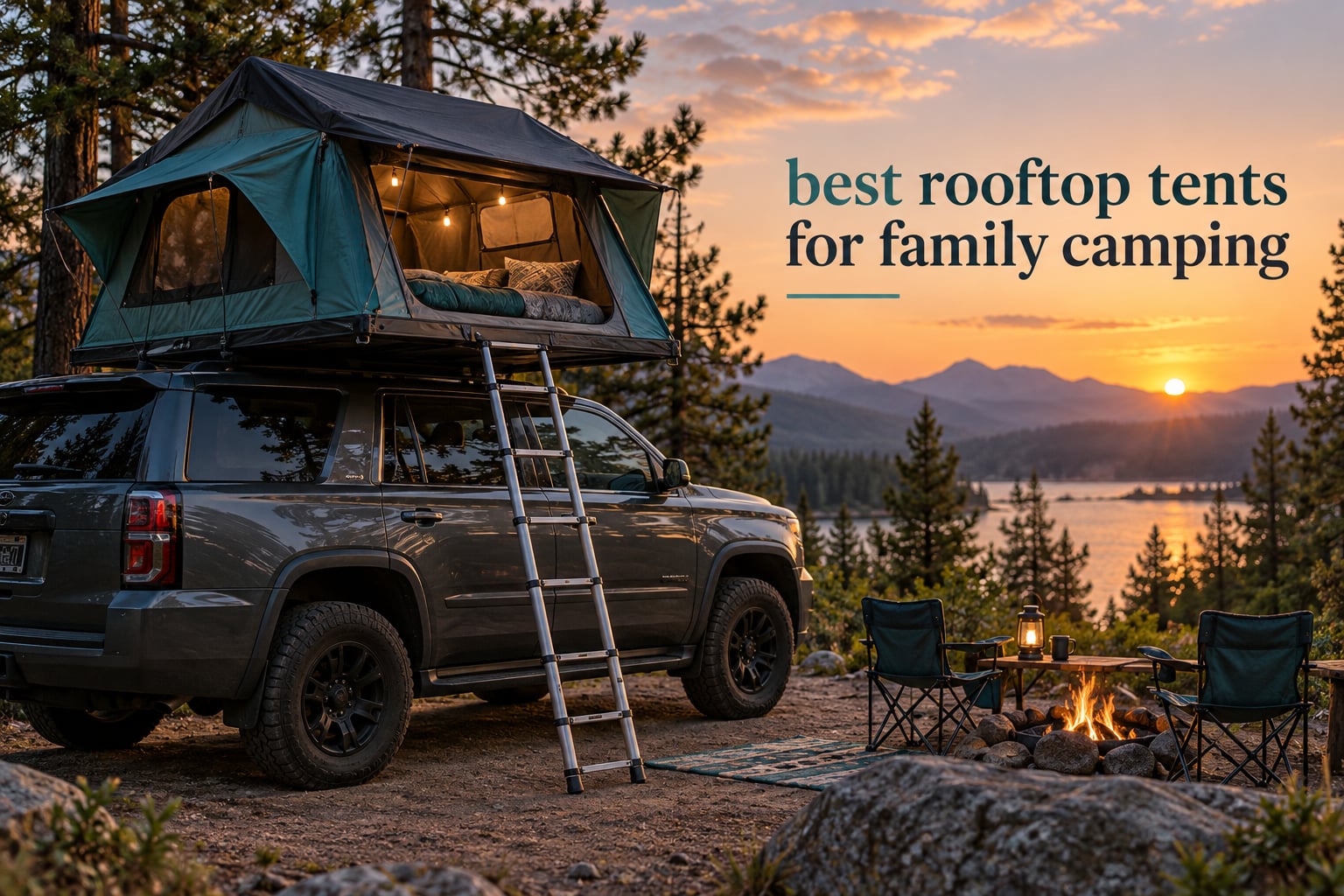
The best rooftop tent for a family is the one whose real sleeping floor fits your people, not its rated capacity. After working through a dozen models, the Overland Vehicle Systems TMBK came out ahead for most families: it sleeps two adults and a child in a 53.5 by 92 inch footprint, weighs 108 pounds, and opens in about five minutes after a full day of driving.
A rooftop tent changes what a family camping trip actually feels like. There is no stake to find, no site to flatten, no tent to wrestle into shape in the dark while a kid cries and the rain comes sideways. You drive, you park, you unfold, everybody climbs the ladder, and you are asleep ten minutes later.
Owners on r/rooftoptents and r/overlanding describe the same pattern: hardshell tents open in 30 to 60 seconds while softshells take five to ten minutes, and that gap decides how the evening goes when you arrive after dark.
But rooftop tents are a genuinely confusing category, mostly because the capacity numbers are optimistic and the shells behave very differently. I compared 12 of them across footprint, peak height, weight, shell material, water rating, and real owner feedback, and the differences that matter for families show up in a handful of places: floor width, whether the ladder mounts where a child can use it safely, and how much the whole rig weighs on your roof.
If you are still weighing a rooftop tent against a conventional one, our family camping tent picks cover the ground-tent side. Once you know you want the roof, this is the full lineup.
Top 3 Rooftop Tents for Family Camping in 2026
Overland Vehicle Systems TMBK
- 53.5 x 92 in sleeping floor
- 108 lb weight
- 2000 PU waterproof
- A-frame softshell

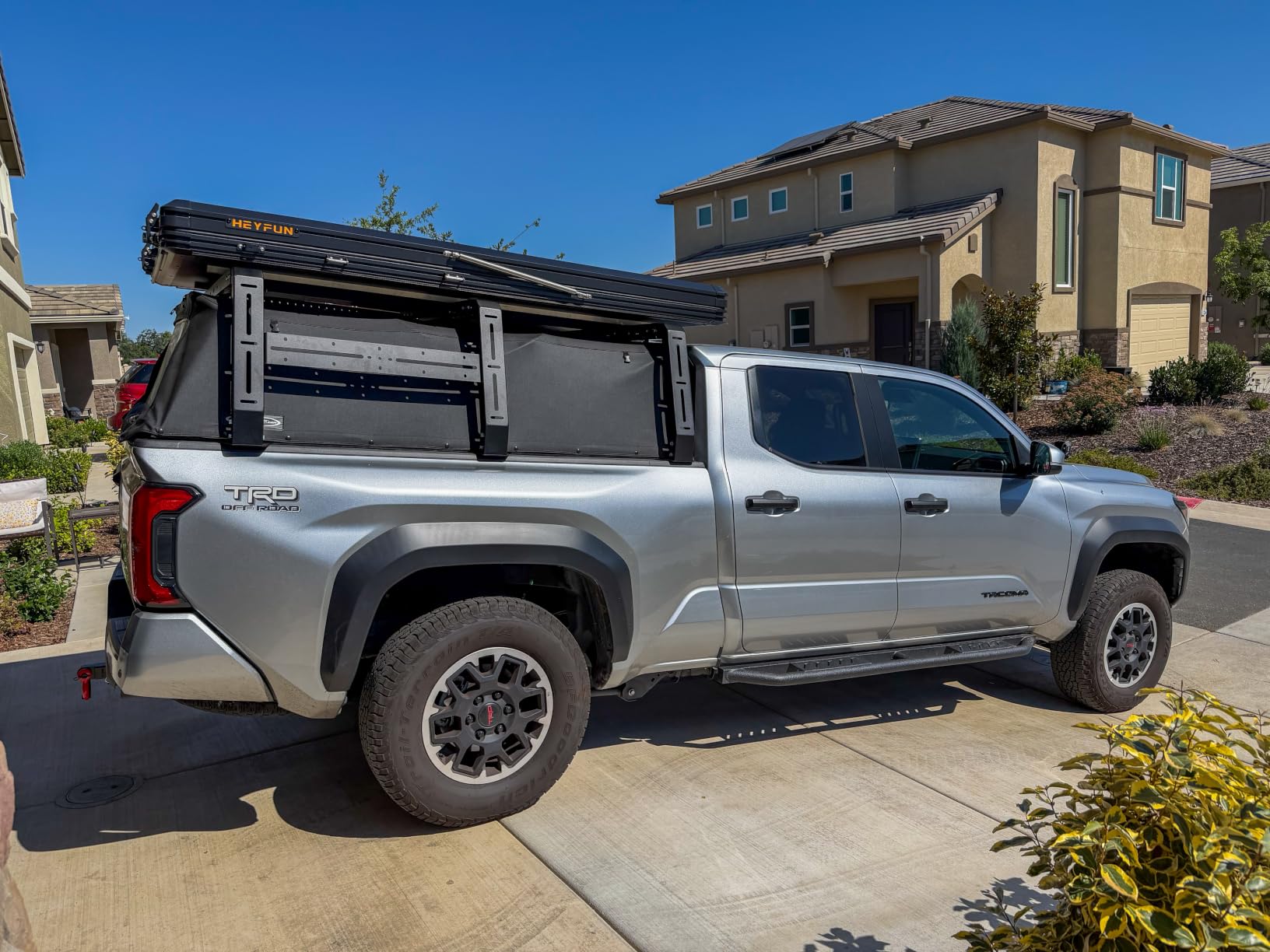
HEYFUN Adventurer Pro
- Hydraulic 5-second pop-up
- Awning and shoe bags included
- 13 storage pouches
- Blackout interior

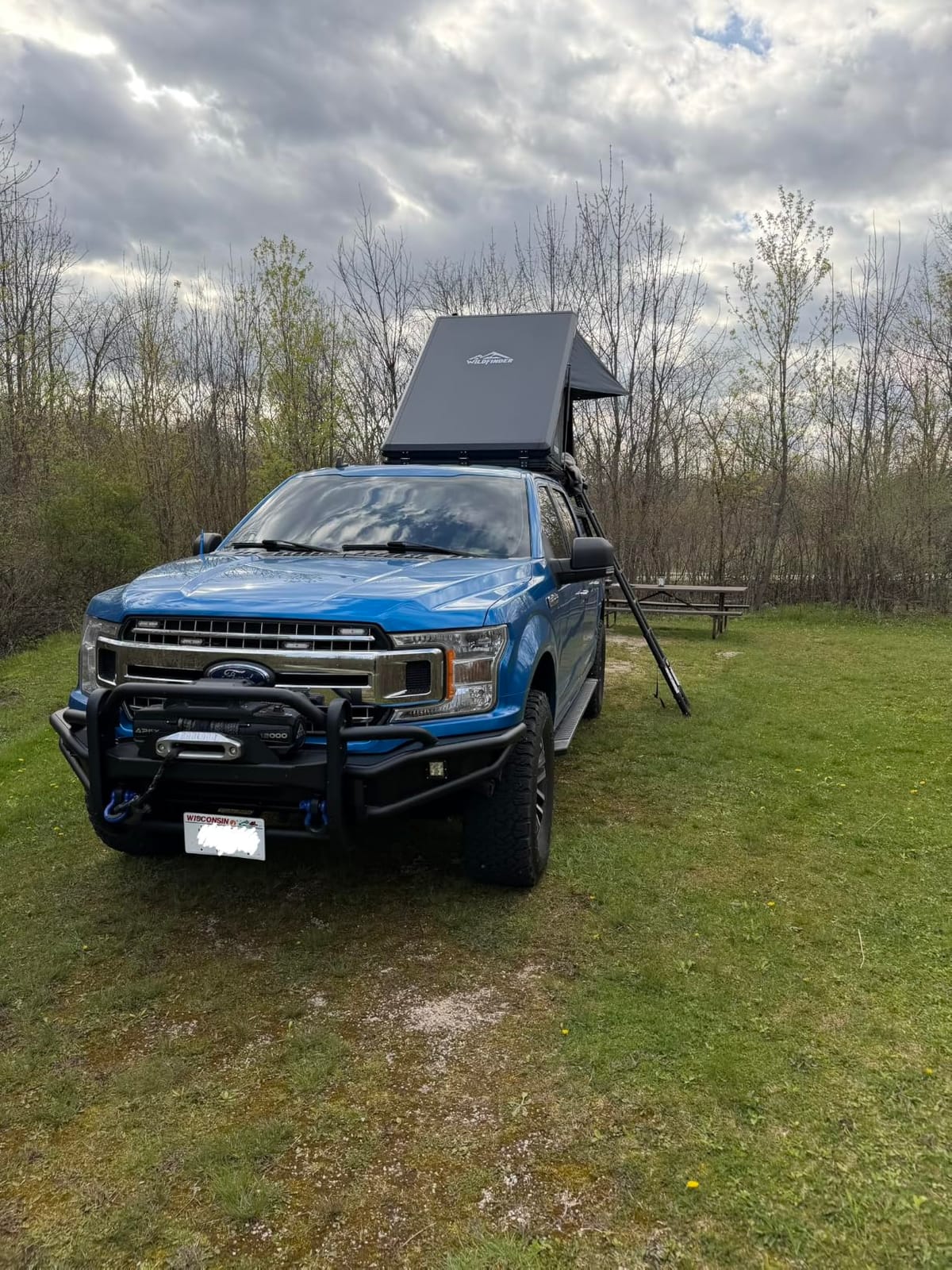
WildFinder Hard Shell
- Aircraft-grade aluminum shell
- 5000 mm rain rating
- Condensation pad included
- Full accessory kit
Those three cover the most common family setups: a lightweight softshell that sleeps three and still fits on a mid-size SUV, a fast hardshell that arrives ready for two adults plus gear, and an aluminum build with 5000 mm rain rating and level 6 wind protection. Everything else in the roundup earns its place for a specific reason, and each section below explains which one.
All 12 Rooftop Tents Compared in 2026
| Product | Specifications | Action |
|---|---|---|
| Overland Vehicle Systems TMBK |
|
Check Latest Price |
 OVS Nomadic 3 Extended OVS Nomadic 3 Extended |
|
Check Latest Price |
| HEYFUN Adventurer Pro |
|
Check Latest Price |
| WildFinder Hard Shell |
|
Check Latest Price |
 ARCTWONDER Solar Panel ARCTWONDER Solar Panel |
|
Check Latest Price |
 Naturnest Sirius 1 Plus Naturnest Sirius 1 Plus |
|
Check Latest Price |
 ARCTWONDER Winter Thermal ARCTWONDER Winter Thermal |
|
Check Latest Price |
 JOYINRUTE ZS001 Winter JOYINRUTE ZS001 Winter |
|
Check Latest Price |
 Naturnest Polaris Plus Naturnest Polaris Plus |
|
Check Latest Price |
 Smittybilt Overland GEN2 Smittybilt Overland GEN2 |
|
Check Latest Price |
 JOYINRUTE ZS001 Aluminum JOYINRUTE ZS001 Aluminum |
|
Check Latest Price |
 Meedo Apolle A86 M Meedo Apolle A86 M |
|
Check Latest Price |
1. Overland Vehicle Systems TMBK – Best Rooftop Tent for Families Overall
Soft Shell Rooftop Tent for SUV & Truck Camping, 3-Person – Overland Vehicle Systems TMBK – Universal Fitment with Rainfly & Ladder
Sleeping area 53.5 x 92 in
Weight 108 lb
Waterproof 2000 PU
A-frame softshell
Pros
- Lightest tent here at 108 lb
- 53.5 x 92 in sleeping area
- Windows on all four sides plus a skylight
- Waterproof through all-night heavy rain
- Five-minute setup
Cons
- Stock mattress needs a topper
- Thin instructions
- No insulation for cold weather
The TMBK is one of only three tents in this group with a sleeping floor over 90 inches long, at 92 inches of length and 53.5 inches of width, and it reaches that length at a low weight.
It is the one I kept coming back to while I worked through the list, and the numbers behind it are simple.
It is also the lightest tent in this roundup at 108 pounds, which matters more than any spec sheet suggests. Families on r/rooftoptents talk endlessly about load limits and mounting, and the less a tent weighs the more often you will take it down and reinstall it rather than leaving it up year-round, which is exactly how softshells develop mildew.
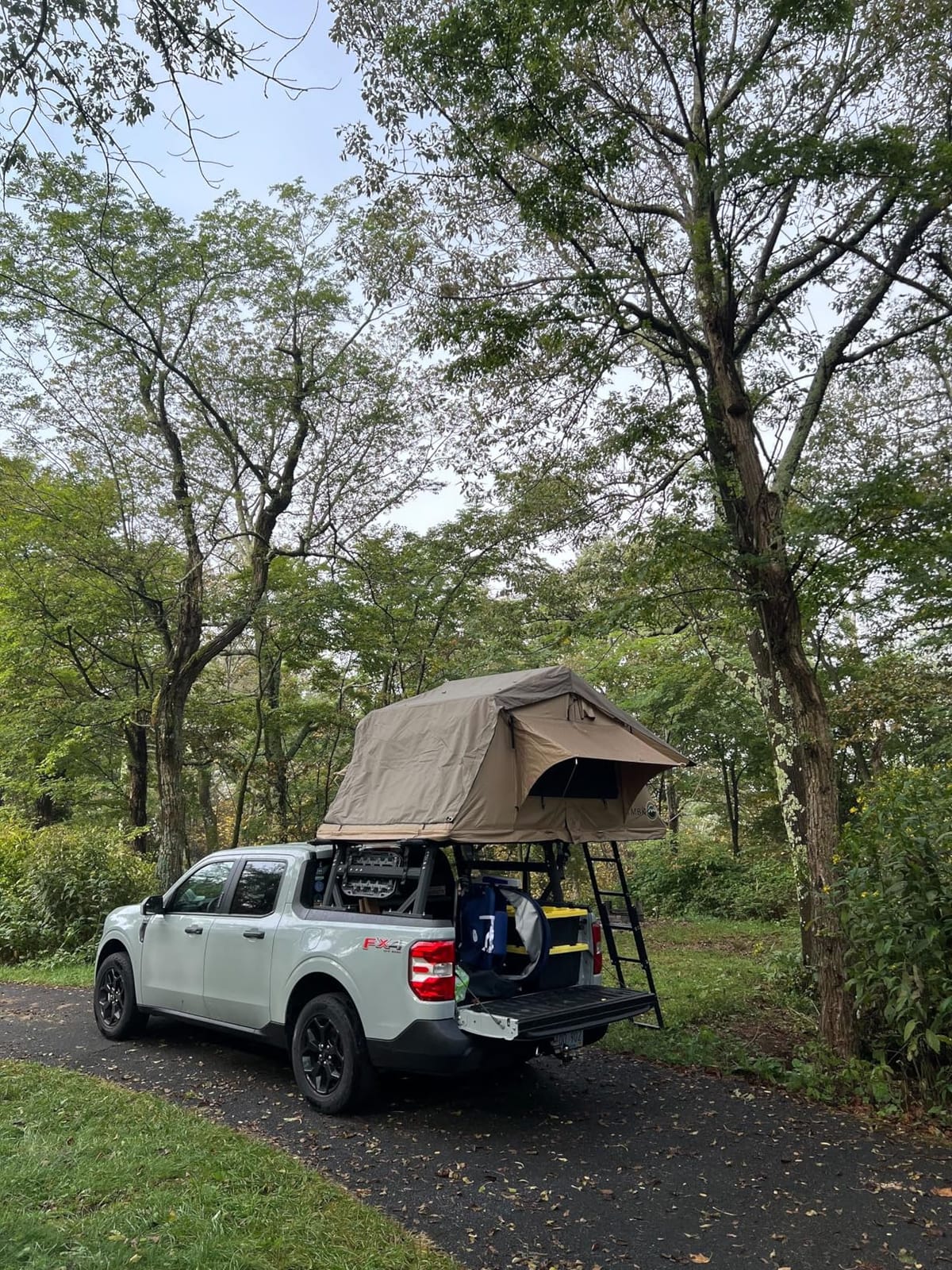
The A-frame shape is worth understanding before you buy. It is not a wedge with a sloped wall you have to crawl across. The sides go straight up, four windows mean a kid can look out without an adult opening a flap, and the skylight is the difference between a tent that feels like a cave and one that feels like a room.
Waterproofing is a 2000 PU rating with a proper rainfly, and owners report staying completely dry through all-night heavy rain. Build quality comes up constantly in the reviews: strong poles, good zippers, an aluminum-plated base, and a travel cover that holds at highway speeds.
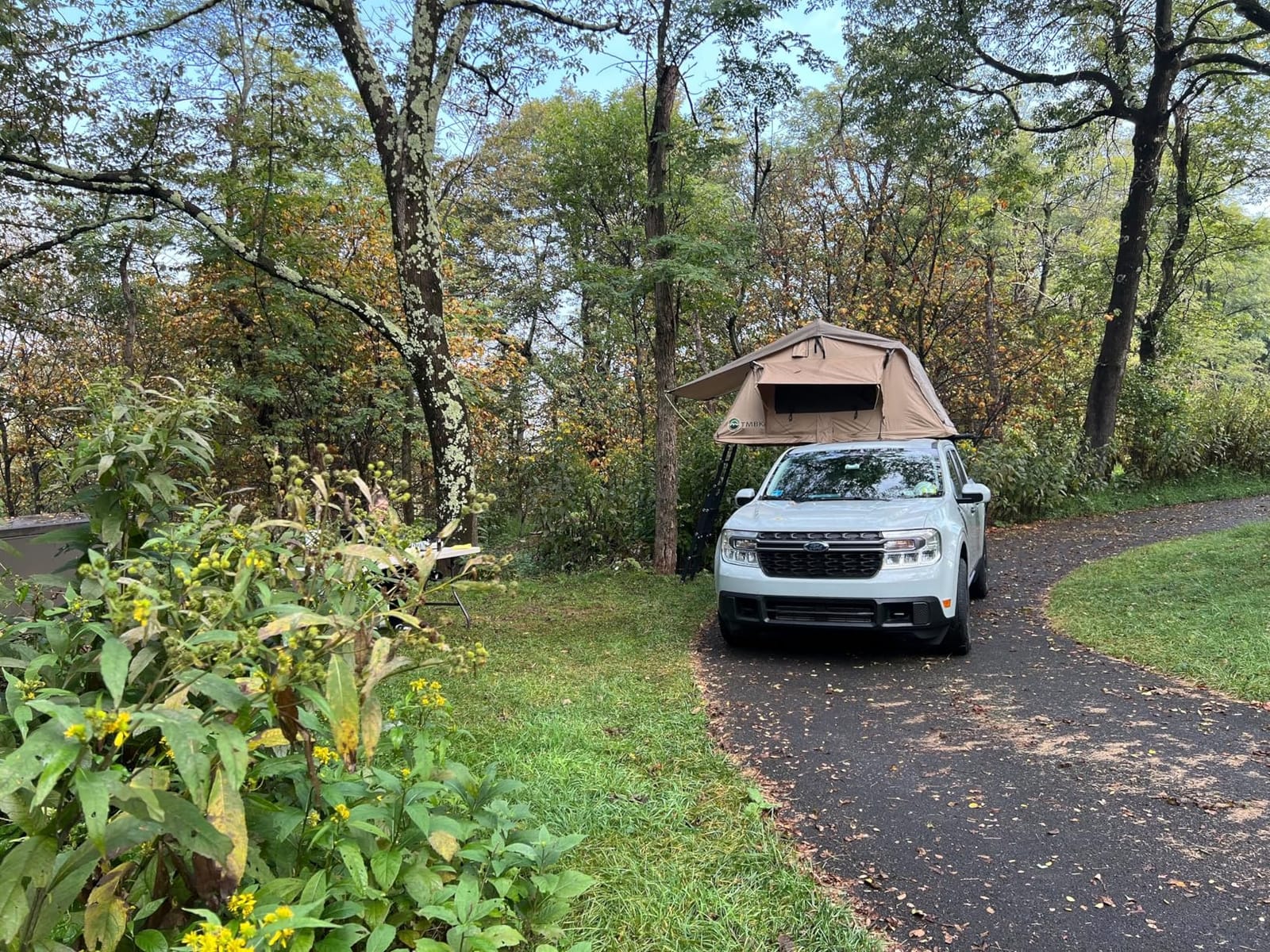
Will a family of three actually fit in it
Two adults and one child, yes, comfortably, which is the honest answer to the question that gets asked most often about three-person rooftop tents. A family of four with two full-size adults does not fit, no matter what the box says, because there is no fourth shoulder-width of floor here.
The floor is also flat, which is a genuine advantage for a family with a baby or a small child who will be sprawled across the middle of the night. There is no slope to roll toward and no lip to climb over.
What families complain about
The included high-density foam mattress is the most common gripe, and owners almost universally add a topper for trips longer than a weekend. Condensation builds up inside with more than one occupant and under the mattress, so plan on an anti-condensation mat and a fan if you are camping in cool damp conditions.
There is no insulation at all, so this is a warm-weather tent unless you add a liner. The ladder is also the weak point: reviewers note it can feel flimsy and may need extra drilled pin holes to lock at a usable angle, and the instructions are thin and full of spelling errors.
2. Overland Vehicle Systems Nomadic 3 Extended – Best Four-Season Softshell Rooftop Tent
Overland Vehicle Systems HD Nomadic 3 Extended Soft Shell Roof Top Tent – Dark Gray Base with Green Rain Fly & Black 1000G PVC Travel Cover – Black Aluminum Base
Floor area 6536 sq in
Weight 165 lb
600D ripstop fabric
4 year warranty
Pros
- 6536 sq in of floor area
- 4 year limited warranty
- No drilling to install
- Full diamond plate aluminum base
- Removable rainfly speeds pack-down
Cons
- Heavy at 165 lb
- Softshell needs more drying time
- Modest review volume
The Nomadic 3 is the softshell you buy when your family camps in shoulder seasons and you are tired of worrying about rain. Where the TMBK is a 2000 PU three-season design, this one is listed as 4 season, built from 600D ripstop and ballistic nylon, and backed by a four-year limited warranty that is longer than anything else in this roundup.
Its floor area of 6536 square inches puts it in a different tier from the wedge hardshells in this roundup, which list footprints around 4300 square inches. That extra volume is where a family puts a playpen, a dog, or a pile of gear that does not need to live in the cabin.
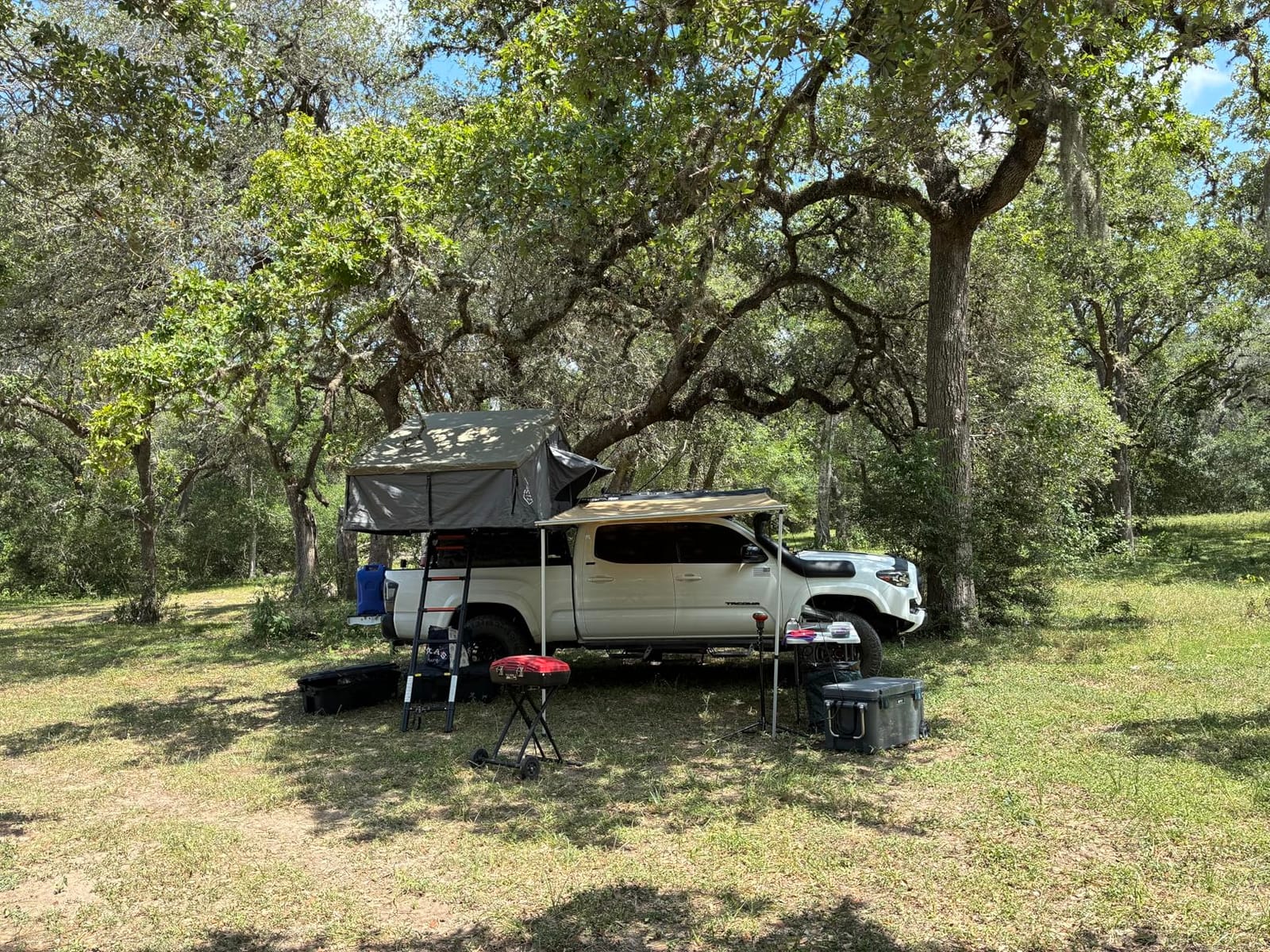
Installation is the other quiet win. It fits anything with a factory or aftermarket roof rack, and no drilling or vehicle modification is required, which saves both time and the resale value of the vehicle. Owners with a Subaru or a smaller crossover mention this specifically as the reason the softshell approach works for them.
The bonus pack is a nice touch for a family setup: memory foam pillows, a mini broom, and a dust pan. That sounds trivial until you are trying to sweep sand out of a tent floor at a campsite with a toddler on your hip.
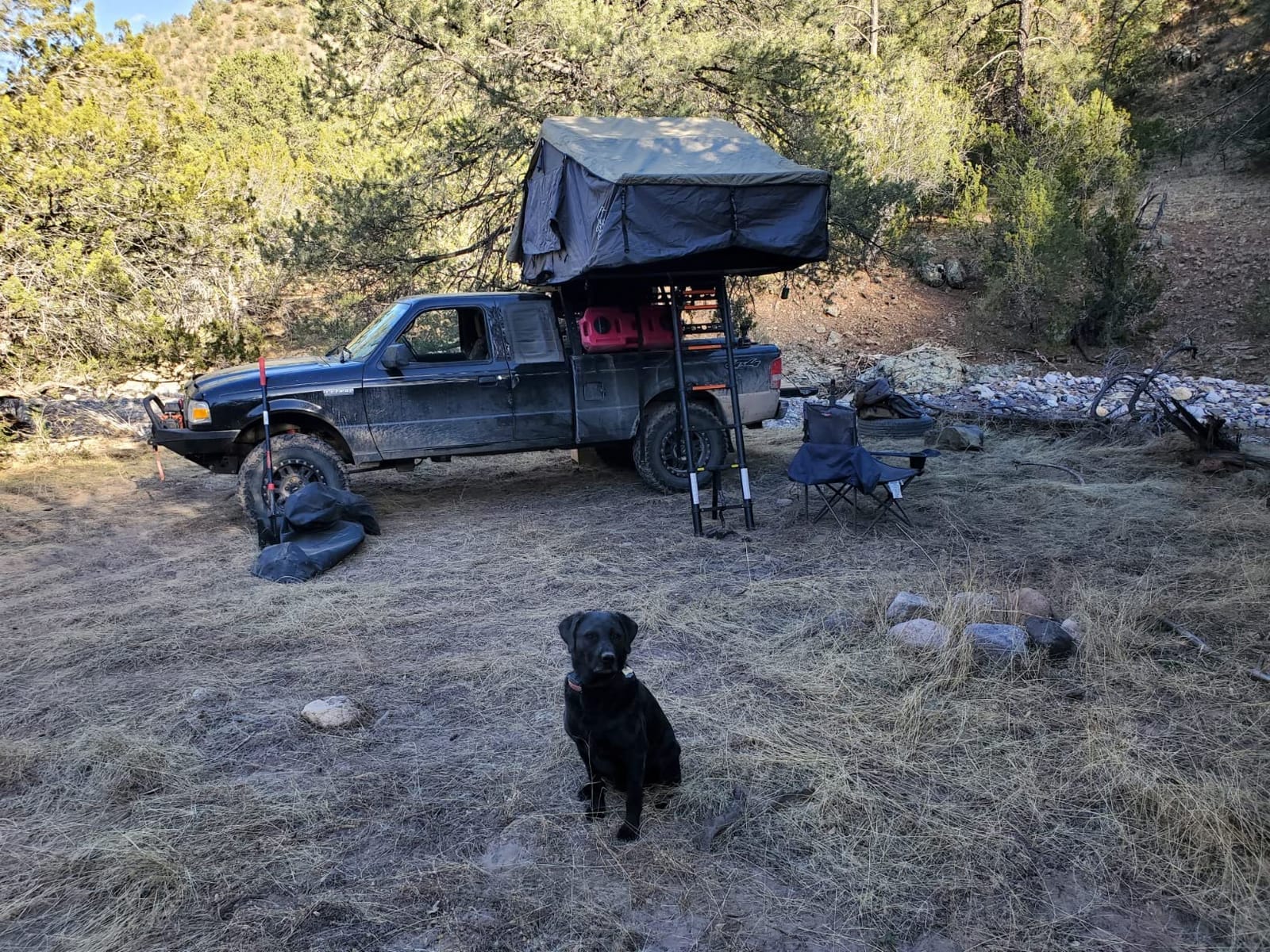
Is the weight a problem for a family vehicle
At 165 pounds this is one of the heavier units in its class and needs two people to mount. Before you commit, check the dynamic load rating on your rack and the payload sticker in your driver door jamb, because a family road trip with five people and luggage already uses a lot of that budget.
Where it will fit matters as much as how much it weighs. Most mid-size SUVs and full-size trucks handle this without drama, and our rooftop tent picks for SUVs covers the clearance questions in more depth.
What to know before you buy
Softshell fabric needs more care and dry-out time than a hardshell. Owners who leave one mounted between trips report mildew problems, so if you will not bring it down between trips, a hardshell is the safer long-term choice.
The review base is modest at 93 ratings, thinner than the top budget softshells, so treat the four-season claim as manufacturer specification rather than something you have personally verified. Owners who do use it report strong performance in wet weather, though.
3. HEYFUN Adventurer Pro – Best Value Hardshell Rooftop Tent
Adventurer Pro Rooftop Tent Hard Shell, 2-3 Person Aluminum Roof Top Tent
Floor area 4325 sq in
Weight 160 lb
Hydraulic 5-second pop-up
13 storage pouches
Pros
- Hydraulic pop-up in about 5 seconds
- Rich accessory bundle with awning and shoe bags
- Dark blackout interior
- Stayed dry through 15+ hours of rain
- 13 interior storage pouches
Cons
- Effectively a 2-person tent
- Sleepers over 5 ft 10 in struggle
- 160 lb needs a two-person lift
What separates this from the other hardshells in the list is the bundle. The Adventurer Pro arrives with an attachable side awning, a condensation mat, a thick sleeping mat, waterproof shoe bags, a tablet pocket, and a built-in LED light strip with USB and exterior power, all in one box.
For a family that has never owned a rooftop tent, that is the difference between an afternoon of shopping for accessories and one afternoon of opening a box. Shoe bags in particular get called out over and over in family forums as a feature you do not understand until you have climbed a ladder in mud with a child waiting below.
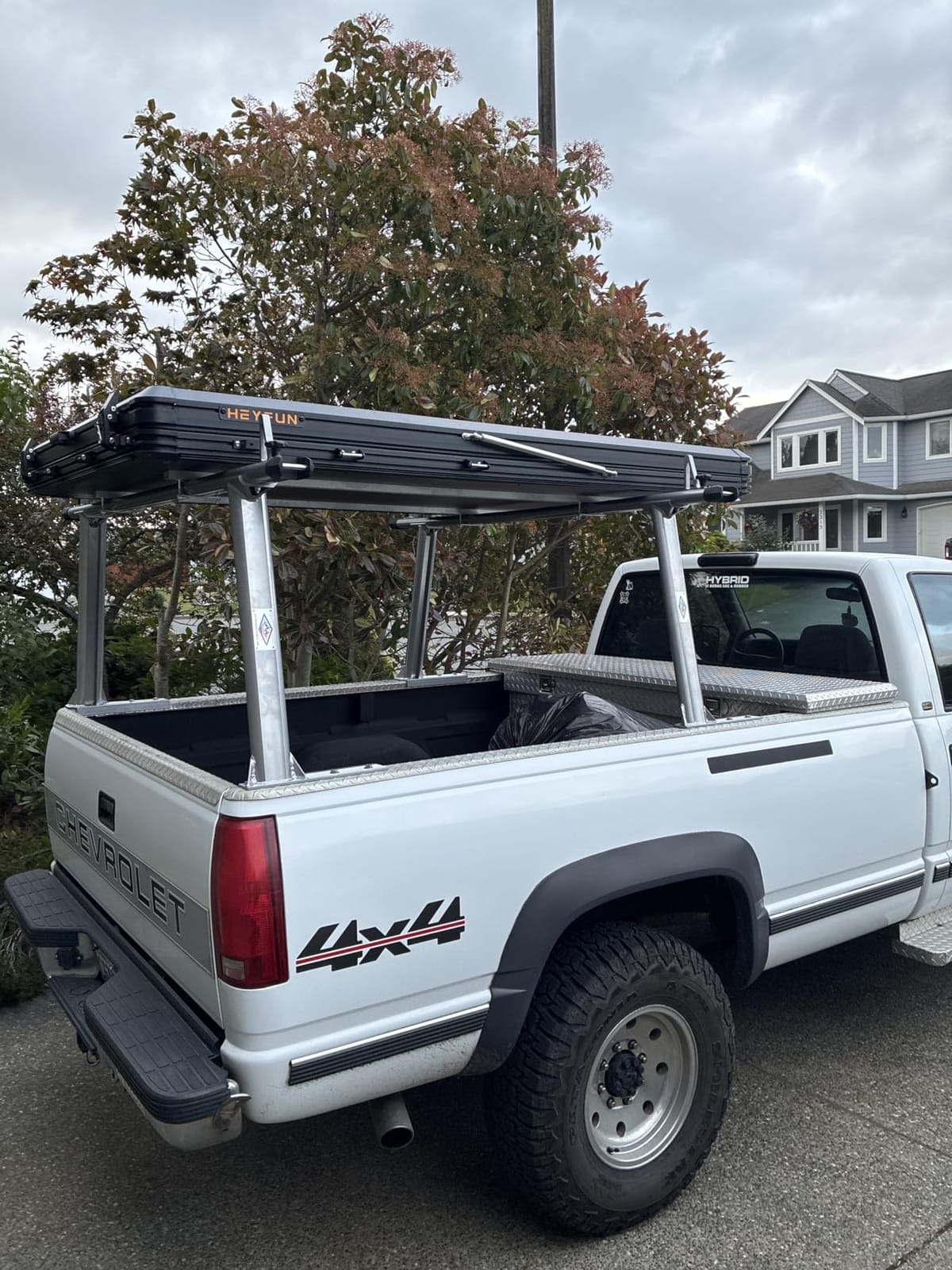
The hydraulic gas struts are the part that changes daily life. Owners consistently describe a five-second pop-up, and pack-down in under ten minutes. When you arrive at a campground after dark with a tired family, the gap between five seconds and ten minutes is the gap between a good evening and a bad one.
Water resistance is listed at 0 to 5000 mm, and buyers report it staying perfectly dry through 15+ hours of rain and 30+ mph gusts. The flocked moisture-proof floor is a quiet upgrade that most people notice only when they do not have damp bedding in the morning.
Is it really a family tent
This is where expectations need managing. Despite the 2-3 person rating, buyers consistently treat it as a two-person tent, and a family of three plus gear is very tight. Sleepers over roughly 5 foot 10 inches struggle to fit comfortably, which matters if you are pairing it with a tall teenager.
Think of it as the tent for two adults who want a vehicle that sleeps four, or a couple who bring one child. It is not the tent for a family of four, and no rating label will change that.
What families should watch for
Bedding cannot stay inside when the tent is closed, so you repack before you drive away. On a two-week trip that is a real annoyance, and a family that plans to leave bedding in place during day trips should know that before buying.
There are no vent holes for running a portable heater or air conditioner, condensation forms on the interior walls at temperatures in the 50s or below, and at 160 pounds the shell needs a second person to lift onto the rack. The strong gas struts also take practice to close solo.
4. WildFinder Rooftop Tent – Best Hardshell for Severe Weather
WildFinder Rooftop Tent, Hard Shell Roof Top Tent for Jeep SUV Truck Van
Rated 5000 mm rainproof
Aircraft-grade aluminum shell
Condensation pad included
7.5 ft telescoping ladder
Pros
- Aircraft-grade aluminum alloy shell
- 5000 mm rainproof with level 6 wind protection
- Stainless steel air pressure struts
- Recessed marine pad plus separate condensation pad
- Extensive accessory kit included
Cons
- Luggage crossbar not included
- Light build versus some rivals
- Thin review base at 77 ratings
The WildFinder is the one I would look at first if your family camps in places with actual weather. It carries a 5000 mm rain rating alongside level 6 wind protection, level 4 heavy snow protection, and 99.99% sun protection, and it is rated for four seasons.
The shell is the story. Aircraft-grade aluminum alloy resists aging and thermal expansion better than the plastic corner designs used on cheaper hardshells, and the stainless steel air pressure struts are specified to resist rust over a long service life. Those are the two components that usually fail first on a roof-mounted structure.
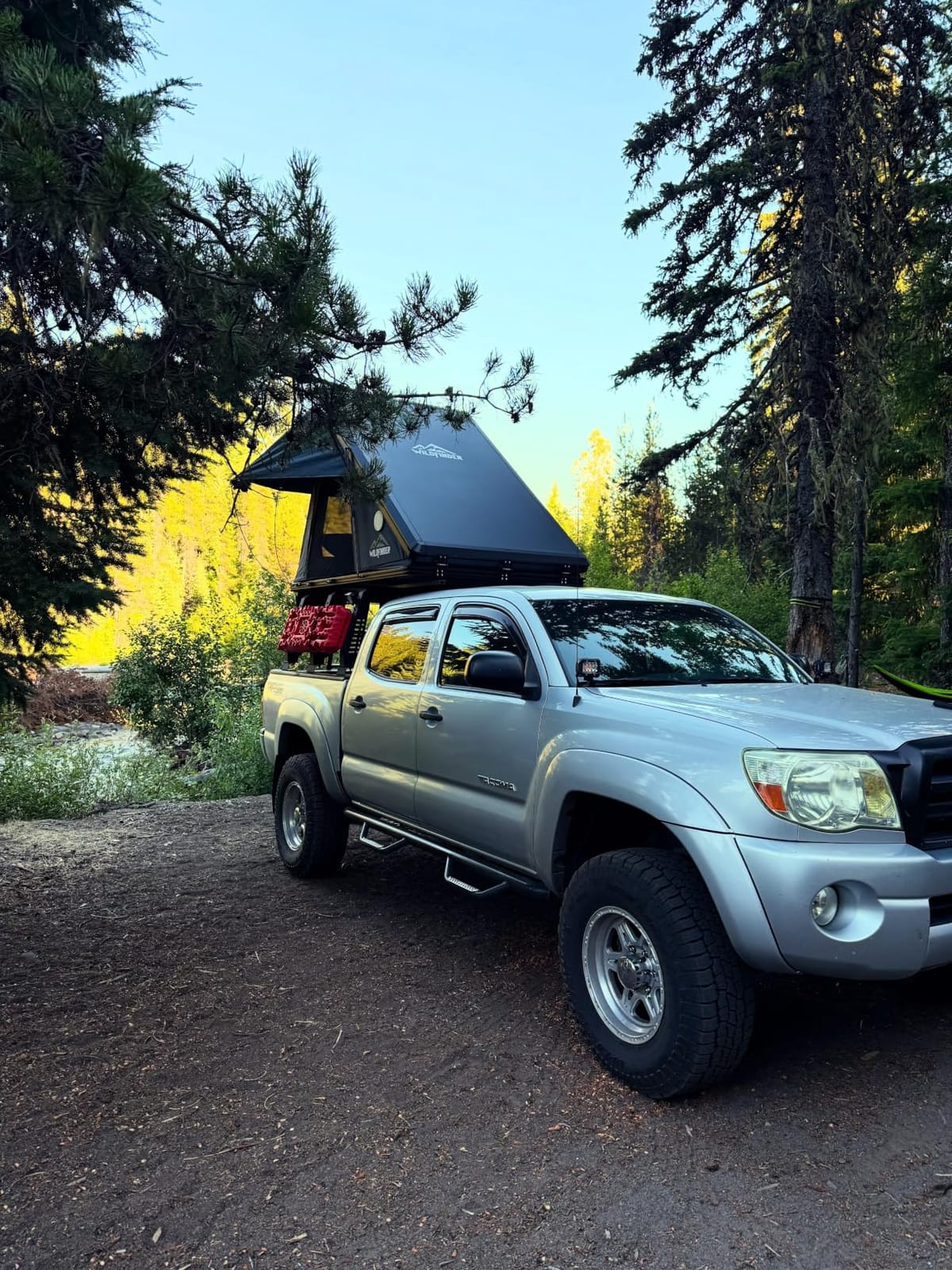
Condensation is the family-specific problem this tent addresses most directly. It ships with a recessed marine pad plus a separate condensation pad, and the included 5 cm non-deforming mattress sits above them. Anyone who has dried wet bedding at 7 am with a cold child waiting will understand why that detail is worth more than another accessory.
The accessory kit is unusually complete for an aluminum hardshell: a 7.5 foot telescoping ladder with a ladder organizer, 10 organizer bags, an LED strip, two shoe organizers, and three mesh windows. You are not making a second purchase on day one.
How much room is inside for a family
It is rated for three, with a closed footprint of 83 by 52 inches. That is enough for two adults and a smaller child, and tight enough that a family of four will be rearranging shoulders all night. Peak internal room is a wedge profile, so the far sleeper gives up headroom.
Blackout performance is strong, which helps families traveling with kids who wake at sunrise. In a dark tent at 6 am, a child can easily entertain themselves quietly, which changes the whole shape of the morning.
What to check before ordering
The luggage crossbar is not included with the tent. You will need crossbars on your rack regardless, and this listing will not supply them, so factor that into the budget and confirm your rack is rated to carry the load.
Owners report a lighter build than some competing hardshells at this level, and at 77 reviews the long-term durability picture is limited. If you are deciding on this and the HEYFUN Adventurer Pro, the difference in practice is weather rating and blackout versus accessories and weight.
5. ARCTWONDER Solar Panel Rooftop Tent – Best for Off-Grid Power
Solar Panel Rooftop Tent Hard Shell,Pop Up Car Roof Top Tent Hardshell
Integrated 12V 216W solar panel
Weight 198 lb
Open space 85 x 52 x 59 in
5000 mm water resistance
Pros
- Integrated 216W solar panel for off-grid charging
- Aluminum alloy base and corners
- Pop-up in about 10 seconds
- Low 7 inch closed height
- Three large awning windows
Cons
- Heaviest tents here at 198 lb
- Solar panel needs a battery connection
- Rated for 2 adults plus 1 child
A rooftop tent gives you roof space that would otherwise be empty, and this one uses it. The integrated 12V 216W solar panel is the single feature buyers mention most, and it solves a real family problem: keeping phones, headlamps, and a power bank charged when the campsite has no hookups and the kids’ tablets die at 8 pm.
Construction follows the same aluminum-heavy pattern as the other ARCTWONDER model. Aluminum alloy bottom plate, top cover, and four corners, which owners point to as the answer to the aging and sealing failures common with plastic corners on budget hardshells.
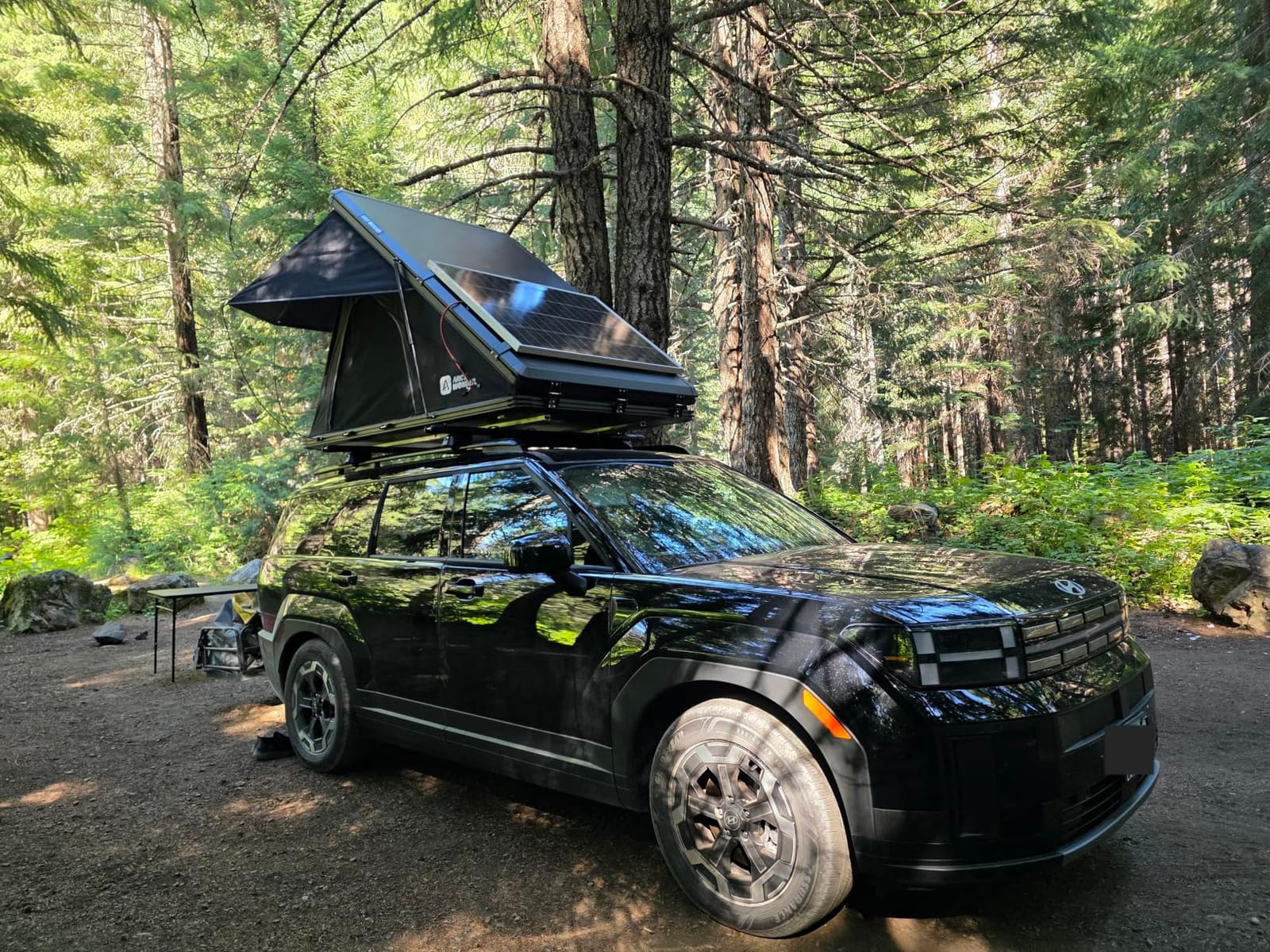
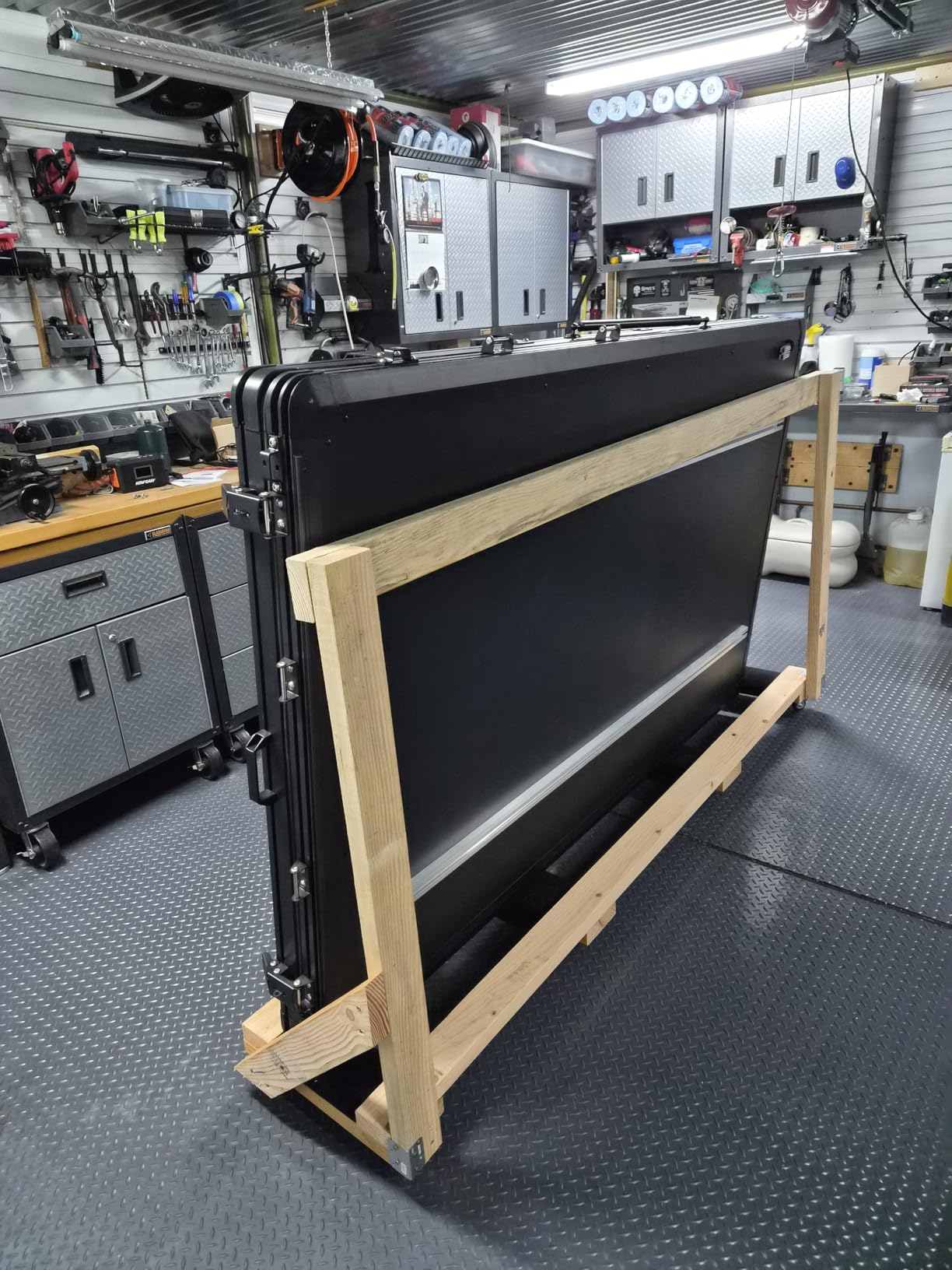
Setup takes about 10 seconds on gas pressure rods and closes in two steps solo, which is a meaningful improvement over softshells in a wet arrival. The 7 inch closed height also preserves garage clearance and keeps the profile low on the highway, where a tall tent costs you fuel on a long family drive.
Fabric is waterproof 320g polyester with taped seams rated to 5000 mm, and three large windows come with awnings that shelter the entry from rain and sun. The ladder, mattress, luggage bar, and shoe bags all come in the box.
Does the power actually help a family
It does, with one caveat: the panel needs a battery connection to power the lights and outlets. Plan for a small auxiliary battery, and the 216W panel keeps it topped up rather than running devices directly all day.
Families running a fridge, camp lighting, and charging for four people will appreciate it. A family of two who mostly drives between sites will find the panel a feature they notice less than they expected.
Where it falls short for families
At 198 pounds this is tied for the heaviest unit in the roundup, and mounting it onto most racks is a two-person lift. If your dynamic load rating is tight, this is not the tent to choose.
Space is the bigger limitation. Owners note it is rated for 2 adults plus 1 child or pet, so space is finite for a family, and a family of four plus gear will find the floor too small. This is a power and weather tent for two or three, not a capacity tent.
6. Naturnest Sirius 1 Plus – Best Rooftop Tent for Two Adults and a Child
Naturnest Rooftop Tent Hard Shell, Easy Set Up Pop Up Large Tent for 2-3 Person Camping, Waterproof UV-Resistant Blackout 4 Season Tents for Truck, Jeep, SUV, Van, Trailer – Sirius 1 Plus
Interior 82.7 x 63 in
Floor area 5203 sq in
Weight 160 lb
4 season rated
Pros
- Widest interior in the roundup at 63 inches
- Room 5203 sq in of floor area
- Dedicated vent for a heater or cooler
- Roof crossbars included
- About 30-second pop-up
Cons
- Lowest rated average among the hardshells
- Water resistance listed without a mm figure
- Thin review base at 38 ratings
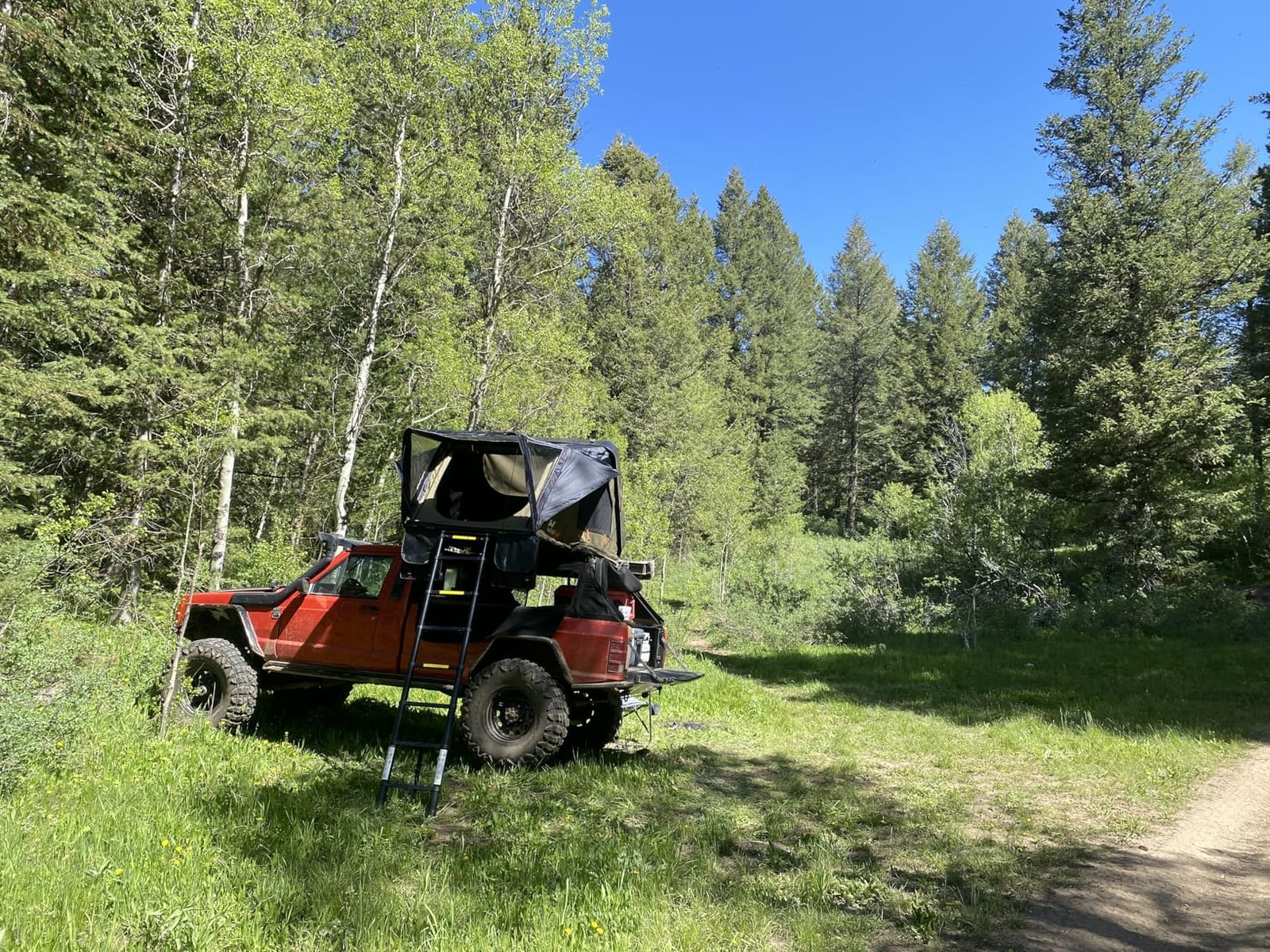
If your family is three and the third person is a real sleeper rather than a toddler, floor width matters more than anything else. At 63 inches wide and 82.7 inches long, the Sirius 1 Plus is the widest interior in this roundup by a clear margin, and owners say it genuinely accommodates two adults and a child.
Compare that to the wedge hardshells in the 47 to 52 inch range and the difference is immediately understandable. Those tents fit two people because two people is all the width allows. This one has room to sit up, turn over, and keep bedding from touching the walls.
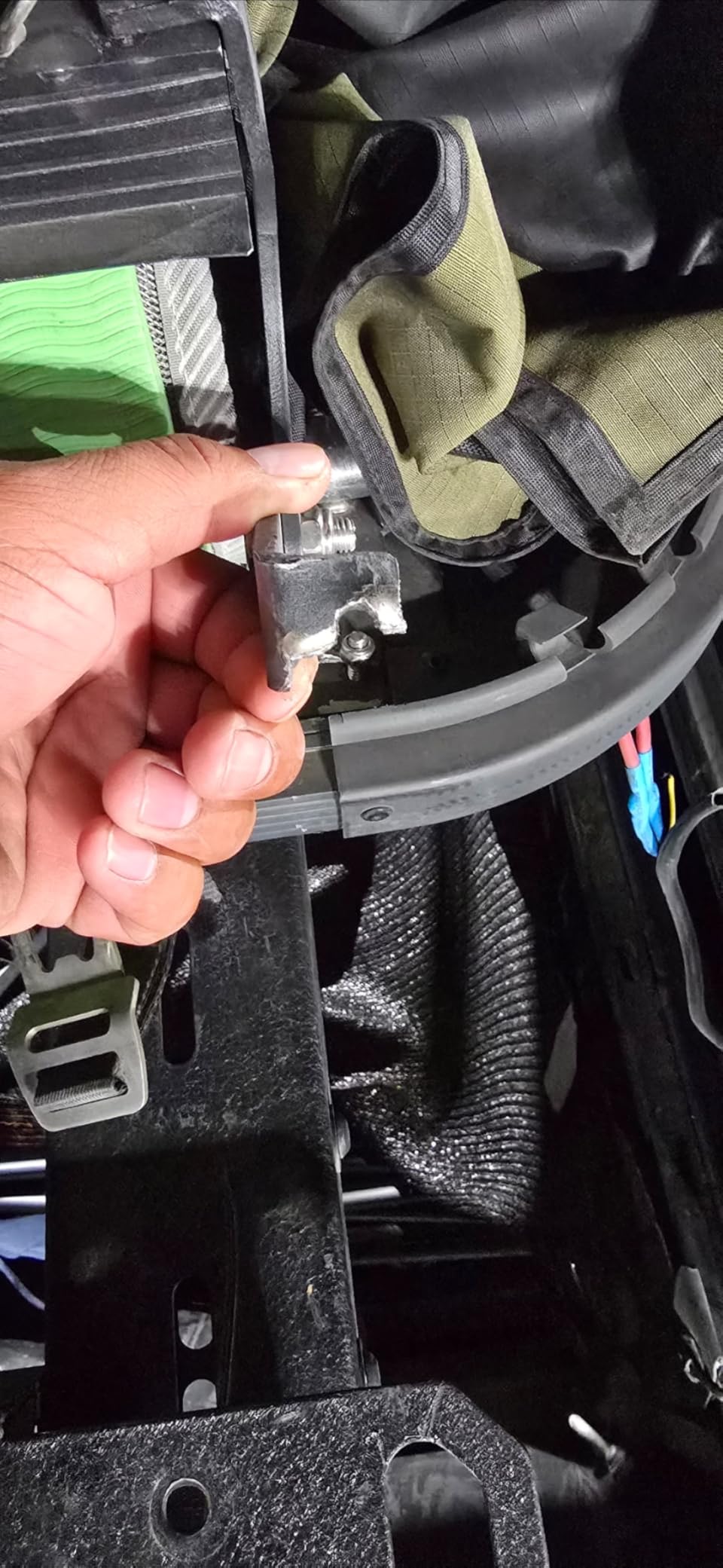
The shell is a high-strength aerodynamic ABS hardshell with an aluminum alloy frame, and the roof and floor use sound and thermal insulating honeycomb panels. The honeycomb construction is why the interior stays cooler on a hot afternoon and quieter at night than a bare plastic box.
A dedicated vent accepts a heater or cooler connection, which is unusual at this level, and deep blackout fabric replicates home-like sleep conditions. Roof crossbars come included for carrying solar panels, skis, or bikes, and the 316 stainless steel gas struts and YKK zippers are the right hardware choices.
Why the interior width matters more than the rating
Rated capacity counts a body length and a shoulder width. In a 63 inch floor, two adults and a child fit without the child sleeping on the diagonal, which is how most three-person tents get used in practice. If your family of three includes anyone over five feet tall, the 82.7 inch length gives them full legroom.
For a family of four, it still is not enough. You would need an extension or an annex, which is a separate purchase and a separate conversation.
What gives us pause
The weak point is consistency rather than design. Its 4.3 average carries a notable 11 percent one-star share, and it rests on only 38 reviews, the thinnest support base among the higher-rated hardshells in this roundup. Water resistance is listed as water resistant with a coating rather than a numeric mm rating, so in sustained rain it offers less documented protection than the WildFinder or the ARCTWONDER models.
The vent is a connection point rather than a dedicated heater duct port, so a portable air conditioner needs an adapter. Our read: the roomiest interior here is worth the trade-off if your family of three is the priority, but this is not the tent to buy for a family that camps in heavy rain.
7. ARCTWONDER Winter Thermal Rooftop Tent – Best for Cold-Weather Trips
Solar Panel Rooftop Tent Hard Shell with Winter Thermal Layer
Removable winter thermal layer
Floor 78.72 x 48.03 in
Weight 198 lb
4 season rated
Pros
- Removable canvas and thermal cotton winter layer
- Integrated solar panel and 12V outlet
- Completely blacked-out interior
- Comfort reported down into the mid-20s F without a heater
- Low 7 inch closed height
Cons
- 198 lb two-person lift
- Rated 2 person only
- Shoe bags mount at the rear only
- Poorly written instructions
The defining feature here is a removable winter thermal layer, a canvas outer with a thermal cotton inner that you add when the temperature drops. Users report comfort down into the mid-20s F without running a heater, and that is the number that matters if your family is camping in shoulder season rather than summer.
Most three-season hardshells give you nothing in the cold except a sealed box. Adding a separate liner means another purchase and another storage problem, and having it built into the tent is the difference between a tent you use in October and one that stays in the garage until May.
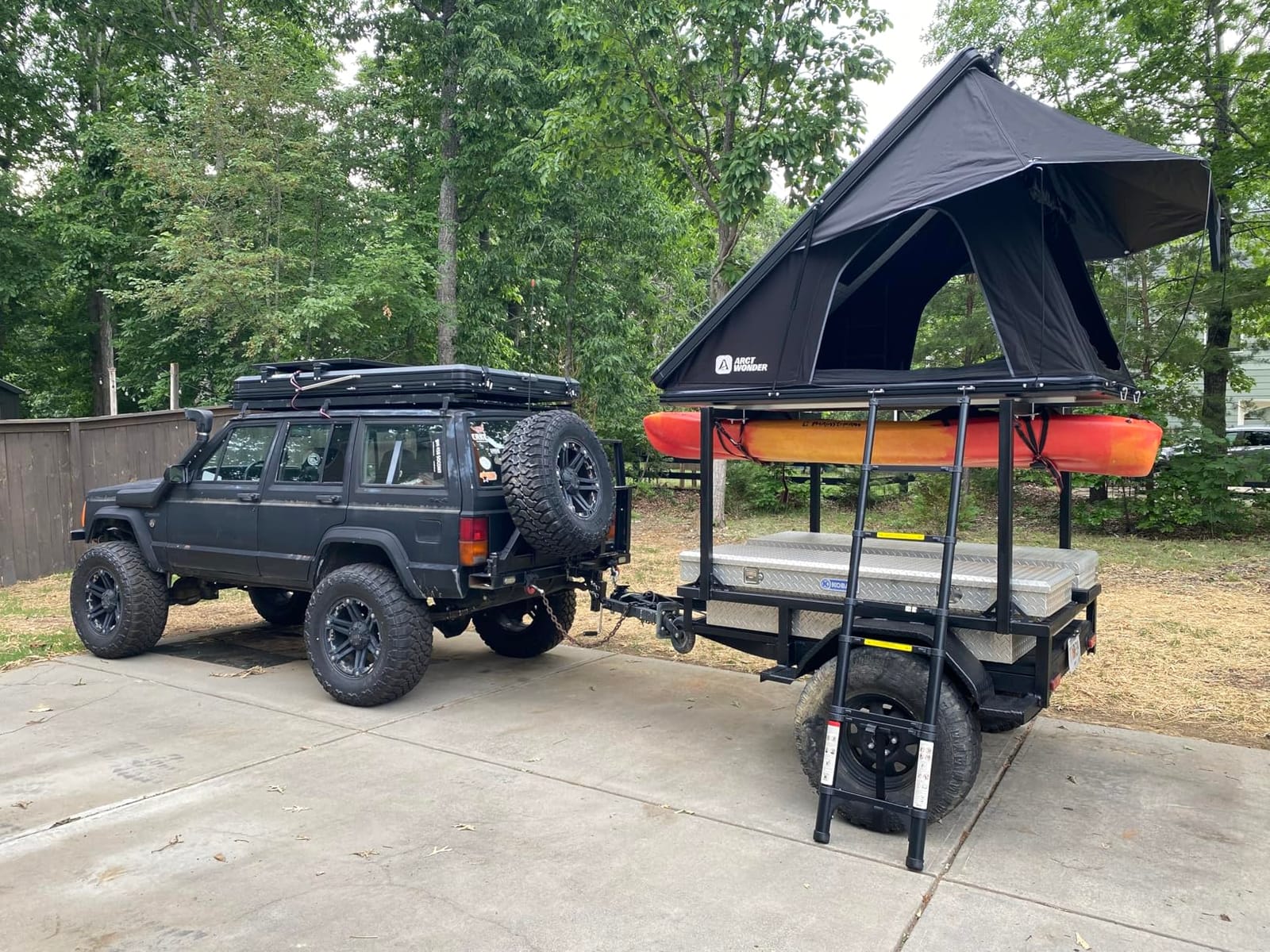
The rest of the package is solid: an integrated solar panel with a 12V multi-function outlet, 10-second gas-strut pop-up, sealed 320g polyester rated to 5000 mm, a 6 cm mattress, two luggage poles, an LED strip, a 7.5 foot telescoping ladder, 10 storage bags, and two waterproof shoe bags. Packaging is protective and the tent arrives undamaged with instructions that owners say were good.
The blackout is complete, so a family can sleep past dawn without blackout curtains or a workaround. On a low 7 inch closed profile, it stays quiet and efficient on the road compared with a tall softshell.
Who it suits and who it does not
It is rated 2 person, so it is tight for a family of three or four, and the 48 inch floor width confirms that. For a couple or a couple with one small child in shoulder-season conditions, it is unusually well suited.
The winter layer also adds pack weight and bulk when you do not need it, and the shell itself is 198 pounds, so installation is a two-person job on most racks. Budget for that in the plan, not on the day.
Where it falls down
Shoe bags can only hang at the rear, which does not work for vehicles with an upward-opening rear door. If your family vehicle has a liftgate rather than a side-hinged tailgate, this is a detail worth checking before ordering.
Condensation still forms, especially on exposed interior aluminum in cold weather, which is worth knowing because warm bodies in a cold sealed box is the classic setup for damp bedding. At 34 reviews the long-term picture is thin, so we would pair it with a good vent plan.
8. JOYINRUTE ZS001 Winter – Best Insulated Aluminum Build
Rooftop Tent Hard Shell with Winter Insulation for 4-Season Camping
Floor 78.74 x 47.29 in
Weight 178 lb
4 season rated
Blackout coating
Pros
- Highest average rating among the insulated models
- Flocked lining floor reduces condensation
- Complete blackout coating
- Four hydraulic support rods
- Removable winter thermal liner
Cons
- 178 lb needs multiple strong people to mount
- Mattress runs hard after an hour
- Weak mounting screws on some units
This is the tent that made me reconsider my ranking of the top spots. It holds a 4.8 average with zero one-star reviews, and the reasons owners give are structural rather than cosmetic: sealed seams, complete blackout, hydraulic deployment in under 30 seconds, and accessories that do not feel like afterthoughts.
Four high-strength hydraulic support rods give smooth, fast opening and closing, and owners describe setup as close to instant once the locks are released. You release the locks and the tent sets itself up, which is the version of this product that families with small children care about most.
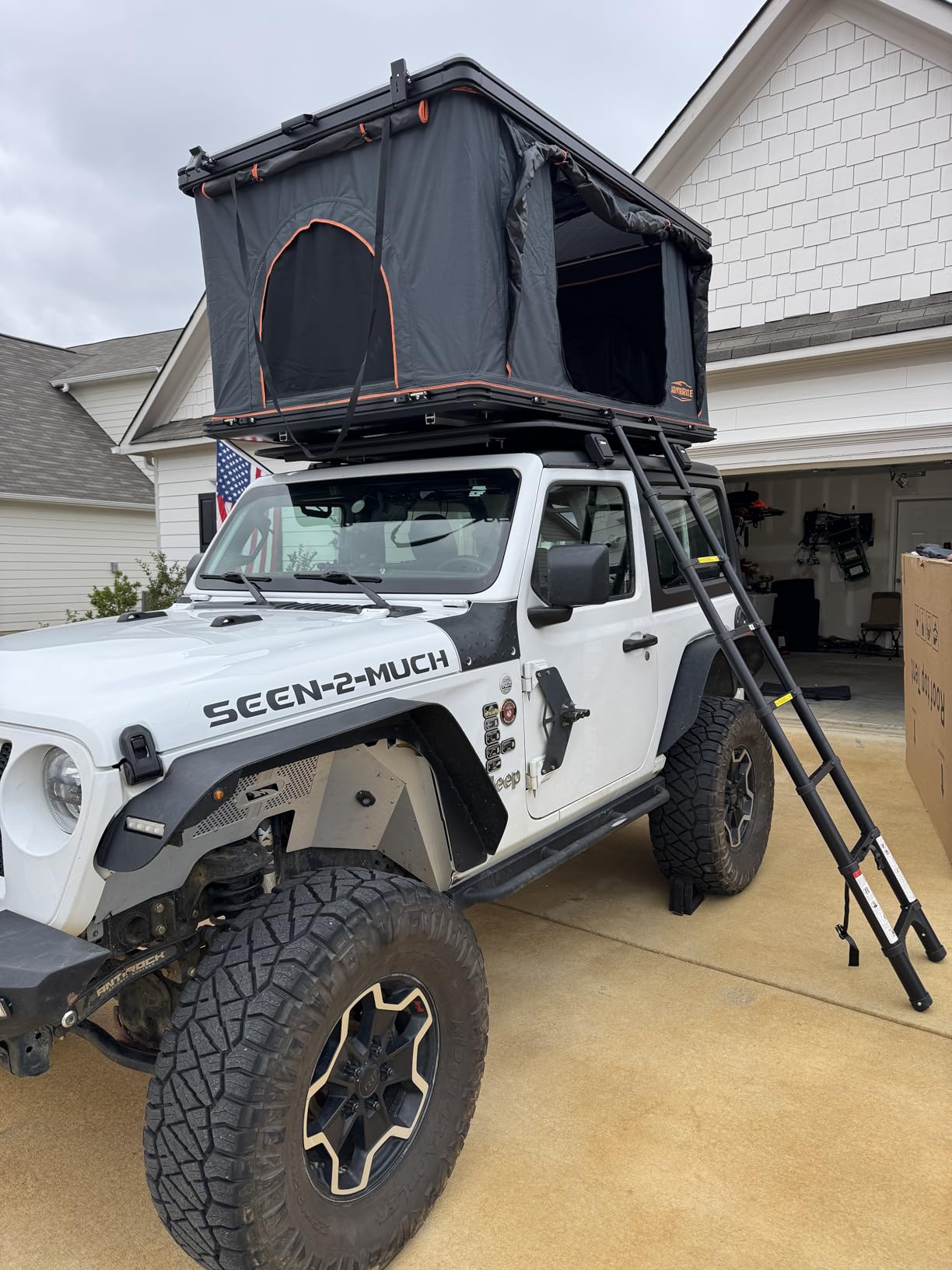
The flocked lining floor is the detail I would point a parent toward. It helps prevent condensation caused by temperature and pressure differences, which means the mattress stays drier and the kids do not wake up to damp sheets in a hardshell, the most common complaint about sealed family tents.
A removable winter thermal liner improves both insulation and windproofing, and the 320G polyester carries blackout coating, 5000 mm water resistance, and grade 6 wind resistance. Four mesh windows with windproof layers give strong summer airflow, and an interior roof net, LED strip, and plentiful pockets round it out.
Sleeping quality for a family
It is rated 2 person and the 47.29 inch floor confirms the label. Two adults fit, but the width is close to the limit and this is not a family-of-three or family-of-four tent despite the 4 season marketing.
Owners say it is quiet and aerodynamic on the road, barely noticeable on an SUV. That matters for a family doing a long drive where a howling softshell at highway speed would set the tone badly before the first campsite.
The honest drawbacks
At 178 pounds it is among the heaviest lifting jobs here and needs multiple strong people to mount. The included mattress runs hard after the first hour, especially for side sleepers, and foam toppers are too thick to close the tent properly, so a self-inflating mattress is the workable upgrade.
Some owners replaced the weak mounting screws with grade 8 bolts and washers, the LED strip needs an external USB power bank and a cord routed through the tent, and there is no heater duct port, so a portable air conditioner needs a flat duct adapter through an end window.
9. Naturnest Polaris Plus – Best Two-Person Hardshell with Storage
Naturnest Rooftop Tent Hard Shell, Easy Set Up Pop Up Tent for 2 Person
Interior 79.5 x 48 in
Weight 50 kg
Rated 2 person
12 storage pockets
Pros
- Rigid aluminum shell with honeycomb insulation
- About 30-second automatic pop-up
- Roof crossbars included for gear
- 12 interior storage pockets
- STABILUS struts and YKK zippers
Cons
- Narrowest Naturnest interior at 48 in
- Rated 2 person only
- Thin review base at 33 ratings
The Polaris Plus is the same idea as the Sirius 1 Plus in a narrower frame, and for a family of two that is a fair trade. It keeps the rigid aluminum shell with sound and thermal insulating honeycomb structure, adds roof crossbars for solar panels, skis, or bikes, and carries 12 interior storage pockets.
Those crossbars are the quiet reason to like this one. A family with bikes, boards, or a cargo box is usually trying to solve a roof rack puzzle, and having factory crossbars already on the tent removes a step and a sourcing problem.
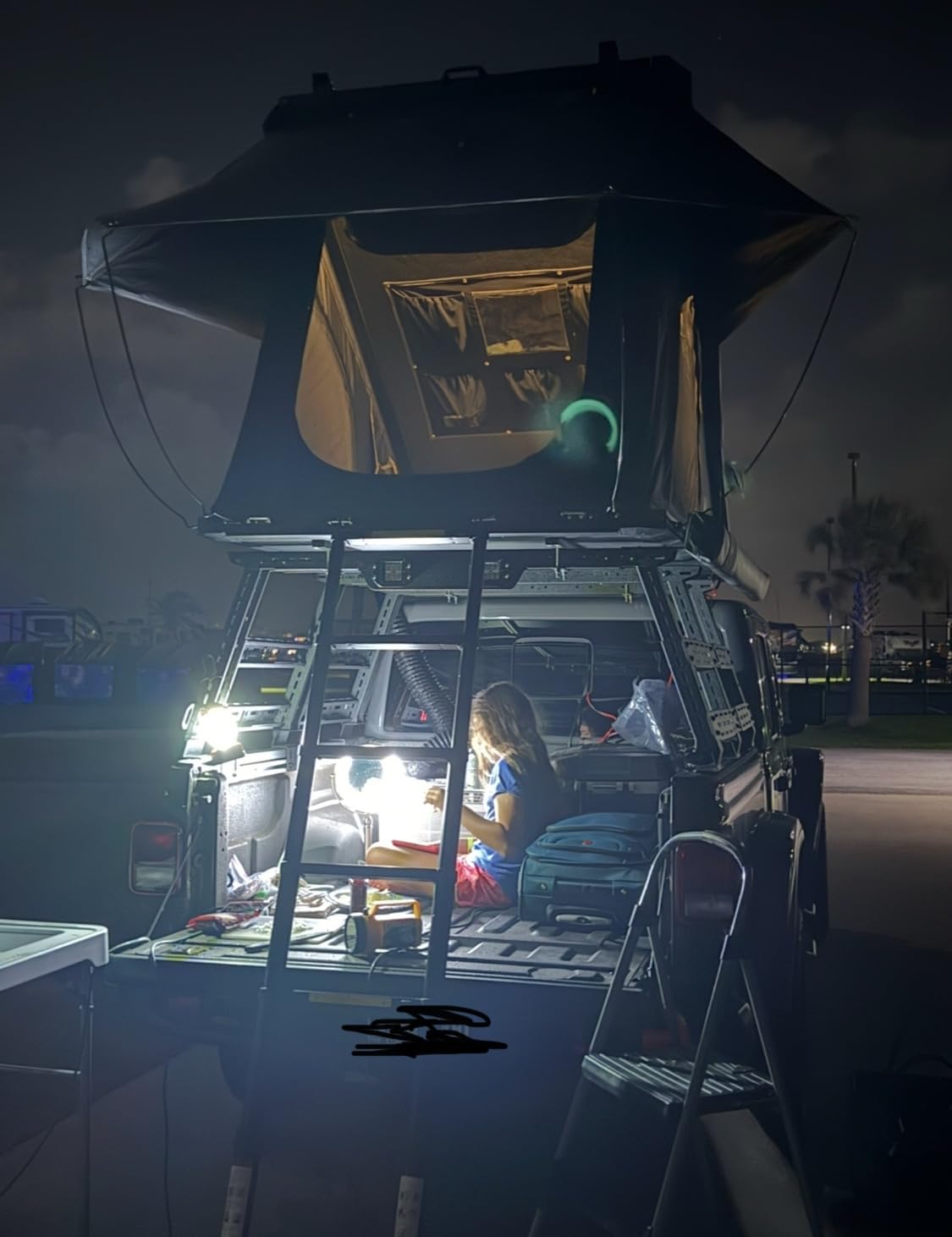
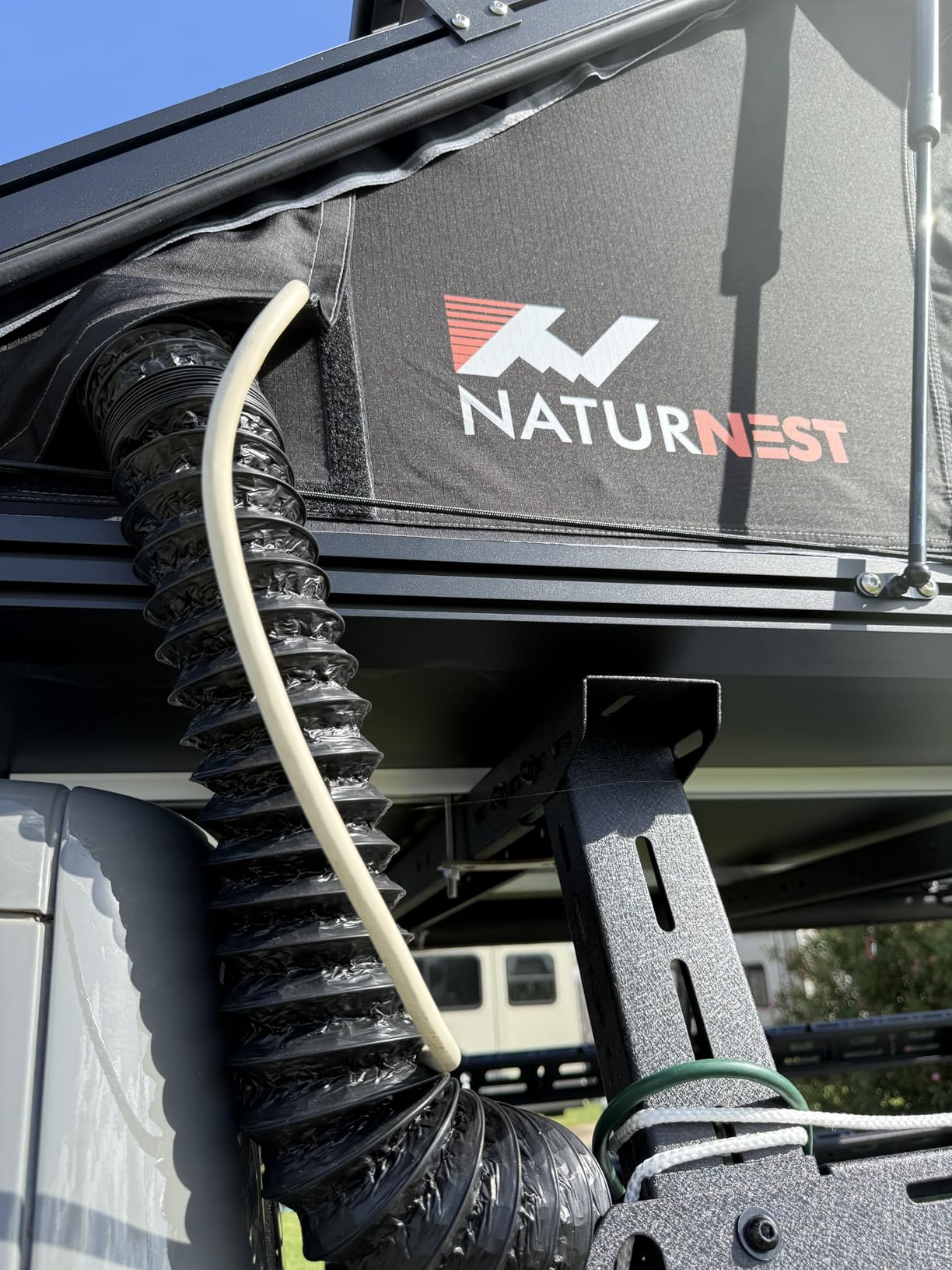
Setup is about 30 seconds after releasing the locks, with STABILUS gas struts and YKK zippers on the mechanism and zips. A dedicated vent accepts a heater or cooler connection, and the 1.97 inch non-deformed mattress plus deep blackout fabric makes it a two-person tent you can genuinely sleep well in.
Weather-proof premium fabric is rated for four-season use, which fits the general construction story. Owners respond most to the quick automatic setup and the full blackout, the two things that shape a day of family travel.
Is it a family tent or a couples tent
It is a couples tent. The 48 inch interior width is the narrowest of the Naturnest models in this roundup, and it is rated 2 person, so a family of three would be arranging limbs rather than sleeping.
For a family that camps with one or two adults and a child in the vehicle cabin, that is a reasonable use. For anyone expecting two adults and two children in the roof, it will not work, and no accessory fixes that.
What to weigh up
Its review distribution is the most polarized here, with 8 percent two-star and 6 percent three-star ratings, and 33 reviews is a thin base for a confident quality read. The listed weight of 50 kg is another figure worth confirming with the seller before you plan a solo install.
Against the JOYINRUTE ZS001 Aluminum, which shares a similar role, the Polaris Plus offers included crossbars and more storage pockets, while the JOYINRUTE has the stronger review record and flocked floor. If you are deciding on those two, the crossbars usually decide it for a gear-carrying family.
10. Smittybilt Overland GEN2 – Best Rooftop Tent with a True Bed-Size Floor
SmittyBilt Overland GEN2 Tent STD – SB2583
Bed size 92 x 55 in
Weight 154 lb
Load rating 660 lb
Alloy steel frame
Pros
- True full-size bed footprint at 92 x 55 inches
- 660 lb max load rating
- Four windows for cross ventilation
- Waterproof 420d Oxford rainfly
- Alloy steel frame with aluminum base
Cons
- Lowest average rating in the group
- Thin evidence base at 24 ratings
- Softshell dries out slowly
- 154 lb needs a two-person lift
The bed-size floor is why this one is here. At 92 by 55 inches it matches a standard full-size bed footprint, larger than most competitors in this class, and it is rated 2 to 3 people. Unlike a wedge design with a sloped side, the cabin-style layout gives you a flat rectangle to work with.
Two adults and a child can sleep on that floor without the geometry fight that a 51.5 inch wide wedge forces on you. The open size is 95 by 56 by 51 inches, so there is genuine sitting headroom too, which is the difference between a room and a coffin when a kid cannot sleep.
Structure is an alloy steel frame with an aluminum and polyurethane base, and the max load rating of 660 lb is the highest figure published in this roundup, matched only by the HEYFUN Adventurer Pro. That rating covers adults and gear, which on a family setup means a dog, a cooler, and duffel bags without thinking twice.
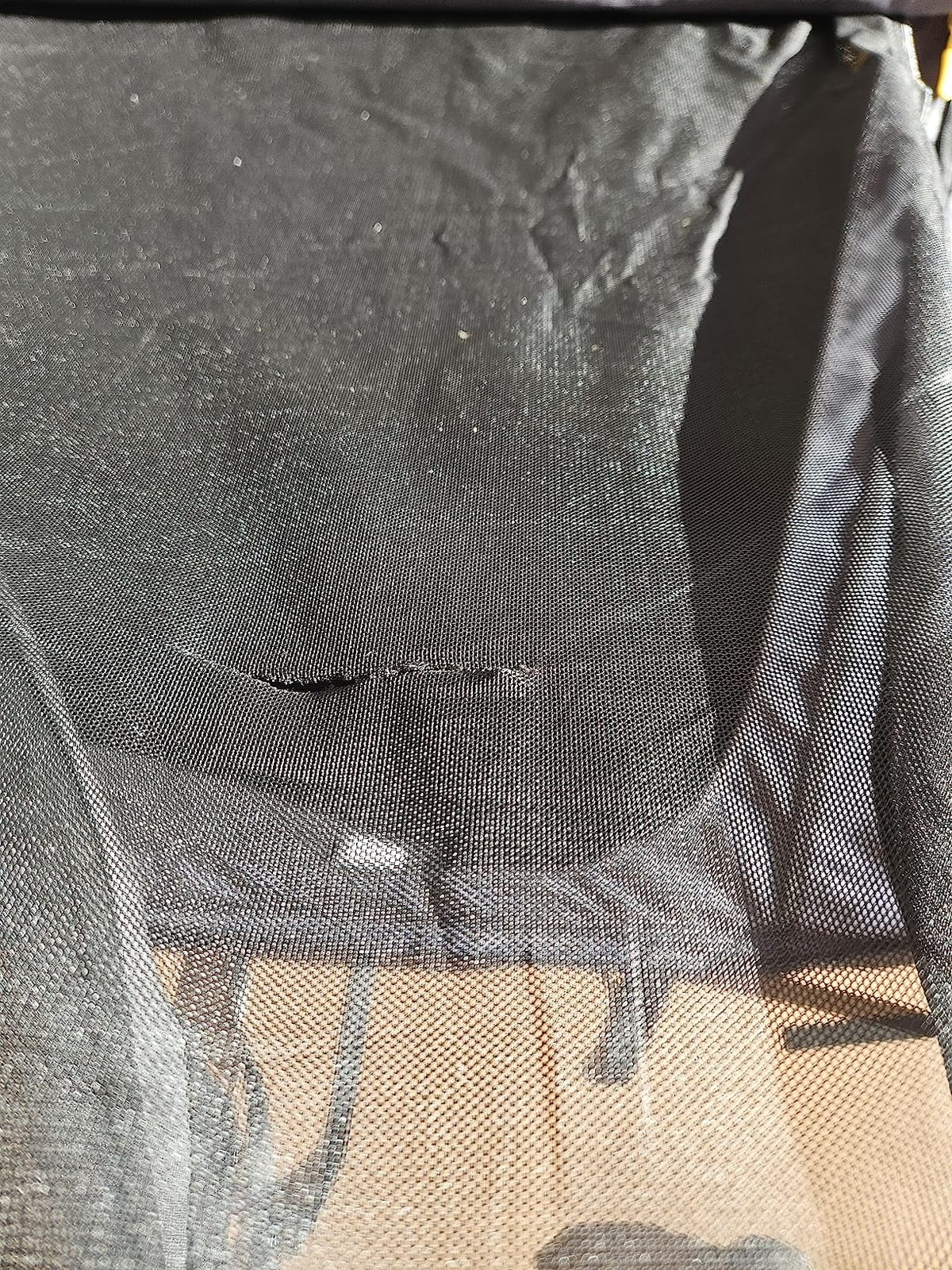
Four windows give real cross ventilation, which is the best natural answer to condensation in a softshell. The 420d Oxford rainfly carries 2000 mm water resistance and is genuinely lightweight for what it does.
Who should choose the bed-size floor
Families of three, particularly with a child over six feet or two older kids, gain the most here. A full-size bed footprint means nobody sleeps diagonally, and that is the complaint that shows up on every other three-person tent in this list.
It is also the one to consider if your family sleeps in the roof while another adult or a dog uses the vehicle cabin, because the flat floor makes a second sleeping setup workable.
Why the rating gives us pause
It sits at 4.2 with 17 percent of reviews at three stars, the weakest showing in the group, on a 24-review base. That combination reads as more inconsistency than the hardshell competitors, which all have higher averages and larger sample sizes.
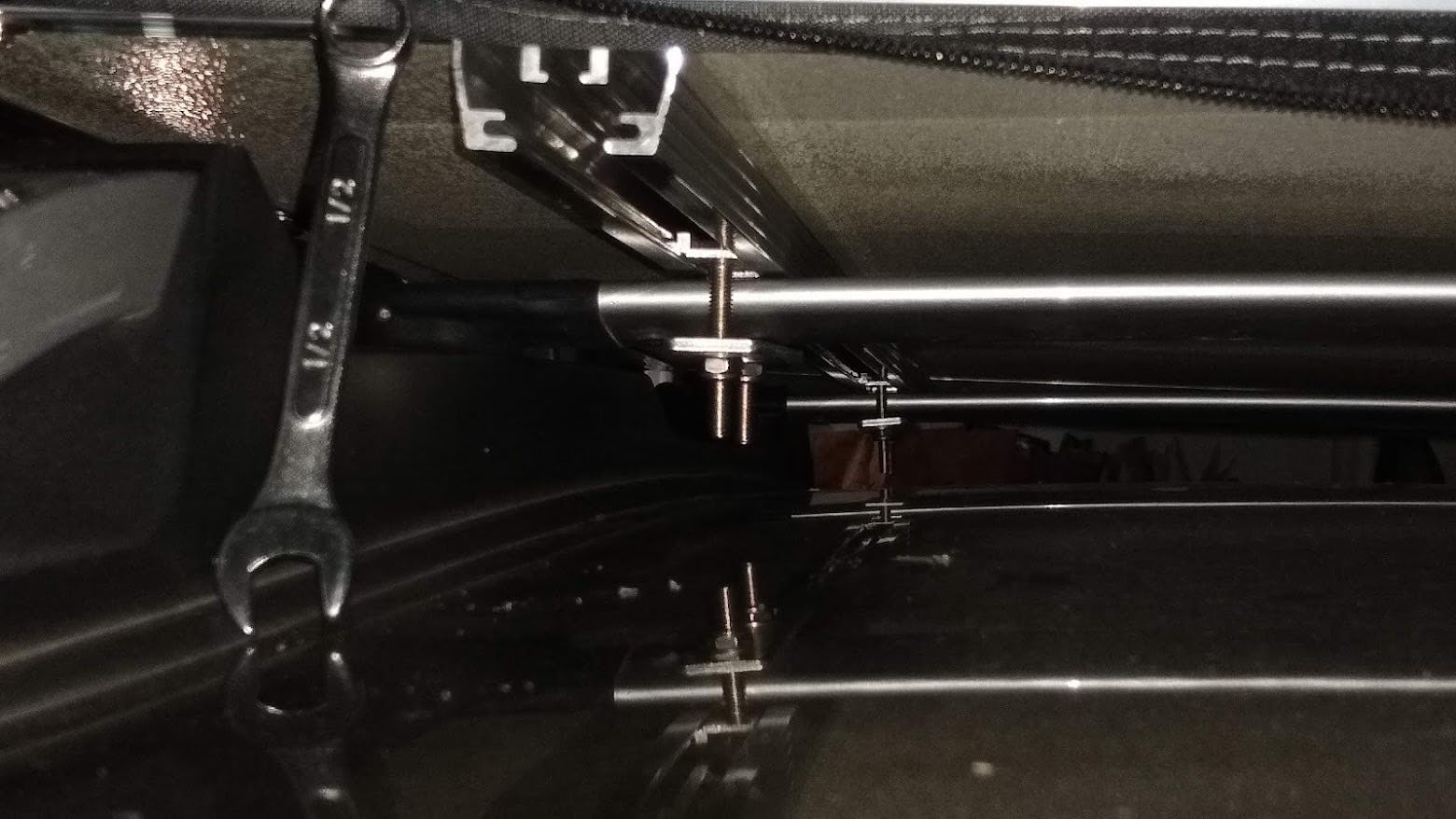
Softshell construction is less weather-tight and harder to dry out than a hardshell, and at 154 pounds it still needs a two-person lift. Mounting hardware frequently arrives unassembled, which is the specific frustration families report with this brand, so budget an afternoon for the install.
11. JOYINRUTE ZS001 Aluminum – Best for Blackout Sleeping
Aluminum Rooftop Tent Hard Shell,Pop Up Roof Tent Hardshell
Floor 78.74 x 47.27 in
Weight 178 lb
5000 mm water resistance
Rated 2 person
Pros
- Highest average rating in the roundup at 4.9
- No ratings below four stars
- Four hydraulic support rods
- Complete blackout coating
- Flocked lining floor limits condensation
Cons
- Only 22 ratings behind the score
- Rated 2 person and 47.27 in wide
- 178 lb two-person lift
- No thermal liner out of the box
The numbers on this one look too good: a 4.9 average with 92 percent five-star ratings and nothing below four stars. It shares the ZS001 platform with the insulated winter model, so the build quality on the shell, struts, and fabric carries over from a design that is better reviewed.
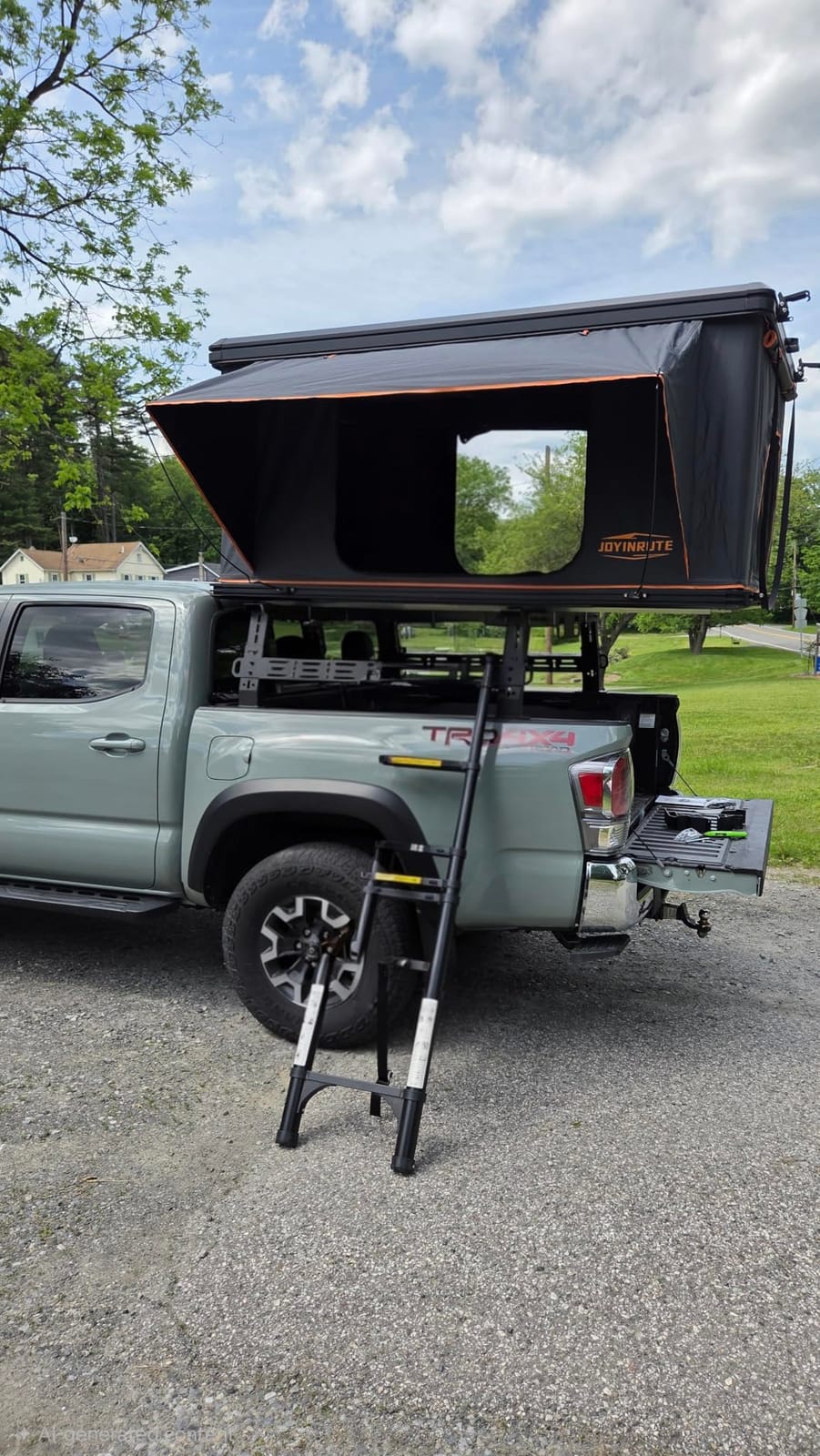
Construction is aircraft-grade aluminum alloy with 320G polyester carrying blackout coating, 5000 mm water resistance, and grade 6 wind resistance. Four mesh windows with windproof layers give strong summer airflow while the coating keeps the light out, which is a rare combination.
The flocked lining floor helps keep the mattress dry by limiting condensation, which in practice means the bedding stays usable in the morning. Four high-strength hydraulic support rods give smooth, quick deployment, and the mechanism is the same one that earned the insulated sibling its 4.8.
For blackout, this is one of the strongest picks in the roundup. Families with early-rising children tend to rate blackout quality more highly than any other comfort feature, because it buys two hours of quiet in the morning and nobody has to negotiate.
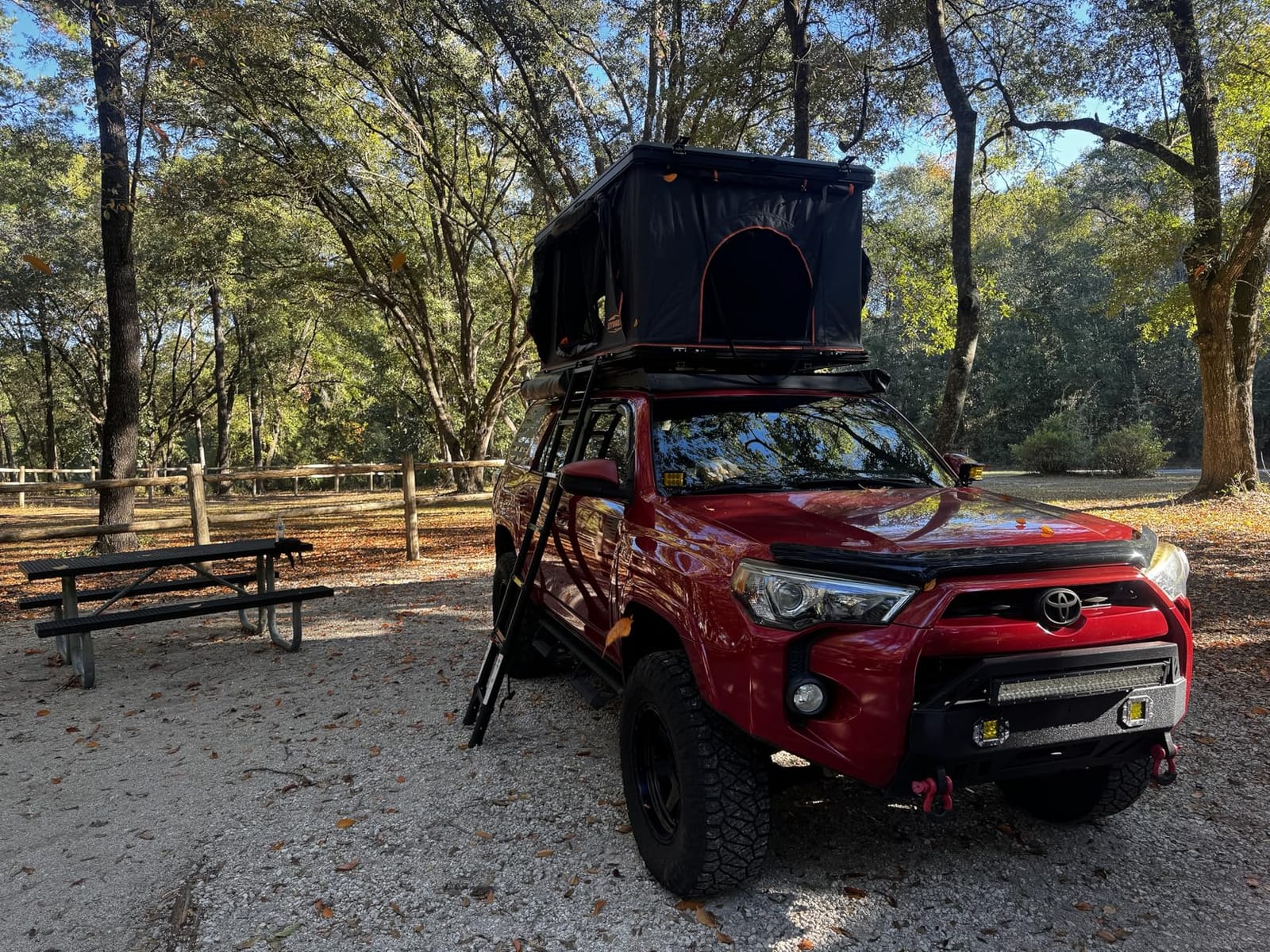
Sizing it for your family
It is rated 2 person with a 47.27 inch floor, so it does not suit a family of three or four, and the narrow width means two adults sleep shoulder to shoulder. For a couple, or a couple with one child in the cabin and two in the roof, it works.
Compared with the JOYINRUTE ZS001 Winter, the two share a frame, so this one lacks the thermal liner out of the box. If your trips are in cold weather, buy the winter version rather than adding insulation later.
The catch with a 4.9
Only 22 reviews sit behind that 4.9, the thinnest base in the roundup, so the near-perfect rating is not yet proven over a long ownership horizon. We would treat it as promising rather than settled, and a family making a big-ticket purchase should weight the sample size accordingly.
At 178 pounds the shell needs at least two people to lift onto the rack, and the LED strip needs an external power bank routed through the tent. A faint howling noise can appear above 65 mph without a fairing, which is worth knowing on a long highway run.
12. Meedo Apolle A86 M – Best Two-Person Softshell Comfort
Meedo Apolle A86 M, Soft Shell Rooftop Tent, Fits 2 People, Made with Waterproof Material and a Rainfly-Fold Design, Clamshell Army Green Roof top Tent for Overlanding Hunting, Ladder Included
Floor 90.5 x 55 in
Weight 125 lb
4.5 in foam mattress
5 minute setup
Pros
- Pre-assembled with a 5-minute setup
- 90.5 in floor with good legroom
- Thick 4.5 in high-density foam mattress
- Double moisture control with marine and condensation pads
- Five windows including a sunroof skylight
Cons
- Rated 2 person only
- Softshell traps heat while driving
- Hardware packed inside the tent
- One owner reported fulfilment problems
Last in the lineup but the easiest to recommend to a specific person: if you are a couple or two adults who want a genuinely comfortable mattress and you do not want to spend an hour assembling anything, the Meedo Apolle A86 M arrives pre-assembled and usable out of the box.
It is also the one that takes mattress quality seriously. The 4.5 inch high-density foam mattress is roughly double the 2.25 inch foam bundled with the Overland Vehicle Systems TMBK, and owners in this roundup repeatedly mention adding a topper as a recurring expense. Here you would not need to.
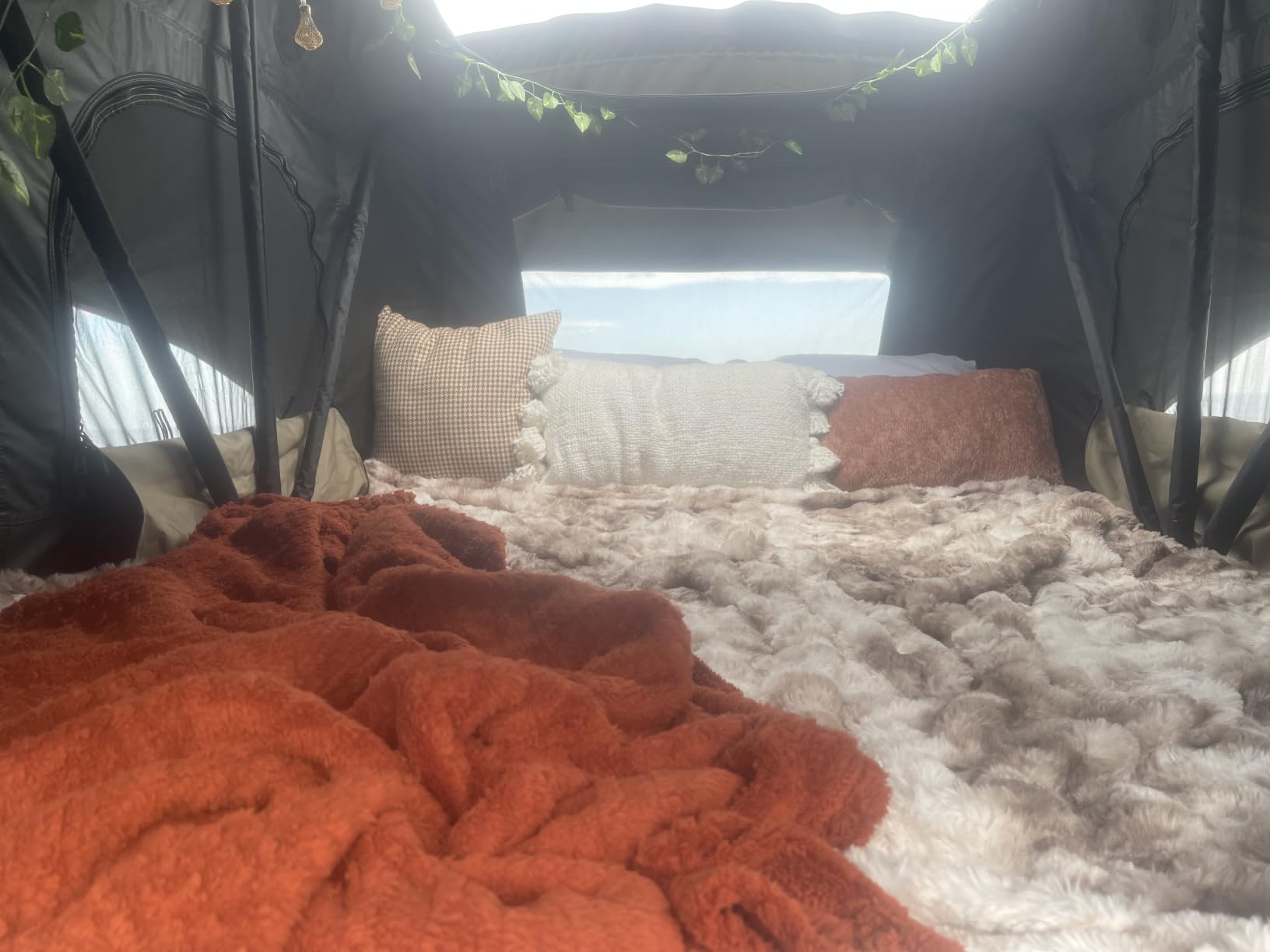
The floor is 90.5 by 55 inches, which gives real legroom for two, and the double moisture control is a genuine feature rather than a marketing line: a built-in marine moisture-proof pad plus a separate condensation isolation pad. Softshells collect moisture, and this is a design that assumes it.
Ventilation is strong for a softshell, with 2 large side doors, front and back windows, and a top sunroof skylight under a thick fold-flat rainfly roof. A 2.3 m aluminum telescoping ladder, an LED light, and shoe bags are included.
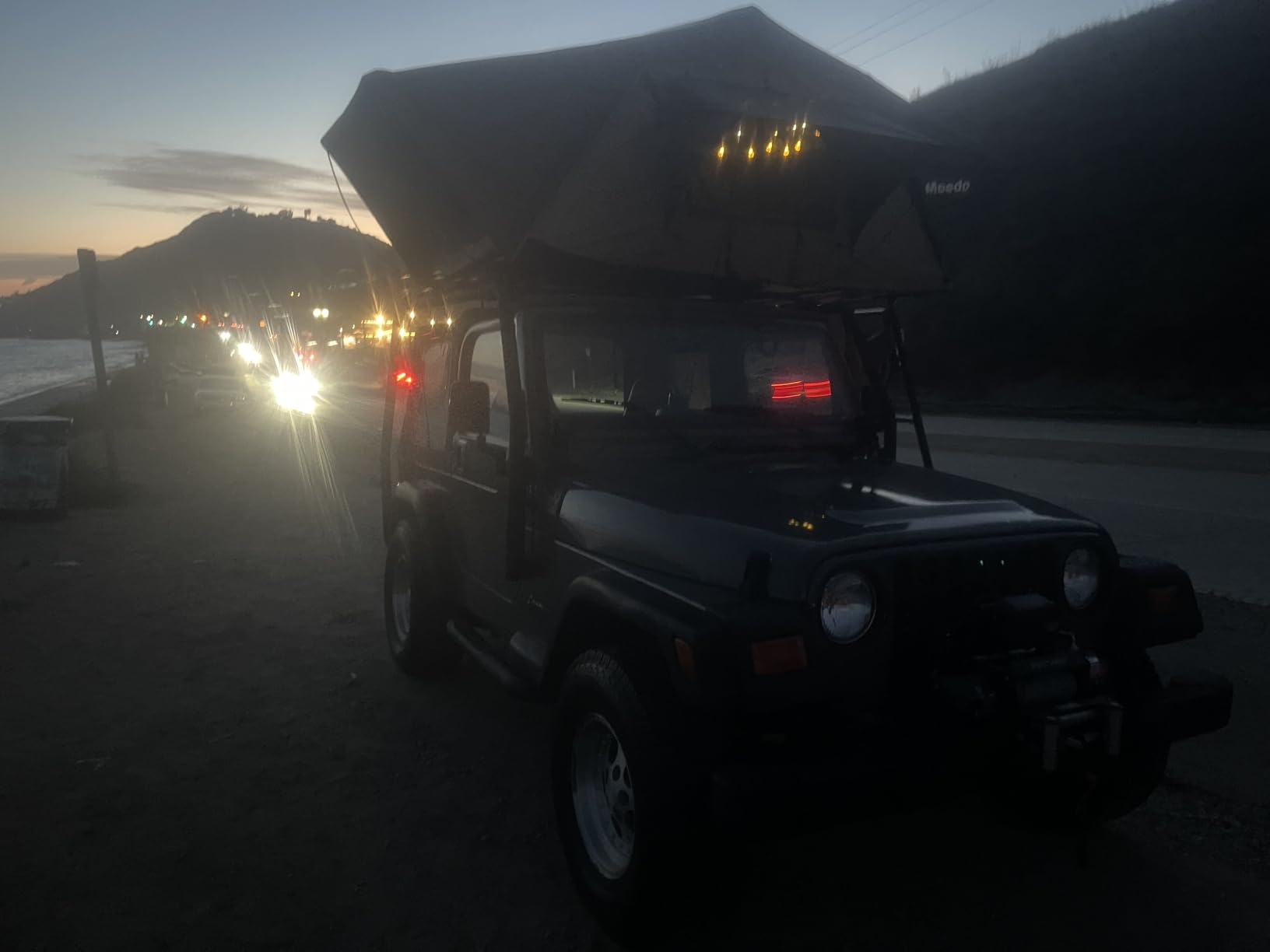
Why the softshell format still has a place
Softshells are quieter at highway speed, lighter than most of the aluminum hardshells in this roundup at 125 pounds, and cheaper to repair when something tears. A clamshell design also folds down smaller than a wedge hardshell, which some families prefer for a vehicle that does not have permanent rack space.
The trade-off is heat. Owners report the fabric traps heat while driving and takes a while to cool down inside, so on a hot day the tent is a sauna until you open the skylight and doors.
What to know before ordering
It is rated 2 person, so it does not sleep a family of three or four, and at 125 pounds it still needs two or three people for installation. The instructions and hardware are packed inside the tent, so you have to open it before you can assemble it, which is a small thing that annoys people.
One owner reported an unfinished interior pocket and a rain topper that arrived reversed, along with weak customer service, and 16 reviews makes this the least-proven product in the set. A poor-fitted ladder or roof rack has also been an issue for one owner. If you are risk-averse, the Overland Vehicle Systems TMBK has a much longer track record.
How We Picked and Ranked These Tents
We worked through the full 12-tent lineup using the same five questions for every model, weighted toward what actually decides whether a family enjoys the trip. Ratings and review counts were copied from the product data rather than rounded, so the ranking reflects what owners reported, not our impression of a spec sheet.
Sleeping space came first, measured on floor width and length rather than the printed capacity number. Setup speed came second, because of the after-dark arrival problem. Third was weather performance: the stated mm rating, seam sealing, and whether the tent includes a condensation pad. Fourth was total weight including shell, base, and hardware, since that is what goes on your rack. Fifth was build quality: aluminum over plastic, stainless struts, and reputable zippers.
We also weighed how much a model is proven. A 4.9 across 22 ratings tells you less than a 4.4 across 151, and we said so rather than letting the higher number win on its own. Where the two most highly rated tents here are rated for two people only, we flagged that in their sections instead of quietly ranking them as family options.
A few tents were set aside. Anything without a stated occupant capacity, weight, or floor dimension was excluded regardless of how good the photographs looked, because those are the numbers a family needs before an order goes in.
How to Choose a Rooftop Tent Your Family Will Actually Like
Rated capacity is not sleeping capacity
Every question on r/rooftoptents and r/overlanding comes back to the same thing: are the capacity numbers real. They are not, and once you adjust for that, choosing becomes much easier.
A 3 person rooftop tent with a 53 inch wide floor sleeps three people who are small. A tent with a 63 inch floor, like the Naturnest Sirius 1 Plus, is the rare design that handles two adults and a child properly.
Here is the rough mapping of family size to the tents in this roundup:
For a family of three, plan on a sleeping floor of roughly 79 by 55 inches before you lie down without negotiating. The Overland Vehicle Systems TMBK, the Smittybilt Overland GEN2, and the Naturnest Sirius 1 Plus all reach that range. A family of four needs more width than any of these three-person designs provide, so an annex or a larger trailer unit is the realistic answer, and most listings will not tell you that.
A family of five is not a rooftop tent problem. You are looking at a trailer or a large ground tent, and pretending otherwise ends with a very unhappy Tuesday night.
Softshell or hardshell for a family trip
Softshells are cheaper, lighter, quieter on the road, and repairable. They are also slower to set up at five to ten minutes, harder to dry out, and they trap condensation more readily. Hardshells set up in seconds on hydraulic rods, seal better against rain, and hold bedding inside when closed, but they weigh 160 to 198 pounds and cost more.
For a family, the deciding question is not weather. It is what happens at 8 pm when the site is dark, the kids are exhausted, and somebody has to hold a flashlight. A one-minute setup wins that night every time, which is why most of the tents we rate highly for families are hardshells.
If your family will leave the tent mounted between trips, a hardshell also avoids the mildew problem owners of year-round softshells report.
Vehicle payload, crossbar spread and rack limits
Two numbers matter more than the tent’s own weight. The dynamic load rating on your roof rack is the limit the manufacturer permits in motion, and it is usually lower than the static limit on a parked vehicle. The payload sticker in your driver door jamb shows what your vehicle can carry including passengers and cargo, and a family of four with luggage consumes a surprising share of it.
Add up the tent, the crossbars, the rack, and anything else on the roof, then compare that number to the dynamic load rating. Crossbar spread matters too, because a tent rated for a wide spread will not sit safely on a narrow factory crossbar pair.
Our rooftop tent picks for trucks covers the payload arithmetic in more detail if you tow a truck regularly, and the light softshells in this roundup are the safer bet for minivans and crossovers, where roof limits are tightest.
Setup speed, ladder access and kid safety at night
The concern parents raise most is the ladder. A family with a three-year-old will be making this climb several times a night, in the dark, sometimes in rain. Before buying, check where the ladder mounts and whether it can be positioned away from a sloping campsite or under a low branch.
Second, the length of the ladder has to match your vehicle height plus the deck height of the tent, and a ladder that is too short means a kid hanging off the top rung. Most of the tents here ship with a telescoping ladder, and the WildFinder plus both JOYINRUTE models include a 7.5 foot version, which suits taller vehicles. Check the listing for the model you are considering, because a few do not state it plainly.
Third, decide before you leave home whether a sleeping child is your responsibility or your partner’s, and write it down. This is the least technical and most important part of the whole purchase.
Condensation, ventilation and the blackout question
Hardshell tents seal well, which is a virtue in rain and a problem in cool damp air. Warm sleepers in a sealed box generate moisture, and the result is wet bedding and children who are uncomfortable and cold at 5 am. Flocked floors, separate condensation pads, and anti-condensation mats all help, and the WildFinder, the ARCTWONDER models, and both JOYINRUTE tents include them.
Ventilation is the other half. The Sirius 1 Plus, the Polaris Plus, and the TMBK have dedicated vents or multiple windows, and the Smittybilt GEN2 has four for cross ventilation. A portable fan solves more condensation problems than any tent feature, and it costs a fraction of what an insulated tent does.
Blackout is a family preference, not a technical one. If your children wake at sunrise, the JOYINRUTE ZS001 Aluminum and the HEYFUN Adventurer Pro are the two to shortlist.
Annexes, awnings and camping with a dog
If your family is four, the honest answer is that a rooftop tent alone rarely works, and an annex is the usual fix. Owners describe annex rooms as the difference between a usable family basecamp and a cramped box, because they turn a sleeping platform into a changing and gear area without asking anyone to sleep on a wet floor in the vehicle.
Awnings serve a different purpose: shade and rain cover over the ladder. That matters more than it sounds, because the ladder entry is where a family stands exposed in weather, and the HEYFUN Adventurer Pro is the only tent in this roundup that ships with an attachable side awning in the box.
Sleeping with a dog is a question that gets asked constantly and answered rarely. The practical points are the floor material, whether a dog fits in the ladder entry without climbing over a sleeper, and where the dog sleeps at night, because most families end up putting a bed on the vehicle floor while the tent holds the humans. The boot and shoe bags included with several of these tents keep the interior clean when the answer is mud, which is the single most common complaint on the family forum threads.
Storage, mold and seasonal care
This is where softshells lose points. Owners who left a softshell mounted year-round report serious mildew that never fully went away in damp climates, while hardshell owners report essentially no interior moisture problems. If your family will not bring the tent down between trips, treat the hardshells as the low-maintenance option.
Even with a hardshell, open the tent after a wet weekend. Leaving a sealed shell shut with damp bedding inside is how you get the musty smell that the next family inherits at resale. Wipe the floor, let the mattress dry, and run the tent open for an hour before you close the shell.
Count the pockets before you buy. Six to thirteen interior pouches is the range across this lineup, and a family of four generates a lot of small loose items that otherwise end up mixed into the bedding.
What a rooftop tent really costs once it is installed
Families consistently underestimate this, and it is the most common surprise in the forum threads we read. The tent is only the first line. A roof rack or crossbars, installation labor if you do not do it yourself, a mattress topper, bedding, and often an awning or annex are all part of the real figure.
Four items account for most of the gap: the rack and crossbars, the installation, a mattress topper or self-inflating mattress, and an awning or annex for extra family living space. Add a cooler and awning and you are in the same category as the tent itself. Our camping cooler picks are the other half of that camp setup.
One more cost nobody mentions: resale. A rooftop tent is a niche product with a thin secondary market, so you should assume most of the purchase is consumed rather than recovered.
Frequently Asked Questions
What is the best rooftop tent for a family?
For most families the Overland Vehicle Systems TMBK is the best fit, because its 53.5 by 92 inch sleeping floor fits two adults and a child, it weighs only 108 pounds, and it opens in about five minutes. Families of two wanting a fast hardshell should look at the HEYFUN Adventurer Pro, and anyone camping in heavy rain should shortlist the WildFinder for its 5000 mm rating.
Are rooftop tents actually safe for young children?
A rooftop tent is safe for children if you treat the ladder as the main risk. Position the ladder where it is not over a slope or a walkway, match its length to your vehicle height, make sure the rungs lock at a usable angle, and agree on who wakes up with a sleeping child. A boot or shoe bag also keeps mud off the interior.
How long does a rooftop tent take to set up?
Hardshells in this roundup open in about 5 to 30 seconds once the locks are released, and pack down in under ten minutes. Softshells take five to ten minutes because the fabric cover comes off and the body has to be unfolded and secured. That gap is why hardshells tend to be better for families arriving after dark.
Are 4 person rooftop tents really for 4 adults?
Generally no. A family of four needs a sleeping floor of roughly 92 by 60 inches, and most three-person rooftop tents fall between 47 and 63 inches wide. The Smittybilt Overland GEN2 comes closest here with a 92 by 55 inch bed area, and even that is a squeeze for four adults. For a family of four, look at an annex or a larger trailer unit.
Do rooftop tents fit on a minivan or crossover?
They can, but weight and crossbar spread decide it. The lightest softshells here, the Overland Vehicle Systems TMBK at 108 pounds and the Meedo Apolle A86 M at 125 pounds, are realistic choices for a minivan or crossover with a rated rack. The aluminum hardshells at 160 to 198 pounds are heavier, and you must check your vehicle payload and the rack dynamic load rating before ordering.
Can you camp anywhere with a rooftop tent?
No. Where you park is governed by the same campground and national park rules as any car camping setup, and some sites restrict car camping or require you to remain at your vehicle. Rules vary by park and by site, so read the specific regulations before you travel rather than assuming a rooftop tent is treated as a tent rather than a vehicle.
What are the downsides of using a rooftop tent?
The main drawbacks are weight and load limits, since most hardshells weigh 160 to 198 pounds and must sit within your rack dynamic load rating. Setup is no longer adjustable once you are parked, a sealed hardshell traps condensation, you cannot leave bedding inside when you drive away, and the ladder climb is harder with small children. Resale value on a high-ticket unit is also thin.
Final Verdict for Family Camping in 2026
The Overland Vehicle Systems TMBK is our pick for the best rooftop tents for family camping because it solves the three problems that actually stop families: a floor long enough for three, a weight light enough for a mid-size vehicle, and a five-minute setup that works at the end of a long drive. Its 4.4 rating across 151 reviews is also the largest sample we worked with.
If your family is two and you want one-minute setup in any weather, the HEYFUN Adventurer Pro bundles an awning, shoe bags, and a condensation mat with a hydraulic pop-up. If you camp in rain and cold, the WildFinder pairs a 5000 mm rain rating with level 6 wind protection, and the ARCTWONDER Winter Thermal model adds an insulation layer that reaches into the mid-20s F. For a family of three who need genuine room, the Naturnest Sirius 1 Plus is the widest interior we found.
Whatever you pick, run the payload and dynamic load arithmetic before the tent arrives, and practise the ladder in daylight before you need it in the dark.