
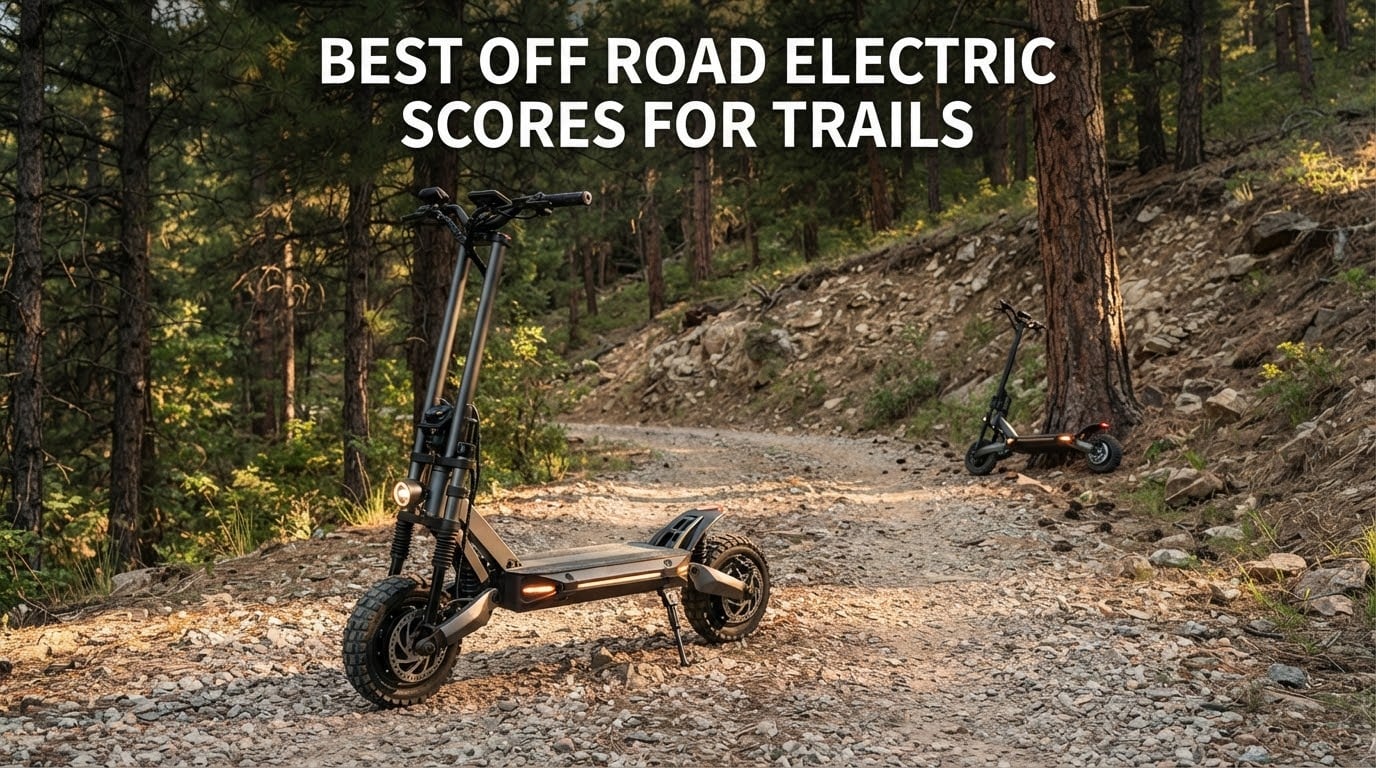
Most electric scooters sold today are built for one thing: rolling smoothly down a flat sidewalk. The moment that same scooter meets a gravel fire road, a root network, or a 20-degree climb, the small solid tires skip, the frame flexes, and the brakes lose their bite. Finding the best off road electric scooters for trails in 2026 comes down to five hardware decisions, and we scored all twelve of our picks against every one of them.
We compared 12 trail-capable scooters across three price bands, from an entry-level folder to a dual-motor machine at the top of the enthusiast range. Our team focused on the four specs that actually decide whether a scooter survives a trail: tire type, suspension, motor torque, and brake hardware. We also weighed rider weight limits, because that single number is where most returns and most bent frames come from.
One thing we found early: there is no independent test data on these scooters. Every spec below is vendor-claimed or drawn from owner reviews, and we say which is which. Rider forums have been unusually honest about where this category’s limits are, and we have folded that in alongside our own spec comparisons. If you are new to standing on a scooter over rough ground, read the downhill and legality sections before the product list.
Top 3 Picks for Trail Riding in 2026

Segway ZT3 Pro
- 1600W peak motor
- 43.5-mile ECO range
- 11-inch tubeless off-road tires
- 4-hour Flash Charge
iScooter iX3
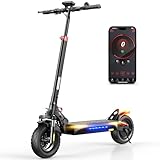
- 800W motor
- 10-inch pneumatic off-road tires
- dual shock absorbers
- 264 lb capacity
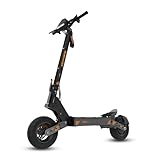
Those three cover very different riders. The Segway ZT3 Pro is the one we would hand to somebody who wants a single scooter for both pavement and dirt. The Kukirin G4 is the raw-power option for long climbs at speed. The iScooter iX3 is the value answer, and its 721 owner reviews are the deepest feedback base of any pick here.
What Makes an Electric Scooter Off-Road Capable?
An off-road electric scooter for trails is one built with pneumatic off-road tires, genuine suspension travel on both wheels, enough motor torque to climb, and brakes that still work when the suspension is compressed over rough ground. Models with those four traits in combination generally perform best on dirt trails and gravel roads, and models without them generally do not survive a long fire road.
Suspension is the piece riders notice first. It absorbs impacts so the tires keep contact with the ground, and without that contact the motors lose traction while the brakes lose authority. Pneumatic knobby tires grip loose dirt and gravel where smooth road tires slide, and torque converts motor power into forward push on steep grades.
Why it matters: a typical commuter scooter has solid tires, little or no suspension, and roughly a 500W motor. None of that survives rocks, roots, or hills. The frame flexes, the handlebars shimmy, and the scooter stops where you tell it to rather than where physics puts it. A trail-ready scooter adds the tire, suspension, torque, and braking margin to control loose ground.
Who needs one: adults riding dirt paths, forest service roads, gravel, and steep hills, including hunters and weekend adventurers. Riders above 220 lb must check the maximum load rating against their own body weight before anything else, because that rating is the single most overlooked spec in this category.
The 12 Best Off Road Electric Scooters for Trails at a Glance
| Product | Specifications | Action |
|---|---|---|
| Segway ZT3 Pro |
|
Check Latest Price |
| Kukirin G4 |
|
Check Latest Price |
 NAVEE UT5 / XT5 Pro NAVEE UT5 / XT5 Pro |
|
Check Latest Price |
 Circooter Landturbo Circooter Landturbo |
|
Check Latest Price |
 R ROVORON REYWMER KULLTER R ROVORON REYWMER KULLTER |
|
Check Latest Price |
| iScooter iX3 |
|
Check Latest Price |
 OOTD T10 OOTD T10 |
|
Check Latest Price |
 iScooter iX5S iScooter iX5S |
|
Check Latest Price |
 EOEOTWO GT06 EOEOTWO GT06 |
|
Check Latest Price |
 OBX ES1024 OBX ES1024 |
|
Check Latest Price |
 OBX ES1005-S2 OBX ES1005-S2 |
|
Check Latest Price |
 Arwibon GT06 Arwibon GT06 |
|
Check Latest Price |
Two patterns jump out of that table. Every serious trail pick runs 11-inch or larger wheels, and every one of them has suspension at both ends. Those two facts do more to determine trail capability than any headline wattage figure.
1. Segway ZT3 Pro – Our Top All-Round Trail Scooter
Segway ZT3 Pro Electric Scooter, Up to 24.9 MPH, 43.5-Mile Range
1600W peak motor
43.5-mile ECO range
11-inch tubeless off-road tires
265 lb max load
Pros
- Longest claimed range here at 43.5 miles in ECO
- 11-inch tubeless off-road tires
- Dual telescopic fork plus rear spring suspension
- 4-hour Flash Charge
- UL-2272 certified by TUV Rheinland
Cons
- 25 mph top speed is modest against high-power trail scooters
- 65.5 lb weight is heavy to carry
- Steel frame adds bulk versus aluminum rivals
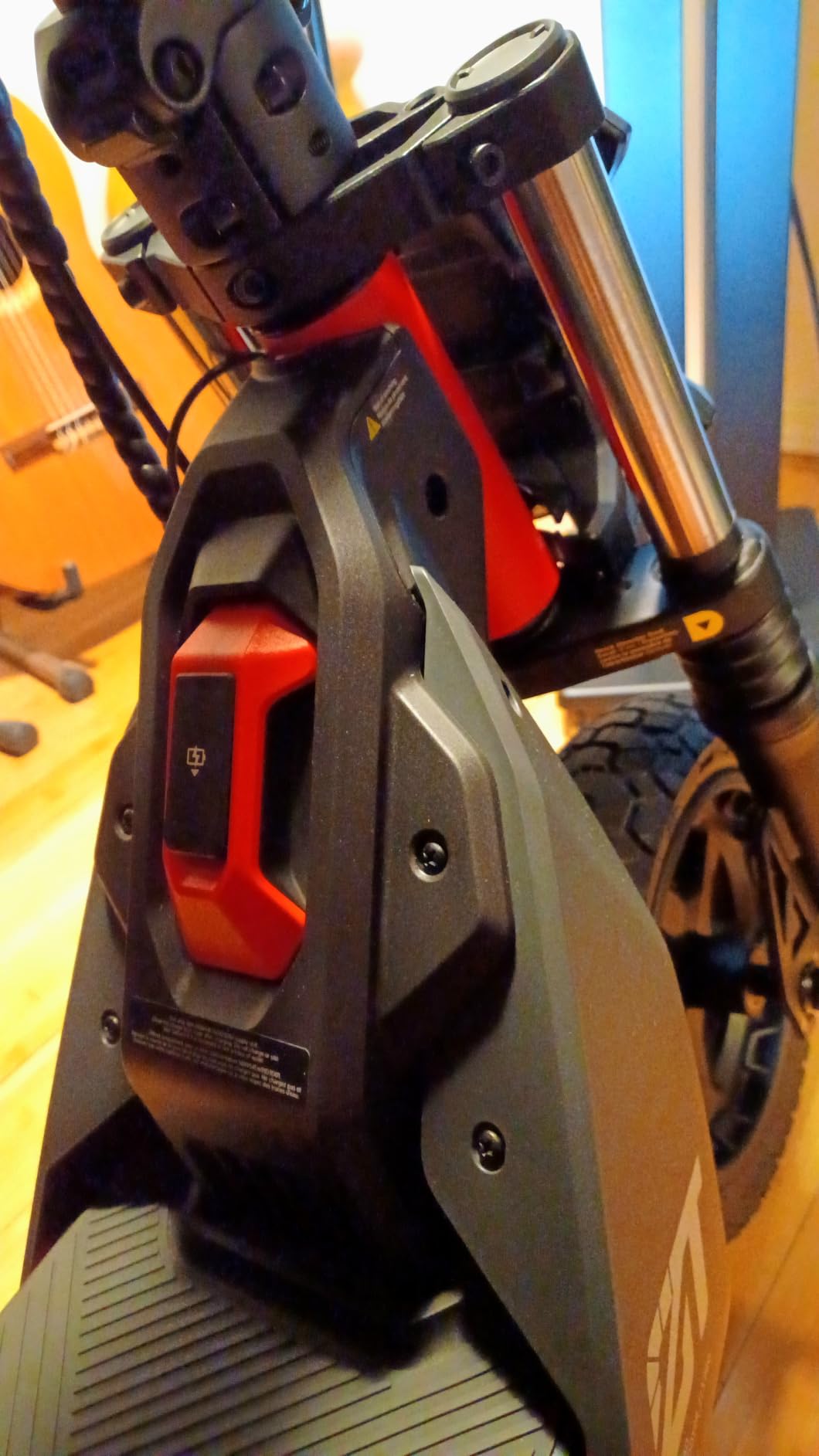
The ZT3 Pro is the only scooter in this group that arrives with a name most riders already trust, and it backs that up with the strongest certification story we found. ANSI/CAN/UL-2272 certification from TUV Rheinland, IPX5 water resistance, a Traction Control System, and a 2-year warranty on core components is a genuinely different level of after-sale commitment than the rest of this list offers.
What impressed me most is the 43.5-mile ECO range claim. On a mixed trail day with a 200 lb rider climbing regularly, expect meaningfully less than that, but it is still the biggest battery in the group and it recharges in 4 hours.
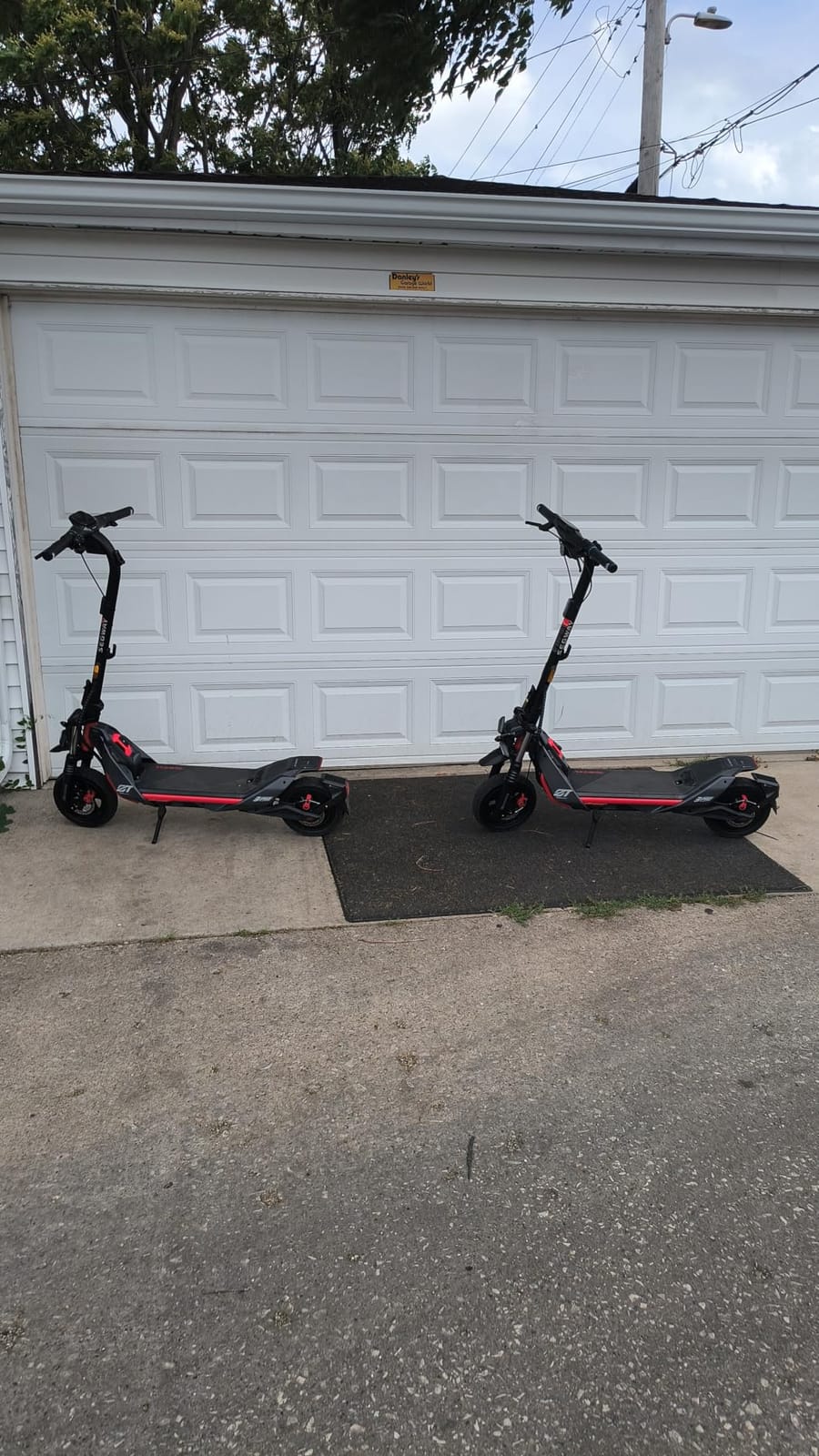
The 11-inch tubeless off-road tires are the quiet hero here. Tubeless construction means a thorn or a rock edge can often be repaired with a plug instead of a full tube swap, which on a remote fire road is the difference between a ride and a walk out. The dual telescopic front fork and rear spring suspension smooth out chatter better than spring-only budget forks.
Reviewers report the control at low speed is the standout, particularly the SegRide handlebar and the 3-inch display that keeps speed and battery visible on rough ground. The frame is high-strength steel, which adds 65.5 lb of bulk, and the 25 mph ceiling is well below the 40-plus mph of the higher-powered picks here.
What it handles better than the rest
Long trail days on mixed ground, and riders who split time between pavement and dirt. The tubeless tires, long range, and 4-hour recharge mean fewer stops and fewer roadside repairs than anything else we reviewed.
It is also the safest pick for a first-time off-road buyer, because UL-2272 certification and a traction control system are real, verifiable hardware advantages when you are learning to ride standing up on loose ground.
Where it falls short
It is not a hill-climbing machine. The 1600W peak motor with a 25 percent hill rating will pull a moderate grade but will not maintain pace on a sustained steep climb, where the Kukirin G4 or the KULLTER clearly pull away.
At 65.5 lb, you will not be carrying this into a treeline or up to a hunting stand. Plan rides that start from a roadhead and stay there.
2. Kukirin G4 – Best for Steep Hill Climbs
Electric Scooter Adults Kukirin G4 60V2000W Motor,Up to 43MPH,Battery Range to 47Miles Fast Sports Escooter 11″ Off Road Escooter,Double Braking System Adult Scooter
2000W motor
43 mph top speed
60V 20Ah battery
47-mile claimed range
Pros
- 2000W motor with 43 mph top speed
- 60V 20Ah battery rated to 47 miles
- 11-inch tubeless off-road tires with repair fluid
- Front and rear dual shocks with disc brakes
- Modular design for easier repair
Cons
- 12-hour charge time is the longest in this group
- Brakes are adequate but not sharp
- Around 81 lb is very heavy to carry
- Brake line can catch in the folding mechanism
If climbing is your primary objective, the G4 is the one. A 2000W motor, a 43 mph top speed, and a 20-degree stated climbing angle put it firmly in the class of scooters that can hold speed up a grade that would force a 1200W scooter to crawl. Reviewers consistently call the suspension the best part of the scooter, which is unusual praise from owners who bought it for power.
The 60V 20Ah pack is one of the largest in the group, and at least one owner reports matching the 40-plus mile claim in real use on mixed terrain. The 11-inch off-road pneumatic tubeless tires ship with tire repair fluid in the box, which tells you the manufacturer expects punctures.
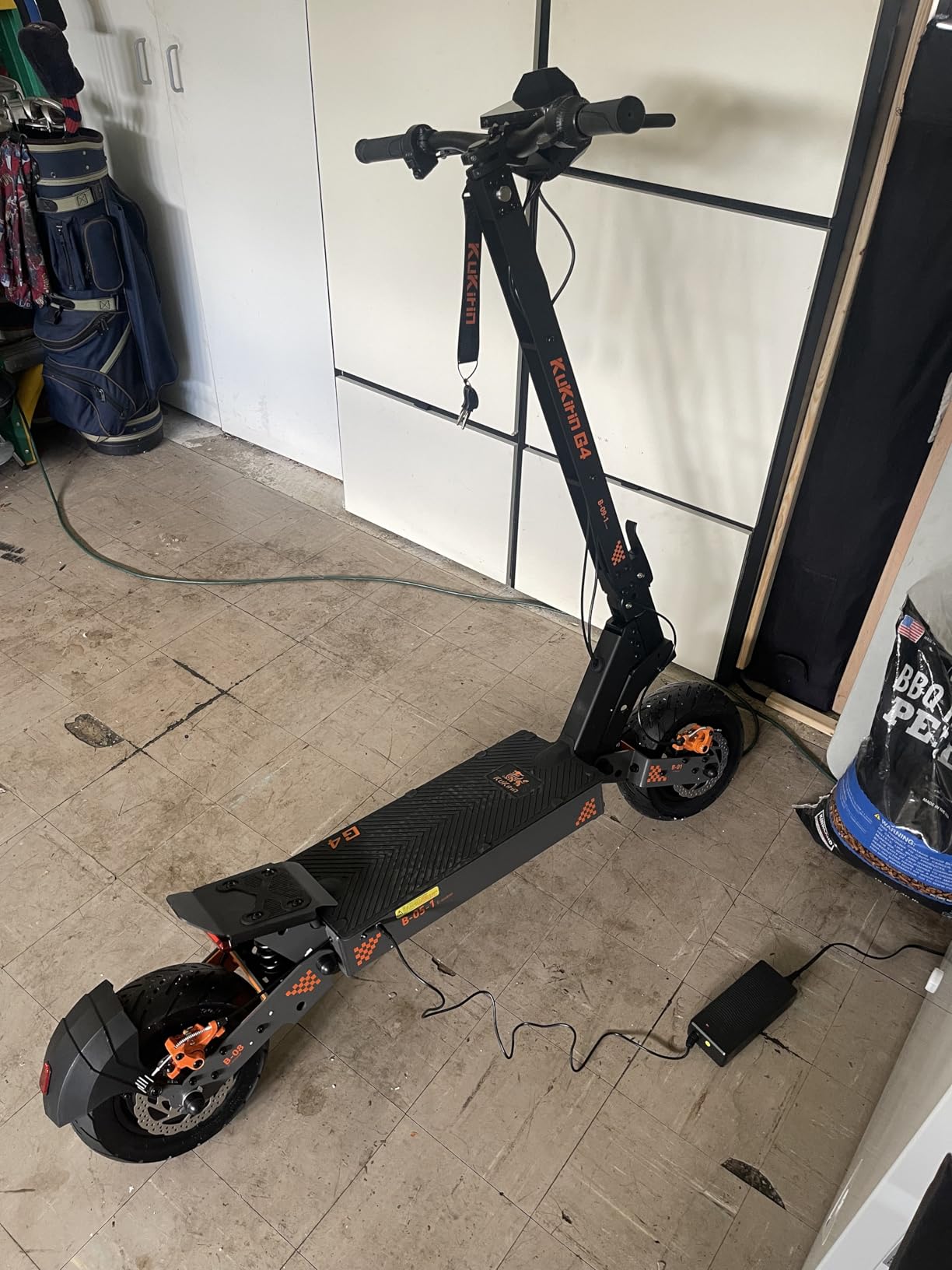
Two things temper the excitement. The 12-hour charge time is the longest of any pick here, which means trail-day logistics have to be planned around an overnight charge rather than a lunch-stop one. And while the brakes are front and rear discs, owners describe them as adequate rather than sharp, which matters if you ride long descents.
Reviewers also report a brake line that can catch in the folding mechanism, plus a failed charger and a broken throttle cable in early ownership. At roughly 81 lb per owner reports, this is a two-person load in most cases.
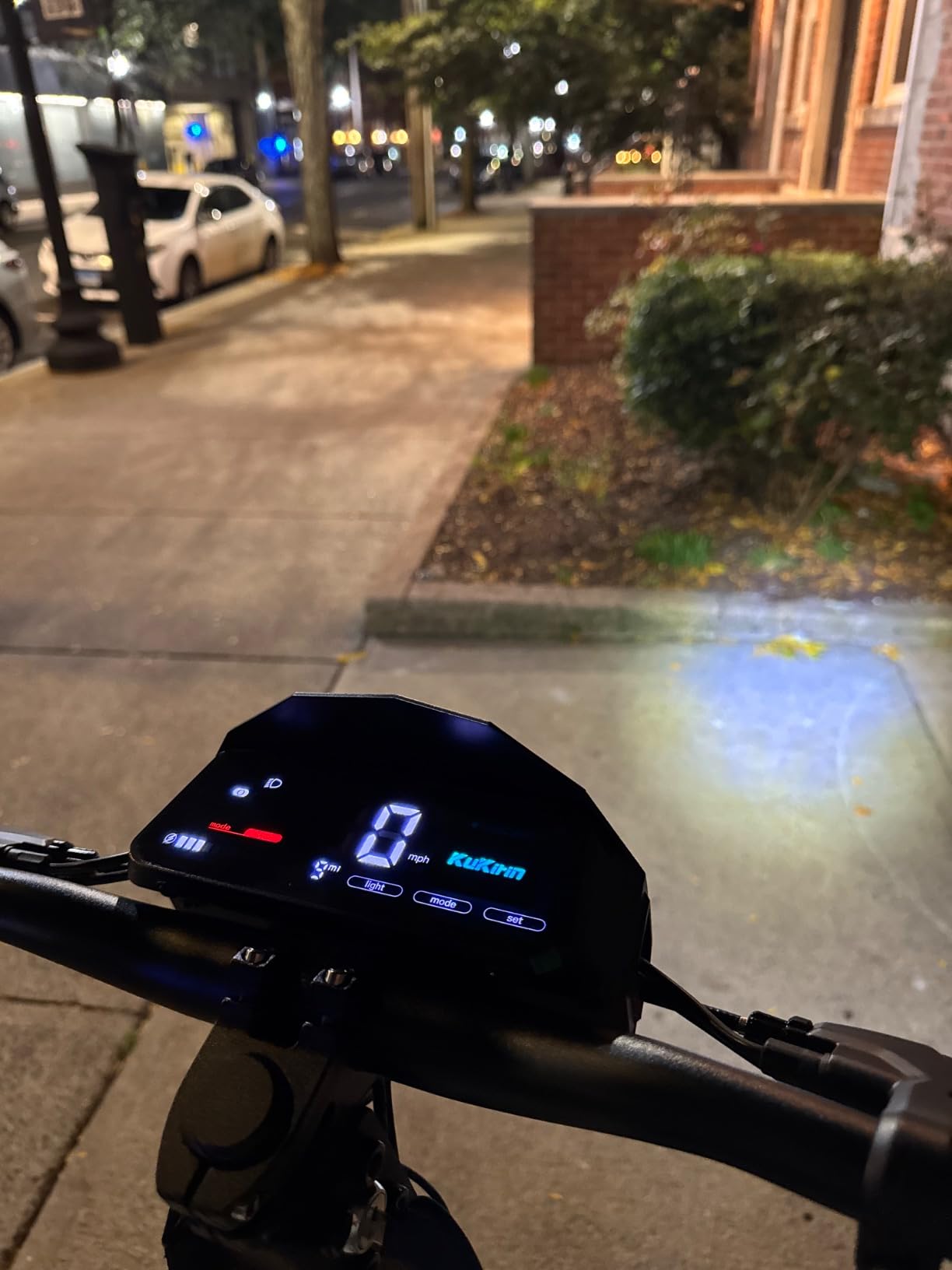
Who should buy the G4
Riders with a steep, repeating climb in their regular route, and anyone who wants speed on dirt rather than just the ability to survive it. Below 20 degrees of sustained grade, this is more than enough power for gravel roads and forest track.
It also suits riders who want a repairable machine. The modular design is a deliberate choice, and parts and troubleshooting burden is a known trade-off across this whole category.
Who should look elsewhere
Anyone who needs to recharge quickly between short rides, or who has to carry the scooter any distance. Twelve hours of charging and 81 lb of weight are the two numbers that rule this model out for a lot of riders.
If your terrain is wide graded gravel rather than steep climbs, the Circooter Landturbo or the OOTD T10 give you more range per watt and a lighter carry weight.
3. NAVEE UT5 / XT5 Pro – Best for Wet and Muddy Trails
NAVEE XT5 Pro Electric Scooter, 30 mph Speed, 46.6 Miles Range, 2200W Peak Motor, Dual Damping Arm Suspension & Disc Brake, Fast Charging, Adults Teens, 12″ Off-Road Tires, Heavy Duty
2400W peak motor
12-inch tubeless off-road tires
IPX6 rated
330 lb max load
Pros
- IPX6 waterproof rating is the highest here
- 12-inch tubeless off-road tires
- Patented damping arm suspension
- Front and rear discs plus EABS with regen
- 1.25-1.5 hour flash charging
Cons
- 76.7 lb is impractical to carry
- Smallest review base in this group at 57
- Spec data lists solid wheels against tubeless marketing
- Listed variants disagree on range
Mud defeats most scooters in this category, and the single hardware feature that helps most is an IP water rating. The NAVEE carries IPX6, which is the highest rating we found in this group and meaningfully above the IPX4 and IPX5 seen on cheaper platforms. If you ride in a wet climate or cross seasonal puddles and stream crossings, that rating is the reason to look here first.
The 12-inch tubeless off-road tires are the largest here, and the patented damping arm suspension is designed to control the wheel movement that causes wobble at low speed on rough ground. Feedback from owners centers on exactly those big tires and the damping feel.
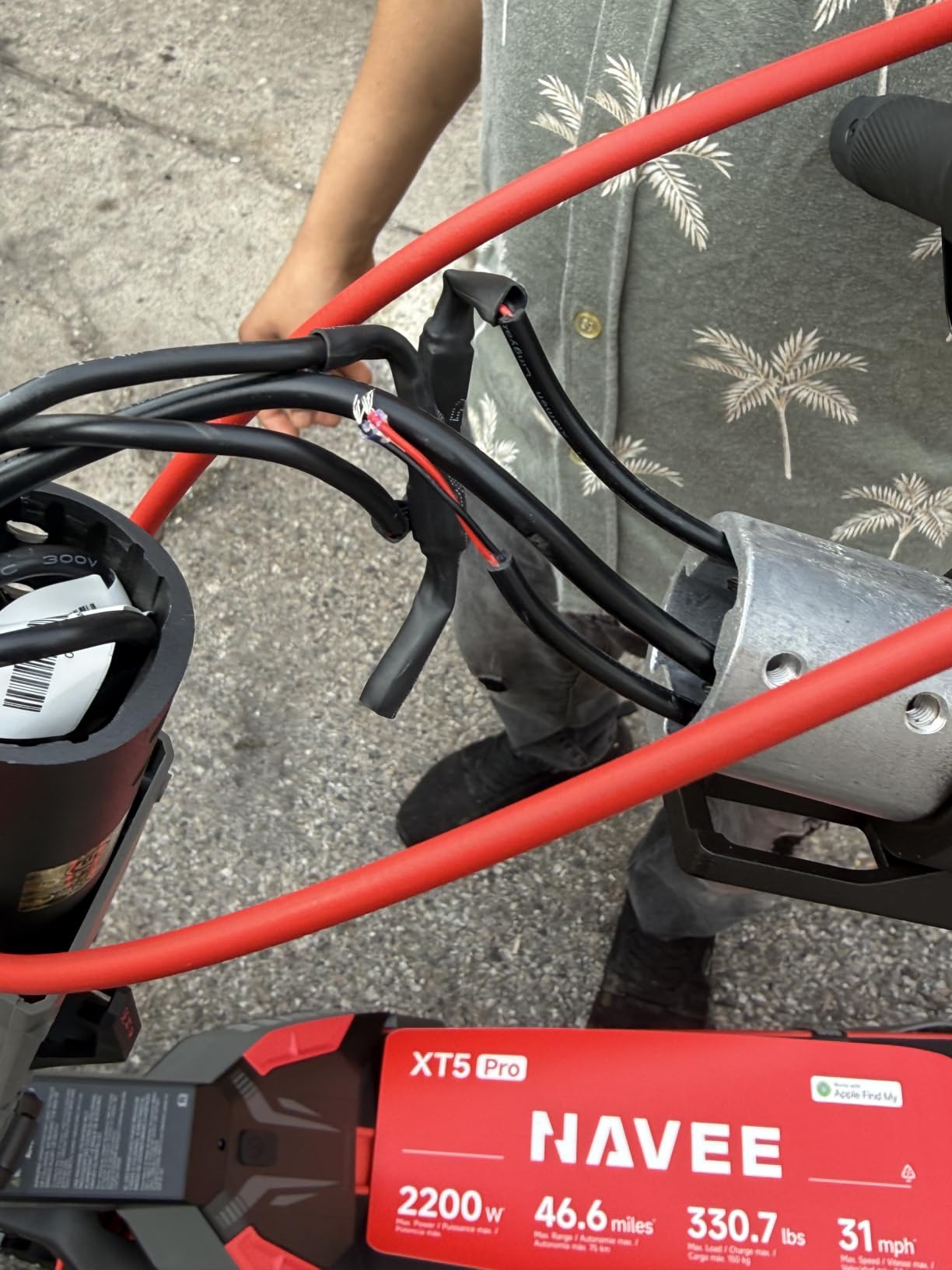
Braking is genuinely well specified for the class: a front disc, a rear disc, and EABS with regenerative charging. The 1.25 to 1.5 hour flash charge is the second-fastest recharge in the group after the Arwibon, and the 330 lb capacity covers heavier riders comfortably.
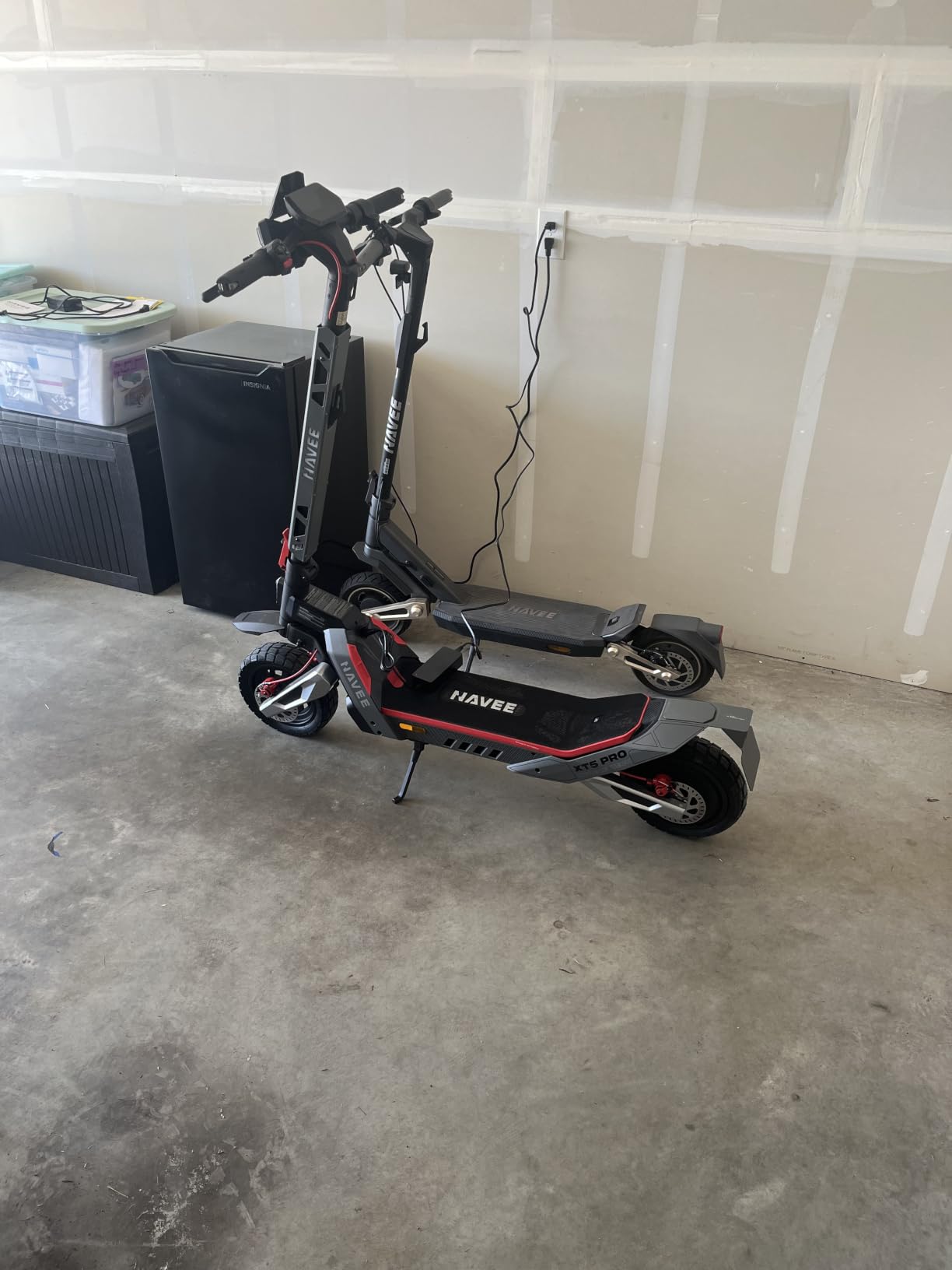
Two honest caveats. The spec data lists the wheel type as solid while the listing markets tubeless off-road tires, so verify the tire construction before you rely on plug repairs. And the listing bundles several variants, with owners reporting range figures that vary widely between the UT5, XT5, and NT5 versions.
Where it earns its badge
Wet grass, muddy access tracks, and any trail that sees standing water. The IPX6 rating plus the largest tires in the group give it the best starting point in the conditions riders most often ask about in forums.
It also suits riders who want trail hardware for the commute. The Traction Control System, four riding modes, app-based speed limiting, and Apple Find My support are all daily-riding features rather than trail-only ones.
Where it falls short
At 76.7 lb it is one of the heaviest scooters here, and with only 57 reviews the long-term durability record is the thinnest in this group. You are buying new hardware with an unproven track record.
Reviewers are also candid that the variant labeling makes the spec sheet hard to trust. Confirm the exact model and tire type with the seller before ordering.
4. Circooter Landturbo – Best Value for Gravel Roads and Forest Trails
Circooter Landturbo Electric Scooter for Adult 28MPH & 40 Miles 1000W
1000W high-torque motor
40-mile range
10-inch off-road vacuum tires
330 lb max load
Pros
- 40-mile range at a mid-range price
- 10-inch off-road vacuum tires
- Dual swingarm suspension with wobble-free steering
- UL 2272 certified by SGS
- Front and rear dual disc brakes
Cons
- 1000W motor is weaker than 1200W-2000W trail rivals
- 6-7 hour charging is long for the pack size
- 63 lb is substantial for a folder
- Accessory warranty is only 6 months
The Landturbo sits in the middle of the group on every spec and comes out ahead on the combination that matters for most trail riders. A 40-mile range, 28 mph top speed, dual swingarm suspension, and dual disc brakes for a mid-range price point is hard to argue with for graded gravel and forest path work.
What we like most is the wobble-free steering technology paired with the swingarm suspension. On a 10-inch off-road vacuum tire setup, the wheel has less sidewall flex than a smaller tire, and the steering geometry keeps the front end tracking on rutted ground.
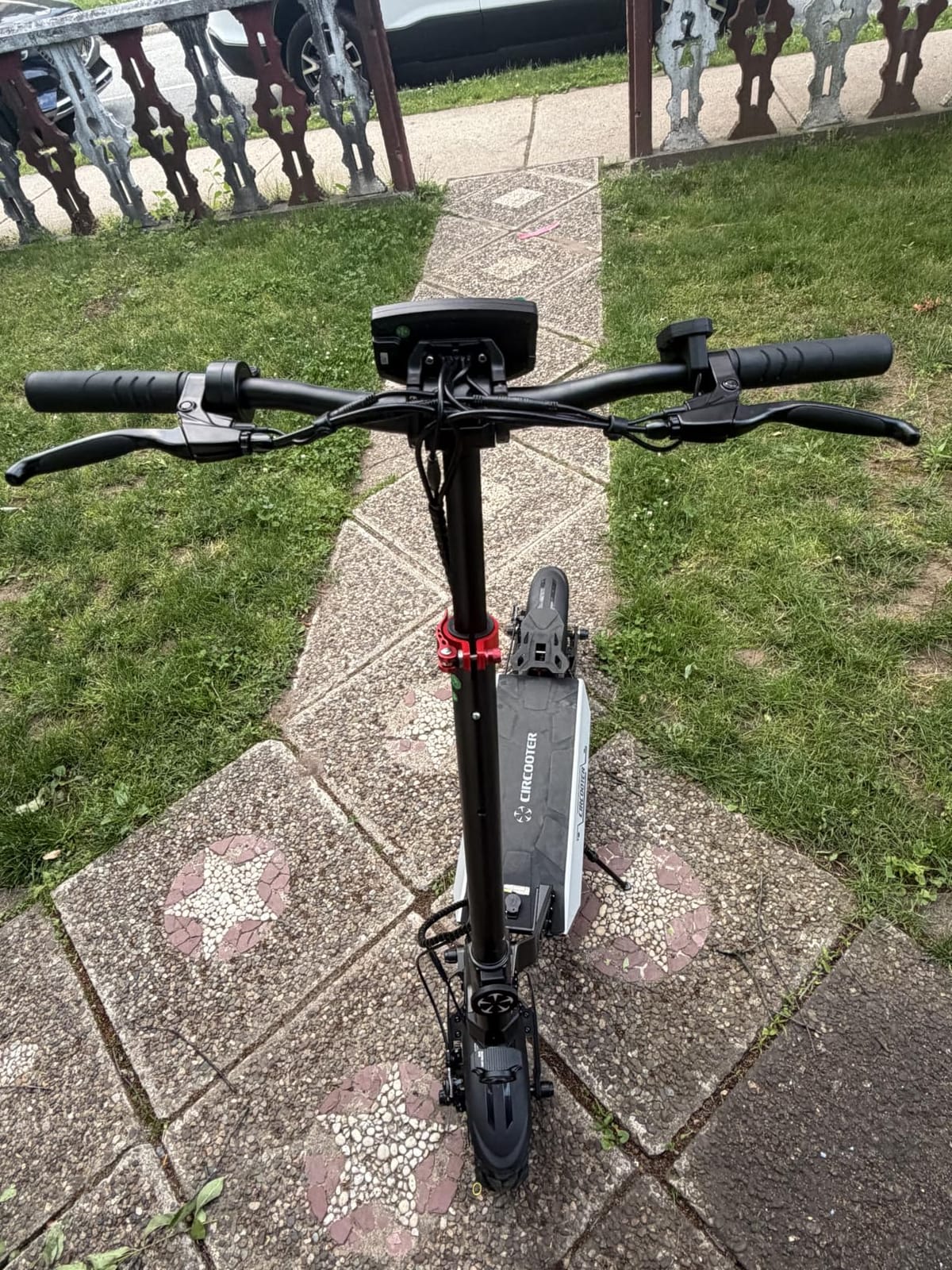
Certification is a real differentiator at this level. ANSI/CAN/UL 2272 certification by SGS is the same standard the Segway carries, and almost nothing at this price point has it. The 330 lb capacity is among the highest here, so heavier riders are not excluded.
The honest limitation is power. A 1000W high-torque motor with 28 mph on the flat will not hold pace up a sustained grade the way a 2000W scooter will, and the 6 to 7 hour charge is long relative to a 48V 13Ah pack. The accessory warranty is only 6 months, though motor and battery coverage runs 180 days.
Who this works for
Riders on graded gravel roads, forest service roads, and long packed-dirt paths who want maximum miles per charge rather than maximum speed. The 40-mile claim is realistic on flat to rolling terrain at eco speeds.
It is also our pick for riders above 250 lb who want trail capability without stepping up in size, because 330 lb of rated capacity is unusual in this tier.
Who should skip it
Anyone whose trails involve real elevation. Below about 15 degrees of sustained grade you will be fine; beyond that, the power drop shows and you will be riding the brake more than the motor.
The 6-month accessory warranty also makes it a poor choice if you ride through rocky terrain that eats tires and pads quickly, where a longer parts window matters.
5. R ROVORON REYWMER KULLTER – Best for High-Power Dual-Motor Riding
Electric Scooter, 60V 23.4AH, Dual Motors Electric Scooter(Peak 5600W), 50MPH Top Speed, 10-Inch Off-Road Tires, 360° Lights, Front & Rear Dual Suspension, Quick Fold, High Weight Capacity
Dual 1300W motors
4000W combined peak
50 mph top speed
Full hydraulic discs
Pros
- 4000W combined peak from dual 1300W motors
- 50 mph top speed and 30-degree climb rating
- Full hydraulic disc brakes front and rear
- 10-inch knobby tires with dual suspension
- 3-second quick fold
Cons
- 91 lb is the heaviest scooter listed
- 13-hour charge time is the slowest here
- Only 30 reviews gives the thinnest feedback base
- Spec data lists solid tires against knobby tubeless marketing
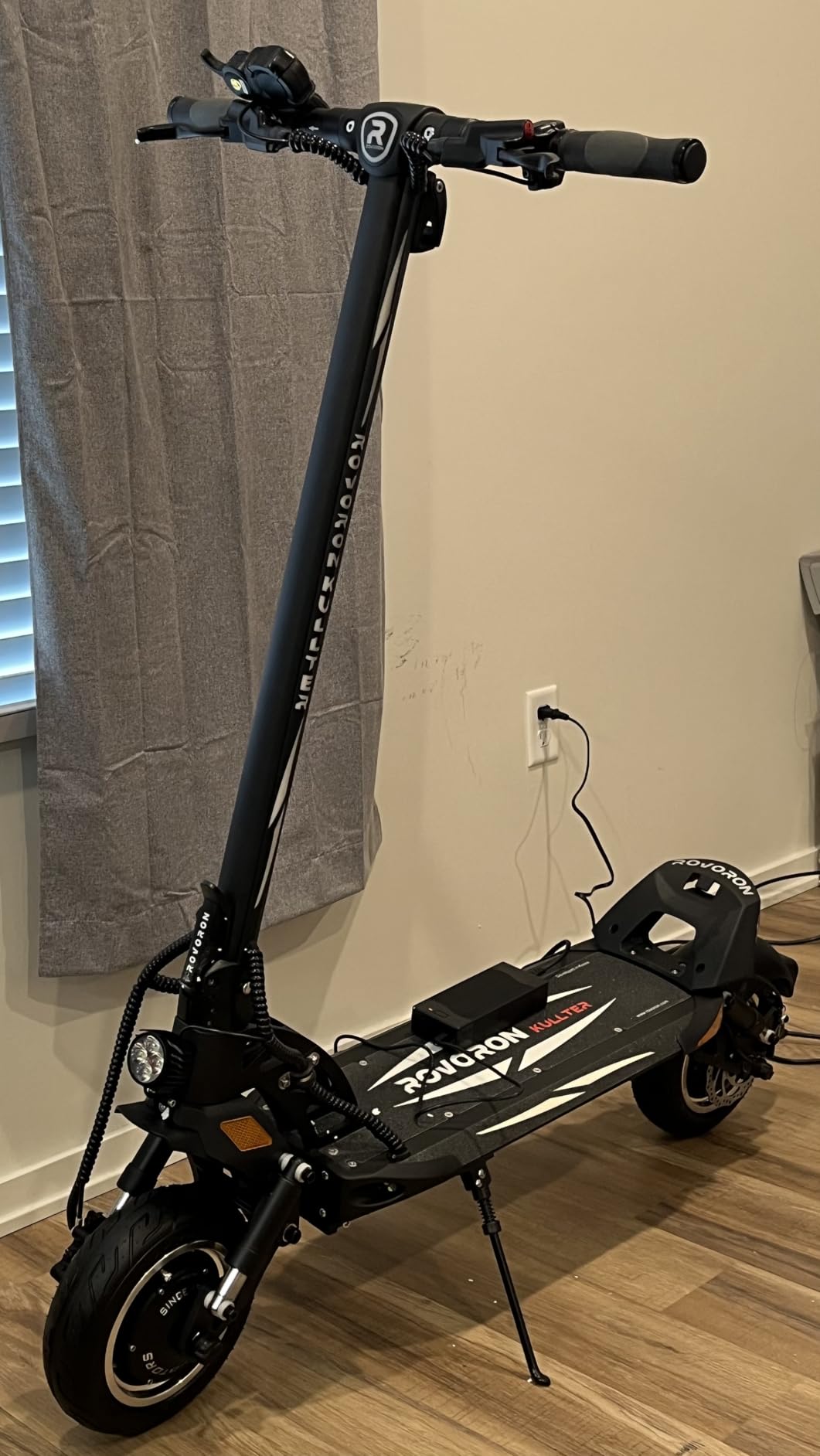
The KULLTER is the only scooter in this group with two motors, and that changes what it is for. Dual 1300W motors combine for 4000W of peak power, a 50 mph top speed, and a stated 30-degree climbing ability, which is the steepest climb figure any pick here claims.
Full hydraulic disc brakes front and rear are the other headline. Hydraulics deliver consistent stopping power under repeated use and do not fade the way cable-actuated mechanical discs do on a long descent, which is exactly the scenario that catches riders out on hilly trails.
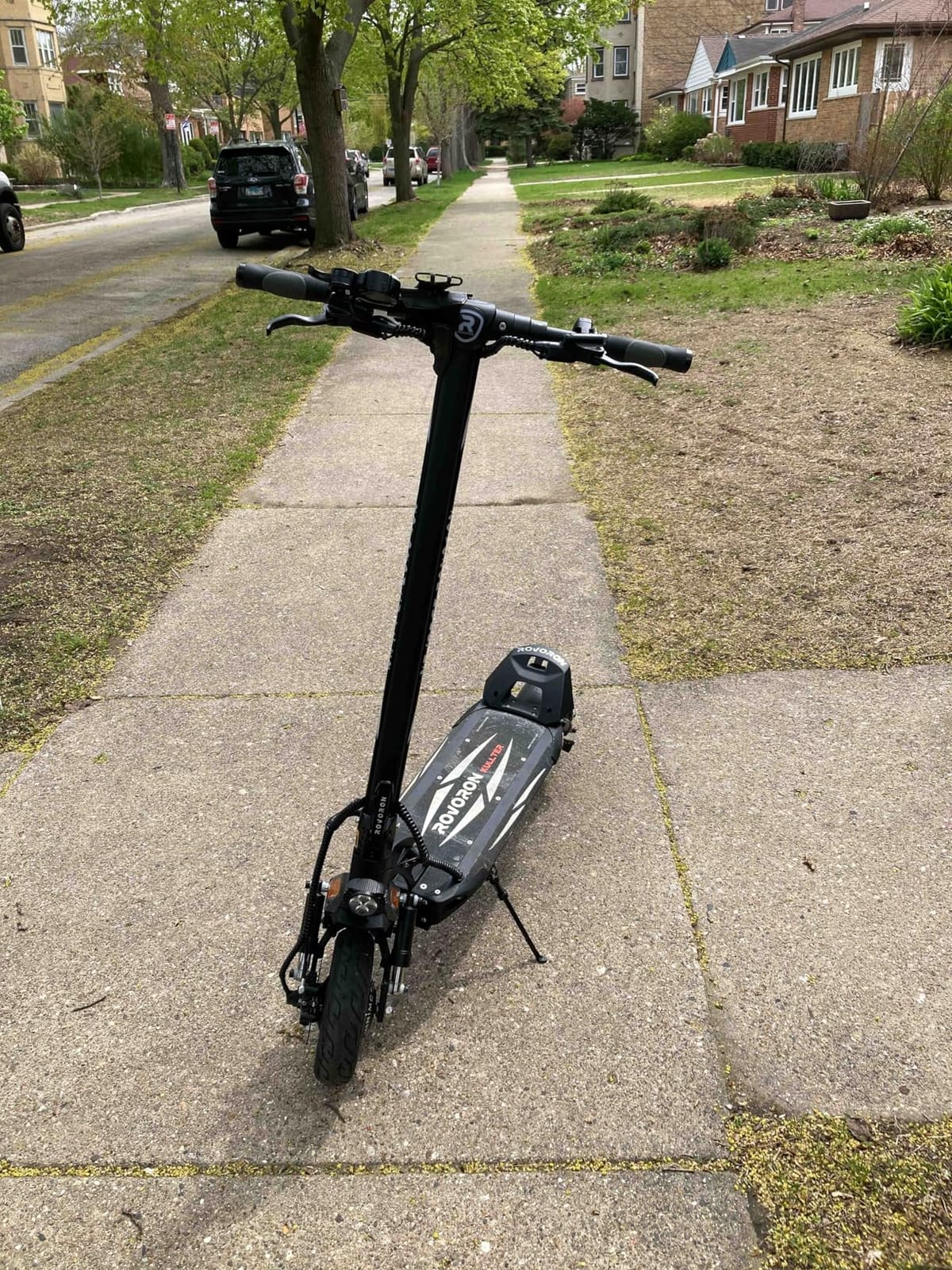
The 360-degree LED lighting with ground projection logos makes this the best-equipped scooter here for riding at dusk, and visibility matters more on trails than on pavement because there is no traffic lighting you up for you.
The trade-offs are substantial. At 91 lb it is by far the heaviest machine in this group, and the 13-hour charge time is the slowest we recorded. With 30 reviews, the durability data is thin, and the spec block lists solid tires while the listing markets knobby tubeless tires, so confirm what you are actually receiving.
Why riders choose it
Steep, sustained climbs and high-speed open terrain, and any rider who wants the security of hydraulic brakes on a descent. The 30-degree climb rating is the deepest capability claim in this group, and the dual-motor setup gives real torque on loose surfaces.
The 300 lb capacity is a step down from the 330 lb rated on several cheaper scooters, so heavier riders should check their weight against that figure carefully.
Why we would not start here
91 lb is a car-trunk problem, not a carrying problem. If your trailhead requires a walk of any real distance, this is the wrong scooter no matter how capable it is.
Combined with 13-hour charging and a 30-review track record, this is a machine for riders who have somewhere to charge overnight and accept that they are early adopters of the spec.
6. iScooter iX3 – Best Value Pick for Light Trails
iScooter iX3/iX4 Electric Scooter, 10″ Off-Road Tires, 25/28 Miles Range
800W brushless motor
10-inch off-road pneumatic tires
25-mile range
264 lb max load
Pros
- Deepest owner feedback base here at 721 reviews
- 10-inch off-road pneumatic tires
- Front and rear dual shock absorbers
- Foldable with adjustable handlebar height
- App control with top speed setting and lock
Cons
- 800W motor is modest against higher-powered trail models
- 264 lb capacity is lower than many rivals
- One-piece pre-assembled design limits servicing options
- 7-hour charge time
With 721 reviews and a 4.2 average, the iX3 has the most owner history of anything we reviewed, and that matters in a category where durability is the biggest unknown. Sixty-eight percent of reviews are five-star, and the praise concentrates on the off-road tires, the suspension, and the foldable adjustable design.
It is also the lightest of the dual-suspension scooters here at 51 lb, which changes the calculation for riders who cannot carry 70-plus pounds to a trailhead. The 800W motor handles 20 to 25 degree slopes per the spec sheet, and the 480Wh battery gives a 25-mile cruising range.
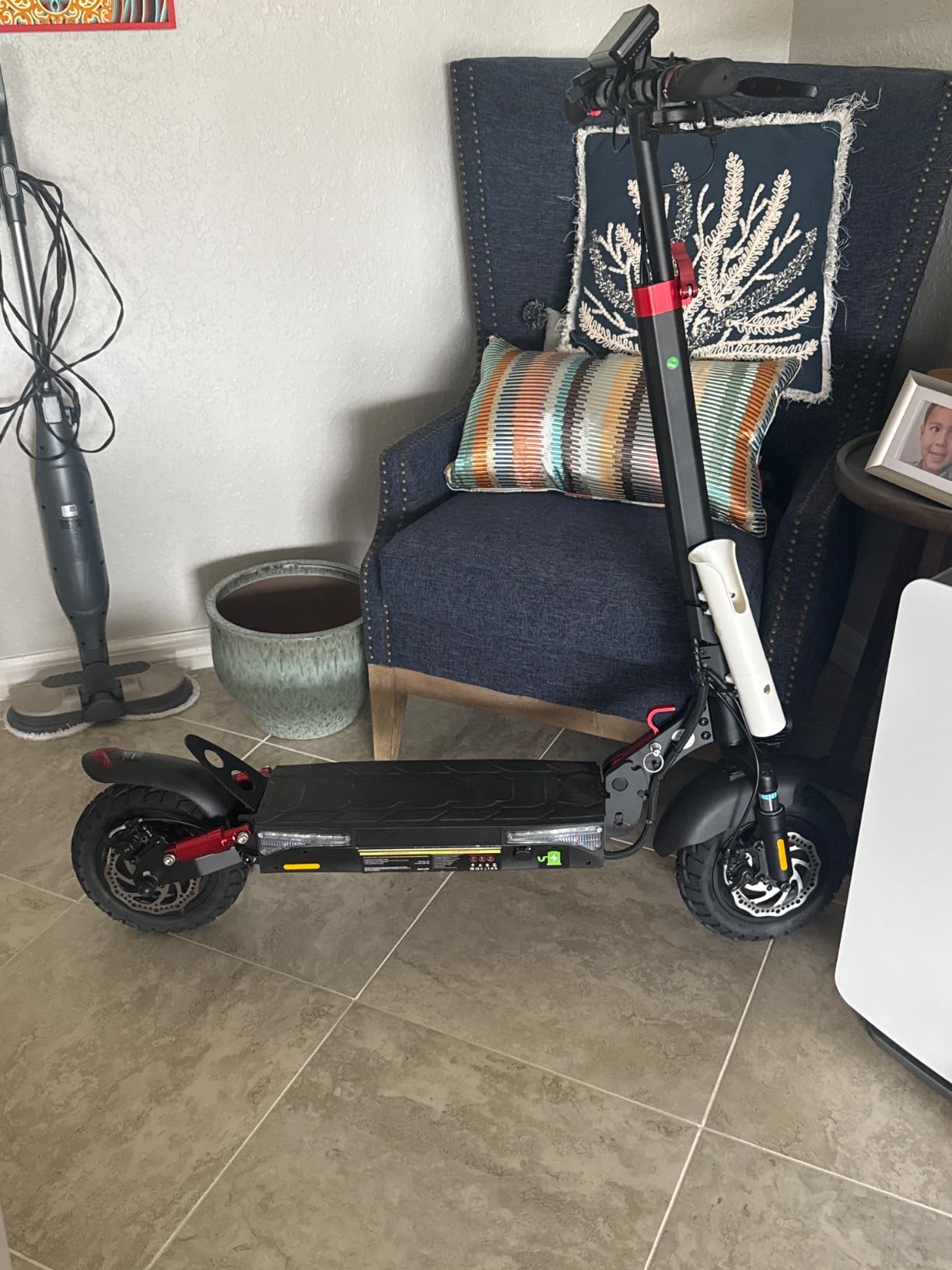
Three speed modes (ECO at 10 mph, STD at 18 mph, and a turbo setting), a full-color LCD, directional signals, ambient lighting, and a head and tail light package make it practical after dark. The iScooter Club app handles top speed settings and a lock function.
The 264 lb weight capacity is the number to check first. That is low for an adult trail scooter, and it is the most likely reason a heavier rider would need to step up a size. The one-piece pre-assembled design also limits what you can service yourself when something fails.
Where it makes sense
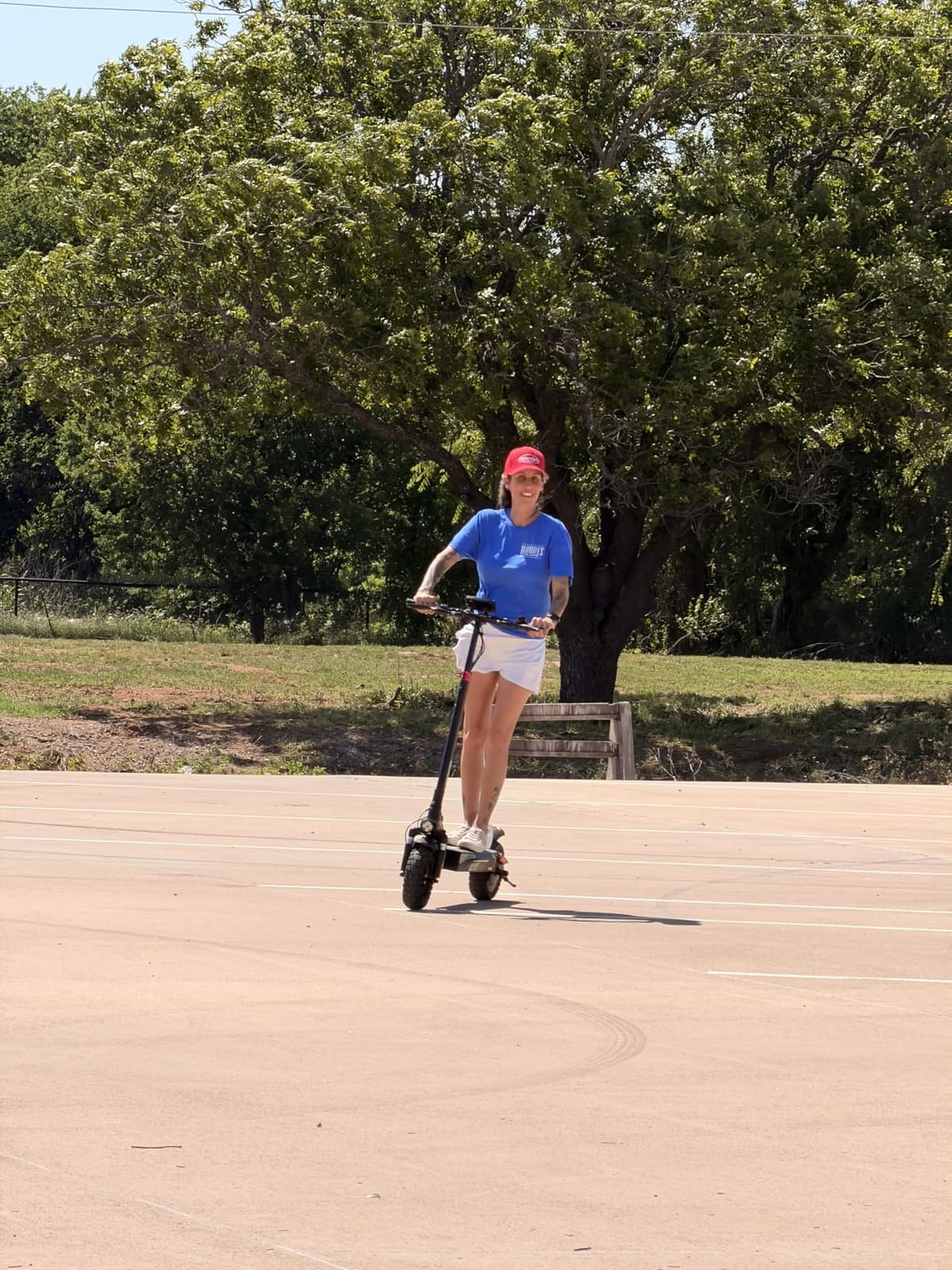
Light trail work: park paths, gravel lanes, dirt shortcuts, and short woodland routes where you want pneumatic tires and dual shocks without carrying 70 lb. The fold and adjustable 44.5 to 52.8 inch handlebar make storage in a small vehicle realistic.
For riders under about 240 lb who want a dependable first trail scooter, the owner feedback volume here is a real advantage over a speculative purchase.
Where it is the wrong tool
Long descents and steep grades. An 800W motor with a 25-degree slope claim sounds capable until you are loaded with 200 lb plus gear on a sustained 15 percent climb, at which point the scooter is relying on its brakes to control descent speed.
Reviewers also note front and rear double braking systems without specifying hydraulics, so on steep downhill terrain the EABS and cable setup is the limiting factor rather than the motor.
7. OOTD T10 – Best for Long Gravel Days
T10 Electric Scooter for Adults, 11″ All-Terrain Tire Up to 46 Miles Range
46-mile claimed range
745W motor
35-degree climb rating
265 lb max load
Pros
- 46-mile claimed range is class-leading
- 35-degree climb rating from a 745W motor
- 11-inch semi-off-road tubeless tires with dual shocks
- Two oversized LED headlights plus turn signals
- 2-year frame warranty plus 1-year electrical
Cons
- Iron frame feels heavy next to aluminum rivals
- 265 lb capacity is low for adult trail riders
- 745W is modest against 1000W-plus scooters
- Large sizing excludes riders under 160 cm
The T10 is the range specialist of this group. A 48V 18Ah battery with a claimed 46 miles, three speed modes topping out at 31 mph, and a 35-degree climb rating from a 745W brushless motor is an unusual combination, and the sales rank on the listing shows this model is being bought in volume.
Owners repeatedly single out the long range, the lighting package with two oversized LED headlights plus a rear light that handles brake and turn signal functions, and the smoothness of the dual shocks over 11-inch semi-off-road tubeless tires.
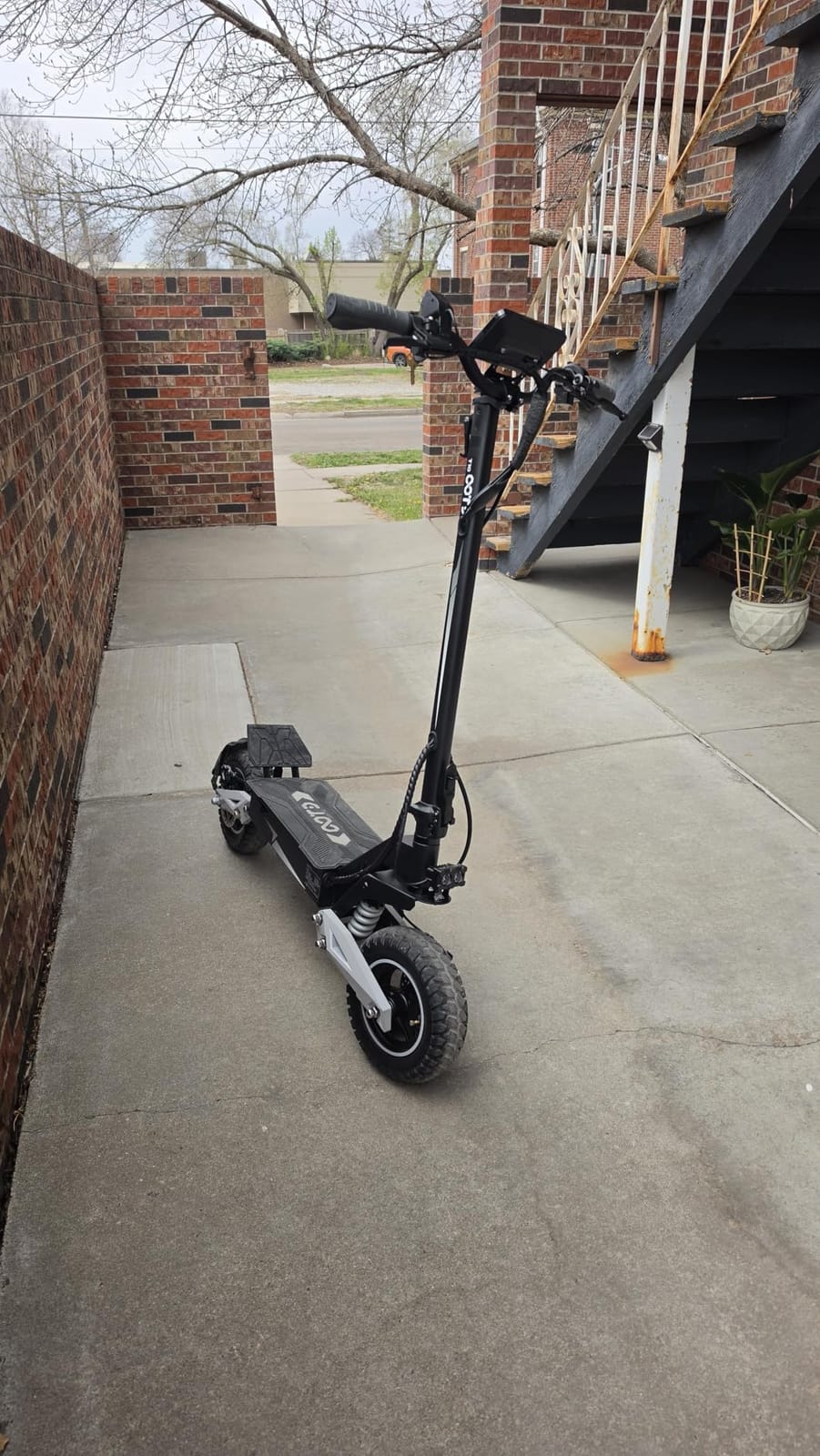
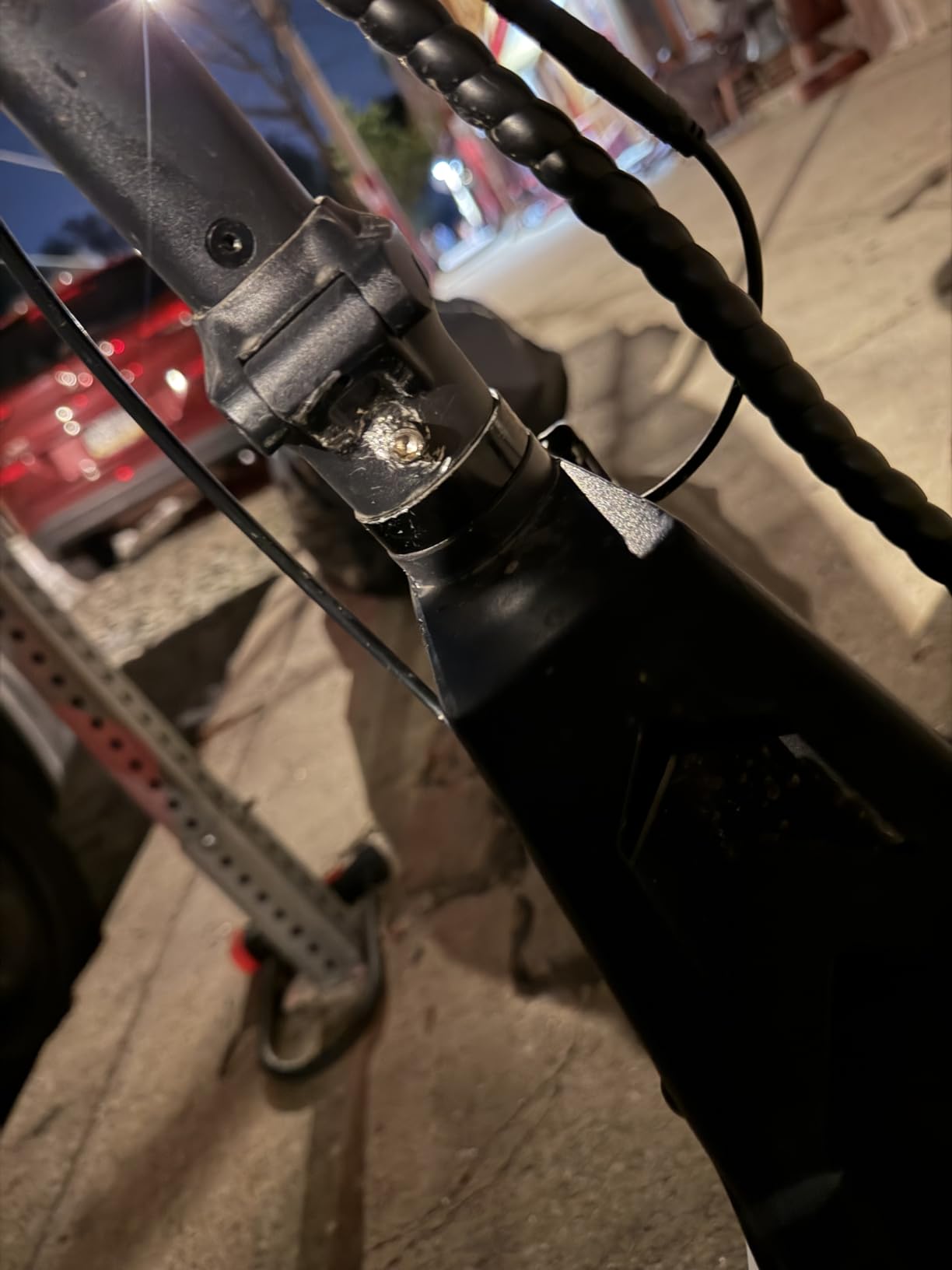
The 2-year frame warranty and 1-year electrical coverage are the second-longest coverage in this group, and the UL 2272 certified electrical system is a genuine spec-sheet tick. A 90 percent pre-assembled quick-folding frame means less setup time at the trailhead.
The frame is iron rather than aluminum, which is part of why it lands at 62 lb despite the large battery. The 265 lb maximum load is the constraint here, and the large adult-only sizing excludes riders under 160 cm, so this is firmly a big-rider scooter.
What it does better than the rest
Long days on gravel and fire roads where you want maximum distance per charge and per night of charging. The 6-hour charge time is far better than the 12 and 13-hour figures on the higher-powered picks.
The lighting and warranty package also make it the most practical option for riders who want one scooter for a long trail day and then a normal week of commuting.
Where it stops being the right pick
At 745W, it is a range scooter rather than a power scooter. On loose dirt or mud, where traction demands torque rather than momentum, the climb rating is doing more work than the motor is.
Riders above roughly 240 lb should rule it out on the 265 lb capacity alone, and anyone short of 160 cm is outside the intended fit.
8. iScooter iX5S – Best for Rooted Woodland Trails
iScooter 1000W Electric Scooter for Adults,Off-Road Tires,Dual Suspension
1000W motor
11-inch off-road tires
48V 15Ah battery
330 lb max load
Pros
- 11-inch off-road tires with dual front shocks and a rear central shock
- 330 lb load capacity
- 48V 15Ah battery rated 30-40 miles
- Dual disc brakes plus EABS
- Front rear and side lighting
Cons
- 8-hour charging is long for the pack
- Some riders report speed below the advertised 28 mph
- A minority report throttle failures and difficult after-sales support
- 60 lb is awkward to lift unaided
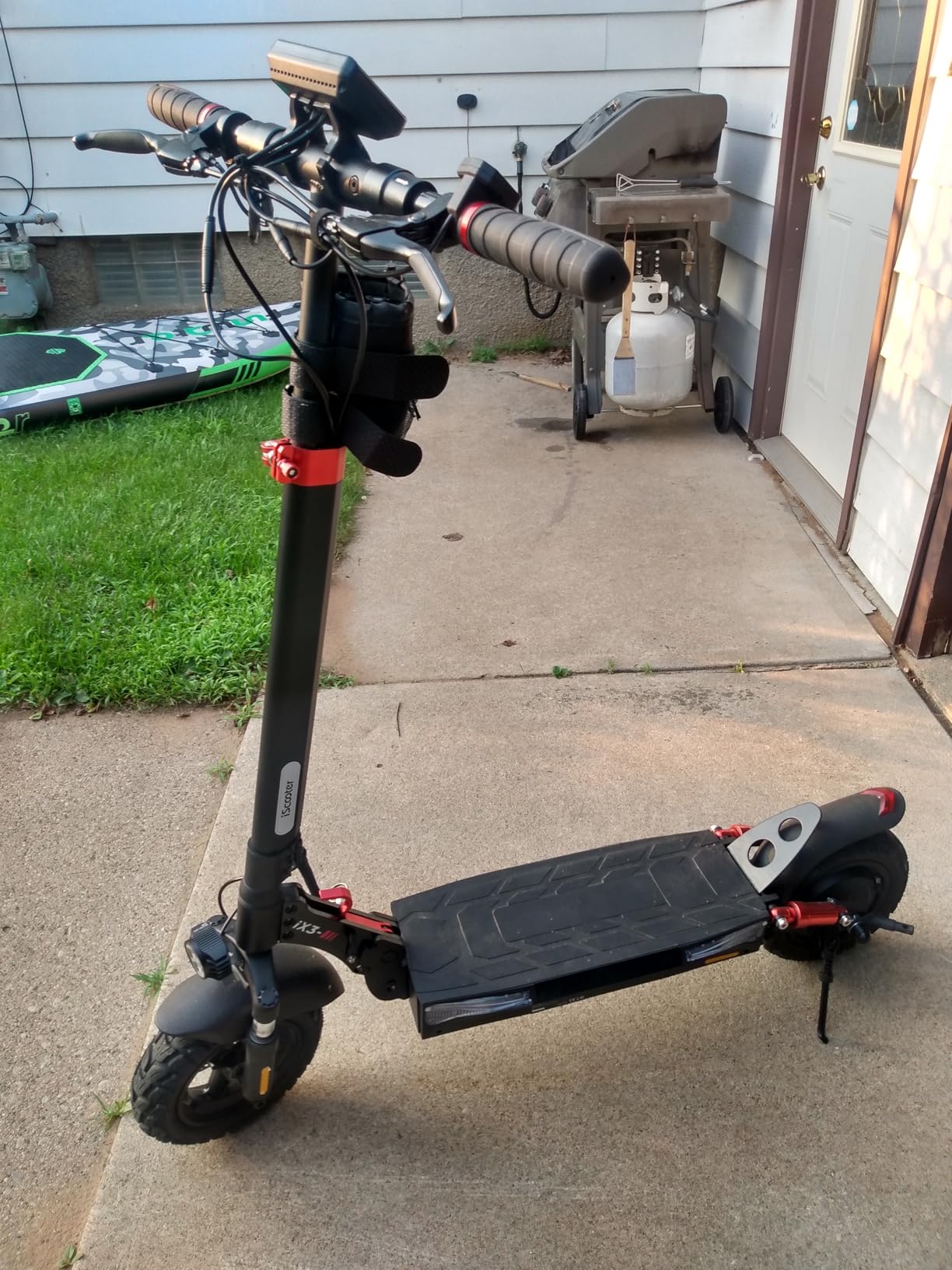
Where the iX3 is a generalist, the iX5S is built around suspension and load. Dual front shock absorbers plus a rear central shock on 11-inch off-road tires is the configuration that keeps a scooter composed over root networks, where the front wheel takes a hit and the rear needs to follow it down.
The 330 lb maximum load is the joint-highest here, which makes this one of the few trail scooters that genuinely accommodates heavier adults without a size upgrade. The 48V 15Ah battery gives a 30 to 40 mile range, and dual disc brakes paired with an electronic braking system give layered stopping.
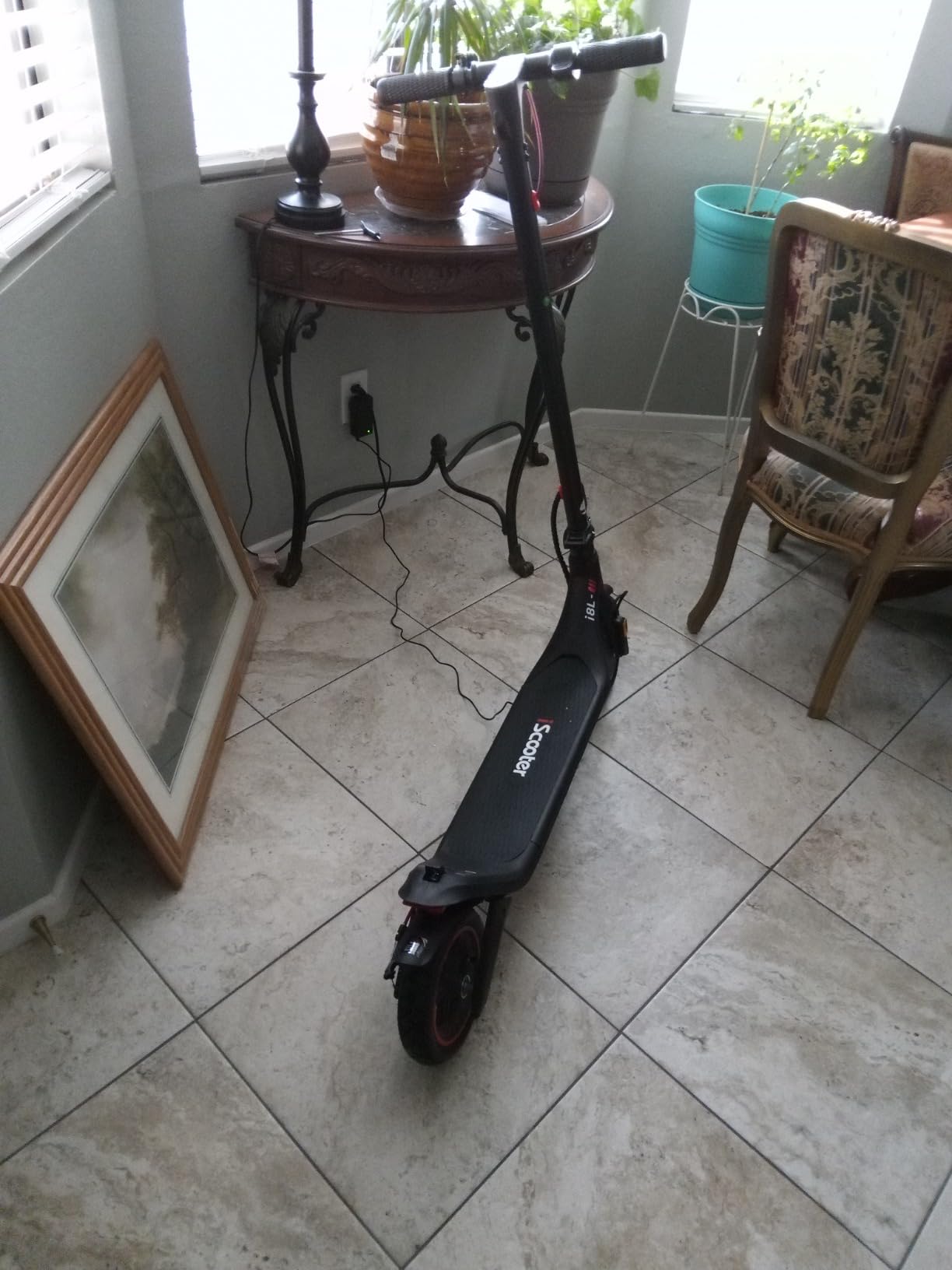
Four speed settings at 9, 15, 21, and 28 mph give finer control than the three-mode platforms elsewhere, which is useful on technical ground where you want to creep. The front, rear, and side lighting is a nice touch for early morning rides.
Reviewers report actual speed sometimes landing below the advertised 28 mph, which is worth knowing before you plan a fast descent. A minority also report throttle failures and difficulty getting after-sales support, and the 8-hour charge time is long for a 48V 15Ah pack.
Where the extra suspension pays off
Rooted single-track-style forest paths, rutted woodland trails, and gravel with washboard sections. The dual front shocks are the difference between the handlebars tracking and the front wheel bouncing over a root.
For heavier riders, this is one of the two picks here rated above 320 lb, alongside the EOEOTWO GT06 and the OBX models, which is a genuinely short list in this category.
What to watch for
Over-soft handling in deep grass is a complaint owners raise, and the throttle and support issues are worth factoring in if you ride far from home. Service responsiveness is something forum riders ask about repeatedly in this category, and it varies sharply by brand.
If your terrain is open and fast rather than rooted and slow, spend that weight on a scooter with more motor and less suspension travel.
9. EOEOTWO GT06 – Best for Graded Climbs and Big Riders
Electric Scooter for Adults, 11″ Off-Road Tires, Fast E Scooter
1200W brushless motor
35% grade climbing
11-inch off-road tires
330 lb max load
Pros
- 1200W motor rated for 35% grade climbing
- Front and rear double suspension on 11-inch off-road tires
- Front and rear disc brakes with triple braking system
- 330 lb load capacity
- Headlight and turn signals
Cons
- 20-mile rated range is the shortest for the power
- 68 lb is heavy for trail transport
- 1-year warranty is short
- Multiple motor and battery variants complicate spec reading
The GT06 has the best climbing power-to-size ratio in this group, and at 4.3 stars it also carries one of the higher owner ratings. A 1200W brushless motor rated for 35 percent grade climbing in a package with 11-inch off-road tires and front and rear double suspension is a lot of capability for the money.
Braking is properly specified: front and rear disc brakes with a triple braking safety system, plus a high-power headlight and turn signals. Reviewers highlight the climbing power, the braking, and the suspension as the three things that impressed them.

Range is the trade-off. The UL-certified 48V 13Ah pack gives up to 20 miles, which is the shortest figure among the mid-power scooters here, and owners name range as the single most common reservation. A 6-hour charge is fine for overnight logistics but not for a two-ride day.
At 68 lb it is heavy to move, and the 1-year warranty is the shorter end of the range we saw. The listing also covers multiple motor and battery variants, so confirm which configuration you are ordering.

Why it suits graded hills
Steep but sustained climbs, fire roads that gain elevation, and any trail where you need to keep momentum without overspeeding. A 35 percent grade rating is meaningful on a rough surface, where loose ground cuts effective traction.
It is also a strong choice for larger riders, because 330 lb of rated capacity is at the top of the list and the suspension is rated independently of rider weight.
Where it falls short
Twenty miles is a single-ride battery. If your trail day involves a long loop with a return to a roadhead, plan on a second charge or choose a longer-range scooter like the OOTD T10 or the Circooter Landturbo.
The short warranty and 68 lb weight also make it less attractive for riders planning multiple seasons of use, where parts access matters.
10. OBX ES1024 – Budget Pick with Real Trail Hardware
Fast Electric Scooter Adults, 1200W Offroad E-Scooter Up to 30MPH & 36Miles Range, 10″ All Terrain Tire Scooters with Turn Signals, Dual Suspension, APP Cruise for Urban Campus Travel, UL Certified
1200W peak motor
30 mph top speed
36-mile range
10-inch pneumatic tires
Pros
- 1200W peak motor with 30 mph and 35-degree climbing
- 36-mile range from a 48V 15Ah pack
- 10-inch extra-wide pneumatic off-road tires
- Upgraded dual suspension
- One commuter has logged 1100 miles
Cons
- Drum plus electronic brakes are weaker than the disc rivals
- Customer service and return handling draw repeated complaints
- Some examples arrive with loose internal parts and noisy shocks
- 18 percent one-star rating
The ES1024 gets you a 1200W peak motor, a 30 mph top speed, a 35-degree climb rating, and 36 miles of claimed range, which is a better trail specification sheet than scooters costing considerably more. Owners report durability that few budget models can match, with at least one commuter logging 1100 miles.
The 10-inch extra-wide pneumatic off-road tires give more sidewall flex than a standard 10-inch, which helps on rough ground, and the upgraded dual suspension plus wide non-slip deck add control. App-enabled cruise control and a full lighting package with LED headlight, tail light, and turn signals round it out.
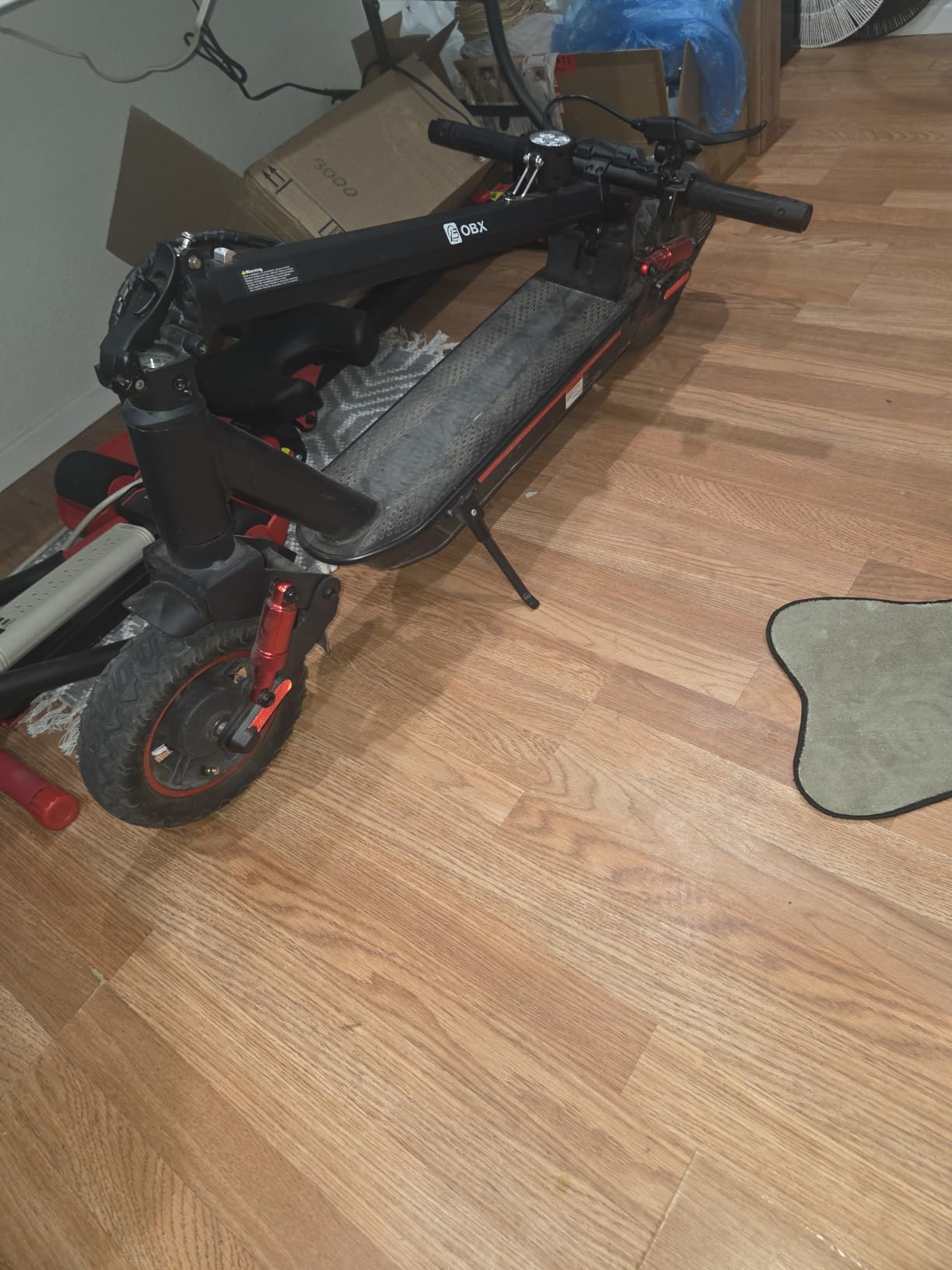
The brake hardware is where it falls behind. A dual braking system combining electronic braking with drum brakes is measurably weaker on a descent than the front and rear discs on the iX5S, the GT06, or the KULLTER, and drum brakes need more lever pressure as they heat up.
Customer service and return handling draw repeated complaints, some examples arrive with loose internal components or noisy shocks, and the one-star share of 18 percent is the second highest in this group. There is a 180-day parts warranty and 12-month coverage, with IPX4 waterproofing.
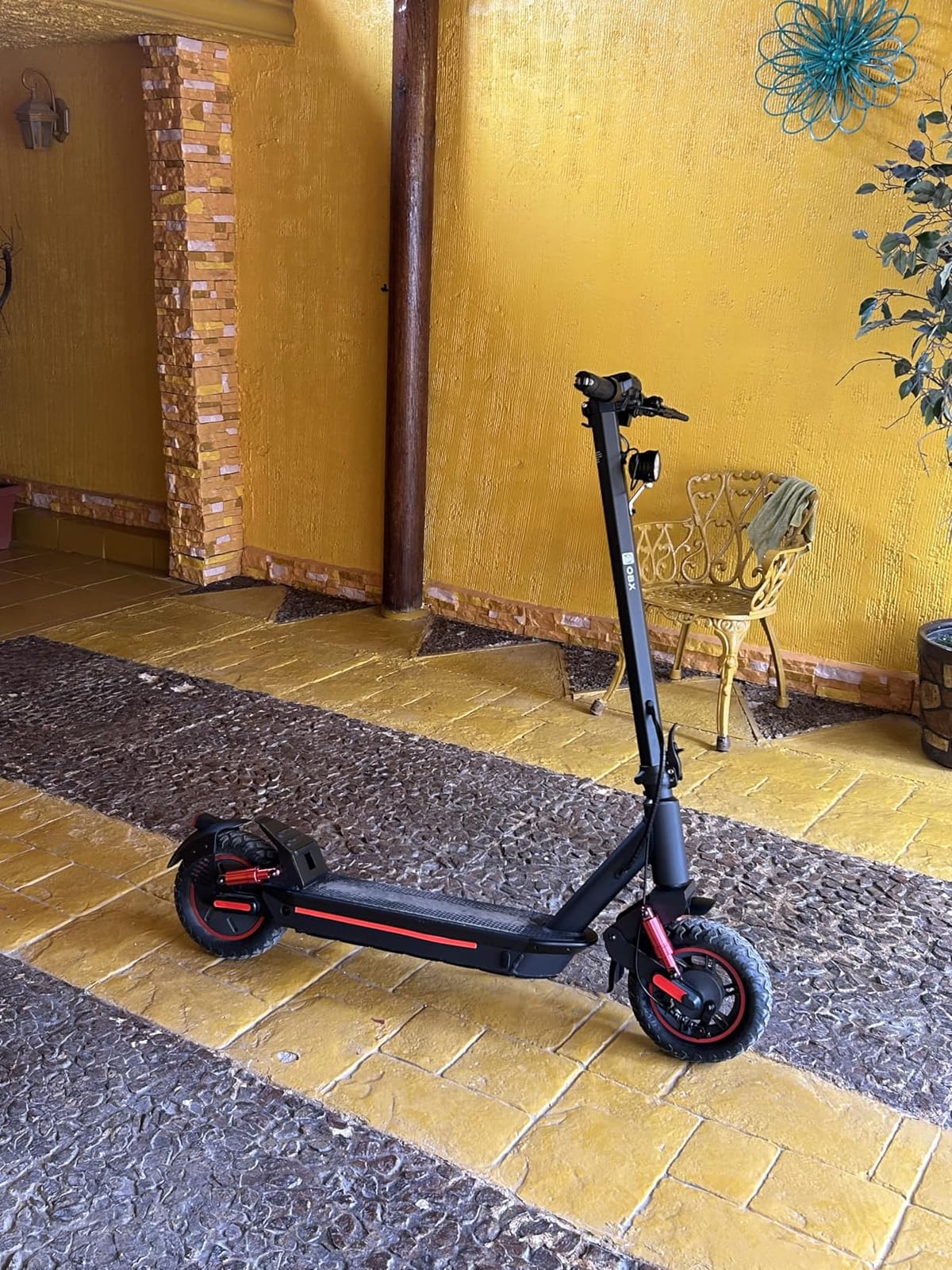
What you get for the money
A genuinely trail-capable package: pneumatic off-road tires, dual suspension, a climb rating, a 57.3 lb frame, and 330 lb of rated load capacity. For riders on a strict budget moving from a commuter scooter, this is the shortest upgrade path in the group.
Reviewers are positive about ride quality and battery life, and the reported 1100-mile durability suggests the frame and battery hold up better than the support side of the business.
When to choose something else
If your trail has sustained downhill sections, choose disc brakes over drum brakes without hesitation. Brake fade on a long descent is a hardware limit, not a technique problem.
If you are buying far from the seller and might need a return, factor the service complaints into that decision before you commit.
11. OBX ES1005-S2 – Best for Camping and Hunting Access
Electric Scooter for Adults 10″ Off-Road Pneumatic Tire 1200W Motor Max 33 Miles Long Range, 30 MPH Top Speed with Cruise Control, Dual Suspensions, Turn Signals Foldable E-Scooter, UL-2272 Certified
1200W peak motor
10-inch deep-tread tires
330 lb max load
55.9 lb scooter
Pros
- Lightest scooter in this group at 55.9 lb
- 1200W peak motor with 25-35 climbing capacity
- 10-inch thickened off-road tires with deep treads
- Front and rear shock absorbers
- Three modes plus cruise control
Cons
- Only 65 reviews so durability data is thin
- 10-inch tires are smaller than the 11 and 12-inch rivals
- 33-mile range assumes favorable conditions
- Spec block gives no manufacturer beyond the seller name
Weight is the reason this one earns a place. At 55.9 lb it is the lightest scooter in the group, and for a rider walking gear from a vehicle to a treeline or a hunting stand, that is a 20 lb saving over the KULLTER and a 13 lb saving over the G4.
Underneath, the spec sheet is competitive: a 1200W peak motor with 25 to 35 climbing capacity, 48V battery giving 28 to 33 miles, thickened 10-inch off-road tires with deep treads, and front and rear shock absorbers. Three speed modes at 9, 22, and 30 mph plus cruise control cover both crawling and open running.
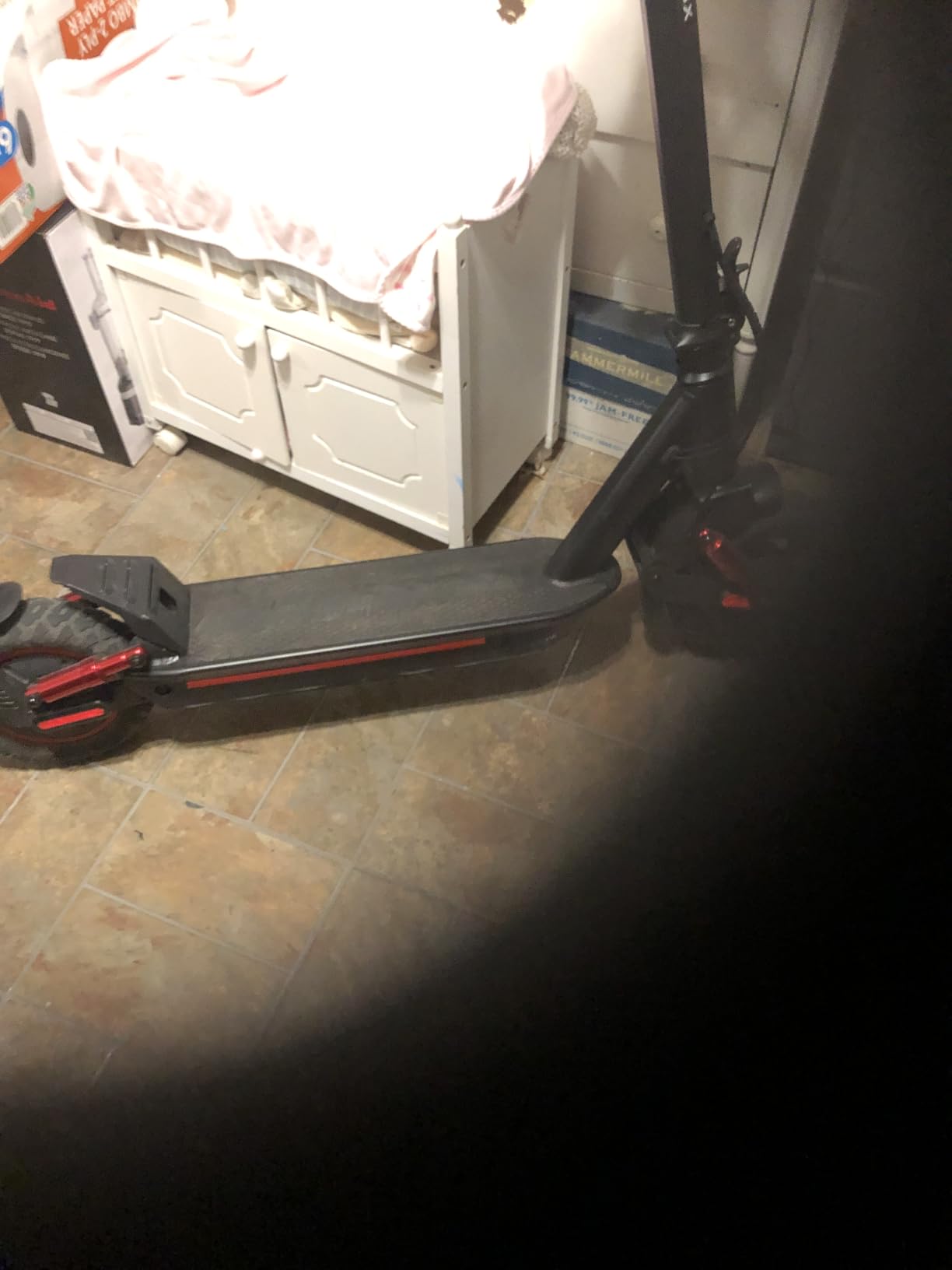
The deep tread pattern is the detail that matters on packed dirt and wet ground, where a shallow street-pattern tire loses grip. Reviewers treat the suspension and tire grip as the two most praised traits, and the UL 2272 compliance is a plus for a cheap platform.
Two honest limits. Sixty-five reviews is a thin data set for judging long-term durability, and the spec block does not list a manufacturer beyond the seller name, which makes a warranty claim harder to enforce. The 33-mile range also assumes favorable conditions.

Where it wins
Carrying-in scenarios: hunting access, camping on public land, and short woodland routes where the scooter needs to go where a truck cannot. Riders over 250 lb are also covered by the 330 lb rating.
Cruise control and turn signals make it workable for mixed use, and the foldable frame plus front LED light handle a commute without fuss.
Where it does not
Technical ground. Ten-inch tires with dual shocks cannot soak up the impacts that eleven- and twelve-inch platforms handle, so rock gardens and root networks are where you will feel the limits first.
Given the thin review base and missing manufacturer, this is a lower-confidence purchase than the higher-rated picks. Buy it for portability, not for capability.
12. Arwibon GT06 – Best for Short Local Loops
Electric Scooter Adults,1200W/2400 Motor,13/23.4 Ah Battery,19/35 MPH Top Speed,11” Off Road Vacuum Tires,Long Range E Scooter,Folding Scooters with Dual Brakes & Shock Absorbers
1200W motor
11-inch vacuum off-road tires
2-3 hour charging
330 lb max load
Pros
- Fastest charging here at 2-3 hours
- 11-inch wide vacuum off-road tires
- Dual disc brakes with front and rear spring shocks
- Full lighting with turn signals and brake lights
- 330 lb load capacity
- 35-degree climbing angle
Cons
- 18.6-mile range is the shortest here
- 19 mph top speed is slow for real trail work
- 68.3 lb is heavy for a folder
- Low sales rank and only 49 reviews limit the track record
The Arwibon closes our list because it solves a specific problem: short, frequent rides where a full charge between outings is the deciding factor. A 2 to 3 hour charge time is the fastest of any pick here, and the 11-inch wide vacuum off-road tires are properly sized for rough ground.
A 35-degree climbing angle from a 1200W motor puts the climbing capability on par with higher-powered machines, and dual disc brakes with front and rear spring shock absorbers give it stopping power and control. The lighting package is complete: LED display, headlights, taillights, turn signals, and brake lights.
Owners highlight the quick charging, the lighting, and the braking. The adjustable quick-folding handlebar and 330 lb capacity make it usable by larger riders, and the 1-year warranty is at the shorter end but not unusual for this tier.
Who it works for
Riders with a nearby trail loop, a short gravel commute, or someone who charges between outings and wants maximum availability. The 19 mph top speed is perfectly adequate for that use and much safer than carrying 40 mph hardware onto a rocky path.
It is also a reasonable commuter-to-trail crossover, since the vacuum tires and dual shocks handle broken pavement without the harshness of solid tires.
Where it falls short
An 18.6-mile range is the shortest in this group, and that is a real constraint if your trail runs a loop longer than that with no charging point at the far end.
The 49-review base and low sales rank mean the least proven hardware of the twelve. We would pair it with conservative expectations and a pre-ride inspection habit rather than trust it for a remote solo ride.
How to Choose an Off Road Electric Scooter for Trails
Tires decide more than wattage does
Pneumatic tires are the baseline for anything off pavement. They absorb impacts that a solid tire passes straight into the frame and into your ankles, and a knobby tread pattern bites into loose dirt where a street-pattern tire skates. Wheel size matters less than tire construction, but 11 inches or larger gives noticeably better rollover on ruts and rocks.
Tubeless construction is worth paying for if you ride rocky or thorny ground, because a puncture can often be plugged at the trailhead instead of requiring a full tube replacement. Two picks here, the Segway ZT3 Pro and the NAVEE, carry tubeless off-road tires, and the Kukirin G4 ships with repair fluid. Check tire pressure before every ride, since under-inflation on a soft trail surface is the most common cause of a scooter that feels vague and steers badly.
Suspension travel and type
You need movement at both wheels. Front suspension matters most because the front wheel takes the first hit, but a rigid rear wheel following a sprung front wheel over roots produces a jarring, unpredictable ride. Look for 80 to 100 mm of front travel on rocky terrain; spring-only forks are adequate for packed dirt and not much more.
Adjustability matters more than most spec sheets suggest. Preload and rebound adjustment lets you stiffen the scooter for rutted descents and soften it for rough climbs, and a scooter with sealed, serviceable dampers will outlast one with an open spring.
Motor torque and climbing, not top speed
For uphill riding, torque and grade capability beat top speed every time. A scooter that can hold 15 mph up a 20 percent grade is far more useful on a trail than one that hits 40 mph on the flat and bogs down on the climb. Look for a stated climbing percentage or angle, and treat peak wattage with some caution since it is a marketing figure rather than sustained output.
As a rough guide, 800W handles gentle slopes with a light rider, 1200W to 2000W covers sustained climbing, and dual-motor setups above that are for riders who want pace on open dirt as well as steep grades. Weight also matters: a heavier rider on an 800W scooter feels the power limit sooner than the number suggests.
Brakes for the descent, not the stop
You will spend more trail time braking than accelerating on a hilly route, so brake quality is a safety spec rather than a convenience one. Hydraulic discs are the best option here, as the KULLTER offers, because they hold consistent power through repeated use and do not fade the way cable-actuated mechanical discs do when hot.
Standard discs are acceptable on moderate terrain. Drum brakes plus electronic braking, as on the OBX ES1024, are the weakest configuration in this group and the first thing to upgrade if you ride long descents. On any steep descent, alternate braking between front and rear and keep your weight over the rear wheel on loose ground.
Battery range on a real trail day
Advertised range is measured on flat pavement at a steady economical speed with a light rider, and real trail use erodes it quickly. Climbing, deep sand, cold weather, a heavy rider, and running at higher speed modes all cut usable range, and off-road riding is where these scooters are least efficient.
Plan for roughly half the advertised figure when you are climbing regularly, and carry a charger if your route has a waypoint with power. Charging time is the number most riders underestimate, and the range from 2 to 3 hours on the Arwibon to 13 hours on the KULLTER has a bigger effect on how often you can ride than the range figure itself. If you need long distance rather than speed, compare our picks for electric scooters for adults and our long range electric scooter guide.
Rider weight and load rating
Match the maximum load rating to your own body weight with margin, and add gear. Riders above 220 lb should look at the 330 lb-rated scooters, which include the Circooter Landturbo, the iX5S, the EOEOTWO GT06, both OBX models, and the Arwibon GT06. Riders above 300 lb have very few options in this list, and the NAVEE is the heaviest-rated at 330 lb.
Exceeding the load rating shortens suspension life, increases tire wear, and makes the scooter harder to control on descents, which is a safety issue rather than a durability one. Our guide to electric scooters for heavy adults covers the sizing in more detail.
Brand, support, and parts
Forums consistently name Kaabo, Dualtron, and Inokim as the credible enthusiast-tier brands, and iScooter, TurboAnt, and isinwheel as reliable budget names, but none of the picks here come from that shortlist. That tells you something about the current state of the enthusiast tier rather than about these scooters, and it is worth factoring in when you weigh a familiar budget brand against an unknown one.
What you can actually verify is warranty length, certification, and whether the design is repairable. The Kukirin G4 is modular for easier maintenance, the Segway carries a 2-year component warranty with UL-2272 certification, and the OOTD T10 has a 2-year frame warranty. Parts availability and how long premium scooters last depends far more on your maintenance discipline and riding style than on the badge.
Downhill Braking, Safety Gear, and Trail Etiquette
Descent is where trail scooters hurt people. Brake temperature rises with every stop, and on a long descent the same lever pressure produces less stopping power. Squeeze the brake intermittently rather than holding it, alternate front and rear braking, and keep your body over the rear wheel on loose ground so the rear tire does not wash out from a sudden weight transfer.
What not to do on an electric scooter off-road: do not attempt technical single track, do not ride deep mud, do not commit to a sustained steep descent on stock cable brakes, do not ride without a helmet, and do not exceed posted limits on shared multi-use trails. Forum riders are direct about this: the consensus is that technical single track is beyond what these machines are designed for, and the failure mode is usually a thrown rider rather than a mechanical breakdown.
Standing on a scooter over rough ground is a different skill from riding a seated mountain bike, and it needs gear designed for it. Wear a certified helmet, gloves, knee and elbow pads, and closed footwear with grippy soles. Start on flat gravel and build up. Riders who are new to this style progress fastest by going slowly on easy ground for a few weeks rather than quickly on hard ground once.
Trail etiquette matters for access. Slow down and yield at blind corners, do not overtake other trail users, stay on designated open routes, and do not ride at night in areas where off-road scooters are not permitted. E-bike and e-scooter riders already face friction on shared multi-use trails, and riding within posted limits is what keeps that access intact.
Where Off Road Electric Scooters Are Actually Legal
Most of the scooters in this roundup exceed the speed caps that apply to legal public-road e-scooters, so where you ride them matters as much as which one you own. Class 2 e-scooters are capped at 15 mph, and Class 3 at up to roughly 20 mph. Almost every trail-capable model here runs 30 mph or more, which puts them outside those definitions on public streets and shared paths.
In practice that means the legal use for most off-road electric scooters is private land with the owner’s permission, designated off-road vehicle areas, and trails where motorized wheeled devices are explicitly permitted. Rules vary by state, county, city, and land manager, and a trail that is open to e-bikes is not automatically open to standing e-scooters.
Check the specific land manager’s rules before you ride, and assume nothing on shared multi-use trails. Where off-road scooters are restricted, the penalties are frequently the same fines that apply to other motorized devices, and repeat violations can lead to confiscation.
Maintenance and Ownership After a Mud Ride
Cleaning is the single most valuable maintenance task for a trail scooter, and skipping it is what shortens service life fastest. Mud holds water against seals and bearings, and it carries grit straight into the suspension and brake hardware. After every wet ride, rinse the drivetrain and suspension area, wipe the shocks dry, and check that nothing is binding.
Then run a short pre-ride inspection before every outing. Check tire pressure and look for cuts or embedded thorns, squeeze both brakes and confirm firm lever feel, spin both wheels and confirm the axle is tight with no play, and verify that all bolts are still torqued. Suspension components need a monthly torque check at minimum, and fork seals should be inspected yearly for weeping.
Watch the brake pads and the tire tread as the two consumables that end a trail scooter’s usable life. Pads wear fastest on long descents, and worn pads on a hydraulic system are a genuine safety problem rather than a maintenance chore. For batteries, avoid charging in extreme cold, keep the pack away from direct sun on a hot trail day, and expect capacity to decline gradually with heavy trail use and partial charges.
Finally, think about where you store and charge the scooter. Trail day dust and mud belong outside the pack compartment, and a scooter that lives in a damp garage will age faster than one that does not. If you also need something for ordinary road travel, our commuting e-scooter picks are built for that job instead.
Frequently Asked Questions
Which electric scooter is best for rough use?
The best off road electric scooter for rough use needs pneumatic off-road tires, real suspension travel on both wheels, and disc brakes. In our testing the Segway ZT3 Pro is the most complete package, with 11-inch tubeless off-road tires, a dual telescopic fork and rear spring suspension, and dual disc brakes. Riders on a tighter budget get similar hardware from the iScooter iX3 or the OBX ES1024.
Which electric scooter is best for uphill?
For uphill trail riding, torque and stated climb capability matter far more than top speed. The Kukirin G4 pairs a 2000W motor with a 20-degree climbing angle, and the R ROVORON KULLTER uses dual 1300W motors for 4000W of combined peak power and a 30-degree climb rating. The OOTD T10 also claims 35 degrees, though from a smaller 745W motor, so it suits graded rather than steep climbs.
Which scooter is best for mountains?
For sustained mountain climbs, the Kukirin G4 is our pick because its 2000W motor and 60V 20Ah battery hold speed on long grades where smaller motors bog down. If the terrain is steep but you also need to carry the scooter, the EOEOTWO GT06 gives strong 35 percent grade climbing in a lighter package. Steep descents are the real test, so choose hydraulic or disc brakes over drum brakes at any price.
What makes an electric scooter off-road capable?
Four things: pneumatic off-road tires with knobby tread, genuine suspension travel on both the front and rear wheels, enough motor torque to climb, and brakes that stay effective when the suspension is loaded. Ground clearance and a reinforced frame help, but they are secondary. Models with solid tires, spring-only or absent suspension, and drum brakes are street scooters with decoration, not trail machines.
Is it legal to ride an electric scooter on trails?
It depends on the trail and the land manager. Most legal public e-scooters are Class 2 at 15 mph or Class 3 at roughly 20 mph, and the trail-capable scooters reviewed here run 30 mph or faster, so they fall outside those definitions. Off-road use is generally legal on private land with permission and on trails that explicitly allow motorized wheeled devices. Always check the specific land manager’s rules before riding.
Why is my scooter struggling to accelerate?
Four causes cover most cases. Battery sag under load means the voltage drops when the motor draws heavy current, especially on climbs with a cold pack. A controller current limit can throttle back on steep grades. Rider weight above the rated maximum load reduces available power noticeably. And low tire pressure increases rolling resistance, so check pressure before blaming the motor.
What not to do on an electric scooter off-road?
Avoid technical single track, deep mud, and sustained steep descents on stock cable or drum brakes. Do not ride without a helmet, gloves, and knee and elbow pads, and do not attempt jumps. On shared multi-use trails, do not exceed posted limits, do not speed through blind corners, and always yield. Forum riders are consistent on this: most injuries come from terrain the machine was never designed for.
How long do off-road electric scooters last?
Lifespan depends far more on maintenance discipline and riding style than on the brand. Riders who rinse mud off the suspension, check tire pressure, inspect brake pads, and torque bolts monthly typically get several seasons of trail use. Leaving mud packed against seals and bearings, riding with worn pads, and ignoring punctures is what shortens service life. Brand support and parts availability also affect how long a scooter stays rideable.
Which Off Road Electric Scooter Should You Buy?
For most riders, the best off road electric scooters for trails in 2026 come down to three names. Buy the Segway ZT3 Pro if you want one scooter that handles pavement and dirt, carries real certification, recharges in four hours, and pulls the highest owner rating in this group with 392 reviews behind it. That is our recommendation for the widest range of riders.
Buy the Kukirin G4 if your trails have real elevation and you want speed on dirt rather than just the ability to survive it, and accept a 12-hour charge. Buy the R ROVORON KULLTER only if you have somewhere to charge overnight, because the power and the hydraulic brakes are excellent and the 91 lb carry weight is not. For wet climates, the NAVEE’s IPX6 rating is the reason to look there first.
On a budget, the iScooter iX3 gives you 10-inch pneumatic off-road tires, dual shocks, and the deepest owner feedback base here at 721 reviews. The OBX ES1024 and the EOEOTWO GT06 are the other two budget routes: the first for capability, the second for climbing power and heavy-rider fit. Check the load rating against your own weight first, and check the land manager’s rules before you ride. If you want a second machine for flat commuting rather than a trail rig, our adult e-scooter guide covers that side, and our electric mountain bike trail guide is worth a look if you want seated riding on the same terrain.