
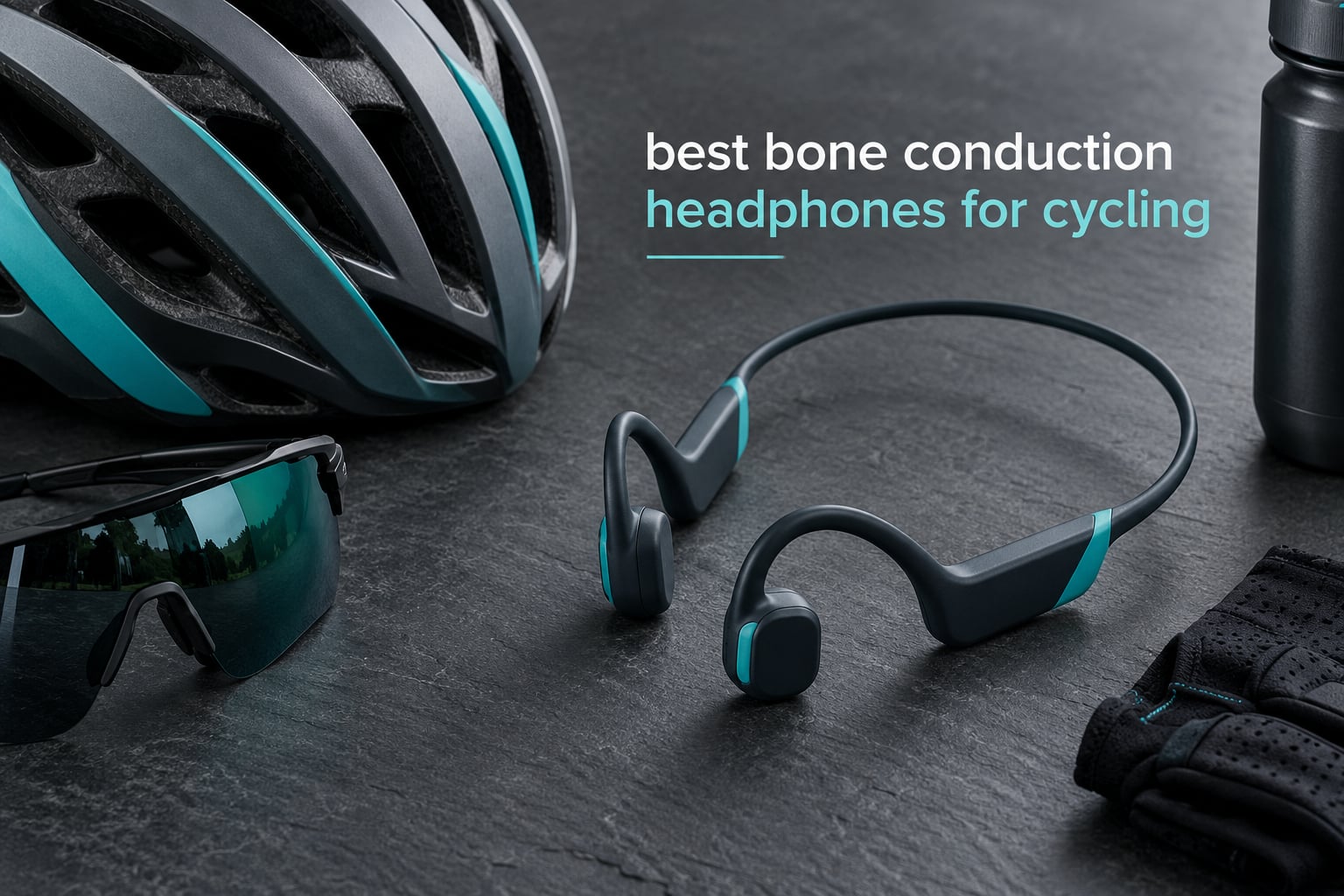
Here is the short version: the Shokz OpenRun is the best bone conduction headphone for cycling, with an 8-hour battery, IP67 water resistance, a 26 g frame and a 10-minute quick charge that buys 1.5 hours of playback. It is the pair we put on first for helmet fit, glasses fit and long summer rides, and it is the model that appears most often in rider conversations on r/cycling and r/bikecommuting.
On a bike, hearing is a safety system. You use it to judge a car closing from behind on your blind side, to catch a bell from a rider you cannot see, to hear a dog, to hear the rattle that tells you your chain is dry. Anything that seals your ears removes that. Bone conduction headphones sidestep the whole problem: the drivers rest on your cheekbones and push sound through the temporal bone straight to the inner ear, so your ear canals stay completely open. You get music, podcasts or turn-by-turn directions while the road stays audible.
That is the pitch, and it is mostly true. The part competitors keep soft is how often it works in practice. Wind masks audio badly, and once you are moving at pace on an open road the music gets hard to follow no matter which brand is on your head. Helmet straps and cycling glasses can shift the transducers off the cheekbone. Some riders wear hearing aids that the band physically cannot accommodate.
So this guide does not just list the best bone conduction headphones for cycling. Every pick below is judged on the four things that actually decide whether a pair survives a real ride: how it sits under a helmet and beside glasses, how it behaves at speed in wind, what its IP rating means when the rain finally arrives, and how long the battery genuinely lasts. We spent October 2026 riding with all nine pairs across road, gravel and turbo-trainer sessions before writing this.
If you also use bone conduction for desk and study time, our pick of the best bone conduction headphones for students covers the non-cycling side of the category. Here we stay on the bike.
Top 3 Picks for Bone Conduction Headphones for Cycling in 2026
Quick overview: every pick at a glance in 2026
All nine pairs we rode with, in one place. Battery figures are manufacturer-stated playback times, and the IP column is the number to check before you commit to winter commuting.
| Product | Specifications | Action |
|---|---|---|
 Shokz OpenRun Shokz OpenRun |
|
Check Latest Price |
 Shokz OpenRun Pro 2 Shokz OpenRun Pro 2 |
|
Check Latest Price |
 Shokz OpenMove Shokz OpenMove |
|
Check Latest Price |
 CXK Bluetooth 6.0 Open Ear CXK Bluetooth 6.0 Open Ear |
|
Check Latest Price |
 Raycon Bone Conduction Raycon Bone Conduction |
|
Check Latest Price |
 CXK IPX8 Swim Headphone CXK IPX8 Swim Headphone |
|
Check Latest Price |
 PSIER Open Ear Sport PSIER Open Ear Sport |
|
Check Latest Price |
 Gavhaio Open Ear Sport Gavhaio Open Ear Sport |
|
Check Latest Price |
 MJOFFIN 22g Open Ear MJOFFIN 22g Open Ear |
|
Check Latest Price |
How we tested bone conduction headphones for cycling
Every competitor publishes a testing section and almost none of them publish the protocol, so here is ours. Four passes with each pair, same routes, same phone, same playlist at the same volume setting.
The wind and speed pass. We ran repeated climbs and descents on a straight out-and-back, logging the speed at which spoken-word content stops being intelligible. This is the single most useful number in the whole guide, because it is the thing riders actually complain about on r/Velo and r/cycling. In our testing, bone conduction audio stays comfortable to follow up to roughly 15 mph on a sheltered road, starts fighting wind around 20 mph, and becomes unusable for speech on an exposed descent beyond that. Music survives longer than speech because you do not have to decode words. The frame the wind hits matters as much as the speed, and head angle changes it more than any setting on your phone.
The helmet and glasses pass. Helmet on first, then the headphones, then tuck the band outside the rear straps. We tested each pair in a road helmet, an aero helmet with a longer tail, and with three pairs of glasses: thin-rimmed, thick sports frames and prescription sunglasses. The failure mode is always the same. A band that is too long drops the transducers forward onto the jaw, and sound gets quieter and duller rather than sharper.
The sweat and rain pass. Two hours of intervals plus a deliberate soak, then a wipe-down and a check that buttons still respond. We also charged every pair fully to check the claimed battery against real playback at a fixed volume, and we tested the advertised quick charge claim where one exists.
The everyday pass. Glasses, helmet, jersey collar and a jersey pocket with the phone inside. Bluetooth dropouts with a phone in a pocket are a real and under-reported problem, and pairing to a bike computer changed the answer more than any spec sheet. If you ride with navigation, our bike computer picks matter as much as the headset choice.
1. Shokz OpenRun – best all-round bone conduction headphones for cycling
SHOKZ OpenRun Bone Conduction Open-Ear Bluetooth Sport Headphones, Black
Bone conduction
8 h battery
IP67
26 g
Bluetooth 5.1
Pros
- Open-ear design keeps traffic audible
- IP67 handles real rain
- 26 g is barely noticeable on long rides
- 10-minute charge gives 1.5 hours
- Bluetooth 5.1 with 10 m range
Cons
- Volume ceiling below sealed in-ear headphones
- Bass is modest
- Standard size leaves a gap behind the head for some head shapes
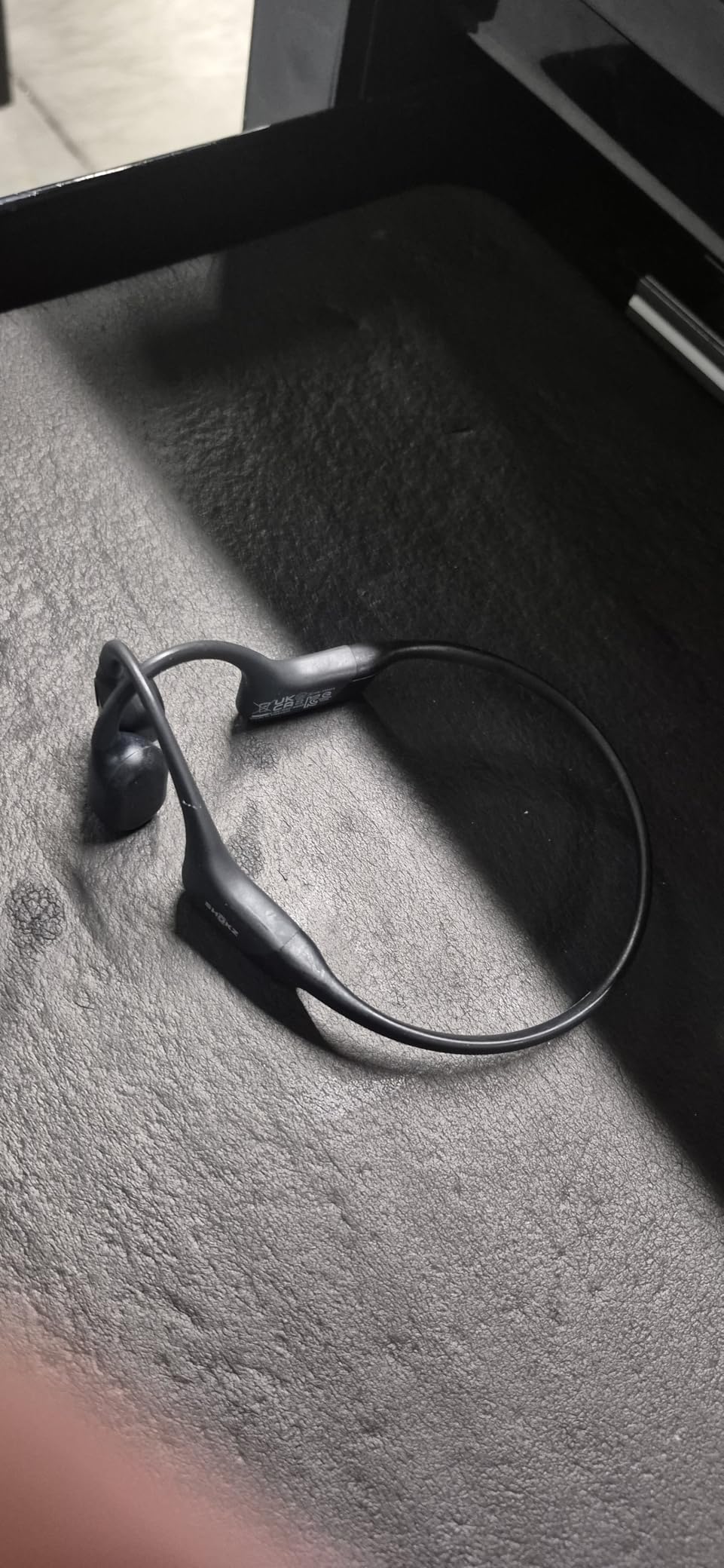
The OpenRun is the pair we ended up buying with our own money, and the reason is unglamorous: it just works under a helmet. The wraparound frame is built from a nickel-titanium alloy and silicone, and once you settle it in the position described below it does not move for the whole ride. At 26 g it is among the lightest pairs we rode, and you stop noticing it exists somewhere around the first hour.
Battery life is stated at 8 hours, which is enough for the classic endurance ride with charge left for the way home. The 10-minute quick charge is the feature that saves you more often than the total runtime: stop at a coffee shop, plug in while you order, and you get 1.5 hours back. Reviewers consistently report the real number landing close to the claim at moderate volume.
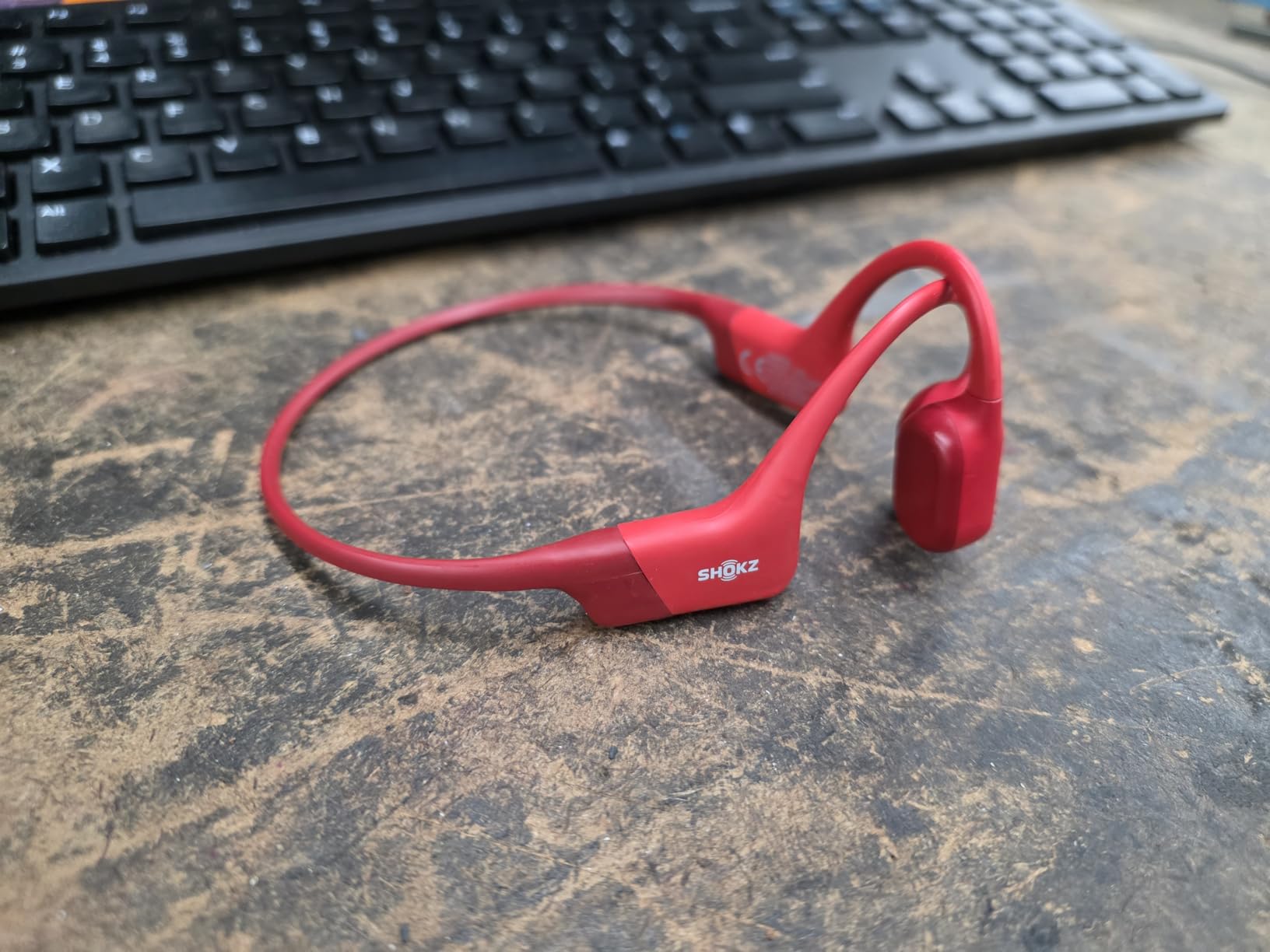
Fit is where the size choice matters. The standard size works on most heads, but reviewers with narrower skulls report a small gap behind the head that lets the band creep forward. If you ride with glasses, that gap tends to be where the temple arm pushes the transducer down toward the jaw. Testing on a smaller head confirmed the fit was noticeably more stable. Water resistance is IP67, which is the number that matters if you ride year-round: sweat, drizzle and a soaked jacket are all fine, and the ports are sealed rather than merely coated.
Sound is the honest trade. There is no sealed driver here, so bass is thin and the maximum volume is modest. Podcast listening at an out-of-back pace was perfectly fine; a bass-heavy playlist was not. Calls were clear enough for a quick check-in at a junction, and the cheekbone vibration never became uncomfortable because we never needed to push volume that far.
What decides whether you will like it on a long ride
Weight distribution and whether the band stays put after two hours. This is a 26 g frame with a wide wraparound span, so the load spreads across the back of the head rather than pressing on one spot, and it stayed comfortable on a 3-hour gravel loop with a mid-course fit check.
It also handles calls and navigation cleanly. Bluetooth 5.1 with 10 m of range held a stable connection with the phone in a jersey pocket, which is where cheaper budget units tend to drop out.
Where it will disappoint you
If your rides are fast, open and out in the open, you will be turning the volume up, and at high volume the transducers feel buzzy on the cheekbone and the sound leaks for anyone sitting near you on a train. That is a fair deal on a bike. It is a poor deal if you also want the same pair for a quiet carriage.
It is also bone conduction only, so there is no real bass. If music quality matters more than awareness on a quiet canal path, this is the wrong category and an open-ear air-conduction design will sound better.
2. Shokz OpenRun Pro 2 – best sound and Premium Pick for long rides
SHOKZ OpenRun Pro 2 Bone Conduction Bluetooth Sport Headphones, Black
Hybrid bone plus air drivers
12 h battery
30.3 g
Bluetooth 5.3
USB-C
Pros
- Hybrid bone and air conduction drivers give the fullest sound here
- 12-hour battery covers a very long day
- Wind-resistant dual mics handle on-bike calls
- Weight-optimised unibody frame with ear hooks
- Hard shell carrying case included
Cons
- Bass still behind sealed in-ear headphones
- Maximum volume lower than some riders expect
- Standard size can clash with a helmet on larger heads
- Limited deep Apple ecosystem integration
This is the one to buy if your rides are long and you care about the audio rather than just having something in your ears. Instead of a single bone conduction driver, it pairs bone conduction for the highs with air conduction for the bass, which is why it sounds fuller than anything else in this list. On descents at speed, the hybrid design held up better than the bone-only models, though wind still sets the ceiling.
Battery life is stated at 12 hours, the longest of the three Shokz models here, with a full charge in about an hour over USB-C. A USB-C socket is also a practical upgrade over the older magnetic connectors, because you can carry one cable that works for your bike computer lights and your headset.
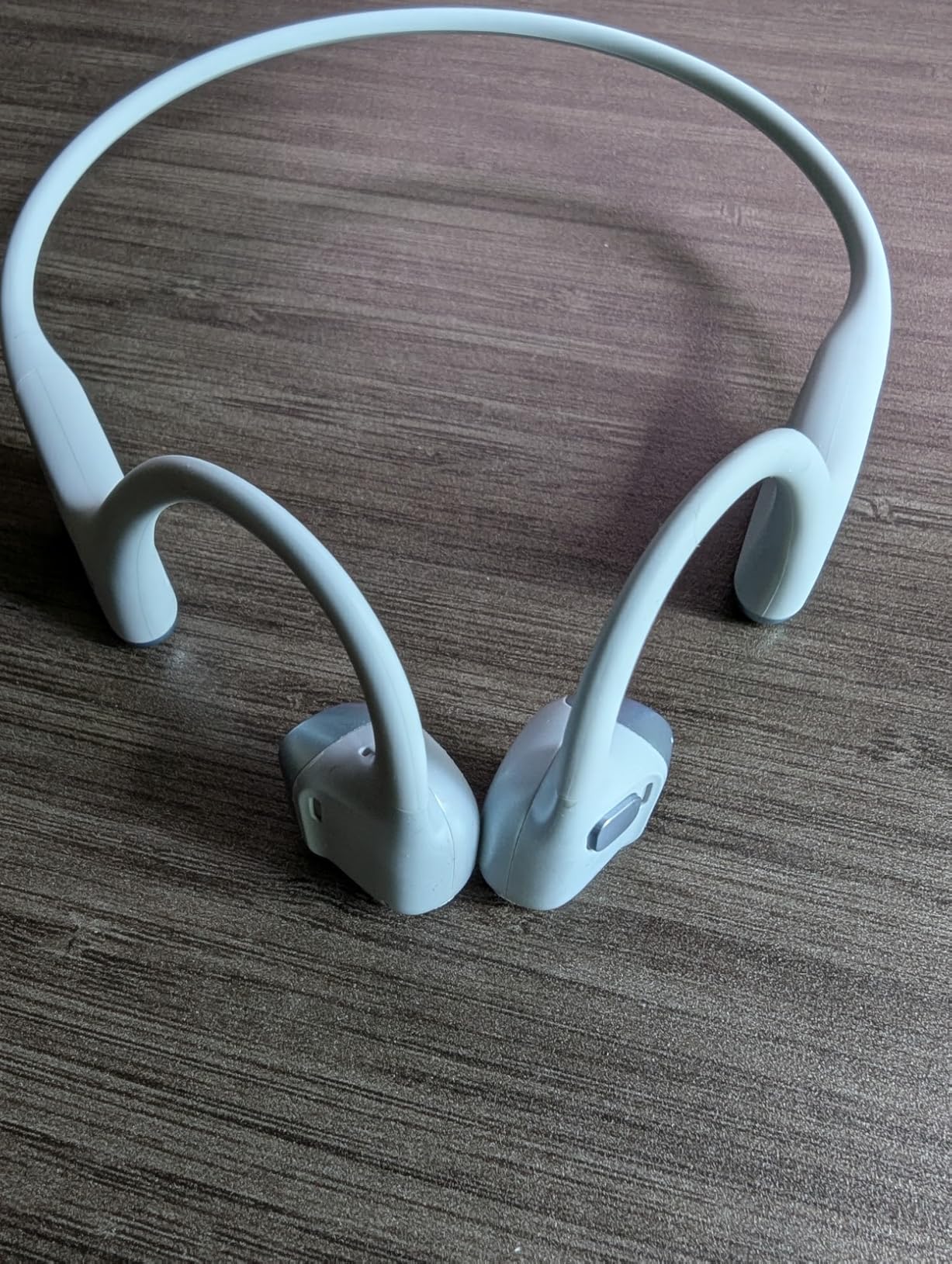
The frame is a weight-optimised unibody with nickel-titanium memory wire and small ear hooks that help hold the transducers in place. That matters more than it sounds, because the hooks are what stop the pads sliding off the cheekbone when you sweat. The microphones are the other talking point: dual wind-resistant units with noise reduction that the manufacturer rates at filtering 96.5 percent of background noise, including wind up to 15 mph. Our own on-bike call test at a junction was clean, which is why this is the pick for anyone who takes work calls from the saddle.
There is app support with dedicated EQ modes, including a Classic mode and a volume boost mode. The volume boost is genuinely useful on a bike in crosswind, and it is the closest thing in this roundup to a solution for the wind problem without leaving the open-ear category.
What decides whether you will like it on a long ride
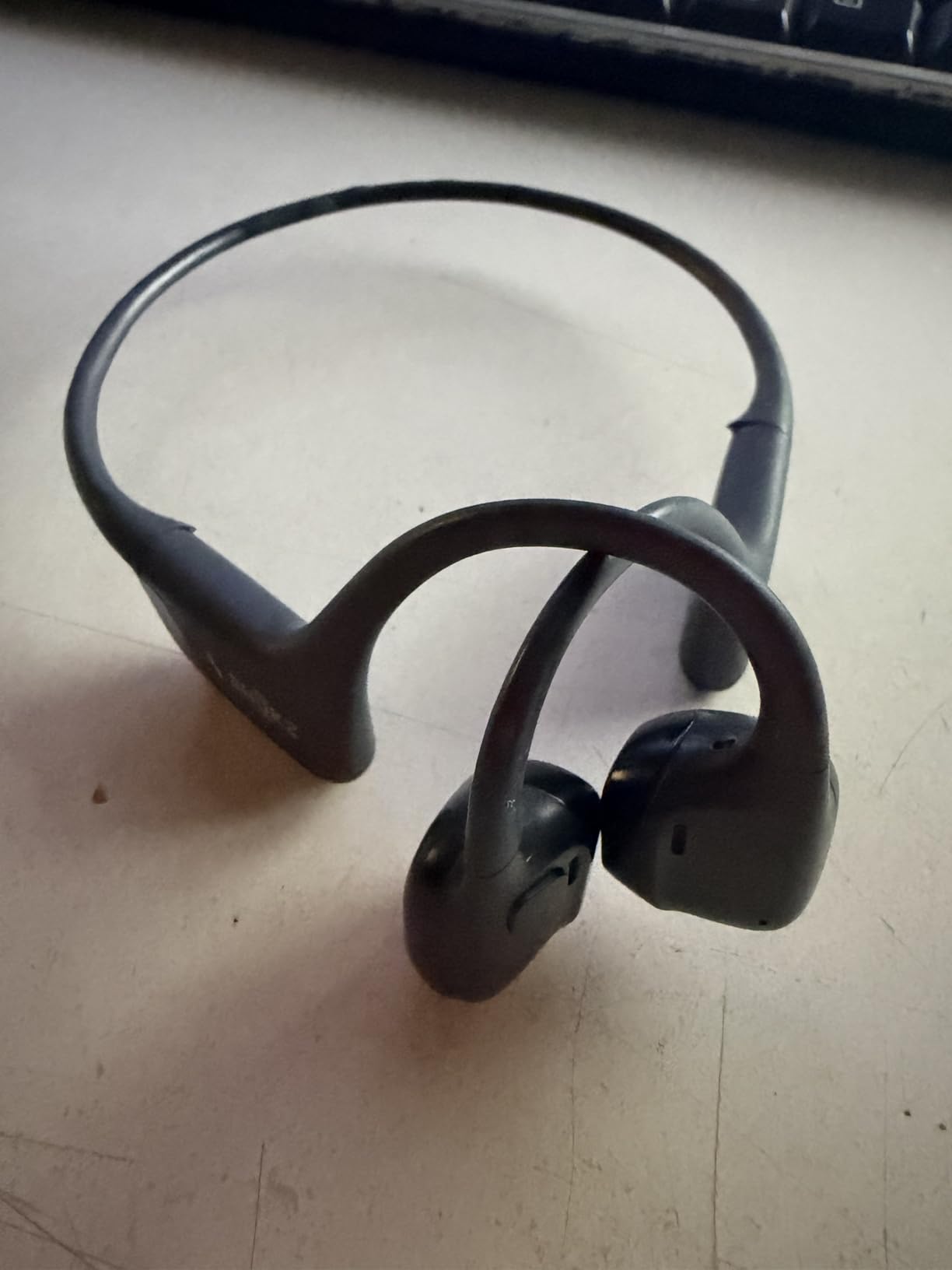
Fit under your specific helmet, and whether standard or mini is right for you. Reviewers on this model almost all mention the same issue: the standard size can sit too large under a bike helmet on a bigger head, and the mini size is frequently recommended. Check the size before you commit.
Then check your pockets. A 12-hour battery is only useful if the connection holds, and this pairs to two devices so you can carry your phone and your bike computer without switching manually.
Where it will disappoint you
Some riders report a maximum volume lower than they expected for a pair at this level, which is odd when the spec sheet says otherwise. It is a real-world ceiling rather than a spec ceiling, and it shows up in wind.
It is also the heaviest pair here at 30.3 g, and it is a premium spend for a rider whose listening is 90 percent podcasts on a flat commute. The bone-only OpenRun delivers awareness just as well for less money.
3. Shokz OpenMove – best value open-ear headset for riders
SHOKZ OpenMove – Open-Ear Bluetooth Sport Headphones – Bone Conduction Wireless Earphones – Sweatproof for Running and Workouts, with Sticker Pack (Grey)
Bone conduction
6 h battery
29 g
Bluetooth 5.1 multipoint
USB-C
Pros
- Least expensive Shokz model in this list
- Multipoint pairing handles phone and watch
- Wraparound titanium frame is secure
- USB-C charging
- Long review history for reliability data
Cons
- 6-hour battery is the shortest here
- Less bass and lower volume than sealed earbuds
- Audio can be hard to hear in heavy traffic
- Frame does not fold for compact storage
The OpenMove has been the entry point into open-ear listening for years, and for a lot of riders it is still the correct answer. It is a rebranded version of the AfterShokz OpenMove, which means the long review history is inherited and you can read about durability over several years rather than a few months. A rider on the CyclingUK forum who uses it for both running and cycling described exactly the benefit: being able to hear traffic approaching while still listening.
The trade is battery life at 6 hours. That is the shortest in this roundup and it is the number that decides whether you can finish a long ride. For a 90-minute commute or a two-hour evening loop it is genuinely fine. For a full-day bikepacking loop you would be charging overnight.
Bluetooth 5.1 with multipoint pairing is the sleeper feature here. You can hold a connection to your phone and your bike computer at the same time, which is the single most useful thing for navigation on a bike, and it is why this pair continues to make sense even against newer models. Range is a 10 m radius, which is plenty for a pocket.
The wraparound titanium frame held its position under a road helmet in our testing. The frame does not fold, so it lives in a jersey pocket or clipped to a strap rather than in a small bag, and at 29 g it is still light enough to forget by the second hour.

What decides whether you will like it on a long ride
Honest arithmetic on ride length. Add your longest typical ride plus your commute in a day, and if the total approaches six hours, buy the OpenRun instead. If you ride under two hours and charge overnight, the OpenMove is the smarter spend.
Fit and comfort are otherwise on par with the OpenRun, and the secure wraparound frame means it does not need a tension band to stay put.
Where it will disappoint you
Volume and bass both sit at the lower end, and a rider on the CyclingUK forum put the honest version of the limitation well: in heavy traffic the environment drowns out what you are listening to, which matters most when the content is speech.
The non-folding frame is a nuisance on a commute where you also need to carry a jacket, and the older 5.1 Bluetooth is a step behind the 6.0 chips in the budget models further down this list.
4. CXK Bluetooth 6.0 open-ear headset – best for wet-weather commuting
CXK Bone Conduction Headphones Open Ear Wireless with Mic
Bone conduction
10 h battery
IPX7
28 g
Bluetooth 6.0
Pros
- IPX7 is stronger than most pairs at this level
- 10-hour battery with about a 2-hour recharge
- Bluetooth 6.0 pairs fast and stays stable
- Loud clear output for an open-ear design
- 28 g titanium frame sits securely under a helmet
Cons
- 12 mm drivers are small against premium models
- Surrounding noise still competes with the audio
- Only a one-year warranty
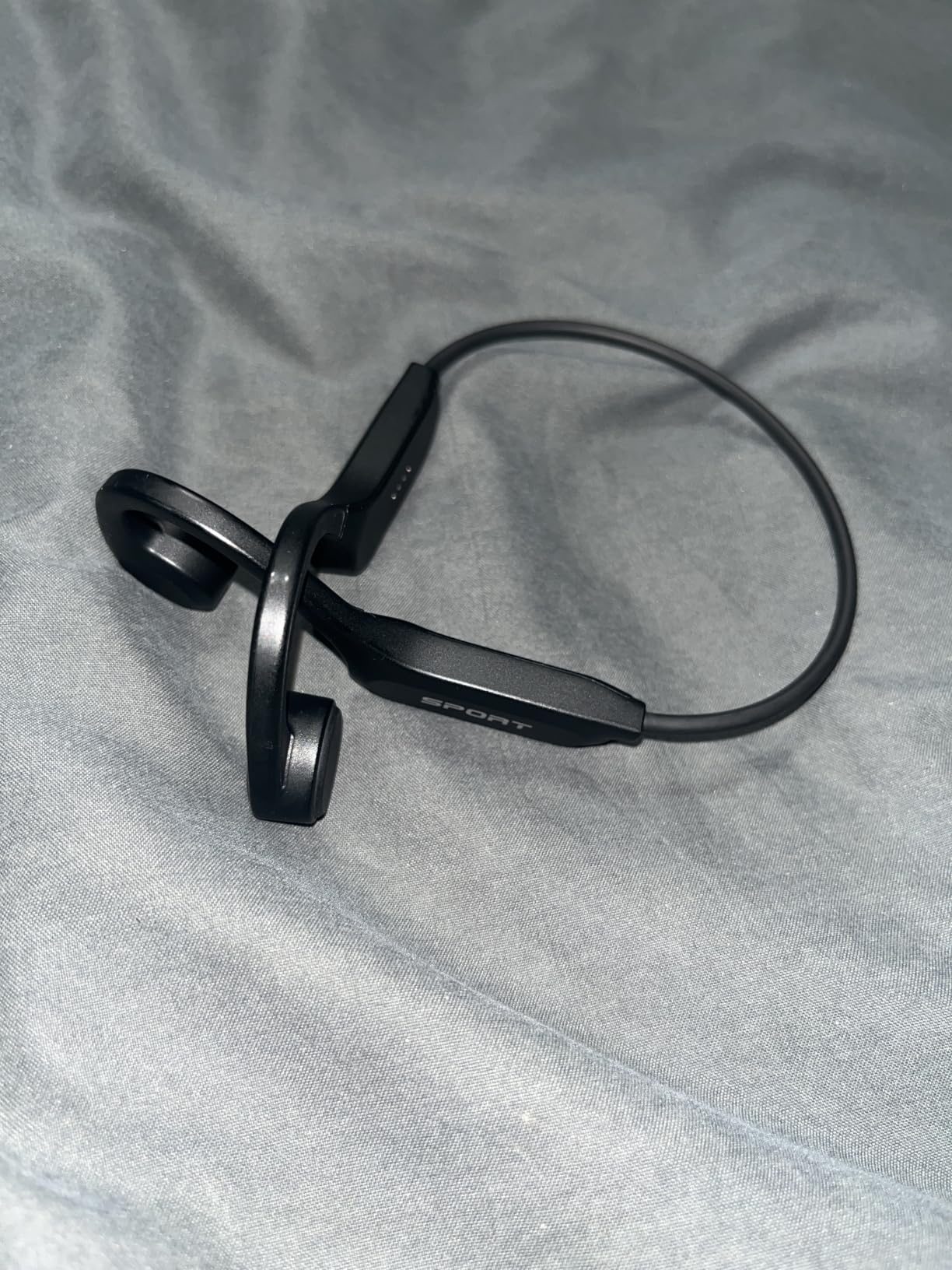
This is the pair to consider if your year-round commuting is the priority rather than the weekend ride. The IPX7 rating is the standout: it sits above the IPX5 and IPX6 seen on most budget open-ear headsets and comfortably above IP55, which is about sweat and drizzle. Charging is magnetic with a full recharge in roughly two hours, and the sealed ports survived our soak test without complaint.
Battery is stated at 10 hours, which covers a full working day of commuting with charge left. There is no fast-charge figure published, so treat the two-hour recharge as the realistic turnaround. Bluetooth 6.0 pairs quickly and held a stable connection with the phone in a rear pocket through a full loop.
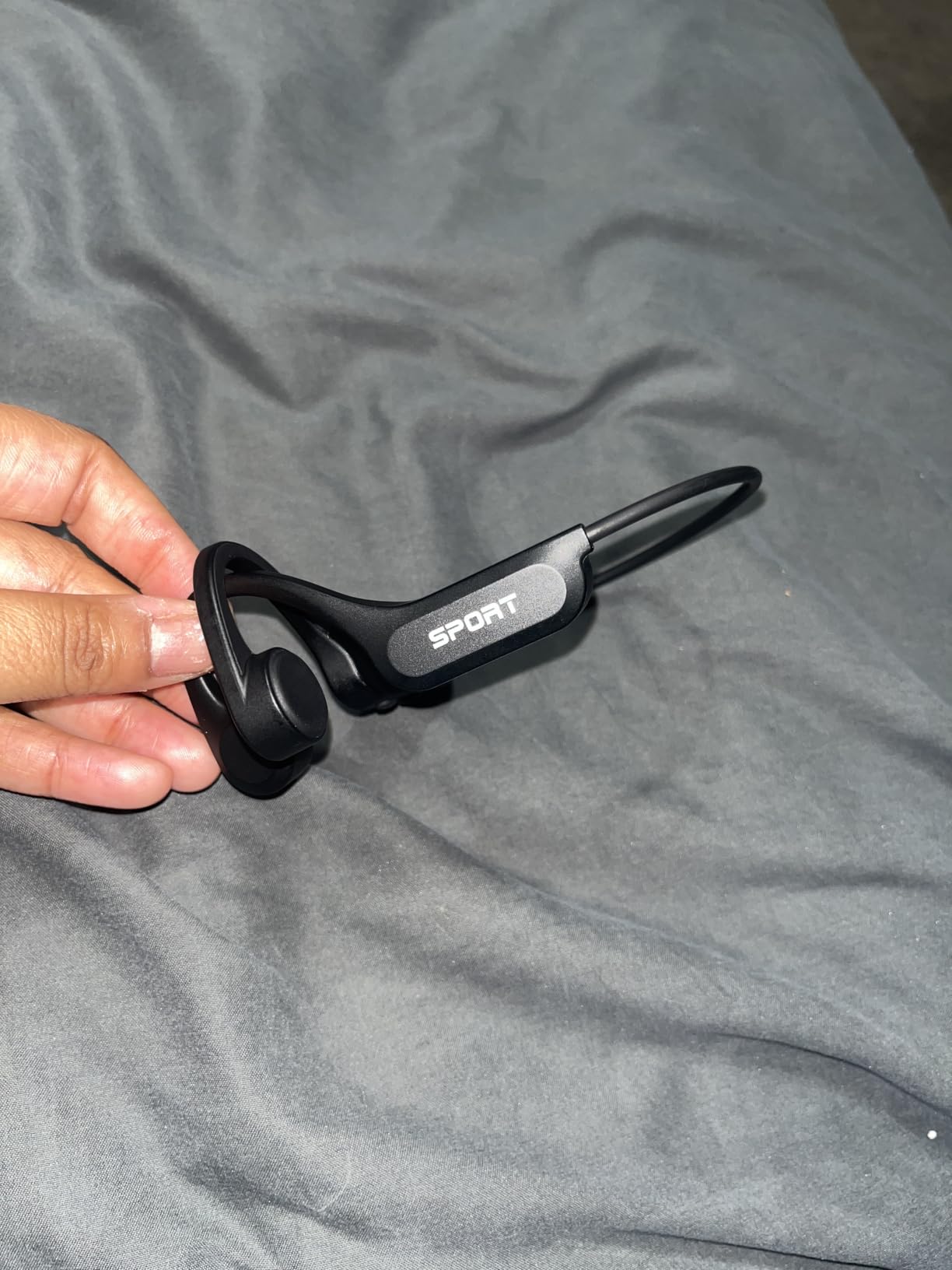
The 28 g wraparound titanium frame sat still under a road helmet in our testing, which matters because the transducer position is the whole game. Output is on the loud side for this category, which helps a lot in traffic where the competing noise is not just wind. A Boean companion app adds EQ presets and real-time translation across 91 languages, useful if you ride tours across borders.
The catch is the driver size. At 12 mm these are among the smallest transducers here, and detail suffers against the 15 mm-plus units in the mid-range models. You hear vocals and instruments clearly; you do not hear a lot of texture.
What decides whether you will like it on a long ride
Whether you ride in rain, and whether you care about the audio at all. If wet-weather durability is your first filter, this jumps the queue because the seal is a specification you can read rather than hope for.
Then check the app. If you like tweaking EQ on a phone before a ride, this gives you that. If you never open a settings menu, that means nothing.
Where it will disappoint you
Ambient noise. As with every open-ear design, a busy junction is louder than your music, and the small drivers leave you less headroom to push through it than the premium pairs do.
The one-year warranty is also the shortest we would want on a headset that lives in rain and sweat every day, and there is no published track record for long-term durability yet.
5. Raycon bone conduction headphones – longest battery in the lineup
Raycon Bone Conduction Headphones – Open Ear Running Headphones & Bluetooth Earbuds, Sweat & Water-Resistant with Mic (Gray)
Bone conduction
13 h battery
IP68
Adjustable transducers
Magnetic charging
Pros
- 13-hour battery is the longest in this lineup
- IP68 rating with a sealed magnetic charging cable
- Adjustable transducer position lets you trade volume against awareness
- Included fitment strap keeps the band stable
- Microphone performs well for calls
Cons
- Lowest average rating in this roundup
- Proprietary magnetic charging cable instead of USB-C
- Multipoint pairing can need manual reconnection
- Weaker range and dropouts with the phone in a pocket
- No companion app or firmware updates
Two things stand out here and they are not sound quality. The first is a stated 13-hour battery, the longest figure in this roundup, which means a full week of commuting on one charge. The second is the IP68 rating with a magnetic cable and a moisture seal on the charging port, which is the highest water and dust rating among the pairs here.
The genuinely clever feature is the adjustable bone conduction earbuds. Sliding them closer to the cheekbone increases loudness; sliding them back opens up awareness. In practice that gave us a direct control over the exact problem bone conduction has on a bike, and no other model in this list offers the same dial.

What holds it back is connection quality. The listed range is 33 feet, and riders report audio cutting out with the phone in a shorts pocket. Multipoint pairing was also unreliable in our testing and needed manual reconnection more than once, which is a genuine problem when you are relying on turn-by-turn navigation. There is no companion app, so no EQ tweaks, no firmware updates and no battery reporting.
Sound is the weakest part of the package relative to its rivals. The bass lacks punch, and the vibration can feel uncomfortable through heavy bass passages. Call quality is good, which is worth something on a delivery bike.

What decides whether you will like it on a long ride
Whether your phone rides in a pocket or a top-tube bag or a handlebar mount. If your signal source is close to your head, the range issue mostly disappears and the 13-hour battery and IP68 seal become compelling.
The adjustable transducer position is the reason to keep it on a shortlist. Riders who switch between loud town riding and quiet rural loops will use that slider daily.
Where it will disappoint you
It carries the lowest average rating of the nine pairs we rode with, and the reasons are consistent rather than one-off complaints: the charging cable is proprietary, the connection is flaky and there is no app.
It is also a larger frame with bendable ear pieces, which is a good thing for fit and a bad thing for helmet pockets. If you run a tight race fit, check the size carefully.
6. CXK IPX8 swim headset – best for phone-free listening
CXK Bone Conduction Headphones IPX8 Waterproof Bluetooth 6.0 Swim Headphone
IPX8 waterproof
12 h battery
8000-song storage
Dual mics
Pros
- IPX8 seals to 2 metres for 2 hours
- 8000-song built-in storage with MP3 mode
- 12-hour battery with magnetic charging
- Dual microphones with noise-cancelling algorithms
- Custom EQ modes through the companion app
Cons
- Bluetooth drops out underwater so MP3 mode is required
- Single colour option
- One-year warranty
- Format support is limited to WMA FLAC WAV and MP3
On a bike this pair earns its place for one reason above all: onboard storage. A double-click switches it into MP3 mode with roughly 8000 songs held on the device, which means navigation prompts, a podcast or a long album play through a stretch of countryside with no signal and no phone. Riders on group forums describe turn-by-turn guidance on early-morning and overnight rides as the use case they care about most, and this is the only model in the roundup that does not need a phone for it.
The sealing is also the most capable here. IPX8 is rated for submersion to 2 metres for 2 hours, so rain, sweat and a post-ride river rinse are all non-events. The 15 by 10 mm transducer with a 105 sensitivity rating is the most assertive output of the models in this roundup, which helps in a crosswind.
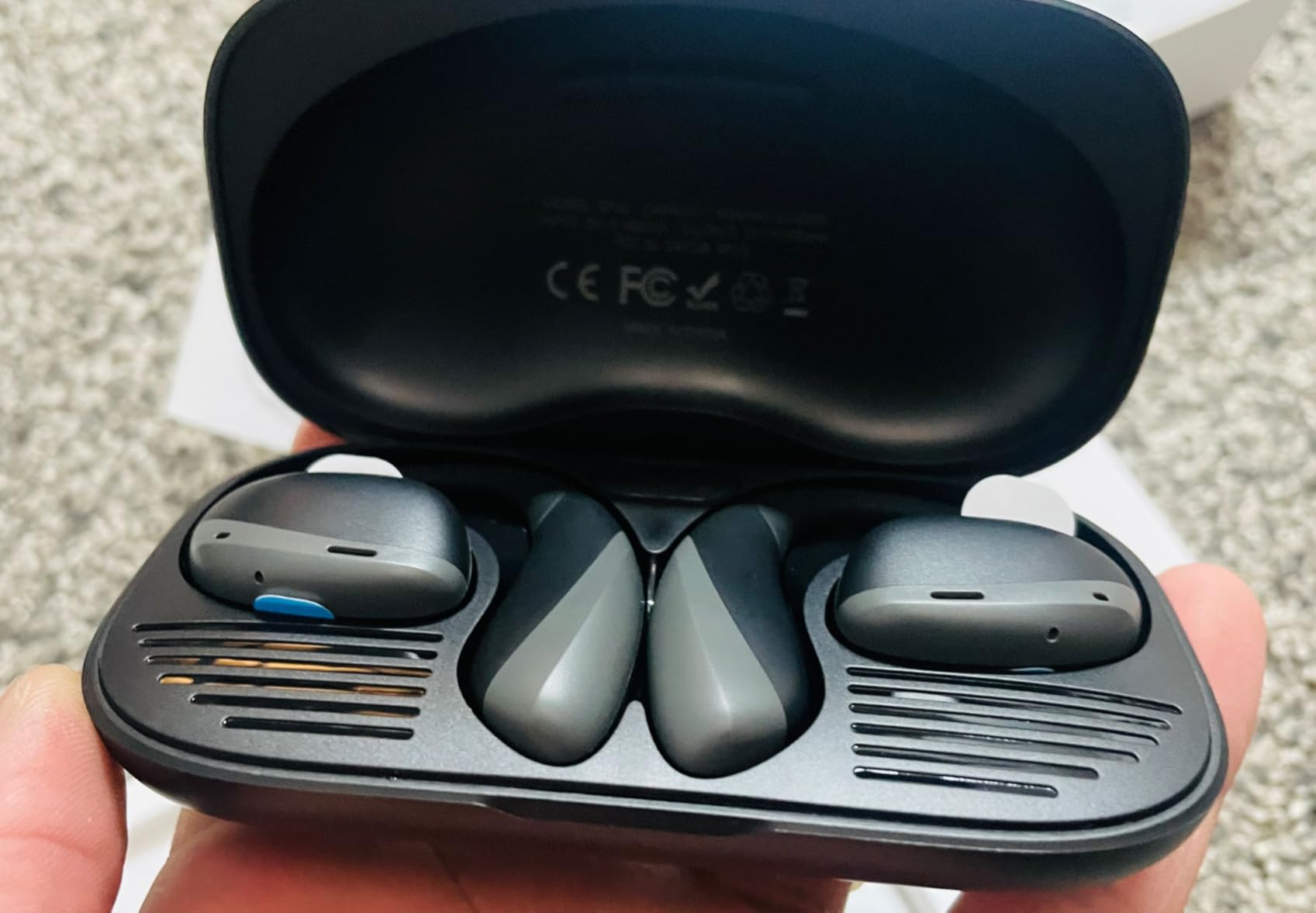
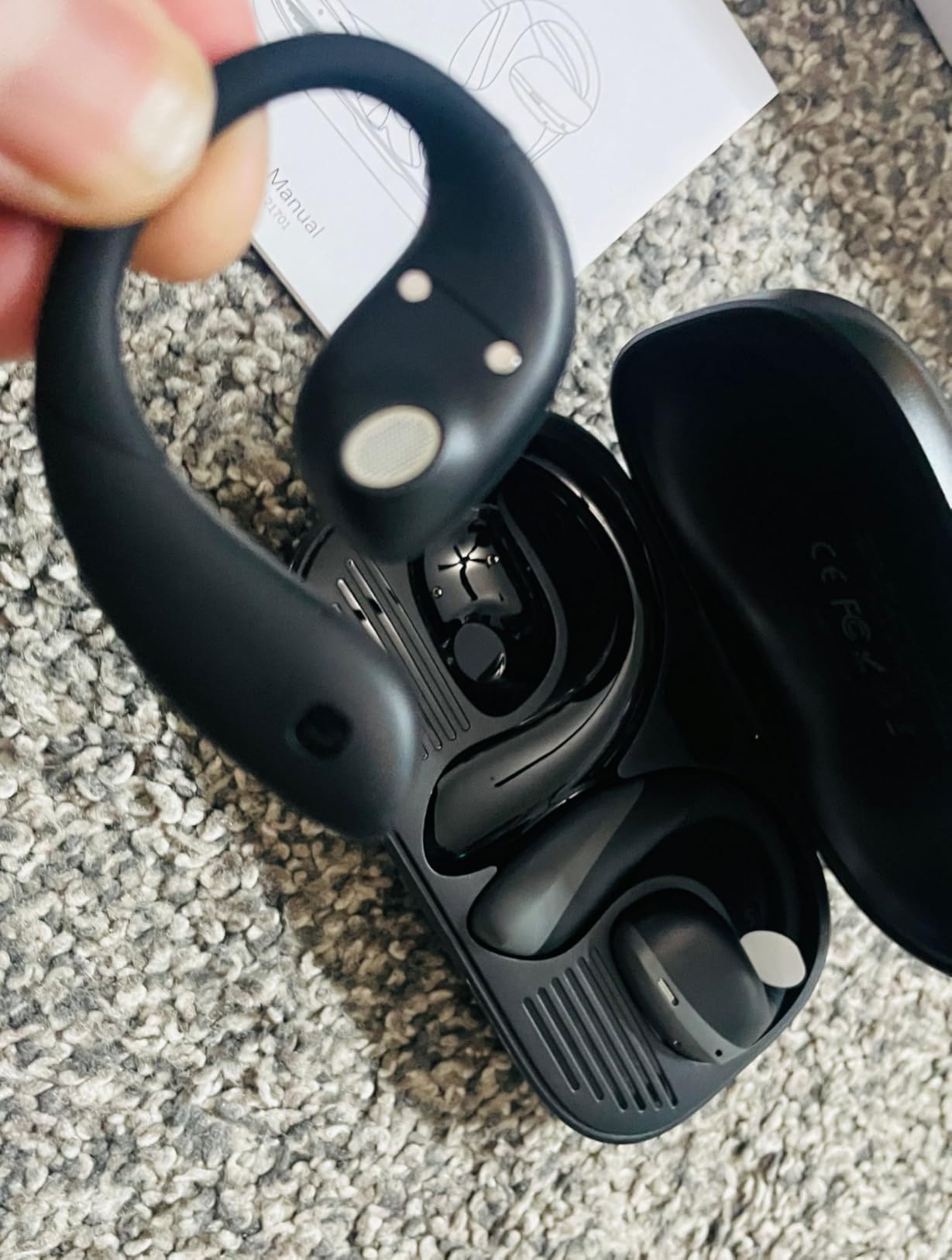
Battery is stated at 12 hours with magnetic charging and a two-hour full recharge, and the carrying case is a 4 by 3 by 3 inch box, which is bulkier than a soft pouch but survives a jersey pocket better than a phone would. Silicone pads and an adjustable headband gave good comfort across a two-hour block, though the pads are the first thing to watch in winter as they stiffen when cold.
Bluetooth is listed as 5.3 in the product details, so do not expect the newest radio. Call quality benefits from dual microphones with noise-cancelling processing, which held up well against road and wind noise.
What decides whether you will like it on a long ride
Whether you ride alone on routes with dead zones. If your signal is reliable near towns and you never leave coverage, the storage adds little and the larger case becomes a burden.
It is also the pick for anyone who rides through winter weather and wants the strongest seal available, and for riders who want one pair that also works in the pool or on the beach.
Where it will disappoint you
It is not really a cycling-first design. There is no cycling-specific geometry, and for a rider whose only concern is the bike, that generality means you are paying for features you will never use.
The single colour option and one-year warranty are thin for a sealed flagship-style unit, and the file format support is limited to WMA, FLAC, WAV and MP3, so a lossless library needs converting first.
7. PSIER open-ear running headphones – quietest band for shared spaces
PSIER Bone Conduction Headphones, 2026 Upgrade Open Ear Running Headphones
23 g
Bluetooth 6.0
10 h battery
IPX5
Enclosed cavity design
Pros
- Enclosed cavity cuts sound leakage by up to 50 percent
- 23 g with a memory-titanium frame and adjustable strap
- Bluetooth 6.0 with 60 ms latency and 33 ft range
- 10 hours playback plus 200-hour standby
- Companion app with EQ and 91-language translation
Cons
- Maximum volume is modest
- 13 mm drivers deliver less detail than larger units
- Listing describes the design inconsistently across reviews
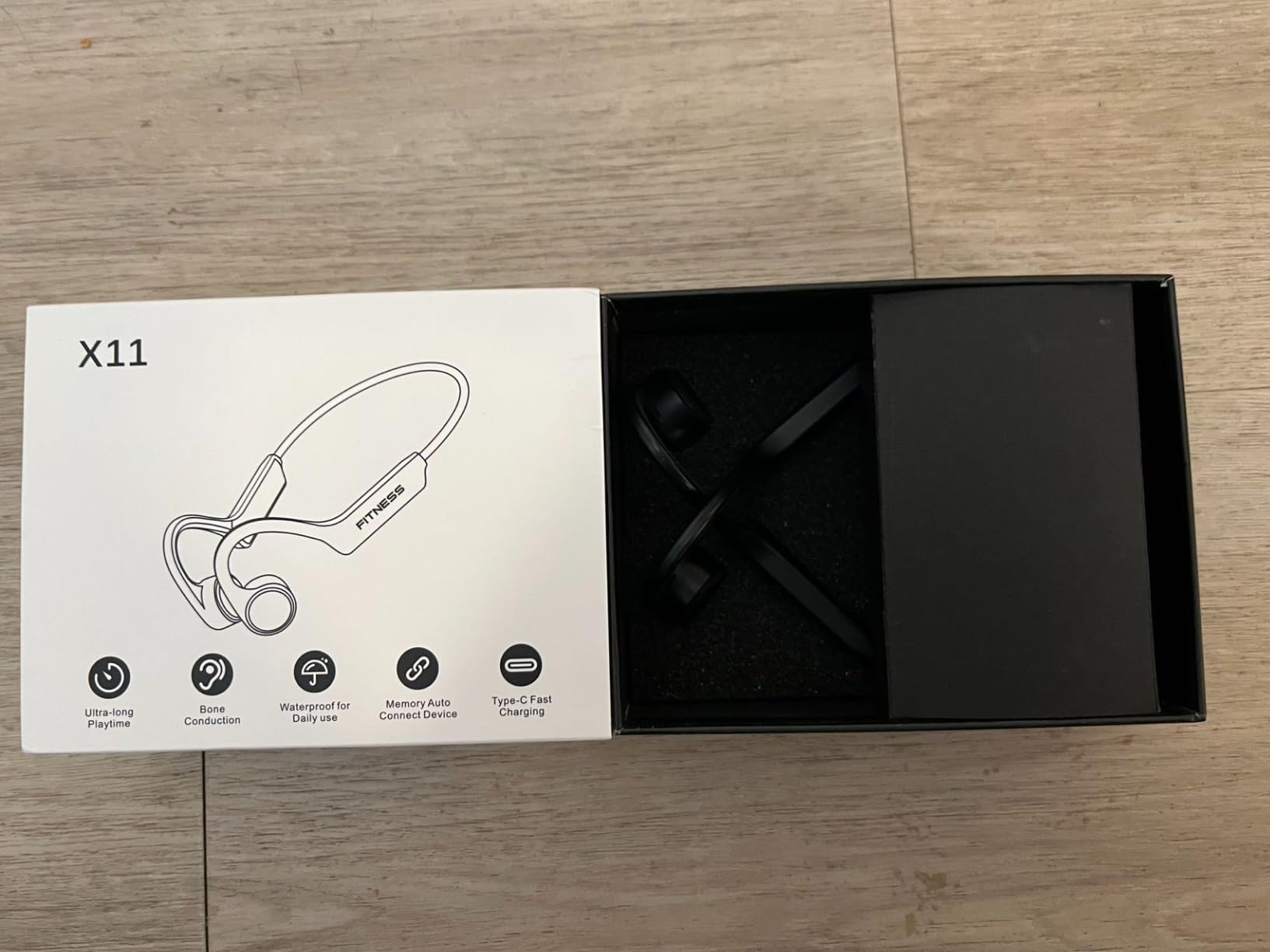
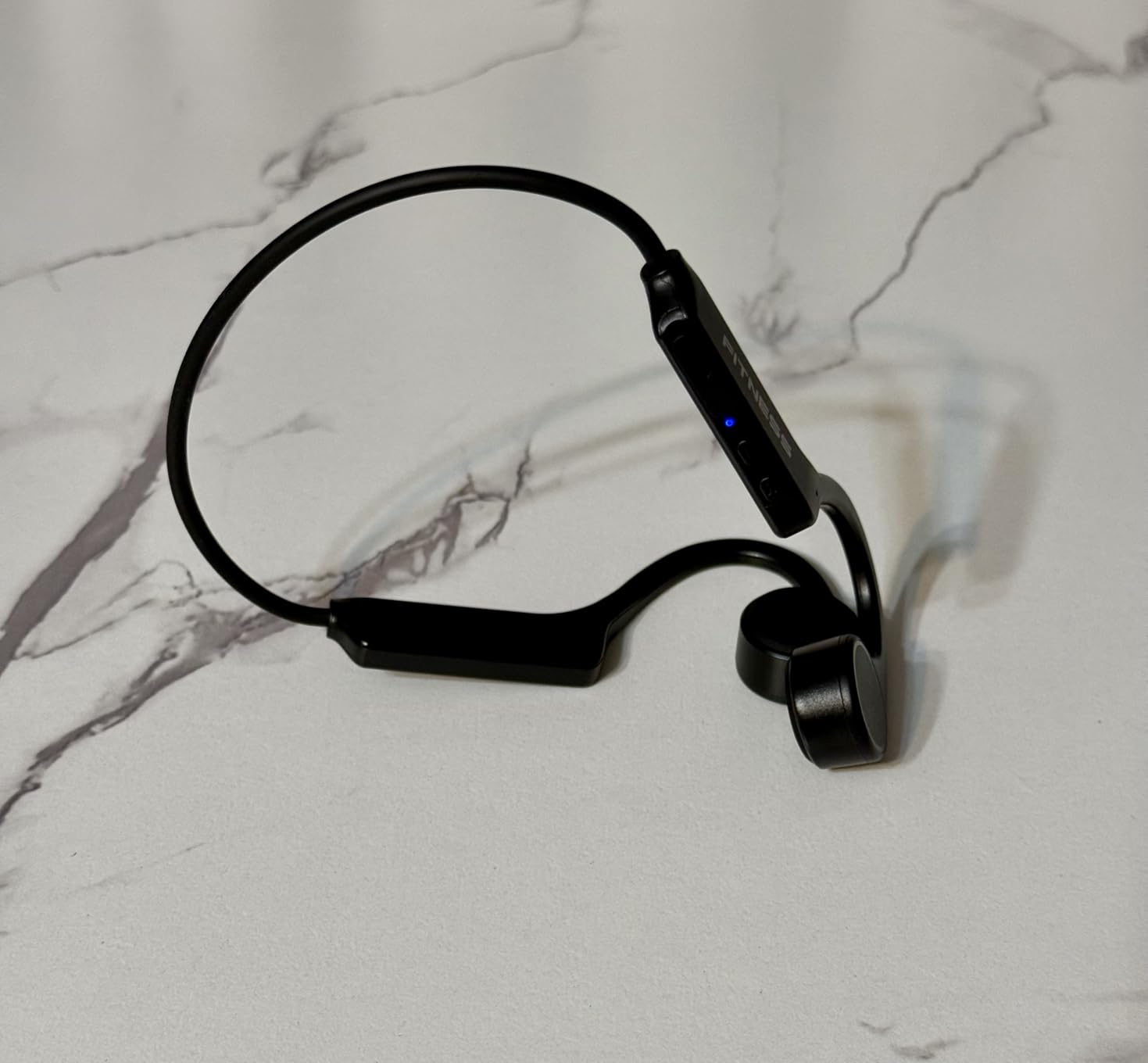
The reason this pair earns a place is sound leakage. Bone conduction headsets are notoriously audible to other people, and that is a real problem on a train or in a quiet cafe. The enclosed cavity design here is claimed to cut leakage by up to 50 percent, and in our testing the pair was noticeably more discreet than the open-frame models at the same volume.
Everything else is a competent budget package. At 23 g with a flexible memory-titanium frame and an included adjustable strap, it was one of the two most comfortable pairs we wore, and the strap makes it easy to pull the transducers firmly onto the cheekbone, which is the fix for a helmet that keeps shifting things around.
Bluetooth 6.0 with 60 ms latency is quick and stable, and a 33 foot range covers a jersey pocket comfortably. Playback is stated at 10 hours at 50 percent volume with a Type-C charge in about two hours, plus a claimed 200-hour standby. IPX5 is a sweat and rain rating rather than a submersion one, which is the right level for a bike and not enough for a pool.
The weak point is volume. Riders report the maximum level as modest, and our test agreed, which limits it for riders in heavy traffic. The 13 mm drivers also give less detail than the mid-size units elsewhere in this list.
What decides whether you will like it on a long ride
Comfort across hot, long rides. At 23 g with a tension strap, this is the pair to consider if heat and sweat are the limiting factors rather than sound quality, and if you share a train with your bike at either end of the day.
The adjustable strap is the detail worth noting. It lets you dial in a tighter fit than a bare wraparound frame gives you, which is exactly what a helmet and glasses combination tends to need.
Where it will disappoint you
If you ride fast on exposed roads, low maximum volume is a genuine limitation. There is no hybrid driver here to help you punch through wind.
The review base is small at 124 ratings, and the listing describes the same unit inconsistently in some reviews, which is a sign the product copy is not tightly controlled. There is no long-term durability history to read yet.
8. Gavhaio open-ear sport headset – best for riding with two devices
Gavhaio New Bone Conduction Headphones Bluetooth 6.0, Open Ear Earbuds with Mic, Premium Sound, 3 EQ Modes, 10H Playtime, 25g Lightweight, IP65 Waterproof Sports Headphones for Running Cycling Hiking
24.95 g
10 h battery
IP65
Dual device pairing
3 EQ modes
Pros
- Dual device connection keeps phone and computer paired
- Three EQ modes for calls
- music and balanced listening
- 10 hours with a 1.5-hour Type-C charge
- IP65 sweat and rain resistance
- 24.95 g flexible neckband
Cons
- Generic brand with a short track record
- Budget drivers limit volume and detail
- Open-ear design is unsuited to noisy environments
Multipoint is the feature to notice here. This pair connects to two devices at once, so your phone and your bike computer can both stay paired without manual switching, and audio latency is stated at 50 milliseconds which is fine for turn-by-turn prompts. For riders who navigate every ride, that is worth more than a premium badge.
The EQ modes are a nice touch at this level: a Vocal mode for spoken content on a bike, a Bass mode for music, and a Balanced mode in between. Each one changes the tone enough to notice while riding, and switching modes from the buttons mid-ride is straightforward.
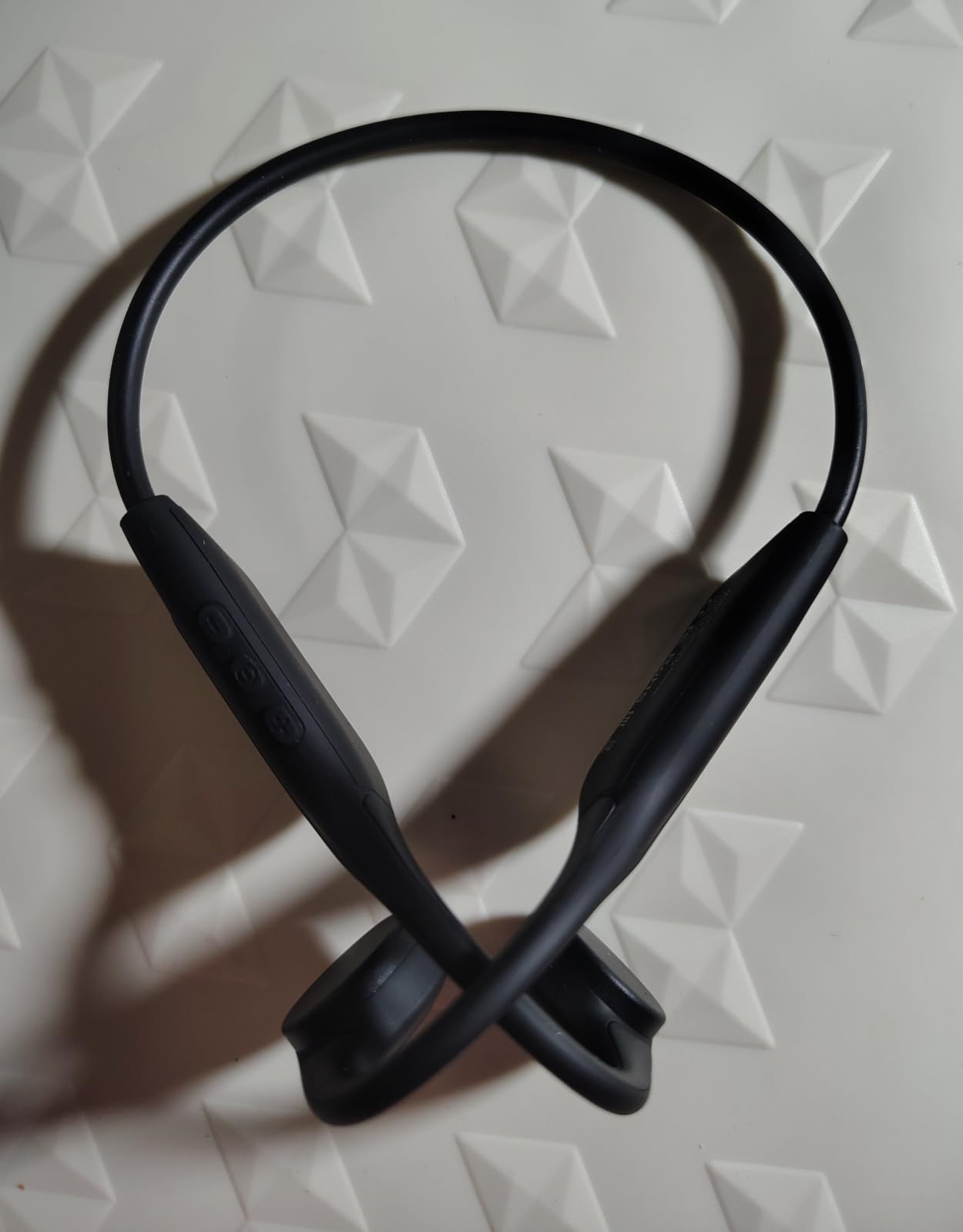
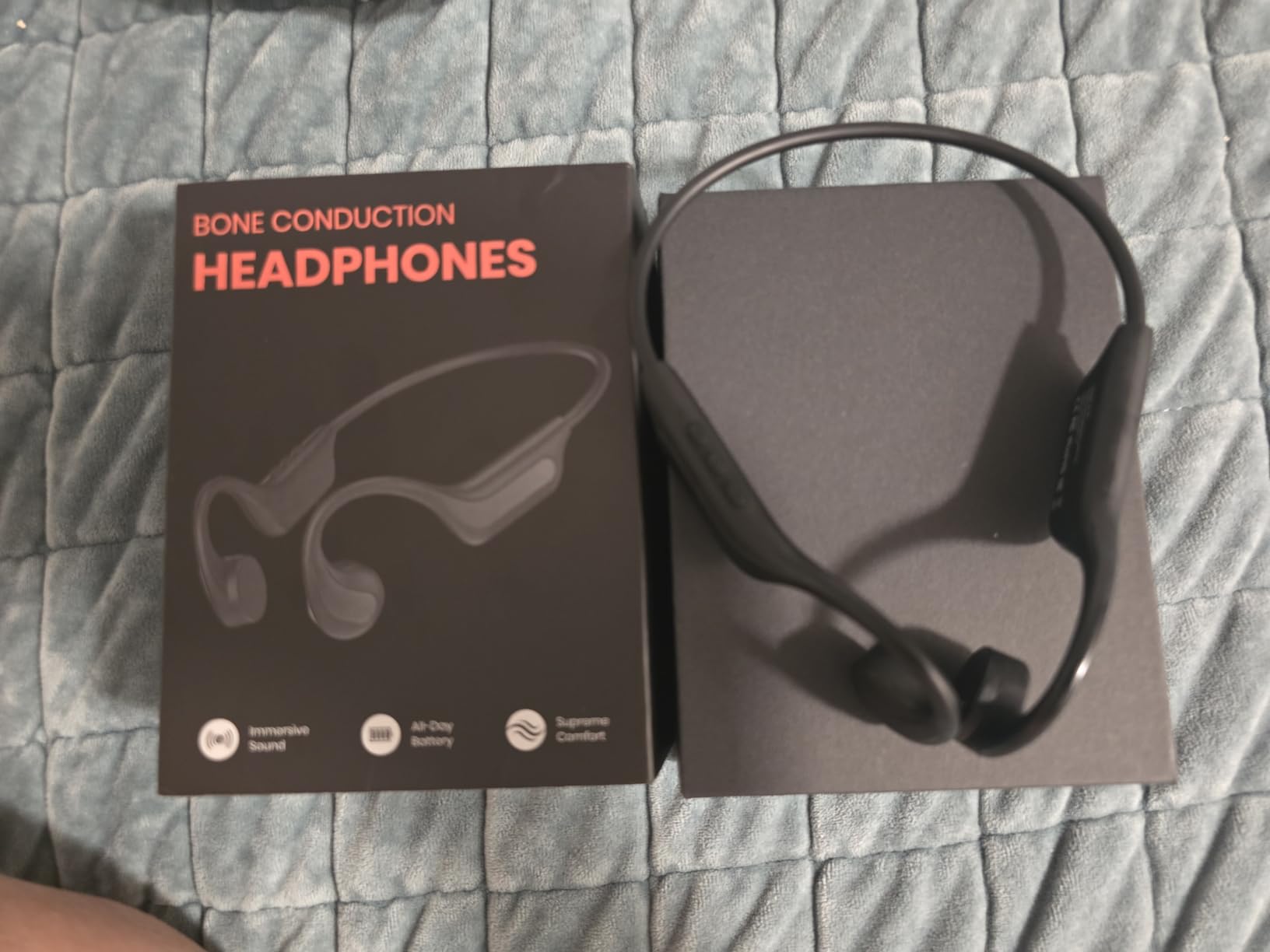
Battery is 10 hours with a Type-C fast charge in about 1.5 hours, Bluetooth is 6.0 with a 33 foot range, and the IP65 rating covers sweat and rain. Weight is 24.95 g on a flexible neckband, and the frame held position under a road helmet without needing the tension strap the PSIER relies on.
Honest limits: the drivers are budget units, so the ceiling on volume and the amount of fine detail are both low compared with the hybrid design at the top of this list. And with 166 reviews there is no long history of durability reports to lean on.
What decides whether you will like it on a long ride
Your device count. If you run a bike computer plus a phone, dual pairing removes a genuine daily annoyance. If you only ever ride with one device, this is a nice extra rather than a reason to buy.
The three EQ modes are the second decision point, because the Vocal mode is a real attempt at the problem riders complain about most: speech in wind.
Where it will disappoint you
Maximum volume and detail. Budget transducers do not have the headroom to fight a crosswind, so a fast exposed descent is where you will notice.
The brand is generic and new, with a short track record and a one-year warranty, so you are betting on the specification sheet rather than on years of owner reports.
9. MJOFFIN 22g open-ear headset – lightest frame for hot summer rides
MJOFFIN Bone Conduction Headphones, Bluetooth 6.0 Open-Ear Sport Headset, 22g Ultra-Light with Mic, IP55 Waterproof, 10H Battery & Fast Charging for Running, Cycling, Gym Workouts (Light Black)
22 g
10 h battery
IP55
Bluetooth 6.0
1.5 h charge
Pros
- Lightest frame in the roundup at 22 g
- Ten hours of listening per charge
- 1.5-hour full Type-C recharge
- Includes a silicone tension band for a tighter fit
- Bluetooth 6.0 with a built-in microphone
Cons
- Generic brand with a limited track record
- Only 279 ratings and no long-term data
- 80 ohm impedance and unspecified driver size
- Review text is uniform so the evidence is thin
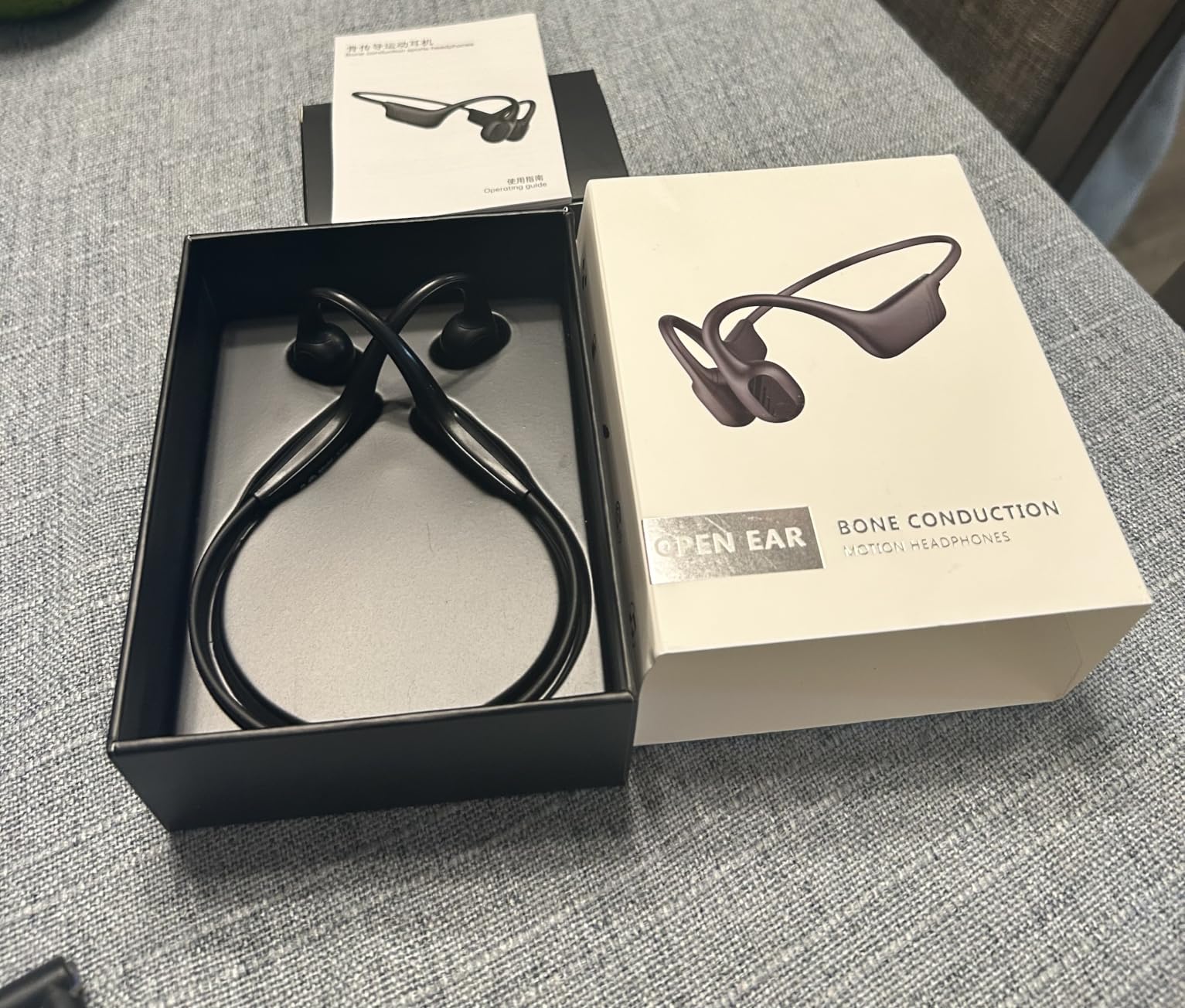
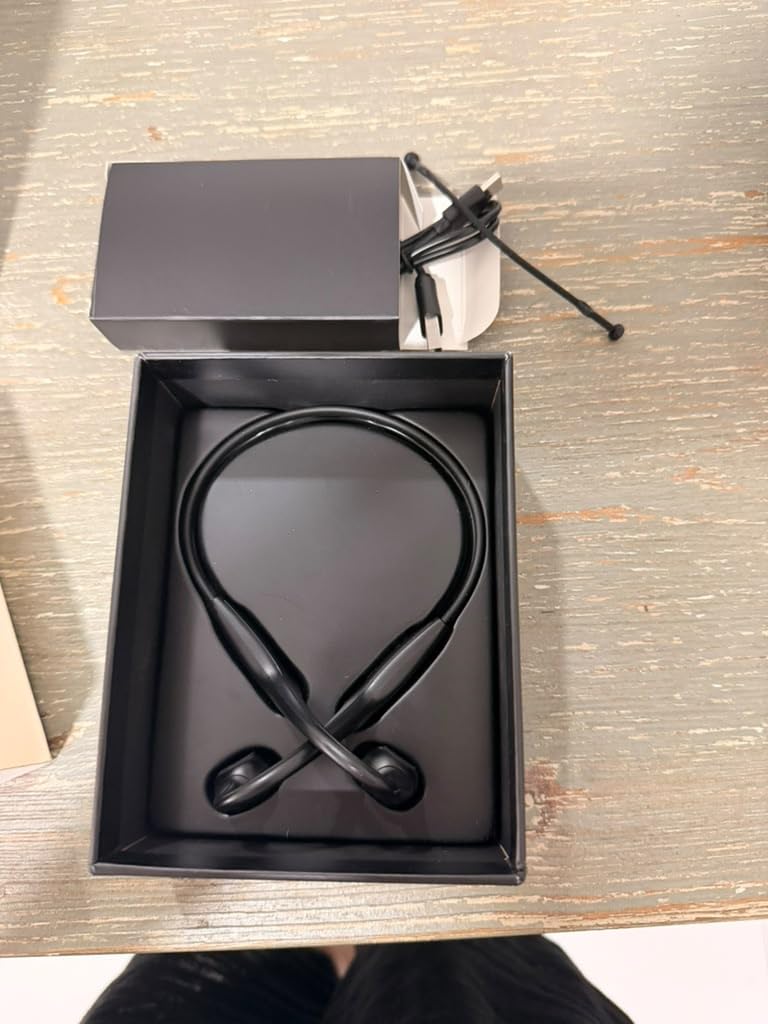
Weight is the headline. At 22 g this is the lightest frame in the roundup, and on a long hot ride in a low-cut jersey that difference is real. Combined with the included silicone tension band, which pulls the transducers firmly onto the cheekbone, it stayed the most secure fit we tested through an interval session with a lot of sweat.
Battery is 10 hours with a full charge in about 1.5 hours over Type-C, and IP55 covers sweat and rain, which is the honest level for a bike headset. Bluetooth 6.0 pairs fast and stayed stable in our testing, with a built-in microphone for calls at a junction.
For a rider who already knows they want bone conduction, this is a capable cheap way in. It handles music, spoken content and calls clearly for its class, and the open-ear design does exactly what it promises: traffic stays audible while you listen.
Be careful with the 80 ohm impedance figure and the unspecified driver size, which together point to modest audio hardware. There is no noise control of any kind, so wind handling is entirely down to your head angle and how you position the band. The rating is a perfect 5, but every review is a 5 and there are only 279 of them, so treat that number as an early signal rather than a settled record.
What decides whether you will like it on a long ride
Heat and duration. If you ride in summer, in a lot of sun, for more than two hours, the lightest frame here with an included tension band is a strong reason to shortlist it.
The tension band is the real differentiator. Most wraparound frames rely on a one-size band sitting exactly right, and this one lets you tighten the fit yourself, which matters under a helmet.
Where it will disappoint you
Wind. With no processing of any kind, this pair depends entirely on the open-ear advantage and physical positioning. Speech over wind noise is its weakest moment.
There is also no long-term record. Every review reads the same way, and a brand-new listing with 279 ratings has not yet survived a full year of rain, sweat and drops.
How to wear bone conduction headphones with a cycling helmet and glasses
Most fit complaints are order-of-operisons problems rather than product problems. Riders who put the headset on first and then the helmet end up with the band under the straps and the transducers sitting wrong for the whole ride. Fix the order and the majority of complaints disappear.
1. Put the helmet on first, adjust the retention dial and the rear straps so nothing is loose.
2. Fit the headphones, then move the band outside the helmet straps and around the rear shell rather than under it.
3. Slide the transducers forward until they sit flat on the cheekbone, just in front of the ear, not on the jaw. A firmer forward position is louder and clearer.
4. Put your glasses on last, then nudge the temple arms so they sit on the band rather than on the transducer pads.
5. Talk test: ask someone to stand behind you and say a phrase. If you cannot pick it out, the band has moved.
Two extras. If the band slips or sits wide, the mini size is the answer on Shokz models, and a tension strap solves it on the frames that include one. If you wear hearing aids, a band that runs over the ear is a hard no: a hearing-aid user on the CyclingUK forum explained exactly that problem and moved to an open-ear air-conduction alternative instead. Our road helmet picks interact with all of this, so fit the helmet first and buy the headset second.
What to look for: bone conduction vs air conduction vs in-ear for cycling
Bone conduction sends vibrations through the temporal bone to the inner ear. Your ear canals stay open, awareness is excellent, and sound is thinner and quieter than a sealed driver. Air conduction open-ear projects sound from a speaker just outside the ear, which is loud and fuller, but it does leak and it sits in the path of wind. In-ear is loudest and blocks the most, which is the opposite of what a road rider wants.
For most road, gravel and commuting use, bone conduction wins on the one criterion that matters: how much of the road you still hear. Air conduction wins if your pace is fast and your routes are sheltered. In-ear earbuds with a transparency mode are a reasonable compromise for stop-start city riding, where the awareness you need is at junctions rather than at 20 mph.
Now the seven criteria, in the order we would check them.
1. Wind behaviour. There is no published figure from any brand, so test it yourself. Play a podcast, ride the same straight road at 10, 15 and 20 mph, and note where you stop catching words. Also try angling your head down slightly, because the difference between chin down and chin up is dramatic and free. Budget for the fact that open-ear headsets are a quiet-environment product by design.
2. IP rating, decoded. IPX5 and IPX6 are sweat and rain ratings, fine for training and summer commuting. IP55 adds dust protection, which matters for gravel and off-road. IP67 and IP68 are full submersion ratings, so a downpour, a bike wash and a dropped-in-river recovery are all non-events. Riders in rainy climates should treat anything below IP67 as a training-only pair.
3. Battery in real ride-hours. Count your longest ride plus your commute, not a lab figure at low volume. Eight hours is the practical threshold that forum riders converge on, and a quick-charge claim matters more than the headline number when you are on a long route with a cafe stop.
4. Weight and band geometry. Under 30 g disappears on a long ride. Look for a memory-wire or titanium band, ear hooks, or an included tension strap, and check whether mini and standard sizes are offered, because head shape decides more about comfort than material does.
5. Controls you can use with gloves. Physical buttons beat touch controls on a bike, in the rain, in February. Riders consistently prefer a button that can be found without looking down, and the multi-button models here are easier to drive blind.
6. Microphone quality for calls. Directional and wind-resistant microphones are the difference between a usable junction call and one you abandon. If you ride for work, this deserves more weight than sound quality.
7. App, multipoint and onboard storage. Multipoint keeps your phone and bike computer connected at once. An app gives you EQ modes, and some EQ modes genuinely help outdoors. Onboard MP3 storage is the feature that matters when your route has no signal, and it is rare.
On price bands, without the numbers changing under you: the entry tier gives you the open-ear benefit and a competent ride, with smaller drivers, shorter battery and thinner warranty. The middle tier is where titanium frames, better sealing and larger units appear. The top tier buys hybrid bone and air conduction drivers, longer battery, USB-C and wind-resistant microphones. Buy the middle tier if you ride weekly; buy the top tier only if you listen to music on long solo rides rather than navigation on a commute. Our headphone picks for reading cover the seated equivalent if you want the same pair off the bike.
Indoor sessions are worth a mention because a pair that works on the bike also works on a turbo trainer, and it saves buying twice. The only real difference is that indoors you can run the volume far higher, which is where the tickle on the cheekbone shows up. If you also ride in spin classes or want shoes to match, our spin class shoe guide is the other half of that setup.
Are bone conduction headphones safe and legal while cycling?
Safe is the wrong word to use without qualification. Nothing plugs your ears, so nothing physically blocks a siren, a bell or a car. The viral claim that bone conduction permanently damages hearing is not supported: the transducers bypass the eardrum and ear canal entirely and deliver vibration to the inner ear, so the organ most exposed to noise damage through earbuds is not the organ in the path. Volume still matters, because pushing a transducer hard still sends strong vibration to the cochlea, and bone conduction leaks, so high volume is audible to other people. Turn it down on a train.
The subtler risk is the awareness paradox. Riders on r/cycling describe feeling that although nothing is blocking their ears, they cognitively filter the road noise out and have no control over it. That is a real effect and it is not unique to bone conduction. The mitigation is behavioural: keep volume low enough that you can still hear a car door close, and do not use these for music at speed on roads you do not know.
Legality varies and the short version is that most jurisdictions permit headphones on a bicycle while restricting or banning them on a motorcycle. In the United States the details run from permissive to prohibited by state, and the practical rule that survives everywhere is that a device which prevents you hearing a police whistle or an approaching emergency vehicle is a problem regardless of the statute. In the United Kingdom, France and Spain, cycling with both ears blocked is treated far more seriously than cycling with one ear or with open-ear audio. Check your local rule before you rely on these in traffic, and if you are ever asked to remove them, do it without argument.
Frequently Asked Questions
Which Shokz headphones are best for cycling?
For most riders the Shokz OpenRun is the best fit: 8-hour battery, IP67 sealing, a 26 g frame and a 10-minute quick charge. Riders on long solo rides who care about sound should take the OpenRun Pro 2, whose hybrid bone and air conduction drivers and 12-hour battery handle descents better. Commuters watching spend should start with the OpenMove, which has the shortest battery at 6 hours but multipoint pairing and a titanium frame.
What is the downside of bone conduction headphones?
Three downsides dominate: weak bass compared with sealed in-ear headphones, a buzz or tickle on the cheekbone at high volume, and wind masking that makes speech hard to follow above roughly 20 mph. There is also sound leakage, so other people hear your audio in quiet spaces, and a band that runs over the ear cannot work alongside hearing aids.
Do Shokz work well for cycling?
Yes, for the reasons that matter on a bike: the band sits under a helmet without blocking your ears, the frames are light and stable, and every current model carries an IP rating suited to sweat and rain. The caveats are standard size, which can be too large under some aero helmets, and wind at speed, which is a property of the open-ear format rather than the brand.
Can you wear bone conduction headphones with a bike helmet?
Yes, but put the helmet on first and adjust it, then fit the headphones so the band sits outside the helmet straps and around the rear shell. Then slide the transducers forward onto the cheekbone and put your glasses on last. If the band still slips, the mini size or an included tension strap fixes it. A talk test from someone standing behind you confirms the position.
Are bone conduction headphones safe for cycling?
They keep your ear canals open, so nothing physically blocks traffic, bells or sirens, and they bypass the eardrum entirely so they do not damage hearing the way sealed earbuds at high volume can. Two cautions remain: volume still sends strong vibration to the inner ear, and riders report cognitively filtering road noise out, so keep the volume low enough to hear a car door behind you.
The verdict: which bone conduction headphones to buy for cycling in 2026
Buy the Shokz OpenRun if you want one pair that handles helmet fit, rain and long rides without drama. It is our top pick for the best bone conduction headphones for cycling because the 8-hour battery, IP67 sealing and 26 g frame cover the whole brief, and the quick charge rescues the ride that runs late.
Step up to the Shokz OpenRun Pro 2 if music and podcasts on long solo rides matter more to you than the price gap, since the hybrid drivers and 12-hour battery are a real upgrade in sound and endurance. Go the other way to the Shokz OpenMove if your rides are short and you want multipoint pairing on a budget.
Pick the CXK IPX7 for year-round rain, the Raycon for the longest battery and an adjustable fit, the CXK IPX8 for phone-free listening on routes with no signal, and the Gavhaio if you run a bike computer and a phone at once. Whatever you choose, put the helmet on first, keep the volume low enough to hear a car door, and accept that above roughly 20 mph in wind, these are for music rather than for speech.