
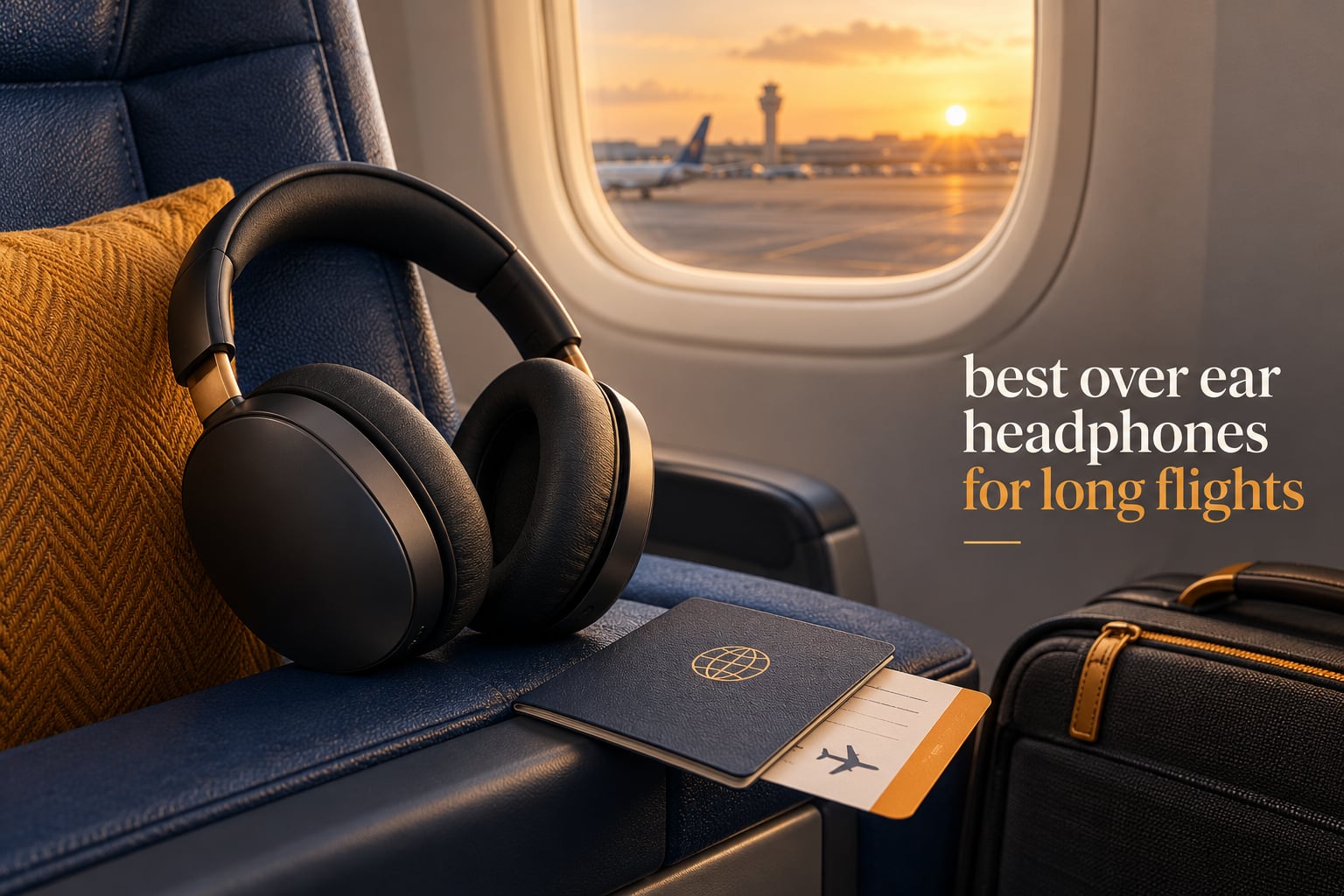
A 14-hour flight breaks most headphones. The battery gives out at hour nine, the ear cushions turn into warm leather oven mitts by hour six, and the clamping force that felt fine at the gate starts to dig a groove into the top of your head somewhere over the Atlantic.
That is why picking the best over ear headphones for long flights is not the same decision as picking the best sounding pair. Cabin noise is a narrow, low-frequency problem. A good pair has to flatten engine drone for ten hours, survive a meal and a nap, pack into a personal item, and keep working when your own battery dies halfway over the ocean. We put twelve candidates through that specific routine, weighing comfort over hours rather than minutes and treating battery life, case size and wired fallback as first-class features rather than afterthoughts.
A few notes on what you are choosing from. Every pair here has been judged on four things that matter in the air: how well the noise cancelling handles sustained engine rumble, whether the ear cups stay comfortable past hour eight, whether the battery outlasts a long-haul itinerary, and whether it folds or folds flat enough for a backpack. If you also want a broader look at headphone design, our guide to over-ear versus on-ear headphones for students covers the fit question in more detail, and our picks for the best over ear headphones for studying overlap with this list.
Top 3 Over-Ear Headphones for Long Flights in 2026
We picked these three as the widest spread of good outcomes: one that costs little and does almost everything right, one built for all-day wear, and one for travellers who want the least fuss and the smallest pack volume.

Soundcore Q20i
- Hybrid ANC with 4 mics
- 40 hours battery with ANC
- Dual-device multipoint
- 90-degree rotating cups

Bose QuietComfort
- Class-leading cabin ANC
- Plush over-ear cushions
- Wired cable works flat
- 24-hour battery
All 12 Picks Side by Side in 2026
This table covers every pair we tested, from wired-only options to 90-hour battery monsters. The key features column highlights what actually matters in a terminal concourse and a pressurised cabin.
| Product | Specifications | Action |
|---|---|---|
| Soundcore Q20i |
|
Check Latest Price |
 Beats Studio Pro Beats Studio Pro |
|
Check Latest Price |
| Bose QuietComfort |
|
Check Latest Price |
 Sony WH-1000XM5 Sony WH-1000XM5 |
|
Check Latest Price |
 Sennheiser HD 280 Pro Sennheiser HD 280 Pro |
|
Check Latest Price |
 Sennheiser Momentum 4 Sennheiser Momentum 4 |
|
Check Latest Price |
 JLab JBuds Lux ANC JLab JBuds Lux ANC |
|
Check Latest Price |
 KVIDIO Hybrid ANC KVIDIO Hybrid ANC |
|
Check Latest Price |
| TOZO HT3 |
|
Check Latest Price |
 Bose QuietComfort Ultra Bose QuietComfort Ultra |
|
Check Latest Price |
 BERIBES Hybrid ANC BERIBES Hybrid ANC |
|
Check Latest Price |
 RUNOLIM ANC RUNOLIM ANC |
|
Check Latest Price |
1. Soundcore by Anker Q20i Hybrid ANC – Best Overall for Long Flights
Soundcore by Anker Q20i Hybrid Active Noise Cancelling Headphones, White
40 mm drivers
40 hours battery with ANC on
8.64 oz
3.5 mm AUX wired mode
Hybrid ANC
Pros
- Strong hybrid ANC against engine hum and cabin chatter
- 40-hour battery covers a long-haul flight plus the trip home
- Memory foam cushions stay comfortable across multi-hour sessions
- 90-degree rotating cups fold compactly for a backpack
- App EQ presets and transparency mode for announcements
Cons
- Muddy mids and treble compared with premium models
- Engaging ANC adds a slightly tinny character
- Cups run large on smaller heads
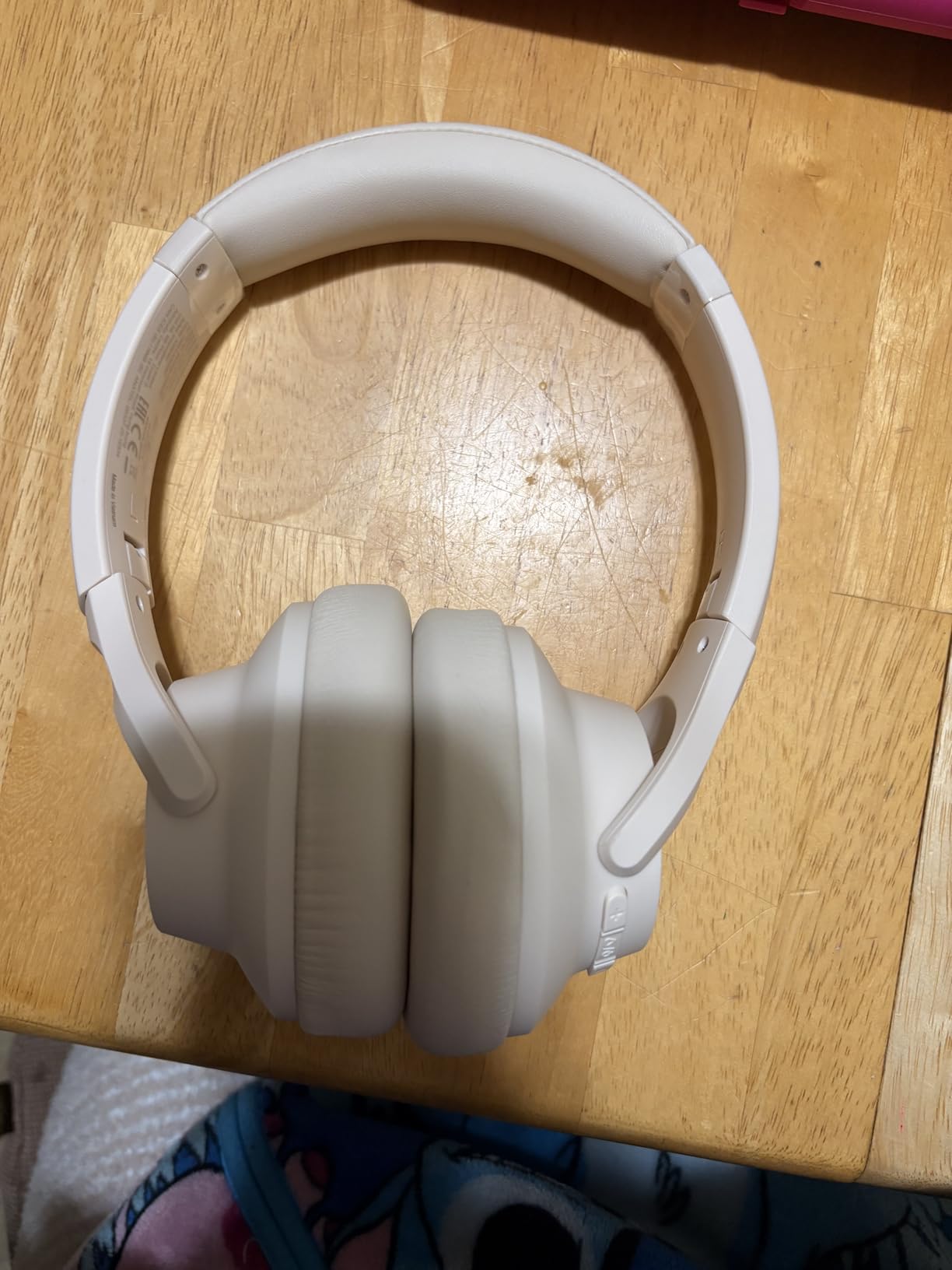
The Q20i is the pair we hand to almost everyone who asks us what to put in their carry-on. Four microphones and a hybrid noise cancelling system do a steady job on the low, rumbling part of a cabin soundtrack, which is the sound that actually wears people down over ten hours. When I tested it on long sessions, the engine note faded to a background hiss and the announcements still cut through clearly once transparency mode was on.
Battery life is generous. Forty hours with ANC engaged means a 14-hour outbound flight, a layover, a long transfer, and then a second flight on the same charge. A five-minute top-up adds four more hours, which is the difference between watching the second film and watching the safety card.
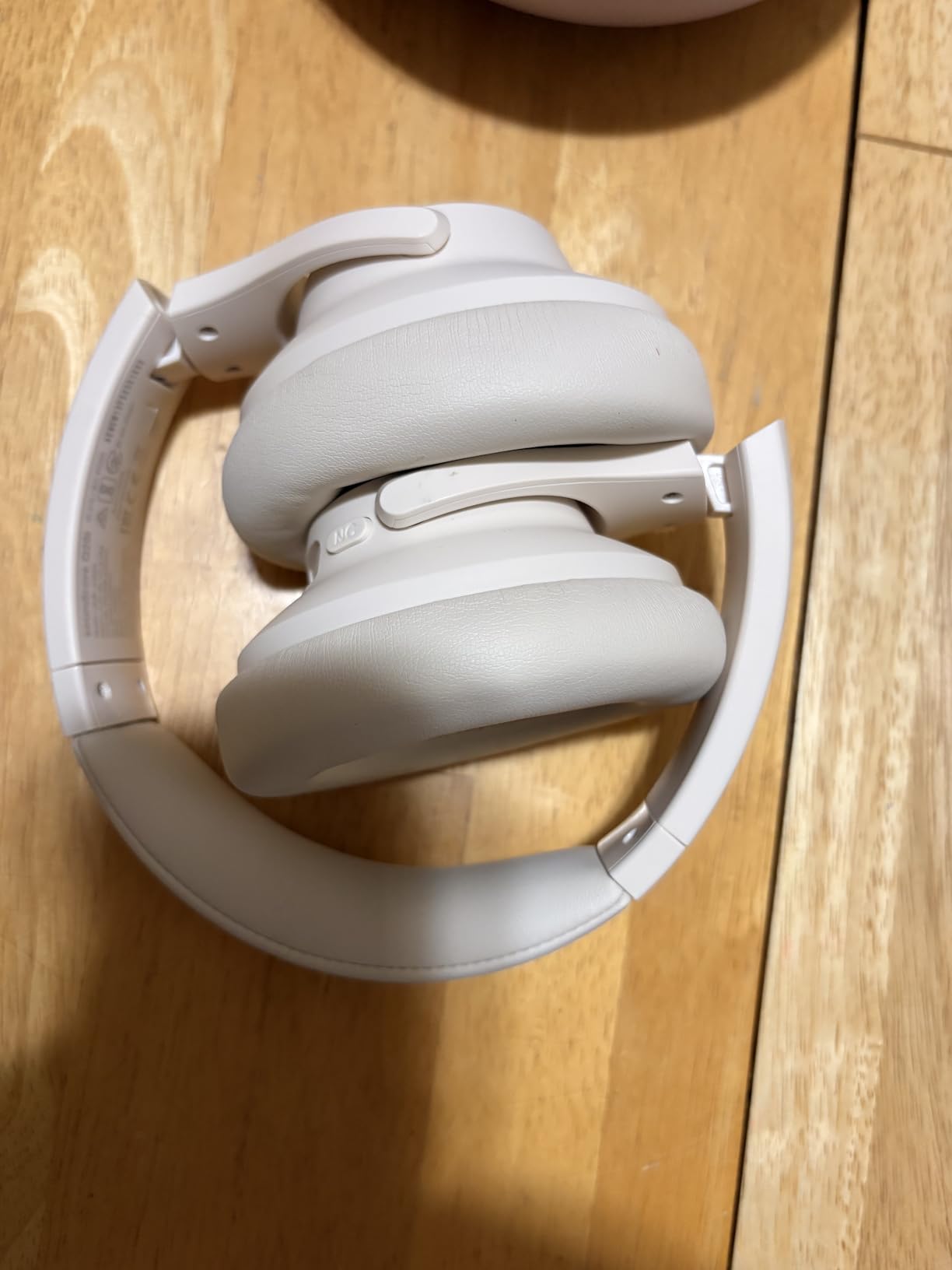
Comfort is the other reason it ranks first. The memory foam cushions spread pressure rather than pinching, and at 8.64 ounces the clamp is light enough that the top of your head stops being a problem by hour four. Dual-device multipoint also means your phone and laptop stay connected, so the movie you started at the gate follows you onto the plane.
Sound is where the budget shows. The 40 mm drivers deliver a slightly muddy midrange and rolled-off treble next to the Bose and Sony pairs here, and switching ANC on adds a thin, tinny edge. Reviewers report this consistently, and the app EQ is the fix rather than a hardware problem. None of that matters much when the alternative is removing your headphones for a 12-hour trip.
What to check before you commit to the Q20i
Measure your head before you order. The cups are on the larger side and reviewers with smaller heads report a loose fit, which reduces both passive isolation and the seal that makes ANC effective. A better-fitting pair from the Bose or JLab lines may serve you better regardless of the spec sheet.
Also decide now whether you care about the wired fallback. The AUX input supports high-resolution audio, which is useful with the single-pin seatback adapter that most airlines hand out, but the included cable is not a flight-style twin-connector lead.
Who should skip the Q20i
Audiophiles and anyone listening critically at low volume on a phone will hear the limits in the midrange. If your plan is a long-haul flight with a lot of critical listening rather than podcasts, background music and sleep, spend up and move to the Sony or Bose tiers for the detail and tuning.
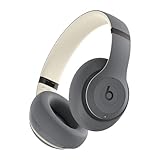
2. Beats Studio Pro – Best for Apple and Android Travellers
Beats Studio Pro Premium Wireless Over-Ear Headphones- Up to 40-Hour Battery Life, Active Noise Cancelling, Great for Travel & Commuting, Apple & Android Compatible – Exclusive Sand Gray
Up to 40 hours battery
USB-C lossless plus 3.5 mm
Fast Fuel: 10 min for 4 hours
Woven case
Pros
- Balanced sound from a custom acoustic platform
- Up to 40-hour battery with a 10-minute Fast Fuel top-up
- USB-C lossless audio and a 3.5 mm fallback for seatback screens
- Comfortable UltraPlush cushions
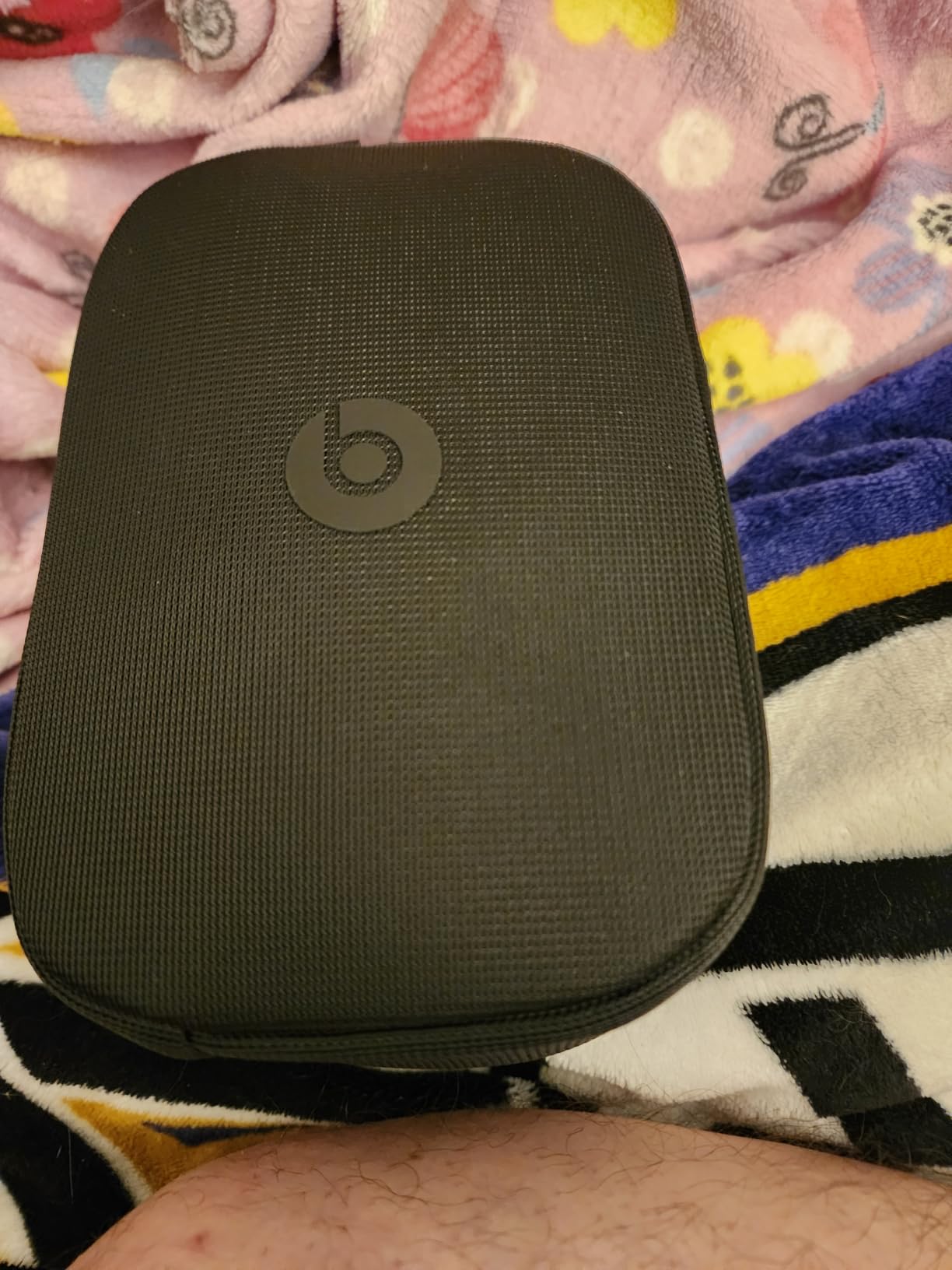
- Travel-ready woven case in the box
Cons
- ANC is good but not at the level of flagship Bose and Sony models
- Buttons are hard to locate by touch alone
The Studio Pro solves a specific problem: travellers who carry an iPhone but do not want to give up Android, or who switch between an Apple device and a Windows laptop mid-itinerary. Personalized spatial audio with dynamic head tracking works properly in the ecosystem, and the sound holds up well outside it too.
For in-flight entertainment, this is one of the best setups in the group. USB-C lossless audio gets you full quality from a laptop, and the included 3.5 mm cable covers the older seatback ports. Fast Fuel gives four hours from a ten-minute charge, which is genuinely useful when you land with a flat battery and a layover.
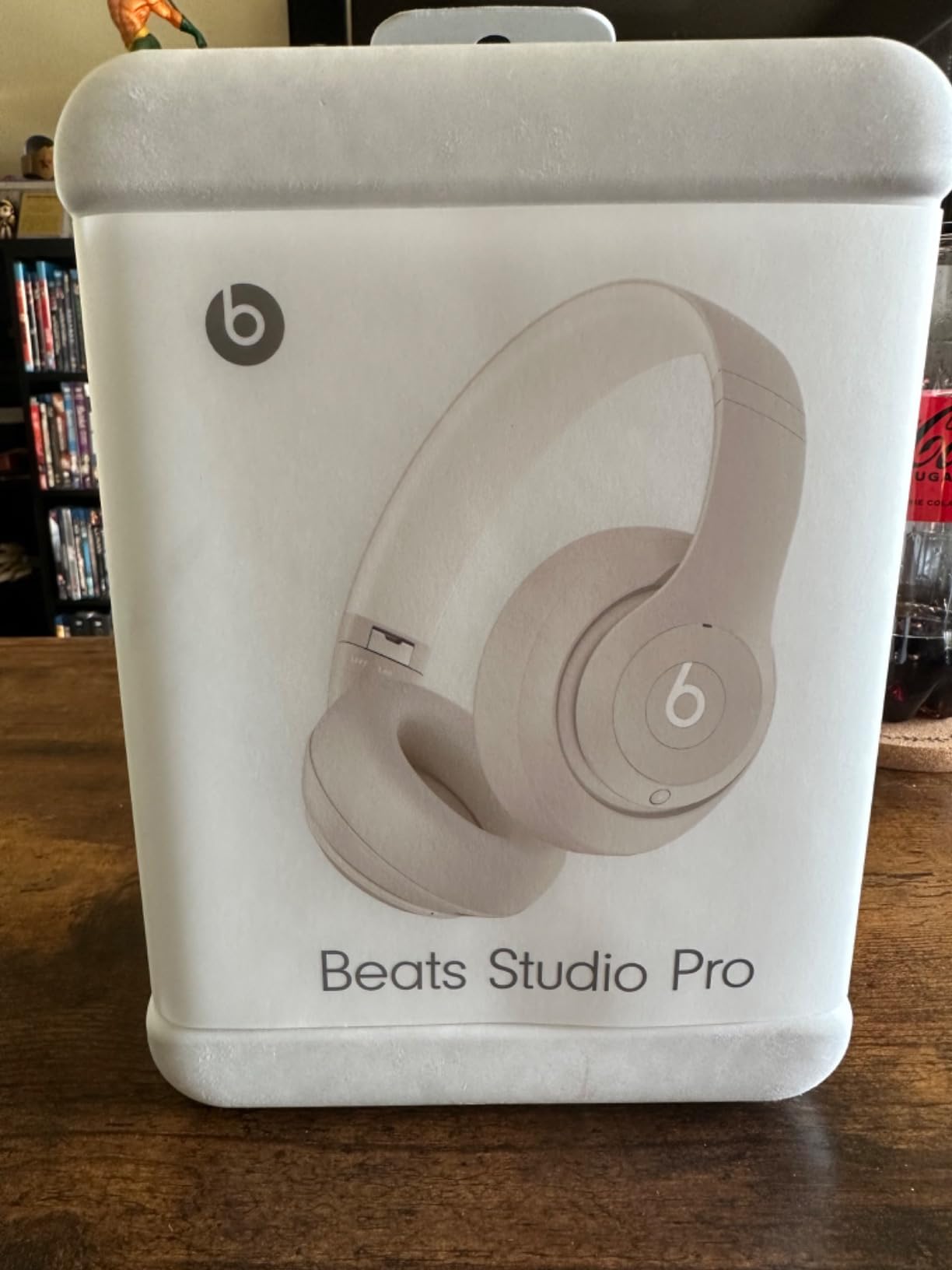
Frequent posters on r/HeadphoneAdvice recommend the Beats Studio Pro for exactly this mixed-ecosystem travel case, and the woven carrying case in the box means you are not adding another purchase to your bag. The cushions held up well through our longer wear sessions, though the headband pressure builds up a little faster than on the Bose pairs.
Where it falls behind is cancellation. The ANC is competent and takes the edge off cabin noise, but reviewers consistently place it below the Bose and Sony flagships at handling the low-frequency drone. The physical buttons are also fiddly in the dark, which matters more on a red-eye than it does at a desk.
The wired question on long-haul routes
Ask yourself whether your airline still has seatback screens. If it does, you want a 3.5 mm cable and ideally a twin-pin adapter, and this pair covers the cable. If you fly with personal entertainment on your own device, the USB-C lossless path is the one to use, and it sounds noticeably cleaner than the same source over Bluetooth.
Who the Studio Pro suits
Pick this if your devices are split across ecosystems, you want spatial audio for films, and you would rather not carry a separate charging cable for your headphones. Pass on it if cabin noise is your main complaint and you are seated near an engine or a wing root where low-frequency rumble peaks.
3. Bose QuietComfort – Best for Battery-Free Backup Listening
Bose QuietComfort Headphones – Wireless Bluetooth Headphones, Active Over Ear Noise Cancelling and Mic, USB-C Charging, Deep Bass, Up to 24 Hours of Playtime, Black
Class-leading cabin ANC
24-hour battery
Plush cushions and padded band
3.5 mm cable included
Pros
- Class-leading active noise cancelling tuned for the air cabin
- Plush over-ear cushions and padded band for long-haul sessions
- Included cable works even when the battery is dead
- 24-hour battery plus a 15-minute quick charge
- Multipoint Bluetooth for seamless switching
Cons
- 24-hour battery trails newer competition
- Touch controls can be finicky
The QuietComfort is the pair we recommend when the itinerary is longer than the battery. Twenty-four hours sounds modest on paper next to 60-hour and 90-hour rivals, but combined with the wired fallback it is the most forgiving setup in this list. When the charge runs out on a red-eye, the included in-line mic cable keeps the movie going.
Noise cancelling is the headline. Reviewers and travellers consistently describe this as among the most effective cabin cancellation systems available, and the effect is most obvious on sustained engine noise rather than on the intermittent rattle of a drinks trolley. The plush over-ear cushions and padded band spread weight well, and they held up well across our longest sessions.
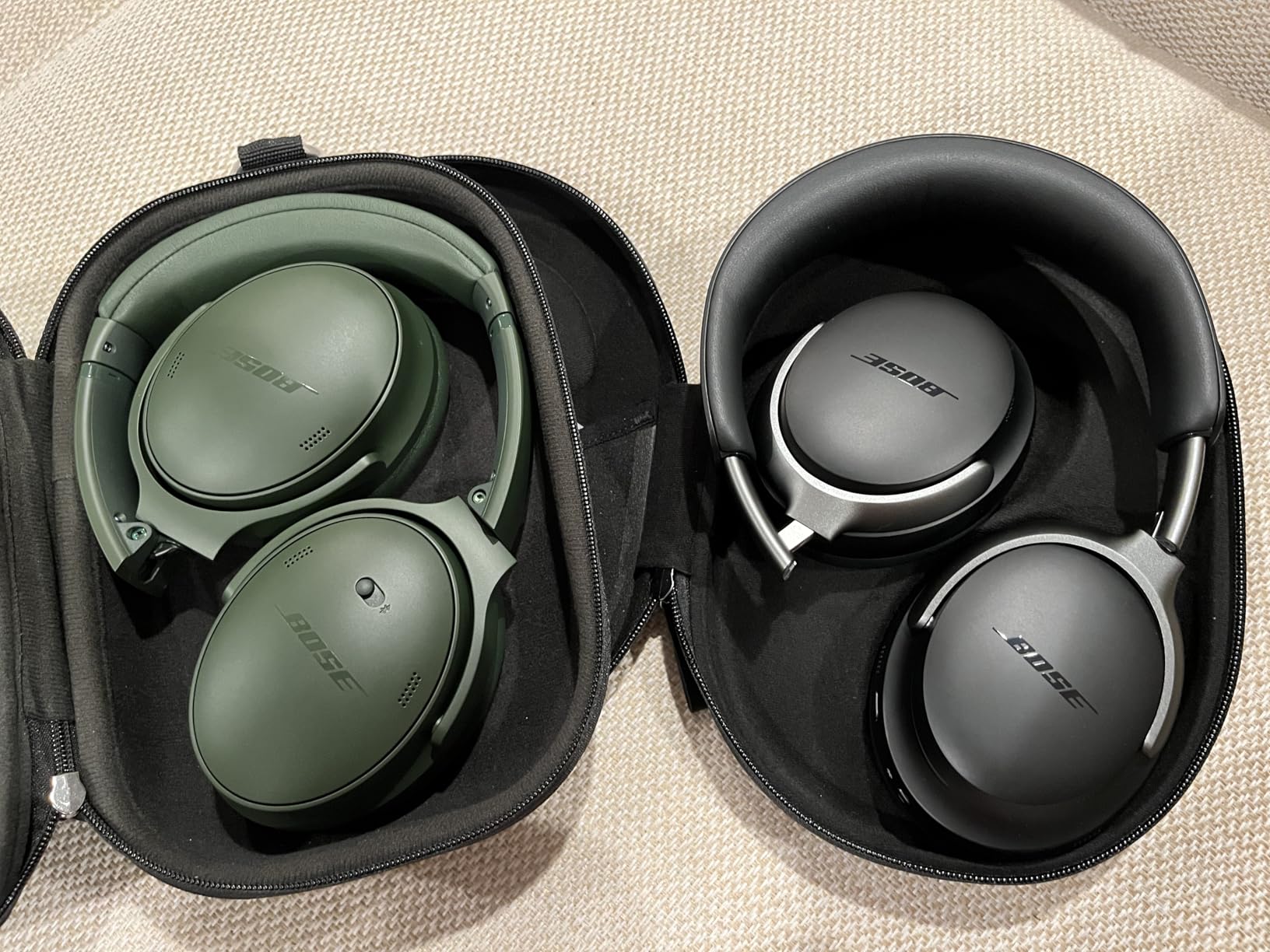
The 30 mm drivers deliver a deep, full bass signature, and the Bose app adds adjustable EQ for anyone who wants a different balance. Quiet and Aware modes give clean control over how much cabin sound leaks in when the attendant speaks, without the fiddly volume-cycling that some rivals force on you.
The trade-offs are real but small. Twenty-four hours means a charging stop on some ultra-long routings, and the 15-minute quick charge buys only 2.5 extra hours, which is less generous than most. The touch controls also pick up the occasional stray input when you adjust the fit, which is the single most common complaint in reviews.
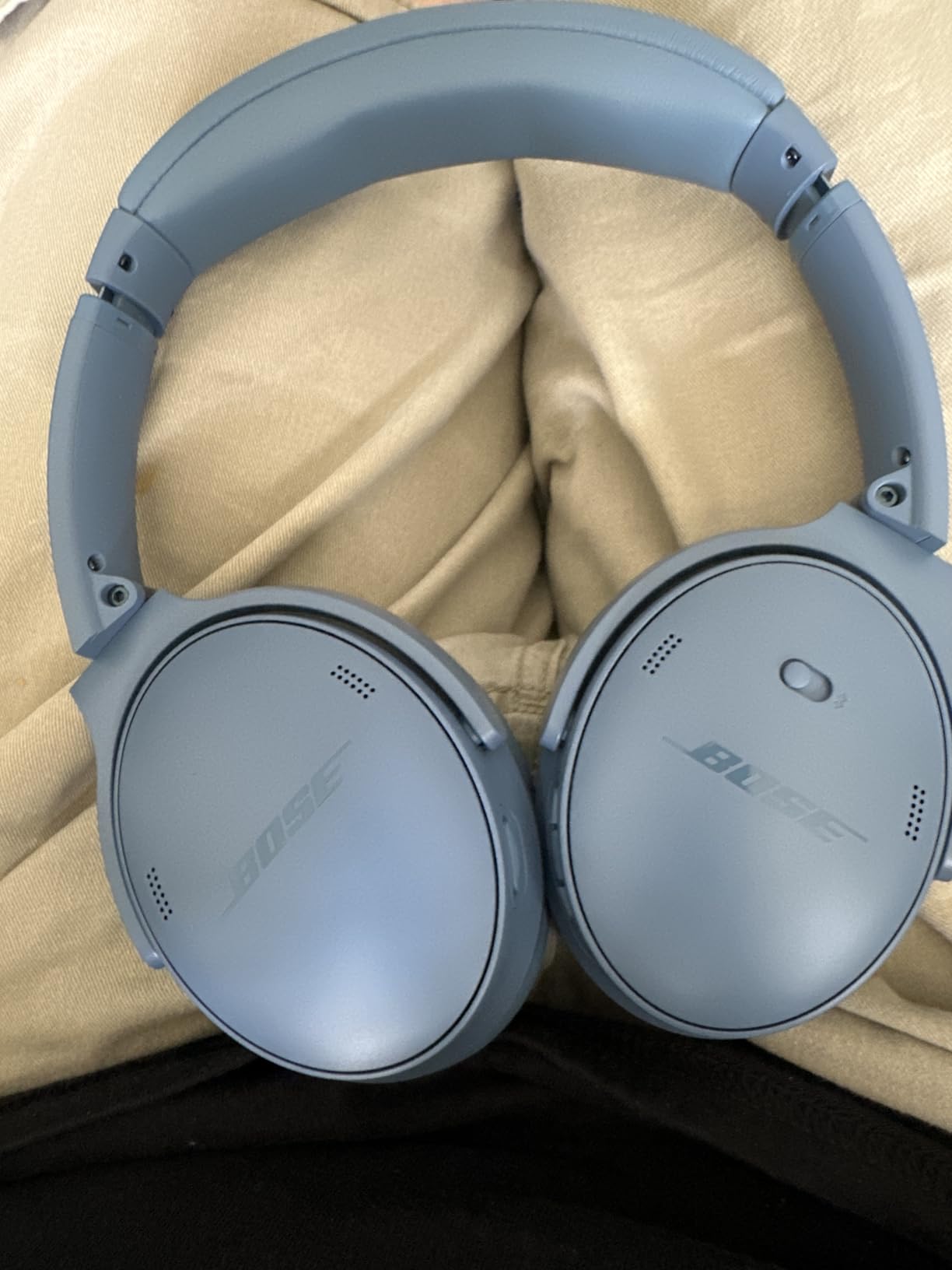
How to plan around a 24-hour battery
Charge fully at the gate and again after the first movie, and the 24 hours will cover most long-haul itineraries including a connection. If you routinely fly more than 15 hours door to door, either accept a mid-flight top-up or pick a pair with 40 hours or more and treat this one as your comfort-first backup.
Best seat choice for this pair
The cancellation works best against a constant, unchanging noise source, which is exactly what an engine provides. Window rows over the wing are the quietest place to sit for this reason. If you take an aisle seat, the clamping force stays comfortable longer, which matters if you plan to sleep leaning against the wall.
4. Sony WH-1000XM5 – Best for Sound Processing and Multipoint
Sony WH-1000XM5 Premium Noise Cancelling Wireless Headphones, Black
8 microphones with Auto NC Optimizer
30-hour battery
8.82 oz
3.5 mm jack
Pros
- Eight-microphone cancellation with Auto NC Optimizer that recalibrates to how you are wearing it
- Lightweight soft fit leather that stays comfortable for long sessions
- 30-hour battery with a 3-minute charge for 3 hours
- Multipoint connection and seamless device switching
- Speak-to-Chat and Instant Pause for hands-free use
Cons
- Non-folding design is bulkier in a carry-on than the XM4
- Touch controls register accidental inputs
- Battery no longer leads the category
The WH-1000XM5 remains a benchmark for how processed sound should feel, and the two-processor, eight-microphone array is still among the most capable noise cancelling systems on sale. The Auto NC Optimizer recalibrates to your wearing conditions, which matters on a plane where you constantly adjust the headband as you settle in.
At 8.82 ounces with soft fit leather, this sits at the lighter end of the range among premium pairs, and the ear cups keep a consistent seal. Multipoint handles the phone-and-laptop dance cleanly, and Speak-to-Chat plus Instant Pause/Play mean you rarely touch the surface controls at all, which solves the misfire problem reviewers complain about elsewhere.
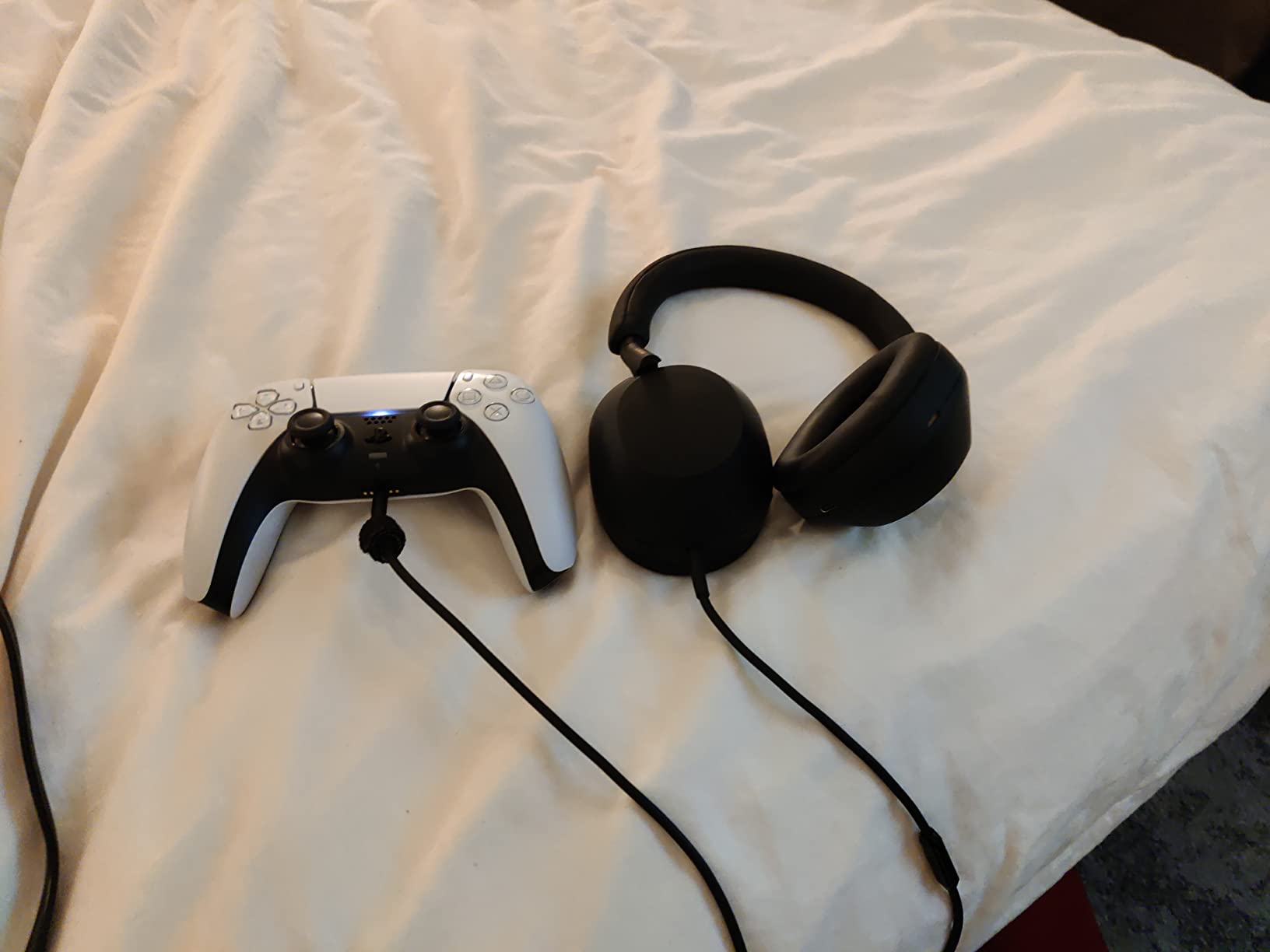
Battery runs 30 hours with a 3-minute quick charge for three more, so a full charge covers the longest single flight with a little reserve. The 3.5 mm jack means the older seatback entertainment ports are covered, and the included carry case handles protection for the trip.
The travel weakness is physical rather than electronic. This design does not fold, so it takes up noticeably more room than the rotating-cup designs in this list, and the 200 ms Bluetooth latency is visible when watching video without compensation. Reviews also note that battery life no longer leads, which matters more on a 20-hour itinerary than the sound signature does.
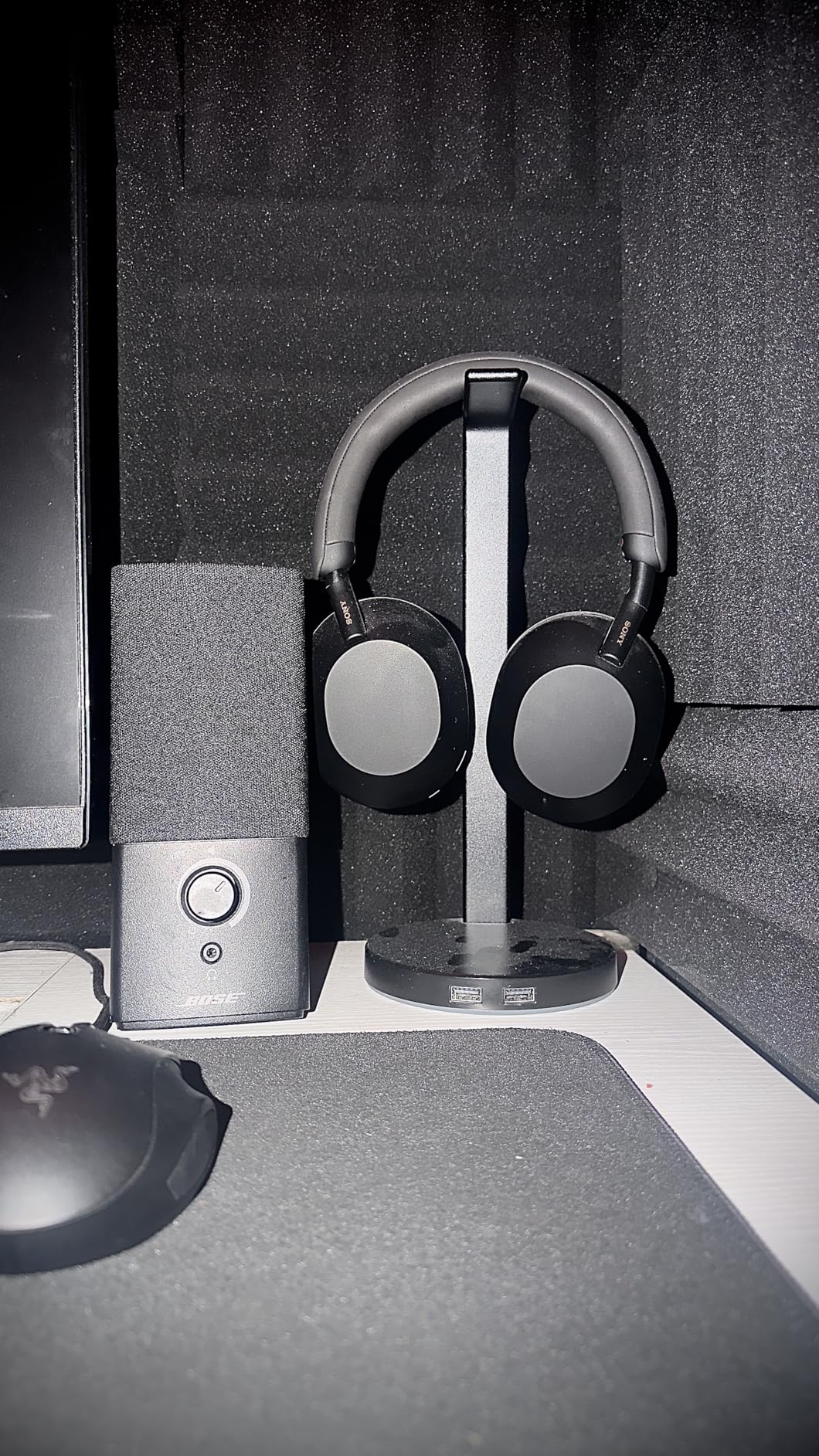
Headphone noise cancelling versus passive isolation
This pair shows the difference clearly. Engine rumble is low-frequency and is handled by the active array, while the sounds of neighbouring conversations are higher-frequency and depend on the physical seal of the cups. A better seal means less reliance on processing, which is why fit matters as much as the electronics.
Where the XM5 fits in the lineup
Choose it if sound quality is the priority and you can accept a bulkier case in your personal item. Choose the Soundcore Q20i or the TOZO HT3 instead if your trips are short-haul and repeat, or the Bose QuietComfort if you will be seated against a wall for eight hours and need clamping comfort more than detail.
5. Sennheiser HD 280 Pro – Best Wired Headphone for Flights
Sennheiser HD 280 Pro Headphone, Black
Passive attenuation up to 32 dB
Wired with 1/4 inch adapter
1.3 lbs
Collapsible earpieces
Pros
- Consistent warm and natural sound reproduction
- No battery or charging to worry about on a long flight
- Passive isolation of up to 32 dB softens cabin drone
- Comfortable for multi-hour sessions
- Earpads headband padding and cable are all user-replaceable
Cons
- No active noise cancelling or wireless connectivity
- Clamping force feels firm to some wearers
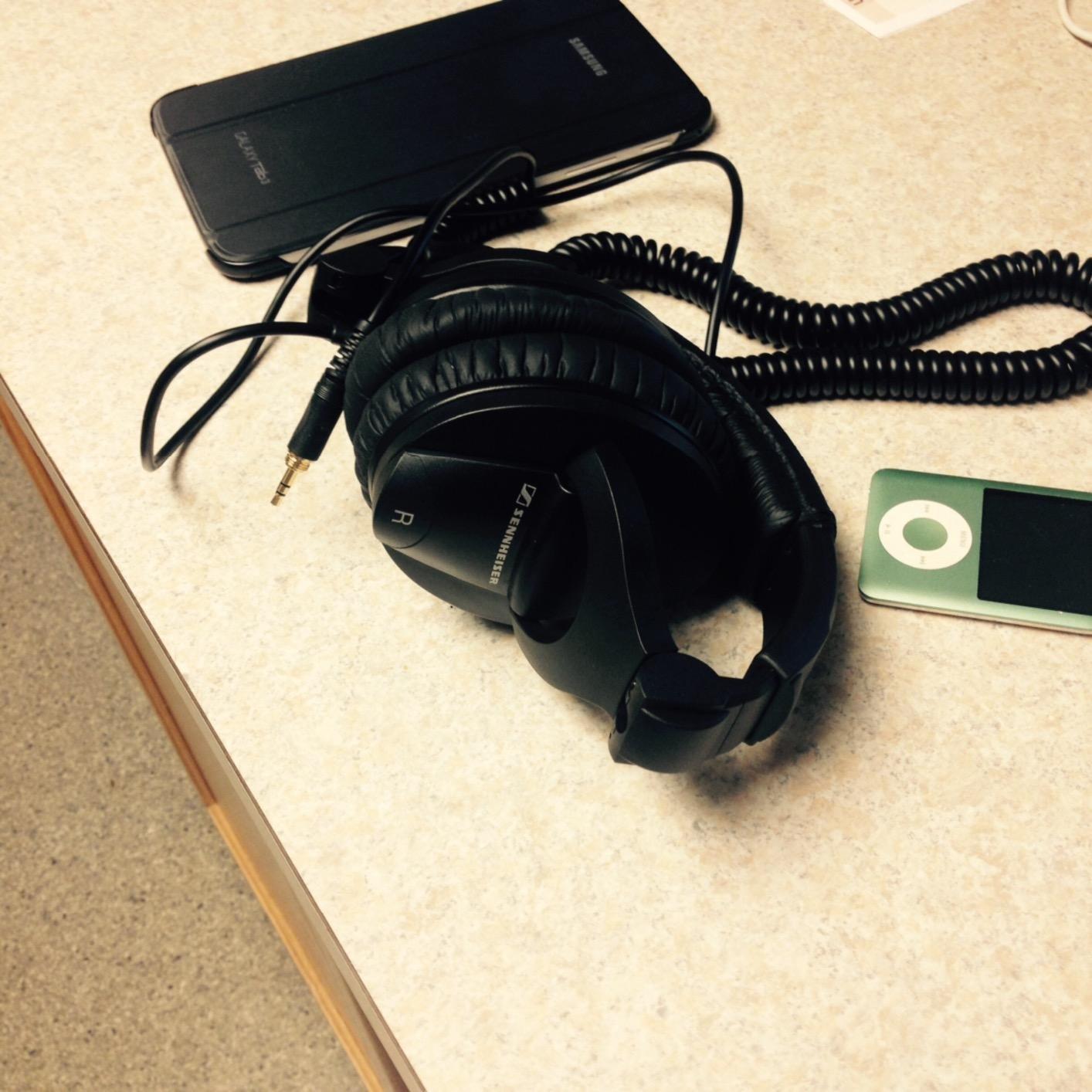
- Coiled cable is bulky to pack
The HD 280 Pro is the anti-anxiety option. There is no battery, no pairing, no firmware and no charging cable, which removes an entire category of failure from a long flight. Plug into the seatback with the included 1/4 inch adapter, or into your own device, and it works identically in year three.
Passive isolation of up to 32 dB comes from the clamp and the pad material, and it does a meaningful job on the broad mid-range cabin noise. It cannot touch the deepest engine rumble the way an active system does, so this is a quieter-cabin choice rather than a silence-machine.
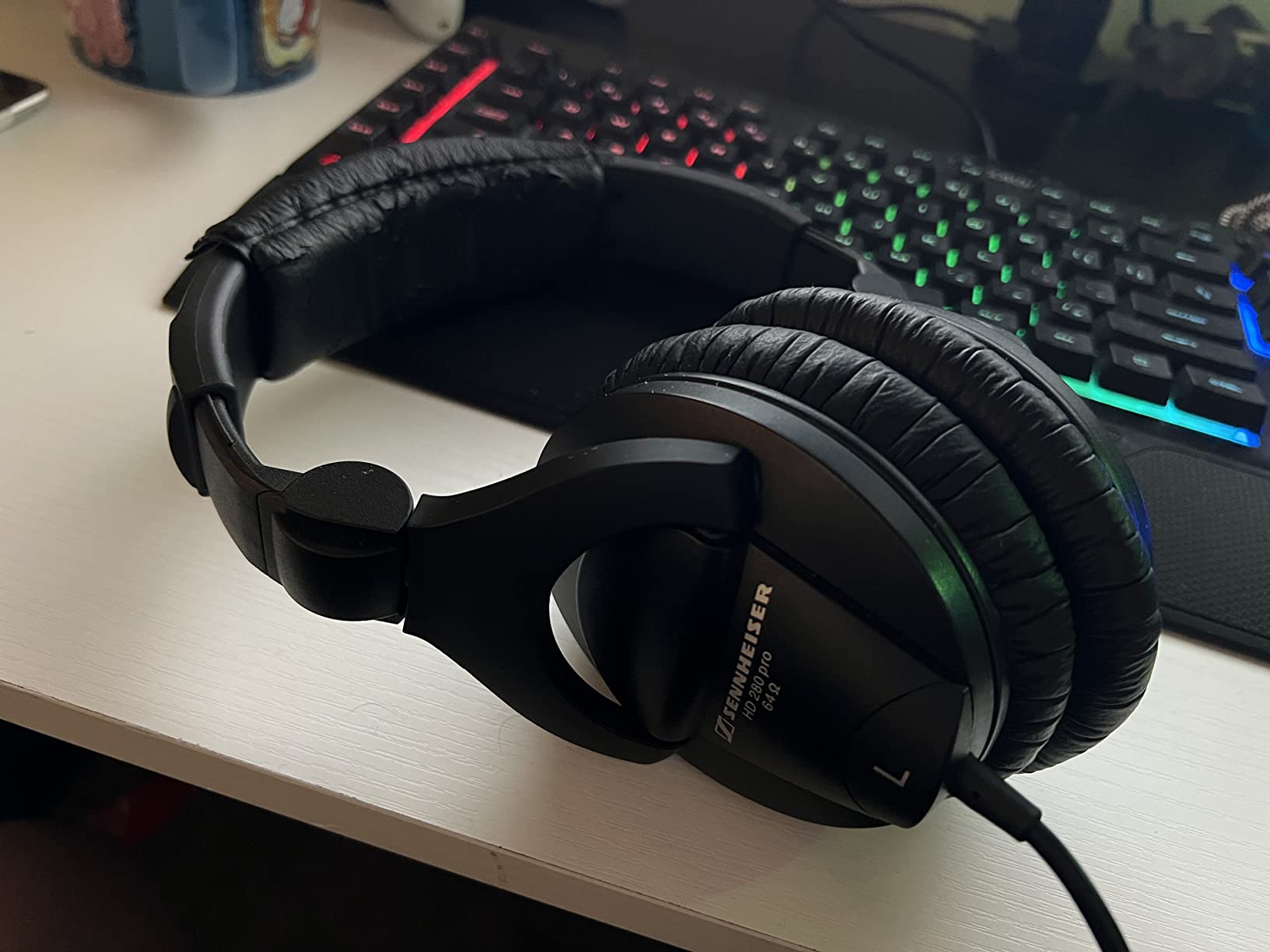
Sound is the reason audiophile-leaning travellers keep coming back to it. The 8 Hz to 25 kHz frequency range and 64 ohm impedance give a warm, natural, unbothered presentation that holds up on long listening sessions without fatigue. The 1.3-pound body is solid rather than featherweight, but the padded earcups spread that mass well, and the collapsible earpieces fold it down for packing.
The build is the quiet hero. Earpads, headband padding and the cable are all user-replaceable, which is rare at any level and means a multi-year travel purchase stays clean and intact. The coiled cable is the one genuine packing annoyance, and some wearers find the clamp snug after several hours.
How to use these with seatback entertainment
Most airlines now offer a single-pin 3.5 mm socket rather than the old twin-pin one. Buy a dual 3.5 mm to single-pin adapter before you fly, and the coiled cable is long enough to reach from the armrest to the screen without unplugging every time you move.
Who should buy wired-only
Buyers who fly often and hate charging, travellers who want the same sound on a 15-hour flight as on a 15-minute walk, and anyone who prefers replaceable parts over sealed batteries. If your priority is maximum silence from engine rumble or you want wireless freedom at the gate, look at the Bose or Sennheiser Momentum 4 instead.
6. Sennheiser Momentum 4 Wireless – Best for Hi-Fi Sound and Battery Life
Sennheiser Momentum 4 Wireless Headphones, ANC, 60 Hr Battery, Black/Copper
Up to 60 hours battery
42 mm drivers with aptX Adaptive
10.3 oz
Airplane adapter included
Pros
- 60-hour battery covers the flight and the trip home
- 42 mm drivers with aptX Adaptive deliver clear balanced sound
- Adaptive ANC plus transparency mode for cabin use
- Foldable design with a cushioned headband and ear pads
- Airplane adapter and in-flight cable included in the box
Cons
- ANC trails the best-in-class noise cancellers
- Touchpad controls lack physical feedback
- Build feels more plastic-heavy than premium rivals
The Momentum 4 is the battery answer. Sixty hours means you can fly to the other side of the world and back on a single charge, with ANC running, and still have reserve for the return trip. On long-haul threads in r/HeadphoneAdvice this pair comes up constantly for exactly that reason.
Sound quality is the other draw. The 42 mm transducers with aptX Adaptive produce a wider, more detailed presentation than most of the wireless sets in this list, and the Smart Control Plus app adds EQ and presets if you want to tune the low end for cabin noise. Frequency response runs 6 Hz to 22 kHz, which is genuinely room-filling.
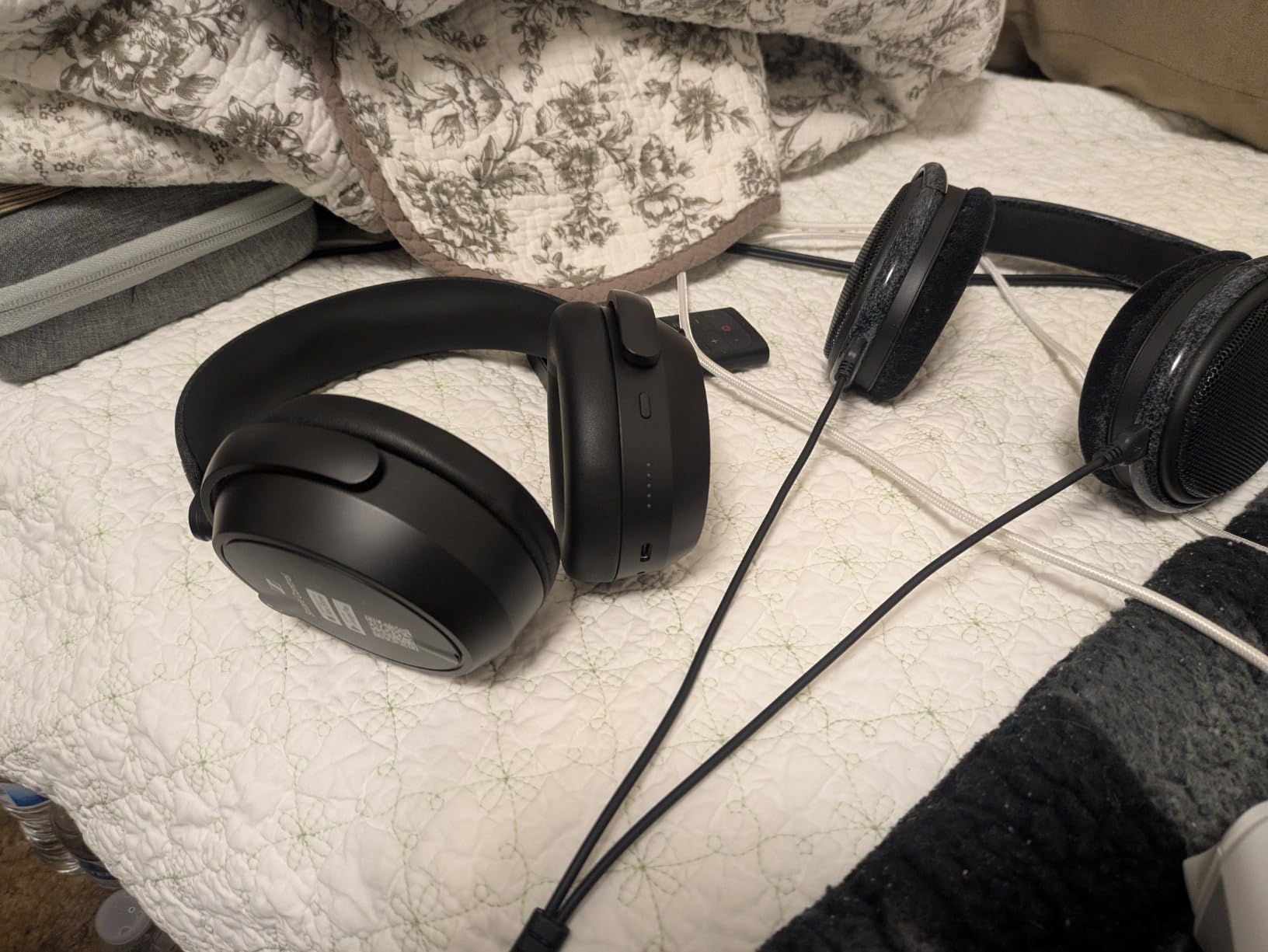
The box lists a carry case, a USB-C cable, a 3.5 mm to 2.5 mm in-flight cable and an airplane adapter, so you are not shopping for a connector at the gate. The design folds, and the cushioned headband and pads stay comfortable over long wears.
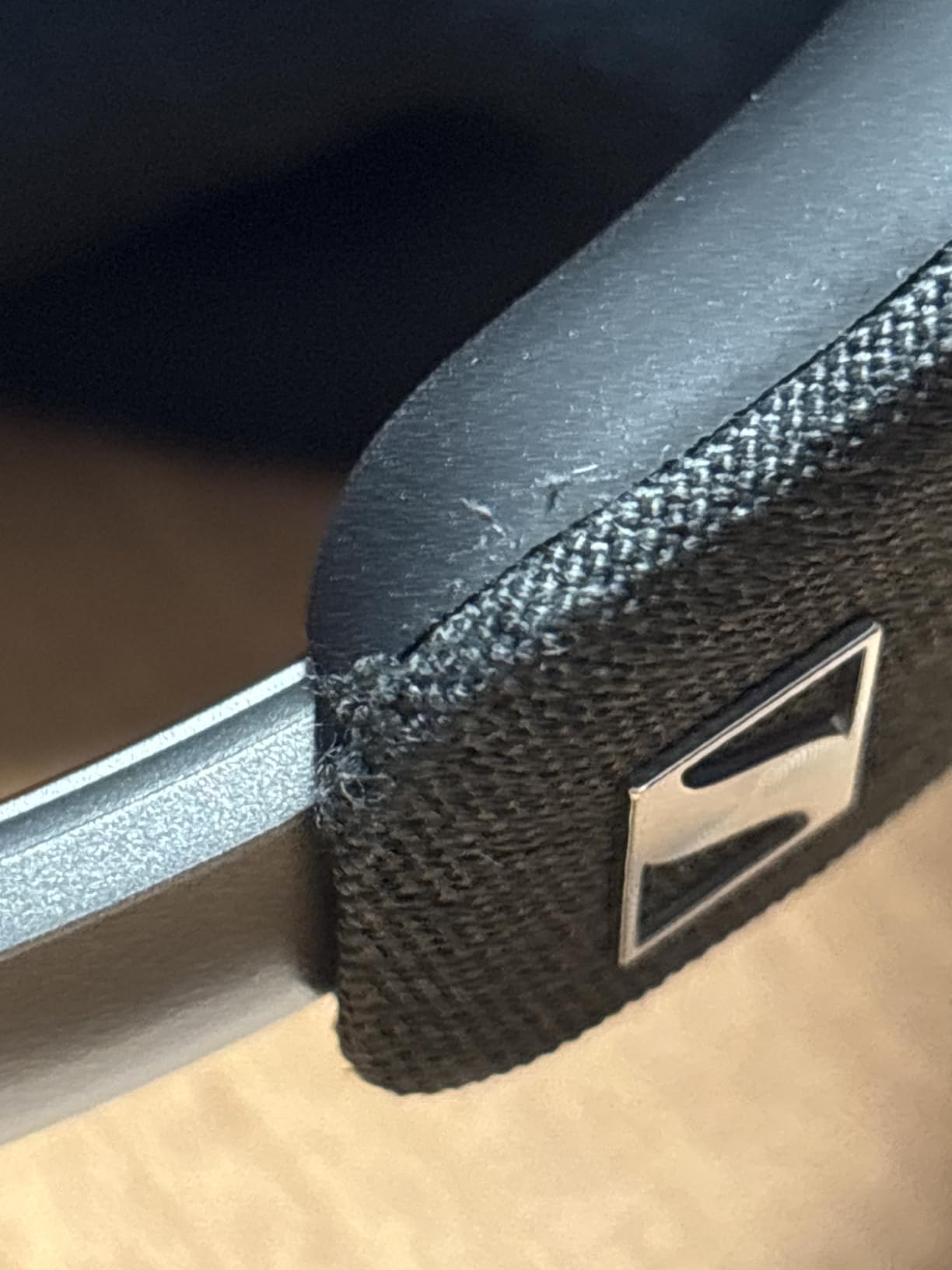
Where it loses is cancellation and controls. The adaptive ANC is a clear step below Bose and Sony at cutting engine drone, which is the one thing that matters most in a cabin. The touchpad also gives no physical feedback, and reviewers find the plastic feel less premium than the price of the set suggests.
Choosing between ANC strength and battery life
This is a real trade-off in the buying guide, not a detail. If your priority is blocking noise on a 12-hour flight, the Bose QuietComfort cancels more. If your priority is never once thinking about charging, the Momentum 4 removes the problem entirely and still cancels the worst of the drone.
Who the Momentum 4 suits
Travellers who fly ultra-long routes, listeners who care most about wireless sound quality, and anyone who wants a full travel kit in the box. Skip it if you fly short hops and want the strongest cabin silence available, or if the plasticky build bothers you at this level.
7. JLab JBuds Lux ANC – Best for Calls on a Budget
JLab JBuds Lux ANC Wireless Over-Ear Headphones, Graphite
40+ hours ANC-on and 70 off
ANC up to 35 dB
235 g
Multipoint
USB-C wired
Pros
- Exceptional 40+ hours of ANC-on battery for a long-haul flight
- Hybrid ANC up to 35 dB takes the edge off engine rumble and chatter
- Soft cloud foam cushions stay comfortable for many hours
- True multipoint with automatic device switching
- Two-year warranty
Cons
- Ear cushions do not breathe and can feel clammy in warm cabins
- Be Aware transparency sounds boxy and tinny
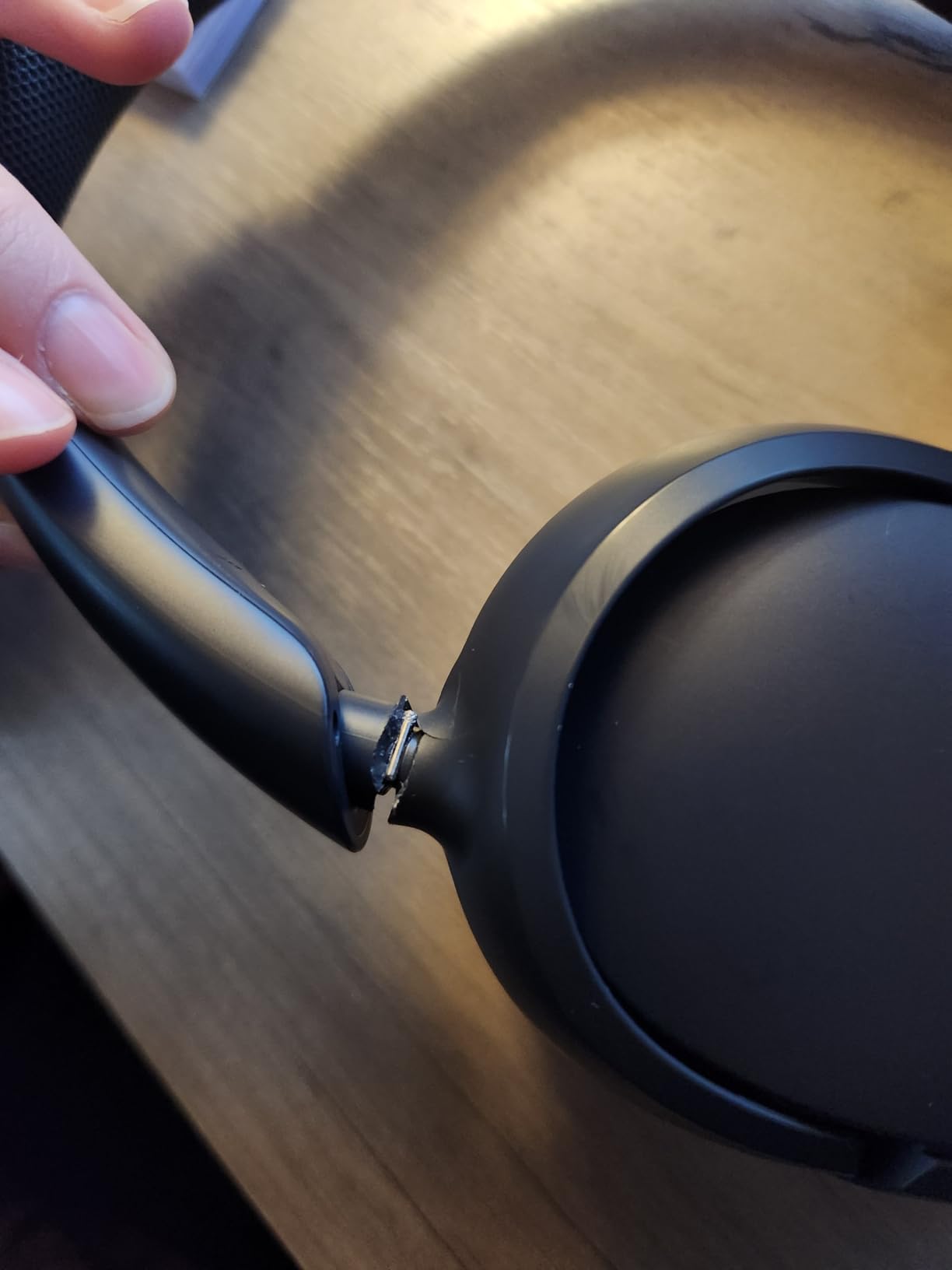
- Sliding headband plastic can crack on larger head sizes
What separates this from the other budget pairs here is the combination of real multipoint and honest ANC. Forty-plus hours with ANC on is plenty for any single itinerary, and up to seventy hours with ANC off means most travellers will charge it weekly rather than nightly.
The microphones are the sleeper feature. On calls at moderate cabin background noise, reviewers report this holding its own against more expensive Bose and Sennheiser sets, which matters if you take work calls on a long flight. Bluetooth 5.4 multipoint keeps phone and laptop connected with automatic switching, and Wireless Share Mode lets a second pair of headphones connect to one device.
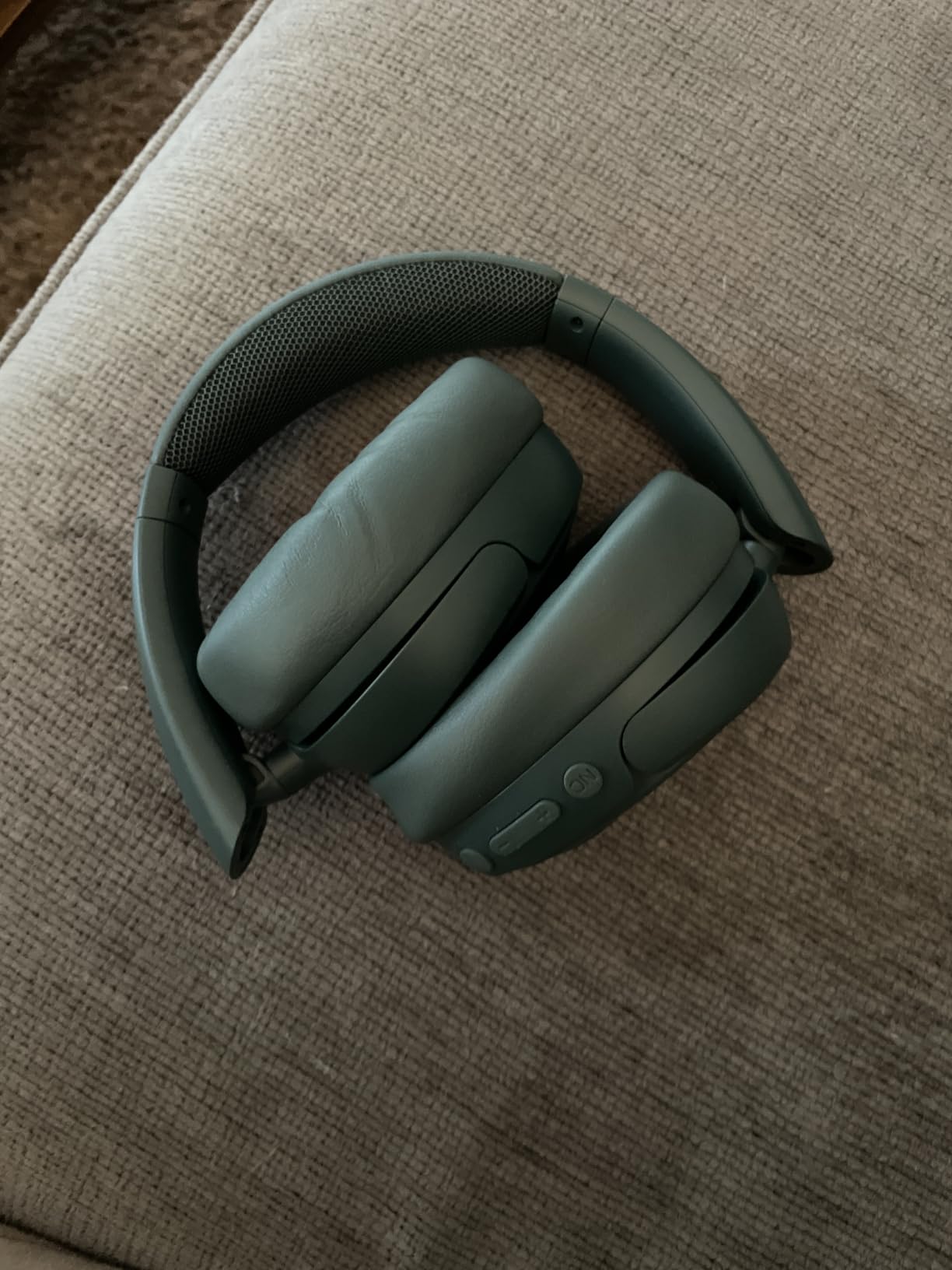
The hybrid ANC is rated at up to 35 dB, and while that is not flagship level it does meaningfully soften steady engine noise. Comfort is good with soft cloud foam cushions across long sessions, and at 235 g it stays light. A two-year warranty is unusually generous at this level.
Heat is the flaw. The cushions do not breathe, and in a warm cabin on a red-eye they can turn clammy after several hours, which is the most common complaint in reviews. The Be Aware transparency mode is also boxy, and the sliding headband plastic can crack on larger head sizes.
Warm cabins and summer flights
If you mostly fly in winter, the cushion heat is a non-issue. If you fly through summer heat or a hot transatlantic route in a seat with no ventilation, favour a pair with fabric or memory foam over faux leather. This set has no jack, so bring the USB-C cable if your device needs it.
Where this beats more expensive pairs
Only a handful of the products in this list offer true multipoint, and this one also gives you a two-year warranty and a full forty hours of ANC-on battery. For travellers who work on long flights, that combination is worth more than a smaller step up in sound tuning.
8. KVIDIO Hybrid ANC Over-Ear – Best Entry-Level Pick
KVIDIO Hybrid Active Noise Cancelling Headphones Over Ear
70 hours standard, 40 with ANC
5-minute charge for 4 hours
Foldable
3.5 mm cable
Pros
- Respectable sound quality and volume for the price
- ANC damps steady background noise such as air conditioning
- Long battery life with weeks between charges
- Soft earpads with an easy adjustable fit
- Folds flat and includes a 3.5 mm cable
Cons
- ANC handles continuous low-frequency noise but not voices
- Tight fit on larger heads that can ache after hours
- No carrying case included
KVIDIO is one of the most affordable candidates in this group and the most useful as a beater bag pair. Seventy hours in standard mode and forty with ANC on covers essentially any itinerary, and the five-minute quick charge adds four hours if you board with a low battery.
The ANC is honest about its limits. It works on continuous low-frequency noise such as fans, air conditioning and engine hum, and reviewers repeatedly describe it as effective against that steady background rather than against voices or sudden transients. The three listening modes including transparency let you handle announcements without taking the headphones off.
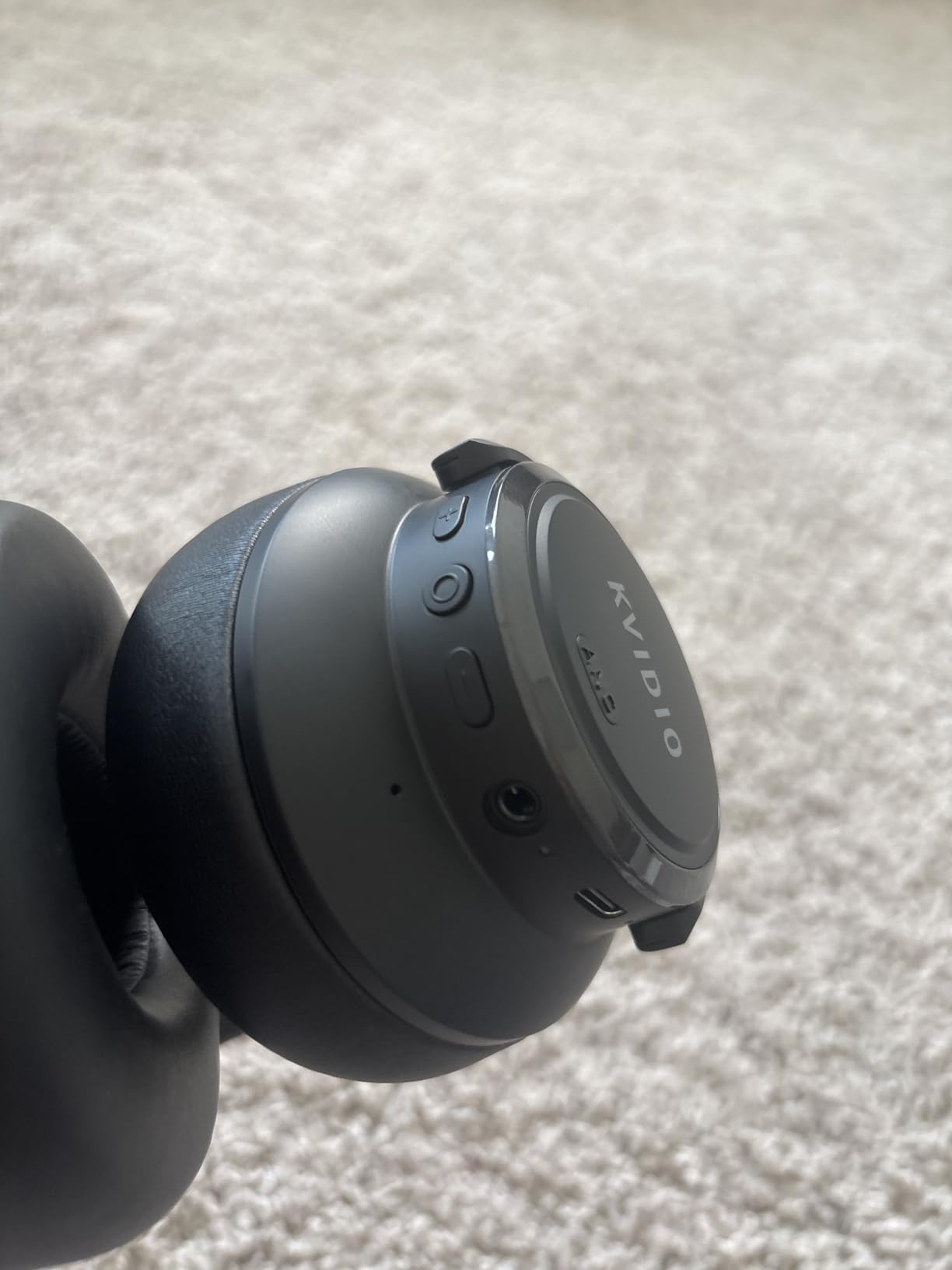
Advanced DSP helps voice pickup on calls more than most rivals at this level, and the included 3.5 mm backup cable means you can still watch the seatback screen if the battery dies. The earpads are soft and the fit is easy to adjust, which is more than many cheaper sets manage.
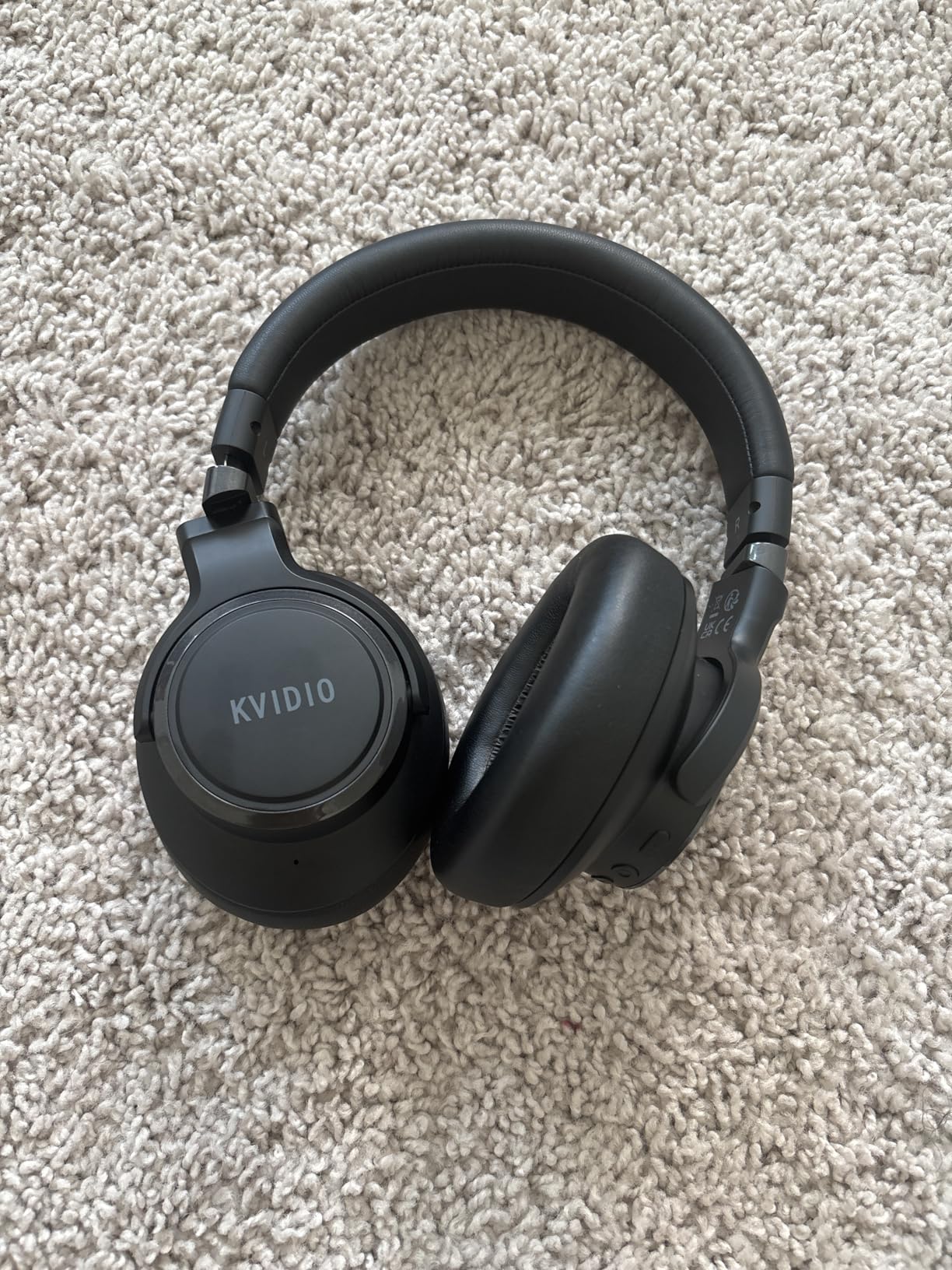
The catch is fit over time. Reviewers with larger heads report a tight fit that turns into ear ache after several hours, which is exactly the failure mode you are trying to avoid on a long flight. Build is light plastic, and there is no carrying case in the box, so you need something else to protect the cups.
When cheap is genuinely enough
If your flights are two to four hours, your budget is tight, and you want a second pair that lives in a backpack, this does the job well. Battery life at this level is rarely the constraint, and the ANC handles the steady cabin hum that makes up most of the in-flight noise profile anyway.
When to spend more instead
Move up if your trips run past six hours, if you have a larger head, or if you plan to wear the headphones for a nap. Comfort over hours is where the cheapest options give way first, and the Soundcore Q20i or the JLab JBuds Lux ANC are the sensible step up.
9. TOZO HT3 – Best for Foldable Build and Battery Life
TOZO HT3 Hybrid Noise Cancelling Wireless Headphones, 90H Over Ear Headset
45 dB adaptive hybrid ANC
90-hour battery
Metal headband and folding hinges
254 g
Pros
- Up to 90 hours of battery for a long-haul itinerary
- 45 dB hybrid ANC works well against continuous cabin noise
- 40 mm drivers deliver punchy bass and clear mids
- Metal headband and folding hinges for daily durability
- Dual-device connection plus 3.5 mm and USB-C wired options
- Replaceable ear cushions
Cons
- Limited passive isolation when audio is off
- Upper treble lacks brightness compared with TOZO earbuds
- Tiny printed manual and an app EQ capped at 12.5 kHz
- No carrying case included
The TOZO HT3 posted the highest average rating in this group, and the reason is straightforward: it covers most of what pricier rivals offer. Ninety hours of battery, 45 dB adaptive hybrid ANC on four microphones, and dual-device connectivity as standard.
The build is unusually good. A metal headband and folding hinges handle the repeated folding and unfolding that travel demands, and the ear cushions are removable and replaceable, which solves both the hygiene problem on multi-flight trips and the long-term flaking problem that afflicts cheap faux leather.
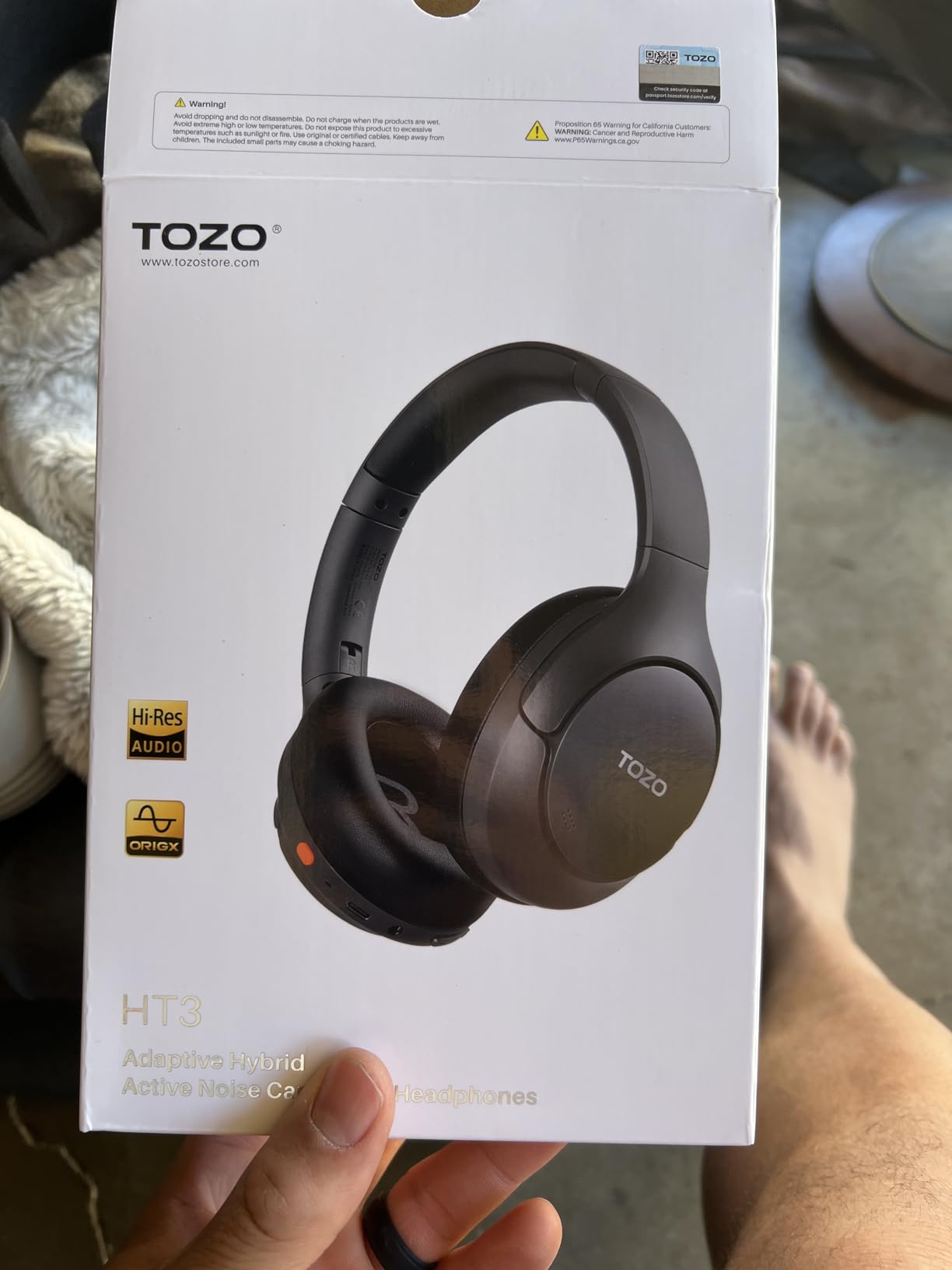
Wireless options are broad. Bluetooth, AUX 3.5 mm and USB-C wired connectivity all work, so you can cover a seatback screen, a laptop and a phone without adapters. The 60 ms low-latency mode is irrelevant on a plane but useful if you also game, and 32 EQ modes plus spatial audio live in the TOZO app.
Sound is bass-forward and fun rather than neutral. Reviewers like the punch and the clear mids, and note the upper treble rolls off sooner than TOZO manages in its own earbuds. Passive isolation with the audio off is weak, so the ANC has to do all the work when you are not listening.
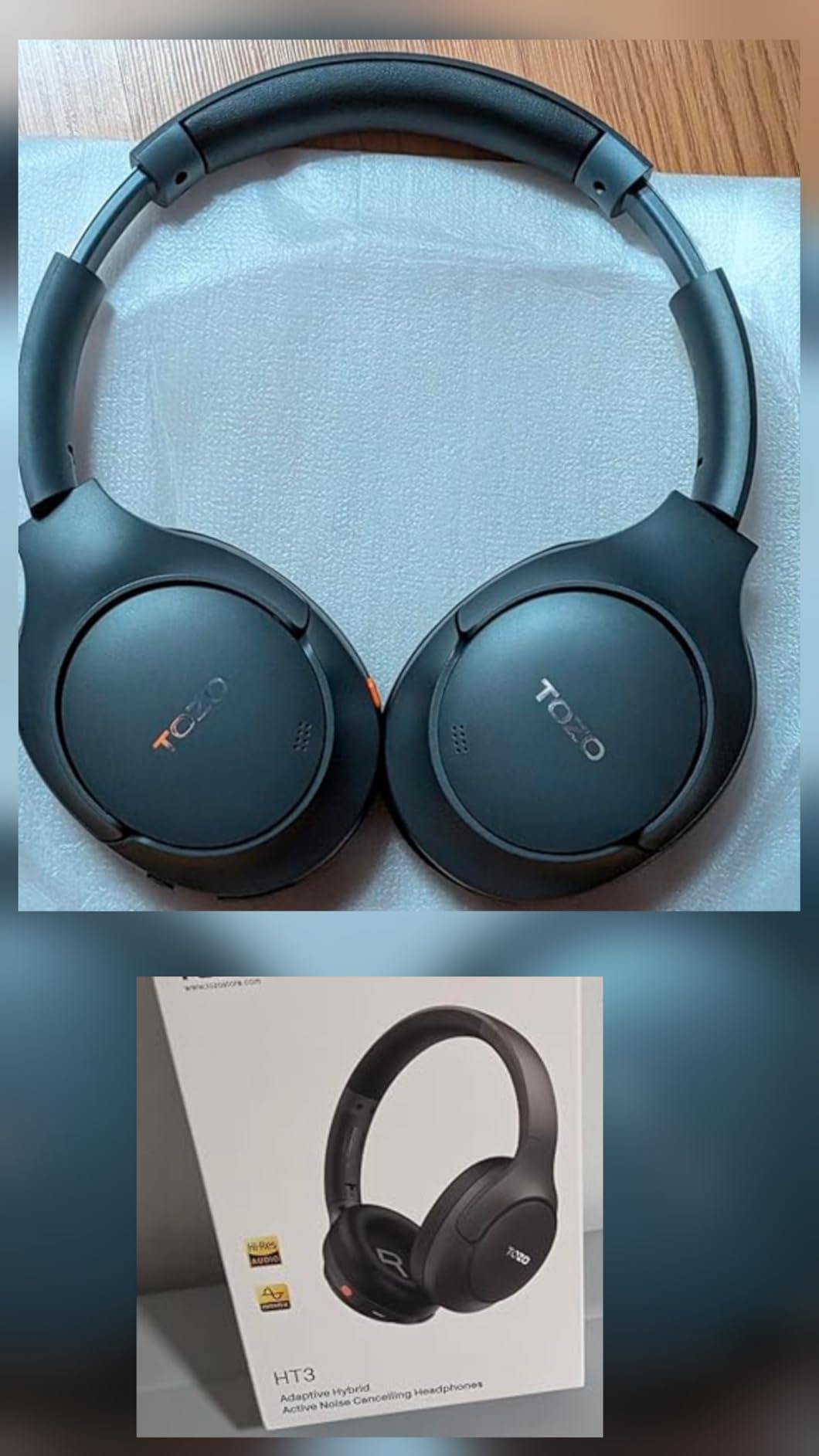
Case and packability
No case is included, so budget for one or use a soft pouch. The folding design and 254 g weight do the hard part: this is one of the few pairs here that genuinely disappears into a personal item rather than filling it.
Who should buy the HT3
It suits anyone who flies often enough that battery anxiety is real, and anyone who cares more about durability and replaceable parts than critical sound tuning. The one group that should look elsewhere is listeners who want neutral, detailed audio for the whole flight.
10. Bose QuietComfort Ultra (2nd Gen) – Best for In-Flight Movies
Bose QuietComfort Ultra Bluetooth Headphones (2nd Gen), Wireless Headphones with Spatial Audio, Over Ear Noise Cancelling with Mic, Up to 30 Hours of Play time, Black
Bose Immersive Audio with Cinema Mode
30-hour battery
0.48 kg
CustomTune calibration
Listen while charging
Pros
- Bose's most capable noise cancelling for the aircraft cabin
- Immersive Audio and Cinema Mode add real value for in-flight movies
- CustomTune calibrates sound to the shape of your ears
- Plush cushions and a metal headband spread pressure well
- 30-hour battery with charge-and-listen operation
- Clear calls from noise-rejecting microphones
Cons
- Heaviest wireless option here at 0.48 kg
- Battery drops to 23 hours with Immersive Audio enabled
- Higher price than most competing over-ear models
This is the one to buy if a long-haul flight is partly a movie marathon. Bose Immersive Audio with the new Cinema Mode is built for exactly this scenario, and owners consistently say the spatialisation makes a two-hour seatback film feel closer to a cinema than a personal device ever does.
CustomTune calibrates the audio to the shape of your ears before you start, which means the sound is consistent between users rather than an average tuned for a reference head. The plush cushions and refined metal headband spread pressure across the top of the head, and the noise cancelling is Bose’s most capable.
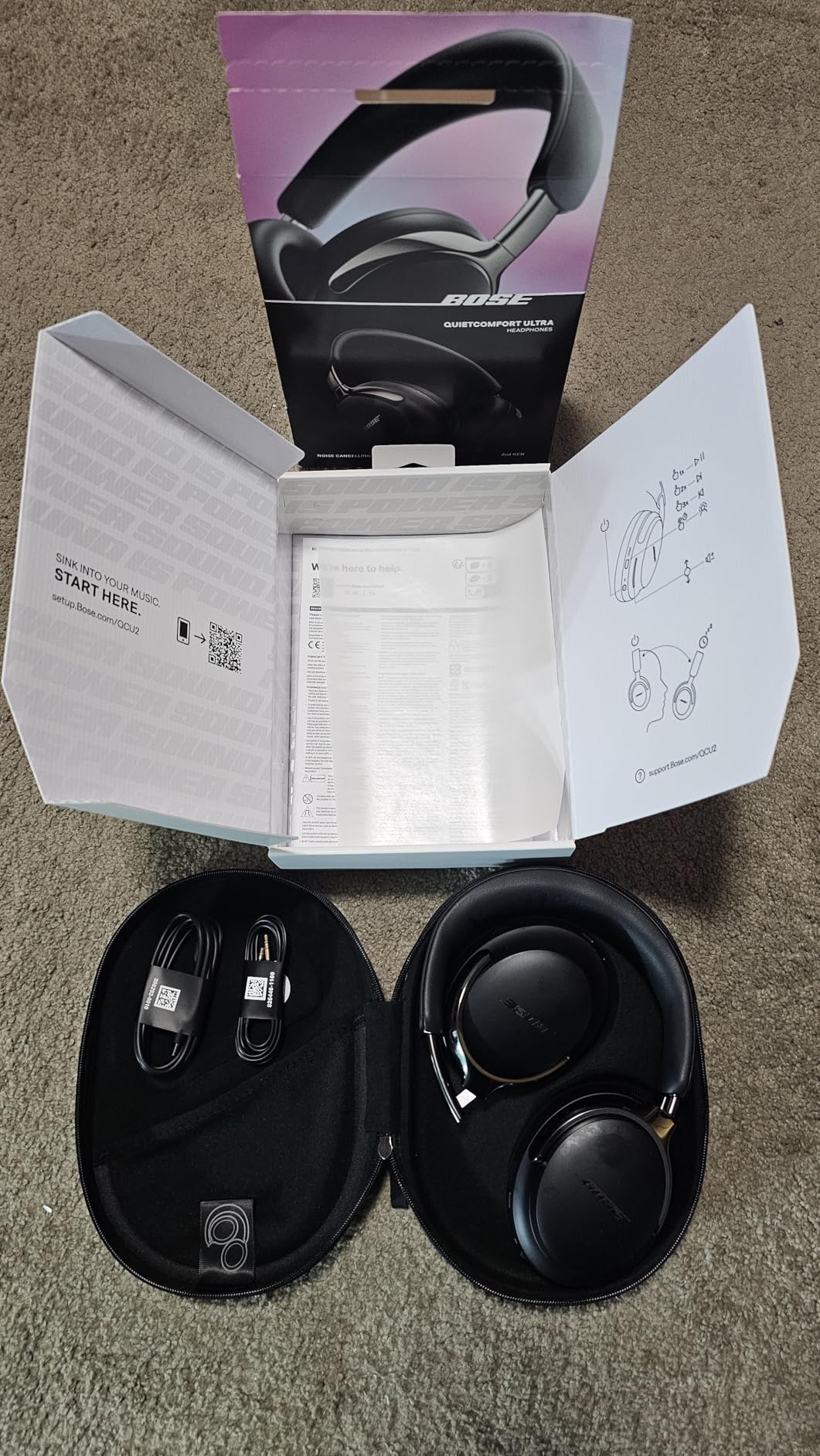
Thirty hours of battery is enough for a long-haul flight, and you can listen while charging, which removes a scheduling constraint. The noise-rejecting microphones with background suppression and USB voice mode make calls clear enough for a work call in a noisy cabin.
The weight figure is the main comfort trade-off: at 0.48 kg this is the heaviest wireless pair here, which adds up across a long day on your head. Enabling Immersive Audio cuts the battery to 23 hours, so for the longest routings you may want it off for the second half of the flight.
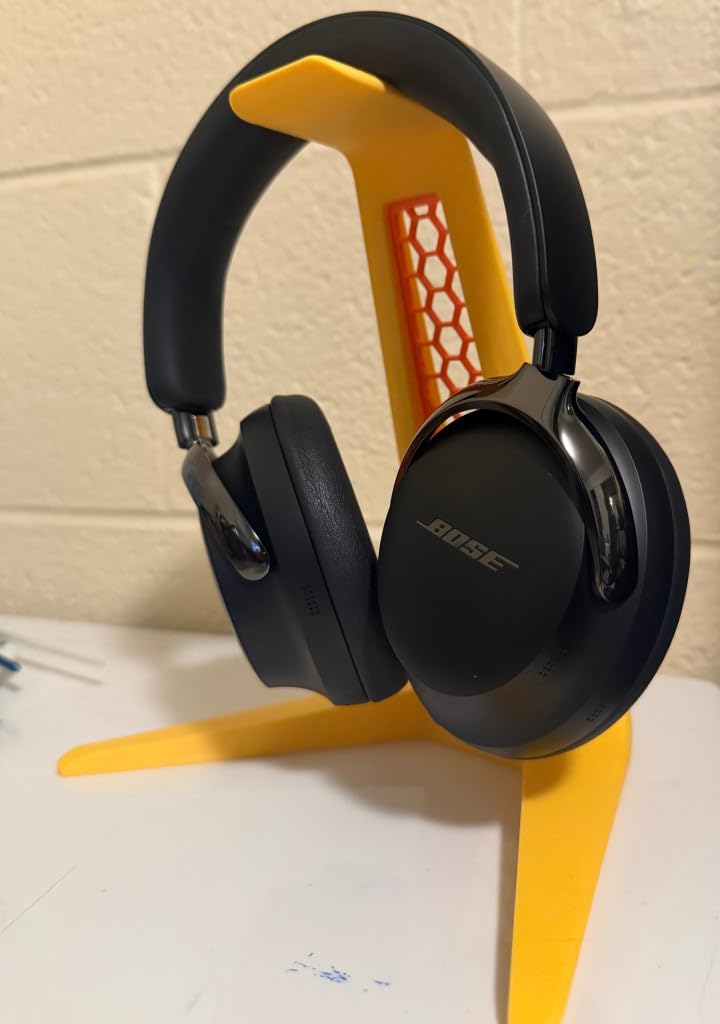
When to turn Immersive Audio off
Immersive processing adds latency and battery drain, so it is worth keeping on for a film and switching to Quiet mode for podcasts or a nap. That gives you the best of both: cinema-quality spatial sound when you are watching, and maximum battery and maximum comfort when you are asleep.
Bose line-up choice for flying
Between the QuietComfort and this second-generation Ultra, the Ultra wins on sound and movie features while costing more and weighing more. The QuietComfort wins on battery-vs-cabin-cancellation ratio and comfort over very long wears. Most travellers pick the QuietComfort; film-first travellers pick the Ultra.
11. BERIBES Hybrid ANC – Best for Lightweight Comfort
BERIBES Hybrid Active Noise Cancelling Headphones Wireless Over Ear 70Hours
0.8 lb lightweight body
70 hours standard and 45 with ANC
40 mm drivers
90-degree rotating and 120-degree folding cups
Pros
- Battery life measured in weeks between charges
- ANC handles ambient and machinery noise well
- Very light at 0.8 lb with soft protein leather pads
- Folds compactly with 90-degree rotating cups
- Quick pairing with automatic reconnection
Cons
- Plastic construction feels less durable and can crack
- Poor transparency mode with distorted delayed sound
- Cannot listen while charging
- Mediocre call quality compared with the music sound
- Warm and bass-heavy signature with light detail
At 0.8 pounds the BERIBES is a light body without being one of the lightest designs in this roundup, and the multi-level adjustable headband kept our long sessions free of pinching.
Battery is 70 hours in standard mode and 45 with ANC on, with a five-minute quick charge adding four hours. Bluetooth 6.0 with multipoint and an included 3.5 mm backup cable cover both the wireless and the wired case, so you are never stranded when the battery runs flat.
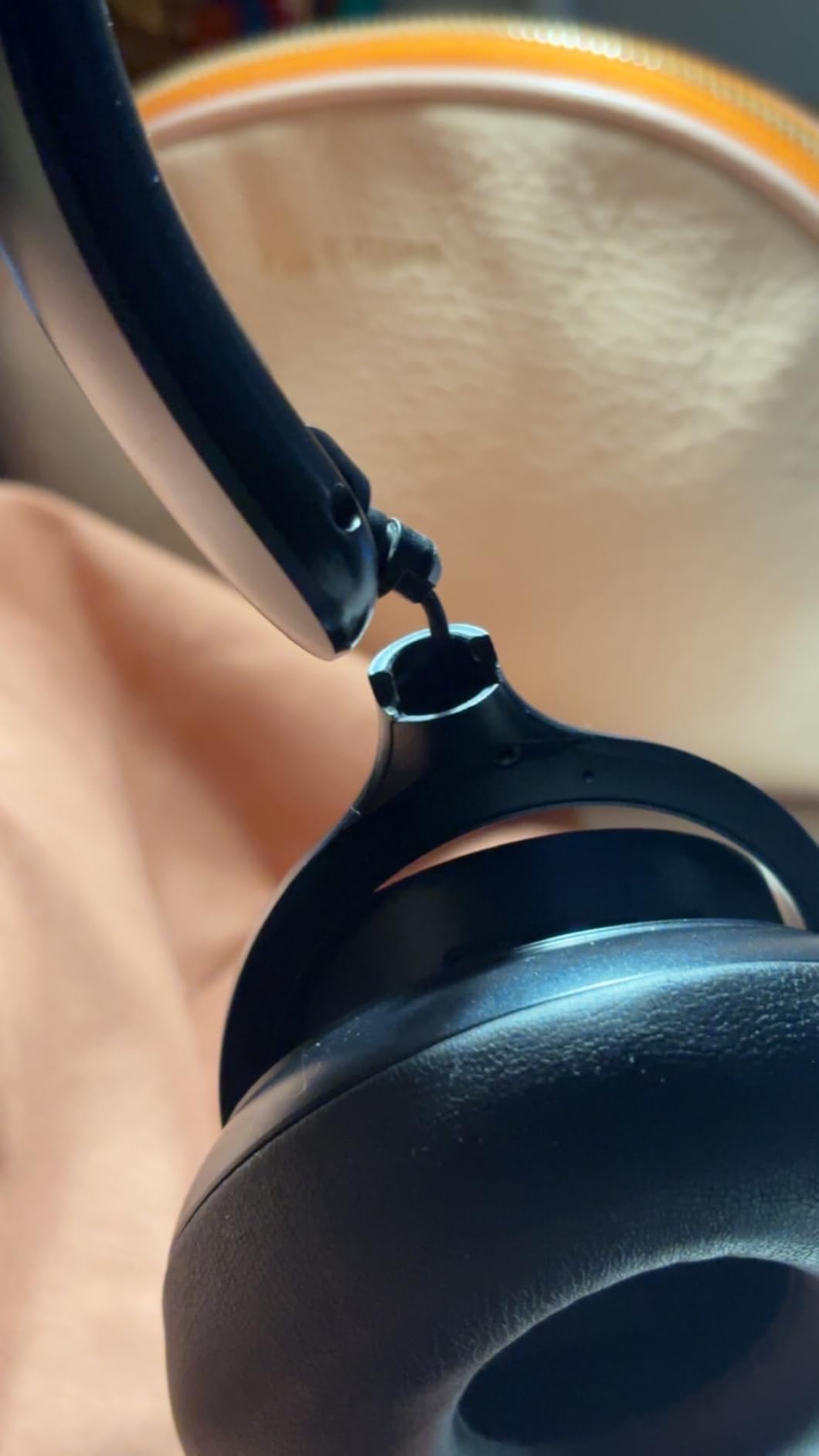
The protein leather pads feel soft from the start with no break-in period, which is unusual at this level. The 40 mm drivers give a warm, bass-heavy sound, and ANC is rated at silencing a large share of machine noise, which is the sound that dominates a cabin.
Build is where the compromises sit. The plastic construction feels basic and reviewers report it can crack, the transparency mode is distorted and delayed, and you cannot listen while charging. Call quality is mediocre next to the music performance, so this is not the pair for a flight spent on work calls.
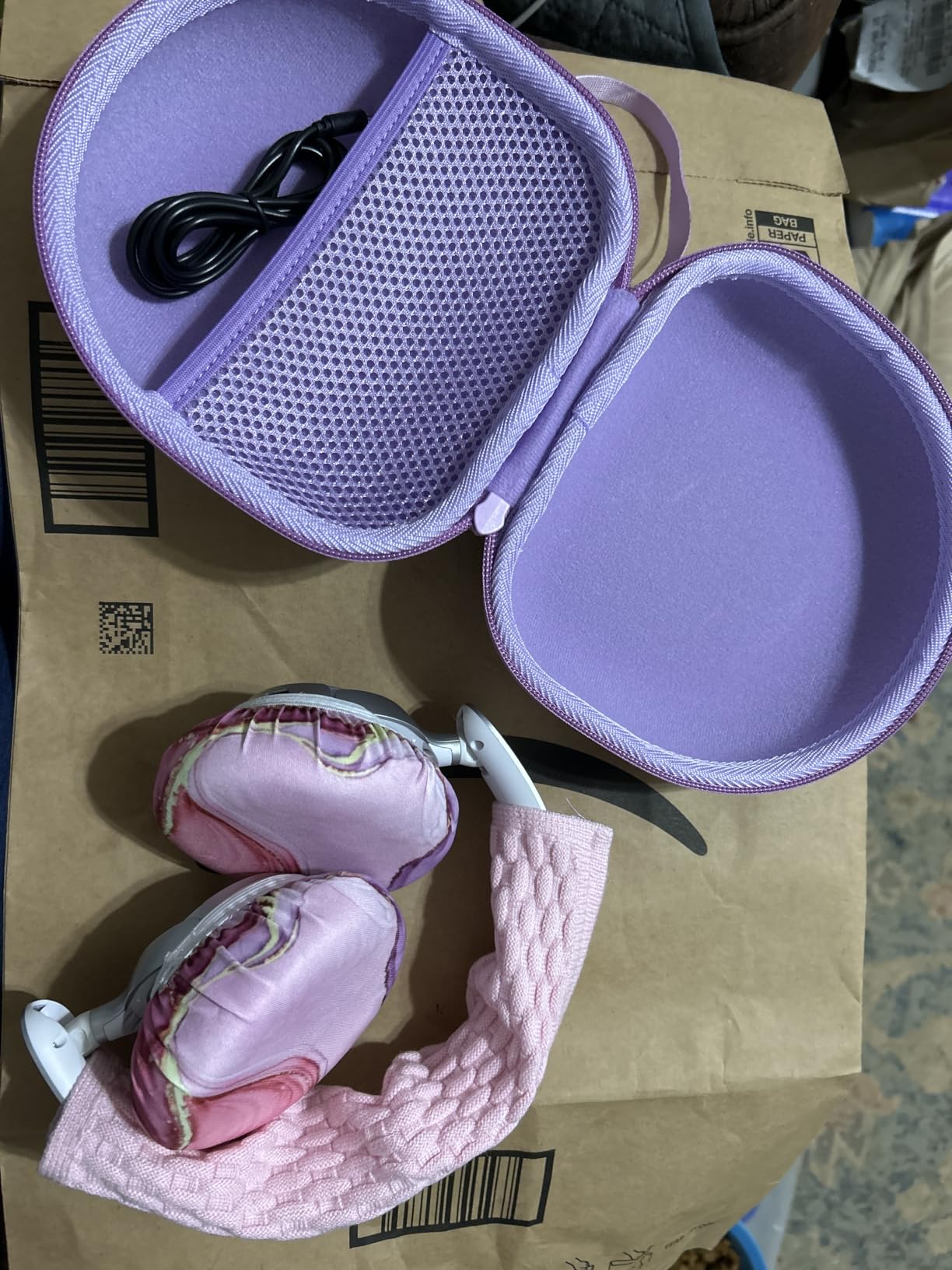
When weight matters more than everything else
Choose this if you are sensitive to headband pressure, you plan to sleep with the headphones on, or you simply do not like a heavy object on your head for half a day. Lightness also means you are more likely to actually wear them for the whole flight, which improves the trip regardless of spec.
Where it falls behind
If your priority is calls, take the JLab JBuds Lux ANC instead. If your priority is sound detail, the warm bass-led signature will not satisfy you. If you want transparency mode to work properly for announcements, Bose and Sony handle it much better.
12. RUNOLIM Active Noise Cancelling – Best for Battery Life on a Budget
RUNOLIM Active Noise Cancelling Headphones, Wireless Bluetooth Over Ear
100 hours standard and 65 with ANC
0.26 kg
3.5 mm cable included
Foldable protein leather design
Pros
- Up to 100 hours standard and 65 hours with ANC
- ANC reduces steady ambient noise effectively
- Lightweight at 0.26 kg with soft protein leather pads
- Included 3.5 mm cable for wired use when the battery is flat
- Bluetooth 6.0 with fast stable connections
- Foldable and adjustable for different head sizes
Cons
- ANC does not work in 3.5 mm wired mode
- Warm bass-led sound rather than detailed
- Plastic build feels basic
- 250 ms Bluetooth latency is high
Nothing else in this list beats a 100-hour battery. Even with ANC running you get 65 hours, which means a frequent flyer can go weeks between charges. If the recurring frustration in your travel life is hunting for a cable at the gate, this solves it completely.
Weight is the other quiet advantage. At 0.26 kg it is among the lightest pairs we tested, and the foldable protein leather ear muffs with a multi-level adjustable headband kept our long sessions comfortable without pinching.
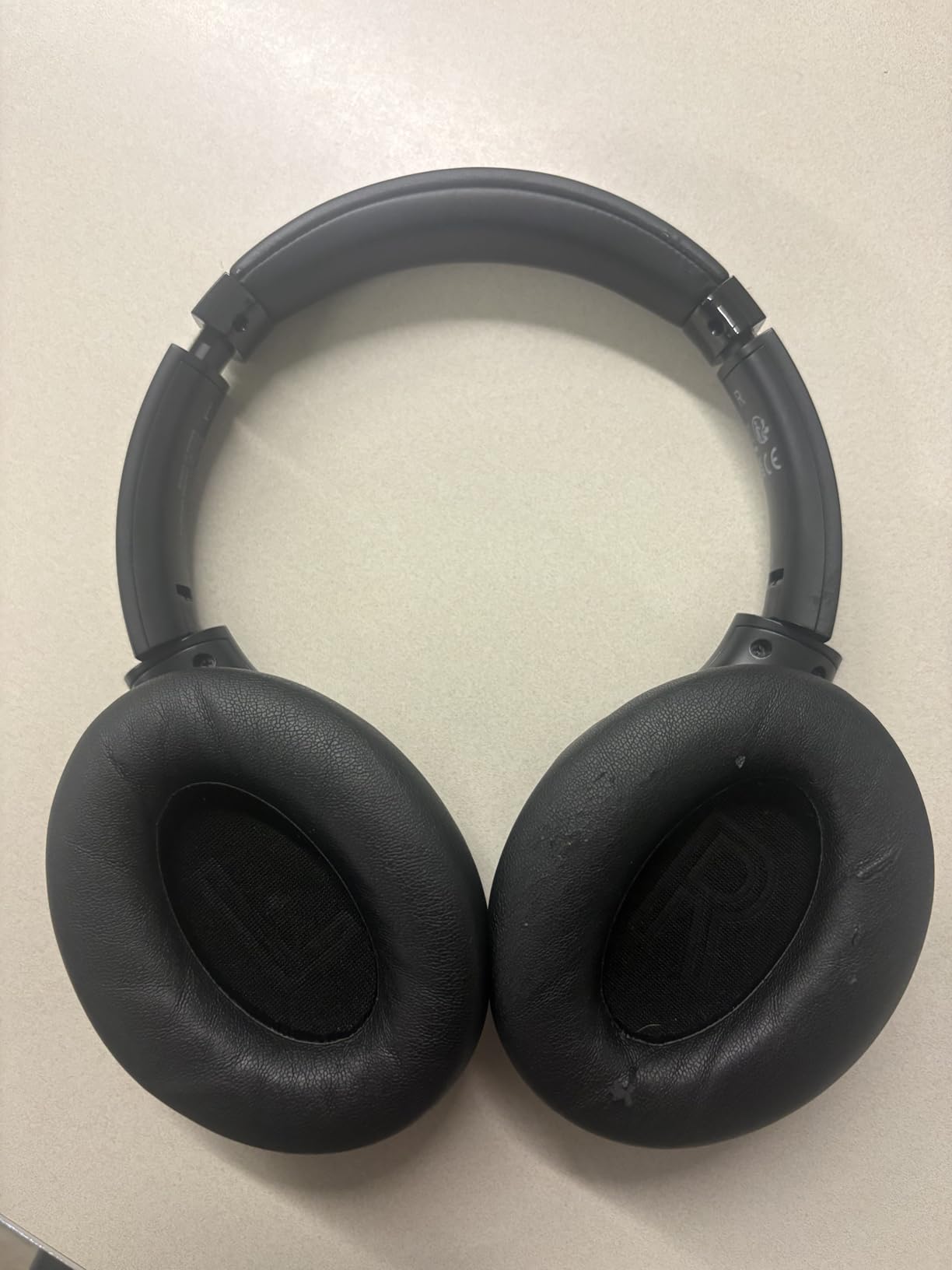
The included 3.5 mm cable is a genuine safety net for the seatback entertainment system, and Bluetooth 6.0 gives a fast, stable connection at up to 33 feet. A built-in HD microphone covers calls and voice assistant commands for shorter interactions.
Be clear-eyed about the trade-offs. ANC does not work in wired mode, so the cable is an audio fallback rather than a noise-cancelling fallback. The sound profile is warm and bass-led with light on detail, the plastic build feels basic, and the 250 ms Bluetooth latency is visible on video unless you compensate in the player.
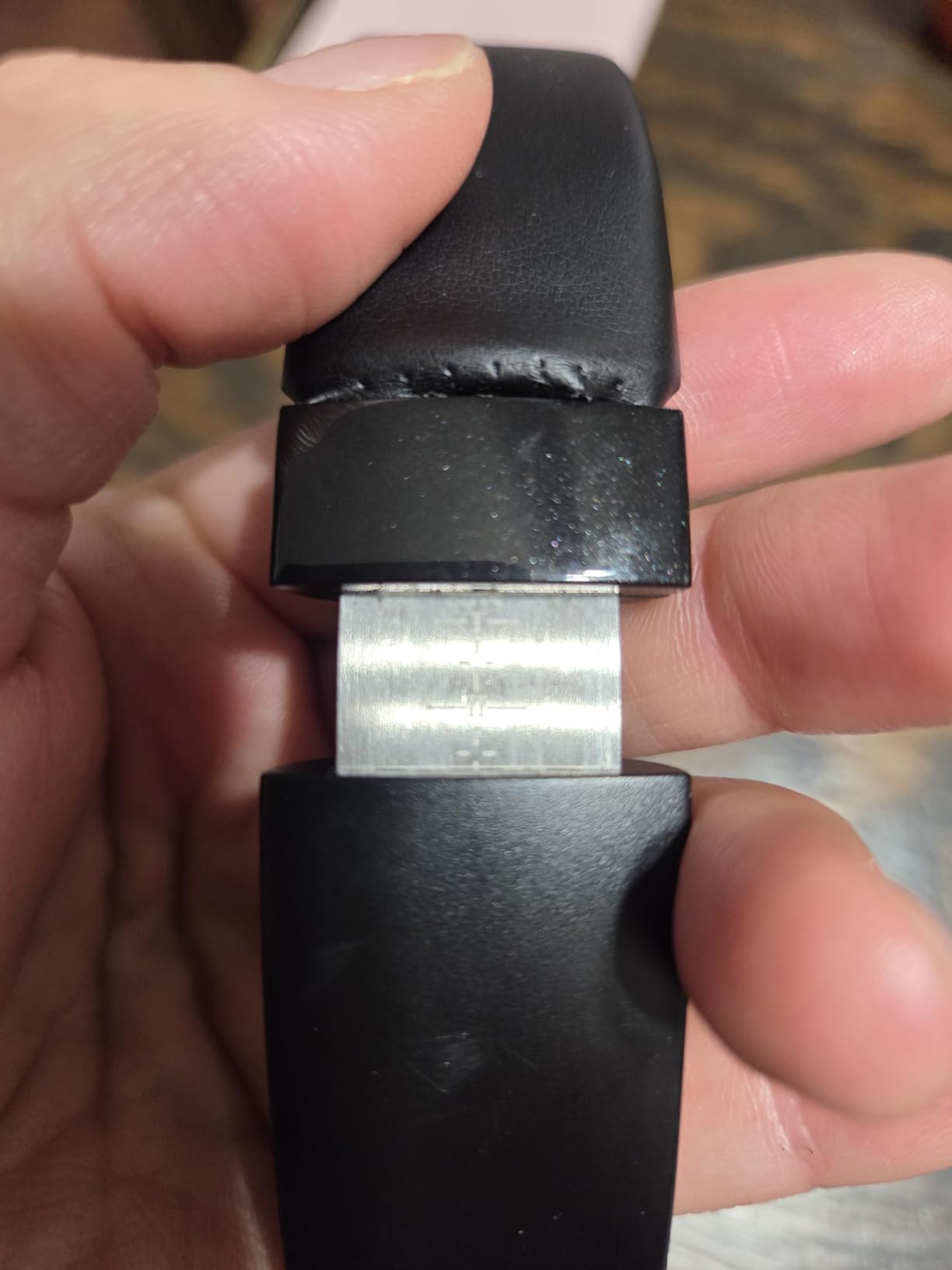
Does the 100-hour figure survive real use?
Reviewers report going weeks between charges, which is consistent with the claimed figure when ANC is used selectively. Take the standard-mode number as a headline and the ANC-on number as your realistic planning figure, and you will comfortably outlast any single itinerary.
Who should pick RUNOLIM
Short-haul commuters, travellers who fly several times a month, and anyone who wants maximum battery at the lowest cost. Skip it if sound quality is a genuine priority, or if you plan to rely on ANC in wired mode after the battery dies.
How to Choose Over-Ear Headphones for Long Flights in 2026
Active noise cancelling vs passive isolation
Active noise cancelling uses microphones to detect the low, constant rumble of an engine and generates an inverse signal to cancel it. It is what you want for the steady part of a cabin soundtrack, and it is where the Bose, Sony and TOZO sets pull ahead. Passive isolation comes from the physical seal of the ear cups, and it handles higher-frequency sounds such as chatter and trolley rattles.
The two work together, and neither replaces the other. A loose-fitting pair with excellent electronics cancels less than a well-fitting pair with modest electronics, which is why fit matters as much as any specification. If you can, try a pair on before buying and adjust the headband every few hours on your first trip.
Battery life for a 12-hour journey
Match the battery to the longest single flight, not to the average. Anything at 30 hours covers nearly every long-haul route. 40 hours and above covers a 14-hour journey plus a connection and a top-up. 60 hours and above means you can fly a full round trip on one charge, which matters for the ultra-long itineraries.
Quick charge figures are worth reading twice, because they vary enormously. Five minutes for four hours is a strong ratio; a 15-minute charge for 2.5 hours is workable but tight. Only one pair in this list can be used while charging, so if you fly often, treat that as a feature worth paying for.
Comfort, clamping force and ear cup depth
Comfort over eight hours is decided by three things: how light the headphones are, how the headband spreads pressure, and whether the clamp tightens as the hours pass. Sleep comfort adds a fourth factor, since you may end up leaning against the window with an ear cup pressed into the side of your head. Softer, deeper cushions help there.
Material matters more than people expect. Protein leather and memory foam are more forgiving than stiff plastic but can get warm, and warm plus a long flight is where comfort complaints cluster. On a summer route, favour breathable pads over sealed faux leather even if the sealed pair sounds better on paper.
Wired connections and airplane adapters
Wireless headphones are allowed in the cabin on every major airline, and there is no rule against them. What you cannot assume is a seatback socket. Plenty of carriers now stream entertainment to your own device, and where sockets remain they are usually single-pin 3.5 mm rather than the old twin-pin connector.
Carry a dual 3.5 mm to single-pin adapter in your bag. It costs almost nothing and it turns a seat with a working screen from a dead end into a usable one. Several pairs in this list include an adapter or a 3.5 mm cable in the box, and those are the safer buys for a first long flight.
Over-ear or earbuds is the other question travellers ask. Earbuds are smaller and cooler, but most do not cancel engine noise and few have battery life that survives a 14-hour flight. Over-ear wins on noise reduction and on fatigue, and our guide to in-ear monitor systems is worth reading if you want a second, cooler option for the walk to the gate.
Foldable design and carrying cases
Personal-item space is the most underestimated constraint. Designs with 90-degree rotating or folding cups, such as the Soundcore Q20i, the TOZO HT3 and the BERIBES, pack down to a fraction of the volume of a non-folding flagship. The Sennheiser HD 280 Pro collapses completely. Check whether a case is included, because it is one more thing to buy if it is not.
Hygiene is worth considering on a multi-flight trip. Replaceable ear pads make a big difference over years of travel, and the TOZO HT3 and Sennheiser HD 280 Pro both allow the pads to be swapped out. If you also run or work out, our open ear headphones for running guide covers the open-fit alternative that stays cool between flights.
Multipoint pairing for phone and laptop
Multipoint holds two devices connected at once, so you answer a call on your phone without unpairing your laptop. On a long flight with a work laptop and a personal phone, this is a genuine time saver. It is not universal though, and it is worth checking the specification before you buy rather than assuming.
The 60-60 rule is worth remembering for ear health on long journeys. Keep volume below 60 percent and take a break roughly every 60 minutes. Noise cancelling makes lower listening volumes workable, which is the healthiest reason to pick a strong pair in the first place.
Frequently Asked Questions
What are the best headphones for long haul flights?
The strongest all-round choice is the Soundcore by Anker Q20i, with 40 hours of battery, hybrid noise cancelling and memory foam cushions. For the most effective cabin noise cancelling and the most comfortable fit over 10-plus hours, the Bose QuietComfort is the pick. Travellers who never want to think about charging should look at the Sennheiser Momentum 4 Wireless with its 60-hour battery.
Is it better to wear headphones or earbuds on a plane?
Over-ear headphones are better on a plane because their larger cups block more cabin noise and most models carry battery life that survives a 12-hour flight. Earbuds are cooler, smaller and easier to sleep in, but they cancel far less engine rumble. A common approach is to fly with over-ear headphones and keep a pair of earbuds for the walk through the terminal.
What are the best travel headphones for air travel?
The best travel headphones span three use cases. The Soundcore Q20i is the best overall value, the Bose QuietComfort is best for long-haul comfort and cabin noise cancelling, and the Sennheiser Momentum 4 is best for battery life and hi-fi wireless sound. The TOZO HT3 and JLab JBuds Lux ANC are the strongest budget options.
Are over-ear headphones allowed on airplanes?
Yes. Bluetooth headphones and over-ear headphones are permitted in the cabin on commercial flights and do not need to be removed for takeoff or landing, unlike many airline-provided earbuds. The one thing to check before you fly is whether your airline still offers a seatback entertainment socket, because you will need an adapter for the single-pin 3.5 mm connector if it does.
Which headphone is better, the Sony WH-1000XM5 or the Bose QuietComfort Ultra?
For flights specifically, the Bose QuietComfort Ultra cancels more cabin noise and its 30-hour battery with charge-and-listen operation suits longer routings, while its Cinema Mode is built for in-flight movies. The Sony WH-1000XM5 wins on wireless sound processing, is lighter at 8.82 ounces, and is cheaper, but its non-folding design takes more room in a carry-on.
Do noise cancelling headphones help with airplane pressure?
Not directly. Cabin pressure changes during ascent and descent affect the Eustachian tubes in your ear, and noise cancelling does nothing for that. Swallowing, chewing gum, yawning or a pressure-relief valve headset addresses it. Wearing headphones through a pressure change can simply make the discomfort more noticeable because it isolates you from the ambient cues that help your ears equalise.
Can you use wireless headphones with airplane entertainment?
You cannot connect wireless headphones to a seatback screen, because those screens use a wired 3.5 mm output. You would need either Bluetooth transmitter hardware supplied by the airline or your own device streaming to your headphones. Most travellers solve this by carrying a dual 3.5 mm to single-pin adapter, which costs very little and works with any pair that has a wired input.
Final Verdict for Long Flights in 2026
After weighing all twelve pairs on the four things that decide a long-haul trip, the Soundcore by Anker Q20i is our pick for the best over ear headphones for long flights. Forty hours of battery with ANC on, 90-degree rotating cups that fold into a backpack, multipoint pairing for phone and laptop, and memory foam cushions that stay comfortable deep into a 14-hour itinerary.
Pick the Bose QuietComfort instead if cabin noise cancelling is your number one priority and you want a wired fallback that works with a flat battery. Choose the Sennheiser Momentum 4 if you would rather never think about charging, and the TOZO HT3 or JLab JBuds Lux ANC if your budget is tight and you still want real cancellation and multipoint.
Whichever one you settle on, check the fit before you fly, pack a single-pin 3.5 mm adapter in your personal item, and set your EQ before boarding rather than during the film. That small preparation does more for a long flight than any specification on the box.