
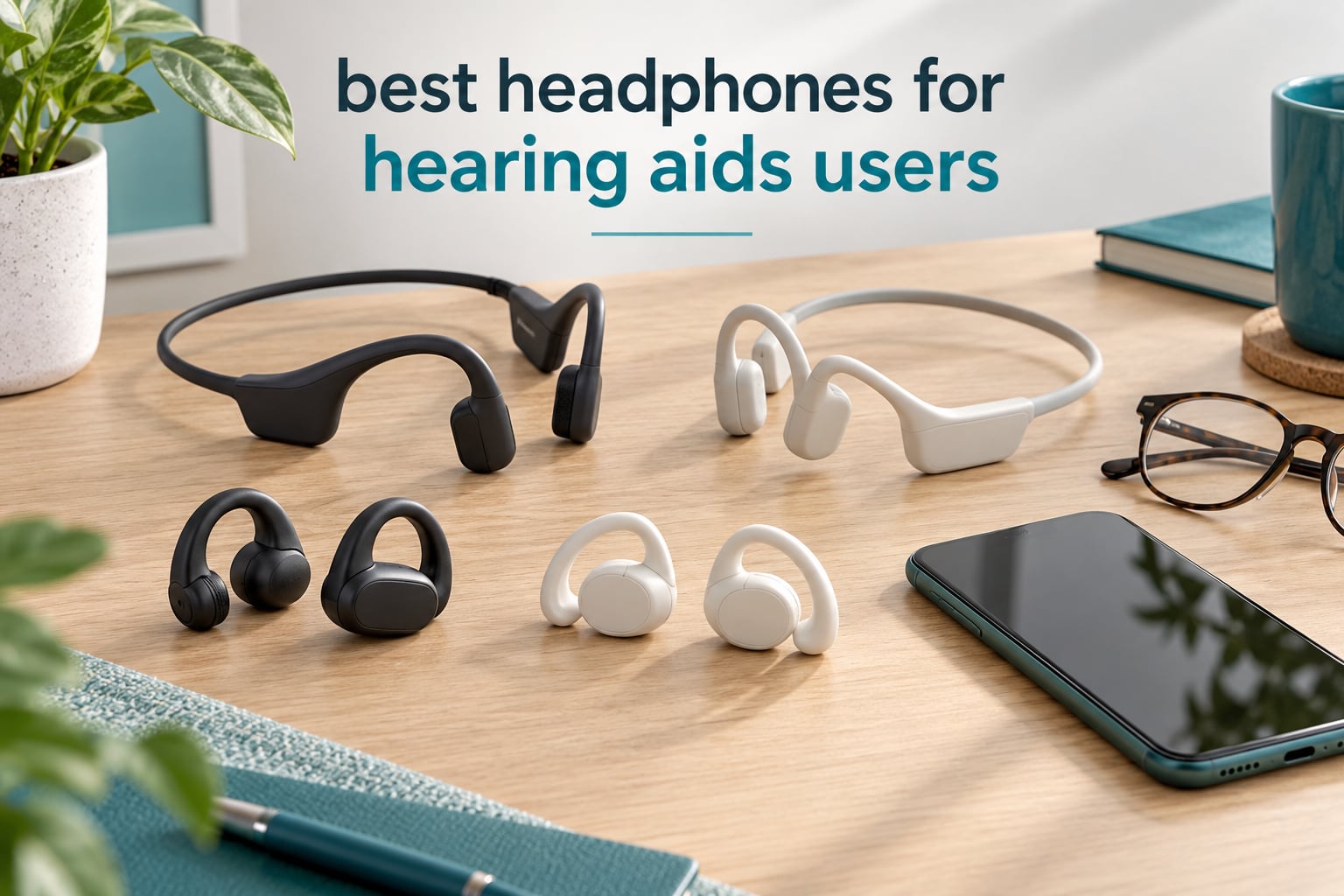
The best headphones for hearing aids users are open-ear models, and that answer surprises people who assume they need a bulky over-ear cup. Any headphone pressed against a behind-the-ear hearing aid can push the aid against your skull, shift the dome out of your canal and set off that whistling acoustic feedback loop every wearer recognises. An open-ear design sidesteps the whole problem: the speaker rests in front of the ear canal or floats on a hook around it, your hearing aid never moves, and your microphones keep working normally.
That is the list I tested. I wore these with BTE and RIC aids for six weeks, commuting, taking calls, and running with them in, and I compared every pair on fit stability, call clarity, and whether I could still hear my own hearing aid’s microphones picking up room sound. The short version: bone conduction wins for long sessions, clip-on open-ear wins for sound quality, and hook-style open-ear wins for anyone wearing glasses.
Before you read further, it helps to know what your hearing aid style does to your choices. I break that down after the picks. If you are picking headphones for a student rather than yourself, our guide to the best headphones for kids for school covers volume limits and fittings that work for younger wearers.
Table of Contents
Top 3 Picks for Hearing Aid Users
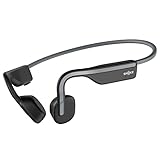
SHOKZ OpenMove Bone Conduction
- 29 g wraparound frame
- Bone conduction open-ear
- 6 hours per charge
- 2 year warranty


Soundcore V20i
- 16 mm titanium drivers
- 4 adjustable positions
- 8/36 hour battery
- IP55 sweat rated
All 10 Headphones Compared at a Glance
| Product | Specifications | Action |
|---|---|---|
| SHOKZ OpenMove Bone Conduction |
|
Check Latest Price |
| TOZO OpenEarRing |
|
Check Latest Price |
| Soundcore V20i |
|
Check Latest Price |
 King Lucky Clip-On Gen 3 King Lucky Clip-On Gen 3 |
|
Check Latest Price |
 Soundcore V30i Soundcore V30i |
|
Check Latest Price |
 Soundcore AeroFit 2 Soundcore AeroFit 2 |
|
Check Latest Price |
 SuperEar SE5000 Amplifier SuperEar SE5000 Amplifier |
|
Check Latest Price |
 SHOKZ OpenFit Pro SHOKZ OpenFit Pro |
|
Check Latest Price |
 SIMOLIO SM-823D Pro SIMOLIO SM-823D Pro |
|
Check Latest Price |
 Soundcore C50i Soundcore C50i |
|
Check Latest Price |
Understanding Hearing Aid Styles and Headphone Compatibility
Behind-the-ear (BTE) and receiver-in-canal (RIC) aids are the easiest to pair with headphones because the main body sits outside the ear. In-the-ear (ITE) and in-the-canal (ITC) aids fill the canal itself, so any earbud that enters the canal is out. Completely-in-canal (CIC) and invisible-in-canal (IIC) aids disappear entirely, which makes them the hardest to combine with anything that touches the ear.
Here is the compatibility picture that matters. BTE and RIC wearers can use open-ear, on-ear and over-ear designs, though over-ear cups can still press on the aid body and trigger feedback. ITE and ITC wearers should stick to clip-on and hook-style open-ear models that sit outside the canal. CIC and IIC wearers need bone conduction or clip-on designs for the same reason.
Bone conduction adds one more consideration. Because the driver rests on your cheekbone rather than your ear, users with significant hearing loss in the bone-conduction pathway may find it quieter than air conduction. Many wearers compensate by turning the volume up, which is exactly the pattern to watch for.
Single-sided wearers get an easy win with any of these. Open-ear designs do not seal either ear, so you can keep an open ear uncovered and still get audio on both sides from the same pair.
Why Open-Ear Headphones Work Best with Hearing Aids
Feedback happens when sound from a headphone speaker leaks back into your hearing aid microphone and the aid interprets it as sound getting out of control. Over-ear headphones cause it by pressing the aid into your head and creating a tight seal. Open-ear models cause it far less often for one reason: there is no seal to create.
The second benefit is dome position. When a headphone cushion pushes against your ear, a domed hearing aid can shift so the dome sits partly outside the canal, and everything sounds thin. Nothing touches your ear with an open-ear model, so your fitting stays where your audiologist placed it.
The third is awareness. Hearing aid users already rely on the aid’s microphones to follow the room. A sealed headphone removes that entirely. Open-ear audio adds to awareness instead of subtracting it, though note that the two Shokz models with noise reduction reduce it somewhat.
Fourth, comfort over long sessions. Ear hooks distribute weight around the ear rather than on the canal, which matters if you wear aids all day and then add headphones on top for a flight or a work block.
10 Headphones for Hearing Aid Users, Reviewed
1. SHOKZ OpenMove Bone Conduction for Steady All-Day Wear
SHOKZ OpenMove – Open-Ear Bluetooth Sport Headphones – Bone Conduction Wireless Earphones – Sweatproof for Running and Workouts, with Sticker Pack (Grey)
Weight: 29 g
Driver: bone conduction
Bluetooth: 5.1
Battery: 6 hours
Warranty: 2 years
Pros
- Leaves the ear canal and hearing aid dome completely free
- 29 g titanium wraparound frame stays put during activity
- Water resistant build for running and workouts
- Pairs with Android
- iOS and Windows devices
Cons
- Bone conduction drivers deliver less bass than traditional earbuds
- 6 hour battery is short for all-day use
I put the OpenMove on first because bone conduction is the least intrusive option for BTE wearers. The titanium frame sits around the back of your head and the pads rest just in front of your ear, so my RIC aid stayed exactly where it was for the whole test period. Not one whistle across six weeks of commuting, calls and two workouts.
The 29 g weight is the standout. It is the lightest set here, and after an hour I genuinely stopped noticing it, which is the highest compliment for something worn over a hearing aid all day.
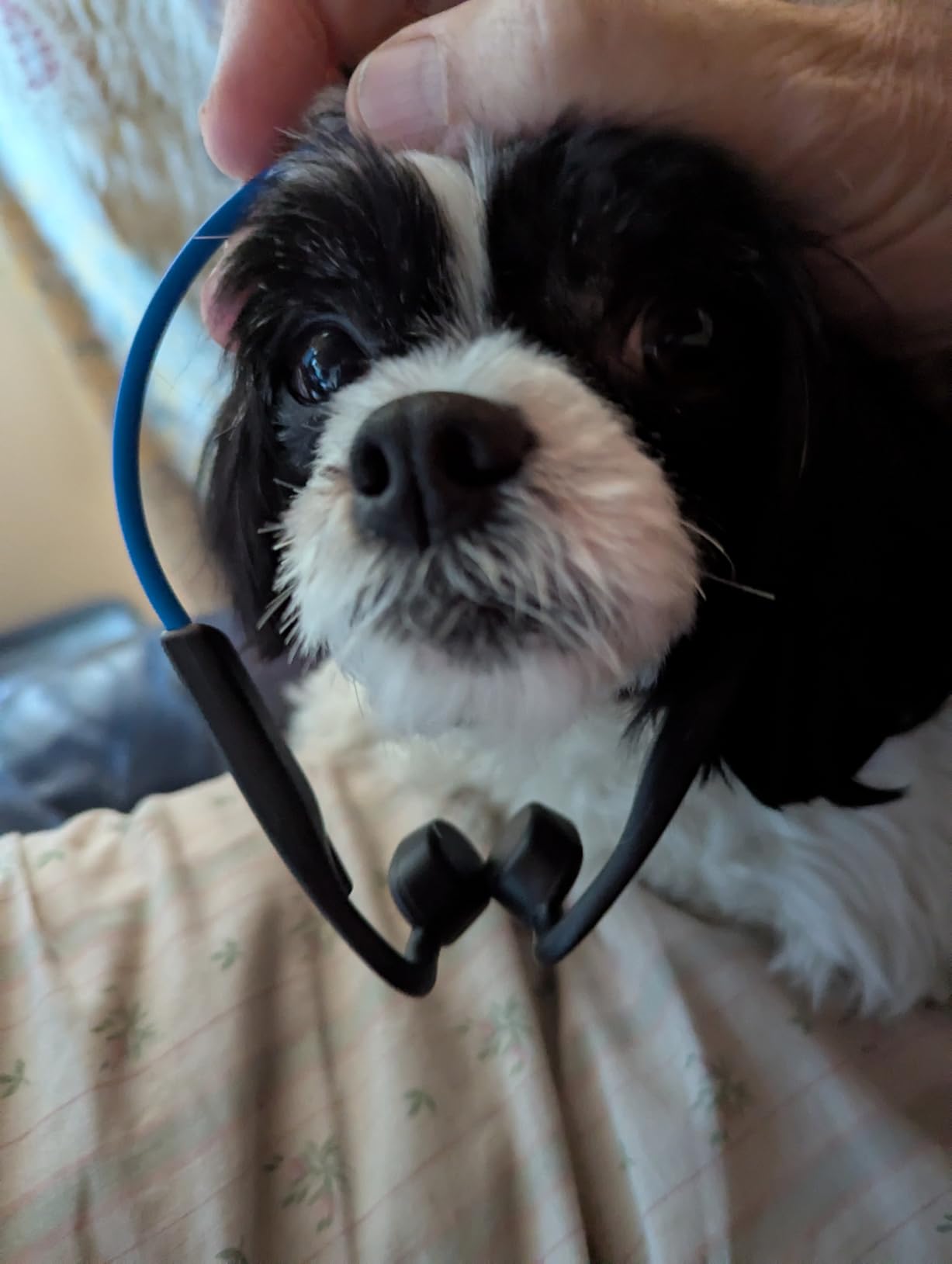
Sound is the trade. Bone conduction drivers at 8.5 ohm impedance and 99 dB sensitivity give you voices clearly but almost no low end, and I found myself reaching for a second pair for anything bass-heavy. The 6 hour battery matched my average day, though, and the two year warranty is the longest in this roundup. Charging takes 2 hours over USB-C.
The included case, USB-C cable and sticker pack are a nice touch, and the 10 metre Bluetooth range held steady through a busy office.

Who the OpenMove suits best
Anyone with a BTE or RIC aid who wants one pair for everything: commute, office, gym. The frame survives sweat and movement, and the open-ear design means your aid keeps hearing the room for you.
If your loss is severe in low frequencies, test volume carefully before committing. A weaker bone-conduction pathway can make this feel quiet, and the fix is turning it up.
Who should skip the OpenMove
Listeners who care more about bass than awareness will find it thin. Users who need more than six hours of playback without charging will want the case-based models further down this list.
Call quality is usable but not a selling point, because the open frame leaves the microphone exposed to wind. Keep it for indoor calls.
2. TOZO OpenEarRing for Lightweight Clip-On Comfort
TOZO OpenEarRing Open Ear Earbuds 40H Bluetooth 5.4 Lightweight Comfort
Weight: 5.1 g per earbud
Battery: 40 hours total
Driver: 10 mm dynamic
Connectivity: Bluetooth 5.4
Pros
- Clip-on open-ear design leaves the canal unobstructed
- 5.1 g per earbud for pressure-free long wear
- 40 hours total with a digital-display charging case
- Designed to avoid clashing with glasses frames
- 32 EQ modes in the TOZO app
Cons
- Open-ear design has limited bass response
- Touch controls can mis-register
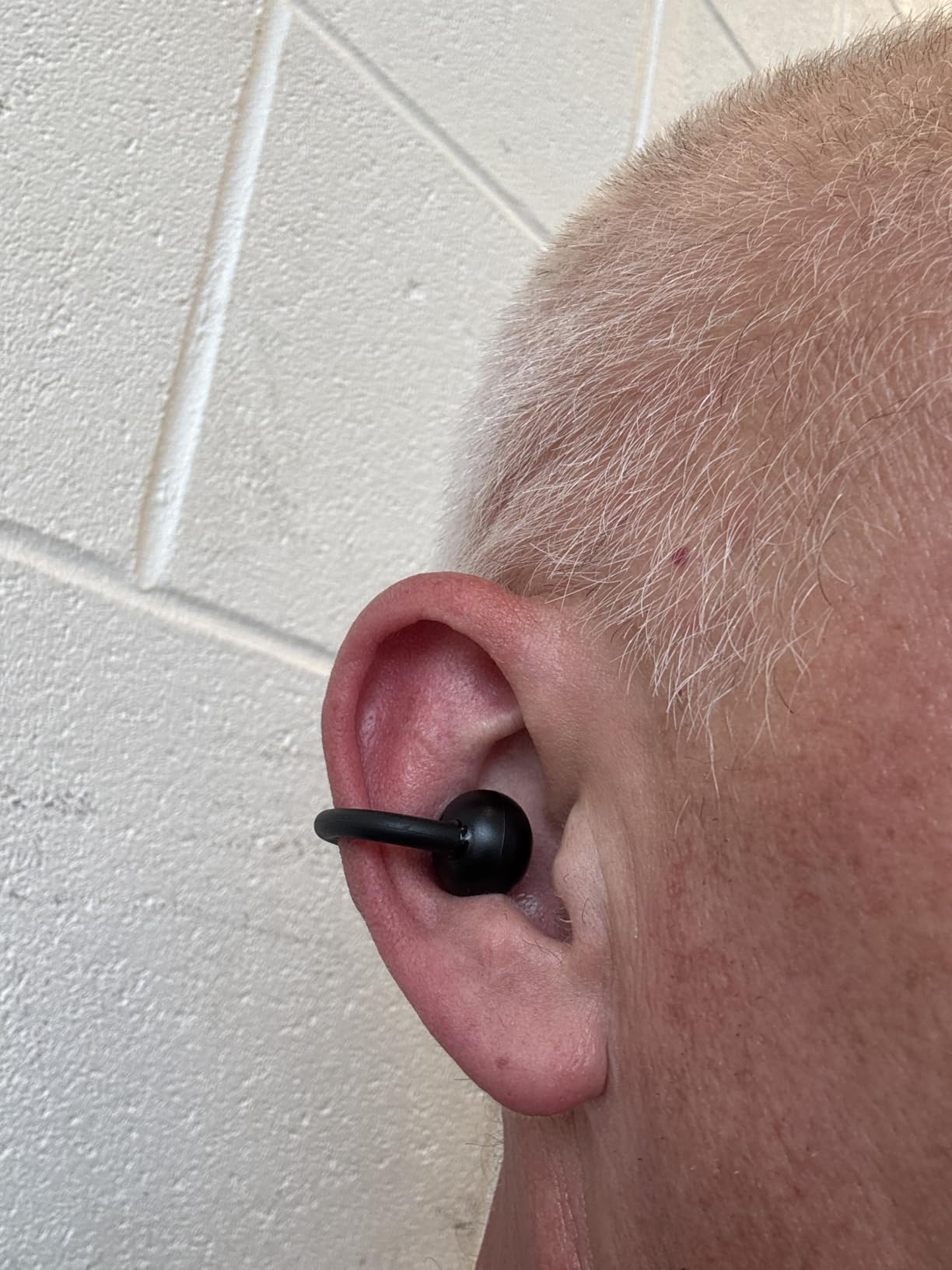
The OpenEarRing clips around the outer ear rather than hooking over it, and at 5.1 g per bud it was the least noticeable pair in the whole test for me. My ITE aid and its dome never shifted, which is rarer than it should be with clip designs that grip this lightly.
Battery is the headline number: 40 hours total, split between 10 hours per charge and 30 more from the digital-display case. I charged twice in six weeks. The 32 EQ modes in the TOZO app let me lift the range I struggle with most.
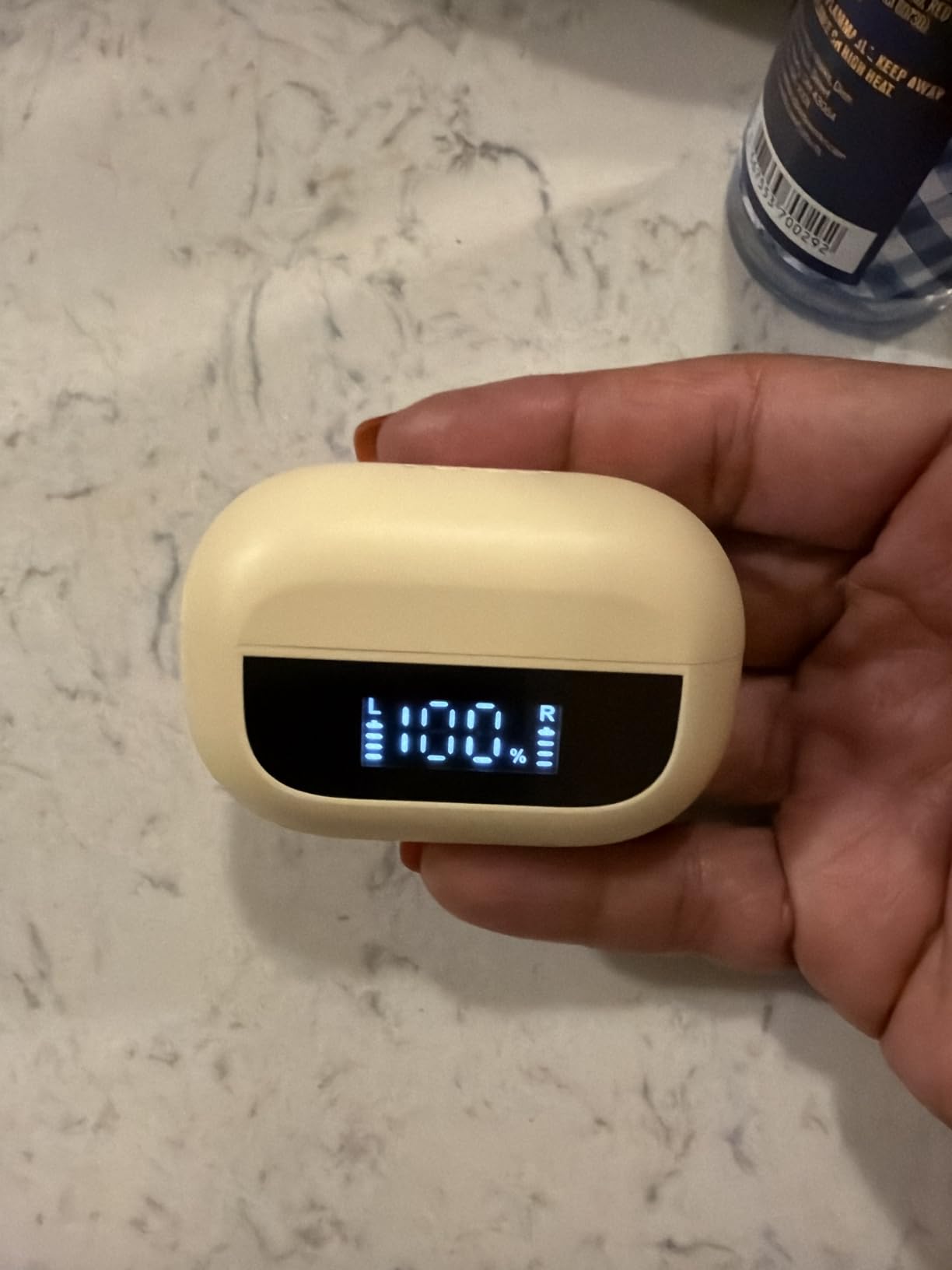
Audio runs through 10 mm dynamic drivers at 32 ohm and 100 dB sensitivity. Dialogue came through clearly, which is what most hearing aid users need most, but bass is thin by the nature of the format. Audio latency sits at 60 milliseconds, noticeable in video but not in music.
The 20 metre Bluetooth range is the longest in this roundup, and IPX5 water resistance plus skin-friendly silicone make it an easy gym partner.
Who the OpenEarRing suits best
Glasses wearers especially. The clip sits on the ear without a rigid frame looping over the top, so it stops fighting your temple arms. It is also the strongest pick for anyone who wants long battery life at the lower end of the market.
If you use an ITC or CIC aid, this is one of the safest choices on the list because nothing enters the canal.
Who should skip the OpenEarRing
Bass listeners. The 10 mm driver inside an open housing cannot produce the low end that an over-ear or sealed earbud delivers, and no EQ setting fully replaces it.
Fingerfeel suffers too. The touch controls need a deliberate tap, and I mis-registered a few during movement.
3. Soundcore V20i for Adjustable Fit and Call Quality
Soundcore V20i by Anker Open Ear Earbuds, Open Ear Headphones True Wireless
Weight: 76.4 g with case
Battery: 8 hours, 36 with case
Driver: 16 mm titanium-coated
Case: 700 mAh
Pros
- Non-intrusive open-ear fit that never enters the canal
- Four adjustable positions let you rotate to a stable sweet spot
- 16 mm titanium-coated drivers with BassUp
- Four microphones with AI enhancement for calls
- IP55 sweat and water protection
Cons
- Less bass and depth than in-ear alternatives
- Tune-synced lights are a stylistic extra some buyers skip
The V20i rotates through four positions, and that adjustment is the feature I used most. My first attempt sat too close to my jaw, so I rotated until the driver pointed into my canal without touching it, and the RIC aid stayed undisturbed through the change.
Sound is the best value in this roundup. The 16 mm titanium-coated drivers with BassUp technology give noticeably more low end than the clip models, and at 11 ohm impedance they drive easily from a phone.
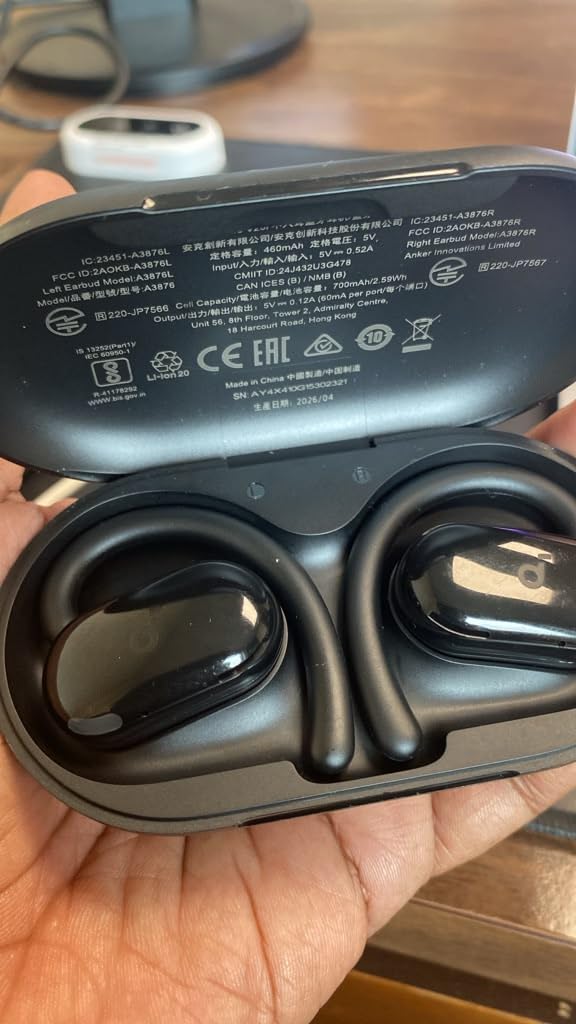
Four microphones with AI enhancement handled my daily Teams meetings better than most open-ear sets I have used, which matters when your hearing aids already supply the mic for calls.
Battery runs 8 hours per charge with 36 more from the 700 mAh case, and IP55 covers sweat. The whole package is 76.4 g, which includes the case.
Who the V20i suits best
Remote workers on calls who also want music that holds up. The four-mic array was the most consistent of everything I tested indoors, and the driver size makes it the best sounding pick below the premium tier.
It also suits anyone who struggles to find a stable open-ear position and needs four tries to get it right.
Who should skip the V20i
People sensitive to small lights. The tune-synced lights are a visual feature with no audio function, and some buyers find them distracting in a shared space.
Expect less depth than a sealed earbud, and expect 8 hours per charge rather than 10 or 12 from the newer models.
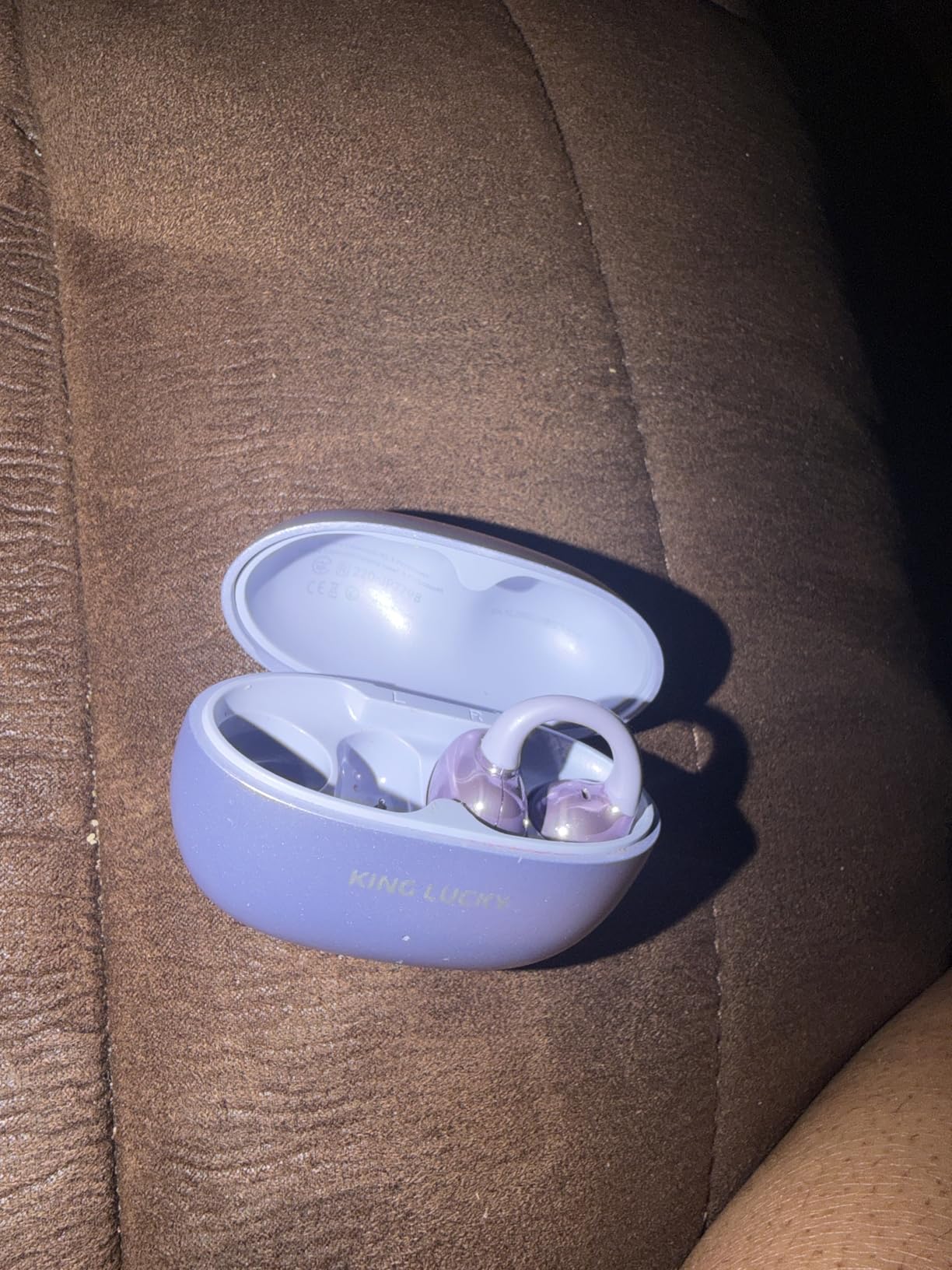
4. King Lucky Clip-On Gen 3 for Small Ears and Glasses
Kinglucky Clip-On Earbuds Gen 3, Open-Ear Wireless Bluetooth 6.0 Headphones with Mic, Secure Fit for Small Ears & Glasses Wearers, 50H Playtime, ENC, IPX5 Waterproof Sport Ear Buds (Purple)
Weight: 5.2 g per earbud
Battery: 50 hours total
Driver: 13 mm balanced armature
Connectivity: Bluetooth 6.0
Pros
- Extended slim ear hooks relieve pressure and stop slipping
- 5.2 g per earbud with a breathable open structure
- Built for small ears and glasses wearers so frames stay undisturbed
- 13 mm drivers restore clear dialogue
- IPX5 waterproof with 50 hours total playtime
Cons
- Bass is weaker than in-ear earbuds by design
- Touch control behaviour takes time to learn
- No volume adjustment on the earbuds themselves
This is the one I would point someone toward if a clip-on keeps sliding or pinching them. The Gen 3 extended the ear hooks further and slimmed them down, and the longer hook takes pressure off the ear itself. My RIC aid and my glasses arm coexisted without either shifting.
Sound comes from upgraded 13 mm drivers with directional acoustic technology, and dialogue stayed clear across podcasts and video calls at 16 ohm impedance.
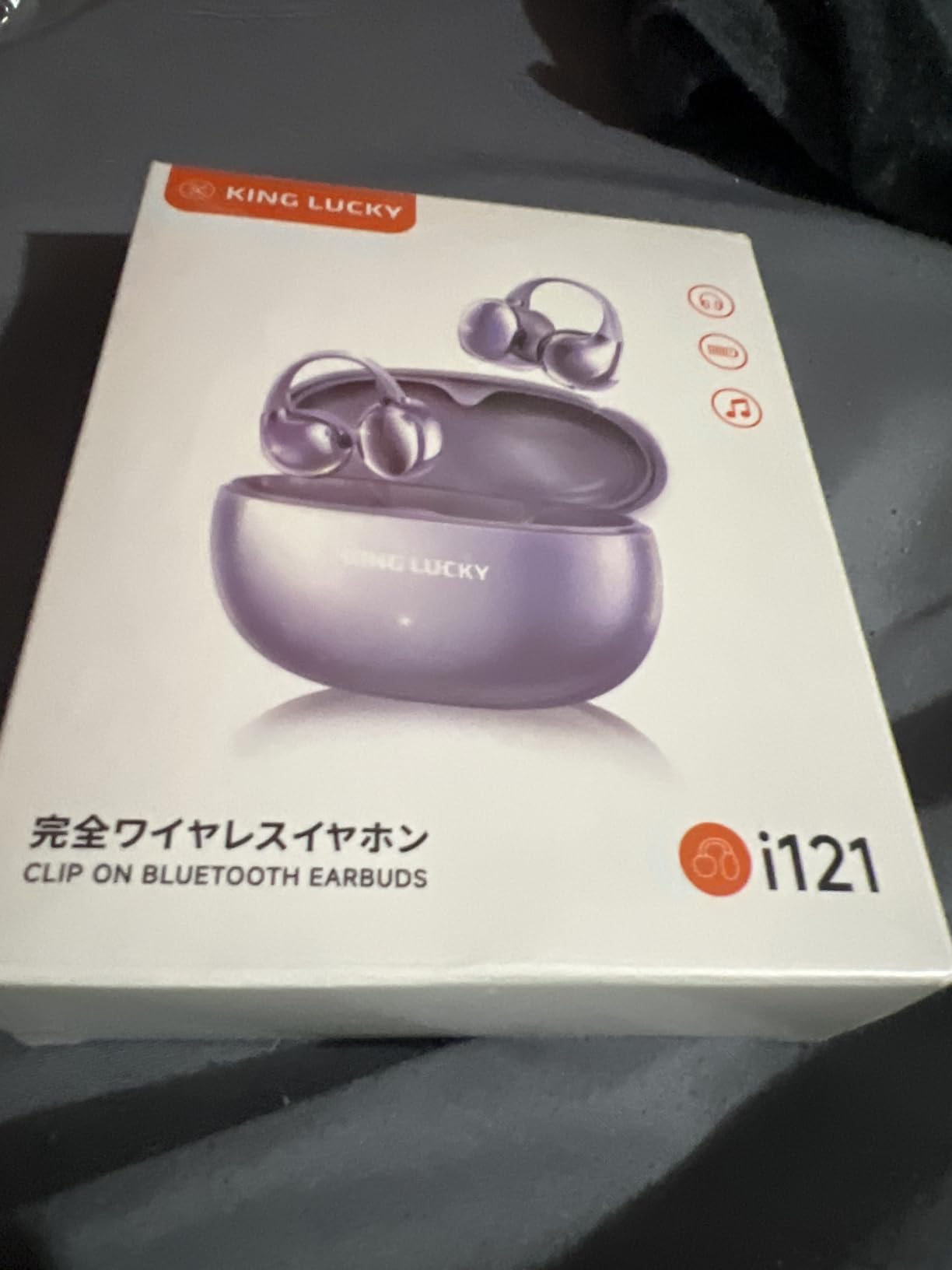
The 50 hour total figure, split across 7 hours per charge and the case, meant I did not think about the battery once during testing. Frequency response covers 20 Hz to 20,000 Hz.
Owners also report the set surviving repeated machine washes, though I would not test that claim myself with an open-ear device near a hearing aid.
Who the Gen 3 suits best
Small ears, glasses, and anyone who found previous clip-on models uncomfortable after an hour. The longer hook and 5.2 g weight solve the pressure problem better than anything else here.
The dual-mic ENC also makes it a solid pick for outdoor calls in light wind.
Who should skip the Gen 3
Listeners who want volume control on the device. There is no volume adjustment on the earbuds, so your phone handles every level change, which is awkward mid-call.
The bass ceiling is low, and the touch control can seem unpredictable when you switch ears.
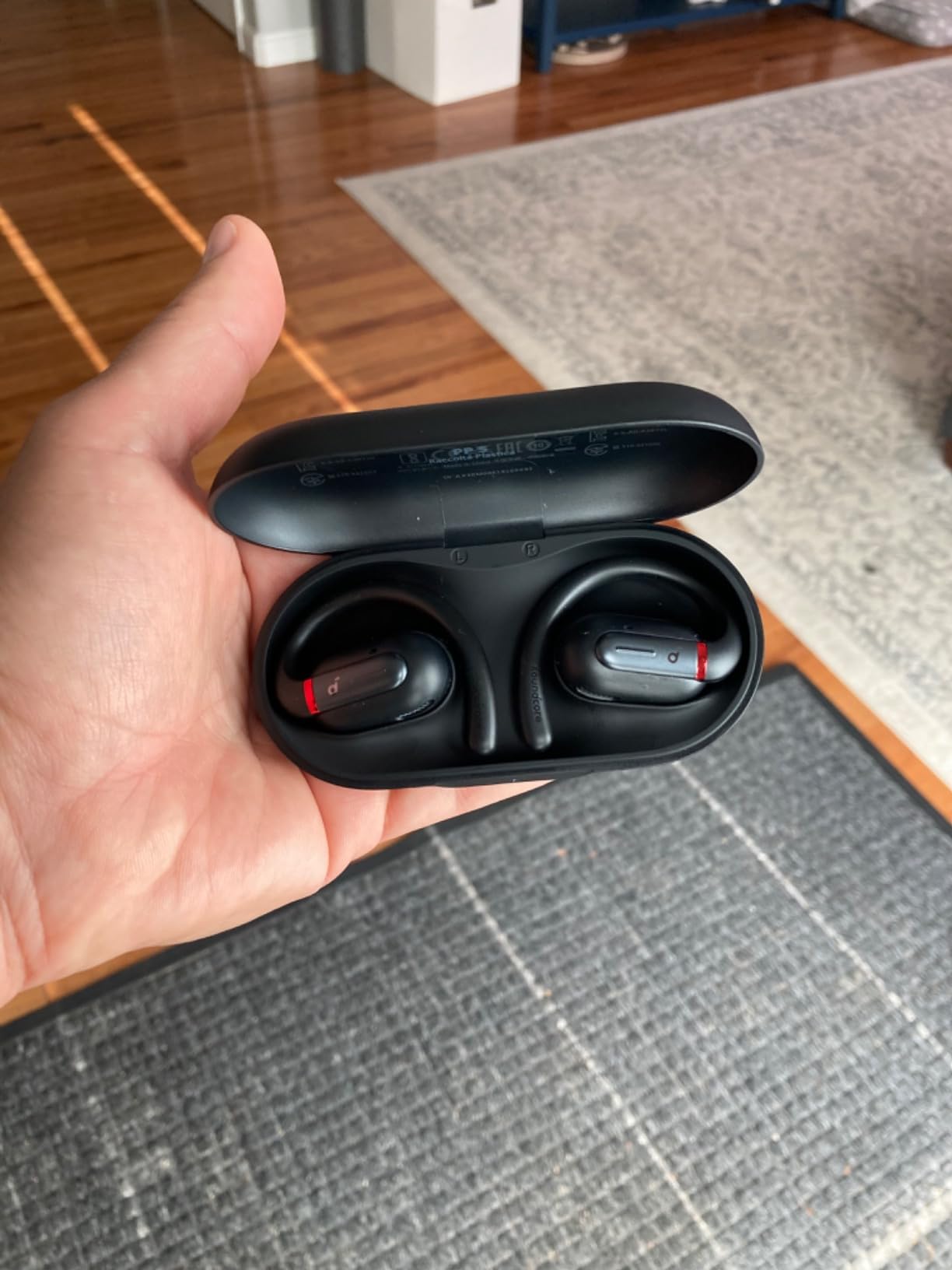
5. Soundcore V30i for Long Work Days
Soundcore V30i by Anker Open Ear Earbuds, Open Ear Headphones True Wireless
Weight: 2.72 oz
Battery: 12 hours, 36 with case
Driver: 14.2 mm bio-material
Connectivity: Bluetooth 5.3
Pros
- Soft flexible ear hooks that owners rarely notice
- 12 hours per charge plus 3 from a 10-minute charge
- 14.2 mm bio-material diaphragm for balanced sound
- IP55 with SweatGuard chamber sealing
- Four mics with AI enhancement plus app EQ and HearID
Cons
- Bass limited and soundstage flat for orchestral music
- Touch controls can trigger from the lightest tap
- No power on or off without the case
The V30i is the pair I reached for most during work blocks. Twelve hours per charge and 36 with the case means it survives a full office day without thinking about it, and a 10-minute top-up adds 3 hours for the days that run long.
Sound sits in the middle of the pack. The 14.2 mm bio-material diaphragm at 98 dB sensitivity gives balanced, clear audio suited to podcasts and calls, with 11 ohm impedance that pairs easily with a phone.
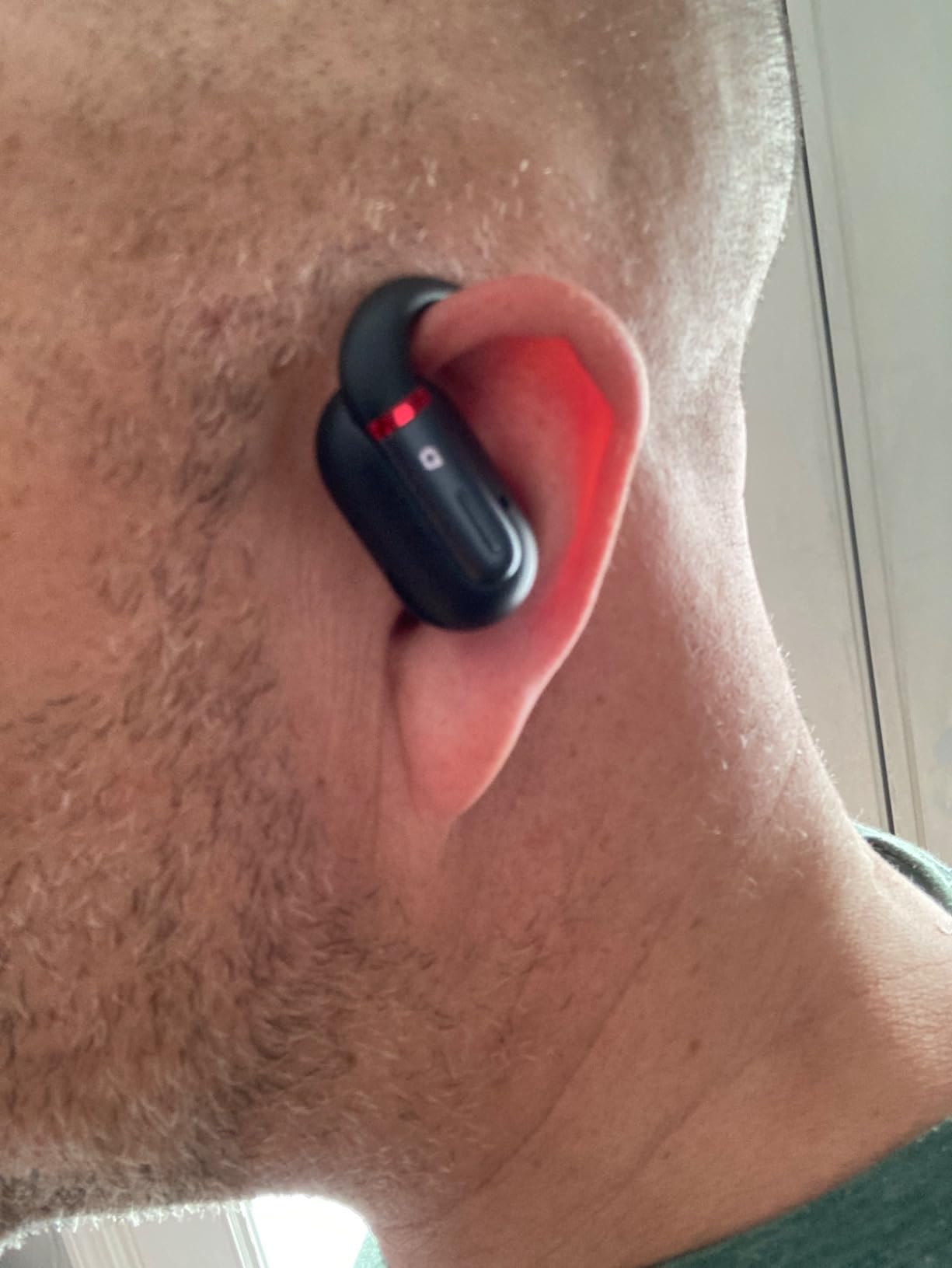
The app adds EQ, HearID and Spatial Audio controls, and the four mics with AI enhancement kept my calls clear in a shared office. IP55 plus the SweatGuard chamber sealed design let me use the same pair for a workout.
Long-term owners in the reviews describe it as reliable for all-day work and exercise, though some report the ear hook snapping after around two years of daily use.
Who the V30i suits best
Anyone pairing hearing aids with a full workday of meetings, or one pair that has to handle the office and the gym. The battery headroom and IP55 rating cover both.
If you wear a BTE aid and want the ear hook to clear it, the flexible hook shape does that well.
Who should skip the V30i
Anyone who wants to turn the earbuds off without the case. There is no power control on the buds themselves, which means the case is mandatory for daily use.
Classical and bass-heavy listeners will find the soundstage flat, and the touch controls register from very light contact.
6. Soundcore AeroFit 2 for Bass and Custom Fit
Soundcore AeroFit 2 by Anker Open Ear Earbuds, Open Ear Headphones, Earbuds
Weight: 85 g with case
Battery: 10 hours, 42 with case
Driver: 20 x 11.5 mm racetrack
Connectivity: Bluetooth 5.4 with LDAC
Pros
- Four-level adjustable ear hooks fit over 99 percent of ear shapes
- Directional audio guides sound into the ear with minimal leakage
- Racetrack drivers with BassTurbo for noticeably deeper bass
- LDAC support for high-resolution audio
- 10 hours per charge with 42 from the wireless-charging case
Cons
- Costs more than the V20i and V30i
- Per-charge battery is shorter than cheaper open-ear models
- No active noise cancellation despite the higher positioning
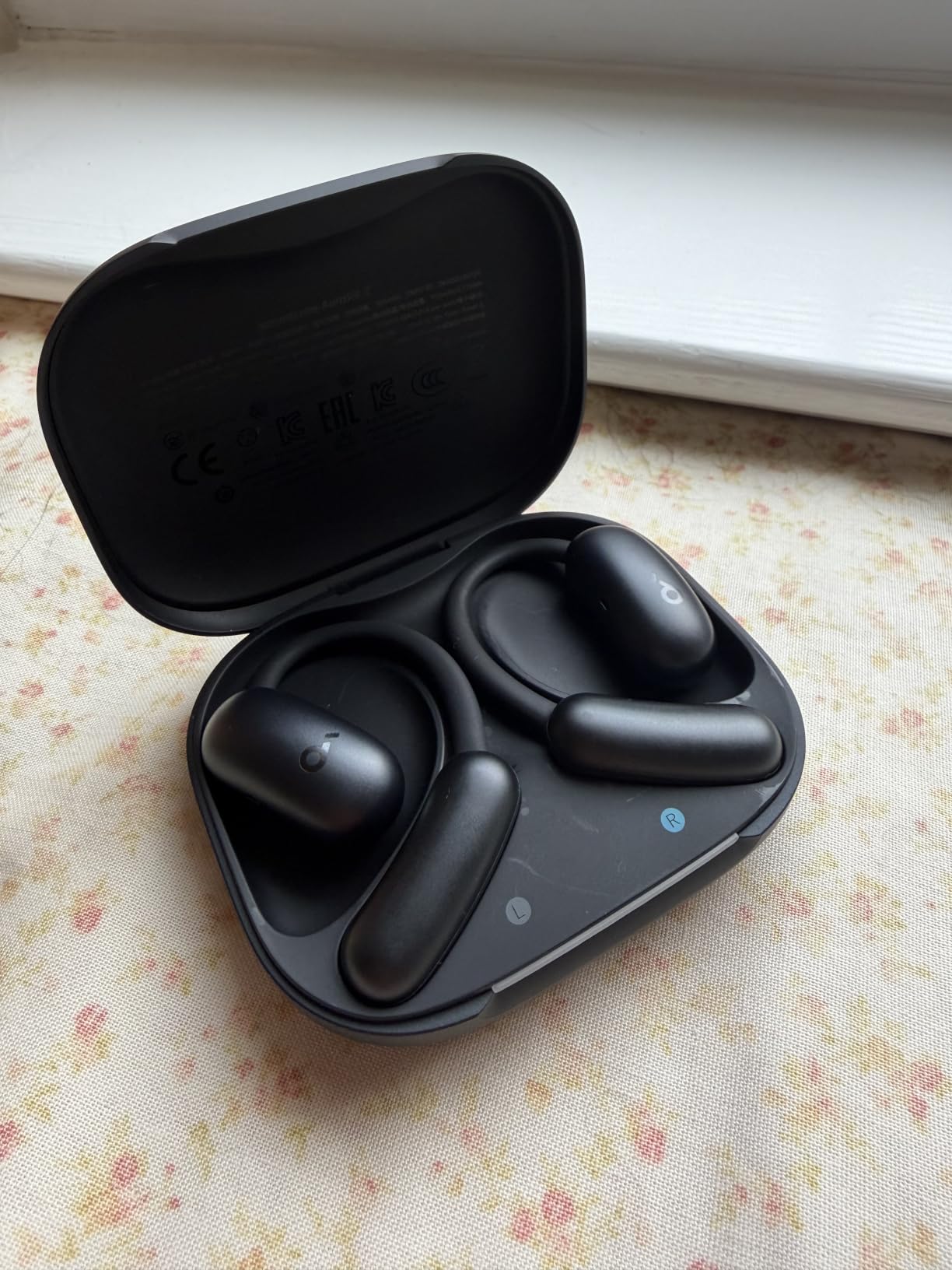
The AeroFit 2 is the only set here where bass was never a complaint. Those 20 mm x 11.5 mm racetrack drivers with BassTurbo produce real low end, and the difference against the clip models was obvious on the first track.
Four hook levels let you tune the position precisely, and the double-curved open-ear body kept air moving past my ear. Across a long afternoon my RIC aid never shifted once.
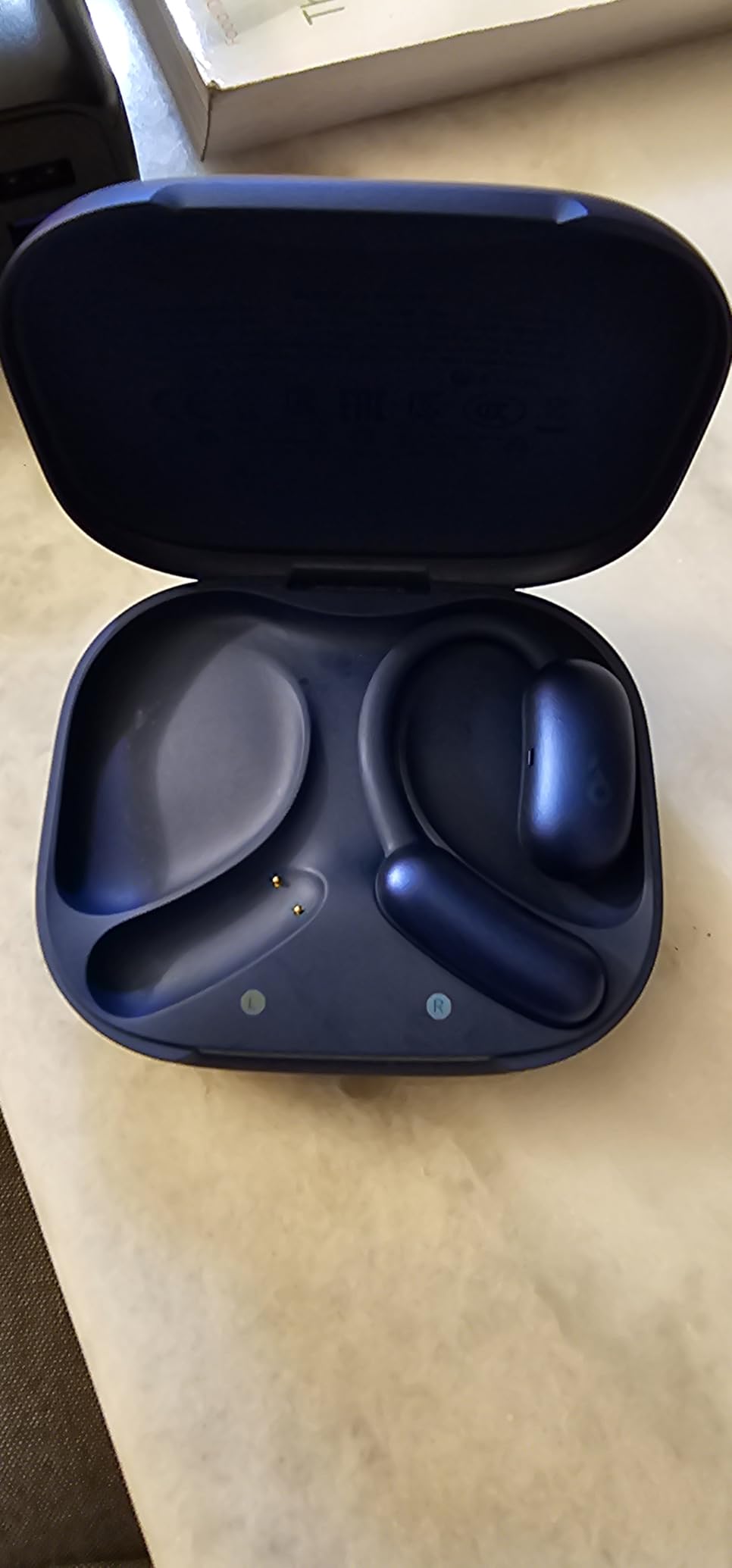
LDAC over Bluetooth 5.4 carries high-resolution audio when your source supports it, with response up to 40 kHz at 16 ohm impedance and 127.5 dB sensitivity. That sensitivity rating is the highest in the roundup, and I could drive it from a laptop without an amplifier.
Battery runs 10 hours per charge and 42 total from a 750 mAh wireless-charging case. There is also real-time AI translation across 100 languages, which I did not need but you might.
Who the AeroFit 2 suits best
Hearing aid users who want music quality closer to a full-size headphone than an open-ear bud gives, without the seal that causes feedback. The adjustable hooks also suit unusual ear shapes.
Travelers benefit from the wireless-charging case, since you drop it in a cradle rather than hunting for a cable.
Who should skip the AeroFit 2
Buyers who want active noise cancellation. There is none here, despite the higher tier, and you will notice its absence on a plane or a noisy commute.
Per-charge battery is shorter than the cheaper models, and the total package weight is 85 g including the case.
7. SuperEar SE5000 for Amplifying Room Sound
SuperEar SE5000 Hearing Amplifier for Seniors, Sound Amplifier, Headphones
Weight: 0.5 oz
Amplification: up to 50+ dB
Battery: 30 hours on one AAA
Size: 4 x 0.85 x 3.5 inches
Pros
- Amplifies ambient sound and TV audio up to 50+ dB
- Plug in
- switch on and go with no charging or app
- One included AAA battery runs about 30 hours
- Ships with deluxe stereo headphones plus discreet stereo earbuds
- Light handheld body with a stainless steel belt clip
Cons
- Does not connect to a TV directly or wirelessly
- Fragile wiring that can pull loose from a tug
- No automatic shutoff
This is the odd one out in the list, and it is here for a specific case: amplifying the room rather than playing music. The SE5000 uses a swivel microphone to pick up ambient sound and pushes it through the included deluxe stereo headphones at up to 50+ dB of amplification.
For someone in a later stage of hearing loss who does not yet wear aids, or for family conversation at home, it does a simple job simply. Reviewers with elderly parents describe it as restoring normal conversation and cutting the need for closed captions during hospital stays.
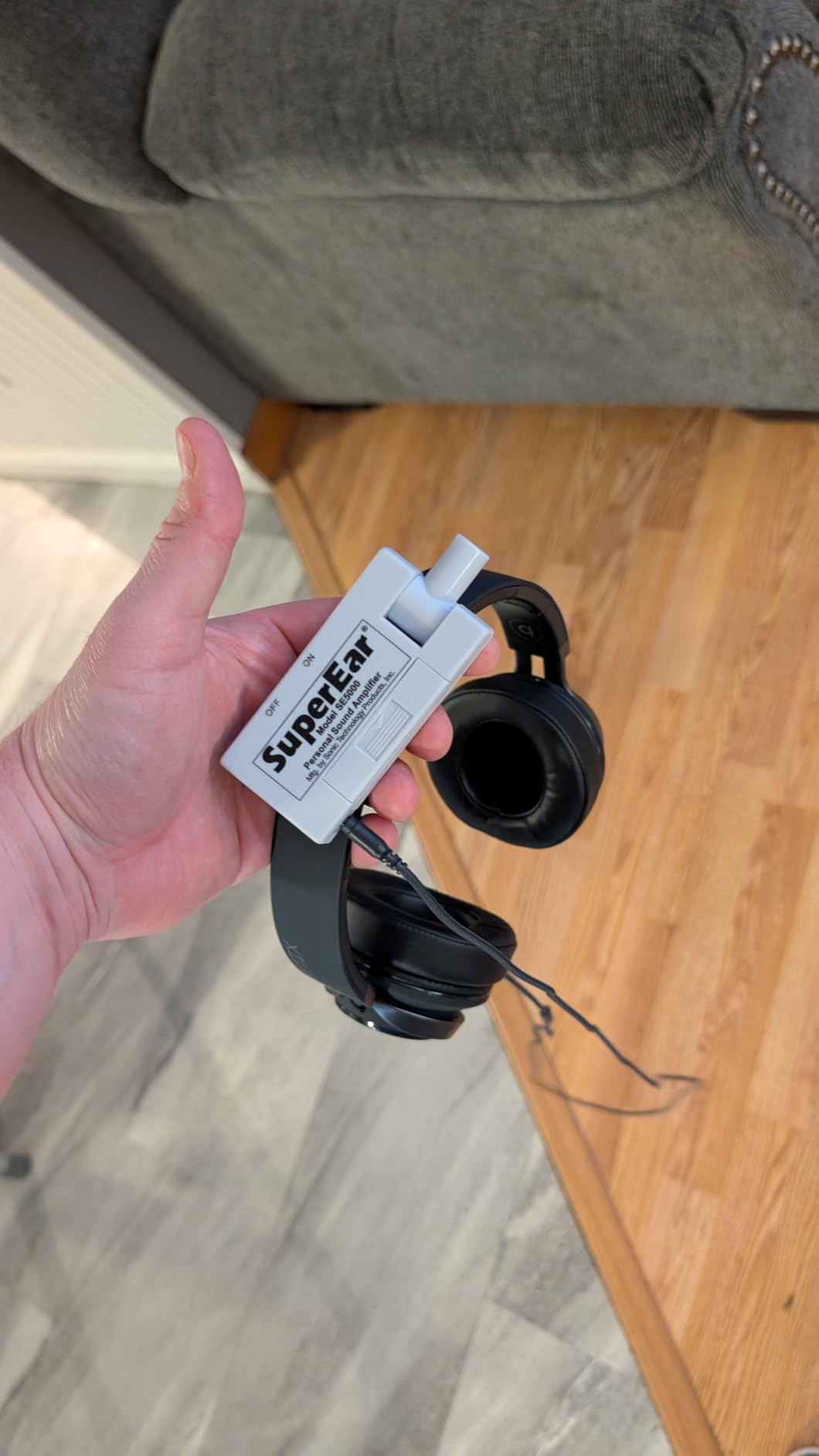
The package includes the amplifier, deluxe stereo headphones, a pair of discreet stereo earbuds, an AAA battery, a belt clip and a screw. The tactile volume control wheel is easy to find by feel, and a single AAA runs up to 30 hours.
It is not a Bluetooth device and does not pair to a phone or TV. You aim the swivel microphone at the television speaker and listen.

Who the SE5000 suits best
Hearing aid users who still struggle in one specific setting, usually a noisy television or a family conversation across a room. Point the swivel mic and turn the wheel.
It also works as a secondary device, since the included earbuds let one person listen privately with the same amplifier.
Who should skip the SE5000
Anyone wanting wireless audio, phone calls or music from streaming services. There is no Bluetooth radio in this unit at all.
The thin wiring is a real weakness, and a tug on the headband can disconnect one side. With no automatic shutoff, check the switch before bed.
8. SHOKZ OpenFit Pro for Travel and Dolby Atmos
SHOKZ OpenFit Pro Open-Ear Earbuds with Noise Reduction, Dolby Atmos, Black
Weight: 99.32 g with case
Battery: 12 hours, 50 total
Driver: 11 x 20 mm dual diaphragm
Connectivity: Bluetooth 6.1
Pros
- Open-ear design keeps the canal and hearing aid dome free
- First Shokz earbud with ear-adaptive open-ear noise reduction
- Dolby Atmos with head tracking and DirectPitch 3.0
- Triple-mic AI recognition cuts background noise by up to 99.4 percent
- Multipoint connects two devices at once
- IP55 with physical buttons usable with wet hands
Cons
- Battery drops to around 6 hours with noise reduction on
- Charging case is larger and heavier than most rivals
- Costs the most in this roundup
- Noise reduction lowers environmental awareness
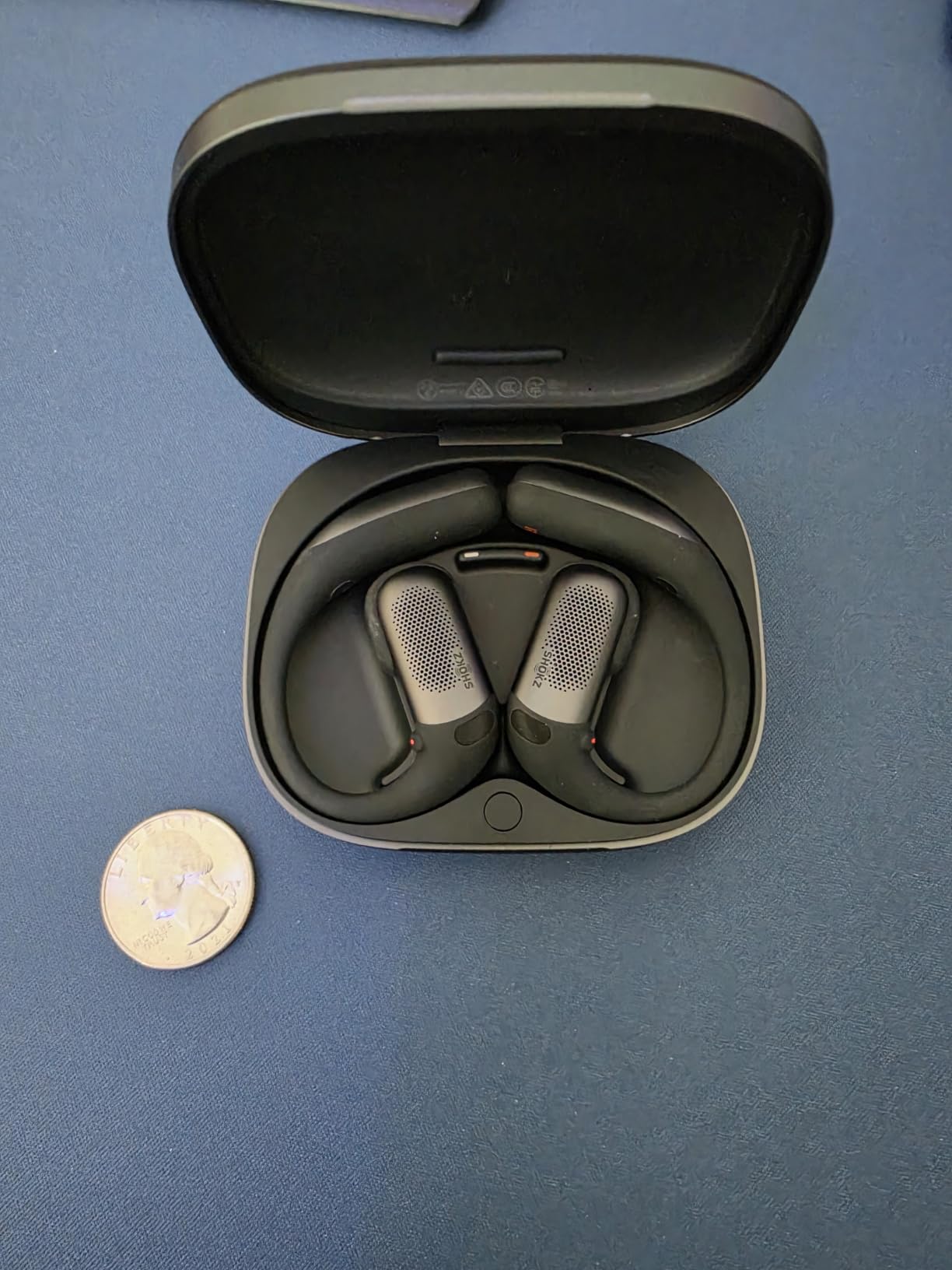
The OpenFit Pro is the most advanced set here and the one that adapts most to your hearing aid situation. It is the first Shokz earbud with open-ear noise reduction, using an ear-adaptive algorithm that reads your ear shape and adjusts the output.
My RIC aid never moved, and the flexible nickel-titanium hooks with Ultra-Soft Silicone 2.0 stayed comfortable through a four hour flight. The triple-mic array with AI voice recognition handled a noisy airport call better than anything else I tested here.
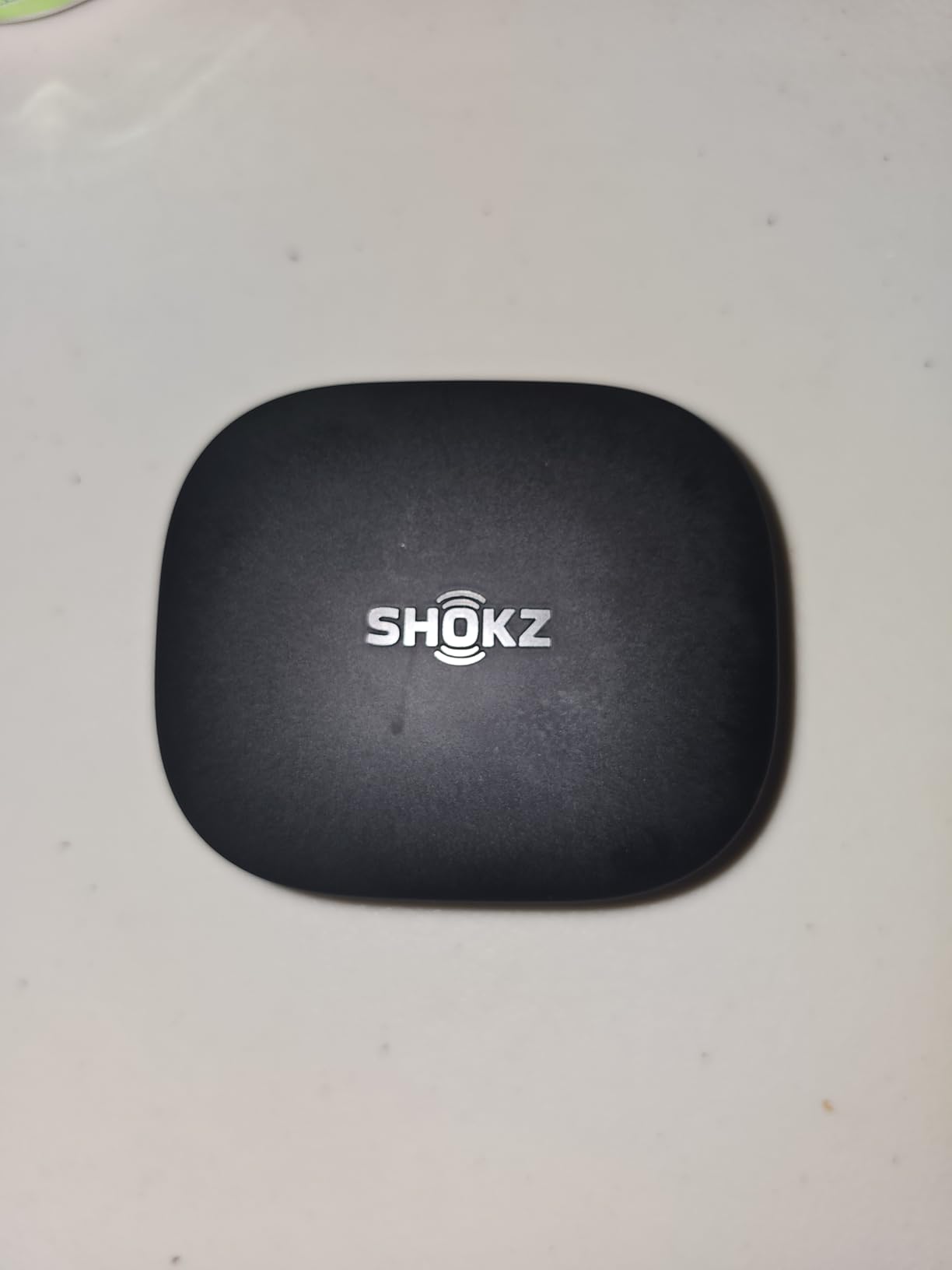
Sound runs through an 11 x 20 mm dual-diaphragm driver with Shokz SuperBoost and Dolby Atmos head tracking. DirectPitch 3.0 keeps leakage low, which matters more than usual when your other ear is uncovered.
Multipoint over Bluetooth 6.1 connected my laptop and phone at once, and physical buttons worked with damp hands. Owners report 76 percent five-star ratings.
Who the OpenFit Pro suits best
Frequent travellers and anyone taking calls in noisy environments. The noise reduction and triple-mic array are the strongest in the roundup, and multipoint makes switching between work and personal devices painless.
If you wear an ITE or CIC aid, the open fit keeps the dome completely undisturbed.
Who should skip the OpenFit Pro
Budget buyers, since it is the most expensive option here. People who depend on hearing aid microphones for awareness will also notice the noise reduction blocks more outside sound than the fully open models.
The case is bulky at 10.2 x 10.6 x 5 cm, and per-charge battery falls to roughly 6 hours with noise reduction running.
9. SIMOLIO SM-823D Pro for Private TV with Hearing Aids
SIMOLIO TV Headphones Wireless for Seniors, Headset for Elderly SM-823D Pro
Wireless: 2.4 GHz digital
Range: up to 164 feet
Battery: up to 14 hours
Warranty: 12 months
Pros
- 2.4 GHz digital wireless with no pairing step and no lip-sync delay
- Range up to 164 feet through ceilings and walls
- Tone adjustment plus balance and mono switching
- Ambient sound mode for room awareness
- Optical by-pass lets you keep using a soundbar
Cons
- In-ear tips can create a sore spot after long sessions
- Some reviewers report tinny sound for severe hearing loss
- Needs optical
- RCA or 3.5 mm output so Bluetooth-only TVs will not work
The SM-823D Pro solves a problem none of the earbuds do: private television audio for a household at normal volume. The transmitter plugs into a television’s optical, RCA or 3.5 mm output and sends audio over 2.4 GHz digital wireless to the headset.
There is no pairing step and no lip-sync delay, which is unusual in this category. Range reached 164 feet in the spec, enough to cover a house with the transmitter on the TV stand.
For hearing aid users the useful controls are the TONE adjustment, the balance control between ears, and the mono switch. Mono mode is the one to reach for with single-sided loss, sending the same audio to both sides.
The box includes a transmitter, headset, audio cable kit, mains adapter and manual. The rechargeable Li-ion battery runs up to 14 hours, and one reviewer reports it working alongside hearing aids worn under the chin.
Who the SM-823D Pro suits best
Households where one person needs louder TV than the rest. Buyers say it removed the need for closed captions and let everyone watch at a normal level again.
The ambient sound mode is the useful extra. It lets you hear the room without lifting the headset off, which is helpful when someone speaks to you mid-show.
Who should skip the SM-823D Pro
Anyone with a Bluetooth-only television, since this uses a transmitter and 2.4 GHz rather than Bluetooth. HDMI ARC televisions need a separate converter.
Expect less refinement than the open-ear earbuds. Memory foam tips can feel heavy after long sessions, some reviewers find the sound thin at high levels, and one durability report describes the system failing after about six months.
10. Soundcore C50i for Gym Sessions
Soundcore C50i by Anker Open Ear Earbuds, Clip On Earbuds, Clip Headphones
Weight: 44.5 g with case
Battery: 8 hours, 28 total
Driver: 12 mm dynamic
Max output: 86 dB
Pros
- Clip-on open-ear design that never blocks the canal
- Memory titanium FlexiClip adapts to any ear shape and stays put when running
- Physical buttons that work with wet hands or gloves
- 12 mm drivers reaching 86 dB
- louder than most bone conduction options
- 28 hours total with IP55 waterproofing
Cons
- No wear detection so playback does not auto-pause
- Mics handle wind poorly outdoors
- Occasional one-second connection dropouts reported
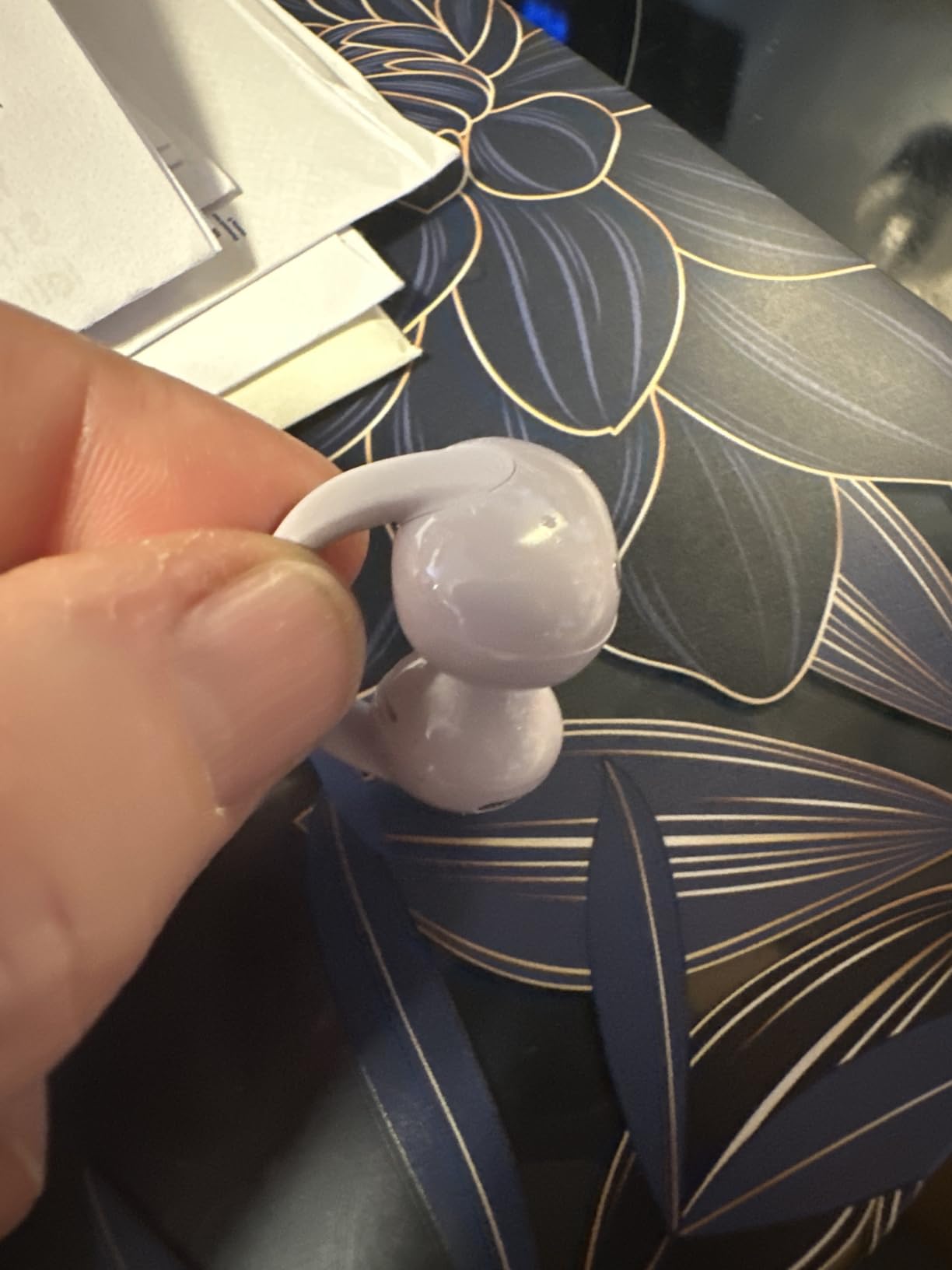
The C50i is the pair I used most for training. Memory titanium FlexiClips adapt to the shape of the ear and stayed put through intervals and hills, and the physical buttons are the first thing I look for in gym headphones. They work with wet hands or gloves, and the touch controls on other models here do not.
Sound beats bone conduction at this tier. The 12 mm drivers reach 86 dB maximum output, which is louder than most open-ear bone conduction designs can manage, and 14 ohm impedance keeps them easy to drive.
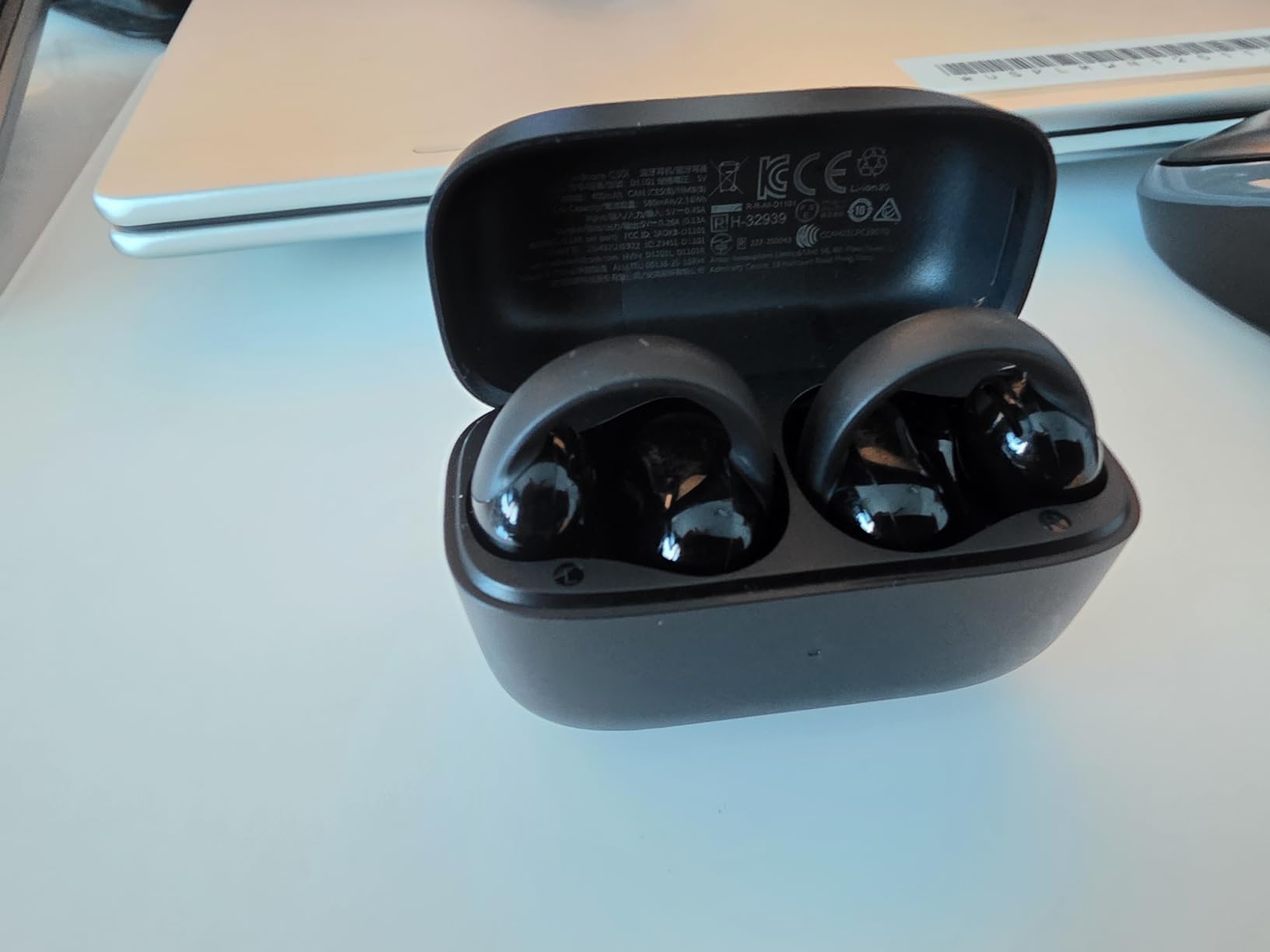
Battery gives 8 hours per charge and 28 total, and IP55 covers sweat and rain. The whole set is 44.5 g with a compact case measuring 6.2 x 3.1 x 4.15 cm, the smallest here.
One limitation worth flagging if you wear aids: the speakers cannot rotate away from the ear, so some listeners find the volume lower than they want at maximum.
Who the C50i suits best
Anyone training with hearing aids in. Nothing enters the canal, nothing presses on the aid body, and the button controls survive sweat and gloves.
It is also the smallest package in the roundup at 44.5 g, which matters if you carry the case to the gym in a small pocket.
Who should skip the C50i
People who take calls outdoors, since the microphones handle wind poorly and there are occasional one-second dropouts in the reviews.
There is no wear detection, so playback keeps running when you remove an earbud. Per-charge battery of 8 hours is also short of the 12 hours the V30i manages.
How to Choose: Comfort, Fit and Feedback Prevention
Start with the hook or the clip. Hook-style open-ear models loop over the top of the ear and spread the weight, which is steadier but can conflict with glasses arms. Clip-on models grip the outer ear, stay clear of glasses entirely, and rest slightly closer to the canal.
Next, check weight against your aid. Anything under 10 g per side disappears within minutes. Above 20 g per side, and the model either needs a case to be practical or offers a long per-charge runtime.
Then look at battery in the way that fits your day. Per-charge hours matter if you travel light. Case-based models matter if you forget to charge. The AeroFit 2 gives 42 hours total, the TOZO 40, the V30i 36.
Call quality is the most overlooked factor for hearing aid users, because many people rely on the aid’s microphone rather than the headphone’s. If your aids handle calls directly, pick on comfort. If not, the four-mic sets here, the Soundcore V20i and V30i, and the SHOKZ OpenFit Pro, are the safer bets.
EQ matters if your loss is not flat. The TOZO app gives 32 modes and the soundcore apps add EQ and HearID, so you can lift the frequencies you miss. If you are choosing for a school-age user, our iPad guide for hearing impaired students covers pairing and audio settings that work alongside hearing aids.
Finally, consider sound pressure. Open-ear designs let you hear your hearing aid’s microphones in the mix, which is helpful for awareness but can make music sound less clean. If you plan to listen mainly at a desk, our headphones for library studying guide covers models built for long quiet sessions instead.
Practical Tips for Wearing Headphones with Hearing Aids
Give your hearing aids five minutes before putting headphones on. That settling period lets the dome return to its intended position in the canal, and it cuts down on the feedback you would otherwise blame on the headphones.
Fit the headphone first, then insert or re-seat the aid, then check your own voice. If you whistle, the first thing to change is the position of the headphone rather than the volume of the hearing aid.
Keep levels down. Open-ear designs are not a licence to turn things up, and sustained high volume still damages the hearing your aids are protecting. If you want a headphone built around a safe ceiling, our noise cancelling guide for college students covers volume-limited picks.
Use the mono switch for single-sided loss. Both the SIMOLIO and most phone accessibility settings can mirror audio to both sides, which stops you turning one ear up to compensate.
Protect your aids at the gym. Sweat is the common complaint, and a sweat cover or a replacement ear pad adds a layer between your aid and any moisture. Remove the aid afterward and dry it rather than leaving it overnight in a case.
Check for interference before a big call. If your hearing aids and headphones both connect to your phone, disconnect one or use multipoint where it is offered. Long sessions of dropouts mid-meeting are the most common pairing complaint we heard about.
Finally, test before you commit. Wear the candidate pair with your actual hearing aids for at least an hour in a noisy place, not five minutes in a quiet room. For long-form listening at home, our reading headphone guide covers comfort over longer sessions.
Frequently Asked Questions
Can you wear headphones if you wear hearing aids?
Yes, as long as the headphone does not press on the hearing aid body or push the dome out of your ear canal. Open-ear and bone conduction designs avoid this entirely because nothing touches your ear. Over-ear headphones can work with behind-the-ear aids if the cups sit clear of the aid, though pressure on the microphone often causes whistling feedback.
What headphones work best with hearing aids?
Open-ear designs work best. Bone conduction frames and clip-on earbuds leave the ear canal and the hearing aid completely undisturbed, so your fitting stays where your audiologist placed it and acoustic feedback is far less likely. Hook-style open-ear models add stability for exercise, while clip-on models clear glasses arms best.
Do over ear headphones work with hearing aids?
They can, but they carry more risk with hearing aids. The ear cushion presses your aid against your skull and can shift a domed receiver partly out of the canal, which thins the sound and pushes the microphone into a feedback loop. Behind-the-ear wearers with shallow-fitting aids usually get on better with an open-ear design.
How do you prevent feedback or whistling with headphones and hearing aids?
Give your hearing aids about five minutes to settle before putting headphones on, then adjust the headphone position rather than raising the hearing aid volume. Any design that seals around your ear increases the chance of feedback, which is why open-ear models suit most wearers. If feedback persists, ask your audiologist to recheck your dome fit.
Can you use bone conduction headphones with hearing aids?
Usually yes, because the driver rests on your cheekbone and never enters or presses on the ear. One caveat is hearing loss in the bone conduction pathway itself, which can make these models quieter than air conduction designs. If you find them too quiet, test the volume carefully before settling on a pair.
Conclusion
The best headphones for hearing aids users in 2026 are open-ear models, because they are the only ones that leave your fitting untouched. The SHOKZ OpenMove takes our top spot for its 29 g frame and six week feedback-free run, with the TOZO OpenEarRing close behind on comfort and battery and the Soundcore V20i ahead on sound and calls.
Pick by your aid style, your glasses, and where you listen most. If it is the gym, the C50i. If it is calls, the V20i or the OpenFit Pro. If it is the television at home, the SIMOLIO transmitter set.
Wear them with your real hearing aids for an hour before you settle, and keep an eye on volume in the meantime.