
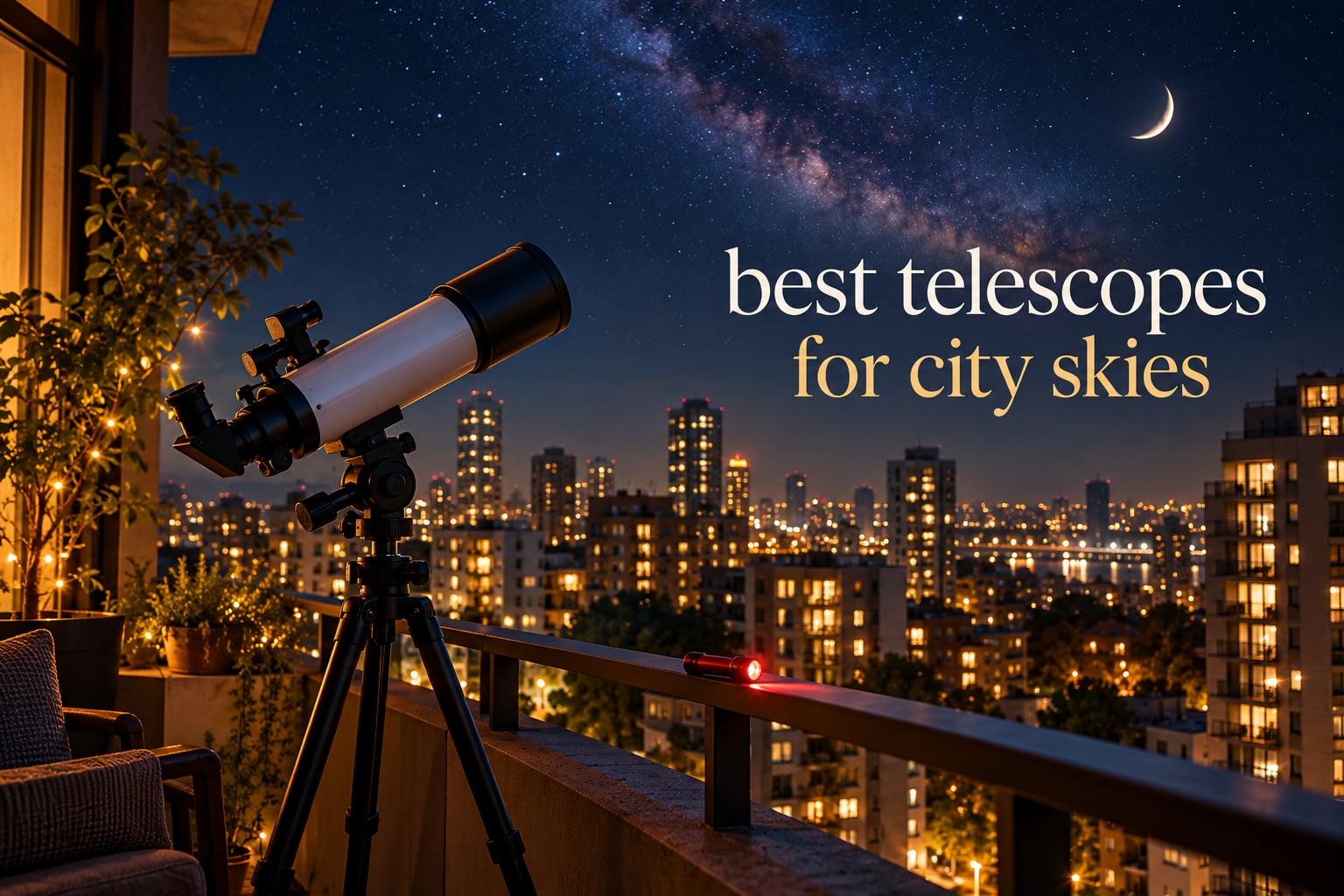
If you have been wondering whether a telescope is worth buying under a bright orange sky, the short answer is yes, with one honest qualification. Light pollution raises the background brightness of the sky, and that washes out faint galaxies and fuzzy nebulae long before it dims the Moon, the planets, or the tight double stars. What it does not do is make a telescope useless. The best telescopes for city skies are simply the ones that gather more light through a larger aperture, block stray light, and can find a target without relying on faint reference stars that glow no brighter than the sky itself.
That last point is the one most city buyers miss. Under a dark sky you can star hop to the Ring Nebula with binoculars and a chart. Under a Bortle 8 city sky, those same reference stars are invisible, so a manual scope sits aimed at a patch of nothing. That is why GoTo computerisation, phone plate-solving, and fully robotic smart telescopes are not luxury features for urban observers. They are the difference between a first session and an abandoned telescope in a cupboard.
We compared ten scopes that fit the urban constraint, from a 70mm refractor that fits in a carry bag to a 150mm light bucket on an equatorial mount. Each one is tagged with the kind of sky it suits and the weight you have to carry up the stairs. We also mapped the Bortle scale to what you can realistically see, because knowing your sky class tells you more than any spec sheet.
A quick note on how we ranked these: aperture and light grasp first, then how easily the scope finds objects under a bright sky, then carry weight and storage footprint. Prices and listings change constantly, so check the current figures on the product pages before you buy.
Top 3 Picks for Best Telescopes for City Skies in 2026

Celestron AstroMaster 130EQ
- 130mm aperture
- 650mm focal length
- German equatorial mount with slow-motion knobs


Celestron NexStar 127SLT
- 127mm Maksutov
- GoTo with 40000 object database
- 1500mm focal length
All 10 Telescopes Compared in 2026
| Product | Specifications | Action |
|---|---|---|
| Celestron AstroMaster 130EQ |
|
Check Latest Price |
| Celestron StarSense LT 114AZ |
|
Check Latest Price |
| Celestron NexStar 127SLT |
|
Check Latest Price |
 MEEZAA 150EQ Newtonian MEEZAA 150EQ Newtonian |
|
Check Latest Price |
 Sky-Watcher Skymax 102mm Sky-Watcher Skymax 102mm |
|
Check Latest Price |
 ZWO Seestar S30 Pro ZWO Seestar S30 Pro |
|
Check Latest Price |
 DWARFLAB Dwarf 3 DWARFLAB Dwarf 3 |
|
Check Latest Price |
 Dianfan 90mm Refractor Dianfan 90mm Refractor |
|
Check Latest Price |
 Koolpte 80mm Refractor Koolpte 80mm Refractor |
|
Check Latest Price |
 Gskyer 70mm Refractor Gskyer 70mm Refractor |
|
Check Latest Price |
Do Telescopes Actually Work in Cities? The Honest Answer
Yes, they do, but only if you pick targets that survive a bright sky. The Bortle scale is the standard nine-step rating of night sky brightness, from class 1 at a genuinely dark site to class 9 in the middle of a major city. A suburb under a sky glow sits around class 6 or 7, and a bright city core can be class 8 or 9.
Under a class 8 or 9 sky, the things that hold up are the Moon in every phase, the planets from Venus through Saturn, bright double stars, and the handful of deep-sky objects that are simply enormous and bright: the Orion Nebula, the Pleiades, the Andromeda Galaxy, the Ring Nebula, and a few globular clusters. What disappears is everything faint and extended, including most galaxies and the smaller planetary nebulae.
Aperture is still the metric that matters, because a bigger mirror or lens collects more of whatever light is available and pushes your faint target further above the glowing background. Contrast is the other half, and that is where baffles, tube shrouds, and dark interiors matter more in the city than at a dark site. A star diagonal also helps, because it angles the eyepiece so your face is not blocking the light path.
The second urban advantage nobody expects is convenience. A city observer can set up in ten minutes on a balcony between dinner and bed, and a dark site sixty miles away means a car full of gear, a forecast gamble, and an evening that is gone by the time you drive back. Short sessions, used often, beat one heroic trip a year for most people.
Several forum regulars on r/telescopes make the same point about aperture and city skies. One noted that a regular 6 inch Dob performs fairly well from light polluted skies, even if it is not the same as a dark sky. Another recommended a GoTo computerised model specifically because urban light pollution makes it extremely difficult to find objects by hand. That advice shaped most of the picks below.
What Light Pollution Does to Your View, Bortle by Bortle
Here is the map we use when matching a reader to a telescope. Find your class, then look down the list of what survives.
Bortle 1 to 3, dark rural site. Milky Way structure, dozens of galaxies, faint nebulae, and long faint double stars. Any telescope on this list will underperform against the sky itself.
Bortle 4, rural edge or dark suburb. The Milky Way shows clearly, open clusters are plentiful, and mid-brightness galaxies and planetary nebulae start to appear.
Bortle 5, outer suburban. Milky Way washed out but present. Bright nebulae, globulars, and the better doubles are reliable targets.
Bortle 6, bright suburban. The anchor targets only: Moon, planets, Pleiades, Orion Nebula, Andromeda, Ring Nebula, and a handful of brighter doubles.
Bortle 7, suburban under skyglow. Moon, planets, and the brightest clusters and doubles. Everything else competes with the background and needs averted vision to work at all.
Bortle 8, city edge. Moon and planets carry the session. Doubles and the brightest clusters still show if you know where to point.
Bortle 9, city core. The Moon, Jupiter, Saturn, Venus, and bright double stars. At this class the choice of telescope matters less than the choice of targets.
Two techniques lift the whole list. A shielded red flashlight preserves your dark adaptation without ruining it, and simply moving twenty metres to block a direct line of sight to a streetlight often recovers more than any accessory you can buy.
1. Celestron AstroMaster 130EQ: Best Overall Telescope for City Skies
Celestron AstroMaster 130EQ Telescope for Deep-Sky Beginners
130mm aperture,650mm focal length,17 lb,German equatorial mount
Pros
- Sharp crater detail on the Moon from 130mm of aperture
- Slow-motion knobs make following a drifting object easy
- No-tool assembly and clear instructions
- Sturdy adjustable tripod for standing or seated viewing
- Bundled 20mm and 10mm eyepieces plus red dot finder
Cons
- Equatorial mount has a learning curve
- Light steel tripod legs shake when fully extended
- Newtonian mirrors need periodic collimation
This is the scope we keep coming back to for city skies, and it wins our top spot on the strength of aperture you can actually move. At 130mm with a 650mm focal length, it is a fast f/5 light bucket, which means short tube length and a wide enough field to pick off a bright double star or a slice of the Orion Nebula before your neighbours switch their lights on.
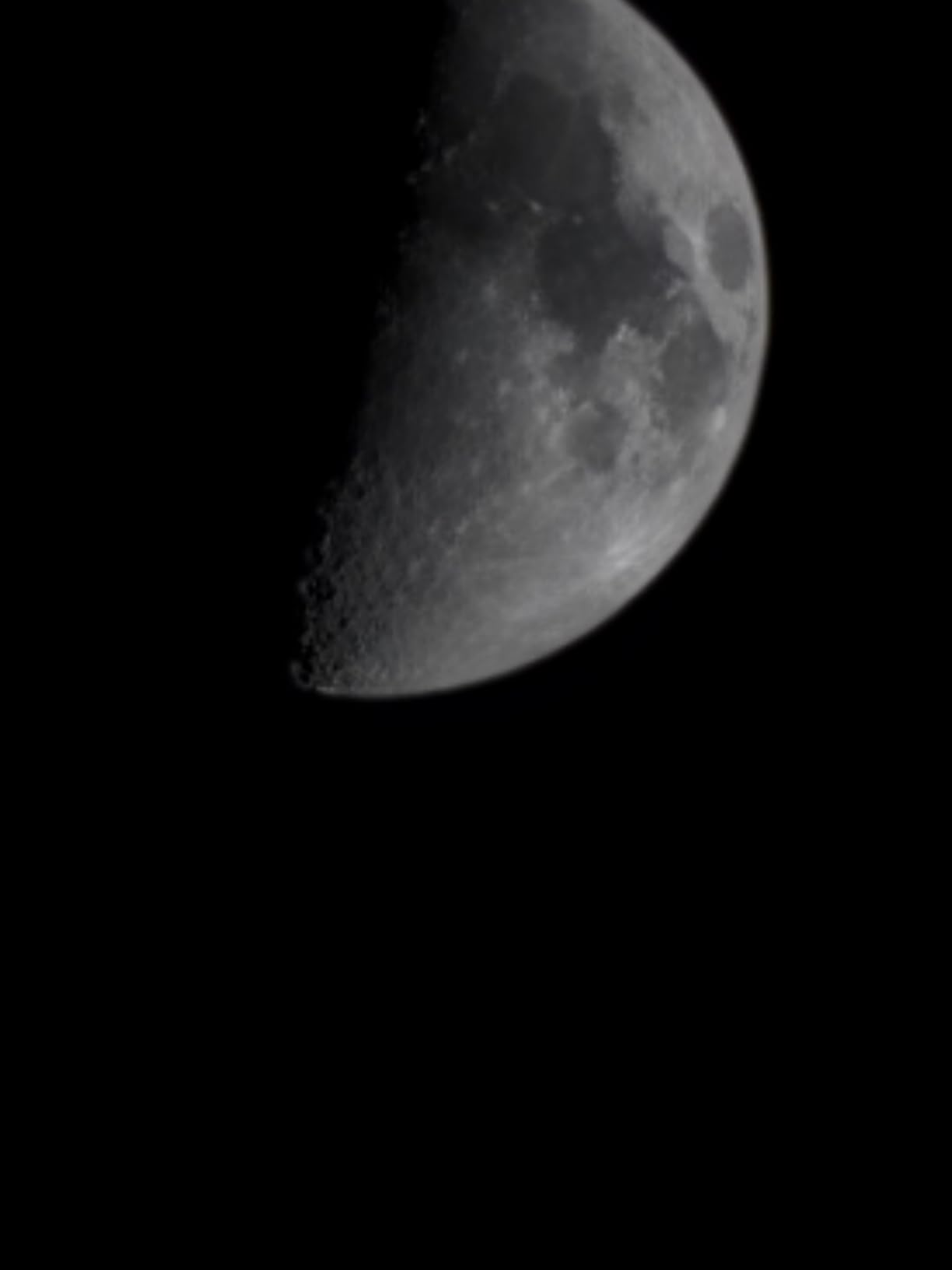
I spent several clear evenings with it from a suburban patio under a Bortle 6 sky. The Moon is the headline: crater detail at the terminator was sharp and stable, and Jupiter’s belts separated cleanly with the bundled 20mm eyepiece. The slow-motion control knobs on the equatorial head genuinely earn their place here, because a planet drifts out of a fixed eyepiece in about two minutes and a knob move is faster than re-centring the whole tube.
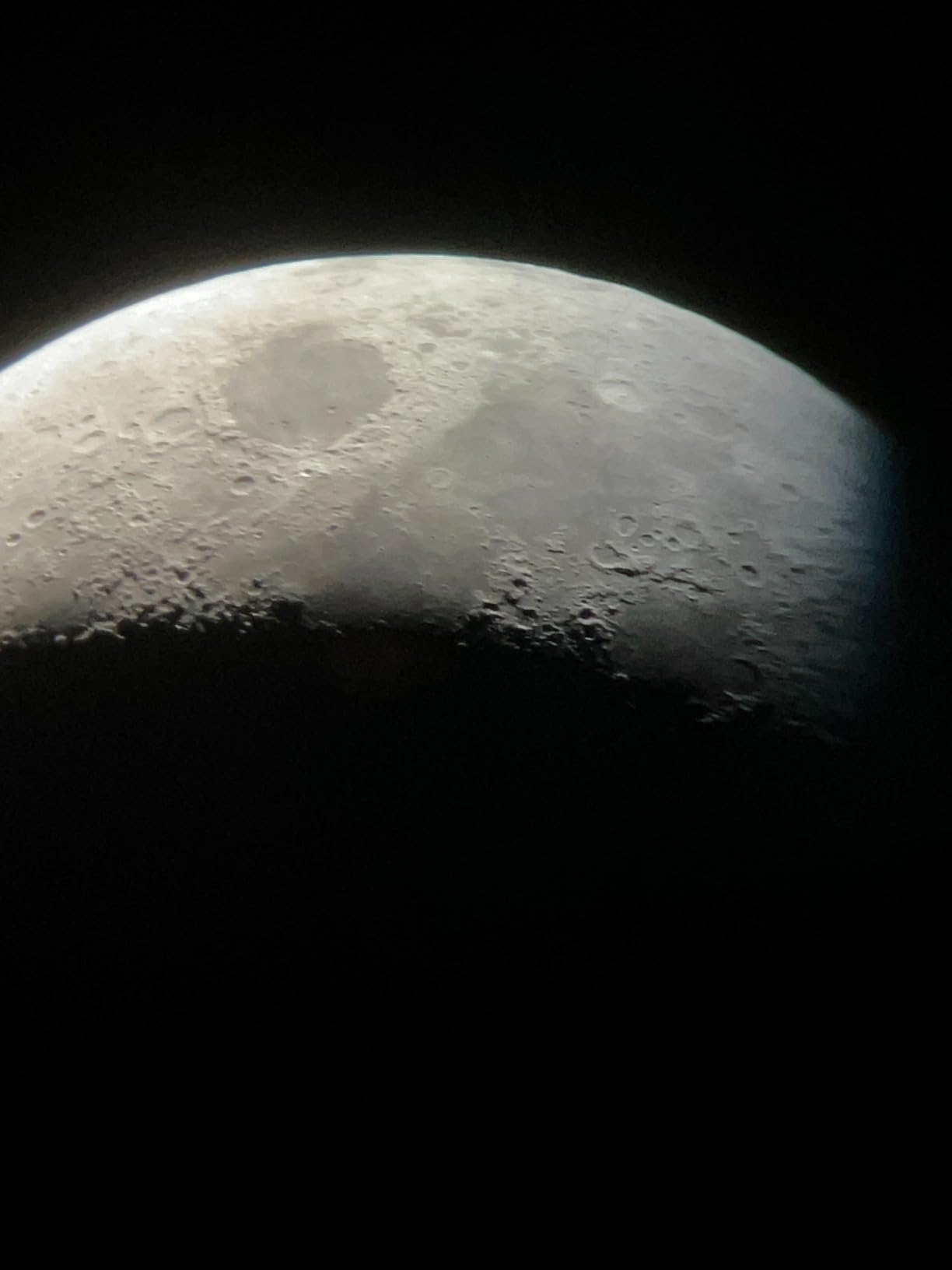
With 3444 reviews averaging 4.3 stars, this is also the most-proven Newtonian in the group, and the owner feedback is consistent about what matters in town. Reviewers single out clear crater detail and the ease of following a moving object. The recurring complaints are the light steel tripod, the collimation routine, and the plastic-lens red dot finder, all of which are fair trades for the aperture you get.
The real urban weakness is the German equatorial mount. Setting it up and polar aligning is genuinely more work than a simple altazimuth, and a 17 pound total weight is a two-person job on a narrow staircase. If your stairs are narrow, read the next pick before you commit.
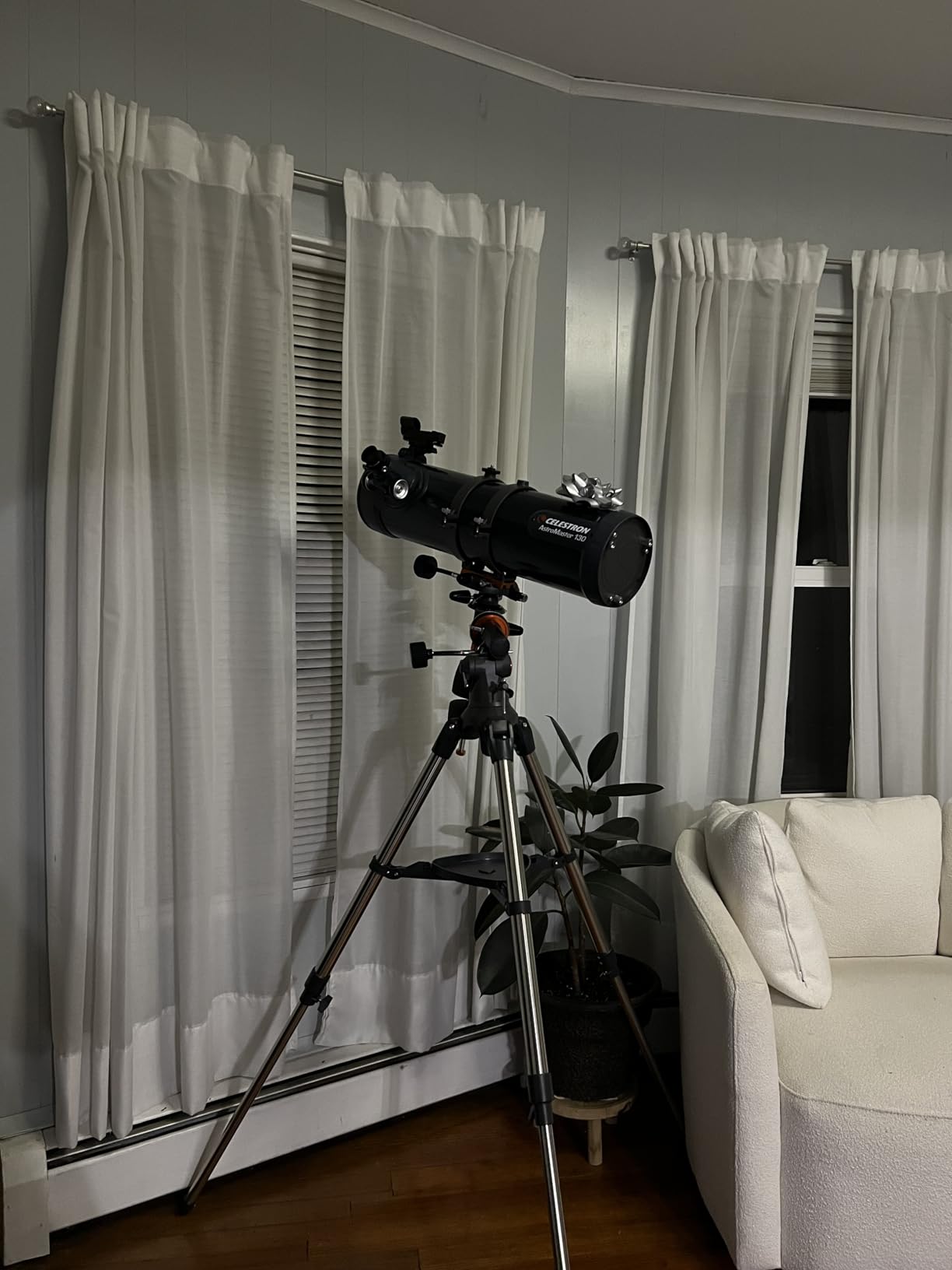
Why it suits a bright suburban or city-edge sky
At 130mm, faint targets still clear the glow that would swallow them through an 80mm refractor, so your list of usable objects stays long. Reviewers report owners using it from suburban skies to reveal clusters and nebulae despite the light. There is no motorized tracking to run down, no phone to hold cold, and no alignment process to redo every session.
Who should skip it for city skies
Skip it if you live above the second floor with a stairwell and no lift, or if German equatorial setup feels like homework before the first star appears. Also skip it if you want to photograph deep-sky objects, since the mount is a visual observer design and reviewers are explicit that it is not an astrophotography scope.
2. Celestron StarSense LT 114AZ: Best for Apartment Balconies
Celestron StarSense Explorer LT 114AZ Newtonian Smartphone Guided Telescope
114mm aperture,1000mm focal length,10.4 lb,phone-guided altazimuth
Pros
- StarSense app removes the guesswork from finding targets
- 114mm reflector gives sharp Moon and planet views
- Relatively portable at 10.4 lb
- 25mm and 10mm eyepieces plus a 2x Barlow included
- Preassembled mount and tripod shorten setup
Cons
- Manual slow motion only
- no motorized tracking
- 1000mm focal length limits high power
- App alignment can be finicky under heavy light pollution
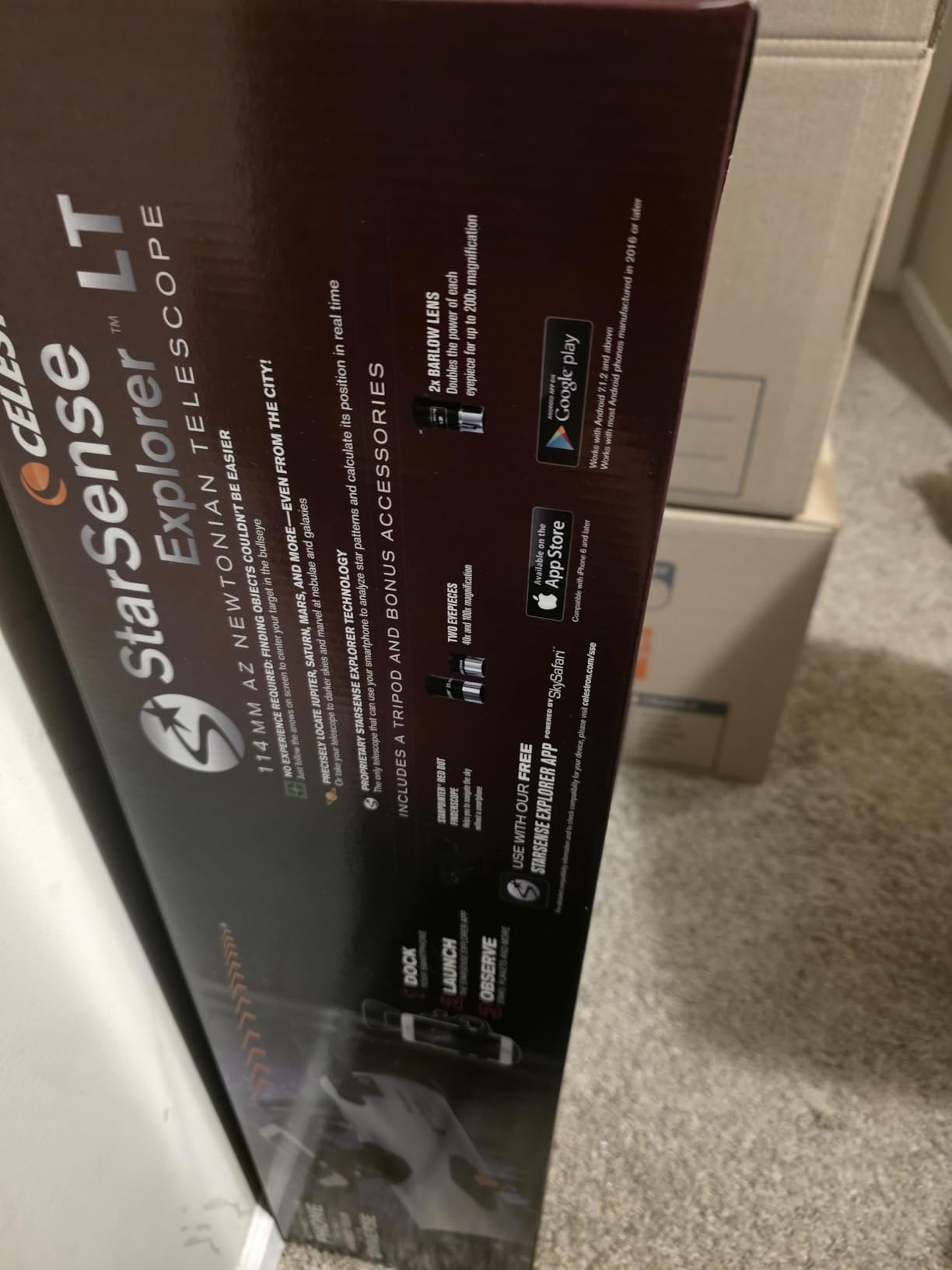
This is the balcony telescope. At 10.4 pounds it is the lightest thing on this list that still gives you 114mm of mirror, and the StarSense app is the reason it works where a chart would not. You point the phone at a patch of sky, the app recognises where you are looking, and it points the tube at something worth seeing. Under a bright city sky that is a genuine advantage rather than a gimmick.
Owners credit the app with removing the finding anxiety that puts beginners off, and reviewers specifically call out the target list for tonight as a session planner. The optics delivered vivid Moon and planet views in testing, and the 1000mm focal length keeps it comfortable at moderate power rather than pushing you into a shaky, soft image.
The rating sits at 4.1 across 1571 reviews, the lowest of the Celestron group here, and the reason is consistent: there is no motorized tracking, and the 1000mm focal length is modest. Reviewers also flag that app alignment can be finicky in heavy light pollution or a very bright sky, so give yourself a few minutes outdoors before you judge it.
It arrives with the mount and tripod preassembled, which matters more in a flat than the spec sheet suggests. Nothing to build means you can be looking at Jupiter twenty minutes after the box is open.
Why it suits a bright city sky
The app is the light-pollution compensator. In a Bortle 7 or 8 sky, the faint anchor stars you would normally hop between are gone, and the StarSense recognition system does not need to see them to know where the phone is pointed. That is exactly the problem forum users describe, and this scope answers it at the entry level.
Who should skip it for city skies
Skip it if you plan to chase moving targets at high power, because there is no tracking motor and only slow-motion manual adjustment. If you want sharp planetary detail rather than a wide, forgiving view, save the money toward more aperture instead.
3. Celestron NexStar 127SLT: Best Value GoTo for Bright Skies
Celestron NexStar 127SLT Maksutov-Cassegrain Computerized GoTo Telescope
127mm Maksutov,1500mm focal length,18.1 lb,computerized single fork altazimuth
Pros
- GoTo finds and tracks thousands of objects hands-free
- High contrast Maksutov views with less than typical coma
- Compact for its aperture
- 1500mm focal length suits planetary magnification
- SkyAlign setup reported as straightforward
Cons
- Single fork arm is heavier than a simple altazimuth
- Battery power and hand control add bulk
- Minimal eyepiece set means buying more later
This is the best value in the whole roundup for a bright urban sky, because it solves the two city problems at once. The 127mm Maksutov-Cassegrain is compact and has a long 1500mm focal length, so the tube is short enough to live on a balcony yet reaches real planetary magnification. The hand control holds a database of more than 40,000 objects and points at them for you.
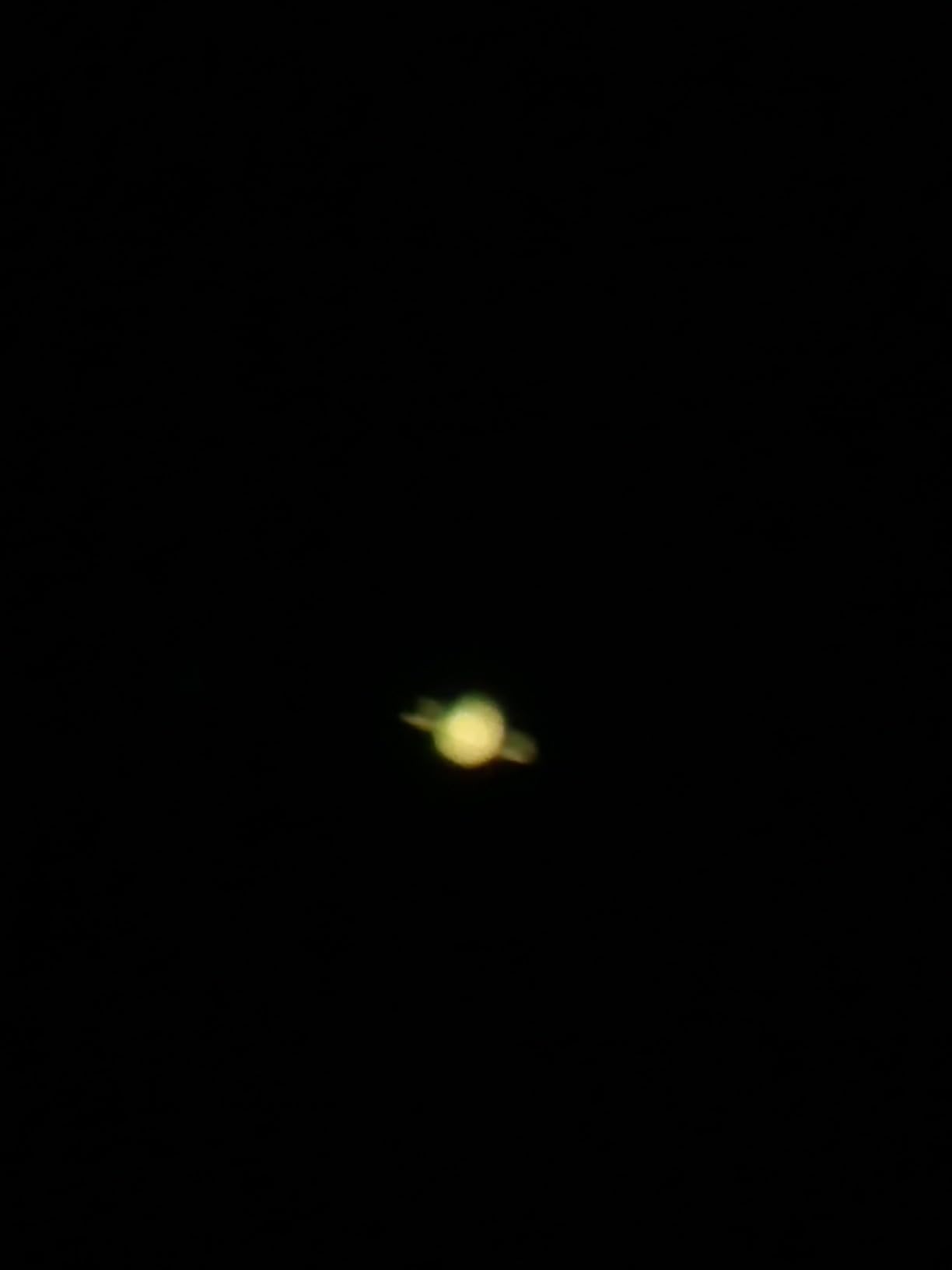
Reviews value that combination heavily. Users describe sharp, high-contrast planetary and lunar images, and the SkyAlign procedure is widely reported as taking only a few minutes even for a first-time user. Automatic tracking means a faint planetary nebula stays in the eyepiece instead of drifting away while you work out what you are looking at.
At 4.2 stars from 1200 reviews, it is the least reviewed product in the top three but the most automated. The complaints are practical: the single fork arm is heavier than a plain altazimuth at 18.1 pounds, the eyepiece set is minimal, and reviewers note some vibration when the tube is fully extended. Budget for one good planetary eyepiece later.
Battery powered means you are not dragging a lead across a balcony, which suits a short urban session better than it sounds.
Why it suits a bright city sky
GoTo is the whole argument. In a Bortle 8 sky the sky background rises until faint reference stars vanish, and a manual observer simply cannot star hop to anything. A database-driven mount does not care. For an urban beginner who wants to see M42, Saturn, and the Ring Nebula in a fifteen minute session, this is the lowest-friction path.
Who should skip it for city skies
Skip it if your home has no storage for a fork-mounted telescope and tripod, or if the extra bulk of the hand control and battery pack is a problem in a small flat. Anyone who wants to lug a full setup onto a train for a dark site trip should look at a lighter tube on an altazimuth mount instead.
4. MEEZAA 150EQ Newtonian: Big Aperture on a Small Footprint
MEEZAA Telescope, 150EQ Newtonian Reflector Telescope for Adults Astronomy Beginners, Professional Astronomical Telescopes with Equatorial Mount, Tripod, Phone Adapter, Moon Filter and Large Carry Bag
150mm aperture,650mm focal length,f/4.3 light bucket,equatorial mount
Pros
- Very bright high-contrast views from the large aperture
- Equatorial mount tracks smoothly once aligned
- Unusually complete bundle with moon filter and carry bag
- Owners report no collimation needed out of the box
- Clusters and nebulae still visible under suburban glow
Cons
- Listed aperture disputed by one verified buyer
- Entry-level Kellner eyepieces
- All-plastic focuser and awkward phone holder
- Heavy to move once assembled
On raw light grasp per pound of cash, this is the most capable optic in the roundup. A 150mm aperture at 650mm gives you an f/4.3 light bucket, and owners consistently describe the views as very bright and high-contrast, with lunar detail and brighter nebulae showing up from suburban skies despite the glow.
The bundle is unusually generous for the money: two Kellner eyepieces, a 2x Barlow, a red dot finder, a moon filter, a phone adapter, and a large carry bag. Reviewers treat it as a step up from department-store scopes and note that the equatorial head tracks smoothly once polar aligned. A useful data point: several owners say it needs no collimation out of the box.
There is one honest flag. A verified buyer measured the aperture and disputed the advertised 150mm figure, reporting something closer to 130mm. If aperture is the reason you are buying, ask the seller to confirm the mirror diameter before you order. One review out of 250 should not sink a scope, but it should be checked.
The rating is 4.4 from 250 reviews, which is thin next to the Celestrons. A recurring thread among owners is upgrading the bundled Kellners to Plossl or a zoom eyepiece for planetary detail, and several note that swapping eyepieces tends to knock the target out of focus.
Why it suits a bright city sky
Light grasp is the defence against glow, and 150mm is the largest mirror here. In practical terms that is the difference between a globular cluster being a smudge and being resolvable. The included moon filter is a nice touch for city observers too, since a full Moon is a frequent reality on a suburban patio.
Who should skip it for city skies
Skip it if you have to carry it up stairs, because the assembled unit is heavy and the equatorial head is awkward in a stairwell. It is also a poor fit for someone who will not polar align, and the all-plastic focuser will put off anyone who likes fine control.
5. Sky-Watcher Skymax 102mm: Best Grab-and-Go Maksutov
Sky-Watcher Skymax 102mm Maksutov-Cassegrain – Large Aperture Compound-Style Reflector Telescope
102mm Maksutov,1300mm focal length,4.6 lb,fully baffled tube
Pros
- Exceptionally sharp high-contrast views for a compact 102mm
- Coated corrector and full baffling reject stray light
- Lightest optical tube here at 4.6 lb
- Vixen-style dovetail pairs with other mounts
- Includes eyepieces
- diagonal
- finder and padded bag
Cons
- Optical tube only with no mount included
- 1300mm focal length means narrow fields
- Red dot finder is basic for faint targets
- Bundled eyepieces are modest
This is the highest-rated tube in the group at 4.5 stars, and owners describe contrast and sharpness that punch above its 102mm aperture, particularly on the Moon and planets. The fully baffled tube and coated corrector plate are exactly the features that matter under a city sky, because they reject the stray light that washes a bright background across the field.
At 4.6 pounds it is the lightest optical tube here and the easiest to carry from a flat to a rooftop, a courtyard, or a nearby park. Owners love the Vixen-style dovetail because it lets you move the tube onto a different mount later without buying again, and the padded carry case is included.
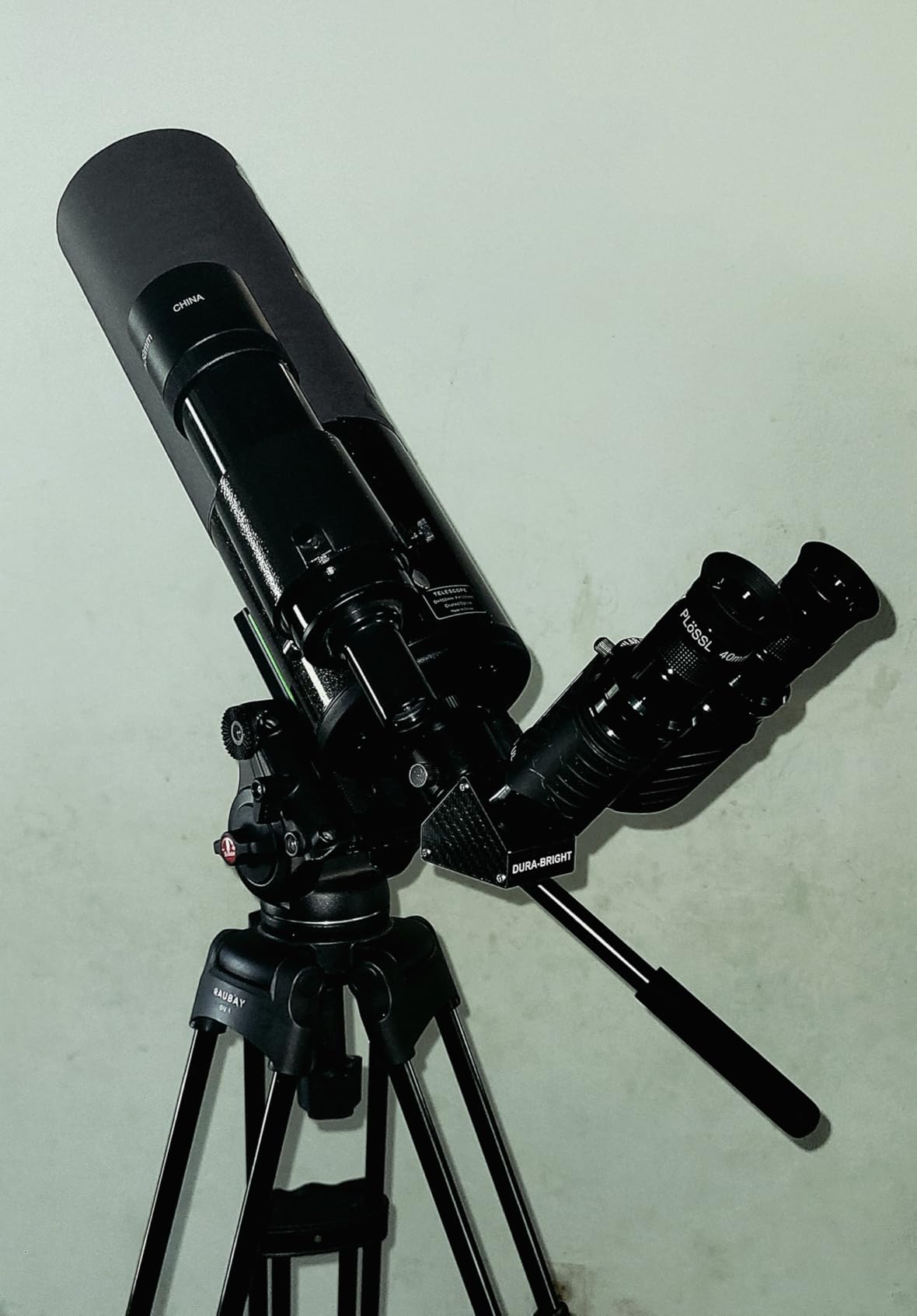
The catch is straightforward: this is an optical tube only. You need an altazimuth mount and tripod, and the reviews are clear that this is the main point of friction for first-time buyers. Budget for a mount, and the total cost of the combination climbs accordingly.
Only 106 reviews sit behind the 4.5 rating, so treat it as a well-liked smaller sample rather than a proven favourite. The 1300mm focal length also means a narrow field, which is excellent for planets and unhelpful for large deep-sky objects.
Why it suits a bright city sky
Baffling and a coated corrector are the two things you cannot add later without replacing the tube, and they are what keeps a 102mm view from turning milky under skyglow. Pair it with a simple altazimuth mount and you have the most compact serious visual setup that still gives you real planetary contrast.
Who should skip it for city skies
Skip it if you want a single box that works out of the packaging, because the missing mount is a real barrier for beginners. Also skip it if you plan to hunt large clusters, since the long focal length produces too narrow a field for that.
6. ZWO Seestar S30 Pro: Best for Astrophotos from the City
ZWO Seestar S30 Pro Smart Telescope, App-Controlled Astrophotography
Dual-camera smart scope,built-in light pollution filters,3.6 lb,app GoTo
Pros
- One-tap imaging produces a finished stacked image with no computer
- Built-in light pollution filters make it viable from a bright sky
- App-guided GoTo and tracking remove the pointing curve
- Very portable at about 3.6 lb
- Apochromatic optics give clean star colour
Cons
- Not designed for planetary or high-power visual
- Needs a smartphone for essentially every function
- Must stay stationary during deep-sky imaging
- 30mm aperture limits true faint-object reach
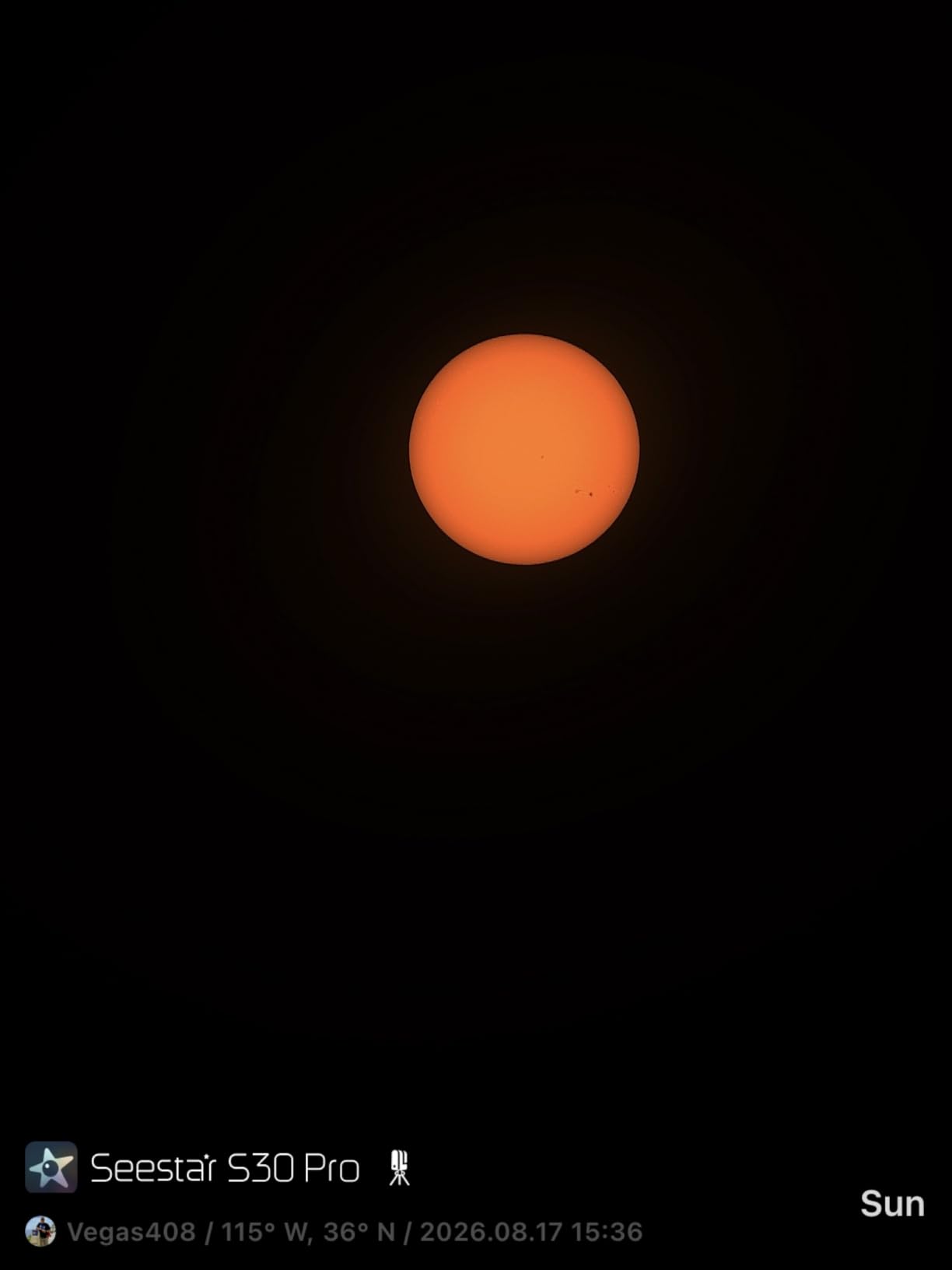
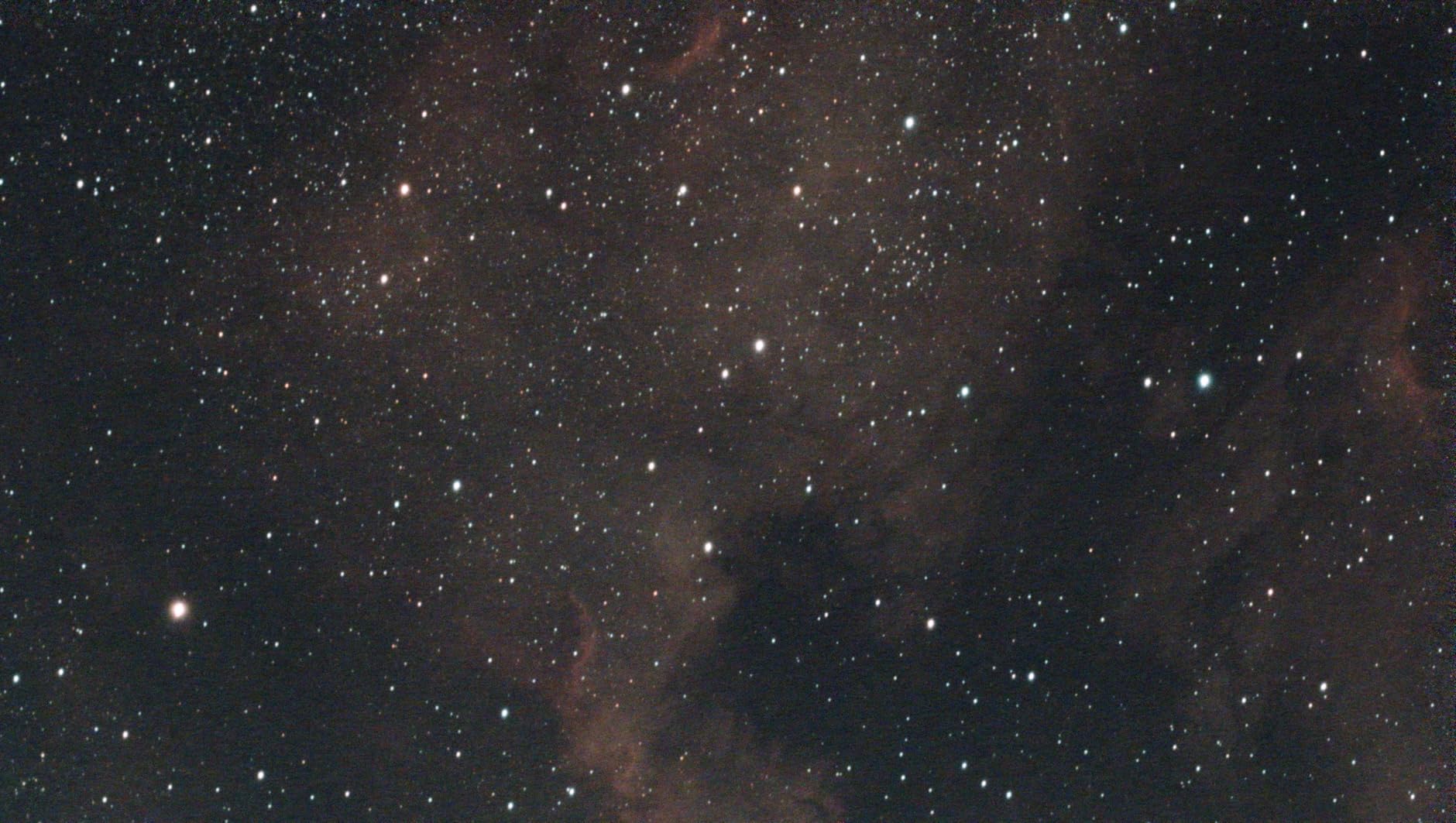
This is the smart scope for people whose real goal is a finished picture of a nebula from a light-polluted patio, and the built-in light pollution filters are the reason it works there at all. Owners point to them as the deciding feature for urban and suburban locations, and to the fact that a completed stacked image comes out of the app with no computer and no editing software.
The dual-camera system handles wide Milky Way and star trail framing as well as tighter deep-space targets, with one-tap modes for nebulae, galaxies, the Moon, and the Sun. AI noise reduction and sky and foreground separation are handled in the app, and reviewers credit the apochromatic optics with clean star colour and good contrast at only 3.6 pounds.
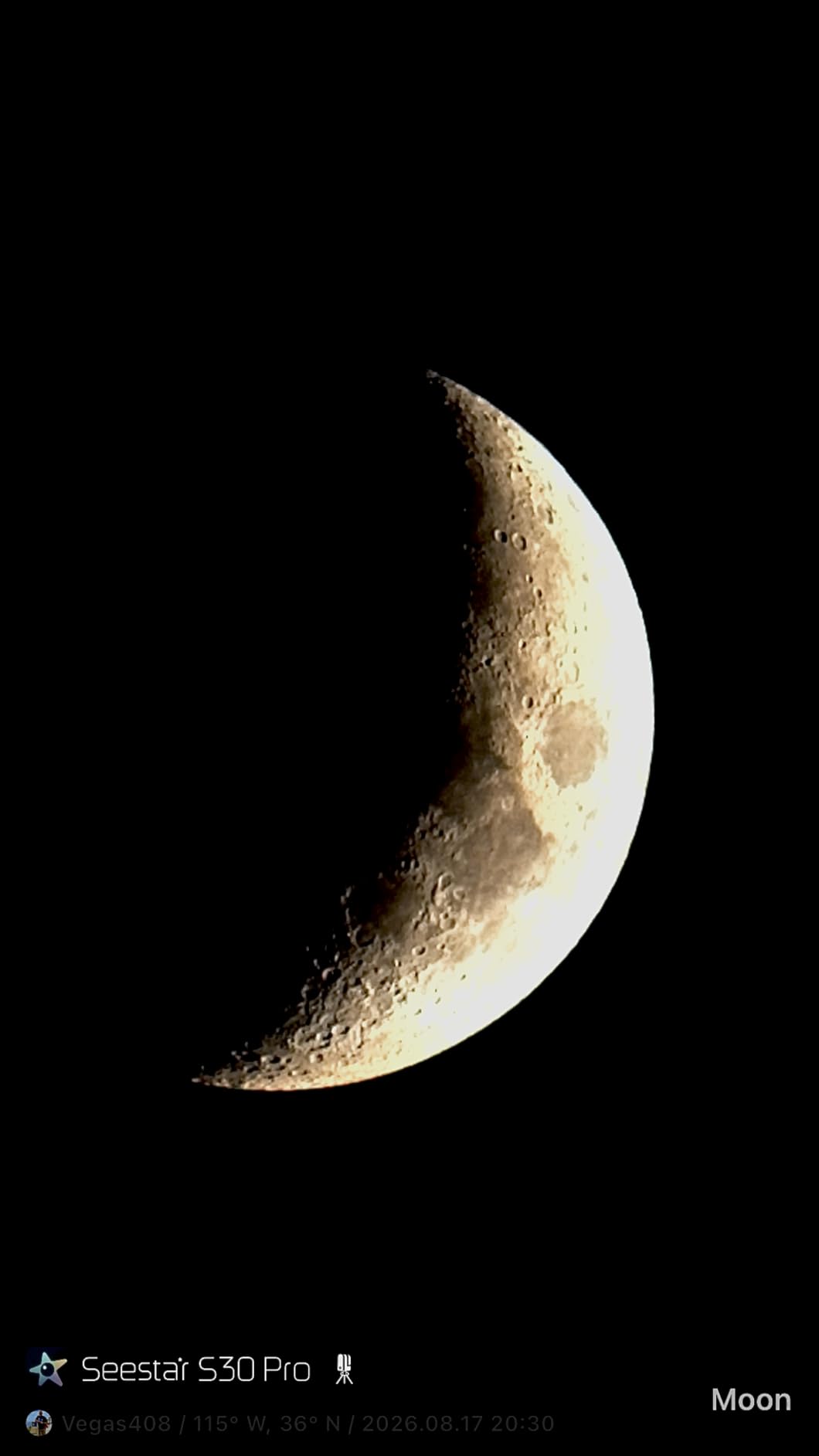
The trade-off reviewers accept is that it is an imaging instrument, not a visual telescope. There is no eyepiece for planetary or high-magnification observing, the 30mm aperture has a low ceiling for genuinely faint targets, and the scope must stay put during long exposures for tracking to hold.
The smartphone requirement is a genuine annoyance for some owners, and it is worth being honest about before you buy. At 4.4 stars from 232 reviews, satisfaction is high but the sample is still small.
Why it suits a bright city sky
Stacking many short exposures is a light-pollution strategy, because each sub-second frame captures signal before the sky background builds up, and the app combines them. Paired with the built-in filters, that is how it gets nebulae from a class 8 patio. A conventional eyepiece scope cannot do this at all.
Who should skip it for city skies
Skip it if you want to sit at an eyepiece and show the Moon to family or friends, since there is no visual mode to speak of. It is also a poor choice if you want manual control over exposure, since the built-in processing limits advanced override compared with a dedicated camera.
7. DWARFLAB Dwarf 3: Best for Travel and Daytime Wildlife
DWARFLAB Dwarf 3 Smart Telescope, App-Controlled Astrophotography Camera
3 lb smart telescope,dual telephoto and wide lenses,cloud image processing
Pros
- Lightest travel-ready option at about 3 lb
- Dual lens covers deep space and wide Milky Way framing
- Cloud processing gives finished images with no PC
- Auto-tracking and GoTo need no telescope experience
- Magnetic filters and carry bag included
Cons
- Smartphone required for essentially all operation
- Limited manual control versus a dedicated camera
- 35mm aperture is small for faint deep-sky detail
- Daytime dual-lens workflow means switching lenses
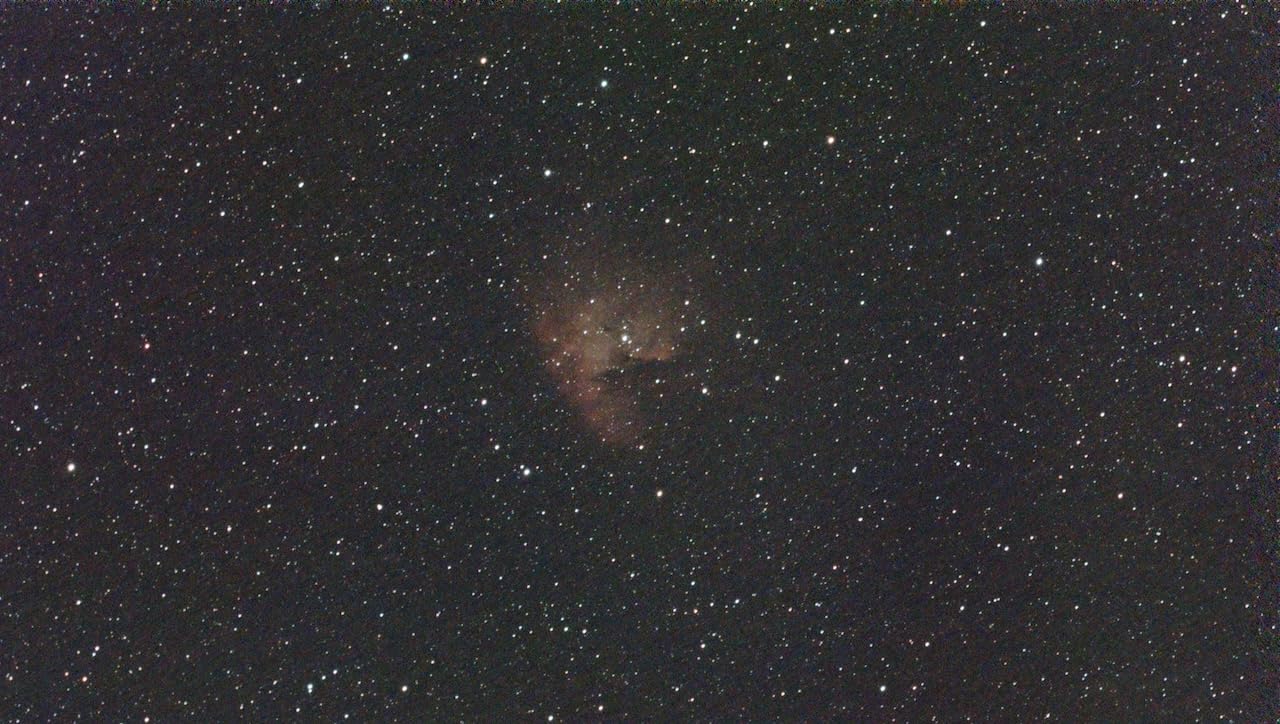
The Dwarf 3 is the pick for a city observer who does not want a telescope at all. At roughly 3 pounds for the body, with a carrying bag and magnetic filters in the box, owners use it on trips, in backyards, and even for wildlife, and they report that cloud processing removes the usual post-processing burden entirely.
The dual imaging system is genuinely useful. A telephoto lens handles deep space and moving subjects, while a wide-angle lens covers Milky Way and star trail framing, which means one device covers a patio session and a birding trip. Auto GoTo with altazimuth and equatorial modes, plus 4K auto-tracking, mean no telescope experience is required.
The honest limits are shared with every smart scope here. A 35mm aperture is small for faint deep-sky detail next to a conventional optical tube, the built-in processing caps manual control, and the app is required for essentially all operation. Switching between lenses is also an extra step in the daytime workflow.
Reviews rate it 4.4 from 234 owners, with the dominant theme being portability and simplicity rather than optical ambition. Star colour and Milky Way images come in well according to those owners.
Why it suits a bright city sky
For imaging under skyglow, the same stacking logic applies, and a body you can carry to a rooftop or a city park with one hand changes how often you use it. Frequency matters more than gear for a beginner, and a scope you actually take outside is the one that survives past the first month.
Who should skip it for city skies
Skip it if your interest is visual observing, since there is no eyepiece path, and skip it if you want to grow into long-exposure astrophotography with manual settings. Anyone without a reliable smartphone workflow will also find it frustrating.
8. Dianfan 90mm Refractor: Best All-in-One Kit for Families
Dianfan Telescope, 90mm Aperture 800mm Telescope for Adults High Powered, Portable Professional Astronomy Refractor Telescopes for Beginners, with Stainless Steel Tripod & Phone Adapter, Carry Bag
90mm aperture,800mm focal length,4.7 kg,fully coated achromatic
Pros
- Refractor needs no collimation and stays sharp over long sessions
- 90mm gives bright contrasty lunar and planetary views
- Two eyepieces plus a 3x Barlow and phone adapter included
- 45-degree zenith mirror suits daytime and terrestrial use
- Fits in the included bag for balcony and travel
Cons
- Advertised 240x is beyond useful for a 90mm refractor
- Colour fringing at higher power on bright targets
- Stainless tripod is not as rigid as heavier mounts
- Straight-through finder is small and imprecise
The Dianfan is the box that works immediately, which makes it a strong family choice. A 90mm fully coated achromatic refractor needs no collimation and stays sharp through a long session, and owners treat it as a dependable entry point with crisp, maintenance-free optics and enough aperture for lunar detail and the brighter planets from a city.
It also assembles in about fifteen minutes, and the 45-degree zenith mirror makes it usable for daytime and terrestrial viewing, which is a nice way to justify a telescope to children who are not yet ready to wait for dark. Two eyepieces, a 3x Barlow, a phone adapter, a phone holder, and a carry bag are all in the box.
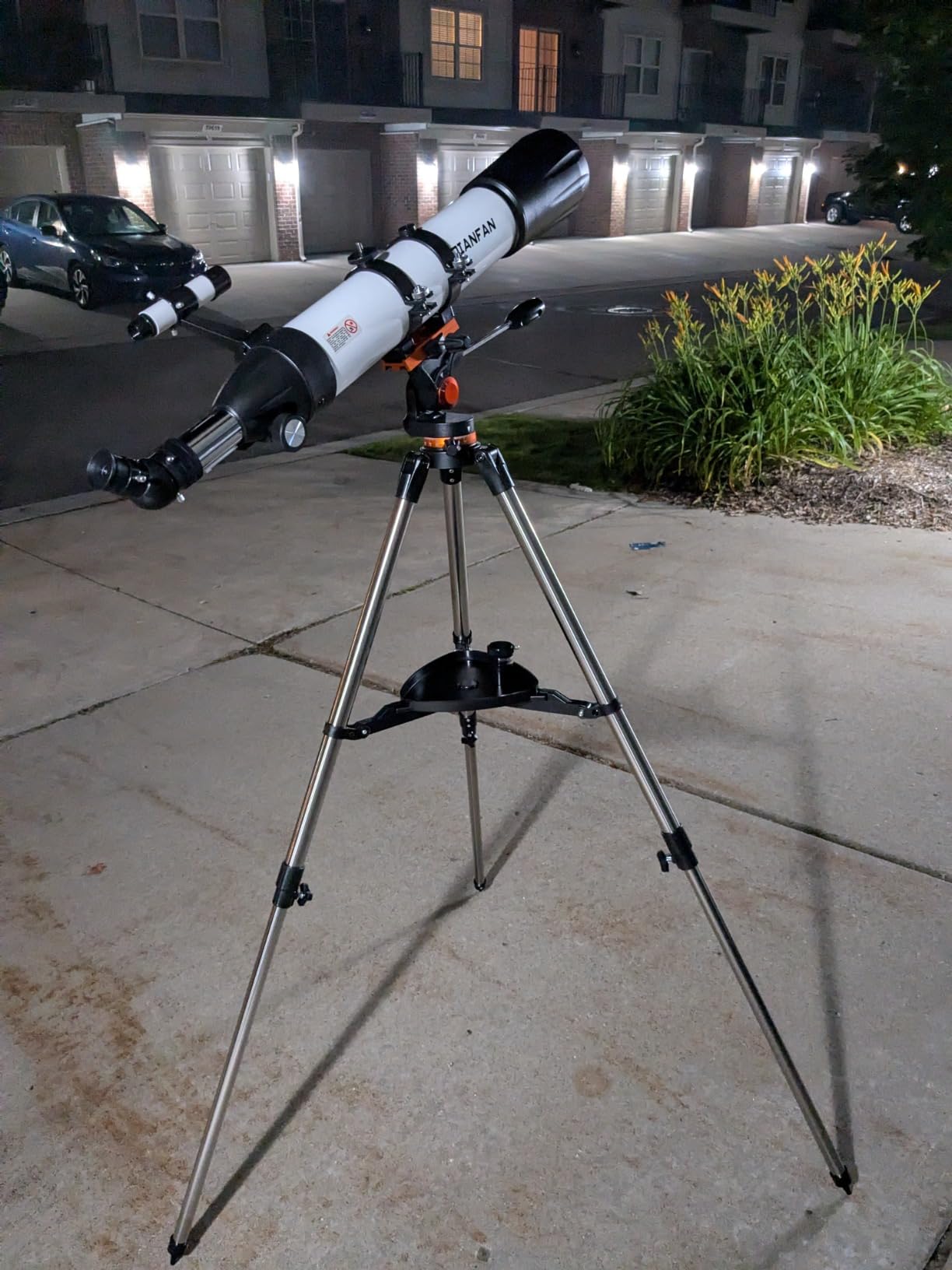
Be sceptical of the 240x headline. Several reviewers call the maximum magnification figure marketing and note the usable sweet spot is considerably lower, which is normal for a 90mm refractor. Colour fringing also becomes visible on bright targets at the top of the range, and the stainless tripod is functional but not rigid.
At 4.3 stars across 698 reviews, the most common positive theme is straightforward value for money. The straight-through finder is small and imprecise, so pair the phone adapter with a brighter target list rather than hunting faint fuzzies through it.
Why it suits a bright city sky
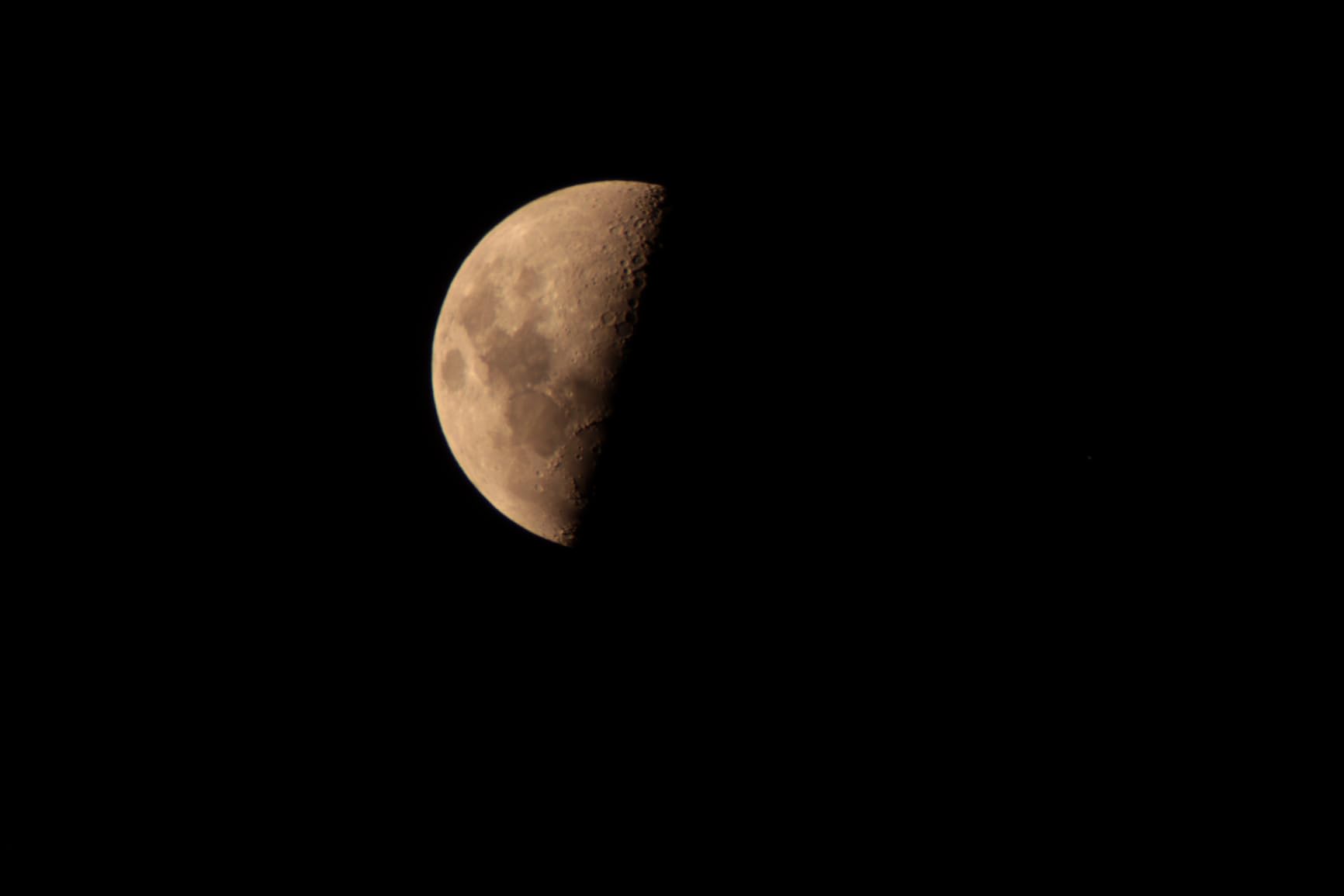
A refractor gives you clean, high-contrast views with no setup adjustment, and 90mm is enough to hold the Moon and the inner planets cleanly against a bright background. The included zenith mirror means a family can use it in daylight for the Moon, planets in twilight, and terrestrial viewing before the real observing starts.
Who should skip it for city skies
Skip it if you want to hunt faint deep-sky fuzzies, because 90mm of achromatic glass will not reach them against skyglow. Anyone who shakes the tripod at high power should also stick to the supplied eyepieces rather than stacking the Barlow on top of one.
9. Koolpte 80mm Refractor: Best Starter Scope Under Bright Skies
Koolpte Telescope for Adults & Beginner Astronomers – 80mm Aperture 600mm Fully Multi-Coated High Transmission Coatings with AZ Mount Tripod Phone Adapter, Carrying Bag, Wireless Control.
80mm aperture,600mm focal length,f/7.5,fully multi-coated refractor
Pros
- Very low entry price with a full accessory set included
- Fully multi-coated optics brighter than typical budget scopes
- Quick no-tool setup a child can manage with help
- Long 600mm focal length gives a wide framing
- Phone adapter and wireless remote for simple photos
Cons
- 80mm cannot resolve fine planetary detail
- Light tripod and mount shake at higher power
- 3x Barlow pushes past the useful ceiling
- Alignment drifts and needs recentring
- Plastic eyepieces and finder are the weak points
With 3972 reviews, this is one of the most proven budget telescopes available, and owners regularly describe it as a satisfying first telescope or a gift that works for adults and children. The 80mm objective is fully multi-coated, which reviewers note gives brighter, clearer images than the typical budget scope at this level.
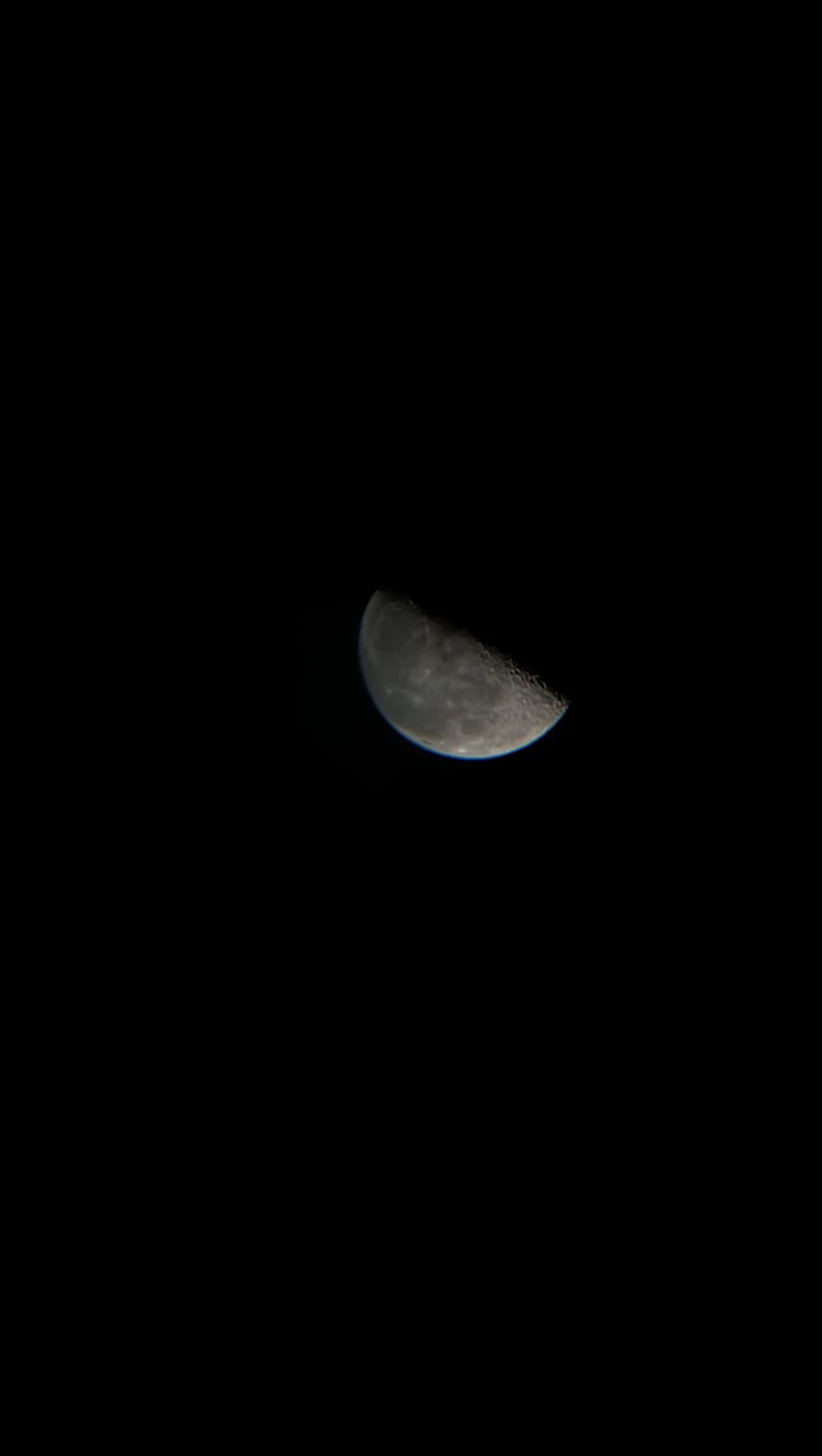
The 600mm focal length produces a wide field that frames larger objects rather than splitting them, which is exactly the right behaviour for city skies where you will spend your time on the Moon, craters, and bright planets. Setup is quick and needs no tools, simple enough for a child with an adult helping, and the whole package fits a small space for storage.
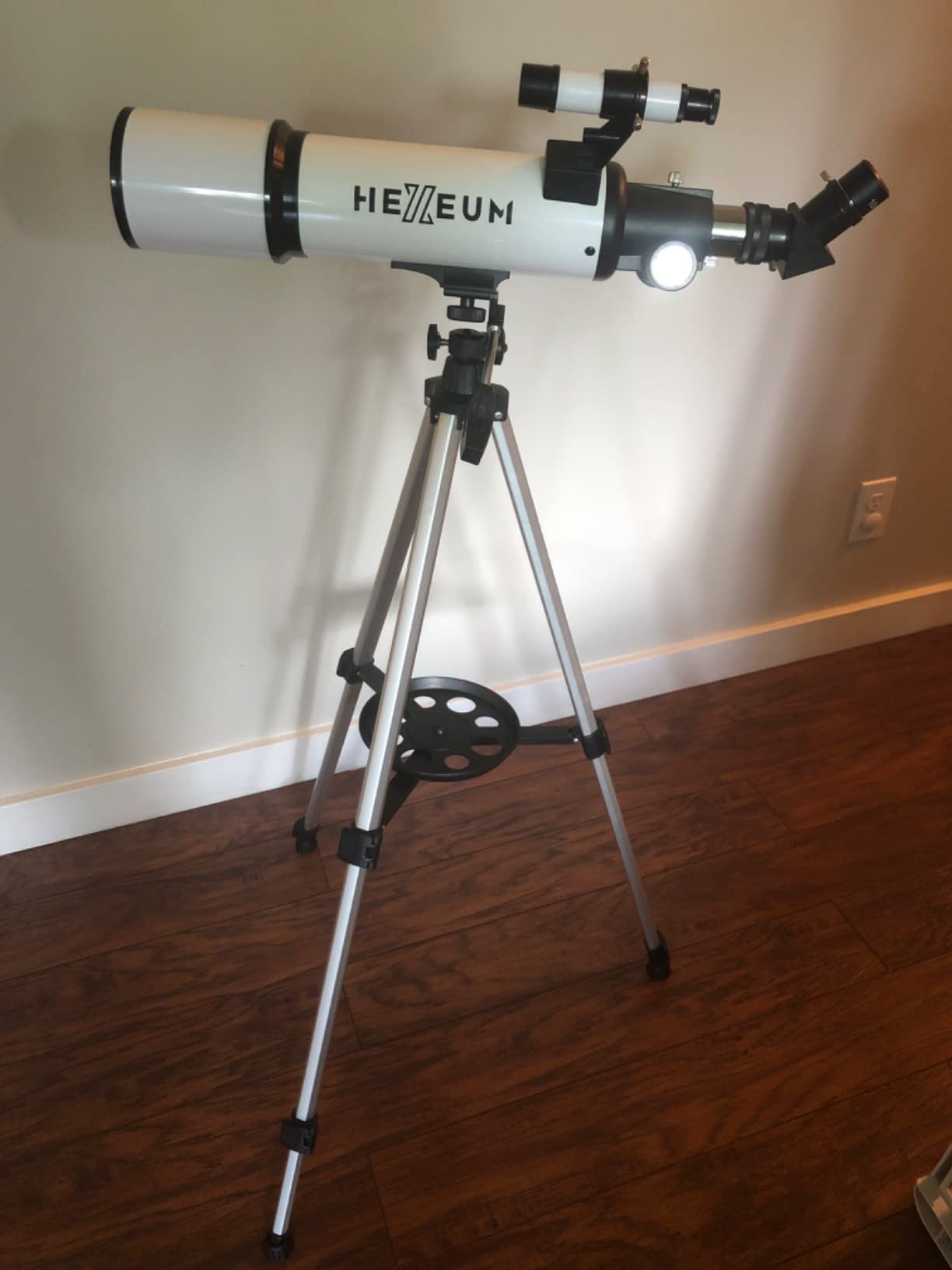
The recurring caveat across reviews is the 3x Barlow. It produces a magnified but soft image, and pushing 80mm of aperture to 72x and beyond pastes noise and shake into the view. Stay with the 25mm and 10mm eyepieces, and the same scope rewards you with a steadier, sharper picture of the lunar terminator.
Alignment also drifts, so the target needs re-centring often, and the plastic eyepieces and finder are the weakest parts of the package. The light mount shakes noticeably at higher magnification, which is a fair trade for carrying weight this low.
Why it suits a bright city sky
A wide field of view is an underrated city advantage. In a Bortle 8 sky, sweeping a narrow field means sweeping empty background, while a wide field puts the Moon, a bright open cluster, and a double star in the same view. This scope also does not need a dark room to store.
Who should skip it for city skies
Skip it if planetary detail is the goal, since reviewers agree 80mm cannot resolve fine features. Anyone who will be frustrated by an alignment that drifts every few minutes should move up to a steadier mount, and anyone serious about photography should look elsewhere.
10. Gskyer 70mm Refractor: Best First Telescope for Kids
Gskyer Telescope, 70mm Aperture 400mm AZ Mount Astronomical Refracting Telescope for Kids Beginners – Travel Telescope with Carry Bag, Phone Adapter and Wireless Remote.
70mm aperture,400mm focal length,f/5.7,wide 5.8 degree field
Pros
- Refractor design needs no collimation and is sharp from the box
- Over 22000 reviews make it the best-proven beginner telescope
- Wide field is forgiving while a child learns to aim
- Scope and tripod both fit the included carry bag
- Phone adapter and wireless remote for simple photos
Cons
- 70mm limits you to Moon phases craters and bright planets
- Light mount and thin tripod legs shake at high power
- Chromatic aberration shows on bright targets
- 3x Barlow exceeds the useful magnification
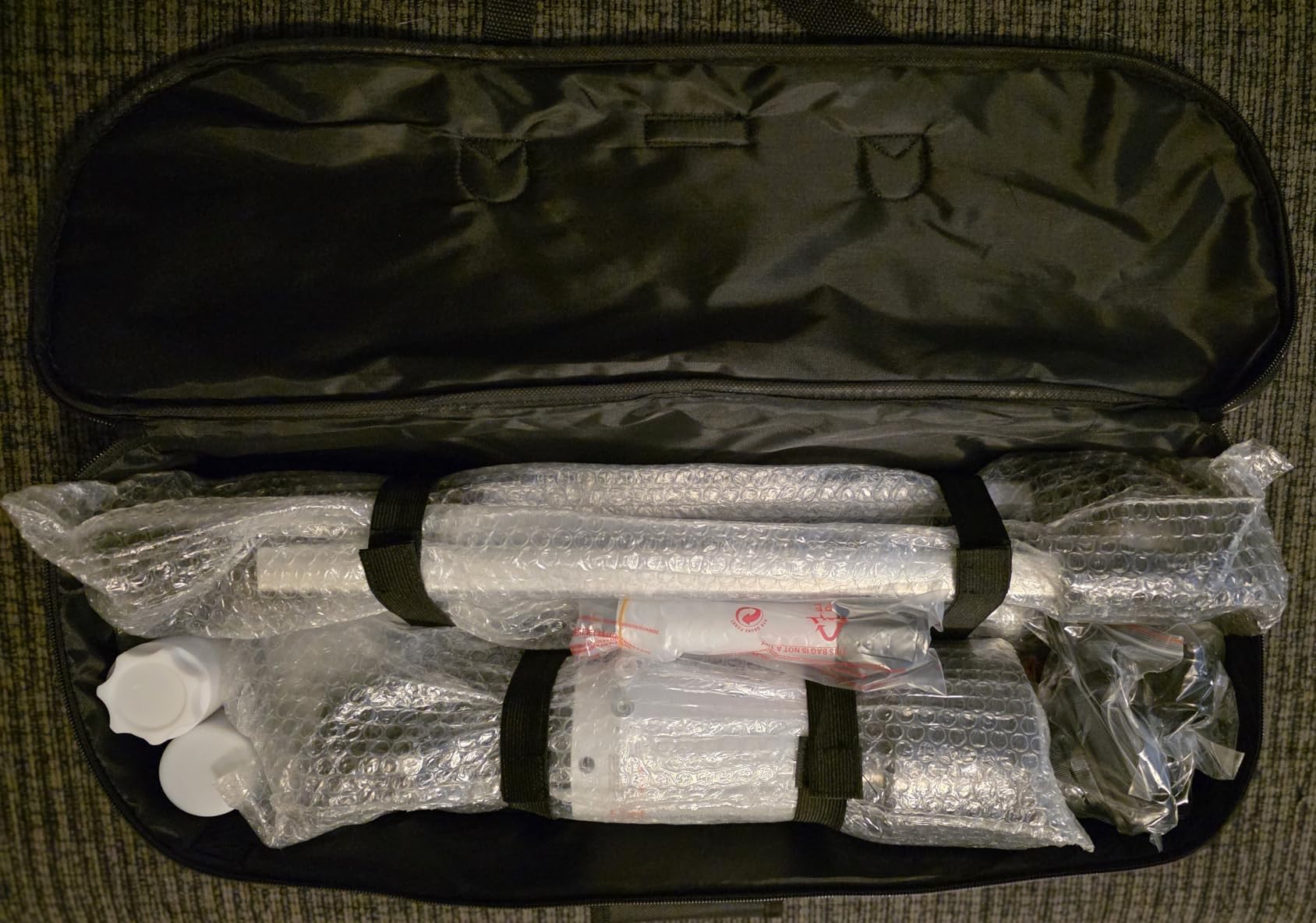
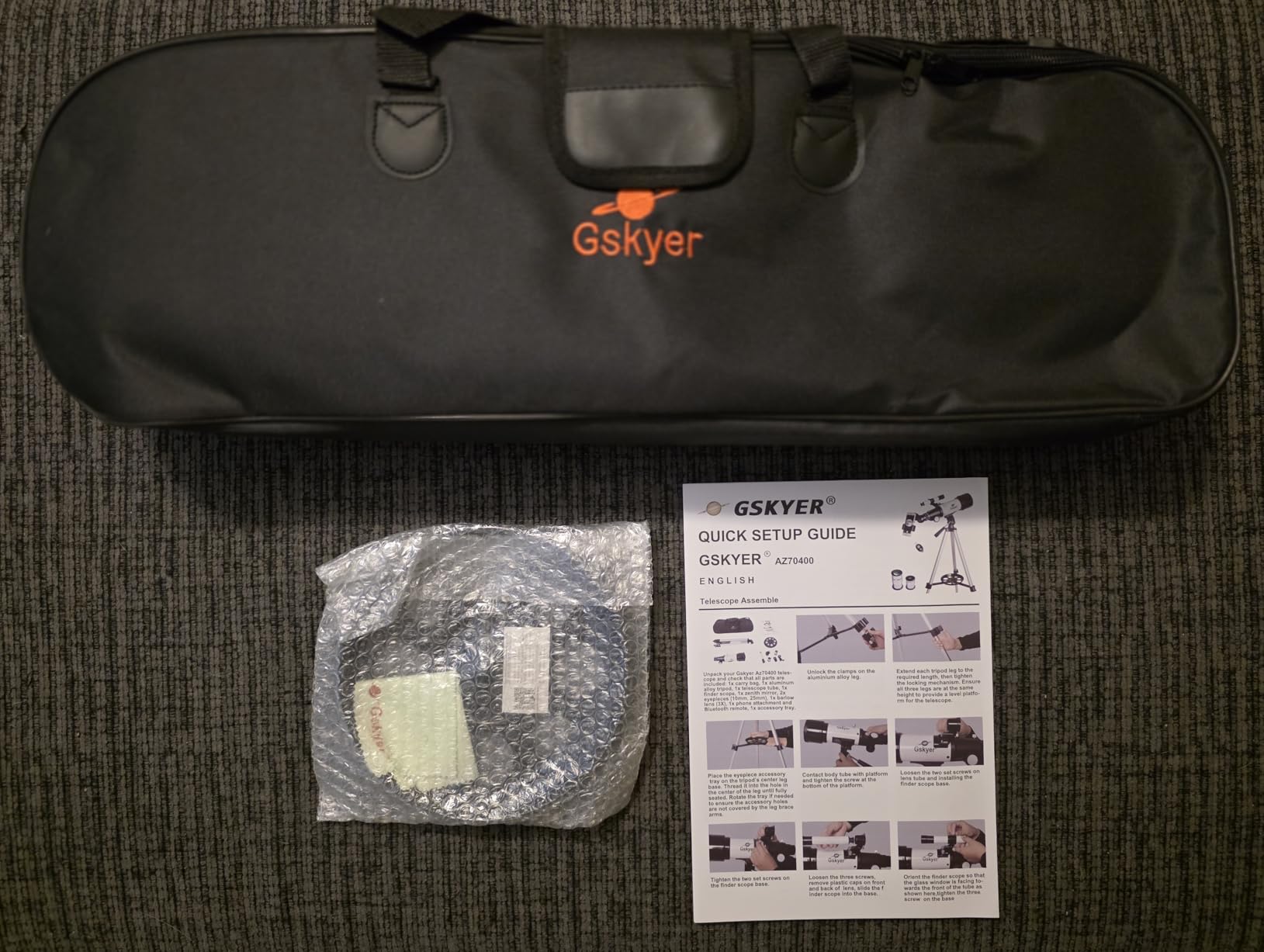
More than 22,000 reviews make this the highest-volume reviewed telescope in the group, and buyers overwhelmingly use it as a first family scope with the Moon as the main target. The 70mm fully coated refractor gives consistent, sharp images with zero maintenance, and a 5.8 degree field is forgiving for a child learning to aim the thing in the first place.
For city skies specifically, the wide field is the argument. A beginner in a Bortle 7 or 8 sky can sweep gently and land on something real, instead of hunting for a faint alignment star they cannot see. It assembles without tools, and both the scope and the tripod fit inside the included carry bag, which makes it easy to move between rooms or take outdoors.
Owners are consistent about the limit: aperture. It shows the Moon’s phases and craters and the brightest planets, and it does not go much further. The 3x Barlow exceeds the useful magnification of a 70mm refractor, and chromatic aberration becomes visible on bright targets near the top of the range.
The light altazimuth mount and thin tripod legs shake at higher power, so treat the supplied eyepieces as the ceiling rather than the starting point. A one-year warranty is the shortest here, which is worth remembering for a gift.
Why it suits a bright city sky
Two reasons. First, a wide field means fewer empty sweeps under a glowing sky, which matters enormously when a child is the observer. Second, a refractor needs no collimation and no alignment process, so the time from opening the box to the first view of the Moon is short enough to hold any child’s attention.
Who should skip it for city skies
Skip it if you are an adult buying for yourself and your goal is planets or anything beyond the Moon, because 70mm will frustrate you. It is also the wrong tool if you plan to grow into astrophotography, and anyone who needs a rigid mount at high power should save up.
How to Choose a Telescope for Urban Skies: Buying Guide
Start with your Bortle class, not your budget. Check a light pollution map for your block and note the class. From class 6 upward, the deciding factor is how the scope finds objects, because the reference stars you would normally use for star hopping are washed out. If you are at class 8 or 9, start the list at the smart scopes and the GoTo mounts.
Aperture beats magnification, every time. Marketing leads on magnification because it is an easy number, but a 240x claim on a 70mm refractor produces a dim, shaky, featureless image. Aperture determines light grasp, and light grasp is what separates an object from the sky background in a bright city. Two eyepieces that you actually use are worth more than a bundle of six you do not.
Work out the exit pupil. Divide aperture in millimetres by the eyepiece focal length in millimetres to get the exit pupil. Staying between about 0.5mm and 7mm keeps the image bright and the view comfortable. The 130mm AstroMaster paired with its 20mm eyepiece gives a 6.5mm exit pupil, which is why it looks so clean under skyglow.
Count the carrying weight before you fall for the aperture. Weigh the complete setup, not just the tube, and test whether you can carry it from the door to the observing spot. Forum users name bulk and weight as the number one deal-breaker for city living, and it is the reason many people never buy the light bucket they want. Our beginner telescope guide covers weight classes in more detail if you are still unsure.
Decide between an eyepiece scope and a smart scope. A smart scope gives you a finished image of a nebula from a bright patio and needs no optical expertise, but there is no eyepiece for showing the Moon to a child. An eyepiece scope gives you contrast, planets, and the shared experience of a group crowding around one eyepiece. Many city observers end up owning one of each, and if that is likely your path, start with the eyepiece scope and treat the smart scope as a second instrument.
Use a light pollution reduction filter honestly. An LPR filter is a narrowband filter that blocks the specific emission lines of high-pressure sodium streetlights. It works well under orange sodium lighting and does very little against modern white LED streetlighting, which is why buyers who were sold a filter as a solution to city skyglow are often disappointed. Treat it as a helpful extra, not a fix.
Plan the session, not just the purchase. Give the scope ten minutes indoors before you go out so you are not collimating or assembling in the dark. Use a shielded red flashlight. Point the tube away from lit windows and balconies where you can, and if you can, walk twenty metres to put a building between you and the brightest lamp.
If photography is a serious interest rather than a passing thought, our astrophotography telescope picks go deeper on tracking and mounts. For a first scope bought mainly for children, the kids telescope guide covers what actually holds a child’s attention, and the student picks are the budget-friendly end of the same conversation.
Frequently Asked Questions
Do telescopes work in cities?
Yes. A telescope works perfectly well under a bright city sky, but it changes what you can see. The Moon, the planets, bright double stars, and a handful of large deep-sky objects such as the Orion Nebula, the Pleiades, and the Ring Nebula stay visible. Faint galaxies and small planetary nebulae are washed out by the sky glow and will not be worth searching for.
Will a telescope work with light pollution?
Light pollution raises the background brightness of the sky, which hides faint targets, but it does not dim bright ones. Larger aperture still helps, because a bigger mirror or lens collects more light and lifts your target further above the glow. Baffles, tube shrouds, and a star diagonal improve contrast, and moving away from a direct line of sight to a streetlight often helps more than any filter.
What is the best telescope for city viewing?
It depends on your sky and your storage. The Celestron AstroMaster 130EQ is the strongest all-rounder for bright suburban skies, the Celestron StarSense LT 114AZ is the lightest balcony option, and the Celestron NexStar 127SLT is the best value when you want GoTo finding. For imaging rather than viewing, the ZWO Seestar S30 Pro is the pick.
Can you see stars in the city with a telescope?
You cannot see more stars with a telescope than with the naked eye, because telescopes concentrate light rather than widen the view. What a telescope does is resolve close stars that the naked eye sees as one, which makes double stars, and it reveals faint objects within those clusters. On a bright city sky, the honest gain is planets, the Moon, and resolving doubles.
How do you see the night sky with light pollution?
Use a shielded red flashlight to protect your dark adaptation, and position yourself so a building blocks the brightest lamp. Point the telescope away from lit windows where you can, and use a GoTo mount or phone plate-solving because faint reference stars are invisible under a bright sky. Observing when the Moon is a thin crescent, or planning sessions for a darker suburb, adds the most.
Conclusion: Pick by Sky Brightness and Storage, Not Power
The best telescopes for city skies are not the ones with the biggest magnification claims. They are the ones with enough aperture to hold a target above the glow, and the ones that can find a target when the reference stars have disappeared. Pick by your Bortle class and by how much you can realistically carry and store, and the rest follows.
For most city observers, the Celestron AstroMaster 130EQ remains our top recommendation for bright suburban skies, with the StarSense LT 114AZ for balconies and stairs, the NexStar 127SLT when you want automated finding, and the ZWO Seestar S30 Pro if the finished image matters more than the view through an eyepiece. Whichever you choose, give it a few sessions before you judge it. In 2026, a telescope that gets used twice a month from a city flat beats a bigger one that lives in a cupboard.