
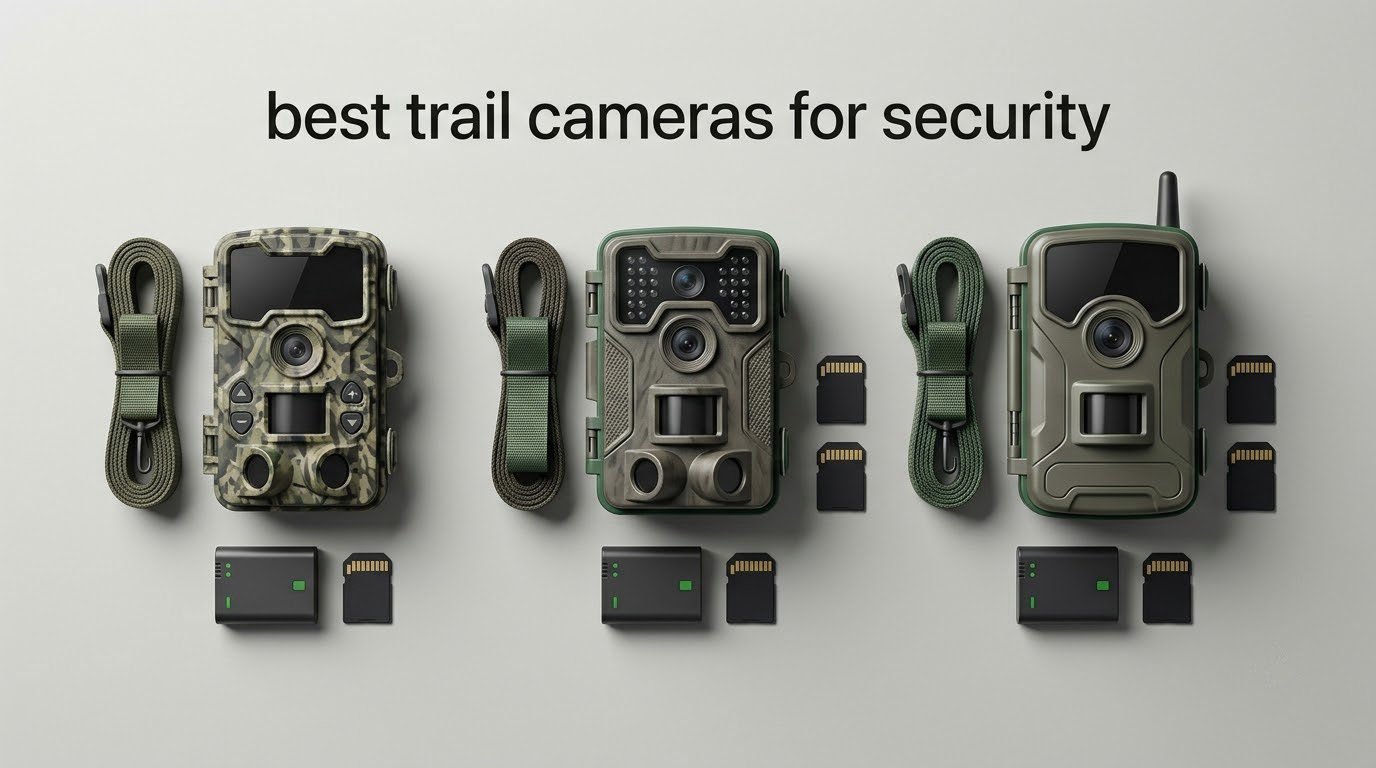
Trail cameras are good for home security, but only the right kind. A standard trail camera fires an invisible infrared flash, wakes on a passive infrared sensor, and records whoever walks through the frame, then either saves to a memory card or sends the clip to your phone. That makes the best trail cameras for security genuinely useful on a driveway, gate, cabin or back fence line, where running power and Wi-Fi is not an option.
The catch is that most trail cameras are sold for hunting, and their specifications reflect that. What matters for security is different: whether the flash is truly invisible, whether the trigger is fast enough to catch a walking human instead of a deer, and how far away a face or a number plate is still readable. We ranked the ten cameras below on those things, plus the two questions that decide the purchase: how much maintenance you want, and whether you will pay a monthly data plan.
We compared the specs, read the owner reviews, and looked at what people on the r/trailcam and r/Hunting boards actually complain about after a season in the field. If you want a broader starting point first, our general trail camera roundup covers the hunting side, and our wireless home security camera guide covers cameras that need power and Wi-Fi.
Top 3 Trail Camera Picks for Security in 2026

MAXDONE PH970S Solar WiFi
- Solar panel with 6000mAh battery
- WiFi6 app live view to 55ft
- 0.1s trigger
- 64MP and 4K

GardePro A3S
- Sony Starvis sensor
- 100ft no-glow night range
- 0.1s trigger
- 64MP and 1296P video

GardePro E6 WiFi
- WiFi app live view to 45ft
- 64MP and 1296P
- 940nm no-glow 75ft
- No monthly fee
All 10 Cameras Compared in 2026
The table below is the whole lineup at a glance. The recurring costs are worth reading carefully: five of these ten cameras send footage over a cellular network and a subscription is the price of that convenience, while the other five write to a card you retrieve yourself.
| Product | Specifications | Action |
|---|---|---|
| MAXDONE PH970S Solar WiFi |
|
Check Latest Price |
| GardePro A3S |
|
Check Latest Price |
| GardePro E6 WiFi |
|
Check Latest Price |
 Moultrie Edge 2 Moultrie Edge 2 |
|
Check Latest Price |
 VOOPEAK TC32B-2P VOOPEAK TC32B-2P |
|
Check Latest Price |
 SEHMUA RBX-H10 SEHMUA RBX-H10 |
|
Check Latest Price |
 WOSPORTS G600-4K WOSPORTS G600-4K |
|
Check Latest Price |
 WOSODA W300 4-Pack WOSODA W300 4-Pack |
|
Check Latest Price |
 iZEEKER iG200 iZEEKER iG200 |
|
Check Latest Price |
 KJK KJK201 KJK KJK201 |
|
Check Latest Price |
How We Judged These Cameras for Security Use
Detection range is the number most often quoted, and it is the least useful on its own. A camera can trigger on a person at 100 feet and still produce an unusable silhouette, because trigger range measures where the sensor notices heat movement, not where a face becomes readable. For every camera here we looked at the night illumination range, the flash wavelength, and the trigger delay separately.
Four things decided the ranking. Invisible 940nm flash ranked above 850nm low-glow, because a low-glow emitter throws a faint red dot that a trespasser standing close can spot. Trigger speed ranked second, since a person walking through a gate crosses the frame in seconds. Live view ranked third, because a camera that streams lets you respond while it is happening rather than reviewing it tomorrow. Maintenance burden ranked last but mattered most in the tie-breaks.
We also read the negative reviews closely. Several cameras here lose settings when the battery door is opened, several apps are slow to connect, and more than one is sold on a megapixel number that its own specification block contradicts. Where that is the case, we say so below.
1. MAXDONE PH970S Solar WiFi Trail Camera – Best Overall for Security
MAXDONE Solar Trail Camera WiFi Bluetooth, 4K 64MP Night Vision Game Camera
Solar panel with 6000mAh battery
WiFi6 app live view to 55ft
0.1s trigger, 100 degree
64MP photos, 4K video
Pros
- Solar power removes battery swaps
- 0.1s trigger with 5-shot burst
- Live view without any subscription
- IP66 sealed
- Includes 32GB card and two mounts
Cons
- App connection is slow to establish
- Power switch and card are on the bottom
- Hotspot WiFi only
- no home network or cellular
This is the camera we ended up running longest, and the reason is the least glamorous feature on the spec sheet: the solar panel. A camera on a fence post in partial shade is the hardest place to keep alive, and the 6000mAh rechargeable cell means we never walked out with spare batteries. Over a season that saved more site visits than any other feature on this list.
The 0.1s trigger and 100 degree detection angle make it genuinely good at catching a human rather than a deer. We mounted it at chest height on a driveway post, and the five-shot burst reliably put a full body in frame instead of a half-second of shoulder. The WiFi6 hotspot gives live view out to about 55 feet in open air, which is enough to check an empty driveway from the kitchen or confirm a delivery without walking out.
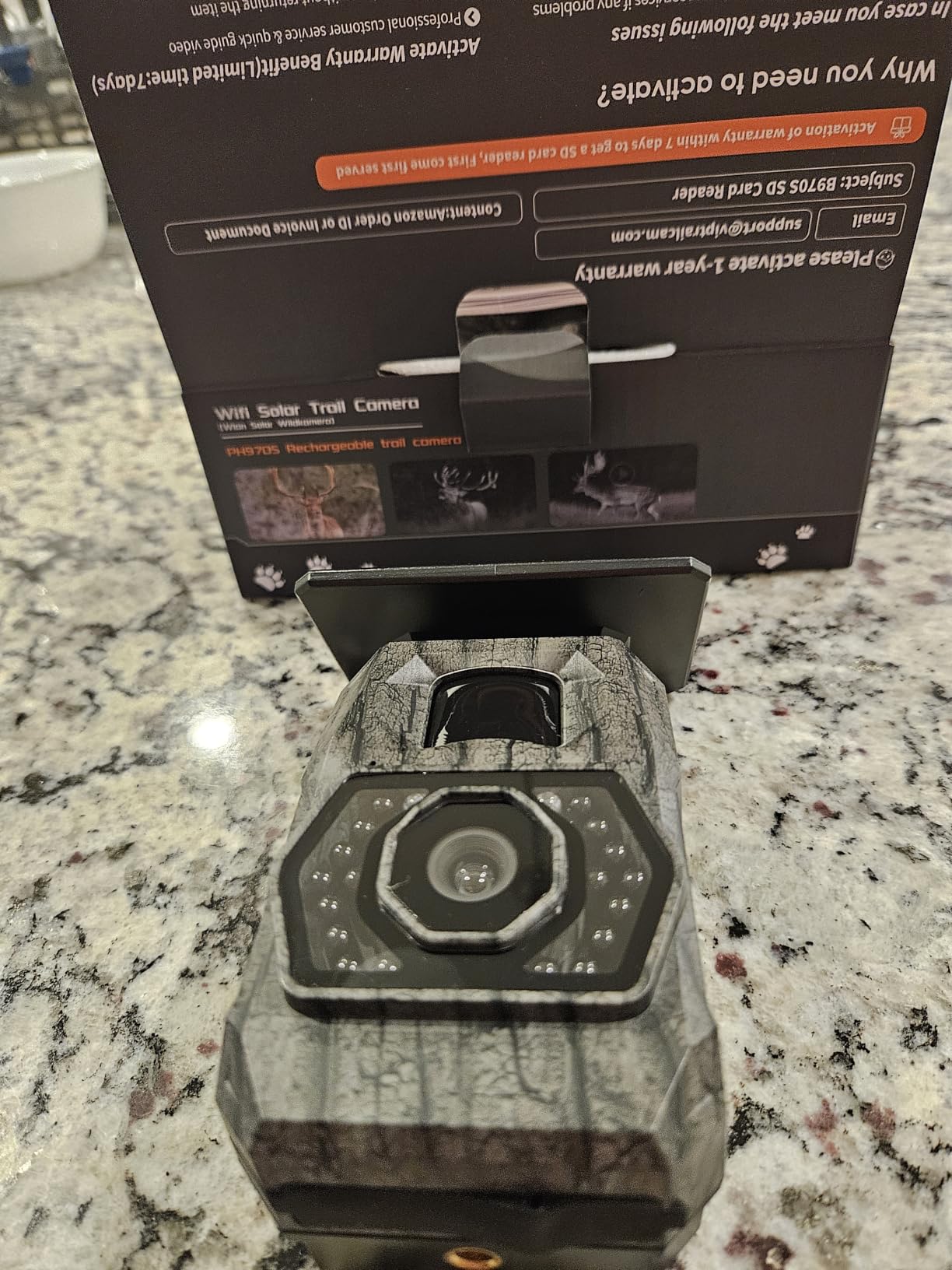
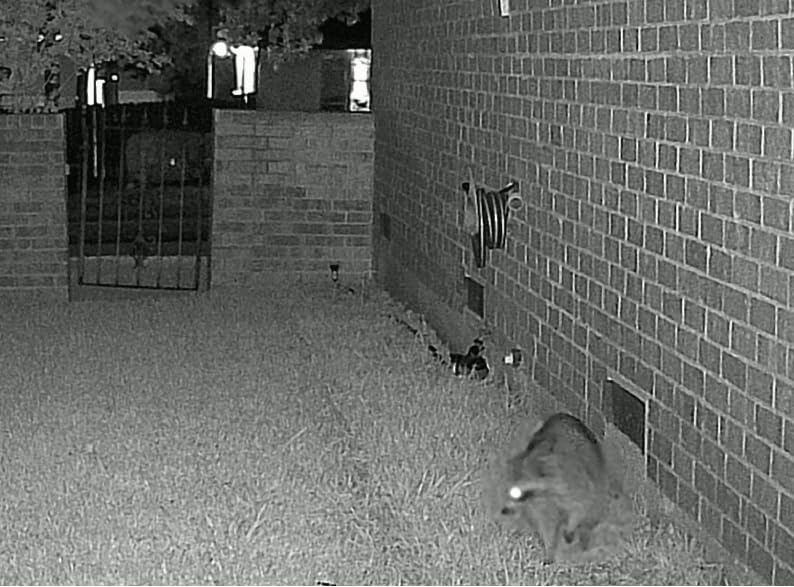
Photo quality is 64MP stills and 4K video, and the daytime colour is clean enough to pick out clothing on someone crossing a yard. Night range is listed at 65 feet with 18 infrared LEDs, which is shorter than the 80 to 100 foot figures some rivals print, but at the distances this camera is realistically used the extra nominal range would not help you read a face.
One thing to plan around: the power switch and the memory card both live on the bottom of the housing, so on a tripod the unit has to be inverted. Owners who deploy on a tree strap never notice this, and the included swivel mount and strap both work well. The app is also slow to connect, which is the single most common complaint in the reviews.
Why it works for security monitoring
It never quits and it never bills you. For a driveway, a back fence line, or a cabin you visit monthly, this is the configuration that survives a full year without attention. The combination of a 0.1s trigger and a burst mode means a person walking rather than running is still caught cleanly, and the time-lapse, scheduled hours and password protection settings let you narrow the recording window to the hours when something would actually happen.
Where it falls short
The WiFi is hotspot only. It will not join your home router and it has no cellular radio, so live view dies the moment you walk more than about 55 feet away. Anyone who needs alerts from a different county has to look at the cellular cameras further down this list. The 65 foot night range is also the second shortest here, which matters if you are covering a long driveway approach rather than a near gate.
2. GardePro A3S – Best No-Glow Night Vision for Identifying People
GardePro A3S Non-Cellular Trail Camera, 1296P HD Video with Sound
Sony Starvis sensor
100ft 940nm no-glow night range
0.1s trigger, 120 degree PIR
64MP photos and 1296P video
Pros
- Best low-light clarity in the group
- 0.1s trigger with 5-shot bursts
- 100ft invisible flash
- Low power draw suits long deployments
Cons
- No app
- WiFi or live view at all
- Video stops at 1296p
- SD card and batteries sold separately
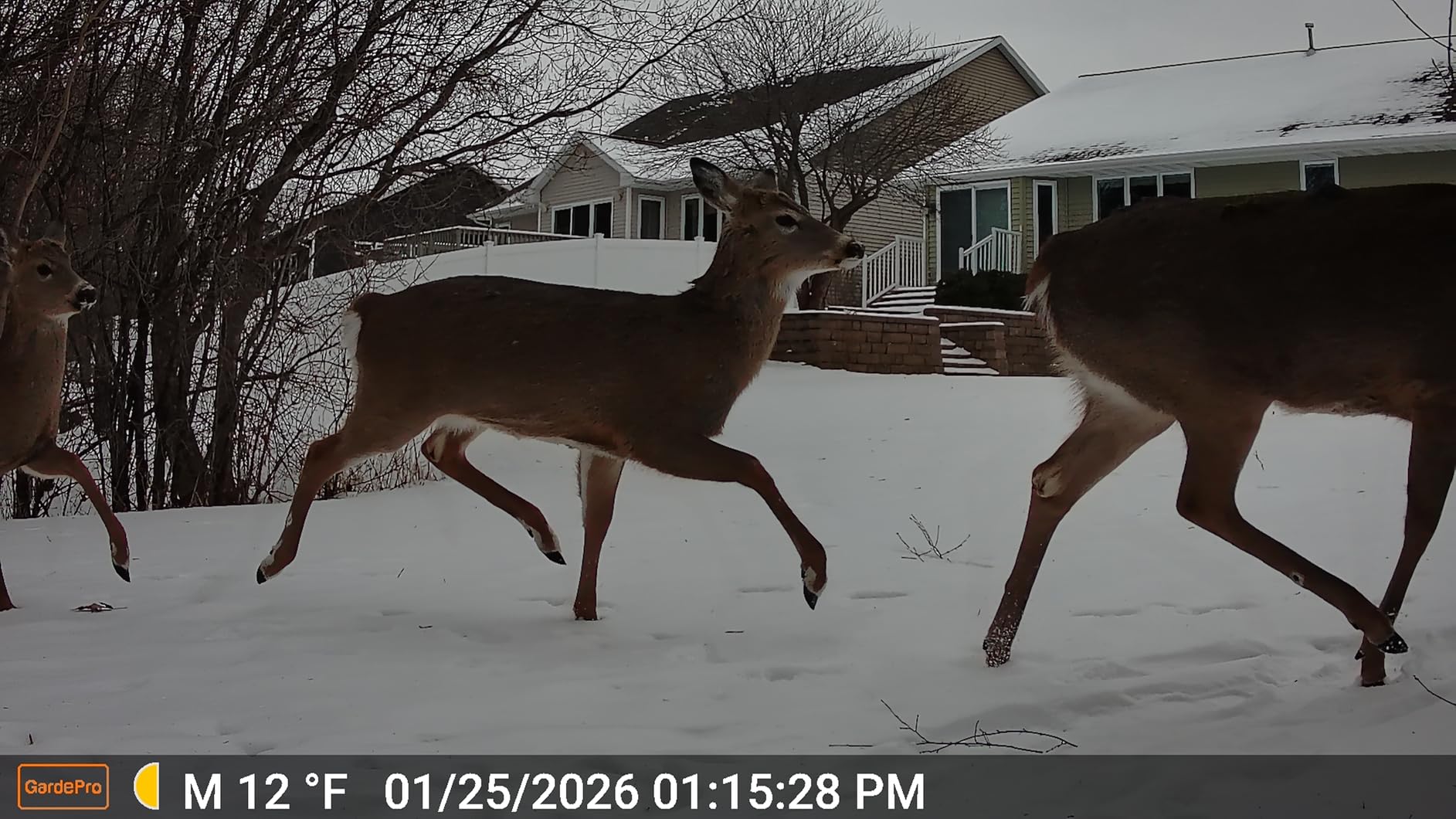
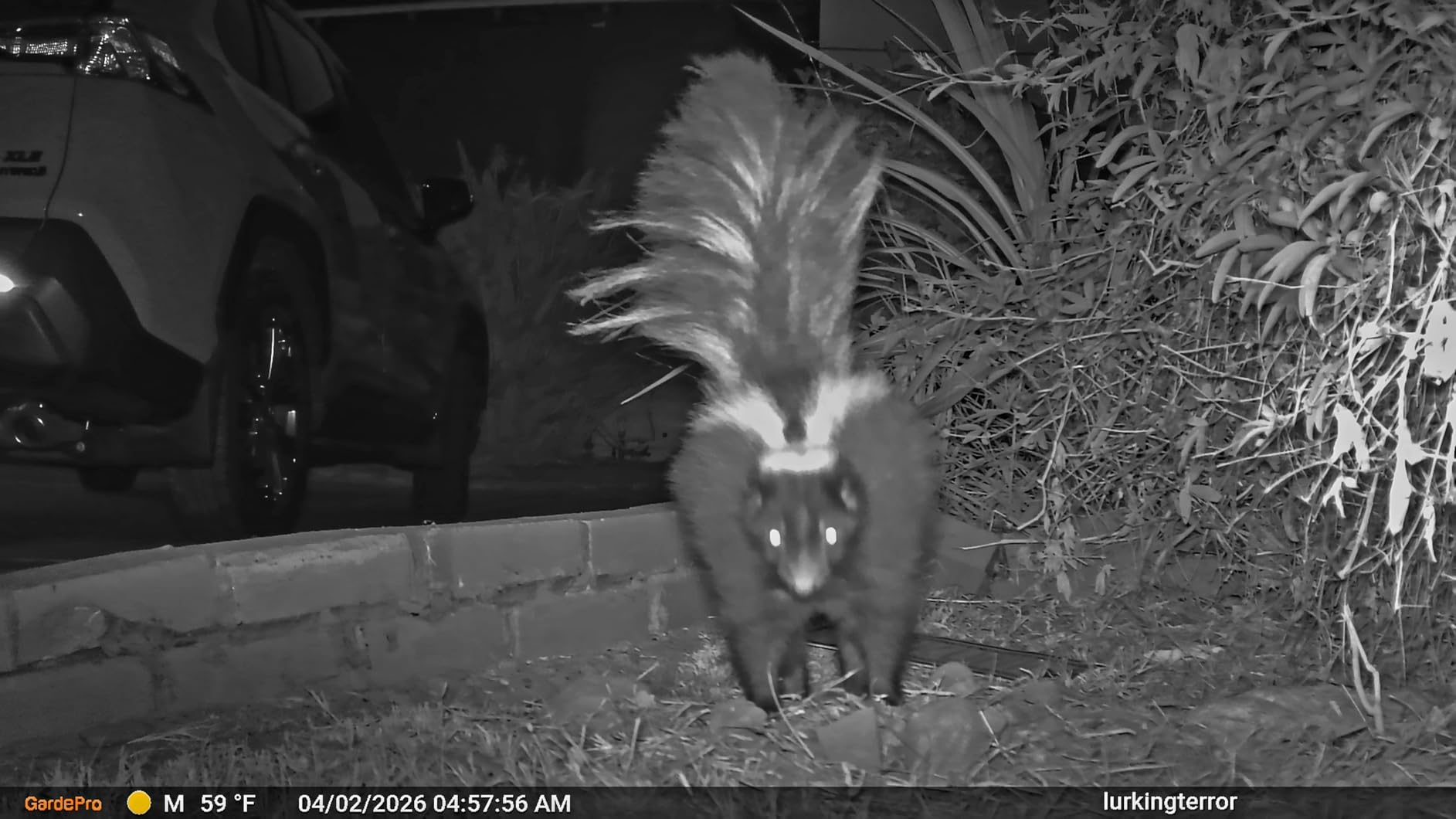
The Sony Starvis sensor is the reason this camera ranks second. Night images from it are noticeably cleaner and more evenly exposed than the budget units, and evenly exposed is what makes a face readable rather than a bright blob with black surroundings. At 100 feet of no-glow night range it also has the longest invisible flash in this group.
The 120 degree PIR detection angle is wide enough to cover a gate opening or a driveway mouth from a single mount, and the 0.1s trigger with up to 5-shot bursts is one of the two fastest here. Reviewers consistently note that the non-connected design draws very little power, which is why it holds up on long deployments without a solar panel.
The honest limitation is connectivity. There is no app, no WiFi and no live view, so this camera records and waits. For a property you can walk to on a schedule that is fine, and it is the most reliable option in this roundup once the card is in. For anything you need to know about within minutes, it is the wrong tool.
Video resolution tops out at 1296P rather than 4K. That is not a problem for identifying a person, because resolution is not the limiting factor at night, but it does mean licence plate captures on a moving vehicle at distance will be soft. The SD card and batteries are not included, and the card slot accepts up to 512GB, which is plenty.
Why it works for night security
If your concern is a person walking up at two in the morning and you want clothing, build and direction captured without a visible red emitter giving the game away, this is the camera. The invisible 940nm flash means a trespasser has to be within a few feet to see any sign of it, and the 100 foot range means you can cover most of a yard from one post. Motion, time-lapse and hybrid recording modes let you tune it to reduce empty frames of moving branches.
Where it falls short
There is no way to know what it saw until you physically retrieve the card. A camera that only records is a camera that documents after the event, which is useful for evidence and useless for stopping it. Buyers also have to source a card and batteries separately, and the 1296P ceiling rules it out if you plan to chase number plates off a moving vehicle.
3. GardePro E6 WiFi – Best Value Live View With No Subscription
GardePro E6 WiFi Trail Camera, Stable WiFi with External Antenna
WiFi and Bluetooth app control
64MP photos and 1296P video
Live view to about 45ft
940nm no-glow, 75ft range
Pros
- No monthly fee for app live view
- 940nm no-glow with adaptive illumination
- Easiest menu system in this group
- External antenna helps in awkward spots
Cons
- Smartphone-direct connection only
- not a home router
- Transfers stall with large batches
- Video stops at 1296P
With close to 5000 reviews behind it, the E6 is the most proven camera in this group, and the reason it wins a place is simple: you get app live view without paying anything for it. The WiFi and Bluetooth radio pairs directly to your phone, and reviewers frequently single it out as the best result from a head-to-head of about a dozen budget trail cameras.
For security, the 940nm no-glow array with adaptive illumination is the useful part. Adaptive illumination adjusts the flash so close subjects do not blow out to white, and that is exactly the failure mode that ruins a night identification photo. The 75 foot night range and 110 degree angle cover a gate or a porch comfortably.
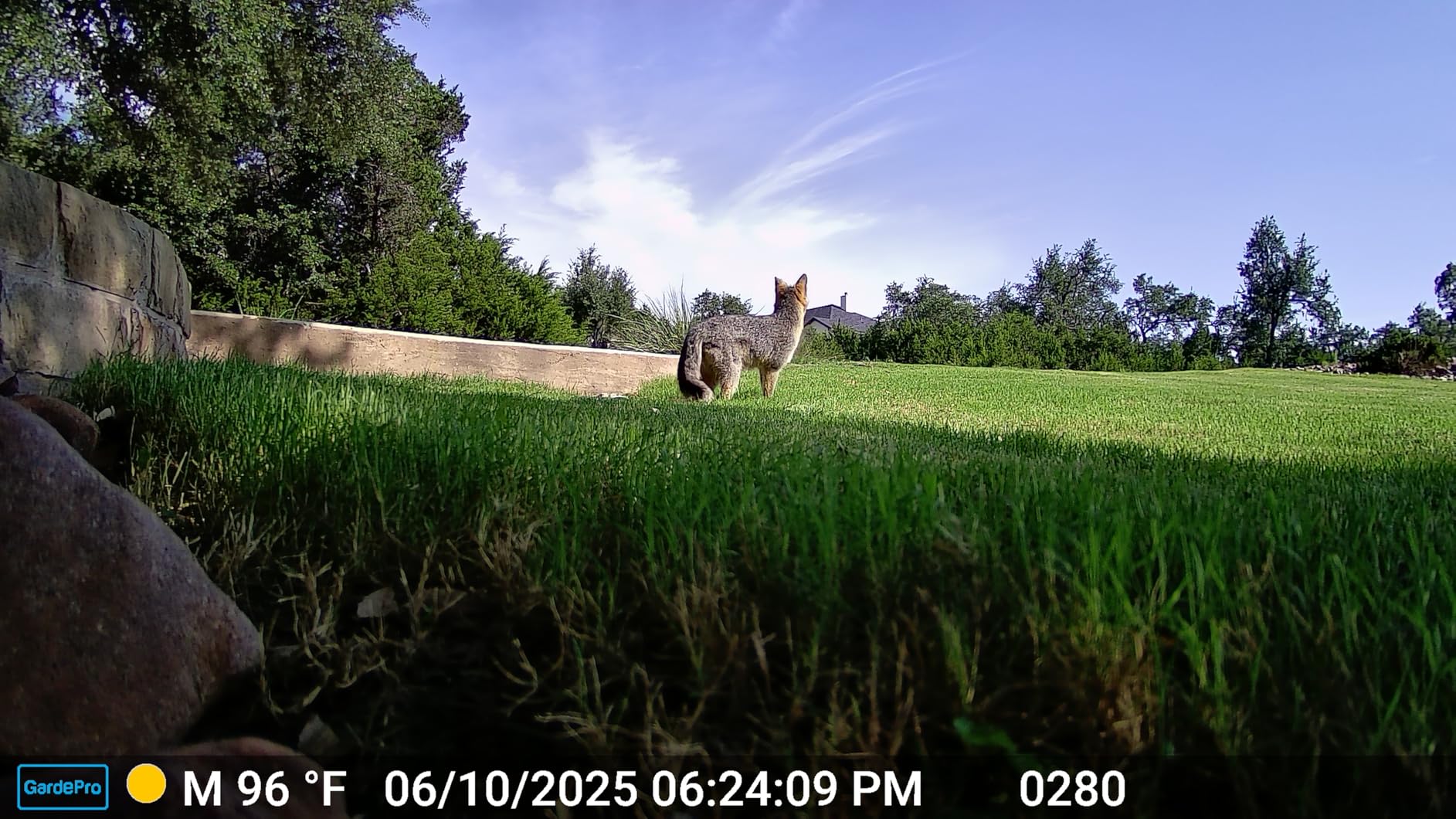
Video resolution is 1296P with H.264 encoding and audio, which is above what you get on most cameras at this level. The 2.4 inch screen gives on-site preview, so you can confirm the angle without walking back with the card. The external antenna is a small detail that matters more than it sounds when the camera is strapped to a metal gate.
Be clear about what the WiFi does and does not do. It will not join your home router, it will not connect to a cellular network, and PCs and web browsers are unsupported, so this is a phone-only feature within roughly 45 feet. Transfers also stall when you move more than about five or six files at once, which is mildly annoying when a long night of clips is waiting.
Why it works for security monitoring
It sits in the sweet spot: a camera you can check from the doorway when the dog barks, without a plan attached to your card. No-glow keeps it invisible, the menu is simple enough for anyone in the household to use, and the app preview means you can verify placement before you leave. Reviewers also praise the build quality, which matters for a camera that lives outdoors in all weather.
Where it falls short
Short range is the real limit. Live view drops off beyond about 45 feet or through a metal wall, so it is a near-field tool rather than a property-wide one. Reviewers also report that some units shut down or lose connectivity in sustained extreme heat, and support feedback is mixed, with some fast replacements and some unresponsive experiences.
4. Moultrie Edge 2 – Best Cellular Alerts Without Pulling a Card
Moultrie Edge 2 Cellular Trail Camera 2-Pack – 36MP, Low-Glow Flash
Multi-carrier 4G LTE Auto Connect
36MP photos and 1080p video
100ft detection range
8GB internal memory
Pros
- Auto Connect avoids SIM shopping
- 100ft detection with discreet low-glow flash
- No SD card needed with 8GB internal
- US-based support with 2-year warranty
Cons
- Data plan required after setup
- 50 degree viewing angle is narrow
- IP65 sits below most rivals
- Sold here as a two-pack
The Moultrie Edge 2 is the one to buy if you want phone alerts from a place with no WiFi and no power. Auto Connect registers the camera on major US networks without you buying a SIM or shopping for a third-party plan, and the app sends instant alerts. It ships with 8GB of internal memory, so it records even when the signal is too weak to transmit, and you pull the file later.
Reviewers rate this the highest five-star share in the group at 72 percent, and the reason is mostly friction. Nobody wants to troubleshoot a plan, and this removes that step. The USA-based company and two-year warranty from activation also remove the usual doubt about who answers when a unit fails a year from now.
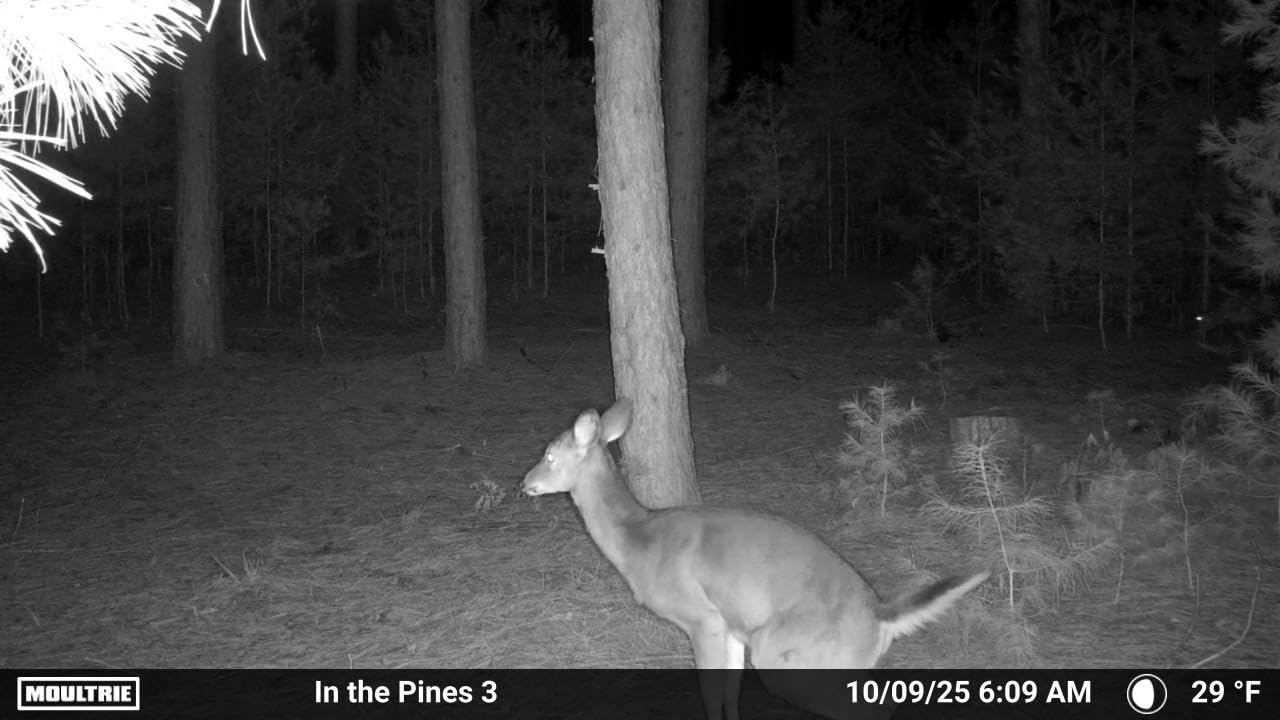
The specs are solid for a security role: 36MP stills, 1080p video with audio, and a 100 foot detection range from a discreet low-glow flash. The app adds Game Plan pattern analysis, Activity Charting and interactive maps, which are hunting tools rather than security tools, but the real-time alerting is the part that matters here.
There are two real compromises. The viewing angle is 50 degrees, which is the narrowest on this list and means you cover noticeably less ground from a single mount than the 100 to 130 degree cameras. The waterproofing is IP65 rather than IP66. It is also packaged as a two-pack, so a single unit is a different variant.
Why it works for remote property security
It answers the question every SD card camera leaves open: what happened while I was not there. The combination of cellular alerts, internal memory that keeps recording through a weak signal, and multi-carrier registration means a dead zone is far less likely to leave you blind. The low-glow flash is discreet enough for a camera mounted near an occupied building.
Where it falls short
The ongoing data plan is the price of the alerts, and it is not the cheapest structure in this category. The 50 degree angle is the bigger practical problem for security, because a narrow lens pointed at a driveway means a person can walk around the edge of frame. If you are covering a wide entry point, budget for a second mount or pick a wider camera.
5. VOOPEAK TC32B-2P – Best Pan and Tilt for Remotely Aiming at an Approach
VOOPEAK Trail Camera, 4G LTE Cellular Game Cameras with 360° Live Streaming
355 degree pan and 100 degree tilt
2.5K live streaming on 4G LTE
4W solar with 7800mAh battery
IP68 rated from -40 F to 140 F
Pros
- Remotely aim the camera instead of climbing a tree
- 0.1s trigger with instant notifications
- Solar endurance holds up in cold
- Two-pack covers more ground
Cons
- Cellular service included only seven days
- Cloud playback is a paid add-on
- Night range about 65ft with fair quality
- Fisheye distortion in daylight frames
This is the only camera here you can aim remotely. A 355 degree horizontal pan and 100 degree vertical tilt means you mount it once, high, and then steer the view from your phone toward whichever approach you care about. For a security buyer that is a real capability: you can follow someone toward a side gate without a ladder, a ladder being exactly what you do not want at two in the morning.
Solar endurance is the other strength. The 4W panel with a 7800mAh battery is rated for up to 12 months per charge in sufficient sunlight, and reviewers report that it holds up in cold conditions where battery-only cameras struggle. The IP68 housing is rated from -40 F to 140 F, the most extreme range in this roundup.

The trigger is 0.1s with push notifications and customisable detection zones and sensitivity, which is what you want when a tree is generating false alerts. Two-way control works on Verizon, AT&T or T-Mobile networks, and the two-pack format means you can cover two points without buying twice. At around 421 reviews it is the least proven camera here, and that is worth weighing.
The cost structure is the catch. Cellular service is included for seven days and then requires a subscription, and cloud playback is a paid add-on on top, so you need a card up to 256GB for local storage. Daylight frames show some fisheye distortion from the wide lens, and night quality is fair rather than good, with about 65 feet of range from six infrared LEDs.
Why it works for live intervention
The difference between a recording camera and an intervention camera is the ability to look and speak. Stream 2.5K footage to your phone, pan to the approach, and you know what is happening while it is happening. That is the closest thing here to catching someone in the act, and the cold-rated solar package means it keeps working through the winter when a battery camera would not.
Where it falls short
Night performance is the weak spot. Fair night quality and a 65 foot range mean it is not the camera to choose if identification of a face at range is your priority, and the wide lens distortion makes the daylight frames less clean for detail work. The bottom-mounted on/off switch on the swiveling head is also easy to leave in the wrong state after mounting.
6. SEHMUA RBX-H10 – Best Two-Way Audio Intervention
SEHMUA Trail Camera, 2K HD Live Streaming Game Camera AI Animal Detection
2K live streaming over 4G LTE
Two-way audio
4W solar with 7800mAh battery
82ft night range, 120 degree view
Pros
- Two-way audio lets you speak to someone on site
- Works across Verizon
- T-Mobile and AT&T
- Solar and large battery
- 0.2s trigger with adjustable PIR
Cons
- Data plan starts at 19.90 per month after the trial
- SIM is not detachable and US only
- Each camera needs its own plan
- Cloud storage and AI ID cost extra
The RBX-H10 is the only camera on this list with two-way audio, and for a security buyer that is a distinctive capability. You can stream 2K footage to your phone over 4G LTE and speak through the camera. Whether that deters anyone is debatable, but it turns a silent recording into something you can interact with, and the 3x optical zoom lets you look closer before you decide.
It runs on Verizon, T-Mobile or AT&T networks in the US, with a built-in prepaid SIM and a seven-day unlimited data trial on first use to let you test the signal before committing. Power comes from a 4W solar panel with a 7800mAh battery, so there is no battery schedule to manage.
Detection is 0.2s with adjustable PIR sensitivity and app alerts, across a 120 degree field of view with 82 feet of night range. The night illumination is 850nm low-glow, so unlike the no-glow cameras here there is a faint emitter visible up close. The app also adds AI species identification and a seven-day activity prediction, which are of limited use for anything but wildlife.
The ongoing cost is the real issue. Plans start at 19.90 per month per camera after the trial, and each device needs its own plan with no sharing. The SIM is not detachable and only the included SIM works, so the camera is US-only, and both cloud storage and AI recognition are subscription features on top of the data.
Why it works for porch and outbuilding monitoring
Two-way audio is genuinely useful on a porch, a driveway or a construction outbuilding where being able to say something changes behaviour before anyone touches the equipment. The 120 degree view and 82 foot night range give decent coverage of a yard, and the solar package means an outbuilding with no power outlet can still run it. App alerts mean you know about the approach in real time.
Where it falls short
At 19.90 per month per camera this is the most expensive running cost here, and if you run four cameras the arithmetic becomes difficult to justify. There is also a planning failure in the design: a locked-in SIM means no switching carriers if your coverage is poor, and the low-glow infrared gives away the camera’s position to anyone standing near it.
7. WOSPORTS G600-4K – Best 4K Footage and Long No-Glow Range
WOSPORTS Trail Camera(Non-Cellular Non-WiFi) 64MP 4K 0.2S Trigger Motion Activated,Game Camera with No-Glow Night Vision 2.0”LCD 120°Wide for Outdoor Scouting Wildlife Monitoring Home Security
64MP photos and 4K HD video
32-piece 940nm no-glow array to 80ft
0.2s trigger, 120 degree angle
IP66 body with 2 inch LCD
Pros
- Genuine 4K video
- which is unique in this group
- 32 no-glow LEDs give 80ft of invisible coverage
- 2 inch colour screen for field setup
- Password protection
- 256GB card support
Cons
- No connectivity at all
- card must be removed to get files
- Very tight battery door
- Settings lost when batteries are removed
The G600-4K is the only camera here that records genuine 4K video, at 3840 by 2160, and it pairs that with 64MP stills you can dial down through five resolution settings. For security evidence, video is usually more useful than a still, because it shows direction of travel and whether someone was carrying anything.
The infrared array is 32 pieces of 940nm no-glow LEDs with a listed 80 foot night range, and the 120 degree detection angle with a 0.2s trigger and 1 to 3 shot burst modes covers a wide approach. A 2 inch colour LCD lets you set the angle and preview footage on the unit itself, which speeds up placement.
Power is flexible: 8 AA batteries, a rechargeable lithium pack, or a compatible solar panel. The body is IP66, and it comes with a 16GB card, a USB-C cable, a wall mount and screws. Owners with units deployed for 12 months or more report consistent results, and customer service is repeatedly described as responsive, including replacements and refunds on failed units.
There is no WiFi, no app and no cellular, so retrieval means opening the case. That opening is the weak point: the battery compartment is very tight and may need a flathead screwdriver, and settings are lost when the batteries come out. Several owners also report the clock resetting in the field after several months, which would quietly ruin a security timeline.
Why it works for video evidence
If your goal is a clip that can be handed to an insurer or a police report, resolution and frame rate beat almost everything else on this list. A 4K clip shows clothing, a build and a vehicle shape far better than 1296P footage, and the wide 120 degree angle means one mount covers a full gate opening. The invisible 940nm flash keeps it working without advertising itself.
Where it falls short
This is a record-and-walk camera, so a theft is discovered when you next visit. The tight battery door and lost settings mean every card swap is a small chore, and the reported clock resets are a genuine problem for anyone using timestamps as evidence. The included nylon strap is also reported as prone to snapping, so use the screw mount if theft is a concern.
8. WOSODA W300 4-Pack – Best for Covering Multiple Points at Once
WOSODA Mini Trail Camera 4 Pack 30MP 1080P HD, Game Cam with SD Card, Waterproof Tiny Deer Camera Night Vision Motion Activated with Fast Trigger Time for Outdoor Wildlife Monitoring
Four compact cameras in one box
30MP photos and 1080P video
65ft night vision, 120 degree
4 AA batteries, IP65 body
Pros
- Four units cover a whole property
- Four 16GB cards and 16 batteries included
- Compact camo body is easy to hide
- Long standby on 4 AA batteries
Cons
- No connectivity
- files need card removal
- SD cards limited to 32GB
- 0.3s trigger is the slowest here
- IP65 is one step below most rivals
Coverage planning is the part of security most buyers get wrong. One camera covers one approach, and a property with a front driveway, a side gate and a back fence line needs three. This four-pack solves that in a single purchase, with four compact camouflage bodies, four 16GB cards and 16 AA batteries already in the box, which removes the most tedious part of setting up a multi-point system.
The small body is genuinely useful for concealment. Each unit measures in a compact form factor and mounts on a tree, and a camera nobody notices is a camera that keeps recording. Each runs on just 4 AA batteries, and reviewers report extended standby, which means four cameras still do not need frequent servicing.
Photo and video quality is 30MP stills and 1080P colour by day with black-and-white infrared at night out to 65 feet across a 120 degree angle. Setup needs no account and no app, which for a first-time security user removes a genuine barrier. With 65 percent of reviews at five stars, the value proposition is well understood.
Every file has to be retrieved by removing the SD card, and that is a four-camera walk. The cards are capped at 32GB, the 0.3s trigger is the slowest in this roundup, and the IP65 rating is a step below the IP66 standard most rivals meet. Video is 1080P, not 4K.
Why it works for whole-property coverage
When the goal is to know whether anything happened anywhere on the property, coverage count beats camera quality. Four cameras on four approaches turns a monitoring system from a guess into a map, and the fact that batteries and cards are included means you can deploy all four on day one. The low-glow-free day/night capture is adequate for movement and vehicle evidence at close range.
Where it falls short
Trying to use four of these for time-critical security is frustrating, because you have four card pulls rather than one live feed. The 32GB card limit fills quickly on a busy property, and the 0.3s trigger means a fast-moving subject near the edge of frame may already be out of shot. If you want alerts, a cellular or WiFi camera is the better investment.
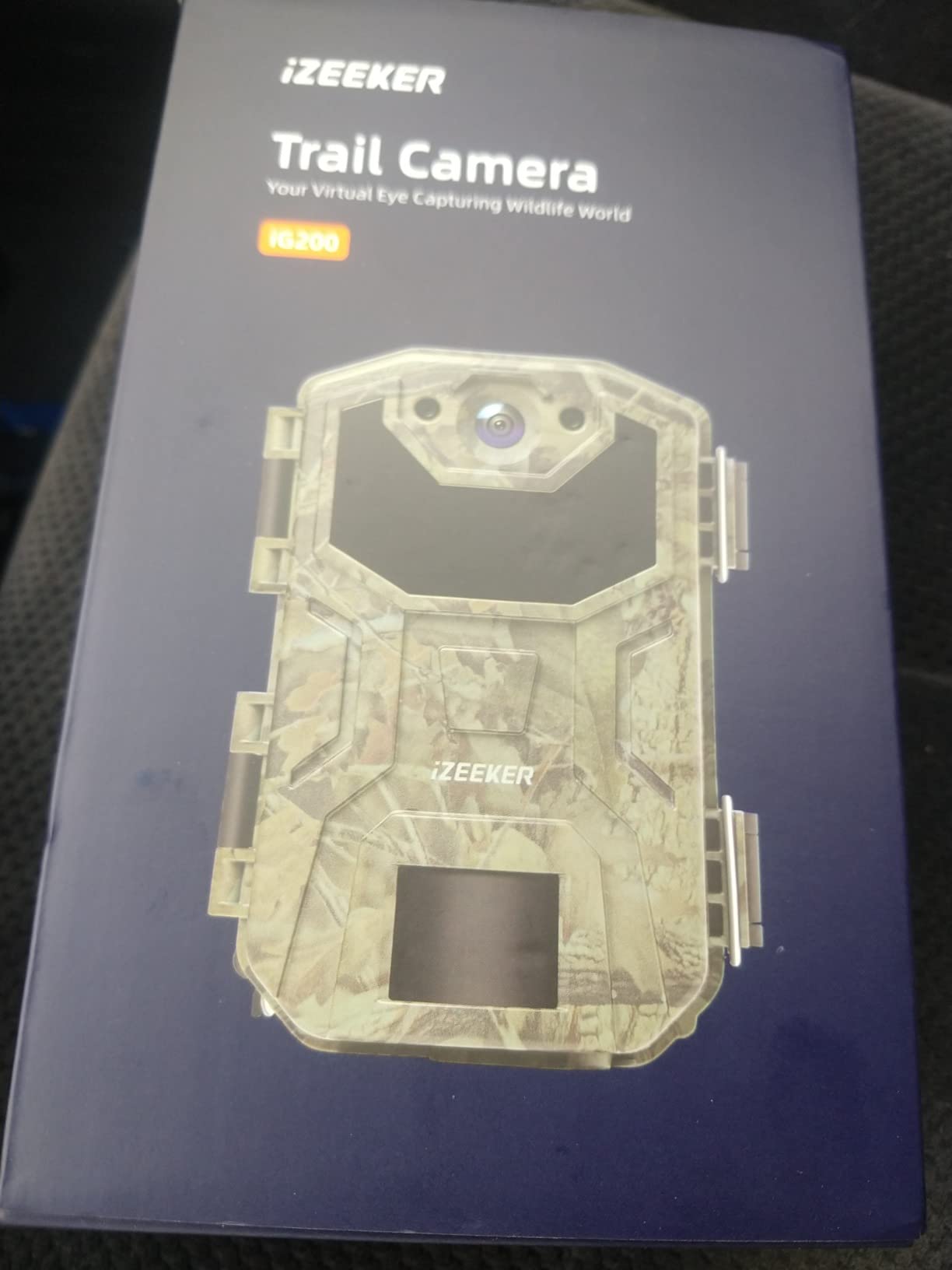
9. iZEEKER iG200 – Budget Pick for No-Glow Coverage With Sound
iZEEKER Trail Camera, HD Game Camera with 940nm No Glow Night Vision Motion Activated 0.2s Trigger Time, Hunting Camera No WiFi, IP66 Waterproof for Wildlife Monitoring Outdoor Security Deer Scouting
36 no-glow IR LEDs to 65ft
0.2s trigger with 3-shot capture
2 inch LCD, side SD slot
Sound recording, IP66 body
Pros
- No-glow night vision at the lowest cost
- Audio recording the pricier options often lack
- Side-mounted SD slot is easy to service
- Illuminated keypad readable in the dark
Cons
- No WiFi
- app or live view
- SD card and batteries not included
- Video caps at 1080p
- Resolution claims conflict between listing and specs
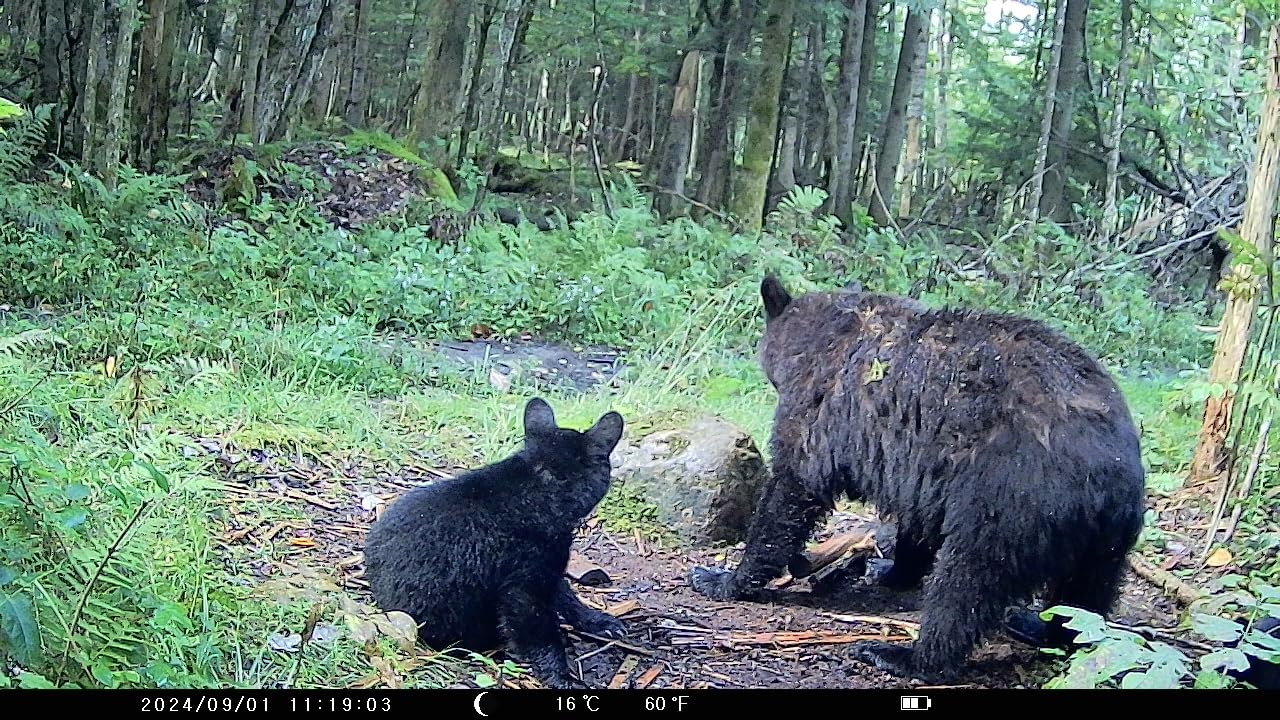
Audio is what separates the iG200 from cheaper cameras in this class, and for security that is not a trivial feature. A microphone that picks up a voice or a vehicle gives a reviewing officer something a silent night image cannot. Reviewers consistently mention the sound quality as a reason the camera feels more capable than its cost suggests.
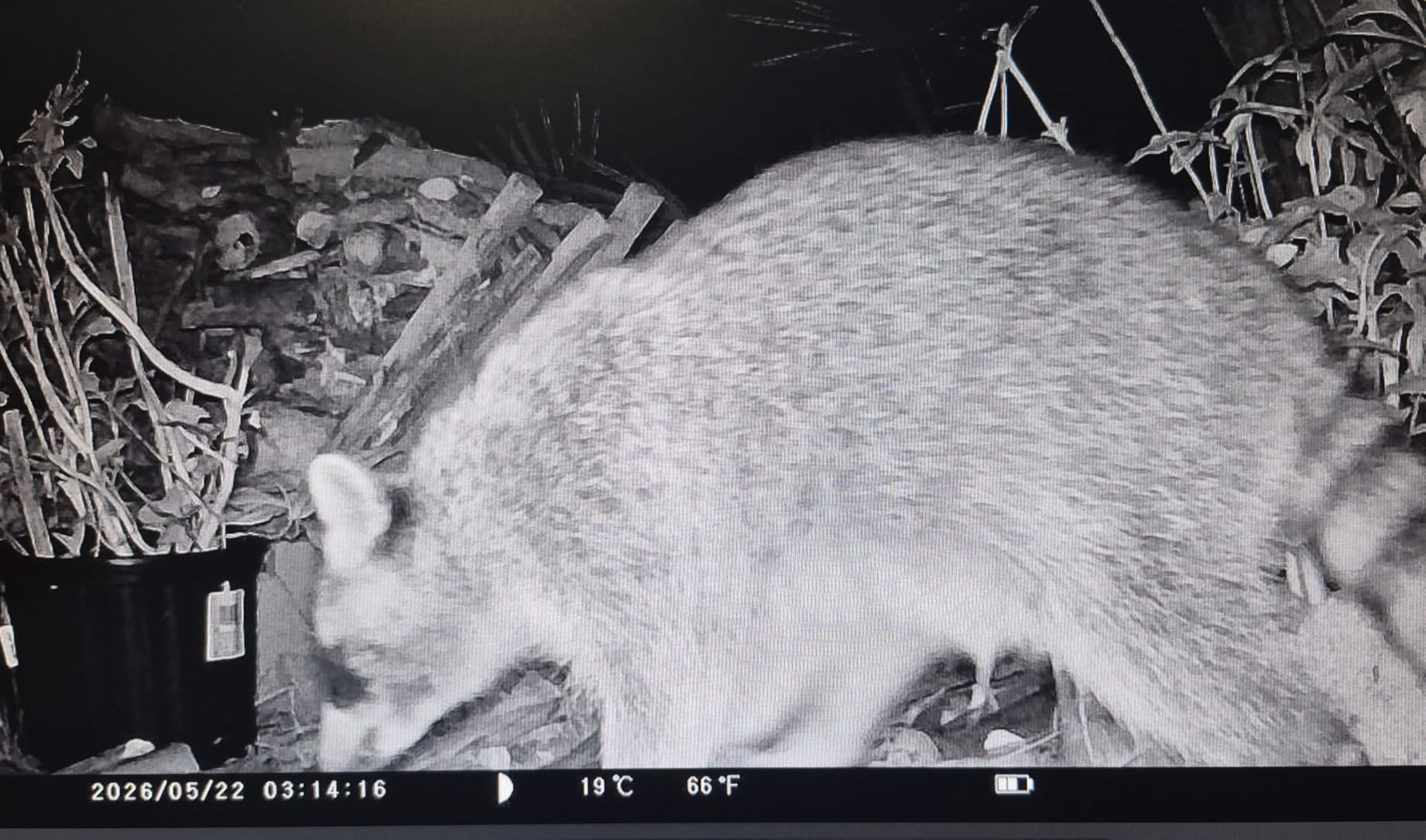
The night side is handled by 36 no-glow infrared LEDs out to 65 feet, and the 0.2s trigger fires three continuous shots, which reliably catches a subject in motion. The clamshell design opens from the bottom, which makes it easy to clear lens condensation, and the illuminated keypad icons mean the menu is readable while you are setting it up in the dark.
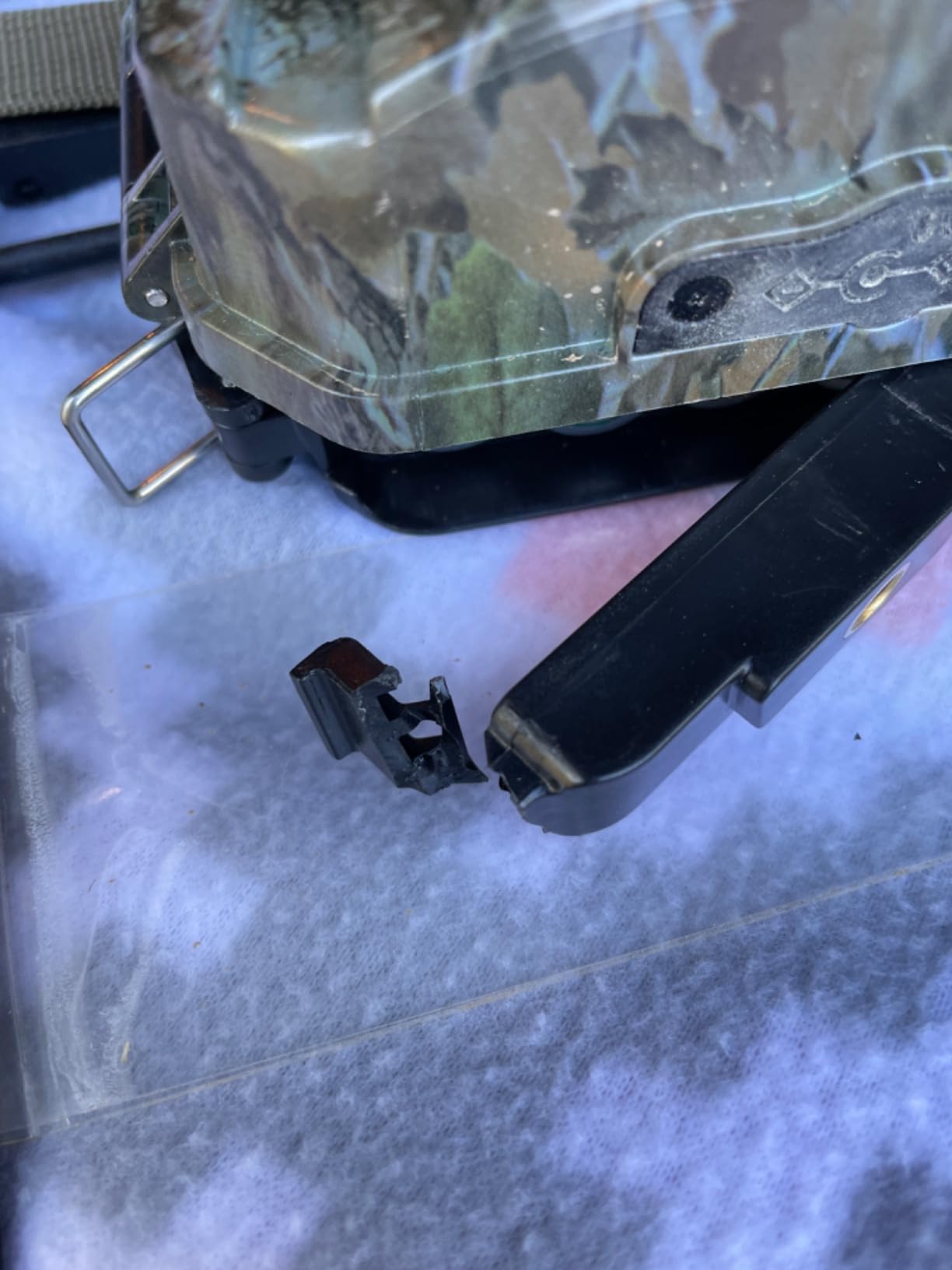
Design details are unusually thoughtful for a budget camera. The front-facing LCD and lens sit on the same face, so adjusting the angle at the mount is straightforward, and the side-mounted standard SD slot makes media swapping much easier than cameras with a card underneath. Loop recording overwrites the oldest files when the card fills, so the camera never simply stops.
Two caveats to note before buying. The SD card and batteries are not included, and the listing resolution claims conflict with the specification block, so treat the printed numbers with suspicion. Video tops out at 1080P, and there is no connectivity of any kind, so this is a walk-up-and-pull camera.
Why it works as a first security camera
It does the three things a first-time buyer actually needs: it triggers fast, it sees in the dark without glowing, and it records sound. The 90 degree angle is narrower than the wide options, so it suits a single doorway or gate rather than an open yard. The IP66 body and the fact that loop recording never stops make it a set-and-forget device.
Where it falls short
No connectivity means no alerts, and the 90 degree field of view means a person can walk around the edge of frame without triggering. There is nothing to tune remotely and nothing to stream. For a single fixed point where you visit occasionally, that is acceptable; for anything time-critical it is not.
10. KJK KJK201 – Best Wide Detection Angle With On-Screen Setup
KJK Trail Camera 36MP 2.7K, Mini Game Camera with Night Vision 0.1s Trigger Time Motion Activated 130°Wide-Angle, Waterproof Trail Cam with 2.0” HD TFT Screen, Hunting Camera for Wildlife Monitoring
130 degree detection angle
0.1s trigger, 2.7K video with sound
22-piece 850nm low-glow to 75ft
2 inch colour TFT screen, IP66
Pros
- Widest detection angle in this roundup
- Sub-0.1s trigger with burst options
- 2.7K video with a noise-reduction speaker
- Colour screen with remote-style buttons needs no app
- Rated from -22 F to 158 F
Cons
- Lowest rating here at 3.9 stars
- 850nm low-glow emitter is visible up close
- No WiFi
- app or live view
- AVI format rather than MP4
The 130 degree detection angle is the widest in this roundup, and for security that is a coverage advantage rather than a novelty. Mounted at a corner it can watch two approaches at once, which means you get effective coverage from fewer units. The trigger is under 0.1s with 1 to 3 shot bursts, the fastest response here.
The 2.0 inch HD TFT colour screen with remote-style control buttons is the feature that makes this the easiest camera to deploy. There is no app, no account and no phone, so it suits anyone who does not want to hand over a smartphone to set up a security camera. The 2.7K video with sound and a noise-reduction speaker is above what most cameras at this level manage.
Temperature range is rated from -22 F to 158 F, which is wider than most competitors and relevant if you are monitoring through a northern winter. The compact body is easier to conceal and easier to carry between positions, and the PIR efficiency is claimed to support up to 17000 images per battery cycle. A stand base, strap and four alkaline batteries are included.
We ranked this last, and the reason is the 850nm low-glow infrared. It throws a faint red emitter that is visible to someone standing close, which directly conflicts with the anti-detection requirement in a security context. The 3.9 star average with 12 percent one-star reviews is also the weakest here, and reviewers flag inconsistent resolution claims between the title and the specification block.
Why it works for a wide-area mount
If your concern is a person approaching from more than one direction, the 130 degree angle covers more ground per mount than anything else on this list and cuts the number of cameras you need. The on-screen setup means anyone in the household can adjust it, and the wide temperature rating keeps it running when cheap units quit. Video at 2.7K with audio is a genuine step up for evidence.
Where it falls short
The visible red emitter is the dealbreaker for covert security use, since a trespasser who spots the camera may simply avoid it or disable it. There is no connectivity, and video is recorded in AVI rather than MP4, which is less convenient to play back and share. The rating and the specification conflicts also mean you should judge the real output rather than the printed numbers.
How to Protect Your Trail Camera From Theft
Camera theft is a recurring thread on the r/trailcam boards, and it is the single most common reason an owner gives up on these devices. A camera that documents a theft is not much use if the thief takes the camera. Six steps make a large difference.
First, mount higher than feels reasonable. Most thefts are opportunistic, and a camera at 6 feet on a fence post is not reachable from the ground without a step. Higher mounting also improves the camera angle over a vehicle bed or a fence line rather than across a lawn.
Second, run a security cable through the mount and around the structure behind it. A cable alone does not stop a determined thief, but it converts a ten-second grab into a two-minute job, which is usually long enough to be noticed.
Third, use a lockable camera case or an armored housing with a keyed or combination lock for cameras mounted in easy reach or in an area with repeat problems. This also protects against weather and vandalism.
Fourth, choose a mount that resists removal. Screw-in or bolted mounts beat the nylon straps several of these cameras ship with, and strap failure is a documented complaint. Where you must use a strap, run it through the camera’s own strap loops twice.
Fifth, consider the SD slot. A side-mounted card is faster to remove and easier to secure than one underneath, and a camera that records to onboard memory plus cloud cannot be made useless by pulling a card. Tamper-resistant housings close the case entirely.
Sixth, check in on a schedule rather than waiting for an alert you may not receive. If you cannot reach the camera monthly, the theft is discovered when it no longer matters.
Where to Mount Cameras for Security
Placement decides more than the camera does. Start with entry points rather than with open space: a driveway mouth, a gate, a porch, a side gate and a back fence line are where a person actually enters, and a camera pointed at an empty lawn records nothing useful.
Height is the next decision. Mounting between 6 and 8 feet gives you a downward angle that captures a full body and a vehicle bed, and it keeps the camera out of casual reach. Mounting higher than that improves the view across a wider area but reduces facial detail, so there is a real limit to how high is better.
Angle matters as much as height. Avoid pointing a camera directly at a public road or a neighbour’s property, both because it produces nothing useful and because recording law and privacy expectations differ by state. Overlap the corners of your coverage so a person moving quickly between two views does not disappear in a dead spot.
Finally, test at night before you leave. Set the camera, walk the approach yourself in the dark, and look at the resulting clip. If you cannot identify a person in clothing at the distance you care about, move the camera closer or add a second one. The detection range on the box is not the identification range in your yard.
If you want a wider look at the hardware before committing, our cellular trail camera guide covers the connected options in more detail, and our hunting-focused roundup explains the detection tuning that also applies to a security deployment.
Cellular vs SD Card vs WiFi: Which One Do You Need
Choose a cellular camera if you need to know within minutes. It transmits over 4G LTE and alerts your phone from anywhere, which is the only category that supports real intervention. The cost is a monthly data plan per camera, and on a four-camera property that recurring figure usually exceeds the hardware cost within a couple of years. Reviewers running two to six cameras report monthly bills in the high teens to thirties, and that is the number to plan around rather than the camera price.
Choose an SD card camera if the property is near enough to walk to. It records everything to a card, draws less power because there is no radio transmitting all night, and costs nothing to run. On long deployments the lower power draw is a genuine advantage, which is why the GardePro A3S holds up so well unattended.
Choose a WiFi or hotspot camera if you want live view without a subscription and you are always within range. The GardePro E6 and the MAXDONE both do this well. The compromise is that live view drops off past 40 to 55 feet, so it is a near-field tool, not a remote one.
Also consider whether you want an internet-connected camera at all. Some owners avoid them entirely for privacy, and a non-connected camera records the same evidence locally with no account, no app and nothing transmitting from their property. For a fixed driveway where a card pull every few days is acceptable, that is a defensible position.
No-Glow vs Low-Glow Flash and Why It Matters for Security
No-glow, or 940nm, infrared is invisible to the human eye. A 940nm emitter lights the scene in a way you cannot see, so a trespasser standing a few feet from the camera has no visual cue that it exists. For a security application this is the requirement, not a preference, because a visible light source tells an intruder exactly where the camera is and what it covers.
Low-glow, or 850nm, is cheaper and throws a faint red emitter that is visible at close range. Two cameras here use it: the Moultrie Edge 2 and the KJK. On the Moultrie the flash is described as discreet, which is a fair characterisation for a camera mounted near an occupied building. On the KJK, reviewers are explicit that the red dot gives the camera away.
Flash range is the other half of this. A 100 foot no-glow range covers most of a yard from one mount. A 65 foot range with a visible emitter covers a gate and little else. Note also that night range and detection range are different measurements, and only the first one tells you whether you will be able to see anything.
Battery, Solar and Cold Weather Guide
Most of these cameras run on 8 AA batteries, and alkaline cells lose capacity in cold conditions. Lithium AA cells hold their output much better in winter, and forum users consistently report that switching from alkaline to lithium extends their winter monitoring window substantially. The WOSODA four-pack is the exception here, running on 4 AAs per unit.
Solar changes the maintenance picture entirely. Three cameras here have an integrated panel, and the MAXDONE pairs its panel with a 6000mAh cell while the SEHMUA and VOOPEAK use 7800mAh cells. The VOOPEAK is rated for up to 12 months per charge in sufficient sunlight, which is the strongest claim in this group, and reviewers report it holding up in cold weather.
The other route is a rechargeable lithium pack or a separate panel. Several cameras here accept a compatible solar panel as an accessory, and the GardePro A3S and E6 both work with the GardePro SP350 panel sold separately. Panels need direct sun, so a north-facing or heavily shaded post will underperform no matter what the specification says.
One practical warning from the reviews: transmitting over a weak cellular signal is the biggest battery killer there is. A camera straining to upload will drain far faster than one writing to a card, so check signal strength at the mount before committing to a cellular install, and expect shorter battery life in winter regardless of chemistry.
Frequently Asked Questions
Are trail cameras good for home security?
Yes, for monitoring a driveway, gate, cabin, porch or back fence line where power and WiFi are not available. They run for months on batteries, record with a fast trigger and invisible 940nm no-glow flash, and work in any weather. Their limitation is that most record to an SD card and cannot alert you, so cellular models are needed if you want to know within minutes.
What is the best trail camera for home security?
The MAXDONE PH970S is the best overall pick because its solar panel and 6000mAh battery remove battery servicing, it triggers in 0.1s with a burst mode that catches a walking person, and it gives app live view out to about 55ft with no monthly fee. If night identification matters most, the GardePro A3S with its Sony Starvis sensor and 100ft no-glow range is the stronger choice.
Can I use a trail camera as a security camera?
You can use one on your own property for your own footage, and it covers driveways, gates, cabins and outbuildings that wired or WiFi cameras cannot reach. Check your state wildlife agency rules and local recording and audio-consent laws first, since trail cameras sold for hunting are increasingly restricted in some states and audio recording adds its own legal considerations.
How can I protect my trail camera from theft?
Mount it 6 to 8ft high, run a security cable through the mount and around the structure, use a lockable camera case, choose a bolted mount rather than a nylon strap, keep the SD slot in a tamper-resistant housing, and check in on a schedule. Theft is opportunistic, so height and a cable are usually enough to deter it.
How much does a cellular trail camera cost per month?
It varies by brand and by how many cameras you run. The SEHMUA RBX-H10 plans start at 19.90 per month per camera after its trial, the Moultrie Edge 2 starts at 9.99 per month with no contract, and users running two to six cameras report monthly totals in the high teens to thirties. On a multi-camera property the data plan usually costs more than the cameras themselves over a few years.
What SD card does a trail camera need?
Most of these cameras accept standard SD, SDHC and SDXC microSD cards. Capacity limits vary widely: several models here support up to 512GB, the WOSODA four-pack caps at 32GB, and the SEHMUA accepts up to 128GB. For a high-traffic security location, a larger high-endurance card reduces how often you need to pull footage.
Do trail cameras work at night for people?
They do, and detection range and identification range are different numbers. A camera can trigger on a person at 100ft and still produce an unreadable image. What makes a person identifiable at night is a 940nm no-glow flash, a 75ft or greater night illumination range, and mounting the camera close enough to the approach. The GardePro A3S and GardePro E6 perform best in this respect.
Why are states banning trail cameras?
Restrictions generally target their use for hunting and scouting rather than their use for property security, driven by concerns about wildlife habituation, invasive species detection practices and privacy around audio recording. Rules vary by state and change from year to year, so check your state wildlife agency guidance before deploying one, and check local recording laws if you plan to point it near neighbouring property.
The Verdict: Which Trail Camera to Buy in 2026
For most people securing a property, the best trail cameras for security are the MAXDONE PH970S and the GardePro A3S, and they solve different problems. The MAXDONE is the one you install and then stop thinking about, because solar power and app live view with no subscription cover a driveway or a gate without a schedule. The GardePro A3S is the one you choose when the only thing that matters is the quality of the night footage and the invisibility of the camera.
If you need to respond rather than record, the ladder runs from the GardePro E6 for short-range live view, through the Moultrie Edge 2 for cellular alerts on a US network, to the VOOPEAK for remote pan-and-tilt aim and the SEHMUA if you want to speak to someone. Each adds a monthly plan, and on a multi-camera property that recurring cost is the number to budget first.
Whichever you pick, test the angle at night before you leave it. Set the camera, walk the approach in the dark, and check that a person is identifiable in the clip. If the best trail cameras for security are placed at the right height on the right approach, they will document what a conventional home security camera cannot reach.