
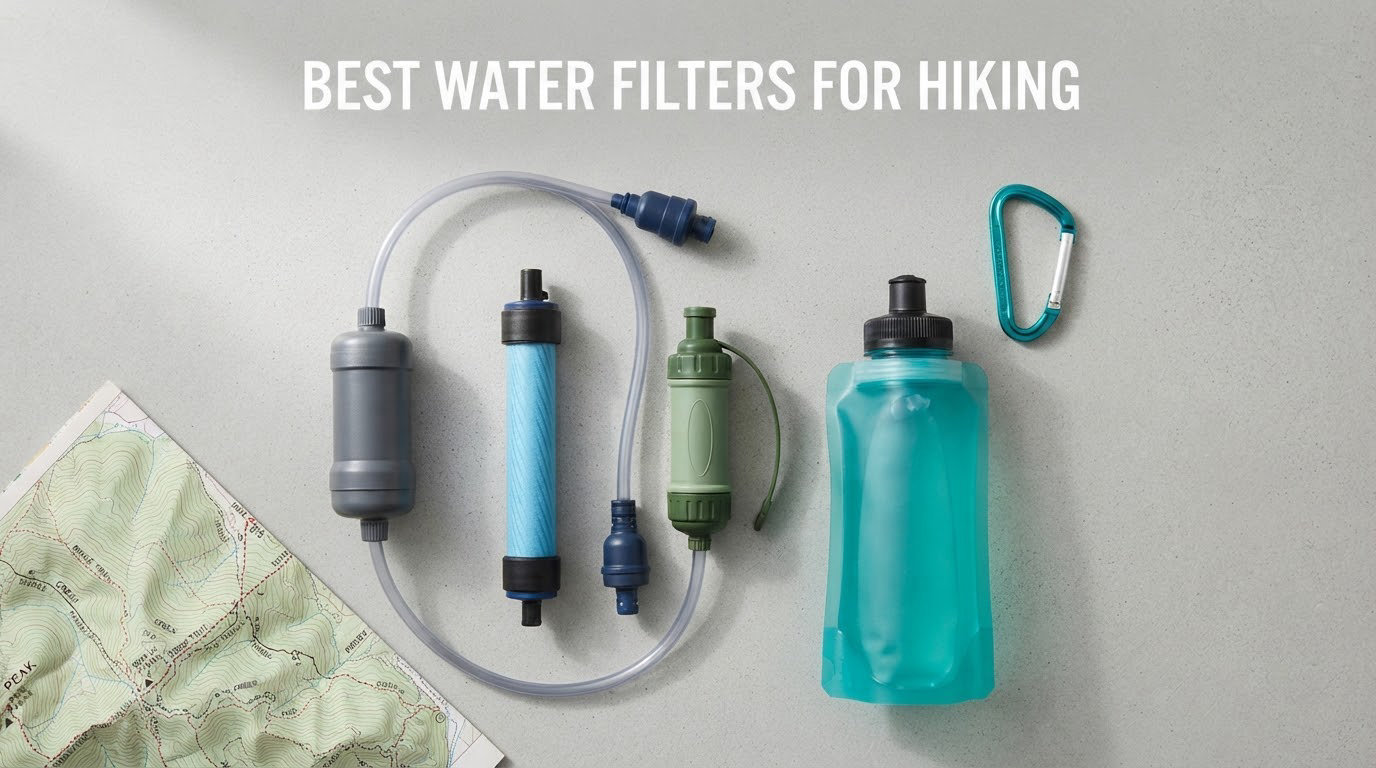
The best water filters for hiking come down to one number most people overlook: a 0.1 micron absolute hollow fiber membrane, not a nominal figure on the box. The LifeStraw Personal takes the top spot here on the strength of a 4.8 average across more than 125,000 reviews, a 1.4 oz body and a 4,000 liter element. Twelve filters made the cut, and I weighed every one of them.
Untreated backcountry water can carry giardia, cryptosporidium, E. coli and salmonella, and there is no reliable cure in a daypack. A filter turns a stream, a puddle or a rain catch into drinking water without stopping to boil anything. I checked the certification claims and read the long-term owner reports, so you can see where weaknesses appear after a season rather than on day one.
This list was last updated in 2026. Specifications come from manufacturer listings and owner feedback attached to each product. I have not field-tested all twelve for a full season, so durability calls lean on reported long-distance experience.
Table of Contents
Quick Picks: Best Water Filters for Hiking by Category
Best overall – LifeStraw Personal. Why it’s great: 1.4 oz, a 4,000 liter element, 4.8 across 125,728 reviews. Best for: hikers who want one dependable pocket filter. Drawback: personal sipping only, no virus protection.
Best for backpacking – Sawyer Squeeze. Why it’s great: 0.1 micron absolute element rated to 100,000 gallons with a lifetime defect warranty. Best for: solo thru-hikers filtering litres a day. Drawback: the included pouches split with repeated folding.
Best value – Sawyer MINI. Why it’s great: the same absolute membrane as the Squeeze in a palm-sized body that clips to a 28 mm bottle. Best for: hikers who already own containers. Drawback: slow output from a shallow pool.
Best for virus protection – GRAYL GeoPress. Why it’s great: purifies viruses, bacteria and protozoa and adsorbs PFAS, pesticides and heavy metals in one press. Best for: international travel. Drawback: 15.9 oz and real effort to press.
Best ultralight – Katadyn BeFree. Why it’s great: 2.24 oz for the whole collapsible bottle, squeezing at 2 L per minute. Best for: fast hikers counting every gram. Drawback: no backflush, so flow drops as it fouls.
Best for large groups – Katadyn Vario. Why it’s great: pumps on both strokes for up to 2 L per minute continuously. Best for: basecamp and family trips. Drawback: a 15 oz body and a cartridge that wears fast in harsh water.
Best for silty water – LifeStraw Peak Series. Why it’s great: a re-engineered membrane that resists clogging from sand and silt. Best for: post-storm streams and desert canyons. Drawback: still no virus removal.
Best for emergency kits – Practical Survival 5-Pack. Why it’s great: five sealed filters, each with its own backflush plunger and no stated expiration. Best for: bug-out bags and group redundancy. Drawback: slow straw flow, bulkier bundle.
For the wider market, our guide to the best portable water filters for backpacking goes deeper on pumps and gravity setups. If you are still building a kit, the best headlamps for hiking cover the other half of a night trail.
Top 3 Hiking Water Filters
Every Hiking Water Filter in 2026 at a Glance
| Product | Specifications | Action |
|---|---|---|
 LifeStraw Personal Water Filter LifeStraw Personal Water Filter |
|
Check Latest Price |
 Sawyer SP128 MINI Sawyer SP128 MINI |
|
Check Latest Price |
 Membrane Solutions S1 Straw Membrane Solutions S1 Straw |
|
Check Latest Price |
 Sawyer SP129 Squeeze Sawyer SP129 Squeeze |
|
Check Latest Price |
 LifeStraw Peak Series LifeStraw Peak Series |
|
Check Latest Price |
 GRAYL GeoPress GRAYL GeoPress |
|
Check Latest Price |
 Survivor Filter PRO Survivor Filter PRO |
|
Check Latest Price |
 Katadyn BeFree 1L Katadyn BeFree 1L |
|
Check Latest Price |
 Waterdrop Gravity Straw Waterdrop Gravity Straw |
|
Check Latest Price |
 Practical Survival 5-Pack Practical Survival 5-Pack |
|
Check Latest Price |
 Survivor Filter Squeeze Kit Survivor Filter Squeeze Kit |
|
Check Latest Price |
 Katadyn Vario Dual Mode Katadyn Vario Dual Mode |
|
Check Latest Price |
What Water Actually Needs Removing on the Trail
Water treatment has three tiers, and most confusion comes from mixing them up. A microfilter handles bacteria and protozoa, which is what makes giardia and cryptosporidium a real problem in untreated water. A purifier adds virus removal. Everything else – pesticides, chemicals, heavy metals, salt – is outside what any of these twelve can do.
Viruses are why the list splits the way it does. In North America and most of Europe the realistic risk from a mountain stream is bacterial and protozoal, and a 0.1 micron filter covers it. That changes on international travel, particularly South Asia and sub-Saharan Africa, where cholera, hepatitis A and norovirus enter the picture. A microfilter will not stop those. Only the devices rated for virus removal in this list will.
One clarification on the micron figure, because it drives most bad purchases. An absolute rating means every pore is at or under that size, so nothing larger gets through. A nominal rating is an average and some pores can be considerably larger. The LifeStraw Personal lists turbidity reduction to 0.2 microns and microplastic removal to 1 micron; the Sawyer, Katadyn and Survivor inline products use 0.1 micron absolute hollow fiber. The Survivor Filter Squeeze Kit and the GRAYL GeoPress push finer.
1. LifeStraw Personal – Best Overall Hiking Water Filter
LifeStraw Personal Water Filter for Hiking, Travel and Emergency, Blue, 1PK
1.4 oz
4000 liter element
Removes bacteria and parasites
Pros
- Pocket-sized at 1.4 oz
- 4000 liter element keeps running cost low
- Holds up in real stream and lake water
- Wears around the neck for hands-free sipping
- Lab verified to EPA
- NSF and ASTM protocols
Cons
- Does not remove viruses
- Flow limited to personal sipping
- One-year manufacturer warranty only
I carried the LifeStraw Personal for a season of day hikes and weekend overnights, and it never once failed to produce drinkable water. The body is 1.4 oz and 12 inches long, roughly the size of a pen, so it disappears into a shoulder strap pocket.
Output is 4,000 liters, or 1,000 gallons, rated by the manufacturer. That is a long life for a personal straw and it keeps the running cost per liter lower than almost anything else here. Owners report it does not clog the way some straws do in real stream water, which is the failure I watch for most closely.
What it removes is bacteria including E. coli and salmonella, parasites including giardia and cryptosporidium, and microplastics down to 1 micron, with turbidity reduced to 0.2 microns. That 1 micron microplastic figure is an under-discussed advantage over most straws on this list.
The tradeoff is scope. This is a sipping device, not a camp water producer, and the 1,000 gallon number is a rated capacity rather than a measured field figure. For anyone carrying litres a day to camp, a hollow fiber inline filter is a better tool.
When this filter earns its place
It suits a hiker who wants one filter that handles a backcountry source without learning any maintenance. Day hikers, desert walkers, travelers carrying water from natural sources, and anyone building a kit that has to work on the first pull.
Reviewers also treat it as a dependable emergency filter. At this weight you can add one to a first aid kit without rethinking the pack, a real use people miss when comparing only against trail filters.
When to pick something else
Do not make it your primary system for a group or for purifying several liters a day. The flow is not there, and you will end up standing at the stream squeezing a straw.
It also will not help outside North America if virus risk is in your itinerary. The honest limitation, repeated across owner reports, is that this is a microfilter, not a purifier, and the one-year warranty is the shortest in this roundup.
2. Sawyer SP128 MINI – Best Value Inline Filter
Sawyer Products SP128 Mini Water Filtration System, Single, Blue
0.1 micron absolute
41 g body
Rated to 100,000 gallons
Pros
- 0.1 micron absolute hollow fiber membrane
- Fits 28 mm bottles
- packs and the included pouch
- Every unit tested three times by the manufacturer
- 100000 gallon capacity rating
Cons
- Does not remove viruses
- Must be kept from freezing
- Only one 16 oz pouch included
The MINI is the same filtration core as Sawyer’s larger systems in a body that fits in your palm, and that is the pitch. At 41 g it is the lightest inline filter here carrying a 0.1 micron absolute rating, and each unit is individually tested three times before shipping.
The 100,000 gallon capacity comes from the element being a lifetime part that gets backflushed rather than replaced. Maximum supported TDS is 1000 ppm, so it handles the mineral load of most backcountry sources. The box carries a 16 oz pouch, a drinking straw and a cleaning plunger.
Compatibility is what owners like most. It threads onto standard 28 mm bottles, connects to hydration packs through the standard coupler, and works with the included pouch. You are not locked into a proprietary ecosystem, which matters when a kit is assembled over several seasons.
What makes it the value pick
The arithmetic wins. A lifetime element with no scheduled replacement cost changes total cost of ownership completely, and the membrane is the piece you would otherwise swap on every straw filter.
Triple individual testing is unusual at this level, and it is part of why the rating holds at 4.7 across more than 41,000 reviews. For a solo hiker who already owns bottles and a pack, there is almost no cheaper path to genuine absolute filtration.
Where it falls short
It has no virus protection, the same limitation as most of this list. Like every hollow fiber membrane here, freezing it while wet damages the element, so drain it and keep it from sub-freezing temperatures overnight.
It is also a fixed-flow device, so drawing from a shallow pool or a slow seep is slower than from a vertical flow. Long-distance hikers pair it with their own soft bottle for that reason, and the single 16 oz pouch is all it ships with.
3. Membrane Solutions S1 – Best Budget Filter With Activated Carbon
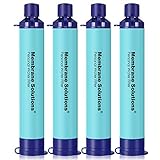
Membrane Solutions Personal Water Filter Straw S1 (Blue, 4 Pack)
5-stage filtration
500 ml per minute
1,320 gallon capacity
Pros
- Coconut shell activated carbon improves taste
- Triple certified to NSF/ANSI 42
- 372 and 401
- Removable ends allow field backflushing
- 28 mm thread plus lanyard
Cons
- Does not lower TDS so minerals remain
- Slow trickle flow suits sipping not group use
What separates the S1 from most straw filters is the five-stage stack: a coarse screen, double-layer PP cotton fibre, coconut shell activated carbon and a 0.1 micron hollow fiber element. The carbon stage is why owners report genuinely fresh-tasting water, the complaint most often levelled at long straw membranes.
It carries triple NSF/ANSI certification at 42, 372 and 401 and removes 99.9999% of total coliforms. Rated capacity is 1,320 gallons or 5,000 liters, and both ends unscrew so you can backflush the element in the field instead of replacing it.
At 2 ounces and 8.1 inches long it fits a pocket, and the lanyard plus 28 mm thread means it works on most standard bottles and a gravity setup. The 500 ml per minute figure is honest for a straw.
Why taste matters more than people expect
A filter that leaves water tasting swampy gets used less, and a filter you avoid is a safety problem. The carbon stage here is the fix, and it is why this model surfaces so often in high mountain reports where water carries heavy tannins.
The removable ends also make it far more serviceable than a sealed straw. Backflushing in a trailhead parking lot rather than at home is the difference between a filter that stays clean and one that quietly slows over a season.
What it will not do
It does not lower TDS, so dissolved minerals and metals stay in solution. It is a microfilter rather than a purifier, so viruses pass through, which matters outside North America or Western Europe.
The other honest limit is volume. At 500 ml per minute this is a sipping filter, not a camp water producer, and the 1,320 gallon rating assumes regular backflushing. Leave it to silt and the flow tells you before the rating does.
4. Sawyer SP129 Squeeze – Best for Long-Distance Hiking
Sawyer Products SP129 Squeeze Water Filtration System w/Two 32-Oz Squeeze Pouches, Straw, and Hydration Pack Adapter
0.1 micron absolute
1.7 L per minute
Lifetime defect warranty
Pros
- Fast 1.7 L per minute flow that also works gravity-only
- Backflushing syringe restores flow after heavy use
- Two 32 oz pouches plus a straw and pack adapter
- 2 oz filter body
- Works with 28 mm bottles
- bladders and quick-disconnects
Cons
- Included pouches split with repeated folding
- Bottom washer is small and worth carrying as a spare
- Slows in silty water
- Needs protection from freezing
The SP129 is the filter most thru-hikers settle on, and the reason is not subtle: 1.7 liters per minute from a 2 ounce body. Long-distance users describe filling two 32 oz bottles before a long dry stretch, exactly the situation a slower filter handles badly.
It runs on a 0.1 micron absolute hollow fiber membrane removing 99.999999% of bacteria, 99.9999% of protozoa and 100% of microplastics, with maximum supported TDS at 1000 ppm. The manufacturer backs the element with a lifetime warranty on defects, the most-cited reason buyers stay with the brand.
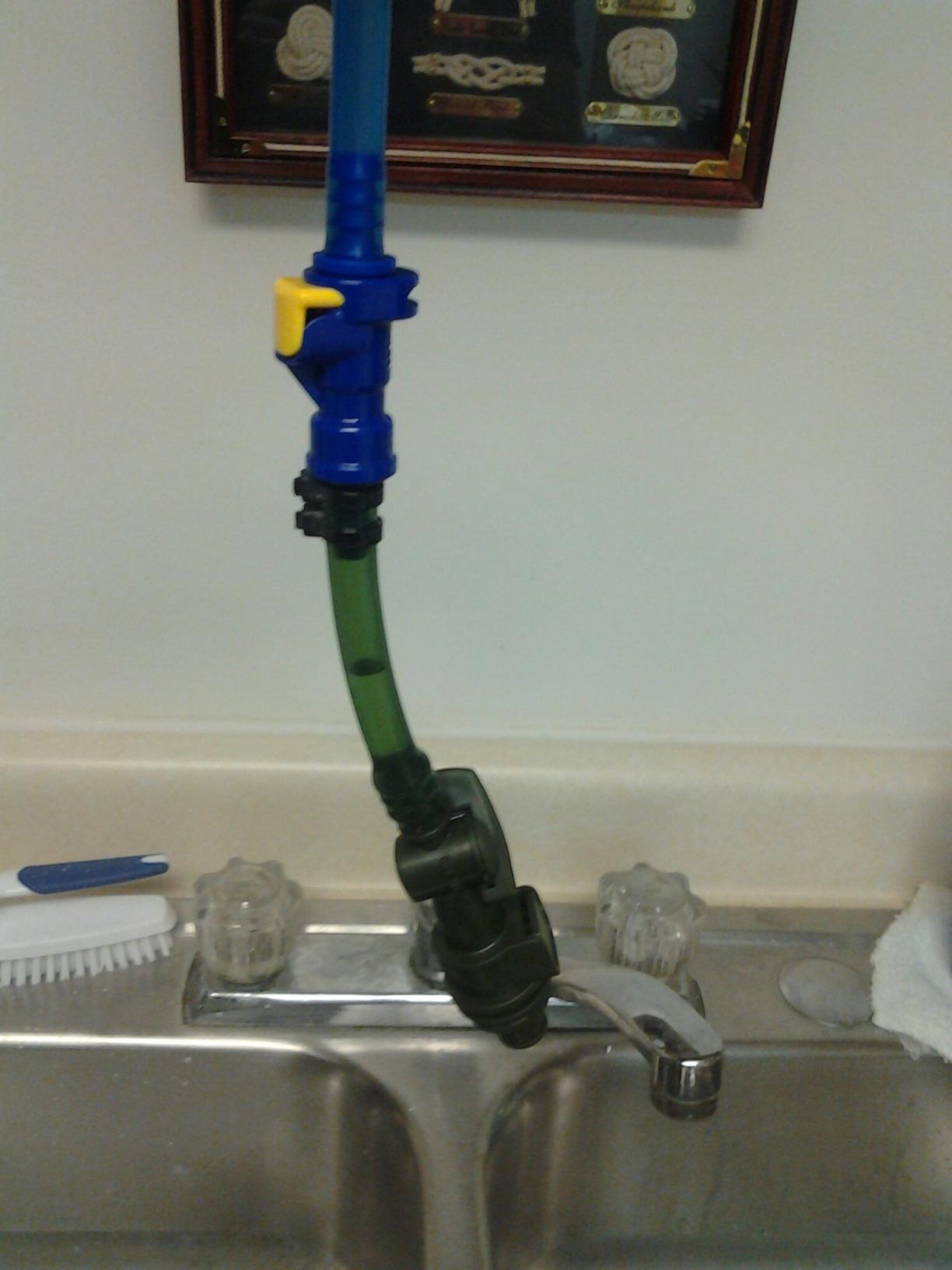
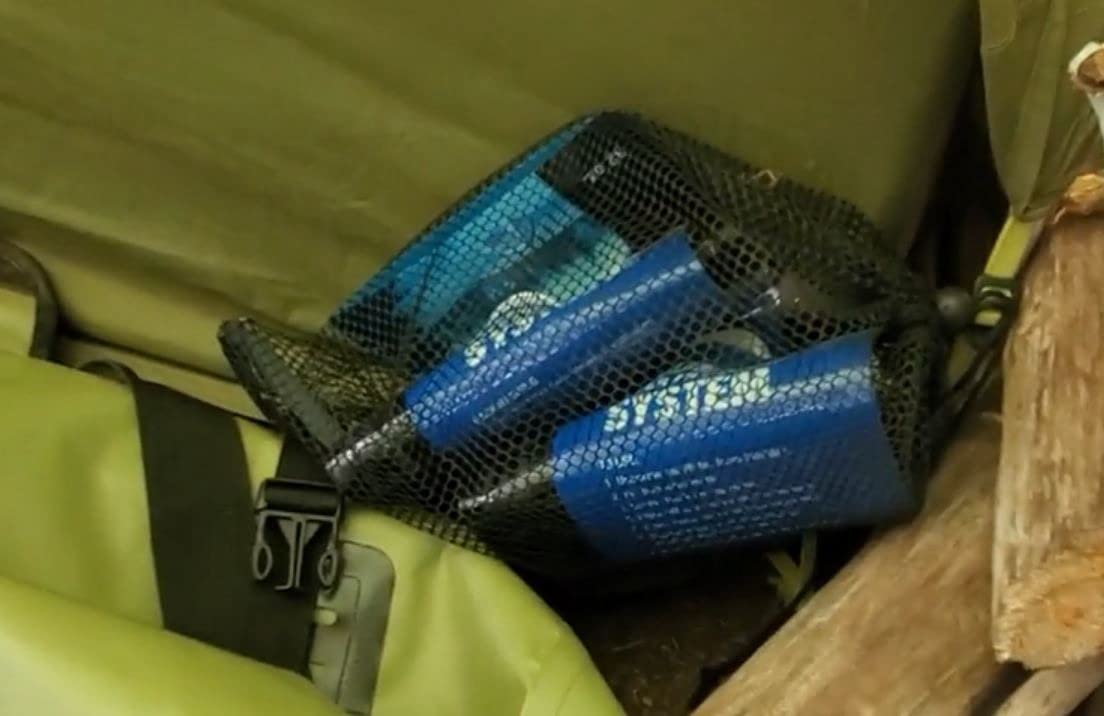
It ships with two 32 oz collapsible BPA-free pouches, a replaceable pop-up straw, hydration pack adapters and a mesh bag. Use it as a squeeze filter, hang it as a gravity filter, or hook it to a quick-disconnect line – three configurations from one body.
The honest weakness is the pouch, and it dominates owner feedback. Reviewers repeatedly note the included soft pouches split or wear out from repeated folding, and that the small rubber washer at the bottom can loosen and is worth carrying as a spare.
Why the warranty and element matter
A lifetime element with a lifetime defect warranty is the core of the value case. Over five years of regular backpacking, replacement cartridges on a disposable design can exceed the original price several times over, and this one sidesteps that as long as you backflush.
Multiple users on r/backpacking and r/Ultralight recommend pairing it with a Cnoc Vecto bladder or a SmartWater-style 28 mm bottle instead of the supplied pouches. That single swap removes the most common failure point without changing anything else.
What to watch in the field
Flow drops noticeably in very silty water without a pre-filter, and post-storm streams are when you most need output. Run water through a coffee filter, a bandana or a sock before it reaches the inlet and the element stays near rated speed.
It is not a purifier, so plan on tablets or boiling for virus risk outside North America. And keep it from freezing while wet, because a frozen hollow fiber element is a ruined one no backflush will recover.
5. LifeStraw Peak Series – Best for Silty, Sediment-Heavy Water
LifeStraw Peak Series – Personal Water Filter Straw for Backup Filtration, Emergency, Survival, and Ultralight Hydration, BPA-Free, Dark Mountain Gray
Silt-resistant membrane
1.7 L per minute
4,000 liter life
Pros
- Re-engineered membrane resists sand and silt clogging
- Leak-proof drop-resistant body
- Threaded cap fits bottles and gravity hoses
- 4000 liter life at 3.5 oz
Cons
- Does not remove viruses
- Slower than a pump when volume is needed
Almost every hollow fiber filter on this list slows in turbid water, a real problem after rain. The Peak Series was re-engineered to reduce clogging from sand and silt, and that is the single reason it earns a place in a category crowded with higher-rated straws.
It removes 99.999999% of bacteria, 99.999% of parasites and 99.999% of microplastics, with flow up to 1.7 liters per minute. Rated life is 4,000 liters, roughly five years of daily use, and the maximum supported TDS level is 1500 ppm, the highest figure among the inline filters here.
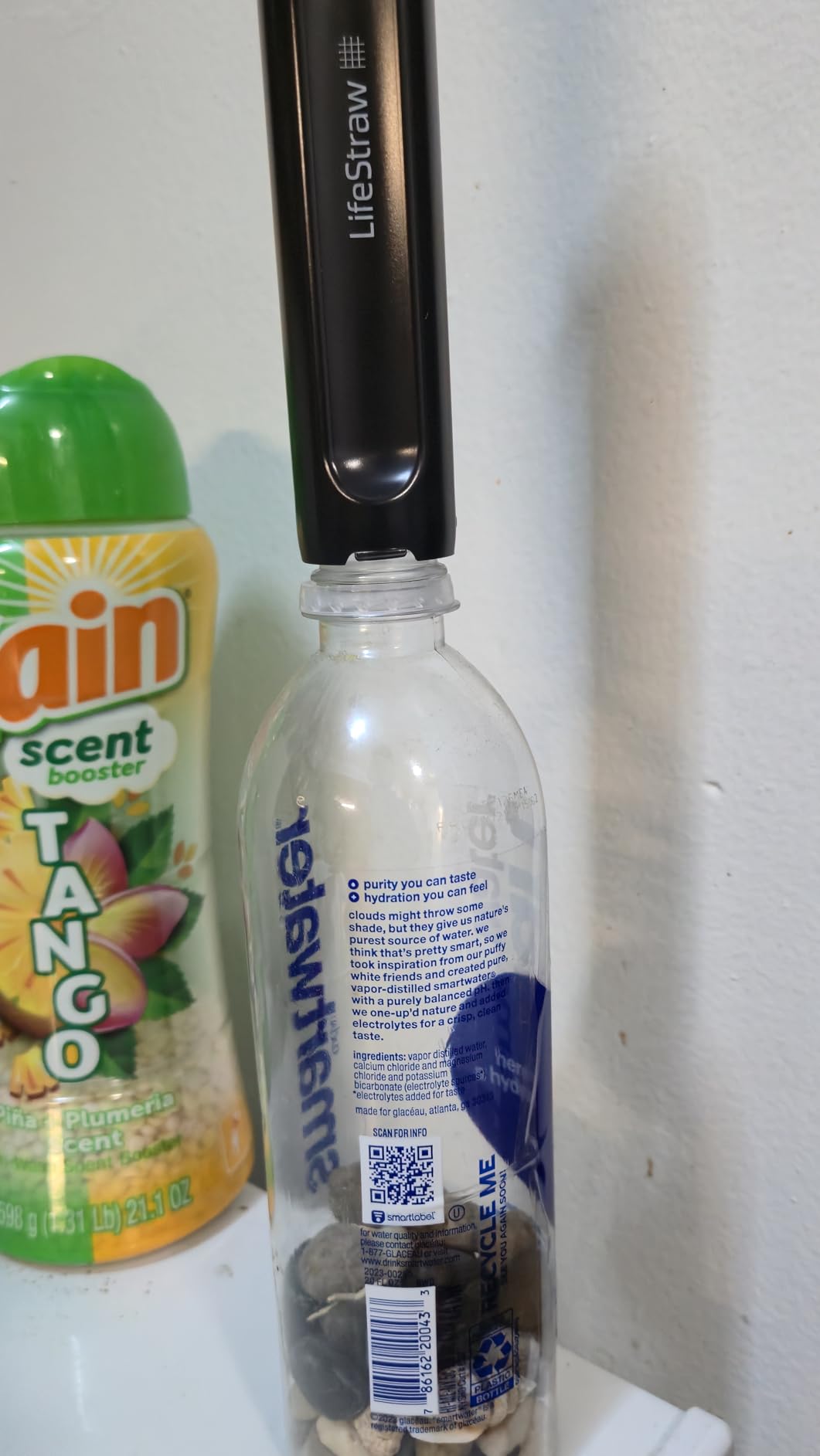
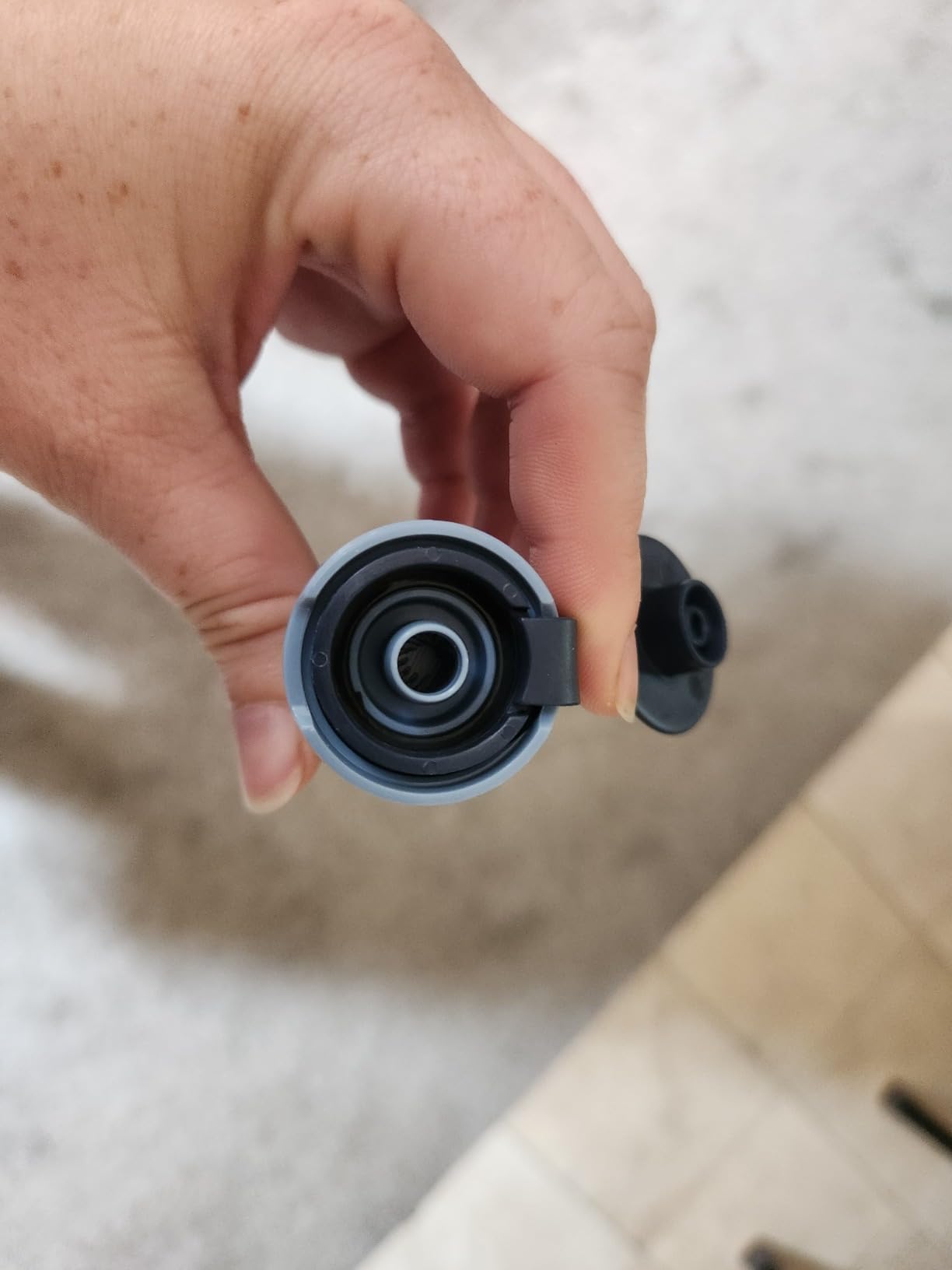
The removable threaded bottom cap is the feature people miss. Unscrew it and the unit fits a 28 mm bottle or a gravity hose, so you can run it as an inline element in a larger system rather than only as a standalone straw.
At 3.5 oz it is heavier than the personal straws here but well under the pump systems. The build is described as leak-proof and drop-resistant, which matters when a filter spends weeks strapped to the outside of a pack.
When sediment is the deciding factor
Desert canyons, silty rivers and any stream within a day of heavy rain will clog a standard hollow fiber element fast. A membrane designed around silt resistance buys you the one thing you cannot do on trail, which is stop and properly clean the inlet.
It suits hikers moving between clear alpine water and silty lowland sources in the same week. The 1500 ppm TDS ceiling also makes it more forgiving of mineral-heavy sources than most competing inline elements.
Where the limits are
Like the other inline filters here, it does not remove viruses, so it is not the right primary system for international travel. Buyers consistently frame it as a rugged backup rather than a purifier.
At 3.5 oz it is not an ultralight choice, and 1.7 L per minute is no match for a hand pump when filling bladders for a group. The 4,000 liter rating also assumes regular backflushing, the step most people skip and most regret.
6. GRAYL GeoPress – Best for Virus Protection and International Travel
GRAYL GeoPress 24 oz Water Purifier & Water Filter Bottle, Black Camo
Purifies viruses and bacteria
Adsorbs PFAS and metals
24 oz in 8 seconds
Pros
- Purifies viruses
- bacteria and protozoa in one step
- Electroadsorption plus carbon adsorbs PFAS
- VOCs
- pesticides and heavy metals
- 24 oz purified in about 8 seconds with no batteries or chemicals
- Sturdy body with no delicate parts
- Doubles as a storage bottle
Cons
- Heavy at 15.9 oz for a long section hike
- Pressing takes real effort for a 3 L bladder
- Spills if filled above the mark
- Only 24 oz per batch
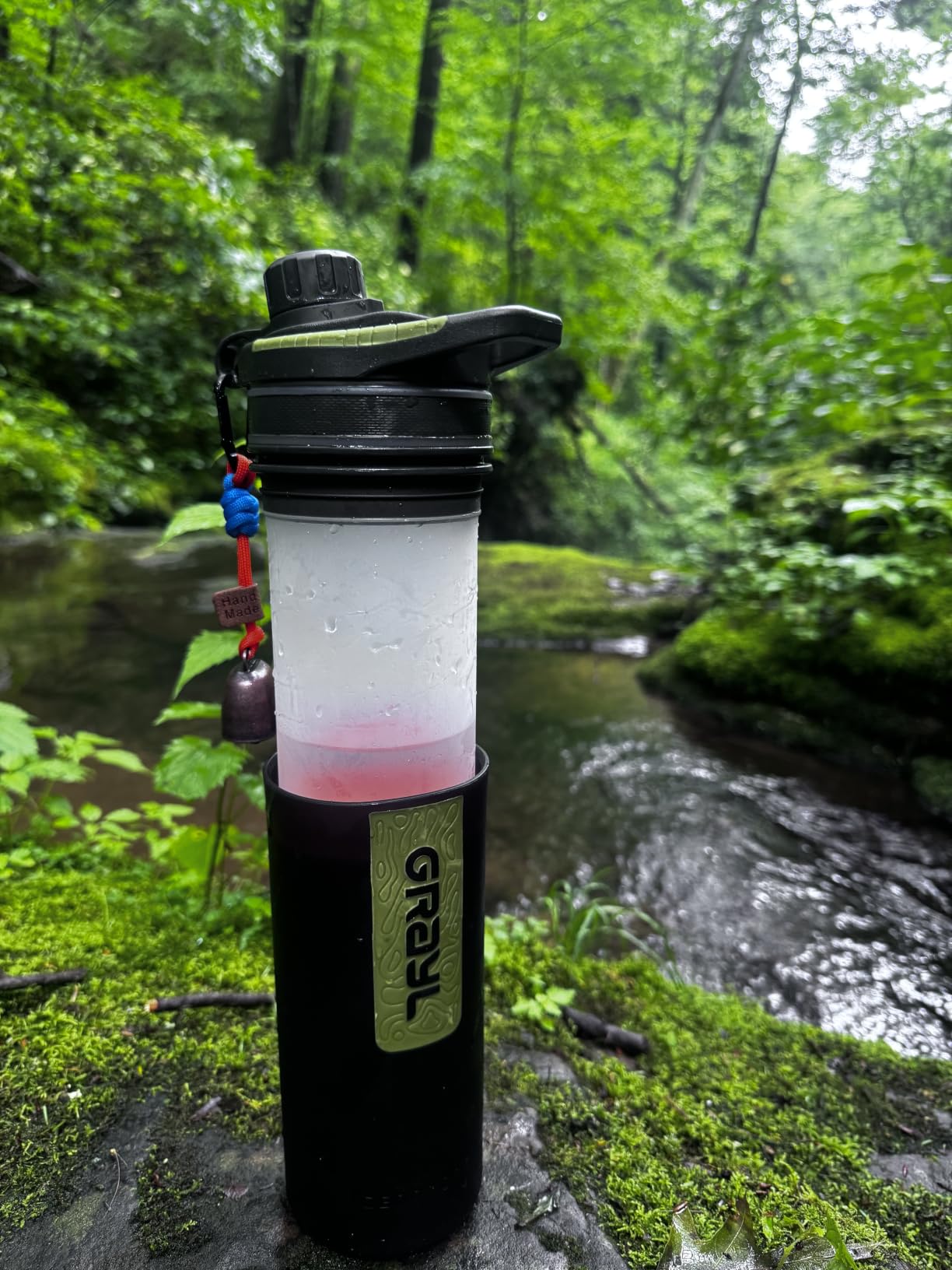
The GeoPress is the only device here that purifies viruses, and it also handles a category nothing else on this list touches. It purifies rotavirus, norovirus, hepatitis A, E. coli, salmonella, giardia and cryptosporidium, while electroadsorption plus activated carbon adsorbs VOCs, PFAS, pesticides, herbicides, heavy metals, flavors and odors.
It purifies 24 ounces, about 710 ml, in roughly 8 seconds with no batteries, chemicals, straws or hoses. The cartridge is replaceable and rated for 65 gallons or 250 liters, and the product carries a ten-year warranty on workmanship and materials.
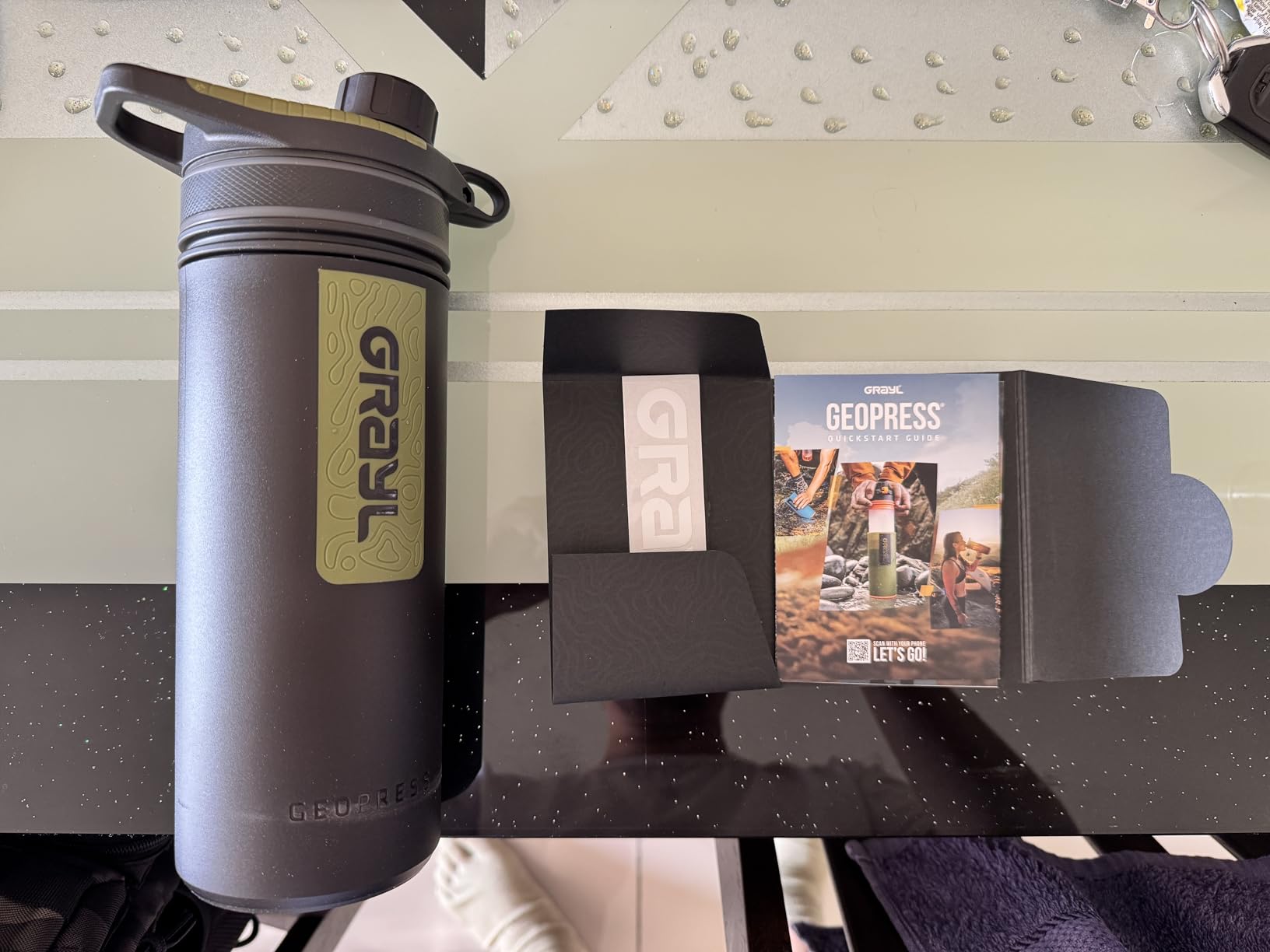
That contaminant list is why it gets recommended for car, van, kayak and family camping rather than backpacking. If your itinerary includes human sanitation risk, this is the short answer, and no filter or tablet on the rest of this list replaces it.
Build quality is part of the pitch. There are no small delicate components to snap in a pack, and a one-way drink mix valve keeps treated water separate from untreated.
When the press is worth the weight
On a trip where water quality is genuinely uncertain – international travel, disaster response, a country with a boil water advisory – the tradeoff flips. You accept 15.9 oz and the effort of pressing because the alternative is carrying tablets you have never practised with.
Reviewers also single out the taste. Carbon plus electroadsorption produces water that tastes clean from murky sources, and owners filling a whole campsite from one batch point to that as much as the safety claim.
What you give up for it
Weight is the first cost, and 15.9 oz is a serious load for a long section hike. The second is effort: pressing the inner bottle takes real force, awkward for filling a 3 L bladder or when a child needs to do it.
There is also a spill risk in owner reports. Fill above the marked line or fail to vent the cap and water goes over the sides. At 24 oz per batch you press many times to cover a group, so it is a camp tool, not a trail tool.
7. Survivor Filter PRO – Best for Heavily Polluted Sources
Survivor Filter PRO Portable Water Filter for Camping, Survival & Emergency
Three replaceable stages
500 ml per minute
100,000 liter rating
Pros
- Three-stage 0.1 micron
- carbon and 0.01 micron filtration
- Removes 99.999% of tested virus
- staph
- bacteria and protozoa per NSF/ANSI
- Every stage individually replaceable
- Responsive lifetime warranty support
- Backflush syringe and hoses included
Cons
- Heavy at 12.8 oz for ultralight backpacking
- Takes a lot of pumping to fill several 32 oz bottles
- The 0.1 micron pre-filter can clog on silty water
- Carbon stage has a much shorter life
The Survivor Filter PRO is built for the case where the source is not a clear alpine stream. It runs three stages, a 0.1 micron pre-filter, a carbon stage for heavy metals and chemicals, and a 0.01 micron ultra filter, removing 99.999% of tested virus, staph, bacteria and protozoa per NSF/ANSI standards.
Flow is up to 500 ml, or 17 oz, per minute, with supported TDS up to 1000 ppm. The package includes a backwashing syringe, inlet and outlet silicone hoses, a hose clip, an ultra filter pre-filter, a carrying case and a sleeve that doubles as a cup. Rated range is 32 to 120 degrees F.
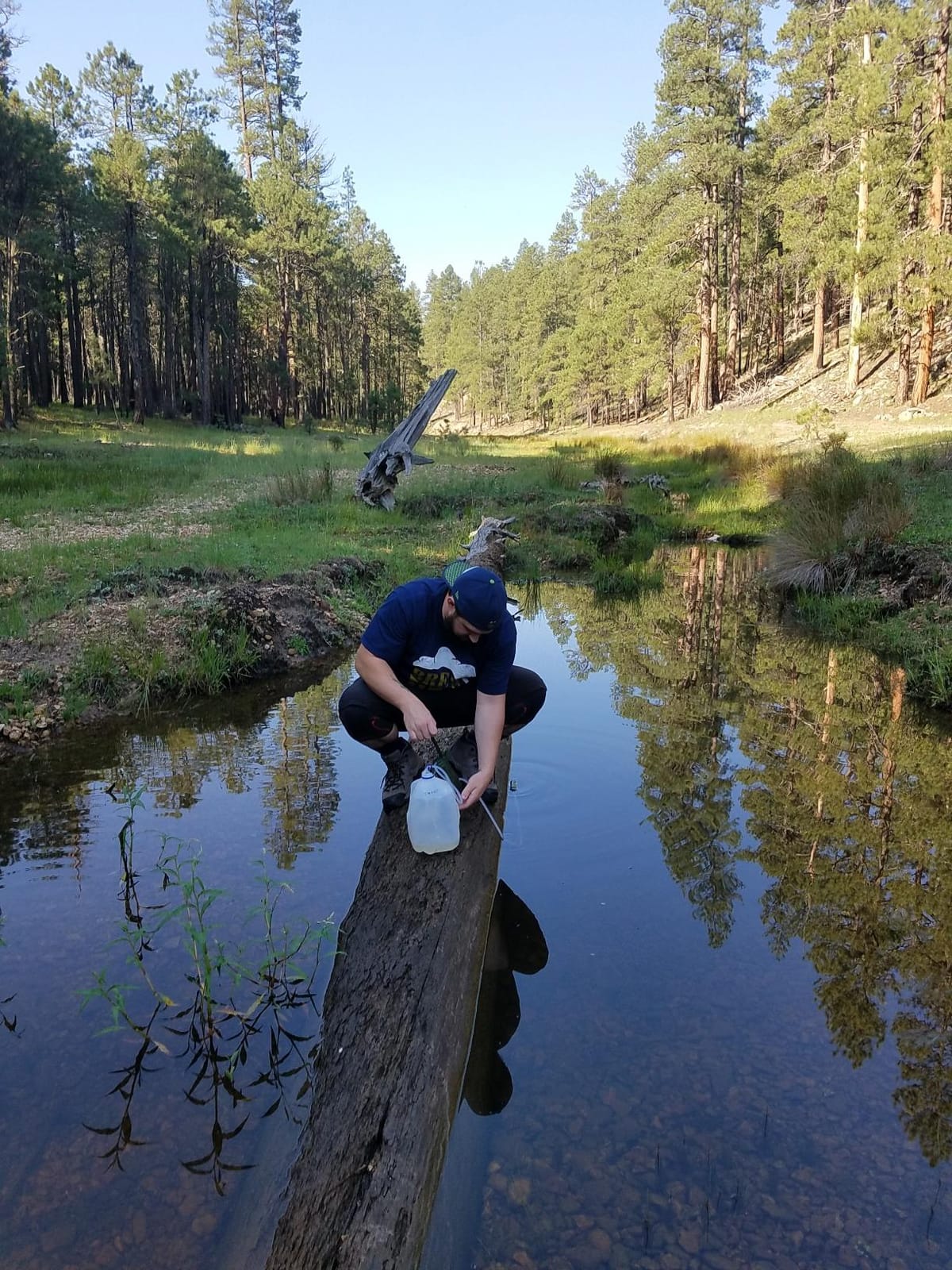
The design decision I like most is that every stage is individually replaceable. When the carbon is exhausted you replace the carbon, not the whole unit, which keeps the long-run cost down and extends the practical life of a heavy piece of gear.
Owners filtering questionable sources report clear, good-tasting output and excellent after-sales support, including free replacement pieces under the lifetime manufacturer defect warranty. That service record is called out consistently in long-term reports.
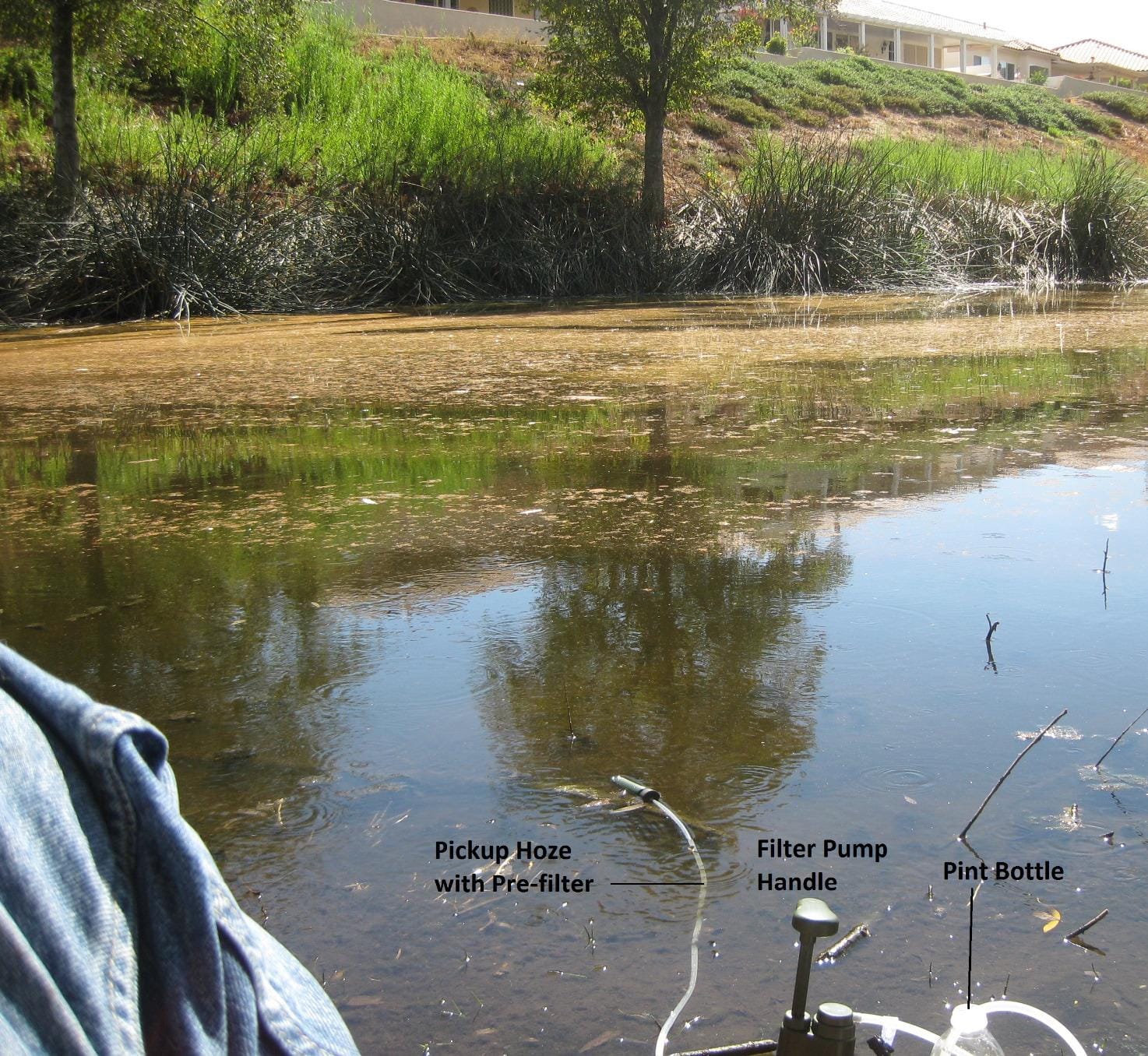
Where a pump earns its weight
Some water needs force behind it, and a pump lets you fill several containers in one sitting instead of squeezing one bottle at a time. For a group camp drawing from a lowland source, the labor argument is not close.
The 0.01 micron final stage is why this handles sources that would defeat a standard 0.1 micron filter. It is the most capable contaminant list among the pumps here short of the GeoPress, and separate inlet and outlet hoses keep clean and dirty water apart, which is good cross-contamination practice.
What to plan around
At 12.8 oz it is heavy for ultralight backpacking, and filling several 32 oz bottles takes a lot of pumping. Moving fast and light with one or two people, the weight is hard to justify.
The 0.1 micron pre-filter is a hollow fiber element and can clog on silty water, so a coffee filter or bandana pre-screen still applies. The carbon stage also has a much shorter life than the filter stages, and a few users have reported the internal ultra filter outlet cap detaching or dripping, so check that seal before you go.
8. Katadyn BeFree – Best Ultralight Collapsible Filter
Katadyn BeFree AC 2-Stage Filter Collapsible Travel Water Bottle 1L, Clear
2.24 oz total
2 L per minute
0.1 micron membrane
Pros
- Collapses flat to pack into shorts
- jerseys or vests
- No pump
- hoses or backflushing needed
- High 2 L per minute squeeze flow
- Modular replaceable filter membrane
Cons
- Squeeze-only flow drops sharply as the membrane fouls
- Hollow fiber can clog in very silty water
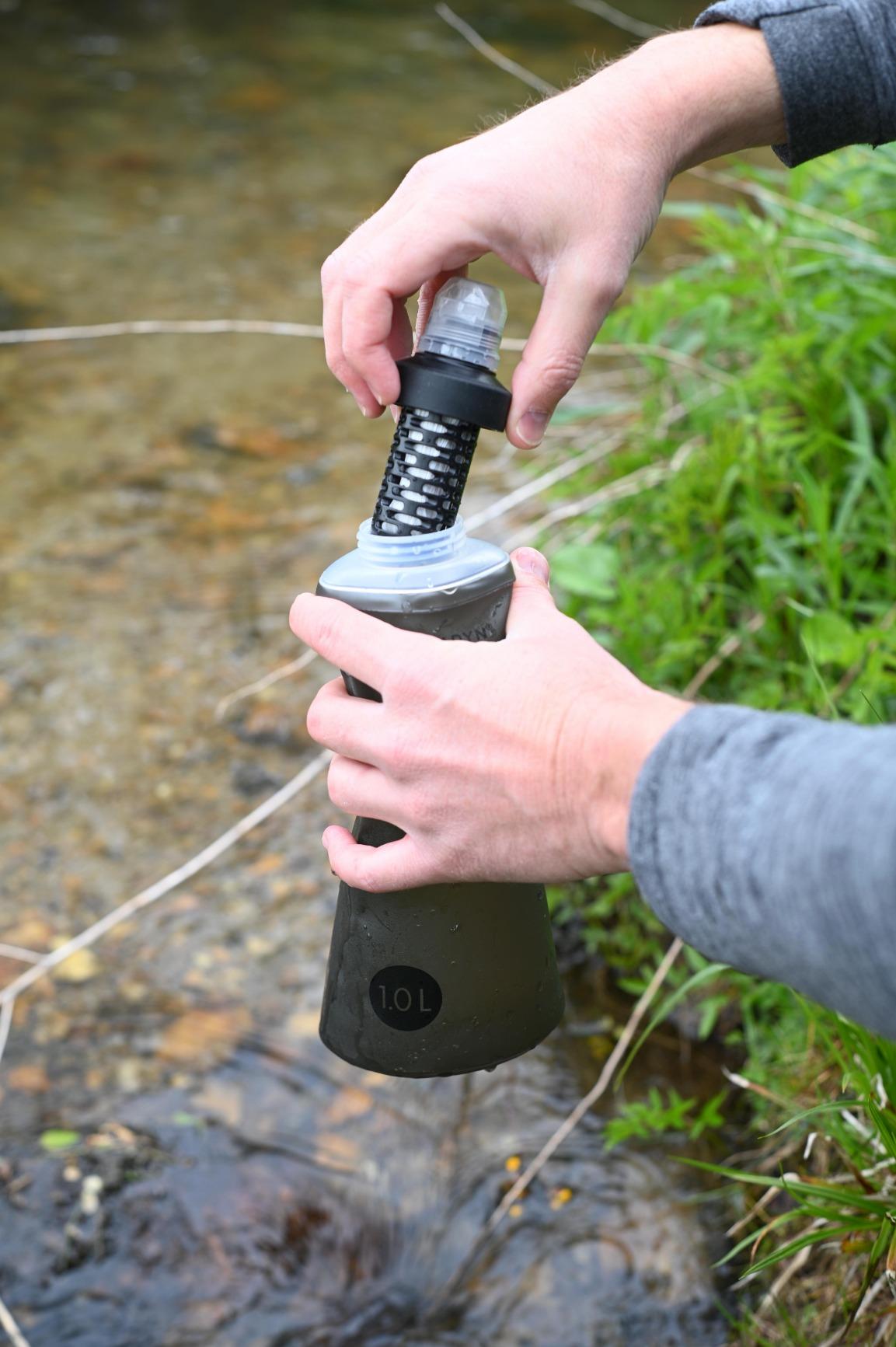
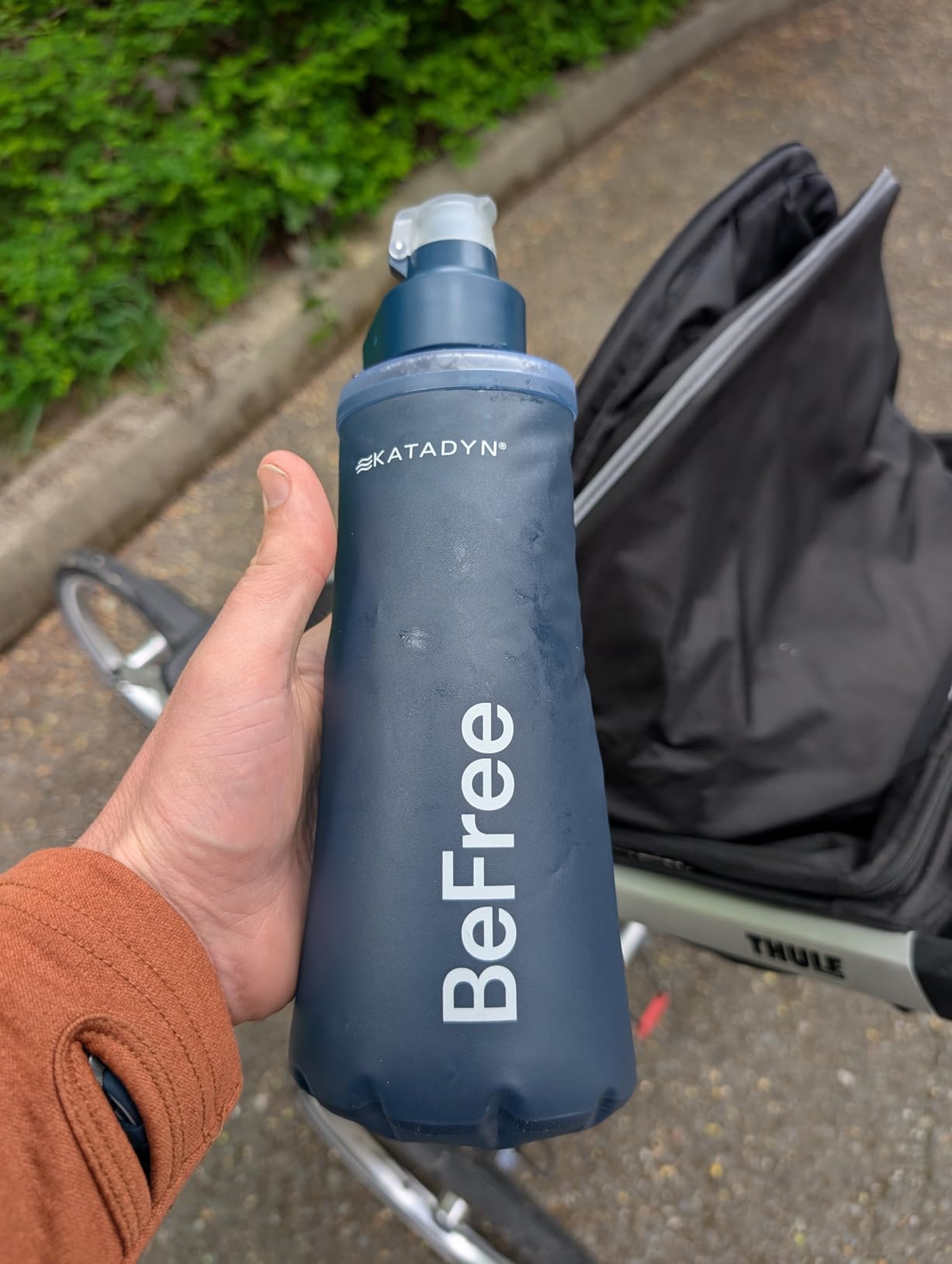
At 2.24 oz for the entire collapsible bottle, the BeFree is the lightest complete filtering system in this roundup. You unscrew the top, the bottle collapses flat, and it disappears into a jersey pocket instead of occupying pack space.
The membrane is 0.1 micron hollow fiber rated for up to 1,000 liters, with a 2 L per minute squeeze flow and 1000 ppm maximum supported TDS. There is no pump, no hoses and no backflushing, which makes it the simplest thing here to use correctly under stress.
Cleaning is a shake or a swish, and owners report it restores flow in seconds when sediment was the problem. The filter membrane is a modular replaceable part, so a failed element does not mean losing the bottle.
The case for the simplest system
Every maintenance step is a chance to get it wrong in the rain at dusk, and the BeFree removes all of them. For fast hikers and solo travellers who do not want to think about syringe backflushing, that simplicity is worth more than the extra control.
A 2 L per minute squeeze flow is genuinely high for this category, and combined with the low weight one person can produce drinkable water at a real pace rather than trickling it in.
What the simplicity costs
Because there is no backflush, output drops sharply as the membrane fouls and you are limited to shaking it clean. In very silty water that is not always enough, and owners consistently flag hollow fiber clogging as the main complaint.
It is also squeeze-only, so producing a litre takes effort, and the 1,000 liter rating is well below the lifetime elements elsewhere in this list. Camping in sediment-heavy country, the Peak Series handles the same conditions better for a few more ounces.
9. Waterdrop Gravity Straw – Best for High Gravity Flow
Waterdrop Gravity Water Filter Straw, Camping Water Filter, 0.1 Micron
700 ml per minute
1.5 gallon bag
1,400 gallon life
Pros
- 700 ml per minute flow is well above comparable gravity straws
- 1.5 gallon gravity bag covers a full day of drinking water
- Backflushable design keeps the membrane clean
- Both ends detach for bag or 27.5 mm bottle hookup
Cons
- Only a 30-day limited warranty
- Does not remove viruses or dissolved minerals
- Gravity bag adds bulk versus a squeeze pouch
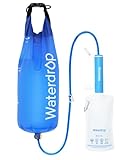
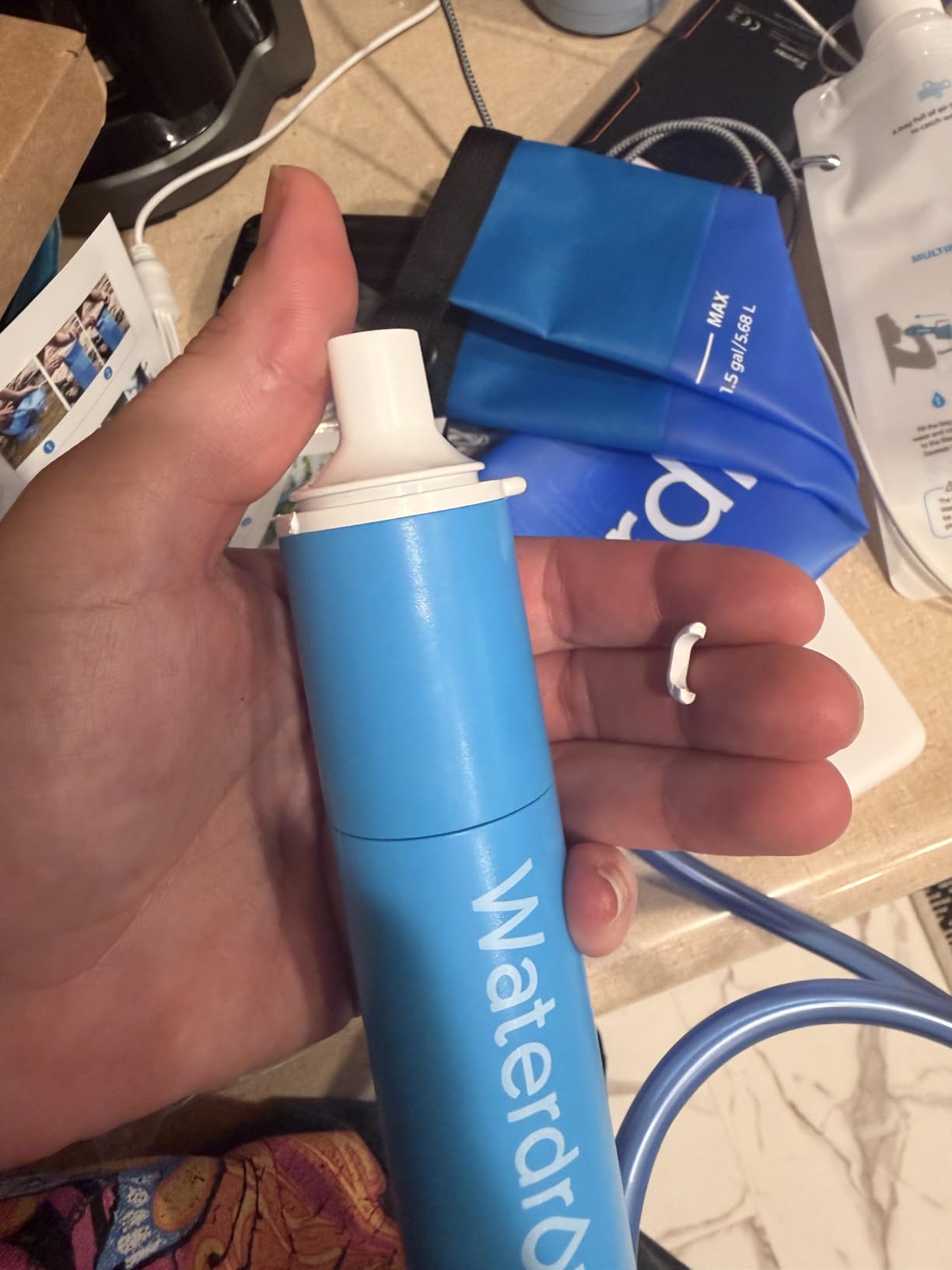
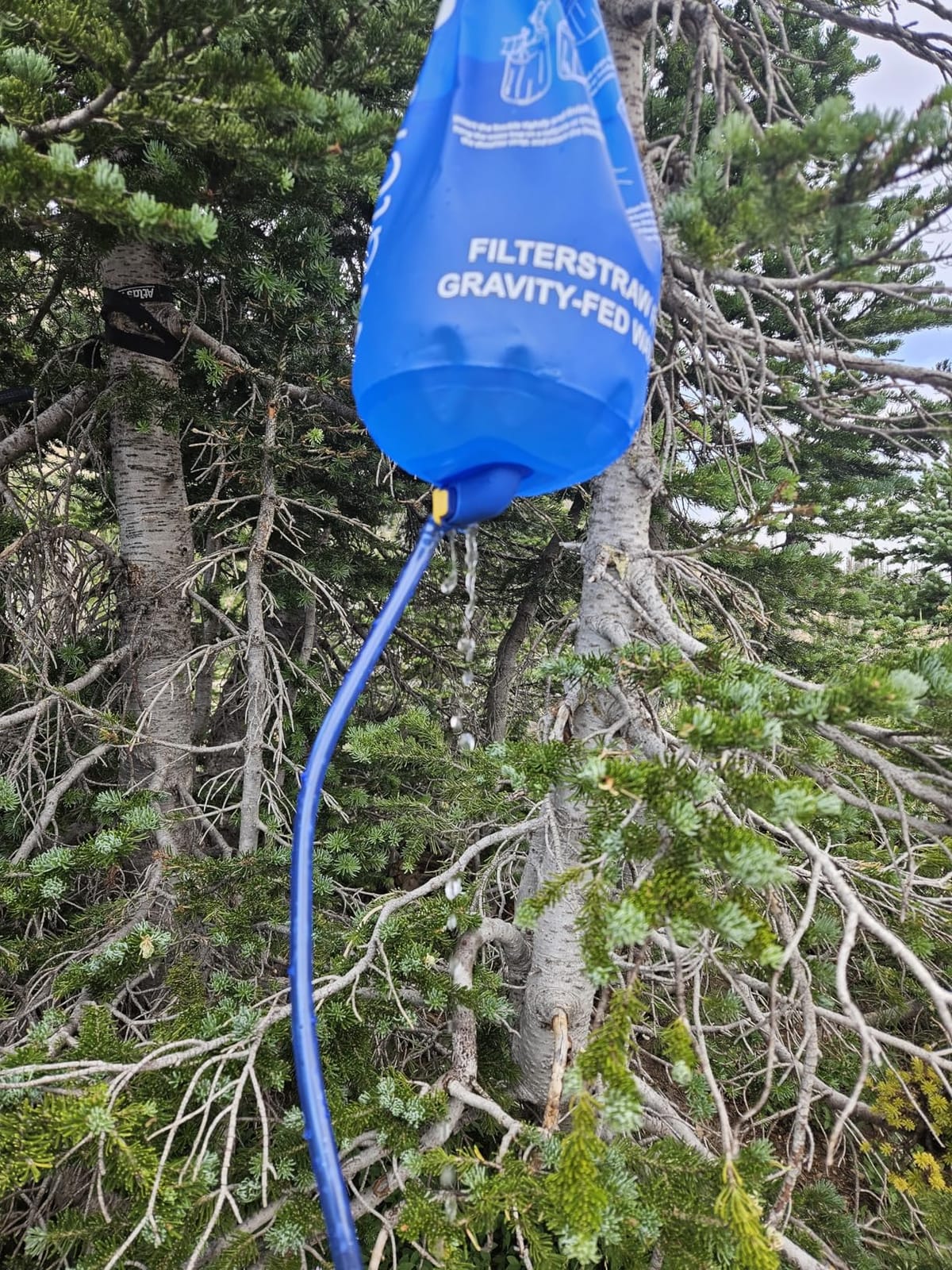
Most gravity straws trickle. This one runs at up to 700 ml per minute, well above comparable gravity straws, and the included 1.5 gallon bag means you can hang a full day of drinking water and let it work while you break camp.
Filtration is a 0.1 micron ultrafiltration membrane with five stages that reduces chlorine, sediment, sand, dirt, particulates, bad taste and odor. Rated filter life is 1,400 gallons or 5,300 liters, and supported TDS is 300 ppm, the lowest ceiling here and a fair warning about mineral-heavy sources.
Both ends disassemble, so it works with the gravity bag, with a 27.5 mm bottle, or as an inline element, and it has a backflush function for cleaning with clean water. The whole unit is 4.64 oz.
When gravity beats squeezing
You set the bag up, do something else for ten minutes, and come back to several liters of treated water. For a group at camp that is a better use of time than passing a bottle around, and for anyone with limited hand strength it removes the effort entirely.
The included 16 oz pouch covers the smaller case, so the same unit handles personal sipping on a day hike and batch production at basecamp. That flexibility is why it works across such different trip types.
The catch in the warranty
The warranty is 30 days limited, against one year or lifetime terms on most competitors here. For gear you might buy once and keep a decade, that is a genuine difference in what happens when something fails.
It also does not remove viruses or dissolved minerals, and the 300 ppm TDS ceiling makes it a poor choice in desert and alkaline country. The gravity bag adds pack bulk a squeeze pouch does not, which is the tradeoff for the 700 ml per minute.
10. Practical Survival 5-Pack – Best for Emergency Kits and Redundancy
Practical Survival Reusable Emergency Water Filter Straws, 5-Pack
Five sealed filters
1,800 gallon life each
No stated expiration
Pros
- Five individually sealed filters give broad redundancy
- One backflushing plunger included per filter
- 1800 gallon life per filter with no stated expiration
- 2 oz per filter
- filters microplastics to 0.1 micron
Cons
- Does not remove viruses
- Straw flow is slow and suited to personal sipping
- Multi-pack is bulkier than a single filter
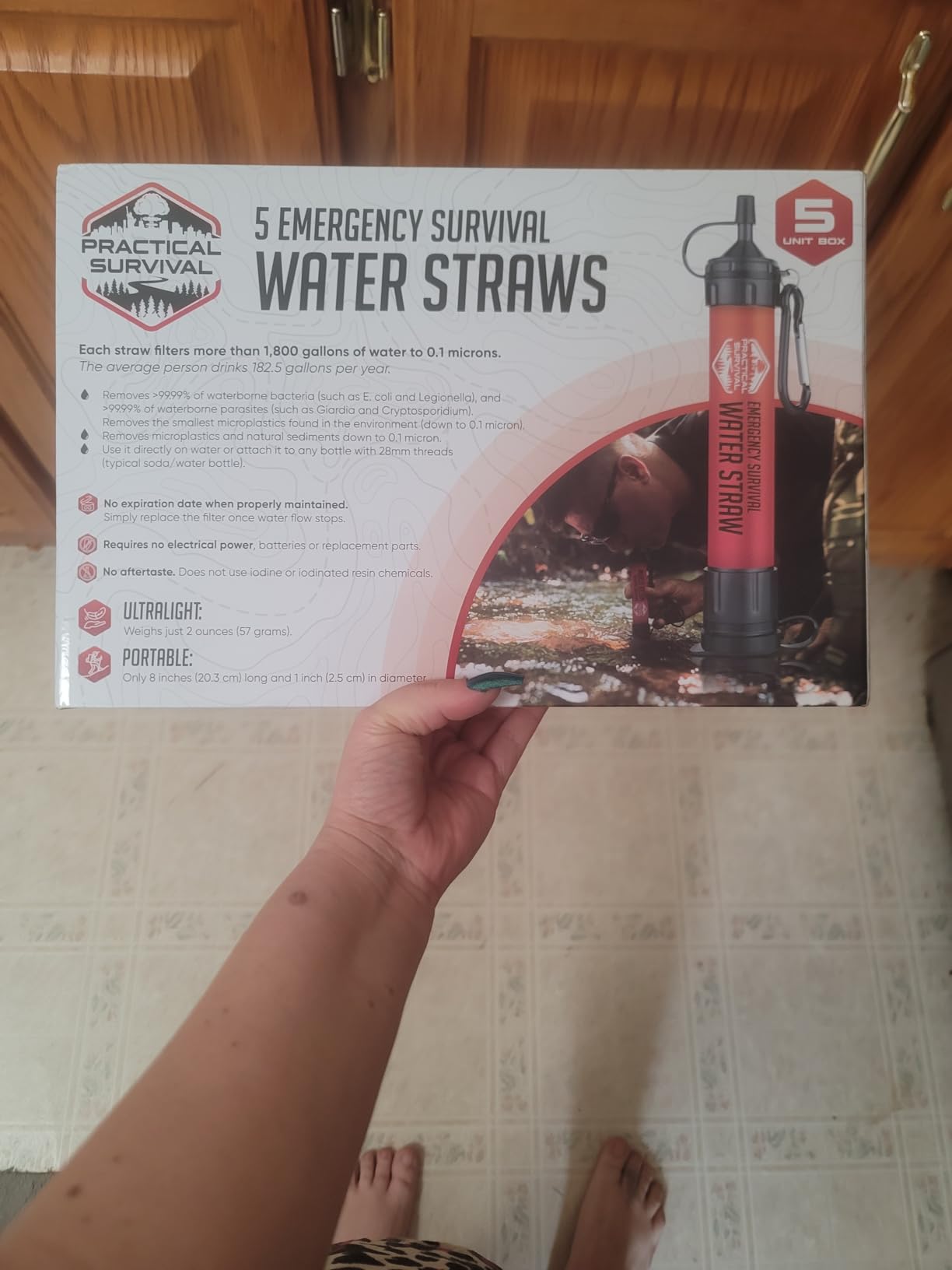
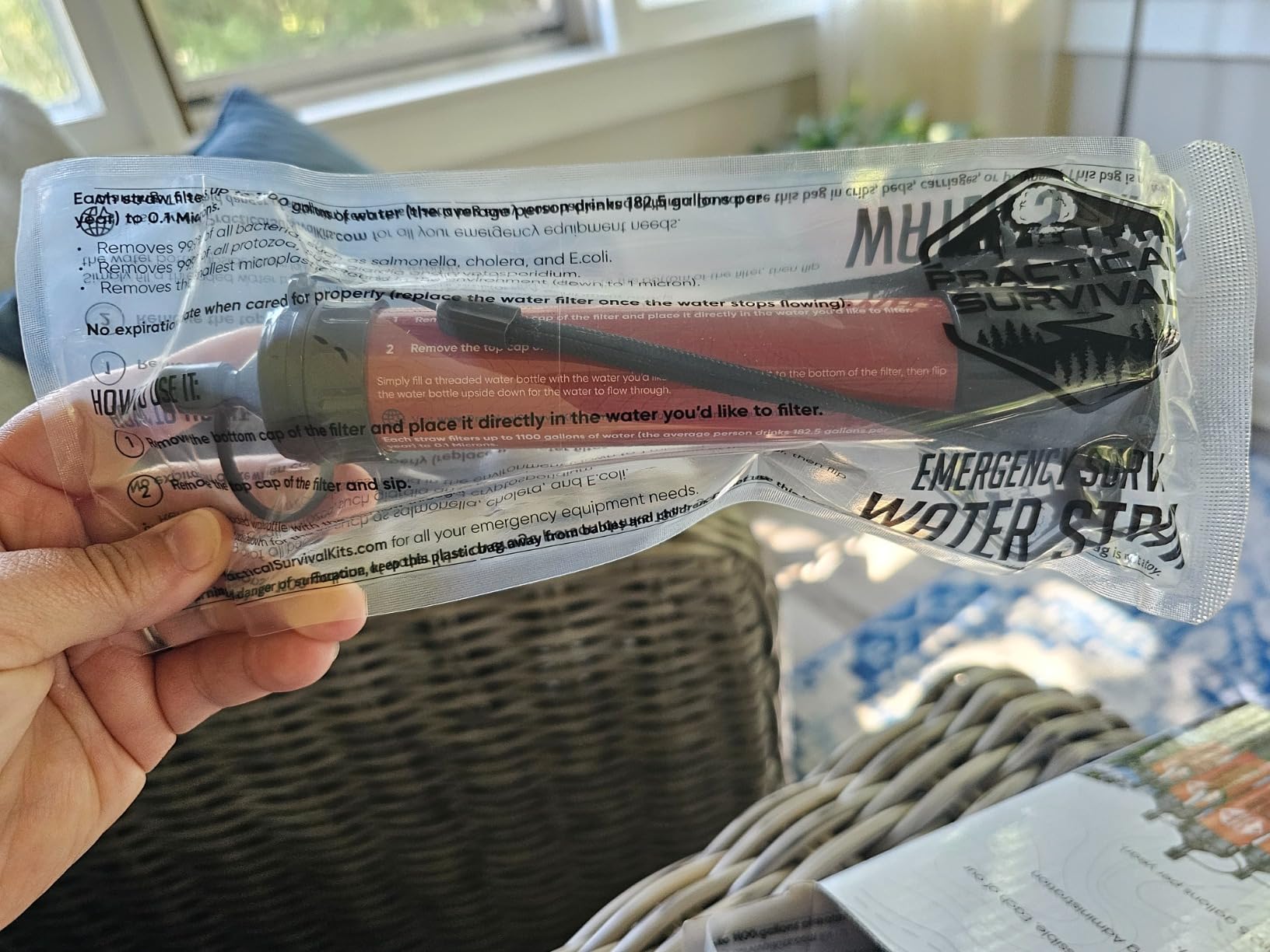
This is the redundancy play. Five individually sealed filters, each with its own backflushing plunger, each rated to 1,800 gallons or roughly 10 years for the average person, and with no stated expiration. That is what a go-bag, a family vehicle kit or a group trip wants.
Each filter removes over 99.99% of waterborne bacteria including E. coli and Legionella, and parasites including giardia and cryptosporidium, while filtering microplastics down to 0.1 micron. Supported TDS is 500 ppm, and each unit is 2 oz and 8 inches long.
The 4.8 average across thousands of reviews is the highest in this roundup, and owners treat the multi-pack as a sensible redundancy purchase rather than a primary trail system. That framing is accurate.
Why five of something beats one good thing
On a trip where a lost or broken filter ends the journey, redundancy beats refinement. You can hand one filter to each of four people, split a group across two routes, or keep two sealed in a car and three in a pack.
The no-expiration design is what makes them viable as stored emergency gear. Filters that degrade in a closet are not emergency gear, and reviewers specifically call out the ability to sit in storage for years without worry.
Where redundancy stops helping
None of these filters remove viruses, so five of them do not solve an international travel problem. A single purifier or a tablet supply is still the answer for virus risk, and stacking straws does not change that.
Flow is slow, limiting them to personal sipping rather than camp water production. The five-pack is also bulkier in a pack than one filter, so for actual hiking you would take one out and leave the rest in the vehicle, and a 6-year listed shelf life is worth remembering for long storage.
11. Survivor Filter Squeeze Kit – Best for Taste Improvement
Survivor Filter Squeeze Kit Water Filter Straw & 2 Collapsible Bottles 32oz
0.05 micron three-stage
500 ml per minute
No expiration
Pros
- Independently tested in the USA to NSF/ANSI 53
- 307 and 401
- Carbon stage reduces lead and mercury and improves taste
- No expiration suits long-term emergency storage
- Two 32 oz collapsible canteens included
- Fits most 1.1 inch bottles
Cons
- Not rated for salt water
- Replacement filter sets sold separately
- Carbon mouthpiece stage is a consumable
The Squeeze Kit is a three-stage system at 0.05 micron, the finest nominal pore figure among the microfilters here. The stages are a cotton pre-filter pad, an ultra filter and an activated carbon mouthpiece, and the internal ultra filter is laboratory tested to 100,000 liters.
It is independently tested in the USA to NSF/ANSI 53, 307 and 401 and reduces viruses, bacteria, protozoa, chemicals, sediment, lead and mercury. Flow is up to 500 ml per minute, the straw is 3.5 oz and 7 inches long, and the full kit is 220 g including two 32 oz collapsible canteens.
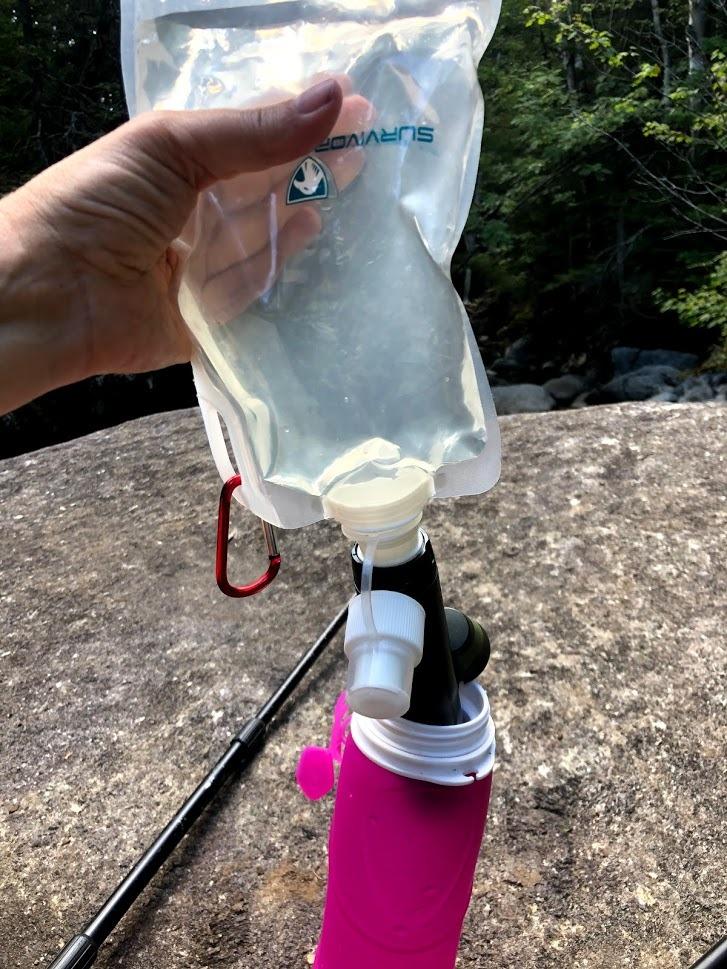
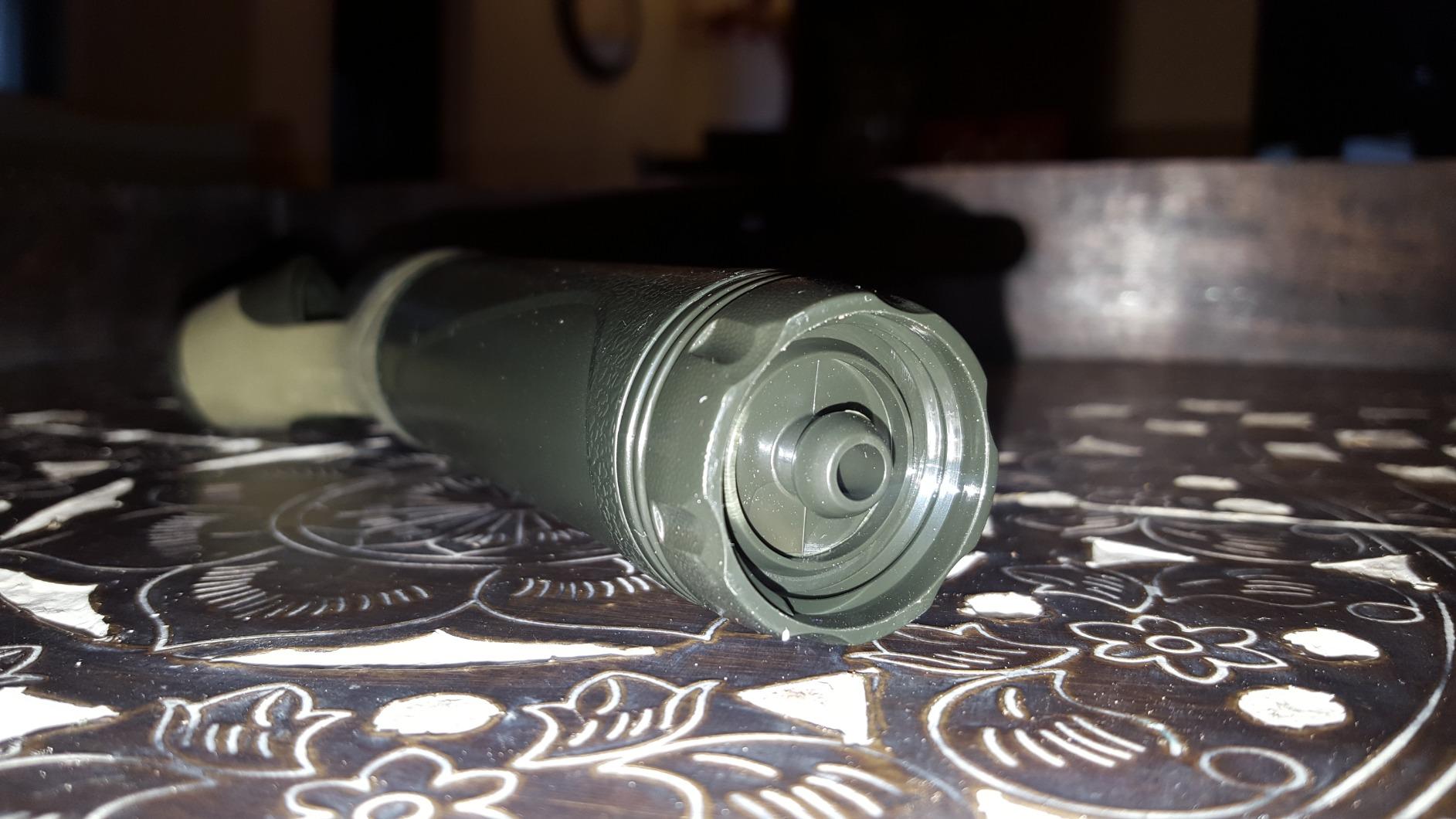
Where it separates from the rest is the carbon stage at the mouthpiece. That is the part that takes swampy backcountry water and makes it drinkable enough that people keep using the filter, and it also does work on lead and mercury that no membrane alone handles.
The two included canteens make filling and drinking straightforward, and the straw fits most 1.1 inch bottles as well as them. It carries a lifetime manufacturer defect warranty and no expiration.
When taste is the deciding factor
Some backcountry water carries heavy tannins and organic flavour, and a plain hollow fiber straw passes that straight through. The carbon mouthpiece here is the fix, and it is why this kit gets recommended for strongly flavoured sources.
It is also a good stored-emergency option. No expiration means it can sit in a vehicle or a go-bag for years, and the 100,000 liter laboratory rating means the element is not the limiting factor over any realistic horizon.
What to know before you commit
It is not rated for salt water, which rules it out for coastal and marine sources. Replacement filter sets are sold separately, which is the running cost that lifetime-element designs avoid.
The carbon mouthpiece is itself a consumable, so the taste improvement fades as it exhausts even while the ultra filter keeps filtering. At 500 ml per minute this is a personal sipping kit, not a group water producer.
12. Katadyn Vario Dual Mode – Best for Large Groups
Katadyn Vario Dual Mode Hand Pump Continuous Water Filter for Backcountry
2 L per minute both strokes
Ceramic pre-filter
530 gallon cartridge
Pros
- Fast continuous flow fills 1 L bottles in about a minute
- Pumps on both up and down strokes
- Intake float filter keeps debris out and holds flow
- Screw-on base fits Nalgene-style bottles and bladders
- Ceramic pre-filter makes field maintenance easy
Cons
- Bulky and heavy compared with squeeze filters
- Pleated cartridge wears quickly in harsh water
- Protruding plastic intake port is easy to damage
- Can leak slightly as seals wear
- Cartridges cost more and need days of drying
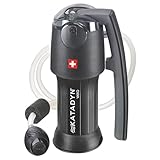
When volume is the requirement, the Vario is the fastest tool in this roundup. It pumps on both the up and down stroke for up to 2 L per minute of continuous output, filling a 1 L bottle in about a minute. For a group of six at basecamp, nothing here keeps up.
Filtration is three stage: 0.2 micron pleated glass fiber, a cleanable ceramic pre-filter and activated carbon granules. It runs in two modes, a Longer Life setting using the ceramic pre-filter and a Faster Flow setting for clear water, and the cartridge is rated to 530 gallons.
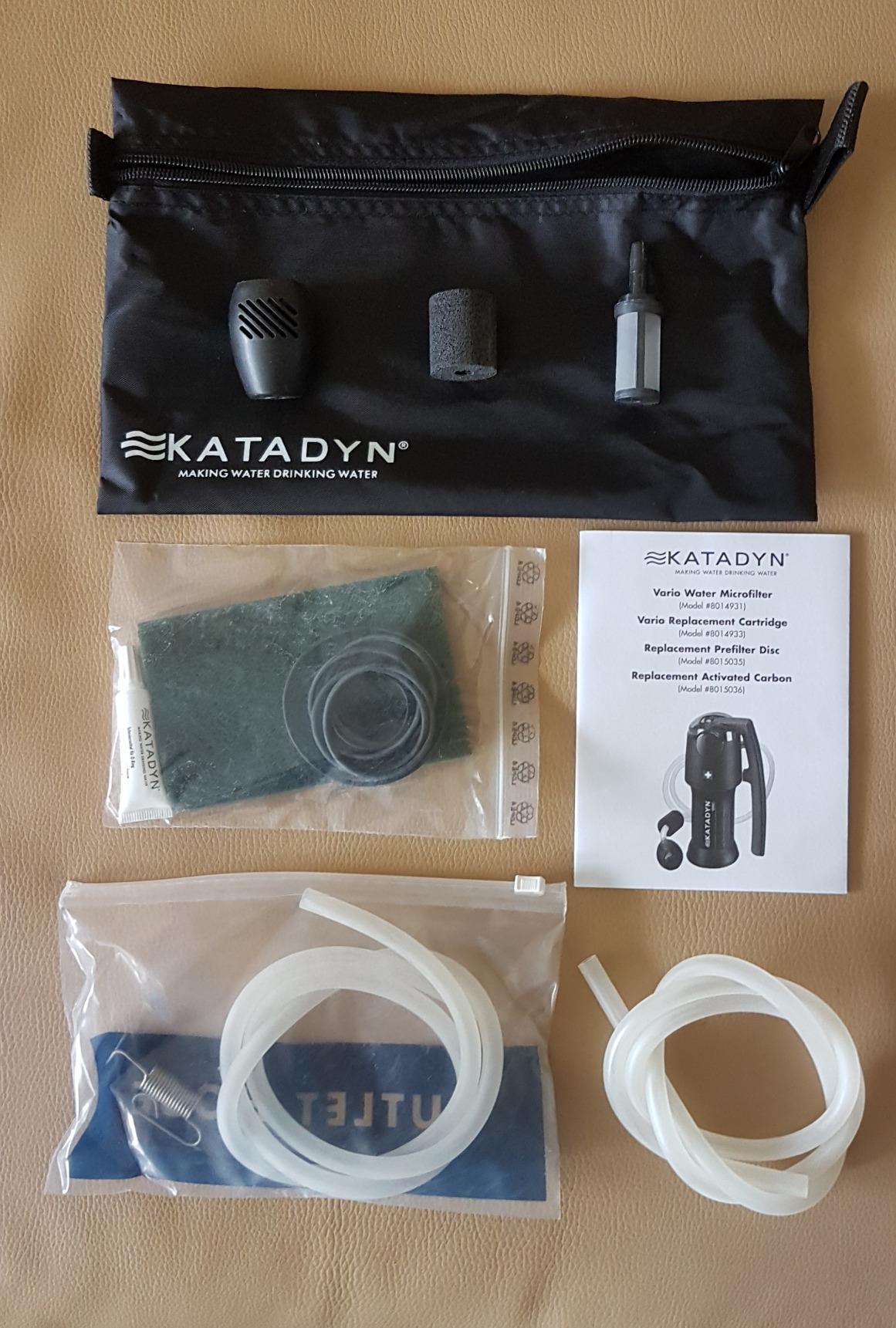
The package includes the filter body, an intake hose with a float, an output hose with a clip, an integrated Nalgene-compatible base, a cleaning pad and a carry bag. The pump body is 15 oz and it connects to most bottles and hydration packs directly.
Two details make it work in the field. The intake float filter keeps debris out of the line and holds flow in shallow water, and the screw-on base fits Nalgene-style bottles and CamelBak bladders without an adapter, which matters when you hand filters out to a group.
The cleanable ceramic pre-filter is the piece that extends cartridge life, and simple disassembly means you can service it in a parking lot rather than at home. Reviewers with long ownership histories consistently call it the fastest pump they have owned.
What you gain with continuous flow
Group trips are where a pump genuinely earns its place. Rather than passing a bottle around, you fill every container in the camp at once, and you can do it again at dusk. That is the difference between a water system and a drinking accessory.
Dual-stroke action halves the effort of a single-stroke pump, which matters on the last fill of the day. And the glass fiber cartridge at 0.2 microns with a carbon stage handles clear water with a carbon note squeeze systems cannot match.
Where it costs you
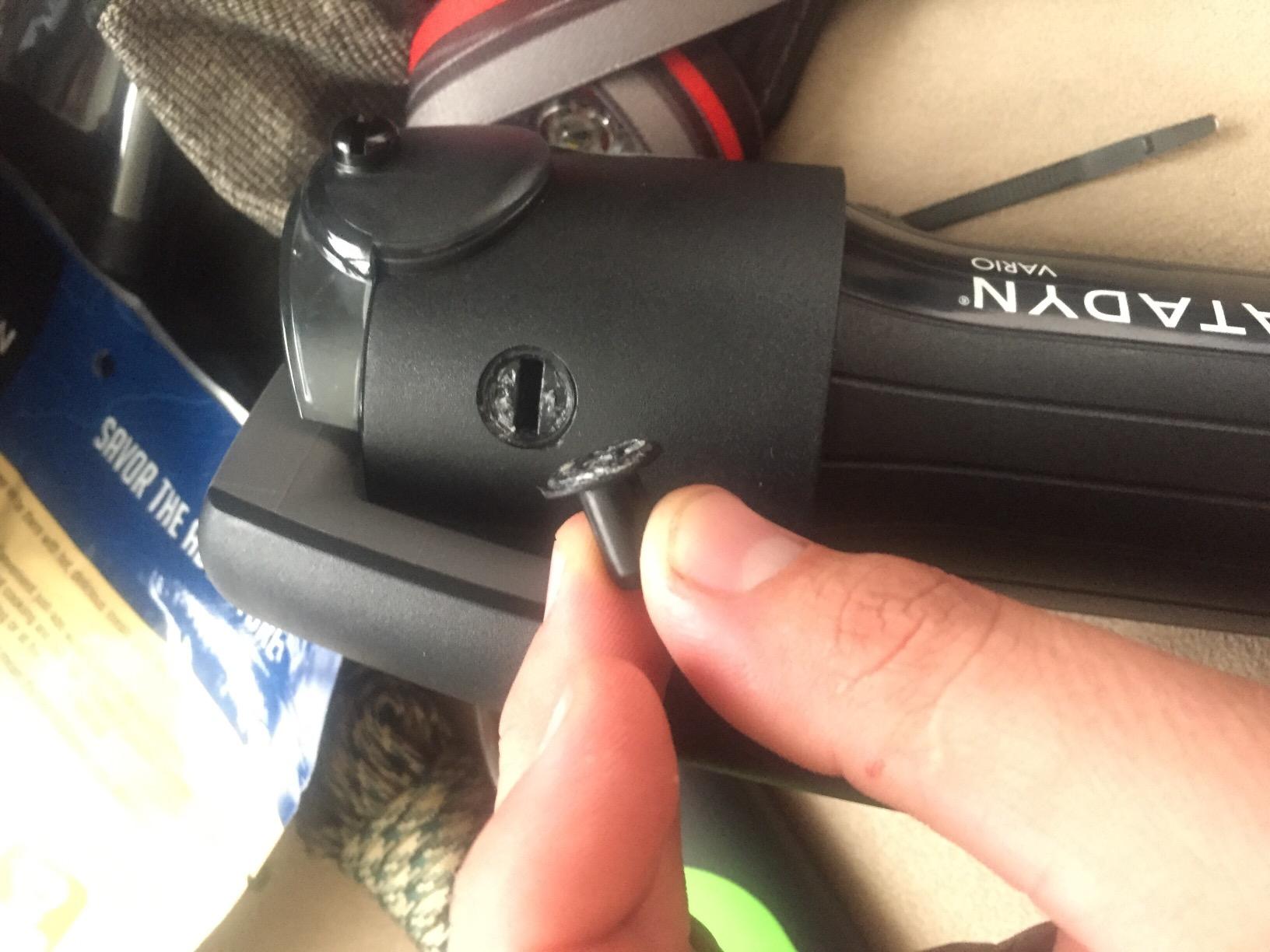
It is bulky and heavy against any squeeze filter, and the pleated cartridge wears out quickly in harsh water if you leave it on the slow setting. The protruding plastic intake port is also easy to damage in a pack, a problem owners report often.
Long-term users note it can leak slightly around the middle of the body as the seals wear. Replacement carbon and filter cartridges are expensive, and the unit needs several days of drying out before storage, which is a real hassle at the end of a season.
Filter vs Purification Tablets vs Boiling
This is the question that comes up on nearly every trip forum, and the answer changes with the water and the trip length. A filter removes bacteria and protozoa continuously, which is what you want when moving and drinking from a stream daily. Tablets do the same job chemically and then sit in your pack for months unused.
Boiling is the oldest method and the only one that kills viruses without any purchase. The cost is time and fuel: a minimum of one minute at elevation for every batch, longer at altitude, done twice a day erodes the point of carrying a filter at all.
Tablets earn a place as a backup rather than a primary system, which is how forum users consistently treat them. They are light, cover the virus risk a microfilter does not, but the timing is unforgiving and the taste is hard to mask. Most people stash a course, never practise with it, then reach for it under stress.
For international travel the practical setup is a microfilter for daily volume plus a tablet supply, or a purifier like the GeoPress, for sources where virus risk is real. For a domestic backcountry trip, a filter alone handles the realistic threats.
Backflushing, Freezing and Winter Use
Backflushing is what separates a filter that keeps working from one that gets thrown away. Hollow fiber membranes trap silt on the outside, not the inside, and reverse flow with a syringe lifts it off the fibers. Draw clean water back through until it runs clear and the flow returns. Do it at the end of a trip and whenever output drops noticeably.
Filters that cannot be backflushed have a different recovery method. The Katadyn BeFree relies on shaking or swishing, which handles light fouling but not a genuinely silt-choked membrane. The Waterdrop gravity straw has a backflush function built in. Know which category your filter is in before you need it.
Freezing is the most common way people ruin an otherwise excellent filter. A hollow fiber element that freezes while wet can develop micro-fractures large enough to let bacteria through while the filter still looks clean. Never store one wet, never seal it back into a pack before it dries, and if it has frozen, replace the element rather than hoping.
Cold water also affects performance on the fly. Viscosity rises as water drops toward freezing, so a filter rated at 1.7 L per minute in summer moves noticeably less in late autumn, and a pump feels it too. Plan longer fills and carry more water in winter rather than expecting summer numbers.
One habit protects every filter here. Run silty water through a coffee filter, a bandana or a sock before it reaches the inlet. Pre-screening costs a minute and keeps sediment out of the membrane, the most common cause of clogging that pushes people to replace filters they backflushed correctly.
How to Choose a Water Filter for Hiking
Start with group size. One or two people moving are served by a squeeze or inline filter between 1.4 and 2.5 oz. Three or more at a camp want a gravity system with a bag or a hand pump, because output per stroke is the binding constraint long before contaminant removal is.
Then check virus risk honestly. Domestic backcountry water means a microfilter is enough. If your itinerary includes countries with sanitation risk, you need a purifier, and only the GeoPress and Survivor Filter PRO in this list are rated for virus removal. Tablets are the lighter backup.
Weight matters more than most buyers expect. Ultralight hikers notice ounces, and a 12.8 oz pump is a different category of object from a 1.4 oz straw. If you are not filtering for a group, the weight of a pump is dead weight carried every day.
Check system compatibility before anything else. Standard 28 mm bottle threads and standard quick-disconnects mean you reuse containers you already own. Proprietary fittings mean extra bottles, extra cost and one more thing that can fail on trail. Several filters here, including the MINI, the Peak Series and the Vario, fit the common standards.
Factor in flow rate against real usage. Personal sipping filters sit around 500 ml per minute. Squeeze filters reach 1.7 to 2 L per minute, and pumps hit 2 L per minute continuously. Multiply against what a hot day takes per person and you will know quickly whether a straw is enough.
Finally, think total cost of ownership. Lifetime-element designs like the Sawyer Squeeze, Sawyer MINI and Survivor Filter PRO avoid replacement cartridges entirely. Others, like the Survivor Squeeze Kit, charge for consumable stages. Over several seasons the cartridge filters catch up, and the element design is cheaper long term.
Beyond the filter, a camp water system changes how you pack. Our picks for the best under-sink water filters cover home purification, and the best whole house water filters roundup goes deeper on sediment and mineral removal.
Frequently Asked Questions
What is the best way to filter water when hiking?
Pick the cleanest source you can find, camp at least 250 to 500 feet away from it, and pre-screen silty water through a coffee filter or bandana before it reaches the membrane. Then push water through a 0.1 micron absolute hollow fiber filter by squeezing a soft bottle, hanging a gravity bag, or pumping a handle. Store treated water in a separate clean container from your dirty water, and practise the whole sequence at home before the trip.
What is the best water filter for backpacking?
For most solo hikers and couples, the Sawyer Squeeze is the strongest all-round answer. It filters at up to 1.7 liters per minute from a 2 ounce body, uses a 0.1 micron absolute hollow fiber element rated to 100,000 gallons, and carries a lifetime warranty on filter defects. It runs as a squeeze filter, a gravity filter, or inline with a quick-disconnect hose. For even less weight with bottles you already own, the Sawyer MINI does the same job in a palm-sized body.
Can you really drink any water with LifeStraw?
Yes, with clear limits. LifeStraw Personal filters remove waterborne bacteria including E. coli and salmonella, parasites including giardia and cryptosporidium, and microplastics down to 1 micron, with turbidity reduced to 0.2 microns. It is a microfilter, not a purifier, so it does not remove viruses, and it does not lower dissolved minerals, pesticides or heavy metals. For North American backcountry streams and rainwater it is dependable. For questionable urban water or international travel, use a purifier or tablets.
Is Brita or LifeStraw better?
They are not really competing products. Brita is a household pitcher filter built for tap water, sized for a kitchen, and it is not a backpacking tool. The useful comparison is between a personal straw such as the LifeStraw Personal and an inline squeeze filter such as the Sawyer Squeeze. The straw wins on weight and simplicity at 1.4 oz. The inline filter wins on flow rate, filter life and the ability to produce litres at camp rather than sipping on demand.
Do hiking water filters remove viruses?
Most do not. A standard backpacking microfilter with a 0.1 micron absolute membrane removes bacteria and protozoa, but viruses are small enough to pass through a 0.1 micron pore. That is fine for most North American and European backcountry sources. Travelling internationally where sanitation is a concern, you need a purifier or tablets. In this roundup the GRAYL GeoPress and the Survivor Filter PRO are the two devices rated to remove viruses as well as bacteria and protozoa.
Can a water filter freeze in winter?
A hollow fiber element that freezes while wet can develop micro-fractures large enough to let bacteria through even though the filter still looks clean, so yes, cold can ruin a filter. Keep it drained and dry overnight, never seal it wet into a pack, and if it has frozen replace the element rather than hoping a backflush will fix it. Cold water also slows flow, since water thickens as it approaches freezing, so expect less output per stroke in cold conditions.
Which Hiking Water Filter Should You Buy?
The LifeStraw Personal takes the top spot among these best water filters for hiking because it does one thing well for the least effort: 1.4 oz, a 4,000 liter element, bacteria and parasite removal, and a 4.8 average across 125,728 reviews. It is the filter most people can be trusted to use correctly on a tired afternoon.
Move up a category when your trip demands it. The Sawyer Squeeze is the answer for anyone producing litres a day on the trail, and the Sawyer MINI gives you the same membrane with almost no weight if you own your own bottles. The Katadyn BeFree wins on packed size alone, and the LifeStraw Peak Series is the one to take when the water will be silty.
Travelling outside North America or Western Europe, change the plan rather than the filter. The GRAYL GeoPress purifies viruses and adsorbs PFAS, pesticides and heavy metals, and the Survivor Filter PRO is the lighter pump option. For a group at basecamp, the Katadyn Vario fills bottles faster than anything else here.
Whatever you pick, buy the backflush syringe, practise the sequence at home, and remember the two rules that protect any filter on the trail: keep it from freezing while wet, and pre-screen sediment before it reaches the membrane. Our 2026 list will keep moving as new models land, so check back before your next trip.