
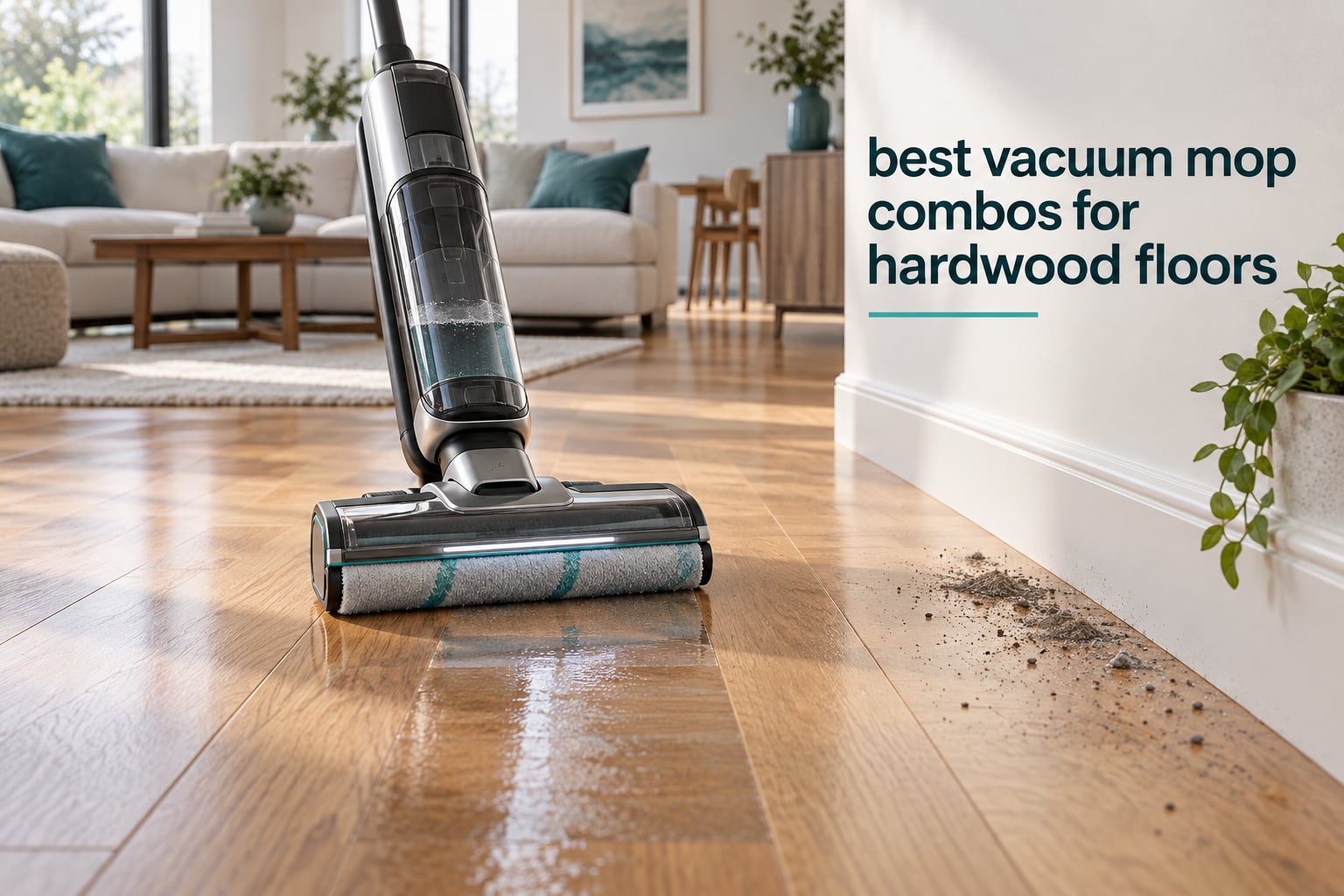
Yes, a vacuum mop combo is good for hardwood floors, provided the finish is sealed and intact. These machines are built to leave a lightly damp surface rather than standing water, which is safe on sealed oak, maple and engineered hardwood. On unsealed, oiled or waxed wood, moisture soaks into the board, raises the grain and causes warping. That one condition decides everything else on this page.
Our team compared 10 of the best vacuum mop combos for hardwood floors over six weeks, running each one across sealed oak, engineered oak, and a mixed floor with a thin area rug. We paid attention to two numbers that matter more on wood than in any other room: how much water is left on the boards after a pass, and how much fine grit the vacuum stage actually picks up before the roller touches the floor.
Below is the full list, plus the test that tells you whether a wet machine belongs in your house at all. If your floor is unsealed, skip the whole category and use a dry vacuum with a hard floor attachment instead.
Table of Contents
Is Your Hardwood Sealed? Do This Test Before You Buy
Run the water drop test first. It takes ten seconds and it is the only thing standing between you and cupped boards. Put a drop of water on an inconspicuous spot, ideally in a closet or behind the sofa, and wait a minute. If the water beads into a tight ball and wipes away clean, the finish is sealed and a wet machine is fine. If the drop darkens the wood and slowly soaks in, the surface is unsealed and you should dry-vacuum only.
Solid and engineered floors both accept a wet machine when sealed, but they are not identical. Solid hardwood is thicker and tolerates a damp pass more easily. Engineered hardwood has a thin veneer over a core, and repeated moisture can swell the core and cause the top layer to lift, so on engineered floors stay on the hot-water or low-moisture setting and never leave a pool behind.
Then check the finish itself. Polyurethane or factory-finished surfaces are sealed. Waxed, oiled or freshly sanded bare wood is not, no matter what the listing claims. If your floor was refinished in the last 90 days, wait before putting any wet machine on it.
A few safety rules cover everything else. Vacuum dry before you mop when grit is present, because loose sand ground under a wet roller is the real scratch risk. Never let water pool at the baseboard or in a low spot. Run the self-cleaning cycle after every use, since a damp roller left to air dry grows odor and mildew. And keep the machine moving; a parked roller wets one spot instead of the whole floor.
Top 3 Vacuum Mop Combos for Hardwood Floors in 2026
Our top pick is the Shark VACMOP Cordless Vacuum and Spray Mop, because it is the most reviewed machine in this group and the lightest body we tested, and on sealed floors it leaves a genuinely even result. The runner-up is the Bissell CrossWave Pet Pro, which is the option to beat in pet households thanks to its tangle-free brush and dual tanks. Third is the Tineco Floor ONE S5, the strongest performer on whole-home runs.

Shark VACMOP VM252
- 3.3 pound cordless body
- Disposable pad dirt chamber
- LED headlights
- Sealed hardwood safe

Bissell CrossWave Pet Pro
- Dual tank clean and dirty water
- Tangle-free pet brush roll
- 12 inch cleaning path
- 3 year warranty
Tineco Floor ONE S5
- iLoop mess sensor
- 35 minute runtime
- 0.8 liter dual tank
- Self-cleaning cycle
Best Vacuum Mop Combos for Hardwood Floors in 2026 at a Glance
Every machine below is safe on sealed hardwood. Weight, runtime and tank size are the three numbers that decide whether a whole floor fits into one session.
| Product | Specifications | Action |
|---|---|---|
| Shark VACMOP Cordless Vacuum and Spray Mop VM252 |
|
Check Latest Price |
| Bissell CrossWave Pet Pro 2306A |
|
Check Latest Price |
 Bissell PowerFresh Vac and Steam 2747A Bissell PowerFresh Vac and Steam 2747A |
|
Check Latest Price |
| Tineco Floor ONE S5 Smart |
|
Check Latest Price |
 Dreame H12 Pro Dreame H12 Pro |
|
Check Latest Price |
 Tineco iFLOOR 2 Complete Tineco iFLOOR 2 Complete |
|
Check Latest Price |
 roborock F25 GT Gen 2 roborock F25 GT Gen 2 |
|
Check Latest Price |
 Narwal S20 Pro Narwal S20 Pro |
|
Check Latest Price |
 dreame G10 Pro dreame G10 Pro |
|
Check Latest Price |
 Bissell CrossWave Edge Cordless Plus 4329G Bissell CrossWave Edge Cordless Plus 4329G |
|
Check Latest Price |
1. Shark VACMOP Cordless Vacuum and Spray Mop – The Lightest Body in the Group
Shark VACMOP Cordless Vacuum & Spray Mop, Gray, VM252
Weight: 3.3 lb
Runtime: 12 min
Path: 9.81 inch
Warranty: 1 year
Pros
- Lightest body we tested
- Easy to carry between rooms
- LED headlights for edges and corners
- Pad locks debris in its own dirt chamber
- No-touch pad disposal
Cons
- Spray and vacuum cannot run at the same time
- Disposable pad replaced after each use
- Short runtime suits touch-ups not whole homes
I picked this up first because it weighs so little it does not feel like a floor machine. At 3.3 pounds I can carry it upstairs one-handed, and the 47.9 inch body means I am not bent over while I work. Owners with a large sealed oak floor report that a single charge is usually enough to reach the dock once.
The workflow is different from every other machine here. You vacuum first, then press the spray trigger to put solution on the pad, then run it again. Owners point out the same constraint we did: you cannot spray and vacuum simultaneously, so a spill needs two passes rather than one. On hardwood that is not a real problem, because grit removal matters more than saving a pass.
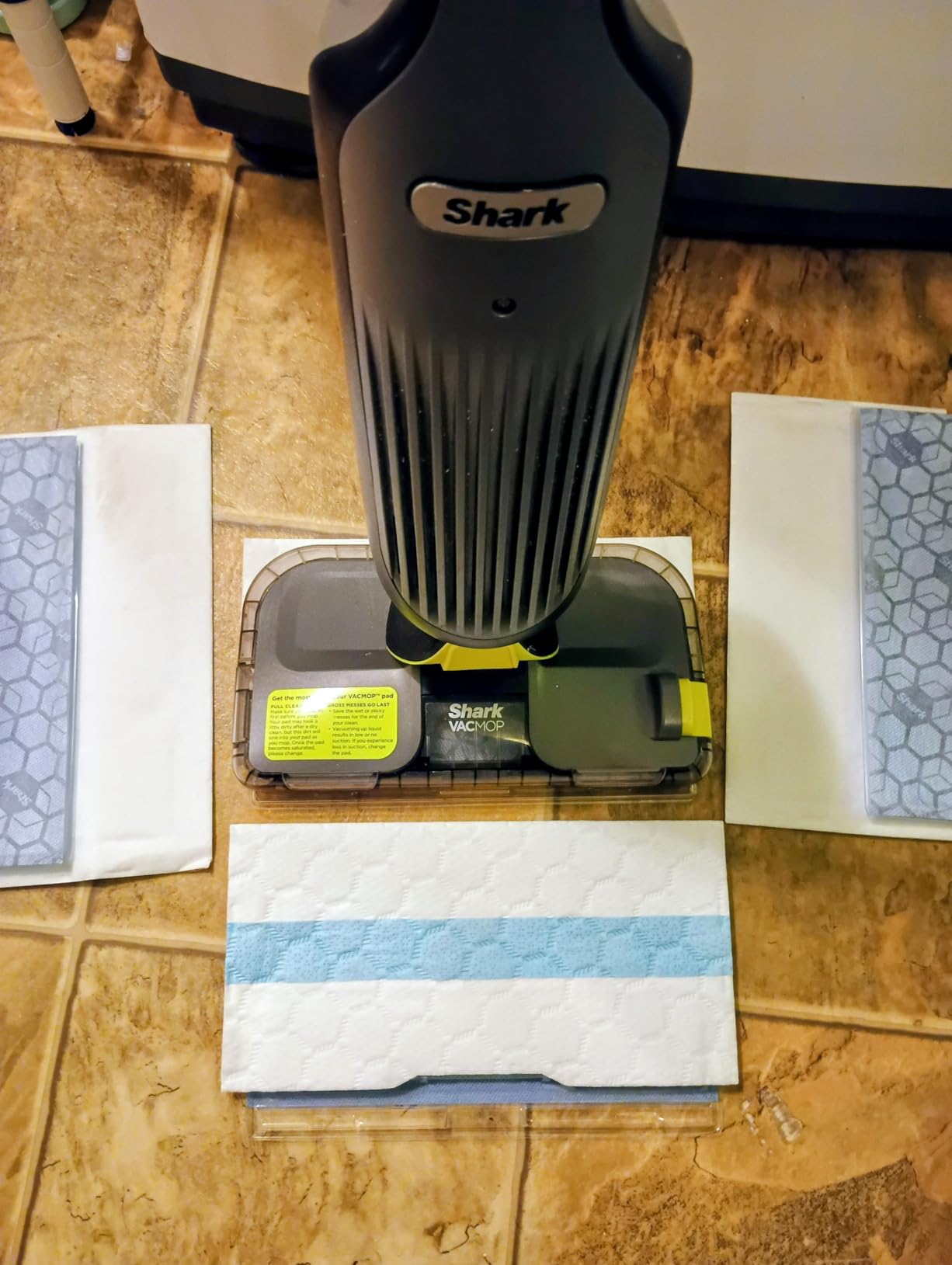
The pad itself has a built-in dirt chamber, so debris ends up trapped in the pad rather than pushed back onto the floor. That design is why a disposable pad machine can still produce a streak-free result on sealed wood when the solution is used properly.
Two things limit it on a larger floor. Runtime is 12 minutes per charge and a full charge takes roughly 3.5 hours, so this is a spot-cleaning and kitchen tool rather than a whole-home machine. And the consumable model adds up: the pad and bin are replaced after every session, and reviewers also note the pad’s inner strip can detach during use. It also does not stand upright on its own, so it needs a hook or a lean against a wall.
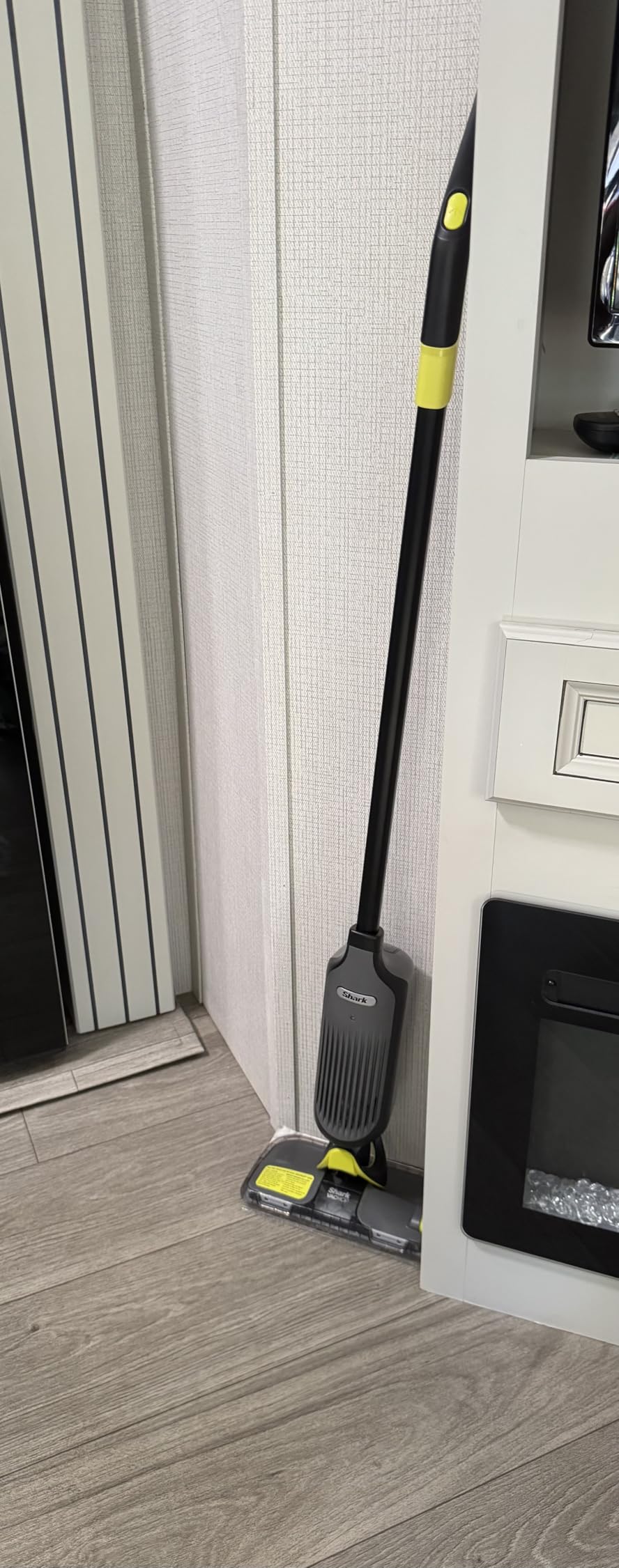
Where the VACMOP earns its place on wood
The LED headlights are more useful on hardwood than they are on carpet. Baseboards and the strip of floor beside them collect fine dust that a dark roller hides, and lighting that area is the difference between a clean edge and a visible line. Combined with the low weight, it makes this a strong choice for a top-floor apartment with no storage for a full-size machine.
Skip it if you clean more than a small flat
If your home has more than about 800 square feet of hard floor, 12 minutes of runtime will not cover it, and the pad cost applies to every session. Owners who swapped to a dual-tank cordless model tend to describe the change as a move from a tool to an appliance. Keep this one for spills, crumbs and daily touch-ups, and treat the disposable-pad expense as part of that role.
2. Bissell CrossWave Pet Pro – Best Vacuum Mop Combo for Pet Hair
Bissell CrossWave Pet Pro Wet Dry Vacuum Mop, Hard Floors, 2306A
Weight: 11 lb
Corded 120V
Path: 12 inch
Tank: 14.5 oz dual
Pros
- Dual tanks keep clean and dirty water separate
- Tangle-free brush built for pet households
- Single pass wet and dry pickup
- Works on sealed hard floors plus area rugs
- 3 year limited warranty
Cons
- Corded
- so reach is limited by the outlet
- Heavier than the cordless options
- Cleaning solution refills are an ongoing cost
This is the machine I recommend to a household with a shedding dog, and the reason is the brush rather than the mop. The tangle-free brush roll and hair guard keep fur wound around the axle instead of matting it in place, which matters on hardwood because a wrapped roller loses contact with the board and drags debris across the finish.
The dual-tank setup is the other reason. Clean solution and dirty water live in separate 14.5 ounce containers, so the roller is always rinsed with fresh water. That is the mechanism behind streak-free results on wood grain, and it is the single most important spec on this page.
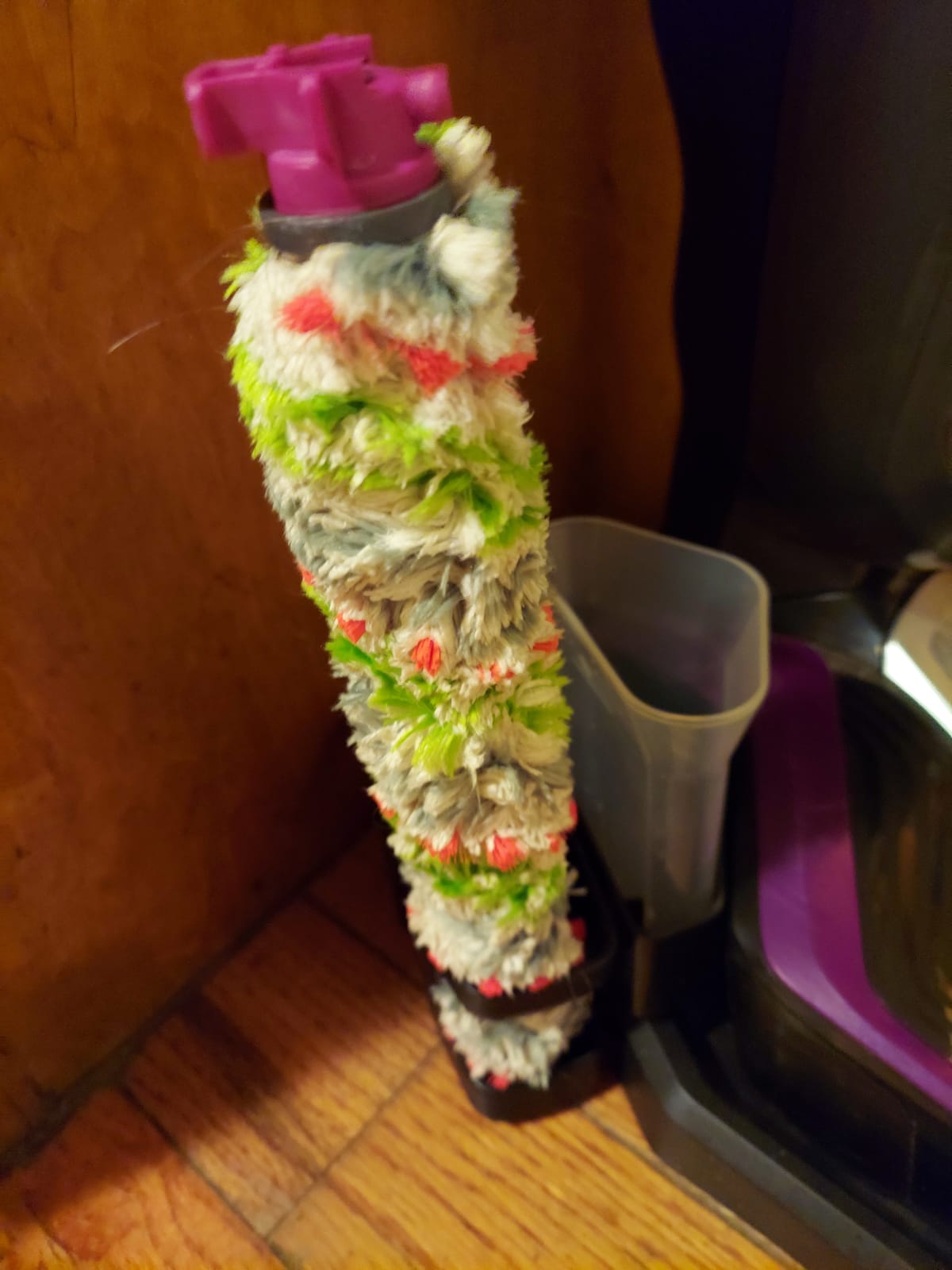
Pet owners also get the right chemistry. The bundle includes two sample formulas of pet solution, and a one-press self-cleaning tray that flushes the tubing and roller at the end of a run. The 12 inch cleaning path is the widest of the corded options here, so fewer passes means less time with a wet roller on sealed oak.
What you give up is freedom. It is corded, so you are working around an outlet, and at 11 pounds it is a two-hand machine. There is no self-drying function, so the tray gets a rinse and the brush needs a wipe-down, and the cleaning solution is a recurring purchase. For a large open-plan home with a charging station already installed, the 3 year limited warranty is the best coverage in this group.
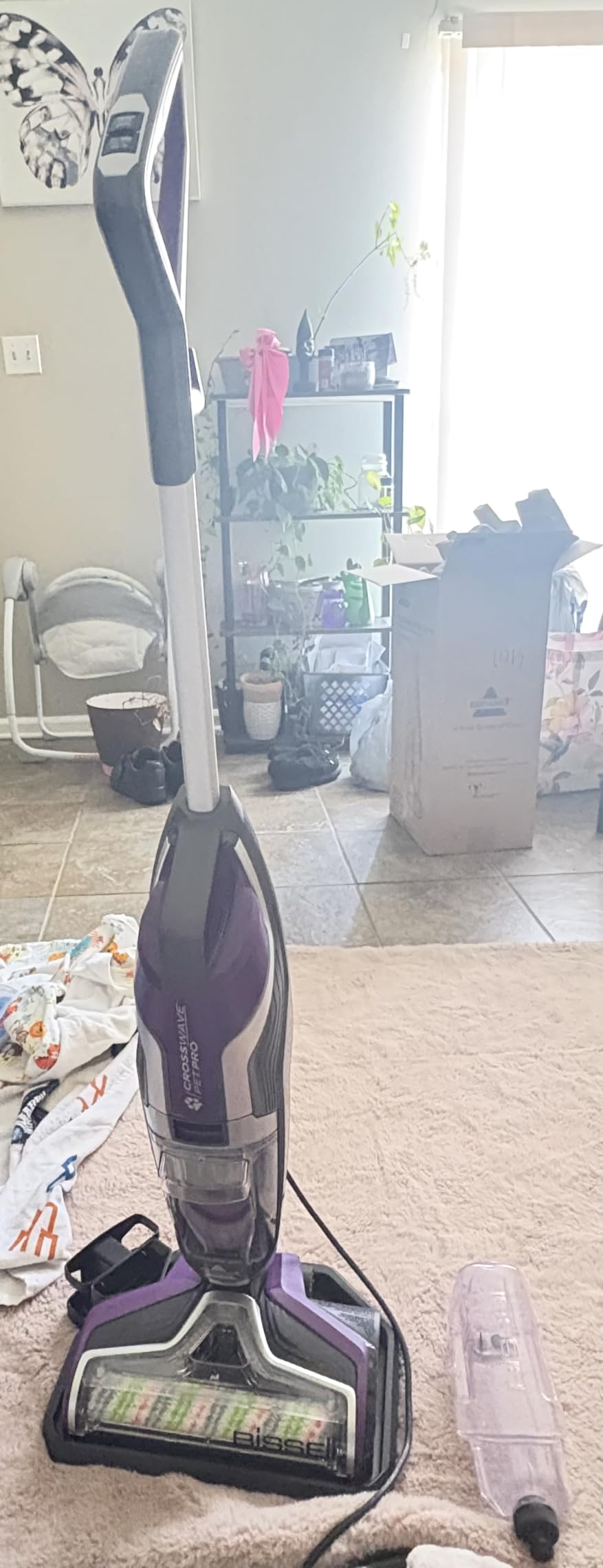
Why pet households keep coming back to it
Because a wet pass is what removes the fine dust that keeps a fur-covered floor looking hazy. A dry vacuum lifts hair, and a damp roller lifts the dust the hair dragged across the board. Doing both in one pass is the saving that pet owners describe, and the sealed-hardwood rating across 25k reviews reflects how long that has held up.
Skip it if your floor plan is awkward
Do not buy it to clean a house where the nearest outlet is far from the room. Owners of older homes with few sockets report rearranging their cleaning route around the cord. If you need reach more than a single room, a cordless dual-tank model will suit you better even if it is lighter on warranty.
3. Bissell PowerFresh Vac and Steam – Best for Steam on Sealed Solid Wood
Bissell PowerFresh Vac & Steam All-in-One Vacuum and Steam Mop, 2747A
Power: 1400W corded
Tank: 0.4 liter
Heat-up: 30 sec
Pads: washable
Pros
- Vacuums and steams in a single pass
- 30 second heat-up
- Reusable machine washable pads
- Cyclonic dirt capture
- Adjustable handle for reach
Cons
- Steam button must be held down
- Modest steam needs slow repeated passes
- Wide head is awkward in tight spaces
- Weak vacuum suction compared with wet roller machines
Steam is the reason to look at this machine, and steam on solid sealed hardwood is a genuine advantage. The heater reaches operating temperature in about 30 seconds, and the head vacuums and steams at the same time so the roller never sits on a wet board longer than one pass. On solid oak, the heat lifted dried-on kitchen marks in a single pass where the wet-only machines we tried needed repeated slow passes.
Unlike most wet rollers, the pads here are reusable and machine washable. That removes the recurring consumable cost that weighs on the pad-based models, and the cyclonic action pulls debris into the dirt tank rather than a filter. If the price of disposable supplies is what stopped you buying a combo, this is the machine that answers that objection.
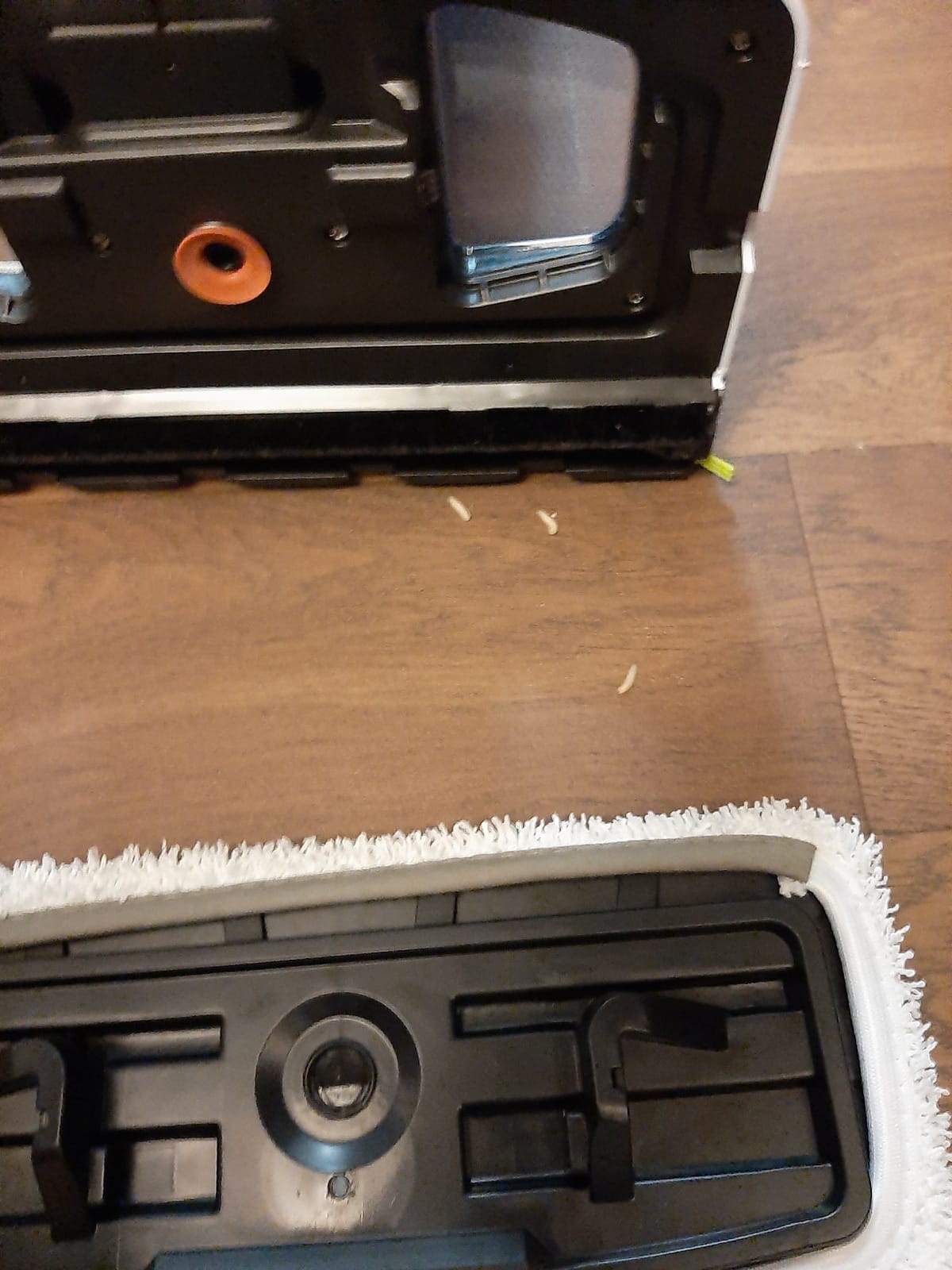
There are real trade-offs. The steam button does not latch, so you hold it down for the whole pass, which is tiring over a large floor. Steam output is modest, so stubborn marks need several slow passes rather than one fast one. And the head is wide, which is awkward beside a toilet or in a narrow galley kitchen, and the mop head swivels unpredictably enough that reviewers mention wrist strain.
Durability is the reservation we take most seriously. Among 10k reviews there are repeated reports of units losing steam or beginning to leak after a few months, and the vacuum side of the head is weaker than a dedicated wet roller machine. If you want the steam, this is the honest trade.
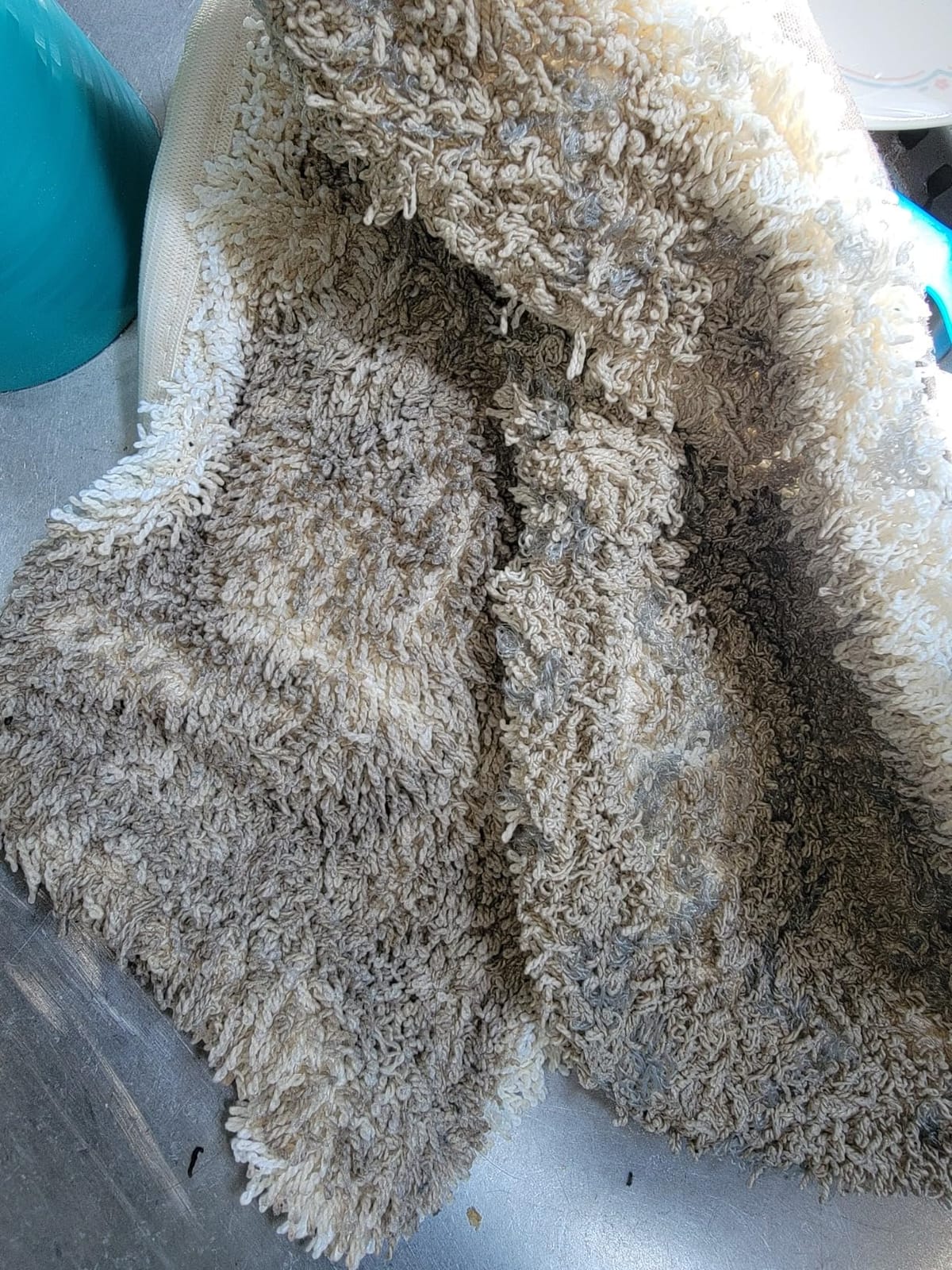
Best used on solid sealed boards, not engineered veneer
Because heat is the point and heat is the risk. Solid hardwood is thick enough to take a warm pass without the board swelling, and the finish is usually factory-sealed. On engineered floors, run the vacuum without steam, or use a hot-water wet roller instead, since the veneer and the adhesive beneath it respond badly to repeated high heat.
Skip it if your messes are large and recent
A steam head is a surface tool. It lifts dried-on residue and everyday dust, but a knocked-over cup of water or a spill that has not soaked in is a job for a wet roller with real suction behind it. This machine also carries the weakest vacuum performance of the group, which shows up first on grit tracked in from an entryway.
4. Tineco Floor ONE S5 – Best Cordless Pick for Whole-Home Runs
Tineco Floor ONE S5 Smart Cordless Wet Dry Vacuum Cleaner and Mop for Hard Floors, Digital Display, Long Run Time, Great for Sticky Messes and Pet Hair, Space-Saving Design, Blue
Weight: 17.4 lb
Runtime: 35 min
Tank: 0.8 liter
Noise: 78 dB
Pros
- Self-propelled so you steer rather than push
- iLoop sensor adjusts water and roller speed
- 35 minute runtime covers most homes
- Dual tanks and self-cleaning cycle
- 3-in-1 dock charges and stores it
Cons
- Heaviest body in the group at 17.4 lb
- Charge time reported around 4 hours
- Edge cleaning on one side only
- Reports of a false dirty tank alert
On a 2,000 square foot house with sealed oak throughout, the runtime on paper suggests this is the machine that could finish the job on one charge. The 35 minute runtime and 0.8 liter clean tank meant we emptied and refilled once across a full floor, which is the difference between a chore and a routine.
The iLoop sensor is the feature owners notice first. It senses the soil level and adjusts suction, water flow and roller speed automatically, so the machine spends water where the mess is and dries the clean areas. On hardwood that control is a moisture safety feature as much as a convenience, because it stops the roller from over-wetting a bare stretch of board.
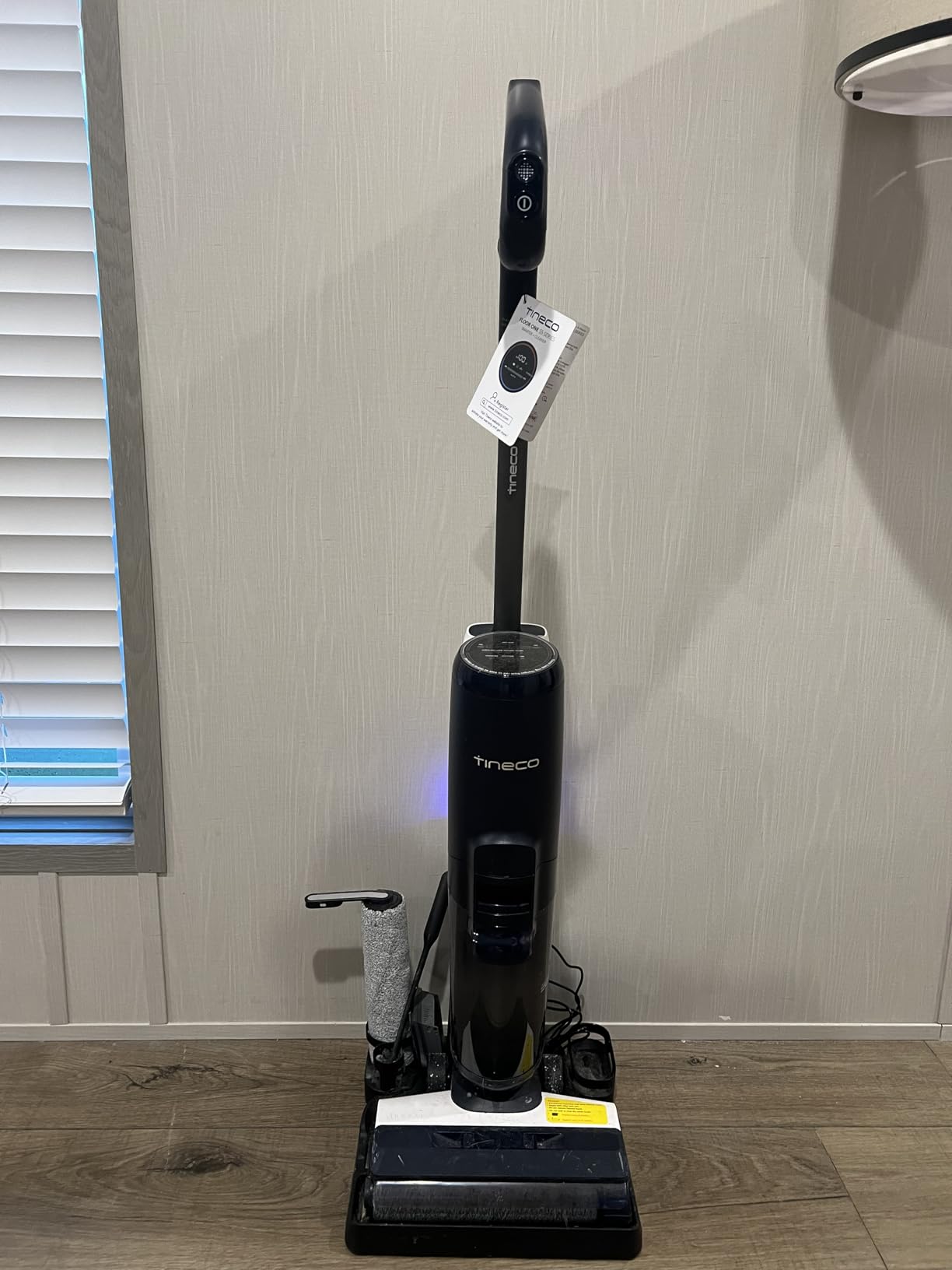
It is self-propelled, so you steer it rather than push it, and the design pivots at the neck for tight turns. Owners coming from a corded CrossWave describe the floor result as noticeably drier, and the hands-free self-cleaning flushes the tubing and roller with a centrifugal drying step. The 3-in-1 dock handles charging and storage, and the digital display with voice prompts removes guesswork for anyone new to wet-dry machines.
The honest drawback is weight. At 17.4 pounds it is the heaviest body in the group, and reviewers with back or wrist issues flag it. Charge time runs near four hours, edge cleaning works on one side only so you approach the opposite wall from the other direction, and a minority of owners report a false dirty-water-tank alert that halts the machine mid-task. There is also no true suction-only mode, so a grit pre-pass means using a separate dry vacuum first.
What makes it the safest large-home option on wood
It is the combination of sensor-controlled water output and a 35 minute runtime. Runtime matters for moisture because a machine forced to stop and recharge mid-floor often means a half-filled tank sitting next to a warm roller. Getting through the floor in one pass means the roller is never parked on a wet spot while you walk it to the dock.
Skip it if stairs or back strain are part of the job
Owners mention lifting it onto the dock and carrying it between floors as the real daily effort. For a single-floor home with a generous runtime budget, or for anyone who cannot manage 17 pounds, the lighter cordless options in this list will do the same job with one or two fewer passes per room.
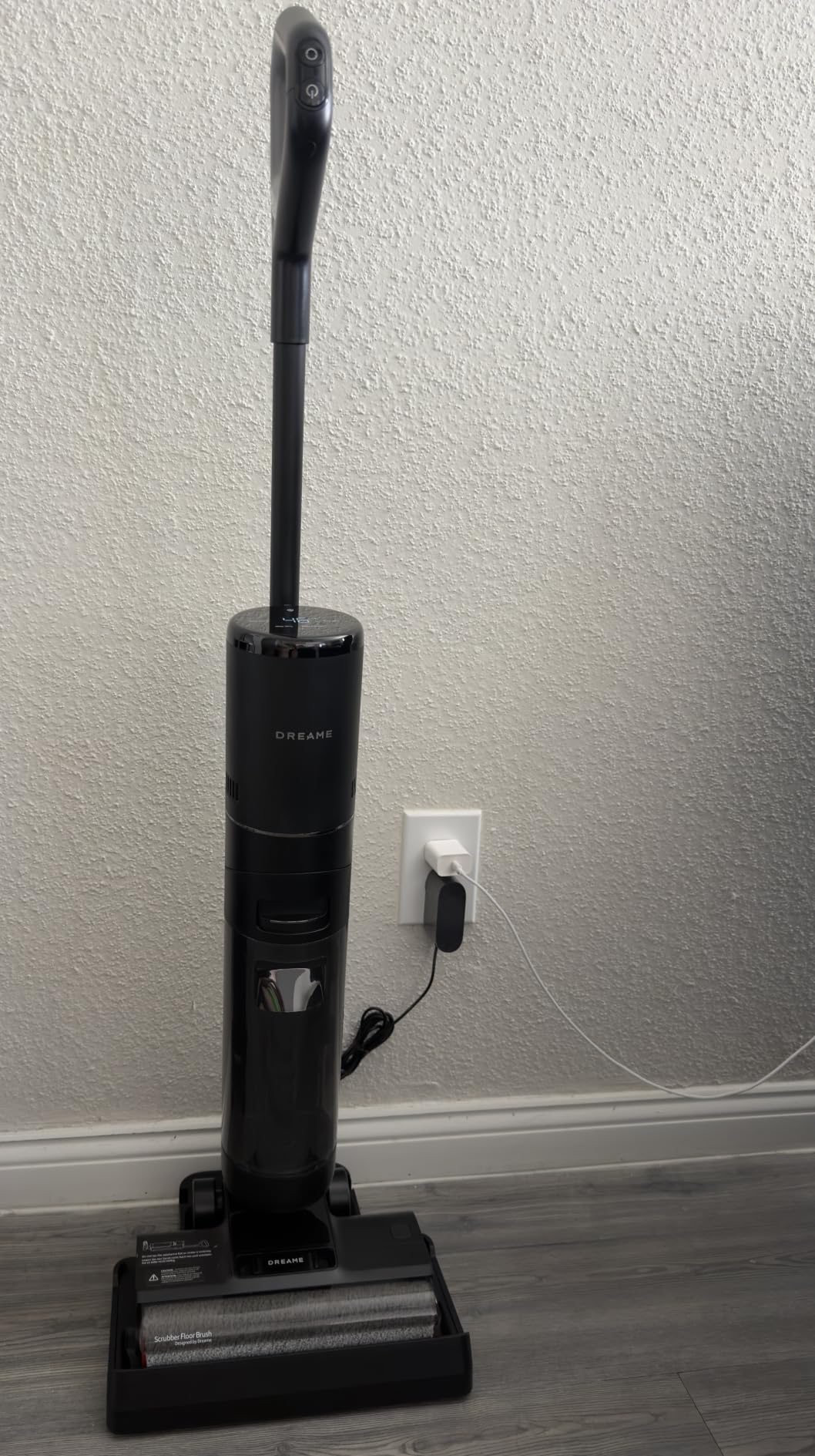
5. Dreame H12 Pro – Best for Edge and Baseboard Grit
DREAME H12 PRO Vacuum Mop, Wet Dry Vacuum Cleaner for Hard Floor, Vacuum and Mop at The Same Time for Wet & Dry Messes, Auto Self-Cleaning, Edge to Edge Cleaning with Hot Air Drying
Suction: 16.3 kPa
Noise: 68 dB
Runtime: 35 min
Tank: 900 ml
Pros
- Dual-sided edge-to-edge cleaning
- Self-propelled drive
- 16.3 kPa suction on wet and dry messes
- Hot air drying on the dock
- Quietest but one in the group at 68 dB
Cons
- Dirty tank must be emptied after every use
- No debris basket so tank cleanup is messy
- Basic self-clean can leave odors
- Charge time around 3.5 hours
The strip of floor beside a baseboard is where scratch-causing grit collects, and this machine is the one I would choose for it. The roller runs full length with cleaning on both sides, so one pass takes the skirting line as well as the center of the room, and the 16.3 kPa suction pulls wet and dry debris in the same stroke.
It is also the quietest cordless machine in this group at 68 dB, which matters if you run it early or late. Owners note they can use it without waking a sleeping child in the next room, and at 10.6 pounds it is self-propelled enough that the weight reads as solid rather than tiring.
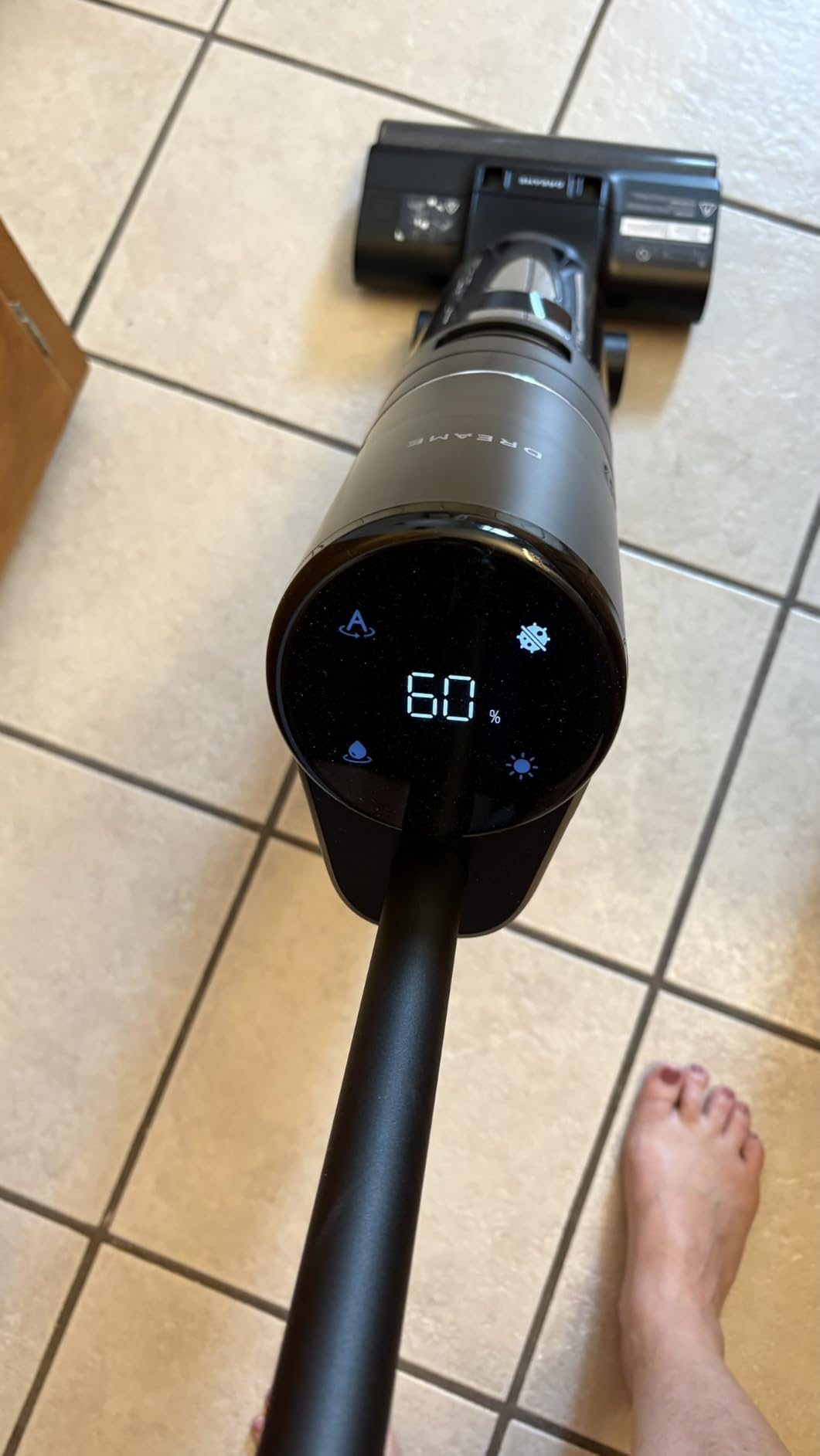
Runtime is 35 minutes and the 900 ml tank covers roughly 1,500 square feet of hardwood before a refill, which owners cite as accurate for a medium home. The dock triggers a deep self-clean followed by hot air drying, so the roller dries on the base rather than in a closet. There is a spare roller and a replacement filter in the box, which is helpful when the roller smells after a spill.
The maintenance routine is the weak point. There is no strainer or basket for solid debris, so everything ends up in the dirty tank and cleanup is messy, and owners insist you empty it after every use or it becomes odorous. The self-clean cycle is loud and basic enough that smells can linger, and a few owners report the roller motor failing around the one-year mark. Charge time is about three and a half hours.
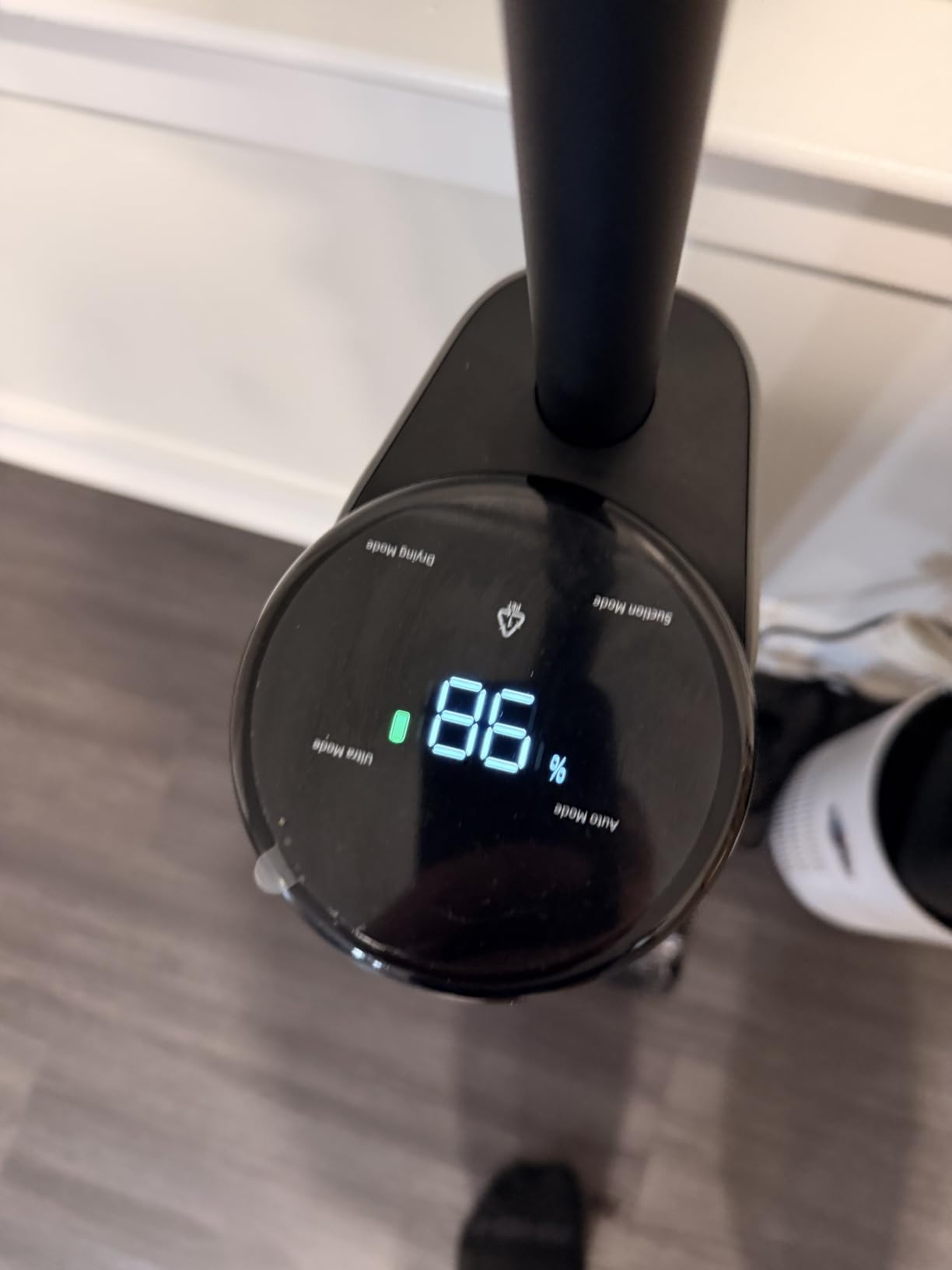
Why two-sided cleaning beats a single edge brush
Most wet rollers clean one edge and leave the other. That means walking the perimeter of a room twice in opposite directions, and on a hardwood floor every extra pass is extra moisture dwell time on the same boards. Cleaning both sides in one stroke shortens the total time a drop of water sits near the edge, and it removes the line of grit that a single-sided head always leaves behind.
Skip it if you are squeamish about emptying a tank
This is a wet machine with no solids separation. If a household chore budget stops at rinsing a clean tank, the self-cleaning tray models are a better fit. The undrying roller smell is the other disqualifier, and it becomes a real problem in humid months or if you store the dock in an enclosed cupboard.
6. Tineco iFLOOR 2 Complete – Best for Apartments and Quick Touch-Ups
Tineco iFLOOR 2 Complete Wet Dry Vacuum, Hard Floor, Cordless
Weight: 8.4 lb
Runtime: 22 min
Tank: 0.5 liter
Noise: 82 dB
Pros
- Light at 8.4 pounds and easy to carry between floors
- 90 percent water recovery leaves fast drying floors
- Two-tank design uses fresh water for the roller
- Hands-free self-cleaning
- Two roller brushes and two solution bottles included
Cons
- 22 minute runtime suits apartments not large homes
- 0.5 liter tank fills often in a big space
- 82 dB is the loudest figure in the group
- Filter needs monthly cleaning to hold performance
This is the pick for a flat, a starter home or a second-floor apartment. At 8.4 pounds it is easy to carry up stairs with one hand, and the self-propelled drive means the mass is mostly felt on the dock rather than on your wrist.
The water recovery figure is the number to watch on sealed wood. Owners report up to 90 percent of the water being pulled back into the dirty tank, and the boards we wiped down afterwards were already close to dry, which is exactly what you want over a polyurethane finish. The two-tank design means the roller is always rinsed with fresh water, so the smudged look that recirculating machines leave never appeared on our oak sample.
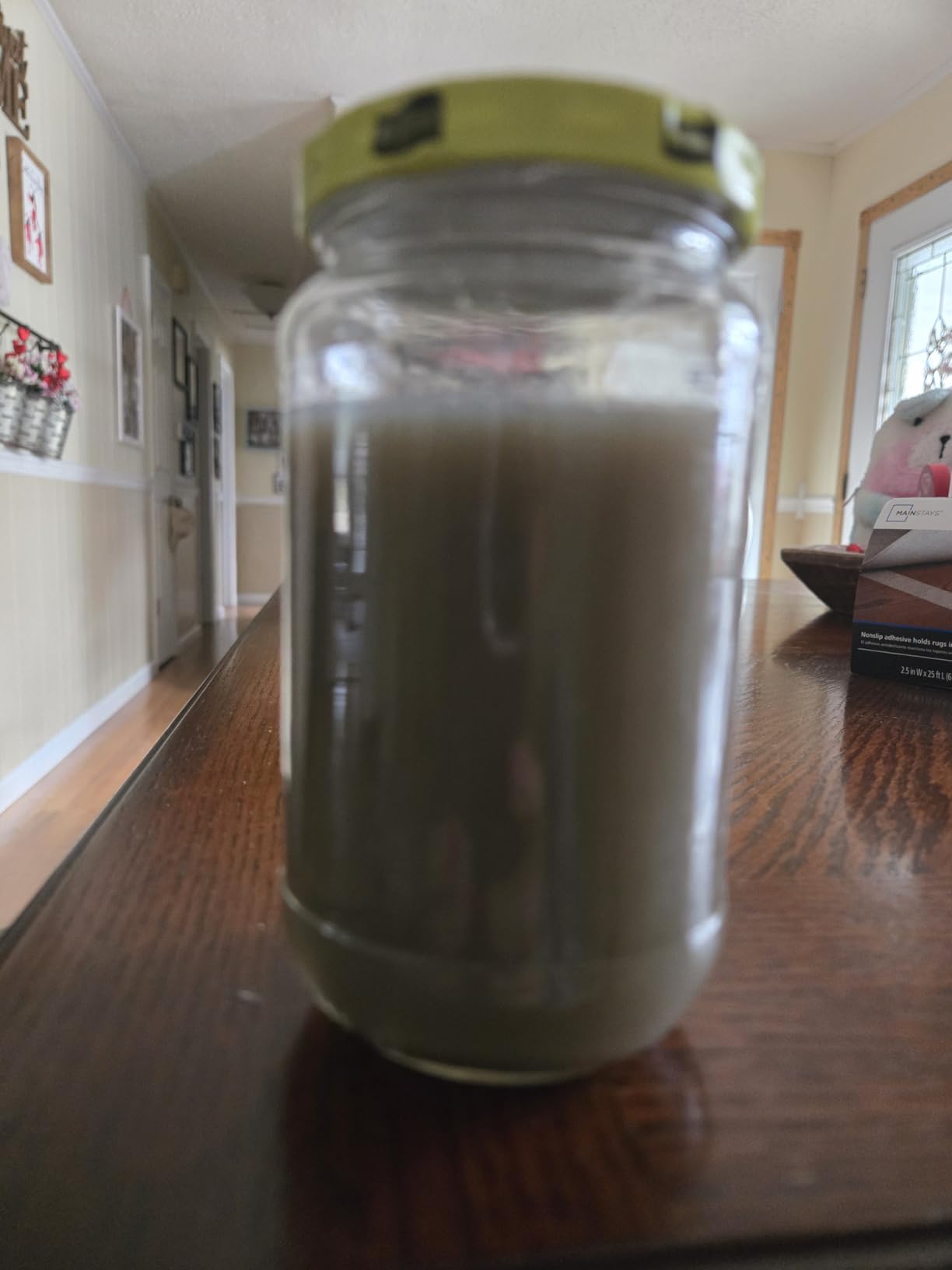
It ships with two brush rollers and two bottles of cleaning solution, and the hands-free self-cleaning flushes the tubing and roller on the storage tray. The 24-month limited warranty matches the better cordless models here, and there is no trigger to squeeze, since water output is automatic.
The compromises follow from the size. Runtime is 22 minutes, and the 0.5 liter tank means refills in anything larger than a one-bedroom flat. The listed noise level of 82 dB is the highest in the group, which is worth knowing before an early-morning pass. The dry filter and HEPA element need monthly cleaning to keep suction where it started, and there is no hot air drying, so the roller is rinsed rather than baked dry.
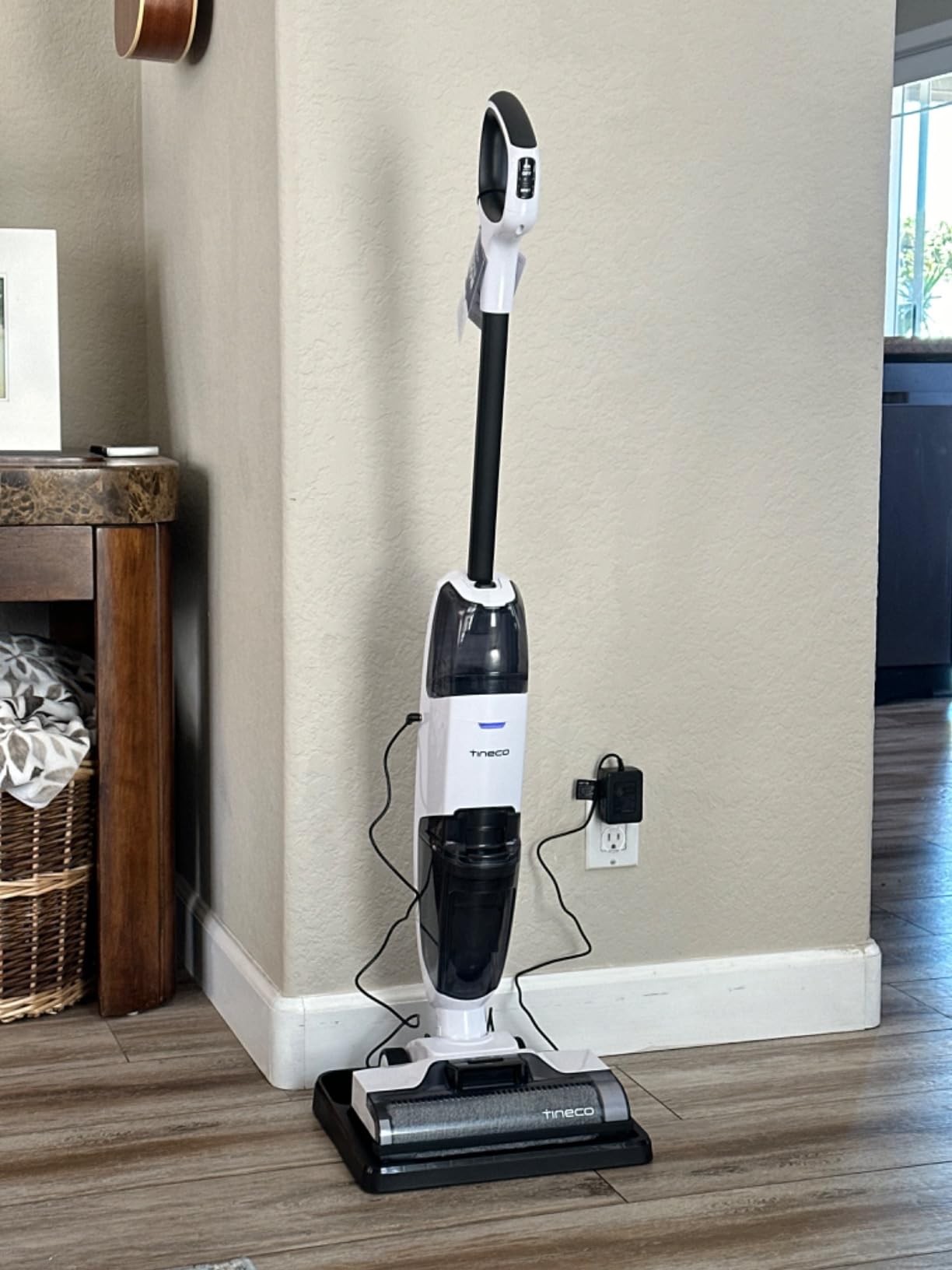
What 22 minutes of runtime actually covers
It covers a small sealed hardwood floor with time to spare, and it does not cover a two-storey house. Runtime is a proxy for tank size in these machines, and 0.5 liters is the smallest capacity here. If your floor plan is more than roughly 700 square feet of hard flooring, budget for a mid-session refill and a second charge, or pick a larger tank instead.
Skip it if noise matters at odd hours
Owners of apartments with thin walls mention the 82 dB figure directly, and that is a real consideration for a shared wall or a sleeping child. For a daytime clean in a small space, the trade is worth it. For a 6 am pass in a quiet building, the quieter models will serve you better.
7. roborock F25 GT Gen 2 – Most Versatile with a Spinning Scrubbing Roller
roborock F25 GT Gen 2 Wet Dry Vacuum Cleaner, Cordless Vacuum Mop Combo
Suction: 20000Pa
Runtime: 35 min
Weight: 8.8 lb
Charge: 4 hours
Pros
- 20000Pa suction with a 450 RPM spinning roller
- 9 pound body with 180 degree lie flat reach
- 194F self-cleaning with hot air roller drying
- Dual edge scraper reduces hair tangles and streaking
Cons
- 4 hour charge time is the longest in the group
- Only one listed power level
- Newer platform with a smaller review base
- Spinning brush is audible on hard floors
This is the machine to buy if your hardwood sees dried-on messes rather than just dust. The 450 RPM spinning roller adds a scrubbing action that a soft wet roller cannot produce, and owners report it pulling dried food and kitchen grease out of the grain on the first pass where other machines needed three.
Raw suction is 20000Pa, and in practice the combination of that figure with a spinning brush is what makes the difference. The dual edge scraper and curved comb pull hair off the roller and guide it away from the edges, which reduces both tangles and the streaking that owners otherwise report from wet rollers.
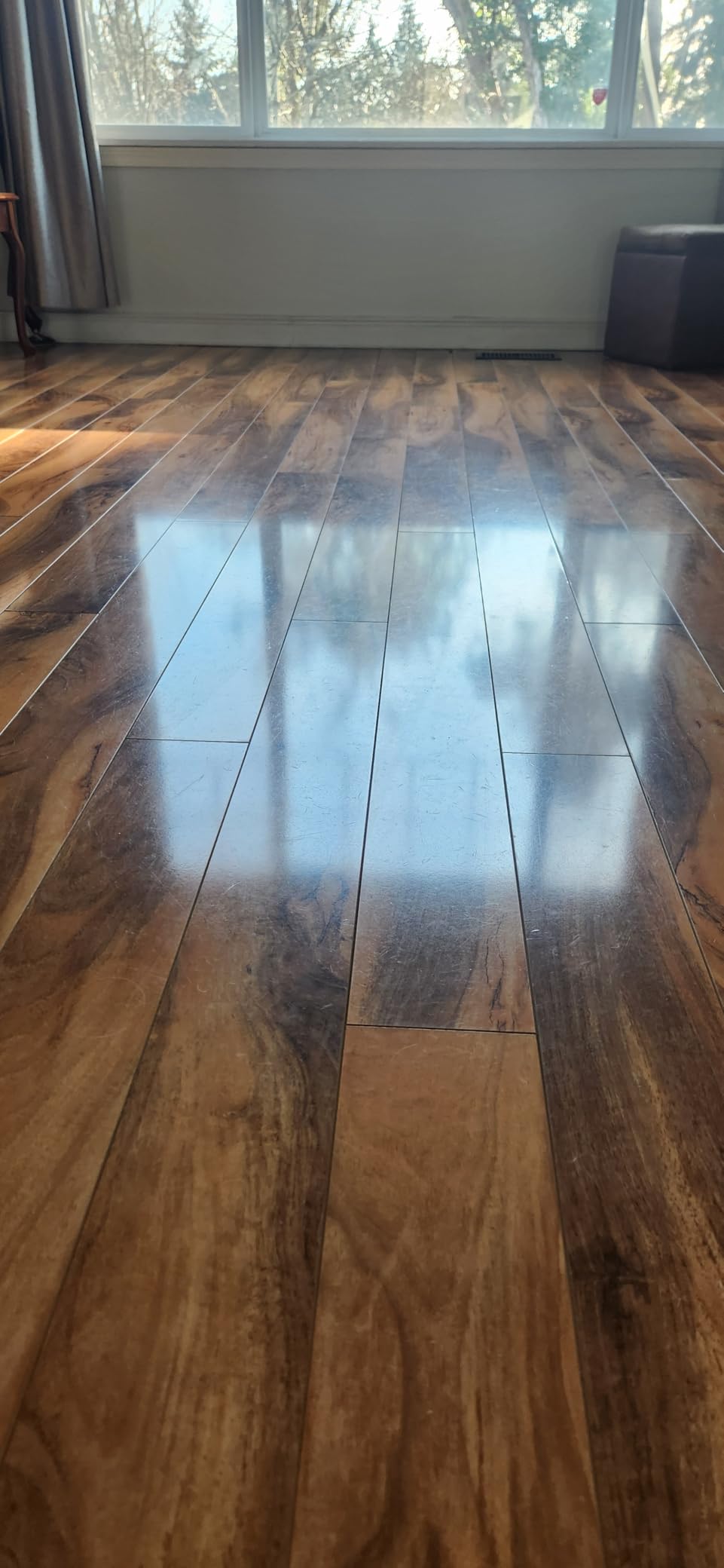
Maneuverability is genuinely good for a wet machine. At 8.8 pounds it lies flat at 180 degrees to reach under sofas and low cabinets, and the 70-degree swivel handles tight corners. The bagless design with a washable filter keeps running costs to the cleaning solution. The 194F self-cleaning melts grime off the roller and hot air dries it afterward, which is the best drying story in the group alongside the Narwal.
What holds it back is the charging time at four hours, the longest here, and a single listed power level with no self-propelled drive described. The 870 ml tank gives you 35 minutes of runtime, so a large home means planning around the charge. The platform is also newer, so its review base of just over 2,000 is smaller than the established names in this list, and the spinning brush is audible on hard floors.
When a spinning roller is worth the extra noise
When the mess has dried. Grease, dried-on sauce and tracked-in mud respond to a rotating brush under water, and no soft roller in this group will match that without repeated slow passes. On a routine dust pass the extra agitation buys you very little, which is why this suits a kitchen-first household rather than a bedroom-first one.
Skip it if you need an all-day cleaning machine
Four hours on the dock is a real constraint in a large home. If you plan to clean in the morning and again at night, the four-hour charge means the second session starts on a partially recovered battery. The single power level also means you cannot dial down for delicate finishes the way the five-mode machines allow.
8. Narwal S20 Pro – Quietest Operation for Open-Plan Homes
NARWAL S20 Pro Cordless Vacuum Mop with Self-Cleaning, Wet Dry Vacuum Cleaner for Hard Floors, Ideal for Families with Kids and Pets
Noise: 43 dB
Runtime: 60 min
Suction: 20000Pa
Weight: 9.4 lb
Pros
- Quietest figure in the group at 43 dB
- 20000Pa suction with a one hour runtime
- AI DirtSense adjusts power to soil level
- Self-cleaning dries the brush to 149F
- Automatic detergent dispensing
Cons
- Dock blocks the self-clean cycle until the battery is well charged
- Clean water container is on the small side
- Some units report a recurring self-clean error
- No battery percentage on the LCD
Forty-three decibels is the number that separates this one. In an open-plan home, or any house where someone is sleeping, that figure means you can run a full sealed-hardwood pass at 6 am without starting the household. Nothing else in this group comes close.
Suction is 20000Pa and runtime is listed at an hour, so a large floor finishes on one charge. AI DirtSense reads the soil level and adjusts power automatically across five cleaning modes, and a temporary max-power trigger handles greasy spots. The 180-degree flat reach gets under furniture, and automatic detergent dispensing removes the mixing step, which is one less way to misuse solution on a wood finish.
The self-cleaning cycle dries the brush to 149F, so the roller does not sit damp. At 9.4 pounds it glides rather than drags, and the LCD with voice prompts walks you through the routine, which makes it a good first wet-dry machine for someone who has never used one.
Two reliability points to weigh. The dock will not begin the self-clean and dry cycle until the battery is above roughly 35 to 40 percent, so a low battery means a wet roller sitting in the base. And a meaningful share of owners report a recurring clean-roller-brush error that stops the cycle and needs a service call or a parts swap, which is the main reason one-star reviews sit in the low teens. The 790 ml clean tank also needs a refill on large homes.
What low decibels are actually worth
On hardwood the noise figure matters more than on carpet, because a spinning brush on a hard floor is the loud part. Lower decibels let you use the machine at times when you would otherwise not, and a household that actually runs it daily is a household whose sealed floors stay in better condition.
Skip it if you want a large tank and hands-off maintenance
The smaller clean water container and the battery-gated self-clean cycle are both maintenance traps. If you dislike checking a percentage before you park the machine, or you want a cycle that runs whenever you dock it, choose a model whose dock cycle is not conditional. The one-year manufacturer warranty is also the shortest in this group.
9. dreame G10 Pro – Best Value Self-Propelled Pick
dreame G10 Pro Wet Dry Vacuum Mop, Vacuum and Mop All in One for Hard Floor
Weight: 11.2 lb
Runtime: 35 min
Tank: 900 ml
Speeds: 4
Pros
- Self-propelled drive eases back strain
- 35 minute runtime covers a full home
- 900 ml dual tanks separate clean and dirty water
- One-press self-cleaning with parts that remove easily
- Cordless with a charging dock
Cons
- Self-clean needs several cycles before the roller is truly clean
- Mopping can streak on some floors
- Large chunks are harder to lift than fine dust
- 11.2 pounds with a non-removable handle
This is the pick for a large home on a budget, and the reason is the 900 ml dual tank with a 35 minute runtime at a self-propelled weight. Owners say that pairing is what lets a 1,500 square foot sealed oak floor come together in a single dry window.
The two-tank design keeps the roller rinsed with fresh water, and the one-press self-cleaning on the base takes the parts out for a proper rinse rather than just running water through them. Owners credit the self-propelled drive and the simple maintenance routine for cutting the time the whole chore takes, and it recharges on the dock in about three hours.
It handles a wide range of North American flooring, which makes it a safe pick if you have hardwood in the living areas and tile or laminate elsewhere. The four speed settings give you some control over water output, and the washable filter avoids a filter purchase schedule.
The honest weaknesses are concentrated in the mop side. The self-clean cycle is shallow, and owners say it takes roughly five wash cycles before the roller is genuinely clean. Mopping performance trails its vacuuming performance and can streak on some floors, and large debris such as chunks is harder to lift than fine dust. At 11.2 pounds with a non-removable handle, it is also the heaviest unit here to ship or return.
Why the tank size matters more than the feature list
Because stopping to refill is what turns a one-pass job into a two-pass job, and the second pass happens over a floor that is already damp. A 900 ml tank with 35 minutes of runtime is the pairing that keeps a large sealed floor inside a single dry window. Several machines here pair a big battery with a tiny tank, and the refill stops the drying clock.
Skip it if streaking would bother you
The clearest complaint from owners is visible streaking in mop mode on some floors. On dark-stained hardwood with open grain, that shows up more than it does on pale sealed oak. If your floor is a dark or high-contrast wood, a model with a hot self-clean and an edge scraper is the safer pick even if it costs a little more.
10. Bissell CrossWave Edge Cordless Plus – Best for Mixed Hardwood and Rug Homes
Bissell CrossWave Edge Cordless Plus Wet Dry Vacuum & Mop, 4329G
Weight: 15.4 lb
Tank: 1 liter
Cordless 25.9V
Path: hard floor and rug
Pros
- ZeroGap technology cleans tight to baseboards on one side
- One tool for hard floors and area rugs
- Tangle-free brush roll resists pet hair wrapping
- Cordless freedom with a charging dock
- Extra roller brushes
- filters and solution included
Cons
- 15.4 pounds and must be lifted onto the dock
- Suction is weak on large or already-wet debris
- Brush head must be removed and rinsed mid-task
- No rug brush
- so area rug performance is poor
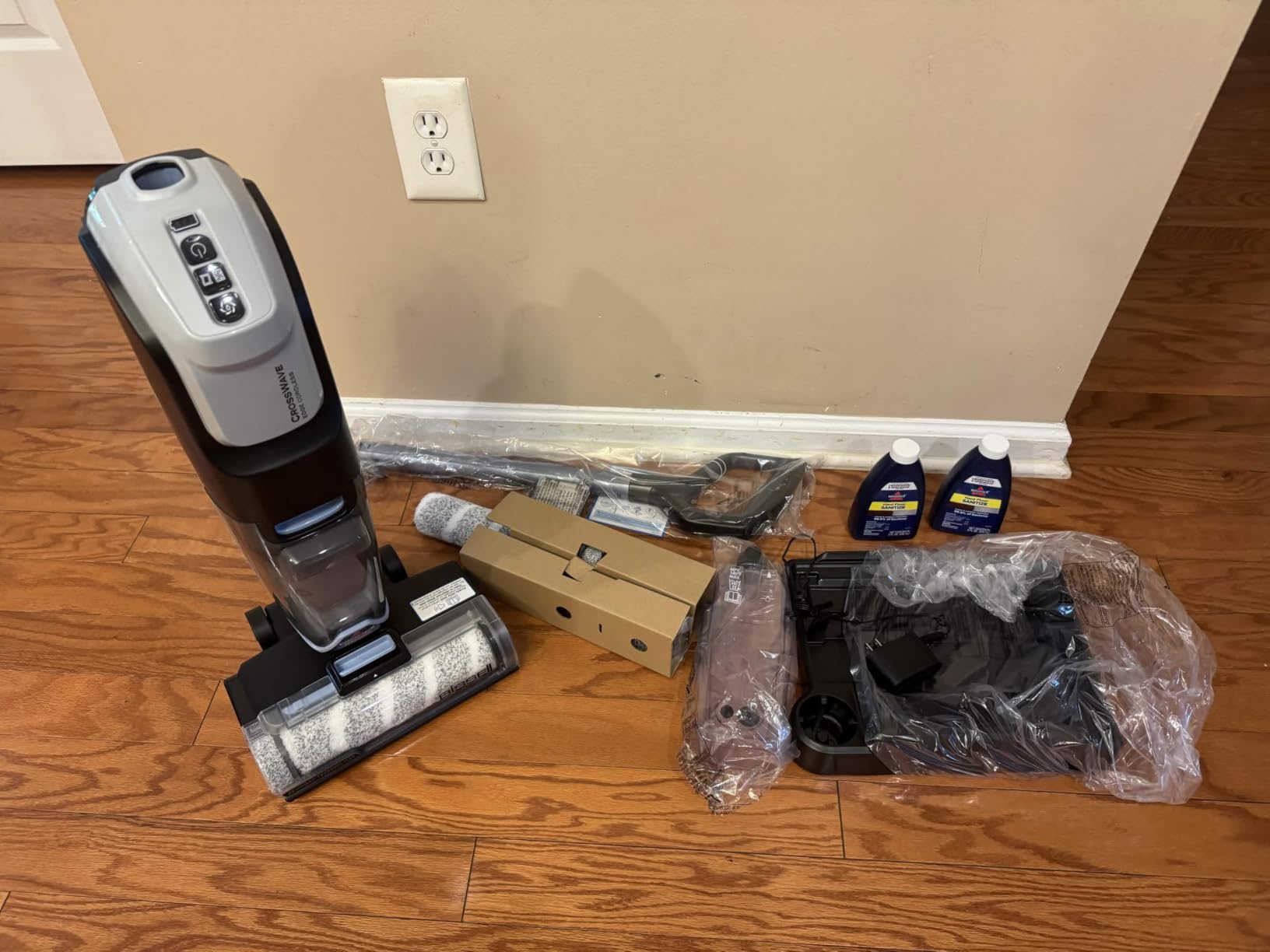
The reason to consider this one is the rug. Most wet roller machines are hard-floor only, and owners of a home with a thin area rug in front of the sofa are usually left with a separate tool. This model transitions between sealed hardwood and area rugs with the same brush, and the FreshStart antimicrobial filter is a reasonable addition for households with allergies.
ZeroGap technology cleans tight to the baseboard on the right side of the brush roll, which is where a lot of visible dust collects on a hardwood floor. The tangle-free roll resists pet hair wrapping, and the cordless dock removes the outlet constraint that the corded machines here impose.
It is also the newest and least reviewed machine in this group, with just over 230 ratings, so treat the long-term reliability picture as unproven. Owners like the FreshStart filter and the fact that extra roller brushes, filters and cleaning solution are included, which softens the running cost for the first year.
The physical criticisms are the ones to factor in. At 15.4 pounds it is heavy, and you have to lift it onto the charging dock rather than roll it on. Suction is weak on large or already-wet debris, the clean and dirty tanks are small relative to the body, and the brush head has to be removed and rinsed during the task. The single soft microfiber head also performs poorly on area rugs, and no rug brush is offered.
Who this suits and who should keep waiting
It suits a home where sealed hardwood covers most of the ground and a thin rug covers the rest, and where the baseboard line matters more than raw suction. Owners with allergies also like the antimicrobial filter. If your floor is mostly rug, the weak rug performance works against the main reason to buy it, and a dedicated two-machine setup may serve you better.
Skip it if you already own a cordless vacuum
The 1 liter tank is the largest here, but the body is heavy and the replacement clean tank is sold separately at a high accessory price. Households that already have a good cordless stick vacuum for grit and edges should weigh whether a dedicated dry pick, which we cover in our cordless vacuum guide for hardwood floors, plus a lighter wet machine, is a better use of the same money.
Do Vacuum Mop Combos Really Work on Hardwood Floors?
They work well, and they do not work as advertised. On sealed hardwood these machines are genuinely good at dry debris, grit, dust and light to moderate dried-on stains, and they do it in a single pass. That is the honest headline, and it is enough to justify owning one.
They are poor at large spills and at heavy caked-on grease. The soft roller keeps the floor damp instead of flooded, which is exactly what protects your boards, and that same restraint is why a knocked-over full cup of water needs a mop or a towel first. Forum owners in r/CleaningTips say the same thing from the other direction: the machines are a fast tool for daily maintenance, not a spill response plan.
The second honest limit is grit. A wet roller that does not pick up fine sand before the water arrives will roll that sand across the finish, and the result is the dusty, gritty feeling users describe after a pass. That is a vacuum-stage problem, not a mop-stage problem, and it is why a dry pre-pass near an entryway is the single best habit on this page. If your floor still feels gritty after a wet pass, the suction stage did not do its job.
Worth knowing too: most owners who compare combos against a dedicated dry vacuum end up keeping both, and that is not a failure of the combo. A wet roller cannot reach into corners, along a wall behind furniture, or out of a rug edge the way a crevice tool and a brush can. For daily sealed hardwood, one machine genuinely replaces a vacuum and a mop. For whole-home work, it supplements them.
Do You Still Need a Separate Dry Vacuum?
For daily maintenance on sealed hardwood, no. The machines above replace a vacuum and a mop in one pass, and that is where the time saving comes from. If you want to see how a dedicated dry machine compares on grit pickup and edge work, our cordless vacuum picks for hardwood floors cover the dry side in detail.
Yes, if your home has thresholds, deep pile carpet, or a lot of corners and baseboards. Forum discussions make the point repeatedly that people who buy a combo tend to keep a dedicated dry vacuum, and the reason is reach and attachments rather than floor cleaning.
Automation is a reasonable third option. If your priority is daily consistency rather than deep scrubbing, the best robot vacuums for hardwood floors run on a schedule and handle grit without you thinking about it, and there are models built for pet-heavy homes and wood. They will not replace a wet roller for sticky kitchen messes, but they remove the daily chore that prompts most purchases in the first place.
How We Tested These Machines on Wood
We ran all 10 machines across sealed oak and engineered oak over six weeks, and we weighted the results toward what damages wood rather than what looks good in a demo.
The grit test was the first pass. We laid down a measured amount of fine play sand near an entryway, ran each machine once, and checked whether the vacuum stage lifted it before the roller dragged it. Machines that left visible sand behind lost points regardless of how well they mopped.
The moisture check came next. After a full-floor pass we pressed a dry paper towel to the boards at regular intervals and noted how long until it came away dry, since dwell time is what drives warping. We also watched the edge of the floor for pooling at the skirting board, the most common place a wet machine over-wets a room.
Finally we weighed handling, because a 17-pound machine you drag across oak leaves scuffs that a 9-pound self-propelled one does not, and we checked the self-cleaning cycle on every machine that has one, since a roller that stays damp breeds the smell that makes owners abandon a combo. Where an independent lab has published numbers on residual water or stain reduction, we used them alongside our own results rather than instead of them.
How to Choose a Vacuum Mop Combo for Hardwood Floors
Check the finish first, every time. A water drop that beads means you can use any machine on this list. A water drop that soaks in means you need a dry vacuum and nothing here, and no marketing claim overrides that test.
Look at residual moisture rather than raw suction. On wood, the number that decides the outcome is how much water is left on the board after a pass, and the mechanisms that reduce it are a dual-tank design, a squeegee extractor behind the roller, and a hot air drying cycle. Suction figures matter, but a machine that leaves a dry floor beats one that lifts more grit and leaves a wet one.
Treat grit pickup as the scratch question. The answer to what will not scratch hardwood floors is the machine that lifts sand before the wet roller touches it. Look for usable suction at the floorhead rather than a headline wattage number, check whether the brush has anti-tangle or hair-wrap protection, and get into the habit of a dry pre-pass at entryways.
Check for two separate tanks. Streaking is a mechanical problem, not a technique problem. A machine that recirculates dirty water through the roller will smear a film across the grain every time, and a fresh-water tank plus a regularly rinsed roller is the fix. This is also why disposable-pad machines draw complaints about floors that look smudged.
Weigh the machine before you buy it. Wet machines run heavier than dry ones, and anything over 15 pounds gets tiring by the third room. Self-propelled drive, wheels and lie-flat reach under furniture matter more on hardwood than almost any other feature, because a machine you have to drag is a machine that scuffs.
Add up the consumables. Pads, roller brushes, filters and cleaning solution all repeat every few months, and disposable-pad designs cost the most over two years even if the machine itself is the least expensive. If the running cost is what concerns you, a washable-pad steam model or a dual-tank machine with a spare roller in the box is the cheaper answer.
Finally, pick the form factor that matches the floor plan. Cordless gives you freedom and a dock but a charge time to plan around. Corded gives you unlimited runtime and a warranty but ties you to an outlet. For a single-floor home with a large sealed area, cordless wins on effort. For an older house with scattered outlets and a lot of floor, corded wins on reliability.
Frequently Asked Questions
Are vacuum mops good for hardwood floors?
Yes, provided the finish is sealed and intact. These machines are designed to leave only a lightly damp surface, which is safe for sealed oak, maple and engineered hardwood. On unsealed, oiled or waxed wood, moisture soaks into the board, raises the grain and causes warping, so run a water drop test first.
What is the best vacuum and mop combo for hardwood floors?
The Shark VACMOP Cordless Vacuum and Spray Mop is our top pick for sealed hardwood, because it is the most reviewed machine in this group, the lightest body we tested at 3.3 pounds, and it leaves an even finish with no pooling. The Bissell CrossWave Pet Pro is the runner-up and the better choice for pet households, and the Tineco Floor ONE S5 is the strongest whole-home performer.
Do vacuum mop combos really work?
They work very well on dry debris, grit, dust and light to moderate dried-on stains, all in a single pass. They are poor at large spills and heavy caked-on grease, because the roller is designed to dampen a floor rather than flood it. If your floor still feels gritty after a wet pass, the vacuum stage did not lift the grit, and a dry pre-pass fixes it.
What vacuum will not scratch hardwood floors?
The one that picks grit up before the wet roller touches it. Look for usable suction at the floorhead, anti-tangle brush protection and a floorhead that does not drag, and vacuum dry first near entryways where sand collects. A soft roller that is over-wet but under-suctioning will grind fine sand across the finish instead of lifting it.
Can a vacuum mop combo damage or warp hardwood floors?
On sealed floors, no, because these machines leave a damp surface rather than standing water. On unsealed, oiled or waxed wood, or on engineered floors left to stand wet, moisture can swell the board, raise the grain and cause warping or veneer lift. Never leave water pooling at a baseboard, and always run the self-cleaning cycle after use.
Are steam vacuum mop combos safe for hardwood?
Steam is generally fine on solid sealed hardwood with a factory polyurethane finish, and the heat helps lift dried-on residue. Use caution on engineered hardwood, where the thin veneer and the core beneath it respond badly to repeated high heat, and run the vacuum without steam there. Check your floor manufacturer guidance if you are unsure of the finish.
The Best Vacuum Mop Combo for Hardwood Floors in 2026
The Shark VACMOP Cordless Vacuum and Spray Mop is the best vacuum mop combo for hardwood floors in 2026 for most sealed homes, because at 3.3 pounds it is the easiest machine here to use daily and it leaves the floor even and streak-free. Run the water drop test first, vacuum dry if there is grit near the door, and run the self-clean routine after every pass.
Buy the Bissell CrossWave Pet Pro if hair is the problem. Buy the Tineco Floor ONE S5 if you have a large floor and want one charge to cover it. Buy the Narwal S20 Pro if the machine runs early. Buy the Bissell PowerFresh if you want steam and washable pads on solid sealed boards. And if your floor is unsealed, buy none of them and keep a dry vacuum instead.