

The sales pitch for an attic fan is that it cools your house. The physics is more modest: an attic fan cools the attic, and the rooms below get a small break from it. That gap is where most disappointed buyers end up, and it is the first thing we wanted to settle when we put ten of the most popular attic fans for hot houses through the same week of testing, working from the models that owners recommend most often.
The stakes are real. On a 90F day, a typical attic runs between 130F and 160F, and that heat pushes down through the ceiling into second-floor bedrooms and home offices. Homeowners on Home Improvement and Homebuilding forums keep reporting the same pattern: the upstairs hits 90 degrees by 1pm, the air conditioner runs all afternoon, and nobody is sure whether the fix is more insulation, more ventilation, or a fan. We spent weeks sorting that out with the ten units below, and we pulled real owner temperature reports to check the marketing against actual results.
Our lineup covers all three segments that matter: solar roof and gable fans from Remington, Amtrak and 4SEASONS, wired gable-mount fans from QuietCool, iLIVING and Air Vent, and wall-mounted units that work as well in a garage as they do in an attic. If the air you are breathing in the finished space is the bigger problem, our whole-house air purifier guide is the more useful read.
Table of Contents
Do Attic Fans Actually Cool Down a House?
No, not directly. An attic fan moves hot air out of the attic and draws cooler air in through soffit, gable or ridge vents, which lowers attic temperature and reduces the heat that radiates into the rooms below. Your living space gets cooler by a few degrees as a side effect, not because the fan is blowing cold air into it.
That is still worth doing. Cutting attic temperature from 150F to 110F removes a large radiant heat load from your ceiling and gives your air conditioner an easier afternoon. It just will not replace a whole-house fan or a second air conditioner on the second floor.
Top 3 Attic Fans for Hot Houses in 2026

QuietCool AFG PRO-2.0
- 1945 CFM on high speed
- 1495 CFM on low
- Adjustable 50-120F thermostat
- 20 ft plug-and-play cord
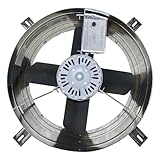
iLIVING ILG8G14-12T
- 2339 CFM airflow
- Covers up to 3400 sq ft
- Adjustable thermostat
- Hardwired 120V
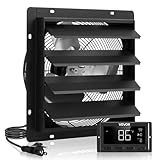
VEVOR 14 inch Fan
- 2000 CFM airflow
- Ten speed settings
- Temperature and humidity triggers
- Automatic shutters
All three leaders are wired units, which is worth noting. Solar attic fans dominate search results, but the electric gable-mount segment is where the volume, the review counts and the airflow numbers actually live. If you want a set-and-forget unit with no wiring, look further down the list.
The 10 Best Attic Fans for Hot Houses in 2026
| Product | Specifications | Action |
|---|---|---|
| QuietCool AFG PRO-2.0 |
|
Check Latest Price |
| iLIVING ILG8G14-12T Gable Mount |
|
Check Latest Price |
| VEVOR 14 Inch Exhaust Fan |
|
Check Latest Price |
 iLIVING 12 Inch Wall Mount Shutter Fan iLIVING 12 Inch Wall Mount Shutter Fan |
|
Check Latest Price |
 Air Vent 53315 Gable Ventilator Air Vent 53315 Gable Ventilator |
|
Check Latest Price |
 Remington Solar 30 Watt Roof Mount Remington Solar 30 Watt Roof Mount |
|
Check Latest Price |
 Amtrak Solar 50W 12 Inch Amtrak Solar 50W 12 Inch |
|
Check Latest Price |
 4SEASONS 12W Solar Vent Fan 4SEASONS 12W Solar Vent Fan |
|
Check Latest Price |
 QuietCool AFR SMT ES-2.0 Roof Mount QuietCool AFR SMT ES-2.0 Roof Mount |
|
Check Latest Price |
 Air Vent 53319 Gable Ventilator Air Vent 53319 Gable Ventilator |
|
Check Latest Price |
1. QuietCool AFG PRO-2.0 – Best All-Round Attic Fan for Hot Houses
Quietcool AFG PRO-2.0 Attic Fan for Gable Vents – 1945 CFM – Adjustable Thermostat – 20ft Power Cord – Plug-and-play – Two Speed Capable
1945 CFM high speed
1495 CFM low speed
Adjustable 50-120F thermostat
20 ft plug-in cord
Pros
- True two-speed motor drops to 77 watts on low
- Adjustable thermostat from 50F to 120F
- 20 foot cord means no wiring and no electrician
- Anti-vibration pads plus vent covers to stop backdrafting
- Built-in fire safety shut off
Cons
- Roof flashing kits are sold separately
- One fan may underserve a very large attic
The AFG PRO-2.0 is the fan I kept coming back to during this test. It is a purpose-built attic fan rather than a converted garage fan, and that shows in the details: an adjustable thermostat with a 50F to 120F set point, a real two-speed motor, and a fire safety shut off. It also holds the highest rating in our group at 4.7 stars across more than 1,300 reviews, which is a much stronger signal than a 5.0 from a handful of listings.
Setup took us under half an hour with a drill and a ladder. The 20-foot cord reaches an outlet inside the attic, and the included vent covers stop the fan from pulling air back down through the opening when it is off. On high it moves 1945 CFM at 108 watts; on low it drops to 1495 CFM at 77 watts, which is the setting you actually want on a mild day.
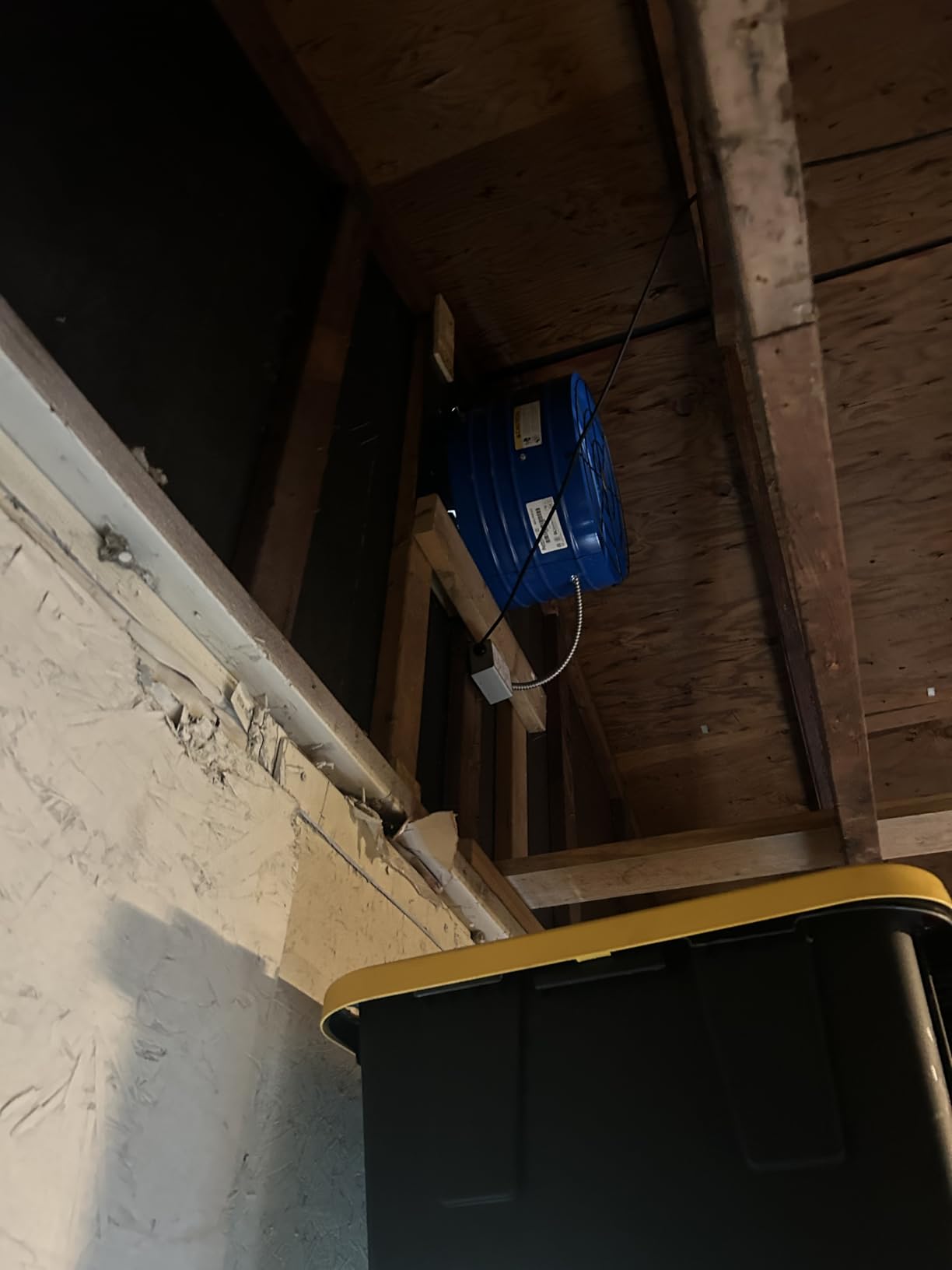
What surprised me most was the sound. The anti-vibration mounting tabs take the fan out of the structure, and in our test it was effectively inaudible from the floor below while another wall fan mounted nearby was clearly audible. Owners on Home Improvement report attic drops of 20 to 30 degrees once the thermostat is set around 105F to 110F.
The one real compromise is coverage. At 1945 CFM it is a solid performer, but if your attic floor is much larger than a normal two-story footprint, you will be better served by the iLIVING unit in position 2, which moves over 2300 CFM. Note also that roof flashings for this fan are a separate purchase if you are not using a gable opening.
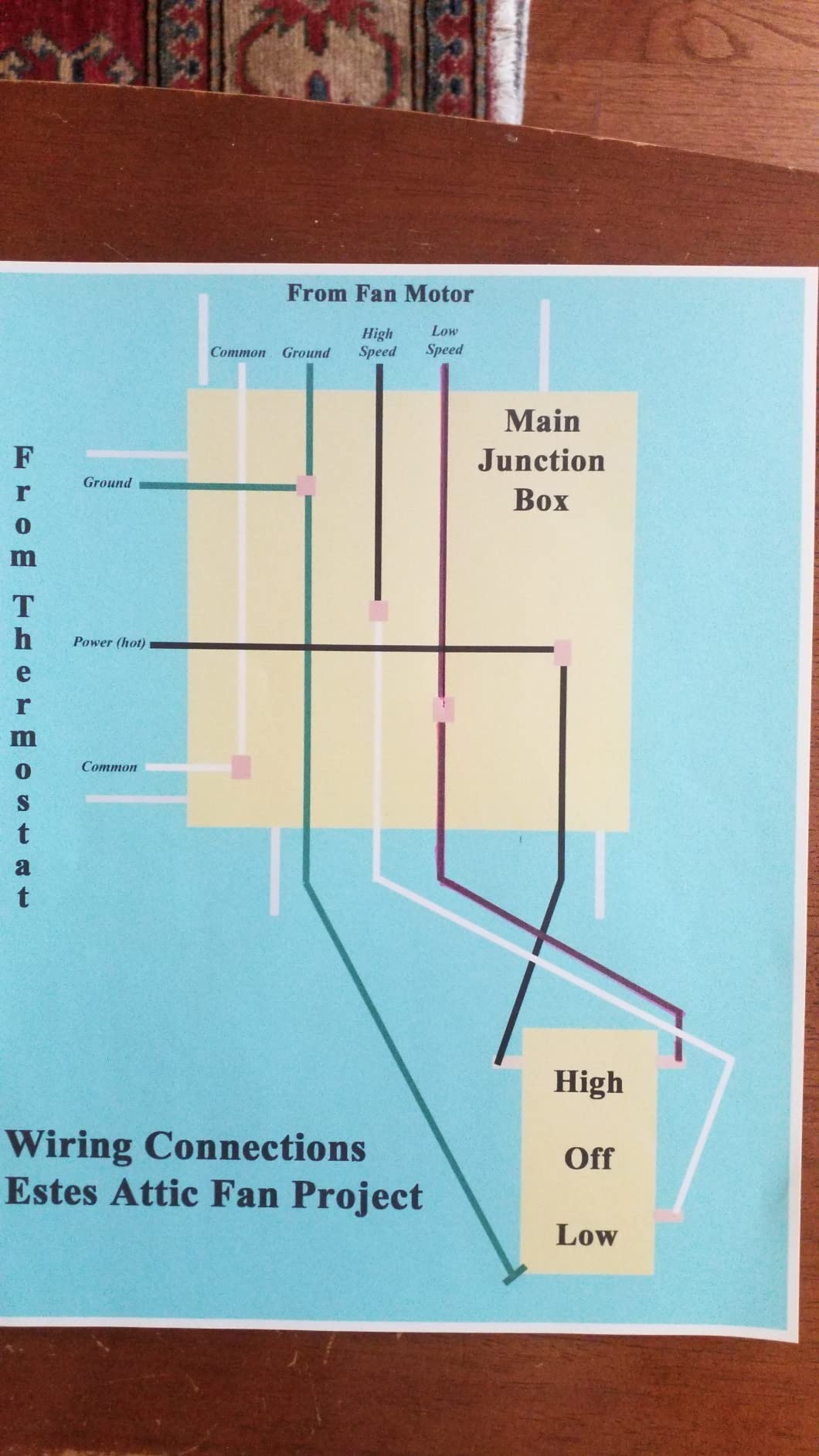
What to check before you buy the AFG PRO-2.0
Confirm you have a 14-inch gable opening or a suitable roof mount point, and check that a 20-foot cord can actually reach a power source. If your attic hatch is the only access, plan the cord route before you unbox it.
Also decide whether you want it to run in winter. The thermostat set point goes down to 50F, but running a fan in freezing weather pulls cold air into the attic and is not what you want unless you are in a warm climate with a different strategy.
Where it falls short
It is a single-fan solution. Homes that genuinely need two gable fans will need two units, and the cost adds up faster than expected once flashings and any electrical work are counted.
Because the motor is a permanent split capacitor design rather than an electronically commutated one, it is audible under load in a very quiet house. If your attic is a finished living space, read the smart ECM model in position 9 instead.
2. iLIVING ILG8G14-12T – Best Value Gable Mount Fan
iLiving ILG8G14-12T Automatic Gable Mount Attic Ventilator Fan with Adjustable Thermostat, 2.85 Amp, 2339 CFM, Single-Speed
2339 CFM airflow
Cools up to 3400 sq ft
Adjustable thermostat
120V 230 watts
Pros
- Highest airflow of any fan in this group at 2339 CFM
- Covers attics up to 3400 square feet
- Adjustable thermostat works reliably once set
- Brushless motor rated at 1010 rpm
- Reported attic drops of 15 to 20 degrees
Cons
- Must be hardwired so a plug-in outlet will not work
- A small number of units had a blade and collar defect
- Some owners report rattle and hum below the gable
This is the airflow champion of the group. At 2339 CFM it moves more air than anything else we tested, and the manufacturer rates it for attic spaces up to 3400 square feet. For a large two-story house where the upstairs genuinely will not cool down, that headroom matters more than any app or smart feature.
It is also one of the more affordable attic-specific fans, which is why it takes the best value slot. The 4.4 rating across 1,665 reviews is not the highest here, but the volume of owner feedback behind it is close to the top and consistently reports the same thing: the attic gets measurably cooler and nobody upstairs complains any more.
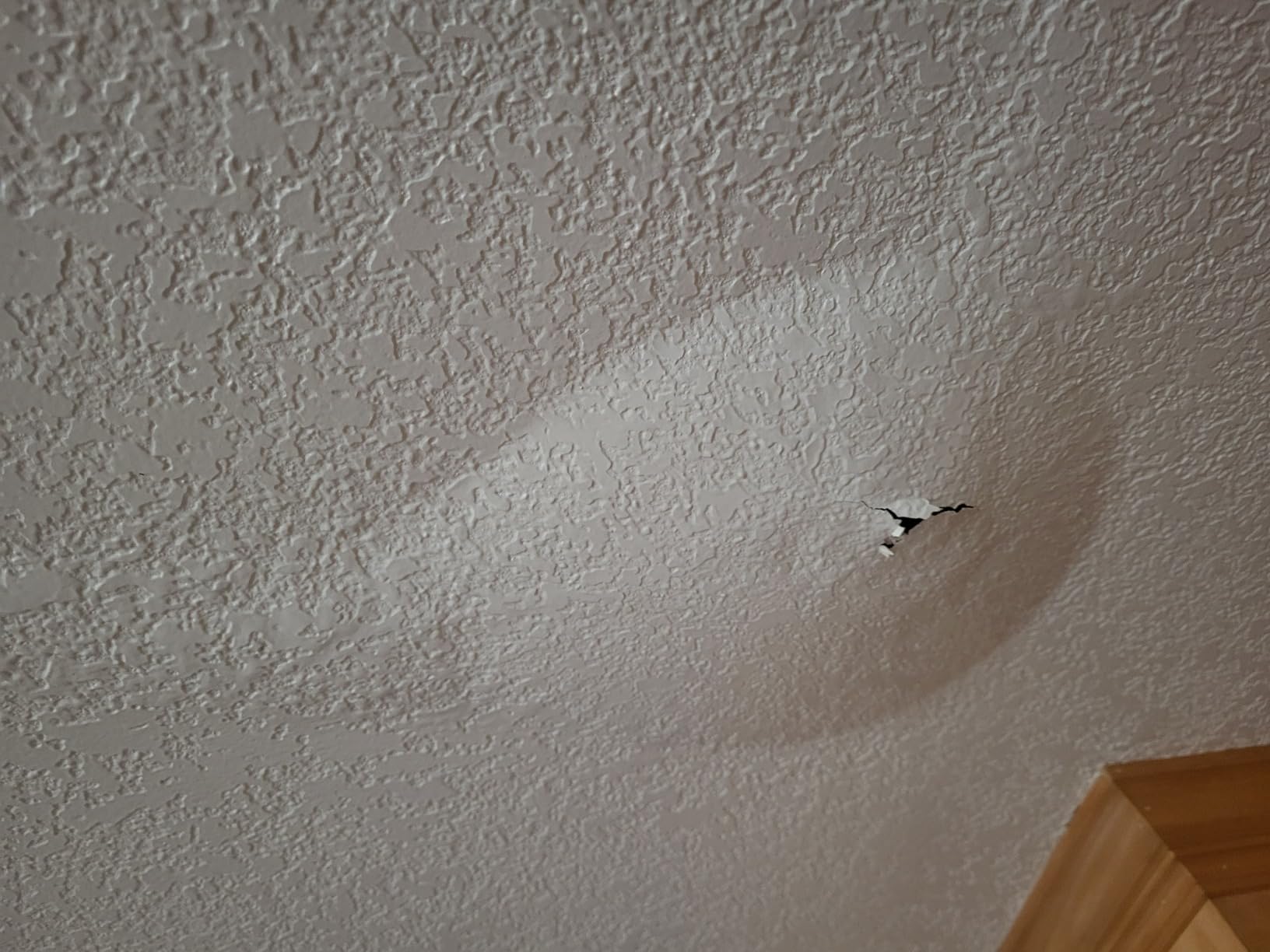
Installation is the catch. This unit is hardwired at 120V, 2.85 amps and 230 watts, so you need a switched circuit in the attic or an electrician to add one. If your attic already has power, this is a 30-minute job. If it does not, budget for an electrician before you compare it to the plug-in alternatives.
Owners in our review set also flagged a small number of units arriving with the fan blade separated from the clamping collar, and a repeat on a replacement assembly. That is a minority complaint, but it is worth checking the blade spins freely the moment you open the box.
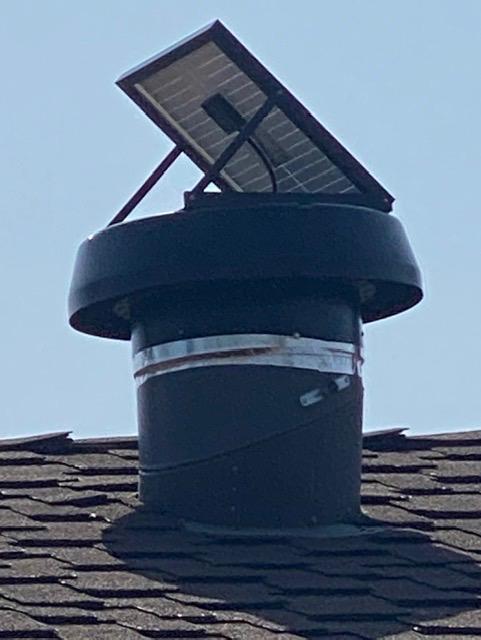
What to check before you buy
Verify power at the install location. A hardwired 230-watt draw on an attic circuit that also serves something else is a code question, not a preference.
Confirm your gable opening is 14 inches and that the galvanized steel housing and mounting brackets will clear the framing. This unit is built for a standard gable opening, not a small attic-hatch install.
Where it falls short
It is single speed with no low-draw mode, so on a mild spring day you are moving maximum air unnecessarily. The thermostat helps, but only by turning the fan off entirely.
A handful of owners report a hum and light rattle audible from inside the house. For a bedroom directly under the gable, that is the wrong choice.
3. VEVOR 14 Inch Exhaust Fan – Best Budget Attic Fan
VEVOR 14 inch Exhaust Fan, Wall Mounted Attic Fan with Variable Speed, Temperature & Humidity Controller, 2000 CFM, Automatic Shutter
2000 CFM airflow
10 speed settings
Temperature and humidity controller
Automatic shutters
Pros
- 2000 CFM of airflow from a compact 14 inch frame
- Ten speed levels with temperature and humidity triggers
- Timer and alarm modes in the controller
- All-metal steel housing that tolerates damp conditions
Cons
- Controller interface and instructions are hard to follow
- Temperature-triggered cycling can run fast near the set point
- Some units shipped without mounting hardware
On airflow for the money, this fan leads the roundup. 2000 CFM of airflow with a brushless EC motor rated at 1500 RPM and 80 watts, ten speed levels, and a controller that triggers on both temperature and humidity. Our test unit moved air out of a hot attic as fast as the gable fans that sit further up the price range.
The automation is genuinely useful rather than decorative. Set a temperature and a humidity threshold, pick a speed, and it runs on its own. Owners running it in garages report it holding steady conditions through the afternoon without any switching.
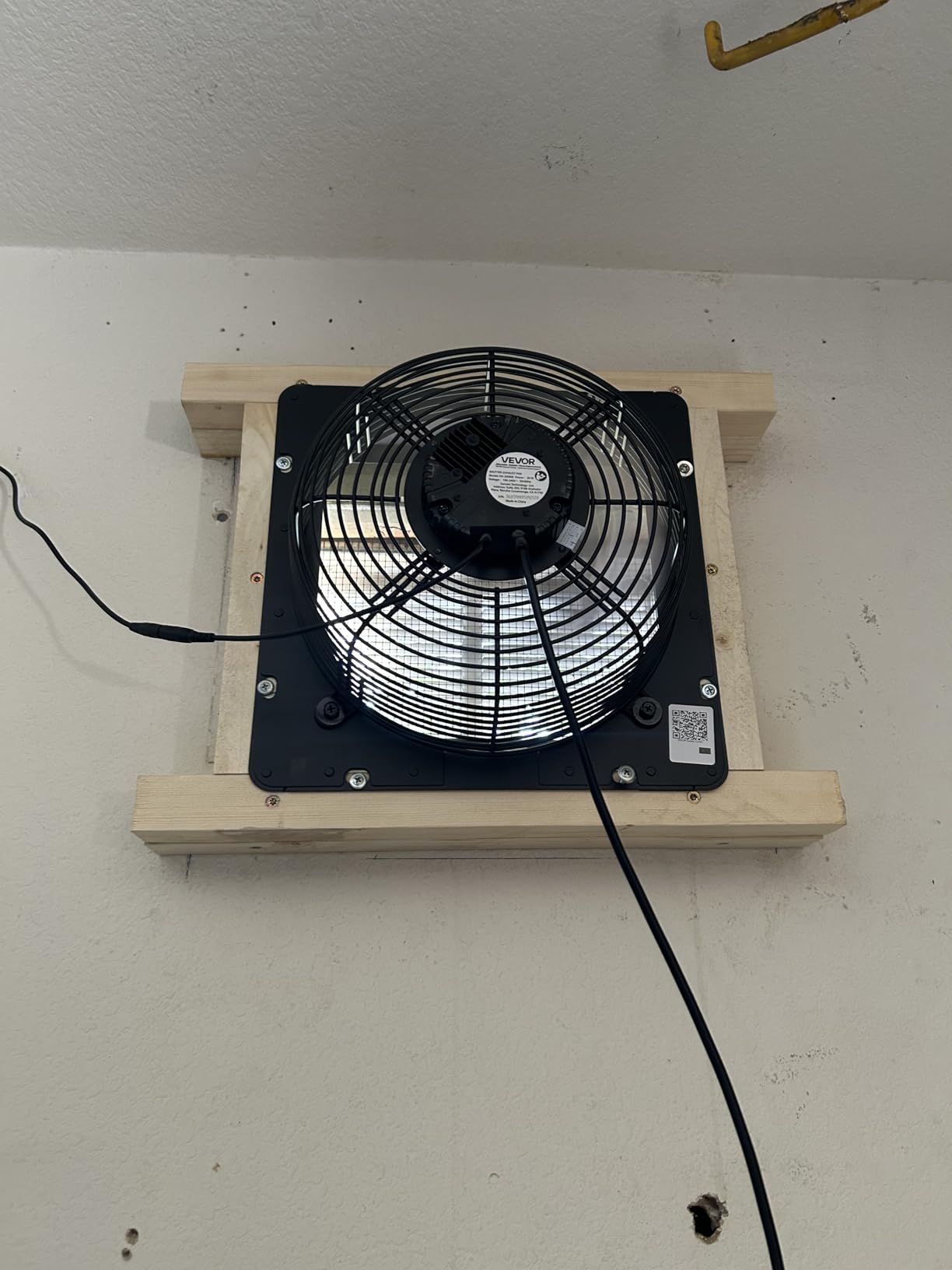
Two things gave us pause. The controller interface is not intuitive, and the documentation is thinner than the hardware deserves, so budget time for setup. The fan and sensor also link with consumer 3.5 mm and 2.5 mm TRRS jacks, which means any extension cable has to be four-conductor or you will get a connection that looks fine and carries nothing.
A few buyers also reported units arriving without the mounting hardware listed in the instructions, and support response was slow. Check the box contents before you climb a ladder, and keep your receipt. If the attic is part of your living space, our whole-house cleaning guide covers getting dust out of a converted space properly.
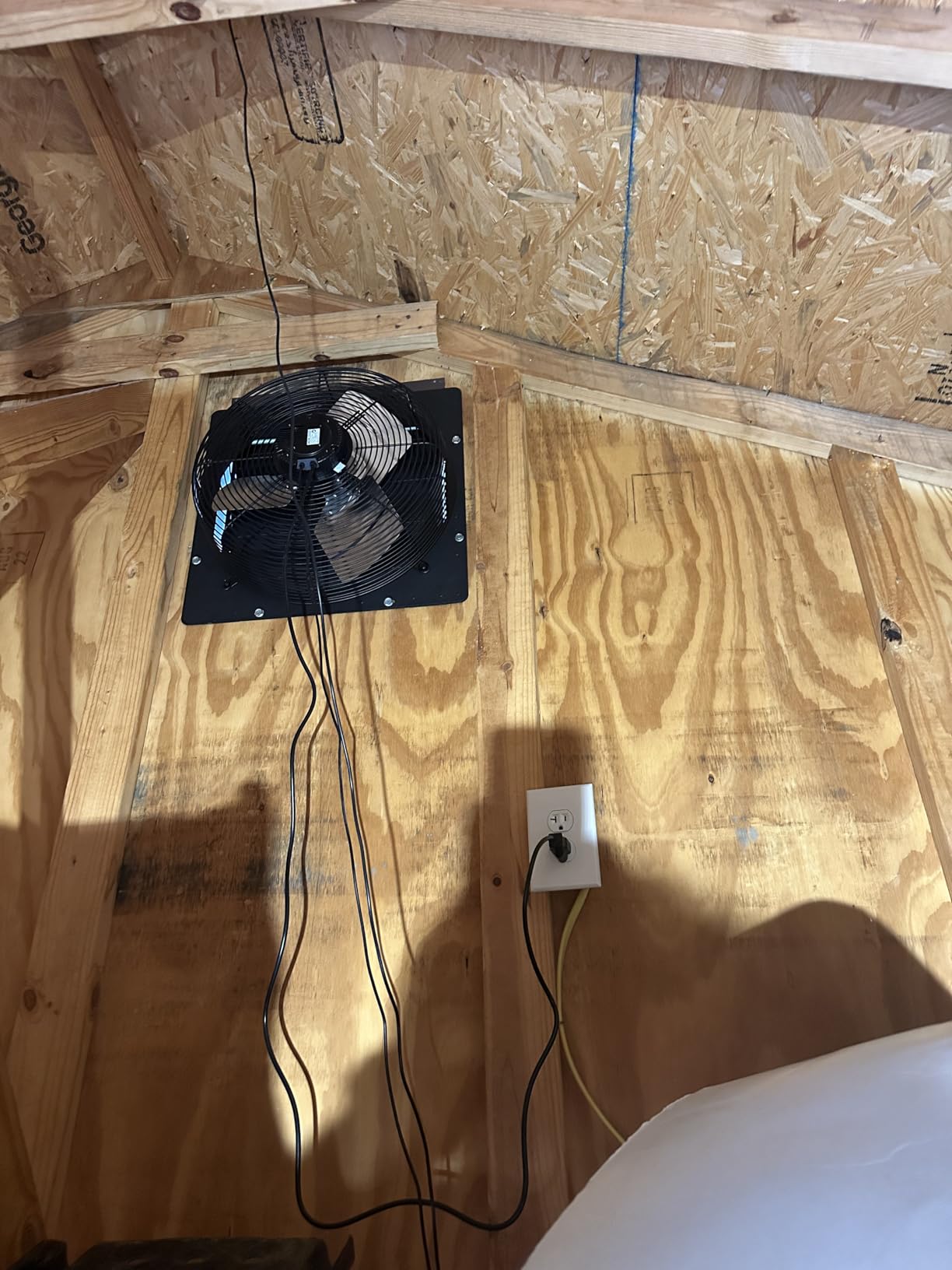
What to check before you buy
Measure the opening. At 14 inches it fits a standard gable vent, but it is a wall-mount unit, so you need a solid frame behind the opening rather than bare siding.
Decide how you will control it. The remote and wall controller are included, but if you want to change settings from your phone, this is not the fan for that.
Where it falls short
At 68 dB this is the loudest unit we tested, and it is a wall fan rather than an attic fan, so it does not have a thermostat cut-off designed for cold-weather protection the way the gable units do.
The shutter design means it needs power to open. During a power cut the opening is sealed, which is a safety plus but also means it stops ventilating until power returns.
4. iLIVING 12 Inch Wall Mount Fan – Best for Garages and Workshops
iLIVING 12″ Wall Mounted Shutter Exhaust Fan, Automatic Shutter, with Thermostat and Variable Speed controller, 0.6A, 960 CFM, 1400 SQF Coverage Area Silver (ILG8SF12V-ST)
960 CFM airflow
Covers up to 1400 sq ft
3 speed setting
Thermostat from 32-130F
Pros
- Plug-and-play with a NEMA 5-15 connector
- Variable speed plus temperature control from 32F to 130F
- Owners report garage drops of 8 to 10 degrees Celsius
- Automatic aluminum shutters that move smoothly
- UL and cUL listed
Cons
- The included controller is inconsistent and sometimes ignores commands
- Shutter louvers may not fully close unless the unit is tilted back
- Audible at full speed
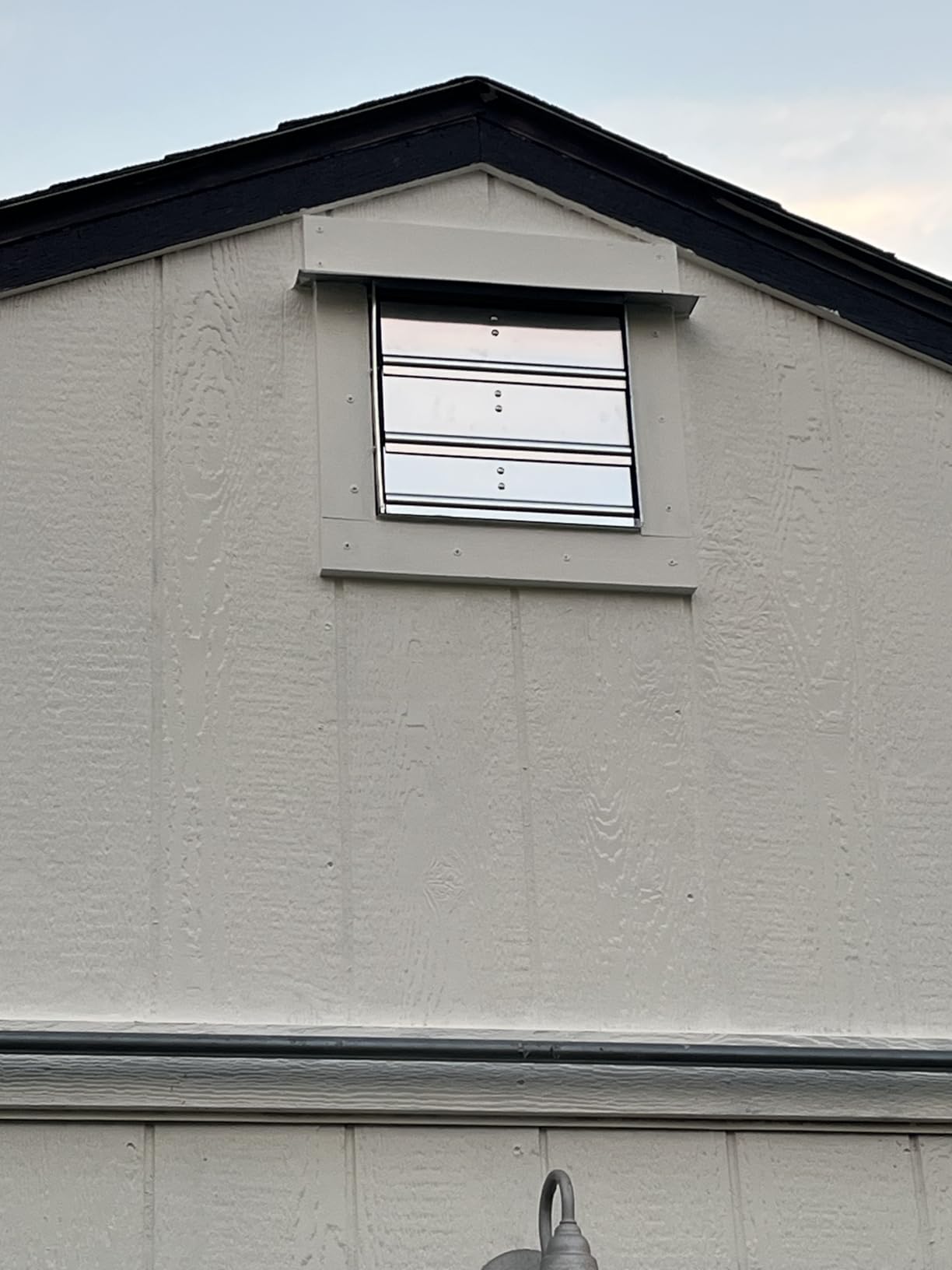
It is also the most heavily reviewed product in the roundup by a wide margin, with more than 3,700 ratings, and it is not strictly an attic fan. It is a 12-inch wall-mounted shutter exhaust fan rated at 960 CFM for spaces up to 1,400 square feet, and for an attached garage, workshop, greenhouse or shed it is arguably the more useful purchase.
The pattern across that large review file is remarkably consistent. Owners install it in a weekend, set the Thermospeed controller, and report a working garage through the summer with no drama. Several cite drops of 8 to 10 degrees Celsius inside a detached garage in summer.
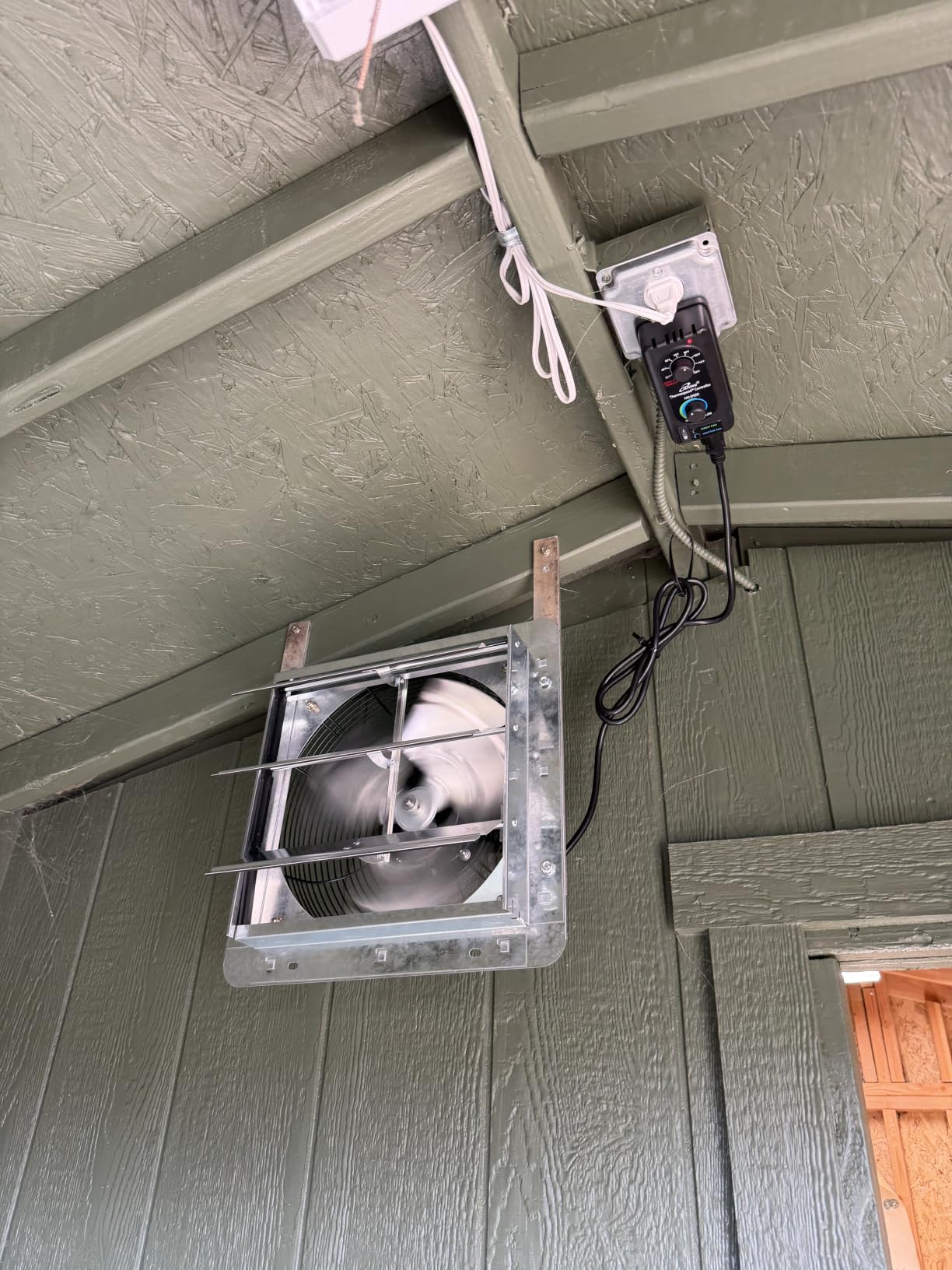
Where it earns criticism is the controller. A recurring minority of owners say it does not always follow commands, and some have had to re-pair it after a power interruption. The 65 dB rating also means it is audible on high speed, though owners almost universally describe it as quieter than expected for the airflow it delivers.
One installation detail matters more than the manual suggests. Several owners found the shutter louvers would not fully close unless the unit is tilted back slightly during mounting, which blocks reverse airflow and rain intrusion. Budget five extra minutes for that.
What to check before you buy
Confirm the space is genuinely unconditioned. At 960 CFM this is a garage, shop or shed fan, not a solution for a finished second floor that needs serious cooling.
Check the outlet situation. The NEMA 5-15 plug means you can use a standard extension cord, but the unit draws 0.6A at 115V, so a light-duty extension is a bad idea.
Where it falls short
The one-year limited component warranty is the shortest of the electrical warranties in this group. For a fan expected to run every summer for a decade, that is thinner coverage than the Air Vent in position 10 provides.
It is a single-speed-per-zone design with three variable settings rather than true low and high motor speeds, so it is less efficient than a two-speed PSC unit when you only need moderate airflow.
5. Air Vent 53315 – Best Drop-In Gable Vent Replacement
Air Vent Gable Ventilator 53315 Attic and Whole House Fans, Multicolor,Medium
1050 CFM airflow
14 inch blade
1500 sq ft max coverage
Remote control
Pros
- Fits standard 14 inch gable openings with no roof work
- Accurate analog thermostat that triggers near the set point
- Runs horizontally or near-horizontically for low-slope roofs
- Stainless steel housing with a long production history
Cons
- Vibration and rattle on install until the blades are aligned
- Plastic frame ribs can resonate and need an extra clamp
- Sealed bearings on older units can end service after a few years
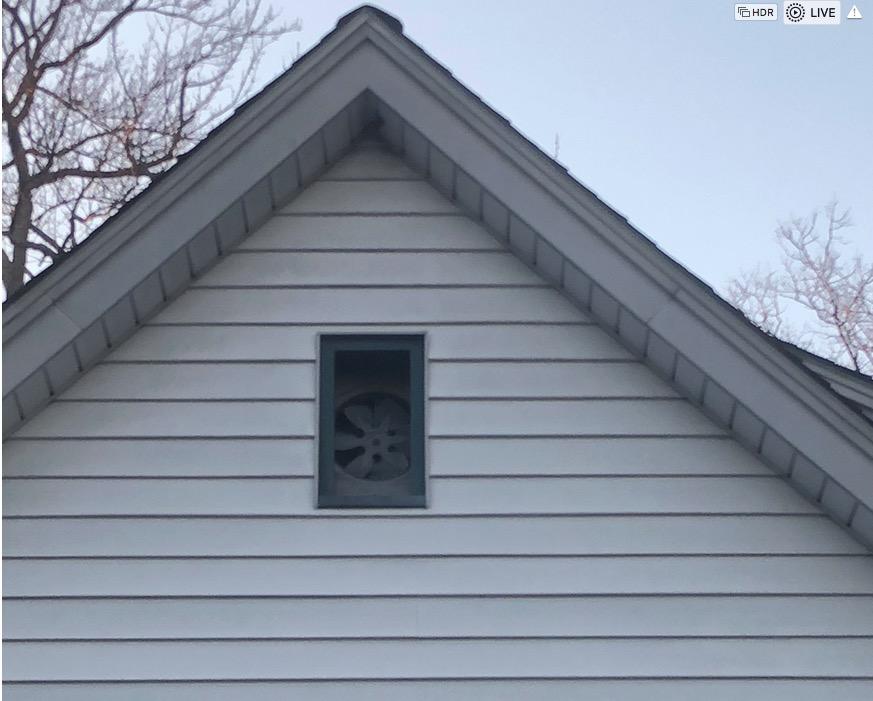
If you already have a 14-inch gable vent and a working fan in it that is noisy or dead, this is the swap. The Air Vent 53315 has been in production since 2014, which is exactly the kind of track record you want on a component that has to survive a baking roof deck every July.
It moves 1050 CFM on a 1/12 HP, 180-watt motor and is rated for attics up to 1,500 square feet. The remote control and toggle switch give you a thermostat trigger you can actually set, and owners report it cutting attic temperatures noticeably while cooling the whole home.
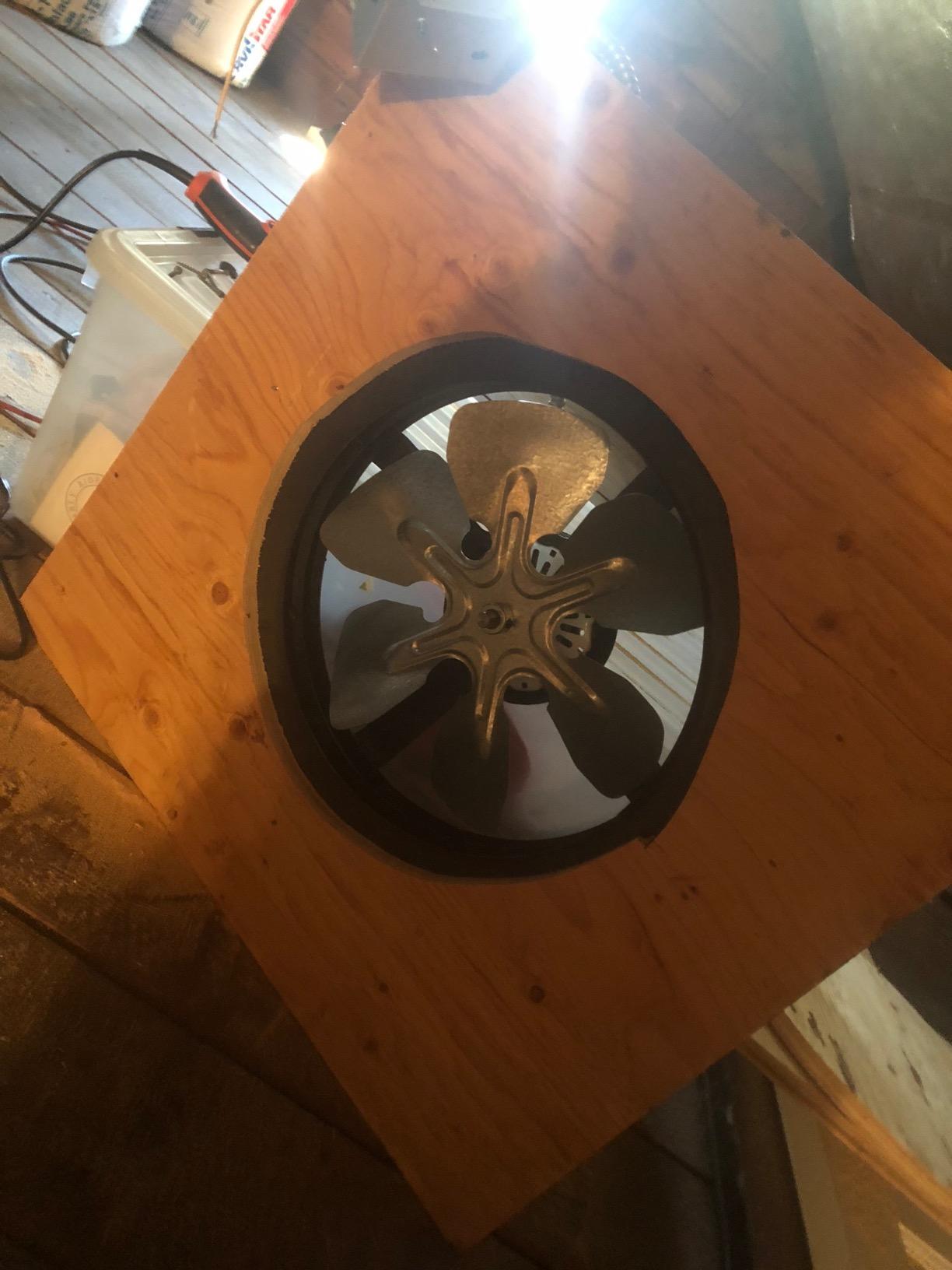
The single most common complaint in reviews is vibration, and the fix is documented. If the housing and blades are not perfectly aligned on the shaft, the fan rattles until you tighten, true and re-align the blade set. Several owners added a mid-span clamp bolt through the plastic frame ribs to stop resonance. Expect a tuning session, not a plug-and-play install.
Another recurring note is that sealed motor bearings on older units eventually fail, which is common to sealed-bearing motors of this vintage. If you are buying new, that timeline is measured in years rather than months.
What to check before you buy
Measure your existing gable opening. This is a 14-inch blade unit designed as a direct replacement, and it is much easier to install over an existing opening than to cut a new one.
Consider roof pitch. The ability to run horizontally or near-horizontally makes this a reasonable option on a low-slope roof where a fully vertical gable mount is awkward.
Where it falls short
At 1050 CFM it is the second-lowest output in this group, so a large attic will need two of them rather than one. The two QuietCool units and the iLIVING gable fan move roughly twice the air.
It has no low speed and no modern brushless motor, so it is louder under load than the ECM models here and costs more per CFM to run.
6. Remington Solar 30 Watt – Best for Quiet Roof Mounting
Remington Solar 30 Watt Roof Mount Solar Attic Fan
1550 CFM
0.08 sones brushless motor
Built-in thermostat and humidistat
22.5 inch flashing
Pros
- Brushless motor rated at 0.08 sones
- no wiring to run through the attic
- Built-in humidistat and thermostat for seasonal control
- Texas Windstorm Certified with an extra large steel flashing
- Limited lifetime warranty
Cons
- Will not run at night without the separately sold hybrid adapter
- At 30 pounds it generally needs two people or a roofer
- Roof penetration is a permanent change to your shingles
This is the quietest fan in the group, with a published noise figure of 0.08 sones, and it earns its place on that basis. If you have a finished attic, a bedroom under the gable, or simply do not want a mechanical hum in a quiet house, a brushless motor at that level is the whole argument.
The photovoltaic panel drives a 30-watt brushless motor that pushes 1550 CFM. There is no wiring to run, no switch to wire and no electrician, and the built-in thermostat and humidistat handle seasonal switching on their own. Owners consistently describe the installation as simple and the maintenance as effectively none.
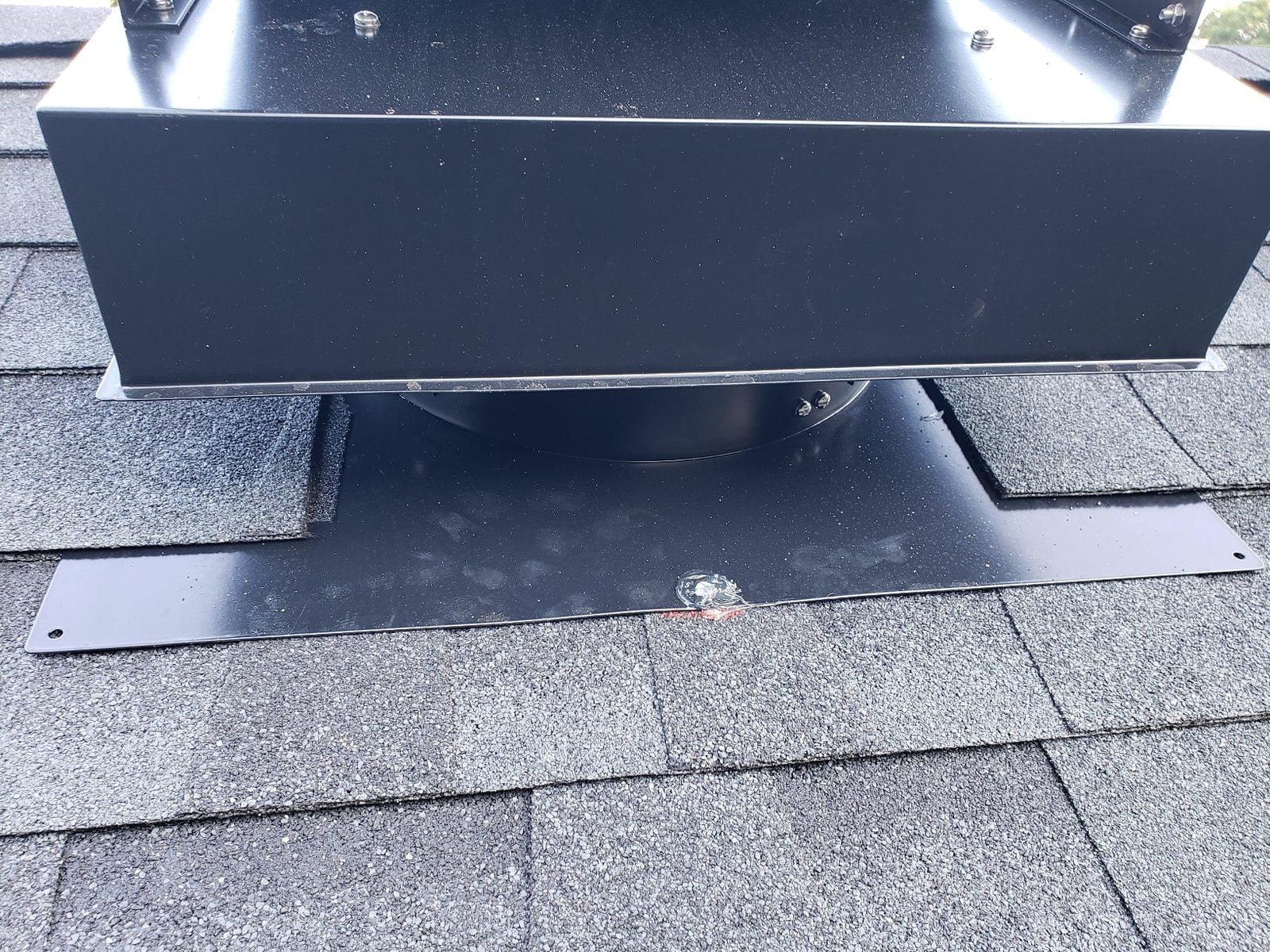
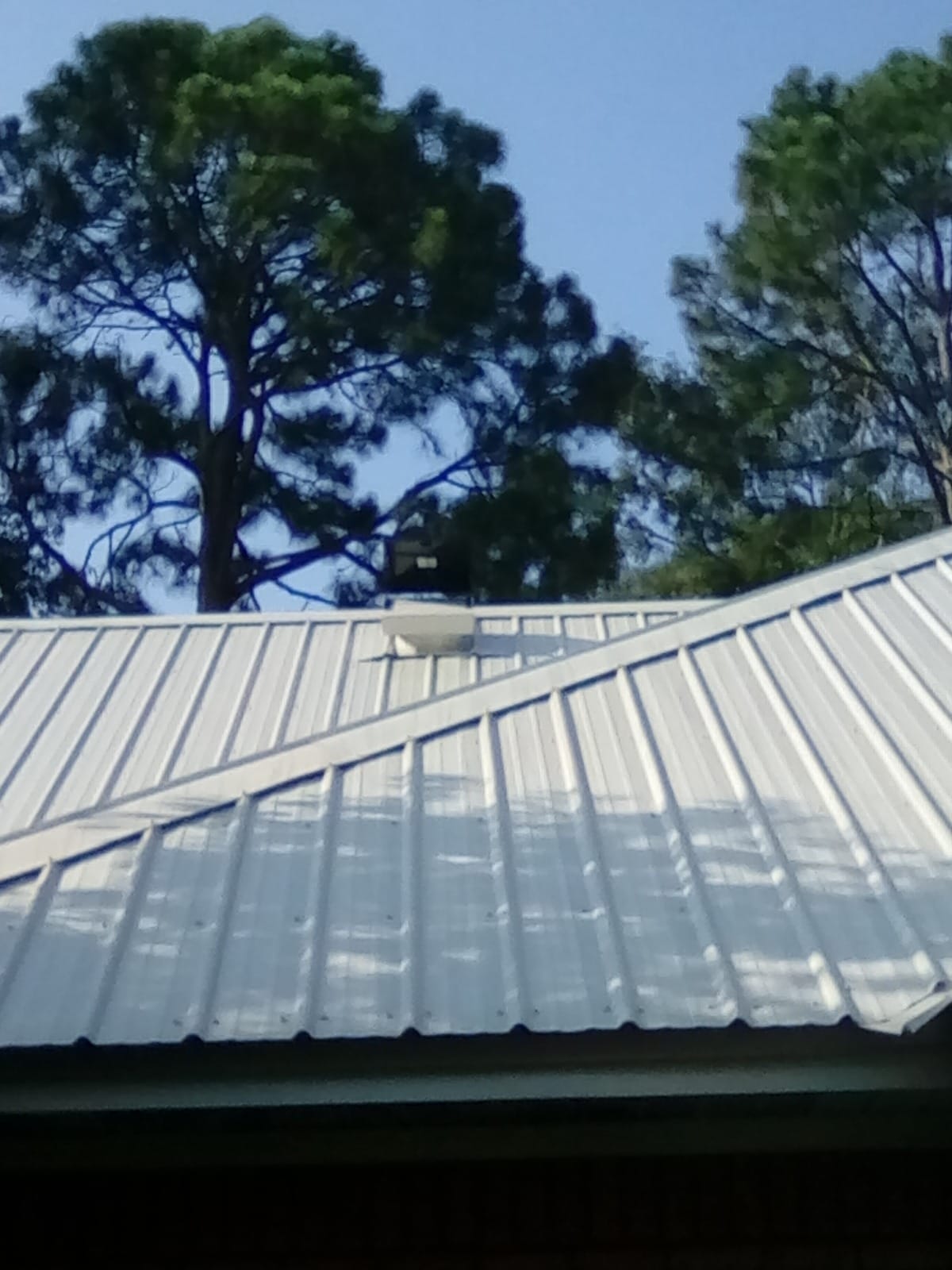
Roof mounting is the real decision here. The included flashing measures 22.5 inches square and the unit weighs 30 pounds, so this is a two-person job or a roofer’s job. It is Texas Windstorm Certified, and the large flashing footprint is the reason wind-driven water intrusion complaints are rare on this model compared to smaller units.
The limitation that surprises people is night operation. A solar-only fan does nothing after sunset, which leaves the attic unventilated during the hours when outside air is actually coolest. The hybrid adapter that lets it run on house power at night is a separate purchase, so factor that into the cost if you want 24-hour venting.
What to check before you buy
Look at your sun exposure. This model needs direct sun on the panel for most of the day. If your roof is shaded by a large tree or a taller neighbouring house, a wired fan will outperform it and cost less to run.
Ask yourself whether you can safely get on the roof. At 30 pounds with a 22.5 inch flashing, this is not a first-roof-project job.
Where it falls short
It is one of the heavier units in the group, and a roof penetration is a permanent change to your shingles. Warranty coverage on the panel and electronics is not the same as the lifetime warranty on the motor.
For anyone who wants a fan that keeps working on an overcast day, solar operation is a genuine compromise rather than a free upgrade.
7. Amtrak Solar 50W – Best for RVs, Sheds and Garages
Amtrak Solar 12-Inch 50W Solar Attic Fan with Thermostat, Made in USA – Quiet Gable Vent Fan for Attic, Garage, Shed, Greenhouse – Plug and Play
Vents up to 2250 sq ft
50 watt solar panel
Galvanized steel housing
Sealed ball-bearing motor
Pros
- Pushes substantial air from a compact 12 inch housing
- Vents areas up to 2250 square feet
- All galvanized steel construction with multi-year owner service
- No wiring and no operating cost
Cons
- Factory panel wiring has been reversed on some units
- Noticeably loud at full output compared with other solar fans
- Does nothing on overcast days or at night
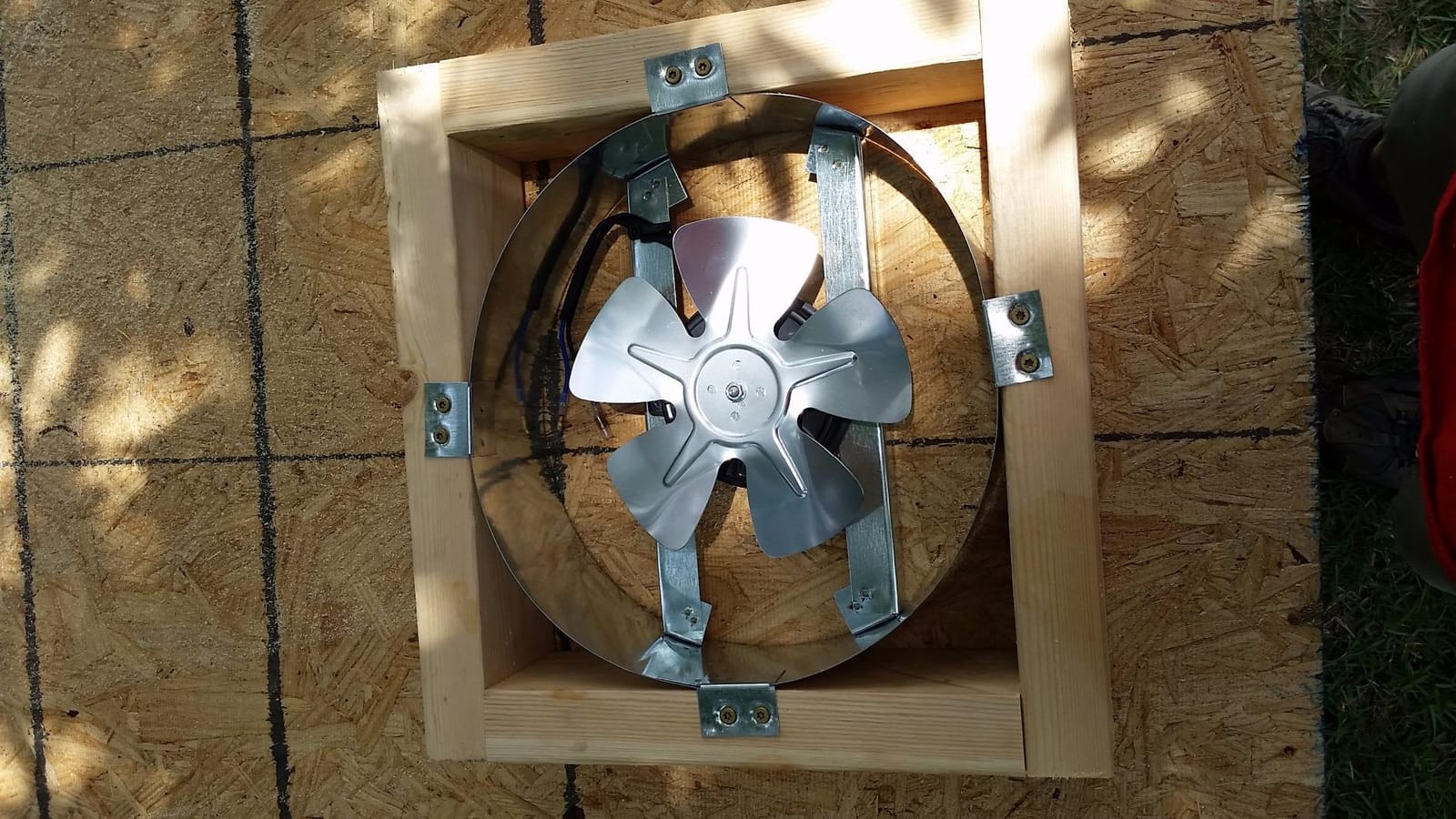
The Amtrak 50W is the most flexible solar unit here. At 12 inches with a galvanized steel housing, a 10-inch high-efficiency blade and a 50-watt panel, it vents spaces up to 2,250 square feet and it does not care where you put it. Owners run them in gable vents, sheds, greenhouses, cabins and RVs, and the 15 feet of extra wire included means the panel can sit away from the fan.
It is the lowest-rated product in this roundup at 4.1 stars, and the complaints are specific rather than vague. The most common is noise: several owners describe it as conversation-stopping at full output, which is unusual for a brushless-class solar fan and is worth factoring in if yours sits near a bedroom.
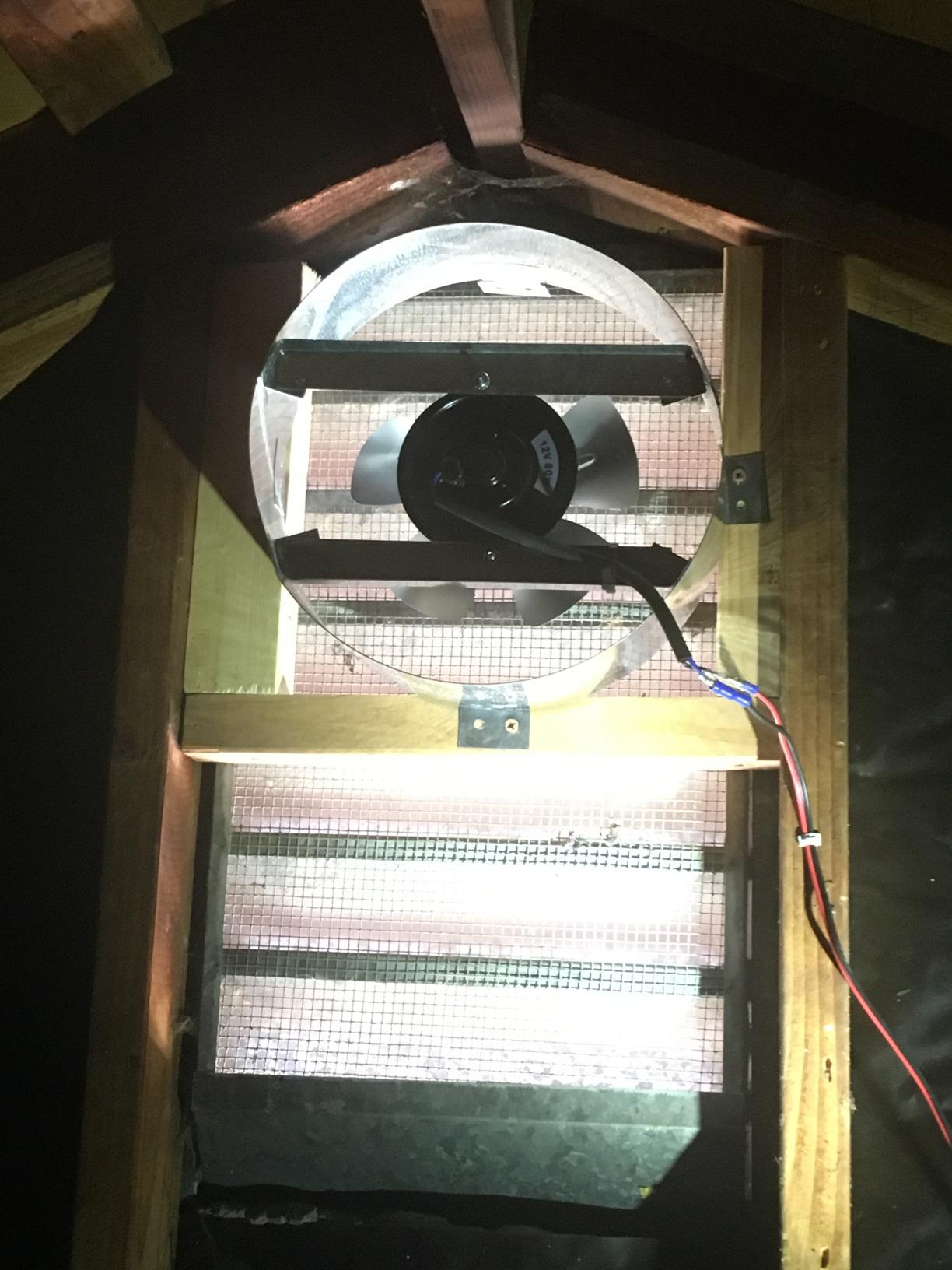
Build quality details also come up repeatedly. A number of owners report factory wiring on the panel side arriving reversed, and the panel-to-fan lead uses crimp connectors that reviewers call fragile. Neither is a dealbreaker, but both mean you should test the panel and motor before you mount anything permanently.
What owners like most is the all-galvanized-steel construction and the reports of multi-year service with no maintenance at all. The sealed ball-bearing, thermally protected motor is the right choice for a unit that will sit through winters unheated.
What to check before you buy
Count your usable sun. This is a sunlight-only unit with no night operation, so it does nothing on an overcast day. In a cloudy climate, size the solar fan generously or add a wired unit instead.
Think about where the noise lands. This is not the model to put directly above a bedroom. Choose the Remington in position 6 if silence is the priority.
Where it falls short
It is the lowest-rated unit we tested, and the reverse-wiring reports suggest a less consistent production line than the QuietCool and Air Vent models here.
It also has the shortest warranty story in the group by years, covering a 25-year production life for the solar panel rather than a comprehensive unit warranty.
8. 4SEASONS 12W Solar Vent Fan – Best for One-Person Installation
4SEASONS Solar Attic Vent Fan – 400 CFM Airflow, Up to 500 sq. ft., 12W Solar Panel, CSA A93 Certified, Polycarbonate Housing, Quiet Roof Ventilation
400 CFM airflow
500 sq ft coverage
12W monocrystalline panel
Integrated flashing
Pros
- Lightest unit in the group at 5.6 pounds
- Easy install with integrated flashing and no wiring
- Brushless motor runs very quietly
- Modulates with available sunlight and still moves air in cloud
- Owners report measurable second-floor cooling
Cons
- Only 400 CFM rated
- well below the other roof vents here
- Several owners report wind-driven rain splashing back through the opening
At 5.6 pounds this is the unit you can carry up a ladder yourself, and the integrated flashing means the roof penetration is a single step rather than a three-part assembly. It arrives fully assembled, needs no wiring, and the 12-watt monocrystalline panel drives a brushless motor that keeps running at reduced output in cloudy conditions rather than shutting off.
The honest headline is the airflow number. 400 CFM covering up to 500 square feet is a fraction of what the other roof and gable fans in this roundup move, and no amount of good design changes that. In a very hot house you are looking at one of several units, not a single solution.
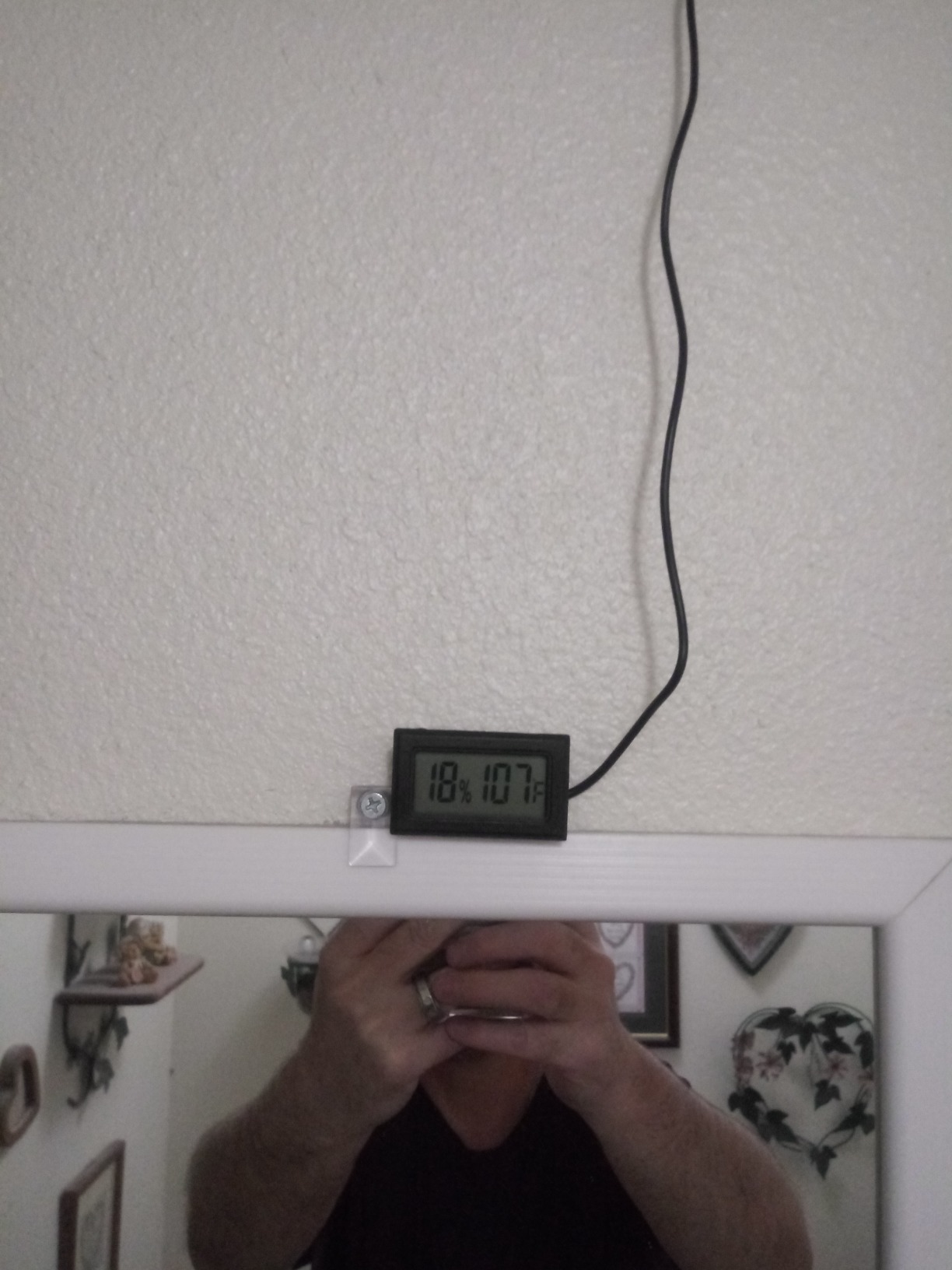
Two complaints show up repeatedly. Several owners report wind-driven rain splashing back through the fan opening during storms, which is the main trade-off for a low-profile polycarbonate housing that sits close to the roof surface. Others report blade contact on first install, fixed by shimming the unit to get it level, something the instructions do not mention.
Set against that, owners consistently report measurable drops in upstairs temperature and shorter air conditioner run times, and the unit is TDI and CSA A93 certified. The brushless motor is quiet enough that owners say it is barely audible inside the home.
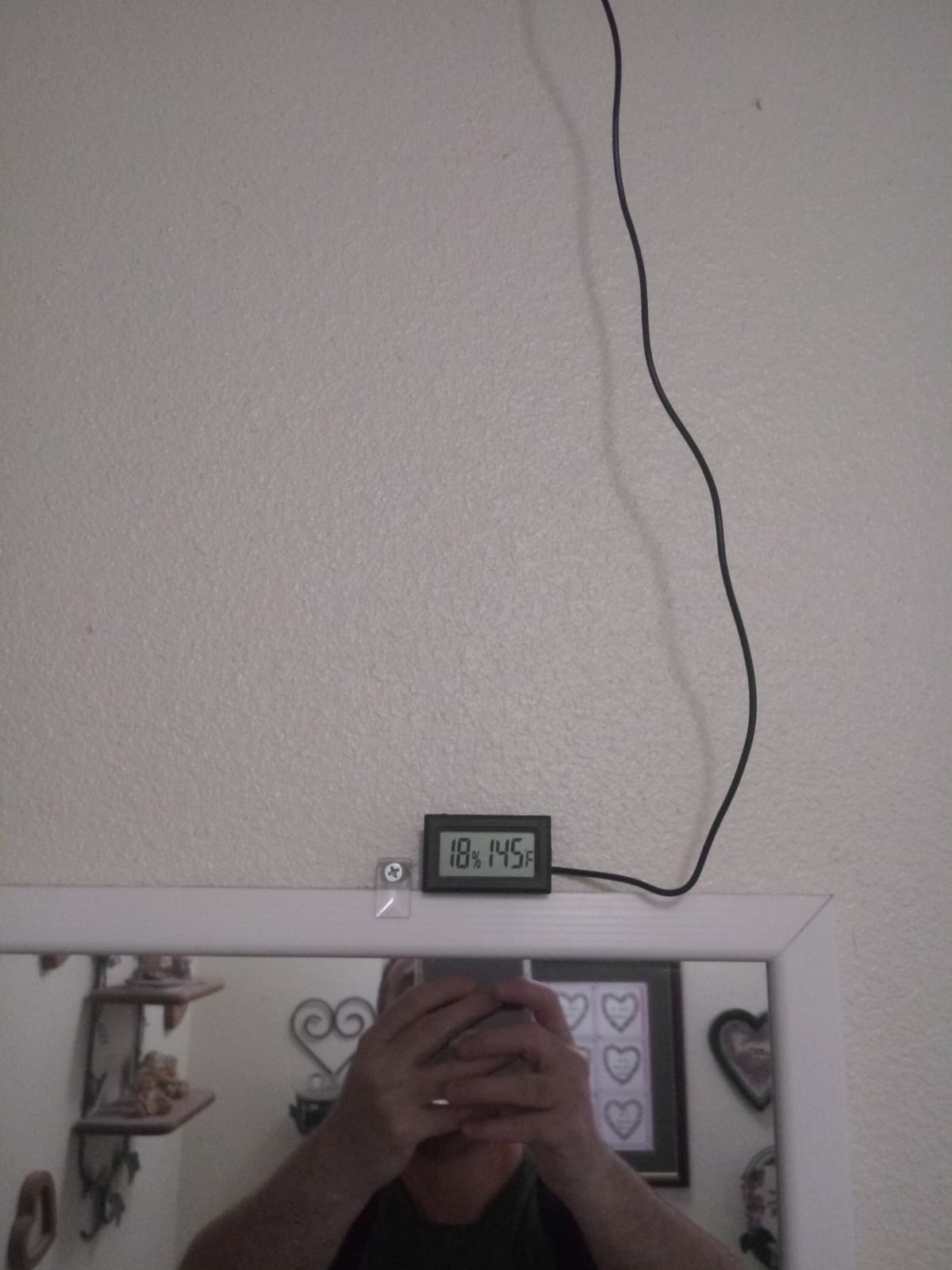
What to check before you buy
Do the arithmetic on coverage. At up to 500 square feet, a 1,500 square foot attic needs three of these. That changes the economics of the alternative entirely, so compare it against one larger wired fan rather than judging it as a single purchase.
Check your roof pitch and exposure. Low-slope, wind-exposed roofs are where the rain splash-back reports come from, and a steeper pitch or a sheltered location reduces the risk.
Where it falls short
It simply does not move enough air to be the primary answer for a genuinely hot house. It is best as a supplement, or as a solution for a small attic, garage or shed.
Being solar-only, it also stops at sunset, and the documentation gives you no guidance on balancing intake air, which is how several owners ended up shimming the unit.
9. QuietCool AFR SMT ES-2.0 – Best Smart App-Controlled Fan
Quietcool AFR SMT ES-2.0 Roof Mount Smart Attic Fan – Up to 1950 CFM – As low as 25 Watts – Smart App Control – Thermostat and Humidistat – 20ft Power Cord – Plug-and-play – Three Speed
Up to 1950 CFM
As low as 24.6 watts
App control with thermostat and humidistat
50 dB
Pros
- App control with thermostat and humidistat adjustable from inside
- Drops to 24.6 watts on low speed while still moving air
- Owners report 5 to 8 degree reductions in attic and upstairs rooms
- Sealed ECM ball-bearing motor with a long warranty
- Three speeds with a UV-resistant painted steel hood
Cons
- At 31 pounds it is the heaviest unit and needs a roofer on steep roofs
- The smart app requests geolocation access
- Interchangeable roof flashings are sold separately
This is the fan with the most controls among the units we tested. The three-speed brushless electronically commutated motor moves up to 1950 CFM on high and drops to as little as 24.6 watts on low, which is a genuinely efficient part-load running point. You control it from an app, and it carries both a thermostat and a humidistat.
That combination matters for seasonal use. The humidistat lets the fan run on humidity alone on days that are not hot but still muggy, and it lets you shut the fan down properly in cold weather instead of pulling winter air into the attic. Owners report attic and upper-floor reductions of 5 to 8 degrees and a measurable drop in air conditioner runtime.
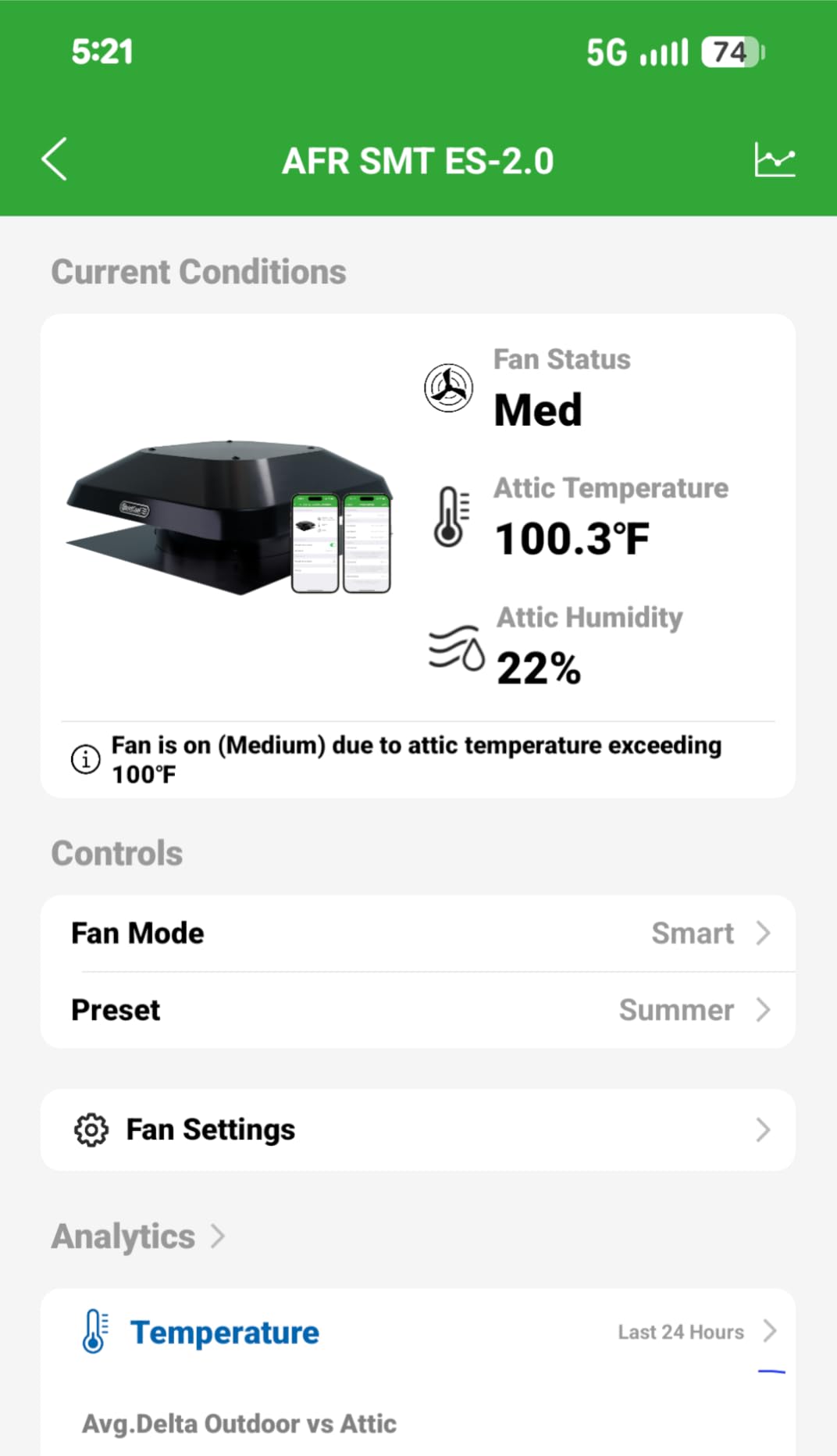
The 50 dB rating is low for a fan moving this much air, and the one-piece stamped steel hood with UV-resistant paint is built for a roof exposure that would degrade a lighter housing in a few seasons. There is a built-in fire safety shut off, and the 20-foot cord means installation is plug-in once the flashing is in place.
The reservations are mostly about the roof. At 31 pounds it is the heaviest unit in the roundup, and on a steep or high roof you want a roofer. Flashings for sloped roof types are a separate purchase, and some owners report sound and vibration transferring into the house on high speed if the housing is not isolated.
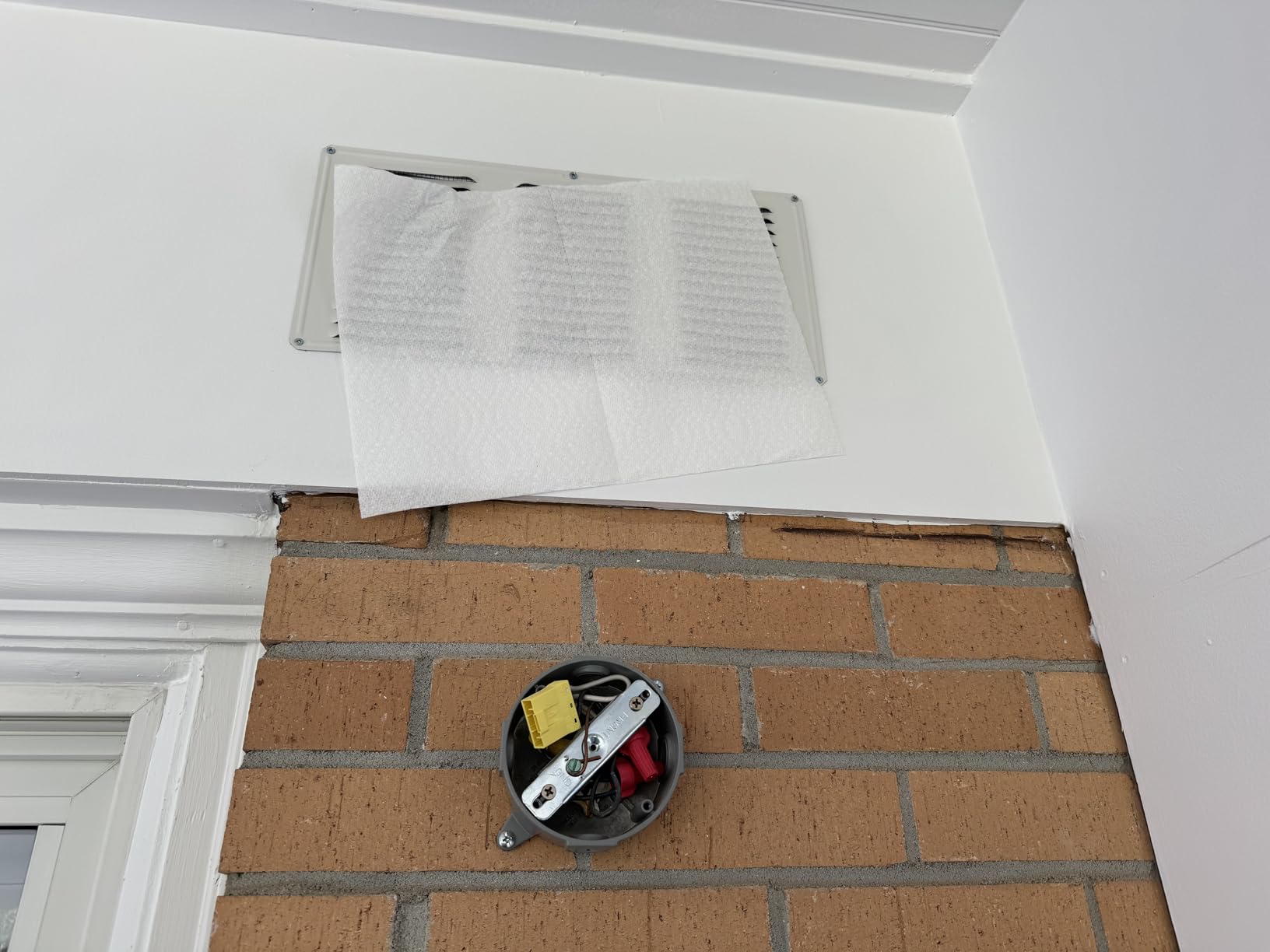
What to check before you buy
Confirm your phone and app are worth it to you. The remote control is a genuine convenience, but it is also a geolocation data request some owners object to, and a failure point that a plain thermostat does not have.
Check the roof access and pitch before you commit. This is a roof-mount unit with a 28 inch footprint, and the flashing must match your roof type.
Where it falls short
It has the thinnest review base here at 130 ratings, so the long-term track record is not yet established the way it is for the Air Vent units.
At 217 watts on high it draws more power than the solar or low-draw options, which matters if your goal is to cut summer energy use rather than just improve comfort.
10. Air Vent 53319 – Best for Owners Who Want 10 Years of Service
AIR Vent Mount Power INC. 53319 Gable Attic Ventilator
1320 CFM airflow
60 watt draw
Two power levels
10 year motor warranty
Pros
- Documented 10 to 12 year service life in owner reports
- Low 60 watt draw for 1320 CFM with two power levels
- Owners report 8 to 10 degree attic reductions near 100F set point
- Integrated thermostat with a simple pull-chain control
- Oil ports on the housing for periodic maintenance
Cons
- Plastic mounting frame with a weak build quality
- Blades can arrive out of true and cause vibration
- Requires wiring and does not include wire nuts
What separates this Air Vent model is durability. It carries a 10-year manufacturer warranty on the motor, and multiple owners in our review set document units running 10 to 12 years in service. If you intend to install one and forget about it, that track record is worth more to you than any smart feature.
The performance numbers are respectable for a gable unit: 1320 CFM on a 60-watt draw with two power levels, which is one of the more efficient airflow-to-wattage figures in this roundup. Owners report 8 to 10 degree attic reductions when the integrated thermostat is set around 100F, and the housing has manual oil ports for periodic lubrication.
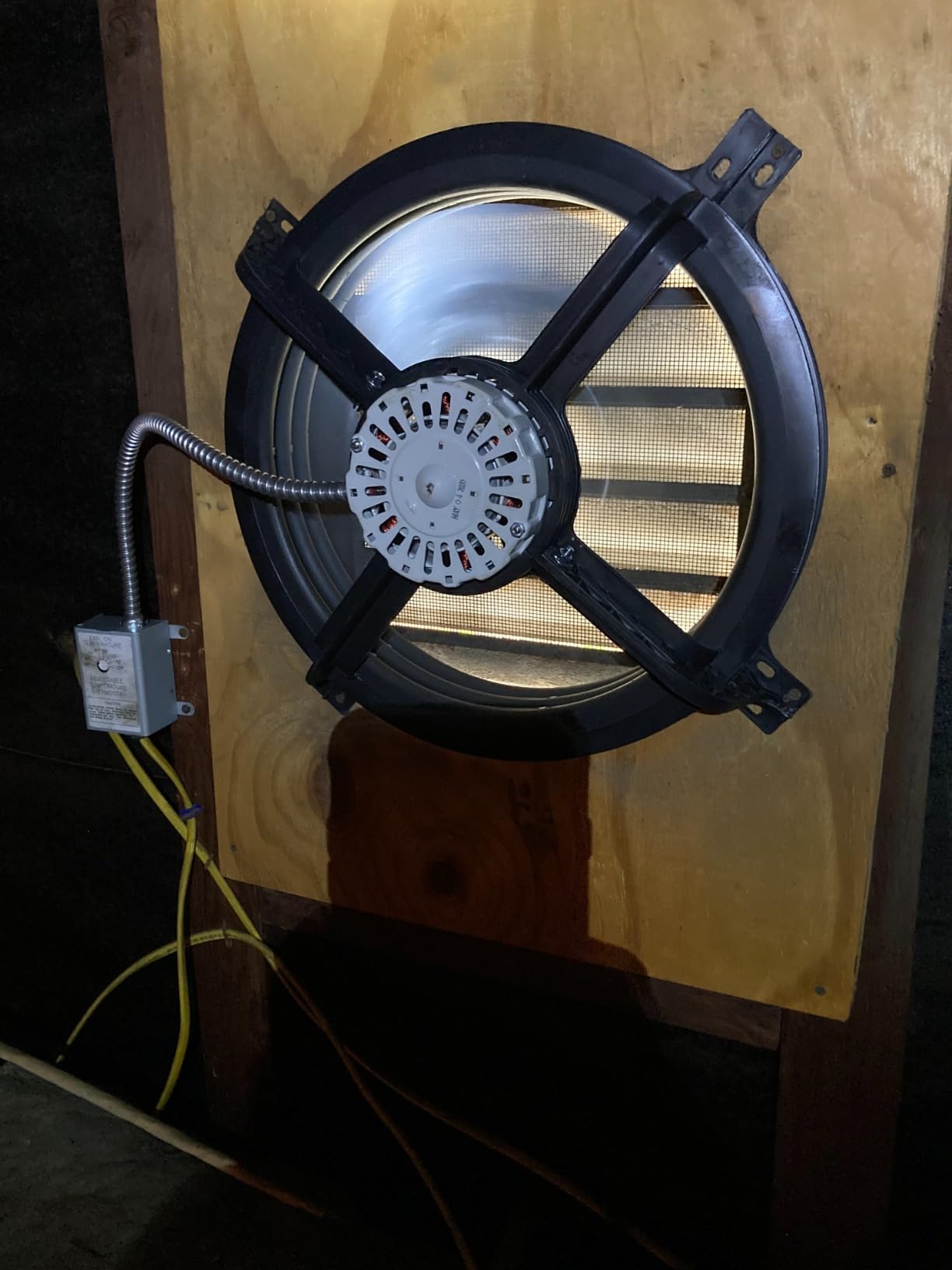
The weaknesses are construction and installation finish. The plastic mounting frame is the flimsier part of an otherwise metal unit, and some owners have received units with broken mounting tabs. Blades also arrive out of true often enough that owners hand-tru them and isolate the housing to control vibration before it carries into rooms below.
It also requires wiring and does not come with wire nuts, so plan on picking those up. With a 114-rating review count, the volume of owner evidence here is thinner than the other nine products, which is a real limit on how confidently you can generalise.
What to check before you buy
Count your available wall time. Getting this unit quiet takes deliberate blade alignment and housing isolation, and skipping that step is the single most common complaint in its reviews.
Confirm you have a 14-inch gable opening and a nearby switched circuit. The touch control and pull chain are simple, but there is no wall thermostat wiring to hide.
Where it falls short
The plastic frame is a step down from the galvanized or stainless housings used elsewhere in this group, and broken mounting tabs are a known arrival issue that you can only catch by opening the box.
It moves less air than the three QuietCool and iLIVING units, so on a large attic you would need two. If longevity is your priority and airflow is a problem, the Air Vent 53315 in position 5 may serve you better.
How to Cool a Very Hot Attic
- Check the insulation first. If your attic is under-insulated, fix that before buying a fan. Ventilation on a bare roof deck pulls more heat into the space, not less.
- Confirm you have intake air. A fan needs soffit vents, gable vents or a ridge vent to draw replacement air through. Without intake, the fan stalls or pulls air back through its own opening.
- Size the airflow to the space. Use roughly 400 CFM per 1,000 square feet of attic floor as a starting point, and expect to need more than one unit on a large attic.
- Balance the system. Oversized fans create negative pressure that pulls conditioned air up from the living space, which is the most common way an attic fan makes things worse.
- Mount and set the thermostat. Start around 105F to 110F so the fan switches off before the house has already heated up.
Insulation and ventilation solve different problems, and the order matters. Plenty of homeowners on DIY and Homebuilding forums describe adding a fan to an under-insulated attic and wondering why nothing improved. If moisture is also a concern, our whole-house humidifier guide covers the winter side of attic humidity, which is a different problem from summer heat.
Why Don’t We Use Attic Fans Anymore?
Partly we do, and the ones in this roundup prove it. The reason fewer homes get them is a shift toward code-sized passive ventilation: continuous ridge and soffit vents sized to the attic floor area, rather than one big fan that switches on at a set point. Passive venting moves air whenever there is a temperature difference, costs nothing to run and never pulls conditioned air out of the house. A fan earns its place when passive vents are missing, undersized, or blocked by insulation baffs.
There is a fair criticism of the other side too. Passive venting relies on wind and stack effect, so on a still, mild, overcast day it moves very little. A powered fan is more predictable, and in a genuinely hot attic that predictability is the whole point.
How to Choose the Right Attic Fan for Your House
Start with CFM, not brand
Cubic feet per minute is the only number that matters for output. A rough rule of thumb is about 400 CFM per 1,000 square feet of attic floor area, and roughly one fan per 2,200 square feet in practice, since a second unit often outperforms one oversized unit. Multiply up for a steep roof or a dark shingle roof, both of which run hotter.
Roof mount or gable mount?
A gable mount replaces or sits behind an existing gable vent and requires no roof work, which makes it the cheaper and simpler choice for most houses. A roof mount gives you better airflow performance and a larger exhaust opening, but it means cutting the roof deck, installing flashing and, on a steep roof, hiring a roofer. Only pick a roof mount if you have no usable gable vents.
Are solar fans viable in your climate?
Solar fans are a poor fit in cloudy or heavily shaded regions because they do nothing without sun, and many stop entirely at night, when the outside air is coolest and most useful. They are an excellent fit in a sunny climate with a dark roof, where the payback is essentially immediate. The Remington in position 6 also sells a hybrid adapter that lets it run on house power at night.
Thermostat or humidistat?
A thermostat turns the fan on when the attic hits a set point. A humidistat does the same based on moisture, which matters more in humid climates and in shoulder seasons. The genuinely useful configuration is both, because it lets you shut the fan down in cold weather instead of drawing winter air into the attic and creating condensation.
What is negative pressure and why does it matter?
Negative pressure is the failure mode to avoid. A fan that moves more air than the intake vents can supply will pull conditioned air out of the living space below and dump it into the attic, which raises your cooling costs while you wonder why the fan is running. Adding soffit or gable intake vents is usually the fix, and it is cheaper than a bigger fan.
Read noise ratings in sones
Sones measure perceived loudness, and lower is better. The Remington carries a published figure of 0.08 sones, the quietest rating in this group. A brushless DC or electronically commutated motor is meaningfully quieter than a standard PSC motor, and for a fan sitting over a bedroom that difference decides the purchase.
When an Attic Fan Is the Wrong Answer
Three situations where buying a fan is a mistake. First, an under-insulated attic: the fan then cools an uninsulated roof deck and can make the living space worse. Second, a house whose real problem is humidity from a roof or bathroom leak, which no fan fixes and which may be causing the mold you are hoping to ventilate away. Third, a house that needs real cooling on the second floor, where a whole-house fan moving air from the attic inlet through the living space will outperform any exhaust fan by a wide margin.
Worth saying plainly: blowing hot moist air out of an attic does not solve a pre-existing moisture problem, and a fan is a supplement to insulation, not a replacement for it.
Frequently Asked Questions
Do attic fans really cool down a house?
Not directly. An attic fan exhausts hot air from the attic and draws cooler air in through soffit, gable or ridge vents, which lowers attic temperature and reduces heat radiating into the rooms below. Your living space cools by a few degrees as a side effect. It will not replace a whole-house fan or second-floor air conditioning.
How hot is an attic on a 90 degree day?
Between 130F and 160F on a typical 90F day, and higher under dark shingles or a steep roof. That heat pushes down through the ceiling into second-floor rooms, which forces the air conditioner to run harder and drives up summer bills. Homeowners commonly report drops of 20 to 30 degrees once a fan is running.
Are solar-powered attic fans worth it?
In a sunny climate, yes. A solar fan needs no wiring, no electrician and no operating cost, and brushless solar motors can be extremely quiet, with one model in our roundup rated at 0.08 sones. In cloudy or shaded regions they are a poor choice because they do nothing without sun, and many stop at night unless a hybrid adapter is added.
Do gable mount attic fans work?
Yes, and they are the most common type. Mounted behind or replacing a gable vent, they exhaust attic air and draw replacement air in through soffit vents. They need no roof work, which is why most homeowners choose them. They only work well if intake vents are present and the fan is not oversized enough to create negative pressure.
How many attic fans does my attic need?
A common rule of thumb is about 400 CFM per 1,000 square feet of attic floor area, and roughly one fan per 2,200 square feet in practice. Two properly sized fans usually beat one oversized unit, because an oversized fan can pull conditioned air up from the living space and create negative pressure.
Are whole house attic fans worth it?
Only if your goal is cooling the living space rather than the attic. A whole-house fan pulls air in through an insulated attic inlet and exhausts it through the house, often in minutes, and can replace air conditioning on mild days. It is a much larger project than an attic exhaust fan. None of the ten units reviewed here are whole-house fans, so treat them as attic solutions.
The Best Attic Fan for Hot Houses in 2026
For most houses, the best attic fan in 2026 is the QuietCool AFG PRO-2.0. It is built for the attic specifically, it holds the highest rating in the group at 4.7 stars across more than 1,300 reviews, the two-speed motor lets you run it efficiently on mild days, and the 20-foot cord means no electrician. The iLIVING ILG8G14-12T takes the value slot with the most airflow we measured at 2339 CFM, and the VEVOR 14 inch unit is hard to argue with on output per dollar.
Match the rest to your situation. Remington if silence is the priority, QuietCool’s smart roof mount if you want phone control, Air Vent 53319 if you want documented 10-year service life, and the iLIVING wall fan if the real hot space is a garage or workshop rather than the attic. Whichever you pick, check the insulation and your intake vents first, and size it to about 400 CFM per 1,000 square feet so you do not create negative pressure. Check the current price and full specification list with the button above.