
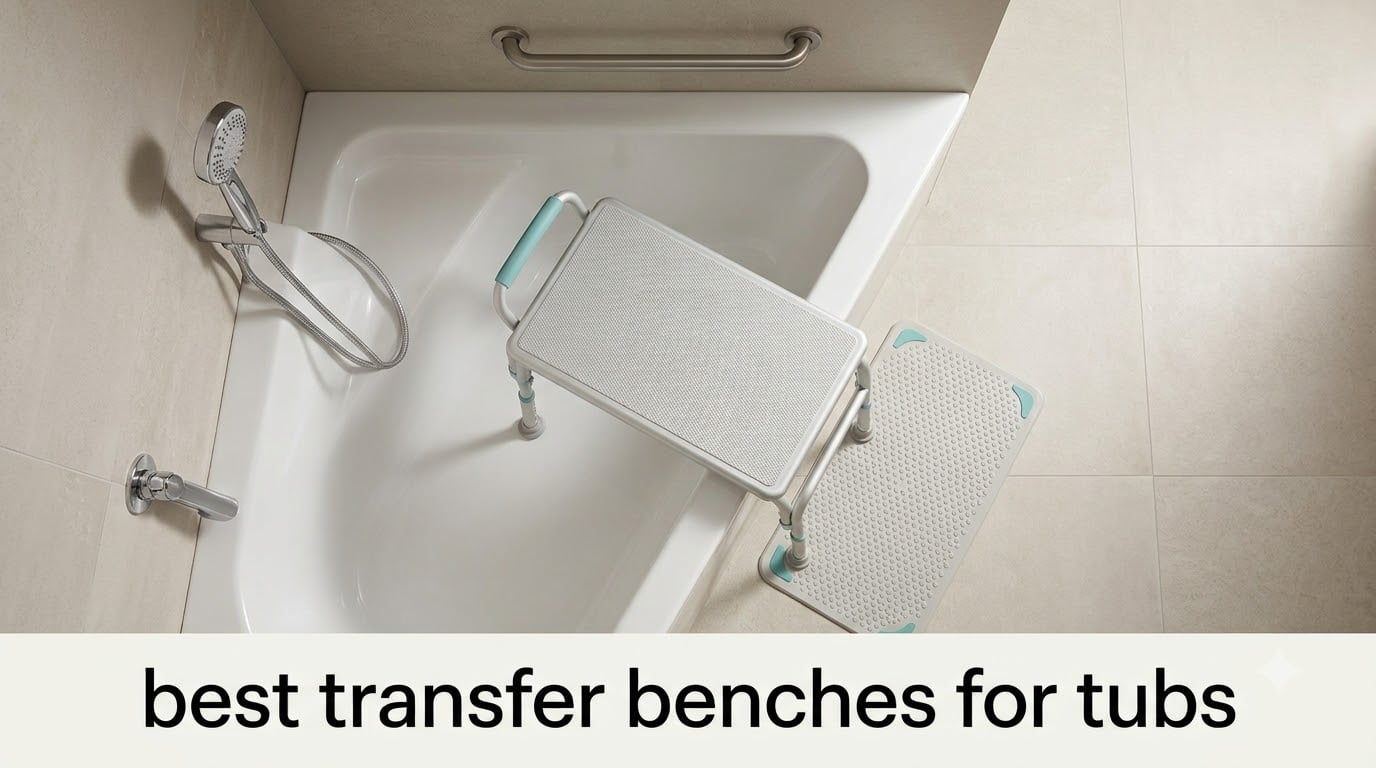
A tub transfer bench is a bathing seat that spans the bathtub wall, with two legs on the bathroom floor and two legs standing inside the tub. You sit down on the dry side with both feet on the floor, lift one leg at a time over the wall, place each foot flat on the tub floor, then scoot across while staying seated. That removes the step-over, which is the single riskiest moment of daily bathing for anyone with limited hip strength, balance, or grip.
This guide covers the best transfer benches for tubs we could justify from real specifications and thousands of owner reviews, grouped by the problem each one solves. We looked at weight capacity, seat height range, how the bench holds itself in the wet zone, whether the seat slides or swivels, and how much bathroom floor the frame takes up. If you are still deciding whether a walk-in tub makes more sense than a bench, our walk-in tub roundup covers that decision from a different angle.
Who needs one: people recovering from hip or knee replacement, stroke survivors, wheelchair and walker users, anyone with Parkinson’s or multiple sclerosis, plus-size users who need a 400 lb rating, and anyone who has already had a near-miss getting out of the bath. What a bench does not fix is a bathroom where the outer legs have nowhere to stand, or a user who cannot manage the transfer at all without a person assisting. An occupational therapist can tell you which case you are in.
Table of Contents
Top 3 Picks for the Best Transfer Benches for Tubs
The short answer for most households is the Carex bench, because it reverses for either tub orientation and levels itself one leg at a time. The Medline 400 lb model is the value pick, and the Platinum Health carousel is the one to buy if scooting across a fixed seat is not realistic for the user.

Carex Tub Transfer Bench
- 300 lb capacity
- Reversible backrest
- Tool-free assembly
- Textured seat


Platinum Health Carousel
- Padded seat
- 90 degree swivel lock
- Sliding rails
- Half-inch leg steps
The Best Transfer Benches for Tubs at a Glance
All twelve benches below straddle a tub wall. The differences that matter day to day are capacity, whether the seat moves, and how the frame grips the wet side.
| Product | Specifications | Action |
|---|---|---|
| Carex Tub Transfer Bench |
|
Check Latest Price |
 DMI Sliding Transfer Bench DMI Sliding Transfer Bench |
|
Check Latest Price |
| Medline 400 lb Transfer Bench |
|
Check Latest Price |
 Medline Microban Folding Bench Medline Microban Folding Bench |
|
Check Latest Price |
| Platinum Health Carousel |
|
Check Latest Price |
 Flash Furniture HERCULES Flash Furniture HERCULES |
|
Check Latest Price |
 Drive Medical Splash Defense Drive Medical Splash Defense |
|
Check Latest Price |
 HOMLAND A-Frame Bench HOMLAND A-Frame Bench |
|
Check Latest Price |
 TABEKE Quad-Bolt Bench TABEKE Quad-Bolt Bench |
|
Check Latest Price |
 Vive Heavy Duty Bench Vive Heavy Duty Bench |
|
Check Latest Price |
 VEVOR Swivel Sliding Bench VEVOR Swivel Sliding Bench |
|
Check Latest Price |
 Medline Padded Transfer Bench Medline Padded Transfer Bench |
|
Check Latest Price |
1. Carex Tub Transfer Bench with Reversible Backrest
Carex Shower Bench and Shower Chair For Elderly and Disabled with Height Adjustable Legs, Tub Bench Converts to Right or Left Hand Entry, Shower Chair For Bathtub
300 lb capacity
11.7 lb weight
Height adjustable legs
Reversible backrest
Pros
- Tool-free assembly
- Legs adjust individually for leveling
- Textured non-slip seat surface
- Works on either tub orientation
- Fits small bathrooms
Cons
- Backrest is not sturdy enough to lean on
- Fittings are hard to align with limited hand strength
- Height adjustment takes effort once assembled
This is the bench we keep coming back to, and after reading through owner feedback on it, the reason is not a single clever feature. It is that almost nothing about it is difficult. The seat height adjusts, the backrest flips to whichever side your tub entry is, and the whole thing assembles without a single tool. Reviewers consistently describe the same outcome: a family member who could not step over the wall started bathing independently.
The 300 lb rating is the only real constraint. If the user is over that, or is close to it, look at one of the 400 lb models further down. The 11.7 lb frame is light enough that a caregiver can reposition it between uses, and the textured seat gives wet hands something to grip on.
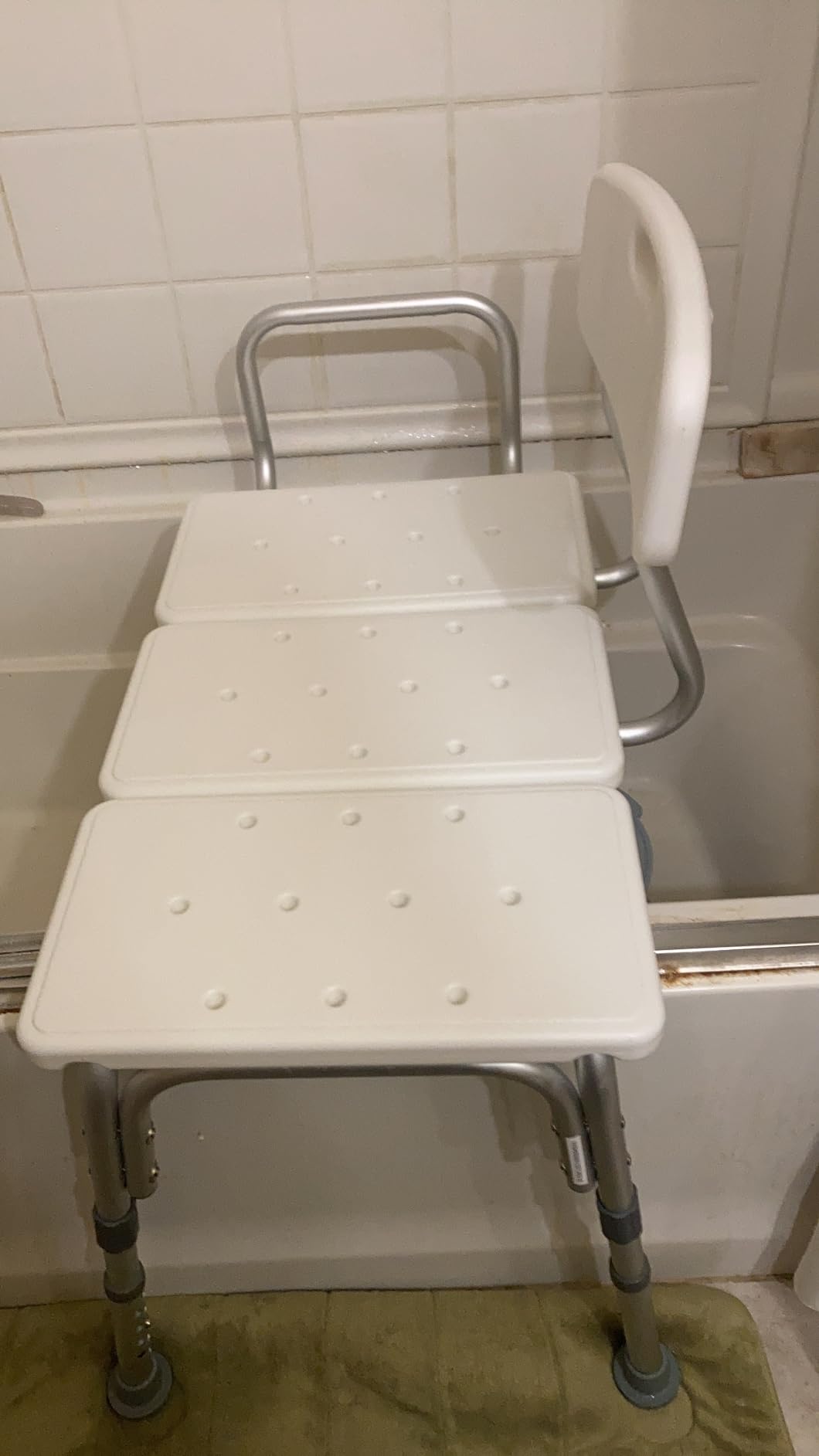
Owner photos show the leveling clearly. Each leg extends on its own, so the two in-tub legs can stand on the tub floor while the two outside legs stand on the bathroom floor, even when those two surfaces are several inches apart. That is the mechanism that makes a transfer bench safe, and it is the one thing you should check on day one.
Assembly is a push-pin operation, which suits most users but not everyone. Several reviewers with limited hand strength mention that lining up the pop-pegs takes a second attempt, so plan to build it once yourself rather than handing the box to the person who will use it.
What we checked before every bath
All four feet in firm contact with a surface, and the seat level. Not close to level. Level. A bench that sits a degree off puts the user’s weight toward the low side, and the in-tub suction or rubber feet have less bite when the frame rocks.
We also confirmed the backrest is a backrest, not a handhold. Owners on this model warn specifically against leaning back on it, so the user’s hands should be on the seat edge or their own thighs during the scoot across.
Where it stops being the right pick
If the user weighs more than 300 lb, this bench is out regardless of how well it fits. So is a bathroom where the tub wall is unusually high or the outer legs have no floor to land on, because the height range is fixed and cannot be extended.
It also suits a user who can scoot. There is no sliding carriage here, so someone with very weak hips who cannot move across a static seat should look at the carousel and swivel models instead.
2. DMI Sliding Transfer Bench with Removable Cut Out
DMI Tub Transfer Bench and Shower Chair with Non Slip Aluminum Body, FSA Eligible, Adjustable Seat Height and Cut Out Access, Holds Weight up to 400 Lbs, Bath and Shower Safety, Transfer Bench
400 lb capacity
Sliding seat
19-23.5 in seat height
Suction cup feet
Pros
- Rust-resistant aluminum frame with no wobble
- Slides smoothly and locks at each end
- Two rows of holes for fine leveling
- FSA/HSA eligible
Cons
- Cut out cover fits loosely and can pop up
- Limited seat area outside the tub without the cover
- Curtain cannot be drawn around the bench
The reason this bench is different is the removable perineal cut out. For anyone who needs seated access to a catheter, a bidet, or simply easier cleaning, a fixed solid seat is a genuine problem, and this is the only bench in our group with a hole you can open.
The sliding design reduces the effort of the move across the tub. Instead of scooting on a hard plastic surface, the user pushes or pulls themselves along the seat while it locks at each end of the travel. The rust-resistant aluminum frame does not flex, and the 400 lb rating covers most bariatric users.
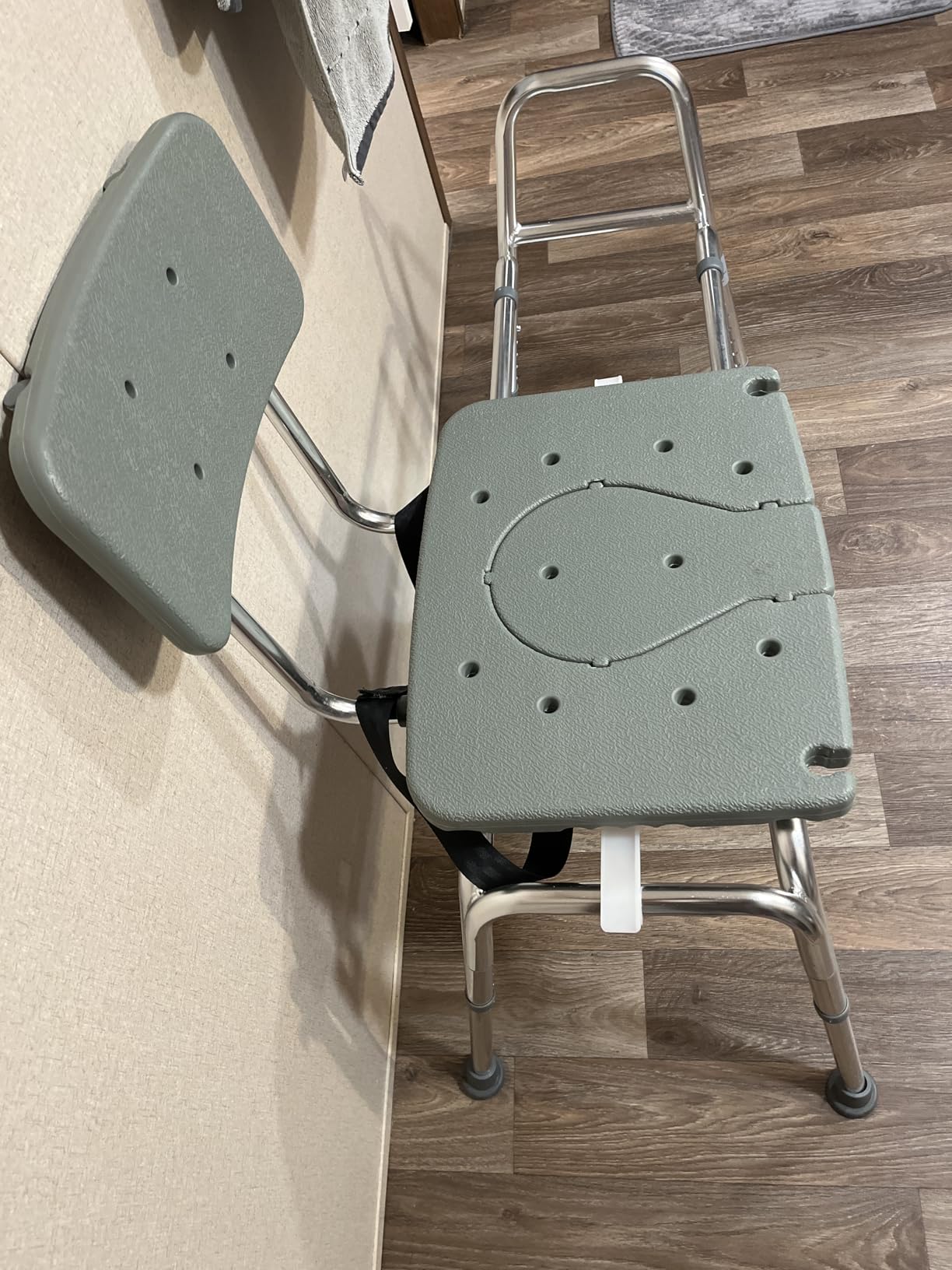
Two rows of adjustment holes is the detail that gets mentioned most. Fine leveling between the tub floor and the bathroom floor is what keeps the seat stable, and a second row of holes gives you half the increments a single row would.
Buyers also note the safety belt with nylon strap locks as a genuine comfort for a user who feels unsecured sitting down. The 10.7 lb weight is easy to move when you need floor access underneath.
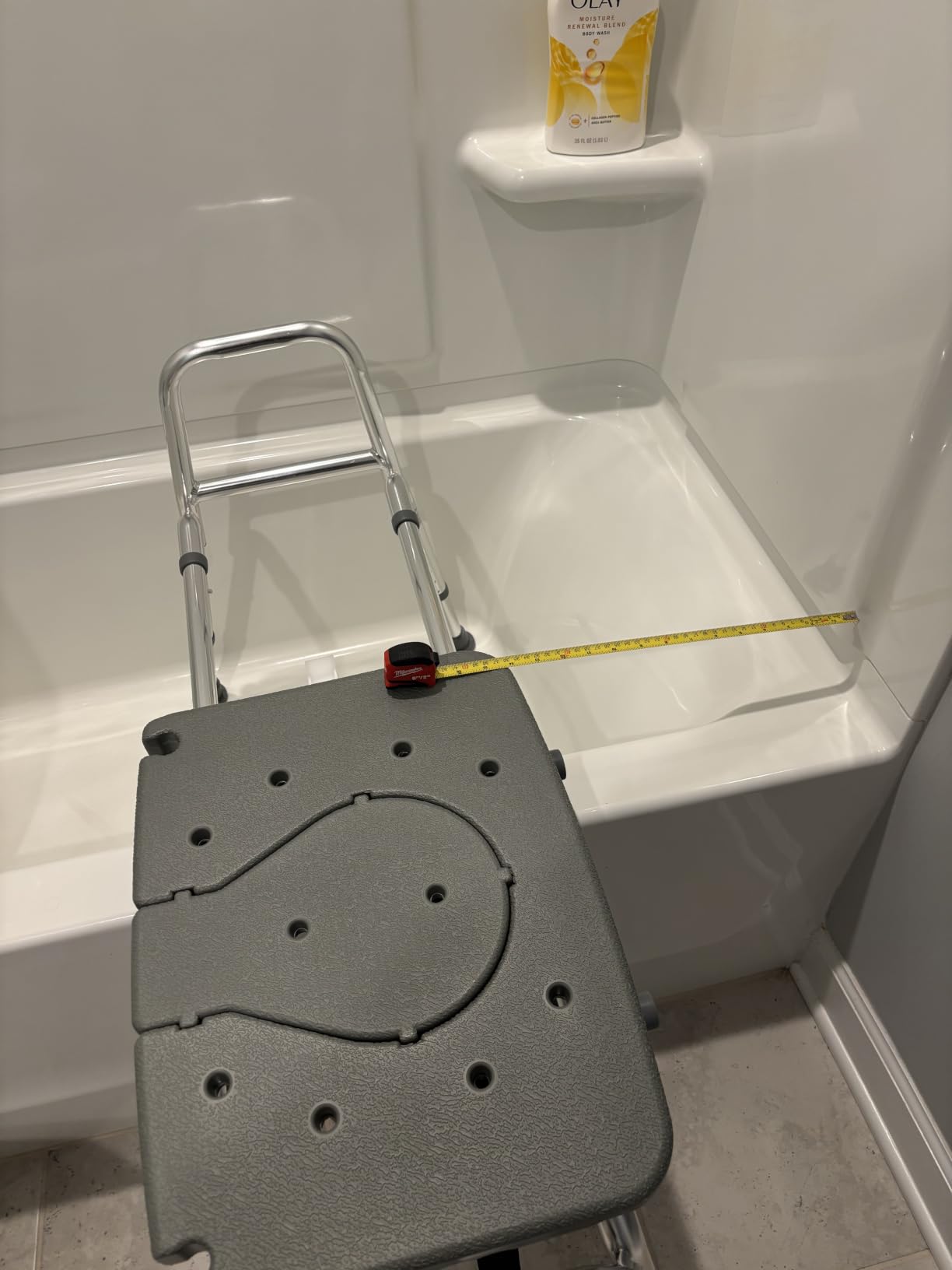
How much dry seating you actually get
This is the catch worth measuring twice. With the cut out cover removed, owners report that only about a third of the seat remains outside the tub. That is enough to sit and pivot, but not much spare room for a caregiver standing alongside.
Because the seat is larger than a standard bench, check the outside edge against the toilet or vanity before ordering. The frame is 39 inches wide overall, which is the widest static footprint in this group.
Who should pick this one
Choose it when seated hygiene is the deciding factor, or when the user benefits from a sliding rather than scooting motion and does not mind a larger frame. The safety belt also makes it a good match for a user who is anxious about the transfer.
Skip it if the bathroom is tight or if the curtain situation matters to you. Several owners mention having to bunch or modify the curtain because it cannot be drawn around this frame.
3. Medline Heavy-Duty 400 lb Transfer Bench
Medline Transfer Bench for Bathtubs and Showers, Adjustable Shower Bench and Bath Seat For Seniors and adults, Slip-resistant Feet, Heavy-Duty 400 lb. Weight Capacity, Tool-Free Assembly
400 lb capacity
17.5-22 in seat height
Side arm rest
Tool-free push buttons
Pros
- Quick tool-free push-button assembly
- Individually adjustable legs level uneven floors
- Reversible backrest suits most layouts
- Suction cup feet grip inside the tub
- Strong value against medical supply equivalents
Cons
- Seat is unpadded and hard in long showers
- Wide footprint uses bathroom floor space
- Seat texture can feel slippery once soaped
This is the bench we would tell most families to buy first. The push-button height adjustment covers 17.5 to 22 inches, the frame is rated to 400 lb, and the whole thing goes together without tools in the time it takes to read the instructions.
Unlike some rivals, it includes a side arm rest that does not fold away. For a user standing up from the seat, that arm is a real leverage point, and owners with elderly parents mention it as the feature that made the transfer feel manageable.
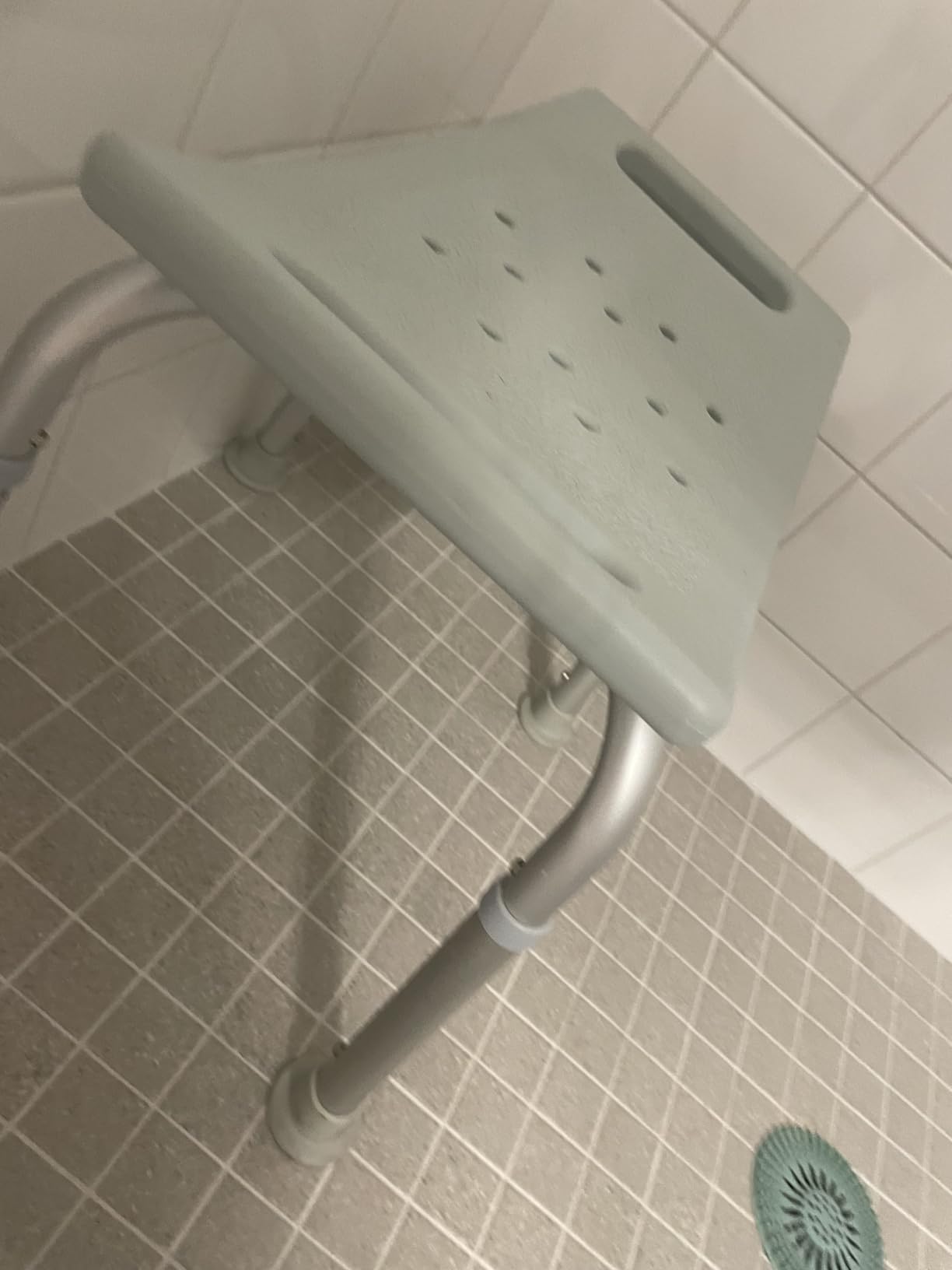
The in-tub legs use wide suction cups rather than plain rubber tips, and reviewers report they hold firmly once pressed down. That grip is what stops the bench walking sideways while the user lifts a leg over the wall, which is the moment most likely to throw someone off balance.
At 12.6 lb it is not a travel bench, but it is light enough for a caregiver to lift out for cleaning. The grey finish and utilitarian shape are unremarkable, which in this category is a compliment.
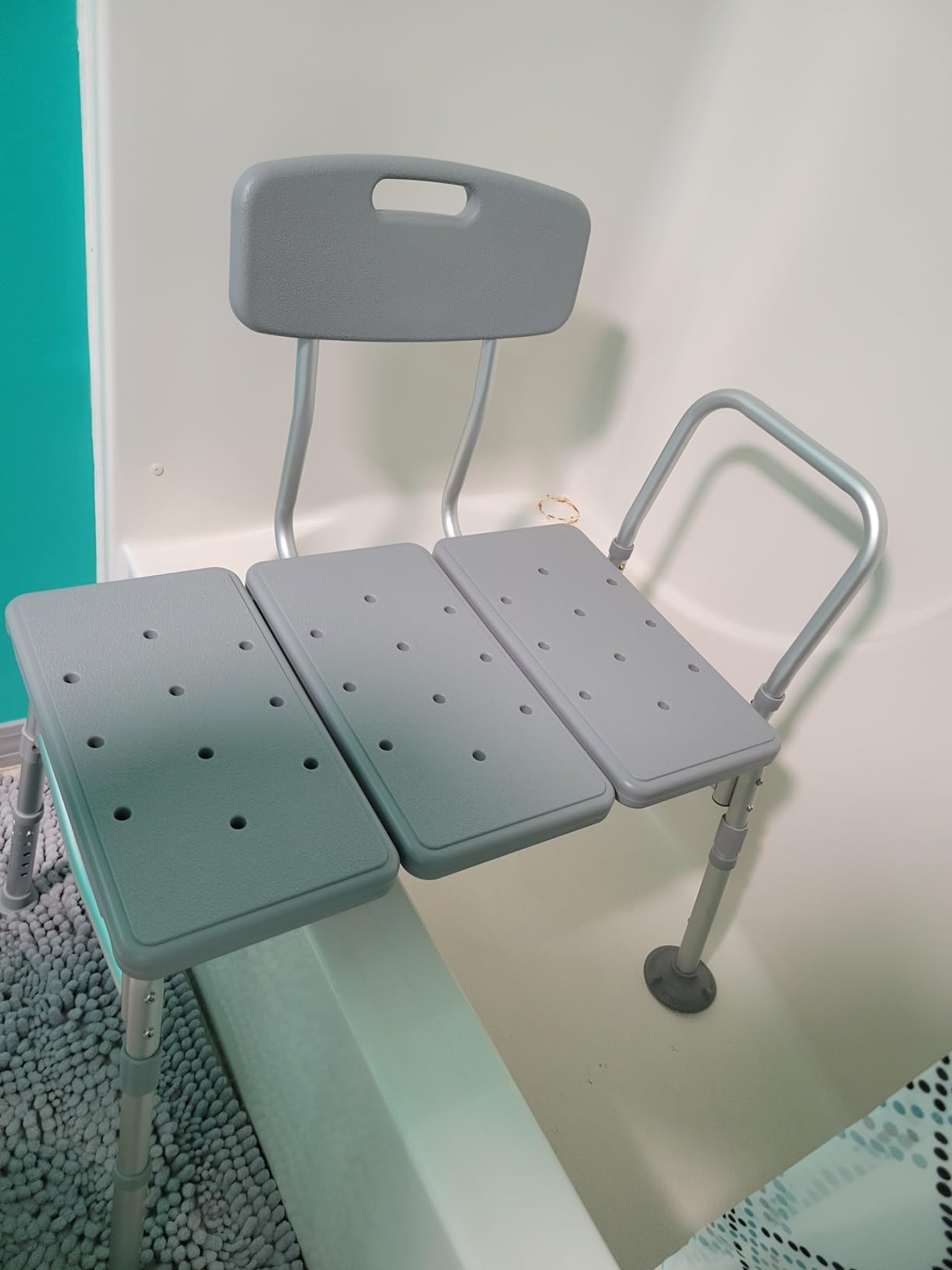
How the height range compares to your tub
Seventeen and a half inches at the low end suits a shorter user better than the benches that start near 20 inches, where feet end up dangling. If the user is tall, check the 22 inch ceiling against the tub wall height before buying.
Because the legs adjust individually, the bench can sit level even when the tub floor and the bathroom floor are at different heights. Confirm this works with your specific tub before you rely on it, since a fixed frame cannot always reach.
The main trade-off
The seat is hard plastic with no padding. For a ten-minute bath that is fine. For someone who sits on the bench for a long shower, or who has thin or diabetic skin, friction can become a real irritation, and a folded towel or a padded model is the better answer.
The second trade-off is floor space. The 32 inch wide frame is a lot in a small bathroom, so measure the clear floor outside the tub before ordering.
4. Medline Folding Transfer Bench with Microban Protection
Medline Tub Transfer Bench and Shower Chair with Microban Antimicrobial Protection, Adjustable Shower Bench and Bath Seat For Seniors And Elderly, 350 lb. Weight Capacity, Light Blue
350 lb capacity
10.8 lb weight
Folds for storage
19-23 in seat height
Pros
- Very light and easy to move or travel with
- Two rows of holes simplify leveling
- Suction cup feet hold inside the tub
- Drainage holes prevent pooling
- Backrest and side handle add security
Cons
- Height range suits taller users more than shorter ones
- Outside rubber feet feel wobbly next to the in-tub cups
- Steel fittings inside the legs can corrode over time
This is the bench for a shared bathroom, a rental, or a house where the bath seat has to go away when guests arrive. At 10.8 lb with a folding aluminum frame, one person can lift it out and store it in a closet or the trunk of a car.
Several owners of padded shower benches on caregiver forums describe a decade-plus ownership pattern, where the frame survives long after the padding is gone. This model fits that profile well because the frame is simple and the seat is a separate plastic piece that can be replaced without discarding the structure.
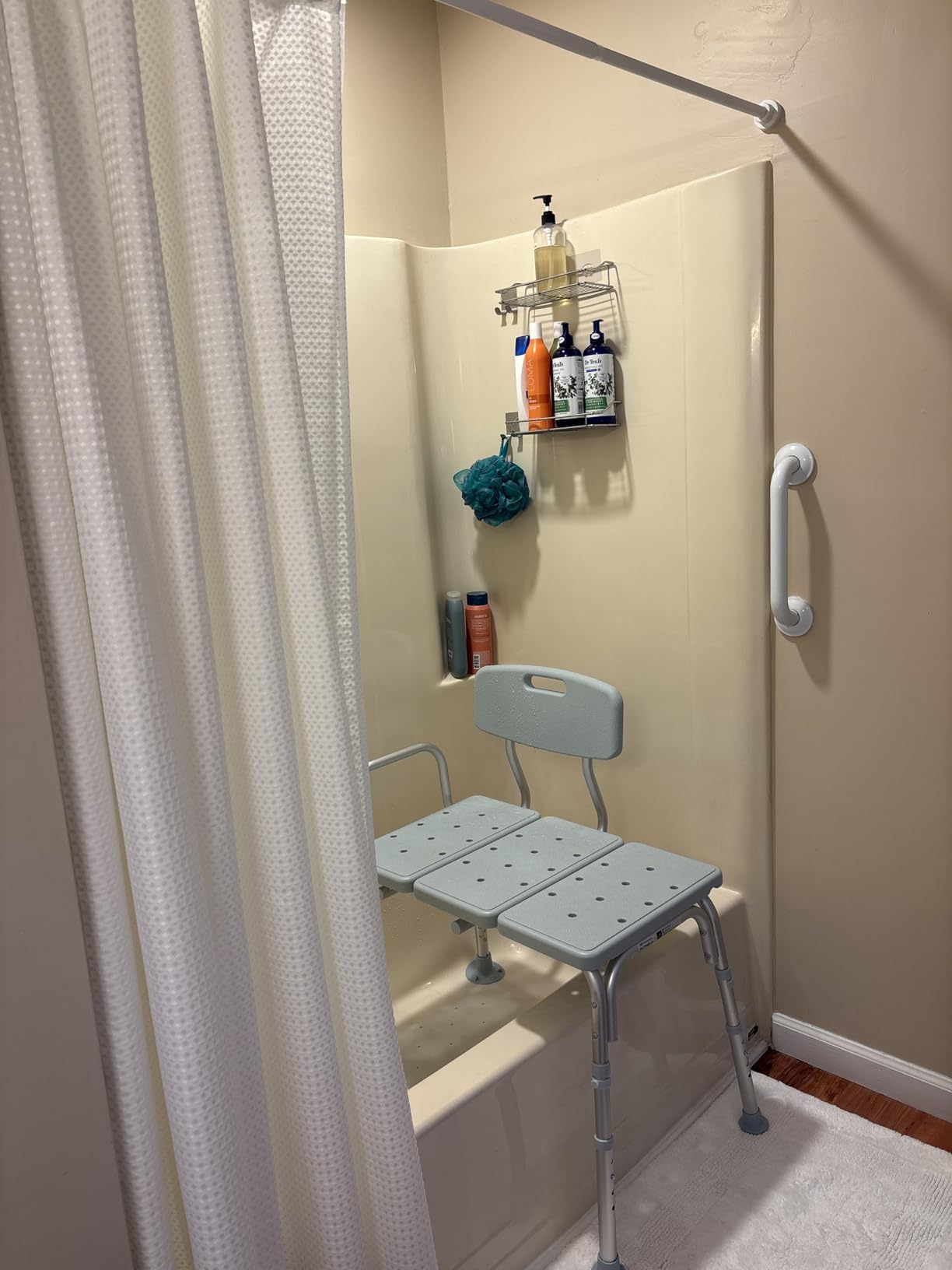
The seat is treated with Microban antimicrobial protection, which resists the stain and odor causing bacteria that build up in a wet environment. That matters more than it sounds in a bench that gets used daily and rarely dries fully between baths.
Drainage holes in the textured seat keep water from pooling, which is both a comfort issue and a slip issue when the user scoots back across.
Height range: the deciding detail
Nineteen to 23 inches is a taller band than most, and reviewers point out the same trade-off. A shorter user can find their feet dangling, while a taller user gets proper foot contact on the tub floor, which is exactly what makes the transfer stable.
Measure the user’s seated leg length before choosing. If feet cannot rest flat inside the tub, the transfer is harder than it needs to be and a lower-range bench is the better answer.
Long-term ownership notes
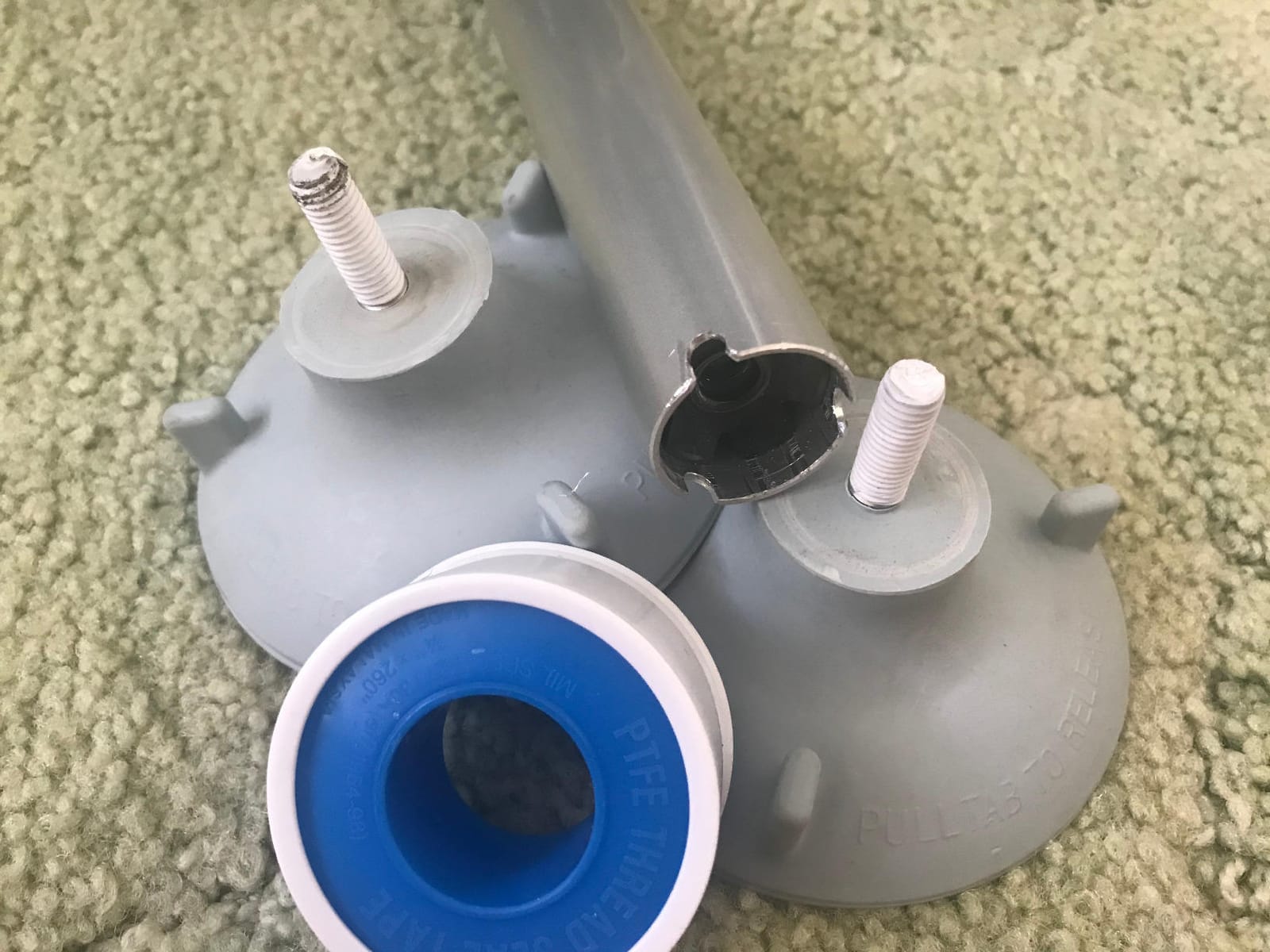
The one durability complaint that recurs is corrosion at the internal steel fittings inside the legs after extended wet use. Aluminum is the outer frame, and the internal hardware is the weak point. Rinsing the legs and drying them after the last bath of the day slows that down considerably.
Outside rubber tips feel less positive than the in-tub suction cups, so level the bench carefully and re-check it periodically rather than assuming it is still stable months later.
5. Platinum Health Carousel Sliding Bench with Swivel Seat
Platinum Health Carousel Sliding Shower Chair Tub Transfer Bench with Swivel Seat, Premium Padded, Pivoting Arms, Adjustable Space Saving Design for Tubs, Inside Shower, for Handicap & Seniors, Blue
330 lb capacity
Padded polyurethane seat
Swivel locks every 90 degrees
Half-inch leg steps
Pros
- Swivel seat locks in 90 degree steps for facing the faucet or drain
- Padded seat
- back and arms that resist water
- Half-inch leg adjustments make leveling precise
- Protrudes less into a small room than a fixed seat
- Long-term owners praise the build and rust resistance
Cons
- Solid seat has no perineal cut out
- Release lever and slide button are both on the right side
- Deep soaker tubs need a separate leg extension kit
This is the most considered design in the group. The seat slides along twin aluminum rails and swivels in 90 degree increments, so the user can face the faucet, the drain, or the bathroom door without standing up or rotating their hips.
The padding is closed-cell molded polyurethane, which is the right material for a wet seat. It wipes clean, does not absorb water, and is far easier to sanitize than fabric. The flip-up armrests lock in position and can bear weight as leverage points during a transfer.
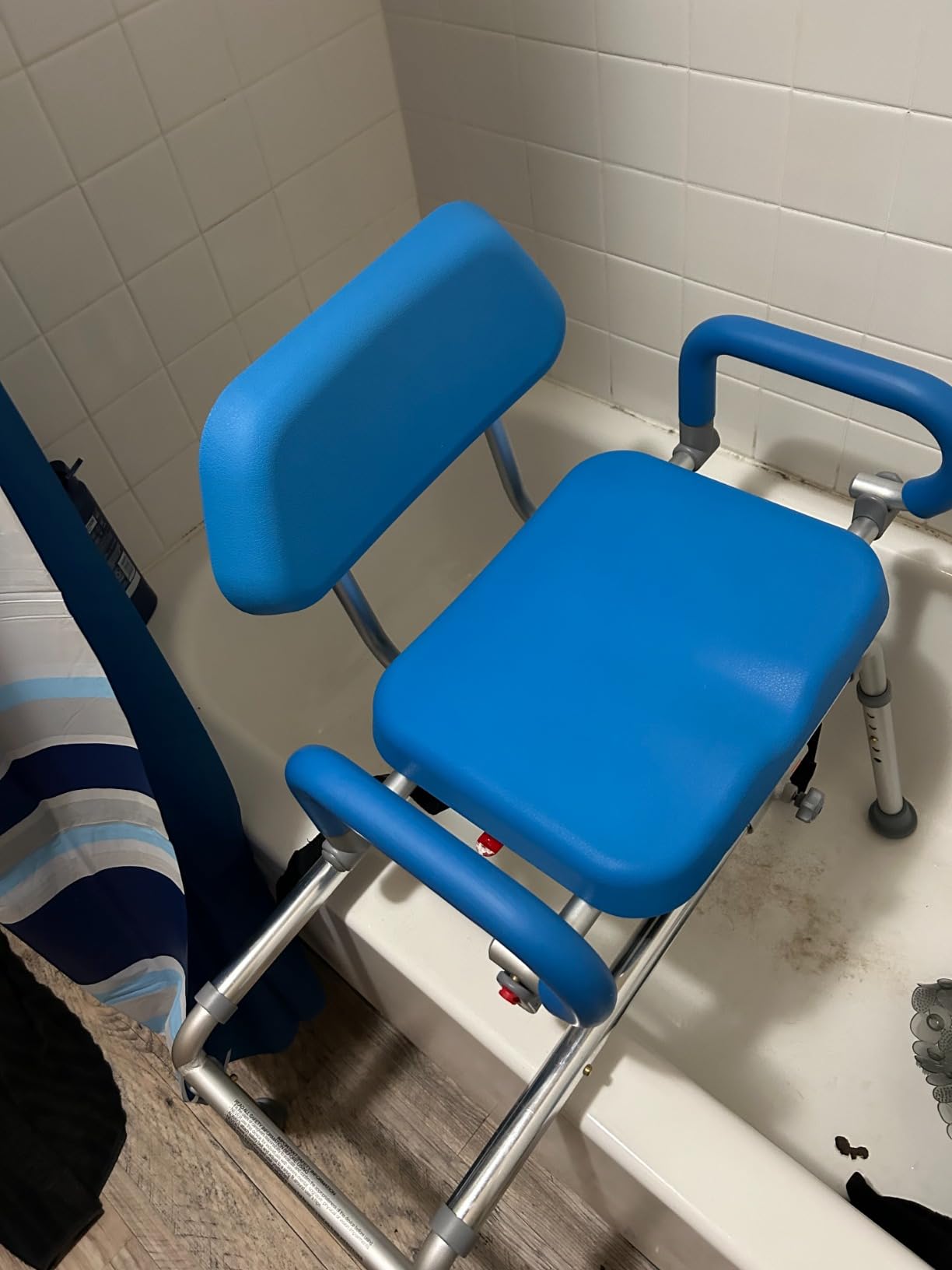
Legs adjust in half-inch increments, which is the finest leveling control we found. When the tub floor and the bathroom floor sit at different heights, that precision is the difference between a level seat and a seat that rocks under load.
Buyers recovering from hip, knee, and stroke-related mobility issues report that this carousel is often the only design that fits their particular bathroom. The space-saving swivel means it protrudes into the room less than a fixed-seat bench of the same capacity.
Controls are all on one side
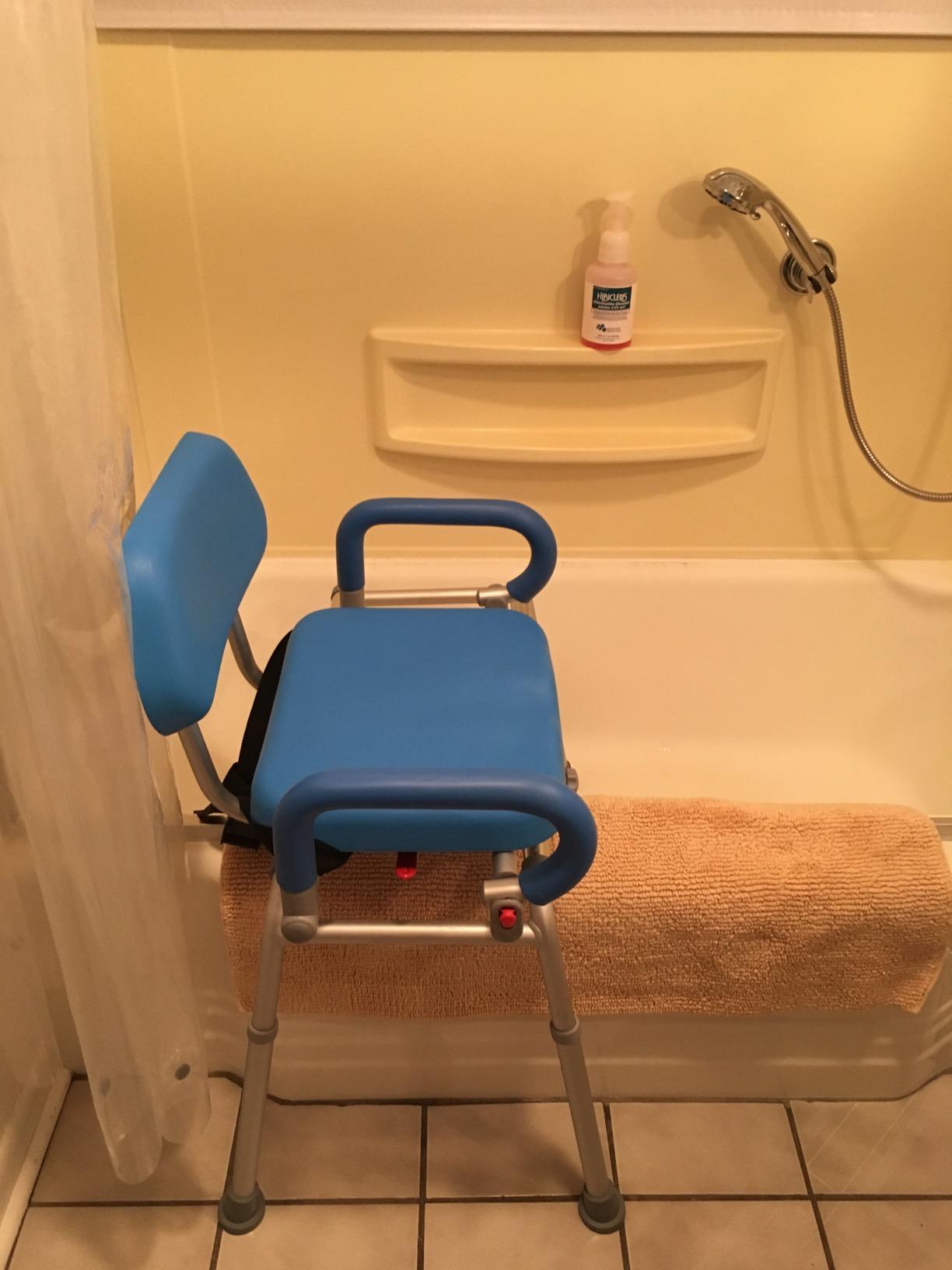
This is the most important limitation to know before buying. The release lever and the slide button both sit on the right side of the seat. A user with right-side weakness, a right shoulder injury, or a stroke affecting the right arm will struggle with them.
If the user’s weaker side is the right, the reversible orientation of the frame changes where the seat sits but not where the controls are. Try the mechanism with the intended user before committing.
No cut out, and deep tubs need a kit
The seat is solid, so seated washing and perineal access are harder than on a cut-out model. If that is a requirement, this is the wrong bench no matter how good the movement is.
For deep soaker tubs, the optional leg extension kit is a separate purchase. If your tub wall is unusually high, factor that into the decision before you order, because the standard legs may not reach the floor inside the tub.
6. Flash Furniture HERCULES Transfer Bench
Flash Furniture HERCULES Series 300 Lb. Capacity Adjustable Gray Bath & Shower Transfer Bench with Back and Side Arm
300 lb capacity
ANSI/BIFMA X5.1-17 compliant
Backrest and side arm
5 year limited warranty
Pros
- Meets an ANSI/BIFMA safety standard
- Side arm and backrest give real support standing up
- Anti-slip seat with drain holes
- Corrosion-resistant aluminum frame
Cons
- 300 lb capacity is lower than most competitors
- No sliding or swivel seat so transfers require scooting
- Unpadded plastic seat is uncomfortable in longer showers
The HERCULES is a straightforward fixed-seat bench that does the basic job without a premium. It is one of the few in this group that states compliance with a published standard, ANSI/BIFMA X5.1-17, which is a useful thing to be able to point to when a bench is a medical purchase.
It also carries a five year limited warranty on the non-moving metal parts, which is longer than most of the warranties attached to benches in this category. The backrest and the side arm are both included, and the side arm is what gives the user something to push against when standing.
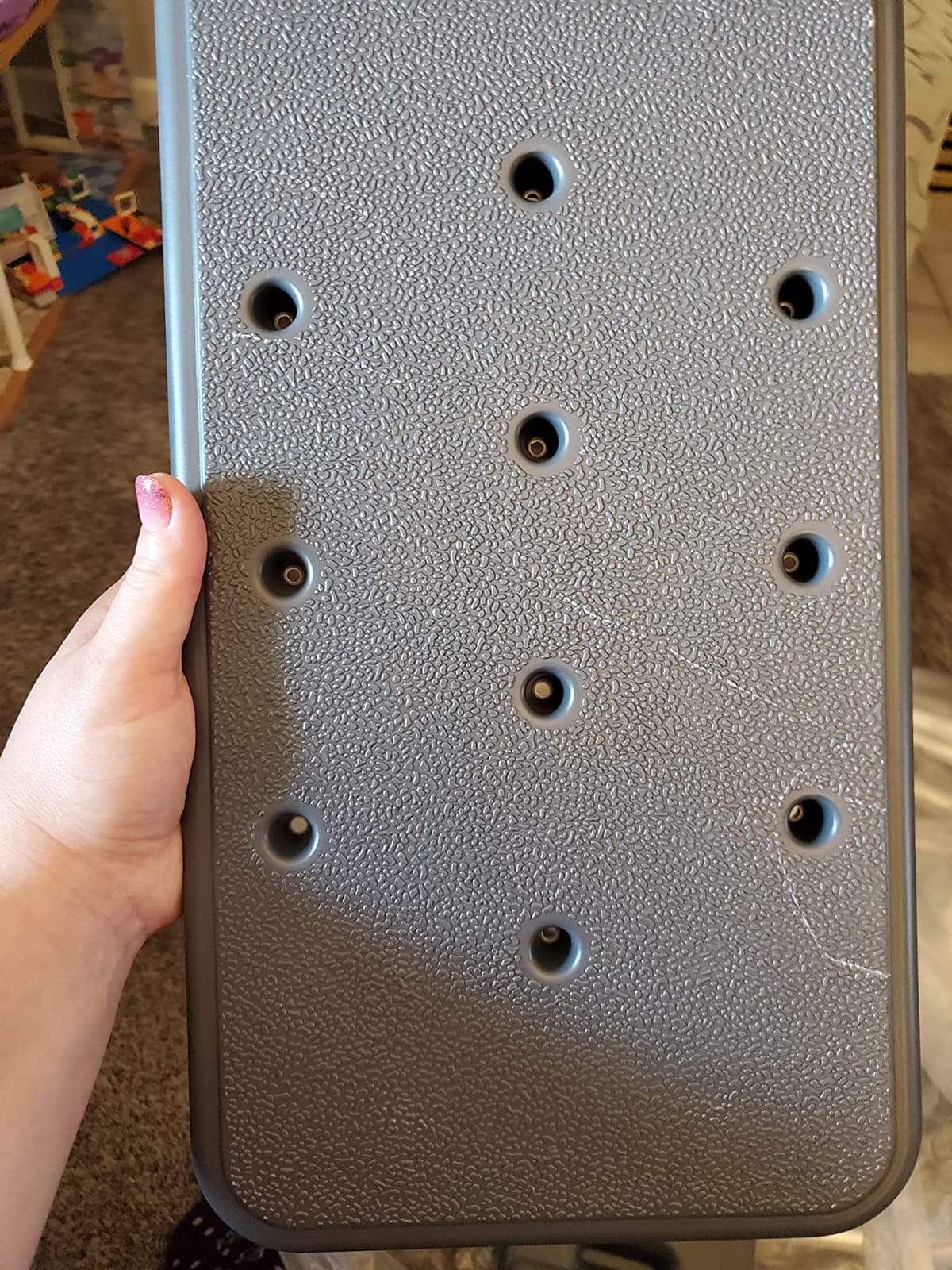
The seat has drain holes and an anti-slip surface, and the frame is a corrosion-resistant aluminum that suits a permanently wet environment. At 10.5 lb it is easy for a caregiver to move out for cleaning.
Reviewers credit it with basic stability and a useful side arm, and note that it is inexpensive relative to comparable benches. That is the honest case for it.
What the lower rating is about
It carries a 4.2 average with a higher share of one-star reviews than the rest of this group, and the complaints cluster: the 300 lb limit, the hard plastic seat, and the absence of any sliding or swivelling mechanism.
None of those are defects. They are the trade-offs of a simple, inexpensive design, and they are worth accepting only if the user is a confident scooter who needs a stable platform more than a mechanism.
How to decide
Pick it when the budget matters more than features, when the user is comfortably under 300 lb, and when the bathroom layout will not tolerate a larger frame. It is a good fit for a first purchase where the main goal is simply removing the step-over.
Skip it for a long-duration bather or anyone with a history of near-misses in the bath. In those cases, a padded or sliding model is a better use of the same money.
7. Drive Medical Splash Defense Tub Transfer Bench
Drive Medical Splash Defense Tub Transfer Bench, Adjustable Height, White
400 lb capacity
U-shaped cutout curtain channel
0.5 inch increments
Pinch-free lever
Pros
- Curtain channel keeps water inside the tub and the floor dry
- Wide suction cups hold the bench very steady
- Tool-free assembly and adjustment
- All four legs adjust independently
- Pinch-free lever avoids pinching fingers
Cons
- Curtain channel only clears a low-profile tub wall
- Footprint is wide and tight in narrow tubs
- Limited height range makes leveling hard in taller tubs
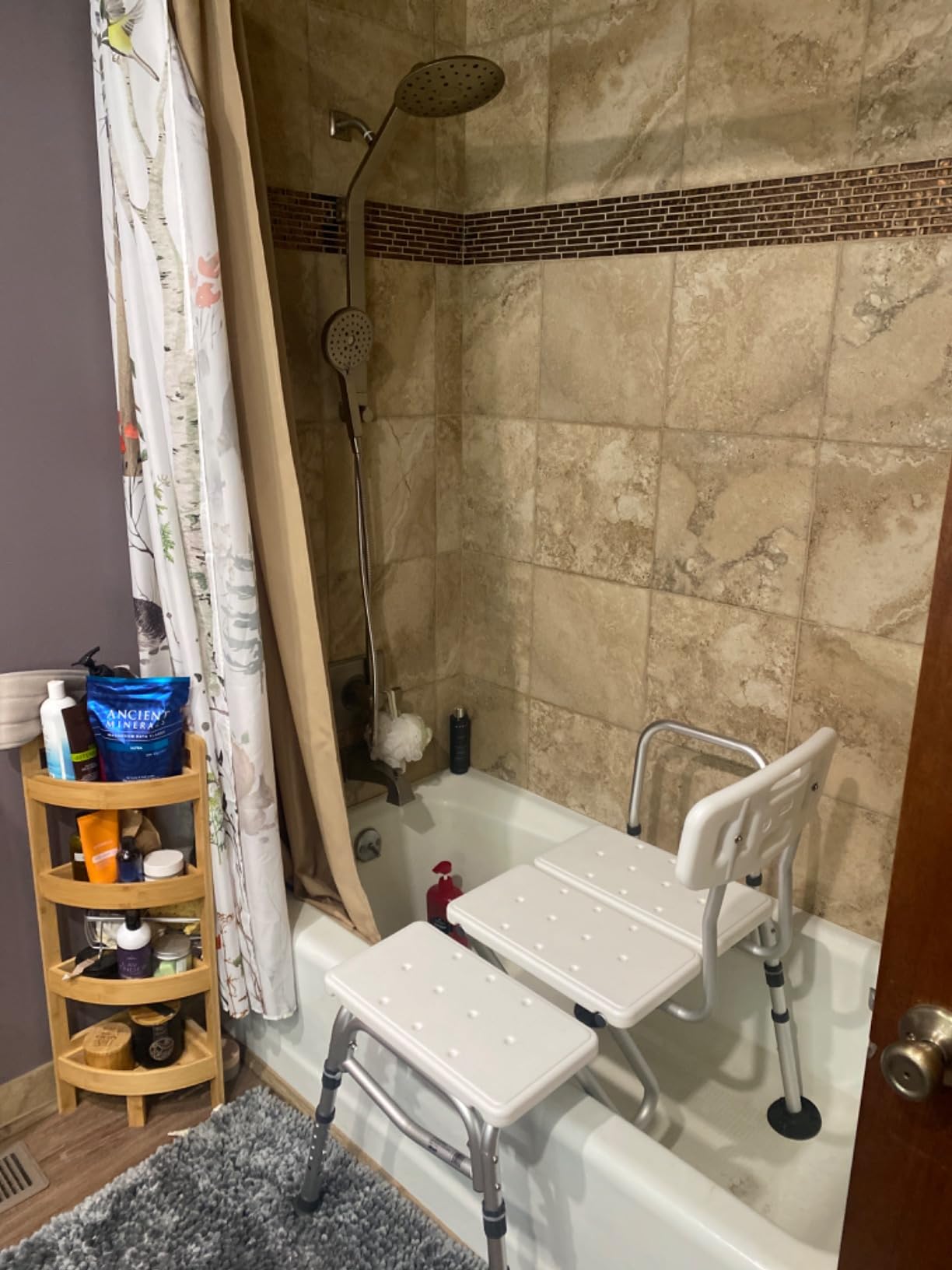
Water on the bathroom floor is a separate slip hazard from the tub itself, and this is the only bench here designed specifically to solve it. The U-shaped cutout in the seat carries a pair of curtain channel bars, so the shower curtain or liner runs through the seat instead of draping over the edge.
Keep the curtain tucked into that channel and the water stays on the tub side of the wall. Users who have dealt with a soaked floor every bath describe this feature as the reason they stopped worrying about the trip back to the door.

The dual-column extending legs adjust in half-inch increments with a pinch-free lever, which matters for anyone with arthritis or reduced hand sensation. All four legs adjust independently, so the frame can level between a tub floor and a bathroom floor at different heights.
Wide suction cups on the in-tub legs make this one of the most stable benches in the group once they are pressed down properly. The 400 lb rating and the reversible backrest cover most layouts.
Check your tub wall height first
This is the one bench where fit is genuinely uncertain. The curtain channel bars only clear a low-profile tub wall, and on a standard-height tub the outside legs may not reach the bathroom floor at all.
Measure the wall height and the floor-to-floor distance before ordering. Owners who skipped that step are the source of the most common complaints in the reviews.
How to handle the curtain properly
Run the curtain through the channel bars on the tub side, and trim the liner below the seat line so it cannot drag on the frame. If the curtain still interferes, the alternative is to leave the outer section open during the bath and close it afterward.
Because the frame is wide, this bench is tight in narrow tubs. If your bathroom is small, check the measurements carefully rather than assuming it will fit.
8. HOMLAND A-Frame Tub Transfer Bench
HOMLAND Tub Transfer Bench with Backrest for Bathtub, Height Adjustable
400 lb capacity
A-frame aluminum
17.5-22.5 in seat height
Drainage holes
Pros
- Sturdy aluminum A-frame footprint
- Tool-free push-button assembly
- Reversible backrest for either tub orientation
- 11 lb so it is easy to reposition
- Drainage holes keep water off the seat
Cons
- Unpadded plastic seat is uncomfortable in long showers
- Seat extension interferes with the shower curtain
- No sliding or swivel so transfers require scooting
- Wide footprint for compact bathrooms
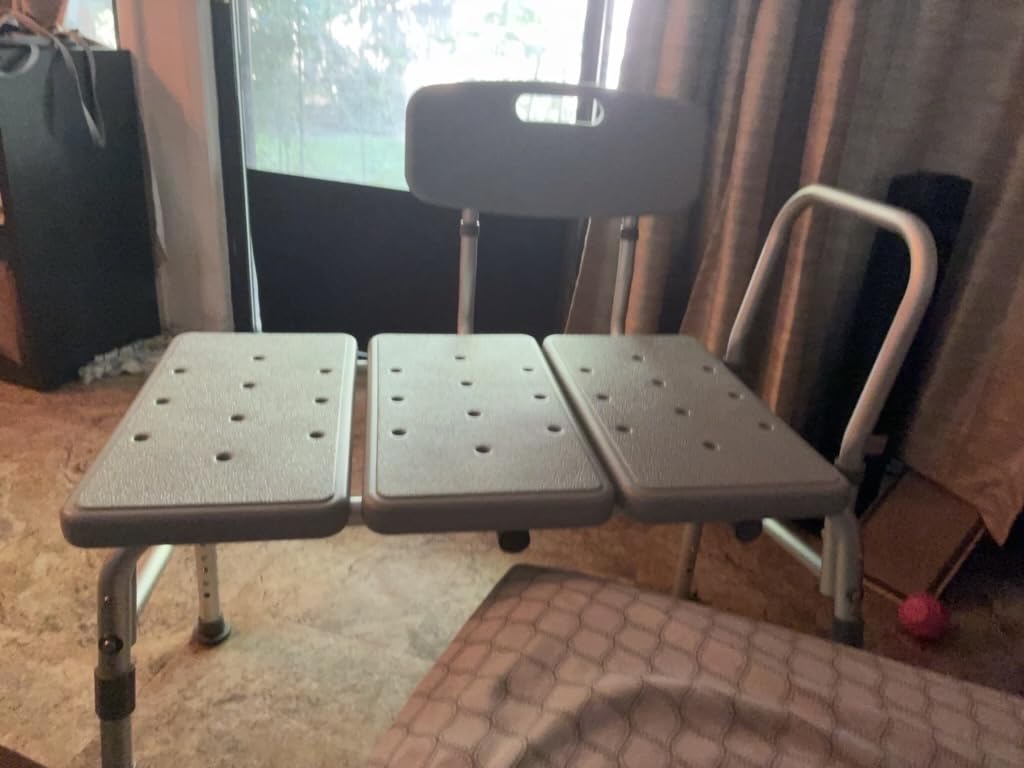
The A-frame geometry is the point of this bench. Where a straight-legged frame has to be perfectly level by adjusting each leg, an A-frame spreads its load across a wider base, and owners describe it as noticeably more stable once it is set up.
It carries a 400 lb rating across thicker tube aluminum, and the 17.5 to 22.5 inch height range with push-button adjustment suits a wide range of tub walls and user heights. Assembly is a button-lock operation with no tools.
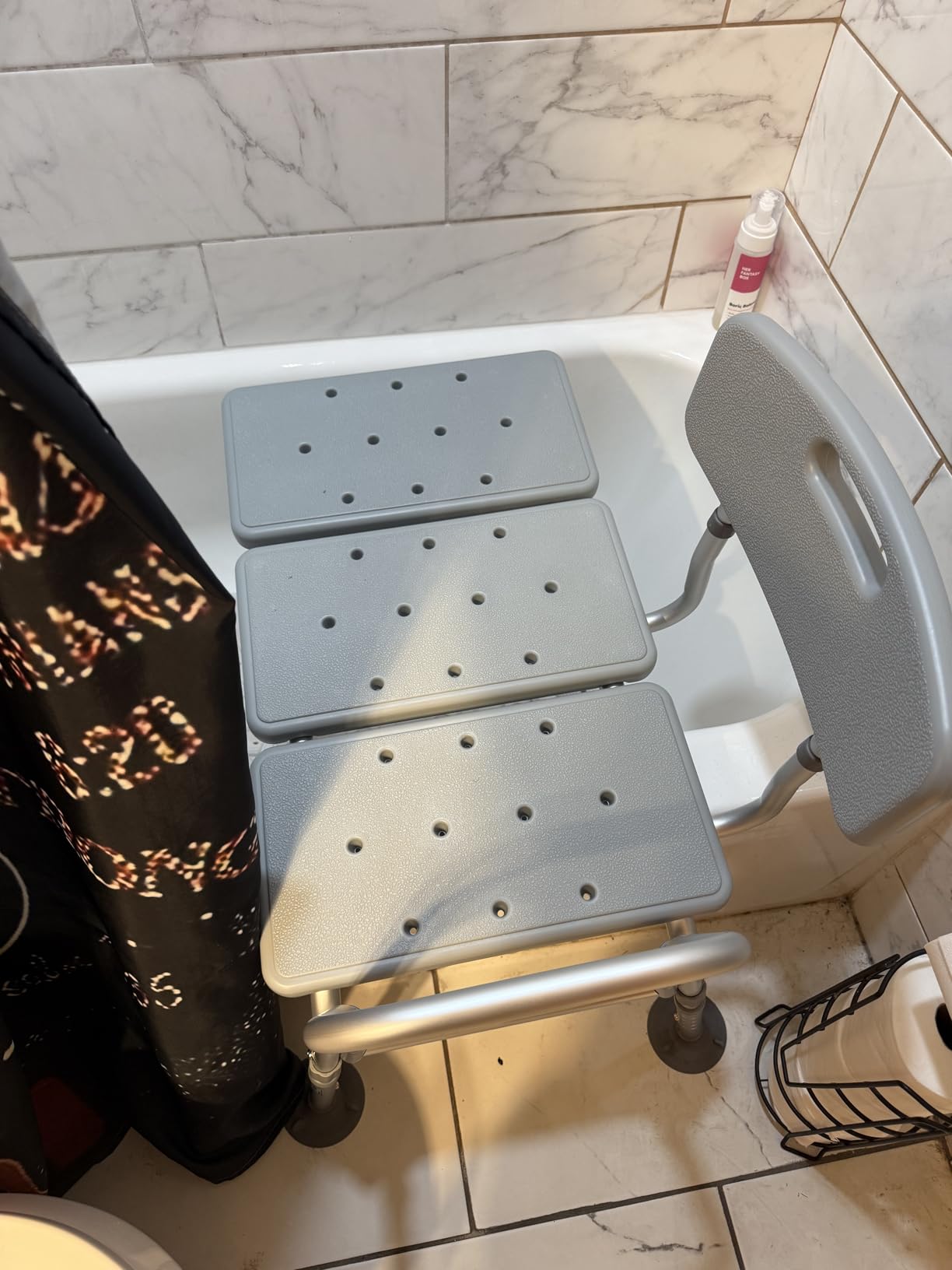
The reversible backrest is a recurring highlight in the reviews, because it means the bench works in a bathroom where the tub is on the opposite side from where you might expect. Drainage holes in the seat keep water from sitting under the user.
At 11 lb, the bench is light enough to be moved out for cleaning without a second person, which matters in a bathroom where the floor space is tight.
Why the A-frame base helps
A wider footprint resists tipping when the user lifts one leg over the wall and shifts weight to one side. That is the moment of highest risk, and the broader base is the structural answer to it.
The trade-off is floor space. The 32.3 inch width is substantial, so a bathroom with the toilet directly beside the tub is a poor match.
What to expect day to day
Comfort is the limit here. The seat is unpadded plastic, which is acceptable for a short bath and uncomfortable for a long one. Anyone bathing daily, or with skin that breaks down easily, should look at a padded model instead.
The seat extension also makes it hard to keep the shower curtain inside the tub, so expect to trim the liner or use a separate splash guard.
9. TABEKE Tub Transfer Bench with Quad-Bolt Backrest
TABEKE Tub Transfer Bench & Shower Chair for Bathtub, Elderly & Disabled
400 lb capacity
10 levels 17.75-22 in
Quad-bolt backrest
Shower head clamp included
Pros
- Bolted cross tube backrest is more rigid than spring button designs
- Foam padded handles stay comfortable during transfers
- Suction cups and rubber tips grip in and out of the tub
- 10 height levels match most tub heights
- Replacement parts are available from the seller
Cons
- Needs 32 inches of clearance beside the tub
- Only fits tub walls up to 19.75 in high
- Unpadded plastic seat
- Fixed seat requires scooting
Almost every transfer bench in this category attaches the backrest with spring buttons or plastic clips, and those are the first thing to work loose in a wet environment. This one uses quad-bolt cross tubes, and reviewers consistently single that out as feeling noticeably more rigid.
It also has foam padded side handles. On a transfer bench the handles take real load as the user pushes off to stand, and padded grips make a meaningful difference for someone with sore hands or reduced grip strength.
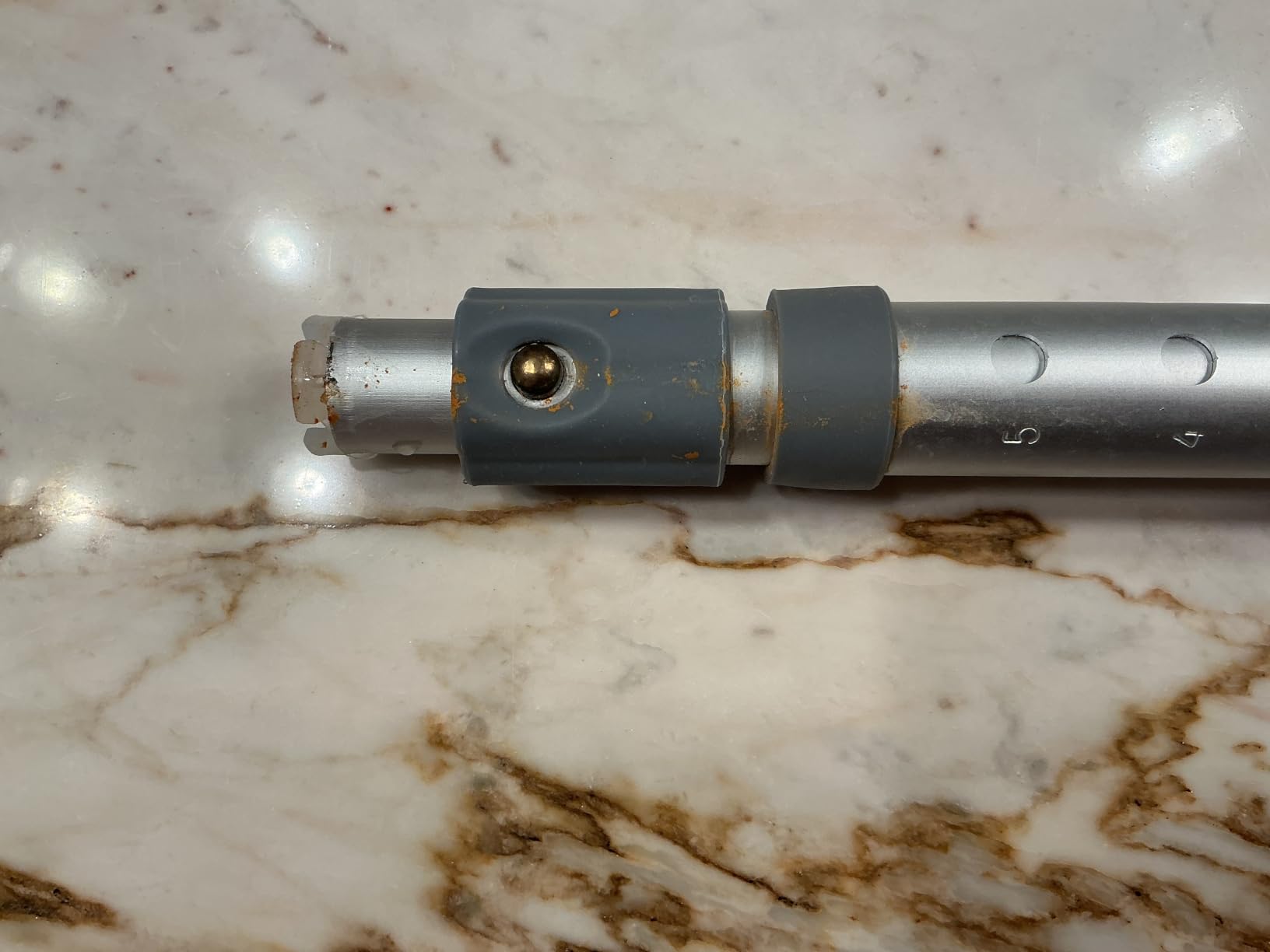
Ten height levels from 17.75 to 22 inches give fine adjustment, and the reversible backrest works for either tub orientation. Two suction cups sit inside the tub alongside non-slip rubber tips, so there is grip on both the wet and dry sides.
A shower head clamp is included, which is a small convenience that keeps the handheld head within reach without drilling anything into the wall.
Measure the clearance before anything else
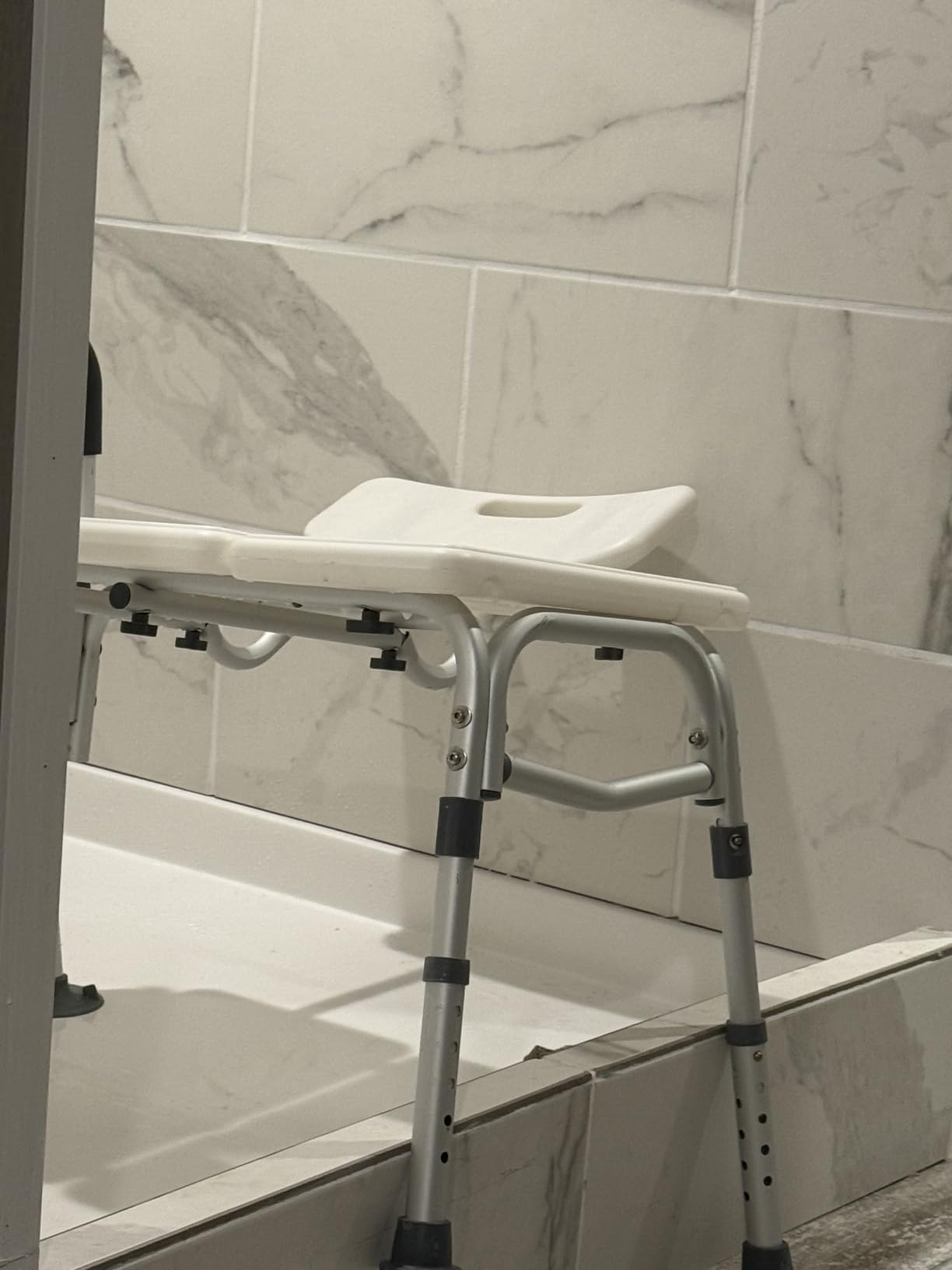
This bench needs 32 inches of total width from the interior tub wall out to the floor where the exterior legs stand. In a small bathroom with the toilet next to the tub, that is often the measurement that rules it out.
It also fits tub walls up to 19.75 inches. If your wall is taller than that, a deep-tub or extended-leg model is the correct category, not this one.
What the bolted backrest changes
Rigidity at the backrest matters because users push backward to steady themselves when they lower themselves onto the seat. A back that flexes under that load feels unstable even when the frame itself is solid, and this is where this design separates from cheaper alternatives.
The seat is still unpadded plastic, so the same comfort caution applies to daily or long baths. Replacement parts are offered directly, which is worth factoring in for a bench expected to last years.
10. Vive Heavy Duty Stainless Steel Transfer Bench
Vive Shower Bench for Transfers – Heavy Duty Tub Transfer Bench for Bathtub
400 lb capacity
Stainless steel frame
Adjusts to 23.5 in
30 drainage holes
Pros
- Stainless steel frame handles a heavy user comfortably
- Arrives mostly assembled so setup is fast
- Large suction cups on the inner legs resist sliding
- 30 drainage holes prevent pooling
- Reversible arm and backrest fit either tub
Cons
- Extended legs project past the seat so clearance must be checked
- Assembly directions are unclear and a brass pin can dislodge
- Suction cups are hard to break when moving the bench
- Unpadded plastic seat
The material choice sets this one apart. Where most frames here are aluminum, this is stainless steel, and owners with heavier users report that it feels solid under load and resists the flex they associate with cheaper benches.
It also arrives mostly assembled. That matters more than it sounds, because assembly is where a lot of transfer bench purchases go wrong, and this one can be set up and leveled in a few minutes.
The seat has 30 molded drainage holes, the most generous venting in the group, and large suction cup caps on the interior legs. Non-skid tips handle the dry side.
Why the 23.5 inch maximum matters
A taller adjustment ceiling means this bench can reach a higher tub wall and still put the user’s feet flat on the tub floor. Users recovering from knee or foot surgery often need the seat high enough to keep the operated leg supported and clear of the tub floor.
That also makes it a reasonable option for a taller user who would dangle on a lower-range bench.
Check the legs, not just the seat
The dual column extension legs project beyond the seat, so the clearance you need is measured from the tub wall outward, not from the seat edge. In a tight bathroom, check the space in front of the bench against the toilet or cabinet.
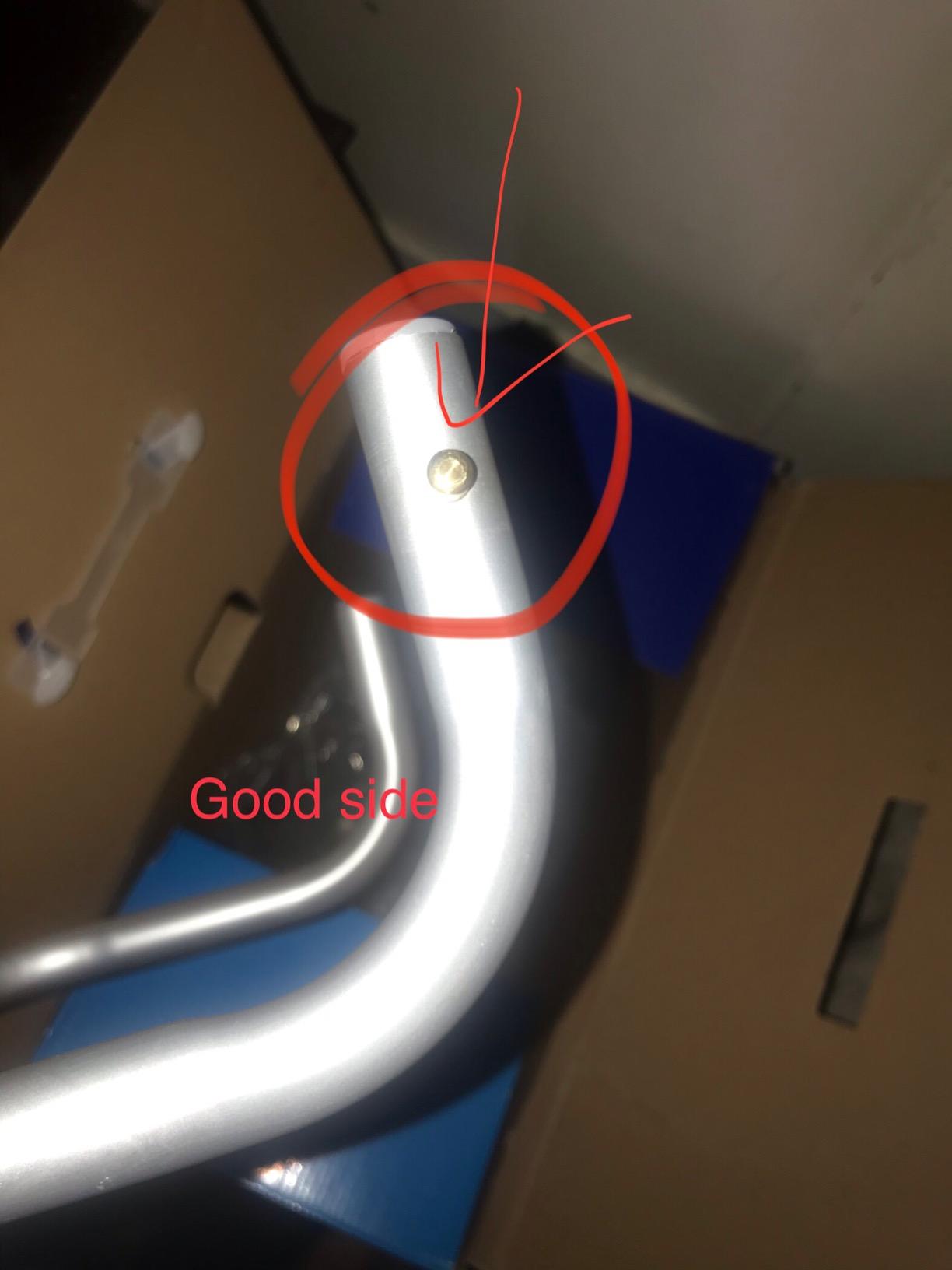
Owners also mention that a brass pin inside the leg tube can dislodge during assembly, and that the suction cups resist popping off when you move the bench. Break them free deliberately rather than dragging the frame.
11. VEVOR Sliding Transfer Bench with 360 Degree Swivel Seat
VEVOR Sliding Tub Transfer Bench with 360 Degree Swivel Seat, Sliding Shower Chair with Pivoting Armrest & Padded Seat and Safety Belt, Height Adjustable Bath Chair for Elderly Disabled, 330LBS
330 lb capacity
20.9-27.6 in seat height
360 degree swivel seat
1.9 inch PU padding
Pros
- 40.9 inch frame span suits wide tubs without legs falling short
- 20.9-27.6 in range serves taller users
- Padded waterproof seat wipes clean
- Pivoting armrests lock for transfers
- Waist belt and shower head holder included
Cons
- 330 lb capacity is below the 400 lb common elsewhere
- Very long and wide so it dominates a bathroom
- Heaviest at 16.8 lb so repositioning takes effort
- Solid padded seat has no cut out
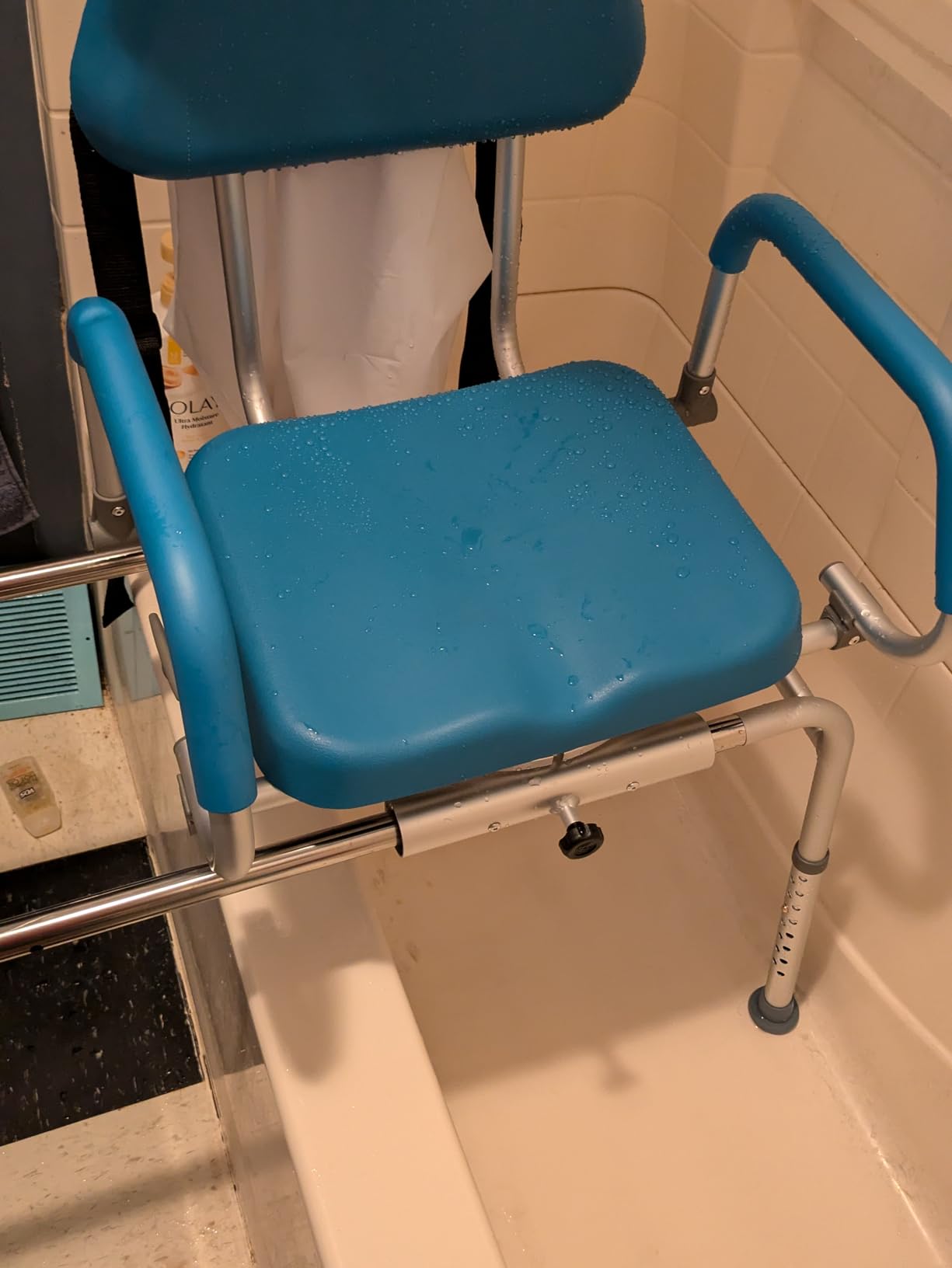
Two numbers make this the most interesting pick for an unusual bathroom. The 40.9 inch frame span covers tubs that shorter benches cannot bridge, and the 20.9 to 27.6 inch height range across 15 levels is the tallest we found, which is what a deep or extra-tall tub actually requires.
Few competitors address deep tubs at all, and this is the closest we found to a bench built for one. The sliding carriage and 360 degree swivel seat mean the user does not have to scoot at all, which matters more the deeper the tub is.
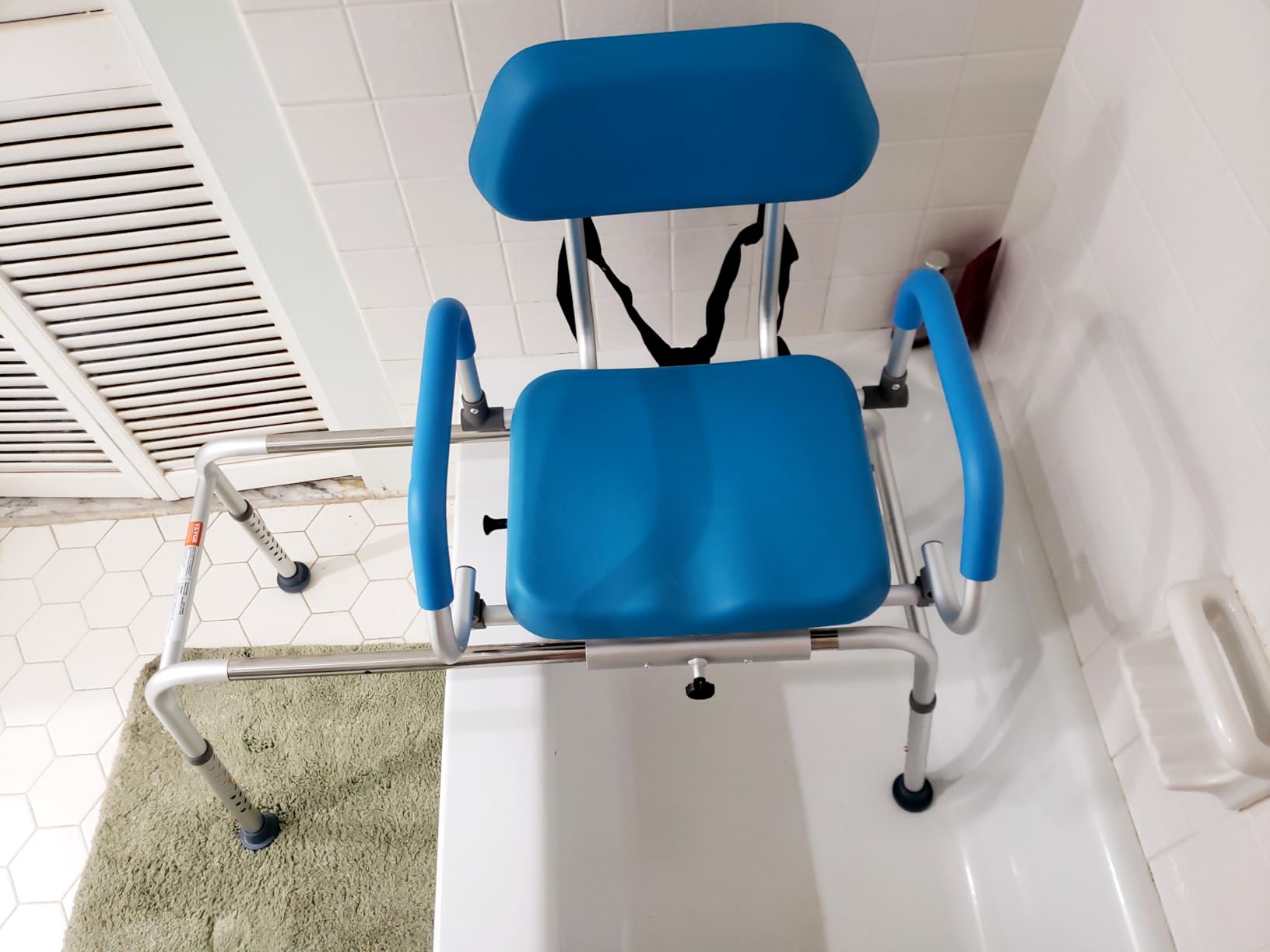
The seat has 1.9 inches of waterproof PU cushioning with a matching padded backrest, and it wipes clean. Pivoting armrests raise, lower, and lock, so they can be moved out of the way for a transfer and then set for the seated position.
A waist safety belt and a shower head holder are included, and the frame uses aluminum alloy with SUS304 stainless hardware. Assembly is quick-screw rather than tool-free, with instructions reviewers describe as clear.
Capacity is the compromise
The rating is 330 lb, which is below the 400 lb standard across most of this list. If the user is a larger-framed adult, this is not the right bench despite the height range, and a fixed high-range model is the safer purchase.
There is no perineal cut out in the padded seat, so seated washing is harder than on a cut-out design.
Plan for the footprint
At 40.9 inches long and 16.8 lb, this is the largest and heaviest bench in the group. It works well in a long bathroom with an alcove tub, and poorly in a small one where the toilet is close to the tub.
Because it is heavy, expect to reposition it rarely rather than daily. A permanent placement near the tub is usually the more realistic approach.
12. Medline Padded Transfer Bench with Side Arm
Medline Padded Transfer Bench for Bathtub and Shower, Height Adjustable, Slip-Resistant Legs, Rust-Resistant, Side Arm & Back Rest for Extra Support, 400 lb. Weight Capacity, Tool-Free Assembly
400 lb capacity
Padded seat and backrest
18-22 in seat height
Side arm
Pros
- Padded seat and back are far more comfortable than hard plastic
- Push-button assembly takes a few minutes
- Each leg adjusts individually for uneven surrounds
- Reversible padded backrest fits either orientation
- Side arm gives a solid grip standing up
Cons
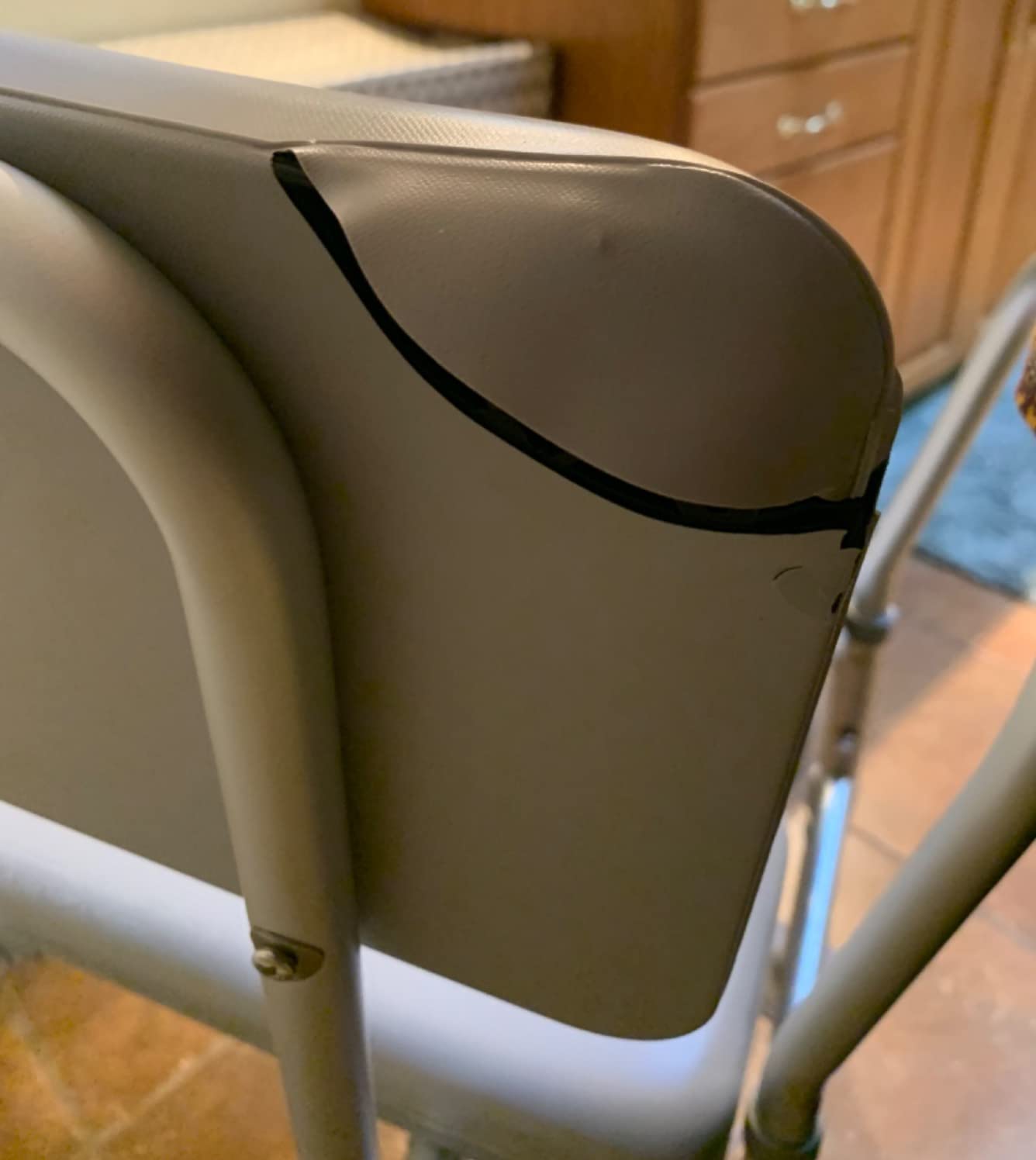
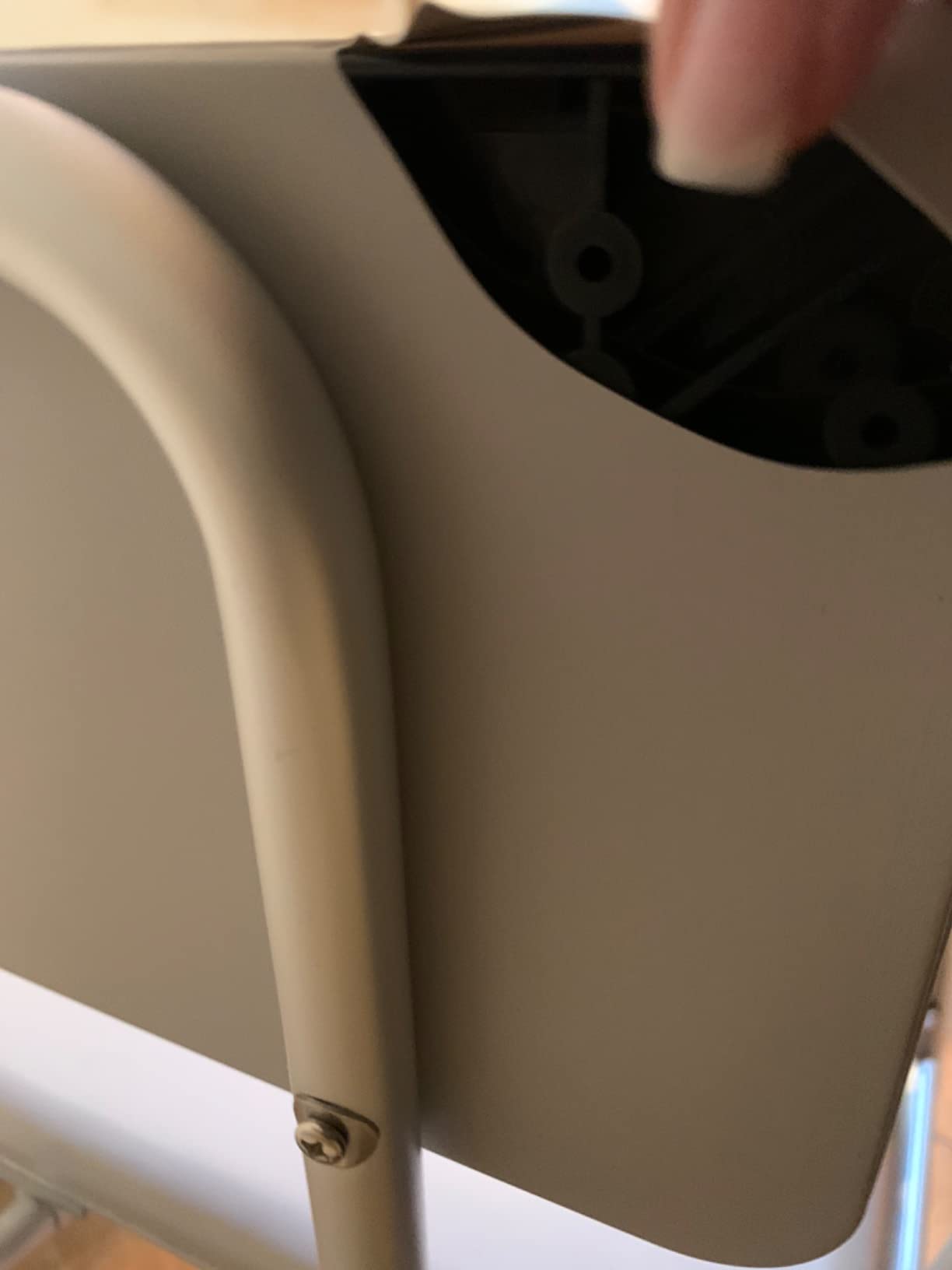
- Padding is thinner than the listing implies
- Instructions could be clearer
- Tight fit between the toilet and the tub
- Seat extension interferes with the shower curtain
This is the bench to consider if bathing is a daily event rather than a weekly one. The padded seat and padded backrest make a real difference over a twenty-minute shower, and they reduce the friction irritation that owners of hard plastic seats complain about after long sessions.
Everything else follows the familiar Medline pattern that works well: 400 lb capacity, push-button height adjustment from 18 to 22 inches, individually adjusting legs, a reversible backrest, and a side arm for leverage when standing.
Wide suction cup feet sit inside the tub and slip-resistant tips handle the bathroom floor. At 12 lb the frame is portable enough for a caregiver to reposition, and the 24 inch seat width is narrower than some rivals.
Owners with elderly parents or recovering family members point to the padded seat, the individual leg adjustment, and the reversible backrest as the three features that made the bench work in a real bathroom rather than just in a catalogue.
Expect modest padding
One reviewer reports that the cushioning is thinner than the listing implies, and that is worth knowing before you buy on comfort alone. It is a genuine improvement over a hard seat, not a thick hospital-grade cushion.
For very long baths or for skin that is fragile, a folded towel over the seat works surprisingly well and costs nothing.
Footprint and curtain
The frame is 32 inches wide and the seat extension makes it difficult to keep the shower curtain inside the tub, so plan on trimming the liner or using a separate splash guard.
Users in tight bathrooms report a snug fit between the toilet and the tub. Measure that gap before ordering, because it is the most common reason a bench like this gets returned.
What to Measure Before You Buy a Transfer Bench
Measurements prevent nearly every complaint we read. Take five numbers, write them down, and compare them against the specification list for the bench you are considering rather than against a photo.
1. Tub wall height. Measure from the bathroom floor to the top of the tub wall, and again from the tub floor to the top of the wall. You need both, because the two bench legs on the tub side stand on the tub floor while the two outside legs stand on the bathroom floor. If the difference between those two surfaces exceeds what the legs can span, the bench will not level.
2. Tub interior width at its widest point. Measure inside the tub wall at the top and at the tub floor, since sloped tubs are narrower at the bottom. The in-tub legs need room to land on flat floor, not on a slope.
3. Clear floor space outside the tub. Measure from the tub wall outward to the toilet, vanity, or opposite wall. This is the number that rules out more benches than any other, and it is why 32 inches of required clearance should be checked before you order anything that lists it.
4. Ceiling and faucet clearance. A tall frame or a high backrest needs vertical room, and a faucet on the wall can sit exactly where the backrest needs to go. Measure the distance from the wall to the faucet before committing.
5. User dimensions. Record the user’s height, weight, and side of weakness. Height tells you whether the seat range works, weight tells you which capacity rating you need, and side of weakness tells you whether one-sided controls are a problem.
On capacity, leave a real margin. A bench rated exactly at the user’s weight leaves nothing for a wet body, a caregiver sitting on the edge to help, or a heavier week. Two hundred pounds of margin is a more comfortable place to be than zero.
On fit, note that most benches in this group can be oriented for either tub side, but the controls on swivel and sliding models do not move with the seat. If the user’s weaker side is the right, that is a decisive detail.
How to Set Up and Use a Transfer Bench Safely
A transfer bench is only as safe as its setup, and caregiver groups report the same mistake repeatedly: the in-tub legs need to stand on the tub floor, not resting against the tub wall, and the seat needs to be genuinely level before anyone sits on it.
Positioning. Set the bench before the user is in the bathroom, not during the transfer. Center it on the widest part of the tub, run the curtain or liner through any channel, and trim the liner below the seat line so it cannot drag on the frame.
Level it. Extend each leg independently until all four feet are in firm contact and the seat is level. Then press the suction cups down firmly on the tub floor if the model has them. A bench that rocks under a hand pushed on the seat is not level.
Getting in, seated the whole time. Sit on the dry side with both feet on the floor. Push down through your arms to lower yourself rather than dropping. Lift one leg at a time over the wall and place that foot flat on the tub floor, then the other. Scoot or slide across, reposition your feet under the seat, and lower yourself into the bath. Never try to stand up and step over in one movement.
Getting out. Reverse the sequence exactly. Move forward to the edge of the seat, lift one leg at a time back over the wall and place that foot on the bathroom floor, then the other, then scoot to the front edge and stand using the seat and any arm rest for leverage.
Before each bath. Check the seat for soap residue, confirm the frame is still in the same level position, clear any water on the floor, and make sure the handheld showerhead and any other essentials are within reach from the seated position. A separate grab bar mounted on the wall is a sensible addition, though it is a different product from the bench itself.
A few habits reduce the risk further. Avoid resting the in-tub legs against the sloped wall of the tub, since that produces a sideways load the frame is not designed to carry. Rinse and dry the legs after the last bath of the day to slow corrosion at internal fittings. And if the user starts hesitating at the doorway, gripping the frame harder than usual, or asking to postpone, that is a signal to reassess the setup or speak with an occupational therapist rather than pushing through.
For users who find a bench in the bathroom limiting altogether, replacing the tub with a walk-in model removes the wall to step over entirely. Our walk-in tub guide covers that option, and it is worth comparing against the ongoing effort of a bench before committing.
Frequently Asked Questions
What is the best bath bench?
For a standard-height tub, the Carex bench we named our top pick is the strongest all-round choice because it reverses for either tub orientation and levels one leg at a time. If the user is over 300 lb, choose a 400 lb model such as the Medline heavy-duty bench. If scooting across a fixed seat is not realistic, a sliding and swivel design like the Platinum Health carousel reduces the effort involved.
What is a transfer bench used for?
A tub transfer bench is used to get into and out of a bathtub while staying seated the entire time. It spans the tub wall with legs on the bathroom floor and legs inside the tub, so the user sits on the dry side, lifts each leg over the wall, places the feet flat on the tub floor, and scoots across. It removes the step-over, which is the highest-risk moment of bathing.
Can you use a transfer bench in the shower?
Most of the benches in this roundup work in a shower as well as a tub, which is why several of them are sold as a tub transfer bench and shower chair in one. The difference is that inside a shower stall the bench usually sits entirely on the shower floor rather than spanning a wall. A sliding model gives you more reach inside a stall, where space is tight.
How many pounds can a shower bench hold?
Capacity across this group ranges from 300 lb to 400 lb, with 400 lb being the most common rating. Leave a margin above the user’s body weight rather than matching the rating exactly, since a wet body and a caregiver sitting on the edge both add load. For anyone over 300 lb, a 400 lb rated model is the minimum worth considering.
Does Medicare cover a tub bench?
Original Medicare generally does not cover a tub transfer bench as a standard benefit, because it is not considered a covered item in the way a walker or wheelchair can be. A health savings account or flexible spending account is the most common way families pay for one, and many of the benches here are marked eligible. Medicaid waiver programs and Medicare Advantage home-safety benefits vary by plan, so check with your specific provider before assuming.
How do I stop a transfer bench from sliding?
Start with the feet. Press the in-tub suction cups down firmly on a wet tub floor and clean any soap residue off them first, because a film of soap prevents the seal. Then extend each leg so all four feet are in firm contact and the seat is level. A bench that rocks when you push on the seat has not been set up correctly, and that is the most common cause of a bench shifting during a transfer.
How do I cut the shower curtain for a tub transfer bench?
Measure from the seat line down and cut the liner only, not the outer decorative curtain. Leave the liner a couple of inches long so it tucks behind rather than drags on the frame. Some people route the liner through curtain channel bars where the bench has them, which keeps water inside the tub instead of on the bathroom floor. A shower curtain with a weighted hem helps it fall back inside the tub rather than across the bench.
The Best Transfer Bench for Your Tub
The best transfer benches for tubs are the Carex bench for most households, the Medline heavy-duty model for users over 300 lb or anyone who wants a padded seat for daily bathing, and the Platinum Health carousel when scooting is not realistic. Whichever you choose, measure the tub wall height and the clear floor space outside the tub before ordering, and level all four feet before the first use.