
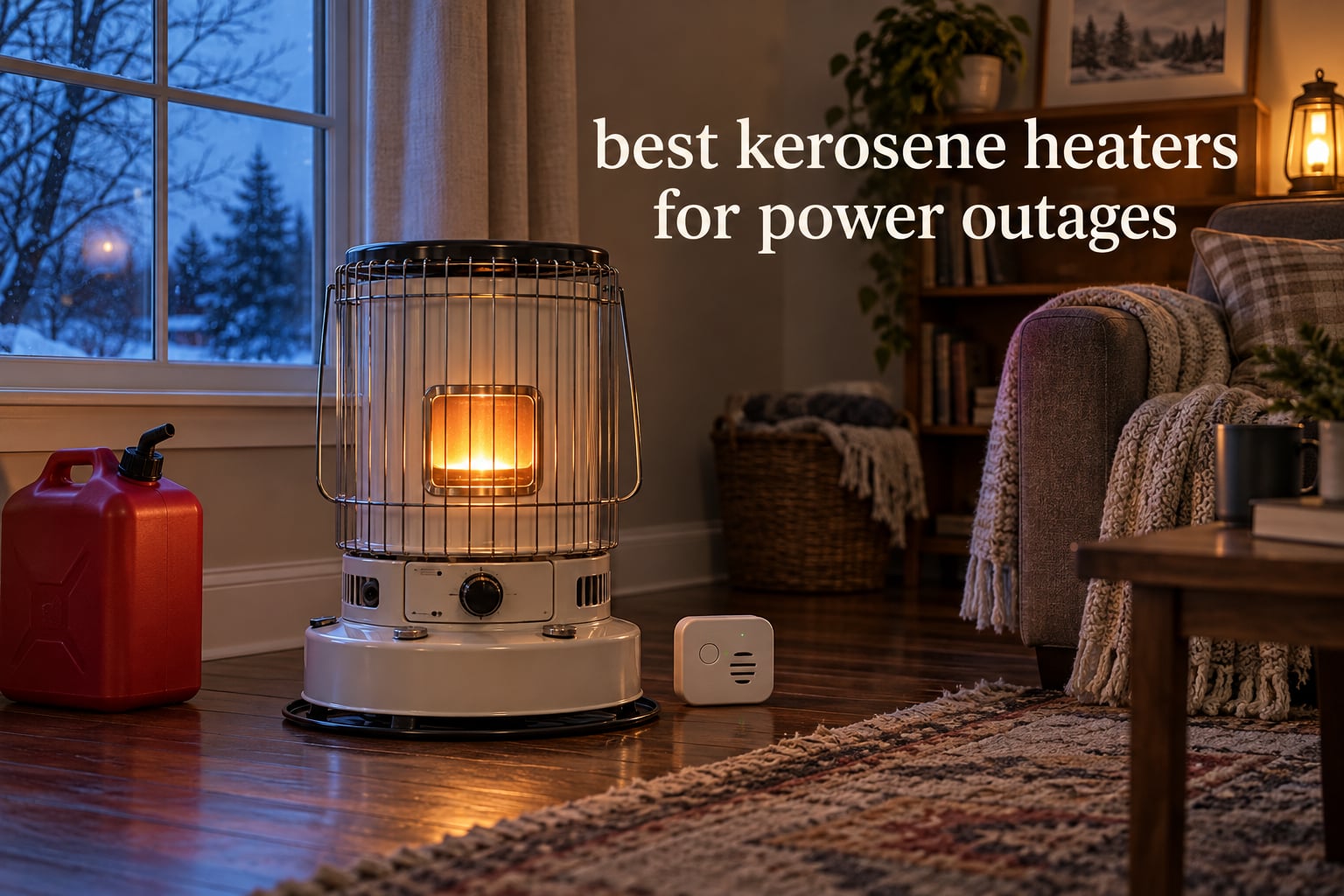
When the grid goes down in winter, the best heater to use during a power outage is a fuel-burning one, because it keeps working when the electricity does not. Our top pick, the Sengoku HeatMate HMN-110, runs for up to 14 hours on a removable 1.2-gallon tank and lights with a push button, so it needs no wall power and no matches.
We spent weeks reading owner reviews, comparing burn rates, tank sizes and safety shutoffs across 10 models, and mapping each one to the outage job it actually does well: heating a bedroom for eight hours, warming a closed-up living room, or keeping a garage above freezing so pipes do not split. That mapping matters more than raw BTU, because a 140,000 BTU torpedo heater in a 10 by 12 foot room is a ventilation problem, not a heating solution.
A few things came out of the research that no roundup we read mentions. Forum owners almost universally treat these heaters as emergency equipment, not primary heat, and the most common complaint is odor at startup and shutdown rather than performance. Fuel availability is a genuine headache in some regions, and hardware store kerosene can cost more per BTU than propane, which flips the usual assumption. We dig into both in the fuel and propane sections below.
Before anything else: an unvented kerosene heater produces carbon monoxide. Run it only in a room with a working battery-backed CO detector, keep a window cracked, and never run one in a sleeping room with the door closed. If a heater is not listed for indoor use, do not bring it inside, no matter how cold it is. Our camping lantern guide for power outages covers the lighting side of the same kit.
Table of Contents
Top 3 Kerosene Heaters for Power Outages

Three heaters stand out. The HeatMate is the one we would grab first because a full tank carries through most of a night without a refill and the tank lifts out for filling. The Mr. Heater F270270 is the strongest choice when the outage area is a large open space rather than a bedroom. The Kero World KW-24J sits between them, and its built-in glow doubles as a light source when the power is off.
All 10 Kerosene Heaters Compared in 2026
| Product | Specifications | Action |
|---|---|---|
| Sengoku HeatMate HMN-110 10000 BTU Cordless |
|
Check Latest Price |
| Mr. Heater 75000 BTU Forced Air |
|
Check Latest Price |
 Kero World Comfort Glow KW-24J 23800 BTU Kero World Comfort Glow KW-24J 23800 BTU |
|
Check Latest Price |
 Kero World KW-11G 10000 BTU Radiant Kero World KW-11G 10000 BTU Radiant |
|
Check Latest Price |
 vnekjse 6L Portable Kerosene Heater vnekjse 6L Portable Kerosene Heater |
|
Check Latest Price |
 Dura Heat DFA135C 135000 BTU Forced Air Dura Heat DFA135C 135000 BTU Forced Air |
|
Check Latest Price |
 Dyna-Glo WK95C8 23800 BTU Convection Dyna-Glo WK95C8 23800 BTU Convection |
|
Check Latest Price |
 AHUAWA 10000 BTU Kerosene Heater AHUAWA 10000 BTU Kerosene Heater |
|
Check Latest Price |
 InoKraft 140000 BTU Forced Air InoKraft 140000 BTU Forced Air |
|
Check Latest Price |
 InoKraft 80000 BTU Forced Air InoKraft 80000 BTU Forced Air |
|
Check Latest Price |
Two columns in that table deserve a second look. First, runtime: the small pedestal heaters advertise 14 to 21 hours because they sip fuel slowly, while the large forced-air burners give you 8 to 11 hours on much bigger tanks. Second, ignition: every model here starts without a wall outlet, though the two InoKraft blowers use a 5 foot power cord for their control panel, so plan for that.
1. Sengoku HeatMate HMN-110 10000 BTU Cordless Kerosene Heater
Sengoku HeatMate Portable Kerosene Heater, 10,000 BTU, Cordless, White
10000 BTU
1.2 gal removable tank
Up to 14 hours
Push-button start, no electricity
Pros
- Longest proven tank life in a compact body
- Removable tank you fill without moving the heater
- Push-button ignition with no matches or power
- Light at 22.5 lb for a kerosene heater
- Automatic shut-off plus tip-over switch
Cons
- Auto-light gets unreliable as the wick ages
- Faint kerosene smell at startup and shutdown
- Wick needs periodic resin cleaning or replacement
- Factory wick quality is average
This is the heater I would put in a bedroom during a two-night outage. At 10,000 BTU it is rated for rooms around 380 square feet, which lines up with a normal bedroom plus a small home office, and the tall chimney column sends both radiant and convective heat into the room rather than at one wall.
The 1.2-gallon tank is the part that wins during a blackout. Because it lifts out, you refill it in the kitchen or the garage instead of carrying a 22.5 pound heater to the fuel can, and owners report getting close to the advertised 11 to 14 hours of burn on a fill.
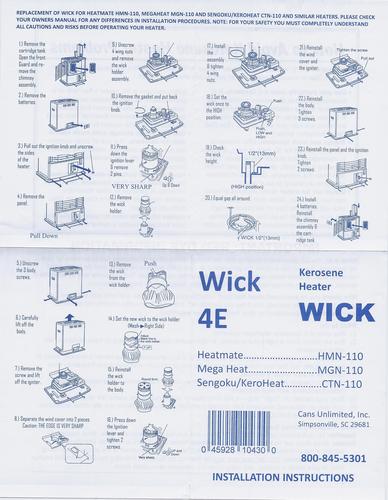
Ignition deserves attention because it is the defining feature of an outage heater. The push-button start fires the wick without matches and without a wall outlet, so it works the moment the grid drops. It is not flawless forever, though: several owners report the auto-light failing once the wick ages, and a few simply hand-light the unit with a match.
Expect a faint kerosene odor for the first few minutes of a cold start and again at shutdown. Owners get around it the same way: set the heater just outside a cracked door or window during warm-up and cooldown, so the smell stays out of the sleeping area.
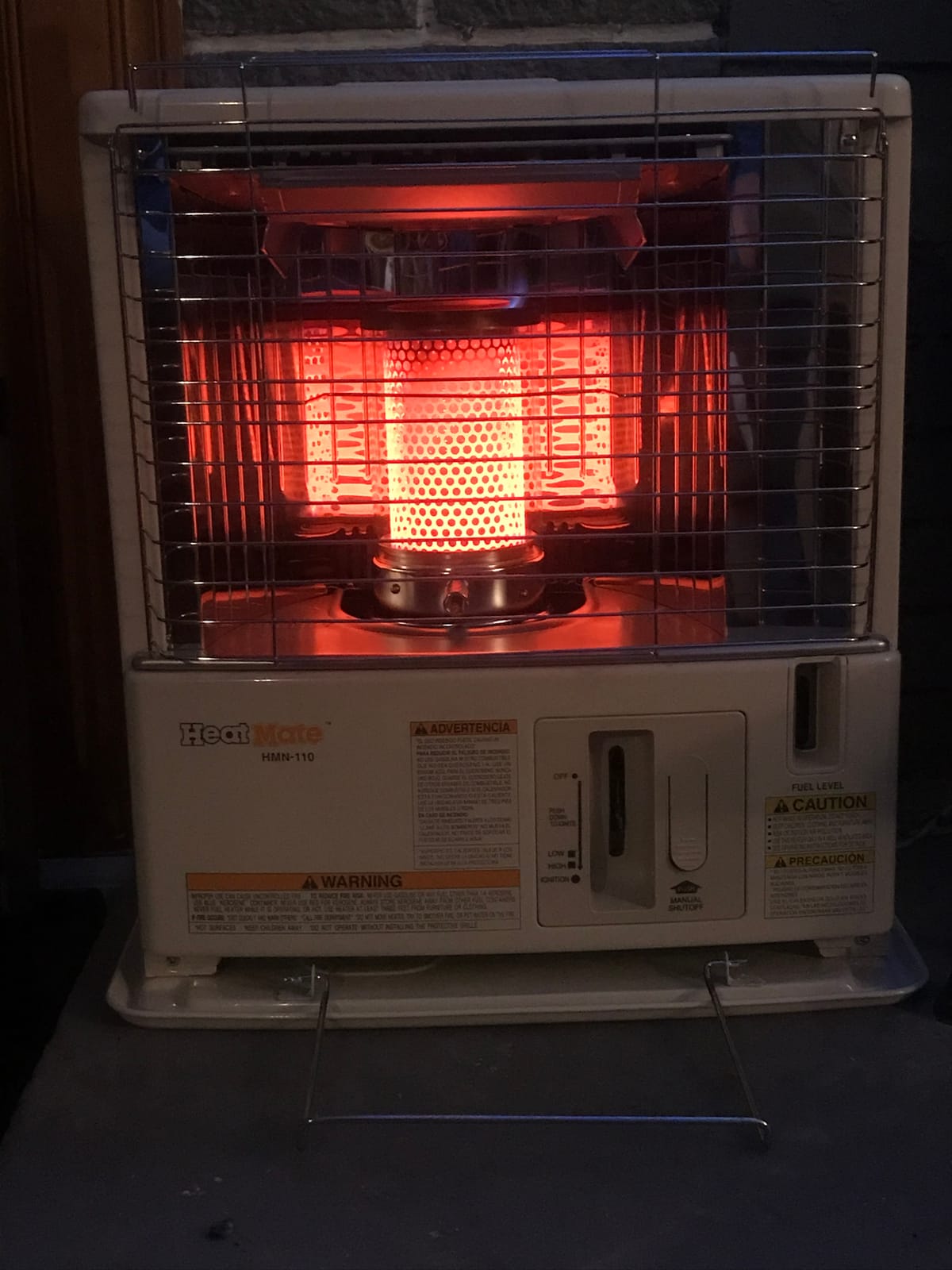
What a full tank gets you overnight
At roughly 12 hours of continuous burn, one fill covers a typical night without a refuel, and the fuel gauge on the tank tells you how much is left without pulling the unit apart. For a three-night outage you want two full tanks on hand plus whatever the tank holds, and the removable design makes that a five-minute job rather than a chore.
Where it falls short in a real outage
Ten thousand BTU will not carry an open-plan living space through a cold snap. Owners also mention that the wick collects resin over a season of use and needs cleaning or swapping, so keep a spare wick on the shelf with your fuel. If your plan depends on heating more than one room, size up to a convection model instead.
2. Mr. Heater 75,000 BTU Forced Air Kerosene Heater
Mr. Heater 75,000 BTU Forced Air Kerosene Heater
75,000 BTU forced air
Covers 1,750 sq ft
About 11 hours per tank
Built-in thermostat and fuel gauge
Pros
- Even
- fast forced-air warmth from a rugged steel cabinet
- Handles open living areas and workshops
- Built-in thermostat and fuel gauge with LED diagnostics
- Economical at about 11 hours per full tank
Cons
- Fixed output with no variable fan speed control
- Heavy and bulky at 37.9 pounds
- Needs ventilation in enclosed spaces
The 75,000 BTU rating is the headline, but the useful number is the 1,750 square feet of coverage. That makes it the pick for heating a large open room, a finished basement, or a shop bay during an outage, where a 10,000 BTU wick heater would be spinning its wheels for hours.
This is a blower, not a radiant heater. Owners describe the fan delivering strong, even warmth rather than a hot spot, and about 11 hours of runtime per tank means one fill reaches through a long evening in a space of that size.
Controls that matter when the lights are out
The lighted on/off switch, built-in thermostat, fuel gauge and six-function LED diagnostics are exactly the features you want at midnight with a flashlight in your hand. You can see how much fuel is left and whether the burner is healthy without opening the cabinet or guessing.
Why we would not run it in a bedroom
At 37.9 pounds it is not a heater you reposition easily, and the output is fixed with no variable fan speed, so you control comfort only through the thermostat. Reviewers also flag combustion fumes in enclosed rooms. Keep it in a space with real volume, and pair it with the CO detector rather than trusting the diagnostics alone.
3. Kero World Comfort Glow KW-24J 23,800 BTU Convection Heater
Comfort Glow Indoor Kerosene Convection Heater, 23,800 BTUs, Grey – KW-24J
23,800 BTU convection
Covers 1,000 sq ft
1.9 gal tank, 12 hours
Battery ignition, glow lighting
Pros
- 360-degree convection heat for large open areas
- About 12 hours and roughly a gallon per 16 hours
- Quiet operation
- Works as a light source during outages
- Carry handle included
Cons
- Battery igniter unreliable for some owners
- Some units fail to restart after weeks of storage
- Convection heat forms hotspots until air circulates
- About 34 lb filled is heavy to lift
The KW-24J is the sweet spot in this list: 23,800 BTU, a 1.9-gallon tank with a built-in fuel gauge, and up to 12 hours of run time in a unit rated for 1,000 square feet. Owners describe it heating an entire main floor, an attached garage, or a workshop without the blast of a torpedo blower.
That glow is the feature no competitor roundup mentions. When the power is out, the burner window acts as a lantern, which matters more than it sounds at 6 a.m. when you need to find the fuel can and the phone charger.
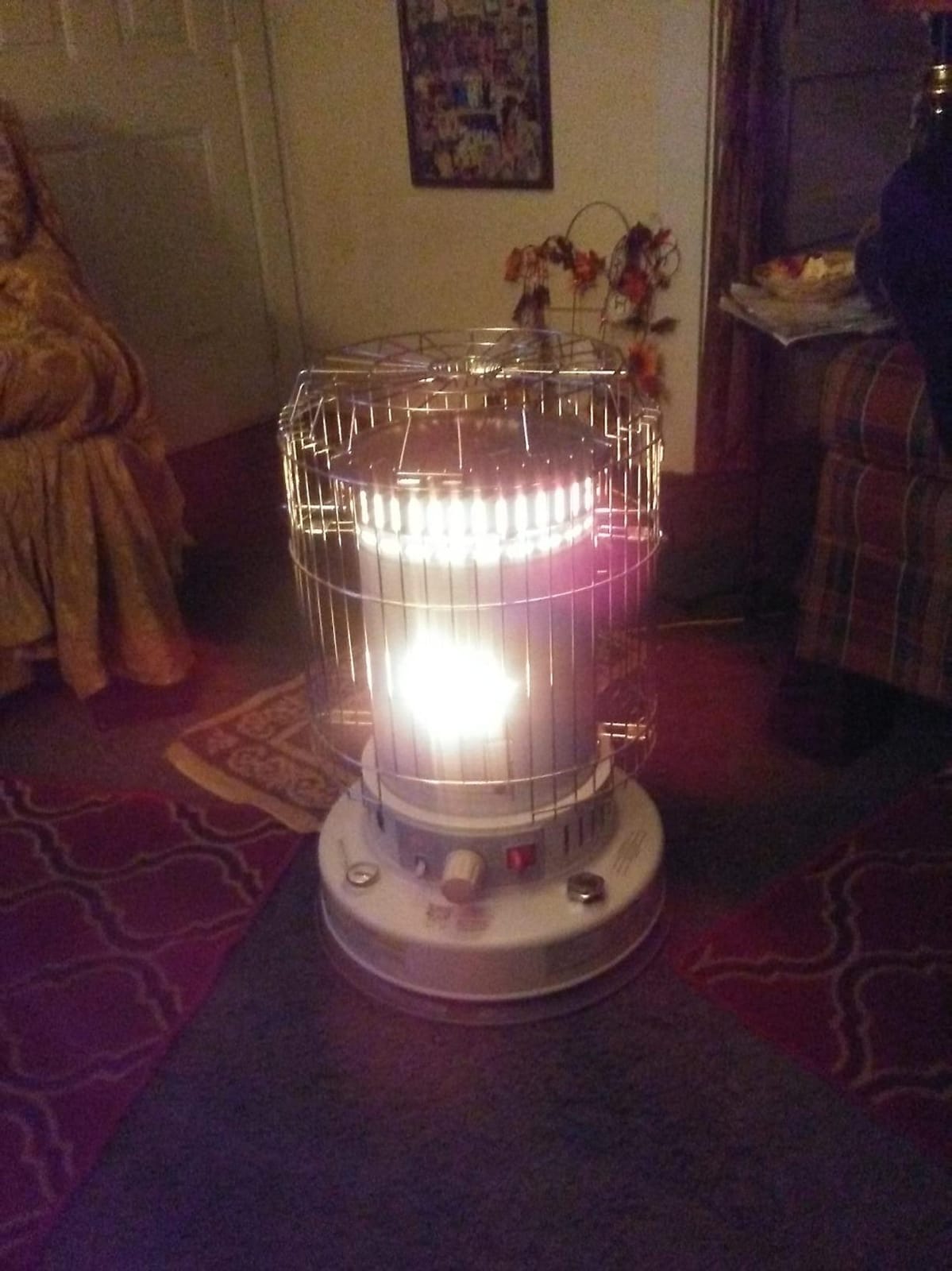
The no-lift burner system is what keeps the odor down. It is the most frequently praised detail in reviews, and several owners note the unit burns a gallon roughly every 16 hours, which is easy to budget for across a long outage.
Reliability is the one seam. Some owners report the automatic igniter failing or the unit refusing to restart after sitting unused for weeks or months, and match lighting works consistently for them. Test the igniter before the storm, not during it, and keep matches in the same bag as the heater.
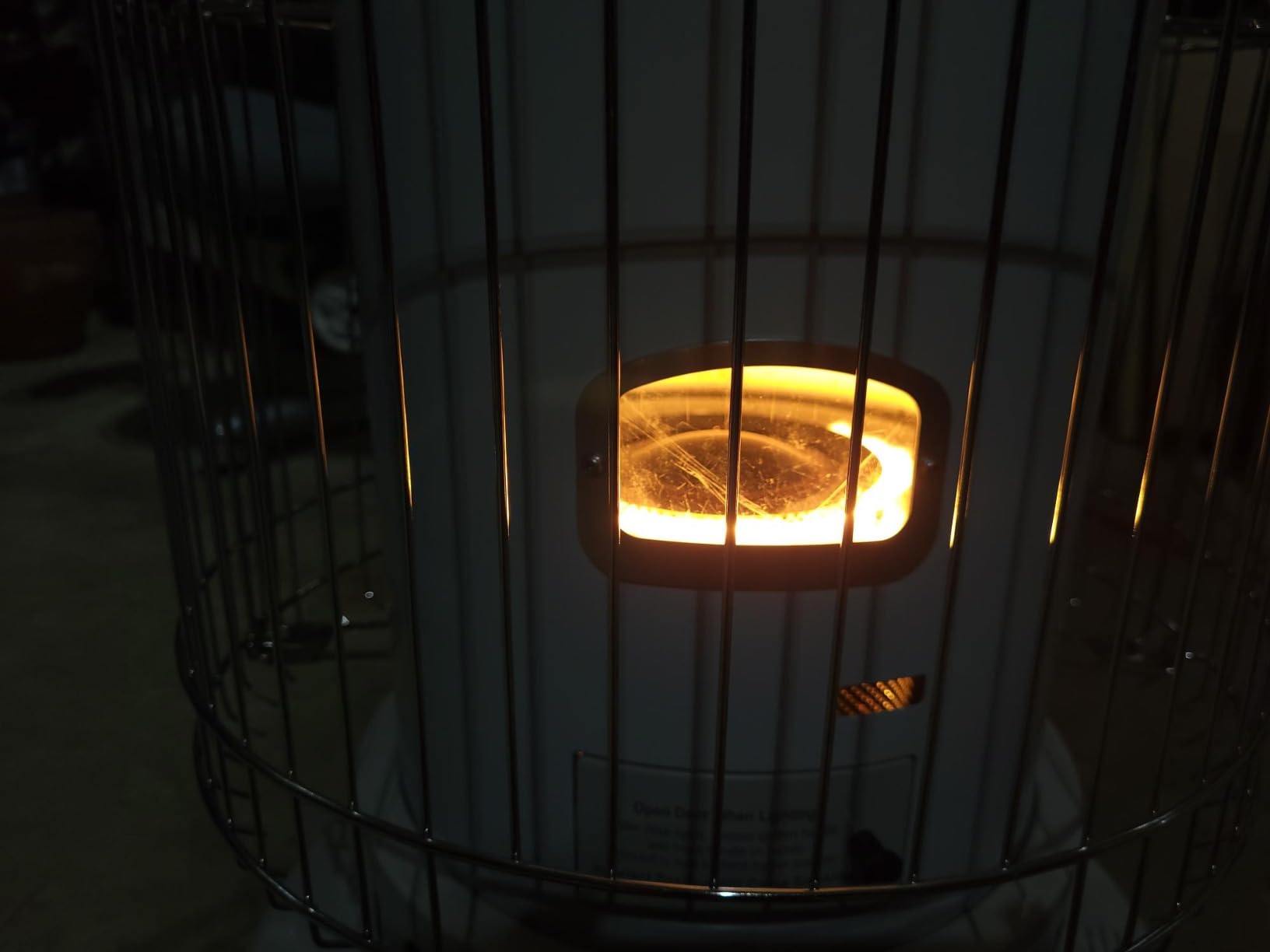
Running cost and fuel planning
At about a gallon per 16 hours, a three-night outage on moderate setting works out to roughly 1.5 gallons for this class of heater. That is where kerosene genuinely beats propane, and it is worth knowing before you buy a large propane inventory. The catch is fuel price, which we cover in the propane section.
Circulation is the real weakness
Convection heat pools, so a closed-off bedroom stays cold even when the living room is comfortable. Owners work around it by running the heater near a doorway or hall opening. And at about 34 pounds when fueled, this is a two-person lift in an emergency, so decide where it lives before the outage rather than after.
4. Kero World KW-11G 10,000 BTU Radiant Wick Heater
Kero World 10,000 BTU Kerosene Wick Heater with Glass Burner System, Sure-Seat Chimney System, and Removable 1.1 Gallon Fuel Tank, Gray
10,000 BTU radiant
450 sq ft coverage
1.1 gal removable tank,14 hours
Glass burner with Sure-Seat chimney
Pros
- Clean
- efficient radiant heat across a large open area
- Removable 1.1 gallon tank simplifies refilling
- Shuts off safely on tip-over
- 2-year manufacturer warranty on defects
Cons
- Wick wears out and needs periodic cleaning or replacing
- Noticeable kerosene odor on lighting and shutdown
- Some units arrive with a bent guard from shipping
Radiant heat is a different experience from convection. The KW-11G sends infrared warmth straight at whoever is sitting near it, which is why reviewers describe it as the most comfortable pick for a sofa, a bedside, or a dining table during an evening outage.
The glass burner and Sure-Seat chimney system are what produce the clean, steady radiant output. Rated for 450 square feet, it handles a living room, a small bedroom, or a drafty hallway corner without pushing a large unit into a space that is too small for it.
Why the removable tank matters in a blackout
The 1.1-gallon tank lifts out, so refilling happens wherever your fuel cans are stored, not in the room you are heating. Owners report using it as supplemental heat and watching their fuel use stay modest over a long evening, and the tip-over switch plus automatic shut-off give you two independent ways to shut it down fast.
The wick is the part you will maintain
Every wick heater needs attention eventually, and this one is no exception. Owners report replacing or cleaning the wick as it ages, and they all mention the startup and shutdown odor, which is sharpest when the unit is cold. Burn it off outside a door for the first ten minutes of each use, and buy a spare wick while parts are easy to find.
5. vnekjse 6L Portable Kerosene Heater for Camping and Emergency Use
Kerosene Heater, Kerosene Heaters for Indoor Use, Portable Heater for Camping, Kerosene Stove Non Electric Heaters for Outdoor, Emergency Oil Heater for Heating, Garage, Cooking(6L, Red)
9,000 BTU
6 liter tank, 0.2 L per hour
10 to 12 hour runtime
Sealed cap, safety grills, tip-over
Pros
- Delivers more heat than the low price suggests
- 10 to 12 hours per 6L fill with a fuel gauge
- Burns cleanly once the flame is adjusted
- Light at 10.7 pounds and doubles as a cooking top
Cons
- Match lighting only
- no push-button ignition
- Takes 15 to 30 minutes to reach full heat
- No automatic wick lowering on tip-over
- No wick position indicator and thin instructions
This is the budget entry, and owners keep reporting that it heats far more space than the spec sheet suggests, with several people using it in two-car garages and homes up to around 1,100 square feet. Rated at 9,000 BTU with a claimed 215 to 323 square feet, treat the higher claims as your own test results.
The 6-liter tank burns at 0.2 liters per hour, which works out to 10 to 12 hours of runtime on a full fill, and the real-time fuel gauge is genuinely useful when the lights are out.
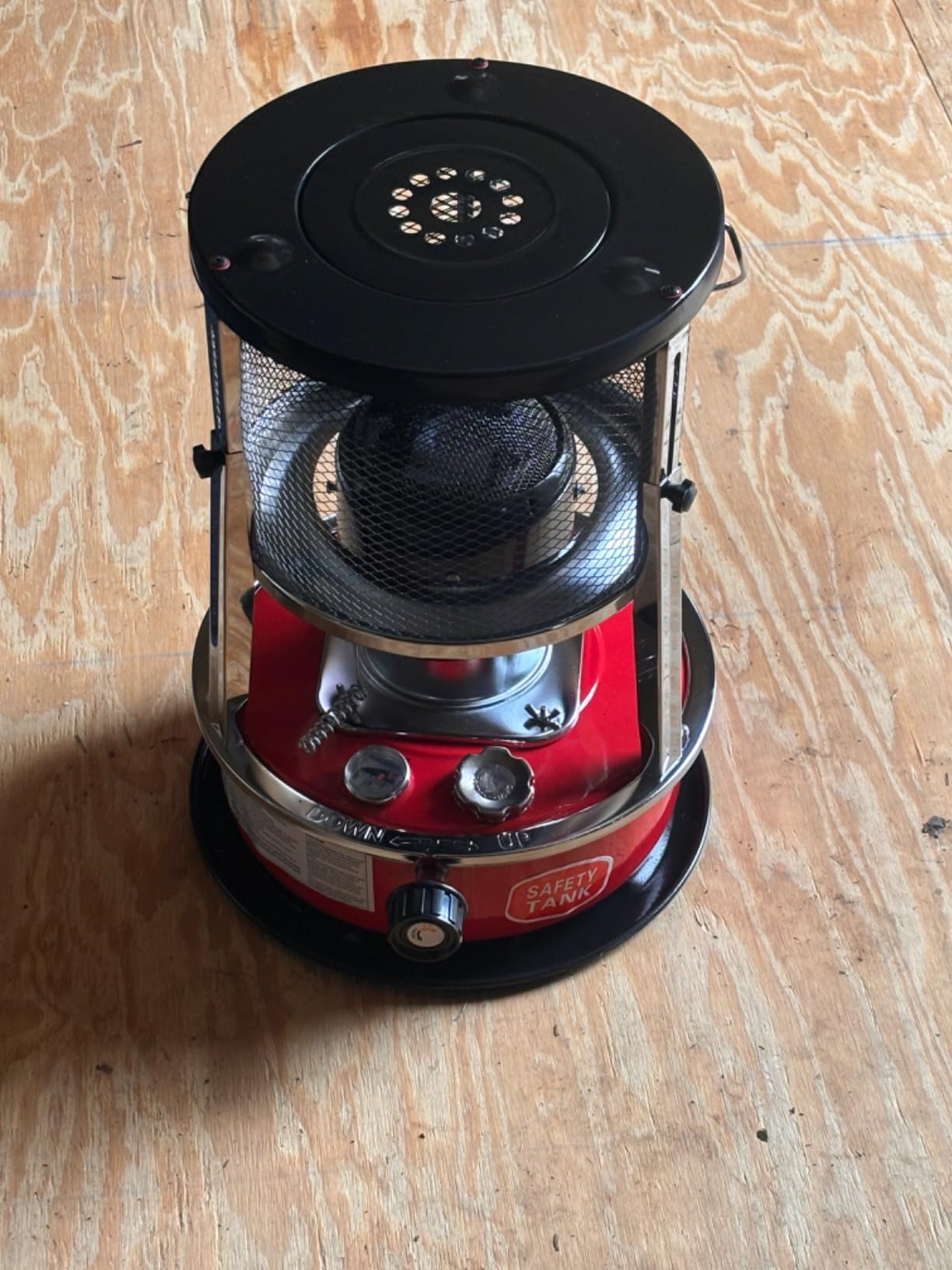
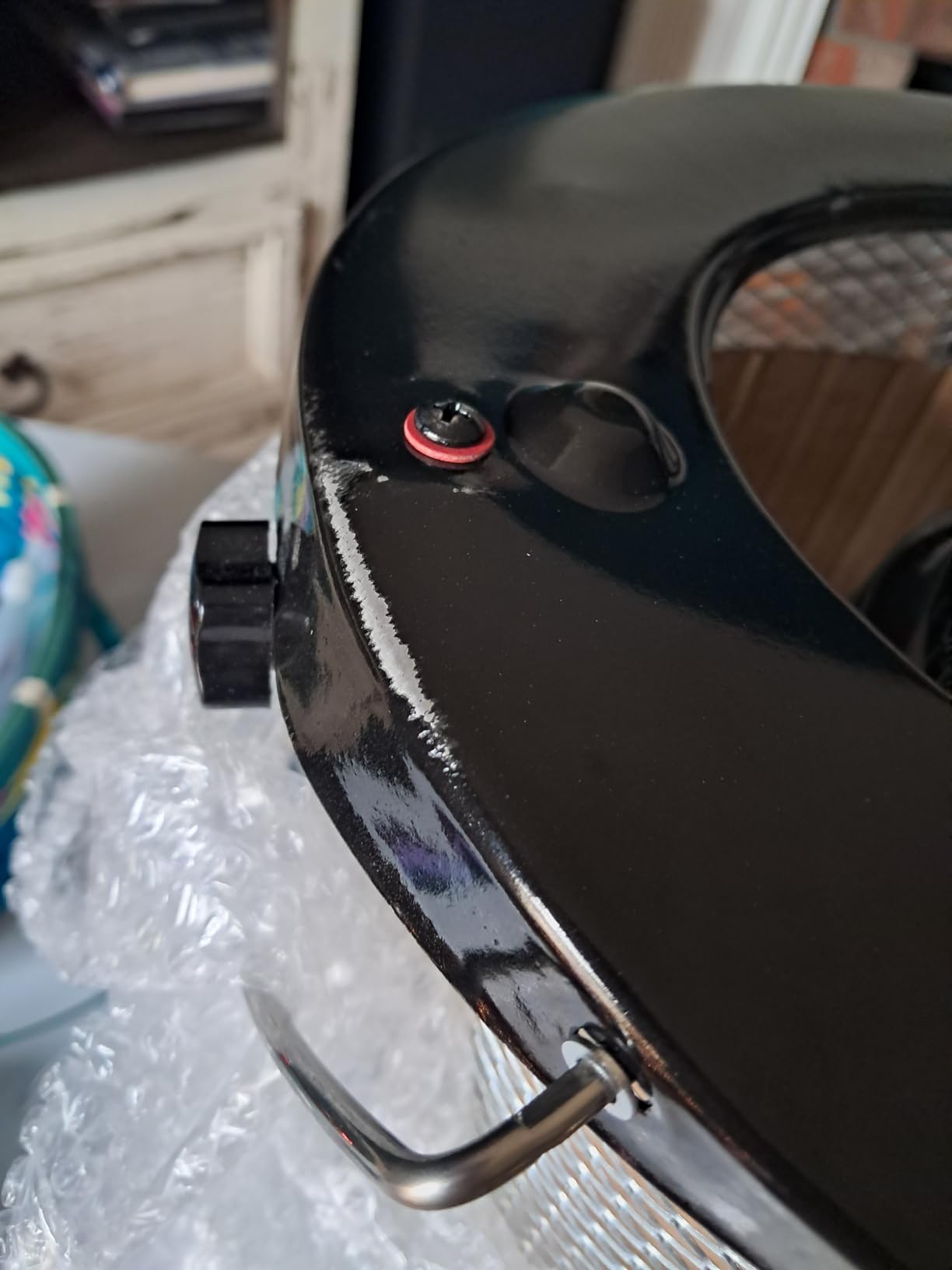
Be honest about the ignition. It is match or lighter, and there is no automatic wick lowering on tip-over, so the switch does not cut the flame the way a modern safety shutoff does. Some owners prefer that manual control, but if the heater lives near children or a sleeping pet, the safety layer matters.
The adjustment period is the other real quirk. It takes 15 to 30 minutes to reach full heat, and the flame knob needs turning as it warms. One owner who measured the room in a garage reported zero CO readings once the flame was set properly, which is the setup you want.
Best use during an outage
The removable enamel top turns it into a cooking surface, so this doubles as a heat source for boiling water or cooking when the stove and microwave are both dark. That makes it a natural fit for a garage, a shed, a hunting cabin, or a warming spot near where the family is already sitting.
What to check before you rely on it
Because there is no wick position indicator, the flame can flare if you walk away during the warm-up period. Sit with it for the first 30 minutes, set the flame, then move on. The startup odor indoors is noticeable, and the instructions are thin, so plan a short practice run before the storm.
6. Dura Heat DFA135C 135,000 BTU Forced Air Kerosene Heater
Dura Heat DFA135C 135K BTU Kero Forced Air Heater with Thermostat
135,000 BTU forced air
Covers 2,900 sq ft
Multi-fuel burner
LED diagnostics and thermostat
Pros
- Near-instant heat
- one stall heated in about a minute
- Three-car garage to 70F in roughly 15 minutes
- Built-in thermostat and fuel gauge with LED diagnostics
- Multi-fuel: kerosene
- diesel
- fuel oil
- JP-8
- Jet-A
Cons
- Kerosene fumes linger in enclosed spaces
- 59.5 lb and needs two people to move
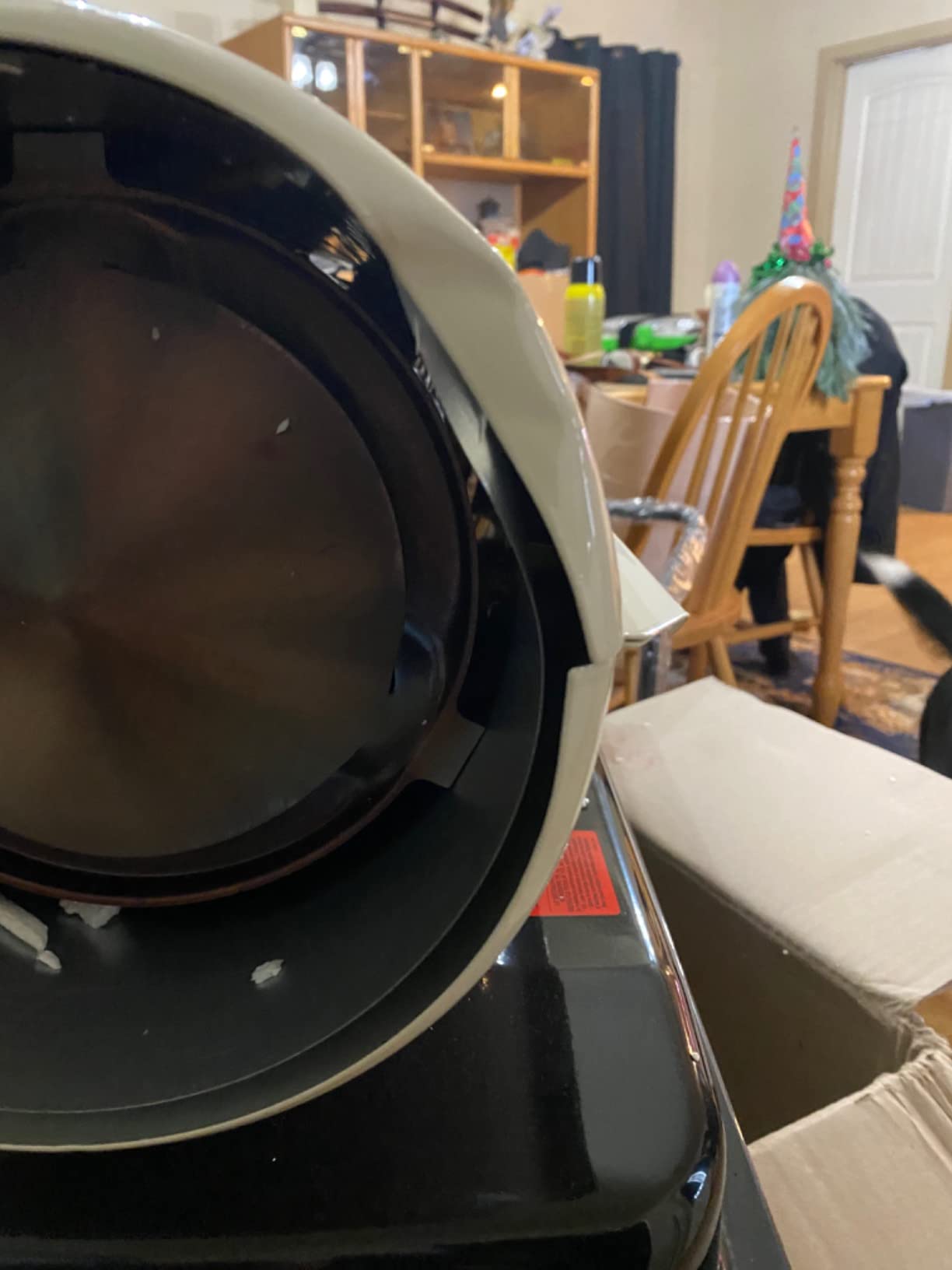
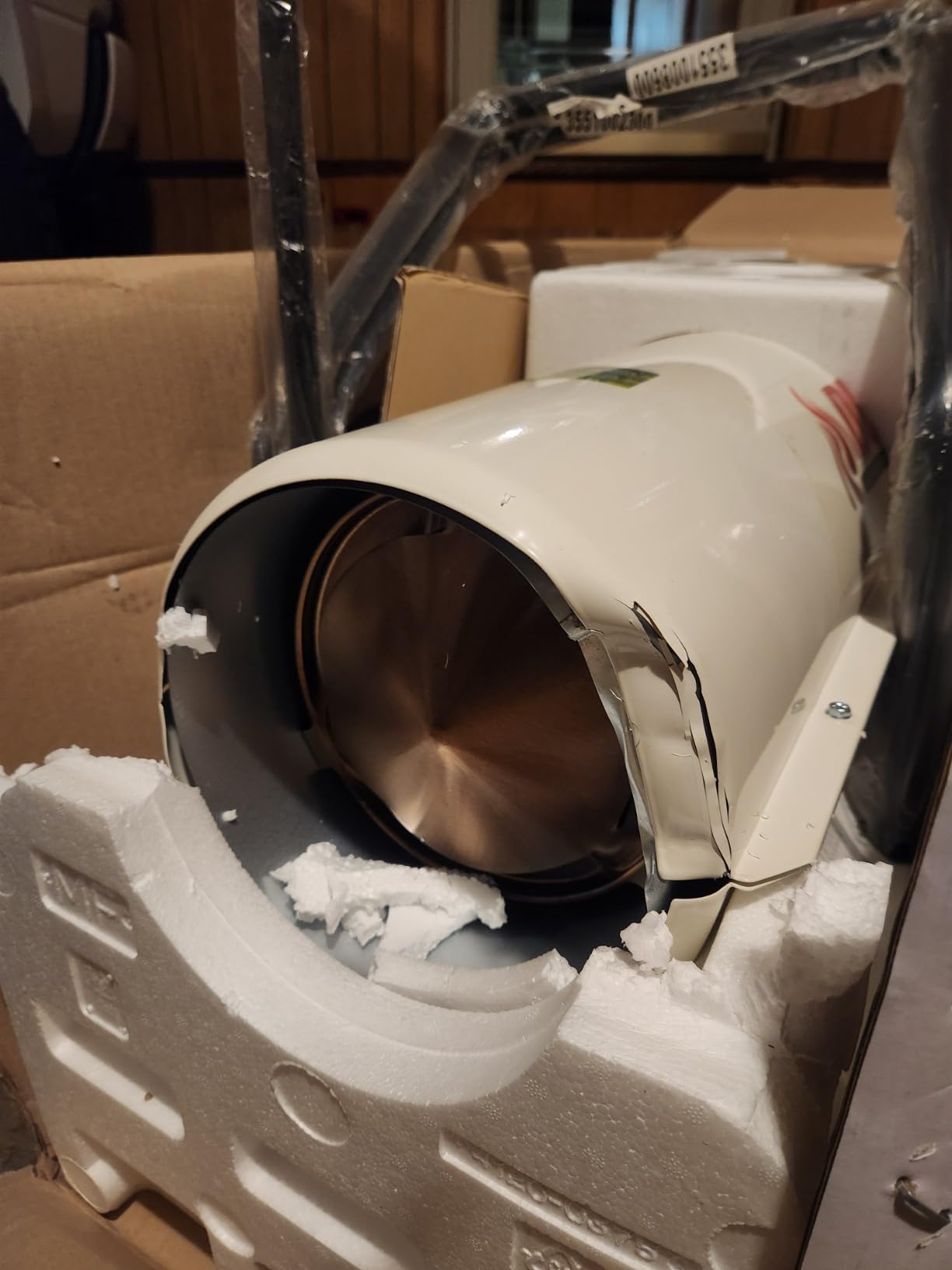
- Some units arrive with bent or dented parts
- A few control board failures reported
This is not a living room heater and should not be treated as one. At 135,000 BTU rated for 2,900 square feet, it belongs in a garage, shop, barn, or construction trailer where freezing pipes are the real concern during a long grid outage.
Owners report the shortest wait of any heater here. A one-stall garage heats in about a minute, and a three-car space reaches around 70F in roughly 15 minutes, which is exactly what you need to protect supply lines and a water heater without waiting.
The control package is what separates it from cheaper blowers. A built-in thermostat for on/off control, a fuel gauge and LED digital temperature indicators with diagnostics mean you can manage it in the dark and confirm what the burner is doing without a meter.
Multi-fuel capability is a genuine emergency advantage. It runs on K-1 kerosene, #1 and #2 fuel oil, diesel, JP-8 and Jet-A, so if one fuel type is unavailable after the storm, another very likely is not.
Protecting pipes in a closed garage
Open the garage door a crack, run the heater low, and let the thermostat hold the space above freezing. That is the standard setup owners use, and the fast warm-up is what makes it workable, because you get to temperature quickly and then let the thermostat cycle.
Why it is a poor indoor choice
At 59.5 pounds it needs two people to move, and reviewers are blunt about the kerosene fumes that linger in enclosed spaces. A unit that is this large produces a lot of combustion gas per hour. Use it in the volume it was designed for, and never in a bedroom, a closed basement, or a room where people sleep.
7. Dyna-Glo WK95C8 23,800 BTU Indoor Convection Heater
Dyna-Glo Indoor Kerosene Convection Heater – 23,800 BTU, 1,000 Sq. Ft. Heating Capacity, Model Number WK95C8
23,800 BTU convection
1,000 sq ft coverage
No electricity needed
Tip-over protection
Pros
- Heats a whole living area for a low outlay
- Simple to assemble and operate
- Little or no odor on startup
- About 8 to 10 hours per tank fill per owners
Cons
- Wick adjustment knob slips toward off
- K-1 kerosene burns faster than some rivals
- Build quality feels inexpensive
- Tank is smaller than earlier generations
Dyna-Glo sits at number one in its Amazon category, and the WK95C8 is why: 23,800 BTU of convection heat rated for 1,000 square feet, with no electricity required and tip-over protection. Owners describe it as a functional, good-value unit that warms a full living area rather than one corner.
Startup odor is the standout. Several reviewers report little to no smell on lighting and only a faint trace at shutdown, which puts it ahead of most wick heaters when the heater is running in the room where people are trying to sleep.
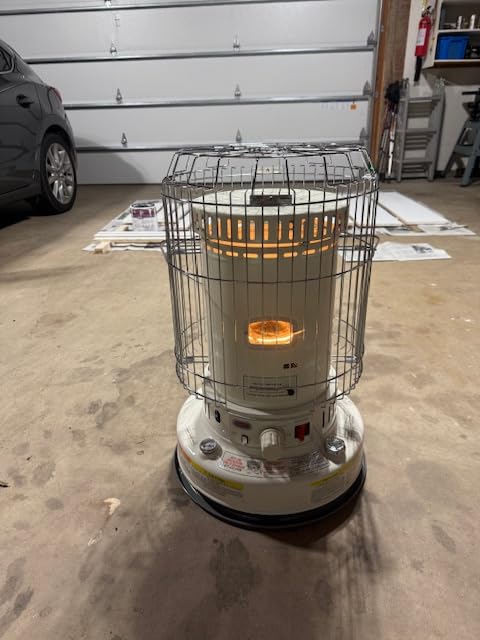
Runtime is the tradeoff. Owners put a fill at 8 to 10 hours and note that it drinks K-1 kerosene faster than some competing units, so for a multi-night outage plan on more fuel than a 12-hour-rated model would need. The floor-mount pedestal format is standard and easy to place against a wall with clearance.
Two build details come up repeatedly. The wick adjustment knob tends to slip back toward the off position, so re-check flame height after a bump or a move, and reviewers describe the tank as smaller than on older generations of the same idea.
Dyna-Glo or Mr. Heater
If you want low odor, a floor-plan-friendly footprint and a lower outlay, the Dyna-Glo is the answer. If you want a thermostat, a fuel gauge, a lighted switch and diagnostic LEDs, the Mr. Heater is worth the step up. Both are 4-plus rated, and both run all night without a wall outlet.
What you give up
Owners call the construction inexpensive, and a few report receiving a used or scratched unit, so inspect the box before you sign for it. The slipping wick knob is the most common irritation, and since this is a wick heater, the wick itself is a recurring maintenance item across the life of the unit.
8. AHUAWA 10,000 BTU Kerosene Heater with Accessory Kit
9,000 BTU Kerosene Heater, Kerosene Heaters for Indoor Use
8,000 to 10,000 BTU
350 sq ft coverage
1.35 gal tank, 15 to 21 hours
Includes siphon, funnel, gloves, wicks
Pros
- Longest advertised runtime here at 15 to 21 hours
- Most complete accessory kit in the roundup
- Compact with adjustable height and a fuel gauge
- Anti-tip base and safety net
Cons
- Modest output aimed at small spaces
- Kerosene odor on startup
- Shorter review history than established brands
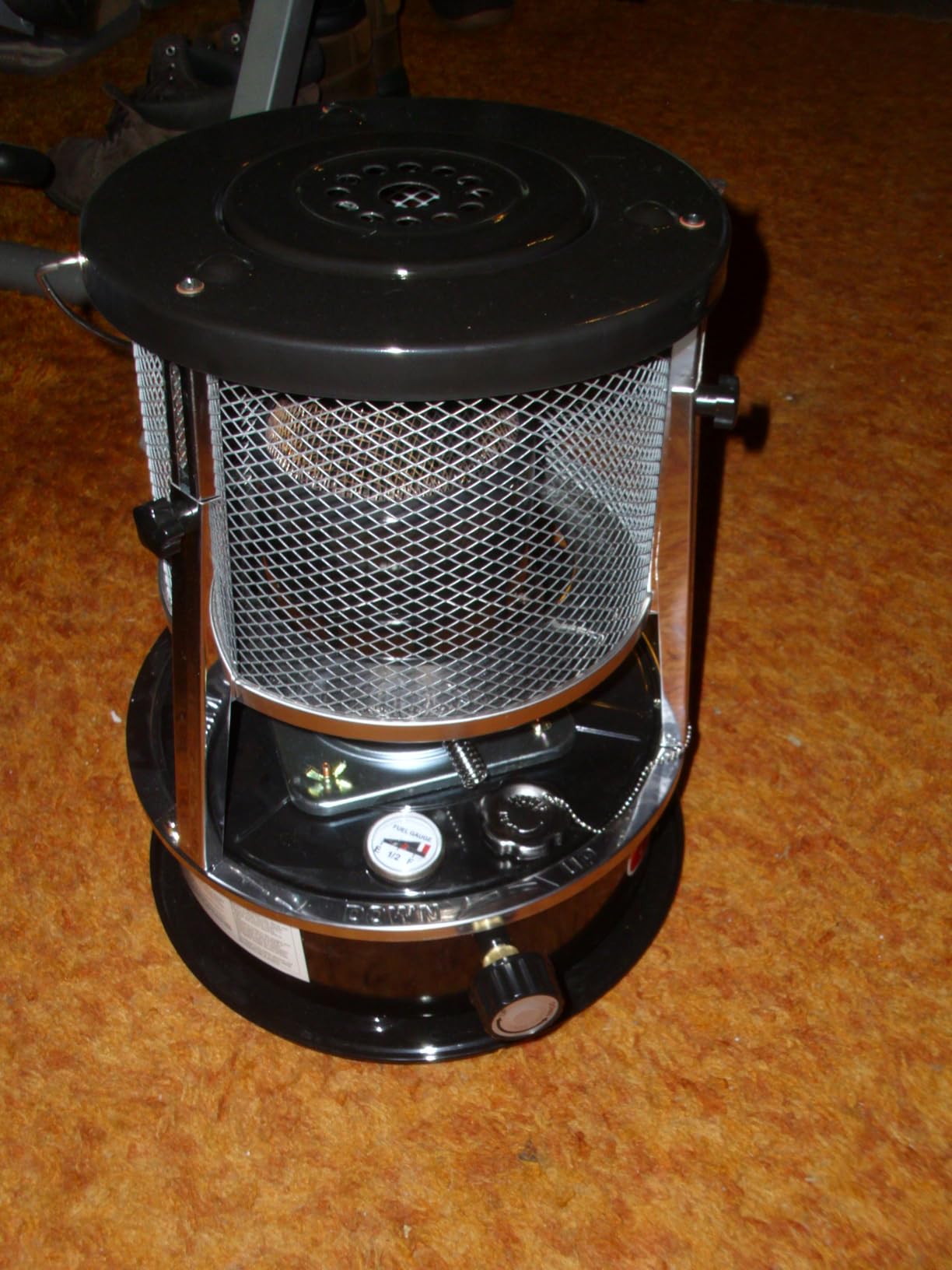
The 1.35-gallon tank is the headline here: 15 to 21 hours of continuous heat, the longest figure any heater in this roundup advertises. That makes it the pick when the outage is measured in nights and you do not want to refill in the dark.
What separates it from the other budget heaters is the box contents. You get a storage bag, funnel, siphon pump, gloves and spare wicks, which is the exact kit most owners end up buying separately after their first cold night.
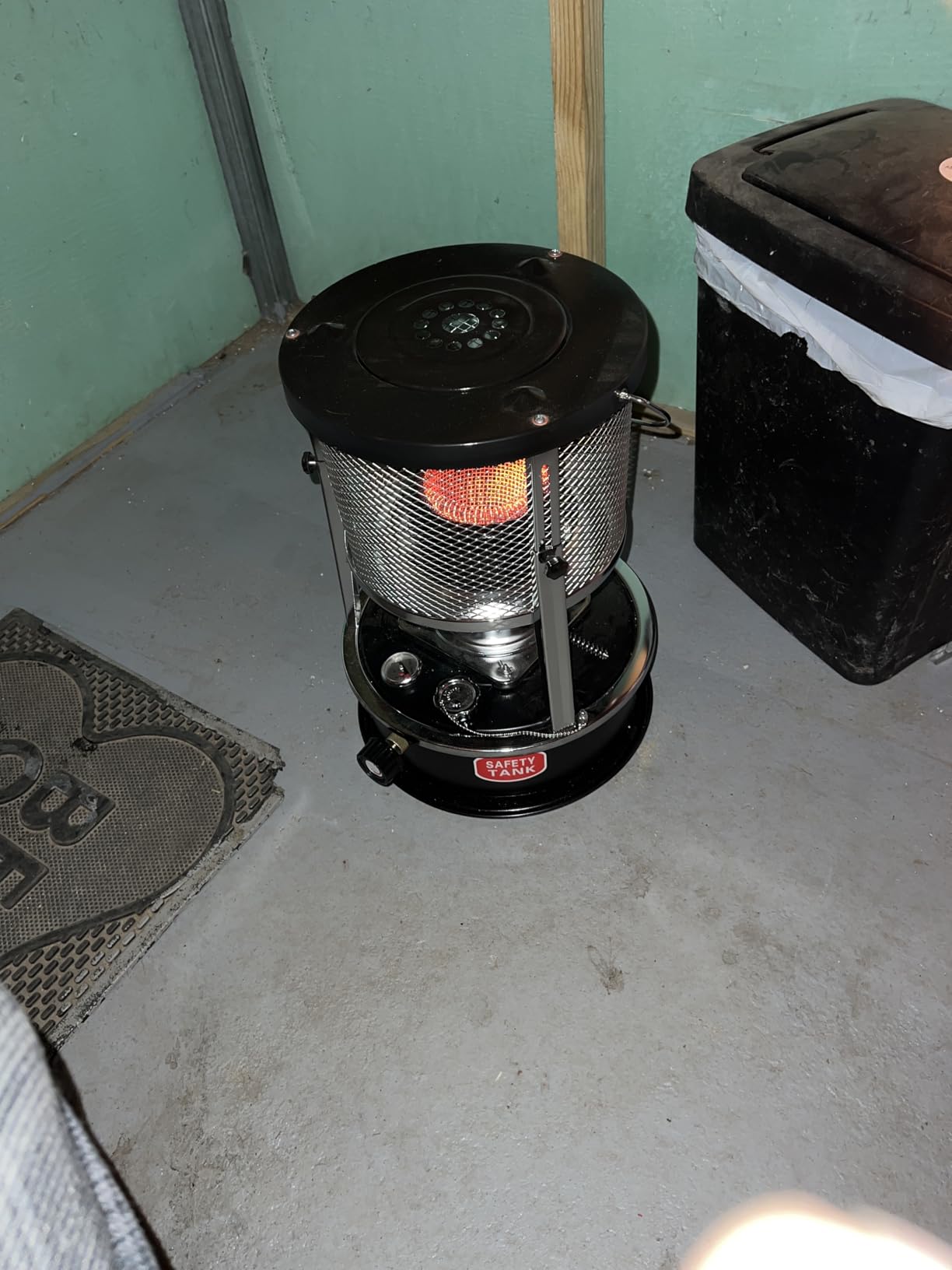
Scope matters with this one. At 8,000 to 10,000 BTU and a listed 350 square feet, it is built for a bedroom, a small office, a bathroom, or a corner of a larger room. Owners are clear that it is not a whole-home heater, and buying it for that job is the main reason buyers get disappointed.
It also works as a warming and cooking top, which is useful in a garage or a shed where the only other heat is a camp stove. Adjustable height and the solid anti-tip base make it stable on uneven floors.
Best use in an outage
Put it in the room where a cold family member is sleeping, with the door open to a hallway and a CO detector on the ceiling. The long runtime means one fill covers a full night, and the fuel gauge tells you when to refill without opening anything up.
What to watch for
Kerosene odor on startup is the standard complaint, and the listing is newer, so its 99 reviews are a thinner history than the established brands carry. The adjustable temperature and height controls are useful but coarse, and at this output it will not hold temperature in a drafty or open space.
9. InoKraft 140,000 BTU Forced Air Kerosene Heater
InoKraft 140,000 BTU Kerosene Forced Air Heater Ergonomic Frame with Wheels
140,000 BTU forced air
3,125 sq ft coverage
9.5 gal tank, 9 hours
CSA certified, 239F auto shut-off
Pros
- Highest rated at 4.7 stars
- 140
- 000 BTU covering up to 3
- 125 sq ft
- Rear swivel wheels and an ergonomic frame
- Adjustable 23-99F thermostat with LED diagnostics
- CSA certified with overheat shut-off
Cons
- Large footprint compared with room heaters
- A 9.5 gallon tank still needs frequent refills
- Combustion fumes require ventilation indoors
The highest-rated heater in this roundup, and the largest. At 140,000 BTU covering up to 3,125 square feet, this is a shop, warehouse, barn, or three-plus car garage machine that happens to be a fine emergency heat source for a detached structure.
The design choice that matters is the frame. Rear swivel wheels plus a redesigned ergonomic handle are why owners call it the easiest large forced-air heater to reposition, which matters when the outage plan involves moving heat between a garage and a basement workshop.
Controls and safety are properly specified. The adjustable thermostat spans 23 to 99F with LED troubleshooting diagnostics, and overheat protection cuts out automatically at 239F. It is CSA certified, a detail most listings in this category never confirm.
Fuel flexibility is a plus here too: kerosene, No. 2-K, No. 1 and No. 2 diesel, fuel oil, JP-8 and Jet-A. If your local fuel supply gets thin after a storm, this unit adapts to what is left.
Planning a nine-hour run
The 9.5-gallon tank gives up to 9 hours of continuous heating, and a large tank still means refills during a long shutdown. Treat it as a bring-up and hold-heat tool rather than an overnight bedroom source, and keep the room ventilated the entire time it runs.
What the rating does not tell you
With 54 reviews, this is the thinnest feedback base in the roundup, so the 4.7 average deserves less weight than the 4.4 average on a heater with a thousand reviews. The footprint is large, and the smell of combustion is real in enclosed spaces. Verify the CSA label on the unit you receive, not just the listing.
10. InoKraft 80,000 BTU Forced Air Kerosene Heater
InoKraft 80,000 BTU Kerosene Forced Air Heater, Compact Portable Design, LED Thermostat Control, Quiet High-Efficiency Heating, Overheat Protection, CSA Certified for Garage, Barn & Workshop
80,000 BTU forced air
2,000 sq ft coverage
5 gal tank, 8.5 hours
CSA certified with LED thermostat
Pros
- Compact footprint next to 140K torpedo heaters
- Quiet
- efficient forced-air output
- CSA certified with overheat shut-off at 239F
- Adjustable 23-99F thermostat with LED diagnostics
Cons
- 4.2 average with 10% one-star feedback
- Combustion fumes require ventilation
- 5 gallon tank is modest for long runs
This is the middle ground between a room heater and a 140,000 BTU torpedo machine. At 80,000 BTU covering up to 2,000 square feet, it is sized for a two-car garage, a workshop bay, or a barn section where the big units are overkill and the small ones cannot keep up.
Owners highlight the quiet, efficient output compared with larger forced-air heaters, and the compact portable design with a 5 foot power cord for setup and moving. Note that the cord is for the control panel, not for power, so the burner itself still runs without electricity.
Runtime and refills
The 5-gallon tank delivers up to 8.5 hours of continuous heating. That covers an evening comfortably and a full night with a refill, which is the most common complaint in reviews: the tank is modest if you are heating through a multi-day outage.
Reliability is the reason this is last
The 4.2 average with 10% one-star feedback is the lowest in the roundup, and it reflects start-up and reliability complaints from a minority of owners. Every reviewer notes the need for ventilation. If you want the same feature set with a stronger feedback record, the 140,000 BTU model above is the safer bet.
Carbon Monoxide Safety Protocol for Kerosene Heaters
Yes, you can run a kerosene heater indoors, and yes, you can leave it on overnight, but only if four conditions are met: the heater is listed for indoor use, a working battery-backed CO detector is inside the room, ventilation is deliberate rather than accidental, and you are not sleeping in the same sealed room as the flame. A kerosene heater is a complete combustion appliance. It produces carbon monoxide by design, and the appliance reduces that output, it does not eliminate it.
Install at least one battery-backed CO detector in every room where a heater will run, with a second detector in the hallway if the heated room has a door. Mount it on a wall or ceiling, not in a corner, and follow the placement distance printed on the alarm itself rather than guessing. Test the alarm with its test button before the season, and keep spare batteries in the same bag as the fuel.
Ventilation means a window cracked a few inches or a door left open to a hallway or adjoining room. The combustion products leave through that opening; the reason many people get uncomfortable is a closed room with a slow air exchange. If a room cannot be ventilated, that is a sign to use a smaller heater or a different room, not to run the same heater harder.
Running a heater overnight without building up CO
Set the heater in a room you are not sleeping in, or keep the bedroom door wide open to a ventilated hallway. Leave the window or door gap in place all night. Do not move the heater, add fuel, or adjust the wick after you go to sleep, since every one of those actions puts an unburned-fume spike into the room. If a CO alarm sounds, get everyone out, open doors and windows, move the heater outdoors, and do not re-enter until the air has cleared and the source is understood.
Refueling, storage and fuel grade
Turn the heater off and let it cool before refilling, and ideally fill it outside or in a garage with the door open. Never fill a hot tank, and never refill in a closed living space. Store kerosene in approved containers away from ignition sources, and use K-1 kerosene, which is low sulfur and specified for indoor heaters; 2-K heating oil, diesel, and anything you have been using in a tractor are wrong fuels that soot the wick and dirty the flame. If you want a second heat option that does not share these constraints, our gas water heater guide covers a different fuel-handling problem entirely.
Kerosene vs Propane for a Power Outage
Propane is cheaper per hour and safer indoors, but kerosene stores more energy per container and burns longer without a refill, so the right answer depends on the length of the outage and where you can buy fuel. The common claim that kerosene is always the cheaper option assumes you buy it at a gas station pump; multiple forum owners on r/preppers and The Garage Journal point out that hardware store kerosene can cost more per BTU than propane, which reverses the ranking for anyone buying fuel retail.
Propane refills in about 30 seconds and burns cleaner, which is why a lot of preppers prefer it for indoor use. Kerosene wins on raw BTU stored per container over a long shutdown, and a 5-gallon container of kerosene gives you a full night of heat from a single fill. The practical compromise most people land on is propane for the living space and kerosene for a garage or secondary room.
Cost and logistics side by side
Propane wins on price per hour of heat and on refill speed, and it is easier to find on short notice. Kerosene wins on runtime per container, on not needing a heavy refill during a cold night, and on multi-fuel flexibility if you own a model that accepts diesel or fuel oil. If you already have a propane setup and a two-night storm, propane is usually less work.
Safety and storage
Propane is a lighter gas that vents and mixes with air quickly, and vented propane heaters can be used indoors only when they are rated and vented correctly. Kerosene is a liquid that pools and burns at the wick, which makes spills and refueling errors the main risk rather than a gas leak. Neither fuel solves ventilation. A whole house generator comparison is worth reading if your outage pattern is longer than a couple of nights and you have the space for one.
Buying Guide: How to Choose a Kerosene Heater
Size the heater to the room, not to the fuel you have. A 10,000 BTU unit covers roughly 350 to 450 square feet, a 23,800 BTU convection unit handles around 1,000 square feet, and the forced-air burners in the 75,000 to 140,000 BTU range are built for 1,750 square feet and up. Oversizing a room is how people end up with odor problems and shutoffs, because a big flame in a small space needs more air than the room can supply.
Radiant heat warms you, convection warms the air, and forced air does both quickly with a fan. Choose radiant if you are sitting still in one spot, convection if you want the whole room at temperature, and forced air if you are heating volume such as a garage and can live with the noise. Round wick heaters are described by owners as silent and low odor, while torpedo and forced-air models produce a loud fan and a noticeable smell spike at startup and shutdown.
Check that the unit starts without a wall outlet. Every heater here runs on fuel alone, but a few large blowers use a short cord for their control panel, so confirm what the cord is for. Look for the indoor safety listing on the specific model, not just the brand, and for the combination of tip-over switch, overheat cut-off and flame-failure sensor, because those are the three features that stop a heater from becoming a problem while you are asleep or away.
Plan fuel before you buy the heater. Decide whether you can buy 1-K kerosene from a gas station pump or a farm supply store rather than a hardware store, and buy containers rather than relying on a single fill. For a three-night outage, our rough rule is one 5-gallon container plus your heater tank, and always store spare wicks alongside the fuel because a fouled wick is the most common reason a good heater stops performing.
Finally, test it. Fire every heater you own in the weeks before storm season, outside or in a very well ventilated space, so you know the ignition works, the flame adjusts cleanly, and the shutoffs trip. An untested heater is a guess, and an outage is the worst possible time to discover that the push button does nothing.
Frequently Asked Questions
What is the best heater to use during a power outage?
For most households, a kerosene heater is the best outage heater because it needs no electricity, stores enough fuel for days, and heats a single room cheaply. A 10,000 BTU unit is right for a bedroom, while 23,800 BTU convection units handle a full living area. Pair it with a battery-backed carbon monoxide detector and a cracked window.
Is it safe to run a kerosene heater inside your house?
Only if the specific model is listed for indoor use. Run it in a ventilated room with a working battery-backed carbon monoxide detector, keep a window cracked or a door open, and never run it in a sleeping room with the door closed. Unvented combustion appliances produce carbon monoxide, so ventilation and a detector are not optional extras.
Can I leave my kerosene heater on all night?
You can, provided four conditions hold: the heater is indoor rated, a working CO detector is in the room, ventilation stays open all night, and you do not refill, move, or adjust it after going to sleep. Sleeping in the same sealed room as the flame is the scenario that causes trouble, so heat an adjacent ventilated room instead.
How long will a kerosene heater run on 5 gallons of kerosene?
It depends on the burner. A 10,000 BTU wick heater on a large full tank can run 14 to 21 hours, while large 75,000 to 140,000 BTU forced-air burners burn a 5-gallon container in about 8 to 9 hours. Plan roughly one 5-gallon container per night of moderate use for the big forced-air models.
What’s cheaper to run, kerosene or propane?
Propane is usually cheaper per hour of heat and refills in about 30 seconds. Kerosene only wins on cost per BTU when you buy it at a gas station pump or farm supply store, since hardware store kerosene is priced much higher. Kerosene still wins on runtime per container and on stored energy for a multi-night outage.
What is the safest kerosene heater for indoor use?
The safest indoor choice is a lower-output heater with the most independent safety layers, not the highest BTU number. Look for a specific CSA or UL indoor listing on the model, plus a tip-over switch, an overheat cut-off and a flame-failure sensor, and match lighting so it works with no power at all. Our top pick meets all of these.
Final Verdict on Kerosene Heat During an Outage
For the best kerosene heaters for power outages, the Sengoku HeatMate HMN-110 is the one to buy first: 10,000 BTU, a 1.2-gallon tank that lifts out, up to 14 hours of burn, and push-button ignition that needs no power at all. It has more than a thousand reviews behind it, which is the kind of evidence base you want on an appliance you will only discover how it behaves during a storm.
Pair it with a battery-backed CO detector, a box of K-1 kerosene bought before you need it, and a spare wick. Heat one room, ventilate it deliberately, and leave the rest of the house cold until you know how long the outage will last.