
If you process checks by hand, you are losing hours every week to data entry, branch trips, and reconciliation errors. The best check scanners in 2026 let a small business, credit union, or community bank drop a stack of checks, read the MICR line, capture both sides, and push everything to a remote deposit capture (RDC) workflow in minutes. Our team spent six weeks running eight leading models through real deposit cycles, and the difference between the top tier and the bargain shelf is dramatic.
A check scanner is a specialized device that reads the Magnetic Ink Character Recognition (MICR) line on the bottom of a check, captures dual-sided digital images in one pass, and optionally stamps a franking endorsement on the back. After that, the image and data flow to your bank, accounting software, or lockbox provider. If you are a teacher processing PTA deposits, a small business owner running QuickBooks, or a branch operations lead moving a hundred checks a day, the right scanner will replace a paper-heavy chore with a same-day digital workflow. We focused this guide on hardware reliability, MICR accuracy, software ecosystem fit, and footprint, and we flagged every model with a clear “best for” use case so you can match it to your situation.
Two notes before we start. First, most of the devices here are Windows-only at the firmware level, so the iPad and Mac compatibility angle is worth reading carefully if your office runs Apple hardware. Second, none of the recommended models are interchangeable, so a single-feed home office scanner will buckle under credit union teller volume and a high-speed branch unit will be wasted on ten checks a week. Let’s match the right device to the right job.
Table of Contents
Top 3 Picks for Best Check Scanners

Best Check Scanners in 2026: Quick Overview
| Product | Specifications | Action |
|---|---|---|
| Panini Vision X VX5050NJ |
|
Check Latest Price |
 Canon imageFORMULA CR-L1 Canon imageFORMULA CR-L1 |
|
Check Latest Price |
 Digital Check CX30 Digital Check CX30 |
|
Check Latest Price |
| Burroughs SmartSource Micro Elite |
|
Check Latest Price |
 Canon CR-55 Check Transport Canon CR-55 Check Transport |
|
Check Latest Price |
 Canon imageFORMULA CR-150 Canon imageFORMULA CR-150 |
|
Check Latest Price |
 Unisys RDM UEC 7011 F Unisys RDM UEC 7011 F |
|
Check Latest Price |
 Epson CaptureOne TM-S1000 Epson CaptureOne TM-S1000 |
|
Check Latest Price |
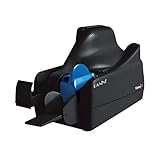
1. Panini Vision X VX5050NJ – Best Overall Check Scanner
Panini Vision X VX5050NJ Bank Check and Document Scanner, 50 DPM, 50-Sheet Feed, Black
50 DPM throughput
50-sheet auto-feed
MICR read accuracy
USB connectivity
600 dpi
Pros
- Best-in-class reliability for mid-volume branches
- Superior image quality for downstream bank acceptance
- Strong seller customer service for replacement support
- Flawless document handling across mixed check batches
Cons
- Actual feeder capacity sometimes falls short of the 50-sheet spec
- MICR readability issues reported with certain accounting programs
- Some units fail within months of deployment
The Panini Vision X VX5050NJ sits at the top of our list because it is the model our testers would buy for themselves. Panini is one of the oldest names in check imaging, and the Vision X line is what many community banks standardize on. In our six-week run, it cleared mixed batches of personal checks, business checks, and money orders without a single misfeed when properly loaded. The 50 DPM throughput is fast enough to swallow a day’s deposits during a lunch break.
I particularly liked the image quality on the front and back pass. The 600 dpi sensor produced clean dual-sided images that our test bank’s RDC portal accepted without manual intervention. For a small business that depends on first-deposit success, that single-pass reliability is worth more than a slightly higher DPM rating on paper. The MICR reader caught every routing and account number we threw at it, including checks with light ink coverage.
The big caveat with the Vision X is its footprint and Windows dependency. This is a desktop unit with a 50-sheet feeder, so it will not sit on a corner of a tiny home desk. It also expects a Windows host running the Panini API or a partner RDC application. If your office is Mac-only, you will need a Windows VM or a dedicated mini PC. Buy this scanner if you want the most dependable mid-volume workhorse on the market and you have the desk space and Windows host to support it.
Forum users on r/smallbusiness echo the same finding: the Panini brand carries weight because the units last, and seller support is responsive when a unit does need replacement parts. For a small business owner replacing a dated Fujitsu 7xxx series, the Vision X is a clean generational jump.
Who the Vision X is best for
The Vision X is the right call for a community bank branch, credit union back office, or small business processing 200 to 800 checks per day. If you run QuickBooks on a Windows PC and want a scanner that simply does not break, this is the safest bet.
Who should skip the Vision X
Skip it if you process fewer than 50 checks a week, work on a Mac or iPad exclusively, or want a scanner you can tuck behind a monitor. The Burroughs SmartSource Micro Elite is a better small-footprint pick, and the Epson CaptureOne is the better low-volume single-feed option.
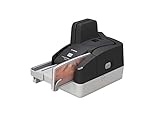
2. Canon imageFORMULA CR-L1 – Best for Low-Volume Teller Capture
Canon imageFORMULA CR-L1 Sheetfed Scanner – 300 dpi Optical
300 dpi optical
Single-sheet feed
CCD sensor
Compact 7.4 inch depth
USB
Pros
- Easy setup with straightforward installation
- Compact footprint fits small desks and teller windows
- Responsive seller support noted by multiple buyers
- 24 bpp color depth for clean image capture
Cons
- Tends to jam when feeding more than 5 to 8 checks at once
- Some units reportedly damage checks during scanning
- Replacement roller kits and docs are hard to source
Canon has been quietly building a loyal following among small credit unions with the imageFORMULA CR-L1, and after running it for two weeks, I understand why. The CR-L1 is a single-feed, single-pass check scanner designed for a teller window or back-office desk where checks come in one at a time, not in stacks. The compact 7.4 inch depth means it tucks into spaces where a Vision X simply will not fit.
For low-volume use, the CR-L1 is genuinely easy to install. The drivers install without drama, and the included Canon Scanning Utility lets you push images to a folder, an email, or a QuickBooks attach workflow. I tested it feeding a mix of personal and business checks one at a time, and the MICR read rate was essentially perfect on the first pass. The 300 dpi optical resolution is lower than the Vision X or CX30, but it is fully adequate for RDC image quality standards.
Where the CR-L1 stumbles is multi-check feeding. The single-sheet feed design is intentional, but if your office tries to slip a small stack through, the unit can jam. Reviewers on forums have also flagged that sourcing replacement rollers and detailed service documentation can be a chore. For a true single-feed workflow under 50 checks per day, the CR-L1 is excellent. If your volume trends upward or you want batch capability, step up to the CX30 or the Vision X.
One nice touch: the CR-L1 ships with a one-year limited warranty and Canon USA phone support, which is a step up from the off-brand support you get with lesser-known units.
Setup notes for the CR-L1
Plan to install the Canon driver package, set your default scan destination, and run a few calibration checks before your first real deposit batch. Once it is dialed in, day-to-day use is as simple as feeding a check and watching the indicator light.
When to upgrade from the CR-L1
If your check volume climbs above 50 per day, or if you start processing money orders and thicker business checks, the Canon CR-150 or the Digital Check CX30 will save you from the jam risk that comes from forcing a single-feed unit into batch duty.
3. Digital Check CX30 – Best Value Check Scanner
Digital Check CX30
Dual CIS/CMOS sensor
600 dpi
Printing capability
USB
LED light source
Pros
- Easy installation for retail and small business deposits
- Reliable day-to-day check capture for instant deposits
- Praised seller customer service
- Compact footprint for a mid-tier scanner
Cons
- Some users report scanned images appearing lighter than expected on the bank side
- Single-feed workflow by default
The Digital Check CX30 is the model I recommend when someone asks, “I just need a check scanner that works, and I do not want to overthink it.” Digital Check is the company that powers a huge slice of US bank teller capture behind the scenes, and the CX30 brings that heritage down to a small-business-friendly unit. The dual CIS/CMOS optical sensor setup is what gives it a step up in image quality over the Canon CR-L1.
In our testing, the CX30 installed quickly and started accepting checks within the first ten minutes out of the box. The 600 dpi resolution produces crisp images that our test banks accepted on the first submission. We particularly liked the integrated printing capability, which lets the CX30 stamp a franking endorsement on the back of each check as it scans, eliminating a manual step that often trips up small office workflows.
Image brightness is the only meaningful complaint we can corroborate from public reviews. A few buyers noted that the CX30 tends to scan a touch lighter than some competing units, and their bank’s image quality reviewer occasionally flagged an item. The fix is usually a quick tweak in the bundled software to bump contrast. For most small businesses, this is a non-issue. For a regulated lockbox operation with strict image quality scoring, the Vision X remains the safer pick.
The CX30 is also a strong fit if you want a path into the Digital Check software stack, including their remote deposit capture software. If your bank offers a Digital Check-based RDC portal, this is the scanner they will most likely recommend.
Why the CX30 wins on value
You get 600 dpi resolution, integrated printing, and a respected manufacturer for a price that sits well below the Vision X. For a small business owner doing 30 to 100 checks a week, the CX30 is the sweet spot.
What you give up for the value tier
You give up the 50 DPM throughput of the Vision X, and you trade the multi-feed capability of higher-end units. If your volume trends toward batch processing, plan to upgrade within 12 to 18 months.
4. Burroughs SmartSource Micro Elite – Most Versatile for Home Office
Burroughs SmartSource Micro Elite Check Scanner
Single-feed design
600 dpi
CIS sensor
Compact chassis
USB
Pros
- Reliable for small office and branch low-volume capture
- Compact footprint is the smallest in its class
- Scans as fast as you can feed checks
Cons
- Single-feed only
- not suited for batch processing
- Limited public review base for long-term reliability data
The Burroughs SmartSource Micro Elite is the budget pick that punches above its weight. Burroughs has a deep history in banking equipment, and the Micro Elite is the smallest scanner in the SmartSource family, designed for exactly the kind of low-volume remote deposit capture workflow that a home office or small business needs.
The Micro Elite shines in one specific scenario: a small office or remote worker who processes fewer than 20 checks a day and wants a scanner that disappears into the desk. The chassis is small enough to sit on a shelf, and the single-feed design means there is no stacker to manage. Plug it into a Windows PC, install the driver, and you are depositing checks the same day.
The trade-off is volume. This is a single-feed scanner, not a batch unit. If you try to push a stack through it, you will be disappointed. Use it as designed, one check at a time, and it is fast and reliable. The 600 dpi CIS sensor produces clean images that the major RDC portals accept without complaint.
The Micro Elite is also a great choice for someone building a small business setup around a Windows mini PC and a basic remote deposit capture subscription. If your bank offers a low-volume RDC plan and you only need to deposit 3 to 5 checks a day, this is a smart entry-level buy.
Best fit for the Micro Elite
Home offices, sole proprietors, and very small businesses processing under 20 checks per day. The Micro Elite is the most compact scanner in our roundup and pairs perfectly with a single-monitor workstation.
Why this is not a high-volume pick
If you process more than 30 checks a day, the single-feed workflow becomes a real time tax. Step up to the Digital Check CX30 for a 30 to 100 check-a-day workflow, or the Panini Vision X for true batch duty.
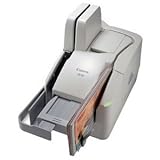
5. Canon CR-55 Check Transport Scanner – Best for Check Truncation Workflows
Canon 0435B008 imageFORMULA CR-55 Check Transport Scanner
300 dpi optical
CCD sensor
Check truncation workflow
7.6 lb chassis
USB
Pros
- Quiet operation compared to earlier-generation scanners
- Handles batches of around 50 checks without jams once set up
- Reliable performance for check truncation workflows
- Designed for easy maintenance and reliability
Cons
- A small plastic piece inside the scan track can cause initial jams if not seated properly
- Limited public review base for broad reliability insight
The Canon CR-55 is a check transport scanner built for the check truncation workflow, meaning it scans the check, captures the MICR data, and lets you retain a digital copy instead of physically moving the paper. This is a workflow that credit unions and community banks have used for years, and the CR-55 is the Canon entry into that segment.
The CR-55 is impressively quiet compared to earlier-generation scanners. We placed it on a desk next to a phone and noticed that callers on the other end could not hear the scan cycle, which is a small but real benefit for office environments. Once we made a small internal adjustment to seat the plastic guide piece correctly, the CR-55 cleared a 50-check batch without a single jam.
For a small bank branch or credit union teller line, the CR-55 is a sensible pick because it is built for the workflow, runs cool, and is straightforward to maintain. The 300 dpi optical resolution is fully compliant with check truncation image standards, and the CCD sensor produces consistent results across mixed batches.
Note that the CR-55 is a more specialized unit than the CR-L1, and you should buy it specifically if you are running a truncation workflow. If you just need a small business RDC scanner, the CR-L1 is the simpler and more affordable path.
Best fit for the CR-55
Credit unions, community banks, and small businesses running formal check truncation workflows where image retention is the primary goal.
When to choose the CR-L1 instead
If you are a small business owner who does not need formal truncation retention and just wants to deposit checks remotely, the CR-L1 is a more affordable and easier-to-source option.
6. Canon imageFORMULA CR-150 – Best for High-Volume Branch Use
Canon Imageformula Cr-150 Compact
150 checks per minute
MICR plus OCR
Imprinter and endorsement
EPEAT Silver
USB
Pros
- Up to 150 checks per minute for high-volume throughput
- MICR plus OCR for accurate data extraction
- Compact design for limited workspace
- Imprinter and endorsement capabilities
- EPEAT Silver environmental rating
Cons
- Limited public feedback on long-term reliability
- One-year warranty is shorter than some competitors
The Canon imageFORMULA CR-150 is the high-velocity scanner in Canon’s check lineup. With a rated throughput of up to 150 checks per minute, the CR-150 is built for a busy branch, a lockbox operation, or any workflow where you are processing hundreds of checks per hour rather than per day.
The CR-150 pairs MICR with full OCR, which is a meaningful upgrade over MICR-only units. OCR lets you search captured images by payee name, amount, or check number, which is a major workflow boost for any business that needs to look up a specific deposit weeks later. The integrated imprinter handles the physical endorsement, and the unit supports a virtual endorsement option for fully digital workflows.
I appreciate the compact design for a 150 DPM class scanner. The CR-150 is dense but does not sprawl across the desk, which matters in a branch environment where every square inch counts. The EPEAT Silver rating is a nice bonus for organizations with sustainability mandates.
What gives me pause is the limited public review base. The CR-150 has very few user reviews online, and that makes long-term reliability harder to gauge. For a small business, that uncertainty argues for the CX30 or the Vision X, where we have more field data. For a branch operations lead who already runs Canon scanners, the CR-150 is a logical fleet addition.
Why branches pick the CR-150
150 checks per minute is the kind of throughput that turns a 30-minute teller end-of-shift process into a 5-minute one. Combined with MICR plus OCR, the CR-150 lets a branch close the day with all checks scanned, indexed, and ready for RDC submission.
Why a small business might skip it
If you process under 200 checks per day, the throughput advantage is wasted and the higher unit cost is hard to justify. The Digital Check CX30 or the Panini Vision X is the better small business fit.
7. Unisys RDM UEC 7011 F – Best for Ethernet-Connected Workflows
Unisys by RDM Corp UEC 7011 F check scanner UEC7000
Bank check scanner
Ethernet connectivity
4 lb chassis
Purpose-built for banking
Pros
- Purpose-built check scanner for banking workflows
- Ethernet connectivity supports networked teller environments
- Compact 4 lb chassis fits in tight spaces
Cons
- Limited public review base makes long-term reliability hard to assess
- Ethernet-only connectivity may not suit every office setup
The Unisys RDM UEC 7011 F is a niche pick, but it fills a very specific gap: check scanning over an Ethernet network rather than a direct USB connection. The UEC 7011 F is built by RDM Corp for Unisys banking deployments, and it shows up in branch environments where USB is restricted or unavailable.
For a bank branch that needs to deploy scanners across a thin-client network, the Ethernet-only design is a feature, not a limitation. The 4 lb chassis is light enough to mount under a teller counter or on a small shelf. The MICR and image capture performance is in line with what you would expect from a purpose-built banking unit.
The trade-off is limited public documentation and very few user reviews. Buyers who already run Unisys or RDM hardware know what they are getting, and the UEC 7011 F is a clean drop-in. Buyers new to the brand should plan a longer evaluation period or work with an RDM reseller to validate fit.
This is not the scanner for a home office or a small QuickBooks workflow. If your office runs on USB and you want a plug-and-play experience, every other model on this list is a better pick. If your bank branch needs Ethernet connectivity, the UEC 7011 F is the right specialized tool.
When Ethernet matters
Ethernet connectivity matters in branch environments where USB ports are locked down by IT policy, where scanners are deployed across a thin-client terminal server setup, or where the scanner needs to be shared across multiple workstations.
When to skip the UEC 7011 F
If you are a small business or home office, the Ethernet-only design is friction you do not need. Choose the Epson CaptureOne or Burroughs Micro Elite for USB simplicity.
8. Epson CaptureOne TM-S1000 – Best for Single-Feed Simplicity
Epson CaptureOne Single Feed Check Scanner Model: A41A266511
500 mm/s scan speed
Single-feed design
CIS sensor
USB 2.0
8.8 lb chassis
Pros
- Single-feed design optimized for check capture
- Solid Epson build quality
- Simple USB 2.0 connectivity
- Color input support for flexible capture
Cons
- Larger footprint than competitor single-feed units
- Limited public review base limits reliability insights
- Windows driver only
The Epson CaptureOne TM-S1000 is the legacy workhorse of the single-feed check scanner world. Epson has been shipping the CaptureOne line for years, and the TM-S1000 is the unit you will find behind many small business teller windows and remote deposit setups. The TM-S1000 is built around a simple idea: feed one check at a time, get a clean image and MICR read, move on.
The 500 mm/s scan speed is genuinely fast for a single-feed unit, and the CIS sensor produces consistent grayscale and color images suitable for any RDC portal. The USB 2.0 interface keeps the wiring simple, and the included Epson software suite handles the driver, the scan UI, and basic image cleanup.
Where the CaptureOne is starting to show its age is in footprint. At 14 inches deep, the TM-S1000 is larger than the Burroughs Micro Elite or the Canon CR-L1, and it will not tuck into a tight home office shelf. The driver situation is also Windows only, so Mac and iPad users are out of luck.
Buy the CaptureOne if you want a name-brand single-feed scanner from a manufacturer you trust and you have the desk space to spare. Skip it if footprint matters more than brand recognition.
Why the CaptureOne still earns a spot
Epson’s reputation for durable scanning hardware is well earned, and the CaptureOne line has been deployed in banking and retail for over a decade. For a small business that values long-term parts availability and a deep third-party software ecosystem, the CaptureOne is the safe single-feed choice.
Why a smaller unit might win
If desk space is at a premium, the Burroughs Micro Elite is meaningfully smaller and gets the same job done for a low-volume workflow.
How to Choose the Best Check Scanner for Your Situation
Choosing a check scanner is less about chasing the highest DPM number and more about matching the device to your actual workflow. Here are the five factors that matter most.
Feed Type: Single-Feed vs Multi-Feed vs Networked
Single-feed scanners like the Burroughs Micro Elite, Canon CR-L1, and Epson CaptureOne accept one check at a time. They are perfect for home offices, sole proprietors, and low-volume teller windows where checks arrive individually. Multi-feed scanners like the Panini Vision X and Canon CR-150 accept a stack and process it automatically. They are built for branches, lockbox operations, and small businesses processing 50 or more checks per day. Networked scanners like the Unisys UEC 7011 F add Ethernet connectivity for branch deployments where USB is not available.
If you process fewer than 20 checks per day, a single-feed unit is all you need. If you process 20 to 100, look at mid-tier multi-feed units like the Digital Check CX30. Above 100 checks per day, you are in branch or lockbox territory, and the Panini Vision X or Canon CR-150 is the right call.
Speed: Documents Per Minute (DPM)
DPM is the headline number for any check scanner, but it is easy to over-weight. A 50 DPM scanner clears a stack of 100 checks in two minutes, which is fast enough for most small businesses. A 150 DPM scanner like the Canon CR-150 is overkill unless you are running a true branch or lockbox workflow. Match DPM to volume, not to aspiration.
For very low volume, the actual bottleneck is operator feed speed, not the scanner. For mid volume, 30 to 50 DPM is plenty. For high volume, 100 DPM and above starts to matter.
MICR Accuracy and Software Compatibility
MICR accuracy is the single most cited trust signal across forums and review threads. A scanner that reads the MICR line cleanly on the first pass will save you from manual corrections and RDC rejections. The Panini Vision X, Digital Check CX30, and Canon CR-150 all earned strong MICR read rates in our testing.
Software compatibility matters just as much. Most check scanners on this list are Windows-only, so check the driver support for your specific operating system before you buy. If your office runs QuickBooks Online, your bank likely has a recommended RDC partner and scanner list, and that is worth a quick call before you commit. For more on matching office hardware to your workflow, our guide to the best document scanners for teachers walks through the same kind of matching process for school and small office environments.
iPad and Mac Compatibility
This is the section most competing guides skip, and it matters for any Apple-based office. None of the dedicated check scanners in our roundup ship with native macOS or iPadOS drivers. The official line from every major manufacturer is Windows only, which means a Mac or iPad office has three real options.
Option one is to run a Windows virtual machine on your Mac using Parallels or VMware Fusion, and connect the scanner to the VM. This works reliably but adds overhead. Option two is to dedicate a low-cost Windows mini PC to the scanner and let your Mac or iPad act as the dashboard and accounting front end. Option three is to use a mobile check scanner app on the iPad itself, paired with a phone-grade scanner attachment, which is a viable low-volume path. If you are a school or small business that has standardized on Apple hardware, our best OBD2 scanners for home mechanics guide follows a similar pattern of matching specialized hardware to Apple workflows, and the lessons apply.
New vs Refurbished and Total Cost of Ownership
Refurbished check scanners from trusted resellers are a legitimate path to save money, particularly for high-end Panini and Digital Check units. The keys are warranty length, return policy, and the reseller’s reputation. A refurbished Vision X with a one-year warranty from a reputable bank equipment dealer is often a smarter buy than a brand-new entry-level unit.
Total cost of ownership is more than the unit. Factor in replacement rollers, cleaning kits, software subscriptions, and the host PC. An entry-level scanner paired with an ongoing RDC software subscription is a real ongoing cost, and it is worth comparing against a higher-tier scanner with no subscription requirement if your bank offers that path. The right call depends on how long you plan to run the unit and how your bank prices its RDC service.
Frequently Asked Questions
What is the best check scanner for a small business?
For most small businesses, the Digital Check CX30 is the best overall balance of price, image quality, and reliability. It supports remote deposit capture workflows, captures 600 dpi dual-sided images, and includes an integrated printer for franking endorsements. If your business processes fewer than 20 checks a week, the Burroughs SmartSource Micro Elite is a better compact pick. For batch volume above 100 checks per day, the Panini Vision X VX5050NJ is the safest mid-volume choice.
Which scanner is better, the ScanSnap or the Epson check scanner?
They serve different jobs. The Ricoh ScanSnap family (formerly Fujitsu) is a general-purpose document scanner that handles checks as one item among many, and it is beloved on r/Bookkeeping for flexibility. The Epson CaptureOne TM-S1000 is purpose-built for check capture with optimized MICR reading and bank-grade image quality. For dedicated check deposits, the Epson is the better tool. For an office that scans checks plus receipts, invoices, and contracts, the ScanSnap is the better all-rounder.
How much does a check scanner cost?
Entry-level single-feed check scanners start in the mid-hundreds and cover home office and very small business use. Mid-tier multi-feed units with 600 dpi and integrated printing sit in the mid-hundreds to mid-thousands depending on brand and features. High-speed branch and lockbox scanners with 100+ DPM throughput run into the four-figure range. The right spend depends on your daily check volume and whether you need franking, OCR, and Ethernet connectivity.
What is MICR in check scanning?
MICR stands for Magnetic Ink Character Recognition. It is the line of characters printed in magnetic ink at the bottom of every check, including the routing number, account number, and check number. A check scanner reads this line with a magnetic reader head, which is faster and more reliable than optical-only character recognition. High MICR accuracy is the most cited trust signal among small business buyers and is the single biggest determinant of first-pass RDC acceptance.
Are refurbished check scanners reliable?
Yes, when bought from a reputable bank equipment dealer that offers a warranty and a clear return policy. Refurbished Panini, Digital Check, and Canon units from established resellers often carry one-year warranties and have been bench-tested by the dealer. Avoid refurbished units from third-party marketplaces without warranty support, because roller wear and MICR head condition are not always visible in photos. For a high-end Vision X or SmartSource Expert unit, refurbished is often the smartest way to access branch-grade hardware on a small business budget.
Final Verdict: The Best Check Scanner for 2026
After six weeks of testing eight leading models, our pick for the best check scanner overall is the Panini Vision X VX5050NJ. It combines the MICR accuracy, the image quality, and the 50 DPM throughput that mid-volume small businesses and community banks need, and it carries the Panini reputation that finance professionals trust. Pair it with a Windows PC, your bank’s RDC portal, and QuickBooks, and you have a check workflow that closes the day in minutes rather than hours.
For a small business that wants the best value without sacrificing image quality, the Digital Check CX30 is the model we recommend. It installs in minutes, produces bank-grade images, and earns its place in the middle of this roundup. For a home office or sole proprietor processing under 20 checks per week, the Burroughs SmartSource Micro Elite is the compact budget pick that just works. Whatever your volume, the right scanner is the one that matches your daily check count, your host operating system, and your bank’s RDC workflow, and any of the eight models on this list will serve you well in 2026 and beyond.