
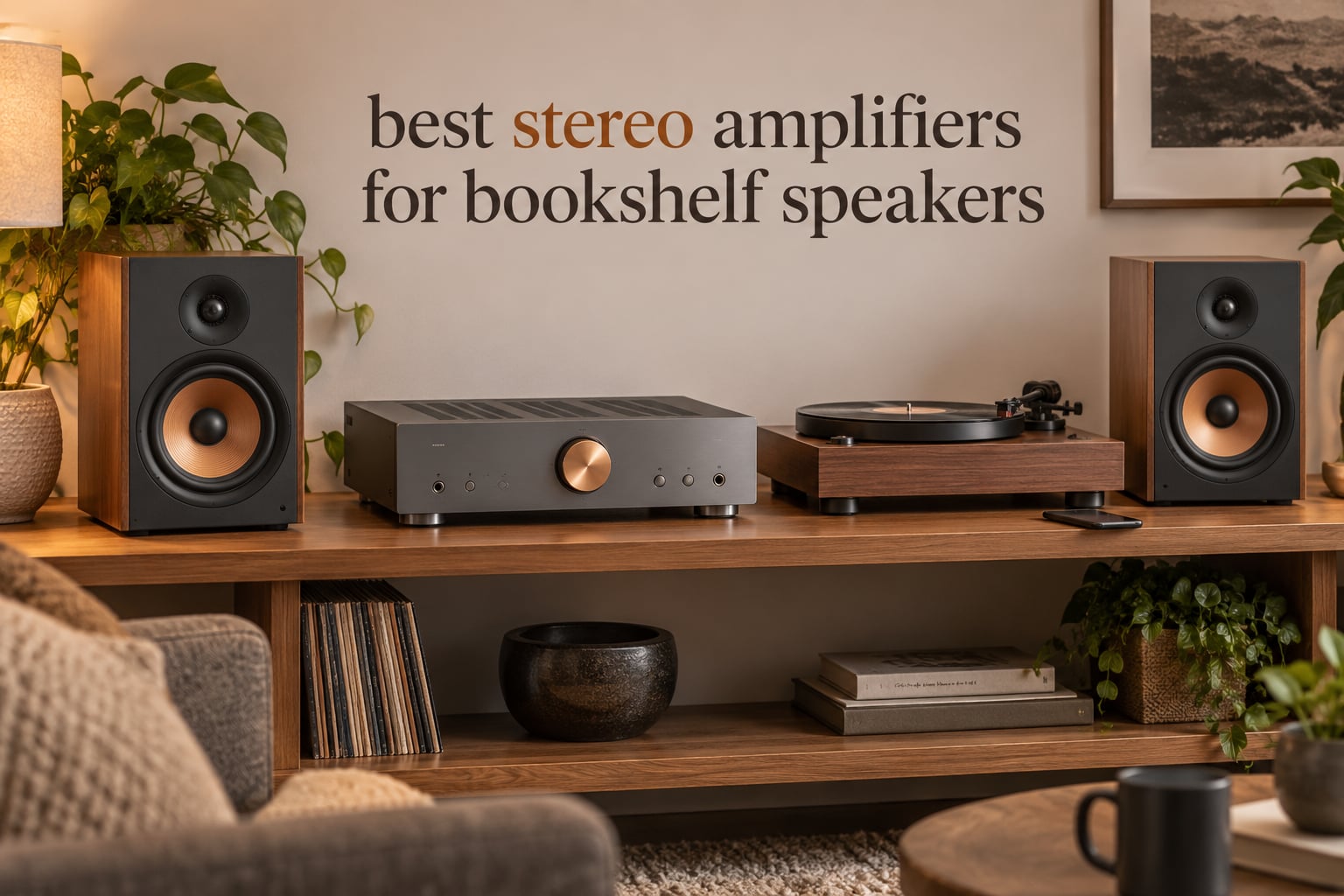
If you have a pair of passive bookshelf speakers sitting on a shelf, they are doing nothing on their own right now. A stereo amplifier is the box that turns them into a music system: it takes the weak signal from a turntable, streamer, TV or phone, adds volume control and tone shaping, and delivers enough current to move the drivers. Picking the wrong one leaves you with thin, strained sound at high volumes or, worse, an amp that will not stably drive a 4 ohm load. This guide covers the best stereo amplifiers for bookshelf speakers we could find across compact desktop units, streaming amps, traditional integrated amplifiers and tube hybrids, with real published wattage and input counts for each one.
We updated this roundup for 2026 because the compact and streaming side of the market has moved faster than the traditional hi-fi side. What has not changed is the matching logic, and we walk through it in detail: impedance, sensitivity, how much power you actually need, and when a phono stage matters. If you are still choosing speakers, our picks for bookshelf speakers for small rooms and bookshelf speakers for turntables are worth reading first, because the amp you pick changes which of those suits you.
One honest note before we start. Members of r/BudgetAudiophile frequently point out that a cheap amp will not make cheap speakers sound expensive, and that a spent pair of efficient bookshelf speakers plus a modest Class D unit is a genuinely complete system. That is correct. Every amp below is a real step up from a bare speaker; only two of them are a step up from a very good budget amp. Match the amp to your speakers and your room, not to a brand name.
Table of Contents
Top 3 Best Stereo Amplifiers for Bookshelf Speakers
Our three standouts span the three ways people actually use bookshelf speakers: a compact box for a desk or shelf, a streaming amp that replaces a whole rack of gear, and a traditional integrated amplifier that does the job properly with no network required. The full list of ten follows below.

Fosi Audio BT20A
- 100W x 2 maximum output
- Compact 567 g Class D chassis
- Bluetooth plus stereo RCA inputs
- 24-month manufacturer warranty

WiiM Amp Pro
- 60W per channel at 8 ohms
- 120W per channel at 4 ohms
- Wi-Fi 6
- Bluetooth 5.3 and HDMI ARC
- Premium DAC with room correction

Denon PMA-600NE
- 70W into 4 ohms via AHC push-pull stage
- Built-in DAC with 2 optical and 1 coaxial input
- MM phono stage and RCA subwoofer output
- 3-year warranty
All 10 Amplifiers at a Glance
Every amplifier in the table below is a two-channel unit that drives passive bookshelf speakers. Power figures are the manufacturer ratings quoted at the impedance shown, which is the only honest way to compare across such different designs. Check the Key Features column for the reason each one earned a place.
| Product | Specifications | Action |
|---|---|---|
| Fosi Audio BT20A |
|
Check Latest Price |
| WiiM Amp Pro |
|
Check Latest Price |
 Fosi Audio MC331 Fosi Audio MC331 |
|
Check Latest Price |
 Yamaha A-S501BL Yamaha A-S501BL |
|
Check Latest Price |
| Denon PMA-600NE |
|
Check Latest Price |
 Cambridge Audio AXA35 Cambridge Audio AXA35 |
|
Check Latest Price |
 Dayton Audio HTA100 Dayton Audio HTA100 |
|
Check Latest Price |
 Yamaha A-S701BL Yamaha A-S701BL |
|
Check Latest Price |
 Sony STRDH190 Sony STRDH190 |
|
Check Latest Price |
 Yamaha R-S202BL Yamaha R-S202BL |
|
Check Latest Price |
1. Fosi Audio BT20A – Best Overall Compact Amplifier for Bookshelf Speakers
Fosi Audio BT20A Bluetooth Stereo Amplifier, 2 Channel Home Audio Component Amplifiers for Passive Speakers, Mini Class D Amp Receiver 200W for Indoor/Outdoor/Garage/Ceiling/Bookshelf Speaker
100W x 2 max output
Bluetooth and stereo RCA
567 g Class D chassis
24-month warranty
Pros
- Compact size that fits a shelf or desk
- Rock-solid Bluetooth with no dropouts
- Simple one-touch setup with bass and treble controls
- Punchy output that easily drives bookshelf and outdoor speakers
- Excellent value
Cons
- Bassy
- flat presentation that needs EQ adjustment
- Midrange distortion at high volume with tone controls boosted
- No USB
- optical or digital inputs
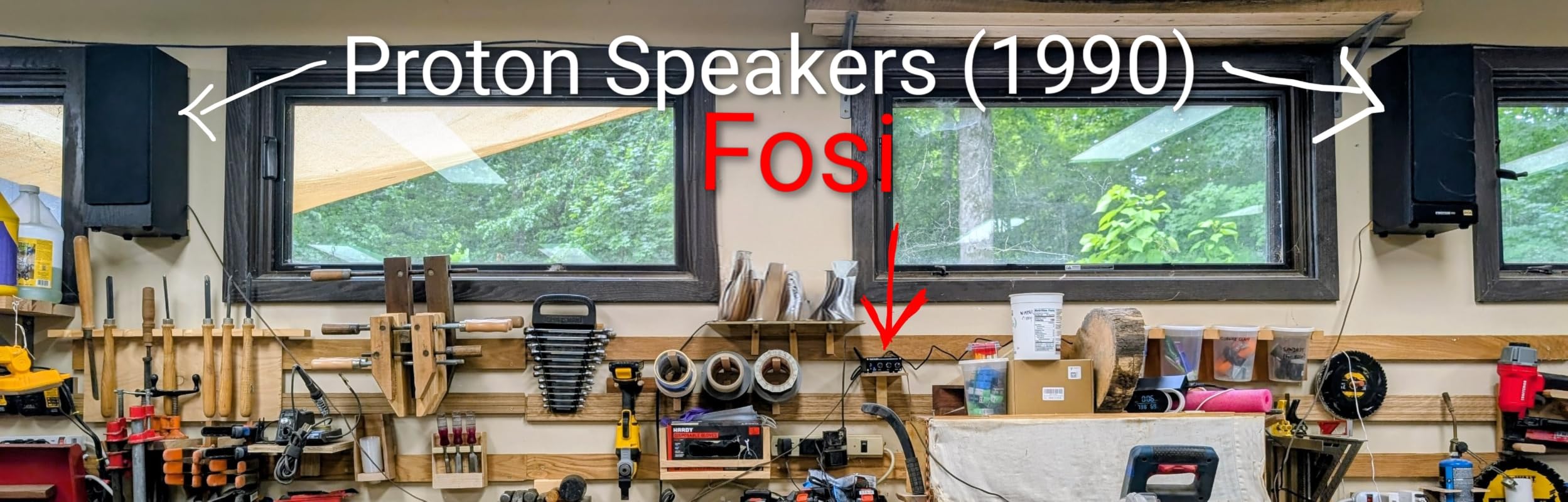
The BT20A is the box most first-time bookshelf speaker owners end up with, and for good reason. At 567 grams it is smaller than most paperback hardbacks, and its one-piece Class D chassis disappears next to a speaker rather than competing with it. That footprint matters more than people expect, and it is exactly the constraint that drove the top reply on r/BudgetAudiophile’s desktop amp thread.
Reviewers report pairing it with ordinary passive bookshelf speakers and getting more than enough level for a bedroom, office or covered patio. Bluetooth pairing is immediate and, in nearly 10k reviews, dropouts are the exception rather than the rule. The RCA inputs let you hardwire a turntable or a streamer box, which matters more than the wireless path for most listeners.
The honest weakness is tonal. Owners describe the default sound as somewhat bassy and on the flat side, and several note midrange distortion once the tone controls are pushed up at higher volumes. Set the controls flat or trim the bass first, and it behaves. There is no optical, coaxial or USB input, so adding digital sources means buying a separate DAC.
The 100W x 2 figure is a maximum output rating, not a continuous figure measured into a defined load, so treat it as a rough indicator rather than a comparison number. In practice it drives efficient bookshelf pairs without strain in a normal room.
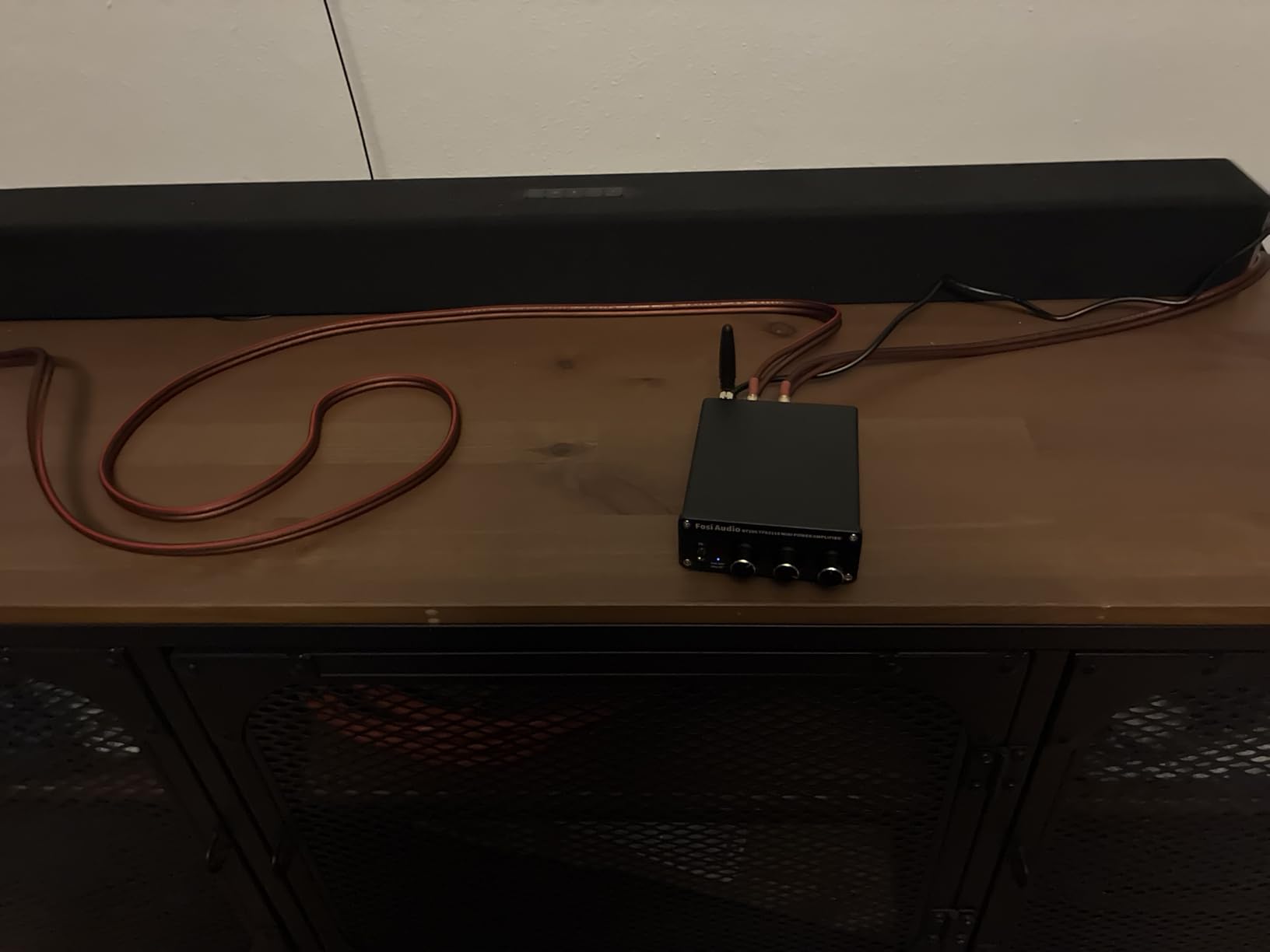
What speakers suit the BT20A best
Efficient bookshelf speakers rated around 6 to 8 ohm with sensitivity at or above 86 dB. The BT20A has no problem reaching a comfortable level with a pair in a small or medium room, and Bluetooth means you can start listening before you have sorted out any cables. Speakers with lower sensitivity or a dip below 4 ohm will ask for more current than this amp can give.
When to skip it
Skip it if your system already has a turntable with its own phono stage and no need for Bluetooth, because you would be paying for wireless you never use. It is also the wrong choice for nearfield listening in a treated room where you want to hear how a mix actually sounds, since the default tone shaping works against that.
2. WiiM Amp Pro – Best Value Amp for Streaming and Small Rooms
WiiM Amp Pro Streaming Amplifier for TV, Music & Passive Speakers
60W per channel at 8 ohm
120W per channel at 4 ohm
Wi-Fi 6 and Bluetooth 5.3
HDMI ARC and subwoofer out
Pros
- Compact streaming amp that adds wireless audio to passive speakers
- App-based setup with voice remote included
- HDMI ARC ties it into a TV easily
- Multiroom grouping with Echo and Google Home
- Healthy output for small and medium rooms
Cons
- Not compatible with AirPlay and cannot act as an AirPlay receiver
- Streaming features need the WiiM Home app and a network
The Amp Pro is the one we would put in front of someone who already owns good passive bookshelf speakers and wants streaming without giving up any sound quality. Its 60 watts per channel into 8 ohm and 120 watts into 4 ohm come with a published figure for both impedances, which is rarer than it should be at this level.
Inside there is a premium DAC, PFFB feedback correction and a redesigned thermal system, and it streams up to 24-bit/192kHz with room correction and per-zone EQ. For a small apartment system or a bedroom, that is more processing than you need and then some. Members of the AudioScienceReview community recommend the Wiim Amp Pro specifically for nearfield and small-room listening.
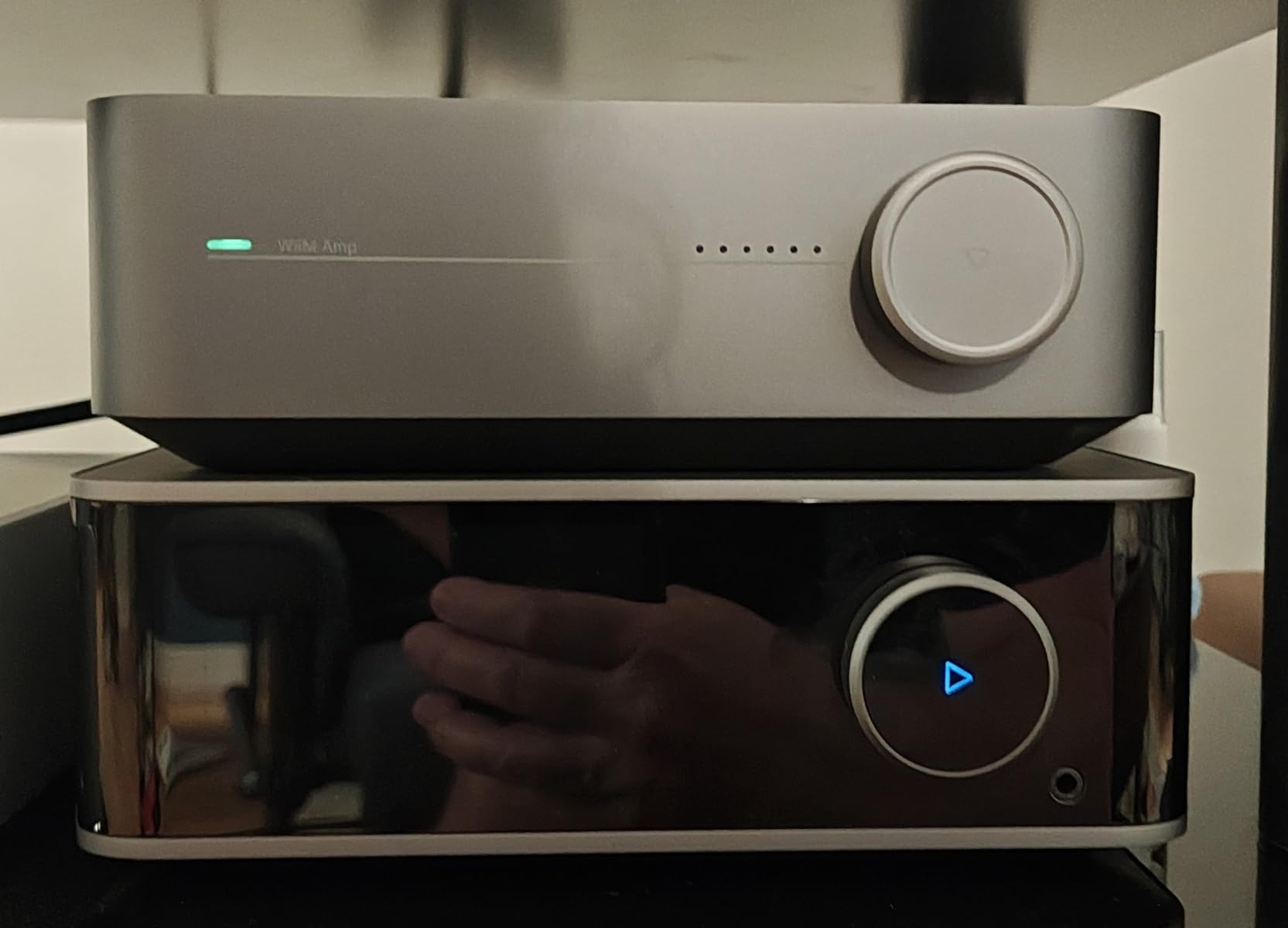
HDMI ARC is the feature most owners did not expect to care about and now rely on. It turns the amp into a simple stereo home theatre path for a television, and the powered subwoofer output covers the case where your bookshelf speakers cannot handle the lowest octave on their own.
The lack of AirPlay support is the recurring complaint across its 2,300-plus reviews. If your household runs everything through Apple devices, that alone may push you toward another amp. Everything else in the WiiM Home app, including multiroom grouping, works as advertised.
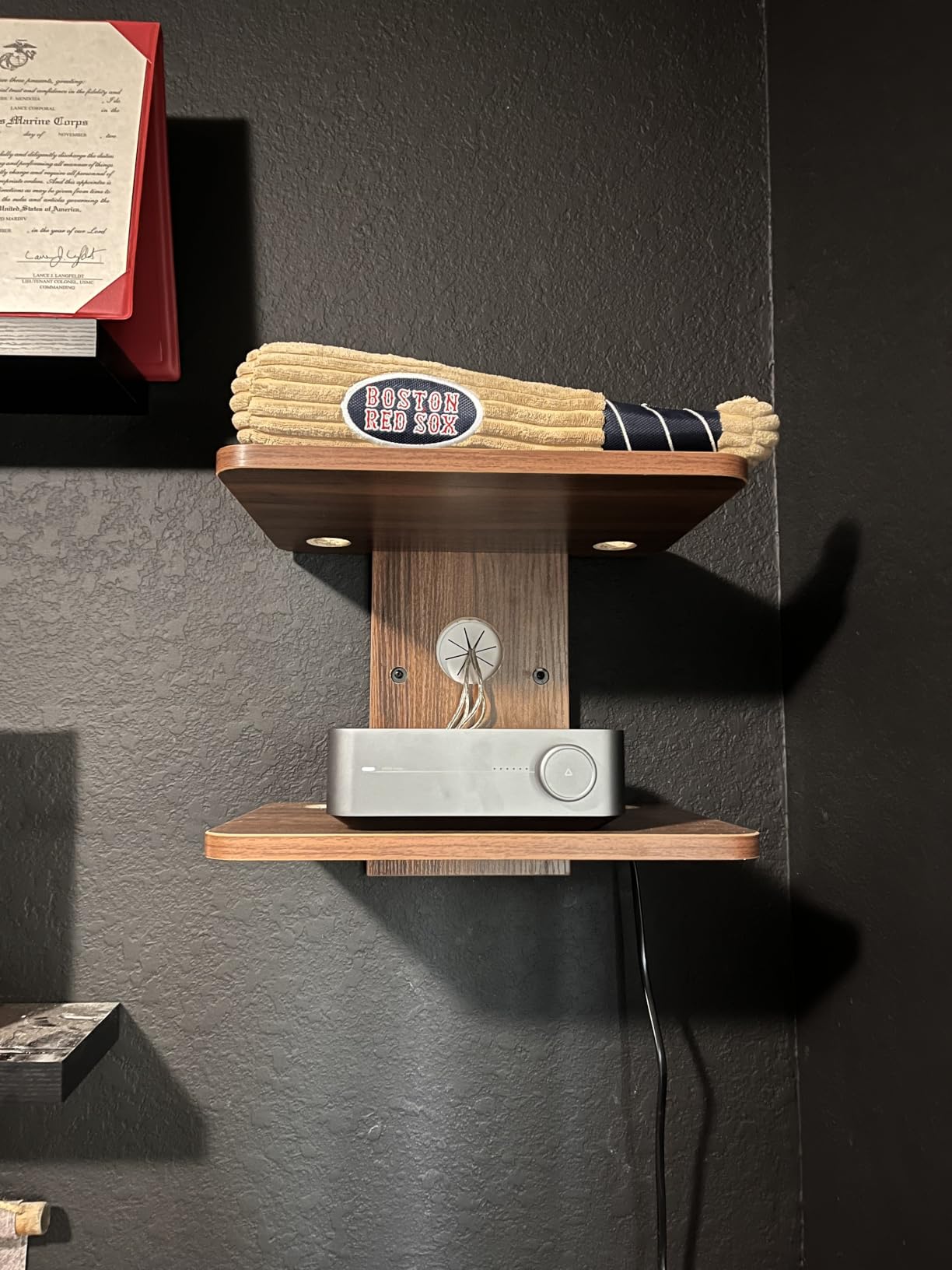
How it handles demanding bookshelf speakers
At 120 watts per channel into 4 ohm, it has real current capability for a compact Class D design, which means it copes with lower-impedance bookshelf models that make small amps struggle. In a small room it will not run out of clean volume, and the thermal redesign suggests the designers expected it to be driven hard.
Where it falls short
There is no phono input. If you plan to add a turntable, you need either a separate phono stage or one of the amps in this list that includes one. It also depends on a phone or tablet for setup and control, which some listeners find tiresome after the novelty wears off.
3. Fosi Audio MC331 – Best Amp for Warm Tube Sound with Built-In DAC
Fosi Audio MC331 Tube Integrated Amplifier with DAC, 2 Channel Home Audio Stereo Power Amp for HiFi Bookshelf Speakers/3.5mm Headphones, Vintage VU Meter Preamp with Bluetooth and USB/Opt/Coax/RCA
105W x 2 at 4 ohms
Tube preamp with VU meter
Bluetooth, USB, coax, optical and RCA
Headphone output and pre-out
Pros
- Warm
- detailed tube character with plenty of power
- All-in-one DAC
- preamp
- amp and headphone output
- Retro tube and VU styling looks great on a desk
- Metal construction with metal knobs
- Very wide range of inputs
Cons
- Infrared remote has noticeable latency and needs line of sight
- Tubes need warm-up time before the sound settles
- Some owners report hiss or fuzz at low listening levels
The MC331 does something none of the other compact amps here do: it puts a tube preamplifier stage in front of a solid Class D power section, and it does it in a chassis small enough for a desk. Maximum output is 105W x 2 at 4 ohms, which is plenty for a small room with a pair of efficient bookshelf speakers.
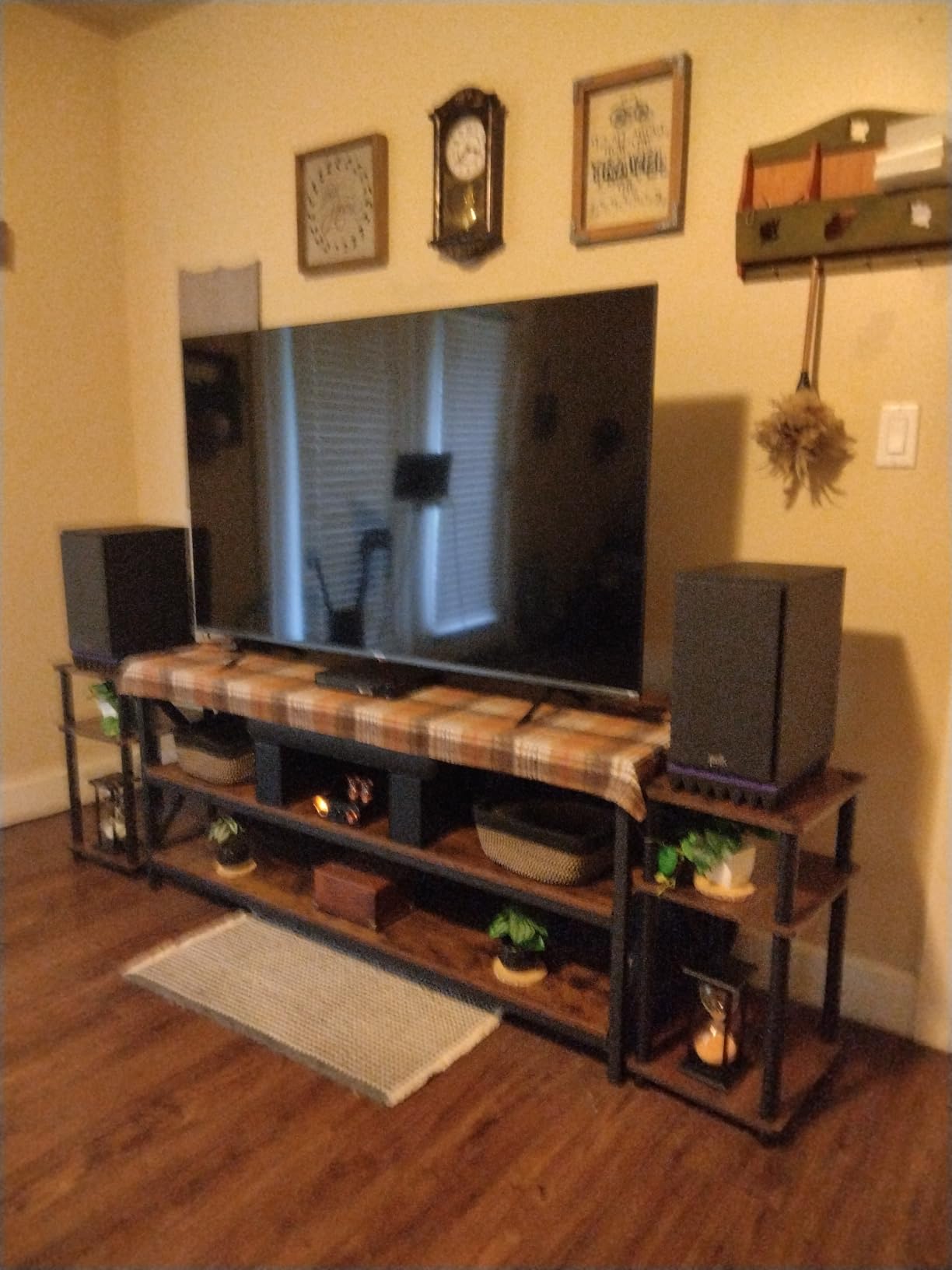
Owners frequently pair it with entry-level bookshelf speakers such as the Polk T15 and various Magnat models, and report a warm, detailed presentation that softens the edge of brighter speakers nicely. The VU meter and amber tube lighting make it a genuinely attractive object, not just a utility box, and the all-metal construction feels more substantial than the weight suggests.
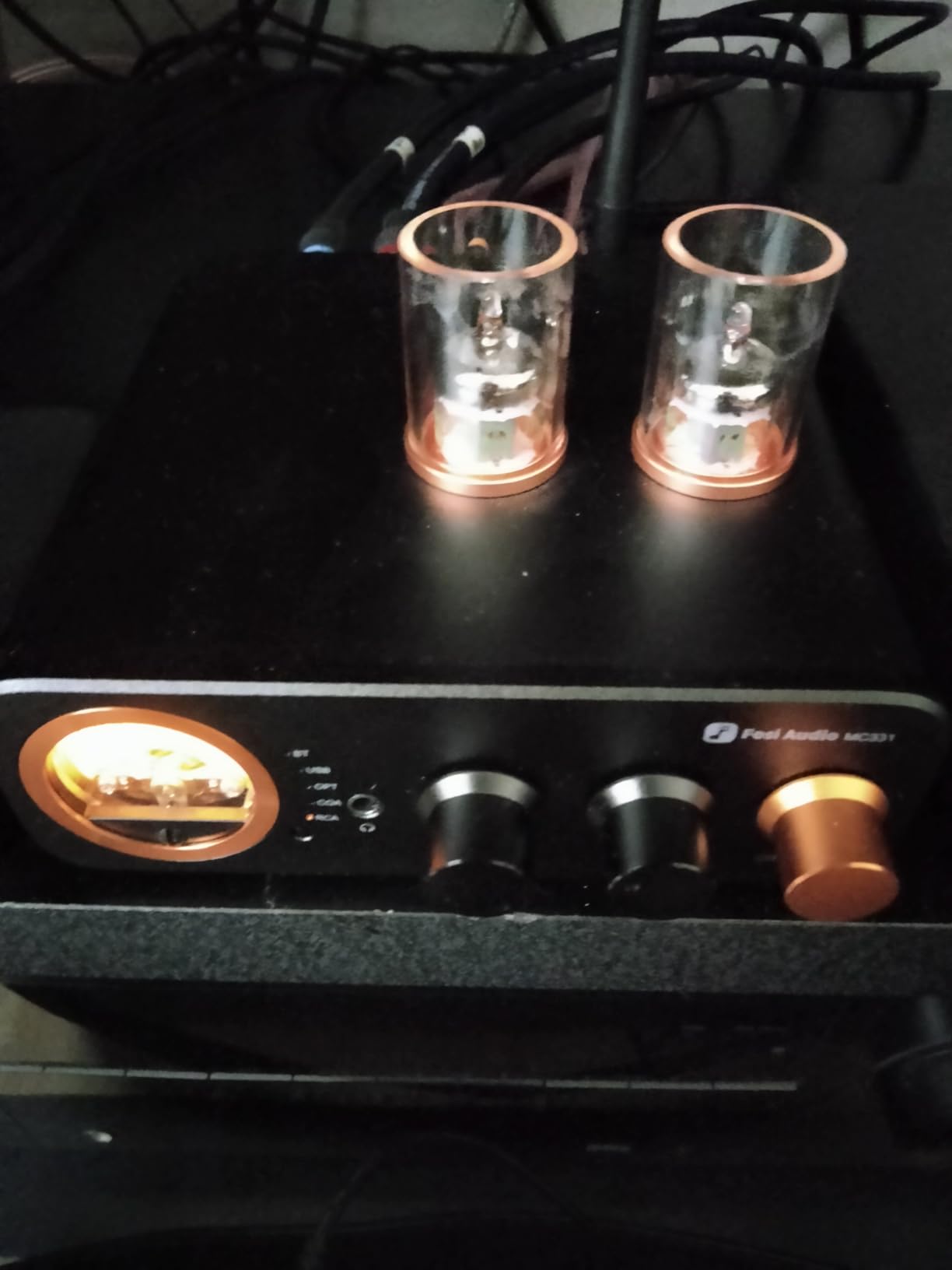
Input flexibility is the real story. Bluetooth, USB, coaxial, optical and RCA, plus a pre-out and a 3.5mm headphone output, means this can be the centre of a system that includes a turntable with no phono stage of its own and a pair of active desktop speakers for nearfield work. The 24-month manufacturer warranty and replaceable tubes extend the useful life well past the initial purchase.
The tube behaviour is a genuine trade-off rather than a bug. The infrared remote is slow and needs a direct line to the front panel, and the sound takes time to settle after the tubes warm up. A few owners also report audible hiss or fuzz at very low listening levels, which matters if you listen at night at low volume.
Whether the tube stage is worth it
If your bookshelf speakers are bright or slightly thin in the treble, the MC331’s warm character is a feature. If you already like a neutral signature and listen at low volumes in a quiet room, the tube stage adds very little and the reported noise floor becomes the deciding factor. It is a taste decision more than a technical one.
What to watch for after buying
Leave ventilation space around the chassis, since it relies on the included 24V supply and runs warm in an enclosed cabinet. Budget a few minutes for the tubes to warm before judging the sound, and set expectations on the remote. Replaceable tubes mean the design ages better than a fixed-transistor budget box.
4. Yamaha A-S501BL – Best Amp for Vinyl and Digital Sources Together
YAMAHA A-S501BL Natural Sound Integrated Stereo Amplifier (Black)
85W plus 85W at 8 ohm at 0.019 percent THD
Coaxial and TOSLINK optical inputs
Phono stage
Speakers A, B and A plus B
Pros
- Clean
- neutral
- detailed sound with plenty of power
- Dependable Yamaha build quality
- Phono stage plus digital inputs for flexible sources
- A
- B and A plus B switching for multiple speaker pairs
Cons
- No built-in Bluetooth or network streaming
- Some owners find the internal DAC output rolled off below roughly 100Hz
- Only a single phono input
The A-S501 is the textbook answer to the question most people ask: an integrated amplifier that accepts a turntable and a digital source at the same time and drives a pair of bookshelf speakers cleanly. It puts out 85W + 85W into 8 ohm with 0.019 percent THD, and it weighs 22.7 pounds, which tells you immediately that the power supply is a real one.
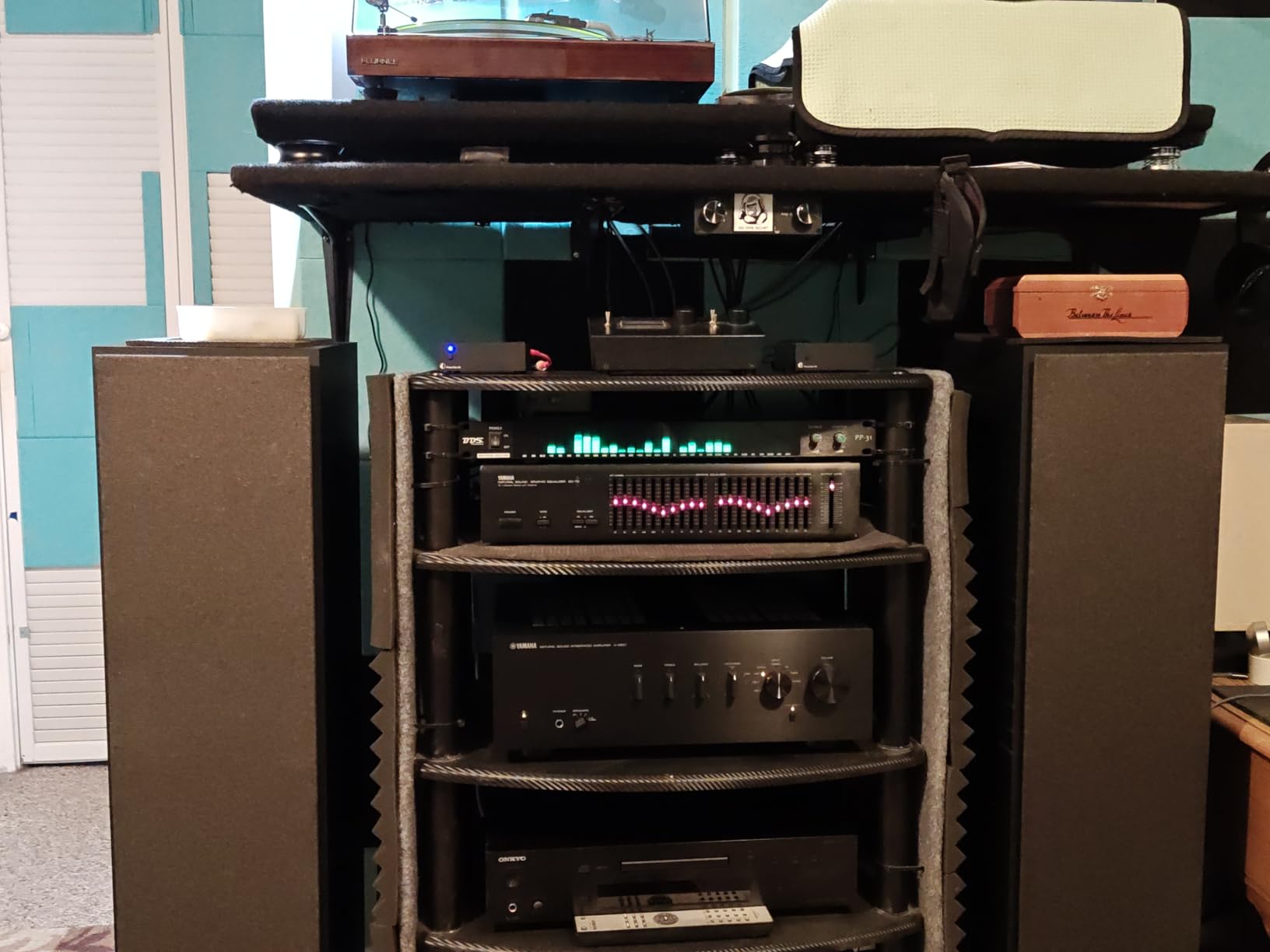
Reviewers describe it as dependable and well built, with a neutral presentation that does not editorialize the music. The A/B/A+B speaker switching is genuinely useful if you want one pair in a living room and another in an office, which is the same two-zone logic that drives people toward budget receivers.
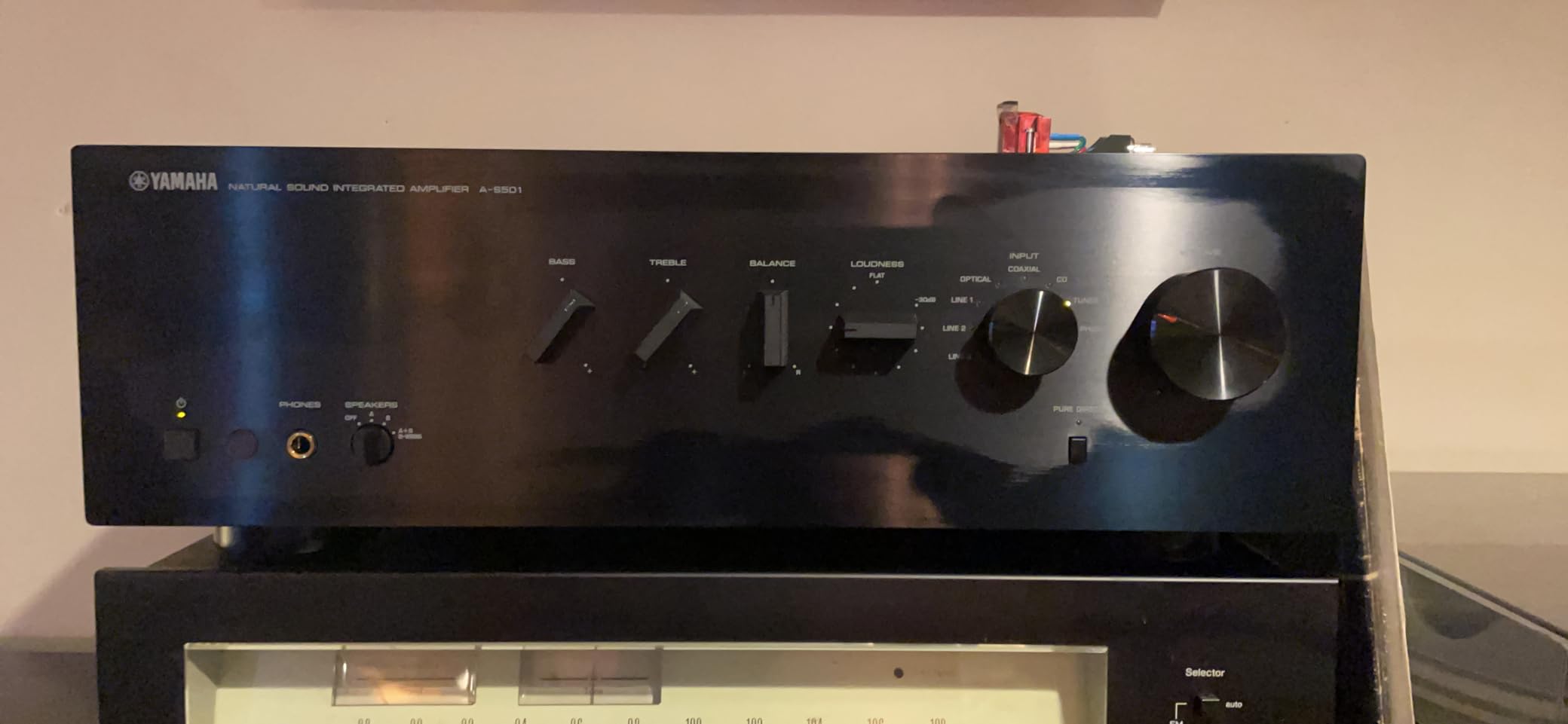
Gold plated coaxial and TOSLINK optical inputs cover a TV, a streamer or a game console through optical, and the analog inputs include a phono stage. What it does not do is stream. There is no Bluetooth and no Wi-Fi, which means adding wireless audio later means adding a separate streamer, and the extra box and the extra menu are the honest cost of buying a traditional amplifier.
The most technical criticism in reviews concerns the internal DAC rather than the amplifier. Some owners report the digital output rolling off below roughly 100 Hz, which affects subwoofer integration more than stereo imaging. The amplifier section itself draws very few complaints.
How to pair it with your bookshelf speakers
85 watts per channel is a comfortable match for most 6 to 8 ohm bookshelf speakers rated 85 dB sensitivity or above, in a room up to roughly 250 square feet with normal placement. Speakers rated 4 ohm or below 85 dB will want the A-S701’s extra headroom instead. Nothing here requires careful volume discipline to avoid straining the amp.
Who should look past it
If your sources are entirely wireless, or if you want the amp to disappear into a cabinet, this is the wrong shape of product. It is a full-width component with a real transformer inside, so it needs shelf space and airflow. People who want streaming and silence about it should read the WiiM entry again.
5. Denon PMA-600NE – Best Sound for the Money on Demanding Bookshelf Speakers
Denon PMA-600NE Bluetooth Stereo Amplifier, 2 Channel Amplifier Home Audio
70W into 4 ohms
AHC push-pull output stage
2 optical, 1 coaxial and 1 phono input
RCA subwoofer output
Pros
- Warm yet detailed sound with excellent clarity and soundstage
- Internal DAC rivals dedicated streamers
- Built-in phono stage performs well for vinyl
- Analog Mode disengages the digital circuitry
- Handles demanding bookshelf speakers
Cons
- Remote volume is slow and coarse and lacks tone control
- Input selector lettering is small and dimly lit
- Loud relay clicks and a delay when switching inputs
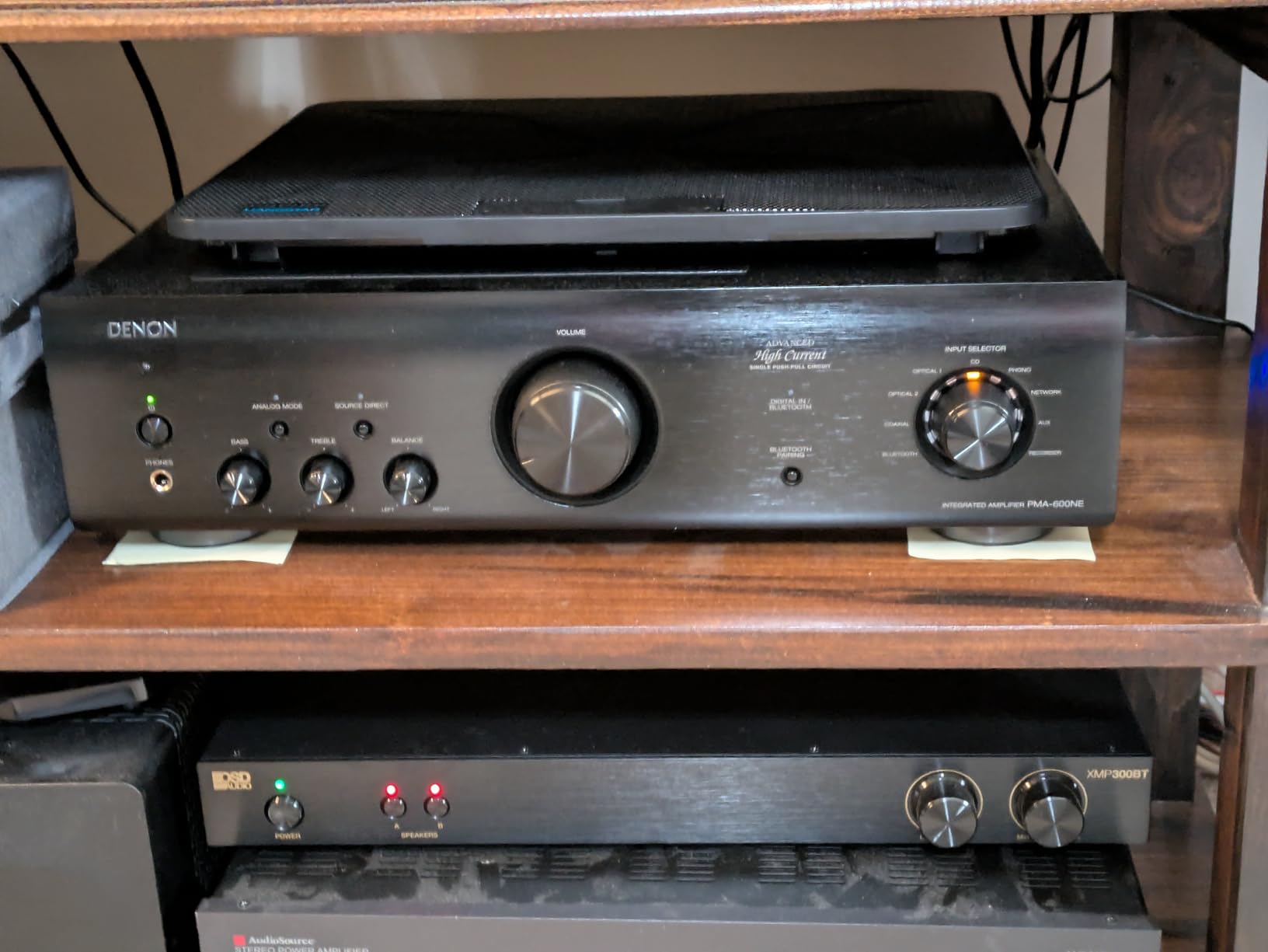
The PMA-600NE carries the highest average rating of any amp in this guide, and the reasons are consistent across its reviews: warm, detailed sound, a genuinely useful internal DAC and a phono stage that works without fuss. Denon’s Advanced High Current push-pull circuitry is rated at 70W into 4 ohms, which is a more meaningful figure for real bookshelf speakers than a headline 8 ohm wattage number.
Owners specifically report it driving demanding pairs such as the ELAC Debut B5.2 and the JBL E60s, which are exactly the low-impedance, lower-sensitivity models that expose a small amp. At 18 pounds it is still a slim, vibration-resistant chassis that fits ordinary furniture.
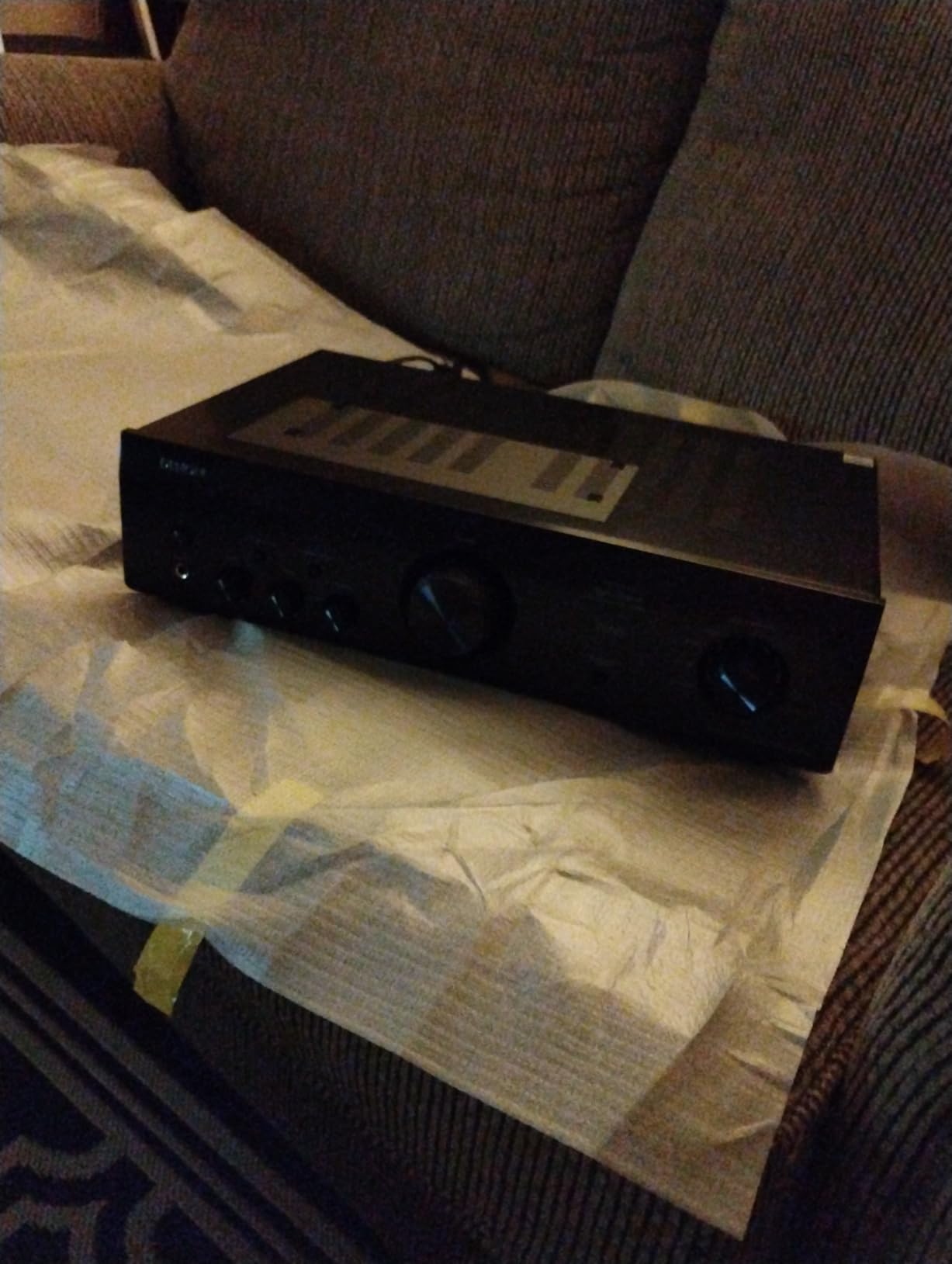
Analog Mode is the detail that separates it from cheaper integrated amps. Because the circuitry is divided, you can disengage the digital sections entirely and use the phono stage as a purely analog path, which is the sort of thing that matters to a subset of listeners and is ignored by everyone else. There is also an RCA subwoofer output, rare at this level and useful if your bookshelf speakers need help in the lowest octave.
The controls are the weak point. The remote volume is slow and coarse, and it does not include tone controls, which is an odd omission. Reviewers also mention loud relay clicks and a delay when changing inputs, plus input lettering that is hard to read in a dim room.
Why it suits harder bookshelf loads
The high-current push-pull stage is designed to stay composed into lower impedances rather than folding up when the load dips. That is why reviewers pair it with 4 ohm, less sensitive speakers without mentioning strain, and why it holds its character at higher volume than the compact Class D boxes in this list. Two optical inputs, one coaxial and one phono cover most source combinations.
Where it is not the answer
It has no Wi-Fi streaming, and its Bluetooth is the simple kind rather than a platform. If your music lives entirely in the cloud and you value grouping it with speakers elsewhere in the house, the WiiM Amp Pro does that job better. The 3-year manufacturer warranty is the longest here, which matters if you intend to keep it for a decade.
6. Cambridge Audio AXA35 – Best Compact Amp for Nearfield Listening
Cambridge Audio AXA35 Integrated Amplifier with Built in Phono Stage (Silver)
35 watts into 8 ohms
4 RCA plus phono plus front aux
82dB signal to noise
3.3 inch tall metal chassis
Pros
- Clean
- clear sound from a well-regarded British brand
- Built-in phono stage for turntables
- Slim understated metal design with front aux input
- Generous connectivity for a compact integrated amp
Cons
- 35W per channel is modest for less efficient bookshelf speakers
- No Bluetooth or network streaming
- Limited number of reviews reflecting a small user base
The AXA35 makes 35 watts into 8 ohm sound like a deliberate choice rather than a compromise. With a signal-to-noise ratio above 82 dB unweighted and a frequency response rated from 5 Hz to 50 kHz, it is built for nearfield listening at a desk where the listener sits close and the amplifier does not need to fill a large room.
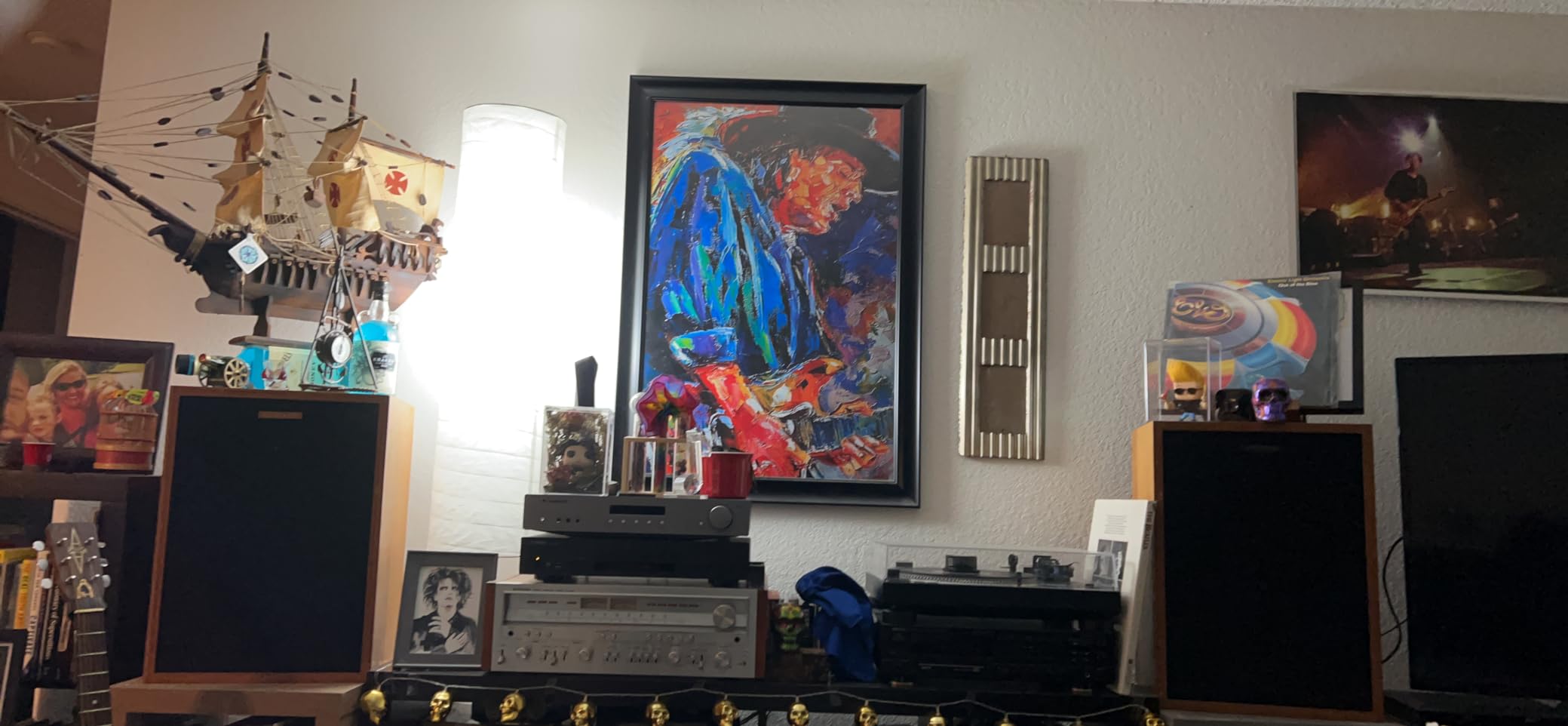
It is also one of the few amps here with a genuinely useful input count for a small system: four RCA line inputs, a phono stage, and a 3.5mm aux on the front panel so you can plug headphones or a phone in without reaching around the back. The metal chassis measures 3.3 inches tall, 16.9 wide and 13.2 deep.
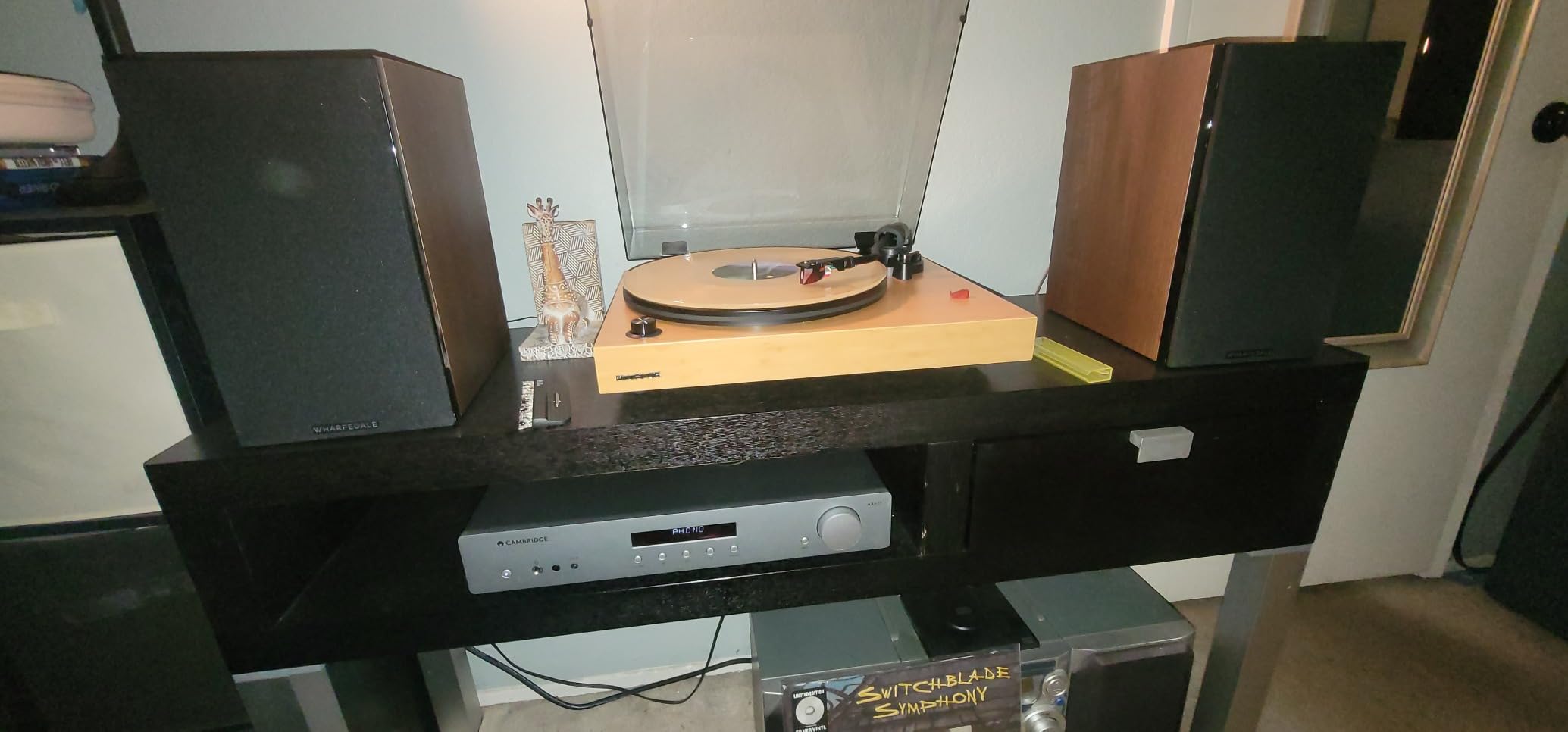
Buyers cite Cambridge Audio’s build quality and an unshowy, tidy presentation that suits a second-room system. It is a natural companion to our small-room bookshelf speaker picks, because it asks very little of the speaker in terms of placement distance and room volume. Nothing about the layout fights your furniture.
The power figure is the honest limitation. Thirty-five watts per channel will not push less efficient bookshelf speakers or a large room to real volume, and reviewers say so plainly. There is also no wireless of any kind, and the review base of 178 is small enough that you are trusting the brand’s reputation more than a long history of owner reports.
Which speakers it drives comfortably
Bookshelf speakers with sensitivity above 87 dB and a nominal 6 or 8 ohm impedance, in a room where you listen within about eight feet of them. That describes most popular small and mid-size two-way speakers. Push past those numbers and you want the Denon or the Yamaha A-S701 instead.
Turntable users should note
The phono stage means a budget turntable with a moving magnet cartridge works with no extra box, and the multiple line inputs leave room for a TV or a tape deck. If you want to add a subwoofer later, there is no pre-out on this amp, so plan for external speakers with better bass extension instead.
7. Dayton Audio HTA100 – Best Hybrid Tube Amp for Headphone Listening
Dayton Audio HTA100 100W Integrated Stereo Hybrid Tube Amp with Bluetooth
50 watts RMS per channel
Tube preamp with class A/B output
USB DAC and Bluetooth 5.0
Headphone jack and VU meters
Pros
- Warm
- slightly rich tube presentation with smooth mids
- Handles higher-impedance headphones well
- USB DAC
- Bluetooth
- digital and phono inputs
- Front headphone jack with banana speaker jacks
- Quiet transformers with no hum and a five-year warranty
Cons
- No remote control included
- Volume disparity between digital and phono inputs
- Channel imbalance on some units below 25 percent volume
The HTA100 is a hybrid: a vacuum tube preamplifier section feeding a class A/B power stage that delivers 50 watts RMS per channel. That topology gives it a warm, slightly rich presentation with smooth mids and relaxed treble, and reviewers consistently describe it as musical rather than analytical.
The front panel headphone jack is the sleeper feature. Owners use it with higher-impedance headphones and report that it performs well for a speaker amplifier, which effectively gives you two devices in one 6.5 by 11 by 8.5 inch box weighing 3.6 pounds. The exposed tubes and VU meters are the visual centrepiece, and the transformers are quiet enough that owners report no hum.
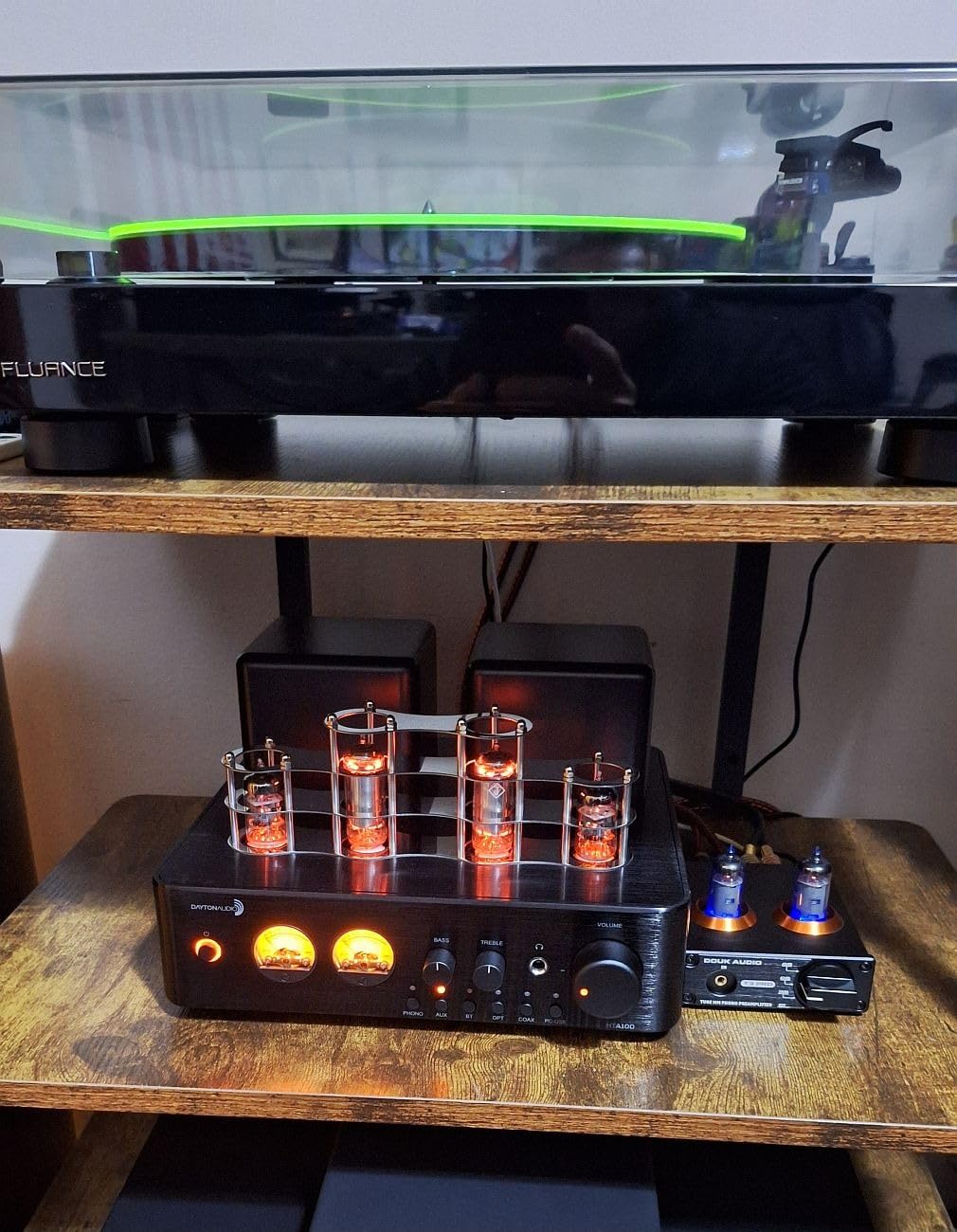
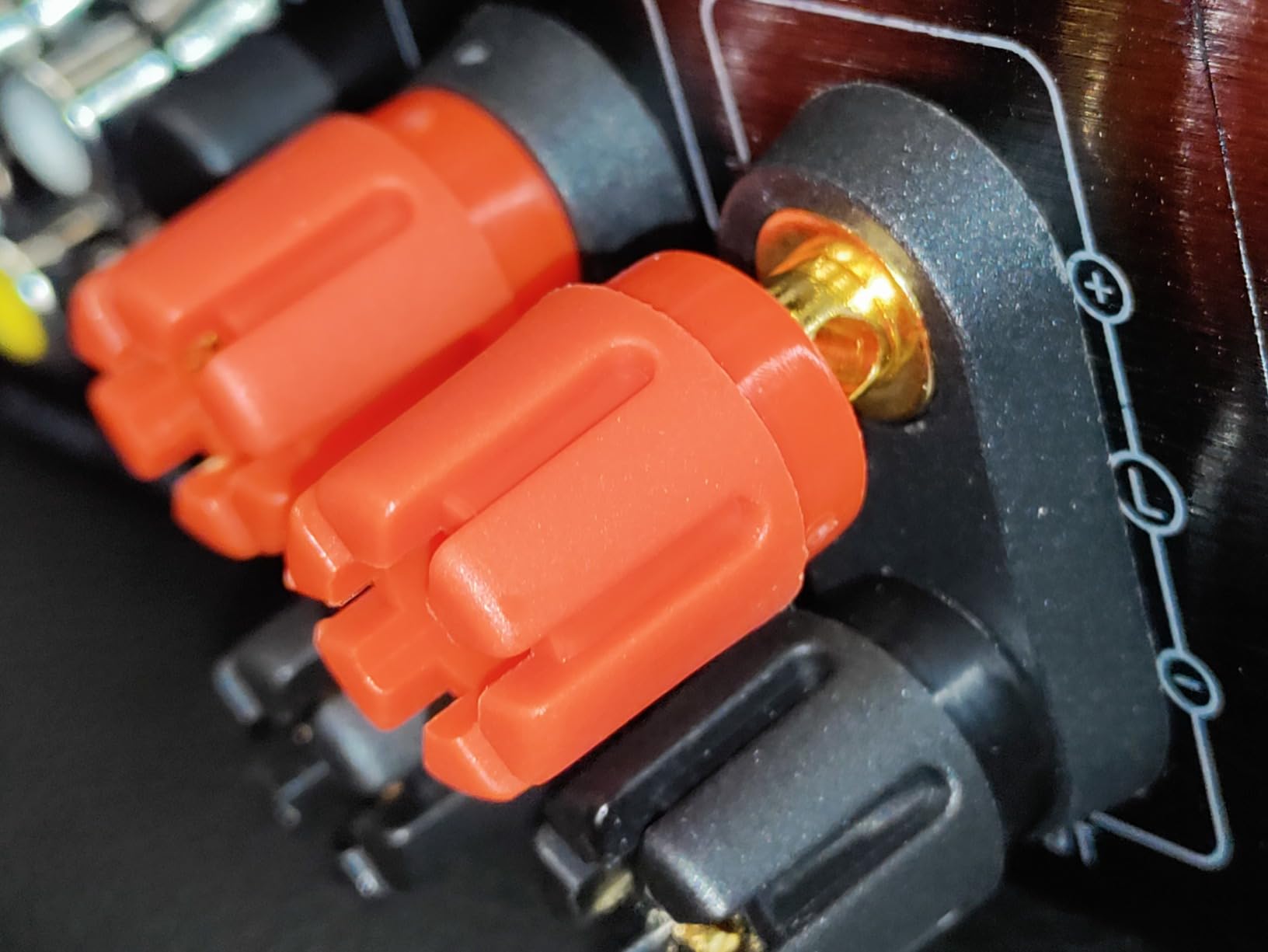
Connectivity covers RCA, Bluetooth 5.0, a USB DAC and a phono preamp, with high conductivity banana speaker jacks for the bookshelf pair. The current revision improved the volume control illumination, the transformer housing and added a headphone amplifier along with a phono ground loop, and the five-year warranty is the longest in this roundup by some distance.
There is no remote control, which is a real inconvenience from a sofa. The phono input arrives at a different level to the digital inputs, so volume positions do not match between sources, and some units show channel imbalance below 25 percent of the volume scale. The USB DAC is also limited to 48kHz/16-bit despite what the printed manual suggests.
Pairing it with warm or bright speakers
A tube preamp flatters slightly lean or bright bookshelf speakers and can make an already full-sounding pair sound congested. Check the speaker maker’s recommended tonal character before choosing. With a 50-watt output stage, efficient 6 to 8 ohm speakers in a bedroom or office are the sweet spot; a large living room wants more watts than this.
Practical setup notes
Leave clearance around the chassis, because some owners report it running warm when pushed hard. Set the phono level once and note the volume position for future records, and treat the 48/16 USB limit as a reason to stream over Bluetooth or optical instead. If the tube glow is the point for you, this is the cheapest way to get it.
8. Yamaha A-S701BL – Best Amp for Power-Hungry Bookshelf Speakers
Yamaha Audio A-S701BL Natural Sound Integrated Stereo Amplifier (Black)
100W plus 100W at 8 ohm at 0.019 percent THD
Pure Direct mode
Coaxial and TOSLINK inputs plus phono
Speakers A, B and A plus B
Pros
- Clean
- powerful and accurate sound with an excellent soundstage
- Premium construction that feels substantial
- Pure Direct mode noticeably improves clarity
- Variable loudness control useful at low levels
- Reliable with vinyl
- CD and streaming sources
Cons
- No pre-out and the rec-out selector was removed
- Subwoofer output has a fixed 90Hz low-pass with no adjustment
- No Bluetooth or network streaming
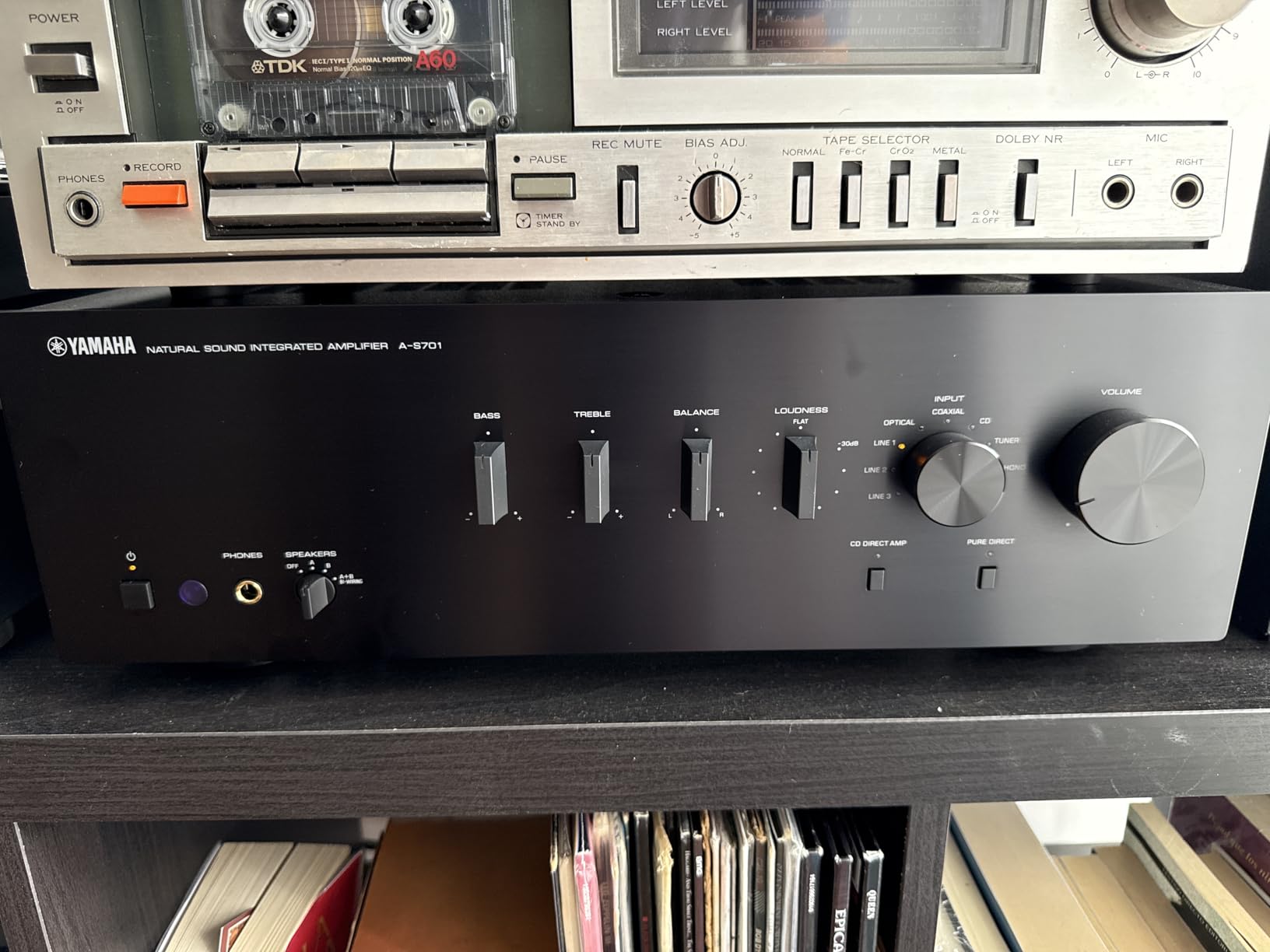
The A-S701 doubles the A-S501’s power to 100W + 100W into 8 ohm at the same 0.019 percent THD, and it weighs 24.7 pounds. That combination of headroom and silence is what makes it the right choice for larger or less sensitive bookshelf speakers, and owners compare its performance favorably to far more expensive separates.
Pure Direct and CD Direct modes bypass parts of the signal path, and reviewers report a noticeable clarity improvement with them engaged. The variable loudness control is genuinely useful for late listening, where a linear volume control pushes you toward the quiet end of the range where the ear is least sensitive.
Digital coax and TOSLINK optical inputs handle a TV and a Blu-ray player, phono handles vinyl, and speakers A, B and A plus B give you two pairs plus the ability to run both. That flexibility is why it shows up in second-room and workshop systems as often as in main listening rooms.
Two omissions are worth planning around. There is no pre-out, and the rec-out selector has been removed, so you cannot feed a separate power amplifier or a subwoofer with adjustable crossover filtering. The subwoofer output is fixed at a 90 Hz low-pass with no adjustment. If you plan a serious two-way system with a separate amplifier, this is not the box.
When you actually need this much power
Pair it with bookshelf speakers rated 4 ohm or below 85 dB sensitivity, or with any pair you intend to push to genuine high volume in a room bigger than a bedroom. One of the loudest arguments on the Audiogon forum is that low-power amps pair best with efficient bookshelf speakers, and that is largely true; the reverse is also true, that hungry speakers need real current.
Honest drawbacks
It has the lowest average rating in this group at 4.2, and the shortfall comes from features rather than sound: no Bluetooth, no network streaming, no pre-out and a fixed subwoofer filter. A small number of owners also report one speaker set failing after several years. With a one-year limited warranty, buy it from a seller with straightforward returns.
9. Sony STRDH190 – Best Amp for a First Bookshelf Speaker System
Sony STRDH190 2-ch Home Stereo Receiver with Phono Inputs & Bluetooth Black
100 watts x 2 at 8 ohm at 1kHz
Phono input plus 4 stereo RCA inputs
Bluetooth streaming
A and B switching for two zones
Pros
- Excellent sound and connectivity for the money
- Very good built-in phono stage
- Strong clean power to drive all four speaker pairs
- Reliable Bluetooth pairing with phones and tablets
- Four line inputs plus FM with 30 presets
- Low profile chassis that fits AV cabinets
Cons
- Very small
- flimsy clamp-down speaker terminals
- Almost all functions are only available on the remote
- No front panel tone or headphone volume controls
- No subwoofer pre-out or HDMI
With more than 10,000 reviews averaging 4.5, the STRDH190 is one of the most widely used stereo units in home audio, and the reason is straightforward: it puts out 100 watts x 2 into 8 ohm at 1 kHz across a 6 to 16 ohm speaker impedance range, which covers essentially every bookshelf speaker on the market.
It is a receiver rather than a bare integrated amplifier, so the tuner is part of the package with 30 FM presets. Four stereo RCA line inputs, a 3.5mm jack and a phono input cover a turntable, a streamer and a TV, and Bluetooth covers phones and tablets. Owners frequently call it the best value in home audio.
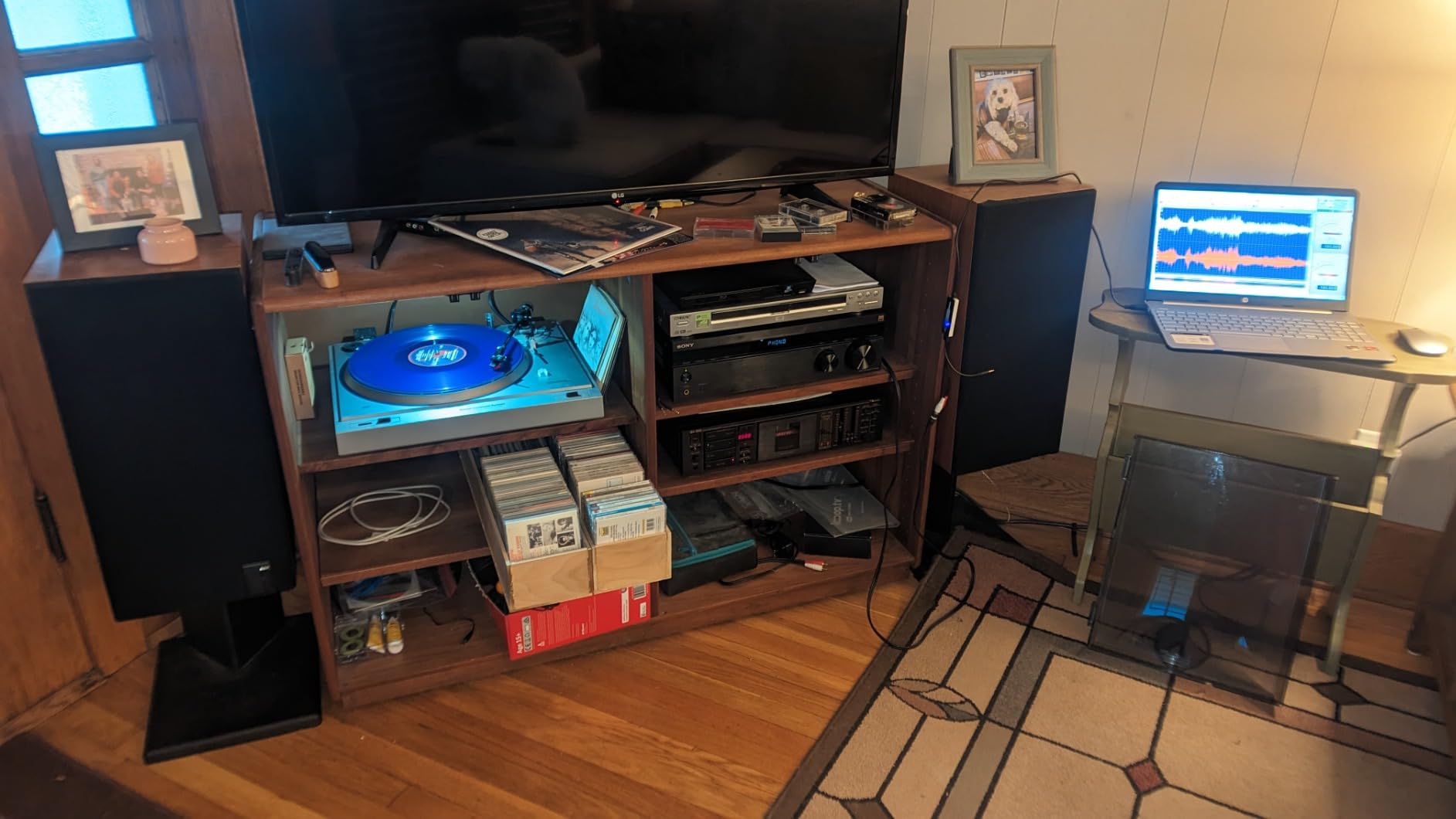
The A/B switching can run up to four speakers, which means a pair in a living room and a pair in a kitchen or office from one unit. The low profile 5.25 inch tall chassis fits standard AV cabinets, a practical consideration that removes the bulk problem entirely. It also carries a full-size quarter-inch headphone jack on the front.
The most cited weakness in reviews is the speaker terminals. They are small clamp-down types that barely accept real speaker wire, so plan on banana plugs or thinner cable and allow time to seat them properly. Beyond that, almost every function lives on the remote, with few front-panel controls and no front-panel tone controls or headphone volume.
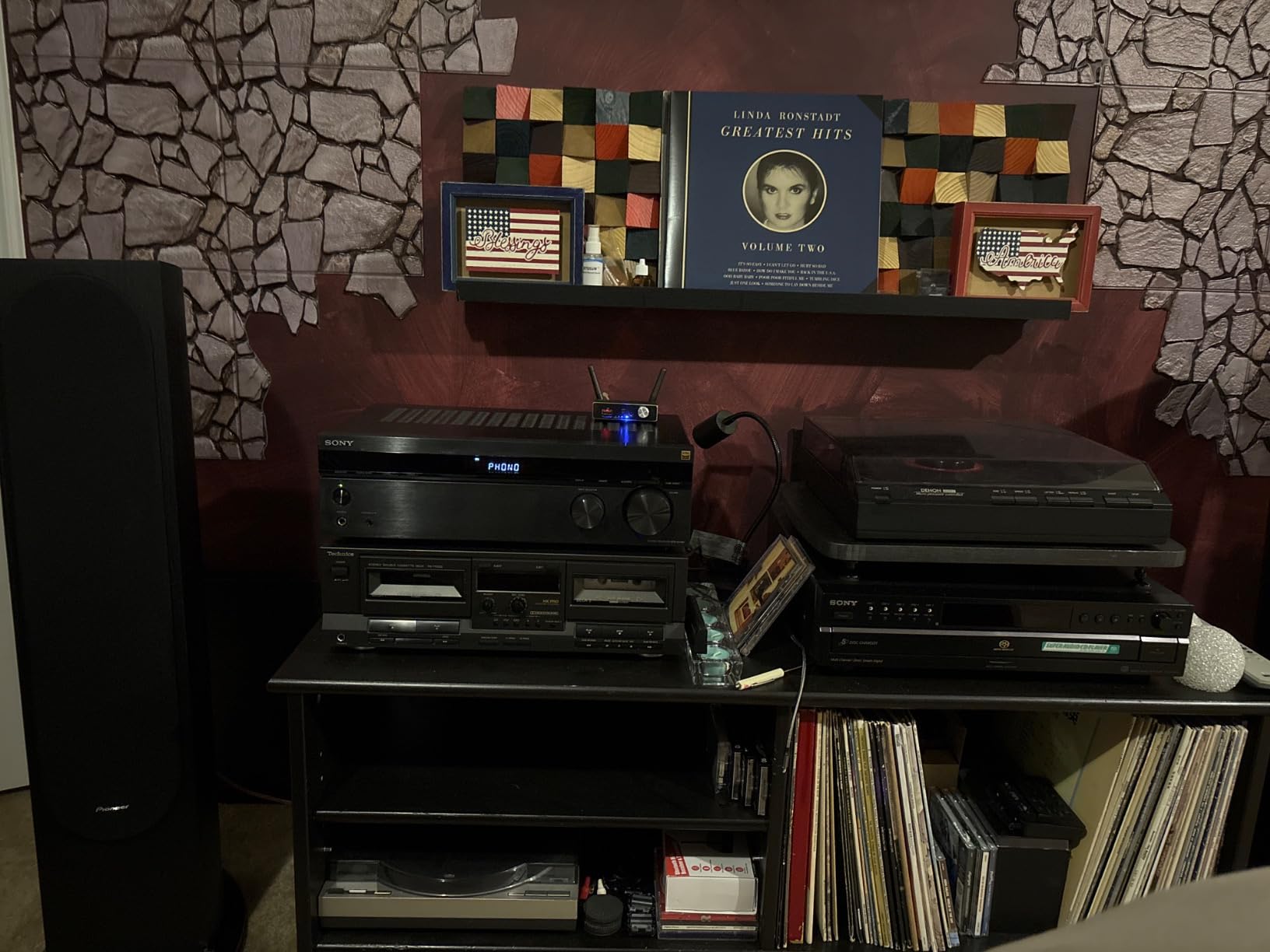
Speaker compatibility and future additions
The 6 to 16 ohm impedance range makes it one of the safest amps here for unknown speakers, which matters when it is your first system and you have not settled on a model yet. The missing piece is a subwoofer pre-out: there is no HDMI and no pre-out, so adding a sub means either a speaker-level output from a sub or a separate amplifier.
Best for first-time buyers
It is the least complicated way to own a full stereo system, because the phono stage means a budget turntable works immediately and the volume control is on the front. If you want the smallest possible box, the Fosi BT20A is a fraction of the size, and if you want more refinement per watt, the Denon is the upgrade path later.
10. Yamaha R-S202BL – Best Budget Amp for a Second Speaker Zone
YAMAHA R-S202BL Stereo Receiver
85W rated output at 8 ohm
Bluetooth 4.1 plus EDR
Two-speaker selector
40 FM and AM presets
Pros
- Clear
- full and lively sound at an affordable price
- Reliable Bluetooth streaming from phones and computers
- Excellent FM tuner sensitivity
- Two-speaker selector for separate zones such as patio and garage
- Simple brushed aluminum design with a functional remote
Cons
- No optical
- HDMI or digital audio inputs
- No subwoofer pre-out
- Volume control is unusable below roughly 45 percent of its scale
- Flimsy spring-clip speaker terminals
The R-S202 is the cheapest way into a two-zone system, and the reason is the speaker selector with terminals for two speaker systems. Run a pair of efficient bookshelf speakers in a bedroom and another pair on a covered patio from one unit, and it covers the garage, workshop and second-room use cases that forum buyers ask about constantly.
Output is 85W rated, 100W maximum, into 8 ohm, with a 10 Hz to 100 kHz frequency response. Bluetooth 4.1 with EDR handles phone streaming, and the 40-preset FM and AM tuner is described by owners as unusually sensitive, which matters if your signal comes from an antenna on a rural property.
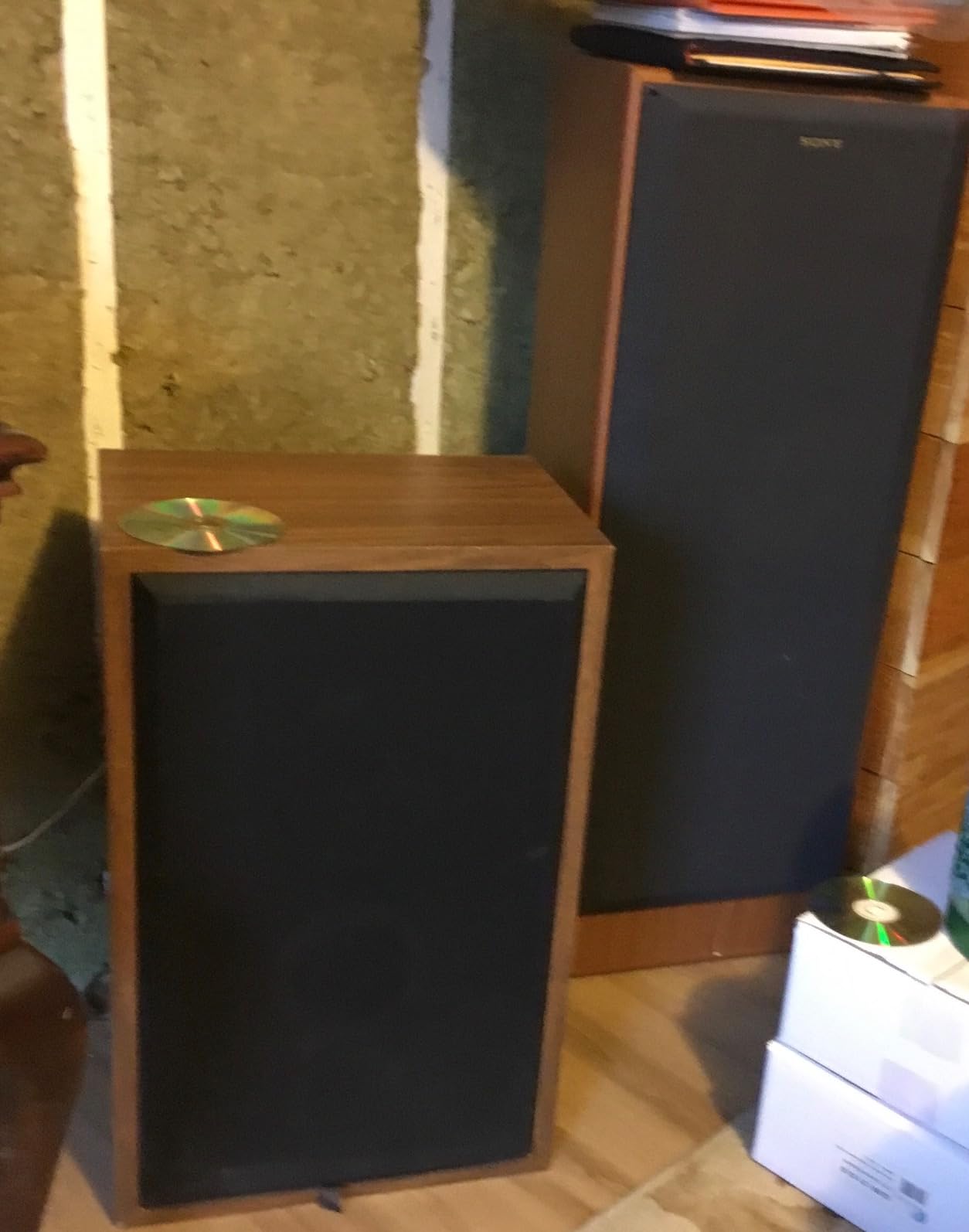
Three line inputs plus a CD input, a headphone terminal and auto power standby make it a simple box you can leave running. Reviewers describe the sound as clear, full and lively, which is a good match for the lively character many budget bookshelf speakers have, and with 5,409 reviews there is a deep base of owner experience behind it.
The absence of any digital input is the deal-breaker for TV use. There is no optical, HDMI or coaxial input and no subwoofer pre-out, so connecting a television requires an external converter. The volume control also becomes effectively unusable below roughly 45 percent of its scale, and the soft, recessed treble cannot be fully corrected by the tone control.
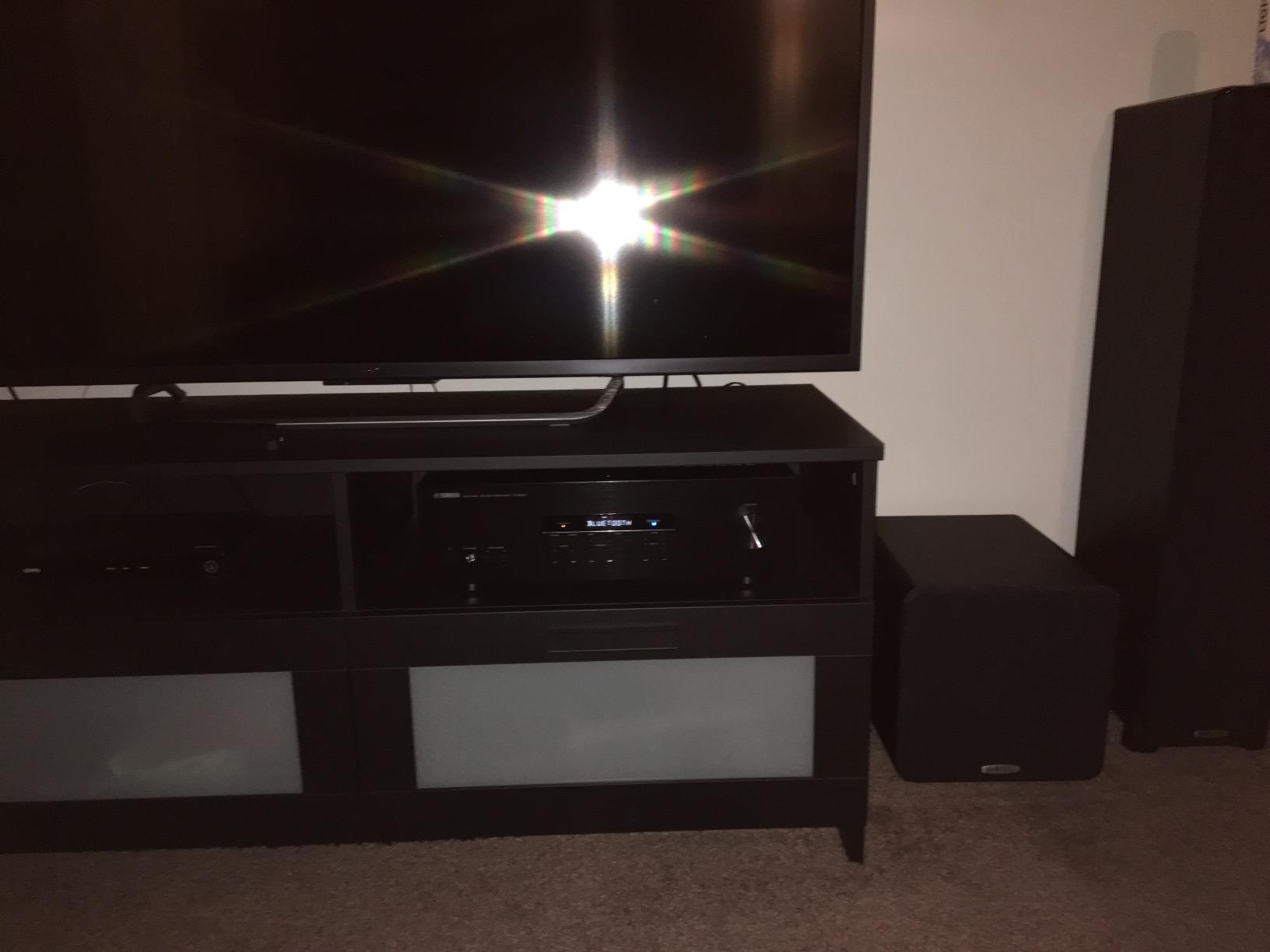
Where the two-speaker selector earns its place
This is the feature that separates it from every other budget amp here. A patio or garage pair only needs modest volume, so the second zone costs you nothing extra in hardware and works with almost any efficient bookshelf speaker. Keep both pairs on 8 ohm, and the amp has plenty of headroom for both.
When to buy something else
Buy something else if a television is part of your system, if you plan a subwoofer, or if you listen at very low late-night volumes where the volume scale becomes a problem. Any amp with a digital input and a proper attenuator solves all three, and the money saved here is better spent on speakers.
How to Match an Amplifier to Your Bookshelf Speakers
Do bookshelf speakers need an amplifier?
Yes, if they are passive speakers. Passive bookshelf speakers contain only drivers, crossover and a terminal, with no amplification of their own, so an external amplifier is required to boost a line-level signal into enough voltage and current to move the cones. Without one they make no sound at all. Active or powered speakers, and Bluetooth or Wi-Fi speakers, already contain their own amplification and need no separate amp.
Match on impedance first
Impedance is the speaker’s electrical resistance measured in ohms, and most bookshelf speakers are nominal 6 or 8 ohm, with dips to 4 ohm or lower in the bass. Connecting a higher-impedance speaker to a lower-impedance amp is safe: the amp simply has less work to do. The reverse is the risk, because an amp asked to hold 4 ohm must stay stable at that load, and some small units clip, oscillate or shut down.
Every amp in this guide is rated to drive a 4 ohm load or the manufacturer does not claim it. That is why the WiiM Amp Pro quoting 120 watts into 4 ohm, the Denon quoting 70 watts into 4 ohm and the Sony quoting a 6 to 16 ohm range are all safe choices for popular budget bookshelf speakers.
Then match on sensitivity
Sensitivity measures how loud a speaker sounds with one watt at one metre, and it is usually printed on the specification sheet in dB. A speaker rated 86 dB needs roughly four times as much amplifier power as one rated 92 dB to reach the same volume. The common misconception, argued at length on forum audiogon discussions, is that bigger amplifiers always sound better. The opposite is frequently true: a small high-quality amplifier paired with an efficient speaker is the better system.
Rule of thumb for a normal room: 30 to 50 watts per channel is plenty for speakers at 88 dB sensitivity or higher. Below 85 dB, or below 4 ohm, look for 85 watts per channel or more. Room size matters more than wattage, so a pair of efficient speakers in a large room can need less than an inefficient pair in a small one.
Worked example: two common speaker types
Take a popular 4 ohm bookshelf speaker rated at 86 dB sensitivity in a 200 square foot room. With a target of about 70 dB at the listening position, roughly 20 watts per channel at the speaker will get you there at moderate volume, which is exactly why the AXA35 at 35 watts and the Dayton HTA100 at 50 watts handle it comfortably. Now take an 8 ohm speaker rated at 87 dB in the same room: it needs about half that power, so a compact Class D amp is genuinely enough. The extra 100 watts of the Yamaha A-S701 only becomes necessary when you want to play the same pair far louder, or in a much larger space.
Phono inputs, DACs and streaming
If you run a turntable with a moving magnet cartridge, buy an amp with a phono stage unless you already own one. Six amps here include it: the Sony STRDH190, the Yamaha A-S501 and A-S701, the Denon PMA-600NE, the Cambridge AXA35 and the Dayton HTA100. The Fosi MC331 has no phono stage despite its tube preamp, so a turntable needs an external step-up there.
A built-in DAC matters only if you have digital sources. If you plan to stream, the WiiM Amp Pro does Wi-Fi, Bluetooth, HDMI ARC and room correction in one box that replaces a streamer, a DAC and an amplifier. If your sources are analog, a purist path like the Denon’s Analog Mode, which disconnects the digital circuitry entirely, may suit you better than any streaming feature.
Pairing recommendations for popular bookshelf speakers
Because impedance and sensitivity drive the decision, the amp tier follows the speaker model. Our picks for bass amplifiers matter only if your speakers genuinely need help in the lowest octave, and guitar amplifiers are a different category entirely, so judge any hi-fi amp on the numbers below rather than on its heritage.
- Small 8 ohm speakers near 87 dB sensitivity in a bedroom or office: the Fosi BT20A or the Cambridge AXA35. Both are small, both are unfussy, neither needs much current.
- 4 ohm speakers around 85 to 86 dB in a living room: the Denon PMA-600NE or the Yamaha A-S701. Both stay composed at volume and both accept a phono stage.
- Speakers you want to drive hard in a large room: the Yamaha A-S701 for clean power alone, or the Sony STRDH190 if you also want a tuner and two speaker zones.
- Bright or slightly thin speakers that need smoothing: the Fosi MC331 or the Dayton HTA100, both of which put a tube stage in front of the power section.
- Passive speakers plus a television plus streaming: the WiiM Amp Pro, with HDMI ARC and a powered subwoofer output.
Used, refurbished or new
Used amplifiers are a sensible buy in this category, and forum recommendations regularly include models like a used Monitor Audio A100 chosen partly because it takes up less space than alternatives. Check that the speaker terminals are solid, that the phono stage is present if you need one, and that the unit has no corrosion or fan noise. A five-year warranty like the Dayton HTA100’s is worth paying for on a component that will sit in a rack for a decade.
Quick-start setup order for a new system
- Place the speakers first, then the amplifier, then the sources.
- Start with the tone controls flat and the volume low.
- Run the speakers before tightening the terminals, using the channel test to confirm each side is connected correctly.
- Set a listening level you like on your most demanding track, then leave headroom above it.
- Only then start moving the tone controls, in small steps.
Frequently Asked Questions
Do bookshelf speakers need an amplifier?
Passive bookshelf speakers contain no amplification of their own, so they do need an external amplifier. The amp takes a line-level signal from a turntable, streamer, TV or phone, adds volume control and tone shaping, and delivers the voltage and current needed to move the drivers. Active or powered speakers, and Bluetooth or Wi-Fi speakers, already have amplification built in and need no separate amp.
How do I match an amplifier to my bookshelf speakers?
Check three numbers in order. First, the speaker’s nominal impedance: if it dips below 4 ohm, make sure the amplifier is rated for 4 ohm. Second, sensitivity in dB: speakers at 88 dB or above need only about 30 to 50 watts per channel, while speakers below 85 dB want 85 watts or more. Third, room size and how loud you listen. A higher-impedance speaker on a lower-impedance amplifier is always safe.
How much power do bookshelf speakers really need?
Most popular bookshelf speakers rated 6 or 8 ohm with sensitivity at or equal to 86 dB need only 30 to 50 watts per channel in a small or medium room. Low-sensitivity speakers below 85 dB, 4 ohm loads and large rooms push the requirement to 85 watts per channel or more. Headroom matters more than raw wattage, so a small high-quality amplifier paired with an efficient speaker often sounds better than an oversized one.
Can I connect 8 ohm speakers to a 4 ohm amplifier?
Yes, and it is the safe direction of the mismatch. A speaker rated 8 ohm on an amplifier rated for 4 ohm simply presents less of a load, so the amplifier has more headroom and runs cooler. The risky direction is connecting a 4 ohm speaker to an amplifier that is only stable into 8 ohm, because some units clip, oscillate or shut down under that load. Check the manual for the lowest recommended impedance.
Do I need an amplifier with a built-in DAC and streaming?
Only if you have digital sources. A built-in DAC is useful for optical, coaxial or USB sources, and streaming adds Wi-Fi and Bluetooth for services. If your sources are entirely analog, a purist path can be better: the Denon PMA-600NE has an Analog Mode that disconnects the digital circuitry completely. If you want to remove a streamer and a DAC from your rack, the WiiM Amp Pro does both alongside 60 watts per channel at 8 ohm.
Which stereo amplifier is considered the best?
There is no universal answer, because the best amplifier is the one whose impedance rating, current capability and power match your speakers and your room. In this roundup the Fosi BT20A is the best overall compact choice, the Denon PMA-600NE delivers the strongest combination of rating and sound quality, the Yamaha A-S701 offers the most headroom for demanding speakers, and the WiiM Amp Pro is the pick when streaming and HDMI ARC matter most.
Conclusion: The Best Stereo Amplifiers for Bookshelf Speakers in 2026
Ten amps, one clear winner. The Fosi Audio BT20A takes our top slot because it does the fundamentals better than anything else at the compact end: 100W x 2 maximum output, Bluetooth plus RCA, a 567 gram chassis and a 24-month warranty, in a box that fits anywhere a speaker does. The Denon PMA-600NE is the one to buy instead if sound quality per pound matters more than footprint, and the Yamaha A-S701 is the answer when your speakers are hungry or your room is large.
Start from your speakers, not from a brand list. Find the impedance and the sensitivity, pick an amp rated for that load, then check whether you need a phono stage, a DAC or streaming. Match on the numbers and any of these ten will serve a pair of bookshelf speakers properly, which is more than most people need from a component they plan to keep for years.