
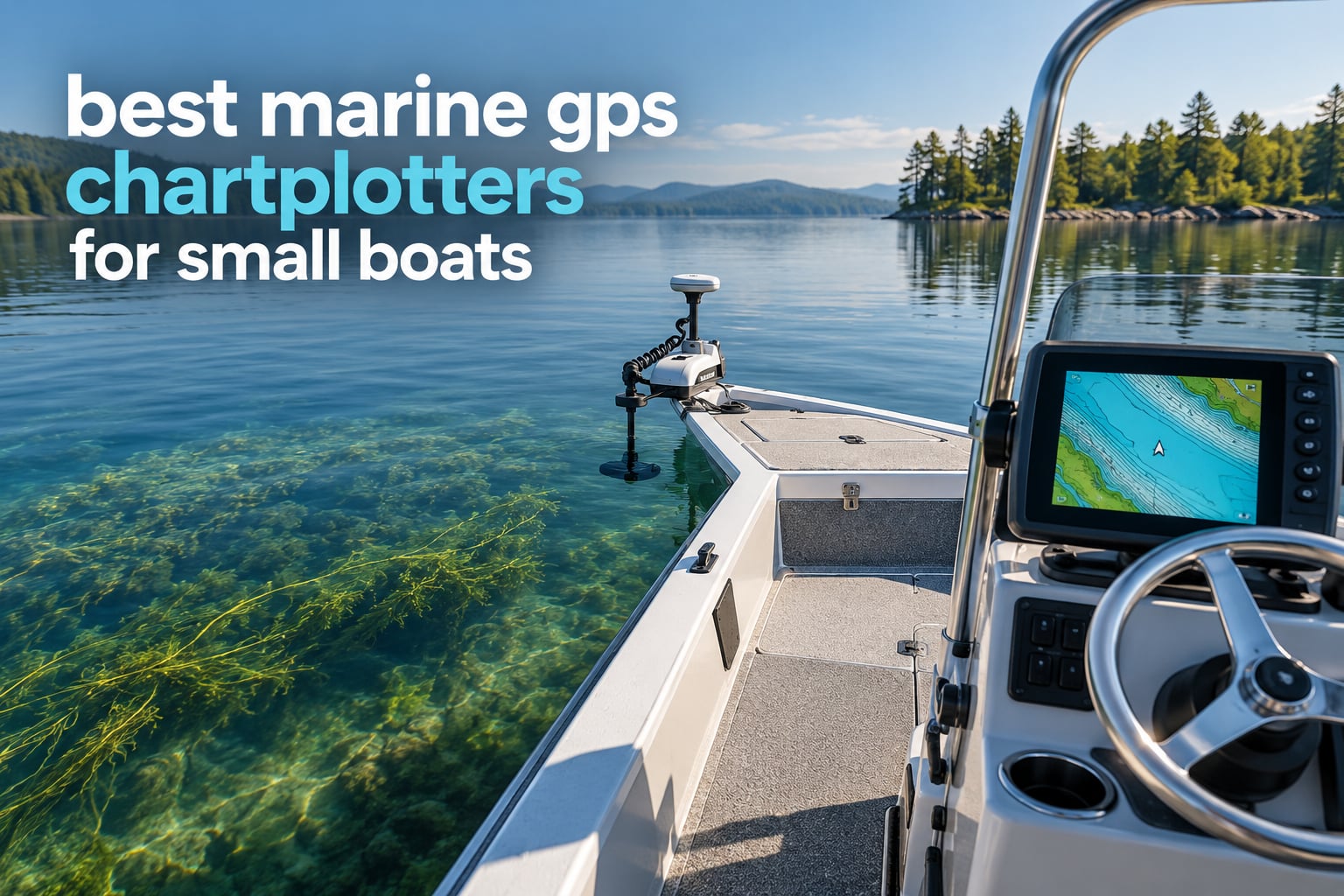
A 16 foot jon boat does not have a dash. It has a rail, a battery and a trolling motor cable, and that single fact decides most purchases in this category. The best marine GPS chartplotters for small boats are rarely the units with the biggest screens. They are the ones that fit the space you actually have, stay readable in direct sun, and work with wet hands on a pitching deck.
Our team compared eleven chartplotter and fishfinder GPS combo units across the three things that matter on a small craft: console fit, sonar type, and what charting you get without opening a second box. Two of these ship as fishfinders with navigation built in, one is a true handheld, and the rest are fixed-mount displays. That mix matters because plenty of people searching for a chartplotter for a small boat actually want a sounder with a map, not a networked multifunction display for a console that does not exist yet.
Everything below is organised around boat type rather than brand loyalty. If you are still choosing the hull first, our jon boat roundup covers the platforms these units get installed in, and the best coolers for boats guide covers the rest of a compact console. We also flag where installation skill matters, because a unit that takes a weekend of rewiring is a different purchase for most people than one that mounts with two screws.
Table of Contents
Top 3 Picks: Best Marine GPS Chartplotters for Small Boats
Our overall pick is the Lowrance Elite FS 10 inch package, which arrives with a three-in-one sonar bundle and preloaded C-MAP DISCOVER charts, then scales to NMEA 2000 and Ethernet when you are ready. The best value pick is the Humminbird Helix 5 CHIRP GPS G3, a rugged keypad unit many owners run for years on a transom. The top rated pick is the Humminbird Helix 7 CHIRP SI GPS G4, which adds side imaging at a screen size that still fits a small console.

Lowrance Elite FS 10 inch
- 10 inch multi-touch display
- 3-in-1 CHIRP SideScan DownScan transducer
- C-MAP DISCOVER charts preloaded
- Wireless plus NMEA 2000 and Ethernet

Humminbird Helix 5 CHIRP GPS G3
- Dual Spectrum CHIRP
- Softkey keypad control
- Basemap with 10000+ lakes
- Transom transducer included

Humminbird Helix 7 CHIRP SI G4
- CHIRP Side Imaging
- CHIRP Down Imaging
- Bright 7 inch color TFT
- AutoChart Live mapping
Two caveats before the full list. Screen size is the single biggest reason returns happen, so measure your mounting location before you read further. Every unit here also needs a transducer and a power run, and those two costs often decide the comparison more than the head unit does.
All 11 Units at a Glance
This table lists every unit in the roundup with the features that separate them. Use it to narrow your shortlist before reading the individual write-ups.
| Product | Specifications | Action |
|---|---|---|
| Lowrance Elite FS 10 inch |
|
Check Latest Price |
| Humminbird Helix 5 CHIRP GPS G3 |
|
Check Latest Price |
 Lowrance HOOK Reveal 5 SplitShot Lowrance HOOK Reveal 5 SplitShot |
|
Check Latest Price |
 Garmin GPSMAP 78 Handheld Garmin GPSMAP 78 Handheld |
|
Check Latest Price |
 Simrad GO Chartplotter and Fishfinder Simrad GO Chartplotter and Fishfinder |
|
Check Latest Price |
| Humminbird Helix 7 CHIRP SI G4 |
|
Check Latest Price |
 Garmin ECHOMAP UHD2 53CV Garmin ECHOMAP UHD2 53CV |
|
Check Latest Price |
 Garmin ECHOMAP UHD2 74cv Garmin ECHOMAP UHD2 74cv |
|
Check Latest Price |
 Garmin ECHOMAP UHD2 63sv Garmin ECHOMAP UHD2 63sv |
|
Check Latest Price |
 Lowrance Eagle Fish Finder Lowrance Eagle Fish Finder |
|
Check Latest Price |
 Humminbird Helix 5 CHIRP DI G3 Humminbird Helix 5 CHIRP DI G3 |
|
Check Latest Price |
1. Lowrance Elite FS 10 inch – Best Overall for Boats With Console Room
Lowrance Elite FS 7 Fish Finder with Active Imaging 3-in-1 Transducer, Preloaded C-MAP Contour+ Charts
10 inch multi-touch LCD
3-in-1 sonar transducer in box
C-MAP DISCOVER charts on board
3.7 lb, 2 year warranty
Pros
- ACTIVE IMAGING 3-in-1 bundle gives CHIRP SideScan and DownScan from one transducer
- Bright 10 inch touchscreen reads well in direct sun
- C-MAP DISCOVER covers inland coastal and Canadian waters out of the box
- Wireless plus NMEA 2000 and Ethernet for later upgrades
Cons
- 10 inch screen will not fit every small-boat console
- Live sonar needs an extra ActiveTarget 2 purchase
- Menu structure takes study before new users are productive
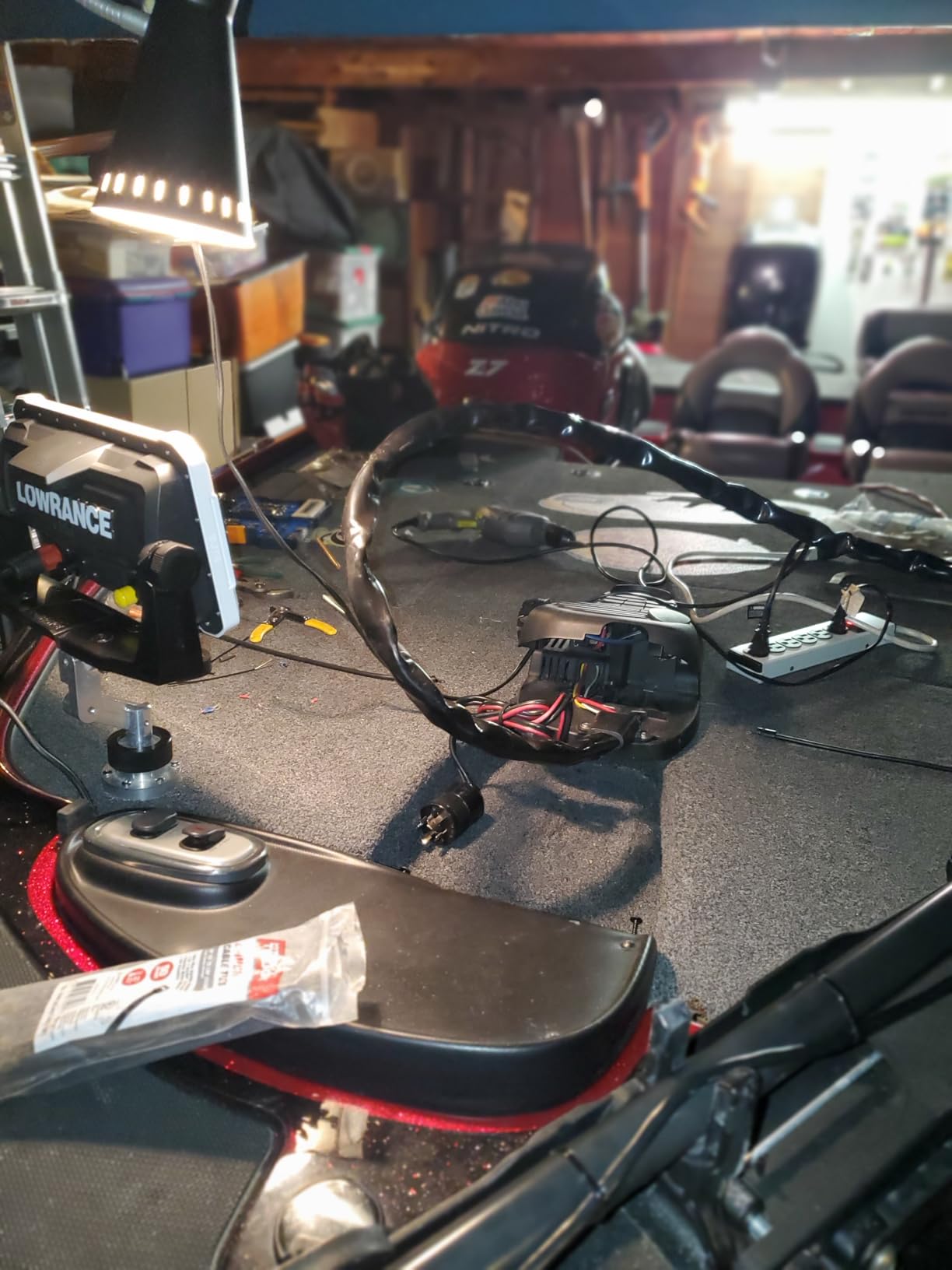
This is the package we keep coming back to for a small boat that has grown into a real console. The box holds the display, a three-in-one transducer, a suncover, a mounting bracket, fuse and fuse holder, corner clips and a power cable, so the two purchases most people forget are already handled.
The sonar side is where it separates from cheaper combos. CHIRP, SideScan and DownScan Imaging with FishReveal all run from the bundled transducer, giving you a view of structure beside the boat and a view beneath it without buying a second box. Maximum measuring depth is listed at 1000 feet, far more than any lake boat needs.
Charting is preloaded with C-MAP DISCOVER, and owners consistently report that internal GPS works immediately with no setup prompts. Connectivity covers wireless, NMEA 2000 and Ethernet, which is unusual at this level and means a radar dome or autopilot can be added later without replacing the head unit. Bracket, surface and flush mounting options cover most small-console arrangements.
The catch is size. A 10 inch screen needs a genuine console face, not a rail bracket on a 14 foot skiff, and owners who fitted it to a compact boat mention wanting more room for the suncover to swing. ActiveTarget 2 live sonar is a separate purchase, and the settings menu carries a real learning curve.
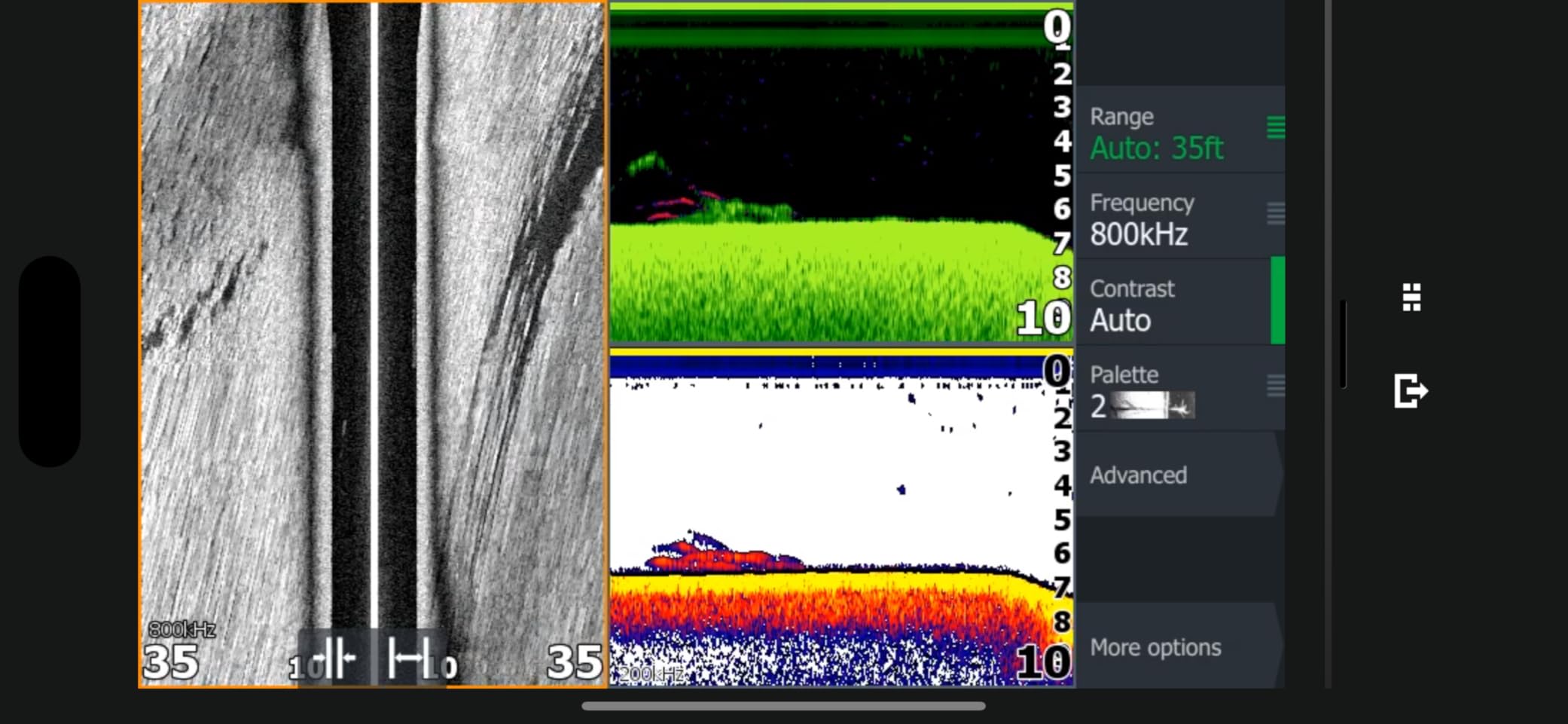
How Depth Shading Helps on Shallow Flats
Depth handling is the reason to buy a networked unit like this one. C-MAP DISCOVER charting adds custom depth shading, tides and currents, and vector charts give a clean read on contours when you are picking a route across a bar. On a boat running 2 feet of draft over grass flats, that shading is not a nice-to-have.
The bundled transducer is a transom job on most small boats, and the included cable run is workable on a hull under 20 feet. If you plan to add a trolling motor interface later, budget the NMEA 2000 backbone at install time rather than retrofitting it later.
Where This Unit Falls Short
Console space is the hard limit, and reviewers running the Elite FS on a compact boat say the largest screens in the range need adequate console area. That judgement call happens at your dash, not on a spec sheet. Plan the mount before you commit.
Live sonar and a second display both mean more spend later. Buy this for the charting and the bundled sonar, and treat everything else as an upgrade path rather than an included feature.
2. Humminbird Helix 5 CHIRP GPS G3 – Best Value Keypad Combo
Humminbird Helix 5 G3 GPS Fish Finder with Transducer & Dual Spectrum Chirp Sonar
5 inch color TFT
2.1 lb control head
Dual Spectrum CHIRP sonar
1 year manufacturer warranty
Pros
- Dual Spectrum CHIRP scans wide and narrow from one low-Q transducer
- Softkey keypad stays usable with wet hands and in rough weather
- AutoChart Live records depth contours and bottom hardness as you boat
- Compact 5 inch footprint suits small consoles
Cons
- 5 inch screen is small for detailed chart review at speed
- Basemap coverage is basic inland and coastal only
- Button-driven menus are slower to navigate than a touchscreen
This is the unit we recommend to people who fish in rain and cold and do not want to think about their electronics. The box gives you the control head, power cable, an XNT 9 HW T transom-mount transducer, mounting hardware and a gimbal bracket, which is everything a first install needs.
Dual Spectrum CHIRP with Wide Mode and Narrow Mode from the Low-Q transducer is the headline feature. Wide Mode sweeps a lot of water at once, Narrow Mode pulls fish arches out of heavy cover, and AutoChart Live stores 8 hours of recording out of the box, expandable with Zero Line SD cards.
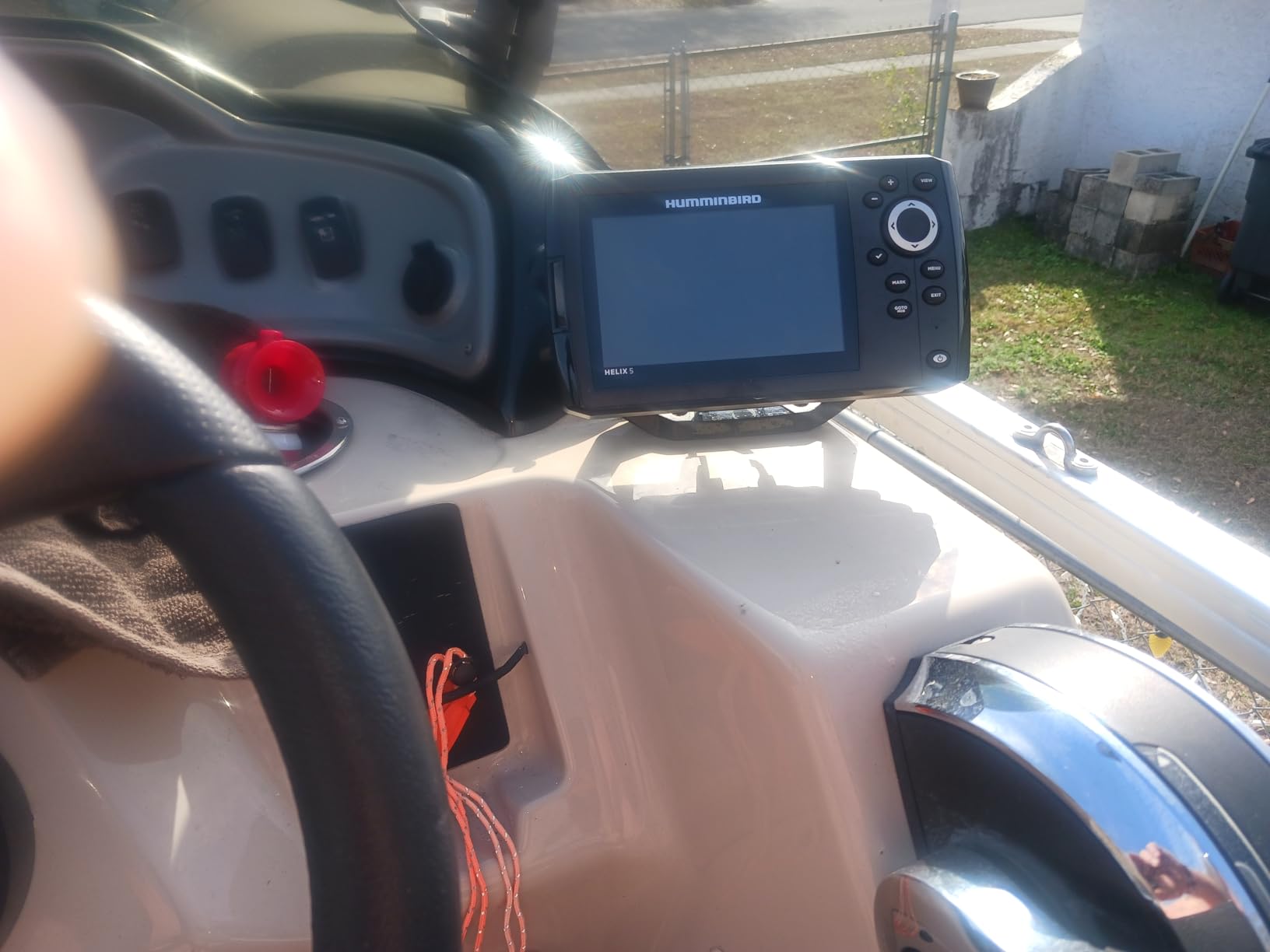
Owners call the GPS dependable and the fish-arch separation solid, and roughly three quarters of reviews are five-star. The Humminbird Basemap covers 10000+ lakes plus continental US coastal areas, and LakeMaster, CoastMaster and Navionics premium cards slot in where the basemap is not detailed enough.
The keypad is the quiet hero here. In cold weather, with gloves on, or when the boat is pitching, softkeys do not fail the way a capacitive screen does. That reliability is why physical-button interface units keep appearing in small-boat recommendations long after launch.
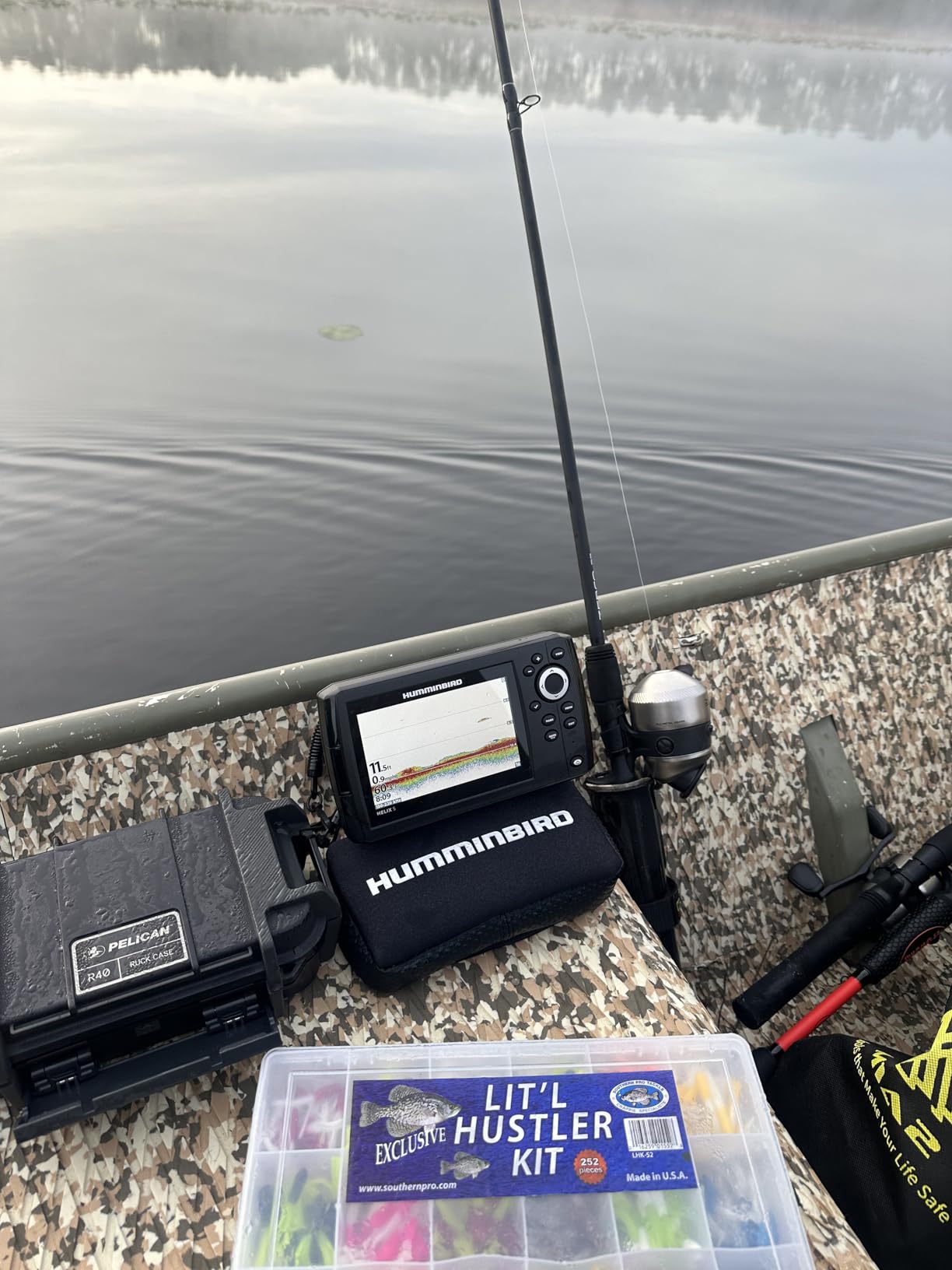
When the Keypad Beats a Touchscreen
Boating forum discussions keep circling the same point: wet hands and gloves make touchscreens frustrating, and button units keep working. On a jon boat where you are constantly shifting position and reaching for the head unit, that matters more than gesture support or a glass-smooth interface.
The gimbal bracket also gives you a tilting head, so you can angle the screen up when the sun is ahead instead of crouching to read it. That adjustability is one of the strongest arguments for buying a smaller display instead of the largest one you can fit.
What You Give Up Against the Elite FS
A 5 inch color TFT is genuinely small when you want chart detail at speed, and owners name screen size as the top drawback. The basemap is a navigation aid rather than a fishing map, so shallow grass and structure contours need AutoChart Live or a premium card.
There is no networking layer here. If your plan includes autopilot control or a trolling motor link later, this head unit will not be the base for it, so choose a networked model instead.
3. Lowrance HOOK Reveal 5 SplitShot – Cheapest Route to a Chartplotter
Lowrance HOOK Reveal 5 SplitShot – 5-inch Fish Finder with SplitShot Transducer, Preloaded C-MAP US Inland Mapping
5 inch SolarMAX LCD
14.4 oz display
C-MAP US inland mapping preloaded
1 year warranty
Pros
- Works out of the box with local inland maps and no setup prompts
- SolarMAX screen stays readable in direct sunlight
- SplitShot transducer gives CHIRP arches and DownScan structure
- Affordable entry into a chartplotter and fishfinder combo
Cons
- 5 inch screen is tight for older eyes and limited vision
- Some units stopped communicating with the transducer
- Awkward flush mount cable routing on small boats
The HOOK Reveal 5 is the cheapest way onto internal GPS charting, and it lands close to the mark for anyone buying a first unit for an inland lake. At 14.4 ounces it is the lightest display in this group, which is a real advantage on a kayak or a jon boat you carry down to the launch.
The SplitShot skimmer transducer delivers wide-angle CHIRP plus DownScan Imaging, and FishReveal blends the two so fish targets stand out against structure. Genesis Live custom contour mapping runs over any map, which means you can record your own lake bottom while you fish it.
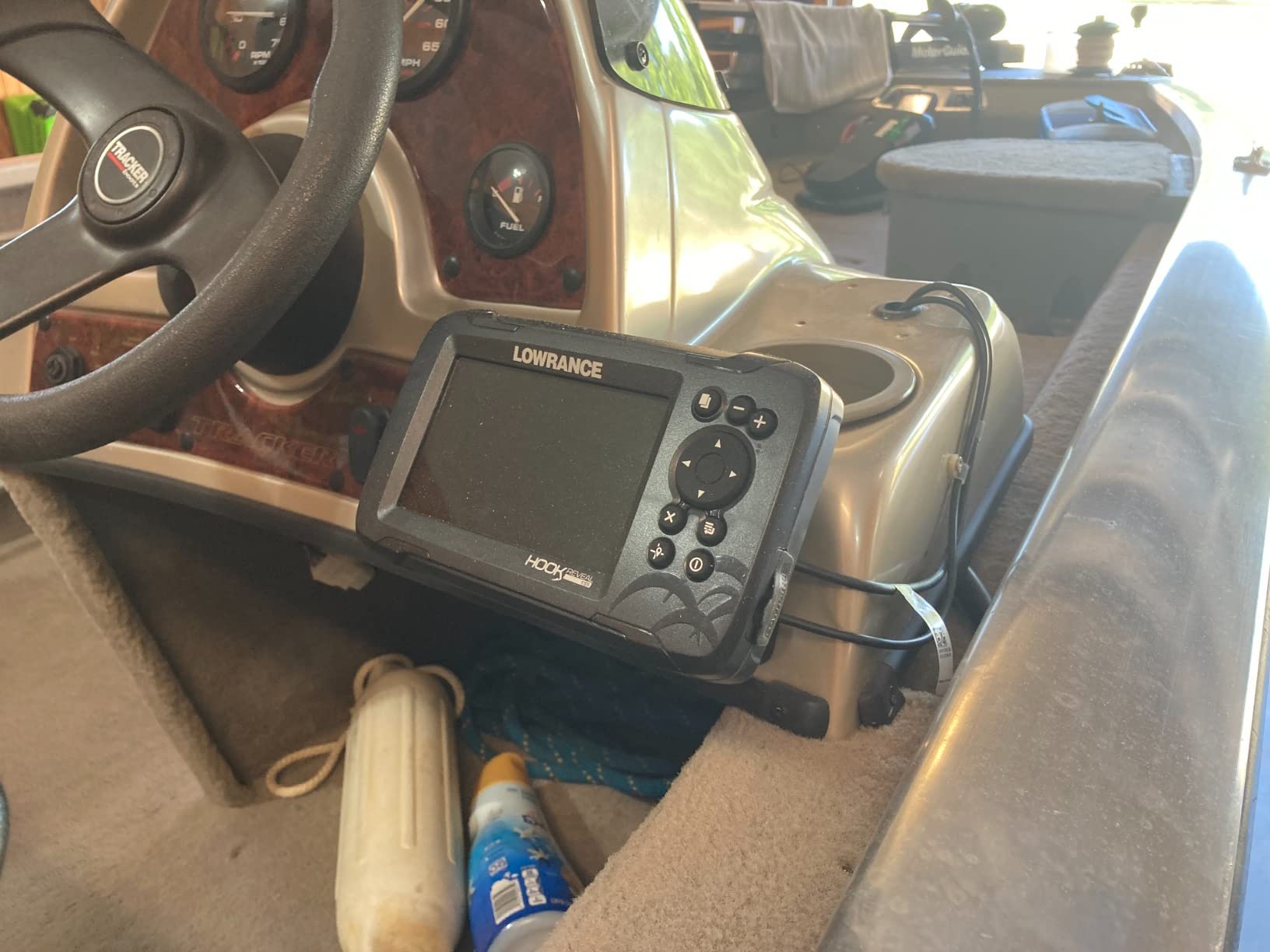
Preloaded C-MAP US inland mapping covers close to 4000 lakes, and AutoTuning sonar adjusts itself as conditions change. Owners report the map drawing immediately on power-up, with sonar, bottom structure and your travelled line all visible together on one small screen.
This is also the lowest-rated unit here at 4.2, with the widest spread of feedback. Praise concentrates on value, plug-and-play setup and the sunlight-readable screen. Criticism concentrates on the 5 inch display, complicated menu configuration, and a minority of units that stopped recognising the transducer after limited use.
What Works on the First Outing
Internal GPS and a preloaded inland map mean no separate chart purchase before you can navigate a lake. Waypoint marking is straightforward, so you can drop a mark on a productive spot and come back to it on the next trip.
Flush mounting is a genuine option, and on a jon boat with a flat deck panel it produces the cleanest install. Transducer routing is the fiddly part, so measure your cable run before committing to the flush box rather than a bracket mount.
Who Should Skip This One
If you are older, or you have any difficulty reading small text, skip the 5 inch panel. Reviewers specifically flag display size as the reason for the lower scores here, and spending more for a larger screen is cheaper than struggling with it all season.
Transducer communication complaints are a minority of reviews, but warranty handling was not always smooth. If you are comfortable with a support call, that is manageable. If not, a unit with clearer dealer support may suit you better.
4. Garmin GPSMAP 78 Handheld – Best for Kayaks and Portable Use
Garmin GPSMAP 78 2.6-Inch Marine GPS Navigator and Worldwide Chartplotter
2.6 inch color TFT at 160x240
7.68 oz and floats in water
IPX7 waterproof with 2 AA batteries
About 20 hours average battery life
Pros
- Floats and is rated IPX7 waterproof which is rare in marine units
- Acquires satellites quickly even after stowed in a boat pocket
- Runs about 20 hours on two AA batteries
- Records waypoints on the fly for marking fishing spots
Cons
- Basic worldwide basemap with detailed charts costing extra
- Grainy 2.6 inch screen that is hard to read when zoomed
- No USB charging port and no Bluetooth
- Interface is less intuitive than newer Garmin models
If your small boat is a kayak, this is the only unit in the list that makes obvious sense, and the reason is one feature fixed-mount displays cannot offer: it floats. An IPX7 rating plus a floating body turns a drop into the water into a retrieval problem rather than a replacement.
The high-sensitivity receiver locks satellites quickly, which matters when you launch from under a dock or a tree line. A worldwide basemap is built in and a microSD slot adds coverage, and it records waypoints on the fly so you can mark a fishing spot straight from the seat.
Battery life averages about 20 hours on two AA batteries, with NiMH or lithium recommended. USB and NMEA 0183 connectivity plus support for 12V external power adapters give you an option to run it from a battery pack on longer trips.
Owners also value geocaching GPX support and Garmin Connect track sharing, which lets a kayak trip double as a recorded line you can trace back later. For an angler who fishes a different lake every weekend, that record is worth more than it first appears.
What Works in a Kayak or a Carry-On Boat
The 7.68 ounce weight and wrist-mount style are what make this genuinely portable. Nothing needs a permanently mounted bracket or a drilled cable run, so the install is zero. For people moving between a kayak, a rental skiff and a second lake, that portability is the whole feature.
USB and NMEA 0183 also mean you can pair it with other handheld GPS units, and 12V adapters let it run from a boat switch panel. Treat it as a planning device and a backup helm more than a primary display.
When a Fixed-Mount Unit Wins
The bundled worldwide basemap is very basic, and detailed charts are an extra purchase. On unfamiliar coastal water that cost and setup are real. There is also no sonar, so this tells you where you are and nothing about what is under the hull.
Choose a mounted unit when you want chart detail, depth shading or fish structure. Choose this one when you want something that floats, weighs almost nothing and works across three different boats.
5. Simrad GO Chartplotter and Fishfinder – Best Match for Center Consoles
Simrad GO9 XSE Chartplotter and Fishfinder with 83/200 Transom Mount Transducer and C-MAP Discover Chart Card, 9 Inch Screen, Black, 000-16293-001
9 inch LCD touchscreen
C-MAP DISCOVER card included
83/200 kHz HDI transducer
2 year warranty
Pros
- Bright 9 inch touchscreen is easy to read in direct sun
- Intuitive menu structure with short learning curves
- C-MAP DISCOVER card included with strong US and Canada coverage
- Built-in Wi-Fi and NMEA 2000 make later radar and AIS upgrades straightforward
Cons
- Bundled HDI transducer provides no side imaging
- Transducer cable can be too short without an extension
- Included suncover is awkward to remove
- Some units lost stored waypoints and tracks
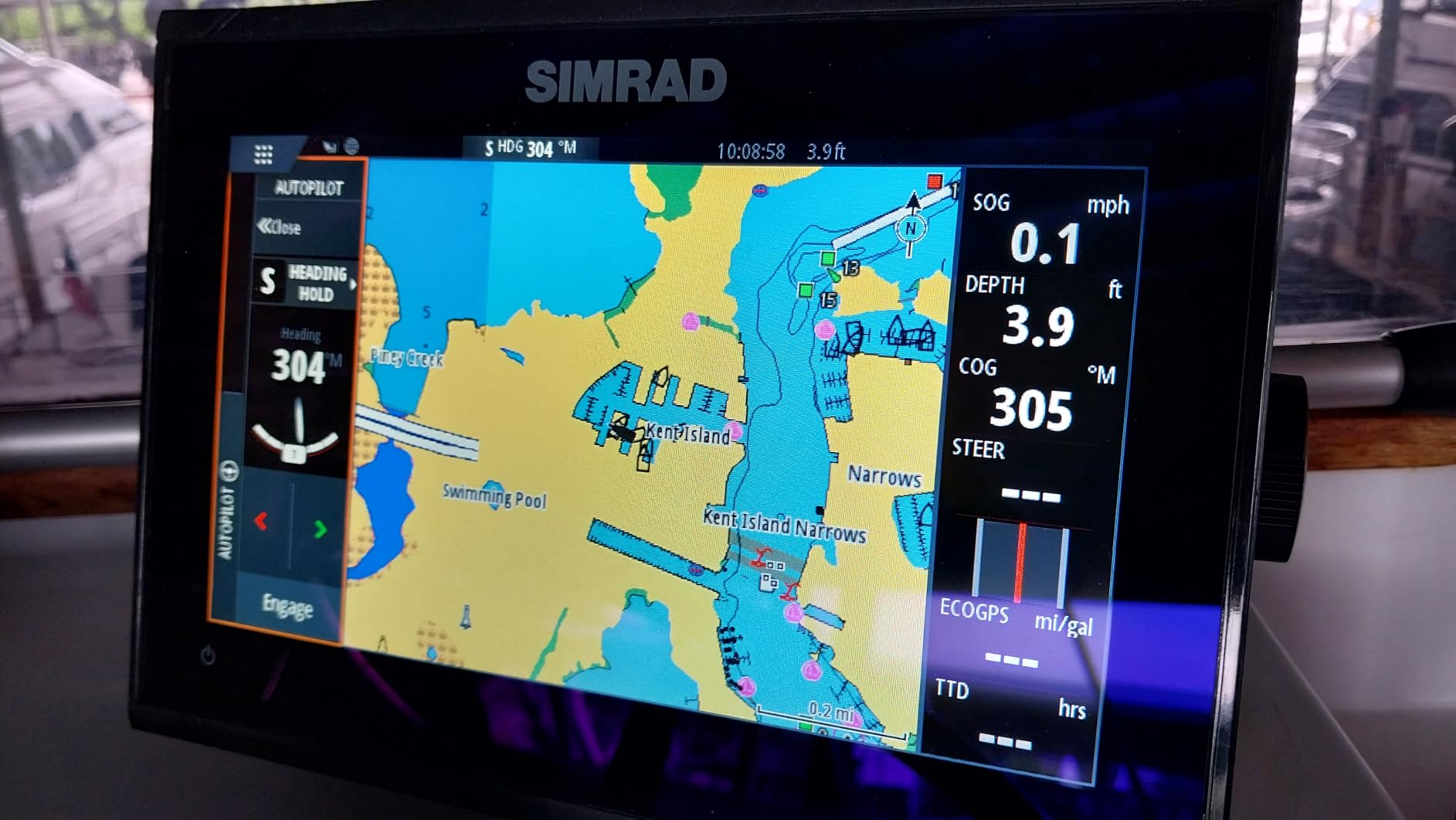
Simrad aimed this package at sportboats, center consoles and smaller cruisers, and the design shows. The 9 inch touchscreen is bright and large without reaching the size of a dedicated helm display, and it mounts by dashboard, panel or bracket depending on your console shape.
The C-MAP DISCOVER card comes in the box with vector charts, custom depth shading, tides and currents, and bathymetric contours. That matters on a small boat, because chart cards are usually the first thing owners have to add after the head unit.
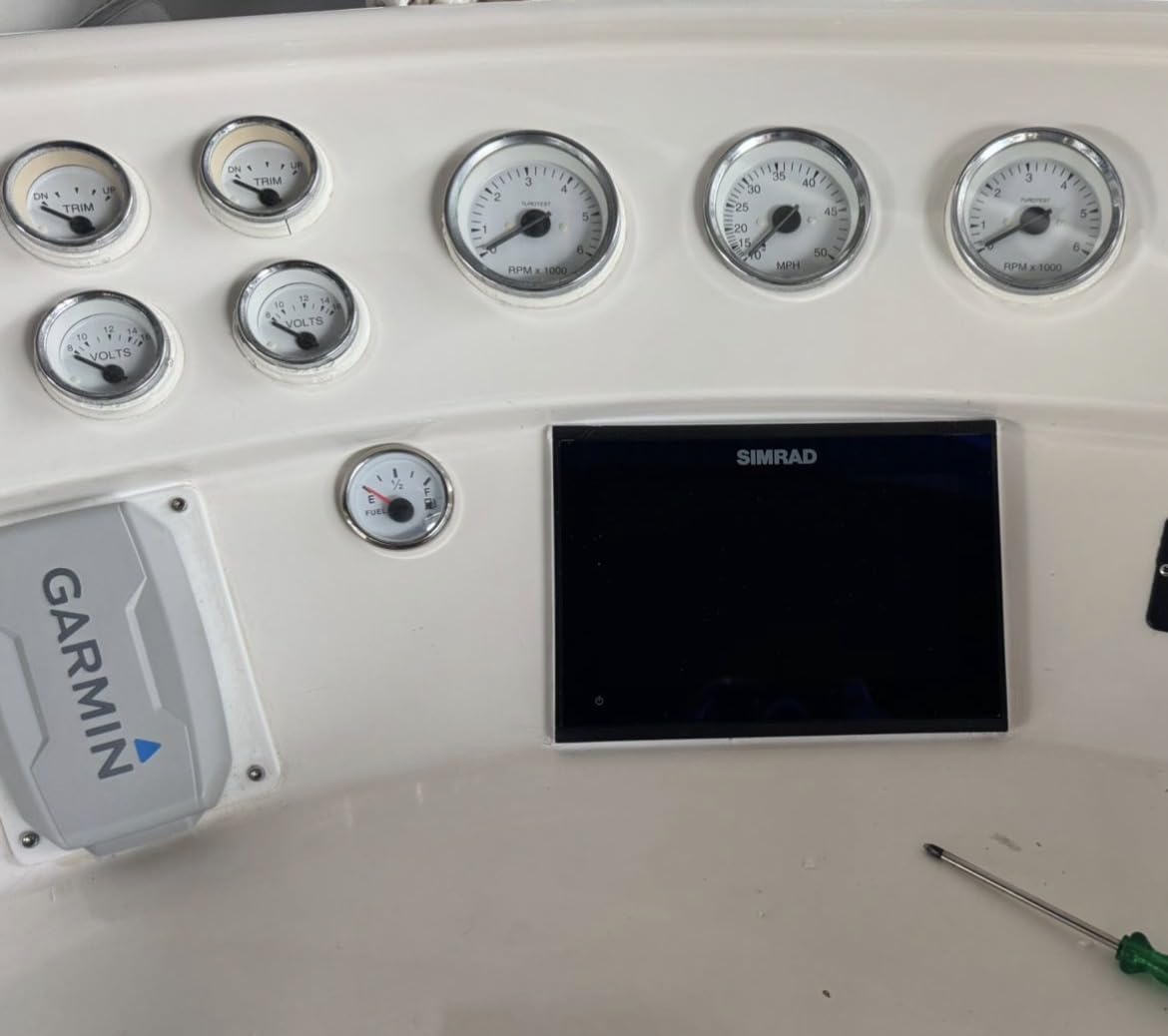
The included 83/200 kHz HDI transducer handles CHIRP sonar and DownScan Imaging, and built-in Wi-Fi lets you mirror charts to a smartphone or tablet. Bluetooth, Ethernet and NMEA 2000 are all listed, and roughly 78 percent of reviews are five-star, with owners upgrading from 5 inch and 7 inch units praising the display and the included charting.
Manufacturer technical support is praised repeatedly for patience and for actually resolving questions. That is worth noting, because Simrad owner discussions on forum boards often centre on which series is current and what a given connector does.
Getting a Side-Scan View Later
The HDI transducer bundled here gives CHIRP and DownScan, not side imaging. If your fishing depends on seeing structure out beside the boat, budget for a side-scan capable transducer, and check that your mounting position leaves room for a wider unit.
One recurring complaint is cable length. On a small boat with a long transom run an extension may be needed, which adds cost and a new failure point. Measure the run from your console to the transom before you commit to this package.
Reliability Notes From Owners
Some units lost stored waypoints and tracks after a few months and required re-running initial setup. Back up your routes if that matters to you, and note that the included suncover is awkward to remove regularly on a small console.
Given the combination of Wi-Fi, NMEA 2000 and Ethernet, this is the strongest small-boat base for adding radar or AIS later of any unit in this group.
6. Humminbird Helix 7 CHIRP SI G4 – Top Rated With Side Imaging
Humminbird 411590-1 Helix 7 Chirp SI GPS G4
7 inch color TFT
Side Imaging and Down Imaging
Bundled XNT 9 HW SI T transducer
One year warranty
Pros
- Side Imaging and Down Imaging together give strong awareness of structure
- Bright 7 inch screen reads easily in daylight
- Bundled transom transducer makes the first install straightforward
- Internal GPS and basemap work with no extra card
Cons
- Keypad menus need practice before you are quick
- Side Imaging is why this model costs more and cannot be added to lower Helix models later
This is the Helix to buy if side imaging is the feature you actually want. CHIRP Side Imaging shows a clear view beside the boat and CHIRP Down Imaging covers the structure underneath, with Dual Spectrum CHIRP 2D sonar running Wide and Narrow modes from the bundled XNT 9 HW SI T transducer.
At 4.6 stars with about 80 percent five-star reviews, owners consistently praise the bright screen, accurate tracking, clear sonar images and straightforward installation. Several buyers switching from Garmin cite better sonar detail and mapping as the reason they changed brands.
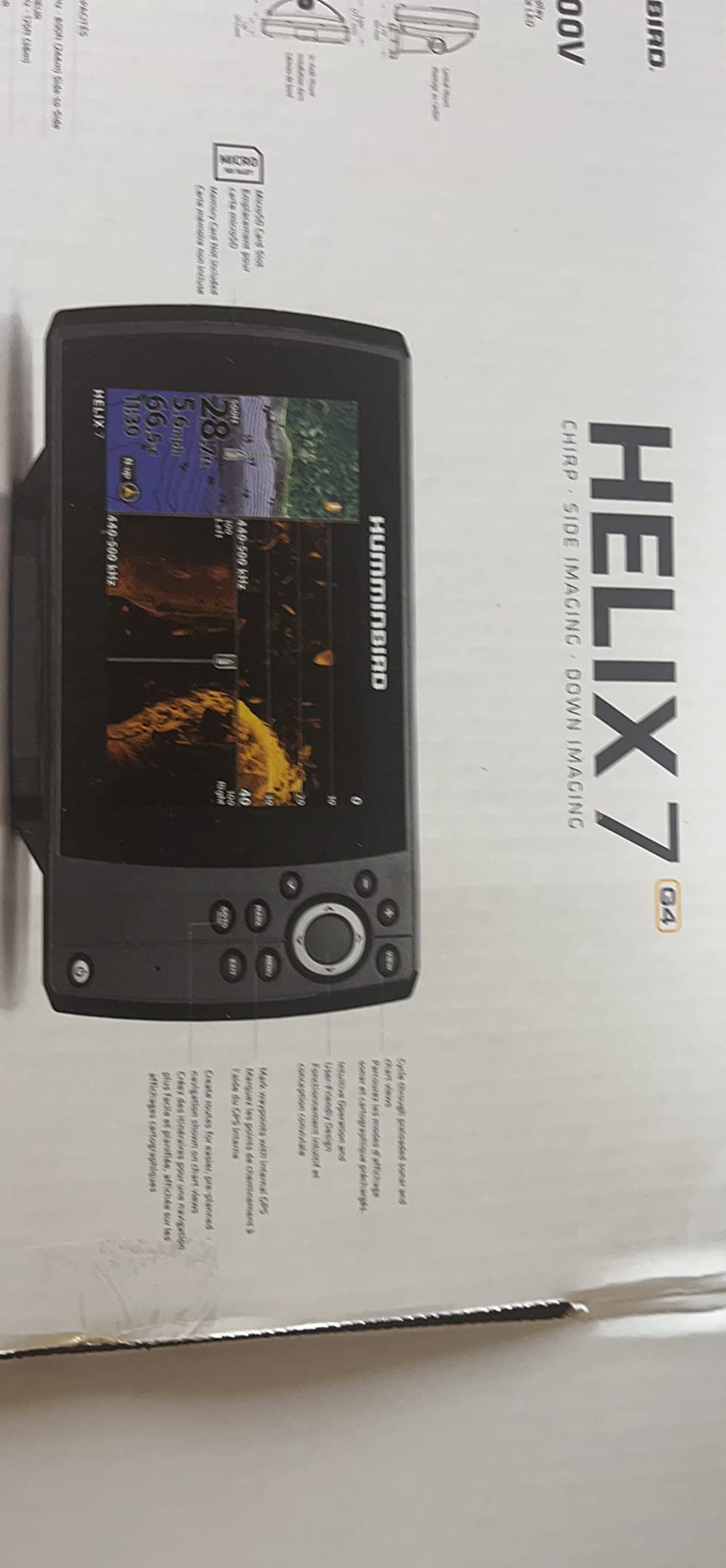
The internal GPS runs on Humminbird Basemap with 10000+ lakes plus US coastal coverage, and LakeMaster, CoastMaster and Navionics premium charting is supported. AutoChart Live provides real-time mapping with 8 hours of built-in recording, so your own lake bottom gets charted while you fish it.
Two cautions. The keypad menu system needs practice before it becomes fast, and several owners admit they bought the unit while still learning its features. Side Imaging is also why this model sits above the cheaper Helix units, and it is not a feature you can add to a lower model later.
Side Imaging Versus Down Imaging in Shallow Water
Side Imaging pays off when you hunt structure beside the boat and that view matters more than what is directly underneath. Down Imaging is the better choice for narrow creeks and structure straight below you in a tight channel.
This unit gives you both, which is where it sits in this roundup. If you only ever fish structure beneath the hull, a down-imaging model will serve you well for less.
Fit and Console Clearance
Seven inches is the sweet spot for many small consoles, and the surface mount with gimbal bracket makes it forgiving in a tight dash. Check clearance above your console for the suncover and bracket swing before you commit, because seven inches sits in the middle of the available range.
The one-year warranty is shorter than the two-year cover on some units here. Factor that in if you fish hard and keep your electronics for a decade.
7. Garmin ECHOMAP UHD2 53CV – Tightest Console Fit With Full Charting
Garmin ECHOMAP UHD2 53CV Chartplotter/Fishfinder
5 inch color IPS display at 16 oz
Bundled GT20-TM transducer
Navionics+ US Inland preloaded
Tilt and flush mount
Pros
- Compact 5 inch IPS display fits small-boat consoles
- GT20-TM transom transducer gives CHIRP Traditional and ClearVu sonar
- Navionics+ US Inland mapping preloaded
- Wi-Fi shares sonar and waypoints between compatible units
Cons
- Smallest display in the ECHOMAP UHD2 line
- Older keypad interface compared with the newer sv touch models
- Less review history than the bigger Garmin units
The 53CV is the Garmin answer to a small console with room for five inches and not much more. At 16 ounces with an IPS panel, it disappears into a dash while still reading clearly in bright conditions, which is the Garmin line’s calling card.
CHIRP Traditional and ClearVu scanning sonar run from the bundled GT20-TM transom-mount transducer, and Garmin Navionics+ U.S. Inland mapping is preloaded so you are charting from the first launch rather than the first subscription.
Wi-Fi connectivity lets you share information between compatible chartplotters, which is useful when you fish a lake alongside a partner on a second boat. Tilt mount and flush mount options cover both a bracket install and a panel install on a small console.
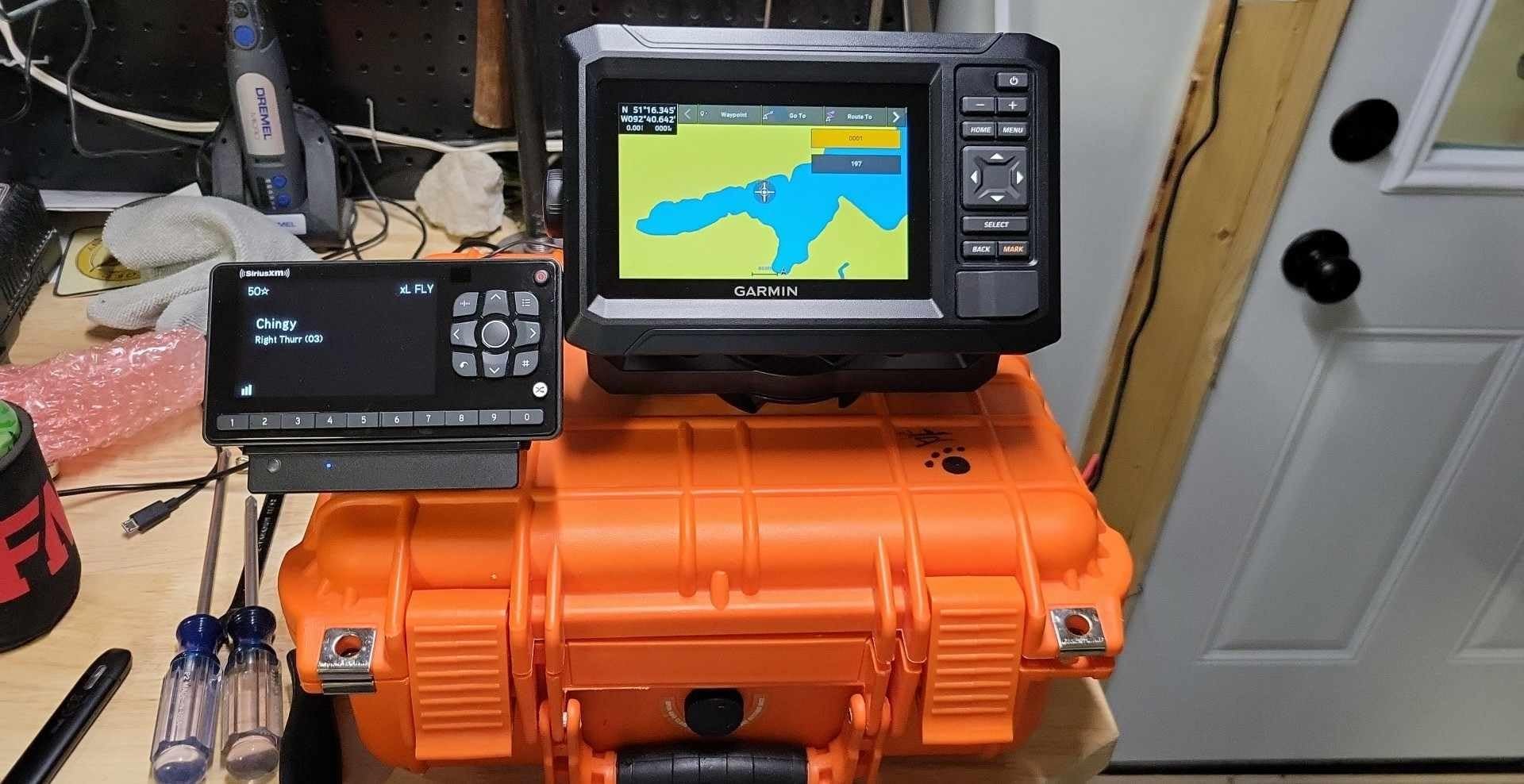
The review pool is small at 86, but it averages 4.5 with roughly 74 percent five-star. Comments focus on console fit, the bright IPS display and how complete the bundle is, rather than on advanced features. Fewer reviewers means fewer long-term reports, so treat the track record as shorter than the bigger Garmin units.
Compared with the touch-equipped sv models later in this list, the 53CV uses the older keypad approach. That is an advantage with wet hands and a disadvantage if you prefer tapping waypoints directly onto a chart.
Is a 5 Inch Screen Enough for Lake Navigation
For inland lake work with a preloaded map, yes. You get position, waypoint marking, a clear picture of your travelled line and a waypoint list, which covers the navigation tasks most small-boat anglers actually perform.
Where five inches starts to frustrate is speed. Reading a dense section of chart at 20 knots, or checking a route detail while also watching the sonar, is tight on a 5 inch panel. If your trips are long runs rather than short drifts, step up a size.
Fit and Bundle Trade-Offs
The 53CV is the smallest display in the ECHOMAP UHD2 line, and that is both its main advantage and its main limit. Inside a small console it is unobtrusive, and owners highlight exactly that when they compare it to bigger units.
The bundled transducer and preloaded charts remove two extra purchases. The tradeoff is the older keypad interface, which some owners find slower than the touchscreen models in the same family.
8. Garmin ECHOMAP UHD2 74cv – Best Balance of Screen Size and Simplicity
Garmin ECHOMAP UHD2 74cv
7 inch chartplotter display
Bundled GT20-TM transom transducer
Navionics+ Coastal and Great Lakes
Flush or bail mount
Pros
- 7 inch display is a workable middle ground on small-boat consoles
- Bundled GT20-TM transducer avoids a separate transducer purchase
- Preloaded Navionics+ coastal and Great Lakes charting out of the box
Cons
- Costs more than the 5 inch ECHOMAP for a similar feature set
- Keypad-based operation rather than a touchscreen
The 74cv is the middle rung of the Garmin ladder, and it makes sense when your console is one size up from a 5 inch opening. Seven inches gives you room for a route overview and a sonar split without the bulk of a 9 or 10 inch head unit.
The GT20-TM transom-mount transducer is bundled, so CHIRP Traditional and ClearVu scanning sonar is included rather than added later. Garmin Navionics+ U.S. Coastal and Great Lakes mapping is preloaded, which makes this the most coastal-ready of the small Garmin units here.
Flush mount or bail mount installation covers both a panel cutout and a bracket on a small console. DC power supply is the only requirement, and no separate chart card purchase is needed for the coastal and Great Lakes coverage included.
With 63 reviews averaging 4.4 and about 75 percent five-star, the feedback centres on roomy display, bundle completeness and console fit. It is the smallest sample of any unit in this roundup, so treat the pattern as promising rather than proven.
When Seven Inches Beats Five
The jump from 5 to 7 inches is the most noticeable step in this whole list for chart reading. On the 74cv you can keep a chart pane and a sonar pane open at the same time and still see both, which on a 5 inch screen requires constant zooming.
If your small boat has a console face that measures at least seven inches diagonally, this is the screen size that most owners stop needing to grow out of for good.
Cost Against Feature Overlap
The honest drawback is overlap. Owners regularly note that this model costs more than the 5 inch ECHOMAP UHD2 for a broadly similar feature set, and the difference is mostly screen size and the coastal charting package.
If your console cannot take seven inches, spending up for this one is wasted. If it can, the extra room is what you are paying for, and it delivers.
9. Garmin ECHOMAP UHD2 63sv – Best for Trolling Motor Control and SideVu
Garmin ECHOMAP UHD2 63sv with GT54 Transducer, 6” Touchscreen Chartplotter, Garmin Navionics+ U.S. Inland
6 inch WVGA TN touchscreen
GT54-TM transducer included
Navionics+ inland with 1 foot contours
1 year limited warranty
Pros
- Bright sunlight-readable 6 inch touchscreen in a console-friendly size
- GT54-TM transducer adds SideVu scanning sonar for broad side coverage
- Navionics+ inland mapping with 1 foot contours across 18000+ lakes
- Wireless sharing plus connection to a Garmin Force trolling motor
Cons
- Costs more than the keypad-operated ECHOMAP UHD2 cv models
- Touchscreen menus need a learning period against physical buttons
This is the highest-rated unit in the group at 4.7, and it is also the only one here that pairs a touchscreen with a trolling motor link. For a small boat running a trolling motor across a lake, that combination is unusually well matched to how the boat is actually used.
The GT54-TM transducer supports Traditional, ClearVu and SideVu scanning sonar, so you get the same side coverage the 10 inch Elite FS offers in a package that fits a far more modest console opening.
Charting is preloaded Garmin Navionics+ inland data covering more than 18000 lakes with 1 foot contours, and built-in Wi-Fi shares sonar, waypoints and routes between ECHOMAP UHD2 units. Maximum measuring depth is listed at 63 meters, which covers any lake and most coastal work.
What Trolling Motor Control Actually Adds
A wireless connection to a Garmin Force trolling motor gives you route following and speed control from the chartplotter, which turns the head unit into something more than a display. On a small boat there is no separate helm screen to put those controls on, so having them on the chartplotter is genuinely useful.
For anyone fishing structure rather than cruising open water, that means your autopilot and your chart are in the same place. Set a route, let the motor follow it, and adjust from the same screen you are reading sonar on.
Where the Premium Sits
Owners mainly question the price for the feature set, and the 43-review pool is the smallest here, so the 4.7 average comes with the least long-term evidence behind it. Treat it as promising rather than battle-tested.
The touchscreen also needs a learning period if you are used to physical buttons. The bright WVGA panel is genuinely sunlight readable, which is the part that pays off every single trip.
10. Lowrance Eagle Fish Finder – Fastest Install on a Small Console
Lowrance Eagle 5 SplitShot HD Fish Finder with C-MAP Discover
5 inch IPS LCD at 16 oz
SplitShot HD sonar included
C-MAP DISCOVER microSD in box
1 year warranty
Pros
- Compact 5 inch IPS display built for space-constrained boats
- SplitShot HD plus FishReveal separates targets from structure and vegetation
- C-MAP DISCOVER microSD included for US and Canada coverage
- Twist-lock connector speeds up installation and removal
Cons
- 5 inch display limits chart detail on larger waterways
- No SideScan imaging on the SplitShot configuration
- 500 foot maximum depth is shallower than some rivals
The Eagle is the option to pick when the install is the part you are worried about. The included box covers the fish finder, bracket and knobs, power cable, transducer with locking collars, and a fuse with fuse holder, so almost everything is accounted for before you start.
SplitShot HD provides CHIRP fish targets plus DownScan structure and bottom views, and FishReveal separates fish from weeds, structure and bottom. The 5 inch IPS display is a sensible size for a small console, and auto-tuning sonar handles settings for you as conditions change.
The C-MAP DISCOVER microSD is included with inland and coastal charts for the US and Canada, which is unusual at this level and removes the most common first extra purchase. The twist-lock transducer connector is a small detail that saves real time on a transom mount.
Where the Eagle Fits Best
Space-constrained boats are the obvious home for this unit. Owners specifically like the compact IPS screen on a small console, and the included charting card means the unit is useful on the first trip out rather than after a card purchase.
Auto-tuning sonar keeps the settings manageable for newer users, which matters more than raw feature count when you are learning what you are looking at on the sonar screen.
What You Cannot Do With It
There is no side imaging on the SplitShot configuration, so if your fishing depends on structure out beside the boat you need a TripleShot model instead. Maximum depth of 500 feet also rules out deeper offshore work.
The 48-review sample is small, so the feedback here is limited overall. It is a well-specified compact unit, but buy it for fit and simplicity rather than for a long feature list.
11. Humminbird Helix 5 CHIRP DI G3 – Dependable Down Imaging on a Budget
Humminbird Helix 5 G3 GPS Fish Finder with Transducer, Dual Spectrum Chirp Sonar & Down Imaging
5 inch color TFT
Bail mount control head
CHIRP Down Imaging
1 year manufacturer warranty
Pros
- CHIRP Down Imaging gives a clear picture of what lies beneath the boat
- Dual Spectrum CHIRP provides both wide coverage and fine detail
- Keypad control remains reliable in any weather
- AutoChart Live builds depth and bottom hardness maps as you cruise
Cons
- Down Imaging only with no side imaging
- 5 inch screen limits detailed chart review
- Button-driven menu system is slower than a touchscreen
The Helix 5 DI is the dependable middle option in the Humminbird line. CHIRP Down Imaging gives you a detailed view beneath the boat, Dual Spectrum CHIRP runs Wide and Narrow modes, and the whole thing mounts on a bail bracket at the transom or on a small console.
Owners describe it as a no-fuss unit with strong Down Imaging, easy installation and a reliable keypad interface, and it is frequently bought as a second or occasional unit rather than a primary helm display. About 78 percent of its 357 reviews are five-star.
Internal GPS runs on Humminbird Basemap covering 10000+ lakes plus US coastal areas, and LakeMaster, CoastMaster and Navionics premium cards are supported. AutoChart Live provides real-time mapping with 8 hours of built-in recording, so your own contours get built as you cruise.
Criticism is limited in scope. The small screen is the recurring theme, along with the absence of side-scan sonar, and neither is a problem if you fish structure directly beneath the hull rather than out to the side.
Down Imaging vs Side Imaging in Practice
Down Imaging is the right call when you are working water directly under the boat: a creek channel, a drop-off edge running perpendicular to you, or a spot you mark and sit over. It resolves fine structure detail that a 2D screen cannot.
Side Imaging is the right call when you are scanning a drop-off line beside the boat and want to see what is holding there. If that is your primary method, choose the Helix 7 CHIRP SI G4 instead.
Value Against the Keypad Helix 5
Against the Helix 5 CHIRP GPS G3, the difference is Down Imaging plus a slightly higher rating, against a smaller effective chart area. If you want imaging, take the DI. If you want pure 2D fish arches and the widest review base, take the G3.
Both share the same keypad approach, the same basemap coverage and AutoChart Live, so either is a safe buy for a small boat where reliability in bad weather matters most.
How to Choose a Chartplotter for a Small Boat
Start with the boat, not the brand. A kayak, a jon boat, a PWC, a 16 foot skiff and a 20 foot center console have almost nothing in common when it comes to mounting, power and what you can physically read through spray. Here is the decision sequence we use.
Screen Size: How Many Inches You Actually Have Room For
Measure the flat area available before you shop. A 10 inch display needs a genuine console face, and the difference between 5 and 7 inches is the difference between zooming constantly and reading a route at speed. For most small boats, 5 to 7 inches is the working range, with 9 and 10 inch units reserved for boats with an actual console.
Readability in sunlight matters more than resolution. A bright IPS or color TFT panel in an open cockpit is worth more than extra inches on a dimmer screen, and most owners on this list mention brightness before they mention anything else.
Sonar Type: CHIRP, Down Imaging and Side Imaging
CHIRP sends a continuous frequency sweep rather than a single frequency, which gives cleaner target separation and less interference from other boats. Dual Spectrum, Dual Spectrum CHIRP and HDI are brand names for that same underlying idea.
Down Imaging looks straight down and resolves fine structure under the hull. Side Imaging looks out to the sides and shows what is holding beside you. Traditional CHIRP gives you 2D arches and the widest coverage per screen inch. Most anglers end up wanting Down Imaging, and side coverage only matters if you fish edges and drop-offs.
Match that to water depth. Inland lake fishfinders on this list top out between 500 and 1000 feet, which is far more than any lake requires. Shallow water is about chart detail and depth shading, not about maximum depth.
Charts: Navionics, C-MAP and What Ships in the Box
C-MAP DISCOVER and Garmin Navionics+ are the two preloaded ecosystems in this roundup, and both cover inland plus coastal water. Units that ship with a chart card included, such as the Simrad GO and the Lowrance Eagle, save you a first purchase. Units with only a basemap, such as the Humminbird Helix units and the Garmin handheld, need a card or subscription for detail.
Look for custom depth shading, tide and current data, and vector charts rather than raster. On a flats boat or a shallow creek, depth shading is the feature that keeps you off the ground.
Touchscreen or Physical Buttons
This is a genuine preference split, not a quality ladder. Touchscreens give faster access to settings and a modern interface, and physical buttons and softkeys stay reliable with wet hands, gloves and rain, which is why several units here use them deliberately. Decide based on your gloves and your seasons, not on the spec sheet.
Mounting, Power and Transducer Placement
Bracket, surface, flush, bail and trunnion mounts all appear in this roundup, and the right one depends on your console. Measure the cable run from the mounting point to the transom before ordering, since short bundled cables are a common complaint and an extension is an extra cost plus an extra connection.
Power needs a fused run with a proper gauge and a switch panel connection, and that is where many first-time installers underestimate the job. Transducers mount on the transom, through the hull or in the hull, and shallow water on a small boat is usually a transom mount on a bracket.
Networking and Trolling Motor Integration
If you plan to add radar, AIS, an autopilot or a trolling motor later, start with a unit that has NMEA 2000 and ideally Ethernet. In this group the Lowrance Elite FS, the Simrad GO and the Garmin 63sv are the ones that give you a path forward, and the 63sv is the only one with a direct trolling motor link.
Owners on boating forums describe networking complexity as the most common regret, and dealer configuration of an NMEA 2000 backbone is repeatedly described as worth the money compared with troubleshooting it yourself over two weekends.
Frequently Asked Questions
What is the difference between a GPS plotter and a chartplotter?
A GPS plotter shows your position, track and waypoints on a basic map. A chartplotter adds detailed electronic nautical charts with depth contours, hazards and navigation aids, plus routing, tide data and usually sonar. A chartplotter is the better choice for a small boat because a basic plotter cannot show you the shallows you are most likely to hit.
What is the best marine GPS chartplotter for the money?
The Humminbird Helix 5 CHIRP GPS G3 is the strongest value in this roundup, combining Dual Spectrum CHIRP sonar, a softkey keypad that works in bad weather, a bundled transom transducer and a basemap covering 10000+ lakes. If you need a larger screen, the Garmin ECHOMAP UHD2 74cv adds seven inches and bundled coastal charting.
Which chartplotter is better, Garmin or Simrad?
Garmin leads on chart detail, since Navionics+ inland mapping includes 1 foot contours across more than 18000 lakes, and on small-boat fit with units from 5 to 7 inches. Simrad leads on the upgrade path, with the GO series combining Wi-Fi, NMEA 2000 and Ethernet plus an included C-MAP DISCOVER card. For a fixed small console, either works; for future radar or AIS, Simrad has the cleaner base.
Is Raymarine better than Garmin?
For a small boat the answer is usually no, because Raymarine’s strength is in larger networked systems rather than compact units. Within this roundup, Garmin covers more of the small-boat sizes and bundles transducers with charting more consistently, which suits a jon boat or skiff where every extra purchase matters.
Which is better, Garmin ECHOMAP or STRIKER?
The ECHOMAP line is the one to choose if you want sonar and navigation in one unit with charting included, since models such as the 53CV and 74cv bundle a GT20-TM transducer and preloaded Navionics+ mapping. Striker units are fishfinders without full charting, so they suit people who only want structure and depth. For a small boat used for navigation, take the ECHOMAP.
What size chartplotter for a 16 foot boat?
A 5 to 7 inch display is the right range for a 16 foot boat. Below 5 inches, split-screen chart and sonar becomes unreadable, and above 7 inches you run out of console face. Measure the flat area available, then choose the largest screen that fits with clearance for the suncover to swing.
Can I use my phone as a chartplotter?
A phone or tablet works for planning routes and as a backup, but the recurring complaints on boating forums are screen glare in direct sun, battery drain over an all-day trip, and water ingress despite a waterproof case. A dedicated marine unit is rated for the environment and stays readable in sun, which is why most owners keep one as the primary display.
Which Chartplotter Fits Your Boat in 2026
The best marine GPS chartplotters for small boats come down to your console and your water. A kayak needs the floating handheld, a tight console needs the 5 inch Lowrance Eagle or Garmin 53CV, a side-scan angler needs the Helix 7 CHIRP SI G4, and a boat with a real console and plans to add electronics should start with the Lowrance Elite FS or the Simrad GO.
Measure the mounting space, pick the sonar that matches how you fish, and buy the bundle that includes a transducer and charts. Those two included items save more money and more install time than any spec difference in 2026.
If you are still working out the boat, our fishing cooler guide and the RC boat picks cover the rest of a day on the water.