
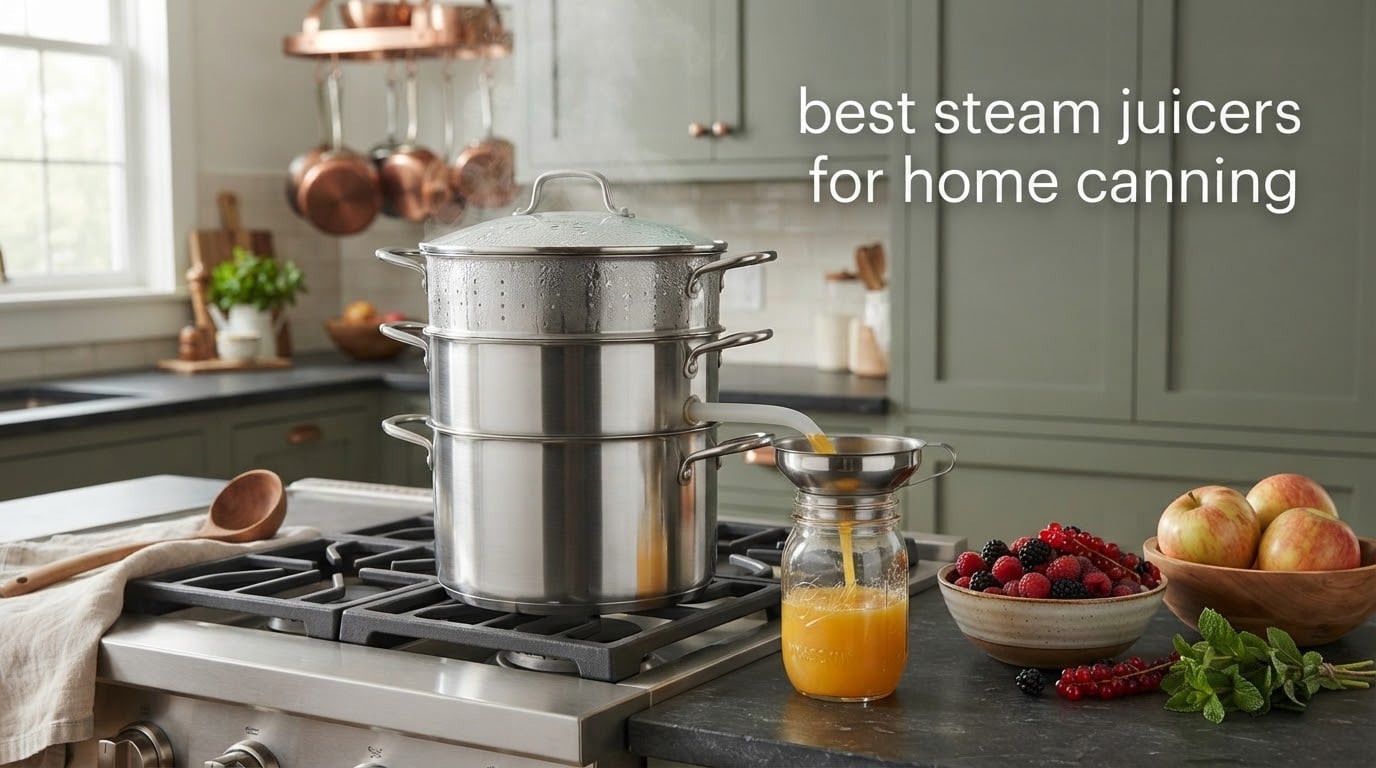
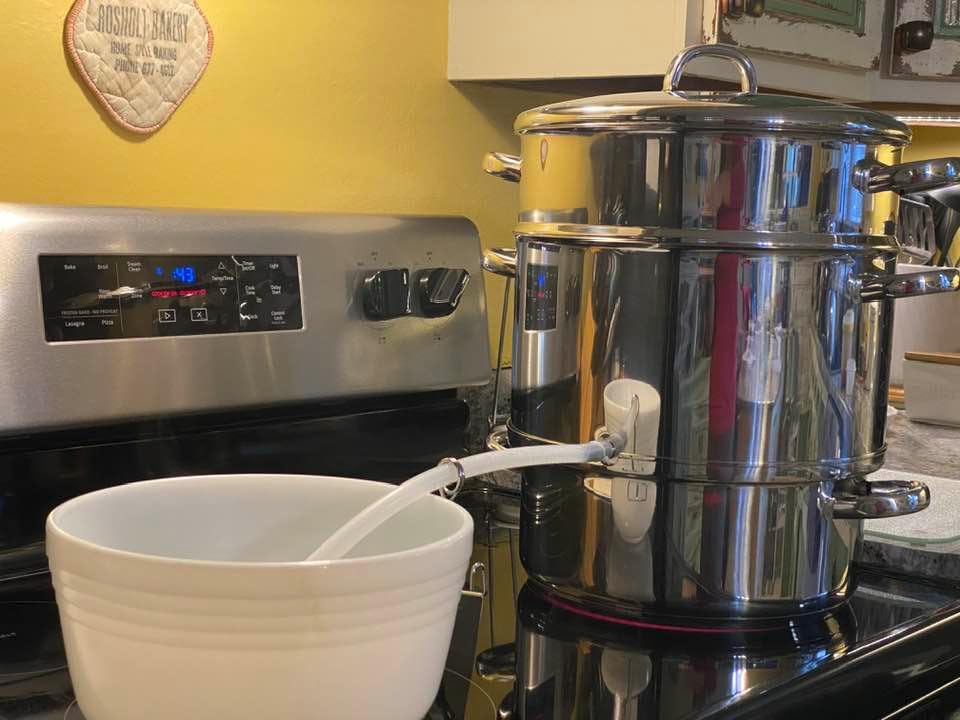
A steam juicer is a three-tier stovetop appliance that uses the heat of boiling water to press juice out of fruit, and it is the single most useful piece of equipment for anyone serious about home canning. Water boils in the bottom pan, steam rises up a central cone into the fruit basket at the top, the heat breaks down the cell walls, and the juice drains into the middle collector where a hose carries it straight into your jars. No pressing, no cheesecloth, no jelly bag, and almost no prep work on the fruit itself.
I have run batch after batch through these machines over the years, and the difference between a good one and a cheap one shows up in three places: how evenly the base spreads heat, whether the drain hose actually seals, and whether the fruit basket holds enough to matter. We compared 10 of the best steam juicers for home canning across build quality, extraction speed, capacity, cooktop compatibility, and cleanup, so you can pick the one that fits your kitchen and your harvest instead of guessing.
Two things shape almost every decision here. The first is volume: 11-quart is the standard capacity for home canning because it lets you process a meaningful load without babysitting the water level for half a day. The second is your cooktop. If you have a glass or smooth-top range, a flat encapsulated base is not optional. If you have an electric coil or gas range, almost anything on this list will work. If you also cook a lot of pressure-canned food, our pressure cookers for canning guide covers the other half of the pantry.
One more clarification before we get into the models, because this trips up nearly everybody who searches for it. A steam juicer extracts juice. A steam canner processes already-filled jars in boiling water. Some models here do both, and I flag exactly which ones. For the straight comparison, I put it in its own section further down.
Top 3 Steam Juicer Picks for Home Canning in 2026
These are the three I keep coming back to after testing the full field: the most dependable all-rounder, the strongest balance of capacity and build at a fair price, and the one I would hand to someone starting out.

Cook N Home NC-00256
- 11-quart three-piece multipot set
- Layered aluminum base for even heat
- Hose and clamp included
- Induction
- gas
- electric and glass top

GIANTEX KC46721
- 11-quart three-pot design
- Welded stainless loop handles
- Tempered glass lid
- Flat induction-ready base
Mehu-Liisa ML11
- 18/10 stainless steel
- 10.5-quart steamer insert
- Silicon tube and steel clamp
- 10-year steel warranty
All 10 Steam Juicers Compared Side by Side in 2026
This table lists every model in the roundup with the specifications that actually change your batch: basket capacity, what the base is made of, and which cooktops it will sit on.
| Product | Specifications | Action |
|---|---|---|
| Cook N Home NC-00256 11-Quart Steam Juice Extractor |
|
Check Latest Price |
| GIANTEX KC46721 11-Quart Multipurpose Steam Juicer |
|
Check Latest Price |
 KITCHEN CROP VINEYARD VKP1150 8-Quart Steam Juicer and Roaster KITCHEN CROP VINEYARD VKP1150 8-Quart Steam Juicer and Roaster |
|
Check Latest Price |
 VIVOHOME VH1495 11-Quart Stainless Steel Steam Juicer VIVOHOME VH1495 11-Quart Stainless Steel Steam Juicer |
|
Check Latest Price |
| Mehu-Liisa ML11 11 Liter Stainless Steel Steam Juicer |
|
Check Latest Price |
 Norpro 619 Stainless Steel Steamer and Juicer Norpro 619 Stainless Steel Steamer and Juicer |
|
Check Latest Price |
 Euro Cuisine EC9500 Stove Top Steam Juicer Euro Cuisine EC9500 Stove Top Steam Juicer |
|
Check Latest Price |
 Cooks Standard 02731 11-Quart Steam Juicer Pot Cooks Standard 02731 11-Quart Steam Juicer Pot |
|
Check Latest Price |
 Mr Rudolf 11-Quart Steam Juicer Mr Rudolf 11-Quart Steam Juicer |
|
Check Latest Price |
 FOHERE JXYH-A001 11-Quart Steam Juicer Extractor FOHERE JXYH-A001 11-Quart Steam Juicer Extractor |
|
Check Latest Price |
1. Cook N Home NC-00256 11-Quart Stainless Steel Steam Juice Extractor
Cook N Home Stainless Steel Steam Juice Extractor, 11-Qt Steam Juicer Pot
11 quart
8.5 pounds
Stainless steel with aluminum layered base
Induction, gas, electric, glass, halogen, ceramic
Pros
- Complete three-piece set with hose and clamp
- Layered aluminum base spreads heat evenly with no hot spots
- Doubles as a stock pot and steamer when the center level is removed
- Loop handles on each level
- Works on every common cooktop
Cons
- Center juice level and drain tube need hand washing
- Steam juicing is slower than an electric extractor
This is the model I recommend to anyone asking me point blank which steam juicer to buy. It has been available since 2011, and the longevity is the point: a canner who bought one of these a decade ago is still running batches with it. That kind of track record tells you more about the seam quality than any spec sheet.
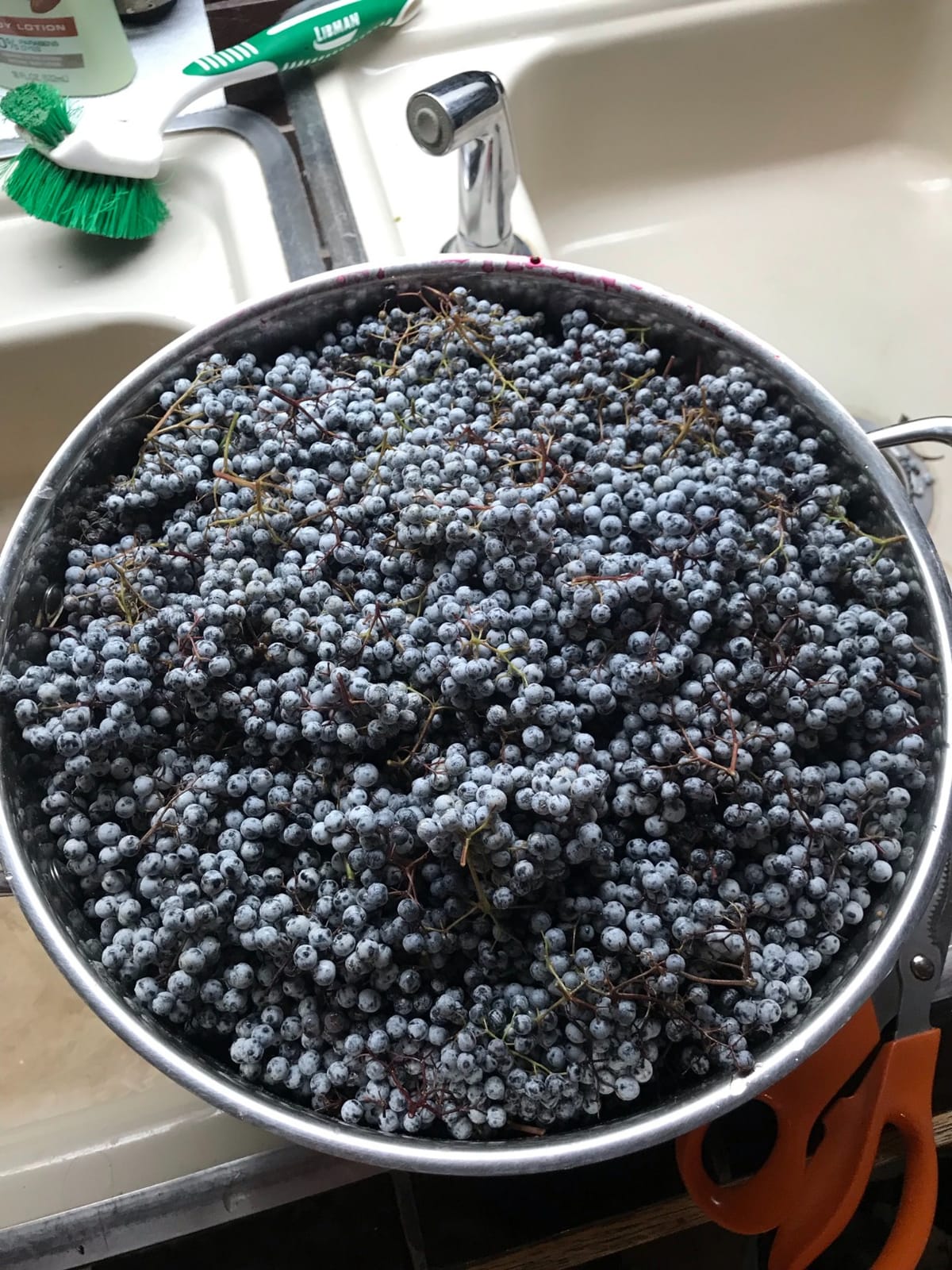
The NC-00256 arrives as three pieces that stack into a proper steam juicer: a water pan, a juice pan, and a strainer steamer pan, plus a lid and a hose with clamp. The fruit basket is 11 quarts, which is the capacity you want if you are processing chokecherries, elderberries or grapes by the bucket rather than a punnet at a time.
Heat distribution is the technical detail that decides yield. The base is stainless steel with a layered aluminum disc bonded to it, and reviewers consistently single out that layer as the reason there are no hot spots scorching the fruit. Even heating means more of the load gives up its juice in the same window, rather than the outer layer going to pulp while the center stays cool.
Cooktop flexibility is the other strength. It is listed for induction, gas, electric, glass, halogen and ceramic, so a glass-top stove is not a problem here. There is no foil disc or adapter to buy, which is the single most common complaint I read about budget units.
Why this one suits most home canners
The versatility is what makes it the default choice. Pull the center level and the tube out and the same pot is an 11-quart steamer for vegetables, potatoes or tamales. Canners who do the full range of preserving, not just juice, end up using the same pieces all season.
The set arrives complete. You are not hunting down a compatible hose or a clamp that fits the collector spout, which is the most common early frustration I saw reported with models that look similar in a listing photo.
Where it falls short for you
Despite the pot being listed as dishwasher safe, the center juice level and the drain tube are the parts that need hand washing. The narrow inner channel traps residue that a dishwasher spray arm will not reach, and if you skip it you will find off flavors in the second batch.
Steam juicing is a slow process. It suits a day spent in the kitchen with other things going on, but it is not a fifteen-minute appliance, and if you only want juice occasionally an electric machine will serve you better. For leafy greens and celery, our juicer guide for leafy greens covers that side of things.
2. GIANTEX KC46721 11-Quart Multipurpose Steam Juicer
Giantex 11 Quart Juice Steamer Fruit Vegetables Juicer Steamers w/Tempered Glass Lid, Hose, Clamp, Loop Handles Stainless Steel Steam Juicer Multipots Kitchen Cookware for Making Juice, Jelly, Pasta
11 quart
Three welded loop handles
Tempered glass lid
Flat aluminum-clad induction base
Pros
- Welded stainless loop handles on all three pots
- Tempered glass lid with stainless edge protection
- Flat base heats evenly on induction and every other cooktop
- Hose and clamp included
- Three pots work separately as steamer
- colander and boiling pot
Cons
- Cores and stalks must be removed before loading
- Listed as hand wash only
GIANTEX is the value pick here, and the reason is the glass lid combined with a flat, fully encapsulated base. Most of the budget end of this category drops one of those two features, and both matter for real canning work rather than a demonstration.
The tempered glass lid lets you check on the fruit without lifting the cover and dumping your heat back into the room. On a long grape or elderberry run that adds up, since the whole process can stretch over several hours of gentle simmering.
Three welded stainless steel loop handles, one per pot, are another detail worth noticing. Welded rather than riveted means there is no seam or fastener sitting over boiling water, and it also makes the assembled stack easier to control when the unit is heavy and full. Buyers frequently praise this as the reason the unit carries more comfortably than it looks like it should.
Because the three pots detach, they work as a steamer, a colander and a boiling pot on their own. A household that buys for juice but ends up using it for pasta and vegetables gets more out of it than a dedicated single-purpose machine.
Where this model earns its place
For a canner working with berries, the basket volume and the flat induction-compatible base are the deciding factors. The flat aluminum-clad bottom heats evenly, which matters when you are simmering for hours and scorching is the fastest way to get a burnt flavor into your juice.
It also suits a shared appliance. Two people in a household who preserve differently can use the same three pots for savory steaming and for sweet batches in the same week.
Where it falls short for you
Cores and stalks have to come out before the fruit goes in the top strainer. This is minor for berries, but if you work with pears or apples regularly you will be doing that prep yourself, because the funnel is not sized to swallow a whole apple with its core intact.
It is listed as hand wash only. Handled properly, stainless steel is not difficult to clean, but budget for a soft brush and a bit more scrubbing time at the end of a session compared with the models that are fully dishwasher safe.
3. KITCHEN CROP VINEYARD VKP1150 8-Quart Steam Juicer and Roaster Set
VINEYARD Deluxe Stainless Steel Steam Juicer & Roaster Set – Induction Friendly, Tempered Glass Lid, Cool-Touch Handles, 8 Quart Capacity
8 quarts
11.3 pounds
18/10 style stainless set
Oven safe bottom pot to 400 F
Pros
- Three capacities in one set: 8-quart colander
- 4-quart juice kettle and 8-quart boiling pot
- Clad bottom works on induction and smooth-top ranges
- Bottom pot oven safe to 400 F so it roasts too
- Silicone-coated cool-touch handles
- Backed by a 5-year warranty
Cons
- Holds less fruit per batch than the 11-quart models
- 11.3 pounds is heavy to lift when full
- Listed as hand wash only
The VINEYARD set is the one I recommend to people who want a preserving appliance rather than a dedicated juicer. It is the only model in this roundup where the bottom pot is oven safe to 400 F, which means the same pot that steams your juice roasts a chicken or bakes bread on the next use.
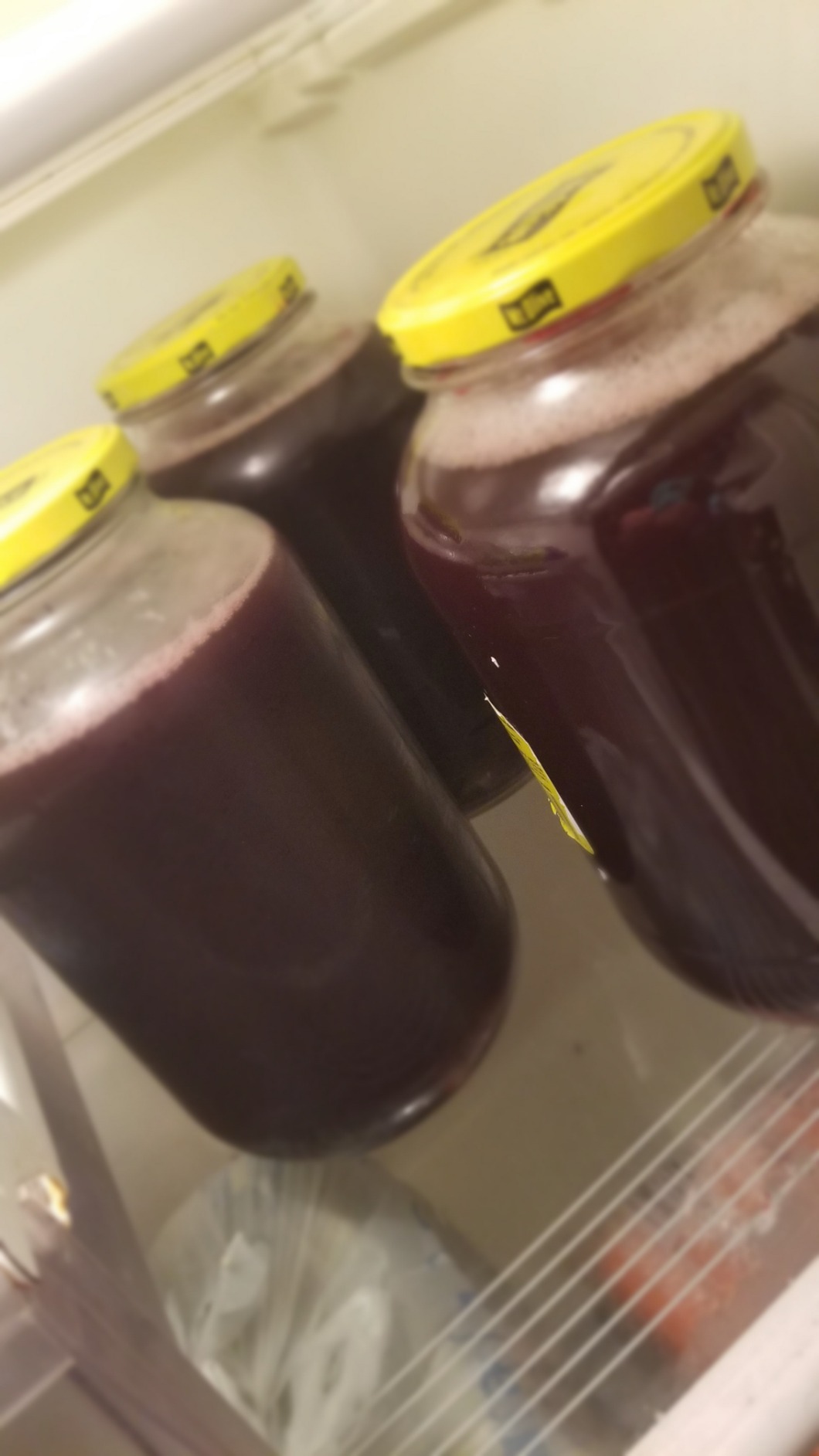
Capacity is split three ways: an 8-quart boiling pot, an 8-quart colander and a separate 4-quart juice kettle. That 4-quart kettle is the useful bit. Instead of draining juice into a jar on the counter, you collect it in a vessel you can lift by two handles without juggling a hot hose.
Heat distribution comes from a clad stainless bottom rated for induction and smooth-top ranges, so glass cooktops are covered. Silicone-coated cool-touch handles are a genuine safety improvement over bare steel loops when you are moving a full stack across a hot range.
The 5-year warranty is the longest in this group alongside the Mehu-Liisa steel warranty, and it tells you something about how the manufacturer expects the product to age. Buyers also credit it with doing duty as a roaster, steamer and serving pot, not just a juice machine.
Why it suits multi-use kitchens
If your preserving runs from fruit in August to pickles and vegetables through the autumn, this set covers more ground than any other here. The roasting capability is the headline, but the 4-quart juice kettle is what you will appreciate on a long drain session.
The cool-touch handles and glass lid reduce two separate burn risks at once: carrying a heavy pot and checking progress with an uncovered steaming vessel.
Where it falls short for you
Eight quarts is a real reduction against the 11-quart baskets on most of this list. If you process whole buckets of grapes or chokecherries, you will run more batches than you would with a larger top basket, and each batch costs you time on the stove.
At 11.3 pounds empty, lifting the fully stacked and full set is a two-person job unless you are strong. That is worth factoring in if you plan to carry it from a counter to a sink with juice in it. It is also listed as hand wash only.
4. VIVOHOME VH1495 11-Quart Stainless Steel Steam Juicer
VIVOHOME Stainless Steel Steam Juicer for Canning Fruit and Grape Juice
11-quart colander
7.6 pounds
Three-layer composite base with aluminum disc
4mm tempered glass lid
Pros
- Large capacity across the stack with an 11-quart colander and 11-quart middle layer
- Three-layer composite base spreads heat evenly and fast
- Dishwasher safe throughout
- Welded handles and edged tempered glass lid
- Hose and clamp included for draining into bottles
Cons
- Dry heating must be avoided as the base can be damaged
- Smallest share of 1-star reviews here
- some noting heat on handles during long batches
Cleanup is where this one separates itself. It is listed as dishwasher safe across the components, and at 7.6 pounds it is the lightest fully stacked unit in the roundup apart from the Euro Cuisine. Both of those matter more over a decade of canning seasons than any single feature.
The VH1495 is a three-layer stack with an 11-quart top colander, an 11-quart middle juice layer and a 6.5-quart bottom water pot. That middle juice volume is unusually generous, and it is the reason fewer hose changes are needed over a long batch compared with models with a 4-quart collector.
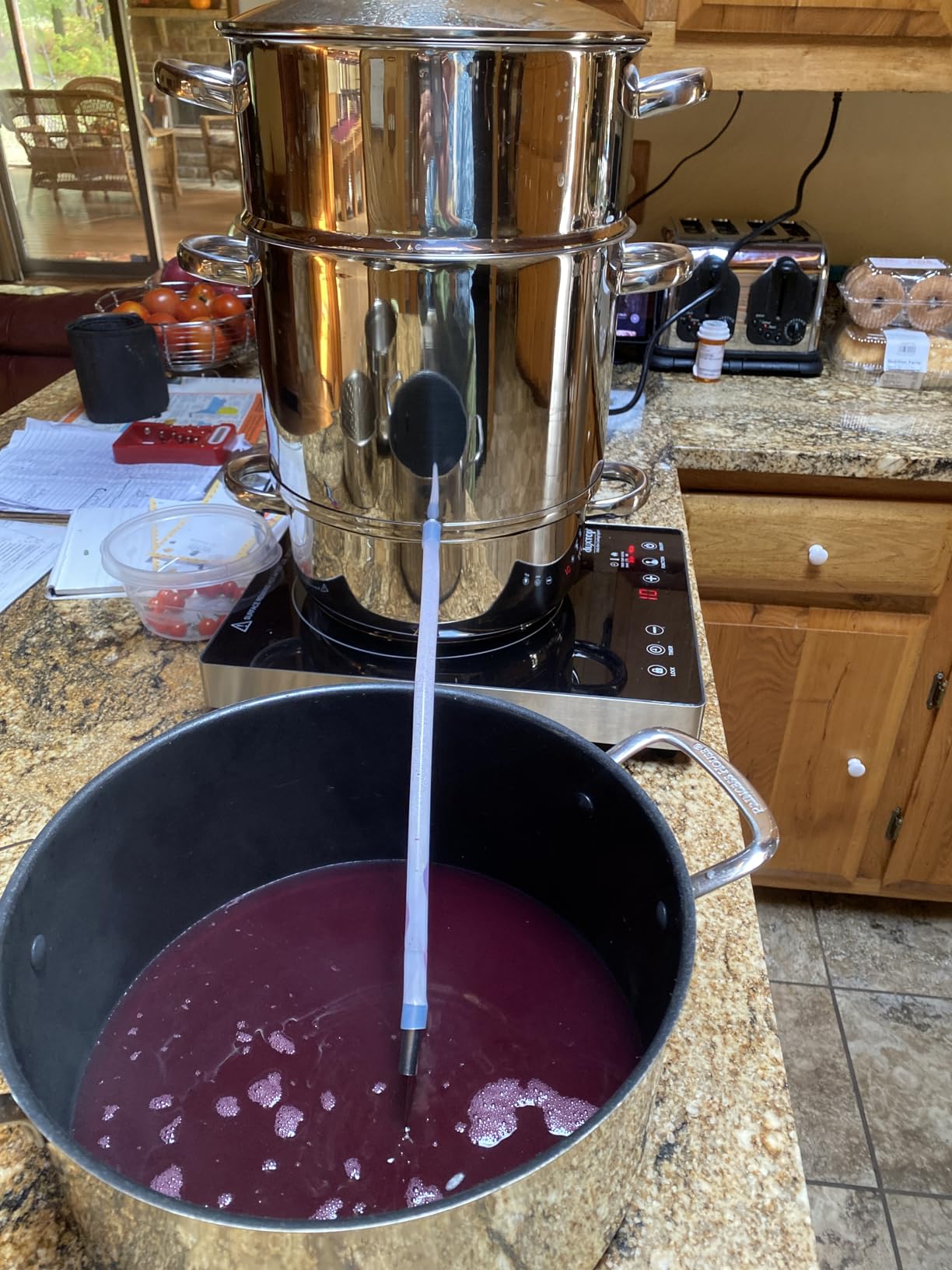
The base is a three-layer composite with an aluminum disc, which reviewers describe as heating evenly and quickly. Speed matters here: the faster the water comes up to a steady simmer, the shorter the window where fruit sits cooking without producing juice. The same base also means it works on gas, electric, ceramic and induction.
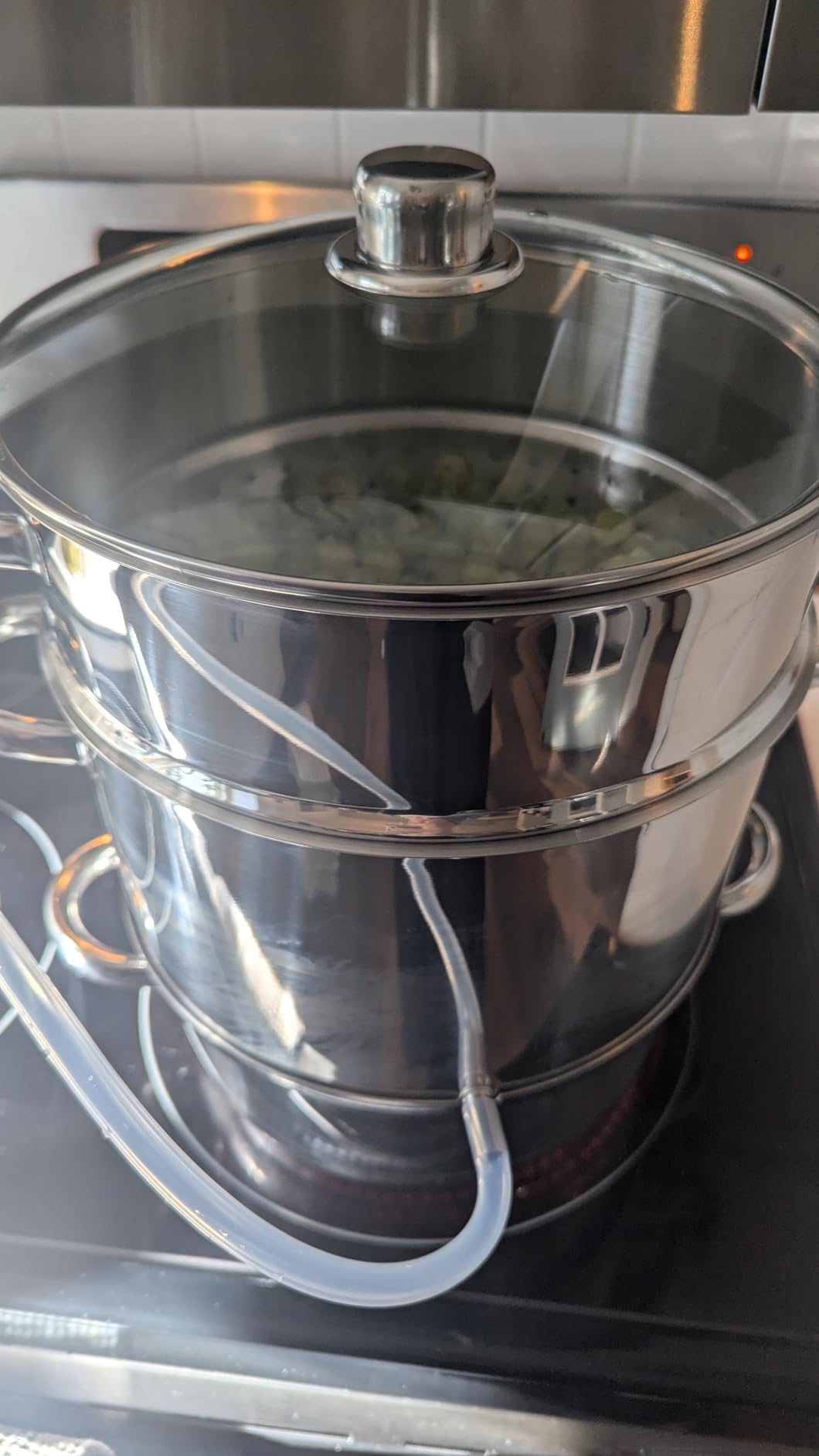
The 4mm tempered glass lid is edged in stainless steel, so you can watch the fruit without losing heat and you are not relying on an unsupported glass panel over a pan of boiling liquid. Welded stainless handles round out a well-considered design.
Why this model suits heavy-season canners
Anyone doing more than a demonstration batch will value the dishwasher-safe listing most. A canning session ends with juice residue on five separate components, and being able to stack them in the machine rather than scrub each channel by hand saves real time at the end of a long day.
The combination of capacity and induction compatibility also makes it a safe choice for a modern kitchen. If you already own an induction range and a smooth cooktop, you are not adding another adapter to the list.
Where it falls short for you
Prolonged dry heating can damage the base. The listed maximum temperature tolerance is high, but the practical instruction is simple: keep water in the bottom pot and never let it boil away. Several reviews mention heat building up around the handles during long runs, so plan to drain in stages rather than filling the collector and walking away.
Its rating of 4.6 is a step below the 4.8 cluster at the top of this list, and it carries a slightly higher share of one-star reviews than the leaders. Those cluster on venting and handle heat, which are manageable but real.
5. Mehu-Liisa ML11 11 Liter Stainless Steel Steam Juicer
The Original Mehu-Liisa 11 Liter Stainless Steel Steam Juicer
11 liters
18/10 stainless steel
10.5-quart steamer insert and 4.23-quart water pot
Designed in Finland
Pros
- 18/10 professional gauge stainless steel built for decades of use
- Strong long-term sales rank in steamer cookware
- Silicon tube and stainless clamp drain juice cleanly
- 10-year manufacturer warranty on all steel parts
- Recipe book included
Cons
- Highest cost in the roundup and hard to justify for casual juicing
- Induction compatibility is not advertised in the listed specifications
The Mehu-Liisa is the one I would buy once and keep. It is designed in Finland and built in 18/10 stainless steel, which is a heavier gauge than most of what is on this list. That extra metal is why the 10-year manufacturer warranty on all steel parts is credible rather than aspirational.
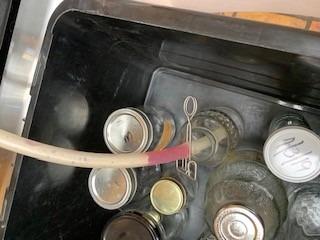
The set includes a 10.5-quart steamer insert, a 4.23-quart water pot, a silicon tube, a stainless steel clamp and a lid. The silicon tube is a detail that veteran canners care about: it does not stain the way a thin rubber tube does when you run chokecherry or elderberry juice through it.
What makes this a good canning investment is the combination of steel thickness and the sales rank it holds in the steamer cookware category. That ranking reflects people still buying and recommending it after more than a decade on the market, which is a durability signal no specification provides.
A recipe book ships in the box, which sounds minor until you are making syrup or jelly for the first time and working from measured ratios instead of guessing. The unit also steams complete meals, so it earns its counter space outside of preserving season.
Why it suits long-term preservers
If you already own a decent induction setup and can accept a heavier pot, the steel gauge is the deciding factor. Thicker walls hold heat more steadily across a long batch, and they tolerate the thermal cycling of a canning season without warping the base flat out of contact with your cooktop.
Home canners who make annual large batches of chokecherry or elderberry syrup tend to be the ones who end up with this on their list. Winemaking forum regulars have long called it the best value in serious steam juicing, and the warranty is the reason that view holds up.
Where it falls short for you
It is the most expensive unit in this roundup, and for someone who makes two jars of juice a year that money is hard to justify. The 4.23-quart water pot also means more refills over a long run than the 6.5-quart arrangement on some competitors.
Induction compatibility is not advertised in the listed specifications. If you have a glass or smooth-top induction range, confirm the base construction with the manufacturer before committing, because that is the single gap in an otherwise excellent spec sheet.
6. Norpro 619 Stainless Steel Steamer and Juicer
Norpro 619 Stainless Steel Steamer/Juicer
11.75-quart steamer insert
10 pounds
Encapsulated induction base
Oven safe to 400 F
Pros
- Works as a steamer
- juicer
- roaster
- cooker and serving vessel
- Encapsulated base heats evenly on induction cooktops
- Oven safe to 400 F for genuine roasting
- 11.75-quart insert
- 4-quart juice container and 7.25-quart water pot
- Recipes and instruction booklet included
Cons
- Juice container is only 4 quarts so it needs frequent draining
- The canning kit is not included in the base configuration
The Norpro 619 wins on range of use. It is a steamer, a juice extractor, a roaster, a baking vessel and a serving pot, and the 400 F oven rating is the specification that turns it from a single-purpose appliance into something you would keep out on the counter rather than in a cupboard.
The three capacities are an 11.75-quart steamer insert, a 7.25-quart water pot and a 4-quart juice container. That top insert is the largest fruit basket among the 8-quart and 11-quart machines here, which is worth knowing if you are processing large whole loads.
The encapsulated base is the part that matters for canning. It gives even heating and induction compatibility, and buyers consistently credit the induction performance as the technical detail they did not expect to get at this level. A recipe and instruction booklet ships with it, which helps on a first run.
Norpro has a strong reputation among home canners, and reviews of this model focus less on juice yield than on how much else the pot does. For someone who wants to roast a chicken on Sunday and make grape juice in September, that is the correct set of priorities.
Why it suits households that cook and preserve
The oven rating at 400 F means you can roast, bake and slow-cook in the same vessel you use for juice. That removes the argument that a steam juicer is a seasonal item you store for eight months and use for two.
The rubber drain tube and clamp are included, so you are not sourcing your own. With an 11.75-quart insert, a single load covers a substantial amount of fruit before you need to refill water.
Where it falls short for you
The 4-quart juice container is the most common limitation buyers name. During a large batch you will drain it more often than you would with an 11-quart middle layer, and every drain means handling a hot hose and a full pot of near-boiling juice.
The canning kit is not included with the base configuration. If your plans center specifically on filling and processing jars, buy the complete configuration rather than the steamer and juicer alone. Community discussion of this brand also flags a sharp price rise over time, so buy it when you are ready rather than shopping around for years.
7. Euro Cuisine EC9500 Stove Top Steam Juicer
Euro Cuisine EC9500 Stove Top Steam Juicer, Stainless Steel Steam Juice Extractor, 5 Qt. Water Reservoir, 8 Qt. Juice Container with Spigot, 8 Qt. Steamer Basket, Glass Lid – Steam Juicer for Canning
8 quarts
7 pounds
5-quart reservoir with 8-quart juice container
Glass lid
Pros
- Spigot on the juice container makes draining into jars and bottles straightforward
- Compatible with induction
- electric and gas cooktops
- 8-quart steamer basket doubles for vegetables
- seafood and meat
- Only 7 pounds so it moves easily
- Backed by a 3-year warranty
Cons
- Lowest average rating in the roundup at 4.5 with 6 percent of reviews at 1 star
- Spigot needs more careful handling than a clamped drain tube
- Listed as hand wash only
The Euro Cuisine EC9500 takes a different approach to draining. Instead of a hose and clamp, the 8-quart juice container has a spigot at the bottom, so you fill your jars by opening a valve rather than trying to aim a rubber tube into a mason jar. For someone new to preserving, that is a genuinely easier workflow.
The layout is a 5-quart water reservoir, an 8-quart juice container with spigot, an 8-quart steamer basket and a glass lid. It is listed for induction, electric and gas cooktops, so a glass-top range is covered without an adapter.
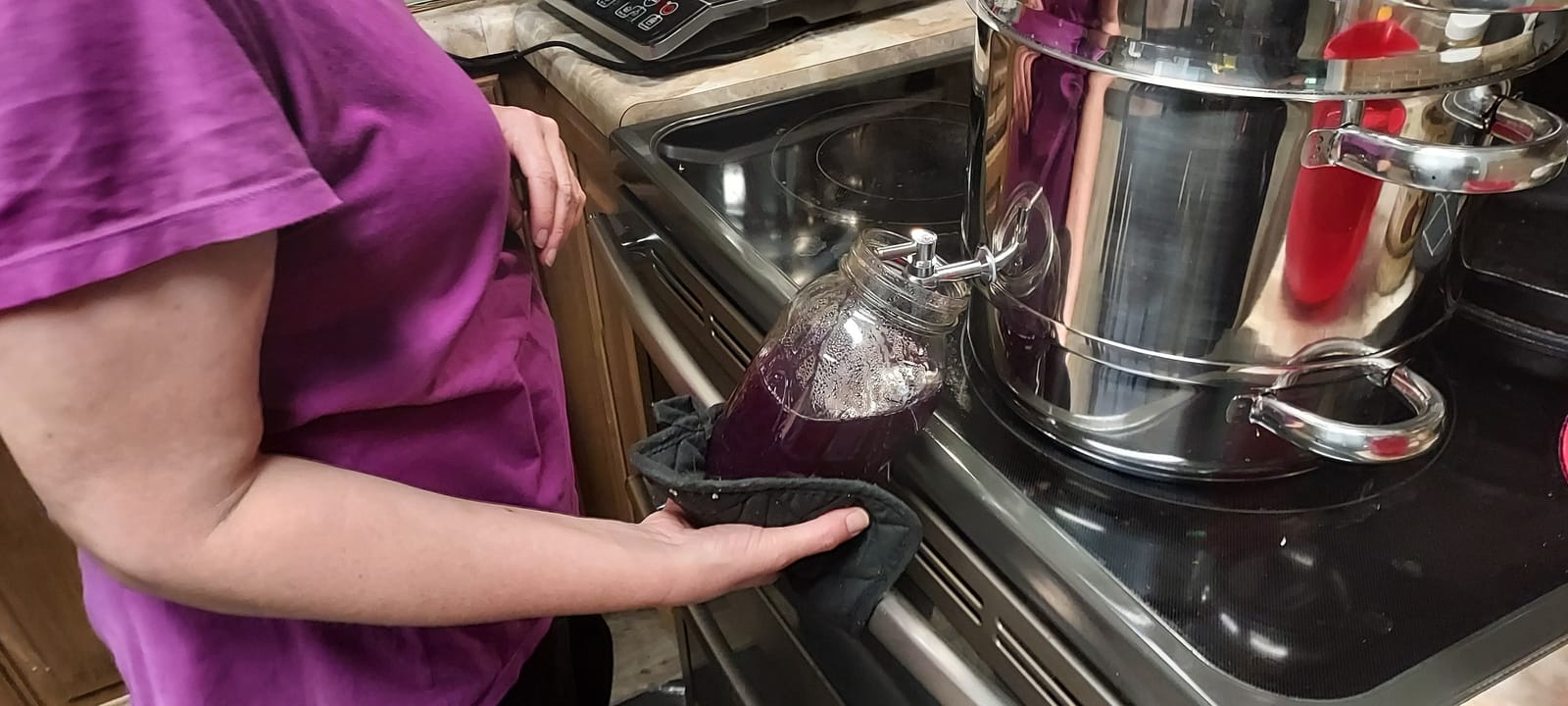
At 7 pounds this is the easiest unit here to move, and it has a 3-year warranty behind it. The 8-quart steamer basket also does double duty for vegetables, seafood and meat, so the pot earns its space even outside of fruit season.
Owners on canning forums often cite this model for chokecherry batches specifically, where the spigot approach means you can fill jars one at a time as the juice comes down rather than accumulating several quarts of hot liquid.

Why it suits smaller kitchens
The footprint is modest and the weight is low, so it stores and moves more easily than the tall 11-quart stacks on this list. If counter space and cabinet clearance are your binding constraints, that physical reality counts more than a larger basket you cannot lift.
The spigot is the deciding feature for beginners. Filling straight from the collector into jars removes the fiddliest part of steam juicing, which is aiming a clamped tube without spilling.
Where it falls short for you
This model carries the widest spread of ratings here, with 6 percent of reviews at 1 star. Most of the critical reviews trace back to the spigot itself, which needs more careful handling than a clamped tube and leaks if opened too fast on a full collector.
It is listed as hand wash only, and the 8-quart juice container means more frequent draining than an 11-quart middle layer when you are working through a large load. If you preserve in volume rather than in batches of a few quarts, weigh that tradeoff carefully.
8. Cooks Standard 02731 11-Quart Steam Juicer Pot
Cooks Standard Steam Juicer Pot 11 Quart Stainless Steel
11 quarts
9 pounds
Six-piece set with two hoses
Oven safe to 500 F
Pros
- Steam canner and juice extractor combined for mason jar workflows
- No need to stem grapes or pit cherries
- Verified thorough extraction with pressed pulp yielding little extra juice
- Dishwasher safe with two hoses included as spares
- Oven safe to 500 F and induction compatible
Cons
- Steam extraction is slow and requires patience
- Drain tube runs hot and is short so juice can spill when full
- Rubber hose stains with deeply pigmented fruit juice
The Cooks Standard is the most canning-focused unit in this roundup, and reviewers treat it that way. Fruit goes in unstemmed and unpitted, which removes the single most tedious step for grapes and cherries, and the juice comes out clear enough that reviewers report pressing the spent pulp by hand yields almost nothing further.
It is a six-piece set: a cooking pot, juice container, strainer basket, tempered glass lid, stainless steel clamp and two hoses. Having a spare hose matters more than it sounds, because the tube is the part that wears out or picks up stain first.
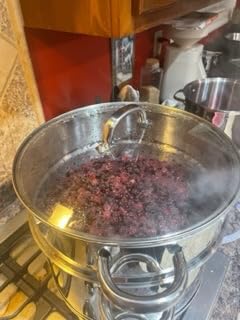
The encapsulated aluminum base heats fast and evenly, and the pot is oven safe to 500 F with the glass lid rated to 350 F. It is compatible with induction, gas, electric, glass, ceramic and halogen, which makes it the broadest cooktop coverage of any 11-quart model here.
Cleaning is straightforward because the components are dishwasher safe. The reservoir has held four pounds of cranberries with room to spare in reviewer testing, so the fruit capacity is real rather than a nominal number on a box.
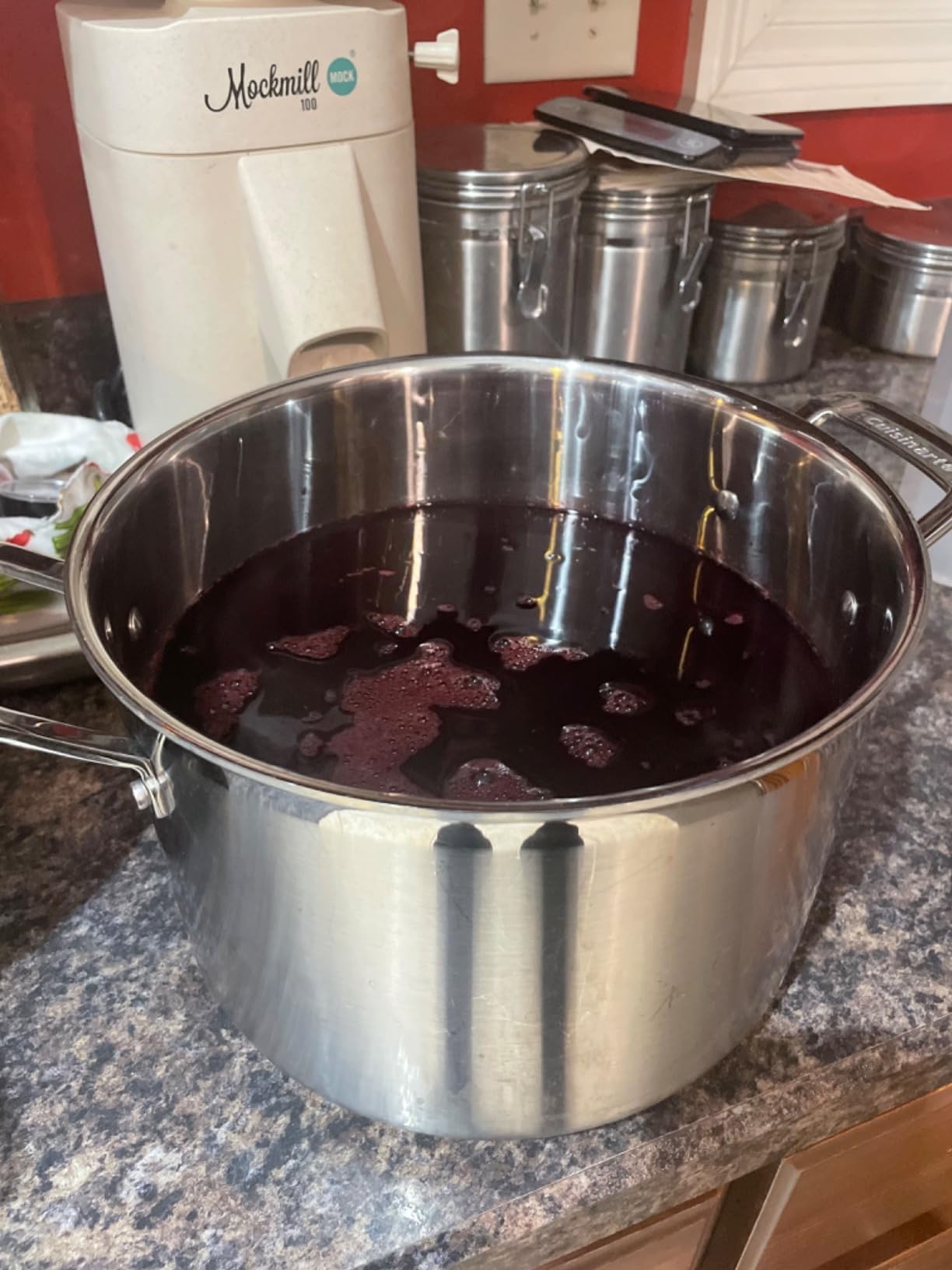
Why it suits grape and cherry season
If your preserving is centered on grapes, chokecherries or cranberries, the ability to load fruit whole is the feature that pays for itself fastest. Stemming and pitting ten pounds of fruit by hand takes far longer than the juicing does.
Verified extraction means you are not leaving yield in the pulp. For people measuring output in quarts per batch, that consistency is worth more than any convenience feature.
Where it falls short for you
Extraction runs slowly. One reviewer compared the pace to a trickle, and that is accurate for the category: plan for hours of gentle heat rather than an active task. If you dislike monitoring a pot, an electric extractor suits that personality better.
The drain tube runs hot and is a little short, so juice can spill when the container is full and the clamp is hard to reapply. Heat-resistant gloves and a catch dish are not optional extras here. The rubber hose also stains quickly with deeply pigmented juice, which is why the second hose matters.
9. Mr Rudolf 11-Quart Steam Juicer
Mr Rudolf Steam Juicer (11 Qt)
11 quarts
9.38 pounds
18/10 stainless steel
Welded loop handles and tempered glass lid
Pros
- Clear usable juice with no filtering or jelly bag needed
- Induction cooktop performance verified by owners
- Holds heavy fruit loads for very large single sessions
- Welded handles and an easy-clean tube
- Limited lifetime warranty on registration
Cons
- Plastic drain tube is awkward to fit and can leak
- Clamp does not fully stop hot liquid flow
- No fill line in the bottom water pot so it can boil dry
The Mr Rudolf is the model I would pick for volume. Owners report producing eighteen quarts of grape juice in a single session, which tells you the 11-quart basket is genuinely usable at full load rather than as a nominal capacity with a lot of headspace built in.
It is 18/10 stainless steel throughout with welded loop handles and a tempered glass lid edged in stainless steel. Owners confirm induction compatibility in practice, and the flat aluminum-clad bottom is what makes that possible.
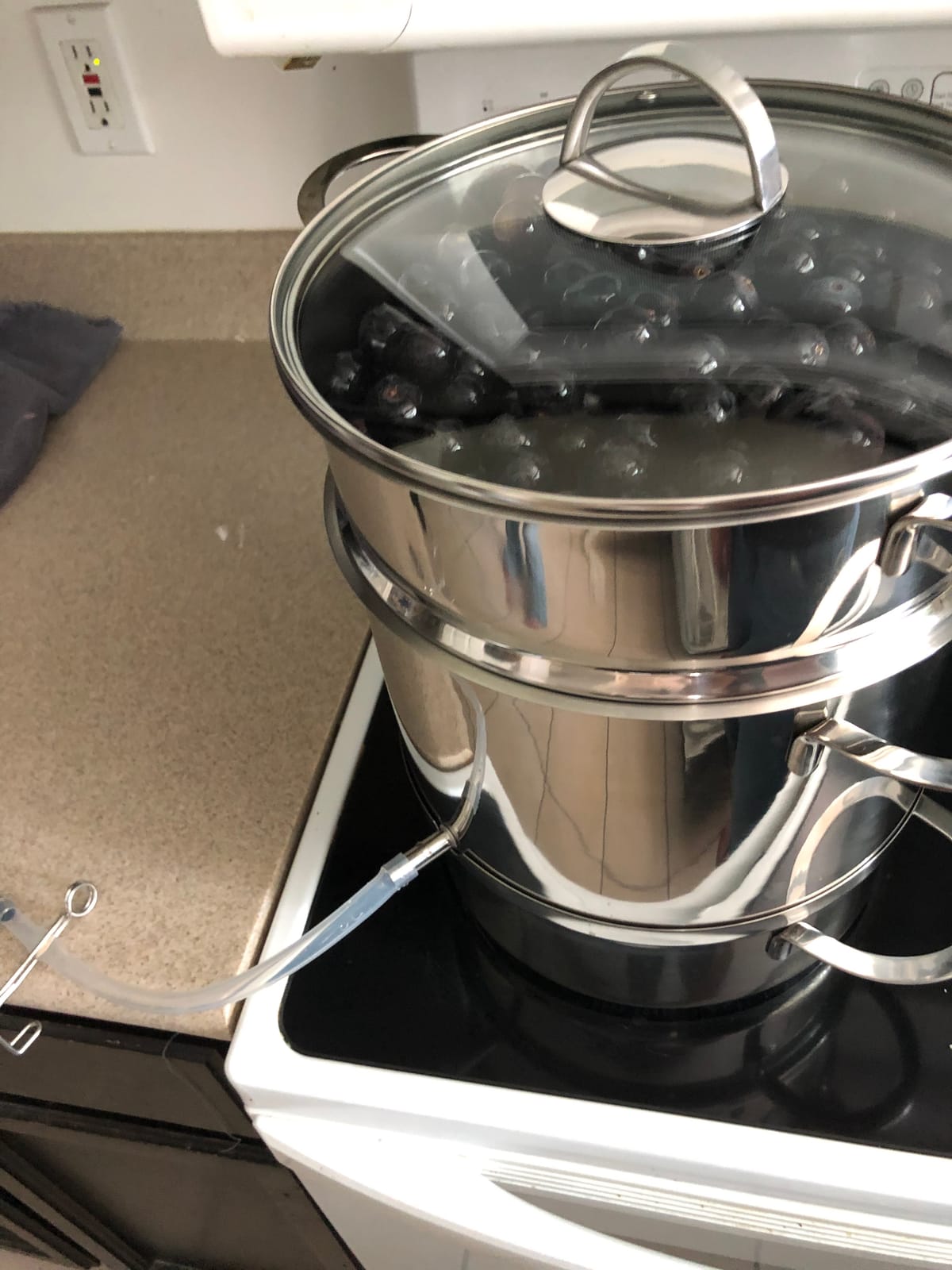
The juice quality is the headline for most buyers: they note clear, usable juice with no filtering and no jelly bag, which is the whole reason to own this appliance rather than straining fruit in a towel. Assembly is simple, and most components can go in the dishwasher.
There is a 1-year guarantee with an extended limited lifetime warranty available on registration. If you intend to keep this for many seasons, registering is the step people skip and then wish they had not.
Why it suits heavy harvest days
Big harvests reward big baskets. If you have a vine, a large elderberry patch or a chokecherry tree that produces more than you can process in a couple of small runs, this is the one that gets the job done in fewer sessions.
Clear, strain-free juice means less filtration work after the batch, and that saved time is real when you are handling eighteen quarts of output.
Where it falls short for you
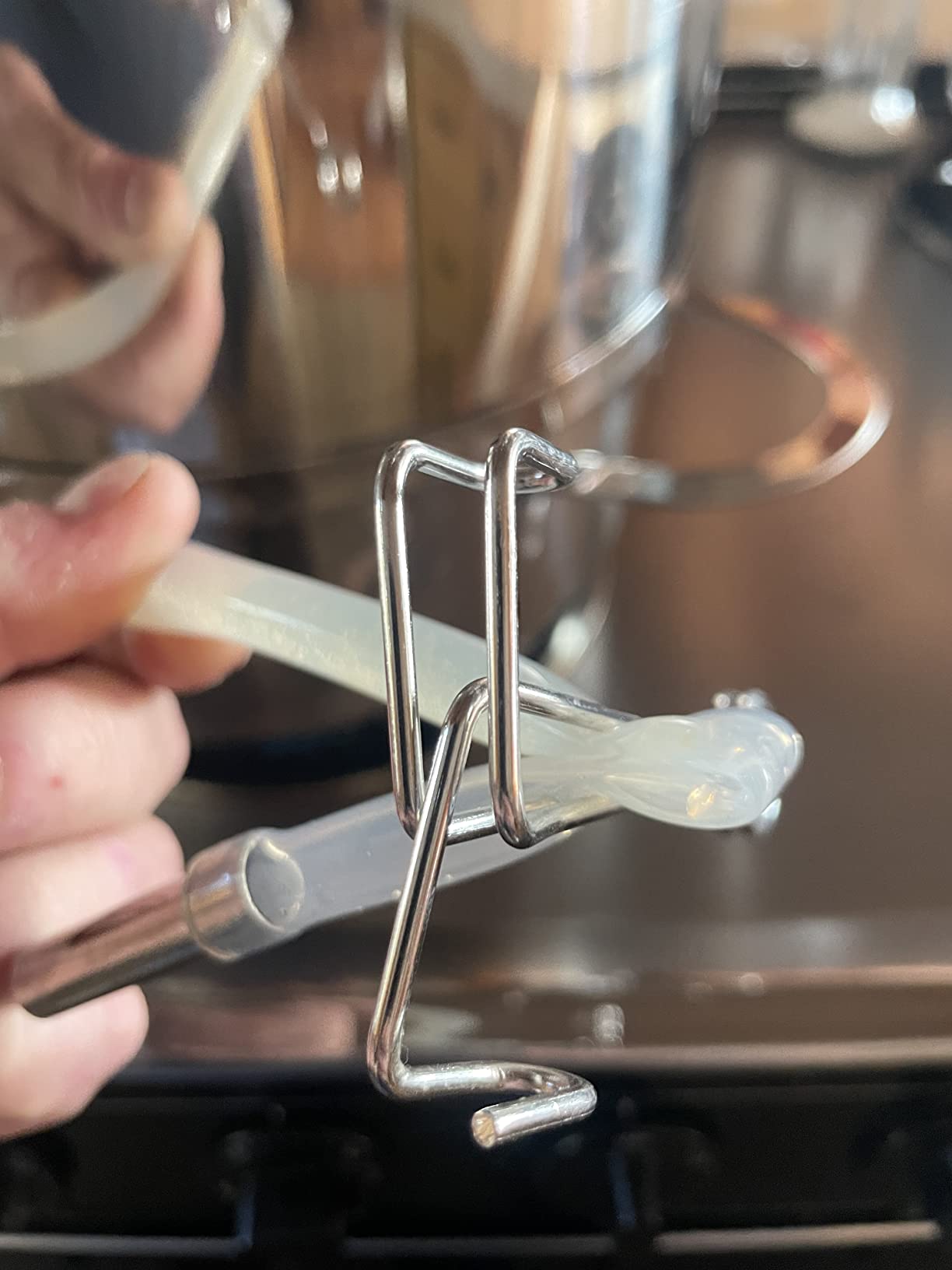
The drain tube is the significant weakness, and it is repeated across multiple reviews rather than being an isolated complaint. The plastic tube is difficult to fit onto the metal funnel and can leak unless the clip sits about an inch back from the metal end, and the clamp does not fully stop hot liquid from moving. Set a catch dish under the outlet and treat gloves as mandatory.
There is no fill line in the bottom water pot, so it is easy to boil dry on a high burner. The edge of the inverted funnel is sharp during cleaning, the handles run hot, and the tube stains fast with no spare included. Plan a low burner and check the water more often than the manual suggests.
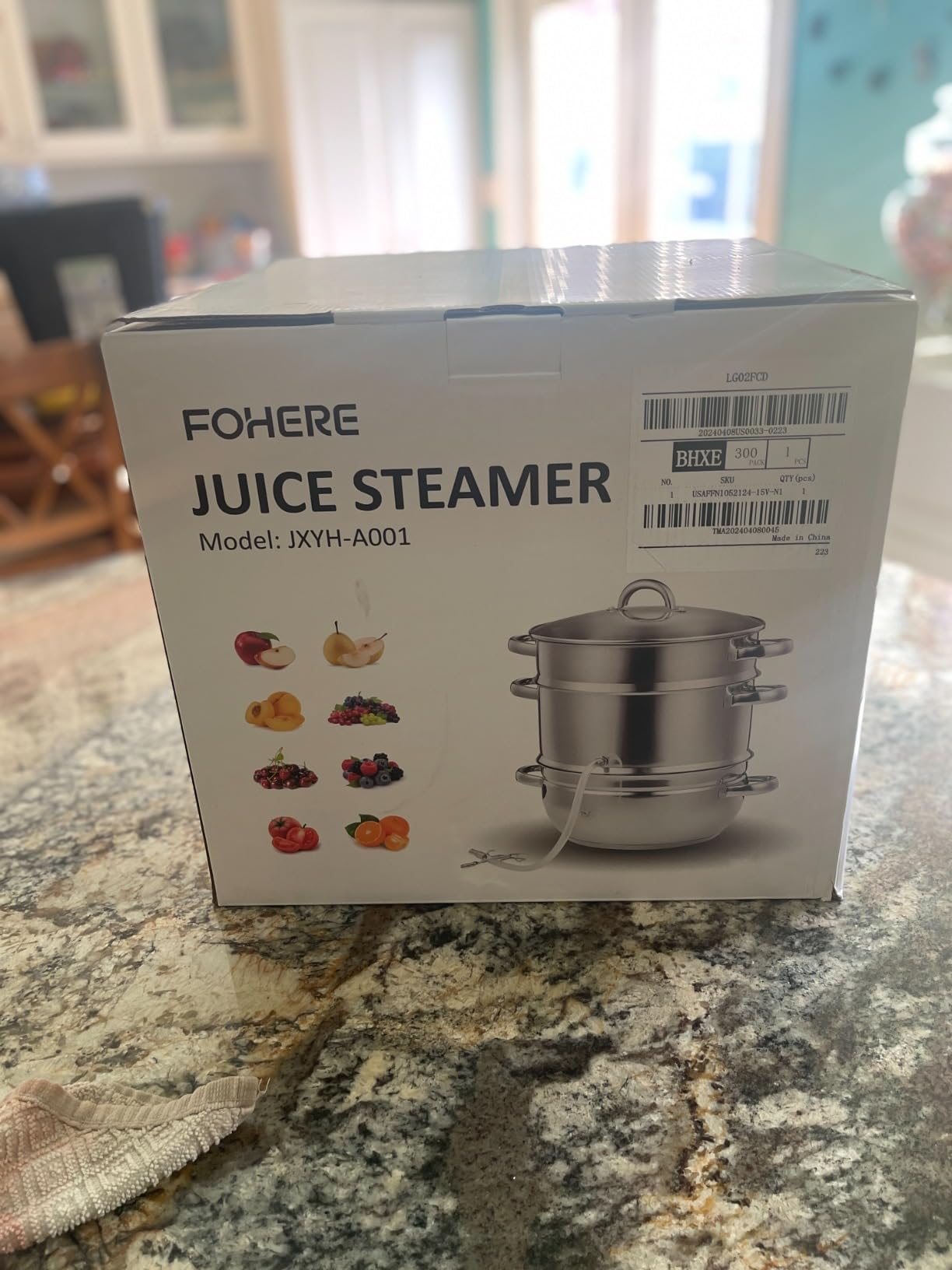
10. FOHERE JXYH-A001 11-Quart Steam Juicer Extractor
FOHERE 11Qt Steam Juicer Extractor Stainless Steel, Juice Steamer Pot for Fruit & Vegetables with Glass Lid, Hose, Clamp, Loop Handles, Ideal for Making Fresh Juice, Jelly, and Sauces
11 liters
8.7 pounds
304 stainless steel
Three detachable pots with stackable storage
Pros
- Lowest cost in the roundup while still offering 11-quart capacity
- Curved lid handle is easy to grip with gloves
- Glass lid with stainless edge protection
- Three pots detach for use as steamer
- soup pot and colander
- Dishwasher safe with smooth surfaces
Cons
- Lowest rated of the group at 4.5 with 5 percent of reviews at 1 star
- Stainless steel grade and finish described by some buyers as lower quality
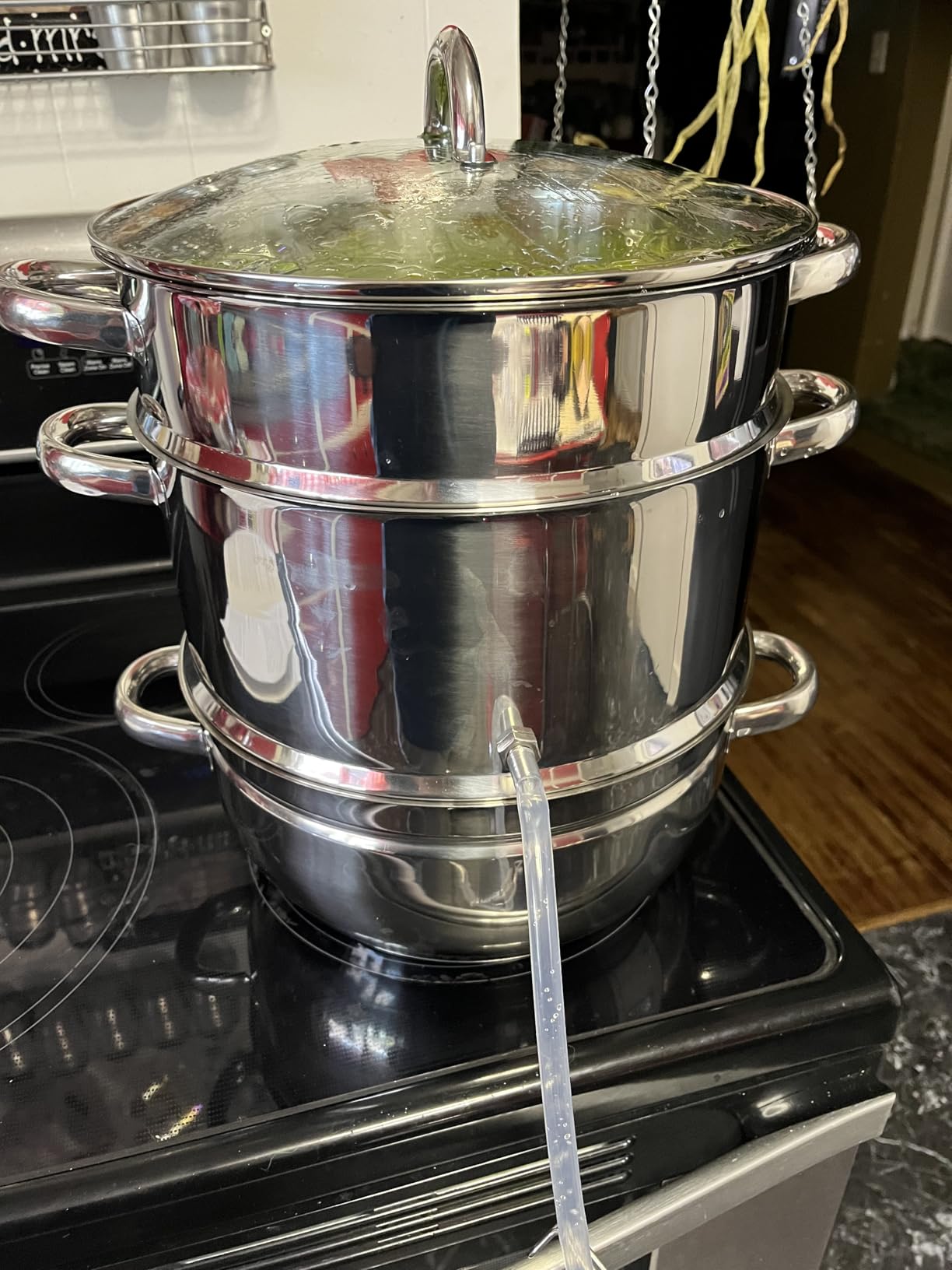
The FOHERE is the entry point. It is a three-layer 304 stainless steel design with 11 liters of capacity, detachable pots, a layered base and a tempered glass lid with a stainless protected edge, at the lowest position of any model here. If preserving is something you have been meaning to start, this is a low-risk way to begin.
The stackable design is more useful than it sounds. When the season ends the three pots nest inside each other, which matters if your cabinet storage is tight and you do not want an 11-quart tower taking up permanent shelf space.
The curved lid handle gets consistent praise because it can be gripped while wearing heat-resistant gloves. On a unit with a glass lid, that is the difference between opening the pot comfortably and trying to find bare skin between your fingers and a hot steel edge.
The layered base chassis is designed to avoid scorched discoloration and hot spots, and the unit is listed for induction, gas and electric cooktops. Smooth stainless surfaces plus dishwasher safe cleaning keep the after-session work short.
Why it suits first-time canners
You get the full feature set that actually matters at this level: 11-quart capacity, a glass lid for visibility, a hose and clamp, induction compatibility and dishwasher safe cleanup. Nothing essential is missing, which is unusual at the bottom of the price range.
The detachable pots add flexibility. The same three pieces work as a steamer, a soup pot and a colander, so the appliance is useful even in months when you are not preserving fruit.
Where it falls short for you
Build quality is the recurring complaint. At 4.5 stars with 5 percent of reviews at 1 star, it sits at the bottom of the rating range here, and some buyers specifically describe the stainless grade and finish as lower quality than competing models. Check seams and the rolled rim of the basket before loading a full batch of hot fruit.
It also carries a shorter review history than the leaders, so there is less long-term evidence about how it holds up over a decade. If you expect to preserve heavily every year, spending more on a thicker gauge with a longer warranty is the better call.
How to Choose a Steam Juicer for Home Canning
Start with capacity, because it sets everything else. The 11-quart basket is the standard for home canning, and it is the size that lets you process a meaningful load without babysitting the water level all afternoon. Smaller units around 5 to 8 quarts are fine for a single apple tree or a weekend experiment, but you will run more batches and spend more time per quart of finished juice.
Check the base, not the body, for cooktop fit. Stainless steel alone will not sit properly on a glass or smooth-top range. You want an encapsulated or clad base with an aluminum disc bonded to it, which is also what spreads heat evenly and stops scorching. Every model in this roundup except the Mehu-Liisa advertises induction and smooth-top compatibility, so on a glass stove you have options. For celery juice and leafy greens, which steam juicers handle poorly, our masticating juicer guide is the better read.
Decide how you want to drain, because that is your daily friction point. Two designs dominate. A hose with a clamp gives you a continuous stream into a jar or a bottle and lets you collect several quarts before stopping. A spigot on the collector is easier to aim and safer for beginners but needs careful handling so it does not gush. During long runs, a larger middle juice layer means fewer drains, and fewer drains means less time handling a tube of near-boiling liquid.
Weight and handles deserve more attention than reviews give them. A full 11-quart stack with fruit and water can weigh 25 pounds or more. Welded loop handles beat riveted ones for both strength and control, and silicone-coated cool-touch handles are the single most noticeable safety upgrade available. Check the listed empty weight and ask whether you can lift the loaded unit with two hands from the range to the sink.
Read the care instructions literally. Several models are listed dishwasher safe and several are listed hand wash only, and the difference matters on a preserving day when you have five components to clean. Watch for a narrow center channel or drain tube that is excluded from dishwasher cleaning even when the pots are included, because that is where off flavors come from in the second batch.
Treat warranty length as a durability signal. The Mehu-Liisa carries a 10-year warranty on steel parts, the KITCHEN CROP set has 5 years, the Euro Cuisine has 3 years, and the Mr Rudolf extends to a limited lifetime warranty on registration. Manufacturers do not write long warranties on pots they expect to warp. For a first purchase, a longer warranty is a reasonable proxy for build quality you cannot see in a photo.
Steam Juicer vs Steam Canner: The Difference That Matters
A steam juicer extracts juice from fruit using steam and gravity. A steam canner heats already-filled jars of food in a bath of boiling water to make them shelf stable. They are different appliances that happen to share the word steam, and the most common purchasing mistake we see is buying one expecting the other.
The output is different too. A steam juicer gives you a few quarts of clear juice per batch that you then pour into jars and process in a separate water bath. A steam canner takes jars of whole fruit, vegetables or pickles and processes them directly, leaving the fruit in the jar. If you want canned peaches, you want a steam canner. If you want jelly, syrup or juice, you want a steam juicer.
Two models here bridge both jobs. The Cooks Standard 02731 is built explicitly for mason jar workflows and functions as a steam canner and juice extractor in one unit, which is why we gave it a dedicated badge. It will not replace a true pressure canner for low-acid vegetables, where processing temperatures must exceed boiling.
How to Use a Steam Juicer for Home Canning Step by Step
1. Prep the fruit with less work than you expect. Berries, elderberries, mulberries and chokecherries go in whole with no stemming, pitting or hulling. Grapes need no destemming on the models designed for it, though removing stray stems is still quick. Apples and pears need only the obvious bad spots and blossom ends removed: the steam does the peeling, so unlike juice pressing you do not core them. Cut large fruit into halves so steam reaches the center faster. Do not stir or mash the fruit once it is loaded, because breaking the cells early is what turns juice cloudy.
2. Set up the stack. Put water in the bottom pot to the fill level, then the collector, then the fruit basket with the funnel and tube seated on top. Place a handful of clean marbles or similar smooth weights in the bottom pot: as the water level drops the marbles rattle against the metal, which tells you it is time to add more without lifting the lid and losing heat. This trick is widely recommended by university extension services for exactly this reason.
3. Bring it up to a steady simmer, not a rolling boil. From the moment water boils, steam rises through the central cone, condenses on the fruit, and juice drips through the funnel into the collector. A gentle, steady simmer extracts more juice per unit of fuel than a hard boil, which mostly boils water away. Expect the process to run for hours on a full basket, and check the bottom pot water more often than feels necessary, especially on models without a fill line.
4. Collect the juice and keep it moving. Open the clamp or spigot to drain juice into a heatproof pitcher or straight into jars. Because the juice is near boiling, do not fill thin plastic containers and do not handle glass without dry oven mitts. For very hot juice, many canners route it through a saucepan and funnel rather than filling jars directly at the outlet, because a narrow jar mouth plus a fast stream is how you lose juice on the counter.
5. Strain and sweeten as your recipe requires. Depending on the fruit and the recipe, you may pass the juice through a jelly bag or fine strainer for clarity, or leave it as is for a cloudy, full-flavored juice. Elderberry and chokecherry syrups are usually strained; clear grape and apple juice usually are not. Do not add sugar before boiling, because you need the liquid volume accurate to hit the right final consistency.
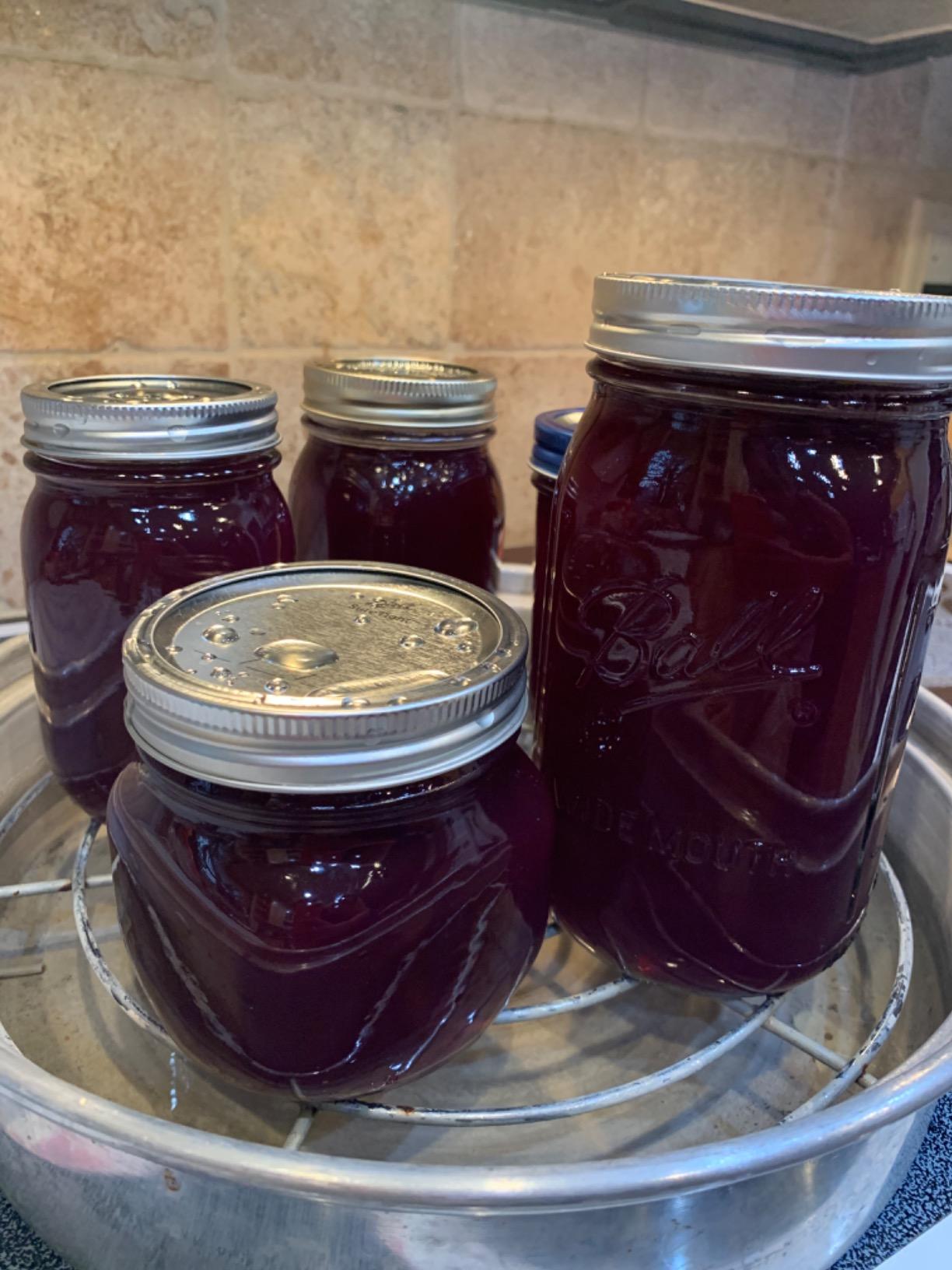
6. Fill jars with headspace and process them. Fill hot jars, leaving a quarter inch of headspace for most fruit juice and a half inch if you are processing juice at altitude. Wipe the rims, apply bands finger-tight, and process in a boiling water bath. High-acid fruit juices are generally processed for 10 minutes for half-pint and pint jars and 15 minutes for quarts, but always confirm against a current tested recipe from a university extension service or the National Center for Home Food Preservation rather than trusting a number from a blog, including this one.
7. Adjust for altitude. Boiling water is below 212 F at higher elevations, so processing times must increase. The standard increment is to add 1 minute for 1,001 to 3,000 feet, 2 minutes for 3,001 to 6,000 feet, 3 minutes for 6,001 to 8,000 feet, 4 minutes for 8,001 to 10,000 feet and 5 minutes above 10,000 feet. If you skip this step you can end up with under-processed jars, which is a food safety problem rather than a quality preference.
Troubleshooting, briefly. Cloudy juice almost always means the fruit was stirred, crushed or overworked. Low yield means the heat was too aggressive or the fruit was cut too large, so simmer gently and cut smaller. A hose that leaks at the funnel is usually the clip sitting too far onto the tube, so push it back about an inch and test with cool water before a full batch. If the bottom pot runs dry, drop the burner setting immediately and expect to lose part of the batch.
Frequently Asked Questions
What is the best steam juicer for home canning?
The Cook N Home NC-00256 is our top pick because it has an 11-quart three-piece set, a layered aluminum base that heats evenly on induction and glass cooktops, and a 4.8 rating across 2240 reviews. It also dismantles into a boiling pot and steamer, so it earns its space outside of preserving season.
Are steam juicers worth it?
Yes, if you preserve 10 quarts or more of juice a year. A steam juicer replaces hours of pressing or cloth straining with a few hours of gentle simmering, and most fruits need no peeling or coring. If you only want juice occasionally, an electric extractor is faster and simpler.
What size steam juicer do I need for home canning?
An 11-quart fruit basket is the standard for home canning, because it holds a meaningful load without constant refilling of the bottom water pot. Models in the 5 to 8 quart range suit a single fruit tree or weekend batches, but you will run more sessions to process the same harvest.
What is the difference between a steam juicer and a steam canner?
A steam juicer extracts juice from fruit with steam and gravity, and you pour that juice into separate jars. A steam canner heats already-filled jars of fruit, vegetables or pickles in boiling water to preserve them whole. The Cooks Standard 02731 in this roundup does both jobs in one unit.
What fruits can you steam juice?
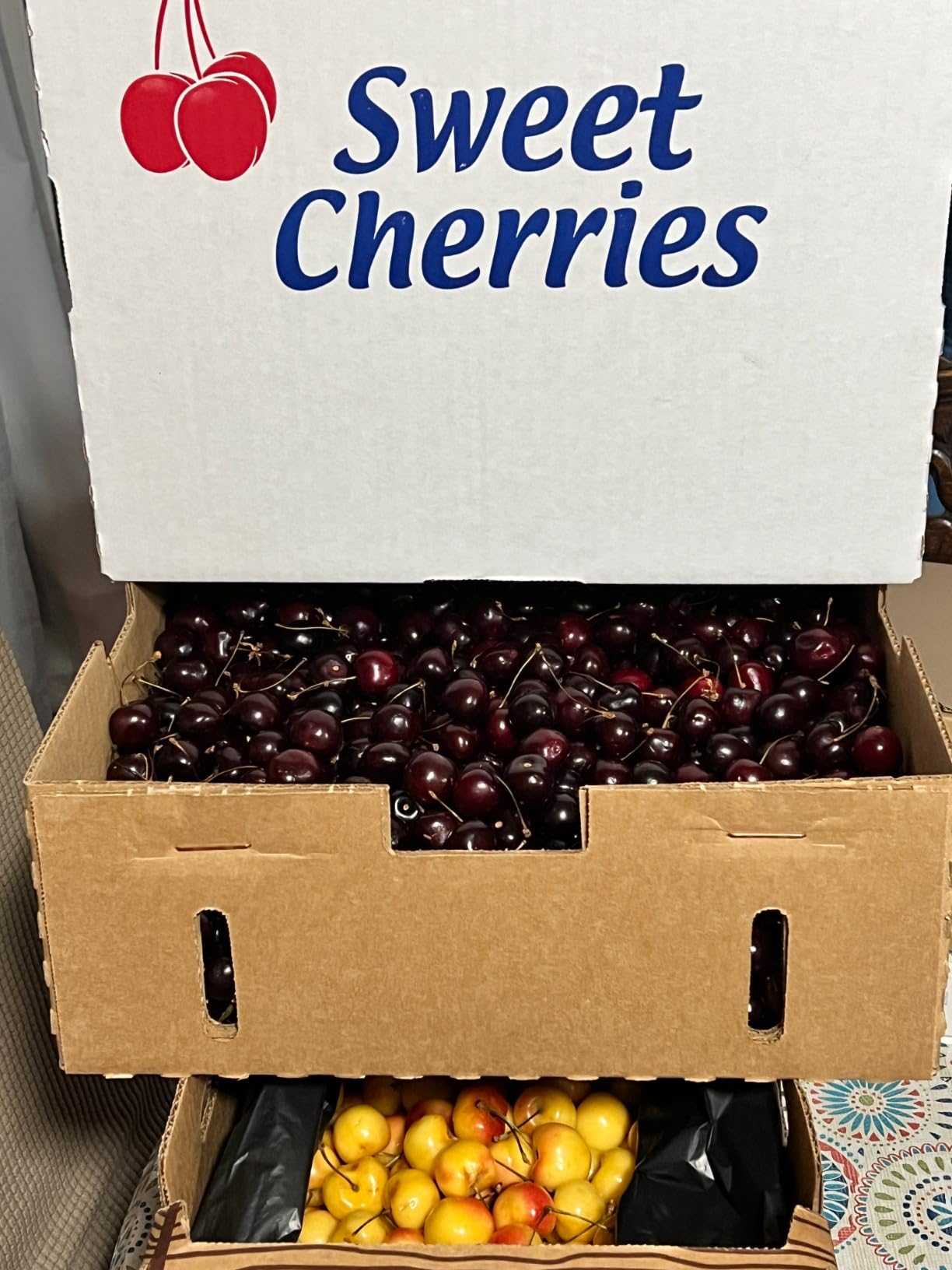
Berries such as elderberries, mulberries, blueberries and chokecherries go in whole with no prep. Grapes and cranberries steam well and need no stemming or pitting. Apples and pears do not need peeling or coring because the steam removes the peel. Tomatoes steam well once the hard core and any green parts are removed.
Why is my steam juice cloudy?
Cloudy juice almost always means the fruit was stirred, crushed or pressed once it was loaded into the basket. Breaking the cells releases pulp and fine solids into the collector. Load the fruit whole and undisturbed, simmer gently, and strain the juice through a jelly bag afterward if you need clarity.
Can a steam juicer go on an induction cooktop?
Most models in this roundup can, but check for an encapsulated or clad base with an aluminum disc rather than a plain stainless bottom. Every model here advertises induction compatibility except the Mehu-Liisa ML11, which does not list it, so confirm that base with the manufacturer if induction is your only cooktop.
What are the disadvantages of steam juicing?
The main drawbacks are time, hands-on attention and heat. A full basket can take several hours of gentle simmering, the bottom water pot needs checking so it does not boil dry, and you are working with near-boiling juice and steam throughout. Cleanup also involves several separate components, and some models need hand washing.
Is steam juicing healthy?
Steam extraction avoids the friction and oxidation that come with high-speed electric juicing, and the short, wet heat generally preserves more of the vitamin C and polyphenols present in the fruit than boiling or mechanical pressing. Because nothing is added during extraction, the health profile of your juice is largely the health profile of the fruit you put in.
The Verdict on the Best Steam Juicers for Home Canning
The Cook N Home NC-00256 takes the top spot in our comparison of the best steam juicers for home canning because it does the fewest things badly. The layered aluminum base spreads heat without hot spots, the 11-quart three-piece set arrives complete with hose and clamp, and it runs on every cooktop including glass and induction. With 4.8 stars across 2240 reviews and a design that has been in production since 2011, it is the safest purchase in this category.
Buy the GIANTEX KC46721 if you want the glass lid and induction base at a fair price, and the Mehu-Liisa ML11 if you intend to preserve for decades and want 18/10 steel with a 10-year warranty. Choose the Cooks Standard 02731 when grapes and cherries are your main crop and stem-free loading matters most to you.
Whatever you pick, check the bottom water pot more often than you think you need to, simmer rather than boil, and take your processing times from a current tested recipe rather than from any article on the internet. The right machine makes the work faster; safe technique makes the jars keep.