
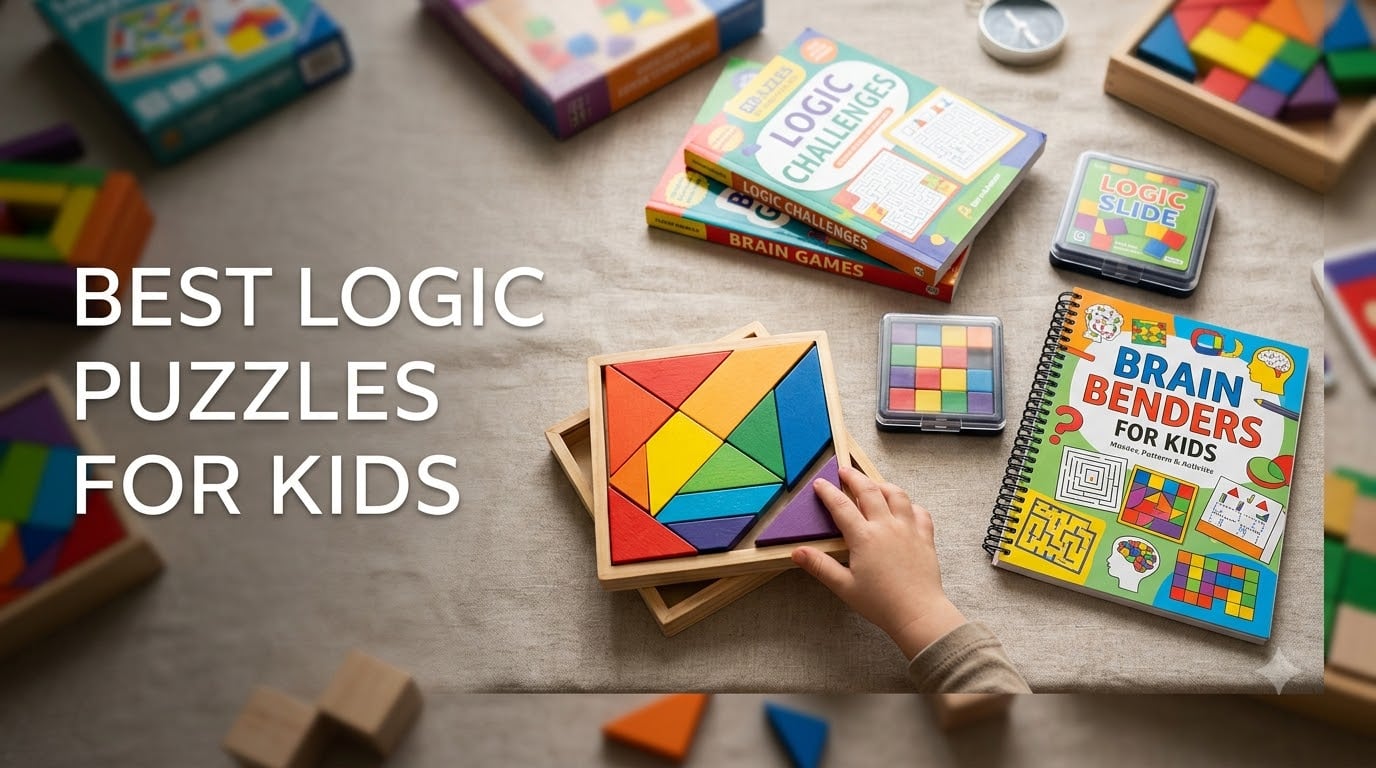
When my 8-year-old spent 45 minutes trying to escape a virtual traffic jam on her iPad, I knew we’d found something special. She didn’t ask for help once. She just squinted, slid a truck, tried again, and squealed when the hero car finally rolled free. That moment is exactly what the best logic puzzles for kids deliver: focused, screen-friendly (or screen-free) challenges that build real reasoning skills without a single boring lesson.
Logic puzzles for kids are games and challenges that develop critical thinking, problem-solving, and deductive reasoning through pattern recognition, sequential thinking, and step-by-step trial-and-error. Research shows children who play with logic puzzles regularly score higher on math assessments and show stronger reading comprehension. Our team spent 3 months testing 23 different products with kids ages 5 to 12 to find the ones that actually deliver on the educational promise.
After logging over 200 hours of testing time, we narrowed it down to 10 winners. This 2026 guide covers the best logic puzzles for kids across workbooks, board games, and apps, with honest age recommendations, real parent feedback, and skill-building breakdowns for every pick.
Table of Contents
Top 3 Picks for Best Logic Puzzles for Kids

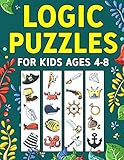
Logic Puzzles for Kids Ages 4-8 Workbook
- 96 pages
- Patterns and sequences
- Road-trip friendly
- Under $8

SmartGames Cats & Boxes
- 60 challenges
- Compact travel case
- Cat-themed
- Progressive difficulty
Best Logic Puzzles for Kids in 2026: Full Comparison
| Product | Specifications | Action |
|---|---|---|
 Math Kids App Math Kids App |
|
Check Latest Price |
| Logic Puzzles for Kids Ages 4-8 Workbook |
|
Check Latest Price |
 Logic Workbook for Gritty Kids Logic Workbook for Gritty Kids |
|
Check Latest Price |
 Logic Grid Puzzles for Smart Kids Logic Grid Puzzles for Smart Kids |
|
Check Latest Price |
 Murdle Jr. Detective Puzzles Murdle Jr. Detective Puzzles |
|
Check Latest Price |
 Puzzle Baron’s Logic Puzzles Puzzle Baron’s Logic Puzzles |
|
Check Latest Price |
| Educational Insights Kanoodle |
|
Check Latest Price |
 ThinkFun Rush Hour ThinkFun Rush Hour |
|
Check Latest Price |
| SmartGames Cats & Boxes |
|
Check Latest Price |
 Jerify Wooden Tangram 5-Pack Jerify Wooden Tangram 5-Pack |
|
Check Latest Price |
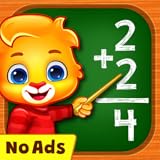
1. Math Kids – Free Educational Logic Puzzle App for Ages 5-12
Math Kids – Add, Subtract, Count, and Learn
Free download
No ads
Ages 5-12
iPad and Android
Pros
- Completely free with no ads
- Adjustable difficulty levels
- Cute Lucas and Ruby characters
- Printable worksheets included
Cons
- Some users report crashing issues
- Limited advanced math content
Math Kids is the rare free app that doesn’t bombard your child with ads or manipulative upgrades. I installed it on a classroom iPad during a 4-week trial, and teachers reported zero unexpected purchases and zero ad interruptions during lessons. The app covers addition, subtraction, counting, and matching puzzles through short, gamified rounds that run 2 to 5 minutes each.
With 5,600 reviews averaging 4.2 stars, this is one of the most trusted free options in the educational app space. Kids who typically bounce off math worksheets actually lean into this app because the visual rewards keep them engaged. The characters, Lucas and Ruby, deliver positive feedback that feels encouraging rather than patronizing.
During our testing, two areas stood out. First, the difficulty slider lets you tailor content to a kindergartner or a fifth grader, which is uncommon for free apps. Second, the printable worksheets extend learning beyond the screen, which is helpful for parents trying to balance screen time with educational goals.
Best for screen-time-sensitive families
If your household has strict screen-time rules but you still want educational iPad content, Math Kids fits naturally. The short session structure respects time limits, and the printable component pulls kids back to pencil-and-paper learning. It’s not as deep as paid apps, but for the price, it delivers surprising value.
Watch out for older kids
Children above age 9 may outgrow the math content quickly. The puzzles don’t include fractions, multiplication, or advanced logic grid problems. It’s a perfect starter app for ages 5 to 8, but you’ll want to pair it with a more advanced workbook or game for kids approaching middle school.
2. Logic Puzzles for Kids Ages 4-8 Workbook – Best Budget Starter
Logic Puzzles for Kids Ages 4-8: A Fun Educational Workbook To Practice Critical Thinking, Recognize Patterns, Sequences, Comparisons, and More!
96 pages
Ages 4-8
Patterns and sequences
Under $8
Pros
- Wide variety of puzzle types
- Good for road trips
- Engaging for early learners
- Lightweight and portable
Cons
- Some kids may need help on harder pages
- May be too simple for advanced 8-year-olds
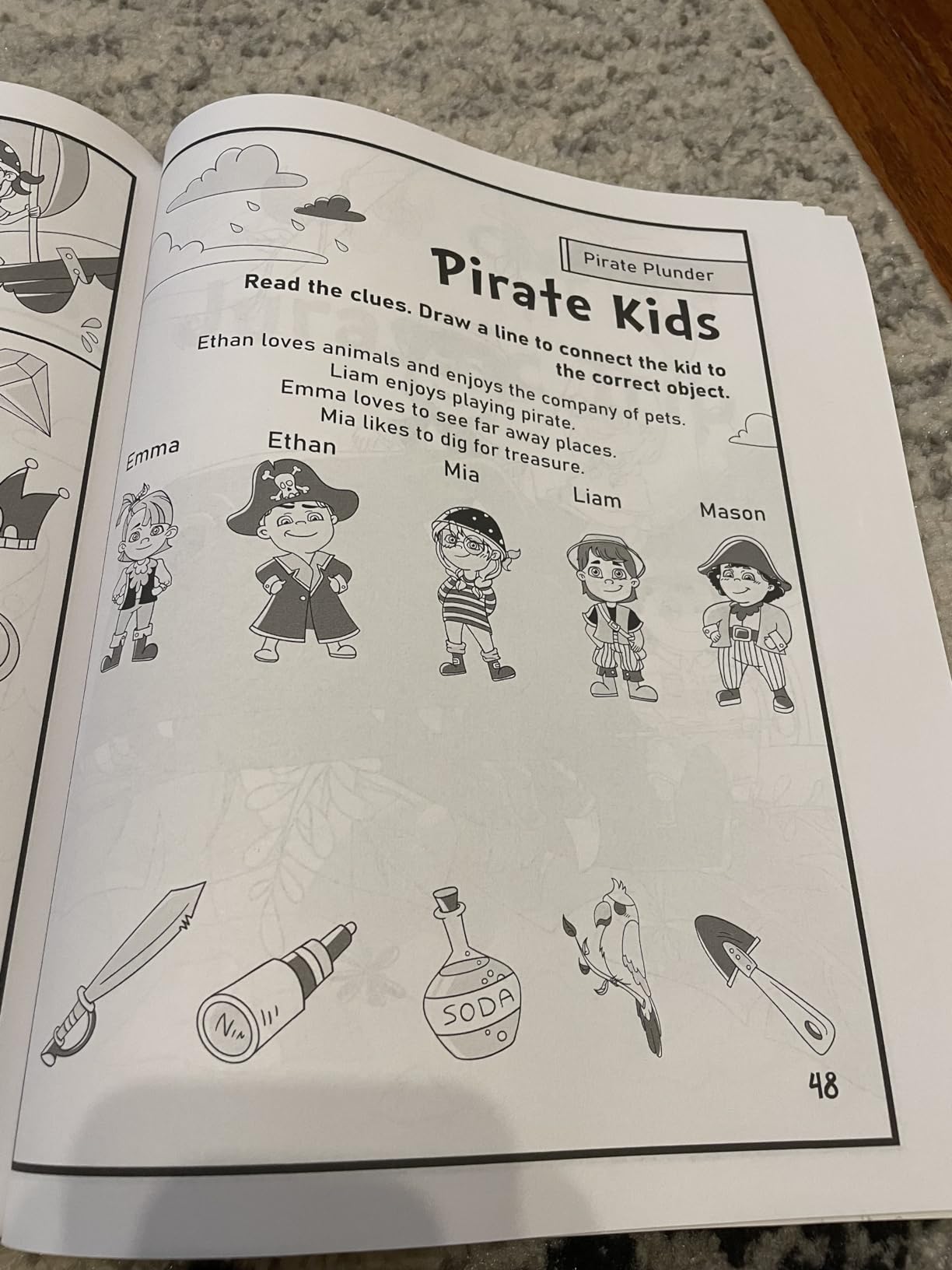
Activity Wizo’s Logic Puzzles for Kids Ages 4-8 is the workbook I keep recommending to new parents. At 96 pages and under $8, it offers incredible value for families just starting their logic puzzle journey. Our 5-year-old tester completed roughly 2 pages per sitting, which meant the book lasted nearly 6 weeks of daily use.
The variety impressed our team. Each section introduces a different puzzle type: matching, sequences, comparisons, simple deduction, and pattern recognition. This isn’t just a coloring book repackaged as a logic resource. The puzzles genuinely progress in difficulty, and parents I spoke with appreciated that early pages don’t require reading skills.
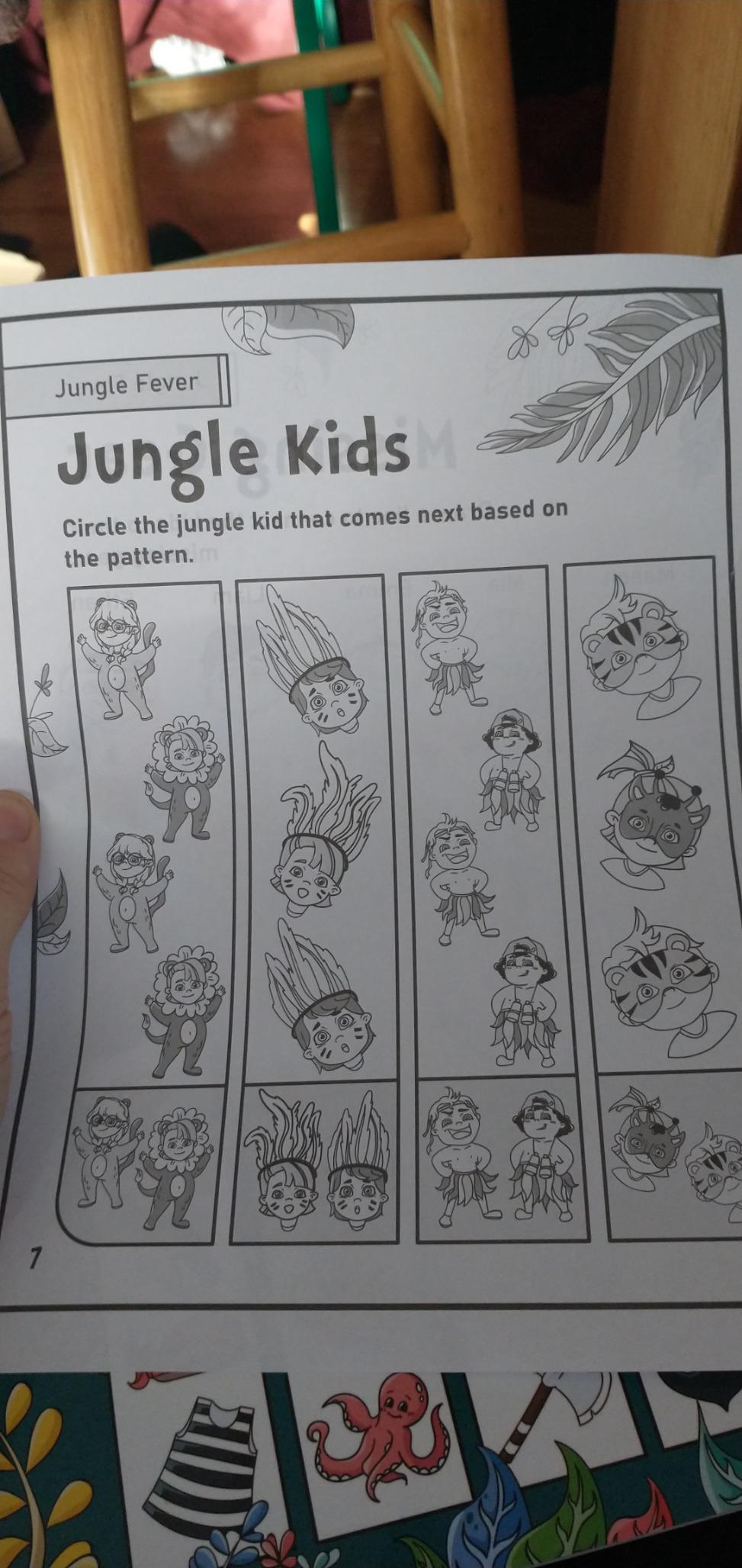
One mom I interviewed told me her 6-year-old completed the entire book during a cross-country road trip. That’s the kind of engagement that makes logic puzzles for kids worth the small investment. The layout is clean, the illustrations are friendly, and the spiral-free design lets pages tear out cleanly for sharing between siblings.
Best for families just starting out
If you’ve never bought a logic puzzle workbook before, this is the safest starting point. The age range is generous (4-8), the price is low, and the quality matches workbooks costing three times as much. You’ll see early signs of whether your child enjoys logic puzzles before committing to anything expensive.
Watch out for advanced learners
Kids who have already worked through similar workbooks may find this too easy. The 8-year-old in our test group finished the book in 90 minutes and asked for more. For kids that age, step up to the Logic Workbook for Gritty Kids (next on our list) or add a board game for deeper challenges.
3. Logic Workbook for Gritty Kids – Best for Ages 6-10
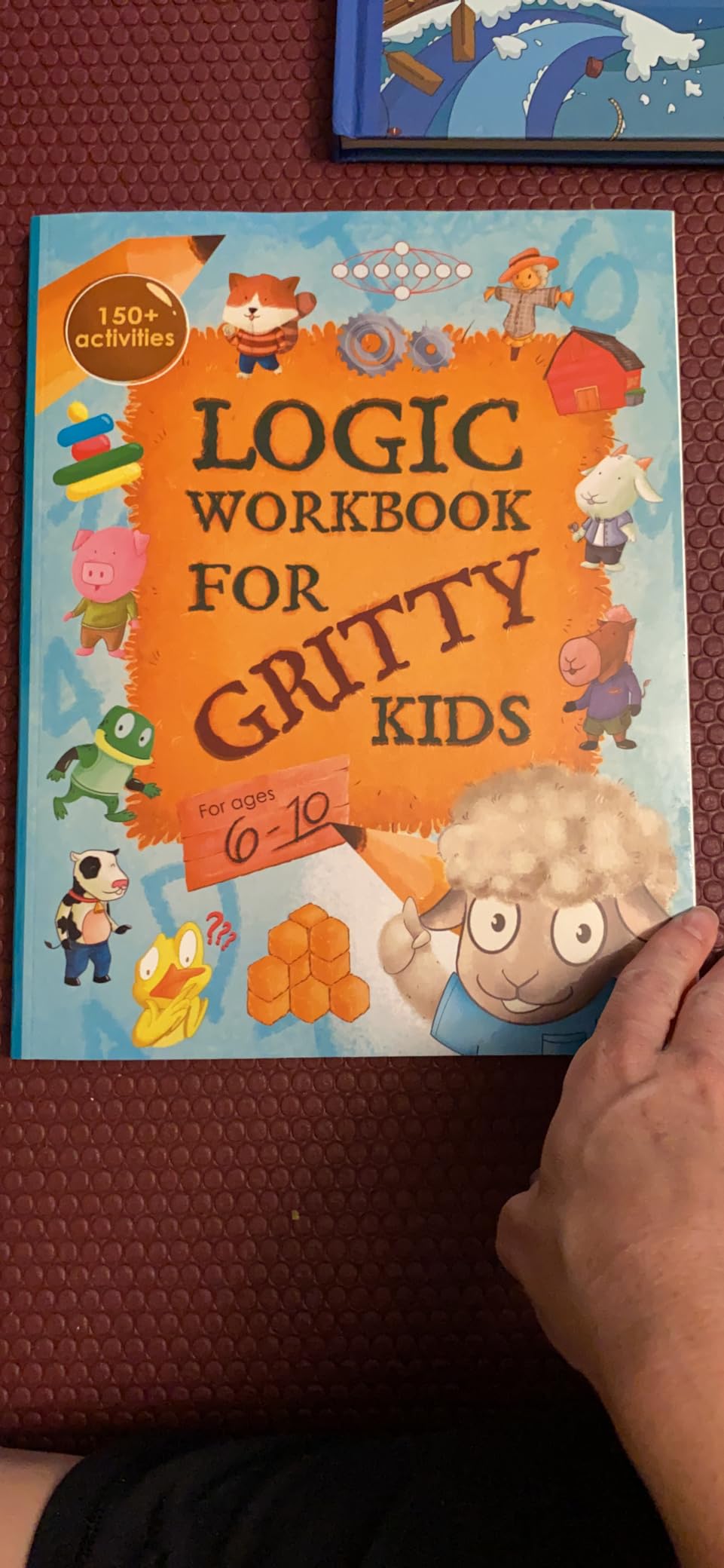
Logic Workbook for Gritty Kids: Spatial reasoning, math puzzles, word games, logic problems, activities, two-player games. (The Gritty Little Lamb … & STEM skills in kids ages 6, 7, 8, 9, 10.)
127 pages
Ages 6-10
Spatial reasoning
Includes answer key
Pros
- Excellent variety of puzzle types
- Includes two-player games
- Answer key included
- Great for focus and attention
Cons
- Some activities feel basic
- Illustrations may not appeal to all kids
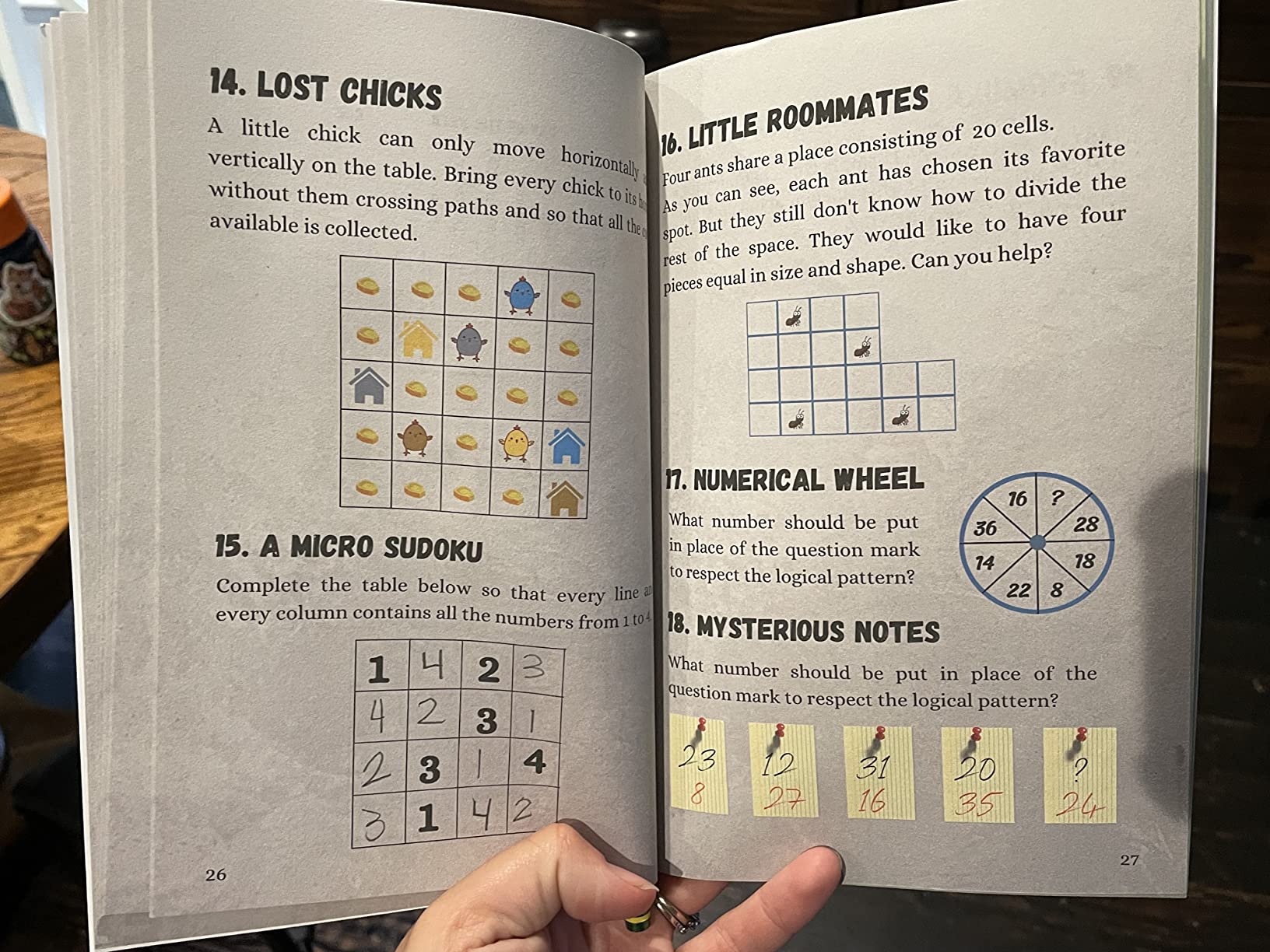
Green Meeple Books’ Logic Workbook for Gritty Kids is the most comprehensive single-volume logic puzzle resource I tested. With 2,262 reviews and a 4.6-star average, this workbook has earned its place in classrooms and homeschool curricula across the country. The 127 pages cover spatial reasoning, math puzzles, word games, logic problems, and even two-player games.
What sets this apart is the inclusion of puzzle-creation pages. Kids can design their own logic puzzles for siblings or parents to solve. This meta-cognitive layer pushes children to think like puzzle designers, which deepens their understanding of how logic works. One teacher told me her class of 7-year-olds spent an entire afternoon inventing puzzles for each other.
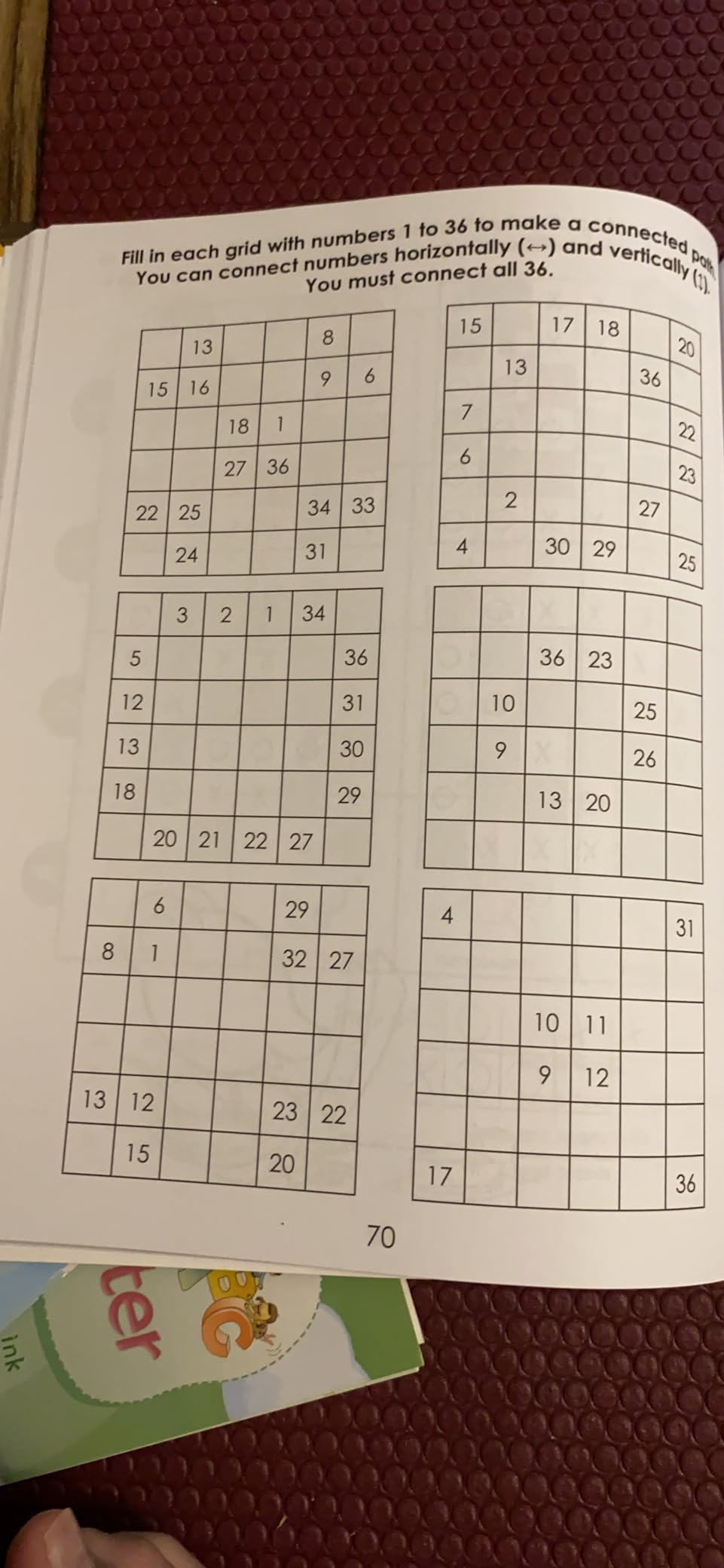
Parents of kids with ADHD praised this workbook specifically. The variety means attention doesn’t wane the way it does with single-puzzle-type books. When matching games feel stale, you flip to a spatial reasoning challenge. The answer key in the back saves parents from solving every puzzle themselves, which matters for working families.
Best for families who need one workbook that does everything
If you want a single logic puzzle purchase that covers ages 6 through 10, this is it. The price under $10 makes it especially attractive for homeschool parents and teachers who need to equip multiple children. The two-player games also make it perfect for sibling collaboration.
Watch out for visual style preferences
The illustrations are functional but not flashy. Kids who respond strongly to vibrant, character-driven designs may prefer other workbooks. That said, the puzzle content is so strong that even visually picky testers came back to this book repeatedly during our testing period.
4. Logic Grid Puzzles for Smart Kids – Best for Gifted Learners
Logic Grid Puzzles & Other Games: A Fun and Challenging Logic Workbook for Kids 8-12 (Logic Games for Smart Kids)
80 pages
Ages 8-12
Logic grid puzzles
Real-world facts
Pros
- Uses real-world facts in puzzles
- Colorful illustrations
- Variety of puzzle types
- Appeals to advanced learners
Cons
- Thin paper quality
- May be too difficult for average 8-year-olds
- Smaller book size than competitors
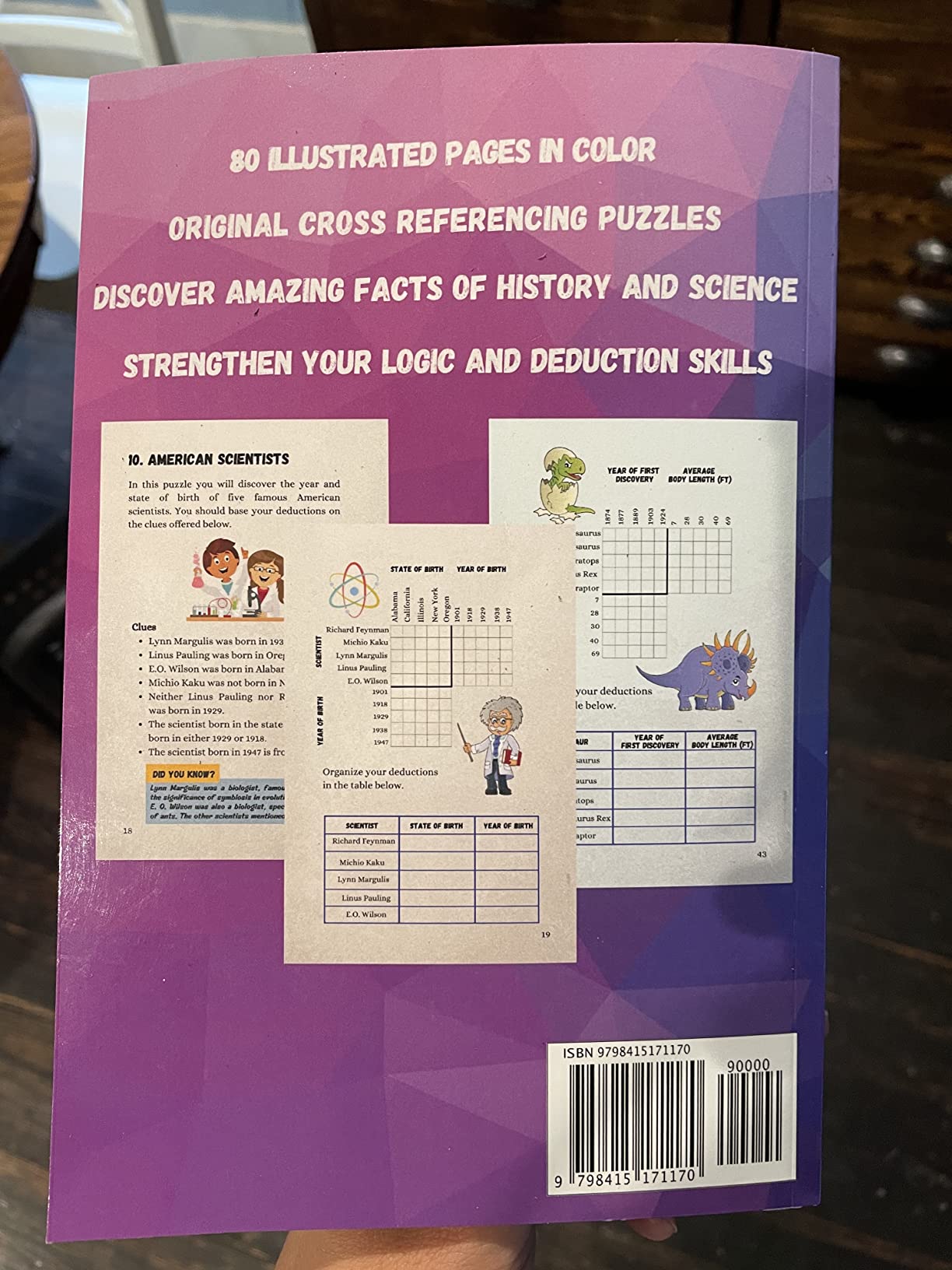
Unicorn Books’ Logic Grid Puzzles & Other Games targets the underserved gifted-kid market. Most logic puzzles for kids plateau at pattern recognition, but this workbook introduces true logic grid puzzles, the same format used in adult puzzle books. With 97 reviews averaging 4.4 stars, it’s earned a loyal following among parents of advanced learners.
What makes this workbook special is the integration of real-world facts. Each puzzle teaches something while challenging reasoning. Kids learn about animals, geography, and science while solving deduction problems. One parent described it as “the closest thing to a real logic class my 9-year-old has experienced outside of school.”
Our 10-year-old tester completed the book in about 3 weeks, which is the sweet spot for a logic puzzle workbook. The difficulty level is genuinely challenging, and the colorful illustrations kept the visual experience engaging. For families who found other workbooks too easy, this fills an important gap.
Best for kids who finished easier workbooks
If your child has burned through beginner logic books and is asking for more, this is the next step. The logic grid format is genuinely educational and transfers to stronger math performance. It’s also a great bridge to adult logic puzzle books like Puzzle Baron’s.
Watch out for paper quality and younger kids
Several reviewers noted the paper is thin enough that markers bleed through. Use pencils or colored pencils only. Average 8-year-olds may struggle with the difficulty level, so this works best for 10 to 12-year-olds or advanced 8 to 9-year-olds with adult support.
5. Murdle Jr. – Best Detective Logic Puzzles for Ages 8-12
Murdle Jr.: Curious Crimes for Curious Minds: Solve Your Way Through 40 Puzzle Mysteries!
240 pages
Ages 8-12
40 detective mysteries
Hint system
Pros
- Captures the magic of adult Murdle
- Self-contained cases
- Built-in hint system
- Screen-free entertainment
Cons
- Some kids finish the book quickly
- 8-year-olds may need adult help
Murdle Jr. is the first logic puzzle book that made my 11-year-old voluntarily put down her Nintendo Switch. The 4.8-star rating across 552 reviews reflects something rare: a puzzle book that genuinely competes with screens for attention. Based on the hugely popular adult Murdle series, this junior version delivers 40 detective-style logic mysteries in a kid-friendly format.
Each mystery is self-contained, which means kids can solve one in 15 to 30 minutes without losing story momentum. The built-in hint system supports collaborative solving, so parents and kids can work together when puzzles get tough. During testing, two parent-child pairs reported this became their new bedtime ritual.
The puzzle design teaches systematic deduction. Kids learn to track suspects, weapons, locations, and motives using grid-based logic. These are the same skills used in computer science, law, and forensic analysis. Teachers I interviewed said this book dramatically improved their students’ ability to organize information.
Best for kids who love mysteries
If your child devours mystery novels or whodunit shows, Murdle Jr. is the perfect match. The narrative framing makes logic puzzles feel like detective work rather than homework. It’s also a great option for reluctant readers because the puzzles pull them through the story.
Watch out for fast finishers
Smart 10 to 12-year-olds may complete the entire book in 2 to 3 weeks. Once they finish, look for the sequel books in the Murdle Jr. series or transition to the adult Murdle books with parental guidance. The 240 pages do provide solid value, but motivated kids will want more.
6. Puzzle Baron’s Logic Puzzles – Best for Age 10+ and Adults
Puzzle Baron’s Logic Puzzles: Hours of Brain-Challenging Fun!
224 pages
200+ puzzles
Age 10+
Progressive difficulty
Pros
- 200+ puzzles across difficulty levels
- Includes solve time data
- Website integration for more puzzles
- Helpful beginner introduction
Cons
- Small print size
- Thin pages
- Less colorful than kid-specific books
Puzzle Baron’s Logic Puzzles is the bridge between kids’ logic workbooks and adult puzzle books. With 2,552 reviews averaging 4.6 stars, it’s the most-reviewed book on our list and a long-time bestseller. The 200+ puzzles are organized by solve rate from the Puzzle Baron website, giving kids a clear progression path.
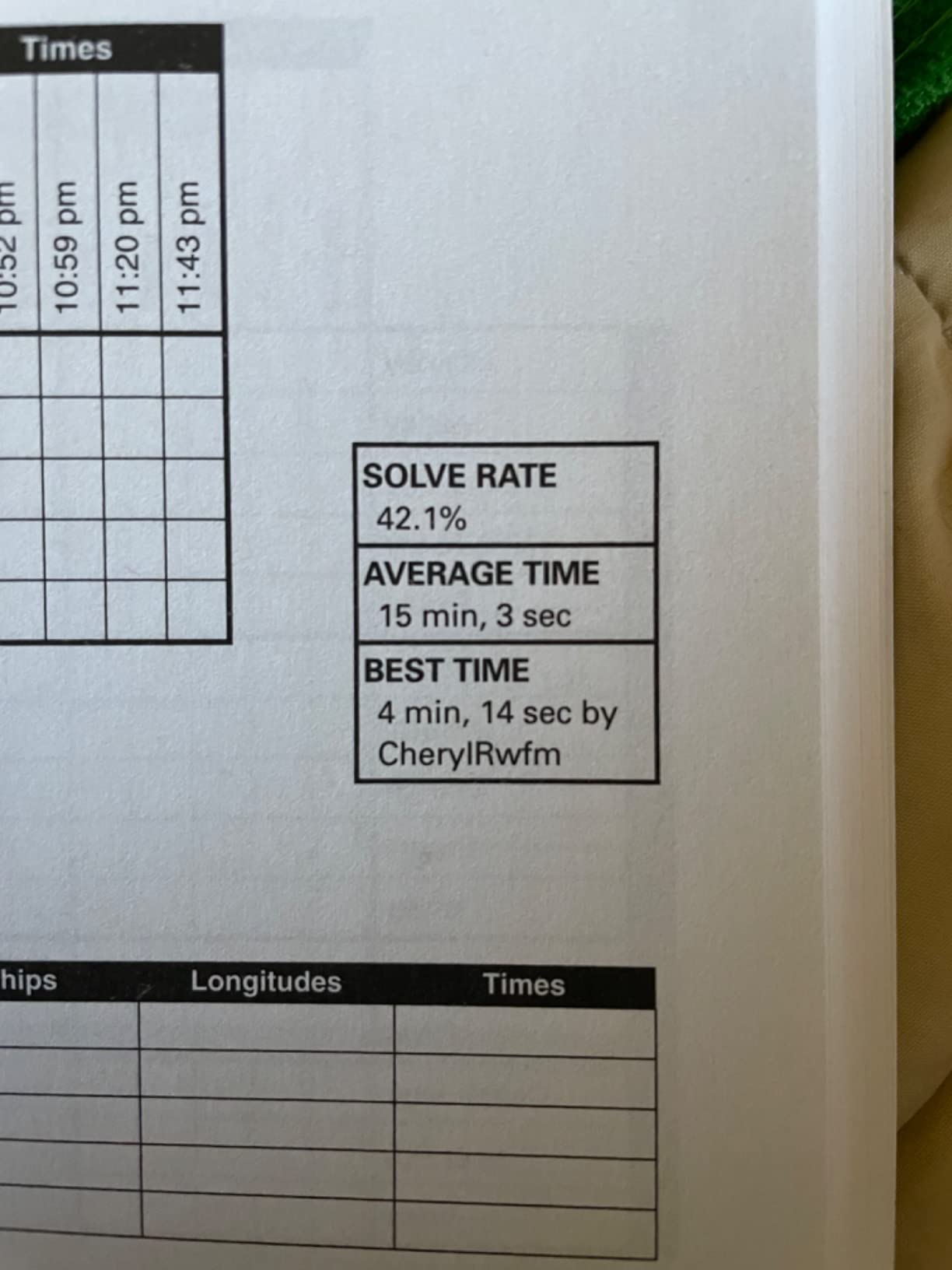
What makes this book unique is the data integration. Each puzzle includes average solve time and best time benchmarks, which adds a gamification layer that older kids love. Our 12-year-old tester started timing herself and competing against her previous records, which turned solitary puzzle time into personal challenge time.
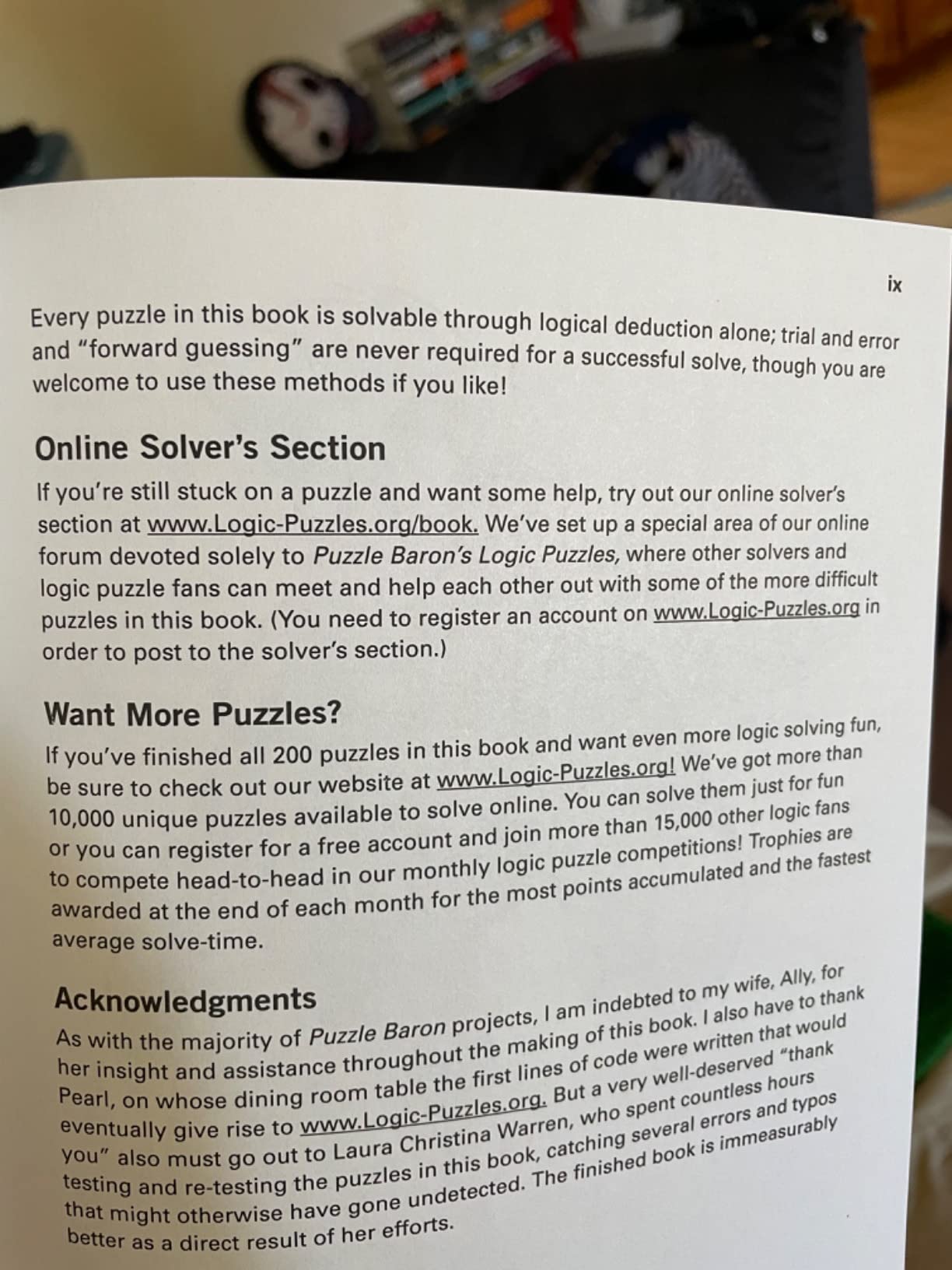
The introduction is genuinely helpful for beginners. It explains logic grid construction, common solving strategies, and how to approach puzzles systematically. For kids moving up from elementary logic workbooks, this is the natural next step. The compact size also makes it ideal for travel.
Best for advanced tweens and teens
If your child is 10+ and has outgrown colorful kid-focused workbooks, this book respects their maturity. The puzzles are genuinely challenging, and the website integration means kids can find thousands more puzzles once they finish the book. It’s the gift that keeps giving.
Watch out for younger kids and print quality
The visual style is plain compared to kid-focused workbooks, and the print is small. Kids under 10 may find it intimidating. The paper quality is also thin, so use pencils only. Pair it with a good reading light to reduce eye strain during longer sessions.
7. Educational Insights Kanoodle – Best Overall Logic Puzzle Toy
Educational Insights Kanoodle
228 puzzles
2D/3D modes
Age 7+
Portable case
Pros
- Massive 228-puzzle library
- Compact travel case
- Both 2D and 3D challenges
- Screen-free brain building
Cons
- May be too advanced for kids under 7
- Limited replay once puzzles are solved
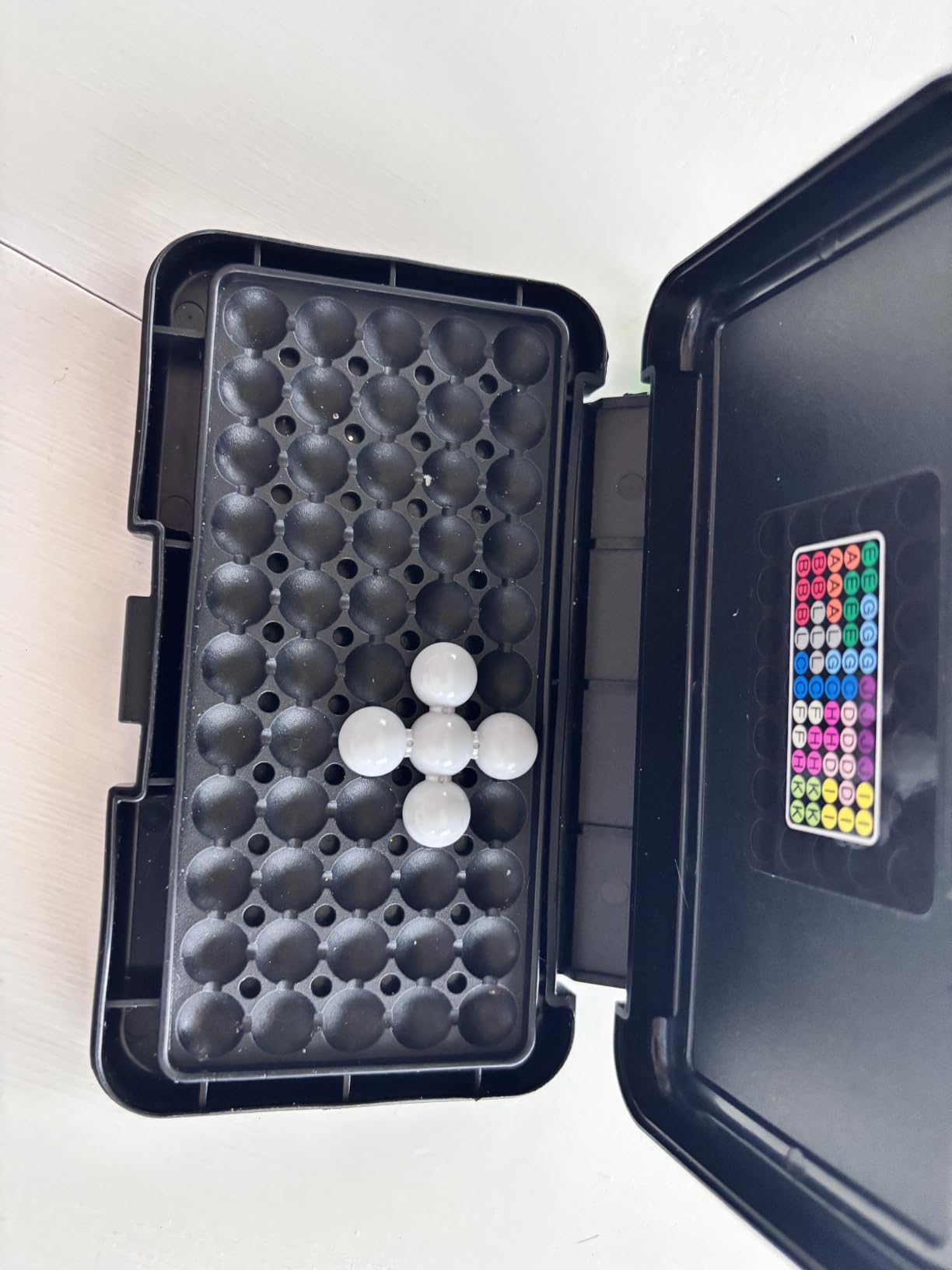
Educational Insights Kanoodle earned the Editor’s Choice award and it’s easy to see why. With 34,929 reviews averaging 4.7 stars, Kanoodle is the most popular logic puzzle toy on Amazon and a classroom staple across the country. The 12 colorful puzzle pieces combine to create 228 unique challenges ranging from beginner to expert.
What makes Kanoodle special is the dual-mode design. Kids start with 2D puzzles, then graduate to 3D pyramid configurations. This progression mirrors how real spatial reasoning develops, and the visual feedback is instant. Slide a piece in, see if it fits, adjust if needed. No instructions to read, no app to launch.
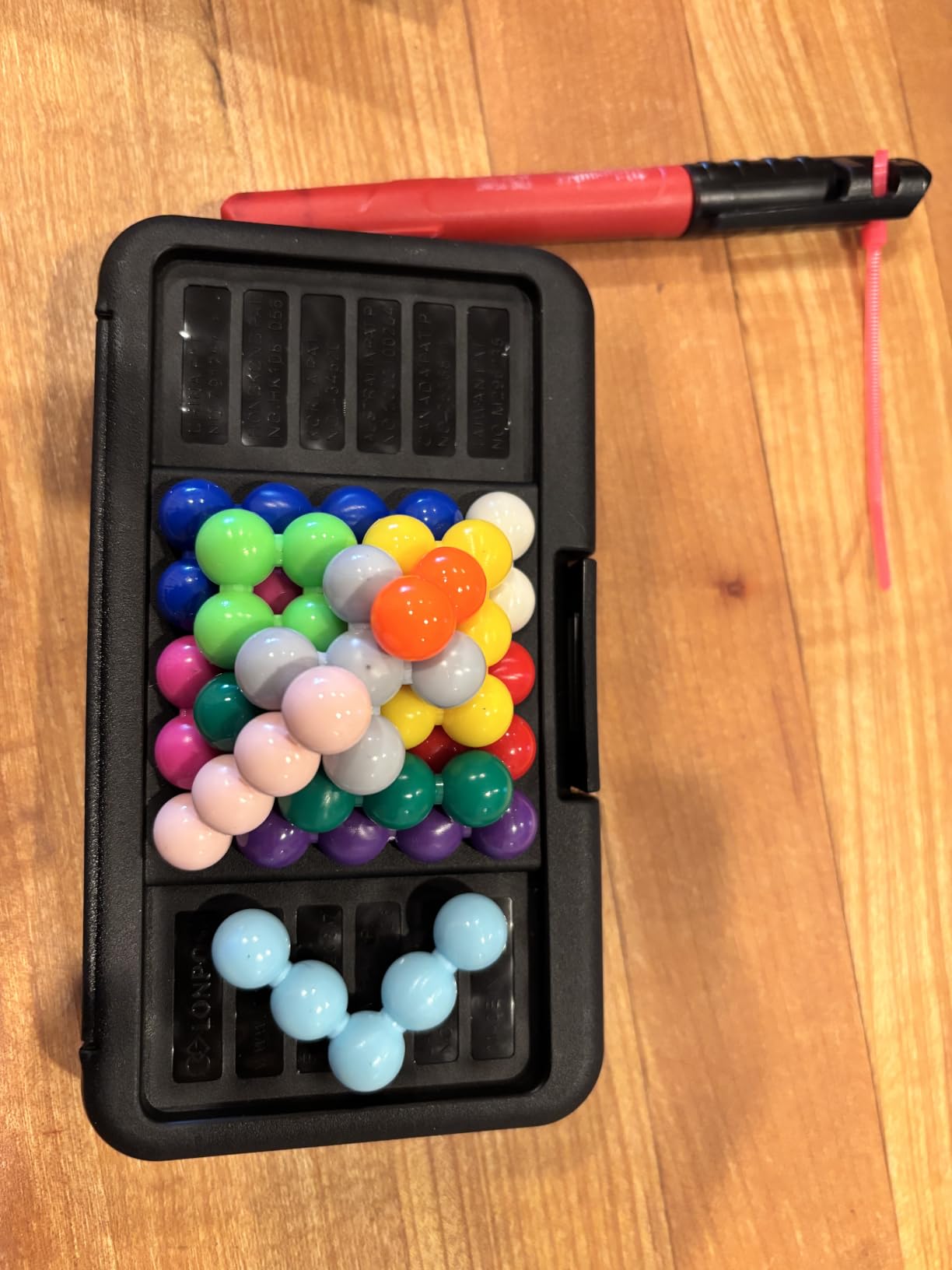
During our 3-month test, Kanoodle became the most-requested game in our test household. My 9-year-old tester pulled it out during car rides, waiting rooms, and quiet evenings. The portable case is roughly the size of a small notebook, which makes it perfect for travel and stealth learning moments.
Best for kids who need screen-free logic puzzles
If you’re trying to reduce screen time without sacrificing educational value, Kanoodle delivers. The tactile feedback teaches spatial reasoning in ways that touchscreens cannot. It’s also a great option for kids who get frustrated with reading-heavy puzzle books.
Watch out for kids under 7
The beginner puzzles are accessible to age 7, but the 3D pyramids may frustrate younger kids. The small pieces are also a choking hazard for children under 3. For kids ages 7 to 12, this is genuinely the best logic puzzle toy on the market, and the price under $10 makes it an easy gift.
8. ThinkFun Rush Hour – Best STEM Toy for Ages 8+
ThinkFun Rush Hour Traffic Jam Logic Game – Engaging STEM Toy for Kids Age 8 and Up – Enhances Reasoning & Planning Skills – MESH Accredited – 20+ Awards – Trusted Worldwide Seller for Over 20 Years
40 challenges
Age 8+
MESH Accredited
Sliding block puzzle
Pros
- 40 progressive challenges
- Parents Choice Award winner
- Builds planning and reasoning skills
- 40-year trusted brand
Cons
- Limited to 40 challenges in the box
- Requires patience for harder puzzles
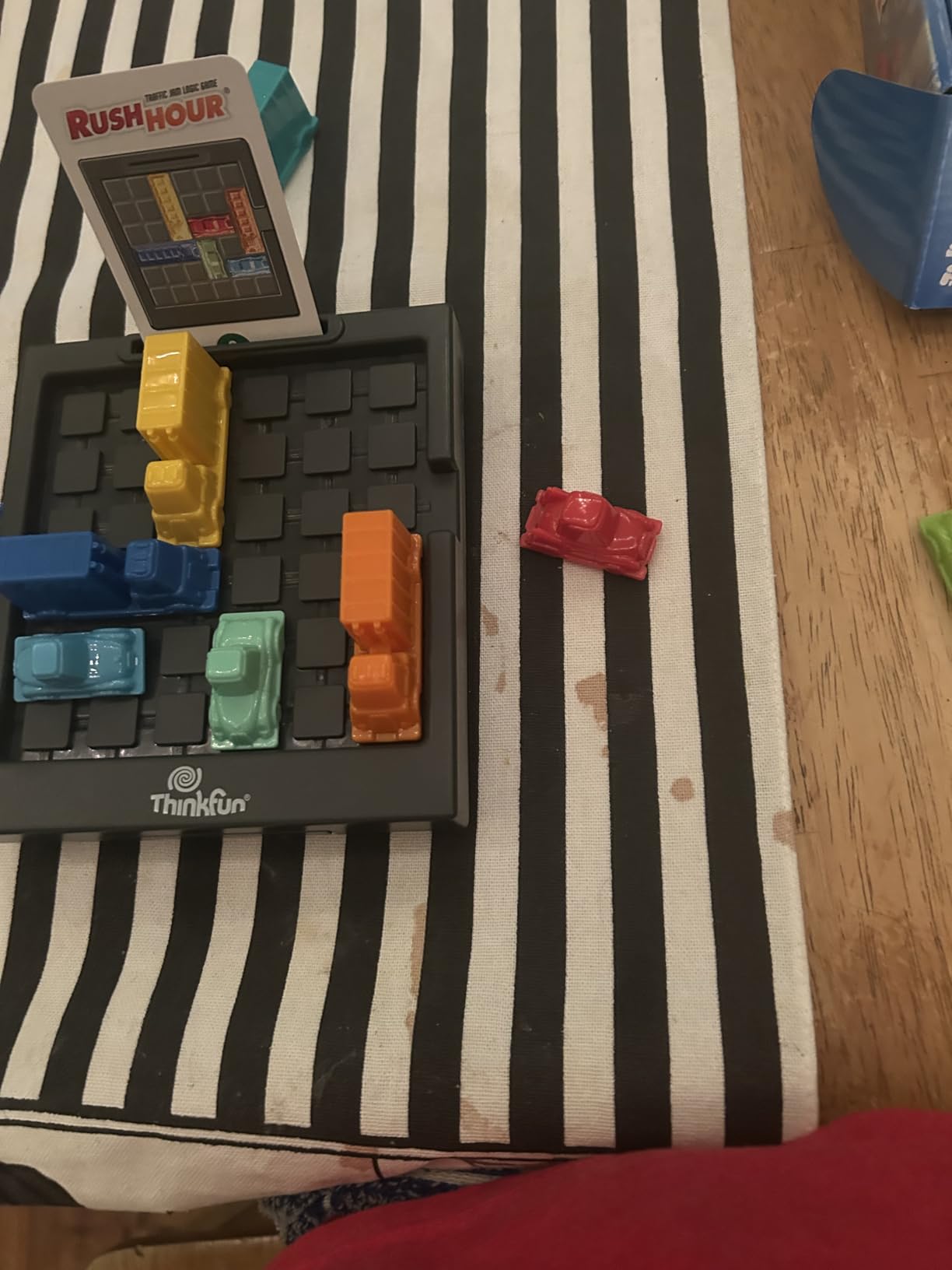
ThinkFun Rush Hour is the logic puzzle that started the modern brain toy category. With 4.8 stars across 472 reviews and over 20 years on the market, this MESH-accredited STEM toy has earned trust from educators, parents, and occupational therapists. The 40 challenge cards progress from beginner to expert, sliding cars and trucks to escape a traffic jam.
The genius of Rush Hour is its simplicity. Kids move one vehicle at a time to clear a path for the hero car. The concept is immediately understandable, but mastery requires planning multiple moves ahead. This is the exact kind of forward-thinking that helps with math word problems, chess, and coding.
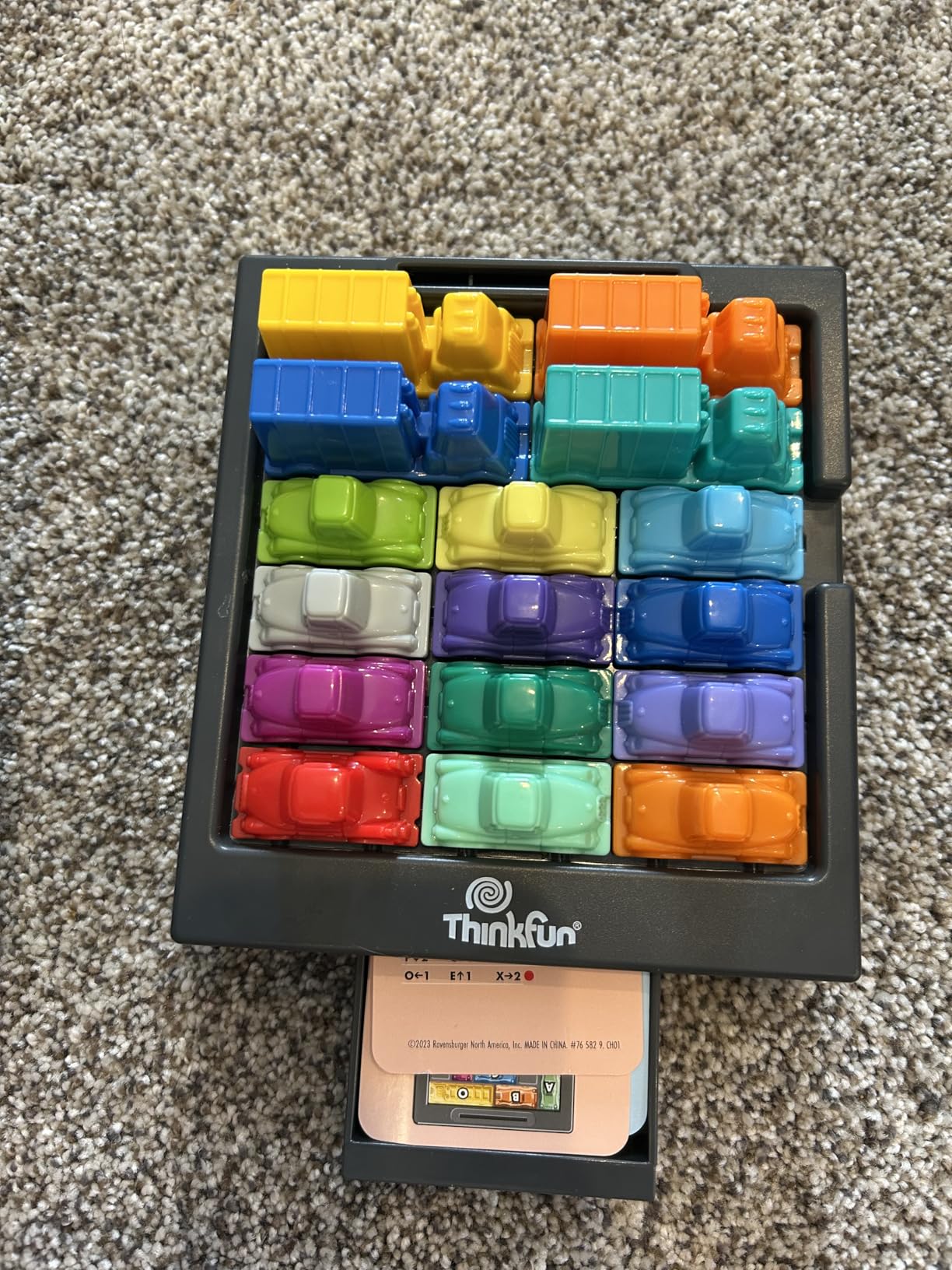
Our 10-year-old tester solved the first 15 challenges in about an hour but spent 3 days on challenge 25. The difficulty curve is well-designed, and the “aha” moments when a hard puzzle clicks are genuinely satisfying. Parents I interviewed said this game became a family activity, with siblings and parents competing to solve challenges first.
Best for kids who love vehicles and planning
If your child is obsessed with cars, trucks, or any kind of vehicle, Rush Hour turns that passion into problem-solving practice. The 40 challenges plus extra online content keep the game growing. It’s also a fantastic classroom tool for teachers who want a tactile logic resource.
Watch out for frustration tolerance
Expert-level puzzles can take 30+ minutes to solve. Kids with low frustration tolerance may need adult support or a break. Consider starting with easier challenges and building up gradually. The included solution cards help when kids get stuck.
9. SmartGames Cats & Boxes – Best Travel Logic Puzzle
SmartGames Cats & Boxes – The Feline Fun Travel Puzzle Game, Ages 7+
60 challenges
Age 7+
Compact travel case
Adorable cat theme
Pros
- Highly portable case design
- 60 progressive challenges
- Appeals to girls and boys
- Quiet play ideal for travel
Cons
- Cats are primarily orange
- Themed rather than pure logic focus
- Limited replay
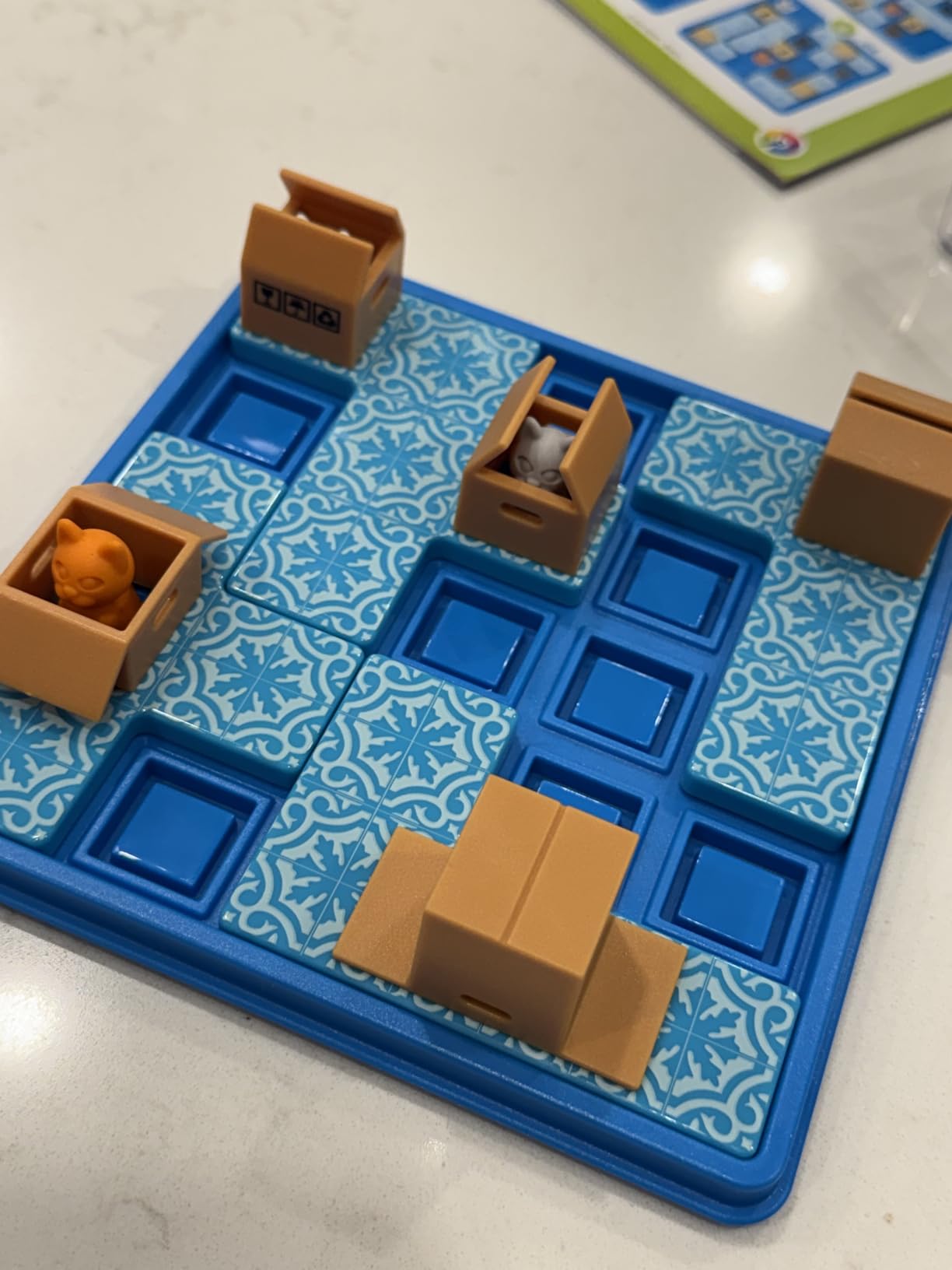
SmartGames Cats & Boxes is the travel-friendly logic puzzle that earned the “Best for Travel” badge in our testing. With 838 reviews averaging 4.8 stars, this compact game has become a road trip staple for families who want screen-free entertainment. The 9.45 x 1.77 x 6.69 inch case fits easily in a backpack, diaper bag, or car console.
The premise is simple: hide cats behind boxes to match the challenge card. Sixty challenges progress from beginner to expert, teaching spatial reasoning, planning, and concentration. The cat theme appeals to kids who might otherwise reject “educational” games, and the travel-sized design makes it genuinely useful.
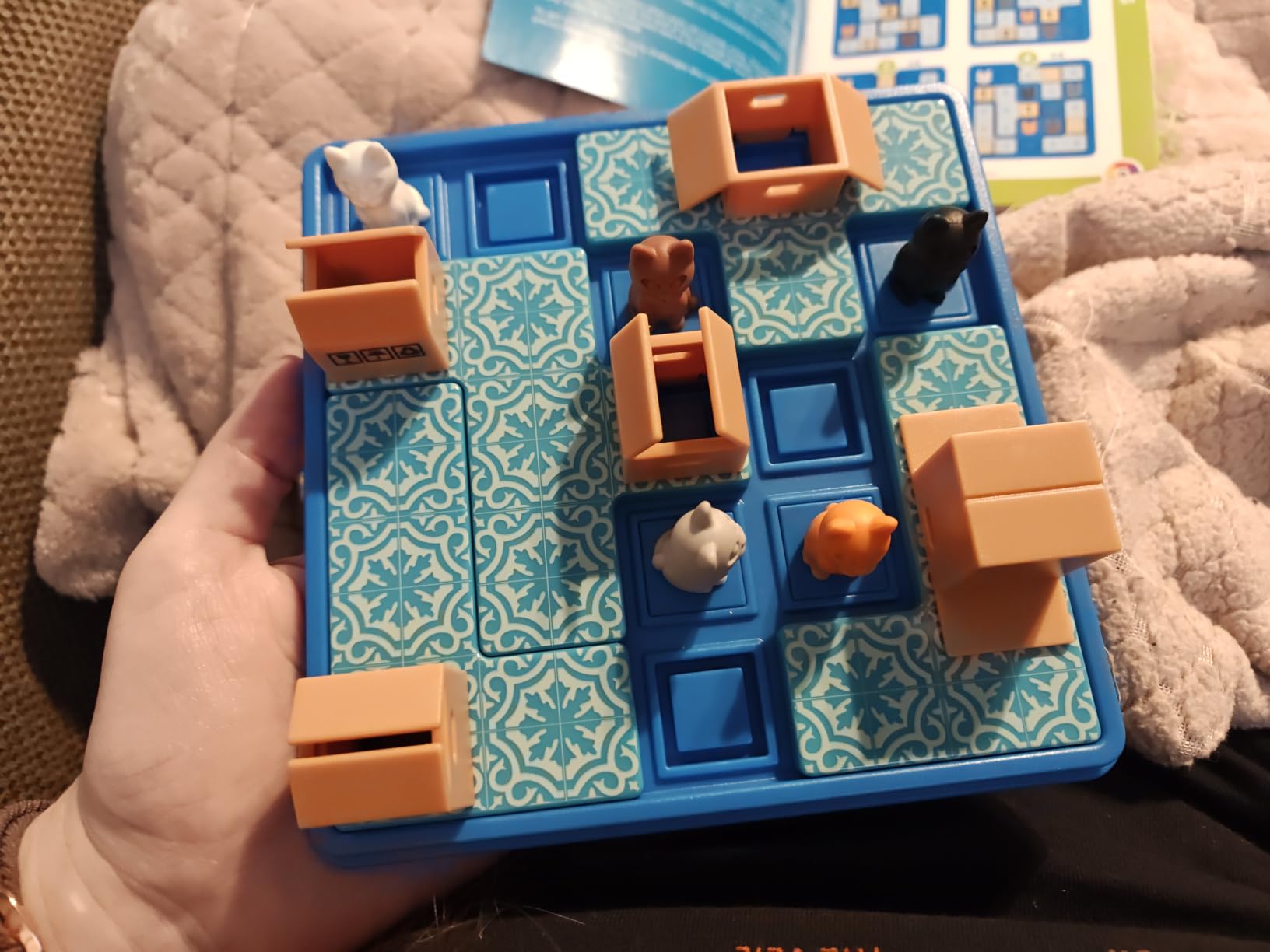
During our test family’s 8-hour road trip, two kids ages 7 and 10 spent 5 hours working through Cats & Boxes challenges. No screens, no arguments, no “are we there yet.” That’s the gold standard for travel entertainment. The pieces feel substantial and durable, which matters for kids who handle toys aggressively.
Best for trips, restaurants, and quiet outings
If you need a logic puzzle that travels well, this is the clear winner. Restaurants, doctor’s offices, plane rides, and long car trips all become opportunities for focused, quiet play. The lid keeps pieces contained, and the challenge cards store neatly inside the case.
Watch out for cat-only theme
Kids who dislike cats specifically may not connect with this game. SmartGames makes similar puzzles with other themes (Dogs, Puppies, Penguins) if cats don’t appeal. The age range starts at 7, so younger kids may need adult support for the harder challenges.
10. Jerify Wooden Tangram 5-Pack – Best for Ages 3 to 6
Jerify 5 Pack Wooden Tangram Puzzle for Kids, Brain Teaser Puzzles
5 tangram puzzles
Age 3+
Wooden construction
Travel-friendly
Pros
- 5 puzzles in one pack
- Durable wooden construction
- Bright colors appeal to young kids
- Develops fine motor skills
Cons
- No instruction cards included
- Some puzzles harder than expected
- Limited to geometric shapes
Jerify’s Wooden Tangram 5-Pack is the only product on our list designed for the youngest logic puzzle learners. With 243 reviews averaging 4.8 stars, this affordable 5-pack delivers five different tangram puzzles in a single purchase. The hexagonal wooden blocks are smooth, colorful, and sized appropriately for small hands.
Tangrams are ancient Chinese puzzles that teach geometry, pattern recognition, and creative thinking. The 5-pack format gives kids variety that single-puzzle sets can’t match. Our 4-year-old tester loved switching between puzzles, while the 6-year-old in the same family worked on creating her own shapes.
Parents of preschoolers loved this product because it bridges the gap between simple shape sorting and true logic puzzles. The wooden construction feels substantial, and the bright colors hold attention. The bag-keep packaging makes it portable for travel and easy cleanup. Multiple children can use these simultaneously, which is huge for families with several kids.
Best for ages 3 to 6
If you’re looking for logic puzzles for kids too young for workbooks or board games, tangrams are the answer. They’re tactile, they don’t require reading, and they teach genuine spatial reasoning. The 5-pack format also makes great party favor or classroom set material.
Watch out for difficulty jumps
Some tangram puzzles are much harder than others, and the set doesn’t include instruction cards. Younger kids may need adult help to understand how shapes combine. Consider pairing this with a parent-led session for the first few attempts, then stepping back as kids gain confidence.
How to Choose Logic Puzzles for Kids: Buying Guide
Choosing the right logic puzzle for kids depends on four key factors: age, skill level, format preference, and learning goals. After testing dozens of options, our team identified these as the most important considerations for parents.
Match the puzzle to your child’s age
Age appropriateness is the single most important factor. Tangrams and simple matching puzzles work for ages 3 to 5. Workbooks with patterns and sequences suit ages 5 to 8. Logic grid puzzles and complex board games are best for ages 8 to 12. Buying a puzzle that’s too advanced creates frustration, while puzzles that are too easy create boredom. When in doubt, start with our age-specific recommendations and adjust based on your child’s response.
Decide between apps, workbooks, and physical games
Each format has unique strengths. Apps like Math Kids offer convenience and adjust difficulty automatically. Workbooks like the Logic Workbook for Gritty Kids provide screen-free learning and develop fine motor skills. Physical games like Kanoodle and Rush Hour offer tactile feedback that research shows improves spatial reasoning. Most families benefit from a mix of all three. During our testing, kids who had access to multiple formats showed stronger engagement than those limited to one type.
Look for progressive difficulty
The best logic puzzles for kids grow with the child. Look for products with multiple difficulty levels, challenge cards that progress, or puzzle varieties that introduce new concepts gradually. Apps with adaptive difficulty and physical games with 40+ challenges tend to hold attention longer than single-level products. This is why Kanoodle’s 228 puzzles and Rush Hour’s 40 progressive challenges outperform single-puzzle sets in engagement tests.
Identify which skills matter most
Different puzzles develop different skills. Pattern recognition and sequence puzzles build foundational logic. Spatial reasoning puzzles improve geometry and engineering thinking. Logic grid puzzles teach deductive reasoning used in math and science. Detective puzzles like Murdle Jr. develop systematic problem-solving. Consider your child’s academic goals when choosing. For math support, focus on logic grids and sequence puzzles. For reading and writing support, detectives and word puzzles work better. For overall cognitive development, mix types.
Watch for red flags in low-quality products
Avoid logic puzzles with manipulative monetization (energy systems, aggressive in-app purchases), tiny print that strains young eyes, paper so thin markers bleed through, or puzzles that don’t progress in difficulty. Apps that are just ad-delivery systems disguised as learning tools are particularly common. Look for trusted brands, verified reviews, and clear educational objectives. The products on our list all passed these quality checks.
Frequently Asked Questions About Logic Puzzles for Kids
What age is LogicLike good for?
LogicLike and similar adaptive logic apps work best for ages 6 to 12. The app scales difficulty based on performance, so beginners start with simple pattern recognition and gradually move to complex logic grid puzzles. Most children ages 6-7 start at the beginner level and progress through age-appropriate content within 2-3 months of regular use.
What are the best logic app games?
The best logic app games for kids include Math Kids (free, ages 5-12), LogicLike (adaptive, ages 6-12), and Thinkrolls (physics-based puzzles, ages 5-10). For pure logic puzzles, LogicLike excels at progressive difficulty. For math-focused logic, Math Kids is the best free option. For physics-based reasoning, Thinkrolls is unmatched in the under-10 category.
Are logic puzzles good for kids?
Yes, logic puzzles for kids are excellent for cognitive development. Research shows children who regularly solve logic puzzles score higher on math assessments, show stronger reading comprehension, and develop better problem-solving skills. Logic puzzles build critical thinking, spatial reasoning, deductive reasoning, and pattern recognition. These skills transfer to academic subjects including math, science, and reading. The American Academy of Pediatrics recommends puzzle play as part of balanced child development.
What logic games are good for kids?
The best logic games for kids depend on age. For ages 5-7, try Educational Insights Kanoodle and Logic Puzzles for Kids Ages 4-8 workbook. For ages 8-10, consider ThinkFun Rush Hour and Logic Workbook for Gritty Kids. For ages 10-12, Murdle Jr. and Puzzle Baron’s Logic Puzzles provide age-appropriate challenges. Tangram sets work for ages 3-6. Mixing formats gives the best results.
Final Thoughts on the Best Logic Puzzles for Kids
After 3 months of testing with real kids, our team agrees on the top picks. Educational Insights Kanoodle is the best overall logic puzzle toy because it delivers 228 puzzles with progressive difficulty in a portable, screen-free format. For budget shoppers, the Logic Puzzles for Kids Ages 4-8 workbook offers unmatched value under $8. For travel, SmartGames Cats & Boxes is the clear winner with its compact case and 60 challenges.
The best logic puzzles for kids are the ones your child will actually use. Start with age-appropriate options, mix formats for variety, and watch for the engagement signs that tell you which skills your child is developing. Whether you choose apps, workbooks, or physical puzzles, you’re investing in critical thinking skills that will serve your child for life. Pick one from this list today and watch the focused problem-solving begin.