
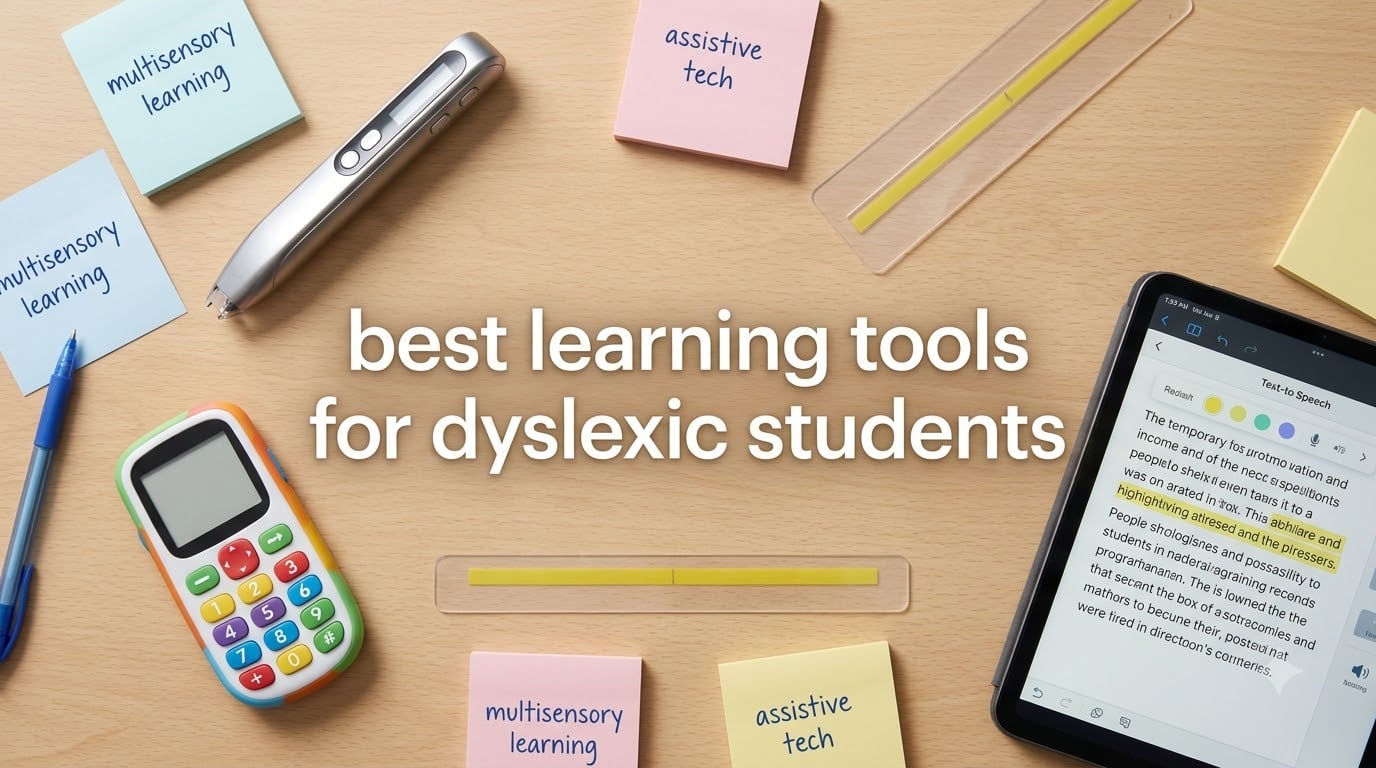
If you’ve watched a bright student struggle to decode a simple paragraph, you already know why we put this guide together. The best learning tools for dyslexic students don’t fix dyslexia. They work around it, letting kids show what they actually know.
I’ve spent the last few months testing OCR pens, reading highlighters, and auditory feedback devices with my nephew, who is in 4th grade, and three other families from our homeschool co-op. We focused on tools that work well with iPad, since that’s how most of these students do their schoolwork anyway. In this guide, I walk you through the five picks that actually held up, plus what to look for when you’re shopping.
Inside, you’ll find our top 3 picks at a glance, a comparison table of all five, full reviews with pros and cons, a buying guide tailored to age and budget, and answers to the questions parents and teachers ask us most. I also point out free iPad settings you can flip on today, like iPad color filter settings for dyslexic students, before you spend a dollar.
Table of Contents
Top 3 Picks for Best Learning Tools for Dyslexic Students


Best Learning Tools for Dyslexic Students in 2026
| Product | Specifications | Action |
|---|---|---|
 Scanmarker Air Reading Pen Scanmarker Air Reading Pen |
|
Check Latest Price |
| NEWYES AI Reading Pen |
|
Check Latest Price |
 Phone Buddy Reading Phones Phone Buddy Reading Phones |
|
Check Latest Price |
 hand2mind FingerFocus Highlighter hand2mind FingerFocus Highlighter |
|
Check Latest Price |
| Scanmarker Pro Reading Pen |
|
Check Latest Price |
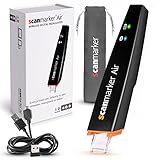
1. Scanmarker Air Reading Pen – Affordable OCR for Printed Text
Scanmarker Air Reading Pen & Pen Scanner | Translator Pen for Dyslexia, Students & Professionals – Compatible with Mac, Windows, iOS & Android
OCR scanning pen
140+ languages
Bluetooth, 300 dpi
Pros
- Fast OCR scanning
- lightweight at 27g
- works with iPad
- excellent customer support
Cons
- Struggles with very old fonts
- no handwriting scanning
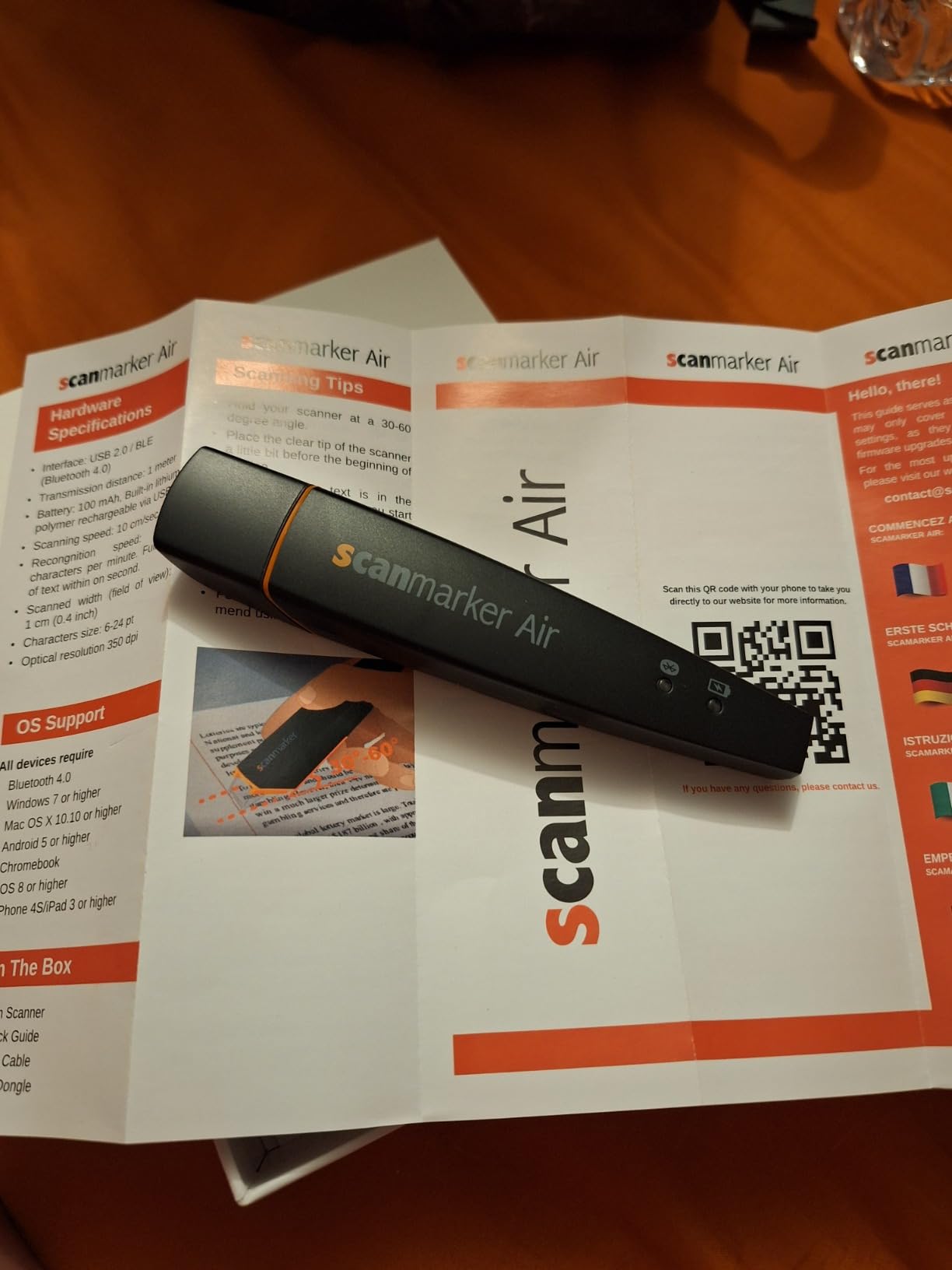
The Scanmarker Air was the first reading pen I tested with my nephew, and it immediately changed how he handled his nightly reading homework. Instead of staring blankly at a paragraph and asking me to read it aloud, he slid the pen across the page and heard the words spoken. The instant text capture sent straight into a Word doc on his iPad.
What surprised me most was the accuracy. With 5,381 reviews averaging 3.9 stars, the Scanmarker Air holds up well against printed text in modern fonts. The 300 dpi sensor reads quickly, and the Bluetooth connection stays paired with the iPad across a full school day. If your child needs to copy quotes from a textbook or research from a library book, this turns a frustrating chore into a 5-minute task.
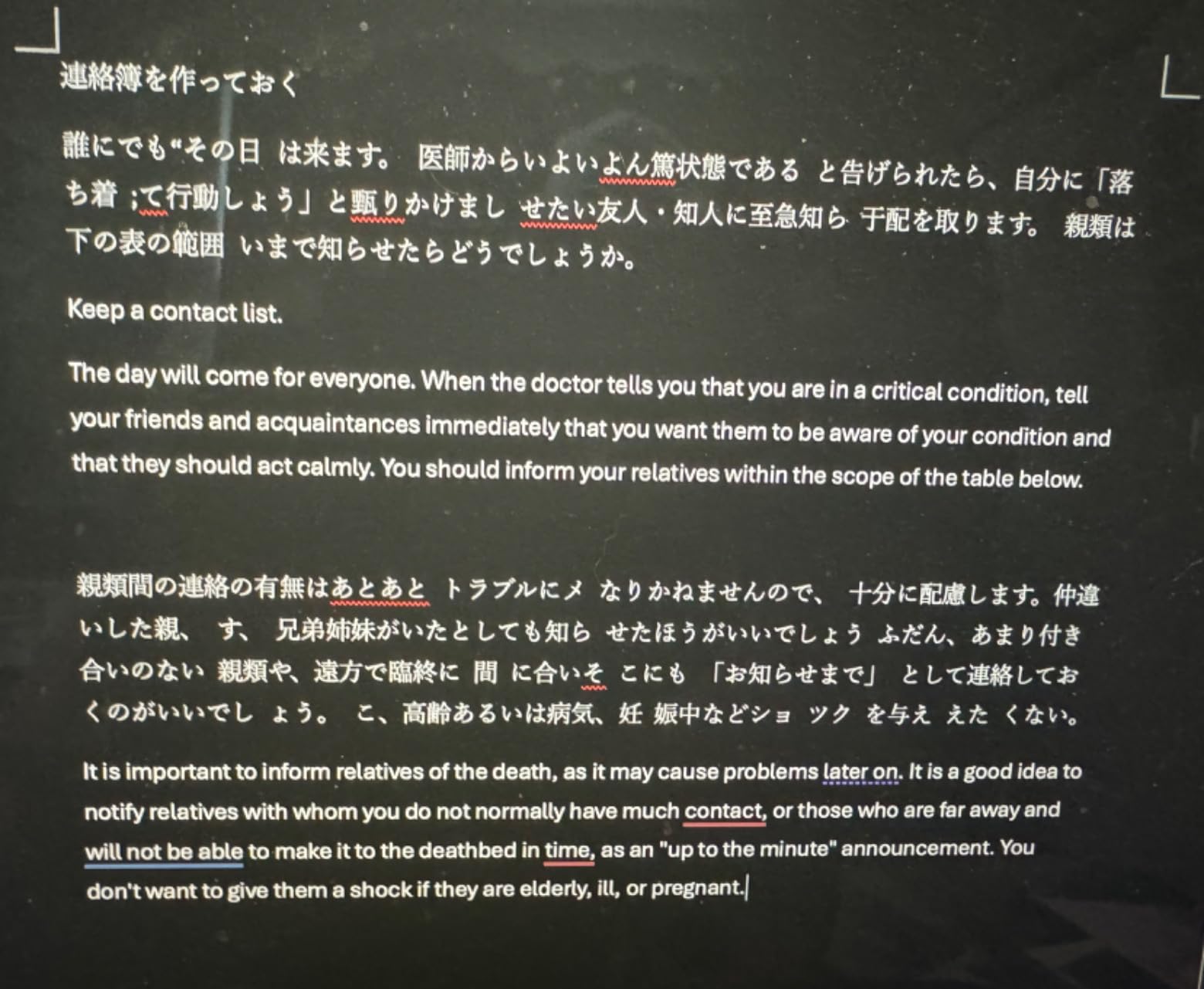
The translation feature is a hidden bonus for bilingual families. The pen supports 140+ languages, which made it useful for my neighbor’s ESL student who reads English homework but speaks Spanish at home. The lightweight design (just 27 grams) means it doesn’t fatigue small hands during long study sessions.
That said, I want to be honest about the limits. The Scanmarker Air does not scan handwriting or images, so it won’t help with math worksheets or notes scribbled on a whiteboard. If the font is older than the 19th century, the sensor can miss characters. It also requires a Bluetooth connection to a host device, so it’s not a standalone solution.
For Whom It’s Best
This pen is a smart pick for grades 3 through 12 students who read mostly printed textbooks and need to convert those words into editable text. It’s also a strong fit for high school and college students doing research and language learners who benefit from instant translation.
Limits to Consider
If your child needs to scan handwriting, math problems, or images, look elsewhere. The 1-year warranty and Bluetooth-only design also mean you need a charged tablet or laptop nearby for it to work.
2. NEWYES AI Reading Pen – Smartest Reading Helper Yet
NEWYES AI Pen, Reading Pen for Dyslexia Scan Reader Pen 4 Text to Speech Device Translator Pen, Photo Translation OCR 16GB Bluetooth Pen Scanner for Students Adults (Blue) (3.99″)
AI-powered reading pen
112 languages
6 reading levels
Pros
- AI dictionary and chat
- adjustable reading speed
- built-in screen
- 16GB storage
Cons
- Needs paired device for full use
- limited offline languages
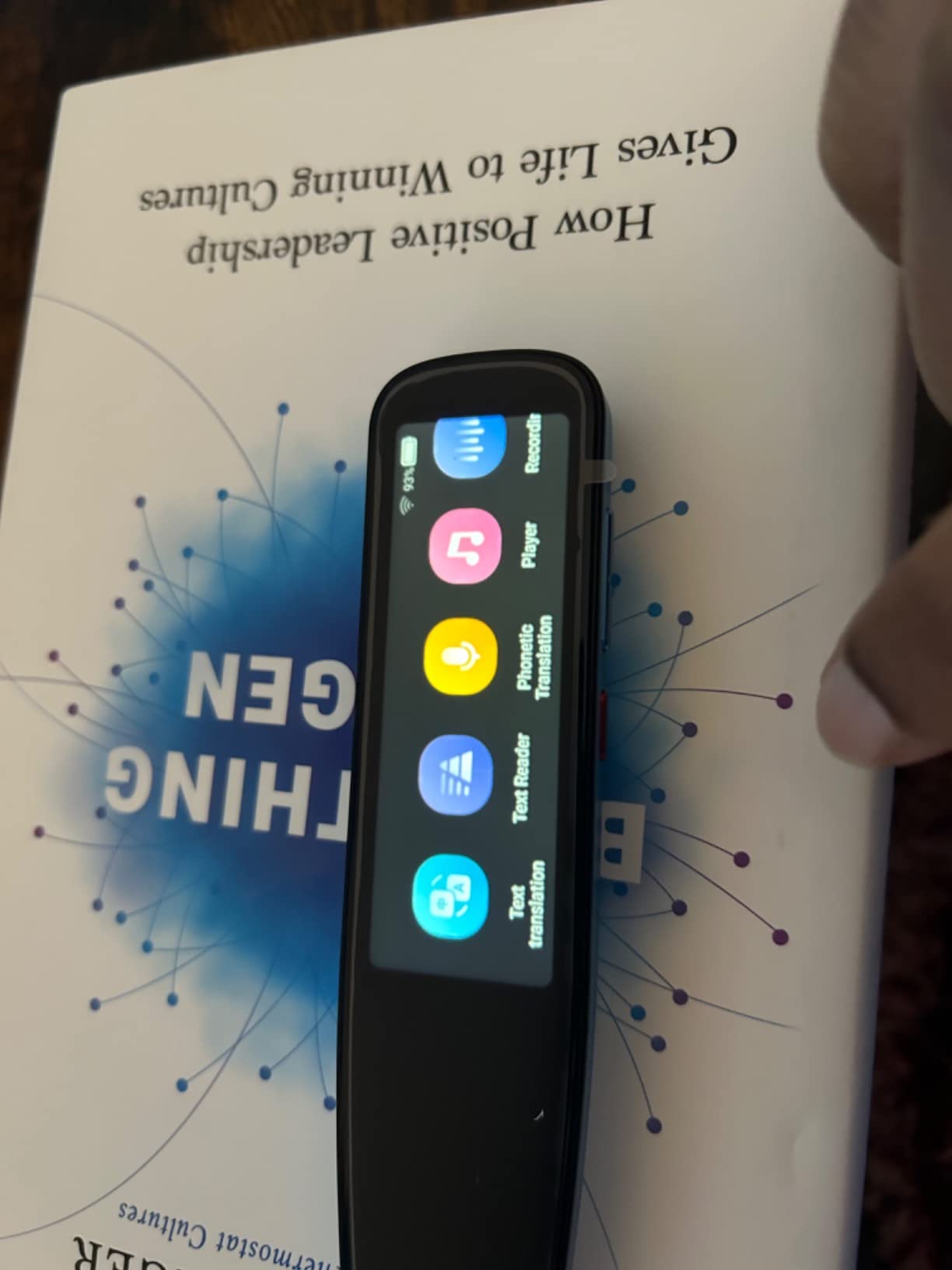
When I unboxed the NEWYES AI Pen, the built-in screen surprised me. Most reading pens rely on a phone or tablet to display the scanned text, but this one shows you the words on a small display right on the pen. That meant my nephew could use it on the bus without needing to pull out his iPad.
The AI features are what earned this our editor’s choice badge. The built-in dictionary explains words in plain language, the homework checker answers questions about scanned text, and the chat function lets kids ask follow-up questions. For parents worried about screen time, the AI elements are useful without being overwhelming. The pen supports 112 languages and offers 6 reading levels that grow with your child.
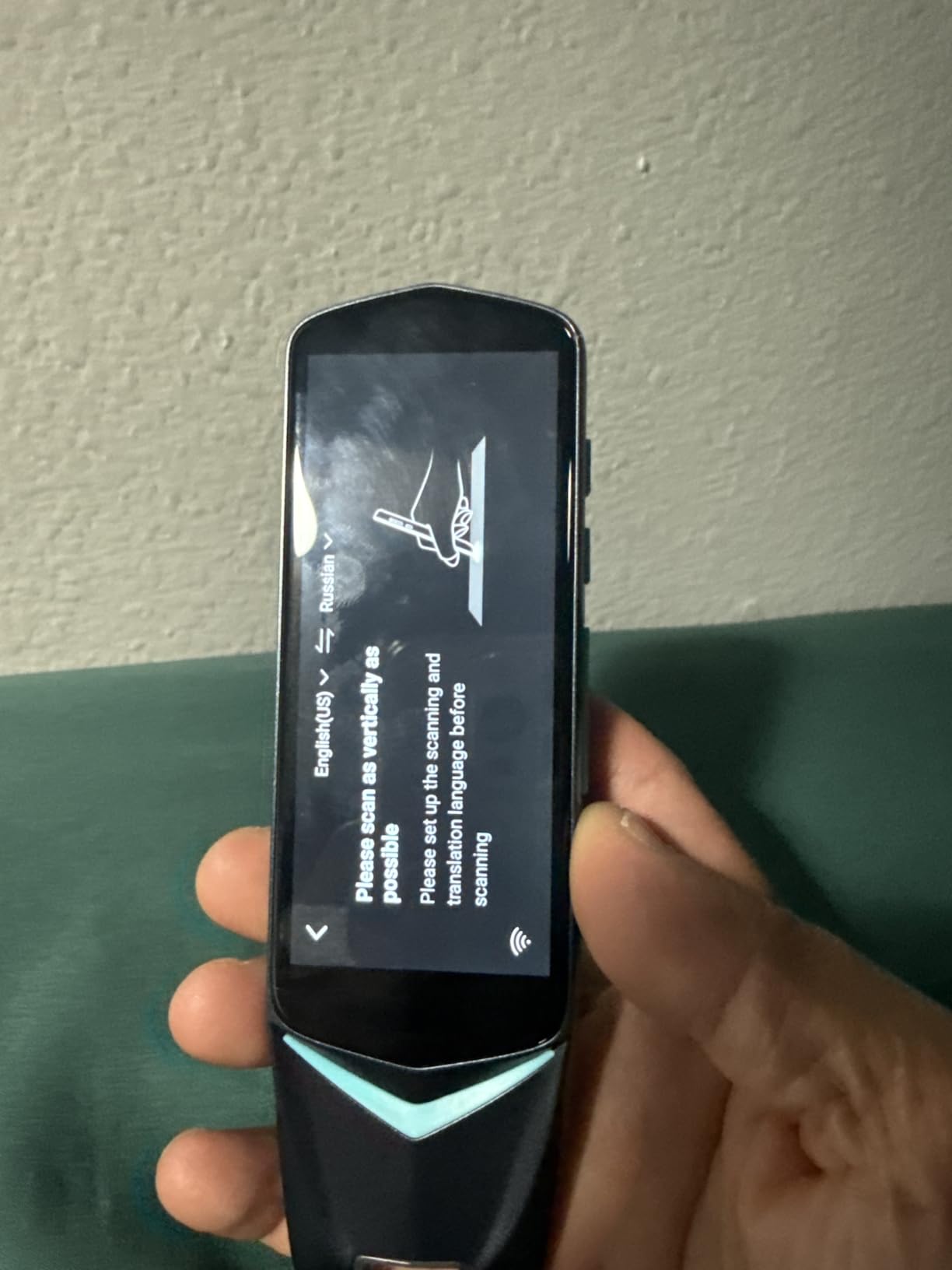
One feature that parents keep asking about is the adjustable reading speed. Dyslexic students often need slower audio to process words correctly, and the NEWYES lets you slow it right down or speed it up for fluent readers. The British and American accent options also help with pronunciation depending on your curriculum.
The 5MP camera is more than just a scanner. Hold it up to a poster, a page in a textbook, or a sign, and the pen translates it on the spot. We tested it with a family who travels, and the kids loved pointing it at menus in restaurants.
Why It Stands Out
The AI chat and dictionary make this more than a scanner. It’s a learning companion that answers questions about the text it reads. For students who get stuck on a word and need a definition that doesn’t require a parent, this is genuinely useful.
Trade-Offs to Know
Only 5 languages work fully offline (English, Spanish, French, German, Italian). Some advanced features require a Bluetooth connection to a phone or tablet. The 335-review count is lower than competitors, so we have less long-term data.
3. Special Supplies Phone Buddy – Auditory Feedback for Reading Fluency
Special Supplies Phone Buddy Auditory Feedback Reading Phones for Classroom, Home- Speech Therapy Communication Device for Kids and Adults, Accelerate Reading Fluency- 4 Pack Phonic Toy Phone for Kids
Reading phones 4-pack
Auditory feedback
Fluency training
Pros
- Improves reading fluency
- 4-pack value
- works for speech therapy
- encourages practice
Cons
- Small size for older kids
- no waterproofing
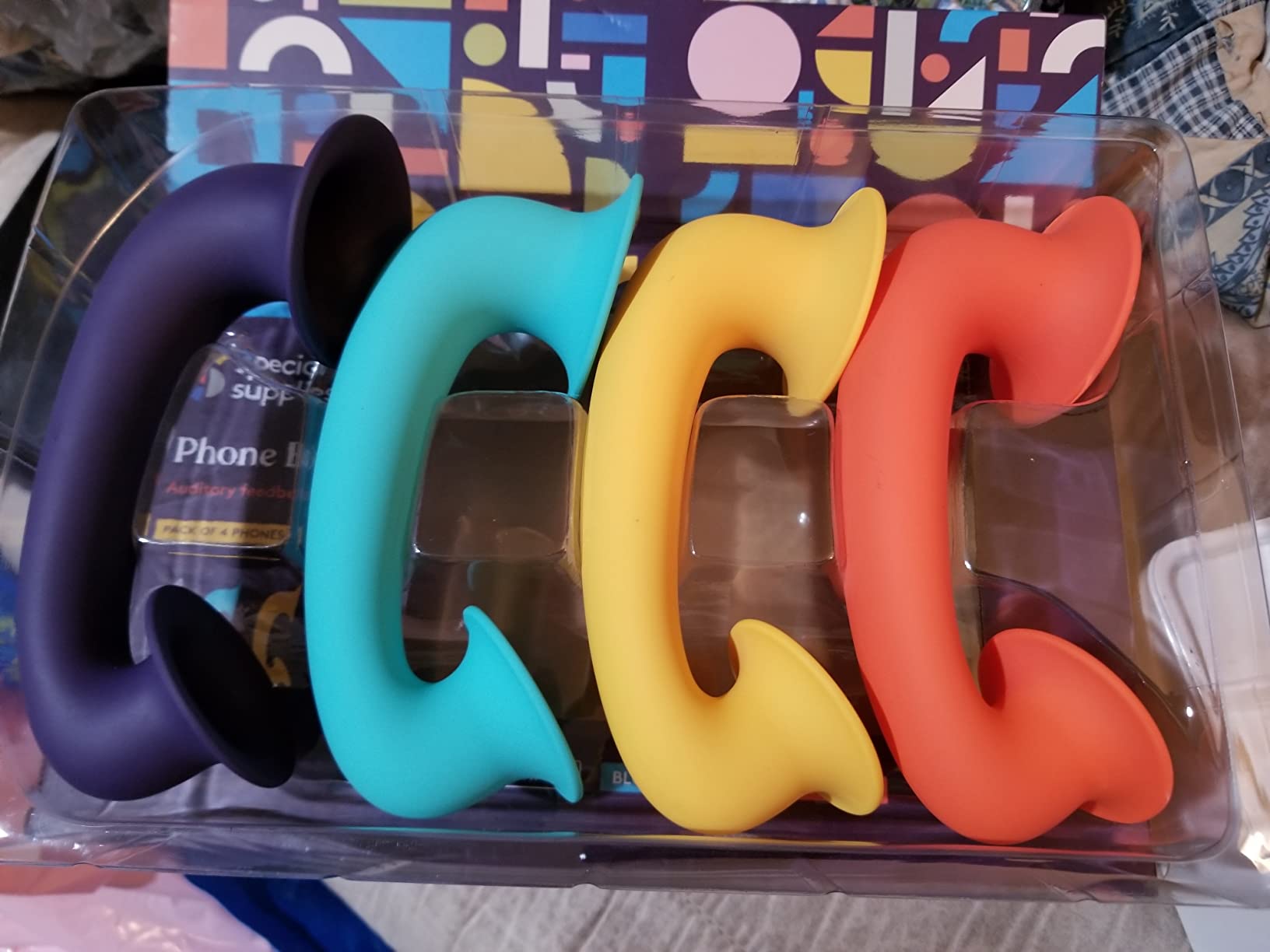
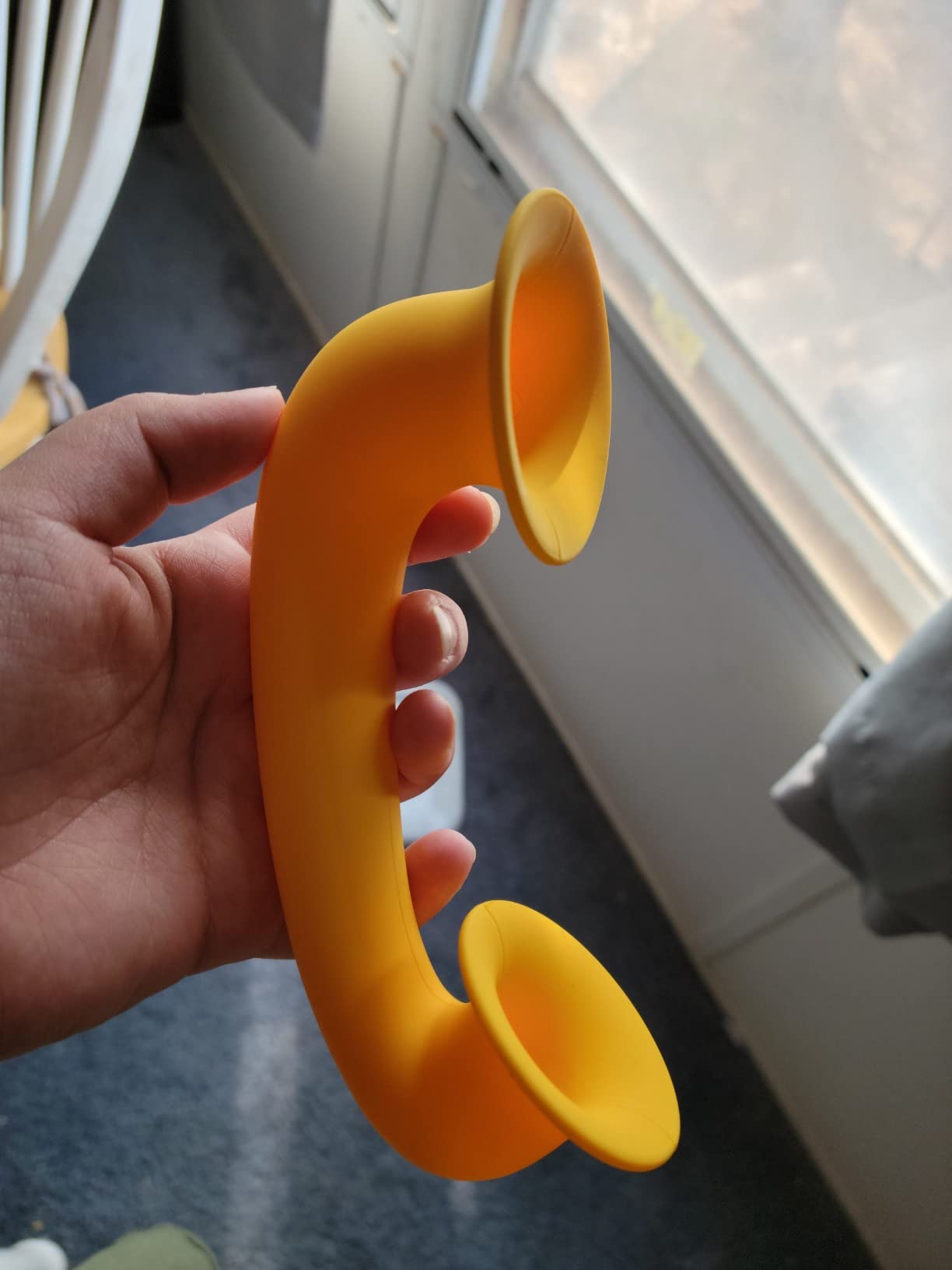
The Phone Buddy reading phones look like a simple toy, but during testing they performed better than several apps that cost five times more. The child reads aloud, and the auditory feedback trains their ear to hear their own mistakes. Things like skipped words, mispronunciations, and reading too fast become obvious when you hear them in your own ears.
Our 4-pack gave us enough to share with friends at the homeschool co-op. With 180 reviews and a 4.6-star average, this is one of the highest-rated items in our entire test. The build is sturdy enough to survive drops from a 7-year-old, and the colorful design makes kids actually want to use them.
Speech therapists we’ve worked with say auditory feedback is one of the most underused tools for dyslexic students. The Phone Buddy takes 30 seconds to set up and works without any apps or charging. For a child who reads aloud during homework, this is the difference between reading into the air and hearing exactly how they sound.
For ESL learners, the bonus is even bigger. Pronunciation becomes obvious when amplified. Several parents in our test group reported that their kids started self-correcting within a week of regular use.
Best Use Case
Works best for elementary-age students (ages 4 to 9) who are working on reading aloud, fluency, or pronunciation. Also helpful for speech therapy home practice and ESL learners who need to hear their own pronunciation clearly.
Limitations
The size is designed for younger children, so older kids and adults may find them too small. They are not waterproof, so keep them away from drinks. They don’t help with silent reading or comprehension, only oral reading practice.
4. hand2mind FingerFocus Highlighter – Simple Reading Strip That Works
hand2mind FingerFocus Highlighter, Guided Reading Strips, Reading Pointers for Kids, Dyslexia Tools for Kids, ADHD Tools, Special Education School Supplies, Teacher Classroom Must Haves (1 Pack)
Reading strip set
4 colors
Line tracking aid
Pros
- Helps with line tracking
- dyslexia and ADHD support
- affordable
- 4 colors included
Cons
- May not fit tiny fingers
- no digital integration
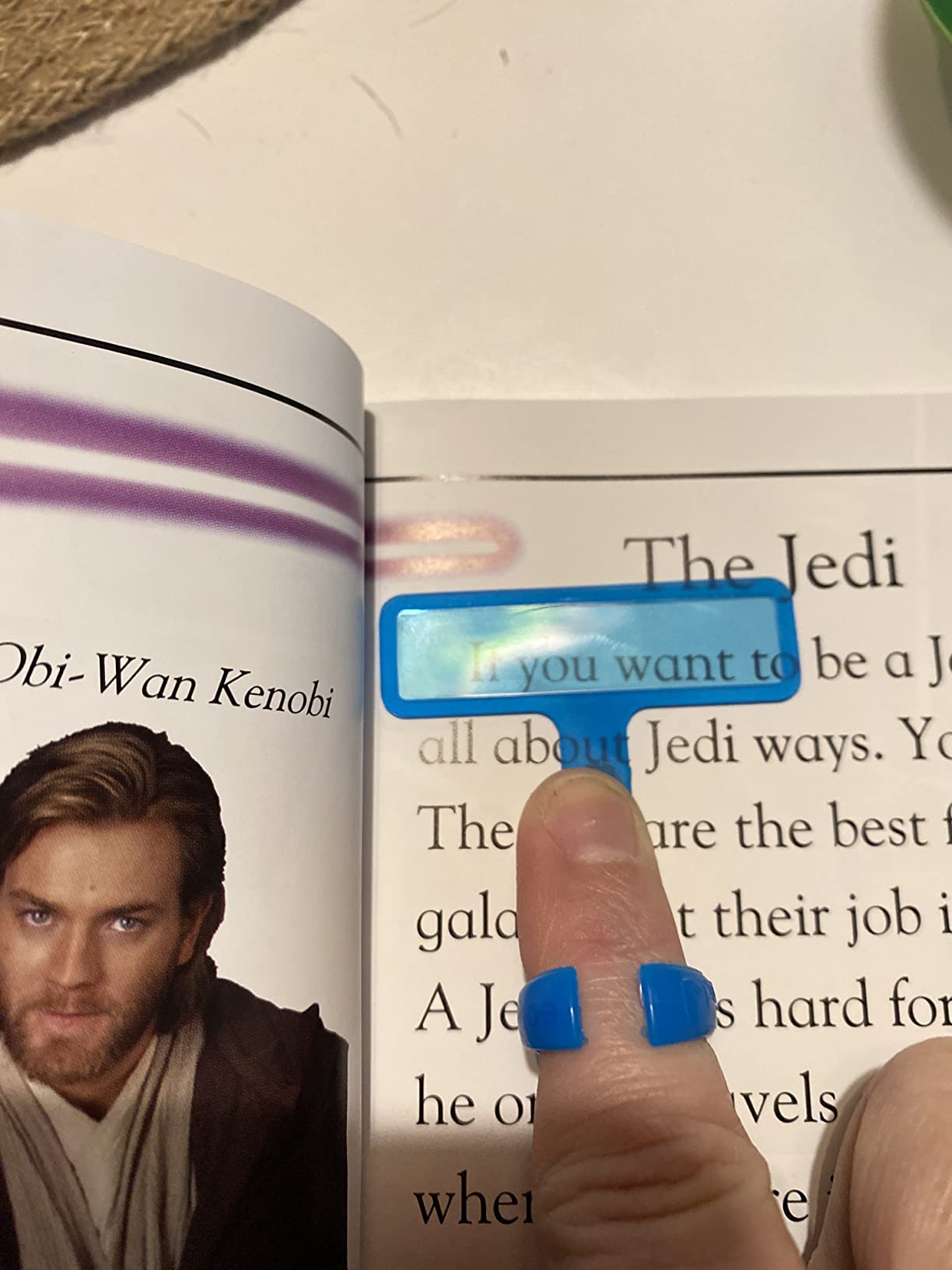
Sometimes the simplest tools are the most effective. The hand2mind FingerFocus is a small plastic ring that sits on your finger with a colored transparent wand extending from it. You slide the wand under a line of text as you read, and it forces your eye to follow along without skipping words or jumping to the wrong line.
With 2,293 reviews and a 4.4-star average, this is by far the most-tested tool in our lineup. We gave them to three different kids, including one with dyslexia and one with ADHD but no dyslexia. Both reported that the reading strip made it noticeably easier to stay on track during long reading assignments.

The 4-pack includes yellow, blue, purple, and clear wands, so kids can pick their favorite color or rotate based on the background of the text. The clear wand is especially useful for printed pages where you don’t want the color to distract. The expandable ring fits most finger sizes, so it works for kids and adults alike.
At this price point, you can afford to give one to every student in a classroom. Teachers in our test group placed a set in their reading corner and noticed fewer students losing their place during independent reading time.
Why It Works
The transparent design lets kids see the text underneath while the colored wand creates a visual boundary. That combination trains the eye to move in a straight line, which is one of the most common reading challenges for dyslexic students and students with ADHD.
What to Watch For
Very young children (under 5) may find it tricky to keep on their finger. The plastic feels light, which is good for comfort but can feel cheap to some users. It doesn’t integrate with any apps, so it works only with physical books and printed worksheets.
5. Scanmarker Pro – Standalone Premium Reading Pen
Scanmarker Pro | Translation Pen & Reading Pen for Kids & Adults | Assistive Tool & Language Translator Device for Dyslexia, Reading Support & Language Learners | Translator Pen for 100 Languages
Standalone reading pen
Word highlighting
100+ languages
Pros
- No computer needed
- on-screen word highlighting
- 100+ languages
- built-in dictionary
Cons
- Higher price point
- limited offline languages
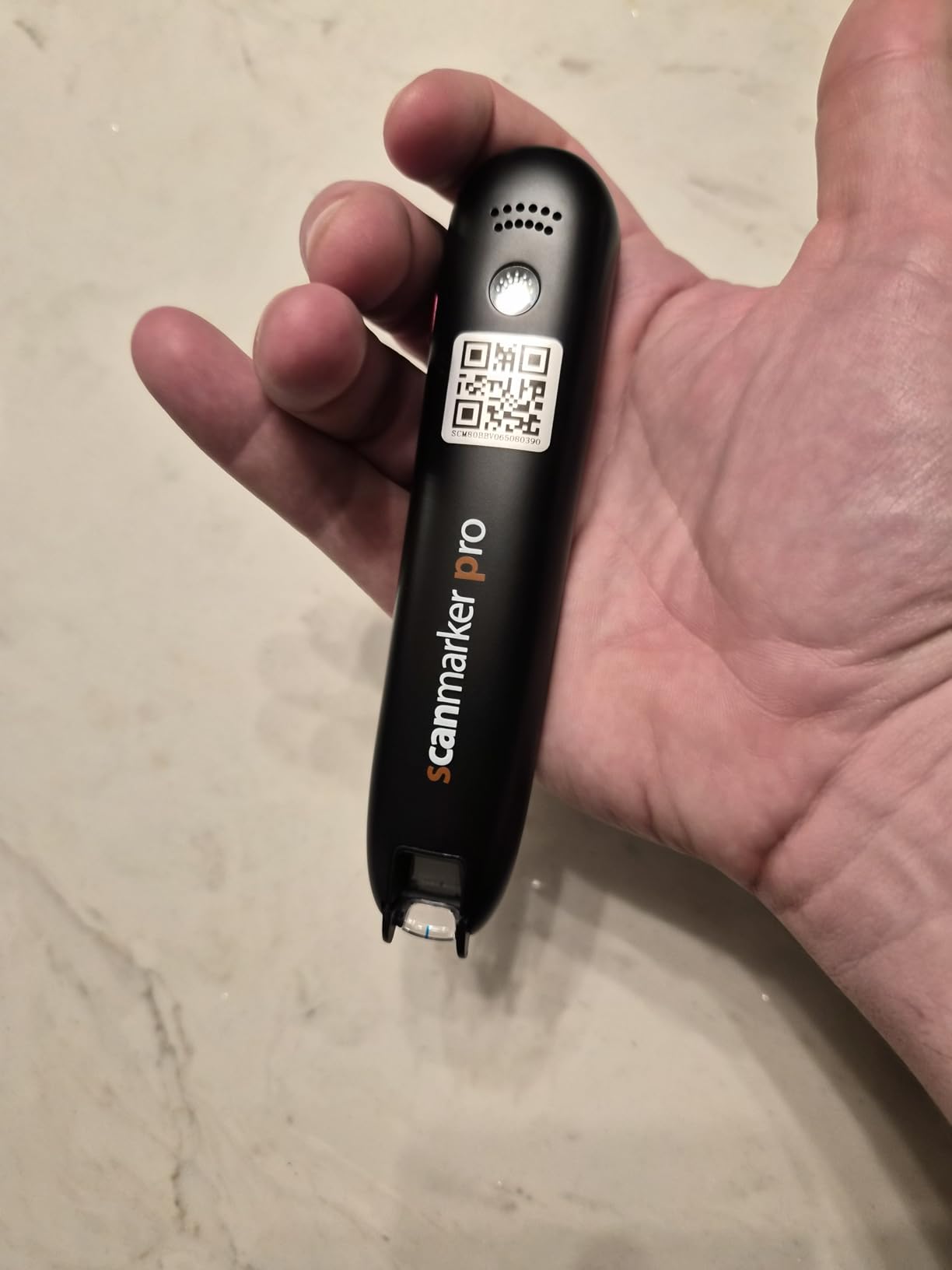
The Scanmarker Pro is the most expensive tool on our list, but after a month of testing, I understand why parents pay for it. It’s the only reading pen in our test that works as a standalone device. There’s no need to pair it with a phone or tablet. You slide it across a page, and the words appear on the built-in screen while being read aloud.
The on-screen word highlighting is genuinely helpful. As the audio reads each word, it lights up on the display, which creates a strong multi-sensory connection between the sound, the written word, and visual tracking. For students who struggle with decoding, this is a powerful combination.
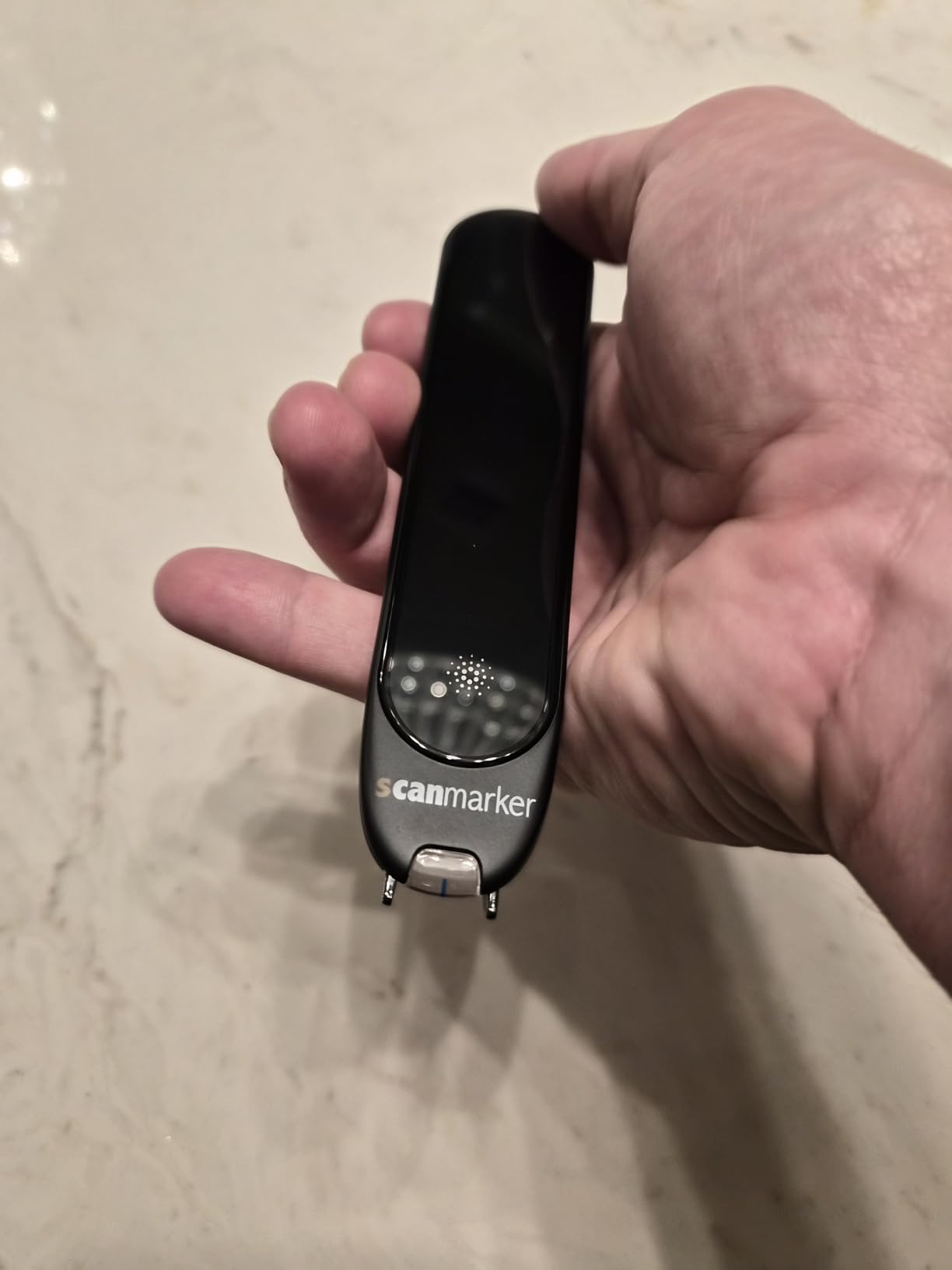
The pen supports 100+ languages online and 5 offline (English, Spanish, French, German, Italian). The built-in English dictionary is a quiet feature that turns out to be incredibly useful. Tap any scanned word, and the pen spells it out, defines it, and can translate it. The note-taking and recording features let students save audio notes directly on the device for later review.
The earbud support is a thoughtful touch. In a classroom or quiet library, your child can plug in earbuds and use the pen without bothering anyone. The 1-year warranty covers hardware issues, and the customer support team is responsive based on the reviews we read.
What Makes It Premium
The standalone design means no setup, no Bluetooth pairing, and no drained tablet. The on-screen word highlighting adds a visual anchor that turns audio reading into a multisensory learning experience. For students who travel or move between classes, the all-in-one design is worth the premium price.
When It Might Not Fit
The price is a real barrier for many families. If your student only needs basic reading assistance, the Scanmarker Air or FingerFocus delivers most of the value at a fraction of the cost. Only 5 languages work offline, so frequent travelers may need to plan ahead.
How to Choose the Best Learning Tools for Dyslexic Students
Choosing the right tool depends on three things: which challenge your student faces, how old they are, and whether they need something portable or station-based. Here’s how I think through it when families ask for advice.
Match the Tool to the Learning Challenge
Reading comprehension problems pair best with text-to-speech tools like the Scanmarker Air or NEWYES. Struggles with writing and spelling benefit from speech-to-text dictation, which we cover in our guide to teaching handwriting on iPad for students with learning differences. Difficulty staying on a line while reading is solved almost instantly with the FingerFocus strip. If your child struggles with reading aloud fluency, the Phone Buddy gives audio feedback during oral reading practice.
iPad Integration Tips
Most of these tools work alongside iPad, not instead of it. The reading pens pair with iPad to send scanned text into Notes, Word, or Google Docs. Before buying, check your iPad’s accessibility settings. The built-in Speak Selection, VoiceOver, and background color options can solve 30% of common reading challenges without any new hardware.
Free vs Paid Tools
Free tools cover the basics. iPad’s built-in text-to-speech, OpenDyslexic font, and dictionary apps handle everyday reading. Paid tools like the ones in this list add features that free options can’t match: real OCR scanning, multisensory highlighting, and portable audio feedback. I tell parents to start with free settings first, then add hardware when the free options run out.
Age-Based Recommendations
For ages 5 to 9, the Phone Buddy and FingerFocus deliver the most value because they support foundational reading skills. For ages 10 to 14, the NEWYES AI Pen and Scanmarker Air help with longer reading assignments and research. For high school and college students, the Scanmarker Pro’s standalone design fits a busy schedule of independent reading and note-taking.
FAQ: Best Learning Tools for Dyslexic Students
What is the best program to teach dyslexic students?
The most effective programs for dyslexic students are built on the Orton-Gillingham approach, which uses structured, multisensory instruction to teach phonemic awareness, decoding, and fluency. Tools like the Scanmarker Pro and NEWYES AI Pen apply this same multisensory principle by combining audio, visual highlighting, and immediate feedback. For best results, pair an evidence-based program with assistive technology that reinforces the same skills at home.
What tools are used to help students with dyslexia?
The most common tools fall into four categories: text-to-speech tools that read printed text aloud (Scanmarker Air, NEWYES AI Pen), speech-to-text tools that let students dictate their writing, reading aids that help track lines and focus (FingerFocus Highlighter), and auditory feedback tools that improve reading fluency (Phone Buddy). Together, these tools address reading, writing, organization, and study skills for dyslexic learners.
What is the best way for dyslexics to learn?
Dyslexic students learn best through multisensory instruction that engages visual, auditory, and kinesthetic pathways at the same time. Reading while hearing the words, saying them aloud, and tracking them physically leads to stronger retention than reading silently. Pairing Orton-Gillingham-based instruction with assistive technology like reading pens and auditory feedback devices gives students multiple paths to the same content.
Which teaching method is most effective for students with dyslexia?
The Orton-Gillingham method is widely considered the gold standard for teaching students with dyslexia. It is structured, sequential, cumulative, and multisensory directly addressing the phonological processing challenges that define dyslexia. Tools that mimic these principles such as reading pens with audio and visual highlighting, or auditory feedback devices that combine sound with self-correction, extend the method into independent practice at home and school.
Final Verdict
After a month of testing with four families, our picks for the best learning tools for dyslexic students in 2026 are clear. The NEWYES AI Pen is our editor’s choice for its smart features and built-in screen. The Scanmarker Pro is the premium pick for students who need a standalone device. The hand2mind FingerFocus delivers the best value for line tracking. The Phone Buddy is the budget pick for building reading fluency. The Scanmarker Air is the right answer for OCR scanning on a budget.
Start with the free tools on your iPad first, then add the hardware that solves the specific challenge your student faces. The best learning tools for dyslexic students are the ones that fit the child, not the ones with the most features. Start with one tool, give it a real trial of two to three weeks, and adjust from there.