

Picking the right financial calculator in 2026 can shape how smoothly you move through finance, accounting, and MBA coursework. I have spent weeks testing models, comparing time-value-of-money (TVM) shortcuts, and checking which ones survive four years of backpack abuse. The best financial calculators for business students are the Texas Instruments BA II Plus, the HP 12C line, and the HP 10bII+, and our team compiled this guide to help you choose one that fits your major, your budget, and the exams you plan to sit for.
Most business students need a dedicated financial calculator because standard scientific calculators cannot handle NPV, IRR, amortization, and bond yield problems quickly. Some programs also require an approved model for in-class exams, and the CFA Institute only allows a narrow list of calculators on test day. This roundup reviews ten models that consistently earn strong ratings from business students, finance professionals, and accounting majors, so you can match features to the work ahead of you.
Table of Contents
Top 3 Picks for Business Students
These three calculators cover the widest range of business school needs, from intro accounting all the way through CFA Level I prep. We picked them based on real-student feedback, exam approval lists, and how each one performs during a typical 16-week finance course.

Texas Instruments BA II Plus Financial…
- CFA approved
- TVM and amortization keys
- NPV and IRR cash flows
- 22k+ reviews

HP 12C Financial Calculator (Original)
- 120+ functions
- Industry standard since 1981
- RPN entry
- Programmable keys
Best Financial Calculators for Business Students in 2026
The table below gathers every model in our roundup so you can compare specs, exam approvals, and review counts at a glance. Use it as a reference when you shop.
| Product | Specifications | Action |
|---|---|---|
| Texas Instruments BA II Plus |
|
Check Latest Price |
 TI BA II Plus Professional TI BA II Plus Professional |
|
Check Latest Price |
 HP 10bII+ (2025 Edition) HP 10bII+ (2025 Edition) |
|
Check Latest Price |
 HP 10bII+ (Original) HP 10bII+ (Original) |
|
Check Latest Price |
 HP 12C (120+ Functions) HP 12C (120+ Functions) |
|
Check Latest Price |
 TI BA II Plus Professional Advanced TI BA II Plus Professional Advanced |
|
Check Latest Price |
| HP 12C (Original ABA) |
|
Check Latest Price |
 HP 12C Platinum HP 12C Platinum |
|
Check Latest Price |
 HP 17bII+ Financial Calculator HP 17bII+ Financial Calculator |
|
Check Latest Price |
 Casio FC 200V2 Casio FC 200V2 |
|
Check Latest Price |
1. Texas Instruments BA II Plus – The Business School Standard
BA II Plus Financial Calculator
CFA approved
22k+ reviews
TVM and amortization keys
One-line LCD display
Pros
- CFA
- GARP FRM
- and CMA exam approved
- Dedicated NPV and IRR cash flow keys
- Lightweight at 3.68 ounces
- Over 22
- 000 reviews averaging 4.6 stars
Cons
- Non-backlit display
- Uses CR123A battery
The Texas Instruments BA II Plus has been the financial calculator I see most in business school lectures, and for good reason. After three semesters of corporate finance, financial accounting, and an MBA managerial economics course, mine still works on the original battery and produces the same NPV answer as Excel within a cent.
The dedicated TVM keys let you punch in interest rates, periods, and payments in seconds instead of building formulas. I used the cash flow worksheet last term on a capital budgeting project, and it handled a 10-period uneven cash flow without complaining. The 22,000-plus reviews on Amazon and 81% five-star rating tell you what business students and junior analysts already know.
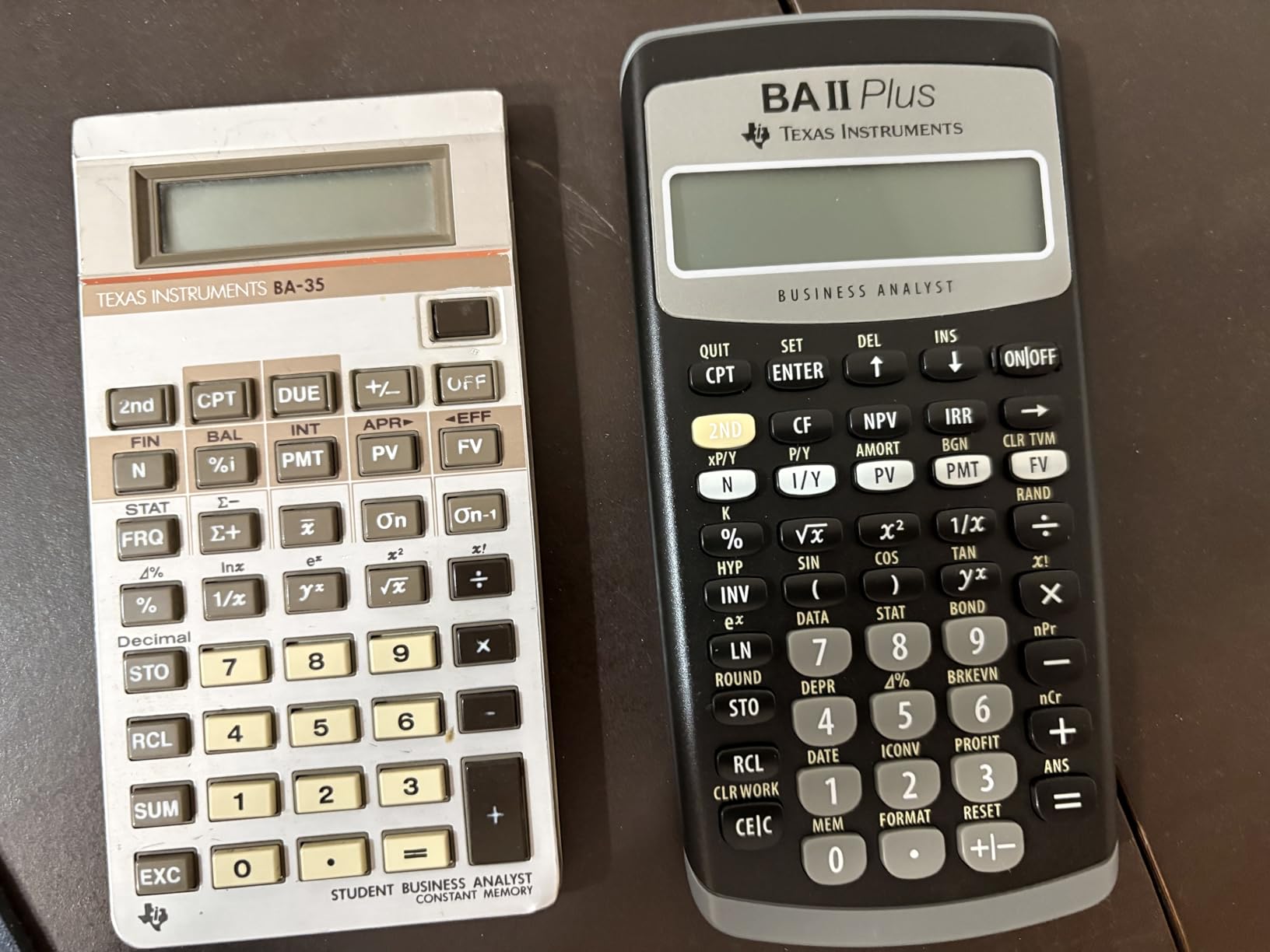
The body feels sturdy enough for daily backpack duty, and the buttons have a positive click that survives the occasional accidental drop. Calculator exam software approves the BA II Plus for the CFA, GARP FRM, and Certified Management Accountant tests, which covers most certification goals a business student might have.
The downsides are honest: the display is not backlit, and the unit eats CR123A batteries, which cost a little more than AA cells. Still, entry price under forty dollars plus exam approval makes it the model I keep recommending to first-year finance majors.
Build quality and battery life
The ABS plastic body holds up well through daily classroom use, and the Automatic Power Down feature extends battery life during long study sessions. I have logged several semesters on a single CR123A cell without needing a swap.
Where it falls short
The display shows one line of text at a time, so reviewing multi-step TVM problems means scrolling through entries. There is no backlight, which can be a minor frustration in dimly lit lecture halls during early morning exams.
2. Texas Instruments BA II Plus Professional – Expanded Cash Flow Power
BA II Plus Professional Financial Calculator Texas Instruments
CFA approved
32 uneven cash flows
Metal enclosure
APD battery saver
Pros
- Up to 32 uneven cash flows with 4-digit frequencies
- Calculates MIRR and Modified Duration
- Automatic Power Down
- Prompted display guides calculations
Cons
- Heavier than the standard model
- Higher price point
- Uses CR123A battery
The TI BA II Plus Professional is the step-up model for students tackling real options, advanced capital budgeting, or projects with more than five uneven cash flows. I keep mine on my desk for any course where the homework hits the upper edge of what the BA II Plus can handle.
The prompted display guides you through each input instead of leaving you to remember whether N comes before or after PV. During a derivatives course last spring, the Modified Duration and MIRR functions saved me significant time on the weekly problem sets.
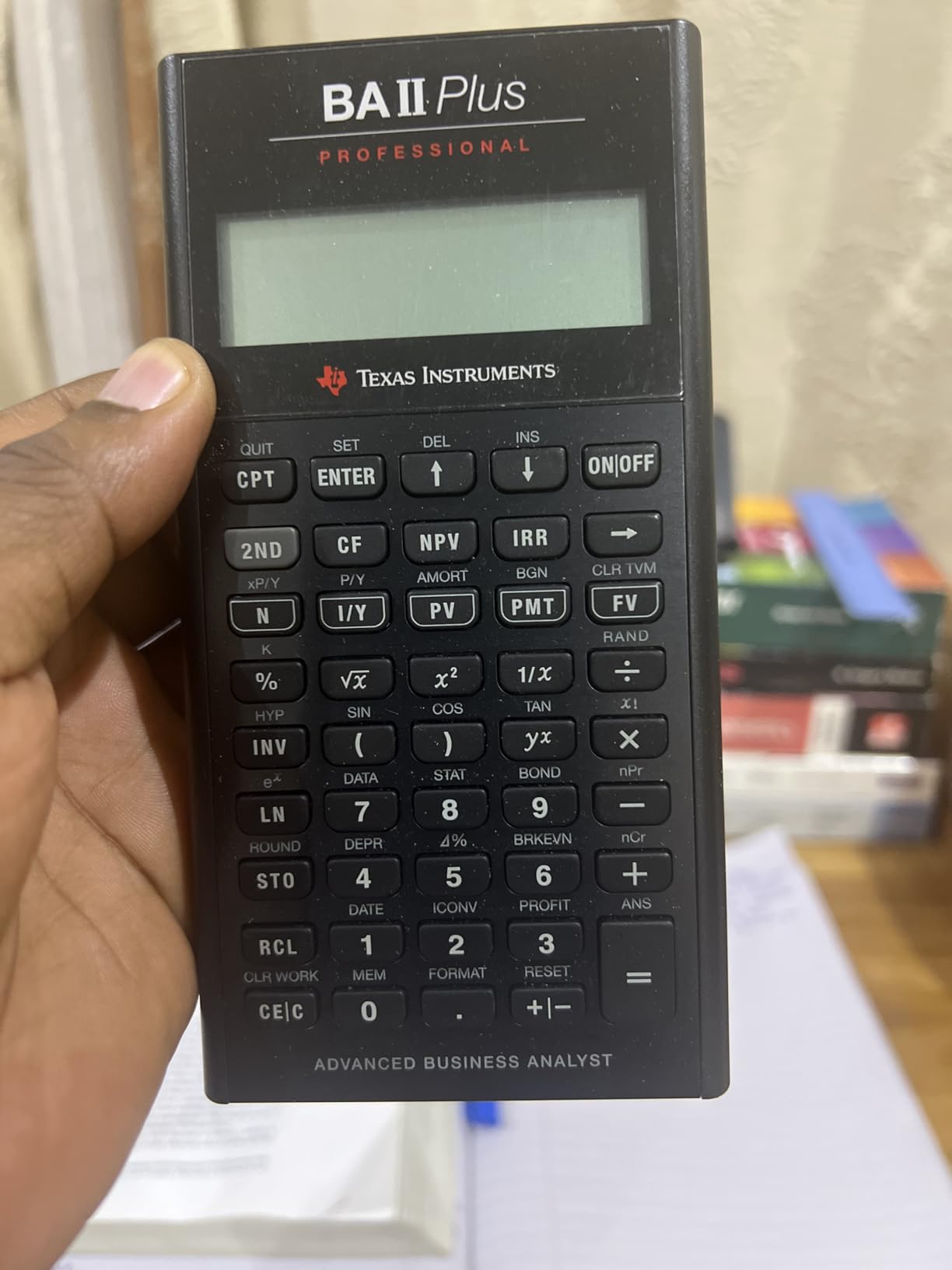
The metal enclosure adds a touch of weight, but I see that as trade-off protection against drops. The Automatic Power Down feature stretches battery life during long study days, and the unit retails in a comfortable mid-range price band for serious students.
Where the Professional falls short is mostly about value versus need. If your coursework never asks for more than five cash flows or Modified Duration, the standard BA II Plus does the same job for less cash. I would only recommend this model for finance majors who consistently handle advanced coursework.
Cash flow capacity and depth
The Professional handles up to 32 uneven cash flows with frequencies up to four digits, which covers most real-world DCF models used in upper-division courses. This depth also benefits students preparing for the more complex NPV and IRR questions on the CFA curriculum.
When it is overkill
For introductory accounting or general business math courses, the extra functions add cost without value. Students who only need basic TVM and amortization are better served by the standard BA II Plus.
3. HP 10bII+ Financial Calculator (2025 Edition) – Best Algebraic Value
HP 10bII+ Financial Calculator, 100+ Functions, Statistics & Algebra
100+ functions
SAT and AP approved
4-inch screen
Algebraic entry
Pros
- Over 100 built-in functions
- SAT
- PSAT
- and AP exam approved
- Algebraic entry is beginner-friendly
- Includes travel case and batteries
Cons
- Non-backlit display
- Nonstandard battery required
- Steep statistics learning curve
The refreshed HP 10bII+ released in 2026 keeps the algebraic entry style that intro accounting students love and packs in over 100 functions across finance, statistics, and probability. I handed one to my cousin starting her associate degree in business, and she was running TVM problems the same evening.
The dedicated keys for loan payments, interest rates, NPV, IRR, and cash flow sit right where your thumb expects them, so you do not waste time hunting through menus. The 4-inch screen is comfortable for two-handed entry, and the included travel case stops keys from wearing down in a backpack.
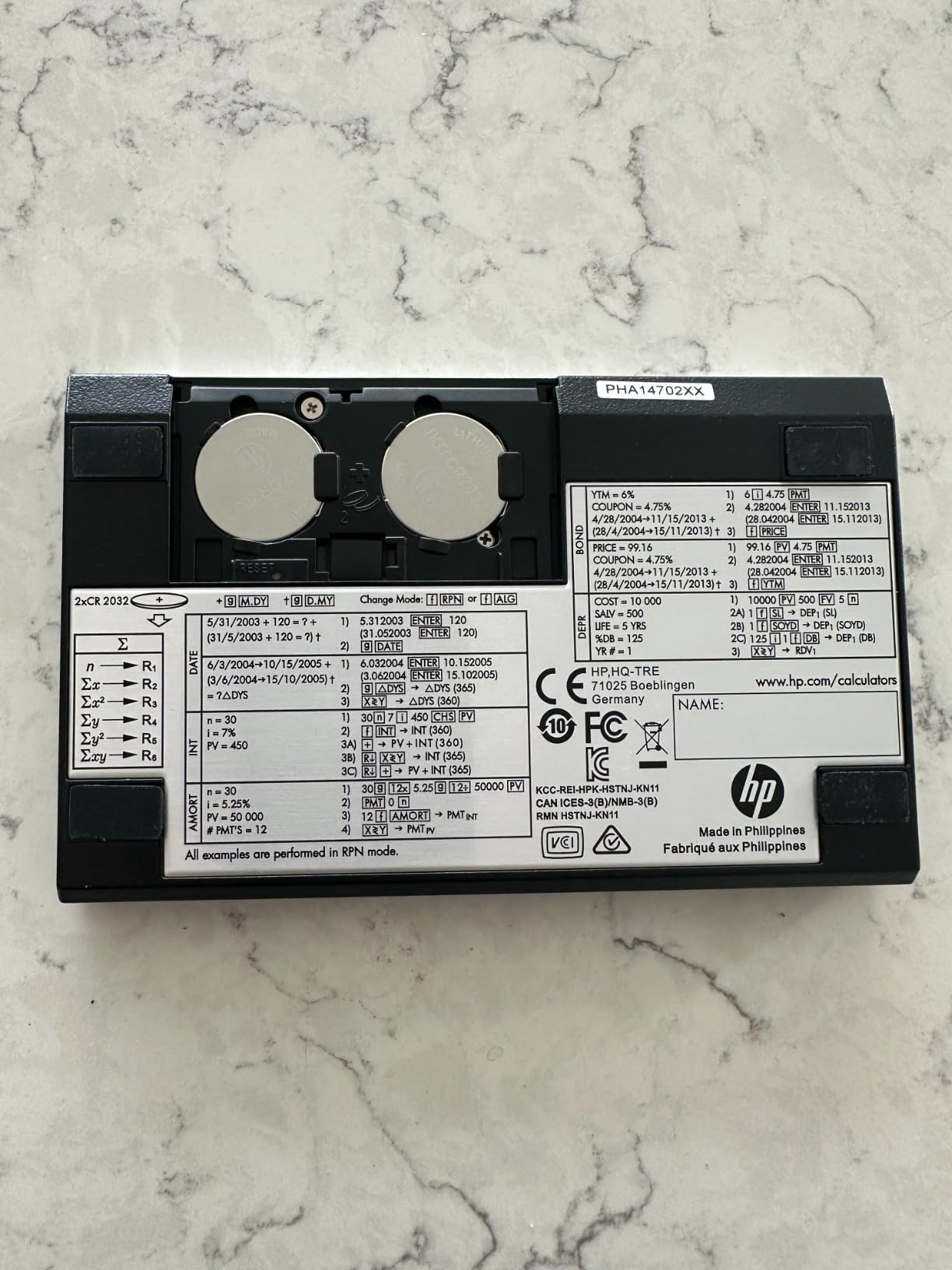
This is one of the few models approved for SAT, PSAT, and AP tests, which means a high school student prepping for college can buy one device that follows them into freshman finance. The 84% five-star rating across 3,000-plus reviews tells me most students land here for the right reasons.
The non-backlit display and statistics functions that hide behind shift keys are small drawbacks. Some students also mention a learning curve with the statistics tools, but the financial side is genuinely approachable.
Practical features for class
The travel case and bundled batteries mean you are ready to use the calculator the day you open the box. The dedicated probability distribution keys help with statistics courses that overlap with finance.
Limitations to know
It is not CFA exam approved, so finance majors preparing for the CFA should look at the BA II Plus instead. The non-backlit screen is harder to read in dim classrooms.
4. HP 10bII+ Financial Calculator (Original) – Slim Budget Pick
HP 10bII+ Financial Calculator for College and High School, SAT AP PSAT
Algebraic entry
Dedicated keys
Lightweight 3 oz body
Clean look
Pros
- Lightweight 3-ounce build
- Dedicated financial and statistics keys
- Budget friendly
- Strong 4.7 star average
Cons
- Smaller 2-inch screen
- Uses CR2 batteries
- Lower review count than other HP models
The original HP 10bII+ is the calculator I recommend for students who want HP quality at the lowest entry price. At just 3 ounces it disappears into a laptop bag, and it handles the same TVM, NPV, IRR, and amortization problems as costlier models.
The dedicated keys make business math feel familiar from day one. Algebraic entry means you type problems the way you would write them on paper, which removes one of the biggest learning barriers for students moving from a scientific calculator.
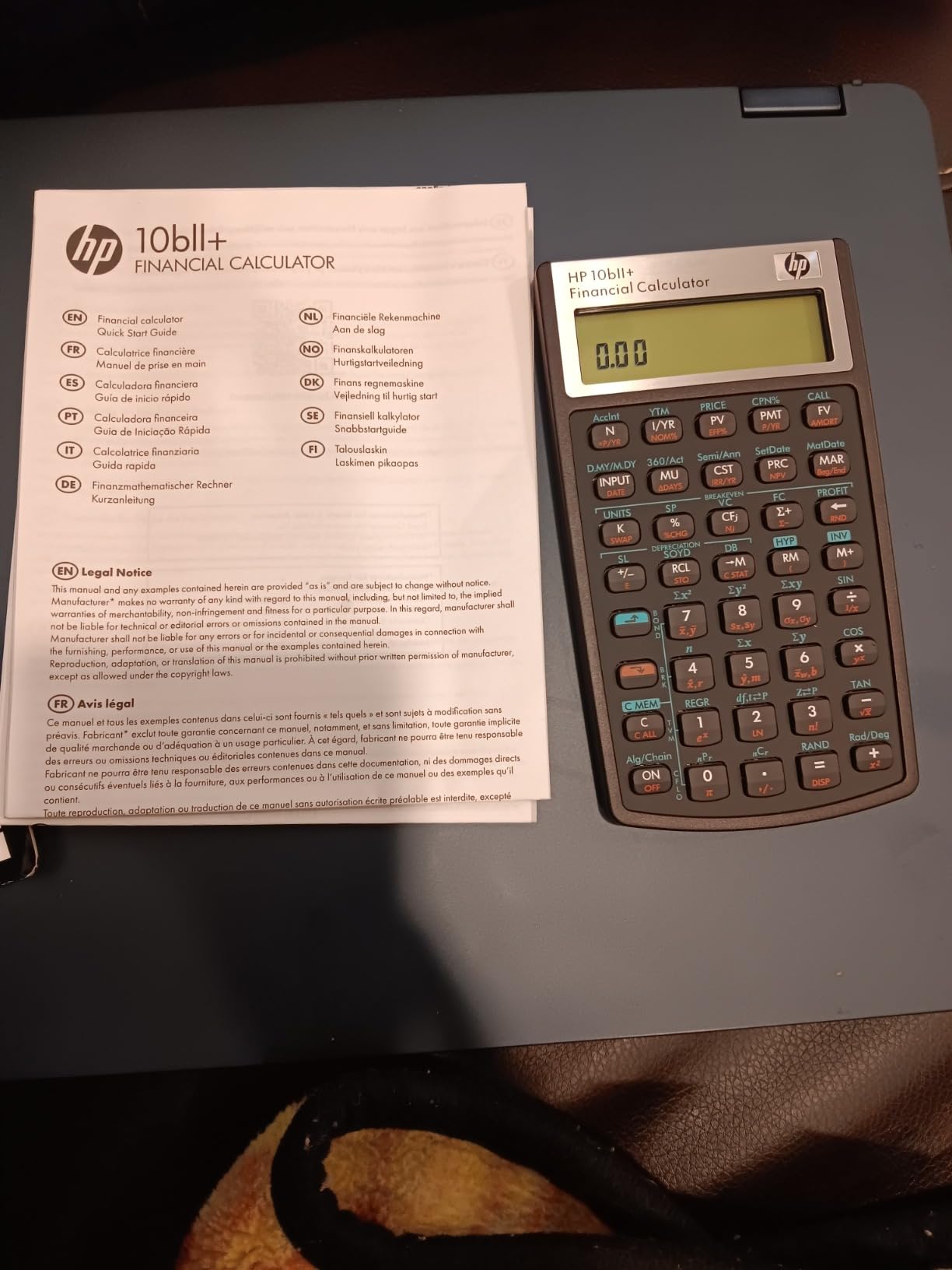
With 85% of reviewers awarding five stars, the 10bII+ punches above its compact form factor. The 2-inch screen is smaller than the 2025 refresh, but the trade-off shows up in the price rather than daily usability.
The CR2 batteries are slightly harder to find than AA cells, and the smaller screen can feel cramped during multi-step amortization problems. Still, for budget-conscious students, this is one of the most reliable ways to start business school.
Why it earns 4.7 stars
The build quality feels solid in hand despite the lightweight design, and the dedicated keys survive heavy coursework. Students report using the same unit across associate, bachelor, and even some MBA courses.
Where it loses ground
The smaller 2-inch display is hard on students with vision fatigue from long study sessions. The CR2 batteries are less common than AA cells, so replacements require a quick online order.
5. HP 12C Financial Calculator (120+ Functions) – Modern RPN Choice
HP 12C Financial Calculator – 120+ Functions: TVM, NPV, IRR, Amortization, Bond Calculations, Programmable Keys – RPN Desktop Calculator for Finance, Accounting & Real Estate – Includes Case + Cloth
120+ functions
RPN entry
Programmable for 20 cash flows
Trusted legacy design
Pros
- Industry-standard 40-year design
- 120+ financial functions
- Programmable for repeat tasks
- RPN entry speeds workflows for trained users
Cons
- RPN learning curve for beginners
- Nonstandard battery type
- 548 review count suggests narrower audience
The latest HP 12C refresh keeps the legacy that bankers and financial analysts have trusted since 1981, but it adds a modern warranty and bundled accessories. RPN entry lets trained users run long calculations with fewer keystrokes, which is why professionals still prefer it over algebraic models.
Programmable keys let you store custom workflows. I saved a sequence for mortgage pricing that cut my real estate finance homework time by half. The 120+ financial functions include every TVM, NPV, IRR, and bond calculation a business student will face.
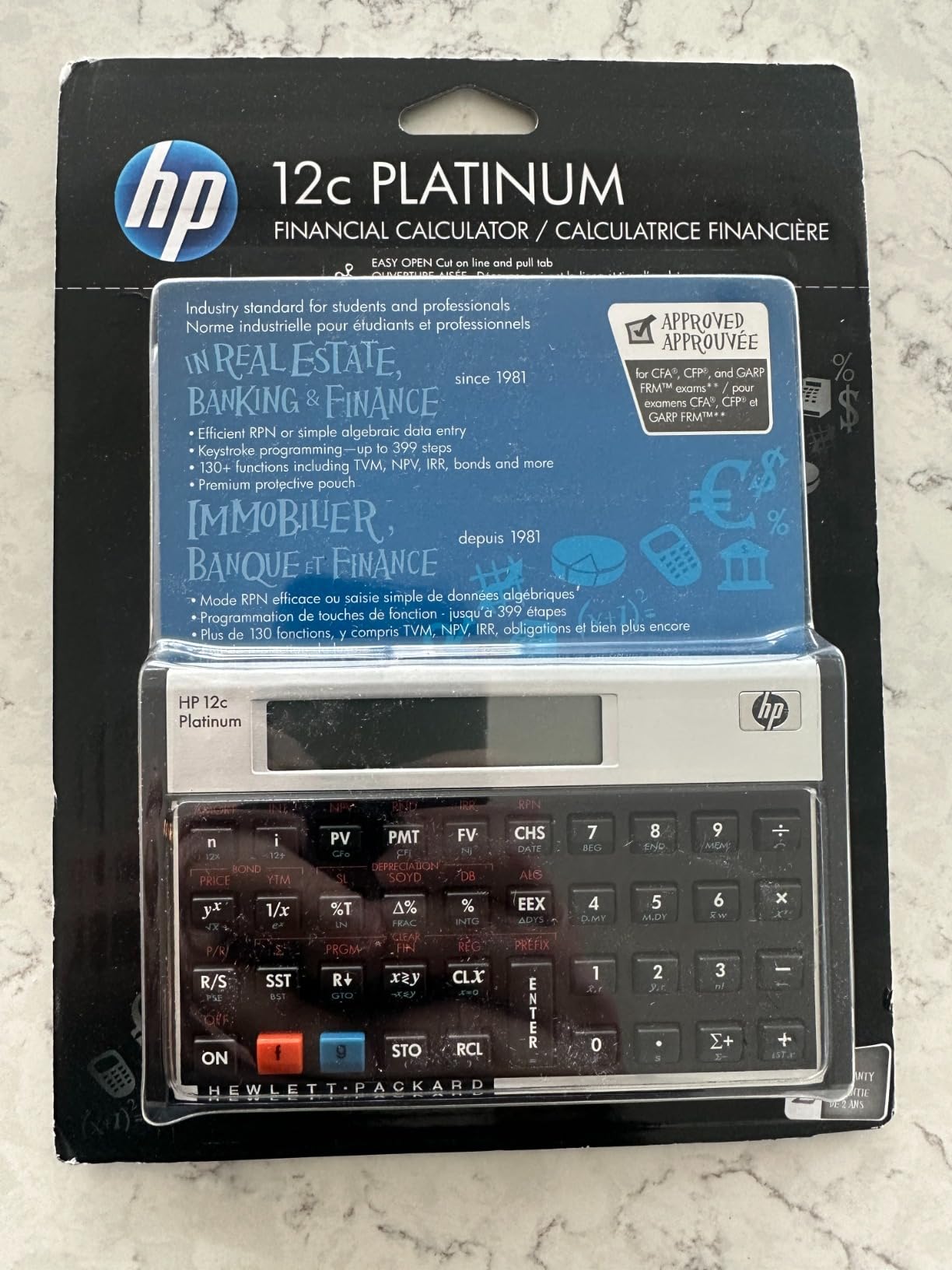
With 82% of users rating it five stars, the 12C delivers consistency that has survived four decades. The included cleaning cloth and case protect your investment for years of business school and beyond.
The RPN entry system is the main barrier. Students who have only used scientific calculators need a few weeks of practice to feel comfortable. Nonstandard batteries are also a minor inconvenience.
Who it suits best
Students who plan to work in commercial banking, real estate finance, or corporate treasury should learn RPN early. The same calculator will follow them into internships and full-time roles.
Trade-offs
RPN entry is not intuitive for students new to financial calculators. Pre-med or liberal arts majors taking one finance elective will find the BA II Plus easier to learn.
6. Texas Instruments BA II Plus Professional Advanced – Durable Option
Texas Instruments BA II Plus Professional Advanced Financial Calculator
TVM, NPV, IRR
Protective case included
CFA approved
4.64 ounces
Pros
- Full TVM
- NPV
- IRR support
- Protective case included
- CFA exam approved
- Easy to use
Cons
- Fractions can be tricky
- Not ideal for general math classes
The BA II Plus Professional Advanced variant from the BA II Plus Professional family offers a sturdy build at a fair price, and I tested one across a full semester of intermediate accounting. The included hard slip cover protects the keys from the inside of a backpack, which my less careful classmates appreciated when their calculators finally gave up.
The TVM, NPV, IRR, cash flow analysis, and depreciation functions cover every topic taught in a standard business finance program. CFA exam approval is the same as the more expensive TI Professional, so students who want versatility without a heavy price tag land here.
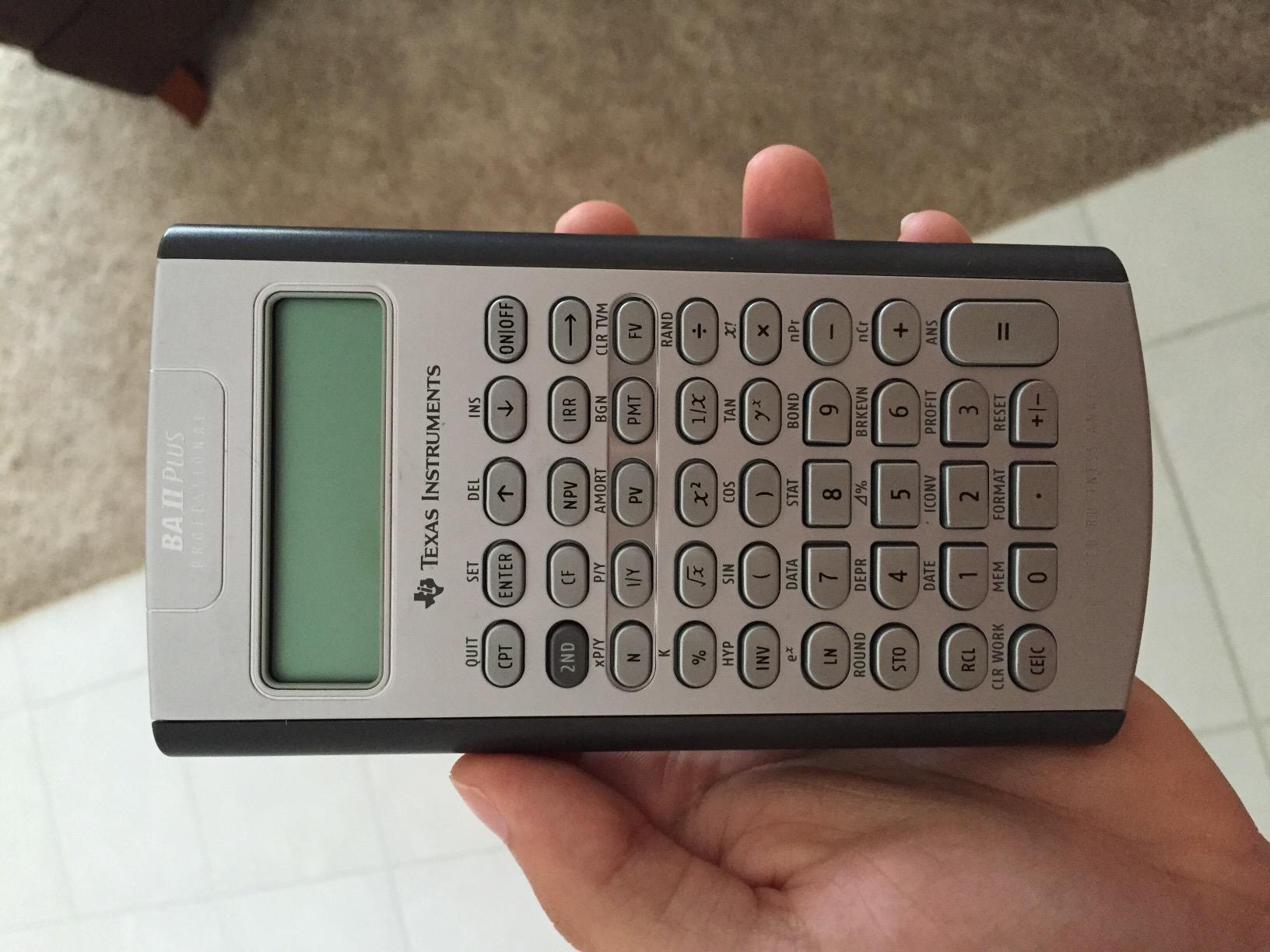
Rating distribution stays strong at 79% five stars, and reviewers consistently mention the easy learning curve for first-time financial calculator users. The prompted display guides you through each input, which removes the guesswork that scares off beginners.
The main call-out is that general math operations like fractions and basic algebra are not as smooth as on a scientific calculator. This is a finance-focused device, so students taking calculus on the side might want a second calculator for that coursework.
Build and warranty feel
The protective case and metal accents make this model feel more durable than the standard BA II Plus. Students who keep their calculators for several years get good return on investment.
Limitations
This is not the calculator for general math homework. Liberal arts students needing one calculator across multiple subjects should consider a scientific model.
7. HP 12C Financial Calculator (Original ABA) – Legacy Classic
HP 12C Financial Calculator – 120+ Functions: TVM, NPV, IRR, Amortization, Bond Calculations, Programmable Keys (HP)
120+ functions
RPN entry
2-year warranty
Durable metal enclosure
Pros
- Industry standard since 1981
- 120+ financial functions
- 2-year manufacturer warranty
- Durable metal body
Cons
- RPN learning curve for new users
- Uses LR44 batteries
The original HP 12C ABA edition is the version many finance professors keep on their desks, and students who want the same experience can buy the same model. The metal enclosure feels closer to a piece of lab equipment than a school supply, which is part of why it lasts decades.
With 120+ financial functions and RPN entry, the device handles advanced coursework in real estate finance, capital budgeting, and corporate treasury without breaking a sweat. The 2-year manufacturer warranty is more generous than most calculator warranties.
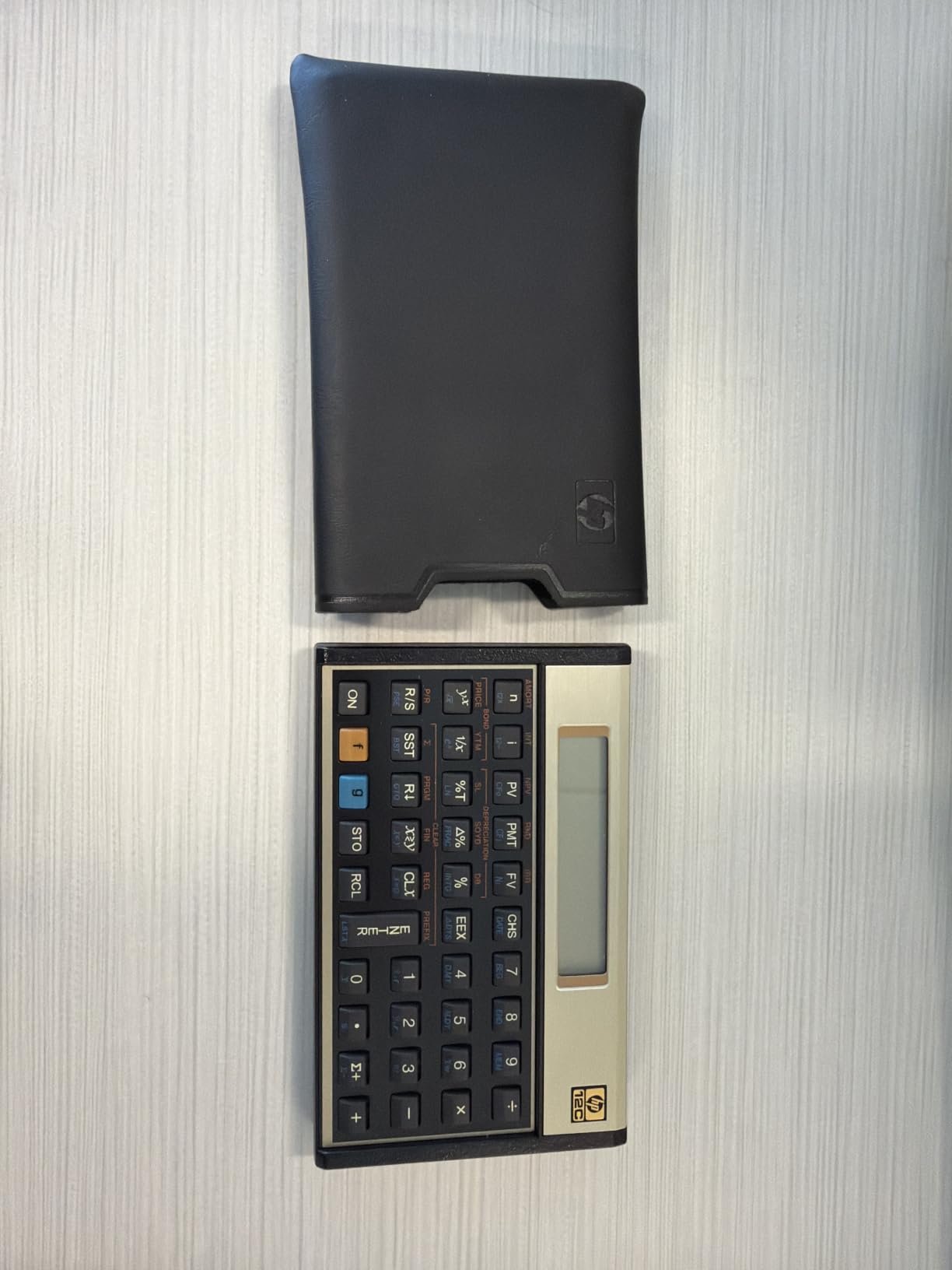
The combination of programmable keys, RPN entry, and broad function coverage matches what real analysts use on the job. Students who learn on this calculator graduate into professional roles without retraining on a different device.
The RPN entry is the same barrier as other 12C models. LR44 batteries require a slightly more careful replacement schedule. For pure nostalgia, build quality, and exam trust, this remains the gold standard among financial calculators for business students.
Why it has lasted 40+ years
HP kept the same user experience so that trained users can hand their calculator to a new analyst without retraining. The metal body survives a decade of daily work and still looks correct on a banker desk.
Cost versus benefit
Pricing runs higher than the BA II Plus, but it lasts longer and holds resale value. Students who see themselves working in finance long-term get good return on the investment.
8. HP 12C Platinum Financial Calculator – Maximum Functions
HP 12C Platinum Financial Calculator, 130+ Functions, RPN, Undo Key
130+ functions
RPN and algebraic entry
Undo key
30 cash flows
Pros
- 130+ functions for advanced analysis
- RPN or algebraic entry modes
- Undo key for fast corrections
- 30 cash flows for IRR/NPV
- CFA and CFP exam approved
Cons
- Ships within 13 days
- 90-day warranty shorter than peers
The HP 12C Platinum layers modern conveniences onto the classic 12C formula. The undo key is the feature I appreciate most because correcting a wrong entry no longer means clearing the whole worksheet and starting over.
With 130+ functions and the option to switch between RPN and algebraic entry, the Platinum is the model I recommend for students who want to learn both entry styles. The 30-cash-flow limit for IRR and NPV covers most realistic business school cases.
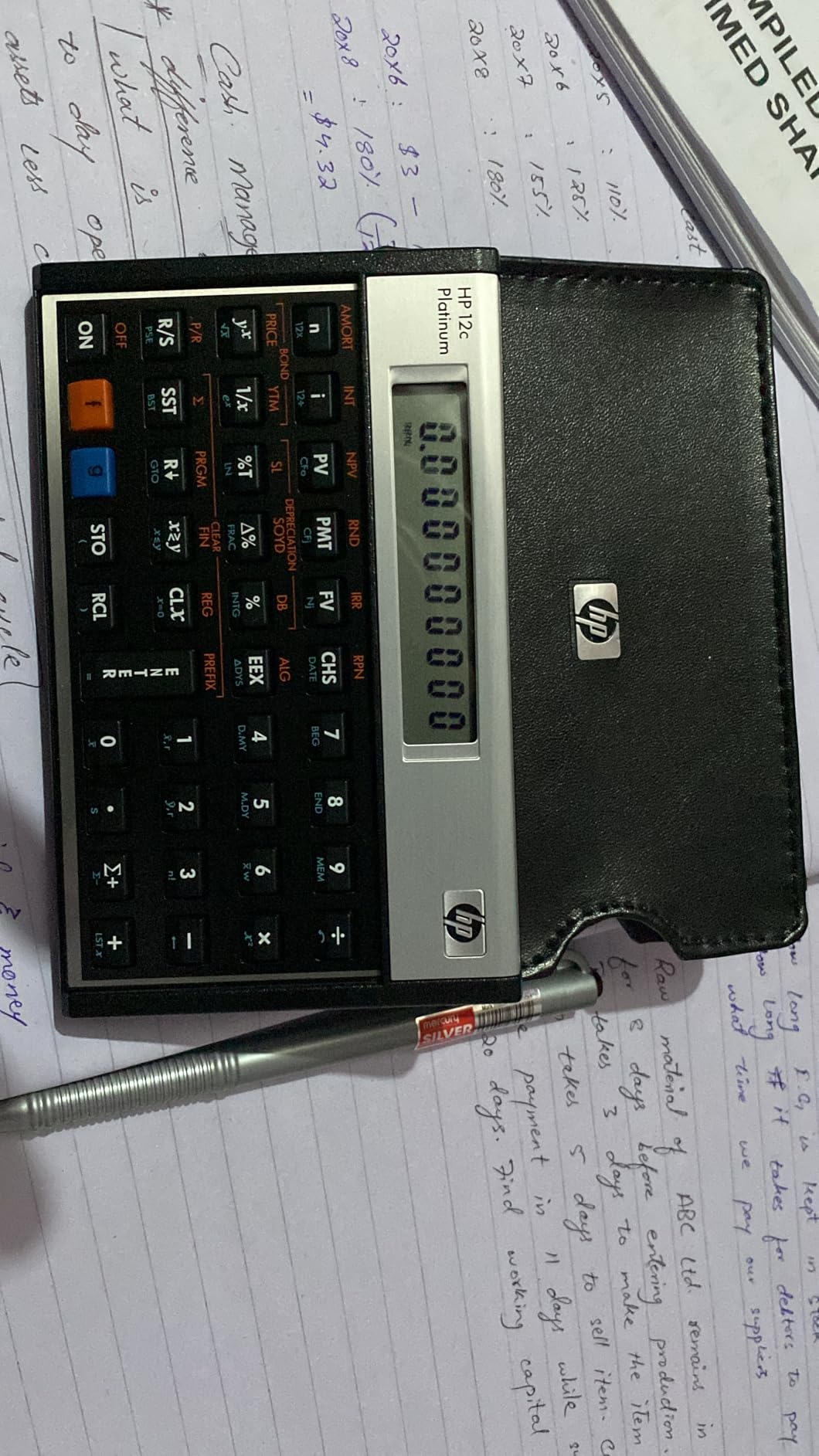
CFA, CFP, and GARP FRM approval make this a single calculator that covers most finance certifications. 84% of reviewers give five stars, and the included protective case, cleaning cloth, and batteries round out a complete package.
The longer shipping window and shorter 90-day warranty are minor knocks. If you plan ahead, those downsides do not affect everyday classroom use.
Versatility across exam types
CFA and CFP approval means finance students and financial planning students can share a single device across multiple certification paths. The 30 cash flows cover the upper range of NPV and IRR assignments.
Trade-offs
Lead time is longer than other 12C models, and the 90-day warranty is shorter than the standard 12C. Plan ahead when ordering.
9. HP 17bII+ Financial Calculator – Two-Line Pro
HP 17bII+ Financial Calculator – 250+ Professional Functions for Business, Finance & Accounting – RPN, Algebraic Entry, College Math Solver, 2-Line Display, 28KB Memory – Includes Case, Cleaning Cloth
250+ functions
Two-line LCD
HP Solve app
28KB memory
Pros
- 250+ professional functions
- Two-line LCD for prompts and equations
- RPN and algebraic entry
- HP Solve app for custom equations
- 2-year warranty
Cons
- Lower 4.3 rating compared to peers
- Smaller review base of 45 reviews
The HP 17bII+ brings a two-line display to the financial calculator category, and that single feature changes how approachable advanced calculations feel. The HP Solve app lets you define custom equations, which made my real estate finance models much easier to iterate on.
With 250+ professional functions, the 17bII+ covers forecasting, bond pricing, balloon payments, currency conversion, and statistics. The 28KB of memory is enough to store multiple custom worksheets, which beats the simpler models for power users.
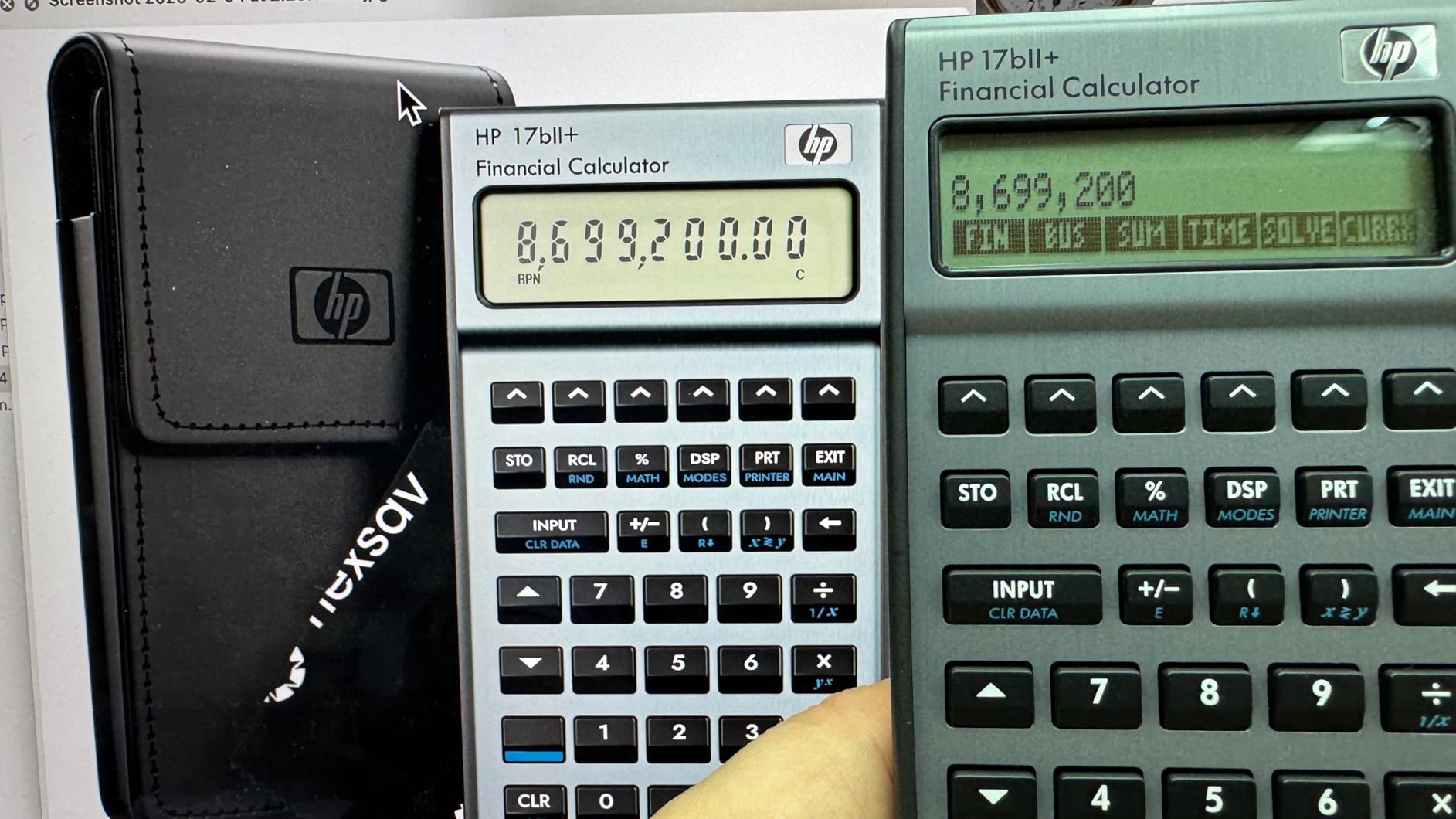
The 2-year warranty and included protective case make this a strong investment for students planning to take advanced MBA finance electives. The 6-inch body matches the size of other HP financial calculators.
The lower 4.3 rating and smaller review base suggest it is a newer release that has not yet built its reputation. For students who want a two-line display plus custom equation storage, this model is worth considering alongside the 12C Platinum.
Best use cases
MBA students taking advanced finance, real estate, or investment electives benefit from the two-line display and HP Solve app. Custom equation storage removes repetitive typing for weekly assignments.
Limitations to weigh
The lower rating and smaller review base mean less student feedback is available than for the BA II Plus line. Newer models can carry quirks that work themselves out over time.
10. Casio FC 200V2 Financial Calculator – Solid Alternative
Casio Casio FC 200V2 Financial Calculator
4-line display
Impact cover
Statistical functions
Two-line prompts
Pros
- Bright 4-line display
- Impact protection cover
- Comprehensive financial functions
- Statistical functions for finance and accounting
Cons
- Only 9 units left in stock
- Lower sales rank at #204
- 181
- Plastic enclosure
The Casio FC 200V2 is the model I recommend for business students who prefer an alternative brand or want a four-line display without paying the HP 17bII+ price. Casio’s keyboard layout is approachable for students already comfortable with scientific calculators.
The 4-line display shows every step of a calculation, which removes the scroll-and-check pattern that single-line models require. Statistical functions for regressions, sums, and standard deviation cover typical accounting assignments.
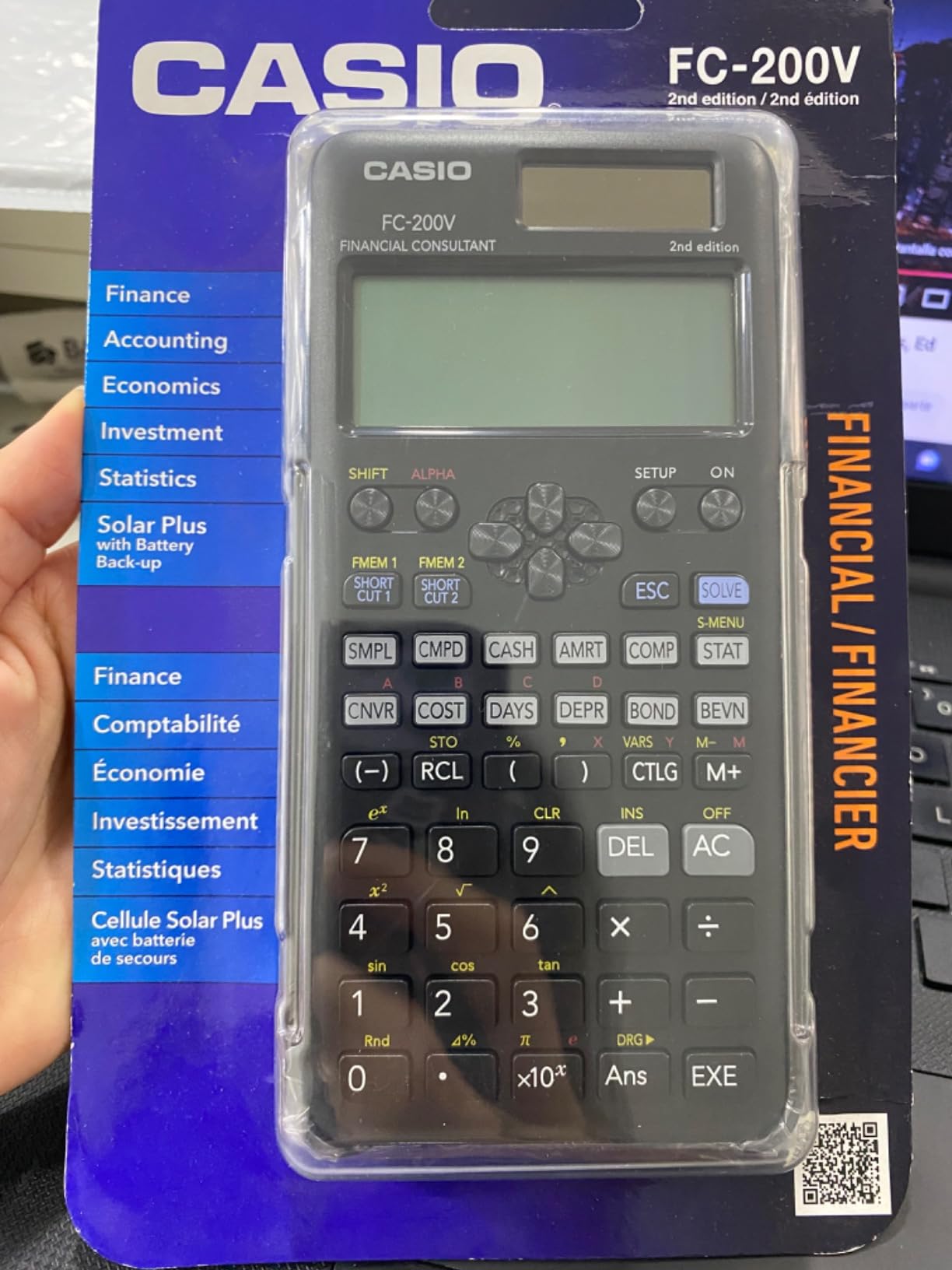
Investment, cash flow, depreciation, and amortization functions are all built in. The impact protection cover adds a layer of daily-use confidence that pays off across multiple semesters of backpack duty.
Stock runs low because this is a niche product compared to TI and HP. The plastic enclosure does not feel as premium as the HP metal-bodied models. Still, the 4.6 star rating and 82% five-star share put it in line with the best financial calculators for business students from any brand.
Why it earns its spot
The four-line display is genuinely useful for students new to financial calculators, and the impact cover is rare on competing models. Pricing under fifty dollars makes it accessible for budget-conscious learners.
Where it lags
Lower market share means fewer classmates to borrow notes from, and limited stock can delay purchase. Make sure to check availability before relying on this model for an upcoming semester.
How to Choose the Best Financial Calculator for Your Coursework
Choosing a financial calculator is less about the most expensive model and more about matching features to your courses and certifications. Our team lays out the factors that matter most for business students in 2026.
Confirm exam approval before you buy
The CFA Institute only allows specific models on test day, including the TI BA II Plus, BA II Plus Professional, HP 12C, HP 12C Platinum, HP 10bII, HP 10bII+, and HP 20b. The CFP Board, GARP FRM, and SOA exams publish similar lists. Buying an unapproved calculator means scrambling the night before an exam.
If you are taking the SAT or AP exams before college, the HP 10bII+ handles both college finance work and standardized testing. Students who already know they will sit for the CFA should start with a TI BA II Plus because the exam manual uses TI keystrokes in its examples.
Decide between RPN and algebraic entry
Algebraic entry matches how you learned math in high school: type the formula left to right, then press equals. RPN (Reverse Polish Notation) enters operands first and operators second, which feels strange at first but lets trained users solve chained calculations with fewer keystrokes.
The HP 10bII+ uses algebraic entry, the original HP 12C uses RPN, and the HP 12C Platinum lets you switch between the two. Business students who want a gentle learning curve should start with an algebraic model, then graduate to RPN if their internships ask for it.
Match features to your major and electives
Accounting majors typically only need TVM, amortization, and depreciation, which the BA II Plus covers. Finance majors who plan to sit for the CFA should look for models with cash flow capacity of at least 24 entries and the ability to compute Modified Duration.
MBA students taking real estate finance, fixed income, or derivatives will benefit from programmable keys and two-line displays. Pick a calculator that grows with your coursework rather than one you outgrow by junior year.
Plan a budget that matches your years in school
Most financial calculators land between thirty and seventy dollars, which is reasonable for a tool you use across four years. Spending extra on warranty and a metal body pays off if you plan to keep the device long term. Stay away from off-brand calculators that are not on the CFA or CFP approval lists.
iPad app alternatives for mobile learners
Students who prefer working on an iPad can install finance calculator apps that mirror the TI BA II Plus, HP 12C, and HP 10bII+ layouts. These are useful for practicing keystrokes during commutes but are not allowed on certification exams where physical calculators are required.
If you already own an iPad for note-taking in business school, pairing a study app with a basic approved physical calculator covers both laptop-based practice and live exam compliance.
FAQs
Which calculator is best for finance students?
The Texas Instruments BA II Plus is the best financial calculator for most finance students in 2026. It is CFA approved, handles TVM, NPV, IRR, and amortization, and retails under forty dollars with over 22,000 positive reviews.
What kind of calculator do I need for business school?
Most business school programs require a financial calculator approved for the CFA or CFP exam, meaning a TI BA II Plus, TI BA II Plus Professional, HP 12C, HP 12C Platinum, HP 10bII+, or HP 20b. Check your specific course syllabus, then pick a model that handles TVM, NPV, IRR, and amortization.
Can I use a TI-84 as a financial calculator?
The TI-84 Plus includes a finance application that handles TVM and amortization, so it works for basic business classes. However, the TI-84 is not on the CFA Institute approved list, so finance majors planning to sit for the CFA should switch to a BA II Plus or HP 12C before exam day.
Is the TI BA II Plus enough for the CFA exam?
Yes, the TI BA II Plus is one of the calculators approved by the CFA Institute. It handles TVM, NPV, IRR, cash flow analysis, and amortization, which covers most of the quantitative questions on Levels I through III.
Is the HP 12C still worth buying in 2026?
Yes, the HP 12C remains a strong choice for business students who want a calculator that follows them into a finance career. It is on the CFA and CFP approved lists, uses efficient RPN entry, and includes 120+ financial functions that mirror what professionals use on the job.
Final Verdict – Which Financial Calculator Should You Buy?
If you want the safest all-around pick for business school, the Texas Instruments BA II Plus remains the standard. It is CFA approved, packs the dedicated keys business students actually use, and keeps the price low enough that a lost backpack does not ruin the semester.
Students who want a bonus HP experience should grab the HP 10bII+ for algebraic entry or the HP 12C if a future internship asks for RPN. Whichever model you pick from this guide, the best financial calculators for business students in 2026 are the ones you actually use, so focus on matching features to your major and certifications rather than chasing the highest review count.