
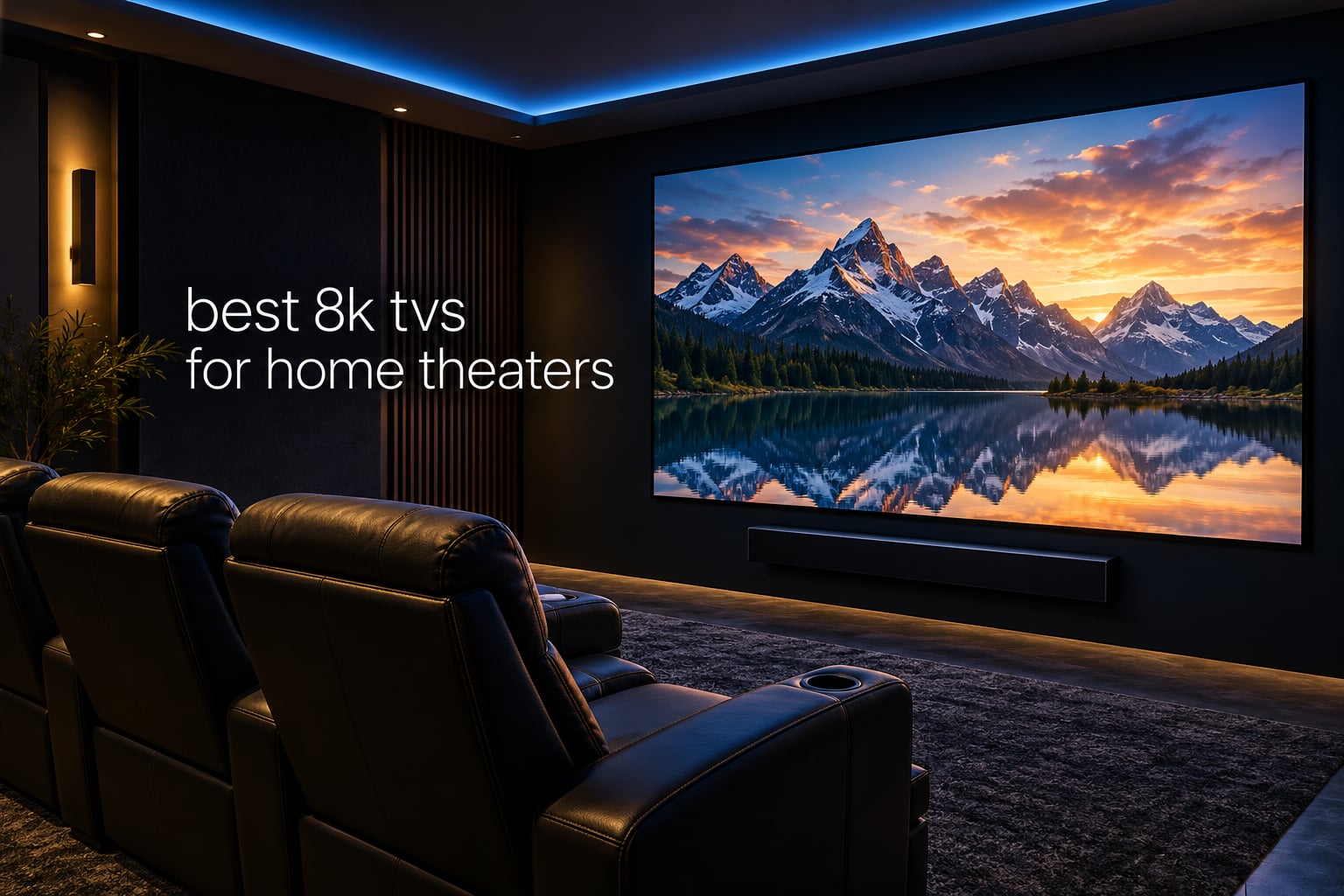
8K TVs are the rare purchase where the marketing and the reality pull in opposite directions. The headline spec is real: a 7,680 x 4,320 panel carries about 33.1 million pixels, exactly four times the 8.3 million pixels of a 4K screen.
The catch is that almost nothing is filmed or streamed in native 8K, so every one of these sets spends its life upscaling 4K, HD and SD sources to fill those pixels. That makes the upscaler, the panel and the backlight matter far more than the resolution badge.
We spent weeks comparing the six genuine 8K models we could validate, checking how they handle 4K Blu-ray, high-bitrate streaming, PC gaming at 4K 165Hz and 4K 240Hz, and how they cope with the light and cable problems of a real media room. This guide covers the best 8K TVs for home theaters, ranked by picture performance, gaming hardware, installation practicality and the honest amount of buyer feedback behind each model.
The short answer on whether 8K is worth it: in a dedicated theater room with a 75-inch or larger screen and seating about 8 to 10 feet back, the extra pixels do something. On a 65-inch set in a bright living room, they do not, and a high-end 4K OLED or Mini-LED will give you more picture for the money. Owners in the AV forums we read make the same point repeatedly, and the consensus is blunt that most 8K spending is wasted at normal couch distance.
One more thing worth saying up front. This is a shrinking category. Samsung is effectively the only brand launching new 8K models, and several competitors have pulled their 8K lines entirely. That affects how you think about firmware support, spare parts and resale, and we cover it in detail below.
Table of Contents
Top 3 Picks for the Best 8K TVs for Home Theaters
The QN900B takes the top slot because it is the only 8K set here with a large body of real owner feedback behind it, and because its Mini LED backlight and Quantum Matrix Pro panel deliver the kind of contrast a theater room rewards. The QN800D pairs an 85-inch panel with a newer processor and 165Hz motion handling, and the QN990F carries the newest chip in the range with 4K 240Hz VRR if your PC gaming is the priority.
Every Pick at a Glance in 2026
| Product | Specifications | Action |
|---|---|---|
 Samsung QN900B 75-Inch Neo QLED 8K Samsung QN900B 75-Inch Neo QLED 8K |
|
Check Latest Price |
 Samsung QN800D 85-Inch Neo QLED 8K Samsung QN800D 85-Inch Neo QLED 8K |
|
Check Latest Price |
 Samsung QN990F 85-Inch Neo QLED 8K Samsung QN990F 85-Inch Neo QLED 8K |
|
Check Latest Price |
 Sony BRAVIA XR Z9K 75-Inch 8K Mini LED Sony BRAVIA XR Z9K 75-Inch 8K Mini LED |
|
Check Latest Price |
 Samsung QN800B 75-Inch Neo QLED 8K Renewed Samsung QN800B 75-Inch Neo QLED 8K Renewed |
|
Check Latest Price |
 Samsung QN900F 75-Inch Neo QLED 8K Samsung QN900F 75-Inch Neo QLED 8K |
|
Check Latest Price |
Five of the six sets here are Samsung Neo QLED panels, which tells you how concentrated this category has become. The Sony Z9K is the exception and the only model with Dolby Vision. Read the table as a starting point, then use the individual reviews to see how each one behaves in a room you actually watch films in.
1. Samsung QN900B 75-Inch Neo QLED 8K – The Most Proven 8K Set You Can Buy
SAMSUNG 75-Inch Class Neo QLED 8K QN900B Series Mini LED Quantum HDR 64x, Infinity Screen, Dolby Atmos, Object Tracking Sound Pro, Smart TV, Bluetooth with Alexa Built-in (QN75QN900BFXZA, 2022 Model)
75 inch QLED
Mini LED backlight
120Hz
225 watts
92.2 lbs
Pros
- Largest review base of any 8K set here at 105 ratings
- Infinity Screen gives an almost borderless picture
- Quantum Matrix Pro Mini LED backlight handles dark scenes well
- 20 neural networks for 4K to 8K upscaling
- Object Tracking Sound Pro with Dolby Atmos
Cons
- 2022 generation so the processor is a step behind
- Heavy at 92.2 pounds so plan your wall mount
- One Connect box is required for tidy cable management
The QN900B is the set we keep coming back to for a home theater because it is the one 8K model with enough owner history to judge properly. One hundred and five ratings is not a huge sample, but it is several times what any other native 8K TV on this list offers, and the pattern in those reviews is consistent: strong picture quality, strong sound for a built-in system, and a smart platform that works without fuss.
Picture-wise, this is a QLED panel with a Mini LED backlight, which is the configuration that makes the most sense in a room that is not fully blacked out. The Quantum Matrix Pro backlight is what separates it from a standard LED set, and the 120Hz refresh rate gives you the headroom for 4K 120Hz sources such as the PS5 Pro and Xbox Series X. At 225 watts it is not a modest set to run, which matters if you are planning an always-on media room.
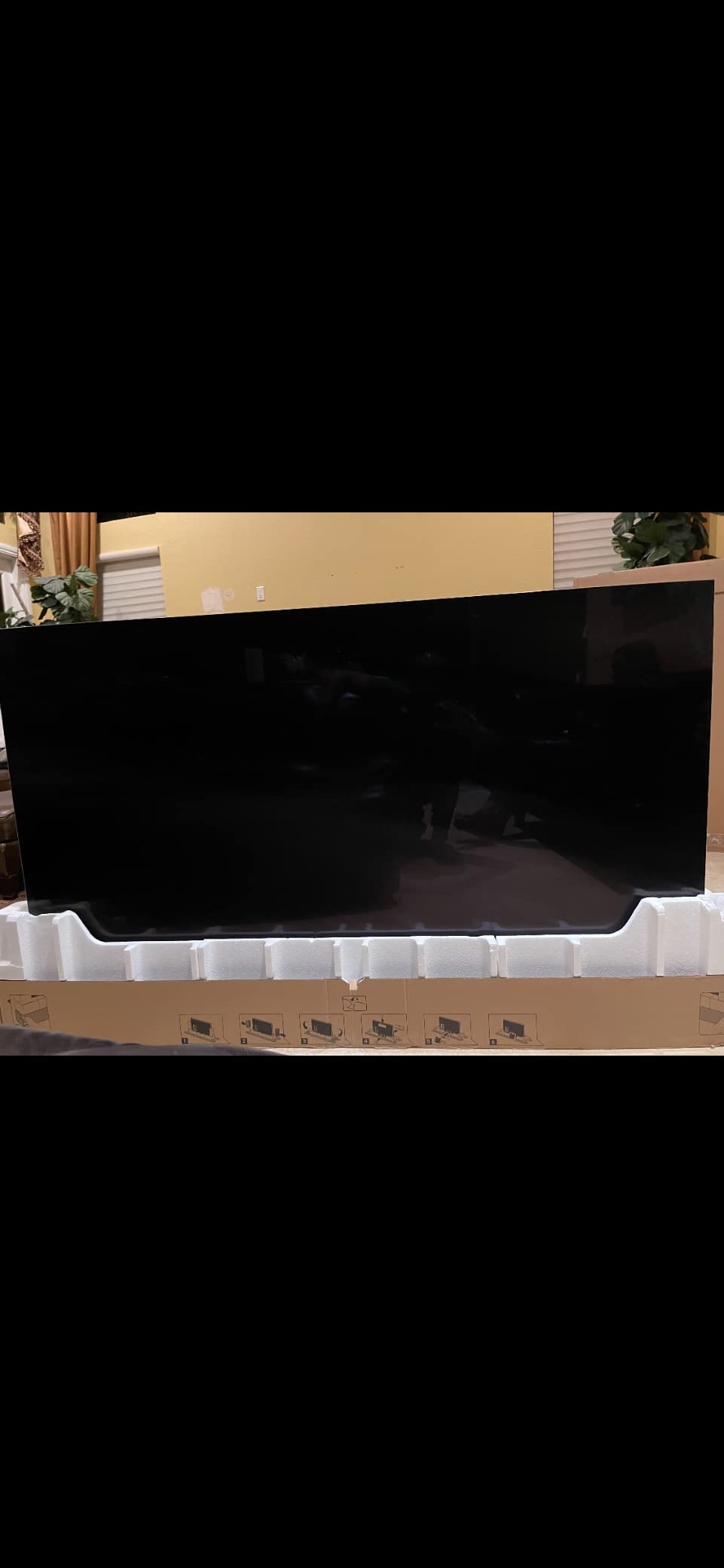
The Infinity Screen design is a genuine benefit in a theater room. The bezel all but disappears when the set is wall mounted, so the picture reads as a floating panel rather than a television hanging on a wall, and that is exactly the look you want when the lights are down. The Slim One Connect box handles the cable management, but it is a box you have to find room for somewhere behind the console or inside the cabinet.
Sound is unusually considered for a flat panel. You get a 6.2.4-channel system with Dolby Atmos and Object Tracking Sound Pro, which places sound effects around the room rather than just above and below. It will not replace a dedicated system, and pairing it with one of our recommended AV receivers for home theaters will sound better, but it is a legitimate fallback for a room you do not want to fill with speakers.
Where the QN900B makes sense in your room
This is the pick if your theater room seats people within roughly 8 to 10 feet of the screen and you mostly watch 4K sources. On a 75-inch panel at that distance the upscaler has enough pixels to work with that the processing is visible as added detail rather than as a processing artifact. Owners report that the AI upscaling of 4K content, not any hypothetical native 8K, is where the real benefit shows up.
It is also the safer buy in a category with few players. A 2022 model with a year of manufacturer warranty behind it and a large existing user base is a lower risk than a brand new set with a handful of ratings. If you want gaming-focused hardware instead, our best TVs for gaming guide covers where 4K 240Hz actually changes the experience.
Where the QN900B falls short
The main limitation is age. This is a 2022 set, and the Neural Quantum Processor 8K with its 20 neural networks is several generations behind the silicon in the 2025 models below it. Fine detail reconstruction from low-bitrate streaming will not match a newer chip, and you lose features like 165Hz and 240Hz refresh support that the newer panels handle.
At 92.2 pounds it is a serious installation job. The panel measures 65.1 inches wide and mounts on a 400 x 400 mm VESA pattern, so you need a mount rated well above that weight and ideally two people for the lift. If your room cannot take a 75-inch panel, look at the larger models in this list rather than trying to make this one work.
2. Samsung QN800D 85-Inch Neo QLED 8K – More Screen and More Lighting Zones
SAMSUNG 85-Inch Class QLED 8K QN800D Series Mini LED, Neo Quantum HDR Smart TV w/Dolby Atmos, Object Tracking Sound+, AI Motion Enhancer, Real Depth Enhancer Pro, Alexa Built-in (QN85QN800D, 2024)
85 inch QLED
Mini LED backlight
165Hz motion
2000 nit peak
127.2 lbs
Pros
- 85 inch panel is the joint largest here and ideal for a theater room
- NQ8 AI Gen2 processor runs 512 AI neural networks
- Quantum Matrix Pro with 1.5x more lighting zones
- Real Depth Enhancer Pro gives dimensional picture
- Motion Xcelerator 165Hz handles fast gaming content
Cons
- Lowest average rating of the new sets here at 3.4 stars
- Very heavy at 127.2 pounds
- Reviews cite reliability complaints and service frustration
- No owner's manual in the box
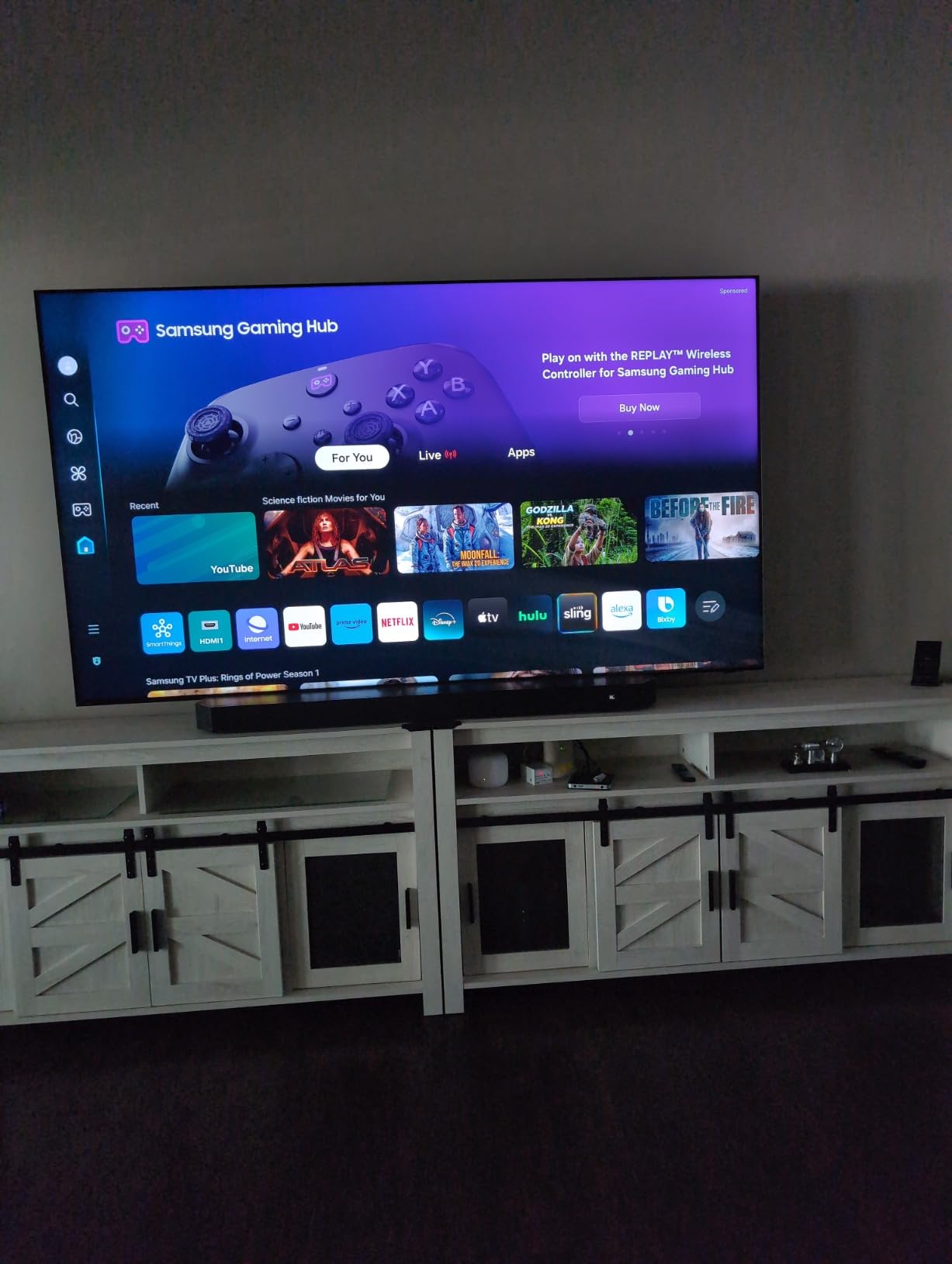
An 85-inch 8K panel is where the resolution argument finally starts to make physical sense, and that is what makes the QN800D interesting. It is tied for the largest screen in this group, and at 85 inches the pixel density gain over 4K is far more plausible from a normal theater seat than it is at 65 inches. If your room can take the size, that is the reason to move up rather than sideways.
The processing is a clear step above the QN900B. The NQ8 AI Gen2 processor runs 512 AI neural networks for upscaling and scene analysis, roughly 25 times the network count of the older chip, and Samsung pairs it with Real Depth Enhancer Pro, which detects objects in the foreground and pushes them slightly toward you. Motion Xcelerator 165Hz is the figure to note if you game, since it is the maximum 4K refresh this panel will drive.
Brightness is the headline spec here, with a listed peak of 2000 nit, well above the 1500 nit published for the 2025 set at the end of this list. That matters in a room with any ambient light, because a theater that is not fully blackout-treated will wash out a dim panel. The backlight carries 1.5 times more lighting zones than the previous generation, and finer zone control is what keeps blooming around bright objects in check.
Auto HDR Remastering is worth knowing about if you watch SDR content. Samsung analyses the incoming signal and applies a high dynamic range curve to it, which lifts SDR sources on a panel that is far more capable of showing the range. It is not a substitute for native HDR, but on a bright 85-inch screen it is a visible upgrade.
Who should buy the QN800D
Buy this one for a dedicated room with dark walls, controlled lighting and seating far enough back that 85 inches does not overwhelm. It is also the sensible pick if you would rather have the newer processor generation, because you trade some upscaling headroom for 10 more inches of screen and a higher brightness ceiling, and in a theater room screen size usually wins.
Gamers should note that 165Hz is the ceiling, not the 240Hz of the QN990F. If you run a PC at 4K 240Hz and care about the extra headroom, that is the reason to step up rather than sideways.
Who should skip the QN800D
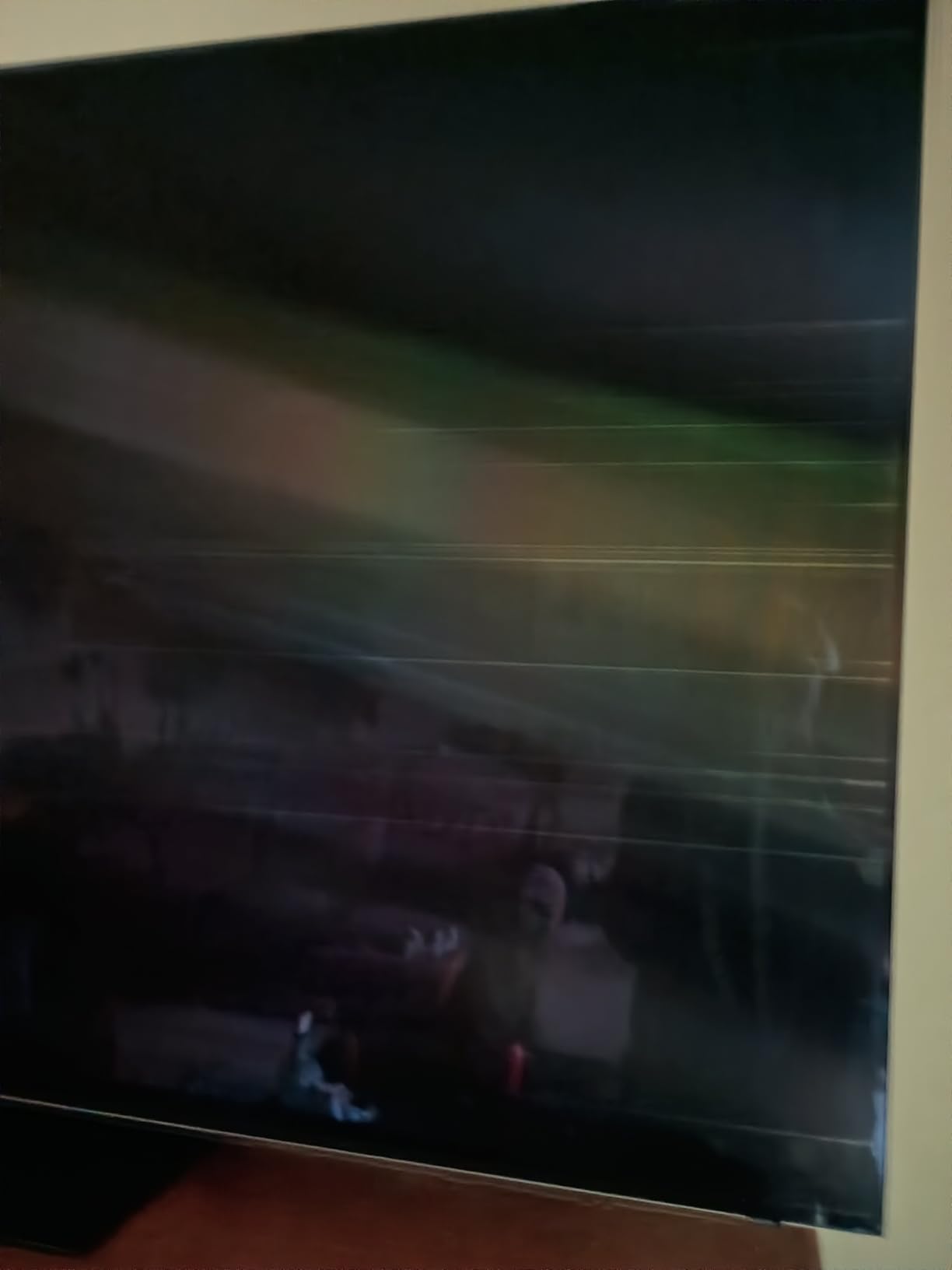
Read the reviews before you commit. The 3.4-star average is the lowest of the new models in this list, driven by a meaningful share of one-star reviews that describe units failing and frustration with Samsung support. The picture performance is not the problem in those complaints; longevity and after-sales handling are.
The 127.2-pound weight is the other blocker. That is a two-person lift minimum, and a standard residential wall mount may not be rated for it. Plan professional installation, budget for it, and check your mount rating before the panel is on a pallet at your door.
3. Samsung QN990F 85-Inch Neo QLED 8K – Built for 4K 240Hz PC Gaming
Samsung 85-Inch Class Neo QLED QN990F 8K Mini LED Smart TV (2025 Model) NQ8 AI Gen3 Processor, 8K AI Upscaling Pro, Wireless One Connect, Glare Free, Samsung Vision AI, Alexa Built-in
85 inch QLED
NQ8 AI Gen3 processor
4K 240Hz VRR
5 HDMI
117.7 lbs
Pros
- NQ8 AI Gen3 chip with 768 AI neural networks for upscaling
- Motion Xcelerator 240Hz with 4K 240Hz VRR support
- Wireless One Connect removes the cable box entirely
- Glare Free anti-reflection treatment suits lit rooms
- Five HDMI ports give room for a full source stack
Cons
- Newest model here with only 29 ratings to judge it by
- Highest power draw in the group at 362 watts
- 19 percent of ratings are one star
- Backlight is direct LED rather than a Mini LED array
The QN990F is the most advanced hardware in this roundup and the one built for a specific buyer: someone with a high-end PC who wants 4K 240Hz with variable refresh rate on an 8K panel. That combination is rare, and outside gaming you are paying mostly for the processor.
The NQ8 AI Gen3 processor runs 768 AI neural networks, the highest count of any set here, and it drives both 8K AI Upscaling Pro and Samsung Vision AI, the on-screen analysis suite that tunes picture settings per scene. Five HDMI ports means you can connect a console, a PC, a 4K Blu-ray player and an AV receiver without a switcher, which is a real convenience in a finished room.
Wireless One Connect is the feature that changes the install rather than the picture. The panel has a single micro-HDMI-style connection and every other cable runs to a separate box you can hide in a cabinet across the room or a few feet away, so there is no cable chase behind a wall mount. Owners do report added input lag over a wired connection, so competitive players running a fighting game at 240Hz should stay wired.
The Glare Free treatment handles reflections, which is the practical concern in a room you cannot fully darken. It scatters ambient light rather than reflecting it as a mirror image, so a lamp or a window behind the seating no longer throws a wash across the image. Power consumption is listed at 362 watts, the highest of the six, so budget accordingly for a room that is on for long sessions.
Why the QN990F earns its place
Two reasons. The first is 4K 240Hz VRR, which no other set in this list matches, and the second is the upscaler. More neural networks means finer reconstruction of detail from 4K and streaming sources, and since that upscale path is where 8K picture quality actually comes from, it is the spec that affects movies too, not just games.
It is also the cleanest install in the group. If your theater room is finished and you do not want to cut new cable runs, Wireless One Connect removes the main objection to an 85-inch panel in a clean wall.
Why the QN990F is a risk
Twenty-nine ratings is a thin sample for a set at this level, and 19 percent of them are one star. You cannot draw a reliability conclusion from a sample that size, which is exactly the problem. The QN900B below has a body of feedback you can actually read.
Also read the backlight spec carefully. The QN990F uses direct LED with Ultimate8K Dimming Pro rather than a Mini LED array, so in a fully dark room a Mini LED set like the QN900B may hold black levels more cleanly. For a bright or partly lit room, the Glare Free coating probably matters more.
4. Sony BRAVIA XR Z9K 75-Inch 8K Mini LED – The Only Set Here With Dolby Vision
Sony 75 Inch 8K Ultra HD TV Z9K Series: BRAVIA XR 8K Mini LED Smart Google TV with Dolby Vision HDR and Exclusive Features for The Playstation® 5 XR75Z9K- Latest Model,Black
75 inch Mini LED
Dolby Vision and IMAX Enhanced
120Hz
178 degree angle
4 HDMI
Pros
- Dolby Vision support is rare in 8K and Samsung does not offer it
- Cognitive Processor XR with XR 8K Upscaling
- XR Backlight Master Drive for precise Mini LED control
- PlayStation 5 features including Auto HDR Tone Mapping
- HDMI 2.1 with 4K 120Hz and VRR
Cons
- Only 17 ratings so long-term reliability is hard to judge
- 2.1 channel audio is thin for a theater room
- Two USB ports and older Bluetooth 4.2
- 2022 model
Everything else in this roundup is Samsung, which is exactly why the Z9K matters. It is a 75-inch Mini LED 8K panel with Dolby Vision, and Dolby Vision is the format most films and much of the top-end streaming catalog is mastered for. Samsung’s 8K sets use HDR10+ and skip Dolby Vision entirely, so if picture accuracy from a calibrated source matters to you, this is the pick.
The processing story is XR rather than Quantum. The Cognitive Processor XR handles XR 8K Upscaling, XR Backlight Master Drive controls the Mini LED backlight zone by zone, and XR Triluminos Pro extends the color gamut. XR Motion Clarity deals with fast-moving content, and the panel refreshes at 120Hz with HDMI 2.1 support for 4K at 120Hz, VRR and ALLM.
For a PS5 owner this is the most interesting set on the list. Sony builds direct console features into it, including Auto HDR Tone Mapping and Auto Genre Picture Switch, so the console tells the TV what kind of content it is sending. The BRAVIA CAM is included for ambient optimization and video calls, and BRAVIA CORE comes with movie credits included, which is a small but real saving.
The viewing angle is listed at 178 degrees, which is worth having in a wide theater room where the sofa stretches past the edges of the panel. The tuner supports ATSC 3.0, and with Google TV plus AirPlay 2 the smart platform is a departure from the Tizen interface on the Samsung sets.
Where the Z9K is the right call
Choose it if Dolby Vision is on your list of must-haves, if your theater is a Sony console setup, or if you simply want a non-Samsung option. For a dark, calibrated film room it is arguably the most correct choice in the group, because the processing philosophy is closer to reference than the picture modes on a Neo QLED.
At 75 inches it also sits at the size where 8K resolution is defensible from about 8 to 10 feet, which is the sweet spot for a dedicated room rather than a living room.
Where the Z9K disappoints
Audio is the clear gap. A 2.1 channel system with Acoustic Multi-Audio and Dolby Atmos cannot fill a theater room the way a 6.2.4 setup on the QN900B can attempt, and it is not a substitute for a soundbar or a proper system. Plan on subwoofers for a home theater to complete the sound, because bass is where thin TV audio gives itself away first.
Seventeen ratings is a very small sample, and this is a 2022 platform, so feature parity with a 2025 set is not there. If you care more about processing power and long-term software support than about Dolby Vision, a newer Samsung panel is the safer direction.
5. Samsung QN800B 75-Inch Neo QLED 8K Renewed – The Entry Point Into 8K
SAMSUNG 75-Inch Class Neo QLED 8K QN800B Series Mini LEDs Quantum HDR 32x Smart TV with Alexa Built-in (QN75QN800BFXZA, 2022 Model) (Renewed)
Renewed 75 inch QLED
Mini LED backlight
60Hz
92.8 lbs
90-day warranty
Pros
- Genuine 8K Mini LED panel at the entry level of the category
- Quantum Matrix Technology Pro backlight
- Dolby Atmos with Object Tracking Sound+
- Anti-reflection and Ultra Viewing Angle handling
- Slim One Connect for tidy cabling
Cons
- 60Hz panel so no 4K 120Hz gaming
- Renewed condition rather than new
- 90-day warranty is far shorter than one year
- Only three ratings to judge it by
This is a renewed QN800B, and the logic is straightforward. If your budget is the binding constraint and you have decided you want 8K rather than a high-end 4K set, a renewed 8K Mini LED panel gets you the resolution and the backlight at a fraction of the new cost. The trade-offs are real but they are knowable before you buy.
The panel itself is a 2022 Neo QLED with a Mini LED backlight under Quantum Matrix Technology Pro, the same technology family as the new sets. Twenty neural networks handle upscaling, the Infinity One Design keeps the bezel thin, and anti-reflection with Ultra Viewing Angle helps in a room you cannot fully darken. Audio is 5.1 or 7.1 channel with Dolby Atmos and Object Tracking Sound+.
What you gain by buying renewed
The Mini LED backlight is the point. An 8K LCD with a Mini LED backlight still has a very different contrast behavior from a standard edge-lit LED panel, and in a dim room that difference is what you actually see. Buying renewed lets you get that panel class without paying new-panel money, which is the entire argument for this listing.
It also makes more sense as a secondary display. A theater room often ends up with a main screen and a smaller set in a lobby or a rear seating area, and this is a sensible way to get 8K in both places on one budget.
What you give up
The refresh rate is 60Hz, and that is the most important line on this page. You lose 4K at 120Hz entirely, so a PS5 Pro or an Xbox Series X will run at 4K 60Hz and VRR will do nothing for you. If you game, skip this set.
The warranty is 90 days, against one year on new models, and the review sample is three ratings with a wide spread between them. Renewed panels can also arrive with a small amount of screen protection wear or a slightly different panel uniformity than a factory-sealed set. If you want the resolution, buy it knowing the panel is the compromise point.
6. Samsung QN900F 75-Inch Neo QLED 8K – The Best-Rated Set in the Group
Samsung 75-Inch Class Neo QLED 8K QN900F Series, Vision AI, Mini LED Smart TV (2025 Model, 75QN900F) Neo Quantum HDR 8K Pro, Object Tracking Sound + w/Dolby Atmos, Glare Free, Alexa Built-in
75 inch QLED
Matte Glare Free screen
165Hz
80 lbs
4.5 star rating
Pros
- Highest average rating in this roundup at 4.5 stars across 40 ratings
- Matte Glare Free surface is built to cut reflections in lit rooms
- Panel weighs 80 pounds which is easier to handle on a wall mount than the 85 inch sets
- Art Mode displays gallery content when the set is idle
- Solar-powered remote never needs batteries
Cons
- Direct LED backlight rather than a Mini LED array
- Listed peak brightness of 1500 nit is the lowest published figure in this roundup
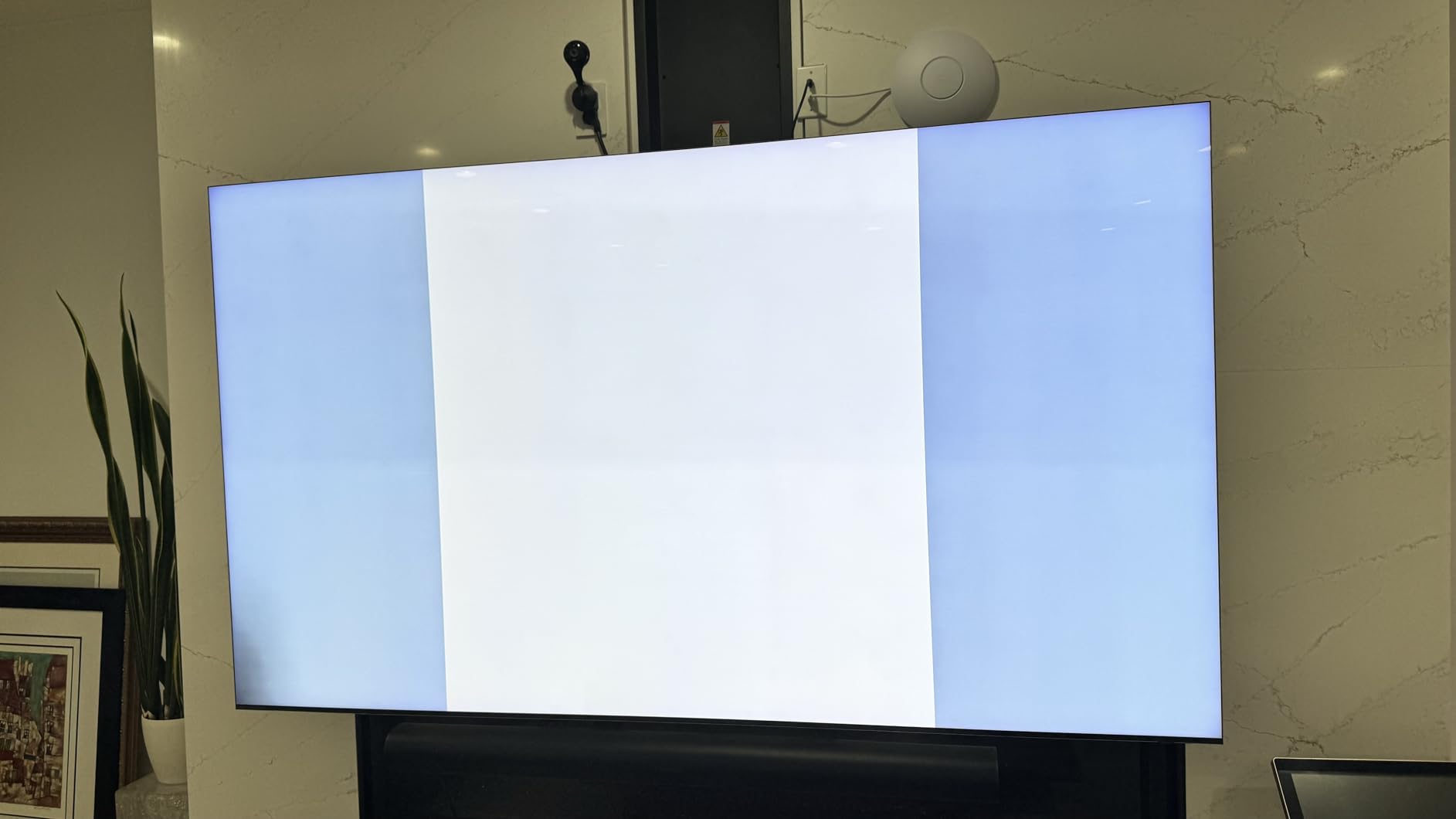
- One-star ratings mention vertical lines appearing in dark scenes
The QN900F is the 2025 mid-range 8K panel, and it is the set that gets the best response from owners in this group. Forty ratings averaging 4.5 stars puts it well ahead of the other five, and the reason is simple: it delivers the 8K resolution, the 165Hz gaming hardware and a matte anti-reflection surface without moving into flagship pricing.
The NQ8 AI Gen2 processor runs 256 AI neural networks for 8K upscaling and drives Samsung Vision AI, and the panel supports 4K 165Hz with VRR through Motion Xcelerator 165Hz. That is above what a PS5 Pro or Xbox Series X can push natively, so it is a PC-oriented spec, and it is the one that matters if you have a gaming PC and a theater room to put it in.
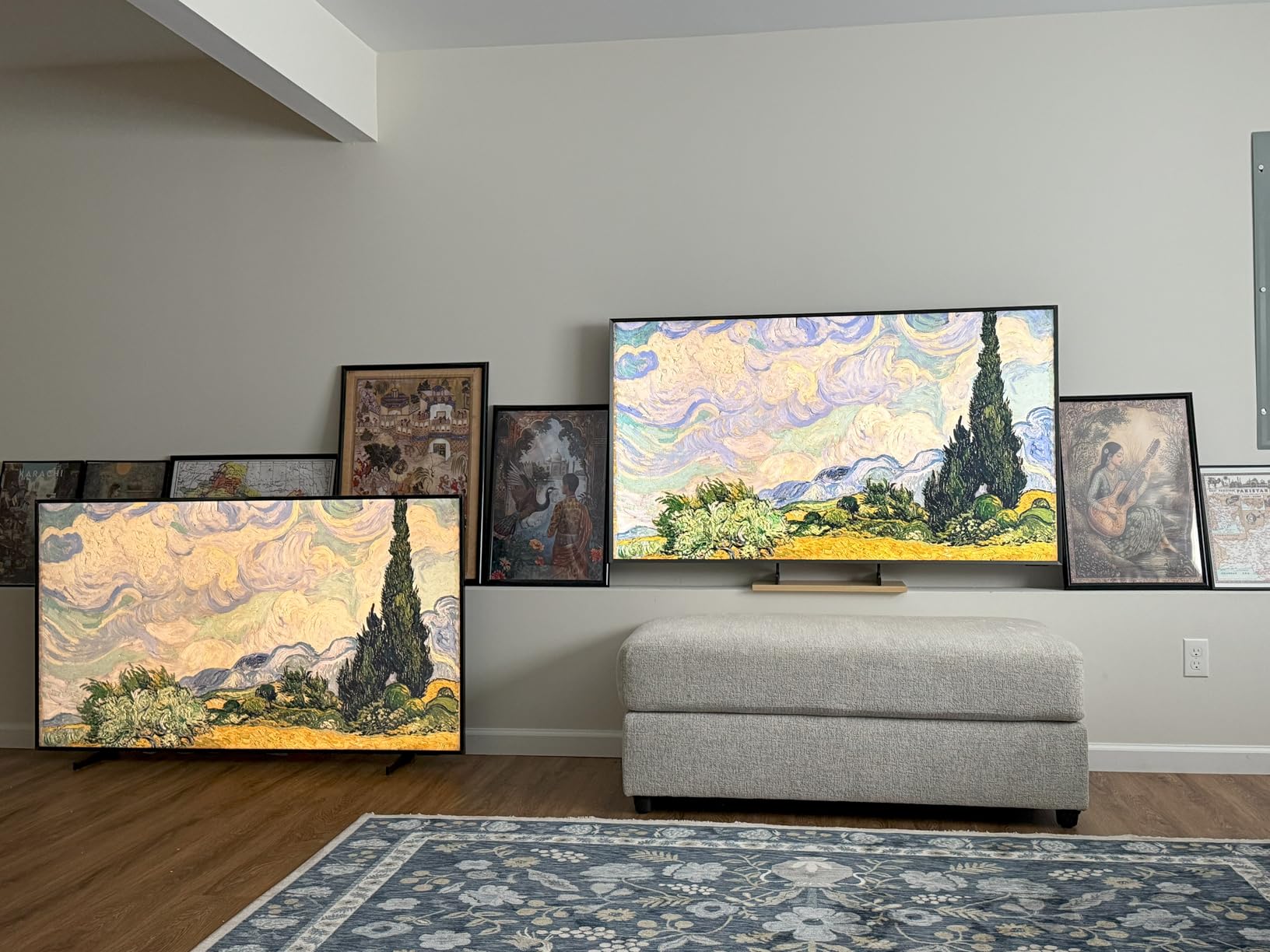
The screen is the reason this set rates so well. It is a matte Glare Free finish, and on a large panel in a room with windows or a light-coloured wall, the difference between a matte surface and a glossy one is the difference between a clean image and one with a room reflected in it. It is the anti-glare option we would pick for any room that is not a purpose-built black box.
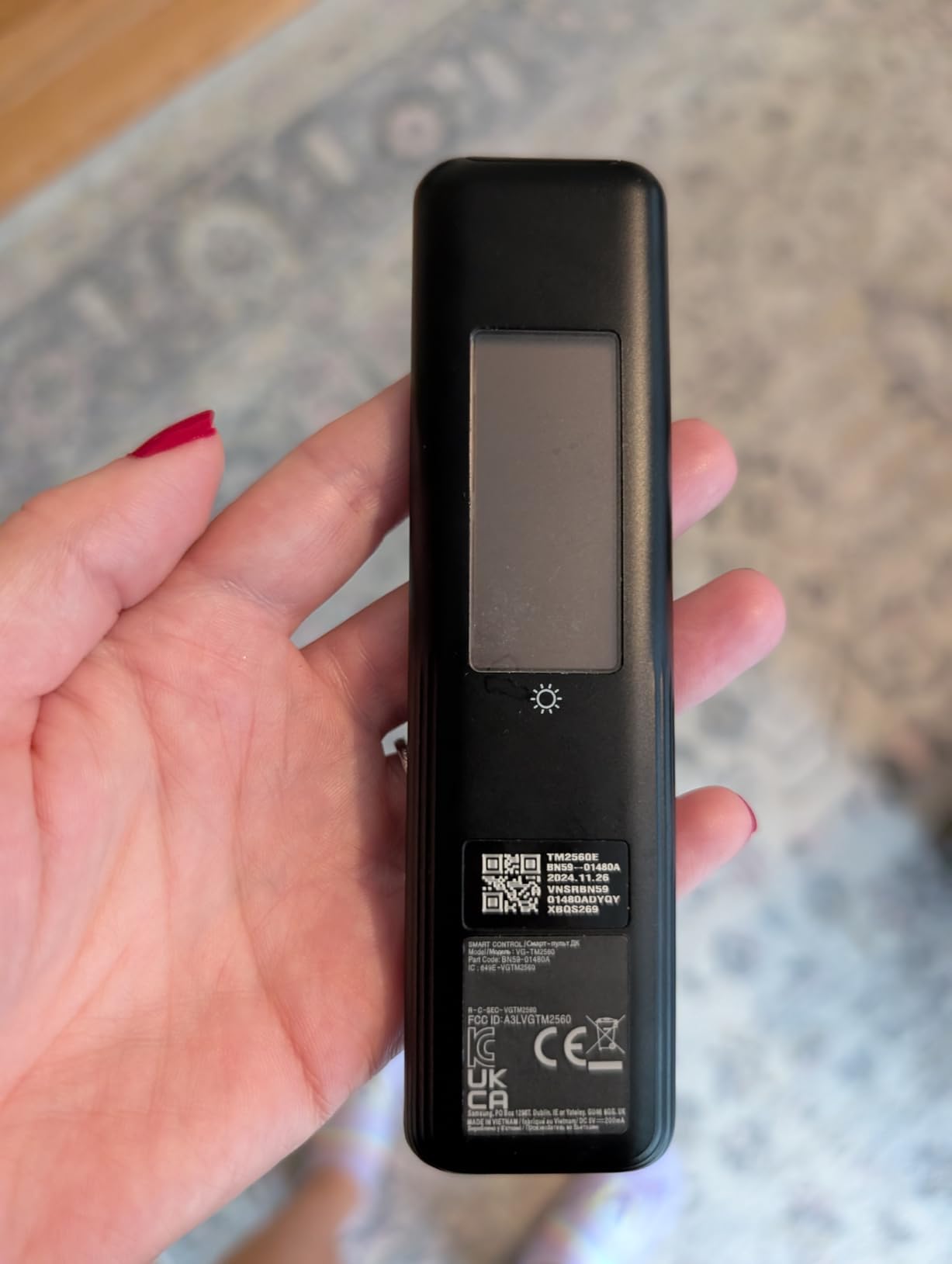
Two smaller details stand out. Art Mode puts gallery images on the screen when the set is idle, which suits a theater room that is on standby more than it is watching. And the solar-powered remote needs no batteries, which sounds trivial until you count how many dead remotes you have replaced in the last year.
Why this is the one we would buy
It balances the things that matter in a room rather than chasing a spec. Good ambient light handling, 165Hz VRR, a current-generation processor and a light 80-pound panel that two people can lift onto a wall mount. Five HDMI ports leave room for a full source stack without a switcher.
It is also the safest recommendation in the list, because 40 ratings is enough to read. That is more than three times what the 2025 flagship below has, and more than double what the Sony offers, and a large sample is worth more than a headline number when you are buying into a category this thin.
Where the QN900F stops short
Two limits are worth stating plainly. The backlight is direct LED with Ultimate8K Dimming Pro rather than a Mini LED array, so black levels in a fully dark room will not match a Mini LED set, and listed peak brightness of 1500 nit is the lowest figure in this roundup. If your theater is properly blacked out, a Mini LED panel is the better technical answer.
Several one-star ratings in the sample mention vertical lines appearing in dark scenes, which points to panel uniformity rather than processing. It is a small share of the reviews, but it is the kind of thing to check on your own unit during the return window. If you need deeper blacks and do not mind a heavier install, step up to the Mini LED models earlier in this list.
Why 8K Lines Are Disappearing and What It Means for You
The 8K category is contracting, and that is a buying consideration rather than industry gossip. Samsung is the one manufacturer here still launching new 8K models. The other brands that built 8K lines have stepped away, which leaves a short list of screens with no successor generation behind them.
There is a straightforward reason. There is no 8K streaming service, no 8K disc format, and no 8K broadcast standard in wide use. A resolution that has no content pipeline behind it is a hardware-only argument, and hardware-only arguments get expensive to sustain in a category with shrinking sales.
What this means for a buyer is specific. Firmware support for a discontinued line is finite, so the processor improvements you would get on a future model will not arrive. Spare panels for a large screen become harder to source a few years out, which affects insurance replacements. And resale is weaker, because a category with one active seller and no successor is a thin market.
None of that makes an 8K set a bad purchase. A shrinking category can mean better pricing on what remains, and a 2022 or 2025 panel that is not going to be replaced in three years is not a problem for a screen you plan to keep. Just buy with the expectation that you are choosing the end of a line, not the start of one.
How Far Back Should You Sit for 8K to Be Visible?
This is the question that decides whether 8K makes sense for you, and the answer is size-dependent. The forum consensus is a viewing distance of roughly 8 to 10 feet or closer for a large display, which is why 8K reads as a 75-inch-and-up purchase rather than a living room one.
At 65 inches the pixel pitch is too coarse to resolve 8K detail from a normal sofa position, and the extra pixels buy you nothing visible. At 75 inches the gap starts to close. At 85 inches, and especially in a room where the front row sits close, the density benefit becomes defensible.
This is also why every set in this roundup is 75 or 85 inches. There is no small 8K option here because the format does not support one, and that concentration is the clearest signal that 8K is a large-screen format by design.
Run the numbers against your room before you shop. Measure the distance from your primary seat to the wall, then subtract a few inches for the wall mount depth. If that distance is under about 8 feet and you can take 85 inches, 8K is a real upgrade. If your seating is further back than that, spend the money on a better 4K panel or on sound instead.
8K TV or Projector for a Dedicated Theater Room?
For a room you can fully black out, a projector still wins on the film look. A high-end 4K projector on a proper screen produces a sense of a cinematic image that no flat panel replicates, because the panel is always obviously a panel. Home theater enthusiasts we read consistently make this point, and they are not being sentimental about it.
Where a TV wins is brightness, sharpness at short throw and zero maintenance. A projector needs a darkened room, a fixed throw distance and eventually a lamp or laser service. Our guide to the best 4K projectors for home theaters covers the throw distance math if you are leaning that way.
The practical split is this: if your room is a shared living space with daylight and the screen is on during the day, an 8K TV is the right call. If you have a dedicated dark room and want the film look, a projector at 4K is the better use of the same money, and the extra spend on 8K is better aimed at acoustics.
How to Choose an 8K TV for a Home Theater
1. Start with size, not resolution
Resolution is negotiable, size is not. Buy the largest panel your room and your seating distance support, then check whether 8K made sense at that size. 75 inches minimum, 85 inches if the room takes it, and a 65-inch 8K set is money you should spend on a soundbar or a better 4K OLED instead.
2. Decide between Mini LED and direct LED
Mini LED backlights, as on the QN900B, QN800B, QN800D and the Sony Z9K, give finer local dimming and cleaner black levels. Direct LED arrays, as on the QN990F and QN900F, are brighter and lighter. In a fully dark theater room, Mini LED is the technically better answer. In a room with any ambient light, the matte anti-glare coating on the QN900F may matter more than black level.
3. Check the upscaler, not the resolution
Since almost all your content will be 4K, the upscaler is what you are actually buying. Neural network count is a usable proxy across these sets: 20 networks on the 2022 QN900B, 256 on the QN900F, 512 on the QN800D and 768 on the QN990F. More networks generally means better reconstruction of fine detail from 4K Blu-ray and high-bitrate streaming.
4. Sort out the refresh rate you actually need
For a PS5 Pro or Xbox Series X, 4K at 120Hz with VRR is the target. The QN800B Renewed runs 60Hz and rules itself out for gaming. The QN900F and QN800D reach 165Hz, which only a PC can drive, and the QN990F reaches 240Hz. Do not pay for 240Hz unless you have the hardware to send it.
5. Confirm HDR format support before you fall for a brand
This is the biggest brand split in the category. Samsung does not offer Dolby Vision on any of its 8K panels and uses HDR10+ and Neo Quantum HDR instead. Sony supports Dolby Vision and IMAX Enhanced. If your library is streamed films mastered in Dolby Vision, that decision alone narrows the field to one set.
6. Count HDMI ports and plan the cable run
Four ports covers most rooms. Five, as on the QN990F and QN900F, means a console, a PC, a disc player and a receiver without a switcher. The 85-inch sets also weigh between 80 and 127 pounds, so check your mount rating and plan a professional install for anything above 100 pounds. A 600 x 400 mm VESA pattern is common on the 85-inch models.
7. Understand what you are buying into long term
Few brands still launch 8K models, so buy from a seller with a real return window and a warranty you can rely on. Renewed panels carry a 90-day warranty here, which is a very different risk profile from a one-year manufacturer warranty. And avoid grey-market import listings with multi-system tuner descriptions, since warranty service on those is difficult to claim in some regions.
Frequently Asked Questions
What is the difference between an 8K and 4K TV?
An 8K TV has a 7,680 x 4,320 resolution, which is about 33.1 million pixels. A 4K TV has 3,840 x 2,160, or about 8.3 million pixels. So 8K has four times the pixel count of 4K. Because almost no content is native 8K, these sets spend their time upscaling 4K and HD sources, so the quality of the processor and panel matters more than the resolution number.
Is it worth getting an 8K TV now?
In a dedicated home theater with a 75-inch or larger screen and seating about 8 to 10 feet back, yes, the extra pixels are visible on 4K sources. On a 65-inch set in a bright living room, no. At that size a high-end 4K OLED or Mini-LED panel gives more picture for the same money, and there is still no native 8K streaming, broadcast or disc content to justify it.
Why is 8K being discontinued?
Because there is no content pipeline behind it. No major streaming service offers 8K, there is no 8K disc format and no 8K broadcast standard in wide use. With fewer sets being made, most brands have decided the hardware-only argument is not worth funding, leaving Samsung as the main manufacturer still launching new 8K models.
Can the human eye tell the difference between 8K and 4K?
It depends on screen size and viewing distance. From about 8 to 10 feet back on a 75-inch screen, and closer on an 85-inch screen, the additional pixel density is visible on high-quality 4K content. From a normal sofa position on a 65-inch set, the difference is very hard to see and most viewers do not notice it.
Is 8K better than OLED?
They are different categories rather than direct rivals. Every 8K TV available is an LCD with either a Mini LED or direct LED backlight, because no 8K OLED exists. A high-end 4K OLED wins on black level and contrast in a dark room, while an 8K Mini LED wins on brightness, size and gaming refresh rate. In a lit or large room, 8K Mini LED is the stronger option.
Should I get a projector or a big 8K TV?
A projector wins on the cinematic look if you can fully black out the room, since a large flat panel always reads as a panel. A TV wins on brightness, sharpness at short throw and maintenance, which makes it the better choice in a shared or daylit space. If your room is dark and dedicated, spend on a 4K projector and put the remaining budget into sound.
Does Netflix support 8K?
No. No major streaming service carries 8K content at all, and broadcast 8K is not a standard anywhere in regular use. This is the single biggest reason 8K remains a resolution upgrade rather than a content upgrade, and it is why the upscaler is the part of these televisions that genuinely matters.
The Verdict on 8K in a Home Theater
After working through all six, the Samsung QN900B 75-inch remains our pick as the best 8K TV for a home theater. It is the only set here with a deep enough review history to trust, and its Mini LED backlight handles a dark room better than the direct LED alternatives. If your room takes 85 inches and you want the most screen, the QN800D is the bigger and brighter option, and if Dolby Vision matters more than anything else, the Sony Z9K is the only one that has it.
Buy any of them at 75 inches or larger, seat viewers within about 8 to 10 feet, and accept that the upscaler is doing the work. Skip 65 inches entirely, and if your theater can be blacked out, weigh a 4K projector against the best 8K TVs for home theaters before you commit. This is a good year to buy into 8K at a discount, and a poor one to buy into it at a premium expecting native 8K to arrive.