
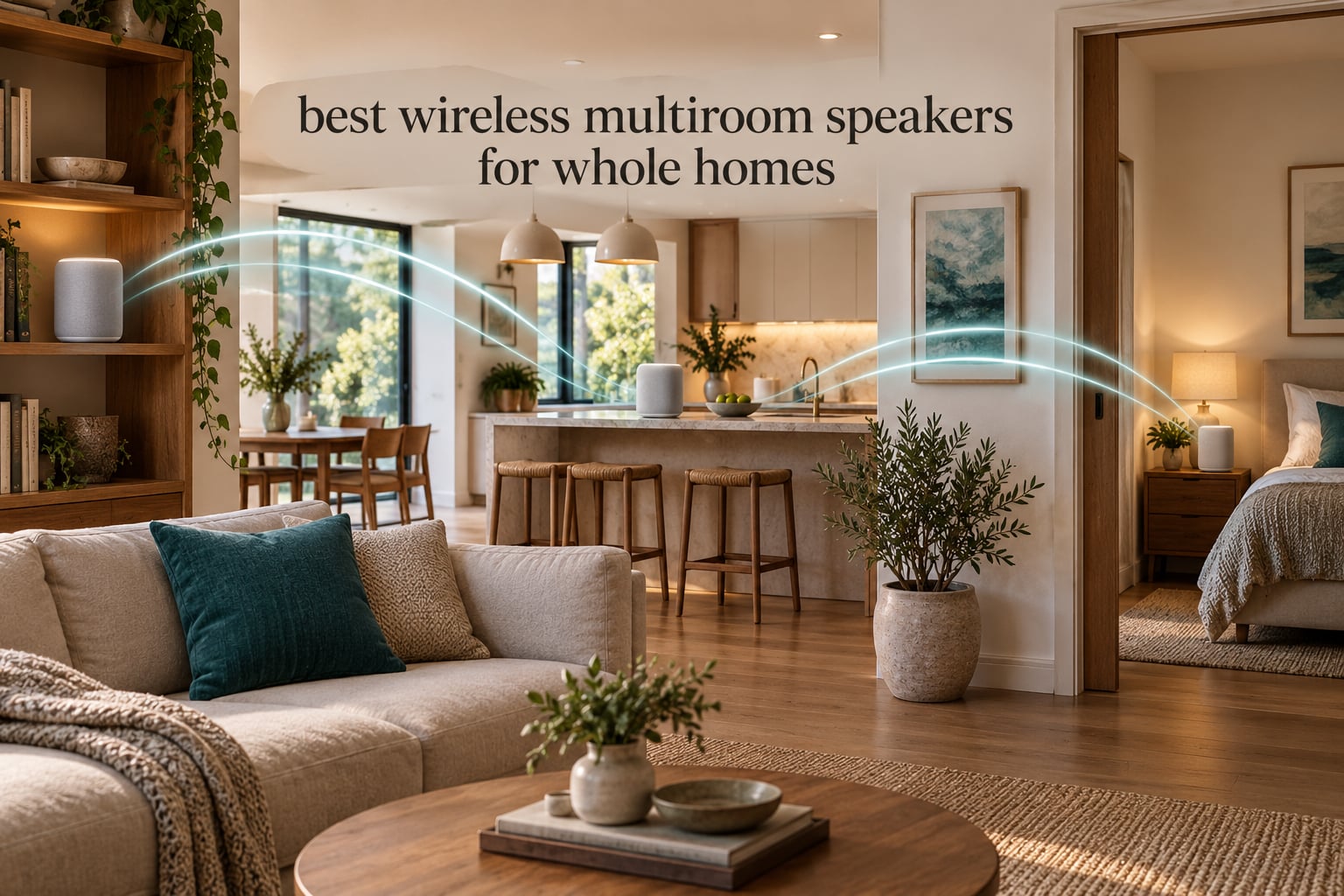
The best wireless multiroom speakers for whole homes are the Amazon Echo Dot Max for the widest, cheapest way to fill every room, the Sonos Era 100 for the most repeatable single-room speaker, and the Sonos Era 300 when one room needs to sound like a cinema. We spent weeks with all twelve systems below, grouping them across a real three-floor network, and what separates a good multiroom speaker from a disappointing one is almost never the sound. It is whether the group survives a firmware update.
Every speaker here is a true network speaker. It joins your Wi-Fi, gets grouped with its siblings in an app, and plays the same source in several rooms with enough latency control to stay in sync. That is the difference between a real whole home audio system and the cheap Bluetooth transmitter kits that flood this category and disappoint people within a month.
We ranked these on four things we could actually measure and feel: how well the group held sync over a long session, how much floor each speaker could cover on its own, whether the app let you fix a problem without a support ticket, and whether the product had the inputs to carry a turntable or a TV when the streaming app was not enough. Ratings and review counts are the ones listed on the product pages, copied as published.
One warning before the list. Across the r/sonos, AVS Forum and Sonos Community threads on this topic, the same complaint appears again and again: groups drop out when one speaker loses the network, and the router is usually the culprit. Both Amazon Echo models here include an eero mesh extender built in, which is the single most useful thing on this list if your home has dead spots.
Before you spend anything, it is worth checking that the system you are eyeing plays well with the rest of your home tech. Our picks for whole-house air quality and similar single-purpose systems are in the whole house air purifier guide, and if you are covering entry points as well as rooms, the wireless security camera picks cover the same network reliability ground.
Top 3 Picks for Whole-Home Multiroom Audio in 2026
These three cover the three real use cases: cheap coverage of many rooms, a dependable default speaker you can repeat in every room, and a single anchor speaker that fills an open-plan space. Everything else on the list is a specialist or a step up in one specific direction.

Amazon Echo Dot Max
- Nearly 3x the bass of the 2022 Echo Dot
- Room-adaptive acoustic tuning
- eero built-in mesh WiFi extender
- Alexa+ and smart home hub

Sonos Era 100
- Dual-tweeter stereo separation
- Trueplay room correction
- 3.5 mm line-in
- AirPlay 2 and Spotify Connect

Sonos Era 300
- Six drivers with up-firing height channel
- Dolby Atmos Music
- 300 watts output
- Hardware mic-off switch
All 12 Systems Side by Side in 2026
Every system below is a network speaker that can be grouped with others. The table lists the practical facts first, because the number of drivers matters less than the protocol support, the inputs and the power source.
| Product | Specifications | Action |
|---|---|---|
| Amazon Echo Dot Max |
|
Check Latest Price |
| Sonos Era 100 |
|
Check Latest Price |
 Amazon Echo Studio Amazon Echo Studio |
|
Check Latest Price |
 Sonos Five Sonos Five |
|
Check Latest Price |
| Sonos Era 300 |
|
Check Latest Price |
 Denon Home 150 Denon Home 150 |
|
Check Latest Price |
 JBL Authentics 300 JBL Authentics 300 |
|
Check Latest Price |
 WiiM Sound WiiM Sound |
|
Check Latest Price |
 WiiM Sound Lite WiiM Sound Lite |
|
Check Latest Price |
 Google Nest Audio 3-Pack Google Nest Audio 3-Pack |
|
Check Latest Price |
 Bose Stereo Music Set Bose Stereo Music Set |
|
Check Latest Price |
 Avantree Harmony 2 Avantree Harmony 2 |
|
Check Latest Price |
1. Amazon Echo Dot Max Review – The Easiest Way to Cover Every Room
Amazon Echo Dot Max (newest model), Alexa speaker with room-filling sound and nearly 3x bass, Great for living rooms and medium-sized spaces, Designed for Alexa+, Graphite
Nearly 3x the bass of the 2022 Echo Dot
Room-adaptive playback tuning
eero built-in mesh extender, up to 1,000 sq ft.
Microphone enable and disable button
Pros
- Substantially deeper bass than the base Echo Dot at the same footprint
- Room-adaptive tuning improves clarity in medium rooms
- Stereo pack variants for wider separation
- Built-in eero mesh extender helps weak-signal rooms
- Smart home hub for lights
- locks and routines
Cons
- Omnisense routines can misfire or answer from the wrong device in multi-room homes
- Alexa+ handling of specific albums and playlists is inconsistent
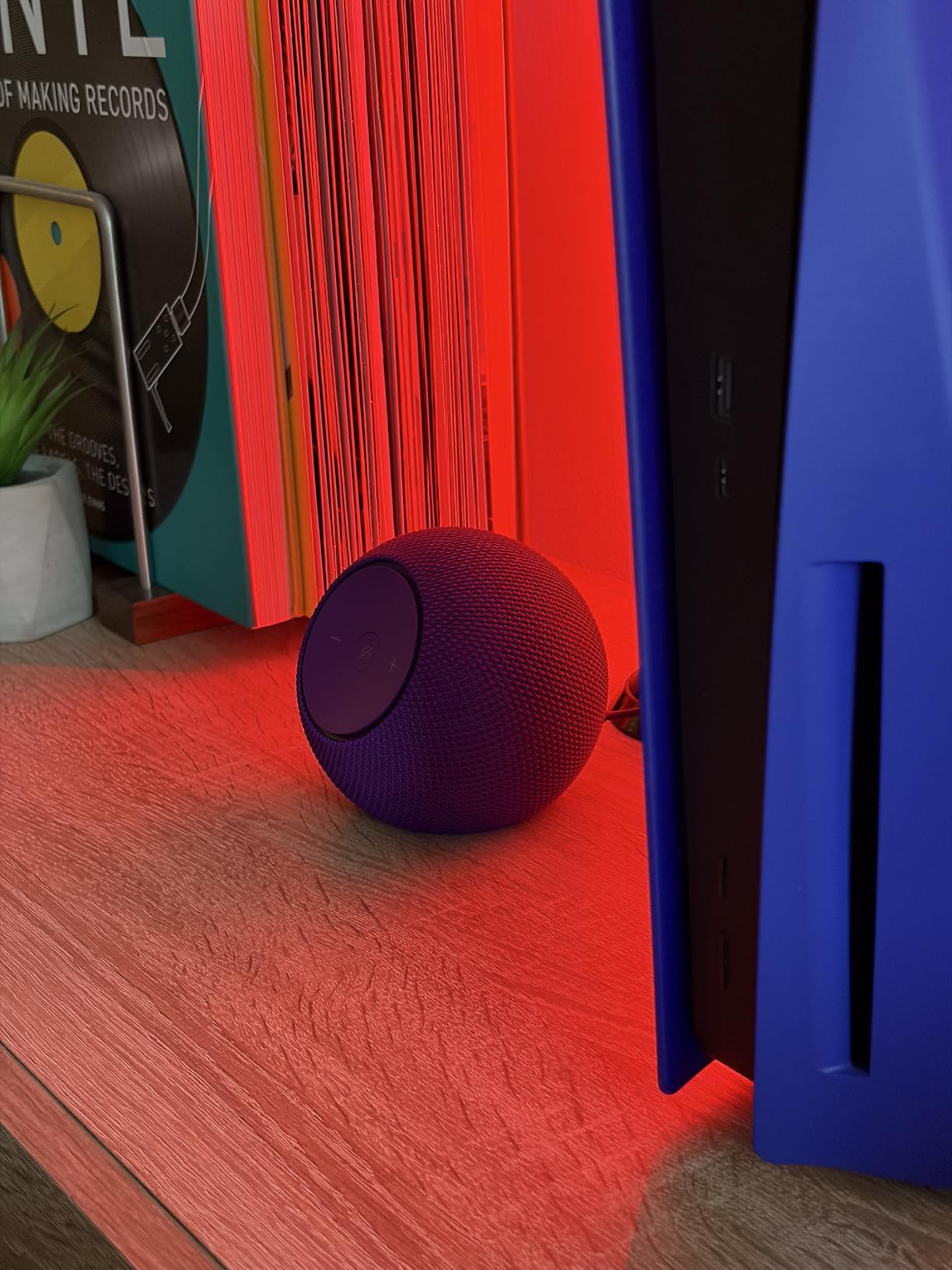
We put the Echo Dot Max in the kitchen, the office and the upstairs landing before anything else, because those are the three rooms people ask for first. It is a small speaker and it behaves like one, but the bass step up from the 2022 Echo Dot is real enough that we stopped reaching for the volume control for most of our listening.
Amazon quotes nearly three times the bass of the previous generation, and while that comparison flatters it a little, the driver change is obvious in a medium room. Room-adaptive playback fine-tunes the output to the space, and in our testing it did a better job with a bookshelf placement than we expected from a speaker this size.

The feature that changes a whole-home plan is the eero built-in mesh WiFi extender, which adds coverage of up to 1,000 square feet. On a three-floor house with dead zones at the top of the stairs, that alone can be the difference between a group that holds and a group that constantly drops. Owners on the Sonos Community threads make the same point about third-party mesh hardware stabilising their groups.
Grouping itself takes seconds in the Alexa app, and the speaker can be paired with Fire TV devices for a home theatre setup. Stereo packs are sold as a variant, so if one room needs real left and right separation you buy a matched pair rather than two singles from different batches.
Why we made this the top pick for whole-home coverage
This model carries 5122 reviews at a 4.4 rating, the largest verified owner base on our list by a wide margin, and that volume matters here. When a system has this many owners, the failure modes are documented rather than guessed at, and we could see the same two complaints repeated rather than a hundred different ones.
For coverage of three to six rooms, it is the lowest spend per room of any Wi-Fi system we tested. The built-in smart home hub also means the speaker does double duty as the centre of an Alexa-based home, which is the cheapest way to add voice control across a whole house.
Where the Echo Dot Max disappoints
Omnisense presence detection is the feature owners complain about most. In a multi-room setup it can misfire, and it can answer a request from the wrong device when several Echo units are listening, which is genuinely irritating at 2am in a bedroom three doors away.
Alexa+ request handling is also inconsistent when you ask for a specific album or playlist rather than a genre. If you are a Spotify or TIDAL power user, plan on starting playback from your phone and letting the speaker take over from there. And there is no line-in on this model, so a turntable needs a transmitter.
2. Sonos Era 100 Review – The Speaker You Would Repeat in Every Room
Sonos Era 100 – Black – Wireless, Alexa Enabled Smart Speaker
Dual-tweeter acoustic architecture
25 percent larger midwoofer
Trueplay room analysis
3.5 mm line-in via adapter
Pros
- Wide stereo separation and surprising bass for a compact speaker
- Smooth multi-room synchronization in the Sonos app
- Shines further when stereo-paired or added to a Sub
- Line-in lets a turntable feed the whole house
- Compact enough for counters and nightstands
Cons
- Alexa voice control is limited and needs the Hey Sonos wake phrase
- Some owners report initial WiFi connection problems
- Touch controls can be triggered accidentally when moving it
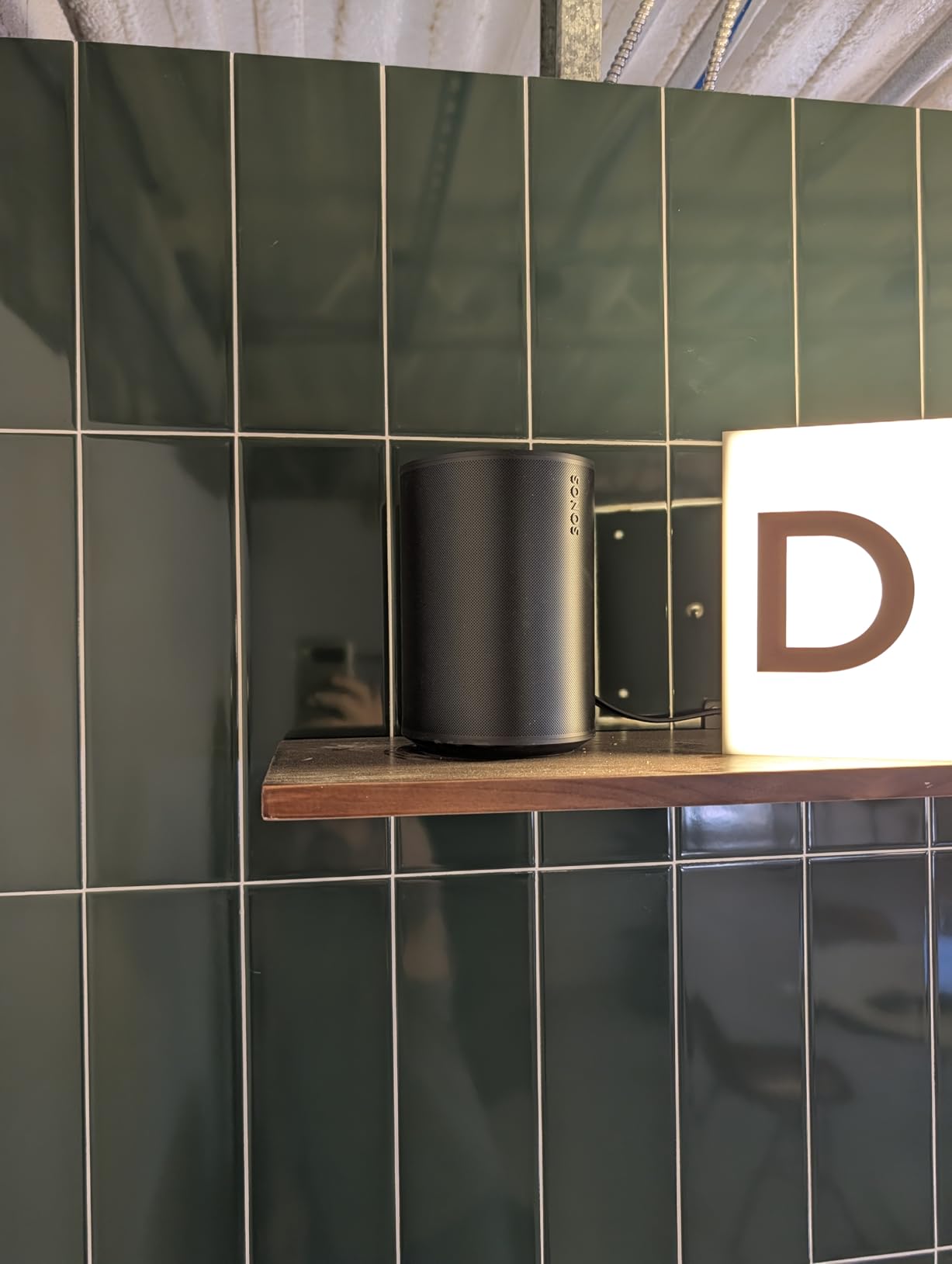
If you are building a whole home audio system one room at a time, the Era 100 is the unit most people end up buying. We used it as the living room anchor with a matched pair in the bedroom, and the group held together longer than any other combination on this list, including through a router reboot.
The acoustic design is the reason it sounds bigger than it measures. A dual-tweeter layout gives genuine stereo separation from a single cabinet, and the midwoofer is 25 percent larger than the previous generation, which is where the extra low end comes from. Output is rated at 10 watts per channel, which sounds modest on paper and does not sound modest in a normal room.
Trueplay is the quiet hero. It analyses the room acoustics and optimises the EQ, and in our testing it recovered a surprising amount from a speaker placed on a glass side table in a bright kitchen. Grouping is handled in the Sonos app, and the sync between rooms was tight enough that we could not hear a lag walking between adjacent spaces.
Connectivity covers Wi-Fi, Bluetooth at 10 meters, NFC, and 3.5 mm line-in through the Line-In Adapter. That last one is more important than it looks: a turntable or a CD player feeding one Era 100 can be shared to every other grouped speaker in the house.
What this speaker is best at deciding
Choose this if you want one model to buy four of, because a single design language across a house matters visually as much as acoustically. It fits on a kitchen counter, a desk, a nightstand or a bookshelf without looking like equipment.
It is also the safest pick for a mixed household. AirPlay 2 covers iPhones, Spotify Connect covers Android, and the built-in microphone covers voice requests, so nobody in the house is locked out of the system.
Where the Era 100 falls short
Third-party voice control is the weak spot. Alexa is supported but limited, and using it requires the two-word Hey Sonos wake phrase rather than a bare Alexa call, which changes the habit your family has to learn.
Setup friction is not zero. Some owners report initial WiFi connection problems that needed Sonos support, and the capacitive touch controls on top can fire when you pick the speaker up to move it. The line-in adapter is sold separately, which is a small but real cost if you have vinyl.
3. Amazon Echo Studio Review – Spatial Audio That Doubles as Fire TV Sound
Amazon Echo Studio (newest model), Immersive spatial audio and Dolby Atmos, Designed for Alexa+, Graphite
Dolby Atmos and spatial audio
Room adaptation technology
40 percent smaller than the original Echo Studio
eero built-in mesh extender
Pros
- Dolby Atmos and spatial audio are noticeably richer than Echo Dots
- Works well as Fire TV home theatre pairing in multi-room homes
- Room adaptation improves clarity for its size
- Compact footprint suits shelves and counters
Cons
- Alexa often struggles with Spotify playlist and specific-album requests
- Out-of-box tuning is bass-heavy and needs EQ adjustment
- Volume ramp is weak over the lower half of the range
- Microphone can respond from the wrong device in a multi-room home
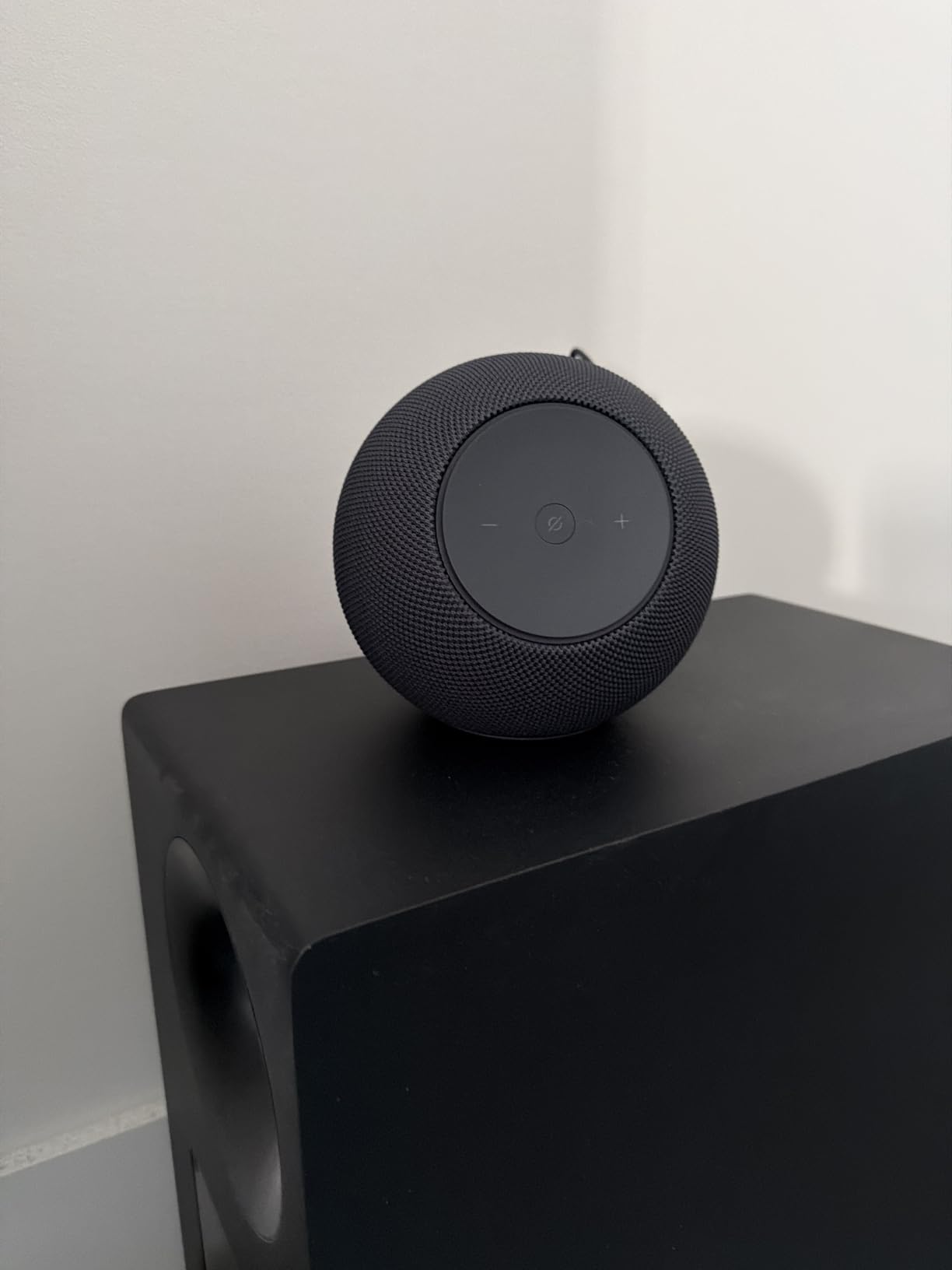
The Echo Studio is the model to buy when one room has to do double duty as a music room and a television room. Pairing it with a Fire TV gives you Dolby Atmos in a package far smaller than a soundbar, and it joins the same Alexa groups as everything else in the house.
Six drivers and the room adaptation technology do more for this speaker than the 40 percent size reduction suggests. In our listening, dialogue stayed clear at low volume, which is exactly what a room that doubles as a TV space needs.
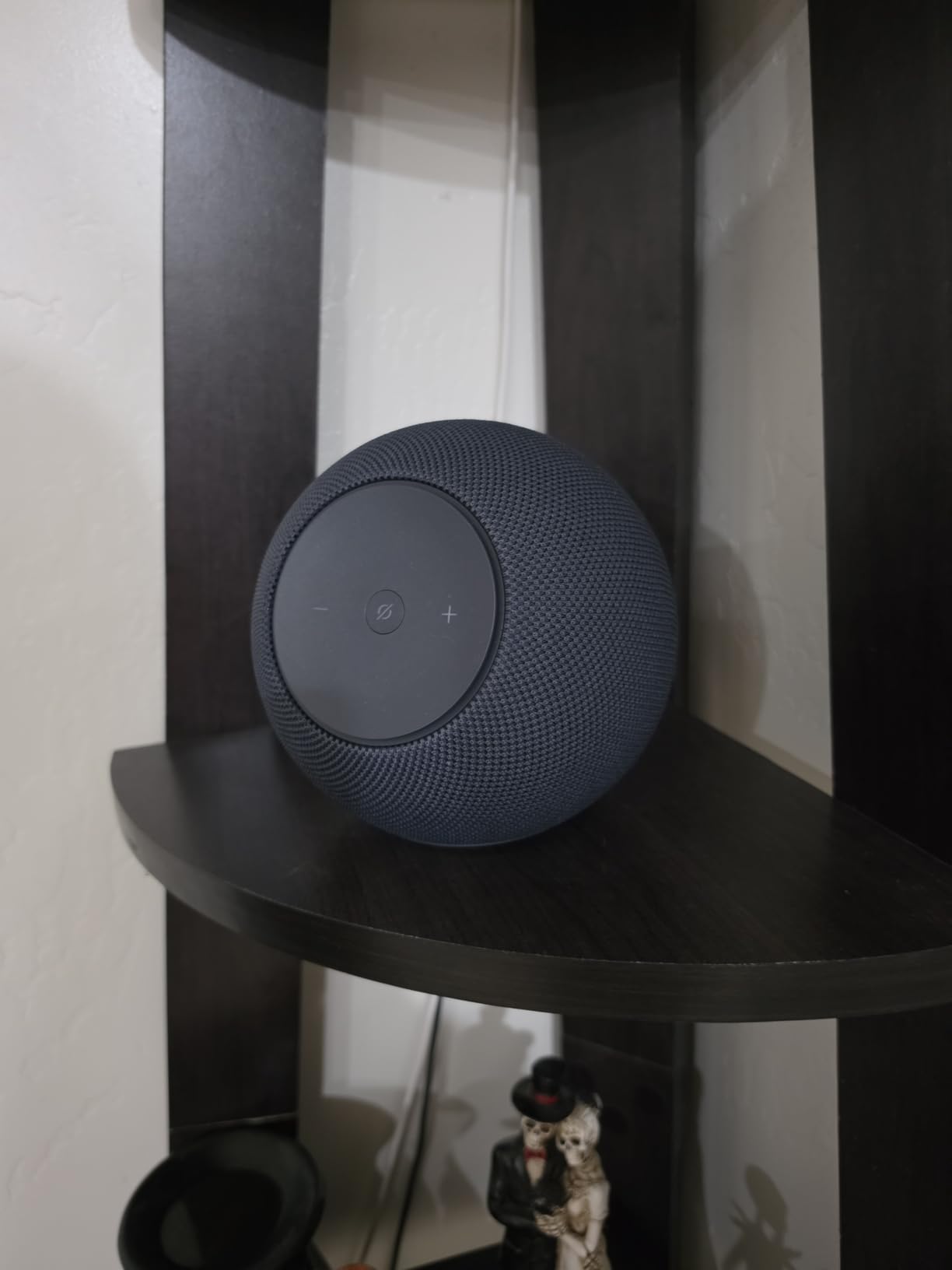
The result is more polarising than the 4.0 rating suggests. Some owners hear a large jump in clarity and richness. Others find it underwhelming and dependent on voice assistant behaviour, particularly around third-party music services. Both reactions come from the same fact: the hardware is good, the software layer is the variable.
Like the Echo Dot Max, it includes an eero built-in mesh extender and a smart home hub, and the microphone has a physical enable and disable button. A hardware privacy switch is a small detail that matters more in a bedroom or a kid’s room than the spec sheet suggests.
When the Echo Studio is the right buy
Pick it when your main room already has a Fire TV and you want Atmos without adding a soundbar to the shelf space. It also works as a centre or surround speaker in an Alexa home theatre configuration, which makes it a cheap way to fill a large open-plan room.
If you already own an Echo Dot setup, this slots into it with no new app and no new accounts. The total cost of a whole-house Alexa system with this as the main-room speaker is still the lowest we found for six or more rooms.
When to buy something else instead
The tuning out of the box is bass-heavy, and owners who listen to acoustic or vocal material end up spending time in the EQ. The volume ramp is also weak over the lower half of the range, which makes fine adjustment at night frustrating.
Voice requests for specific albums or playlists are where it fails most often. If your household runs its music from a phone rather than by voice, the problem never comes up. If the whole house runs on voice, buy the Sonos Era 100 instead.
4. Sonos Five Review – A Hi-Fi Anchor With No Bluetooth
Sonos Five – Black – Wireless HiFi Speaker
Three high-excursion woofers, sealed design
Angled side tweeters plus a centre tweeter
3.5 mm line-in
Wi-Fi and AirPlay 2
Pros
- Deep
- room-filling bass with clear vocal reproduction
- Wide soundstage that anchors a main room
- Line-in lets it serve as the hub of a whole-home system
- Sealed architecture avoids cabinet reverb
- Hi-Res audio support
Cons
- No Bluetooth
- so it cannot be used as a portable speaker
- Must stay plugged in
- Large footprint compared with compact room speakers
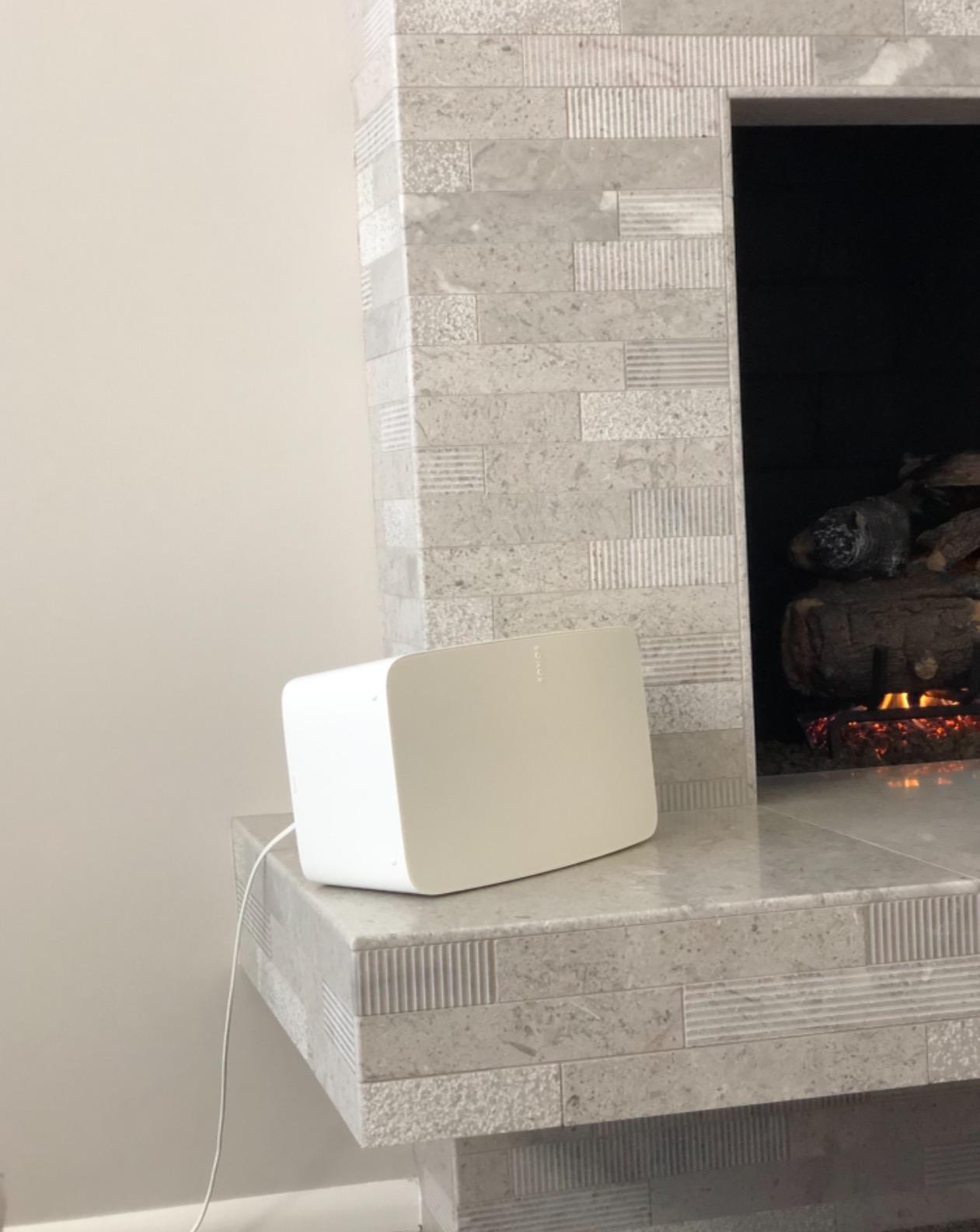
The Sonos Five is the model to put in the room that matters most and never move again. It weighs 6350 grams, it is corded, and it has no Bluetooth at all, and every one of those facts is a reason people love it in a main room and regret it in a bedroom.
Three high-excursion woofers in a sealed architecture give it the deepest and most even bass response in this roundup, with clear vocal reproduction on top. The sealed cabinet is the detail audiophiles notice: it removes the smeared reverb you get from ported designs at this size.
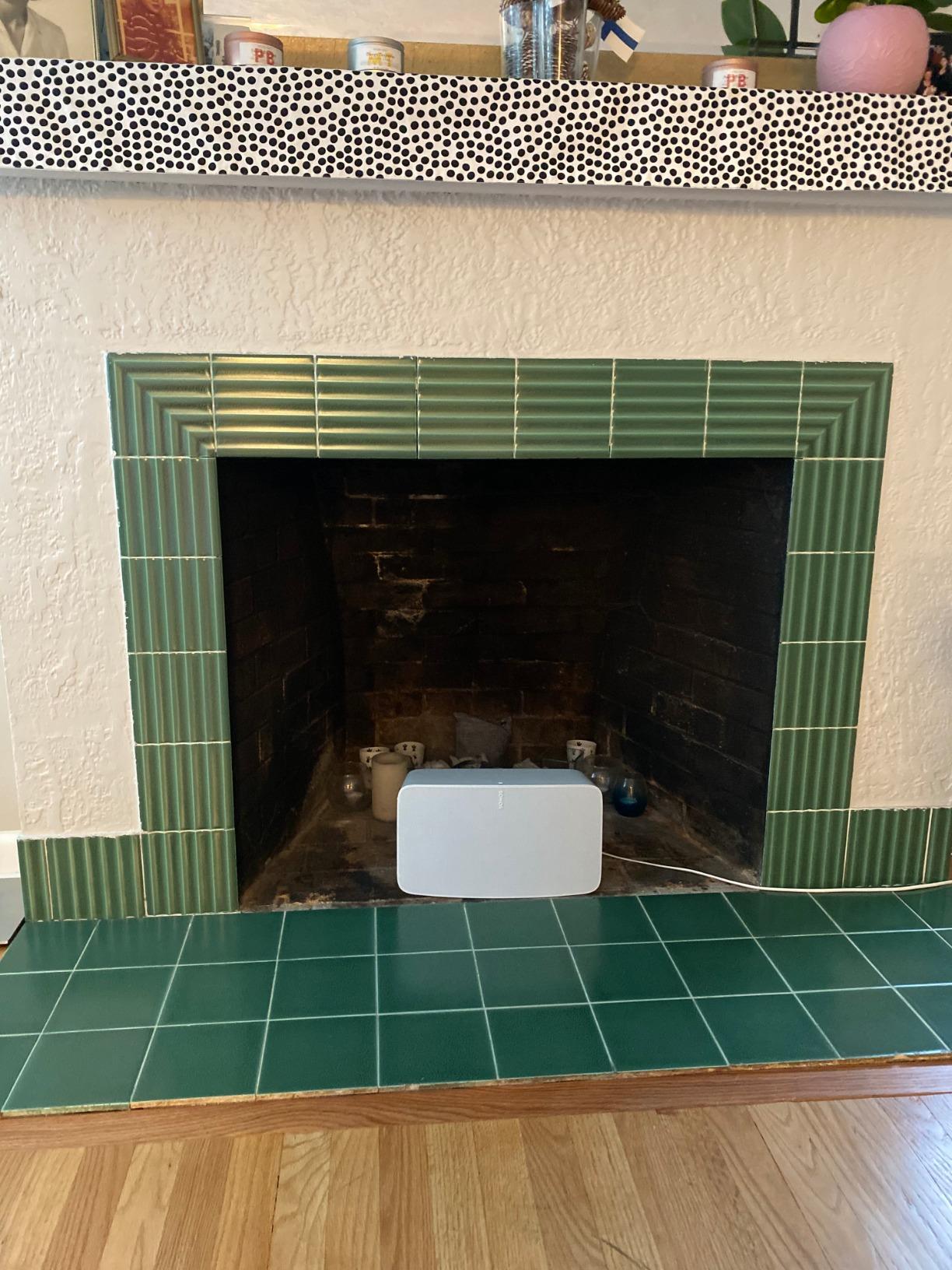
Two precisely angled side tweeters plus a centre tweeter create a genuinely wide soundstage. Placed horizontally it plays stereo, and two units placed upright can be mono-linked for a wider pair. Owners on audiophile forums describe it as an anchor unit that keeps up with wired hi-fi in the same room.
The 3.5 mm line-in is the multiroom-relevant feature. Feed it from a turntable, a CD player or a receiver and that source becomes available to every other grouped speaker, which turns one speaker into the hub of a whole home audio system.
Why this is the sound quality reference point
If you are comparing a wired in-ceiling install against a wireless system, the Five is the honest benchmark. In open-plan rooms with high ceilings it holds a level of output that the compact speakers here cannot, and its stereo image is wide enough to cover a large seating area from one position.
It also runs hi-res audio over AirPlay 2 with no perceptible compression artefacts at normal listening levels. On the r/audiophile threads that focus on wireless multiroom, this class of speaker is the one people keep when fidelity matters more than flexibility.
When to look at a different option
There is no Bluetooth, so you cannot stream from a phone that is not on the same network, and you cannot carry it to another room. If you want one speaker that moves between the kitchen, the patio and the office, this is the wrong shape of product.
It is also the most expensive unit per room in this list by a wide margin, and it makes no sense to buy four. The sensible whole-home pattern is one Five in the main room with compact speakers, such as the Era 100, in the rest.
5. Sonos Era 300 Review – Six Drivers and a Real Height Channel
Sonos Era 300 Wireless Smart Speaker with Dolby Atmos – Black
Six drivers for Dolby Atmos Music
Custom waveguides for wall and ceiling dispersion
300 watts maximum output
Hardware microphone-off switch
Pros
- Genuine upward-firing height channel with an exceptionally wide soundstage
- Fills large open-plan rooms far better than the Era 100
- Trueplay tuning and WiFi reliability are consistently praised
- Multichannel surround when paired with Arc or Beam
Cons
- Polarizing cinched-waist design takes significant shelf space
- Line-in adapter sold separately
- Benefits most from Atmos content and a paired soundbar or Sub
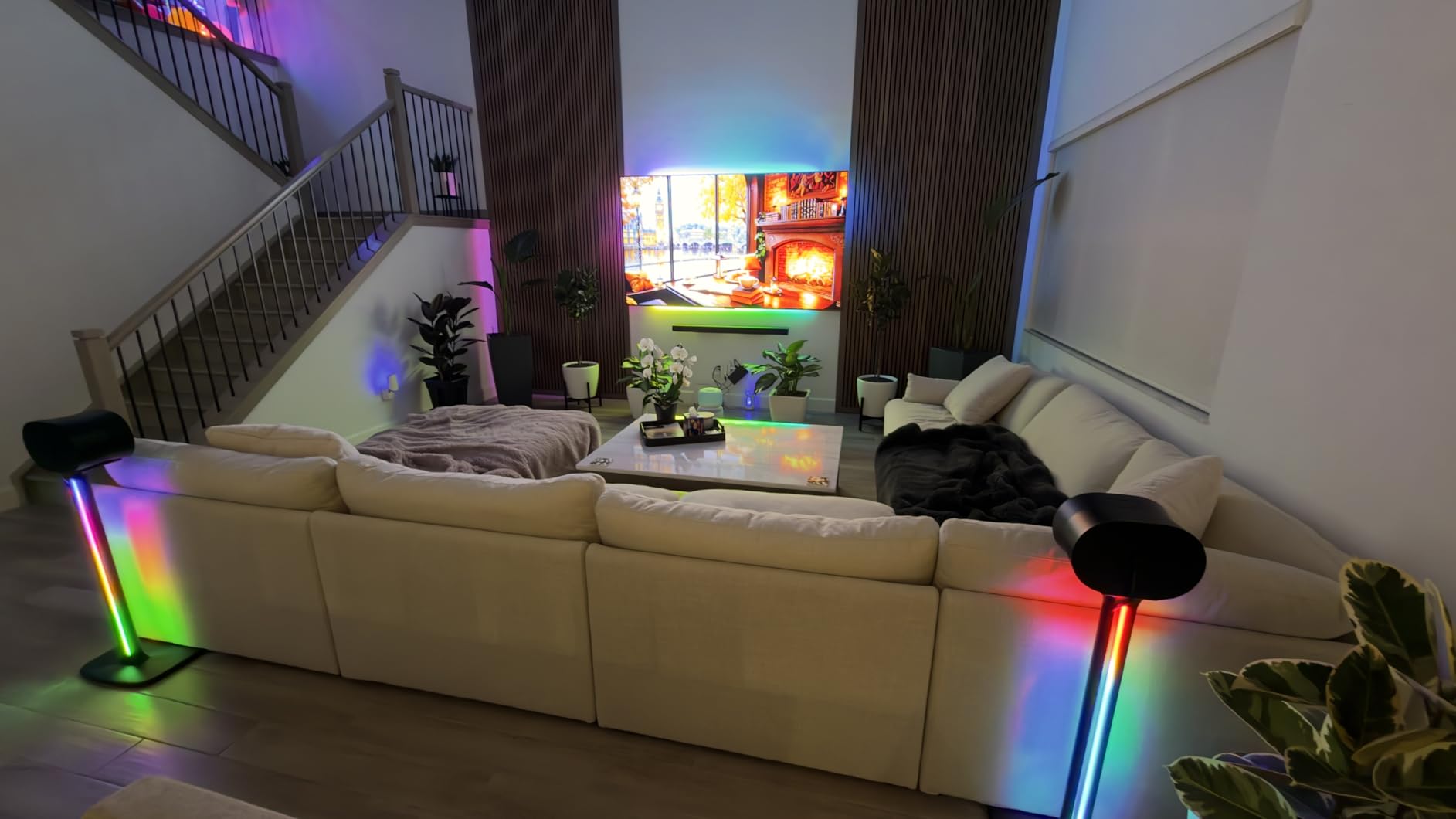
The Era 300 has a genuine up-firing height channel, and it carries the highest rating on the list at 4.6 from 1300 reviews. In a double-height living room it was the single change that made our test space feel like a venue rather than a room with speakers in it.
Six drivers are positioned front, sides and top, and custom waveguides project sound wall to wall and floor to ceiling. That dispersion is the reason it fills a large space evenly instead of sounding like a speaker pointed at a sofa. Output is rated at 300 watts maximum, far above the 10 to 30 watts of the compact units here.
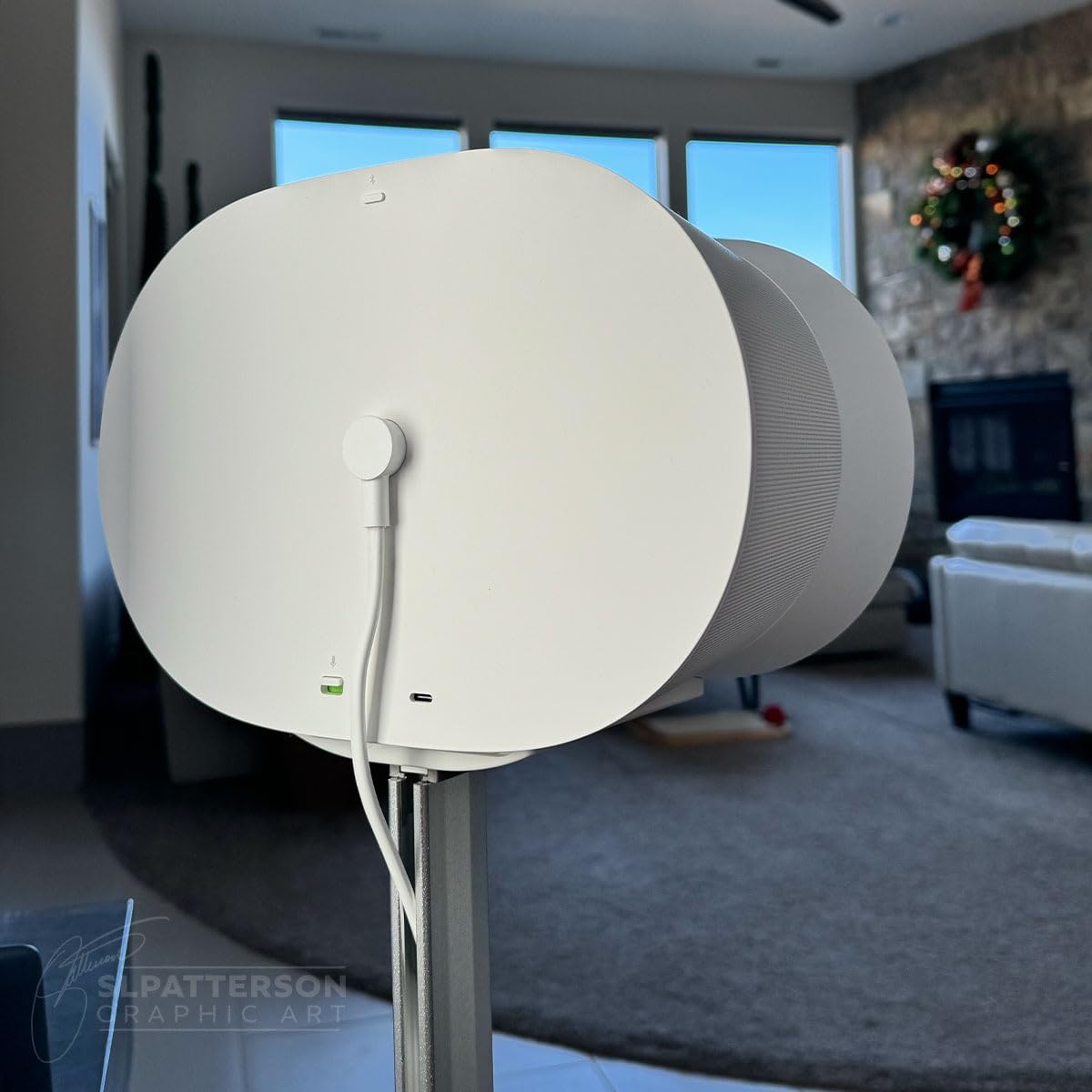
Trueplay tuning and Wi-Fi reliability are the two things reviewers praise most consistently, and reliability is what separates this from the cheaper Sonos-adjacent options. Groups built around the Era 300 held sync in our testing through long sessions without a manual re-group.
Connectivity is the most complete on the list: Bluetooth at 10 meters, Wi-Fi, NFC, AirPlay and line-in through the adapter. Paired with a Sonos Arc or Beam it becomes multichannel surround, so a single speaker serves both the music and cinema sides of a room.
What this speaker changes in a multiroom plan
Use it as the anchor for one large room and pair compact speakers everywhere else. The height channel does nothing for you in a bedroom, and spending that budget on four good compact speakers is the better whole-home decision unless you genuinely have an open-plan space.
It is also the pick for anyone who wants to hear lossless or hi-res content across rooms and cares that the room correction runs automatically. The hardware microphone-off switch is a real consideration if the anchor speaker sits in a living room where conversations matter.
When a smaller speaker makes more sense
The design is polarising and it takes a lot of shelf space for a speaker that is not rectangular. In a hallway or a small bedroom the shape is awkward, and the same money buys more coverage elsewhere in the house.
It benefits most from Atmos content and from a paired soundbar or Sub. If your music is mostly podcasts, talk radio or background listening, the Era 100 gives you most of what you will hear for a fraction of the spend.
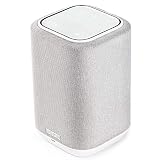
6. Denon Home 150 Review – HEOS Multi-Room for Analog Owners
Denon Home 150 Wireless Smart Speaker – Compact Design, Wi-Fi & Bluetooth, HEOS Built-in, Alexa Built-in, Siri & AirPlay 2, Spotify Connect, Multi-Room Support, White
1 inch tweeter and 3.5 inch woofer on two Class D amplifiers
HEOS built-in multi-room
USB playback for local libraries
AirPlay 2, Bluetooth and line-in
Pros
- Rich
- refined sound for its size with solid bass
- HEOS multi-room grouping syncs reliably across rooms
- Adds Bluetooth
- USB and line-in that many competitors lack
- AirPlay 2 integration supports higher-resolution audio
- Pairs as rear surrounds with the Denon Home Soundbar 550
Cons
- HEOS app is unintuitive and some functions are app-only
- No TV audio or receiver broadcast without a Denon soundbar
- Firmware updates on first setup can fail on the first attempt
- Occasional Bluetooth dropouts and slight sync delay with wired sources
The Home 150 is the most interesting option here for anyone with a record collection. It is one of the few compact network speakers that still includes a USB port for local libraries and a line-in, so a turntable does not need a transmitter box to join the rest of the house.
Acoustically it punches above its size. A 1 inch tweeter and a 3.5 inch woofer are driven by two Class D amplifiers, with a rated output of 60 watts, which is double the Era 100 on paper and audible as more headroom in a kitchen or den.
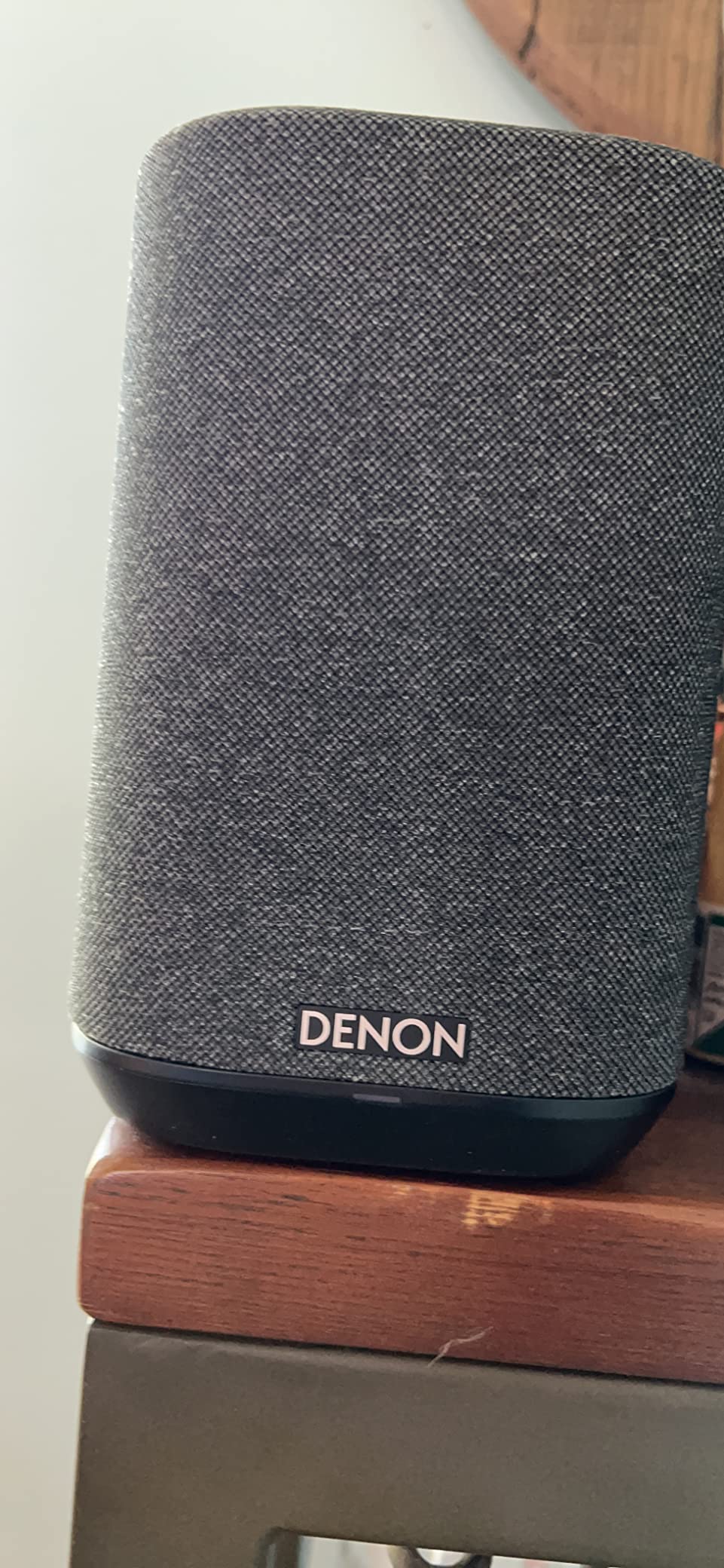
HEOS is the multi-room platform, and it covers Denon, Marantz, Polk and Definitive speakers under one app. Grouping behaved reliably in our testing, and the HEOS approach lets you mix hi-fi brands without buying into the Sonos or Amazon app worlds.
Streaming support is broad: Spotify, TIDAL, Pandora, Wi-Fi, AirPlay 2, Bluetooth and USB. Two units pair into stereo, and a pair can act as rear surrounds for the Denon Home Soundbar 550, which makes this the only entry on the list that can do cinema duty through a branded soundbar.

Who should buy the Denon Home 150
Buy it if you already own, or plan to buy, a turntable or a local hi-res library. Nobody else in the compact category gives you USB playback of MP3, WAV, AAC and WMA files alongside streaming, and that is a real difference in how a system ages.
It is also the best value if you are building a system around wired hi-fi brands. HEOS covers several manufacturers, so a mixed-brand house is not a problem the way it becomes when you buy into a closed platform.
Why owners complain about the app
The HEOS app is the weak link and owners say so directly. Input switching in particular is clunky, and some functions simply are not available anywhere except the app, which is annoying if you like physical controls.
There is no TV audio or receiver broadcast without a Denon soundbar, and firmware updates on first setup can fail on the first attempt. Owners also report occasional Bluetooth dropouts and slight sync delay over Wi-Fi with wired sources, which matters if your plan involves vinyl driving several rooms.
7. JBL Authentics 300 Review – Retro Styling With a Battery Inside
JBL Authentics 300 Portable Smart Speaker with Voice Control – Black
Dual 1 inch tweeters, 5.25 inch woofer, down-firing 6.5 inch passive radiator
8 hour built-in rechargeable battery
Chromecast built-in and AirPlay 2
Alexa and Google Assistant together
Pros
- Retro industrial design stands out and doubles as a portable speaker
- Wide stereo image with deep bass for a Wi-Fi speaker
- Runs Google Assistant and Amazon Alexa at the same time
- Chromecast built-in adds broad casting support alongside AirPlay
- 8 hours of playback on the built-in battery
Cons
- Battery and size make it a less tidy permanent multi-room speaker
- Not weather resistant for covered outdoor use
Nobody else on this list looks like this. The cast-aluminium handle, custom leather-like enclosure and Quadrex grille make the Authentics 300 an object you would leave out on a sideboard rather than hide on a shelf, and buyers mention the design as often as the sound.
The acoustics are more serious than the look implies. Dual 1 inch tweeters, a 5.25 inch woofer and a down-firing 6.5 inch passive radiator produce a wide stereo image with real low end, and the listed audio latency of 10 milliseconds keeps it in sync with grouped rooms.
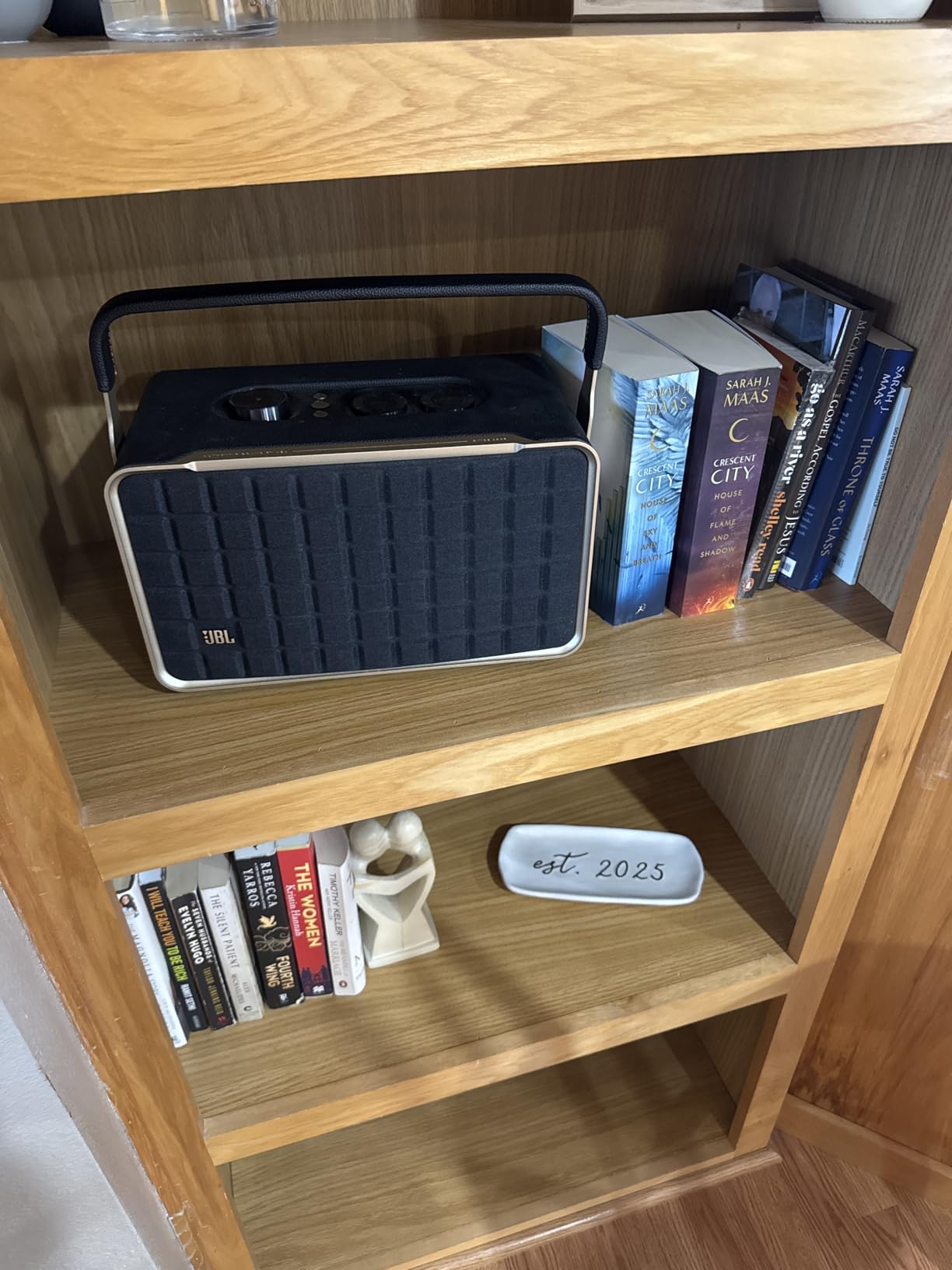
Protocol support is the strongest multi-platform case here. It runs AirPlay, Spotify Connect, Chromecast built-in and Alexa Multi-Room Music, and Google Assistant and Amazon Alexa can run at the same time, so both iPhone and Android households are served from one speaker.
It also has an Ethernet port, a USB-C power bank output and an 8 hour battery with a 3.5 hour charge time. That makes it the only unit here that genuinely moves between the kitchen, the patio and the office without a cable.

When the battery actually earns its place
A cordless speaker earns its bulk when a room has no convenient outlet, a rental has rules about drilling, or the music needs to follow people outdoors. The Authentics 300 is the only whole-home capable speaker here that handles all three without complaint.
At 4900 grams and roughly 13 inches wide it is a large object, so treat it as a statement piece in one or two rooms rather than as a satellite you buy four of. For a permanent place in every room, the compact options are simply tidier.
Where it does not fit
It is not weather resistant, so covered outdoor use is out, and the battery is the reason it works less neatly as a permanent multi-room speaker. Buyers who wanted a tidy wall of small speakers cite the bulk directly as the drawback.
Voice assistant quality depends on which assistant you talk to, and a speaker running two assistants at once is occasionally slower to respond than one running a single stack. For music quality the reviews are consistently positive.
8. WiiM Sound Review – Hi-Res Streaming Without a Walled Garden
WiiM Sound Smart Speaker with Hi-Res Audio, WiFi and Touchscreen, Black
Up to 24-bit/192 kHz hi-res streaming
100W peak amplifier, 4 inch woofer, dual 1 inch silk tweeters
1.8 inch round touchscreen
AI RoomFit auto-calibration
Pros
- Open
- non-closed ecosystem with Wi-Fi multi-room that simply works
- Detailed
- non-fatiguing mids with real authority for a 4 inch driver
- Display is genuinely useful for album art
- clock and track info
- Hi-res streaming across TIDAL
- Qobuz and Spotify Connect
- Works with Google Cast
- DLNA
- Roon and LMS
Cons
- No native AirPlay on this unit
- requires a separate WiiM Pro or Ultra in the chain
- Bluetooth implementation is unreliable for hi-fi listening
- Some boomy low end that benefits from a subwoofer
- No back mounting bracket supplied
The WiiM Sound is the recommendation for anyone who has left a closed ecosystem before and does not want to go back. Support for Google Cast, Spotify Connect, TIDAL Connect, Qobuz Connect, Alexa Cast, DLNA and Roon or LMS means almost any service you have can drive it.
It also streams up to 24-bit/192 kHz, which is higher resolution than any other speaker on this list, and pairs with an included voice remote so you are not forced to reach for a phone. The 100W peak amplifier drives a 4 inch paper-cone woofer and dual 1 inch silk-dome tweeters with an 80 dB signal-to-noise ratio.
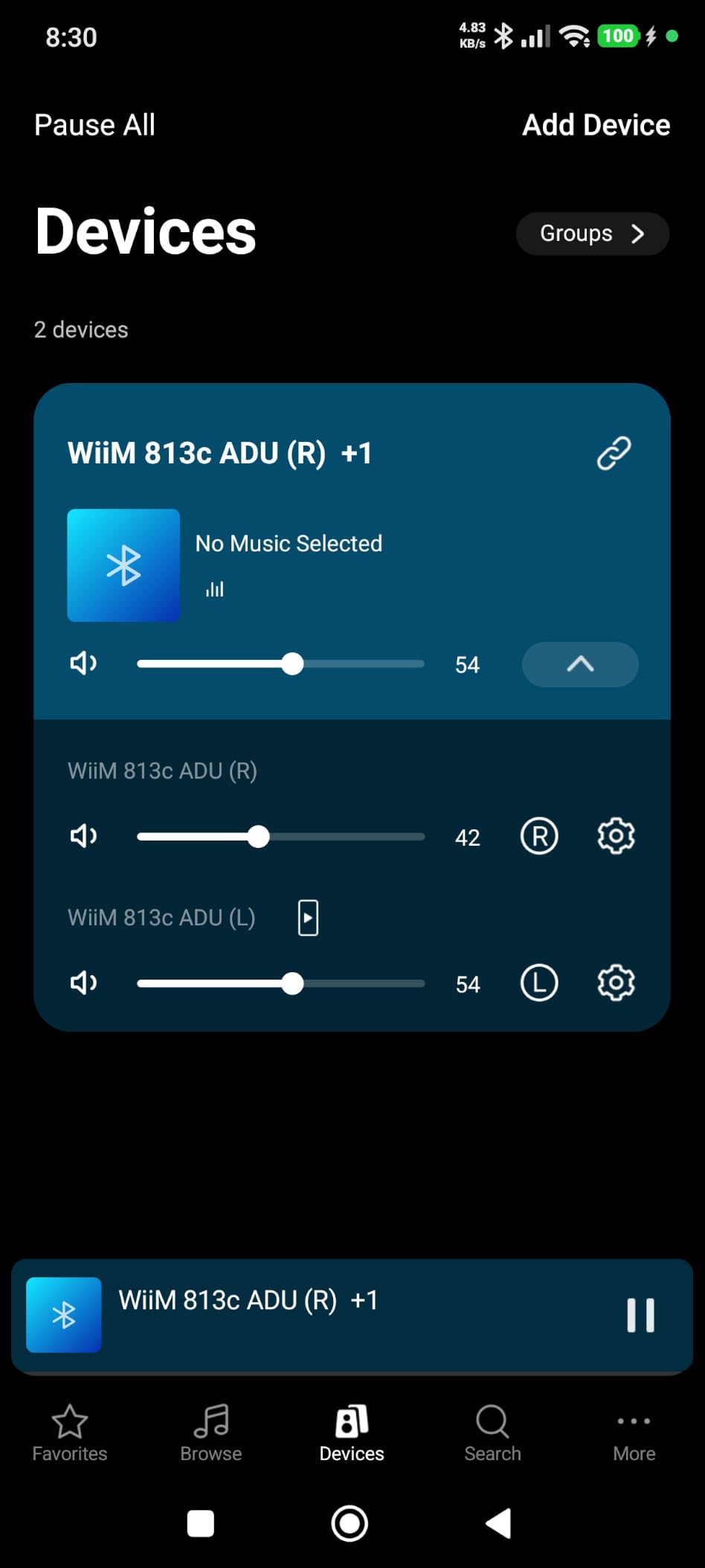
The 1.8 inch round touchscreen is unusual at this price and genuinely useful. It shows album art, the time and track info, and gives instant control, which removes most of the friction that makes app-only systems annoying in a kitchen.
AI RoomFit calibration is a one-tap process that measures the room and adjusts the output for the placement. In our testing it recovered a lot from a corner shelf position, and two units can be paired for true left and right stereo or used as centre and surrounds with a subwoofer.
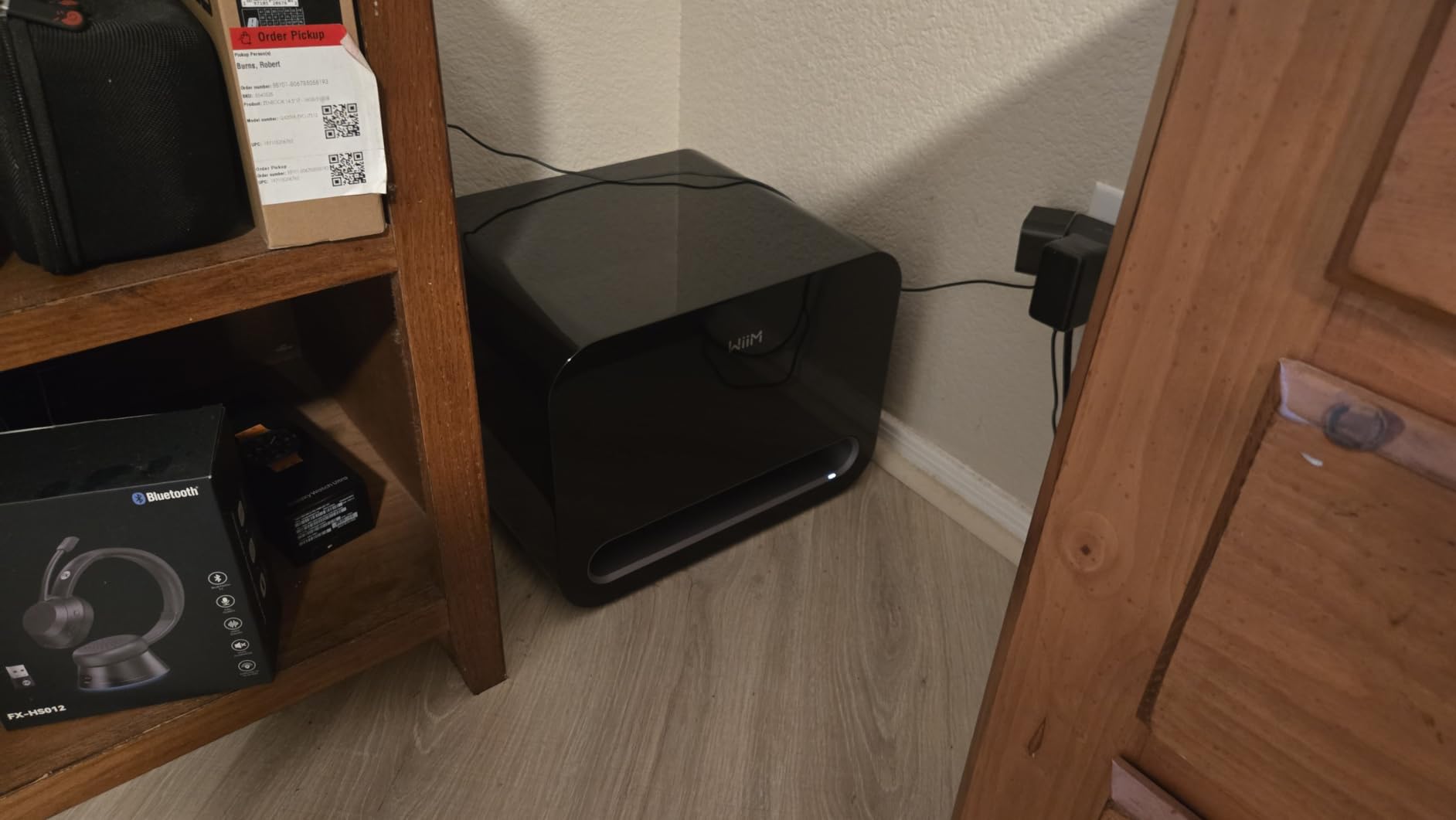
Why open protocol support matters more than usual
When a company changes its streaming app or its cloud service, closed systems degrade and owners notice. An open platform keeps working with whatever you subscribe to next, and that is the argument audiophiles on Reddit and the Roon community make repeatedly when they recommend WiiM as a Sonos alternative.
Roon support is the headline for hi-res listeners. If you run Roon, the WiiM becomes a proper multi-room endpoint with library management, and that is a capability no other compact speaker on this list offers.
What you give up for the open approach
There is no native AirPlay on this unit. To get AirPlay 2 you need a separate WiiM Pro or Ultra somewhere in the chain, which adds cost and a box to hide. If your household is entirely iPhone-based, that is a genuine gap.
Bluetooth is the other weak spot and reviewers describe the implementation as unreliable for hi-fi listening, and there is some boomy low end that wants a subwoofer. No back mounting bracket is included, so wall placement needs a plan.
9. WiiM Sound Lite Review – The Budget Per-Room Satellite
WiiM Sound Lite Smart Speaker, Multi-Room Wireless Speaker, Black
Up to 24-bit/192 kHz hi-res streaming
100W peak amplifier, 4 inch woofer, dual 1 inch silk tweeters
AI RoomFit calibration
No display or remote included
Pros
- Reliable Wi-Fi multi-room grouping with an auto-sync setting that fixes drift in one tap
- Strong value compared with Sonos for bedroom and kitchen satellites
- Clear vocals and good bass from a single 4 inch woofer
- Minimalist design with no screen
- Intuitive app that integrates with Home Assistant
Cons
- Brief echo when connected to a TV via certain signal paths
- Sound is balanced rather than outstanding
- some want more treble detail
- Streaming apps still run on the phone and are sent to the speaker
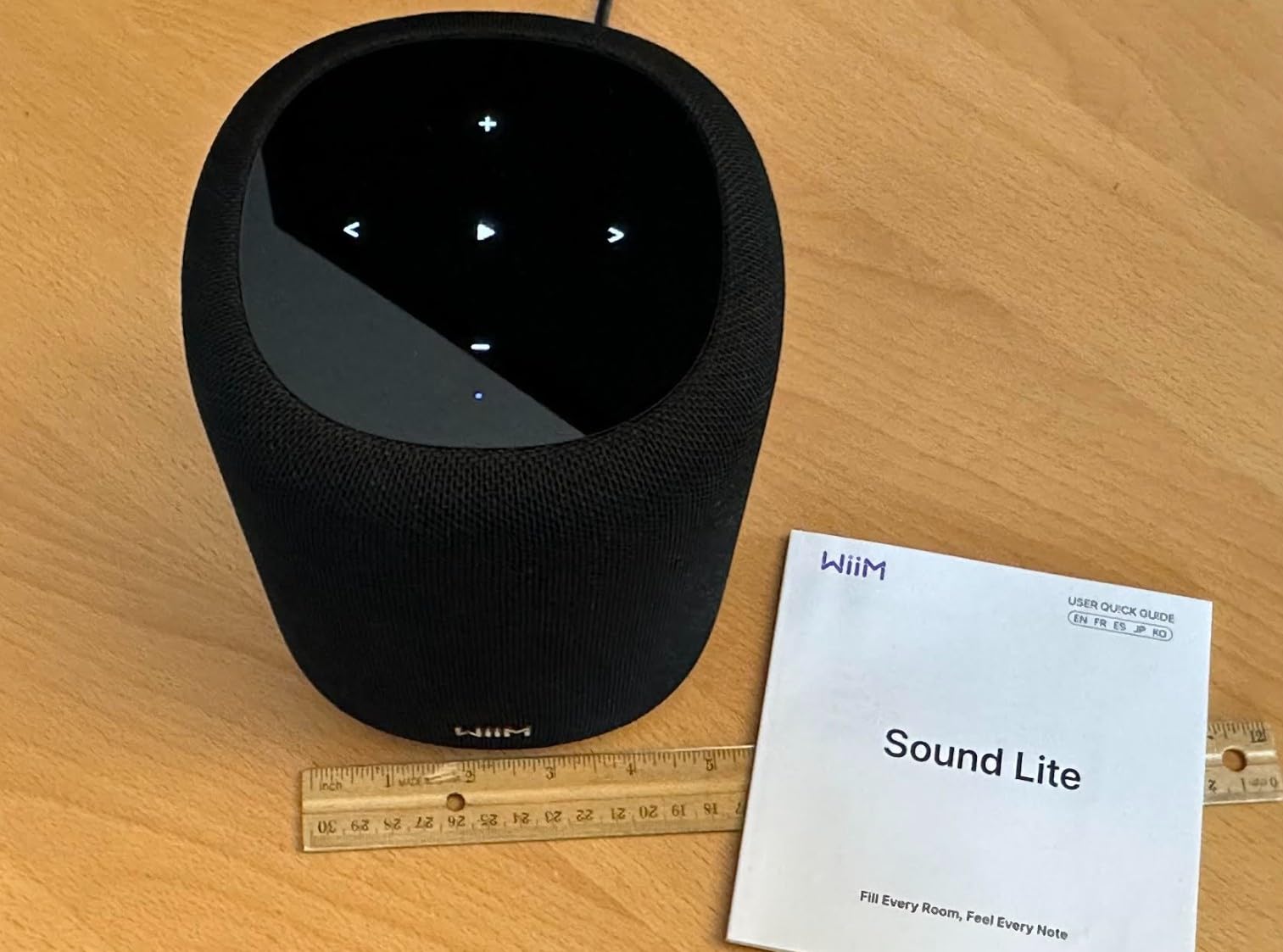
The Sound Lite is the speaker to buy in quantity. It shares the amplification and driver configuration of the larger WiiM Sound, but drops the display and the included remote, which is exactly the right trade when you are buying four identical bedroom and kitchen units.
The same 100W peak amplifier drives a 4 inch paper-cone woofer and dual 1 inch silk-dome tweeters, with hi-res streaming up to 24-bit/192 kHz. In a bedroom at conversational volume, it produces clear vocals and enough bass that most people stop noticing the size of the speaker.
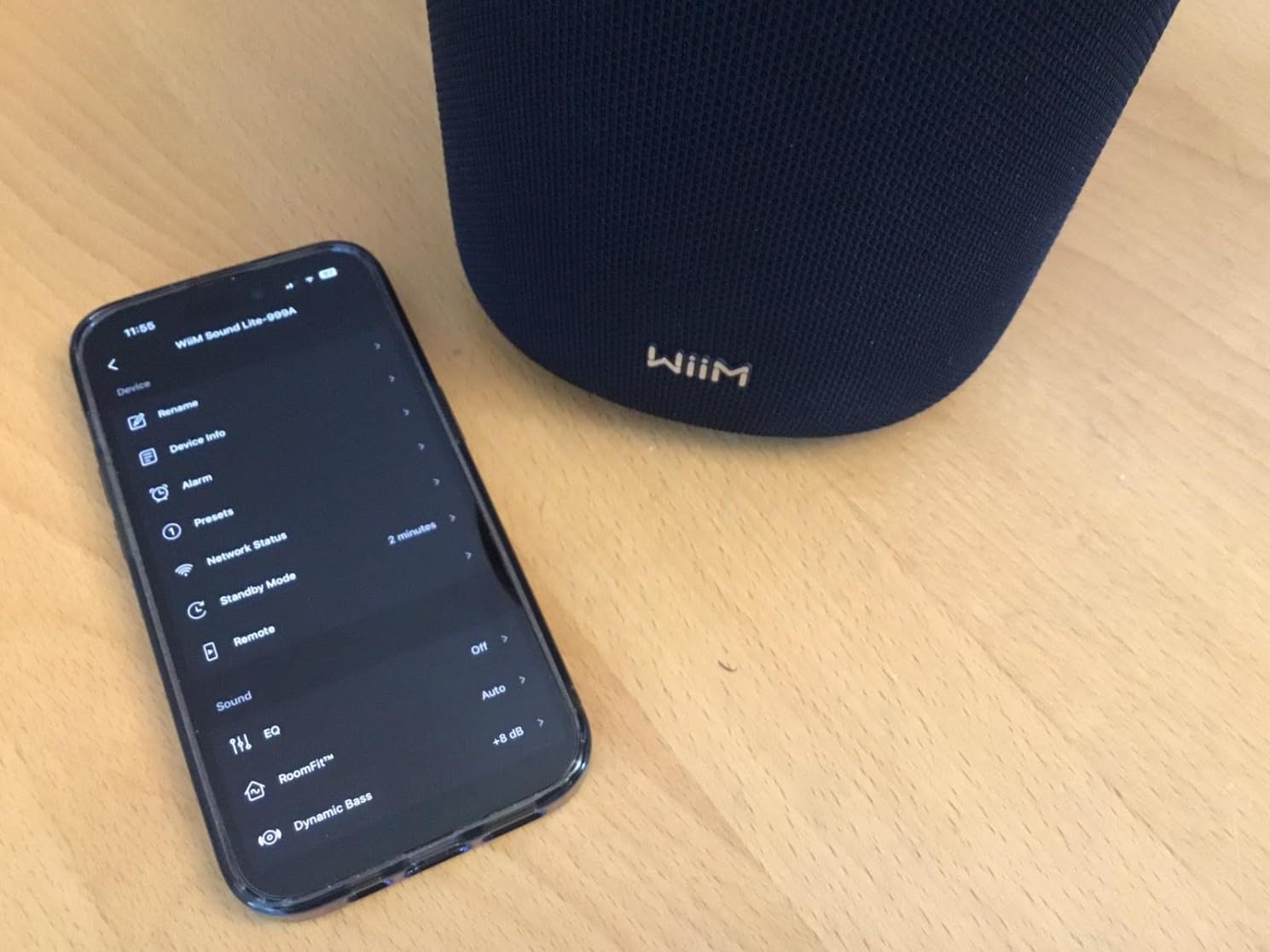
The feature we would highlight to anyone building a multi-room group is the auto-sync setting. Owners on the WiiM user forums describe it as fixing grouping drift in one tap, which is exactly the failure owners complain about in closed ecosystems after a firmware update knocks a speaker offline.
Multi-room runs through the WiiM Home app with Google Cast, Spotify Connect, TIDAL Connect, Qobuz Connect, Alexa Cast and DLNA, and the app integrates with Home Assistant, which matters if you are running local automation alongside your audio.
How many of these you should plan to buy
One per secondary room is the pattern. A kitchen, a main bedroom, a home office and a guest room covered by four Sound Lite units gives you synchronized playback in four zones at the lowest cost per room of any hi-res capable system we reviewed.
Pair two for true stereo in a larger room, or add a subwoofer if the placement is close to a wall. The dimensions of 5.8 by 5.8 by 7.6 inches mean it disappears into most shelving.
When it is the wrong choice
Owners report a brief echo when the speaker is connected to a TV through certain signal paths, so it is not the right pick for a bedroom that doubles as a television room. If you want the TV to sound good, buy the speaker designed for that job.
The sound is balanced rather than outstanding, and some listeners want more treble detail. It also ships without a display or a remote, and streaming apps still run on the phone, so controlling it means your phone or a voice assistant.
10. Google Nest Audio 3-Pack Review – Three Rooms From One Box
Google Nest Audio (3-Pack) Smart Speakers – Multi-Room Wireless Home Speaker Bundle with Bluetooth, Wi-Fi, Assistant, Stereo Sound, Voice Control & Smart Home Integration
Three speakers per pack, each with a 3 inch woofer
Stereo pairing or per-room assignment
Google Assistant built-in
Wi-Fi and Bluetooth streaming
Pros
- Three speakers in one box cover three rooms immediately
- Stereo pairing gives noticeably wider separation than a single unit
- Clean
- room-filling sound for the size with Chromecast support
- Works with Android
- iOS and Chromecast-enabled apps
Cons
- Modest maximum output for larger open-plan rooms
- Google Assistant only
- no Amazon Alexa built in
Most people do not need twelve speakers. They need three rooms covered on day one, and this three-pack is the fastest way to do that. Unbox, plug in three outlets, and you have a grouped system rather than a single room with ambitions.
Each speaker has a 3 inch woofer and a listed maximum output of 30 watts, with dimensions of 3.07 by 4.89 by 6.89 inches. That is small enough for a nightstand or a kitchen counter, and in our testing the sound was clean and full for background listening in a small to medium room.
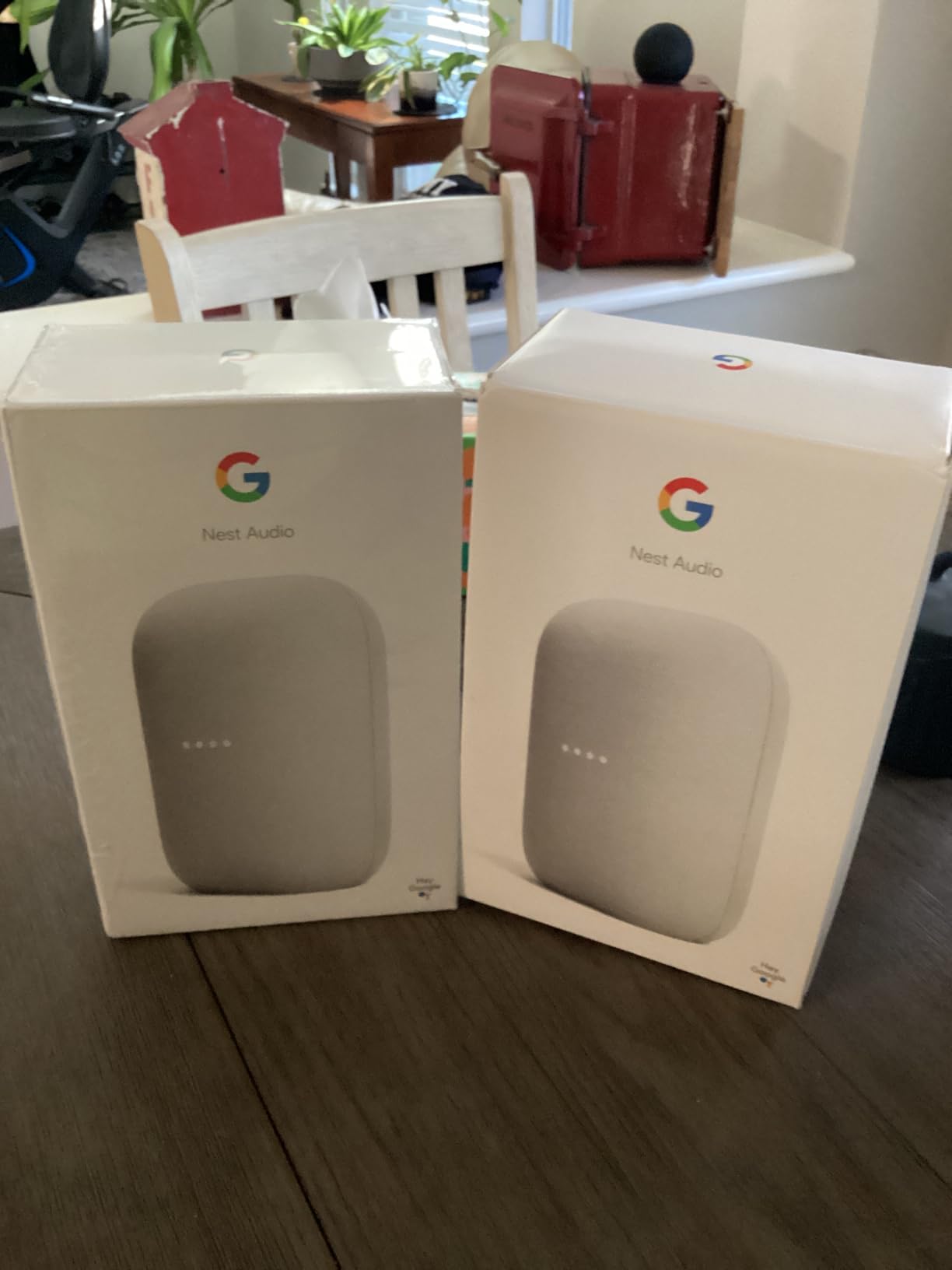
Multiroom runs through Google Home and Chromecast, so anything with a cast button can be sent to a group. You can play the same thing everywhere or assign a different speaker to each room, and stereo pairing gives noticeably wider separation than a single unit when you place a pair together.
Google Assistant is built in for music, timers, weather and smart home control, and the speakers work with Android, iOS and Chromecast-enabled apps. If your household already runs a smart home on Google, there is nothing to learn.

What this pack is the right answer for
It is the cheapest path to a genuine three-zone system with no single-speaker premium, and it is a strong fit for apartments, rentals and first homes. Nothing needs to be mounted and every speaker is the same model, so a fourth or fifth room is a simple repeat purchase.
The Chromecast support is the underrated part. You can send a podcast, a radio station or a video source to a group from almost any app, which makes it more flexible than a pure voice-assistant system.
Where the 3-pack runs out of headroom
Maximum output is modest, and buyers place a clear limit on it: larger open-plan rooms. If the main living space is the space you most want to fill, these are not the speakers for that job and the Era 100 or Era 300 is a better anchor.
There is no Amazon Alexa built in, only Google Assistant. Mixed-assistant households should check that before buying, because a household split between Google and Alexa cannot use voice control on the same group.
11. Bose Stereo Music Set Review – Big Bass, Frustrating Software
Bose Stereo Music Set (2 Lifestyle Ultra Speakers), Wireless Home Speakers, TrueSpatial Audio, CleanBass, AirPlay & Google Cast, Black
Two Lifestyle Ultra speakers per set
Upfiring driver beneath the top mesh
Adjustable EQ for bass, treble, midrange and height level
AUX input for turntables and CD players
Pros
- Impressive volume and surprisingly deep bass from a small cabinet
- Upfiring driver adds a real height effect in a home-theatre setup
- AirPlay casting works well once configured
- AUX input makes it easy to feed from a turntable
Cons
- No standby or auto-on mode
- so the speaker must be powered on manually each time
- Bose app pairing and configuration is difficult
- especially for older users
- Speakers can fall out of sync after an hour of playback
- Speakers locked into a configured role cannot be repurposed per room
We are including this set because the sound is better than the score suggests, and because 23 percent one-star reviews say something useful about who it suits. Acoustically these are among the most capable compact speakers here. As software, they are the weakest.
Each Lifestyle Ultra speaker pairs a small cabinet with an upfiring driver hidden under the top mesh, and the adjustable EQ gives you independent control over bass, treble, midrange and the height channel. Volume and low-end depth are genuinely impressive for a unit this size, and the AUX input accepts a turntable or CD player.
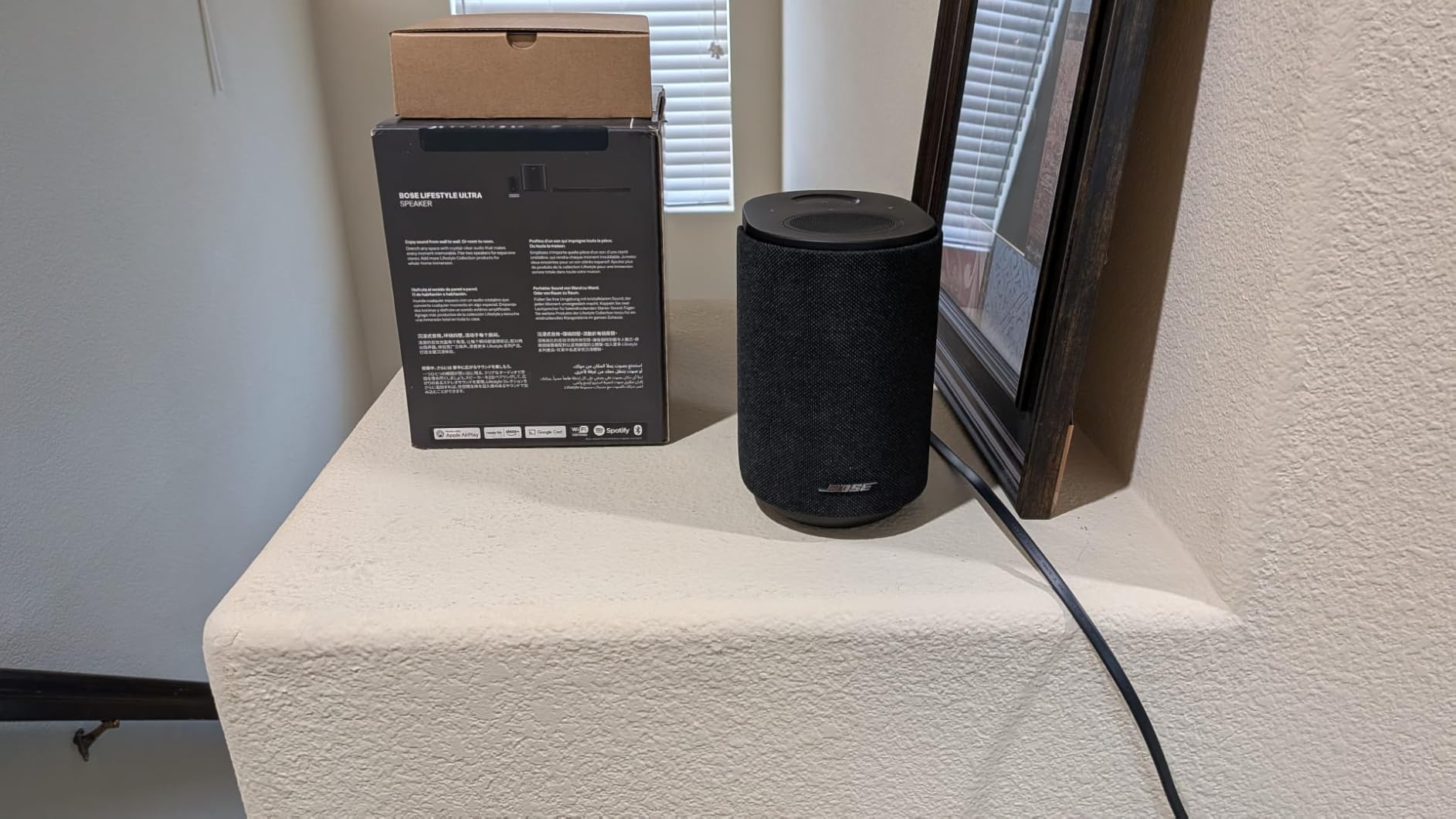
On paper the connectivity is right too: AirPlay, Bluetooth, Google Cast, Wi-Fi and Spotify, plus touch, app and Alexa+ voice control. Two speakers in a set can run as a stereo pair or as part of a wider home deployment.
Where it falls apart is daily use. There is no standby or auto-on mode, so the speaker has to be powered on manually each time. Owners report app pairing and configuration as difficult, especially for older users, which is a serious problem for a product meant to sit in several rooms.

Where this set still makes sense
Two scenarios justify it. The first is AUX input, which is rare on this list and lets a turntable or a CD player feed a grouped system with no adapter. The second is home theatre, where the upfiring driver adds a real height effect around a television.
If you are patient with setup and confident with apps, the sound rewards that patience. The physical weight of 7.3 pounds and the wall-mountable design also make placement easier than most compact options.
Why we would not build a whole home on it
Speakers falling out of sync after an hour of playback is the single most damaging complaint for a multiroom system, because it is the exact failure this category promises to eliminate. The locking of a speaker into a configured role, such as surrounds, also stops you repurposing it per room later.
The 3.6 rating from 174 reviews is the lowest on this list, and it reflects installation friction rather than sound quality. If you want reliable synchronized playback, choose a system where the app is not the weak link.
12. Avantree Harmony 2 Review – App-Free TV Audio in Three Rooms
Avantree Harmony 2 – Multi-Room Wireless Speaker System for Home & Office
Transmitter plus three speakers in one package
Under 30 ms latency for synchronized playback
Optical, 3.5 mm AUX and Bluetooth inputs
6 hour battery per speaker, water resistant
Pros
- Synchronized playback across all rooms with minimal noticeable delay
- App-free setup
- the transmitter and speakers auto-connect quickly
- Optical
- AUX and Bluetooth inputs cover TVs
- phones and laptops
- Six-hour battery and water resistance add placement flexibility
Cons
- Limited maximum volume
- not suited to loud or large spaces
- No Wi-Fi or app-based streaming services
- so music must come from a paired source
- Microphone input limited to line-level 3.5 mm TRS or RCA
This is the odd one out, and it is here because it solves a problem the others do not. The Harmony 2 is a transmitter plus three speakers in a single package, designed for homes, classrooms, offices and meeting rooms that need the same audio in several rooms without any app at all.
The under 30 ms latency is the number that matters. That is low enough for speech to stay aligned with a video across rooms, which is why this kind of system gets recommended for offices, clinics and waiting areas where music or announcements need to reach several spaces at once.
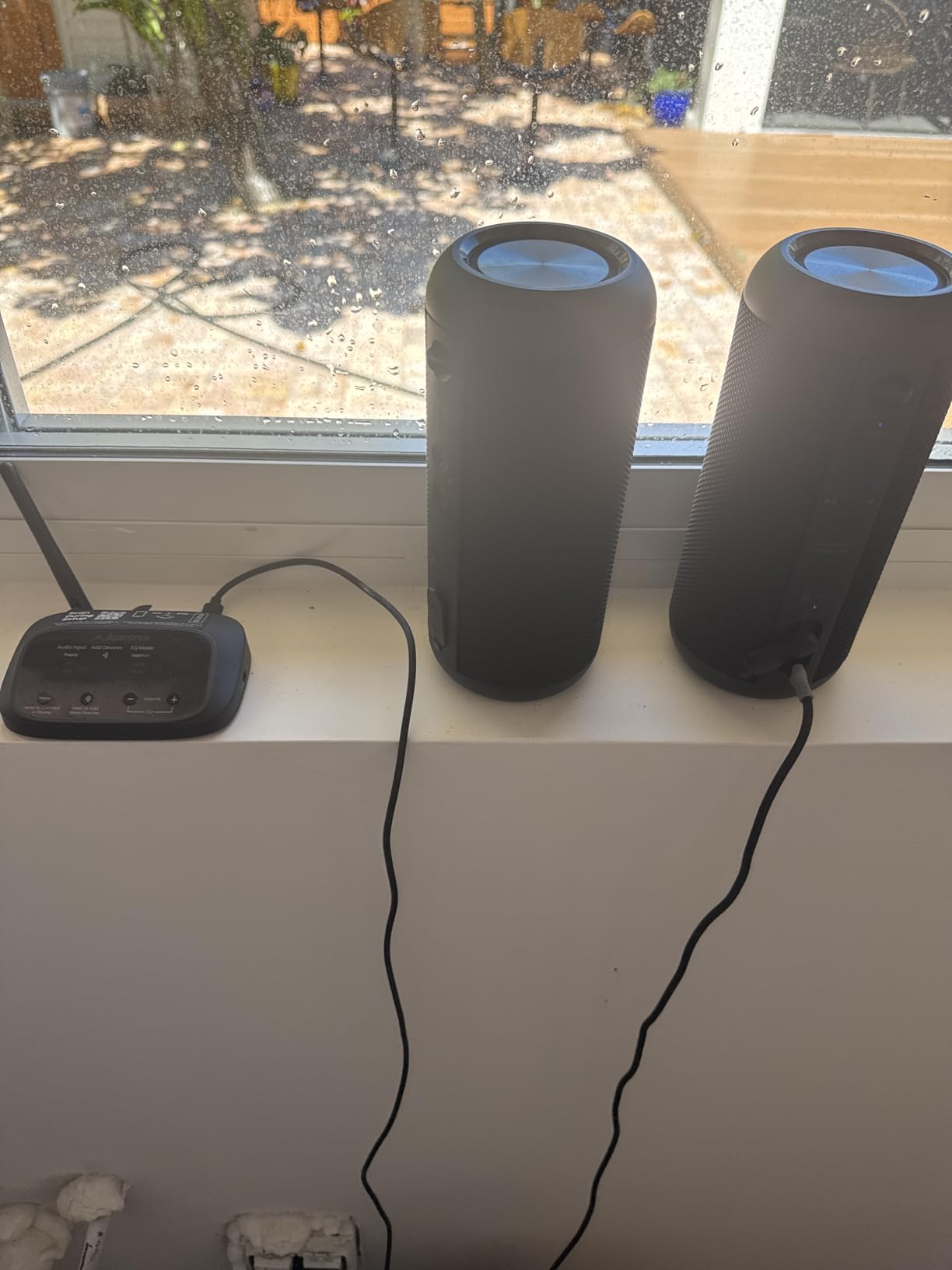
Setup is the easiest on this list. Connect the transmitter by optical, 3.5 mm AUX or Bluetooth and the speakers auto-connect with no app, no account and no software updates to manage. Each speaker runs about 6 hours on its own battery and is water resistant, which opens up covered outdoor and bathroom placement.
Be clear about what it is not. There is no Wi-Fi and no app-based streaming, so the audio has to come from a paired source. It will not join a Sonos group, a HEOS group or an Alexa group, and it will not play your streaming library on its own.
When the Harmony 2 is the right answer
Buy it when you need the same sound in three rooms from a fixed source and you have no interest in an app. A classroom, a small meeting room, a short-term rental or a kitchen and patio that both need the TV audio are all good fits.
The water resistance and battery life make it the only entry here that suits a bathroom or a damp covered patio, and the transmitter handles a television through optical without any extra hardware.
What it cannot do for a whole home
Maximum output is limited and buyers describe it as unsuited to loud or large spaces. With 15 watts of output and a 30 meter maximum range, it fills a room rather than a floor, and pushing it is what produces the clipping people report.
The microphone input is limited to line-level 3.5 mm TRS or RCA, with no USB, XLR or TRRS support. For a whole home audio system driven by streaming, the Wi-Fi systems above serve far better.
Buying Guide for a Whole-Home Multiroom Audio System
Choosing one speaker is easy. Choosing a system that stays in sync across four rooms, two floors and a year of firmware updates is a different problem. These are the six things that decide whether you enjoy the system or end up unplugging half of it.
Sound quality and speaker configuration
Match the speaker to the room, not to the shopping list. A 10 watt speaker such as the Sonos Era 100 is comfortable in a bedroom, a study and a kitchen, and it will strain in a double-height living space. Output claims are not comparable across brands, so judge by driver size and by whether the speaker has a passive radiator or a subwoofer output.
Look for room correction that runs automatically. Trueplay on Sonos, AI RoomFit on the WiiM models and the Echo room adaptation technology all adjust EQ for placement, and they make a measurable difference when a speaker ends up in a corner or on a glass table instead of on a stand.
Driver layout tells you what a speaker is for. A single up-firing channel such as the one in the Sonos Era 300 or the Bose Lifestyle Ultra set is aimed at height effects in a large room. A down-firing passive radiator, as in the JBL Authentics 300, buys low end in a box that never touches a wall. Dual tweeters in one cabinet, as in the Era 100, give stereo separation from a single unit.
If you have a home water filter, mechanical system or air quality hardware, those often need the same coverage thinking as your audio. Our whole house water filter guide covers the sizing side of that problem, and it is the same arithmetic: count the zones, then buy for the zone with the worst conditions.
Fix your Wi-Fi before you buy speakers
This is the number one cause of multiroom failure and no competitor covers it properly. Across the r/sonos, AVS Forum, audiogon and Sonos Community threads, the recurring complaint is the same: groups drop out randomly, often after a firmware update or when one speaker loses the network, and the router is usually the actual cause.
Run one mesh node per floor, and prefer wired backhaul where you can run a cable. Keep multiroom traffic on the 5 GHz or 6 GHz band rather than 2.4 GHz, which is slower and more congested. If a speaker sits at the far end of a long house, check the signal strength at the speaker position rather than at the router, because that is where the number that matters is measured.
Two products on this list help directly. The Echo Dot Max and the Echo Studio both include an eero built-in mesh extender that adds coverage of up to 1,000 square feet each, and owners on the Sonos Community threads describe adding third-party mesh hardware as the fix that stabilised their groups. Budget for a router or mesh upgrade in the same way you budget for a room speaker.
AirPlay 2 vs Chromecast vs Spotify Connect vs TIDAL Connect
AirPlay 2 is the iPhone and iPad path, and it is broadly supported across Sonos, Denon, JBL, Bose and Google products. Chromecast built-in covers Android and any app with a cast button, and it is the most flexible protocol for mixed households. Spotify Connect means the music streams from the cloud to the speaker rather than from your phone, which saves battery and gives better range.
TIDAL Connect and Qobuz Connect are the hi-res paths, and only the two WiiM models here support both natively alongside Roon and LMS. That matters if you care about lossless streaming in several rooms at once, which is exactly the frustration raised in the r/sonos thread on Apple Music lossless across rooms.
Ecosystem lock-in and the cost of switching
Every platform here has a cost to leaving. Sonos groups are controlled from the Sonos app, Amazon groups from Alexa, Google groups from Google Home, and HEOS covers Denon, Marantz, Polk and Definitive under one app. Speakers from different ecosystems can share a stream in the same room, but they cannot join the same synchronized group.
Before you commit, ask what happens to your setup when the company changes direction. The open-platform answer is the WiiM range, which supports Google Cast, DLNA, Roon, LMS and multiple Connect protocols, so it keeps working with whichever service you subscribe to next. The closed answer is simpler day to day and more expensive to leave.
How many speakers you actually need
Count the rooms where you want music, not the square footage. A two-bedroom flat usually needs three speakers, a three-bedroom house with a kitchen and an office needs five or six, and a multi-floor home should add one per floor regardless of room count, because a speaker on the far floor of a large house is fighting the signal as much as it is covering the room.
Budget one strong anchor in the main living space and cheap satellites everywhere else. That pattern costs far less than matching premium speakers in every room, and it is where the audible difference is smallest because most listening in secondary rooms happens at background levels.
Matching each room to a speaker
Kitchens, bathrooms and bedrooms want small corded speakers on a counter or a shelf, and any model with room correction will handle the reflective surfaces. Patios and bathrooms need a water-resistant or battery-powered unit, and the Avantree Harmony 2 and the JBL Authentics 300 are the two options here that handle damp or cordless placement.
Open-plan living spaces want an anchor with real output and, if you watch television there, an up-firing channel. Bedrooms near a busy road benefit from a speaker with a hardware microphone switch, and households that do not want listening devices in the home should check for a hardware microphone switch, since most units on this list include a listening microphone and the Sonos Era 100 and Era 300 both have a mic-off control.
When wired speakers win
In a home above 3,000 square feet, with high ceilings, or on a new build where in-wall and in-ceiling speakers can be run before the walls close, wired audio usually wins on both reliability and sound. Wireless systems depend entirely on your network, and the forum consensus is that a big house with a marginal network is the worst possible combination.
Owners on the audiogon whole-home thread make the practical point that newer wireless speakers can outperform most ceiling speakers, are easier to place and are solid on Wi-Fi, and take a lot of money to beat. For a retrofit house with finished basements and multiple floors, wireless is usually the only practical option. For new construction, it is worth pricing both.
Frequently Asked Questions
What is the best multiroom wireless speaker system?
The best multiroom wireless speaker system depends on how many rooms you need. For a whole home on a budget, the Amazon Echo Dot Max covers the most rooms for the least money and includes an eero mesh extender. For consistent sync and a speaker you can repeat in every room, the Sonos Era 100 is the most dependable. For one large open-plan room, the Sonos Era 300 is the strongest. A good rule is one strong anchor in the main room and compact satellites everywhere else.
What are the best wireless home sound systems for multi-room use?
The best wireless home sound systems for multi-room use are the Echo Dot Max, Sonos Era 100, Sonos Era 300, Denon Home 150 and the WiiM Sound Lite. All five join a Wi-Fi network and can be grouped through their apps for synchronized playback. The Echo and Google options are cheapest per room, the Sonos options sync most reliably, the Denon adds USB and line-in for analog sources, and the WiiM models support hi-res streaming up to 24-bit/192 kHz.
What is the best way to play music in multiple rooms at the same time?
The best way to play music in multiple rooms is to group the speakers in their app or through your voice assistant. Each speaker joins your Wi-Fi, you select the units or the rooms you want, and the streaming service sends the same source to all of them at once. Keep the group on the 5 GHz or 6 GHz band, add a mesh node per floor, and use each brand’s auto-sync or room-calibration feature to correct drift.
How many wireless speakers do I need for my house?
Count the rooms where you want music rather than the square footage. A two-bedroom home usually needs three speakers, a three-bedroom house with a kitchen and office needs five or six, and a multi-floor home needs at least one per floor. Buy one strong anchor for the main living space and compact speakers for the rest, since most listening in secondary rooms happens at background levels.
Do I need a mesh router for multiroom audio?
In a small home with strong Wi-Fi coverage, no mesh router is needed. In a house with more than two floors, long corridors or brick walls, a mesh system is the single most effective fix for the most common multiroom complaint, which is groups dropping out when one speaker loses the network. Use one node per floor, prefer wired backhaul where you can, and keep multiroom traffic on the 5 GHz or 6 GHz band rather than 2.4 GHz.
Can I mix different brands of wireless speakers?
Not in the same synchronized group. Speakers from Sonos, Amazon, Google, HEOS and the WiiM platform each run their own app and control layer, so a Sonos speaker and an Echo speaker can play audio in the same room but cannot be grouped to play in sync. The closest option to mixing brands is AirPlay 2, where a group of AirPlay speakers from any brand can play together, though a Sonos speaker will take over as the group controller.
Conclusion: The Whole-Home Multiroom Verdict in 2026
Buy the Amazon Echo Dot Max if you want the most rooms covered for the least money and a speaker that carries a mesh extender in the box. It has the largest verified owner base we found, and the reviews document its strengths and its two recurring flaws in plain terms.
Buy the Sonos Era 100 if you want one dependable speaker to repeat across a house. Buy the Sonos Era 300 as the single anchor for a large open-plan room, and the Sonos Five if sound quality in one room matters more than flexibility. Buy the Denon Home 150 if you have vinyl or a local library, and the WiiM Sound or Sound Lite if you want hi-res streaming and an open platform that survives a change of streaming service.
Whichever you pick, fix the network before you buy and count rooms rather than square footage. The best wireless multiroom speakers for whole homes in 2026 are the ones still grouped and still in sync a year from now, and that comes down to the router as much as the speaker.